Model Tax Convention on Income and on Capital 2025 (Full Version)
Model Tax Convention on Income and on Capital 2025 (Full Version)
Table of contents
Volume I
Introduction I-1
Volume I – Model Convention
Volume I – Commentaries on the Articles
Commentary on Article 1 Concerning the persons covered by the Convention C(1)-1
Commentary on Article 2 Concerning taxes covered by the Convention C(2)-1
Commentary on Article 3 concerning general definitions C(3)-1
Commentary on Article 4 Concerning the definition of resident C(4)-1
Commentary on Article 5 Concerning the definition of permanent establishment C(5)-1
Commentary on Article 6 Concerning the taxation of income from immovable property C(6)-1
Commentary on Article 7 Concerning the taxation of business profits C(7)-1
Commentary on Article 9 Concerning the taxation of associated enterprises C(9)-1
Commentary on Article 10 Concerning the taxation of dividends C(10)-1
Commentary on Article 11 concerning the taxation of interest C(11)-1
Commentary on Article 12 Concerning the taxation of royalties C(12)-1
Commentary on Article 13 Concerning the taxation of capital gains C(13)-1
Commentary on Article 14 Concerning the taxation of independent personal services C(14)-1
Commentary on Article 15 Concerning the taxation of income from employment C(15)-1
Commentary on Article 16 Concerning the taxation of directors’ fees C(16)-1
Commentary on Article 17 Concerning the taxation of entertainers and sportspersons C(17)-1
Commentary on Article 18 Concerning the taxation of pensions C(18)-1
Commentary on Article 19 Concerning the taxation of remuneration in respect of government service C(19)-1
Commentary on Article 20 Concerning the taxation of students C(20)-1
Commentary on Article 21 Concerning the taxation of other income C(21)-1
Commentary on Article 22 concerning the taxation of capital C(22)-1
Commentary on Articles 23 A and 23 B Concerning the methods for elimination of double taxation C(23)-1
Commentary on Article 24 concerning non-discrimination C(24)-1
Commentary on Article 25 Concerning the mutual agreement procedure C(25)-1
Commentary on Article 26 Concerning the exchange of information C(26)-1
Commentary on Article 27 Concerning the assistance in the collection of taxes C(27)-1
Commentary on Article 28 Concerning members of diplomatic missions and consular posts C(28)-1
Commentary on Article 29 Concerning the entitlement to benefits C(29)-1
Commentary on Article 30 Concerning the territorial extension of the Convention C(30)-1
Volume I – Non-OECD economies’ positions
Introduction P-3
Positions on Article 1 (persons covered) and its Commentary P(1)-1
Positions on Article 2 (taxes covered) and its Commentary P(2)-1
Positions on Article 3 (general definitions) and its Commentary P(3)-1
Positions on Article 5 (permanent establishment) and its Commentary P(5)-1
Positions on Article 6 (Income from immovable property) and its Commentary P(6)-1
Positions on Article 7 (business profits) and its Commentary P(7)-1
Positions on Article 8 (International shipping and air transport) and its Commentary P(8)-1
Positions on Article 9 (associated enterprises) and its Commentary P(9)-1
Positions on Article 10 (dividends) and its Commentary P(10)-1
Positions on Article 11 (interest) And its Commentary P(11)-1
Positions on Article 12 (royalties) and its Commentary P(12)-1
Positions on Article 13 (capital gains) and its Commentary P(13)-1
Positions on Article 14 (independent personal services) and its Commentary P(14)-1
Positions on Article 15 (income from employment) and its Commentary P(15)-1
Positions on Article 16 (directors’ fees) and its Commentary P(16)-1
Positions on Article 17 (entertainers and sportspersons) and its Commentary P(17)-1
Positions on Article 18 (pensions) and its Commentary P(18)-1
Positions on Article 19 (government service) and its Commentary P(19)-1
Positions on Article 20 (students) and its Commentary P(20)-1
Positions on Article 21 (other income) and its Commentary P(21)-1
Positions on Article 22 (capital) And its Commentary P(22)-1
Positions on Articles 23 A and 23 B (exemption method and credit method) and their Commentary P(23)-1
Positions on Article 24 (non-discrimination) and its Commentary P(24)-1
Positions on Article 25 (mutual agreement procedure) and its Commentary P(25)-1
Positions on Article 26 (exchange of information) and its Commentary P(26)-1
Positions on Article 28 (Members of diplomatic missions and consular posts) and its Commentary P(28)-1
Positions on Article 29 (entitlement to benefits) and its Commentary P(29)-1
Positions on Article 30 (territorial extension) and its Commentary P(30)-1
Positions on Article 32 (termination) and its Commentary P(32)-1
Volume II – Previous reports R-i
Transfer Pricing, Corresponding Adjustments and the Mutual Agreement Procedure R(1)-1
The Taxation of Income Derived from the Leasing of Industrial, Commercial or Scientific Equipment R(2)-1
The Taxation of Income Derived from the Leasing of Containers R(3)-1
Thin Capitalisation R(4)-1
Double Taxation Conventions and the Use of Base Companies R(5)-1
Double Taxation Conventions and the Use of Conduit Companies R(6)-1
The Taxation of Income Derived from Entertainment, Artistic and Sporting Activities R(7)-1
Tax Treaty Override R(8)-1
The 183 Day Rule: Some Problems of Application and Interpretation R(9)-1
The Tax Treatment of Software R(10)-1
Triangular Cases R(11)-1
The Tax Treatment of Employees’ Contributions to Foreign Pension Schemes R(12)-1
Tax Sparing: A Reconsideration R(14)-1
The Application of the OECD Model Tax Convention to Partnerships R(15)-1
Issues Related to Article 14 of the OECD Model Tax Convention R(16)-1
Treaty Characterisation Issues Arising from E-Commerce R(18)-1
Issues Arising under Article 5 (Permanent Establishment) of the Model Tax Convention R(19)-1
Cross-border Income Tax Issues Arising from Employee Stock-Option Plans R(20)-1
Application and Interpretation of Article 24 (Non-Discrimination) R(22)-1
The Granting of Treaty Benefits with respect to the Income of Collective Investment Vehicles R(24)-1
Tax Treaty Issues Related to Emissions Permits/Credits R(25)-1
Issues Related to Article 17 of the OECD Model Tax Convention R(26)-1
Volume II – Appendix
Volume I
Foreword
This full version of the OECD Model Tax Convention contains the full text of the Model Tax Convention on Income and on Capital as it read on 18 November 2025, including the Articles, the Commentaries, the non-OECD economies’ positions, the Recommendation of the OECD Council, the historical notes and the full text of a number of background reports adopted after 1977. New editions of this publication will be produced regularly to reflect updates.
The full version of the OECD Model Tax Convention is available in print and PDF (electronic) formats. The PDF format includes features such as extensive internal linking, making it easy to link from an Article to its Commentary; fast searching capabilities; the ability for the user to attach notes to specific areas of text; and cut and paste capabilities.
The Model Tax Convention of November 2025 is also available in a condensed version. The eleventh edition of the condensed version includes only the Articles, the Commentaries, the non-OECD economies’ positions and the Recommendation of the OECD Council. Like the full version, the condensed version is available in print and a PDF (electronic) format that includes the same features as the PDF format of the full version.
Introduction
1. International juridical double taxation can be generally defined as the imposition of comparable taxes in two (or more) States on the same taxpayer in respect of the same subject matter and for identical periods. Its harmful effects on the exchange of goods and services and movements of capital, technology and persons are so well known that it is scarcely necessary to stress the importance of removing the obstacles that double taxation presents to the development of economic relations between countries.
2. It has long been recognised among the Member countries of the Organisation for Economic Co-operation and Development that it is desirable to clarify, standardise, and confirm the fiscal situation of taxpayers who are engaged in commercial, industrial, financial, or any other activities in other countries through the application by all countries of common solutions to identical cases of double taxation. These countries have also long recognised the need to improve administrative co-operation in tax matters, notably through exchange of information and assistance in collection of taxes, for the purpose of preventing tax evasion and avoidance.
3. These are the main purposes of the OECD Model Tax Convention on Income and on Capital, which provides a means of settling on a uniform basis the most common problems that arise in the field of international juridical double taxation. As recommended by the Council of the OECD,[1] Member countries, when concluding or revising bilateral conventions, should conform to this Model Convention as interpreted by the Commentaries thereon and having regard to the reservations contained therein and their tax authorities should follow these Commentaries, as modified from time to time and subject to their observations thereon, when applying and interpreting the provisions of their bilateral tax conventions that are based on the Model Convention.
A. Historical background
4. Progress had already been made towards the elimination of double taxation through bilateral conventions or unilateral measures when the Council of the Organisation for European Economic Co-operation (OEEC) adopted its first Recommendation concerning double taxation on 25 February 1955. At that time, 70 bilateral general conventions had been signed between countries that are now Members of the OECD. This was to a large extent due to the work commenced in 1921 by the League of Nations. This work led to the drawing up in 1928 of the first model bilateral convention and, finally, to the Model Conventions of Mexico (1943) and London (1946), the principles of which were followed with certain variants in many of the bilateral conventions concluded or revised during the following decade. Neither of these Model Conventions, however, was fully and unanimously accepted. Moreover, in respect of several essential questions, they presented considerable dissimilarities and certain gaps.
5. The increasing economic interdependence and co-operation of the member countries of the OEEC in the post-war period showed increasingly clearly the importance of measures for preventing international double taxation. The need was recognised for extending the network of bilateral tax conventions to all member countries of the OEEC, and subsequently of the OECD, several of which had so far concluded only very few conventions and some none at all. At the same time, harmonization of these conventions in accordance with uniform principles, definitions, rules, and methods, and agreement on a common interpretation, became increasingly desirable.
6. It was against this new background that the Fiscal Committee set to work in 1956 to establish a draft convention that would effectively resolve the double taxation problems existing between OECD Member countries and that would be acceptable to all Member countries. From 1958 to 1961, the Fiscal Committee prepared four interim Reports, before submitting in 1963 its final Report entitled Draft Double Taxation Convention on Income and Capital.[2] The Council of the OECD adopted, on 30 July 1963, a Recommendation concerning the avoidance of double taxation and called upon the Governments of Member countries, when concluding or revising bilateral conventions between them, to conform to that Draft Convention.
7. The Fiscal Committee of the OECD had envisaged, when presenting its Report in 1963, that the Draft Convention might be revised at a later stage following further study. Such a revision was also needed to take account of the experience gained by Member countries in the negotiation and practical application of bilateral conventions, of changes in the tax systems of Member countries, of the increase in international fiscal relations, and of the development of new sectors of business activity and the emergence of new complex business organisations at the international level. For all these reasons, the Fiscal Committee and, after 1971, its successor the Committee on Fiscal Affairs, undertook the revision of the 1963 Draft Convention and of the commentaries thereon. This resulted in the publication in 1977 of a new Model Convention and Commentaries.[3]
8. The factors that had led to the revision of the 1963 Draft Convention continued to exert their influence and, in many ways, the pressure to update and adapt the Model Convention to changing economic conditions progressively increased. New technologies were developed and, at the same time, there were fundamental changes taking place in the ways in which cross-border transactions were undertaken. Methods of tax avoidance and evasion became more sophisticated. The globalisation and liberalisation of OECD economies also accelerated rapidly in the 1980s. Consequently, in the course of its regular work programme, the Committee on Fiscal Affairs and, in particular, its Working Party No. 1, continued after 1977 to examine various issues directly or indirectly related to the 1977 Model Convention. This work resulted in a number of reports, some of which recommended amendments to the Model Convention and its Commentaries.[4]
9. In 1991, recognizing that the revision of the Model Convention and the Commentaries had become an ongoing process, the Committee on Fiscal Affairs adopted the concept of an ambulatory Model Convention providing periodic and more timely updates and amendments without waiting for a complete revision. It was therefore decided to publish a revised updated version of the Model Convention which would take into account the work done since 1977 by integrating many of the recommendations made in the above-mentioned reports.
10. Because the influence of the Model Convention had extended far beyond the OECD Member countries, the Committee also decided that the revision process should be opened up to benefit from the input of non-Member countries, other international organisations and other interested parties. It was felt that such outside contributions would assist the Committee on Fiscal Affairs in its continuing task of updating the Model Convention to conform with the evolution of international tax rules and principles.
11. This led to the publication in 1992 of the Model Convention in a loose-leaf format. Unlike the 1963 Draft Convention and the 1977 Model Convention, the revised Model was not the culmination of a comprehensive revision, but rather the first step of an ongoing revision process intended to produce periodic updates and thereby ensure that the Model Convention continues to reflect accurately the views of Member countries at any point in time.
11.1 Through one of these updates, produced in 1997, the positions of a number of non-Member countries on the Model Convention were added in a second volume in recognition of the growing influence of the Model Convention outside the OECD countries (see below). At the same time, reprints of a number of previous reports of the Committee which had resulted in changes to the Model Convention were also added.
11.2 Since the publication of the first ambulatory version in 1992, the Model Convention was updated 11 times (in 1994, 1995, 1997, 2000, 2002, 2005, 2008, 2010, 2014, 2017 and 2025). The update adopted in 2017 included a large number of changes resulting from the OECD/G20 Base Erosion and Profit Shifting (BEPS) Project and, in particular, from the final reports on Actions 2, 6, 7 and 14[5] produced as part of that project.
B. Influence of the OECD Model Convention
12. Since 1963, the OECD Model Convention has had wide repercussions on the negotiation, application, and interpretation of tax conventions.
13. First, OECD Member countries have largely conformed to the Model Convention when concluding or revising bilateral conventions. The progress made towards eliminating double taxation between Member countries can be measured by the increasing number of conventions concluded or revised since 1957 in accordance with the Recommendations of the Council of the OECD. But the importance of the Model Convention should be measured not only by the number of conventions concluded between Member countries but also by the fact that, in accordance with the Recommendations of the Council of the OECD, these conventions follow the pattern and, in most cases, the main provisions of the Model Convention. The existence of the Model Convention has facilitated bilateral negotiations between OECD Member countries and made possible a desirable harmonization between their bilateral conventions for the benefit of both taxpayers and national administrations.
14. Second, the impact of the Model Convention has extended far beyond the OECD area. It has been used as a basic document of reference in negotiations between Member and non-Member countries and even between non-Member countries, as well as in the work of other worldwide or regional international organisations in the field of double taxation and related problems. Most notably, it has been used as the basis for the original drafting and the subsequent revision of the United Nations Model Double Taxation Convention between Developed and Developing Countries,[6] which reproduces a significant part of the provisions and Commentaries of the OECD Model Convention. It is in recognition of this growing influence of the Model Convention in non-Member countries that it was agreed, in 1997, to add to the Model Convention the positions of a number of these countries on its provisions and Commentaries.
15. Third, the worldwide recognition of the provisions of the Model Convention and their incorporation into a majority of bilateral conventions have helped make the Commentaries on the provisions of the Model Convention a widely-accepted guide to the interpretation and application of the provisions of existing bilateral conventions. This has facilitated the interpretation and the enforcement of these bilateral conventions along common lines. As the network of tax conventions continues to expand, the importance of such a generally accepted guide becomes all the greater.
C. Tax policy considerations that are relevant to the decision of whether to enter into a tax treaty or amend an existing treaty
15.1 In 1997, the OECD Council adopted a recommendation that the Governments of Member countries pursue their efforts to conclude bilateral tax treaties with those Member countries, and where appropriate with non-Member countries, with which they had not yet entered into such conventions. Whilst the question of whether or not to enter into a tax treaty with another country is for each State to decide on the basis of different factors, which include both tax and non-tax considerations, tax policy considerations will generally play a key role in that decision. The following paragraphs describe some of these tax policy considerations, which are relevant not only to the question of whether a treaty should be concluded with a State but also to the question of whether a State should seek to modify or replace an existing treaty or even, as a last resort, terminate a treaty (taking into account the fact that termination of a treaty often has a negative impact on large number of taxpayers who are not concerned by the situations that result in the termination of the treaty).
15.2 Since a main objective of tax treaties is the avoidance of double taxation in order to reduce tax obstacles to cross-border services, trade and investment, the existence of risks of double taxation resulting from the interaction of the tax systems of the two States involved will be the primary tax policy concern. Such risks of double taxation will generally be more important where there is a significant level of existing or projected cross-border trade and investment between two States. Most of the provisions of tax treaties seek to alleviate double taxation by allocating taxing rights between the two States and it is assumed that where a State accepts treaty provisions that restrict its right to tax elements of income, it generally does so on the understanding that these elements of income are taxable in the other State. Where a State levies no or low income taxes, other States should consider whether there are risks of double taxation that would justify, by themselves, a tax treaty. States should also consider whether there are elements of another State’s tax system that could increase the risk of non-taxation, which may include tax advantages that are ring-fenced from the domestic economy.
15.3 Accordingly, two States that consider entering into a tax treaty should evaluate the extent to which the risk of double taxation actually exists in cross-border situations involving their residents. A large number of cases of residence-source juridical double taxation can be eliminated through domestic provisions for the relief of double taxation (ordinarily in the form of either the exemption or credit method) which operate without the need for tax treaties. Whilst these domestic provisions will likely address most forms of residence-source juridical double taxation, they will not cover all cases of double taxation, especially if there are significant differences in the source rules of the two States or if the domestic law of these States does not allow for unilateral relief of economic double taxation (e.g. in the case of a transfer pricing adjustment made in another State).
15.4 Another tax policy consideration that is relevant to the conclusion of a tax treaty is the risk of excessive taxation that may result from high withholding taxes in the source State. Whilst mechanisms for the relief of double taxation will normally ensure that such high withholding taxes do not result in double taxation, to the extent that such taxes levied in the State of source exceed the amount of tax normally levied on profits in the State of residence, they may have a detrimental effect on cross-border trade and investment.
15.5 Further tax considerations that should be taken into account when considering entering into a tax treaty include the various features of tax treaties that encourage and foster economic ties between countries, such as the protection from discriminatory tax treatment of foreign investment that is offered by the non-discrimination rules of Article 24, the greater certainty of tax treatment for taxpayers who are entitled to benefit from the treaty and the fact that tax treaties provide, through the mutual agreement procedure, together with the possibility for Contracting States of moving to arbitration, a mechanism for the resolution of cross-border tax disputes.
15.6 An important objective of tax treaties being the prevention of tax avoidance and evasion, States should also consider whether their prospective treaty partners are willing and able to implement effectively the provisions of tax treaties concerning administrative assistance, such as the ability to exchange tax information, this being a key aspect that should be taken into account when deciding whether or not to enter into a tax treaty. The ability and willingness of a State to provide assistance in the collection of taxes would also be a relevant factor to take into account. It should be noted, however, that in the absence of any actual risk of double taxation, these administrative provisions would not, by themselves, provide a sufficient tax policy basis for the existence of a tax treaty because such administrative assistance could be secured through more targeted alternative agreements, such as the conclusion of a tax information exchange agreement or the participation in the Multilateral Convention on Mutual Administrative Assistance in Tax Matters.[7]
D. Presentation of the Model Convention
Title of the Model Convention
16. In both the 1963 Draft Convention and the 1977 Model Convention, the title of the Model Convention included a reference to the elimination of double taxation. In recognition of the fact that the Model Convention does not deal exclusively with the elimination of double taxation but also addresses other issues, such as the prevention of tax evasion and avoidance as well as non-discrimination, it was decided, in 1992, to use a shorter title which did not include this reference. This change was made both on the cover page of this publication and in the Model Convention itself. However, it was understood that the practice of many Member countries was still to include in the title a reference to either the elimination of double taxation or to both the elimination of double taxation and the prevention of fiscal evasion since both approaches emphasised these important purposes of the Convention.
16.1 As a result of work undertaken as part of the OECD/G20 Base Erosion and Profit Shifting Project, in 2014 the Committee decided to amend the title of the Convention and to include a preamble. The changes made expressly recognise that the purposes of the Convention are not limited to the elimination of double taxation and that the Contracting States do not intend the provisions of the Convention to create opportunities for non-taxation or reduced taxation through tax evasion and avoidance. Given the particular base erosion and profit shifting concerns arising from treaty-shopping arrangements, it was also decided to refer expressly to such arrangements as one example of tax avoidance that should not result from tax treaties, it being understood that this was only one example of tax avoidance that the Contracting States intend to prevent.
16.2 Since the title and preamble form part of the context of the Convention[8] and constitute a general statement of the object and purpose of the Convention, they should play an important role in the interpretation of the provisions of the Convention. According to the general rule of treaty interpretation contained in Article 31(1) of the Vienna Convention on the Law of Treaties, “[a] treaty shall be interpreted in good faith in accordance with the ordinary meaning to be given to the terms of the treaty in their context and in the light of its object and purpose.”
Broad lines of the Model Convention
17. The Model Convention first describes its scope (Chapter I) and defines some terms (Chapter II). The main part is made up of Chapters III to V, which settle to what extent each of the two Contracting States may tax income and capital and how international juridical double taxation is to be eliminated. Then follow the Special Provisions (Chapter VI) and the Final Provisions (entry into force and termination, Chapter VII).
Scope and definitions
18. The Convention applies to all persons who are residents of one or both of the Contracting States (Article 1). It deals with taxes on income and on capital, which are described in a general way in Article 2. In Chapter II, some terms used in more than one Article of the Convention are defined. Other terms such as “dividends”, “interest”, “royalties” and “immovable property” are defined in the Articles that deal with these matters.
Taxation of income and capital
19. For the purpose of eliminating double taxation, the Convention establishes two categories of rules. First, Articles 6 to 21 determine, with regard to different classes of income, the respective rights to tax of the State of source or situs and of the State of residence, and Article 22 does the same with regard to capital. In the case of a number of items of income and capital, an exclusive right to tax is conferred on one of the Contracting States. The other Contracting State is thereby prevented from taxing those items and double taxation is avoided. As a rule, this exclusive right to tax is conferred on the State of residence. In the case of other items of income and capital, the right to tax is not an exclusive one. As regards two classes of income (dividends and interest), although both States are given the right to tax, the amount of tax that may be imposed in the State of source is limited. Second, insofar as these provisions confer on the State of source or situs a full or limited right to tax, the State of residence must allow relief so as to avoid double taxation; this is the purpose of Articles 23 A and 23 B. The Convention leaves it to the Contracting States to choose between two methods of relief, i.e. the exemption method and the credit method.
20. Income and capital may be classified into three classes, depending on the treatment applicable to each class in the State of source or situs:
income and capital that may be taxed without any limitation in the State of source or situs,
income that may be subjected to limited taxation in the State of source, and
income and capital that may not be taxed in the State of source or situs.
21. The following are the classes of income and capital that may be taxed without any limitation in the State of source or situs:
income from immovable property situated in that State (including income from agriculture or forestry), gains from the alienation of such property, and capital representing it (Article 6 and paragraph 1 of Articles 13 and 22) as well as gains from the alienation of shares deriving more than 50 per cent of their value from such property (paragraph 4 of Article 13);
profits of a permanent establishment situated in that State, gains from the alienation of such a permanent establishment, and capital representing movable property forming part of the business property of such a permanent establishment (Article 7 and paragraph 2 of Articles 13 and 22); an exception is made, however, if the permanent establishment is maintained for the purposes of international shipping and international air transport (see paragraph 23 below);
income from the activities of entertainers and sportspersons exercised in that State, irrespective of whether such income accrues to the artiste or sportsman himself or to another person (Article 17);
directors’ fees paid by a company that is a resident of that State (Article 16);
remuneration in respect of an employment in the private sector, exercised in that State, unless the employee is present therein for a period not exceeding 183 days in any twelve month period commencing or ending in the fiscal year concerned and certain conditions are met (Article 15);
subject to certain conditions, remuneration and pensions paid in respect of government service (Article 19).
22. The following are the classes of income that may be subjected to limited taxation in the State of source:
dividends: provided the holding in respect of which the dividends are paid is not effectively connected with a permanent establishment in the State of source, that State must limit its tax to 5 per cent of the gross amount of the dividends, where the beneficial owner is a company that holds directly, during a 365-day period, at least 25 per cent of the capital of the company paying the dividends, and to 15 per cent of their gross amount in other cases (Article 10);
interest: subject to the same proviso as in the case of dividends, the State of source must limit its tax to 10 per cent of the gross amount of the interest, except for any interest in excess of a normal amount (Article 11).
23. Other items of income or capital may not be taxed in the State of source or situs; as a rule they are taxable only in the State of residence of the taxpayer. This applies, for example, to royalties (Article 12), gains from the alienation of shares or securities (paragraph 5 of Article 13, subject to the exception of paragraph 4 of Article 13), remuneration in respect of an employment exercised aboard a ship or aircraft operated in international traffic (paragraph 3 of Article 15), private sector pensions (Article 18), payments received by a student for the purposes of his education or training (Article 20), and capital represented by shares or securities (paragraph 4 of Article 22). Similarly, profits from the operation of ships or aircraft in international traffic, gains from the alienation of such ships or aircraft, and capital represented by them, are taxable only in the State of residence (Article 8) and paragraph 3 of Articles 13 and 22). Business profits that are not attributable to a permanent establishment in the State of source are also taxable only in the State of residence (paragraph 1 of Article 7).
24. Where a resident of a Contracting State receives income from sources in the other Contracting State, or owns capital situated therein, that in accordance with the Convention is taxable only in the State of residence, no problem of double taxation arises, since the State of source or situs must refrain from taxing that income or capital.
25. Where, on the contrary, income or capital may, in accordance with the Convention, be taxed with or without limitation in the State of source or situs, the State of residence has the obligation to eliminate double taxation. This can be accomplished by one of the following two methods:
exemption method: income or capital that is taxable in the State of source or situs is exempted in the State of residence, but it may be taken into account in determining the rate of tax applicable to the taxpayer’s remaining income or capital;
credit method: income or capital that is taxable in the State of source or situs is subject to tax in the State of residence, but the tax levied in the State of source or situs is credited against the tax levied by the State of residence on such income or capital.
25.1 It follows from the preceding explanations that, throughout the Convention, the words “may be taxed in” a Contracting State mean that that State is granted the right to tax the income to which the relevant provision applies and that these words do not affect the right to tax of the other Contracting State, except through the application of Article 23 A or 23 B when that other State is the State of residence.
Special provisions
26. There are a number of special provisions in the Convention. These provisions concern:
the elimination of tax discrimination in various circumstances (Article 24);
the establishment of a mutual agreement procedure for eliminating double taxation and resolving conflicts of interpretation of the Convention (Article 25);
the exchange of information between the tax authorities of the Contracting States (Article 26);
the assistance by Contracting States in the collection of each other’s taxes (Article 27);
the tax treatment of members of diplomatic missions and consular posts in accordance with international law (Article 28);
the entitlement to the benefits of the Convention (Article 29);
the territorial extension of the Convention (Article 30).
General remarks on the Model Convention
27. The Model Convention seeks, wherever possible, to specify for each situation a single rule. On certain points, however, it was thought necessary to leave in the Convention a certain degree of flexibility, compatible with the efficient implementation of the Model Convention. Member countries therefore enjoy a certain latitude, for example, with regard to fixing the rate of tax at source on dividends and interest and the choice of method for eliminating double taxation. Moreover, for some cases, alternative or additional provisions are mentioned in the Commentaries.
Commentaries on the Articles
28. For each Article in the Convention, there is a detailed Commentary that is intended to illustrate or interpret its provisions.
29. As the Commentaries have been drafted and agreed upon by the experts appointed to the Committee on Fiscal Affairs by the Governments of Member countries, they are of special importance in the development of international fiscal law. Although the Commentaries are not designed to be annexed in any manner to the conventions signed by Member countries, which unlike the Model are legally binding international instruments, they can nevertheless be of great assistance in the application and interpretation of the conventions and, in particular, in the settlement of any disputes.
29.1 The tax administrations of Member countries routinely consult the Commentaries in their interpretation of bilateral tax treaties. The Commentaries are useful both in deciding day-to-day questions of detail and in resolving larger issues involving the policies and purposes behind various provisions. Tax officials give great weight to the guidance contained in the Commentaries.
29.2 Similarly, taxpayers make extensive use of the Commentaries in conducting their businesses and planning their business transactions and investments. The Commentaries are of particular importance in countries that do not have a procedure for obtaining an advance ruling on tax matters from the tax administration as the Commentaries may be the only available source of interpretation in that case.
29.3 Bilateral tax treaties are receiving more and more judicial attention as well. The courts are increasingly using the Commentaries in reaching their decisions. Information collected by the Committee on Fiscal Affairs shows that the Commentaries have been cited in the published decisions of the courts of the great majority of Member countries. In many decisions, the Commentaries have been extensively quoted and analysed, and have frequently played a key role in the judge’s deliberations. The Committee expects this trend to continue as the worldwide network of tax treaties continues to grow and as the Commentaries gain even more widespread acceptance as an important interpretative reference.
30. Observations on the Commentaries have sometimes been inserted at the request of Member countries that are unable to concur in the interpretation given in the Commentary on the Article concerned. These observations thus do not express any disagreement with the text of the Convention, but usefully indicate the way in which those countries will apply the provisions of the Article in question. Since the observations are related to the interpretations of the Articles given in the Commentaries, no observation is needed to indicate a country’s wish to modify the wording of an alternative or additional provision that the Commentaries allow countries to include in their bilateral conventions.
Reservations of certain Member countries on some provisions of the Convention
31. Although all Member countries are in agreement with the aims and the main provisions of the Model Convention, nearly all have entered reservations on some provisions, which are recorded in the Commentaries on the Articles concerned. There has been no need for countries to make reservations indicating their intent to use the alternative or additional provisions that the Commentaries allow countries to include in their bilateral conventions or to modify the wording of a provision of the Model to confirm or incorporate an interpretation of that provision put forward in the Commentary. It is understood that insofar as a Member country has entered reservations, the other Member countries, in negotiating bilateral conventions with the former, will retain their freedom of action in accordance with the principle of reciprocity.
32. The Committee on Fiscal Affairs considers that these reservations should be viewed against the background of the very wide areas of agreement that has been achieved in drafting this Convention.
Relation with previous versions
33. When drafting the 1977 Model Convention, the Committee on Fiscal Affairs examined the problems of conflicts of interpretation that might arise as a result of changes in the Articles and Commentaries of the 1963 Draft Convention. At that time, the Committee considered that existing conventions should, as far as possible, be interpreted in the spirit of the revised Commentaries, even though the provisions of these conventions did not yet include the more precise wording of the 1977 Model Convention. It was also indicated that Member countries wishing to clarify their positions in this respect could do so by means of an exchange of letters between competent authorities in accordance with the mutual agreement procedure and that, even in the absence of such an exchange of letters, these authorities could use mutual agreement procedures to confirm this interpretation in particular cases.
34. The Committee believes that the changes to the Articles of the Model Convention and the Commentaries that have been made since 1977 should be similarly interpreted.
35. Needless to say, amendments to the Articles of the Model Convention and changes to the Commentaries that are a direct result of these amendments are not relevant to the interpretation or application of previously concluded conventions where the provisions of those conventions are different in substance from the amended Articles (see, for instance, paragraph 4 of the Commentary on Article 5). However, other changes or additions to the Commentaries are normally applicable to the interpretation and application of conventions concluded before their adoption, because they reflect the consensus of the OECD Member countries as to the proper interpretation of existing provisions and their application to specific situations.
36. Whilst the Committee considers that changes to the Commentaries should be relevant in interpreting and applying conventions concluded before the adoption of these changes, it disagrees with any form of a contrario interpretation that would necessarily infer from a change to an Article of the Model Convention or to the Commentaries that the previous wording resulted in consequences different from those of the modified wording. Many amendments are intended to simply clarify, not change, the meaning of the Articles or the Commentaries, and such a contrario interpretations would clearly be wrong in those cases.
36.1 Tax authorities in Member countries follow the general principles enunciated in the preceding four paragraphs. Accordingly, the Committee on Fiscal Affairs considers that taxpayers may also find it useful to consult later versions of the Commentaries in interpreting earlier treaties.
Multilateral convention
37. When preparing the 1963 Draft Convention and the 1977 Model Convention, the Committee on Fiscal Affairs considered whether the conclusion of a multilateral tax convention would be feasible and came to the conclusion that this would meet with great difficulties. It recognised, however, that it might be possible for certain groups of Member countries to study the possibility of concluding such a convention among themselves on the basis of the Model Convention, subject to certain adaptations they might consider necessary to suit their particular purposes.
38. The Nordic Convention on Income and Capital entered into by Denmark, Finland, Iceland, Norway and Sweden, which was concluded in 1983 and replaced in 1987, 1989 and 1996,[9] provides a practical example of such a multilateral convention between a group of Member countries and follows closely the provisions of the Model Convention.
39. Also relevant is the Multilateral Convention on Mutual Administrative Assistance in Tax Matters, which was drawn up within the Council of Europe on the basis of a first draft prepared by the Committee on Fiscal Affairs. This Convention entered into force on 1 April 1995. Another relevant multilateral convention is the Multilateral Convention to Implement Tax Treaty Related Measures to Prevent BEPS, which was drafted in order to facilitate the implementation of the treaty-related measures resulting from the OECD/G20 Base Erosion and Profit Shifting Project and which was opened for signature on 31 December 2016.
40. Despite these multilateral conventions, there are no reasons to believe that the conclusion of a multilateral tax convention involving a large number of countries that could replace the network of current bilateral tax conventions could now be considered practicable. The Committee therefore considers that bilateral conventions are still a more appropriate way to ensure the elimination of double taxation at the international level.
Tax avoidance and evasion; improper use of conventions
41. Issues related to the improper use of tax conventions and international tax avoidance and evasion have been a constant preoccupation of the Committee on Fiscal Affairs since the publication of the 1963 Draft Convention. Over the years, a number of provisions (such as Article 29, which was added in 2017) have been added to the Model Convention, or have been modified, in order to address various forms of tax avoidance and evasion. The Committee on Fiscal Affairs will continue to monitor the application of tax treaties in order to ensure that, as stated in the preamble of the Convention, the provisions of the Convention are not used for the purposes of tax avoidance or evasion.
Model Convention with Respect to Taxes on Income and on Capital
Summary of the Convention
Title and Preamble
Chapter I. Scope of the Convention
Chapter II. Definitions
Chapter III. Taxation of income
Chapter IV. Taxation of capital
Chapter V. Methods for elimination of double taxation
Chapter VI. Special provisions
Chapter VII. Final provisions
Title of the Convention
Convention between (State A) and (State B)
for the elimination of double taxation with respect to taxes on income and on capital and the prevention of tax evasion and avoidance
Preamble to the Convention
(State A) and (State B),
Desiring to further develop their economic relationship and to enhance their co-operation in tax matters,
Intending to conclude a Convention for the elimination of double taxation with respect to taxes on income and on capital without creating opportunities for non-taxation or reduced taxation through tax evasion or avoidance (including through treaty-shopping arrangements aimed at obtaining reliefs provided in this Convention for the indirect benefit of residents of third States),
Have agreed as follows:
History
The title of the Convention: Changed on 21 November 2017, by amending the title of the Convention and removing the footnote, by the report entitled “The 2017 Update to the Model Tax Convention”, adopted by the OECD Council on 21 November 2017 on the basis of another report entitled “Preventing the Granting of Treaty Benefits in Inappropriate Circumstances, Action 6 - Final Report”, endorsed by the G20 at the 2015 G20 Antalya Summit on 15-16 November 2015. In the 1963 Draft Convention (adopted by the OECD Council on 30 July 1963) and until 21 November 2017, the title of the Convention read as follows:
“Convention between (State A) and (State B) with respect to taxes on income and on capital”
After 23 July 1992 and until 21 November 2017, the footnote to the title of the Convention read as follows:
“1 States wishing to do so may follow the widespread practice of including in the title a reference to either the avoidance of double taxation or to both the avoidance of double taxation and the prevention of fiscal evasion.”
The footnote to the title of the Convention was added by the report entitled “The Revision of the Model Convention”, adopted by the OECD Council on 23 July 1992.
Preamble to the Convention: Changed on 21 November 2017, by amending the preamble to the Convention and removing the footnote, by the report entitled “The 2017 Update to the Model Tax Convention”, adopted by the OECD Council on 21 November 2017, on the basis of another report entitled “Preventing the Granting of Treaty Benefits in Inappropriate Circumstances, Action 6 - Final Report”, endorsed by the G20 at the 2015 G20 Antalya Summit on 15-16 November 2015. After 23 July 1992 and until 21 November 2017, the preamble to the Convention and the footnote read as follows:
“Preamble to the Convention[10]”
The footnote to the preamble to the Convention was redesignated as footnote 2 (from a “Note”) when footnote 1 was added to the title of the Convention by the report entitled “The Revision of the Model Convention”, adopted by the OECD Council on 23 July 1992.
Chapter I
Scope of the Convention
Article 1 – Persons covered
1. This Convention shall apply to persons who are residents of one or both of the Contracting States.
2. For the purposes of this Convention, income derived by or through an entity or arrangement that is treated as wholly or partly fiscally transparent under the tax law of either Contracting State shall be considered to be income of a resident of a Contracting State but only to the extent that the income is treated, for purposes of taxation by that State, as the income of a resident of that State.
3. This Convention shall not affect the taxation, by a Contracting State, of its residents except with respect to the benefits granted under paragraph 3 of Article 7, paragraph 2 of Article 9 and Articles 19, 20, 23 [A] [B], 24, 25 and 28.
History
The title of Article 1: Changed on 21 September 1995, by replacing the title “Personal Scope” with “Persons Covered”, by the report entitled “The 1995 Update to the Model Tax Convention”, adopted by the OECD Council on 21 September 1995. In the 1963 Draft Convention (adopted by the OECD Council on 30 July 1963) and until 21 September 1995, the title of Article 1 read as follows:
“PERSONAL SCOPE”
Paragraph 1: Unchanged since the adoption of the 1963 Draft Convention by the OECD Council on 30 July 1963.
Paragraph 2: Added on 21 November 2017 by the report entitled “The 2017 Update to the Model Tax Convention”, adopted by the OECD Council on 21 November 2017, on the basis of another report entitled “Neutralising the Effects of Hybrid Mismatch Arrangements, Action 2 - Final Report”, endorsed by the G20 at the 2015 G20 Antalya Summit on 15-16 November 2015.
Paragraph 3: Added on 21 November 2017 by the report entitled “The 2017 Update to the Model Tax Convention”, adopted by the OECD Council on 21 November 2017, as a result of follow-up work on another report entitled “Preventing the Granting of Treaty Benefits in Inappropriate Circumstances, Action 6 - Final Report”, endorsed by the G20 at the 2015 G20 Antalya Summit on 15-16 November 2015.
Article 2 – Taxes covered
1. This Convention shall apply to taxes on income and on capital imposed on behalf of a Contracting State or of its political subdivisions or local authorities, irrespective of the manner in which they are levied.
2. There shall be regarded as taxes on income and on capital all taxes imposed on total income, on total capital, or on elements of income or of capital, including taxes on gains from the alienation of movable or immovable property, taxes on the total amounts of wages or salaries paid by enterprises, as well as taxes on capital appreciation.
3. The existing taxes to which the Convention shall apply are in particular:
(in State A): ..........................................
(in State B): ..........................................
4. The Convention shall apply also to any identical or substantially similar taxes that are imposed after the date of signature of the Convention in addition to, or in place of, the existing taxes. The competent authorities of the Contracting States shall notify each other of any significant changes that have been made in their taxation laws.
History
Paragraph 1: Amended when the 1977 Model Convention was adopted by the OECD Council on 11 April 1977 by substituting the words “a Contracting State” for “each Contracting State”. In the 1963 Draft Convention (adopted by the OECD Council on 30 July 1963) and until the adoption of the 1977 Model Convention, paragraph 1 read as follows:
“1. This Convention shall apply to taxes on income and on capital imposed on behalf of each Contracting State or of its political subdivisions or local authorities, irrespective of the manner in which they are levied.”
Paragraph 2: Unchanged since the adoption of the 1963 Draft Convention by the OECD Council on 30 July 1963.
Paragraph 3: Amended when the 1977 Model Convention was adopted by the OECD Council on 11 April 1977 by deleting the comma before “in particular” and replacing the words “In the case of (” with “(in” at the beginning of subparagraphs a) and b). In the 1963 Draft Convention (adopted by the OECD Council on 30 July 1963) and until the adoption of the 1977 Model Convention, paragraph 3 read as follows:
“3. The existing taxes to which the Convention shall apply are, in particular:
In the case of (State A): ..........................................
In the case of (State B): ..........................................”
Paragraph 4: Amended on 29 April 2000 by the report entitled “The 2000 Update to the Model Tax Convention”, adopted by the OECD Committee on Fiscal Affairs on 29 April 2000. In the 1977 Convention and until 29 April 2000, paragraph 4 read as follows:
“4. The Convention shall apply also to any identical or substantially similar taxes which are imposed after the date of signature of the Convention in addition to, or in place of, the existing taxes. At the end of each year, the competent authorities of the Contracting States shall notify each other of changes which have been made in their respective taxation laws.”
Paragraph 4 was previously amended when the 1977 Model Convention was adopted by the OECD Council on 11 April 1977. In the 1963 Draft Convention (adopted by the OECD Council on 30 July 1963) and until the adoption of the 1977 Model Convention, paragraph 4 read as follows:
“4. The Convention shall also apply to any identical or substantially similar taxes which are subsequently imposed in addition to, or in place of, the existing taxes. At the end of each year, the competent authorities of the Contracting States shall notify to each other any changes which have been made in their respective taxation laws.”
Chapter II
Definitions
Article 3 – General definitions
1. For the purposes of this Convention, unless the context otherwise requires:
the term “person” includes an individual, a company and any other body of persons;
the term “company” means any body corporate or any entity that is treated as a body corporate for tax purposes;
the term “enterprise” applies to the carrying on of any business;
the terms “enterprise of a Contracting State” and “enterprise of the other Contracting State” mean respectively an enterprise carried on by a resident of a Contracting State and an enterprise carried on by a resident of the other Contracting State;
the term “international traffic” means any transport by a ship or aircraft except when the ship or aircraft is operated solely between places in a Contracting State and the enterprise that operates the ship or aircraft is not an enterprise of that State;
the term “competent authority” means:
(in State A): ................................
(in State B): ................................
the term “national”, in relation to a Contracting State, means:
any individual possessing the nationality or citizenship of that Contracting State; and
any legal person, partnership or association deriving its status as such from the laws in force in that Contracting State;
the term “business” includes the performance of professional services and of other activities of an independent character;
the term “recognised pension fund” of a State means an entity or arrangement established in that State that is treated as a separate person under the taxation laws of that State and:
that is established and operated exclusively or almost exclusively to administer or provide retirement benefits and ancillary or incidental benefits to individuals and that is regulated as such by that State or one of its political subdivisions or local authorities; or
that is established and operated exclusively or almost exclusively to invest funds for the benefit of entities or arrangements referred to in subdivision (i).
2. As regards the application of the Convention at any time by a Contracting State, any term not defined therein shall, unless the context otherwise requires or the competent authorities agree to a different meaning pursuant to the provisions of Article 25, have the meaning that it has at that time under the law of that State for the purposes of the taxes to which the Convention applies, any meaning under the applicable tax laws of that State prevailing over a meaning given to the term under other laws of that State.
History
Paragraph 1: The preamble of paragraph 1 was amended when the 1977 Model Convention was adopted by the OECD Council on 11 April 1977 by replacing the words “In this Convention” with “For the purposes of this Convention”. In the 1963 Draft Convention (adopted by the OECD Council on 30 July 1963) and until the adoption of the 1977 Model Convention, the preamble of paragraph 1 read as follows:
“1. In this Convention, unless the context otherwise requires:”
Subparagraph a): Corresponds to subparagraph b) of the 1963 Draft Convention. On 11 April 1977, subparagraph a) of the 1963 Draft Convention was deleted and subparagraph b) was redesignated as subparagraph a) and amended, by replacing the word “comprises” with “includes”, when the 1977 Model Convention was adopted by the OECD Council on 11 April 1977. In the 1963 Draft Convention (adopted by the OECD Council on 30 July 1963) and until the adoption of the 1977 Model Convention, subparagraphs a) and b) of paragraph 1 read as follows:
“a) the terms “a Contracting State” and “the other Contracting State” mean (State A) or (State B), as the context requires;
b) the term “person” comprises an individual, a company and any other body of persons;”
Subparagraph b): Amended on 21 September 1995, by replacing the words “entity which” with “entity that”, by the report entitled “The 1995 Update to the Model Tax Convention”, adopted by the OECD Council on 21 September 1995. In the 1977 Model Convention and until 21 September 1995, subparagraph b) of paragraph 1 read as follows:
“b) the term “company” means any body corporate or any entity which is treated as a body corporate for tax purposes;”
Subparagraph b) of the 1977 Model Convention corresponded to subparagraph c) of the 1963 Draft Convention. Subparagraph b) of the 1963 Draft Convention was amended and redesignated as subparagraph a) (see history of subparagraph a) above) and subparagraph c) of the 1963 Draft Convention was redesignated as subparagraph b) when the 1977 Model Convention was adopted by the OECD Council on 11 April 1977.
Subparagraph c): Replaced on 29 April 2000, when it was redesignated as subparagraph d) (see history of subparagraph d) below) and a new subparagraph c) was added by the report entitled “The 2000 Update to the Model Tax Convention”, adopted by the OECD Committee on Fiscal Affairs on 29 April 2000, on the basis of the Annex of another report entitled “Issues related to Article 14 of the OECD Model Tax Convention” (adopted by the OECD Committee on Fiscal Affairs on 27 January 2000).
Subparagraph d): Corresponds to subparagraph c) as it read before 29 April 2000. On that date, subparagraph d) of the 1977 Model Convention was redesignated as subparagraph e) (see history of subparagraph e) below) and subparagraph c) of the 1977 Model Convention was redesignated as subparagraph d) by the report entitled “The 2000 Update to the Model Tax Convention”, adopted by the OECD Committee on Fiscal Affairs on 29 April 2000.
Subparagraph c) of the 1977 Model Convention corresponded to subparagraph d) of the 1963 Draft Convention (adopted by the OECD Council on 30 July 1963), which was redesignated as subparagraph c) when the 1977 Model Convention was adopted by the OECD Council on 11 April 1977.
Subparagraph e): Amended on 21 November 2017 by the report entitled “The 2017 Update to the Model Tax Convention”, adopted by the OECD Council on 21 November 2017. After 29 April 2000 and until 21 November 2017, subparagraph e) read as follows:
“e) the term “international traffic” means any transport by a ship or aircraft operated by an enterprise that has its place of effective management in a Contracting State, except when the ship or aircraft is operated solely between places in the other Contracting State;”
Subparagraph e) corresponds to subparagraph d) as it read before 29 April 2000. On that date, subparagraph e) was redesignated as subparagraph f) (see history of subparagraph f) below) and subparagraph d) was redesignated as subparagraph e), by the report entitled “The 2000 Update to the Model Tax Convention”, adopted by the OECD Committee on Fiscal Affairs on 29 April 2000.
Subparagraph d) of the 1977 Model Convention was amended on 21 September 1995, by replacing the words “enterprise which” with the words “enterprise that”, by the report entitled “The 1995 Update to the Model Tax Convention”, adopted by the OECD Council on 21 September 1995. In the 1977 Model Convention and until 21 September 1995, subparagraph d) read as follows:
“d) the term “international traffic” means any transport by a ship or aircraft operated by an enterprise which has its place of effective management in a Contracting State, except when the ship or aircraft is operated solely between places in the other Contracting State;”
Subparagraph d) of the 1963 Draft Convention was replaced when the 1977 Model Convention was adopted by the OECD Council on 11 April 1977. At that time, subparagraph d) of the 1963 Draft Convention was redesignated subparagraph c) and a new subparagraph d) was added.
Subparagraph f): Corresponds to subparagraph e) as it read before 29 April 2000. On that date, subparagraph f) was redesignated as subparagraph g) (see history of subparagraph g) below) and subparagraph e) was redesignated as subparagraph f) by the report entitled “The 2000 Update to the Model Tax Convention”, adopted by the OECD Committee on Fiscal Affairs on 29 April 2000.
Subparagraph e) of the 1963 Draft Convention was amended when the 1977 Model Convention was adopted by the OECD Council on 11 April 1977. In the 1963 Draft Convention (adopted by the OECD Council on 30 July 1963) and until the adoption of the 1977 Model Convention, subparagraph e) read as follows:
“e) the term “competent authority” means:
(in State A):
(in State B):”
Subparagraph g): Amended on 28 January 2003 by adding the words “, in relation to a Contracting State” immediately before the word “means”, by the report entitled “The 2002 Update to the Model Tax Convention”, adopted by the OECD Council on 28 January 2003. After 29 April 2000 and until 28 January 2003 subparagraph g) read as follows:
“g) the term “national” means:
any individual possessing the nationality of a Contracting State;
any legal person, partnership or association deriving its status as such from the laws in force in a Contracting State;”
Subparagraph g) as it read after 29 April 2000 corresponded to subparagraph f) as it read before that date. On 29 April 2000, subparagraph f) was redesignated as subparagraph g) by the report entitled “The 2000 Update to the Model Tax Convention”, adopted by the OECD Committee on Fiscal Affairs on 29 April 2000.
Subparagraph f) as it read after 23 July 1992 corresponded to paragraph 2 of Article 24 of the 1977 Model Convention. On 23 July 1992, paragraph 2 of Article 24 was amended and redesignated as subparagraph f) of paragraph 1 of Article 3 by the report entitled “The Revision of the Model Convention”, adopted by the OECD Council on 23 July 1992. In the 1977 Model Convention and until 23 July 1992, paragraph 2 of Article 24 read as follows:
“2. The term “nationals” means:
all individuals possessing the nationality of a Contracting State;
all legal persons, partnerships and associations deriving their status as such from the laws in force in a Contracting State.”
Paragraph 2 of Article 24 of the 1977 Model Convention was amended when the 1977 Model Convention was adopted by the OECD Council on 11 April 1977, by substituting the word “laws” for “law” in subparagraph b). In the 1963 Draft Convention (adopted by the OECD Council on 30 July 1963) and until the adoption of the 1977 Model Convention, paragraph 2 of Article 24 read as follows:
“2. The term “nationals” means:
all individuals possessing the nationality of a Contracting State;
all legal persons, partnerships and associations deriving their status as such from the law in force in a Contracting State.”
Subparagraph h): Added on 29 April 2000 by the report entitled “The 2000 Update to the Model Tax Convention”, adopted by the OECD Committee on Fiscal Affairs on 29 April 2000, on the basis of the Annex of another report entitled “Issues related to Article 14 of the OECD Model Tax Convention” (adopted by the OECD Committee on Fiscal Affairs on 27 January 2000).
Subparagraph i): Added on 21 November 2017 by the report entitled “The 2017 Update to the Model Tax Convention”, adopted by the OECD Council on 21 November 2017, as a result of follow-up work on another report entitled “Preventing the Granting of Treaty Benefits in Inappropriate Circumstances, Action 6 - Final Report”, endorsed by the G20 at the 2015 G20 Antalya Summit on 15-16 November 2015.
Paragraph 2: Amended on 21 November 2017 by the report entitled “The 2017 Update to the Model Tax Convention”, adopted by the OECD Council on 21 November 2017. After 21 September 1995 and until 21 November 2017, paragraph 2 read as follows:
“2. As regards the application of the Convention at any time by a Contracting State, any term not defined therein shall, unless the context otherwise requires, have the meaning that it has at that time under the law of that State for the purposes of the taxes to which the Convention applies, any meaning under the applicable tax laws of that State prevailing over a meaning given to the term under other laws of that State.”
Paragraph 2 was previously amended on 21 September 1995 by the report entitled “The 1995 Update to the Model Tax Convention”, adopted by the OECD Council on 21 September 1995. In the 1977 Model Convention and until 21 September 1995, paragraph 2 read as follows:
“2. As regards the application of the Convention by a Contracting State any term not defined therein shall, unless the context otherwise requires, have the meaning which it has under the law of that State concerning the taxes to which the Convention applies.”
Paragraph 2 was previously amended when the 1977 Model Convention was adopted by the OECD Council on 11 April 1977. In the 1963 Draft Convention (adopted by the OECD Council on 30 July 1963) and until the adoption of the 1977 Model Convention, paragraph 2 read as follows:
“2. As regards the application of the Convention by a Contracting State any term not otherwise defined shall, unless the context otherwise requires, have the meaning which it has under the laws of that Contracting State relating to the taxes which are the subject of the Convention.”
Article 4 – Resident
1. For the purposes of this Convention, the term “resident of a Contracting State” means any person who, under the laws of that State, is liable to tax therein by reason of his domicile, residence, place of management or any other criterion of a similar nature, and also includes that State and any political subdivision or local authority thereof as well as a recognised pension fund of that State. This term, however, does not include any person who is liable to tax in that State in respect only of income from sources in that State or capital situated therein.
2. Where by reason of the provisions of paragraph 1 an individual is a resident of both Contracting States, then his status shall be determined as follows:
he shall be deemed to be a resident only of the State in which he has a permanent home available to him; if he has a permanent home available to him in both States, he shall be deemed to be a resident only of the State with which his personal and economic relations are closer (centre of vital interests);
if the State in which he has his centre of vital interests cannot be determined, or if he has not a permanent home available to him in either State, he shall be deemed to be a resident only of the State in which he has an habitual abode;
if he has an habitual abode in both States or in neither of them, he shall be deemed to be a resident only of the State of which he is a national;
if he is a national of both States or of neither of them, the competent authorities of the Contracting States shall settle the question by mutual agreement.
3. Where by reason of the provisions of paragraph 1 a person other than an individual is a resident of both Contracting States, the competent authorities of the Contracting States shall endeavour to determine by mutual agreement the Contracting State of which such person shall be deemed to be a resident for the purposes of the Convention, having regard to its place of effective management, the place where it is incorporated or otherwise constituted and any other relevant factors. In the absence of such agreement, such person shall not be entitled to any relief or exemption from tax provided by this Convention except to the extent and in such manner as may be agreed upon by the competent authorities of the Contracting States.
History
The title of Article 4: Changed when the 1977 Model Convention was adopted by the OECD Council on 11 April 1977. In the 1963 Draft Convention (adopted by the OECD Council on 30 July 1963) and until the adoption of the 1977 Model Convention, the title of Article 4 read as follows:
“FISCAL DOMICILE”
Paragraph 1: Amended on 21 November 2017 by the report entitled “The 2017 Update to the Model Tax Convention”, adopted by the OECD Council on 21 November 2017, as a result of follow-up work on another report entitled “Preventing the Granting of Treaty Benefits in Inappropriate Circumstances, Action 6 - Final Report”, endorsed by the G20 at the 2015 G20 Antalya Summit on 15-16 November 2015. After 21 September 1995 and until 21 November 2017, paragraph 1 read as follows:
“1. For the purposes of this Convention, the term “resident of a Contracting State” means any person who, under the laws of that State, is liable to tax therein by reason of his domicile, residence, place of management or any other criterion of a similar nature, and also includes that State and any political subdivision or local authority thereof. This term, however, does not include any person who is liable to tax in that State in respect only of income from sources in that State or capital situated therein.”
Paragraph 1 was previously amended on 21 September 1995, by adding to the first sentence the words “and also includes that State and any political subdivision or local authority thereof” and by replacing in the second sentence the words “But this term” with “This term, however,”, by the report entitled “The 1995 Update to the Model Tax Convention”, adopted by the OECD Council on 21 September 1995. In the 1977 Model Convention and until 21 September 1995, paragraph 1 read as follows:
“1. For the purposes of this Convention, the term “resident of a Contracting State” means any person who, under the laws of that State, is liable to tax therein by reason of his domicile, residence, place of management or any other criterion of a similar nature. But this term does not include any person who is liable to tax in that State in respect only of income from sources in that State or capital situated therein.”
Paragraph 1 was previously amended when the 1977 Model Convention was adopted by the OECD Council on 11 April 1977, by the addition of the second sentence. In the 1963 Draft Convention (adopted by the OECD Council on 30 July 1963) and until the adoption of the 1977 Model Convention, paragraph 1 read as follows:
“1. For the purposes of this Convention, the term “resident of a Contracting State” means any person who, under the law of that State, is liable to taxation therein by reason of his domicile, residence, place of management or any other criterion of a similar nature.”
Paragraph 2: Amended on 23 October 1997, by adding the word “only” after the word “resident” in the third line of subparagraph a) to correct an omission that was made when similar changes were made to subparagraphs a), b) and c) as part of the 1995 update (see below), by the report entitled “The 1997 Update to the Model Tax Convention”, adopted by the OECD Council on 23 October 1997. After 21 September 1995 and until 23 October 1997 subparagraph a) of paragraph 2 read as follows:
“a) he shall be deemed to be a resident only of the State in which he has a permanent home available to him; if he has a permanent home available to him in both States, he shall be deemed to be a resident of the State with which his personal and economic relations are closer (centre of vital interests);”
Subparagraphs a), b), and c) were previously amended on 21 September 1995, by adding the word “only” after the word “resident” (except in the third line of subparagraph a)), by the report entitled “The 1995 Update to the Model Tax Convention”, adopted by the OECD Council on 21 September 1995. In the 1977 Model Convention and until 21 September 1995, paragraph 2 read as follows:
“2. Where by reason of the provisions of paragraph 1 an individual is a resident of both Contracting States, then his status shall be determined as follows:
he shall be deemed to be a resident of the State in which he has a permanent home available to him; if he has a permanent home available to him in both States, he shall be deemed to be a resident of the State with which his personal and economic relations are closer (centre of vital interests);
if the State in which he has his centre of vital interests cannot be determined, or if he has not a permanent home available to him in either State, he shall be deemed to be a resident of the State in which he has an habitual abode;
if he has an habitual abode in both States or in neither of them, he shall be deemed to be a resident of the State of which he is a national;
if he is a national of both States or of neither of them, the competent authorities of the Contracting States shall settle the question by mutual agreement.”
Paragraph 2 was previously amended when the 1977 Model Convention was adopted by the OECD Council on 11 April 1977. In the 1963 Draft Convention (adopted by the OECD Council on 30 July 1963) and until the adoption of the 1977 Model Convention, paragraph 2 read as follows:
“2. Where by reason of the provisions of paragraph 1 an individual is a resident of both Contracting States, then this case shall be determined in accordance with the following rules:
He shall be deemed to be a resident of the Contracting State in which he has a permanent home available to him. If he has a permanent home available to him in both Contracting States, he shall be deemed to be a resident of the Contracting State with which his personal and economic relations are closest (centre of vital interests);
If the Contracting State in which he has his centre of vital interests cannot be determined, or if he has not a permanent home available to him in either Contracting State, he shall be deemed to be a resident of the Contracting State in which he has an habitual abode;
If he has an habitual abode in both Contracting States or in neither of them, he shall be deemed to be a resident of the Contracting State of which he is a national;
If he is a national of both Contracting States or of neither of them, the competent authorities of the Contracting States shall settle the question by mutual agreement.”
Paragraph 3: Amended on 21 November 2017 by the report entitled “The 2017 Update to the Model Tax Convention”, adopted by the OECD Council on 21 November 2017, on the basis of another report entitled “Preventing the Granting of Treaty Benefits in Inappropriate Circumstances, Action 6 - Final Report”, endorsed by the G20 at the 2015 G20 Antalya Summit on 15-16 November 2015. After 21 September 1995 and until 21 November 2017, paragraph 3 read as follows:
“3. Where by reason of the provisions of paragraphs 1 a person other than an individual is a resident of both Contracting States, then it shall be deemed to be a resident only of the State in which its place of effective management is situated.”
Paragraph 3 was previously amended on 21 September 1995, by adding the word “only” after the words “shall be deemed to be a resident”, by the report entitled “The 1995 Update to the Model Tax Convention”, adopted by the OECD Council on 21 September 1995. In the 1977 Model Convention and until 21 September 1995, paragraph 3 read as follows:
“3. Where by reason of the provisions of paragraph 1 a person other than an individual is a resident of both Contracting States, then it shall be deemed to be a resident of the State in which its place of effective management is situated.”
Paragraph 3 was previously amended when the 1977 Model Convention was adopted by the OECD Council on 11 April 1977, by replacing the words “the Contracting State in which” with “the State in which”. In the 1963 Draft Convention (adopted by the OECD Council on 30 July 1963) and until the adoption of the 1977 Model Convention, paragraph 3 read as follows:
“3. Where by reason of the provisions of paragraph 1 a person other than an individual is a resident of both Contracting States, then it shall be deemed to be a resident of the Contraction State in which its place of effective management is situated.”
Article 5 – Permanent establishment
1. For the purposes of this Convention, the term “permanent establishment” means a fixed place of business through which the business of an enterprise is wholly or partly carried on.
2. The term “permanent establishment” includes especially:
a place of management;
a branch;
an office;
a factory;
a workshop; and
a mine, an oil or gas well, a quarry or any other place of extraction of natural resources.
3. A building site or construction or installation project constitutes a permanent establishment only if it lasts more than twelve months.
4. Notwithstanding the preceding provisions of this Article, the term “permanent establishment” shall be deemed not to include:
the use of facilities solely for the purpose of storage, display or delivery of goods or merchandise belonging to the enterprise;
the maintenance of a stock of goods or merchandise belonging to the enterprise solely for the purpose of storage, display or delivery;
the maintenance of a stock of goods or merchandise belonging to the enterprise solely for the purpose of processing by another enterprise;
the maintenance of a fixed place of business solely for the purpose of purchasing goods or merchandise or of collecting information, for the enterprise;
the maintenance of a fixed place of business solely for the purpose of carrying on, for the enterprise, any other activity;
the maintenance of a fixed place of business solely for any combination of activities mentioned in subparagraphs a) to e),
provided that such activity or, in the case of subparagraph f), the overall activity of the fixed place of business, is of a preparatory or auxiliary character.
4.1 Paragraph 4 shall not apply to a fixed place of business that is used or maintained by an enterprise if the same enterprise or a closely related enterprise carries on business activities at the same place or at another place in the same Contracting State and
that place or other place constitutes a permanent establishment for the enterprise or the closely related enterprise under the provisions of this Article, or
the overall activity resulting from the combination of the activities carried on by the two enterprises at the same place, or by the same enterprise or closely related enterprises at the two places, is not of a preparatory or auxiliary character,
provided that the business activities carried on by the two enterprises at the same place, or by the same enterprise or closely related enterprises at the two places, constitute complementary functions that are part of a cohesive business operation.
5. Notwithstanding the provisions of paragraphs 1 and 2 but subject to the provisions of paragraph 6, where a person is acting in a Contracting State on behalf of an enterprise and, in doing so, habitually concludes contracts, or habitually plays the principal role leading to the conclusion of contracts that are routinely concluded without material modification by the enterprise, and these contracts are
in the name of the enterprise, or
for the transfer of the ownership of, or for the granting of the right to use, property owned by that enterprise or that the enterprise has the right to use, or
for the provision of services by that enterprise,
that enterprise shall be deemed to have a permanent establishment in that State in respect of any activities which that person undertakes for the enterprise, unless the activities of such person are limited to those mentioned in paragraph 4 which, if exercised through a fixed place of business (other than a fixed place of business to which paragraph 4.1 would apply), would not make this fixed place of business a permanent establishment under the provisions of that paragraph.
6. Paragraph 5 shall not apply where the person acting in a Contracting State on behalf of an enterprise of the other Contracting State carries on business in the first-mentioned State as an independent agent and acts for the enterprise in the ordinary course of that business. Where, however, a person acts exclusively or almost exclusively on behalf of one or more enterprises to which it is closely related, that person shall not be considered to be an independent agent within the meaning of this paragraph with respect to any such enterprise.
7. The fact that a company which is a resident of a Contracting State controls or is controlled by a company which is a resident of the other Contracting State, or which carries on business in that other State (whether through a permanent establishment or otherwise), shall not of itself constitute either company a permanent establishment of the other.
8. For the purposes of this Article, a person or enterprise is closely related to an enterprise if, based on all the relevant facts and circumstances, one has control of the other or both are under the control of the same persons or enterprises. In any case, a person or enterprise shall be considered to be closely related to an enterprise if one possesses directly or indirectly more than 50 per cent of the beneficial interest in the other (or, in the case of a company, more than 50 per cent of the aggregate vote and value of the company’s shares or of the beneficial equity interest in the company) or if another person or enterprise possesses directly or indirectly more than 50 per cent of the beneficial interest (or, in the case of a company, more than 50 per cent of the aggregate vote and value of the company’s shares or of the beneficial equity interest in the company) in the person and the enterprise or in the two enterprises.
History
Paragraph 1: Amended when the 1977 Model Convention was adopted by the OECD Council on 11 April 1977, by replacing the words “in which the business of the enterprise” with “through which the business of an enterprise”. In the 1963 Draft Convention (adopted by the OECD Council on 30 July 1963) and until the adoption of the 1977 Model Convention, paragraph 1 read as follows:
“1. For the purposes of this Convention, the term “permanent establishment” means a fixed place of business in which the business of the enterprise is wholly or partly carried on.”
Paragraph 2: Amended when the 1977 Model Convention was adopted by the OECD Council on 11 April 1977, by substituting the words “includes” in the first line for “shall include”. At the same time, the word “and” was added at the end of subparagraph e), subparagraph f) was modified and subparagraph g) was deleted. In the 1963 Draft Convention (adopted by the OECD Council on 30 July 1963) and until the adoption of the 1977 Model Convention, paragraph 2 read as follows:
“2. The term “permanent establishment” shall include especially:
a place of management;
a branch;
an office;
a factory;
a workshop, and
a mine, quarry or other place of extraction of natural resources;
a building site or construction or assembly project which exists for more than twelve months.”
Paragraph 3: Replaced when the 1977 Model Convention was adopted by the OECD Council on 11 April 1977. At that time, paragraph 3 of the 1963 Draft Convention was amended and renumbered as paragraph 4 (see history of paragraph 4) and a new paragraph 3 was added.
Paragraph 4: Amended on 21 November 2017 by the report entitled “The 2017 Update to the Model Tax Convention”, adopted by the OECD Council on 21 November 2017, on the basis of another report entitled “Preventing the Artificial Avoidance of Permanent Establishment Status, Action 7 - Final Report”, endorsed by the G20 at the 2015 G20 Antalya Summit on 15-16 November 2015. In the 1977 Model Convention and until 21 November 2017, paragraph 4 read as follows:
“4. Notwithstanding the preceding provisions of this Article, the term “permanent establishment” shall be deemed not to include:
the use of facilities solely for the purpose of storage, display or delivery of goods or merchandise belonging to the enterprise;
the maintenance of a stock of goods or merchandise belonging to the enterprise solely for the purpose of storage, display or delivery;
the maintenance of a stock of goods or merchandise belonging to the enterprise solely for the purpose of processing by another enterprise;
the maintenance of a fixed place of business solely for the purpose of purchasing goods or merchandise or of collecting information, for the enterprise;
the maintenance of a fixed place of business solely for the purpose of carrying on, for the enterprise, any other activity of a preparatory or auxiliary character;
the maintenance of a fixed place of business solely for any combination of activities mentioned in subparagraphs a) to e), provided that the overall activity of the fixed place of business resulting from this combination is of a preparatory or auxiliary character.”
Paragraph 4 of the 1977 Model Convention corresponded to paragraph 3 of the 1963 Draft Convention. Paragraph 4 of the 1963 Draft Convention was amended and renumbered as paragraph 5 (see history of paragraph 5) when the 1977 Model Convention was adopted by the OECD Council on 11 April 1977. At the same time, paragraph 3 was renumbered as paragraph 4 and amended, by modifying its preamble and subparagraph e) and adding subparagraph f). In the 1963 Draft Convention (adopted by the OECD Council on 30 July 1963) and until the adoption of the 1977 Model Convention, paragraph 3 read as follows:
“3. The term “permanent establishment” shall not be deemed to include:
the use of facilities solely for the purpose of storage, display or delivery of goods or merchandise belonging to the enterprise;
the maintenance of a stock of goods or merchandise belonging to the enterprise solely for the purpose of storage, display or delivery;
the maintenance of a stock of goods or merchandise belonging to the enterprise solely for the purpose of processing by another enterprise;
the maintenance of a fixed place of business solely for the purpose of purchasing goods or merchandise, or for collecting information, for the enterprise;
the maintenance of a fixed place of business solely for the purpose of advertising, for the supply of information, for scientific research or for similar activities which have a preparatory or auxiliary character, for the enterprise.”
Paragraph 4.1: Added on 21 November 2017 by the report entitled “The 2017 Update to the Model Tax Convention”, adopted by the OECD Council on 21 November 2017, on the basis of another report entitled “Preventing the Artificial Avoidance of Permanent Establishment Status, Action 7 - Final Report”, endorsed by the G20 at the 2015 G20 Antalya Summit on 15-16 November 2015.
Paragraph 5: Amended on 21 November 2017 by the report entitled “The 2017 Update to the Model Tax Convention”, adopted by the OECD Council on 21 November 2017, on the basis of another report entitled “Preventing the Artificial Avoidance of Permanent Establishment Status, Action 7 - Final Report”, endorsed by the G20 at the 2015 G20 Antalya Summit on 15-16 November 2015. In the 1977 Model Convention and until 21 November 2017, paragraph 5 read as follows:
“5. Notwithstanding the provisions of paragraphs 1 and 2, where a person – other than an agent of an independent status to whom paragraph 6 applies – is acting on behalf of an enterprise and has, and habitually exercises, in a Contracting State an authority to conclude contracts in the name of the enterprise, that enterprise shall be deemed to have a permanent establishment in that State in respect of any activities which that person undertakes for the enterprise, unless the activities of such person are limited to those mentioned in paragraph 4 which, if exercised through a fixed place of business, would not make this fixed place of business a permanent establishment under the provisions of that paragraph.”
Paragraph 5 of the 1977 Model Convention corresponded to paragraph 4 of the 1963 Draft Convention. Paragraph 5 of the 1963 Draft Convention was amended and renumbered as paragraph 6 (see history of paragraph 6) when the 1977 Model Convention was adopted by the OECD Council on 11 April 1977. At the same time, paragraph 4 of the 1963 Draft Convention was renumbered as paragraph 5 and amended. In the 1963 Draft Convention (adopted by the OECD Council on 30 July 1963) and until the adoption of the 1977 Model Convention, paragraph 4 read as follows:
“4. A person acting in a Contracting State on behalf of an enterprise of the other Contracting State – other than an agent of an independent status to whom paragraph 5 applies – shall be deemed to be a permanent establishment in the first-mentioned State if he has, and habitually exercises in that State, an authority to conclude contracts in the name of the enterprise, unless his activities are limited to the purchase of goods or merchandise for the enterprise.”
Paragraph 6: Amended on 21 November 2017 by the report entitled “The 2017 Update to the Model Tax Convention”, adopted by the OECD Council on 21 November 2017, on the basis of another report entitled “Preventing the Artificial Avoidance of Permanent Establishment Status, Action 7 - Final Report”, endorsed by the G20 at the 2015 G20 Antalya Summit on 15-16 November 2015. In the 1977 Model Convention and until 21 November 2017, paragraph 6 read as follows:
“6. An enterprise shall not be deemed to have a permanent establishment in a Contracting State merely because it carries on business in that State through a broker, general commission agent or any other agent of an independent status, provided that such persons are acting in the ordinary course of their business.”
Paragraph 6 of the 1977 Model Convention corresponded to paragraph 5 of the 1963 Draft Convention. Paragraph 6 of the 1963 Draft Convention was renumbered as paragraph 7 (see history of paragraph 7) and paragraph 5 of the 1963 Draft Convention was amended and renumbered as paragraph 6 when the 1977 Model Convention was adopted by the OECD Council on 11 April 1977. In the 1963 Draft Convention (adopted by the OECD Council on 30 July 1963) and until the adoption of the 1977 Model Convention, paragraph 5 read as follows:
“5. An enterprise of a Contracting State shall not be deemed to have a permanent establishment in the other Contracting State merely because it carries on business in that other State through a broker, general commission agent or any other agent of an independent status, where such persons are acting in the ordinary course of their business.”
Paragraph 7: Corresponds to paragraph 6 of the 1963 Draft Convention as it read before 11 April 1977. On that date, paragraph 6 of the 1963 Draft Convention was renumbered as paragraph 7 when the 1977 Model Convention was adopted by the OECD Council on 11 April 1977.
Paragraph 8: Added on 21 November 2017 by the report entitled “The 2017 Update to the Model Tax Convention”, adopted by the OECD Council on 21 November 2017, on the basis of another report entitled “Preventing the Artificial Avoidance of Permanent Establishment Status, Action 7 - Final Report”, endorsed by the G20 at the 2015 G20 Antalya Summit on 15-16 November 2015.
Chapter III
Taxation of income
Article 6 – Income from immovable property
1. Income derived by a resident of a Contracting State from immovable property (including income from agriculture or forestry) situated in the other Contracting State may be taxed in that other State.
2. The term “immovable property” shall have the meaning which it has under the law of the Contracting State in which the property in question is situated. The term shall in any case include property accessory to immovable property, livestock and equipment used in agriculture and forestry, rights to which the provisions of general law respecting landed property apply, usufruct of immovable property and rights to variable or fixed payments as consideration for the working of, or the right to work, mineral deposits, sources and other natural resources; ships and aircraft shall not be regarded as immovable property.
3. The provisions of paragraph 1 shall apply to income derived from the direct use, letting, or use in any other form of immovable property.
4. The provisions of paragraphs 1 and 3 shall also apply to the income from immovable property of an enterprise.
History
Paragraph 1: Amended when the 1977 Model Convention was adopted by the OECD Council on 11 April 1977. In the 1963 Draft Convention (adopted by the OECD Council on 30 July 1963) and until the adoption of the 1977 Model Convention, paragraph 1 read as follows:
“1. Income from immovable property may be taxed in the Contracting State in which such property is situated.”
Paragraph 2: Amended on 21 November 2017, by removing the reference to “boats”, by the report entitled “The 2017 Update to the Model Tax Convention”, adopted by the OECD Council on 21 November 2017. In the 1977 Model Convention and until 21 November 2017, paragraph 2 read as follows:
“2. The term “immovable property” shall have the meaning which it has under the law of the Contracting State in which the property in question is situated. The term shall in any case include property accessory to immovable property, livestock and equipment used in agriculture and forestry, rights to which the provisions of general law respecting landed property apply, usufruct of immovable property and rights to variable or fixed payments as consideration for the working of, or the right to work, mineral deposits, sources and other natural resources; ships, boats and aircraft shall not be regarded as immovable property.”
Paragraph 2 was previously amended when the 1977 Model Convention was adopted by the OECD Council on 11 April 1977, by changing the first sentence. In the 1963 Draft Convention (adopted by the OECD Council on 30 July 1963) and until the adoption of the 1977 Model Convention, paragraph 2 read as follows:
“2. The term “immovable property” shall be defined in accordance with the law of the Contracting State in which the property in question is situated. The term shall in any case include property accessory to immovable property, livestock and equipment used in agriculture and forestry, rights to which the provisions of general law respecting landed property apply, usufruct of immovable property and rights to variable or fixed payments as consideration for the working of, or the right to work, mineral deposits, sources and other natural resources; ships, boats and aircraft shall not be regarded as immovable property.”
Paragraph 3: Unchanged since the adoption of the 1963 Draft Convention by the OECD Council on 30 July 1963.
Paragraph 4: Amended on 29 April 2000 by the report entitled “The 2000 Update to the Model Tax Convention”, adopted by the OECD Committee on Fiscal Affairs on 29 April 2000, on the basis of the Annex of another report entitled “Issues related to Article 14 of the OECD Model Tax Convention” (adopted by the OECD Committee on Fiscal Affairs on 27 January 2000). In the 1977 Convention and until 29 April 2000, paragraph 4 read as follows:
“4. The provisions of paragraphs 1 and 3 shall also apply to the income from immovable property of an enterprise and to income from immovable property used for the performance of independent personal services.”
Paragraph 4 was previously amended when the 1977 Model Convention was adopted by the OECD Council on 11 April 1977, by substituting the words “independent personal services” for “professional services”. In the 1963 Draft Convention (adopted by the OECD Council on 30 July 1963) and until the adoption of the 1977 Model Convention, paragraph 4 read as follows:
“4. The provisions of paragraphs 1 and 3 shall also apply to the income from immovable property of an enterprise and to income from immovable property used for the performance of professional services.”
Article 7 – Business profits
1. Profits of an enterprise of a Contracting State shall be taxable only in that State unless the enterprise carries on business in the other Contracting State through a permanent establishment situated therein. If the enterprise carries on business as aforesaid, the profits that are attributable to the permanent establishment in accordance with the provisions of paragraph 2 may be taxed in that other State.
2. For the purposes of this Article and Article [23 A] [23 B], the profits that are attributable in each Contracting State to the permanent establishment referred to in paragraph 1 are the profits it might be expected to make, in particular in its dealings with other parts of the enterprise, if it were a separate and independent enterprise engaged in the same or similar activities under the same or similar conditions, taking into account the functions performed, assets used and risks assumed by the enterprise through the permanent establishment and through the other parts of the enterprise.
3. Where, in accordance with paragraph 2, a Contracting State adjusts the profits that are attributable to a permanent establishment of an enterprise of one of the Contracting States and taxes accordingly profits of the enterprise that have been charged to tax in the other State, the other State shall, to the extent necessary to eliminate double taxation on these profits, make an appropriate adjustment to the amount of the tax charged on those profits. In determining such adjustment, the competent authorities of the Contracting States shall if necessary consult each other.
4. Where profits include items of income which are dealt with separately in other Articles of this Convention, then the provisions of those Articles shall not be affected by the provisions of this Article.
History
Paragraph 1: Amended on 22 July 2010 by the report entitled “The 2010 Update to the Model Tax Convention”, adopted by the OECD Council on 22 July 2010. In the 1963 Draft Convention (adopted by the OECD Council on 30 July 1963) and until 22 July 2010, paragraph 1 read as follows:
“1. The profits of an enterprise of a Contracting State shall be taxable only in that State unless the enterprise carries on business in the other Contracting State through a permanent establishment situated therein. If the enterprise carries on business as aforesaid, the profits of the enterprise may be taxed in the other State but only so much of them as is attributable to that permanent establishment.”
Paragraph 2: Replaced on 22 July 2010 when paragraph 2 was deleted and a new paragraph 2 was added by the report entitled “The 2010 Update to the Model Tax Convention”, adopted by the OECD Council on 22 July 2010. In the 1977 Model Convention and until it was deleted on 22 July 2010, paragraph 2 read as follows:
“2. Subject to the provisions of paragraph 3, where an enterprise of a Contracting State carries on business in the other Contracting State through a permanent establishment situated therein, there shall in each Contracting State be attributed to that permanent establishment the profits which it might be expected to make if it were a distinct and separate enterprise engaged in the same or similar activities under the same or similar conditions and dealing wholly independently with the enterprise of which it is a permanent establishment.”
Paragraph 2 was amended when the 1977 Model Convention was adopted by the OECD Council on 11 April 1977, by adding the words “Subject to the provisions of paragraph 3” at the beginning of the paragraph. In the 1963 Draft Convention (adopted by the OECD Council on 30 July 1963) and until the adoption of the 1977 Model Convention, paragraph 2 read as follows:
“2. Where an enterprise of a Contracting State carries on business in the other Contracting State through a permanent establishment situated therein, there shall in each Contracting State be attributed to that permanent establishment the profits which it might be expected to make if it were a distinct and separate enterprise engaged in the same or similar activities under the same or similar conditions and dealing wholly independently with the enterprise of which it is a permanent establishment.”
Paragraph 3: Replaced on 22 July 2010 when paragraph 2 was deleted and a new paragraph 2 was added by the report entitled “The 2010 Update to the Model Tax Convention”, adopted by the OECD Council on 22 July 2010. In the 1977 Model Convention and until 22 July 2010, paragraph 3 read as follows:
“3. In determining the profits of a permanent establishment, there shall be allowed as deductions expenses which are incurred for the purposes of the permanent establishment, including executive and general administrative expenses so incurred, whether in the State in which the permanent establishment is situated or elsewhere.”
Paragraph 3 was amended when the 1977 Model Convention was adopted by the OECD Council on 11 April 1977, by substituting the words “In determining” for “In the determination of” at the beginning of the paragraph. In the 1963 Draft Convention (adopted by the OECD Council on 30 July 1963) and until the adoption of the 1977 Model Convention, paragraph 3 read as follows:
“3. In the determination of the profits of a permanent establishment, there shall be allowed as deductions expenses which are incurred for the purposes of the permanent establishment, including executive and general administrative expenses so incurred, whether in the State in which the permanent establishment is situated or elsewhere.”
Paragraph 4: Corresponds to paragraph 7 as it read before 22 July 2010. On that date, paragraph 4, was deleted and paragraph 7 was renumbered as paragraph 4 by the report entitled “The 2010 Update to the Model Tax Convention”, adopted by the OECD Council on 22 July 2010.
Paragraph 7, as it read before 22 July 2010, was included in the 1963 Draft Convention, adopted by the OECD Council on 30 July 1963.
Paragraph 4 of the 1977 Model Convention was deleted on 22 July 2010 by the report entitled “The 2010 Update to the Model Tax Convention”, adopted by the OECD Council on 22 July 2010. In the 1977 Model Tax Convention and until 22 July 2010, paragraph 4 read as follows:
“4. Insofar as it has been customary in a Contracting State to determine the profits to be attributed to a permanent establishment on the basis of an apportionment of the total profits of the enterprise to its various parts, nothing in paragraph 2 shall preclude that Contracting State from determining the profits to be taxed by such an apportionment as may be customary; the method of apportionment adopted shall, however, be such that the result shall be in accordance with the principles contained in this Article.”
Paragraph 4 was amended when the 1977 Model Convention was adopted by the OECD Council on 11 April 1977, by substituting the word “contained” in the last line for “laid down”. In the 1963 Draft Convention (adopted by the OECD Council on 30 July 1963) and until the adoption of the 1977 Model Convention, paragraph 4 read as follows:
“4. Insofar as it has been customary in a Contracting State to determine the profits to be attributed to a permanent establishment on the basis of an apportionment of the total profits of the enterprise to its various parts, nothing in paragraph 2 shall preclude that Contracting State from determining the profits to be taxed by such an apportionment as may be customary; the method of apportionment adopted shall, however, be such that the result shall be in accordance with the principles laid down in this Article.”
Paragraph 5: Deleted on 22 July 2010 by the report entitled “The 2010 Update to the Model Tax Convention”, adopted by the OECD Council on 22 July 2010. In the 1963 Draft Convention (adopted by the OECD Council on 30 July 1963) and until 22 July 2010, paragraph 5 read as follows:
“5. No profits shall be attributed to a permanent establishment by reason of the mere purchase by that permanent establishment of goods or merchandise for the enterprise.”
Paragraph 6: Deleted on 22 July 2010 by the report entitled “The 2010 Update to the Model Tax Convention”, adopted by the OECD Council on 22 July 2010. In the 1963 Draft Convention (adopted by the OECD Council on 30 July 1963) and until 22 July 2010, paragraph 6 read as follows:
“6. For the purposes of the preceding paragraphs, the profits to be attributed to the permanent establishment shall be determined by the same method year by year unless there is good and sufficient reason to the contrary.”
Paragraph 7: Renumbered on 22 July 2010 as paragraph 4 (see history of paragraph 4) by the report entitled “The 2010 Update to the Model Tax Convention”, adopted by the OECD Council on 22 July 2010.
Article 8 – International shipping and air transport
1. Profits of an enterprise of a Contracting State from the operation of ships or aircraft in international traffic shall be taxable only in that State.
2. The provisions of paragraph 1 shall also apply to profits from the participation in a pool, a joint business or an international operating agency.
History
The title of Article 8: Changed on 21 November 2017 by the report entitled “The 2017 Update to the Model Tax Convention”, adopted by the OECD Council on 21 November 2017. In the 1963 Draft Convention (adopted by the OECD Council on 30 July 1963) and until 21 November 2017, the title of Article 8 read as follows:
“SHIPPING, INLAND WATERWAYS TRANSPORT AND AIR TRANSPORT”
Paragraph 1: Amended on 21 November 2017 by the report entitled “The 2017 Update to the Model Tax Convention”, adopted by the OECD Council on 21 November 2017. In the 1963 Draft Convention and until 21 November 2017, paragraph 1 read as follows:
“1. Profits from the operation of ships or aircraft in international traffic shall be taxable only in the Contracting State in which the place of effective management of the enterprise is situated.”
Paragraph 1 was included in the 1963 Draft Convention, adopted by the OECD Council on 30 July 1963.
Paragraph 2: Corresponds to paragraph 4 as it read before 21 November 2017. On that date, paragraph 2 was deleted and paragraph 4 was renumbered as paragraph 2, by the report entitled “The 2017 Update to the Model Tax Convention”, adopted by the OECD Council on 21 November 2017.
Paragraph 4 was included in the 1963 Draft Convention, adopted by the OECD Council on 30 July 1963.
Paragraph 2, as it read before 21 November 2017, was deleted by the report entitled “The 2017 Update to the Model Tax Convention”, adopted by the OECD Council on 21 November 2017. In the 1963 Draft Convention and until 21 November 2017, paragraph 2 read as follows:
“2. Profits from the operation of boats engaged in inland waterways transport shall be taxable only in the Contracting State in which the place of effective management of the enterprise is situated.”
Paragraph 2 was included in the 1963 Draft Convention, adopted by the OECD Council on 30 July 1963.
Paragraph 3: Deleted on 21 November 2017 by the report entitled “The 2017 Update to the Model Tax Convention”, adopted by the OECD Council on 21 November 2017. In the 1963 Draft Convention and until 21 November 2017, paragraph 3 read as follows:
“3. If the place of effective management of a shipping enterprise or of an inland waterways transport enterprise is aboard a ship or boat, then it shall be deemed to be situated in the Contracting State in which the home harbour of the ship or boat is situated, or, if there is no such home harbour, in the Contracting State of which the operator of the ship or boat is a resident.”
Paragraph 3 was included in the 1963 Draft Convention, adopted by the OECD Council on 30 July 1963.
Paragraph 4: Renumbered as paragraph 2 (see history of paragraph 2) on 21 November 2017 by the report entitled “The 2017 Update to the Model Tax Convention”, adopted by the OECD Council on 21 November 2017.
Article 9 – Associated enterprises
1. Where
an enterprise of a Contracting State participates directly or indirectly in the management, control or capital of an enterprise of the other Contracting State, or
the same persons participate directly or indirectly in the management, control or capital of an enterprise of a Contracting State and an enterprise of the other Contracting State,
and in either case conditions are made or imposed between the two enterprises in their commercial or financial relations which differ from those which would be made between independent enterprises, then any profits which would, but for those conditions, have accrued to one of the enterprises, but, by reason of those conditions, have not so accrued, may be included in the profits of that enterprise and taxed accordingly.
2. Where a Contracting State includes in the profits of an enterprise of that State – and taxes accordingly – profits on which an enterprise of the other Contracting State has been charged to tax in that other State and the profits so included are profits which would have accrued to the enterprise of the first-mentioned State if the conditions made between the two enterprises had been those which would have been made between independent enterprises, then that other State shall make an appropriate adjustment to the amount of the tax charged therein on those profits. In determining such adjustment, due regard shall be had to the other provisions of this Convention and the competent authorities of the Contracting States shall if necessary consult each other.
History
Paragraph 1: Corresponds to Article 9 of the 1963 Draft Convention (adopted by the OECD Council on 30 July 1963). Article 9 was designated as paragraph 1 in the 1977 Model Convention, adopted by the OECD Council on 11 April 1977.
Paragraph 2: Added when the 1977 Model Convention was adopted by the OECD Council on 11 April 1977.
Article 10 – Dividends
1. Dividends paid by a company which is a resident of a Contracting State to a resident of the other Contracting State may be taxed in that other State.
2. However, dividends paid by a company which is a resident of a Contracting State may also be taxed in that State according to the laws of that State, but if the beneficial owner of the dividends is a resident of the other Contracting State, the tax so charged shall not exceed:
5 per cent of the gross amount of the dividends if the beneficial owner is a company which holds directly at least 25 per cent of the capital of the company paying the dividends throughout a 365 day period that includes the day of the payment of the dividend (for the purpose of computing that period, no account shall be taken of changes of ownership that would directly result from a corporate reorganisation, such as a merger or divisive reorganisation, of the company that holds the shares or that pays the dividend);
15 per cent of the gross amount of the dividends in all other cases.
The competent authorities of the Contracting States shall by mutual agreement settle the mode of application of these limitations. This paragraph shall not affect the taxation of the company in respect of the profits out of which the dividends are paid.
3. The term “dividends” as used in this Article means income from shares, “jouissance” shares or “jouissance” rights, mining shares, founders’ shares or other rights, not being debt-claims, participating in profits, as well as income from other corporate rights which is subjected to the same taxation treatment as income from shares by the laws of the State of which the company making the distribution is a resident.
4. The provisions of paragraphs 1 and 2 shall not apply if the beneficial owner of the dividends, being a resident of a Contracting State, carries on business in the other Contracting State of which the company paying the dividends is a resident through a permanent establishment situated therein and the holding in respect of which the dividends are paid is effectively connected with such permanent establishment. In such case the provisions of Article 7 shall apply.
5. Where a company which is a resident of a Contracting State derives profits or income from the other Contracting State, that other State may not impose any tax on the dividends paid by the company, except insofar as such dividends are paid to a resident of that other State or insofar as the holding in respect of which the dividends are paid is effectively connected with a permanent establishment situated in that other State, nor subject the company’s undistributed profits to a tax on the company’s undistributed profits, even if the dividends paid or the undistributed profits consist wholly or partly of profits or income arising in such other State.
History
Paragraph 1: Unchanged since the adoption of the 1963 Draft Convention by the OECD Council on 30 July 1963.
Paragraph 2: Amended on 21 November 2017 by the report entitled “The 2017 Update to the Model Tax Convention”, adopted by the OECD Council on 21 November 2017, on the basis of another report entitled “Preventing the Granting of Treaty Benefits in Inappropriate Circumstances, Action 6 - Final Report”, endorsed by the G20 at the 2015 G20 Antalya Summit on 15-16 November 2015. After 15 July 2014 and until 21 November 2017, paragraph 2 read as follows:
“2. However, dividends paid by a company which is a resident of a Contracting State may also be taxed in that State according to the laws of that State, but if the beneficial owner of the dividends is a resident of the other Contracting State, the tax so charged shall not exceed:
5 per cent of the gross amount of the dividends if the beneficial owner is a company (other than a partnership) which holds directly at least 25 per cent of the capital of the company paying the dividends;
15 per cent of the gross amount of the dividends in all other cases.
The competent authorities of the Contracting States shall by mutual agreement settle the mode of application of these limitations. This paragraph shall not affect the taxation of the company in respect of the profits out of which the dividends are paid.”
Paragraph 2 was previously amended on 15 July 2014 by the report entitled “The 2014 Update to the Model Tax Convention”, adopted by the OECD Council on 15 July 2014. After 21 September 1995 and until 15 July 2014, paragraph 2 read as follows:
“2. However, such dividends may also be taxed in the Contracting State of which the company paying the dividends is a resident and according to the laws of that State, but if the beneficial owner of the dividends is a resident of the other Contracting State, the tax so charged shall not exceed:
5 per cent of the gross amount of the dividends if the beneficial owner is a company (other than a partnership) which holds directly at least 25 per cent of the capital of the company paying the dividends;
15 per cent of the gross amount of the dividends in all other cases.
The competent authorities of the Contracting States shall by mutual agreement settle the mode of application of these limitations. This paragraph shall not affect the taxation of the company in respect of the profits out of which the dividends are paid.”
Paragraph 2 was previously amended on 21 September 1995, by replacing the words “if the recipient is the beneficial owner of the dividends” with “if the beneficial owner of the dividends is a resident of the other Contracting State,”, by the report entitled “The 1995 Update to the Model Tax Convention”, adopted by the OECD Council on 21 September 1995. In the 1977 Model Convention and until 21 September 1995, paragraph 2 read as follows:
“2. However, such dividends may also be taxed in the Contracting State of which the company paying the dividends is a resident and according to the laws of that State, but if the recipient is the beneficial owner of the dividends the tax so charged shall not exceed:
5 per cent of the gross amount of the dividends if the beneficial owner is a company (other than a partnership) which holds directly at least 25 per cent of the capital of the company paying the dividends;
15 per cent of the gross amount of the dividends in all other cases.
The competent authorities of the Contracting States shall by mutual agreement settle the mode of application of these limitations. This paragraph shall not affect the taxation of the company in respect of the profits out of which the dividends are paid.”
Paragraph 2 was previously amended when the 1977 Model Convention was adopted by the OECD Council on 11 April 1977. In the 1963 Draft Convention (adopted by the OECD Council on 30 July 1963) and until the adoption of the 1977 Model Convention, paragraph 2 read as follows:
“2. However, such dividends may be taxed in the Contracting State of which the company paying the dividends is a resident, and according to the law of that State, but the tax so charged shall not exceed:
5 per cent of the gross amount of the dividends if the recipient is a company (excluding partnership) which holds directly at least 25 per cent of the capital of the company paying the dividends;
in all other cases, 15 per cent of the gross amount of the dividends.
The competent authorities of the Contracting States shall by mutual agreement settle the mode of application of this limitation. This paragraph shall not affect the taxation of the company in respect of the profits out of which the dividends are paid.”
Paragraph 3: Amended when the 1977 Model Convention was adopted by the OECD Council on 11 April 1977, by substituting the words “which is subjected to the same taxation treatment as income from shares by the laws of the State” for “assimilated to income from shares by the taxation law of the State”. In the 1963 Draft Convention (adopted by the OECD Council on 30 July 1963) and until the adoption of the 1977 Model Convention, paragraph 3 read as follows:
“3. The term “dividends” as used in this Article means income from shares, “jouissance” shares or “jouissance” rights, mining shares, founders’ shares or other rights, not being debt-claims, participating in profits, as well as income from other corporate rights assimilated to income from shares by the taxation law of the State of which the company making the distribution is a resident.”
Paragraph 4: Amended on 29 April 2000 by the report entitled “The 2000 Update to the Model Tax Convention”, adopted by the OECD Committee on Fiscal Affairs on 29 April 2000, on the basis of the Annex of another report entitled “Issues related to Article 14 of the OECD Model Tax Convention” (adopted by the OECD Committee on Fiscal Affairs on 27 January 2000). In the 1977 Convention and until 29 April 2000, paragraph 4 read as follows:
“4. The provisions of paragraphs 1 and 2 shall not apply if the beneficial owner of the dividends, being a resident of a Contracting State, carries on business in the other Contracting State of which the company paying the dividends is a resident, through a permanent establishment situated therein, or performs in that other State independent personal services from a fixed base situated therein, and the holding in respect of which the dividends are paid is effectively connected with such permanent establishment or fixed base. In such case the provisions of Article 7 or Article 14, as the case may be, shall apply.”
Paragraph 4 was previously amended when the 1977 Model Convention was adopted by the OECD Council on 11 April 1977. In the 1963 Draft Convention (adopted by the OECD Council on 30 July 1963) and until the adoption of the 1977 Model Convention, paragraph 4 read as follows:
“4. The provisions of paragraphs 1 and 2 shall not apply if the recipient of the dividends, being a resident of a Contracting State, has in the other Contracting State, of which the company paying the dividends is a resident, a permanent establishment with which the holding by virtue of which the dividends are paid is effectively connected. In such a case, the provisions of Article 7 shall apply.”
Paragraph 5: Amended on 29 April 2000 by the report entitled “The 2000 Update to the Model Tax Convention”, adopted by the OECD Committee on Fiscal Affairs on 29 April 2000, on the basis of the Annex of another report entitled “Issues related to Article 14 of the OECD Model Tax Convention” (adopted by the OECD Committee on Fiscal Affairs on 27 January 2000). In the 1977 Convention and until 29 April 2000, paragraph 5 read as follows:
“5. Where a company which is a resident of a Contracting State derives profits or income from the other Contracting State, that other State may not impose any tax on the dividends paid by the company, except insofar as such dividends are paid to a resident of that other State or insofar as the holding in respect of which the dividends are paid is effectively connected with a permanent establishment or a fixed base situated in that other State, nor subject the company’s undistributed profits to a tax on the company’s undistributed profits, even if the dividends paid or the undistributed profits consist wholly or partly of profits or income arising in such other State.”
Paragraph 5 was previously amended when the 1977 Model Convention was adopted by the OECD Council on 11 April 1977. In the 1963 Draft Convention (adopted by the OECD Council on 30 July 1963) and until the adoption of the 1977 Model Convention, paragraph 5 read as follows:
“5. Where a company which is a resident of a Contracting State derives profits or income from the other Contracting State, that other State may not impose any tax on the dividends paid by the company to persons who are not residents of that other State, or subject the company’s undistributed profits to a tax on undistributed profits, even if the dividends paid or the undistributed profits consist wholly or partly of profits or income arising in such other State.”
Article 11 – Interest
1. Interest arising in a Contracting State and paid to a resident of the other Contracting State may be taxed in that other State.
2. However, interest arising in a Contracting State may also be taxed in that State according to the laws of that State, but if the beneficial owner of the interest is a resident of the other Contracting State, the tax so charged shall not exceed 10 per cent of the gross amount of the interest. The competent authorities of the Contracting States shall by mutual agreement settle the mode of application of this limitation.
3. The term “interest” as used in this Article means income from debt-claims of every kind, whether or not secured by mortgage and whether or not carrying a right to participate in the debtor’s profits, and in particular, income from government securities and income from bonds or debentures, including premiums and prizes attaching to such securities, bonds or debentures. Penalty charges for late payment shall not be regarded as interest for the purpose of this Article.
4. The provisions of paragraphs 1 and 2 shall not apply if the beneficial owner of the interest, being a resident of a Contracting State, carries on business in the other Contracting State in which the interest arises through a permanent establishment situated therein and the debt-claim in respect of which the interest is paid is effectively connected with such permanent establishment. In such case the provisions of Article 7 shall apply.
5. Interest shall be deemed to arise in a Contracting State when the payer is a resident of that State. Where, however, the person paying the interest, whether he is a resident of a Contracting State or not, has in a Contracting State a permanent establishment in connection with which the indebtedness on which the interest is paid was incurred, and such interest is borne by such permanent establishment, then such interest shall be deemed to arise in the State in which the permanent establishment is situated.
6. Where, by reason of a special relationship between the payer and the beneficial owner or between both of them and some other person, the amount of the interest, having regard to the debt-claim for which it is paid, exceeds the amount which would have been agreed upon by the payer and the beneficial owner in the absence of such relationship, the provisions of this Article shall apply only to the last-mentioned amount. In such case, the excess part of the payments shall remain taxable according to the laws of each Contracting State, due regard being had to the other provisions of this Convention.
History
Paragraph 1: Unchanged since the adoption of the 1963 Draft Convention by the OECD Council on 30 July 1963.
Paragraph 2: Amended on 15 July 2014 by the report entitled “The 2014 Update to the Model Tax Convention”, adopted by the OECD Council on 15 July 2014. After 21 September 1995 and until 15 July 2014, paragraph 2 read as follows:
“2. However, such interest may also be taxed in the Contracting State in which it arises and according to the laws of that State, but if the beneficial owner of the interest is a resident of the other Contracting State, the tax so charged shall not exceed 10 per cent of the gross amount of the interest. The competent authorities of the Contracting States shall by mutual agreement settle the mode of application of this limitation.”
Paragraph 2 was previously amended on 21 September 1995, by replacing the words “if the recipient is the beneficial owner of the interest” with “if the beneficial owner of the interest is a resident of the other Contracting State,”, by the report entitled “The 1995 Update to the Model Tax Convention”, adopted by the OECD Council on 21 September 1995. In the 1977 Model Convention and until 21 September 1995, paragraph 2 read as follows:
“2. However, such interest may also be taxed in the Contracting State in which it arises and according to the laws of that State, but if the recipient is the beneficial owner of the interest the tax so charged shall not exceed 10 per cent of the gross amount of the interest. The competent authorities of the Contracting States shall by mutual agreement settle the mode of application of this limitation.”
Paragraph 2 was previously amended when the 1977 Model Convention was adopted by the OECD Council on 11 April 1977. In the 1963 Draft Convention (adopted by the OECD Council on 30 July 1963) and until the adoption of the 1977 Model Convention, paragraph 2 read as follows:
“2. However, such interest may be taxed in the Contracting State in which it arises, and according to the law of that State, but the tax so charged shall not exceed 10 per cent of the amount of the interest. The competent authorities of the Contracting States shall by mutual agreement settle the mode of application of this limitation.”
Paragraph 3: Amended when the 1977 Model Convention was adopted by the OECD Council on 11 April 1977. In the 1963 Draft Convention (adopted by the OECD Council on 30 July 1963) and until the adoption of the 1977 Model Convention, paragraph 3 read as follows:
“3. The term “interest” as used in this Article means income from Government securities, bonds or debentures, whether or not secured by mortgage and whether or not carrying a right to participate in profits, and debt-claims of every kind as well as all other income assimilated to income from money lent by the taxation law of the State in which the income arises.”
Paragraph 4: Amended on 29 April 2000 by the report entitled “The 2000 Update to the Model Tax Convention”, adopted by the OECD Committee on Fiscal Affairs on 29 April 2000, on the basis of the Annex of another report entitled “Issues related to Article 14 of the OECD Model Tax Convention” (adopted by the OECD Committee on Fiscal Affairs on 27 January 2000). In the 1977 Convention and until 29 April 2000, paragraph 4 read as follows:
“4. The provisions of paragraphs 1 and 2 shall not apply if the beneficial owner of the interest, being a resident of a Contracting State, carries on business in the other Contracting State in which the interest arises, through a permanent establishment situated therein, or performs in that other State independent personal services from a fixed base situated therein, and the debt-claim in respect of which the interest is paid is effectively connected with such permanent establishment or fixed base. In such case the provisions of Article 7 or Article 14, as the case may be, shall apply.”
Paragraph 4 was previously amended when the 1977 Model Convention was adopted by the OECD Council on 11 April 1977. In the 1963 Draft Convention (adopted by the OECD Council on 30 July 1963) and until the adoption of the 1977 Model Convention, paragraph 4 read as follows:
“4. The provisions of paragraphs 1 and 2 shall not apply if the recipient of the interest, being a resident of a Contracting State, has in the other Contracting State in which the interest arises a permanent establishment with which the debt-claim from which the interest arises is effectively connected. In such a case, the provisions of Article 7 shall apply.”
Paragraph 5: Amended on 29 April 2000 by the report entitled “The 2000 Update to the Model Tax Convention”, adopted by the OECD Committee on Fiscal Affairs on 29 April 2000, on the basis of the Annex of another report entitled “Issues related to Article 14 of the OECD Model Tax Convention” (adopted by the OECD Committee on Fiscal Affairs on 27 January 2000). After 21 September 1995 and until 29 April 2000, paragraph 5 read as follows:
“5. Interest shall be deemed to arise in a Contracting State when the payer is a resident of that State. Where, however, the person paying the interest, whether he is a resident of a Contracting State or not, has in a Contracting State a permanent establishment or a fixed base in connection with which the indebtedness on which the interest is paid was incurred, and such interest is borne by such permanent establishment or fixed base, then such interest shall be deemed to arise in the State in which the permanent establishment or fixed base is situated.”
Paragraph 5 was previously amended on 21 September 1995, by deleting the words “that State itself, a political subdivision, a local authority or”, by the report entitled “The 1995 Update to the Model Tax Convention”, adopted by the OECD Council on 21 September 1995. In the 1977 Model Convention and until 21 September 1995, paragraph 5 read as follows:
“5. Interest shall be deemed to arise in a Contracting State when the payer is that State itself, a political subdivision, a local authority or a resident of that State. Where, however, the person paying the interest, whether he is a resident of a Contracting State or not, has in a Contracting State a permanent establishment or a fixed base in connection with which the indebtedness on which the interest is paid was incurred, and such interest is borne by such permanent establishment or fixed base, then such interest shall be deemed to arise in the State in which the permanent establishment or fixed base is situated.”
Paragraph 5 was previously amended when the 1977 Model Convention was adopted by the OECD Council on 11 April 1977, by substituting “permanent establishment or fixed base” for “permanent establishment” in the three different places where these words appeared. In the 1963 Draft Convention (adopted by the OECD Council on 30 July 1963) and until the adoption of the 1977 Model Convention, paragraph 5 read as follows:
“5. Interest shall be deemed to arise in a Contracting State when the payer is that State itself, a political subdivision, a local authority or a resident of that State. Where, however, the person paying the interest, whether he is a resident of a Contracting State or not, has in a Contracting State a permanent establishment in connection with which the indebtedness on which the interest is paid was incurred, and such interest is borne by such permanent establishment, then such interest shall be deemed to arise in the State in which the permanent establishment is situated.”
Paragraph 6: Amended when the 1977 Model Convention was adopted by the OECD Council on 11 April 1977. In the 1963 Draft Convention (adopted by the OECD Council on 30 July 1963) and until the adoption of the 1977 Model Convention, paragraph 6 read as follows:
“6. Where, owing to a special relationship between the payer and the recipient or between both of them and some other person, the amount of the interest paid, having regard to the debt claim for which it is paid, exceeds the amount which would have been agreed upon by the payer and the recipient in the absence of such relationship, the provisions of this Article shall apply only to the last-mentioned amount. In that case, the excess part of the payments shall remain taxable according to the law of each Contracting State, due regard being had to the other provisions of this Convention.”
Article 12 – Royalties
1. Royalties arising in a Contracting State and beneficially owned by a resident of the other Contracting State shall be taxable only in that other State.
2. The term “royalties” as used in this Article means payments of any kind received as a consideration for the use of, or the right to use, any copyright of literary, artistic or scientific work including cinematograph films, any patent, trade mark, design or model, plan, secret formula or process, or for information concerning industrial, commercial or scientific experience.
3. The provisions of paragraph 1 shall not apply if the beneficial owner of the royalties, being a resident of a Contracting State, carries on business in the other Contracting State in which the royalties arise through a permanent establishment situated therein and the right or property in respect of which the royalties are paid is effectively connected with such permanent establishment. In such case the provisions of Article 7 shall apply.
4. Where, by reason of a special relationship between the payer and the beneficial owner or between both of them and some other person, the amount of the royalties, having regard to the use, right or information for which they are paid, exceeds the amount which would have been agreed upon by the payer and the beneficial owner in the absence of such relationship, the provisions of this Article shall apply only to the last-mentioned amount. In such case, the excess part of the payments shall remain taxable according to the laws of each Contracting State, due regard being had to the other provisions of this Convention.
History
Paragraph 1: Amended on 23 October 1997 by the report entitled “The 1997 Update to the Model Tax Convention”, adopted by the OECD Council on 23 October 1997. In the 1977 Model Convention and until 23 October 1997, paragraph 1 read as follows:
“1. Royalties arising in a Contracting State and paid to a resident of the other Contracting State shall be taxable only in that other State if such resident is the beneficial owner of the royalties.”
Paragraph 1 was previously amended when the 1977 Model Convention was adopted by the OECD Council on 11 April 1977. In the 1963 Draft Convention (adopted by the OECD Council on 30 July 1963) and until the adoption of the 1977 Model Convention, paragraph 1 read as follows:
“1. Royalties arising in a Contracting State and paid to a resident of the other Contracting State shall be taxable only in that other State.”
Paragraph 2: Amended on 23 July 1992, by deleting the words “or for the use of, or the right to use, industrial, commercial or scientific equipment”, by the report entitled “The Revision of the Model Convention”, adopted by the OECD Council on 23 July 1992, on the basis of paragraph 23 of the report entitled “The Taxation of Income Derived from the Leasing of Industrial, Commercial or Scientific Equipment” (adopted by the OECD Council on 13 September 1983). In the 1963 Draft Convention (adopted by the OECD Council on 30 July 1963) and until 23 July 1992, paragraph 2 read as follows:
“2. The term “royalties” as used in this Article means payments of any kind received as a consideration for the use of, or the right to use, any copyright of literary, artistic or scientific work including cinematograph films, any patent, trade mark, design or model, plan, secret formula or process, or for the use of, or the right to use, industrial, commercial, or scientific equipment, or for information concerning industrial, commercial or scientific experience.”
Paragraph 3: Amended on 29 April 2000 by the report entitled “The 2000 Update to the Model Tax Convention”, adopted by the OECD Committee on Fiscal Affairs on 29 April 2000, on the basis of the Annex of another report entitled “Issues related to Article 14 of the OECD Model Tax Convention” (adopted by the OECD Committee on Fiscal Affairs on 27 January 2000). In the 1977 Convention and until 29 April 2000, paragraph 3 read as follows:
“3. The provisions of paragraph 1 shall not apply if the beneficial owner of the royalties, being a resident of a Contracting State, carries on business in the other Contracting State in which the royalties arise, through a permanent establishment situated therein, or performs in that other State independent personal services from a fixed base situated therein, and the right or property in respect of which the royalties are paid is effectively connected with such permanent establishment or fixed base. In such case the provisions of Article 7 or Article 14, as the case may be, shall apply.”
Paragraph 3 was previously amended when the 1977 Model Convention was adopted by the OECD Council on 11 April 1977. In the 1963 Draft Convention (adopted by the OECD Council on 30 July 1963) and until the adoption of the 1977 Model Convention, paragraph 3 read as follows:
“3. The provisions of paragraph 1 shall not apply if the recipient of the royalties, being a resident of a Contracting State, has in the other Contracting State in which the royalties arise a permanent establishment with which the right or property giving rise to the royalties is effectively connected. In such a case, the provisions of Article 7 shall apply.”
Paragraph 4: Amended when the 1977 Model Convention was adopted by the OECD Council on 11 April 1977. In the 1963 Draft Convention (adopted by the OECD Council on 30 July 1963) and until the adoption of the 1977 Model Convention, paragraph 4 read as follows:
“4. Where, owing to a special relationship between the payer and the recipient or between both of them and some other person, the amount of the royalties paid, having regard to the use, right or information for which they are paid, exceeds the amount which would have been agreed upon by the payer and the recipient in the absence of such relationship, the provisions of this Article shall apply only to the last-mentioned amount. In that case, the excess part of the payments shall remain taxable according to the law of each Contracting State, due regard being had to the other provisions of this Convention.”
Article 13 – Capital gains
1. Gains derived by a resident of a Contracting State from the alienation of immovable property referred to in Article 6 and situated in the other Contracting State may be taxed in that other State.
2. Gains from the alienation of movable property forming part of the business property of a permanent establishment which an enterprise of a Contracting State has in the other Contracting State, including such gains from the alienation of such a permanent establishment (alone or with the whole enterprise), may be taxed in that other State.
3. Gains that an enterprise of a Contracting State that operates ships or aircraft in international traffic derives from the alienation of such ships or aircraft, or of movable property pertaining to the operation of such ships or aircraft, shall be taxable only in that State.
4. Gains derived by a resident of a Contracting State from the alienation of shares or comparable interests, such as interests in a partnership or trust, may be taxed in the other Contracting State if, at any time during the 365 days preceding the alienation, these shares or comparable interests derived more than 50 per cent of their value directly or indirectly from immovable property, as defined in Article 6, situated in that other State.
5. Gains from the alienation of any property, other than that referred to in paragraphs 1, 2, 3 and 4, shall be taxable only in the Contracting State of which the alienator is a resident.
History
Paragraph 1: Amended when the 1977 Model Convention was adopted by the OECD Council on 11 April 1977. In the 1963 Draft Convention (adopted by the OECD Council on 30 July 1963) and until the adoption of the 1977 Model Convention, paragraph 1 read as follows:
“1. Gains from the alienation of immovable property, as defined in paragraph 2 of Article 6, may be taxed in the Contracting State in which such property is situated.”
Paragraph 2: Amended on 29 April 2000 by the report entitled “The 2000 Update to the Model Tax Convention”, adopted by the OECD Committee on Fiscal Affairs on 29 April 2000, on the basis of the Annex of another report entitled “Issues related to Article 14 of the OECD Model Tax Convention” (adopted by the OECD Committee on Fiscal Affairs on 27 January 2000). In the 1977 Convention and until 29 April 2000, paragraph 2 read as follows:
“2. Gains from the alienation of movable property forming part of the business property of a permanent establishment which an enterprise of a Contracting State has in the other Contracting State or of movable property pertaining to a fixed base available to a resident of a Contracting State in the other Contracting State for the purpose of performing independent personal services, including such gains from the alienation of such a permanent establishment (alone or with the whole enterprise) or of such fixed base, may be taxed in that other State.”
Paragraph 2 was previously amended when the 1977 Model Convention was adopted by the OECD Council on 11 April 1977 by replacing the word “professional” with “independent personal” and by deleting the last sentence (the principle of which was been taken up in paragraph 3). In the 1963 Draft Convention (adopted by the OECD Council on 30 July 1963) and until the adoption of the 1977 Model Convention, paragraph 2 read as follows:
“2. Gains from the alienation of movable property forming part of the business property of a permanent establishment which an enterprise of a Contracting State has in the other Contracting State or of movable property pertaining to a fixed base available to a resident of a Contracting State in the other Contracting State for the purpose of performing professional services, including such gains from the alienation of such a permanent establishment (alone or together with the whole enterprise) or of such a fixed base, may be taxed in the other State. However, gains from the alienation of movable property of the kind referred to in paragraph 3 of Article 22 shall be taxable only in the Contracting State in which such movable property is taxable according to the said Article.”
Paragraph 3: Amended on 21 November 2017 by the report entitled “The 2017 Update to the Model Tax Convention”, adopted by the OECD Council on 21 November 2017. In the 1977 Model Convention and until 21 November 2017, paragraph 3 read as follows:
“3. Gains from the alienation of ships or aircraft operated in international traffic, boats engaged in inland waterways transport or movable property pertaining to the operation of such ships, aircraft or boats, shall be taxable only in the Contracting State in which the place of effective management of the enterprise is situated.”
Paragraph 3 was added when the 1977 Model Convention was adopted by the OECD Council on 11 April 1977; it corresponds generally to the last sentence of paragraph 2 of the 1963 Draft Convention.
Paragraph 4: Amended on 21 November 2017 by the report entitled “The 2017 Update to the Model Tax Convention”, adopted by the OECD Council on 21 November 2017, on the basis of another report entitled “Preventing the Granting of Treaty Benefits in Inappropriate Circumstances, Action 6 - Final Report”, endorsed by the G20 at the 2015 G20 Antalya Summit on 15-16 November 2015. After 28 January 2003 and until 21 November 2017, paragraph 4 read as follows:
“4. Gains derived by a resident of a Contracting State from the alienation of shares deriving more than 50 per cent of their value directly or indirectly from immovable property situated in the other Contracting State may be taxed in that other State.”
Paragraph 4 was replaced on 28 January 2003 when paragraph 4 was amended and renumbered as paragraph 5 (see history of paragraph 5) and a new paragraph 4 was added by the report entitled “The 2002 Update to the Model Tax Convention”, adopted by the OECD Council on 28 January 2003.
Paragraph 5: Corresponds to paragraph 4 of the 1977 Model Convention as it read before 28 January 2003. On that date, paragraph 4 was amended and renumbered as paragraph 5 by the report entitled “The 2002 Update to the Model Tax Convention”, adopted by the OECD Council on 28 January 2003. In the 1977 Model Convention and until 28 January 2003, paragraph 4 read as follows:
“4. Gains from the alienation of any property other than that referred to in paragraphs 1, 2 and 3, shall be taxable only in the Contracting State of which the alienator is a resident.”
Paragraph 4 corresponded to paragraph 3 of the 1963 Draft Convention. Paragraph 3 was amended and renumbered as paragraph 4 when the 1977 Model Convention was adopted by the OECD Council on 11 April 1977. In the 1963 Draft Convention (adopted by the OECD Council on 30 July 1963) and until the adoption of the 1977 Model Convention, paragraph 3 read as follows:
“3. Gains from the alienation of any property other than those mentioned in paragraphs 1 and 2, shall be taxable only in the Contracting State of which the alienator is a resident.”
Article 14 – Independent personal services
[DELETED]
History
Article 14 was deleted by the report entitled “The 2000 Update to the Model Tax Convention”, adopted by the OECD Committee on Fiscal Affairs on 29 April 2000, on the basis of another report entitled “Issues related to Article 14 of the OECD Model Tax Convention” (adopted by the OECD Committee on Fiscal Affairs on 27 January 2000). In the 1977 Model Convention and until 29 April 2000, Article 14 read as follows:
“INDEPENDENT PERSONAL SERVICES
“1. Income derived by a resident of a Contracting State in respect of professional services or other activities of an independent character shall be taxable only in that State unless he has a fixed base regularly available to him in the other Contracting State for the purpose of performing his activities. If he has such a fixed base, the income may be taxed in the other State but only so much of it as is attributable to that fixed base.
2. The term “professional services” includes especially independent scientific, literary, artistic, educational or teaching activities as well as the independent activities of physicians, lawyers, engineers, architects, dentists and accountants.”
Paragraph 1
Before it was deleted on 29 April 2000, paragraph 1 was amended when the 1977 Model Convention was adopted by the OECD Council on 11 April 1977. In the 1963 Draft Convention (adopted by the OECD Council on 30 July 1963) and until the adoption of the 1977 Model Convention, paragraph 1 read as follows:
“1. Income derived by a resident of a Contracting State in respect of professional services or other independent activities of a similar character shall be taxable only in that State unless he has a fixed base regularly available to him in the other Contracting State for the purpose of performing his activities. If he has such a fixed base, the income may be taxed in the other Contracting State but only so much of it as is attributable to that fixed base.”
Paragraph 2
Before it was deleted on 29 April 2000, paragraph 2 was unchanged since the adoption of the 1963 Draft Convention by the OECD Council on 30 July 1963.
Article 15 – Income from employment
1. Subject to the provisions of Articles 16, 18 and 19, salaries, wages and other similar remuneration derived by a resident of a Contracting State in respect of an employment shall be taxable only in that State unless the employment is exercised in the other Contracting State. If the employment is so exercised, such remuneration as is derived therefrom may be taxed in that other State.
2. Notwithstanding the provisions of paragraph 1, remuneration derived by a resident of a Contracting State in respect of an employment exercised in the other Contracting State shall be taxable only in the first-mentioned State if:
the recipient is present in the other State for a period or periods not exceeding in the aggregate 183 days in any twelve month period commencing or ending in the fiscal year concerned, and
the remuneration is paid by, or on behalf of, an employer who is not a resident of the other State, and
the remuneration is not borne by a permanent establishment which the employer has in the other State.
3. Notwithstanding the preceding provisions of this Article, remuneration derived by a resident of a Contracting State in respect of an employment, as a member of the regular complement of a ship or aircraft, that is exercised aboard a ship or aircraft operated in international traffic, other than aboard a ship or aircraft operated solely within the other Contracting State, shall be taxable only in the first-mentioned State.
History
The title of Article 15: Amended by the report entitled “The 2000 Update to the Model Tax Convention”, adopted by the OECD Committee on Fiscal Affairs on 29 April 2000, on the basis of the Annex of another report entitled “Issues related to Article 14 of the OECD Model Tax Convention” (adopted by the OECD Committee on Fiscal Affairs on 27 January 2000). In the 1963 Draft Convention (adopted by the OECD Council on 30 July 1963) and until 29 April 2000, the title of Article 15 read as follows:
“DEPENDENT PERSONAL SERVICES”
Paragraph 1: Unchanged since the adoption of the 1963 Draft Convention by the OECD Council on 30 July 1963.
Paragraph 2: Amended on 29 April 2000, by deleting the words “or a fixed base” in subparagraph c), by the report entitled “The 2000 Update to the Model Tax Convention”, adopted by the OECD Committee on Fiscal Affairs on 29 April 2000, on the basis of the Annex of another report entitled “Issues related to Article 14 of the OECD Model Tax Convention” (adopted by the OECD Committee on Fiscal Affairs on 27 January 2000). After 23 July 1992 and until 29 April 2000, paragraph 2 read as follows:
“2. Notwithstanding the provisions of paragraph 1, remuneration derived by a resident of a Contracting State in respect of an employment exercised in the other Contracting State shall be taxable only in the first-mentioned State if:
the recipient is present in the other State for a period or periods not exceeding in the aggregate 183 days in any twelve month period commencing or ending in the fiscal year concerned, and
the remuneration is paid by, or on behalf of, an employer who is not a resident of the other State, and
the remuneration is not borne by a permanent establishment or a fixed base which the employer has in the other State.”
Paragraph 2 was previously amended on 23 July 1992, by adding the words “in any twelve month period commencing or ending” to subparagraph a), by the report entitled “The Revision of the Model Convention”, adopted by the OECD Council on 23 July 1992, on the basis of paragraph 80 of the report entitled “Taxation Issues Relating to the International Hiring-out of Labour” (adopted by the OECD Council on 24 August 1984). In the 1963 Draft Convention (adopted by the OECD Council on 30 July 1963) and until 23 July 1992, paragraph 2 read as follows:
“2. Notwithstanding the provisions of paragraph 1, remuneration derived by a resident of a Contracting State in respect of an employment exercised in the other Contracting State shall be taxable only in the first-mentioned State if:
the recipient is present in the other State for a period or periods not exceeding in the aggregate 183 days in the fiscal year concerned, and
the remuneration is paid by, or on behalf of, an employer who is not a resident of the other State, and
the remuneration is not borne by a permanent establishment or a fixed base which the employer has in the other State.”
Paragraph 3: Amended on 21 November 2017 by the report entitled “The 2017 Update to the Model Tax Convention”, adopted by the OECD Council on 21 November 2017. In the 1977 Model Convention and until 21 November 2017, paragraph 3 read as follows:
“3. Notwithstanding the preceding provisions of this Article, remuneration derived in respect of an employment exercised aboard a ship or aircraft operated in international traffic, or aboard a boat engaged in inland waterways transport, may be taxed in the Contracting State in which the place of effective management of the enterprise is situated.”
Paragraph 3 was previously amended when the 1977 Model Convention was adopted by the OECD Council on 11 April 1977. In the 1963 Draft Convention (adopted by the OECD Council on 30 July 1963) and until the adoption of the 1977 Model Convention, paragraph 3 read as follows:
“3. Notwithstanding the preceding provisions of this Article, remuneration in respect of an employment exercised aboard a ship or aircraft in international traffic, or aboard a boat engaged in inland waterways transport, may be taxed in the Contracting State in which the place of effective management of the enterprise is situated.”
Article 16 – Directors’ fees
Directors’ fees and other similar payments derived by a resident of a Contracting State in his capacity as a member of the board of directors of a company which is a resident of the other Contracting State may be taxed in that other State.
History
Article 16 was amended when the 1977 Model Convention was adopted by the OECD Council on 11 April 1977 by adding the word “other” immediately before “similar payments”. In the 1963 Draft Convention (adopted by the OECD Council on 30 July 1963) and until the adoption of the 1977 Model Convention, Article 16 read as follows:
“Directors’ fees and similar payments derived by a resident of a Contracting State in his capacity as a member of the board of directors of a company which is a resident of the other Contracting State may be taxed in that other State.”
Article 17 – Entertainers and sportspersons
1. Notwithstanding the provisions of Article 15, income derived by a resident of a Contracting State as an entertainer, such as a theatre, motion picture, radio or television artiste, or a musician, or as a sportsperson, from that resident’s personal activities as such exercised in the other Contracting State, may be taxed in that other State.
2. Where income in respect of personal activities exercised by an entertainer or a sportsperson acting as such accrues not to the entertainer or sportsperson but to another person, that income may, notwithstanding the provisions of Article 15, be taxed in the Contracting State in which the activities of the entertainer or sportsperson are exercised.
History
The title of Article 17: Amended on 15 July 2014 by the report entitled “The 2014 Update to the Model Tax Convention”, adopted by the OECD Council on 15 July 2014. After 23 July 1992 and until 15 July 2014, the title of Article 17 read as follows:
“ARTISTES AND SPORTSMEN”
The title of Article 17 was previously amended on 23 July 1992 by the report entitled “The Revision of the Model Convention”, adopted by the OECD Council on 23 July 1992, on the basis of paragraph 5 of the report entitled “The Taxation of Income Derived from Entertainment, Artistic and Sporting Activities” (adopted by the OECD Council on 27 March 1987). In the 1963 Draft Convention (adopted by the OECD Council on 30 July 1963) and until 23 July 1992, the title of Article 17 read as follows:
“ARTISTES AND ATHLETES”
Paragraph 1: Amended on 15 July 2014 by the report entitled “The 2014 Update to the Model Tax Convention”, adopted by the OECD Council on 15 July 2014. After 29 April 2000 and until 15 July 2014, paragraph 1 read as follows:
“1. Notwithstanding the provisions of Articles 7 and 15, income derived by a resident of a Contracting State as an entertainer, such as a theatre, motion picture, radio or television artiste, or a musician, or as a sportsman, from his personal activities as such exercised in the other Contracting State, may be taxed in that other State.”
Paragraph 1 was previously amended on 29 April 2000, by replacing the cross-reference to “Article 14” with a cross-reference to “Article 7”, by the report entitled “The 2000 Update to the Model Tax Convention”, adopted by the OECD Committee on Fiscal Affairs on 29 April 2000, on the basis of the Annex of another report entitled “Issues related to Article 14 of the OECD Model Tax Convention” (adopted by the OECD Committee on Fiscal Affairs on 27 January 2000). After 23 July 1992 and until 29 April 2000, paragraph 1 read as follows:
“1. Notwithstanding the provisions of Articles 14 and 15, income derived by a resident of a Contracting State as an entertainer, such as a theatre, motion picture, radio or television artiste, or a musician, or as a sportsman, from his personal activities as such exercised in the other Contracting State, may be taxed in that other State.”
Paragraph 1 was previously amended on 23 July 1992, by replacing the words “an athlete” with “a sportsman”, by the report entitled “The Revision of the Model Convention”, adopted by the OECD Council on 23 July 1992, on the basis of paragraph 5 of the report entitled “The Taxation of Income Derived from Entertainment, Artistic and Sporting Activities” (adopted by the OECD Council on 27 March 1987). In the 1977 Model Convention and until 23 July 1992, paragraph 1 read as follows:
“1. Notwithstanding the provisions of Articles 14 and 15, income derived by a resident of a Contracting State as an entertainer, such as a theatre, motion picture, radio or television artiste, or a musician, or as an athlete, from his personal activities as such exercised in the other Contracting State, may be taxed in that other State.”
Paragraph 1 was included in the 1963 Draft Convention as Article 17. In the 1977 Model Convention, adopted by the OECD Council on 11 April 1977, Article 17 was designated as paragraph 1 and amended. In the 1963 Draft Convention (adopted by the OECD Council on 30 July 1963) and until the adoption of the 1977 Model Convention, Article 17 read as follows:
“Notwithstanding the provisions of Articles 14 and 15, income derived by public entertainers, such as theatre, motion picture, radio or television artistes, and musicians, and by athletes, from their personal activities as such may be taxed in the Contracting State in which these activities are exercised.”
Paragraph 2: Amended on 15 July 2014 by the report entitled “The 2014 Update to the Model Tax Convention”, adopted by the OECD Council on 15 July 2014. After 29 April 2000 and until 15 July 2014, paragraph 2 read as follows:
“2. Where income in respect of personal activities exercised by an entertainer or a sportsman in his capacity as such accrues not to the entertainer or sportsman himself but to another person, that income may, notwithstanding the provisions of Articles 7 and 15, be taxed in the Contracting State in which the activities of the entertainer or sportsman are exercised.”
Paragraph 2 was previously amended on 29 April 2000, by deleting the reference to Article 14, by the report entitled “The 2000 Update to the Model Tax Convention”, adopted by the OECD Committee on Fiscal Affairs on 29 April 2000, on the basis of the Annex of another report entitled “Issues related to Article 14 of the OECD Model Tax Convention” (adopted by the OECD Committee on Fiscal Affairs on 27 January 2000). After 23 July 1992 and until 29 April 2000, paragraph 2 read as follows:
“2. Where income in respect of personal activities exercised by an entertainer or a sportsman in his capacity as such accrues not to the entertainer or sportsman himself but to another person, that income may, notwithstanding the provisions of Articles 7, 14 and 15, be taxed in the Contracting State in which the activities of the entertainer or sportsman are exercised.”
Paragraph 2 was previously amended on 23 July 1992, by replacing the two references to “athlete” with “sportsman”, by the report entitled “The Revision of the Model Convention”, adopted by the OECD Council on 23 July 1992, on the basis of paragraph 5 of the report entitled “The Taxation of Income Derived from Entertainment, Artistic and Sporting Activities” (adopted by the OECD Council on 27 March 1987). In the 1977 Model Convention and until 23 July 1992, paragraph 2 read as follows:
“2. Where income in respect of personal activities exercised by an entertainer or an athlete in his capacity as such accrues not to the entertainer or athlete himself but to another person, that income may, notwithstanding the provisions of Articles 7, 14 and 15, be taxed in the Contracting State in which the activities of the entertainer or sportsman are exercised.”
Paragraph 2 was added when the 1977 Model Convention was adopted by the OECD Council on 11 April 1977.
Article 18 – Pensions
Subject to the provisions of paragraph 2 of Article 19, pensions and other similar remuneration paid to a resident of a Contracting State in consideration of past employment shall be taxable only in that State.
History
Article 18 was amended when the 1977 Model Convention was adopted by the OECD Council on 11 April 1977 by replacing the words “paragraph 1 of Article 19” with “paragraph 2 of Article 19”. In the 1963 Draft Convention (adopted by the OECD Council on 30 July 1963) and until the adoption of the 1977 Model Convention, Article 18 read as follows:
“Subject to the provisions of paragraph 1 of Article 19, pensions and other similar remuneration paid to a resident of a Contracting State in consideration of past employment shall be taxable only in that State.”
Article 19 – Government service
1. a) Salaries, wages and other similar remuneration paid by a Contracting State or a political subdivision or a local authority thereof to an individual in respect of services rendered to that State or subdivision or authority shall be taxable only in that State.
However, such salaries, wages and other similar remuneration shall be taxable only in the other Contracting State if the services are rendered in that State and the individual is a resident of that State who:
is a national of that State; or
did not become a resident of that State solely for the purpose of rendering the services.
2. a) Notwithstanding the provisions of paragraph 1, pensions and other similar remuneration paid by, or out of funds created by, a Contracting State or a political subdivision or a local authority thereof to an individual in respect of services rendered to that State or subdivision or authority shall be taxable only in that State.
However, such pensions and other similar remuneration shall be taxable only in the other Contracting State if the individual is a resident of, and a national of, that State.
3. The provisions of Articles 15, 16, 17, and 18 shall apply to salaries, wages, pensions, and other similar remuneration in respect of services rendered in connection with a business carried on by a Contracting State or a political subdivision or a local authority thereof.
History
The title of Article 19: Amended when the 1977 Model Convention was adopted by the OECD Council on 11 April 1977. In the 1963 Draft Convention (adopted by the OECD Council on 30 July 1963) and until the adoption of the 1977 Model Convention, the title of Article 19 read as follows:
“GOVERNMENTAL FUNCTIONS”
Paragraph 1: Amended on 15 July 2005, by deleting the words “other than a pension” in subparagraph a), by the report entitled “The 2005 Update to the Model Tax Convention”, adopted by the OECD Council on 15 July 2005. After 31 March 1994 and until 15 July 2005, paragraph 1 read as follows:
“1. a) Salaries, wages and other similar remuneration, other than a pension, paid by a Contracting State or a political subdivision or a local authority thereof to an individual in respect of services rendered to that State or subdivision or authority shall be taxable only in that State.
However, such salaries, wages and other similar remuneration shall be taxable only in the other Contracting State if the services are rendered in that State and the individual is a resident of that State who:
is a national of that State; or
did not become a resident of that State solely for the purpose of rendering the services.”
Paragraph 1 was previously amended on 31 March 1994 by the report entitled “1994 Update to the Model Tax Convention”, adopted by the OECD Council on 31 March 1994. In the 1977 Model Convention and until 31 March 1994, paragraph 1 read as follows:
“1. a) Remuneration, other than a pension, paid by a Contracting State or a political subdivision or a local authority thereof to an individual in respect of services rendered to that State or subdivision or authority shall be taxable only in that State.
However, such remuneration shall be taxable only in the other Contracting State if the services are rendered in that State and the individual is a resident of that State who:
is a national of that State; or
did not become a resident of that State solely for the purpose of rendering the services.”
Paragraph 1 was previously amended when the 1977 Model Convention was adopted by the OECD Council on 11 April 1977. In the 1963 Draft Convention (adopted by the OECD Council on 30 July 1963) and until the adoption of the 1977 Model Convention, paragraph 1 read as follows:
“1. Remuneration, including pensions, paid by, or out of funds created by, a Contracting State or a political subdivision or a local authority thereof to any individual in respect of services rendered to that State or subdivision or local authority thereof in the discharge of functions of a governmental nature may be taxed in that State.”
Paragraph 2: Amended on 15 July 2005 by the report entitled “The 2005 Update to the Model Tax Convention”, adopted by the OECD Council on 15 July 2005. In the 1977 Model Convention and until 15 July 2005, paragraph 2 read as follows:
“2. a) Any pension paid by, or out of funds created by, a Contracting State or a political subdivision or a local authority thereof to an individual in respect of services rendered to that State or subdivision or authority shall be taxable only in that State.
However, such pension shall be taxable only in the other Contracting State if the individual is a resident of, and a national of, that State.”
Paragraph 2 of the 1963 Draft Convention was replaced when the 1977 Model Convention, was adopted by the OECD Council on 11 April 1977. At that time, paragraph 2 of the 1963 Draft Convention was amended and renumbered as paragraph 3 (see history of paragraph 3) and new paragraph 2 was added when the 1977 Model Convention was adopted.
Paragraph 3: Amended on 15 July 2005 by the report entitled “The 2005 Update to the Model Tax Convention”, adopted by the OECD Council on 15 July 2005. After 21 September 1995 and until 15 July 2005, paragraph 3 read as follows:
“3. The provisions of Articles 15, 16, 17, and 18 shall apply to salaries, wages and other similar remuneration, and to pensions, in respect of services rendered in connection with a business carried on by a Contracting State or a political subdivision or a local authority thereof.”
Paragraph 3 was previously amended on 21 September 1995, by adding a reference to Article 17, by the report entitled “The 1995 Update to the Model Tax Convention”, adopted by the OECD Council on 21 September 1995. After 31 March 1994 and until 21 September 1995, paragraph 3 read as follows:
“3. The provisions of Articles 15, 16, and 18 shall apply to salaries, wages and other similar remuneration, and to pensions, in respect of services rendered in connection with a business carried on by a Contracting State or a political subdivision or a local authority thereof.”
Paragraph 3 was previously amended on 31 March 1994 by the report entitled “1994 Update to the Model Tax Convention”, adopted by the OECD Council on 31 March 1994. In the 1977 Model Convention and until 31 March 1994, paragraph 3 read as follows:
“3. The provisions of Articles 15, 16 and 18 shall apply to remuneration and pensions in respect of services rendered in connection with a business carried on by a Contracting State or a political subdivision or a local authority thereof.”
Paragraph 3 of the 1977 Model Convention corresponded to paragraph 2 of the 1963 Draft Convention. Paragraph 2 of the 1963 Draft Convention was renumbered as paragraph 3 and amended, by substituting “remuneration and pensions” for “remuneration or pensions” and by substituting “a business” for “any trade or business”, when the 1977 Model Convention was adopted by the OECD Council on 11 April 1977. In the 1963 Draft Convention (adopted by the OECD Council on 30 July 1963) and until the adoption of the 1977 Model Convention, paragraph 2 read as follows:
“2. The provisions of Articles 15, 16 and 18 shall apply to remuneration or pensions in respect of services rendered in connection with a trade or business carried on by one of the Contracting States or a political subdivision or a local authority thereof.”
Article 20 – Students
Payments which a student or business apprentice who is or was immediately before visiting a Contracting State a resident of the other Contracting State and who is present in the first-mentioned State solely for the purpose of his education or training receives for the purpose of his maintenance, education or training shall not be taxed in that State, provided that such payments arise from sources outside that State.
History
Article 20 was amended when the 1977 Model Convention was adopted by the OECD Council on 11 April 1977. In the 1963 Draft Convention (adopted by the OECD Council on 30 July 1963) and until the adoption of the 1977 Model Convention, Article 20 read as follows:
“Payments which a student or business apprentice who is or was formerly a resident of a Contracting State and who is present in the other Contracting State solely for the purpose of his education or training receives for the purpose of his maintenance, education or training shall not be taxed in that other State, provided that such payments are made to him from sources outside that other State.”
Article 21 – Other income
1. Items of income of a resident of a Contracting State, wherever arising, not dealt with in the foregoing Articles of this Convention shall be taxable only in that State.
2. The provisions of paragraph 1 shall not apply to income, other than income from immovable property as defined in paragraph 2 of Article 6, if the recipient of such income, being a resident of a Contracting State, carries on business in the other Contracting State through a permanent establishment situated therein and the right or property in respect of which the income is paid is effectively connected with such permanent establishment. In such case the provisions of Article 7 shall apply.
History
The title of Article 21: Amended when the 1977 Model Convention was adopted by the OECD Council on 11 April 1977. In the 1963 Draft Convention (adopted by the OECD Council on 30 July 1963) and until the adoption of the 1977 Model Convention, the title of Article 21 read as follows:
“INCOME NOT EXPRESSLY MENTIONED”
Paragraph 1: Corresponds to Article 21 of the 1963 Draft Convention. Article 21 of the 1963 Draft Convention was designated as paragraph 1 and amended when the 1977 Model Convention was adopted by the OECD Council on 11 April 1977. In the 1963 Draft Convention (adopted by the OECD Council on 30 July 1963) and until the adoption of the 1977 Model Convention, Article 21 read as follows:
“Items of income of a resident of a Contracting State which are not expressly mentioned in the foregoing Articles of this Convention shall be taxable only in that State.”
Paragraph 2: Amended on 29 April 2000 by the report entitled “The 2000 Update to the Model Tax Convention”, adopted by the OECD Committee on Fiscal Affairs on 29 April 2000, on the basis of the Annex of another report entitled “Issues related to Article 14 of the OECD Model Tax Convention” (adopted by the OECD Committee on Fiscal Affairs on 27 January 2000). In the 1977 Convention and until 29 April 2000, paragraph 2 read as follows:
“2. The provisions of paragraph 1 shall not apply to income, other than income from immovable property as defined in paragraph 2 of Article 6, if the recipient of such income, being a resident of a Contracting State, carries on business in the other Contracting State through a permanent establishment situated therein, or performs in that other State independent personal services from a fixed base situated therein, and the right or property in respect of which the income is paid is effectively connected with such permanent establishment or fixed base. In such case the provisions of Article 7 or Article 14, as the case may be, shall apply.”
Paragraph 2 was added when the 1977 Model Convention was adopted by the OECD Council on 11 April 1977.
Chapter IV
Taxation of capital
Article 22 – Capital
1. Capital represented by immovable property referred to in Article 6, owned by a resident of a Contracting State and situated in the other Contracting State, may be taxed in that other State.
2. Capital represented by movable property forming part of the business property of a permanent establishment which an enterprise of a Contracting State has in the other Contracting State may be taxed in that other State.
3. Capital of an enterprise of a Contracting State that operates ships or aircraft in international traffic represented by such ships or aircraft, and by movable property pertaining to the operation of such ships or aircraft, shall be taxable only in that State.
4. All other elements of capital of a resident of a Contracting State shall be taxable only in that State.
History
Paragraph 1: Amended when the 1977 Model Convention was adopted by the OECD Council on 11 April 1977. In the 1963 Draft Convention (adopted by the OECD Council on 30 July 1963) and until the adoption of the 1977 Model Convention, paragraph 1 read as follows:
“1. Capital represented by immovable property, as defined in paragraph 2 of Article 6, may be taxed in the Contracting State in which such property is situated.”
Paragraph 2: Amended on 29 April 2000 by the report entitled “The 2000 Update to the Model Tax Convention”, adopted by the OECD Committee on Fiscal Affairs on 29 April 2000, on the basis of the Annex of another report entitled “Issues related to Article 14 of the OECD Model Tax Convention” (adopted by the OECD Committee on Fiscal Affairs on 27 January 2000). In the 1977 Convention and until 29 April 2000, paragraph 2 read as follows:
“2. Capital represented by movable property forming part of the business property of a permanent establishment which an enterprise of a Contracting State has in the other Contracting State or by movable property pertaining to a fixed base available to a resident of a Contracting State in the other Contracting State for the purpose of performing independent personal services, may be taxed in that other State.”
Paragraph 2 was previously amended when the 1977 Model Convention was adopted by the OECD Council on 11 April 1977. In the 1963 Draft Convention (adopted by the OECD Council on 30 July 1963) and until the adoption of the 1977 Model Convention, paragraph 2 read as follows:
“2. Capital represented by movable property forming part of the business property of a permanent establishment of an enterprise, or by movable property pertaining to a fixed base used for the performance of professional services, may be taxed in the Contracting State in which the permanent establishment or fixed base is situated.”
Paragraph 3: Amended on 21 November 2017 by the report entitled “The 2017 Update to the Model Tax Convention”, adopted by the OECD Council on 21 November 2017. In the 1977 Model Convention and until 21 November 2017, paragraph 3 read as follows:
“3. Capital represented by ships and aircraft operated in international traffic and by boats engaged in inland waterways transport, and by movable property pertaining to the operation of such ships, aircraft and boats, shall be taxable only in the Contracting State in which the place of effective management of the enterprise is situated.”
Paragraph 3 was previously amended when the 1977 Model Convention was adopted by the OECD Council on 11 April 1977. In the 1963 Draft Convention (adopted by the OECD Council on 30 July 1963) and until the adoption of the 1977 Model Convention, paragraph 3 read as follows:
“3. Ships and aircraft operated in international traffic and boats engaged in inland waterways transport, and movable property pertaining to the operation of such ships, aircraft and boats, shall be taxable only in the Contracting State in which the place of effective management of the enterprise is situated.”
Paragraph 4: Unchanged since the adoption of the 1963 Draft Convention by the OECD Council on 30 July 1963.
Chapter V
Methods for elimination of double taxation
Article 23 A – Exemption method
1. Where a resident of a Contracting State derives income or owns capital which may be taxed in the other Contracting State in accordance with the provisions of this Convention (except to the extent that these provisions allow taxation by that other State solely because the income is also income derived by a resident of that State or because the capital is also capital owned by a resident of that State), the first-mentioned State shall, subject to the provisions of paragraphs 2 and 3, exempt such income or capital from tax.
2. Where a resident of a Contracting State derives items of income which may be taxed in the other Contracting State in accordance with the provisions of Articles 10 and 11 (except to the extent that these provisions allow taxation by that other State solely because the income is also income derived by a resident of that State), the first-mentioned State shall allow as a deduction from the tax on the income of that resident an amount equal to the tax paid in that other State. Such deduction shall not, however, exceed that part of the tax, as computed before the deduction is given, which is attributable to such items of income derived from that other State.
3. Where in accordance with any provision of the Convention income derived or capital owned by a resident of a Contracting State is exempt from tax in that State, such State may nevertheless, in calculating the amount of tax on the remaining income or capital of such resident, take into account the exempted income or capital.
4. The provisions of paragraph 1 shall not apply to income derived or capital owned by a resident of a Contracting State where the other Contracting State applies the provisions of this Convention to exempt such income or capital from tax or applies the provisions of paragraph 2 of Article 10 or 11 to such income.
History
Paragraph 1: Amended on 21 November 2017 by the report entitled “The 2017 Update to the Model Tax Convention”, adopted by the OECD Council on 21 November 2017, as a result of follow-up work on another report entitled “Preventing the Granting of Treaty Benefits in Inappropriate Circumstances, Action 6 - Final Report”, endorsed by the G20 at the 2015 G20 Antalya Summit on 15-16 November 2015. In the 1977 Model Convention and until 21 November 2017, paragraph 1 read as follows:
“1. Where a resident of a Contracting State derives income or owns capital which, in accordance with the provisions of this Convention, may be taxed in the other Contracting State, the first-mentioned State shall, subject to the provisions of paragraphs 2 and 3, exempt such income or capital from tax.”
Paragraph 1 was previously amended when the 1977 Model Convention was adopted by the OECD Council on 11 April 1977. In the 1963 Draft Convention (adopted by the OECD Council on 30 July 1963) and until the adoption of the 1977 Model Convention, paragraph 1 read as follows:
“1. Where a resident of a Contracting State derives income or owns capital which, in accordance with the provisions of this Convention, may be taxed in the other Contracting State, the first-mentioned State shall, subject to the provisions of paragraph 2, exempt such income or capital from tax but may, in calculating tax on the remaining income or capital of that person, apply the rate of tax which would have been applicable if the exempted income or capital had not been so exempted.”
Paragraph 2: Amended on 21 November 2017 by the report entitled “The 2017 Update to the Model Tax Convention”, adopted by the OECD Council on 21 November 2017, as a result of follow-up work on another report entitled “Preventing the Granting of Treaty Benefits in Inappropriate Circumstances, Action 6 - Final Report”, endorsed by the G20 at the 2015 G20 Antalya Summit on 15-16 November 2015. In the 1977 Model Convention and until 21 November 2017, paragraph 2 read as follows:
“2. Where a resident of a Contracting State derives items of income which, in accordance with the provisions of Articles 10 and 11, may be taxed in the other Contracting State, the first-mentioned State shall allow as a deduction from the tax on the income of that resident an amount equal to the tax paid in that other State. Such deduction shall not, however, exceed that part of the tax, as computed before the deduction is given, which is attributable to such items of income derived from that other State.”
Paragraph 2 was previously amended when the 1977 Model Convention was adopted by the OECD Council on 11 April 1977. In the 1963 Draft Convention (adopted by the OECD Council on 30 July 1963) and until the adoption of the 1977 Model Convention, paragraph 2 read as follows:
“2. Where a resident of a Contracting State derives income which, in accordance with the provisions of Articles 10 and 11, may be taxed in the other Contracting State, the first-mentioned State shall allow as a deduction from the tax on the income of that person an amount equal to the tax paid in that other Contracting State. Such deduction shall not, however, exceed that part of the tax, as computed before the deduction is given, which is appropriate to the income derived from that other Contracting State.”
Paragraph 3: Added when the 1977 Model Convention was adopted by the OECD Council on 11 April 1977.
Paragraph 4: Added on 29 April 2000 by the report entitled “The 2000 Update to the Model Tax Convention”, adopted by the OECD Committee on Fiscal Affairs on 29 April 2000, on the basis of paragraph 113 of another report entitled “The Application of the OECD Model Tax Convention to Partnerships” (adopted by the OECD Committee on Fiscal Affairs on 20 January 1999).
Article 23 B – Credit method
1. Where a resident of a Contracting State derives income or owns capital which may be taxed in the other Contracting State in accordance with the provisions of this Convention (except to the extent that these provisions allow taxation by that other State solely because the income is also income derived by a resident of that State or because the capital is also capital owned by a resident of that State), the first-mentioned State shall allow:
as a deduction from the tax on the income of that resident, an amount equal to the income tax paid in that other State;
as a deduction from the tax on the capital of that resident, an amount equal to the capital tax paid in that other State.
Such deduction in either case shall not, however, exceed that part of the income tax or capital tax, as computed before the deduction is given, which is attributable, as the case may be, to the income or the capital which may be taxed in that other State.
2. Where in accordance with any provision of the Convention income derived or capital owned by a resident of a Contracting State is exempt from tax in that State, such State may nevertheless, in calculating the amount of tax on the remaining income or capital of such resident, take into account the exempted income or capital.
History
Paragraph 1: Amended on 21 November 2017 by the report entitled “The 2017 Update to the Model Tax Convention”, adopted by the OECD Council on 21 November 2017, as a result of follow-up work on another report entitled “Preventing the Granting of Treaty Benefits in Inappropriate Circumstances, Action 6 - Final Report”, endorsed by the G20 at the 2015 G20 Antalya Summit on 15-16 November 2015. In the 1977 Model Convention and until 21 November 2017, paragraph 1 read as follows:
“1. Where a resident of a Contracting State derives income or owns capital which, in accordance with the provisions of this Convention, may be taxed in the other Contracting State, the first-mentioned State shall allow:
as a deduction from the tax on the income of that resident, an amount equal to the income tax paid in that other State;
as a deduction from the tax on the capital of that resident, an amount equal to the capital tax paid in that other State.
Such deduction in either case shall not, however, exceed that part of the income tax or capital tax, as computed before the deduction is given, which is attributable, as the case may be, to the income or the capital which may be taxed in that other State.”
Paragraph 1 as it read after 11 April 1977 corresponded to paragraphs 1 and 2 of the 1963 Draft Convention. These paragraphs were merged and amended when the 1977 Model Convention was adopted by the OECD Council on 11 April 1977. In the 1963 Draft Convention (adopted by the OECD Council on 30 July 1963) and until the adoption of the 1977 Model Convention, paragraphs 1 and 2 read as follows:
“1. Where a resident of a Contracting State derives income or owns capital which, in accordance with the provisions of this Convention, may be taxed in the other Contracting State, the first-mentioned State shall allow:
as a deduction from the tax on the income of that person, an amount equal to the income tax paid in that other Contracting State;
as a deduction from the tax on the capital of that person, an amount equal to the capital tax paid in that other Contracting State.
2. The deduction in either case shall not, however, exceed that part of the income tax or capital tax, respectively, as computed before the deduction is given, which is appropriate, as the case may be, to the income or the capital which may be taxed in the other Contracting State.”
Paragraph 2: Replaced paragraph 2 of the 1963 Draft Convention when the 1977 Model Convention was adopted by the OECD Council on 11 April 1977. At that time, paragraph 2 of the 1963 Draft Convention was merged with paragraph 1 (see history of paragraph 1) and a new paragraph 2 was added.
Chapter VI
Special provisions
Article 24 – Non-discrimination
1. Nationals of a Contracting State shall not be subjected in the other Contracting State to any taxation or any requirement connected therewith, which is other or more burdensome than the taxation and connected requirements to which nationals of that other State in the same circumstances, in particular with respect to residence, are or may be subjected. This provision shall, notwithstanding the provisions of Article 1, also apply to persons who are not residents of one or both of the Contracting States.
2. Stateless persons who are residents of a Contracting State shall not be subjected in either Contracting State to any taxation or any requirement connected therewith, which is other or more burdensome than the taxation and connected requirements to which nationals of the State concerned in the same circumstances, in particular with respect to residence, are or may be subjected.
3. The taxation on a permanent establishment which an enterprise of a Contracting State has in the other Contracting State shall not be less favourably levied in that other State than the taxation levied on enterprises of that other State carrying on the same activities. This provision shall not be construed as obliging a Contracting State to grant to residents of the other Contracting State any personal allowances, reliefs and reductions for taxation purposes on account of civil status or family responsibilities which it grants to its own residents.
4. Except where the provisions of paragraph 1 of Article 9, paragraph 6 of Article 11, or paragraph 4 of Article 12, apply, interest, royalties and other disbursements paid by an enterprise of a Contracting State to a resident of the other Contracting State shall, for the purpose of determining the taxable profits of such enterprise, be deductible under the same conditions as if they had been paid to a resident of the first-mentioned State. Similarly, any debts of an enterprise of a Contracting State to a resident of the other Contracting State shall, for the purpose of determining the taxable capital of such enterprise, be deductible under the same conditions as if they had been contracted to a resident of the first-mentioned State.
5. Enterprises of a Contracting State, the capital of which is wholly or partly owned or controlled, directly or indirectly, by one or more residents of the other Contracting State, shall not be subjected in the first-mentioned State to any taxation or any requirement connected therewith which is other or more burdensome than the taxation and connected requirements to which other similar enterprises of the first-mentioned State are or may be subjected.
6. The provisions of this Article shall, notwithstanding the provisions of Article 2, apply to taxes of every kind and description.
History
Paragraph 1: Amended on 23 July 1992, by adding the words “in particular with respect to residence” in the first sentence, by the report entitled “The Revision of the Model Convention”, adopted by the OECD Council on 23 July 1992. In the 1977 Model Convention and until 23 July 1992, paragraph 1 read as follows:
“1. Nationals of a Contracting State shall not be subjected in the other Contracting State to any taxation or any requirement connected therewith, which is other or more burdensome than the taxation and connected requirements to which nationals of that other State in the same circumstances are or may be subjected. This provision shall, notwithstanding the provisions of Article 1, also apply to persons who are not residents of one or both of the Contracting States.”
Paragraph 1 was previously amended when the 1977 Model Convention was adopted by the OECD Council on 11 April 1977, notably by adding the second sentence. In the 1963 Draft Convention (adopted by the OECD Council on 30 July 1963) and until the adoption of the 1977 Model Convention, paragraph 1 read as follows:
“1. The nationals of a Contracting State shall not be subjected in the other Contracting State to any taxation or any requirement connected therewith which is other or more burdensome than the taxation and connected requirements to which nationals of that other State in the same circumstances are or may be subjected.”
Paragraph 2: Amended on 23 October 1997, by adding the words “in particular with respect to residence” after the words “in the same circumstances”, by the report entitled “The 1997 Update to the Model Tax Convention”, adopted by the OECD Council on 23 October 1997. After 23 July 1992 and until 23 October 1997, paragraph 2 read as follows:
“2. Stateless persons who are residents of a Contracting State shall not be subjected in either Contracting State to any taxation or any requirement connected therewith, which is other or more burdensome than the taxation and connected requirements to which nationals of the State concerned in the same circumstances, in particular with respect to residence, are or may be subjected.”
Paragraph 2 as it read after 23 July 1992 corresponded to paragraph 3 of the 1977 Model Convention. On 23 July 1992, paragraph 2 of the 1977 Model Convention was amended and redesignated as subparagraph 1 f) of Article 3 (see history of paragraph 1 of Article 3) and paragraph 3 was renumbered as paragraph 2, by the report entitled “The Revision of the Model Convention”, adopted by the OECD Council on 23 July 1992. In the 1977 Model Convention and until 23 July 1992, paragraph 3 read as follows:
“3. The term “nationals” means:
all individuals possessing the nationality of a Contracting State;
all legal persons, partnerships and associations deriving their status as such from the laws in force in a Contracting State.”
Paragraph 3 of the 1963 Draft Convention was amended when the 1977 Model Convention was adopted by the OECD Council on 11 April 1977. In the 1963 Draft Convention (adopted by the OECD Council on 30 July 1963) and until the adoption of the 1977 Model Convention, paragraph 3 read as follows:
“3. Stateless persons shall not be subjected in a Contracting State to any taxation or any requirement connected therewith which is other or more burdensome than the taxation and connected requirements to which nationals of that State in the same circumstances are or may be subjected.”
Paragraph 3: Corresponds to paragraph 4 of the 1977 Model Convention as it read before 23 July 1992. On that date, paragraph 3 was renumbered as paragraph 2 (see history of paragraph 2) and paragraph 4 of the 1977 Model Convention was renumbered as paragraph 3, by the report entitled “The Revision of the Model Convention”, adopted by the OECD Council on 23 July 1992.
Paragraph 4 was amended when the 1977 Model Convention was adopted by the OECD Council on 11 April 1977. In the 1963 Draft Convention, the second sentence was presented as a second paragraph within paragraph 4 of the 1963 Draft Convention (adopted by the OECD Council on 30 July 1963). This was corrected when the 1977 Model Convention was adopted.
Paragraph 4: Corresponds to paragraph 5 of the 1977 Model Convention as it read before 23 July 1992. On that date, paragraph 4 was renumbered as paragraph 3 (see history of paragraph 3) and paragraph 5 of the 1977 Model Convention was renumbered as paragraph 4, by the report entitled “The Revision of the Model Convention”, adopted by the OECD Council on 23 July 1992.
Paragraph 5 of the 1977 Model Convention was added when the 1977 Model Convention was adopted by the OECD Council on 11 April 1977.
Paragraph 5: Corresponds to paragraph 6 of the 1977 Model Convention as it read before 23 July 1992. On that date, paragraph 5 was renumbered as paragraph 4 (see history of paragraph 4) and paragraph 6 of the 1977 Model Convention was renumbered as paragraph 5 by the report entitled “The Revision of the Model Convention”, adopted by the OECD Council on 23 July 1992.
Paragraph 6 of the 1977 Model Convention corresponded to paragraph 5 of the 1963 Draft Convention. Paragraph 5 of the 1963 Draft Convention was renumbered as paragraph 6 and amended when the 1977 Model Convention, was adopted by the OECD Council on 11 April 1977. In the 1963 Draft Convention (adopted by the OECD Council on 30 July 1963) and until the adoption of the 1977 Model Convention, paragraph 5 read as follows:
“5. Enterprises of a Contracting State, the capital of which is wholly or partly owned or controlled, directly or indirectly, by one or more residents of the other Contracting State, shall not be subjected in the first-mentioned Contracting State to any taxation or any requirement connected therewith which is other or more burdensome than the taxation and connected requirements to which other similar enterprises of that first-mentioned State are or may be subjected.”
Paragraph 6: Corresponds to paragraph 7 of the 1977 Model Convention as it read before 23 July 1992. On that date, paragraph 6 was renumbered as paragraph 5 (see history of paragraph 5) and paragraph 7 of the 1977 Model Convention was renumbered as paragraph 6 by the report entitled “The Revision of the Model Convention”, adopted by the OECD Council on 23 July 1992.
Paragraph 7 of the 1977 Model Convention corresponded to paragraph 6 of the 1963 Draft Convention. Paragraph 6 of the 1963 Draft Convention was amended and renumbered as paragraph 7 when the 1977 Model Convention was adopted by the OECD Council on 11 April 1977. In the 1963 Draft Convention (adopted by the OECD Council on 30 July 1963) and until the adoption of the 1977 Model Convention, paragraph 6 read as follows:
“6. In this Article the term “taxation” means taxes of every kind and description.”
Article 25 – Mutual agreement procedure
1. Where a person considers that the actions of one or both of the Contracting States result or will result for him in taxation not in accordance with the provisions of this Convention, he may, irrespective of the remedies provided by the domestic law of those States, present his case to the competent authority of either Contracting State. The case must be presented within three years from the first notification of the action resulting in taxation not in accordance with the provisions of the Convention.
2. The competent authority shall endeavour, if the objection appears to it to be justified and if it is not itself able to arrive at a satisfactory solution, to resolve the case by mutual agreement with the competent authority of the other Contracting State, with a view to the avoidance of taxation which is not in accordance with the Convention. Any agreement reached shall be implemented notwithstanding any time limits in the domestic law of the Contracting States.
3. The competent authorities of the Contracting States shall endeavour to resolve by mutual agreement any difficulties or doubts arising as to the interpretation or application of the Convention. They may also consult together for the elimination of double taxation in cases not provided for in the Convention.
4. The competent authorities of the Contracting States may communicate with each other directly, including through a joint commission consisting of themselves or their representatives, for the purpose of reaching an agreement in the sense of the preceding paragraphs.
5. Where,
under paragraph 1, a person has presented a case to the competent authority of a Contracting State on the basis that the actions of one or both of the Contracting States have resulted for that person in taxation not in accordance with the provisions of this Convention, and
the competent authorities are unable to reach an agreement to resolve that case pursuant to paragraph 2 within two years from the date when all the information required by the competent authorities in order to address the case has been provided to both competent authorities,
any unresolved issues arising from the case shall be submitted to arbitration if the person so requests in writing. These unresolved issues shall not, however, be submitted to arbitration if a decision on these issues has already been rendered by a court or administrative tribunal of either State. Unless a person directly affected by the case does not accept the mutual agreement that implements the arbitration decision, that decision shall be binding on both Contracting States and shall be implemented notwithstanding any time limits in the domestic laws of these States. The competent authorities of the Contracting States shall by mutual agreement settle the mode of application of this paragraph.
6. For purposes of paragraph 3 of Article XXII (Consultation) of the General Agreement on Trade in Services, the Contracting States agree that –
a measure “falls within the scope of this Convention” only if it is a measure to which the provisions of Article 24 apply; and
notwithstanding paragraph 3 of Article XXII of the General Agreement on Trade in Services, any dispute between them as to whether a measure falls within the scope of this Convention shall be resolved under paragraph 3 of Article 25 or, failing agreement under that procedure, any other procedure agreed to by both Contracting States.
History
Paragraph 1: Amended on 21 November 2017 by the report entitled “The 2017 Update to the Model Tax Convention”, adopted by the OECD Council on 21 November 2017, on the basis of another report entitled “Making Dispute Resolution Mechanisms More Effective, Action 14 - Final Report”, endorsed by the G20 at the 2015 G20 Antalya Summit on 15-16 November 2015. In the 1977 Model Convention and until 21 November 2017, paragraph 1 read as follows:
“1. Where a person considers that the actions of one or both of the Contracting States result or will result for him in taxation not in accordance with the provisions of this Convention, he may, irrespective of the remedies provided by the domestic law of those States, present his case to the competent authority of the Contracting State of which he is a resident or, if his case comes under paragraph 1 of Article 24, to that of the Contracting State of which he is a national. The case must be presented within three years from the first notification of the action resulting in taxation not in accordance with the provisions of the Convention.”
Paragraph 1 was previously amended when the 1977 Model Convention was adopted by the OECD Council on 11 April 1977, notably by adding the second sentence. In the 1963 Draft Convention (adopted by the OECD Council on 30 July 1963) and until the adoption of the 1977 Model Convention, paragraph 1 read as follows:
“1. Where a resident of a Contracting State considers that the actions of one or both of the Contracting States result or will result for him in taxation not in accordance with this Convention, he may, notwithstanding the remedies provided by the national laws of those States, present his case to the competent authority of the Contracting State of which he is a resident.”
Paragraph 2: Amended when the 1977 Model Convention was adopted by the OECD Council on 11 April 1977, notably by adding the second sentence. In the 1963 Draft Convention (adopted by the OECD Council on 30 July 1963) and until the adoption of the 1977 Model Convention, paragraph 2 read as follows:
“2. The competent authority shall endeavour, if the objection appears to it to be justified and if it is not itself able to arrive at an appropriate solution, to resolve the case by mutual agreement with the competent authority of the other Contracting State, with a view to the avoidance of taxation not in accordance with the Convention.”
Paragraph 3: Unchanged since the adoption of the 1963 Draft Convention by the OECD Council on 30 July 1963.
Paragraph 4: Amended on 21 September 1995 by the report entitled “The 1995 Update to the Model Tax Convention”, adopted by the OECD Council on 21 September 1995. In the 1963 Draft Convention (adopted by the OECD Council on 30 July 1963) and until 21 September 1995, paragraph 4 read as follows:
“4. The competent authorities of the Contracting States may communicate with each other directly for the purpose of reaching an agreement in the sense of the preceding paragraphs. When it seems advisable in order to reach agreement to have an oral exchange of opinions, such exchange may take place through a Commission consisting of representatives of the competent authorities of the Contracting States.”
Paragraph 5: Amended on 21 November 2017 by the report entitled “The 2017 Update to the Model Tax Convention”, adopted by the OECD Council on 21 November 2017. After 17 July 2008 and until 21 November 2017, paragraph 5 read as follows:
“5. Where,
under paragraph 1, a person has presented a case to the competent authority of a Contracting State on the basis that the actions of one or both of the Contracting States have resulted for that person in taxation not in accordance with the provisions of this Convention, and
the competent authorities are unable to reach an agreement to resolve that case pursuant to paragraph 2 within two years from the presentation of the case to the competent authority of the other Contracting State,
any unresolved issues arising from the case shall be submitted to arbitration if the person so requests. These unresolved issues shall not, however, be submitted to arbitration if a decision on these issues has already been rendered by a court or administrative tribunal of either State. Unless a person directly affected by the case does not accept the mutual agreement that implements the arbitration decision, that decision shall be binding on both Contracting States and shall be implemented notwithstanding any time limits in the domestic laws of these States. The competent authorities of the Contracting States shall by mutual agreement settle the mode of application of this paragraph.[11]
Paragraph 5 was added on 17 July 2008 by the report entitled “The 2008 Update to the Model Tax Convention”, adopted by the OECD Council on 17 July 2008.
Paragraph 6: Added on 18 November 2025 by the report entitled “Proposed Changes to the OECD Model Tax Convention on Income and on Capital and its Commentary”, adopted by the OECD Council on 18 November 2025.
Article 26 – Exchange of information
1. The competent authorities of the Contracting States shall exchange such information as is foreseeably relevant for carrying out the provisions of this Convention or to the administration or enforcement of the domestic laws concerning taxes of every kind and description imposed on behalf of the Contracting States, or of their political subdivisions or local authorities, insofar as the taxation thereunder is not contrary to the Convention. The exchange of information is not restricted by Articles 1 and 2.
2. Any information received under paragraph 1 by a Contracting State shall be treated as secret in the same manner as information obtained under the domestic laws of that State and shall be disclosed only to persons or authorities (including courts and administrative bodies) concerned with the assessment or collection of, the enforcement or prosecution in respect of, the determination of appeals in relation to the taxes referred to in paragraph 1, or the oversight of the above. Such persons or authorities shall use the information only for such purposes. They may disclose the information in public court proceedings or in judicial decisions. Notwithstanding the foregoing, information received by a Contracting State may be used for other purposes when such information may be used for such other purposes under the laws of both States and the competent authority of the supplying State authorises such use.
3. In no case shall the provisions of paragraphs 1 and 2 be construed so as to impose on a Contracting State the obligation:
to carry out administrative measures at variance with the laws and administrative practice of that or of the other Contracting State;
to supply information which is not obtainable under the laws or in the normal course of the administration of that or of the other Contracting State;
to supply information which would disclose any trade, business, industrial, commercial or professional secret or trade process, or information the disclosure of which would be contrary to public policy (ordre public).
4. If information is requested by a Contracting State in accordance with this Article, the other Contracting State shall use its information gathering measures to obtain the requested information, even though that other State may not need such information for its own tax purposes. The obligation contained in the preceding sentence is subject to the limitations of paragraph 3 but in no case shall such limitations be construed to permit a Contracting State to decline to supply information solely because it has no domestic interest in such information.
5. In no case shall the provisions of paragraph 3 be construed to permit a Contracting State to decline to supply information solely because the information is held by a bank, other financial institution, nominee or person acting in an agency or a fiduciary capacity or because it relates to ownership interests in a person.
History
Paragraph 1: Corresponds to the first two sentences of paragraph 1 as they read before 15 July 2005. The first two sentences of Paragraph 1 were amended and the third and subsequent sentences were incorporated into paragraph 2 (see history of paragraph 2) by the report entitled “The 2005 Update to the Model Tax Convention”, adopted by the OECD Council on 15 July 2005, on the basis of another report entitled “Changes to Articles 25 and 26 of the Model Tax Convention” (adopted by the OECD Committee on Fiscal Affairs on 1 June 2004). After 29 April 2000 and until 15 July 2005, paragraph 1 read as follows:
“1. The competent authorities of the Contracting States shall exchange such information as is necessary for carrying out the provisions of this Convention or of the domestic laws concerning taxes of every kind and description imposed on behalf of the Contracting States, or of their political subdivisions or local authorities, insofar as the taxation thereunder is not contrary to the Convention. The exchange of information is not restricted by Articles 1 and 2. Any information received by a Contracting State shall be treated as secret in the same manner as information obtained under the domestic laws of that State and shall be disclosed only to persons or authorities (including courts and administrative bodies) concerned with the assessment or collection of, the enforcement or prosecution in respect of, or the determination of appeals in relation to the taxes referred to in the first sentence. Such persons or authorities shall use the information only for such purposes. They may disclose the information in public court proceedings or in judicial decisions.”
Paragraph 1 was previously amended on 29 April 2000 by the report entitled “The 2000 Update to the Model Tax Convention”, adopted by the OECD Committee on Fiscal Affairs on 29 April 2000. After 21 September 1995 and until 29 April 2000, paragraph 1 read as follows:
“1. The competent authorities of the Contracting States shall exchange such information as is necessary for carrying out the provisions of this Convention or of the domestic laws of the Contracting States concerning taxes covered by the Convention insofar as the taxation thereunder is not contrary to the Convention. The exchange of information is not restricted by Article 1. Any information received by a Contracting State shall be treated as secret in the same manner as information obtained under the domestic laws of that State and shall be disclosed only to persons or authorities (including courts and administrative bodies) concerned with the assessment or collection of, the enforcement or prosecution in respect of, or the determination of appeals in relation to, the taxes covered by the Convention. Such persons or authorities shall use the information only for such purposes. They may disclose the information in public court proceedings or in judicial decisions.”
Paragraph 1 was previously amended on 21 September 1995, by replacing the words “involved in” with “concerned with”, by the report entitled “The 1995 Update to the Model Tax Convention”, adopted by the OECD Council on 21 September 1995. In the 1977 Model Convention and until 21 September 1995, paragraph 1 read as follows:
“1. The competent authorities of the Contracting States shall exchange such information as is necessary for carrying out the provisions of this Convention or of the domestic laws of the Contracting States concerning taxes covered by the Convention insofar as the taxation thereunder is not contrary to the Convention. The exchange of information is not restricted by Article 1. Any information received by a Contracting State shall be treated as secret in the same manner as information obtained under the domestic laws of that State and shall be disclosed only to persons or authorities (including courts and administrative bodies) involved in the assessment or collection of, the enforcement or prosecution in respect of, or the determination of appeals in relation to, the taxes covered by the Convention. Such persons or authorities shall use the information only for such purposes. They may disclose the information in public court proceedings or in judicial decisions.”
Paragraph 1 was previously amended when the 1977 Model Convention was adopted by the OECD Council on 11 April 1977. In the 1963 Draft Convention (adopted by the OECD Council on 30 July 1963) and until the adoption of the 1977 Model Convention, paragraph 1 read as follows:
“1. The competent authorities of the Contracting States shall exchange such information as is necessary for the carrying out of this Convention and of the domestic laws of the Contracting States concerning taxes covered by this Convention insofar as the taxation thereunder is in accordance with this Convention. Any information so exchanged shall be treated as secret and shall not be disclosed to any persons or authorities other than those concerned with the assessment or collection of the taxes which are the subject of the Convention.”
Paragraph 2: Amended on 15 July 2014, by adding the last sentence, by the report entitled “The 2014 Update to the Model Tax Convention”, adopted by the OECD Council on 15 July 2014, on the basis of the report “Draft Amendments to Article 26 of the OECD Model Tax Convention and its Commentary”, adopted by the OECD Council on 17 July 2012 and applicable from that date. After 15 July 2005 and until 15 July 2014, paragraph 2 read as follows:
“2. Any information received under paragraph 1 by a Contracting State shall be treated as secret in the same manner as information obtained under the domestic laws of that State and shall be disclosed only to persons or authorities (including courts and administrative bodies) concerned with the assessment or collection of, the enforcement or prosecution in respect of, the determination of appeals in relation to the taxes referred to in paragraph 1, or the oversight of the above. Such persons or authorities shall use the information only for such purposes. They may disclose the information in public court proceedings or in judicial decisions.”
Paragraph 2 as it read after 15 July 2005 corresponded to the third and subsequent sentences of paragraph 1 as they read before 15 July 2005. Those sentences were amended and incorporated into a new paragraph 2 by the report entitled “The 2005 Update to the Model Tax Convention”, adopted by the OECD Council on 15 July 2005, on the basis of another report entitled “Changes to Articles 25 and 26 of the Model Tax Convention” (adopted by the OECD Committee on Fiscal Affairs on 1 June 2004) (see history of paragraph 1). At the same time, paragraph 2 was renumbered as paragraph 3 (see history of paragraph 3) and amended to include a cross-reference to paragraph 2.
Paragraph 3: Corresponds to paragraph 2 as it read before 15 July 2005. On that date, paragraph 2 was renumbered as paragraph 3 and amended, by adding a cross-reference to paragraph 2, by the report entitled “The 2005 Update to the Model Tax Convention”, adopted by the OECD Council on 15 July 2005, on the basis of another report entitled “Changes to Articles 25 and 26 of the Model Tax Convention” (adopted by the OECD Committee on Fiscal Affairs on 1 June 2004). In the 1977 Model Convention and until 15 July 2005, paragraph 2 read as follows:
“2. In no case shall the provisions of paragraphs 1 and be construed so as to impose on a Contracting State the obligation:
to carry out administrative measures at variance with the laws and administrative practice of that or of the other Contracting State;
to supply information which is not obtainable under the laws or in the normal course of the administration of that or of the other Contracting State;
to supply information which would disclose any trade, business, industrial, commercial or professional secret or trade process, or information, the disclosure of which would be contrary to public policy (ordre public).”
Paragraph 2 was amended when the 1977 Model Convention was adopted by the OECD Council on 11 April 1977. In the 1963 Draft Convention (adopted by the OECD Council on 30 July 1963) and until the adoption of the 1977 Model Convention, paragraph 2 read as follows:
“2. In no case shall the provisions of paragraph 1 be construed so as to impose on one of the Contracting States the obligation:
to carry out administrative measures at variance with the laws or the administrative practice of that or of the other Contracting State;
to supply particulars which are not obtainable under the laws or in the normal course of the administration of that or of the other Contracting State;
to supply information which would disclose any trade, business, industrial, commercial or professional secret or trade process, or information, the disclosure of which would be contrary to public policy (ordre public).”
Paragraph 4: Added on 15 July 2005 by the report entitled “The 2005 Update to the Model Tax Convention”, adopted by the OECD Council on 15 July 2005, on the basis of another report entitled “Changes to Articles 25 and 26 of the Model Tax Convention” (adopted by the OECD Committee on Fiscal Affairs on 1 June 2004).
Paragraph 5: Added on 15 July 2005 by the report entitled “The 2005 Update to the Model Tax Convention”, adopted by the OECD Council on 15 July 2005, on the basis of another report entitled “Changes to Articles 25 and 26 of the Model Tax Convention” (adopted by the OECD Committee on Fiscal Affairs on 1 June 2004).
Article 27 – Assistance in the collection of taxes[12]
1. The Contracting States shall lend assistance to each other in the collection of revenue claims. This assistance is not restricted by Articles 1 and 2. The competent authorities of the Contracting States may by mutual agreement settle the mode of application of this Article.
2. The term “revenue claim” as used in this Article means an amount owed in respect of taxes of every kind and description imposed on behalf of the Contracting States, or of their political subdivisions or local authorities, insofar as the taxation thereunder is not contrary to this Convention or any other instrument to which the Contracting States are parties, as well as interest, administrative penalties and costs of collection or conservancy related to such amount.
3. When a revenue claim of a Contracting State is enforceable under the laws of that State and is owed by a person who, at that time, cannot, under the laws of that State, prevent its collection, that revenue claim shall, at the request of the competent authority of that State, be accepted for purposes of collection by the competent authority of the other Contracting State. That revenue claim shall be collected by that other State in accordance with the provisions of its laws applicable to the enforcement and collection of its own taxes as if the revenue claim were a revenue claim of that other State.
4. When a revenue claim of a Contracting State is a claim in respect of which that State may, under its law, take measures of conservancy with a view to ensure its collection, that revenue claim shall, at the request of the competent authority of that State, be accepted for purposes of taking measures of conservancy by the competent authority of the other Contracting State. That other State shall take measures of conservancy in respect of that revenue claim in accordance with the provisions of its laws as if the revenue claim were a revenue claim of that other State even if, at the time when such measures are applied, the revenue claim is not enforceable in the first-mentioned State or is owed by a person who has a right to prevent its collection.
5. Notwithstanding the provisions of paragraphs 3 and 4, a revenue claim accepted by a Contracting State for purposes of paragraph 3 or 4 shall not, in that State, be subject to the time limits or accorded any priority applicable to a revenue claim under the laws of that State by reason of its nature as such. In addition, a revenue claim accepted by a Contracting State for the purposes of paragraph 3 or 4 shall not, in that State, have any priority applicable to that revenue claim under the laws of the other Contracting State.
6. Proceedings with respect to the existence, validity or the amount of a revenue claim of a Contracting State shall not be brought before the courts or administrative bodies of the other Contracting State.
7. Where, at any time after a request has been made by a Contracting State under paragraph 3 or 4 and before the other Contracting State has collected and remitted the relevant revenue claim to the first-mentioned State, the relevant revenue claim ceases to be
in the case of a request under paragraph 3, a revenue claim of the first-mentioned State that is enforceable under the laws of that State and is owed by a person who, at that time, cannot, under the laws of that State, prevent its collection, or
in the case of a request under paragraph 4, a revenue claim of the first-mentioned State in respect of which that State may, under its laws, take measures of conservancy with a view to ensure its collection
the competent authority of the first-mentioned State shall promptly notify the competent authority of the other State of that fact and, at the option of the other State, the first-mentioned State shall either suspend or withdraw its request.
8. In no case shall the provisions of this Article be construed so as to impose on a Contracting State the obligation:
to carry out administrative measures at variance with the laws and administrative practice of that or of the other Contracting State;
to carry out measures which would be contrary to public policy (ordre public);
to provide assistance if the other Contracting State has not pursued all reasonable measures of collection or conservancy, as the case may be, available under its laws or administrative practice;
to provide assistance in those cases where the administrative burden for that State is clearly disproportionate to the benefit to be derived by the other Contracting State.
History
The title of Article 27: Replaced on 28 January 2003 when the previous Article 27 (Members of Diplomatic Missions and Consular Posts) was renumbered as Article 28 (see history of Article 28) and a new Article 27 (Assistance in the Collection of Taxes) was added by the report entitled “The 2002 Update to the Model Tax Convention”, adopted by the OECD Council on 28 January 2003.
Paragraph 1: Replaced on 28 January 2003 when paragraph 1 was renumbered as paragraph 1 of Article 28 (see history of paragraph 1 of Article 28) and a new paragraph 1 was added by the report entitled “The 2002 Update to the Model Tax Convention”, adopted by the OECD Council on 28 January 2003 (see history of Article 28).
Paragraph 2: Added on 28 January 2003 by the report entitled “The 2002 Update to the Model Tax Convention”, adopted by the OECD Council on 28 January 2002.
Paragraph 3: Added on 28 January 2003 by the report entitled “The 2002 Update to the Model Tax Convention”, adopted by the OECD Council on 28 January 2002.
Paragraph 4: Added on 28 January 2003 by the report entitled “The 2002 Update to the Model Tax Convention”, adopted by the OECD Council on 28 January 2002.
Paragraph 5: Added on 28 January 2003 by the report entitled “The 2002 Update to the Model Tax Convention”, adopted by the OECD Council on 28 January 2002.
Paragraph 6: Added on 28 January 2003 by the report entitled “The 2002 Update to the Model Tax Convention”, adopted by the OECD Council on 28 January 2002.
Paragraph 7: Added on 28 January 2003 by the report entitled “The 2002 Update to the Model Tax Convention”, adopted by the OECD Council on 28 January 2002.
Paragraph 8: Added on 28 January 2003 by the report entitled “The 2002 Update to the Model Tax Convention”, adopted by the OECD Council on 28 January 2002.
Article 28 – Members of diplomatic missions and consular posts
Nothing in this Convention shall affect the fiscal privileges of members of diplomatic missions or consular posts under the general rules of international law or under the provisions of special agreements.
History
Article 28 corresponds to Article 27 as it read before 28 January 2003. The previous Article 28 (Territorial Extension) was renumbered as Article 29 (see history of Article 30) and Article 27 was renumbered as Article 28 as a consequence of the addition of a new Article 27 (Assistance in the Collection of Taxes) by the report entitled “The 2002 Update to the Model Tax Convention”, adopted by the OECD Council on 28 January 2003.
Article 27 and its title were amended on 31 March 1994 by the report entitled “1994 Update to the Model Tax Convention”, adopted by the OECD Council on 31 March 1994. In the 1977 Model Convention and until 31 March 1994, Article 27 and its title read as follows:
“DIPLOMATIC AGENTS AND CONSULAR OFFICERS
Nothing in this Convention shall affect the fiscal privileges of diplomatic agents or consular officers under the general rules of international law or under the provisions of special agreements.”
Article 27 and its title were previously amended when the 1977 Model Convention was adopted by the OECD Council on 11 April 1977. In the 1963 Draft Convention (adopted by the OECD Council on 30 July 1963) and until the adoption of the 1977 Model Convention, Article 27 and its title read as follows:
“DIPLOMATIC AND CONSULAR OFFICIALS
Nothing in this Convention shall affect the fiscal privileges of diplomatic or consular officials under the general rules of international law or under the provisions of special agreements.”
Article 29 – Entitlement to benefits[13]
1. [Provision that, subject to paragraphs 3 to 5, restricts treaty benefits to a resident of a Contracting State who is a “qualified person” as defined in paragraph 2].
2. [Definition of situations where a resident is a qualified person, which covers
an individual;
a Contracting State, its political subdivisions and their agencies and instrumentalities;
certain publicly-traded companies and entities;
certain affiliates of publicly-listed companies and entities;
certain non-profit organisations and recognised pension funds;
other entities that meet certain ownership and base erosion requirements;
certain collective investment vehicles].
3. [Provision that provides treaty benefits to certain income derived by a person that is not a qualified person if the person is engaged in the active conduct of a business in its State of residence and the income emanates from, or is incidental to, that business].
4. [Provision that provides treaty benefits to a person that is not a qualified person if at least more than an agreed proportion of that entity is owned by certain persons entitled to equivalent benefits].
5. [Provision that provides treaty benefits to a person that qualifies as a “headquarters company”].
6. [Provision that allows the competent authority of a Contracting State to grant certain treaty benefits to a person where benefits would otherwise be denied under paragraph 1].
7. [Definitions applicable for the purposes of paragraphs 1 to 7].
8.
Where
an enterprise of a Contracting State derives income from the other Contracting State and the first-mentioned State treats such income as attributable to a permanent establishment of the enterprise situated in a third jurisdiction, and
the profits attributable to that permanent establishment are exempt from tax in the first-mentioned State,
the benefits of this Convention shall not apply to any item of income on which the tax in the third jurisdiction is less than the lower of [rate to be determined bilaterally] of the amount of that item of income and 60 per cent of the tax that would be imposed in the first-mentioned State on that item of income if that permanent establishment were situated in the first-mentioned State. In such a case any income to which the provisions of this paragraph apply shall remain taxable according to the domestic law of the other State, notwithstanding any other provisions of the Convention.
The preceding provisions of this paragraph shall not apply if the income derived from the other State emanates from, or is incidental to, the active conduct of a business carried on through the permanent establishment (other than the business of making, managing or simply holding investments for the enterprise’s own account, unless these activities are banking, insurance or securities activities carried on by a bank, insurance enterprise or registered securities dealer, respectively).
If benefits under this Convention are denied pursuant to the preceding provisions of this paragraph with respect to an item of income derived by a resident of a Contracting State, the competent authority of the other Contracting State may, nevertheless, grant these benefits with respect to that item of income if, in response to a request by such resident, such competent authority determines that granting such benefits is justified in light of the reasons such resident did not satisfy the requirements of this paragraph (such as the existence of losses). The competent authority of the Contracting State to which a request has been made under the preceding sentence shall consult with the competent authority of the other Contracting State before either granting or denying the request.
9. Notwithstanding the other provisions of this Convention, a benefit under this Convention shall not be granted in respect of an item of income or capital if it is reasonable to conclude, having regard to all relevant facts and circumstances, that obtaining that benefit was one of the principal purposes of any arrangement or transaction that resulted directly or indirectly in that benefit, unless it is established that granting that benefit in these circumstances would be in accordance with the object and purpose of the relevant provisions of this Convention.
History
The title of Article 29: Replaced on 21 November 2017 when the previous Article 29 (Territorial Extension) was renumbered as Article 30 (see history of Article 30) and a new Article 29 (Entitlement to Benefits) was added, by the report entitled “The 2017 Update to the Model Tax Convention”, adopted by the OECD Council on 21 November 2017, on the basis of another report entitled “Preventing the Granting of Treaty Benefits in Inappropriate Circumstances, Action 6 - Final Report”, endorsed by the G20 at the 2015 G20 Antalya Summit on 15-16 November 2015.
Paragraph 1: Replaced on 21 November 2017 when paragraph 1 was renumbered as paragraph 1 of Article 30 (see history of paragraph 1 of Article 30) and a new paragraph 1 was added, by the report entitled “The 2017 Update to the Model Tax Convention”, adopted by the OECD Council on 21 November 2017, on the basis of another report entitled “Preventing the Granting of Treaty Benefits in Inappropriate Circumstances, Action 6 - Final Report”, endorsed by the G20 at the 2015 G20 Antalya Summit on 15-16 November 2015.
Paragraph 2: Replaced on 21 November 2017 when paragraph 2 was renumbered as paragraph 2 of Article 30 (see history of paragraph 2 of Article 30) and a new paragraph 2 was added, by the report entitled “The 2017 Update to the Model Tax Convention”, adopted by the OECD Council on 21 November 2017, on the basis of another report entitled “Preventing the Granting of Treaty Benefits in Inappropriate Circumstances, Action 6 - Final Report”, endorsed by the G20 at the 2015 G20 Antalya Summit on 15-16 November 2015.
Paragraph 3: Added on 21 November 2017 by the report entitled “The 2017 Update to the Model Tax Convention”, adopted by the OECD Council on 21 November 2017, on the basis of another report entitled “Preventing the Granting of Treaty Benefits in Inappropriate Circumstances, Action 6 - Final Report”, endorsed by the G20 at the 2015 G20 Antalya Summit on 15-16 November 2015.
Paragraph 4: Added on 21 November 2017 by the report entitled “The 2017 Update to the Model Tax Convention”, adopted by the OECD Council on 21 November 2017, on the basis of another report entitled “Preventing the Granting of Treaty Benefits in Inappropriate Circumstances, Action 6 - Final Report”, endorsed by the G20 at the 2015 G20 Antalya Summit on 15-16 November 2015.
Paragraph 5: Added on 21 November 2017 by the report entitled “The 2017 Update to the Model Tax Convention”, adopted by the OECD Council on 21 November , as a result of follow-up work on another report entitled “Preventing the Granting of Treaty Benefits in Inappropriate Circumstances, Action 6 - Final Report”, endorsed by the G20 at the 2015 G20 Antalya Summit on 15-16 November 2015.
Paragraph 6: Added on 21 November 2017 by the report entitled “The 2017 Update to the Model Tax Convention”, adopted by the OECD Council on 21 November 2017, on the basis of another report entitled “Preventing the Granting of Treaty Benefits in Inappropriate Circumstances, Action 6 - Final Report”, endorsed by the G20 at the 2015 G20 Antalya Summit on 15-16 November 2015.
Paragraph 7: Added on 21 November 2017 by the report entitled “The 2017 Update to the Model Tax Convention”, adopted by the OECD Council on 21 November 2017, on the basis of another report entitled “Preventing the Granting of Treaty Benefits in Inappropriate Circumstances, Action 6 - Final Report”, endorsed by the G20 at the 2015 G20 Antalya Summit on 15-16 November 2015.
Paragraph 8: Added on 21 November 2017 by the report entitled “The 2017 Update to the Model Tax Convention”, adopted by the OECD Council on 21 November 2017, as a result of follow-up work on another report entitled “Preventing the Granting of Treaty Benefits in Inappropriate Circumstances, Action 6 - Final Report”, endorsed by the G20 at the 2015 G20 Antalya Summit on 15-16 November 2015.
Paragraph 9: Added on 21 November 2017 by the report entitled “The 2017 Update to the Model Tax Convention”, adopted by the OECD Council on 21 November 2017, on the basis of another report entitled “Preventing the Granting of Treaty Benefits in Inappropriate Circumstances, Action 6 - Final Report”, endorsed by the G20 at the 2015 G20 Antalya Summit on 15-16 November 2015.
Article 30 – Territorial extension[14]
1. This Convention may be extended, either in its entirety or with any necessary modifications [to any part of the territory of (State A) or of (State B) which is specifically excluded from the application of the Convention or], to any State or territory for whose international relations (State A) or (State B) is responsible, which imposes taxes substantially similar in character to those to which the Convention applies. Any such extension shall take effect from such date and subject to such modifications and conditions, including conditions as to termination, as may be specified and agreed between the Contracting States in notes to be exchanged through diplomatic channels or in any other manner in accordance with their constitutional procedures.
2. Unless otherwise agreed by both Contracting States, the termination of the Convention by one of them under Article 32 shall also terminate, in the manner provided for in that Article, the application of the Convention [to any part of the territory of (State A) or of (State B) or] to any State or territory to which it has been extended under this Article.
History
Article 30 corresponds to Article 29 as it read before 21 November 2017. On that date, Article 29 was renumbered as Article 30 as a consequence of the addition of a new Article 29 (Entitlement to Benefits) and the renumbering of the following Articles by the report entitled “The 2017 Update to the Model Tax Convention”, adopted by the OECD Council on 21 November 2017.
Article 29 as it read after 28 January 2003 corresponded to Article 28 as it read before that date. On 28 January 2003, the Article 29 (Entry into Force) was renumbered as Article 30 (see history of Article 31) and Article 28 was renumbered as Article 29 as a consequence of the addition of a new Article 27 (Assistance in the Collection of Taxes) and the renumbering of the following Articles, by the report entitled “The 2002 Update to the Model Tax Convention”, adopted by the OECD Council on 28 January 2003.
Paragraph 1: Corresponds to paragraph 1 of Article 29 as it read before 21 November 2017. On that date, Article 30 was renumbered as Article 31 (see history of paragraph 1 of Article 31) and paragraph 1 of Article 29 was renumbered as paragraph 1 of Article 30, by the report entitled “The 2017 Update to the Model Tax Convention”, adopted by the OECD Council on 21 November 2017.
Paragraph 1 of Article 29 as it read after 28 January 2003 corresponded to paragraph 1 of Article 28 of the 1963 Draft Convention (adopted by the OECD Council on 30 July 1963). On 28 January 2003, paragraph 1 of Article 29 was renumbered as paragraph 1 of Article 30 (see history of paragraph 2 of Article 31) and paragraph 1 of Article 28 was renumbered as paragraph 1 of Article 29, by the report entitled “The 2002 Update to the Model Tax Convention”, adopted by the OECD Council on 28 January 2003.
Paragraph 2: Corresponds to paragraph 2 of Article 29 as it read before 21 November 2017. On that date, paragraph 2 of Article 29 was renumbered as paragraph 2 of Article 30 by the report entitled “The 2017 Update to the Model Tax Convention”, adopted by the OECD Council on 21 November 2017. After 28 January 2003 and until 21 November 2017, paragraph 2 read as follows:
“2. Unless otherwise agreed by both Contracting States, the termination of the Convention by one of them under Article 31 shall also terminate, in the manner provided for in that Article, the application of the Convention [to any part of the territory of (State A) or of (State B) or] to any State or territory to which it has been extended under this Article.”
Paragraph 2 as it read after 28 January 2003 corresponded to paragraph 2 of Article 28 as it read before that date. On 28 January 2003, paragraph 2 of Article 29 was renumbered as paragraph 2 of Article 30 (see history of paragraph 2 of Article 31) and paragraph 2 of Article 28 was renumbered as paragraph 2 of Article 29, by the report entitled “The 2002 Update to the Model Tax Convention”, adopted by the OECD Council on 28 January 2003.
Paragraph 2 of Article 28 was amended when the 1977 Model Convention was adopted by the OECD Council on 11 April 1977. In the 1963 Draft Convention (adopted by the OECD Council on 30 July 1963) and until the adoption of the 1977 Model Convention, paragraph 2 of Article 28 read as follows:
“2. Unless otherwise agreed by both Contracting States, the denunciation of the Convention by one of them under Article 30 shall terminate, in the manner provided for in that Article, the application of the Convention [to any part of the territory of (State A) or of (State B) or] to any State or territory to which it has been extended under this Article.”
Chapter VII
Final provisions
Article 31 – Entry into force
1. This Convention shall be ratified and the instruments of ratification shall be exchanged at .......... as soon as possible.
2. The Convention shall enter into force upon the exchange of instruments of ratification and its provisions shall have effect:
(in State A): .......................................
(in State B): .......................................
History
Article 31 corresponds to Article 30 as it read before 21 November 2017. On that date, Article 30 was renumbered as Article 31 as a consequence of the addition of a new Article 29 (Entitlement to Benefits) and the renumbering of the following Articles by the report entitled “The 2017 Update to the Model Tax Convention”, adopted by the OECD Council on 21 November 2017.
Article 30 as it read after 28 January 2003 corresponded to Article 29 as it read before that date. On 28 January 2003, Article 29 was renumbered as Article 30 and Article 30 (Termination) was renumbered as Article 31 (see history of Article 32) as a consequence of the addition of a new Article 27 (Assistance in the Collection of Taxes) and the renumbering of the following Articles, by the report entitled “The 2002 Update to the Model Tax Convention”, adopted by the OECD Council on 28 January 2003.
Paragraph 1: Corresponds to paragraph 1 of Article 30 as it read before 21 November 2017. On that date, paragraph 1 of Article 31 was renumbered as paragraph 1 of Article 32 (see history of paragraph 1 of Article 32) and paragraph 1 of Article 30 was renumbered as paragraph 1 of Article 31, by the report entitled “The 2017 Update to the Model Tax Convention”, adopted by the OECD Council on 21 November 2017.
Paragraph 1 of Article 30 as it read after 28 January 2003 corresponded to paragraph 1 of Article 29 of the 1963 Draft Convention (adopted by the OECD Council on 30 July 1963). On 28 January 2003, paragraph 1 of Article 30 was renumbered as paragraph 1 of Article 31 (see history of paragraph 1 of Article 32) and paragraph 1 of Article 29 was renumbered as paragraph 1 of Article 30, by the report entitled “The 2002 Update to the Model Tax Convention”, adopted by the OECD Council on 28 January 2003.
Paragraph 2: Corresponds to paragraph 2 of Article 30 as it read before 21 November 2017. On that date, paragraph 2 of Article 31 was renumbered as paragraph 2 of Article 32 (see history of paragraph 2 of Article 32) and paragraph 2 of Article 30 was renumbered as paragraph 2 of Article 31, by the report entitled “The 2017 Update to the Model Tax Convention”, adopted by the OECD Council on 21 November 2017.
Paragraph 2 of Article 30 as it read after 28 January 2003 corresponded to paragraph 2 of Article 29 of the 1963 Draft Convention (adopted by the OECD Council on 30 July 1963). On 28 January 2003, paragraph 2 of Article 30 was renumbered as paragraph 2 of Article 31 (see history of paragraph 2 of Article 32) and paragraph 2 of Article 29 was renumbered as paragraph 2 of Article 30, by the report entitled “The 2002 Update to the Model Tax Convention”, adopted by the OECD Council on 28 January 2003.
Article 32 – Termination
This Convention shall remain in force until terminated by a Contracting State. Either Contracting State may terminate the Convention, through diplomatic channels, by giving notice of termination at least six months before the end of any calendar year after the year .......... In such event, the Convention shall cease to have effect:
(in State A): .........................................
(in State B): .........................................
Terminal clause[15]
History
Article 32 corresponds to Article 31 as it read before 21 November 2017. On that date, Article 31 was renumbered as Article 32 as a consequence of the addition of a new Article 29 (Entitlement to Benefits) and the renumbering of the following Articles, by the report entitled “The 2017 Update to the Model Tax Convention”, adopted by the OECD Council on 21 November 2017.
Article 31 as it read after 28 January 2003 corresponded to Article 30 as it read before that date. On 28 January 2003, Article 30 was renumbered as Article 31 as a consequence of the addition of a new Article 27 (Assistance in the Collection of Taxes) and the renumbering of the following Articles, by the report entitled “The 2002 Update to the Model Tax Convention”, adopted by the OECD Council on 28 January 2003.
Article 30 was amended when the 1977 Model Convention was adopted by the OECD Council on 11 April 1977. In the 1963 Draft Convention (adopted by the OECD Council on 30 July 1963) and until the adoption of the 1977 Model Convention, Article 30 read as follows:
“This Convention shall remain in force until denounced by one of the Contracting States. Either Contracting State may denounce the Convention, through diplomatic channels, by giving notice of termination at least six months before the end of any calendar year after the year .......... In such event, the Convention shall cease to have effect:
in (State A): .......................
in (State B): .......................”
Commentary on Article 1
Concerning the persons covered by the Convention
Paragraph 1
1. Whereas many conventions concluded in the first part of the 20th century were applicable to “citizens” of the Contracting States, conventions concluded afterwards almost always apply to “residents” of one or both of the Contracting States irrespective of nationality. That approach is reflected in paragraph 1. The term “resident” is defined in Article 4. The fact that a person is a resident of a Contracting State does not mean, however, that the person is automatically entitled to the benefits of the Convention since some or all of these benefits may be denied under various provisions of the Convention, including those of Article 29.
(Amended on 21 November 2017; see HISTORY)
Paragraph 2
2. This paragraph addresses the situation of the income of entities or arrangements that one or both Contracting States treat as wholly or partly fiscally transparent for tax purposes. The provisions of the paragraph ensure that income of such entities or arrangements is treated, for the purposes of the Convention, in accordance with the principles reflected in the 1999 report of the Committee on Fiscal Affairs entitled “The Application of the OECD Model Tax Convention to Partnerships”[16] (the Partnership Report). That report therefore provides guidance and examples on how the provision should be interpreted and applied in various situations.
(Amended on 18 November 2025; see HISTORY)
3. The report, however, dealt exclusively with partnerships and whilst the Committee recognised that many of the principles included in the report could also apply with respect to other non-corporate entities, it expressed the intention to examine the application of the Model Tax Convention to these other entities at a later stage. As indicated in paragraph 37 of the report, the Committee was particularly concerned with “cases where domestic tax laws create intermediary situations where a partnership is partly treated as a taxable unit and partly disregarded for tax purposes.” According to the report
Whilst this may create practical difficulties with respect to a very limited number of partnerships, it is a more important problem in the case of other entities such as trusts. For this reason, the Committee decided to deal with this issue in the context of follow-up work to this report.
(Replaced on 21 November 2017; see HISTORY)
4. Paragraph 2 addresses this particular situation by referring to entities that are “wholly or partly” treated as fiscally transparent. Thus, the paragraph not only serves to confirm the conclusions of the Partnership Report but also extends the application of these conclusions to situations that were not directly covered by the report (subject to the application of specific provisions dealing with collective investment vehicles, see paragraphs 22 to 48 below).
(Replaced on 21 November 2017; see HISTORY)
5. The paragraph not only ensures that the benefits of the Convention are granted in appropriate cases but also ensures that these benefits are not granted where neither Contracting State treats, under its domestic law, the income of an entity or arrangement as the income of one of its residents. The paragraph therefore confirms the conclusions of the report in such a case (see, for example, example 3 of the report). Also, as recognised in the report, States should not be expected to grant the benefits of a bilateral tax convention in cases where they cannot verify whether a person is truly entitled to these benefits. Thus, if an entity is established in a jurisdiction from which a Contracting State cannot obtain tax information, that State would need to be provided with all the necessary information in order to be able to grant the benefits of the Convention. In such a case, the Contracting State might well decide to use the refund mechanism for the purposes of applying the benefits of the Convention even though it normally applies these benefits at the time of the payment of the relevant income. In most cases, however, it will be possible to obtain the relevant information and to apply the benefits of the Convention at the time the income is taxed (see for example paragraphs 43 to 45 below which discuss a similar issue in the context of collective investment vehicles).
(Replaced on 21 November 2017; see HISTORY)
6. The following example illustrates the application of the paragraph:
Example: State A and State B have concluded a treaty identical to the Model Tax Convention. State A considers that an entity established in State B is a company and taxes that entity on interest that it receives from a debtor resident in State A. Under the domestic law of State B, however, the entity is treated as a partnership and the two members in that entity, who share equally all its income, are each taxed on half of the interest. One of the members is a resident of State B and the other one is a resident of a country with which States A and B do not have a treaty. The paragraph provides that in such case, half of the interest shall be considered, for the purposes of Article 11, to be income of a resident of State B.
(Replaced on 21 November 2017; see HISTORY)
6.1 (Deleted on 21 November 2017; see HISTORY)
6.2 (Deleted on 21 November 2017; see HISTORY)
6.3 (Deleted on 21 November 2017; see HISTORY)
6.4 (Deleted on 21 November 2017; see HISTORY)
6.5 (Deleted on 21 November 2017; see HISTORY)
6.6 (Deleted on 21 November 2017; see HISTORY)
6.7 (Deleted on 21 November 2017; see HISTORY)
6.8 (Renumbered on 21 November 2017; see HISTORY)
6.9 (Renumbered on 21 November 2017; see HISTORY)
6.10 (Renumbered on 21 November 2017; see HISTORY)
6.11 (Renumbered on 21 November 2017; see HISTORY)
6.12 (Renumbered on 21 November 2017; see HISTORY)
6.13 (Renumbered on 21 November 2017; see HISTORY)
6.14 (Renumbered on 21 November 2017; see HISTORY)
6.15 (Renumbered on 21 November 2017; see HISTORY)
6.16 (Renumbered on 21 November 2017; see HISTORY)
6.17 (Renumbered on 21 November 2017; see HISTORY)
6.18 (Renumbered on 21 November 2017; see HISTORY)
6.19 (Renumbered on 21 November 2017; see HISTORY)
6.20 (Renumbered on 21 November 2017; see HISTORY)
6.21 (Renumbered and amended on 21 November 2017; see HISTORY)
6.22 (Renumbered on 21 November 2017; see HISTORY)
6.23 (Renumbered on 21 November 2017; see HISTORY)
6.24 (Renumbered on 21 November 2017; see HISTORY)
6.25 (Renumbered on 21 November 2017; see HISTORY)
6.26 (Renumbered on 21 November 2017; see HISTORY)
6.27 (Renumbered and amended on 21 November 2017; see HISTORY)
6.28 (Renumbered and amended on 21 November 2017; see HISTORY)
6.29 (Renumbered and amended on 21 November 2017; see HISTORY)
6.30 (Renumbered on 21 November 2017; see HISTORY)
6.31 (Renumbered on 21 November 2017; see HISTORY)
6.32 (Renumbered on 21 November 2017; see HISTORY)
6.33 (Renumbered and amended on 21 November 2017; see HISTORY)
6.34 (Renumbered on 21 November 2017; see HISTORY)
6.35 (Renumbered on 21 November 2017; see HISTORY)
6.36 (Renumbered on 21 November 2017; see HISTORY)
6.37 (Renumbered on 21 November 2017; see HISTORY)
6.38 (Renumbered on 21 November 2017; see HISTORY)
6.39 (Renumbered on 21 November 2017; see HISTORY)
7. The reference to “income derived by or through an entity or arrangement” has a broad meaning and covers any income that is earned by or through an entity or arrangement, regardless of the view taken by each Contracting State as to who derives that income for domestic tax purposes and regardless of whether or not that entity or arrangement has legal personality or constitutes a person as defined in subparagraph a) of paragraph 1 of Article 3. It would cover, for example, income of any partnership or trust that one or both of the Contracting States treats as wholly or partly fiscally transparent. Also, as illustrated in example 2 of the report, it does not matter where the entity or arrangement is established: the paragraph applies to an entity established in a third State to the extent that, under the domestic tax law of one of the Contracting States, the entity is treated as wholly or partly fiscally transparent and income of that entity is attributed to a resident of that State.
(Replaced on 21 November 2017; see HISTORY)
7.1 (Deleted on 21 November 2017; see HISTORY)
8. The word “income” must be given the wide meaning that it has for the purposes of the Convention and therefore applies to the various items of income that are covered by Chapter III of the Convention (Taxation of Income), including, for example, profits of an enterprise and capital gains.
(Replaced on 21 November 2017; see HISTORY)
9. The concept of “fiscally transparent” used in the paragraph refers to situations where, under the domestic law of a Contracting State, the income (or part thereof) of the entity or arrangement is not taxed at the level of the entity or the arrangement but at the level of the persons who have an interest in that entity or arrangement. This will normally be the case where the amount of tax payable on a share of the income of an entity or arrangement is determined separately in relation to the personal characteristics of the person who is entitled to that share so that the tax will depend on whether that person is taxable or not, on the other income that the person has, on the personal allowances to which the person is entitled and on the tax rate applicable to that person; also, the character and source, as well as the timing of the realisation, of the income for tax purposes will not be affected by the fact that it has been earned through the entity or arrangement. The fact that the income is computed at the level of the entity or arrangement before the share is allocated to the person will not affect that result.[17] States wishing to clarify the definition of “fiscally transparent” in their bilateral conventions are free to include a definition of that term based on the above explanations.
(Replaced on 21 November 2017; see HISTORY)
9.1 (Deleted on 21 November 2017; see HISTORY)
9.2 (Renumbered and amended on 21 November 2017; see HISTORY)
9.3 (Renumbered on 21 November 2017; see HISTORY)
9.4 (Renumbered on 21 November 2017; see HISTORY)
9.5 (Renumbered on 21 November 2017; see HISTORY)
9.6 (Renumbered on 21 November 2017; see HISTORY)
10. In the case of an entity or arrangement which is treated as partly fiscally transparent under the domestic law of one of the Contracting States, only part of the income of the entity or arrangement might be taxed at the level of the persons who have an interest in that entity or arrangement as described in the preceding paragraph whilst the rest would remain taxable at the level of the entity or arrangement. This, for example, is how some trusts and limited liability partnerships are treated in some countries (i.e. in some countries, the part of the income derived through a trust that is distributed to beneficiaries is taxed in the hands of these beneficiaries whilst the part of that income that is accumulated is taxed in the hands of the trust or trustees; similarly, in some countries, income derived through a limited partnership is taxed in the hands of the general partner as regards that partner’s share of that income but is considered to be the income of the limited partnership as regards the limited partners’ share of the income). To the extent that the entity or arrangement qualifies as a resident of a Contracting State, the paragraph will ensure that the benefits of the treaty also apply to the share of the income that is attributed to the entity or arrangement under the domestic law of that State (subject to any anti-abuse provision such as a limitation-on-benefits rule).
(Replaced on 21 November 2017; see HISTORY)
10.1 (Renumbered on 21 November 2017; see HISTORY)
10.2 (Renumbered on 21 November 2017; see HISTORY)
11. As with other provisions of the Convention, the provision applies separately to each item of income of the entity or arrangement. Assume, for example, that the document that establishes a trust provides that all dividends received by the trust must be distributed to a beneficiary during the lifetime of that beneficiary but must be accumulated afterwards. If one of the Contracting States considers that, in such a case, the beneficiary is taxable on the dividends distributed to that beneficiary but that the trustees are taxable on the dividends that will be accumulated, the paragraph will apply differently to these two categories of dividends even if both types of dividends are received within the same month.
(Replaced on 21 November 2017; see HISTORY)
12. By providing that the income to which it applies will be considered to be income of a resident of a Contracting State for the purposes of the Convention, the paragraph ensures that the relevant income is attributed to that resident for the purposes of the application of the various allocative rules of the Convention. Depending on the nature of the income, this will therefore allow the income to be considered, for example, as “income derived by” for the purposes of Articles 6, 13 and 17, “profits of an enterprise” for the purposes of Articles 7, 8 and 9 (see also paragraph 4 of the Commentary on Article 3) or dividends or interest “paid to” for the purposes of Articles 10 and 11. The fact that the income is considered to be derived by a resident of a Contracting State for the purposes of the Convention also means that where the income constitutes a share of the income of an enterprise in which that resident holds a participation, such income shall be considered to be the income of an enterprise carried on by that resident (e.g. for the purposes of the definition of enterprise of a Contracting State in Article 3 and paragraph 2 of Article 21).
(Replaced on 21 November 2017; see HISTORY)
13. Whilst the paragraph ensures that the various allocative rules of the Convention are applied to the extent that income of fiscally transparent entities is treated, under domestic law, as income of a resident of a Contracting State, the paragraph does not prejudge the issue of whether the recipient is the beneficial owner of the relevant income. Where, for example, a fiscally transparent partnership receives dividends as an agent or nominee for a person who is not a partner, the fact that the dividend may be considered as income of a resident of a Contracting State under the domestic law of that State will not preclude the State of source from considering that neither the partnership nor the partners are the beneficial owners of the dividend.
(Replaced on 21 November 2017; see HISTORY)
14. The paragraph only applies for the purposes of the Convention and does not, therefore, require a Contracting State to change the way in which it attributes income or characterises entities for the purposes of its domestic law. In the example in paragraph 6 above, whilst paragraph 2 provides that half of the interest shall be considered, for the purposes of Article 11, to be income of a resident of State B, this will only affect the maximum amount of tax that State A will be able to collect on the interest and will not change the fact that State A’s tax will be payable by the entity. Thus, assuming that the domestic law of State A provides for a 30 per cent withholding tax on the interest, the effect of paragraph 2 will simply be to reduce the amount of tax that State A will collect on the interest (so that half of the interest would be taxed at 30 per cent and half at 10 per cent under the treaty between States A and B) and will not change the fact that the entity is the relevant taxpayer for the purposes of State A’s domestic law. Also, the provision does not deal exhaustively with all treaty issues that may arise from the legal nature of certain entities and arrangements and may therefore need to be supplemented by other provisions to address such issues (such as a provision confirming that a trust may qualify as a resident of a Contracting State despite the fact that, under the trust law of many countries, a trust does not constitute a “person”).
(Replaced on 21 November 2017; see HISTORY)
15. As confirmed by paragraph 3, paragraph 2 does not restrict in any way a State’s right to tax its own residents. This conclusion is consistent with the way in which tax treaties have been interpreted with respect to partnerships (see paragraph 6.1 of this Commentary as it read after 2000 and before the inclusion of paragraph 3 in 2017).
(Replaced on 21 November 2017; see HISTORY)
16. Paragraphs 2 and 3 do not, however, restrict the Contracting States’ obligation to provide relief of double taxation under Articles 23 A and 23 B where income of a resident of that State may be taxed by the other State in accordance with the Convention. There may be cases, however, where the same income is taxed by each Contracting State as income of one of its residents and where relief of double taxation will be necessary with respect to tax paid by a different person. Where, for example, one of the Contracting States taxes the worldwide income of an entity that is a resident of that State whereas the other State views that entity as fiscally transparent and taxes the members of that entity who are residents of that other State on their respective share of the income, relief of double taxation will need to take into account the tax that is paid by different taxpayers in the two States. In such a case, however, it will be important to determine, under Articles 23 A and 23 B, to what extent the income of a resident of one Contracting State “may be taxed in the other Contracting State in accordance with the provisions of this Convention (except to the extent that these provisions allow taxation by that other State solely because the income is also income derived by a resident of that State […])”. In general, this requirement will result in one State having to provide relief of double taxation only to the extent that the provisions of the Convention authorise the other State to tax the relevant income as the State of source or as a State where there is a permanent establishment to which that income is attributable (see paragraphs 11.1 and 11.2 of the Commentary on Articles 23 A and 23 B).
(Replaced on 21 November 2017; see HISTORY)
Paragraph 3
17. Whilst some provisions of the Convention (e.g. Articles 23 A and 23 B) are clearly intended to affect how a Contracting State taxes its own residents, the object of the majority of the provisions of the Convention is to restrict the right of a Contracting State to tax the residents of the other Contracting State. In some limited cases, however, it has been argued that some provisions could be interpreted as limiting a Contracting State’s right to tax its own residents in cases where this was not intended (see, for example, paragraph 81 below, which addresses the case of controlled foreign company provisions).
(Replaced on 21 November 2017; see HISTORY)
18. Paragraph 3 confirms the general principle that the Convention does not restrict a Contracting State’s right to tax its own residents except where this is intended and lists the provisions with respect to which that principle is not applicable.
(Replaced on 21 November 2017; see HISTORY)
19. The exceptions so listed are intended to cover all cases where it is envisaged in the Convention that a Contracting State may have to provide treaty benefits to its own residents (whether or not these or similar benefits are provided under the domestic law of that State). These provisions are:
Paragraph 3 of Article 7, which requires a Contracting State to grant to an enterprise of that State a correlative adjustment following an initial adjustment made by the other Contracting State, in accordance with paragraph 2 of Article 7, to the amount of tax charged on the profits of a permanent establishment of the enterprise.
Paragraph 2 of Article 9, which requires a Contracting State to grant to an enterprise of that State a corresponding adjustment following an initial adjustment made by the other Contracting State, in accordance with paragraph 1 of Article 9, to the amount of tax charged on the profits of an associated enterprise.
Article 19, which may affect how a Contracting State taxes an individual who is resident of that State if that individual derives income in respect of services rendered to the other Contracting State or a political subdivision or local authority thereof.
Article 20, which may affect how a Contracting State taxes an individual who is resident of that State if that individual is also a student who meets the conditions of that Article.
Articles 23 A and 23 B, which require a Contracting State to provide relief of double taxation to its residents with respect to the income that the other State may tax in accordance with the Convention (including profits that are attributable to a permanent establishment situated in the other Contracting State in accordance with paragraph 2 of Article 7).
Article 24, which protects residents of a Contracting State against certain discriminatory taxation practices by that State (such as rules that discriminate between two persons based on their nationality).
Article 25, which allows residents of a Contracting State to request that the competent authority of that State consider cases of taxation not in accordance with the Convention.
Article 28, which may affect how a Contracting State taxes an individual who is resident of that State when that individual is a member of the diplomatic mission or consular post of the other Contracting State.
(Replaced on 21 November 2017; see HISTORY)
20. The list of exceptions included in paragraph 3 should include any other provision that the Contracting States may agree to include in their bilateral convention where it is intended that this provision should affect the taxation, by a Contracting State, of its own residents. For instance, if the Contracting States agree, in accordance with paragraph 27 of the Commentary on Article 18, to include in their bilateral convention a provision according to which pensions and other payments made under the social security legislation of a Contracting State shall be taxable only in that State, they should include a reference to that provision in the list of exceptions included in paragraph 3. Other examples include the alternative provisions in paragraphs 23, 30, 37, 38 and 68 of the Commentary on Article 18 because these provisions provide benefits that are typically intended to be granted to an individual who participated in a foreign pension scheme before becoming a resident of a Contracting State.
(Replaced on 21 November 2017; see HISTORY)
21. The term “resident”, as used in paragraph 3 and throughout the Convention, is defined in Article 4. Where, under paragraph 1 of Article 4, a person is considered to be a resident of both Contracting States based on the domestic laws of these States, paragraphs 2 and 3 of that Article make it generally possible to determine a single State of residence for the purposes of the Convention. Thus, paragraph 3 does not apply to an individual or legal person who is a resident of one of the Contracting States under the laws of that State but who, for the purposes of the Convention, is deemed to be a resident only of the other Contracting State.
(Replaced on 21 November 2017; see HISTORY)
21.1 (Deleted on 21 November 2017; see HISTORY)
21.2 (Deleted on 21 November 2017; see HISTORY)
21.3 (Deleted on 21 November 2017; see HISTORY)
21.4 (Deleted on 21 November 2017; see HISTORY)
21.5 (Deleted on 21 November 2017; see HISTORY)
Cross-border issues relating to collective investment vehicles
22. Most countries have dealt with the domestic tax issues arising from groups of small investors who pool their funds in collective investment vehicles (CIVs). In general, the goal of such systems is to provide for neutrality between direct investments and investments through a CIV. Whilst those systems generally succeed when the investors, the CIV and the investment are all located in the same country, complications frequently arise when one or more of those parties or the investments are located in different countries. These complications are discussed in the report by the Committee on Fiscal Affairs entitled “The Granting of Treaty Benefits with Respect to the Income of Collective Investment Vehicles”,[18] the main conclusions of which have been incorporated below. For purposes of the Report and for this discussion, the term “CIV” is limited to funds that are widely-held, hold a diversified portfolio of securities and are subject to investor-protection regulation in the country in which they are established.
(Renumbered on 21 November 2017; see HISTORY)
22.1 (Deleted on 21 November 2017; see HISTORY)
22.2 (Deleted on 21 November 2017; see HISTORY)
Application of the Convention to CIVs
23. The primary question that arises in the cross-border context is whether a CIV should qualify for the benefits of the Convention in its own right. In order to do so under treaties that, like the Convention, do not include a specific provision dealing with CIVs, a CIV would have to qualify as a “person” that is a “resident” of a Contracting State and, as regards the application of Articles 10 and 11, that is the “beneficial owner” of the income that it receives.
(Renumbered on 21 November 2017; see HISTORY)
24. The determination of whether a CIV should be treated as a “person” begins with the legal form of the CIV, which differs substantially from country to country and between the various types of vehicles. In many countries, most CIVs take the form of a company. In others, the CIV typically would be a trust. In still others, many CIVs are simple contractual arrangements or a form of joint ownership. In most cases, the CIV would be treated as a taxpayer or a “person” for purposes of the tax law of the State in which it is established; for example, in some countries where the CIV is commonly established in the form of a trust, either the trust itself, or the trustees acting collectively in their capacity as such, is treated as a taxpayer or a person for domestic tax law purposes. In view of the wide meaning to be given to the term “person”, the fact that the tax law of the country where such a CIV is established would treat it as a taxpayer would be indicative that the CIV is a “person” for treaty purposes. Contracting States wishing to expressly clarify that, in these circumstances, such CIVs are persons for the purposes of their conventions may agree bilaterally to modify the definition of “person” to include them.
(Renumbered on 21 November 2017; see HISTORY)
25. Whether a CIV is a “resident” of a Contracting State depends not on its legal form (as long as it qualifies as a person) but on its tax treatment in the State in which it is established. Although a consistent goal of domestic CIV regimes is to ensure that there is only one level of tax, at either the CIV or the investor level, there are a number of different ways in which States achieve that goal. In some States, the holders of interests in the CIV are liable to tax on the income received by the CIV, rather than the CIV itself being liable to tax on such income. Such a fiscally transparent CIV would not be treated as a resident of the Contracting State in which it is established because it is not liable to tax therein.
(Renumbered on 21 November 2017; see HISTORY)
26. By contrast, in other States, a CIV is in principle liable to tax but its income may be fully exempt, for instance, if the CIV fulfils certain criteria with regard to its purpose, activities or operation, which may include requirements as to minimum distributions, its sources of income and sometimes its sectors of operation. More frequently, CIVs are subject to tax but the base for taxation is reduced, in a variety of different ways, by reference to distributions paid to investors. Deductions for distributions will usually mean that no tax is in fact paid. Other States tax CIVs but at a special low tax rate. Finally, some States tax CIVs fully but with integration at the investor level to avoid double taxation of the income of the CIV. For those countries that adopt the view, reflected in paragraph 8.11 of the Commentary on Article 4, that a person may be liable to tax even if the State in which it is established does not impose tax, the CIV would be treated as a resident of the State in which it is established in all of these cases because the CIV is subject to comprehensive taxation in that State. Even in the case where the income of the CIV is taxed at a zero rate, or is exempt from tax, the requirements to be treated as a resident may be met if the requirements to qualify for such lower rate or exemption are sufficiently stringent.
(Renumbered and amended on 21 November 2017; see HISTORY)
26.1 (Renumbered on 21 November 2017; see HISTORY)
26.2 (Renumbered on 21 November 2017; see HISTORY)
27. Those countries that adopt the alternative view, reflected in paragraph 8.12 of the Commentary on Article 4, that an entity that is exempt from tax therefore is not liable to tax may not view some or all of the CIVs described in the preceding paragraph as residents of the States in which they are established. States taking the latter view, and those States negotiating with such States, are encouraged to address the issue in their bilateral negotiations.
(Renumbered and amended on 21 November 2017; see HISTORY)
27.1 (Deleted on 21 November 2017; see HISTORY)
27.2 (Deleted on 21 November 2017; see HISTORY)
27.3 (Deleted on 21 November 2017; see HISTORY)
27.4 (Deleted on 21 November 2017; see HISTORY)
27.5 (Deleted on 21 November 2017; see HISTORY)
27.6 (Deleted on 21 November 2017; see HISTORY)
27.7 (Deleted on 21 November 2017; see HISTORY)
27.8 (Deleted on 22 July 2010; see HISTORY)
27.9 (Renumbered and amended on 21 November 2017; see HISTORY)
27.10 (Deleted on 21 November 2017; see HISTORY)
28. Some countries have questioned whether a CIV, even if it is a “person” and a “resident”, can qualify as the beneficial owner of the income it receives. Because a “CIV” as defined in paragraph 22 above must be widely-held, hold a diversified portfolio of securities and be subject to investor-protection regulation in the country in which it is established, such a CIV, or its managers, often perform significant functions with respect to the investment and management of the assets of the CIV. Moreover, the position of an investor in a CIV differs substantially, as a legal and economic matter, from the position of an investor who owns the underlying assets, so that it would not be appropriate to treat the investor in such a CIV as the beneficial owner of the income received by the CIV. Accordingly, a vehicle that meets the definition of a widely-held CIV will also be treated as the beneficial owner of the dividends and interest that it receives, so long as the managers of the CIV have discretionary powers to manage the assets generating such income (unless an individual who is a resident of that State who would have received the income in the same circumstances would not have been considered to be the beneficial owner thereof).
(Renumbered and amended on 21 November 2017; see HISTORY)
29. Because these principles are necessarily general, their application to a particular type of CIV might not be clear to the CIV, investors and intermediaries. Any uncertainty regarding treaty eligibility is especially problematic for a CIV, which must take into account amounts expected to be received, including any withholding tax benefits provided by treaty, when it calculates its net asset value (“NAV”). The NAV, which typically is calculated daily, is the basis for the prices used for subscriptions and redemptions. If the withholding tax benefits ultimately obtained by the CIV do not correspond to its original assumptions about the amount and timing of such withholding tax benefits, there will be a discrepancy between the real asset value and the NAV used by investors who have purchased, sold or redeemed their interests in the CIV in the interim.
(Renumbered on 21 November 2017; see HISTORY)
30. In order to provide more certainty under existing treaties, tax authorities may want to reach a mutual agreement clarifying the treatment of some types of CIVs in their respective States. With respect to some types of CIVs, such a mutual agreement might simply confirm that the CIV satisfies the technical requirements discussed above and therefore is entitled to benefits in its own right. In other cases, the mutual agreement could provide a CIV an administratively feasible way to make claims with respect to treaty-eligible investors (see paragraphs 36 to 40 of the report “The Granting of Treaty Benefits with Respect to the Income of Collective Investment Vehicles” for a discussion of this issue). Of course, a mutual agreement could not cut back on benefits that otherwise would be available to the CIV under the terms of a treaty.
(Renumbered on 21 November 2017; see HISTORY)
Policy issues raised by the current treatment of collective investment vehicles
31. The same considerations would suggest that treaty negotiators address expressly the treatment of CIVs. Thus, even if it appears that CIVs in each of the Contracting States would be entitled to benefits, it may be appropriate to confirm that position publicly (for example, through an exchange of notes) in order to provide certainty. It may also be appropriate to expressly provide for the treaty entitlement of CIVs by including, for example, a provision along the following lines:
Notwithstanding the other provisions of this Convention, a collective investment vehicle which is established in a Contracting State and which receives income arising in the other Contracting State shall be treated, for purposes of applying the Convention to such income, as an individual who is a resident of the Contracting State in which it is established and as the beneficial owner of the income it receives (provided that, if an individual who is a resident of the first-mentioned State had received the income in the same circumstances, such individual would have been considered to be the beneficial owner thereof). For purposes of this paragraph, the term “collective investment vehicle” means, in the case of [State A], a [ ] and, in the case of [State B], a [ ], as well as any other investment fund, arrangement or entity established in either Contracting State which the competent authorities of the Contracting States agree to regard as a collective investment vehicle for purposes of this paragraph.
(Renumbered on 21 November 2017; see HISTORY)
32. However, in negotiating new treaties or amendments to existing treaties, the Contracting States would not be restricted to clarifying the results of the application of other treaty provisions to CIVs, but could vary those results to the extent necessary to achieve policy objectives. For example, in the context of a particular bilateral treaty, the technical analysis may result in CIVs located in one of the Contracting States qualifying for benefits, whilst CIVs in the other Contracting State may not. This may make the treaty appear unbalanced, although whether it is so in fact will depend on the specific circumstances. If it is, then the Contracting States should attempt to reach an equitable solution. If the practical result in each of the Contracting States is that most CIVs do not in fact pay tax, then the Contracting States should attempt to overcome differences in legal form that might otherwise cause those in one State to qualify for benefits and those in the other to be denied benefits. On the other hand, the differences in legal form and tax treatment in the two Contracting States may mean that it is appropriate to treat CIVs in the two States differently. In comparing the taxation of CIVs in the two States, taxation in the source State and at the investor level should be considered, not just the taxation of the CIV itself. The goal is to achieve neutrality between a direct investment and an investment through a CIV in the international context, just as the goal of most domestic provisions addressing the treatment of CIVs is to achieve such neutrality in the wholly domestic context.
(Renumbered on 21 November 2017; see HISTORY)
33. A Contracting State may also want to consider whether existing treaty provisions are sufficient to prevent CIVs from being used in a potentially abusive manner. It is possible that a CIV could satisfy all of the requirements to claim treaty benefits in its own right, even though its income is not subject to much, if any, tax in practice. In that case, the CIV could present the opportunity for residents of third countries to receive treaty benefits that would not have been available had they invested directly. Accordingly, it may be appropriate to restrict benefits that might otherwise be available to such a CIV, either through generally applicable anti-abuse or anti-treaty-shopping rules (as discussed under “Improper use of the Convention” below) or through a specific provision dealing with CIVs.
(Renumbered on 21 November 2017; see HISTORY)
34. In deciding whether such a provision is necessary, Contracting States will want to consider the economic characteristics, including the potential for treaty-shopping, presented by the various types of CIVs that are prevalent in each of the Contracting States. For example, a CIV that is not subject to any taxation in the State in which it is established may present more of a danger of treaty-shopping than one in which the CIV itself is subject to an entity-level tax or where distributions to non-resident investors are subject to withholding tax.
(Renumbered on 21 November 2017; see HISTORY)
Possible provisions modifying the treatment of CIVs
35. Where the Contracting States have agreed that a specific provision dealing with CIVs is necessary to address the concerns described in paragraphs 32 through 34, they could include in the bilateral treaty the following provision:
Notwithstanding the other provisions of this Convention, a collective investment vehicle which is established in a Contracting State and which receives income arising in the other Contracting State shall be treated for purposes of applying the Convention to such income as an individual who is a resident of the Contracting State in which it is established and as the beneficial owner of the income it receives (provided that, if an individual who is a resident of the first-mentioned State had received the income in the same circumstances, such individual would have been considered to be the beneficial owner thereof), but only to the extent that the beneficial interests in the collective investment vehicle are owned by equivalent beneficiaries.
For purposes of this paragraph:
the term “collective investment vehicle” means, in the case of [State A], a [ ] and, in the case of [State B], a [ ], as well as any other investment fund, arrangement or entity established in either Contracting State which the competent authorities of the Contracting States agree to regard as a collective investment vehicle for purposes of this paragraph; and
the term “equivalent beneficiary” means a resident of the Contracting State in which the CIV is established, and a resident of any other State with which the Contracting State in which the income arises has an income tax convention that provides for effective and comprehensive information exchange who would, if he received the particular item of income for which benefits are being claimed under this Convention, be entitled under that convention, or under the domestic law of the Contracting State in which the income arises, to a rate of tax with respect to that item of income that is at least as low as the rate claimed under this Convention by the CIV with respect to that item of income.
(Renumbered and amended on 21 November 2017; see HISTORY)
36. It is intended that the Contracting States would provide in subdivision b)(i) specific cross-references to relevant tax or securities law provisions relating to CIVs. In deciding which treatment should apply with respect to particular CIVs, Contracting States should take into account the policy considerations discussed above. Negotiators may agree that economic differences in the treatment of CIVs in the two Contracting States, or even within the same Contracting State, justify differential treatment in the tax treaty. In that case, some combination of the provisions in this section might be included in the treaty.
(Renumbered on 21 November 2017; see HISTORY)
37. The effect of allowing benefits to the CIV to the extent that it is owned by “equivalent beneficiaries” as defined in subdivision b)(ii) is to ensure that investors who would have been entitled to benefits with respect to income derived from the source State had they received the income directly are not put in a worse position by investing through a CIV located in a third country. The approach thus serves the goals of neutrality as between direct investments and investments through a CIV. It also decreases the risk of double taxation as between the source State and the State of residence of the investor, to the extent that there is a tax treaty between them. It is beneficial for investors, particularly those from small countries, who will consequently enjoy a greater choice of investment vehicles. It also increases economies of scale, which are a primary economic benefit of investing through CIVs. Finally, adopting this approach substantially simplifies compliance procedures. In many cases, nearly all of a CIV’s investors will be “equivalent beneficiaries”, given the extent of bilateral treaty coverage and the fact that rates in those treaties are nearly always 10-15 per cent on portfolio dividends.
(Renumbered on 21 November 2017; see HISTORY)
38. At the same time, the provision prevents a CIV from being used by investors to achieve a better tax treaty position than they would have achieved by investing directly. This is achieved through the rate comparison in the definition of “equivalent beneficiary”. Accordingly, the appropriate comparison is between the rate claimed by the CIV and the rate that the investor could have claimed had it received the income directly. For example, assume that a CIV established in State B receives dividends from a company resident in State A. Sixty-five per cent of the investors in the CIV are individual residents of State B; ten per cent are pension funds established in State C; and 25 per cent are individual residents of State C. Under the A-B tax treaty, portfolio dividends are subject to a maximum tax rate at source of ten per cent. Under the A-C tax treaty, pension funds are exempt from taxation in the source State and other portfolio dividends are subject to tax at a maximum tax rate of 15 per cent. Both the A-B and A-C treaties include effective and comprehensive information exchange provisions. On these facts, 75 per cent of the investors in the CIV – the individual residents of State B and the pension funds established in State C – are equivalent beneficiaries.
(Renumbered on 21 November 2017; see HISTORY)
39. A source State may also be concerned about the potential deferral of taxation that could arise with respect to a CIV that is subject to no or low taxation and that may accumulate its income rather than distributing it on a current basis. Such States may be tempted to limit benefits to the CIV to the proportion of the CIV’s investors who are currently taxable on their share of the income of the CIV. However, such an approach has proven difficult to apply to widely-held CIVs in practice. Those States that are concerned about the possibility of such deferral may wish to negotiate provisions that extend benefits only to those CIVs that are required to distribute earnings currently. Other States may be less concerned about the potential for deferral, however. They may take the view that, even if the investor is not taxed currently on the income received by the CIV, it will be taxed eventually, either on the distribution, or on any capital gains if it sells its interest in the CIV before the CIV distributes the income. Those States may wish to negotiate provisions that grant benefits to CIVs even if they are not obliged to distribute their income on a current basis. Moreover, in many States, the tax rate with respect to investment income is not significantly higher than the treaty withholding rate on dividends, so there would be little, if any, residence State tax deferral to be achieved by earning such income through an investment fund rather than directly. In addition, many States have taken steps to ensure the current taxation of investment income earned by their residents through investment funds, regardless of whether the funds accumulate that income, further reducing the potential for such deferral. When considering the treatment of CIVs that are not required to distribute income currently, States may want to consider whether these or other factors address the concerns described above so that the type of limits described herein might not in fact be necessary.
(Renumbered on 21 November 2017; see HISTORY)
40. Some States believe that taking all treaty-eligible investors, including those in third States, into account would change the bilateral nature of tax treaties. These States may prefer to allow treaty benefits to a CIV only to the extent that the investors in the CIV are residents of the Contracting State in which the CIV is established. In that case, the provision would be drafted as follows:
Notwithstanding the other provisions of this Convention, a collective investment vehicle which is established in a Contracting State and which receives income arising in the other Contracting State shall be treated for purposes of applying the Convention to such income as an individual who is a resident of the Contracting State in which it is established and as the beneficial owner of the income it receives (provided that, if an individual who is a resident of the first-mentioned State had received the income in the same circumstances, such individual would have been considered to be the beneficial owner thereof), but only to the extent that the beneficial interests in the collective investment vehicle are owned by residents of the Contracting State in which the collective investment vehicle is established.
For purposes of this paragraph, the term “collective investment vehicle” means, in the case of [State A], a [ ] and, in the case of [State B], a [ ], as well as any other investment fund, arrangement or entity established in either Contracting State which the competent authorities of the Contracting States agree to regard as a collective investment vehicle for purposes of this paragraph.
(Renumbered on 21 November 2017; see HISTORY)
41. Although the purely proportionate approach set out in paragraphs 35 and 40 protects against treaty-shopping, it may also impose substantial administrative burdens as a CIV attempts to determine the treaty entitlement of every single investor. A Contracting State may decide that the fact that a substantial proportion of the CIV’s investors are treaty-eligible is adequate protection against treaty-shopping, and thus that it is appropriate to provide an ownership threshold above which benefits would be provided with respect to all income received by the CIV. Including such a threshold would also mitigate some of the procedural burdens that otherwise might arise. If desired, therefore, the following sentence could be added at the end of subparagraph a):
However, if at least [ ] per cent of the beneficial interests in the collective investment vehicle are owned by [equivalent beneficiaries][residents of the Contracting State in which the collective investment vehicle is established], the collective investment vehicle shall be treated as an individual who is a resident of the Contracting State in which it is established and as the beneficial owner of all of the income it receives (provided that, if an individual who is a resident of the first-mentioned State had received the income in the same circumstances, such individual would have been considered to be the beneficial owner thereof).
(Renumbered and amended on 21 November 2017; see HISTORY)
42. In some cases, the Contracting States might wish to take a different approach from that put forward in paragraphs 31, 35 and 40 with respect to certain types of CIVs and to treat the CIV as making claims on behalf of the investors rather than in its own name. This might be true, for example, if a large percentage of the owners of interests in the CIV as a whole, or of a class of interests in the CIV, are pension funds that are exempt from tax in the source country under terms of the relevant treaty similar to those described in paragraph 69 of the Commentary on Article 18. To ensure that the investors would not lose the benefit of the preferential rates to which they would have been entitled had they invested directly, the Contracting States might agree to a provision along the following lines with respect to such CIVs (although likely adopting one of the approaches of paragraphs 31, 35 or 40 with respect to other types of CIVs):
A collective investment vehicle described in subparagraph c) which is established in a Contracting State and which receives income arising in the other Contracting State shall not be treated as a resident of the Contracting State in which it is established, but may claim, on behalf of the owners of the beneficial interests in the collective investment vehicle, the tax reductions, exemptions or other benefits that would have been available under this Convention to such owners had they received such income directly.
A collective investment vehicle may not make a claim under subparagraph a) for benefits on behalf of any owner of the beneficial interests in such collective investment vehicle if the owner has itself made an individual claim for benefits with respect to income received by the collective investment vehicle.
This paragraph shall apply with respect to, in the case of [State A], a [ ] and, in the case of [State B], a [ ], as well as any other investment fund, arrangement or entity established in either Contracting State to which the competent authorities of the Contracting States agree to apply this paragraph.
This provision would, however, limit the CIV to making claims on behalf of residents of the same Contracting State in which the CIV is established. If, for the reasons described in paragraph 37, the Contracting States deemed it desirable to allow the CIV to make claims on behalf of treaty-eligible residents of third States, that could be accomplished by replacing the words “this Convention” with “any Convention to which the other Contracting State is a party” in subparagraph a). If, as anticipated, the Contracting States would agree that the treatment provided in this paragraph would apply only to specific types of CIVs, it would be necessary to ensure that the types of CIVs listed in subparagraph c) did not include any of the types of CIVs listed in a more general provision such as that in paragraphs 31, 35 or 40 so that the treatment of a specific type of CIV would be fixed, rather than elective. Countries wishing to allow individual CIVs to elect their treatment, either with respect to the CIV as a whole or with respect to one or more classes of interests in the CIV, are free to modify the paragraph to do so.
(Renumbered and amended on 21 November 2017; see HISTORY)
43. Under either the approach in paragraphs 35 and 40 or in paragraph 42, it will be necessary for the CIV to make a determination regarding the proportion of holders of interests who would have been entitled to benefits had they invested directly. Because ownership of interests in CIVs changes regularly, and such interests frequently are held through intermediaries, the CIV and its managers often do not themselves know the names and treaty status of the beneficial owners of interests. It would be impractical for the CIV to collect such information from the relevant intermediaries on a daily basis. Accordingly, Contracting States should be willing to accept practical and reliable approaches that do not require such daily tracing.
(Renumbered and amended on 21 November 2017; see HISTORY)
44. For example, in many countries the CIV industry is largely domestic, with an overwhelming percentage of investors resident in the country in which the CIV is established. In some cases, tax rules discourage foreign investment by imposing a withholding tax on distributions, or securities laws may severely restrict offerings to non-residents. Governments should consider whether these or other circumstances provide adequate protection against investment by non-treaty-eligible residents of third countries. It may be appropriate, for example, to assume that a CIV is owned by residents of the State in which it is established if the CIV has limited distribution of its shares or units to the State in which the CIV is established or to other States that provide for similar benefits in their treaties with the source State.
(Renumbered on 21 November 2017; see HISTORY)
45. In other cases, interests in the CIV are offered to investors in many countries. Although the identity of individual investors will change daily, the proportion of investors in the CIV that are treaty-entitled is likely to change relatively slowly. Accordingly, it would be a reasonable approach to require the CIV to collect from other intermediaries, on specified dates, information enabling the CIV to determine the proportion of investors that are treaty-entitled. This information could be required at the end of a calendar or fiscal year or, if market conditions suggest that turnover in ownership is high, it could be required more frequently, although no more often than the end of each calendar quarter. The CIV could then make a claim on the basis of an average of those amounts over an agreed-upon time period. In adopting such procedures, care would have to be taken in choosing the measurement dates to ensure that the CIV would have enough time to update the information that it provides to other payers so that the correct amount is withheld at the beginning of each relevant period.
(Renumbered on 21 November 2017; see HISTORY)
46. An alternative approach would provide that a CIV that is publicly traded in the Contracting State in which it is established will be entitled to treaty benefits without regard to the residence of its investors. This provision has been justified on the basis that a publicly-traded CIV cannot be used effectively for treaty-shopping because the shareholders or unitholders of such a CIV cannot individually exercise control over it. Such a provision could read:
Notwithstanding the other provisions of this Convention, a collective investment vehicle which is established in a Contracting State and which receives income arising in the other Contracting State shall be treated for purposes of applying the Convention to such income as an individual who is a resident of the Contracting State in which it is established and as the beneficial owner of the income it receives (provided that, if an individual who is a resident of the first-mentioned State had received the income in the same circumstances, such individual would have been considered to be the beneficial owner thereof), if the principal class of shares or units in the collective investment vehicle is listed and regularly traded on a regulated stock exchange in that State.
For purposes of this paragraph, the term “collective investment vehicle” means, in the case of [State A], a [ ] and, in the case of [State B], a [ ], as well as any other investment fund, arrangement or entity established in either Contracting State which the competent authorities of the Contracting States agree to regard as a collective investment vehicle for purposes of this paragraph.
(Renumbered on 21 November 2017; see HISTORY)
47. Each of the provisions in paragraphs 31, 35, 40 and 46 treats the CIV as the resident and the beneficial owner of the income it receives for the purposes of the application of the Convention to such income, which has the simplicity of providing for one reduced rate of withholding with respect to each type of income. As confirmed by paragraph 3 of the Article, these provisions, however, do not restrict in any way the right of the State of source from taxing its own residents who are investors in the CIV. Clearly, these provisions are intended to deal with the source taxation of the CIV’s income and not the residence taxation of its investors.
(Renumbered and amended on 21 November 2017; see HISTORY)
48. Also, each of these provisions is intended only to provide that the specific characteristics of the CIV will not cause it to be treated as other than the beneficial owner of the income it receives. Therefore, a CIV will be treated as the beneficial owner of all of the income it receives. The provision is not intended, however, to put a CIV in a different or better position than other investors with respect to aspects of the beneficial ownership requirement that are unrelated to the CIV’s status as such. Accordingly, where an individual receiving an item of income in certain circumstances would not be considered as the beneficial owner of that income, a CIV receiving that income in the same circumstances could not be deemed to be the beneficial owner of the income. This result is confirmed by the parenthetical limiting the application of the provision to situations in which an individual in the same circumstances would have been treated as the beneficial owner of the income.
(Renumbered on 21 November 2017; see HISTORY)
Application of the Convention to States, their subdivisions and their wholly-owned entities
49. Paragraph 1 of Article 4 provides that the Contracting States themselves, their political subdivisions and their local authorities are included in the definition of a “resident of a Contracting State” and are therefore entitled to the benefits of the Convention (paragraph 8.4 of the Commentary on Article 4 explains that the inclusion of these words in 1995 confirmed the prior general understanding of most Member States).
(Renumbered on 21 November 2017; see HISTORY)
50. Issues may arise, however, in the case of entities set up and wholly-owned by a State or one of its political subdivisions or local authorities. Some of these entities may derive substantial income from other countries and it may therefore be important to determine whether tax treaties apply to them (this would be the case, for instance, of sovereign wealth funds: see paragraph 8.5 of the Commentary on Article 4). In many cases, these entities are totally exempt from tax and the question may arise as to whether they are entitled to the benefits of the tax treaties concluded by the State in which they are set up. In order to clarify the issue, some States modify the definition of “resident of a Contracting State” in paragraph 1 of Article 4 and include in that definition a “statutory body”, an “agency or instrumentality” or a “legal person of public law” [personne morale de droit public] of a State, a political subdivision or local authority, which would therefore cover wholly-owned entities that are not considered to be a part of the State or its political subdivisions or local authorities.
(Renumbered on 21 November 2017; see HISTORY)
51. In addition, many States include specific provisions in their bilateral conventions that grant an exemption to other States, and to some State-owned entities such as central banks, with respect to certain items of income such as interest (see paragraph 13.2 of the Commentary on Article 10 and paragraph 7.4 of the Commentary on Article 11). Treaty provisions that grant a tax exemption with respect to the income of pension funds (see paragraph 69 of the Commentary on Article 18) may similarly apply to pension funds that are wholly-owned by a State, depending on the wording of these provisions and the nature of the fund.
(Renumbered on 21 November 2017; see HISTORY)
52. The application of the Convention to each Contracting State, its political subdivisions, and local authorities (and their statutory bodies, agencies or instrumentalities in the case of bilateral treaties that apply to such entities) should not be interpreted, however, as affecting in any way the possible application by each State of the customary international law principle of sovereign immunity. According to this principle, a sovereign State (including its agents, its property and activities) is, as a general rule, immune from the jurisdiction of the courts of another sovereign State. There is no international consensus, however, on the precise limits of the sovereign immunity principle. Most States, for example, would not recognise that the principle applies to business activities and many States do not recognise any application of this principle in tax matters. There are therefore considerable differences between States as regards the extent, if any, to which that principle applies to taxation. Even among States that would recognise its possible application in tax matters, some apply it only to the extent that it has been incorporated into domestic law and others apply it as customary international law but subject to important limitations. The Convention does not prejudge the issues of whether and to what extent the principle of sovereign immunity applies with respect to the persons covered under Article 1 and the taxes covered under Article 2 and each Contracting State is therefore free to apply its own interpretation of that principle as long as the resulting taxation, if any, is in conformity with the provisions of its bilateral tax conventions.
(Renumbered on 21 November 2017; see HISTORY)
53. States often take account of various factors when considering whether and to what extent tax exemptions should be granted, through specific treaty or domestic law provisions or through the application of the sovereign immunity doctrine, with respect to the income derived by other States, their political subdivisions, local authorities, or their statutory bodies, agencies or instrumentalities. These factors would include, for example, whether that type of income would be exempt on a reciprocal basis, whether the income is derived from activities of a governmental nature as opposed to activities of a commercial nature, whether the assets and income of the recipient entity are used for public purposes, whether there is any possibility that these could inure to the benefit of a non-governmental person and whether the income is derived from a portfolio or direct investment.
(Renumbered on 21 November 2017; see HISTORY)
Improper use of the Convention
54. The principal purpose of double taxation conventions is to promote, by eliminating international double taxation, exchanges of goods and services, and the movement of capital and persons. As confirmed in the preamble of the Convention, it is also a part of the purposes of tax conventions to prevent tax avoidance and evasion.
(Renumbered and amended on 21 November 2017; see HISTORY)
55. The extension of the network of tax conventions increases the risk of abuse by facilitating the use of arrangements aimed at securing the benefits of both the tax advantages available under certain domestic laws and the reliefs from tax provided for in these conventions.
(Added on 21 November 2017; see HISTORY)
56. This would be the case, for example, if a person (whether or not a resident of a Contracting State), acts through a legal entity created in a State essentially to obtain treaty benefits that would not be available directly. Another case would be an individual who has in a Contracting State both his permanent home and all his economic interests, including a substantial shareholding in a company of that State, and who, essentially in order to sell the shares and escape taxation in that State on the capital gains from the alienation (by virtue of paragraph 5 of Article 13), transfers his permanent home to the other Contracting State, where such gains are subject to little or no tax.
(Renumbered on 21 November 2017; see HISTORY)
Addressing tax avoidance through tax conventions
57. Paragraph 9 of Article 29 and the specific treaty anti-abuse rules included in tax conventions are aimed at these and other transactions and arrangements entered into for the purpose of obtaining treaty benefits in inappropriate circumstances. Where, however, a tax convention does not include such rules, the question may arise whether the benefits of the tax convention should be granted when transactions that constitute an abuse of the provisions of that convention are entered into.
(Added on 21 November 2017; see HISTORY)
58. Many States address that question by taking account of the fact that taxes are ultimately imposed through the provisions of domestic law, as restricted (and in some rare cases, broadened) by the provisions of tax conventions. Thus, any abuse of the provisions of a tax convention could also be characterised as an abuse of the provisions of domestic law under which tax will be levied. For these States, the issue then becomes whether the provisions of tax conventions may prevent the application of the anti-abuse provisions of domestic law, which is the question addressed in paragraphs 66 to 80 below. As explained in these paragraphs, as a general rule, there will be no conflict between such rules and the provisions of tax conventions.
(Renumbered and amended on 21 November 2017; see HISTORY)
59. Other States prefer to view some abuses as being abuses of the convention itself, as opposed to abuses of domestic law. These States, however, then consider that a proper construction of tax conventions allows them to disregard abusive transactions, such as those entered into with the view to obtaining unintended benefits under the provisions of these conventions. This interpretation results from the object and purpose of tax conventions as well as the obligation to interpret them in good faith (see Article 31 of the Vienna Convention on the Law of Treaties).
(Renumbered on 21 November 2017; see HISTORY)
60. Under both approaches, therefore, it is agreed that States do not have to grant the benefits of a double taxation convention where arrangements that constitute an abuse of the provisions of the convention have been entered into.
(Renumbered on 21 November 2017; see HISTORY)
61. It is important to note, however, that it should not be lightly assumed that a taxpayer is entering into the type of abusive transactions referred to above. A guiding principle is that the benefits of a double taxation convention should not be available where a main purpose for entering into certain transactions or arrangements was to secure a more favourable tax position and obtaining that more favourable treatment in these circumstances would be contrary to the object and purpose of the relevant provisions. That principle applies independently from the provisions of paragraph 9 of Article 29, which merely confirm it.
(Renumbered and amended on 21 November 2017; see HISTORY)
62. The potential application of these principles or of paragraph 9 of Article 29 does not mean that there is no need for the inclusion, in tax conventions, of specific provisions aimed at preventing particular forms of tax avoidance. Where specific avoidance techniques have been identified or where the use of such techniques is especially problematic, it will often be useful to add to the Convention provisions that focus directly on the relevant avoidance strategy. Also, this will be necessary where a State which adopts the view described in paragraph 58 above believes that its domestic law lacks the anti-avoidance rules or principles necessary to properly address such strategy.
(Renumbered and amended on 21 November 2017; see HISTORY)
63. For instance, some forms of tax avoidance have already been expressly dealt with in the Convention, e.g. by the introduction of the concept of “beneficial owner” (in Articles 10, 11, and 12) and of special provisions such as paragraph 2 of Article 17 dealing with so-called artiste-companies. Such problems are also mentioned in the Commentaries on Article 10 (paragraphs 17 and 22), Article 11 (paragraph 12) and Article 12 (paragraph 7).
(Renumbered on 21 November 2017; see HISTORY)
64. Also, in some cases, claims to treaty benefits by subsidiary companies, in particular companies established in tax havens or benefiting from harmful preferential regimes, may be refused where careful consideration of the facts and circumstances of a case shows that the place of effective management of a subsidiary does not lie in its alleged State of residence but, rather, lies in the State of residence of the parent company so as to make it a resident of that latter State for domestic law and treaty purposes (this will be relevant where the domestic law of a State uses the place of management of a legal person, or a similar criterion, to determine its residence).
(Renumbered on 21 November 2017; see HISTORY)
65. Careful consideration of the facts and circumstances of a case may also show that a subsidiary was managed in the State of residence of its parent in such a way that the subsidiary had a permanent establishment (e.g. by having a place of management) in that State to which all or a substantial part of its profits were properly attributable.
(Renumbered on 21 November 2017; see HISTORY)
Addressing tax avoidance through domestic anti-abuse rules and judicial doctrines
66. Domestic anti-abuse rules and judicial doctrines may also be used to address transactions and arrangements entered into for the purpose of obtaining treaty benefits in inappropriate circumstances. These rules and doctrines may also address situations where transactions or arrangements are entered into for the purpose of abusing both domestic laws and tax conventions.
(Added on 21 November 2017; see HISTORY)
67. For these reasons, domestic anti-abuse rules and judicial doctrines play an important role in preventing treaty benefits from being granted in inappropriate circumstances. The application of such domestic anti-abuse rules and doctrines, however, raises the issue of possible conflicts with treaty provisions, in particular where treaty provisions are relied upon in order to facilitate the abuse of domestic law provisions (e.g. where it is claimed that treaty provisions protect the taxpayer from the application of certain domestic anti-abuse rules). This issue is discussed below in relation to specific legislative anti-abuse rules, general legislative anti-abuse rules and judicial doctrines.
(Added on 21 November 2017; see HISTORY)
Specific legislative anti-abuse rules
68. Tax authorities seeking to address the improper use of a tax treaty may first consider the application of specific anti-abuse rules included in their domestic tax law.
(Added on 21 November 2017; see HISTORY)
69. Many specific anti-abuse rules found in domestic law apply primarily in cross-border situations and may be relevant for the application of tax treaties. For instance, thin capitalisation rules may apply to restrict the deduction of base-eroding interest payments to residents of treaty countries; transfer pricing rules (even if not designed primarily as anti-abuse rules) may prevent the artificial shifting of income from a resident enterprise to an enterprise that is resident of a treaty country; exit or departure tax rules may prevent the avoidance of capital gains tax through a change of residence before the realisation of a treaty-exempt capital gain; dividend stripping rules may prevent the avoidance of domestic dividend withholding taxes through transactions designed to transform dividends into treaty-exempt capital gains; and anti-conduit rules may prevent certain avoidance transactions involving the use of conduit arrangements.
(Added on 21 November 2017; see HISTORY)
70. Generally, where the application of provisions of domestic law and of those of tax treaties produces conflicting results, the provisions of tax treaties are intended to prevail. This is a logical consequence of the principle of “pacta sunt servanda” which is incorporated in Article 26 of the Vienna Convention on the Law of Treaties. Thus, if the application of specific anti-abuse rules found in domestic law were to result in a tax treatment that is not in accordance with the provisions of a tax treaty, this would conflict with the provisions of that treaty and the provisions of the treaty should prevail under public international law.[19]
(Added on 21 November 2017; see HISTORY)
71. As explained below, however, such conflicts will often be avoided and each case must be analysed based on its own circumstances.
(Added on 21 November 2017; see HISTORY)
72. First, a treaty may specifically allow the application of certain types of specific domestic anti-abuse rules. For example, Article 9 specifically authorises the application of domestic rules in the circumstances defined by that Article. Also, many treaties include specific provisions clarifying that there is no conflict or, even if there is a conflict, allowing the application of the domestic rules. This would be the case, for example, for a treaty rule that expressly allows the application of a thin capitalisation rule found in the domestic law of one or both Contracting States.
(Added on 21 November 2017; see HISTORY)
73. Second, many provisions of the Convention depend on the application of domestic law. This is the case, for instance, for the determination of the residence of a person (see paragraph 1 of Article 4), the determination of what is immovable property (see paragraph 2 of Article 6) and the determination of when income from corporate rights might be treated as a dividend (see paragraph 3 of Article 10). More generally, paragraph 2 of Article 3 makes domestic rules relevant for the purposes of determining the meaning of terms that are not defined in the Convention. In many cases, therefore, the application of specific anti-abuse rules found in domestic law will have an impact on how the treaty provisions are applied rather than produce conflicting results. This would be the case, for example, if a domestic law provision treats the profits realised by a shareholder when a company redeems some of its shares as dividends: although such a redemption could be considered to constitute an alienation for the purposes of paragraph 5 of Article 13, paragraph 28 of the Commentary on Article 10 recognises that such profits will constitute dividends for the purposes of Article 10 if the profits are treated as dividends under domestic law.
(Added on 21 November 2017; see HISTORY)
74. Third, the application of tax treaty provisions in a case that involves an abuse of these provisions may be denied under paragraph 9 of Article 29 or, in the case of a treaty that does not include that paragraph, under the principles put forward in paragraphs 60 and 61 above. In such a case, there will be no conflict with the treaty provisions if the benefits of the treaty are denied under both paragraph 9 of Article 29 (or the principles in paragraphs 60 and 61 above) and the relevant domestic specific anti-abuse rules. Domestic specific anti-abuse rules, however, are often drafted with reference to objective facts, such as the existence of a certain level of shareholding or a certain debt-equity ratio. Whilst this facilitates their application and provides greater certainty, it may sometimes result in the application of such a rule in a case where the rule conflicts with a provision of the Convention and where paragraph 9 of Article 29 does not apply to deny the benefits of that provision (and where the principles of paragraphs 60 and 61 above also do not apply). In such a case, the Convention will not allow the application of the domestic rule to the extent of the conflict. An example of such a case would be where a domestic law rule that State A adopted to prevent temporary changes of residence for tax purposes would provide for the taxation of an individual who is a resident of State B on gains from the alienation of property situated in a third State if that individual was a resident of State A when the property was acquired and was a resident of State A for at least seven of the 10 years preceding the alienation. In such a case, to the extent that paragraph 5 of Article 13 would prevent the taxation of that individual by State A upon the alienation of the property, the Convention would prevent the application of that domestic rule unless the benefits of paragraph 5 of Article 13 could be denied, in that specific case, under paragraph 9 of Article 29 or the principles in paragraphs 60 and 61 above.
(Added on 21 November 2017; see HISTORY)
75. Fourth, the application of tax treaty provisions may be denied under judicial doctrines or principles applicable to the interpretation of the treaty (see paragraph 78 below). In such a case, there will be no conflict with the treaty provisions if the benefits of the treaty are denied under both a proper interpretation of the treaty and as result of the application of domestic specific anti-abuse rules. Assume, for example, that the domestic law of State A provides for the taxation of gains derived from the alienation of shares of a domestic company in which the alienator holds more than 25 per cent of the capital if that alienator was a resident of State A for at least seven of the 10 years preceding the alienation. In year 2, an individual who was a resident of State A for the previous 10 years becomes a resident of State B. Shortly after becoming a resident of State B, the individual sells the totality of the shares of a small company that he previously established in State A. The facts reveal, however, that all the elements of the sale were finalised in year 1, that an interest-free “loan” corresponding to the sale price was made by the purchaser to the seller at that time, that the purchaser cancelled the loan when the shares were sold to the purchaser in year 2 and that the purchaser exercised de facto control of the company from year 1. Although the gain from the sale of the shares might otherwise fall under paragraph 5 of Article 13 of the State A-State B treaty, the circumstances of the transfer of the shares are such that the alienation in year 2 constitutes a sham within the meaning given to that term by the courts of State A. In that case, to the extent that the sham transaction doctrine developed by the courts of State A does not conflict with the rules of interpretation of treaties, it will be possible to apply that doctrine when interpreting paragraph 5 of Article 13 of the State A-State B treaty, which will allow State A to tax the relevant gain under its domestic law rule.
(Added on 21 November 2017; see HISTORY)
General legislative anti-abuse rule
76. Many countries have included in their domestic law a legislative anti-abuse rule of general application intended to prevent abusive arrangements that are not adequately dealt with through specific anti-abuse rules or judicial doctrines.
(Added on 21 November 2017; see HISTORY)
77. The application of such general anti-abuse rules also raises the question of a possible conflict with the provisions of a tax treaty. In the vast majority of cases, however, no such conflict will arise. Conflicts will first be avoided for reasons similar to those presented in paragraphs 72 and 73 above. In addition, where the main aspects of these domestic general anti-abuse rules are in conformity with the principle of paragraph 61 above and are therefore similar to the main aspects of paragraph 9 of Article 29, which incorporates this guiding principle, it is clear that no conflict will be possible since the relevant domestic general anti-abuse rule will apply in the same circumstances in which the benefits of the Convention would be denied under paragraph 9 of Article 29, or, in the case of a treaty that does not include that paragraph, under the guiding principle in paragraph 61 above.
(Added on 21 November 2017; see HISTORY)
Judicial doctrines that are part of domestic law
78. In the process of interpreting tax legislation in cases dealing with tax avoidance, the courts of many countries have developed a number of judicial doctrines or principles of interpretation. These include doctrines such as substance over form, economic substance, sham, business purpose, step-transaction, abuse of law and fraus legis. These doctrines and principles of interpretation, which vary from country to country and evolve over time based on refinements or changes resulting from subsequent court decisions, are essentially views expressed by courts as to how tax legislation should be interpreted. Whilst the interpretation of tax treaties is governed by general rules that have been codified in Articles 31 to 33 of the Vienna Convention on the Law of Treaties, these general rules do not prevent the application of similar judicial doctrines and principles to the interpretation of the provisions of tax treaties. If, for example, the courts of one country have determined that, as a matter of legal interpretation, domestic tax provisions should apply on the basis of the economic substance of certain transactions, there is nothing that prevents a similar approach from being adopted with respect to the application of the provisions of a tax treaty to similar transactions. This is illustrated by the example in paragraph 75 above.
(Added on 21 November 2017; see HISTORY)
79. As a general rule and having regard to paragraph 61, therefore, the preceding analysis leads to the conclusion that there will be no conflict between tax conventions and judicial anti-abuse doctrines or general domestic anti-abuse rules. For example, to the extent that the application of a general domestic anti-abuse rule or a judicial doctrine such as “substance over form” or “economic substance” results in a recharacterisation of income or in a redetermination of the taxpayer who is considered to derive such income, the provisions of the Convention will be applied taking into account these changes.
(Added on 21 November 2017; see HISTORY)
80. Whilst these rules do not conflict with tax conventions, there is agreement that Member countries should carefully observe the specific obligations enshrined in tax treaties to relieve double taxation as long as there is no clear evidence that the treaties are being abused.
(Added on 21 November 2017; see HISTORY)
Controlled foreign company provisions
81. A significant number of countries have adopted controlled foreign company provisions to address issues related to the use of foreign base companies. Whilst the design of this type of legislation varies considerably among countries, a common feature of these rules, which are now internationally recognised as a legitimate instrument to protect the domestic tax base, is that they result in a Contracting State taxing its residents on income attributable to their participation in certain foreign entities. It has sometimes been argued, based on a certain interpretation of provisions of the Convention such as paragraph 1 of Article 7 and paragraph 5 of Article 10, that this common feature of controlled foreign company legislation conflicted with these provisions. Since such legislation results in a State taxing its own residents, paragraph 3 of Article 1 confirms that it does not conflict with tax conventions. The same conclusion must be reached in the case of conventions that do not include a provision similar to paragraph 3 of Article 1; for the reasons explained in paragraphs 14 of the Commentary on Article 7 and 37 of the Commentary on Article 10, the interpretation according to which these Articles would prevent the application of controlled foreign company provisions does not accord with the text of paragraph 1 of Article 7 and paragraph 5 of Article 10. It also does not hold when these provisions are read in their context. Thus, whilst some countries have felt it useful to expressly clarify, in their conventions, that controlled foreign company legislation did not conflict with the Convention, such clarification is not necessary. It is recognised that controlled foreign company legislation structured in this way is not contrary to the provisions of the Convention.
(Renumbered and amended on 21 November 2017; see HISTORY)
Restricting treaty benefits with respect to income that is subject to certain features of another State’s tax system
82. As indicated in paragraph 15.2 of the Introduction
… it is assumed that where a State accepts treaty provisions that restrict its right to tax elements of income, it generally does so on the understanding that these elements of income are taxable in the other State. Where a State levies no or low income taxes, other States should consider whether there are risks of double taxation that would justify, by themselves, a tax treaty. States should also consider whether there are elements of another State’s tax system that could increase the risk of non-taxation, which may include tax advantages that are ring-fenced from the domestic economy.
(Added on 21 November 2017; see HISTORY)
83. A State may conclude that certain features of the tax system of another State are not sufficient to prevent the conclusion of a tax treaty but may want to prevent the application of that treaty to income that is subject to no or low tax because of these features. Where the relevant features of the tax system of the other State are known at the time the treaty is being negotiated, it is possible to draft provisions that specifically deny treaty benefits with respect to income that benefits from these features (see, for example, paragraph 108 below).
(Added on 21 November 2017; see HISTORY)
84. Such features might, however, be introduced in the tax system of a treaty partner only after the conclusion of a tax treaty or might be discovered only after the treaty has entered into force. When concluding a tax treaty, a Contracting State may therefore be concerned about features of the tax system of a treaty partner of which it is not aware at that time or that may subsequently become part of the tax system of that treaty partner. Controlled foreign company provisions (see paragraph 81 above) and other approaches discussed in the above section on “Improper use of the Convention” may assist in dealing with some of these features but since the difficulties created by these features arise from the design of the tax laws of treaty partners rather than from tax avoidance strategies designed by taxpayers or their advisers, Contracting States may wish to address these difficulties though specific treaty provisions. The following include examples of provisions that might be adopted for that purpose.
(Added on 21 November 2017; see HISTORY)
Provision on special tax regimes
85. Provisions could be included in a tax treaty in order to deny the application of specific treaty provisions with respect to income benefiting from regimes that satisfy the criteria of a general definition of “special tax regimes”. For instance, the benefits of the provisions of Articles 11 and 12 could be denied with respect to interest and royalties that would be derived from a connected person if such interest and royalties benefited, in the State of residence of their beneficial owner, from such a special tax regime; this would be done by adding to Articles 11 and 12 a provision drafted along the following lines (which could be amended to fit the circumstances of the Contracting States or for inclusion in other Articles of the Convention):
Notwithstanding the provisions of [(in the case of Article 11): paragraphs 1 and 2 but subject to the provisions of paragraph 4] [(in the case of Article 12): paragraph 1 but subject to the provisions of paragraph 3] of this Article, [interest] [royalties] arising in a Contracting State and beneficially owned by a resident of the other Contracting State that is connected to the payer may be taxed in the first-mentioned Contracting State in accordance with domestic law if such resident benefits from a special tax regime with respect to the [interest] [royalties] in the State of which it is resident.
For the purposes of the above provision, the reference to a resident that is “connected” to the payer should be interpreted in accordance with the definition of “connected person” which is found in the Commentary on paragraph 7 of Article 29. As indicated in paragraph 127 of that Commentary, if the above provision is included in the Convention, it would seem appropriate to include that definition in paragraph 1 of Article 3, which includes the definitions that apply throughout the Convention. Some States, however, may prefer to replace the reference to a resident that is “connected” to the payer by a reference to a resident that is “closely related” to the payer, the main difference being that, unlike the definition of “connected” person, the definition of “closely related” person found in paragraph 8 of Article 5 does not apply where a person possesses directly or indirectly exactly 50 per cent of the aggregate vote and value of another person (if the definition of “closely related” person is used for the purposes of the above provision, that definition would be more appropriately included in paragraph 1 of Article 3).
(Added on 21 November 2017; see HISTORY)
86. Also, the above provision would require a definition of “special tax regime”, which could be drafted as follows and added to the list of general definitions included in paragraph 1 of Article 3:
the term “special tax regime” means any statute, regulation or administrative practice in a Contracting State with respect to a tax described in Article 2 that meets all of the following conditions:
results in one or more of the following:
a preferential rate of taxation for interest, royalties or any combination thereof as compared to income from sales of goods or services;
a permanent reduction in the tax base with respect to interest, royalties or any combination thereof without a comparable reduction for income from sales of goods or services, by allowing:
an exclusion from gross receipts;
a deduction without regard to any corresponding payment or obligation to make a payment;
a deduction for dividends paid or accrued; or
taxation that is inconsistent with the principles of Article 7 or 9; or
a preferential rate of taxation or a permanent reduction in the tax base of the type described in subclauses 1), 2), 3) or 4) of clause B) of this subdivision with respect to substantially all of a company’s income or substantially all of a company’s foreign source income, for companies that do not engage in the active conduct of a business in that Contracting State;
in the case of any preferential rate of taxation or permanent reduction in the tax base for royalties, does not condition such benefits on
the extent of research and development activities that take place in the Contracting State; or
expenditures (excluding any expenditures which relate to subcontracting to a related party or any acquisition costs), which the person enjoying the benefits incurs for the purpose of actual research and development activities;
is generally expected to result in a rate of taxation that is less than the lesser of either:
[rate to be determined bilaterally]; or
60 per cent of the general statutory rate of company tax applicable in the other Contracting State;
does not apply principally to:
recognised pension funds;
organisations that are established and maintained exclusively for religious, charitable, scientific, artistic, cultural or educational purposes;
persons the taxation of which achieves a single level of taxation either in the hands of the person or the person’s shareholders (with at most one year of deferral), that hold a diversified portfolio of securities, that are subject to investor-protection regulation in the Contracting State and the interests in which are marketed primarily to retail investors; or
persons the taxation of which achieves a single level of taxation either in the hands of the person or the person’s shareholders (with at most one year of deferral) and that hold predominantly immovable property; and
after consultation with the first-mentioned Contracting State, has been identified by the other Contracting State through diplomatic channels to the first-mentioned Contracting State as satisfying subdivisions (i) through (iv) of this subparagraph.
No statute, regulation or administrative practice shall be treated as a special tax regime until 30 days after the date when the other Contracting State issues a written public notification identifying the regime as satisfying subdivisions (i) through (iv) of this subparagraph.
(Added on 21 November 2017; see HISTORY)
87. The above definition of the term “special tax regime” applies to any legislation, regulation or administrative practice (including a ruling practice) that exists before or comes into effect after the treaty is signed and that meets all of the following five conditions.
(Added on 21 November 2017; see HISTORY)
88. Under the first condition, described in subdivision (i) of the definition, the regime must result in one or more of the following:
a preferential rate of taxation for interest, royalties or any combination thereof as compared to income from sales of goods or services;
certain permanent reductions in the tax base with respect to interest, royalties or any combination thereof without a comparable reduction for sales or services income; or
a preferential rate of taxation or certain permanent reductions in the tax base with respect to substantially all income or substantially all foreign source income for companies that do not engage in the active conduct of a business in that Contracting State. This part of the definition is intended to identify regimes that, in general, tax mobile income more favourably than non-mobile income.
(Added on 21 November 2017; see HISTORY)
89. As provided in clause A), subdivision (i) shall be met if a regime provides a preferential rate of taxation for interest, royalties or a combination of the two as compared to sales or services income. For example, a regime that provides a preferential rate of taxation on royalty income earned by resident companies, but does not provide such preferential rate to income from sales or services, would meet this condition. Furthermore, a regime that provides a preferential rate of taxation for all classes of income, but such preferential rate is in effect available primarily for interest, royalties or a combination of the two, would satisfy subdivision (i) despite the fact that the beneficial treatment is not explicitly limited to those classes of income. For example, a tax authority’s administrative practice of issuing routine rulings that provide a preferential rate of taxation for companies that represent that they earn primarily interest income (such as group financing companies) would satisfy subdivision (i) even if such rulings as a technical matter provide that preferential rate to all forms of income.
(Added on 21 November 2017; see HISTORY)
90. Similarly, as provided in clause B), subdivision (i) shall be met if a regime provides for a permanent reduction in the tax base with respect to interest, royalties or a combination thereof as compared to income from sales of goods or services, in one or more of the following ways: an exclusion from gross receipts (such as an automatic fixed reduction in the amount of royalties included in income, whereas such reduction is not also available for income from the sale of goods or services); a deduction without any corresponding payment or obligation to make a payment; a deduction for dividends paid or accrued; or taxation that is inconsistent with the principles of Articles 7 or 9 of the Convention. An example of a tax regime that results in taxation that is inconsistent with the principles of Article 9 is that of a regime under which no interest income would be imputed on an interest-free note that is held by a company resident of a Contracting State and is issued by an associated enterprise that is a resident of the other Contracting State.
(Added on 21 November 2017; see HISTORY)
91. A permanent reduction in a State’s tax base does not arise merely from timing differences. For example, the fact that a particular country does not tax interest until it is actually paid, rather than when it economically accrues, is not regarded as a regime that provides a permanent reduction in the tax base, because such a rule represents an ordinary timing difference. However, a regime that results in excessive deferral over a period of many years shall be regarded as providing for a permanent reduction in the tax base, because such a rule in substance constitutes a permanent difference in the base of the taxing country.
(Added on 21 November 2017; see HISTORY)
92. Alternatively, as provided in clause C), subdivision (i) shall be satisfied if a regime provides a preferential rate of taxation or a permanent reduction in the tax base (of the type described above), with respect to substantially all income or substantially all foreign source income, for companies that do not engage in the active conduct of a business in the Contracting State. For example, regimes that provide preferential rates of taxation only to income of group financing companies or holding companies would generally satisfy subdivision (i).
(Added on 21 November 2017; see HISTORY)
93. A regime that provides for beneficial tax treatment that is generally applicable to all income (in particular to income from sales and services) and across all industries should not meet subdivision (i). Examples of generally applicable provisions that would not meet subdivision (i) include regimes permitting standard deductions, accelerated depreciation, corporate tax consolidation, dividends received deductions, loss carryovers and foreign tax credits.
(Added on 21 November 2017; see HISTORY)
94. The second condition, described in subdivision (ii) of the definition, applies only with respect to royalties and is met if a regime does not condition benefits either on the extent of research and development activities that take place in the Contracting State or on expenditures (excluding any expenditures which relate to subcontracting to a related party or any acquisition costs), which the person enjoying the benefits incurs for the purpose of actual research and development activities. Subdivision (ii) is intended to ensure that royalties benefiting from patent box or innovation box regimes are eligible for treaty benefits only if such regimes satisfy one of these two requirements. Some States, however, would prefer that the requirements of subdivision (ii) be restricted so as to only be met if a regime conditions benefits on the extent of research and development activities that take place in the Contracting State. States that share that view may prefer to use the following alternative version of subdivision (ii):
(ii) in the case of any preferential rate of taxation or permanent reduction in the tax base for royalties, does not condition such benefits on the extent of research and development activities that take place in the Contracting State;
Under either version of subdivision (ii), royalty regimes that have been considered by the OECD’s Forum on Harmful Tax Practices and were not determined to be “actually harmful” generally would not meet subdivision (ii) and, if so, would not be treated as special tax regimes.
(Added on 21 November 2017; see HISTORY)
95. The third condition, described in subdivision (iii) of the definition, requires that a regime be generally expected to result in a rate of taxation that is less than the lesser of a rate that would be agreed bilaterally between the Contracting States and 60 per cent of the general statutory rate of company tax applicable in the Contracting State that considers the regime of the other State as a potential “special tax regime”.
(Added on 21 November 2017; see HISTORY)
96. States may consider it useful to clarify the reference to “rate of taxation” for the purposes of subdivision (iii) by including the following in an instrument reflecting the agreed interpretation of the treaty:
Except as provided below, the rate of taxation shall be determined based on the income tax principles of the Contracting State that has implemented the regime in question. Therefore, in the case of a regime that provides only for a preferential rate of taxation, the generally expected rate of taxation under the regime shall equal such preferential rate. In the case of a regime that provides only for a permanent reduction in the tax base, the rate of taxation shall equal the statutory rate of company tax generally applicable in the Contracting State to companies subject to the regime in question less the product of such rate and the percentage reduction in the tax base (with the baseline tax base determined under the principles of the Contracting State, but without regard to any permanent reductions in the tax base described in clause B) of subdivision (i)) that the regime is generally expected to provide. For example, a regime that generally provides for a 20 per cent permanent reduction in a company’s tax base would have a rate of taxation equal to the applicable statutory rate of company tax reduced by 20 per cent of such statutory rate. In the case of a regime that provides for both a preferential rate of taxation and a permanent reduction in the tax base, the rate of taxation would be based on the preferential rate of taxation reduced by the product of such rate and the percentage reduction in the tax base.
(Added on 21 November 2017; see HISTORY)
97. The preceding would clarify that the rate of taxation should be determined based on the income tax principles of the Contracting State that has implemented the regime in question. Therefore, in the case of a regime that provides only for a preferential rate of taxation, the generally expected rate of taxation under the regime will equal such preferential rate. In the case of a regime that provides only for a permanent reduction in the tax base, the rate of taxation will equal the statutory rate of company tax in the Contracting State that is generally applicable to companies subject to the regime in question less the product of such rate and the percentage reduction in the tax base (with the baseline tax base determined under the principles of the Contracting State, but without regard to any permanent reductions in the tax base described in clause B) of subdivision (i) of the definition) that the regime is generally expected to provide. For example, a regime that generally provides for a 20 per cent permanent reduction in a company’s tax base would have a rate of taxation equal to the applicable statutory rate of company tax reduced by 20 per cent of such statutory rate. Therefore, if the applicable statutory rate of company tax in force in a Contracting State were 25 per cent, the rate of taxation resulting from such a regime would be 20 per cent (25 – (25 x 0.20)). In the case of a regime that provides for both a preferential rate of taxation and a permanent reduction in the tax base, the rate of taxation would be based on the preferential rate of taxation reduced by the product of such rate and the percentage reduction in the tax base.
(Added on 21 November 2017; see HISTORY)
98. The fourth condition, described in subdivision (iv) of the definition, provides that a regime shall not be regarded as a special tax regime if it applies principally to pension funds or organisations that are established and maintained exclusively for religious, charitable, scientific, artistic, cultural or educational purposes. Under subdivision (iv), a regime shall also not be regarded as a special tax regime if it applies principally to persons the taxation of which achieves a single level of taxation, either in the hands of the person or its shareholders (with at most one year of deferral), that hold a diversified portfolio of securities, that are subject to investor-protection regulation in the residence State, and interests in which are marketed primarily to retail investors. This would generally correspond to the collective investment vehicles referred to in paragraph 22 above. Another exception provided in subdivision (iv) applies to regimes that apply principally to persons the taxation of which achieves a single level of taxation, either in the hands of the person or its shareholders (with at most one year of deferral), and such persons hold predominantly immovable property.
(Added on 21 November 2017; see HISTORY)
99. The fifth condition, described in subdivision (v) of the definition, provides that the Contracting State that wishes to treat a regime of the other State as a “special tax regime” must first consult the other Contracting State and notify that State through diplomatic channels that it has determined that the regime meets the other conditions of the definition.
(Added on 21 November 2017; see HISTORY)
100. The final part of the definition requires that the Contracting State that wishes to treat a regime of the other State as a “special tax regime” must issue a written public notification stating that the regime satisfies the definition. For the purposes of the Convention, a special tax regime shall be treated as such 30 days after the date of such written public notification.
(Added on 21 November 2017; see HISTORY)
Provision on subsequent changes to domestic law
101. Whilst the above suggested provision on special tax regimes would address the issue of targeted tax regimes, it would not deal with changes of a more general nature which could be introduced into the domestic law of a treaty partner after the conclusion of a tax treaty and which might have prevented the conclusion of the treaty if they had existed at that time. For instance, some Contracting States might be concerned if the overall tax rate that another State levies on corporate income falls below what they consider to be acceptable for the purposes of the conclusion of a tax treaty. Some States might also be concerned if a State that taxed most types of foreign income at the time of the conclusion of a tax treaty decided subsequently to exempt such income from tax when it is derived by a resident company. The following is an example of a provision that would address these concerns, it being understood that the features of that provision would need to be restricted or extended in order to deal adequately with the specific areas of concern of each State:
1. If at any time after the signing of this Convention, a Contracting State:
reduces the general statutory rate of company tax that applies with respect to substantially all of the income of resident companies with the result that such rate falls below the lesser of either
[rate to be determined bilaterally] or
60 per cent of the general statutory rate of company tax applicable in the other Contracting State; or
provides an exemption from taxation to resident companies for substantially all foreign source income (including interest and royalties),
the Contracting States shall consult with a view to amending this Convention to restore an appropriate allocation of taxing rights between the Contracting States. If such consultations do not progress, the other State may notify the first-mentioned State through diplomatic channels that it shall cease to apply the provisions of Articles 10, 11, 12 and 21. In such case, the provisions of such Articles shall cease to have effect in both Contracting States with respect to payments to resident companies six months after the date that the other Contracting State issues a written public notification stating that it shall cease to apply the provisions of these Articles.
2. For the purposes of determining the general statutory rate of company tax:
the allowance of generally available deductions based on a percentage of what otherwise would be taxable income, and other similar mechanisms to achieve a reduction in the overall rate of tax, shall be taken into account; and
the following shall not be taken into account:
a tax that applies to a company only upon a distribution by such company, or that applies to shareholders; and
the amount of a tax that is refundable upon the distribution by a company of a dividend.
(Amended on 18 November 2025; see HISTORY)
102. This suggested provision provides that if, at any time after the signing of the Convention, either Contracting State enacts certain changes to domestic law, the provisions of Articles 10, 11, 12 and 21 may cease to have effect with respect to payments to companies if, after consultation, the Contracting States fail to agree on amendments to the Convention to restore an appropriate allocation of taxing rights between the Contracting States.
(Added on 21 November 2017; see HISTORY)
103. Paragraph 1 of the suggested provision addresses two types of subsequent changes that could be made by a State, after the signature of a tax treaty, to the tax rules applicable to companies resident of that State. The first type is when that State reduces the general statutory rate of company tax that applies with respect to substantially all of the income of its resident companies, with the result that such rate falls below the lesser of a minimum rate that would need to be determined bilaterally or 60 per cent of the general rate of company tax applicable in the other State.
(Added on 21 November 2017; see HISTORY)
104. For the purposes of paragraph 1, the “general statutory rate of company tax” refers to the general rate of company tax provided by legislation; if rates of company taxes are graduated, it refers to the highest marginal rate, provided that such rate applies to a significantly large portion of corporate taxpayers and was not established merely to circumvent the application of this Article. A general statutory rate of company tax that is applicable to business profits generally or to so-called “trading income” (broadly defined to include income from manufacturing, services or dealing in goods or commodities) shall be treated as applying to substantially all of the income of resident companies, even if narrow categories of income (including income from portfolio investments or other passive activities) are excluded. A reduced rate of tax that applies only with respect to capital gains would not fall within the scope of this Article; the distinction between business profits and capital gains shall be made according to the domestic laws of the residence State. Paragraph 2 addresses specific issues that may arise in determining what is a State’s general statutory rate of company tax. Subparagraph a) of paragraph 2 provides that paragraph 1 applies equally to reductions to the general statutory company tax rate, as well as to other changes in domestic law that would have the same effect using a different mechanism. For example, if the statutory company tax rate in a Contracting State was 20 per cent, but, after the signing of the Convention, companies resident in the Contracting State are permitted to claim deductions representing 50 per cent of what otherwise would be their taxable income, the general statutory rate of company tax would be 10 per cent (20 - (20 x 0.50)). Similarly, if the statutory company tax rate in a Contracting State was 20 per cent, but after the signing of the Convention, companies resident in the Contracting State are allowed to deduct an amount equal to a percentage of their equity up to 50 per cent of what otherwise would be their taxable income, and in general, most companies are able to utilize the maximum available deduction, the general rate of company tax would be 10 per cent. Subparagraph b) of paragraph 2 sets forth taxes that shall not be taken into account for purposes of determining the general statutory rate of company tax. First, as provided in subdivision (i) of subparagraph b), taxes imposed at either the company or shareholder level when the company distributes earnings shall not be taken into account when determining the general rate of company tax (e.g. if resident companies are not subject to any taxation at the company level until a distribution is made, the tax levied upon distribution would not be considered part of the general rate of company tax). Second, as provided in subdivision (ii) of subparagraph b), any amounts of corporate tax that under a country’s domestic law would be refundable upon a company’s distribution of earnings shall not be taken into account for purposes of determining the general statutory rate of company tax.
(Added on 21 November 2017; see HISTORY)
105. The second type of subsequent change in domestic tax law covered by paragraph 1 is when a State provides an exemption from taxation to companies resident of that State with respect to substantially all foreign source income (including interest and royalties) derived by these companies. The reference to an exemption for substantially all foreign source income earned by a resident company is intended to describe a taxation system under which income (including income from interest and royalties) from sources outside a State is exempt from tax solely by reason of its source being outside that State (so-called “territorial” systems). The reference does not include taxation systems under which only foreign source dividends or business profits from foreign permanent establishments are exempt from tax by the residence State (so-called “dividend exemption” systems).
(Added on 21 November 2017; see HISTORY)
106. When either type of subsequent domestic law change occurs, the Contracting States shall first consult with a view to concluding amendments to the Convention to restore an appropriate allocation of taxing rights between the two Contracting States. In the event that such amendments are agreed, or that the Contracting States agree, after such consultation, that the allocation of taxing rights in the Convention is not disrupted by the relevant change made to the domestic law of one of the States, paragraph 1 has no further application. If, however, after a reasonable period of time, such consultations do not progress, the other State may notify the State whose domestic law has changed, through diplomatic channels, that it shall cease to apply the provisions of Articles 10, 11, 12 and 21. Once such diplomatic notification has been made, in order for paragraph 1 to apply, the source State must announce by written public notice that it shall cease to apply the provisions of these Articles. Six months after the date of such written public notification, the provisions of these Articles shall cease to have effect in both Contracting States with respect to payments to companies that are residents of either State.
(Added on 21 November 2017; see HISTORY)
Provision on notional deductions for equity
107. One example of a tax regime with respect to which treaty benefits might be specifically restricted relates to domestic law provisions that provide for a notional deduction with respect to equity. Contracting States which agree to prevent the application of the provisions of Article 11 to interest that is paid to connected persons who benefit from such notional deductions may do so by adding the following provision to Article 11:
2. Notwithstanding the provisions of paragraph 1 of this Article, interest arising in a Contracting State and beneficially owned by a resident of the other Contracting State that is connected to the payer may be taxed in the first-mentioned Contracting State in accordance with domestic law if such resident benefits, at any time during the taxable year in which the interest is paid, from notional deductions with respect to amounts that the Contracting State of which the beneficial owner is a resident treats as equity.
The explanations in paragraph 85 above concerning the reference to a resident that is “connected” to the payer apply equally to the above provision
(Amended on 18 November 2025; see HISTORY)
Provision on remittance based taxation
108. Another example of a tax regime with respect to which treaty benefits might be specifically restricted is that of remittance based taxation. Under the domestic law of some States, persons who qualify as residents but who do not have what is considered to be a permanent link with the State (sometimes referred to as domicile) are only taxed on income derived from sources outside the State to the extent that this income is effectively repatriated, or remitted, thereto. Such persons are not, therefore, subject to potential double taxation to the extent that foreign income is not remitted to their State of residence and it may be considered inappropriate to give them the benefit of the provisions of the Convention on such income. Contracting States which agree to restrict the application of the provisions of the Convention to income that is effectively taxed in the hands of these persons may do so by adding the following provision to the Convention:
Where under any provision of this Convention income arising in a Contracting State is relieved in whole or in part from tax in that State and under the law in force in the other Contracting State a person, in respect of the said income, is subject to tax by reference to the amount thereof which is remitted to or received in that other State and not by reference to the full amount thereof, then any relief provided by the provisions of this Convention shall apply only to so much of the income as is taxed in the other Contracting State.
In some States, the application of that provision could create administrative difficulties if a substantial amount of time elapsed between the time the income arose in a Contracting State and the time it were taxed by the other Contracting State in the hands of a resident of that other State. States concerned by these difficulties could subject the rule in the last part of the above provision, i.e. that the income in question will be entitled to benefits in the first-mentioned State only when taxed in the other State, to the condition that the income must be so taxed in that other State within a specified period of time from the time the income arises in the first-mentioned State.
(Renumbered and amended on 21 November 2017; see HISTORY)
Limitations of source taxation: procedural aspects
109. A number of Articles of the Convention limit the right of a State to tax income derived from its territory. As noted in paragraph 19 of the Commentary on Article 10 as concerns the taxation of dividends, the Convention does not settle procedural questions and each State is free to use the procedure provided in its domestic law in order to apply the limits provided by the Convention. A State can therefore automatically limit the tax that it levies in accordance with the relevant provisions of the Convention, subject to possible prior verification of treaty entitlement, or it can impose the tax provided for under its domestic law and subsequently refund the part of that tax that exceeds the amount that it can levy under the provisions of the Convention. As a general rule, in order to ensure expeditious implementation of taxpayers’ benefits under a treaty, the first approach is the highly preferable method. If a refund system is needed, it should be based on observable difficulties in identifying entitlement to treaty benefits. Also, where the second approach is adopted, it is extremely important that the refund be made expeditiously, especially if no interest is paid on the amount of the refund, as any undue delay in making that refund is a direct cost to the taxpayer.
(Renumbered on 21 November 2017; see HISTORY)
110. (Deleted on 18 November 2025; see HISTORY)
Reservations on the Article
111. The United States reserves the right to expand the scope of paragraph 3 to include citizens, former citizens and former long-term residents, and to include additional Articles as exceptions.
(Amended on 18 November 2025; see HISTORY)
112. Canada and Chile reserve the right to limit the entities or arrangements covered under paragraph 2 to those that are established in one of the Contracting States.
(Amended on 18 November 2025; see HISTORY)
113. France and Mexico reserve the right, in their conventions, not to include or to amend paragraph 2 in order to specify in which situations they will recognise the fiscal transparency of entities located in the other Contracting State or in a third State.
(Amended on 18 November 2025; see HISTORY)
114. Costa Rica and Germany reserve the right not to include paragraph 2 in their conventions.
(Amended on 18 November 2025; see HISTORY)
115. Portugal reserves the right not to include paragraph 2 in its conventions in view of the administrative difficulties resulting from some of the solutions put forward in the report “The Application of the OECD Model Tax Convention to Partnerships” (as indicated in the report itself in certain cases).
(Added on 21 November 2017; see HISTORY)
116. Ireland reserves the right not to include paragraph 3 in its conventions and to amend paragraph 2 to provide that the paragraph will not be construed to affect a Contracting State’s right to tax its own residents.
(Added on 21 November 2017; see HISTORY)
117. Costa Rica, France, Germany, Hungary, Ireland, Latvia, Luxembourg, Spain and Switzerland reserve the right not to include paragraph 3 in their conventions.
(Amended on 18 November 2025; see HISTORY)
118. Germany reserves the right to settle the mode of application of limitations on withholding tax rates in its conventions.
(Added on 18 November 2025; see HISTORY)
119. The Netherlands reserves the right to include an additional exception with respect to paragraph 1 of Article 9 in paragraph 3 of Article 1.
(Added on 18 November 2025; see HISTORY)
120. Spain reserves the right to amend paragraph 2 in order to specify in which situations Spain will recognise the fiscal transparency of entities located in a third State.
(Amended on 18 November 2025; see HISTORY)
History
Paragraph 1: Amended on 21 November 2017 by the report entitled “The 2017 Update to the Model Tax Convention”, adopted by the OECD Council on 21 November 2017. After 21 September 1995 and until 21 November 2017, paragraph 1 read as follows:
“1. Whereas the earliest conventions in general were applicable to “citizens” of the Contracting States, more recent conventions usually apply to “residents” of one or both of the Contracting States irrespective of nationality. Some conventions are of even wider scope because they apply more generally to “taxpayers” of the Contracting States; they are, therefore, also applicable to persons, who, although not residing in either State, are nevertheless liable to tax on part of their income or capital in each of them. It has been deemed preferable for practical reasons to provide that the Convention is to apply to persons who are residents of one or both of the Contracting States. The term “resident” is defined in Article 4.”
Paragraph 1 was previously amended on 21 September 1995 when a number of minor drafting changes that did not affect the meaning of the text were made to the Commentary on Article 1. In the 1977 Model Convention and until 21 September 1995, paragraph 1 read as follows:
“1. Whereas the earliest conventions in general were applicable to “citizens” of the Contracting States, more recent conventions usually apply to “residents” of one or both of the Contracting States irrespective of nationality. Some conventions are of even wider scope inasmuch they apply more generally to “taxpayers” of the Contracting States; they are, therefore, also applicable to persons, who, although not residing in either State, are nevertheless liable to tax on part of their income or capital in each of them. The Convention is intended to be applied between OECD Member countries and it has been deemed preferable for practical reasons to provide that the Convention is to apply to persons who are residents of one or both of the Contracting States. The term “resident” is defined in Article 4.”
Paragraph 1 was previously amended when the 1977 Model Convention was adopted by the OECD Council on 11 April 1977. In the 1963 Draft Convention (adopted by the OECD Council on 30 July 1963) and until the adoption of the 1977 Model Convention, paragraph 1 read as follows:
“1. Whereas older Conventions in general were applicable to “citizens” of the Contracting States, recent Conventions usually apply to “residents” of one or both of the Contracting States, without distinction of nationality. Some Conventions are of even wider scope inasmuch as they apply more generally to “taxpayers” of the Contracting States; they are, therefore, also applicable to persons, who, although not residing in either State, are nevertheless liable to tax on part of their income or capital in each of them. The Convention is intended to be applied between Member countries of the O.E.C.D. and it has been deemed preferable for practical reasons to provide that the Convention is to apply to persons who are residents of one or both of the Contracting States. It is recalled that the meaning of the term “resident” is defined in Article 4 concerning fiscal domicile.”
Paragraph 2: Amended on 18 November 2025 by adding the parenthetical reference “(the Partnership Report)”, by the report entitled “Proposed Changes to the OECD Model Tax Convention on Income and on Capital and its Commentary”, adopted by the OECD Council on 18 November 2025. After 21 November 2017 and until 18 November 2025, paragraph 2 read as follows:
“2. This paragraph addresses the situation of the income of entities or arrangements that one or both Contracting States treat as wholly or partly fiscally transparent for tax purposes. The provisions of the paragraph ensure that income of such entities or arrangements is treated, for the purposes of the Convention, in accordance with the principles reflected in the 1999 report of the Committee on Fiscal Affairs entitled “The Application of the OECD Model Tax Convention to Partnerships”. That report therefore provides guidance and examples on how the provision should be interpreted and applied in various situations.”
Paragraph 2 was previously replaced on 21 November 2017, when paragraph 2 and the preceding heading were deleted and a new paragraph 2 was added by the report entitled “The 2017 Update to the Model Tax Convention”, adopted by the OECD Council on 21 November 2017. After 29 April 2000 and until 21 November 2017, paragraph 2 and the heading that preceded it read as follows:
“Application of the Convention to partnerships
2. Domestic laws differ in the treatment of partnerships. These differences create various difficulties when applying tax Conventions in relation to partnerships. These difficulties are analysed in the report by the Committee on Fiscal Affairs entitled “The Application of the OECD Model Tax Convention to Partnerships”,[20] the conclusions of which have been incorporated below and in the Commentary on various other provisions of the Model Tax Convention.
Paragraph 2 was previously replaced on 29 April 2000 when the second sentence of paragraph 2 of the 1977 Model was incorporated into an amended paragraph 3 and a new paragraph 2 was added by the report entitled “The 2000 Update to the Model Tax Convention”, adopted by the OECD Committee on Fiscal Affairs on 29 April 2000, on the basis of Annex I of another report entitled “The Application of the OECD Model Convention to Partnerships” (adopted by the OECD Committee on Fiscal Affairs on 20 January 1999). In the 1977 Model Convention and until 29 April 2000, paragraph 2 read as follows:
“2. The domestic laws of the various OECD Member countries differ in the treatment of partnerships. The main issue of such differences is founded on the fact that some countries treat partnerships as taxable units (sometimes even as companies) whereas other countries disregard the partnership and tax only the individual partners on their shares of the partnership income.”
Paragraph 2 was added when the 1977 Model Convention was adopted by the OECD Council on 11 April 1977.
Paragraph 3: Replaced on 21 November 2017 when paragraph 3 was deleted and a new paragraph 3 was added by the report entitled “The 2017 Update to the Model Tax Convention”, adopted by the OECD Council on 21 November 2017. After 29 April 2000 and until 21 November 2017, paragraph 3 read as follows:
“3. As discussed in that report, a main source of difficulties is the fact that some countries treat partnerships as taxable units (sometimes even as companies) whereas other countries adopt what may be referred to as the fiscally transparent approach, under which the partnership is ignored for tax purposes and the individual partners are taxed on their respective share of the partnership’s income.”
Paragraph 3 was previously replaced on 29 April 2000 when part of the previous paragraph 3 was incorporated in paragraph 5 and a new paragraph 3 was added by the report entitled “The 2000 Update to the Model Tax Convention”, adopted by the OECD Committee on Fiscal Affairs on 29 April 2000, on the basis of Annex I of another report entitled “The Application of the OECD Model Convention to Partnerships” (adopted by the OECD Committee on Fiscal Affairs on 20 January 1999). After 21 September 1995 and until 29 April 2000, paragraph 3 read as follows:
“3. These differences in views have many effects on the application of the Convention in the case of partnerships, especially where one or more partners are not residents of the State in which the partnership was created or organised. First, the question arises whether a partnership as such may invoke the provisions of the Convention. Where a partnership is treated as a company or taxed in the same way, it may reasonably be argued that the partnership is a resident of the Contracting State taxing the partnership on the grounds mentioned in paragraph 1 of Article 4 and therefore, falling under the scope of the Convention, is entitled to the benefits of the Convention. In the other instances mentioned in paragraph 2 above, the application of the Convention to the partnership as such might be refused, at least if no special rule covering partnerships is provided for in the Convention.”
Paragraph 3 was amended on 21 September 1995 when a number of minor drafting changes that did not affect the meaning of the text were made to the Commentary on Article 1. In the 1977 Model Convention and until 21 September 1995, paragraph 3 read as follows:
“3. These differences in views have many effects on the application of the Convention in the case of partnerships, especially where one or more partners are not residents of the State in which the partnership was created or organised. First the question arises whether a partnership as such may invoke the provisions of the Convention. Where a partnership is treated as a company or taxed in the same way, it may reasonably be argued that the partnership is a resident of the Contracting State taxing the partnership on the grounds mentioned in paragraph 1 of Article 4 and therefore, falling under the scope of the Convention, is entitled to the benefits of the Convention. In the other instances mentioned in paragraph 2 above, the application of the Convention to the partnership as such might be refused, at least if no special rule is provided for in the Convention covering partnerships.”
Paragraph 3 was added when the 1977 Model Convention was adopted by the OECD Council on 11 April 1977.
Paragraph 4: Replaced on 21 November 2017 when paragraph 4 was deleted and a new paragraph 4 was added by the report entitled “The 2017 Update to the Model Tax Convention”, adopted by the OECD Council on 21 November 2017. After 29 April 2000 and until 21 November 2017, paragraph 4 read as follows:
“4. A first difficulty is the extent to which a partnership is entitled as such to the benefits of the provisions of the Convention. Under Article 1, only persons who are residents of the Contracting States are entitled to the benefits of the tax Convention entered into by these States. While paragraph 2 of the Commentary on Article 3 explains why a partnership constitutes a person, a partnership does not necessarily qualify as a resident of a Contracting State under Article 4.”
Paragraph 4 was previously replaced on 29 April 2000 when paragraph 4 was deleted and a new paragraph 4 was added by the report entitled “The 2000 Update to the Model Tax Convention”, adopted by the OECD Committee on Fiscal Affairs on 29 April 2000, on the basis of Annex I of another report entitled “The Application of the OECD Model Convention to Partnerships” (adopted by the OECD Committee on Fiscal Affairs on 20 January 1999). In the 1977 Model Convention and until 29 April 2000, paragraph 4 read as follows:
“4. Moreover, different rules of the Convention may be applied in the Contracting States to income derived by a partner from the partnership, depending on the approach of such States. In States where partnerships are treated as companies, distributions of profits to the partners may be considered to be dividends (paragraph 3 of Article 10), whilst for other States all profits of a partnership, whether distributed or not, are considered as business profits of the partners (Article 7). In many States, business profits of partnerships include, for tax purposes, all or some special remuneration paid by a partnership to its partners (such as rents, interest, royalties, remuneration for services), whilst in other States such payments are not dealt with as business profits (Article 7) but under other headings (in the above-mentioned examples: Articles 6, 11, 12, 14 and 15, respectively).”
Paragraph 4 was added when the 1977 Model Convention was adopted by the OECD Council on 11 April 1977.
Paragraph 5: Replaced on 21 November 2017 when paragraph 5 was deleted and a new paragraph 5 was added by the report entitled “The 2017 Update to the Model Tax Convention”, adopted by the OECD Council on 21 November 2017. After 17 July 2008 and until 21 November 2017, paragraph 5 read as follows:
“5. Where a partnership is treated as a company or taxed in the same way, it is a resident of the Contracting State that taxes the partnership on the grounds mentioned in paragraph 1 of Article 4 and, therefore, it is entitled to the benefits of the Convention. Where, however, a partnership is treated as fiscally transparent in a State, the partnership is not “liable to tax” in that State within the meaning of paragraph 1 of Article 4, and so cannot be a resident thereof for purposes of the Convention. In such a case, the application of the Convention to the partnership as such would be refused, unless a special rule covering partnerships were provided for in the Convention. Where the application of the Convention is so refused, the partners should be entitled, with respect to their share of the income of the partnership, to the benefits provided by the Conventions entered into by the States of which they are residents to the extent that the partnership’s income is allocated to them for the purposes of taxation in their State of residence (see paragraph 8.8 of the Commentary on Article 4).”
Paragraph 5 as it read before 21 November 2017 was amended on 17 July 2008, by replacing the cross-reference to “paragraph 8.4 of the Commentary on Article 4” by “paragraph 8.7 of the Commentary on Article 4”, by the report entitled “The 2008 Update to the Model Tax Convention”, adopted by the OECD Council on 17 July 2008. After 29 April 2000 and until 17 July 2008, paragraph 5 read as follows:
“5. Where a partnership is treated as a company or taxed in the same way, it is a resident of the Contracting State that taxes the partnership on the grounds mentioned in paragraph 1 of Article 4 and, therefore, it is entitled to the benefits of the Convention. Where, however, a partnership is treated as fiscally transparent in a State, the partnership is not “liable to tax” in that State within the meaning of paragraph 1 of Article 4, and so cannot be a resident thereof for purposes of the Convention. In such a case, the application of the Convention to the partnership as such would be refused, unless a special rule covering partnerships were provided for in the Convention. Where the application of the Convention is so refused, the partners should be entitled, with respect to their share of the income of the partnership, to the benefits provided by the Conventions entered into by the States of which they are residents to the extent that the partnership’s income is allocated to them for the purposes of taxation in their State of residence (see paragraph 8.4 of the Commentary on Article 4).”
Paragraph 5 was replaced on 29 April 2000 when it was deleted and a new paragraph 5 was added by the report entitled “The 2000 Update to the Model Tax Convention”, adopted by the OECD Committee on Fiscal Affairs on 29 April 2000, on the basis of Annex I of another report entitled “The Application of the OECD Model Convention to Partnerships” (adopted by the OECD Committee on Fiscal Affairs on 20 January 1999). The new paragraph 5 incorporated, with amendments, the second sentence of paragraph 3 of the 1977 Model Convention (see history of paragraph 3). In the 1977 Model Convention and until 29 April 2000, paragraph 5 read as follows:
“5. Finally the capital invested in a partnership or the alienation of a participation in a partnership may be treated, depending on the approach, under paragraph 2 of Articles 22 and 13 (permanent establishment) or paragraph 4 of Articles 22 and 13 (other movable property).”
Paragraph 5 was added when the 1977 Model Convention was adopted by the OECD Council on 11 April 1977.
Paragraph 6: Replaced on 21 November 2017 when paragraph 6 was deleted and a new paragraph 6 was added by the report entitled “The 2017 Update to the Model Tax Convention”, adopted by the OECD Council on 21 November 2017. After 29 April 2000 and until 21 November 2017, paragraph 6 read as follows:
“6. The relationship between the partnership’s entitlement to the benefits of a tax Convention and that of the partners raises other questions.”
Paragraph 6 was previously replaced on 29 April 2000 when paragraph 6 was deleted and a new paragraph 6 was added by the report entitled “The 2000 Update to the Model Tax Convention”, adopted by the OECD Committee on Fiscal Affairs on 29 April 2000, on the basis of Annex I of another report entitled “The Application of the OECD Model Convention to Partnerships” (adopted by the OECD Committee on Fiscal Affairs on 20 January 1999). After 23 July 1992 and until 29 April 2000, paragraph 6 read as follows:
“6. The concurrent application of different Articles of the Convention in the two Contracting States (or even the non-application of the Convention in one of them) may result not only in double taxation, but also in non-taxation. However the practical application of double taxation conventions, whether or not based on the Model Convention, and discussions in the Committee on Fiscal Affairs when the 1977 Model Convention was being drafted have shown that the opinions of the OECD Member countries differ too much and that it is extremely difficult to find a uniform solution that would be acceptable to all or even to the great majority of Member countries. The Convention does not, therefore, contain any special provisions relating to partnerships. Contracting States are however left free to examine the problems of partnerships in their bilateral negotiations and to agree upon such special provisions as they may find necessary and appropriate.”
Paragraph 6 was amended on 23 July 1992 by the report entitled “The Revision of the Model Convention”, adopted by the OECD Council on 23 July 1992. In the 1977 Model Convention and until 23 July 1992, paragraph 6 read as follows:
“6. The concurrent application of different Articles of the Convention in the two Contracting States (or even the non-application of the Convention in one of them) may not only result in double taxation, but also in non-taxation. However the practical application of double taxation conventions, whether or not based on the 1963 Draft Convention, and the discussions on the revision of the 1963 Draft Convention have shown that the opinions of the OECD Member countries differ too much and that it is extremely difficult to find a uniform solution which would be acceptable to all or even to the great majority of Member countries. The Convention does not, therefore, contain any special provisions relating to partnerships. Contracting States are however left free to examine the problems of partnerships in their bilateral negotiations and to agree upon such special provisions as they may find necessary and appropriate.”
Paragraph 6 was added when the 1977 Model Convention was adopted by the OECD Council on 11 April 1977.
Paragraph 6.1: Deleted on 21 November 2017 by the report entitled “The 2017 Update to the Model Tax Convention”, adopted by the OECD Council on 21 November 2017. After 29 April 2000 and until 21 November 2017, paragraph 6.1 read as follows:
“6.1 One issue is the effect that the application of the provisions of the Convention to a partnership can have on the taxation of the partners. Where a partnership is treated as a resident of a Contracting State, the provisions of the Convention that restrict the other Contracting State’s right to tax the partnership on its income do not apply to restrict that other State’s right to tax the partners who are its own residents on their share of the income of the partnership. Some states may wish to include in their conventions a provision that expressly confirms a Contracting State’s right to tax resident partners on their share of the income of a partnership that is treated as a resident of the other State.”
Paragraph 6.1 was added on 29 April 2000 by the report entitled “The 2000 Update to the Model Tax Convention”, adopted by the OECD Committee on Fiscal Affairs on 29 April 2000, on the basis of Annex I of another report entitled “The Application of the OECD Model Convention to Partnerships” (adopted by the OECD Committee on Fiscal Affairs on 20 January 1999).
Paragraph 6.2: Deleted on 21 November 2017 by the report entitled “The 2017 Update to the Model Tax Convention”, adopted by the OECD Council on 21 November 2017. After 29 April 2000 and until 21 November 2017, paragraph 6.2 read as follows:
“6.2 Another issue is that of the effect of the provisions of the Convention on a Contracting State’s right to tax income arising on its territory where the entitlement to the benefits of one, or more than one, Conventions is different for the partners and the partnership. Where, for instance, the State of source treats a domestic partnership as fiscally transparent and therefore taxes the partners on their share of the income of the partnership, a partner that is resident of a State that taxes partnerships as companies would not be able to claim the benefits of the Convention between the two States with respect to the share of the partnership’s income that the State of source taxes in his hands since that income, though allocated to the person claiming the benefits of the Convention under the laws of the State of source, is not similarly allocated for purposes of determining the liability to tax on that item of income in the State of residence of that person.”
Paragraph 6.2 was added on 29 April 2000 by the report entitled “The 2000 Update to the Model Tax Convention”, adopted by the OECD Committee on Fiscal Affairs on 29 April 2000, on the basis of Annex I of another report entitled “The Application of the OECD Model Convention to Partnerships” (adopted by the OECD Committee on Fiscal Affairs on 20 January 1999).
Paragraph 6.3: Deleted on 21 November 2017 by the report entitled “The 2017 Update to the Model Tax Convention”, adopted by the OECD Council on 21 November 2017. After 29 April 2000 and until 21 November 2017, paragraph 6.3 read as follows:
“6.3 The results described in the preceding paragraph should obtain even if, as a matter of the domestic law of the State of source, the partnership would not be regarded as transparent for tax purposes but as a separate taxable entity to which the income would be attributed, provided that the partnership is not actually considered as a resident of the State of source. This conclusion is founded upon the principle that the State of source should take into account, as part of the factual context in which the Convention is to be applied, the way in which an item of income, arising in its jurisdiction, is treated in the jurisdiction of the person claiming the benefits of the Convention as a resident. For States which could not agree with this interpretation of the Article, it would be possible to provide for this result in a special provision which would avoid the resulting potential double taxation where the income of the partnership is differently allocated by the two States.”
Paragraph 6.3 was added on 29 April 2000 by the report entitled “The 2000 Update to the Model Tax Convention”, adopted by the OECD Committee on Fiscal Affairs on 29 April 2000, on the basis of Annex I of another report entitled “The Application of the OECD Model Convention to Partnerships” (adopted by the OECD Committee on Fiscal Affairs on 20 January 1999).
Paragraph 6.4: Deleted on 21 November 2017 by the report entitled “The 2017 Update to the Model Tax Convention”, adopted by the OECD Council on 21 November 2017. After 29 April 2000 and until 21 November 2017, paragraph 6.4 read as follows:
“6.4 Where, as described in paragraph 6.2, income has “flowed through” a transparent partnership to the partners who are liable to tax on that income in the State of their residence then the income is appropriately viewed as “paid” to the partners since it is to them and not to the partnership that the income is allocated for purposes of determining their tax liability in their State of residence. Hence the partners, in these circumstances, satisfy the condition, imposed in several Articles, that the income concerned is “paid to a resident of the other Contracting State”. Similarly the requirement, imposed by some other Articles, that income or gains are “derived by a resident of the other Contracting State” is met in the circumstances described above. This interpretation avoids denying the benefits of tax Conventions to a partnership’s income on the basis that neither the partnership, because it is not a resident, nor the partners, because the income is not directly paid to them or derived by them, can claim the benefits of the Convention with respect to that income. Following from the principle discussed in paragraph 6.3, the conditions that the income be paid to, or derived by, a resident should be considered to be satisfied even where, as a matter of the domestic law of the State of source, the partnership would not be regarded as transparent for tax purposes, provided that the partnership is not actually considered as a resident of the State of source.”
Paragraph 6.4 was added on 29 April 2000 by the report entitled “The 2000 Update to the Model Tax Convention”, adopted by the OECD Committee on Fiscal Affairs on 29 April 2000, on the basis of Annex I of another report entitled “The Application of the OECD Model Convention to Partnerships” (adopted by the OECD Committee on Fiscal Affairs on 20 January 1999).
Paragraph 6.5: Deleted on 21 November 2017 by the report entitled “The 2017 Update to the Model Tax Convention”, adopted by the OECD Council on 21 November 2017. After 29 April 2000 and until 21 November 2017, paragraph 6.5 read as follows:
“6.5 Partnership cases involving three States pose difficult problems with respect to the determination of entitlement to benefits under Conventions. However, many problems may be solved through the application of the principles described in paragraphs 6.2 to 6.4. Where a partner is a resident of one State, the partnership is established in another State and the partner shares in partnership income arising in a third State then the partner may claim the benefits of the Convention between his State of residence and the State of source of the income to the extent that the partnership’s income is allocated to him for the purposes of taxation in his State of residence. If, in addition, the partnership is taxed as a resident of the State in which it is established then the partnership may itself claim the benefits of the Convention between the State in which it is established and the State of source. In such a case of “double benefits”, the State of source may not impose taxation which is inconsistent with the terms of either applicable Convention; therefore, where different rates are provided for in the two Conventions, the lower will be applied. However, Contracting States may wish to consider special provisions to deal with the administration of benefits under Conventions in situations such as these, so that the partnership may claim benefits but partners could not present concurrent claims. Such provisions could ensure appropriate and simplified administration of the giving of benefits. No benefits will be available under the Convention between the State in which the partnership is established and the State of source if the partnership is regarded as transparent for tax purposes by the State in which it is established. Similarly no benefits will be available under the Convention between the State of residence of the partner and the State of source if the income of the partnership is not allocated to the partner under the taxation law of the State of residence. If the partnership is regarded as transparent for tax purposes by the State in which it is established and the income of the partnership is not allocated to the partner under the taxation law of the State of residence of the partner, the State of source may tax partnership income allocable to the partner without restriction.”
Paragraph 6.5 was added on 29 April 2000 by the report entitled “The 2000 Update to the Model Tax Convention”, adopted by the OECD Committee on Fiscal Affairs on 29 April 2000, on the basis of Annex I of another report entitled “The Application of the OECD Model Convention to Partnerships” (adopted by the OECD Committee on Fiscal Affairs on 20 January 1999).
Paragraph 6.6: Deleted on 21 November 2017 by the report entitled “The 2017 Update to the Model Tax Convention”, adopted by the OECD Council on 21 November 2017. After 29 April 2000 and until 21 November 2017, paragraph 6.6 read as follows:
“6.6 Differences in how countries apply the fiscally transparent approach may create other difficulties for the application of tax Conventions. Where a State considers that a partnership does not qualify as a resident of a Contracting State because it is not liable to tax and the partners are liable to tax in their State of residence on their share of the partnership’s income, it is expected that that State will apply the provisions of the Convention as if the partners had earned the income directly so that the classification of the income for purposes of the allocative rules of Articles 6 to 21 will not be modified by the fact that the income flows through the partnership. Difficulties may arise, however, in the application of provisions which refer to the activities of the taxpayer, the nature of the taxpayer, the relationship between the taxpayer and another party to a transaction. Some of these difficulties are discussed in paragraph 19.1 of the Commentary on Article 5 and paragraphs 6.1 and 6.2 of the Commentary on Article 15.”
Paragraph 6.6 was added on 29 April 2000 by the report entitled “The 2000 Update to the Model Tax Convention”, adopted by the OECD Committee on Fiscal Affairs on 29 April 2000, on the basis of Annex I of another report entitled “The Application of the OECD Model Convention to Partnerships” (adopted by the OECD Committee on Fiscal Affairs on 20 January 1999).
Paragraph 6.7: Deleted on 21 November 2017 by the report entitled “The 2017 Update to the Model Tax Convention”, adopted by the OECD Council on 21 November 2017. After 29 April 2000 and until 21 November 2017, paragraph 6.7 read as follows:
“6.7 Finally, a number of other difficulties arise where different rules of the Convention are applied by the Contracting States to income derived by a partnership or its partners, depending on the domestic laws of these States or their interpretation of the provisions of the Convention or of the relevant facts. These difficulties relate to the broader issue of conflicts of qualification, which is dealt with in paragraphs 32.1 ff. and 56.1 ff. of the Commentary on Article 23.”
Paragraph 6.7 was added on 29 April 2000 by the report entitled “The 2000 Update to the Model Tax Convention”, adopted by the OECD Committee on Fiscal Affairs on 29 April 2000, on the basis of Annex I of another report entitled “The Application of the OECD Model Convention to Partnerships” (adopted by the OECD Committee on Fiscal Affairs on 20 January 1999).
Paragraph 6.8: Renumbered as paragraph 22 (see history of paragraph 22) and the preceding heading was moved with it on 21 November 2017 by the report entitled “The 2017 Update to the Model Tax Convention”, adopted by the OECD Council on 21 November 2017.
Paragraph 6.9: Renumbered as paragraph 23 (see history of paragraph 23) and the preceding heading was moved with it on 21 November 2017 by the report entitled “The 2017 Update to the Model Tax Convention”, adopted by the OECD Council on 21 November 2017.
Paragraph 6.10: Renumbered as paragraph 24 (see history of paragraph 24) on 21 November 2017 by the report entitled “The 2017 Update to the Model Tax Convention”, adopted by the OECD Council on 21 November 2017.
Paragraph 6.11: Renumbered as paragraph 25 (see history of paragraph 25) on 21 November 2017 by the report entitled “The 2017 Update to the Model Tax Convention”, adopted by the OECD Council on 21 November 2017.
Paragraph 6.12: Renumbered as paragraph 26 (see history of paragraph 26) on 21 November 2017 by the report entitled “The 2017 Update to the Model Tax Convention”, adopted by the OECD Council on 21 November 2017.
Paragraph 6.13: Renumbered as paragraph 27 (see history of paragraph 27) on 21 November 2017 by the report entitled “The 2017 Update to the Model Tax Convention”, adopted by the OECD Council on 21 November 2017.
Paragraph 6.14: Renumbered as paragraph 28 (see history of paragraph 28) on 21 November 2017 by the report entitled “The 2017 Update to the Model Tax Convention”, adopted by the OECD Council on 21 November 2017.
Paragraph 6.15: Renumbered as paragraph 29 (see history of paragraph 29) on 21 November 2017 by the report entitled “The 2017 Update to the Model Tax Convention”, adopted by the OECD Council on 21 November 2017.
Paragraph 6.16: Renumbered as paragraph 30 (see history of paragraph 30) on 21 November 2017 by the report entitled “The 2017 Update to the Model Tax Convention”, adopted by the OECD Council on 21 November 2017.
Paragraph 6.17: Renumbered as paragraph 31 (see history of paragraph 31) and the preceding heading was moved with it on 21 November 2017 by the report entitled “The 2017 Update to the Model Tax Convention”, adopted by the OECD Council on 21 November 2017.
Paragraph 6.18: Renumbered as paragraph 32 (see history of paragraph 32) on 21 November 2017 by the report entitled “The 2017 Update to the Model Tax Convention”, adopted by the OECD Council on 21 November 2017.
Paragraph 6.19: Renumbered as paragraph 33 (see history of paragraph 33) on 21 November 2017 by the report entitled “The 2017 Update to the Model Tax Convention”, adopted by the OECD Council on 21 November 2017.
Paragraph 6.20: Renumbered as paragraph 34 (see history of paragraph 34) on 21 November 2017 by the report entitled “The 2017 Update to the Model Tax Convention”, adopted by the OECD Council on 21 November 2017.
Paragraph 6.21: Renumbered as paragraph 35 (see history of paragraph 35) and amended by updating cross-references on 21 November 2017 by the report entitled “The 2017 Update to the Model Tax Convention”, adopted by the OECD Council on 21 November 2017. At that time the preceding heading was moved with paragraph 6.21.
Paragraph 6.22: Renumbered as paragraph 36 (see history of paragraph 36) on 21 November 2017 by the report entitled “The 2017 Update to the Model Tax Convention”, adopted by the OECD Council on 21 November 2017.
Paragraph 6.23: Renumbered as paragraph 37 (see history of paragraph 37) on 21 November 2017 by the report entitled “The 2017 Update to the Model Tax Convention”, adopted by the OECD Council on 21 November 2017.
Paragraph 6.24: Renumbered as paragraph 38 (see history of paragraph 38) on 21 November 2017 by the report entitled “The 2017 Update to the Model Tax Convention”, adopted by the OECD Council on 21 November 2017.
Paragraph 6.25: Renumbered as paragraph 39 (see history of paragraph 39) on 21 November 2017 by the report entitled “The 2017 Update to the Model Tax Convention”, adopted by the OECD Council on 21 November 2017.
Paragraph 6.26: Renumbered as paragraph 40 (see history of paragraph 40) on 21 November 2017 by the report entitled “The 2017 Update to the Model Tax Convention”, adopted by the OECD Council on 21 November 2017.
Paragraph 6.27: Renumbered as paragraph 41 (see history of paragraph 41) and amended on 21 November 2017 by the report entitled “The 2017 Update to the Model Tax Convention”, adopted by the OECD Council on 21 November 2017.
Paragraph 6.28: Renumbered as paragraph 42 (see history of paragraph 42) and amended on 21 November 2017 by the report entitled “The 2017 Update to the Model Tax Convention”, adopted by the OECD Council on 21 November 2017.
Paragraph 6.29: Renumbered as paragraph 43 (see history of paragraph 43) and amended on 21 November 2017 by the report entitled “The 2017 Update to the Model Tax Convention”, adopted by the OECD Council on 21 November 2017.
Paragraph 6.30: Renumbered as paragraph 44 (see history of paragraph 44) on 21 November 2017 by the report entitled “The 2017 Update to the Model Tax Convention”, adopted by the OECD Council on 21 November 2017.
Paragraph 6.31: Renumbered as paragraph 45 (see history of paragraph 45) on 21 November 2017 by the report entitled “The 2017 Update to the Model Tax Convention”, adopted by the OECD Council on 21 November 2017.
Paragraph 6.32: Renumbered as paragraph 46 (see history of paragraph 46) on 21 November 2017 by the report entitled “The 2017 Update to the Model Tax Convention”, adopted by the OECD Council on 21 November 2017.
Paragraph 6.33: Renumbered as paragraph 47 (see history of paragraph 47) and amended on 21 November 2017 by the report entitled “The 2017 Update to the Model Tax Convention”, adopted by the OECD Council on 21 November 2017.
Paragraph 6.34: Renumbered as paragraph 48 (see history of paragraph 48) on 21 November 2017 by the report entitled “The 2017 Update to the Model Tax Convention”, adopted by the OECD Council on 21 November 2017.
Paragraph 6.35: Renumbered as paragraph 49 (see history of paragraph 49) and the preceding heading was moved with it on 21 November 2017 by the report entitled “The 2017 Update to the Model Tax Convention”, adopted by the OECD Council on 21 November 2017.
Paragraph 6.36: Renumbered as paragraph 50 (see history of paragraph 50) on 21 November 2017 by the report entitled “The 2017 Update to the Model Tax Convention”, adopted by the OECD Council on 21 November 2017.
Paragraph 6.37: Renumbered as paragraph 51 (see history of paragraph 51) on 21 November 2017 by the report entitled “The 2017 Update to the Model Tax Convention”, adopted by the OECD Council on 21 November 2017.
Paragraph 6.38: Renumbered as paragraph 52 (see history of paragraph 52) on 21 November 2017 by the report entitled “The 2017 Update to the Model Tax Convention”, adopted by the OECD Council on 21 November 2017.
Paragraph 6.39: Renumbered as paragraph 53 (see history of paragraph 53) on 21 November 2017 by the report entitled “The 2017 Update to the Model Tax Convention”, adopted by the OECD Council on 21 November 2017.
Paragraph 7: Replaced on 21 November 2017 when paragraph 7 was amended and renumbered as paragraph 54 (see history of paragraph 54) and a new paragraph 7 was added by the report entitled “The 2017 Update to the Model Tax Convention”, adopted by the OECD Council on 21 November 2017. At that time the heading preceding paragraph 7 was moved with it.
Paragraph 7.1: Deleted on 21 November 2017 by the report entitled “The 2017 Update to the Model Tax Convention”, adopted by the OECD Council on 21 November 2017. After 28 January 2003 and until 21 November 2017, paragraph 7.1 read as follows:
“7.1 Taxpayers may be tempted to abuse the tax laws of a State by exploiting the differences between various countries’ laws. Such attempts may be countered by provisions or jurisprudential rules that are part of the domestic law of the State concerned. Such a State is then unlikely to agree to provisions of bilateral double taxation conventions that would have the effect of allowing abusive transactions that would otherwise be prevented by the provisions and rules of this kind contained in its domestic law. Also, it will not wish to apply its bilateral conventions in a way that would have that effect.”
Paragraph 7.1 was added on 28 January 2003 by the report entitled “The 2002 Update to the Model Tax Convention”, adopted by the OECD Council on 28 January 2003.
Paragraph 8: Replaced on 21 November 2017 when paragraph 8 was deleted and a new paragraph 8 was added by the report entitled “The 2017 Update to the Model Tax Convention”, adopted by the OECD Council on 21 November 2017. After 28 January 2003 and until 21 November 2017, paragraph 8 read as follows:
“8. It is also important to note that the extension of double taxation conventions increases the risk of abuse by facilitating the use of artificial legal constructions aimed at securing the benefits of both the tax advantages available under certain domestic laws and the reliefs from tax provided for in double taxation conventions.”
Paragraph 8 was previously replaced on 28 January 2003 when paragraph 8 was deleted and a new paragraph 8 was added by the report entitled “The 2002 Update to the Model Tax Convention”, adopted by the OECD Council on 28 January 2003. After 21 September 1995 and until January 2003, paragraph 8 read as follows:
“8. Moreover, the extension of the network of double taxation conventions still reinforces the impact of such manoeuvres by making it possible, using artificial legal constructions, to benefit both from the tax advantages available under domestic laws and the tax relief provided for in double taxation conventions.”
Paragraph 8 was amended on 21 September 1995 when a number of minor drafting changes that did not affect the meaning of the text were made to the Commentary on Article 1. In the 1977 Model Convention and until 21 September 1995, paragraph 8 read as follows:
“8. Moreover, the extension of the network of double taxation conventions still reinforces the impact of such manoeuvres by making it possible, through the creation of usually artificial legal constructions, to benefit both from the tax advantages available under domestic laws and the tax relief provided for in double taxation conventions.”
Paragraph 8 was added when the 1977 Model Convention was adopted by the OECD Council on 11 April 1977.
Paragraph 9: Replaced on 21 November 2017 when paragraph 9 was renumbered as paragraph 56 (see history of paragraph 56) and a new paragraph 9 was added by the report entitled “The 2017 Update to the Model Tax Convention”, adopted by the OECD Council on 21 November 2017.
Paragraph 9.1: Deleted on 21 November 2017 by the report entitled “The 2017 Update to the Model Tax Convention”, adopted by the OECD Council on 21 November 2017. After 28 January 2003 and until 21 November 2017, paragraph 9.1 read as follows:
“9.1 This raises two fundamental questions that are discussed in the following paragraphs:
whether the benefits of tax conventions must be granted when transactions that constitute an abuse of the provisions of these conventions are entered into (see paragraphs 9.2 and following below); and
whether specific provisions and jurisprudential rules of the domestic law of a Contracting State that are intended to prevent tax abuse conflict with tax conventions (see paragraphs 22 and following below).”
Paragraph 9.1 was added on 28 January 2003 by the report entitled “The 2002 Update to the Model Tax Convention”, adopted by the OECD Council on 28 January 2003.
Paragraph 9.2: Renumbered as paragraph 58 (see history of paragraph 58) and amended on 21 November 2017 by the report entitled “The 2017 Update to the Model Tax Convention”, adopted by the OECD Council on 21 November 2017.
Paragraph 9.3: Renumbered as paragraph 59 (see history of paragraph 59) on 21 November 2017 by the report entitled “The 2017 Update to the Model Tax Convention”, adopted by the OECD Council on 21 November 2017.
Paragraph 9.4: Renumbered as paragraph 60 (see history of paragraph 60) on 21 November 2017 by the report entitled “The 2017 Update to the Model Tax Convention”, adopted by the OECD Council on 21 November 2017.
Paragraph 9.5: Renumbered as paragraph 61 (see history of paragraph 61) and amended on 21 November 2017 by the report entitled “The 2017 Update to the Model Tax Convention”, adopted by the OECD Council on 21 November 2017.
Paragraph 9.6: Renumbered as paragraph 62 (see history of paragraph 62) and amended on 21 November 2017 by the report entitled “The 2017 Update to the Model Tax Convention”, adopted by the OECD Council on 21 November 2017.
Paragraph 10: Replaced on 21 November 2017 when paragraph 10 was renumbered as paragraph 63 (see history of paragraph 63) and a new paragraph 10 was added by the report entitled “The 2017 Update to the Model Tax Convention”, adopted by the OECD Council on 21 November 2017.
Paragraph 10.1: Renumbered as paragraph 64 (see history of paragraph 64) on 21 November 2017 by the report entitled “The 2017 Update to the Model Tax Convention”, adopted by the OECD Council on 21 November 2017.
Paragraph 10.2: Renumbered as paragraph 65 (see history of paragraph 65) on 21 November 2017 by the report entitled “The 2017 Update to the Model Tax Convention”, adopted by the OECD Council on 21 November 2017.
Paragraph 11: Replaced on 21 November 2017 when paragraph 11 was deleted and a new paragraph 11 was added by the report entitled “The 2017 Update to the Model Tax Convention”, adopted by the OECD Council on 21 November 2017. After 28 January 2003 and until 21 November 2017, paragraph 11 read as follows:
“11. A further example is provided by two particularly prevalent forms of improper use of the Convention which are discussed in two reports from the Committee on Fiscal Affairs entitled “Double Taxation Conventions and the Use of Base Companies” and “Double Taxation Conventions and the Use of Conduit Companies”.[21] As indicated in these reports, the concern expressed in paragraph 9 above has proved to be valid as there has been a growing tendency toward the use of conduit companies to obtain treaty benefits not intended by the Contracting States in their bilateral negotiations. This has led an increasing number of member countries to implement treaty provisions (both general and specific) to counter abuse and to preserve anti-avoidance legislation in their domestic laws.”
Paragraph 11 was amended on 28 January 2003 by the report entitled “The 2002 Update to the Model Tax Convention”, adopted by the OECD Council on 28 January 2003, on the basis of another report entitled “Restricting the Entitlement to Treaty Benefits” (adopted by the OECD Committee on Fiscal Affairs on 7 November 2002). After 21 September 1995 and until 28 January 2003, paragraph 11 read as follows:
“11. Improper uses of the Convention are discussed in two reports from the Committee on Fiscal Affairs entitled “Double Taxation Conventions and the Use of Base Companies” and “Double Taxation Conventions and the Use of Conduit Companies”. As indicated in these reports, the concern expressed in paragraph 9 above has proved to be valid as there has been a growing tendency toward the use of conduit companies to obtain treaty benefits not intended by the Contracting States in their bilateral negotiations. This has led an increasing number of Member countries to implement treaty provisions (both general and specific) to counter abuse and to preserve anti-avoidance legislation in their domestic laws.”
Paragraph 11 was previously amended on 23 October 1997, by replacing the footnote to the paragraph, by the report entitled “The 1997 Update to the Model Tax Convention”, adopted by the OECD Council on 23 October 1997. After 23 July 1992 and until 23 October 1997, the footnote read as follows:
“1 These and two other reports were published in 1987 under the joint title International Tax Avoidance and Evasion – Four Related Studies, in “Issues of International Taxation” No. 1, OECD, Paris, 1987.”
Paragraph 11 was previously amended on 21 September 1995 when a number of minor drafting changes that did not affect the meaning of the text were made to the Commentary on Article 1. After 23 July 1992 and until 21 September 1995, paragraph 11 read as follows:
“11. Such improper uses of the Convention are discussed in two reports from the Committee on Fiscal Affairs entitled “Double Taxation Conventions and the Use of Base Companies” and “Double Taxation Conventions and the Use of Conduit Companies”. As indicated in these reports, the concern expressed in paragraph 9 above has proved to be valid as there has been a growing tendency for the use of conduit companies to obtain treaty benefits not intended by the Contracting States in their bilateral negotiations. This has led an increasing number of Member countries to implement treaty provisions (both general and specific) to counter abuse and to preserve anti-avoidance legislation in their domestic laws.”
Paragraph 11 as it read after 23 July 1992 replaced paragraph 11 of the 1977 Model Convention, which was renumbered as paragraph 28 (see history of paragraph 28) by the report entitled “The Revision of the Model Convention”, adopted by the OECD Council on 23 July 1992.
Paragraph 12: Replaced on 21 November 2017 when paragraph 12 was deleted and a new paragraph 12 was added by the report entitled “The 2017 Update to the Model Tax Convention”, adopted by the OECD Council on 21 November 2017. After 28 January 2003 and until 21 November 2017, paragraph 12 read as follows:
“12. The treaty provisions that have been designed to cover these and other forms of abuse take different forms. The following are examples derived from provisions that have been incorporated in bilateral conventions concluded by member countries. These provide models that treaty negotiators might consider when searching for a solution to specific cases. In referring to them there should be taken into account:
the fact that these provisions are not mutually exclusive and that various provisions may be needed in order to address different concerns;
the degree to which tax advantages may actually be obtained by a particular avoidance strategy;
the legal context in both Contracting States and, in particular, the extent to which domestic law already provides an appropriate response to this avoidance strategy, and
the extent to which bona fide economic activities might be unintentionally disqualified by such provisions.”
Paragraph 12 was amended on 28 January 2003 by the report entitled “The 2002 Update to the Model Tax Convention”, adopted by the OECD Council on 28 January 2003, on the basis of another report entitled “Restricting the Entitlement to Treaty Benefits” (adopted by the OECD Committee on Fiscal Affairs on 7 November 2002). After 21 September 1995 and until 28 January 2003, paragraph 12 read as follows:
“12. Several solutions have been considered but, for the reasons set out in the above-mentioned reports, no definitive texts have been drafted, no strict recommendations as to the circumstances in which they should be applied made, and no exhaustive list of such possible counter-measures given. The texts quoted below are merely intended as suggested benchmarks that treaty negotiators might consider when searching for a solution to specific cases. In referring to them there should be taken into account:
the degree to which tax advantages may actually be obtained by conduit companies;
the legal context in both Contracting States, and
the extent to which bona fide economic activities might be unintentionally disqualified by such provisions.”
Paragraph 12 was previously amended on 21 September 1995, by replacing the words “the extent to which” with “the scope of” in the third subparagraph, when a number of minor drafting changes that did not affect the meaning of the text were made. After 23 July 1992 and until 21 September 1995, the third subparagraph of paragraph 12 read as follows:
“— the scope of bona fide economic activities might be unintentionally disqualified by such provisions.”
Paragraph 12 was added on 23 July 1992 by the report entitled “The Revision of the Model Convention”, adopted by the OECD Council on 23 July 1992, on the basis of paragraph 22 of a previous report entitled “Double Taxation Conventions and the Use of Conduit Companies” (adopted by the OECD Council on 27 November 1986).
Paragraph 13: Replaced on 21 November 2017 when paragraph 13 and the heading that preceded it were deleted and a new paragraph 13 was added by the report entitled “The 2017 Update to the Model Tax Convention”, adopted by the OECD Council on 21 November 2017. After 28 January 2003 and until 21 November 2017, paragraph 13 and the heading that preceded it read as follows:
“Conduit company cases
13. Many countries have attempted to deal with the issue of conduit companies and various approaches have been designed for that purpose. One solution would be to disallow treaty benefits to a company not owned, directly or indirectly, by residents of the State of which the company is a resident. For example, such a “look-through” provision might have the following wording:
A company that is a resident of a Contracting State shall not be entitled to relief from taxation under this Convention with respect to any item of income, gains or profits if it is owned or controlled directly or through one or more companies, wherever resident, by persons who are not residents of a Contracting State.
Contracting States wishing to adopt such a provision may also want, in their bilateral negotiations, to determine the criteria according to which a company would be considered as owned or controlled by non-residents.”
Paragraph 13 was amended and the heading preceding it was added on 28 January 2003 by the report entitled “The 2002 Update to the Model Tax Convention”, adopted by the OECD Council on 28 January 2003, on the basis of another report entitled “Restricting the Entitlement to Treaty Benefits” (adopted by the OECD Committee on Fiscal Affairs on 7 November 2002). After 21 September 1995 and until 28 January 2003, paragraph 13 read as follows:
“13. A solution to the problem of conduit companies would be to disallow treaty benefits to a company not owned, directly or indirectly, by residents of the State of which the company is a resident. For example, such a “look-through” provision might have the following wording:
“A company that is a resident of a Contracting State shall not be entitled to relief from taxation under this Convention with respect to any item of income, gains or profits if it is owned or controlled directly or through one or more companies, wherever resident, by persons who are not residents of a Contracting State.”
Contracting States wishing to adopt such a provision may also want, in their bilateral negotiations, to determine the criteria according to which a company would be considered as owned or controlled by non-residents.”
Paragraph 13 was previously amended on 21 September 1995, by deleting the words “insofar as the company” from the first sentence, when a number of minor drafting changes that did not affect the meaning of the text were made. After 31 March 1994 and until 21 September 1995, the first sentence of paragraph 13 read as follows:
“13. A solution to the problem of conduit companies would be to disallow treaty benefits to a company insofar as the company is not owned, directly or indirectly, by residents of the State of which the company is a resident.”
Paragraph 13 was previously amended on 31 March 1994, by replacing the words “the first-mentioned State” with “a Contracting State” at the end of the suggested provision, by the report entitled “1994 Update to the Model Tax Convention”, adopted by the OECD Council on 31 March 1994. After 23 July 1992 and until 31 March 1994, paragraph 13 read as follows:
“13. A solution to the problem of conduit companies would be to disallow treaty benefits to a company insofar as the company is not owned, directly or indirectly, by residents of the State of which the company is a resident. For example, such a “look-through” provision might have the following wording:
“A company which is a resident of a Contracting State shall not be entitled to relief from taxation under this Convention with respect to any item of income, gains or profits unless it is neither owned nor controlled directly or through one or more companies, wherever resident, by persons who are not residents of the first mentioned State.”
Contracting States wishing to adopt such a provision may also want, in their bilateral negotiations, to determine the criteria according to which a company would be considered as owned or controlled by non-residents.”
Paragraph 13 was added on 23 July 1992 by the report entitled “The Revision of the Model Convention”, adopted by the OECD Council on 23 July 1992, on the basis of paragraph 23 of a previous report entitled “Double Taxation Conventions and the Use of Conduit Companies” (adopted by the OECD Council on 27 November 1986).
Paragraph 14: Replaced on 21 November 2017 when paragraph 14 was deleted and a new paragraph 14 was added by the report entitled “The 2017 Update to the Model Tax Convention”, adopted by the OECD Council on 21 November 2017. After 28 January 2003 and until 21 November 2017, paragraph 14 read as follows:
“14. The “look-through approach” underlying the above provision seems an adequate basis for treaties with countries that have no or very low taxation and where little substantive business activities would normally be carried on. Even in these cases it might be necessary to alter the provision or to substitute for it another one to safeguard bona fide business activities.”
Paragraph 14 was amended on 28 January 2003, by adding the “words underlying the above provision”, by the report entitled “The 2002 Update to the Model Tax Convention”, adopted by the OECD Council on 28 January 2003, on the basis of another report entitled “Restricting the Entitlement to Treaty Benefits” (adopted by the OECD Committee on Fiscal Affairs on 7 November 2002). After 21 September 1995 and until 28 January 2003, paragraph 14 read as follows:
“14. The “look-through approach” seems an adequate basis for treaties with countries that have no or very low taxation and where little substantive business activities would normally be carried on. Even in these cases it might be necessary to alter the provision or to substitute for it another one to safeguard bona fide business activities.”
Paragraph 14 was previously amended on 21 September 1995 when a number of minor drafting changes that did not affect the meaning of the text were made to the Commentary on Article 1. After 23 July 1992 and until 21 September 1995, paragraph 14 read as follows:
“14. The “look-through approach” seems an adequate basis for treaties with countries which have no or very low taxation and where little substantive business activities would normally be carried on. Even in these cases it would be necessary to alter the provision or to substitute for it another one to safeguard bona fide business activities.”
Paragraph 14 was added on 23 July 1992 by the report entitled “The Revision of the Model Convention”, adopted by the OECD Council on 23 July 1992, on the basis of paragraph 25 of a previous report entitled “Double Taxation Conventions and the Use of Conduit Companies” (adopted by the OECD Council on 27 November 1986).
Paragraph 15: Replaced on 21 November 2017 when paragraph 15 was deleted and a new paragraph 15 was added by the report entitled “The 2017 Update to the Model Tax Convention”, adopted by the OECD Council on 21 November 2017. After 28 January 2003 and until 21 November 2017, paragraph 15 read as follows:
“15. General subject-to-tax provisions provide that treaty benefits in the State of source are granted only if the income in question is subject to tax in the State of residence. This corresponds basically to the aim of tax treaties, namely to avoid double taxation. For a number of reasons, however, the Model Convention does not recommend such a general provision. Whilst this seems adequate with respect to a normal international relationship, a subject-to-tax approach might well be adopted in a typical conduit situation. A safeguarding provision of this kind could have the following wording:
Where income arising in a Contracting State is received by a company resident of the other Contracting State and one or more persons not resident in that other Contracting State
have directly or indirectly or through one or more companies, wherever resident, a substantial interest in such company, in the form of a participation or otherwise, or
exercise directly or indirectly, alone or together, the management or control of such company,
any provision of this Convention conferring an exemption from, or a reduction of, tax shall apply only to income that is subject to tax in the last-mentioned State under the ordinary rules of its tax law.
The concept of “substantial interest” may be further specified when drafting a bilateral convention. Contracting States may express it, for instance, as a percentage of the capital or of the voting rights of the company.”
Paragraph 15 as it read after 28 January 2003 corresponded to paragraph 17 as it read before that date. On 28 January 2003, paragraph 15 was amended and renumbered as paragraph 21 (see history of paragraph 21) and paragraph 17 was renumbered as paragraph 15 by the report entitled “The 2002 Update to the Model Tax Convention”, adopted by the OECD Council on 28 January 2003, on the basis of another report entitled “Restricting the Entitlement to Treaty Benefits” (adopted by the OECD Committee on Fiscal Affairs on 7 November 2002).
Paragraph 17 was amended on 23 October 1997, by replacing the word “and” by “or” at the end of subparagraph a) of the suggested provision included in the paragraph, by the report entitled “The 1997 Update to the Model Tax Convention”, adopted by the OECD Council on 23 October 1997. After 23 July 1992 and until 23 October 1997, subparagraph a) of the suggested provision included in paragraph 17 read as follows:
“a) have directly or indirectly or through one or more companies, wherever resident, a substantial interest in such company, in the form of a participation or otherwise, and.”
Paragraph 17 was previously amended on 21 September 1995 when a number of minor drafting changes that did not affect the meaning of the text were made to the Commentary on Article 1. The amendment replaced the words “only if the respective income” with “only if the income” in the first sentence and replaced the words “in terms of a certain percentage” with “as a percentage” in the first sentence.
Paragraph 17 was added on 23 July 1992 by the report entitled “The Revision of the Model Convention”, adopted by the OECD Council on 23 July 1992, on the basis of paragraph 29 of a previous report entitled “Double Taxation Conventions and the Use of Conduit Companies” (adopted by the OECD Council on 27 November 1986).
Paragraph 16: Replaced on 21 November 2017 when paragraph 16 was deleted and a new paragraph 16 was added by the report entitled “The 2017 Update to the Model Tax Convention”, adopted by the OECD Council on 21 November 2017. After 28 January 2003 and until 21 November 2017, paragraph 16 read as follows:
“16. The subject-to-tax approach seems to have certain merits. It may be used in the case of States with a well-developed economic structure and a complex tax law. It will, however, be necessary to supplement this provision by inserting bona fide provisions in the treaty to provide for the necessary flexibility (see paragraph 19 below); moreover, such an approach does not offer adequate protection against advanced tax avoidance schemes such as “stepping-stone strategies”.”
Paragraph 16 as it read after 28 January 2003 corresponded to paragraph 18 as it read before that date. On 28 January 2003, paragraph 16 was renumbered as paragraph 21.1 (see history of paragraph 21.1) and paragraph 18 was renumbered as paragraph 16 by the report entitled “The 2002 Update to the Model Tax Convention”, adopted by the OECD Council on 28 January 2003, on the basis of another report entitled “Restricting the Entitlement to Treaty Benefits” (adopted by the OECD Committee on Fiscal Affairs on 7 November 2002).
Paragraph 18 was added on 23 July 1992 by the report entitled “The Revision of the Model Convention”, adopted by the OECD Council on 23 July 1992, on the basis of paragraph 36 of a previous report entitled “Double Taxation Conventions and the Use of Conduit Companies” (adopted by the OECD Council on 27 November 1986).
Paragraph 17: Replaced on 21 November 2017 when paragraph 17 was deleted and a new paragraph 17 was added together with the heading preceding it by the report entitled “The 2017 Update to the Model Tax Convention”, adopted by the OECD Council on 21 November 2017, on the basis of another report entitled “Preventing the Granting of Treaty Benefits in Inappropriate Circumstances, Action 6 - Final Report”, endorsed by the G20 at the 2015 G20 Antalya Summit on 15-16 November 2015. After 28 January 2003 and until 21 November 2017, paragraph 17 read as follows:
“17. The approaches referred to above are in many ways unsatisfactory. They refer to the changing and complex tax laws of the Contracting States and not to the arrangements giving rise to the improper use of conventions. It has been suggested that the conduit problem be dealt with in a more straightforward way by inserting a provision that would single out cases of improper use with reference to the conduit arrangements themselves (the channel approach). Such a provision might have the following wording:
Where income arising in a Contracting State is received by a company that is a resident of the other Contracting State and one or more persons who are not residents of that other Contracting State
have directly or indirectly or through one or more companies, wherever resident, a substantial interest in such company, in the form of a participation or otherwise, or
exercise directly or indirectly, alone or together, the management or control of such company
any provision of this Convention conferring an exemption from, or a reduction of, tax shall not apply if more than 50 per cent of such income is used to satisfy claims by such persons (including interest, royalties, development, advertising, initial and travel expenses, and depreciation of any kind of business assets including those on immaterial goods and processes).”
Paragraph 17 as it read after 28 January 2003 corresponded to paragraph 19 as it read before that date. On 28 January 2003, paragraph 17 was renumbered as paragraph 15 (see history of paragraph 15) and paragraph 19 was renumbered as paragraph 17 by the report entitled “The 2002 Update to the Model Tax Convention”, adopted by the OECD Council on 28 January 2003, on the basis of another report entitled “Restricting the Entitlement to Treaty Benefits” (adopted by the OECD Committee on Fiscal Affairs on 7 November 2002).
Paragraph 19 was amended on 23 October 1997, by replacing the word “and” by “or” at the end of subparagraph a) of the suggested provision included in the paragraph, by the report entitled “The 1997 Update to the Model Tax Convention”, adopted by the OECD Council on 23 October 1997. After 23 July 1992 and until 23 October 1997, subparagraph a) of the suggested provision included in paragraph 19 read as follows:
“a) have directly or indirectly or through one or more companies, wherever resident, a substantial interest in such company, in the form of a participation or otherwise, and.”
Paragraph 19 was previously amended on 21 September 1995 when a number of minor drafting changes that did not affect the meaning of the text were made to the Commentary on Article 1. This included replacing the word “which” with “that” in the third sentence and by deleting “, etc” at the end of the paragraph.
Paragraph 19 was added on 23 July 1992 by the report entitled “The Revision of the Model Convention”, adopted by the OECD Council on 23 July 1992, on the basis of paragraph 37 of a previous report entitled “Double Taxation Conventions and the Use of Conduit Companies” (adopted by the OECD Council on 27 November 1986).
Paragraph 18: Replaced on 21 November 2017 when paragraph 18 was deleted and a new paragraph 18 was added by the report entitled “The 2017 Update to the Model Tax Convention”, adopted by the OECD Council on 21 November 2017, on the basis of another report entitled “Preventing the Granting of Treaty Benefits in Inappropriate Circumstances, Action 6 - Final Report”, endorsed by the G20 at the 2015 G20 Antalya Summit on 15-16 November 2015. After 28 January 2003 and until 21 November 2017, paragraph 18 read as follows:
“18. A provision of this kind appears to be the only effective way of combatting “stepping-stone” devices. It is found in bilateral treaties entered into by Switzerland and the United States and its principle also seems to underly the Swiss provisions against the improper use of tax treaties by certain types of Swiss companies. States that consider including a clause of this kind in their convention should bear in mind that it may cover normal business transactions and would therefore have to be supplemented by a bona fide clause.”
Paragraph 18 as it read after 28 January 2003 corresponded to paragraph 20 as it read before that date. On 28 January 2003, paragraph 18 was renumbered as paragraph 16 (see history of paragraph 16) and paragraph 20 was renumbered as paragraph 18 by the report entitled “The 2002 Update to the Model Tax Convention”, adopted by the OECD Council on 28 January 2003, on the basis of another report entitled “Restricting the Entitlement to Treaty Benefits” (adopted by the OECD Committee on Fiscal Affairs on 7 November 2002).
Paragraph 20 was amended on 21 September 1995, by replacing the word “which” with “that” in the first sentence, on 21 September 1995 when a number of minor drafting changes that did not affect the meaning of the text were made to the Commentary on Article 1.
Paragraph 20 was added on 23 July 1992 by the report entitled “The Revision of the Model Convention”, adopted by the OECD Council on 23 July 1992, on the basis of paragraph 41 of a previous report entitled “Double Taxation Conventions and the Use of Conduit Companies” (adopted by the OECD Council on 27 November 1986).
Paragraph 19: Replaced on 21 November 2017 when paragraph 19 was deleted and a new paragraph 19 was added by the report entitled “The 2017 Update to the Model Tax Convention”, adopted by the OECD Council on 21 November 2017, on the basis of another report entitled “Preventing the Granting of Treaty Benefits in Inappropriate Circumstances, Action 6 - Final Report”, endorsed by the G20 at the 2015 G20 Antalya Summit on 15-16 November 2015. After 28 January 2003 and until 21 November 2017, paragraph 19 read as follows:
“19. The solutions described above are of a general nature and they need to be accompanied by specific provisions to ensure that treaty benefits will be granted in bona fide cases. Such provisions could have the following wording:
General bona fide provision
“The foregoing provisions shall not apply where the company establishes that the principal purpose of the company, the conduct of its business and the acquisition or maintenance by it of the shareholding or other property from which the income in question is derived, are motivated by sound business reasons and do not have as primary purpose the obtaining of any benefits under this Convention.”
Activity provision
“The foregoing provisions shall not apply where the company is engaged in substantive business operations in the Contracting State of which it is a resident and the relief from taxation claimed from the other Contracting State is with respect to income that is connected with such operations.”
Amount of tax provision
“The foregoing provisions shall not apply where the reduction of tax claimed is not greater than the tax actually imposed by the Contracting State of which the company is a resident.”
Stock exchange provision
“The foregoing provisions shall not apply to a company that is a resident of a Contracting State if the principal class of its shares is registered on an approved stock exchange in a Contracting State or if such company is wholly owned – directly or through one or more companies each of which is a resident of the first-mentioned State – by a company which is a resident of the first-mentioned State and the principal class of whose shares is so registered.”
Alternative relief provision
“In cases where an anti-abuse clause refers to non-residents of a Contracting State, it could be provided that the term “shall not be deemed to include residents of third States that have income tax conventions in force with the Contracting State from which relief from taxation is claimed and such conventions provide relief from taxation not less than the relief from taxation claimed under this Convention.”
These provisions illustrate possible approaches. The specific wording of the provisions to be included in a particular treaty depends on the general approach taken in that treaty and should be determined on a bilateral basis. Also, where the competent authorities of the Contracting States have the power to apply discretionary provisions, it may be considered appropriate to include an additional rule that would give the competent authority of the source country the discretion to allow the benefits of the Convention to a resident of the other State even if the resident fails to pass any of the tests described above.”
Paragraph 19 as it read after 28 January 2003 corresponded to paragraph 21 as it read before that date. On 28 January 2003, paragraph 19 was renumbered as paragraph 17 (see history of paragraph 17) and paragraph 21 was renumbered as paragraph 19 by the report entitled “The 2002 Update to the Model Tax Convention”, adopted by the OECD Council on 28 January 2003, on the basis of another report entitled “Restricting the Entitlement to Treaty Benefits” (adopted by the OECD Committee on Fiscal Affairs on 7 November 2002).
Paragraph 21 was amended on 21 September 1995 when a number of minor drafting changes that did not affect the meaning of the text were made to the Commentary on Article 1. After 23 July 1992 and until 21 September 1995, paragraph 21 read as follows:
“21. The solutions described above are of a general nature and they need to be accompanied by specific provisions to ensure that treaty benefits will be granted in bona fide cases. Such provisions could have the following wording:
General bona fide provision
“The foregoing provisions shall not apply where the company establishes that the principal purpose of the company, the conduct of its business and the acquisition or maintenance by it of the shareholding or other property from which the income in question is derived, are motivated by sound business reasons and do not have as primary purpose the obtaining of any benefits under this Convention.”
Activity provision
“The foregoing provisions shall not apply where the company is engaged in substantive business operations in the Contracting State of which it is a resident and the relief from taxation claimed from the other Contracting State is with respect to income that is connected with such operations.”
Amount of tax provision
“The foregoing provisions shall not apply where the reduction of tax claimed is not greater than the tax actually imposed by the Contracting State of which the company is a resident.”
Stock exchange provision
“The foregoing provisions shall not apply to a company that is a resident of a Contracting State if the principal class of its shares is registered on an approved stock exchange in a Contracting State or if such company is wholly owned – directly or through one or more companies each of which is a resident of the first-mentioned State – by a company which is a resident of the first-mentioned State and the principal class of whose shares is so registered.”
Alternative relief provision
“In cases where an anti-abuse clause refers to non-residents of a Contracting State, it could be provided that the term “shall not be deemed to include residents of third States that have income tax conventions in force with the Contracting State from which relief from taxation is claimed and such conventions provide relief from taxation not less than the relief from taxation claimed under this Convention”.”
These provisions illustrate possible approaches. The specific wording of the provisions to be included in a particular treaty depends on the general approach taken in that treaty and should be determined on a bilateral basis. Also, where the competent authorities of the Contracting States have the power to apply discretionary provisions, it may be considered appropriate to include an additional rule that would give the competent authority of the source country the discretion to allow the benefits of the Convention to a resident of the other State even if the resident fails to pass any of the tests described above.”
Paragraph 21 was added on 23 July 1992 by the report entitled “The Revision of the Model Convention”, adopted by the OECD Council on 23 July 1992, on the basis of paragraph 42 of a previous report entitled “Double Taxation Conventions and the Use of Conduit Companies” (adopted by the OECD Council on 27 November 1986).
Paragraph 20: Replaced on 21 November 2017 when paragraph 20 was deleted and a new paragraph 20 was added by the report entitled “The 2017 Update to the Model Tax Convention”, adopted by the OECD Council on 21 November 2017, on the basis of another report entitled “Preventing the Granting of Treaty Benefits in Inappropriate Circumstances, Action 6 - Final Report”, endorsed by the G20 at the 2015 G20 Antalya Summit on 15-16 November 2015. After 28 January 2003 and until 21 November 2017, paragraph 20 read as follows:
“20. Whilst the preceding paragraphs identify different approaches to deal with conduit situations, each of them deals with a particular aspect of the problem commonly referred to as “treaty shopping”. States wishing to address the issue in a comprehensive way may want to consider the following example of detailed limitation-of-benefits provisions aimed at preventing persons who are not resident of either Contracting States from accessing the benefits of a Convention through the use of an entity that would otherwise qualify as a resident of one of these States, keeping in mind that adaptations may be necessary and that many States prefer other approaches to deal with treaty shopping:
1. Except as otherwise provided in this Article, a resident of a Contracting State who derives income from the other Contracting State shall be entitled to all the benefits of this Convention otherwise accorded to residents of a Contracting State only if such resident is a “qualified person” as defined in paragraph 2 and meets the other conditions of this Convention for the obtaining of such benefits.
2. A resident of a Contracting State is a qualified person for a fiscal year only if such resident is either:
an individual;
a qualified governmental entity;
a company, if
the principal class of its shares is listed on a recognised stock exchange specified in subparagraph a) or b) of paragraph 6 and is regularly traded on one or more recognised stock exchanges, or
at least 50 per cent of the aggregate vote and value of the shares in the company is owned directly or indirectly by five or fewer companies entitled to benefits under subdivision (i) of this subparagraph, provided that, in the case of indirect ownership, each intermediate owner is a resident of either Contracting State;
a charity or other tax-exempt entity, provided that, in the case of a pension trust or any other organization that is established exclusively to provide pension or other similar benefits, more than 50 per cent of the person’s beneficiaries, members or participants are individuals resident in either Contracting State; or
a person other than an individual, if:
on at least half the days of the fiscal year persons that are qualified persons by reason of subparagraph a), b) or d) or subdivision c) (i) of this paragraph own, directly or indirectly, at least 50 per cent of the aggregate vote and value of the shares or other beneficial interests in the person, and
less than 50 per cent of the person’s gross income for the taxable year is paid or accrued, directly or indirectly, to persons who are not residents of either Contracting State in the form of payments that are deductible for purposes of the taxes covered by this Convention in the person’s State of residence (but not including arm’s length payments in the ordinary course of business for services or tangible property and payments in respect of financial obligations to a bank, provided that where such a bank is not a resident of a Contracting State such payment is attributable to a permanent establishment of that bank located in one of the Contracting States).
6. a) A resident of a Contracting State will be entitled to benefits of the Convention with respect to an item of income, derived from the other State, regardless of whether the resident is a qualified person, if the resident is actively carrying on business in the first-mentioned State (other than the business of making or managing investments for the resident’s own account, unless these activities are banking, insurance or securities activities carried on by a bank, insurance company or registered securities dealer), the income derived from the other Contracting State is derived in connection with, or is incidental to, that business and that resident satisfies the other conditions of this Convention for the obtaining of such benefits.
If the resident or any of its associated enterprises carries on a business activity in the other Contracting State which gives rise to an item of income, subparagraph a) shall apply to such item only if the business activity in the first-mentioned State is substantial in relation to business carried on in the other State. Whether a business activity is substantial for purposes of this paragraph will be determined based on all the facts and circumstances.
In determining whether a person is actively carrying on business in a Contracting State under subparagraph a), activities conducted by a partnership in which that person is a partner and activities conducted by persons connected to such person shall be deemed to be conducted by such person. A person shall be connected to another if one possesses at least 50 per cent of the beneficial interest in the other (or, in the case of a company, at least 50 per cent of the aggregate vote and value of the company’s shares) or another person possesses, directly or indirectly, at least 50 per cent of the beneficial interest (or, in the case of a company, at least 50 per cent of the aggregate vote and value of the company’s shares) in each person. In any case, a person shall be considered to be connected to another if, based on all the facts and circumstances, one has control of the other or both are under the control of the same person or persons.
4. Notwithstanding the preceding provisions of this Article, if a company that is a resident of a Contracting State, or a company that controls such a company, has outstanding a class of shares
which is subject to terms or other arrangements which entitle its holders to a portion of the income of the company derived from the other Contracting State that is larger than the portion such holders would receive absent such terms or arrangements (“the disproportionate part of the income”); and
50 per cent or more of the voting power and value of which is owned by persons who are not qualified persons the benefits of this Convention shall not apply to the disproportionate part of the income.
5. A resident of a Contracting State that is neither a qualified person pursuant to the provisions of paragraph 2 or entitled to benefits under paragraph 3 or 4 shall, nevertheless, be granted benefits of the Convention if the competent authority of that other Contracting State determines that the establishment, acquisition or maintenance of such person and the conduct of its operations did not have as one of its principal purposes the obtaining of benefits under the Convention.
6. For the purposes of this Article the term “recognised stock exchange” means:
in State A ………;
in State B ………; and
any other stock exchange which the competent authorities agree to recognise for the purposes of this Article.”
Paragraph 20 was replaced on 28 January 2003 when paragraph 20 was renumbered as paragraph 18 (see history of paragraph 18) and a new paragraph 20 was added by the report entitled “The 2002 Update to the Model Tax Convention”, adopted by the OECD Council on 28 January 2003, on the basis of another report entitled “Restricting the Entitlement to Treaty Benefits” (adopted by the OECD Committee on Fiscal Affairs on 7 November 2002).
Paragraph 21: Replaced on 21 November 2017 when paragraph 21 and the heading preceding it were deleted and a new paragraph 21 was added by the report entitled “The 2017 Update to the Model Tax Convention”, adopted by the OECD Council on 21 November 2017, on the basis of another report entitled “Preventing the Granting of Treaty Benefits in Inappropriate Circumstances, Action 6 - Final Report”, endorsed by the G20 at the 2015 G20 Antalya Summit on 15-16 November 2015. After 28 January 2003 and until 21 November 2017, paragraph 21 and the heading that preceded it read as follows:
“Provisions which are aimed at entities benefiting from preferential tax regimes
21. Specific types of companies enjoying tax privileges in their State of residence facilitate conduit arrangements and raise the issue of harmful tax practices. Where tax-exempt (or nearly tax-exempt) companies may be distinguished by special legal characteristics, the improper use of tax treaties may be avoided by denying the tax treaty benefits to these companies (the exclusion approach). As such privileges are granted mostly to specific types of companies as defined in the commercial law or in the tax law of a country, the most radical solution would be to exclude such companies from the scope of the treaty. Another solution would be to insert a safeguarding clause which would apply to the income received or paid by such companies and which could be drafted along the following lines:
No provision of the Convention conferring an exemption from, or reduction of, tax shall apply to income received or paid by a company as defined under section … of the … Act, or under any similar provision enacted by … after the signature of the Convention.
The scope of this provision could be limited by referring only to specific types of income, such as dividends, interest, capital gains, or directors’ fees. Under such provisions companies of the type concerned would remain entitled to the protection offered under Article 24 (Non-Discrimination) and to the benefits of Article 25 (Mutual Agreement Procedure) and they would be subject to the provisions of Article 26 (Exchange of Information).”
Paragraph 21 as it read after 28 January 2003 corresponded to paragraph 15 as it read before that date. On 28 January 2003, paragraph 21 was renumbered as paragraph 19 (see history of paragraph 19), paragraph 15 was amended and renumbered as paragraph 21 and the heading preceding paragraph 21 was added by the report entitled “The 2002 Update to the Model Tax Convention”, adopted by the OECD Council on 28 January 2003, on the basis of another report entitled “Restricting the Entitlement to Treaty Benefits” (adopted by the OECD Committee on Fiscal Affairs on 7 November 2002). After 23 October 1997 and until 28 January 2003, paragraph 15 read as follows:
“15. Conduit situations can be created by the use of tax-exempt (or nearly tax-exempt) companies that may be distinguished by special legal characteristics. The improper use of tax treaties may then be avoided by denying the tax treaty benefits to these companies (the exclusion approach). The main cases are specific types of companies enjoying tax privileges in their State of residence giving them in fact a status similar to that of a non-resident. As such privileges are granted mostly to specific types of companies as defined in the commercial law or in the tax law of a country, the most radical solution would be to exclude such companies from the scope of the treaty. Another solution would be to insert a safeguarding clause such as the following:
“No provision of the Convention conferring an exemption from, or reduction of, tax shall apply to income received or paid by a company as defined under Section … of the … Act, or under any similar provision enacted by … after the signature of the Convention.”
The scope of this provision could be limited by referring only to specific types of income, such as dividends, interest, capital gains, or directors’ fees. Under such provisions companies of the type concerned would remain entitled to the protection offered under Article 24 (non-discrimination) and to the benefits of Article 25 (mutual agreement procedure) and they would be subject to the provisions of Article 26 (exchange of information).”
Paragraph 15 was previously amended on 23 October 1997, by deleting the words “as far as the income paid by the company is concerned” in the first line of the last part of the paragraph, by the report entitled “The 1997 Update to the Model Tax Convention”, adopted by the OECD Council on 23 October 1997. After 21 September 1995 and until 23 October 1997, paragraph 15 read as follows:
“15. Conduit situations can be created by the use of tax-exempt (or nearly tax-exempt) companies that may be distinguished by special legal characteristics. The improper use of tax treaties may then be avoided by denying the tax treaty benefits to these companies (the exclusion approach). The main cases are specific types of companies enjoying tax privileges in their State of residence giving them in fact a status similar to that of a non-resident. As such privileges are granted mostly to specific types of companies as defined in the commercial law or in the tax law of a country, the most radical solution would be to exclude such companies from the scope of the treaty. Another solution would be to insert a safeguarding clause such as the following:
“No provision of the Convention conferring an exemption from, or reduction of, tax shall apply to income received or paid by a company as defined under Section … of the … Act, or under any similar provision enacted by … after the signature of the Convention.”
The scope of this provision, as far as the income paid by the company is concerned, could be limited by referring only to specific types of income, such as dividends, interest, capital gains, or directors’ fees. Under such provisions companies of the type concerned would remain entitled to the protection offered under Article 24 (non-discrimination) and to the benefits of Article 25 (mutual agreement procedure) and they would be subject to the provisions of Article 26 (exchange of information).”
Paragraph 15 was previously amended on 21 September 1995, by replacing the word “which” with “that” in the first sentence, on 21 September 1995 when a number of minor drafting changes that did not affect the meaning of the text were made to the Commentary on Article 1.
Paragraph 15 was added on 23 July 1992 by the report entitled “The Revision of the Model Convention”, adopted by the OECD Council on 23 July 1992, on the basis of paragraph 26 of a previous report entitled “Double Taxation Conventions and the Use of Conduit Companies” (adopted by the OECD Council on 27 November 1986).
Paragraph 21.1: Deleted on 21 November 2017 by the report entitled “The 2017 Update to the Model Tax Convention”, adopted by the OECD Council on 21 November 2017. After 28 January 2003 and until 21 November 2017, paragraph 21.1 read as follows:
“21.1 Exclusion provisions are clear and their application is simple, even though they may require administrative assistance in some instances. They are an important instrument by which a State that has created special privileges in its tax law may prevent those privileges from being used in connection with the improper use of tax treaties concluded by that State.”
Paragraph 21.1 as it read after 28 January 2003 corresponded to paragraph 16 as it read before that date. On 28 January 2003, paragraph 16 was renumbered as paragraph 21.1 by the report entitled “The 2002 Update to the Model Tax Convention”, adopted by the OECD Council on 28 January 2003, on the basis of another report entitled “Restricting the Entitlement to Treaty Benefits” (adopted by the OECD Committee on Fiscal Affairs on 7 November 2002).
Paragraph 16 was amended on 21 September 1995, by replacing the word “which” with “that” in the second sentence, when a number of minor drafting changes that did not affect the meaning of the text were made to the Commentary on Article 1. After 23 July 1992 and until 21 September 1995, paragraph 16 read as follows:
“16. Exclusion provisions are clear and their application is simple, even though they may require administrative assistance in some instances. They are an important instrument by which a State which has created special privileges in its tax law may prevent those privileges from being used in connection with the improper use of tax treaties concluded by that State.”
Paragraph 16 was added on 23 July 1992 by the report entitled “The Revision of the Model Convention”, adopted by the OECD Council on 23 July 1992, on the basis of paragraph 28 of a previous report entitled “Double Taxation Conventions and the Use of Conduit Companies” (adopted by the OECD Council on 27 November 1986).
Paragraph 21.2: Deleted on 21 November 2017 by the report entitled “The 2017 Update to the Model Tax Convention”, adopted by the OECD Council on 21 November 2017. After 28 January 2003 and until 21 November 2017, paragraph 21.2 read as follows:
“21.2 Where it is not possible or appropriate to identify the companies enjoying tax privileges by reference to their special legal characteristics, a more general formulation will be necessary. The following provision aims at denying the benefits of the Convention to entities which would otherwise qualify as residents of a Contracting State but which enjoy, in that State, a preferential tax regime restricted to foreign-held entities (i.e. not available to entities that belong to residents of that State):
Any company, trust or partnership that is a resident of a Contracting State and is beneficially owned or controlled directly or indirectly by one or more persons who are not residents of that State shall not be entitled to the benefits of this Convention if the amount of the tax imposed on the income or capital of the company, trust or partnership by that State (after taking into account any reduction or offset of the amount of tax in any manner, including a refund, reimbursement, contribution, credit or allowance to the company, trust or partnership, or to any other person) is substantially lower than the amount that would be imposed by that State if all of the shares of the capital stock of the company or all of the interests in the trust or partnership, as the case may be, were beneficially owned by one or more residents of that State.”
Paragraph 21.2 was added on 28 January 2003 by the report entitled “The 2002 Update to the Model Tax Convention”, adopted by the OECD Council on 28 January 2003, on the basis of another report entitled “Restricting the Entitlement to Treaty Benefits” (adopted by the OECD Committee on Fiscal Affairs on 7 November 2002).
Paragraph 21.3: Deleted together with the preceding heading on 21 November 2017 by the report entitled “The 2017 Update to the Model Tax Convention”, adopted by the OECD Council on 21 November 2017. After 28 January 2003 and until 21 November 2017, paragraph 21.3 and the heading that preceded it read as follows:
“Provisions which are aimed at particular types of income
21.3 The following provision aims at denying the benefits of the Convention with respect to income that is subject to low or no tax under a preferential tax regime:
1. The benefits of this Convention shall not apply to income which may, in accordance with the other provisions of the Convention, be taxed in a Contracting State and which is derived from activities the performance of which do not require substantial presence in that State, including:
such activities involving banking, shipping, financing, insurance or electronic commerce activities; or
activities involving headquarter or coordination centre or similar arrangements providing company or group administration, financing or other support; or
activities which give rise to passive income, such as dividends, interest and royalties
where, under the laws or administrative practices of that State, such income is preferentially taxed and, in relation thereto, information is accorded confidential treatment that prevents the effective exchange of information.
2. For the purposes of paragraph 1, income is preferentially taxed in a Contracting State if, other than by reason of the preceding Articles of this Agreement, an item of income:
is exempt from tax; or
is taxable in the hands of a taxpayer but that is subject to a rate of tax that is lower than the rate applicable to an equivalent item that is taxable in the hands of similar taxpayers who are residents of that State; or
benefits from a credit, rebate or other concession or benefit that is provided directly or indirectly in relation to that item of income, other than a credit for foreign tax paid.”
Paragraph 21.3 was added together with the heading preceding it on 28 January 2003 by the report entitled “The 2002 Update to the Model Tax Convention”, adopted by the OECD Council on 28 January 2003, on the basis of another report entitled “Restricting the Entitlement to Treaty Benefits” (adopted by the OECD Committee on Fiscal Affairs on 7 November 2002).
Paragraph 21.4: Deleted together with the preceding heading on 21 November 2017 by the report entitled “The 2017 Update to the Model Tax Convention”, adopted by the OECD Council on 21 November 2017. After 28 January 2003 and until 21 November 2017, paragraph 21.4 and the heading that preceded it read as follows:
“Anti-abuse rules dealing with source taxation of specific types of income
21.4 The following provision has the effect of denying the benefits of specific Articles of the convention that restrict source taxation where transactions have been entered into for the main purpose of obtaining these benefits. The Articles concerned are 10, 11, 12 and 21; the provision should be slightly modified as indicated below to deal with the specific type of income covered by each of these Articles:
The provisions of this Article shall not apply if it was the main purpose or one of the main purposes of any person concerned with the creation or assignment of the [Article 10: “shares or other rights”; Article 11: “debt-claim”; Articles 12 and 21: “rights”] in respect of which the [Article 10: “dividend”; Article 11: “interest”; Articles 12 “royalties” and Article 21: “income”] is paid to take advantage of this Article by means of that creation or assignment.”
Paragraph 21.4 was added with the heading preceding it on 28 January 2003 by the report entitled “The 2002 Update to the Model Tax Convention”, adopted by the OECD Council on 28 January 2003, on the basis of another report entitled “Restricting the Entitlement to Treaty Benefits” (adopted by the OECD Committee on Fiscal Affairs on 7 November 2002).
Paragraph 21.5: Deleted together with the preceding heading on 21 November 2017 by the report entitled “The 2017 Update to the Model Tax Convention”, adopted by the OECD Council on 21 November 2017. After 28 January 2003 and until 21 November 2017, paragraph 21.5 and the heading that preceded it read as follows:
“Provisions which are aimed at preferential regimes introduced after the signature of the convention
21.5 States may wish to prevent abuses of their conventions involving provisions introduced by a Contracting State after the signature of the Convention. The following provision aims to protect a Contracting State from having to give treaty benefits with respect to income benefiting from a special regime for certain offshore income introduced after the signature of the treaty:
The benefits of Articles 6 to 22 of this Convention shall not accrue to persons entitled to any special tax benefit under:
a law of either one of the States which has been identified in an exchange of notes between the States; or
any substantially similar law subsequently enacted.”
Paragraph 21.5 was added together with the heading preceding it on 28 January 2003 by the report entitled “The 2002 Update to the Model Tax Convention”, adopted by the OECD Council on 28 January 2003, on the basis of another report entitled “Restricting the Entitlement to Treaty Benefits” (adopted by the OECD Committee on Fiscal Affairs on 7 November 2002).
Paragraph 22: Corresponds to paragraph 6.8 as it read before 21 November 2017. On that date, paragraph 22 was deleted and paragraph 6.8 was renumbered as paragraph 22, by the report entitled “The 2017 Update to the Model Tax Convention”, adopted by the OECD Council on 21 November 2017. At the same time the heading preceding paragraph 6.8 was moved with it.
Paragraph 6.8 was added on 22 July 2010 by the report entitled “The 2010 Update to the Model Tax Convention”, adopted by the OECD Council on 22 July 2010, on the basis of another report entitled “The Granting of Treaty Benefits with Respect to the Income of Collective Investment Vehicles” (adopted by the OECD Committee on Fiscal Affairs on 23 April 2010).
Paragraph 22, as it read before 21 November 2017, was deleted by the report entitled “The 2017 Update to the Model Tax Convention”, adopted by the OECD Council on 21 November 2017. After 28 January 2003 and until 21 November 2017, paragraph 22 read as follows:
“22. Other forms of abuse of tax treaties (e.g. the use of a base company) and possible ways to deal with them, including “substance-over-form”, “economic substance” and general anti-abuse rules have also been analysed, particularly as concerns the question of whether these rules conflict with tax treaties, which is the second question mentioned in paragraph 9.1 above.”
Paragraph 22 was amended on 28 January 2003 by the report entitled “The 2002 Update to the Model Tax Convention”, adopted by the OECD Council on 28 January 2003. After 23 July 1992 and until 28 January 2003, paragraph 22 read as follows:
“22. Other forms of abuse of tax treaties (e.g. the use of a base company) and of possible ways to deal with them such as “substance-over-form” rules and “sub-part F type” provisions have also been analysed.”
Paragraph 22 was added on 23 July 1992 by the report entitled “The Revision of the Model Convention”, adopted by the OECD Council on 23 July 1992.
Paragraph 22.1: Deleted on 21 November 2017 by the report entitled “The 2017 Update to the Model Tax Convention”, adopted by the OECD Council on 21 November 2017. After 28 January 2003 and until 21 November 2017, paragraph 22.1 read as follows:
“22.1 Such rules are part of the basic domestic rules set by domestic tax laws for determining which facts give rise to a tax liability; these rules are not addressed in tax treaties and are therefore not affected by them. Thus, as a general rule and having regard to paragraph 9.5, there will be no conflict. For example, to the extent that the application of the rules referred to in paragraph 22 results in a recharacterisation of income or in a redetermination of the taxpayer who is considered to derive such income, the provisions of the Convention will be applied taking into account these changes.”
Paragraph 22.1 was added on 28 January 2003 by the report entitled “The 2002 Update to the Model Tax Convention”, adopted by the OECD Council on 28 January 2003.
Paragraph 22.2: Deleted on 21 November 2017 by the report entitled “The 2017 Update to the Model Tax Convention”, adopted by the OECD Council on 21 November 2017. After 28 January 2003 and until 21 November 2017, paragraph 22.2 read as follows:
“22.2 Whilst these rules do not conflict with tax conventions, there is agreement that member countries should carefully observe the specific obligations enshrined in tax treaties to relieve double taxation as long as there is no clear evidence that the treaties are being abused.”
Paragraph 22.2 as it read after 28 January 2003 corresponded to paragraph 25 as it read before that date. On 28 January 2003, paragraph 25 was amended and renumbered as paragraph 22.2 by the report entitled “The 2002 Update to the Model Tax Convention”, adopted by the OECD Council on 28 January 2003. After 21 September 1995 and until 28 January 2003, paragraph 25 read as follows:
“25. While these and the other counteracting measures described in the reports mentioned in paragraph 11 above are not inconsistent with the spirit of tax treaties, there is agreement that member countries should carefully observe the specific obligations enshrined in tax treaties, as long as there is no clear evidence that the treaties are being improperly used. Furthermore, it seems desirable that counteracting measures comply with the spirit of tax treaties with a view to avoiding double taxation. Where the taxpayer complies with such counteracting measures, it might furthermore be appropriate to grant him the protection of the treaty network.”
Paragraph 25 was previously amended on 21 September 1995, by replacing the words “it might be adequate to grant him” with “it might be appropriate to grant him” in the last sentence, when a number of minor drafting changes that did not affect the meaning of the text were made to the Commentary on Article 1.
Paragraph 25 was added on 23 July 1992 by the report entitled “The Revision of the Model Convention”, adopted by the OECD Council on 23 July 1992, on the basis of paragraph 46 of a previous report entitled “Double Taxation Conventions and the Use of Base Companies” (adopted by the OECD Council on 27 November 1986).
Paragraph 23: Corresponds to paragraph 6.9 as it read before 21 November 2017. On that date, paragraph 23 was amended and renumbered as paragraph 81 (see history of paragraph 81) and paragraph 6.9 was renumbered as paragraph 23, by the report entitled “The 2017 Update to the Model Tax Convention”, adopted by the OECD Council on 21 November 2017.
Paragraph 6.9 was added on 22 July 2010 by the report entitled “The 2010 Update to the Model Tax Convention”, adopted by the OECD Council on 22 July 2010, on the basis of another report entitled “The Granting of Treaty Benefits with Respect to the Income of Collective Investment Vehicles” (adopted by the OECD Committee on Fiscal Affairs on 23 April 2010).
Paragraph 24: Corresponds to paragraph 6.10 as it read before 21 November 2017. On that date, paragraph 6.10 was renumbered as paragraph 24 by the report entitled “The 2017 Update to the Model Tax Convention”, adopted by the OECD Council on 21 November 2017.
Paragraph 6.10 was added on 22 July 2010 by the report entitled “The 2010 Update to the Model Tax Convention”, adopted by the OECD Council on 22 July 2010, on the basis of another report entitled “The Granting of Treaty Benefits with Respect to the Income of Collective Investment Vehicles” (adopted by the OECD Committee on Fiscal Affairs on 23 April 2010).
Paragraph 24 as it read before 28 January 2003 was deleted by the report entitled “The 2002 Update to the Model Tax Convention”, adopted by the OECD Council on 28 January 2003. After 21 September 1995 and until 28 January 2003, paragraph 24 read as follows:
“24. It is not easy to reconcile these divergent opinions, either in theory or in mutual agreement procedures on specific cases. The main problem seems to be whether or not general principles such as “substance-over-form” are inherent in treaty provisions, i.e. whether they can be applied in any case, or only to the extent they are expressly mentioned in bilateral conventions. The dissenting view argues that to give domestic rules precedence over treaty rules as to who, for tax purposes, is regarded as the recipient of the income shifted to a base company, would erode the protection of taxpayers against double taxation (e.g. where by applying these rules, base company income is taxed in the country of the shareholders even though there is no permanent establishment of the base company there). However, it is the view of the wide majority that such rules, and the underlying principles, do not have to be confirmed in the text of the convention to be applicable.”
Paragraph 24 was amended on 21 September 1995 when a number of minor drafting changes that did not affect the meaning of the text were made to the Commentary on Article 1. After 23 July 1992 and until 21 September 1995, paragraph 24 read as follows:
“24. It is not easy to reconcile these divergent opinions in theory, or in mutual agreement procedures on specific cases. The main problem seems to be whether or not general principles such as “substance-over-form” are inherent in treaty provisions, i.e. whether they can be applied in any case, or only to the extent they are expressly mentioned in bilateral conventions. On the dissenting view, it is argued that to give domestic rules precedence over treaty rules as to who, for tax purposes, is regarded as the recipient of the income shifted to a base company, would erode the protection of taxpayers against double taxation (e.g. where by applying these rules, base company income is taxed in the country of the shareholders even though there is no permanent establishment of the base company there). However, it is the view of the wide majority that such rules, and the underlying principles, do not have to be confirmed in the text of the convention to be applicable.”
Paragraph 24 was added on 23 July 1992 by the report entitled “The Revision of the Model Convention”, adopted by the OECD Council on 23 July 1992, on the basis of paragraph 40 of a previous report entitled “Double Taxation Conventions and the Use of Base Companies” (adopted by the OECD Council on 27 November 1986).
Paragraph 25: Corresponds to paragraph 6.11 as it read before 21 November 2017. On that date, paragraph 6.11 was renumbered as paragraph 25 by the report entitled “The 2017 Update to the Model Tax Convention”, adopted by the OECD Council on 21 November 2017.
Paragraph 6.11 was added on 22 July 2010 by the report entitled “The 2010 Update to the Model Tax Convention”, adopted by the OECD Council on 22 July 2010, on the basis of another report entitled “The Granting of Treaty Benefits with Respect to the Income of Collective Investment Vehicles” (adopted by the OECD Committee on Fiscal Affairs on 23 April 2010).
Paragraph 25 as it read before 28 January 2003 was amended and renumbered as paragraph 22.2 (see history of paragraph 22.2) by the report entitled “The 2002 Update to the Model Tax Convention”, adopted by the OECD Council on 28 January 2003.
Paragraph 26: Corresponds to paragraph 6.12 as it read before 21 November 2017. On that date, paragraph 26 was deleted and paragraph 6.12 was amended to change a cross-reference and renumbered as paragraph 26, by the report entitled “The 2017 Update to the Model Tax Convention”, adopted by the OECD Council on 21 November 2017. After 22 July 2010 and until 21 November 2017, paragraph 26 read as follows:
“26. By contrast, in other States, a CIV is in principle liable to tax but its income may be fully exempt, for instance, if the CIV fulfils certain criteria with regard to its purpose, activities or operation, which may include requirements as to minimum distributions, its sources of income and sometimes its sectors of operation. More frequently, CIVs are subject to tax but the base for taxation is reduced, in a variety of different ways, by reference to distributions paid to investors. Deductions for distributions will usually mean that no tax is in fact paid. Other States tax CIVs but at a special low tax rate. Finally, some States tax CIVs fully but with integration at the investor level to avoid double taxation of the income of the CIV. For those countries that adopt the view, reflected in paragraph 8.6 of the Commentary on Article 4, that a person may be liable to tax even if the State in which it is established does not impose tax, the CIV would be treated as a resident of the State in which it is established in all of these cases because the CIV is subject to comprehensive taxation in that State. Even in the case where the income of the CIV is taxed at a zero rate, or is exempt from tax, the requirements to be treated as a resident may be met if the requirements to qualify for such lower rate or exemption are sufficiently stringent.”
Paragraph 6.12 was added on 22 July 2010 by the report entitled “The 2010 Update to the Model Tax Convention”, adopted by the OECD Council on 22 July 2010, on the basis of another report entitled “The Granting of Treaty Benefits with Respect to the Income of Collective Investment Vehicles” (adopted by the OECD Committee on Fiscal Affairs on 23 April 2010).
Paragraph 26, as it read before 21 November 2017, was deleted by the report entitled “The 2017 Update to the Model Tax Convention”, adopted by the OECD Council on 21 November 2017. After 28 January 2003 and until 21 November 2017, paragraph 26 read as follows:
“26. States that adopt controlled foreign companies provisions or the anti-abuse rules referred to above in their domestic tax laws seek to maintain the equity and neutrality of these laws in an international environment characterised by very different tax burdens, but such measures should be used only for this purpose. As a general rule, these measures should not be applied where the relevant income has been subjected to taxation that is comparable to that in the country of residence of the taxpayer.”
Paragraph 26 was replaced on 28 January 2003 when paragraph 26 was deleted and a new paragraph 26 was added by the report entitled “The 2002 Update to the Model Tax Convention”, adopted by the OECD Council on 28 January 2003. After 21 September 1995 and until 28 January 2003, paragraph 26 read as follows:
“26. The majority of member countries accept counteracting measures as a necessary means of maintaining equity and neutrality of national tax laws in an international environment characterised by very different tax burdens, but believe that such measures should be used only for this purpose. It would be contrary to the general principles underlying the Model Convention and to the spirit of tax treaties in general if counteracting measures were to be extended to activities such as production, normal rendering of services or trading of companies engaged in real industrial or commercial activity, when they are clearly related to the economic environment of the country where they are resident in a situation where these activities are carried out in such a way that no tax avoidance could be suspected. Counteracting measures should not be applied to countries in which taxation is comparable to that of the country of residence of the taxpayer.”
Paragraph 26 was amended on 21 September 1995, by replacing the words “but such measures” with “but believe that such measures” in the first sentence, when a number of minor drafting changes that did not affect the meaning of the text were made to the Commentary on Article 1. After 23 July 1992 and until 21 September 1995, paragraph 26 read as follows:
“26. The majority of member countries accept counteracting measures as a necessary means of maintaining equity and neutrality of national tax laws in an international environment characterised by very different tax burdens, but such measures should be used only for this purpose. It would be contrary to the general principles underlying the Model Convention and to the spirit of tax treaties in general if counteracting measures were to be extended to activities such as production, normal rendering of services or trading of companies engaged in real industrial or commercial activity, when they are clearly related to the economic environment of the country where they are resident in a situation where these activities are carried out in such a way that no tax avoidance could be suspected. Counteracting measures should not be applied to countries in which taxation is comparable to that of the country of residence of the taxpayer.”
Paragraph 26 was added on 23 July 1992 by the report entitled “The Revision of the Model Convention”, adopted by the OECD Council on 23 July 1992, on the basis of paragraph 47 of a previous report entitled “Double Taxation Conventions and the Use of Base Companies” (adopted by the OECD Council on 27 November 1986).
Paragraph 26.1: Renumbered as paragraph 108 (see history of paragraph 108) and amended on 21 November 2017 by the report entitled “The 2017 Update to the Model Tax Convention”, adopted by the OECD Council on 21 November 2017. At the same time the heading preceding paragraph 26.1 was deleted. After 28 January 2003 and until 21 September 1995, the heading read as follows:
“Remittance based taxation”
Paragraph 26.2: Renumbered as paragraph 109 (see history of paragraph 109) and the preceding heading was moved with it on 21 November 2017 by the report entitled “The 2017 Update to the Model Tax Convention”, adopted by the OECD Council on 21 November 2017.
Paragraph 27: Corresponds to paragraph 6.13 as it read before 21 November 2017. On that date, paragraph 27 was deleted and paragraph 6.13 was amended to change a cross-reference and renumbered as paragraph 27, by the report entitled “The 2017 Update to the Model Tax Convention”, adopted by the OECD Council on 21 November 2017. At the same time the heading that preceded paragraph 27 was moved immediately before paragraph 110. After 22 July 2010 and until 21 November 2017, paragraph 27 read as follows:
“27. Those countries that adopt the alternative view, reflected in paragraph 8.7 of the Commentary on Article 4, that an entity that is exempt from tax therefore is not liable to tax may not view some or all of the CIVs described in the preceding paragraph as residents of the States in which they are established. States taking the latter view, and those States negotiating with such States, are encouraged to address the issue in their bilateral negotiations.”
Paragraph 6.13 was added on 22 July 2010 by the report entitled “The 2010 Update to the Model Tax Convention”, adopted by the OECD Council on 22 July 2010, on the basis of another report entitled “The Granting of Treaty Benefits with Respect to the Income of Collective Investment Vehicles” (adopted by the OECD Committee on Fiscal Affairs on 23 April 2010).
Paragraph 27, as it read before 21 November 2017, was deleted by the report entitled “The 2017 Update to the Model Tax Convention”, adopted by the OECD Council on 21 November 2017. After 22 July 2010 and until 21 November 2017, paragraph 27 read as follows:
“27. Chile considers that some of the solutions put forward in the report “The Application of the OECD Model Tax Convention to Partnerships” and incorporated in the Commentary can only be applied if expressly incorporated in a tax convention.”
Paragraph 27 as it read before 21 November 2017 was added on 22 July 2010 by the report entitled “The 2010 Update to the Model Tax Convention”, adopted by the OECD Council on 22 July 2010.
Paragraph 27 as it read before 28 January 2003 was deleted by the report entitled “The 2002 Update to the Model Tax Convention”, adopted by the OECD Council on 28 January 2003. After 23 July 1992 and until 28 January 2003, paragraph 27 read as follows:
“27. The United States believes that the business activities referred to in subparagraph b) of paragraph 21 of the Commentary should exclude “the business of making or managing investments, unless these activities are banking or insurance activities carried on by a bank or insurance company.” Absent this language, a third-country resident could set up a classic treaty shopping conduit operation – a personal investment company – and argue that the company is engaged in a substantive business operation (the managing of the third-country owner’s personal portfolio) and the income in respect of which benefits are claimed (dividends and interest) is connected with those business operations.”
Paragraph 27 was added with the heading preceding it on 23 July 1992 by the report entitled “The Revision of the Model Convention”, adopted by the OECD Council on 23 July 1992.
Paragraph 27.1: Deleted on 21 November 2017 by the report entitled “The 2017 Update to the Model Tax Convention”, adopted by the OECD Council on 21 November 2017. After 29 April 2000 and until 21 November 2017, paragraph 27.1 read as follows:
“27.1 The Netherlands will adhere to the conclusions on the application of the Convention to partnerships incorporated in the Commentary on Article 1 and in the Commentaries on the other relevant provisions of the Convention only, and to the extent to which, it is explicitly so confirmed in a specific tax treaty, as a result of mutual agreement between competent authorities as meant in Article 25 of the Convention or as unilateral policy.”
Paragraph 27.1 was added on 29 April 2000 by the report entitled “The 2000 Update to the Model Tax Convention”, adopted by the OECD Committee on Fiscal Affairs on 29 April 2000.
Paragraph 27.2: Deleted on 21 November 2017 by the report entitled “The 2017 Update to the Model Tax Convention”, adopted by the OECD Council on 21 November 2017. After 17 July 2008 and until 21 November 2017, paragraph 27.2 read as follows:
“27.2 France has expressed a number of reservations on the report on “The Application of the OECD Model Tax Convention to Partnerships”. In particular, France does not agree with the interpretation put forward in paragraphs 5 and 6 above according to which if a partnership is denied the benefits of a tax convention, its members are always entitled to the benefits of the tax conventions entered into by their State of residence. France believes that this result is only possible, when France is the State of source, if its internal law authorises that interpretation or if provisions to that effect are included in the convention entered into with the State of residence of the partners.”
Paragraph 27.2 was amended on 17 July 2008 by the report entitled “The 2008 Update to the Model Tax Convention”, adopted by the OECD Council on 17 July 2008. After 28 January 2003 and until 17 July 2008, paragraph 27.2 read as follows:
“27.2 France has expressed a number of reservations on the report on “The Application of the OECD Model Tax Convention to Partnerships”. In particular, France does not agree with the interpretation put forward in paragraphs 5 and 6 above according to which if a partnership is denied the benefits of a tax convention, its members are entitled to the benefits of the tax conventions entered into by their State of residence. France believes that this result is only possible, to a certain extent, if provisions to that effect are included in the convention entered into with the State where the partnership is situated. This view is also shared by Mexico.”
Paragraph 27.2 was previously amended on 28 January 2003, by adding Mexico as a country making the observation, by the report entitled “The 2002 Update to the Model Tax Convention”, adopted by the OECD Council on 28 January 2003. After 29 April 2000 and until 28 January 2003, paragraph 27.2 read as follows:
“27.2 France has expressed a number of reservations on the report on “The Application of the OECD Model Tax Convention to Partnerships”. In particular, France does not agree with the interpretation put forward in paragraphs 5 and 6 above according to which if a partnership is denied the benefits of a tax convention, its members are entitled to the benefits of the tax conventions entered into by their State of residence. France believes that this result is only possible, to a certain extent, if provisions to that effect are included in the convention entered into with the State where the partnership is situated.”
Paragraph 27.2 was added on 29 April 2000 by the report entitled “The 2000 Update to the Model Tax Convention”, adopted by the OECD Committee on Fiscal Affairs on 29 April 2000.
Paragraph 27.3: Deleted on 21 November 2017 by the report entitled “The 2017 Update to the Model Tax Convention”, adopted by the OECD Council on 21 November 2017. After 29 April 2000 and until 21 November 2017, paragraph 27.3 read as follows:
“27.3 Portugal, where all partnerships are taxed as such, has expressed a number of reservations on the report on “The Application of the OECD Model Tax Convention to Partnerships” and considers that the solutions put forward in that report should be incorporated in special provisions only applicable when included in tax conventions. This is the case, for example, of the treatment of the situation of partners of partnerships – a concept which is considerably fluid given the differences between States – that are fiscally transparent, including the situation where a third State is inserted between the State of source and the State of residence of the partners. The administrative difficulties resulting from some of the solutions put forward should also be noted, as indicated in the report itself in certain cases.”
Paragraph 27.3 was added on 29 April 2000 by the report entitled “The 2000 Update to the Model Tax Convention”, adopted by the OECD Committee on Fiscal Affairs on 29 April 2000.
Paragraph 27.4: Deleted on 21 November 2017 by the report entitled “The 2017 Update to the Model Tax Convention”, adopted by the OECD Council on 21 November 2017. After 22 July 2010 and until 21 November 2017, paragraph 27.4 read as follows:
“27.4 Belgium cannot share the views expressed in paragraph 23 of the Commentary. Belgium considers that the application of controlled foreign companies legislation is contrary to the provisions of paragraph 7 of Article 5, paragraph 1 of Article 7 and paragraph 5 of Article 10 of the Convention. This is especially the case where a Contracting State taxes one of its residents on income derived by a foreign entity by using a fiction attributing to that resident, in proportion to his participation in the capital of the foreign entity, the income derived by that entity. By doing so, that State increases the tax base of its resident by including in it income which has not been derived by that resident but by a foreign entity which is not taxable in that State in accordance with the Convention. That Contracting State thus disregards the legal personality of the foreign entity and therefore acts contrary to the Convention (see also paragraph 79 of the Commentary on Article 7 and paragraph 68.1 of the Commentary on Article 10).”
Paragraph 27.4 was amended on 22 July 2010, by replacing the cross-reference to “paragraph 66 of the Commentary on Article 7” with “paragraph 74 of the Commentary on Article 7”, by the report entitled “The 2010 Update to the Model Tax Convention”, adopted by the OECD Council on 22 July 2010. After 17 July 2008 and until 22 July 2010, paragraph 27.4 read as follows:
“27.4 Belgium cannot share the views expressed in paragraph 23 of the Commentary. Belgium considers that the application of controlled foreign companies legislation is contrary to the provisions of paragraph 7 of Article 5, paragraph 1 of Article 7 and paragraph 5 of Article 10 of the Convention. This is especially the case where a Contracting State taxes one of its residents on income derived by a foreign entity by using a fiction attributing to that resident, in proportion to his participation in the capital of the foreign entity, the income derived by that entity. By doing so, that State increases the tax base of its resident by including in it income which has not been derived by that resident but by a foreign entity which is not taxable in that State in accordance with the Convention. That Contracting State thus disregards the legal personality of the foreign entity and therefore acts contrary to the Convention (see also paragraph 66 of the Commentary on Article 7 and paragraph 68.1 of the Commentary on Article 10).”
Paragraph 27.4 was previously amended on 17 July 2008, by replacing the cross-reference to “paragraph 40.1 of the Commentary on Article 7” with “paragraph 66 of the Commentary on Article 7”, by the report entitled “The 2008 Update to the Model Tax Convention”, adopted by the OECD Council on 17 July 2008. After 28 January 2003 and until 17 July 2008, paragraph 27.4 read as follows:
“27.4 Belgium cannot share the views expressed in paragraph 23 of the Commentary. Belgium considers that the application of controlled foreign companies legislation is contrary to the provisions of paragraph 7 of Article 5, paragraph 1 of Article 7 and paragraph 5 of Article 10 of the Convention. This is especially the case where a Contracting State taxes one of its residents on income derived by a foreign entity by using a fiction attributing to that resident, in proportion to his participation in the capital of the foreign entity, the income derived by that entity. By doing so, that State increases the tax base of its resident by including in it income which has not been derived by that resident but by a foreign entity which is not taxable in that State in accordance with the Convention. That Contracting State thus disregards the legal personality of the foreign entity and therefore acts contrary to the Convention (see also paragraph 40.1 of the Commentary on Article 7 and paragraph 68.1 of the Commentary on Article 10).”
Paragraph 27.4 was added on 28 January 2003 by the report entitled “The 2002 Update to the Model Tax Convention”, adopted by the OECD Council on 28 January 2003.
Paragraph 27.5: Deleted on 21 November 2017 by the report entitled “The 2017 Update to the Model Tax Convention”, adopted by the OECD Council on 21 November 2017. After 28 January 2003 and until 21 November 2017, paragraph 27.5 read as follows:
“27.5 Concerning potential conflicts between anti-abuse provisions (including controlled foreign company – CFC – provisions) in domestic law and the provisions of tax treaties, Ireland considers that it is not possible to have a simple general conclusion that no conflict will exist or that any conflict must be resolved in favour of the domestic law. This will depend on the nature of the domestic law provision and also on the legal and constitutional relationship in individual member countries between domestic law and international agreements and law. Also, Ireland does not agree with the deletion of the language in paragraph 26 (as it read until 2002), which stated: “It would be contrary to the general principles underlying the Model Convention and to the spirit of tax treaties in general if counteracting measures were to be extended to activities such as production, normal rendering of services or trading of companies engaged in real industrial or commercial activity, when they are clearly related to the economic environment of the country where they are resident in a situation where these activities are carried out in such a way that no tax avoidance could be suspected”.”
Paragraph 27.5 was added on 28 January 2003 by the report entitled “The 2002 Update to the Model Tax Convention”, adopted by the OECD Council on 28 January 2003.
Paragraph 27.6: Deleted on 21 November 2017 by the report entitled “The 2017 Update to the Model Tax Convention”, adopted by the OECD Council on 21 November 2017. After 28 January 2003 and until 21 November 2017, paragraph 27.6 read as follows:
“27.6 Luxembourg does not share the interpretation in paragraphs 9.2, 22.1 and 23 which provide that there is generally no conflict between anti-abuse provisions of the domestic law of a Contracting State and the provisions of its tax conventions. Absent an express provision in the Convention, Luxembourg therefore believes that a State can only apply its domestic anti-abuse provisions in specific cases after recourse to the mutual agreement procedure.”
Paragraph 27.6 was added on 28 January 2003 by the report entitled “The 2002 Update to the Model Tax Convention”, adopted by the OECD Council on 28 January 2003.
Paragraph 27.7: Deleted on 21 November 2017 by the report entitled “The 2017 Update to the Model Tax Convention”, adopted by the OECD Council on 21 November 2017. After 28 January 2003 and until 21 November 2017, paragraph 27.7 read as follows:
“27.7 The Netherlands does not adhere to the statements in the Commentaries that as a general rule domestic anti-avoidance rules and controlled foreign companies provisions do not conflict with the provisions of tax conventions. The compatibility of such rules and provisions with tax treaties is, among other things, dependent on the nature and wording of the specific provision, the wording and purpose of the relevant treaty provision and the relationship between domestic and international law in a country. Since tax conventions are not meant to facilitate the improper use thereof, the application of national rules and provisions may be justified in specific cases of abuse or clearly unintended use. In such situations the application of domestic measures has to respect the principle of proportionality and should not go beyond what is necessary to prevent the abuse or the clearly unintended use.”
Paragraph 27.7 was added on 28 January 2003 by the report entitled “The 2002 Update to the Model Tax Convention”, adopted by the OECD Council on 28 January 2003.
Paragraph 27.8: Deleted on 22 July 2010 by the report entitled “The 2010 Update to the Model Tax Convention”, adopted by the OECD Council on 22 July 2010. After 28 January 2003 and until 22 July 2010, paragraph 27.8 read as follows:
“27.8 Whenever the prevailing hierarchy of tax conventions regarding internal law is not respected, Portugal will not adhere to the conclusions on the clarification of domestic anti-abuse rules incorporated in the Commentary on Article 1.”
Paragraph 27.8 was added on 28 January 2003 by the report entitled “The 2002 Update to the Model Tax Convention”, adopted by the OECD Council on 28 January 2003.
Paragraph 27.9: Renumbered as paragraph 110 (see history of paragraph 110) and amended on 21 November 2017 by the report entitled “The 2017 Update to the Model Tax Convention”, adopted by the OECD Council on 21 November 2017.
Paragraph 27.10: Deleted on 21 November 2017 by the report entitled “The 2017 Update to the Model Tax Convention”, adopted by the OECD Council on 21 November 2017. After 17 July 2008 and until 21 November 2017, paragraph 27.10 read as follows:
“27.10 Mexico does not agree with the interpretation put forward in paragraphs 5 and 6 above according to which if a partnership is denied the benefits of a tax convention, its members are entitled to the benefits of the tax conventions entered into by their State of residence. Mexico believes that this result is only possible, to a certain extent, if provisions to that effect are included in the convention entered into with the State where the partnership is situated.”
Paragraph 27.10 was added on 17 July 2008 by the report entitled “The 2008 Update to the Model Tax Convention”, adopted by the OECD Council on 17 July 2008.
Paragraph 28: Corresponds to paragraph 6.14 as it read before 21 November 2017. On that date, paragraph 28 was renumbered as paragraph 111 (see history of paragraph 111), the preceding heading was moved with it and paragraph 6.14 was renumbered as paragraph 28, by the report entitled “The 2017 Update to the Model Tax Convention”, adopted by the OECD Council on 21 November 2017.
Paragraph 6.14 was added on 22 July 2010 by the report entitled “The 2010 Update to the Model Tax Convention”, adopted by the OECD Council on 22 July 2010, on the basis of another report entitled “The Granting of Treaty Benefits with Respect to the Income of Collective Investment Vehicles” (adopted by the OECD Committee on Fiscal Affairs on 23 April 2010).
Paragraph 29: Corresponds to paragraph 6.15 as it read before 21 November 2017. On that date, paragraph 6.15 was renumbered as paragraph 29 by the report entitled “The 2017 Update to the Model Tax Convention”, adopted by the OECD Council on 21 November 2017.
Paragraph 6.15 was added on 22 July 2010 by the report entitled “The 2010 Update to the Model Tax Convention”, adopted by the OECD Council on 22 July 2010, on the basis of another report entitled “The Granting of Treaty Benefits with Respect to the Income of Collective Investment Vehicles” (adopted by the OECD Committee on Fiscal Affairs on 23 April 2010).
Paragraph 29 as it read before 31 March 1994 was deleted by the report entitled “1994 Update to the Model Tax Convention”, adopted by the OECD Council on 31 March 1994. After 23 July 1992 and until 31 March 1994, paragraph 29 read as follows:
“29. The United States reserves the right to limit the benefits of the Convention to certain persons.”
Paragraph 29 was added on 23 July 1992 by the report entitled “The Revision of the Model Convention”, adopted by the OECD Council on 23 July 1992.
Paragraph 30: Corresponds to paragraph 6.16 as it read before 21 November 2017. On that date, paragraph 6.16 was renumbered as paragraph 30 by the report entitled “The 2017 Update to the Model Tax Convention”, adopted by the OECD Council on 21 November 2017.
Paragraph 6.16 was added on 22 July 2010 by the report entitled “The 2010 Update to the Model Tax Convention”, adopted by the OECD Council on 22 July 2010, on the basis of another report entitled “The Granting of Treaty Benefits with Respect to the Income of Collective Investment Vehicles” (adopted by the OECD Committee on Fiscal Affairs on 23 April 2010).
Paragraph 31: Corresponds to paragraph 6.17 as it read before 21 November 2017. On that date, paragraph 6.17 was renumbered as paragraph 31 and the preceding heading was moved with it by the report entitled “The 2017 Update to the Model Tax Convention”, adopted by the OECD Council on 21 November 2017.
Paragraph 6.17 was added on 22 July 2010 by the report entitled “The 2010 Update to the Model Tax Convention”, adopted by the OECD Council on 22 July 2010, on the basis of another report entitled “The Granting of Treaty Benefits with Respect to the Income of Collective Investment Vehicles” (adopted by the OECD Committee on Fiscal Affairs on 23 April 2010).
Paragraph 32: Corresponds to paragraph 6.18 as it read before 21 November 2017. On that date, paragraph 6.18 was renumbered as paragraph 32 by the report entitled “The 2017 Update to the Model Tax Convention”, adopted by the OECD Council on 21 November 2017.
Paragraph 6.18 was added on 22 July 2010 by the report entitled “The 2010 Update to the Model Tax Convention”, adopted by the OECD Council on 22 July 2010, on the basis of another report entitled “The Granting of Treaty Benefits with Respect to the Income of Collective Investment Vehicles” (adopted by the OECD Committee on Fiscal Affairs on 23 April 2010).
Paragraph 33: Corresponds to paragraph 6.19 as it read before 21 November 2017. On that date, paragraph 6.19 was renumbered as paragraph 33 by the report entitled “The 2017 Update to the Model Tax Convention”, adopted by the OECD Council on 21 November 2017.
Paragraph 6.19 was added on 22 July 2010 by the report entitled “The 2010 Update to the Model Tax Convention”, adopted by the OECD Council on 22 July 2010, on the basis of another report entitled “The Granting of Treaty Benefits with Respect to the Income of Collective Investment Vehicles” (adopted by the OECD Committee on Fiscal Affairs on 23 April 2010).
Paragraph 34: Corresponds to paragraph 6.20 as it read before 21 November 2017. On that date, paragraph 6.20 was renumbered as paragraph 34 by the report entitled “The 2017 Update to the Model Tax Convention”, adopted by the OECD Council on 21 November 2017.
Paragraph 6.20 was added on 22 July 2010 by the report entitled “The 2010 Update to the Model Tax Convention”, adopted by the OECD Council on 22 July 2010, on the basis of another report entitled “The Granting of Treaty Benefits with Respect to the Income of Collective Investment Vehicles” (adopted by the OECD Committee on Fiscal Affairs on 23 April 2010).
Paragraph 35: Corresponds to paragraph 6.21 as it read before 21 November 2017. On that date, paragraph 6.21 was amended, to update cross-references, and renumbered as paragraph 35 by the report entitled “The 2017 Update to the Model Tax Convention”, adopted by the OECD Council on 21 November 2017. At that time, the heading preceding paragraph 6.21 was moved with it. After 22 July 2010 and until 21 November 2017, paragraph 6.21 read as follows:
“6.21 Where the Contracting States have agreed that a specific provision dealing with CIVs is necessary to address the concerns described in paragraphs 6.18 through 6.20, they could include in the bilateral treaty the following provision:
Notwithstanding the other provisions of this Convention, a collective investment vehicle which is established in a Contracting State and which receives income arising in the other Contracting State shall be treated for purposes of applying the Convention to such income as an individual who is a resident of the Contracting State in which it is established and as the beneficial owner of the income it receives (provided that, if an individual who is a resident of the first-mentioned State had received the income in the same circumstances, such individual would have been considered to be the beneficial owner thereof), but only to the extent that the beneficial interests in the collective investment vehicle are owned by equivalent beneficiaries.
For purposes of this paragraph:
the term “collective investment vehicle” means, in the case of [State A], a [ ] and, in the case of [State B], a [ ], as well as any other investment fund, arrangement or entity established in either Contracting State which the competent authorities of the Contracting States agree to regard as a collective investment vehicle for purposes of this paragraph; and
the term “equivalent beneficiary” means a resident of the Contracting State in which the CIV is established, and a resident of any other State with which the Contracting State in which the income arises has an income tax convention that provides for effective and comprehensive information exchange who would, if he received the particular item of income for which benefits are being claimed under this Convention, be entitled under that convention, or under the domestic law of the Contracting State in which the income arises, to a rate of tax with respect to that item of income that is at least as low as the rate claimed under this Convention by the CIV with respect to that item of income.”
Paragraph 6.21 was added on 22 July 2010 by the report entitled “The 2010 Update to the Model Tax Convention”, adopted by the OECD Council on 22 July 2010, on the basis of another report entitled “The Granting of Treaty Benefits with Respect to the Income of Collective Investment Vehicles” (adopted by the OECD Committee on Fiscal Affairs on 23 April 2010).
Paragraph 36: Corresponds to paragraph 6.22 as it read before 21 November 2017. On that date, paragraph 6.22 was renumbered as paragraph 36 by the report entitled “The 2017 Update to the Model Tax Convention”, adopted by the OECD Council on 21 November 2017.
Paragraph 6.22 was added on 22 July 2010 by the report entitled “The 2010 Update to the Model Tax Convention”, adopted by the OECD Council on 22 July 2010, on the basis of another report entitled “The Granting of Treaty Benefits with Respect to the Income of Collective Investment Vehicles” (adopted by the OECD Committee on Fiscal Affairs on 23 April 2010).
Paragraph 37: Corresponds to paragraph 6.23 as it read before 21 November 2017. On that date, paragraph 6.23 was renumbered as paragraph 37 by the report entitled “The 2017 Update to the Model Tax Convention”, adopted by the OECD Council on 21 November 2017.
Paragraph 6.23 was added on 22 July 2010 by the report entitled “The 2010 Update to the Model Tax Convention”, adopted by the OECD Council on 22 July 2010, on the basis of another report entitled “The Granting of Treaty Benefits with Respect to the Income of Collective Investment Vehicles” (adopted by the OECD Committee on Fiscal Affairs on 23 April 2010).
Paragraph 38: Corresponds to paragraph 6.24 as it read before 21 November 2017. On that date, paragraph 6.24 was renumbered as paragraph 38 by the report entitled “The 2017 Update to the Model Tax Convention”, adopted by the OECD Council on 21 November 2017.
Paragraph 6.24 was added on 22 July 2010 by the report entitled “The 2010 Update to the Model Tax Convention”, adopted by the OECD Council on 22 July 2010, on the basis of another report entitled “The Granting of Treaty Benefits with Respect to the Income of Collective Investment Vehicles” (adopted by the OECD Committee on Fiscal Affairs on 23 April 2010).
Paragraph 39: Corresponds to paragraph 6.25 as it read before 21 November 2017. On that date, paragraph 6.25 was renumbered as paragraph 39 by the report entitled “The 2017 Update to the Model Tax Convention”, adopted by the OECD Council on 21 November 2017.
Paragraph 39 was added on 22 July 2010 by the report entitled “The 2010 Update to the Model Tax Convention”, adopted by the OECD Council on 22 July 2010, on the basis of another report entitled “The Granting of Treaty Benefits with Respect to the Income of Collective Investment Vehicles” (adopted by the OECD Committee on Fiscal Affairs on 23 April 2010).
Paragraph 40: Corresponds to paragraph 6.26 as it read before 21 November 2017. On that date, paragraph 6.26 was renumbered as paragraph 40 by the report entitled “The 2017 Update to the Model Tax Convention”, adopted by the OECD Council on 21 November 2017.
Paragraph 6.26 was added on 22 July 2010 by the report entitled “The 2010 Update to the Model Tax Convention”, adopted by the OECD Council on 22 July 2010, on the basis of another report entitled “The Granting of Treaty Benefits with Respect to the Income of Collective Investment Vehicles” (adopted by the OECD Committee on Fiscal Affairs on 23 April 2010).
Paragraph 41: Corresponds to paragraph 6.27 as it read before 21 November 2017. On that date, paragraph 6.27 was amended, to update cross-references, and renumbered as paragraph 41 by the report entitled “The 2017 Update to the Model Tax Convention”, adopted by the OECD Council on 21 November 2017. After 22 July 2010 and until 21 November 2017, paragraph 6.27 read as follows:
“6.27 Although the purely proportionate approach set out in paragraphs 6.21 and 6.26 protects against treaty shopping, it may also impose substantial administrative burdens as a CIV attempts to determine the treaty entitlement of every single investor. A Contracting State may decide that the fact that a substantial proportion of the CIV’s investors are treaty-eligible is adequate protection against treaty shopping, and thus that it is appropriate to provide an ownership threshold above which benefits would be provided with respect to all income received by the CIV. Including such a threshold would also mitigate some of the procedural burdens that otherwise might arise. If desired, therefore, the following sentence could be added at the end of subparagraph a):
However, if at least [ ] per cent of the beneficial interests in the collective investment vehicle are owned by [equivalent beneficiaries][residents of the Contracting State in which the collective investment vehicle is established], the collective investment vehicle shall be treated as an individual who is a resident of the Contracting State in which it is established and as the beneficial owner of all of the income it receives (provided that, if an individual who is a resident of the first-mentioned State had received the income in the same circumstances, such individual would have been considered to be the beneficial owner thereof).”
Paragraph 6.27 was added on 22 July 2010 by the report entitled “The 2010 Update to the Model Tax Convention”, adopted by the OECD Council on 22 July 2010, on the basis of another report entitled “The Granting of Treaty Benefits with Respect to the Income of Collective Investment Vehicles” (adopted by the OECD Committee on Fiscal Affairs on 23 April 2010).
Paragraph 42: Corresponds to paragraph 6.28 as it read before 21 November 2017. On that date, paragraph 6.28 was amended, to update cross-references, and renumbered as paragraph 42 by the report entitled “The 2017 Update to the Model Tax Convention”, adopted by the OECD Council on 21 November 2017. After 22 July 2010 and until 21 November 2017, paragraph 6.28 read as follows:
“6.28 In some cases, the Contracting States might wish to take a different approach from that put forward in paragraphs 6.17, 6.21 and 6.26 with respect to certain types of CIVs and to treat the CIV as making claims on behalf of the investors rather than in its own name. This might be true, for example, if a large percentage of the owners of interests in the CIV as a whole, or of a class of interests in the CIV, are pension funds that are exempt from tax in the source country under terms of the relevant treaty similar to those described in paragraph 69 of the Commentary on Article 18. To ensure that the investors would not lose the benefit of the preferential rates to which they would have been entitled had they invested directly, the Contracting States might agree to a provision along the following lines with respect to such CIVs (although likely adopting one of the approaches of paragraph 6.17, 6.21 or 6.26 with respect to other types of CIVs):
A collective investment vehicle described in subparagraph c) which is established in a Contracting State and which receives income arising in the other Contracting State shall not be treated as a resident of the Contracting State in which it is established, but may claim, on behalf of the owners of the beneficial interests in the collective investment vehicle, the tax reductions, exemptions or other benefits that would have been available under this Convention to such owners had they received such income directly.
A collective investment vehicle may not make a claim under subparagraph a) for benefits on behalf of any owner of the beneficial interests in such collective investment vehicle if the owner has itself made an individual claim for benefits with respect to income received by the collective investment vehicle.
This paragraph shall apply with respect to, in the case of [State A], a [ ] and, in the case of [State B], a [ ], as well as any other investment fund, arrangement or entity established in either Contracting State to which the competent authorities of the Contracting States agree to apply this paragraph.
This provision would, however, limit the CIV to making claims on behalf of residents of the same Contracting State in which the CIV is established. If, for the reasons described in paragraph 6.23, the Contracting States deemed it desirable to allow the CIV to make claims on behalf of treaty-eligible residents of third States, that could be accomplished by replacing the words “this Convention” with “any Convention to which the other Contracting State is a party” in subparagraph a). If, as anticipated, the Contracting States would agree that the treatment provided in this paragraph would apply only to specific types of CIVs, it would be necessary to ensure that the types of CIVs listed in subparagraph c) did not include any of the types of CIVs listed in a more general provision such as that in paragraph 6.17, 6.21 or 6.26 so that the treatment of a specific type of CIV would be fixed, rather than elective. Countries wishing to allow individual CIVs to elect their treatment, either with respect to the CIV as a whole or with respect to one or more classes of interests in the CIV, are free to modify the paragraph to do so.”
Paragraph 6.28 was added on 22 July 2010 by the report entitled “The 2010 Update to the Model Tax Convention”, adopted by the OECD Council on 22 July 2010, on the basis of another report entitled “The Granting of Treaty Benefits with Respect to the Income of Collective Investment Vehicles” (adopted by the OECD Committee on Fiscal Affairs on 23 April 2010).
Paragraph 43: Corresponds to paragraph 6.29 as it read before 21 November 2017. On that date, paragraph 6.29 was amended, to update cross-references, and renumbered as paragraph 43 by the report entitled “The 2017 Update to the Model Tax Convention”, adopted by the OECD Council on 21 November 2017. After 22 July 2010 and until 21 November 2017, paragraph 6.29 read as follows:
“6.29 Under either the approach in paragraphs 6.21 and 6.26 or in paragraph 6.28, it will be necessary for the CIV to make a determination regarding the proportion of holders of interests who would have been entitled to benefits had they invested directly. Because ownership of interests in CIVs changes regularly, and such interests frequently are held through intermediaries, the CIV and its managers often do not themselves know the names and treaty status of the beneficial owners of interests. It would be impractical for the CIV to collect such information from the relevant intermediaries on a daily basis. Accordingly, Contracting States should be willing to accept practical and reliable approaches that do not require such daily tracing.”
Paragraph 6.29 was added on 22 July 2010 by the report entitled “The 2010 Update to the Model Tax Convention”, adopted by the OECD Council on 22 July 2010, on the basis of another report entitled “The Granting of Treaty Benefits with Respect to the Income of Collective Investment Vehicles” (adopted by the OECD Committee on Fiscal Affairs on 23 April 2010).
Paragraph 44: Corresponds to paragraph 6.30 as it read before 21 November 2017. On that date, paragraph 6.30 was renumbered as paragraph 44 by the report entitled “The 2017 Update to the Model Tax Convention”, adopted by the OECD Council on 21 November 2017.
Paragraph 6.30 was added on 22 July 2010 by the report entitled “The 2010 Update to the Model Tax Convention”, adopted by the OECD Council on 22 July 2010, on the basis of another report entitled “The Granting of Treaty Benefits with Respect to the Income of Collective Investment Vehicles” (adopted by the OECD Committee on Fiscal Affairs on 23 April 2010).
Paragraph 45: Corresponds to paragraph 6.31 as it read before 21 November 2017. On that date, paragraph 6.31 was renumbered as paragraph 45 by the report entitled “The 2017 Update to the Model Tax Convention”, adopted by the OECD Council on 21 November 2017.
Paragraph 6.31 was added on 22 July 2010 by the report entitled “The 2010 Update to the Model Tax Convention”, adopted by the OECD Council on 22 July 2010, on the basis of another report entitled “The Granting of Treaty Benefits with Respect to the Income of Collective Investment Vehicles” (adopted by the OECD Committee on Fiscal Affairs on 23 April 2010).
Paragraph 46: Corresponds to paragraph 6.32 as it read before 21 November 2017. On that date, paragraph 6.32 was renumbered as paragraph 46 by the report entitled “The 2017 Update to the Model Tax Convention”, adopted by the OECD Council on 21 November 2017.
Paragraph 6.32 was added on 22 July 2010 by the report entitled “The 2010 Update to the Model Tax Convention”, adopted by the OECD Council on 22 July 2010, on the basis of another report entitled “The Granting of Treaty Benefits with Respect to the Income of Collective Investment Vehicles” (adopted by the OECD Committee on Fiscal Affairs on 23 April 2010).
Paragraph 47: Corresponds to paragraph 6.33 as it read before 21 November 2017. On that date, paragraph 6.33 was amended and renumbered as paragraph 47 by the report entitled “The 2017 Update to the Model Tax Convention”, adopted by the OECD Council on 21 November 2017. After 22 July 2010 and until 21 November 2017, paragraph 6.33 read as follows:
“6.33 Each of the provisions in paragraphs 6.17, 6.21, 6.26 and 6.32 treats the CIV as the resident and the beneficial owner of the income it receives for the purposes of the application of the Convention to such income, which has the simplicity of providing for one reduced rate of withholding with respect to each type of income. These provisions should not be construed, however, as restricting in any way the right of the State of source from taxing its own residents who are investors in the CIV. Clearly, these provisions are intended to deal with the source taxation of the CIV’s income and not the residence taxation of its investors (this conclusion is analogous to the one put forward in paragraph 6.1 above as regards partnerships). States that wish to confirm this point in the text of the provisions are free to amend the provisions accordingly, which could be done by adding the following sentence: “This provision shall not be construed as restricting in any way a Contracting State’s right to tax the residents of that State”.”
Paragraph 6.33 was added on 22 July 2010 by the report entitled “The 2010 Update to the Model Tax Convention”, adopted by the OECD Council on 22 July 2010, on the basis of another report entitled “The Granting of Treaty Benefits with Respect to the Income of Collective Investment Vehicles” (adopted by the OECD Committee on Fiscal Affairs on 23 April 2010).
Paragraph 48: Corresponds to paragraph 6.34 as it read before 21 November 2017. On that date, paragraph 6.34 was renumbered as paragraph 48 by the report entitled “The 2017 Update to the Model Tax Convention”, adopted by the OECD Council on 21 November 2017.
Paragraph 6.34 was added on 22 July 2010 by the report entitled “The 2010 Update to the Model Tax Convention”, adopted by the OECD Council on 22 July 2010, on the basis of another report entitled “The Granting of Treaty Benefits with Respect to the Income of Collective Investment Vehicles” (adopted by the OECD Committee on Fiscal Affairs on 23 April 2010).
Paragraph 49: Corresponds to paragraph 6.35 as it read before 21 November 2017. On that date, paragraph 6.35 was renumbered as paragraph 49 and the preceding heading was moved with it by the report entitled “The 2017 Update to the Model Tax Convention”, adopted by the OECD Council on 21 November 2017.
Paragraph 6.35 was added on 22 July 2010 by the report entitled “The 2010 Update to the Model Tax Convention”, adopted by the OECD Council on 22 July 2010.
Paragraph 50: Corresponds to paragraph 6.36 as it read before 21 November 2017. On that date, paragraph 6.36 was renumbered as paragraph 50 by the report entitled “The 2017 Update to the Model Tax Convention”, adopted by the OECD Council on 21 November 2017.
Paragraph 6.36 was added on 22 July 2010 by the report entitled “The 2010 Update to the Model Tax Convention”, adopted by the OECD Council on 22 July 2010.
Paragraph 51: Corresponds to paragraph 6.37 as it read before 21 November 2017. On that date, paragraph 6.37 was renumbered as paragraph 51 by the report entitled “The 2017 Update to the Model Tax Convention”, adopted by the OECD Council on 21 November 2017.
Paragraph 6.37 was added on 22 July 2010 by the report entitled “The 2010 Update to the Model Tax Convention”, adopted by the OECD Council on 22 July 2010.
Paragraph 52: Corresponds to paragraph 6.38 as it read before 21 November 2017. On that date, paragraph 6.38 was renumbered as paragraph 52 by the report entitled “The 2017 Update to the Model Tax Convention”, adopted by the OECD Council on 21 November 2017.
Paragraph 6.38 was added on 22 July 2010 by the report entitled “The 2010 Update to the Model Tax Convention”, adopted by the OECD Council on 22 July 2010.
Paragraph 53: Corresponds to paragraph 6.39 as it read before 21 November 2017. On that date, paragraph 6.39 was renumbered as paragraph 53 by the report entitled “The 2017 Update to the Model Tax Convention”, adopted by the OECD Council on 21 November 2017.
Paragraph 6.39 was added on 22 July 2010 by the report entitled “The 2010 Update to the Model Tax Convention”, adopted by the OECD Council on 22 July 2010.
Paragraph 54: Corresponds to paragraph 7 as it read before 21 November 2017. On that date, paragraph 7 was amended and renumbered as paragraph 54 and the preceding heading was moved with it by the report entitled “The 2017 Update to the Model Tax Convention”, adopted by the OECD Council on 21 November 2017, on the basis of another report entitled “Preventing the Granting of Treaty Benefits in Inappropriate Circumstances, Action 6 - Final Report”, endorsed by the G20 at the 2015 G20 Antalya Summit on 15-16 November 2015. After 28 January 2003 and until 21 November 2017, paragraph 7 read as follows:
“7. The principal purpose of double taxation conventions is to promote, by eliminating international double taxation, exchanges of goods and services, and the movement of capital and persons. It is also a purpose of tax conventions to prevent tax avoidance and evasion.”
Paragraph 7 was previously amended on 28 January 2003 by the report entitled “The 2002 Update to the Model Tax Convention”, adopted by the OECD Council on 28 January 2003. After 21 September 1995 and until 28 January 2003, paragraph 7 read as follows:
“7. The purpose of double taxation conventions is to promote, by eliminating international double taxation, exchanges of goods and services, and the movement of capital and persons; they should not, however, help tax avoidance or evasion. True, taxpayers have the possibility, irrespective of double taxation conventions, to exploit differences in tax levels between States and the tax advantages provided by various countries’ taxation laws, but it is for the States concerned to adopt provisions in their domestic laws to counter such manoeuvres. Such States will then wish, in their bilateral double taxation conventions, to preserve the application of provisions of this kind contained in their domestic laws.”
Paragraph 7 was previously amended on 21 September 1995 when a number of minor drafting changes that did not affect the meaning of the text were made to the Commentary on Article 1. In the 1977 Model Convention and until 21 September 1995, paragraph 7 read as follows:
“7. The purpose of double taxation conventions is to promote, by eliminating international double taxation, exchanges of goods and services, and the movement of capital and persons; they should not, however, help tax avoidance or evasion. True, taxpayers have the possibility, double taxation conventions being left aside, to exploit differences in tax levels between States and the tax advantages provided by various countries’ taxation laws, but it is for the States concerned to adopt provisions in their domestic laws to counter such manoeuvres. Such States will then wish, in their bilateral double taxation conventions, to preserve the application of provisions of this kind contained in their domestic laws.”
Paragraph 7 was added when the 1977 Model Convention was adopted by the OECD Council on 11 April 1977.
Paragraph 55: Added on 21 November 2017 by the report entitled “The 2017 Update to the Model Tax Convention”, adopted by the OECD Council on 21 November 2017, on the basis of another report entitled “Preventing the Granting of Treaty Benefits in Inappropriate Circumstances, Action 6 - Final Report”, endorsed by the G20 at the 2015 G20 Antalya Summit on 15-16 November 2015.
Paragraph 56: Corresponds to paragraph 9 as it read before 21 November 2017. On that date, paragraph 9 was renumbered as paragraph 56 by the report entitled “The 2017 Update to the Model Tax Convention”, adopted by the OECD Council on 21 November 2017, on the basis of another report entitled “Preventing the Granting of Treaty Benefits in Inappropriate Circumstances, Action 6 - Final Report”, endorsed by the G20 at the 2015 G20 Antalya Summit on 15-16 November 2015.
Paragraph 9 was amended on 28 January 2003, by changing the cross-reference to “paragraph 4 of Article 13”, in the last sentence, to “paragraph 5 of Article 13”, by the report entitled “The 2002 Update to the Model Tax Convention”, adopted by the OECD Council on 28 January 2003. After 21 September 1995 and until January 2003, paragraph 9 read as follows:
“9. This would be the case, for example, if a person (whether or not a resident of a Contracting State), acts through a legal entity created in a State essentially to obtain treaty benefits that would not be available directly. Another case would be an individual who has in a Contracting State both his permanent home and all his economic interests, including a substantial shareholding in a company of that State, and who, essentially in order to sell the shares and escape taxation in that State on the capital gains from the alienation (by virtue of paragraph 4 of Article 13), transfers his permanent home to the other Contracting State, where such gains are subject to little or no tax.”
Paragraph 9 was previously amended on 21 September 1995 when a number of minor drafting changes that did not affect the meaning of the text were made to the Commentary on Article 1. In the 1977 Model Convention and until 21 September 1995, paragraph 9 read as follows:
“9. This would be the case, for example, if a person (whether or not a resident of a Contracting State), acts through a legal entity created in a State essentially to obtain treaty benefits that would not be available directly to such person. Another case would be one of an individual having in a Contracting State both his permanent home and all his economic interests, including a substantial participation in a company of that State, and who, essentially in order to sell the participation and escape taxation in that State on the capital gains from the alienation (by virtue of paragraph 4 of Article 13), transfers his permanent home to the other Contracting State, where such gains are subject to little or no tax.”
Paragraph 9 was added when the 1977 Model Convention was adopted by the OECD Council on 11 April 1977.
Paragraph 57: Added together with the preceding heading on 21 November 2017 by the report entitled “The 2017 Update to the Model Tax Convention”, adopted by the OECD Council on 21 November 2017, on the basis of another report entitled “Preventing the Granting of Treaty Benefits in Inappropriate Circumstances, Action 6 - Final Report”, endorsed by the G20 at the 2015 G20 Antalya Summit on 15-16 November 2015.
Paragraph 58: Corresponds to paragraph 9.2 as it read before 21 November 2017. On that date, paragraph 9.2 was amended and renumbered as paragraph 58 by the report entitled “The 2017 Update to the Model Tax Convention”, adopted by the OECD Council on 21 November 2017, on the basis of another report entitled “Preventing the Granting of Treaty Benefits in Inappropriate Circumstances, Action 6 - Final Report”, endorsed by the G20 at the 2015 G20 Antalya Summit on 15-16 November 2015. After 28 January 2003 and until 21 November 2017, paragraph 9.2 read as follows:
“9.2 For many States, the answer to the first question is based on their answer to the second question. These States take account of the fact that taxes are ultimately imposed through the provisions of domestic law, as restricted (and in some rare cases, broadened) by the provisions of tax conventions. Thus, any abuse of the provisions of a tax convention could also be characterised as an abuse of the provisions of domestic law under which tax will be levied. For these States, the issue then becomes whether the provisions of tax conventions may prevent the application of the anti-abuse provisions of domestic law, which is the second question above. As indicated in paragraph 22.1 below, the answer to that second question is that to the extent these anti-avoidance rules are part of the basic domestic rules set by domestic tax laws for determining which facts give rise to a tax liability, they are not addressed in tax treaties and are therefore not affected by them. Thus, as a general rule, there will be no conflict between such rules and the provisions of tax conventions.”
Paragraph 9.2 was added on 28 January 2003 by the report entitled “The 2002 Update to the Model Tax Convention”, adopted by the OECD Council on 28 January 2003.
Paragraph 59: Corresponds to paragraph 9.3 as it read before 21 November 2017. On that date, paragraph 9.3 was renumbered as paragraph 59 by the report entitled “The 2017 Update to the Model Tax Convention”, adopted by the OECD Council on 21 November 2017, on the basis of another report entitled “Preventing the Granting of Treaty Benefits in Inappropriate Circumstances, Action 6 - Final Report”, endorsed by the G20 at the 2015 G20 Antalya Summit on 15-16 November 2015.
Paragraph 9.3 was added on 28 January 2003 by the report entitled “The 2002 Update to the Model Tax Convention”, adopted by the OECD Council on 28 January 2003.
Paragraph 60: Corresponds to paragraph 9.4 as it read before 21 November 2017. On that date, paragraph 9.4 was renumbered as paragraph 60 by the report entitled “The 2017 Update to the Model Tax Convention”, adopted by the OECD Council on 21 November 2017, on the basis of another report entitled “Preventing the Granting of Treaty Benefits in Inappropriate Circumstances, Action 6 - Final Report”, endorsed by the G20 at the 2015 G20 Antalya Summit on 15-16 November 2015.
Paragraph 9.4 was added on 28 January 2003 by the report entitled “The 2002 Update to the Model Tax Convention”, adopted by the OECD Council on 28 January 2003.
Paragraph 61: Corresponds to paragraph 9.5 as it read before 21 November 2017. On that date, paragraph 9.5 was amended and renumbered as paragraph 61 by the report entitled “The 2017 Update to the Model Tax Convention”, adopted by the OECD Council on 21 November 2017, on the basis of another report entitled “Preventing the Granting of Treaty Benefits in Inappropriate Circumstances, Action 6 - Final Report”, endorsed by the G20 at the 2015 G20 Antalya Summit on 15-16 November 2015. After 28 January 2003 and until 21 November 2017, paragraph 9.5 read as follows:
“9.5 It is important to note, however, that it should not be lightly assumed that a taxpayer is entering into the type of abusive transactions referred to above. A guiding principle is that the benefits of a double taxation convention should not be available where a main purpose for entering into certain transactions or arrangements was to secure a more favourable tax position and obtaining that more favourable treatment in these circumstances would be contrary to the object and purpose of the relevant provisions.”
Paragraph 9.5 was added on 28 January 2003 by the report entitled “The 2002 Update to the Model Tax Convention”, adopted by the OECD Council on 28 January 2003.
Paragraph 62: Corresponds to paragraph 9.6 as it read before 21 November 2017. On that date, paragraph 9.6 was amended and renumbered as paragraph 62 by the report entitled “The 2017 Update to the Model Tax Convention”, adopted by the OECD Council on 21 November 2017, on the basis of another report entitled “Preventing the Granting of Treaty Benefits in Inappropriate Circumstances, Action 6 - Final Report”, endorsed by the G20 at the 2015 G20 Antalya Summit on 15-16 November 2015. After 28 January 2003 and until 21 November 2017, paragraph 9.6 read as follows:
“9.6 The potential application of general anti-abuse provisions does not mean that there is no need for the inclusion, in tax conventions, of specific provisions aimed at preventing particular forms of tax avoidance. Where specific avoidance techniques have been identified or where the use of such techniques is especially problematic, it will often be useful to add to the Convention provisions that focus directly on the relevant avoidance strategy. Also, this will be necessary where a State which adopts the view described in paragraph 9.2 above believes that its domestic law lacks the anti-avoidance rules or principles necessary to properly address such strategy.”
Paragraph 9.6 was added on 28 January 2003 by the report entitled “The 2002 Update to the Model Tax Convention”, adopted by the OECD Council on 28 January 2003, on the basis of another report entitled “Restricting the Entitlement to Treaty Benefits” (adopted by the OECD Committee on Fiscal Affairs on 7 November 2002).
Paragraph 63: Corresponds to paragraph 10 as it read before 21 November 2017. On that date, paragraph 10 was renumbered as paragraph 63 by the report entitled “The 2017 Update to the Model Tax Convention”, adopted by the OECD Council on 21 November 2017, on the basis of another report entitled “Preventing the Granting of Treaty Benefits in Inappropriate Circumstances, Action 6 - Final Report”, endorsed by the G20 at the 2015 G20 Antalya Summit on 15-16 November 2015.
Paragraph 10 was amended on 28 January 2003 by the report entitled “The 2002 Update to the Model Tax Convention”, adopted by the OECD Council on 28 January 2003, on the basis of another report entitled “Restricting the Entitlement to Treaty Benefits” (adopted by the OECD Committee on Fiscal Affairs on 7 November 2002). In the 1977 Model Convention and until 28 January 2003, paragraph 10 read as follows:
“10. Some of these situations are dealt with in the Convention, e.g. by the introduction of the concept of “beneficial owner” (in Articles 10, 11 and 12) and of special provisions, for so-called artiste-companies (paragraph 2 of Article 17). Such problems are also mentioned in the Commentaries on Article 10 (paragraphs 17 and 22), Article 11 (paragraph 12), and Article 12 (paragraph 7). It may be appropriate for Contracting States to agree in bilateral negotiations that any relief from tax should not apply in certain cases, or to agree that the application of the provisions of domestic laws against tax avoidance should not be affected by the Convention.”
Paragraph 10 was added when the 1977 Model Convention was adopted by the OECD Council on 11 April 1977.
Paragraph 64: Corresponds to paragraph 10.1 as it read before 21 November 2017. On that date, paragraph 10.1 was renumbered as paragraph 64 by the report entitled “The 2017 Update to the Model Tax Convention”, adopted by the OECD Council on 21 November 2017, on the basis of another report entitled “Preventing the Granting of Treaty Benefits in Inappropriate Circumstances, Action 6 - Final Report”, endorsed by the G20 at the 2015 G20 Antalya Summit on 15-16 November 2015.
Paragraph 10.1 was added on 28 January 2003 by the report entitled “The 2002 Update to the Model Tax Convention”, adopted by the OECD Council on 28 January 2003, on the basis of another report entitled “Restricting the Entitlement to Treaty Benefits” (adopted by the OECD Committee on Fiscal Affairs on 7 November 2002).
Paragraph 65: Corresponds to paragraph 10.2 as it read before 21 November 2017. On that date, paragraph 10.2 was renumbered as paragraph 65 by the report entitled “The 2017 Update to the Model Tax Convention”, adopted by the OECD Council on 21 November 2017, on the basis of another report entitled “Preventing the Granting of Treaty Benefits in Inappropriate Circumstances, Action 6 - Final Report”, endorsed by the G20 at the 2015 G20 Antalya Summit on 15-16 November 2015.
Paragraph 10.2 was added on 28 January 2003 by the report entitled “The 2002 Update to the Model Tax Convention”, adopted by the OECD Council on 28 January 2003, on the basis of another report entitled “Restricting the Entitlement to Treaty Benefits” (adopted by the OECD Committee on Fiscal Affairs on 7 November 2002).
Paragraph 66: Added together with the preceding heading on 21 November 2017 by the report entitled “The 2017 Update to the Model Tax Convention”, adopted by the OECD Council on 21 November 2017, on the basis of another report entitled “Preventing the Granting of Treaty Benefits in Inappropriate Circumstances, Action 6 - Final Report”, endorsed by the G20 at the 2015 G20 Antalya Summit on 15-16 November 2015.
Paragraph 67: Added on 21 November 2017 by the report entitled “The 2017 Update to the Model Tax Convention”, adopted by the OECD Council on 21 November 2017, on the basis of another report entitled “Preventing the Granting of Treaty Benefits in Inappropriate Circumstances, Action 6 - Final Report”, endorsed by the G20 at the 2015 G20 Antalya Summit on 15-16 November 2015.
Paragraph 68: Added together with the preceding heading on 21 November 2017 by the report entitled “The 2017 Update to the Model Tax Convention”, adopted by the OECD Council on 21 November 2017, on the basis of another report entitled “Preventing the Granting of Treaty Benefits in Inappropriate Circumstances, Action 6 - Final Report”, endorsed by the G20 at the 2015 G20 Antalya Summit on 15-16 November 2015.
Paragraph 69: Added on 21 November 2017 by the report entitled “The 2017 Update to the Model Tax Convention”, adopted by the OECD Council on 21 November 2017, on the basis of another report entitled “Preventing the Granting of Treaty Benefits in Inappropriate Circumstances, Action 6 - Final Report”, endorsed by the G20 at the 2015 G20 Antalya Summit on 15-16 November 2015.
Paragraph 70: Added on 21 November 2017 by the report entitled “The 2017 Update to the Model Tax Convention”, adopted by the OECD Council on 21 November 2017, on the basis of another report entitled “Preventing the Granting of Treaty Benefits in Inappropriate Circumstances, Action 6 - Final Report”, endorsed by the G20 at the 2015 G20 Antalya Summit on 15-16 November 2015.
Paragraph 71: Added on 21 November 2017 by the report entitled “The 2017 Update to the Model Tax Convention”, adopted by the OECD Council on 21 November 2017, on the basis of another report entitled “Preventing the Granting of Treaty Benefits in Inappropriate Circumstances, Action 6 - Final Report”, endorsed by the G20 at the 2015 G20 Antalya Summit on 15-16 November 2015.
Paragraph 72: Added on 21 November 2017 by the report entitled “The 2017 Update to the Model Tax Convention”, adopted by the OECD Council on 21 November 2017, on the basis of another report entitled “Preventing the Granting of Treaty Benefits in Inappropriate Circumstances, Action 6 - Final Report”, endorsed by the G20 at the 2015 G20 Antalya Summit on 15-16 November 2015.
Paragraph 73: Added on 21 November 2017 by the report entitled “The 2017 Update to the Model Tax Convention”, adopted by the OECD Council on 21 November 2017, on the basis of another report entitled “Preventing the Granting of Treaty Benefits in Inappropriate Circumstances, Action 6 - Final Report”, endorsed by the G20 at the 2015 G20 Antalya Summit on 15-16 November 2015.
Paragraph 74: Added on 21 November 2017 by the report entitled “The 2017 Update to the Model Tax Convention”, adopted by the OECD Council on 21 November 2017, on the basis of another report entitled “Preventing the Granting of Treaty Benefits in Inappropriate Circumstances, Action 6 - Final Report”, endorsed by the G20 at the 2015 G20 Antalya Summit on 15-16 November 2015.
Paragraph 75: Added on 21 November 2017 by the report entitled “The 2017 Update to the Model Tax Convention”, adopted by the OECD Council on 21 November 2017, on the basis of another report entitled “Preventing the Granting of Treaty Benefits in Inappropriate Circumstances, Action 6 - Final Report”, endorsed by the G20 at the 2015 G20 Antalya Summit on 15-16 November 2015.
Paragraph 76: Added together with the preceding heading on 21 November 2017 by the report entitled “The 2017 Update to the Model Tax Convention”, adopted by the OECD Council on 21 November 2017, on the basis of another report entitled “Preventing the Granting of Treaty Benefits in Inappropriate Circumstances, Action 6 - Final Report”, endorsed by the G20 at the 2015 G20 Antalya Summit on 15-16 November 2015.
Paragraph 77: Added on 21 November 2017 by the report entitled “The 2017 Update to the Model Tax Convention”, adopted by the OECD Council on 21 November 2017, on the basis of another report entitled “Preventing the Granting of Treaty Benefits in Inappropriate Circumstances, Action 6 - Final Report”, endorsed by the G20 at the 2015 G20 Antalya Summit on 15-16 November 2015.
Paragraph 78: Added together with the preceding heading on 21 November 2017 by the report entitled “The 2017 Update to the Model Tax Convention”, adopted by the OECD Council on 21 November 2017, on the basis of another report entitled “Preventing the Granting of Treaty Benefits in Inappropriate Circumstances, Action 6 - Final Report”, endorsed by the G20 at the 2015 G20 Antalya Summit on 15-16 November 2015.
Paragraph 79: Added on 21 November 2017 by the report entitled “The 2017 Update to the Model Tax Convention”, adopted by the OECD Council on 21 November 2017, on the basis of another report entitled “Preventing the Granting of Treaty Benefits in Inappropriate Circumstances, Action 6 - Final Report”, endorsed by the G20 at the 2015 G20 Antalya Summit on 15-16 November 2015.
Paragraph 80: Added on 21 November 2017 by the report entitled “The 2017 Update to the Model Tax Convention”, adopted by the OECD Council on 21 November 2017, on the basis of another report entitled “Preventing the Granting of Treaty Benefits in Inappropriate Circumstances, Action 6 - Final Report”, endorsed by the G20 at the 2015 G20 Antalya Summit on 15-16 November 2015.
Paragraph 81: Corresponds to paragraph 23 as it read before 21 November 2017. On that date, paragraph 23 was amended and renumbered as paragraph 81 and the preceding heading was added by the report entitled “The 2017 Update to the Model Tax Convention”, adopted by the OECD Council on 21 November 2017, on the basis of another report entitled “Preventing the Granting of Treaty Benefits in Inappropriate Circumstances, Action 6 - Final Report”, endorsed by the G20 at the 2015 G20 Antalya Summit on 15-16 November 2015. After 22 July 2010 and until 21 November 2017, paragraph 23 read as follows:
“23. The use of base companies may also be addressed through controlled foreign companies provisions. A significant number of member and non-member countries have now adopted such legislation. Whilst the design of this type of legislation varies considerably among countries, a common feature of these rules, which are now internationally recognised as a legitimate instrument to protect the domestic tax base, is that they result in a Contracting State taxing its residents on income attributable to their participation in certain foreign entities. It has sometimes been argued, based on a certain interpretation of provisions of the Convention such as paragraph 1 of Article 7 and paragraph 5 of Article 10, that this common feature of controlled foreign companies legislation conflicted with these provisions. For the reasons explained in paragraphs 14 of the Commentary on Article 7 and 37 of the Commentary on Article 10, that interpretation does not accord with the text of the provisions. It also does not hold when these provisions are read in their context. Thus, whilst some countries have felt it useful to expressly clarify, in their conventions, that controlled foreign companies legislation did not conflict with the Convention, such clarification is not necessary. It is recognised that controlled foreign companies legislation structured in this way is not contrary to the provisions of the Convention.”
Paragraph 23 was previously amended on 22 July 2010, by replacing the cross-reference to paragraph “13 of the Commentary on Article 7” with “14 of the Commentary on Article 7”, by the report entitled “The 2010 Update to the Model Tax Convention”, adopted by the OECD Council on 22 July 2010. After 17 July 2008 and until 22 July 2010, paragraph 23 read as follows:
“23. The use of base companies may also be addressed through controlled foreign companies provisions. A significant number of Member and non-member countries have now adopted such legislation. Whilst the design of this type of legislation varies considerably among countries, a common feature of these rules, which are now internationally recognised as a legitimate instrument to protect the domestic tax base, is that they result in a Contracting State taxing its residents on income attributable to their participation in certain foreign entities. It has sometimes been argued, based on a certain interpretation of provisions of the Convention such as paragraph 1 of Article 7 and paragraph 5 of Article 10, that this common feature of controlled foreign companies legislation conflicted with these provisions. For the reasons explained in paragraphs 13 of the Commentary on Article 7 and 37 of the Commentary on Article 10, that interpretation does not accord with the text of the provisions. It also does not hold when these provisions are read in their context. Thus, whilst some countries have felt it useful to expressly clarify, in their conventions, that controlled foreign companies legislation did not conflict with the Convention, such clarification is not necessary. It is recognised that controlled foreign companies legislation structured in this way is not contrary to the provisions of the Convention.”
Paragraph 23 was previously amended on 17 July 2008, by replacing the cross-reference to paragraph “10.1 of the Commentary on Article 7” with “13 of the Commentary on Article 7”, by the report entitled “The 2008 Update to the Model Tax Convention”, adopted by the OECD Council on 17 July 2008. After 28 January 2003 and until 17 July 2008, paragraph 23 read as follows:
“23. The use of base companies may also be addressed through controlled foreign companies provisions. A significant number of Member and non-member countries have now adopted such legislation. Whilst the design of this type of legislation varies considerably among countries, a common feature of these rules, which are now internationally recognised as a legitimate instrument to protect the domestic tax base, is that they result in a Contracting State taxing its residents on income attributable to their participation in certain foreign entities. It has sometimes been argued, based on a certain interpretation of provisions of the Convention such as paragraph 1 of Article 7 and paragraph 5 of Article 10, that this common feature of controlled foreign companies legislation conflicted with these provisions. For the reasons explained in paragraphs 13 of the Commentary on Article 7 and 37 of the Commentary on Article 10, that interpretation does not accord with the text of the provisions. It also does not hold when these provisions are read in their context. Thus, whilst some countries have felt it useful to expressly clarify, in their conventions, that controlled foreign companies legislation did not conflict with the Convention, such clarification is not necessary. It is recognised that controlled foreign companies legislation structured in this way is not contrary to the provisions of the Convention.”
Paragraph 23 was replaced on 28 January 2003 when it when it was deleted and a new paragraph 23 was added by the report entitled “The 2002 Update to the Model Tax Convention”, adopted by the OECD Council on 28 January 2003. After 21 September 1995 and until 28 January 2003, paragraph 23 read as follows:
“23. The large majority of OECD member countries consider that such measures are part of the basic domestic rules set by national tax law for determining which facts give rise to a tax liability. These rules are not addressed in tax treaties and are therefore not affected by them. One could invoke the spirit of the Convention, which would be violated only if a company, which is a person within the meaning of the Convention, ended up with no or almost no activity or income being attributed to it, and the Contracting States took divergent views on the subject, with economic double taxation resulting therefrom, the same income being taxed twice in the hands of two different taxpayers (see paragraph 2 of Article 9). A dissenting view, on the other hand, holds that such rules are subject to the general provisions of tax treaties against double taxation, especially where the treaty itself contains provisions aimed at counteracting its improper use.”
Paragraph 23 was amended on 21 September 1995, by replacing the words “almost no activity and/or income” with “almost no activity or income” in the third sentence, on 21 September 1995 when a number of minor drafting changes that did not affect the meaning of the text were made to the Commentary on Article 1. After 23 July 1992 and until 21 September 1995, paragraph 23 read as follows:
“23. The large majority of OECD member countries consider that such measures are part of the basic domestic rules set by national tax law for determining which facts give rise to a tax liability. These rules are not addressed in tax treaties and are therefore not affected by them. One could invoke the spirit of the Convention, which would be violated only if a company, which is a person within the meaning of the Convention, ended up with no or almost no activity and/or income being attributed to it, and the Contracting States took divergent views on the subject, with economic double taxation resulting therefrom, the same income being taxed twice in the hands of two different taxpayers (see paragraph 2 of Article 9). A dissenting view, on the other hand, holds that such rules are subject to the general provisions of tax treaties against double taxation, especially where the treaty itself contains provisions aimed at counteracting its improper use.”
Paragraph 23 was added on 23 July 1992 by the report entitled “The Revision of the Model Convention”, adopted by the OECD Council on 23 July 1992, on the basis of paragraph 39 of a previous report entitled “Double Taxation Conventions and the Use of Base Companies” (adopted by the OECD Council on 27 November 1986).
Paragraph 82: Added together with the preceding heading on 21 November 2017 by the report entitled “The 2017 Update to the Model Tax Convention”, adopted by the OECD Council on 21 November 2017, as a result of follow-up work on another report entitled “Preventing the Granting of Treaty Benefits in Inappropriate Circumstances, Action 6 - Final Report”, endorsed by the G20 at the 2015 G20 Antalya Summit on 15-16 November 2015.
Paragraph 83: Added on 21 November 2017 by the report entitled “The 2017 Update to the Model Tax Convention”, adopted by the OECD Council on 21 November 2017, as a result of follow-up work on another report entitled “Preventing the Granting of Treaty Benefits in Inappropriate Circumstances, Action 6 - Final Report”, endorsed by the G20 at the 2015 G20 Antalya Summit on 15-16 November 2015.
Paragraph 84: Added on 21 November 2017 by the report entitled “The 2017 Update to the Model Tax Convention”, adopted by the OECD Council on 21 November 2017, as a result of follow-up work on another report entitled “Preventing the Granting of Treaty Benefits in Inappropriate Circumstances, Action 6 - Final Report”, endorsed by the G20 at the 2015 G20 Antalya Summit on 15-16 November 2015.
Paragraph 85: Added together with the preceding heading on 21 November 2017 by the report entitled “The 2017 Update to the Model Tax Convention”, adopted by the OECD Council on 21 November 2017, as a result of follow-up work on another report entitled “Preventing the Granting of Treaty Benefits in Inappropriate Circumstances, Action 6 - Final Report”, endorsed by the G20 at the 2015 G20 Antalya Summit on 15-16 November 2015.
Paragraph 86: Added on 21 November 2017 by the report entitled “The 2017 Update to the Model Tax Convention”, adopted by the OECD Council on 21 November 2017, as a result of follow-up work on another report entitled “Preventing the Granting of Treaty Benefits in Inappropriate Circumstances, Action 6 - Final Report”, endorsed by the G20 at the 2015 G20 Antalya Summit on 15-16 November 2015.
Paragraph 87: Added on 21 November 2017 by the report entitled “The 2017 Update to the Model Tax Convention”, adopted by the OECD Council on 21 November 2017, as a result of follow-up work on another report entitled “Preventing the Granting of Treaty Benefits in Inappropriate Circumstances, Action 6 - Final Report”, endorsed by the G20 at the 2015 G20 Antalya Summit on 15-16 November 2015.
Paragraph 88: Added on 21 November 2017 by the report entitled “The 2017 Update to the Model Tax Convention”, adopted by the OECD Council on 21 November 2017, as a result of follow-up work on another report entitled “Preventing the Granting of Treaty Benefits in Inappropriate Circumstances, Action 6 - Final Report”, endorsed by the G20 at the 2015 G20 Antalya Summit on 15-16 November 2015.
Paragraph 89: Added on 21 November 2017 by the report entitled “The 2017 Update to the Model Tax Convention”, adopted by the OECD Council on 21 November 2017, as a result of follow-up work on another report entitled “Preventing the Granting of Treaty Benefits in Inappropriate Circumstances, Action 6 - Final Report”, endorsed by the G20 at the 2015 G20 Antalya Summit on 15-16 November 2015.
Paragraph 90: Added on 21 November 2017 by the report entitled “The 2017 Update to the Model Tax Convention”, adopted by the OECD Council on 21 November 2017, as a result of follow-up work on another report entitled “Preventing the Granting of Treaty Benefits in Inappropriate Circumstances, Action 6 - Final Report”, endorsed by the G20 at the 2015 G20 Antalya Summit on 15-16 November 2015.
Paragraph 91: Added on 21 November 2017 by the report entitled “The 2017 Update to the Model Tax Convention”, adopted by the OECD Council on 21 November 2017, as a result of follow-up work on another report entitled “Preventing the Granting of Treaty Benefits in Inappropriate Circumstances, Action 6 - Final Report”, endorsed by the G20 at the 2015 G20 Antalya Summit on 15-16 November 2015.
Paragraph 92: Added on 21 November 2017 by the report entitled “The 2017 Update to the Model Tax Convention”, adopted by the OECD Council on 21 November 2017, as a result of follow-up work on another report entitled “Preventing the Granting of Treaty Benefits in Inappropriate Circumstances, Action 6 - Final Report”, endorsed by the G20 at the 2015 G20 Antalya Summit on 15-16 November 2015.
Paragraph 93: Added on 21 November 2017 by the report entitled “The 2017 Update to the Model Tax Convention”, adopted by the OECD Council on 21 November 2017, as a result of follow-up work on another report entitled “Preventing the Granting of Treaty Benefits in Inappropriate Circumstances, Action 6 - Final Report”, endorsed by the G20 at the 2015 G20 Antalya Summit on 15-16 November 2015.
Paragraph 94: Added on 21 November 2017 by the report entitled “The 2017 Update to the Model Tax Convention”, adopted by the OECD Council on 21 November 2017, as a result of follow-up work on another report entitled “Preventing the Granting of Treaty Benefits in Inappropriate Circumstances, Action 6 - Final Report”, endorsed by the G20 at the 2015 G20 Antalya Summit on 15-16 November 2015.
Paragraph 95: Added on 21 November 2017 by the report entitled “The 2017 Update to the Model Tax Convention”, adopted by the OECD Council on 21 November 2017, as a result of follow-up work on another report entitled “Preventing the Granting of Treaty Benefits in Inappropriate Circumstances, Action 6 - Final Report”, endorsed by the G20 at the 2015 G20 Antalya Summit on 15-16 November 2015.
Paragraph 96: Added on 21 November 2017 by the report entitled “The 2017 Update to the Model Tax Convention”, adopted by the OECD Council on 21 November 2017, as a result of follow-up work on another report entitled “Preventing the Granting of Treaty Benefits in Inappropriate Circumstances, Action 6 - Final Report”, endorsed by the G20 at the 2015 G20 Antalya Summit on 15-16 November 2015.
Paragraph 97: Added on 21 November 2017 by the report entitled “The 2017 Update to the Model Tax Convention”, adopted by the OECD Council on 21 November 2017, as a result of follow-up work on another report entitled “Preventing the Granting of Treaty Benefits in Inappropriate Circumstances, Action 6 - Final Report”, endorsed by the G20 at the 2015 G20 Antalya Summit on 15-16 November 2015.
Paragraph 98: Added on 21 November 2017 by the report entitled “The 2017 Update to the Model Tax Convention”, adopted by the OECD Council on 21 November 2017, as a result of follow-up work on another report entitled “Preventing the Granting of Treaty Benefits in Inappropriate Circumstances, Action 6 - Final Report”, endorsed by the G20 at the 2015 G20 Antalya Summit on 15-16 November 2015.
Paragraph 99: Added on 21 November 2017 by the report entitled “The 2017 Update to the Model Tax Convention”, adopted by the OECD Council on 21 November 2017, as a result of follow-up work on another report entitled “Preventing the Granting of Treaty Benefits in Inappropriate Circumstances, Action 6 - Final Report”, endorsed by the G20 at the 2015 G20 Antalya Summit on 15-16 November 2015.
Paragraph 100: Added on 21 November 2017 by the report entitled “The 2017 Update to the Model Tax Convention”, adopted by the OECD Council on 21 November 2017, as a result of follow-up work on another report entitled “Preventing the Granting of Treaty Benefits in Inappropriate Circumstances, Action 6 - Final Report”, endorsed by the G20 at the 2015 G20 Antalya Summit on 15-16 November 2015.
Paragraph 101: Amended on 18 November 2025, by deleting “the first-mentioned Contracting State” at the beginning of subparagraph b) of paragraph 1 of the alternative provision, by the report entitled “Proposed Changes to the OECD Model Tax Convention on Income and on Capital and its Commentary”, adopted by the OECD Council on 18 November 2025. After 21 November 2017 and until 18 November 2025, subparagraph b) of paragraph 1 of the alternative provision read as follows:
“b) the first-mentioned Contracting State provides an exemption from taxation to resident companies for substantially all foreign source income (including interest and royalties),”
Paragraph 101 was added together with the preceding heading on 21 November 2017 by the report entitled “The 2017 Update to the Model Tax Convention”, adopted by the OECD Council on 21 November 2017, as a result of follow-up work on another report entitled “Preventing the Granting of Treaty Benefits in Inappropriate Circumstances, Action 6 - Final Report”, endorsed by the G20 at the 2015 G20 Antalya Summit on 15- 16 November 2015.
Paragraph 102: Added on 21 November 2017 by the report entitled “The 2017 Update to the Model Tax Convention”, adopted by the OECD Council on 21 November 2017, as a result of follow-up work on another report entitled “Preventing the Granting of Treaty Benefits in Inappropriate Circumstances, Action 6 - Final Report”, endorsed by the G20 at the 2015 G20 Antalya Summit on 15-16 November 2015.
Paragraph 103: Added on 21 November 2017 by the report entitled “The 2017 Update to the Model Tax Convention”, adopted by the OECD Council on 21 November 2017, as a result of follow-up work on another report entitled “Preventing the Granting of Treaty Benefits in Inappropriate Circumstances, Action 6 - Final Report”, endorsed by the G20 at the 2015 G20 Antalya Summit on 15-16 November 2015.
Paragraph 104: Added on 21 November 2017 by the report entitled “The 2017 Update to the Model Tax Convention”, adopted by the OECD Council on 21 November 2017, as a result of follow-up work on another report entitled “Preventing the Granting of Treaty Benefits in Inappropriate Circumstances, Action 6 - Final Report”, endorsed by the G20 at the 2015 G20 Antalya Summit on 15-16 November 2015.
Paragraph 105: Added on 21 November 2017 by the report entitled “The 2017 Update to the Model Tax Convention”, adopted by the OECD Council on 21 November 2017, as a result of follow-up work on another report entitled “Preventing the Granting of Treaty Benefits in Inappropriate Circumstances, Action 6 - Final Report”, endorsed by the G20 at the 2015 G20 Antalya Summit on 15-16 November 2015.
Paragraph 106: Added on 21 November 2017 by the report entitled “The 2017 Update to the Model Tax Convention”, adopted by the OECD Council on 21 November 2017, as a result of follow-up work on another report entitled “Preventing the Granting of Treaty Benefits in Inappropriate Circumstances, Action 6 - Final Report”, endorsed by the G20 at the 2015 G20 Antalya Summit on 15-16 November 2015.
Paragraph 107: Amended on 18 November 2025, by deleting the parenthetical “(as defined in paragraph 8 of Article 5)” in the alternative provision, by the report entitled “Proposed Changes to the OECD Model Tax Convention on Income and on Capital and its Commentary, adopted by the OECD Council on 18 November 2025. After 21 November 2017 and until 18 November 2025, paragraph 107 read as follows:
“2. Notwithstanding the provisions of paragraph 1 of this Article, interest arising in a Contracting State and beneficially owned by a resident of the other Contracting State that is connected to the payer (as defined in paragraph 8 of Article 5) may be taxed in the first-mentioned Contracting State in accordance with domestic law if such resident benefits, at any time during the taxable year in which the interest is paid, from notional deductions with respect to amounts that the Contracting State of which the beneficial owner is a resident treats as equity.”
Paragraph 107 was added together with the preceding heading on 21 November 2017 by the report entitled “The 2017 Update to the Model Tax Convention”, adopted by the OECD Council on 21 November 2017, as a result of follow-up work on another report entitled “Preventing the Granting of Treaty Benefits in Inappropriate Circumstances, Action 6 - Final Report”, endorsed by the G20 at the 2015 G20 Antalya Summit on 15-16 November 2015.
Paragraph 108: Corresponds to paragraph 26.1 as it read before 21 November 2017. On that date, paragraph 26.1 was amended and renumbered as paragraph 108 and the preceding heading was amended and moved with it by the report entitled “The 2017 Update to the Model Tax Convention”, adopted by the OECD Council on 21 November 2017. After 28 January 2003 and until 21 November 2017, paragraph 26.1 and the heading that preceded it read as follows:
“Remittance based taxation
26.1 Under the domestic law of some States, persons who qualify as residents but who do not have what is considered to be a permanent link with the State (sometimes referred to as domicile) are only taxed on income derived from sources outside the State to the extent that this income is effectively repatriated, or remitted, thereto. Such persons are not, therefore, subject to potential double taxation to the extent that foreign income is not remitted to their State of residence and it may be considered inappropriate to give them the benefit of the provisions of the Convention on such income. Contracting States which agree to restrict the application of the provisions of the Convention to income that is effectively taxed in the hands of these persons may do so by adding the following provision to the Convention:
Where under any provision of this Convention income arising in a Contracting State is relieved in whole or in part from tax in that State and under the law in force in the other Contracting State a person, in respect of the said income, is subject to tax by reference to the amount thereof which is remitted to or received in that other State and not by reference to the full amount thereof, then any relief provided by the provisions of this Convention shall apply only to so much of the income as is taxed in the other Contracting State.
In some States, the application of that provision could create administrative difficulties if a substantial amount of time elapsed between the time the income arose in a Contracting State and the time it were taxed by the other Contracting State in the hands of a resident of that other State. States concerned by these difficulties could subject the rule in the last part of the above provision, i.e. that the income in question will be entitled to benefits in the first-mentioned State only when taxed in the other State, to the condition that the income must be so taxed in that other State within a specified period of time from the time the income arises in the first-mentioned State.”
Paragraph 26.1 was added with the heading preceding it on 28 January 2003 by the report entitled “The 2002 Update to the Model Tax Convention”, adopted by the OECD Council on 28 January 2003.
Paragraph 109: Corresponds to paragraph 26.2 as it read before 21 November 2017. On that date, paragraph 26.2 was renumbered as paragraph 109 by the report entitled “The 2017 Update to the Model Tax Convention”, adopted by the OECD Council on 21 November 2017.
Paragraph 26.2 was added with the preceding heading on 28 January 2003 by the report entitled “The 2002 Update to the Model Tax Convention”, adopted by the OECD Council on 28 January 2003.
Paragraph 110: Deleted on 18 November 2025 together with the heading preceding it by the report entitled “Proposed Changes to the OECD Model Tax Convention on Income and on Capital and its Commentary”, adopted by the OECD Council on 18 November 2025. After 21 November 2017 and until 18 November 2025, paragraph 110 and the heading preceding it read as follows:
“Observation on the Commentary
110. With respect to paragraph 81, Switzerland considers that controlled foreign corporation legislation may, depending on the relevant concept, be contrary to the spirit of Article 7.”
Paragraph 110 as it read after 21 November 2017 corresponded to paragraph 27.9 as it read before that date. On 21 November 2017, paragraph 27.9 was amended and renumbered as paragraph 110 and the preceding heading was moved with it by the report entitled “The 2017 Update to the Model Tax Convention”, adopted by the OECD Council on 21 November 2017. After 28 January 2003 and until 21 November 2017, paragraph 27.9 read as follows:
“27.9 Switzerland does not share the view expressed in paragraph 7 according to which the purpose of double taxation conventions is to prevent tax avoidance and evasion. Also, this view seems to contradict the footnote to the Title of the Model Tax Convention. With respect to paragraph 22.1, Switzerland believes that domestic tax rules on abuse of tax conventions must conform to the general provisions of tax conventions, especially where the convention itself includes provisions intended to prevent its abuse. With respect to paragraph 23, Switzerland considers that controlled foreign corporation legislation may, depending on the relevant concept, be contrary to the spirit of Article 7.”
Paragraph 27.9 was added on 28 January 2003 by the report entitled “The 2002 Update to the Model Tax Convention”, adopted by the OECD Council on 28 January 2003.
Paragraph 111: Amended on 18 November 2025 by the report entitled “Proposed Changes to the OECD Model Tax Convention on Income and on Capital and its Commentary”, adopted by the OECD Council on 18 November 2025. After 21 November 2017 and until 18 November 2025, paragraph 111 read as follows:
“111. The United States reserves the right, with certain exceptions, to tax its citizens and residents, including certain former citizens and long-term residents, without regard to the Convention.”
Paragraph 111 corresponds to paragraph 28 as it read before 21 November 2017. On that date, paragraph 28 was renumbered as paragraph 111 by the report entitled “The 2017 Update to the Model Tax Convention”, adopted by the OECD Council on 21 November 2017.
Paragraph 28 was amended on 29 April 2000 by the report entitled “The 2000 Update to the Model Tax Convention”, adopted by the OECD Committee on Fiscal Affairs on 29 April 2000. After 23 July 1992 and until 29 April 2000, paragraph 28 read as follows:
“28. The United States reserves the right to tax its citizens and residents (with certain exceptions) without regard to the Convention.”
Paragraph 28 as it read after 23 July 1992 corresponded to paragraph 11 of the 1977 Model Convention, which was renumbered as paragraph 28 by the report entitled “The Revision of the 1977 Model Convention”, adopted by the OECD Council on 23 July 1992.
Paragraph 11 was added when the 1977 Model Convention was adopted by the OECD Council on 11 April 1977.
Paragraph 112: Amended on 18 November 2025, by adding Chile as a country making the reservation, by the report entitled “Proposed Changes to the OECD Model Tax Convention on Income and on Capital and its Commentary”, adopted by the OECD Council on 18 November 2025. After 21 November 2017 and until 18 November 2025, paragraph 112 read as follows:
“112. Canada reserves the right to limit the entities or arrangements covered under paragraph 2 to those that are established in one of the Contracting States.”
Paragraph 112 was added on 21 November 2017 by the report entitled “The 2017 Update to the Model Tax Convention”, adopted by the OECD Council on 21 November 2017.
Paragraph 113: Amended on 18 November 2025, by adding Mexico as a country making the reservation, by the report entitled “Proposed Changes to the OECD Model Tax Convention on Income and on Capital and its Commentary”, adopted by the OECD Council on 18 November 2025. After 21 November 2017 and until 18 November 2025, paragraph 113 read as follows:
“113. France reserves the right, in its conventions, not to include or to amend paragraph 2 in order to specify in which situations France will recognise the fiscal transparency of entities located in the other Contracting State or in a third State.”
Paragraph 113 was added on 21 November 2017 by the report entitled “The 2017 Update to the Model Tax Convention”, adopted by the OECD Council on 21 November 2017.
Paragraph 114: Amended on 18 November 2025, by adding Costa Rica as a country making the reservation, by the report entitled “Proposed Changes to the OECD Model Tax Convention on Income and on Capital and its Commentary”, adopted by the OECD Council on 18 November 2025. After 21 November 2017 and until 18 November 2025, paragraph 114 read as follows:
“114. Germany reserves the right not to include paragraph 2 in its conventions.”
Paragraph 114 was added on 21 November 2017 by the report entitled “The 2017 Update to the Model Tax Convention”, adopted by the OECD Council on 21 November 2017.
Paragraph 115: Added on 21 November 2017 by the report entitled “The 2017 Update to the Model Tax Convention”, adopted by the OECD Council on 21 November 2017.
Paragraph 116: Added on 21 November 2017 by the report entitled “The 2017 Update to the Model Tax Convention”, adopted by the OECD Council on 21 November 2017.
Paragraph 117: Amended on 18 November 2025, by adding Costa Rica, Latvia and Spain to the list of countries making the reservation, by the report entitled “Proposed Changes to the OECD Model Tax Convention on Income and on Capital and its Commentary”, adopted by the OECD Council on 18 November 2025. After 21 November 2017 and until 18 November 2025, paragraph 117 read as follows:
“117. France, Germany, Hungary, Ireland, Luxembourg and Switzerland reserve the right not to include paragraph 3 in their conventions.”
Paragraph 117 was added on 21 November 2017 by the report entitled “The 2017 Update to the Model Tax Convention”, adopted by the OECD Council on 21 November 2017.
Paragraph 118: Added on 18 November 2025 by the report entitled “Proposed Changes to the OECD Model Tax Convention on Income and on Capital and its Commentary”, adopted by the OECD Council on 18 November 2025.
Paragraph 119: Added on 18 November 2025 by the report entitled “Proposed Changes to the OECD Model Tax Convention on Income and on Capital and its Commentary”, adopted by the OECD Council on 18 November 2025.
Paragraph 120: Added on 18 November 2025 by the report entitled “Proposed Changes to the OECD Model Tax Convention on Income and on Capital and its Commentary”, adopted by the OECD Council on 18 November 2025.
Commentary on Article 2
Concerning taxes covered by the Convention
1. This Article is intended to make the terminology and nomenclature relating to the taxes covered by the Convention more acceptable and precise, to ensure identification of the Contracting States’ taxes covered by the Convention, to widen as much as possible the field of application of the Convention by including, as far as possible, and in harmony with the domestic laws of the Contracting States, the taxes imposed by their political subdivisions or local authorities, to avoid the necessity of concluding a new convention whenever the Contracting States’ domestic laws are modified, and to ensure for each Contracting State notification of significant changes in the taxation laws of the other State.
(Amended on 29 April 2000; see HISTORY)
Paragraph 1
2. This paragraph defines the scope of application of the Convention: taxes on income and on capital; the term “direct taxes” which is far too imprecise has therefore been avoided. It is immaterial on behalf of which authorities such taxes are imposed; it may be the State itself or its political subdivisions or local authorities (constituent States, regions, provinces, départements, cantons, districts, arrondissements, Kreise, municipalities or groups of municipalities, etc.). The method of levying the taxes is equally immaterial: by direct assessment or by deduction at the source, in the form of surtaxes or surcharges, or as additional taxes (centimes additionnels), etc.
(Amended on 11 April 1977; see HISTORY)
Paragraph 2
3. This paragraph gives a definition of taxes on income and on capital. Such taxes comprise taxes on total income and on elements of income, on total capital and on elements of capital. They also include taxes on profits and gains derived from the alienation of movable or immovable property, as well as taxes on capital appreciation. Finally, the definition extends to taxes on the total amounts of wages or salaries paid by undertakings (“payroll taxes”; in Germany, “Lohnsummensteuer”). Social security charges, or any other charges paid where there is a direct connection between the levy and the individual benefits to be received, shall not be regarded as “taxes on the total amount of wages”.
(Amended on 18 November 2025; see HISTORY)
4. Clearly a State possessing the right to tax an item of income or capital under the Convention may levy the taxes imposed by its legislation together with any duties or charges accessory to them: increases, costs, interest, penalties etc. It has not been considered necessary to specify this in the Article, as it is obvious that a Contracting State that has the right to levy a tax may also levy the accessory duties or charges related to the principal duty. Most States, however, do not consider that interest and penalties accessory to taxes covered by Article 2 are themselves included within the scope of Article 2 and, accordingly, would generally not treat such interest and penalties as payments to which all the provisions concerning the rights to tax of the State of source (or situs) or of the State of residence are applicable, including the limitations of the taxation by the State of source and the obligation for the State of residence to eliminate double taxation. Nevertheless, where taxation is withdrawn or reduced in accordance with a mutual agreement under Article 25, interest and administrative penalties accessory to such taxation should be withdrawn or reduced to the extent that they are directly connected to the taxation (i.e. a tax liability) that is relieved under the mutual agreement. This would be the case, for example, where the additional charge is computed with reference to the amount of the underlying tax liability and the competent authorities agree that all or part of the underlying taxation is not in accordance with the provisions of the Convention. This would also be the case, for example, where administrative penalties are imposed by reason of a transfer pricing adjustment and that adjustment is withdrawn because it is considered not in accordance with paragraph 1 of Article 9.
(Amended on 21 November 2017; see HISTORY)
5. The Article does not mention “ordinary taxes” or “extraordinary taxes”. Normally, it might be considered justifiable to include extraordinary taxes in a model convention, but experience has shown that such taxes are generally imposed in very special circumstances. In addition, it would be difficult to define them. They may be extraordinary for various reasons; their imposition, the manner in which they are levied, their rates, their objects, etc. This being so, it seems preferable not to include extraordinary taxes in the Article. But, as it is not intended to exclude extraordinary taxes from all conventions, ordinary taxes have not been mentioned either. The Contracting States are thus free to restrict the convention’s field of application to ordinary taxes, to extend it to extraordinary taxes, or even to establish special provisions.
(Amended on 11 April 1977; see HISTORY)
Paragraph 3
6. This paragraph lists the taxes in force at the time of signature of the Convention. The list is not exhaustive. It serves to illustrate the preceding paragraphs of the Article. In principle, however, it will be a complete list of taxes imposed in each State at the time of signature and covered by the Convention.
(Added on 30 July 1963; see HISTORY)
6.1 Some Member countries do not include paragraphs 1 and 2 in their bilateral conventions. These countries prefer simply to list exhaustively the taxes in each country to which the Convention will apply, and clarify that the Convention will also apply to subsequent taxes that are similar to those listed. Countries that wish to follow this approach might use the following wording:
1. The taxes to which the Convention shall apply are:
(in State A): ……………………..
(in State B): ……………………..
2. The Convention shall apply also to any identical or substantially similar taxes that are imposed after the date of signature of the Convention in addition to, or in place of, the taxes listed in paragraph 1. The competent authorities of the Contracting States shall notify each other of any significant changes that have been made in their taxation laws.
As mentioned in paragraph 3 above, social security charges and similar charges should be excluded from the list of taxes covered.
(Added on 29 April 2000; see HISTORY)
Paragraph 4
7. This paragraph provides, since the list of taxes in paragraph 3 is purely declaratory, that the Convention is also to apply to all identical or substantially similar taxes that are imposed in a Contracting State after the date of signature of the Convention in addition to, or in place of, the existing taxes in that State.
(Amended on 29 April 2000; see HISTORY)
8. Each State undertakes to notify the other of any significant changes made to its taxation laws by communicating to it, for example, details of new or substituted taxes. Member countries are encouraged to communicate other significant developments as well, such as new regulations or judicial decisions; many countries already follow this practice. Contracting States are also free to extend the notification requirement to cover any significant changes in other laws that have an impact on their obligations under the convention; Contracting States wishing to do so may replace the last sentence of the paragraph by the following:
The competent authorities of the Contracting States shall notify each other of any significant changes that have been made in their taxation laws or other laws affecting their obligations under the Convention.
(Amended on 29 April 2000; see HISTORY)
Observation on the Commentary
9. Portugal does not adhere to the interpretation in the last three sentences of paragraph 4 of the Commentary on Article 2. Portugal holds the view that interest and penalties are not taxes covered by the Convention and, therefore, cannot be dealt with in the mutual agreement procedure.
(Added on 21 November 2017; see HISTORY)
Reservations on the Article
10. Canada, Chile, Mexico and the United States reserve their positions on that part of paragraph 1 which states that the Convention should apply to taxes of political subdivisions or local authorities.
(Amended on 18 November 2025; see HISTORY)
11. Australia, Colombia, Japan and Korea reserve their position on that part of paragraph 1 which states that the Convention shall apply to taxes on capital.
(Amended on 18 November 2025; see HISTORY)
12. Greece and Latvia hold the view that “taxes on the total amounts of wages or salaries paid by enterprises” should not be regarded as taxes on income and therefore will not be covered by the Convention.
(Amended on 21 November 2017; see HISTORY)
13. Colombia and Costa Rica reserve the right not to include in paragraph 1 taxes imposed on behalf of political subdivisions or local authorities.
(Added on 18 November 2025; see HISTORY)
14. Costa Rica reserves its position on that part of paragraph 2 which states that the Convention shall apply to taxes on capital appreciation.
(Added on 18 November 2025; see HISTORY)
15. France reserves the right not to include in its tax conventions the reference to “taxes on the total amount of wages or salaries paid by enterprise” insofar as France does not consider such taxes to be covered income taxes.
(Added on 18 November 2025; see HISTORY)
16. France reserves the right to replace the term “local” by “territorial” in its conventions in the case of authorities, in accordance with its Constitution.
(Added on 18 November 2025; see HISTORY)
17. Hungary reserves its position on that part of paragraph 1 which states that the Convention shall apply to taxes on capital if there is no capital tax in the other Contracting State.
(Added on 18 November 2025; see HISTORY)
18. Spain reserves its position on that part of paragraph 1 which states that the Convention should apply to taxes of local authorities.
(Added on 18 November 2025; see HISTORY)
History
Paragraph 1: Amended on 29 April 2000 by the report entitled “The 2000 Update to the Model Tax Convention”, adopted by the OECD Committee on Fiscal Affairs on 29 April 2000. In the 1977 Model Convention and until 29 April 2000, paragraph 1 read as follows:
“1. This Article is intended to make the terminology and nomenclature relating to the taxes covered by the Convention more acceptable and precise, to ensure identification of the Contracting States’ taxes covered by the Convention, to widen as much as possible the field of application of the Convention by including, as far as possible, and in harmony with the domestic laws of the Contracting States, the taxes imposed by their political subdivisions or local authorities, and to avoid the necessity of concluding a new convention whenever the Contracting States’ domestic laws are modified, by means of the periodical exchange of lists and through a procedure for mutual consultation.”
Paragraph 1 was previously amended when the 1977 Model Convention was adopted by the OECD Council on 11 April 1977. In the 1963 Draft Convention (adopted by the OECD Council on 30 July 1963) and until the adoption of the 1977 Model Convention, paragraph 1 read as follows:
“1. The Article is intended to make the terminology and nomenclature relating to the taxes covered by the Convention more acceptable and precise, to ensure identification of the Contracting States’ taxes covered by the Convention, to widen as much as possible the field of application of the Convention by including as far as possible, and in harmony with the internal legislation of the Contracting States, the taxes imposed by their political subdivisions or local authorities – and to avoid the necessity of concluding a new Convention whenever the Contracting States’ taxation legislation is modified, by means of the periodical exchange of lists and through a procedure for mutual consultation.”
Paragraph 2: Amended when the 1977 Model Convention was adopted by the OECD Council on 11 April 1977. In the 1963 Draft Convention (adopted by the OECD Council on 30 July 1963) and until the adoption of the 1977 Model Convention, paragraph 2 read as follows:
“2. This paragraph defines the subject of the Convention: taxes on income and capital; the term “direct taxes” which is far too imprecise has therefore been omitted. It is immaterial on behalf of which authorities such taxes are imposed; it may be the State itself or its political subdivisions or local authorities (constituent States, regions, provinces, “departements”, Cantons, districts, “arrondissements”, circles [“Kreise”], municipalities or groups of municipalities, etc.). The method of levying the taxes is equally immaterial: by direct assessment or by deduction at the source, in the form of surtaxes or surcharges, or as additional taxes [“centimes additionels”], etc.”
Paragraph 3: Amended on 18 November 2025, by deleting the words “; in France, “taxe sur les salaires””, by the report entitled “Proposed Changes to the OECD Model Tax Convention on Income and on Capital and its Commentary”, adopted by the OECD Council on 18 November 2025. After 11 April 1977 and until 18 November 2025, paragraph 3 read as follows:
“3. This paragraph gives a definition of taxes on income and on capital. Such taxes comprise taxes on total income and on elements of income, on total capital and on elements of capital. They also include taxes on profits and gains derived from the alienation of movable or immovable property, as well as taxes on capital appreciation. Finally, the definition extends to taxes on the total amounts of wages or salaries paid by undertakings (“payroll taxes”; in Germany, “Lohnsummensteuer”; in France, “taxe sur les salaires”). Social security charges, or any other charges paid where there is a direct connection between the levy and the individual benefits to be received, shall not be regarded as “taxes on the total amount of wages”.”
Paragraph 3 was previously amended when the 1977 Model Convention was adopted by the OECD Council on 11 April 1977. In the 1963 Draft Convention (adopted by the OECD Council on 30 July 1963) and until the adoption of the 1977 Model Convention, paragraph 3 read as follows:
“3. This paragraph explains what is meant by taxes on income and capital. Such taxes comprise taxes on total income and on each element of income, on total capital and on each element of capital. They also include taxes on profits derived from the alienation of movable or immovable property, i.e. in particular capital gains and profits on real property, as well as taxes on capital appreciation, Finally, the definition extends to taxes on the total amounts of wages or salaries paid by undertakings (“payroll taxes”; in Germany, “Lohnsummensteuer”; in France the “versement forfaitaire a la charge des employeurs”).”
Paragraph 4: Amended on 21 November 2017 by the report entitled “The 2017 Update to the Model Tax Convention”, adopted by the OECD Council on 21 November 2017. After 29 April 2000 and until 21 November 2017, paragraph 4 read as follows:
“4. Clearly a State possessing taxing powers – and it alone – may levy the taxes imposed by its legislation together with any duties or charges accessory to them: increases, costs, interest, etc. It has not been considered necessary to specify this in the Article, as it is obvious that in the levying of the tax the accessory duties or charges depend on the same rule as the principal duty. Practice among member countries varies with respect to the treatment of interest and penalties. Some countries never treat such items as taxes covered by the Article. Others take the opposite approach, especially in cases where the additional charge is computed with reference to the amount of the underlying tax. Countries are free to clarify this point in their bilateral negotiations.”
Paragraph 4 was previously amended on 29 April 2000 by the report entitled “The 2000 Update to the Model Tax Convention”, adopted by the OECD Committee on Fiscal Affairs on 29 April 2000. In the 1963 Draft Convention (adopted by the OECD Council on 30 July 1963) and until 29 April 2000, paragraph 4 read as follows:
“4. Clearly a State possessing taxing powers – and it alone – may levy the taxes imposed by its legislation together with any duties or charges accessory to them: increases, costs, interest, etc. It has not been considered necessary to specify this in the Article, as it is obvious that in the levying of the tax the accessory duties or charges depend on the same rule as the principal duty.”
Paragraph 5: Amended when the 1977 Model Convention was adopted by the OECD Council on 11 April 1977. In the 1963 Draft Convention (adopted by the OECD Council on 30 July 1963) and until the adoption of the 1977 Model Convention, paragraph 5 read as follows:
“5. The Article does not mention ‘ordinary taxes’ or ‘extraordinary taxes’. Normally, it might be considered justifiable to include extraordinary taxes in a draft Convention, but experience has shown that such taxes are generally imposed in very special circumstances. In addition, it would be difficult to define them. They may be extraordinary for various reasons; their imposition, the manner in which they are levied, their rates, their objects, etc. This being so, it seems preferable not to include extraordinary taxes in the Article. But, as it is not intended to exclude extraordinary taxes from all the Conventions, ordinary taxes have not been mentioned either. The Contracting States are thus free to restrict the Convention’s field of application to ordinary taxes, to extend it to extraordinary taxes, or even to establish special provisions.”
Paragraph 6: Unchanged since the adoption of the 1963 Draft Convention by the OECD Council on 30 July 1963.
Paragraph 6.1: Added on 29 April 2000 by the report entitled “The 2000 Update to the Model Tax Convention”, adopted by the OECD Committee on Fiscal Affairs on 29 April 2000.
Paragraph 7: Amended on 29 April 2000 by the report entitled “The 2000 Update to the Model Tax Convention”, adopted by the OECD Committee on Fiscal Affairs on 29 April 2000. In the 1977 Model Convention and until 29 April 2000, paragraph 7 read as follows:
“7. This paragraph provides, since the list of taxes in paragraph 3 is purely declaratory, that the Convention is also to apply to all identical or substantially similar taxes which are imposed after the date of signature of the Convention in addition to, or in place of, the existing taxes. This provision is necessary to prevent the Convention from becoming inoperative in the event of one of the States modifying its taxation laws.”
Paragraph 7 was previously amended when the 1977 Model Convention was adopted by the OECD Council on 11 April 1977. In the 1963 Draft Convention (adopted by the OECD Council on 30 July 1963) and until the adoption of the 1977 Model Convention, paragraph 7 read as follows:
“7. This paragraph provides, since the list of taxes in paragraph 3 is purely declaratory, that the Convention is also to apply to all identical or substantially similar taxes which are subsequently imposed in addition to, or in place of the existing taxes. This provision is necessary to prevent the Convention from becoming inoperative in the event of one of the States modifying its laws.”
Paragraph 8: Amended on 29 April 2000 by the report entitled “The 2000 Update to the Model Tax Convention”, adopted by the OECD Committee on Fiscal Affairs on 29 April 2000. In the 1977 Model Convention and until 29 April 2000, paragraph 8 read as follows:
“8. Each State undertakes to notify the other of any amendments made to its taxation laws by communicating to it at the end of each year, when necessary, a list of new or substituted taxes imposed during that year.”
Paragraph 8 was previously amended when the 1977 Model Convention was adopted by the OECD Council on 11 April 1977. In the 1963 Draft Convention (adopted by the OECD Council on 30 July 1963) and until the adoption of the 1977 Model Convention, paragraph 8 read as follows:
“8. Each State undertakes to notify to the other any amendments made to its tax laws by communication to it at the end of each year, when necessary, a list of new or substituted taxes, imposed during that year.”
Paragraph 9: Added on 21 November 2017 by the report entitled “The 2017 Update to the Model Tax Convention”, adopted by the OECD Council on 21 November 2017.
Paragraph 9 and the heading preceding it were deleted on 28 January 2003 by the report entitled “The 2002 Update to the Model Tax Convention”, adopted by the OECD Council on 28 January 2003. After 21 September 1995 and until 28 January 2003, paragraph 9 and the heading read as follows:
“Observation on the Commentary
9. In contexts such as limitations on the rate of tax or the granting of credits for foreign tax, New Zealand would wish to make it clear that the term “tax” does not include penalties, or interest on overpayment or underpayment of tax.”
Paragraph 9 was amended on 21 September 1995, by adding the words “, or interest on overpayment or underpayment of tax”, by the report entitled “The 1995 Update to the Model Tax Convention”, adopted by the OECD Council on 21 September 1995. In the 1977 Model Convention and until 21 September 1995, paragraph 9 read as follows:
“9. In contexts such as limitations on the rate of tax or the granting of credits for foreign tax, New Zealand would wish to make it clear that the term “tax” does not include penalties.”
Paragraph 9 was replaced when the 1977 Model Convention was adopted by the OECD Council on 11 April 1977. At that time, paragraph 9 of the 1963 Draft Convention was amended and renumbered as paragraph 10 (see history of paragraph 10) and a new paragraph 9 was added. In addition, the heading preceding paragraph 9 was moved immediately before paragraph 10 and a new heading was added immediately before paragraph 9.
Paragraph 10: Amended on 18 November 2025, by adding Mexico to the list of countries making the reservation, by the report entitled “Proposed Changes to the OECD Model Tax Convention on Income and on Capital and its Commentary”, adopted by the OECD Council on 18 November 2025. After 22 July 2010 and until 18 November 2025, paragraph 10 read as follows:
“10. Canada, Chile, and the United States reserve their positions on that part of paragraph 1 which states that the Convention should apply to taxes of political subdivisions or local authorities.”
Paragraph 10 was previously amended on 22 July 2010, by adding Chile to the list of countries making the reservation, by the report entitled “The 2010 Update to the Model Tax Convention”, adopted by the OECD Council on 22 July 2010. After 15 July 2005 and until 22 July 2010, paragraph 10 read as follows:
“10. Canada and the United States reserve their positions on that part of paragraph 1 which states that the Convention should apply to taxes of political subdivisions or local authorities.”
Paragraph 10 was previously amended on 15 July 2005 by deleting Australia from the list of countries making the reservation, by the report entitled “The 2005 Update to the Model Tax Convention”, adopted by the OECD Council on 15 July 2005. In the 1977 Model Convention and until 15 July 2005, paragraph 10 read as follows:
“10. Australia, Canada and the United States reserve their positions on that part of paragraph 1 which states that the Convention should apply to taxes of political subdivisions or local authorities.”
Paragraph 10 of the 1977 Model Convention corresponded to paragraph 9 of the 1963 Draft Convention. Paragraph 9 of the 1963 Draft Convention was amended and renumbered as paragraph 10 and the heading preceding paragraph 9 was moved with it when the 1977 Model Convention was adopted by the OECD Council on 11 April 1977. In the 1963 Draft Convention (adopted by the OECD Council on 30 July 1963) and until the adoption of the 1977 Model Convention, paragraph 9 read as follows:
“9. Canada and the United States reserve their position on that part of paragraph 1 of the Article which states that the Convention shall apply to taxes of political subdivisions or local authorities.”
Paragraph 11: Amended on 18 November 2025, by adding Colombia to the list of countries making the reservation, by the report entitled “Proposed Changes to the OECD Model Tax Convention on Income and on Capital and its Commentary”, adopted by the OECD Council on 18 November 2025. After 15 July 2005 and until 18 November 2025, paragraph 11 read as follows:
“11. Australia, Japan and Korea reserve their position on that part of paragraph 1 which states that the Convention shall apply to taxes on capital.”
Paragraph 11 was previously amended on 15 July 2005, by adding Australia to the list of countries making the reservation, by the report entitled “The 2005 Update to the Model Tax Convention”, adopted by the OECD Council on 15 July 2005. After 23 October 1997 and until 15 July 2005, paragraph 11 read as follows:
“11. Japan and Korea reserve their position on that part of paragraph 1 which states that the Convention shall apply to taxes on capital.”
Paragraph 11 was previously amended on 23 October 1997, by adding Korea to the list of countries making the reservation, by the report entitled “The 1997 Update to the Model Tax Convention”, adopted by the OECD Council on 23 October 1997. In the 1977 Model Convention and until 23 October 1997, paragraph 11 read as follows:
“11. Japan reserves its position on that part of paragraph 1 which states that the Convention shall apply to taxes on capital.”
Paragraph 11 was added when the 1977 Model Convention was adopted by the OECD Council on 11 April 1977.
Paragraph 12: Amended on 21 November 2017 by adding Latvia as a country making the reservation by the report entitled “The 2017 Update to the Model Tax Convention”, adopted by the OECD Council on 21 November 2017. After 21 September 1995 and until 21 November 2017, paragraph 12 read as follows:
“12. Greece holds the view that “taxes on the total amounts of wages or salaries paid by enterprises” should not be regarded as taxes on income and therefore will not be covered by the Convention.”
Paragraph 12 was added on 21 September 1995 by the report entitled “The 1995 Update to the Model Tax Convention”, adopted by the OECD Council on 21 September 1995.
Paragraph 13: Added on 18 November 2025 by the report entitled “Proposed Changes to the OECD Model Tax Convention on Income and on Capital and its Commentary”, adopted by the OECD Council on 18 November 2025.
Paragraph 14: Added on 18 November 2025 by the report entitled “Proposed Changes to the OECD Model Tax Convention on Income and on Capital and its Commentary”, adopted by the OECD Council on 18 November 2025.
Paragraph 15: Added on 18 November 2025 by the report entitled “Proposed Changes to the OECD Model Tax Convention on Income and on Capital and its Commentary”, adopted by the OECD Council on 18 November 2025.
Paragraph 16: Added on 18 November 2025 by the report entitled “Proposed Changes to the OECD Model Tax Convention on Income and on Capital and its Commentary”, adopted by the OECD Council on 18 November 2025.
Paragraph 17: Added on 18 November 2025 by the report entitled “Proposed Changes to the OECD Model Tax Convention on Income and on Capital and its Commentary”, adopted by the OECD Council on 18 November 2025.
Paragraph 18: Added on 18 November 2025 by the report entitled “Proposed Changes to the OECD Model Tax Convention on Income and on Capital and its Commentary”, adopted by the OECD Council on 18 November 2025.
Commentary on Article 3
Concerning general definitions
1. This Article groups together a number of general provisions required for the interpretation of the terms used in the Convention. The meaning of some important terms, however, is explained elsewhere in the Convention. Thus, the terms “resident” and “permanent establishment” are defined in Articles 4 and 5 respectively, while the interpretation of certain terms appearing in the Articles on special categories of income (“income from immovable property”, “dividends”, etc.) is clarified by provisions embodied in those Articles. In addition to the definitions contained in the Article, Contracting States are free to agree bilaterally on definitions of the terms “a Contracting State” and “the other Contracting State”. Furthermore, Contracting States are free to agree bilaterally to include in the possible definitions of “Contracting States” a reference to continental shelves.
(Amended on 21 September 1995; see HISTORY)
Paragraph 1
The term “person”
2. The definition of the term “person” given in subparagraph a) is not exhaustive and should be read as indicating that the term “person” is used in a very wide sense (see especially Articles 1 and 4). The definition explicitly mentions individuals, companies and other bodies of persons. From the meaning assigned to the term “company” by the definition contained in subparagraph b) it follows that, in addition, the term “person” includes any entity that, although not incorporated, is treated as a body corporate for tax purposes. Thus, e.g. a foundation (fondation, Stiftung) may fall within the meaning of the term “person”. Partnerships will also be considered to be “persons” either because they fall within the definition of “company” or, where this is not the case, because they constitute other bodies of persons.
(Amended on 29 April 2000; see HISTORY)
The term “company”
3. The term “company” means in the first place any body corporate. In addition, the term covers any other taxable unit that is treated as a body corporate for the purposes of the tax law of the Contracting State of which it is a resident. The definition is drafted with special regard to the Article on dividends. The term “company” has a bearing only on that Article, paragraphs 7 and 8 of Article 5, and Articles 16 and 29.
(Amended on 21 November 2017; see HISTORY)
The term “enterprise”
4. The question whether an activity is performed within an enterprise or is deemed to constitute in itself an enterprise has always been interpreted according to the provisions of the domestic laws of the Contracting States. No exhaustive definition of the term “enterprise” has therefore been attempted in this Article. However, it is provided that the term “enterprise” applies to the carrying on of any business. Since the term “business” is expressly defined to include the performance of professional services and of other activities of an independent character, this clarifies that the performance of professional services or other activities of an independent character must be considered to constitute an enterprise, regardless of the meaning of that term under domestic law. States which consider that such clarification is unnecessary are free to omit the definition of the term “enterprise” from their bilateral conventions.
(Amended on 29 April 2000; see HISTORY)
The term “international traffic”
5. The definition of the term “international traffic” is based on the principle set forth in paragraph 1 of Article 8 that the right to tax profits of an enterprise of a Contracting State from the operation of ships or aircraft in international traffic resides only in that State in view of the special nature of the international traffic business. However, as stated in the Commentary on paragraph 1 of Article 8, the Contracting States are free on a bilateral basis to insert in subparagraph e) a reference to the State in which the place of effective management of the enterprise is situated. In such a case, the definition should read: “the term ‘international traffic’ means any transport by a ship or aircraft except when the ship or aircraft is operated solely between places in a Contracting State in which the enterprise that operates the ship or aircraft does not have its place of effective management”.
(Amended on 21 November 2017; see HISTORY)
6. The definition of the term “international traffic” is broader than is normally understood. The broader definition is intended to preserve for the State of the enterprise the right to tax purely domestic traffic as well as international traffic between third States, and to allow the other Contracting State to tax traffic solely within its borders. This intention may be clarified by the following illustration. Suppose an enterprise of a Contracting State, through an agent in the other Contracting State, sells tickets for a passage that is confined wholly within the first-mentioned State or alternatively, within a third State. The Article does not permit the other State to tax the profits of either voyage. The other State is allowed to tax such an enterprise of the first-mentioned State only where the operations are confined solely to places in that other State.
(Amended on 21 November 2017; see HISTORY)
6.1 The definition was amended in 2017 to ensure that it also applied to a transport by a ship or aircraft operated by an enterprise of a third State. Whilst this change does not affect the application of Article 8, which only deals with profits of an enterprise of a Contracting State, it allows the application of paragraph 3 of Article 15 to a resident of a Contracting State who derives remuneration from employment exercised aboard a ship or aircraft operated by an enterprise of a third State.
(Replaced on 21 November 2017; see HISTORY)
6.2 A ship or aircraft is operated solely between places in a State in relation to a particular voyage if the place of departure and the place of arrival of the ship or aircraft are both in that State. However, the definition applies where the journey of a ship or aircraft between places in a State forms part of a longer voyage of that ship or aircraft involving a place of departure or a place of arrival which is outside that State. For example, where, as part of the same voyage, an aircraft first flies between a place in one Contracting State to a place in the other Contracting State and then continues to another destination also located in that other Contracting State, the first and second legs of that trip will both be part of a voyage regarded as falling within the definition of “international traffic”.
(Renumbered and amended on 21 November 2017; see HISTORY)
6.3 Some States take the view that the definition of “international traffic” should rather refer to a transport as being the journey of a passenger or cargo so that any voyage of a passenger or cargo solely between two places in the same Contracting State should not be considered as covered by the definition even if that voyage is made on a ship or plane that is used for a voyage in international traffic. Contracting States having that view may agree bilaterally to delete the reference to “the ship or aircraft” in the first part of the exception included in the definition, so as to use the following definition:
the term “international traffic” means any transport by a ship or aircraft except when such transport is solely between places in a Contracting State and the enterprise that operates the ship or aircraft is not an enterprise of that State;
(Renumbered and amended on 21 November 2017; see HISTORY)
6.4 The definition of “international traffic” does not apply when a ship or aircraft is operated between two places in a Contracting State and the enterprise that operates the ship or aircraft is not an enterprise of that State, even if part of the transport takes place outside that State. Thus, for example, a cruise beginning and ending in that State without a stop in a foreign port does not constitute a transport of passengers in international traffic. Contracting States wishing to expressly clarify that point in their conventions may agree bilaterally to amend the definition accordingly.
(Renumbered and amended on 21 November 2017; see HISTORY)
The term “competent authority”
7. The definition of the term “competent authority” recognises that in some OECD Member countries the execution of double taxation conventions does not exclusively fall within the competence of the highest tax authorities; some matters are reserved or may be delegated to other authorities. The present definition enables each Contracting State to designate one or more authorities as being competent.
(Amended on 21 September 1995; see HISTORY)
The term “national”
8. The definition of the term “national” merely stipulates that, in relation to a Contracting State, the term applies to any individual possessing the nationality or citizenship of that Contracting State. Whilst the concept of nationality covers citizenship, the latter term was also included in 2002 because it is more frequently used in some States. It was not judged necessary to include in the text of the Convention any more precise definition of the terms nationality and citizenship, nor did it seem indispensable to make any special comment on the meaning and application of these words. Obviously, in determining what is meant by “national” in the case of an individual, reference must be made to the sense in which the term is usually employed and each State’s particular rules on the acquisition or loss of nationality or citizenship.
(Amended on 28 January 2003; see HISTORY)
9. Subparagraph g) is more specific as to legal persons, partnerships and associations. By declaring that any legal person, partnership or association deriving its status as such from the laws in force in a Contracting State is considered to be a national, the provision disposes of a difficulty that often arises. In defining the nationality of companies, certain States have regard less to the law that governs the company than to the origin of the capital with which the company was formed or the nationality of the individuals or legal persons controlling it.
(Replaced on 23 July 1992; see HISTORY)
10. Moreover, in view of the legal relationship created between a company and the State under whose law it is organised, which from certain points of view is closely akin to the relationship of nationality in the case of individuals, it seems justifiable not to deal with legal persons, partnerships and associations in a special provision, but to assimilate them with individuals under the term “national”.
(Replaced on 23 July 1992; see HISTORY)
10.1 The separate mention of partnerships in subparagraph g) is not inconsistent with the status of a partnership as a person under subparagraph a). Under the domestic laws of some countries, it is possible for an entity to be a “person” but not a “legal person” for tax purposes. The explicit statement is necessary to avoid confusion.
(Added on 29 April 2000; see HISTORY)
The term “business”
10.2 The Convention does not contain an exhaustive definition of the term “business”, which, under paragraph 2, should generally have the meaning which it has under the domestic law of the State that applies the Convention. Subparagraph h), however, provides expressly that the term includes the performance of professional services and of other activities of an independent character. This provision was added in 2000 at the same time as Article 14, which dealt with Independent Personal Services, was deleted from the Convention. This addition, which ensures that the term “business” includes the performance of the activities which were previously covered by Article 14, was intended to prevent that the term “business” be interpreted in a restricted way so as to exclude the performance of professional services, or other activities of an independent character, in States where the domestic law does not consider that the performance of such services or activities can constitute a business. Contracting States for which this is not the case are free to agree bilaterally to omit the definition.
(Added on 29 April 2000; see HISTORY)
The term “recognised pension fund”
10.3 The definition of the term “recognised pension fund” found in subparagraph i) was included in 2017 when this term was added to paragraph 1 of Article 4 in order to ensure that a pension fund that meets the definition is considered as a resident of the Contracting State in which it is established.
(Added on 21 November 2017; see HISTORY)
10.4 The effect of the definition of “recognised pension fund” and of the reference to that term in paragraph 1 of Article 4 will depend to a large extent on the domestic law and on the legal characteristics of the pension funds established in each Contracting State as well as on the other provisions of the Convention where the definition might be relevant.
(Added on 21 November 2017; see HISTORY)
10.5 In some States, a fund might be established within a legal entity (such as a company engaged in commercial activities, an insurance company or the State itself, or a political subdivision or local authority thereof) for the main purpose of providing retirement benefits to individuals, such as the employees of that entity or of other employers, or of investing funds for the benefit of other recognised pension funds. Such a fund might not, however, constitute a separate “person” (as this term is defined in subparagraph a)) under the taxation laws of the State in which it is established and, if that is the case, it would not meet the definition of recognised pension fund. To the extent, however, that the income derived from the investment assets of that fund is attributed, under the domestic law of the State in which it is established, to the legal entity (e.g. company engaged in commercial activities, insurance company or State) within which the fund has been established, the provisions of the Convention will apply to that income to the extent that the legal entity itself qualifies as a resident of a Contracting State under paragraph 1 of Article 4. As explained in paragraphs 8.7 to 8.10 of the Commentary on Article 4, the inclusion of the term “recognised pension fund” in paragraph 1 of Article 4 is irrelevant for such a fund.
(Added on 21 November 2017; see HISTORY)
10.6 There are also some States where a fund established for the main purpose of providing retirement benefits to individuals does not formally constitute a separate person under the taxation laws of the State in which it is established but where these taxation laws provide that the investment assets of the fund constitute a separate and distinct patrimony the income of which is not allocated to any person for tax purposes. These States may want to ensure that their domestic law and the definition of “person” in subparagraph a) are broad enough to include such a fund in order to make sure that the Convention, which applies to persons that are residents of the Contracting States, is applicable to the income derived through these funds.
(Added on 21 November 2017; see HISTORY)
10.7 As indicated in paragraph 69 of the Commentary on Article 18, where two Contracting States follow the same approach of generally exempting from tax the investment income of pension funds established in their territory, these States may include in their convention a provision extending that exemption to the investment income that a pension fund established in one State derives from the other State. The definition of “recognised pension fund” might then be used for that purpose. If that is the case, however, it would be necessary to ensure that a fund described in paragraph 10.5 above may qualify as a “recognised pension fund” in its own right notwithstanding the fact that it does not constitute a separate “person” under the taxation laws of the State in which it is established. Doing so, however, would require that, for the purposes of the Convention, the assets and income of such a fund are treated as the assets and income of a separate person so that, for example:
the fund may constitute a person for the purposes of Article 1 and of all the relevant provisions of the Convention;
the assets and income of the fund are considered those of a separate person and not those of the person within which the fund is established so that, for example, for the purposes of subparagraph a) of paragraph 2 of Article 10, any part of the capital of a company paying dividends to the fund that is held through the fund would not be aggregated with the capital of the same company that is held by the person within which the fund is established but that is not held through the fund;
for the purposes of Articles 6 to 21, the income of the fund would be treated as derived, received and beneficially owned by the fund itself and not by the person within which the fund is established;
the fund’s entitlement to treaty benefits under the limitation-on-benefits provisions of Article 29 is determined without consideration of the entitlement to treaty benefits of the person within which the fund is established.
(Added on 21 November 2017; see HISTORY)
10.8 The following is an example of a provision that could be added to the definition of “recognised pension fund” for that purpose:
Where an arrangement established in a Contracting State would constitute a recognised pension fund under subdivision (i) or (ii) if it were treated as a separate person under the taxation law of that State, it shall be considered, for the purposes of this Convention, as a separate person treated as such under the taxation law of that State and all the assets and income to which the arrangement applies shall be treated as assets held and income derived by that separate person and not by another person.
(Added on 21 November 2017; see HISTORY)
10.9 The first part of the definition of “recognised pension fund” refers to “an entity or arrangement established in that State”. There is considerable diversity in the legal and organisational characteristics of pension funds around the world and it is therefore necessary to adopt a broad formulation. The reference to an “arrangement” is intended to cover, among other things, cases where pension benefits are provided through vehicles such as a trust which, under the relevant trust law, would not constitute an entity: the definition will apply as long as the trust or the body of trustees is treated, for tax purposes, as a separate entity recognised as a separate person. It is required, however, that the entity or arrangement be treated as a separate person under the taxation laws of the State in which it is established: if that is not the case, it is not necessary to deal with the issue of the residence of the pension fund itself as the income of that fund is treated as the income of another person for tax purposes (see paragraph 10.5 above).
(Added on 21 November 2017; see HISTORY)
10.10 Subdivision (i) provides that in order to qualify as a “recognised pension fund”, an entity or arrangement must be established and operated exclusively or almost exclusively to administer or provide retirement and ancillary or incidental benefits to individuals. It does not matter how many individuals are entitled to such retirement benefits: a recognised pension fund may be set up, for instance, for a large group of employees or for a single self-employed individual. States are free to replace the phrase “retirement and ancillary or incidental benefits” by a different formulation, such as “retirement and similar benefits”, as long as this formulation is interpreted broadly to include benefits such as death benefits.
(Added on 21 November 2017; see HISTORY)
10.11 The phrase “exclusively or almost exclusively” makes it clear that all or almost all the activities of a recognised pension fund must be related to the administration or the provision of retirement benefits and ancillary or incidental benefits to individuals. The words “almost exclusively” recognise that a very small part of the activities of a pension fund might involve activities that are not strictly related to the administration or provision of such benefits (e.g. such as marketing the services of the pension fund). Some States, however, have a broader view of the term “recognised pension fund” and may want, for example, to cover entities or arrangements established and operated exclusively or almost exclusively to provide pensions and benefits, such as disability pensions, that are not related to retirement. These States are free to amend the definition so as to adapt it to their circumstances. In doing so, however, these States should take account of the fact that, as noted in paragraph 10.7 above, the definition of recognised pension fund may be used for the purposes of provisions exempting from source taxation the investment income that a pension fund established in one State derives from the other State; it will therefore be important for these States to ensure that the scope of that exemption is not inadvertently extended by changes made to the definition of “recognised pension fund”.
(Added on 21 November 2017; see HISTORY)
10.12 The entity or arrangement must be established and operated exclusively or almost exclusively for the purpose of administering or providing retirement benefits and ancillary or incidental benefits to individuals. A pension paid upon retirement from active employment or when an employee reaches retirement age would be the typical example of a “retirement benefit” but this term is broad enough to cover one or more payments made at or after retirement, or upon reaching retirement age, to an employee, a self-employed person or a director or officer of a company, even if these payments are not made in the form of regular pension payments.
(Added on 21 November 2017; see HISTORY)
10.13 In many States, pension funds provide a number of benefits that are not strictly linked to retirement and the phrase “ancillary or incidental benefits” is intended to cover such benefits. The words “ancillary or incidental” make it clear that such benefits are provided in addition to retirement benefits: a fund that would be set up primarily in order to provide benefits that are not retirement benefits would therefore not meet the definition. Whilst it would be impossible to provide an exhaustive list of all benefits that would qualify as “ancillary or incidental benefits”, the following are typical examples of such benefits:
payments made as a result of the death or disability of an individual;
pension or other types of payments made to surviving members of the family of a deceased individual who was entitled to retirement benefits;
payments made to an individual suffering from a terminal illness;
income substitution payments made in the case of long-term sickness or unemployment;
housing benefits, such as a loan at a preferential rate granted from accumulated pension contributions to a pension contributor for the acquisition of a principal residence;
education benefits, such as the withdrawal of accumulated pension contributions that a pension contributor would be allowed to make for the purpose of financing her education or that of her children;
the provision of financial advice to pension contributors.
(Added on 21 November 2017; see HISTORY)
10.14 Subdivision (i) also requires that the entity or arrangement established and operated exclusively or almost exclusively to administer or provide retirement and ancillary or incidental benefits to individuals be “regulated as such”. The requirement is intended to restrict the definition to entities or arrangements that are subject to some conditions imposed by the State where it is established (or one of its political subdivisions or local authorities) in order to ensure that the entity or arrangement is used as a vehicle for investment in order to provide retirement and ancillary or incidental benefits to individuals. That part of the definition would therefore exclude an entity, such as a private company, that might be set up and used by a person to invest funds in order to provide retirement benefits to persons related to, or employed by, that person but that would not be subject to any special treatment or to rules imposed by the State, political subdivision or local authority concerning the use of that entity as a vehicle to provide retirement benefits. It does not matter whether the regulatory framework to which the entity or arrangement is subjected is provided in tax laws or in other legal instruments (e.g. the legislation that establishes a State-owned entity that will operate a public pension fund); what matters is that the entity or arrangement be recognised by law as a vehicle established to finance retirement benefits for individuals and be subject to conditions intended to ensure that it is used for that purpose.
(Added on 21 November 2017; see HISTORY)
10.15 An example of an entity or arrangement that would satisfy the requirements of the definition of “recognised pension fund” is an agency or instrumentality of a State set up exclusively or almost exclusively to administer or provide retirement benefits and ancillary or incidental benefits under the social security legislation of that State. Another example would be a company or other entity that is established in a State for the purpose of administering or providing retirement benefits and ancillary or incidental benefits to individuals and whose only assets include funds that are covered by a retirement scheme regulated by the tax laws of that State which provide that the income from that scheme is exempt from tax. The definition of recognised pension fund would apply to that company or entity regardless of whether that company or entity otherwise qualifies as a resident of a Contracting State because it is “liable to tax therein” by reason of the criteria mentioned in the first sentence of paragraph 1 of Article 4, e.g. because it must pay tax on any income not derived from the scheme (see paragraphs 8.8 to 8.10 of the Commentary on Article 4).
(Added on 21 November 2017; see HISTORY)
10.16 Subdivision (i) of the definition applies regardless of whether the benefits to which it refers are provided to individuals who are residents of the State in which the entity or arrangement is established or are residents of other States. Whilst the general anti-abuse rule in paragraph 9 of Article 29 addresses possible treaty-shopping concerns that may arise from that aspect of the rule, States that do not include that general anti-abuse rule in their treaties or for which this is a particular concern are free to include in the definition of “recognised pension fund” conditions similar to those found in subdivision (ii) of subparagraph e) of paragraph 2 of the detailed version of the limitation-on-benefits rule found in the Commentary on Article 29.
(Added on 21 November 2017; see HISTORY)
10.17 Subdivision (ii) of the definition covers entities or arrangements that pension funds covered by subdivision (i) use to invest indirectly. Pension funds often invest together with other pension funds pooling their assets in certain entities or arrangements and may, for various commercial, legal or regulatory reasons, invest via wholly owned entities or arrangements that are residents of the same State. Since such arrangements and entities act only as intermediaries for the investment of funds used to provide retirement benefits to individuals, it is appropriate to treat them like the pension funds that invest through them.
(Added on 21 November 2017; see HISTORY)
10.18 The phrase “exclusively or almost exclusively” found in subdivision (ii) makes it clear that all or almost all of the activities of such an intermediary entity or arrangement must be related to the investment of funds for the benefit of entities or arrangements that qualify as recognised pension funds under subdivision (i). The words “almost exclusively” recognise that a very small part of the activities of such entities or arrangements might involve other activities, such as the investment of funds for pension funds that are established in other States and, for that reason, are not covered by subdivision (i). States in which it is common for intermediary entities or arrangements to invest funds obtained from pension funds established in other States are free to broaden the scope of subdivision (ii) in order to cover the case where a large part of the funds invested by the intermediary entity or arrangement are invested for the benefit of pension funds established in other States; these States could address any treaty-shopping concerns that may then arise through the provisions of Article 29.
(Added on 21 November 2017; see HISTORY)
Paragraph 2
11. This paragraph provides a general rule of interpretation for terms used in the Convention but not defined therein. However, the question arises which legislation must be referred to in order to determine the meaning of terms not defined in the Convention, the choice being between the legislation in force when the Convention was signed or that in force when the Convention is being applied, i.e. when the tax is imposed. The Committee on Fiscal Affairs concluded that the latter interpretation should prevail, and in 1995 amended the Model to make this point explicitly.
(Amended on 21 September 1995; see HISTORY)
12. However, paragraph 2 specifies that the domestic law meaning of an undefined term applies only if the context does not require an alternative interpretation and the competent authorities do not agree to a different meaning pursuant to the provisions of Article 25. The context is determined in particular by the intention of the Contracting States when signing the Convention as well as the meaning given to the term in question in the legislation of the other Contracting State (an implicit reference to the principle of reciprocity on which the Convention is based). The wording of the Article therefore allows the competent authorities some leeway.
(Amended on 21 November 2017; see HISTORY)
13. Consequently, the wording of paragraph 2 provides a satisfactory balance between, on the one hand, the need to ensure the permanency of commitments entered into by States when signing a convention (since a State should not be allowed to make a convention partially inoperative by amending afterwards in its domestic law the scope of terms not defined in the Convention) and, on the other hand, the need to be able to apply the Convention in a convenient and practical way over time (the need to refer to outdated concepts should be avoided).
(Added on 23 July 1992; see HISTORY)
13.1 Paragraph 2 was amended in 1995 to conform its text more closely to the general and consistent understanding of Member States. For purposes of paragraph 2, the meaning of any term not defined in the Convention may be ascertained by reference to the meaning it has for the purpose of any relevant provision of the domestic law of a Contracting State, whether or not a tax law. However, where a term is defined differently for the purposes of different laws of a Contracting State, the meaning given to that term for purposes of the laws imposing the taxes to which the Convention applies shall prevail over all others, including those given for the purposes of other tax laws.
(Amended on 21 November 2017; see HISTORY)
13.2 The Commentary was also amended in 1995 to provide that States that are able to enter into mutual agreements (under the provisions of Article 25 and, in particular, paragraph 3 thereof) that establish the meaning of terms not defined in the Convention should take those agreements into account in interpreting those terms. In 2017, the wording of paragraph 2 was amended to remove any doubt that in a case where a mutual agreement reached under Article 25 indicates that the competent authorities have agreed on a common meaning of an undefined term, the domestic law meaning of that term would not be applicable, as is the case when a term is defined in the Convention or when the context requires a meaning that is different from the domestic law meaning. Some States, however, consider that this exception should only be applicable in the case of agreements reached under paragraph 3 of Article 25; these States are free to replace the phrase “pursuant to the provisions of Article 25” by “pursuant to the provisions of paragraph 3 of Article 25”. Other States consider that, under their law, the competent authorities cannot be given the power to agree on a meaning of a term that would prevent recourse to the domestic law meaning of that term; these States are free to omit the phrase “or the competent authorities agree to a different meaning pursuant to the provisions of Article 25”.
(Added on 21 November 2017; see HISTORY)
Reservations on the Article
14. Chile, Costa Rica, Italy, Lithuania and Portugal reserve the right not to include the definitions in subparagraphs 1 c) and h) (“enterprise” and “business”) because they reserve the right to include an article concerning the taxation of independent personal services.
(Amended on 18 November 2025; see HISTORY)
15. Türkiye reserves the right to use the following definition of the term “international traffic”: “the term “international traffic” means any transport by a ship or aircraft operated by an enterprise of a Contracting State, except when the ship or aircraft is operated solely between places in the other Contracting State”.
(Amended on 18 November 2025; see HISTORY)
16. Israel reserves the right to include a trust within the definition of a “person”.
(Added on 15 July 2014; see HISTORY)
17. Chile and Mexico reserve the right to not include the definition of “recognised pension fund” in subparagraph i) of paragraph 1 because a determination to include a pension fund as a resident in a tax treaty is best discussed bilaterally between Contracting States due to the diversity of legal arrangements for providing retirement benefits.
(Added on 21 November 2017; see HISTORY)
18. Hungary and Israel reserve the right not to limit the definition of “recognised pension fund” to a separate person under the taxation laws.
(Amended on 18 November 2025; see HISTORY)
19. Portugal reserves the right not to include the definition in subparagraph i) of paragraph 1 (“recognised pension fund”) in its conventions because it reserves the right not to expressly include “a recognised pension fund” in paragraph 1 of Article 4 and to treat pension funds in accordance with the general definition of “resident” or with bilaterally agreed special provisions.
(Added on 21 November 2017; see HISTORY)
20. With respect to the definition of “national”, Costa Rica reserves the right to replace the concepts of partnership and association by “a group of persons”.
(Added on 18 November 2025; see HISTORY)
21. Colombia reserves the right to extend the scope of the definition of “recognised pension fund” to cover severance funds.
(Added on 18 November 2025; see HISTORY)
22. Belgium reserves the right not to include the words “exclusively or almost exclusively” in the definition of “recognised pension fund”.
(Added on 18 November 2025; see HISTORY)
23. Germany reserves the right to use the term “pension funds” in place of the term “recognised pension funds” in the definition in subparagraph 1 i) and to limit the definition of “pension funds” to such pension funds that are operated exclusively to administer or provide retirement benefits and ancillary or incidental benefits to individuals.
(Added on 18 November 2025; see HISTORY)
24. Chile reserves the right to include recognised pension funds within the definition of the term “person”.
(Added on 18 November 2025; see HISTORY)
25. The United States reserves the right to include additional criteria in the definition of “recognised pension fund”.
(Added on 18 November 2025; see HISTORY)
History
Paragraph 1: Amended on 21 September 1995 when a number of minor drafting changes that did not affect the meaning of the text were made to the Commentary on Article 3. In the 1977 Model Convention and until 21 September 1995, paragraph 1 read as follows:
“1. This Article groups together a number of general provisions required for the interpretation of the terms used in the Convention. It should be observed, however, that the meaning of some important terms, however, is explained elsewhere in the Convention. Thus, the terms “resident” and “permanent establishment” are defined in Articles 4 and 5 respectively, while the interpretation of certain terms appearing in the Articles on special categories of income (“immovable property”, “dividends”, etc.) is clarified by provisions embodied in those Articles. In addition to the definitions contained in the Article, Contracting States are free to agree bilaterally on definitions of the terms “a Contracting State” and “the other Contracting State”. Furthermore, Contracting States are free to agree bilaterally to include in the possible definitions of “Contracting States” a reference to continental shelves.”
Paragraph 1 was previously amended when the 1977 Model Convention was adopted by the OECD Council on 11 April 1977. In the 1963 Draft Convention (adopted by the OECD Council on 30 July 1963) and until the adoption of the 1977 Model Convention, paragraph 1 read as follows:
“1. This Article groups together a number of general provisions required for the interpretation of the terms used in the Convention. It should be observed, however, that the meaning of some important terms is explained elsewhere in the Convention. Thus, the terms “resident” and “permanent establishment” are defined in Articles 4 and 5 respectively, while the interpretation of certain terms appearing in the Articles on special categories of income (“immovable property”, “dividends”, etc.) is clarified by provisions embodied in those Articles.”
Paragraph 2: Amended on 29 April 2000 by the report entitled “The 2000 Update to the Model Tax Convention”, adopted by the OECD Committee on Fiscal Affairs on 29 April 2000, on the basis of Annex I of another report entitled “The Application of the OECD Model Tax Convention to Partnerships” (adopted by the OECD Committee on Fiscal Affairs on 20 January 1999). After 21 September 1995 and until 29 April 2000, paragraph 2 read as follows:
“2. The definition of the term “person” given in subparagraph a) is not exhaustive and should be read as indicating that the term “person” is used in a very wide sense (see especially Articles 1 and 4). The definition explicitly mentions individuals, companies and other bodies of persons. From the meaning assigned to the term “company” by the definition contained in subparagraph b) it follows that, in addition, the term “person” includes any entity that, although not incorporated, is treated as a body corporate for tax purposes. Thus, e.g. a foundation (fondation, Stiftung) may fall within the meaning of the term “person”. Special considerations for the application of the Convention to partnerships are found in paragraphs 2 to 6 of the Commentary on Article 1.”
Paragraph 2 was previously amended on 21 September 1995 when a number of minor drafting changes that did not affect the meaning of the text were made to the Commentary on Article 3. In the 1977 Model Convention and until 21 September 1995, paragraph 2 read as follows:
“2. The definition of the term “person” given in subparagraph a) is not exhaustive and should be read as indicating that the term “person” is used in a very wide sense (see especially Articles 1 and 4). The definition explicitly mentions individuals, companies and other bodies of persons. From the meaning assigned to the term “company” by the definition contained in subparagraph b) it follows that, in addition, the term “person” includes any entity which, although itself not a body of persons, is treated as a body corporate for tax purposes. Thus, e.g. a foundation (“fondation”, “Stiftung”) may fall within the meaning of the term “person”. Special considerations for the application of the Convention to partnerships are found in paragraphs 2 to 6 of the Commentary on Article 1.”
Paragraph 2 was previously amended when the 1977 Model Convention was adopted by the OECD Council on 11 April 1977. In the 1963 Draft Convention (adopted by the OECD Council on 30 July 1963) and until the adoption of the 1977 Model Convention, paragraph 2 read as follows:
“2. The definition of the term “person” given in subparagraph (b) is in substance similar to the one commonly included in current double taxation Conventions. The provision is not worded as an exhaustive definition and should be read as indicating that the term person is used in a very wide sense (see especially Articles 1 and 4). The definition explicitly mentions individuals, companies and other bodies of persons. From the meaning assigned to the term “company” by the definition contained in sub-paragraph (c) it follows that, in addition, the term “person” comprises any entity which, although itself not a body of persons, is treated as a body corporate for purposes of tax. Thus, e.g. a foundation (“fondation”, “Stiftung”) may fall within the meaning of the term person.”
Paragraph 3: Amended on 21 November 2017, by changing cross-references, by the report entitled “The 2017 Update to the Model Tax Convention”, adopted by the OECD Council on 21 November 2017. After 15 July 2014 and until 21 November 2017, paragraph 3 read as follows:
“3. The term “company” means in the first place any body corporate. In addition, the term covers any other taxable unit that is treated as a body corporate for the purposes of the tax law of the Contracting State of which it is a resident. The definition is drafted with special regard to the Article on dividends. The term “company” has a bearing only on that Article, paragraph 7 of Article 5, and Article 16.”
Paragraph 3 was previously amended on 15 July 2014 by the report entitled “The 2014 Update to the Model Tax Convention”, adopted by the OECD Council on 15 July 2014. After 21 September 1995 and until 15 July 2014, paragraph 3 read as follows:
“3. The term “company” means in the first place any body corporate. In addition, the term covers any other taxable unit that is treated as a body corporate according to the tax laws of the Contracting State in which it is organised. The definition is drafted with special regard to the Article on dividends. The term “company” has a bearing only on that Article, paragraph 7 of Article 5, and Article 16.”
Paragraph 3 was previously amended on 21 September 1995 when a number of minor drafting changes that did not affect the meaning of the text were made to the Commentary on Article 3. In the 1977 Model Convention and until 21 September 1995, paragraph 3 read as follows:
“3. The term “company” means in the first place any body corporate. In addition, the term covers any other taxable unit that is treated as a body corporate according to the tax laws of the Contracting State in which it is organised. The definition is drafted with special regard to the Article on dividends. It should be noted that the term “company” has a bearing only on that Article, paragraph 7 of Article 5, and Article 16.”
Paragraph 3 of the 1977 Model Convention corresponded to paragraph 4 of the 1963 Draft Convention. Paragraph 3 of the 1963 Draft Convention was deleted, paragraph 4 of the 1963 Draft Convention was amended and renumbered as paragraph 3 and the heading preceding paragraph 4 was moved with it when the 1977 Model Convention was adopted by the OECD Council on 11 April 1977. In the 1963 Draft Convention (adopted by the OECD Council on 30 July 1963) and until the adoption of the 1977 Model Convention, paragraph 4 read as follows:
“4. The term “company” includes in the first place all corporate bodies. In addition, the term covers other taxable units which are treated as corporate bodies according to the tax laws of the Contracting State in which they are organised. The definition is drafted with special regard to the Article on dividends. It should be noted that the term company has a bearing only on that Article and Article 16 on taxation of directors’ fees and paragraph 6 of Article 5 on permanent establishment.”
Paragraph 3 of the 1963 Draft Convention (adopted by the OECD Council on 30 July 1963) and was deleted when the 1977 Model Convention was adopted on 11 April 1977. In the 1963 Draft Convention and until 11 April 1977 paragraph 3 read as follows:
“3. If differences exist between two Contracting States in the taxation of profits of partnerships or like taxable units, the tax treatment of the partnership or like taxable units on the one hand and of the resident or non-resident partners on the other hand, could give rise to double taxation or non-taxation. In this case special appropriate provisions should be agreed upon by the Contracting States concerned and adopted in their bilateral relations.”
Paragraph 4: Amended on 29 April 2000 by the report entitled “The 2000 Update to the Model Tax Convention”, adopted by the OECD Committee on Fiscal Affairs on 29 April 2000, on the basis of the Annex of another report entitled “Issues Related to Article 14 of the OECD Model Tax Convention” (adopted by the OECD Committee on Fiscal Affairs on 27 January 2000). After 21 September 1995 and until 29 April 2000, paragraph 4 read as follows:
“4. The question whether an activity is performed within an enterprise or is deemed to constitute in itself an enterprise has always been interpreted according to the provisions of the domestic laws of the Contracting States. No definition of the term “enterprise” has therefore been attempted in this Article.”
Paragraph 4 was previously amended on 21 September 1995 when a number of minor drafting changes that did not affect the meaning of the text were made to the Commentary on Article 3. In the 1977 Model Convention and until 21 September 1995, paragraph 4 read as follows:
“4. The question whether an activity is performed within the framework of an enterprise or is deemed to constitute in itself an enterprise has always been interpreted according to the provisions of the domestic laws of the Contracting States. No definition, properly speaking, of the term “enterprise” has therefore been attempted in this Article.”
Paragraph 4 of the 1977 Model Convention corresponded to paragraph 5 of the 1963 Draft Convention. Paragraph 4 of the 1963 Draft Convention was amended and renumbered as paragraph 3 (see history of paragraph 3), paragraph 5 of the 1963 Draft Convention was amended and renumbered as paragraph 4 of the 1977 Model Convention and the heading preceding paragraph 5 was moved with it when the 1977 Model Convention was adopted by the OECD Council on 11 April 1977. In the 1963 Draft Convention (adopted by the OECD Council on 30 July 1963) and until the adoption of the 1977 Model Convention, paragraph 5 read as follows:
“5. The question whether an activity is performed within the framework of an enterprise or is deemed to constitute in itself an enterprise has hitherto always been interpreted according to the provisions of the national law of the Contracting States. No definition, properly speaking, of the term “enterprise” has been attempted in this Article; also no such definition can be found in the double taxation Conventions in force.”
Paragraph 5: Amended on 21 November 2017 by the report entitled “The 2017 Update to the Model Tax Convention”, adopted by the OECD Council on 21 November 2017. After 21 September 1995 and until 21 November 2017, paragraph 5 read as follows:
“5. The definition of the term “international traffic” is based on the principle set forth in paragraph 1 of Article 8 that the right to tax profits from the operation of ships or aircraft in international traffic resides only in the Contracting State in which the place of effective management is situated in view of the special nature of the international traffic business. However, as stated in the Commentary on paragraph 1 of Article 8, the Contracting States are free on a bilateral basis to insert in subparagraph e) a reference to residence, in order to be consistent with the general pattern of the other Articles. In such a case, the words “an enterprise that has its place of effective management in a Contracting State” should be replaced, by “an enterprise of a Contracting State” or “a resident of a Contracting State”.”
Paragraph 5 was previously amended on 21 September 1995 when a number of minor drafting changes that did not affect the meaning of the text were made to the Commentary on Article 3. In the 1977 Model Convention and until 21 September 1995, paragraph 5 read as follows:
“5. The definition of the term “international traffic” is based on the principle as set forth in paragraph 1 of Article 8 that the right to tax profits from the operation of ships or aircraft in international traffic resides only in the Contracting State in which the place of effective management is situated in view of the special nature of the international traffic business. However, as stated in the Commentary on paragraph 1 of Article 8, the Contracting States are free on a bilateral basis to insert in subparagraph d) the reference to residence, in order to be consistent with the general pattern of the other Articles. In such a case, the words “an enterprise which has its place of effective management in a Contracting State” should be replaced, by “an enterprise of a Contracting State” or “a resident of a Contracting State.””
Paragraph 5 of the 1977 Model Convention replaced paragraph 5 of the 1963 Draft Convention when the 1977 Model Convention was adopted by the OECD Council on 11 April 1977. At that time, paragraph 5 of the 1963 Draft Convention was amended and renumbered as paragraph 4 (see history of paragraph 4) and a new paragraph 5 and the heading preceding it were added.
Paragraph 6: Amended on 21 November 2017 by the report entitled “The 2017 Update to the Model Tax Convention”, adopted by the OECD Council on 21 November 2017. After 21 September 1995 and until 21 November 2017, paragraph 6 read as follows:
“6. The definition of the term “international traffic” is broader than is normally understood. The broader definition is intended to preserve for the State of the place of effective management the right to tax purely domestic traffic as well as international traffic between third States, and to allow the other Contracting State to tax traffic solely within its borders. This intention may be clarified by the following illustration. Suppose an enterprise of a Contracting State or an enterprise that has its place of effective management in a Contracting State, through an agent in the other Contracting State, sells tickets for a passage that is confined wholly within the first-mentioned State or alternatively, within a third State. The Article does not permit the other State to tax the profits of either voyage. The other State is allowed to tax such an enterprise of the first-mentioned State only where the operations are confined solely to places in that other State.”
Paragraph 6 was previously amended on 21 September 1995 when a number of minor drafting changes that did not affect the meaning of the text were made to the Commentary on Article 3. In the 1977 Model Convention and until 21 September 1995, paragraph 6 read as follows:
“6. It is to be noted that the definition of the term “international traffic” is broader than the term normally signifies. However, this has been deliberate in order to preserve for the State of the place of effective management the right to tax purely domestic traffic as well as international traffic between third States, and to allow the other Contracting State to tax traffic solely within its borders. This intention may be clarified by the following illustration. Suppose an enterprise of a Contracting State or an enterprise which has its place of effective management in a Contracting State, through an agent in the other Contracting State, sells tickets for a passage which is confined wholly within the first-mentioned State or, alternatively, within a third State. The Article does not permit the other State to tax the profits of either voyage. The other State is allowed to tax such an enterprise of the first-mentioned State only where the operations are confined solely to places in that other State.”
Paragraph 6 of the 1977 Model Convention replaced paragraph 6 of the 1963 Draft Convention when the 1977 Model Convention was adopted by the OECD Council on 11 April 1977. At that time, paragraph 6 of the 1963 Draft Convention was deleted and a new paragraph 6 was added. In the 1963 Draft Convention (adopted by the OECD Council on 30 July 1963) and until the 1977 Model Convention was adopted, paragraph 6 read as follows:
“6. The laws of some Member States do not treat a partnership as a taxable unit and, consequently, a partnership as such cannot be regarded as “a resident of a Contracting State” under Article 4 on fiscal domicile; where such a Member State is concerned, it could be maintained that an enterprise carried on by a partnership is not strictly “an enterprise carried on by a resident of a Contracting State”. In such a case, it may assist towards a clarification of the meaning of the term “an enterprise of a Contracting State” if each participation in a partnership is looked upon as a separate enterprise, the test being whether the partner holding the participation is a resident of the one or the other Contracting State or of a third State. The Member States concerned may consider adopting this line of interpretation in bilateral relations.”
Paragraph 6.1: Replaced on 21 November 2017 when paragraph 6.1 was renumbered as paragraph 6.2 (see history of paragraph 6.2) and a new paragraph 6.1 was added by the report entitled “The 2017 Update to the Model Tax Convention”, adopted by the OECD Council on 21 November 2017.
Paragraph 6.2: Corresponds to paragraph 6.1 as it read before 21 November 2017. On that date, paragraph 6.2 was renumbered as paragraph 6.3 (see history of paragraph 6.3) and paragraph 6.1 was amended and renumbered as paragraph 6.2, by the report entitled “The 2017 Update to the Model Tax Convention”, adopted by the OECD Council on 21 November 2017. After 29 April 2000 and until 21 November 2017, paragraph 6.1 read as follows:
“6.1 A ship or aircraft is operated solely between places in the other Contracting State in relation to a particular voyage if the place of departure and the place of arrival of the ship or aircraft are both in that other Contracting State. However, the definition applies where the journey of a ship or aircraft between places in the other Contracting State forms part of a longer voyage of that ship or aircraft involving a place of departure or a place of arrival which is outside that other Contracting State. For example, where, as part of the same voyage, an aircraft first flies between a place in one Contracting State to a place in the other Contracting State and then continues to another destination also located in that other Contracting State, the first and second legs of that trip will both be part of a voyage regarded as falling within the definition of “international traffic”.”
Paragraph 6.1 was added on 29 April 2000 by the report entitled “The 2000 Update to the Model Tax Convention”, adopted by the OECD Committee on Fiscal Affairs on 29 April 2000.
Paragraph 6.3: Corresponds to paragraph 6.2 as it read before 21 November 2017. On that date, paragraph 6.3 was renumbered as paragraph 6.4 (see history of paragraph 6.4) and paragraph 6.2 was amended and renumbered as paragraph 6.3, by the report entitled “The 2017 Update to the Model Tax Convention”, adopted by the OECD Council on 21 November 2017. After 29 April 2000 and until 21 November 2017, paragraph 6.2 read as follows:
“6.2 Some States take the view that the definition of “international traffic” should rather refer to a transport as being the journey of a passenger or cargo so that any voyage of a passenger or cargo solely between two places in the same Contracting State should not be considered as covered by the definition even if that voyage is made on a ship or plane that is used for a voyage in international traffic. Contracting States having that view may agree bilaterally to delete the reference to “the ship or aircraft” in the exception included in the definition, so as to use the following definition:
the term “international traffic” means any transport by a ship or aircraft operated by an enterprise that has its place of effective management in a Contracting State, except when such transport is solely between places in the other Contracting State;”
Paragraph 6.2 was added on 29 April 2000 by the report entitled “The 2000 Update to the Model Tax Convention”, adopted by the OECD Committee on Fiscal Affairs on 29 April 2000.
Paragraph 6.4: Corresponds to paragraph 6.3 as it read before 21 November 2017. On that date, paragraph 6.3 was amended and renumbered as paragraph 6.4 by the report entitled “The 2017 Update to the Model Tax Convention”, adopted by the OECD Council on 21 November 2017. After 15 July 2005 and until 21 November 2017, paragraph 6.3 read as follows:
“6.3 The definition of “international traffic” does not apply to a transport by an enterprise which has its place of effective management in one Contracting State when the ship or aircraft is operated between two places in the other State, even if part of the transport takes place outside that State. Thus, for example, a cruise beginning and ending in that other State without a stop in a foreign port does not constitute a transport of passengers in international traffic. Contracting States wishing to expressly clarify that point in their conventions may agree bilaterally to amend the definition accordingly.”
Paragraph 6.3 was previously amended on 15 July 2005 by the report entitled “The 2005 Update to the Model Tax Convention”, adopted by the OECD Council on 15 July 2005. After 29 April 2000 and until 15 July 2005, paragraph 6.3 read as follows:
“6.3 The definition of “international traffic” does not apply to any transport when the ship is operated between two places in the same Contracting State, even if part of the transport takes place outside that State. Thus, for example, a cruise beginning and ending in the same Contracting State without a stop in a foreign port does not constitute a transport of passengers in international traffic. Contracting States wishing to expressly clarify that point in their conventions may agree bilaterally to amend the definition accordingly.”
Paragraph 6.3 was added on 29 April 2000 by the report entitled “The 2000 Update to the Model Tax Convention”, adopted by the OECD Committee on Fiscal Affairs on 29 April 2000.
Paragraph 7: Amended on 21 September 1995 when a number of minor drafting changes that did not affect the meaning of the text were made to the Commentary on Article 3. In the 1977 Model Convention and until 21 September 1995, paragraph 7 read as follows:
“7. The definition of the term “competent authority” has regard to the fact that in some OECD member countries the execution of double taxation conventions does not exclusively fall within the competence of the highest tax authorities but that some matters are reserved or may be delegated to other authorities. The present definition enables each Contracting State to nominate one or more authorities as being competent.”
Paragraph 7 was previously amended when the 1977 Model Convention was adopted by the OECD Council on 11 April 1977. In the 1963 Draft Convention (adopted by the OECD Council on 30 July 1963) and until the adoption of the 1977 Model Convention, paragraph 7 read as follows:
“7. The definition of the term “competent authorities” has regard to the fact that in some O.E.C.D. Member countries the execution of double taxation Conventions does not exclusively fall within the competence of the highest fiscal authorities, but that some matters are reserved or may be delegated to other authorities. The present definition enables each Contracting State to nominate one or more authorities as being competent.”
Paragraph 8: Amended on 28 January 2003 by the report entitled “The 2002 Update to the Model Tax Convention”, adopted by the OECD Council on 28 January 2003. After 23 July 1992 and until 28 January 2003, paragraph 8 read as follows:
“8. The definition of the term “national” merely stipulates that the term applies to any individual possessing the nationality of a Contracting State. It was not judged necessary to include in the text of the Convention any more precise definition of nationality, nor did it seem indispensable to make any special comment on the meaning and application of the word. Obviously, in determining what is meant by “the nationals of a Contracting State” in relation to individuals, reference must be made to the sense in which the term is usually employed and each State’s particular rules on the acquisition or loss of nationality.”
Paragraph 8, as it read after 23 July 1992, corresponded to paragraph 11 of the Commentary on Article 24 of the 1977 Model Convention. On 23 July 1992 paragraph 8 was amended and renumbered as paragraph 11 (see history of paragraph 11) and the heading preceding paragraph 8 was moved with it by the report entitled “The Revision of the Model Convention”, adopted by the OECD Council on 23 July 1992. At the same time, paragraph 11 of the Commentary on Article 24 was amended and renumbered as paragraph 8 of the Commentary on Article 3 and the heading preceding paragraph 8 (The term “national”) was added.
The renumbering and amendment of paragraph 11 of the Commentary on Article 24 on 23 July 1992 was a consequence of the redesignation of paragraph 2 of Article 24 as subparagraph 1 f) of Article 3 (see history of subparagraph 1 f) of Article 3 of the Model Convention). In the 1977 Model Convention and until 23 July 1992, paragraph 11 of the Commentary on Article 24 and the heading preceding it read as follows:
“Paragraph 2
11. Paragraph 2 merely stipulates that the term “nationals” applies to all individuals possessing the nationality of a Contracting State. It has not been judged necessary here to introduce into the text of the Article any considerations on the signification of the concept of nationality, any more than it seemed indispensable to make any special comment here on the meaning and application of the word. Obviously, in determining in relation to individuals, what is meant by “the nationals of a Contracting State”, reference must be made to the sense in which the term is usually employed and each State’s particular rules on the acquisition or loss of nationality.”
Paragraph 11 of the Commentary on Article 24 of the 1977 Model Convention corresponded to paragraph 10 of the Commentary on Article 24 of the 1963 Draft Convention. Paragraph 11 of the 1963 Draft Convention was amended and renumbered as paragraph 12 (see history of paragraph 9 of the Commentary on Article 24) and paragraph 10 of the 1963 Draft Convention was amended and renumbered as paragraph 11 of the 1977 Model Convention when the 1977 Model Convention was adopted by the OECD Council on 11 April 1977. In the 1963 Draft Convention (adopted by the OECD Council on 30 July 1963) and until the adoption of the 1977 Model Convention, paragraph 10 read as follows:
“10. The purpose of paragraph 2 is more to specify the content of the expression “nationals” used in paragraph 1 than to define it. It merely stipulates in a customary formula that this expression applies to all individuals possessing the nationality of one of the Contracting States. It has not been judged necessary here to introduce into the text of the Article any considerations on the signification of the concept of nationality, any more than it seemed indispensable to make any special comment here on the meaning and application of the word. Obviously, in determining, in relation to individuals, what is meant by “the nationals of a Contracting State”, reference must be made to the sense in which the term is usually employed and each State’s particular rules on the acquisition or loss of nationality.”
Paragraph 9: Paragraph 9 as it read after 23 July 1992, corresponded to paragraph 12 of the Commentary on Article 24 of the 1977 Model Convention. Paragraph 9 was amended and renumbered as paragraph 14 (see history of paragraph 14) and paragraph 12 of the Commentary on Article 24 was amended and renumbered as paragraph 9 of the Commentary on Article 3 by the report entitled “The Revision of the Model Convention”, adopted by the OECD Council on 23 July 1992. The renumbering and amendment of paragraph 12 of the Commentary on Article 24 on 23 July 1992 was a consequence of the redesignation of paragraph 2 of Article 24 as subparagraph 1 f) of Article 3 (see history of subparagraph 1 f) of Article 3 of the Model Convention). In the 1977 Model Convention and until 23 July 1992, paragraph 12 of the Commentary on Article 24 read as follows:
“12. But paragraph 2 is more specific as to legal persons, partnerships and associations. By declaring that all legal persons, partnerships and associations deriving their status as such from the laws in force in a Contracting State are considered to be nationals for the purposes of paragraph 1, the provision disposes of a difficulty which often arises in determining the nationality of companies. In defining the nationality of companies, certain States have regard less to the law which governs the company than to the origin of the capital with which the company was formed or the nationality of the individuals or legal persons controlling it.”
Paragraph 12 of the Commentary on Article 24 of the 1977 Model Convention corresponded to paragraph 11 of the Commentary on Article 24 of the 1963 Draft Convention. Paragraph 12 of the 1963 Draft Convention was amended and renumbered as paragraph 13 (see history of paragraph 13 of the Commentary on Article 24) and paragraph 11 of the 1963 Draft Convention was amended and renumbered as paragraph 12 of the 1977 Model Convention when the 1977 Model Convention was adopted by the OECD Council on 11 April 1977. In the 1963 Draft Convention (adopted by the OECD Council on 30 July 1963) and until the adoption of the 1977 Model Convention, paragraph 11 read as follows:
“11. But paragraph 2 is more specific as to legal persons, partnerships and associations. By declaring that all legal persons, partnerships and associations deriving their status as such from the law in force in a Contracting State are considered to be nationals for the purposes of paragraph 1 of the Article, the provision disposes of a difficulty which often arises in determining the nationality of companies. In defining the nationality of companies, certain States have regard less to the law which governs the company than to the origin of the capital with which the company was formed or the nationality of the individuals or legal persons controlling it. No ambiguity need be apprehended therefore.”
Paragraph 10: Corresponds to paragraph 13 of the Commentary on Article 24 of the 1977 Model Convention. On 23 July 1992, paragraph 10 of the 1977 Model Convention was deleted, the heading preceding paragraph 10 was moved immediately before paragraph 15 and paragraph 13 of the Commentary on Article 24 was amended and renumbered as paragraph 10 of the Commentary on Article 3 by the report entitled “The Revision of the Model Convention”, adopted by the OECD Council on 23 July 1992. The renumbering and amendment of paragraph 13 of the Commentary on Article 24 on 23 July 1992 was a consequence of the redesignation of paragraph 2 of Article 24 as subparagraph 1 f) of Article 3 (see history of subparagraph 1 f) of Article 3 of the Model Convention). In the 1977 Model Convention and until 23 July 1992, paragraph 13 of the Commentary on Article 24 read as follows:
“13. Moreover, in view of the legal relationship created between the company and the State under whose law it is constituted, which from certain points of view is closely akin to the relationship of nationality in the case of individuals, it seems justifiable not to deal with legal persons, partnerships and associations in a special provision, but to assimilate them with individuals under the term “nationals”.”
Paragraph 13 of the Commentary on Article 24 of the 1977 Model Convention corresponded to paragraph 12 of the Commentary on Article 24 of the 1963 Draft Convention. Paragraph 12 was amended and renumbered as paragraph 13 when the 1977 Model Convention was adopted by the OECD Council on 11 April 1977. In the 1963 Draft Convention (adopted by the OECD Council on 30 July 1963) and until the adoption of the 1977 Model Convention, paragraph 12 of the Commentary on Article 24 read as follows:
“12. Moreover, in view of the legal relationship created between the company and the State under whose law it is constituted, which from certain points of view is closely akin to the relationship of nationality in the case on individuals, it seems justifiable not to deal with legal persons, partnerships and associations in a special provision, but to bring them under the same term with individuals.”
In the 1977 Model Convention and until 23 July 1992, paragraph 10 of the Commentary on Article 3 and the preceding heading read as follows:
“RESERVATION ON THE ARTICLE
10. Belgium reserves the right to vary, in its conventions, subparagraph b) of paragraph 1 of Article 3, and paragraph 1 of Article 4, so as to make it clear that partnerships constituted under Belgian law must be treated as residents of Belgium, in view of the twofold fact that they are legal persons and that their world income is in all cases subject to tax in Belgium.”
Paragraph 10 was added when the 1977 Model Convention was adopted by the OECD Council on 11 April 1977.
Paragraph 10.1: Added on 29 April 2000 by the report entitled “The 2000 Update to the Model Tax Convention”, adopted by the OECD Committee on Fiscal Affairs on 29 April 2000, on the basis of Annex I of another report entitled “The Application of the OECD Model Tax Convention to Partnerships” (adopted by the OECD Committee on Fiscal Affairs on 20 January 1999).
Paragraph 10.2: Added on 29 April 2000 with the heading preceding it by the report entitled “The 2000 Update to the Model Tax Convention”, adopted by the OECD Committee on Fiscal Affairs on 29 April 2000, on the basis of the Annex of another report entitled “Issues Related to Article 14 of the OECD Model Tax Convention” (adopted by the OECD Committee on Fiscal Affairs on 27 January 2000).
Paragraph 10.3: Added together with the preceding heading on 21 November 2017 by the report entitled “The 2017 Update to the Model Tax Convention”, adopted by the OECD Council on 21 November 2017, as a result of follow-up work on another report entitled “Preventing the Granting of Treaty Benefits in Inappropriate Circumstances, Action 6 - Final Report”, endorsed by the G20 at the 2015 G20 Antalya Summit on 15-16 November 2015.
Paragraph 10.4: Added on 21 November 2017 by the report entitled “The 2017 Update to the Model Tax Convention”, adopted by the OECD Council on 21 November 2017, as a result of follow-up work on another report entitled “Preventing the Granting of Treaty Benefits in Inappropriate Circumstances, Action 6 - Final Report”, endorsed by the G20 at the 2015 G20 Antalya Summit on 15-16 November 2017.
Paragraph 10.5: Added on 21 November 2017 by the report entitled “The 2017 Update to the Model Tax Convention”, adopted by the OECD Council on 21 November 2017, as a result of follow-up work on another report entitled “Preventing the Granting of Treaty Benefits in Inappropriate Circumstances, Action 6 - Final Report”, endorsed by the G20 at the 2015 G20 Antalya Summit on 15-16 November 2015.
Paragraph 10.6: Added on 21 November 2017 by the report entitled “The 2017 Update to the Model Tax Convention”, adopted by the OECD Council on 21 November 2017, as a result of follow-up work on another report entitled “Preventing the Granting of Treaty Benefits in Inappropriate Circumstances, Action 6 - Final Report”, endorsed by the G20 at the 2015 G20 Antalya Summit on 15-16 November 2015.
Paragraph 10.7: Added on 21 November 2017 by the report entitled “The 2017 Update to the Model Tax Convention”, adopted by the OECD Council on 21 November 2017, as a result of follow-up work on another report entitled “Preventing the Granting of Treaty Benefits in Inappropriate Circumstances, Action 6 - Final Report”, endorsed by the G20 at the 2015 G20 Antalya Summit on 15-16 November 2015.
Paragraph 10.8: Added on 21 November 2017 by the report entitled “The 2017 Update to the Model Tax Convention”, adopted by the OECD Council on 21 November 2017, as a result of follow-up work on another report entitled “Preventing the Granting of Treaty Benefits in Inappropriate Circumstances, Action 6 - Final Report”, endorsed by the G20 at the 2015 G20 Antalya Summit on 15-16 November 2015.
Paragraph 10.9: Added on 21 November 2017 by the report entitled “The 2017 Update to the Model Tax Convention”, adopted by the OECD Council on 21 November 2017, as a result of follow-up work on another report entitled “Preventing the Granting of Treaty Benefits in Inappropriate Circumstances, Action 6 - Final Report”, endorsed by the G20 at the 2015 G20 Antalya Summit on 15-16 November 2015.
Paragraph 10.10: Added on 21 November 2017 by the report entitled “The 2017 Update to the Model Tax Convention”, adopted by the OECD Council on 21 November 2017, as a result of follow-up work on another report entitled “Preventing the Granting of Treaty Benefits in Inappropriate Circumstances, Action 6 - Final Report”, endorsed by the G20 at the 2015 G20 Antalya Summit on 15-16 November 2015.
Paragraph 10.11: Added on 21 November 2017 by the report entitled “The 2017 Update to the Model Tax Convention”, adopted by the OECD Council on 21 November 2017, as a result of follow-up work on another report entitled “Preventing the Granting of Treaty Benefits in Inappropriate Circumstances, Action 6 - Final Report”, endorsed by the G20 at the 2015 G20 Antalya Summit on 15-16 November 2015.
Paragraph 10.12: Added on 21 November 2017 by the report entitled “The 2017 Update to the Model Tax Convention”, adopted by the OECD Council on 21 November 2017, as a result of follow-up work on another report entitled “Preventing the Granting of Treaty Benefits in Inappropriate Circumstances, Action 6 - Final Report”, endorsed by the G20 at the 2015 G20 Antalya Summit on 15-16 November 2015.
Paragraph 10.13: Added on 21 November 2017 by the report entitled “The 2017 Update to the Model Tax Convention”, adopted by the OECD Council on 21 November 2017, as a result of follow-up work on another report entitled “Preventing the Granting of Treaty Benefits in Inappropriate Circumstances, Action 6 - Final Report”, endorsed by the G20 at the 2015 G20 Antalya Summit on 15-16 November 2015.
Paragraph 10.14: Added on 21 November 2017 by the report entitled “The 2017 Update to the Model Tax Convention”, adopted by the OECD Council on 21 November 2017, as a result of follow-up work on another report entitled “Preventing the Granting of Treaty Benefits in Inappropriate Circumstances, Action 6 - Final Report”, endorsed by the G20 at the 2015 G20 Antalya Summit on 15-16 November 2015.
Paragraph 10.15: Added on 21 November 2017 by the report entitled “The 2017 Update to the Model Tax Convention”, adopted by the OECD Council on 21 November 2017, as a result of follow-up work on another report entitled “Preventing the Granting of Treaty Benefits in Inappropriate Circumstances, Action 6 - Final Report”, endorsed by the G20 at the 2015 G20 Antalya Summit on 15-16 November 2015.
Paragraph 10.16: Added on 21 November 2017 by the report entitled “The 2017 Update to the Model Tax Convention”, adopted by the OECD Council on 21 November 2017, as a result of follow-up work on another report entitled “Preventing the Granting of Treaty Benefits in Inappropriate Circumstances, Action 6 - Final Report”, endorsed by the G20 at the 2015 G20 Antalya Summit on 15-16 November 2015.
Paragraph 10.17: Added on 21 November 2017 by the report entitled “The 2017 Update to the Model Tax Convention”, adopted by the OECD Council on 21 November 2017, as a result of follow-up work on another report entitled “Preventing the Granting of Treaty Benefits in Inappropriate Circumstances, Action 6 - Final Report”, endorsed by the G20 at the 2015 G20 Antalya Summit on 15-16 November 2015.
Paragraph 10.18: Added on 21 November 2017 by the report entitled “The 2017 Update to the Model Tax Convention”, adopted by the OECD Council on 21 November 2017, as a result of follow-up work on another report entitled “Preventing the Granting of Treaty Benefits in Inappropriate Circumstances, Action 6 - Final Report”, endorsed by the G20 at the 2015 G20 Antalya Summit on 15-16 November 2015.
Paragraph 11: Amended on 21 September 1995, by adding at the end of the paragraph the words “, and in 1995 amended the Model to make this point explicitly”, by the report entitled “The 1995 Update to the Model Tax Convention”, adopted by the OECD Council on 21 September 1995. After 23 July 1992 and until 21 September 1995, paragraph 11 read as follows:
“11. This paragraph provides a general rule of interpretation for terms used in the Convention but not defined therein. However, the question arises which legislation must be referred to in order to determine the meaning of terms not defined in the Convention, the choice being between the legislation in force when the Convention was signed or that in force when the Convention is being applied, i.e. when the tax is imposed. The Committee on Fiscal Affairs concluded that the latter interpretation should prevail.”
Paragraph 11 as it read after 23 July 1992 corresponded to paragraph 8 of the 1977 Model Convention. Paragraph 8 of the 1977 Model Convention was amended and renumbered as paragraph 11 and the heading preceding paragraph 8 was moved with it by the report entitled “The Revision of the Model Convention”, adopted by the OECD Council on 23 July 1992. In the 1977 Model Convention and until 23 July 1992, paragraph 8 read as follows:
“8. This paragraph provides a general rule of interpretation in respect of terms used in the Convention but not defined therein.”
Paragraph 8 of the 1963 Draft Convention was replaced when the 1977 Model Convention was adopted by the OECD Council on 11 April 1977. At that time, paragraph 8 of the 1963 Draft Convention was deleted and a new paragraph 8 was added. In the 1963 Draft Convention (adopted by the OECD Council on 30 July 1963) and until the adoption of the 1977 Model Convention, paragraph 8 read as follows:
“8. The rule of interpretation laid down in paragraph 2 corresponds to similar provisions normally appearing in double taxation Conventions. The rule of interpretation in paragraph 2 of Article 6 on the taxation of income from immovable property, which has to be regarded as “lex specialis” is in no way affected by the present general rule of interpretation.”
Paragraph 12: Amended on 21 November 2017 by the report entitled “The 2017 Update to the Model Tax Convention”, adopted by the OECD Council on 21 November 2017. After 23 July 1992 and until 21 November 2017, paragraph 12 read as follows:
“12. However, paragraph 2 specifies that this applies only if the context does not require an alternative interpretation. The context is determined in particular by the intention of the Contracting States when signing the Convention as well as the meaning given to the term in question in the legislation of the other Contracting State (an implicit reference to the principle of reciprocity on which the Convention is based). The wording of the Article therefore allows the competent authorities some leeway.”
Paragraph 12 was added on 23 July 1992 by the report entitled “The Revision of the Model Convention”, adopted by the OECD Council on 23 July 1992.
Paragraph 13: Added on 23 July 1992 by the report entitled “The Revision of the Model Convention”, adopted by the OECD Council on 23 July 1992.
Paragraph 13.1: Amended on 21 November 2017 by removing the last sentence, which was incorporated into paragraph 13.2, by the report entitled “The 2017 Update to the Model Tax Convention”, adopted by the OECD Council on 21 November 2017. After 21 September 1995 and until 21 November 2017, paragraph 13.1 read as follows:
“13.1 Paragraph 2 was amended in 1995 to conform its text more closely to the general and consistent understanding of member states. For purposes of paragraph 2, the meaning of any term not defined in the Convention may be ascertained by reference to the meaning it has for the purpose of any relevant provision of the domestic law of a Contracting State, whether or not a tax law. However, where a term is defined differently for the purposes of different laws of a Contracting State, the meaning given to that term for purposes of the laws imposing the taxes to which the Convention applies shall prevail over all others, including those given for the purposes of other tax laws. States that are able to enter into mutual agreements (under the provisions of Article 25 and, in particular, paragraph 3 thereof) that establish the meanings of terms not defined in the Convention should take those agreements into account in interpreting those terms.”
Paragraph 13.1 was added on 21 September 1995 by the report entitled “The 1995 Update to the Model Tax Convention”, adopted by the OECD Council on 21 September 1995.
Paragraph 13.2: Added on 21 November 2017 by the report entitled “The 2017 Update to the Model Tax Convention”, adopted by the OECD Council on 21 November 2017. Paragraph 13.2 includes the last sentence of paragraph 13.1 as it read before 21 November 2017 (see history of paragraph 13.1).
Paragraph 14: Amended on 18 November 2025, by adding Chile, Costa Rica and Lithuania to the list of countries making the reservation, by the report entitled “Proposed Changes to the OECD Model Tax Convention on Income and on Capital and its Commentary”, adopted by the OECD Council on 18 November 2025. After 29 April 2000 and until 18 November 2025, paragraph 14 read as follows:
“14. Italy and Portugal reserve the right not to include the definitions in subparagraphs 1 c) and h) (“enterprise” and “business”) because they reserve the right to include an article concerning the taxation of independent personal services.”
Paragraph 14 was previously replaced on 29 April 2000 when paragraph 14 and the heading preceding it were deleted by the report entitled “The 2000 Update to the Model Tax Convention”, adopted by the OECD Committee on Fiscal Affairs on 29 April 2000. At the same time, a new paragraph 14 was added and the heading preceding paragraph 15 was moved immediately before paragraph 14. After 23 July 1992 and until 29 April 2000, paragraph 14 and the heading preceding it read as follows:
“Observation on the Commentary
14. For the purposes of Articles 10, 11 and 12, New Zealand would wish to treat dividends, interest and royalties in respect of which a trustee is subject to tax in the State of which he is a resident as being beneficially owned by that trustee.”
Paragraph 14 as it read after 23 July 1992 corresponded to paragraph 9 of the 1977 Model Convention, which was renumbered as paragraph 14 by the report entitled “The Revision of the Model Convention”, adopted by the OECD Council on 23 July 1992.
Paragraph 9 was added when the 1977 Model Convention was adopted by the OECD Council on 11 April 1977.
Paragraph 15: Amended on 18 November 2025, by replacing “Turkey” with “Türkiye”, by the report entitled “Proposed Changes to the OECD Model Tax Convention on Income and on Capital and its Commentary”, adopted by the OECD Council on 18 November 2025. After 29 April 2000 and until 18 November 2025, paragraph 15 read as follows:
“15. Turkey reserves the right to use the following definition of the term “international traffic”: “the term “international traffic” means any transport by a ship or aircraft operated by an enterprise of a Contracting State, except when the ship or aircraft is operated solely between places in the other Contracting State”.”
Paragraph 15 was previously replaced on 21 November 2017 when paragraph 15 was deleted and a new paragraph 15 was added by the report entitled “The 2017 Update to the Model Tax Convention”, adopted by the OECD Council on 21 November 2017. After 22 July 2010 and until 21 November 2017, paragraph 15 read as follows:
“15. Chile, Mexico and the United States reserve the right to omit the phrase “operated by an enterprise that has its place of effective management in a Contracting State” from the definition of “international traffic” in subparagraph e) of paragraph 1.”
Paragraph 15 was amended on 22 July 2010, by adding Chile to the list of countries making the reservation, by the report entitled “The 2010 Update to the Model Tax Convention”, adopted by the OECD Council on 22 July 2010. After 15 July 2005 and until 22 July 2010, paragraph 15 read as follows:
“15. Mexico and the United States reserve the right to omit the phrase “operated by an enterprise that has its place of effective management in a Contracting State” from the definition of “international traffic” in subparagraph e) of paragraph 1.”
Paragraph 15 was previously amended on 15 July 2005 by adding Mexico as a country making the reservation, by the report entitled “The 2005 Update to the Model Tax Convention”, adopted by the OECD Council on 15 July 2005. After 29 April 2000 and until 15 July 2005, paragraph 15 read as follows:
“15. The United States reserves the right to omit the phrase “operated by an enterprise that has its place of effective management in a Contracting State” from the definition of “international traffic” in subparagraph e) of paragraph 1.”
Paragraph 15 was added on 29 April 2000 and the heading preceding paragraph 15 was moved immediately before paragraph 14 by the report entitled “The 2000 Update to the Model Tax Convention”, adopted by the OECD Committee on Fiscal Affairs on 29 April 2000.
Paragraph 15 as it read before 21 September 1995 was deleted by the report entitled “The 1995 Update to the Model Tax Convention”, adopted by the OECD Council on 21 September 1995. After 23 July 1992 and until 21 September 1995, paragraph 15 read as follows:
“15. France reserves the right to specify in paragraph 2 that for the purposes of the Convention, the meaning that a term or expression has under taxation law will prevail over any other meanings that the term or the expression may have under other branches of the law.”
Paragraph 15 was added on 23 July 1992 and the heading preceding paragraph 10 of the 1977 Model Convention was moved immediately before paragraph 15 by the report entitled “The Revision of the Model Convention”, adopted by the OECD Council on 23 July 1992.
Paragraph 16: Added on 15 July 2014 by the report entitled “The 2014 Update to the Model Tax Convention”, adopted by the OECD Council on 15 July 2014.
Paragraph 16 as it read before 28 January 2003 was deleted by the report entitled “The 2002 Update to the Model Tax Convention”, adopted by the OECD Council on 28 January 2003. After 21 September 1995 and until 28 January 2003, paragraph 16 read as follows:
“16. Ireland reserves the right to omit the final phrase of paragraph 2, which gives tax law precedence over other laws.”
Paragraph 16 was added on 21 September 1995 by the report entitled “The 1995 Update to the Model Tax Convention”, adopted by the OECD Council on 21 September 1995.
Paragraph 17: Added on 21 November 2017 by the report entitled “The 2017 Update to the Model Tax Convention” adopted by the OECD Council on 21 November 2017.
Paragraph 18: Amended on 18 November 2025, by adding Hungary as a country making the reservation, by the report entitled “Proposed Changes to the OECD Model Tax Convention on Income and on Capital and its Commentary”, adopted by the OECD Council on 18 November 2025. After 21 November 2017 and until 18 November 2025, paragraph 18 read as follows:
“18. Israel reserves the right not to limit the definition of “recognised pension fund” to a separate person under the taxation laws.”
Paragraph 18 was added on 21 November 2017 by the report entitled “The 2017 Update to the Model Tax Convention” adopted by the OECD Council on 21 November 2017.
Paragraph 19: Added on 21 November 2017 by the report entitled “The 2017 Update to the Model Tax Convention” adopted by the OECD Council on 21 November 2017.
Paragraph 20: Added on 18 November 2025 by the report entitled “Proposed Changes to the OECD Model Tax Convention on Income and on Capital and its Commentary”, adopted by the OECD Council on 18 November 2025.
Paragraph 21: Added on 18 November 2025 by the report entitled “Proposed Changes to the OECD Model Tax Convention on Income and on Capital and its Commentary”, adopted by the OECD Council on 18 November 2025.
Paragraph 22: Added on 18 November 2025 by the report entitled “Proposed Changes to the OECD Model Tax Convention on Income and on Capital and its Commentary”, adopted by the OECD Council on 18 November 2025.
Paragraph 23: Added on 18 November 2025 by the report entitled “Proposed Changes to the OECD Model Tax Convention on Income and on Capital and its Commentary”, adopted by the OECD Council on 18 November 2025.
Paragraph 24: Added on 18 November 2025 by the report entitled “Proposed Changes to the OECD Model Tax Convention on Income and on Capital and its Commentary”, adopted by the OECD Council on 18 November 2025.
Paragraph 25: Added on 18 November 2025 by the report entitled “Proposed Changes to the OECD Model Tax Convention on Income and on Capital and its Commentary”, adopted by the OECD Council on 18 November 2025.
Commentary on Article 4
Concerning the definition of resident
I. Preliminary remarks
1. The concept of “resident of a Contracting State” has various functions and is of importance in three cases:
in determining a convention’s personal scope of application;
in solving cases where double taxation arises in consequence of double residence;
in solving cases where double taxation arises as a consequence of taxation in the State of residence and in the State of source or situs.
(Amended on 11 April 1977; see HISTORY)
2. The Article is intended to define the meaning of the term “resident of a Contracting State” and to solve cases of double residence. To clarify the scope of the Article some general comments are made below referring to the two typical cases of conflict, i.e. between two residences and between residence and source or situs. In both cases the conflict arises because, under their domestic laws, one or both Contracting States claim that the person concerned is resident in their territory.
(Amended on 11 April 1977; see HISTORY)
3. Generally the domestic laws of the various States impose a comprehensive liability to tax – “full tax liability” – based on the taxpayers’ personal attachment to the State concerned (the “State of residence”). This liability to tax is not imposed only on persons who are “domiciled” in a State in the sense in which “domicile” is usually taken in the legislations (private law). The cases of full liability to tax are extended to comprise also, for instance, persons who stay continually, or maybe only for a certain period, in the territory of the State. Some legislations impose full liability to tax on individuals who perform services on board ships which have their home harbour in the State.
(Amended on 11 April 1977; see HISTORY)
4. Conventions for the avoidance of double taxation do not normally concern themselves with the domestic laws of the Contracting States laying down the conditions under which a person is to be treated fiscally as “resident” and, consequently, is fully liable to tax in that State. They do not lay down standards which the provisions of the domestic laws on “residence” have to fulfil in order that claims for full tax liability can be accepted between the Contracting States. In this respect the States take their stand entirely on the domestic laws.
(Amended on 11 April 1977; see HISTORY)
5. This manifests itself quite clearly in the cases where there is no conflict at all between two residences, but where the conflict exists only between residence and source or situs. But the same view applies in conflicts between two residences. The special point in these cases is only that no solution of the conflict can be arrived at by reference to the concept of residence adopted in the domestic laws of the States concerned. In these cases special provisions must be established in the Convention to determine which of the two concepts of residence is to be given preference.
(Amended on 11 April 1977; see HISTORY)
6. An example will elucidate the case. An individual has his permanent home in State A, where his wife and children live. He has had a stay of more than six months in State B and according to the legislation of the latter State he is, in consequence of the length of the stay, taxed as being a resident of that State. Thus, both States claim that he is fully liable to tax. This conflict has to be solved by the Convention.
(Amended on 11 April 1977; see HISTORY)
7. In this particular case the Article (under paragraph 2) gives preference to the claim of State A. This does not, however, imply that the Article lays down special rules on “residence” and that the domestic laws of State B are ignored because they are incompatible with such rules. The fact is quite simply that in the case of such a conflict a choice must necessarily be made between the two claims, and it is on this point that the Article proposes special rules.
(Amended on 11 April 1977; see HISTORY)
II. Commentary on the provisions of the Article
Paragraph 1
8. Paragraph 1 provides a definition of the expression “resident of a Contracting State” for the purposes of the Convention. The definition refers to the concept of residence adopted in the domestic laws (see Preliminary remarks). As criteria for the taxation as a resident the definition mentions: domicile, residence, place of management or any other criterion of a similar nature. As far as individuals are concerned, the definition aims at covering the various forms of personal attachment to a State which, in the domestic taxation laws, form the basis of a comprehensive taxation (full liability to tax). It also covers cases where a person is deemed, according to the taxation laws of a State, to be a resident of that State and on account thereof is fully liable to tax therein (e.g. diplomats or other persons in government service).
(Amended on 17 July 2008; see HISTORY)
8.1 In accordance with the provisions of the second sentence of paragraph 1, however, a person is not to be considered a “resident of a Contracting State” in the sense of the Convention if, although not domiciled in that State, he is considered to be a resident according to the domestic laws but is subject only to a taxation limited to the income from sources in that State or to capital situated in that State. That situation exists in some States in relation to individuals, e.g. in the case of foreign diplomatic and consular staff serving in their territory.
(Replaced on 17 July 2008; see HISTORY)
8.2 According to its wording and spirit the second sentence also excludes from the definition of a resident of a Contracting State foreign held companies exempted from tax on their foreign income by privileges tailored to attract conduit companies. It also excludes companies and other persons who are not subject to comprehensive liability to tax in a Contracting State because these persons, whilst being residents of that State under that State’s tax law, are considered to be residents of another State pursuant to a treaty between these two States. The exclusion of certain companies or other persons from the definition would not of course prevent Contracting States from exchanging information about their activities (see paragraph 2 of the Commentary on Article 26). Indeed States may feel it appropriate to develop spontaneous exchanges of information about persons who seek to obtain unintended treaty benefits.
(Replaced on 17 July 2008; see HISTORY)
8.3 The application of the second sentence, however, has inherent difficulties and limitations. It has to be interpreted in the light of its object and purpose, which is to exclude persons who are not subjected to comprehensive taxation (full liability to tax) in a State, because it might otherwise exclude from the scope of the Convention all residents of countries adopting a territorial principle in their taxation, a result which is clearly not intended.
(Replaced on 17 July 2008; see HISTORY)
8.4 It has been the general understanding of most Member countries that the government of each State, as well as any political subdivision or local authority thereof, is a resident of that State for purposes of the Convention. Before 1995, the Model did not explicitly state this; in 1995, Article 4 was amended to conform the text of the Model to this understanding.
(Renumbered on 17 July 2008; see HISTORY)
8.5 This raises the issue of the application of paragraph 1 to sovereign wealth funds, which are special purpose investment funds or arrangements created by a State or a political subdivision for macroeconomic purposes. These funds hold, manage or administer assets to achieve financial objectives, and employ a set of investment strategies which include investing in foreign financial assets. They are commonly established out of balance of payments surpluses, official foreign currency operations, the proceeds of privatisations, fiscal surpluses or receipts resulting from commodity exports.[22] Whether a sovereign wealth fund qualifies as a “resident of a Contracting State” depends on the facts and circumstances of each case. For example, when a sovereign wealth fund is an integral part of the State, it will likely fall within the scope of the expression “[the] State and any political subdivision or local authority thereof” in Article 4. In other cases, paragraphs 8.11 and 8.12 below will be relevant. States may want to address the issue in the course of bilateral negotiations, particularly in relation to whether a sovereign wealth fund qualifies as a “person” and is “liable to tax” for purposes of the relevant tax treaty (see also paragraphs 50 to 53 of the Commentary on Article 1).
(Amended on 21 November 2017; see HISTORY)
8.6 Paragraph 1 also refers expressly to a “recognised pension fund”. Most Member countries have long considered that a pension fund established in a Contracting State is a resident of that State regardless of the fact that it may benefit from a limited or complete exemption from taxation in that State. Until 2017, that view was reflected in the previous version of paragraph 8.6, which referred to “pension funds, charities and other organisations” as entities that most States viewed as residents. Paragraph 1 of the Article was modified in 2017 to remove any doubt about the fact that a pension fund that meets the definition of “recognised pension fund” in paragraph 1 of Article 3 constitutes a resident of the Contracting State in which it is established.
(Replaced on 21 November 2017; see HISTORY)
8.7 As indicated in paragraph 10.4 of the Commentary on Article 3, the effect of the definition of “recognised pension fund” and of the reference to that term in paragraph 1 of the Article will depend to a large extent on the domestic law and on the legal characteristics of the pension funds established in each Contracting State. The type of fund established within a legal entity that is described in paragraph 10.5 of the Commentary on Article 3 would not be covered by the definition of “recognised pension fund”, which applies to an entity or arrangement that constitutes a separate person, but since the income of these funds is attributed to the legal entity of which it is part, the provisions of the Convention will apply to that income to the extent that the legal entity itself qualifies as a resident of a Contracting State under paragraph 1 of the Article.
(Replaced on 21 November 2017; see HISTORY)
8.8 Where, however, a fund constitutes a “person” which is distinct from any other person by whom, or for the benefit of whom, it has been established and is operated, the definition of “recognised pension fund” will be relevant and, to the extent that the conditions of that definition are met, the fund will itself constitute a “resident of a Contracting State”. This will be the case in many countries because it is “liable to tax therein” by reason of the criteria mentioned in the first sentence of paragraph 1, as this sentence is interpreted by the Contracting States or, if that is not the case, because of the specific inclusion of the term “recognised pension fund” in paragraph 1.
(Replaced on 21 November 2017; see HISTORY)
8.9 Contracting States are of course free to omit the reference to “recognised pension funds” in paragraph 1 if they conclude that the income of the pension arrangements established in both States is derived by persons that otherwise qualify as residents of the Contracting States, although they might prefer to keep that reference in the paragraph simply to remove any uncertainty.
(Added on 21 November 2017; see HISTORY)
8.10 Given the diversity of arrangements through which retirement benefits are provided, it will therefore often be useful for the Contracting States to review the main types of pension arrangements used in each State and to clarify whether or not the definition of “recognised pension fund” applies to each type of arrangement and, more generally, how the provisions of the tax convention between these States apply to these arrangements. This could be done at the time of the negotiation of that convention or subsequently through the mutual agreement procedure.
(Added on 21 November 2017; see HISTORY)
8.11 Paragraph 1 refers to persons who are “liable to tax” in a Contracting State under its laws by reason of various criteria. In many States, a person is considered liable to comprehensive taxation even if the Contracting State does not in fact impose tax. For example, charities and other organisations may be exempted from tax, but they are exempt only if they meet all of the requirements for exemption specified in the tax laws. They are, thus, subject to the tax laws of a Contracting State. Furthermore, if they do not meet the standards specified, they are also required to pay tax. Most States would view such entities as residents for purposes of the Convention (see, for example, paragraph 1 of Article 10 and paragraph 5 of Article 11).
(Renumbered and amended on 21 November 2017; see HISTORY)
8.12 In some States, however, these entities are not considered liable to tax if they are exempt from tax under domestic tax laws. These States may not regard such entities as residents for purposes of a convention unless these entities are expressly covered by the convention. Contracting States taking this view are free to address the issue in their bilateral negotiations.
(Renumbered and amended on 21 November 2017; see HISTORY)
8.13 Where a State disregards a partnership for tax purposes and treats it as fiscally transparent, taxing the partners on their share of the partnership income, the partnership itself is not liable to tax and may not, therefore, be considered to be a resident of that State. In that case, however, paragraph 2 of Article 1 clarifies that the Convention will apply to the partnership’s income to the extent that the income is treated, for purposes of taxation by that State, as the income of a partner who is a resident of that State. The same treatment will apply to income of other entities or arrangements that are treated as fiscally transparent under the tax law of a Contracting State (see paragraphs 2 to 16 of the Commentary on Article 1).
(Renumbered and amended on 21 November 2017; see HISTORY)
Paragraph 2
9. This paragraph relates to the case where, under the provisions of paragraph 1, an individual is a resident of both Contracting States.
(Renumbered and amended on 11 April 1977; see HISTORY)
10. To solve this conflict special rules must be established which give the attachment to one State a preference over the attachment to the other State. As far as possible, the preference criterion must be of such a nature that there can be no question but that the person concerned will satisfy it in one State only, and at the same time it must reflect such an attachment that it is felt to be natural that the right to tax devolves upon that particular State. The facts to which the special rules will apply are those existing during the period when the residence of the taxpayer affects tax liability, which may be less than an entire taxable period. For example, in one calendar year an individual is a resident of State A under that State’s tax laws from 1 January to 31 March, then moves to State B. Because the individual resides in State B for more than 183 days, the individual is treated by the tax laws of State B as a State B resident for the entire year. Applying the special rules to the period 1 January to 31 March, the individual was a resident of State A. Therefore, both State A and State B should treat the individual as a State A resident for that period, and as a State B resident from 1 April to 31 December.
(Amended on 21 September 1995; see HISTORY)
11. The Article gives preference to the Contracting State in which the individual has a permanent home available to him. This criterion will frequently be sufficient to solve the conflict, e.g. where the individual has a permanent home in one Contracting State and has only made a stay of some length in the other Contracting State.
(Renumbered and amended on 11 April 1977; see HISTORY)
12. Subparagraph a) means, therefore, that in the application of the Convention (that is, where there is a conflict between the laws of the two States) it is considered that the residence is that place where the individual owns or possesses a home; this home must be permanent, that is to say, the individual must have arranged and retained it for his permanent use as opposed to staying at a particular place under such conditions that it is evident that the stay is intended to be of short duration.
(Replaced on 11 April 1977; see HISTORY)
13. As regards the concept of home, it should be observed that any form of home may be taken into account (house or apartment belonging to or rented by the individual, rented furnished room). But the permanence of the home is essential; this means that the individual has arranged to have the dwelling available to him at all times continuously, and not occasionally for the purpose of a stay which, owing to the reasons for it, is necessarily of short duration (travel for pleasure, business travel, educational travel, attending a course at a school, etc.). For instance, a house owned by an individual cannot be considered to be available to that individual during a period when the house has been rented out and effectively handed over to an unrelated party so that the individual no longer has the possession of the house and the possibility to stay there.
(Amended on 21 November 2017; see HISTORY)
14. If the individual has a permanent home in both Contracting States, paragraph 2 gives preference to the State with which the personal and economic relations of the individual are closer, this being understood as the centre of vital interests. In the cases where the residence cannot be determined by reference to this rule, paragraph 2 provides as subsidiary criteria, first, habitual abode, and then nationality. If the individual is a national of both States or of neither of them, the question shall be solved by mutual agreement between the States concerned according to the procedure laid down in Article 25.
(Amended on 11 April 1977; see HISTORY)
15. If the individual has a permanent home in both Contracting States, it is necessary to look at the facts in order to ascertain with which of the two States his personal and economic relations are closer. Thus, regard will be had to his family and social relations, his occupations, his political, cultural or other activities, his place of business, the place from which he administers his property, etc. The circumstances must be examined as a whole, but it is nevertheless obvious that considerations based on the personal acts of the individual must receive special attention. If a person who has a home in one State sets up a second in the other State while retaining the first, the fact that he retains the first in the environment where he has always lived, where he has worked, and where he has his family and possessions, can, together with other elements, go to demonstrate that he has retained his centre of vital interests in the first State.
(Replaced on 11 April 1977; see HISTORY)
16. Subparagraph b) establishes a secondary criterion for two quite distinct and different situations:
the case where the individual has a permanent home available to him in both Contracting States and it is not possible to determine in which one he has his centre of vital interests;
the case where the individual has a permanent home available to him in neither Contracting State.
Preference is given to the Contracting State where the individual has an habitual abode.
(Replaced on 11 April 1977; see HISTORY)
17. In the first situation, the case where the individual has a permanent home available to him in both States, the fact of having an habitual abode in one State but not in the other appears therefore as the circumstance which, in case of doubt as to where the individual has his centre of vital interests, tips the balance towards the State where he stays more frequently. For this purpose regard must be had to stays made by the individual not only at the permanent home in the State in question but also at any other place in the same State.
(Amended on 21 November 2017; see HISTORY)
18. The second situation is the case of an individual who has a permanent home available to him in neither Contracting State, as for example, a person going from one hotel to another. In this case also all stays made in a State must be considered without it being necessary to ascertain the reasons for them.
(Replaced on 11 April 1977; see HISTORY)
19. The application of the criterion provided for in subparagraph b) requires a determination of whether the individual lived habitually, in the sense of being customarily or usually present, in one of the two States but not in the other during a given period; the test will not be satisfied by simply determining in which of the two Contracting States the individual has spent more days during that period. The phrase “séjourne de façon habituelle”, which is used in the French version of subparagraph b), provides a useful insight as to the meaning of “habitual abode”, a notion that refers to the frequency, duration and regularity of stays that are part of the settled routine of an individual’s life and are therefore more than transient. As recognised in subparagraph c), it is possible for an individual to have an habitual abode in the two States, which would be the case if the individual was customarily or usually present in each State during the relevant period, regardless of the fact that he spent more days in one State than in the other. Assume, for instance, that over a period of five years, an individual owns a house in both States A and B but the facts do not allow the determination of the State in which the individual’s centre of vital interests is situated. The individual works in State A where he habitually lives but returns to State B two days a month and once a year for a three-week holiday. In that case, the individual will have an habitual abode in State A but not in State B. Assume, however, that over the same period of five years, the individual works short periods of time in State A, where he returns 15 times a year for stays of two weeks each time, but is present in State B the rest of the time (assume also that the facts of the case do not allow the determination of the State in which the individual’s centre of vital interests is situated). In that case, the individual will have an habitual abode in both State A and State B.
(Replaced on 21 November 2017; see HISTORY)
19.1 Subparagraph b) does not specify over what length of time the determination of whether an individual has an habitual abode in one or both States must be made. The determination must cover a sufficient length of time for it to be possible to ascertain the frequency, duration and regularity of stays that are part of the settled routine of the individual’s life. Care should be taken, however, to consider a period of time during which there were no major changes of personal circumstances that would clearly affect the determination (such as a separation or divorce). The relevant period for purposes of the determination of whether an individual has an habitual abode in one or both States will not always correspond to the period of dual-residence, especially where the period of dual-residence is very short. This is illustrated by the following example. Assume that an individual resident of State C moves to State D to work at different locations for a period of 190 days. During that 190-day period, he is considered a resident of both States C and D under their respective domestic tax laws. The individual lived in State C for many years before moving to State D, remains in State D for the entire period of his employment there and returns to State C to live there permanently at the end of the 190-day period. During the period of his employment in State D, the individual does not have a permanent home available to him in either State C or State D. In this example, the determination of whether the individual has an habitual abode in one or both States would appropriately consider a period of time longer than the 190-day period of dual-residence in order to ascertain the frequency, duration and regularity of stays that were part of the settled routine of the individual’s life.
(Added on 21 November 2017; see HISTORY)
20. Where, in the two situations referred to in subparagraph b) the individual has an habitual abode in both Contracting States or in neither, preference is given to the State of which he is a national. If, in these cases still, the individual is a national of both Contracting States or of neither of them, subparagraph d) assigns to the competent authorities the duty of resolving the difficulty by mutual agreement according to the procedure established in Article 25.
(Replaced on 11 April 1977; see HISTORY)
Paragraph 3
21. This paragraph concerns companies and other bodies of persons, irrespective of whether they are or not legal persons. It may be rare in practice for a company, etc. to be subject to tax as a resident in more than one State, but it is, of course, possible if, for instance, one State attaches importance to the registration and the other State to the place of effective management. So, in the case of companies, etc., also, special rules as to the preference must be established.
(Renumbered and amended on 11 April 1977; see HISTORY)
22. When paragraph 3 was first drafted, it was considered that it would not be an adequate solution to attach importance to a purely formal criterion like registration and preference was given to a rule based on the place of effective management, which was intended to be based on the place where the company, etc. was actually managed.
(Amended on 21 November 2017; see HISTORY)
23. In 2017, however, the Committee on Fiscal Affairs recognised that although situations of double residence of entities other than individuals were relatively rare, there had been a number of tax-avoidance cases involving dual resident companies. It therefore concluded that a better solution to the issue of dual residence of entities other than individuals was to deal with such situations on a case-by-case basis.
(Replaced on 21 November 2017; see HISTORY)
24. As a result of these considerations, the current version of paragraph 3 provides that the competent authorities of the Contracting States shall endeavour to resolve by mutual agreement cases of dual residence of a person other than an individual.
(Replaced on 21 November 2017; see HISTORY)
24.1 Competent authorities having to apply paragraph 3 would be expected to take account of various factors, such as where the meetings of the person’s board of directors or equivalent body are usually held, where the chief executive officer and other senior executives usually carry on their activities, where the senior day-to-day management of the person is carried on, where the person’s headquarters are located, which country’s laws govern the legal status of the person, where its accounting records are kept, whether determining that the legal person is a resident of one of the Contracting States but not of the other for the purpose of the Convention would carry the risk of an improper use of the provisions of the Convention etc. Countries that consider that the competent authorities should not be given the discretion to solve such cases of dual residence without an indication of the factors to be used for that purpose may want to supplement the provision to refer to these or other factors that they consider relevant.
(Amended on 21 November 2017; see HISTORY)
24.2 A determination under paragraph 3 will normally be requested by the person concerned through the mechanism provided for under paragraph 1 of Article 25. Such a request may be made as soon as it is probable that the person will be considered a resident of each Contracting State under paragraph 1. Due to the notification requirement in paragraph 1 of Article 25, it should in any event be made within three years from the first notification to that person of taxation measures taken by one or both States that indicate that reliefs or exemptions have been denied to that person because of its dual-residence status without the competent authorities having previously endeavoured to determine a single State of residence under paragraph 3. The competent authorities to which a request for determination of residence is made under paragraph 3 should deal with it expeditiously and should communicate their response to the taxpayer as soon as possible.
(Added on 21 November 2017; see HISTORY)
24.3 Since the facts on which a decision will be based may change over time, the competent authorities that reach a decision under that provision should clarify which period of time is covered by that decision.
(Added on 21 November 2017; see HISTORY)
24.4 The last sentence of paragraph 3 provides that in the absence of a determination by the competent authorities, the dual-resident person shall not be entitled to any relief or exemption under the Convention except to the extent and in such manner as may be agreed upon by the competent authorities. This will not, however, prevent the taxpayer from being considered a resident of each Contracting State for purposes other than granting treaty reliefs or exemptions to that person. This will mean, for example, that the condition in subparagraph b) of paragraph 2 of Article 15 will not be met with respect to an employee of that person who is a resident of either Contracting State exercising employment activities in the other State. Similarly, if the person is a company, it will be considered to be a resident of each State for the purposes of the application of Article 10 to dividends that it will pay.
(Added on 21 November 2017; see HISTORY)
24.5 Some States, however, consider that it is preferable to deal with cases of dual residence of entities through the rule based on the “place of effective management” that was included in the Convention before 2017. These States also consider that this rule can be interpreted in a way that prevents it from being abused. States that share that view and that agree on how the concept of “place of effective management” should be interpreted are free to include in their bilateral treaty the following version of paragraph 3:
Where by reason of the provisions of paragraph 1 a person other than an individual is a resident of both Contracting States, then it shall be deemed to be a resident only of the State in which its place of effective management is situated.
(Added on 21 November 2017; see HISTORY)
Observations on the Commentary
25. Chile wishes to clarify that where a Contracting State exempts a person from tax under its domestic tax law, Chile does not regard that person as liable to comprehensive taxation nor consider that person to be a resident of a Contracting State, unless addressed specifically in the Convention.
(Replaced on 18 November 2025; see HISTORY)
26. Spain, due to the fact that according to its internal law the fiscal year coincides with the calendar year and there is no possibility of concluding the fiscal period by reason of the taxpayer’s change of residence, will not be able to proceed in accordance with paragraph 10 of the Commentary on Article 4. In this case, a mutual agreement procedure will be needed to ascertain the date from which the taxpayer will be deemed to be a resident of one of the Contracting States.
(Replaced on 21 September 1995; see HISTORY)
26.1 (Deleted on 21 November 2017; see HISTORY)
26.2 (Deleted on 21 November 2017; see HISTORY)
26.3 (Deleted on 21 November 2017; see HISTORY)
26.4 (Deleted on 21 November 2017; see HISTORY)
27. Hungary cannot fully share the interpretation in paragraph 19 of the Commentary regarding the term “habitual abode”. Hungary considers that during the examination of a person’s habitual abode priority should be given to the comparison of the number of days of presence in each State over a given period of time.
(Added on 21 November 2017; see HISTORY)
27.1 With respect to paragraphs 8 and 8.3 of the Commentary and the references to “comprehensive taxation”, the United States wishes to clarify that, where a Contracting State generally taxes income of individual residents on one basis (e.g. a worldwide basis) but permits a class of individual residents who meet certain criteria to be taxed on a more limited basis (e.g. a territorial basis or on an amount determined without reference to their income), individuals in that class are not subject to that Contracting State’s comprehensive taxation and are not considered residents of a Contracting State pursuant to paragraph 1.
(Added on 18 November 2025; see HISTORY)
Reservations on the Article
28. Japan and Korea reserve their position on the provisions in this and other Articles in the Model Tax Convention which refer directly or indirectly to the place of effective management. Instead of the term “place of effective management”, these countries wish to use in their conventions the term “head or main office”.
(Amended on 23 October 1997; see HISTORY)
29. France does not agree with the general principle according to which if tax owed by a partnership is determined on the basis of the personal characteristics of the partners, these partners are entitled to the benefits of tax conventions entered into by the States of which they are residents as regards income that “flows through” that partnership. For this reason, France reserves the right to amend the Article in its tax conventions in order to specify that French partnerships must be considered as residents of France in view of their legal and tax characteristics and to indicate in which situations and under which conditions flow-through partnerships located in the other Contracting State or in a third State will be entitled to benefit from the recognition by France of their flow-through nature.
(Amended on 17 July 2008; see HISTORY)
30. France reserves the right not to include the reference to “recognised pension funds” in paragraph 1 and thus to treat pension funds like other entities that do not meet the requirements relative to residence.
(Replaced on 21 November 2017; see HISTORY)
31. The United States reserves the right not to treat a company resident in both Contracting States as a resident of either Contracting State for purposes of claiming the benefits provided by the Convention.
(Replaced on 18 November 2025; see HISTORY)
32. Portugal and Sweden reserve the right not to include the words “as well as a recognised pension fund of that State” in paragraph 1 and to treat pension funds in accordance with the general definition of “resident” or with bilaterally agreed special provisions.
(Added on 21 November 2017; see HISTORY)
33. Israel reserves the right to include a separate provision regarding a trust that is a resident of both Contracting States.
(Added on 15 July 2014; see HISTORY)
34. Colombia, Costa Rica, Estonia, Latvia, Lithuania and the United States reserve the right to include the place of incorporation or a similar criterion in paragraph 1.
(Amended on 18 November 2025; see HISTORY)
35. Japan reserves the right to omit the phrase “except to the extent and in such manner as may be agreed upon by the competent authorities of the Contracting States” in paragraph 3.
(Added on 21 November 2017; see HISTORY)
36. Colombia and Costa Rica reserve the right to deny benefits under the Convention to dual resident persons other than individuals.
(Added on 18 November 2025; see HISTORY)
37. Costa Rica reserves the right to add “domicile” and “residence” to the factors listed in paragraph 3.
(Added on 18 November 2025; see HISTORY)
38. The United States reserves the right to exclude from the definition of “resident” in paragraph 1 any person whose tax is determined in that Contracting State, in whole or in part, on a fixed-fee, “forfait” or similar basis.
(Added on 18 November 2025; see HISTORY)
39. France reserves the right not to include the second sentence of paragraph 3 regarding the consequences of the absence of an agreement between the States in the case of a conflict related to the residence of a legal entity.
(Added on 18 November 2025; see HISTORY)
40. France considers that public law entities of a State, its political subdivisions or its territorial authorities should be considered residents for purposes of the Convention in the same way as the State, its political subdivisions and its territorial authorities, and reserves the right to refer to them in its conventions.
(Added on 18 November 2025; see HISTORY)
41. Hungary reserves the right to use the place of effective management concept in cases of dual residence of companies and other bodies of persons with the addition that when determining the place of effective management, one should not only consider the place where key management and commercial decisions that are necessary for the conduct of the entity’s business as a whole are in substance made, but should also take into account the place where the chief executive officer and other senior executives usually carry on their activities as well as the place where the senior day-to-day management of the enterprise is usually carried on.
(Added on 18 November 2025; see HISTORY)
42. Australia reserves the right to replace “settle” with “endeavour to resolve” in subparagraph d) of paragraph 2.
(Added on 18 November 2025; see HISTORY)
43. Australia reserves the right to omit the phrase “except to the extent and in such manner as may be agreed by the competent authorities of the Contracting States” in paragraph 3.
(Added on 18 November 2025; see HISTORY)
History
Title: Amended when the 1977 Model Convention was adopted by the OECD Council on 11 April 1977. In the 1963 Draft Convention (adopted by the OECD Council on 30 July 1963) and until the adoption of the 1977 Model Convention, the heading read as follows:
“COMMENTARY ON ARTICLE 4 CONCERNING FISCAL DOMICILE”
Paragraph 1: Amended when the 1977 Model Convention was adopted by the OECD Council on 11 April 1977. In the 1963 Draft Convention (adopted by the OECD Council on 30 July 1963) and until the adoption of the 1977 Model Convention, paragraph 1 and the heading preceding it read as follows:
“1. GENERAL COMMENTS
1. The concept of “domicile” has various functions and is of importance in three cases:
in determining a Convention’s field of application with respect to physical and legal persons;
in solving cases where double taxation arises in consequence of double domicile;
in solving cases where double taxation arises as a consequence of conflict between domicile and source.”
Paragraph 2: Amended when the 1977 Model Convention was adopted by the OECD Council on 11 April 1977. In the 1963 Draft Convention (adopted by the OECD Council on 30 July 1963) and until the adoption of the 1977 Model Convention, paragraph 2 read as follows:
“2. The Article is intended only to define the meaning of the term “resident of a Contracting State” and to solve cases of conflict between two domiciles. For further elucidation of the Article some general comments are made below referring to the two typical cases of conflict, i.e. between two domiciles and between domicile and source. In both cases the conflict arises because, under their internal legislation, one or both Contracting States claim that the person concerned has his domicile in their territories.”
Paragraph 3: Amended when the 1977 Model Convention was adopted by the OECD Council on 11 April 1977. In the 1963 Draft Convention (adopted by the OECD Council on 30 July 1963) and until the adoption of the 1977 Model Convention, paragraph 3 read as follows:
“3. Generally the national legislations of the various States impose a comprehensive liability to tax – “full tax liability” based on the taxpayers’ personal attachment to the State concerned (the State of “domicile”). This liability to tax is not imposed only on persons who are “domiciled” in a State in the sense in which “domicile” is usually taken in the legislations (civil law). The cases of full liability to tax are extended to comprise also, for instance, persons who stay continually, or maybe only for a certain period, in the territory of the State. Some legislations impose full liability to tax on individuals who perform services on board ships which have their home port in the State.”
Paragraph 4: Amended when the 1977 Model Convention was adopted by the OECD Council on 11 April 1977. In the 1963 Draft Convention (adopted by the OECD Council on 30 July 1963) and until the adoption of the 1977 Model Convention, paragraph 4 read as follows:
“4. Conventions for the avoidance of double taxation do not normally concern themselves with the national rules of law of the Contracting States laying down the cases in which a person is to be treated fiscally as “domiciled” and, consequently, is “fully liable to taxation” in that State. They do not lay down standards which the national rules of law on “domicile” have to fulfil in order that claims for full tax liability can be accepted between the Contracting States. In this respect the States take their stand entirely on the national legislations.”
Paragraph 5: Amended when the 1977 Model Convention was adopted by the OECD Council on 11 April 1977. In the 1963 Draft Convention (adopted by the OECD Council on 30 July 1963) and until the adoption of the 1977 Model Convention, paragraph 5 read as follows:
“5. This manifests itself quite clearly in the cases where there is no conflict at all between two domiciles, but where the conflict exists only between domicile and source. But the same view applies in conflicts between two domiciles. The special point in these cases is only that no solution of the conflict can be arrived at by reference to the concept of domicile adopted in the national laws of the States concerned. In these cases special provisions must be established in the Convention to determine which of the two concepts of domicile is to be given preference.”
Paragraph 6: Amended when the 1977 Model Convention was adopted by the OECD Council on 11 April 1977. In the 1963 Draft Convention (adopted by the OECD Council on 30 July 1963) and until the adoption of the 1977 Model Convention, paragraph 6 read as follows:
“6. An example will elucidate the case. An individual has his permanent home in State A, where his wife and children live. He has had a stay of more than six months in State B and according to the legislation of the latter State he is, in consequence of the length of the stay, taxed as being domiciled in that State. Thus, both States claim that he is fully liable to tax. This conflict has to be solved by the Convention.”
Paragraph 7: Amended when the 1977 Model Convention was adopted by the OECD Council on 11 April 1977. In the 1963 Draft Convention (adopted by the OECD Council on 30 July 1963) and until the adoption of the 1977 Model Convention, paragraph 7 read as follows:
“7. In this particular case the Article (under paragraph 2) gives preference to the claim of State A. This does not, however, imply that the Article lays down special rules on “domicile” and that the national rules of law of State B are ignored because they are incompatible with such rules. The fact is quite simply that in the case of such a conflict a choice must necessarily be made between the two claims, and it is on this point that the Article proposes special rules.”
Paragraph 8: Amended on 17 July 2008 by the report entitled “The 2008 Update to the Model Tax Convention”, adopted by the OECD Council on 17 July 2008. Paragraph 8 as amended includes the first five sentences of paragraph 8 as they read before 17 July 2008. The sixth and seventh sentences were incorporated into paragraph 8.1, the ninth sentence was amended and incorporated into paragraph 8.3 and the eighth, penultimate and final sentences were amended and incorporated into paragraph 8.2. After 23 July 1992 and until 17 July 2008, paragraph 8 read as follows:
“8. Paragraph 1 provides a definition of the expression “resident of a Contracting State” for the purposes of the Convention. The definition refers to the concept of residence adopted in the domestic laws (cf. Preliminary remarks). As criteria for the taxation as a resident the definition mentions: domicile, residence, place of management or any other criterion of a similar nature. As far as individuals are concerned, the definition aims at covering the various forms of personal attachment to a State which, in the domestic taxation laws, form the basis of a comprehensive taxation (full liability to tax). It also covers cases where a person is deemed, according to the taxation laws of a State, to be a resident of that State and on account thereof is fully liable to tax therein (e.g. diplomats or other persons in government service). In accordance with the provisions of the second sentence of paragraph 1, however, a person is not to be considered a “resident of a Contracting State” in the sense of the Convention if, although not domiciled in that State, he is considered to be a resident according to the domestic laws but is subject only to a taxation limited to the income from sources in that State or to capital situated in that State. That situation exists in some States in relation to individuals, e.g. in the case of foreign diplomatic and consular staff serving in their territory. According to its wording and spirit the provision would also exclude from the definition of a resident of a Contracting State foreign-held companies exempted from tax on their foreign income by privileges tailored to attract conduit companies. This, however, has inherent difficulties and limitations. Thus it has to be interpreted restrictively because it might otherwise exclude from the scope of the Convention all residents of countries adopting a territorial principle in their taxation, a result which is clearly not intended. The exclusion of certain companies from the definition would not of course prevent Contracting States from exchanging information about their activities (cf. paragraph 2 of the Commentary on Article 26). Indeed States may feel it appropriate to develop spontaneous exchanges of information about companies which seek to obtain treaty benefits unintended by the Model Convention.”
Paragraph 8 was previously amended on 23 July 1992 by the report entitled “The Revision of the Model Convention”, adopted by the OECD Council on 23 July 1992, on the basis of paragraph 14 of a previous report entitled “Double Taxation Conventions and the Use of Conduit Companies” (adopted by the OECD Council on 27 November 1986). In the 1977 Model Convention and until 23 July 1992, paragraph 8 read as follows:
“8. Paragraph 1 provides a definition of the expression “resident of a Contracting State” for the purposes of the Convention. The definition refers to the concept of residence adopted in the domestic laws (cf. Preliminary Remarks). As criteria for the taxation as a resident the definition mentions: domicile, residence, place of management or any other criterion of a similar nature. As far as individuals are concerned, the definition aims at covering the various forms of personal attachment to a State which, in the domestic taxation laws, form the basis of a comprehensive taxation (full liability to tax). It also covers cases where a person is deemed, according to the taxation laws of a State, to be a resident of that State and on account thereof is fully liable to tax therein (e.g. diplomats or other persons in government service). In accordance with the provisions of the second sentence of paragraph 1, however, a person is not to be considered a “resident of a Contracting State” in the sense of the Convention if, although not domiciled in that State, he is considered to be a resident according to the domestic laws but is subject only to a taxation limited to the income from sources in that State or to capital situated in that State. That situation exists in some States in relation to individuals, e.g. in the case of foreign diplomatic and consular staff serving in their territory.”
Paragraph 8 of the 1977 Model Convention corresponded to paragraph 10 of the 1963 Draft Convention. Paragraph 8 of the 1963 Draft Convention was deleted and paragraph 10 of the 1963 Draft Convention was amended and renumbered as paragraph 8 when the 1977 Model Convention was adopted by the OECD Council on 11 April 1977. At the same time, the headings preceding paragraph 9 of the 1963 Draft Convention were amended and moved immediately before paragraph 8 (see history of paragraph 9). In the 1963 Draft Convention (adopted by the OECD Council on 30 July 1963) and until the adoption of the 1977 Model Convention, paragraph 10 read as follows:
“10. Paragraph 1 provides a definition of the expression “resident of a Contracting State” for the purposes of the Convention. The definition refers to the concept of residence adopted in the national laws (cf. General Comments). As criteria for the taxation as a resident the definition mentions: domicile, residence, place of management or any other similar criterion. As far as individuals are concerned, the definition aims at covering the various forms of personal attachment to a State which, in the national fiscal legislations, form the basis of a more comprehensive taxation (full liability to tax). An individual, however, is not to be considered a “resident of a Contracting State” in the sense of the Convention if, although not domiciled in that State, he is considered as a resident according to the national law and is only subject to a limited taxation on the income arising in that State.”
In the 1963 Draft Convention and until it was deleted when the 1977 Model Convention was adopted, paragraph 8 read as follows:
“8. What is stated above gives the general background of the Article. Special comments are made below.”
Paragraph 8.1: Replaced on 17 July 2008 when paragraph 8.1 was renumbered as paragraph 8.4 (see history of paragraph 8.4) and a new paragraph 8.1 was added by the report entitled “The 2008 Update to the Model Tax Convention”, adopted by the OECD Council on 17 July 2008. The new paragraph 8.1 incorporated the sixth and seventh sentences of paragraph 8 as they read before 17 July 2008 (see history of paragraph 8).
Paragraph 8.2: Replaced on 17 July 2008 when paragraph 8.2 was renumbered as paragraph 8.5 (see history of paragraph 8.5) and a new paragraph 8.2 was added by the report entitled “The 2008 Update to the Model Tax Convention”, adopted by the OECD Council on 17 July 2008. The new paragraph 8.2 incorporated, with amendments, the eighth, penultimate and final sentences of paragraph 8 as they read before 17 July 2008 (see history of paragraph 8).
Paragraph 8.3: Replaced on 17 July 2008 when paragraph 8.3 was renumbered as paragraph 8.6 (see history of paragraph 8.6) and a new paragraph 8.3 was added by the report entitled “The 2008 Update to the Model Tax Convention”, adopted by the OECD Council on 17 July 2008. The new paragraph 8.3 incorporated, with amendments, the ninth sentence of paragraph 8 as it read before 17 July 2008 (see history of paragraph 8).
Paragraph 8.4: Corresponds to paragraph 8.1 as it read before 17 July 2008. On that date, paragraph 8.4 was renumbered as paragraph 8.7 (see history of paragraph 8.7) and paragraph 8.1 was renumbered as paragraph 8.4 by the report entitled “The 2008 Update to the Model Tax Convention”, adopted by the OECD Council on 17 July 2008.
Paragraph 8.1 was added on 21 September 1995 by the report entitled “The 1995 Update to the Model Tax Convention”, adopted by the OECD Council on 21 September 1995.
Paragraph 8.5: Amended on 21 November 2017 by changing the cross-references by the report entitled “The 2017 Update to the Model Tax Convention”, adopted by the OECD Council on 21 November 2017. After 22 July 2010 and until 21 November 2017, paragraph 8.5 read as follows:
“8.5 This raises the issue of the application of paragraph 1 to sovereign wealth funds, which are special purpose investment funds or arrangements created by a State or a political subdivision for macroeconomic purposes. These funds hold, manage or administer assets to achieve financial objectives, and employ a set of investment strategies which include investing in foreign financial assets. They are commonly established out of balance of payments surpluses, official foreign currency operations, the proceeds of privatisations, fiscal surpluses or receipts resulting from commodity exports.[23] Whether a sovereign wealth fund qualifies as a “resident of a Contracting State” depends on the facts and circumstances of each case. For example, when a sovereign wealth fund is an integral part of the State, it will likely fall within the scope of the expression “[the] State and any political subdivision or local authority thereof” in Article 4. In other cases, paragraphs 8.6 and 8.7 below will be relevant. States may want to address the issue in the course of bilateral negotiations, particularly in relation to whether a sovereign wealth fund qualifies as a “person” and is “liable to tax” for purposes of the relevant tax treaty (see also paragraphs 6.35 to 6.39 of the Commentary on Article 1).
Paragraph 8.5 was replaced on 22 July 2010 when paragraph 8.5 was renumbered as paragraph 8.6 (see history of paragraph 8.6) and a new paragraph 8.5 was added by the report entitled “The 2010 Update to the Model Tax Convention”, adopted by the OECD Council on 17 July 2010.
Paragraph 8.6: Replaced on 21 November 2017 when paragraph 8.6 was amended and renumbered as paragraph 8.11 (see history of paragraph 8.11) and a new paragraph 8.6 was added by the report entitled “The 2017 Update to the Model Tax Convention”, adopted by the OECD Council on 21 November 2017, as a result of follow-up work on another report entitled “Preventing the Granting of Treaty Benefits in Inappropriate Circumstances, Action 6 - Final Report”, endorsed by the G20 at the 2015 G20 Antalya Summit on 15-16 November 2015.
Paragraph 8.7: Replaced on 21 November 2017 when paragraph 8.7 was renumbered as paragraph 8.12 (see history of paragraph 8.12) and a new paragraph 8.7 was added by the report entitled “The 2017 Update to the Model Tax Convention”, adopted by the OECD Council on 21 November 2017, as a result of follow-up work on another report entitled “Preventing the Granting of Treaty Benefits in Inappropriate Circumstances, Action 6 - Final Report”, endorsed by the G20 at the 2015 G20 Antalya Summit on 15-16 November 2015.
Paragraph 8.8: Replaced on 21 November 2017 when paragraph 8.8 was amended and renumbered as paragraph 8.13 (see history of paragraph 8.13) and a new paragraph 8.8 was added by the report entitled “The 2017 Update to the Model Tax Convention”, adopted by the OECD Council on 21 November 2017, as a result of follow-up work on another report entitled “Preventing the Granting of Treaty Benefits in Inappropriate Circumstances, Action 6 - Final Report”, endorsed by the G20 at the 2015 G20 Antalya Summit on 15-16 November 2015.
Paragraph 8.9: Added on 21 November 2017 by the report entitled “The 2017 Update to the Model Tax Convention”, adopted by the OECD Council on 21 November 2017, as a result of follow-up work on another report entitled “Preventing the Granting of Treaty Benefits in Inappropriate Circumstances, Action 6 - Final Report”, endorsed by the G20 at the 2015 G20 Antalya Summit on 15-16 November 2015.
Paragraph 8.10: Added on 21 November 2017 by the report entitled “The 2017 Update to the Model Tax Convention”, adopted by the OECD Council on 21 November 2017, as a result of follow-up work on another report entitled “Preventing the Granting of Treaty Benefits in Inappropriate Circumstances, Action 6 - Final Report”, endorsed by the G20 at the 2015 G20 Antalya Summit on 15-16 November 2015.
Paragraph 8.11: Corresponds to paragraph 8.6 as it read before 21 November 2017. On that date, paragraph 8.6 was amended and renumbered as paragraph 8.11 by the report entitled “The 2017 Update to the Model Tax Convention”, adopted by the OECD Council on 21 November 2017. After 22 July 2010 and until 21 November 2017, paragraph 8.6 read as follows:
“8.6 Paragraph 1 refers to persons who are “liable to tax” in a Contracting State under its laws by reason of various criteria. In many States, a person is considered liable to comprehensive taxation even if the Contracting State does not in fact impose tax. For example, pension funds, charities and other organisations may be exempted from tax, but they are exempt only if they meet all of the requirements for exemption specified in the tax laws. They are, thus, subject to the tax laws of a Contracting State. Furthermore, if they do not meet the standards specified, they are also required to pay tax. Most States would view such entities as residents for purposes of the Convention (see, for example, paragraph 1 of Article 10 and paragraph 5 of Article 11).”
Paragraph 8.6 as it read after 22 July 2010 corresponded to previous paragraph 8.5. On that date, paragraph 8.6 was renumbered as paragraph 8.7 (see history of paragraph 8.7) and paragraph 8.5 was renumbered as paragraph 8.6 by the report entitled “The 2010 Update to the Model Tax Convention”, adopted by the OECD Council on 17 July 2010.
Paragraph 8.5 as it read after 17 July 2008 corresponded to previous paragraph 8.2. On 17 July 2008 paragraph 8.2 was renumbered as paragraph 8.5 by the report entitled “The 2008 Update to the Model Tax Convention”, adopted by the OECD Council on 17 July 2008.
Paragraph 8.2 was added on 29 April 2000 by the report entitled “The 2000 Update to the Model Tax Convention”, adopted by the OECD Committee on Fiscal Affairs on 29 April 2000.
Paragraph 8.12: Corresponds to paragraph 8.7 as it read before 21 November 2017. On that date, paragraph 8.7 was renumbered as paragraph 8.12 by the report entitled “The 2017 Update to the Model Tax Convention”, adopted by the OECD Council on 21 November 2017.
Paragraph 8.7 as it read after 22 July 2010 corresponded to previous paragraph 8.6. On that date, paragraph 8.7 was renumbered as paragraph 8.8 (see history of paragraph 8.13) and paragraph 8.6 was renumbered as paragraph 8.7 by the report entitled “The 2010 Update to the Model Tax Convention”, adopted by the OECD Council on 17 July 2010.
Paragraph 8.6 as it read after 17 July 2008 corresponded to previous paragraph 8.3. On 17 July 2008, paragraph 8.3 was renumbered as paragraph 8.6 by the report entitled “The 2008 Update to the Model Tax Convention”, adopted by the OECD Council on 17 July 2008.
Paragraph 8.3 was added on 29 April 2000 by the report entitled “The 2000 Update to the Model Tax Convention”, adopted by the OECD Committee on Fiscal Affairs on 29 April 2000.
Paragraph 8.13: Corresponds to paragraph 8.8 as it read before 21 November 2017. On that date, paragraph 8.8 was amended and renumbered as paragraph 8.13 by the report entitled “The 2017 Update to the Model Tax Convention”, adopted by the OECD Council on 21 November 2017, as a result of follow-up work on another report entitled “Neutralising the Effects of Hybrid Mismatch Arrangements, Action 2 - Final Report”, endorsed by the G20 at the 2015 G20 Antalya Summit on 15-16 November 2015. After 22 July 2010 and until 21 November 2017, paragraph 8.8 read as follows:
“8.8 Where a State disregards a partnership for tax purposes and treats it as fiscally transparent, taxing the partners on their share of the partnership income, the partnership itself is not liable to tax and may not, therefore, be considered to be a resident of that State. In such a case, since the income of the partnership “flows through” to the partners under the domestic law of that State, the partners are the persons who are liable to tax on that income and are thus the appropriate persons to claim the benefits of the conventions concluded by the States of which they are residents. This latter result will be achieved even if, under the domestic law of the State of source, the income is attributed to a partnership which is treated as a separate taxable entity. For States which could not agree with this interpretation of the Article, it would be possible to provide for this result in a special provision which would avoid the resulting potential double taxation where the income of the partnership is differently allocated by the two States.”
Paragraph 8.8 as it read after 22 July 2010 corresponded to previous paragraph 8.7. On that date, paragraph 8.7 was renumbered as paragraph 8.8 by the report entitled “The 2010 Update to the Model Tax Convention”, adopted by the OECD Council on 17 July 2010.
Paragraph 8.7, as it read after 17 July 2008 corresponded to previous paragraph 8.4. On 17 July 2008, paragraph 8.4 was renumbered as paragraph 8.7 by the report entitled “The 2008 Update to the Model Tax Convention”, adopted by the OECD Council on 17 July 2008.
Paragraph 8.4 was added on 29 April 2000 by the report entitled “The 2000 Update to the Model Tax Convention”, adopted by the OECD Committee on Fiscal Affairs on 29 April 2000, on the basis of Annex I of another report entitled “The Application of the OECD Model Tax Convention to Partnerships” (adopted by the OECD Committee on Fiscal Affairs on 20 January 1999).
Paragraph 9: Corresponds to paragraph 11 of the 1963 Draft Convention. Paragraph 9 of the 1963 Draft Convention was deleted and paragraph 11 of the 1963 Draft Convention was amended and renumbered as paragraph 9 when the 1977 Model Convention was adopted by the OECD Council on 11 April 1977. At the same time, the headings preceding paragraph 9 of the 1963 Draft Convention were amended and moved immediately before paragraph 8 and the heading preceding paragraph 11 of the 1963 Draft Convention was moved immediately before paragraph 9. In the 1963 Draft Convention (adopted by the OECD Council on 30 July 1963) and until the adoption of the 1977 Model Convention, paragraph 11 read as follows:
“11. This paragraph relates to the case where, under the provision of paragraph 1, an individual is subject to tax as a resident in both Contracting States.”
In the 1963 Draft Convention and until the adoption of the 1977 Model Convention, paragraph 9 and the headings preceding it read as follows:
“2. SPECIAL COMMENTS ON THE ARTICLE
Paragraph 1
9. The Conventions usually refer to the State of “domicile” in several Articles. It was felt that, for terminological reasons, it would be useful if a “shorthand expression” could be used in all cases where the State of “domicile” is mentioned. In the Article the term “resident” is used. This term is used in Conventions concluded by the United Kingdom and by the United States of America. In the Convention between the United Kingdom and France the expression “un résident” is used in the French text.”
Paragraph 10: Amended on 21 September 1995 by the report entitled “The 1995 Update to the Model Tax Convention”, adopted by the OECD Council on 21 September 1995. In the 1977 Model Convention and until 21 September 1995, paragraph 10 read as follows:
“10. To solve this conflict special rules must be established which give the attachment to one State a preference over the attachment to the other State. As far as possible, the preference criterion must be of such a nature that there can be no question but that the person concerned will satisfy it in one State only, and At the same time, it must reflect such an attachment that it is felt to be natural that the right to tax devolves upon that particular State.”
Paragraph 10 of the 1977 Model Convention corresponded to paragraph 12 of the 1963 Draft Convention. Paragraph 10 of the 1963 Draft Convention was amended and renumbered as paragraph 8 (see history of paragraph 8) and paragraph 12 of the 1963 Draft Convention (adopted by the OECD Council on 30 July 1963) was renumbered as paragraph 10 when the 1977 Model Convention was adopted by the OECD Council on 11 April 1977.
Paragraph 11: Corresponds to paragraph 13 of the 1963 Draft Convention. Paragraph 11 of the 1963 Draft Convention was amended and renumbered as paragraph 9 (see history of paragraph 9) and paragraph 13 of the 1963 Draft Convention was amended and renumbered as paragraph 11 when the 1977 Model Convention was adopted by the OECD Council on 11 April 1977. In the 1963 Draft Convention (adopted by the OECD Council on 30 July 1963) and until the adoption of the 1977 Model Convention, paragraph 13 read as follows:
“13. The Article gives preference to the Contracting State in which the individual has a permanent home available to him. This is in accordance with the usual provisions in double taxation Conventions, and this criterion will frequently be sufficient to solve the conflict, e.g. where the individual has a permanent home in one Contracting State and has only made a stay of some length in the other Contracting State.”
Paragraph 12: Replaced when the 1977 Model Convention was adopted by the OECD Council on 11 April 1977. At that time, paragraph 12 of the 1963 Draft Convention was renumbered as paragraph 10 (see history of paragraph 10) and a new paragraph 12 was added.
Paragraph 13: Amended on 21 November 2017 by the report entitled “The 2017 Update to the Model Tax Convention”, adopted by the OECD Council on 21 November 2017. In the 1977 Model Convention and until 21 November 2017, paragraph 13 read as follows:
“13. As regards the concept of home, it should be observed that any form of home may be taken into account (house or apartment belonging to or rented by the individual, rented furnished room). But the permanence of the home is essential; this means that the individual has arranged to have the dwelling available to him at all times continuously, and not occasionally for the purpose of a stay which, owing to the reasons for it, is necessarily of short duration (travel for pleasure, business travel, educational travel, attending a course at a school, etc.).”
Paragraph 13 was replaced when the 1977 Model Convention was adopted by the OECD Council on 11 April 1977. At that time, paragraph 13 of the 1963 Draft Convention was renumbered as paragraph 11 (see history of paragraph 11) and a new paragraph 13 was added.
Paragraph 14: Amended when the 1977 Model Convention was adopted by the OECD Council on 11 April 1977. In the 1963 Draft Convention (adopted by the OECD Council on 30 July 1963) and until the adoption of the 1977 Model Convention, paragraph 14 read as follows:
“14. If the individual has a permanent home in both Contracting States, the Article gives preference to the State with which his personal and economic relations are closest, this being understood as the centre of vital interests.”
Paragraph 15: Replaced when the 1977 Model Convention was adopted by the OECD Council on 11 April 1977. At that time, paragraph 15 of the 1963 Draft Convention was deleted and a new paragraph 15 was added. In the 1963 Draft Convention (adopted by the OECD Council on 30 July 1963) and until the adoption of the 1977 Model Convention, paragraph 15 read as follows:
“15. In the cases where the residence cannot be determined by reference to the above mentioned provisions, the Article provides as subsidiary criteria, first, habitual abode, and then nationality.”
Paragraph 16: Replaced when the 1977 Model Convention was adopted by the OECD Council on 11 April 1977. At that time, paragraph 16 of the 1963 Draft Convention was deleted and a new paragraph 16 was added. In the 1963 Draft Convention (adopted by the OECD Council on 30 July 1963) and until the adoption of 1977 Model Convention, paragraph 16 read as follows:
“16. If the individual is a national of both Contracting States or of none of them, the question shall be solved by mutual agreement between the States concerned according to the procedure laid down in Article 25.”
Paragraph 17: Amended on 21 November 2017 by the report entitled “The 2017 Update to the Model Tax Convention”, adopted by the OECD Council on 21 November 2017. In the 1977 Model Convention and until 21 November 2017, paragraph 17 read as follows:
“17. In the first situation, the case where the individual has a permanent home available to him in both States, the fact of having an habitual abode in one State rather than in the other appears therefore as the circumstance which, in case of doubt as to where the individual has his centre of vital interests, tips the balance towards the State where he stays more frequently. For this purpose regard must be had to stays made by the individual not only at the permanent home in the State in question but also at any other place in the same State.”
Paragraph 17 was replaced when the 1977 Model Convention was adopted by the OECD Council on 11 April 1977. At that time, paragraph 17 of the 1963 Draft Convention was amended and renumbered as paragraph 21 (see history of paragraph 21), the heading preceding paragraph 17 was moved with it and a new paragraph 17 was added.
Paragraph 18: Replaced when the 1977 Model Convention was adopted by the OECD Council on 11 April 1977. At that time, paragraph 18 of the 1963 Draft Convention was amended and renumbered as paragraph 22 (see history of paragraph 22) and a new paragraph 18 was added.
Paragraph 19: Replaced on 21 November 2017 when paragraph 19 was deleted and a new paragraph 19 was added by the report entitled “The 2017 Update to the Model Tax Convention”, adopted by the OECD Council on 21 November 2017. In the 1977 Model Convention and until 21 November 2017, paragraph 19 read as follows:
“19. In stipulating that in the two situations which it contemplates preference is given to the Contracting State where the individual has an habitual abode, subparagraph b) does not specify over what length of time the comparison must be made. The comparison must cover a sufficient length of time for it to be possible to determine whether the residence in each of the two States is habitual and to determine also the intervals at which the stays take place.”
Paragraph 19 was replaced when the 1977 Model Convention was adopted by the OECD Council on 11 April 1977. At that time, paragraph 19 of the 1963 Draft Convention was amended and renumbered as paragraph 23 (see history of paragraph 23) and a new paragraph 19 was added.
Paragraph 19.1: Added on 21 November 2017 by the report entitled “The 2017 Update to the Model Tax Convention”, adopted by the OECD Council on 21 November 2017.
Paragraph 20: Replaced when the 1977 Model Convention was adopted by the OECD Council on 11 April 1977. At that time, paragraph 20 of the 1963 Draft Convention was renumbered as paragraph 24 (see history of paragraph 24) and a new paragraph 20 was added.
Paragraph 21: Corresponds to paragraph 17 of the 1963 Draft Convention. Paragraph 21 of the 1963 Draft Convention was deleted and paragraph 17 of the 1963 Draft Convention was amended and renumbered as paragraph 21 when the 1977 Model Convention was adopted by the OECD Council on 11 April 1977. At the same time, the heading preceding paragraph 17 was moved with it and the heading preceding paragraph 21 was moved immediately before paragraph 26. In the 1963 Draft Convention (adopted by the OECD Council on 30 July 1963) and until the adoption of the 1977 Model Convention, paragraph 17 and the heading preceding it read as follows:
“Paragraph 3
17. This paragraph concerns companies and other bodies of persons not being individuals, irrespective of whether they are or not legal persons. It may be rare in practice for a company, etc. to be subject to tax as a resident in more than one State, but it is, of course, possible if, for instance, one State attaches importance to the registration and the other State to the place of effective management. So, in the case of companies, etc., also, special rules as to the preference must be established.”
In the 1963 Draft Convention (adopted by the OECD Council on 30 July 1963) and until it was deleted when the 1977 Model Convention was adopted, paragraph 21 read as follows:
“21. Ireland cannot envisage treating as non-resident in Ireland an individual who is resident in that country under Irish law. In Conventions which have been made by Ireland with other countries double taxation of the dual resident is relieved by way of exemption or of credit.”
Paragraph 22: Amended on 21 November 2017 by the report entitled “The 2017 Update to the Model Tax Convention”, adopted by the OECD Council on 21 November 2017, on the basis of another report entitled “Preventing the Granting of Treaty Benefits in Inappropriate Circumstances, Action 6 - Final Report”, endorsed by the G20 at the 2015 G20 Antalya Summit on 15-16 November 2015. In the 1977 Model Convention and until 21 November 2017, paragraph 22 read as follows:
“22. It would not be an adequate solution to attach importance to a purely formal criterion like registration. Therefore paragraph 3 attaches importance to the place where the company, etc. is actually managed.”
Paragraph 22 as it read in the 1977 Model Convention corresponded to paragraph 18 of the 1963 Draft Convention. Paragraph 22 of the 1963 Draft Convention was deleted and paragraph 18 of the 1963 Draft Convention was amended and renumbered as paragraph 22 when the 1977 Model Convention was adopted by the OECD Council on 11 April 1977. In the 1963 Draft Convention (adopted by the OECD Council on 30 July 1963) and until the adoption of the 1977 Model Convention, paragraph 18 read as follows:
“18. It would not be natural to attach importance to a purely formal criterion like registration which is used but rarely in double taxation Conventions. Generally, these attach importance to the place where the company is actually managed, but the formulation of this criterion varies from one Convention to another.”
In the 1963 Draft Convention (adopted by the OECD Council on 30 July 1963) and until it was deleted when the 1977 Model Convention was adopted, paragraph 22 read as follows:
“22. Since the United States has traditionally imposed tax on the basis of citizenship (place of incorporation, in the case of companies), it reserves the right to do so when entering into tax Conventions with other O.E.C.D. Member countries.”
Paragraph 23: Replaced on 21 November 2017 when paragraph 23 was deleted and a new paragraph 23 was added by the report entitled “The 2017 Update to the Model Tax Convention”, adopted by the OECD Council on 21 November 2017, on the basis of another report entitled “Preventing the Granting of Treaty Benefits in Inappropriate Circumstances, Action 6 - Final Report”, endorsed by the G20 at the 2015 G20 Antalya Summit on 15-16 November 2015. After 23 July 1992 and until 21 November 2017, paragraph 23 read as follows:
“23. The formulation of the preference criterion in the case of persons other than individuals was considered in particular in connection with the taxation of income from shipping, inland waterways transport and air transport. A number of conventions for the avoidance of double taxation on such income accord the taxing power to the State in which the “place of management” of the enterprise is situated; other conventions attach importance to its “place of effective management”, others again to the “fiscal domicile of the operator”.”
Paragraph 23 was amended on 23 July 1992, by deleting the last sentence of the paragraph, by the report entitled “The Revision of the Model Convention”, adopted by the OECD Council on 23 July 1992. In the 1977 Model Convention and until 23 July 1992, paragraph 23 read as follows:
“23. The formulation of the preference criterion in the case of persons other than individuals was considered in particular in connection with the taxation of income from shipping, inland waterways transport and air transport. A number of conventions for the avoidance of double taxation on such income accord the taxing power to the State in which the “place of management” of the enterprise is situated; other conventions attach importance to its “place of effective management”, others again to the “fiscal domicile of the operator”. Concerning conventions concluded by the United Kingdom which provide that a company shall be regarded as resident in the State in which “its business is managed and controlled”, it has been made clear, on the United Kingdom side, that this expression means the “effective management” of the enterprise.”
Paragraph 23 of the 1977 Model Convention corresponded to paragraph 19 of the 1963 Draft Convention. Paragraph 19 of the 1963 Draft Convention was amended and renumbered as paragraph 23 when the 1977 Model Convention was adopted by the OECD Council on 11 April 1977. In the 1963 Draft Convention (adopted by the OECD Council on 30 July 1963) and until the adoption of the 1977 Model Convention, paragraph 19 read as follows:
“19. The formulation of the preference criterion in the case of persons other than individuals was considered in connection with the question of the taxation of income of shipping, inland waterways transport and air transport enterprises. A study of the existing bilateral Conventions for the avoidance of double taxation on such income has shown that a number of Conventions accord the taxing power to the State in which the “place of management” of the enterprise is situated; other Conventions attach importance to its “place of effective management”, others again to “the fiscal domicile of the operator”. The Conventions concluded by the United Kingdom in recent years provide, as regards corporate bodies, that a company shall be regarded as resident in the State in which “its business is managed and controlled”. In this connection it has been made clear on the United Kingdom side that this expression means the “effective management” of the enterprise.”
Paragraph 24: Replaced on 21 November 2017 when paragraph 24 was deleted and a new paragraph 24 was added by the report entitled “The 2017 Update to the Model Tax Convention”, adopted by the OECD Council on 21 November 2017, on the basis of another report entitled “Preventing the Granting of Treaty Benefits in Inappropriate Circumstances, Action 6 - Final Report”, endorsed by the G20 at the 2015 G20 Antalya Summit on 15-16 November 2015. After 17 July 2008 and until 21 November 2017, paragraph 24 read as follows:
“24. As a result of these considerations, the “place of effective management” has been adopted as the preference criterion for persons other than individuals. The place of effective management is the place where key management and commercial decisions that are necessary for the conduct of the entity’s business as a whole are in substance made. All relevant facts and circumstances must be examined to determine the place of effective management. An entity may have more than one place of management, but it can have only one place of effective management at any one time.”
Paragraph 24 was amended on 17 July 2008 by the report entitled “The 2008 Update to the Model Tax Convention”, adopted by the OECD Council on 17 July 2008. After 29 April 2000 and until 17 July 2008, paragraph 24 read as follows:
“24. As a result of these considerations, the “place of effective management” has been adopted as the preference criterion for persons other than individuals. The place of effective management is the place where key management and commercial decisions that are necessary for the conduct of the entity’s business are in substance made. The place of effective management will ordinarily be the place where the most senior person or group of persons (for example a board of directors) makes its decisions, the place where the actions to be taken by the entity as a whole are determined; however, no definitive rule can be given and all relevant facts and circumstances must be examined to determine the place of effective management. An entity may have more than one place of management, but it can have only one place of effective management at any one time.”
Paragraph 24 was previously amended on 29 April 2000 by the report entitled “The 2000 Update to the Model Tax Convention”, adopted by the OECD Committee on Fiscal Affairs on 29 April 2000. In the 1977 Model Convention and until 29 April 2000, paragraph 24 read as follows:
“24. As a result of these considerations, the “place of effective management” has been adopted as the preference criterion for persons other than individuals.”
Paragraph 24 of the 1977 Model Convention corresponded to paragraph 20 of the 1963 Draft Convention. Paragraph 20 of the 1963 Draft Convention (adopted by the OECD Council on 30 July 1963), was renumbered as paragraph 24 when the 1977 Model Convention was adopted by the OECD Council on 11 April 1977.
Paragraph 24.1: Amended on 21 November 2017 by the report entitled “The 2017 Update to the Model Tax Convention”, adopted by the OECD Council on 21 November 2017, on the basis of another report entitled “Preventing the Granting of Treaty Benefits in Inappropriate Circumstances, Action 6 - Final Report”, endorsed by the G20 at the 2015 G20 Antalya Summit on 15-16 November 2015. When paragraph 24.1 was amended, the first half was deleted, the penultimate sentence was included in new paragraph 24.2 and the last sentence formed new paragraph 24.3. After 17 July 2008 and until 21 November 2017, paragraph 24.1 read as follows:
“24.1 Some countries, however, consider that cases of dual residence of persons who are not individuals are relatively rare and should be dealt with on a case-by-case basis. Some countries also consider that such a case-by-case approach is the best way to deal with the difficulties in determining the place of effective management of a legal person that may arise from the use of new communication technologies. These countries are free to leave the question of the residence of these persons to be settled by the competent authorities, which can be done by replacing the paragraph by the following provision:
3. Where by reason of the provisions of paragraph 1 a person other than an individual is a resident of both Contracting States, the competent authorities of the Contracting States shall endeavour to determine by mutual agreement the Contracting State of which such person shall be deemed to be a resident for the purposes of the Convention, having regard to its place of effective management, the place where it is incorporated or otherwise constituted and any other relevant factors. In the absence of such agreement, such person shall not be entitled to any relief or exemption from tax provided by this Convention except to the extent and in such manner as may be agreed upon by the competent authorities of the Contracting States.
Competent authorities having to apply such a provision to determine the residence of a legal person for purposes of the Convention would be expected to take account of various factors, such as where the meetings of its board of directors or equivalent body are usually held, where the chief executive officer and other senior executives usually carry on their activities, where the senior day-to-day management of the person is carried on, where the person’s headquarters are located, which country’s laws govern the legal status of the person, where its accounting records are kept, whether determining that the legal person is a resident of one of the Contracting States but not of the other for the purpose of the Convention would carry the risk of an improper use of the provisions of the Convention etc. Countries that consider that the competent authorities should not be given the discretion to solve such cases of dual residence without an indication of the factors to be used for that purpose may want to supplement the provision to refer to these or other factors that they consider relevant. Also, since the application of the provision would normally be requested by the person concerned through the mechanism provided for under paragraph 1 of Article 25, the request should be made within three years from the first notification to that person that its taxation is not in accordance with the Convention since it is considered to be a resident of both Contracting States. Since the facts on which a decision will be based may change over time, the competent authorities that reach a decision under that provision should clarify which period of time is covered by that decision.”
Paragraph 24.1 was added on 17 July 2008 by the report entitled “The 2008 Update to the Model Tax Convention”, adopted by the OECD Council on 17 July 2008.
Paragraph 24.2: Added on 21 November 2017 by the report entitled “The 2017 Update to the Model Tax Convention”, adopted by the OECD Council on 21 November 2017, on the basis of another report entitled “Preventing the Granting of Treaty Benefits in Inappropriate Circumstances, Action 6 - Final Report”, endorsed by the G20 at the 2015 G20 Antalya Summit on 15-16 November 2015. Paragraph 24.2 incorporates part of the penultimate sentence of paragraph 24.1 (see history of paragraph 24.1).
Paragraph 24.3: Corresponds to the last sentence of paragraph 24.1 as it read before 21 November 2017. On that date, the last sentence of paragraph 24.1 became new paragraph 24.3 (see history of paragraph 24.1) on the basis of the report entitled “The 2017 Update to the Model Tax Convention”, adopted by the OECD Council on 21 November 2017, on the basis of another report entitled “Preventing the Granting of Treaty Benefits in Inappropriate Circumstances, Action 6 - Final Report”, endorsed by the G20 at the 2015 G20 Antalya Summit on 15-16 November 2015.
Paragraph 24.4: Added on 21 November 2017 by the report entitled “The 2017 Update to the Model Tax Convention”, adopted by the OECD Council on 21 November 2017, on the basis of another report entitled “Preventing the Granting of Treaty Benefits in Inappropriate Circumstances, Action 6 - Final Report”, endorsed by the G20 at the 2015 G20 Antalya Summit on 15-16 November 2015.
Paragraph 24.5: Added on 21 November 2017 by the report entitled “The 2017 Update to the Model Tax Convention”, adopted by the OECD Council on 21 November 2017, on the basis of another report entitled “Preventing the Granting of Treaty Benefits in Inappropriate Circumstances, Action 6 - Final Report”, endorsed by the G20 at the 2015 G20 Antalya Summit on 15-16 November 2015.
Paragraph 25: Replaced on 18 November 2025, when paragraph 25 was deleted and a new paragraph 25 was added, by the report entitled “Proposed Changes to the OECD Model Tax Convention on Income and on Capital and its Commentary”, adopted by the OECD Council on 18 November 2025. After 21 November 2017 and until 18 November 2025, paragraph 25 read as follows:
“25. Chile wishes to clarify that, with respect to paragraph 8.12, entities that are not regarded as residents may also include pension funds unless expressly covered by the convention.”
Paragraph 25 was previously replaced on 21 November 2017 when paragraph 25 was deleted and a new paragraph 25 was added by the report entitled “The 2017 Update to the Model Tax Convention”, adopted by the OECD Council on 21 November 2017. After 17 July 2008 and until 21 November 2017, paragraph 25 read as follows:
“25. As regards paragraphs 24 and 24.1, Italy holds the view that the place where the main and substantial activity of the entity is carried on is also to be taken into account when determining the place of effective management of a person other than an individual.”
Paragraph 25 was previously amended on 17 July 2008 by the report entitled “The 2008 Update to the Model Tax Convention”, adopted by the OECD Council on 17 July 2008. After 29 April 2000 and until 17 July 2008, paragraph 25 read as follows:
“25. Italy does not adhere to the interpretation given in paragraph 24 above concerning “the most senior person or group of persons (for example, a board of directors)” as the sole criterion to identify the place of effective management of an entity. In its opinion the place where the main and substantial activity of the entity is carried on is also to be taken into account when determining the place of effective management.”
Paragraph 25 was previously replaced on 29 April 2000 when paragraph 25 of the 1977 Model Convention was deleted and a new paragraph 25 was added by the report entitled “The 2000 Update to the Model Tax Convention”, adopted by the OECD Committee on Fiscal Affairs on 29 April 2000. In the 1977 Model Convention and until 29 April 2000, paragraph 25 read as follows:
“25. New Zealand’s interpretation of the term “effective management” is practical day to day management, irrespective of where the overriding control is exercised.”
Paragraph 25 was added when the 1977 Model Convention was adopted by the OECD Council on 11 April 1977.
Paragraph 26: Replaced on 21 September 1995 when paragraph 26 of the 1977 Model was renumbered as paragraph 27 (see history of paragraph 27) by the report entitled “The 1995 Update to the Model Tax Convention”, adopted by the OECD Council on 21 September 1995. At the same time the heading preceding paragraph 26 was moved with it and a new paragraph 26 was added.
Paragraph 26.1: Deleted on 21 November 2017 by the report entitled “The 2017 Update to the Model Tax Convention”, adopted by the OECD Council on 21 November 2017. After 17 July 2008 and until 21 November 2017, paragraph 26.1 read as follows:
“26.1 Mexico does not agree with the general principle expressed in paragraph 8.8 of the Commentary according to which if tax owed by a partnership is determined on the basis of the personal characteristics of the partners, these partners are entitled to the benefits of tax conventions entered into by the States of which they are residents as regards income that “flows through” that partnership.”
Paragraph 26.1 was amended on 17 July 2008, by replacing the cross-reference to “paragraph 8.4” with “paragraph 8.7”, by the report entitled “The 2008 Update to the Model Tax Convention”, adopted by the OECD Council on 17 July 2008. After 28 January 2003 and until 17 July 2008, paragraph 26.1 read as follows:
“26.1 Mexico does not agree with the general principle expressed in paragraph 8.4 of the Commentary according to which if tax owed by a partnership is determined on the basis of the personal characteristics of the partners, these partners are entitled to the benefits of tax conventions entered into by the States of which they are residents as regards income that “flows through” that partnership.”
Paragraph 26.1 was added on 28 January 2003 by the report entitled “The 2002 Update to the Model Tax Convention”, adopted by the OECD Council on 28 January 2003.
Paragraph 26.2: Deleted on 17 July 2008 by the report entitled “The 2008 Update to the Model Tax Convention”, adopted by the OECD Council on 17 July 2008. After 28 January 2003 and until 17 July 2008, paragraph 26.2 read as follows:
“26.2 Concerning the residence of tax-exempt not profit making organisations and charities, Greece adopts the view presented in paragraph 8.3 of the Commentary.”
Paragraph 26.2 was added on 28 January 2003 by the report entitled “The 2002 Update to the Model Tax Convention”, adopted by the OECD Council on 28 January 2003.
Paragraph 26.3: Deleted on 21 November 2017 by the report entitled “The 2017 Update to the Model Tax Convention”, adopted by the OECD Council on 21 November 2017. After 17 July 2008 and until 21 November 2017, paragraph 26.3 read as follows:
“26.3 France considers that the definition of the place of effective management in paragraph 24, according to which “the place of effective management is the place where key management and commercial decisions that are necessary for the conduct of the entity’s business as a whole are in substance made”, will generally correspond to the place where the person or group of persons who exercises the most senior functions (for example a board of directors or management board) makes its decisions. It is the place where the organs of direction, management and control of the entity are, in fact, mainly located.”
Paragraph 26.3 was added on 17 July 2008 by the report entitled “The 2008 Update to the Model Tax Convention”, adopted by the OECD Council on 17 July 2008.
Paragraph 26.4: Deleted on 21 November 2017 by the report entitled “The 2017 Update to the Model Tax Convention”, adopted by the OECD Council on 21 November 2017. After 17 July 2008 and until 21 November 2017, paragraph 26.4 read as follows:
“26.4 As regards paragraph 24, Hungary is of the opinion that in determining the place of effective management, one should not only consider the place where key management and commercial decisions that are necessary for the conduct of the entity’s business as a whole are in substance made, but should also take into account the place where the chief executive officer and other senior executives usually carry on their activities as well as the place where the senior day-to-day management of the enterprise is usually carried on.”
Paragraph 26.4 was added on 17 July 2008 by the report entitled “The 2008 Update to the Model Tax Convention”, adopted by the OECD Council on 17 July 2008.
Paragraph 27: Added on 21 November 2017 by the report entitled “The 2017 Update to the Model Tax Convention”, adopted by the OECD Council on 21 November 2017. At the same time the heading preceding paragraph 27 was moved immediately before paragraph 28.
Paragraph 27 as it read before 15 July 2014 was deleted by the report entitled “The 2014 Update to the Model Tax Convention”, adopted by the OECD Council on 15 July 2014. After 29 April 2000 and until 15 July 2014, paragraph 27 read as follows:
“27. Canada reserves the right to use as the test for paragraph 3 the place of incorporation or organisation with respect to a company and, failing that, to deny dual resident companies the benefits under the Convention.”
Paragraph 27 was amended on 29 April 2000 by the report entitled “The 2000 Update to the Model Tax Convention”, adopted by the OECD Committee on Fiscal Affairs on 29 April 2000. After 21 September 1995 and until 29 April 2000, paragraph 27 read as follows:
“27. Canada reserves the right to use as the test for paragraph 3 the place of incorporation or organisation with respect to a company.”
Paragraph 27 as it read after 21 September 1995 corresponded to previous paragraph 26. On 21 September 1995 paragraph 27 was renumbered as paragraph 28 (see history of paragraph 28), paragraph 26 was renumbered as paragraph 27 and the heading preceding paragraph 26 was moved with it by the report entitled “The 1995 Update to the Model Tax Convention”, adopted by the OECD Council on 21 September 1995.
Paragraph 26 was previously amended on 23 July 1992, by deleting the United States as a country making the reservation and incorporating that reservation into paragraph 30 (see history of paragraph 31), by the report entitled “The Revision of the Model Convention”, adopted by the OECD Council on 23 July 1992. In the 1977 Model Convention and until 23 July 1992, paragraph 26 read as follows:
“26. Canada and the United States reserve the right to use as the test for paragraph 3 the place of incorporation or organisation with respect to a company.”
Paragraph 26 was added when the 1977 Model Convention was adopted by the OECD Council on 11 April 1977.
Paragraph 27.1: Added on 18 November 2025 by the report entitled “Proposed Changes to the OECD Model Tax Convention on Income and on Capital and its Commentary”, adopted by the OECD Council on 18 November 2025.
Paragraph 28: Amended on 23 October 1997, by adding Korea to the list of countries making the reservation, by the report entitled “The 1997 Update to the Model Tax Convention”, adopted by the OECD Council on 23 October 1997. After 21 September 1995 and until 23 October 1997, paragraph 28 read as follows:
“28. Japan reserves its position on the provisions in this and other Articles in the Model Tax Convention which refer directly or indirectly to the place of effective management. Instead of the term “place of effective management”, Japan wishes to use in its conventions the term “head or main office”.”
Paragraph 28 as it read after 21 September 1995 corresponded to previous paragraph 27. On 21 September 1995, paragraph 27 was renumbered as paragraph 28 by the report entitled “The 1995 Update to the Model Tax Convention”, adopted by the OECD Council on 21 September 1995.
Paragraph 27 was amended on 31 March 1994, by adding a second sentence, by the report entitled “1994 Update to the Model Tax Convention”, adopted by the OECD Council on 31 March 1994. After 23 July 1992 and until 31 March 1994, paragraph 27 read as follows:
“27. Japan reserves its position on the provisions in this and other Articles in the Model Convention which refer directly or indirectly to the place of effective management.”
Paragraph 27 as it read after 23 July 1992 corresponded to paragraph 28 of the 1977 Model Convention. On 23 July 1992, paragraph 27 of the 1977 Model Convention was deleted and paragraph 28 of the 1977 Model Convention was renumbered as paragraph 27 and amended, by deleting the word “also” immediately after “Japan”, by the report entitled “The Revision of the Model Convention”, adopted by the OECD Council on 23 July 1992. In the 1977 Model Convention and until 23 July 1992, paragraph 28 read as follows:
“28. Japan also reserves its position on the provisions in this and other Articles in the Model Convention which refer directly or indirectly to the place of effective management.”
Paragraph 28 of the 1977 Model Convention was added when the 1977 Model Convention was adopted by the OECD Council on 11 April 1977.
In the 1977 Model Convention and until it was deleted on 23 July 1992, paragraph 27 read as follows:
“27. Japan wishes to be free to conclude a bilateral convention which provides that the fiscal domicile of a resident of both Contracting States is to be determined through consultation between competent authorities. When entering into such consultation, Japan is prepared to take into consideration the rules set out in paragraph 2 of this Article as far as practicable.”
Paragraph 27 of the 1977 Model Convention was added when the 1977 Model Convention was adopted by the OECD Council on 11 April 1977.
Paragraph 29: Amended on 17 July 2008 by the report entitled “The 2008 Update to the Model Tax Convention”, adopted by the OECD Council on 17 July 2008. After 29 April 2000 and until 17 July 2008, paragraph 29 read as follows:
“29. France does not agree with the general principle according to which if tax owed by a partnership is determined on the basis of the personal characteristics of the partners, these partners are entitled to the benefits of tax conventions entered into by the States of which they are residents as regards income that “flows through” that partnership. Under French domestic law, a partnership is considered to be liable to tax even though, technically, that tax is collected from the partners; for that reason, France reserves the right to amend the Article in its tax conventions in order to specify that French partnerships must be considered as residents of France in view of their legal and tax characteristics.”
Paragraph 29 was previously amended on 29 April 2000 by the report entitled “The 2000 Update to the Model Tax Convention”, adopted by the OECD Committee on Fiscal Affairs on 29 April 2000. After 21 September 1995 and until 29 April 2000, paragraph 29 read as follows:
“29. France reserves the right to amend the Article in its tax conventions in order to specify that French partnerships must be considered as residents of France in view of their legal and tax characteristics.”
Paragraph 29 as it read after 21 September 1995 corresponded to previous paragraph 28. On 21 September 1995, paragraph 28 was renumbered as paragraph 29 by the report entitled “The 1995 Update to the Model Tax Convention”, adopted by the OECD Council on 21 September 1995.
Paragraph 28 was replaced on 23 July 1992 when paragraph 28 of the 1977 Model Convention was amended and renumbered as paragraph 27 (see history of paragraph 28) and a new paragraph 28 was added by the report entitled “The Revision of the Model Convention”, adopted by the OECD Council on 23 July 1992.
Paragraph 30: Replaced on 21 November 2017 when paragraph 30 was deleted and a new paragraph 30 was added by the report entitled “The 2017 Update to the Model Tax Convention”, adopted by the OECD Council on 21 November 2017. After 21 September 1995 and until 21 November 2017, paragraph 30 read as follows:
“30. Turkey reserves the right to use the “registered office” criterion (legal head office) as well as the “place of effective management” criterion for determining the residence of a person, other than an individual, which is a resident of both Contracting States because of the provisions of paragraph 1 of the Article.”
Paragraph 30 as it read after 21 September 1995 corresponded to previous paragraph 29. On that date paragraph 30 was renumbered as paragraph 31 (see history of paragraph 31) and paragraph 29 was renumbered as paragraph 30 by the report entitled “The 1995 Update to the Model Tax Convention”, adopted by the OECD Council on 21 September 1995.
Paragraph 29 was added on 23 July 1992 by the report entitled “The Revision of the Model Convention”, adopted by the OECD Council on 23 July 1992.
Paragraph 31: Replaced on 18 November 2025, when paragraph 31 was deleted and a new paragraph 31 was added, by the report entitled “Proposed Changes to the OECD Model Tax Convention on Income and on Capital and its Commentary”, adopted by the OECD Council on 18 November 2025. After 17 July 2008 and until 18 November 2025, paragraph 31 read as follows:
“31. The United States reserves the right to use a place of incorporation test for determining the residence of a corporation, and, failing that, to deny dual resident companies certain benefits under the Convention.”
Paragraph 31 was previously amended on 17 July 2008, by deleting Mexico from the list of countries making the reservation, by the report entitled “The 2008 Update to the Model Tax Convention”, adopted by the OECD Council on 17 July 2008. After 29 April 2000 and until 17 July 2008, paragraph 31 read as follows:
“31. Mexico and the United States reserve the right to use a place of incorporation test for determining the residence of a corporation, and, failing that, to deny dual resident companies certain benefits under the Convention.”
Paragraph 31 was previously amended on 29 April 2000, by adding Mexico as a country making the reservation, by the report entitled “The 2000 Update to the Model Tax Convention”, adopted by the OECD Committee on Fiscal Affairs on 29 April 2000. After 21 September 1995 and until 29 April 2000, paragraph 31 read as follows:
“31. The United States reserves the right to use a place of incorporation test for determining the residence of a corporation, and, failing that, to deny dual resident companies certain benefits under the Convention.”
Paragraph 31 as it read after 21 September 1995 corresponded to previous paragraph 30. On 21 September 1995 paragraph 31 was renumbered paragraph 32 (see history of paragraph 32) and paragraph 30 was renumbered as paragraph 31 by the report entitled “The 1995 Update to the Model Tax Convention”, adopted by the OECD Council on 21 September 1995.
Paragraph 30 was amended on 31 March 1994, by adding the word “certain” before the word “benefits”, by the report entitled “1994 Update to the Model Tax Convention”, adopted by the OECD Council on 31 March 1994. After 23 July 1992 and until 31 March 1994, paragraph 30 read as follows:
“30. The United States reserves the right to use a place of incorporation test for determining the residence of a corporation, and, failing that, to deny dual resident companies benefits under the Convention.”
Paragraph 30 as it read after 23 July 1992 corresponded in part to paragraph 26 of the 1977 Model Convention (see history of paragraph 27). The reservation of the United States was incorporated into paragraph 30 by the report entitled “The Revision of the Model Convention”, adopted by the OECD Council on 23 July 1992.
Paragraph 32: Added on 21 November 2017 by the report entitled “The 2017 Update to the Model Tax Convention”, adopted by the OECD Council on 21 November 2017.
Paragraph 32 was it read before 15 July 2014 was deleted by the report entitled “The 2014 Update to the Model Tax Convention”, adopted by the OECD Council on 15 July 2014. After 29 April 2000 and until 15 July 2014, paragraph 32 read as follows:
“32. Germany reserves the right to include a provision under which a partnership that is not a resident of a Contracting State according to the provisions of paragraph 1 is deemed to be a resident of the Contracting State where the place of its effective management is situated, but only to the extent that the income derived from the other Contracting State or the capital situated in that other State is liable to tax in the first-mentioned State.”
Paragraph 32 was replaced on 29 April 2000 when it was deleted and a new paragraph 32 was added by the report entitled “The 2000 Update to the Model Tax Convention”, adopted by the OECD Committee on Fiscal Affairs on 29 April 2000. After 21 September 1995 and until 29 April 2000, paragraph 32 read as follows:
“32. Mexico reserves the right to be excluded from the application of the portion of subparagraph d) of paragraph 2 that addresses double nationality, because the Mexican Constitution does not allow Mexican nationals to be nationals of any other State.”
Paragraph 32 was added on 21 September 1995 by the report entitled “The 1995 Update to the Model Tax Convention”, adopted by the OECD Council on 21 September 1995.
Paragraph 33: Added on 15 July 2014 by the report entitled “The 2014 Update to the Model Tax Convention”, adopted by the OECD Council on 15 July 2014.
Paragraph 34: Amended on 18 November 2025, by adding Colombia, Costa Rica, Lithuania and the United States to the list of countries making the reservation, by the report entitled “Proposed Changes to the OECD Model Tax Convention on Income and on Capital and its Commentary”, adopted by the OECD Council on 18 November 2025. After 21 November 2017 and until 18 November 2025, paragraph 34 read as follows:
“34. Estonia and Latvia reserve the right to include the place of incorporation or similar criterion in paragraph 1.”
Paragraph 34 was previously amended on 21 November 2017, by adding Latvia as a country making the reservation, by the report entitled “The 2017 Update to the Model Tax Convention”, adopted by the OECD Council on 21 November 2017. After 15 July 2014 and until 21 November 2017, paragraph 34 read as follows:
“34. Estonia reserves the right to include the place of incorporation or similar criterion in paragraph 1.”
Paragraph 34 was added on 15 July 2014 by the report entitled “The 2014 Update to the Model Tax Convention”, adopted by the OECD Council on 15 July 2014.
Paragraph 35: Added on 21 November 2017 by the report entitled “The 2017 Update to the Model Tax Convention”, adopted by the OECD Council on 21 November 2017.
Paragraph 36: Added on 18 November 2025 by the report entitled “Proposed Changes to the OECD Model Tax Convention on Income and on Capital and its Commentary”, adopted by the OECD Council on 18 November 2025.
Paragraph 37: Added on 18 November 2025 by the report entitled “Proposed Changes to the OECD Model Tax Convention on Income and on Capital and its Commentary”, adopted by the OECD Council on 18 November 2025.
Paragraph 38: Added on 18 November 2025 by the report entitled “Proposed Changes to the OECD Model Tax Convention on Income and on Capital and its Commentary”, adopted by the OECD Council on 18 November 2025.
Paragraph 39: Added on 18 November 2025 by the report entitled “Proposed Changes to the OECD Model Tax Convention on Income and on Capital and its Commentary”, adopted by the OECD Council on 18 November 2025.
Paragraph 40: Added on 18 November 2025 by the report entitled “Proposed Changes to the OECD Model Tax Convention on Income and on Capital and its Commentary”, adopted by the OECD Council on 18 November 2025.
Paragraph 41: Added on 18 November 2025 by the report entitled “Proposed Changes to the OECD Model Tax Convention on Income and on Capital and its Commentary”, adopted by the OECD Council on 18 November 2025.
Paragraph 42: Added on 18 November 2025 by the report entitled “Proposed Changes to the OECD Model Tax Convention on Income and on Capital and its Commentary”, adopted by the OECD Council on 18 November 2025.
Paragraph 43: Added on 18 November 2025 by the report entitled “Proposed Changes to the OECD Model Tax Convention on Income and on Capital and its Commentary”, adopted by the OECD Council on 18 November 2025.
Commentary on Article 5
Concerning the definition of permanent establishment
1. The main use of the concept of a permanent establishment is to determine the right of a Contracting State to tax the profits of an enterprise of the other Contracting State. Under Article 7 a Contracting State cannot tax the profits of an enterprise of the other Contracting State unless it carries on its business through a permanent establishment situated therein.
(Replaced on 11 April 1977; see HISTORY)
1.1 (Renumbered on 21 November 2017; see HISTORY)
2. Before 2000, income from professional services and other activities of an independent character was dealt with under a separate Article, i.e. Article 14. The provisions of that Article were similar to those applicable to business profits but it used the concept of fixed base rather than that of permanent establishment since it had originally been thought that the latter concept should be reserved to commercial and industrial activities. The elimination of Article 14 in 2000 reflected the fact that there were no intended differences between the concepts of permanent establishment, as used in Article 7, and fixed base, as used in Article 14, or between how profits were computed and tax was calculated according to which of Article 7 or 14 applied. The elimination of Article 14 therefore meant that the definition of permanent establishment became applicable to what previously constituted a fixed base.
(Renumbered on 21 November 2017; see HISTORY)
3. In 2017, a number of changes were made to this Commentary. Some of these changes were intended to clarify the interpretation of the Article and, as such, should be taken into account for the purposes of the interpretation and application of conventions concluded before their adoption because they reflect the consensus of the OECD Member countries as to the proper interpretation of existing provisions and their application to specific situations (see paragraph 35 of the Introduction).
(Replaced on 21 November 2017; see HISTORY)
4. Changes to this Commentary related to the addition of paragraph 4.1 and the modification of paragraphs 4, 5 and 6 of the Article that were made as a result of the adoption of the Report on Action 7 of the OECD/G20 Base Erosion and Profit Shifting Project were, however, prospective only and, as such, do not affect the interpretation of the former provisions of the OECD Model Tax Convention and of treaties in which these provisions are included, in particular as regards the interpretation of paragraphs 4 and 5 of the Article as they read before these changes (see paragraph 4 of that Report).
(Replaced on 21 November 2017; see HISTORY)
4.1 (Renumbered on 21 November 2017; see HISTORY)
4.2 (Renumbered and amended on 21 November 2017; see HISTORY)
4.3 (Renumbered and amended on 21 November 2017; see HISTORY)
4.4 (Renumbered on 21 November 2017; see HISTORY)
4.5 (Renumbered and amended on 21 November 2017; see HISTORY)
4.6 (Renumbered on 21 November 2017; see HISTORY)
5. In many States, a foreign enterprise may be allowed or required to register for the purposes of a value added tax or goods and services tax (VAT/ GST) regardless of whether it has in that State a fixed place of business through which its business is wholly or partly carried on or whether it is deemed to have a permanent establishment in that State under paragraph 5 of Article 5. By itself, however, treatment under VAT/GST is irrelevant for the purposes of the interpretation and application of the definition of permanent establishment in the Convention; when applying that definition, one should not, therefore, draw any inference from the treatment of a foreign enterprise for VAT/GST purposes, including from the fact that a foreign enterprise has registered for VAT/GST purposes.[24]
(Replaced on 21 November 2017; see HISTORY)
5.1 (Renumbered and amended on 21 November 2017; see HISTORY)
5.2 (Renumbered on 21 November 2017; see HISTORY)
5.3 (Renumbered on 21 November 2017; see HISTORY)
5.4 (Renumbered on 21 November 2017; see HISTORY)
5.5 (Renumbered on 21 November 2017; see HISTORY)
Paragraph 1
6. Paragraph 1 gives a general definition of the term “permanent establishment” which brings out its essential characteristics of a permanent establishment in the sense of the Convention, i.e. a distinct “situs”, a “fixed place of business”. The paragraph defines the term “permanent establishment” as a fixed place of business, through which the business of an enterprise is wholly or partly carried on. This definition, therefore, contains the following conditions:
the existence of a “place of business”, i.e. a facility such as premises or, in certain instances, machinery or equipment;
this place of business must be “fixed”, i.e. it must be established at a distinct place with a certain degree of permanence;
the carrying on of the business of the enterprise through this fixed place of business. This means usually that persons who, in one way or another, are dependent on the enterprise (personnel) conduct the business of the enterprise in the State in which the fixed place is situated.
(Renumbered on 21 November 2017; see HISTORY)
6.1 (Renumbered and amended on 21 November 2017; see HISTORY)
6.2 (Renumbered and amended on 21 November 2017; see HISTORY)
6.3 (Renumbered and amended on 21 November 2017; see HISTORY)
7. It could perhaps be argued that in the general definition some mention should also be made of the other characteristic of a permanent establishment to which some importance has sometimes been attached in the past, namely that the establishment must have a productive character, i.e. contribute to the profits of the enterprise. In the present definition this course has not been taken. Within the framework of a well-run business organisation it is surely axiomatic to assume that each part contributes to the productivity of the whole. It does not, of course, follow in every case that because in the wider context of the whole organisation a particular establishment has a “productive character” it is consequently a permanent establishment to which profits can properly be attributed for the purpose of tax in a particular territory (see Commentary on paragraph 4).
(Renumbered on 21 November 2017; see HISTORY)
8. It is also important to note that the way in which business is carried on evolves over the years so that the facts and arrangements applicable at one point in time may no longer be relevant after a change in the way that the business activities are carried on in a given State. Clearly, whether or not a permanent establishment exists in a State during a given period must be determined on the basis of the circumstances applicable during that period and not those applicable during a past or future period, such as a period preceding the adoption of new arrangements that modified the way in which business is carried on.
(Replaced on 21 November 2017; see HISTORY)
9. Also, the determination of whether or not an enterprise of a Contracting State has a permanent establishment in the other Contracting State must be made independently from the determination of which provisions of the Convention apply to the profits derived by that enterprise. For instance, a farm or apartment rental office situated in a Contracting State and exploited by a resident of the other Contracting State may constitute a permanent establishment regardless of whether or not the profits attributable to such permanent establishment would constitute income from immovable property covered by Article 6; whilst the existence of a permanent establishment in such cases may not be relevant for the application of Article 6, it would remain relevant for the purposes of other provisions such as paragraphs 4 and 5 of Article 11, subparagraph c) of paragraph 2 of Article 15 and paragraph 3 of Article 24.
(Replaced on 21 November 2017; see HISTORY)
9.1 (Renumbered on 21 November 2017; see HISTORY)
10. The term “place of business” covers any premises, facilities or installations used for carrying on the business of the enterprise whether or not they are used exclusively for that purpose. A place of business may also exist where no premises are available or required for carrying on the business of the enterprise and it simply has a certain amount of space at its disposal. It is immaterial whether the premises, facilities or installations are owned or rented by or are otherwise at the disposal of the enterprise. A place of business may thus be constituted by a pitch in a market place, or by a certain permanently used area in a customs depot (e.g. for the storage of dutiable goods). Again the place of business may be situated in the business facilities of another enterprise. This may be the case for instance where the foreign enterprise has at its constant disposal certain premises or a part thereof owned by the other enterprise.
(Renumbered on 21 November 2017; see HISTORY)
11. As noted above, the mere fact that an enterprise has a certain amount of space at its disposal which is used for business activities is sufficient to constitute a place of business. No formal legal right to use that place is therefore required. Thus, for instance, a permanent establishment could exist where an enterprise illegally occupied a certain location where it carried on its business.
(Renumbered on 21 November 2017; see HISTORY)
12. Whilst no formal legal right to use a particular place is required for that place to constitute a permanent establishment, the mere presence of an enterprise at a particular location does not necessarily mean that that location is at the disposal of that enterprise. Whether a location may be considered to be at the disposal of an enterprise in such a way that it may constitute a “place of business through which the business of [that] enterprise is wholly or partly carried on” will depend on that enterprise having the effective power to use that location as well as the extent of the presence of the enterprise at that location and the activities that it performs there. This is illustrated by the following examples. Where an enterprise has an exclusive legal right to use a particular location which is used only for carrying on that enterprise’s own business activities (e.g. where it has legal possession of that location), that location is clearly at the disposal of the enterprise. This will also be the case where an enterprise is allowed to use a specific location that belongs to another enterprise or that is used by a number of enterprises and performs its business activities at that location on a continuous basis during an extended period of time. This will not be the case, however, where the enterprise’s presence at a location is so intermittent or incidental that the location cannot be considered a place of business of the enterprise (e.g. where employees of an enterprise have access to the premises of associated enterprises which they often visit but without working in these premises for an extended period of time). Where an enterprise does not have a right to be present at a location and, in fact, does not use that location itself, that location is clearly not at the disposal of the enterprise; thus, for instance, it cannot be considered that a plant that is owned and used exclusively by a supplier or contract-manufacturer is at the disposal of an enterprise that will receive the goods produced at that plant merely because all these goods will be used in the business of that enterprise (see also paragraphs 65, 66 and 121 below). It is also important to remember that even if a place is a place of business through which the activities of an enterprise are partly carried on, that place will be deemed not to be a permanent establishment if paragraph 4 applies to the business activities carried on at that place.
(Renumbered and amended on 21 November 2017; see HISTORY)
13. These principles are illustrated by the following additional examples where representatives of one enterprise are present on the premises of another enterprise.
(Replaced on 21 November 2017; see HISTORY)
14. A first example is that of a salesman who regularly visits a major customer to take orders and meets the purchasing director in his office to do so. In that case, the customer’s premises are not at the disposal of the enterprise for which the salesman is working and therefore do not constitute a place of business through which the business of that enterprise is carried on (depending on the circumstances, however, paragraph 5 could apply to deem a permanent establishment to exist).
(Replaced on 21 November 2017; see HISTORY)
15. A second example is that of an employee of a company who, for a long period of time, is allowed to use an office in the headquarters of another company (e.g. a newly acquired subsidiary) in order to ensure that the latter company complies with its obligations under contracts concluded with the former company. In that case, the employee is carrying on activities related to the business of the former company and the office that is at his disposal at the headquarters of the other company will constitute a permanent establishment of his employer, provided that the office is at his disposal for a sufficiently long period of time so as to constitute a “fixed place of business” (see paragraphs 28 to 34) and that the activities that are performed there go beyond the activities referred to in paragraph 4 of the Article.
(Renumbered and amended on 21 November 2017; see HISTORY)
16. A third example is that of a road transportation enterprise which would use a delivery dock at a customer’s warehouse every day for a number of years for the purpose of delivering goods purchased by that customer. In that case, the presence of the road transportation enterprise at the delivery dock would be so limited that that enterprise could not consider that place as being at its disposal so as to constitute a permanent establishment of that enterprise.
(Renumbered and amended on 21 November 2017; see HISTORY)
17. A fourth example is that of a painter who, for two years, spends three days a week in the large office building of its main client. In that case, the presence of the painter in that office building where he is performing the most important functions of his business (i.e. painting) constitute a permanent establishment of that painter.
(Renumbered on 21 November 2017; see HISTORY)
18. (Deleted on 18 November 2025; see HISTORY)
19. (Deleted on 18 November 2025; see HISTORY)
19.1 (Renumbered and amended on 21 November 2017; see HISTORY)
20. The words “through which” must be given a wide meaning so as to apply to any situation where business activities are carried on at a particular location that is at the disposal of the enterprise for that purpose. Thus, for instance, an enterprise engaged in paving a road will be considered to be carrying on its business “through” the location where this activity takes place.
(Renumbered on 21 November 2017; see HISTORY)
21. According to the definition, the place of business has to be a “fixed” one. Thus in the normal way there has to be a link between the place of business and a specific geographical point. It is immaterial how long an enterprise of a Contracting State operates in the other Contracting State if it does not do so at a distinct place, but this does not mean that the equipment constituting the place of business has to be actually fixed to the soil on which it stands. It is enough that the equipment remains on a particular site (but see paragraph 57 below).
(Renumbered and amended on 21 November 2017; see HISTORY)
22. Where the nature of the business activities carried on by an enterprise is such that these activities are often moved between neighbouring locations, there may be difficulties in determining whether there is a single “place of business” (if two places of business are occupied and the other requirements of Article 5 are met, the enterprise will, of course, have two permanent establishments). As recognised in paragraphs 51 and 57 below a single place of business will generally be considered to exist where, in light of the nature of the business, a particular location within which the activities are moved may be identified as constituting a coherent whole commercially and geographically with respect to that business.
(Renumbered and amended on 21 November 2017; see HISTORY)
23. This principle may be illustrated by examples. A mine clearly constitutes a single place of business even though business activities may move from one location to another in what may be a very large mine as it constitutes a single geographical and commercial unit as concerns the mining business. Similarly, an “office hotel” in which a consulting firm regularly rents different offices may be considered to be a single place of business of that firm since, in that case, the building constitutes a whole geographically and the hotel is a single place of business for the consulting firm. For the same reason, a pedestrian street, outdoor market or fair in different parts of which a trader regularly sets up his stand represents a single place of business for that trader.
(Renumbered on 21 November 2017; see HISTORY)
24. By contrast, where there is no commercial coherence, the fact that activities may be carried on within a limited geographic area should not result in that area being considered as a single place of business. For example, where a painter works successively under a series of unrelated contracts for a number of unrelated clients in a large office building so that it cannot be said that there is one single project for repainting the building, the building should not be regarded as a single place of business for the purpose of that work. However, in the different example of a painter who, under a single contract, undertakes work throughout a building for a single client, this constitutes a single project for that painter and the building as a whole can then be regarded as a single place of business for the purpose of that work as it would then constitute a coherent whole commercially and geographically.
(Renumbered on 21 November 2017; see HISTORY)
25. Conversely, an area where activities are carried on as part of a single project which constitutes a coherent commercial whole may lack the necessary geographic coherence to be considered as a single place of business. For example, where a consultant works at different branches in separate locations pursuant to a single project for training the employees of a bank, each branch should be considered separately. However if the consultant moves from one office to another within the same branch location, he should be considered to remain in the same place of business. The single branch location possesses geographical coherence which is absent where the consultant moves between branches in different locations.
(Renumbered on 21 November 2017; see HISTORY)
26. A ship that navigates in international waters or within one or more States is not fixed and does not, therefore, constitute a fixed place of business (unless the operation of the ship is restricted to a particular area that has commercial and geographic coherence). Business activities carried on aboard such a ship, such as the operation of a shop or restaurant, must be treated the same way for the purposes of determining whether paragraph 1 applies (paragraph 5 could apply, however, to some of these activities, e.g. where contracts are concluded when such shops or restaurants are operated within a State).
(Replaced on 21 November 2017; see HISTORY)
26.1 (Renumbered and amended on 21 November 2017; see HISTORY)
27. Clearly, a permanent establishment may only be considered to be situated in a Contracting State if the relevant place of business is situated in the territory of that State. The question of whether a satellite in geostationary orbit could constitute a permanent establishment for the satellite operator relates in part to how far the territory of a State extends into space. No Member country would agree that the location of these satellites can be part of the territory of a Contracting State under the applicable rules of international law and could therefore be considered to be a permanent establishment situated therein. Also, the particular area over which a satellite’s signals may be received (the satellite’s “footprint”) cannot be considered to be at the disposal of the operator of the satellite so as to make that area a place of business of the satellite’s operator.
(Renumbered on 21 November 2017; see HISTORY)
27.1 (Renumbered and amended on 21 November 2017; see HISTORY)
28. Since the place of business must be fixed, it also follows that a permanent establishment can be deemed to exist only if the place of business has a certain degree of permanency, i.e. if it is not of a purely temporary nature. A place of business may, however, constitute a permanent establishment even though it exists, in practice, only for a very short period of time because the nature of the business is such that it will only be carried on for that short period of time. It is sometimes difficult to determine whether this is the case. Whilst the practices followed by Member countries have not been consistent in so far as time requirements are concerned, experience has shown that permanent establishments normally have not been considered to exist in situations where a business had been carried on in a country through a place of business that was maintained for less than six months (conversely, practice shows that there were many cases where a permanent establishment has been considered to exist where the place of business was maintained for a period longer than six months).
(Renumbered and amended on 21 November 2017; see HISTORY)
29. One exception to this general practice has been where the activities were of a recurrent nature; in such cases, each period of time during which the place is used needs to be considered in combination with the number of times during which that place is used (which may extend over a number of years). That exception is illustrated by the following example. An enterprise of State R carries on drilling operations at a remote arctic location in State S. The seasonal conditions at that location prevent such operations from going on for more than three months each year but the operations are expected to last for five years. In that case, given the nature of the business operations at that location, it could be considered that the time requirement for a permanent establishment is met due to the recurring nature of the activity regardless of the fact that any continuous presence lasts less than six months; the time requirement could similarly be met in the case of shorter recurring periods of time that would be dictated by the specific nature of the relevant business.
(Replaced on 21 November 2017; see HISTORY)
30. Another exception to this general practice has been where activities constituted a business that was carried on exclusively in that country; in this situation, the business may have short duration because of its nature but since it is wholly carried on in that country, its connection with that country is stronger. That exception is illustrated by the following example. An individual resident of State R has learned that a television documentary will be shot in a remote village in State S where her parents still own a large house. The documentary will require the presence of a number of actors and technicians in that village during a period of four months. The individual contractually agrees with the producer of the documentary to provide catering services to the actors and technicians during the four-month period and, pursuant to that contract, she uses the house of her parents as a cafeteria that she operates as sole proprietor during that period. These are the only business activities that she has carried on and the enterprise is terminated after that period; the cafeteria will therefore be the only location where the business of that enterprise will be wholly carried on. In that case, it could be considered that the time requirement for a permanent establishment is met since the restaurant is operated during the whole existence of that particular business. This would not be the situation, however, where a company resident of State R which operates various catering facilities in State R would operate a cafeteria in State S during a four-month production of a documentary. In that case, the company’s business, which is permanently carried on in State R, is only temporarily carried on in State S.
(Replaced on 21 November 2017; see HISTORY)
31. For ease of administration, countries may want to consider the practices reflected in paragraphs 28 to 30 when they address disagreements as to whether a particular place of business that exists only for a short period of time constitutes a permanent establishment.
(Replaced on 21 November 2017; see HISTORY)
32. As mentioned in paragraphs 44 and 55, temporary interruptions of activities do not cause a permanent establishment to cease to exist. Similarly, as discussed in paragraph 29, where a particular place of business is used for only very short periods of time but such usage takes place regularly over long periods of time, the place of business should not be considered to be of a purely temporary nature.
(Amended on 18 November 2025; see HISTORY)
32.1 (Deleted on 21 November 2017; see HISTORY)
33. Also, there may be cases where a particular place of business would be used for very short periods of time by a number of similar businesses carried on by the same or related persons in an attempt to avoid that the place be considered to have been used for more than purely temporary purposes by each particular business. The remarks of paragraphs 52 and 53 on arrangements intended to abuse the twelve-month period provided for in paragraph 3 would equally apply to such cases.
(Renumbered and amended on 21 November 2017; see HISTORY)
33.1 (Renumbered and amended on 21 November 2017; see HISTORY)
34. Where a place of business which was, at the outset, designed to be used for such a short period of time that it would not have constituted a permanent establishment but is in fact maintained for such a period that it can no longer be considered as a temporary one, it becomes a fixed place of business and thus – retrospectively – a permanent establishment. A place of business can also constitute a permanent establishment from its inception even though it existed, in practice, for a very short period of time, if as a consequence of special circumstances (e.g. death of the taxpayer, investment failure), it was prematurely liquidated.
(Renumbered on 21 November 2017; see HISTORY)
35. For a place of business to constitute a permanent establishment the enterprise using it must carry on its business wholly or partly through it. As stated in paragraph 7 above, the activity need not be of a productive character. Furthermore, the activity need not be permanent in the sense that there is no interruption of operation, but operations must be carried out on a regular basis.
(Amended on 18 November 2025; see HISTORY)
36. Where tangible property such as facilities, industrial, commercial or scientific (ICS) equipment, buildings, or intangible property such as patents, procedures and similar property, are let or leased to third parties through a fixed place of business maintained by an enterprise of a Contracting State in the other State, this activity will, in general, render the place of business a permanent establishment. The same applies if capital is made available through a fixed place of business. If an enterprise of a State lets or leases facilities, ICS equipment, buildings or intangible property to an enterprise of the other State without maintaining for such letting or leasing activity a fixed place of business in the other State, the leased facility, ICS equipment, building or intangible property, as such, will not constitute a permanent establishment of the lessor provided the contract is limited to the mere leasing of the ICS equipment, etc. This remains the case even when, for example, the lessor supplies personnel after installation to operate the equipment provided that their responsibility is limited solely to the operation or maintenance of the ICS equipment under the direction, responsibility and control of the lessee. If the personnel have wider responsibilities, for example, participation in the decisions regarding the work for which the equipment is used, or if they operate, service, inspect and maintain the equipment under the responsibility and control of the lessor, the activity of the lessor may go beyond the mere leasing of ICS equipment and may constitute an entrepreneurial activity. In such a case a permanent establishment could be deemed to exist if the criterion of permanency is met. When such activity is connected with, or is similar in character to, those mentioned in paragraph 3, the time limit of twelve months applies. Other cases have to be determined according to the circumstances.
(Renumbered on 21 November 2017; see HISTORY)
37. The leasing of containers is one particular case of the leasing of industrial or commercial equipment which does, however, have specific features. The question of determining the circumstances in which an enterprise involved in the leasing of containers should be considered as having a permanent establishment in another State is more fully discussed in a report entitled “The Taxation of Income Derived from the Leasing of Containers.”[25]
(Replaced on 21 November 2017; see HISTORY)
38. Another example where an enterprise cannot be considered to carry on its business wholly or partly through a place of business is that of a telecommunications operator of a Contracting State who enters into a “roaming” agreement with a foreign operator in order to allow its users to connect to the foreign operator’s telecommunications network. Under such an agreement, a user who is outside the geographical coverage of that user’s home network can automatically make and receive voice calls, send and receive data or access other services through the use of the foreign network. The foreign network operator then bills the operator of that user’s home network for that use. Under a typical roaming agreement, the home network operator merely transfers calls to the foreign operator’s network and does not operate or have physical access to that network. For these reasons, any place where the foreign network is located cannot be considered to be at the disposal of the home network operator and cannot, therefore, constitute a permanent establishment of that operator.
(Renumbered on 21 November 2017; see HISTORY)
38.1 (Renumbered and amended on 21 November 2017; see HISTORY)
38.2 (Renumbered and amended on 21 November 2017; see HISTORY)
38.3 (Renumbered on 21 November 2017; see HISTORY)
38.4 (Renumbered on 21 November 2017; see HISTORY)
38.5 (Renumbered on 21 November 2017; see HISTORY)
38.6 (Renumbered and amended on 21 November 2017; see HISTORY)
38.7 (Renumbered and amended on 21 November 2017; see HISTORY)
38.8 (Deleted on 21 November 2017; see HISTORY)
39. There are different ways in which an enterprise may carry on its business. In most cases, the business of an enterprise is carried on by the entrepreneur or persons who are in a paid-employment relationship with the enterprise (personnel). This personnel includes employees and other persons receiving instructions from the enterprise (e.g. dependent agents). The powers of such personnel in its relationship with third parties are irrelevant. It makes no difference whether or not the dependent agent is authorised to conclude contracts if he works at the fixed place of business of the enterprise (see paragraph 100 below). As explained in paragraph 8.11 of the Commentary on Article 15, however, there may be cases where individuals who are formally employed by an enterprise will actually be carrying on the business of another enterprise and where, therefore, the first enterprise should not be considered to be carrying on its own business at the location where these individuals will perform that work. Within a multinational group, it is relatively common for employees of one company to be temporarily seconded to another company of the group and to perform business activities that clearly belong to the business of that other company. In such cases, administrative reasons (e.g. the need to preserve seniority or pension rights) often prevent a change in the employment contract. The analysis described in paragraphs 8.13 to 8.15 of the Commentary on Article 15 will be relevant for the purposes of distinguishing these cases from other cases where employees of a foreign enterprise perform that enterprise’s own business activities.
(Renumbered and amended on 21 November 2017; see HISTORY)
40. An enterprise may also carry on its business through subcontractors, acting alone or together with employees of the enterprise. In that case, a permanent establishment will only exist for the enterprise if the other conditions of Article 5 are met (this, however, does not address the separate question of how much profit is attributable to such a permanent establishment). In the context of paragraph 1, the existence of a permanent establishment in these circumstances will require that these subcontractors perform the work of the enterprise at a fixed place of business that is at the disposal of the enterprise. Whether a fixed place of business where subcontractors perform work of an enterprise is at the disposal of that enterprise will be determined on the basis of the guidance in paragraph 12; in the absence of employees of the enterprise, however, it will be necessary to show that such a place is at the disposal of the enterprise on the basis of other factors showing that the enterprise clearly has the effective power to use that site, e.g. because the enterprise owns or has legal possession of that site and controls access to and use of the site. Paragraph 54 illustrates such a situation in the case of a construction site; this could also happen in other situations. An example would be where an enterprise that owns a small hotel and rents out the hotel’s rooms through the Internet has subcontracted the on-site operation of the hotel to a company that is remunerated on a cost-plus basis.
(Replaced on 21 November 2017; see HISTORY)
41. Also, a permanent establishment may exist if the business of the enterprise is carried on mainly through automatic equipment, the activities of the personnel being restricted to setting up, operating, controlling and maintaining such equipment. Whether or not gaming and vending machines and the like set up by an enterprise of a State in the other State constitute a permanent establishment thus depends on whether or not the enterprise carries on a business activity besides the initial setting up of the machines. A permanent establishment does not exist if the enterprise merely sets up the machines and then leases the machines to other enterprises. A permanent establishment may exist, however, if the enterprise which sets up the machines also operates and maintains them for its own account. This also applies if the machines are operated and maintained by an agent dependent on the enterprise.
(Replaced on 21 November 2017; see HISTORY)
41.1 (Renumbered and amended on 21 November 2017; see HISTORY)
42. It follows from the definition of “enterprise of a Contracting State” in Article 3 that this term, as used in Article 7, and the term “enterprise” used in Article 5, refer to any form of enterprise carried on by a resident of a Contracting State, whether this enterprise is legally set up as a company, partnership, sole proprietorship or other legal form. Different enterprises may collaborate on the same project and the question of whether their collaboration constitutes a separate enterprise (e.g. in the form of a partnership) is a question that depends on the facts and the domestic law of each State. Clearly, if two persons each carrying on a separate enterprise decide to form a company in which these persons are shareholders, the company constitutes a legal person that will carry on what becomes another separate enterprise. It will often be the case, however, that different enterprises will simply agree to each carry on a separate part of the same project and that these enterprises will not jointly carry on business activities, will not share the profits thereof and will not be liable for each other’s activities related to that project even though they may share the overall output from the project or the remuneration for the activities that will be carried on in the context of that project. In such a case, it would be difficult to consider that a separate enterprise has been set up. Although such an arrangement would be referred to as a “joint venture” in many countries, the meaning of “joint venture” depends on domestic law and it is therefore possible that, in some countries, the term “joint venture” would refer to a distinct enterprise.
(Replaced on 21 November 2017; see HISTORY)
42.1 (Renumbered on 21 November 2017; see HISTORY)
42.2 (Renumbered and amended on 21 November 2017; see HISTORY)
42.3 (Renumbered and amended on 21 November 2017; see HISTORY)
42.4 (Renumbered on 21 November 2017; see HISTORY)
42.5 (Renumbered on 21 November 2017; see HISTORY)
42.6 (Renumbered on 21 November 2017; see HISTORY)
42.7 (Renumbered on 21 November 2017; see HISTORY)
42.8 (Renumbered and amended on 21 November 2017; see HISTORY)
42.9 (Renumbered and amended on 21 November 2017; see HISTORY)
42.10 (Renumbered and amended on 21 November 2017; see HISTORY)
42.11 (Renumbered on 21 November 2017; see HISTORY)
42.12 (Renumbered on 21 November 2017; see HISTORY)
42.13 (Renumbered on 21 November 2017; see HISTORY)
42.14 (Renumbered on 21 November 2017; see HISTORY)
42.15 (Renumbered on 21 November 2017; see HISTORY)
42.16 (Renumbered on 21 November 2017; see HISTORY)
42.17 (Renumbered on 21 November 2017; see HISTORY)
42.18 (Renumbered on 21 November 2017; see HISTORY)
42.19 (Renumbered on 21 November 2017; see HISTORY)
42.20 (Renumbered on 21 November 2017; see HISTORY)
42.21 (Renumbered and amended on 21 November 2017; see HISTORY)
42.22 (Renumbered on 21 November 2017; see HISTORY)
42.23 (Renumbered and amended on 21 November 2017; see HISTORY)
42.24 (Renumbered and amended on 21 November 2017; see HISTORY)
42.25 (Renumbered on 21 November 2017; see HISTORY)
42.26 (Renumbered on 21 November 2017; see HISTORY)
42.27 (Renumbered on 21 November 2017; see HISTORY)
42.28 (Renumbered and amended on 21 November 2017; see HISTORY)
42.29 (Renumbered on 21 November 2017; see HISTORY)
42.30 (Renumbered on 21 November 2017; see HISTORY)
42.31 (Renumbered on 21 November 2017; see HISTORY)
42.32 (Renumbered and amended on 21 November 2017; see HISTORY)
42.33 (Renumbered and amended on 21 November 2017; see HISTORY)
42.34 (Renumbered on 21 November 2017; see HISTORY)
42.35 (Renumbered on 21 November 2017; see HISTORY)
42.36 (Renumbered and amended on 21 November 2017; see HISTORY)
42.37 (Renumbered on 21 November 2017; see HISTORY)
42.38 (Renumbered on 21 November 2017; see HISTORY)
42.39 (Renumbered on 21 November 2017; see HISTORY)
42.40 (Renumbered on 21 November 2017; see HISTORY)
42.41 (Renumbered and amended on 21 November 2017; see HISTORY)
42.42 (Renumbered on 21 November 2017; see HISTORY)
42.43 (Renumbered and amended on 21 November 2017; see HISTORY)
42.44 (Renumbered on 21 November 2017; see HISTORY)
42.45 (Renumbered and amended on 21 November 2017; see HISTORY)
42.46 (Renumbered on 21 November 2017; see HISTORY)
42.47 (Renumbered on 21 November 2017; see HISTORY)
42.48 (Renumbered and amended on 21 November 2017; see HISTORY)
43. In the case of an enterprise that takes the form of a fiscally transparent partnership, the enterprise is carried on by each partner and, as regards the partners’ respective shares of the profits, is therefore an enterprise of each Contracting State of which a partner is a resident. If such a partnership has a permanent establishment in a Contracting State, each partner’s share of the profits attributable to the permanent establishment will therefore constitute, for the purposes of Article 7, profits derived by an enterprise of the Contracting State of which that partner is a resident (see also paragraph 56 below).
(Replaced on 21 November 2017; see HISTORY)
44. A permanent establishment begins to exist as soon as the enterprise commences to carry on its business through a fixed place of business. This is the case once the enterprise prepares, at the place of business, the activity for which the place of business is to serve permanently. The period of time during which the fixed place of business itself is being set up by the enterprise should not be counted, provided that this activity differs substantially from the activity for which the place of business is to serve permanently. The permanent establishment ceases to exist with the disposal of the fixed place of business or with the cessation of any activity through it, that is when all acts and measures connected with the former activities of the permanent establishment are terminated (winding up current business transactions, maintenance and repair of facilities). A temporary interruption of operations, however, cannot be regarded as a closure. If the fixed place of business is leased to another enterprise, it will normally only serve the activities of that enterprise instead of the lessor’s; in general, the lessor’s permanent establishment ceases to exist, except where he continues carrying on a business activity of his own through the fixed place of business.
(Renumbered on 21 November 2017; see HISTORY)
Cross-border working from a home or other relevant place
44.1 Increasingly, some individuals are able to, and choose to for personal reasons, carry out all or part of their work for an enterprise of a Contracting State from a place in the other Contracting State that is not a premises of the enterprise nor the premises of another enterprise with contractual or other connections to the first-mentioned enterprise such as a customer, supplier or associated enterprise (e.g. the individual’s home or another place such as a second home, a holiday rental, the home of a friend or relative etc.). Such cross-border working arrangements present particular issues when determining whether a home or other place described in the preceding sentence (hereafter “other relevant place”) is a fixed place of business through which the business of an enterprise is wholly or partly carried on in accordance with paragraph 1 of Article 5.
(Added on 18 November 2025; see HISTORY)
44.2 Arrangements where a home or other relevant place is used by an individual to carry out activities related to the business of an enterprise will typically have features that distinguish them from the use of other places by an enterprise. For example, most homes or other relevant places are not accessible by other persons working for the enterprise and have a greater degree of connection to, and are under the control of, the individual. As a result, it may be difficult to establish whether the activities carried out at such a place are sufficient to constitute a fixed place of business through which the business of that enterprise is carried on. The considerations below are relevant, but not exhaustive, for determining whether a home or other relevant place is a fixed place of business through which the business of an enterprise is carried on.
(Added on 18 November 2025; see HISTORY)
44.3 As described in paragraph 8 above, whether a permanent establishment exists in a State must be determined on the basis of the facts and circumstances applicable during a given period and not those applicable during a past or future period in which the way the business of the enterprise is carried on is different.
(Added on 18 November 2025; see HISTORY)
44.4 According to the definition in paragraph 1 of Article 5, a place of business must be fixed to constitute a permanent establishment. This requires that a place of business has a certain degree of permanency (see paragraph 28 above). The determination of whether a home or other relevant place is fixed will be undertaken in accordance with paragraphs 28 to 34.
(Added on 18 November 2025; see HISTORY)
44.5 Paragraph 4 of Article 5 will also need to be considered in the context of the activities undertaken by the individual. Even if a fixed place of business would otherwise constitute a permanent establishment under paragraph 1 of Article 5, paragraph 4 will deem that place not to constitute a permanent establishment if the activities undertaken at that place are limited to activities of a preparatory or auxiliary character.
(Added on 18 November 2025; see HISTORY)
44.6 To constitute a permanent establishment under paragraph 1 of Article 5, a home or other relevant place must be a place of business of the enterprise. The mere fact that a place is used by an individual (e.g. an employee) to carry out activities related to the business of an enterprise should not lead to the automatic conclusion that that place is a place of business of that enterprise. Whether or not such a place constitutes a place of business of the enterprise will depend on the facts and circumstances of each case.
(Added on 18 November 2025; see HISTORY)
44.7 In many cases, the carrying on of activities related to the business of an enterprise at the home of an individual (e.g. an employee), or at another relevant place, will be so intermittent or incidental that the place will not be considered to be a place of business of the enterprise (see paragraph 12 above). Where, however, a home, or another relevant place, is used on a continuous basis during an extended period of time for carrying on activities related to the business of an enterprise, this and other facts (such as those considered further below) may indicate that that place should be considered a place of business of the enterprise.
(Added on 18 November 2025; see HISTORY)
44.8 An individual will typically spend time at a home or other relevant place in a private context and may also undertake activities related to the business of an enterprise at the same home or other relevant place. This presents certain considerations that need to be taken into account in determining whether that home or other relevant place is a place of business of the enterprise. In the specific context of the use by an individual of that individual’s home or another relevant place to carry out activities related to the business of an enterprise, that home or other relevant place would generally not be considered a place of business of the enterprise if the individual worked from that home or relevant place for less than 50 per cent of their total working time for that enterprise over the course of any twelve-month period commencing or ending in the fiscal year concerned. Exceptions to the approach in the prior sentence are not anticipated to occur in most situations given the context and understanding of cross-border working arrangements described in paragraph 44.1 above.
(Added on 18 November 2025; see HISTORY)
44.9 The actual conduct of the individual will determine the calculation of working time. The formal contractual arrangements between the individual and the enterprise (including any relevant policies of the enterprise) may be of practical assistance in this regard, to the extent that they correspond with the actual conduct of the individual.
(Added on 18 November 2025; see HISTORY)
44.10 If an individual works from a home or other relevant place for at least 50 per cent of their total working time over the course of any twelve-month period commencing or ending in the fiscal year concerned, then whether the enterprise has a place of business at such a place will be determined by the facts and circumstances.
(Added on 18 November 2025; see HISTORY)
44.11 A prominent consideration is whether there is a commercial reason for the activities to be undertaken by that individual in the Contracting State where the home or other relevant place is located. A commercial reason for the performance of the individual’s activities related to the business of the enterprise in a Contracting State will be considered to exist where the physical presence of the individual in that State will itself facilitate the carrying on of the business of the enterprise, such as where there are people or resources in that State to which the enterprise needs access for the performance of its business activities.
(Added on 18 November 2025; see HISTORY)
44.12 Generally, this would be the case if the enterprise has a reason to have an individual (e.g. an employee) physically present in that other Contracting State for the conduct of the activities of the enterprise and the use of that home or other relevant place facilitates the conduct of such activities. For example, it might be that if the home or other relevant place was not available, then the enterprise would make use of other premises in the other State (such as an office rented by the enterprise). A commercial reason will be present where the individual directly engages with customers, suppliers, associated enterprises or other persons on behalf of the enterprise and that engagement is facilitated by the individual being located in that State.
(Added on 18 November 2025; see HISTORY)
44.13 As described in paragraph 7 above, it is axiomatic to assume that each part of an enterprise contributes to the productivity of the whole, and determining whether arrangements have a commercial reason accordingly does not require a consideration of whether the individual’s use of a home or other relevant place has a “productive character”. There may be several reasons for using a home or other relevant place to carry out activities related to the business of an enterprise; if one of those reasons is a commercial reason, then this indicator will be satisfied.
(Added on 18 November 2025; see HISTORY)
44.14 Consistent with the considerations described in paragraph 12 above, a commercial reason would not be considered present if that engagement is on an intermittent or incidental basis. For example, short occasional visits to the premises of a customer, or engagement that is minor in the context of the overall business relationship with that customer, would not be sufficient to conclude that there was a commercial reason for the performance of the individual’s activities related to the business of the enterprise in a Contracting State. Evaluating whether there is a commercial reason will require a consideration of the business of the enterprise and how the specific activities of the individual relate to that business.
(Added on 18 November 2025; see HISTORY)
44.15 A commercial reason requires a link between the individual’s presence at a home or other relevant place in that State and the carrying on of the business of the enterprise. This would not be the case where an enterprise enables an individual to work from home or another relevant place solely to obtain or retain the services of that individual.
(Added on 18 November 2025; see HISTORY)
44.16 An enterprise that permits work from home or another relevant place solely to reduce costs (for example, reduced expenditure on office space) will do so for that purpose, and not because there is a commercial reason for an individual to perform activities related to the business of the enterprise in the Contracting State or in the same geographic region of the State where the home or other relevant place is located.
(Added on 18 November 2025; see HISTORY)
44.17 A commercial reason to undertake activities related to the business of the enterprise in the other Contracting State may exist if, for example, any of the following take place and are facilitated (e.g. because they require physical interaction in that State or in the same geographic region as that State) by an individual working from a home or another relevant place in that other State:
meetings between the individual and customers of the enterprise;
cultivation of a new customer base, or identification of business opportunities;
identification of new suppliers, managing relationships with suppliers, or undertaking, monitoring or managing contractual arrangements with suppliers;
the real-time, or near real-time, interaction with customers or suppliers in different time zone(s) (e.g. providing call centre services, or virtual IT support or medical services);
access to business-relevant expertise that is used in the conduct of the activities of the enterprise, such as regular meetings with personnel of a university carrying out research relevant to the business of the enterprise;
collaboration with other businesses;
performance of services for customers or clients located in that other State where such services require the physical presence of employees or other personnel of the enterprise in that other State (e.g. training or repair services performed on the premises of the customer);
interaction with employees and other personnel of the enterprise, or of associated enterprises.
These considerations apply in the same way irrespective of whether the person is a third party or an associated enterprise.
(Added on 18 November 2025; see HISTORY)
44.18 The mere presence of customers or suppliers of the enterprise, of other persons mentioned in paragraph 44.17 above, or of an associated enterprise in the Contracting State where the home or other relevant place is located should not lead to the automatic conclusion that there is a commercial reason for the use of such a place in that State to carry out activities related to the business of the enterprise. Likewise, the mere fact that the home or other relevant place is located in a different time zone to that of the Contracting State in which the enterprise is located should not lead to the automatic conclusion that there is a commercial reason for the use of such a place in that State to carry out activities related to the business of an enterprise.
(Added on 18 November 2025; see HISTORY)
44.19 Where there is no commercial reason for undertaking the activities related to the business of the enterprise of a Contracting State from a home or other relevant place located in the other Contracting State, that place would not be a place of business of the enterprise unless other facts and circumstances indicated otherwise.
(Added on 18 November 2025; see HISTORY)
44.20 Different considerations from those described above are presented in circumstances where an individual is the only person, or the primary person, conducting the business of an enterprise. A clear example is that of a non-resident consultant who is present for an extended period in a given State where she carries on most of the business activities of her own consulting enterprise from an office set up in her home in that State; in that case, that home office constitutes a place of business of the enterprise.
(Added on 18 November 2025; see HISTORY)
44.21 The following examples illustrate the application of paragraph 1 of Article 5 in the context of cross-border working from a home or other relevant place. Example A considers whether a place of business is fixed and Examples B to E consider more specifically whether a home or other relevant place is a place of business of an enterprise. When reading these examples, it is important to remember that paragraph 1 of Article 5 must be applied based on the facts and circumstances of each case:
Example A: An employee of RCo, an enterprise of State R, works from State R as part of her regular working pattern. During a twelve-month period, she rents and works from a place in State S for a period of three consecutive months following a holiday stay in State S.
The place in State S from which she works should not be considered fixed because RCo’s business has been carried on at that place for three months during the twelve-month period. It therefore lacks permanence.
The same conclusion would arise where the facts were the same as above but the time working from a place in State S resulted from some other personal reason, such as to care for a sick relative. The conclusion would also be the same if the facts were the same as the above, but the place from which she worked was not a place where she was staying but was some other place.
In circumstances where a place is used to perform the activities of the enterprise on a recurrent basis over several years, each period of time during which the place is used needs to be considered in combination with the number of times during which that place is used over a number of years.
The fact that an individual retains a place (such as a holiday home) and incurs costs related to its upkeep throughout a period is not relevant; the time spent performing activities related to the business of the enterprise from that place is the determinative consideration in evaluating whether that place is fixed for purposes of paragraph 1 of Article 5.
Example B: An employee of RCo, an enterprise of State R, works from her home in State S for one or two days per week throughout a twelve-month period, which totals 30 per cent of her working time during that twelve-month period.
The home in State S from which she works should be considered fixed because the place has been used to undertake activities related to the business of RCo throughout the twelve-month period and therefore has a sufficient degree of permanence.
The individual spends less than 50 per cent of her working time working from her home in State S. In the absence of other facts and circumstances showing otherwise, the home would not be a place of business of RCo and therefore it would not be a fixed place of business permanent establishment of RCo in State S.
Example C: An employee of RCo, an enterprise of State R, works from his home in State S for 80 per cent of his working time in any twelve-month period. He regularly visits clients of RCo in State S in order to provide services to those clients.
The home in State S from which he works should be considered fixed because the place has been used to undertake activities related to the business of RCo throughout the twelve-month period and therefore has a sufficient degree of permanence.
The individual spends at least 50 per cent of his working time working from his home in State S and there is a commercial reason for the individual’s presence in State S. RCo has a commercial reason for the employee’s presence in State S because it facilitates the provision of services by RCo (through the individual) to customers in State S, where the individual’s home is located. In the absence of other facts and circumstances showing otherwise, the home would be a place of business of RCo and a fixed place of business permanent establishment of RCo in State S.
Example D: An employee of RCo, an enterprise of State R, works from his home in State S for 60 per cent of his working time in a twelve-month period. He has an exclusively client-facing role and provides services to clients of RCo in State R, in State S and in third States. He provides those services remotely and does so without physically meeting those clients. Once a quarter, he visits the premises of a client in State S to spend a day reviewing performance against the terms of the contract with RCo.
The home in State S from which he works should be considered fixed because the place has been used to undertake activities related to the business of RCo throughout the twelve-month period and therefore has a sufficient degree of permanence.
While the individual spends more than 50 per cent of his working time working from his home in State S, other facts and circumstances including the reason for the individual’s presence in State S must also be considered. The mere presence of clients of RCo in State S does not mean there is a commercial reason for his presence there. In addition, his visits to a client are on an intermittent and incidental basis. As a result, there is no commercial reason for him to carry out activities related to the business of RCo at his home in State S.
In the absence of other facts and circumstances showing otherwise, the home would not be a place of business of RCo and therefore would not be a fixed place of business permanent establishment of RCo in State S.
Example E: An employee of RCo, an enterprise of State R, works almost exclusively from her home located in State S. The employee provides services virtually to customers in State R and/or in other jurisdictions located in time zones which differ from that in State S. The performance of those activities in State S enables the employee to be fully available (e.g. offering real-time or near real-time services around the clock) to customers of RCo in the time zones where those customers are located.
The home in State S from which she works should be considered fixed because the place has been used to undertake activities related to the business of RCo throughout the twelve-month period and therefore has a sufficient degree of permanence.
The individual spends at least 50 per cent of her working time working from her home in State S and there is a commercial reason for the individual’s presence in State S. RCo has a commercial reason for the employee’s presence in State S because it facilitates the provision of services by RCo (through the individual) to customers in State R (and to those located in other time zones that differ to that of State S). In the absence of other facts and circumstances showing otherwise, the home would be a place of business of RCo and a fixed place of business permanent establishment of RCo in State S.
(Added on 18 November 2025; see HISTORY)
Paragraph 2
45. This paragraph contains a list, by no means exhaustive, of examples of places of business, each of which can be regarded as constituting a permanent establishment under paragraph 1 provided that it meets the requirements of that paragraph. As these examples are to be read in the context of the general definition given in paragraph 1, the terms listed, “a place of management”, “a branch”, “an office”, etc. must be interpreted in such a way that such places of business constitute permanent establishments only if they meet the requirements of paragraph 1 and are not places of business to which paragraph 4 applies.
(Renumbered and amended on 21 November 2017; see HISTORY)
45.1 (Renumbered and amended on 21 November 2017; see HISTORY)
45.2 (Renumbered and amended on 21 November 2017; see HISTORY)
45.3 (Renumbered and amended on 21 November 2017; see HISTORY)
45.4 (Renumbered and amended on 21 November 2017; see HISTORY)
45.5 (Renumbered and amended on 21 November 2017; see HISTORY)
45.6 (Renumbered and amended on 21 November 2017; see HISTORY)
45.7 (Renumbered and amended on 21 November 2017; see HISTORY)
45.8 (Renumbered and amended on 21 November 2017; see HISTORY)
45.9 (Renumbered and amended on 21 November 2017; see HISTORY)
45.10 (Renumbered and amended on 21 November 2017; see HISTORY)
45.11 (Renumbered and amended on 21 November 2017; see HISTORY)
46. The term “place of management” has been mentioned separately because it is not necessarily an “office”. However, where the laws of the two Contracting States do not contain the concept of “a place of management” as distinct from an “office”, there will be no need to refer to the former term in their bilateral convention.
(Renumbered on 21 November 2017; see HISTORY)
47. Subparagraph f) provides that mines, oil or gas wells, quarries or any other place of extraction of natural resources are permanent establishments. The term “any other place of extraction of natural resources” should be interpreted broadly. It includes, for example, all places of extraction of hydrocarbons whether onshore or offshore.
(Amended on 18 November 2025; see HISTORY)
48. Subparagraph f) refers to the extraction of natural resources, but does not mention the exploration of such resources, whether onshore or offshore. Therefore, whenever income from such activities is considered to be business profits, the question whether these activities are carried on through a permanent establishment is governed by paragraph 1. Since, however, it has not been possible to arrive at a common view on the basic questions of the attribution of taxation rights and of the qualification of the income from exploration activities, the Contracting States may agree upon the insertion of specific provisions. They may agree, for instance, that an enterprise of a Contracting State, as regards its activities of exploration of natural resources in a place or area in the other Contracting State:
shall be deemed not to have a permanent establishment in that other State; or
shall be deemed to carry on such activities through a permanent establishment in that other State; or
shall be deemed to carry on such activities through a permanent establishment in that other State if such activities last longer than a specified period of time.
The Contracting States may moreover agree to adopt the free-standing alternative provision on the taxation of activities carried out in connection with the exploration and exploitation of extractible natural resources that is described in paragraphs 170 to 203 below, the centrepiece of which is a lower permanent establishment threshold that would be crossed after a non-resident enterprise had carried out relevant activities in a State for more than a bilaterally agreed period.
(Amended on 18 November 2025; see HISTORY)
Paragraph 3
49. The paragraph provides expressly that a building site or construction or installation project constitutes a permanent establishment only if it lasts more than twelve months. Any of those items which does not meet this condition does not of itself constitute a permanent establishment, even if there is within it an installation, for instance an office or a workshop within the meaning of paragraph 2, associated with the construction activity. Where, however, such an office or workshop is used for a number of construction projects and the activities performed therein go beyond those mentioned in paragraph 4, it will be considered a permanent establishment if the conditions of the Article are otherwise met even if none of the projects involve a building site or construction or installation project that lasts more than twelve months. In that case, the situation of the workshop or office will therefore be different from that of these sites or projects, none of which will constitute a permanent establishment, and it will be important to ensure that only the profits properly attributable to the functions performed through that office or workshop, taking into account the assets used and the risks assumed through that office or workshop, are attributed to the permanent establishment. This could include profits attributable to functions performed in relation to the various construction sites but only to the extent that these functions are properly attributable to the office.
(Renumbered on 21 November 2017; see HISTORY)
50. The term “building site or construction or installation project” includes not only the construction of buildings but also the construction of roads, bridges or canals, the renovation (involving more than mere maintenance or redecoration) of buildings, roads, bridges or canals, the laying of pipe-lines and excavating and dredging. Additionally, the term “installation project” is not restricted to an installation related to a construction project; it also includes the installation of new equipment, such as a complex machine, in an existing building or outdoors. On-site planning and supervision of the erection of a building are covered by paragraph 3. States wishing to modify the text of the paragraph to provide expressly for that result are free to do so in their bilateral conventions.
(Renumbered on 21 November 2017; see HISTORY)
51. The twelve-month test applies to each individual site or project. In determining how long the site or project has existed, no account should be taken of the time previously spent by the contractor concerned on other sites or projects which are totally unconnected with it. A building site should be regarded as a single unit, even if it is based on several contracts, provided that it forms a coherent whole commercially and geographically. Subject to this proviso, a building site forms a single unit even if the orders have been placed by several persons (e.g. for a row of houses).
(Renumbered and amended on 21 November 2017; see HISTORY)
52. The twelve-month threshold has given rise to abuses; it has sometimes been found that enterprises (mainly contractors or subcontractors working on the continental shelf or engaged in activities connected with the exploration and exploitation of the continental shelf) divided their contracts up into several parts, each covering a period of less than twelve months and attributed to a different company which was, however, owned by the same group. Apart from the fact that such abuses may, depending on the circumstances, fall under the application of legislative or judicial anti-avoidance rules, these abuses could also be addressed through the application of the anti-abuse rule of paragraph 9 of Article 29, as shown by example J in paragraph 182 of the Commentary on Article 29. Some States may nevertheless wish to deal expressly with such abuses. Moreover, States that do not include paragraph 9 of Article 29 in their treaties should include an additional provision to address contract splitting. Such a provision could, for example, be drafted along the following lines:
For the sole purpose of determining whether the twelve-month period referred to in paragraph 3 has been exceeded,
where an enterprise of a Contracting State carries on activities in the other Contracting State at a place that constitutes a building site or construction or installation project and these activities are carried on during one or more periods of time that, in the aggregate, exceed 30 days without exceeding twelve months, and
connected activities are carried on at the same building site or construction or installation project during different periods of time, each exceeding 30 days, by one or more enterprises closely related to the first-mentioned enterprise,
these different periods of time shall be added to the period of time during which the first-mentioned enterprise has carried on activities at that building site or construction or installation project.
The concept of “closely related enterprises” that is used in the above provision is defined in paragraph 8 of the Article (see paragraphs 119 to 121 below).
(Replaced on 21 November 2017; see HISTORY)
53. For the purposes of the alternative provision found in paragraph 52, the determination of whether activities are connected will depend on the facts and circumstances of each case. Factors that may especially be relevant for that purpose include:
whether the contracts covering the different activities were concluded with the same person or related persons;
whether the conclusion of additional contracts with a person is a logical consequence of a previous contract concluded with that person or related persons;
whether the activities would have been covered by a single contract absent tax planning considerations;
whether the nature of the work involved under the different contracts is the same or similar;
whether the same employees are performing the activities under the different contracts.
(Replaced on 21 November 2017; see HISTORY)
54. A site exists from the date on which the contractor begins his work, including any preparatory work, in the country where the construction is to be established, e.g. if he installs a planning office for the construction. If an enterprise (general contractor) which has undertaken the performance of a comprehensive project subcontracts all or parts of such a project to other enterprises (subcontractors), the period spent by a subcontractor working on the building site must be considered as being time spent by the general contractor on the building project for purposes of determining whether a permanent establishment exists for the general contractor. In that case, the site should be considered to be at the disposal of the general contractor during the time spent on that site by any subcontractor where circumstances indicate that, during that time, the general contractor clearly has the construction site at its disposal by reason of factors such as the fact that he has legal possession of the site, controls access to and use of the site and has overall responsibility for what happens at that location during that period. The subcontractor himself has a permanent establishment at the site if his activities there last more than twelve months.
(Renumbered and amended on 21 November 2017; see HISTORY)
55. In general, a construction site continues to exist until the work is completed or permanently abandoned. The period during which the building or its facilities are being tested by the contractor or subcontractor should therefore generally be included in the period during which the construction site exists. In practice, the delivery of the building or facilities to the client will usually represent the end of the period of work, provided that the contractor and subcontractors no longer work on the site after its delivery for the purposes of completing its construction. A site should not be regarded as ceasing to exist when work is temporarily discontinued. Seasonal or other temporary interruptions should be included in determining the life of a site. Seasonal interruptions include interruptions due to bad weather. Temporary interruption could be caused, for example, by shortage of material or labour difficulties. Thus, for example, if a contractor started work on a road on 1 May, stopped on 1 November because of bad weather conditions or a lack of materials but resumed work on 1 February the following year, completing the road on 1 June, his construction project should be regarded as a permanent establishment because thirteen months elapsed between the date he first commenced work (1 May) and the date he finally finished (1 June of the following year). Work that is undertaken on a site after the construction work has been completed pursuant to a guarantee that requires an enterprise to make repairs would normally not be included in the original construction period. Depending on the circumstances, however, any subsequent work (including work done under a guarantee) performed on the site during an extended period of time may need to be taken into account in order to determine whether such work is carried on through a distinct permanent establishment. For example, where after delivery of a technologically advanced construction project, employees of the contractor or subcontractor remain for four weeks on the construction site to train the owner’s employees, that training work shall not be considered work done for the purposes of completing the construction project. Concerns related to the splitting-up of contracts for the purposes of avoiding the inclusion of subsequent construction work in the original construction project are dealt with in paragraph 52 above.
(Renumbered and amended on 21 November 2017; see HISTORY)
56. In the case of fiscally transparent partnerships, the twelve-month test is applied at the level of the partnership as concerns its own activities. If the period of time spent on the site by the partners and the employees of the partnership exceeds twelve months, the enterprise carried on through the partnership will therefore be considered to have a permanent establishment. Each partner will thus be considered to have a permanent establishment for purposes of the taxation of his share of the business profits derived by the partnership regardless of the time spent by himself on the site. Assume for instance that a resident of State A and a resident of State B are partners in a partnership established in State B which carries on its construction activities on a construction site situated in State C that lasts 10 months. Whilst the tax treaty between States A and C is identical to the OECD Model, paragraph 3 of Article 5 of the treaty between State B and State C provides that a construction site constitutes a permanent establishment only if it lasts more than 8 months. In that case, the time-threshold of each treaty would be applied at the level of the partnership but only with respect to each partner’s share of the profits covered by that treaty; since the treaties provide for different time-thresholds, State C will have the right to tax the share of the profits of the partnership attributable to the partner who is a resident of State B but will not have the right to tax the share attributable to the partner who is a resident of State A. This results from the fact that whilst the provisions of paragraph 3 of each treaty are applied at the level of the same enterprise (i.e. the partnership), the outcome differs with respect to the different shares of the profits of the partnership depending on the time-threshold of the treaty that applies to each share.
(Renumbered and amended on 21 November 2017; see HISTORY)
57. The very nature of a construction or installation project may be such that the contractor’s activity has to be relocated continuously or at least from time to time, as the project progresses. This would be the case for instance where roads or canals were being constructed, waterways dredged, or pipe-lines laid. Similarly, where parts of a substantial structure such as an offshore platform are assembled at various locations within a country and moved to another location within the country for final assembly, this is part of a single project. In such cases, the fact that the work force is not present for twelve months in one particular location is immaterial. The activities performed at each particular spot are part of a single project, and that project must be regarded as a permanent establishment if, as a whole, it lasts more than twelve months.
(Renumbered on 21 November 2017; see HISTORY)
Paragraph 4
58. This paragraph lists a number of business activities which are treated as exceptions to the general definition laid down in paragraph 1 and which when carried on through fixed places of business, are not sufficient for these places to constitute permanent establishments. The final part of the paragraph provides that these exceptions only apply if the listed activities have a preparatory or auxiliary character. Since subparagraph e) applies to any activity that is not otherwise listed in the paragraph (as long as that activity has a preparatory or auxiliary character), the provisions of the paragraph actually amount to a general restriction of the scope of the definition of permanent establishment contained in paragraph 1 and, when read with that paragraph, provide a more selective test by which to determine what constitutes a permanent establishment. To a considerable degree, these provisions limit the definition in paragraph 1 and exclude from its rather wide scope a number of fixed places of business which, because the business activities exercised through these places are merely preparatory or auxiliary, should not be treated as permanent establishments. It is recognised that such a place of business may well contribute to the productivity of the enterprise, but the services it performs are so remote from the actual realisation of profits that it is difficult to allocate any profit to the fixed place of business in question. Moreover subparagraph f) provides that combinations of activities mentioned in subparagraphs a) to e) in the same fixed place of business shall be deemed not to be a permanent establishment, subject to the condition, expressed in the final part of the paragraph, that the overall activity of the fixed place of business resulting from this combination is of a preparatory or auxiliary character. Thus the provisions of paragraph 4 are designed to prevent an enterprise of one State from being taxed in the other State if it only carries on activities of a purely preparatory or auxiliary character in that State. The provisions of paragraph 4.1 (see below) complement that principle by ensuring that the preparatory or auxiliary character of activities carried on at a fixed place of business must be viewed in the light of other activities that constitute complementary functions that are part of a cohesive business and which the same enterprise or closely related enterprises carry on in the same State.
(Renumbered and amended on 21 November 2017; see HISTORY)
59. It is often difficult to distinguish between activities which have a preparatory or auxiliary character and those which have not. The decisive criterion is whether or not the activity of the fixed place of business in itself forms an essential and significant part of the activity of the enterprise as a whole. Each individual case will have to be examined on its own merits. In any case, a fixed place of business whose general purpose is one which is identical to the general purpose of the whole enterprise does not exercise a preparatory or auxiliary activity.
(Replaced on 21 November 2017; see HISTORY)
60. As a general rule, an activity that has a preparatory character is one that is carried on in contemplation of the carrying on of what constitutes the essential and significant part of the activity of the enterprise as a whole. Since a preparatory activity precedes another activity, it will often be carried on during a relatively short period, the duration of that period being determined by the nature of the core activities of the enterprise. This, however, will not always be the case as it is possible to carry on an activity at a given place for a substantial period of time in preparation for activities that take place somewhere else. Where, for example, a construction enterprise trains its employees at one place before these employees are sent to work at remote work sites located in other countries, the training that takes place at the first location constitutes a preparatory activity for that enterprise. An activity that has an auxiliary character, on the other hand, generally corresponds to an activity that is carried on to support, without being part of, the essential and significant part of the activity of the enterprise as a whole. It is unlikely that an activity that requires a significant proportion of the assets or employees of the enterprise could be considered as having an auxiliary character.
(Replaced on 21 November 2017; see HISTORY)
61. Subparagraphs a) to e) refer to activities that are carried on for the enterprise itself. A permanent establishment would therefore exist if such activities were performed on behalf of other enterprises at the same fixed place of business. If, for instance, an enterprise that maintained an office for the advertising of its own products or services were also to engage in advertising on behalf of other enterprises at that location, that office would be regarded as a permanent establishment of the enterprise by which it is maintained.
(Replaced on 21 November 2017; see HISTORY)
62. Subparagraph a) relates to a fixed place of business constituted by facilities used by an enterprise for storing, displaying or delivering its own goods or merchandise. Whether the activity carried on at such a place of business has a preparatory or auxiliary character will have to be determined in the light of factors that include the overall business activity of the enterprise. Where, for example, an enterprise of State R maintains in State S a very large warehouse in which a significant number of employees work for the main purpose of storing and delivering goods owned by the enterprise that the enterprise sells online to customers in State S, paragraph 4 will not apply to that warehouse since the storage and delivery activities that are performed through that warehouse, which represents an important asset and requires a number of employees, constitute an essential part of the enterprise’s sale/ distribution business and do not have, therefore, a preparatory or auxiliary character.
(Renumbered and amended on 21 November 2017; see HISTORY)
63. Subparagraph a) would cover, for instance, a bonded warehouse with special gas facilities that an exporter of fruit from one State maintains in another State for the sole purpose of storing fruit in a controlled environment during the customs clearance process in that other State. It would also cover a fixed place of business that an enterprise maintained solely for the delivery of spare parts to customers for machinery sold to those customers. Paragraph 4 would not apply, however, where an enterprise maintained a fixed place of business for the delivery of spare parts to customers for machinery supplied to those customers and, in addition, for the maintenance or repair of such machinery, as this would go beyond the pure delivery mentioned in subparagraph a) and would not constitute preparatory or auxiliary activities since these after-sale activities constitute an essential and significant part of the services of an enterprise vis-à-vis its customers.
(Renumbered and amended on 21 November 2017; see HISTORY)
64. Issues may arise concerning the application of the definition of permanent establishment to facilities such as cables or pipelines that cross the territory of a country. Apart from the fact that income derived by the owner or operator of such facilities from their use by other enterprises is covered by Article 6 where these facilities constitute immovable property under paragraph 2 of Article 6, the question may arise as to whether subparagraph a) applies to them. Where these facilities are used to transport property belonging to other enterprises, subparagraph a), which is restricted to delivery of goods or merchandise belonging to the enterprise that uses the facility, will not be applicable as concerns the owner or operator of these facilities. Subparagraph e) also will not be applicable as concerns that enterprise since the cable or pipeline is not used solely for the enterprise and its use is not of preparatory or auxiliary character given the nature of the business of that enterprise. The situation is different, however, where an enterprise owns and operates a cable or pipeline that crosses the territory of a country solely for purposes of transporting its own property and such transport is merely incidental to the business of that enterprise, as in the case of an enterprise that is in the business of refining oil and that owns and operates a pipeline that crosses the territory of a country solely to transport its own oil to its refinery located in another country. In such case, subparagraph a) would be applicable. A separate question is whether the cable or pipeline could constitute a permanent establishment for the customer of the operator of the cable or pipeline, i.e. the enterprise whose data, power or property is transmitted or transported from one place to another. In such a case, the enterprise is merely obtaining transmission or transportation services provided by the operator of the cable or pipeline and does not have the cable or pipeline at its disposal. As a consequence, the cable or pipeline cannot be considered to be a permanent establishment of that enterprise.
(Renumbered and amended on 21 November 2017; see HISTORY)
65. Subparagraph b) relates to the maintenance of a stock of goods or merchandise belonging to the enterprise. This subparagraph is irrelevant in cases where a stock of goods or merchandise belonging to an enterprise is maintained by another person in facilities operated by that other person and the enterprise does not have the facilities at its disposal as the place where the stock is maintained cannot therefore be a permanent establishment of that enterprise. Where, for example, a logistics company operates a warehouse in State S and continuously stores in that warehouse goods or merchandise belonging to an enterprise of State R to which the logistics company is not closely related, the warehouse does not constitute a fixed place of business at the disposal of the enterprise of State R and subparagraph b) is therefore irrelevant. Where, however, that enterprise is allowed unlimited access to a separate part of the warehouse for the purpose of inspecting and maintaining the goods or merchandise stored therein, subparagraph b) is applicable and the question of whether a permanent establishment exists will depend on whether these activities constitute a preparatory or auxiliary activity.
(Replaced on 21 November 2017; see HISTORY)
66. For the purposes of the application of subparagraphs a) and b), it does not matter whether the storage or delivery takes place before or after the goods or merchandise have been sold, provided that the goods or merchandise belong to the enterprise whilst they are at the relevant location (e.g. the subparagraphs could apply regardless of the fact that some of the goods that are stored at a location have already been sold as long as the property title to these goods only passes to the customer upon or after delivery). Subparagraphs a) and b) also cover situations where a facility is used, or a stock of goods or merchandise is maintained, for any combination of storage, display and delivery since facilities used for the delivery of goods will almost always be also used for the storage of these goods, at least for a short period. For the purposes of subparagraphs a) to d), the words “goods” and “merchandise” refer to tangible property and would not cover, for example, immovable property and data (although the subparagraphs would apply to tangible products that include data such as CDs and DVDs).
(Replaced on 21 November 2017; see HISTORY)
67. Subparagraph c) covers the situation where a stock of goods or merchandise belonging to one enterprise is processed by a second enterprise on behalf of, or for the account of, the first-mentioned enterprise. As explained in paragraph 65, the mere presence of goods or merchandise belonging to an enterprise does not mean that the fixed place of business where these goods or merchandise are stored is at the disposal of that enterprise. Where, for example, a stock of goods belonging to RCO, an enterprise of State R, is maintained by a toll-manufacturer located in State S for the purposes of processing by that toll-manufacturer, no fixed place of business is at the disposal of RCO and the place where the stock is maintained cannot therefore be a permanent establishment of RCO. If, however, RCO is allowed unlimited access to a separate part of the facilities of the toll-manufacturer for the purpose of inspecting and maintaining the goods stored therein, subparagraph c) will apply and it will be necessary to determine whether the maintenance of that stock of goods by RCO constitutes a preparatory or auxiliary activity. This will be the case if RCO is merely a distributor of products manufactured by other enterprises as in that case the mere maintenance of a stock of goods for the purposes of processing by another enterprise would not form an essential and significant part of RCO’s overall activity. In such a case, unless paragraph 4.1 applies, paragraph 4 will deem a permanent establishment not to exist in relation to such a fixed place of business that is at the disposal of the enterprise of State R for the purposes of maintaining its own goods to be processed by the toll-manufacturer.
(Replaced on 21 November 2017; see HISTORY)
68. The first part of subparagraph d) relates to the case where premises are used solely for the purpose of purchasing goods or merchandise for the enterprise. Since this exception only applies if that activity has a preparatory or auxiliary character, it will typically not apply in the case of a fixed place of business used for the purchase of goods or merchandise where the overall activity of the enterprise consists in selling these goods and where purchasing is a core function in the business of the enterprise. The following examples illustrate the application of paragraph 4 in the case of fixed places of business where purchasing activities are performed:
Example 1: RCO is a company resident of State R that is a large buyer of a particular agricultural product produced in State S, which RCO sells from State R to distributors situated in different countries. RCO maintains a purchasing office in State S. The employees who work at that office are experienced buyers who have special knowledge of this type of product and who visit producers in State S, determine the type/quality of the products according to international standards (which is a difficult process requiring special skills and knowledge) and enter into different types of contracts (spot or forward) for the acquisition of the products by RCO. In this example, although the only activity performed through the office is the purchasing of products for RCO, which is an activity covered by subparagraph d), paragraph 4 does not apply and the office therefore constitutes a permanent establishment because that purchasing function forms an essential and significant part of RCO’s overall activity.
Example 2: RCO, a company resident of State R which operates a number of large discount stores, maintains an office in State S during a two-year period for the purposes of researching the local market and lobbying the government for changes that would allow RCO to establish stores in State S. During that period, employees of RCO occasionally purchase supplies for their office. In this example, paragraph 4 applies because subparagraph f) applies to the activities performed through the office (since subparagraphs d) and e) would apply to the purchasing, researching and lobbying activities if each of these was the only activity performed at the office) and the overall activity of the office has a preparatory character.
(Replaced on 21 November 2017; see HISTORY)
69. The second part of subparagraph d) relates to a fixed place of business that is used solely to collect information for the enterprise. An enterprise will frequently need to collect information before deciding whether and how to carry on its core business activities in a State. If the enterprise does so without maintaining a fixed place of business in that State, subparagraph d) will obviously be irrelevant. If, however, a fixed place of business is maintained solely for that purpose, subparagraph d) will be relevant and it will be necessary to determine whether the collection of information goes beyond the preparatory or auxiliary threshold. Where, for example, an investment fund sets up an office in a State solely to collect information on possible investment opportunities in that State, the collecting of information through that office will be a preparatory activity. The same conclusion would be reached in the case of an insurance enterprise that sets up an office solely for the collection of information, such as statistics, on risks in a particular market and in the case of a newspaper bureau set up in a State solely to collect information on possible news stories without engaging in any advertising activities: in both cases, the collecting of information will be a preparatory activity.
(Added on 21 November 2017; see HISTORY)
70. Subparagraph e) applies to a fixed place of business maintained solely for the purpose of carrying on, for the enterprise, any activity that is not expressly listed in subparagraphs a) to d); as long as that activity has a preparatory or auxiliary character, that place of business is deemed not to be a permanent establishment. The wording of this subparagraph makes it unnecessary to produce an exhaustive list of the activities to which the paragraph may apply, the examples listed in subparagraphs a) to d) being merely common examples of activities that are covered by the paragraph because they often have a preparatory or auxiliary character.
(Renumbered and amended on 21 November 2017; see HISTORY)
71. Examples of places of business covered by subparagraph e) are fixed places of business used solely for the purpose of advertising or for the supply of information or for scientific research or for the servicing of a patent or a know-how contract, if such activities have a preparatory or auxiliary character. Paragraph 4 would not apply, however, if a fixed place of business used for the supply of information would not only give information but would also furnish plans etc. specially developed for the purposes of the individual customer. Nor would it apply if a research establishment were to concern itself with manufacture. Similarly, where the servicing of patents and know-how is the purpose of an enterprise, a fixed place of business of such enterprise exercising such an activity cannot get the benefits of paragraph 4. A fixed place of business which has the function of managing an enterprise or even only a part of an enterprise or of a group of the concern cannot be regarded as doing a preparatory or auxiliary activity, for such a managerial activity exceeds this level. If an enterprise with international ramifications establishes a so-called “management office” in a State in which it maintains subsidiaries, permanent establishments, agents or licensees, such office having supervisory and coordinating functions for all departments of the enterprise located within the region concerned, subparagraph e) will not apply to that “management office” because the function of managing an enterprise, even if it only covers a certain area of the operations of the concern, constitutes an essential part of the business operations of the enterprise and therefore can in no way be regarded as an activity which has a preparatory or auxiliary character within the meaning of paragraph 4.
(Renumbered and amended on 21 November 2017; see HISTORY)
72. Also, where an enterprise that sells goods worldwide establishes an office in a State and the employees working at that office take an active part in the negotiation of important parts of contracts for the sale of goods to buyers in that State without habitually concluding contracts or playing the principal role leading to the conclusion of contracts (e.g. by participating in decisions related to the type, quality or quantity of products covered by these contracts), such activities will usually constitute an essential part of the business operations of the enterprise and should not be regarded as having a preparatory or auxiliary character within the meaning of subparagraph e) of paragraph 4. If the conditions of paragraph 1 are met, such an office will therefore constitute a permanent establishment.
(Added on 21 November 2017; see HISTORY)
73. As already mentioned in paragraph 58 above, paragraph 4 is designed to provide exceptions to the general definition of paragraph 1 in respect of fixed places of business which are engaged in activities having a preparatory or auxiliary character. Therefore, according to subparagraph f), the fact that one fixed place of business combines any of the activities mentioned in subparagraphs a) to e) does not mean of itself that a permanent establishment exists. As long as the combined activity of such a fixed place of business is merely preparatory or auxiliary, a permanent establishment should be deemed not to exist. Such combinations should not be viewed on rigid lines, but should be considered in the light of the particular circumstances.
(Renumbered and amended on 21 November 2017; see HISTORY)
74. Unless the anti-fragmentation provisions of paragraph 4.1 are applicable (see below), subparagraph f) is of no relevance in a case where an enterprise maintains several fixed places of business to which subparagraphs a) to e) apply as in such a case each place of business has to be viewed separately and in isolation for deciding whether a permanent establishment exists.
(Renumbered and amended on 21 November 2017; see HISTORY)
75. The fixed places of business to which paragraph 4 applies do not constitute permanent establishments so long as the business activities performed through those fixed places of business are restricted to the activities referred to in that paragraph. This will be the case even if the contracts necessary for establishing and carrying on these business activities are concluded by those in charge of the places of business themselves. The conclusion of such contracts by these employees will not constitute a permanent establishment of the enterprise under paragraph 5 as long as the conclusion of these contracts satisfies the conditions of paragraph 4 (see paragraph 97 below). An example would be where the manager of a place of business where preparatory or auxiliary research activities are conducted concludes the contracts necessary for establishing and maintaining that place of business as part of the activities carried on at that location.
(Renumbered and amended on 21 November 2017; see HISTORY)
76. If, under paragraph 4, a fixed place of business is deemed not to be a permanent establishment, this exception applies likewise to the disposal of movable property forming part of the business property of the place of business at the termination of the enterprise’s activity at that place (see paragraph 44 above and paragraph 2 of Article 13). Where, for example, the display of merchandise during a trade fair or convention is excepted under subparagraphs a) and b), the sale of that merchandise at the termination of the trade fair or convention is covered by subparagraph e) as such sale is merely an auxiliary activity. The exception does not, of course, apply to sales of merchandise not actually displayed at the trade fair or convention.
(Renumbered and amended on 21 November 2017; see HISTORY)
77. Where paragraph 4 does not apply because a fixed place of business used by an enterprise for activities that are listed in that paragraph is also used for other activities that go beyond what is preparatory or auxiliary, that place of business constitutes a single permanent establishment of the enterprise and the profits attributable to the permanent establishment with respect to both types of activities may be taxed in the State where that permanent establishment is situated.
(Renumbered and amended on 21 November 2017; see HISTORY)
78. Some States consider that some of the activities referred to in paragraph 4 are intrinsically preparatory or auxiliary and, in order to provide greater certainty for both tax administrations and taxpayers, take the view that these activities should not be subject to the condition that they be of a preparatory or auxiliary character, any concern about the inappropriate use of these exceptions being addressed through the provisions of paragraph 4.1. States that share that view are free to amend paragraph 4 as follows (and may also agree to delete some of the activities listed in subparagraphs a) to d) below if they consider that these activities should be subject to the preparatory or auxiliary condition in subparagraph e)):
4. Notwithstanding the preceding provisions of this Article, the term “permanent establishment” shall be deemed not to include:
the use of facilities solely for the purpose of storage, display or delivery of goods or merchandise belonging to the enterprise;
the maintenance of a stock of goods or merchandise belonging to the enterprise solely for the purpose of storage, display or delivery;
the maintenance of a stock of goods or merchandise belonging to the enterprise solely for the purpose of processing by another enterprise;
the maintenance of a fixed place of business solely for the purpose of purchasing goods or merchandise or of collecting information, for the enterprise;
the maintenance of a fixed place of business solely for the purpose of carrying on, for the enterprise, any activity not listed in subparagraphs a) to d), provided that this activity has a preparatory or auxiliary character; or
the maintenance of a fixed place of business solely for any combination of activities mentioned in subparagraphs a) to e), provided that the overall activity of the fixed place of business resulting from this combination is of a preparatory or auxiliary character
(Added on 21 November 2017; see HISTORY)
Paragraph 4.1
79. The purpose of paragraph 4.1 is to prevent an enterprise or a group of closely related enterprises from fragmenting a cohesive business operation into several small operations in order to argue that each is merely engaged in a preparatory or auxiliary activity. Under paragraph 4.1, the exceptions provided for by paragraph 4 do not apply to a place of business that would otherwise constitute a permanent establishment where the activities carried on at that place and other activities of the same enterprise or of closely related enterprises exercised at that place or at another place in the same State constitute complementary functions that are part of a cohesive business operation. For paragraph 4.1 to apply, however, at least one of the places where these activities are exercised must constitute a permanent establishment or, if that is not the case, the overall activity resulting from the combination of the relevant activities must go beyond what is merely preparatory or auxiliary.
(Added on 21 November 2017; see HISTORY)
80. The provisions of paragraph 8 are applicable in order to determine whether an enterprise is a closely related enterprise with respect to another one (see paragraphs 119 to 121 below).
(Added on 21 November 2017; see HISTORY)
81. The following examples illustrate the application of paragraph 4.1:
Example A: RCO, a bank resident of State R, has a number of branches in State S which constitute permanent establishments. It also has a separate office in State S where a few employees verify information provided by clients that have made loan applications at these different branches. The results of the verifications done by the employees are forwarded to the headquarters of RCO in State R where other employees analyse the information included in the loan applications and provide reports to the branches where the decisions to grant the loans are made. In that case, the exceptions of paragraph 4 will not apply to the office because another place (i.e. any of the other branches where the loan applications are made) constitutes a permanent establishment of RCO in State S and the business activities carried on by RCO at the office and at the relevant branch constitute complementary functions that are part of a cohesive business operation (i.e. providing loans to clients in State S).
Example B: RCO, a company resident of State R, manufactures and sells appliances. SCO, a resident of State S that is a wholly-owned subsidiary of RCO, owns a store where it sells appliances that it acquires from RCO. RCO also owns a small warehouse in State S where it stores a few large items that are identical to some of those displayed in the store owned by SCO. When a customer buys such a large item from SCO, SCO employees go to the warehouse where they take possession of the item before delivering it to the customer; the ownership of the item is only acquired by SCO from RCO when the item leaves the warehouse. In this case, paragraph 4.1 prevents the application of the exceptions of paragraph 4 to the warehouse and it will not be necessary, therefore, to determine whether paragraph 4, and in particular subparagraph a) thereof, applies to the warehouse. The conditions for the application of paragraph 4.1 are met because
SCO and RCO are closely related enterprises;
SCO’s store constitutes a permanent establishment of SCO (the definition of permanent establishment is not limited to situations where a resident of one Contracting State uses or maintains a fixed place of business in the other State; it applies equally where an enterprise of one State uses or maintains a fixed place of business in that same State); and
The business activities carried on by RCO at its warehouse and by SCO at its store constitute complementary functions that are part of a cohesive business operation (i.e. storing goods in one place for the purpose of delivering these goods as part of the obligations resulting from the sale of these goods through another place in the same State).
(Added on 21 November 2017; see HISTORY)
Paragraph 5
82. It is a generally accepted principle that an enterprise should be treated as having a permanent establishment in a State if there is under certain conditions a person acting for it, even though the enterprise may not have a fixed place of business in that State within the meaning of paragraphs 1 and 2. This provision intends to give that State the right to tax in such cases. Thus paragraph 5 stipulates the conditions under which an enterprise is deemed to have a permanent establishment in respect of any activity of a person acting for it.
(Renumbered and amended on 21 November 2017; see HISTORY)
83. Persons whose activities may create a permanent establishment for the enterprise are persons, whether or not employees of the enterprise, who act on behalf of the enterprise and are not doing so in the course of carrying on a business as an independent agent falling under paragraph 6. Such persons may be either individuals or companies and need not be residents of, nor have a place of business in, the State in which they act for the enterprise. It would not have been in the interest of international economic relations to provide that any person undertaking activities on behalf of the enterprise would lead to a permanent establishment for the enterprise. Such treatment is to be limited to persons who in view of the nature of their activity involve the enterprise to a particular extent in business activities in the State concerned. Therefore, paragraph 5 proceeds on the basis that only persons habitually concluding contracts that are in the name of the enterprise or that are to be performed by the enterprise, or habitually playing the principal role leading to the conclusion of such contracts which are routinely concluded without material modification by the enterprise, can lead to a permanent establishment for the enterprise. In such a case the person’s actions on behalf of the enterprise, since they result in the conclusion of such contracts and go beyond mere promotion or advertising, are sufficient to conclude that the enterprise participates in a business activity in the State concerned. The use of the term “permanent establishment” in this context presupposes, of course, that the conclusion of contracts by that person, or as a direct result of the actions of that person, takes place repeatedly and not merely in isolated cases.
(Renumbered and amended on 21 November 2017; see HISTORY)
84. For paragraph 5 to apply, all the following conditions must be met:
a person acts in a Contracting State on behalf of an enterprise;
in doing so, that person habitually concludes contracts, or habitually plays the principal role leading to the conclusion of contracts that are routinely concluded without material modification by the enterprise, and
these contracts are either in the name of the enterprise or for the transfer of the ownership of, or for the granting of the right to use, property owned by that enterprise or that the enterprise has the right to use, or for the provision of services by that enterprise.
(Added on 21 November 2017; see HISTORY)
85. Even if these conditions are met, however, paragraph 5 will not apply if the activities performed by the person on behalf of the enterprise are covered by the independent agent exception of paragraph 6 or are limited to activities mentioned in paragraph 4 which, if exercised through a fixed place of business, would be deemed not to create a permanent establishment. This last exception is explained by the fact that since, by virtue of paragraph 4, the maintenance of a fixed place of business solely for the purposes of preparatory or auxiliary activities is deemed not to constitute a permanent establishment, a person whose activities are restricted to such purposes should not create a permanent establishment either. Where, for example, a person acts solely as a buying agent for an enterprise and, in doing so, habitually concludes purchase contracts in the name of that enterprise, paragraph 5 will not apply even if that person is not independent of the enterprise as long as such activities are preparatory or auxiliary (see paragraph 68 above).
(Added on 21 November 2017; see HISTORY)
86. A person is acting in a Contracting State on behalf of an enterprise when that person involves the enterprise to a particular extent in business activities in the State concerned. This will be the case, for example, where an agent acts for a principal, where a partner acts for a partnership, where a director acts for a company or where an employee acts for an employer. A person cannot be said to be acting on behalf of an enterprise if the enterprise is not directly or indirectly affected by the action performed by that person. As indicated in paragraph 83, the person acting on behalf of an enterprise can be a company; in that case, the actions of the employees and directors of that company are considered together for the purpose of determining whether and to what extent that company acts on behalf of the enterprise.
(Added on 21 November 2017; see HISTORY)
87. The phrase “concludes contracts” focuses on situations where, under the relevant law governing contracts, a contract is considered to have been concluded by a person. A contract may be concluded without any active negotiation of the terms of that contract; this would be the case, for example, where the relevant law provides that a contract is concluded by reason of a person accepting, on behalf of an enterprise, the offer made by a third party to enter into a standard contract with that enterprise. Also, a contract may, under the relevant law, be concluded in a State even if that contract is signed outside that State; where, for example, the conclusion of a contract results from the acceptance, by a person acting on behalf of an enterprise, of an offer to enter into a contract made by a third party, it does not matter that the contract is signed outside that State. In addition, a person who negotiates in a State all elements and details of a contract in a way binding on the enterprise can be said to conclude the contract in that State even if that contract is signed by another person outside that State.
(Added on 21 November 2017; see HISTORY)
88. The phrase “or habitually plays the principal role leading to the conclusion of contracts that are routinely concluded without material modification by the enterprise” is aimed at situations where the conclusion of a contract directly results from the actions that the person performs in a Contracting State on behalf of the enterprise even though, under the relevant law, the contract is not concluded by that person in that State. Whilst the phrase “concludes contracts” provides a relatively well-known test based on contract law, it was found necessary to supplement that test with a test focusing on substantive activities taking place in one State in order to address cases where the conclusion of contracts is clearly the direct result of these activities although the relevant rules of contract law provide that the conclusion of the contract takes place outside that State. The phrase must be interpreted in the light of the object and purpose of paragraph 5, which is to cover cases where the activities that a person exercises in a State are intended to result in the regular conclusion of contracts to be performed by a foreign enterprise, i.e. where that person acts as the sales force of the enterprise. The principal role leading to the conclusion of the contract will therefore typically be associated with the actions of the person who convinced the third party to enter into a contract with the enterprise. The words “contracts that are routinely concluded without material modification by the enterprise” clarify that where such principal role is performed in that State, the actions of that person will fall within the scope of paragraph 5 even if the contracts are not formally concluded in the State, for example, where the contracts are routinely subject, outside that State, to review and approval without such review resulting in a modification of the key aspects of these contracts.
(Added on 21 November 2017; see HISTORY)
89. The phrase “habitually plays the principal role leading to the conclusion of contracts that are routinely concluded without material modification by the enterprise” therefore applies where, for example, a person solicits and receives (but does not formally finalise) orders which are sent directly to a warehouse from which goods belonging to the enterprise are delivered and where the enterprise routinely approves these transactions. It does not apply, however, where a person merely promotes and markets goods or services of an enterprise in a way that does not directly result in the conclusion of contracts. Where, for example, representatives of a pharmaceutical enterprise actively promote drugs produced by that enterprise by contacting doctors who subsequently prescribe these drugs, that marketing activity does not directly result in the conclusion of contracts between the doctors and the enterprise so that the paragraph does not apply even though the sales of these drugs may significantly increase as a result of that marketing activity.
(Added on 21 November 2017; see HISTORY)
90. The following is another example that illustrates the application of paragraph 5. RCO, a company resident of State R, distributes various products and services worldwide through its websites. SCO, a company resident of State S, is a wholly-owned subsidiary of RCO. SCO’s employees send emails, make telephone calls to, or visit large organisations in order to convince them to buy RCO’s products and services and are therefore responsible for large accounts in State S; SCO’s employees, whose remuneration is partially based on the revenues derived by RCO from the holders of these accounts, use their relationship building skills to try to anticipate the needs of these account holders and to convince them to acquire the products and services offered by RCO. When one of these account holders is persuaded by an employee of SCO to purchase a given quantity of goods or services, the employee indicates the price that will be payable for that quantity, indicates that a contract must be concluded online with RCO before the goods or services can be provided by RCO and explains the standard terms of RCO’s contracts, including the fixed price structure used by RCO, which the employee is not authorised to modify. The account holder subsequently concludes that contract online for the quantity discussed with SCO’s employee and in accordance with the price structure presented by that employee. In this example, SCO’s employees play the principal role leading to the conclusion of the contract between the account holder and RCO and such contracts are routinely concluded without material modification by the enterprise. The fact that SCO’s employees cannot vary the terms of the contracts does not mean that the conclusion of the contracts is not the direct result of the activities that they perform on behalf of the enterprise, convincing the account holder to accept these standard terms being the crucial element leading to the conclusion of the contracts between the account holder and RCO.
(Added on 21 November 2017; see HISTORY)
91. The wording of subparagraphs a), b) and c) ensures that paragraph 5 applies not only to contracts that create rights and obligations that are legally enforceable between the enterprise on behalf of which the person is acting and the third parties with which these contracts are concluded but also to contracts that create obligations that will effectively be performed by such enterprise rather than by the person contractually obliged to do so.
(Added on 21 November 2017; see HISTORY)
92. A typical case covered by these subparagraphs is where contracts are concluded with clients by an agent, a partner or an employee of an enterprise so as to create legally enforceable rights and obligations between the enterprise and these clients. These subparagraphs also cover cases where the contracts concluded by a person who acts on behalf of an enterprise do not legally bind that enterprise to the third parties with which these contracts are concluded but are contracts for the transfer of the ownership of, or for the granting of the right to use, property owned by that enterprise or that the enterprise has the right to use, or for the provision of services by that enterprise. A typical example would be the contracts that a “commissionnaire” would conclude with third parties under a commissionnaire arrangement with a foreign enterprise pursuant to which that commissionnaire would act on behalf of the enterprise but, in doing so, would conclude in its own name contracts that do not create rights and obligations that are legally enforceable between the foreign enterprise and the third parties even though the results of the arrangement between the commissionnaire and the foreign enterprise would be such that the foreign enterprise would directly transfer to these third parties the ownership or use of property that it owns or has the right to use.
(Added on 21 November 2017; see HISTORY)
93. The reference to contracts “in the name of” in subparagraph a) does not restrict the application of the subparagraph to contracts that are literally in the name of the enterprise; it may apply, for example, to certain situations where the name of the enterprise is undisclosed in a written contract.
(Added on 21 November 2017; see HISTORY)
94. The crucial condition for the application of subparagraphs b) and c) is that the person who habitually concludes the contracts, or habitually plays the principal role leading to the conclusion of the contracts that are routinely concluded without material modification by the enterprise, is acting on behalf of an enterprise in such a way that the parts of the contracts that relate to the transfer of the ownership or use of property, or the provision of services, will be performed by the enterprise as opposed to the person that acts on the enterprise’s behalf.
(Added on 21 November 2017; see HISTORY)
95. For the purposes of subparagraph b), it does not matter whether or not the relevant property existed or was owned by the enterprise at the time of the conclusion of the contracts between the person who acts for the enterprise and the third parties. For example, a person acting on behalf of an enterprise might well sell property that the enterprise will subsequently produce before delivering it directly to the customers. Also, the reference to “property” covers any type of tangible or intangible property.
(Added on 21 November 2017; see HISTORY)
96. The cases to which paragraph 5 applies must be distinguished from situations where a person concludes contracts on its own behalf and, in order to perform the obligations deriving from these contracts, obtains goods or services from other enterprises or arranges for other enterprises to deliver such goods or services. In these cases, the person is not acting “on behalf” of these other enterprises and the contracts concluded by the person are neither in the name of these enterprises nor for the transfer to third parties of the ownership or use of property that these enterprises own or have the right to use or for the provision of services by these other enterprises. Where, for example, a company acts as a distributor of products in a particular market and, in doing so, sells to customers products that it buys from an enterprise (including an associated enterprise), it is neither acting on behalf of that enterprise nor selling property that is owned by that enterprise since the property that is sold to the customers is owned by the distributor. This would still be the case if that distributor acted as a so-called “low-risk distributor” (and not, for example, as an agent) but only if the transfer of the title to property sold by that “low-risk” distributor passed from the enterprise to the distributor and from the distributor to the customer (regardless of how long the distributor would hold title in the product sold) so that the distributor would derive a profit from the sale as opposed to a remuneration in the form, for example, of a commission.
(Added on 21 November 2017; see HISTORY)
97. The contracts referred to in paragraph 5 cover contracts relating to operations which constitute the business proper of the enterprise. It would be irrelevant, for instance, if the person concluded employment contracts for the enterprise to assist that person’s activity for the enterprise or if the person concluded, in the name of the enterprise, similar contracts relating to internal operations only. Moreover, whether or not a person habitually concludes contracts or habitually plays the principal role leading to the conclusion of contracts that are routinely concluded without material modification by the enterprise should be determined on the basis of the commercial realities of the situation. The mere fact that a person has attended or even participated in negotiations in a State between an enterprise and a client will not be sufficient, by itself, to conclude that the person has concluded contracts or played the principal role leading to the conclusion of contracts that are routinely concluded without material modification by the enterprise. The fact that a person has attended or even participated in such negotiations could, however, be a relevant factor in determining the exact functions performed by that person on behalf of the enterprise.
(Renumbered and amended on 21 November 2017; see HISTORY)
98. The requirement that an agent must “habitually” conclude contracts or play the principal role leading to the conclusion of contracts that are routinely concluded without material modification by the enterprise reflects the underlying principle in Article 5 that the presence which an enterprise maintains in a Contracting State should be more than merely transitory if the enterprise is to be regarded as maintaining a permanent establishment, and thus a taxable presence, in that State. The extent and frequency of activity necessary to conclude that the agent is “habitually” concluding contracts or playing the principal role leading to the conclusion of contracts that are routinely concluded without material modification by the enterprise will depend on the nature of the contracts and the business of the principal. It is not possible to lay down a precise frequency test. Nonetheless, the same sorts of factors considered in paragraphs 28 to 30 would be relevant in making that determination.
(Renumbered and amended on 21 November 2017; see HISTORY)
99. Where the requirements set out in paragraph 5 are met, a permanent establishment of the enterprise exists to the extent that the person acts for the latter, i.e. not only to the extent that such a person concludes contracts or plays the principal role leading to the conclusion of contracts that are routinely concluded without material modification by the enterprise.
(Renumbered and amended on 21 November 2017; see HISTORY)
100. Under paragraph 5, only those persons who meet the specific conditions may create a permanent establishment; all other persons are excluded. It should be borne in mind, however, that paragraph 5 simply provides an alternative test of whether an enterprise has a permanent establishment in a State. If it can be shown that the enterprise has a permanent establishment within the meaning of paragraphs 1 and 2 (subject to the provisions of paragraph 4), it is not necessary to show that the person in charge is one who would fall under paragraph 5.
(Renumbered on 21 November 2017; see HISTORY)
101. Whilst one effect of paragraph 5 will typically be that the rights and obligations resulting from the contracts to which the paragraph refers will be allocated to the permanent establishment resulting from the paragraph (see paragraph 21 of the Commentary on Article 7), it is important to note that this does not mean that the entire profits resulting from the performance of these contracts should be attributed to the permanent establishment. The determination of the profits attributable to a permanent establishment resulting from the application of paragraph 5 will be governed by the rules of Article 7; clearly, this will require that activities performed by other enterprises and by the rest of the enterprise to which the permanent establishment belongs be properly remunerated so that the profits to be attributed to the permanent establishment in accordance with Article 7 are only those that the permanent establishment would have derived if it were a separate and independent enterprise performing the activities that paragraph 5 attributes to that permanent establishment.
(Added on 21 November 2017; see HISTORY)
Paragraph 6
102. Where an enterprise of a Contracting State carries on business dealings through an independent agent carrying on business as such, it cannot be taxed in the other Contracting State in respect of those dealings if the agent is acting in the ordinary course of that business (see paragraph 83 above). The activities of such an agent, who represents a separate and independent enterprise, should not result in the finding of a permanent establishment of the foreign enterprise.
(Renumbered and amended on 21 November 2017; see HISTORY)
103. The exception of paragraph 6 only applies where a person acts on behalf of an enterprise in the course of carrying on a business as an independent agent. It would therefore not apply where a person acts on behalf of an enterprise in a different capacity, such as where an employee acts on behalf of her employer or a partner acts on behalf of a partnership. As explained in paragraph 8.1 of the Commentary on Article 15, it is sometimes difficult to determine whether the services rendered by an individual constitute employment services or services rendered by a separate enterprise and the guidance in paragraphs 8.2 to 8.28 of the Commentary on Article 15 will be relevant for that purpose. Where an individual acts on behalf of an enterprise in the course of carrying on his own business and not as an employee, however, the application of paragraph 6 will still require that the individual do so as an independent agent; as explained in paragraph 111 below, this independent status is less likely if the activities of that individual are performed exclusively or almost exclusively on behalf of one enterprise or closely related enterprises.
(Added on 21 November 2017; see HISTORY)
104. Whether a person acting as an agent is independent of the enterprise represented depends on the extent of the obligations which this person has vis-à-vis the enterprise. Where the person’s commercial activities for the enterprise are subject to detailed instructions or to comprehensive control by it, such person cannot be regarded as independent of the enterprise. Another important criterion will be whether the entrepreneurial risk has to be borne by the person or by the enterprise the person represents. In any event, the last sentence of paragraph 6 provides that in certain circumstances a person shall not be considered to be an independent agent (see paragraphs 119 to 121 below). The following considerations should be borne in mind when determining whether an agent to whom that last sentence does not apply may be considered to be independent.
(Renumbered and amended on 21 November 2017; see HISTORY)
105. It should be noted that, where the last sentence of paragraph 6 does not apply because a subsidiary does not act exclusively or almost exclusively for closely related enterprises, the control which a parent company exercises over its subsidiary in its capacity as shareholder is not relevant in a consideration of the dependence or otherwise of the subsidiary in its capacity as an agent for the parent. This is consistent with the rule in paragraph 7 of Article 5 (see also paragraph 113 below).
(Renumbered and amended on 21 November 2017; see HISTORY)
106. An independent agent will typically be responsible to his principal for the results of his work but not subject to significant control with respect to the manner in which that work is carried out. He will not be subject to detailed instructions from the principal as to the conduct of the work. The fact that the principal is relying on the special skill and knowledge of the agent is an indication of independence.
(Renumbered on 21 November 2017; see HISTORY)
107. Limitations on the scale of business which may be conducted by the agent clearly affect the scope of the agent’s authority. However such limitations are not relevant to dependency which is determined by consideration of the extent to which the agent exercises freedom in the conduct of business on behalf of the principal within the scope of the authority conferred by the agreement.
(Renumbered on 21 November 2017; see HISTORY)
108. It may be a feature of the operation of an agreement that an agent will provide substantial information to a principal in connection with the business conducted under the agreement. This is not in itself a sufficient criterion for determination that the agent is dependent unless the information is provided in the course of seeking approval from the principal for the manner in which the business is to be conducted. The provision of information which is simply intended to ensure the smooth running of the agreement and continued good relations with the principal is not a sign of dependence.
(Renumbered on 21 November 2017; see HISTORY)
109. Another factor to be considered in determining independent status is the number of principals represented by the agent. As indicated in paragraph 111, independent status is less likely if the activities of the agent are performed wholly or almost wholly on behalf of only one enterprise over the lifetime of the business or a long period of time. However, this fact is not by itself determinative. All the facts and circumstances must be taken into account to determine whether the agent’s activities constitute an autonomous business conducted by him in which he bears risk and receives reward through the use of his entrepreneurial skills and knowledge. Where an agent acts for a number of principals in the ordinary course of his business and none of these is predominant in terms of the business carried on by the agent, dependence may exist if the principals act in concert to control the acts of the agent in the course of his business on their behalf.
(Renumbered and amended on 21 November 2017; see HISTORY)
110. An independent agent cannot be said to act in the ordinary course of its business as agent when it performs activities that are unrelated to that agency business. Where, for example, a company that acts on its own account as a distributor for a number of companies also acts as an agent for another enterprise, the activities that the company undertakes as a distributor will not be considered to be part of the activities that the company carries on in the ordinary course of its business as an agent for the purposes of the application of paragraph 6. Activities that are part of the ordinary course of a business that an enterprise carries on as an agent will, however, include intermediation activities which, in line with the common practice in a particular business sector, are performed sometimes as agent and sometimes on the enterprise’s own account, provided that these intermediation activities are, in substance, indistinguishable from each other. Where, for example, a broker-dealer in the financial sector performs a variety of market intermediation activities in the same way but, informed by the needs of the clients, does it sometimes as an agent for another enterprise and sometimes on its own account, the broker-dealer will be considered to be acting in the ordinary course of its business as an agent when it performs these various market intermediation activities.
(Renumbered and amended on 21 November 2017; see HISTORY)
111. The last sentence of paragraph 6 provides that a person is not considered to be an independent agent where the person acts exclusively or almost exclusively for one or more enterprises to which it is closely related. That last sentence does not mean, however, that paragraph 6 will apply automatically where a person acts for one or more enterprises to which that person is not closely related. Paragraph 6 requires that the person must be carrying on a business as an independent agent and be acting in the ordinary course of that business. Independent status is less likely if the activities of the person are performed wholly or almost wholly on behalf of only one enterprise (or a group of enterprises that are closely related to each other) over the lifetime of that person’s business or over a long period of time. Where, however, a person is acting exclusively for one enterprise, to which it is not closely related, for a short period of time (e.g. at the beginning of that person’s business operations), it is possible that paragraph 6 could apply. As indicated in paragraph 109 above, all the facts and circumstances would need to be taken into account to determine whether the person’s activities constitute the carrying on of a business as an independent agent.
(Added on 21 November 2017; see HISTORY)
112. The last sentence of paragraph 6 applies only where the person acts “exclusively or almost exclusively” on behalf of closely related enterprises, as defined in paragraph 8. This means that where the person’s activities on behalf of enterprises to which it is not closely related do not represent a significant part of that person’s business, that person will not qualify as an independent agent. Where, for example, the sales that an agent concludes for enterprises to which it is not closely related represent less than 10 per cent of all the sales that it concludes as an agent acting for other enterprises, that agent should be viewed as acting “exclusively or almost exclusively” on behalf of closely related enterprises.
(Added on 21 November 2017; see HISTORY)
113. The rule in the last sentence of paragraph 6 and the fact that the definition of “closely related” in paragraph 8 covers situations where one company controls or is controlled by another company do not restrict in any way the scope of paragraph 7 of Article 5. As explained in paragraph 117 below, it is possible that a subsidiary will act on behalf of its parent company in such a way that the parent will be deemed to have a permanent establishment under paragraph 5; if that is the case, a subsidiary acting exclusively or almost exclusively for its parent will be unable to benefit from the “independent agent” exception of paragraph 6. This, however, does not imply that the parent-subsidiary relationship eliminates the requirements of paragraph 5 and that such a relationship could be sufficient in itself to conclude that any of these requirements are met.
(Added on 21 November 2017; see HISTORY)
114. According to the definition of the term “permanent establishment” an insurance company of one State may be taxed in the other State on its insurance business, if it has a fixed place of business within the meaning of paragraph 1 or if it carries on business through a person within the meaning of paragraph 5. Since agencies of foreign insurance companies sometimes do not meet either of the above requirements, it is conceivable that these companies do large-scale business in a State without being taxed in that State on their profits arising from such business. In order to obviate this possibility, various conventions concluded by OECD Member countries before 2017 include a provision which stipulates that insurance companies of a State are deemed to have a permanent establishment in the other State if they collect premiums in that other State through an agent established there – other than an agent who already constitutes a permanent establishment by virtue of paragraph 5 – or insure risks situated in that territory through such an agent. The decision as to whether or not a provision along these lines should be included in a convention will depend on the factual and legal situation prevailing in the Contracting States concerned. Also, the changes to paragraphs 5 and 6 made in 2017 have addressed some of the concerns that such a provision is intended to address. Frequently, therefore, such a provision will not be contemplated. In view of this fact, it did not seem advisable to insert a provision along these lines in the Model Convention.
(Renumbered and amended on 21 November 2017; see HISTORY)
Paragraph 7
115. It is generally accepted that the existence of a subsidiary company does not, of itself, constitute that subsidiary company a permanent establishment of its parent company. This follows from the principle that, for the purpose of taxation, such a subsidiary company constitutes an independent legal entity. Even the fact that the trade or business carried on by the subsidiary company is managed by the parent company does not constitute the subsidiary company a permanent establishment of the parent company.
(Renumbered on 21 November 2017; see HISTORY)
116. A parent company may, however, be found, under the rules of paragraph 1 or 5 of the Article, to have a permanent establishment in a State where a subsidiary has a place of business. Thus, any space or premises belonging to the subsidiary that is at the disposal of the parent company (see paragraphs 10 to 17 above) and that constitutes a fixed place of business through which the parent carries on its own business will constitute a permanent establishment of the parent under paragraph 1, subject to paragraphs 3 and 4 of the Article (see for instance, the example in paragraph 15 above). Also, under paragraph 5, a parent will be deemed to have a permanent establishment in a State in respect of any activities that its subsidiary undertakes for it if the conditions of that paragraph are met (see paragraphs 82 to 99 above), unless paragraph 6 of the Article applies.
(Amended on 18 November 2025; see HISTORY)
117. The same principles apply to any company forming part of a multinational group so that such a company may be found to have a permanent establishment in a State where it has at its disposal (see paragraphs 10 to 17 above) and uses premises belonging to another company of the group, or if the former company is deemed to have a permanent establishment under paragraph 5 of the Article (see paragraphs 82 to 99 above). The determination of the existence of a permanent establishment under the rules of paragraph 1 or 5 of the Article must, however, be done separately for each company of the group. Thus, the existence in one State of a permanent establishment of one company of the group will not have any relevance as to whether another company of the group has itself a permanent establishment in that State.
(Amended on 18 November 2025; see HISTORY)
118. Whilst premises belonging to a company that is a member of a multinational group can be put at the disposal of another company of the group and may, subject to the other conditions of Article 5, constitute a permanent establishment of that other company if the business of that other company is carried on through that place, it is important to distinguish that case from the frequent situation where a company that is a member of a multinational group provides services (e.g. management services) to another company of the group as part of its own business carried on in premises that are not those of that other company and using its own personnel. In that case, the place where those services are provided is not at the disposal of the latter company and it is not the business of that company that is carried on through that place. That place cannot, therefore, be considered to be a permanent establishment of the company to which the services are provided. Indeed, the fact that a company’s own activities at a given location may provide an economic benefit to the business of another company does not mean that the latter company carries on its business through that location: clearly, a company that merely purchases parts produced or services supplied by another company in a different country would not have a permanent establishment because of that, even though it may benefit from the manufacturing of these parts or the supplying of these services.
(Renumbered on 21 November 2017; see HISTORY)
Paragraph 8
119. Paragraph 8 explains the meaning of the concept of a person or enterprise “closely related to an enterprise” for the purposes of the Article and, in particular, of paragraphs 4.1 and 6. That concept is to be distinguished from the concept of “associated enterprises” which is used for the purposes of Article 9; although the two concepts overlap to a certain extent, they are not intended to be equivalent.
(Added on 21 November 2017; see HISTORY)
120. The first part of paragraph 8 includes the general definition of a person or enterprise closely related to an enterprise. It provides that a person or enterprise is closely related to an enterprise if, based on all the relevant facts and circumstances, one has control of the other or both are under the control of the same persons or enterprises. This general rule would cover, for example, situations where a person or enterprise controls an enterprise by virtue of a special arrangement that allows that person or enterprise to exercise rights that are similar to those that it would hold if it possessed directly or indirectly more than 50 per cent of the beneficial interests in the enterprise. As in most cases where the plural form is used, the reference to the “same persons or enterprises” at the end of the first sentence of paragraph 8 covers cases where there is only one such person or enterprise.
(Added on 21 November 2017; see HISTORY)
121. The second part of paragraph 8 provides that the requirements of the definition of a person or enterprise closely related to an enterprise are automatically met in certain circumstances. Under that second part, a person or enterprise is considered to be closely related to an enterprise if either one possesses directly or indirectly more than 50 per cent of the beneficial interests in the other or if a third person possesses directly or indirectly more than 50 per cent of the beneficial interests in both the person and the enterprise or in both enterprises. In the case of a company, this condition is met where a person holds directly or indirectly more than 50 per cent of the aggregate vote and value of the company’s shares or of the beneficial equity interest in the company.
(Added on 21 November 2017; see HISTORY)
Electronic commerce
122. There has been some discussion as to whether the mere use in electronic commerce operations of computer equipment in a country could constitute a permanent establishment. That question raises a number of issues in relation to the provisions of the Article.
(Renumbered on 21 November 2017; see HISTORY)
123. Whilst a location where automated equipment is operated by an enterprise may constitute a permanent establishment in the country where it is situated (see below), a distinction needs to be made between computer equipment, which may be set up at a location so as to constitute a permanent establishment under certain circumstances, and the data and software which is used by, or stored on, that equipment. For instance, an Internet web site, which is a combination of software and electronic data, does not in itself constitute tangible property. It therefore does not have a location that can constitute a “place of business” as there is no “facility such as premises or, in certain instances, machinery or equipment” (see paragraph 6 above) as far as the software and data constituting that web site is concerned. On the other hand, the server on which the web site is stored and through which it is accessible is a piece of equipment having a physical location and such location may thus constitute a “fixed place of business” of the enterprise that operates that server.
(Renumbered and amended on 21 November 2017; see HISTORY)
124. The distinction between a web site and the server on which the web site is stored and used is important since the enterprise that operates the server may be different from the enterprise that carries on business through the web site. For example, it is common for the web site through which an enterprise carries on its business to be hosted on the server of an Internet Service Provider (ISP). Although the fees paid to the ISP under such arrangements may be based on the amount of disk space used to store the software and data required by the web site, these contracts typically do not result in the server and its location being at the disposal of the enterprise (see paragraphs 10 to 17 above), even if the enterprise has been able to determine that its web site should be hosted on a particular server at a particular location. In such a case, the enterprise does not even have a physical presence at that location since the web site is not tangible. In these cases, the enterprise cannot be considered to have acquired a place of business by virtue of that hosting arrangement. However, if the enterprise carrying on business through a web site has the server at its own disposal, for example it owns (or leases) and operates the server on which the web site is stored and used, the place where that server is located could constitute a permanent establishment of the enterprise if the other requirements of the Article are met.
(Amended on 18 November 2025; see HISTORY)
125. Computer equipment at a given location may only constitute a permanent establishment if it meets the requirement of being fixed. In the case of a server, what is relevant is not the possibility of the server being moved, but whether it is in fact moved. In order to constitute a fixed place of business, a server will need to be located at a certain place for a sufficient period of time so as to become fixed within the meaning of paragraph 1.
(Renumbered on 21 November 2017; see HISTORY)
126. Another issue is whether the business of an enterprise may be said to be wholly or partly carried on at a location where the enterprise has equipment such as a server at its disposal. The question of whether the business of an enterprise is wholly or partly carried on through such equipment needs to be examined on a case-by-case basis, having regard to whether it can be said that, because of such equipment, the enterprise has facilities at its disposal where business functions of the enterprise are performed.
(Renumbered on 21 November 2017; see HISTORY)
127. Where an enterprise operates computer equipment at a particular location, a permanent establishment may exist even though no personnel of that enterprise is required at that location for the operation of the equipment. The presence of personnel is not necessary to consider that an enterprise wholly or partly carries on its business at a location when no personnel are in fact required to carry on business activities at that location. This conclusion applies to electronic commerce to the same extent that it applies with respect to other activities in which equipment operates automatically, e.g. automatic pumping equipment used in the exploitation of natural resources.
(Renumbered on 21 November 2017; see HISTORY)
128. Another issue relates to the fact that no permanent establishment may be considered to exist where the electronic commerce operations carried on through computer equipment at a given location in a country are restricted to the preparatory or auxiliary activities covered by paragraph 4. The question of whether particular activities performed at such a location fall within paragraph 4 needs to be examined on a case-by-case basis having regard to the various functions performed by the enterprise through that equipment. Examples of activities which would generally be regarded as preparatory or auxiliary include:
providing a communications link – much like a telephone line – between suppliers and customers;
advertising of goods or services;
relaying information through a mirror server for security and efficiency purposes;
gathering market data for the enterprise;
supplying information.
(Renumbered on 21 November 2017; see HISTORY)
129. Where, however, such functions form in themselves an essential and significant part of the business activity of the enterprise as a whole, or where other core functions of the enterprise are carried on through the computer equipment, these would go beyond the activities covered by paragraph 4 and if the equipment constituted a fixed place of business of the enterprise (as discussed in paragraphs 123 to 127 above), there would be a permanent establishment.
(Renumbered and amended on 21 November 2017; see HISTORY)
130. What constitutes core functions for a particular enterprise clearly depends on the nature of the business carried on by that enterprise. For instance, some ISPs are in the business of operating their own servers for the purpose of hosting web sites or other applications for other enterprises. For these ISPs, the operation of their servers in order to provide services to customers is an essential part of their commercial activity and cannot be considered preparatory or auxiliary. A different example is that of an enterprise (sometimes referred to as an “e-tailer”) that carries on the business of selling products through the Internet. In that case, the enterprise is not in the business of operating servers and the mere fact that it may do so at a given location is not enough to conclude that activities performed at that location are more than preparatory and auxiliary. What needs to be done in such a case is to examine the nature of the activities performed at that location in light of the business carried on by the enterprise. If these activities are merely preparatory or auxiliary to the business of selling products on the Internet (for example, the location is used to operate a server that hosts a web site which, as is often the case, is used exclusively for advertising, displaying a catalogue of products or providing information to potential customers), paragraph 4 will apply and the location will not constitute a permanent establishment. If, however, the typical functions related to a sale are performed at that location (for example, the conclusion of the contract with the customer, the processing of the payment and the delivery of the products are performed automatically through the equipment located there), these activities cannot be considered to be merely preparatory or auxiliary.
(Renumbered on 21 November 2017; see HISTORY)
131. A last issue is whether paragraph 5 may apply to deem an ISP to constitute a permanent establishment. As already noted, it is common for ISPs to provide the service of hosting the web sites of other enterprises on their own servers. The issue may then arise as to whether paragraph 5 may apply to deem such ISPs to constitute permanent establishments of the enterprises that carry on electronic commerce through web sites operated through the servers owned and operated by these ISPs. Whilst this could be the case in very unusual circumstances, paragraph 5 will generally not be applicable because the ISPs will not constitute an agent of the enterprises to which the web sites belong, because they will not conclude contracts or play the principal role leading to the conclusion of contracts in the name of these enterprises, or for the transfer of property belonging to these enterprises or the provision of services by these enterprises, or because they will act in the ordinary course of a business as an independent agent, as evidenced by the fact that they host the web sites of many different enterprises. It is also clear that since the web site through which an enterprise carries on its business is not itself a “person” as defined in Article 3, paragraph 5 cannot apply to deem a permanent establishment to exist by virtue of the web site being an agent of the enterprise for purposes of that paragraph.
(Renumbered and amended on 21 November 2017; see HISTORY)
The taxation of services
132. The combined effect of this Article and Article 7 is that the profits from services performed in the territory of a Contracting State by an enterprise of the other Contracting State are not taxable in the first-mentioned State if they are not attributable to a permanent establishment situated therein (as long as they are not covered by other Articles of the Convention that would allow such taxation). This result, under which these profits are only taxable in the other State, is supported by various policy and administrative considerations. It is consistent with the principle of Article 7 that until an enterprise of one State sets up a permanent establishment in another State, it should not be regarded as participating in the economic life of that State to such an extent that it comes within the taxing jurisdiction of that other State. Also, the provision of services should, as a general rule subject to a few exceptions for some types of service (e.g. those covered by Articles 8 and 17), be treated the same way as other business activities and, therefore, the same permanent establishment threshold of taxation should apply to all business activities, including the provision of independent services.
(Renumbered on 21 November 2017; see HISTORY)
133. One of the administrative considerations referred to above is that the extension of the cases where source taxation of profits from services performed in the territory of a Contracting State by an enterprise of the other Contracting State would be allowed would increase the compliance and administrative burden of enterprises and tax administrations. This would be especially problematic with respect to services provided to non-business consumers, which would not need to be disclosed to the source country’s tax administration for purposes of claiming a business expense deduction. Since the rules that have typically been designed for that purpose are based on the amount of time spent in a State, both tax administrations and enterprises would need to take account of the time spent in a country by personnel of service enterprises and these enterprises would face the risk of having a permanent establishment in unexpected circumstances in cases where they would be unable to determine in advance how long personnel would be present in a particular country (e.g. in situations where that presence would be extended because of unforeseen difficulties or at the request of a client). These cases create particular compliance difficulties as they require an enterprise to retroactively comply with a number of administrative requirements associated with a permanent establishment. These concerns relate to the need to maintain books and records, the taxation of the employees (e.g. the need to make source deductions in another country) as well as other non-income tax requirements.
(Renumbered on 21 November 2017; see HISTORY)
134. Also, the source taxation of profits from services performed in the territory of a Contracting State by an enterprise of the other Contracting State that does not have a fixed place of business in the first-mentioned State would create difficulties concerning the determination of the profits to be taxed and the collection of the relevant tax. In most cases, the enterprise would not have the accounting records and assets typically associated with a permanent establishment and there would be no dependent agent which could comply with information and collection requirements. Moreover, whilst it is a common feature of States’ domestic law to tax profits from services performed in their territory, it does not necessarily represent optimal tax treaty policy.
(Renumbered on 21 November 2017; see HISTORY)
135. Some States, however, are reluctant to adopt the principle of exclusive residence taxation of services that are not attributable to a permanent establishment situated in their territory but that are performed in that territory. These States propose changes to the Article in order to preserve source taxation rights, in certain circumstances, with respect to the profits from such services. States that believe that additional source taxation rights should be allocated under a treaty with respect to services performed in their territory rely on various arguments to support their position.
(Renumbered on 21 November 2017; see HISTORY)
136. These States may consider that profits from services performed in a given state should be taxable in that state on the basis of the generally-accepted policy principles for determining when business profits should be considered to have their source within a jurisdiction. They consider that, from the exclusive angle of the pure policy question of where business profits originate, the State where services are performed should have a right to tax even when these services are not attributable to a permanent establishment as defined in Article 5. They would note that the domestic law of many countries provides for the taxation of services performed in these countries even in the absence of a permanent establishment (even though services performed over very short periods of time may not always be taxed in practice).
(Renumbered on 21 November 2017; see HISTORY)
137. These States are concerned that some service businesses do not require a fixed place of business in their territory in order to carry on a substantial level of business activities therein and consider that these additional rights are therefore appropriate.
(Renumbered on 21 November 2017; see HISTORY)
138. Also, these States consider that even if the taxation of profits of enterprises carried on by non-residents that are not attributable to a permanent establishment raises certain compliance and administrative difficulties, these difficulties do not justify exempting from tax the profits from all services performed on their territory by such enterprises. Those who support that view may refer to mechanisms that are already in place in some States to ensure taxation of services performed in these States but not attributable to permanent establishments (such mechanisms are based on requirements for resident payers to report, and possibly withhold tax on, payments to non-residents for services performed in these States).
(Renumbered on 21 November 2017; see HISTORY)
139. It should be noted, however, that all Member States agree that a State should not have source taxation rights on income derived from the provision of services performed by a non-resident outside that State. Under tax conventions, the profits from the sale of goods that are merely imported by a resident of a country and that are neither produced nor distributed through a permanent establishment in that country are not taxable therein and the same principle should apply in the case of services. The mere fact that the payer of the consideration for services is a resident of a State, or that such consideration is borne by a permanent establishment situated in that State or that the result of the services is used within the State does not constitute a sufficient nexus to warrant allocation of income taxing rights to that State.
(Renumbered on 21 November 2017; see HISTORY)
140. Another fundamental issue on which there is general agreement relates to the determination of the amount on which tax should be levied. In the case of non-employment services (and subject to possible exceptions such as Article 17) only the profits derived from the services should be taxed. Thus, provisions that are sometimes included in bilateral conventions and that allow a State to tax the gross amount of the fees paid for certain services if the payer of the fees is a resident of that State do not seem to provide an appropriate way of taxing services. First, because these provisions are not restricted to services performed in the State of source, they have the effect of allowing a State to tax business activities that do not take place in that State. Second, these rules allow taxation of the gross payments for services as opposed to the profits therefrom.
(Renumbered on 21 November 2017; see HISTORY)
141. Also, Member States agree that it is appropriate, for compliance and other reasons, not to allow a State to tax the profits from services performed in their territory in certain circumstances (e.g. when such services are provided during a very short period of time).
(Renumbered on 21 November 2017; see HISTORY)
142. The Committee therefore considered that it was important to circumscribe the circumstances in which States that did not agree with the conclusion in paragraph 132 above could, if they wished to, provide that profits from services performed in the territory of a Contracting State by an enterprise of the other Contracting State would be taxable by that State even if there was no permanent establishment, as defined in Article 5, to which the profits were attributable.
(Renumbered and amended on 21 November 2017; see HISTORY)
143. Clearly, such taxation should not extend to services performed outside the territory of a State and should apply only to the profits from these services rather than to the payments for them. Also, there should be a minimum level of presence in a State before such taxation is allowed.
(Renumbered on 21 November 2017; see HISTORY)
144. The following is an example of a provision that would conform to these requirements; States are free to agree bilaterally to include such a provision in their tax treaties:
Notwithstanding the provisions of paragraphs 1, 2 and 3, where an enterprise of a Contracting State performs services in the other Contracting State
through an individual who is present in that other State for a period or periods exceeding in the aggregate 183 days in any twelve month period, and more than 50 per cent of the gross revenues attributable to active business activities of the enterprise during this period or periods are derived from the services performed in that other State through that individual, or
for a period or periods exceeding in the aggregate 183 days in any twelve month period, and these services are performed for the same project or for connected projects through one or more individuals who are present and performing such services in that other State
the activities carried on in that other State in performing these services shall be deemed to be carried on through a permanent establishment of the enterprise situated in that other State, unless these services are limited to those mentioned in paragraph 4 which, if performed through a fixed place of business (other than a fixed place of business to which paragraph 4.1 would apply), would not make this fixed place of business a permanent establishment under the provisions of that paragraph. For the purposes of this paragraph, services performed by an individual on behalf of one enterprise shall not be considered to be performed by another enterprise through that individual unless that other enterprise supervises, directs or controls the manner in which these services are performed by the individual.
(Renumbered and amended on 21 November 2017; see HISTORY)
145. That alternative provision constitutes an extension of the permanent establishment definition that allows taxation of income from services provided by enterprises carried on by non-residents but does so in conformity with the principles described in paragraph 143. The following paragraphs discuss various aspects of the alternative provision; clearly these paragraphs are not relevant in the case of treaties that do not include such a provision and do not, therefore, allow a permanent establishment to be found merely because the conditions described in this provision have been met.
(Renumbered and amended on 21 November 2017; see HISTORY)
146. The provision has the effect of deeming a permanent establishment to exist where one would not otherwise exist under the definition provided in paragraph 1 and the examples of paragraph 2. It therefore applies notwithstanding these paragraphs. As is the case of paragraph 5 of the Article, the provision provides a supplementary basis under which an enterprise may be found to have a permanent establishment in a State; it could apply, for example, where a consultant provides services over a long period in a country but at different locations that do not meet the conditions of paragraph 1 to constitute one or more permanent establishments. If it can be shown that the enterprise has a permanent establishment within the meaning of paragraphs 1 and 2 (subject to the provisions of paragraph 4), it is not necessary to apply the provision in order to find a permanent establishment. Since the provision simply creates a permanent establishment when none would otherwise exist, it does not provide an alternative definition of the concept of permanent establishment and obviously cannot limit the scope of the definition in paragraph 1 and of the examples in paragraph 2.
(Renumbered on 21 November 2017; see HISTORY)
147. The provision also applies notwithstanding paragraph 3. Thus, an enterprise may be deemed to have a permanent establishment because it performs services in a country for the periods of time provided for in the suggested paragraph even if the various locations where these services are performed do not constitute permanent establishments pursuant to paragraph 3. The following example illustrates that result. A self-employed individual resident of one Contracting State provides services and is present in the other Contracting State for more than 183 days during a twelve month period but his services are performed for equal periods of time at a location that is not a construction site (and are not in relation to a construction or installation project) as well as on two unrelated building sites which each lasts less than the period of time provided for in paragraph 3. Whilst paragraph 3 would deem the two sites not to constitute permanent establishments, the proposed paragraph, which applies notwithstanding paragraph 3, would deem the enterprise carried on by that person to have a permanent establishment (since the individual is self-employed, it must be assumed that the 50 per cent of gross revenues test will be met with respect to his enterprise).
(Renumbered on 21 November 2017; see HISTORY)
148. Another example is that of a large construction enterprise that carries on a single construction project in a country. If the project is carried on at a single site, the provision should not have a significant impact as long as the period required for the site to constitute a permanent establishment is not substantially different from the period required for the provision to apply. States that wish to use the alternative provision may therefore wish to consider referring to the same periods of time in that provision and in paragraph 3 of Article 5; if a shorter period is used in the alternative provision, this will reduce, in practice, the scope of application of paragraph 3.
(Renumbered on 21 November 2017; see HISTORY)
149. The situation, however, may be different if the project, or connected projects, are carried out in different parts of a country. If the individual sites where a single project is carried on do not last sufficiently long for each of them to constitute a permanent establishment (see, however, paragraph 57 above), a permanent establishment will still be deemed to exist if the conditions of the alternative provision are met. That result is consistent with the purpose of the provision, which is to subject to source taxation foreign enterprises that are present in a country for a sufficiently long period of time notwithstanding the fact that their presence at any particular location in that country is not sufficiently long to make that location a fixed place of business of the enterprise. Some States, however, may consider that paragraph 3 should prevail over the alternative provision and may wish to amend the provision accordingly.
(Renumbered and amended on 21 November 2017; see HISTORY)
150. The suggested paragraph only applies to services. Other types of activities that do not constitute services are therefore excluded from its scope. Thus, for instance, the paragraph would not apply to a foreign enterprise that carries on fishing activities in the territorial waters of a State and derives revenues from selling its catches (in some treaties, however, activities such as fishing and oil extraction may be covered by specific provisions).
(Renumbered on 21 November 2017; see HISTORY)
151. The provision applies to services performed by an enterprise. Thus, services must be provided by the enterprise to third parties. Clearly, the provision could not have the effect of deeming an enterprise to have a permanent establishment merely because services are provided to that enterprise. For example, services might be provided by an individual to his employer without that employer performing any services (e.g. an employee who provides manufacturing services to an enterprise that sells manufactured products). Another example would be where the employees of one enterprise provide services in one country to an associated enterprise under detailed instructions and close supervision of the latter enterprise; in that case, assuming the services in question are not for the benefit of any third party, the latter enterprise does not itself perform any services to which the provision could apply.
(Renumbered on 21 November 2017; see HISTORY)
152. Also, the provision only applies to services that are performed in a State by a foreign enterprise. Whether or not the relevant services are furnished to a resident of the State does not matter; what matters is that the services are performed in the State through an individual present in that State.
(Renumbered on 21 November 2017; see HISTORY)
153. The alternative provision does not specify that the services must be provided “through employees or other personnel engaged by the enterprise”, a phrase that is sometimes found in bilateral treaties. It simply provides that the services must be performed by an enterprise. As explained in paragraph 39 above, the business of an enterprise (which, in the context of the paragraph, would include the services performed in a Contracting State) “is carried on by the entrepreneur or persons who are in paid-employment relationship with the enterprise (personnel). This personnel includes employees and other persons receiving instructions from the enterprise (e.g. dependent agents).” For the purposes of the alternative provision, the individuals through which an enterprise provides services will therefore be the individuals referred to in paragraph 39, subject to the exception included in the last sentence of that provision (see paragraph 164 below).
(Renumbered and amended on 21 November 2017; see HISTORY)
154. The alternative provision will apply in two different sets of circumstances. Subparagraph a) looks at the duration of the presence of the individual through whom an enterprise derives most of its revenues in a way that is similar to that of subparagraph a) of paragraph 2 of Article 15; subparagraph b) looks at the duration of the activities of the individuals through whom the services are performed.
(Renumbered and amended on 21 November 2017; see HISTORY)
155. Subparagraph a) deals primarily with the situation of an enterprise carried on by a single individual. It also covers, however, the case of an enterprise which, during the relevant period or periods, derives most of its revenues from services provided by one individual. Such extension is necessary to avoid a different treatment between, for example, a case where services are provided by an individual and a case where similar services are provided by a company all the shares of which are owned by the only employee of that company.
(Renumbered on 21 November 2017; see HISTORY)
156. The subparagraph may apply in different situations where an enterprise performs services through an individual, such as when the services are performed by a sole proprietorship, by the partner of a partnership, by the employee of a company etc. The main conditions are that
the individual through whom the services are performed be present in a State for a period or periods exceeding in the aggregate 183 days in any twelve month period, and
more than 50 per cent of the gross revenues attributable to active business activities of the enterprise during the period or periods of presence be derived from the services performed in that State through that individual.
(Renumbered on 21 November 2017; see HISTORY)
157. The first condition refers to the days of presence of an individual. Since the formulation is identical to that of subparagraph a) of paragraph 2 of Article 15, the principles applicable to the computation of the days of presence for purposes of that last subparagraph are also applicable to the computation of the days of presence for the purpose of the suggested paragraph.
(Renumbered and amended on 21 November 2017; see HISTORY)
158. For the purposes of the second condition, according to which more than 50 per cent of the gross revenues attributable to active business activities of the enterprise during the relevant period or periods must be derived from the services performed in that State through that individual, the gross revenues attributable to active business activities of the enterprise would represent what the enterprise has charged or should charge for its active business activities, regardless of when the actual billing will occur or of domestic law rules concerning when such revenues should be taken into account for tax purposes. Such active business activities are not restricted to activities related to the provision of services. Gross revenues attributable to “active business activities” would clearly exclude income from passive investment activities, including, for example, receiving interest and dividends from investing surplus funds. States may, however, prefer to use a different test, such as “50 per cent of the business profits of the enterprise during this period or periods is derived from the services” or “the services represent the most important part of the business activities of the enterprise”, in order to identify an enterprise that derives most of its revenues from services performed by an individual on their territory.
(Renumbered on 21 November 2017; see HISTORY)
159. The following examples illustrate the application of subparagraph a) (assuming that the alternative provision has been included in a treaty between States R and S):
Example 1: W, a resident of State R, is a consultant who carries on her business activities in her own name (i.e. that enterprise is a sole proprietorship). Between 2 February 00 and 1 February 01, she is present in State S for a period or periods of 190 days and during that period all the revenues from her business activities are derived from services that she performs in State S. Since subparagraph a) applies in that situation, these services shall be deemed to be performed through a permanent establishment in State S.
Example 2: X, a resident of State R, is one of the two shareholders and employees of XCO, a company resident of State R that provides engineering services. Between 20 December 00 and 19 December 01, X is present in State S for a period or periods of 190 days and during that period, 70 per cent of all the gross revenues of XCO attributable to active business activities are derived from the services that X performs in State S. Since subparagraph a) applies in that situation, these services shall be deemed to be performed through a permanent establishment of XCO in State S.
Example 3: X and Y, who are residents of State R, are the two partners of X&Y, a partnership established in State R which provides legal services. For tax purposes, State R treats partnerships as transparent entities. Between 15 July 00 and 14 July 01, Y is present in State S for a period or periods of 240 days and during that period, 55 per cent of all the fees of X&Y attributable to X&Y’s active business activities are derived from the services that Y performs in State S. Subparagraph a) applies in that situation and, for the purposes of the taxation of X and Y, the services performed by Y are deemed to be performed through a permanent establishment in State S.
Example 4: Z, a resident of State R, is one of 10 employees of ACO, a company resident of State R that provides accounting services. Between 10 April 00 and 9 April 01, Z is present in State S for a period or periods of 190 days and during that period, 12 per cent of all the gross revenues of ACO attributable to its active business activities are derived from the services that Z performs in State S. Subparagraph a) does not apply in that situation and, unless subparagraph b) applies to ACO, the alternative provision will not deem ACO to have a permanent establishment in State S.
(Renumbered on 21 November 2017; see HISTORY)
160. Subparagraph b) addresses the situation of an enterprise that performs services in a Contracting State in relation to a particular project (or for connected projects) and which performs these through one or more individuals over a substantial period. The period or periods referred to in the subparagraph apply in relation to the enterprise and not to the individuals. It is therefore not necessary that it be the same individual or individuals who perform the services and are present throughout these periods. As long as, on a given day, the enterprise is performing its services through at least one individual who is doing so and is present in the State, that day would be included in the period or periods referred to in the subparagraph. Clearly, however, that day will count as a single day regardless of how many individuals are performing such services for the enterprise during that day.
(Renumbered on 21 November 2017; see HISTORY)
161. The reference to an “enterprise … performing these services for the same project” should be interpreted from the perspective of the enterprise that provides the services. Thus, an enterprise may have two different projects to provide services to a single customer (e.g. to provide tax advice and to provide training in an area unrelated to tax) and whilst these may be related to a single project of the customer, one should not consider that the services are performed for the same project.
(Renumbered on 21 November 2017; see HISTORY)
162. The reference to “connected projects” is intended to cover cases where the services are provided in the context of separate projects carried on by an enterprise but these projects have a commercial coherence (see paragraphs 24 and 25 above). The determination of whether projects are connected will depend on the facts and circumstances of each case but factors that would generally be relevant for that purpose include:
whether the projects are covered by a single master contract;
where the projects are covered by different contracts, whether these different contracts were concluded with the same person or with related persons and whether the conclusion of the additional contracts would reasonably have been expected when concluding the first contract;
whether the nature of the work involved under the different projects is the same;
whether the same individuals are performing the services under the different projects.
(Renumbered and amended on 21 November 2017; see HISTORY)
163. Subparagraph b) requires that during the relevant periods, the enterprise is performing services through individuals who are performing such services in that other State. For that purpose, a period during which individuals are performing services means a period during which the services are actually provided, which would normally correspond to the working days of these individuals. An enterprise that agrees to keep personnel available in case a client needs the services of such personnel and charges the client standby charges for making such personnel available is performing services through the relevant individuals even though they are idle during the working days when they remain available.
(Renumbered on 21 November 2017; see HISTORY)
164. As indicated in paragraph 153 above, for the purposes of the alternative provision, the individuals through whom an enterprise provides services will be the individuals referred to in paragraph 39 above. If, however, an individual is providing the services on behalf of one enterprise, the exception included in the last sentence of the provision clarifies that the services performed by that individual will only be taken into account for another enterprise if the work of that individual is exercised under the supervision, direction or control of the last-mentioned enterprise. Thus, for example, where a company that has agreed by contract to provide services to third parties provides these services through the employees of a separate enterprise (e.g. an enterprise providing outsourced services), the services performed through these employees will not be taken into account for purposes of the application of subparagraph b) to the company that entered into the contract to provide services to third parties. This rule applies regardless of whether the separate enterprise is associated to, or independent from, the company that entered into the contract.
(Renumbered and amended on 21 November 2017; see HISTORY)
165. The following examples illustrate the application of subparagraph b) (assuming that the alternative provision has been included in a treaty between States R and S):
Example 1: X, a company resident of State R, has agreed with company Y to carry on geological surveys in various locations in State S where company Y owns exploration rights. Between 15 May 00 and 14 May 01, these surveys are carried on over 185 working days by employees of X as well as by self-employed individuals to whom X has sub-contracted part of the work but who work under the direction, supervision or control of X. Since subparagraph b) applies in that situation, these services shall be deemed to be performed through a permanent establishment of X in State S.
Example 2: Y, a resident of State T, is one of the two shareholders and employees of WYCO, a company resident of State R that provides training services. Between 10 June 00 and 9 June 01, Y performs services in State S under a contract that WYCO has concluded with a company which is a resident of State S to train the employees of that company. These services are performed in State S over 185 working days. During the period of Y’s presence in State S, the revenues from these services account for 40 per cent of the gross revenues of WYCO from its active business activities. Whilst subparagraph a) does not apply in that situation, subparagraph b) applies and these services shall be deemed to be performed through a permanent establishment of WYCO in State S.
Example 3: ZCO, a resident of State R, has outsourced to company OCO, which is a resident of State S, the technical support that it provides by telephone to its clients. OCO operates a call centre for a number of companies similar to ZCO. During the period of 1 January 00 to 31 December 00, the employees of OCO provide technical support to various clients of ZCO. Since the employees of OCO are not under the supervision, direction or control of ZCO, it cannot be considered, for the purposes of subparagraph b), that ZCO is performing services in State S through these employees. Additionally, whilst the services provided by OCO’s employees to the various clients of ZCO are similar, these are provided under different contracts concluded by ZCO with unrelated clients: these services cannot, therefore, be considered to be rendered for the same or connected projects.
(Renumbered on 21 November 2017; see HISTORY)
166. The 183-day thresholds provided for in the alternative provision may give rise to the same type of abuse as is described in paragraph 52 above. As indicated in that paragraph, apart from the fact that such abuses may, depending on the circumstances, fall under the application of legislative or judicial anti-avoidance rules, these abuses could also be addressed through the application of the anti-abuse rule of paragraph 9 of Article 29. Some States, however, may prefer to deal with them by including a specific provision in the Article. Such a provision could be drafted along the following lines:
For the purposes of paragraph [x], where an enterprise of a Contracting State that is performing services in the other Contracting State is, during a period of time, closely related to another enterprise that performs substantially similar services in that other State for the same project or for connected projects through one or more individuals who, during that period, are present and performing such services in that State, the first-mentioned enterprise shall be deemed, during that period of time, to be performing services in the other State for that same project or for connected projects through these individuals.
(Renumbered and amended on 21 November 2017; see HISTORY)
167. According to the provision, the activities carried on in the other State by the individuals referred to in subparagraph a) or b) through which the services are performed by the enterprise during the period or periods referred to in these subparagraphs are deemed to be carried on through a permanent establishment that the enterprise has in that other State. The enterprise is therefore deemed to have a permanent establishment in that other State for the purposes of all the provisions of the Convention (including, for example, paragraph 5 of Article 11 and paragraph 2 of Article 15) and the profits derived from the activities carried on in the other State in providing these services are attributable to that permanent establishment and are therefore taxable in that State pursuant to Article 7.
(Renumbered on 21 November 2017; see HISTORY)
168. By deeming the activities carried on in performing the relevant services to be carried on through a permanent establishment that the enterprise has in a Contracting State, the provision allows the application of Article 7 and therefore, the taxation, by that State, of the profits attributable to these activities. As a general rule, it is important to ensure that only the profits derived from the activities carried on in performing the services are taxed; whilst there may be certain exceptions, it would be detrimental to the cross-border trade in services if payments received for these services were taxed regardless of the direct or indirect expenses incurred for the purpose of performing these services.
(Renumbered on 21 November 2017; see HISTORY)
169. This alternative provision will not apply if the services performed are limited to those mentioned in paragraph 4 of Article 5 which, if performed through a fixed place of business, would not make this fixed place of business a permanent establishment under the provisions of that paragraph. Since the provision refers to the performance of services by the enterprise and this would not cover services provided to the enterprise itself, most of the provisions of paragraph 4 would not appear to be relevant. It may be, however, that the services that are performed are exclusively of a preparatory or auxiliary character (e.g. the supply of information to prospective customers when this is merely preparatory to the conduct of the ordinary business activities of the enterprise; see paragraph 71 above) and in that case, it is logical not to consider that the performance of these services will constitute a permanent establishment.
(Renumbered and amended on 21 November 2017; see HISTORY)
The taxation of activities in connection with the exploration and exploitation of extractible natural resources
170. This section of the Commentary sets out an alternative provision that States could use to govern the taxation of enterprises in the extractive industries. Its centrepiece is a lower permanent establishment threshold, which would be crossed after a non-resident enterprise had operated in a State for more than a bilaterally agreed period. The provision is similar to that found in a number of existing bilateral tax treaties. The alternative provision set out here brings greater consistency and certainty of interpretation for States agreeing to such an approach. It is drafted as a free-standing article for use in a bilateral tax treaty based on the Convention.
(Replaced on 18 November 2025; see HISTORY)
171. Countries with abundant extractible natural resources (oil, gas and minerals) face policy choices concerning their exploitation. Implications for jobs and the effect on the environment, for example, are among the issues to be considered. But countries will certainly look to secure for themselves an adequate share of the value that is bound up in the resources that they own and which is due, in part at least, to their finite nature. How countries secure that share of the value is a complex matter, and will depend on factors unique to each country, to the non-resident enterprises, and to the resource in question. Typically, countries will use several instruments to optimise their return on the exploitation of those resources – for example, production-sharing contracts, up front bonus payments, ongoing royalties, as well as corporate income taxes (possibly in a ring-fenced regime with a higher rate)
(Replaced on 18 November 2025; see HISTORY)
172. Guidance on how to deploy these instruments, and other possible ones, is beyond the scope of this Commentary. Instead, the starting point of this section of the Commentary is that States have agreed bilaterally, taking all considerations into account, to enlarge the taxing right of the source State over profits from the exploitation of its extractible natural resources by non-resident enterprises beyond what a treaty following the Convention would otherwise deliver – and to do so through lowering the permanent establishment threshold.
(Replaced on 18 November 2025; see HISTORY)
173. Some of those considerations, emphasised by States that do not favour this provision, are the increased compliance and administrative burdens due to the presence of more permanent establishments, with the attendant difficulties of attributing profits (or losses), especially where the permanent establishment can last for only a short period. Striking a balance between the source and the residence State is a matter for bilateral negotiation. But source States should be mindful that the extraction of natural resources can be a difficult, risky, and technically advanced process, and the investing enterprise may require a higher return than would an enterprise operating in a less risky industry. It is therefore important that in allocating greater taxing rights to the source State, this post-tax rate of return for the enterprise is not lowered excessively, especially for pre-existing investments.
(Replaced on 18 November 2025; see HISTORY)
174. However, the alternative provision set out here recognises that some States choose, and other States agree, to adopt a regime for the taxation of profits in the extractive industries that is more in favour of the source State – especially where activities are carried out offshore – and that this is most frequently done by setting a lower permanent establishment threshold than would follow from the provisions of Article 5. The point is that under Article 7 a State may generally tax the profits of non-resident enterprises (which may be disproportionately involved in the extractive industries, especially in small countries) only if those enterprises carry on business in that State though a permanent establishment. That condition will likely be fulfilled for onshore exploitation activities – a mine, for example, will generally constitute a permanent establishment – and the same might be true for offshore exploitation activities themselves. But offshore exploration and various service activities connected with offshore exploration or exploitation may be of short duration and may not take place at a geographically fixed place of business (see also paragraph 48 above) – which would mean they were not performed through a permanent establishment within the meaning of paragraph 1 of Article 5.
(Replaced on 18 November 2025; see HISTORY)
175. Some States consider that a provision restricted to offshore activities is sufficient because, as just mentioned, the main site for onshore activities – a mine, for example – will generally be a permanent establishment for a non-resident enterprise doing the mining. Furthermore, short duration and mobile services may be more prevalent in the offshore sector. These services can be highly profitable, and the places they are performed may not fall within the definition of a permanent establishment in paragraph 1 of Article 5.
(Replaced on 18 November 2025; see HISTORY)
176. Other States might see a need for a provision that covers both offshore and onshore activities in order to capture a fuller share of the value of those onshore resources. The activities of some enterprises carrying out work connected to onshore finite natural resources – such as engineering or consultancy services or seismic surveys – might otherwise fall below the permanent establishment threshold. For example, a mining operation may require the services of individuals resident in a neighbouring country whose activities, without such a provision, would not create a permanent establishment under either paragraph 1 of Article 5 or under the alternative provision for services in paragraph 144 above. Another feature of a provision covering onshore activities is that it would treat non-resident service providers carrying out similar work offshore and onshore equally. However, bringing onshore activities within the scope of the provision could set up a difference in treatment for an enterprise that was, for example, performing similar advanced technical work at both a mine and a factory. States will want to balance these considerations when deciding on the geographical scope of the provision.
(Replaced on 18 November 2025; see HISTORY)
177. Given the multiplicity of existing bilateral provisions governing the taxation of activities in connection with the exploration and exploitation of natural resources, some of which may not operate as intended, the Committee considered that it would be helpful to offer a standard provision that States that wanted a different taxation treatment of such activities could use in their bilateral treaties. The following is an example of such a provision. It is based in large part on existing practice and therefore reflects certain policy choices that States have made:
Provision on activities in connection with the exploration and exploitation of extractible natural resources
1. The provisions of this Article shall apply notwithstanding the provisions of Articles 5 and 13.
Offshore only
Offshore and onshore
2. For the purposes of this Article, the term “relevant activity” means an activity carried on offshore in connection with the exploration or exploitation of the seabed and its subsoil and their natural resources.
2. For the purposes of this Article, the term “relevant activity” means an activity carried on in connection with the exploration or exploitation of the seabed and its subsoil and their natural resources. The term also includes the exploration for and exploitation of onshore finite natural resources, and other specialised activities carried on in connection therewith.
However, the operation of ships or aircraft used for the primary purpose of (i) transporting supplies or personnel, or (ii) towing or anchor handling, or the operation of other vessels whose function is auxiliary to the exploration or exploitation of the seabed and its subsoil and their natural resources, does not constitute a relevant activity.
3. Where an enterprise of a Contracting State carries on relevant activities in the other Contracting State for a period or periods exceeding in the aggregate [period to be bilaterally agreed] in any twelve month period commencing or ending in the fiscal year concerned, the relevant activities carried on in that other State shall be deemed to be carried on through a permanent establishment of the enterprise situated in that other State.
4. Gains derived by a resident of a Contracting State from the alienation of:
immovable property referred to in Article 6 (including exploration or exploitation rights) pertaining to natural resources situated in the other Contracting State; or
Offshore only
Offshore and onshore
b) movable property forming part of the business property of a permanent establishment which that resident has in the other Contracting State and which is used in connection with the exploration or exploitation of the seabed and its subsoil and their natural resources situated in that other State; or
b) movable property forming part of the business property of a permanent establishment which that resident has in the other Contracting State and which is used in connection with the exploration or exploitation of the seabed and its subsoil and their natural resources, or onshore finite natural resources, situated in that other State; or
shares or comparable interests, such as interests in a partnership or trust, if at any time during the 365 days preceding the alienation these shares or comparable interests derived more than 50 per cent of their value directly or indirectly from property mentioned in subparagraphs a) or b) or from such property taken together may be taxed in that other State.
(Replaced on 18 November 2025; see HISTORY)
Paragraph 1 of the provision
178. This paragraph provides that the provision shall apply notwithstanding the provisions of Articles 5 and 13 of the Convention, which might otherwise preclude the taxation by a State with finite natural resources of certain income and gains derived in connection with the exploration and exploitation of those resources by a non-resident. Conversely, where the source State maintains its taxing right by virtue of Articles 5 or 13 but not by virtue of this provision, that taxing right continues.
(Replaced on 18 November 2025; see HISTORY)
Paragraph 2 of the provision
179. This paragraph defines the term “relevant activity” and it has two forms: one for States that wish to confine the scope of the article to offshore activities, and one for those that wish to include onshore activities.
(Replaced on 18 November 2025; see HISTORY)
180. The reference to activities carried on “offshore” (in the “Offshore only” version of paragraph 2) means, for a Contracting State, activities carried on within the area of its internal or archipelagic waters, its territorial sea, and any area beyond its territorial sea in which, in accordance with international law, it may exercise its sovereign rights with respect to the seabed and subsoil and their natural resources. The above terms have the meaning ascribed to them in the United Nations Convention on the Law of the Sea 1982[26], which codifies this aspect of what is now generally regarded as customary international law. This paragraph is without prejudice to paragraph 1 of the Commentary on Article 3, which notes that: “In addition to the definitions contained in the Article, Contracting States are free to agree bilaterally on definitions of the terms ‘a Contracting State’ and ‘the other Contracting State’. Furthermore, Contracting States are free to agree bilaterally to include in the possible definitions of ‘Contracting States’ a reference to continental shelves.” As compared to the “Offshore only” version of paragraph 2, the “Offshore and onshore” version of paragraph 2 does not limit the concept of “relevant activities” with respect to the exploration or exploitation of the seabed or its subsoil and their natural resources to activities carried on offshore. In the “Offshore and onshore” version of paragraph 2, the concept of “relevant activities” also includes activities performed onshore in connection with the offshore exploration and exploitation activities (in addition to the onshore activities covered in the second sentence and discussed in paragraph 183 below).
(Replaced on 18 November 2025; see HISTORY)
181. In both cases, through the use of the expression “in connection with”, the term “relevant activity” includes not only the activities of exploration and exploitation themselves, but also the performance of certain related services. The paragraphs below explain how these services are generally performed within the fields of exploration and exploitation.
(Replaced on 18 November 2025; see HISTORY)
182. For offshore activities there is a specific exclusion for the activities of certain vessels. But the relevant activities otherwise include all activities connected with the exploration and exploitation of the seabed, its subsoil, and their natural resources (with the added limitation, in the “Offshore only” version of the provision, that such relevant activities must also be carried on offshore). In practice, given the remoteness and difficulty of offshore activities, services performed offshore (e.g. saturation diving on the seabed and the laying of pipelines) are frequently exclusively associated with the exploration and exploitation of natural resources.
(Replaced on 18 November 2025; see HISTORY)
183. For onshore activities, the use of the qualifying word “specialised” restricts the coverage of related services to those that are tailored to the onshore exploration and exploitation activities. Specialised services involve a degree of expertise or the use of specialised equipment that would not be involved in the provision of similar services in a different context. Where an enterprise provides services (e.g. catering services) to an array of clients in various industries, using the same type of equipment and expertise in respect of all clients, this would typically be considered generic (non-specialised). Moreover, a service is not considered specialised merely because it is performed at the site where onshore exploration and exploitation activities are also taking place; however, if the site is especially remote and difficult to access or operate in, this could suggest that most services performed at that site are specialised. Examples of specialised activities include the assembly, installation and maintenance of specialised mining infrastructure and equipment, the performance of engineering and consultancy services relating to the onshore exploration and exploitation activities, and the carrying out of seismic surveys. But supplying a mine operator with electricity, water or Internet access – or even a monthly delivery by road of provisions from a cross-border supplier – are generic (non-specialised) services that fall outside the scope of the provision. Distinctions can be drawn, for example, between the provision of Internet access to a mine operator (non-specialised) and the provision of information technology services specifically tailored to the nature of mining operations (specialised); between the installation of a water pipe at an onshore drilling site involving the same equipment and degree of expertise on behalf of the installer as would be involved at any other geographic location (non-specialised) and the installation of a water pipe involving specific equipment and expertise to adapt to the nature of the drilling site (specialised). The profits from such non-specialised activities are nevertheless subject to the ordinary rules of Article 5 (including, as applicable, its paragraph 3) and Article 7. For example, an enterprise of a Contracting State that provides standard food delivery services to a mining site in the other Contracting State would not be covered under paragraph 2 of the provision. However, that enterprise might nevertheless have a permanent establishment in that other Contracting State if the conditions of paragraph 1 of Article 5 are satisfied (such that the profits attributable to that permanent establishment would be taxable in that other Contracting State, in accordance with Article 7).
(Replaced on 18 November 2025; see HISTORY)
184. Following the same logic, the language at the end of the provision that applies to both its forms contains a specific exclusion for transportation, towing, anchor handling, and the operation of other vessels whose functions are auxiliary to the exploration or exploitation of the seabed and its subsoil and their natural resources. Towing services include those services performed by tugboats, and encompass services that assist in the moving of ocean vessels in and out of port and between berths, towing (pushing) of barges, and transporting port pilots to ships waiting to enter a ship channel or port. Vessels performing auxiliary functions include those used for fire-fighting and rescue support. But, for example, the following types of vessels carry out core activities to natural resource exploitation and are hence not covered by the exemption: oil production vessels; rigs or platforms (including those used for accommodation); floating storage production and offloading vessels used for hydrocarbon resources; dredging vessels; pipe-laying vessels; seismic or underwater survey vessels; and heavy-lift vessels.
(Replaced on 18 November 2025; see HISTORY)
185. Article 8 already provides that the profits of an enterprise of a Contracting State from the operation of ships or aircraft in international traffic shall be taxable only in that State. Therefore, although some transportation vessels may already in effect be excluded from the operation of this provision because their journeys fall within definition of “international traffic”, this specific exclusion from the operation of the alternative provision is a wider one. But the profits from the operation of these excluded vessels are nevertheless subject to the ordinary rules of Article 5 and Article 7. For example, an enterprise of a Contracting State that operates a tugboat to tow dredging vessels in and out of a port in the other Contracting State could be excluded under paragraph 2 of the provision, but might nevertheless have a permanent establishment in that other Contracting State pursuant to paragraph 1 of Article 5 (such that the profits attributable to that permanent establishment would be taxable in that other Contracting State, in accordance with Article 7).
(Replaced on 18 November 2025; see HISTORY)
186. The formulation “in connection with” is also used in a temporal sense, and includes equivalent activities at every stage of the process of extracting natural resources: exploration (when preliminary surveys take place, exploratory rights are acquired and the exploration itself happens); development (when the necessary infrastructure is built); production (when the resources are extracted, processed, transported, marketed and sold – processes that could together be described as “exploitation”); and decommissioning (when infrastructure is removed and sites are rehabilitated).
(Replaced on 18 November 2025; see HISTORY)
187. In referring to “the seabed and its subsoil and their natural resources”, or “onshore finite natural resources”, the provision encompasses the extraction of non renewable commodities such as hydrocarbons, precious metals, metal ores, rare earth elements and other minerals. Following the logic of paragraph 171, it does not cover, for example, the harnessing of renewable resources such as hydroelectric, wind, wave, tidal or solar power.
(Replaced on 18 November 2025; see HISTORY)
188. Some treaties that include an article similar to this provision exclude from scope those activities mentioned in paragraph 4 of Article 5. Following the more common practice, in the interest of simplicity, and recognising that these activities can be high-value, this provision does not do that; it also seems less appropriate to include such a provision for activities that can already be of a much shorter duration than would normally take place through a permanent establishment. Nor does it seem as likely that activities covered by this provision (both offshore and onshore) would be of a preparatory or auxiliary character. Nevertheless, States that wish to provide for such exemptions could do so – for example, by adding to the end of paragraph 3 the words: “, unless the activities of such enterprise are limited to those mentioned in paragraph 4 of Article 5 which, if exercised through a fixed place of business (other than a fixed place of business to which paragraph 4.1 of Article 5 would apply), would not make this fixed place of business a permanent establishment under the provisions of that paragraph.”
(Replaced on 18 November 2025; see HISTORY)
Paragraph 3 of the provision
189. Where an enterprise of a Contracting State carries on relevant activities in the other Contracting State for more than a minimum period to be bilaterally agreed, this paragraph deems those activities to be carried on through a permanent establishment in that other State. This encompasses all relevant activities carried on by the enterprise – without regard to whether such activities relate to one or more customers, projects or other factors – provided that such activities are carried out in the other Contracting State. Activities carried out anywhere else are not relevant to the assessment of whether a permanent establishment is deemed to exist in that other State. For example, analysis of satellite imaging data or other geophysical data carried out in State R by an enterprise that is a resident of State R is irrelevant to the question whether the enterprise has a permanent establishment in State S, even though that is where the deposits to be explored may be located.
(Replaced on 18 November 2025; see HISTORY)
190. Once a permanent establishment is deemed to exist, the source State may tax the non-resident enterprise’s profits attributable to the deemed permanent establishment in accordance with Article 7 and the residence State will eliminate double taxation in accordance with Article 23. There is no requirement that the activities are attached to the same project or performed for the same customer; the test is only one of duration in the source State. The usual rules of Article 7 will apply to the attribution of profits to that deemed permanent establishment.
(Replaced on 18 November 2025; see HISTORY)
191. The duration of the time threshold is to be bilaterally agreed. Existing bilateral treaties that contain a similar provision use a range of different thresholds (that include 30, 90, and 183 days and other periods).
(Replaced on 18 November 2025; see HISTORY)
192. Paragraph 3 of the provision refers to activities “in the other Contracting State”. In order to clarify the meaning of this phrase, it is an established practice for States to define themselves by using a formulation that (for example) includes the area in which, in accordance with international law, they may exercise their sovereign rights with respect to the seabed and its subsoil and their natural resources.
(Replaced on 18 November 2025; see HISTORY)
193. Paragraph 3 contains no anti-contract splitting rule, for the reasons set out at paragraph 52 above. But some States may nevertheless wish to deal expressly with such abuses, especially those States that do not include in their treaties the principal purposes test at paragraph 9 of Article 29. Such a provision could be drafted along the following lines:
For the sole purpose of determining whether the “[period to be bilaterally agreed]” threshold in paragraph 3 has been exceeded, where an enterprise of a Contracting State carries on relevant activities in the other Contracting State and substantially the same relevant activities are carried on in that other State during different periods of time by one or more enterprises closely related to the first-mentioned enterprise within the meaning of paragraph 8 of Article 5, these different periods of time shall be added to the period of time during which the first-mentioned enterprise has carried on the relevant activities.
This rule would not require the relevant activities to be performed at the same location but only that the relevant activities carried on by one or more closely related enterprises were “substantially the same” (rather than “connected”, as in the provision in paragraph 52). The expression “substantially the same” would apply to the same type of resource and method of exploration or extraction. So, for example, it would not permit the aggregation of drilling activities on the continental shelf with on-shore exploration and mining, or of geomagnetic field analysis at sea with seismic exploration on land. There would be no minimum period during which the fragmented activities had to take place to fall within the scope of the rule. This reflects the fact that the bilaterally agreed period specified in paragraph 3 of the provision may be substantially lower than the twelve month period in paragraph 3 of Article 5.
(Replaced on 18 November 2025; see HISTORY)
194. The anti-contract splitting rule above refers to one or more enterprises closely related to the first-mentioned enterprise “within the meaning of paragraph 8 of Article 5”. This is because the Convention defines the term there for the purposes of paragraphs 4.1 and 6 of Article 5. States adopting the rule might prefer to move the definition from paragraph 8 of Article 5 to paragraph 1 of Article 3 – in which case the words “within the meaning of paragraph 8 of Article 5” above would be deleted.
(Replaced on 18 November 2025; see HISTORY)
Paragraph 4 of the provision
195. This paragraph deals with the taxation of gains, assigning to the source State the primary right to tax gains from the disposal of certain assets (immovable property, certain movable property, and shares and other comparable interests). The source State’s right to tax these gains will generally be preserved by the operation of paragraphs 1, 2 or 4 of Article 13. However, paragraph 4 of the provision brings together the rules governing the treatment of each category of extractives-related income and gains, thereby providing transparency and clarity. Subparagraphs a), b) and c) describe the assets in question. Subparagraph c) is a potential expansion of the taxing right under paragraph 4 of Article 13.
(Replaced on 18 November 2025; see HISTORY)
196. Subparagraph a) confirms that, for purposes of the application of paragraph 4, exploration and exploitation rights pertaining to natural resources are within the definition of immovable property. These rights fall within the definition of immovable property in Article 6 (either explicitly or for example as property accessory to immovable property), and thus also fall within the ambit of paragraph 1 of Article 13. It is not considered necessary to define an exploration or exploitation right. Because a partial right is itself a right, the term also encompasses arrangements such as farm-in and farm-out agreements, under which, for example, the owner of an oil or gas interest (the farmor) assigns part of it (as opposed to the whole of it) to another person (the farmee), in exchange for certain obligations – e.g. to share the cost of a project, to perform some service, or just to make a cash payment.
(Replaced on 18 November 2025; see HISTORY)
197. Subparagraph b) is in two parts (offshore only, and offshore and onshore) and encompasses a gain derived by a resident of a Contracting State from the alienation of movable property forming part of the business property of a permanent establishment and used in connection with the exploration or exploitation mentioned in paragraph 2 of the provision. The subparagraph therefore matches the provision in paragraph 2 of Article 13.
(Replaced on 18 November 2025; see HISTORY)
198. Subparagraph c) deals with shares or comparable interests that, at any time during the 365 days preceding their alienation, derived more than 50 per cent of their value directly or indirectly from the property mentioned in subparagraphs a) and b). The provision is modelled on the one in paragraph 4 of Article 13, but goes beyond it by allowing the aggregation of the value of the property mentioned in subparagraphs a) and b) when applying the 50 per cent value test. This would allow, for example, the source State to tax the gains from the disposal of shares in a company where 30 per cent of the value was contributed by extraction rights and 30 per cent by a movable rig that was exploiting those rights.
(Replaced on 18 November 2025; see HISTORY)
Employment Income
199. The provision deals with the taxation only of the enterprise that performs relevant activities. However, provisions in some bilateral treaties also enlarge the taxing right of the source State over income from employment beyond that permitted by Article 15. Article 15 itself would preserve the source State’s right to tax a non-resident’s employment income in most instances. But where a non-resident employee performed consecutive contracts with different non-resident employers – and the remuneration was not borne by a permanent establishment (including one deemed to exist under paragraph 3 of the provision) – Article 15 would not provide for source State taxation (unless the non-resident employee was present in the source State for a period or periods exceeding 183 days in any twelve month period commencing or ending in the fiscal year concerned). Depending on the facts and circumstances, the formal contractual relationship between the employee and the employer could be challenged for purposes of determining the “employer” for Article 15 purposes (see paragraphs 8.1 to 8.28 of the Commentary on Article 15), if necessary invoking the principal purposes test in paragraph 9 of Article 29. But if this situation remains a concern, a provision such as the following could be inserted after paragraph 2 of Article 15:
Notwithstanding the preceding provisions of this Article, salaries, wages and other similar remuneration derived by a resident of a Contracting State in respect of an employment exercised in the other Contracting State, and connected with relevant activities within the meaning of Article [X] carried on in that other State, may be taxed in that other State if the employment is so exercised for a period or periods exceeding in the aggregate [period to be bilaterally agreed] in any twelve month period commencing or ending in the fiscal year concerned.
(Replaced on 18 November 2025; see HISTORY)
200. Under this provision, the State where the employment was exercised could tax the remuneration of a non-resident employee even if the employer did not have a permanent establishment, provided the employment was exercised there for more than a bilaterally agreed period in the relevant twelve month period. But whether or not the provision is used, Article 15 preserves the right of the State where a non-resident’s employment is exercised to tax the remuneration in respect of any such employment, regardless of its duration, if the remuneration is borne by a permanent establishment (including one deemed to exist under paragraph 3 of the provision) that the employer has in that State, given that the condition in subparagraph c) of paragraph 2 of Article 15 is not met.
(Replaced on 18 November 2025; see HISTORY)
201. An alternative way of expanding the taxing rights of the source State over employment income would be to amend subparagraph a) of paragraph 2 of Article 15 as follows:
the recipient is present in the other State for a period or periods not exceeding in the aggregate 183 days (or, where the employment is exercised in connection with relevant activities within the meaning of paragraph 3 of Article [X], [period to be bilaterally agreed]) in any twelve month period commencing or ending in the fiscal year concerned, and
Under this approach, the test refers to days of presence, rather than the period in which the employment is exercised, in line with the way that Article 15 otherwise operates.
(Replaced on 18 November 2025; see HISTORY)
202. States contemplating the use of an expanded provision on employment income should recall that, as explained in the Commentary on Article 15, one reason for the general rule in that Article is to avoid taxation of short-term employment contracts in the source State where the employment income is not allowed as a deductible expense in the State of source. States adopting this provision may wish to consider the potential increase in administrative burden where the employer is neither a resident of, nor has a permanent establishment in, that State.
(Replaced on 18 November 2025; see HISTORY)
203. States that adopt the exemption method should also be careful to ensure that the inclusion of an expanded provision on employment income does not result in double non-taxation of that income. These States may wish to exclude such employment income from exemption and apply the credit method, as suggested by paragraph 35 of the Commentary on Articles 23 A and 23 B.
(Replaced on 18 November 2025; see HISTORY)
Observations on the Commentary
204. Concerning paragraph 64, Germany reserves its position on whether and under which circumstances the acquisition of a right of disposal over the transport capacity of pipelines or the capacity of technical installations, lines and cables for the transmission of electrical power or communications (including the distribution of radio and television programs) owned by an unrelated third party could result in disposal over the pipeline, cable or line as a fixed place of business.
(Renumbered on 18 November 2025; see HISTORY)
205. Regarding paragraph 104, Mexico believes that the arm’s length principle should also be considered in determining whether or not an agent is of an independent status for purposes of paragraph 6 of the Article and wishes, when necessary, to add wording to its conventions to clarify that this is how the paragraph should be interpreted.
(Renumbered on 18 November 2025; see HISTORY)
206. Germany, as regards sentence 3 of paragraph 50, takes the view that business activities limited to on-site planning and supervision over a construction project can only constitute a permanent establishment if they meet the requirements specified in paragraph 1 of Article 5.
(Renumbered on 18 November 2025; see HISTORY)
207. Italy and Portugal deem as essential to take into consideration that – irrespective of the meaning given to the third sentence of paragraph 2 – as far as the method for computing taxes is concerned, national systems are not affected by the new wording of the model, i.e. by the elimination of Article 14.
(Renumbered on 18 November 2025; see HISTORY)
208. The Czech Republic has expressed a number of explanations and reservations on the report on “Issues Arising Under Article 5 of the OECD Model Tax Convention”. In particular, the Czech Republic does not agree with the interpretation mentioned in paragraphs 24 (first part of the paragraph) and 25 (first part of the paragraph). According to its policy, these examples could also be regarded as constituting a permanent establishment if the services are furnished on its territory over a substantial period of time.
(Renumbered on 18 November 2025; see HISTORY)
209. As regards paragraph 50, the Czech Republic adopts a narrower interpretation of the term “installation project” and therefore, it restricts it to an installation and assembly related to a construction project. Furthermore, the Czech Republic adheres to an interpretation that supervisory activities will be automatically covered by paragraph 3 of Article 5 only if they are carried on by the building contractor. Otherwise, they will be covered by it, but only if they are expressly mentioned in this special provision. In the case of an installation project not in relation with a construction project and in the case that supervisory activity is carried on by an enterprise other than the building contractor and it is not expressly mentioned in paragraph 3 of Article 5, then these activities are automatically subject to the rules concerning the taxation of income derived from the provision of other services.
(Renumbered on 18 November 2025; see HISTORY)
210. In relation to paragraphs 122 to 131, the United Kingdom takes the view that a server used by an e-tailer, either alone or together with web sites, could not as such constitute a permanent establishment.
(Renumbered on 18 November 2025; see HISTORY)
211. Chile and Greece do not adhere to all the interpretations in paragraphs 122 to 131.
(Renumbered on 18 November 2025; see HISTORY)
212. Germany does not agree with the interpretation of the “painter example” in paragraph 17 which it regards as inconsistent with the principle stated in the first sentence of paragraph 12, thus not giving rise to a permanent establishment under Article 5 paragraph 1 of the Model Convention. As regards the example described in paragraph 25, Germany would require that the consultant has disposal over the offices used apart from his mere presence during the training activities.
(Renumbered on 18 November 2025; see HISTORY)
213. Germany reserves its position concerning the scope and limits of application of guidance in sentence 2 of paragraph 28 and paragraphs 29 and 30, taking the view that in order to permit the assumption of a fixed place of business, the necessary degree of permanency requires a certain minimum period of presence during the year concerned, irrespective of the recurrent or other nature of an activity. Germany does in particular not agree with the criterion of economic nexus – as described in sentence 1 of paragraph 30 – to justify an exception from the requirements of qualifying presence and duration.
(Renumbered on 18 November 2025; see HISTORY)
214. Germany, as regards paragraph 98 (with reference to paragraphs 83, and 28 to 30), attaches increased importance to the requirement of minimum duration of representation of the enterprise under Article 5 paragraph 5 of the Model Convention in the absence of a residence and/or fixed place of business of the agent in the source country. Germany therefore in these cases takes a particularly narrow view on the applicability of the factors mentioned in paragraphs 28 to 30.
(Renumbered on 18 November 2025; see HISTORY)
215. Mexico and Portugal wish to reserve their right not to follow the position expressed in paragraphs 122 to 131.
(Renumbered on 18 November 2025; see HISTORY)
216. Türkiye reserves its position on whether and under which circumstances the activities referred to in paragraphs 122 to 131 constitute a permanent establishment.
(Renumbered and amended on 18 November 2025; see HISTORY)
217. Finland and Sweden consider that when a State chooses to include in a convention the alternative version of paragraph 4 of Article 5 in paragraph 78 of the Commentary, it is not necessary also to include paragraph 4.1 of Article 5 in the convention.
(Renumbered on 18 November 2025; see HISTORY)
218. Germany reserves its position regarding the application of the first sentence of paragraph 9.
(Renumbered on 18 November 2025; see HISTORY)
219. Greece does not adhere to all of the interpretations in paragraph 45.
(Renumbered on 18 November 2025; see HISTORY)
220. Israel reserves the right, when applying the approach described in paragraph 44.8, to determine whether the 50 per cent threshold is met by using the greater of: a comparison between the number of full or partial working days present in the Contracting State in which the home or other relevant place is located (“home jurisdiction”) and the number of full working days present outside of the home jurisdiction (counting days of presence that are working days in either the home jurisdiction or in another relevant jurisdiction); or a comparison between the number of full or partial days actually worked from the home jurisdiction and the number of full days actually worked outside of the home jurisdiction.
(Added on 18 November 2025; see HISTORY)
221. Regarding paragraph 44.18, Israel reserves the right to consider a commercial reason to exist where a number of employees are located in the Contracting State in which the home or other relevant place is located creating a meaningful group relative to their business unit.
(Added on 18 November 2025; see HISTORY)
222. Regarding paragraph 44.19, Israel wishes to clarify that, where there is no commercial reason for undertaking the activities related to the business of the enterprise of a Contracting State from a home or other relevant place located in the other Contracting State, it will take account of circumstances whereby the individual is employed to perform activity that is “core” to the business or activity that significantly contributes to value creation for the enterprise.
(Added on 18 November 2025; see HISTORY)
223. Regarding paragraph 44.20, Israel reserves the right to consider a home office used by one of the primary persons of an enterprise, such as a founder, partner or relatively significant senior executive, to constitute a permanent establishment of the enterprise.
(Added on 18 November 2025; see HISTORY)
224. Israel reserves the right to consider that the facts and circumstances of example D in paragraph 44.21 could indicate that the physical presence of the employee in that State facilitates his quarterly visits to clients in the same region or enables him to provide services in a different time zone.
(Added on 18 November 2025; see HISTORY)
225. In relation to paragraphs 44.1 to 44.21, the Czech Republic reserves its position regarding the application of the additional specific criteria described in those paragraphs because it does not agree that the category of premises involved should be so determinative and thus limiting the possibility of existence of a permanent establishment in cases of working from a home (or other relevant place) when assessing the existence of “a fixed place of business through which the business of an enterprise is wholly or partly carried on”.
(Added on 18 November 2025; see HISTORY)
226. Chile does not adhere to all of the interpretations in paragraphs 44.6 to 44.21.
(Added on 18 November 2025; see HISTORY)
227. Regarding paragraph 104, Colombia believes that the arm’s length principle should also be considered in determining whether or not an agent is of an independent status for purposes of paragraph 6 of the Article and wishes, when necessary, to add wording to its conventions to clarify that this is how the paragraph should be interpreted.
(Added on 18 November 2025; see HISTORY)
Reservations on the Article
228. The United States reserves its right to follow the versions of paragraphs 5 and 6 as they stood before the 2017 update of the Model Tax Convention.
(Renumbered on 18 November 2025; see HISTORY)
Paragraph 1
229. Australia reserves the right to treat an enterprise as having a permanent establishment in a State if it operates substantial equipment in that State with a certain degree of continuity, or a person – acting in that State on behalf of the enterprise – manufactures or processes in that State goods or merchandise belonging to the enterprise.
(Renumbered and amended on 18 November 2025; see HISTORY)
230. Chile and Colombia reserve the right to deem an enterprise to have a permanent establishment in certain circumstances where services are provided. Chile also reserves the right to propose in bilateral negotiations other forms of taxation of services.
(Renumbered and amended on 18 November 2025; see HISTORY)
231. The Czech Republic and the Slovak Republic, whilst agreeing with the “fixed place of business” requirement of paragraph 1, reserve the right to propose in bilateral negotiations specific provisions clarifying the application of this principle to arrangements for the performance of services over a substantial period of time.
(Renumbered on 18 November 2025; see HISTORY)
232. Greece reserves the right to treat an enterprise as having a permanent establishment in Greece if the enterprise carries on planning, supervisory or consultancy activities in connection with a building site or construction or installation project lasting more than six months, or if the enterprise carries out more than one separate project, each one lasting less than six months, in the same period of time (i.e. within a calendar year).
(Renumbered and amended on 18 November 2025; see HISTORY)
233. Estonia and Mexico reserve the right to tax individuals performing professional services or other activities of an independent character if they are present in these States for a period or periods exceeding in the aggregate 183 days in any twelve month period.
(Renumbered on 18 November 2025; see HISTORY)
234. New Zealand reserves the right to insert provisions that deem a permanent establishment to exist if, for more than six months, an enterprise uses or leases substantial equipment.
(Renumbered and amended on 18 November 2025; see HISTORY)
235. Türkiye reserves the right to treat a person as having a permanent establishment in Türkiye if the person performs professional services and other activities of independent character, including planning, supervisory or consultancy activities, with a certain degree of continuity either directly or through the employees of a separate enterprise.
(Renumbered and amended on 18 November 2025; see HISTORY)
236. Latvia reserves the right to deem any person performing professional services or other activities of an independent character to have a permanent establishment if that person is present in the State for a period or periods exceeding in the aggregate 183 days in any twelve month period.
(Renumbered on 18 November 2025; see HISTORY)
237. Chile reserves the right to deem an enterprise to have a permanent establishment in certain circumstances where substantial equipment is operated.
(Added on 18 November 2025; see HISTORY)
Paragraph 2
238. Canada, Chile, Colombia, Costa Rica and Israel reserve the right in subparagraph 2 f) to replace the words “of extraction” with the words “relating to the exploration for or the exploitation”.
(Renumbered and amended on 18 November 2025; see HISTORY)
239. Greece reserves the right to include paragraph 2 of Article 5 as it was drafted in the 1963 Draft Convention.
(Renumbered on 18 November 2025; see HISTORY)
240. Greece and Mexico reserve the right in subparagraph 2 f) to replace the words “of extraction” with the words “relating to the extraction, exploration for or the exploitation”.
(Renumbered on 18 November 2025; see HISTORY)
Paragraph 3
241. Australia, Chile, Greece, Korea, New Zealand, Portugal and Türkiye reserve their positions on paragraph 3, and consider that any building site or construction or installation project which lasts more than six months should be regarded as a permanent establishment.
(Renumbered and amended on 18 November 2025; see HISTORY)
242. Australia reserves the right to treat an enterprise as having a permanent establishment in a State if it carries on in that State supervisory or consultancy activities for more than 183 days in any twelve month period in connection with a building site or construction or installation project in that State.
(Renumbered on 18 November 2025; see HISTORY)
243. Korea reserves its position so as to be able to tax an enterprise which carries on supervisory activities for more than six months in connection with a building site or construction or installation project lasting more than six months.
(Renumbered on 18 November 2025; see HISTORY)
244. Slovenia reserves the right to include connected supervisory or consultancy activities in paragraph 3 of the Article.
(Renumbered on 18 November 2025; see HISTORY)
245. Chile, Mexico and the Slovak Republic reserve the right to tax an enterprise that carries on supervisory activities for more than six months in connection with a building site or a construction, assembly, or installation project.
(Renumbered and amended on 18 November 2025; see HISTORY)
246. Costa Rica and Mexico reserve their position on paragraph 3 and consider that any building site or construction, assembly, or installation project that lasts more than six months should be regarded as a permanent establishment. Costa Rica additionally considers that a supervisory or consultancy activity connected with any building site, construction, assembly or installation project constitutes a permanent establishment if such supervisory or consultancy activity lasts for a period of more than six months
(Renumbered and amended on 18 November 2025; see HISTORY)
246.1 Colombia reserves the right to include a lower time threshold to create a permanent establishment for the situations described in this paragraph.
(Added on 18 November 2025; see HISTORY)
247. Hungary, Poland and Slovenia reserve the right to replace “construction or installation project” with “construction, assembly, or installation project”.
(Renumbered and amended on 18 November 2025; see HISTORY)
248. Portugal reserves the right to treat an enterprise as having a permanent establishment in Portugal if the enterprise carries on an activity consisting of planning, supervising, consulting, any auxiliary work or any other activity in connection with a building site or construction or installation project lasting more than six months, if such activities or work also last more than six months.
(Renumbered on 18 November 2025; see HISTORY)
249. The United States reserves the right to add “an installation or drilling rig or ship used for the exploration of the seabed and its subsoil and their natural resources” to the activities covered by the twelve month threshold test in paragraph 3.
(Renumbered and amended on 18 November 2025; see HISTORY)
Paragraph 4
250. Chile reserves the right to amend paragraph 4 by eliminating subparagraph f), replacing the text of subparagraph e) with “the maintenance of a fixed place of business solely for the purpose of advertising, for the supply of information, for scientific research or for similar activities, for the enterprise;”, and deleting “or, in the case of subparagraph f), the overall activity of the fixed place of business,” from the final part of paragraph 4.
(Renumbered on 18 November 2025; see HISTORY)
251. Mexico reserves the right to exclude subparagraph f) of paragraph 4 of the Article to consider that a permanent establishment could exist where a fixed place of business is maintained for any combination of activities mentioned in subparagraphs a) to e) of paragraph 4.
(Renumbered on 18 November 2025; see HISTORY)
252. Colombia reserves the right not to include the word “delivery” in subparagraphs a) and b) of paragraph 4.
(Added on 18 November 2025; see HISTORY)
Paragraph 4.1
253. Finland, Hungary, Luxembourg, Sweden, Switzerland and the United States reserve the right not to include paragraph 4.1 in their conventions.
(Renumbered and amended on 18 November 2025; see HISTORY)
Paragraph 5
254. Finland, Hungary, Luxembourg, Sweden and Switzerland reserve the right to use the previous version of paragraph 5 of Article 5 (i.e. the version included in the Model Tax Convention immediately before the 2017 update of the Model Tax Convention).
(Renumbered and amended on 18 November 2025; see HISTORY)
255. Germany reserves the right to limit paragraph 5 of Article 5 to persons who habitually exercise an authority to conclude contracts in the name of the enterprise in accordance with the version of paragraph 5 of Article 5 in the 2014 Model Tax Convention.
(Added on 18 November 2025; see HISTORY)
Paragraph 6
256. Finland, Hungary, Luxembourg, Portugal and Sweden reserve the right to use the previous version of paragraph 6 of Article 5 (i.e. the version included in the Model Tax Convention immediately before the 2017 update of the Model Tax Convention).
(Renumbered and amended on 18 November 2025; see HISTORY)
257. Germany reserves the right to use the previous version of paragraph 6 (i.e. the version included in the Model Tax Convention immediately before the 2017 update of the Model Tax Convention) because it does not agree that a person should not be considered an independent agent only because the person acts exclusively or almost exclusively on behalf of one or more closely related enterprises.
(Renumbered on 18 November 2025; see HISTORY)
Paragraph 8
258. Finland, Hungary and Sweden reserve the right not to include paragraph 8 in their conventions.
(Renumbered on 18 November 2025; see HISTORY)
Other reservations
259. Colombia reserves the right to provide that an insurance enterprise of a Contracting State shall, except with respect to re-insurance, be deemed to have a permanent establishment in the other Contracting State if it collects premiums in the territory of that other State or insures risks situated therein through a person other than an agent of an independent status to whom paragraph 6 applies.
(Added on 18 November 2025; see HISTORY)
History
Title: Amended when the 1977 Model Convention was adopted by the OECD Council on 11 April 1977. In the 1963 Draft Convention (adopted by the OECD Council on 30 July 1963) and until the adoption of the 1977 Model Convention, the title read as follows:
“COMMENTARY ON ARTICLE 5 CONCERNING PERMANENT ESTABLISHMENT”
Paragraph 1: Replaced when the 1977 Model Convention was adopted by the OECD Council on 11 April 1977. At that time, paragraph 1 of the 1963 Draft Convention was deleted and a new paragraph 1 was added. In the 1963 Draft Convention (adopted by the OECD Council on 30 July 1963) and until the 1977 Model Convention was adopted, paragraph 1 read as follows:
“1. The permanent establishment Article is the result of a good deal of discussion and much careful thought and consideration. During the drafting of the Article a number of proposals and suggestions were made which for good reason were finally rejected. In view of this, the Commentary does not restrict itself to giving the reasons for, and putting a gloss on, the proposals now contained in the Article. It also mentions the reasons for the rejection or omission of a number of the more important proposals that were not ultimately adopted, since these omissions are themselves of some significance and the reasons for them may be of interest.”
Paragraph 1.1: Renumbered as paragraph 2 (see history of paragraph 2) by the report entitled “The 2017 Update to the Model Tax Convention”, adopted by the OECD Council on 21 November 2017.
Paragraph 2: Corresponds to paragraph 1.1 as it read before 21 November 2017. On that date, paragraph 2 was renumbered as paragraph 6 (see history of paragraph 6) and paragraph 1.1 was renumbered as paragraph 2, by the report entitled “The 2017 Update to the Model Tax Convention”, adopted by the OECD Council on 21 November 2017.
Paragraph 1.1 was added on 29 April 2000 by the report entitled “The 2000 Update to the Model Tax Convention”, adopted by the OECD Committee on Fiscal Affairs on 29 April 2000, on the basis of the Annex of another report entitled “Issues Related to Article 14 of the OECD Model Tax Convention” (adopted by the OECD Committee on Fiscal Affairs on 27 January 2000).
Paragraph 3: Replaced on 21 November 2017 when paragraph 3 was renumbered as paragraph 7 (see history of paragraph 7) and a new paragraph 3 was added by the report entitled “The 2017 Update to the Model Tax Convention”, adopted by the OECD Council on 21 November 2017.
Paragraph 4: Replaced on 21 November 2017 when paragraph 4 was renumbered as paragraph 10 (see history of paragraph 10) and a new paragraph 4 was added by the report entitled “The 2017 Update to the Model Tax Convention”, adopted by the OECD Council on 21 November 2017.
Paragraph 4.1: Renumbered as paragraph 11 (see history of paragraph 11) on 21 November 2017 by the report entitled “The 2017 Update to the Model Tax Convention”, adopted by the OECD Council on 21 November 2017.
Paragraph 4.2: Renumbered primarily as paragraph 12 and also incorporated into paragraphs 13 and 14 (see history of paragraph 12) on 21 November 2017 by the report entitled “The 2017 Update to the Model Tax Convention”, adopted by the OECD Council on 21 November 2017.
Paragraph 4.3: Renumbered as paragraph 15 (see history of paragraph 15) and amended on 21 November 2017 by the report entitled “The 2017 Update to the Model Tax Convention”, adopted by the OECD Council on 21 November 2017.
Paragraph 4.4: Renumbered as paragraph 16 (see history of paragraph 16) on 21 November 2017 by the report entitled “The 2017 Update to the Model Tax Convention”, adopted by the OECD Council on 21 November 2017.
Paragraph 4.5: Renumbered as paragraph 17 (see history of paragraph 17) and amended on 21 November 2017 by the report entitled “The 2017 Update to the Model Tax Convention”, adopted by the OECD Council on 21 November 2017.
Paragraph 4.6: Renumbered as paragraph 20 (see history of paragraph 20) on 21 November 2017 by the report entitled “The 2017 Update to the Model Tax Convention”, adopted by the OECD Council on 21 November 2017.
Paragraph 5: Replaced on 21 November 2017 when paragraph 5 was amended and renumbered as paragraph 21 (see history of paragraph 21) and a new paragraph 5 was added by the report entitled “The 2017 Update to the Model Tax Convention”, adopted by the OECD Council on 21 November 2017.
Paragraph 5.1: Renumbered as paragraph 22 (see history of paragraph 22) and amended on 21 November 2017 by the report entitled “The 2017 Update to the Model Tax Convention”, adopted by the OECD Council on 21 November 2017.
Paragraph 5.2: Renumbered as paragraph 23 (see history of paragraph 23) on 21 November 2017 by the report entitled “The 2017 Update to the Model Tax Convention”, adopted by the OECD Council on 21 November 2017.
Paragraph 5.3: Renumbered as paragraph 24 (see history of paragraph 24) on 21 November 2017 by the report entitled “The 2017 Update to the Model Tax Convention”, adopted by the OECD Council on 21 November 2017.
Paragraph 5.4: Renumbered as paragraph 25 (see history of paragraph 25) on 21 November 2017 by the report entitled “The 2017 Update to the Model Tax Convention”, adopted by the OECD Council on 21 November 2017.
Paragraph 5.5: Renumbered as paragraph 27 (see history of paragraph 27) on 21 November 2017 by the report entitled “The 2017 Update to the Model Tax Convention”, adopted by the OECD Council on 21 November 2017.
Paragraph 6: Corresponds to paragraph 2 as it read before 21 November 2017. On that date, paragraph 6 was amended and renumbered as paragraph 28 (see history of paragraph 28), paragraph 2 was renumbered as paragraph 6 and the heading preceding paragraph 2 was moved with it, by the report entitled “The 2017 Update to the Model Tax Convention”, adopted by the OECD Council on 21 November 2017.
Paragraph 2 was replaced when the 1977 Model Convention was adopted by the OECD Council on 11 April 1977. At that time, paragraph 2 of the 1963 Draft Convention was deleted and a new paragraph 2 was added. In the 1963 Draft Convention (adopted by the OECD Council on 30 July 1963) and until the adoption of 1977 Model Convention, paragraph 2 read as follows:
“2. For the sake of clarity, it is preferable to have a general definition of the concept of “permanent establishment” which is set out in a separate paragraph and not one which is almost hidden in a list of a number of agreed examples, as is the case in Article V, paragraph 1, of the Mexico and London Drafts of the Model Tax Convention published by the League of Nations. For this reason, the Article begins in paragraph 1 by attempting a general definition of “permanent establishment”. This general definition attempts to bring out the essential characteristic of a permanent establishment, viz. that it has a distinct “situs”, a “fixed place of business”.”
Paragraph 6.1: Renumbered as paragraph 32 (see history of paragraph 32) and amended on 21 November 2017 by the report entitled “The 2017 Update to the Model Tax Convention”, adopted by the OECD Council on 21 November 2017.
Paragraph 6.2: Renumbered as paragraph 33 (see history of paragraph 33) and amended on 21 November 2017 by the report entitled “The 2017 Update to the Model Tax Convention”, adopted by the OECD Council on 21 November 2017.
Paragraph 6.3: Renumbered as paragraph 34 (see history of paragraph 34) and amended on 21 November 2017 by the report entitled “The 2017 Update to the Model Tax Convention”, adopted by the OECD Council on 21 November 2017.
Paragraph 7: Corresponds to paragraph 3 as it read before 21 November 2017. On that date, paragraph 7 was renumbered as paragraph 35 (see history of paragraph 35) and paragraph 3 was renumbered as paragraph 7, by the report entitled “The 2017 Update to the Model Tax Convention”, adopted by the OECD Council on 21 November 2017.
Paragraph 3 was amended when the 1977 Model Convention was adopted by the OECD Council on 11 April 1977. In the 1963 Draft Convention (adopted by the OECD Council on 30 July 1963) and until the adoption of the 1977 Model Convention, paragraph 3 read as follows:
“3. It could perhaps be argued that in the terms of the general definition some mention should also be made of the other characteristic of a permanent establishment to which some importance is attached in the Commentary on the Mexico and London Drafts, namely that, in the words of that Commentary, the establishment “must have a productive character – i.e. contribute to business earnings”. In the present permanent establishment Article this course has not been taken. Within the framework of a well run business organisation it is surely axiomatic to assume that each part contributes to the productivity of the whole. It does not, of course, follow in every case that because in the wider context of the whole organisation a particular establishment has a “productive character” it is consequently an establishment to which profits can properly be attributed for the purpose of tax in a particular territory (see the Commentary on paragraph 3).”
Paragraph 8: Replaced on 21 November 2017 when paragraph 8 was renumbered as paragraph 36 (see history of paragraph 36) and a new paragraph 8 was added by the report entitled “The 2017 Update to the Model Tax Convention”, adopted by the OECD Council on 21 November 2017.
Paragraph 9: Replaced on 21 November 2017 when paragraph 9 was renumbered as paragraph 37 (see history of paragraph 37) and a new paragraph 9 was added by the report entitled “The 2017 Update to the Model Tax Convention”, adopted by the OECD Council on 21 November 2017.
Paragraph 9.1: Renumbered as paragraph 38 (see history of paragraph 38) on 21 November 2017 by the report entitled “The 2017 Update to the Model Tax Convention”, adopted by the OECD Council on 21 November 2017.
Paragraph 10: Corresponds to paragraph 4 as it read before 21 November 2017. On that date, paragraph 10 was amended and renumbered as paragraph 39 (see history of paragraph 39) and paragraph 4 was renumbered as paragraph 10, by the report entitled “The 2017 Update to the Model Tax Convention”, adopted by the OECD Council on 21 November 2017.
Paragraph 4 was replaced when the 1977 Model Convention was adopted by the OECD Council on 11 April 1977. At that time, paragraph 4 of the 1963 Draft Convention was deleted and a new paragraph 4 was added. In the 1963 Draft Convention (adopted by the OECD Council on 30 July 1963) and until the adoption of the 1977 Model Convention, paragraph 4 read as follows:
“4. The criterion of “productive character” having been rejected, it would have been possible as an alternative to add to the general definition as it is now drafted in paragraph 1 of the Article the criterion of “profitability”. This course was not taken mainly because the concept of profitability did not seem wholly relevant. There seemed to be three possible ways of distinguishing such a concept. First, it would be possible to add at the end of the general definition as it now stands in paragraph 1, the words “and through which profits are made or realised” or some similar formula. But this is clearly unsatisfactory because a permanent establishment which makes profits one year may not do so the next and it would be a most unfortunate result if, because of fluctuations in profitability, certain business activities were deemed to constitute a permanent establishment in one year and not in the next. To some extent this difficulty could be surmounted by taking the second course and adopting a formula on the lines “and through which, taking one year with another, profits are made or realised”, but this is by no means a complete answer to the problem, because even a branch establishment which year after year itself makes a loss may, nevertheless, in the context of the whole enterprise of which it is a part, “contribute to business earnings” in the sense that the League of Nations’ Commentary seems to have meant. The third course is to draft an addition to the general definition in a manner which pays no regard to the question whether the establishment does or does not make distinguishable profits and to adopt the formula “… in which the business of the enterprise is wholly or partly carried on with the intention of realising profits”. In many respects this third course could perhaps be regarded as the most satisfactory of the three, because it ignores what may be the actual accounting results of the enterprise and attempts to define its inherent profitability. But as will be seen, it is based upon a test not of fact but of motive and this is clearly a serious objection. To import a motive test into a set of rules intended to define with precision the taxation liabilities of individuals and companies is wholly undesirable and obviously unacceptable on that ground alone.”
Paragraph 11: Corresponds to paragraph 4.1 as it read before 21 November 2017. On that date, paragraph 11 was renumbered as paragraph 44 (see history of paragraph 44) and paragraph 4.1 was renumbered as paragraph 11, by the report entitled “The 2017 Update to the Model Tax Convention”, adopted by the OECD Council on 21 November 2017.
Paragraph 4.1 was added on 28 January 2003 by the report entitled “The 2002 Update to the Model Tax Convention”, adopted by the OECD Council on 28 January 2003, on the basis of another report entitled “Issues Arising under Article 5 (Permanent Establishment) of the Model Tax Convention” (adopted by the OECD Committee on Fiscal Affairs on 7 November 2002).
Paragraph 12: Corresponds to part of paragraph 4.2 as it read before 21 November 2017. On that date, paragraph 12 was amended and renumbered as paragraph 45 (see history of paragraph 45) and paragraph 4.2 was amended and renumbered as paragraph 12, by the report entitled “The 2017 Update to the Model Tax Convention”, adopted by the OECD Council on 21 November 2017. The amendment of paragraph 4.2 included incorporating the second and third sentences of paragraph 4.2 into new paragraphs 13 and 14. After 28 January 2003 and until 21 November 2017, paragraph 4.2 read as follows:
“4.2 Whilst no formal legal right to use a particular place is required for that place to constitute a permanent establishment, the mere presence of an enterprise at a particular location does not necessarily mean that that location is at the disposal of that enterprise. These principles are illustrated by the following examples where representatives of one enterprise are present on the premises of another enterprise. A first example is that of a salesman who regularly visits a major customer to take orders and meets the purchasing director in his office to do so. In that case, the customer’s premises are not at the disposal of the enterprise for which the salesman is working and therefore do not constitute a fixed place of business through which the business of that enterprise is carried on (depending on the circumstances, however, paragraph 5 could apply to deem a permanent establishment to exist).”
Paragraph 4.2 was added on 28 January 2003 by the report entitled “The 2002 Update to the Model Tax Convention”, adopted by the OECD Council on 28 January 2003, on the basis of another report entitled “Issues Arising under Article 5 (Permanent Establishment) of the Model Tax Convention” (adopted by the OECD Committee on Fiscal Affairs on 7 November 2002).
Paragraph 13: Corresponds to the second sentence of paragraph 4.2 as it read before 21 November 2017. On that date, paragraph 13 was renumbered as paragraph 46 (see history of paragraph 46) and the second sentence of paragraph 4.2 was incorporated into a new paragraph 13 (see history of paragraph 4.2 in the history of paragraph 12), by the report entitled “The 2017 Update to the Model Tax Convention”, adopted by the OECD Council on 21 November 2017.
Paragraph 14: Corresponds to the third sentence of paragraph 4.2 as it read before 21 November 2017. On that date, paragraph 14 was renumbered as paragraph 47 (see history of paragraph 47) and the third sentence of paragraph 4.2 was incorporated into a new paragraph 14 (see history of paragraph 4.2 in the history of paragraph 12), by the report entitled “The 2017 Update to the Model Tax Convention”, adopted by the OECD Council on 21 November 2017.
Paragraph 15: Corresponds to paragraph 4.3 as it read before 21 November 2017. On that date, paragraph 15 was renumbered as paragraph 48 (see history of paragraph 48) and paragraph 4.3 was amended, by changing the cross references, and renumbered as paragraph 15, by the report entitled “The 2017 Update to the Model Tax Convention”, adopted by the OECD Council on 21 November 2017. After 28 January 2003 and until 21 November 2017, paragraph 4.3 read as follows:
“4.3 A second example is that of an employee of a company who, for a long period of time, is allowed to use an office in the headquarters of another company (e.g. a newly acquired subsidiary) in order to ensure that the latter company complies with its obligations under contracts concluded with the former company. In that case, the employee is carrying on activities related to the business of the former company and the office that is at his disposal at the headquarters of the other company will constitute a permanent establishment of his employer, provided that the office is at his disposal for a sufficiently long period of time so as to constitute a “fixed place of business” (see paragraphs 6 to 6.3) and that the activities that are performed there go beyond the activities referred to in paragraph 4 of the Article.”
Paragraph 4.3 was added on 28 January 2003 by the report entitled “The 2002 Update to the Model Tax Convention”, adopted by the OECD Council on 28 January 2003, on the basis of another report entitled “Issues Arising under Article 5 (Permanent Establishment) of the Model Tax Convention” (adopted by the OECD Committee on Fiscal Affairs on 7 November 2002).
Paragraph 16: Corresponds to paragraph 4.4 as it read before 21 November 2017. On that date, paragraph 16 was renumbered as paragraph 49 (see history of paragraph 49) and paragraph 4.4 was amended and renumbered as paragraph 16, by the report entitled “The 2017 Update to the Model Tax Convention”, adopted by the OECD Council on 21 November 2017.
Paragraph 16 was added on 28 January 2003 by the report entitled “The 2002 Update to the Model Tax Convention”, adopted by the OECD Council on 28 January 2003, on the basis of another report entitled “Issues Arising under Article 5 (Permanent Establishment) of the Model Tax Convention” (adopted by the OECD Committee on Fiscal Affairs on 7 November 2002).
Paragraph 17: Corresponds to paragraph 4.5 as it read before 21 November 2017. On that date, paragraph 17 was renumbered as paragraph 50 (see history of paragraph 50) and paragraph 4.5 was renumbered as paragraph 17, by the report entitled “The 2017 Update to the Model Tax Convention”, adopted by the OECD Council on 21 November 2017.
Paragraph 4.5 was added on 28 January 2003 by the report entitled “The 2002 Update to the Model Tax Convention”, adopted by the OECD Council on 28 January 2003, on the basis of another report entitled “Issues Arising under Article 5 (Permanent Establishment) of the Model Tax Convention” (adopted by the OECD Committee on Fiscal Affairs on 7 November 2002).
Paragraph 18: Deleted on 18 November 2025 by the report entitled “Proposed Changes to the OECD Model Tax Convention on Income and on Capital and its Commentary”, adopted by the OECD Council on 18 November 2025. After 21 November 2017 and until 18 November 2025, paragraph 18 read as follows:
“18. Even though part of the business of an enterprise may be carried on at a location such as an individual’s home office, that should not lead to the automatic conclusion that that location is at the disposal of that enterprise simply because that location is used by an individual (e.g. an employee) who works for the enterprise. Whether or not a home office constitutes a location at the disposal of the enterprise will depend on the facts and circumstances of each case. In many cases, the carrying on of business activities at the home of an individual (e.g. an employee) will be so intermittent or incidental that the home will not be considered to be a location at the disposal of the enterprise (see paragraph 12 above). Where, however, a home office is used on a continuous basis for carrying on business activities for an enterprise and it is clear from the facts and circumstances that the enterprise has required the individual to use that location to carry on the enterprise’s business (e.g. by not providing an office to an employee in circumstances where the nature of the employment clearly requires an office), the home office may be considered to be at the disposal of the enterprise.”
Paragraph 25 was previously replaced on 21 November 2017, when paragraph 18 was amended and renumbered as paragraph 51 (see history of paragraph 51) and a new paragraph 18 was added by the report entitled “The 2017 Update to the Model Tax Convention”, adopted by the OECD Council on 21 November 2017.
Paragraph 19: Deleted on 18 November 2025 by the report entitled “Proposed Changes to the OECD Model Tax Convention on Income and on Capital and its Commentary”, adopted by the OECD Council on 18 November 2025. After 21 November 2017 and until 18 November 2025, paragraph 19 read as follows:
“19. A clear example is that of a non-resident consultant who is present for an extended period in a given State where she carries on most of the business activities of her own consulting enterprise from an office set up in her home in that State; in that case, that home office constitutes a location at the disposal of the enterprise. Where, however, a cross-frontier worker performs most of his work from his home situated in one State rather than from the office made available to him in the other State, one should not consider that the home is at the disposal of the enterprise because the enterprise did not require that the home be used for its business activities. It should be noted, however, that since the vast majority of employees reside in a State where their employer has at its disposal one or more places of business to which these employees report, the question of whether or not a home office constitutes a location at the disposal of an enterprise will rarely be a practical issue. Also, the activities carried on at a home office will often be merely auxiliary and will therefore fall within the exception of paragraph 4.”
Paragraph 19 was previously replaced on 21 November 2017, when paragraph 19 was amended and renumbered as paragraph 55 (see history of paragraph 55) and a new paragraph 19 was added by the report entitled “The 2017 Update to the Model Tax Convention”, adopted by the OECD Council on 21 November 2017.
Paragraph 19.1: Renumbered as paragraph 56 (see history of paragraph 56) and amended on 21 November 2017 by the report entitled “The 2017 Update to the Model Tax Convention”, adopted by the OECD Council on 21 November 2017.
Paragraph 20: Corresponds to paragraph 4.6 as it read before 21 November 2017. On that date, paragraph 20 was renumbered as paragraph 57 (see history of paragraph 57) and paragraph 4.6 was renumbered as paragraph 20, by the report entitled “The 2017 Update to the Model Tax Convention”, adopted by the OECD Council on 21 November 2017.
Paragraph 4.6 was added on 28 January 2003 by the report entitled “The 2002 Update to the Model Tax Convention”, adopted by the OECD Council on 28 January 2003, on the basis of another report entitled “Issues Arising under Article 5 (Permanent Establishment) of the Model Tax Convention” (adopted by the OECD Committee on Fiscal Affairs on 7 November 2002).
Paragraph 21: Corresponds to paragraph 5 as it read before 21 November 2017. On that date, paragraph 21 was amended and renumbered as paragraph 58 (see history of paragraph 58) and paragraph 5 was amended and renumbered as paragraph 21, by the report entitled “The 2017 Update to the Model Tax Convention”, adopted by the OECD Council on 21 November 2017. After 23 July 1992 and until 21 November 2017, paragraph 5 read as follows:
“5. According to the definition, the place of business has to be a “fixed” one. Thus in the normal way there has to be a link between the place of business and a specific geographical point. It is immaterial how long an enterprise of a Contracting State operates in the other Contracting State if it does not do so at a distinct place, but this does not mean that the equipment constituting the place of business has to be actually fixed to the soil on which it stands. It is enough that the equipment remains on a particular site (but see paragraph 20 below.”
Paragraph 5 was amended on 23 July 1992, by replacing the cross reference to “paragraph 19” by a reference to “paragraph 20”, by the report entitled “The Revision of the Model Convention”, adopted by the OECD Council on 23 July 1992. In the 1977 Model Convention and until 23 July 1992, paragraph 5 read as follows:
“5. According to the definition, the place of business has to be a “fixed” one. Thus in the normal way there has to be a link between the place of business and a specific geographical point. It is immaterial how long an enterprise of a Contracting State operates in the other Contracting State if it does not do so at a distinct place, but this does not mean that the equipment constituting the place of business has to be actually fixed to the soil on which it stands. It is enough that the equipment remains on a particular site (but cf. paragraph 19 below).”
Paragraph 5 of the 1977 Model Convention replaced paragraph 5 of the 1963 Draft Convention when the 1977 Model Convention was adopted by the OECD Council on 11 April 1977. At that time, paragraph 5 of the 1963 Draft Convention was deleted and a new paragraph 5 was added. In the 1963 Draft Convention (adopted by the OECD Council on 30 July 1963) and until the adoption of the 1977 Model Convention, paragraph 5 read as follows:
“5. The general definition in paragraph 1 of the Article has, therefore, been drafted in its present form because it is the one which gives the greatest clarity and which promises to be the easiest to administer. There follows in paragraph 2 a list of prima facie examples of permanent establishments. In paragraph 3 there is provided a list of specific exceptions which, although they involve a fixed place of business should be excepted from the general rule in order to foster international trade or for convenience of administration. It is not, of course, suggested that the list in paragraph 2 is exhaustive. The last words of paragraph 3 (e) also provide a generalised exception to the general definition laid down in paragraph 1. These words have the effect of restricting to some extent the effect of paragraph 1 and go some way to meeting criticism that the scope of the general definition is too wide.”
Paragraph 22: Corresponds to paragraph 5.1 as it read before 21 November 2017. On that date, paragraph 22 was renumbered as paragraph 62 (see history of paragraph 62) and paragraph 5.1 was amended and renumbered as paragraph 22, by the report entitled “The 2017 Update to the Model Tax Convention”, adopted by the OECD Council on 21 November 2017. After 28 January 2003 and until 21 November 2017, paragraph 5.1 read as follows:
“5.1 Where the nature of the business activities carried on by an enterprise is such that these activities are often moved between neighbouring locations, there may be difficulties in determining whether there is a single “place of business” (if two places of business are occupied and the other requirements of Article 5 are met, the enterprise will, of course, have two permanent establishments). As recognised in paragraphs 18 and 20 below a single place of business will generally be considered to exist where, in light of the nature of the business, a particular location within which the activities are moved may be identified as constituting a coherent whole commercially and geographically with respect to that business.”
Paragraph 5.1 was added on 28 January 2003 by the report entitled “The 2002 Update to the Model Tax Convention”, adopted by the OECD Council on 28 January 2003, on the basis of another report entitled “Issues Arising under Article 5 (Permanent Establishment) of the Model Tax Convention” (adopted by the OECD Committee on Fiscal Affairs on 7 November 2002).
Paragraph 23: Corresponds to paragraph 5.2 as it read before 21 November 2017. On that date, paragraph 23 was amended and renumbered as paragraph 70 (see history of paragraph 70) and paragraph 5.2 was renumbered as paragraph 23, by the report entitled “The 2017 Update to the Model Tax Convention”, adopted by the OECD Council on 21 November 2017.
Paragraph 23 was added on 28 January 2003 by the report entitled “The 2002 Update to the Model Tax Convention”, adopted by the OECD Council on 28 January 2003, on the basis of another report entitled “Issues Arising under Article 5 (Permanent Establishment) of the Model Tax Convention” (adopted by the OECD Committee on Fiscal Affairs on 7 November 2002).
Paragraph 24: Corresponds to paragraph 5.3 as it read before 21 November 2017. On that date, paragraph 24 was amended and renumbered as paragraph 71 (see history of paragraph 71) and paragraph 5.3 was renumbered as paragraph 24, by the report entitled “The 2017 Update to the Model Tax Convention”, adopted by the OECD Council on 21 November 2017.
Paragraph 5.3 was added on 28 January 2003 by the report entitled “The 2002 Update to the Model Tax Convention”, adopted by the OECD Council on 28 January 2003, on the basis of another report entitled “Issues Arising under Article 5 (Permanent Establishment) of the Model Tax Convention” (adopted by the OECD Committee on Fiscal Affairs on 7 November 2002).
Paragraph 25: Corresponds to paragraph 5.4 as it read before 21 November 2017. On that date, paragraph 25 was amended and renumbered as paragraph 63 (see history of paragraph 63) and paragraph 5.4 was renumbered as paragraph 25, by the report entitled “The 2017 Update to the Model Tax Convention”, adopted by the OECD Council on 21 November 2017.
Paragraph 5.4 was added on 28 January 2003 by the report entitled “The 2002 Update to the Model Tax Convention”, adopted by the OECD Council on 28 January 2003, on the basis of another report entitled “Issues Arising under Article 5 (Permanent Establishment) of the Model Tax Convention” (adopted by the OECD Committee on Fiscal Affairs on 7 November 2002).
Paragraph 26: Replaced on 21 November 2017 when paragraph 26 was deleted and a new paragraph 26 was added by the report entitled “The 2017 Update to the Model Tax Convention”, adopted by the OECD Council on 21 November 2017. After 23 July 1992 and until 21 November 2017, paragraph 26 read as follows:
“26. Moreover, subparagraph e) makes it clear that the activities of the fixed place of business must be carried on for the enterprise. A fixed place of business which renders services not only to its enterprise but also directly to other enterprises, for example to other companies of a group to which the company owning the fixed place belongs, would not fall within the scope of subparagraph e).”
Paragraph 26 as it read after 23 July 1992 corresponded to paragraph 25 of the 1977 Model Convention. On that date paragraph 26 of the 1977 Model Convention was amended and renumbered as paragraph 27 (see history of paragraph 73) and paragraph 25 of the 1977 Model Convention was renumbered as paragraph 26 by the report entitled “The Revision of the Model Convention”, adopted by the OECD Council on 23 July 1992.
Paragraph 25 of the 1963 Draft Convention was replaced when the 1977 Model Convention was adopted by the OECD Council on 11 April 1977. At that time, paragraph 25 of the 1963 Draft Convention was deleted, the heading preceding paragraph 25 was moved immediately before paragraph 45 and a new paragraph 25 was added. In the 1963 Draft Convention (adopted by the OECD Council on 30 July 1963) and until the adoption of the 1977 Model Convention, paragraph 25 read as follows:
“25. Canada reserves its position on paragraph 4 of this Article. When negotiating Conventions with other Member countries, the Canadian authorities would wish to alter paragraph 4 so as to reflect the Canadian position that a person acting in Canada on behalf of an enterprise of the other contracting State who has a stock of merchandise from which he regularly fills orders on behalf of the enterprise in the other Contracting state should be regarded as a permanent establishment.”
Paragraph 26.1: Renumbered as paragraph 64 (see history of paragraph 64) and amended on 21 November 2017 by the report entitled “The 2017 Update to the Model Tax Convention”, adopted by the OECD Council on 21 November 2017.
Paragraph 27: Corresponds to paragraph 5.5 as it read before 21 November 2017. On that date, paragraph 27 was amended and renumbered as paragraph 73 (see history of paragraph 73) and paragraph 5.5 was renumbered as paragraph 27, by the report entitled “The 2017 Update to the Model Tax Convention”, adopted by the OECD Council on 21 November 2017.
Paragraph 5.5 was added on 22 July 2010 by the report entitled “The 2010 Update to the Model Tax Convention”, adopted by the OECD Council on 22 July 2010.
Paragraph 27.1: Renumbered as paragraph 74 (see history of paragraph 74) and amended on 21 November 2017 by the report entitled “The 2017 Update to the Model Tax Convention”, adopted by the OECD Council on 21 November 2017.
Paragraph 28: Corresponds to the first four sentences of paragraph 6 as it read before 21 November 2017. On that date, paragraph 28 was amended and renumbered as paragraph 75 (see history of paragraph 75) and paragraph 6 was amended and renumbered as paragraph 28, by the report entitled “The 2017 Update to the Model Tax Convention”, adopted by the OECD Council on 21 November 2017. The amendment and renumbering of paragraph 6 involved paragraph 6 being split between paragraphs 28, 29, 30 and 31 as follows: The first 4 sentences formed paragraph 28, the fifth sentence was incorporated in paragraph 29, the sixth sentence was incorporated in paragraph 30 and the last sentence was incorporated in paragraph 31. After 28 January 2003 and until 21 November 2017, paragraph 6 read as follows:
“6. Since the place of business must be fixed, it also follows that a permanent establishment can be deemed to exist only if the place of business has a certain degree of permanency, i.e. if it is not of a purely temporary nature. A place of business may, however, constitute a permanent establishment even though it exists, in practice, only for a very short period of time because the nature of the business is such that it will only be carried on for that short period of time. It is sometimes difficult to determine whether this is the case. Whilst the practices followed by member countries have not been consistent in so far as time requirements are concerned, experience has shown that permanent establishments normally have not been considered to exist in situations where a business had been carried on in a country through a place of business that was maintained for less than six months (conversely, practice shows that there were many cases where a permanent establishment has been considered to exist where the place of business was maintained for a period longer than six months). One exception has been where the activities were of a recurrent nature; in such cases, each period of time during which the place is used needs to be considered in combination with the number of times during which that place is used (which may extend over a number of years). Another exception has been made where activities constituted a business that was carried on exclusively in that country; in this situation, the business may have short duration because of its nature but since it is wholly carried on in that country, its connection with that country is stronger. For ease of administration, countries may want to consider these practices when they address disagreements as to whether a particular place of business that exists only for a short period of time constitutes a permanent establishment.”
Paragraph 6 was amended on 28 January 2003 by the report entitled “The 2002 Update to the Model Tax Convention”, adopted by the OECD Council on 28 January 2003, on the basis of another report entitled “Issues Arising under Article 5 (Permanent Establishment) of the Model Tax Convention” (adopted by the OECD Committee on Fiscal Affairs on 7 November 2002). In the 1977 Model Convention and until 28 January 2003, paragraph 6 read as follows:
“6. Since the place of business must be fixed, it also follows that a permanent establishment can be deemed to exist only if the place of business has a certain degree of permanency, i.e. if it is not of a purely temporary nature. If the place of business was not set up merely for a temporary purpose, it can constitute a permanent establishment, even though it existed, in practice, only for a very short period of time because of the special nature of the activity of the enterprise or because, as a consequence of special circumstances (e.g. death of the taxpayer, investment failure), it was prematurely liquidated. Where a place of business which was, at the outset, designed for a short temporary purpose only, is maintained for such a period that it cannot be considered as a temporary one, it becomes a fixed place of business and thus – retrospectively – a permanent establishment.”
Paragraph 6 of the 1977 Model Convention replaced paragraph 6 of the 1963 Draft Convention when the 1977 Model Convention was adopted by the OECD Council on 11 April 1977. At that time, paragraph 6 of the 1963 Draft Convention was deleted and a new paragraph 6 was added. In the 1963 Draft Convention (adopted by the OECD Council on 30 July 1963) and until the adoption of it the 1977 Model Convention, paragraph 6 read as follows:
“6. During the drafting of the permanent establishment Article a good deal of consideration was given to the question whether it should contain some special provision for itinerant merchants, pedlars and watermen. After careful consideration it was decided that in such cases there should only be deemed to be a permanent establishment if there is a fixed place of business. Itinerants of this kind are, in general, subject to tax in the country of residence. A special provision to deal with these people seems unnecessary because their income will, in general be small and it is likely to be most difficult to tax them in any country except the one in which they reside. Moreover, any loss of tax which a country may suffer through giving up its right to tax itinerants from other countries is likely to be more or less compensated by the fact it will have the sole right to tax itinerants residing within its own borders. It may be, of course, that countries with common frontiers will regard this problem as of sufficient importance to merit some special provision.”
Paragraph 29: Corresponds to the fifth sentence of paragraph 6 as it read before 21 November 2017. On that date, paragraph 29 was amended and renumbered as paragraph 76 (see history of paragraph 76) and the fifth sentence of paragraph 6 was incorporated in a new paragraph 29 (see history of paragraph 28), by the report entitled “The 2017 Update to the Model Tax Convention”, adopted by the OECD Council on 21 November 2017.
Paragraph 30: Corresponds to the sixth sentence of paragraph 6 as it read before 21 November 2017. On that date, paragraph 30 was amended and renumbered as paragraph 77 (see history of paragraph 77) and the sixth sentence of paragraph 6 was incorporated in a new paragraph 30 (see history of paragraph 28), by the report entitled “The 2017 Update to the Model Tax Convention”, adopted by the OECD Council on 21 November 2017.
Paragraph 31: Corresponds to the last sentence of paragraph 6 as it read before 21 November 2017. On that date, paragraph 31 was amended and renumbered as paragraph 82 (see history of paragraph 82) and the last sentence of paragraph 6 was incorporated in a new paragraph 31 (see history of paragraph 28), by the report entitled “The 2017 Update to the Model Tax Convention”, adopted by the OECD Council on 21 November 2017.
Paragraph 32: Amended on 18 November 2025, by replacing the reference to “paragraph 6” with a reference to “paragraph 29”, by the report entitled “Proposed Changes to the OECD Model Tax Convention on Income and on Capital and its Commentary”, adopted by the OECD Council on 18 November 2025. After 21 November 2017 and until 18 November 2025, paragraph 32 read as follows:
“32. As mentioned in paragraphs 44 and 55, temporary interruptions of activities do not cause a permanent establishment to cease to exist. Similarly, as discussed in paragraph 6, where a particular place of business is used for only very short periods of time but such usage takes place regularly over long periods of time, the place of business should not be considered to be of a purely temporary nature.”
Paragraph 32 at it read after 21 November 2017 corresponded to paragraph 6.1 as it read before that date. On 21 November 2017, paragraph 32 was amended and renumbered as paragraph 83 (see history of paragraph 83) and paragraph 6.1 was amended and renumbered as paragraph 32, by the report entitled “The 2017 Update to the Model Tax Convention”, adopted by the OECD Council on 21 November 2017. After 28 January 2003 and until 21 November 2017, paragraph 6.1 read as follows:
“6.1 As mentioned in paragraphs 11 and 19, temporary interruptions of activities do not cause a permanent establishment to cease to exist. Similarly, as discussed in paragraph 6, where a particular place of business is used for only very short periods of time but such usage takes place regularly over long periods of time, the place of business should not be considered to be of a purely temporary nature.”
Paragraph 6.1 was added on 28 January 2003 by the report entitled “The 2002 Update to the Model Tax Convention”, adopted by the OECD Council on 28 January 2003, on the basis of another report entitled “Issues Arising under Article 5 (Permanent Establishment) of the Model Tax Convention” (adopted by the OECD Committee on Fiscal Affairs on 7 November 2002).
Paragraph 32.1: Deleted on 21 November 2017 by the report entitled “The 2017 Update to the Model Tax Convention”, adopted by the OECD Council on 21 November 2017. After 28 January 2003 and until 21 November 2017, paragraph 32.1 read as follows:
“32.1 Also, the phrase “authority to conclude contracts in the name of the enterprise” does not confine the application of the paragraph to an agent who enters into contracts literally in the name of the enterprise; the paragraph applies equally to an agent who concludes contracts which are binding on the enterprise even if those contracts are not actually in the name of the enterprise. Lack of active involvement by an enterprise in transactions may be indicative of a grant of authority to an agent. For example, an agent may be considered to possess actual authority to conclude contracts where he solicits and receives (but does not formally finalise) orders which are sent directly to a warehouse from which goods are delivered and where the foreign enterprise routinely approves the transactions.”
Paragraph 32.1 was added on 28 January 2003 by the report entitled “The 2002 Update to the Model Tax Convention”, adopted by the OECD Council on 28 January 2003, on the basis of another report entitled “Issues Arising under Article 5 (Permanent Establishment) of the Model Tax Convention” (adopted by the OECD Committee on Fiscal Affairs on 7 November 2002).
Paragraph 33: Corresponds to paragraph 6.2 as it read before 21 November 2017. On that date, paragraph 33 was amended and renumbered as paragraph 97 (see history of paragraph 97) and paragraph 6.2 was amended and renumbered as paragraph 33, by the report entitled “The 2017 Update to the Model Tax Convention”, adopted by the OECD Council on 21 November 2017.
Paragraph 6.2 was added on 28 January 2003 by the report entitled “The 2002 Update to the Model Tax Convention”, adopted by the OECD Council on 28 January 2003, on the basis of another report entitled “Issues Arising under Article 5 (Permanent Establishment) of the Model Tax Convention” (adopted by the OECD Committee on Fiscal Affairs on 7 November 2002).
Paragraph 33.1: Renumbered as paragraph 98 (see history of paragraph 98) and amended on 21 November 2017 by the report entitled “The 2017 Update to the Model Tax Convention”, adopted by the OECD Council on 21 November 2017.
Paragraph 34: Corresponds to paragraph 6.3 as it read before 21 November 2017. On that date, paragraph 34 was renumbered as paragraph 99 (see history of paragraph 99) and paragraph 6.3 was renumbered as paragraph 34, by the report entitled “The 2017 Update to the Model Tax Convention”, adopted by the OECD Council on 21 November 2017.
Paragraph 6.3 was added on 28 January 2003 by the report entitled “The 2002 Update to the Model Tax Convention”, adopted by the OECD Council on 28 January 2003, on the basis of another report entitled “Issues Arising under Article 5 (Permanent Establishment) of the Model Tax Convention” (adopted by the OECD Committee on Fiscal Affairs on 7 November 2002).
Paragraph 35: Amended on 18 November 2025, by replacing the reference to “paragraph 3” with a reference to “paragraph 7”, by the report entitled “Proposed Changes to the OECD Model Tax Convention on Income and on Capital and its Commentary”, adopted by the OECD Council on 18 November 2025. After 21 November 2017 and until 18 November 2025, paragraph 35 read as follows:
“35. For a place of business to constitute a permanent establishment the enterprise using it must carry on its business wholly or partly through it. As stated in paragraph 3 above, the activity need not be of a productive character. Furthermore, the activity need not be permanent in the sense that there is no interruption of operation, but operations must be carried out on a regular basis.”
Paragraph 35 as it read after 21 November 2017 corresponded to paragraph 7 as it read before that date. On 21 November 2017, paragraph 35 was renumbered as paragraph 100 (see history of paragraph 100) and paragraph 7 was renumbered as paragraph 35, by the report entitled “The 2017 Update to the Model Tax Convention”, adopted by the OECD Council on 21 November 2017.
Paragraph 7 was replaced when the 1977 Model Convention was adopted by the OECD Council on 11 April 1977. At that time, paragraph 7 of the 1963 Draft Convention was deleted and a new paragraph 7 was added. In addition, the heading preceding paragraph 7 was moved immediately before paragraph 11. In the 1963 Draft Convention (adopted by the OECD Council on 30 July 1963) and until the adoption of the 1977 Model Convention, paragraph 7 read as follows:
“7. This paragraph contains a list, by no means exhaustive, of examples each of which can be regarded a priori as constituting a “permanent establishment”. In the many bilateral Conventions concluded between O.E.C.D. Member countries there can, of course, be found other examples which, because of their importance in relation to the domestic taxation law of one or both of the contracting parties, have an equally strong claim to be included in this paragraph. In drafting this paragraph there were, however, three possible courses. First, there could have been compiled a composite paragraph which would necessarily have been of considerable length and would in effect have consolidated and brought together all the particular instances of permanent establishments which Member countries have found it convenient to include in their Conventions with one another. Secondly, there could have been drawn up a paragraph of medium length, selecting some of the more usual examples from existing bilateral Conventions and rejecting others, giving reasons for the choice. Finally, it would have been possible to take the minimum list of those examples common to, and agreed between Member countries. The method finally selected was to a considerable degree dictated by the nature of the task with which the draftsmen of the Article were faced. The main purpose of preparing a new permanent establishment Article was to delimit with some degree of precision the common ground between Member countries, in other words to compile an Article which Member countries would be able to accept with a minimum of discussion. With this purpose in mind it would have been a singularly useless exercise to pursue the first of the courses outlined above; the resulting Article would have been of inordinate length and many of its examples would have been completely inapplicable to the circumstances of a large number of Member countries. Similarly with the second course; to select from the many Conventions which exist examples worthy of inclusion would have been somewhat invidious and, unless the selection had been based on an extremely precise and detailed knowledge of the domestic law of each Member country – in the nature of things a most difficult test to satisfy – would have been scarcely less than impertinent. Moreover, the resulting Article would have suffered from many of the defects inherent in the first of the courses mentioned above; some of its examples would have been inapplicable to the circumstances of many Member countries.”
Paragraph 36: Corresponds to paragraph 8 as it read before 21 November 2017. On that date, paragraph 36 was amended and renumbered as paragraph 102 (see history of paragraph 102) and paragraph 8 was renumbered as paragraph 36, by the report entitled “The 2017 Update to the Model Tax Convention”, adopted by the OECD Council on 21 November 2017.
Paragraph 8 was amended on 23 July 1992 by the report entitled “The Revision of the Model Convention”, adopted by the OECD Council on 23 July 1992, on the basis of a previous report entitled “The Taxation of Income Derived from the Leasing of Industrial, Commercial or Scientific Equipment” (adopted by the OECD Council on 13 September 1983). In the 1977 Model Convention and until 23 July 1992, paragraph 8 read as follows:
“8. Where tangible property such as facilities, equipment, buildings, or intangible property such as patents, procedures and similar property, are let or leased to third parties through a fixed place of business maintained by an enterprise of a Contracting State in the other State, this activity will, in general, render the place of business a permanent establishment. The same applies if capital is made available through a fixed place of business. If an enterprise of a State lets or leases facilities, equipment, buildings or intangible property to an enterprise of the other State without maintaining for such letting or leasing activity a fixed place of business in the other State, the leased facility, equipment, building or intangible property, as such, will not constitute a permanent establishment of the lessor provided the contract is limited to the mere leasing of the equipment, etc. This remains the case even when, for example, the lessor supplies personnel after installation to operate the equipment provided that their responsibility is limited solely to the operation or maintenance of the equipment under the direction, responsibility and control of the lessee. If the personnel have wider responsibilities, for example, participation in the decisions regarding the work for which the equipment is used, the activity of the lessor may go beyond the mere leasing of equipment and may constitute an entrepreneurial activity. In such a case a permanent establishment could be deemed to exist if the criterion of permanency is met. When such activity is connected with, or is similar in character to, those mentioned in paragraph 3, the time limit of twelve months applies. Other cases have to be determined according to the circumstances.”
Paragraph 8 of the 1977 Model Convention replaced paragraph 8 of the 1963 Draft Convention when the 1977 Model Convention was adopted on 11 April 1977. At that time, paragraph 8 of the 1963 Draft Convention was deleted and a new paragraph 8 was added. In the 1963 Draft Convention (adopted by the OECD Council on 30 July 1963) and until the adoption of the 1977 Model Convention, paragraph 8 read as follows:
“8. It is, therefore, the third course which has been taken. Basing itself on Article V of the Mexico and London Drafts, the Article attempts to comprise a list of examples which represent common ground on which Member countries are able to agree. There has been included in paragraph 2 most of the examples given in sub-paragraph 1 of Article V of the Mexico and London Drafts; there is, however, one addition and there are one or two exceptions. There has been added “place of management”; it is considered that this example should be specially mentioned since a “place of management” need not necessarily be an “office”. On the other hand, it did not seem necessary to include “head office”. Insofar as this term is not covered, like “professional premises” which has also been omitted, by the general term “office” it seemed that the “head office” of an organisation would normally be a “place of management”. “Installations” has also been left out as being a term so general as to be virtually meaningless. The terms “building site or construction or assembly project” cover constructional activities such as excavating or dredging. The provision that a building site or assembly project shall only be deemed to be a permanent establishment if it exists for more than twelve months is not intended to prevent a country from raising a tax assessment before a year has expired if it appears that the site or project is likely to last for more than twelve months. The period of twelve months may, of course, fall, in part, into more than one fiscal year.”
Paragraph 37: Corresponds to paragraph 9 as it read before 21 November 2017. On that date, paragraph 37 was deleted and paragraph 9 was renumbered as paragraph 37, by the report entitled “The 2017 Update to the Model Tax Convention”, adopted by the OECD Council on 21 November 2017.
Paragraph 9 as it read before 21 November 2017 was added on 23 July 1992 when paragraph 9 of the 1977 Model Convention was amended and renumbered as paragraph 10 (see history of paragraph 44) by the report entitled “The Revision of the Model Convention”, adopted by the OECD Council on 23 July 1992.
Paragraph 37, as it read before 21 November 2017, was deleted by the report entitled “The 2017 Update to the Model Tax Convention”, adopted by the OECD Council on 21 November 2017. After 23 July 1992 and until 21 November 2017, paragraph 37 read as follows:
“37. A person will come within the scope of paragraph 6, i.e. he will not constitute a permanent establishment of the enterprise on whose behalf he acts only if:
he is independent of the enterprise both legally and economically, and
he acts in the ordinary course of his business when acting on behalf of the enterprise.”
Paragraph 37 as it read after 23 July 1992 corresponded to paragraph 36 of the 1977 Model Convention. On that date, paragraph 37 of the 1977 Model Convention was renumbered as paragraph 38 (see history of paragraph 104) and paragraph 36 was renumbered as paragraph 37 and amended by replacing the word “this” with “his” in subparagraph b) thereof, by the report entitled “The Revision of the Model Convention”, adopted by the OECD Council on 23 July 1992. In the 1977 Model Convention and until 23 July 1992, paragraph 36 read as follows:
“36. A person will come within the scope of paragraph 6, i.e. he will not constitute a permanent establishment of the enterprise on whose behalf he acts only if:
he is independent of the enterprise both legally and economically, and
he acts in the ordinary course of this business when acting on behalf of the enterprise.”
Paragraph 36 was added when the 1977 Model Convention was adopted by the OECD Council on 11 April 1977.
Paragraph 38: Corresponds to paragraph 9.1 as it read before 21 November 2017. On that date, paragraph 38 was amended and renumbered to form part of paragraph 104 (see history of paragraph 104) and paragraph 9.1 was renumbered as paragraph 38, by the report entitled “The 2017 Update to the Model Tax Convention”, adopted by the OECD Council on 21 November 2017.
Paragraph 9.1 was added on 22 July 2010 by the report entitled “The 2010 Update to the Model Tax Convention” adopted by the OECD Council on 22 July 2010.
Paragraph 38.1: Renumbered as paragraph 105 (see history of paragraph 105) and amended on 21 November 2017 by the report entitled “The 2017 Update to the Model Tax Convention”, adopted by the OECD Council on 21 November 2017.
Paragraph 38.2: Renumbered to form part of new paragraph 104 together with paragraph 38 (see history of paragraph 104) on 21 November 2017 by the report entitled “The 2017 Update to the Model Tax Convention”, adopted by the OECD Council on 21 November 2017.
Paragraph 38.3: Renumbered as paragraph 106 (see history of paragraph 106) on 21 November 2017 by the report entitled “The 2017 Update to the Model Tax Convention”, adopted by the OECD Council on 21 November 2017.
Paragraph 38.4: Renumbered as paragraph 107 (see history of paragraph 107) on 21 November 2017 by the report entitled “The 2017 Update to the Model Tax Convention”, adopted by the OECD Council on 21 November 2017.
Paragraph 38.5: Renumbered as paragraph 108 (see history of paragraph 108) on 21 November 2017 by the report entitled “The 2017 Update to the Model Tax Convention”, adopted by the OECD Council on 21 November 2017.
Paragraph 38.6: Renumbered as paragraph 109 (see history of paragraph 109) and amended on 21 November 2017 by the report entitled “The 2017 Update to the Model Tax Convention”, adopted by the OECD Council on 21 November 2017.
Paragraph 38.7: Renumbered as paragraph 110 (see history of paragraph 110) and amended on 21 November 2017 by the report entitled “The 2017 Update to the Model Tax Convention”, adopted by the OECD Council on 21 November 2017.
Paragraph 38.8: Deleted on 21 November 2017 by the report entitled “The 2017 Update to the Model Tax Convention”, adopted by the OECD Council on 21 November 2017. After 28 January 2003 and until 21 November 2017, paragraph 38.8 read as follows:
“38.8 In deciding whether or not particular activities fall within or outside the ordinary course of business of an agent, one would examine the business activities customarily carried out within the agent’s trade as a broker, commission agent or other independent agent rather than the other business activities carried out by that agent. Whilst the comparison normally should be made with the activities customary to the agent’s trade, other complementary tests may in certain circumstances be used concurrently or alternatively, for example where the agent’s activities do not relate to a common trade.”
Paragraph 38.8 was added on 28 January 2003 by the report entitled “The 2002 Update to the Model Tax Convention”, adopted by the OECD Council on 28 January 2003, on the basis of another report entitled “Issues Arising under Article 5 (Permanent Establishment) of the Model Tax Convention” (adopted by the OECD Committee on Fiscal Affairs on 7 November 2002).
Paragraph 39: Corresponds to part of paragraph 10 as it read before 21 November 2017. On that date, paragraph 39 was amended and renumbered as paragraph 114 (see history of paragraph 114) and paragraph 10 was amended and renumbered as paragraph 39, by the report entitled “The 2017 Update to the Model Tax Convention”, adopted by the OECD Council on 21 November 2017. The new paragraph 39 includes the first four sentences of paragraph 10 and the remaining sentences of paragraph 10 were incorporated in the new paragraph 41. After 23 July 1992 and until 21 November 2017, paragraph 10 read as follows:
“10. The business of an enterprise is carried on mainly by the entrepreneur or persons who are in a paid-employment relationship with the enterprise (personnel). This personnel includes employees and other persons receiving instructions from the enterprise (e.g. dependent agents). The powers of such personnel in its relationship with third parties are irrelevant. It makes no difference whether or not the dependent agent is authorised to conclude contracts if he works at the fixed place of business (see paragraph 35 below). But a permanent establishment may nevertheless exist if the business of the enterprise is carried on mainly through automatic equipment, the activities of the personnel being restricted to setting up, operating, controlling and maintaining such equipment. Whether or not gaming and vending machines and the like set up by an enterprise of a State in the other State constitute a permanent establishment thus depends on whether or not the enterprise carries on a business activity besides the initial setting up of the machines. A permanent establishment does not exist if the enterprise merely sets up the machines and then leases the machines to other enterprises. A permanent establishment may exist, however, if the enterprise which sets up the machines also operates and maintains them for its own account. This also applies if the machines are operated and maintained by an agent dependent on the enterprise.”
Paragraph 10 as it read after 23 July 1992 corresponded to paragraph 9 of the 1977 Model Convention. On that date paragraph 10 of the 1977 Model Convention was renumbered as paragraph 11 (see history of paragraph 44) and paragraph 9 of the 1977 Model Convention was renumbered as paragraph 10 and amended, by replacing the cross reference therein to paragraph 34 by a reference to paragraph 35, by the report entitled “The Revision of the Model Convention”, adopted by the OECD Council on 23 July 1992. In the 1977 Model Convention and until 23 July 1992, paragraph 9 read as follows:
“9. The business of an enterprise is carried on mainly by the entrepreneur or persons who are in a paid-employment relationship with the enterprise (personnel). This personnel includes employees and other persons receiving instructions from the enterprise (e.g. dependent agents). The powers of such personnel in its relationship with third parties are irrelevant. It makes no difference whether or not the dependent agent is authorised to conclude contracts if he works at the fixed place of business (cf. paragraph 34 below). But a permanent establishment may nevertheless exist if the business of the enterprise is carried on mainly through automatic equipment, the activities of the personnel being restricted to setting up, operating, controlling and maintaining such equipment. Whether or not gaming and vending machines and the like set up by an enterprise of a State in the other State constitute a permanent establishment thus depends on whether or not the enterprise carries on a business activity besides the initial setting up of the machines. A permanent establishment does not exist if the enterprise merely sets up the machines and then leases the machines to other enterprises. A permanent establishment may exist, however, if the enterprise which sets up the machines also operates and maintains them for its own account. This also applies if the machines are operated and maintained by an agent dependent on the enterprise.”
Paragraph 9 of the 1977 Model Convention replaced paragraph 9 of the 1963 Draft Convention when the 1977 Model Convention was adopted by the OECD Council on 11 April 1977. At that time, paragraph 9 of the 1963 Draft Convention was deleted and a new paragraph 9 was added. In the 1963 Draft Convention (adopted by the OECD Council on 30 July 1963) and until the adoption of the 1977 Model Convention, paragraph 9 read as follows:
“9. During the drafting of the Article it was proposed that the term “warehouse” should be included as a separate item in paragraph 2. This example has been traditionally included in similar Articles as sufficiently important to merit particular mention. The purpose of including the term was, of course, to cover those warehouses in which the business of letting storage space or other facilities to third parties was carried on. The insertion of the term was not intended to treat as a permanent establishment a warehouse controlled by an enterprise, but used only for the storage, etc., of its own goods. It was, however, suggested that to insert the term would cause confusion and that the term “warehouse” in paragraph 2 read together with a) and b) of paragraph 3 would be misleading. It was accordingly decided not to include the term “warehouse” in paragraph 2. A warehouse in which the business of letting facilities for storage, etc. to third parties is carried on will be a permanent establishment under the general definition of paragraph 1 even though it is not specifically mentioned in the list of examples in paragraph 2. Paragraph 3, however, makes it clear that a warehouse is not a permanent establishment if it is used by the enterprise which controls it merely for the purpose of storage, etc.”
Paragraph 40: Replaced on 21 November 2017 when paragraph 40 was renumbered as paragraph 115 (see history of paragraph 115) and a new paragraph 40 was added by the report entitled “The 2017 Update to the Model Tax Convention”, adopted by the OECD Council on 21 November 2017.
Paragraph 41: Replaced on 21 November 2017 when paragraph 41 was amended and renumbered as paragraph 116 (see history of paragraph 116) and a new paragraph 41 was added by the report entitled “The 2017 Update to the Model Tax Convention”, adopted by the OECD Council on 21 November 2017. The new paragraph 41 includes the fifth and subsequent sentences of paragraph 10 as it read before 21 November 2017 (see history of paragraph 40).
Paragraph 41.1: Renumbered as paragraph 117 (see history of paragraph 117) and amended on 21 November 2017 by the report entitled “The 2017 Update to the Model Tax Convention”, adopted by the OECD Council on 21 November 2017.
Paragraph 42: Replaced on 21 November 2017 when paragraph 42 was renumbered as paragraph 118 (see history of paragraph 118) and a new paragraph 42 was added by the report entitled “The 2017 Update to the Model Tax Convention”, adopted by the OECD Council on 21 November 2017.
Paragraph 42.1: Renumbered as paragraph 122 (see history of paragraph 122) and the heading preceding paragraph 42.1 was moved with it on 21 November 2017 by the report entitled “The 2017 Update to the Model Tax Convention”, adopted by the OECD Council on 21 November 2017.
Paragraph 42.2: Renumbered as paragraph 123 (see history of paragraph 123) and amended on 21 November 2017 by the report entitled “The 2017 Update to the Model Tax Convention”, adopted by the OECD Council on 21 November 2017.
Paragraph 42.3: Renumbered as paragraph 124 (see history of paragraph 124) and amended on 21 November 2017 by the report entitled “The 2017 Update to the Model Tax Convention”, adopted by the OECD Council on 21 November 2017.
Paragraph 42.4: Renumbered as paragraph 125 (see history of paragraph 125) on 21 November 2017 by the report entitled “The 2017 Update to the Model Tax Convention”, adopted by the OECD Council on 21 November 2017.
Paragraph 42.5: Renumbered as paragraph 126 (see history of paragraph 126) on 21 November 2017 by the report entitled “The 2017 Update to the Model Tax Convention”, adopted by the OECD Council on 21 November 2017.
Paragraph 42.6: Renumbered as paragraph 127 (see history of paragraph 127) on 21 November 2017 by the report entitled “The 2017 Update to the Model Tax Convention”, adopted by the OECD Council on 21 November 2017.
Paragraph 42.7: Renumbered as paragraph 128 (see history of paragraph 128) on 21 November 2017 by the report entitled “The 2017 Update to the Model Tax Convention”, adopted by the OECD Council on 21 November 2017.
Paragraph 42.8: Renumbered as paragraph 129 (see history of paragraph 129) and amended on 21 November 2017 by the report entitled “The 2017 Update to the Model Tax Convention”, adopted by the OECD Council on 21 November 2017.
Paragraph 42.9: Renumbered as paragraph 130 (see history of paragraph 130) and amended on 21 November 2017 by the report entitled “The 2017 Update to the Model Tax Convention”, adopted by the OECD Council on 21 November 2017.
Paragraph 42.10: Renumbered as paragraph 131 (see history of paragraph 131) and amended on 21 November 2017 by the report entitled “The 2017 Update to the Model Tax Convention”, adopted by the OECD Council on 21 November 2017.
Paragraph 42.11: Renumbered as paragraph 132 (see history of paragraph 132) and the heading preceding paragraph 42.11 was moved with it on 21 November 2017 by the report entitled “The 2017 Update to the Model Tax Convention”, adopted by the OECD Council on 21 November 2017.
Paragraph 42.12: Renumbered as paragraph 133 (see history of paragraph 133) on 21 November 2017 by the report entitled “The 2017 Update to the Model Tax Convention”, adopted by the OECD Council on 21 November 2017.
Paragraph 42.13: Renumbered as paragraph 134 (see history of paragraph 134) on 21 November 2017 by the report entitled “The 2017 Update to the Model Tax Convention”, adopted by the OECD Council on 21 November 2017.
Paragraph 42.14: Renumbered as paragraph 135 (see history of paragraph 135) on 21 November 2017 by the report entitled “The 2017 Update to the Model Tax Convention”, adopted by the OECD Council on 21 November 2017.
Paragraph 42.15: Renumbered as paragraph 136 (see history of paragraph 136) on 21 November 2017 by the report entitled “The 2017 Update to the Model Tax Convention”, adopted by the OECD Council on 21 November 2017.
Paragraph 42.16: Renumbered as paragraph 137 (see history of paragraph 137) on 21 November 2017 by the report entitled “The 2017 Update to the Model Tax Convention”, adopted by the OECD Council on 21 November 2017.
Paragraph 42.17: Renumbered as paragraph 138 (see history of paragraph 138) on 21 November 2017 by the report entitled “The 2017 Update to the Model Tax Convention”, adopted by the OECD Council on 21 November 2017.
Paragraph 42.18: Renumbered as paragraph 139 (see history of paragraph 139) on 21 November 2017 by the report entitled “The 2017 Update to the Model Tax Convention”, adopted by the OECD Council on 21 November 2017.
Paragraph 42.19: Renumbered as paragraph 140 (see history of paragraph 140) on 21 November 2017 by the report entitled “The 2017 Update to the Model Tax Convention”, adopted by the OECD Council on 21 November 2017.
Paragraph 42.20: Renumbered as paragraph 141 (see history of paragraph 141) on 21 November 2017 by the report entitled “The 2017 Update to the Model Tax Convention”, adopted by the OECD Council on 21 November 2017.
Paragraph 42.21: Renumbered as paragraph 142 (see history of paragraph 142) and amended on 21 November 2017 by the report entitled “The 2017 Update to the Model Tax Convention”, adopted by the OECD Council on 21 November 2017.
Paragraph 42.22: Renumbered as paragraph 143 (see history of paragraph 143) on 21 November 2017 by the report entitled “The 2017 Update to the Model Tax Convention”, adopted by the OECD Council on 21 November 2017.
Paragraph 42.23: Renumbered as paragraph 144 (see history of paragraph 144) and amended on 21 November 2017 by the report entitled “The 2017 Update to the Model Tax Convention”, adopted by the OECD Council on 21 November 2017.
Paragraph 42.24: Renumbered as paragraph 145 (see history of paragraph 145) and amended on 21 November 2017 by the report entitled “The 2017 Update to the Model Tax Convention”, adopted by the OECD Council on 21 November 2017.
Paragraph 42.25: Renumbered as paragraph 146 (see history of paragraph 146) on 21 November 2017 by the report entitled “The 2017 Update to the Model Tax Convention”, adopted by the OECD Council on 21 November 2017.
Paragraph 42.26: Renumbered as paragraph 147 (see history of paragraph 147) on 21 November 2017 by the report entitled “The 2017 Update to the Model Tax Convention”, adopted by the OECD Council on 21 November 2017.
Paragraph 42.27: Renumbered as paragraph 148 (see history of paragraph 148) on 21 November 2017 by the report entitled “The 2017 Update to the Model Tax Convention”, adopted by the OECD Council on 21 November 2017.
Paragraph 42.28: Renumbered as paragraph 149 (see history of paragraph 149) and amended on 21 November 2017 by the report entitled “The 2017 Update to the Model Tax Convention”, adopted by the OECD Council on 21 November 2017.
Paragraph 42.29: Renumbered as paragraph 150 (see history of paragraph 150) on 21 November 2017 by the report entitled “The 2017 Update to the Model Tax Convention”, adopted by the OECD Council on 21 November 2017.
Paragraph 42.30: Renumbered as paragraph 151 (see history of paragraph 151) on 21 November 2017 by the report entitled “The 2017 Update to the Model Tax Convention”, adopted by the OECD Council on 21 November 2017.
Paragraph 42.31: Renumbered as paragraph 152 (see history of paragraph 152) on 21 November 2017 by the report entitled “The 2017 Update to the Model Tax Convention”, adopted by the OECD Council on 21 November 2017.
Paragraph 42.32: Renumbered as paragraph 153 (see history of paragraph 153) and amended on 21 November 2017 by the report entitled “The 2017 Update to the Model Tax Convention”, adopted by the OECD Council on 21 November 2017.
Paragraph 42.33: Renumbered as paragraph 154 (see history of paragraph 154) and amended on 21 November 2017 by the report entitled “The 2017 Update to the Model Tax Convention”, adopted by the OECD Council on 21 November 2017.
Paragraph 42.34: Renumbered as paragraph 155 (see history of paragraph 155) on 21 November 2017 by the report entitled “The 2017 Update to the Model Tax Convention”, adopted by the OECD Council on 21 November 2017.
Paragraph 42.35: Renumbered as paragraph 156 (see history of paragraph 156) on 21 November 2017 by the report entitled “The 2017 Update to the Model Tax Convention”, adopted by the OECD Council on 21 November 2017.
Paragraph 42.36: Renumbered as paragraph 157 (see history of paragraph 157) and amended on 21 November 2017 by the report entitled “The 2017 Update to the Model Tax Convention”, adopted by the OECD Council on 21 November 2017.
Paragraph 42.37: Renumbered as paragraph 158 (see history of paragraph 158) on 21 November 2017 by the report entitled “The 2017 Update to the Model Tax Convention”, adopted by the OECD Council on 21 November 2017.
Paragraph 42.38: Renumbered as paragraph 159 (see history of paragraph 159) on 21 November 2017 by the report entitled “The 2017 Update to the Model Tax Convention”, adopted by the OECD Council on 21 November 2017.
Paragraph 42.39: Renumbered as paragraph 160 (see history of paragraph 160) on 21 November 2017 by the report entitled “The 2017 Update to the Model Tax Convention”, adopted by the OECD Council on 21 November 2017.
Paragraph 42.40: Renumbered as paragraph 161 (see history of paragraph 161) on 21 November 2017 by the report entitled “The 2017 Update to the Model Tax Convention”, adopted by the OECD Council on 21 November 2017.
Paragraph 42.41: Renumbered as paragraph 162 (see history of paragraph 162) and amended on 21 November 2017 by the report entitled “The 2017 Update to the Model Tax Convention”, adopted by the OECD Council on 21 November 2017.
Paragraph 42.42: Renumbered as paragraph 163 (see history of paragraph 163) on 21 November 2017 by the report entitled “The 2017 Update to the Model Tax Convention”, adopted by the OECD Council on 21 November 2017.
Paragraph 42.43: Renumbered as paragraph 164 (see history of paragraph 164) and amended on 21 November 2017 by the report entitled “The 2017 Update to the Model Tax Convention”, adopted by the OECD Council on 21 November 2017.
Paragraph 42.44: Renumbered as paragraph 165 (see history of paragraph 165) on 21 November 2017 by the report entitled “The 2017 Update to the Model Tax Convention”, adopted by the OECD Council on 21 November 2017.
Paragraph 42.45: Renumbered as paragraph 166 (see history of paragraph 166) and amended on 21 November 2017 by the report entitled “The 2017 Update to the Model Tax Convention”, adopted by the OECD Council on 21 November 2017.
Paragraph 42.46: Renumbered as paragraph 167 (see history of paragraph 167) on 21 November 2017 by the report entitled “The 2017 Update to the Model Tax Convention”, adopted by the OECD Council on 21 November 2017.
Paragraph 42.47: Renumbered as paragraph 168 (see history of paragraph 168) on 21 November 2017 by the report entitled “The 2017 Update to the Model Tax Convention”, adopted by the OECD Council on 21 November 2017.
Paragraph 42.48: Renumbered as paragraph 169 (see history of paragraph 169) and amended on 21 November 2017 by the report entitled “The 2017 Update to the Model Tax Convention”, adopted by the OECD Council on 21 November 2017.
Paragraph 43: Replaced on 21 November 2017 when paragraph 43 was amended and renumbered as paragraph 170 (see history of paragraph 170) and a new paragraph 43 was added by the report entitled “The 2017 Update to the Model Tax Convention”, adopted by the OECD Council on 21 November 2017.
Paragraph 44: Corresponds to paragraph 11 as it read before 21 November 2017. On that date, paragraph 44 was deleted and paragraph 11 was renumbered as paragraph 44, by the report entitled “The 2017 Update to the Model Tax Convention”, adopted by the OECD Council on 21 November 2017.
Paragraph 11 as it read before 23 July 1992 corresponded to paragraph 10 of the 1977 Model Convention. On that date, paragraph 11 of the 1977 Model Convention was renumbered as paragraph 12 (see history of paragraph 45), the heading preceding paragraph 11 was moved with it and paragraph 10 of the 1977 Model Convention was renumbered as paragraph 11, by the report entitled “The Revision of the Model Convention”, adopted by the OECD Council on 23 July 1992.
Paragraph 10 of the 1977 Model Convention replaced paragraph 10 of the 1963 Draft Convention when the 1977 Model Convention was adopted by the OECD Council on 11 April 1977. At that time, paragraph 10 of the 1963 Draft Convention was deleted and a new paragraph 10 was added. In the 1963 Draft Convention (adopted by the OECD Council on 30 July 1963) and until the adoption of the 1977 Model Convention, paragraph 10 read as follows:
“10. This paragraph contains, first, a number of examples of forms of business activity which should not be treated as constituting permanent establishments even though the activity is carried on in a fixed place of business and, secondly, in the last few words of sub-paragraph e), a generalised exception to the rule laid down in paragraph 1 that a “fixed place of business in which the business of the enterprise is wholly or partly carried on” shall be regarded a priori as a permanent establishment.”
Paragraph 44 as it read after 28 January 2003 was deleted on 21 November 2017 by the report entitled “The 2017 Update to the Model Tax Convention”, adopted by the OECD Council on 21 November 2017. After 28 January 2003 and until 21 November 2017, paragraph 44 read as follows:
“44. The Czech Republic and the Slovak Republic would add to paragraph 25 their view that when an enterprise has established an office (such as a commercial representation office) in a country, and the employees working at that office are substantially involved in the negotiation of contracts for the import of products or services into that country, the office will in most cases not fall within paragraph 4 of Article 5. Substantial involvement in the negotiations exists when the essential parts of the contract – the type, quality, and amount of goods, for example, and the time and terms of delivery – are determined by the office. These activities form a separate and indispensable part of the business activities of the foreign enterprise, and are not simply activities of an auxiliary or preparatory character.”
Paragraph 44 was amended on 28 January 2003, by adding the Slovak Republic as a country making the reservation, by the report entitled “The 2002 Update to the Model Tax Convention”, adopted by the OECD Council on 28 January 2003. After 23 October 1997 and until 28 January 2003, paragraph 44 read as follows:
“44. The Czech Republic would add to paragraph 25 its view that when an enterprise has established an office (such as a commercial representation office) in a country, and the employees working at that office are substantially involved in the negotiation of contracts for the import of products or services into that country, the office will in most cases not fall within paragraph 4 of Article 5. Substantial involvement in the negotiations exists when the essential parts of the contract – the type, quality, and amount of goods, for example, and the time and terms of delivery – are determined by the office. These activities form a separate and indispensable part of the business activities of the foreign enterprise, and are not simply activities of an auxiliary or preparatory character.”
Paragraph 44 was added on 23 October 1997 by the report entitled “The 1997 Update to the Model Tax Convention”, adopted by the OECD Council on 23 October 1997.
Paragraph 44, as it read before 31 March 1994, was amended and renumbered as paragraph 56 (see history of paragraph 53) by the report entitled “1994 Update to the Model Tax Convention”, adopted by the OECD Council on 31 March 1994.
Paragraph 44.1: Added on 18 November 2025, together with the preceding heading, by the report entitled “Proposed Changes to the OECD Model Tax Convention on Income and on Capital and its Commentary”, adopted by the OECD Council on 18 November 2025.
Paragraph 44.2: Added on 18 November 2025 by the report entitled “Proposed Changes to the OECD Model Tax Convention on Income and on Capital and its Commentary”, adopted by the OECD Council on 18 November 2025.
Paragraph 44.3: Added on 18 November 2025 by the report entitled “Proposed Changes to the OECD Model Tax Convention on Income and on Capital and its Commentary”, adopted by the OECD Council on 18 November 2025.
Paragraph 44.4: Added on 18 November 2025 by the report entitled “Proposed Changes to the OECD Model Tax Convention on Income and on Capital and its Commentary”, adopted by the OECD Council on 18 November 2025.
Paragraph 44.5: Added on 18 November 2025 by the report entitled “Proposed Changes to the OECD Model Tax Convention on Income and on Capital and its Commentary”, adopted by the OECD Council on 18 November 2025.
Paragraph 44.6: Added on 18 November 2025 by the report entitled “Proposed Changes to the OECD Model Tax Convention on Income and on Capital and its Commentary”, adopted by the OECD Council on 18 November 2025.
Paragraph 44.7: Added on 18 November 2025 by the report entitled “Proposed Changes to the OECD Model Tax Convention on Income and on Capital and its Commentary”, adopted by the OECD Council on 18 November 2025.
Paragraph 44.8: Added on 18 November 2025 by the report entitled “Proposed Changes to the OECD Model Tax Convention on Income and on Capital and its Commentary”, adopted by the OECD Council on 18 November 2025.
Paragraph 44.9: Added on 18 November 2025 by the report entitled “Proposed Changes to the OECD Model Tax Convention on Income and on Capital and its Commentary”, adopted by the OECD Council on 18 November 2025.
Paragraph 44.10: Added on 18 November 2025 by the report entitled “Proposed Changes to the OECD Model Tax Convention on Income and on Capital and its Commentary”, adopted by the OECD Council on 18 November 2025.
Paragraph 44.11: Added on 18 November 2025 by the report entitled “Proposed Changes to the OECD Model Tax Convention on Income and on Capital and its Commentary”, adopted by the OECD Council on 18 November 2025.
Paragraph 44.12: Added on 18 November 2025 by the report entitled “Proposed Changes to the OECD Model Tax Convention on Income and on Capital and its Commentary”, adopted by the OECD Council on 18 November 2025.
Paragraph 44.13: Added on 18 November 2025 by the report entitled “Proposed Changes to the OECD Model Tax Convention on Income and on Capital and its Commentary”, adopted by the OECD Council on 18 November 2025.
Paragraph 44.14: Added on 18 November 2025 by the report entitled “Proposed Changes to the OECD Model Tax Convention on Income and on Capital and its Commentary”, adopted by the OECD Council on 18 November 2025.
Paragraph 44.15: Added on 18 November 2025 by the report entitled “Proposed Changes to the OECD Model Tax Convention on Income and on Capital and its Commentary”, adopted by the OECD Council on 18 November 2025.
Paragraph 44.16: Added on 18 November 2025 by the report entitled “Proposed Changes to the OECD Model Tax Convention on Income and on Capital and its Commentary”, adopted by the OECD Council on 18 November 2025.
Paragraph 44.17: Added on 18 November 2025 by the report entitled “Proposed Changes to the OECD Model Tax Convention on Income and on Capital and its Commentary”, adopted by the OECD Council on 18 November 2025.
Paragraph 44.18: Added on 18 November 2025 by the report entitled “Proposed Changes to the OECD Model Tax Convention on Income and on Capital and its Commentary”, adopted by the OECD Council on 18 November 2025.
Paragraph 44.19: Added on 18 November 2025 by the report entitled “Proposed Changes to the OECD Model Tax Convention on Income and on Capital and its Commentary”, adopted by the OECD Council on 18 November 2025.
Paragraph 44.20: Added on 18 November 2025 by the report entitled “Proposed Changes to the OECD Model Tax Convention on Income and on Capital and its Commentary”, adopted by the OECD Council on 18 November 2025.
Paragraph 44.21: Added on 18 November 2025 by the report entitled “Proposed Changes to the OECD Model Tax Convention on Income and on Capital and its Commentary”, adopted by the OECD Council on 18 November 2025.
Paragraph 45: Corresponds to paragraph 12 as it read before 21 November 2017. On that date, paragraph 45 was amended and renumbered as paragraph 171 (see history of paragraph 171) and paragraph 12 was amended and renumbered as paragraph 45, by the report entitled “The 2017 Update to the Model Tax Convention”, adopted by the OECD Council on 21 November 2017. After 23 July 1992 and until 21 November 2017, paragraph 12 read as follows:
“12. This paragraph contains a list, by no means exhaustive, of examples, each of which can be regarded, prima facie, as constituting a permanent establishment. As these examples are to be seen against the background of the general definition given in paragraph 1, it is assumed that the Contracting States interpret the terms listed, “a place of management”, “a branch”, “an office”, etc. in such a way that such places of business constitute permanent establishments only if they meet the requirements of paragraph 1.”
Paragraph 12 as it read after 23 July 1992 corresponded to paragraph 11 of the 1977 Model Convention. On that date, paragraph 12 of the 1977 Model Convention was renumbered as paragraph 13 (see history of paragraph 46), paragraph 11 of the 1977 Model Convention was renumbered as paragraph 12 and the heading preceding paragraph 11 was moved with it, by the report entitled “The Revision of the Model Convention”, adopted by the OECD Council on 23 July 1992.
Paragraph 11 of the 1963 Draft Convention was replaced when the 1977 Model Convention was adopted by the OECD Council on 11 April 1977. At that time, paragraph 11 of the 1963 Draft Convention was amended and renumbered as paragraph 21 (see history of paragraph 22), the heading preceding paragraph 7 was moved immediately before paragraph 11 and a new paragraph 11 was added.
Paragraph 45.1: Renumbered as paragraph 172 (see history of paragraph 172) and amended on 21 November 2017 by the report entitled “The 2017 Update to the Model Tax Convention”, adopted by the OECD Council on 21 November 2017.
Paragraph 45.2: Renumbered as paragraph 173 (see history of paragraph 173) and amended on 21 November 2017 by the report entitled “The 2017 Update to the Model Tax Convention”, adopted by the OECD Council on 21 November 2017.
Paragraph 45.3: Renumbered as paragraph 174 (see history of paragraph 174) and amended on 21 November 2017 by the report entitled “The 2017 Update to the Model Tax Convention”, adopted by the OECD Council on 21 November 2017.
Paragraph 45.4: Renumbered as paragraph 175 (see history of paragraph 175) and amended on 21 November 2017 by the report entitled “The 2017 Update to the Model Tax Convention”, adopted by the OECD Council on 21 November 2017.
Paragraph 45.5: Renumbered as paragraph 176 (see history of paragraph 176) and amended on 21 November 2017 by the report entitled “The 2017 Update to the Model Tax Convention”, adopted by the OECD Council on 21 November 2017.
Paragraph 45.6: Renumbered as paragraph 177 (see history of paragraph 177) and amended on 21 November 2017 by the report entitled “The 2017 Update to the Model Tax Convention”, adopted by the OECD Council on 21 November 2017.
Paragraph 45.7: Renumbered as paragraph 178 (see history of paragraph 178) and amended on 21 November 2017 by the report entitled “The 2017 Update to the Model Tax Convention”, adopted by the OECD Council on 21 November 2017.
Paragraph 45.8: Renumbered as paragraph 179 (see history of paragraph 179) and amended on 21 November 2017 by the report entitled “The 2017 Update to the Model Tax Convention”, adopted by the OECD Council on 21 November 2017.
Paragraph 45.9: Renumbered as paragraph 180 (see history of paragraph 180) and amended on 21 November 2017 by the report entitled “The 2017 Update to the Model Tax Convention”, adopted by the OECD Council on 21 November 2017.
Paragraph 45.10: Renumbered as paragraph 181 (see history of paragraph 181) and amended on 21 November 2017 by the report entitled “The 2017 Update to the Model Tax Convention”, adopted by the OECD Council on 21 November 2017.
Paragraph 45.11: Renumbered as paragraph 182 (see history of paragraph 182) and amended on 21 November 2017 by the report entitled “The 2017 Update to the Model Tax Convention”, adopted by the OECD Council on 21 November 2017.
Paragraph 46: Corresponds to paragraph 13 as it read before 21 November 2017. On that date, paragraph 46 was renumbered as paragraph 187 (see history of paragraph 187) and paragraph 13 was renumbered as paragraph 46, by the report entitled “The 2017 Update to the Model Tax Convention”, adopted by the OECD Council on 21 November 2017.
Paragraph 13 as it read after 23 July 1992 corresponded to paragraph 12 of the 1977 Model Convention. On that date, paragraph 13 of the 1977 Model Convention was renumbered as paragraph 14 (see history of paragraph 47) and paragraph 12 of the 1977 Model Convention was renumbered as paragraph 13, by the report entitled “The Revision of the Model Convention”, adopted by the OECD Council on 23 July 1992.
Paragraph 12 of the 1977 Model Convention replaced paragraph 12 of the 1963 Draft Convention when the 1977 Model Convention was adopted by the OECD Council on 11 April 1977. At that time, paragraph 12 of the 1963 Draft Convention was deleted and a new paragraph 12 was added. In the 1963 Draft Convention (adopted by the OECD Council on 30 July 1963) and until the adoption of the 1977 Model Convention, paragraph 12 read as follows:
“12. Comment is perhaps called for on the examples mentioned in paragraph 3 e). It is recognised that a place of business the function of which is solely that of advertising, or the supply of information, or of scientific research may well contribute to the productivity of its parent enterprise. To assume so is once more axiomatic. But the services it performs for its parent enterprise are so far antecedent to the actual realisation of profits by its parent body that no profits can properly be allocated to it; accordingly it does not constitute a taxable unit. It should, of course, be emphasised that exemption should be given only so long as the place of business completely satisfies the conditions laid down. If, for example, the research establishment were to concern itself with manufacture, then exemption would be forfeited.”
Paragraph 47: Amended on 18 November 2025, by replacing “on or off-shore” with “onshore or offshore” in the final sentence, by the report entitled “Proposed Changes to the OECD Model Tax Convention on Income and on Capital and its Commentary”, adopted by the OECD Council on 18 November 2025. After 21 November 2017 and until 18 November 2025, paragraph 47 read as follows:
“47. Subparagraph f) provides that mines, oil or gas wells, quarries or any other place of extraction of natural resources are permanent establishments. The term “any other place of extraction of natural resources” should be interpreted broadly. It includes, for example, all places of extraction of hydrocarbons whether on or off-shore.”
Paragraph 47 as it read after 21 November 2017 corresponded to paragraph 14 as it read before that date. On 21 November 2017, paragraph 47 was amended and renumbered as paragraph 188 (see history of paragraph 189) and paragraph 14 was renumbered as paragraph 47, by the report entitled “The 2017 Update to the Model Tax Convention”, adopted by the OECD Council on 21 November 2017.
Paragraph 14 as it read 23 July 1992 corresponded to paragraph 13 of the 1977 Model Convention. On that date, paragraph 14 of the 1977 Model Convention was renumbered as paragraph 15 (see history of paragraph 48) and paragraph 13 of the 1977 Model Convention was renumbered as paragraph 14, by the report entitled “The Revision of the Model Convention”, adopted by the OECD Council on 23 July 1992.
Paragraph 13 of the 1977 Model Convention replaced paragraph 13 of the 1963 Draft Convention when the 1977 Model Convention was adopted by the OECD Council on 11 April 1977. At that time, paragraph 13 of the 1963 Draft Convention was deleted and a new paragraph 13 was added. In the 1963 Draft Convention (adopted by the OECD Council on 30 July 1963) and until the adoption of the 1977 Model Convention, paragraph 13 read as follows:
“13. The last words of sub-paragraph e), “or for similar activities which have a preparatory or auxiliary character for the enterprise” require a special explanation of their own. The purpose of these words is twofold. In the first place, since it would be unreasonable to seek to claim that the list of examples quoted in paragraph 3 is, or in the nature of things could hope to be exhaustive, the last words of sub-paragraph e) are intended to cover any further examples (such as the organisation maintained solely for the purposes of servicing a patent or “know-how” contract) which are not listed among the exceptions in paragraph 3 but are nevertheless within the spirit of them. The words in question are, therefore, intended to make it unnecessary to attempt to produce an exhaustive list of exceptions which, even if it were comprehensive, would inevitably be of inordinate length and undesirable rigidity. In the second place, the words extend the principle underlying the examples in sub-paragraph e) to provide a generalised exception to the general definition in paragraph 1. To a considerable degree they delimit that definition and exclude from its rather wide scope a number of forms of business organisation which, although they are carried on in a fixed place of business, should not be treated as taxable units. To put the matter in another way, the last words of subparagraph e) refine the general definition in paragraph 1 and, when read with that paragraph, provide a more selective test by which to determine what constitutes a properly taxable permanent establishment. In view of the examples given, the reference to “similar activities” cannot lead to an arbitrary extension of the exemption set out in paragraph 3 e). It will, of course, be the responsibility of the enterprise to prove that the activities in question are of a preparatory or auxiliary character within the framework of the whole activities of the enterprise. If, for example, the results of the research carried on in a laboratory are not only used by the enterprise but are also sold to a third party, the paragraph would cease to apply. Alternatively, it would be possible for countries to include in bilateral agreements a provision that, where the results of the laboratory’s research are used partly by the enterprise and in part are sold to third parties, the charge to tax on the permanent establishment should be limited to the profits arising from the sales to third parties. Such a provision would be analogous to the provisions relating to “mere purchase” in a number of Conventions.”
Paragraph 48: Amended on 18 November 2025 by the report entitled “Proposed Changes to the OECD Model Tax Convention on Income and on Capital and its Commentary”, adopted by the OECD Council on 18 November 2025. After 21 November 2017 and until 18 November 2025, paragraph 48 read as follows:
“48. Subparagraph f) refers to the extraction of natural resources, but does not mention the exploration of such resources, whether on or off-shore. Therefore, whenever income from such activities is considered to be business profits, the question whether these activities are carried on through a permanent establishment is governed by paragraph 1. Since, however, it has not been possible to arrive at a common view on the basic questions of the attribution of taxation rights and of the qualification of the income from exploration activities, the Contracting States may agree upon the insertion of specific provisions. They may agree, for instance, that an enterprise of a Contracting State, as regards its activities of exploration of natural resources in a place or area in the other Contracting State:
shall be deemed not to have a permanent establishment in that other State; or
shall be deemed to carry on such activities through a permanent establishment in that other State; or
shall be deemed to carry on such activities through a permanent establishment in that other State if such activities last longer than a specified period of time.
The Contracting States may moreover agree to adopt the free-standing alternative provision on the taxation of activities carried out in connection with the exploration and exploitation of extractible natural resources that is described in paragraphs 170 to 203 below, the centrepiece of which is a lower permanent establishment threshold that would be crossed after a non-resident enterprise had carried out relevant activities in a State for more than a bilaterally agreed period.”
Paragraph 48 as it read after 21 November 2017 corresponded to paragraph 15 as it read before that date. On 21 November 2017, paragraph 48 was renumbered as paragraph 190 (see history of paragraph 190) and paragraph 15 was renumbered as paragraph 48, by the report entitled “The 2017 Update to the Model Tax Convention”, adopted by the OECD Council on 21 November 2017.
Paragraph 15 as it read after 23 July 1992 corresponded to paragraph 14 of the 1977 Model Convention. On that date, paragraph 15 of the 1977 Model Convention was renumbered as paragraph 16 (see history of paragraph 49), the heading preceding paragraph 15 was moved with it and paragraph 14 of the 1977 Model Convention was renumbered as paragraph 15, by the report entitled “The Revision of the Model Convention”, adopted by the OECD Council on 23 July 1992.
Paragraph 14 of the 1977 Model Convention replaced paragraph 14 of the 1963 Draft Convention when the 1977 Model Convention was adopted by the OECD Council on 11 April 1977. At that time, paragraph 14 of the 1963 Draft Convention and the headings preceding it were deleted and a new paragraph 14 was added. In the 1963 Draft Convention (adopted by the OECD Council on 30 July 1963) and until the adoption of the 1977 Model Convention, paragraph 14 and the preceding headings read as follows:
“Paragraph 4
DEPENDENT AGENTS AND EMPLOYEES
14. Whilst in paragraph 3 of the Article certain exceptions are made to the general definition in paragraph 1, it seems necessary in conformity with the international practice hitherto followed to treat certain groups of persons as permanent establishments on account of the nature of their business activities, even though the enterprise may not have a fixed place of business.”
Paragraph 49: Corresponds to paragraph 16 as it read before 21 November 2017. On that date, paragraph 49 was renumbered as paragraph 191 (see history of paragraph 191) and paragraph 16 was renumbered as paragraph 49, by the report entitled “The 2017 Update to the Model Tax Convention”, adopted by the OECD Council on 21 November 2017. At the same time, the heading preceding paragraph 16 was moved with it.
Paragraph 16 was amended on 22 July 2010 by the report entitled “The 2010 Update to the Model Tax Convention”, adopted by the OECD Council on 22 July 2010. After 28 January 2003 and until 22 July 2010, paragraph 16 read as follows:
“16. This paragraph provides expressly that a building site or construction or installation project constitutes a permanent establishment only if it lasts more than twelve months. Any of those items which does not meet this condition does not of itself constitute a permanent establishment, even if there is within it an installation, for instance an office or a workshop within the meaning of paragraph 2, associated with the construction activity. Where, however, such an office or workshop is used for a number of construction projects and the activities performed therein go beyond those mentioned in paragraph 4, it will be considered a permanent establishment if the conditions of the Article are otherwise met even if none of the projects involve a building site or construction or installation project that lasts more than 12 months. In that case, the situation of the workshop or office will therefore be different from that of these sites or projects, none of which will constitute a permanent establishment, and it will be important to ensure that only the profits properly attributable to the functions performed and risks assumed through that office or workshop are attributed to the permanent establishment. This could include profits attributable to functions performed and risks assumed in relation to the various construction sites but only to the extent that these functions and risks are properly attributable to the office.”
Paragraph 16 was previously amended on 28 January 2003 by the report entitled “The 2002 Update to the Model Tax Convention”, adopted by the OECD Council on 28 January 2003, on the basis of another report entitled “Issues Arising under Article 5 (Permanent Establishment) of the Model Tax Convention” (adopted by the OECD Committee on Fiscal Affairs on 7 November 2002). After 23 July 1992 and until 28 January 2003, paragraph 16 read as follows:
“16. This paragraph provides expressly that a building site or construction or installation project constitutes a permanent establishment only if it lasts more than twelve months. Any of those items which does not meet this condition does not of itself constitute a permanent establishment, even if there is within it an installation, for instance an office or a workshop within the meaning of paragraph 2, associated with the construction activity.”
Paragraph 16 as it read after 23 July 1992 corresponded to paragraph 15 of the 1977 Model Convention. Paragraph 16 of the 1977 Model Convention was renumbered as paragraph 17 (see history of paragraph 50), paragraph 15 of the 1977 Model Convention was renumbered as paragraph 16 and the heading preceding paragraph 15 was moved with it, by the report entitled “The Revision of the Model Convention”, adopted by the OECD Council on 23 July 1992.
Paragraph 15 of the 1977 Model Convention replaced paragraph 15 of the 1963 Draft Convention when the 1977 Model Convention was adopted by the OECD Council on 11 April 1977. At that time, paragraph 15 of the 1963 Draft Convention was deleted and a new paragraph 15 was added. In the 1963 Draft Convention (adopted by the OECD Council on 30 July 1963) and until the adoption of the 1977 Model Convention, paragraph 15 read as follows:
“15. Persons who may be deemed to be permanent establishments must be strictly limited to those who are dependent, both from the legal and economic points of view, upon the enterprise for which they carry on business dealings (Report of the Fiscal Committee of the League of Nations, 1928, page 12). Where an enterprise has business dealings with an independent agent, this cannot be held to mean that the enterprise itself carries on a business in the other State. In such a case, there are two separate enterprises.”
Paragraph 50: Corresponds to paragraph 17 as it read before 21 November 2017. On that date, paragraph 50 was renumbered as paragraph 192 (see history of paragraph 192) and paragraph 17 was renumbered as paragraph 50, by the report entitled “The 2017 Update to the Model Tax Convention”, adopted by the OECD Council on 21 November 2017.
Paragraph 17 was amended on 28 January 2003 by the report entitled “The 2002 Update to the Model Tax Convention”, adopted by the OECD Council on 28 January 2003, on the basis of another report entitled “Issues Arising under Article 5 (Permanent Establishment) of the Model Tax Convention” (adopted by the OECD Committee on Fiscal Affairs on 7 November 2002). After 23 July 1992 and until 28 January 2003, paragraph 17 read as follows:
“17. The term “building site or construction or installation project” includes not only the construction of buildings but also the construction of roads, bridges or canals, the laying of pipe-lines and excavating and dredging. Planning and supervision of the erection of a building are covered by this term, if carried out by the building contractor. However, planning and supervision is not included if carried out by another enterprise whose activities in connection with the construction concerned are restricted to planning and supervising the work. If that other enterprise has an office which it uses only for planning or supervision activities relating to a site or project which does not constitute a permanent establishment, such office does not constitute a fixed place of business within the meaning of paragraph 1, because its existence has not a certain degree of permanence.”
Paragraph 17 as it read after 23 July 1992 corresponded to paragraph 16 of the 1977 Model Convention. Paragraph 17 of the 1977 Model Convention was amended and renumbered as paragraph 18 (see history of paragraph 51) and paragraph 16 of the 1977 Model Convention was renumbered as paragraph 17 by the report entitled “The Revision of the Model Convention”, adopted by the OECD Council on 23 July 1992.
Paragraph 16 of the 1963 Draft Convention was replaced when the 1977 Model Convention was adopted by the OECD Council on 11 April 1977. At that time, paragraph 16 of the 1963 Draft Convention was amended and renumbered as paragraph 31 (see history of paragraph 83) and a new paragraph 16 was added.
Paragraph 51: Corresponds to paragraph 18 as it read before 21 November 2017. On that date, paragraph 51 was renumbered as paragraph 193 (see history of paragraph 193) and paragraph 18 was amended and renumbered as paragraph 51, by the report entitled “The 2017 Update to the Model Tax Convention”, adopted by the OECD Council on 21 November 2017. When paragraph 18 was amended and renumbered, the last two sentences of paragraph 18 were incorporated in paragraph 52. After 23 July 1992 and until 21 November 2017, paragraph 18 read as follows:
“18. The twelve month test applies to each individual site or project. In determining how long the site or project has existed, no account should be taken of the time previously spent by the contractor concerned on other sites or projects which are totally unconnected with it. A building site should be regarded as a single unit, even if it is based on several contracts, provided that it forms a coherent whole commercially and geographically. Subject to this proviso, a building site forms a single unit even if the orders have been placed by several persons (e.g. for a row of houses). The twelve month threshold has given rise to abuses; it has sometimes been found that enterprises (mainly contractors or subcontractors working on the continental shelf or engaged in activities connected with the exploration and exploitation of the continental shelf) divided their contracts up into several parts, each covering a period less than twelve months and attributed to a different company which was, however, owned by the same group. Apart from the fact that such abuses may, depending on the circumstances, fall under the application of legislative or judicial anti-avoidance rules, countries concerned with this issue can adopt solutions in the framework of bilateral negotiations.”
Paragraph 18 as it read after 23 July 1992 corresponded to paragraph 17 of the 1977 Model Convention. On that date paragraph 18 of the 1977 Model Convention was renumbered as paragraph 19 (see history of paragraph 55) and paragraph 17 of the 1977 Model Convention was amended and renumbered as paragraph 18 by the report entitled “The Revision of the Model Convention”, adopted by the OECD Council on 23 July 1992. In the 1977 Model Convention and until 23 July 1992, paragraph 17 read as follows:
“17. The twelve month test applies to each individual site or project. In determining how long the site or project has existed, no account should be taken of the time previously spent by the contractor concerned on other sites or projects which are totally unconnected with it. A building site should be regarded as a single unit, even if it is based on several contracts, provided that it forms a coherent whole commercially and geographically. Subject to this proviso, a building site forms a single unit even if the orders have been placed by several persons (e.g. for a row of houses).”
Paragraph 17 of the 1963 Draft Convention was replaced when the 1977 Model Convention was adopted by the OECD Council on 11 April 1977. At that time, paragraph 17 of the 1963 Draft Convention was deleted and a new paragraph 17 was added. In the 1963 Draft Convention (adopted by the OECD Council on 30 July 1963) and until the adoption of the 1977 Model Convention, paragraph 17 read as follows:
“17. During the drafting of the Article, it was at one stage suggested that one of the tests that should be used to determine whether or not an agent is to be regarded as a permanent establishment should be the availability in the country in which the agent operates, and at the disposal of the agent of a stock of goods or merchandise belonging to the enterprise. This is, of course, a criterion commonly employed in bilateral Conventions for the avoidance of double taxation. For a number of reasons, this suggestion was not pursued and in its present form paragraph 4 of the Article is founded on the view that the only real criterion is the nature of the authority entrusted to the agent; in brief, whether or not he has, and habitually exercises, an authority to conclude contracts in the name of the enterprise.”
Paragraph 52: Replaced on 21 November 2017 when paragraph 52 was renumbered as paragraph 194 (see history of paragraph 194) and a new paragraph 52 was added, by the report entitled “The 2017 Update to the Model Tax Convention”, adopted by the OECD Council on 21 November 2017, on the basis of another report entitled “Preventing the Artificial Avoidance of Permanent Establishment Status, Action 7 - Final Report”, endorsed by the G20 at the 2015 G20 Antalya Summit on 15-16 November 2015. The new paragraph 52 included the last two sentences of paragraph 18 as it read before 21 November 2017 (see history of paragraph 18).
Paragraph 53: Replaced on 21 November 2017 when paragraph 53 was renumbered as paragraph 195 (see history of paragraph 195) and a new paragraph 53 was added, by the report entitled “The 2017 Update to the Model Tax Convention”, adopted by the OECD Council on 21 November 2017, on the basis of another report entitled “Preventing the Artificial Avoidance of Permanent Establishment Status, Action 7 - Final Report”, endorsed by the G20 at the 2015 G20 Antalya Summit on 15-16 November 2015.
Paragraph 54: Corresponds to part of paragraph 19 as it read before 21 November 2017. On that date, paragraph 54 was renumbered as paragraph 196 (see history of paragraph 196) and paragraph 19 was divided and incorporated in paragraphs 54 and 55 (see history of paragraph 55), by the report entitled “The 2017 Update to the Model Tax Convention”, adopted by the OECD Council on 21 November 2017.
Paragraph 55: Corresponds to part of paragraph 19 as it read before 21 November 2017. On that date, paragraph 55 was renumbered as paragraph 198 (see history of paragraph 198) and part of paragraph 19 was amended and renumbered as paragraph 55, by the report entitled “The 2017 Update to the Model Tax Convention”, adopted by the OECD Council on 21 November 2017. The amendments included the incorporation of parts of paragraph 19 into paragraph 54. After 23 July 1992 and until 21 November 2017, paragraph 19 read as follows:
“19. A site exists from the date on which the contractor begins his work, including any preparatory work, in the country where the construction is to be established, e.g. if he installs a planning office for the construction. In general, it continues to exist until the work is completed or permanently abandoned. A site should not be regarded as ceasing to exist when work is temporarily discontinued. Seasonal or other temporary interruptions should be included in determining the life of a site. Seasonal interruptions include interruptions due to bad weather. Temporary interruption could be caused, for example, by shortage of material or labour difficulties. Thus, for example, if a contractor started work on a road on 1 May, stopped on 1 November because of bad weather conditions or a lack of materials but resumed work on 1 February the following year, completing the road on 1 June, his construction project should be regarded as a permanent establishment because thirteen months elapsed between the date he first commenced work (1 May) and the date he finally finished (1 June of the following year). If an enterprise (general contractor) which has undertaken the performance of a comprehensive project subcontracts parts of such a project to other enterprises (subcontractors), the period spent by a subcontractor working on the building site must be considered as being time spent by the general contractor on the building project. The subcontractor himself has a permanent establishment at the site if his activities there last more than twelve months.”
Paragraph 19 as it read after 23 July 1992 corresponded to paragraph 18 of the 1977 Model Convention. On that date, paragraph 19 of the 1977 Model Convention was renumbered as paragraph 20 (see history of paragraph 57) and paragraph 18 of the 1977 Model Convention was renumbered as paragraph 19, by the report entitled “The Revision of the Model Convention”, adopted by the OECD Council on 23 July 1992.
Paragraph 18 of the 1963 Draft Convention was replaced when the 1977 Model Convention was adopted by the OECD Council on 11 April 1977. At that time, paragraph 18 of the 1963 Draft Convention was deleted and a new paragraph 18 was added. In the 1963 Draft Convention (adopted by the OECD Council on 30 July 1963) and until the adoption of the 1977 Model Convention, paragraph 18 read as follows:
“18. Since the maintenance of a place of business exclusively for the purchase of goods or merchandise is not to constitute a permanent establishment (cf. paragraph 3 of the Article), a person should not be deemed to be a permanent establishment merely because he has an authority to conclude contracts which is strictly limited to contracts covering the purchase of goods or merchandise.”
Paragraph 56: Corresponds to paragraph 19.1 as it read before 21 November 2017. On that date, paragraph 56 was renumbered as paragraph 199 (see history of paragraph 199) and paragraph 19.1 was amended and renumbered as paragraph 56, by the report entitled “The 2017 Update to the Model Tax Convention”, adopted by the OECD Council on 21 November 2017. After 29 April 2000 and until 21 November 2017, paragraph 19.1 read as follows:
“19.1 In the case of fiscally transparent partnerships, the twelve month test is applied at the level of the partnership as concerns its own activities. If the period of time spent on the site by the partners and the employees of the partnership exceeds twelve months, the enterprise carried on by the partnership will therefore be considered to have a permanent establishment. Each partner will thus be considered to have a permanent establishment for purposes of the taxation of his share of the business profits derived by the partnership regardless of the time spent by himself on the site.”
Paragraph 19.1 was added on 29 April 2000 by the report entitled “The 2000 Update to the Model Tax Convention”, adopted by the OECD Committee on Fiscal Affairs on 29 April 2000, on the basis of Annex I of another report entitled “The Application of the OECD Model Tax Convention to Partnerships” (adopted by the OECD Committee on Fiscal Affairs on 20 January 1999).
Paragraph 57: Corresponds to paragraph 20 as it read before 21 November 2017. On that date, paragraph 57 was renumbered as paragraph 201 (see history of paragraph 201) and paragraph 20 was renumbered as paragraph 57, by the report entitled “The 2017 Update to the Model Tax Convention”, adopted by the OECD Council on 21 November 2017.
Paragraph 20 was amended on 28 January 2003 by the report entitled “The 2002 Update to the Model Tax Convention”, adopted by the OECD Council on 28 January 2003, on the basis of another report entitled “Issues Arising under Article 5 (Permanent Establishment) of the Model Tax Convention” (adopted by the OECD Committee on Fiscal Affairs on 7 November 2002). After 23 July 1992 and until 28 January 2003, paragraph 20 read as follows:
“20. The very nature of a construction or installation project may be such that the contractor’s activity has to be relocated continuously or at least from time to time, as the project progresses. This would be the case for instance where roads or canals were being constructed, waterways dredged, or pipe-lines laid. In such a case, the fact that the work force is not present for twelve months in one particular place is immaterial. The activities performed at each particular spot are part of a single project, and that project must be regarded as a permanent establishment if, as a whole, it lasts more than twelve months.”
Paragraph 20 as it read after 23 July 1992 corresponded to paragraph 19 as it read before that date. On 23 July 1992, paragraph 20 of the 1977 Model Convention was renumbered as paragraph 21 (see history of paragraph 58), the heading preceding paragraph 20 was moved with it and paragraph 19 of the 1977 Model Convention was renumbered as paragraph 20, by the report entitled “The Revision of the Model Convention”, adopted by the OECD Council on 23 July 1992.
Paragraph 19 of the 1963 Draft Convention was replaced when the 1977 Model Convention was adopted by the OECD Council on 11 April 1977. At that time, paragraph 19 of the 1963 Draft Convention was deleted and a new paragraph 19 was added. In the 1963 Draft Convention (adopted by the OECD Council on 30 July 1963) and until the adoption of the 1977 Model Convention, paragraph 19 read as follows:
“19. Under paragraph 4 of the Article, only one category of dependent agents, who meet specific conditions, is deemed to be permanent establishments. All independent agents and the remaining dependent ones are deemed to be permanent establishments. Mention should be made of the fact that the Mexico and London Drafts (Article V, paragraph 4, of the Protocol) and a number of Conventions, do not enumerate exhaustively such dependent agents as are deemed to be permanent establishments, but merely give examples. In the interest of preventing differences of interpretation and of furthering international economic relations, it appeared advisable to define, as exhaustively as possible, the cases where agents are deemed to be “permanent establishments”.”
Paragraph 58: Corresponds to paragraph 21 as it read before 21 November 2017. On that date, paragraph 58 was amended and renumbered as paragraph 202 (see history of paragraph 202) and paragraph 21 was amended and renumbered as paragraph 58, by the report entitled “The 2017 Update to the Model Tax Convention”, adopted by the OECD Council on 21 November 2017, on the basis of another report entitled “Preventing the Artificial Avoidance of Permanent Establishment Status, Action 7 - Final Report”, endorsed by the G20 at the 2015 G20 Antalya Summit on 15-16 November 2015. At the same time, the heading preceding paragraph 21 was moved with it. The amendments made to paragraph 58 included the incorporation of parts of paragraph 23 into paragraph 58 (see history of paragraph 71). After 23 July 1992 and until 21 November 2017, paragraph 21 read as follows:
“21. This paragraph lists a number of business activities which are treated as exceptions to the general definition laid down in paragraph 1 and which are not permanent establishments, even if the activity is carried on through a fixed place of business. The common feature of these activities is that they are, in general, preparatory or auxiliary activities. This is laid down explicitly in the case of the exception mentioned in subparagraph e), which actually amounts to a general restriction of the scope of the definition contained in paragraph 1. Moreover subparagraph f) provides that combinations of activities mentioned in subparagraphs a) to e) in the same fixed place of business shall be deemed not to be a permanent establishment, provided that the overall activity of the fixed place of business resulting from this combination is of a preparatory or auxiliary character. Thus the provisions of paragraph 4 are designed to prevent an enterprise of one State from being taxed in the other State, if it carries on in that other State, activities of a purely preparatory or auxiliary character.”
Paragraph 21 as it read after 23 July 1992 corresponded to paragraph 20 of the 1977 Model Convention. On that date, paragraph 21 of the 1977 Model Convention was renumbered as paragraph 22 (see history of paragraph 62), paragraph 20 of the 1977 Model Convention was renumbered as paragraph 21 and the heading preceding paragraph 20 was moved with it, by the report entitled “The Revision of the Model Convention”, adopted by the OECD Council on 23 July 1992.
Paragraph 20 of the 1963 Draft Convention was replaced when the 1977 Model Convention was adopted by the OECD Council on 11 April 1977. At that time, paragraph 20 of the 1963 Draft Convention was amended and incorporated into the first sentence of paragraph 35 (see history of paragraph 102), the headings preceding paragraph 20 were amended and moved with it and a new paragraph 20 was added.
Paragraph 59: Replaced on 21 November 2017 when paragraph 59 was renumbered as paragraph 203 (see history of paragraph 203) and a new paragraph 59 that comprised the first three sentences of paragraph 24 (see history of paragraph 71) was added, by the report entitled “The 2017 Update to the Model Tax Convention”, adopted by the OECD Council on 21 November 2017.
Paragraph 60: Replaced on 21 November 2017 when paragraph 60 was renumbered as paragraph 204 (see history of paragraph 204) and a new paragraph 60 was added, by the report entitled “The 2017 Update to the Model Tax Convention”, adopted by the OECD Council on 21 November 2017, on the basis of another report entitled “Preventing the Artificial Avoidance of Permanent Establishment Status, Action 7 - Final Report”, endorsed by the G20 at the 2015 G20 Antalya Summit on 15-16 November 2015.
Paragraph 61: Replaced on 21 November 2017 when paragraph 61 was renumbered as paragraph 205 (see history of paragraph 205) and a new paragraph 61 was added, by the report entitled “The 2017 Update to the Model Tax Convention”, adopted by the OECD Council on 21 November 2017, on the basis of another report entitled “Preventing the Artificial Avoidance of Permanent Establishment Status, Action 7 - Final Report”, endorsed by the G20 at the 2015 G20 Antalya Summit on 15-16 November 2015.
Paragraph 62: Corresponds to paragraph 22 as it read before 21 November 2017. On that date, paragraph 62 was renumbered as paragraph 206 (see history of paragraph 206) and paragraph 22 was amended and renumbered as paragraph 62, by the report entitled “The 2017 Update to the Model Tax Convention”, adopted by the OECD Council on 21 November 2017, on the basis of another report entitled “Preventing the Artificial Avoidance of Permanent Establishment Status, Action 7 - Final Report”, endorsed by the G20 at the 2015 G20 Antalya Summit on 15-16 November 2015. After 23 July 1992 and until 21 November 2017, paragraph 22 read as follows:
“22. Subparagraph a) relates only to the case in which an enterprise acquires the use of facilities for storing, displaying or delivering its own goods or merchandise. Subparagraph b) relates to the stock of merchandise itself and provides that the stock, as such, shall not be treated as a permanent establishment if it is maintained for the purpose of storage, display or delivery. Subparagraph c) covers the case in which a stock of goods or merchandise belonging to one enterprise is processed by a second enterprise, on behalf of, or for the account of, the first-mentioned enterprise. The reference to the collection of information in subparagraph d) is intended to include the case of the newspaper bureau which has no purpose other than to act as one of many “tentacles” of the parent body; to exempt such a bureau is to do no more than to extend the concept of “mere purchase”.”
Paragraph 22 as it read after 23 July 1992 corresponded to paragraph 21 of the 1977 Model Convention. On that date, paragraph 22 of the 1977 Model Convention was renumbered as paragraph 23 (see history of paragraph 70) and paragraph 21 was renumbered as paragraph 22, by the report entitled “The Revision of the Model Convention”, adopted by the OECD Council on 23 July 1992.
Paragraph 21 of the 1977 Model Convention corresponded to paragraph 11 of the 1963 Draft Convention. Paragraph 21 of the 1963 Draft Convention was amended and incorporated into the second sentence of paragraph 35 (see history of paragraph 102) and paragraph 11 of the 1963 Draft Convention was amended and renumbered as paragraph 21 when the 1977 Model Convention was adopted by the OECD Council on 11 April 1977. In the 1963 Draft Convention (adopted by the OECD Council on 30 July 1963) and until the adoption of the 1977 Model Convention, paragraph 11 read as follows:
“11. The exceptions listed in sub-paragraphs a) to e) do not require much detailed comment. The first two and the fourth are common in the bilateral Conventions concluded between Member countries. Paragraph 3 a) of the Article relates only to the case in which an enterprise acquires the use of facilities for storing, displaying or delivering its own goods or merchandise. Paragraph 3 b) relates to the stock of merchandise itself and provides that the stock shall not be treated as a permanent establishment if it is maintained for the purpose of storage, display or delivery. Paragraph 3 c) covers the case in which a stock of goods or merchandise belonging to one enterprise is processed by a second enterprise in another territory on behalf of, or for the account of the first-mentioned enterprise. The reference to the collection of information in paragraph 3 d) is intended to cover the case of the newspaper bureau which has no purpose other than to act as one of many ‘tentacles’ of the parent body; to exempt such a bureau is no more than an extension of the concept of “mere purchase”.”
Paragraph 63: Corresponds to paragraph 25 as it read before 21 November 2017. On that date, paragraph 63 was renumbered as paragraph 207 (see history of paragraph 207) and paragraph 25 was amended and renumbered as paragraph 63, by the report entitled “The 2017 Update to the Model Tax Convention”, adopted by the OECD Council on 21 November 2017, on the basis of another report entitled “Preventing the Artificial Avoidance of Permanent Establishment Status, Action 7 - Final Report”, endorsed by the G20 at the 2015 G20 Antalya Summit on 15-16 November 2015. The amendments made to paragraph 25 included the incorporation of last two sentences of paragraph 25 into paragraph 71 (see history of paragraph 71). After 28 January 2003 and until 21 November 2017, paragraph 25 read as follows:
“25. A permanent establishment could also be constituted if an enterprise maintains a fixed place of business for the delivery of spare parts to customers for machinery supplied to those customers where, in addition, it maintains or repairs such machinery, as this goes beyond the pure delivery mentioned in subparagraph a) of paragraph 4. Since these after-sale organisations perform an essential and significant part of the services of an enterprise vis-à-vis its customers, their activities are not merely auxiliary ones. Subparagraph e) applies only if the activity of the fixed place of business is limited to a preparatory or auxiliary one. This would not be the case where, for example, the fixed place of business does not only give information but also furnishes plans etc. specially developed for the purposes of the individual customer. Nor would it be the case if a research establishment were to concern itself with manufacture.”
Paragraph 25 was previously amended on 28 January 2003 by the report entitled “The 2002 Update to the Model Tax Convention”, adopted by the OECD Council on 28 January 2003, on the basis of another report entitled “Issues Arising under Article 5 (Permanent Establishment) of the Model Tax Convention” (adopted by the OECD Committee on Fiscal Affairs on 7 November 2002). After 23 July 1992 and until 28 January 2003, paragraph 25 read as follows:
“25. A permanent establishment could also be constituted if an enterprise maintains a fixed place of business in order to supply spare parts to customers for the machinery supplied to such customers, or to maintain or repair such machinery, as this goes beyond the pure delivery mentioned in subparagraph a) of paragraph 4. Since these after-sale organisations perform an essential and significant part of the services of an enterprise vis-à-vis its customers, their activities are not merely auxiliary ones. Subparagraph e) applies only if the activity of the fixed place of business is limited to a preparatory or auxiliary one. This would not be the case where, for example, the fixed place of business does not only give information but also furnishes plans etc. specially developed for the purposes of the individual customer. Nor would it be the case if a research establishment were to concern itself with manufacture.”
Paragraph 25 as it read after 23 July 1992 corresponded to paragraph 24 of the 1977 Model Convention. On 23 July 1992, paragraph 25 of the 1977 Model Convention was renumbered as paragraph 26 (see history of paragraph 26) and paragraph 24 of the 1977 Model Convention was renumbered as paragraph 25 and amended, by replacing the words “or to maintain or repair” with “and to maintain and repair” in the first sentence, by the report entitled “The Revision of the Model Convention”, adopted by the OECD Council on 23 July 1992. In the 1977 Model Convention and until 23 July 1992, paragraph 24 read as follows:
“24. A permanent establishment could also be constituted if an enterprise maintains a fixed place of business in order to supply spare parts to customers for the machinery supplied to such customers, and to maintain and repair such machinery, as this goes beyond the pure delivery mentioned in subparagraph a) of paragraph 4. Since these after-sale organisations perform an essential and significant part of the services of an enterprise vis-à-vis its customers, their activities are not merely auxiliary ones. Subparagraph e) applies only if the activity of the fixed place of business is limited to a preparatory or auxiliary one. This would not be the case where, for example, the fixed place of business does not only give information but also furnishes plans etc. specially developed for the purposes of the individual customer. Nor would it be the case if a research establishment were to concern itself with manufacture.”
Paragraph 24 of the 1963 Draft Convention was replaced when the 1977 Model Convention was adopted by the OECD Council on 11 April 1977. At that time, paragraph 24 of the 1963 Draft Convention was amended and renumbered as paragraph 41 (see history of paragraph 118) and a new paragraph 24 was added.
Paragraph 64: Corresponds to paragraph 26.1 as it read before 21 November 2017. On that date, paragraph 64 was renumbered as paragraph 208 (see history of paragraph 208) and paragraph 26.1 was amended and renumbered as paragraph 64, by the report entitled “The 2017 Update to the Model Tax Convention”, adopted by the OECD Council on 21 November 2017, on the basis of another report entitled “Preventing the Artificial Avoidance of Permanent Establishment Status, Action 7 - Final Report”, endorsed by the G20 at the 2015 G20 Antalya Summit on 15-16 November 2017. After 22 July 2010 and until 21 November 2017, paragraph 26.1 read as follows:
“26.1 Another example is that of facilities such as cables or pipelines that cross the territory of a country. Apart from the fact that income derived by the owner or operator of such facilities from their use by other enterprises is covered by Article 6 where they constitute immovable property under paragraph 2 of Article 6, the question may arise as to whether paragraph 4 applies to them. Where these facilities are used to transport property belonging to other enterprises, subparagraph a), which is restricted to delivery of goods or merchandise belonging to the enterprise that uses the facility, will not be applicable as concerns the owner or operator of these facilities. Subparagraph e) also will not be applicable as concerns that enterprise since the cable or pipeline is not used solely for the enterprise and its use is not of preparatory or auxiliary character given the nature of the business of that enterprise. The situation is different, however, where an enterprise owns and operates a cable or pipeline that crosses the territory of a country solely for purposes of transporting its own property and such transport is merely incidental to the business of that enterprise, as in the case of an enterprise that is in the business of refining oil and that owns and operates a pipeline that crosses the territory of a country solely to transport its own oil to its refinery located in another country. In such case, subparagraph a) would be applicable. An additional question is whether the cable or pipeline could also constitute a permanent establishment for the customer of the operator of the cable or pipeline, i.e. the enterprise whose data, power or property is transmitted or transported from one place to another. In such a case, the enterprise is merely obtaining transmission or transportation services provided by the operator of the cable or pipeline and does not have the cable or pipeline at its disposal. As a consequence, the cable or pipeline cannot be considered to be a permanent establishment of that enterprise.”
Paragraph 26.1 was previously amended on 22 July 2010 by the report entitled “The 2010 Update to the Model Tax Convention”, adopted by the OECD Council on 22 July 2010. After 28 January 2003 and until 22 July 2010, paragraph 26.1 read as follows:
“26.1 Another example is that of facilities such as cables or pipelines that cross the territory of a country. Apart from the fact that income derived by the owner or operator of such facilities from their use by other enterprises is covered by Article 6 where they constitute immovable property under paragraph 2 of Article 6, the question may arise as to whether paragraph 4 applies to them. Where these facilities are used to transport property belonging to other enterprises, subparagraph a), which is restricted to delivery of goods or merchandise belonging to the enterprise that uses the facility, will not be applicable as concerns the owner or operator of these facilities. Subparagraph e) also will not be applicable as concerns that enterprise since the cable or pipeline is not used solely for the enterprise and its use is not of preparatory or auxiliary character given the nature of the business of that enterprise. The situation is different, however, where an enterprise owns and operates a cable or pipeline that crosses the territory of a country solely for purposes of transporting its own property and such transport is merely incidental to the business of that enterprise, as in the case of an enterprise that is in the business of refining oil and that owns and operates a pipeline that crosses the territory of a country solely to transport its own oil to its refinery located in another country. In such case, subparagraph a) would be applicable.”
Paragraph 26.1 was added on 28 January 2003 by the report entitled “The 2002 Update to the Model Tax Convention”, adopted by the OECD Council on 28 January 2003, on the basis of another report entitled “Issues Arising under Article 5 (Permanent Establishment) of the Model Tax Convention” (adopted by the OECD Committee on Fiscal Affairs on 7 November 2002).
Paragraph 65: Replaced on 21 November 2017 when paragraph 65 was amended and renumbered as paragraph 209 (see history of paragraph 209) and a new paragraph 65 was added, by the report entitled “The 2017 Update to the Model Tax Convention”, adopted by the OECD Council on 21 November 2017, on the basis of another report entitled “Preventing the Artificial Avoidance of Permanent Establishment Status, Action 7 - Final Report”, endorsed by the G20 at the 2015 G20 Antalya Summit on 15-16 November 2015.
Paragraph 66: Replaced on 21 November 2017 when paragraph 66 was amended and renumbered as paragraph 210 (see history of paragraph 210) and a new paragraph 66 was added, by the report entitled “The 2017 Update to the Model Tax Convention”, adopted by the OECD Council on 21 November 2017.
Paragraph 67: Replaced on 21 November 2017 when paragraph 67 was renumbered as paragraph 211 (see history of paragraph 211) and a new paragraph 67 was added, by the report entitled “The 2017 Update to the Model Tax Convention”, adopted by the OECD Council on 21 November 2017, on the basis of another report entitled “Preventing the Artificial Avoidance of Permanent Establishment Status, Action 7 - Final Report”, endorsed by the G20 at the 2015 G20 Antalya Summit on 15-16 November 2015.
Paragraph 68: Replaced on 21 November 2017 when paragraph 68 was deleted and a new paragraph 68 was added, by the report entitled “The 2017 Update to the Model Tax Convention”, adopted by the OECD Council on 21 November 2017, on the basis of another report entitled “Preventing the Artificial Avoidance of Permanent Establishment Status, Action 7 - Final Report”, endorsed by the G20 at the 2015 G20 Antalya Summit on 15-16 November 2015. After 15 July 2014 and until 21 November 2017, paragraph 68 read as follows:
“68. Estonia and Slovenia reserve the right to amend paragraph 6 to make clear that an agent whose activities are conducted wholly or almost wholly on behalf of a single enterprise will not be considered an agent of an independent status .”
Paragraph 68 was amended on 15 July 2014, by adding Estonia as a country making the reservation, by the report entitled “The 2014 Update to the Model Tax Convention”, adopted by the OECD Council on 15 July 2014. After 22 July 2010 and until 15 July 2014, paragraph 68 read as follows:
“68. Slovenia reserves the right to amend paragraph 6 to make clear that an agent whose activities are conducted wholly or almost wholly on behalf of a single enterprise will not be considered an agent of an independent status.”
Paragraph 68 was added on 22 July 2010, together with the preceding heading, by the report entitled “The 2010 Update to the Model Tax Convention”, adopted by the OECD Council on 22 July 2010.
Paragraph 69: Added on 21 November 2017 by the report entitled “The 2017 Update to the Model Tax Convention”, adopted by the OECD Council on 21 November 2017, on the basis of another report entitled “Preventing the Artificial Avoidance of Permanent Establishment Status, Action 7 - Final Report”, endorsed by the G20 at the 2015 G20 Antalya Summit on 15-16 November 2015.
Paragraph 70: Corresponds to paragraph 23 as it read before 21 November 2017. On that date, paragraph 23 was amended and renumbered as paragraph 70, by the report entitled “The 2017 Update to the Model Tax Convention”, adopted by the OECD Council on 21 November 2017, on the basis of another report entitled “Preventing the Artificial Avoidance of Permanent Establishment Status, Action 7 - Final Report”, endorsed by the G20 at the 2015 G20 Antalya Summit on 15-16 November 2015. The amendments to paragraph 58 included the incorporation of parts of paragraph 23 into paragraphs 58 and 71. After 23 July 1992 and until 21 November 2017, paragraph 23 read as follows:
“23. Subparagraph e) provides that a fixed place of business through which the enterprise exercises solely an activity which has for the enterprise a preparatory or auxiliary character, is deemed not to be a permanent establishment. The wording of this subparagraph makes it unnecessary to produce an exhaustive list of exceptions. Furthermore, this subparagraph provides a generalised exception to the general definition in paragraph 1 and, when read with that paragraph, provides a more selective test, by which to determine what constitutes a permanent establishment. To a considerable degree it limits that definition and excludes from its rather wide scope a number of forms of business organisations which, although they are carried on through a fixed place of business, should not be treated as permanent establishments. It is recognised that such a place of business may well contribute to the productivity of the enterprise, but the services it performs are so remote from the actual realisation of profits that it is difficult to allocate any profit to the fixed place of business in question. Examples are fixed places of business solely for the purpose of advertising or for the supply of information or for scientific research or for the servicing of a patent or a know-how contract, if such activities have a preparatory or auxiliary character.”
Paragraph 23 as it read after 23 July 1992 corresponded to paragraph 22 of the 1977 Model Convention. On that date, paragraph 23 of the 1977 Model Convention was renumbered as paragraph 24 (see history of paragraph 71) and paragraph 22 of the 1977 Model Convention was renumbered as paragraph 23 by the report entitled “The Revision of the Model Convention”, adopted by the OECD Council on 23 July 1992.
Paragraph 22 of the 1963 Draft Convention was replaced when the 1977 Model Convention was adopted by the OECD Council on 11 April 1977. At that time, paragraph 22 of the 1963 Draft Convention was amended and renumbered as paragraph 39 (see history of paragraph 115), the headings preceding paragraph 22 were amended and moved with it and a new paragraph 22 was added.
Paragraph 71: Corresponds to paragraph 24 and parts of paragraphs 23 and 25 as they read before 21 November 2017. On that date, paragraph 24 was amended and renumbered as paragraph 71, by the report entitled “The 2017 Update to the Model Tax Convention”, adopted by the OECD Council on 21 November 2017, on the basis of another report entitled “Preventing the Artificial Avoidance of Permanent Establishment Status, Action 7 - Final Report”, endorsed by the G20 at the 2015 G20 Antalya Summit on 15-16 November 2015. The amendment of paragraph 24 included the first three sentences of paragraph 24 being relocated to form new paragraph 59 and a number of other deletions and additions, as well as the inclusion of the last sentence of paragraph 23 (see history of paragraph 70) and the last two sentences of paragraph 25 (see history of paragraph 63). After 23 July 1992 and until 21 November 2017, paragraph 24 read as follows:
“24. It is often difficult to distinguish between activities which have a preparatory or auxiliary character and those which have not. The decisive criterion is whether or not the activity of the fixed place of business in itself forms an essential and significant part of the activity of the enterprise as a whole. Each individual case will have to be examined on its own merits. In any case, a fixed place of business whose general purpose is one which is identical to the general purpose of the whole enterprise, does not exercise a preparatory or auxiliary activity. Where, for example, the servicing of patents and know-how is the purpose of an enterprise, a fixed place of business of such enterprise exercising such an activity cannot get the benefits of subparagraph e). A fixed place of business which has the function of managing an enterprise or even only a part of an enterprise or of a group of the concern cannot be regarded as doing a preparatory or auxiliary activity, for such a managerial activity exceeds this level. If enterprises with international ramifications establish a so-called “management office” in States in which they maintain subsidiaries, permanent establishments, agents or licensees, such office having supervisory and coordinating functions for all departments of the enterprise located within the region concerned, a permanent establishment will normally be deemed to exist, because the management office may be regarded as an office within the meaning of paragraph 2. Where a big international concern has delegated all management functions to its regional management offices so that the functions of the head office of the concern are restricted to general supervision (so-called polycentric enterprises), the regional management offices even have to be regarded as a “place of management” within the meaning of subparagraph a) of paragraph 2. The function of managing an enterprise, even if it only covers a certain area of the operations of the concern, constitutes an essential part of the business operations of the enterprise and therefore can in no way be regarded as an activity which has a preparatory or auxiliary character within the meaning of subparagraph e) of paragraph 4.”
Paragraph 24 as it read after 23 July 1992 corresponded to paragraph 23 of the 1977 Model Convention. On that date, paragraph 24 of the 1977 Model Convention was amended and renumbered as paragraph 25 (see history of paragraph 63) and paragraph 23 of the 1977 Model Convention was renumbered as paragraph 24, by the report entitled “The Revision of the Model Convention”, adopted by the OECD Council on 23 July 1992.
Paragraph 23 of the 1963 Draft Convention was replaced when the 1977 Model Convention was adopted by the OECD Council on 11 April 1977. At that time, paragraph 23 of the 1963 Draft Convention was amended and renumbered as paragraph 40 (see history of paragraph 116) and a new paragraph 23 was added.
Paragraph 72: Added on 21 November 2017 by the report entitled “The 2017 Update to the Model Tax Convention”, adopted by the OECD Council on 21 November 2017.
Paragraph 73: Corresponds to paragraph 27 as it read before 21 November 2017. On that date, paragraph 27 was amended and renumbered as paragraph 73 by the report entitled “The 2017 Update to the Model Tax Convention”, adopted by the OECD Council on 21 November 2017, on the basis of another report entitled “Preventing the Artificial Avoidance of Permanent Establishment Status, Action 7 - Final Report”, endorsed by the G20 at the 2015 G20 Antalya Summit on 15-16 November 2015. After 28 January 2003 and until 21 November 2017, paragraph 27 read as follows:
“27. As already mentioned in paragraph 21 above, paragraph 4 is designed to provide for exceptions to the general definition of paragraph 1 in respect of fixed places of business which are engaged in activities having a preparatory or auxiliary character. Therefore, according to subparagraph f) of paragraph 4, the fact that one fixed place of business combines any of the activities mentioned in subparagraphs a) to e) of paragraph 4 does not mean of itself that a permanent establishment exists. As long as the combined activity of such a fixed place of business is merely preparatory or auxiliary a permanent establishment should be deemed not to exist. Such combinations should not be viewed on rigid lines, but should be considered in the light of the particular circumstances. The criterion “preparatory or auxiliary character” is to be interpreted in the same way as is set out for the same criterion of subparagraph e) (see paragraphs 24 and 25 above). States which want to allow any combination of the items mentioned in subparagraphs a) to e), disregarding whether or not the criterion of the preparatory or auxiliary character of such a combination is met, are free to do so by deleting the words “provided” to “character” in subparagraph f).”
Paragraph 27 was previously amended on 28 January 2003, by deleting the sixth sentence, which was incorporated into new paragraph 27.1, by the report entitled “The 2002 Update to the Model Tax Convention”, adopted by the OECD Council on 28 January 2003, on the basis of another report entitled “Issues Arising under Article 5 (Permanent Establishment) of the Model Tax Convention” (adopted by the OECD Committee on Fiscal Affairs on 7 November 2002). After 23 July 1992 and until 28 January 2003, paragraph 27 read as follows:
“27. As already mentioned in paragraph 21 above, paragraph 4 is designed to provide for exceptions to the general definition of paragraph 1 in respect of fixed places of business which are engaged in activities having a preparatory or auxiliary character. Therefore, according to subparagraph f) of paragraph 4, the fact that one fixed place of business combines any of the activities mentioned in the subparagraphs a) to e) of paragraph 4 does not mean of itself that a permanent establishment exists. As long as the combined activity of such a fixed place of business is merely preparatory or auxiliary a permanent establishment should be deemed not to exist. Such combinations should not be viewed on rigid lines, but should be considered in the light of the particular circumstances. The criterion “preparatory or auxiliary character” is to be interpreted in the same way as is set out for the same criterion of subparagraph e) (cf. paragraphs 24 and 25 above). Subparagraph f) is of no importance in a case where an enterprise maintains several fixed places of business within the meaning of the subparagraphs a) to e) provided that they are separated from each other locally and organisationally, as in such a case each place of business has to be viewed separately and in isolation for deciding the question whether or not a permanent establishment exists. States which want to allow any combination of the items mentioned in subparagraphs a) to e), disregarding whether or not the criterion of the preparatory or auxiliary character of such a combination is met, are free to do so by deleting the words “provided” to “character” in subparagraph f).”
Paragraph 27 as it read after 23 July 1992 corresponded to paragraph 26 of the 1977 Model Convention. On 23 July 1992, paragraph 27 of the 1977 Model Convention was renumbered as paragraph 28 (see history of paragraph 75) and paragraph 26 of the 1977 Model Convention was renumbered as paragraph 27 and amended, by replacing the cross references to paragraphs 20, 23 and 24 with cross references to paragraphs 21, 24 and 25, by the report entitled “The Revision of the Model Convention”, adopted by the OECD Council on 23 July 1992. In the 1977 Model Convention and until 23 July 1992, paragraph 26 read as follows:
“26. As already mentioned in paragraph 20 1 above, paragraph 4 is designed to provide for exceptions to the general definition of paragraph 1 in respect of fixed places of business which are engaged in activities having a preparatory or auxiliary character. Therefore, according to subparagraph f) of paragraph 4, the fact that one fixed place of business combines any of the activities mentioned in the subparagraphs a) to e) of paragraph 4 does not mean of itself that a permanent establishment exists. As long as the combined activity of such a fixed place of business is merely preparatory or auxiliary a permanent establishment should be deemed not to exist. Such combinations should not be viewed on rigid lines, but should be considered in the light of the particular circumstances. The criterion “preparatory or auxiliary character” is to be interpreted in the same way as is set out for the same criterion of subparagraph e) (cf. paragraphs 23 and 24 above). Subparagraph f) is of no importance in a case where an enterprise maintains several fixed places of business within the meaning of the subparagraphs a) to e) provided that they are separated from each other locally and organisationally, as in such a case each place of business has to be viewed separately and in isolation for deciding the question whether or not a permanent establishment exists. States which want to allow any combination of the items mentioned in subparagraphs a) to e), disregarding whether or not the criterion of the preparatory or auxiliary character of such a combination is met, are free to do so by deleting the words “provided” to “character” in subparagraph f).”
Paragraph 26 was added when the 1977 Model Convention was adopted by the OECD Council on 11 April 1977.
Paragraph 74: Corresponds to paragraph 27.1 as it read before 21 November 2017. On that date, paragraph 27.1 was amended and renumbered as paragraph 74, by the report entitled “The 2017 Update to the Model Tax Convention”, adopted by the OECD Council on 21 November 2017, on the basis of another report entitled “Preventing the Artificial Avoidance of Permanent Establishment Status, Action 7 - Final Report”, endorsed by the G20 at the 2015 G20 Antalya Summit on 15-16 November 2015. After 28 January 2003 and until 21 November 2017, paragraph 27.1 read as follows:
“27.1 Subparagraph f) is of no importance in a case where an enterprise maintains several fixed places of business within the meaning of subparagraphs a) to e) provided that they are separated from each other locally and organisationally, as in such a case each place of business has to be viewed separately and in isolation for deciding whether a permanent establishment exists. Places of business are not “separated organisationally” where they each perform in a Contracting State complementary functions such as receiving and storing goods in one place, distributing those goods through another etc. An enterprise cannot fragment a cohesive operating business into several small operations in order to argue that each is merely engaged in a preparatory or auxiliary activity.”
Paragraph 27.1 was added on 28 January 2003 by the report entitled “The 2002 Update to the Model Tax Convention”, adopted by the OECD Council on 28 January 2003, on the basis of another report entitled “Issues Arising under Article 5 (Permanent Establishment) of the Model Tax Convention” (adopted by the OECD Committee on Fiscal Affairs on 7 November 2002). Before 28 January 2003, the first sentence of paragraph 27.1 was the sixth sentence of paragraph 27 (see history of paragraph 73).
Paragraph 75: Corresponds to paragraph 28 as it read before 21 November 2017. On that date, paragraph 28 was amended and renumbered as paragraph 75, by the report entitled “The 2017 Update to the Model Tax Convention”, adopted by the OECD Council on 21 November 2017, on the basis of another report entitled “Preventing the Artificial Avoidance of Permanent Establishment Status, Action 7 - Final Report”, endorsed by the G20 at the 2015 G20 Antalya Summit on 15-16 November 2015. After 23 July 1992 and until 21 November 2017, paragraph 28 read as follows:
“28. The fixed places of business mentioned in paragraph 4 cannot be deemed to constitute permanent establishments so long as their activities are restricted to the functions which are the prerequisite for assuming that the fixed place of business is not a permanent establishment. This will be the case even if the contracts necessary for establishing and carrying on the business are concluded by those in charge of the places of business themselves. The employees of places of business within the meaning of paragraph 4 who are authorised to conclude such contracts should not be regarded as agents within the meaning of paragraph 5. A case in point would be a research institution the manager of which is authorised to conclude the contracts necessary for maintaining the institution and who exercises this authority within the framework of the functions of the institution. A permanent establishment, however, exists if the fixed place of business exercising any of the functions listed in paragraph 4 were to exercise them not only on behalf of the enterprise to which it belongs but also on behalf of other enterprises. If, for instance, an advertising agency maintained by an enterprise were also to engage in advertising for other enterprises, it would be regarded as a permanent establishment of the enterprise by which it is maintained.”
Paragraph 28 as it read after 23 July 1992 corresponded to paragraph 27 as it read before that date. On 23 July 1992, paragraph 28 of the 1977 Model Convention was amended and renumbered as paragraph 29 (see history of paragraph 76) and paragraph 27 was renumbered as paragraph 28, by the report entitled “The Revision of the Model Convention”, adopted by the OECD Council on 23 July 1992.
Paragraph 27 was added when the 1977 Model Convention was adopted by the OECD Council on 11 April 1977.
Paragraph 76: Corresponds to paragraph 29 as it read before 21 November 2017. On that date, paragraph 29 was amended and renumbered as paragraph 76 by the report entitled “The 2017 Update to the Model Tax Convention”, adopted by the OECD Council on 21 November 2017, on the basis of another report entitled “Preventing the Artificial Avoidance of Permanent Establishment Status, Action 7 - Final Report”, endorsed by the G20 at the 2015 G20 Antalya Summit on 15-16 November 2015. After 23 July 1992 and until 21 November 2017, paragraph 29 read as follows:
“29. If a fixed place of business under paragraph 4 is deemed not to be a permanent establishment, this exception applies likewise to the disposal of movable property forming part of the business property of the place of business at the termination of the enterprise’s activity in such installation (see paragraph 11 above and paragraph 2 of Article 13). Since, for example, the display of merchandise is excepted under subparagraphs a) and b), the sale of the merchandise at the termination of a trade fair or convention is covered by this exception. The exception does not, of course, apply to sales of merchandise not actually displayed at the trade fair or convention.”
Paragraph 29 as it read after 23 July 1992 corresponded to paragraph 28 of the 1977 Model Convention. On that date, paragraph 29 of the 1977 Model Convention was renumbered as paragraph 30 (see history of paragraph 77) and paragraph 28 of the 1977 Model Convention was renumbered as paragraph 29 and amended, by replacing the cross-reference to “paragraph 10” of the Commentary on Article 5 with “paragraph 11”, by the report entitled “The Revision of the Model Convention”, adopted by the OECD Council on 23 July 1992. In the 1977 Model Convention and until 23 July 1992, paragraph 28 read as follows:
“28. If a fixed place of business under paragraph 4 is deemed not to be a permanent establishment, this exception applies likewise to the disposal of movable property forming part of the business property of the place of business at the termination of the enterprise’s activity in such installation (cf. paragraph 10 above and paragraph 2 of Article 13). Since, for example, the display of merchandise is excepted under subparagraphs a) and b), the sale of the merchandise at the termination of a trade fair or convention is covered by this exception. The exception does not, of course, apply to sales of merchandise not actually displayed at the trade fair or convention.”
Paragraph 28 was added when the 1977 Model Convention was adopted by the OECD Council on 11 April 1977.
Paragraph 77: Corresponds to paragraph 30 as it read before 21 November 2017. On that date, paragraph 30 was amended and renumbered as paragraph 77 by the report entitled “The 2017 Update to the Model Tax Convention”, adopted by the OECD Council on 21 November 2017, on the basis of another report entitled “Preventing the Artificial Avoidance of Permanent Establishment Status, Action 7 - Final Report”, endorsed by the G20 at the 2015 G20 Antalya Summit on 15-16 November 2015. After 23 July 1992 and until 21 November 2017, paragraph 30 read as follows:
“30. A fixed place of business used both for activities which rank as exceptions (paragraph 4) and for other activities would be regarded as a single permanent establishment and taxable as regards both types of activities. This would be the case, for instance, where a store maintained for the delivery of goods also engaged in sales.”
Paragraph 30 as it read after 23 July 1992 corresponded to paragraph 29 of the 1977 Model Convention. On that date, paragraph 30 of the 1977 Model Convention was amended and renumbered as paragraph 31 (see history of paragraph 82), the heading preceding paragraph 30 was moved with it and paragraph 29 of the 1977 Model Convention was renumbered as paragraph 30, by the report entitled “The Revision of the Model Convention”, adopted by the OECD Council on 23 July 1992.
Paragraph 29 was added when the 1977 Model Convention was adopted by the OECD Council on 11 April 1977.
Paragraph 78: Added on 21 November 2017 by the report entitled “The 2017 Update to the Model Tax Convention”, adopted by the OECD Council on 21 November 2017, on the basis of another report entitled “Preventing the Artificial Avoidance of Permanent Establishment Status, Action 7 - Final Report”, endorsed by the G20 at the 2015 G20 Antalya Summit on 15-16 November 2015.
Paragraph 79: Added together with the preceding heading on 21 November 2017 by the report entitled “The 2017 Update to the Model Tax Convention”, adopted by the OECD Council on 21 November 2017, on the basis of another report entitled “Preventing the Artificial Avoidance of Permanent Establishment Status, Action 7 - Final Report”, endorsed by the G20 at the 2015 G20 Antalya Summit on 15-16 November 2015.
Paragraph 80: Added on 21 November 2017 by the report entitled “The 2017 Update to the Model Tax Convention”, adopted by the OECD Council on 21 November 2017, on the basis of another report entitled “Preventing the Artificial Avoidance of Permanent Establishment Status, Action 7 - Final Report”, endorsed by the G20 at the 2015 G20 Antalya Summit on 15-16 November 2015.
Paragraph 81: Added on 21 November 2017 by the report entitled “The 2017 Update to the Model Tax Convention”, adopted by the OECD Council on 21 November 2017, on the basis of another report entitled “Preventing the Artificial Avoidance of Permanent Establishment Status, Action 7 - Final Report”, endorsed by the G20 at the 2015 G20 Antalya Summit on 15-16 November 2015.
Paragraph 82: Corresponds to paragraph 31 as it read before 21 November 2017. On that date, paragraph 31 was amended and renumbered as paragraph 82 and the preceding heading was moved with it by the report entitled “The 2017 Update to the Model Tax Convention”, adopted by the OECD Council on 21 November 2017, on the basis of another report entitled “Preventing the Artificial Avoidance of Permanent Establishment Status, Action 7 - Final Report”, endorsed by the G20 at the 2015 G20 Antalya Summit on 15-16 November 2015. At the same time the heading preceding paragraph 31 was moved with it. After 23 July 1992 and until 21 November 2017, paragraph 31 read as follows:
“31. It is a generally accepted principle that an enterprise should be treated as having a permanent establishment in a State if there is under certain conditions a person acting for it, even though the enterprise may not have a fixed place of business in that State within the meaning of paragraphs 1 and 2. This provision intends to give that State the right to tax in such cases. Thus paragraph 5 stipulates the conditions under which an enterprise is deemed to have a permanent establishment in respect of any activity of a person acting for it. The paragraph was redrafted in the 1977 Model Convention to clarify the intention of the corresponding provision of the 1963 Draft Convention without altering its substance apart from an extension of the excepted activities of the person.”
Paragraph 31 as it read before 23 July 1992 corresponded to paragraph 30 of the 1977 Model Convention. On that date, paragraph 31 of the 1977 Model Convention was renumbered as paragraph 32 (see history of paragraph 83), paragraph 30 of the 1977 Model Convention was renumbered as paragraph 31 and amended, by the report entitled “The Revision of the Model Convention”, adopted by the OECD Council on 23 July 1992. At the same time, the heading preceding paragraph 30 was moved with it. In the 1977 Model Convention and until 23 July 1992, paragraph 30 read as follows:
“30. It is a generally accepted principle that an enterprise should be treated as having a permanent establishment in a State if there is under certain conditions a person acting for it, even though the enterprise may not have a fixed place of business in that State within the meaning of paragraphs 1 and 2. This provision intends to give that State the right to tax in such cases. Thus paragraph 5 stipulates the conditions under which an enterprise is deemed to have a permanent establishment in respect of any activity of a person acting for it. The paragraph has been redrafted to clarify the intention of the corresponding provision of the 1963 Draft Convention without altering its substance apart from an extension of the excepted activities of the person.”
Paragraph 30 was added when the 1977 Model Convention was adopted by the OECD Council on 11 April 1977.
Paragraph 83: Corresponds to paragraph 32 as it read before 21 November 2017. On that date, paragraph 32 was amended and renumbered as paragraph 83 by the report entitled “The 2017 Update to the Model Tax Convention”, adopted by the OECD Council on 21 November 2017, on the basis of another report entitled “Preventing the Artificial Avoidance of Permanent Establishment Status, Action 7 - Final Report”, endorsed by the G20 at the 2015 G20 Antalya Summit on 15-16 November 2015. After 28 January 2003 and until 21 November 2017, paragraph 32 read as follows:
“32. Persons whose activities may create a permanent establishment for the enterprise are so-called dependent agents i.e. persons, whether or not employees of the enterprise, who are not independent agents falling under paragraph 6. Such persons may be either individuals or companies and need not be residents of, nor have a place of business in, the State in which they act for the enterprise. It would not have been in the interest of international economic relations to provide that the maintenance of any dependent person would lead to a permanent establishment for the enterprise. Such treatment is to be limited to persons who in view of the scope of their authority or the nature of their activity involve the enterprise to a particular extent in business activities in the State concerned. Therefore, paragraph 5 proceeds on the basis that only persons having the authority to conclude contracts can lead to a permanent establishment for the enterprise maintaining them. In such a case the person has sufficient authority to bind the enterprise’s participation in the business activity in the State concerned. The use of the term “permanent establishment” in this context presupposes, of course, that that person makes use of this authority repeatedly and not merely in isolated cases.”
Paragraph 32 was previously amended on 28 January 2003 by the report entitled “The 2002 Update to the Model Tax Convention”, adopted by the OECD Council on 28 January 2003, on the basis of another report entitled “Issues Arising under Article 5 (Permanent Establishment) of the Model Tax Convention” (adopted by the OECD Committee on Fiscal Affairs on 7 November 2002). After 31 March 1994 and until 28 January 2003, paragraph 32 read as follows:
“32. Persons whose activities may create a permanent establishment for the enterprise are so-called dependent agents i.e. persons, whether employees or not, who are not independent agents falling under paragraph 6. Such persons may be either individuals or companies. It would not have been in the interest of international economic relations to provide that the maintenance of any dependent person would lead to a permanent establishment for the enterprise. Such treatment is to be limited to persons who in view of the scope of their authority or the nature of their activity involve the enterprise to a particular extent in business activities in the State concerned. Therefore, paragraph 5 proceeds on the basis that only persons having the authority to conclude contracts can lead to a permanent establishment for the enterprise maintaining them. In such a case the person has sufficient authority to bind the enterprise’s participation in the business activity in the State concerned. The use of the term “permanent establishment” in this context presupposes, of course, that that person makes use of this authority repeatedly and not merely in isolated cases. Also, the phrase “authority to conclude contracts in the name of the enterprise” does not confine the application of the paragraph to an agent who enters into contracts literally in the name of the enterprise; the paragraph applies equally to an agent who concludes contracts which are binding on the enterprise even if those contracts are not actually in the name of the enterprise.”
Paragraph 32 was previously amended on 31 March 1994, by adding a sentence at the end of the paragraph, by the report entitled “1994 Update to the Model Tax Convention”, adopted by the OECD Council on 31 March 1994. After 23 July 1992 and until 31 March 1994, paragraph 32 read as follows:
“32. Persons whose activities may create a permanent establishment for the enterprise are so-called dependent agents i.e. persons, whether employees or not, who are not independent agents falling under paragraph 6. Such persons may be either individuals or companies. It would not have been in the interest of international economic relations to provide that the maintenance of any dependent person would lead to a permanent establishment for the enterprise. Such treatment is to be limited to persons who in view of the scope of their authority or the nature of their activity involve the enterprise to a particular extent in business activities in the State concerned. Therefore, paragraph 5 proceeds on the basis that only persons having the authority to conclude contracts can lead to a permanent establishment for the enterprise maintaining them. In such a case the person has sufficient authority to bind the enterprise’s participation in the business activity in the State concerned. The use of the term “permanent establishment” in this context presupposes, of course, that that person makes use of this authority repeatedly and not merely in isolated cases.”
Paragraph 32 as it read after 23 July 1992 corresponded to paragraph 31 of the 1977 Model Convention. On 23 July 1992, paragraph 32 of the 1977 Model Convention was renumbered as paragraph 33 (see history of paragraph 97) and paragraph 31 of the 1977 Model Convention was renumbered as paragraph 32, by the report entitled “The Revision of the Model Convention”, adopted by the OECD Council on 23 July 1992.
Paragraph 31 of the 1977 Model Convention corresponded to paragraph 16 of the 1963 Draft Convention. Paragraph 16 of the 1963 Draft Convention was amended and renumbered when the 1977 Model Convention was adopted by the OECD Council on 11 April 1977. In the 1963 Draft Convention (adopted by the OECD Council on 30 July 1963) and until the adoption of the 1977 Model Convention, paragraph 16 read as follows:
“16. Having thus excluded the independent agents from the term “permanent establishments”, it would likewise not be in the interest of international economic relations to treat all dependent agents as being permanent establishments. Treatment as a permanent establishment should be limited to dependent agents of those enterprises which, in view of the scope of their agent’s authority or of the nature of their agent’s business dealings, take part to a particular extent in business activities in the other State. Therefore, the Article proceeds on the basis that only persons having the authority to conclude contracts shall be treated as permanent establishments. The term “general authority” which has been commonly used in bilateral Conventions has been abandoned and replaced simply by the term “authority”. In practice, it seems unlikely that any dependent agents have a completely unfettered authority to conclude contracts. In all cases the authority must be to some extent circumscribed. For administrative reasons, it seems advisable to avoid the difficulties which would inevitably arise if the question whether or not the dependent agent is a permanent establishment had to be decided by reference to the precise extent of his authority. When the agent has sufficient authority to bind the enterprise’s participation in the business activity of the other country is such that the agent should be deemed to be a permanent establishment. The use of the term “permanent establishment” in relation to a person, presupposes, of course, that that person makes use of his authority repeatedly and not merely in isolated cases.”
Paragraph 84: Added on 21 November 2017 by the report entitled “The 2017 Update to the Model Tax Convention”, adopted by the OECD Council on 21 November 2017, on the basis of another report entitled “Preventing the Artificial Avoidance of Permanent Establishment Status, Action 7 - Final Report”, endorsed by the G20 at the 2015 G20 Antalya Summit on 15-16 November 2015.
Paragraph 85: Added on 21 November 2017 by the report entitled “The 2017 Update to the Model Tax Convention”, adopted by the OECD Council on 21 November 2017, on the basis of another report entitled “Preventing the Artificial Avoidance of Permanent Establishment Status, Action 7 - Final Report”, endorsed by the G20 at the 2015 G20 Antalya Summit on 15-16 November 2015.
Paragraph 86: Added on 21 November 2017 by the report entitled “The 2017 Update to the Model Tax Convention”, adopted by the OECD Council on 21 November 2017, on the basis of another report entitled “Preventing the Artificial Avoidance of Permanent Establishment Status, Action 7 - Final Report”, endorsed by the G20 at the 2015 G20 Antalya Summit on 15-16 November 2015.
Paragraph 87: Added on 21 November 2017 by the report entitled “The 2017 Update to the Model Tax Convention”, adopted by the OECD Council on 21 November 2017, on the basis of another report entitled “Preventing the Artificial Avoidance of Permanent Establishment Status, Action 7 - Final Report”, endorsed by the G20 at the 2015 G20 Antalya Summit on 15-16 November 2015.
Paragraph 88: Added on 21 November 2017 by the report entitled “The 2017 Update to the Model Tax Convention”, adopted by the OECD Council on 21 November 2017, on the basis of another report entitled “Preventing the Artificial Avoidance of Permanent Establishment Status, Action 7 - Final Report”, endorsed by the G20 at the 2015 G20 Antalya Summit on 15-16 November 2015.
Paragraph 89: Added on 21 November 2017 by the report entitled “The 2017 Update to the Model Tax Convention”, adopted by the OECD Council on 21 November 2017, on the basis of follow-up work undertaken following another report entitled “Preventing the Artificial Avoidance of Permanent Establishment Status, Action 7 - Final Report”, endorsed by the G20 at the 2015 G20 Antalya Summit on 15-16 November 2015.
Paragraph 90: Added on 21 November 2017 by the report entitled “The 2017 Update to the Model Tax Convention”, adopted by the OECD Council on 21 November 2017, on the basis of another report entitled “Preventing the Artificial Avoidance of Permanent Establishment Status, Action 7 - Final Report”, endorsed by the G20 at the 2015 G20 Antalya Summit on 15-16 November 2015.
Paragraph 91: Added on 21 November 2017 by the report entitled “The 2017 Update to the Model Tax Convention”, adopted by the OECD Council on 21 November 2017, on the basis of another report entitled “Preventing the Artificial Avoidance of Permanent Establishment Status, Action 7 - Final Report”, endorsed by the G20 at the 2015 G20 Antalya Summit on 15-16 November 2015.
Paragraph 92: Added on 21 November 2017 by the report entitled “The 2017 Update to the Model Tax Convention”, adopted by the OECD Council on 21 November 2017, on the basis of another report entitled “Preventing the Artificial Avoidance of Permanent Establishment Status, Action 7 - Final Report”, endorsed by the G20 at the 2015 G20 Antalya Summit on 15-16 November 2015.
Paragraph 93: Added on 21 November 2017 by the report entitled “The 2017 Update to the Model Tax Convention”, adopted by the OECD Council on 21 November 2017, on the basis of another report entitled “Preventing the Artificial Avoidance of Permanent Establishment Status, Action 7 - Final Report”, endorsed by the G20 at the 2015 G20 Antalya Summit on 15-16 November 2015.
Paragraph 94: Added on 21 November 2017 by the report entitled “The 2017 Update to the Model Tax Convention”, adopted by the OECD Council on 21 November 2017, on the basis of another report entitled “Preventing the Artificial Avoidance of Permanent Establishment Status, Action 7 - Final Report”, endorsed by the G20 at the 2015 G20 Antalya Summit on 15-16 November 2015.
Paragraph 95: Added on 21 November 2017 by the report entitled “The 2017 Update to the Model Tax Convention”, adopted by the OECD Council on 21 November 2017, on the basis of another report entitled “Preventing the Artificial Avoidance of Permanent Establishment Status, Action 7 - Final Report”, endorsed by the G20 at the 2015 G20 Antalya Summit on 15-16 November 2015.
Paragraph 96: Added on 21 November 2017 by the report entitled “The 2017 Update to the Model Tax Convention”, adopted by the OECD Council on 21 November 2017, on the basis of another report entitled “Preventing the Artificial Avoidance of Permanent Establishment Status, Action 7 - Final Report”, endorsed by the G20 at the 2015 G20 Antalya Summit on 15-16 November 2015.
Paragraph 97: Corresponds to paragraph 33 as it read before 21 November 2017. On that date, paragraph 33 was amended and renumbered as paragraph 97 by the report entitled “The 2017 Update to the Model Tax Convention”, adopted by the OECD Council on 21 November 2017, on the basis of another report entitled “Preventing the Artificial Avoidance of Permanent Establishment Status, Action 7 - Final Report”, endorsed by the G20 at the 2015 G20 Antalya Summit on 15-16 November 2015. After 5 July 2005 and until 21 November 2017, paragraph 33 read as follows:
“33. The authority to conclude contracts must cover contracts relating to operations which constitute the business proper of the enterprise. It would be irrelevant, for instance, if the person had authority to engage employees for the enterprise to assist that person’s activity for the enterprise or if the person were authorised to conclude, in the name of the enterprise, similar contracts relating to internal operations only. Moreover the authority has to be habitually exercised in the other State; whether or not this is the case should be determined on the basis of the commercial realities of the situation. A person who is authorised to negotiate all elements and details of a contract in a way binding on the enterprise can be said to exercise this authority “in that State”, even if the contract is signed by another person in the State in which the enterprise is situated or if the first person has not formally been given a power of representation. The mere fact, however, that a person has attended or even participated in negotiations in a State between an enterprise and a client will not be sufficient, by itself, to conclude that the person has exercised in that State an authority to conclude contracts in the name of the enterprise. The fact that a person has attended or even participated in such negotiations could, however, be a relevant factor in determining the exact functions performed by that person on behalf of the enterprise. Since, by virtue of paragraph 4, the maintenance of a fixed place of business solely for purposes listed in that paragraph is deemed not to constitute a permanent establishment, a person whose activities are restricted to such purposes does not create a permanent establishment either.”
Paragraph 33 was previously amended on 15 July 2005 by the report entitled “The 2005 Update to the Model Tax Convention”, adopted by the OECD Council on 15 July 2005. After 23 July 1992 and until 15 July 2005, paragraph 33 read as follows:
“33. The authority to conclude contracts must cover contracts relating to operations which constitute the business proper of the enterprise. It would be irrelevant, for instance, if the person had authority to engage employees for the enterprise to assist that person’s activity for the enterprise or if the person were authorised to conclude, in the name of the enterprise, similar contracts relating to internal operations only. Moreover the authority has to be habitually exercised in the other State; whether or not this is the case should be determined on the basis of the commercial realities of the situation. A person who is authorised to negotiate all elements and details of a contract in a way binding on the enterprise can be said to exercise this authority “in that State”, even if the contract is signed by another person in the State in which the enterprise is situated. Since, by virtue of paragraph 4, the maintenance of a fixed place of business solely for purposes listed in that paragraph is deemed not to constitute a permanent establishment, a person whose activities are restricted to such purposes does not create a permanent establishment either.”
Paragraph 33 as it read after 23 July 1992 corresponded to paragraph 32 of the 1977 Model Convention. On 23 July 1992 paragraph 33 of the 1977 Model Convention was renumbered as paragraph 34 (see history of paragraph 99) and paragraph 32 of the 1977 Model Convention was renumbered as paragraph 33, by the report entitled “The Revision of the Model Convention”, adopted by the OECD Council on 23 July 1992.
Paragraph 32 was added when the 1977 Model Convention was adopted by the OECD Council on 11 April 1977.
Paragraph 98: Corresponds to paragraph 33.1 as it read before 21 November 2017. On that date, paragraph 33.1 was amended and renumbered as paragraph 98 by the report entitled “The 2017 Update to the Model Tax Convention”, adopted by the OECD Council on 21 November 2017, on the basis of another report entitled “Preventing the Artificial Avoidance of Permanent Establishment Status, Action 7 - Final Report”, endorsed by the G20 at the 2015 G20 Antalya Summit on 15-16 November 2015. After 28 January 2003 and until 21 November 2017, paragraph 33.1 read as follows:
“33.1 The requirement that an agent must “habitually” exercise an authority to conclude contracts reflects the underlying principle in Article 5 that the presence which an enterprise maintains in a Contracting State should be more than merely transitory if the enterprise is to be regarded as maintaining a permanent establishment, and thus a taxable presence, in that State. The extent and frequency of activity necessary to conclude that the agent is “habitually exercising” contracting authority will depend on the nature of the contracts and the business of the principal. It is not possible to lay down a precise frequency test. Nonetheless, the same sorts of factors considered in paragraph 6 would be relevant in making that determination.”
Paragraph 33.1 was added on 28 January 2003 by the report entitled “The 2002 Update to the Model Tax Convention”, adopted by the OECD Council on 28 January 2003, on the basis of another report entitled “Issues Arising under Article 5 (Permanent Establishment) of the Model Tax Convention” (adopted by the OECD Committee on Fiscal Affairs on 7 November 2002).
Paragraph 99: Corresponds to paragraph 34 as it read before 21 November 2017. On that date, paragraph 34 was amended and renumbered as paragraph 99 by the report entitled “The 2017 Update to the Model Tax Convention”, adopted by the OECD Council on 21 November 2017, on the basis of another report entitled “Preventing the Artificial Avoidance of Permanent Establishment Status, Action 7 - Final Report”, endorsed by the G20 at the 2015 G20 Antalya Summit on 15-16 November 2015. After 23 July 1992 and until 21 November 2017, paragraph 34 read as follows:
“34. Where the requirements set out in paragraph 5 are met, a permanent establishment of the enterprise exists to the extent that the person acts for the latter, i.e. not only to the extent that such a person exercises the authority to conclude contracts in the name of the enterprise.”
Paragraph 34 as it read after 23 July 1992 corresponded to paragraph 33 of the 1977 Model Convention. On that date paragraph 34 of the 1977 Model Convention was renumbered as paragraph 35 (see history of paragraph 100) and paragraph 33 of the 1977 Model Convention was renumbered as paragraph 34, by the report entitled “The Revision of the Model Convention”, adopted by the OECD Council on 23 July 1992.
Paragraph 33 was added when the 1977 Model Convention was adopted by the OECD Council on 11 April 1977.
Paragraph 100: Corresponds to paragraph 35 as it read before 21 November 2017. On that date, paragraph 35 was renumbered as paragraph 100 by the report entitled “The 2017 Update to the Model Tax Convention”, adopted by the OECD Council on 21 November 2017.
Paragraph 35 as it read after 23 July 1992 corresponded to paragraph 34 of the 1977 Model Convention. On that date paragraph 35 of the 1977 Model Convention was amended and renumbered as paragraph 36 (see history of paragraph 102), the heading preceding paragraph 35 was moved with it and paragraph 34 of the 1977 Model Convention was renumbered as paragraph 35, by the report entitled “The Revision of the Model Convention”, adopted by the OECD Council on 23 July 1992.
Paragraph 34 was added when the 1977 Model Convention was adopted by the OECD Council on 11 April 1977.
Paragraph 101: Added on 21 November 2017 by the report entitled “The 2017 Update to the Model Tax Convention”, adopted by the OECD Council on 21 November 2017, on the basis of another report entitled “Preventing the Artificial Avoidance of Permanent Establishment Status, Action 7 - Final Report”, endorsed by the G20 at the 2015 G20 Antalya Summit on 15-16 November 2015.
Paragraph 102: Corresponds to paragraph 36 as it read before 21 November 2017. On that date, paragraph 36 was amended and renumbered as paragraph 102 and the preceding the heading was moved with it, by the report entitled “The 2017 Update to the Model Tax Convention”, adopted by the OECD Council on 21 November 2017, on the basis of another report entitled “Preventing the Artificial Avoidance of Permanent Establishment Status, Action 7 - Final Report”, endorsed by the G20 at the 2015 G20 Antalya Summit on 15-16 November 2015. After 23 July 1992 and until 21 November 2017, paragraph 36 read as follows:
“36. Where an enterprise of a Contracting State carries on business dealings through a broker, general commission agent or any other agent of an independent status, it cannot be taxed in the other Contracting State in respect of those dealings if the agent is acting in the ordinary course of his business (see paragraph 32 above). Although it stands to reason that such an agent, representing a separate enterprise, cannot constitute a permanent establishment of the foreign enterprise, paragraph 6 has been inserted in the Article for the sake of clarity and emphasis.”
Paragraph 36 as it read after 23 July 1992 corresponded to paragraph 35 of the 1977 Model Convention. On that date, paragraph 36 of the 1977 Model Convention was amended and renumbered as paragraph 37 (see history of paragraph 37) and paragraph 35 of the 1977 Model Convention was renumbered as paragraph 36 and amended, by replacing the cross reference therein to “paragraph 31” with a cross reference to “paragraph 32”, by the report entitled “The Revision of the Model Convention”, adopted by the OECD Council on 23 July 1992. At the same time, the heading preceding paragraph 35 was moved immediate before paragraph 36. In the 1977 Model Convention and until 23 July 1992, paragraph 35 read as follows:
“35. Where an enterprise of a Contracting State carries on business dealings through a broker, general commission agent or any other agent of an independent status, it cannot be taxed in the other Contracting State in respect of those dealings if the agent is acting in the ordinary course of his business (cf. paragraph 31 above). Although it stands to reason that such an agent, representing a separate enterprise, cannot constitute a permanent establishment of the foreign enterprise, paragraph 6 has been inserted in the Article for the sake of clarity and emphasis.”
Paragraph 35 of the 1977 Model Convention corresponded to paragraphs 20 and 21 of the 1963 Draft Convention. Paragraphs 20 and 21 of the 1963 Draft Convention were amended and incorporated into paragraph 35 when the 1977 Model Convention was adopted by the OECD Council on 11 April 1977. At the same time, the headings preceding paragraph 20 of the 1963 Draft Convention were amended and moved immediately before paragraph 35. In the 1963 Draft Convention (adopted by the OECD Council on 30 July 1963) and until the adoption of the 1977 Model Convention, paragraphs 20 and 21 and the headings preceding paragraph 20 read as follows:
“Paragraph 5
INDEPENDENT AGENTS
20. Where the enterprise carries on business dealings through an agent of an independent status, it cannot be taxed in the other Contracting State (cf. the reasons given in paragraph 15 above). Corresponding provisions are included in the Mexico and London Drafts (Article V, paragraph 5, of the Protocol) and in numerous other Conventions for the avoidance of double taxation. In the Mexico and London Drafts and in the Conventions, brokers and commission agents are stated to be agents of an independent status. Similarly, business dealings carried on with the co-operation of a any other independent person carrying on a trade or business (e.g. a forwarding agent) do not constitute a permanent establishment. Such independent agents must, however, be acting in the ordinary course of their business. Where, for example, a commission agent not only sells the goods or merchandise of the enterprise in his own name but also habitually acts, in relation to that enterprise, as a permanent agent having an authority to conclude contracts, he would be deemed in respect of this particular activity to be a permanent establishment since he is thus acting outside the ordinary course of his own trade or business (namely that of a commission agent).
21. Although it stands to reason that agents of an independent status, representing as they do a separate enterprise, cannot constitute a permanent establishment of the foreign enterprise where they are acting in the ordinary course of their business (cf. paragraph 15 of the present Commentary), paragraph 5 is retained in the Article for the sake of clarity and emphasis especially since a similar provision is contained in nearly all of the double taxation Conventions so far concluded.”
Paragraph 103: Added on 21 November 2017 by the report entitled “The 2017 Update to the Model Tax Convention”, adopted by the OECD Council on 21 November 2017, on the basis of another report entitled “Preventing the Artificial Avoidance of Permanent Establishment Status, Action 7 - Final Report”, endorsed by the G20 at the 2015 G20 Antalya Summit on 15-16 November 2015.
Paragraph 104: Corresponds to paragraphs 38 and 38.2 as they read before 21 November 2017. On that date, paragraphs 38 and 38.2 were combined, amended and renumbered as paragraph 104, by the report entitled “The 2017 Update to the Model Tax Convention”, adopted by the OECD Council on 21 November 2017, on the basis of another report entitled “Preventing the Artificial Avoidance of Permanent Establishment Status, Action 7 - Final Report”, endorsed by the G20 at the 2015 G20 Antalya Summit on 15-16 November 2015. After 28 January 2003 and until 21 November 2017, paragraphs 38 and 38.2 read as follows:
“38. Whether a person is independent of the enterprise represented depends on the extent of the obligations which this person has vis-à-vis the enterprise. Where the person’s commercial activities for the enterprise are subject to detailed instructions or to comprehensive control by it, such person cannot be regarded as independent of the enterprise. Another important criterion will be whether the entrepreneurial risk has to be borne by the person or by the enterprise the person represents.
[…]
38.2 The following considerations should be borne in mind when determining whether an agent may be considered to be independent.”
Paragraph 38 was previously amended on 28 January 2003 by deleting the fourth sentence and incorporating the fifth and subsequent sentences into new paragraph 38.7, by the report entitled “The 2002 Update to the Model Tax Convention” adopted by the OECD Council on 28 January 2003, on the basis of another report entitled “Issues Arising under Article 5 (Permanent Establishment) of the Model Tax Convention” (adopted by the OECD Committee on Fiscal Affairs on 7 November 2002). After 23 July 1992 and until 28 January 2003, paragraph 38 read as follows:
“38. Whether a person is independent of the enterprise represented depends on the extent of the obligations which this person has vis-à-vis the enterprise. Where the person’s commercial activities for the enterprise are subject to detailed instructions or to comprehensive control by it, such person cannot be regarded as independent of the enterprise. Another important criterion will be whether the entrepreneurial risk has to be borne by the person or by the enterprise the person represents. A subsidiary is not to be considered dependent on its parent company solely because of the parent’s ownership of the share capital. Persons cannot be said to act in the ordinary course of their own business if, in place of the enterprise, such persons perform activities which, economically, belong to the sphere of the enterprise rather than to that of their own business operations. Where, for example, a commission agent not only sells the goods or merchandise of the enterprise in his own name but also habitually acts, in relation to that enterprise, as a permanent agent having an authority to conclude contracts, he would be deemed in respect of this particular activity to be a permanent establishment, since he is thus acting outside the ordinary course of his own trade or business (namely that of a commission agent), unless his activities are limited to those mentioned at the end of paragraph 5.”
Paragraph 38 as it read after 23 July 1992 corresponded to paragraph 37 of the 1977 Model Convention. On 23 July 1992, paragraph 38 of the 1977 Model Convention was renumbered as paragraph 39 (see history of paragraph 114) and paragraph 37 of the 1977 Model Convention was renumbered as paragraph 38, by the report entitled “The Revision of the Model Convention”, adopted by the OECD Council on 23 July 1992.
Paragraph 37 was added when the 1977 Model Convention was adopted by the OECD Council on 11 April 1977.
Paragraph 38.2 was added on 28 January 2003 by the report entitled “The 2002 Update to the Model Tax Convention”, adopted by the OECD Council on 28 January 2003, on the basis of another report entitled “Issues Arising under Article 5 (Permanent Establishment) of the Model Tax Convention” (adopted by the OECD Committee on Fiscal Affairs on 7 November 2002).
Paragraph 105: Corresponds to paragraph 38.1 as it read before 21 November 2017. On that date, paragraph 38.1 was amended and renumbered as paragraph 105 by the report entitled “The 2017 Update to the Model Tax Convention”, adopted by the OECD Council on 21 November 2017, on the basis of another report entitled “Preventing the Artificial Avoidance of Permanent Establishment Status, Action 7 - Final Report”, endorsed by the G20 at the 2015 G20 Antalya Summit on 15-16 November 2015. After 28 January 2003 and until 21 November 2017, paragraph 38.1 read as follows:
“38.1 In relation to the test of legal dependence, it should be noted that the control which a parent company exercises over its subsidiary in its capacity as shareholder is not relevant in a consideration of the dependence or otherwise of the subsidiary in its capacity as an agent for the parent. This is consistent with the rule in paragraph 7 of Article 5. But, as paragraph 41 of the Commentary indicates, the subsidiary may be considered a dependent agent of its parent by application of the same tests which are applied to unrelated companies.”
Paragraph 38.1 was added on 28 January 2003 by the report entitled “The 2002 Update to the Model Tax Convention”, adopted by the OECD Council on 28 January 2003, on the basis of another report entitled “Issues Arising under Article 5 (Permanent Establishment) of the Model Tax Convention” (adopted by the OECD Committee on Fiscal Affairs on 7 November 2002).
Paragraph 106: Corresponds to paragraph 38.3 as it read before 21 November 2017. On that date, paragraph 38.3 was renumbered as paragraph 106 by the report entitled “The 2017 Update to the Model Tax Convention”, adopted by the OECD Council on 21 November 2017.
Paragraph 38.3 was added on 28 January 2003 by the report entitled “The 2002 Update to the Model Tax Convention”, adopted by the OECD Council on 28 January 2003, on the basis of another report entitled “Issues Arising under Article 5 (Permanent Establishment) of the Model Tax Convention” (adopted by the OECD Committee on Fiscal Affairs on 7 November 2002).
Paragraph 107: Corresponds to paragraph 38.4 as it read before 21 November 2017. On that date, paragraph 38.4 was renumbered as paragraph 107 by the report entitled “The 2017 Update to the Model Tax Convention”, adopted by the OECD Council on 21 November 2017.
Paragraph 38.4 was added on 28 January 2003 by the report entitled “The 2002 Update to the Model Tax Convention”, adopted by the OECD Council on 28 January 2003, on the basis of another report entitled “Issues Arising under Article 5 (Permanent Establishment) of the Model Tax Convention” (adopted by the OECD Committee on Fiscal Affairs on 7 November 2002).
Paragraph 108: Corresponds to paragraph 38.5 as it read before 21 November 2017. On that date, paragraph 38.5 was renumbered as paragraph 108 by the report entitled “The 2017 Update to the Model Tax Convention”, adopted by the OECD Council on 21 November 2017.
Paragraph 38.5 was added on 28 January 2003 by the report entitled “The 2002 Update to the Model Tax Convention”, adopted by the OECD Council on 28 January 2003, on the basis of another report entitled “Issues Arising under Article 5 (Permanent Establishment) of the Model Tax Convention” (adopted by the OECD Committee on Fiscal Affairs on 7 November 2002).
Paragraph 109: Corresponds to paragraph 38.6 as it read before 21 November 2017. On that date, paragraph 38.6 was amended, by changing the cross-reference, and renumbered as paragraph 109, by the report entitled “The 2017 Update to the Model Tax Convention”, adopted by the OECD Council on 21 November 2017. After 28 January 2003 and until 21 November 2017, paragraph 38.6 read as follows:
“38.6 Another factor to be considered in determining independent status is the number of principals represented by the agent. Independent status is less likely if the activities of the agent are performed wholly or almost wholly on behalf of only one enterprise over the lifetime of the business or a long period of time. However, this fact is not by itself determinative. All the facts and circumstances must be taken into account to determine whether the agent’s activities constitute an autonomous business conducted by him in which he bears risk and receives reward through the use of his entrepreneurial skills and knowledge. Where an agent acts for a number of principals in the ordinary course of his business and none of these is predominant in terms of the business carried on by the agent legal dependence may exist if the principals act in concert to control the acts of the agent in the course of his business on their behalf.”
Paragraph 38.6 was added on 28 January 2003 by the report entitled “The 2002 Update to the Model Tax Convention”, adopted by the OECD Council on 28 January 2003, on the basis of another report entitled “Issues Arising under Article 5 (Permanent Establishment) of the Model Tax Convention” (adopted by the OECD Committee on Fiscal Affairs on 7 November 2002).
Paragraph 110: Corresponds to paragraph 38.7 as it read before 21 November 2017. On that date, paragraph 38.7 was amended and renumbered as paragraph 110 by the report entitled “The 2017 Update to the Model Tax Convention”, adopted by the OECD Council on 21 November 2017, on the basis of another report entitled “Preventing the Artificial Avoidance of Permanent Establishment Status, Action 7 - Final Report”, endorsed by the G20 at the 2015 G20 Antalya Summit on 15-16 November 2015. After 28 January 2003 and until 21 November 2017, paragraph 38.7 read as follows:
“38.7 Persons cannot be said to act in the ordinary course of their own business if, in place of the enterprise, such persons perform activities which, economically, belong to the sphere of the enterprise rather than to that of their own business operations. Where, for example, a commission agent not only sells the goods or merchandise of the enterprise in his own name but also habitually acts, in relation to that enterprise, as a permanent agent having an authority to conclude contracts, he would be deemed in respect of this particular activity to be a permanent establishment, since he is thus acting outside the ordinary course of his own trade or business (namely that of a commission agent), unless his activities are limited to those mentioned at the end of paragraph 5.”
Paragraph 38.7 was added on 28 January 2003 by the report entitled “The 2002 Update to the Model Tax Convention”, adopted by the OECD Council on 28 January 2003, on the basis of another report entitled “Issues Arising under Article 5 (Permanent Establishment) of the Model Tax Convention” (adopted by the OECD Committee on Fiscal Affairs on 7 November 2002). Paragraph 38.7 corresponded to the fifth and subsequent sentences of paragraph 38 (see history of paragraph 38) as they read before 28 January 2003.
Paragraph 111: Added on 21 November 2017 by the report entitled “The 2017 Update to the Model Tax Convention”, adopted by the OECD Council on 21 November 2017, on the basis of another report entitled “Preventing the Artificial Avoidance of Permanent Establishment Status, Action 7 - Final Report”, endorsed by the G20 at the 2015 G20 Antalya Summit on 15-16 November 2015.
Paragraph 112: Added on 21 November 2017 by the report entitled “The 2017 Update to the Model Tax Convention”, adopted by the OECD Council on 21 November 2017, on the basis of another report entitled “Preventing the Artificial Avoidance of Permanent Establishment Status, Action 7 - Final Report”, endorsed by the G20 at the 2015 G20 Antalya Summit on 15-16 November 2015.
Paragraph 113: Added on 21 November 2017 by the report entitled “The 2017 Update to the Model Tax Convention”, adopted by the OECD Council on 21 November 2017, on the basis of another report entitled “Preventing the Artificial Avoidance of Permanent Establishment Status, Action 7 - Final Report”, endorsed by the G20 at the 2015 G20 Antalya Summit on 15-16 November 2015.
Paragraph 114: Corresponds to paragraph 39 as it read before 21 November 2017. On that date, paragraph 39 was amended and renumbered as paragraph 114 by the report entitled “The 2017 Update to the Model Tax Convention”, adopted by the OECD Council on 21 November 2017, on the basis of another report entitled “Preventing the Artificial Avoidance of Permanent Establishment Status, Action 7 - Final Report”, endorsed by the G20 at the 2015 G20 Antalya Summit on 15-16 November 2015. After 23 July 1992 and until 21 November 2017, paragraph 39 read as follows:
“39. According to the definition of the term “permanent establishment” an insurance company of one State may be taxed in the other State on its insurance business, if it has a fixed place of business within the meaning of paragraph 1 or if it carries on business through a person within the meaning of paragraph 5. Since agencies of foreign insurance companies sometimes do not meet either of the above requirements, it is conceivable that these companies do large-scale business in a State without being taxed in that State on their profits arising from such business. In order to obviate this possibility, various conventions concluded by OECD member countries include a provision which stipulates that insurance companies of a State are deemed to have a permanent establishment in the other State if they collect premiums in that other State through an agent established there – other than an agent who already constitutes a permanent establishment by virtue of paragraph 5 – or insure risks situated in that territory through such an agent. The decision as to whether or not a provision along these lines should be included in a convention will depend on the factual and legal situation prevailing in the Contracting States concerned. Frequently, therefore, such a provision will not be contemplated. In view of this fact, it did not seem advisable to insert a provision along these lines in the Model Convention.”
Paragraph 39 as it read after 23 July 1992 corresponded to paragraph 38 of the 1977 Model Convention. On that date, paragraph 39 of the 1977 Model Convention was renumbered as paragraph 40 (see history of paragraph 115), the heading preceding paragraph 39 was moved with it and paragraph 38 of the 1977 Model Convention was renumbered as paragraph 39, by the report entitled “The Revision of the Model Convention”, adopted by the OECD Council on 23 July 1992.
Paragraph 38 was added when the 1977 Model Convention was adopted by the OECD Council on 11 April 1977.
Paragraph 115: Corresponds to paragraph 40 as it read before 21 November 2017. On that date, paragraph 40 was renumbered as paragraph 115 and the preceding heading was moved with it, by the report entitled “The 2017 Update to the Model Tax Convention”, adopted by the OECD Council on 21 November 2017.
Paragraph 40 as it read before 21 November 2017 corresponded to paragraph 39 as it read before 23 July 1992. On that date, paragraph 40 of the 1977 Model Convention was renumbered as paragraph 41 (see history of paragraph 116), paragraph 39 of the 1977 Model Convention was renumbered as paragraph 40 and the heading preceding paragraph 39 was moved with it, by the report entitled “The Revision of the Model Convention”, adopted by the OECD Council on 23 July 1992.
Paragraph 39 of the 1977 Model Convention corresponded to paragraph 22 of the 1963 Draft Convention. Paragraph 22 of the 1963 Draft Convention was amended and renumbered as paragraph 40 when the 1977 Model Convention was adopted by the OECD Council on 11 April 1977. In the 1963 Draft Convention (adopted by the OECD Council on 30 July 1963) and until the adoption of the 1977 Model Convention, paragraph 22 and the preceding headings read as follows:
“Paragraph 6
SUBSIDIARY COMPANIES
22. The Mexico and London Drafts (Article V, paragraph 8, of the Protocol) and numerous Conventions for the avoidance of double taxation, provide that the existence of a subsidiary company does not, of itself, constitute that subsidiary company a permanent establishment of its parent company. This follows, from the principle that, for the purpose of taxation, such a subsidiary company constitutes an independent legal entity. Even the fact that the trade or business carried on by the subsidiary company is managed by the parent company does not constitute the subsidiary company a permanent establishment of the parent company.”
Paragraph 116: Amended on 18 November 2025, by replacing the reference to paragraph 19 with a reference to paragraph 17, by the report entitled “Proposed Changes to the OECD Model Tax Convention on Income and on Capital and its Commentary”, adopted by the OECD Council on 18 November 2025. After 21 November 2017 and until 18 November 2025, paragraph 116 read as follows:
“116. A parent company may, however, be found, under the rules of paragraph 1 or 5 of the Article, to have a permanent establishment in a State where a subsidiary has a place of business. Thus, any space or premises belonging to the subsidiary that is at the disposal of the parent company (see paragraphs 10 to 19 above) and that constitutes a fixed place of business through which the parent carries on its own business will constitute a permanent establishment of the parent under paragraph 1, subject to paragraphs 3 and 4 of the Article (see for instance, the example in paragraph 15 above). Also, under paragraph 5, a parent will be deemed to have a permanent establishment in a State in respect of any activities that its subsidiary undertakes for it if the conditions of that paragraph are met (see paragraphs 82 to 99 above), unless paragraph 6 of the Article applies.”
Paragraph 116 corresponds to paragraph 41 as it read before 21 November 2017. On that date, paragraph 41 was amended, by changing the cross-references, and renumbered as paragraph 116, by the report entitled “The 2017 Update to the Model Tax Convention”, adopted by the OECD Council on 21 November 2017. After 15 July 2005 and until 21 November 2017, paragraph 41 read as follows:
“41. A parent company may, however, be found, under the rules of paragraph 1 or 5 of the Article, to have a permanent establishment in a State where a subsidiary has a place of business. Thus, any space or premises belonging to the subsidiary that is at the disposal of the parent company (see paragraphs 4, 5 and 6 above) and that constitutes a fixed place of business through which the parent carries on its own business will constitute a permanent establishment of the parent under paragraph 1, subject to paragraphs 3 and 4 of the Article (see for instance, the example in paragraph 4.3 above). Also, under paragraph 5, a parent will be deemed to have a permanent establishment in a State in respect of any activities that its subsidiary undertakes for it if the subsidiary has, and habitually exercises, in that State an authority to conclude contracts in the name of the parent (see paragraphs 32, 33 and 34 above), unless these activities are limited to those referred to in paragraph 4 of the Article or unless the subsidiary acts in the ordinary course of its business as an independent agent to which paragraph 6 of the Article applies.”
Paragraph 41 was amended on 15 July 2005 by the report entitled “The 2005 Update to the Model Tax Convention”, adopted by the OECD Council on 15 July 2005. After 23 July 1992 and until 15 July 2005, paragraph 41 read as follows:
“41. However, a subsidiary company will constitute a permanent establishment for its parent company under the same conditions stipulated in paragraph 5 as are valid for any other unrelated company, i.e. if it cannot be regarded as an independent agent in the meaning of paragraph 6, and if it has and habitually exercises an authority to conclude contracts in the name of the parent company. And the effects would be the same as for any other unrelated company to which paragraph 5 applies.”
Paragraph 41 as it read after 23 July 1992 corresponded to paragraph 40 of the 1977 Model Convention. On 23 July 1992, paragraph 41 of the 1977 Model Convention was renumbered as paragraph 42 (see history of paragraph 118) and paragraph 40 of the 1977 Model Convention was renumbered as paragraph 41, by the report entitled “The Revision of the Model Convention”, adopted by the OECD Council on 23 July 1992.
Paragraph 40 of the 1977 Model Convention corresponded to paragraph 23 of the 1963 Draft Convention. Paragraph 23 of the 1963 Draft Convention was amended and renumbered as paragraph 40 when the 1977 Model Convention was adopted by the OECD Council on 11 April 1977. In the 1963 Draft Convention (adopted by the OECD Council on 30 July 1963) and until the adoption of the 1977 Model Convention, paragraph 23 read as follows:
“23. Where, however, the subsidiary company, on behalf of its parent company, carries on an activity within the provisions of paragraph 4 of the Article, that subsidiary company is deemed to be a permanent establishment of the parent company. Where, for example, the subsidiary company, on the strength of an authority, concludes contracts of sale in the name of the parent company, the subsidiary company will be treated as a permanent establishment of the parent company (but only in respect of such activities). The parent company is subject to tax on so much of the profits accruing from such sales as is attributable to that permanent establishment. This does not affect the separate taxation of the subsidiary company’s own profits.”
Paragraph 117: Amended on 18 November 2025, by replacing the reference to paragraph 19 with a reference to paragraph 17, by the report entitled “Proposed Changes to the OECD Model Tax Convention on Income and on Capital and its Commentary”, adopted by the OECD Council on 18 November 2025. After 21 November 2017 and until 18 November 2025, paragraph 117 read as follows:
“117. The same principles apply to any company forming part of a multinational group so that such a company may be found to have a permanent establishment in a State where it has at its disposal (see paragraphs 10 to 19 above) and uses premises belonging to another company of the group, or if the former company is deemed to have a permanent establishment under paragraph 5 of the Article (see paragraphs 82 to 99 above). The determination of the existence of a permanent establishment under the rules of paragraph 1 or 5 of the Article must, however, be done separately for each company of the group. Thus, the existence in one State of a permanent establishment of one company of the group will not have any relevance as to whether another company of the group has itself a permanent establishment in that State.”
Paragraph 117 corresponds to paragraph 41.1 as it read before 21 November 2017. On that date, paragraph 41.1 was amended, by changing the cross-references, and renumbered as paragraph 117, by the report entitled “The 2017 Update to the Model Tax Convention”, adopted by the OECD Council on 21 November 2017. After 15 July 2005 and until 21 November 2017, paragraph 41.1 read as follows:
“41.1 The same principles apply to any company forming part of a multinational group so that such a company may be found to have a permanent establishment in a State where it has at its disposal (see paragraphs 4, 5 and 6 above) and uses premises belonging to another company of the group, or if the former company is deemed to have a permanent establishment under paragraph 5 of the Article (see paragraphs 32, 33 and 34 above). The determination of the existence of a permanent establishment under the rules of paragraph 1 or 5 of the Article must, however, be done separately for each company of the group. Thus, the existence in one State of a permanent establishment of one company of the group will not have any relevance as to whether another company of the group has itself a permanent establishment in that State.”
Paragraph 41.1 was added on 15 July 2005 by the report entitled “The 2005 Update to the Model Tax Convention”, adopted by the OECD Council on 15 July 2005.
Paragraph 118: Corresponds to paragraph 42 as it read before 21 November 2017. On that date, paragraph 42 was renumbered as paragraph 118 by the report entitled “The 2017 Update to the Model Tax Convention”, adopted by the OECD Council on 21 November 2017.
Paragraph 42 was replaced on 15 July 2005 when it was deleted and a new paragraph 42 was added, by the report entitled “The 2005 Update to the Model Tax Convention”, adopted by the OECD Council on 15 July 2005. After 23 July 1992 and until 15 July 2005, paragraph 42 read as follows:
“42. The same rules should apply to activities which one subsidiary carries on for any other subsidiary of the same company.”
Paragraph 42 as it read after 23 July 1992 corresponded to paragraph 41 of the 1977 Model Convention. On 23 July 1992, paragraph 42 of the 1977 Model Convention was deleted, the heading preceding paragraph 42 was moved immediately before paragraph 43 and paragraph 41 of the 1977 Model Convention was renumbered as paragraph 42, by the report entitled “The Revision of the Model Convention”, adopted by the OECD Council on 23 July 1992.
Paragraph 41 of the 1977 Model Convention corresponded to paragraph 24 of the 1963 Draft Convention. Paragraph 24 of the 1963 Draft Convention was amended and renumbered as paragraph 41 when the 1977 Model Convention was adopted by the OECD Council on 11 April 1977. In the 1963 Draft Convention (adopted by the OECD Council on 30 July 1963) and until the adoption of the 1977 Model Convention, paragraph 24 read as follows:
“24. For the same reasons, a parent company should not be treated as constituting a permanent establishment of its subsidiary unless it fulfills the conditions set out in paragraph 4 of the Article. The same rules should apply to two or more subsidiaries of the same company.”
In the 1977 Model Convention and until it was deleted on 23 July 1992, paragraph 42 read as follows:
“42. Treatment in Irish tax law of non-resident operators in Ireland and in the Irish continental shelf area. Profits arising to a person not resident in Ireland from exploration or exploitation activities in Ireland or in the Irish continental shelf area as well as profits from exploration or exploitation rights are treated as the profits of a trade carried on in Ireland through a branch or agency and are, in consequence, taxable in Ireland. This includes non-resident contractors who supply well-drilling, pipe-laying and similar services in Ireland or in the Irish continental shelf area. In addition, capital gains accruing on the disposal of exploration or exploitation rights in Ireland or in the Irish continental shelf area are treated as gains accruing on the disposal of assets situated in Ireland. When negotiating conventions with other member countries, Ireland would wish subparagraph f) of paragraph 2 to be so drafted and interpreted as to reflect the Irish position.”
Paragraph 42 of the 1977 Model Convention was added when the 1977 Model Convention was adopted by the OECD Council on 11 April 1977.
Paragraph 119: Added together with the preceding heading on 21 November 2017 by the report entitled “The 2017 Update to the Model Tax Convention”, adopted by the OECD Council on 21 November 2017, on the basis of another report entitled “Preventing the Artificial Avoidance of Permanent Establishment Status, Action 7 - Final Report”, endorsed by the G20 at the 2015 G20 Antalya Summit on 15-16 November 2015.
Paragraph 120: Added on 21 November 2017 by the report entitled “The 2017 Update to the Model Tax Convention”, adopted by the OECD Council on 21 November 2017, on the basis of another report entitled “Preventing the Artificial Avoidance of Permanent Establishment Status, Action 7 - Final Report”, endorsed by the G20 at the 2015 G20 Antalya Summit on 15-16 November 2015.
Paragraph 121: Added on 21 November 2017 by the report entitled “The 2017 Update to the Model Tax Convention”, adopted by the OECD Council on 21 November 2017, on the basis of another report entitled “Preventing the Artificial Avoidance of Permanent Establishment Status, Action 7 - Final Report”, endorsed by the G20 at the 2015 G20 Antalya Summit on 15-16 November 2015.
Paragraph 122: Corresponds to paragraph 42.1 as it read before 21 November 2017. On that date, paragraph 42.1 was renumbered as paragraph 122 and the preceding heading was moved with it, by the report entitled “The 2017 Update to the Model Tax Convention”, adopted by the OECD Council on 21 November 2017.
Paragraph was added on 28 January 2003, together with the heading preceding it, by the report entitled “The 2002 Update to the Model Tax Convention”, adopted by the OECD Council on 28 January 2003.
Paragraph 123: Corresponds to paragraph 42.2 as it read before 21 November 2017. On that date, paragraph 42.2 was amended, by changing the cross-reference, and renumbered as paragraph 123, by the report entitled “The 2017 Update to the Model Tax Convention”, adopted by the OECD Council on 21 November 2017. After 28 January 2003 and until 21 November 2017, paragraph 42.2 read as follows:
“42.2 Whilst a location where automated equipment is operated by an enterprise may constitute a permanent establishment in the country where it is situated (see below), a distinction needs to be made between computer equipment, which may be set up at a location so as to constitute a permanent establishment under certain circumstances, and the data and software which is used by, or stored on, that equipment. For instance, an Internet web site, which is a combination of software and electronic data, does not in itself constitute tangible property. It therefore does not have a location that can constitute a “place of business” as there is no “facility such as premises or, in certain instances, machinery or equipment” (see paragraph 2 above) as far as the software and data constituting that web site is concerned. On the other hand, the server on which the web site is stored and through which it is accessible is a piece of equipment having a physical location and such location may thus constitute a “fixed place of business” of the enterprise that operates that server.”
Paragraph 42.2 was added on 28 January 2003 by the report entitled “The 2002 Update to the Model Tax Convention”, adopted by the OECD Council on 28 January 2003.
Paragraph 124: Amended on 18 November 2025, by replacing the reference to paragraph 19 with a reference to paragraph 17, by the report entitled “Proposed Changes to the OECD Model Tax Convention on Income and on Capital and its Commentary”, adopted by the OECD Council on 18 November 2025. After 21 November 2017 and until 18 November 2025, paragraph 124 read as follows:
“124. The distinction between a web site and the server on which the web site is stored and used is important since the enterprise that operates the server may be different from the enterprise that carries on business through the web site. For example, it is common for the web site through which an enterprise carries on its business to be hosted on the server of an Internet Service Provider (ISP). Although the fees paid to the ISP under such arrangements may be based on the amount of disk space used to store the software and data required by the web site, these contracts typically do not result in the server and its location being at the disposal of the enterprise (see paragraphs 10 to 19 above), even if the enterprise has been able to determine that its web site should be hosted on a particular server at a particular location. In such a case, the enterprise does not even have a physical presence at that location since the web site is not tangible. In these cases, the enterprise cannot be considered to have acquired a place of business by virtue of that hosting arrangement. However, if the enterprise carrying on business through a web site has the server at its own disposal, for example it owns (or leases) and operates the server on which the web site is stored and used, the place where that server is located could constitute a permanent establishment of the enterprise if the other requirements of the Article are met.”
Paragraph 124 corresponds to paragraph 42.3 as it read before 21 November 2017. On that date, paragraph 42.3 was amended, by changing the cross-reference, and renumbered as paragraph 124, by the report entitled “The 2017 Update to the Model Tax Convention”, adopted by the OECD Council on 21 November 2017. After 28 January 2003 and until 21 November 2017, paragraph 42.3 read as follows:
“42.3 The distinction between a web site and the server on which the web site is stored and used is important since the enterprise that operates the server may be different from the enterprise that carries on business through the web site. For example, it is common for the web site through which an enterprise carries on its business to be hosted on the server of an Internet Service Provider (ISP). Although the fees paid to the ISP under such arrangements may be based on the amount of disk space used to store the software and data required by the web site, these contracts typically do not result in the server and its location being at the disposal of the enterprise (see paragraph 4 above), even if the enterprise has been able to determine that its web site should be hosted on a particular server at a particular location. In such a case, the enterprise does not even have a physical presence at that location since the web site is not tangible. In these cases, the enterprise cannot be considered to have acquired a place of business by virtue of that hosting arrangement. However, if the enterprise carrying on business through a web site has the server at its own disposal, for example it owns (or leases) and operates the server on which the web site is stored and used, the place where that server is located could constitute a permanent establishment of the enterprise if the other requirements of the Article are met.”
Paragraph 42.3 was added on 28 January 2003 by the report entitled “The 2002 Update to the Model Tax Convention”, adopted by the OECD Council on 28 January 2003.
Paragraph 125: Corresponds to paragraph 42.4 as it read before 21 November 2017. On that date, paragraph 42.4 was renumbered as paragraph 125 by the report entitled “The 2017 Update to the Model Tax Convention”, adopted by the OECD Council on 21 November 2017.
Paragraph 42.4 was added on 28 January 2003 by the report entitled “The 2002 Update to the Model Tax Convention”, adopted by the OECD Council on 28 January 2003.
Paragraph 126: Corresponds to paragraph 42.5 as it read before 21 November 2017. On that date, paragraph 42.5 was renumbered as paragraph 126 by the report entitled “The 2017 Update to the Model Tax Convention”, adopted by the OECD Council on 21 November 2017.
Paragraph 42.5 was added on 28 January 2003 by the report entitled “The 2002 Update to the Model Tax Convention”, adopted by the OECD Council on 28 January 2003.
Paragraph 127: Corresponds to paragraph 42.6 as it read before 21 November 2017. On that date, paragraph 42.6 was renumbered as paragraph 127 by the report entitled “The 2017 Update to the Model Tax Convention”, adopted by the OECD Council on 21 November 2017.
Paragraph 42.6 was added on 28 January 2003 by the report entitled “The 2002 Update to the Model Tax Convention”, adopted by the OECD Council on 28 January 2003.
Paragraph 128: Corresponds to paragraph 42.7 as it read before 21 November 2017. On that date, paragraph 42.7 was renumbered as paragraph 128 by the report entitled “The 2017 Update to the Model Tax Convention”, adopted by the OECD Council on 21 November 2017.
Paragraph 42.7 was added on 28 January 2003 by the report entitled “The 2002 Update to the Model Tax Convention”, adopted by the OECD Council on 28 January 2003.
Paragraph 129: Corresponds to paragraph 42.8 as it read before 21 November 2017. On that date, paragraph 42.8 was amended, by changing the cross-references, and renumbered as paragraph 129, by the report entitled “The 2017 Update to the Model Tax Convention”, adopted by the OECD Council on 21 November 2017. After 28 January 2003 and until 21 November 2017, paragraph 42.8 read as follows:
“42.8 Where, however, such functions form in themselves an essential and significant part of the business activity of the enterprise as a whole, or where other core functions of the enterprise are carried on through the computer equipment, these would go beyond the activities covered by paragraph 4 and if the equipment constituted a fixed place of business of the enterprise (as discussed in paragraphs 42.2 to 42.6 above), there would be a permanent establishment.”
Paragraph 42.8 was added on 28 January 2003 by the report entitled “The 2002 Update to the Model Tax Convention”, adopted by the OECD Council on 28 January 2003.
Paragraph 130: Corresponds to paragraph 42.9 as it read before 21 November 2017. On that date, paragraph 42.9 was renumbered as paragraph 130 by the report entitled “The 2017 Update to the Model Tax Convention”, adopted by the OECD Council on 21 November 2017.
Paragraph 42.9 was added on 28 January 2003 by the report entitled “The 2002 Update to the Model Tax Convention”, adopted by the OECD Council on 28 January 2003.
Paragraph 131: Corresponds to paragraph 42.10 as it read before 21 November 2017. On that date, paragraph 42.10 was amended and renumbered as paragraph 131 by the report entitled “The 2017 Update to the Model Tax Convention”, adopted by the OECD Council on 21 November 2017. After 28 January 2003 and until 21 November 2017, paragraph 42.10 read as follows:
“42.10 A last issue is whether paragraph 5 may apply to deem an ISP to constitute a permanent establishment. As already noted, it is common for ISPs to provide the service of hosting the web sites of other enterprises on their own servers. The issue may then arise as to whether paragraph 5 may apply to deem such ISPs to constitute permanent establishments of the enterprises that carry on electronic commerce through web sites operated through the servers owned and operated by these ISPs. Whilst this could be the case in very unusual circumstances, paragraph 5 will generally not be applicable because the ISPs will not constitute an agent of the enterprises to which the web sites belong, because they will not have authority to conclude contracts in the name of these enterprises and will not regularly conclude such contracts or because they will constitute independent agents acting in the ordinary course of their business, as evidenced by the fact that they host the web sites of many different enterprises. It is also clear that since the web site through which an enterprise carries on its business is not itself a “person” as defined in Article 3, paragraph 5 cannot apply to deem a permanent establishment to exist by virtue of the web site being an agent of the enterprise for purposes of that paragraph.”
Paragraph 42.10 was added on 28 January 2003 by the report entitled “The 2002 Update to the Model Tax Convention”, adopted by the OECD Council on 28 January 2003.
Paragraph 132: Corresponds to paragraph 42.11 as it read before 21 November 2017. On that date, paragraph 42.11 was renumbered as paragraph 132 and the preceding heading was moved with it, by the report entitled “The 2017 Update to the Model Tax Convention”, adopted by the OECD Council on 21 November 2017.
Paragraph 42.11 was added on 17 July 2008, together with the heading preceding it, by the report entitled “The 2008 Update to the Model Tax Convention”, adopted by the OECD Council on 17 July 2008.
Paragraph 133: Corresponds to paragraph 42.12 as it read before 21 November 2017. On that date, paragraph 42.12 was renumbered as paragraph 133 by the report entitled “The 2017 Update to the Model Tax Convention”, adopted by the OECD Council on 21 November 2017.
Paragraph 133 was added on 17 July 2008 by the report entitled “The 2008 Update to the Model Tax Convention”, adopted by the OECD Council on 17 July 2008.
Paragraph 134: Corresponds to paragraph 42.13 as it read before 21 November 2017. On that date, paragraph 42.13 was renumbered as paragraph 134 by the report entitled “The 2017 Update to the Model Tax Convention”, adopted by the OECD Council on 21 November 2017.
Paragraph 42.13 was added on 17 July 2008 by the report entitled “The 2008 Update to the Model Tax Convention”, adopted by the OECD Council on 17 July 2008.
Paragraph 135: Corresponds to paragraph 42.14 as it read before 21 November 2017. On that date, paragraph 42.14 was renumbered as paragraph 135 by the report entitled “The 2017 Update to the Model Tax Convention”, adopted by the OECD Council on 21 November 2017.
Paragraph 42.14 was added on 17 July 2008 by the report entitled “The 2008 Update to the Model Tax Convention”, adopted by the OECD Council on 17 July 2008.
Paragraph 136: Corresponds to paragraph 42.15 as it read before 21 November 2017. On that date, paragraph 42.15 was renumbered as paragraph 136 by the report entitled “The 2017 Update to the Model Tax Convention”, adopted by the OECD Council on 21 November 2017.
Paragraph 42.15 was added on 17 July 2008 by the report entitled “The 2008 Update to the Model Tax Convention”, adopted by the OECD Council on 17 July 2008.
Paragraph 137: Corresponds to paragraph 42.16 as it read before 21 November 2017. On that date, paragraph 42.16 was renumbered as paragraph 137 by the report entitled “The 2017 Update to the Model Tax Convention”, adopted by the OECD Council on 21 November 2017.
Paragraph 42.16 was added on 17 July 2008 by the report entitled “The 2008 Update to the Model Tax Convention”, adopted by the OECD Council on 17 July 2008.
Paragraph 138: Corresponds to paragraph 42.17 as it read before 21 November 2017. On that date, paragraph 42.17 was renumbered as paragraph 138 by the report entitled “The 2017 Update to the Model Tax Convention”, adopted by the OECD Council on 21 November 2017.
Paragraph 42.17 was added on 17 July 2008 by the report entitled “The 2008 Update to the Model Tax Convention”, adopted by the OECD Council on 17 July 2008.
Paragraph 139: Corresponds to paragraph 42.18 as it read before 21 November 2017. On that date, paragraph 42.18 was renumbered as paragraph 139 by the report entitled “The 2017 Update to the Model Tax Convention”, adopted by the OECD Council on 21 November 2017.
Paragraph 42.18 was added on 17 July 2008 by the report entitled “The 2008 Update to the Model Tax Convention”, adopted by the OECD Council on 17 July 2008.
Paragraph 140: Corresponds to paragraph 42.19 as it read before 21 November 2017. On that date, paragraph 42.19 was renumbered as paragraph 140 by the report entitled “The 2017 Update to the Model Tax Convention”, adopted by the OECD Council on 21 November 2017.
Paragraph 42.19 was added on 17 July 2008 by the report entitled “The 2008 Update to the Model Tax Convention”, adopted by the OECD Council on 17 July 2008.
Paragraph 141: Corresponds to paragraph 42.20 as it read before 21 November 2017. On that date, paragraph 42.20 was renumbered as paragraph 141 by the report entitled “The 2017 Update to the Model Tax Convention”, adopted by the OECD Council on 21 November 2017.
Paragraph 42.20 was added on 17 July 2008 by the report entitled “The 2008 Update to the Model Tax Convention”, adopted by the OECD Council on 17 July 2008.
Paragraph 142: Corresponds to paragraph 42.21 as it read before 21 November 2017. On that date, paragraph 42.21 was amended, by changing the cross-reference, and renumbered as paragraph 142, by the report entitled “The 2017 Update to the Model Tax Convention”, adopted by the OECD Council on 21 November 2017. After 17 July 2008 and until 21 November 2017, paragraph 42.21 read as follows:
“42.21 The Committee therefore considered that it was important to circumscribe the circumstances in which States that did not agree with the conclusion in paragraph 42.11 above could, if they wished to, provide that profits from services performed in the territory of a Contracting State by an enterprise of the other Contracting State would be taxable by that State even if there was no permanent establishment, as defined in Article 5, to which the profits were attributable.”
Paragraph 42.21 was added on 17 July 2008 by the report entitled “The 2008 Update to the Model Tax Convention”, adopted by the OECD Council on 17 July 2008.
Paragraph 143: Corresponds to paragraph 42.22 as it read before 21 November 2017. On that date, paragraph 42.22 was renumbered as paragraph 143 by the report entitled “The 2017 Update to the Model Tax Convention”, adopted by the OECD Council on 21 November 2017.
Paragraph 42.22 was added on 17 July 2008 by the report entitled “The 2008 Update to the Model Tax Convention”, adopted by the OECD Council on 17 July 2008.
Paragraph 144: Corresponds to paragraph 42.23 as it read before 21 November 2017. On that date, paragraph 42.23 was amended and renumbered as paragraph 144 by the report entitled “The 2017 Update to the Model Tax Convention”, adopted by the OECD Council on 21 November 2017. After 17 July 2008 and until 21 November 2017, paragraph 42.23 read as follows:
“42.23 The following is an example of a provision that would conform to these requirements; States are free to agree bilaterally to include such a provision in their tax treaties:
Notwithstanding the provisions of paragraphs 1, 2 and 3, where an enterprise of a Contracting State performs services in the other Contracting State
through an individual who is present in that other State for a period or periods exceeding in the aggregate 183 days in any twelve month period, and more than 50 per cent of the gross revenues attributable to active business activities of the enterprise during this period or periods are derived from the services performed in that other State through that individual, or
for a period or periods exceeding in the aggregate 183 days in any twelve month period, and these services are performed for the same project or for connected projects through one or more individuals who are present and performing such services in that other State
the activities carried on in that other State in performing these services shall be deemed to be carried on through a permanent establishment of the enterprise situated in that other State, unless these services are limited to those mentioned in paragraph 4 which, if performed through a fixed place of business, would not make this fixed place of business a permanent establishment under the provisions of that paragraph. For the purposes of this paragraph, services performed by an individual on behalf of one enterprise shall not be considered to be performed by another enterprise through that individual unless that other enterprise supervises, directs or controls the manner in which these services are performed by the individual
Paragraph 42.23 was added on 17 July 2008 by the report entitled “The 2008 Update to the Model Tax Convention”, adopted by the OECD Council on 17 July 2008.
Paragraph 145: Corresponds to paragraph 42.24 as it read before 21 November 2017. On that date, paragraph 42.24 was amended, by changing the cross-reference, and renumbered as paragraph 145, by the report entitled “The 2017 Update to the Model Tax Convention”, adopted by the OECD Council on 21 November 2017. After 17 July 2008 and until 21 November 2017, paragraph 42.24 read as follows:
“42.24 That alternative provision constitutes an extension of the permanent establishment definition that allows taxation of income from services provided by enterprises carried on by non-residents but does so in conformity with the principles described in paragraph 42.22. The following paragraphs discuss various aspects of the alternative provision; clearly these paragraphs are not relevant in the case of treaties that do not include such a provision and do not, therefore, allow a permanent establishment to be found merely because the conditions described in this provision have been met.”
Paragraph 42.24 was added on 17 July 2008 by the report entitled “The 2008 Update to the Model Tax Convention”, adopted by the OECD Council on 17 July 2008.
Paragraph 146: Corresponds to paragraph 42.25 as it read before 21 November 2017. On that date, paragraph 42.25 was renumbered as paragraph 146 by the report entitled “The 2017 Update to the Model Tax Convention”, adopted by the OECD Council on 21 November 2017.
Paragraph 42.25 was added on 17 July 2008 by the report entitled “The 2008 Update to the Model Tax Convention”, adopted by the OECD Council on 17 July 2008.
Paragraph 147: Corresponds to paragraph 42.26 as it read before 21 November 2017. On that date, paragraph 42.26 was renumbered as paragraph 147 by the report entitled “The 2017 Update to the Model Tax Convention”, adopted by the OECD Council on 21 November 2017.
Paragraph 42.26 was added on 17 July 2008 by the report entitled “The 2008 Update to the Model Tax Convention”, adopted by the OECD Council on 17 July 2008.
Paragraph 148: Corresponds to paragraph 42.27 as it read before 21 November 2017. On that date, paragraph 42.27 was renumbered as paragraph 148 by the report entitled “The 2017 Update to the Model Tax Convention”, adopted by the OECD Council on 21 November 2017.
Paragraph 42.27 was added on 17 July 2008 by the report entitled “The 2008 Update to the Model Tax Convention”, adopted by the OECD Council on 17 July 2008.
Paragraph 149: Corresponds to paragraph 42.48 as it read before 21 November 2017. On that date, paragraph 42.48 was amended, by changing the cross-reference, and renumbered as paragraph 149, by the report entitled “The 2017 Update to the Model Tax Convention”, adopted by the OECD Council on 21 November 2017. After 17 July 2008 and until 21 November 2017, paragraph 42.48 read as follows:
“42.48 The situation, however, may be different if the project, or connected projects, are carried out in different parts of a country. If the individual sites where a single project is carried on do not last sufficiently long for each of them to constitute a permanent establishment (see, however, paragraph 20 above), a permanent establishment will still be deemed to exist if the conditions of the alternative provision are met. That result is consistent with the purpose of the provision, which is to subject to source taxation foreign enterprises that are present in a country for a sufficiently long period of time notwithstanding the fact that their presence at any particular location in that country is not sufficiently long to make that location a fixed place of business of the enterprise. Some States, however, may consider that paragraph 3 should prevail over the alternative provision and may wish to amend the provision accordingly.”
Paragraph 42.48 was added on 17 July 2008 by the report entitled “The 2008 Update to the Model Tax Convention”, adopted by the OECD Council on 17 July 2008.
Paragraph 150: Corresponds to paragraph 42.29 as it read before 21 November 2017. On that date, paragraph 42.29 was renumbered as paragraph 150 by the report entitled “The 2017 Update to the Model Tax Convention”, adopted by the OECD Council on 21 November 2017.
Paragraph 42.29 was added on 17 July 2008 by the report entitled “The 2008 Update to the Model Tax Convention”, adopted by the OECD Council on 17 July 2008.
Paragraph 151: Corresponds to paragraph 42.30 as it read before 21 November 2017. On that date, paragraph 42.30 was renumbered as paragraph 151 by the report entitled “The 2017 Update to the Model Tax Convention”, adopted by the OECD Council on 21 November 2017.
Paragraph 42.30 was added on 17 July 2008 by the report entitled “The 2008 Update to the Model Tax Convention”, adopted by the OECD Council on 17 July 2008.
Paragraph 152: Corresponds to paragraph 42.31 as it read before 21 November 2017. On that date, paragraph 42.31 was renumbered as paragraph 152 by the report entitled “The 2017 Update to the Model Tax Convention”, adopted by the OECD Council on 21 November 2017.
Paragraph 42.31 was added on 17 July 2008 by the report entitled “The 2008 Update to the Model Tax Convention”, adopted by the OECD Council on 17 July 2008.
Paragraph 153: Corresponds to paragraph 42.32 as it read before 21 November 2017. On that date, paragraph 42.32 was amended, by changing the cross-references, and renumbered as paragraph 153, by the report entitled “The 2017 Update to the Model Tax Convention”, adopted by the OECD Council on 21 November 2017. After 17 July 2008 and until 21 November 2017, paragraph 42.32 read as follows:
“42.32 The alternative provision does not specify that the services must be provided “through employees or other personnel engaged by the enterprise”, a phrase that is sometimes found in bilateral treaties. It simply provides that the services must be performed by an enterprise. As explained in paragraph 10, the business of an enterprise (which, in the context of the paragraph, would include the services performed in a Contracting State) “is carried on mainly by the entrepreneur or persons who are in paid-employment relationship with the enterprise (personnel). This personnel includes employees and other persons receiving instructions from the enterprise (e.g. dependent agents).” For the purposes of the alternative provision, the individuals through which an enterprise provides services will therefore be the individuals referred to in paragraph 10, subject to the exception included in the last sentence of that provision (see paragraph 42.43 below).”
Paragraph 42.32 was added on 17 July 2008 by the report entitled “The 2008 Update to the Model Tax Convention”, adopted by the OECD Council on 17 July 2008.
Paragraph 154: Corresponds to paragraph 42.33 as it read before 21 November 2017. On that date, paragraph 42.33 was amended and renumbered as paragraph 154 by the report entitled “The 2017 Update to the Model Tax Convention”, adopted by the OECD Council on 21 November 2017. After 17 July 2008 and until 21 November 2017, paragraph 42.33 read as follows:
“42.33 The alternative provision will apply in two different sets of circumstances. Subparagraph a) looks at the duration of the presence of the individual through whom an enterprise derives most of its revenues in a way that is similar to that of subparagraph 2 a) of Article 15; subparagraph b) looks at the duration of the activities of the individuals through whom the services are performed.”
Paragraph 42.33 was added on 17 July 2008 by the report entitled “The 2008 Update to the Model Tax Convention”, adopted by the OECD Council on 17 July 2008.
Paragraph 155: Corresponds to paragraph 42.34 as it read before 21 November 2017. On that date, paragraph 42.34 was renumbered as paragraph 155 by the report entitled “The 2017 Update to the Model Tax Convention”, adopted by the OECD Council on 21 November 2017.
Paragraph 42.34 was added on 17 July 2008 by the report entitled “The 2008 Update to the Model Tax Convention”, adopted by the OECD Council on 17 July 2008.
Paragraph 156: Corresponds to paragraph 42.35 as it read before 21 November 2017. On that date, paragraph 42.35 was renumbered as paragraph 156 by the report entitled “The 2017 Update to the Model Tax Convention”, adopted by the OECD Council on 21 November 2017.
Paragraph 42.35 was added on 17 July 2008 by the report entitled “The 2008 Update to the Model Tax Convention”, adopted by the OECD Council on 17 July 2008.
Paragraph 157: Corresponds to paragraph 42.36 as it read before 21 November 2017. On that date, paragraph 42.36 was amended and renumbered as paragraph 157 by the report entitled “The 2017 Update to the Model Tax Convention”, adopted by the OECD Council on 21 November 2017. After 17 July 2008 and until 21 November 2017, paragraph 42.36 read as follows:
“42.36 The first condition refers to the days of presence of an individual. Since the formulation is identical to that of subparagraph 2 a) of Article 15, the principles applicable to the computation of the days of presence for purposes of that last subparagraph are also applicable to the computation of the days of presence for the purpose of the suggested paragraph.”
Paragraph 42.36 was added on 17 July 2008 by the report entitled “The 2008 Update to the Model Tax Convention”, adopted by the OECD Council on 17 July 2008.
Paragraph 158: Corresponds to paragraph 42.37 as it read before 21 November 2017. On that date, paragraph 42.37 was renumbered as paragraph 158 by the report entitled “The 2017 Update to the Model Tax Convention”, adopted by the OECD Council on 21 November 2017.
Paragraph 42.37 was added on 17 July 2008 by the report entitled “The 2008 Update to the Model Tax Convention”, adopted by the OECD Council on 17 July 2008.
Paragraph 159: Corresponds to paragraph 42.38 as it read before 21 November 2017. On that date, paragraph 42.38 was renumbered as paragraph 159 by the report entitled “The 2017 Update to the Model Tax Convention”, adopted by the OECD Council on 21 November 2017.
Paragraph 42.38 was added on 17 July 2008 by the report entitled “The 2008 Update to the Model Tax Convention”, adopted by the OECD Council on 17 July 2008.
Paragraph 160: Corresponds to paragraph 42.39 as it read before 21 November 2017. On that date, paragraph 42.39 was renumbered as paragraph 160 by the report entitled “The 2017 Update to the Model Tax Convention”, adopted by the OECD Council on 21 November 2017.
Paragraph 42.39 was added on 17 July 2008 by the report entitled “The 2008 Update to the Model Tax Convention”, adopted by the OECD Council on 17 July 2008.
Paragraph 161: Corresponds to paragraph 42.40 as it read before 21 November 2017. On that date, paragraph 42.40 was renumbered as paragraph 161 by the report entitled “The 2017 Update to the Model Tax Convention”, adopted by the OECD Council on 21 November 2017.
Paragraph 42.40 was added on 17 July 2008 by the report entitled “The 2008 Update to the Model Tax Convention”, adopted by the OECD Council on 17 July 2008.
Paragraph 162: Corresponds to paragraph 42.41 as it read before 21 November 2017. On that date, paragraph 42.41 was amended, by changing the cross-references, and renumbered as paragraph 162, by the report entitled “The 2017 Update to the Model Tax Convention”, adopted by the OECD Council on 21 November 2017. After 17 July 2008 and until 21 November 2017, paragraph 42.41 read as follows:
“42.41 The reference to “connected projects” is intended to cover cases where the services are provided in the context of separate projects carried on by an enterprise but these projects have a commercial coherence (see paragraphs 5.3 and 5.4 above). The determination of whether projects are connected will depend on the facts and circumstances of each case but factors that would generally be relevant for that purpose include:
whether the projects are covered by a single master contract;
where the projects are covered by different contracts, whether these different contracts were concluded with the same person or with related persons and whether the conclusion of the additional contracts would reasonably have been expected when concluding the first contract;
whether the nature of the work involved under the different projects is the same;
whether the same individuals are performing the services under the different projects.
Paragraph 42.41 was added on 17 July 2008 by the report entitled “The 2008 Update to the Model Tax Convention”, adopted by the OECD Council on 17 July 2008.
Paragraph 163: Corresponds to paragraph 42.42 as it read before 21 November 2017. On that date, paragraph 42.42 was renumbered as paragraph 163 by the report entitled “The 2017 Update to the Model Tax Convention”, adopted by the OECD Council on 21 November 2017.
Paragraph 42.42 was added on 17 July 2008 by the report entitled “The 2008 Update to the Model Tax Convention”, adopted by the OECD Council on 17 July 2008.
Paragraph 164: Corresponds to paragraph 42.43 as it read before 21 November 2017. On that date, paragraph 42.43 was amended, by changing the cross-references, and renumbered as paragraph 164, by the report entitled “The 2017 Update to the Model Tax Convention”, adopted by the OECD Council on 21 November 2017. After 17 July 2008 and until 21 November 2017, paragraph 42.43 read as follows:
“42.43 As indicated in paragraph 42.32, for the purposes of the alternative provision, the individuals through whom an enterprise provides services will be the individuals referred to in paragraph 10 above. If, however, an individual is providing the services on behalf of one enterprise, the exception included in the last sentence of the provision clarifies that the services performed by that individual will only be taken into account for another enterprise if the work of that individual is exercised under the supervision, direction or control of the last-mentioned enterprise. Thus, for example, where a company that has agreed by contract to provide services to third parties provides these services through the employees of a separate enterprise (e.g. an enterprise providing outsourced services), the services performed through these employees will not be taken into account for purposes of the application of subparagraph b) to the company that entered into the contract to provide services to third parties. This rule applies regardless of whether the separate enterprise is associated to, or independent from, the company that entered into the contract.”
Paragraph 42.43 was added on 17 July 2008 by the report entitled “The 2008 Update to the Model Tax Convention”, adopted by the OECD Council on 17 July 2008.
Paragraph 165: Corresponds to paragraph 42.44 as it read before 21 November 2017. On that date, paragraph 42.44 was renumbered as paragraph 165 by the report entitled “The 2017 Update to the Model Tax Convention”, adopted by the OECD Council on 21 November 2017.
Paragraph 165 was added on 17 July 2008 by the report entitled “The 2008 Update to the Model Tax Convention”, adopted by the OECD Council on 17 July 2008.
Paragraph 166: Corresponds to paragraph 42.45 as it read before 21 November 2017. On that date, paragraph 42.45 was amended and renumbered as paragraph 166 by the report entitled “The 2017 Update to the Model Tax Convention”, adopted by the OECD Council on 21 November 2017. After 17 July 2008 and until 21 November 2017, paragraph 42.45 read as follows:
“42.45 The 183-day thresholds provided for in the alternative provision may give rise to the same type of abuse as is described in paragraph 18 above. As indicated in that paragraph, legislative or judicial anti-avoidance rules may apply to prevent such abuses. Some States, however, may prefer to deal with them by including a specific provision in the Article. Such a provision could be drafted along the following lines:
For the purposes of paragraph [x], where an enterprise of a Contracting State that is performing services in the other Contracting State is, during a period of time, associated with another enterprise that performs substantially similar services in that other State for the same project or for connected projects through one or more individuals who, during that period, are present and performing such services in that State, the first-mentioned enterprise shall be deemed, during that period of time, to be performing services in the other State for that same project or for connected projects through these individuals. For the purpose of the preceding sentence, an enterprise shall be associated with another enterprise if one is controlled directly or indirectly by the other, or both are controlled directly or indirectly by the same persons, regardless of whether or not these persons are residents of one of the Contracting States.”
Paragraph 42.45 was added on 17 July 2008 by the report entitled “The 2008 Update to the Model Tax Convention”, adopted by the OECD Council on 17 July 2008.
Paragraph 167: Corresponds to paragraph 42.46 as it read before 21 November 2017. On that date, paragraph 42.46 was renumbered as paragraph 167 by the report entitled “The 2017 Update to the Model Tax Convention”, adopted by the OECD Council on 21 November 2017.
Paragraph 42.46 was added on 17 July 2008 by the report entitled “The 2008 Update to the Model Tax Convention”, adopted by the OECD Council on 17 July 2008.
Paragraph 168: Corresponds to paragraph 42.47 as it read before 21 November 2017. On that date, paragraph 42.47 was renumbered as paragraph 168 by the report entitled “The 2017 Update to the Model Tax Convention”, adopted by the OECD Council on 21 November 2017.
Paragraph 42.47 was added on 17 July 2008 by the report entitled “The 2008 Update to the Model Tax Convention”, adopted by the OECD Council on 17 July 2008.
Paragraph 169: Corresponds to paragraph 42.48 as it read before 21 November 2017. On that date, paragraph 42.48 was amended, by changing the cross-reference, and renumbered as paragraph 169, by the report entitled “The 2017 Update to the Model Tax Convention”, adopted by the OECD Council on 21 November 2017. After 17 July 2008 and until 21 November 2017, paragraph 42.48 read as follows:
“42.48 This alternative provision will not apply if the services performed are limited to those mentioned in paragraph 4 of Article 5 which, if performed through a fixed place of business, would not make this fixed place of business a permanent establishment under the provisions of that paragraph. Since the provision refers to the performance of services by the enterprise and this would not cover services provided to the enterprise itself, most of the provisions of paragraph 4 would not appear to be relevant. It may be, however, that the services that are performed are exclusively of a preparatory or auxiliary character (e.g. the supply of information to prospective customers when this is merely preparatory to the conduct of the ordinary business activities of the enterprise; see paragraph 23 above) and in that case, it is logical not to consider that the performance of these services will constitute a permanent establishment.”
Paragraph 42.48 was added on 17 July 2008 by the report entitled “The 2008 Update to the Model Tax Convention”, adopted by the OECD Council on 17 July 2008.
Paragraph 170: Replaced on 18 November 2025 when paragraph 170 was renumbered as paragraph 204 (see history of paragraph 204) and a new paragraph 170 was added by the report entitled “Proposed Changes to the OECD Model Tax Convention on Income and on Capital and its Commentary”, adopted by the OECD Council on 18 November 2025, on the basis of the report “Proposed changes to the Commentary on Article 5 of the OECD Model Tax Convention on Income and on Capital”, adopted by the OECD Council on 23 April 2025 and applicable from that date.
Paragraph 171: Replaced on 18 November 2025 when paragraph 171 was renumbered as paragraph 205 (see history of paragraph 205) and a new paragraph 171 was added by the report entitled “Proposed Changes to the OECD Model Tax Convention on Income and on Capital and its Commentary”, adopted by the OECD Council on 18 November 2025, on the basis of the report “Proposed changes to the Commentary on Article 5 of the OECD Model Tax Convention on Income and on Capital”, adopted by the OECD Council on 23 April 2025 and applicable from that date.
Paragraph 172: Replaced on 18 November 2025 when paragraph 172 was renumbered as paragraph 206 (see history of paragraph 206) and a new paragraph 172 was added by the report entitled “Proposed Changes to the OECD Model Tax Convention on Income and on Capital and its Commentary”, adopted by the OECD Council on 18 November 2025, on the basis of the report “Proposed changes to the Commentary on Article 5 of the OECD Model Tax Convention on Income and on Capital”, adopted by the OECD Council on 23 April 2025 and applicable from that date.
Paragraph 173: Replaced on 18 November 2025 when paragraph 173 was renumbered as paragraph 207 (see history of paragraph 207) and a new paragraph 173 was added by the report entitled “Proposed Changes to the OECD Model Tax Convention on Income and on Capital and its Commentary”, adopted by the OECD Council on 18 November 2025, on the basis of the report “Proposed changes to the Commentary on Article 5 of the OECD Model Tax Convention on Income and on Capital”, adopted by the OECD Council on 23 April 2025 and applicable from that date.
Paragraph 174: Replaced on 18 November 2025 when paragraph 174 was renumbered as paragraph 208 (see history of paragraph 208) and a new paragraph 174 was added by the report entitled “Proposed Changes to the OECD Model Tax Convention on Income and on Capital and its Commentary”, adopted by the OECD Council on 18 November 2025, on the basis of the report “Proposed changes to the Commentary on Article 5 of the OECD Model Tax Convention on Income and on Capital”, adopted by the OECD Council on 23 April 2025 and applicable from that date.
Paragraph 175: Replaced on 18 November 2025 when paragraph 175 was renumbered as paragraph 209 (see history of paragraph 209) and a new paragraph 175 was added by the report entitled “Proposed Changes to the OECD Model Tax Convention on Income and on Capital and its Commentary”, adopted by the OECD Council on 18 November 2025, on the basis of the report “Proposed changes to the Commentary on Article 5 of the OECD Model Tax Convention on Income and on Capital”, adopted by the OECD Council on 23 April 2025 and applicable from that date.
Paragraph 176: Replaced on 18 November 2025 when paragraph 176 was renumbered as paragraph 210 (see history of paragraph 210) and a new paragraph 176 was added by the report entitled “Proposed Changes to the OECD Model Tax Convention on Income and on Capital and its Commentary”, adopted by the OECD Council on 18 November 2025, on the basis of the report “Proposed changes to the Commentary on Article 5 of the OECD Model Tax Convention on Income and on Capital”, adopted by the OECD Council on 23 April 2025 and applicable from that date.
Paragraph 177: Replaced on 18 November 2025 when paragraph 177 was renumbered as paragraph 211 (see history of paragraph 211) and a new paragraph 177 was added by the report entitled “Proposed Changes to the OECD Model Tax Convention on Income and on Capital and its Commentary”, adopted by the OECD Council on 18 November 2025, on the basis of the report “Proposed changes to the Commentary on Article 5 of the OECD Model Tax Convention on Income and on Capital”, adopted by the OECD Council on 23 April 2025 and applicable from that date.
Paragraph 178: Replaced on 18 November 2025 when paragraph 178 was renumbered as paragraph 212 (see history of paragraph 212) and a new paragraph 178 was added by the report entitled “Proposed Changes to the OECD Model Tax Convention on Income and on Capital and its Commentary”, adopted by the OECD Council on 18 November 2025, on the basis of the report “Proposed changes to the Commentary on Article 5 of the OECD Model Tax Convention on Income and on Capital”, adopted by the OECD Council on 23 April 2025 and applicable from that date.
Paragraph 179: Replaced on 18 November 2025 when paragraph 179 was renumbered as paragraph 213 (see history of paragraph 213) and a new paragraph 179 was added by the report entitled “Proposed Changes to the OECD Model Tax Convention on Income and on Capital and its Commentary”, adopted by the OECD Council on 18 November 2025, on the basis of the report “Proposed changes to the Commentary on Article 5 of the OECD Model Tax Convention on Income and on Capital”, adopted by the OECD Council on 23 April 2025 and applicable from that date.
Paragraph 180: Replaced on 18 November 2025 when paragraph 180 was renumbered as paragraph 214 (see history of paragraph 214) and a new paragraph 180 was added by the report entitled “Proposed Changes to the OECD Model Tax Convention on Income and on Capital and its Commentary”, adopted by the OECD Council on 18 November 2025, on the basis of the report “Proposed changes to the Commentary on Article 5 of the OECD Model Tax Convention on Income and on Capital”, adopted by the OECD Council on 23 April 2025 and applicable from that date.
Paragraph 181: Replaced on 18 November 2025 when paragraph 181 was deleted and a new paragraph 181 was added by the report entitled “Proposed Changes to the OECD Model Tax Convention on Income and on Capital and its Commentary”, adopted by the OECD Council on 18 November 2025, on the basis of the report “Proposed changes to the Commentary on Article 5 of the OECD Model Tax Convention on Income and on Capital”, adopted by the OECD Council on 23 April 2025 and applicable from that date. After 21 November 2017 and until 18 November 2025, paragraph 181 read as follows:
“181. Italy wishes to clarify that, with respect to paragraphs 97, 116, 117 and 118, its jurisprudence is not to be ignored in the interpretation of cases falling in the above paragraphs.”
Paragraph 181 corresponded to paragraph 45.10 as it read before 21 November 2017. On that date, paragraph 45.10 was amended, by changing the cross-references, and renumbered as paragraph 181, by the report entitled “The 2017 Update to the Model Tax Convention”, adopted by the OECD Council on 21 November 2017. After 15 July 2005 and until 21 November 2017, paragraph 45.10 read as follows:
“45.10 Italy wishes to clarify that, with respect to paragraphs 33, 41, 41.1 and 42, its jurisprudence is not to be ignored in the interpretation of cases falling in the above paragraphs.”
Paragraph 45.10 was added on 15 July 2005 by the report entitled “The 2005 Update to the Model Tax Convention”, adopted by the OECD Council on 15 July 2005.
Paragraph 182: Replaced on 18 November 2025 when paragraph 182 was renumbered as paragraph 215 (see history of paragraph 215) and a new paragraph 182 was added by the report entitled “Proposed Changes to the OECD Model Tax Convention on Income and on Capital and its Commentary”, adopted by the OECD Council on 18 November 2025, on the basis of the report “Proposed changes to the Commentary on Article 5 of the OECD Model Tax Convention on Income and on Capital”, adopted by the OECD Council on 23 April 2025 and applicable from that date.
Paragraph 183: Replaced on 18 November 2025 when paragraph 183 was amended and renumbered as paragraph 216 (see history of paragraph 216) and a new paragraph 183 was added by the report entitled “Proposed Changes to the OECD Model Tax Convention on Income and on Capital and its Commentary”, adopted by the OECD Council on 18 November 2025, on the basis of the report “Proposed changes to the Commentary on Article 5 of the OECD Model Tax Convention on Income and on Capital”, adopted by the OECD Council on 23 April 2025 and applicable from that date.
Paragraph 184: Replaced on 18 November 2025 when paragraph 184 was renumbered as paragraph 217 (see history of paragraph 217) and a new paragraph 184 was added by the report entitled “Proposed Changes to the OECD Model Tax Convention on Income and on Capital and its Commentary”, adopted by the OECD Council on 18 November 2025, on the basis of the report “Proposed changes to the Commentary on Article 5 of the OECD Model Tax Convention on Income and on Capital”, adopted by the OECD Council on 23 April 2025 and applicable from that date.
Paragraph 185: Replaced on 18 November 2025 when paragraph 185 was renumbered as paragraph 218 (see history of paragraph 218) and a new paragraph 185 was added by the report entitled “Proposed Changes to the OECD Model Tax Convention on Income and on Capital and its Commentary”, adopted by the OECD Council on 18 November 2025, on the basis of the report “Proposed changes to the Commentary on Article 5 of the OECD Model Tax Convention on Income and on Capital”, adopted by the OECD Council on 23 April 2025 and applicable from that date.
Paragraph 186: Replaced on 18 November 2025 when paragraph 186 was renumbered as paragraph 219 (see history of paragraph 219) and a new paragraph 186 was added by the report entitled “Proposed Changes to the OECD Model Tax Convention on Income and on Capital and its Commentary”, adopted by the OECD Council on 18 November 2025, on the basis of the report “Proposed changes to the Commentary on Article 5 of the OECD Model Tax Convention on Income and on Capital”, adopted by the OECD Council on 23 April 2025 and applicable from that date.
Paragraph 187: Replaced on 18 November 2025 when paragraph 187 was renumbered as paragraph 228 (see history of paragraph 228) and a new paragraph 187 was added by the report entitled “Proposed Changes to the OECD Model Tax Convention on Income and on Capital and its Commentary”, adopted by the OECD Council on 18 November 2025, on the basis of the report “Proposed changes to the Commentary on Article 5 of the OECD Model Tax Convention on Income and on Capital”, adopted by the OECD Council on 23 April 2025 and applicable from that date.
Paragraph 188: Replaced on 18 November 2025 when paragraph 188 was amended and renumbered as paragraph 229 (see history of paragraph 229) and a new paragraph 188 was added by the report entitled “Proposed Changes to the OECD Model Tax Convention on Income and on Capital and its Commentary”, adopted by the OECD Council on 18 November 2025, on the basis of the report “Proposed changes to the Commentary on Article 5 of the OECD Model Tax Convention on Income and on Capital”, adopted by the OECD Council on 23 April 2025 and applicable from that date.
Paragraph 189: Replaced on 18 November 2025 when paragraph 189 was deleted and a new paragraph 189 was added by the report entitled “Proposed Changes to the OECD Model Tax Convention on Income and on Capital and its Commentary”, adopted by the OECD Council on 18 November 2025, on the basis of the report “Proposed changes to the Commentary on Article 5 of the OECD Model Tax Convention on Income and on Capital”, adopted by the OECD Council on 23 April 2025 and applicable from that date. After 21 November 2017 and until 18 November 2025, paragraph 189 read as follows:
“189. Considering the special problems in applying the provisions of the Model Convention to offshore hydrocarbon exploration and exploitation and related activities, Canada, Denmark, Ireland, Latvia, Norway and the United Kingdom reserve the right to insert in a special article provisions related to such activities.”
Paragraph 189 as it read after 21 November 2017 corresponded to paragraph 47 as it read before that date. On 21 November 2017, paragraph 47 was renumbered as paragraph 189 and amended by adding Latvia to the list of countries making the reservation, by the report entitled “The 2017 Update to the Model Tax Convention”, adopted by the OECD Council on 21 November 2017. After 22 July 2010 and until 21 November 2017, paragraph 47 read as follows:
“47. Considering the special problems in applying the provisions of the Model Convention to offshore hydrocarbon exploration and exploitation and related activities, Canada, Denmark, Ireland, Norway and the United Kingdom reserve the right to insert in a special article provisions related to such activities.”
Paragraph 47 corresponded to paragraph 52 as it read before 22 July 2010. On that date, paragraph 47 was amended and renumbered as paragraph 57 (see history of paragraph 57) and paragraph 52 was renumbered as paragraph 47 by the report entitled “The 2010 Update to the Model Tax Convention”, adopted by the OECD Council on 22 July 2010.
Paragraph 52 was amended on 28 January 2003, by adding Canada to the list of countries making the reservation, by the report entitled “The 2002 Update to the Model Tax Convention” adopted by the OECD Council on 28 January 2003. After 21 September 1995 and until 28 January 2003, paragraph 52 read as follows:
“52. Considering the special problems in applying the provisions of the Model Convention to offshore hydrocarbon exploration and exploitation and related activities, Denmark, Ireland, Norway and the United Kingdom reserve the right to insert in a special article provisions relating to such activities.”
Paragraph 52 was previously amended on 21 September 1995, by adding Ireland to the list of countries making the reservation, by the report entitled “The 1995 Update to the Model Tax Convention”, adopted by the OECD Council on 21 September 1995. After 31 March 1994 and until 21 September 1995, paragraph 52 read as follows:
“52. Considering the special problems in applying the provisions of the Model Convention to offshore hydrocarbon exploration and exploitation and related activities, Denmark, Norway and the United Kingdom reserve the right to insert in a special article provisions relating to such activities.”
Paragraph 52 was previously amended on 31 March 1994, by adding the United Kingdom to the list of countries making the reservation, by the report entitled “1994 Update to the Model Tax Convention”, adopted by the OECD Council on 31 March 1994. After 23 July 1992 and until 31 March 1994, paragraph 52 read as follows:
“52. Considering the special problems in applying the provisions of the Model Convention to offshore hydrocarbon exploration and exploitation and related activities, Denmark and Norway reserve the right to insert in a special article provisions relating to such activities.”
Paragraph 52 was added on 23 July 1992 by the report entitled “The Revision of the Model Convention”, adopted by the OECD Council on 23 July 1992.
Paragraph 190: Replaced on 18 November 2025 when paragraph 190 was amended and renumbered as paragraph 230 (see history of paragraph 230) and a new paragraph 190 was added by the report entitled “Proposed Changes to the OECD Model Tax Convention on Income and on Capital and its Commentary”, adopted by the OECD Council on 18 November 2025, on the basis of the report “Proposed changes to the Commentary on Article 5 of the OECD Model Tax Convention on Income and on Capital”, adopted by the OECD Council on 23 April 2025 and applicable from that date.
Paragraph 191: Replaced on 18 November 2025 when paragraph 191 was renumbered as paragraph 231 (see history of paragraph 231) and a new paragraph 191 was added by the report entitled “Proposed Changes to the OECD Model Tax Convention on Income and on Capital and its Commentary”, adopted by the OECD Council on 18 November 2025, on the basis of the report “Proposed changes to the Commentary on Article 5 of the OECD Model Tax Convention on Income and on Capital”, adopted by the OECD Council on 23 April 2025 and applicable from that date.
Paragraph 192: Replaced on 18 November 2025 when paragraph 192 was amended and renumbered as paragraph 232 (see history of paragraph 232) and a new paragraph 192 was added by the report entitled “Proposed Changes to the OECD Model Tax Convention on Income and on Capital and its Commentary”, adopted by the OECD Council on 18 November 2025, on the basis of the report “Proposed changes to the Commentary on Article 5 of the OECD Model Tax Convention on Income and on Capital”, adopted by the OECD Council on 23 April 2025 and applicable from that date.
Paragraph 193: Replaced on 18 November 2025 when paragraph 193 was deleted and a new paragraph 193 was added by the report entitled “Proposed Changes to the OECD Model Tax Convention on Income and on Capital and its Commentary”, adopted by the OECD Council on 18 November 2025, on the basis of the report “Proposed changes to the Commentary on Article 5 of the OECD Model Tax Convention on Income and on Capital”, adopted by the OECD Council on 23 April 2025 and applicable from that date. After 21 November 2017 and until 18 November 2025, paragraph 193 read as follows:
“193. Greece reserves the right to insert special provisions relating to offshore activities.”
Paragraph 193 corresponded to paragraph 51 as it read before 21 November 2017. On that date, paragraph 51 was renumbered as paragraph 193 by the report entitled “The 2017 Update to the Model Tax Convention”, adopted by the OECD Council on 21 November 2017.
Paragraph 51 as it read after 22 July 2010 corresponded to paragraph 57. On that date paragraph 51 was renumbered as paragraph 56 (see history of paragraph 199) and paragraph 57 was renumbered as paragraph 51 by the report entitled “The 2010 Update to the Model Tax Convention”, adopted by the OECD Council on 22 July 2010.
Paragraph 57 was added on 21 September 1995, by the report entitled “The 1995 Update to the Model Tax Convention” adopted by the OECD Council on 21 September 1995.
Paragraph 194: Replaced on 18 November 2025 when paragraph 194 was renumbered as paragraph 233 (see history of paragraph 233) and a new paragraph 194 was added by the report entitled “Proposed Changes to the OECD Model Tax Convention on Income and on Capital and its Commentary”, adopted by the OECD Council on 18 November 2025, on the basis of the report “Proposed changes to the Commentary on Article 5 of the OECD Model Tax Convention on Income and on Capital”, adopted by the OECD Council on 23 April 2025 and applicable from that date.
Paragraph 195: Replaced on 18 November 2025 when paragraph 195 was amended and renumbered as paragraph 234 (see history of paragraph 234) and a new paragraph 195 was added by the report entitled “Proposed Changes to the OECD Model Tax Convention on Income and on Capital and its Commentary”, adopted by the OECD Council on 18 November 2025, on the basis of the report “Proposed changes to the Commentary on Article 5 of the OECD Model Tax Convention on Income and on Capital”, adopted by the OECD Council on 23 April 2025 and applicable from that date.
Paragraph 196: Replaced on 18 November 2025 when paragraph 196 was amended and renumbered as paragraph 235 (see history of paragraph 235) and a new paragraph 196 was added by the report entitled “Proposed Changes to the OECD Model Tax Convention on Income and on Capital and its Commentary”, adopted by the OECD Council on 18 November 2025, on the basis of the report “Proposed changes to the Commentary on Article 5 of the OECD Model Tax Convention on Income and on Capital”, adopted by the OECD Council on 23 April 2025 and applicable from that date.
Paragraph 197: Replaced on 18 November 2025 when paragraph 197 was renumbered as paragraph 236 (see history of paragraph 236) and a new paragraph 197 was added by the report entitled “Proposed Changes to the OECD Model Tax Convention on Income and on Capital and its Commentary”, adopted by the OECD Council on 18 November 2025, on the basis of the report “Proposed changes to the Commentary on Article 5 of the OECD Model Tax Convention on Income and on Capital”, adopted by the OECD Council on 23 April 2025 and applicable from that date.
Paragraph 198: Replaced on 18 November 2025 when paragraph 198 was amended and renumbered as paragraph 238 (see history of paragraph 238) and a new paragraph 198 was added by the report entitled “Proposed Changes to the OECD Model Tax Convention on Income and on Capital and its Commentary”, adopted by the OECD Council on 18 November 2025, on the basis of the report “Proposed changes to the Commentary on Article 5 of the OECD Model Tax Convention on Income and on Capital”, adopted by the OECD Council on 23 April 2025 and applicable from that date.
Paragraph 199: Replaced on 18 November 2025 when paragraph 199 was renumbered as paragraph 239 (see history of paragraph 239) and a new paragraph 199 was added by the report entitled “Proposed Changes to the OECD Model Tax Convention on Income and on Capital and its Commentary”, adopted by the OECD Council on 18 November 2025, on the basis of the report “Proposed changes to the Commentary on Article 5 of the OECD Model Tax Convention on Income and on Capital”, adopted by the OECD Council on 23 April 2025 and applicable from that date.
Paragraph 200: Replaced on 18 November 2025 when paragraph 200 was renumbered as paragraph 240 (see history of paragraph 240) and a new paragraph 200 was added by the report entitled “Proposed Changes to the OECD Model Tax Convention on Income and on Capital and its Commentary”, adopted by the OECD Council on 18 November 2025, on the basis of the report “Proposed changes to the Commentary on Article 5 of the OECD Model Tax Convention on Income and on Capital”, adopted by the OECD Council on 23 April 2025 and applicable from that date.
Paragraph 201: Replaced on 18 November 2025 when paragraph 201 was amended and renumbered as paragraph 241 (see history of paragraph 241) and a new paragraph 201 was added by the report entitled “Proposed Changes to the OECD Model Tax Convention on Income and on Capital and its Commentary”, adopted by the OECD Council on 18 November 2025, on the basis of the report “Proposed changes to the Commentary on Article 5 of the OECD Model Tax Convention on Income and on Capital”, adopted by the OECD Council on 23 April 2025 and applicable from that date.
Paragraph 202: Replaced on 18 November 2025 when paragraph 202 was renumbered as paragraph 242 (see history of paragraph 242) and a new paragraph 202 was added by the report entitled “Proposed Changes to the OECD Model Tax Convention on Income and on Capital and its Commentary”, adopted by the OECD Council on 18 November 2025, on the basis of the report “Proposed changes to the Commentary on Article 5 of the OECD Model Tax Convention on Income and on Capital”, adopted by the OECD Council on 23 April 2025 and applicable from that date.
Paragraph 203: Replaced on 18 November 2025 when paragraph 203 was renumbered as paragraph 243 (see history of paragraph 243) and a new paragraph 203 was added by the report entitled “Proposed Changes to the OECD Model Tax Convention on Income and on Capital and its Commentary”, adopted by the OECD Council on 18 November 2025, on the basis of the report “Proposed changes to the Commentary on Article 5 of the OECD Model Tax Convention on Income and on Capital”, adopted by the OECD Council on 23 April 2025 and applicable from that date.
Paragraph 204: Corresponds to paragraph 170 as it read before 18 November 2025. On that date, paragraph 204 was renumbered as paragraph 244 (see history of paragraph 244) and paragraph 170 was renumbered as paragraph 204 by the report entitled “Proposed Changes to the OECD Model Tax Convention on Income and on Capital and its Commentary”, adopted by the OECD Council on 18 November 2025.
Paragraph 170 as it read after 21 November 2017 corresponded to paragraph 43 as it read before that date. On 21 November 2017, paragraph 43 was amended, by changing the cross-reference, and renumbered as paragraph 170, by the report entitled “The 2017 Update to the Model Tax Convention”, adopted by the OECD Council on 21 November 2017. At that time, the heading preceding paragraph 43 was moved with it. After 22 July 2010 and until 21 November 2017, paragraph 43 read as follows:
“43. Concerning paragraph 26.1, Germany reserves its position on whether and under which circumstances the acquisition of a right of disposal over the transport capacity of pipelines or the capacity of technical installations, lines and cables for the transmission of electrical power or communications (including the distribution of radio and television programs) owned by an unrelated third party could result in disposal over the pipeline, cable or line as a fixed place of business.”
Paragraph 43 was replaced on 22 July 2010 when paragraph 43 was deleted and a new paragraph 43 was added by the report entitled “The 2010 Update to the Model Tax Convention”, adopted by the OECD Council on 22 July 2010. After 23 July 1992 and until 22 July 2010, paragraph 43 read as follows:
“43. Italy does not adhere to the interpretation given in paragraph 12 above concerning the list of examples of paragraph 2. In its opinion, these examples can always be regarded as constituting a priori permanent establishments.”
Paragraph 43 was amended on 23 July 1992, by replacing the reference therein to “paragraph 11” with a reference to “paragraph 12”, by the report entitled “The Revision of the Model Convention”, adopted by the OECD Council on 23 July 1992. At the same time, the heading preceding paragraph 42 was moved immediately before paragraph 43. In the 1977 Model Convention and until 23 July 1992, paragraph 43 read as follows:
“43. Italy does not adhere to the interpretation given in paragraph 11 above concerning the list of examples of paragraph 2. In its opinion, these examples can always be regarded as constituting a priori permanent establishments.”
Paragraph 43 was added when the 1977 Model Convention was adopted by the OECD Council on 11 April 1977.
The footnote to the heading “Observations on the Commentary” preceding paragraph 43 was deleted on 22 July 2010 by the report entitled “The 2010 Update to the Model Tax Convention”, adopted by the OECD Council on 22 July 2010. After 17 July 2008 and until 22 July 2010, the footnote read as follows:
“1 At the time of approval of paragraphs 42.11 to 42.13 above by the Committee, France, Spain, Sweden, Switzerland and the United States, which among others agree with the Committee’s conclusions set out in these paragraphs and do not share the views of some States expressed in paragraphs 42.14 to 42.17, have asked that their position on this issue be expressly stated in the OECD Model Tax Convention.”
The footnote to the heading “Observations on the Commentary” preceding paragraph 43 was added on 17 July 2008, by the report entitled “The 2008 Update to the Model Tax Convention”, adopted by the OECD Council on 17 July 2008.
Paragraph 205: Corresponds to paragraph 171 as it read before 18 November 2025. On that date, paragraph 205 was amended and renumbered as paragraph 245 (see history of paragraph 245), and paragraph 171 was renumbered as paragraph 205 by the report entitled “Proposed Changes to the OECD Model Tax Convention on Income and on Capital and its Commentary”, adopted by the OECD Council on 18 November 2025. After 21 November 2017 and until 18 November 2025, paragraph 171 read as follows:
“171. Regarding paragraph 104, Mexico believes that the arm’s length principle should also be considered in determining whether or not an agent is of an independent status for purposes of paragraph 6 of the Article and wishes, when necessary, to add wording to its conventions to clarify that this is how the paragraph should be interpreted.”
Paragraph 171 as it read after 21 November 2017 corresponded to paragraph 45 as it read before that date. On 21 November 2017, paragraph 45 was amended, by changing the cross-reference, and renumbered as paragraph 171, by the report entitled “The 2017 Update to the Model Tax Convention”, adopted by the OECD Council on 21 November 2017. After 28 January 2003 and until 21 November 2017, paragraph 45 read as follows:
“45. Regarding paragraph 38, Mexico believes that the arm’s length principle should also be considered in determining whether or not an agent is of an independent status for purposes of paragraph 6 of the Article and wishes, when necessary, to add wording to its conventions to clarify that this is how the paragraph should be interpreted.”
Paragraph 45 was amended on 28 January 2003 by the report entitled “The 2002 Update to the Model Tax Convention”, adopted by the OECD Council on 28 January 2003. After 21 September 1995 and until 28 January 2003, paragraph 45 read as follows:
“45. Mexico wishes to include some wording in its conventions to emphasize that the arm’s length principle should be considered in determining whether or not an agent is of independent status.”
Paragraph 45 was added on 21 September 1995 by the report entitled “The 1995 Update to the Model Tax Convention”, adopted by the OECD Council on 21 September 1995.
Paragraph 45 as it read before 31 March 1994 was deleted by the report entitled “1994 Update to the Model Tax Convention”, adopted by the OECD Council on 31 March 1994. After 23 July 1992 and until 31 March 1994, paragraph 45 read as follows:
“45. The United Kingdom considers that an agent who is not an agent of independent status within paragraph 6 of this Article and who has the characteristics described in paragraphs 32 and 33 above will represent a permanent establishment of an enterprise if he has the authority to conclude contracts on behalf of that enterprise whether in his own name or that of the enterprise.”
Paragraph 45 was replaced on 23 July 1992 when paragraph 45 of the 1977 Model Convention was renumbered as paragraph 46 (see history of paragraph 46) and a new paragraph 45 was added, by the report entitled “The Revision of the Model Convention”, adopted by the OECD Council on 23 July 1992. At the same time, the heading preceding paragraph 45 was moved with it.
Paragraph 206: Corresponds to paragraph 172 as it read before 18 November 2025. On that date, paragraph 206 was amended and renumbered as paragraph 246 (see history of paragraph 246) and paragraph 172 was renumbered as paragraph 206 by the report entitled “Proposed Changes to the OECD Model Tax Convention on Income and on Capital and its Commentary”, adopted by the OECD Council on 18 November 2025.
Paragraph 172 as it read after 21 November 2017 corresponded to paragraph 45.1 as it read before that date. On 21 November 2017, paragraph 45.1 was amended, by changing the cross-reference, and renumbered as paragraph 172, by the report entitled “The 2017 Update to the Model Tax Convention”, adopted by the OECD Council on 21 November 2017. After 15 July 2014 and until 21 November 2017, paragraph 45.1 read as follows:
“45.1 Germany, as regards sentence 3 of paragraph 17, takes the view that business activities limited to on-site planning and supervision over a construction project can only constitute a permanent establishment if they meet the requirements specified in paragraph 1 of Article 5.”
Paragraph 45.1 was added on 15 July 2014 by the report entitled “The 2014 Update to the Model Tax Convention”, adopted by the OECD Council on 15 July 2014.
Paragraph 45.1 as it read before 15 July 2005 was deleted by the report entitled “The 2005 Update to the Model Tax Convention”, adopted by the OECD Council on 15 July 2005. After 23 October 1997 and until 15 July 2005, paragraph 45.1 read as follows:
“45.1 Hungary is of the opinion that an agent, whether commission agent or not, should be of an independent status within the sense of the Convention.”
Paragraph 45.1 was added on 23 October 1997 by the report entitled “The 1997 Update to the Model Tax Convention”, adopted by the OECD Council on 23 October 1997.
Paragraph 207: Corresponds to paragraph 173 as it read before 18 November 2025. On that date, paragraph 207 was amended and renumbered as paragraph 247 (see history of paragraph 247) and paragraph 173 was renumbered as paragraph 207 by the report entitled “Proposed Changes to the OECD Model Tax Convention on Income and on Capital and its Commentary”, adopted by the OECD Council on 18 November 2025.
Paragraph 173 as it read after 21 November 2017 corresponded to paragraph 45.2 as it read before that date. On 21 November 2017, paragraph 45.2 was amended, by changing the cross-reference, and renumbered as paragraph 173 by the report entitled “The 2017 Update to the Model Tax Convention”, adopted by the OECD Council on 21 November 2017. After 29 April 2000 and until 21 November 2017, paragraph 45.2 read as follows:
“45.2 Italy and Portugal deem as essential to take into consideration that – irrespective of the meaning given to the third sentence of paragraph 1.1 – as far as the method for computing taxes is concerned, national systems are not affected by the new wording of the model, i.e. by the elimination of Article 14.”
Paragraph 45.2 was added on 29 April 2000 by the report entitled “The 2000 Update to the Model Tax Convention”, adopted by the OECD Committee on Fiscal Affairs on 29 April 2000.
Paragraph 208: Corresponds to paragraph 174 as it read before 18 November 2025. On that date, paragraph 208 was renumbered as paragraph 248 (see history of paragraph 248) and paragraph 174 was renumbered as paragraph 208 by the report entitled “Proposed Changes to the OECD Model Tax Convention on Income and on Capital and its Commentary”, adopted by the OECD Council on 18 November 2025.
Paragraph 174 as it read after 21 November 2017 corresponded to paragraph 45.3 as it read before that date. On 21 November 2017, paragraph 45.3 was amended, by changing the cross-references, and renumbered as paragraph 174, by the report entitled “The 2017 Update to the Model Tax Convention”, adopted by the OECD Council on 21 November 2017. After 28 January 2003 and until 21 November 2017, paragraph 45.3 read as follows:
“45.3 The Czech Republic has expressed a number of explanations and reservations on the report on “Issues Arising Under Article 5 of the OECD Model Tax Convention”. In particular, the Czech Republic does not agree with the interpretation mentioned in paragraphs 5.3 (first part of the paragraph) and 5.4 (first part of the paragraph). According to its policy, these examples could also be regarded as constituting a permanent establishment if the services are furnished on its territory over a substantial period of time.”
Paragraph 45.3 was added on 28 January 2003 by the report entitled “The 2002 Update to the Model Tax Convention”, adopted by the OECD Council on 28 January 2003.
Paragraph 209: Corresponds to paragraph 175 as it read before 18 November 2025. On that date, paragraph 209 was renumbered as paragraph 249 (see history of paragraph 249) and paragraph 175 was renumbered as paragraph 209 by the report entitled “Proposed Changes to the OECD Model Tax Convention on Income and on Capital and its Commentary”, adopted by the OECD Council on 18 November 2025.
Paragraph 175 as it read after 21 November 2017 corresponded to paragraph 45.4 as it read before that date. On 21 November 2017, paragraph 45.4 was amended, by changing the cross-reference, and renumbered as paragraph 175, by the report entitled “The 2017 Update to the Model Tax Convention”, adopted by the OECD Council on 21 November 2017. After 28 January 2003 and until 21 November 2017, paragraph 45.4 read as follows:
“45.4 As regards paragraph 17, the Czech Republic adopts a narrower interpretation of the term “installation project” and therefore, it restricts it to an installation and assembly related to a construction project. Furthermore, the Czech Republic adheres to an interpretation that supervisory activities will be automatically covered by paragraph 3 of Article 5 only if they are carried on by the building contractor. Otherwise, they will be covered by it, but only if they are expressly mentioned in this special provision. In the case of an installation project not in relation with a construction project and in the case that supervisory activity is carried on by an enterprise other than the building contractor and it is not expressly mentioned in paragraph 3 of Article 5, then these activities are automatically subject to the rules concerning the taxation of income derived from the provision of other services.”
Paragraph 45.4 was added on 28 January 2003 by the report entitled “The 2002 Update to the Model Tax Convention”, adopted by the OECD Council on 28 January 2003.
Paragraph 210: Corresponds to paragraph 176 as it read before 18 November 2025. On that date, paragraph 210 was renumbered as paragraph 250 (see history of paragraph 250) and paragraph 176 was renumbered as paragraph 210 by the report entitled “Proposed Changes to the OECD Model Tax Convention on Income and on Capital and its Commentary”, adopted by the OECD Council on 18 November 2025.
Paragraph 176 as it read after 21 October 2017 corresponded to paragraph 45.5 as it read before that date. On 21 November 2017, paragraph 45.5 was amended, by changing the cross-references, and renumbered as paragraph 176, by the report entitled “The 2017 Update to the Model Tax Convention”, adopted by the OECD Council on 21 November 2017. After 28 January 2003 and until 21 November 2017, paragraph 45.5 read as follows:
“45.5 In relation to paragraphs 42.1 to 42.10, the United Kingdom takes the view that a server used by an e-tailer, either alone or together with web sites, could not as such constitute a permanent establishment.”
Paragraph 45.5 was added on 28 January 2003 by the report entitled “The 2002 Update to the Model Tax Convention”, adopted by the OECD Council on 28 January 2003.
Paragraph 211: Corresponds to paragraph 177 as it read before 18 November 2025. On that date, paragraph 211 was renumbered as paragraph 251 (see history of paragraph 251) and paragraph 177 was renumbered as paragraph 211 by the report entitled “Proposed Changes to the OECD Model Tax Convention on Income and on Capital and its Commentary”, adopted by the OECD Council on 18 November 2025.
Paragraph 177 as it read after 21 October 2017 corresponded to paragraph 45.6 as it read before that date. On 21 November 2017, paragraph 45.6 was amended, by changing the cross-references, and renumbered as paragraph 177, by the report entitled “The 2017 Update to the Model Tax Convention”, adopted by the OECD Council on 21 November 2017. After 22 July 2010 and until 21 November 2017, paragraph 45.6 read as follows:
“45.6 Chile and Greece do not adhere to all the interpretations in paragraphs 42.1 to 42.10.”
Paragraph 45.6 was replaced on 22 July 2010 when paragraph 45.6 was deleted and a new paragraph 45.6 was added by the report entitled “The 2010 Update to the Model Tax Convention”, adopted by the OECD Council on 22 July 2010. After 17 July 2008 and until it was deleted on 22 July 2010, paragraph 45.6 read as follows:
“45.6 Spain has expressed a number of reservations on the Report “Clarification of the permanent establishment definition in e-commerce”. Greece and Spain have some doubts concerning the opportunity of introducing paragraphs 42.1 to 42.10 of the Commentary in the Model at this time. Since the OECD continues the study of e-commerce taxation, these States will not necessarily take into consideration the aforementioned paragraphs until the OECD has come to a final conclusion.”
Paragraph 45.6 was amended on 17 July 2008, by deleting Portugal from the list of countries making the reservation, by the report entitled “The 2008 Update to the Model Tax Convention”, adopted by the OECD Council on 17 July 2008. After 28 January 2003 and until 17 July 2008, paragraph 45.6 read as follows:
“45.6 Spain and Portugal have expressed a number of reservations on the Report “Clarification of the permanent establishment definition in e-commerce”. Greece, Spain and Portugal have some doubts concerning the opportunity of introducing paragraphs 42.1 to 42.10 of the Commentary in the Model at this time. Since the OECD continues the study of ecommerce taxation, these States will not necessarily take into consideration the aforementioned paragraphs until the OECD has come to a final conclusion.”
Paragraph 45.6 was added on 28 January 2003 by the report entitled “The 2002 Update to the Model Tax Convention”, adopted by the OECD Council on 28 January 2003.
Paragraph 212: Corresponds to paragraph 178 as it read before 18 November 2025. On that date, paragraph 212 was renumbered as paragraph 253 (see history of paragraph 253) and paragraph 178 was renumbered as paragraph 212 by the report entitled “Proposed Changes to the OECD Model Tax Convention on Income and on Capital and its Commentary”, adopted by the OECD Council on 18 November 2025.
Paragraph 178 as it read after 21 October 2017 corresponded to paragraph 45.7 as it read before that date. On 21 November 2017, paragraph 45.7 was amended, by changing the cross-references, and renumbered as paragraph 178, by the report entitled “The 2017 Update to the Model Tax Convention”, adopted by the OECD Council on 21 November 2017. After 15 July 2005 and until 21 November 2017, paragraph 45.7 read as follows:
“45.7 Germany does not agree with the interpretation of the “painter example” in paragraph 4.5 which it regards as inconsistent with the principle stated in the first sentence of paragraph 4.2, thus not giving rise to a permanent establishment under Article 5 paragraph 1 of the Model Convention. As regards the example described in paragraph 5.4, Germany would require that the consultant has disposal over the offices used apart from his mere presence during the training activities.”
Paragraph 45.7 was added on 15 July 2005 by the report entitled “The 2005 Update to the Model Tax Convention”, adopted by the OECD Council on 15 July 2005.
Paragraph 213: Corresponds to paragraph 179 as it read before 18 November 2025. On that date, paragraph 213 was amended and renumbered as paragraph 254 (see history of paragraph 254) and paragraph 179 was renumbered as paragraph 213 by the report entitled “Proposed Changes to the OECD Model Tax Convention on Income and on Capital and its Commentary”, adopted by the OECD Council on 18 November 2025.
Paragraph 179 as it read after 21 October 2017 corresponded to paragraph 45.8 as it read before that date. On 21 November 2017, paragraph 45.8 was amended, by changing the cross-references, and renumbered as paragraph 179, by the report entitled “The 2017 Update to the Model Tax Convention”, adopted by the OECD Council on 21 November 2017. After 15 July 2005 and until 21 November 2017, paragraph 45.8 read as follows:
“45.8 Germany reserves its position concerning the scope and limits of application of guidance in sentences 2 and 5 to 7 in paragraph 6, taking the view that in order to permit the assumption of a fixed place of business, the necessary degree of permanency requires a certain minimum period of presence during the year concerned, irrespective of the recurrent or other nature of an activity. Germany does in particular not agree with the criterion of economic nexus – as described in sentence 6 of paragraph 6 – to justify an exception from the requirements of qualifying presence and duration.”
Paragraph 45.8 was added on 15 July 2005 by the report entitled “The 2005 Update to the Model Tax Convention”, adopted by the OECD Council on 15 July 2005.
Paragraph 214: Corresponds to paragraph 180 as it read before 18 November 2025. On that date, paragraph 214 was amended and renumbered as paragraph 256 (see history of paragraph 256) and paragraph 180 was renumbered as paragraph 214 by the report entitled “Proposed Changes to the OECD Model Tax Convention on Income and on Capital and its Commentary”, adopted by the OECD Council on 18 November 2025.
Paragraph 180 as it read after 21 October 2017 corresponded to paragraph 45.9 as it read before that date. On 21 November 2017, paragraph 45.9 was amended, by changing the cross-references, and renumbered as paragraph 180, by the report entitled “The 2017 Update to the Model Tax Convention”, adopted by the OECD Council on 21 November 2017. After 15 July 2005 and until 21 November 2017, paragraph 45.9 read as follows:
“45.9 Germany, as regards paragraph 33.1 (with reference to paragraphs 32 and 6), attaches increased importance to the requirement of minimum duration of representation of the enterprise under Article 5 paragraph 5 of the Model Convention in the absence of a residence and/or fixed place of business of the agent in the source country. Germany therefore in these cases takes a particularly narrow view on the applicability of the factors mentioned in paragraph 6.”
Paragraph 45.9 was added on 15 July 2005 by the report entitled “The 2005 Update to the Model Tax Convention”, adopted by the OECD Council on 15 July 2005.
Paragraph 215: Corresponds to paragraph 182 as it read before 18 November 2025. On that date, paragraph 215 was renumbered as paragraph 257 (see history of paragraph 257) and paragraph 182 was renumbered as paragraph 215 by the report entitled “Proposed Changes to the OECD Model Tax Convention on Income and on Capital and its Commentary”, adopted by the OECD Council on 18 November 2025.
Paragraph 182 as it read after 21 October 2017 corresponded to paragraph 45.11 as it read before that date. On 21 November 2017, paragraph 45.11 was amended, by changing the cross-references and adding Mexico as a country making the observation, and renumbered as paragraph 182, by the report entitled “The 2017 Update to the Model Tax Convention”, adopted by the OECD Council on 21 November 2017. After 17 July 2008 and until 21 November 2017, paragraph 45.11 read as follows:
“45.11 Portugal wishes to reserve its right not to follow the position expressed in paragraphs 42.1 to 42.10.”
Paragraph 45.11 was added on 17 July 2008 by the report entitled “The 2008 Update to the Model Tax Convention”, adopted by the OECD Council on 17 July 2008.
Paragraph 216: Corresponds to paragraph 183 as it read before 18 November 2025. On that date, paragraph 216 was amended and renumbered as paragraph 258 (see history of paragraph 258) and paragraph 183 was amended, by replacing “Turkey” with “Türkiye”, and renumbered as paragraph 216 by the report entitled “Proposed Changes to the OECD Model Tax Convention on Income and on Capital and its Commentary”, adopted by the OECD Council on 18 November 2025. After 21 November 2017 and until 18 November 2025, paragraph 183 read as follows:
“183. Turkey reserves its position on whether and under which circumstances the activities referred to in paragraphs 122 to 131 constitute a permanent establishment.”
Paragraph 183 was added on 21 November 2017 by the report entitled “The 2017 Update to the Model Tax Convention”, adopted by the OECD Council on 21 November 2017.
Paragraph 217: Corresponds to paragraph 184 as it read before 18 November 2025. On that date, paragraph 184 was renumbered as paragraph 217 by the report entitled “Proposed Changes to the OECD Model Tax Convention on Income and on Capital and its Commentary”, adopted by the OECD Council on 18 November 2025.
Paragraph 184 was added on 21 November 2017 by the report entitled “The 2017 Update to the Model Tax Convention”, adopted by the OECD Council on 21 November 2017.
Paragraph 218: Corresponds to paragraph 185 as it read before 18 November 2025. On that date, paragraph 185 was renumbered as paragraph 218 by the report entitled “Proposed Changes to the OECD Model Tax Convention on Income and on Capital and its Commentary”, adopted by the OECD Council on 18 November 2025.
Paragraph 185 was added on 21 November 2017 by the report entitled “The 2017 Update to the Model Tax Convention”, adopted by the OECD Council on 21 November 2017.
Paragraph 219: Corresponds to paragraph 186 as it read before 18 November 2025. On that date, paragraph 186 was renumbered as paragraph 219 by the report entitled “Proposed Changes to the OECD Model Tax Convention on Income and on Capital and its Commentary”, adopted by the OECD Council on 18 November 2025.
Paragraph 186 was added on 21 November 2017 by the report entitled “The 2017 Update to the Model Tax Convention”, adopted by the OECD Council on 21 November 2017.
Paragraph 220: Added on 18 November 2025 by the report entitled “Proposed Changes to the OECD Model Tax Convention on Income and on Capital and its Commentary”, adopted by the OECD Council on 18 November 2025.
Paragraph 221: Added on 18 November 2025 by the report entitled “Proposed Changes to the OECD Model Tax Convention on Income and on Capital and its Commentary”, adopted by the OECD Council on 18 November 2025.
Paragraph 222: Added on 18 November 2025 by the report entitled “Proposed Changes to the OECD Model Tax Convention on Income and on Capital and its Commentary”, adopted by the OECD Council on 18 November 2025.
Paragraph 223: Added on 18 November 2025 by the report entitled “Proposed Changes to the OECD Model Tax Convention on Income and on Capital and its Commentary”, adopted by the OECD Council on 18 November 2025.
Paragraph 224: Added on 18 November 2025 by the report entitled “Proposed Changes to the OECD Model Tax Convention on Income and on Capital and its Commentary”, adopted by the OECD Council on 18 November 2025.
Paragraph 225: Added on 18 November 2025 by the report entitled “Proposed Changes to the OECD Model Tax Convention on Income and on Capital and its Commentary”, adopted by the OECD Council on 18 November 2025.
Paragraph 226: Added on 18 November 2025 by the report entitled “Proposed Changes to the OECD Model Tax Convention on Income and on Capital and its Commentary”, adopted by the OECD Council on 18 November 2025.
Paragraph 227: Added on 18 November 2025 by the report entitled “Proposed Changes to the OECD Model Tax Convention on Income and on Capital and its Commentary”, adopted by the OECD Council on 18 November 2025.
Paragraph 228: Corresponds to paragraph 187 as it read before 18 November 2025. On that date, paragraph 187 was renumbered as paragraph 228 by the report entitled “Proposed Changes to the OECD Model Tax Convention on Income and on Capital and its Commentary”, adopted by the OECD Council on 18 November 2025.
Paragraph 187 was added on 21 November 2017 by the report entitled “The 2017 Update to the Model Tax Convention”, adopted by the OECD Council on 21 November 2017. At the same time, the heading immediately following paragraph 45.11 was moved before paragraph 187.
Paragraph 229: Corresponds to paragraph 188 as it read before 18 November 2025. On that date, paragraph 188 was amended and renumbered as paragraph 229 by the report entitled “Proposed Changes to the OECD Model Tax Convention on Income and on Capital and its Commentary”, adopted by the OECD Council on 18 November 2025. After 21 November 2017 and until 18 November 2025, paragraph 188 read as follows:
“188. Australia reserves the right to treat an enterprise as having a permanent establishment in a State if it carries on activities relating to natural resources or operates substantial equipment in that State with a certain degree of continuity, or a person – acting in that State on behalf of the enterprise – manufactures or processes in that State goods or merchandise belonging to the enterprise.”
Paragraph 188 as it read after 21 November 2017 corresponded to paragraph 46 as it read before that date. On 21 November 2017, paragraph 46 was renumbered as paragraph 188 and the heading immediately preceding that paragraph was moved with it, by the report entitled “The 2017 Update to the Model Tax Convention”, adopted by the OECD Council on 21 November 2017.
Paragraph 46 was amended on 17 July 2008 by the report entitled “The 2008 Update to the Model Tax Convention”, adopted by the OECD Council on 17 July 2008. After 15 July 2005 and until 17 July 2008, paragraph 46 read as follows:
“46. Australia reserves the right to treat an enterprise as having a permanent establishment in a State if it carries on activities relating to natural resources or operates substantial equipment in that State with a certain degree of continuity, or a person – acting in that State on behalf of the enterprise – manufactures or processes in that State goods or merchandise belonging to the enterprise.”
Paragraph 46 was previously amended on 15 July 2005 by the report entitled “The 2005 Update to the Model Tax Convention”, adopted by the OECD Council on 15 July 2005. After 23 July 1992 and until 15 July 2005, paragraph 46 read as follows:
“46. Australia reserves the right to treat an enterprise as having a permanent establishment in a State if the enterprise carries on designated supervisory activities in that State for more than twelve months, if substantial equipment is used in that State for more than twelve months by, for or under contract with the enterprise in the exploration for or exploitation of natural resources, or if a person – acting in that State on behalf of the enterprise – manufactures or processes there goods or merchandise belonging to the enterprise.”
Paragraph 46 as it read after 23 July 1992 corresponded to paragraph 45 of the 1977 Model Convention. On 23 July 1992, paragraph 46 of the 1977 Model Convention was renumbered as paragraph 47 (see history of paragraph 241), paragraph 45 of the 1977 Model Convention was renumbered as paragraph 46 and the heading preceding paragraph 45 was moved with it, by the report entitled “The Revision of the Model Convention”, adopted by the OECD Council on 23 July 1992.
Paragraph 45 was added when the 1977 Model Convention was adopted by the OECD Council on 11 April 1977. At the same time, the heading preceding paragraph 25 was moved immediately before paragraph 45.
Paragraph 230: Corresponds to paragraph 190 as it read before 18 November 2025. On that date, paragraph 190 was amended and renumbered as paragraph 230 by the report entitled “Proposed Changes to the OECD Model Tax Convention on Income and on Capital and its Commentary”, adopted by the OECD Council on 18 November 2025. After 21 November 2017 and until 18 November 2025, paragraph 190 read as follows:
“190. Chile reserves the right to deem an enterprise to have a permanent establishment in certain circumstances where services are provided.”
Paragraph 190 as it read before 21 November 2017 corresponded to paragraph 48 as it read before that date. On 21 November 2017, paragraph 48 was renumbered as paragraph 190 by the report entitled “The 2017 Update to the Model Tax Convention”, adopted by the OECD Council on 21 November 2017.
Paragraph 48 was replaced on 22 July 2010 when paragraph 48 was amended and renumbered as paragraph 65 (see history of paragraph 249) and a new paragraph 48 was added, by the report entitled “The 2010 Update to the Model Tax Convention”, adopted by the OECD Council on 22 July 2010.
Paragraph 231: Corresponds to paragraph 191 as it read before 18 November 2025. On that date, paragraph 191 was renumbered as paragraph 231 by the report entitled “Proposed Changes to the OECD Model Tax Convention on Income and on Capital and its Commentary”, adopted by the OECD Council on 18 November 2025.
Paragraph 191 as it read after 21 November 2017 corresponded to paragraph 49 as it read before that date. On 21 November 2017, paragraph 49 was renumbered as paragraph 191 by the report entitled “The 2017 Update to the Model Tax Convention”, adopted by the OECD Council on 21 November 2017.
Paragraph 49 as it read after 22 July 2010 corresponded to paragraph 60 as it read before that date. On 22 July 2010, paragraph 49 was deleted and paragraph 60 was renumbered as paragraph 49, by the report entitled “The 2010 Update to the Model Tax Convention”, adopted by the OECD Council on 22 July 2010.
Paragraph 60 was amended on 28 January 2003, by adding the Slovak Republic as a country making the reservation, by the report entitled “The 2002 Update to the Model Tax Convention”, adopted by the OECD Council on 28 January 2003. After 23 October 1997 and until 28 January 2003, paragraph 58 read as follows:
“60. The Czech Republic, while agreeing with the “fixed place of business” requirement of paragraph 1, reserves the right to propose in bilateral negotiations specific provisions clarifying the application of this principle to arrangements for the performance of services over a substantial period of time.”
Paragraph 60 was added on 23 October 1997 by the report entitled “The 1997 Update to the Model Tax Convention”, adopted by the OECD Council on 23 October 1997.
Before it was deleted on 22 July 2010 by the report entitled “The 2010 Update to the Model Tax Convention”, adopted by the OECD Council on 22 July 2010, paragraph 49 read as follows:
“49. Spain reserves its position on paragraph 3 so as to be able to tax an enterprise having a permanent establishment in Spain, even if the site of the construction or installation project does not last for more than twelve months, where the activity of this enterprise in Spain presents a certain degree of permanency within the meaning of paragraphs 1 and 2. Spain also reserves its right to tax an enterprise as having a permanent establishment in Spain when such an enterprise carries on supervisory activities in Spain for more than 12 months in connection with a building site or construction or installation project also lasting more than 12 months.”
Paragraph 49 as it read after 23 July 1992 corresponded to paragraph 48 of the 1977 Model Convention. On 23 July 1992, paragraph 48 of the 1977 Model Convention was amended and renumbered as paragraph 49 by the report entitled “The Revision of the Model Convention”, adopted by the OECD Council on 23 July 1992. In the 1977 Model Convention and until 23 July 1992, paragraph 48 read as follows:
“48. Spain reserves its position on paragraph 3 so as to be able to tax an enterprise having a permanent establishment in Spain, even if the site of the construction or installation project does not last for more than twelve months, where the activity of this enterprise in Spain presents a certain degree of permanency within the meaning of paragraphs 1 and 2.”
Paragraph 48 was added when the 1977 Model Convention was adopted by the OECD Council on 11 April 1977.
Paragraph 232: Corresponds to paragraph 192 as it read before 18 November 2025. On that date, paragraph 192 was amended and renumbered as paragraph 232 by the report entitled “Proposed Changes to the OECD Model Tax Convention on Income and on Capital and its Commentary”, adopted by the OECD Council on 18 November 2025. After 21 November 2017 and until 18 November 2025, paragraph 192 read as follows:
“192. Greece reserves the right to treat an enterprise as having a permanent establishment in Greece if the enterprise carries on planning, supervisory or consultancy activities in connection with a building site or construction or installation project lasting more than six months, if scientific equipment or machinery is used in Greece for more than three months by the enterprise in the exploration or extraction of natural resources or if the enterprise carries out more than one separate project, each one lasting less than six months, in the same period of time (i.e. within a calendar year).”
Paragraph 192 as it read after 21 November 2017 corresponded to paragraph 50 as it read before that date. On 21 November 2017, paragraph 50 was renumbered as paragraph 192 by the report entitled “The 2017 Update to the Model Tax Convention”, adopted by the OECD Council on 21 November 2017.
Paragraph 50 was added on 23 July 1992 by the report entitled “The Revision of the Model Convention”, adopted by the OECD Council on 23 July 1992.
Paragraph 233: Corresponds to paragraph 194 as it read before 18 November 2025. On that date, paragraph 194 was renumbered as paragraph 233 by the report entitled “Proposed Changes to the OECD Model Tax Convention on Income and on Capital and its Commentary”, adopted by the OECD Council on 18 November 2025.
Paragraph 194 as it read after 21 November 2017 corresponded to paragraph 52 as it read before that date. On 21 November 2017, paragraph 52 was renumbered as paragraph 194 by the report entitled “The 2017 Update to the Model Tax Convention”, adopted by the OECD Council on 21 November 2017.
Paragraph 52 was amended on 15 July 2014, by adding Estonia as a country making the reservation, by the report entitled “The 2014 Update to the Model Tax Convention”, adopted by the OECD Council on 15 July 2014. After 22 July 2010 and until 15 July 2014, paragraph 52 read as follows:
“52. Mexico reserves the right to tax individuals performing professional services or other activities of an independent character if they are present in Mexico for a period or periods exceeding in the aggregate 183 days in any twelve month period.”
Paragraph 52 as it read after 22 July 2010 corresponded to paragraph 64 as it read before that date. On 22 July 2010, paragraph 52 was renumbered as paragraph 47 (see history of paragraph 189) and paragraph 64 was renumbered as paragraph 52, by the report entitled “The 2010 Update to the Model Tax Convention”, adopted by the OECD Council on 22 July 2010.
Paragraph 64 was added on 29 April 2000 by the report entitled “The 2000 Update to the Model Tax Convention”, adopted by the OECD Committee on Fiscal Affairs on 29 April 2000.
Paragraph 234: Corresponds to paragraph 195 as it read before 18 November 2025. On that date, paragraph 195 was amended and renumbered as paragraph 234 by the report entitled “Proposed Changes to the OECD Model Tax Convention on Income and on Capital and its Commentary”, adopted by the OECD Council on 18 November 2025. After 21 November 2017 and until 18 November 2025, paragraph 195 read as follows:
“195. New Zealand reserves the right to insert provisions that deem a permanent establishment to exist if, for more than six months, an enterprise conducts activities relating to the exploration or exploitation of natural resources or uses or leases substantial equipment.”
Paragraph 195 as it read after 21 November 2017 corresponded to paragraph 53 as it read before that date. On 21 November 2017, paragraph 53 was renumbered as paragraph 195 by the report entitled “The 2017 Update to the Model Tax Convention”, adopted by the OECD Council on 21 November 2017.
Paragraph 53 as it read after 22 July 2010 corresponded to paragraph 56 as it read before that date. On 22 July 2010, paragraph 53 was amended and renumbered as paragraph 60 (see history of paragraph 244) and paragraph 56 was renumbered as paragraph 53, by the report entitled “The 2010 Update to the Model Tax Convention”, adopted by the OECD Council on 22 July 2010.
Paragraph 56 was amended on 17 July 2008 by the report entitled “The 2008 Update to the Model Tax Convention”, adopted by the OECD Council on 17 July 2008. After 29 April 2000 and until 17 July 2008, paragraph 56 read as follows:
“56. New Zealand reserves the right to insert provisions that deem a permanent establishment to exist if, for more than six months, an enterprise conducts activities relating to the exploration or exploitation of natural resources, uses or leases substantial equipment or furnishes services (including consultancy and independent personal services).”
Paragraph 56 was previously amended on 29 April 2000 by the report entitled “The 2000 Update to the Model Tax Convention”, adopted by the OECD Committee on Fiscal Affairs on 29 April 2000. After 31 March 1994 and until 29 April 2000, paragraph 56 read as follows:
“56. New Zealand reserves the right to negotiate the addition of specific provisions deeming an enterprise in some particular situations to have a permanent establishment in New Zealand.”
Paragraph 56 as it read after 31 March 1994 corresponded to paragraph 44 of the 1977 Model Convention. On 31 March 1994, paragraph 44 of the 1977 Model Convention was amended and renumbered as paragraph 56 by the report entitled “1994 Update to the Model Tax Convention”, adopted by the OECD Council on 31 March 1994. In the 1977 Model Convention and until 31 March 1994, paragraph 44 read as follows:
“44. While, subject to its reservations in relation to this Article, New Zealand, for the purpose of negotiating conventions with other member countries, accepts, in general, the principles of this Article, it would wish to be free to negotiate for the addition of specific provisions deeming an enterprise in some particular situations to have a permanent establishment in New Zealand.”
Paragraph 44 was added when the 1977 Model Convention was adopted by the OECD Council on 11 April 1977.
Paragraph 235: Corresponds to paragraph 196 as it read before 18 November 2025. On that date, paragraph 196 was amended, by replacing “Turkey” with “Türkiye”, and renumbered as paragraph 235 by the report entitled “Proposed Changes to the OECD Model Tax Convention on Income and on Capital and its Commentary”, adopted by the OECD Council on 18 November 2025. After 21 November 2017 and until 18 November 2025, paragraph 196 read as follows:
“196. Turkey reserves the right to treat a person as having a permanent establishment in Turkey if the person performs professional services and other activities of independent character, including planning, supervisory or consultancy activities, with a certain degree of continuity either directly or through the employees of a separate enterprise.”
Paragraph 196 as it read after 21 November 2017 corresponded to paragraph 54 as it read before that date. On 21 November 2017, paragraph 54 was renumbered as paragraph 196 by the report entitled “The 2017 Update to the Model Tax Convention”, adopted by the OECD Council on 21 November 2017.
Paragraph 54 as it read before 21 November 2017 corresponded to paragraph 55 as it read after 22 July 2010. On 22 July 2010, paragraph 54 was renumbered as paragraph 64 (see history of paragraph 248) and paragraph 55 was renumbered as paragraph 54, by the report entitled “The 2010 Update to the Model Tax Convention”, adopted by the OECD Council on 22 July 2010.
Paragraph 55 was amended on 17 July 2008 by the report entitled “The 2008 Update to the Model Tax Convention”, adopted by the OECD Council on 17 July 2008. After 29 April 2000 and until 17 July 2008, paragraph 55 read as follows:
“55. Turkey reserves the right to treat a person as having a permanent establishment in Turkey if the person performs professional services and other activities of independent character, including planning, supervisory or consultancy activities, with a certain degree of continuity.”
Paragraph 55 was previously amended on 29 April 2000 by the report entitled “The 2000 Update to the Model Tax Convention”, adopted by the OECD Committee on Fiscal Affairs on 29 April 2000. After 23 July 1992 and until 29 April 2000, paragraph 55 read as follows:
“55. Turkey reserves the right to treat an enterprise as having a permanent establishment in Turkey if the enterprise carries on planning, supervisory or consultancy activities in connection with a building site or construction or installation project lasting more than six months.”
Paragraph 55 was added on 23 July 1992 by the report entitled “The Revision of the Model Convention”, adopted by the OECD Council on 23 July 1992.
Paragraph 236: Corresponds to paragraph 197 as it read before 18 November 2025. On that date, paragraph 197 was renumbered as paragraph 236 by the report entitled “Proposed Changes to the OECD Model Tax Convention on Income and on Capital and its Commentary”, adopted by the OECD Council on 18 November 2025.
Paragraph 197 was added on 21 November 2017 by the report entitled “The 2017 Update to the Model Tax Convention”, adopted by the OECD Council on 21 November 2017.
Paragraph 237: Added on 18 November 2025 by the report entitled “Proposed Changes to the OECD Model Tax Convention on Income and on Capital and its Commentary”, adopted by the OECD Council on 18 November 2025.
Paragraph 238: Corresponds to paragraph 198 as it read before 18 November 2025. On that date, paragraph 198 was amended, by adding Colombia and Costa Rica to the list of countries making the reservation, and renumbered as paragraph 238 by the report entitled “Proposed Changes to the OECD Model Tax Convention on Income and on Capital and its Commentary”, adopted by the OECD Council on 18 November 2025. After 21 November 2017 and until 18 November 2025, paragraph 198 read as follows:
“198. Canada, Chile and Israel reserve the right in subparagraph 2 f) to replace the words “of extraction” with the words “relating to the exploration for or the exploitation”.”
Paragraph 198 as it read after 21 November 2017corresponded to paragraph 55 as it read before that date. On 21 November 2017, paragraph 55 was renumbered as paragraph 198 and the preceding heading was moved with it, by the report entitled “The 2017 Update to the Model Tax Convention”, adopted by the OECD Council on 21 November 2017.
Paragraph 55 was amended on 15 July 2014, by adding Israel to the list of countries making the reservation, by the report entitled “The 2014 Update to the Model Tax Convention”, adopted by the OECD Council on 15 July 2014. After 22 July 2010 and until 15 July 2014, paragraph 55 read as follows:
“55. Canada and Chile reserve the right in subparagraph 2 f) to replace the words “of extraction” with the words “relating to the exploration for or the exploitation”.”
Paragraph 55 as it read after 22 July 2010 corresponded to paragraph 63. On that date, paragraph 55 was renumbered as paragraph 54 (see history of paragraph 196) and paragraph 63 was amended, by adding Chile as a country making the reservation, and renumbered as paragraph 55, by the report entitled “The 2010 Update to the Model Tax Convention”, adopted by the OECD Council on 22 July 2010. At the same time, the heading preceding paragraph 55 was added. After 29 April 2000 and until 22 July 2010, paragraph 63 read as follows:
“63. Canada reserves the right in subparagraph 2 f) to replace the words “of extraction” with the words “relating to the exploration for or the exploitation”.”
Paragraph 63 was added on 29 April 2000 by the report entitled “The 2000 Update to the Model Tax Convention”, adopted by the OECD Committee on Fiscal Affairs on 29 April 2000.
Paragraph 239: Corresponds to paragraph 199 as it read before 18 November 2025. On that date, paragraph 199 was renumbered as paragraph 239 by the report entitled “Proposed Changes to the OECD Model Tax Convention on Income and on Capital and its Commentary”, adopted by the OECD Council on 18 November 2025.
Paragraph 199 as it read after 21 November 2017 corresponded to paragraph 56 as it read before that date. On 21 November 2017, paragraph 56 was renumbered as paragraph 199 by the report entitled “The 2017 Update to the Model Tax Convention”, adopted by the OECD Council on 21 November 2017.
Paragraph 56 as it read before 21 November 2017 corresponded to paragraph 51 as it read after 22 July 2010. On that date, paragraph 56 was renumbered as paragraph 53 (see history of paragraph 234) and paragraph 51 was renumbered as paragraph 56, by the report entitled “The 2010 Update to the Model Tax Convention”, adopted by the OECD Council on 22 July 2010.
Paragraph 51 was previously amended on 23 October 1997 by the report entitled “The 1997 Update to the Model Tax Convention”, adopted by the OECD Council on 23 October 1997. After 23 July 1992 and until 23 October 1997, paragraph 51 read as follows:
“51. Greece for the purpose of negotiating Conventions with other member countries would wish to be free to propose paragraph 2 of Article 5 as it is drafted in the 1963 Draft Convention.”
Paragraph 51 was added on 23 July 1992 by the report entitled “The Revision of the Model Convention”, adopted by the OECD Council on 23 July 1992.
Paragraph 240: Corresponds to paragraph 200 as it read before 18 November 2025. On that date, paragraph 200 was renumbered as paragraph 240 by the report entitled “Proposed Changes to the OECD Model Tax Convention on Income and on Capital and its Commentary”, adopted by the OECD Council on 18 November 2025.
Paragraph 200 was added on 21 November 2017 by the report entitled “The 2017 Update to the Model Tax Convention”, adopted by the OECD Council on 21 November 2017.
Paragraph 241: Corresponds to paragraph 201 as it read before 18 November 2025. On that date, paragraph 201 was amended, by replacing “Turkey” with “Türkiye”, and renumbered as paragraph 241 by the report entitled “Proposed Changes to the OECD Model Tax Convention on Income and on Capital and its Commentary”, adopted by the OECD Council on 18 November 2025. After 21 November 2017 and until 18 November 2025, paragraph 201 read as follows:
“201. Australia, Chile, Greece, Korea, New Zealand, Portugal and Turkey reserve their positions on paragraph 3, and consider that any building site or construction or installation project which lasts more than six months should be regarded as a permanent establishment.”
Paragraph 201 as it read after 21 November 2017 corresponded to paragraph 57 as it read before that date. On 21 November 2017, paragraph 57 was renumbered as paragraph 201 and the preceding heading was moved with it, by the report entitled “The 2017 Update to the Model Tax Convention”, adopted by the OECD Council on 21 November 2017.
Paragraph 57 as it read before 21 November 2017 corresponded to paragraph 47 as it read after 22 July 2010. On 22 July 2010, paragraph 57 was renumbered as paragraph 51 (see history of paragraph 193) and paragraph 47 was amended, by adding Chile to the list of countries making the reservation, and renumbered as paragraph 57, by the report entitled “The 2010 Update to the Model Tax Convention”, adopted by the OECD Council on 22 July 2010. At the same time, the heading preceding paragraph 57 was added. After 15 July 2005 and until 22 July 2010, paragraph 47 read as follows:
“47. Australia, Greece, Korea, New Zealand, Portugal and Turkey reserve their positions on paragraph 3, and consider that any building site or construction or installation project which lasts more than six months should be regarded as a permanent establishment.”
Paragraph 47 was previously amended on 15 July 2005, by the report entitled “The 2005 Update to the Model Tax Convention”, adopted by the OECD Council on 15 July 2005. After 23 October 1997 and until 15 July 2005, paragraph 47 read as follows:
“47. Greece, Korea, New Zealand, Portugal and Turkey reserve their positions on paragraph 3, and consider that any building site or construction or installation project which lasts more than six months should be regarded as a permanent establishment.”
Paragraph 47 was previously amended on 23 October 1997, by adding Korea to the list of countries making the reservation, by the report entitled “The 1997 Update to the Model Tax Convention”, adopted by the OECD Council on 23 October 1997. After 23 July 1992 and until 23 October 1997, paragraph 47 read as follows:
“47. Greece, New Zealand, Portugal and Turkey reserve their positions on paragraph 3, and consider that any building site or construction or installation project which lasts more than six months should be regarded as a permanent establishment.”
Paragraph 47 as it read after 23 July 1992 corresponded to paragraph 46 of the 1977 Model Convention. On 23 July 1992, paragraph 47 of the 1977 Model Convention was renumbered as paragraph 48 (see history of paragraph 209) and paragraph 46 of the 1977 Model Convention was renumbered as paragraph 47, by the report entitled “The Revision of the Model Convention”, adopted by the OECD Council on 23 July 1992.
Paragraph 46 was added when the 1977 Model Convention was adopted by the OECD Council on 11 April 1977.
Paragraph 242: Corresponds to paragraph 202 as it read before 18 November 2025. On that date, paragraph 202 was renumbered as paragraph 242 by the report entitled “Proposed Changes to the OECD Model Tax Convention on Income and on Capital and its Commentary”, adopted by the OECD Council on 18 November 2025.
Paragraph 202 as it read after 21 November 2017 corresponded to paragraph 58 as it read before that date. On 21 November 2017, paragraph 58 was renumbered as paragraph 202 by the report entitled “The 2017 Update to the Model Tax Convention”, adopted by the OECD Council on 21 November 2017.
Paragraph 58 was replaced on 22 July 2010 when it was renumbered as paragraph 62 (see history of paragraph 246) and a new paragraph 58 was added by the report entitled “The 2010 Update to the Model Tax Convention”, adopted by the OECD Council on 22 July 2010.
Paragraph 243: Corresponds to paragraph 203 as it read before 18 November 2025. On that date, paragraph 203 was renumbered as paragraph 243 by the report entitled “Proposed Changes to the OECD Model Tax Convention on Income and on Capital and its Commentary”, adopted by the OECD Council on 18 November 2025.
Paragraph 203 as it read after 21 November 2017 corresponded to paragraph 59 as it read before that date. On 21 November 2017, paragraph 59 was renumbered as paragraph 203 by the report entitled “The 2017 Update to the Model Tax Convention”, adopted by the OECD Council on 21 November 2017.
Paragraph 59 as it read before 21 November 2017 corresponded to paragraph 62 as it read after 22 July 2010. On 22 July 2010, paragraph 59 was renumbered as paragraph 61 (see history of paragraph 245) and paragraph 62 was renumbered as paragraph 59 by the report entitled “The 2010 Update to the Model Tax Convention”, adopted by the OECD Council on 22 July 2010.
Paragraph 62 was added on 23 October 1997 by the report entitled “The 1997 Update to the Model Tax Convention”, adopted by the OECD Council on 23 October 1997.
Paragraph 244: Corresponds to paragraph 204 as it read before 18 November 2025. On that date, paragraph 204 was renumbered as paragraph 244 by the report entitled “Proposed Changes to the OECD Model Tax Convention on Income and on Capital and its Commentary”, adopted by the OECD Council on 18 November 2025.
Paragraph 204 as it read after 21 November 2017 corresponded to paragraph 60 as it read before that date. On 21 November 2017, paragraph 60 was renumbered as paragraph 204 by the report entitled “The 2017 Update to the Model Tax Convention”, adopted by the OECD Council on 21 November 2017.
Paragraph 60 as it read before 21 November 2017 corresponded to paragraph 53 as it read after 22 July 2010. On 22 July 2010, paragraph 60 was renumbered as paragraph 49 (see history of paragraph 231) by the report entitled “The 2010 Update to the Model Tax Convention”, adopted by the OECD Council on 22 July 2010. At the same time, paragraph 53 was amended, by adding Slovenia and deleting Norway as countries making the reservation, and renumbered as paragraph 60.
After 17 July 2008 and until 22 July 2010, paragraph 53 read as follows:
“53. Norway reserves the right to include connected supervisory or consultancy activities in paragraph 3 of the Article.”
Paragraph 53 was previously amended on 17 July 2008, by deleting Australia from the list of countries making the reservation, by the report entitled “The 2008 Update to the Model Tax Convention”, adopted by the OECD Council on 17 July 2008. After 15 July 2005 and until 17 July 2008, paragraph 53 read as follows:
“53. Australia and Norway also reserve the right to include connected supervisory or consultancy activities in paragraph 3 of the Article. Australia also reserves the right to add use of substantial equipment for rental or other purposes to the list of activities covered by paragraph 3.”
Paragraph 53 was previously amended on 15 July 2005, by adding Australia as a country making the reservation, by the report entitled “The 2005 Update to the Model Tax Convention”, adopted by the OECD Council on 15 July 2005. After 23 July 1992 and until 15 July 2005, paragraph 53 read as follows:
“53. Norway also reserves the right to include connected supervisory or consultancy activities in paragraph 3 of the Article.”
Paragraph 53 was added on 23 July 1992 by the report entitled “The Revision of the Model Convention”, adopted by the OECD Council on 23 July 1992.
Paragraph 245: Corresponds to paragraph 205 as it read before 18 November 2025. On that date, paragraph 205 was amended, by adding Chile to the list of countries making the reservation, and renumbered as paragraph 245 by the report entitled “Proposed Changes to the OECD Model Tax Convention on Income and on Capital and its Commentary”, adopted by the OECD Council on 18 November 2025. After 21 November 2017 and until 18 November 2025, paragraph 206 read as follows:
“205. Mexico and the Slovak Republic reserve the right to tax an enterprise that carries on supervisory activities for more than six months in connection with a building site or a construction, assembly, or installation project.”
Paragraph 205 as it read after 21 November 2017 corresponded to paragraph 61 as it read before that date. On 21 November 2017, paragraph 61 was renumbered as paragraph 205 by the report entitled “The 2017 Update to the Model Tax Convention”, adopted by the OECD Council on 21 November 2017.
Paragraph 61 as it read before 21 November 2017 corresponded to paragraph 59 as it read after 22 July 2010. On 22 July 2010, paragraph 61 was amended and renumbered as paragraph 63 (see history of paragraph 247) and paragraph 59 was renumbered as paragraph 61, by the report entitled “The 2010 Update to the Model Tax Convention”, adopted by the OECD Council on 22 July 2010.
Paragraph 59 was amended on 28 January 2003, by adding the Slovak Republic as a country making the reservation, by the report entitled “The 2002 Update to the Model Tax Convention”, adopted by the OECD Council on 28 January 2003. After 21 September 1995 and until 28 January 2003, paragraph 59 read as follows:
“59. Mexico reserves the right to tax an enterprise that carries on supervisory activities for more than six months in connection with a building site or a construction, assembly, or installation project.”
Paragraph 59 was added on 21 September 1995, by the report entitled “The 1995 Update to the Model Tax Convention”, adopted by the OECD Council on 21 September 1995.
Paragraph 246: Corresponds to paragraph 206 as it read before 18 November 2025. On that date, paragraph 206 was amended and renumbered as paragraph 246 by the report entitled “Proposed Changes to the OECD Model Tax Convention on Income and on Capital and its Commentary”, adopted by the OECD Council on 18 November 2025. After 21 November 2017 and until 18 November 2025, paragraph 206 read as follows:
“206. Mexico and the Slovak Republic reserve their position on paragraph 3 and consider that any building site or construction, assembly, or installation project that lasts more than six months should be regarded as a permanent establishment.”
Paragraph 206 as it read after 21 November 2017 corresponded to paragraph 62 as it read before that date. On 21 November 2017, paragraph 62 was renumbered as paragraph 206 by the report entitled “The 2017 Update to the Model Tax Convention”, adopted by the OECD Council on 21 November 2017.
Paragraph 62 as it read before 21 November 2017 corresponded to paragraph 58 as it read after 22 July 2010. On 22 July 2010, paragraph 62 was renumbered as paragraph 59 (see history of paragraph 243) and paragraph 58 was renumbered as paragraph 62 by the report entitled “The 2010 Update to the Model Tax Convention”, adopted by the OECD Council on 22 July 2010.
Paragraph 58 was amended on 28 January 2003, by adding the Slovak Republic as a country making the reservation, by the report entitled “The 2002 Update to the Model Tax Convention”, adopted by the OECD Council on 28 January 2003. After 21 September 1995 and until 28 January 2003, paragraph 58 read as follows:
“58. Mexico reserves its position on paragraph 3 and considers that any building site or construction, assembly, or installation project that lasts more than six months should be regarded as a permanent establishment.”
Paragraph 58 was added on 21 September 1995, by the report entitled “The 1995 Update to the Model Tax Convention”, adopted by the OECD Council on 21 September 1995.
Paragraph 246.1: Added on 18 November 2025 by the report entitled “Proposed Changes to the OECD Model Tax Convention on Income and on Capital and its Commentary”, adopted by the OECD Council on 18 November 2025.
Paragraph 247: Corresponds to paragraph 207 as it read before 18 November 2025. On that date, paragraph 207 was amended, by adding Hungary to the list of countries making the reservation, and renumbered as paragraph 247 by the report entitled “Proposed Changes to the OECD Model Tax Convention on Income and on Capital and its Commentary”, adopted by the OECD Council on 18 November 2025. After 21 November 2017 and until 18 November 2025, paragraph 206 read as follows:
“207. Poland and Slovenia reserve the right to replace “construction or installation project” with “construction, assembly, or installation project”.”
Paragraph 207 as it read after 21 November 2017 corresponded to paragraph 63 as it read before that date. On 21 November 2017, paragraph 63 was renumbered as paragraph 207 by the report entitled “The 2017 Update to the Model Tax Convention”, adopted by the OECD Council on 21 November 2017.
Paragraph 63 as it read before 21 November 2017 corresponded to paragraph 61 as it read after 22 July 2010. On 22 July 2010, paragraph 63 was renumbered and amended as paragraph 55 (see history of paragraph 238) and paragraph 61 was amended and renumbered as paragraph 63, by the report entitled “The 2010 Update to the Model Tax Convention”, adopted by the OECD Council on 22 July 2010.
Paragraph 61 was added on 23 October 1997 by the report entitled “The 1997 Update to the Model Tax Convention”, adopted by the OECD Council on 23 October 1997.
Paragraph 248: Corresponds to paragraph 208 as it read before 18 November 2025. On that date, paragraph 208 was renumbered as paragraph 248 by the report entitled “Proposed Changes to the OECD Model Tax Convention on Income and on Capital and its Commentary”, adopted by the OECD Council on 18 November 2025.
Paragraph 208 as it read after 21 November 2017 corresponded to paragraph 64 as it read before that date. On 21 November 2017, paragraph 63 was renumbered as paragraph 208 by the report entitled “The 2017 Update to the Model Tax Convention”, adopted by the OECD Council on 21 November 2017.
Paragraph 64 as it read before 21 November 2017 corresponded to paragraph 54 as it read after 22 July 2010. On 22 July 2010, paragraph 64 was renumbered as paragraph 52 (see history of paragraph 233) and paragraph 54 was renumbered as paragraph 64, by the report entitled “The 2010 Update to the Model Tax Convention”, adopted by the OECD Council on 22 July 2010.
Paragraph 54 was amended on 17 July 2008, by deleting the last sentence, by the report entitled “The 2008 Update to the Model Tax Convention”, adopted by the OECD Council on 17 July 2008. After 23 July 1992 and until 17 July 2008, paragraph 54 read as follows:
“54. Portugal reserves the right to treat an enterprise as having a permanent establishment in Portugal if the enterprise carries on an activity consisting of planning, supervising, consulting, any auxiliary work or any other activity in connection with a building site or construction or installation project lasting more than six months, if such activities or work also last more than six months. Portugal also reserves the right to consider that a permanent establishment exists if the activity of the enterprise is carried on with a certain degree of continuity by employees or any other personnel under contract.”
Paragraph 54 was added on 23 July 1992 by the report entitled “The Revision of the Model Convention”, adopted by the OECD Council on 23 July 1992.
Paragraph 249: Corresponds to paragraph 209 as it read before 18 November 2025. On that date, paragraph 209 was amended and renumbered as paragraph 249 by the report entitled “Proposed Changes to the OECD Model Tax Convention on Income and on Capital and its Commentary”, adopted by the OECD Council on 18 November 2025. After 21 November 2017 and until 18 November 2025, paragraph 209 read as follows:
“209. The United States reserves the right to add “a drilling rig or ship used for the exploration of natural resources” to the activities covered by the twelve month threshold test in paragraph 3.”
Paragraph 208 as it read after 21 November 2017 corresponded to paragraph 65 as it read before that date. On 21 November 2017, paragraph 65 was renumbered as paragraph 209 by the report entitled “The 2017 Update to the Model Tax Convention”, adopted by the OECD Council on 21 November 2017.
Paragraph 65 as it read before 21 November 2017 corresponded to paragraph 48 as it read after 22 July 2010. On 22 July 2010, paragraph 65 was renumbered as paragraph 67 (see history of paragraph 251) and paragraph 48 was amended and renumbered as paragraph 65 by the report entitled “The 2010 Update to the Model Tax Convention”, adopted by the OECD Council on 22 July 2010. After 29 April 2000 and until 22 July 2010, paragraph 48 read as follows:
“48. The United States reserves the right to add “a drilling rig or ship used for the exploration of natural resources” to the activities covered by the 12 month threshold test in paragraph 3.”
Paragraph 48 was replaced on 29 April 2000 when it was deleted and a new paragraph 48 was added by the report entitled “The 2000 Update to the Model Tax Convention”, adopted by the OECD Committee on Fiscal Affairs on 29 April 2000. After 23 October 1997 and until 29 April 2000, paragraph 48 read as follows:
“48. Korea and New Zealand also reserve the right to tax an enterprise that carries on supervisory activities for more than six months in connection with a building site or construction or installation project lasting more than six months, and also, in the case of New Zealand, an enterprise where substantial equipment or machinery is being used by, for, or under contract with the enterprise.”
Paragraph 48 was amended on 23 October 1997, by adding Korea as a country making the reservation, by the report entitled “The 1997 Update to the Model Tax Convention”, adopted by the OECD Council on 23 October 1997. After 21 September 1995 and until 23 October 1997, paragraph 48 read as follows:
“48. New Zealand also reserves the right to tax an enterprise that carries on supervisory activities for more than six months in connection with a building site or construction or installation project lasting more than six months, and also an enterprise where substantial equipment or machinery is being used by, for, or under contract with the enterprise.”
Paragraph 48 was previously amended on 21 September 1995 by the report entitled “The 1995 Update to the Model Tax Convention”, adopted by the OECD Council on 21 September 1995. After 23 July 1992 and until 21 September 1995, paragraph 48 read as follows:
“48. New Zealand also reserves its position so as to be able to tax an enterprise which carries on supervisory activities for more than six months in connection with a building site or construction or installation project lasting more than six months, and also an enterprise where substantial equipment or machinery is for more than six months being used by, for or under contract with the enterprise.”
Paragraph 48 as it read after 23 July 1992 corresponded to paragraph 47 of the 1977 Model Convention. On 23 July 1992, paragraph 48 of the 1977 Model Convention was amended and renumbered as paragraph 49 (see history of paragraph 191) and paragraph 47 of the 1977 Model Convention was renumbered as paragraph 48, by the report entitled “The Revision of the Model Convention”, adopted by the OECD Council on 23 July 1992.
Paragraph 47 was added when the 1977 Model Convention was adopted by the OECD Council on 11 April 1977.
Paragraph 250: Corresponds to paragraph 210 as it read before 18 November 2025. On that date, paragraph 210 was renumbered as paragraph 250 by the report entitled “Proposed Changes to the OECD Model Tax Convention on Income and on Capital and its Commentary”, adopted by the OECD Council on 18 November 2025.
Paragraph 210 as it read after 21 November 2017 corresponded to paragraph 66 as it read before that date. On 21 November 2017, paragraph 66 was amended and renumbered as paragraph 210 by the report entitled “The 2017 Update to the Model Tax Convention”, adopted by the OECD Council on 21 November 2017. At that time the preceding heading was moved with it. After 22 July 2010 and until 21 November 2017, paragraph 66 read as follows:
“66. Chile reserves the right to amend paragraph 4 by eliminating subparagraph f) and replacing subparagraph e) with the corresponding text of the 1963 Draft Model Tax Convention.”
Paragraph 66 was added on 22 July 2010, together with the preceding heading, by the report entitled “The 2010 Update to the Model Tax Convention”, adopted by the OECD Council on 22 July 2010.
Paragraph 251: Corresponds to paragraph 211 as it read before 18 November 2025. On that date, paragraph 211 was renumbered as paragraph 251 by the report entitled “Proposed Changes to the OECD Model Tax Convention on Income and on Capital and its Commentary”, adopted by the OECD Council on 18 November 2025.
Paragraph 211 as it read after 21 November 2017 corresponded to paragraph 67 as it read before that date. On 21 November 2017, paragraph 67 was renumbered as paragraph 211 by the report entitled “The 2017 Update to the Model Tax Convention”, adopted by the OECD Council on 21 November 2017.
Paragraph 67 as it read before 21 November 2017 corresponded to paragraph 65 as it read before 22 July 2010. On 22 July 2010, paragraph 65 was renumbered as paragraph 67 by the report entitled “The 2010 Update to the Model Tax Convention”, adopted by the OECD Council on 22 July 2010.
Paragraph 65 was added on 28 January 2003 by the report entitled “The 2002 Update to the Model Tax Convention”, adopted by the OECD Council on 28 January 2003.
Paragraph 252: Added on 18 November 2025 by the report entitled “Proposed Changes to the OECD Model Tax Convention on Income and on Capital and its Commentary”, adopted by the OECD Council on 18 November 2025.
Paragraph 253: Corresponds to paragraph 212 as it read before 18 November 2025. On that date, paragraph 212 was amended, by adding Hungary and the United States to the list of countries making the reservation, and renumbered as paragraph 253 by the report entitled “Proposed Changes to the OECD Model Tax Convention on Income and on Capital and its Commentary”, adopted by the OECD Council on 18 November 2025. After 21 November 2017 and until 18 November 2025, paragraph 209 read as follows:
“212. Finland, Luxembourg, Sweden and Switzerland reserve the right not to include paragraph 4.1 in their conventions.”
Paragraph 212 was added together with the preceding heading on 21 November 2017 by the report entitled “The 2017 Update to the Model Tax Convention”, adopted by the OECD Council on 21 November 2017.
Paragraph 254: Corresponds to paragraph 213 as it read before 18 November 2025. On that date, paragraph 213 was amended, by deleting Germany and adding Hungary as countries making the reservation, and renumbered as paragraph 254 by the report entitled “Proposed Changes to the OECD Model Tax Convention on Income and on Capital and its Commentary”, adopted by the OECD Council on 18 November 2025. After 21 November 2017 and until 18 November 2025, paragraph 213 read as follows:
“213. Finland, Germany, Luxembourg, Sweden and Switzerland reserve the right to use the previous version of paragraph 5 of Article 5 (i.e. the version included in the Model Tax Convention immediately before the 2017 update of the Model Tax Convention).”
Paragraph 213 was added together with the preceding heading on 21 November 2017 by the report entitled “The 2017 Update to the Model Tax Convention”, adopted by the OECD Council on 21 November 2017.
Paragraph 255: Added on 18 November 2025 by the report entitled “Proposed Changes to the OECD Model Tax Convention on Income and on Capital and its Commentary”, adopted by the OECD Council on 18 November 2025.
Paragraph 256: Corresponds to paragraph 214 as it read before 18 November 2025. On that date, paragraph 214 was amended, by adding Hungary and Portugal to the list of countries making the reservation, and renumbered as paragraph 256 by the report entitled “Proposed Changes to the OECD Model Tax Convention on Income and on Capital and its Commentary”, adopted by the OECD Council on 18 November 2025. After 21 November 2017 and until 18 November 2025, paragraph 214 read as follows:
“214. Finland, Luxembourg and Sweden reserve the right to use the previous version of paragraph 6 of Article 5 (i.e. the version included in the Model Tax Convention immediately before the 2017 update of the Model Tax Convention).”
Paragraph 214 was added on 21 November 2017 by the report entitled “The 2017 Update to the Model Tax Convention”, adopted by the OECD Council on 21 November 2017. At that time, the heading that preceded paragraph 68, before that paragraph was deleted, was moved immediately before paragraph 213.
Paragraph 257: Corresponds to paragraph 215 as it read before 18 November 2025. On that date, paragraph 215 was renumbered as paragraph 257 by the report entitled “Proposed Changes to the OECD Model Tax Convention on Income and on Capital and its Commentary”, adopted by the OECD Council on 18 November 2025.
Paragraph 215 was added on 21 November 2017 by the report entitled “The 2017 Update to the Model Tax Convention”, adopted by the OECD Council on 21 November 2017.
Paragraph 258: Corresponds to paragraph 216 as it read before 18 November 2025. On that date, paragraph 216 was amended, by adding Hungary to the list of countries making the reservation, and renumbered as paragraph 258 by the report entitled “Proposed Changes to the OECD Model Tax Convention on Income and on Capital and its Commentary”, adopted by the OECD Council on 18 November 2025. After 21 November 2017 and until 18 November 2025, paragraph 216 read as follows:
“214. Finland and Sweden reserve the right not to include paragraph 8 in their conventions.”
Paragraph 214 was added on 21 November 2017 by the report entitled “The 2017 Update to the Model Tax Convention”, adopted by the OECD Council on 21 November 2017.
Paragraph 259: Added on 18 November 2025 by the report entitled “Proposed Changes to the OECD Model Tax Convention on Income and on Capital and its Commentary”, adopted by the OECD Council on 18 November 2025.
Commentary on Article 6
Concerning the taxation of income from immovable property
1. Paragraph 1 gives the right to tax income from immovable property to the State of source, that is, the State in which the property producing such income is situated. This is due to the fact that there is always a very close economic connection between the source of this income and the State of source. Although income from agriculture or forestry is included in Article 6, Contracting States are free to agree in their bilateral conventions to treat such income under Article 7. Article 6 deals only with income which a resident of a Contracting State derives from immovable property situated in the other Contracting State. It does not, therefore, apply to income from immovable property situated in the Contracting State of which the recipient is a resident within the meaning of Article 4 or situated in a third State; the provisions of paragraph 1 of Article 21 shall apply to such income.
(Amended on 11 April 1977; see HISTORY)
2. Defining the concept of immovable property by reference to the law of the State in which the property is situated, as is provided in paragraph 2, will help to avoid difficulties of interpretation over the question whether an asset or a right is to be regarded as immovable property or not. The paragraph, however, specifically mentions the assets and rights which must always be regarded as immovable property. In fact such assets and rights are already treated as immovable property according to the laws or the taxation rules of most OECD Member countries. Conversely, the paragraph stipulates that ships and aircraft shall never be considered as immovable property. No special provision has been included as regards income from indebtedness secured by immovable property, as this question is settled by Article 11.
(Amended on 21 November 2017; see HISTORY)
2.1 The phrase “including income from agriculture or forestry” in paragraph 1 extends the scope of Article 6 to include not only income derived from immovable property as defined in paragraph 2 but also income from activities that constitute agriculture or forestry. Income from agriculture and forestry includes not only the income that an enterprise engaged in agriculture or forestry derives from selling its agricultural and forestry production but also income that is an integral part of the carrying on of agriculture or forestry activities – for instance, income derived from the acquisition or trading of emissions permits (the nature of these permits is explained in paragraph 75.1 of the Commentary on Article 7) where such acquisition or trading is an integral part of the carrying on of agriculture or forestry activities, e.g. where the permits are acquired for the purpose of carrying on these activities or where permits acquired for that purpose are subsequently traded when it is realised that they will not be needed.
(Added on 15 July 2014; see HISTORY)
3. Paragraph 3 indicates that the general rule applies irrespective of the form of exploitation of the immovable property. Paragraph 4 makes it clear that the provisions of paragraphs 1 and 3 apply also to income from immovable property of industrial, commercial and other enterprises. Income in the form of distributions from Real Estate Investment Trusts (REITs), however, raises particular issues which are discussed in paragraphs 67.1 to 67.7 of the Commentary on Article 10.
(Amended on 17 July 2008; see HISTORY)
4. It should be noted in this connection that the right to tax of the State of source has priority over the right to tax of the other State and applies also where, in the case of an enterprise, income is only indirectly derived from immovable property. This does not prevent income from immovable property, when derived through a permanent establishment, from being treated as income of an enterprise, but secures that income from immovable property will be taxed in the State in which the property is situated also in the case where such property is not part of a permanent establishment situated in that State. It should further be noted that the provisions of the Article do not prejudge the application of domestic law as regards the manner in which income from immovable property is to be taxed.
(Amended on 29 April 2000; see HISTORY)
Reservations on the Article
5. Finland, Latvia and Lithuania reserve the right to tax income of shareholders in resident companies from the direct use, letting, or use in any other form of the right to enjoyment of immovable property situated in their countries and held by the company, where such right is based on the ownership of shares or other corporate rights in the company.
(Amended on 18 November 2025; see HISTORY)
6. France wishes to retain the possibility of applying the provisions in its domestic laws relative to the taxation of income from shares or rights, which are treated therein as income from immovable property.
(Added on 11 April 1977; see HISTORY)
7. Spain reserves its right to tax income from any form of use of a right to enjoyment of immovable property situated in Spain when such right derives from the holding of shares or other corporate rights in the company owning the property.
(Added on 23 July 1992; see HISTORY)
8. Canada, Latvia and Lithuania reserve the right to include in paragraph 3 a reference to income from the alienation of immovable property.
(Amended on 18 November 2025; see HISTORY)
9. New Zealand reserves the right to include fishing and rights relating to all natural resources under this Article.
(Added on 29 April 2000; see HISTORY)
10. The United States reserves the right to add a paragraph to Article 6 allowing a resident of a Contracting State to elect to be taxed by the other Contracting State on a net basis on income from real property.
(Added on 29 April 2000; see HISTORY)
11. Australia and Colombia reserve the right to include rights relating to all natural resources under this Article.
(Amended on 18 November 2025; see HISTORY)
12. Costa Rica and Mexico reserve the right to treat as immovable property any right that allows the use or enjoyment of immovable property situated in a Contracting State where that use or enjoyment relates to time sharing since under their domestic law such right is not considered to constitute immovable property.
(Amended on 18 November 2025; see HISTORY)
13. Estonia reserves the right to include in the definition of the term “immovable property” any right of claim in respect of immovable property because such right of claim may not be included in its domestic law meaning of the term.
(Added on 15 July 2014; see HISTORY)
14. Latvia and Lithuania reserve the right to include in paragraph 2 “any option or similar right to acquire immovable property”.
(Amended on 18 November 2025; see HISTORY)
15. Portugal reserves the right to extend the scope of Article 6 to cover income from movable property or income derived from services, which are connected with the use or the right to use immovable property, either of which, under the taxation law of the Contracting State in which the property is situated, is assimilated to income from immovable property.
(Added on 21 November 2017; see HISTORY)
16. Greece reserves the right to include boats along with ships in the definition provided for in paragraph 2.
(Added on 21 November 2017; see HISTORY)
17. Colombia reserves the right to amend the definition of “immovable property” to include expressly other property.
(Added on 18 November 2025; see HISTORY)
18. Costa Rica reserves the right to include in the definition of the term “immovable property” the income derived from silvicultural activities.
(Added on 18 November 2025; see HISTORY)
19. Costa Rica reserves the right to include in the definition of the term “immovable property” the rights relating to exploration and exploitation of immovable property since under its domestic law such rights are not considered to constitute immovable property.
(Added on 18 November 2025; see HISTORY)
20. Lithuania reserves the right to modify the second sentence of the definition of the term “immovable property” to make clear that the sentence does not apply for domestic law purposes.
(Added on 18 November 2025; see HISTORY)
History
Paragraph 1: Amended when the 1977 Model Convention was adopted by the OECD Council on 11 April 1977. In the 1963 Draft Convention (adopted by the OECD Council on 30 July 1963) and until the adoption of the 1977 Model Convention, paragraph 1 read as follows:
“1. All Double Taxation Conventions in force give the right to tax income from immovable property to the State of source, that is, the State in which the property producing such income is situated. This uniform practice in the Conventions is due to the fact that there is always a very close economic connection between the source of the income and the State of source. The rule laid down in paragraph 1 of the Article is in conformity with this practice.”
Paragraph 2: Amended on 21 November 2017, by deleting the reference to “boats”, by the report entitled “The 2017 Update to the Model Tax Convention”, adopted by the OECD Council on 21 November 2017. In the 1977 Model Convention and until 21 November 2017, paragraph 2 read as follows:
“2. Defining the concept of immovable property by reference to the law of the State in which the property is situated, as is provided in paragraph 2, will help to avoid difficulties of interpretation over the question whether an asset or a right is to be regarded as immovable property or not. The paragraph, however, specifically mentions the assets and rights which must always be regarded as immovable property. In fact such assets and rights are already treated as immovable property according to the laws or the taxation rules of most OECD member countries. Conversely, the paragraph stipulates that ships, boats and aircraft shall never be considered as immovable property. No special provision has been included as regards income from indebtedness secured by immovable property, as this question is settled by Article 11.”
Paragraph 2 was previously amended when the 1977 Model Convention was adopted by the OECD Council on 11 April 1977. In the 1963 Draft Convention (adopted by the OECD Council on 30 July 1963) and until the adoption of the 1977 Model Convention, paragraph 2 read as follows:
“2. Defining the concept of immovable property by reference to the laws of the State of situs, as is provided in paragraph 2, will help to avoid difficulties of interpretation over the question whether an asset or a right is to be regarded as immovable property or not. The Article, however, specifically mentions the assets and rights which must always be regarded as immovable property. In fact such assets and rights are already treated as immovable property according to the laws or the taxation rules of most O.E.C.D. Member countries. Conversely, the Article stipulates that ships, boats and aircraft shall never be considered as immovable property. No special provision has been included as regards income from indebtedness secured by immovable property, as the question is settled by Article 11 on the taxation of interest.”
Paragraph 2.1: Added on 15 July 2014 by the report entitled “The 2014 Update to the Model Tax Convention”, adopted by the OECD Council on 15 July 2014, on the basis of another report entitled “Tax treaty issues related to emissions permits/credits” (adopted by the OECD Committee on Fiscal Affairs on 26 June 2014).
Paragraph 3: Amended on 17 July 2008 by the report entitled “The 2008 Update to the Model Tax Convention”, adopted by the OECD Council on 17 July 2008, on the basis of another report entitled “Tax Treaty Issues Relating to REITs” (adopted by the OECD Committee on Fiscal Affairs on 20 June 2008). After 29 April 2000 and until 17 July 2008, paragraph 3 read as follows:
“3. Paragraph 3 indicates that the general rule applies irrespective of the form of exploitation of the immovable property. Paragraph 4 makes it clear that the provisions of paragraphs 1 and 3 apply also to income from immovable property of industrial, commercial and other enterprises.”
Paragraph 3 was previously amended on 29 April 2000 by the report entitled “The 2000 Update to the Model Tax Convention”, adopted by the OECD Committee on Fiscal Affairs on 29 April 2000, on the basis of the Annex of another report entitled “Issues Related to Article 14 of the OECD Model Tax Convention” (adopted by the OECD Committee on Fiscal Affairs on 27 January 2000). In the 1977 Model Convention and until 29 April 2000, paragraph 3 read as follows:
“3. Paragraph 3 indicates that the general rule applies irrespective of the form of exploitation of the immovable property. Paragraph 4 makes it clear that the provisions of paragraphs 1 and 3 apply also to income from immovable property of industrial, commercial and other enterprises and to income from immovable property used for the performance of independent personal services.”
Paragraph 3 was previously amended when the 1977 Model Convention was adopted by the OECD Council on 11 April 1977. In the 1963 Draft Convention (adopted by the OECD Council on 30 July 1963) and until the adoption of the 1977 Model Convention, paragraph 3 read as follows:
“3. As indicated in paragraph 3 of the Article, the general rule applies irrespective of the form of exploitation of the immovable property. Paragraphs 3 and 4 also make it clear that the provisions of the Article apply not only to income from immovable property of industrial, commercial and other enterprises as well as to income from immovable property used for the performance of professional services.”
Paragraph 4: Amended on 29 April 2000 by the report entitled “The 2000 Update to the Model Tax Convention”, adopted by the OECD Committee on Fiscal Affairs on 29 April 2000 on the basis of the Annex of another report entitled “Issues Related to Article 14 of the OECD Model Tax Convention” (adopted by the OECD Committee on Fiscal Affairs on 27 January 2000). In the 1977 Model Convention and until 29 April 2000, paragraph 4 read as follows:
“4. It should be noted in this connection that the right to tax of the State of source has priority over the right to tax of the other State and applies also where, in the case of an enterprise or of non-industrial and non-commercial activities, income is only indirectly derived from immovable property. This does not prevent income from immovable property, when derived through a permanent establishment, from being treated as income of an enterprise, but secures that income from immovable property will be taxed in the State in which the property is situated also in the case where such property is not part of a permanent establishment situated in that State. It should further be noted that the provisions of the Article do not prejudge the application of domestic law as regards the manner in which income from immovable property is to be taxed.”
Paragraph 4 was previously amended when the 1977 Model Convention was adopted by the OECD Council on 11 April 1977. In the 1963 Draft Convention (adopted by the OECD Council on 30 July 1963) and until the adoption of the 1977 Model Convention, paragraph 4 read as follows:
“4. It should be noted in this connection that the right to tax of the State of source has priority over other rights to tax and applies also where, in the case of a business undertaking or of non-industrial and non-commercial activities, income is only indirectly derived from immovable property. This does not prevent income from immovable property, when derived through a permanent establishment, from being treated as income of a business enterprise, but secures that income from immovable property will be taxed in the State in which the property is situated also in the case where such property is not part of a permanent establishment situated in that State. It should further be noted that the provisions of the Article do not prejudge the application of national laws as regards the manner in which income from immovable property is to be taxed.”
Paragraph 5: Amended on 18 November 2025, by adding Lithuania as a country making the reservation, by the report entitled “Proposed Changes to the OECD Model Tax Convention on Income and on Capital and its Commentary”, adopted by the OECD Council on 18 November 2025. After 21 November 2017 and until 18 November 2025, paragraph 5 read as follows:
“5. Finland and Latvia reserve the right to tax income of shareholders in resident companies from the direct use, letting, or use in any other form of the right to enjoyment of immovable property situated in their countries and held by the company, where such right is based on the ownership of shares or other corporate rights in the company.”
Paragraph 5 was previously amended on 21 November 2017, by adding Latvia as a country making the reservation, by the report entitled “The 2017 Update to the Model Tax Convention”, adopted by the OECD Council on 21 November 2017. After 23 July 1992 and until 21 November 2017, paragraph 5 read as follows:
“5. Finland reserves the right to tax income of shareholders in Finnish companies from the direct use, letting, or use in any other form of the right to enjoyment of immovable property situated in Finland and held by the company, where such right is based on the ownership of shares or other corporate rights in the company.”
Paragraph 5 was previously amended on 23 July 1992 by the report entitled “The Revision of the Model Convention”, adopted by the OECD Council on 23 July 1992, by substituting the word “held” for the word “owned”. In the 1977 Model Convention and until 23 July 1992, paragraph 5 read as follows:
“5. Finland reserves the right to tax income of shareholders in Finnish companies from the direct use, letting, or use in any other form of the right to enjoyment of immovable property situated in Finland and owned by the company, where such right is based on the ownership of shares or other corporate rights in the company.”
Paragraph 5 and the heading preceding it were added when the 1977 Model Convention was adopted by the OECD Council on 11 April 1977.
Paragraph 6: Added when the 1977 Model Convention was adopted by the OECD Council on 11 April 1977.
Paragraph 7: Added on 23 July 1992 by the report entitled “The Revision of the Model Convention”, adopted by the OECD Council on 23 July 1992.
Paragraph 8: Amended on 18 November 2025, by adding Lithuania as a country making the reservation, by the report entitled “Proposed Changes to the OECD Model Tax Convention on Income and on Capital and its Commentary”, adopted by the OECD Council on 18 November 2025. After 21 November 2017 and until 18 November 2025, paragraph 8 read as follows:
“8. Canada and Latvia reserve the right to include in paragraph 3 a reference to income from the alienation of immovable property.”
Paragraph 8 was previously amended on 21 November 2017, by adding Latvia as a country making the reservation, by the report entitled “The 2017 Update to the Model Tax Convention”, adopted by the OECD Council on 21 November 2017. After 29 April 2000 and until 21 November 2017, paragraph 8 read as follows:
“8. Canada reserves the right to include in paragraph 3 a reference to income from the alienation of immovable property.”
Paragraph 8 was added on 29 April 2000 by the report entitled “The 2000 Update to the Model Tax Convention”, adopted by the OECD Committee on Fiscal Affairs on 29 April 2000.
Paragraph 9: Added on 29 April 2000 by the report entitled “The 2000 Update to the Model Tax Convention”, adopted by the OECD Committee on Fiscal Affairs on 29 April 2000.
Paragraph 10: Added on 29 April 2000 by the report entitled “The 2000 Update to the Model Tax Convention”, adopted by the OECD Committee on Fiscal Affairs on 29 April 2000.
Paragraph 11: Amended on 18 November 2025, by adding Colombia as a country making the reservation, by the report entitled “Proposed Changes to the OECD Model Tax Convention on Income and on Capital and its Commentary”, adopted by the OECD Council on 18 November 2025. After 15 July 2005 and until 18 November 2025, paragraph 11 read as follows:
“11. Australia reserves the right to include rights relating to all natural resources under this Article.”
Paragraph 11 was added on 15 July 2005 by the report entitled “The 2005 Update to the Model Tax Convention”, adopted by the OECD Council on 15 July 2005.
Paragraph 12: Amended on 18 November 2025, by adding Costa Rica as a country making the reservation, by the report entitled “Proposed Changes to the OECD Model Tax Convention on Income and on Capital and its Commentary”, adopted by the OECD Council on 18 November 2025. After 15 July 2005 and until 18 November 2025, paragraph 12 read as follows:
“12. Mexico reserves the right to treat as immovable property any right that allows the use or enjoyment of immovable property situated in a Contracting State where that use or enjoyment relates to time sharing since under its domestic law such right is not considered to constitute immovable property.”
Paragraph 12 was added on 15 July 2005 by the report entitled “The 2005 Update to the Model Tax Convention”, adopted by the OECD Council on 15 July 2005.
Paragraph 13: Added on 15 July 2014 by the report entitled “The 2014 Update to the Model Tax Convention”, adopted by the OECD Council on 15 July 2014.
Paragraph 14: Amended on 18 November 2025, by deleting Israel and adding Lithuania as countries making the reservation, by the report entitled “Proposed Changes to the OECD Model Tax Convention on Income and on Capital and its Commentary”, adopted by the OECD Council on 18 November 2025. After 21 November 2017 and until 18 November 2025, paragraph 14 read as follows:
“14. Israel and Latvia reserve the right to include in paragraph 2 “any option or similar right to acquire immovable property”.”
Paragraph 14 was previously amended on 21 November 2017, by adding Latvia as a country making the reservation, by the report entitled “The 2017 Update to the Model Tax Convention”, adopted by the OECD Council on 21 November 2017. After 15 July 2014 and until 21 November 2017, paragraph 14 read as follows:
“14. Israel reserves the right to include in paragraph 2 “any option or similar right to acquire immovable property”.”
Paragraph 14 was added on 15 July 2014 by the report entitled “The 2014 Update to the Model Tax Convention”, adopted by the OECD Council on 15 July 2014.
Paragraph 15: Added on 21 November 2017 by the report entitled “The 2017 Update to the Model Tax Convention”, adopted by the OECD Council on 21 November 2017.
Paragraph 16: Added on 21 November 2017 by the report entitled “The 2017 Update to the Model Tax Convention”, adopted by the OECD Council on 21 November 2017.
Paragraph 17: Added on 18 November 2025 by the report entitled “Proposed Changes to the OECD Model Tax Convention on Income and on Capital and its Commentary”, adopted by the OECD Council on 18 November 2025.
Paragraph 18: Added on 18 November 2025 by the report entitled “Proposed Changes to the OECD Model Tax Convention on Income and on Capital and its Commentary”, adopted by the OECD Council on 18 November 2025.
Paragraph 19: Added on 18 November 2025 by the report entitled “Proposed Changes to the OECD Model Tax Convention on Income and on Capital and its Commentary”, adopted by the OECD Council on 18 November 2025.
Paragraph 20: Added on 18 November 2025 by the report entitled “Proposed Changes to the OECD Model Tax Convention on Income and on Capital and its Commentary”, adopted by the OECD Council on 18 November 2025.
Commentary on Article 7
Concerning the taxation of business profits
I. Preliminary remarks
1. This Article allocates taxing rights with respect to the business profits of an enterprise of a Contracting State to the extent that these profits are not subject to different rules under other Articles of the Convention. It incorporates the basic principle that unless an enterprise of a Contracting State has a permanent establishment situated in the other State, the business profits of that enterprise may not be taxed by that other State unless these profits fall into special categories of income for which other Articles of the Convention give taxing rights to that other State.
(Replaced on 22 July 2010; see HISTORY)
2. Article 5, which includes the definition of the concept of permanent establishment, is therefore relevant to the determination of whether the business profits of an enterprise of a Contracting State may be taxed in the other State. That Article, however, does not itself allocate taxing rights: when an enterprise of a Contracting State carries on business in the other Contracting State through a permanent establishment situated therein, it is necessary to determine what, if any, are the profits that the other State may tax. Article 7 provides the answer to that question by determining that the other State may tax the profits that are attributable to the permanent establishment.
(Replaced on 22 July 2010; see HISTORY)
2.1 (Renumbered and amended on 17 July 2008; see HISTORY)
3. The principles underlying Article 7, and in particular paragraph 2 of the Article, have a long history. When the OECD first examined what criteria should be used in attributing profits to a permanent establishment, this question had previously been addressed in a large number of tax conventions and in various models developed by the League of Nations. The separate entity and arm’s length principles, on which paragraph 2 is based, had already been incorporated in these conventions and models and the OECD considered that it was sufficient to restate these principles with some slight amendments and modifications for the main purpose of clarification.
(Replaced on 22 July 2010; see HISTORY)
4. Practical experience has shown, however, that there was considerable variation in the interpretation of these general principles and of other provisions of earlier versions of Article 7. This lack of a common interpretation created problems of double taxation and non-taxation. Over the years, the Committee on Fiscal Affairs spent considerable time and effort trying to ensure a more consistent interpretation and application of the rules of the Article. Minor changes to the wording of the Article and a number of changes to the Commentary were made when the 1977 Model Tax Convention was adopted. A report that addressed that question in the specific case of banks was published in 1984.[27] In 1987, noting that the determination of profits attributable to a permanent establishment could give rise to some uncertainty, the Committee undertook a review of the question which led to the adoption, in 1993, of the report entitled “Attribution of Income to Permanent Establishments”[28] and to subsequent changes to the Commentary.
(Renumbered and amended on 22 July 2010; see HISTORY)
5. Despite that work, the practices of OECD and non-OECD countries regarding the attribution of profits to permanent establishments and these countries’ interpretation of Article 7 continued to vary considerably. The Committee acknowledged the need to provide more certainty to taxpayers: in its report Transfer Pricing Guidelines for Multinational Enterprises and Tax Administrations[29] (the “OECD Transfer Pricing Guidelines”), it indicated that further work would address the application of the arm’s length principle to permanent establishments. That work resulted, in 2008, in a report entitled Attribution of Profits to Permanent Establishments[30] (the “2008 Report”).
(Renumbered and amended on 22 July 2010; see HISTORY)
6. The approach developed in the 2008 Report was not constrained by either the original intent or by the historical practice and interpretation of Article 7. Instead, the focus was on formulating the most preferable approach to attributing profits to a permanent establishment under Article 7 given modern-day multinational operations and trade. When it approved the 2008 Report, the Committee considered that the guidance included therein represented a better approach to attributing profits to permanent establishments than had previously been available. It also recognised, however, that there were differences between some of the conclusions of the 2008 Report and the interpretation of Article 7 previously given in this Commentary.
(Amended on 22 July 2010; see HISTORY)
7. In order to provide maximum certainty on how profits should be attributed to permanent establishments, the Committee therefore decided that the 2008 Report’s full conclusions should be reflected in a new version of Article 7, together with accompanying Commentary, to be used in the negotiation of future treaties and the amendment of existing treaties. In addition, in order to provide improved certainty for the interpretation of treaties that had already been concluded on the basis of the previous wording of Article 7, the Committee decided that a revised Commentary for that previous version of the Article[31] should also be prepared, to take into account those aspects of the report that did not conflict with the Commentary as it read before the adoption of the 2008 Report.
(Amended on 18 November 2025; see HISTORY)
8. The new version of the Article, which now appears in the Model Tax Convention, was adopted in 2010. At the same time, the Committee adopted a revised version of the 2008 Report in order to ensure that the conclusions of that report could be read harmoniously with the new wording and modified numbering of this new version of the Article. Whilst the conclusions and interpretations included in the revised report that was thus adopted in 2010[32] (hereinafter referred to as “the Report”) are identical to those of the 2008 Report, that revised version takes account of the drafting of the Article as it now reads (the Annex to this Commentary includes, for historical reference, the text of the previous wording of Article 7 and that revised Commentary, as they read before the adoption of the current version of the Article).
(Replaced on 22 July 2010; see HISTORY)
9. The current version of the Article therefore reflects the approach developed in the Report and must be interpreted in light of the guidance contained in it. The Report deals with the attribution of profits both to permanent establishments in general (Part I of the Report) and, in particular, to permanent establishments of businesses operating in the financial sector, where trading through a permanent establishment is widespread (Part II of the Report, which deals with permanent establishments of banks, Part III, which deals with permanent establishments of enterprises carrying on global trading and Part IV, which deals with permanent establishments of enterprises carrying on insurance activities).
(Renumbered and amended on 22 July 2010; see HISTORY)
II. Commentary on the provisions of the Article
Paragraph 1
10. Paragraph 1 incorporates the rules for the allocation of taxing rights on the business profits of enterprises of each Contracting State. First, it states that unless an enterprise of a Contracting State has a permanent establishment situated in the other State, the business profits of that enterprise may not be taxed by that other State. Second, it provides that if such an enterprise carries on business in the other State through a permanent establishment situated therein, the profits that are attributable to the permanent establishment, as determined in accordance with paragraph 2, may be taxed by that other State. As explained below, however, paragraph 4 restricts the application of these rules by providing that Article 7 does not affect the application of other Articles of the Convention that provide special rules for certain categories of profits (e.g. those derived from the operation of ships and aircraft in international traffic) or for certain categories of income that may also constitute business profits (e.g. income derived by an enterprise in respect of personal activities of an entertainer or sportsperson).
(Replaced on 22 July 2010; see HISTORY)
10.1 (Renumbered and amended on 17 July 2008; see HISTORY)
11. The first principle underlying paragraph 1, i.e. that the profits of an enterprise of one Contracting State shall not be taxed in the other State unless the enterprise carries on business in that other State through a permanent establishment situated therein, has a long history and reflects the international consensus that, as a general rule, until an enterprise of one State has a permanent establishment in another State, it should not properly be regarded as participating in the economic life of that other State to such an extent that the other State should have taxing rights on its profits.
(Renumbered and amended on 22 July 2010; see HISTORY)
12. The second principle, which is reflected in the second sentence of the paragraph, is that the right to tax of the State where the permanent establishment is situated does not extend to profits that the enterprise may derive from that State but that are not attributable to the permanent establishment. This is a question on which there have historically been differences of view, a few countries having some time ago pursued a principle of general “force of attraction” according to which income such as other business profits, dividends, interest and royalties arising from sources in their territory was fully taxable by them if the beneficiary had a permanent establishment therein even though such income was clearly not attributable to that permanent establishment. Whilst some bilateral tax conventions include a limited anti-avoidance rule based on a restricted force of attraction approach that only applies to business profits derived from activities similar to those carried on by a permanent establishment, the general force of attraction approach described above has now been rejected in international tax treaty practice. The principle that is now generally accepted in double taxation conventions is based on the view that in taxing the profits that a foreign enterprise derives from a particular country, the tax authorities of that country should look at the separate sources of profit that the enterprise derives from their country and should apply to each the permanent establishment test, subject to the possible application of other Articles of the Convention. This solution allows simpler and more efficient tax administration and compliance, and is more closely adapted to the way in which business is commonly carried on. The organisation of modern business is highly complex. There are a considerable number of companies each of which is engaged in a wide diversity of activities and is carrying on business extensively in many countries. A company may set up a permanent establishment in another country through which it carries on manufacturing activities whilst a different part of the same company sells different goods in that other country through independent agents. That company may have perfectly valid commercial reasons for doing so: these may be based, for example, on the historical pattern of its business or on commercial convenience. If the country in which the permanent establishment is situated wished to go so far as to try to determine, and tax, the profit element of each of the transactions carried on through independent agents, with a view to aggregating that profit with the profits of the permanent establishment, that approach would interfere seriously with ordinary commercial activities and would be contrary to the aims of the Convention.
(Renumbered and amended on 22 July 2010; see HISTORY)
12.1 (Renumbered and amended on 17 July 2008; see HISTORY)
12.2 (Deleted on 17 July 2008; see HISTORY)
13. As indicated in the second sentence of paragraph 1, the profits that are attributable to the permanent establishment are determined in accordance with the provisions of paragraph 2, which provides the meaning of the phrase “profits that are attributable to the permanent establishment” found in paragraph 1. Since paragraph 1 grants taxing rights to the State in which the permanent establishment is situated only with respect to the profits that are attributable to that permanent establishment, the paragraph therefore prevents that State, subject to the application of other Articles of the Convention, from taxing the enterprise of the other Contracting State on profits that are not attributable to the permanent establishment.
(Replaced on 22 July 2010; see HISTORY)
14. The purpose of paragraph 1 is to limit the right of one Contracting State to tax the business profits of enterprises of the other Contracting State. As confirmed by paragraph 3 of Article 1, the paragraph does not limit the right of a Contracting State to tax its own residents under controlled foreign companies provisions found in its domestic law even though such tax imposed on these residents may be computed by reference to the part of the profits of an enterprise that is resident of the other Contracting State that is attributable to these residents’ participation in that enterprise. Tax so levied by a State on its own residents does not reduce the profits of the enterprise of the other State and may not, therefore, be said to have been levied on such profits (see also paragraph 81 of the Commentary on Article 1).
(Amended on 21 November 2017; see HISTORY)
Paragraph 2
15. Paragraph 2 provides the basic rule for the determination of the profits that are attributable to a permanent establishment. According to the paragraph, these profits are the profits that the permanent establishment might be expected to make if it were a separate and independent enterprise engaged in the same or similar activities under the same or similar conditions, taking into account the functions performed, assets used and risks assumed through the permanent establishment and through other parts of the enterprise. In addition, the paragraph clarifies that this rule applies with respect to the dealings between the permanent establishment and the other parts of the enterprise.
(Replaced on 22 July 2010; see HISTORY)
15.1 (Renumbered and amended on 17 July 2008; see HISTORY)
15.2 (Deleted on 17 July 2008; see HISTORY)
15.3 (Deleted on 17 July 2008; see HISTORY)
15.4 (Deleted on 17 July 2008; see HISTORY)
16. The basic approach incorporated in the paragraph for the purposes of determining what are the profits that are attributable to the permanent establishment is therefore to require the determination of the profits under the fiction that the permanent establishment is a separate enterprise and that such an enterprise is independent from the rest of the enterprise of which it is a part as well as from any other person. The second part of that fiction corresponds to the arm’s length principle which is also applicable, under the provisions of Article 9, for the purpose of adjusting the profits of associated enterprises (see paragraph 1 of the Commentary on Article 9).
(Replaced on 22 July 2010; see HISTORY)
17. Paragraph 2 does not seek to allocate the overall profits of the whole enterprise to the permanent establishment and its other parts but, instead, requires that the profits attributable to a permanent establishment be determined as if it were a separate enterprise. Profits may therefore be attributed to a permanent establishment even though the enterprise as a whole has never made profits. Conversely, paragraph 2 may result in no profits being attributed to a permanent establishment even though the enterprise as a whole has made profits.
(Replaced on 22 July 2010; see HISTORY)
17.1 (Renumbered on 17 July 2008; see HISTORY)
17.2 (Renumbered on 17 July 2008; see HISTORY)
17.3 (Renumbered on 17 July 2008; see HISTORY)
17.4 (Renumbered and amended on 17 July 2008; see HISTORY)
17.5 (Renumbered on 17 July 2008; see HISTORY)
17.6 (Renumbered on 17 July 2008; see HISTORY)
17.7 (Renumbered on 17 July 2008; see HISTORY)
18. Clearly, however, where an enterprise of a Contracting State has a permanent establishment in the other Contracting State, the first State has an interest in the directive of paragraph 2 being correctly applied by the State where the permanent establishment is located. Since that directive applies to both Contracting States, the State of the enterprise must, in accordance with either Article 23 A or 23 B, eliminate double taxation on the profits properly attributable to the permanent establishment (see paragraph 27 below). In other words, if the State where the permanent establishment is located attempts to tax profits that are not attributable to the permanent establishment under Article 7, this may result in double taxation of profits that should properly be taxed only in the State of the enterprise.
(Replaced on 22 July 2010; see HISTORY)
18.1 (Deleted on 17 July 2008; see HISTORY)
18.2 (Deleted on 17 July 2008; see HISTORY)
18.3 (Deleted on 17 July 2008; see HISTORY)
19. As indicated in paragraphs 8 and 9 above, Article 7, as currently worded, reflects the approach developed in the Report adopted by the Committee on Fiscal Affairs in 2010. The Report dealt primarily with the application of the separate and independent enterprise fiction that underlies paragraph 2 and the main purpose of the changes made to that paragraph following the adoption of the Report was to ensure that the determination of the profits attributable to a permanent establishment followed the approach put forward in that Report. The Report therefore provides a detailed guide as to how the profits attributable to a permanent establishment should be determined under the provisions of paragraph 2.
(Replaced on 22 July 2010; see HISTORY)
20. As explained in the Report, the attribution of profits to a permanent establishment under paragraph 2 will follow from the calculation of the profits (or losses) from all its activities, including transactions with independent enterprises, transactions with associated enterprises (with direct application of the OECD Transfer Pricing Guidelines) and dealings with other parts of the enterprise. This analysis involves two steps which are described below. The order of the listing of items within each of these two steps is not meant to be prescriptive, as the various items may be interrelated (e.g. risk is initially attributed to a permanent establishment as it performs the significant people functions relevant to the assumption of that risk but the recognition and characterisation of a subsequent dealing between the permanent establishment and another part of the enterprise that manages the risk may lead to a transfer of the risk and supporting capital to the other part of the enterprise).
(Replaced on 22 July 2010; see HISTORY)
21. Under the first step, a functional and factual analysis is undertaken which will lead to:
the attribution to the permanent establishment, as appropriate, of the rights and obligations arising out of transactions between the enterprise of which the permanent establishment is a part and separate enterprises;
the identification of significant people functions relevant to the attribution of economic ownership of assets, and the attribution of economic ownership of assets to the permanent establishment;
the identification of significant people functions relevant to the assumption of risks, and the attribution of risks to the permanent establishment;
the identification of other functions of the permanent establishment;
the recognition and determination of the nature of those dealings between the permanent establishment and other parts of the same enterprise that can appropriately be recognised, having passed the threshold test referred to in paragraph 26; and
the attribution of capital based on the assets and risks attributed to the permanent establishment.
(Replaced on 22 July 2010; see HISTORY)
22. Under the second step, any transactions with associated enterprises attributed to the permanent establishment are priced in accordance with the guidance of the OECD Transfer Pricing Guidelines and these Guidelines are applied by analogy to dealings between the permanent establishment and the other parts of the enterprise of which it is a part. The process involves the pricing on an arm’s length basis of these recognised dealings through:
the determination of comparability between the dealings and uncontrolled transactions, established by applying the Guidelines’ comparability factors directly (characteristics of property or services, economic circumstances and business strategies) or by analogy (functional analysis, contractual terms) in light of the particular factual circumstances of the permanent establishment; and
the application by analogy of one of the Guidelines’ methods to arrive at an arm’s length compensation for the dealings between the permanent establishment and the other parts of the enterprise, taking into account the functions performed by and the assets and risks attributed to the permanent establishment and the other parts of the enterprise.
(Replaced on 22 July 2010; see HISTORY)
23. Each of these operations is discussed in greater detail in the Report, in particular as regards the attribution of profits to permanent establishments of businesses operating in the financial sector, where trading through a permanent establishment is widespread (see Part II of the Report, which deals with permanent establishments of banks; Part III, which deals with permanent establishments of enterprises carrying on global trading, and Part IV, which deals with permanent establishments of enterprises carrying on insurance activities).
(Replaced on 22 July 2010; see HISTORY)
24. Paragraph 2 refers specifically to the dealings between the permanent establishment and other parts of the enterprise of which the permanent establishment is a part in order to emphasise that the separate and independent enterprise fiction of the paragraph requires that these dealings be treated the same way as similar transactions taking place between independent enterprises. That specific reference to dealings between the permanent establishment and other parts of the enterprise does not, however, restrict the scope of the paragraph. Where a transaction that takes place between the enterprise and an associated enterprise affects directly the determination of the profits attributable to the permanent establishment (e.g. the acquisition by the permanent establishment from an associated enterprise of goods that will be sold through the permanent establishment), paragraph 2 also requires that, for the purpose of computing the profits attributable to the permanent establishment, the conditions of the transaction be adjusted, if necessary, to reflect the conditions of a similar transaction between independent enterprises. Assume, for instance, that the permanent establishment situated in State S of an enterprise of State R acquires property from an associated enterprise of State T. If the price provided for in the contract between the two associated enterprises exceeds what would have been agreed to between independent enterprises, paragraph 2 of Article 7 of the treaty between State R and State S will authorise State S to adjust the profits attributable to the permanent establishment to reflect what a separate and independent enterprise would have paid for that property. In such a case, State R will also be able to adjust the profits of the enterprise of State R under paragraph 1 of Article 9 of the treaty between State R and State T, which will trigger the application of the corresponding adjustment mechanism of paragraph 2 of Article 9 of that treaty.
(Replaced on 22 July 2010; see HISTORY)
25. Dealings between the permanent establishment and other parts of the enterprise of which it is a part have no legal consequences for the enterprise as a whole. This implies a need for greater scrutiny of these dealings than of transactions between two associated enterprises. This also implies a greater scrutiny of documentation (in the inevitable absence, for example, of legally binding contracts) that might otherwise exist.
(Replaced on 22 July 2010; see HISTORY)
26. It is generally not intended that more burdensome documentation requirements be imposed in connection with such dealings than apply to transactions between associated enterprises. Moreover, as in the case of transfer pricing documentation referred to in the OECD Transfer Pricing Guidelines, the requirements should not be applied in such a way as to impose on taxpayers costs and burdens disproportionate to the circumstances. Nevertheless, considering the uniqueness of the nature of a dealing, countries would wish to require taxpayers to demonstrate clearly that it would be appropriate to recognise the dealing. Thus, for example, an accounting record and contemporaneous documentation showing a dealing that transfers economically significant risks, responsibilities and benefits would be a useful starting point for the purposes of attributing profits. Taxpayers are encouraged to prepare such documentation, as it may reduce substantially the potential for controversies regarding application of the approach. Tax administrations would give effect to such documentation, notwithstanding its lack of legal effect, to the extent that:
the documentation is consistent with the economic substance of the activities taking place within the enterprise as revealed by the functional and factual analysis;
the arrangements documented in relation to the dealing, viewed in their entirety, do not differ from those which would have been adopted by comparable independent enterprises behaving in a commercially rational manner, or if they do, the structure as presented in the taxpayer’s documentation does not practically impede the tax administration from determining an appropriate transfer price; and
the dealing presented in the taxpayer’s documentation does not violate the principles of the approach put forward in the Report by, for example, purporting to transfer risks in a way that segregates them from functions.
(Replaced on 22 July 2010; see HISTORY)
27. The opening words of paragraph 2 and the phrase “in each Contracting State” indicate that paragraph 2 applies not only for the purposes of determining the profits that the Contracting State in which the permanent establishment is situated may tax in accordance with the last sentence of paragraph 1 but also for the application of Articles 23 A and 23 B by the other Contracting State. Where an enterprise of one State carries on business through a permanent establishment situated in the other State, the first-mentioned State must either exempt the profits that are attributable to the permanent establishment (Article 23 A) or give a credit for the tax levied by the other State on these profits (Article 23 B). Under both these Articles, that State must therefore determine the profits attributable to the permanent establishment in order to provide relief from double taxation and is required to follow the provisions of paragraph 2 for that purpose.
(Replaced on 22 July 2010; see HISTORY)
28. The separate and independent enterprise fiction that is mandated by paragraph 2 is restricted to the determination of the profits that are attributable to a permanent establishment. It does not extend to create notional income for the enterprise which a Contracting State could tax as such under its domestic law by arguing that such income is covered by another Article of the Convention which, in accordance with paragraph 4 of Article 7, allows taxation of that income notwithstanding paragraph 1 of Article 7. Assume, for example, that the circumstances of a particular case justify considering that the economic ownership of a building used by the permanent establishment should be attributed to the head office (see paragraph 75 of Part I of the Report). In such a case, paragraph 2 could require the deduction of a notional rent in determining the profits of the permanent establishment. That fiction, however, could not be interpreted as creating income from immovable property for the purposes of Article 6. Indeed, the fiction mandated by paragraph 2 does not change the nature of the income derived by the enterprise; it merely applies to determine the profits attributable to the permanent establishment for the purposes of Articles 7, 23 A and 23 B. Similarly, the fact that, under paragraph 2, a notional interest charge could be deducted in determining the profits attributable to a permanent establishment does not mean that any interest has been paid to the enterprise of which the permanent establishment is a part for the purposes of paragraphs 1 and 2 of Article 11. The separate and independent enterprise fiction does not extend to Article 11 and, for the purposes of that Article, one part of an enterprise cannot be considered to have made an interest payment to another part of the same enterprise. Clearly, however, if interest paid by an enterprise to a different person is paid on indebtedness incurred in connection with a permanent establishment of the enterprise and is borne by that permanent establishment, this real interest payment may, under paragraph 2 of Article 11, be taxed by the State in which the permanent establishment is located. Also, where a transfer of assets between a permanent establishment and the rest of the enterprise is treated as a dealing for the purposes of paragraph 2 of Article 7, Article 13 does not prevent States from taxing profits or gains from such a dealing as long as such taxation is in accordance with Article 7 (see paragraphs 4, 8 and 10 of the Commentary on Article 13).
(Replaced on 22 July 2010; see HISTORY)
29. Some States consider that, as a matter of policy, the separate and independent enterprise fiction that is mandated by paragraph 2 should not be restricted to the application of Articles 7, 23 A and 23 B but should also extend to the interpretation and application of other Articles of the Convention, so as to ensure that permanent establishments are, as far as possible, treated in the same way as subsidiaries. These States may therefore consider that notional charges for dealings which, pursuant to paragraph 2, are deducted in computing the profits of a permanent establishment should be treated, for the purposes of other Articles of the Convention, in the same way as payments that would be made by a subsidiary to its parent company. These States may therefore wish to include in their tax treaties provisions according to which charges for internal dealings should be recognised for the purposes of Articles 6 and 11 (it should be noted, however, that tax will be levied in accordance with such provisions only to the extent provided for under domestic law). Alternatively, these States may wish to provide that no internal dealings will be recognised in circumstances where an equivalent transaction between two separate enterprises would give rise to income covered by Article 6 or 11 (in that case, however, it will be important to ensure that an appropriate share of the expenses related to what would otherwise have been recognised as a dealing be attributed to the relevant part of the enterprise). States considering these alternatives should, however, take account of the fact that, due to special considerations applicable to internal interest charges between different parts of a financial enterprise (e.g. a bank), dealings resulting in such charges have long been recognised, even before the adoption of the present version of the Article.
(Replaced on 22 July 2010; see HISTORY)
30. Paragraph 2 determines the profits that are attributable to a permanent establishment for the purposes of the rule in paragraph 1 that allocates taxing rights on these profits. Once the profits that are attributable to a permanent establishment have been determined in accordance with paragraph 2 of Article 7, it is for the domestic law of each Contracting State to determine whether and how such profits should be taxed as long as there is conformity with the requirements of paragraph 2 and the other provisions of the Convention. Paragraph 2 does not deal with the issue of whether expenses are deductible when computing the taxable income of the enterprise in either Contracting State. The conditions for the deductibility of expenses are a matter to be determined by domestic law, subject to the provisions of the Convention and, in particular, paragraph 3 of Article 24 (see paragraphs 33 and 34 below).
(Replaced on 22 July 2010; see HISTORY)
31. Thus, for example, whilst domestic law rules that would ignore the recognition of dealings that should be recognised for the purposes of determining the profits attributable to a permanent establishment under paragraph 2 or that would deny the deduction of expenses not incurred exclusively for the benefit of the permanent establishment would clearly be in violation of paragraph 2, rules that prevent the deduction of certain categories of expenses (e.g. entertainment expenses) or that provide when a particular expense should be deducted are not affected by paragraph 2. In making that distinction, however, some difficult questions may arise as in the case of domestic law restrictions based on when an expense or element of income is actually paid. Since, for instance, an internal dealing will not involve an actual transfer or payment between two different persons, the application of such domestic law restrictions should generally take into account the nature of the dealing and, therefore, treat the relevant transfer or payment as if it had been made between two different persons.
(Replaced on 22 July 2010; see HISTORY)
32. Variations between the domestic laws of the two States concerning matters such as depreciation rates, the timing of the recognition of income and restrictions on the deductibility of certain expenses will normally result in a different amount of taxable income in each State even though, for the purposes of the Convention, the amount of profits attributable to the permanent establishment will have been computed on the basis of paragraph 2 in both States (see also paragraphs 39 to 43 of the Commentary on Articles 23 A and 23 B). Thus, even though paragraph 2 applies equally to the Contracting State in which the permanent establishment is situated (for the purposes of paragraph 1) and to the other Contracting State (for the purposes of Articles 23 A or 23 B), it is likely that the amount of taxable income on which an enterprise of a Contracting State will be taxed in the State where the enterprise has a permanent establishment will, for a given taxable period, be different from the amount of taxable income with respect to which the first State will have to provide relief pursuant to Articles 23 A or 23 B. Also, to the extent that the difference results from domestic law variations concerning the types of expenses that are deductible, as opposed to timing differences in the recognition of these expenses, the difference will be permanent.
(Replaced on 22 July 2010; see HISTORY)
33. In taxing the profits attributable to a permanent establishment situated on its territory, a Contracting State will, however, have to take account of the provisions of paragraph 3 of Article 24. That paragraph requires, among other things, that expenses be deductible under the same conditions whether they are incurred for the purposes of a permanent establishment situated in a Contracting State or for the purposes of an enterprise of that State. As stated in paragraph 40 of the Commentary on Article 24:
Permanent establishments must be accorded the same right as resident enterprises to deduct the trading expenses that are, in general, authorised by the taxation law to be deducted from taxable profits. Such deductions should be allowed without any restrictions other than those also imposed on resident enterprises.
(Replaced on 22 July 2010; see HISTORY)
34. The requirement imposed by paragraph 3 of Article 24 is the same regardless of how expenses incurred by an enterprise for the benefit of a permanent establishment are taken into account for the purposes of paragraph 2 of Article 7. In some cases, it will not be appropriate to consider that a dealing has taken place between different parts of the enterprise. In such cases, expenses incurred by an enterprise for the purposes of the activities performed by the permanent establishment will be directly deducted in determining the profits of the permanent establishment (e.g. the salary of a local construction worker hired and paid locally to work exclusively on a construction site that constitutes a permanent establishment of a foreign enterprise). In other cases, expenses incurred by the enterprise will be attributed to functions performed by other parts of the enterprise wholly or partly for the benefit of the permanent establishment and an appropriate charge will be deducted in determining the profits attributable to the permanent establishment (e.g. overhead expenses related to administrative functions performed by the head office for the benefit of the permanent establishment). In both cases, paragraph 3 of Article 24 will require that, as regards the permanent establishment, the expenses be deductible under the same conditions as those applicable to an enterprise of that State. Thus, any expense incurred by the enterprise directly or indirectly for the benefit of the permanent establishment must not, for tax purposes, be treated less favourably than a similar expense incurred by an enterprise of that State. That rule will apply regardless of whether or not, for the purposes of paragraph 2 of this Article 7, the expense is directly attributed to the permanent establishment (first example) or is attributed to another part of the enterprise but reflected in a notional charge to the permanent establishment (second example).
(Replaced on 22 July 2010; see HISTORY)
35. Paragraph 3 of Article 5 sets forth a special rule for a fixed place of business that is a building site or a construction or installation project. Such a fixed place of business is a permanent establishment only if it lasts more than twelve months. Experience has shown that these types of permanent establishments can give rise to special problems in attributing profits to them under Article 7.
(Amended on 15 July 2014; see HISTORY)
36. These problems arise chiefly where goods are provided, or services performed, by the other parts of the enterprise or a related party in connection with the building site or construction or installation project. Whilst these problems can arise with any permanent establishment, they are particularly acute for building sites and construction or installation projects. In these circumstances, it is necessary to pay close attention to the general principle that profits are attributable to a permanent establishment only with respect to activities carried on by the enterprise through that permanent establishment.
(Amended on 15 July 2014; see HISTORY)
37. For example, where such goods are supplied by the other parts of the enterprise, the profits arising from that supply do not result from the activities carried on through the permanent establishment and are not attributable to it. Similarly, profits resulting from the provision of services (such as planning, designing, drawing blueprints, or rendering technical advice) by the parts of the enterprise operating outside the State where the permanent establishment is located do not result from the activities carried on through the permanent establishment and are not attributable to it.
(Replaced on 22 July 2010; see HISTORY)
38. Article 7, as it read before 2010, included the following paragraph 3:
In determining the profits of a permanent establishment, there shall be allowed as deductions expenses which are incurred for the purposes of the permanent establishment, including executive and general administrative expenses so incurred, whether in the State in which the permanent establishment is situated or elsewhere.
Whilst that paragraph was originally intended to clarify that paragraph 2 required expenses incurred directly or indirectly for the benefit of a permanent establishment to be taken into account in determining the profits of the permanent establishment even if these expenses had been incurred outside the State in which the permanent establishment was located, it had sometimes been read as limiting the deduction of expenses that indirectly benefited the permanent establishment to the actual amount of the expenses.
(Replaced on 22 July 2010; see HISTORY)
39. This was especially the case of general and administrative expenses, which were expressly mentioned in that paragraph. Under the previous version of paragraph 2, as interpreted in the Commentary, this was generally not a problem since a share of the general and administrative expenses of the enterprise could usually only be allocated to a permanent establishment on a cost-basis.
(Replaced on 22 July 2010; see HISTORY)
40. As now worded, however, paragraph 2 requires the recognition and arm’s length pricing of the dealings through which one part of the enterprise performs functions for the benefit of the permanent establishment (e.g. through the provision of assistance in day-to-day management). The deduction of an arm’s length charge for these dealings, as opposed to a deduction limited to the amount of the expenses, is required by paragraph 2. The previous paragraph 3 has therefore been deleted to prevent it from being misconstrued as limiting the deduction to the amount of the expenses themselves. That deletion does not affect the requirement, under paragraph 2, that in determining the profits attributable to a permanent establishment, all relevant expenses of the enterprise, wherever incurred, be taken into account. Depending on the circumstances, this will be done through the deduction of all or part of the expenses or through the deduction of an arm’s length charge in the case of a dealing between the permanent establishment and another part of the enterprise.
(Replaced on 22 July 2010; see HISTORY)
40.1 (Renumbered and amended on 17 July 2008; see HISTORY)
40.2 (Renumbered and amended on 17 July 2008; see HISTORY)
40.3 (Renumbered and amended on 17 July 2008; see HISTORY)
41. Article 7, as it read before 2010, also included a provision that allowed the attribution of profits to a permanent establishment to be done on the basis of an apportionment of the total profits of the enterprise to its various parts. That method, however, was only to be applied to the extent that its application had been customary in a Contracting State and that the result was in accordance with the principles of Article 7. For the Committee, methods other than an apportionment of total profits of an enterprise can be applied even in the most difficult cases. The Committee therefore decided to delete that provision because its application had become very exceptional and because of concerns that it was extremely difficult to ensure that the result of its application would be in accordance with the arm’s length principle.
(Replaced on 22 July 2010; see HISTORY)
42. At the same time, the Committee also decided to eliminate another provision that was found in the previous version of the Article and according to which the profits to be attributed to the permanent establishment were to be “determined by the same method year by year unless there is good and sufficient reason to the contrary.” That provision, which was intended to ensure continuous and consistent treatment, was appropriate as long as it was accepted that the profits attributable to a permanent establishment could be determined through direct or indirect methods or even on the basis of an apportionment of the total profits of the enterprise to its various parts. The new approach developed by the Committee, however, does not allow for the application of such fundamentally different methods and therefore avoids the need for such a provision.
(Replaced on 22 July 2010; see HISTORY)
43. A final provision that was deleted from the Article at the same time provided that “[n]o profits shall be attributed to a permanent establishment by reason of the mere purchase by that permanent establishment of goods or merchandise for the enterprise.” Subparagraph 4 d) of Article 5, as it read at that time, recognised that where an enterprise of a Contracting State maintained in the other State a fixed place of business exclusively for the purpose of purchasing goods for itself, its activity at that location should not be considered to have reached a level that justified taxation in that other State (changes made to Article 5 in 2017 have restricted the scope of that exception). Where, however, subparagraph 4 d) was not applicable because other activities were carried on by the enterprise through that place of business, which therefore constituted a permanent establishment, it was appropriate to attribute profits to all the functions performed at that location. Indeed, if the purchasing activities had been performed by an independent enterprise, the purchaser would have been remunerated on an arm’s length basis for its services. Also, since a tax exemption restricted to purchasing activities undertaken for the enterprise required that expenses incurred for the purposes of performing these activities be excluded in determining the profits of the permanent establishment, such an exemption could raise administrative problems. The Committee therefore considered that a provision according to which no profits should be attributed to a permanent establishment by reason of the mere purchase of goods or merchandise for the enterprise was not consistent with the arm’s length principle and should not be included in the Article.
(Amended on 21 November 2017; see HISTORY)
Paragraph 3
44. The combination of Articles 7 (which restricts the taxing rights of the State in which the permanent establishment is situated) and 23 A and 23 B (which oblige the other State to provide relief from double taxation) ensures that there is no unrelieved double taxation of the profits that are properly attributable to the permanent establishment. This result may require that the two States resolve differences based on different interpretations of paragraph 2 and it is important that mechanisms be available to resolve all such differences to the extent necessary to eliminate double taxation.
(Replaced on 22 July 2010; see HISTORY)
45. As already indicated, the need for the two Contracting States to reach a common understanding as regards the application of paragraph 2 in order to eliminate risks of double taxation has led the Committee to develop detailed guidance on the interpretation of that paragraph. This guidance is reflected in the Report, which draws on the principles of the OECD Transfer Pricing Guidelines.
(Replaced on 22 July 2010; see HISTORY)
46. Risks of double taxation will usually be avoided because the taxpayer will determine the profits attributable to the permanent establishment in the same manner in each Contracting State and in accordance with paragraph 2 as interpreted by the Report, which will ensure the same result for the purposes of Articles 7 and 23 A or 23 B (see, however, paragraph 66). Insofar as each State agrees that the taxpayer has done so, it should refrain from adjusting the profits in order to reach a different result under paragraph 2. This is illustrated in the following example.
(Replaced on 22 July 2010; see HISTORY)
47. Example. A manufacturing plant located in State R of an enterprise of State R has transferred goods for sale to a permanent establishment of the enterprise situated in State S. For the purpose of determining the profits attributable to the permanent establishment under paragraph 2, the Report provides that a dealing must be recognised and a notional arm’s length price must be determined for that dealing. The enterprise’s documentation, which is consistent with the functional and factual analysis and which has been used by the taxpayer as the basis for the computation of its taxable income in each State, shows that a dealing in the nature of a sale of the goods by the plant in State R to the permanent establishment in State S has occurred and that a notional arm’s length price of 100 has been used to determine the profits attributable to the permanent establishment. Both States agree that the recognition of the dealing and the price used by the taxpayer are in conformity with the principles of the Report and of the OECD Transfer Pricing Guidelines. In this case, both States should refrain from adjusting the profits on the basis that a different arm’s length price should have been used; as long as there is agreement that the taxpayer has conformed with paragraph 2, the tax administrations of both States cannot substitute their judgment for that of the taxpayer as to what are the arm’s length conditions. In this example, the fact that the same arm’s length price has been used in both States and that both States will recognise that price for the purposes of the application of the Convention will ensure that any double taxation related to that dealing will be eliminated under Article 23 A or 23 B.
(Replaced on 22 July 2010; see HISTORY)
48. In the previous example, both States agreed that the recognition of the dealing and the price used by the taxpayer were in conformity with the principles of the Report and of the OECD Transfer Pricing Guidelines. The Contracting States, however, may not always reach such an agreement. In some cases, the Report and the OECD Transfer Pricing Guidelines may allow different interpretations of paragraph 2 and, to the extent that double taxation would otherwise result from these different interpretations, it is essential to ensure that such double taxation is relieved. Paragraph 3 provides the mechanism that guarantees that outcome.
(Replaced on 22 July 2010; see HISTORY)
49. For example, as explained in paragraphs 105 to 171 of Part I of the Report, paragraph 2 permits different approaches for determining, on the basis of the attribution of “free” capital to a permanent establishment, the interest expense attributable to that permanent establishment. The Committee recognised that this could create problems, in particular for financial institutions. It concluded that in this and other cases where the two Contracting States have interpreted paragraph 2 differently and it is not possible to conclude that either interpretation is not in accordance with paragraph 2, it is important to ensure that any double taxation that would otherwise result from that difference will be eliminated.
(Replaced on 22 July 2010; see HISTORY)
50. Paragraph 3 will ensure that this result is achieved. It is important to note, however, that the cases where it will be necessary to have recourse to that paragraph are fairly limited.
(Replaced on 22 July 2010; see HISTORY)
51. First, as explained in paragraph 46 above, where the taxpayer has determined the profits attributable to the permanent establishment in the same manner in each Contracting State and both States agree that the taxpayer has done so in accordance with paragraph 2 as interpreted by the Report, no adjustments should be made to the profits in order to reach a different result under paragraph 2.
(Replaced on 22 July 2010; see HISTORY)
52. Second, paragraph 3 is not intended to limit in any way the remedies already available to ensure that each Contracting State conforms with its obligations under Articles 7 and 23 A or 23 B. For example, if the determination, by a Contracting State, of the profits attributable to a permanent establishment situated in that State is not in conformity with paragraph 2, the taxpayer will be able to use the available domestic legal remedies and the mutual agreement procedure provided for by Article 25 to address the fact that the taxpayer has not been taxed by that State in accordance with the Convention. Similarly, these remedies will also be available if the other State does not, for the purposes of Article 23 A or 23 B, determine the profits attributable to the permanent establishment in conformity with paragraph 2 and therefore does not comply with the provisions of this Article.
(Replaced on 22 July 2010; see HISTORY)
53. Where, however, the taxpayer has not determined the profits attributable to the permanent establishment in conformity with paragraph 2, each State is entitled to make an adjustment in order to ensure conformity with that paragraph. Where one State makes an adjustment in conformity with paragraph 2, that paragraph certainly permits the other State to make a reciprocal adjustment so as to avoid any double taxation through the combined application of paragraph 2 and of Article 23 A or 23 B (see paragraph 65 below). It may be, however, that the domestic law of that other State (e.g. the State where the permanent establishment is located) may not allow it to make such a change or that State may have no incentive to do it on its own if the effect is to reduce the amount of profits that was previously taxable in that State. It may also be that, as indicated above, the two Contracting States will adopt different interpretations of paragraph 2 and it is not possible to conclude that either interpretation is not in accordance with paragraph 2.
(Replaced on 22 July 2010; see HISTORY)
54. Such concerns are addressed by paragraph 3. The following example illustrates the application of that paragraph.
(Replaced on 22 July 2010; see HISTORY)
55. Example. A manufacturing plant located in State R of an enterprise of State R has transferred goods for sale to a permanent establishment of the enterprise situated in State S. For the purpose of determining the profits attributable to the permanent establishment under paragraph 2, a dealing must be recognised and a notional arm’s length price must be determined for that dealing. The enterprise’s documentation, which is consistent with the functional and factual analysis and which has been used by the taxpayer as the basis for the computation of its taxable income in each State, shows that a dealing in the nature of a sale of the goods by the plant in State R to the permanent establishment in State S has occurred and that a notional price of 90 has been used to determine the profits attributable to the permanent establishment. State S accepts the amount used by the taxpayer but State R considers that the amount is below what is required by its domestic law and the arm’s length principle of paragraph 2. It considers that the appropriate arm’s length price that should have been used is 110 and adjusts the amount of tax payable in State R accordingly after reducing the amount of the exemption (Article 23 A) or the credit (Article 23 B) claimed by the taxpayer with respect to the profits attributable to the permanent establishment. In that situation, since the price of the same dealing will have been determined as 90 in State S and 110 in State R, profits of 20 may be subject to double taxation. Paragraph 3 will address that situation by requiring State S, to the extent that there is indeed double taxation and that the adjustment made by State R is in conformity with paragraph 2, to provide a corresponding adjustment to the tax payable in State S on the profits that are taxed in both States.
(Replaced on 22 July 2010; see HISTORY)
56. If State S, however, does not agree that the adjustment by State R was warranted by paragraph 2, it will not consider that it has to make the adjustment. In such a case, the issue of whether State S should make the adjustment under paragraph 3 (if the adjustment by State R is justified under paragraph 2) or whether State R should refrain from making the initial adjustment (if it is not justified under paragraph 2) will be solved under a mutual agreement procedure pursuant to paragraph 1 of Article 25 using, if necessary, the arbitration provision of paragraph 5 of Article 25 (since it involves the question of whether the actions of one or both of the Contracting States have resulted or will result for the taxpayer in taxation not in accordance with the Convention). Through that procedure, the two States will be able to agree on the same arm’s length price, which may be one of the prices put forward by the taxpayer and the two States or a different one.
(Replaced on 22 July 2010; see HISTORY)
57. As shown by the example in paragraph 55, paragraph 3 addresses the concern that the Convention might not provide adequate protection against double taxation in some situations where the two Contracting States adopt different interpretations of paragraph 2 of Article 7 and each State could be considered to be taxing “in accordance with” the Convention. Paragraph 3 ensures that relief of double taxation will be provided in such a case, which is consistent with the overall objectives of the Convention.
(Replaced on 22 July 2010; see HISTORY)
58. Paragraph 3 shares the main features of paragraph 2 of Article 9. First, it applies to each State with respect to an adjustment made by the other State. It therefore applies reciprocally whether the initial adjustment has been made by the State where the permanent establishment is situated or by the other State. Also, it does not apply unless there is an adjustment by one of the States.
(Replaced on 22 July 2010; see HISTORY)
59. As is the case for paragraph 2 of Article 9, a corresponding adjustment is not automatically to be made under paragraph 3 simply because the profits attributed to the permanent establishment have been adjusted by one of the Contracting States. The corresponding adjustment is required only to the extent that the other State considers that the adjusted profits conform with the principles of paragraph 2. In other words, the other State is committed to make an appropriate corresponding adjustment if it considers that the initial adjustment is justified in principle, but only in an amount that it considers reflects what the profits would have been if they had been correctly computed in accordance with the principles of paragraph 2. Where the Contracting States consult through the mutual agreement procedure and agree on the amount of such an adjustment, the Contracting State that made the initial adjustment to the profits attributed to the permanent establishment would also agree as part of the mutual agreement to align the amount of that initial adjustment so that the profits attributed to the permanent establishment are the same in both Contracting States and double taxation is eliminated.
(Amended on 18 November 2025; see HISTORY)
59.1 Under the domestic laws of some countries, a taxpayer may be permitted under appropriate circumstances to amend a previously-filed tax return to adjust the profits attributable to a permanent establishment in order to reflect an attribution of profits that is, in the taxpayer’s opinion, in accordance with the separate entity and arm’s length principles underlying Article 7. Where they are made in good faith, such adjustments may facilitate the proper attribution of profits to a permanent establishment in conformity with paragraph 2. However, double taxation may occur, for example, if such a taxpayer-initiated adjustment increases the profits attributed to a permanent establishment located in one Contracting State but there is no appropriate corresponding adjustment in the other Contracting State. The elimination of such double taxation is within the scope of paragraph 3. Indeed, to the extent that taxes have been levied on the increased profits in the first-mentioned State, that State may be considered to have adjusted the profits attributable to the permanent establishment and to have taxed profits that have been charged to tax in the other State. In these circumstances, Article 25 enables the competent authorities of the Contracting States to consult together to eliminate the double taxation; the competent authorities may accordingly, if necessary, use the mutual agreement procedure to determine whether the initial adjustment met the conditions of paragraph 2 and, if that is the case, to determine the amount of the appropriate adjustment to the amount of the tax charged on the profits attributable to the permanent establishment so as to relieve the double taxation.
(Added on 21 November 2017; see HISTORY)
60. Paragraph 3 does not specify the method by which a corresponding adjustment is to be made. Where the initial adjustment is made by the State in which the permanent establishment is situated, the adjustment provided for by paragraph 3 could be granted in the other State through the adjustment of the amount of income that must be exempted under Article 23 A or of the credit that must be granted under Article 23 B. Where the initial adjustment is made by that other State, the adjustment provided for by paragraph 3 could be made by the State in which the permanent establishment is situated by re-opening the assessment of the enterprise of the other State in order to reduce the taxable income by an appropriate amount.
(Replaced on 22 July 2010; see HISTORY)
61. The issue of so-called “secondary adjustments”, which is discussed in paragraph 8 of the Commentary on Article 9, does not arise in the case of an adjustment under paragraph 3. As indicated in paragraph 28 above, the determination of the profits attributable to a permanent establishment is only relevant for the purposes of Articles 7 and 23 A and 23 B and does not affect the application of other Articles of the Convention.
(Replaced on 22 July 2010; see HISTORY)
62. Like paragraph 2 of Article 9, paragraph 3 leaves open the question whether there should be a period of time after the expiration of which a State would not be obliged to make an appropriate adjustment to the profits attributable to a permanent establishment following an upward revision of these profits in the other State. Some States consider that the commitment should be open-ended – in other words, that however many years the State making the initial adjustment has gone back, the enterprise should in equity be assured of an appropriate adjustment in the other State. Other States consider that an open-ended commitment of this sort is unreasonable as a matter of practical administration. This problem has not been dealt with in the text of either paragraph 2 of Article 9 or paragraph 3 but Contracting States are left free in bilateral conventions to include, if they wish, provisions dealing with the length of time during which a State should be obliged to make an appropriate adjustment (see on this point paragraphs 39, 40 and 41 of the Commentary on Article 25). Contracting States may also wish to address this issue through a provision limiting the length of time during which an adjustment may be made pursuant to paragraph 2 of Article 7; such a solution avoids the double taxation that may otherwise result where there is no adjustment in the other State pursuant to paragraph 3 of the Article following the first State’s adjustment pursuant to paragraph 2. Contracting States that wish to achieve that result may agree bilaterally to add the following paragraph after paragraph 4:
5. A Contracting State shall make no adjustment to the profits that are attributable to a permanent establishment of an enterprise of one of the Contracting States after [bilaterally agreed period] from the end of the taxable year in which the profits would have been attributable to the permanent establishment. The provisions of this paragraph shall not apply in the case of fraud, gross negligence or wilful default.
(Amended on 21 November 2017; see HISTORY)
63. There may be cases where the initial adjustment made by one State will not immediately require a corresponding adjustment to the amount of tax charged on profits in the other State (e.g. where the initial adjustment by one State of the profits attributable to the permanent establishment will affect the determination of the amount of a loss attributable to the rest of the enterprise in the other State). The competent authorities may, in accordance with the second sentence of paragraph 3, determine the future impact that the initial adjustment will have on the tax that will be payable in the other State before that tax is actually levied; in fact, in order to avoid the problem described in the preceding paragraph, competent authorities may wish to use the mutual agreement procedure at the earliest opportunity in order to determine to what extent a corresponding adjustment may be required in the other State at a later stage.
(Replaced on 22 July 2010; see HISTORY)
64. If there is a dispute between the parties concerned over the amount and character of the appropriate adjustment, the mutual agreement procedure provided for under Article 25 should be implemented, as is the case for an adjustment under paragraph 2 of Article 9. Indeed, as shown in the example in paragraph 55 above, if one of the two Contracting States adjusts the profits attributable to a permanent establishment without the other State granting a corresponding adjustment to the extent needed to avoid double taxation, the taxpayer will be able to use the mutual agreement procedure of paragraph 1 of Article 25, and if necessary the arbitration provision of paragraph 5 of Article 25, to require the competent authorities to agree that either the initial adjustment by one State or the failure by the other State to make a corresponding adjustment is not in accordance with the provisions of the Convention (the arbitration provision of paragraph 5 of Article 25 will play a critical role in cases where the competent authorities would otherwise be unable to agree as it will ensure that the issues that prevent an agreement are resolved through arbitration).
(Replaced on 22 July 2010; see HISTORY)
65. Paragraph 3 only applies to the extent necessary to eliminate the double taxation of profits that result from the adjustment. Assume, for instance, that the State where the permanent establishment is situated adjusts the profits that the taxpayer attributed to the permanent establishment to reflect the fact that the price of a dealing between the permanent establishment and the rest of the enterprise did not conform with the arm’s length principle. Assume that the other State also agrees that the price used by the taxpayer was not at arm’s length. In that case, the combined application of paragraph 2 and of Article 23 A or 23 B will require that other State to attribute to the permanent establishment, for the purposes of providing relief of double taxation, adjusted profits that would reflect an arm’s length price. In such a case, paragraph 3 will only be relevant to the extent that States adopt different interpretations of what the correct arm’s length price should be.
(Replaced on 22 July 2010; see HISTORY)
66. Paragraph 3 only applies with respect to differences in the determination of the profits attributed to a permanent establishment that result in the same part of the profits being attributed to different parts of the enterprise in conformity with the Article. As already explained (see paragraphs 30 and 31 above), Article 7 does not deal with the computation of taxable income but, instead, with the attribution of profits for the purpose of the allocation of taxing rights between the two Contracting States. The Article therefore only serves to allocate revenues and expenses for the purposes of allocating taxing rights and does not prejudge the issue of which revenues are taxable and which expenses are deductible, which is a matter of domestic law as long as there is conformity with paragraph 2. Where the profits attributed to the permanent establishment are the same in each State, the amount that will be included in the taxable income on which tax will be levied in each State for a given taxable period may be different given differences in domestic law rules, e.g. for the recognition of income and the deduction of expenses. Since these different domestic law rules only apply to the profits attributed to each State, they do not, by themselves, result in double taxation for the purposes of paragraph 3.
(Replaced on 22 July 2010; see HISTORY)
67. Also, paragraph 3 does not apply to affect the computation of the exemption or credit under Article 23 A or 23 B except for the purposes of providing what would otherwise be unavailable double taxation relief for the tax paid to the Contracting State in which the permanent establishment is situated on the profits that have been attributed to the permanent establishment in that State. This paragraph will therefore not apply where these profits have been fully exempted by the other State or where the tax paid in the first-mentioned State has been fully credited against the other State’s tax under the domestic law of that other State and in accordance with Article 23 A or 23 B.
(Replaced on 22 July 2010; see HISTORY)
68. Some States may prefer that the cases covered by paragraph 3 be resolved through the mutual agreement procedure (a failure to do so triggering the application of the arbitration provision of paragraph 5 of Article 25) if a State does not unilaterally agree to make a corresponding adjustment, without any deference being given to the adjusting State’s preferred position as to the arm’s length price or method. These States would therefore prefer a provision that would always give the possibility for a State to negotiate with the adjusting State over the arm’s length price or method to be applied. States that share that view may prefer to use the following alternative version of paragraph 3:
Where, in accordance with paragraph 2, a Contracting State adjusts the profits that are attributable to a permanent establishment of an enterprise of one of the Contracting States and taxes accordingly profits of the enterprise that have been charged to tax in the other State, the other Contracting State shall, to the extent necessary to eliminate double taxation on these profits, make an appropriate adjustment if it agrees with the adjustment made by the first-mentioned State; if the other Contracting State does not so agree, the Contracting States shall eliminate any double taxation resulting therefrom by mutual agreement.
(Amended on 15 July 2014; see HISTORY)
69. This alternative version is intended to ensure that the State being asked to give a corresponding adjustment would always be able to require that to be done through the mutual agreement procedure. This version differs significantly from paragraph 3 in that it does not create a legal obligation on that State to agree to give a corresponding adjustment, even where it considers the adjustment made by the other State to have been made in accordance with paragraph 2. The provision would always give the possibility for a State to negotiate with the other State over what is the most appropriate arm’s length price or method. Where the State in question does not unilaterally agree to make the corresponding adjustment, this version of paragraph 3 would ensure that the taxpayer has the right to access the mutual agreement procedure to have the case resolved. Moreover, where the mutual agreement procedure is triggered in such a case, the provision imposes a reciprocal legal obligation on the Contracting States to eliminate the double taxation by mutual agreement even though it does not provide a substantive standard to govern which State has the obligation to compromise its position to achieve that mutual agreement. If the two Contracting States do not reach an agreement to eliminate the double taxation, they will both be in violation of their treaty obligation. The obligation to eliminate such cases of double taxation by mutual agreement is therefore stronger than the standard of paragraph 2 of Article 25, which merely requires the competent authorities to “endeavour” to resolve a case by mutual agreement.
(Replaced on 22 July 2010; see HISTORY)
70. If Contracting States agree bilaterally to replace paragraph 3 by the alternative above, the comments made in paragraphs 66 and 67 as regards paragraph 3 will also apply with respect to that provision.
(Replaced on 22 July 2010; see HISTORY)
Paragraph 4
71. Although it has not been found necessary in the Convention to define the term “profits”, it should nevertheless be understood that the term when used in this Article and elsewhere in the Convention has a broad meaning including all income derived in carrying on an enterprise. Such a broad meaning corresponds to the use of the term made in the tax laws of most OECD Member countries.
(Renumbered on 22 July 2010; see HISTORY)
72. Absent paragraph 4, this interpretation of the term “profits” could have given rise to some uncertainty as to the application of the Convention. If the profits of an enterprise include categories of income which are dealt with separately in other Articles of the Convention, e.g. dividends, the question would have arisen as to which Article should apply to these categories of income, e.g. in the case of dividends, this Article or Article 10.
(Renumbered and amended on 22 July 2010; see HISTORY)
73. To the extent that the application of this Article and of the relevant other Article would result in the same tax treatment, there is little practical significance to this question. Also, other Articles of the Convention deal specifically with this question with respect to some types of income (e.g. paragraph 4 of Article 6, paragraph 4 of Articles 10 and 11, paragraph 3 of Article 12, paragraphs 1 and 2 of Article 17 and paragraph 2 of Article 21).
(Renumbered and amended on 22 July 2010; see HISTORY)
74. The question, however, could arise with respect to other types of income and it has therefore been decided to include a rule of interpretation that ensures that Articles applicable to specific categories of income will have priority over Article 7. It follows from this rule that Article 7 will be applicable to business profits which do not belong to categories of income covered by these other Articles, and, in addition, to income which under paragraph 4 of Articles 10 and 11, paragraph 3 of Article 12 and paragraph 2 of Article 21, fall within Article 7. This rule does not, however, govern the manner in which the income will be classified for the purposes of domestic law; thus, if a Contracting State may tax an item of income pursuant to other Articles of this Convention, that State may, for its own domestic tax purposes, characterise such income as it wishes (i.e. as business profits or as a specific category of income) provided that the tax treatment of that item of income is in accordance with the provisions of the Convention. It should also be noted that where an enterprise of a Contracting State derives income from immovable property through a permanent establishment situated in the other State, that other State may not tax that income if it is derived from immovable property situated in the first-mentioned State or in a third State (see paragraph 4 of the Commentary on Article 21 and paragraphs 9 and 10 of the Commentary on Articles 23 A and 23 B).
(Renumbered and amended on 22 July 2010; see HISTORY)
75. It is open to Contracting States to agree bilaterally upon special explanations or definitions concerning the term “profits” with a view to clarifying the distinction between this term and e.g. the concept of dividends. It may in particular be found appropriate to do so where in a convention under negotiation a deviation has been made from the definitions in the Articles on dividends, interest and royalties.
(Renumbered and amended on 22 July 2010; see HISTORY)
75.1 Emissions trading programmes have been implemented in a number of countries as part of an international strategy for addressing global warming. Under such programmes, emissions permits may be required in order to perform certain economic activities that generate greenhouse gases and credits issued with respect to emission-reduction or emissions removal projects in other countries may be recognised. Given the multinational character of certain emissions trading programmes (such as the European Union Emissions Trading System), these programmes present specific issues under the Model Tax Convention, most notably the treatment of income from the issuance and trading of emissions permits and credits. These issues are examined in the Committee’s report “Tax treaty issues related to emissions permits/credits”.[33] As explained in that report, income derived from the issuance or trading of emissions permits and credits is generally covered by Article 7 and Article 13. Under certain circumstances, however, such income may be covered by Article 6, 8 or 21 (see paragraph 2.1 of the Commentary on Article 6 and paragraph 14.1 of the Commentary on Article 8).
(Added on 15 July 2014; see HISTORY)
76. Finally, it should be noted that two categories of profits that were previously covered by other Articles of the Convention are now covered by Article 7. First, whilst the definition of “royalties” in paragraph 2 of Article 12 of the 1963 Draft Convention and 1977 Model Convention included payments “for the use of, or the right to use, industrial, commercial, or scientific equipment”, the reference to these payments was subsequently deleted from that definition in order to ensure that income from the leasing of industrial, commercial or scientific equipment, including the income from the leasing of containers, falls under the provisions of Article 7 or Article 8 (see paragraph 9 of the Commentary on that Article), as the case may be, rather than under those of Article 12, a result that the Committee on Fiscal Affairs considers appropriate given the nature of such income.
(Renumbered and amended on 22 July 2010; see HISTORY)
77. Second, before 2000, income from professional services and other activities of an independent character was dealt with under a separate Article, i.e. Article 14. The provisions of that Article were similar to those applicable to business profits but Article 14 used the concept of fixed base rather than that of permanent establishment since it had originally been thought that the latter concept should be reserved to commercial and industrial activities. However, it was not always clear which activities fell within Article 14 as opposed to Article 7. The elimination of Article 14 in 2000 reflected the fact that there were no intended differences between the concepts of permanent establishment, as used in Article 7, and fixed base, as used in Article 14, or between how profits were computed and tax was calculated according to which of Article 7 or 14 applied. The effect of the deletion of Article 14 is that income derived from professional services or other activities of an independent character is now dealt with under Article 7 as business profits. This was confirmed by the addition, in Article 3, of a definition of the term “business” which expressly provides that this term includes professional services or other activities of an independent character.
(Renumbered and amended on 22 July 2010; see HISTORY)
Observations on the Commentary
78. Italy and Portugal deem as essential to take into consideration that – irrespective of the meaning given to the fourth sentence of paragraph 77 – as far as the method for computing taxes is concerned, national systems are not affected by the new wording of the model, i.e. by the elimination of Article 14.
(Renumbered on 22 July 2010; see HISTORY)
79. (Deleted on 21 November 2017; see HISTORY)
80. (Deleted on 21 November 2017; see HISTORY)
81. (Deleted on 21 November 2017; see HISTORY)
82. Sweden wishes to clarify that it does not consider that the different approaches for attributing “free” capital that are included in the Report Attribution of Profits to Permanent Establishments will necessarily lead to a result in accordance with the arm’s length principle. Consequently, Sweden would, when looking at the facts and circumstances of each case, in many cases not consider that the amount of interest deduction resulting from the application of these approaches conforms to the arm’s length principle. When the different views on attributing “free” capital will lead to double taxation, the mutual agreement procedure provided for in Article 25 will have to be used.
(Replaced on 22 July 2010; see HISTORY)
83. With reference to paragraphs 27 and 65, the United States wishes to clarify how it will relieve double taxation arising due to the application of paragraph 2 of Article 7. Where a taxpayer can demonstrate to the competent authority of the United States that such double taxation has been left unrelieved after the application of mechanisms under the United States’ domestic law such as the utilisation of foreign tax credit limitation created by other transactions, the United States will relieve such additional double taxation.
(Replaced on 22 July 2010; see HISTORY)
84. Türkiye does not share the views expressed in paragraph 28 of the Commentary on Article 7, except for the explanations with respect to Articles 7 and 13.
(Amended on 18 November 2025; see HISTORY)
Reservations on the Article
85. Australia and Chile reserve the right to include a provision that will permit their domestic law to apply in relation to the taxation of profits from any form of insurance.
(Amended on 18 November 2025; see HISTORY)
86. Australia reserves the right to include a provision clarifying its right to tax a share of business profits to which a resident of the other Contracting State is beneficially entitled where those profits are derived by a trustee of a trust estate (other than certain unit trusts that are treated as companies for Australian tax purposes) from the carrying on of a business in Australia through a permanent establishment.
(Renumbered and amended on 22 July 2010; see HISTORY)
87. Korea and Portugal reserve the right to tax persons performing professional services or other activities of an independent character if they are present on their territory for a period or periods exceeding in the aggregate 183 days in any twelve month period, even if they do not have a permanent establishment (or a fixed base) available to them for the purpose of performing such services or activities.
(Renumbered on 22 July 2010; see HISTORY)
88. Chile, Costa Rica, Italy and Portugal reserve the right to tax persons performing independent personal services under a separate article which corresponds to Article 14 as it stood before its elimination in 2000.
(Amended on 18 November 2025; see HISTORY)
89. Chile, Colombia and the United States reserve the right to amend Article 7 to provide that, in applying paragraphs 1 and 2 of the Article, any income or gain attributable to a permanent establishment during its existence may be taxable by the Contracting State in which the permanent establishment exists even if the payments are deferred until after the permanent establishment has ceased to exist. The United States also wishes to note that it reserves the right to apply such a rule, as well, under Articles 10, 11, 12, 13 and 21.
(Amended on 18 November 2025; see HISTORY)
90. Türkiye reserves the right to subject income from the leasing of containers to a withholding tax at source in all cases. In case of the application of Articles 5 and 7 to such income, Türkiye would like to apply the permanent establishment rule to the simple depot, depot-agency and operational branch cases.
(Amended on 18 November 2025; see HISTORY)
91. Norway and the United States reserve the right to treat income from the use, maintenance or rental of containers used in international traffic under Article 8 in the same manner as income from shipping and air transport.
(Renumbered on 22 July 2010; see HISTORY)
92. Australia reserves the right to propose in bilateral negotiations a provision to the effect that, if the information available to the competent authority of a Contracting State is inadequate to determine the profits to be attributed to the permanent establishment of an enterprise, the competent authority may apply to that enterprise for that purpose the provisions of the taxation law of that State, subject to the qualification that such law will be applied, so far as the information available to the competent authority permits, in accordance with the principles of this Article.
(Amended on 18 November 2025; see HISTORY)
93. Costa Rica and Mexico reserve the right to tax in the State where the permanent establishment is situated business profits derived from the sale of goods or merchandise carried out directly by its home office situated in the other Contracting State, provided that those goods and merchandise are of the same or similar kind as the ones sold through that permanent establishment. In the case of Mexico, the Government of Mexico will apply this rule only as a safeguard against abuse and not as a general “force of attraction” principle; thus, the rule will not apply when the enterprise proves that the sales have been carried out for reasons other than obtaining a benefit under the Convention.
(Amended on 18 November 2025; see HISTORY)
94. The Czech Republic reserves the right to add to paragraph 3 a provision limiting the potential corresponding adjustments to bona fide cases.
(Added on 22 July 2010; see HISTORY)
95. New Zealand reserves the right to use the previous version of Article 7 taking into account its observation and reservations on that version (i.e. the version included in the Model Tax Convention immediately before the 2010 update of the Model Tax Convention) because it does not agree with the approach reflected in Part I of the 2010 Report Attribution of Profits to Permanent Establishments. It does not, therefore, endorse the changes to the Commentary on the Article made through that update.
(Added on 22 July 2010; see HISTORY)
96. Austria, Chile, Colombia and Mexico reserve the right to use the previous version of Article 7, i.e. the version that was included in the Model Tax Convention immediately before the 2010 update of the Model Tax Convention. They do not, therefore, endorse the changes to the Commentary on the Article made through that update. Chile wishes to clarify that, with respect to the previous version of Article 7, Chile will adhere to the interpretations in the Commentary of the previous version of Article 7, i.e. the version that was included in the Model Tax Convention immediately before the 2010 update of the Model Tax Convention, subject to its reservations and observations on that previous version.
(Amended on 18 November 2025; see HISTORY)
97. The United States reserves the right not to include the reference to Article [23A] [23B] in paragraph 2.
(Replaced on 18 November 2025; see HISTORY)
98. Hungary and Slovenia reserve the right to specify that a potential adjustment will be made under paragraph 3 only if it is considered justified.
(Amended on 18 November 2025; see HISTORY)
99. Australia reserves its right to use the previous version of Article 7 taking into account its observations and reservations on that version (i.e. the version included in the Model Tax Convention immediately before the 2010 update of the Model Tax Convention).
(Added on 21 November 2017; see HISTORY)
100. Costa Rica and Latvia reserve the right to use the previous version of Article 7, i.e. the version that was included in the Model Tax Convention immediately before the 2010 update of the Model Tax Convention, subject to their positions on that version (see the Annex to the Non-OECD Economies’ Positions on Article 7).
(Amended on 18 November 2025; see HISTORY)
101. Costa Rica reserves the right to add a provision regarding expenses to be allowed as deductions.
(Added on 18 November 2025; see HISTORY)
102. Lithuania reserves the right to maintain in its conventions a specific article dealing with the taxation of “independent personal services”. Accordingly, reservation is also made with respect to all corresponding modifications made to the Articles and Commentaries of the Model Tax Convention as a result of the elimination of Article 14.
(Added on 18 November 2025; see HISTORY)
103. Lithuania reserves the right to add to paragraph 2 a clarification that expenses to be allowed as deductions by a Contracting State shall include only expenses that are deductible under the domestic laws of that State.
(Added on 18 November 2025; see HISTORY)
104. The Slovak Republic reserves the right to use the previous version of Article 7 (i.e. the version that was included in the Model Tax Convention immediately before the 2010 update of the Model Tax Convention).
(Added on 18 November 2025; see HISTORY)
Annex
Previous version of Article 7 and its Commentary
The following is the text of Article 7 and its Commentary as they read before 22 July 2010. That previous version of the Article and Commentary is provided below for historical reference as it will continue to be relevant for the application and interpretation of bilateral tax conventions concluded before that date.
Article 7 – Business profits
1. The profits of an enterprise of a Contracting State shall be taxable only in that State unless the enterprise carries on business in the other Contracting State through a permanent establishment situated therein. If the enterprise carries on business as aforesaid, the profits of the enterprise may be taxed in the other State but only so much of them as is attributable to that permanent establishment.
2. Subject to the provisions of paragraph 3, where an enterprise of a Contracting State carries on business in the other Contracting State through a permanent establishment situated therein, there shall in each Contracting State be attributed to that permanent establishment the profits which it might be expected to make if it were a distinct and separate enterprise engaged in the same or similar activities under the same or similar conditions and dealing wholly independently with the enterprise of which it is a permanent establishment.
3. In determining the profits of a permanent establishment, there shall be allowed as deductions expenses which are incurred for the purposes of the permanent establishment, including executive and general administrative expenses so incurred, whether in the State in which the permanent establishment is situated or elsewhere.
4. Insofar as it has been customary in a Contracting State to determine the profits to be attributed to a permanent establishment on the basis of an apportionment of the total profits of the enterprise to its various parts, nothing in paragraph 2 shall preclude that Contracting State from determining the profits to be taxed by such an apportionment as may be customary; the method of apportionment adopted shall, however, be such that the result shall be in accordance with the principles contained in this Article.
5. No profits shall be attributed to a permanent establishment by reason of the mere purchase by that permanent establishment of goods or merchandise for the enterprise.
6. For the purposes of the preceding paragraphs, the profits to be attributed to the permanent establishment shall be determined by the same method year by year unless there is good and sufficient reason to the contrary.
7. Where profits include items of income which are dealt with separately in other Articles of this Convention, then the provisions of those Articles shall not be affected by the provisions of this Article.
Commentary on Article 7
Concerning the taxation of business profits
I. Preliminary remarks
1. This Article is in many respects a continuation of, and a corollary to, Article 5 on the definition of the concept of permanent establishment. The permanent establishment criterion is commonly used in international double taxation conventions to determine whether a particular kind of income shall or shall not be taxed in the country from which it originates but the criterion does not of itself provide a complete solution to the problem of the double taxation of business profits; in order to prevent such double taxation it is necessary to supplement the definition of permanent establishment by adding to it an agreed set of rules by reference to which the profits attributable to the permanent establishment are to be calculated. To put the matter in a slightly different way, when an enterprise of a Contracting State carries on business in the other Contracting State the authorities of that second State have to ask themselves two questions before they levy tax on the profits of the enterprise: the first question is whether the enterprise has a permanent establishment in their country; if the answer is in the affirmative the second question is what, if any, are the profits on which that permanent establishment should pay tax. It is with the rules to be used in determining the answer to this second question that Article 7 is concerned. Rules for ascertaining the profits of an enterprise of a Contracting State which is trading with an enterprise of the other Contracting State when both enterprises are associated are dealt with in Article 9.
2. Articles 7 and 9 are not particularly detailed and were not strikingly novel when they were adopted by the OECD. The question of what criteria should be used in attributing profits to a permanent establishment, and of how to allocate profits from transactions between associated enterprises, has had to be dealt with in a large number of double taxation conventions and in various models developed by the League of Nations before the OECD first dealt with it and the solutions adopted have generally conformed to a standard pattern.
3. It is generally recognised that the essential principles on which this standard pattern is based are well founded, and, when the OECD first examined that question, it was thought sufficient to restate them with some slight amendments and modifications primarily aimed at producing greater clarity. The two Articles incorporate a number of directives. They do not, nor in the nature of things could they be expected to, lay down a series of precise rules for dealing with every kind of problem that may arise when an enterprise of one State makes profits in another. Modern commerce organises itself in an infinite variety of ways, and it would be quite impossible within the fairly narrow limits of an Article in a double taxation convention to specify an exhaustive set of rules for dealing with every kind of problem that may arise.
4. It must be acknowledged, however, that there has been considerable variation in the interpretation of the general directives of Article 7 and of the provisions of earlier conventions and models on which the wording of the Article is based. This lack of a common interpretation of Article 7 can lead to problems of double taxation and non-taxation. For that reason, it is important for tax authorities to agree on mutually consistent methods of dealing with these problems, using, where appropriate, the mutual agreement procedure provided for in Article 25.
5. Over the years, the Committee on Fiscal Affairs has therefore spent considerable time and effort trying to ensure a more consistent interpretation and application of the rules of the Article. Minor changes to the wording of the Article and a number of changes to the Commentary were made when the 1977 Model Tax Convention was adopted. A report that addressed that question in the specific case of banks was published in 1984.[34] In 1987, noting that the determination of profits attributable to a permanent establishment could give rise to some uncertainty, the Committee undertook a review of the question which led to the adoption, in 1993, of the report entitled “Attribution of Income to Permanent Establishments”[35] and to subsequent changes to the Commentary.
6. Despite that work, the practices of OECD and non-OECD countries regarding the attribution of profits to permanent establishments and these countries’ interpretation of Article 7 continued to vary considerably. The Committee acknowledged the need to provide more certainty to taxpayers: in its report Transfer Pricing Guidelines for Multinational Enterprises and Tax Administrations, adopted in 1995, it indicated that further work would address the application of the arm’s length principle to permanent establishments. That work resulted, in 2008, in a report entitled Attribution of Profits to Permanent Establishments. The approach developed in that report was not constrained by either the original intent or by the historical practice and interpretation of Article 7. Instead, the focus has been on formulating the most preferable approach to attributing profits to a permanent establishment under Article 7 given modern-day multinational operations and trade.
7. The approach put forward in that Report deals with the attribution of profits both to permanent establishments in general (Part I of the Report) and, in particular, to permanent establishments of businesses operating in the financial sector, where trading through a permanent establishment is widespread (Part II of the Report, which deals with permanent establishments of banks, Part III, which deals with permanent establishments of enterprises carrying on global trading and Part IV, which deals with permanent establishments of enterprises carrying on insurance activities). The Committee considers that the guidance included in the Report represents a better approach to attributing profits to permanent establishments than has previously been available. It does recognise, however, that there are differences between some of the conclusions of the Report and the interpretation of the Article previously given in this Commentary. For that reason, this Commentary has been amended to incorporate a number of conclusions of the Report that did not conflict with the previous version of this Commentary, which prescribed specific approaches in some areas and left considerable leeway in others. The Report therefore represents internationally agreed principles and, to the extent that it does not conflict with this Commentary, provides guidelines for the application of the arm’s length principle incorporated in the Article.
8. Before 2000, income from professional services and other activities of an independent character was dealt with under a separate Article, i.e. Article 14. The provisions of that Article were similar to those applicable to business profits but it used the concept of fixed base rather than that of permanent establishment since it had originally been thought that the latter concept should be reserved to commercial and industrial activities. However, it was not always clear which activities fell within Article 14 as opposed to Article 7. The elimination of Article 14 in 2000 reflected the fact that there were no intended differences between the concepts of permanent establishment, as used in Article 7, and fixed base, as used in Article 14, or between how profits were computed and tax was calculated according to which of Article 7 or 14 applied. The effect of the deletion of Article 14 is that income derived from professional services or other activities of an independent character is now dealt with under Article 7 as business profits. This was confirmed by the addition of a definition of the term “business” which expressly provides that this term includes professional services or other activities of an independent character.
II. Commentary on the provisions of the Article
Paragraph 1
9. This paragraph is concerned with two questions. First, it restates the generally accepted principle of double taxation conventions that an enterprise of one State shall not be taxed in the other State unless it carries on business in that other State through a permanent establishment situated therein. It is hardly necessary to argue here the merits of this principle. It is perhaps sufficient to say that it has come to be accepted in international fiscal matters that until an enterprise of one State sets up a permanent establishment in another State it should not properly be regarded as participating in the economic life of that other State to such an extent that it comes within the jurisdiction of that other State’s taxing rights.
10. The second principle, which is reflected in the second sentence of the paragraph, is that the right to tax of the State where the permanent establishment is situated does not extend to profits that the enterprise may derive from that State but that are not attributable to the permanent establishment. This is a question on which there have historically been differences of view, a few countries having some time ago pursued a principle of general “force of attraction” according to which income such as other business profits, dividends, interest and royalties arising from sources in their territory was fully taxable by them if the beneficiary had a permanent establishment therein even though such income was clearly not attributable to that permanent establishment. Whilst some bilateral tax conventions include a limited anti-avoidance rule based on a restricted force of attraction approach that only applies to business profits derived from activities similar to those carried on by a permanent establishment, the general force of attraction approach described above has now been rejected in international tax treaty practice. The principle that is now generally accepted in double taxation conventions is based on the view that in taxing the profits that a foreign enterprise derives from a particular country, the tax authorities of that country should look at the separate sources of profit that the enterprise derives from their country and should apply to each the permanent establishment test, subject to the possible application of other Articles of the Convention. This solution allows simpler and more efficient tax administration and compliance, and is more closely adapted to the way in which business is commonly carried on. The organisation of modern business is highly complex. There are a considerable number of companies each of which is engaged in a wide diversity of activities and is carrying on business extensively in many countries. A company may set up a permanent establishment in another country through which it carries on manufacturing activities whilst a different part of the same company sells different goods or manufactures in that other country through independent agents. That company may have perfectly valid commercial reasons for doing so: these may be based, for example, on the historical pattern of its business or on commercial convenience. If the country in which the permanent establishment is situated wished to go so far as to try to determine, and tax, the profit element of each of the transactions carried on through independent agents, with a view to aggregating that profit with the profits of the permanent establishment, that approach would interfere seriously with ordinary commercial activities and would be contrary to the aims of the Convention.
11. When referring to the part of the profits of an enterprise that is attributable to a permanent establishment, the second sentence of paragraph 1 refers directly to paragraph 2, which provides the directive for determining what profits should be attributed to a permanent establishment. As paragraph 2 is part of the context in which the sentence must be read, that sentence should not be interpreted in a way that could contradict paragraph 2, e.g. by interpreting it as restricting the amount of profits that can be attributed to a permanent establishment to the amount of profits of the enterprise as a whole. Thus, whilst paragraph 1 provides that a Contracting State may only tax the profits of an enterprise of the other Contracting State to the extent that they are attributable to a permanent establishment situated in the first State, it is paragraph 2 that determines the meaning of the phrase “profits attributable to a permanent establishment”. In other words, the directive of paragraph 2 may result in profits being attributed to a permanent establishment even though the enterprise as a whole has never made profits; conversely, that directive may result in no profits being attributed to a permanent establishment even though the enterprise as a whole has made profits.
12. Clearly, however, the Contracting State of the enterprise has an interest in the directive of paragraph 2 being correctly applied by the State where the permanent establishment is located. Since that directive applies to both Contracting States, the State of the enterprise must, in accordance with Article 23, eliminate double taxation on the profits properly attributable to the permanent establishment. In other words, if the State where the permanent establishment is located attempts to tax profits that are not attributable to the permanent establishment under Article 7, this may result in double taxation of profits that should properly be taxed only in the State of the enterprise.
13. The purpose of paragraph 1 is to provide limits to the right of one Contracting State to tax the business profits of enterprises of the other Contracting State. The paragraph does not limit the right of a Contracting State to tax its own residents under controlled foreign companies provisions found in its domestic law even though such tax imposed on these residents may be computed by reference to the part of the profits of an enterprise that is resident of the other Contracting State that is attributable to these residents’ participation in that enterprise. Tax so levied by a State on its own residents does not reduce the profits of the enterprise of the other State and may not, therefore, be said to have been levied on such profits (see also paragraph 23 of the Commentary on Article 1 and paragraphs 37 to 39 of the Commentary on Article 10).
Paragraph 2
14. This paragraph contains the central directive on which the attribution of profits to a permanent establishment is intended to be based. The paragraph incorporates the view that the profits to be attributed to a permanent establishment are those which that permanent establishment would have made if, instead of dealing with the rest of the enterprise, it had been dealing with an entirely separate enterprise under conditions and at prices prevailing in the ordinary market. This corresponds to the “arm’s length principle” discussed in the Commentary on Article 9. Normally, the profits so determined would be the same profits that one would expect to be determined by the ordinary processes of good business accountancy.
15. The paragraph requires that this principle be applied in each Contracting State. Clearly, this does not mean that the amount on which the enterprise will be taxed in the source State will, for a given period of time, be exactly the same as the amount of income with respect to which the other State will have to provide relief pursuant to Article 23 A or 23 B. Variations between the domestic laws of the two States concerning matters such as depreciation rates, the timing of the recognition of income and restrictions on the deductibility of certain expenses that are in accordance with paragraph 3 of this Article will normally result in a different amount of taxable income in each State.
16. In the great majority of cases, trading accounts of the permanent establishment – which are commonly available if only because a well-run business organisation is normally concerned to know what is the profitability of its various branches – will be used to ascertain the profit properly attributable to that establishment. Exceptionally there may be no separate accounts (cf. paragraphs 51 to 55 below). But where there are such accounts they will naturally form the starting point for any processes of adjustment in case adjustment is required to produce the amount of profits that are properly attributable to the permanent establishment under the directive contained in paragraph 2. It should perhaps be emphasised that this directive is no justification to construct hypothetical profit figures in vacuo; it is always necessary to start with the real facts of the situation as they appear from the business records of the permanent establishment and to adjust as may be shown to be necessary the profit figures which those facts produce. As noted in paragraph 19 below and as explained in paragraph 39 of Part I of the Report Attribution of Profits to Permanent Establishments, however, records and documentation must satisfy certain requirements in order to be considered to reflect the real facts of the situation.
17. In order to determine whether such an adjustment is required by paragraph 2, it will be necessary to determine the profits that would have been realised if the permanent establishment had been a separate and distinct enterprise engaged in the same or similar activities under the same or similar conditions and dealing wholly independently with the rest of the enterprise. Sections D-2 and D-3 of Part I of the Report Attribution of Profits to Permanent Establishments describe the two-step approach through which this should be done. This approach will allow the calculation of the profits attributable to all the activities carried on through the permanent establishment, including transactions with other independent enterprises, transactions with associated enterprises and dealings (e.g. the internal transfer of capital or property or the internal provision of services – see for instance paragraphs 31 and 32) with other parts of the enterprise (under the second step referred to above), in accordance with the directive of paragraph 2.
18. The first step of that approach requires the identification of the activities carried on through the permanent establishment. This should be done through a functional and factual analysis (the guidance found in the Transfer Pricing Guidelines for Multinational Enterprises and Tax Administrations[36] will be relevant for that purpose). Under that first step, the economically significant activities and responsibilities undertaken through the permanent establishment will be identified. This analysis should, to the extent relevant, consider the activities and responsibilities undertaken through the permanent establishment in the context of the activities and responsibilities undertaken by the enterprise as a whole, particularly those parts of the enterprise that engage in dealings with the permanent establishment. Under the second step of that approach, the remuneration of any such dealings will be determined by applying by analogy the principles developed for the application of the arm’s length principle between associated enterprises (these principles are articulated in the Transfer Pricing Guidelines for Multinational Enterprises and Tax Administrations) by reference to the functions performed, assets used and risk assumed by the enterprise through the permanent establishment and through the rest of the enterprise.
19. A question that may arise is to what extent accounting records should be relied upon when they are based on agreements between the head office and its permanent establishments (or between the permanent establishments themselves). Clearly, such internal agreements cannot qualify as legally binding contracts. However, to the extent that the trading accounts of the head office and the permanent establishments are both prepared symmetrically on the basis of such agreements and that those agreements reflect the functions performed by the different parts of the enterprise, these trading accounts could be accepted by tax authorities. Accounts should not be regarded as prepared symmetrically, however, unless the values of transactions or the methods of attributing profits or expenses in the books of the permanent establishment corresponded exactly to the values or methods of attribution in the books of the head office in terms of the national currency or functional currency in which the enterprise recorded its transactions. Also, as explained in paragraph 16, records and documentation must satisfy certain requirements in order to be considered to reflect the real facts of the situation. For example, where trading accounts are based on internal agreements that reflect purely artificial arrangements instead of the real economic functions of the different parts of the enterprise, these agreements should simply be ignored and the accounts corrected accordingly. One such case would be where a permanent establishment involved in sales were, under such an internal agreement, given the role of principal (accepting all the risks and entitled to all the profits from the sales) when in fact the permanent establishment concerned was nothing more than an intermediary or agent (incurring limited risks and entitled to receive only a limited share of the resulting income) or, conversely, were given the role of intermediary or agent when in reality it was a principal.
20. It may therefore be concluded that accounting records and contemporaneous documentation that meet the above-mentioned requirements constitute a useful starting point for the purposes of attributing profits to a permanent establishment. Taxpayers are encouraged to prepare such documentation, as it may reduce substantially the potential for controversies. Section D-2 (vi) b) of Part I of the Report Attribution of Profits to Permanent Establishments discusses the conditions under which tax administrations would give effect to such documentation.
21. There may be a realisation of a taxable profit when an asset, whether or not trading stock, forming part of the business property of a permanent establishment situated within a State’s territory is transferred to a permanent establishment or the head office of the same enterprise situated in another State. Article 7 allows the former State to tax profits deemed to arise in connection with such a transfer. Such profits may be determined as indicated below. In cases where such transfer takes place, whether or not it is a permanent one, the question arises as to when taxable profits are realised. In practice, where such property has a substantial market value and is likely to appear on the balance sheet of the importing permanent establishment or other part of the enterprise after the taxation year during that in which the transfer occurred, the realisation of the taxable profits will not, so far as the enterprise as a whole is concerned, necessarily take place in the taxation year of the transfer under consideration. However, the mere fact that the property leaves the purview of a tax jurisdiction may trigger the taxation of the accrued gains attributable to that property as the concept of realisation depends on each country’s domestic law.
22. Where the countries in which the permanent establishments operate levy tax on the profits accruing from an internal transfer as soon as it is made, even when these profits are not actually realised until a subsequent commercial year, there will be inevitably a time lag between the moment when tax is paid abroad and the moment it can be taken into account in the country where the enterprise’s head office is located. A serious problem is inherent in the time lag, especially when a permanent establishment transfers fixed assets or – in the event that it is wound up – its entire operating equipment stock, to some other part of the enterprise of which it forms part. In such cases, it is up to the head office country to seek, on a case by case basis, a bilateral solution with the outward country where there is serious risk of overtaxation.
23. Paragraph 3 of Article 5 sets forth a special rule for a fixed place of business that is a building site or a construction or installation project. Such a fixed place of business is a permanent establishment only if it lasts more than twelve months. Experience has shown that these types of permanent establishments can give rise to special problems in attributing income to them under Article 7.
24. These problems arise chiefly where goods are provided, or services performed, by the other parts of the enterprise or a related party in connection with the building site or construction or installation project. Whilst these problems can arise with any permanent establishment, they are particularly acute for building sites and construction or installation projects. In these circumstances, it is necessary to pay close attention to the general principle that income is attributable to a permanent establishment only when it results from activities carried on by the enterprise through that permanent establishment.
25. For example, where such goods are supplied by the other parts of the enterprise, the profits arising from that supply do not result from the activities carried on through the permanent establishment and are not attributable to it. Similarly, profits resulting from the provision of services (such as planning, designing, drawing blueprints, or rendering technical advice) by the parts of the enterprise operating outside the State where the permanent establishment is located do not result from the activities carried on through the permanent establishment and are not attributable to it.
26. Where, under paragraph 5 of Article 5, a permanent establishment of an enterprise of a Contracting State is deemed to exist in the other Contracting State by reason of the activities of a so-called dependent agent (see paragraph 32 of the Commentary on Article 5), the same principles used to attribute profits to other types of permanent establishment will apply to attribute profits to that deemed permanent establishment. As a first step, the activities that the dependent agent undertakes for the enterprise will be identified through a functional and factual analysis that will determine the functions undertaken by the dependent agent both on its own account and on behalf of the enterprise. The dependent agent and the enterprise on behalf of which it is acting constitute two separate potential taxpayers. On the one hand, the dependent agent will derive its own income or profits from the activities that it performs on its own account for the enterprise; if the agent is itself a resident of either Contracting State, the provisions of the Convention (including Article 9 if that agent is an enterprise associated to the enterprise on behalf of which it is acting) will be relevant to the taxation of such income or profits. On the other hand, the deemed permanent establishment of the enterprise will be attributed the assets and risks of the enterprise relating to the functions performed by the dependent agent on behalf of that enterprise (i.e. the activities that the dependent agent undertakes for that enterprise), together with sufficient capital to support those assets and risks. Profits will then be attributed to the deemed permanent establishment on the basis of those assets, risks and capital; these profits will be separate from, and will not include, the income or profits that are properly attributable to the dependent agent itself (see section D-5 of Part I of the Report Attribution of Profits to Permanent Establishments).
Paragraph 3
27. This paragraph clarifies, in relation to the expenses of a permanent establishment, the general directive laid down in paragraph 2. The paragraph specifically recognises that in calculating the profits of a permanent establishment allowance is to be made for expenses, wherever incurred, that were incurred for the purposes of the permanent establishment. Clearly in some cases it will be necessary to estimate or to calculate by conventional means the amount of expenses to be taken into account. In the case, for example, of general administrative expenses incurred at the head office of the enterprise, it may be appropriate to take into account a proportionate part based on the ratio that the permanent establishment’s turnover (or perhaps gross profits) bears to that of the enterprise as a whole. Subject to this, it is considered that the amount of expenses to be taken into account as incurred for the purposes of the permanent establishment should be the actual amount so incurred. The deduction allowable to the permanent establishment for any of the expenses of the enterprise attributed to it does not depend upon the actual reimbursement of such expenses by the permanent establishment.
28. It has sometimes been suggested that the need to reconcile paragraphs 2 and 3 created practical difficulties as paragraph 2 required that prices between the permanent establishment and the head office be normally charged on an arm’s length basis, giving to the transferring entity the type of profit which it might have been expected to make were it dealing with an independent enterprise, whilst the wording of paragraph 3 suggested that the deduction for expenses incurred for the purposes of permanent establishments should be the actual cost of those expenses, normally without adding any profit element.
29. In fact, whilst the application of paragraph 3 may raise some practical difficulties, especially in relation to the separate enterprise and arm’s length principles underlying paragraph 2, there is no difference of principle between the two paragraphs. Paragraph 3 indicates that in determining the profits of a permanent establishment, certain expenses must be allowed as deductions whilst paragraph 2 provides that the profits determined in accordance with the rule contained in paragraph 3 relating to the deduction of expenses must be those that a separate and distinct enterprise engaged in the same or similar activities under the same or similar conditions would have made. Thus, whilst paragraph 3 provides a rule applicable for the determination of the profits of the permanent establishment, paragraph 2 requires that the profits so determined correspond to the profits that a separate and independent enterprise would have made.
30. Also, paragraph 3 only determines which expenses should be attributed to the permanent establishment for purposes of determining the profits attributable to that permanent establishment. It does not deal with the issue of whether those expenses, once attributed, are deductible when computing the taxable income of the permanent establishment since the conditions for the deductibility of expenses are a matter to be determined by domestic law, subject to the rules of Article 24 on Non-discrimination (in particular, paragraphs 3 and 4 of that Article).
31. In applying these principles to the practical determination of the profits of a permanent establishment, the question may arise as to whether a particular cost incurred by an enterprise can truly be considered as an expense incurred for the purposes of the permanent establishment, keeping in mind the separate and independent enterprise principles of paragraph 2. Whilst in general independent enterprises in their dealings with each other will seek to realise a profit and, when transferring property or providing services to each other, will charge such prices as the open market would bear, nevertheless, there are also circumstances where it cannot be considered that a particular property or service would have been obtainable from an independent enterprise or when independent enterprises may agree to share between them the costs of some activity which is pursued in common for their mutual benefit. In these particular circumstances, it may be appropriate to treat any relevant costs incurred by the enterprise as an expense incurred for the permanent establishment. The difficulty arises in making a distinction between these circumstances and the cases where a cost incurred by an enterprise should not be considered as an expense of the permanent establishment and the relevant property or service should be considered, on the basis of the separate and independent enterprises principle, to have been transferred between the head office and the permanent establishment at a price including an element of profit. The question must be whether the internal transfer of property and services, be it temporary or final, is of the same kind as those which the enterprise, in the normal course of its business, would have charged to a third party at an arm’s length price, i.e. by normally including in the sale price an appropriate profit.
32. On the one hand, the answer to that question will be in the affirmative if the expense is initially incurred in performing a function the direct purpose of which is to make sales of a specific good or service and to realise a profit through a permanent establishment. On the other hand, the answer will be in the negative if, on the basis of the facts and circumstances of the specific case, it appears that the expense is initially incurred in performing a function the essential purpose of which is to rationalise the overall costs of the enterprise or to increase in a general way its sales.[37]
33. Where goods are supplied for resale whether in a finished state or as raw materials or semi-finished goods, it will normally be appropriate for the provisions of paragraph 2 to apply and for the supplying part of the enterprise to be allocated a profit, measured by reference to arm’s length principles. But there may be exceptions even here. One example might be where goods are not supplied for resale but for temporary use in the trade so that it may be appropriate for the parts of the enterprise which share the use of the material to bear only their share of the cost of such material e.g. in the case of machinery, the depreciation costs that relate to its use by each of these parts. It should of course be remembered that the mere purchase of goods does not constitute a permanent establishment (subparagraph 4 d) of Article 5) so that no question of attribution of profit arises in such circumstances.
34. In the case of intangible rights, the rules concerning the relations between enterprises of the same group (e.g. payment of royalties or cost sharing arrangements) cannot be applied in respect of the relations between parts of the same enterprise. Indeed, it may be extremely difficult to allocate “ownership” of the intangible right solely to one part of the enterprise and to argue that this part of the enterprise should receive royalties from the other parts as if it were an independent enterprise. Since there is only one legal entity it is not possible to allocate legal ownership to any particular part of the enterprise and in practical terms it will often be difficult to allocate the costs of creation exclusively to one part of the enterprise. It may therefore be preferable for the costs of creation of intangible rights to be regarded as attributable to all parts of the enterprise which will make use of them and as incurred on behalf of the various parts of the enterprise to which they are relevant accordingly. In such circumstances it would be appropriate to allocate between the various parts of the enterprise the actual costs of the creation or acquisition of such intangible rights, as well as the costs subsequently incurred with respect to these intangible rights, without any mark-up for profit or royalty. In so doing, tax authorities must be aware of the fact that the possible adverse consequences deriving from any research and development activity (e.g. the responsibility related to the products and damages to the environment) shall also be allocated to the various parts of the enterprise, therefore giving rise, where appropriate, to a compensatory charge.
35. The area of services is the one in which difficulties may arise in determining whether in a particular case a service should be charged between the various parts of a single enterprise at its actual cost or at that cost plus a mark-up to represent a profit to the part of the enterprise providing the service. The trade of the enterprise, or part of it, may consist of the provision of such services and there may be a standard charge for their provision. In such a case it will usually be appropriate to charge a service at the same rate as is charged to the outside customer.
36. Where the main activity of a permanent establishment is to provide specific services to the enterprise to which it belongs and where these services provide a real advantage to the enterprise and their costs represent a significant part of the expenses of the enterprise, the host country may require that a profit margin be included in the amount of the costs. As far as possible, the host country should then try to avoid schematic solutions and rely on the value of these services in the given circumstances of each case.
37. However, more commonly the provision of services is merely part of the general management activity of the company taken as a whole as where, for example, the enterprise conducts a common system of training and employees of each part of the enterprise benefit from it. In such a case it would usually be appropriate to treat the cost of providing the service as being part of the general administrative expenses of the enterprise as a whole which should be allocated on an actual cost basis to the various parts of the enterprise to the extent that the costs are incurred for the purposes of that part of the enterprise, without any mark-up to represent profit to another part of the enterprise.
38. The treatment of services performed in the course of the general management of an enterprise raises the question whether any part of the total profits of an enterprise should be deemed to arise from the exercise of good management. Consider the case of a company that has its head office in one country but carries on all its business through a permanent establishment situated in another country. In the extreme case it might well be that only the directors’ meetings were held at the head office and that all other activities of the company apart from purely formal legal activities, were carried on in the permanent establishment. In such a case there is something to be said for the view that at least part of the profits of the whole enterprise arose from the skillful management and business acumen of the directors and that part of the profits of the enterprise ought, therefore, to be attributed to the country in which the head office was situated. If the company had been managed by a managing agency, then that agency would doubtless have charged a fee for its services and the fee might well have been a simple percentage participation in the profits of the enterprise. But whatever the theoretical merits of such a course, practical considerations weigh heavily against it. In the kind of case quoted the expenses of management would, of course, be set against the profits of the permanent establishment in accordance with the provisions of paragraph 3, but when the matter is looked at as a whole, it is thought that it would not be right to go further by deducting and taking into account some notional figure for “profits of management”. In cases identical to the extreme case mentioned above, no account should therefore be taken in determining taxable profits of the permanent establishment of any notional figure such as profits of management.
39. It may be, of course, that countries where it has been customary to allocate some proportion of the total profits of an enterprise to the head office of the enterprise to represent the profits of good management will wish to continue to make such an allocation. Nothing in the Article is designed to prevent this. Nevertheless it follows from what is said in paragraph 38 above that a country in which a permanent establishment is situated is in no way required to deduct when calculating the profits attributable to that permanent establishment an amount intended to represent a proportionate part of the profits of management attributable to the head office.
40. It might well be that if the country in which the head office of an enterprise is situated allocates to the head office some percentage of the profits of the enterprise only in respect of good management, while the country in which the permanent establishment is situated does not, the resulting total of the amounts charged to tax in the two countries would be greater than it should be. In any such case the country in which the head office of the enterprise is situated should take the initiative in arranging for such adjustments to be made in computing the taxation liability in that country as may be necessary to ensure that any double taxation is eliminated.
41. The treatment of interest charges raises particular issues. First, there might be amounts which, under the name of interest, are charged by a head office to its permanent establishment with respect to internal “loans” by the former to the latter. Except for financial enterprises such as banks, it is generally agreed that such internal “interest” need not be recognised. This is because:
From the legal standpoint, the transfer of capital against payment of interest and an undertaking to repay in full at the due date is really a formal act incompatible with the true legal nature of a permanent establishment.
From the economic standpoint, internal debts and receivables may prove to be non existent, since if an enterprise is solely or predominantly equity funded it ought not to be allowed to deduct interest charges that it has manifestly not had to pay. Whilst, admittedly, symmetrical charges and returns will not distort the enterprise’s overall profits, partial results may well be arbitrarily changed.
42. For these reasons, the ban on deductions for internal debts and receivables should continue to apply generally, subject to the special situation of banks, as mentioned below.
43. A different issue, however, is that of the deduction of interest on debts actually incurred by the enterprise. Such debts may relate in whole or in part to the activities of the permanent establishment; indeed, loans contracted by an enterprise will serve either the head office, the permanent establishment or both. The question that arises in relation to these debts is how to determine the part of the interest that should be deducted in computing the profits attributable to the permanent establishment.
44. The approach suggested in this Commentary before 1994, namely the direct and indirect apportionment of actual debt charges, did not prove to be a practical solution, notably since it was unlikely to be applied in a uniform manner. Also, it is well known that the indirect apportionment of total interest payment charges, or of the part of interest that remains after certain direct allocations, comes up against practical difficulties. It is also well known that direct apportionment of total interest expense may not accurately reflect the cost of financing the permanent establishment because the taxpayer may be able to control where loans are booked and adjustments may need to be made to reflect economic reality, in particular the fact that an independent enterprise would normally be expected to have a certain level of “free” capital.
45. Consequently, the majority of member countries consider that it would be preferable to look for a practicable solution that would take into account a capital structure appropriate to both the organization and the functions performed. This appropriate capital structure will take account of the fact that in order to carry out its activities, the permanent establishment requires a certain amount of funding made up of “free” capital and interest bearing debt. The objective is therefore to attribute an arm’s length amount of interest to the permanent establishment after attributing an appropriate amount of “free” capital in order to support the functions, assets and risks of the permanent establishment. Under the arm’s length principle a permanent establishment should have sufficient capital to support the functions it undertakes, the assets it economically owns and the risks it assumes. In the financial sector regulations stipulate minimum levels of regulatory capital to provide a cushion in the event that some of the risks inherent in the business crystallise into financial loss. Capital provides a similar cushion against crystallisation of risk in non-financial sectors.
46. As explained in section D-2 (v) b) of Part I of the Report Attribution of Profits to Permanent Establishments, there are different acceptable approaches for attributing “free” capital that are capable of giving an arm’s length result. Each approach has its own strengths and weaknesses, which become more or less material depending on the facts and circumstances of particular cases. Different methods adopt different starting points for determining the amount of “free” capital attributable to a permanent establishment, which either put more emphasis on the actual structure of the enterprise of which the permanent establishment is a part or alternatively, on the capital structures of comparable independent enterprises. The key to attributing “free” capital is to recognise:
the existence of strengths and weaknesses in any approach and when these are likely to be present;
that there is no single arm’s length amount of “free” capital, but a range of potential capital attributions within which it is possible to find an amount of “free” capital that can meet the basic principle set out above.
47. It is recognised, however, that the existence of different acceptable approaches for attributing “free” capital to a permanent establishment which are capable of giving an arm’s length result can give rise to problems of double taxation. The main concern, which is especially acute for financial institutions, is that if the domestic law rules of the State where the permanent establishment is located and of the State of the enterprise require different acceptable approaches for attributing an arm’s length amount of free capital to the permanent establishment, the amount of profits calculated by the State of the permanent establishment may be higher than the amount of profits calculated by the State of the enterprise for purposes of relief of double taxation.
48. Given the importance of that issue, the Committee has looked for a practical solution. OECD member countries have therefore agreed to accept, for the purposes of determining the amount of interest deduction that will be used in computing double taxation relief, the attribution of capital derived from the application of the approach used by the State in which the permanent establishment is located if the following two conditions are met: first, if the difference in capital attribution between that State and the State of the enterprise results from conflicting domestic law choices of capital attribution methods, and second, if there is agreement that the State in which the permanent establishment is located has used an authorised approach to the attribution of capital and there is also agreement that that approach produces a result consistent with the arm’s length principle in the particular case. OECD member countries consider that they are able to achieve that result either under their domestic law, through the interpretation of Articles 7 and 23 or under the mutual agreement procedure of Article 25 and, in particular, the possibility offered by that Article to resolve any issues concerning the application or interpretation of their tax treaties.
49. As already mentioned, special considerations apply to internal interest charges on advances between different parts of a financial enterprise (e.g. a bank), in view of the fact that making and receiving advances is closely related to the ordinary business of such enterprises. This problem, as well as other problems relating to the application of Article 7 to the permanent establishments of banks and enterprises carrying on global trading, is discussed in Parts II and III of the Report Attribution of Profits to Permanent Establishments.
50. The determination of the investment assets attributable to a permanent establishment through which insurance activities are carried on also raises particular issues, which are discussed in Part IV of the Report.
51. It is usually found that there are, or there can be constructed, adequate accounts for each part or section of an enterprise so that profits and expenses, adjusted as may be necessary, can be allocated to a particular part of the enterprise with a considerable degree of precision. This method of allocation is, it is thought, to be preferred in general wherever it is reasonably practicable to adopt it. There are, however, circumstances in which this may not be the case and paragraphs 2 and 3 are in no way intended to imply that other methods cannot properly be adopted where appropriate in order to arrive at the profits of a permanent establishment on a “separate enterprise” footing. It may well be, for example, that profits of insurance enterprises can most conveniently be ascertained by special methods of computation, e.g. by applying appropriate co-efficients to gross premiums received from policy holders in the country concerned. Again, in the case of a relatively small enterprise operating on both sides of the border between two countries, there may be no proper accounts for the permanent establishment nor means of constructing them. There may, too, be other cases where the affairs of the permanent establishment are so closely bound up with those of the head office that it would be impossible to disentangle them on any strict basis of branch accounts. Where it has been customary in such cases to estimate the arm’s length profit of a permanent establishment by reference to suitable criteria, it may well be reasonable that that method should continue to be followed, notwithstanding that the estimate thus made may not achieve as high a degree of accurate measurement of the profit as adequate accounts. Even where such a course has not been customary, it may, exceptionally, be necessary for practical reasons to estimate the arm’s length profits based on other methods.
Paragraph 4
52. It has in some cases been the practice to determine the profits to be attributed to a permanent establishment not on the basis of separate accounts or by making an estimate of arm’s length profit, but simply by apportioning the total profits of the enterprise by reference to various formulae. Such a method differs from those envisaged in paragraph 2, since it contemplates not an attribution of profits on a separate enterprise footing, but an apportionment of total profits; and indeed it might produce a result in figures which would differ from that which would be arrived at by a computation based on separate accounts. Paragraph 4 makes it clear that such a method may continue to be employed by a Contracting State if it has been customary in that State to adopt it, even though the figure arrived at may at times differ to some extent from that which would be obtained from separate accounts, provided that the result can fairly be said to be in accordance with the principles contained in the Article. It is emphasised, however, that in general the profits to be attributed to a permanent establishment should be determined by reference to the establishment’s accounts if these reflect the real facts. It is considered that a method of allocation which is based on apportioning total profits is generally not as appropriate as a method which has regard only to the activities of the permanent establishment and should be used only where, exceptionally, it has as a matter of history been customary in the past and is accepted in the country concerned both by the taxation authorities and taxpayers generally there as being satisfactory. It is understood that paragraph 4 may be deleted where neither State uses such a method. Where, however, Contracting States wish to be able to use a method which has not been customary in the past the paragraph should be amended during the bilateral negotiations to make this clear.
53. It would not, it is thought, be appropriate within the framework of this Commentary to attempt to discuss at length the many various methods involving apportionment of total profits that have been adopted in particular fields for allocating profits. These methods have been well documented in treatises on international taxation. It may, however, not be out of place to summarise briefly some of the main types and to lay down some very general directives for their use.
54. The essential character of a method involving apportionment of total profits is that a proportionate part of the profits of the whole enterprise is allocated to a part thereof, all parts of the enterprise being assumed to have contributed on the basis of the criterion or criteria adopted to the profitability of the whole. The difference between one such method and another arises for the most part from the varying criteria used to determine what is the correct proportion of the total profits. It is fair to say that the criteria commonly used can be grouped into three main categories, namely those which are based on the receipts of the enterprise, its expenses or its capital structure. The first category covers allocation methods based on turnover or on commission, the second on wages and the third on the proportion of the total working capital of the enterprise allocated to each branch or part. It is not, of course, possible to say in vacuo that any of these methods is intrinsically more accurate than the others; the appropriateness of any particular method will depend on the circumstances to which it is applied. In some enterprises, such as those providing services or producing proprietary articles with a high profit margin, net profits will depend very much on turnover. For insurance enterprises it may be appropriate to make an apportionment of total profits by reference to premiums received from policy holders in each of the countries concerned. In the case of an enterprise manufacturing goods with a high cost raw material or labour content, profits may be found to be related more closely to expenses. In the case of banking and financial concerns the proportion of total working capital may be the most relevant criterion. It is considered that the general aim of any method involving apportionment of total profits ought to be to produce figures of taxable profit that approximate as closely as possible to the figures that would have been produced on a separate accounts basis, and that it would not be desirable to attempt in this connection to lay down any specific directive other than that it should be the responsibility of the taxation authority, in consultation with the authorities of other countries concerned, to use the method which in the light of all the known facts seems most likely to produce that result.
55. The use of any method which allocates to a part of an enterprise a proportion of the total profits of the whole does, of course, raise the question of the method to be used in computing the total profits of the enterprise. This may well be a matter which will be treated differently under the laws of different countries. This is not a problem which it would seem practicable to attempt to resolve by laying down any rigid rule. It is scarcely to be expected that it would be accepted that the profits to be apportioned should be the profits as they are computed under the laws of one particular country; each country concerned would have to be given the right to compute the profits according to the provisions of its own laws.
Paragraph 5
56. In paragraph 4 of Article 5 there are listed a number of examples of activities which, even though carried on at a fixed place of business, are deemed not to be included in the term “permanent establishment”. In considering rules for the allocation of profits to a permanent establishment the most important of these examples is the activity mentioned in paragraph 5 of this Article, i.e. the purchasing office.
57. Paragraph 5 is not, of course, concerned with the organisation established solely for purchasing; such an organisation is not a permanent establishment and the profits allocation provisions of this Article would not therefore come into play. The paragraph is concerned with a permanent establishment which, although carrying on other business, also carries on purchasing for its head office. In such a case the paragraph provides that the profits of the permanent establishment shall not be increased by adding to them a notional figure for profits from purchasing. It follows, of course, that any expenses that arise from the purchasing activities will also be excluded in calculating the taxable profits of the permanent establishment.
Paragraph 6
58. This paragraph is intended to lay down clearly that a method of allocation once used should not be changed merely because in a particular year some other method produces more favourable results. One of the purposes of a double taxation convention is to give an enterprise of a Contracting State some degree of certainty about the tax treatment that will be accorded to its permanent establishment in the other Contracting State as well as to the part of it in its home State which is dealing with the permanent establishment; for this reason, paragraph 6 gives an assurance of continuous and consistent tax treatment.
Paragraph 7
59. Although it has not been found necessary in the Convention to define the term “profits”, it should nevertheless be understood that the term when used in this Article and elsewhere in the Convention has a broad meaning including all income derived in carrying on an enterprise. Such a broad meaning corresponds to the use of the term made in the tax laws of most OECD member countries.
60. This interpretation of the term “profits”, however, may give rise to some uncertainty as to the application of the Convention. If the profits of an enterprise include categories of income which are treated separately in other Articles of the Convention, e.g. dividends, it may be asked whether the taxation of those profits is governed by the special Article on dividends etc., or by the provisions of this Article.
61. To the extent that an application of this Article and the special Article concerned would result in the same tax treatment, there is little practical significance to this question. Further, it should be noted that some of the special Articles contain specific provisions giving priority to a specific Article (cf. paragraph 4 of Article 6, paragraph 4 of Articles 10 and 11, paragraph 3 of Article 12, and paragraph 2 of Article 21).
62. It has seemed desirable, however, to lay down a rule of interpretation in order to clarify the field of application of this Article in relation to the other Articles dealing with a specific category of income. In conformity with the practice generally adhered to in existing bilateral conventions, paragraph 7 gives first preference to the special Articles on dividends, interest etc. It follows from the rule that this Article will be applicable to business profits which do not belong to categories of income covered by the special Articles, and, in addition, to dividends, interest etc. which under paragraph 4 of Articles 10 and 11, paragraph 3 of Article 12 and paragraph 2 of Article 21, fall within this Article (cf. paragraphs 12 to 18 of the Commentary on Article 12 which discuss the principles governing whether, in the particular case of computer software, payments should be classified as business profits within Article 7 or as a capital gain within Article 13 on the one hand or as royalties within Article 12 on the other). It is understood that the items of income covered by the special Articles may, subject to the provisions of the Convention, be taxed either separately, or as business profits, in conformity with the tax laws of the Contracting States.
63. It is open to Contracting States to agree bilaterally upon special explanations or definitions concerning the term “profits” with a view to clarifying the distinction between this term and e.g. the concept of dividends. It may in particular be found appropriate to do so where in a convention under negotiation a deviation has been made from the definitions in the special Articles on dividends, interest and royalties. It may also be deemed desirable if the Contracting States wish to place on notice, that, in agreement with the domestic tax laws of one or both of the States, the term “profits” includes special classes of receipts such as income from the alienation or the letting of a business or of movable property used in a business. In this connection it may have to be considered whether it would be useful to include also additional rules for the allocation of such special profits.
64. It should also be noted that, whilst the definition of “royalties” in paragraph 2 of Article 12 of the 1963 Draft Convention and 1977 Model Convention included payments “for the use of, or the right to use, industrial, commercial, or scientific equipment”, the reference to these payments was subsequently deleted from that definition in order to ensure that income from the leasing of industrial, commercial or scientific equipment, including the income from the leasing of containers, falls under the provisions of Article 7 rather than those of Article 12, a result that the Committee on Fiscal Affairs considers to be appropriate given the nature of such income.
Observations on the Commentary
65. Italy and Portugal deem as essential to take into consideration that – irrespective of the meaning given to the fourth sentence of paragraph 8 – as far as the method for computing taxes is concerned, national systems are not affected by the new wording of the model, i.e. by the elimination of Article 14.
66. Belgium cannot share the views expressed in paragraph 13 of the Commentary. Belgium considers that the application of controlled foreign companies legislation is contrary to the provisions of paragraph 1 of Article 7. This is especially the case where a Contracting State taxes one of its residents on income derived by a foreign entity by using a fiction attributing to that resident, in proportion to his participation in the capital of the foreign entity, the income derived by that entity. By doing so, that State increases the tax base of its resident by including in it income which has not been derived by that resident but by a foreign entity which is not taxable in that State in accordance with paragraph 1 of Article 7. That Contracting State thus disregards the legal personality of the foreign entity and acts contrary to paragraph 1 of Article 7.
67. Luxembourg does not share the interpretation in paragraph 13 which provides that paragraph 1 of Article 7 does not restrict a Contracting State’s right to tax its own residents under controlled foreign companies provisions found in its domestic law as this interpretation challenges the fundamental principle contained in paragraph 1 of Article 7.
68. With reference to paragraph 13, Ireland notes its general observation in paragraph 27.5 of the Commentary on Article 1.
69. With regard to paragraph 45, Greece notes that the Greek internal law does not foresee any rules or methods for attributing “free” capital to permanent establishments. Concerning loans contracted by an enterprise that relate in whole or in part to the activities of the permanent establishment, Greece allows as deduction the part of the interest which corresponds to the amount of a loan contracted by the head office and actually remitted to the permanent establishment.
70. Portugal wishes to reserve its right not to follow the position expressed in paragraph 45 of the Commentary on Article 7 except whenever there are specific domestic provisions foreseeing certain levels of “free” capital for permanent establishments.
71. With regard to paragraph 46, Sweden wishes to clarify that it does not consider that the different approaches for attributing “free” capital that the paragraph refers to as being “acceptable” will necessarily lead to a result in accordance with the arm’s length principle. Consequently, when looking at the facts and circumstances of each case in order to determine whether the amount of interest deduction resulting from the application of these approaches conforms to the arm’s length principle, Sweden in many cases would not consider that the other States’ approach conforms to the arm’s length principle. Sweden is of the opinion that double taxation will therefore often occur, requiring the use of the mutual agreement procedure.
72. Portugal wishes to reserve its right not to follow the “symmetry” approach described in paragraph 48 of the Commentary on Article 7, insofar as the Portuguese internal law does not foresee any rules or methods for attributing “free” capital to permanent establishments. In eliminating double taxation according to Article 23, Portugal, as the home country, determines the amount of profits attributable to a permanent establishment according to the domestic law.
73. Germany, Japan and the United States, whilst agreeing to the practical solution described in paragraph 48, wish to clarify how this agreement will be implemented. Neither Germany, nor Japan, nor the United States can automatically accept for all purposes all calculations by the State in which the permanent establishment is located. In cases involving Germany or Japan, the second condition described in paragraph 48 has to be satisfied through a mutual agreement procedure under Article 25. In the case of Japan and the United States, a taxpayer who seeks to obtain additional foreign tax credit limitation must do so through a mutual agreement procedure in which the taxpayer would have to prove to the Japanese or the United States competent authority, as the case may be, that double taxation of the permanent establishment profits which resulted from the conflicting domestic law choices of capital attribution methods has been left unrelieved after applying mechanisms under their respective domestic tax law such as utilisation of foreign tax credit limitation created by other transactions.
74. With reference to paragraphs 6 and 7, New Zealand notes that it does not agree with the approach put forward on the attribution of profits to permanent establishments in general, as reflected in Part I of the Report Attribution of Profits to Permanent Establishments.
Reservations on the Article
75. Australia, Chile[38] and New Zealand reserve the right to include a provision that will permit their domestic law to apply in relation to the taxation of profits from any form of insurance.
76. Australia and New Zealand reserve the right to include a provision clarifying their right to tax a share of business profits to which a resident of the other Contracting State is beneficially entitled where those profits are derived by a trustee of a trust estate (other than certain unit trusts that are treated as companies for Australian and New Zealand tax purposes) from the carrying on of a business in Australia or New Zealand, as the case may be, through a permanent establishment.
77. Korea and Portugal reserve the right to tax persons performing professional services or other activities of an independent character if they are present on their territory for a period or periods exceeding in the aggregate 183 days in any twelve month period, even if they do not have a permanent establishment (or a fixed base) available to them for the purpose of performing such services or activities.
78. Chile,[39] Italy and Portugal reserve the right to tax persons performing independent personal services under a separate article which corresponds to Article 14 as it stood before its elimination in 2000.
79. The United States reserves the right to amend Article 7 to provide that, in applying paragraphs 1 and 2 of the Article, any income or gain attributable to a permanent establishment during its existence may be taxable by the Contracting State in which the permanent establishment exists even if the payments are deferred until after the permanent establishment has ceased to exist. The United States also wishes to note that it reserves the right to apply such a rule, as well, under Articles 11, 12, 13 and 21.
80. Turkey reserves the right to subject income from the leasing of containers to a withholding tax at source in all cases. In case of the application of Articles 5 and 7 to such income, Turkey would like to apply the permanent establishment rule to the simple depot, depot-agency and operational branches cases.
81. Norway and the United States reserve the right to treat income from the use, maintenance or rental of containers used in international traffic under Article 8 in the same manner as income from shipping and air transport.
82. Australia and Portugal reserve the right to propose in bilateral negotiations a provision to the effect that, if the information available to the competent authority of a Contracting State is inadequate to determine the profits to be attributed to the permanent establishment of an enterprise, the competent authority may apply to that enterprise for that purpose the provisions of the taxation law of that State, subject to the qualification that such law will be applied, so far as the information available to the competent authority permits, in accordance with the principles of this Article.
83. Mexico reserves the right to tax in the State where the permanent establishment is situated business profits derived from the sale of goods or merchandise carried out directly by its home office situated in the other Contracting State, provided that those goods and merchandise are of the same or similar kind as the ones sold through that permanent establishment. The Government of Mexico will apply this rule only as a safeguard against abuse and not as a general “force of attraction” principle; thus, the rule will not apply when the enterprise proves that the sales have been carried out for reasons other than obtaining a benefit under the Convention.
History
Paragraph 1: Replaced on 22 July 2010 when paragraph 1 was deleted and a new paragraph 1 was added by the report entitled “The 2010 Update to the Model Tax Convention”, adopted by the OECD Council on 22 July 2010. After 17 July 2008 and until 22 July 2010, paragraph 1 read as follows:
“1. This Article is in many respects a continuation of, and a corollary to, Article 5 on the definition of the concept of permanent establishment. The permanent establishment criterion is commonly used in international double taxation conventions to determine whether a particular kind of income shall or shall not be taxed in the country from which it originates but the criterion does not of itself provide a complete solution to the problem of the double taxation of business profits; in order to prevent such double taxation it is necessary to supplement the definition of permanent establishment by adding to it an agreed set of rules by reference to which the profits attributable to the permanent establishment are to be calculated. To put the matter in a slightly different way, when an enterprise of a Contracting State carries on business in the other Contracting State the authorities of that second State have to ask themselves two questions before they levy tax on the profits of the enterprise: the first question is whether the enterprise has a permanent establishment in their country; if the answer is in the affirmative the second question is what, if any, are the profits on which that permanent establishment should pay tax. It is with the rules to be used in determining the answer to this second question that Article 7 is concerned. Rules for ascertaining the profits of an enterprise of a Contracting State which is trading with an enterprise of the other Contracting State when both enterprises are associated are dealt with in Article 9.”
Paragraph 1 was amended on 17 July 2008 by the report entitled “The 2008 Update to the Model Tax Convention”, adopted by the OECD Council on 17 July 2008. In the 1977 Model Convention and until 17 July 2008, paragraph 1 read as follows:
“1. This Article is in many respects a continuation of, and a corollary to, Article 5 on the definition of the concept of permanent establishment. The permanent establishment criterion is commonly used in international double taxation conventions to determine whether a particular kind of income shall or shall not be taxed in the country from which it originates but the criterion does not of itself provide a complete solution to the problem of the double taxation of business profits; in order to prevent such double taxation it is necessary to supplement the definition of permanent establishment by adding to it an agreed set of rules of reference to which the profits made by the permanent establishment, or by an enterprise trading with a foreign member of the same group of enterprises, are to be calculated. To put the matter in a slightly different way, when an enterprise of a Contracting State carries on business in the other Contracting State the authorities of that second State have to ask themselves two questions before they levy tax on the profits of the enterprise: the first question is whether the enterprise has a permanent establishment in their country; if the answer is in the affirmative the second question is what, if any, are the profits on which that permanent establishment should pay tax. It is with the rules to be used in determining the answer to this second question that Article 7 is concerned. Rules for ascertaining the profits of an enterprise of a Contracting State which is trading with an enterprise of the other Contracting State when both enterprises are members of the same group of enterprises or are under the same effective control are dealt with in Article 9.”
Paragraph 1 and the heading preceding it were previously amended when the 1977 Model Convention was adopted by the OECD Council on 11 April 1977. In the 1963 Draft Convention (adopted by the OECD Council on 30 July 1963) and until the adoption of the 1977 Model Convention, paragraph 1 and the heading preceding it read as follows:
“GENERAL INTRODUCTION
1. Article 7 on business profits is in many respects a continuation of, and a corollary to, Article 5 on the definition of the concept of permanent establishment. The permanent establishment criterion is commonly used in international double taxation Conventions to determine whether a particular kind of income shall or shall not be taxed in the country from which it originates but the criterion does not of itself provide a complete solution to the problem of the double taxation of business profits; in order to prevent such double taxation it is necessary to supplement the definition of permanent establishment by adding to it an agreed set of rules of reference to which the profits made by the permanent establishment, or by an enterprise trading with a foreign member of the same group of enterprises, are to be calculated. To put the matter in a slightly different way, when an enterprise of a Contracting State carries on business in the other Contracting State the authorities of that second State have to ask themselves two questions before they levy tax on the profits of the enterprise; the first question is whether the enterprise has a permanent establishment in their country; if the answer is in the affirmative the second question is what, if any, are the profits on which that permanent establishment should pay tax. It is with the rules to be used in determining the answer to this second question that Article 7 is concerned. Rules for ascertaining the profits of an enterprise of a Contracting State which is trading with an enterprise of the other Contracting State when both enterprises are members of the same group of enterprises or are under the same effective control are dealt with in Article 9.”
Paragraph 2: Replaced on 22 July 2010 when paragraph 2 was deleted and a new paragraph 2 was added by the report entitled “The 2010 Update to the Model Tax Convention”, adopted by the OECD Council on 22 July 2010. After 17 July 2008 and until 22 July 2010, paragraph 2 read as follows:
“2. Articles 7 and 9 are not particularly detailed and were not strikingly novel when they were adopted by the OECD. The question of what criteria should be used in attributing profits to a permanent establishment, and of how to allocate profits from transactions between associated enterprises, has had to be dealt with in a large number of double taxation conventions and in various models developed by the League of Nations before the OECD first dealt with it and the solutions adopted have generally conformed to a standard pattern.”
Paragraph 2 was amended on 17 July 2008, by incorporating the third, fourth, fifth and sixth sentences into paragraph 3, by incorporating the penultimate sentence into paragraph 4 and by amending the remaining first and second sentences of paragraph 2, by the report entitled “The 2008 Update to the Model Tax Convention”, adopted by the OECD Council on 17 July 2008. After 31 March 1994 and until 17 July 2008, paragraph 2 read as follows:
“2. It should perhaps be said at this point that neither Article is strikingly novel or particularly detailed. The question of what criteria should be used in attributing profits to a permanent establishment, and of how to allocate profits from transactions between enterprises under common control, has had to be dealt with in a large number of double taxation conventions and it is fair to say that the solutions adopted have generally conformed to a standard pattern. It is generally recognised that the essential principles on which this standard pattern is based are well founded, and it has been thought sufficient to restate them with some slight amendments and modifications primarily aimed at producing greater clarity. The two Articles incorporate a number of directives. They do not, nor in the nature of things could they be expected to, lay down a series of precise rules for dealing with every kind of problem that may arise when an enterprise of one State makes profits in another. Modern commerce organises itself in an infinite variety of ways, and it would be quite impossible within the fairly narrow limits of an Article in a double taxation convention to specify an exhaustive set of rules for dealing with every kind of problem that may arise. However, since such problems may result in unrelieved double taxation or non taxation of certain profits, it is more important for tax authorities to agree on mutually consistent methods of dealing with these problems, using, where appropriate, the mutual agreement procedure provided for in Article 25, than to adopt unilateral interpretations of basic principles to be adhered to despite differences of opinion with other States. In this respect, the methods for solving some of the problems most often encountered are discussed below.”
Paragraph 2 was previously amended on 31 March 1994 by the report entitled “1994 Update to the Model Tax Convention”, adopted by the OECD Council on 31 March 1994, on the basis of Annex III of another report entitled “Attribution of Income to Permanent Establishments” (adopted by the OECD Council on 26 November 1993). In the 1977 Model Convention and until 31 March 1994, paragraph 2 read as follows:
“2. It should perhaps be said at this point that neither Article is strikingly novel or particularly detailed. The question of what criteria should be used in attributing profits to a permanent establishment, and of how to allocate profits from transactions between enterprises under common control, has had to be dealt with in a large number of double taxation conventions and it is fair to say that the solutions adopted have generally conformed to a standard pattern. It is generally recognised that the essential principles on which this standard pattern is based are well founded, and it has been thought sufficient to restate them with some slight amendments and modifications primarily aimed at producing greater clarity. The two Articles incorporate a number of directives. They do not, nor in the nature of things could they be expected to, lay down a series of precise rules for dealing with every kind of problem that may arise when an enterprise of one State makes profits in another. Modern commerce organises itself in an infinite variety of ways, and it would be quite impossible within the fairly narrow limits of an Article in a double taxation convention to specify an exhaustive set of rules for dealing with every kind of problem that may arise. This, however, is a matter of relatively minor importance, if there is agreement on general lines. Special cases may require special consideration, but it should not be difficult to find an appropriate solution if the problem is approached within the framework of satisfactory rules based on agreed principles.”
Paragraph 2 was previously amended when the 1977 Model Convention was adopted by the OECD Council on 11 April 1977. In the 1963 Draft Convention (adopted by the OECD Council on 30 July 1963) and until the adoption of the 1977 Model Convention, paragraph 2 read as follows:
“2. It should perhaps be said at this point that neither Article is strikingly novel or particularly detailed. The question of what criteria should be used in attributing profits to a permanent establishment, and of how to allocate profits from transactions between enterprises under common control, has had to be dealt with in a large number of European double taxation Conventions concluded since the war, and it is fair to say that the solutions adopted have generally conformed to a standard pattern. It is generally recognised that the essential principles on which this standard pattern is based are well founded, and it has been thought sufficient to restate them with some slight amendments and modifications primarily aimed at producing greater clarity. The two Articles incorporate a number of directives. They do not, nor in the nature of things could they be expected to, lay down a series of precise rules for dealing with every kind of problem that may arise when an enterprise of one State makes profits in another. Modern commerce organises itself in an infinite variety of ways, and it would be quite impossible within the fairly narrow limits of an Article in a double taxation Convention to specify an exhaustive set of rules for dealing with every kind of problem that may arise. This, however, is a matter of relatively minor importance. If there is agreement on general lines. Special cases may require special consideration, but it should not be difficult to find an appropriate solution if the problem is approached within the framework of satisfactory rules based on agreed principles.”
Paragraph 2.1: Amended and renumbered as paragraph 8 (see history of paragraph 77) on 17 July 2008 by the report entitled “The 2008 Update to the Model Tax Convention”, adopted by the OECD Council on 17 July 2008.
Paragraph 3: Replaced on 22 July 2010 when paragraph 3 was deleted and a new paragraph 3 was added by the report entitled “The 2010 Update to the Model Tax Convention”, adopted by the OECD Council on 22 July 2010. After 17 July 2008 and until 22 July 2010, paragraph 3 read as follows:
“3. It is generally recognised that the essential principles on which this standard pattern is based are well founded, and, when the OECD first examined that question, it was thought sufficient to restate them with some slight amendments and modifications primarily aimed at producing greater clarity. The two Articles incorporate a number of directives. They do not, nor in the nature of things could they be expected to, lay down a series of precise rules for dealing with every kind of problem that may arise when an enterprise of one State makes profits in another. Modern commerce organises itself in an infinite variety of ways, and it would be quite impossible within the fairly narrow limits of an Article in a double taxation convention to specify an exhaustive set of rules for dealing with every kind of problem that may arise.”
Paragraph 3 as it read after 17 July 2008 corresponded to the third, fourth, fifth and sixth sentences of paragraph 2. On 17 July 2008, paragraph 3 was renumbered as paragraph 9 (see history of paragraph 11), the headings preceding paragraph 3 were moved with it and the third, fourth, fifth and sixth sentences of paragraph 2, with amendments, were incorporated into paragraph 3 (see history of paragraph 2), by the report entitled “The 2008 Update to the Model Tax Convention”, adopted by the OECD Council on 17 July 2008.
Paragraph 4: Corresponds to paragraph 5, as it read before 22 July 2010. On that date paragraph 4 was deleted and paragraph 5 was amended and renumbered as paragraph 4, by the report entitled “The 2010 Update to the Model Tax Convention”, adopted by the OECD Council on 22 July 2010. After 17 July 2008 and until 22 July 2010, paragraph 5 read as follows:
“5. Over the years, the Committee on Fiscal Affairs has therefore spent considerable time and effort trying to ensure a more consistent interpretation and application of the rules of the Article. Minor changes to the wording of the Article and a number of changes to the Commentary were made when the 1977 Model Tax Convention was adopted. A report that addressed that question in the specific case of banks was published in 1984.[40] In 1987, noting that the determination of profits attributable to a permanent establishment could give rise to some uncertainty, the Committee undertook a review of the question which led to the adoption, in 1993, of the report entitled “Attribution of Income to Permanent Establishments”[41] and to subsequent changes to the Commentary.”
Paragraph 5 was replaced on 17 July 2008 when it was deleted and a new paragraph 5 was added by the report entitled “The 2008 Update to the Model Tax Convention”, adopted by the OECD Council on 17 July 2008. After 23 July 1992 and until 17 July 2008, paragraph 5 read as follows:
“5. The second and more important point is that it is laid down – in the second sentence – that when an enterprise carries on business through a permanent establishment in another State that State may tax the profits of the enterprise but only so much of them as is attributable to the permanent establishment, in other words that the right to tax does not extend to profits that the enterprise may derive from that State otherwise than through the permanent establishment. This is a question on which there may be differences of view. Some countries have taken the view that when a foreign enterprise has set up a permanent establishment within their territory it has brought itself within their fiscal jurisdiction to such a degree that they can properly tax all profits that the enterprise derives from their territory, whether the profits come from the permanent establishment or from other activities in that territory. But it is thought that it is preferable to adopt the principle contained in the second sentence of paragraph 1, namely that the test that business profits should not be taxed unless there is a permanent establishment is one that should properly be applied not to the enterprise itself but to its profits. To put the matter another way, the principle laid down in the second sentence of paragraph 1 is based on the view that in taxing the profits that a foreign enterprise derives from a particular country, the fiscal authorities of that country should look at the separate sources of profit that the enterprise derives from their country and should apply to each the permanent establishment test. This is of course without prejudice to other Articles.”
Paragraph 5 as it read after 23 July 1992 corresponded to paragraph 4 of the 1963 Draft Convention, adopted by the OECD Council on 30 July 1963. On 23 July 1992, paragraph 5 of the 1963 Draft Convention was renumbered as paragraph 6 (see history of paragraph 6) and paragraph 4 was renumbered as paragraph 5 by the report entitled “The Revision of the Model Convention”, adopted by the OECD Council on 23 July 1992.
Paragraph 4, as it read after 17 July 2008 and until it was deleted on 22 July 2010, read as follows:
“4. It must be acknowledged, however, that there has been considerable variation in the interpretation of the general directives of Article 7 and of the provisions of earlier conventions and models on which the wording of the Article is based. This lack of a common interpretation of Article 7 can lead to problems of double taxation and non-taxation. For that reason, it is important for tax authorities to agree on mutually consistent methods of dealing with these problems, using, where appropriate, the mutual agreement procedure provided for in Article 25.”
Paragraph 4 as it read after 17 July 2008 corresponded in part to the penultimate sentence of paragraph 2 as it read before that date. On 17 July 2008 paragraph 4 was deleted and the penultimate sentence of paragraph 2, with amendments, was incorporated into a new paragraph 4 (see history of paragraph 2), by the report entitled “The 2008 Update to the Model Tax Convention”, adopted by the OECD Council on 17 July 2008. After 31 March 1994 and until 17 July 2008, paragraph 4 read as follows:
“4. There have been, since the 1950s, rapid developments of activities in space: the launching of rockets and spaceships, the permanent presence of many satellites in space with human crews spending longer and longer periods on board, industrial activities being carried out in space, etc. Since all this could give rise to new situations as regards the implementation of double taxation conventions, would it be desirable to insert in the Model Convention special provisions covering these new situations? Firstly, no country envisage extending its tax sovereignty to activities exercised in space or treating these as activities exercised on its territory. Consequently, space could not be considered as the source of income or profits and hence activities carried out or to be carried out there would not run any new risks of double taxation. Secondly, if there are double taxation problems, the Model Convention, by giving a ruling on the taxing rights of the State of residence and the State of source of the income, should be sufficient to settle them. The same applies with respect to individuals working on board space stations: it is not necessary to derogate from double taxation conventions, since Articles 15 and 19, as appropriate, are sufficient to determine which Contracting State has the right to tax remuneration and Article 4 should make it possible to determine the residence of the persons concerned, it being understood that any difficulties or doubts can be settled in accordance with the mutual agreement procedure.”
Paragraph 4 was previously amended on 31 March 1994 by the report entitled “1994 Update to the Model Tax Convention”, adopted by the OECD Council on 31 March 1994. After 23 July 1992 and until 31 March 1994, paragraph 4 read as follows:
“4. There have been, over the last decades, rapid developments of activities in space: the launching of rockets and spaceships, the permanent presence of many satellites in space with human crews spending longer and longer periods on board, the prospect in the fairly near future of industrial activities being carried out in satellites, etc. Since all this could give rise to new situations as regards the implementation of double taxation conventions, would it be desirable to insert in the Model Convention special provisions covering these new situations? Firstly, no country envisage extending its tax sovereignty to activities exercised in space or treating these as activities exercised on its territory. Consequently, space could not be considered as the source of income or profits and hence activities carried out or to be carried out there would not run any new risks of double taxation. Secondly, if there are double taxation problems, the Model Convention, by giving a ruling on the taxing rights of the State of residence and the State of source of the income, should be sufficient to settle them. The same applies with respect to individuals working on board space stations: it is not necessary to derogate from double taxation conventions, since Articles 15 and 19, as appropriate, are sufficient to determine which Contracting State has the right to tax remuneration and Article 4 should make it possible to determine the residence of the persons concerned, it being understood that any difficulties or doubts can be settled in accordance with the mutual agreement procedure.”
Paragraph 4 of the 1977 Model Convention was replaced on 23 July 1992 when it was renumbered as paragraph 5 (see history of paragraph 5 as it read before 22 July 2010 in paragraph 4) and a new paragraph 4 was added, by the report entitled “The Revision of the Model Convention”, adopted by the OECD Council on 23 July 1992.
Paragraph 5: Corresponds to the first three sentences of paragraph 6, as they read before 22 July 2010. Paragraph 5 was amended and renumbered as paragraph 4 (see history of paragraph 4) and the first three sentences of paragraph 6 were amended and incorporated into paragraph 5 (see history of paragraph 6), by the report entitled “The 2010 Update to the Model Tax Convention” adopted by the OECD Council on 22 July 2010.
Paragraph 6: Amended on 22 July 2010 and the first three sentences of paragraph 6 were incorporated into paragraph 5, by the report entitled “The 2010 Update to the Model Tax Convention”, adopted by the OECD Council on 22 July 2010. After 17 July 2008 and until 22 July 2010, paragraph 6 read as follows:
“6. Despite that work, the practices of OECD and non-OECD countries regarding the attribution of profits to permanent establishments and these countries’ interpretation of Article 7 continued to vary considerably. The Committee acknowledged the need to provide more certainty to taxpayers: in its report Transfer Pricing Guidelines for Multinational Enterprises and Tax Administrations, adopted in 1995, it indicated that further work would address the application of the arm’s length principle to permanent establishments. That work resulted, in 2008, in a report entitled Attribution of Profits to Permanent Establishments. The approach developed in that report was not constrained by either the original intent or by the historical practice and interpretation of Article 7. Instead, the focus has been on formulating the most preferable approach to attributing profits to a permanent establishment under Article 7 given modern-day multinational operations and trade.”
Paragraph 6 was replaced on 17 July 2008 when it was deleted and a new paragraph 6 was added by the report entitled “The 2008 Update to the Model Tax Convention”, adopted by the OECD Council on 17 July 2008. After 23 July 1992 and until 17 July 2008, paragraph 6 read as follows:
“6. On this matter, naturally, there is room for differences of view, and since it is an important question it may be useful to set out the arguments for each point of view.”
Paragraph 6 as it read after 23 July 1992 corresponded to paragraph 5 of the 1963 Draft Convention, adopted by the OECD Council on 30 July 1963. On 23 July 1992, paragraph 6 of the 1963 Draft Convention was renumbered as paragraph 7 (see history of paragraph 9) and paragraph 5 of the 1963 Draft Convention was renumbered as paragraph 6, by the report entitled “The Revision of the Model Convention”, adopted by the OECD Council on 23 July 1992.
Paragraph 7: Amended on 18 November 2025, by the addition of a footnote to the paragraph, by the report entitled “Proposed Changes to the OECD Model Tax Convention on Income and on Capital and its Commentary”, adopted by the OECD Council on 18 November 2025.
Paragraph 7 was previously replaced on 22 July 2010 when paragraph 7 was amended and renumbered as paragraph 9 (see history of paragraph 9) and a new paragraph 7 was added, by the report entitled “The 2010 Update to the Model Tax Convention”, adopted by the OECD Council on 22 July 2010.
Paragraph 8: Replaced on 22 July 2010 when paragraph 8 was renumbered as paragraph 77 (see history of paragraph 77) and a new paragraph 8 was added, by the report entitled “The 2010 Update to the Model Tax Convention”, adopted by the OECD Council on 22 July 2010.
Paragraph 9: Corresponds to paragraph 7 as it read before 22 July 2010. On that date, paragraph 9 was amended and renumbered as paragraph 11 (see history of paragraph 11), the headings preceding paragraph 9 were moved immediately before paragraph 10 and paragraph 7 was amended and renumbered as paragraph 9, by the report entitled “The 2010 Update to the Model Tax Convention”, adopted by the OECD Council on 22 July 2010. After 17 July 2008 and until 22 July 2010, paragraph 7 read as follows:
“7. The approach put forward in that Report deals with the attribution of profits both to permanent establishments in general (Part I of the Report) and, in particular, to permanent establishments of businesses operating in the financial sector, where trading through a permanent establishment is widespread (Part II of the Report, which deals with permanent establishments of banks, Part III, which deals with permanent establishments of enterprises carrying on global trading and Part IV, which deals with permanent establishments of enterprises carrying on insurance activities). The Committee considers that the guidance included in the Report represents a better approach to attributing profits to permanent establishments than has previously been available. It does recognise, however, that there are differences between some of the conclusions of the Report and the interpretation of the Article previously given in this Commentary. For that reason, this Commentary has been amended to incorporate a number of conclusions of the Report that did not conflict with the previous version of this Commentary, which prescribed specific approaches in some areas and left considerable leeway in others. The Report therefore represents internationally agreed principles and, to the extent that it does not conflict with this Commentary, provides guidelines for the application of the arm’s length principle incorporated in the Article.”
Paragraph 7 was replaced on 17 July 2008 when it was deleted and a new paragraph 7 was added by the report entitled “The 2008 Update to the Model Tax Convention”, adopted by the OECD Council on 17 July 2008. After 23 July 1992 and until 17 July 2008, paragraph 7 read as follows:
“7. Apart from the background question of fiscal jurisdiction, the main argument commonly put forward against the solution advocated above is that there is a risk that it might facilitate avoidance of tax. This solution, the argument runs, might leave it open to an enterprise to set up in a particular country a permanent establishment which made no profits, was never intended to make profits, but existed solely to supervise a trade, perhaps of an extensive nature, that the enterprise carried on in that country through independent agents and the like. Moreover, the argument goes, although the whole of this trade might be directed and arranged by the permanent establishment, it might be difficult in practice to prove that that was the case. If the rates of tax are higher in that country than they are in the country in which the head office is situated, then the enterprise has a strong incentive to see that it pays as little tax as possible in the other territory; the main criticism of the solution advocated above is that it might conceivably provide the enterprise with a means of ensuring that result.”
Paragraph 7 as it read after 23 July 1992 corresponded to paragraph 6 of the 1963 Convention, adopted by the OECD Council on 30 July 1963. On 23 July 1992, paragraph 7 of the 1963 Draft Convention was renumbered as paragraph 8 (see history of paragraph 77) and paragraph 6 of the 1963 Draft Convention was renumbered as paragraph 7, by the report entitled “The Revision of the Model Convention”, adopted by the OECD Council on 23 July 1992.
Paragraph 10: Replaced on 22 July 2010 when paragraph 10 was amended and renumbered as paragraph 12 (see history of paragraph 12) and a new paragraph 10 was added, by the report entitled “The 2010 Update to the Model Tax Convention”, adopted by the OECD Council on 22 July 2010. At the same time, the headings preceding paragraph 9 were moved immediately before paragraph 10.
Paragraph 10.1: Amended and renumbered as paragraph 13 (see history of paragraph 14) on 17 July 2008 by the report entitled “The 2008 Update to the Model Tax Convention”, adopted by the OECD Council on 17 July 2008.
Paragraph 11: Corresponds to paragraph 9 as it read before 22 July 2010. On that date, paragraph 11 was deleted and paragraph 9 was amended and renumbered as paragraph 11, by the report entitled “The 2010 Update to the Model Tax Convention”, adopted by the OECD Council on 22 July 2010. After 17 July 2008 and until 22 July 2010, paragraph 9 read as follows:
“9. This paragraph is concerned with two questions. First, it restates the generally accepted principle of double taxation conventions that an enterprise of one State shall not be taxed in the other State unless it carries on business in that other State through a permanent establishment situated therein. It is hardly necessary to argue here the merits of this principle. It is perhaps sufficient to say that it has come to be accepted in international fiscal matters that until an enterprise of one State sets up a permanent establishment in another State it should not properly be regarded as participating in the economic life of that other State to such an extent that it comes within the jurisdiction of that other State’s taxing rights.”
Paragraph 9 as it read after 17 July 2008 corresponded to paragraph 3 of the 1963 Draft Convention, adopted by the OECD Council on 30 July 1963. On 17 July 2008, paragraph 9 as it read before 17 July 2008 was deleted and paragraph 3 of the 1963 Draft Convention was renumbered as paragraph 9, by the report entitled “The 2008 Update to the Model Tax Convention”, adopted by the OECD Council on 17 July 2008. At the same time, the headings preceding paragraph 3 were moved with it.
The heading preceding paragraph 3, “II. COMMENTARY ON THE PROVISIONS OF THE ARTICLE”, was added when the 1977 Model Convention was adopted by the OECD Council on 11 April 1977.
Paragraph 9, as it read after 31 March 1994 and until it was deleted on 17 July 2008, read as follows:
“9. It is no doubt true that evasion of tax could be practised by undisclosed channelling of profits away from a permanent establishment and that this may sometimes need to be watched, but it is necessary in considering this point to preserve a sense of proportion and to bear in mind what is said above. It is not, of course, sought in any way to sanction any such malpractice, or to shelter any concern thus evading tax from the consequences that would follow from detection by the fiscal authorities concerned. It is fully recognised that Contracting States should be free to use all methods at their disposal to fight fiscal evasion.”
Paragraph 9 as it read after 23 July 1992 corresponded to paragraph 8 of the 1963 Draft Convention, adopted by the OECD Council on 30 July 1963. Paragraph 9 of the 1963 Draft Convention was renumbered as paragraph 10 (see history of paragraph 12) and paragraph 8 of the 1963 Draft Convention was renumbered as paragraph 9, by the report entitled “The Revision of the Model Convention”, adopted by the OECD Council on 23 July 1992.
Paragraph 11 as it read after 17 July 2008 and until it was deleted on 22 July 2010, read as follows:
“11. When referring to the part of the profits of an enterprise that is attributable to a permanent establishment, the second sentence of paragraph 1 refers directly to paragraph 2, which provides the directive for determining what profits should be attributed to a permanent establishment. As paragraph 2 is part of the context in which the sentence must be read, that sentence should not be interpreted in a way that could contradict paragraph 2, e.g. by interpreting it as restricting the amount of profits that can be attributed to a permanent establishment to the amount of profits of the enterprise as a whole. Thus, whilst paragraph 1 provides that a Contracting State may only tax the profits of an enterprise of the other Contracting State to the extent that they are attributable to a permanent establishment situated in the first State, it is paragraph 2 that determines the meaning of the phrase “profits attributable to a permanent establishment”. In other words, the directive of paragraph 2 may result in profits being attributed to a permanent establishment even though the enterprise as a whole has never made profits; conversely, that directive may result in no profits being attributed to a permanent establishment even though the enterprise as a whole has made profits.”
Paragraph 11 was replaced on 17 July 2008 when it was renumbered as paragraph 14 (see history of paragraph 14), the heading preceding paragraph 11 was moved with it and a new paragraph 11 was added, by the report entitled “The 2008 Update to the Model Tax Convention”, adopted by the OECD Council on 17 July 2008.
Paragraph 12: Corresponds to paragraph 10, as it read before 22 July 2010. On that date, paragraph 12 was deleted and paragraph 10 was amended and renumbered as paragraph 12, by the report entitled “The 2010 Update to the Model Tax Convention”, adopted by the OECD Council on 22 July 2010. After 17 July 2008 and until 22 July 2010, paragraph 10 read as follows:
“10. The second principle, which is reflected in the second sentence of the paragraph, is that the right to tax of the State where the permanent establishment is situated does not extend to profits that the enterprise may derive from that State but that are not attributable to the permanent establishment. This is a question on which there have historically been differences of view, a few countries having some time ago pursued a principle of general “force of attraction” according to which income such as other business profits, dividends, interest and royalties arising from sources in their territory was fully taxable by them if the beneficiary had a permanent establishment therein even though such income was clearly not attributable to that permanent establishment. Whilst some bilateral tax conventions include a limited anti-avoidance rule based on a restricted force of attraction approach that only applies to business profits derived from activities similar to those carried on by a permanent establishment, the general force of attraction approach described above has now been rejected in international tax treaty practice. The principle that is now generally accepted in double taxation conventions is based on the view that in taxing the profits that a foreign enterprise derives from a particular country, the tax authorities of that country should look at the separate sources of profit that the enterprise derives from their country and should apply to each the permanent establishment test, subject to the possible application of other Articles of the Convention. This solution allows simpler and more efficient tax administration and compliance, and is more closely adapted to the way in which business is commonly carried on. The organisation of modern business is highly complex. There are a considerable number of companies each of which is engaged in a wide diversity of activities and is carrying on business extensively in many countries. A company may set up a permanent establishment in another country through which it carries on manufacturing activities whilst a different part of the same company sells different goods or manufactures in that other country through independent agents. That company may have perfectly valid commercial reasons for doing so: these may be based, for example, on the historical pattern of its business or on commercial convenience. If the country in which the permanent establishment is situated wished to go so far as to try to determine, and tax, the profit element of each of the transactions carried on through independent agents, with a view to aggregating that profit with the profits of the permanent establishment, that approach would interfere seriously with ordinary commercial activities and would be contrary to the aims of the Convention.”
Paragraph 10 was replaced on 17 July 2008 when it was deleted and a new paragraph 10 was added, by the report entitled “The 2008 Update to the Model Tax Convention”, adopted by the OECD Council on 17 July 2008. After 23 July 1992 and until 17 July 2008, paragraph 10 read as follows:
“10. For the reasons given above, it is thought that the argument that the solution advocated might lead to increased avoidance of tax by foreign enterprises should not be given undue weight. Much more importance is attached to the desirability of interfering as little as possible with existing business organisation and of refraining from inflicting demands for information on foreign enterprises which are unnecessarily onerous.”
Paragraph 10 as it read after 23 July 1992 corresponded to paragraph 9 of the 1963 Draft Convention, adopted by the OECD Council on 30 July 1963. On 23 July 1992, paragraph 10 of the 1977 Model Convention was renumbered as paragraph 11 (cf. history of paragraph 14), the heading preceding paragraph 10 was moved with it and paragraph 9 of the 1963 Draft Convention was renumbered as paragraph 10, by the report entitled “The Revision of the Model Convention”, adopted by the OECD Council on 23 July 1992.
Paragraph 12, as it read after 17 July 2008 and until it was deleted on 22 July 2010, read as follows:
“12. Clearly, however, the Contracting State of the enterprise has an interest in the directive of paragraph 2 being correctly applied by the State where the permanent establishment is located. Since that directive applies to both Contracting States, the State of the enterprise must, in accordance with Article 23, eliminate double taxation on the profits properly attributable to the permanent establishment. In other words, if the State where the permanent establishment is located attempts to tax profits that are not attributable to the permanent establishment under Article 7, this may result in double taxation of profits that should properly be taxed only in the State of the enterprise.”
Paragraph 12 was replaced on 17 July 2008 when it was renumbered as paragraph 16 (see history of paragraph 16) and a new paragraph 12 was added, by the report entitled “The 2008 Update to the Model Tax Convention”, adopted by the OECD Council on 17 July 2008.
Paragraph 12.1: Amended and renumbered as paragraph 19 (see history of paragraph 19) on 17 July 2008 by the report entitled “The 2008 Update to the Model Tax Convention”, adopted by the OECD Council on 17 July 2008.
Paragraph 12.2: Deleted on 17 July 2008 by the report entitled “The 2008 Update to the Model Tax Convention”, adopted by the OECD Council on 17 July 2008. After 31 March 1994 and until 17 July 2008, paragraph 12.2 read as follows:
“12.2 In this respect, it should also be noted that the principle set out in paragraph 2 is subject to the provisions contained in paragraph 3, especially as regards the treatment of payments which, under the name of interest, royalties, etc. are made by a permanent establishment to its head office in return for money loaned, or patent rights conceded by the latter to the permanent establishment (cf. paragraphs 17.1ff. below).”
Paragraph 12.2 was added on 31 March 1994 by the report entitled “1994 Update to the Model Tax Convention”, adopted by the OECD Council on 31 March 1994, on the basis of a previous report entitled “Attribution of Income to Permanent Establishments” (adopted by the OECD Council on 26 November 1993).
Paragraph 13: Replaced on 22 July 2010 when paragraph 13 was amended and renumbered as paragraph 14 (see history of paragraph 14) and a new paragraph 13 was added, by the report entitled “The 2010 Update to the Model Tax Convention”, adopted by the OECD Council on 22 July 2010.
Paragraph 14: Amended on 21 November 2017 by the report entitled “The 2017 Update to the Model Tax Convention”, adopted by the OECD Council on 21 November 2017. After 22 July 2010 and until 21 November 2017, paragraph 14 read as follows:
“14. The purpose of paragraph 1 is to limit the right of one Contracting State to tax the business profits of enterprises of the other Contracting State. The paragraph does not limit the right of a Contracting State to tax its own residents under controlled foreign companies provisions found in its domestic law even though such tax imposed on these residents may be computed by reference to the part of the profits of an enterprise that is resident of the other Contracting State that is attributable to these residents’ participation in that enterprise. Tax so levied by a State on its own residents does not reduce the profits of the enterprise of the other State and may not, therefore, be said to have been levied on such profits (see also paragraph 23 of the Commentary on Article 1 and paragraphs 37 to 39 of the Commentary on Article 10).”
Paragraph 14 as it after before 22 July 2010 corresponded to paragraph 13. On that date, paragraph 14 was deleted and paragraph 13 was amended and renumbered as paragraph 14, by the report entitled “The 2010 Update to the Model Tax Convention”, adopted by the OECD Council on 22 July 2010. At the same time, the heading preceding paragraph 14 was moved immediately before paragraph 15. After 17 July 2008 and until 22 July 2010, paragraph 13 read as follows:
“13. The purpose of paragraph 1 is to provide limits to the right of one Contracting State to tax the business profits of enterprises of the other Contracting State. The paragraph does not limit the right of a Contracting State to tax its own residents under controlled foreign companies provisions found in its domestic law even though such tax imposed on these residents may be computed by reference to the part of the profits of an enterprise that is resident of the other Contracting State that is attributable to these residents’ participation in that enterprise. Tax so levied by a State on its own residents does not reduce the profits of the enterprise of the other State and may not, therefore, be said to have been levied on such profits (see also paragraph 23 of the Commentary on Article 1 and paragraphs 37 to 39 of the Commentary on Article 10).”
Paragraph 13 as it read after 17 July 2008 corresponded to paragraph 10.1. On 17 July 2008, paragraph 13 was deleted and paragraph 10.1 was amended and renumbered as paragraph 13, by the report entitled “The 2008 Update to the Model Tax Convention”, adopted by the OECD Council on 17 July 2008. After 28 January 2003 and until 17 July 2008, paragraph 10.1 read as follows:
“10.1 The purpose of paragraph 1 is to provide limits to the right of one Contracting State to tax the business profits of enterprises that are residents of the other Contracting State. The paragraph does not limit the right of a Contracting State to tax its own residents under controlled foreign companies provisions found in its domestic law even though such tax imposed on these residents may be computed by reference to the part of the profits of an enterprise that is resident of the other Contracting State that is attributable to these residents’ participation in that enterprise. Tax so levied by a State on its own residents does not reduce the profits of the enterprise of the other State and may not, therefore, be said to have been levied on such profits (see also paragraph 23 of the Commentary on Article 1 and paragraphs 37 to 39 of the Commentary on Article 10).”
Paragraph 10.1 was added on 28 January 2003 by the report entitled “The 2002 Update to the Model Tax Convention”, adopted by the OECD Council on 28 January 2003.
Paragraph 13 as it read before 17 July 2008 was deleted by the report entitled “The 2008 Update to the Model Tax Convention”, adopted by the OECD Council on 17 July 2008. After 31 March 1994 and until 17 July 2008, paragraph 13 read as follows:
“13. Even where a permanent establishment is able to produce detailed accounts which purport to show the profits arising from its activities, it may still be necessary for the taxation authorities of the country concerned to rectify those accounts in accordance with the arm’s length principle (cf. paragraph 2 above). Adjustment of this kind may be necessary, for example, because goods have been invoiced from the head office to the permanent establishment at prices which are not consistent with this principle, and profits have thus been diverted from the permanent establishment to the head office, or vice versa.”
Paragraph 13 as it read before 31 March 1994 was replaced when it was deleted and a new paragraph 13 was added, by the report entitled “1994 Update to the Model Tax Convention”, adopted by the OECD Council on 31 March 1994, on the basis of Annex III of another report entitled “Attribution of Income to Permanent Establishments” (adopted by the OECD Council on 26 November 1993). After 23 July 1992 and until 31 March 1994, paragraph 13 read as follows:
“13. Even where a permanent establishment is able to produce proper accounts which purport to show the profits arising from its activities, it may still be necessary for the taxation authorities of the country concerned to rectify those accounts, in accordance with the general directive laid down in paragraph 2. Adjustment of this kind may be necessary, for example, because goods have been invoiced from the head office to the permanent establishment at prices which are not consistent with this directive, and profits have thus been diverted from the permanent establishment to the head office, or vice versa.”
Paragraph 13 as it read after 23 July 1992 corresponded to paragraph 12 of the 1977 Model Convention. On 23 July 1992, paragraph 13 of the 1977 Model Convention was renumbered as paragraph 14 (see history of paragraph 14 (below)) and paragraph 12 of the 1977 Model Convention was renumbered as paragraph 13, by the report entitled “The Revision of the Model Convention”, adopted by the OECD Council on 23 July 1992.
Paragraph 12 of the 1977 Model Convention corresponded to paragraph 11 of the 1963 Draft Convention. Paragraph 12 of the 1963 Draft Convention (adopted by the OECD Council on 30 July 1963), was amended and renumbered as paragraph 13 (see history of paragraph 14 (below)) and paragraph 11 of the 1963 Draft Convention was renumbered as paragraph 12 when the 1977 Model Convention was adopted by the OECD Council on 11 April 1977.
Paragraph 14, as it read after 17 July 2008 and until it was deleted on 22 July 2010, read as follows:
“14. This paragraph contains the central directive on which the attribution of profits to a permanent establishment is intended to be based. The paragraph incorporates the view that the profits to be attributed to a permanent establishment are those which that permanent establishment would have made if, instead of dealing with the rest of the enterprise, it had been dealing with an entirely separate enterprise under conditions and at prices prevailing in the ordinary market. This corresponds to the “arm’s length principle” discussed in the Commentary on Article 9. Normally, the profits so determined would be the same profits that one would expect to be determined by the ordinary processes of good business accountancy.”
Paragraph 14 as it read after 17 July 2008 corresponded to paragraph 11. On 17 July 2008, paragraph 14 was deleted, paragraph 11 was amended and renumbered as paragraph 14 and the heading preceding paragraph 11 was moved with it, by the report entitled “The 2008 Update to the Model Tax Convention”, adopted by the OECD Council on 17 July 2008. After 31 March 1994 and until 17 July 2008, paragraph 11 read as follows:
“11. This paragraph contains the central directive on which the allocation of profits to a permanent establishment is intended to be based. The paragraph incorporates the view, which is generally contained in bilateral conventions, that the profits to be attributed to a permanent establishment are those which that permanent establishment would have made if, instead of dealing with its head office, it had been dealing with an entirely separate enterprise under conditions and at prices prevailing in the ordinary market. This corresponds to the “arm’s length principle” discussed in the Commentary on Article 9. Normally, the profits so determined would be the same profits that one would expect to be determined by the ordinary processes of good business accountancy. The arm’s length principle also extends to the allocation of profits which the permanent establishment may derive from transactions with other permanent establishments of the enterprise; but Contracting States which consider that the existing paragraph does not in fact cover these more general transactions may, in their bilateral negotiations, agree upon more detailed provisions or amend paragraph 2 to read as follows:
“Subject to the provisions of paragraph 3, where an enterprise of a Contracting State carries on business in the other Contracting State through a permanent establishment situated therein, there shall in each Contracting State be attributed to that permanent establishment the profits which it might be expected to make if it were a distinct and independent enterprise engaged in the same or similar activities under the same or similar conditions.””
Paragraph 11, as it read before 31 March 1994, was replaced when it was deleted and a new paragraph 11 was added by the report entitled “1994 Update to the Model Tax Convention”, adopted by the OECD Council on 31 March 1994, on the basis of Annex III of another report entitled “Attribution of Income to Permanent Establishments” (adopted by the OECD Council on 26 November 1993). After 23 July 1992 and until 31 March 1994, paragraph 11 read as follows:
“11. This paragraph contains the central directive on which the allocation of profits to a permanent establishment is intended to be based. The paragraph incorporates the view, which is generally contained in bilateral conventions, that the profits to be attributed to a permanent establishment are those which that permanent establishment would have made if, instead of dealing with its head office, it had been dealing with an entirely separate enterprise under conditions and at prices prevailing in the ordinary market. Normally, these would be the same profits that one would expect to be determined by the ordinary processes of good business accountancy. This principle also extends to the allocation of profits which the permanent establishment may derive from transactions with other permanent establishments of the enterprise and with associated companies and their permanent establishments; but Contracting States which consider that the existing paragraph does not in fact cover these more general transactions may in their bilateral negotiations, agree upon more detailed provisions.”
Paragraph 11, as it read after 23 July 1992, corresponded to paragraph 10 of the 1977 Model Convention. On 23 July 1992, paragraph 11 of the 1977 Model Convention was amended and renumbered as paragraph 12 (see history of paragraph 16), paragraph 10 of the 1977 Model Convention was renumbered as paragraph 11 and the heading preceding paragraph 10 was moved with it, by the report entitled “The Revision of the Model Convention”, adopted by the OECD Council on 23 July 1992.
Paragraph 10 of the 1977 Model Convention (adopted by the OECD Council on 11 April 1977), included the first three sentences of paragraph 10 as they read in the 1963 Draft Convention. Paragraph 10 was amended and divided between paragraphs 10 and 11 when the 1977 Model Convention was adopted. In the 1963 Draft Convention (adopted by the OECD Council on 30 July 1963) and until the adoption of the 1977 Model Convention, paragraph 10 read as follows:
“10. This paragraph contains the central directive on which the allocation of profits to a permanent establishment is intended to be based. The paragraph incorporates the view, which is generally contained in bilateral Conventions that have been concluded since the war, that the profits to be attributed to a permanent establishment are those which that permanent establishment would have made if, instead of dealing with its head office, it had been dealing with an entirely separate enterprise under conditions and at prices prevailing in the ordinary market. Normally, this would be the same profit that one would expect to be reached by the ordinary processes of good business accountancy. In the great majority of cases, therefore, trading accounts of the permanent establishment – which are commonly available if only because a well-run business organisation is normally concerned to know what is the profitability of its various branches – will be used by the taxation authorities concerned to ascertain the profit properly attributable to that establishment. Exceptionally, there may be no separate accounts (see paragraphs 21 to 25 below). But where there are such accounts they will naturally form the starting point for any processes of adjustment in case adjustment is required to produce the amount of properly attributable profits. It should perhaps be emphasized that the directive contained in paragraph 2 is no justification for tax administrations to construct hypothetical profit figures in vacuo; it is always necessary to start with the real facts of the situation as they appear from the business records of the permanent establishment and to adjust as may be shown to be necessary the profit figures which those facts produce.”
Paragraph 14 as it read after 23 July 1992 and until 17 July 2008 was deleted by the report entitled “The 2008 Update to the Model Tax Convention”, adopted by the OECD Council on 17 July 2008. After 23 July 1992 and until 17 July 2008, paragraph 14 read as follows:
“14. In such cases, it will usually be appropriate to substitute for the prices used ordinary market prices for the same or similar goods supplied on the same or similar conditions. Clearly the price at which goods can be bought on open market terms varies with the quantity required and the period over which they will be supplied; such factors would have to be taken into account in deciding the open market price to be used. It is perhaps only necessary to mention at this point that there may sometimes be perfectly good commercial reasons for an enterprise invoicing its goods at prices less than those prevailing in the ordinary market; this may, for example, be a perfectly normal commercial method of establishing a competitive position in a new market and should not then be taken as evidence of an attempt to divert profits from one country to another. Difficulties may also occur in the case of proprietary goods produced by an enterprise, all of which are sold through its permanent establishments; if in such circumstances there is no open market price, and it is thought that the figures in the accounts are unsatisfactory, it may be necessary to calculate the permanent establishment’s profits by other methods, for example, by applying an average ratio of gross profit to the turnover of the permanent establishment and then deducting from the figure so obtained the proper amount of expenses incurred. Clearly many special problems of this kind may arise in individual cases but the general rule should always be that the profits attributed to a permanent establishment should be based on that establishment’s accounts insofar as accounts are available which represent the real facts of the situation. If available accounts do not represent the real facts then new accounts will have to be constructed, or the original ones rewritten, and for this purpose the figures to be used will be those prevailing in the open market.”
Paragraph 14 as it read after 23 July 1992 corresponded to paragraph 13 of the 1977 Model Convention. On 23 July 1992, paragraph 14 of the 1977 Model Convention was amended and renumbered as paragraph 15 (see history of paragraph 21) and paragraph 13 was renumbered as paragraph 14, by the report entitled “The Revision of the Model Convention”, adopted by the OECD Council on 23 July 1992.
Paragraph 13 of the 1977 Model Convention corresponded to paragraph 12 of the 1963 Draft Convention. Paragraph 13 of the 1963 Draft Convention was amended and renumbered as paragraph 15 (see history of paragraph 27) and the preceding heading was moved with it when the 1977 Model Convention was adopted by the OECD Council on 11 April 1977. At the same time, paragraph 12 of the 1963 Draft Convention was amended and renumbered as paragraph 13 of the 1977 Model Convention. In the 1963 Draft Convention (adopted by the OECD Council on 30 July 1963) and until the adoption of the 1977 Model Convention, paragraph 12 read as follows:
“12. In such cases, it will usually be appropriate to substitute for the prices used ordinary market prices for the same or similar goods supplied on the same or similar conditions. (Clearly the price at which goods can be bought on open market terms varies with the quantity required and the period over which they will be supplied; such factors would have to be taken into account in deciding the open market price to be used). It is perhaps only necessary to mention at this point that there may sometimes be perfectly good commercial reasons for an enterprise invoicing its goods at prices less than those prevailing in the ordinary market; this may, for example, be a perfectly normal commercial method of establishing a competitive position in a new market and should not then be taken as evidence of an attempt to divert profits from one country to another. Difficulties may also occur in the case of proprietary goods produced by an enterprise, all of which are sold through its permanent establishments; if in such circumstances there is no open market price and it is thought that the figures in the accounts are unsatisfactory it may be necessary to calculate the permanent establishment’s profits by other methods, for example, by applying an average ratio of gross profit to the turnover of the permanent establishment and then deducting from the figure so obtained the proper amount of expenses incurred. Clearly many special problems of this kind may arise in individual cases but the general rule should always be that the profits attributed to a permanent establishment should be based on that establishment’s accounts insofar as accounts are available which represent the real facts of the situation. If available accounts do not represent the real facts then new accounts will have to be constructed, or the original ones re-written, and for this purpose the figures to be used will be those prevailing in the open market.”
Paragraph 15: Replaced on 22 July 2010 when paragraph 15 was deleted and a new paragraph 15 was added by the report entitled “The 2010 Update to the Model Tax Convention”, adopted by the OECD Council on 22 July 2010. At the same time, the heading preceding paragraph 14 was moved immediately before paragraph 15. After 17 July 2008 and until 22 July 2010, paragraph 15 read as follows:
“15. The paragraph requires that this principle be applied in each Contracting State. Clearly, this does not mean that the amount on which the enterprise will be taxed in the source State will, for a given period of time, be exactly the same as the amount of income with respect to which the other State will have to provide relief pursuant to Articles 23 A or 23 B. Variations between the domestic laws of the two States concerning matters such as depreciation rates, the timing of the recognition of income and restrictions on the deductibility of certain expenses that are in accordance with paragraph 3 of this Article will normally result in a different amount of taxable income in each State.”
Paragraph 15 was previously replaced on 17 July 2008 when it was amended and renumbered as paragraph 21 (see history of paragraph 21) and a new paragraph 15 was added, by the report entitled “The 2008 Update to the Model Tax Convention”, adopted by the OECD Council on 17 July 2008.
Paragraph 15.1: Amended and renumbered as paragraph 22 (see history of paragraph 22) on 17 July 2008 by the report entitled “The 2008 Update to the Model Tax Convention”, adopted by the OECD Council on 17 July 2008.
Paragraph 15.2: Deleted on 17 July 2008 by the report entitled “The 2008 Update to the Model Tax Convention”, adopted by the OECD Council on 17 July 2008. After 31 March 1994 and until 17 July 2008, paragraph 15.2 read as follows:
“15.2 Another significant problem concerning the transfer of assets, such as bad loans, arises in relation to international banking. Debts may be transferred, for supervisory and financing purposes, from branch to head office or from branch to branch within a single bank. Such transfers should not be recognised where it cannot be reasonably considered that they take place for valid commercial reasons or that they would have taken place between independent enterprises, for instance where they are undertaken solely for tax purposes with the aim of maximising the tax relief available to the bank. In such cases, the transfers would not have been expected to take place between wholly independent enterprises and therefore would not have affected the amount of profits which such an independent enterprise might have been expected to make in independent dealing with the enterprise of which it is a permanent establishment.”
Paragraph 15.2 was added on 31 March 1994 by the report entitled “1994 Update to the Model Tax Convention”, adopted by the OECD Council on 31 March 1994, on the basis of a previous report entitled “Attribution of Income to Permanent Establishments” (adopted by the OECD Council on 26 November 1993).
Paragraph 15.3: Deleted on 17 July 2008 by the report entitled “The 2008 Update to the Model Tax Convention”, adopted by the OECD Council on 17 July 2008. After 31 March 1994 and until 17 July 2008, paragraph 15.3 read as follows:
“15.3 However, there may exist a commercial market for the transfer of such loans from one bank to another and the circumstances of an internal transfer may be similar to those which might have been expected to have taken place between independent banks. An instance of such a transfer might be a case where a bank closed down a particular foreign branch and had therefore to transfer the debts concerned either back to its head office or to another branch. Another example might be the opening of a new branch in a given country and the subsequent transfer to it, solely for commercial reasons, of all loans previously granted to residents of that country by the head office or other branches. Any such transfer should be treated (to the extent that it is recognised for tax purposes at all) as taking place at the open market value of the debt at the date of the transfer. Some relief has to be taken into account in computing the profits of the permanent establishment since, between separate entities, the value of the debt at the date of transfer would have been taken into account in deciding on the price to be charged and principles of sound accounting require that the book value of the asset should be varied to take into account market values (this question is further discussed in the report of the Committee on Fiscal Affairs entitled “Attribution of Income to Permanent Establishments”[42]).”
Paragraph 15.3 was added on 31 March 1994 by the report entitled “1994 Update to the Model Tax Convention”, adopted by the OECD Council on 31 March 1994, on the basis of a previous report entitled “Attribution of Income to Permanent Establishments” (adopted by the OECD Council on 26 November 1993).
Paragraph 15.4: Deleted on 17 July 2008 by the report entitled “The 2008 Update to the Model Tax Convention”, adopted by the OECD Council on 17 July 2008. After 31 March 1994 and until 17 July 2008, paragraph 15.4 read as follows:
“15.4 Where loans which have gone bad are transferred, in order that full, but not excessive, relief for such a loss be granted, it is important that the two jurisdictions concerned reach an agreement for a mutually consistent basis for granting relief. In such cases, account should be taken of whether the transfer value, at the date of the internal transfer, was the result of mistaken judgment as to the debtor’s solvency or whether the value at that date reflected an appropriate judgment of the debtor’s position at that time. In the former case, it might be appropriate for the country of the transferring branch to limit relief to the actual loss suffered by the bank as a whole and for the receiving country not to tax the subsequent apparent gain. Where, however, the loan was transferred for commercial reasons from one part of the bank to another and did, after a certain time, improve in value, then the transferring branch should normally be given relief on the basis of the actual value at the time of the transfer. The position is somewhat different where the receiving entity is the head office of a bank in a credit country because normally the credit country will tax the bank on its worldwide profits and will therefore give relief by reference to the total loss suffered in respect of the loan between the time the loan was made and the time it was finally disposed of. In such a case, the transferring branch should receive relief for the period during which the loan was in the hands of that branch by reference to the principles above. The country of the head office will then give relief from double taxation by granting a credit for the tax borne by the branch in the host country.”
Paragraph 15.4 was added on 31 March 1994 by the report entitled “1994 Update to the Model Tax Convention”, adopted by the OECD Council on 31 March 1994, on the basis of a previous report entitled “Attribution of Income to Permanent Establishments” (adopted by the OECD Council on 26 November 1993).
Paragraph 16: Replaced on 22 July 2010 when paragraph 16 was deleted and a new paragraph 16 was added by the report entitled “The 2010 Update to the Model Tax Convention”, adopted by the OECD Council on 22 July 2010. After 17 July 2008 and until 22 July 2010, paragraph 16 read as follows:
“16. In the great majority of cases, trading accounts of the permanent establishment – which are commonly available if only because a well-run business organisation is normally concerned to know what is the profitability of its various branches – will be used to ascertain the profit properly attributable to that establishment. Exceptionally there may be no separate accounts (cf. paragraphs 51 to 55 below). But where there are such accounts they will naturally form the starting point for any processes of adjustment in case adjustment is required to produce the amount of profits that are properly attributable to the permanent establishment under the directive contained in paragraph 2. It should perhaps be emphasized that this directive is no justification to construct hypothetical profit figures in vacuo; it is always necessary to start with the real facts of the situation as they appear from the business records of the permanent establishment and to adjust as may be shown to be necessary the profit figures which those facts produce. As noted in paragraph 19 below and as explained in paragraph 39 of Part I of the Report Attribution of Profits to Permanent Establishments, however, records and documentation must satisfy certain requirements in order to be considered to reflect the real facts of the situation.”
Paragraph 16 as it read after 17 July 2008 corresponded to paragraph 12. On 17 July 2008, paragraph 16 was renumbered as paragraph 27 (see history of paragraph 27), the heading preceding paragraph 16 was moved with it and paragraph 12 was amended and renumbered as paragraph 16, by the report entitled “The 2008 Update to the Model Tax Convention”, adopted by the OECD Council on 17 July 2008. After 31 March 1994 and until 17 July 2008, paragraph 12 read as follows:
“12. In the great majority of cases, trading accounts of the permanent establishment – which are commonly available if only because a well-run business organisation is normally concerned to know what is the profitability of its various branches – will be used by the taxation authorities concerned to ascertain the profit properly attributable to that establishment. Exceptionally there may be no separate accounts (cf. paragraphs 24 to 28 below). But where there are such accounts they will naturally form the starting point for any processes of adjustment in case adjustment is required to produce the amount of properly attributable profits. It should perhaps be emphasized that the directive contained in paragraph 2 is no justification for tax administrations to construct hypothetical profit figures in vacuo; it is always necessary to start with the real facts of the situation as they appear from the business records of the permanent establishment and to adjust as may be shown to be necessary the profit figures which those facts produce.”
Paragraph 12 was replaced on 31 March 1994 when it was deleted and a new paragraph 12 was added by the report entitled “1994 Update to the Model Tax Convention”, adopted by the OECD Council on 31 March 1994, on the basis of Annex III of another report entitled “Attribution of Income to Permanent Establishments” (adopted by the OECD Council on 26 November 1993). After 23 July 1992 and until 31 March 1994, paragraph 12 read as follows:
“12. In the great majority of cases, trading accounts of the permanent establishment – which are commonly available if only because a well-run business organisation is normally concerned to know what is the profitability of its various branches – will be used by the taxation authorities concerned to ascertain the profit properly attributable to that establishment. Exceptionally there may be no separate accounts (cf. paragraphs 24 to 28 below). But where there are such accounts they will naturally form the starting point for any processes of adjustment in case adjustment is required to produce the amount of properly attributable profits. It should perhaps be emphasized that the directive contained in paragraph 2 is no justification for tax administrations to construct hypothetical profit figures in vacuo; it is always necessary to start with the real facts of the situation as they appear from the business records of the permanent establishment and to adjust as may be shown to be necessary the profit figures which those facts produce. It should also be noted that the principle set out in paragraph 2 is subject to the provisions contained in paragraph 3, especially as regards the treatment of payments which, under the name of interest, royalties, etc. are made by a permanent establishment to its head office in return for money loaned, or patent rights conceded by the latter to the permanent establishment (cf. paragraphs 17 below and following).”
Paragraph 12 as it read after 23 July 1992 corresponded to paragraph 11 of the 1977 Model Convention. On 23 July 1992, paragraph 12 of the 1977 Model Convention was renumbered as paragraph 13 (see history of paragraph 14) and paragraph 11 of the 1977 Model Convention was renumbered as paragraph 12 and amended, by replacing the reference therein to paragraphs 16 and 23 to 27 by a reference to paragraphs 17 and 24 to 28, by the report entitled “The Revision of the Model Convention”, adopted by the OECD Council on 23 July 1992. In the 1977 Model Convention and until 23 July 1992, paragraph 11 read as follows:
“11. In the great majority of cases, trading accounts of the permanent establishment – which are commonly available if only because a well-run business organisation is normally concerned to know what is the profitability of its various branches – will be used by the taxation authorities concerned to ascertain the profit properly attributable to that establishment. Exceptionally there may be no separate accounts (cf. paragraphs 23 to 27 below). But where there are such accounts they will naturally form the starting point for any processes of adjustment in case adjustment is required to produce the amount of properly attributable profits. It should perhaps be emphasized that the directive contained in paragraph 2 is no justification for tax administrations to construct hypothetical profit figures in vacuo; it is always necessary to start with the real facts of the situation as they appear from the business records of the permanent establishment and to adjust as may be shown to be necessary the profit figures which those facts produce. It should also be noted that the principle set out in paragraph 2 is subject to the provisions contained in paragraph 3, especially as regards the treatment of payments which, under the name of interest, royalties, etc. are made by a permanent establishment to its head office in return for money loaned, or patent rights conceded by the latter to the permanent establishment (cf. paragraphs 16 below and following).”
Paragraph 11 of the 1977 Model Convention corresponded to part of paragraph 10 of the 1963 Draft Convention. Paragraph 11 of the 1963 Draft Convention was amended and renumbered as paragraph 12 (see history of paragraph 14) when the 1977 Model Convention was adopted by the OECD Council on 11 April 1977. At the same time, the fourth and subsequent sentences of paragraph 10 of the 1963 Draft Convention were incorporated into paragraph 11 of the 1977 Model Convention (see history of paragraph 14).
Paragraph 17: Replaced on 22 July 2010 when paragraph 17 was deleted and a new paragraph 17 was added by the report entitled “The 2010 Update to the Model Tax Convention”, adopted by the OECD Council on 22 July 2010. After 17 July 2008 and until 22 July 2010, paragraph 17 read as follows:
“17. In order to determine whether such an adjustment is required by paragraph 2, it will be necessary to determine the profits that would have been realized if the permanent establishment had been a separate and distinct enterprise engaged in the same or similar activities under the same or similar conditions and dealing wholly independently with the rest of the enterprise. Sections D-2 and D-3 of Part I of the Report Attribution of Profits to Permanent Establishments describe the two-step approach through which this should be done. This approach will allow the calculation of the profits attributable to all the activities carried on through the permanent establishment, including transactions with other independent enterprises, transactions with associated enterprises and dealings (e.g. the internal transfer of capital or property or the internal provision of services – see for instance paragraphs 31 and 32) with other parts of the enterprise (under the second step referred to above), in accordance with the directive of paragraph 2.”
Paragraph 17 was previously replaced on 17 July 2008 when the first sentence of paragraph 17 was incorporated into paragraph 28, the second and subsequent sentences of paragraph 17 were incorporated into paragraph 29 (see history of paragraph 28) and a new paragraph 17 was added, by the report entitled “The 2008 Update to the Model Tax Convention”, adopted by the OECD Council on 17 July 2008.
Paragraph 17.1: Renumbered as paragraph 31 (see history of paragraph 31) on 17 July 2008 by the report entitled “The 2008 Update to the Model Tax Convention”, adopted by the OECD Council on 17 July 2008.
Paragraph 17.2: Renumbered as paragraph 32 (see history of paragraph 32) on 17 July 2008 by the report entitled “The 2008 Update to the Model Tax Convention”, adopted by the OECD Council on 17 July 2008.
Paragraph 17.3: Renumbered as paragraph 33 (see history of paragraph 33) on 17 July 2008 by the report entitled “The 2008 Update to the Model Tax Convention”, adopted by the OECD Council on 17 July 2008.
Paragraph 17.4: Amended and renumbered as paragraph 34 (see history of paragraph 34) on 17 July 2008 by the report entitled “The 2008 Update to the Model Tax Convention”, adopted by the OECD Council on 17 July 2008.
Paragraph 17.5: Renumbered as paragraph 35 (see history of paragraph 35) on 17 July 2008 by the report entitled “The 2008 Update to the Model Tax Convention”, adopted by the OECD Council on 17 July 2008.
Paragraph 17.6: Renumbered as paragraph 36 (see history of paragraph 36) on 17 July 2008 by the report entitled “The 2008 Update to the Model Tax Convention”, adopted by the OECD Council on 17 July 2008.
Paragraph 17.7: Renumbered as paragraph 37 (see history of paragraph 37) on 17 July 2008 by the report entitled “The 2008 Update to the Model Tax Convention”, adopted by the OECD Council on 17 July 2008.
Paragraph 18: Replaced on 22 July 2010 when paragraph 18 was deleted and a new paragraph 18 was added by the report entitled “The 2010 Update to the Model Tax Convention”, adopted by the OECD Council on 22 July 2010. After 17 July 2008 and until 22 July 2010, paragraph 18 read as follows:
“18. The first step of that approach requires the identification of the activities carried on through the permanent establishment. This should be done through a functional and factual analysis (the guidance found in the Transfer Pricing Guidelines for Multinational Enterprises and Tax Administrations[43] will be relevant for that purpose). Under that first step, the economically significant activities and responsibilities undertaken through the permanent establishment will be identified. This analysis should, to the extent relevant, consider the activities and responsibilities undertaken through the permanent establishment in the context of the activities and responsibilities undertaken by the enterprise as a whole, particularly those parts of the enterprise that engage in dealings with the permanent establishment. Under the second step of that approach, the remuneration of any such dealings will be determined by applying by analogy the principles developed for the application of the arm’s length principle between associated enterprises (these principles are articulated in the Transfer Pricing Guidelines for Multinational Enterprises and Tax Administrations) by reference to the functions performed, assets used and risk assumed by the enterprise through the permanent establishment and through the rest of the enterprise.”
Paragraph 18 was previously replaced on 17 July 2008 when it was deleted and a new paragraph 18 was added by the report entitled “The 2008 Update to the Model Tax Convention”, adopted by the OECD Council on 17 July 2008. After 31 March 1994 and until 17 July 2008, paragraph 18 read as follows:
“18. Special considerations apply to payments which, under the name of interest, are made to a head office by its permanent establishment with respect to loans made by the former to the latter. In that case, the main issue is not so much whether a debtor/creditor relationship should be recognised within the same legal entity as whether an arm’s length interest rate should be charged. This is because:
from the legal standpoint, the transfer of capital against payment of interest and an undertaking to repay in full at the due date is really a formal act incompatible with the true legal nature of a permanent establishment;
from the economic standpoint, internal debts and receivables may prove to be non-existent, since if an enterprise is solely or predominantly equity-funded it ought not to be allowed to deduct interest charges that it has manifestly not had to pay. While, admittedly, symmetrical charges and returns will not distort the enterprise’s overall profits, partial results may well be arbitrarily changed.”
Paragraph 18 was previously replaced on 31 March 1994 when it was deleted and a new paragraph 18 was added by the report entitled “1994 Update to the Model Tax Convention”, adopted by the OECD Council on 31 March 1994, on the basis of Annex III of another report entitled “Attribution of Income to Permanent Establishments” (adopted by the OECD Council on 26 November 1993). After 23 July 1992 and until 31 March 1994, paragraph 18 read as follows:
“18. The first of these cases relates to payments which under the name of interest, royalties, etc. are made by a permanent establishment to its head office in return for money loaned, or patent rights conceded, by the latter to the permanent establishment. In such a case, it is considered that the payments should not be allowed as deductions in computing the permanent establishment’s taxable profits. Equally, such payments made to a permanent establishment by the head office should be excluded from the computation of the permanent establishment’s taxable profits. It is, however, recognised that special considerations apply to payments of interest made by different parts of a financial enterprise (e.g. a bank) to each other on advances etc. (as distinct from capital allotted to them), in view of the fact that making and receiving advances is narrowly related to the ordinary business of such enterprises. Furthermore, if an enterprise makes payments of interest, etc. to a third party and these payments in part relate to the activities of the permanent establishment, then a proportionate part of them should naturally be taken into account in calculating the permanent establishment’s profits insofar as they can properly be regarded as expenses incurred for the purposes of the permanent establishment.”
Paragraph 18, as it read after 23 July 1992, corresponded to paragraph 17 of the 1977 Model Convention. On 23 July 1992, paragraph 18 of the 1977 Model Convention was renumbered as paragraph 19 (see history of paragraph 19) and paragraph 17 of the 1977 Model Convention was renumbered as paragraph 18, by the report entitled “The Revision of the Model Convention”, adopted by the OECD Council on 23 July 1992.
Paragraph 17 of the 1977 Model Convention corresponded to paragraph 15 of the 1963 Draft Convention. Paragraph 17 of the 1963 Draft Convention was amended and renumbered as paragraph 19 (see history of paragraph 20) when the 1977 Model Convention was adopted by the OECD Council on 11 April 1977. At the same time, paragraph 15 of the 1963 Draft Convention was amended and renumbered as paragraph 17 of the 1977 Model Convention. In the 1963 Draft Convention (adopted by the OECD Council on 30 July 1963) and until the adoption of the 1977 Model Convention, paragraph 15 read as follows:
“15. The first of these cases relates to interest, royalties and other similar payments made by a permanent establishment to its head office in return for money loaned, or patent rights conceded, by the latter to the permanent establishment. In such a case, it is considered that the payments should not be allowed as deductions in computing the permanent establishment’s taxable profits. (Equally, such payments made to a permanent establishment by the head office should be excluded from the computation of the permanent establishment’s taxable profits.) It is, however, recognised that special considerations apply to payments of interest made by different parts of a financial enterprise (e.g. a bank) to each other on advances, etc., (as distinct from capital allotted to them), in view of the fact that making and receiving advances is narrowly related to the ordinary business of such enterprises. Furthermore, if an enterprise makes payments of interest, etc., to a third party and these payments in part relate to the activities of the permanent establishment, then a proportionate part of them should naturally be taken into account in calculating the permanent establishment’s profits insofar as they can properly be regarded as expenses incurred for the purposes of the permanent establishment.”
Paragraph 18.1: Deleted on 17 July 2008 by the report entitled “The 2008 Update to the Model Tax Convention”, adopted by the OECD Council on 17 July 2008. After 31 March 1994 and until 17 July 2008, paragraph 18.1 read as follows:
“18.1 If debts incurred by the head office of an enterprise were used solely to finance its activity or clearly and exclusively the activity of a particular permanent establishment, the problem would be reduced to one of thin capitalisation of the actual user of such loans. In fact, loans contracted by an enterprise’s head office usually serve its own needs only to a certain extent, the rest of the money borrowed providing basic capital for its permanent establishments.”
Paragraph 18.1 was added on 31 March 1994 by the report entitled “1994 Update to the Model Tax Convention”, adopted by the OECD Council on 31 March 1994, on the basis of a previous report entitled “Attribution of Income to Permanent Establishments” (adopted by the OECD Council on 26 November 1993).
Paragraph 18.2: Deleted on 17 July 2008 by the report entitled “The 2008 Update to the Model Tax Convention”, adopted by the OECD Council on 17 July 2008. After 31 March 1994 and until 17 July 2008, paragraph 18.2 read as follows:
“18.2 The approach previously suggested in this Commentary, namely the direct and indirect apportionment of actual debt charges, did not prove to be a practical solution, notably since it was unlikely to be applied in a uniform manner. Also, it is well known that the indirect apportionment of total interest payment charges, or of the part of interest that remains after certain direct allocations, comes up against practical difficulties. It is also well known that direct apportionment of total interest expense may not accurately reflect the cost of financing the permanent establishment because the taxpayer may be able to control where loans are booked and adjustments may need to be made to reflect economic reality.”
Paragraph 18.2 was added on 31 March 1994 by the report entitled “1994 Update to the Model Tax Convention”, adopted by the OECD Council on 31 March 1994, on the basis of a previous report entitled “Attribution of Income to Permanent Establishments” (adopted by the OECD Council on 26 November 1993).
Paragraph 18.3: Deleted on 17 July 2008 by the report entitled “The 2008 Update to the Model Tax Convention”, adopted by the OECD Council on 17 July 2008. After 31 March 1994 and until 17 July 2008, paragraph 18.3 read as follows:
“18.3 Consequently, the majority of member countries considered that it would be preferable to look for a practicable solution that would take into account a capital structure appropriate to both the organization and the functions performed. For that reason, the ban on deductions for internal debts and receivables should continue to apply generally, subject to the special problems of banks mentioned below (this question is further discussed in the reports of the Committee entitled “Attribution of Income to Permanent Establishment” and “Thin Capitalisation”).”
Paragraph 18.3 was added on 31 March 1994 by the report entitled “1994 Update to the Model Tax Convention”, adopted by the OECD Council on 31 March 1994, on the basis of a previous report entitled “Attribution of Income to Permanent Establishments” (adopted by the OECD Council on 26 November 1993).
Paragraph 19: Replaced on 22 July 2010 when paragraph 19 was deleted and a new paragraph 19 was added by the report entitled “The 2010 Update to the Model Tax Convention”, adopted by the OECD Council on 22 July 2010. After 17 July 2008 and until 22 July 2010, paragraph 19 read as follows:
“19. A question that may arise is to what extent accounting records should be relied upon when they are based on agreements between the head office and its permanent establishments (or between the permanent establishments themselves). Clearly, such internal agreements cannot qualify as legally binding contracts. However, to the extent that the trading accounts of the head office and the permanent establishments are both prepared symmetrically on the basis of such agreements and that those agreements reflect the functions performed by the different parts of the enterprise, these trading accounts could be accepted by tax authorities. Accounts should not be regarded as prepared symmetrically, however, unless the values of transactions or the methods of attributing profits or expenses in the books of the permanent establishment corresponded exactly to the values or methods of attribution in the books of the head office in terms of the national currency or functional currency in which the enterprise recorded its transactions. Also, as explained in paragraph 16, records and documentation must satisfy certain requirements in order to be considered to reflect the real facts of the situation. For example, where trading accounts are based on internal agreements that reflect purely artificial arrangements instead of the real economic functions of the different parts of the enterprise, these agreements should simply be ignored and the accounts corrected accordingly. One such case would be where a permanent establishment involved in sales were, under such an internal agreement, given the role of principal (accepting all the risks and entitled to all the profits from the sales) when in fact the permanent establishment concerned was nothing more than an intermediary or agent (incurring limited risks and entitled to receive only a limited share of the resulting income) or, conversely, were given the role of intermediary or agent when in reality it was a principal.”
Paragraph 19 as it read after 17 July 2008 corresponded to paragraph 12.1. On 17 July 2008, paragraph 19 was deleted and paragraph 12.1 was amended and renumbered as paragraph 19, by the report entitled “The 2008 Update to the Model Tax Convention”, adopted by the OECD Council on 17 July 2008. After 31 March 1994 and until 17 July 2008, paragraph 12.1 read as follows:
“12.1 This raises the question as to what extent such accounts should be relied upon when they are based on agreements between the head office and its permanent establishments (or between the permanent establishments themselves). Clearly, such internal agreements cannot qualify as legally binding contracts. However, to the extent that the trading accounts of the head office and the permanent establishments are both prepared symmetrically on the basis of such agreements and that those agreements reflect the functions performed by the different parts of the enterprise, these trading accounts could be accepted by tax authorities. In that respect, accounts could not be regarded as prepared symmetrically unless the values of transactions or the methods of attributing profits or expenses in the books of the permanent establishment corresponded exactly to the values or methods of attribution in the books of the head office in terms of the national currency or functional currency in which the enterprise recorded its transactions. However, where trading accounts are based on internal agreements that reflect purely artificial arrangements instead of the real economic functions of the different parts of the enterprise, these agreements should simply be ignored and the accounts corrected accordingly. This would be the case if, for example, a permanent establishment involved in sales were, under such an internal agreement, given the role of principal (accepting all the risks and entitled to all the profits from the sales) when in fact the permanent establishment concerned was nothing more than an intermediary or agent (incurring limited risks and entitled to receive only a limited share of the resulting income) or, conversely, were given the role of intermediary or agent when in reality it was a principal.”
Paragraph 12.1 was added on 31 March 1994 by the report entitled “1994 Update to the Model Tax Convention”, adopted by the OECD Council on 31 March 1994, on the basis of a previous report entitled “Attribution of Income to Permanent Establishments” (adopted by the OECD Council on 26 November 1993).
Paragraph 19 as it read after 31 March 1994 and until 17 July 2008 was deleted on 17 July 2008 by the report entitled “The 2008 Update to the Model Tax Convention”, adopted by the OECD Council on 17 July 2008. After 31 March 1994 and until 17 July 2008, paragraph 19 read as follows:
“19. It is, however, recognised that special considerations apply to payments of interest made by different parts of a financial enterprise (e.g. a bank) to each other on advances etc. (as distinct from capital allotted to them), in view of the fact that making and receiving advances is closely related to the ordinary business of such enterprises. This problem, as well as other problems relating to the transfer of financial assets, are considered in the report on multinational banking enterprises included in the OECD 1984 publication entitled Transfer Pricing and Multinational Enterprises – Three Taxation Studies. This Commentary does not depart from the positions expressed in the report on this topic. One issue not discussed in the report relates to the transfer of debts by bankers from one part of the bank to another; this is discussed in paragraphs 15.2 to 15.4 above.”
Paragraph 19 was replaced on 31 March 1994 when it was deleted and a new paragraph 19 was added by the report entitled “1994 Update to the Model Tax Convention”, adopted by the OECD Council on 31 March 1994, on the basis of Annex III of another report entitled “Attribution of Income to Permanent Establishments” (adopted by the OECD Council on 26 November 1993). After 23 July 1992 and until 31 March 1994, paragraph 19 read as follows:
“19. The second case relates to the performance of ancillary services by a permanent establishment on behalf of its head office or vice versa. Consider, for example, the case of a large company with a varied business, part of which it carries on in another country through a permanent establishment. In addition, that permanent establishment advertises on behalf of its head office goods which that enterprise produces but which the permanent establishment itself does not handle. Clearly, in calculating for tax purposes the profits of the permanent establishment, the profits should be increased by the amount of the expense it has incurred on behalf of the head office (unless, of course, such an adjustment has already been made in drawing up the accounts of the permanent establishment). In fact, if the permanent establishment and its head office were entirely separate and independent, the permanent establishment would ordinarily carry out services for the head office only if it were paid a commission as well as reimbursed the actual expenses incurred. It is, therefore, necessary to decide whether the calculation should be made on the basis of account being taken not only of any expenses borne by a permanent establishment by reason of services performed for the head office but also of a notional commission increasing the profits of the permanent establishment.”
Paragraph 19 as it read after 23 July 1992 corresponded to paragraph 18 of the 1977 Model Convention. On 23 July 1992, paragraph 19 of the 1977 Model Convention was renumbered as paragraph 20 (see history of paragraph 20) and paragraph 18 of the 1977 Model Convention was renumbered as paragraph 19, by the report entitled “The Revision of the Model Convention”, adopted by the OECD Council on 23 July 1992.
Paragraph 18 of the 1977 Model Convention corresponded to paragraph 16 of the 1963 Draft Convention. Paragraph 18 of the 1963 Draft Convention was renumbered as paragraph 20 (see history of paragraph 38) and paragraph 16 of the 1963 Draft Convention was amended and renumbered as paragraph 18 when the 1977 Model Convention was adopted by the OECD Council on 11 April 1977. In the 1963 Draft Convention (adopted by the OECD Council on 30 July 1963) and until the adoption of the 1977 Model Convention, paragraph 16 read as follows:
“16. The second case relates to the performance of ancillary services by a permanent establishment on behalf of its head office (or vice versa). Consider, for example, the case of a large company with a varied business, part of which it carries on in another country through a permanent establishment. In addition, that permanent establishment advertises on behalf of its head office goods which that enterprise produces but which the permanent establishment itself does not handle. Clearly, in calculating for tax purposes the profits of the permanent establishment, the profits should be increased by the amount of the expense it has incurred on behalf of the head office (unless, of course, such an adjustment has already been made in drawing up the accounts of the permanent establishment). But if the permanent establishment and its head office were entirely separate and independent, the permanent establishment would ordinarily carry out services for the head office only if it were paid a commission as well as reimbursed the actual expenses incurred. It is, therefore, necessary to decide whether the calculation should be made on the basis of account being taken not only of any expenses borne by a permanent establishment by reason of services performed for the head office but also of a notional commission increasing the profits of the permanent establishment.”
Paragraph 20: Replaced on 22 July 2010 when paragraph 20 was deleted and a new paragraph 20 was added by the report entitled “The 2010 Update to the Model Tax Convention”, adopted by the OECD Council on 22 July 2010. After 17 July 2008 and until 22 July 2010, paragraph 20 read as follows:
“20. It may therefore be concluded that accounting records and contemporaneous documentation that meet the above-mentioned requirements constitute a useful starting point for the purposes of attributing profits to a permanent establishment. Taxpayers are encouraged to prepare such documentation, as it may reduce substantially the potential for controversies. Section D-2 (vi) b) of Part I of the Report Attribution of Profits to Permanent Establishments discusses the conditions under which tax administrations would give effect to such documentation.”
Paragraph 20 was previously replaced on 17 July 2008 when it was deleted and a new paragraph 20 was added by the report entitled “The 2008 Update to the Model Tax Convention”, adopted by the OECD Council on 17 July 2008. After 31 March 1994 and until 17 July 2008, paragraph 20 read as follows:
“20. The above-mentioned report also addresses the issue of the attribution of capital to the permanent establishment of a bank in situations where actual assets were transferred to such a branch and in situations where they were not. Difficulties in practice continue to arise from the differing views of member countries on these questions and the present Commentary can only emphasise the desirability of agreement on mutually consistent methods of dealing with these problems.”
Paragraph 20 was previously replaced on 31 March 1994 when it was deleted and a new paragraph 20 was added by the report entitled “1994 Update to the Model Tax Convention”, adopted by the OECD Council on 31 March 1994, on the basis of Annex III of another report entitled “Attribution of Income to Permanent Establishments” (adopted by the OECD Council on 26 November 1993). After 23 July 1992 and until 31 March 1994, paragraph 20 read as follows:
“20. After consideration of this question, it is thought that in such circumstances the profits of the permanent establishment should not be increased by the addition of a “commission” figure. While, on one view, to include a “commission” figure in the profits of every permanent establishment that has performed services otherwise than for its own purposes could be looked at in theory as a consequential application of the fiction of separate enterprise, it would inevitably be found exceedingly cumbersome in practice. There would be scope for lengthy argument about, and usually no concrete basis for determining, the percentage to be used in calculating the amount of notional “commission”. In the great majority of cases the accounts of the permanent establishment would doubtless take into consideration actual expenses incurred; in other words they would not normally include any credit for “commission”. If as a general rule the “separate enterprise” test were to be applied to services performed by a permanent establishment on behalf of its head office and a notional “commission” profit were to be included in the profits of the permanent establishment, it would, therefore, be necessary in the great majority of cases first to settle how the “commission” element was to be calculated and then re-write the accounts of the permanent establishment. Considerations of practical administration weigh heavily against such a course. Therefore no “commission” element should in such cases be included in the profits of the permanent establishment. Similarly, in the converse case where the head office undertakes services on behalf of the permanent establishment, no “commission” element should be deducted in determining the profits of the permanent establishment.”
Paragraph 20 as it read after 23 July 1992 corresponded to paragraph 19 of the 1977 Model Convention. On 23 July 1992, paragraph 20 of the 1977 Model Convention was renumbered as paragraph 21 (see history of paragraph 38) and paragraph 19 of the 1977 Model Convention was renumbered as paragraph 20, by the report entitled “The Revision of the Model Convention”, adopted by the OECD Council on 23 July 1992.
Paragraph 19 of the 1977 Model Convention corresponded to paragraph 17 of the 1963 Draft Convention. Paragraph 19 of the 1963 Draft Convention was amended and renumbered as paragraph 21 (see history of paragraph 39) when the 1977 Model Convention was adopted by the OECD Council on 11 April 1977. At the same time, paragraph 17 of the 1963 Draft Convention was amended and renumbered as paragraph 19 of the 1977 Model Convention. In the 1963 Draft Convention (adopted by the OECD Council on 30 July 1963) and until the adoption of the 1977 Model Convention, paragraph 17 read as follows:
“17. After careful consideration of this question, it is thought that in such circumstances the profits of the permanent establishment should not be increased by the addition of a “commission” figure. While, on one view, to include a commission figure in the profits of every permanent establishment that has performed services otherwise than for its own purposes could be looked at in theory as a consequential application of the fiction of separate enterprise, it would inevitably be found exceedingly cumbersome in practice. There would be scope for lengthy argument about, and usually no concrete basis for determining, the percentage to be used in calculating the amount of notional commission. In the great majority of cases the accounts of the permanent establishment would doubtless take into consideration the actual expenses incurred; in other words they would not normally include any credit for commission. If as a general rule the “separate enterprise” test were to be applied to services performed by a permanent establishment on behalf of its head office and a notional “commission” profit were to be included in the profits of the permanent establishment, it would, therefore, be necessary in the great majority of cases first to settle how the “commission” element was to be calculated and then re-write the accounts of the permanent establishment. Considerations of practical administration weigh heavily against such a course. Therefore no “commission” element should in such cases be included in the profits of the permanent establishment. Similarly, in the converse case where the head office undertakes services on behalf of the permanent establishment) no “commission” element should be deducted in determining the profits of the permanent establishment.”
Paragraph 21: Replaced on 22 July 2010 when paragraph 21 was deleted and a new paragraph 21 was added by the report entitled “The 2010 Update to the Model Tax Convention”, adopted by the OECD Council on 22 July 2010. After 17 July 2008 and until 22 July 2010, paragraph 21 read as follows:
“21. There may be a realisation of a taxable profit when an asset, whether or not trading stock, forming part of the business property of a permanent establishment situated within a State’s territory is transferred to a permanent establishment or the head office of the same enterprise situated in another State. Article 7 allows the former State to tax profits deemed to arise in connection with such a transfer. Such profits may be determined as indicated below. In cases where such transfer takes place, whether or not it is a permanent one, the question arises as to when taxable profits are realised. In practice, where such property has a substantial market value and is likely to appear on the balance sheet of the importing permanent establishment or other part of the enterprise after the taxation year during that in which the transfer occurred, the realisation of the taxable profits will not, so far as the enterprise as a whole is concerned, necessarily take place in the taxation year of the transfer under consideration. However, the mere fact that the property leaves the purview of a tax jurisdiction may trigger the taxation of the accrued gains attributable to that property as the concept of realisation depends on each country’s domestic law.”
Paragraph 21 as it read after 17 July 2008 corresponded to paragraph 15. On 17 July 2008, paragraph 21 was amended and renumbered as paragraph 38 (see history of paragraph 38) and paragraph 15 was amended and renumbered as paragraph 21, by the report entitled “The 2008 Update to the Model Tax Convention”, adopted by the OECD Council on 17 July 2008. After 31 March 1994 and until 17 July 2008, paragraph 15 read as follows:
“15. Many States consider that there is a realisation of a taxable profit when an asset, whether or not trading stock, forming part of the business property of a permanent establishment situated within their territory is transferred to a permanent establishment or the head office of the same enterprise situated in another State. Article 7 allows such States to tax profits deemed to arise in connection with such a transfer. Such profits may be determined as indicated below. In cases where such transfer takes place, whether or not it is a permanent one, the question arises as to when taxable profits are realised. In practice, where such property has a substantial market value and is likely to appear on the balance sheet of the importing permanent establishment or other part of the enterprise after the taxation year during that in which the transfer occurred, the realisation of the taxable profits will not, so far as the enterprise as a whole is concerned, necessarily take place in the taxation year of the transfer under consideration. However, the mere fact that the property leaves the purview of a tax jurisdiction may trigger the taxation of the accrued gains attributable to that property as the concept of realisation depends on each country’s domestic law.”
Paragraph 15 was replaced on 31 March 1994 when it was deleted and a new paragraph 15 was added by the report entitled “1994 Update to the Model Tax Convention”, adopted by the OECD Council on 31 March 1994, on the basis of Annex III of another report entitled “Attribution of Income to Permanent Establishments” (adopted by the OECD Council on 26 November 1993). After 23 July 1992 and until 31 March 1994, paragraph 15 read as follows:
“15. Some States consider that there is a realisation of a taxable profit when an asset, other than trading stock, forming part of the business property of a permanent establishment situated within their territory is transferred to a permanent establishment or the head office of the same enterprise situated in another State. Article 7 allows such States to tax profits deemed to arise in connection with such a transfer. Such profits may be determined as indicated in paragraphs 11 to 14 above.”
Paragraph 15 as it read after 23 July 1992 corresponded to paragraph 14 of the 1977 Model Convention. On 23 July 1992, paragraph 15 of the 1977 Model Convention was renumbered as paragraph 16 (see history of paragraph 27), the heading preceding paragraph 15 was moved with it and paragraph 14 of the 1977 Model Convention was renumbered as paragraph 15 and amended by replacing the reference therein to “paragraphs 10 to 13” by a reference to “paragraphs 11 to 14”, by the report entitled “The Revision of the Model Convention”, adopted by the OECD Council on 23 July 1992. In the 1977 Model Convention and until 23 July 1992, paragraph 14 read as follows:
“14. Some States consider that there is a realisation of a taxable profit when an asset, other than trading stock, forming part of the business property of a permanent establishment situated within their territory is transferred to a permanent establishment or the head office of the same enterprise situated in another State. Article 7 allows such States to tax profits deemed to arise in connection with such a transfer. Such profits may be determined as indicated in paragraphs 10 to 13 above.”
Paragraph 14 of the 1963 Draft Convention was replaced when the 1977 Model Convention was adopted by the OECD Council on 11 April 1977. At that time, paragraph 14 of the 1963 Draft Convention was amended and renumbered as paragraph 16 (see history of paragraph 28) and a new paragraph 14 was added.
Paragraph 22: Replaced on 22 July 2010 when paragraph 22 was deleted and a new paragraph 22 was added by the report entitled “The 2010 Update to the Model Tax Convention”, adopted by the OECD Council on 22 July 2010. After 17 July 2008 and until 22 July 2010, paragraph 22 read as follows:
“22. Where the countries in which the permanent establishments operate levy tax on the profits accruing from an internal transfer as soon as it is made, even when these profits are not actually realised until a subsequent commercial year, there will be inevitably a time lag between the moment when tax is paid abroad and the moment it can be taken into account in the country where the enterprise’s head office is located. A serious problem is inherent in the time lag, especially when a permanent establishment transfers fixed assets or – in the event that it is wound up – its entire operating equipment stock, to some other part of the enterprise of which it forms part. In such cases, it is up to the head office country to seek, on a case by case basis, a bilateral solution with the outward country where there is serious risk of overtaxation.”
Paragraph 22 as it read after 17 July 2008 corresponded to paragraph 15.1. On 17 July 2008 paragraph 22 was amended and renumbered as paragraph 39 (see history of paragraph 39) and paragraph 15.1 was renumbered as paragraph 22, by the report entitled “The 2008 Update to the Model Tax Convention”, adopted by the OECD Council on 17 July 2008.
Paragraph 15.1 was added on 31 March 1994 by the report entitled “1994 Update to the Model Tax Convention”, adopted by the OECD Council on 31 March 1994, on the basis of a previous report entitled “Attribution of Income to Permanent Establishments” (adopted by the OECD Council on 26 November 1993).
Paragraph 23: Replaced on 22 July 2010 when paragraph 23 was deleted and a new paragraph 23 was added by the report entitled “The 2010 Update to the Model Tax Convention”, adopted by the OECD Council on 22 July 2010. After 17 July 2008 and until 22 July 2010, paragraph 23 read as follows:
“23. Paragraph 3 of Article 5 sets forth a special rule for a fixed place of business that is a building site or a construction or installation project. Such a fixed place of business is a permanent establishment only if it lasts more than twelve months. Experience has shown that these types of permanent establishments can give rise to special problems in attributing income to them under Article 7.”
Paragraph 23 was previously replaced on 17 July 2008 when it was renumbered as paragraph 40 (see history of paragraph 40) and a new paragraph 23 was added, by the report entitled “The 2008 Update to the Model Tax Convention”, adopted by the OECD Council on 17 July 2008.
Paragraph 24: Replaced on 22 July 2010 when paragraph 24 was deleted and a new paragraph 24 was added by the report entitled “The 2010 Update to the Model Tax Convention”, adopted by the OECD Council on 22 July 2010. After 17 July 2008 and until 22 July 2010, paragraph 24 read as follows:
“24. These problems arise chiefly where goods are provided, or services performed, by the other parts of the enterprise or a related party in connection with the building site or construction or installation project. Whilst these problems can arise with any permanent establishment, they are particularly acute for building sites and construction or installation projects. In these circumstances, it is necessary to pay close attention to the general principle that income is attributable to a permanent establishment only when it results from activities carried on by the enterprise through that permanent establishment.”
Paragraph 24 was previously replaced on 17 July 2008 when it was amended and renumbered as paragraph 51 (see history of paragraph 51) and a new paragraph 24 was added, by the report entitled “The 2008 Update to the Model Tax Convention”, adopted by the OECD Council on 17 July 2008.
Paragraph 25: Replaced on 22 July 2010 when paragraph 25 was deleted and a new paragraph 25 was added by the report entitled “The 2010 Update to the Model Tax Convention”, adopted by the OECD Council on 22 July 2010. After 17 July 2008 and until 22 July 2010, paragraph 25 read as follows:
“25. For example, where such goods are supplied by the other parts of the enterprise, the profits arising from that supply do not result from the activities carried on through the permanent establishment and are not attributable to it. Similarly, profits resulting from the provision of services (such as planning, designing, drawing blueprints, or rendering technical advice) by the parts of the enterprise operating outside the State where the permanent establishment is located do not result from the activities carried on through the permanent establishment and are not attributable to it.”
Paragraph 25 was previously replaced on 17 July 2008 when it was renumbered as paragraph 52 (see history of paragraph 52), the heading preceding paragraph 25 was moved with it and a new paragraph 25 was added, by the report entitled “The 2008 Update to the Model Tax Convention”, adopted by the OECD Council on 17 July 2008.
Paragraph 26: Replaced on 22 July 2010 when paragraph 26 was deleted and a new paragraph 26 was added by the report entitled “The 2010 Update to the Model Tax Convention”, adopted by the OECD Council on 22 July 2010. After 17 July 2008 and until 22 July 2010, paragraph 26 read as follows:
“26. Where, under paragraph 5 of Article 5, a permanent establishment of an enterprise of a Contracting State is deemed to exist in the other Contracting State by reason of the activities of a so-called dependent agent (see paragraph 32 of the Commentary on Article 5), the same principles used to attribute profits to other types of permanent establishment will apply to attribute profits to that deemed permanent establishment. As a first step, the activities that the dependent agent undertakes for the enterprise will be identified through a functional and factual analysis that will determine the functions undertaken by the dependent agent both on its own account and on behalf of the enterprise. The dependent agent and the enterprise on behalf of which it is acting constitute two separate potential taxpayers. On the one hand, the dependent agent will derive its own income or profits from the activities that it performs on its own account for the enterprise; if the agent is itself a resident of either Contracting State, the provisions of the Convention (including Article 9 if that agent is an enterprise associated to the enterprise on behalf of which it is acting) will be relevant to the taxation of such income or profits. On the other hand, the deemed permanent establishment of the enterprise will be attributed the assets and risks of the enterprise relating to the functions performed by the dependent agent on behalf of that enterprise (i.e. the activities that the dependent agent undertakes for that enterprise), together with sufficient capital to support those assets and risks. Profits will then be attributed to the deemed permanent establishment on the basis of those assets, risks and capital; these profits will be separate from, and will not include, the income or profits that are properly attributable to the dependent agent itself (see section D-5 of Part I of the Report Attribution of Profits to Permanent Establishments).”
Paragraph 26 was previously replaced on 17 July 2008 when it was renumbered as paragraph 53 (see history of paragraph 53) and a new paragraph 26 was added, by the report entitled “The 2008 Update to the Model Tax Convention”, adopted by the OECD Council on 17 July 2008.
Paragraph 27: Replaced on 22 July 2010 when paragraph 27 was deleted and a new paragraph 27 was added by the report entitled “The 2010 Update to the Model Tax Convention”, adopted by the OECD Council on 22 July 2010. At the same time, the heading preceding paragraph 27 was moved immediately before paragraph 44. After 17 July 2008 and until 22 July 2010, paragraph 27 read as follows:
“27. This paragraph clarifies, in relation to the expenses of a permanent establishment, the general directive laid down in paragraph 2. The paragraph specifically recognises that in calculating the profits of a permanent establishment allowance is to be made for expenses, wherever incurred, that were incurred for the purposes of the permanent establishment. Clearly in some cases it will be necessary to estimate or to calculate by conventional means the amount of expenses to be taken into account. In the case, for example, of general administrative expenses incurred at the head office of the enterprise, it may be appropriate to take into account a proportionate part based on the ratio that the permanent establishment’s turnover (or perhaps gross profits) bears to that of the enterprise as a whole. Subject to this, it is considered that the amount of expenses to be taken into account as incurred for the purposes of the permanent establishment should be the actual amount so incurred. The deduction allowable to the permanent establishment for any of the expenses of the enterprise attributed to it does not depend upon the actual reimbursement of such expenses by the permanent establishment.”
Paragraph 27 as it read after 17 July 2008 corresponded to paragraph 16. On 17 July 2008, paragraph 27 was renumbered as paragraph 54 (see history of paragraph 54), paragraph 16 was renumbered as paragraph 27 and the heading preceding paragraph 16 was moved with it, by the report entitled “The 2008 Update to the Model Tax Convention”, adopted by the OECD Council on 17 July 2008.
Paragraph 16, as it read after 23 July 1992 corresponded to paragraph 15 of the 1977 Model Convention. On 23 July 1992, paragraph 16 of the 1977 Model Convention was renumbered as paragraph 17 (see history of paragraph 28), paragraph 15 was renumbered as paragraph 16 and the heading preceding paragraph 15 was moved with it, by the report entitled “The Revision of the Model Convention”, adopted by the OECD Council on 23 July 1992.
Paragraph 15 of the 1977 Model Convention corresponded to paragraph 13 of the 1963 Draft Convention. Paragraph 15 of the 1963 Draft Convention was amended and renumbered as paragraph 17 (see history of paragraph 18) and paragraph 13 of the 1963 Draft Convention was amended and renumbered as paragraph 15 when the 1977 Model Convention was adopted by the OECD Council on 11 April 1977. At the same time, the heading preceding paragraph 13 of the 1963 Draft Convention was moved with it. In the 1963 Draft Convention (adopted by the OECD Council on 30 July 1963) and until the adoption of the 1977 Model Convention, paragraph 13 read as follows:
“13. This paragraph clarifies, in relation to the expenses of a permanent establishment, the general directive laid down in paragraph 2. It is valuable to include paragraph 3 if only for the sake of removing doubts. The paragraph specifically recognises that in calculating the profits of a permanent establishment allowance is to be made for expenses, wherever incurred, that were incurred for the purposes of the permanent establishment. Clearly in some cases it will be necessary to estimate or to calculate by conventional means the amount of expenses to be taken into account. In the case, for example, of general administrative expenses incurred at the head office of the enterprise it may be appropriate to take into account a proportionate part based on the ratio that the permanent establishment’s turnover (or perhaps gross profits) bears to that of the enterprise as a whole. Subject to this, it is considered that the amount of expenses to be taken into account as incurred for the purposes of the permanent establishment should be the actual amount so incurred.”
Paragraph 28: Replaced on 22 July 2010 when paragraph 28 was deleted and a new paragraph 28 was added by the report entitled “The 2010 Update to the Model Tax Convention”, adopted by the OECD Council on 22 July 2010. After 17 July 2008 and until 22 July 2010, paragraph 28 read as follows:
“28. It has sometimes been suggested that the need to reconcile paragraphs 2 and 3 created practical difficulties as paragraph 2 required that prices between the permanent establishment and the head office be normally charged on an arm’s length basis, giving to the transferring entity the type of profit which it might have been expected to make were it dealing with an independent enterprise, whilst the wording of paragraph 3 suggested that the deduction for expenses incurred for the purposes of permanent establishments should be the actual cost of those expenses, normally without adding any profit element.”
Paragraph 28 as it read after 17 July 2008 corresponded to the first sentence of paragraph 17. On 17 July 2008, paragraph 28 was renumbered as paragraph 55 (see history of paragraph 55), the first sentence of paragraph 17 was incorporated into paragraph 28 and the second and subsequent sentences of paragraph 17 were incorporated into paragraph 29, by the report entitled “The 2008 Update to the Model Tax Convention”, adopted by the OECD Council on 17 July 2008. After 31 March 1994 and until 17 July 2008, paragraph 17 read as follows:
“17. It has sometimes been suggested that the need to reconcile paragraphs 2 and 3 created practical difficulties as paragraph 2 required that prices between the permanent establishment and the head office be normally charged on an arm’s length basis, giving to the transferring entity the type of profit which it might have been expected to make were it dealing with an independent enterprise, whilst the wording of paragraph 3 suggested that the deduction for expenses incurred for the purposes of permanent establishments should be the actual cost of those expenses, normally without adding any profit element. In fact, whilst the application of paragraph 3 may raise some practical difficulties, especially in relation to the separate enterprise and arm’s length principles underlying paragraph 2, there is no difference of principle between the two paragraphs. Paragraph 3 indicates that in determining the profits of a permanent establishment, certain expenses must be allowed as deductions whilst paragraph 2 provides that the profits determined in accordance with the rule contained in paragraph 3 relating to the deduction of expenses must be those that a separate and distinct enterprise engaged in the same or similar activities under the same or similar conditions would have made. Thus, whilst paragraph 3 provides a rule applicable for the determination of the profits of the permanent establishment, paragraph 2 requires that the profits so determined correspond to the profits that a separate and independent enterprise would have made.”
Paragraph 17 was replaced on 31 March 1994 when it was deleted and a new paragraph 17 was added by the report entitled “1994 Update to the Model Tax Convention”, adopted by the OECD Council on 31 March 1994, on the basis of Annex III of another report entitled “Attribution of Income to Permanent Establishments” (adopted by the OECD Council on 26 November 1993). After 23 July 1992 and until 31 March 1994, paragraph 17 read as follows:
“17. Apart from what may be regarded as ordinary expenses, there are some classes of payments between permanent establishments and head offices which give rise to special problems, and it is convenient to deal with them at this point. The next paragraphs discuss three specific cases of this kind and give solutions for them. It should not, of course, be inferred that it is only in relation to the three classes of payments mentioned in these paragraphs that problems may arise; there may well be payments of other kinds to which similar considerations apply.”
Paragraph 17 as it read after 23 July 1992 corresponded to paragraph 16 of the 1977 Model Convention. On 23 July 1992, paragraph 17 of the 1977 Model Convention was renumbered as paragraph 18 (see history of paragraph 18) and paragraph 16 of the 1977 Model Convention was renumbered as paragraph 17, by the report entitled “The Revision of the Model Convention”, adopted by the OECD Council on 23 July 1992.
Paragraph 16 of the 1977 Model Convention corresponded to paragraph 14 of the 1963 Draft Convention. Paragraph 16 of the 1963 Draft Convention was amended and renumbered as paragraph 18 (see history of paragraph 19) and paragraph 14 of the 1963 Draft Convention was amended and renumbered as paragraph 16 when the 1977 Model Convention was adopted by the OECD Council on 11 April 1977. In the 1963 Draft Convention (adopted by the OECD Council on 30 July 1963) and until the adoption of the 1977 Model Convention, paragraph 14 read as follows:
“14. Apart from what may be regarded as ordinary expenses, there are some classes of payment between permanent establishments and head offices which give rise to special problems, and it is convenient to deal with them at this point. The next five paragraphs discuss three specific cases of this kind and give solutions for them. It should not, of course, be inferred that it is only in relation to the three classes of payments mentioned in these paragraphs that problems may arise; there may well be payments of other kinds to which similar considerations apply.”
Paragraph 29: Replaced on 22 July 2010 when paragraph 29 was deleted and a new paragraph 29 was added by the report entitled “The 2010 Update to the Model Tax Convention”, adopted by the OECD Council on 22 July 2010. After 17 July 2008 and until 22 July 2010, paragraph 29 read as follows:
“29. In fact, whilst the application of paragraph 3 may raise some practical difficulties, especially in relation to the separate enterprise and arm’s length principles underlying paragraph 2, there is no difference of principle between the two paragraphs. Paragraph 3 indicates that in determining the profits of a permanent establishment, certain expenses must be allowed as deductions whilst paragraph 2 provides that the profits determined in accordance with the rule contained in paragraph 3 relating to the deduction of expenses must be those that a separate and distinct enterprise engaged in the same or similar activities under the same or similar conditions would have made. Thus, whilst paragraph 3 provides a rule applicable for the determination of the profits of the permanent establishment, paragraph 2 requires that the profits so determined correspond to the profits that a separate and independent enterprise would have made.”
Paragraph 29 as it read after 17 July 2008 corresponded to the second and subsequent sentences of paragraph 17. On 17 July 2008, paragraph 29 was renumbered as paragraph 56 (see history of paragraph 56), the heading preceding paragraph 29 was moved with it, and the second and subsequent sentences of paragraph 17 were incorporated into paragraph 29 (see history of paragraph 17 in history of paragraph 28), by the report entitled “The 2008 Update to the Model Tax Convention”, adopted by the OECD Council on 17 July 2008.
Paragraph 30: Replaced on 22 July 2010 when paragraph 30 was deleted and a new paragraph 30 was added by the report entitled “The 2010 Update to the Model Tax Convention”, adopted by the OECD Council on 22 July 2010. After 17 July 2008 and until 22 July 2010, paragraph 30 read as follows:
“30. Also, paragraph 3 only determines which expenses should be attributed to the permanent establishment for purposes of determining the profits attributable to that permanent establishment. It does not deal with the issue of whether those expenses, once attributed, are deductible when computing the taxable income of the permanent establishment since the conditions for the deductibility of expenses are a matter to be determined by domestic law, subject to the rules of Article 24 on Non-discrimination (in particular, paragraphs 3 and 4 of that Article).”
Paragraph 30 was previously replaced on 17 July 2008 when it was renumbered as paragraph 57 (see history of paragraph 57) and a new paragraph 30 was added, by the report entitled “The 2008 Update to the Model Tax Convention”, adopted by the OECD Council on 17 July 2008.
Paragraph 31: Replaced on 22 July 2010 when paragraph 31 was deleted and a new paragraph 31 was added by the report entitled “The 2010 Update to the Model Tax Convention”, adopted by the OECD Council on 22 July 2010. After 17 July 2008 and until 22 July 2010, paragraph 31 read as follows:
“31. In applying these principles to the practical determination of the profits of a permanent establishment, the question may arise as to whether a particular cost incurred by an enterprise can truly be considered as an expense incurred for the purposes of the permanent establishment, keeping in mind the separate and independent enterprise principles of paragraph 2. Whilst in general independent enterprises in their dealings with each other will seek to realise a profit and, when transferring property or providing services to each other, will charge such prices as the open market would bear, nevertheless, there are also circumstances where it cannot be considered that a particular property or service would have been obtainable from an independent enterprise or when independent enterprises may agree to share between them the costs of some activity which is pursued in common for their mutual benefit. In these particular circumstances, it may be appropriate to treat any relevant costs incurred by the enterprise as an expense incurred for the permanent establishment. The difficulty arises in making a distinction between these circumstances and the cases where a cost incurred by an enterprise should not be considered as an expense of the permanent establishment and the relevant property or service should be considered, on the basis of the separate and independent enterprises principle, to have been transferred between the head office and the permanent establishment at a price including an element of profit. The question must be whether the internal transfer of property and services, be it temporary or final, is of the same kind as those which the enterprise, in the normal course of its business, would have charged to a third party at an arm’s length price, i.e. by normally including in the sale price an appropriate profit.”
Paragraph 31 as it read after 17 July 2008 corresponded to paragraph 17.1. On 17 July 2008, paragraph 31 was renumbered as paragraph 58 (see history of paragraph 58), the heading preceding paragraph 31 was moved with it and paragraph 17.1 was renumbered as paragraph 31, by the report entitled “The 2008 Update to the Model Tax Convention”, adopted by the OECD Council on 17 July 2008.
Paragraph 17.1 was added on 31 March 1994 by the report entitled “1994 Update to the Model Tax Convention”, adopted by the OECD Council on 31 March 1994, on the basis of a previous report entitled “Attribution of Income to Permanent Establishments” (adopted by the OECD Council on 26 November 1993).
Paragraph 32: Replaced on 22 July 2010 when paragraph 32 was deleted and a new paragraph 32 was added by the report entitled “The 2010 Update to the Model Tax Convention”, adopted by the OECD Council on 22 July 2010. After 17 July 2008 and until 22 July 2010, paragraph 32 read as follows:
“32. On the one hand, the answer to that question will be in the affirmative if the expense is initially incurred in performing a function the direct purpose of which is to make sales of a specific good or service and to realise a profit through a permanent establishment. On the other hand, the answer will be in the negative if, on the basis of the facts and circumstances of the specific case, it appears that the expense is initially incurred in performing a function the essential purpose of which is to rationalise the overall costs of the enterprise or to increase in a general way its sales.[44]”
Paragraph 32 as it read after 17 July 2008 corresponded to paragraph 17.2. On 17 July 2008, paragraph 32 was renumbered as paragraph 59 (see history of paragraph 71) and the heading preceding paragraph 32 was moved with it. At the same time, paragraph 17.2 was amended, by revising the footnote, and renumbered as paragraph 32, by the report entitled “The 2008 Update to the Model Tax Convention”, adopted by the OECD Council on 17 July 2008. After 31 March 1994 and until 17 July 2008, the footnote to paragraph 17.2 read as follows:
“1 Internal transfers of financial assets, which are primarily relevant for banks and other financial institutions, raise specific issues which have already been dealt with in a separate study entitled “The Taxation of Multinational Banking Enterprises” (published under the title Transfer Pricing and Multinational Enterprises – Three Taxation Issues, OECD, Paris, 1984) and which are the subject of paragraphs 19 and 20 below.”
Paragraph 17.2 was added on 31 March 1994 by the report entitled “1994 Update to the Model Tax Convention”, adopted by the OECD Council on 31 March 1994, on the basis of a previous report entitled “Attribution of Income to Permanent Establishments” (adopted by the OECD Council on 26 November 1993).
Paragraph 33: Replaced on 22 July 2010 when paragraph 33 was deleted and a new paragraph 33 was added by the report entitled “The 2010 Update to the Model Tax Convention”, adopted by the OECD Council on 22 July 2010. After 17 July 2008 and until 22 July 2010, paragraph 33 read as follows:
“33. Where goods are supplied for resale whether in a finished state or as raw materials or semi-finished goods, it will normally be appropriate for the provisions of paragraph 2 to apply and for the supplying part of the enterprise to be allocated a profit, measured by reference to arm’s length principles. But there may be exceptions even here. One example might be where goods are not supplied for resale but for temporary use in the trade so that it may be appropriate for the parts of the enterprise which share the use of the material to bear only their share of the cost of such material e.g. in the case of machinery, the depreciation costs that relate to its use by each of these parts. It should of course be remembered that the mere purchase of goods does not constitute a permanent establishment (subparagraph 4 d) of Article 5) so that no question of attribution of profit arises in such circumstances.”
Paragraph 33 as it read after 17 July 2008 corresponded to paragraph 17.3. On 17 July 2008, paragraph 33 was renumbered as paragraph 60 (see history of paragraph 72) and paragraph 17.3 was renumbered as paragraph 33, by the report entitled “The 2008 Update to the Model Tax Convention”, adopted by the OECD Council on 17 July 2008.
Paragraph 17.3 was added on 31 March 1994 by the report entitled “1994 Update to the Model Tax Convention”, adopted by the OECD Council on 31 March 1994, on the basis of a previous report entitled “Attribution of Income to Permanent Establishments” (adopted by the OECD Council on 26 November 1993).
Paragraph 34: Replaced on 22 July 2010 when paragraph 34 was deleted and a new paragraph 34 was added by the report entitled “The 2010 Update to the Model Tax Convention”, adopted by the OECD Council on 22 July 2010. After 17 July 2008 and until 22 July 2010, paragraph 34 read as follows:
“34. In the case of intangible rights, the rules concerning the relations between enterprises of the same group (e.g. payment of royalties or cost sharing arrangements) cannot be applied in respect of the relations between parts of the same enterprise. Indeed, it may be extremely difficult to allocate “ownership” of the intangible right solely to one part of the enterprise and to argue that this part of the enterprise should receive royalties from the other parts as if it were an independent enterprise. Since there is only one legal entity it is not possible to allocate legal ownership to any particular part of the enterprise and in practical terms it will often be difficult to allocate the costs of creation exclusively to one part of the enterprise. It may therefore be preferable for the costs of creation of intangible rights to be regarded as attributable to all parts of the enterprise which will make use of them and as incurred on behalf of the various parts of the enterprise to which they are relevant accordingly. In such circumstances it would be appropriate to allocate between the various parts of the enterprise the actual costs of the creation or acquisition of such intangible rights, as well as the costs subsequently incurred with respect to these intangible rights, without any mark-up for profit or royalty. In so doing, tax authorities must be aware of the fact that the possible adverse consequences deriving from any research and development activity (e.g. the responsibility related to the products and damages to the environment) shall also be allocated to the various parts of the enterprise, therefore giving rise, where appropriate, to a compensatory charge.”
Paragraph 34 as it read after 17 July 2008 corresponded to paragraph 17.4. On 17 July 2008, paragraph 34 was renumbered as paragraph 61 (see history of paragraph 73) and paragraph 17.4 was amended and renumbered as paragraph 34, by the report entitled “The 2008 Update to the Model Tax Convention”, adopted by the OECD Council on 17 July 2008. After 31 March 1994 and until 17 July 2008, paragraph 17.4 read as follows:
“17.4 In the case of intangible rights, the rules concerning the relations between enterprises of the same group (e.g. payment of royalties or cost sharing arrangements) cannot be applied in respect of the relations between parts of the same enterprise. Indeed, it may be extremely difficult to allocate “ownership” of the intangible right solely to one part of the enterprise and to argue that this part of the enterprise should receive royalties from the other parts as if it were an independent enterprise. Since there is only one legal entity it is not possible to allocate legal ownership to any particular part of the enterprise and in practical terms it will often be difficult to allocate the costs of creation exclusively to one part of the enterprise. It may therefore be preferable for the costs of creation of intangible rights to be regarded as attributable to all parts of the enterprise which will make use of them and as incurred on behalf of the various parts of the enterprise to which they are relevant accordingly. In such circumstances it would be appropriate to allocate the actual costs of the creation of such intangible rights between the various parts of the enterprise without any mark-up for profit or royalty. In so doing, tax authorities must be aware of the fact that the possible adverse consequences deriving from any research and development activity (e.g. the responsibility related to the products and damages to the environment) shall also be allocated to the various parts of the enterprise, therefore giving rise, where appropriate, to a compensatory charge.”
Paragraph 17.4 was added on 31 March 1994 by the report entitled “1994 Update to the Model Tax Convention”, adopted by the OECD Council on 31 March 1994, on the basis of a previous report entitled “Attribution of Income to Permanent Establishments” (adopted by the OECD Council on 26 November 1993).
Paragraph 35: Amended on 15 July 2014, by replacing the word “income” with “profits” in the last sentence, by the report entitled “The 2014 Update to the Model Tax Convention”, adopted by the OECD Council on 15 July 2014. After 22 July 2010 and until 15 July 2014, paragraph 35 read as follows:
“35. Paragraph 3 of Article 5 sets forth a special rule for a fixed place of business that is a building site or a construction or installation project. Such a fixed place of business is a permanent establishment only if it lasts more than twelve months. Experience has shown that these types of permanent establishments can give rise to special problems in attributing income to them under Article 7.”
Paragraph 35 was replaced on 22 July 2010 when it was deleted and a new paragraph 35 was added by the report entitled “The 2010 Update to the Model Tax Convention”, adopted by the OECD Council on 22 July 2010. After 17 July 2008 and until 22 July 2010, paragraph 35 read as follows:
“35. The area of services is the one in which difficulties may arise in determining whether in a particular case a service should be charged between the various parts of a single enterprise at its actual cost or at that cost plus a mark-up to represent a profit to the part of the enterprise providing the service. The trade of the enterprise, or part of it, may consist of the provision of such services and there may be a standard charge for their provision. In such a case it will usually be appropriate to charge a service at the same rate as is charged to the outside customer.”
Paragraph 35 as it read after 17 July 2008 corresponded to paragraph 17.5. On 17 July 2008, paragraph 35 was amended and renumbered as paragraph 62 (see history of paragraph 74) and paragraph 17.5 was renumbered as paragraph 35, by the report entitled “The 2008 Update to the Model Tax Convention”, adopted by the OECD Council on 17 July 2008.
Paragraph 17.5 was added on 31 March 1994 by the report entitled “1994 Update to the Model Tax Convention”, adopted by the OECD Council on 31 March 1994, on the basis of a previous report entitled “Attribution of Income to Permanent Establishments” (adopted by the OECD Council on 26 November 1993).
Paragraph 36: Amended on 15 July 2014 by the report entitled “The 2014 Update to the Model Tax Convention”, adopted by the OECD Council on 15 July 2014. After 22 July 2010 and until 15 July 2014, paragraph 36 read as follows:
“36. These problems arise chiefly where goods are provided, or services performed, by the other parts of the enterprise or a related party in connection with the building site or construction or installation project. Whilst these problems can arise with any permanent establishment, they are particularly acute for building sites and construction or installation projects. In these circumstances, it is necessary to pay close attention to the general principle that income is attributable to a permanent establishment only when it results from activities carried on by the enterprise through that permanent establishment.”
Paragraph 36 was replaced on 22 July 2010 when it was deleted and a new paragraph 36 was added by the report entitled “The 2010 Update to the Model Tax Convention”, adopted by the OECD Council on 22 July 2010. After 17 July 2008 and until 22 July 2010, paragraph 36 read as follows:
“36. Where the main activity of a permanent establishment is to provide specific services to the enterprise to which it belongs and where these services provide a real advantage to the enterprise and their costs represent a significant part of the expenses of the enterprise, the host country may require that a profit margin be included in the amount of the costs. As far as possible, the host country should then try to avoid schematic solutions and rely on the value of these services in the given circumstances of each case.”
Paragraph 36 as it read after 17 July 2008 corresponded to paragraph 17.6. On 17 July 2008, paragraph 36 was renumbered as paragraph 63 (see history of paragraph 75) and paragraph 17.6 was renumbered as paragraph 36, by the report entitled “The 2008 Update to the Model Tax Convention”, adopted by the OECD Council on 17 July 2008.
Paragraph 17.6 was added on 31 March 1994 by the report entitled “1994 Update to the Model Tax Convention”, adopted by the OECD Council on 31 March 1994, on the basis of a previous report entitled “Attribution of Income to Permanent Establishments” (adopted by the OECD Council on 26 November 1993).
Paragraph 37: Replaced on 22 July 2010 when paragraph 37 was deleted and a new paragraph 37 was added by the report entitled “The 2010 Update to the Model Tax Convention”, adopted by the OECD Council on 22 July 2010. After 17 July 2008 and until 22 July 2010, paragraph 37 read as follows:
“37. However, more commonly the provision of services is merely part of the general management activity of the company taken as a whole as where, for example, the enterprise conducts a common system of training and employees of each part of the enterprise benefit from it. In such a case it would usually be appropriate to treat the cost of providing the service as being part of the general administrative expenses of the enterprise as a whole which should be allocated on an actual cost basis to the various parts of the enterprise to the extent that the costs are incurred for the purposes of that part of the enterprise, without any mark-up to represent profit to another part of the enterprise.”
Paragraph 37 as it read after 17 July 2008 corresponded to paragraph 17.7. On 17 July 2008, paragraph 37 was renumbered as paragraph 64 (see history of paragraph 76) and paragraph 17.7 was renumbered as paragraph 37, by the report entitled “The 2008 Update to the Model Tax Convention”, adopted by the OECD Council on 17 July 2008.
Paragraph 17.7 was added on 31 March 1994 by the report entitled “1994 Update to the Model Tax Convention”, adopted by the OECD Council on 31 March 1994, on the basis of a previous report entitled “Attribution of Income to Permanent Establishments” (adopted by the OECD Council on 26 November 1993).
Paragraph 38: Replaced on 22 July 2010 when paragraph 38 was deleted and a new paragraph 38 was added by the report entitled “The 2010 Update to the Model Tax Convention”, adopted by the OECD Council on 22 July 2010. After 17 July 2008 and until 22 July 2010, paragraph 38 read as follows:
“38. The treatment of services performed in the course of the general management of an enterprise raises the question whether any part of the total profits of an enterprise should be deemed to arise from the exercise of good management. Consider the case of a company that has its head office in one country but carries on all its business through a permanent establishment situated in another country. In the extreme case it might well be that only the directors’ meetings were held at the head office and that all other activities of the company apart from purely formal legal activities, were carried on in the permanent establishment. In such a case there is something to be said for the view that at least part of the profits of the whole enterprise arose from the skillful management and business acumen of the directors and that part of the profits of the enterprise ought, therefore, to be attributed to the country in which the head office was situated. If the company had been managed by a managing agency, then that agency would doubtless have charged a fee for its services and the fee might well have been a simple percentage participation in the profits of the enterprise. But whatever the theoretical merits of such a course, practical considerations weigh heavily against it. In the kind of case quoted the expenses of management would, of course, be set against the profits of the permanent establishment in accordance with the provisions of paragraph 3, but when the matter is looked at as a whole, it is thought that it would not be right to go further by deducting and taking into account some notional figure for “profits of management”. In cases identical to the extreme case mentioned above, no account should therefore be taken in determining taxable profits of the permanent establishment of any notional figure such as profits of management.”
Paragraph 38 as it read after 17 July 2008 corresponded to paragraph 21. On 17 July 2008, paragraph 38 was deleted and paragraph 21 was amended and renumbered as paragraph 38, by the report entitled “The 2008 Update to the Model Tax Convention”, adopted by the OECD Council on 17 July 2008. At the same time, the heading preceding paragraph 38 was relocated immediately before paragraph 65. After 31 March 1994 and until 17 July 2008, paragraph 21 read as follows:
“21. Another case is related to the question whether any part of the total profits of an enterprise should be deemed to arise from the exercise of good management. Consider the case of a company that has its head office in one country but carries on all its business through a permanent establishment situated in another country. In the extreme case it might well be that only the directors’ meetings were held at the head office and that all other activities of the company apart from purely formal legal activities, were carried on in the permanent establishment. In such a case there is something to be said for the view that at least part of the profits of the whole enterprise arose from the skillful management and business acumen of the directors and that part of the profits of the enterprise ought, therefore, to be attributed to the country in which the head office was situated. If the company had been managed by a managing agency, then that agency would doubtless have charged a fee for its services and the fee might well have been a simple percentage participation in the profits of the enterprise. But, once again, whatever the theoretical merits of such a course, practical considerations weigh heavily against it. In the kind of case quoted the expenses of management would, of course, be set against the profits of the permanent establishment in accordance with the provisions of paragraph 3, but when the matter is looked at as a whole, it is thought that it would not be right to go further by deducting and taking into account some notional figure for “profits of management”. In cases identical to the extreme case mentioned above, no account should therefore be taken in determining taxable profits of the permanent establishment of any notional figure such as profits of management.”
Paragraph 21 was amended on 31 March 1994, by replacing the words “The third” by “Another” at the beginning of the paragraph, by the report entitled “1994 Update to the Model Tax Convention”, adopted by the OECD Council on 31 March 1994, on the basis of Annex III of another report entitled “Attribution of Income to Permanent Establishments” (adopted by the OECD Council on 26 November 1993). After 23 July 1992 and until 31 March 1994, paragraph 21 read as follows:
“21. The third case is related to the question whether any part of the total profits of an enterprise should be deemed to arise from the exercise of good management. Consider the case of a company that has its head office in one country but carries on all its business through a permanent establishment situated in another country. In the extreme case it might well be that only the directors’ meetings were held at the head office and that all other activities of the company apart from purely formal legal activities, were carried on in the permanent establishment. In such a case there is something to be said for the view that at least part of the profits of the whole enterprise arose from the skillful management and business acumen of the directors and that part of the profits of the enterprise ought, therefore, to be attributed to the country in which the head office was situated. If the company had been managed by a managing agency, then that agency would doubtless have charged a fee for its services and the fee might well have been a simple percentage participation in the profits of the enterprise. But, once again, whatever the theoretical merits of such a course, practical considerations weigh heavily against it. In the kind of case quoted the expenses of management would, of course, be set against the profits of the permanent establishment in accordance with the provisions of paragraph 3, but when the matter is looked at as a whole, it is thought that it would not be right to go further by deducting and taking into account some notional figure for “profits of management”. In cases identical to the extreme case mentioned above, no account should therefore be taken in determining taxable profits of the permanent establishment of any notional figure such as profits of management.”
Paragraph 21 as it read after 23 July 1992 corresponded to paragraph 20 of the 1977 Model Convention. On 23 July 1992, paragraph 21 of the 1977 Model Convention was renumbered as paragraph 22 (see history of paragraph 39) and paragraph 20 of the 1977 Model Convention was renumbered as paragraph 21, by the report entitled “The Revision of the Model Convention”, adopted by the OECD Council on 23 July 1992.
Paragraph 20 of the 1977 Model Convention corresponded to paragraph 18 of the 1963 Draft Convention. Paragraph 20 of the 1963 Draft Convention was renumbered as paragraph 22 (see history of paragraph 40) and paragraph 18 of the 1963 Draft Convention (adopted by the OECD Council on 30 July 1963) was renumbered as paragraph 20 when the 1977 Model Convention was adopted by the OECD Council on 11 April 1977.
Paragraph 38 as it read after 21 September 1995 was deleted on 17 July 2008 by the report entitled “The 2008 Update to the Model Tax Convention”, adopted by the OECD Council on 17 July 2008. After 21 September 1995 and until 17 July 2008, paragraph 38 read as follows:
“38. Greece will take into consideration the comments in paragraph 18 above where payments under the name of royalties are made to a head office by its permanent establishment.”
Paragraph 38 was added on 21 September 1995 by the report entitled “The 1995 Update to the Model Tax Convention”, adopted by the OECD Council on 21 September 1995.
Paragraph 38 as it read before 31 March 1994 was amended and renumbered as paragraph 52 (see history of paragraph 92) by the report entitled “1994 Update to the Model Tax Convention”, adopted by the OECD Council on 31 March 1994.
Paragraph 39: Replaced on 22 July 2010 when paragraph 39 was deleted and a new paragraph 39 was added by the report entitled “The 2010 Update to the Model Tax Convention”, adopted by the OECD Council on 22 July 2010. After 17 July 2008 and until 22 July 2010, paragraph 39 read as follows:
“39. It may be, of course, that countries where it has been customary to allocate some proportion of the total profits of an enterprise to the head office of the enterprise to represent the profits of good management will wish to continue to make such an allocation. Nothing in the Article is designed to prevent this. Nevertheless it follows from what is said in paragraph 38 above that a country in which a permanent establishment is situated is in no way required to deduct when calculating the profits attributable to that permanent establishment an amount intended to represent a proportionate part of the profits of management attributable to the head office.”
Paragraph 39 as it read after 17 July 2008 corresponded to paragraph 22. On 17 July 2008, paragraph 39 was amended and renumbered as paragraph 65 (see history of paragraph 78). At the same time, paragraph 22 was amended, by replacing the reference therein to “paragraph 21” with a reference to “paragraph 38”, and renumbered as paragraph 39, by the report entitled “The 2008 Update to the Model Tax Convention”, adopted by the OECD Council on 17 July 2008. After 23 July 1992 and until 17 July 2008, paragraph 22 read as follows:
“22. It may be, of course, that countries where it has been customary to allocate some proportion of the total profits of an enterprise to the head office of the enterprise to represent the profits of good management will wish to continue to make such an allocation. Nothing in the Article is designed to prevent this. Nevertheless it follows from what is said in paragraph 21 above that a country in which a permanent establishment is situated is in no way required to deduct when calculating the profits attributable to that permanent establishment an amount intended to represent a proportionate part of the profits of management attributable to the head office.”
Paragraph 22 as it read after 23 July 1992 corresponded to paragraph 21 of the 1977 Model Convention. On 23 July 1992, paragraph 22 of the 1977 Model Convention was renumbered as paragraph 23 (see history of paragraph 40) and paragraph 21 of the 1977 Model Convention was renumbered as paragraph 22, and amended by replacing the reference therein to paragraph 20 by a reference to paragraph 21, by the report entitled “The Revision of the Model Convention”, adopted by the OECD Council on 23 July 1992.
Paragraph 21 of the 1977 Model Convention corresponded to paragraph 19 of the 1963 Draft Convention. Paragraph 21 of the 1963 Draft Convention was amended and renumbered as paragraph 23 (see history of paragraph 51) of the 1977 Model Convention. At the same time, paragraph 19 of the 1963 Draft Convention was amended and renumbered as paragraph 21 of the 1977 Model Convention when the 1977 Model Convention was adopted by the OECD Council on 11 April 1977. In the 1963 Draft Convention (adopted by the OECD Council on 30 July 1963) and until the adoption of the 1977 Model Convention, paragraph 19 read as follows:
“19. It may be, of course, that countries where it has been customary to allocate some proportion of the total profits of an enterprise to the head office of the enterprise to represent the profits of good management will wish to continue to make such an allocation. Nothing in the recommendation made is designed to prevent this. Nevertheless it follows from what is said in paragraph 18 that a country in which a permanent establishment is situated is in no way required to deduct when calculating the profits attributable to that permanent establishment an amount intended to represent a proportionate part of the profits of management attributable to the head office.”
Paragraph 40: Replaced on 22 July 2010 when paragraph 40 was deleted and a new paragraph 40 was added by the report entitled “The 2010 Update to the Model Tax Convention”, adopted by the OECD Council on 22 July 2010. After 17 July 2008 and until 22 July 2010, paragraph 40 read as follows:
“40. It might well be that if the country in which the head office of an enterprise is situated allocates to the head office some percentage of the profits of the enterprise only in respect of good management, while the country in which the permanent establishment is situated does not, the resulting total of the amounts charged to tax in the two countries would be greater than it should be. In any such case the country in which the head office of the enterprise is situated should take the initiative in arranging for such adjustments to be made in computing the taxation liability in that country as may be necessary to ensure that any double taxation is eliminated.”
Paragraph 40 as it read after 17 July 2008 corresponded to paragraph 23. On 17 July 2008, paragraph 40 was deleted and paragraph 23 was renumbered as paragraph 40 by the report entitled “The 2008 Update to the Model Tax Convention”, adopted by the OECD Council on 17 July 2008.
Paragraph 23 as it read after 23 July 1992 and until 17 July 2008 corresponded to paragraph 22 of the 1977 Model Convention. Paragraph 23 of the 1977 Model Convention was renumbered as paragraph 24 (see history of paragraph 51) and paragraph 22 of the 1977 Model Convention was renumbered as paragraph 23, by the report entitled “The Revision of the Model Convention”, adopted by the OECD Council on 23 July 1992.
Paragraph 22 of the 1977 Model Convention corresponded to paragraph 20 of the 1963 Draft Convention. Paragraph 22 of the 1963 Draft Convention (adopted by the OECD Council on 30 July 1963) was amended and renumbered as paragraph 24 (see history of paragraph 52) and the preceding heading was moved with it when the 1977 Model Convention was adopted by the OECD Council on 11 April 1977. At the same time, paragraph 20 of the 1963 Draft Convention was renumbered as paragraph 22 of the 1977 Model Convention.
Paragraph 40 as it read after 31 March 1994 was deleted on 15 July 2005 by the report entitled “The 2005 Update to the Model Tax Convention”, adopted by the OECD Council on 15 July 2005. After 31 March 1994 and until 15 July 2005, paragraph 40 read as follows:
“40. Australia does not recognise intra-entity transfers for tax purposes. Accordingly, Australia does not allow a mark-up for profit on dealings between permanent establishments or between a permanent establishment and its head office.”
Paragraph 40 was replaced on 31 March 1994 when it was deleted and a new paragraph 40 was added by the report entitled “1994 Update to the Model Tax Convention”, adopted by the OECD Council on 31 March 1994. After 23 July 1992 and until 31 March 1994, paragraph 40 read as follows:
“40. While New Zealand, for the purpose of negotiating conventions with other member countries, accepts, in general, the principles of this Article relating to the attribution of profits to a permanent establishment, it would wish to be free to negotiate for the inclusion of specific provision governing the basis of attribution in some particular situations.”
Paragraph 40 as it read after 23 July 1992 corresponded to paragraph 38 of the 1977 Model Convention. On 23 July 1992, paragraph 40 of the 1977 Model Convention was deleted and paragraph 38 was renumbered as paragraph 40 by the report entitled “The Revision of the Model Convention”, adopted by the OECD Council on 23 July 1992.
Paragraph 38 was added when the 1977 Model Convention was adopted by the OECD Council on 11 April 1977.
Paragraph 40 of the 1977 Model Convention was deleted on 23 July 1992 by the report entitled “The Revision of the Model Convention”, adopted by the OECD Council on 23 July 1992. In the 1977 Model Convention and until 23 July 1992, paragraph 40 read as follows:
“40. The United States believes it appropriate to provide in paragraph 2 for arm’s length treatment not only with the head office of the enterprise, but also with any person controlling, controlled by, or subject to the same common control as, the enterprise. This can be accomplished by changing the phrase “separate enterprise” to “independent enterprise” and by deleting the last fourteen words.”
Paragraph 40 was added when the 1977 Model Convention was adopted by the OECD Council on 11 April 1977.
Paragraph 40.1: Amended and renumbered as paragraph 66 (see history of paragraph 79) on 17 July 2008 by the report entitled “The 2008 Update to the Model Tax Convention”, adopted by the OECD Council on 17 July 2008.
Paragraph 40.2: Amended and renumbered as paragraph 67 (see history of paragraph 80) on 17 July 2008 by the report entitled “The 2008 Update to the Model Tax Convention”, adopted by the OECD Council on 17 July 2008.
Paragraph 40.3: Amended and renumbered as paragraph 68 (see history of paragraph 81) on 17 July 2008 by the report entitled “The 2008 Update to the Model Tax Convention”, adopted by the OECD Council on 17 July 2008.
Paragraph 41: Replaced on 22 July 2010 when paragraph 41 was deleted and a new paragraph 41 was added by the report entitled “The 2010 Update to the Model Tax Convention”, adopted by the OECD Council on 22 July 2010. After 17 July 2008 and until 22 July 2010, paragraph 41 read as follows:
“41. The treatment of interest charges raises particular issues. First, there might be amounts which, under the name of interest, are charged by a head office to its permanent establishment with respect to internal “loans” by the former to the latter. Except for financial enterprises such as banks, it is generally agreed that such internal “interest” need not be recognised. This is because:
From the legal standpoint, the transfer of capital against payment of interest and an undertaking to repay in full at the due date is really a formal act incompatible with the true legal nature of a permanent establishment.
From the economic standpoint, internal debts and receivables may prove to be non existent, since if an enterprise is solely or predominantly equity funded it ought not to be allowed to deduct interest charges that it has manifestly not had to pay. Whilst, admittedly, symmetrical charges and returns will not distort the enterprise’s overall profits, partial results may well be arbitrarily changed.”
Paragraph 41 was previously replaced on 17 July 2008 when it was renumbered as paragraph 75 (see history of paragraph 85), the heading preceding paragraph 41 was moved with it and a new paragraph 42 was added, by the report entitled “The 2008 Update to the Model Tax Convention”, adopted by the OECD Council on 17 July 2008.
Paragraph 42: Replaced on 22 July 2010 when paragraph 42 was deleted and a new paragraph 42 was added by the report entitled “The 2010 Update to the Model Tax Convention”, adopted by the OECD Council on 22 July 2010. After 17 July 2008 and until 22 July 2010, paragraph 42 read as follows:
“42. For these reasons, the ban on deductions for internal debts and receivables should continue to apply generally, subject to the special situation of banks, as mentioned below.”
Paragraph 42 was previously replaced on 17 July 2008 when it was renumbered as paragraph 76 (see history of paragraph 86) and a new paragraph 42 was added, by the report entitled “The 2008 Update to the Model Tax Convention”, adopted by the OECD Council on 17 July 2008.
Paragraph 43: Amended on 21 November 2017 by the report entitled “The 2017 Update to the Model Tax Convention”, adopted by the OECD Council on 21 November 2017. After 22 July 2010 and until 21 November 2017, paragraph 43 read as follows:
“43. A final provision that was deleted from the Article at the same time provided that “[n]o profits shall be attributed to a permanent establishment by reason of the mere purchase by that permanent establishment of goods or merchandise for the enterprise.” Subparagraph 4 d) of Article 5 recognises that where an enterprise of a Contracting State maintains in the other State a fixed place of business exclusively for the purpose of purchasing goods for itself, its activity at that location should not be considered to have reached a level that justifies taxation in that other State. Where, however, subparagraph 4 d) is not applicable because other activities are carried on by the enterprise through that place of business, which therefore constitutes a permanent establishment, it is appropriate to attribute profits to all the functions performed at that location. Indeed, if the purchasing activities were performed by an independent enterprise, the purchaser would be remunerated on an arm’s length basis for its services. Also, since a tax exemption restricted to purchasing activities undertaken for the enterprise would require that expenses incurred for the purposes of performing these activities be excluded in determining the profits of the permanent establishment, such an exemption would raise administrative problems. The Committee therefore considered that a provision according to which no profits should be attributed to a permanent establishment by reason of the mere purchase of goods or merchandise for the enterprise was not consistent with the arm’s length principle and should not be included in the Article.”
Paragraph 43 was replaced on 22 July 2010 when paragraph 43 was deleted and a new paragraph 43 was added by the report entitled “The 2010 Update to the Model Tax Convention”, adopted by the OECD Council on 22 July 2010. After 17 July 2008 and until 22 July 2010, paragraph 43 read as follows:
“43. A different issue, however, is that of the deduction of interest on debts actually incurred by the enterprise. Such debts may relate in whole or in part to the activities of the permanent establishment; indeed, loans contracted by an enterprise will serve either the head office, the permanent establishment or both. The question that arises in relation to these debts is how to determine the part of the interest that should be deducted in computing the profits attributable to the permanent establishment.”
Paragraph 43 was previously replaced on 17 July 2008 when it was renumbered as paragraph 77 (see history of paragraph 87) and a new paragraph 43 was added, by the report entitled “The 2008 Update to the Model Tax Convention”, adopted by the OECD Council on 17 July 2008.
Paragraph 44: Replaced on 22 July 2010 when paragraph 44 was deleted and a new paragraph 44 was added by the report entitled “The 2010 Update to the Model Tax Convention”, adopted by the OECD Council on 22 July 2010. At the same time, the heading preceding paragraph 27 was moved immediately before paragraph 44. After 17 July 2008 and until 22 July 2010, paragraph 44 read as follows:
“44. The approach suggested in this Commentary before 1994, namely the direct and indirect apportionment of actual debt charges, did not prove to be a practical solution, notably since it was unlikely to be applied in a uniform manner. Also, it is well known that the indirect apportionment of total interest payment charges, or of the part of interest that remains after certain direct allocations, comes up against practical difficulties. It is also well known that direct apportionment of total interest expense may not accurately reflect the cost of financing the permanent establishment because the taxpayer may be able to control where loans are booked and adjustments may need to be made to reflect economic reality, in particular the fact that an independent enterprise would normally be expected to have a certain level of “free” capital.”
Paragraph 44 was previously replaced on 17 July 2008 when it was renumbered as paragraph 78 (see history of paragraph 88) and a new paragraph 44 was added, by the report entitled “The 2008 Update to the Model Tax Convention”, adopted by the OECD Council on 17 July 2008.
Paragraph 45: Replaced on 22 July 2010 when paragraph 45 was deleted and a new paragraph 45 was added by the report entitled “The 2010 Update to the Model Tax Convention”, adopted by the OECD Council on 22 July 2010. After 17 July 2008 and until 22 July 2010, paragraph 45 read as follows:
“45. Consequently, the majority of member countries consider that it would be preferable to look for a practicable solution that would take into account a capital structure appropriate to both the organization and the functions performed. This appropriate capital structure will take account of the fact that in order to carry out its activities, the permanent establishment requires a certain amount of funding made up of “free” capital and interest bearing debt. The objective is therefore to attribute an arm’s length amount of interest to the permanent establishment after attributing an appropriate amount of “free” capital in order to support the functions, assets and risks of the permanent establishment. Under the arm’s length principle a permanent establishment should have sufficient capital to support the functions it undertakes, the assets it economically owns and the risks it assumes. In the financial sector regulations stipulate minimum levels of regulatory capital to provide a cushion in the event that some of the risks inherent in the business crystallise into financial loss. Capital provides a similar cushion against crystallisation of risk in non-financial sectors.”
Paragraph 45 was previously replaced on 17 July 2008 when it was renumbered as paragraph 79 (see history of paragraph 89) and a new paragraph 45 was added, by the report entitled “The 2008 Update to the Model Tax Convention”, adopted by the OECD Council on 17 July 2008.
Paragraph 46: Replaced on 22 July 2010 when paragraph 46 was deleted and a new paragraph 46 was added by the report entitled “The 2010 Update to the Model Tax Convention”, adopted by the OECD Council on 22 July 2010. After 17 July 2008 and until 22 July 2010, paragraph 46 read as follows:
“46. As explained in section D-2 (v) b) of Part I of the Report Attribution of Profits to Permanent Establishments, there are different acceptable approaches for attributing “free” capital that are capable of giving an arm’s length result. Each approach has its own strengths and weaknesses, which become more or less material depending on the facts and circumstances of particular cases. Different methods adopt different starting points for determining the amount of “free” capital attributable to a permanent establishment, which either put more emphasis on the actual structure of the enterprise of which the permanent establishment is a part or alternatively, on the capital structures of comparable independent enterprises. The key to attributing “free” capital is to recognise:
the existence of strengths and weaknesses in any approach and when these are likely to be present;
that there is no single arm’s length amount of “free” capital, but a range of potential capital attributions within which it is possible to find an amount of “free” capital that can meet the basic principle set out above.”
Paragraph 46 was added on 17 July 2008 by the report entitled “The 2008 Update to the Model Tax Convention”, adopted by the OECD Council on 17 July 2008.
Paragraph 46 as it read before 21 September 1995 was amended and renumbered as paragraph 42 of the Commentary on Article 12 (see history of paragraph 42 of the Commentary on Article 12) by the report entitled “The 1995 Update to the Model Tax Convention”, adopted by the OECD Council on 21 September 1995.
Paragraph 47: Replaced on 22 July 2010 when paragraph 47 was deleted and a new paragraph 47 was added by the report entitled “The 2010 Update to the Model Tax Convention”, adopted by the OECD Council on 22 July 2010. After 17 July 2008 and until 22 July 2010, paragraph 47 read as follows:
“47. It is recognised, however, that the existence of different acceptable approaches for attributing “free” capital to a permanent establishment which are capable of giving an arm’s length result can give rise to problems of double taxation. The main concern, which is especially acute for financial institutions, is that if the domestic law rules of the State where the permanent establishment is located and of the State of the enterprise require different acceptable approaches for attributing an arm’s length amount of free capital to the permanent establishment, the amount of profits calculated by the State of the permanent establishment may be higher than the amount of profits calculated by the State of the enterprise for purposes of relief of double taxation.”
Paragraph 47 was added on 17 July 2008 by the report entitled “The 2008 Update to the Model Tax Convention”, adopted by the OECD Council on 17 July 2008.
Paragraph 47 was deleted on 21 September 1995 by the report entitled “The 1995 Update to the Model Tax Convention”, adopted by the OECD Council on 21 September 1995. After 23 July 1992 and until 21 September 1995, paragraph 47 read as follows:
“47. Portugal reserves the right to tax at source as royalties income from the leasing of industrial, commercial or scientific equipment and of containers, as well as income arising from technical assistance in connection with the use of, or the right to use, such equipment and containers.”
Paragraph 47 was added on 23 July 1992 by the report entitled “The Revision of the Model Convention”, adopted by the OECD Council on 23 July 1992, partly on the basis of paragraph 31 of a previous report entitled “The Taxation of Income Derived from the Leasing of Industrial, Commercial and Scientific Equipment” (adopted by the OECD Council on 13 September 1983) and of paragraph 49 of another report entitled “The Taxation of Income Derived from the Leasing of Containers” (also adopted by the OECD Council on 13 September 1983).
Paragraph 48: Replaced on 22 July 2010 when paragraph 48 was deleted and a new paragraph 48 was added by the report entitled “The 2010 Update to the Model Tax Convention”, adopted by the OECD Council on 22 July 2010. After 17 July 2008 and until 22 July 2010, paragraph 48 read as follows:
“48. Given the importance of that issue, the Committee has looked for a practical solution. OECD member countries have therefore agreed to accept, for the purposes of determining the amount of interest deduction that will be used in computing double taxation relief, the attribution of capital derived from the application of the approach used by the State in which the permanent establishment is located if the following two conditions are met: first, if the difference in capital attribution between that State and the State of the enterprise results from conflicting domestic law choices of capital attribution methods, and second, if there is agreement that the State in which the permanent establishment is located has used an authorised approach to the attribution of capital and there is also agreement that that approach produces a result consistent with the arm’s length principle in the particular case. OECD member countries consider that they are able to achieve that result either under their domestic law, through the interpretation of Articles 7 and 23 or under the mutual agreement procedure of Article 25 and, in particular, the possibility offered by that Article to resolve any issues concerning the application or interpretation of their tax treaties.”
Paragraph 48 was added on 17 July 2008 by the report entitled “The 2008 Update to the Model Tax Convention”, adopted by the OECD Council on 17 July 2008.
Paragraph 48 was deleted on 21 September 1995 by the report entitled “The 1995 Update to the Model Tax Convention”, adopted by the OECD Council on 21 September 1995. After 23 July 1992 and until 21 September 1995, paragraph 48 read as follows:
“48. Spain reserves the right to tax at source as royalties payments from the leasing of industrial, commercial or scientific equipment and of containers.”
Paragraph 48 was added on 23 July 1992 by the report entitled “The Revision of the Model Convention”, adopted by the OECD Council on 23 July 1992, on the basis of paragraph 31 of a previous report entitled “The Taxation of Income Derived from the Leasing of Industrial, Commercial and Scientific Equipment” (adopted by the OECD Council on 13 September 1983) and of paragraph 49 of another report entitled “The Taxation of Income Derived from the Leasing of Containers” (also adopted by the OECD Council on 13 September 1983).
Paragraph 49: Replaced on 22 July 2010 when paragraph 49 was deleted and a new paragraph 49 was added by the report entitled “The 2010 Update to the Model Tax Convention”, adopted by the OECD Council on 22 July 2010. After 17 July 2008 and until 22 July 2010, paragraph 49 read as follows:
“49. As already mentioned, special considerations apply to internal interest charges on advances between different parts of a financial enterprise (e.g. a bank), in view of the fact that making and receiving advances is closely related to the ordinary business of such enterprises. This problem, as well as other problems relating to the application of Article 7 to the permanent establishments of banks and enterprises carrying on global trading, is discussed in Parts II and III of the Report Attribution of Profits to Permanent Establishments.”
Paragraph 49 was added on 17 July 2008 by the report entitled “The 2008 Update to the Model Tax Convention”, adopted by the OECD Council on 17 July 2008.
Paragraph 49 as it read before 21 September 1995 was renumbered as paragraph 46 of the Commentary on Article 12 (see history of paragraph 46 of the Commentary on Article 12) by the report entitled “The 1995 Update to the Model Tax Convention”, adopted by the OECD Council on 21 September 1995.
Paragraph 50: Replaced on 22 July 2010 when paragraph 50 was deleted and a new paragraph 50 was added by the report entitled “The 2010 Update to the Model Tax Convention”, adopted by the OECD Council on 22 July 2010. After 17 July 2008 and until 22 July 2010, paragraph 50 read as follows:
“50. The determination of the investment assets attributable to a permanent establishment through which insurance activities are carried on also raises particular issues, which are discussed in Part IV of the Report.”
Paragraph 50 was previously replaced on 17 July 2008 when it was renumbered as paragraph 80 (see history of paragraph 90) and a new paragraph 50 was added, by the report entitled “The 2008 Update to the Model Tax Convention”, adopted by the OECD Council on 17 July 2008.
Paragraph 51: Replaced on 22 July 2010 when paragraph 51 was deleted and a new paragraph 51 was added by the report entitled “The 2010 Update to the Model Tax Convention”, adopted by the OECD Council on 22 July 2010. After 17 July 2008 and until 22 July 2010, paragraph 51 read as follows:
“51. It is usually found that there are, or there can be constructed, adequate accounts for each part or section of an enterprise so that profits and expenses, adjusted as may be necessary, can be allocated to a particular part of the enterprise with a considerable degree of precision. This method of allocation is, it is thought, to be preferred in general wherever it is reasonably practicable to adopt it. There are, however, circumstances in which this may not be the case and paragraphs 2 and 3 are in no way intended to imply that other methods cannot properly be adopted where appropriate in order to arrive at the profits of a permanent establishment on a “separate enterprise” footing. It may well be, for example, that profits of insurance enterprises can most conveniently be ascertained by special methods of computation, e.g. by applying appropriate co-efficients to gross premiums received from policy holders in the country concerned. Again, in the case of a relatively small enterprise operating on both sides of the border between two countries, there may be no proper accounts for the permanent establishment nor means of constructing them. There may, too, be other cases where the affairs of the permanent establishment are so closely bound up with those of the head office that it would be impossible to disentangle them on any strict basis of branch accounts. Where it has been customary in such cases to estimate the arm’s length profit of a permanent establishment by reference to suitable criteria, it may well be reasonable that that method should continue to be followed, notwithstanding that the estimate thus made may not achieve as high a degree of accurate measurement of the profit as adequate accounts. Even where such a course has not been customary, it may, exceptionally, be necessary for practical reasons to estimate the arm’s length profits based on other methods.”
Paragraph 51 as it read after 17 July 2008 corresponded to paragraph 24. On 17 July 2008, paragraph 51 was renumbered as paragraph 81 (see history of paragraph 91) and paragraph 24 was renumbered as paragraph 51 and amended, by inserting the words, “based on other methods”, at the end of the paragraph, by the report entitled “The 2008 Update to the Model Tax Convention”, adopted by the OECD Council on 17 July 2008. After 23 July 1992 and until 17 July 2008, paragraph 24 read as follows:
“24. It is usually found that there are, or there can be constructed, adequate accounts for each part or section of an enterprise so that profits and expenses, adjusted as may be necessary, can be allocated to a particular part of the enterprise with a considerable degree of precision. This method of allocation is, it is thought, to be preferred in general wherever it is reasonably practicable to adopt it. There are, however, circumstances in which this may not be the case and paragraphs 2 and 3 are in no way intended to imply that other methods cannot properly be adopted where appropriate in order to arrive at the profits of a permanent establishment on a “separate enterprise” footing. It may well be, for example, that profits of insurance enterprises can most conveniently be ascertained by special methods of computation, e.g. by applying appropriate co-efficients to gross premiums received from policy holders in the country concerned. Again, in the case of a relatively small enterprise operating on both sides of the border between two countries, there may be no proper accounts for the permanent establishment nor means of constructing them. There may, too, be other cases where the affairs of the permanent establishment are so closely bound up with those of the head office that it would be impossible to disentangle them on any strict basis of branch accounts. Where it has been customary in such cases to estimate the arm’s length profit of a permanent establishment by reference to suitable criteria, it may well be reasonable that that method should continue to be followed, notwithstanding that the estimate thus made may not achieve as high a degree of accurate measurement of the profit as adequate accounts. Even where such a course has not been customary, it may, exceptionally, be necessary for practical reasons to estimate the arm’s length profits.”
Paragraph 24 as it read after 23 July 1992 corresponded to paragraph 23 of the 1977 Model Convention. On 23 July 1992, paragraph 24 of the 1977 Model Convention was renumbered as paragraph 25 (see history of paragraph 52), the heading preceding paragraph 24 was moved with it and paragraph 23 of the 1977 Model Convention was renumbered as paragraph 24, by the report entitled “The Revision of the Model Convention”, adopted by the OECD Council on 23 July 1992.
Paragraph 23 of the 1977 Model Convention corresponded to paragraph 21 of the 1963 Draft Convention. Paragraph 23 of the 1963 Draft Convention was renumbered as paragraph 25 (see history of paragraph 53) when the 1977 Model Convention was adopted by the OECD Council on 11 April 1977. At the same time, paragraph 21 of the 1963 Draft Convention was amended and renumbered as paragraph 23 of the 1977 Model Convention. In the 1963 Draft Convention (adopted by the OECD Council on 30 July 1963) and until the adoption of the 1977 Model Convention, paragraph 21 read as follows:
“21. It is usually found that there are, or there can be constructed, adequate accounts for each part or section of an enterprise so that profits and expenses, adjusted as may be necessary, can be allocated to a particular part of the enterprise with a considerable degree of precision. This method of allocation is, it is thought, to be preferred in general wherever it is reasonably practicable to adopt it. There are, however, circumstances in which this may not be the case, and paragraphs 2 and 3 are in no way intended to imply that other methods cannot properly be adopted where appropriate in order to arrive at the profits of a permanent establishment on a “separate enterprise” footing. It may well be, for example, that profits of insurance enterprises can most conveniently be ascertained by special methods of computation, e.g. by applying appropriate coefficients to gross premiums received from policy holders in the country concerned. Again, in the case of a relatively undeveloped enterprise operating on both sides of a land frontier, there may be no proper accounts for the permanent establishment nor means of constructing them. There may, too, be other cases where the affairs of the permanent establishment are so closely bound up with those of the head office that it would be impossible to disentangle them on any strict basis of branch accounts. Where it has been customary in such cases to estimate the arm’s length profit of a permanent establishment by reference to suitable criteria, it may well be reasonable that that method should continue to be followed, notwithstanding that the estimate thus made may not achieve as high a degree of accurate measurement of the profit as adequate accounts. Even where such a course has not been customary, it may, exceptionally, be necessary for practical reasons to estimate the arm’s length profits.”
Paragraph 52: Replaced on 22 July 2010 when paragraph 52 and the preceding heading were deleted and a new paragraph 52 was added, by the report entitled “The 2010 Update to the Model Tax Convention”, adopted by the OECD Council on 22 July 2010. After 17 July 2008 and until 22 July 2010, paragraph 52 and the preceding heading read as follows:
“Paragraph 4
52. It has in some cases been the practice to determine the profits to be attributed to a permanent establishment not on the basis of separate accounts or by making an estimate of arm’s length profit, but simply by apportioning the total profits of the enterprise by reference to various formulae. Such a method differs from those envisaged in paragraph 2, since it contemplates not an attribution of profits on a separate enterprise footing, but an apportionment of total profits; and indeed it might produce a result in figures which would differ from that which would be arrived at by a computation based on separate accounts. Paragraph 4 makes it clear that such a method may continue to be employed by a Contracting State if it has been customary in that State to adopt it, even though the figure arrived at may at times differ to some extent from that which would be obtained from separate accounts, provided that the result can fairly be said to be in accordance with the principles contained in the Article. It is emphasized, however, that in general the profits to be attributed to a permanent establishment should be determined by reference to the establishment’s accounts if these reflect the real facts. It is considered that a method of allocation which is based on apportioning total profits is generally not as appropriate as a method which has regard only to the activities of the permanent establishment and should be used only where, exceptionally, it has as a matter of history been customary in the past and is accepted in the country concerned both by the taxation authorities and taxpayers generally there as being satisfactory. It is understood that paragraph 4 may be deleted where neither State uses such a method. Where, however, Contracting States wish to be able to use a method which has not been customary in the past the paragraph should be amended during the bilateral negotiations to make this clear.”
Paragraph 52 as it read after 17 July 2008 corresponded to paragraph 25. On 17 July 2008, paragraph 52 was renumbered as paragraph 82 (see history of paragraph 92), paragraph 25 was renumbered as paragraph 52 and the heading preceding paragraph 25 was moved with it, by the report entitled “The 2008 Update to the Model Tax Convention”, adopted by the OECD Council on 17 July 2008.
Paragraph 25 as it read after 23 July 1992 corresponded to paragraph 24 of the 1977 Model Convention. On 23 July 1992, paragraph 25 of the 1977 Model Convention was renumbered as paragraph 26 (see history of paragraph 53), paragraph 24 of the 1977 Model Convention was renumbered as paragraph 25 and the preceding heading was moved with it, by the report entitled “The Revision of the Model Convention”, adopted by the OECD Council on 23 July 1992.
Paragraph 24 of the 1977 Model Convention corresponded to paragraph 22 of the 1963 Draft Convention. Paragraph 24 of the 1963 Draft Convention was amended and renumbered as paragraph 26 (see history of paragraph 54) when the 1977 Model Convention was adopted by the OECD Council on 11 April 1977. At the same time, paragraph 22 of the 1963 Draft Convention was amended and renumbered as paragraph 24 and the preceding heading was moved with it. In the 1963 Draft Convention (adopted by the OECD Council on 30 July 1963) and until the adoption of the 1977 Model Convention, paragraph 22 read as follows:
“22. It has in some cases been the practice to determine the profits to be attributed to a permanent establishment not on the basis of separate accounts or by making an estimate of arm’s length profit, but simply by apportioning the total profits of the enterprise by reference to various formulae. Such a method differs from those envisaged in paragraph 2 of the Article, since it contemplates not an attribution of profits on a separate enterprise footing, but an apportionment of total profits: and indeed it might produce a result in figures which would differ from that which would be arrived at by a computation based on separate accounts.
Paragraph 4 makes it clear that such a method may continue to be employed by a Contracting State if it has been customary in that State to adopt it, even though the figure arrived at may at times differ to some extent from that which would be obtained from separate accounts, provided that the result can fairly be said to be in accordance with the principles embodied in the Article. It is considered, however, that a method of allocation which is based on apportioning total profits is generally not as appropriate as a method which has regard only to the activities of the permanent establishment, and should be used only where, exceptionally, it has as a matter of history been customary in the past and is accepted in the country concerned both by the taxation authorities and taxpayers generally there as being satisfactory.”
Paragraph 53: Replaced on 22 July 2010 when paragraph 53 was deleted and a new paragraph 53 was added by the report entitled “The 2010 Update to the Model Tax Convention”, adopted by the OECD Council on 22 July 2010. After 17 July 2008 and until 22 July 2010, paragraph 53 read as follows:
“53. It would not, it is thought, be appropriate within the framework of this Commentary to attempt to discuss at length the many various methods involving apportionment of total profits that have been adopted in particular fields for allocating profits. These methods have been well documented in treatises on international taxation. It may, however, not be out of place to summarise briefly some of the main types and to lay down some very general directives for their use.”
Paragraph 53 as it read after 17 July 2008 corresponded to paragraph 26. On 17 July 2008, paragraph 26 was renumbered as paragraph 53 by the report entitled “The 2008 Update to the Model Tax Convention”, adopted by the OECD Council on 17 July 2008.
Paragraph 26 as it read after 23 July 1992 corresponded to paragraph 25 of the 1977 Model Convention. On 23 July 1992, paragraph 26 of the 1977 Model Convention was renumbered as paragraph 27 (see history of paragraph 54) and paragraph 25 of the 1977 Model Convention was renumbered as paragraph 26, by the report entitled “The Revision of the Model Convention”, adopted by the OECD Council on 23 July 1992.
Paragraph 25 of the 1977 Model Convention corresponded to paragraph 23 of the 1963 Draft Convention (adopted by the OECD Council on 30 July 1963). Paragraph 25 of the 1963 Draft Convention was amended and renumbered as paragraph 27 (see history of paragraph 55) and paragraph 23 was renumbered as paragraph 25 when the 1977 Model Convention was adopted by the OECD Council on 11 April 1977.
Paragraph 53 was deleted on 29 April 2000 by the report entitled “The 2000 Update to the Model Tax Convention”, adopted by the OECD Committee on Fiscal Affairs on 29 April 2000. After 31 March 1994 and until 29 April 2000, paragraph 53 read as follows:
“53. Australia reserves the right to include a provision that will permit resort to domestic law in relation to the taxation of the profit of an insurance enterprise.”
Paragraph 53, as it read after 31 March 1994, corresponded to paragraph 39. On 31 March 1994, paragraph 39 was amended and renumbered as paragraph 53 by the report entitled “1994 Update to the Model Tax Convention”, adopted by the OECD Council on 31 March 1994. After 23 July 1992 and until 31 March 1994, paragraph 39 read as follows:
“39. Australia would wish that in this Article there be provision that will permit resort to domestic law in relation to the taxation of the profit of an insurance enterprise.”
Paragraph 39 as it read after 23 July 1992 corresponded to paragraph 37 of the 1977 Model Convention. On 23 July 1992, paragraph 39 of the 1977 Model Convention was renumbered as paragraph 41 (see history of paragraph 85) and the heading preceding paragraph 39 was moved with it. At the same time, paragraph 37 of the 1977 Model Convention was renumbered as paragraph 39 by the report entitled “The Revision of the Model Convention”, adopted by the OECD Council on 23 July 1992.
Paragraph 37 was added when the 1977 Model Convention was adopted by the OECD Council on 11 April 1977.
Paragraph 54: Replaced on 22 July 2010 when paragraph 54 was deleted and a new paragraph 54 was added by the report entitled “The 2010 Update to the Model Tax Convention”, adopted by the OECD Council on 22 July 2010. After 17 July 2010 and until 22 July 2010, paragraph 54 read as follows:
“54. The essential character of a method involving apportionment of total profits is that a proportionate part of the profits of the whole enterprise is allocated to a part thereof, all parts of the enterprise being assumed to have contributed on the basis of the criterion or criteria adopted to the profitability of the whole. The difference between one such method and another arises for the most part from the varying criteria used to determine what is the correct proportion of the total profits. It is fair to say that the criteria commonly used can be grouped into three main categories, namely those which are based on the receipts of the enterprise, its expenses or its capital structure. The first category covers allocation methods based on turnover or on commission, the second on wages and the third on the proportion of the total working capital of the enterprise allocated to each branch or part. It is not, of course, possible to say in vacuo that any of these methods is intrinsically more accurate than the others; the appropriateness of any particular method will depend on the circumstances to which it is applied. In some enterprises, such as those providing services or producing proprietary articles with a high profit margin, net profits will depend very much on turnover. For insurance enterprises it may be appropriate to make an apportionment of total profits by reference to premiums received from policy holders in each of the countries concerned. In the case of an enterprise manufacturing goods with a high cost raw material or labour content, profits may be found to be related more closely to expenses. In the case of banking and financial concerns the proportion of total working capital may be the most relevant criterion. It is considered that the general aim of any method involving apportionment of total profits ought to be to produce figures of taxable profit that approximate as closely as possible to the figures that would have been produced on a separate accounts basis, and that it would not be desirable to attempt in this connection to lay down any specific directive other than that it should be the responsibility of the taxation authority, in consultation with the authorities of other countries concerned, to use the method which in the light of all the known facts seems most likely to produce that result.”
Paragraph 54 as it read after 17 July 2008 corresponded to paragraph 27. On 17 July 2008, paragraph 54 was renumbered as paragraph 83 (see history of paragraph 93) and paragraph 27 was renumbered as paragraph 54, by the report entitled “The 2008 Update to the Model Tax Convention”, adopted by the OECD Council on 17 July 2008.
Paragraph 27 as it read after 23 July 1992 corresponded to paragraph 26 of the 1977 Model Convention. On 23 July 1992, paragraph 27 of the 1977 Model Convention was renumbered as paragraph 28 (see history of paragraph 55) and paragraph 26 of the 1977 Model Convention was renumbered as paragraph 27, by the report entitled “The Revision of the Model Convention”, adopted by the OECD Council on 23 July 1992.
Paragraph 26 of the 1977 Model Convention corresponded to paragraph 24 of the 1963 Draft Convention. Paragraph 26 of the 1963 Draft Convention was amended and renumbered as paragraph 28 (see history of paragraph 56) and the preceding heading was moved with it when the 1977 Model Convention was adopted by the OECD Council on 11 April 1977. At the same time, paragraph 24 of the 1963 Draft Convention was amended and renumbered as paragraph 26 of the 1977 Model Convention. In the 1963 Draft Convention (adopted by the OECD Council on 30 July 1963) and until the adoption of the 1977 Model Convention, paragraph 24 read as follows:
“24. The essential character of a method involving apportionment of total profits is that a proportionate part of the profits of the whole enterprise is allocated to a part thereof, all parts of the enterprise being assumed to have contributed on the basis of the criterion or criteria adopted to the profitability of the whole. The difference between one such method and another arises for the most part from the varying criteria used to determine what is the correct proportion of the total profits. It is fair to say that the criteria commonly used can be grouped into three main categories, namely those which are based on the receipts of the enterprise, its expenses or its capital structure. The first category covers allocation methods based on turnover or on commission, the second on wages and the third on the proportion of the total working capital of the enterprise allocated to each branch or part. It is not, of course, possible to say in vacuo that any of these methods is intrinsically more accurate than the others; the appropriateness of any particular method will depend on the circumstances to which it is applied. In some enterprises, such as those providing services or producing proprietary articles with a high profit margin, net profits will depend very much on turnover. For insurance enterprises it may be appropriate to make an apportionment of total income by reference to premiums received from policy holders in each of the countries concerned. In the case of an enterprise manufacturing goods with a high cost raw material or labour content profits may be found to be related more closely to expenses. In the case of banking and financial concerns the proportion of total working capital may be the most relevant criterion. It is considered that the general aim of any method involving apportionment of total profits ought to be to produce figures of taxable profit that approximate as closely as possible to the figures that would have been produced on a separate accounts basis, and that it would not be desirable to attempt in this connection to lay down any specific directive other than that it should be the responsibility of the taxation authority, in consultation with the authorities of other countries concerned, to use the method which in the light of all the known facts seems most likely to produce that result.”
Paragraph 55: Replaced on 22 July 2010 when paragraph 55 was deleted and a new paragraph 55 was added by the report entitled “The 2010 Update to the Model Tax Convention”, adopted by the OECD Council on 22 July 2010. After 17 July 2008 and until 22 July 2010, paragraph 55 read as follows:
“55. The use of any method which allocates to a part of an enterprise a proportion of the total profits of the whole does, of course, raise the question of the method to be used in computing the total profits of the enterprise. This may well be a matter which will be treated differently under the laws of different countries. This is not a problem which it would seem practicable to attempt to resolve by laying down any rigid rule. It is scarcely to be expected that it would be accepted that the profits to be apportioned should be the profits as they are computed under the laws of one particular country; each country concerned would have to be given the right to compute the profits according to the provisions of its own laws.”
Paragraph 55 as it read after 17 July 2008 corresponded to paragraph 28. On 17 July 2008, paragraph 28 was renumbered as paragraph 55 by the report entitled “The 2008 Update to the Model Tax Convention”, adopted by the OECD Council on 17 July 2008.
Paragraph 28 as it read after 23 July 1992 corresponded to paragraph 27 of the 1977 Model Convention. On 23 July 1992, paragraph 28 of the 1977 Model Convention was renumbered as paragraph 29 (see history of paragraph 56), the heading preceding paragraph 28 was moved with it and paragraph 27 of the 1977 Model Convention was renumbered as paragraph 28, by the report entitled “The Revision of the Model Convention”, adopted by the OECD Council on 23 July 1992.
Paragraph 27 of the 1977 Model Convention corresponded to paragraph 25 of the 1963 Draft Convention. Paragraph 27 of the 1963 Draft Convention (adopted by the OECD Council on 30 July 1963) was amended and renumbered as paragraph 29 (see history of paragraph 55) when the 1977 Model Convention was adopted by the OECD Council on 11 April 1977. At the same time, paragraph 25 of the 1963 Draft Convention was amended and renumbered as paragraph 27 of the 1977 Model Convention. In the 1963 Draft Convention (adopted by the OECD Council on 30 July 1963) and until the adoption of the 1977 Model Convention, paragraph 25 read as follows:
“25. The use of any method which allocates to a part of an enterprise a proportion of the total profits of the whole does, of course, raise the question of the method to be used in computing the total profits of the enterprise. This may well be a matter which will be treated differently under the laws of different countries. This is not a problem which it would seem practicable to attempt to resolve by laying down any rigid rule. It is scarcely to be expected that it would be accepted that the profits to be apportioned should be the profits as they are computed under the laws of one particular country; each country concerned would have to be given the right to compute the profits according to the provisions of its own law.”
Paragraph 56: Replaced on 22 July 2010 when paragraph 56 and the preceding heading were deleted and a new paragraph 56 was added, by the report entitled “The 2010 Update to the Model Tax Convention”, adopted by the OECD Council on 22 July 2010. After 17 July 2008 and until 22 July 2010, paragraph 56 and the preceding heading read as follows:
“Paragraph 5
56. In paragraph 4 of Article 5 there are listed a number of examples of activities which, even though carried on at a fixed place of business, are deemed not to be included in the term “permanent establishment”. In considering rules for the allocation of profits to a permanent establishment the most important of these examples is the activity mentioned in paragraph 5 of this Article, i.e. the purchasing office.”
Paragraph 56 as it read after 17 July 2008 corresponded to paragraph 29. On 17 July 2008, paragraph 29 was renumbered as paragraph 56 and the heading preceding paragraph 29 was moved with it, by the report entitled “The 2008 Update to the Model Tax Convention”, adopted by the OECD Council on 17 July 2008.
Paragraph 29 as it read after 23 July 1992 corresponded to paragraph 28 of the 1977 Model Convention. On 23 July 1992, paragraph 29 of the 1977 Model Convention was renumbered as paragraph 30 (see history of paragraph 57), paragraph 28 of the 1977 Model Convention was renumbered as paragraph 29 and the heading preceding paragraph 28 was moved with it, by the report entitled “The Revision of the Model Convention”, adopted by the OECD Council on 23 July 1992.
Paragraph 28 of the 1977 Model Convention corresponded to paragraph 26 of the 1963 Draft Convention. Paragraph 28 of the 1963 Draft Convention was renumbered as paragraph 30 (see history of paragraph 58) and the preceding heading was moved with it when the 1977 Model Convention was adopted by the OECD Council on 11 April 1977. At the same time, paragraph 26 of the 1963 Draft Convention was amended and renumbered as paragraph 28 and the preceding heading was moved with it. In the 1963 Draft Convention (adopted by the OECD Council on 30 July 1963) and until the adoption of the 1977 Model Convention, paragraph 26 read as follows:
“26. In paragraph 3 of Article 5 defining the concept of permanent establishment there are listed a number of examples of activities which, even though carried on at a fixed place of business, are not to be deemed to be included in the term “permanent establishment”. In considering rules for the allocation of profits to a permanent establishment the most important of these examples is the activity mentioned in paragraph 5 of the present Article, i.e. the purchasing office.”
Paragraph 57: Replaced on 22 July 2010 when paragraph 57 was deleted and a new paragraph 57 was added by the report entitled “The 2010 Update to the Model Tax Convention”, adopted by the OECD Council on 22 July 2010. After 17 July 2008 and until 22 July 2010, paragraph 57 read as follows:
“57. Paragraph 5 is not, of course, concerned with the organisation established solely for purchasing; such an organisation is not a permanent establishment and the profits allocation provisions of this Article would not therefore come into play. The paragraph is concerned with a permanent establishment which, although carrying on other business, also carries on purchasing for its head office. In such a case the paragraph provides that the profits of the permanent establishment shall not be increased by adding to them a notional figure for profits from purchasing. It follows, of course, that any expenses that arise from the purchasing activities will also be excluded in calculating the taxable profits of the permanent establishment.”
Paragraph 57 as it read after 17 July 2008 corresponded to paragraph 30. On 17 July 2008, paragraph 30 was renumbered as paragraph 57 by the report entitled “The 2008 Update to the Model Tax Convention”, adopted by the OECD Council on 17 July 2008.
Paragraph 30 as it read after 23 July 1992 corresponded to paragraph 29 of the 1977 Model Convention. On 23 July 1992, paragraph 30 of the 1977 Model Convention was renumbered as paragraph 31 (see history of paragraph 58), the heading preceding paragraph 30 was moved with it and paragraph 29 of the 1977 Model Convention was renumbered as paragraph 30, by the report entitled “The Revision of the Model Convention”, adopted by the OECD Council on 23 July 1992.
Paragraph 29 of the 1977 Model Convention corresponded to paragraph 27 of the 1963 Draft Convention. Paragraph 29 of the 1963 Draft Convention was amended and renumbered as paragraph 31 (see history of paragraph 71) and the preceding heading was moved with it when the 1977 Model Convention was adopted by the OECD Council on 11 April 1977. At the same time, paragraph 27 of the 1963 Draft Convention was amended and renumbered as paragraph 29 of the 1977 Model Convention. In the 1963 Draft Convention (adopted by the OECD Council on 30 July 1963) and until the adoption of the 1977 Model Convention, paragraph 27 read as follows:
“27. This present paragraph is not, of course, concerned with the organisation established solely for purchasing; such an organisation is not a permanent establishment and the profits allocation provisions of this Article would not therefore come into play. The paragraph is concerned with a permanent establishment which although carrying on other business also carries on purchasing for its head office. In such a case the paragraph provides that the profits of the permanent establishment shall not be increased by adding to them a notional figure for profits from purchasing. It follows, of course, that any expenses that arise from the purchasing activities will also be excluded in calculating the taxable profits of the permanent establishment.”
Paragraph 58: Replaced on 22 July 2010 when paragraph 58 and the preceding heading were deleted and a new paragraph 58 was added, by the report entitled “The 2010 Update to the Model Tax Convention”, adopted by the OECD Council on 22 July 2010. After 17 July 2008 and until they were deleted on 22 July 2010, paragraph 58 and the preceding heading read as follows:
“Paragraph 6
58. This paragraph is intended to lay down clearly that a method of allocation once used should not be changed merely because in a particular year some other method produces more favourable results. One of the purposes of a double taxation convention is to give an enterprise of a Contracting State some degree of certainty about the tax treatment that will be accorded to its permanent establishment in the other Contracting State as well as to the part of it in its home State which is dealing with the permanent establishment; for this reason, paragraph 6 gives an assurance of continuous and consistent tax treatment.”
Paragraph 58 as it read after 17 July 2008 corresponded to paragraph 31. On 17 July 2008, paragraph 31 was renumbered as paragraph 58 and the heading preceding paragraph 31 was moved with it, by the report entitled “The 2008 Update to the Model Tax Convention”, adopted by the OECD Council on 17 July 2008.
Paragraph 31 as it read after 23 July 1992 corresponded to paragraph 30 of the 1977 Model Convention. On 23 July 1992, paragraph 31 of the 1977 Model Convention was renumbered as paragraph 32 (see history of paragraph 71) and the heading preceding paragraph 31 was moved with it. At the same time, paragraph 30 of the 1977 Model Convention was renumbered as paragraph 31 and the heading preceding paragraph 30 was moved with it, by the report entitled “The Revision of the Model Convention”, adopted by the OECD Council on 23 July 1992.
Paragraph 30 of the 1977 Model Convention corresponded to paragraph 28 of the 1963 Draft Convention. Paragraph 30 of the 1963 Draft Convention (adopted by the OECD Council on 30 July 1963) was amended and renumbered as paragraph 32 (see history of paragraph 72) when the 1977 Model Convention was adopted by the OECD Council on 11 April 1977. At the same time, paragraph 28 of the 1963 Draft Convention was renumbered as paragraph 30 and the preceding heading was moved with it.
Paragraph 59: Amended on 18 November 2025 by the report entitled “Proposed Changes to the OECD Model Tax Convention on Income and on Capital and its Commentary”, adopted by the OECD Council on 18 November 2025. After 22 July 2010 and until 18 November 2025, paragraph 59 read as follows:
“59. As is the case for paragraph 2 of Article 9, a corresponding adjustment is not automatically to be made under paragraph 3 simply because the profits attributed to the permanent establishment have been adjusted by one of the Contracting States. The corresponding adjustment is required only if the other State considers that the adjusted profits conform with paragraph 2. In other words, paragraph 3 may not be invoked and should not be applied where the profits attributable to the permanent establishment are adjusted to a level that is different from what they would have been if they had been correctly computed in accordance with the principles of paragraph 2. Regardless of which State makes the initial adjustment, the other State is obliged to make an appropriate corresponding adjustment only if it considers that the adjusted profits correctly reflect what the profits would have been if the permanent establishment’s dealings had been transactions at arm’s length. The other State is therefore committed to make such a corresponding adjustment only if it considers that the initial adjustment is justified both in principle and as regards the amount.”
Paragraph 59 was previously replaced on 22 July 2010, when paragraph 59 was renumbered as paragraph 71 (see history of paragraph 71), the heading preceding paragraph 59 was amended and moved with it and a new paragraph 59 was added, by the report entitled “The 2010 Update to the Model Tax Convention”, adopted by the OECD Council on 22 July 2010.
Paragraph 59.1: Added on 21 November 2017 by the report entitled “The 2017 Update to the Model Tax Convention”, adopted by the OECD Council on 21 November 2017, on the basis of another report entitled “Making Dispute Resolution Mechanisms More Effective, Action 14 - Final Report”, endorsed by the G20 at the 2015 G20 Antalya Summit on 15-16 November 2015.
Paragraph 60: Replaced on 22 July 2010 when paragraph 60 was amended and renumbered as paragraph 72 (see history of paragraph 72) and a new paragraph 60 was added, by the report entitled “The 2010 Update to the Model Tax Convention”, adopted by the OECD Council on 22 July 2010.
Paragraph 61: Replaced 22 July 2010 when paragraph 61 was renumbered as paragraph 73 (see history of paragraph 73) and a new paragraph 61 was added, by the report entitled “The 2010 Update to the Model Tax Convention”, adopted by the OECD Council on 22 July 2010.
Paragraph 62: Amended on 21 November 2017 by the report entitled “The 2017 Update to the Model Tax Convention”, adopted by the OECD Council on 21 November 2017, on the basis of another report entitled “Making Dispute Resolution Mechanisms More Effective, Action 14 - Final Report”, endorsed by the G20 at the 2015 G20 Antalya Summit on 151-6 November 2015. After 22 July 2010 and until 21 November 2017, paragraph 62 read as follows:
“62. Like paragraph 2 of Article 9, paragraph 3 leaves open the question whether there should be a period of time after the expiration of which a State would not be obliged to make an appropriate adjustment to the profits attributable to a permanent establishment following an upward revision of these profits in the other State. Some States consider that the commitment should be open-ended – in other words, that however many years the State making the initial adjustment has gone back, the enterprise should in equity be assured of an appropriate adjustment in the other State. Other States consider that an open-ended commitment of this sort is unreasonable as a matter of practical administration. This problem has not been dealt with in the text of either paragraph 2 of Article 9 or paragraph 3 but Contracting States are left free in bilateral conventions to include, if they wish, provisions dealing with the length of time during which a State should be obliged to make an appropriate adjustment (see on this point paragraphs 39, 40 and 41 of the Commentary on Article 25).”
Paragraph 62 was replaced on 22 July 2010 when the previous paragraph 62 was amended and renumbered as paragraph 74 (see history of paragraph 74) and a new paragraph 62 was added, by the report entitled “The 2010 Update to the Model Tax Convention”, adopted by the OECD Council on 22 July 2010.
Paragraph 63: Replaced on 22 July 2010 when paragraph 63 was amended and renumbered as paragraph 75 (see history of paragraph 75) and a new paragraph 63 was added, by the report entitled “The 2010 Update to the Model Tax Convention”, adopted by the OECD Council on 22 July 2010.
Paragraph 64: Replaced on 22 July 2010 when paragraph 64 was amended and renumbered as paragraph 76 (see history of paragraph 76) and a new paragraph 64 was added, by the report entitled “The 2010 Update to the Model Tax Convention”, adopted by the OECD Council on 22 July 2010.
Paragraph 65: Replaced on 22 July 2010 when paragraph 65 was amended and renumbered as paragraph 78 (see history of paragraph 78), the preceding heading was moved with it and a new paragraph 65 was added, by the report entitled “The 2010 Update to the Model Tax Convention”, adopted by the OECD Council on 22 July 2010.
Paragraph 66: Replaced on 22 July 2010 when paragraph 66 was amended and renumbered as paragraph 79 (see history of paragraph 79) and a new paragraph 66 was added, by the report entitled “The 2010 Update to the Model Tax Convention”, adopted by the OECD Council on 22 July 2010.
Paragraph 67: Replaced on 22 July 2010 when paragraph 67 was amended and renumbered as paragraph 80 (see history of paragraph 80) and a new paragraph 67 was added, by the report entitled “The 2010 Update to the Model Tax Convention”, adopted by the OECD Council on 22 July 2010.
Paragraph 68: Amended on 15 July 2014, by adding the words “on these profits” in the suggested provision, by the report entitled “The 2014 Update to the Model Tax Convention”, adopted by the OECD Council on 15 July 2014. After 22 July 2010 and until 15 July 2014, paragraph 68 read as follows:
“68. Some States may prefer that the cases covered by paragraph 3 be resolved through the mutual agreement procedure (a failure to do so triggering the application of the arbitration provision of paragraph 5 of Article 25) if a State does not unilaterally agree to make a corresponding adjustment, without any deference being given to the adjusting State’s preferred position as to the arm’s length price or method. These States would therefore prefer a provision that would always give the possibility for a State to negotiate with the adjusting State over the arm’s length price or method to be applied. States that share that view may prefer to use the following alternative version of paragraph 3:
Where, in accordance with paragraph 2, a Contracting State adjusts the profits that are attributable to a permanent establishment of an enterprise of one of the Contracting States and taxes accordingly profits of the enterprise that have been charged to tax in the other State, the other Contracting State shall, to the extent necessary to eliminate double taxation, make an appropriate adjustment if it agrees with the adjustment made by the first-mentioned State; if the other Contracting State does not so agree, the Contracting States shall eliminate any double taxation resulting therefrom by mutual agreement.”
Paragraph 68 was replaced on 22 July 2010 when it was amended and renumbered as paragraph 81 (see history of paragraph 81) and a new paragraph 68 was added, by the report entitled “The 2010 Update to the Model Tax Convention”, adopted by the OECD Council on 22 July 2010.
Paragraph 69: Replaced on 22 July 2010 when paragraph 69 was deleted and a new paragraph 69 was added by the report entitled “The 2010 Update to the Model Tax Convention”, adopted by the OECD Council on 22 July 2010. After 17 July 2008 and until 22 July 2010, paragraph 69 read as follows:
“69. With regard to paragraph 45, Greece notes that the Greek internal law does not foresee any rules or methods for attributing “free” capital to permanent establishments. Concerning loans contracted by an enterprise that relate in whole or in part to the activities of the permanent establishment, Greece allows as deduction the part of the interest which corresponds to the amount of a loan contracted by the head office and actually remitted to the permanent establishment.”
Paragraph 69 was added on 17 July 2008 by the report entitled “The 2008 Update to the Model Tax Convention”, adopted by the OECD Council on 17 July 2008.
Paragraph 70: Replaced on 22 July 2010 when paragraph 70 was deleted and a new paragraph 70 was added by the report entitled “The 2010 Update to the Model Tax Convention”, adopted by the OECD Council on 22 July 2010. After 17 July 2008 and until 22 July 2010, paragraph 70 read as follows:
“70. Portugal wishes to reserve its right not to follow the position expressed in paragraph 45 of the Commentary on Article 7 except whenever there are specific domestic provisions foreseeing certain levels of “free” capital for permanent establishments.”
Paragraph 70 was added on 17 July 2008 by the report entitled “The 2008 Update to the Model Tax Convention”, adopted by the OECD Council on 17 July 2008.
Paragraph 71: Corresponds to paragraph 59 as it read before 22 July 2010. On that date paragraph 71 was deleted and paragraph 59 was renumbered as paragraph 71 by the report entitled “The 2010 Update to the Model Tax Convention”, adopted by the OECD Council on 22 July 2010. At the same time, the heading preceding paragraph 59 was renumbered “Paragraph 4” and moved with it.
Paragraph 59 as it read after 17 July 2008 corresponded to paragraph 32. On 17 July 2008, paragraph 32 was renumbered as paragraph 59 and the heading preceding paragraph 32 was moved with it, by the report entitled “The 2008 Update to the Model Tax Convention”, adopted by the OECD Council on 17 July 2008.
Paragraph 32 as it read after 23 July 1992 corresponded to paragraph 31 of the 1977 Model Convention. On 23 July 1992, paragraph 32 of the 1977 Model Convention was renumbered as paragraph 33 (see history of paragraph 72), paragraph 31 of the 1977 Model Convention was renumbered as paragraph 32 and the heading preceding paragraph 31 was moved with it, by the report entitled “The Revision of the Model Convention”, adopted by the OECD Council on 23 July 1992.
Paragraph 31 of the 1977 Model Convention corresponded to paragraph 29 of the 1963 Draft Convention. Paragraph 31 of the 1963 Draft Convention was amended and renumbered as paragraph 33 (see history of paragraph 73) when the 1977 Model Convention was adopted by the OECD Council on 11 April 1977. At the same time, paragraph 29 of the 1963 Draft Convention was amended and renumbered as paragraph 31 and the preceding heading was moved with it. In the 1963 Draft Convention (adopted by the OECD Council on 30 July 1963) and until the adoption of the 1977 Model Convention, paragraph 29 read as follows:
“29. Although it has not been found necessary in this Convention to define the term “profits”, it should nevertheless be understood that the term when used in this Article and elsewhere in the Convention has a broad meaning including all income derived in carrying on an enterprise. Such a broad meaning corresponds to the use of the term made in the tax laws of most Member States.”
Paragraph 71, as it read after 17 July 2008 and until it was deleted on 22 July 2010, read as follows:
“71. With regard to paragraph 46, Sweden wishes to clarify that it does not consider that the different approaches for attributing “free” capital that the paragraph refers to as being “acceptable” will necessarily lead to a result in accordance with the arm’s length principle. Consequently, when looking at the facts and circumstances of each case in order to determine whether the amount of interest deduction resulting from the application of these approaches conforms to the arm’s length principle, Sweden in many cases would not consider that the other States’ approach conforms to the arm’s length principle. Sweden is of the opinion that double taxation will therefore often occur, requiring the use of the mutual agreement procedure.”
Paragraph 71 was added on 17 July 2008 by the report entitled “The 2008 Update to the Model Tax Convention”, adopted by the OECD Council on 17 July 2008.
Paragraph 72: Corresponds to paragraph 60 as it read before 22 July 2010. On that date, paragraph 72 was deleted and paragraph 60 was amended and renumbered as paragraph 72, by the report entitled “The 2010 Update to the Model Tax Convention”, adopted by the OECD Council on 22 July 2010. After 17 July 2008 and until 22 July 2010, paragraph 60 read as follows:
“60. This interpretation of the term “profits”, however, may give rise to some uncertainty as to the application of the Convention. If the profits of an enterprise include categories of income which are treated separately in other Articles of the Convention, e.g. dividends, it may be asked whether the taxation of those profits is governed by the special Article on dividends etc., or by the provisions of this Article.”
Paragraph 60 as it read after 17 July 2008 corresponded to paragraph 33. On 17 July 2008, paragraph 33 was renumbered as paragraph 60 by the report entitled “The 2008 Update to the Model Tax Convention”, adopted by the OECD Council on 17 July 2008.
Paragraph 33 as it read after 23 July 1992 corresponded to paragraph 32 of the 1977 Model Convention. On 23 July 1992, paragraph 33 of the 1977 Model Convention was amended and renumbered as paragraph 34 (see history of paragraph 73) and paragraph 32 of the 1977 Model Convention was renumbered as paragraph 33, by the report entitled “The Revision of the Model Convention”, adopted by the OECD Council on 23 July 1992.
Paragraph 32 of the 1977 Model Convention corresponded to paragraph 30 of the 1963 Draft Convention. Paragraph 32 of the 1963 Draft Convention (adopted by the OECD Council on 30 July 1963), was amended and renumbered as paragraph 34 (see history of paragraph 74) when the 1977 Model Convention was adopted by the OECD Council on 11 April 1977. At the same time, paragraph 30 of the 1963 Draft Convention was amended and renumbered as paragraph 32 of the 1977 Model Convention. In the 1963 Draft Convention (adopted by the OECD Council on 30 July 1963) and until the adoption of the 1977 Model Convention, paragraph 30 read as follows:
“30. This interpretation of the term “profits”, however, may give rise to some uncertainty as to the application of the Convention. If the profits of an enterprise include categories of income which are treated separately in other Articles of the Convention, e.g. dividends, it may be asked whether the taxation of those profits is governed by the special Article on dividends etc. or by the provisions of the present Article.”
Paragraph 72 as it read after 17 July 2008 and until it was deleted on 22 July 2010, read as follows:
“72. Portugal wishes to reserve its right not to follow the “symmetry” approach described in paragraph 48 of the Commentary on Article 7, insofar as the Portuguese internal law does not foresee any rules or methods for attributing “free” capital to permanent establishments. In eliminating double taxation according to Article 23, Portugal, as the home country, determines the amount of profits attributable to a permanent establishment according to the domestic law.”
Paragraph 72 was added on 17 July 2008 by the report entitled “The 2008 Update to the Model Tax Convention”, adopted by the OECD Council on 17 July 2008.
Paragraph 73: Corresponds to paragraph 61 as it read before 22 July 2010. On that date, paragraph 73 was deleted and paragraph 61 was amended and renumbered as paragraph 73 by the report entitled “The 2010 Update to the Model Tax Convention” adopted by the OECD Council on 22 July 2010. After 17 July 2008 and until 22 July 2010, paragraph 61 read as follows:
“61. To the extent that an application of this Article and the special Article concerned would result in the same tax treatment, there is little practical significance to this question. Further, it should be noted that some of the special Articles contain specific provisions giving priority to a specific Article (see paragraph 4 of Article 6, paragraph 4 of Articles 10 and 11, paragraph 3 of Article 12, and paragraph 2 of Article 21).”
Paragraph 61 as it read after 17 July 2008 corresponded to paragraph 34. On 17 July 2008, paragraph 34 was renumbered as paragraph 61 by the report entitled “The 2008 Update to the Model Tax Convention”, adopted by the OECD Council on 17 July 2008.
Paragraph 34 as it read after 23 July 1992 corresponded to paragraph 33 of the 1977 Model Convention. On 23 July 1992, paragraph 34 of the 1977 Model Convention was amended and renumbered as paragraph 35 (see history of paragraph 74) and paragraph 33 of the 1977 Model Convention was amended, by substituting the word “noted” for “noticed” in the second sentence, and renumbered as paragraph 34, by the report entitled “The Revision of the Model Convention”, adopted by the OECD Council on 23 July 1992.
Paragraph 33 of the 1977 Model Convention corresponded to paragraph 31 of the 1963 Draft Convention. Paragraph 33 of the 1963 Draft Convention (adopted by the OECD Council on 30 July 1963) was amended and renumbered as paragraph 35 (see history of paragraph 75) when the 1977 Model Convention was adopted by the OECD Council on 11 April 1977. At the same time, paragraph 31 of the 1963 Draft Convention was amended and renumbered as paragraph 33 of the 1977 Model Convention. In the 1963 Draft Convention (adopted by the OECD Council on 30 July 1963) and until the adoption of the 1977 Model Convention, paragraph 31 read as follows:
“31. To the extent that an application of the present Article and the special Article concerned would result in the same tax treatment, there is little practical significance to this question. Further, it should be noticed that some of the special Articles contain specific provisions giving priority to a specific Article (cf. paragraphs 3 and 4 of Article 7, paragraph 4 of Articles 10 and 11 and paragraph 3 of Article 12).”
Paragraph 73, as it read after 17 July 2008 and until it was deleted on 22 July 2010, read as follows:
“73. Germany, Japan and the United States, whilst agreeing to the practical solution described in paragraph 48, wish to clarify how this agreement will be implemented. Neither Germany, nor Japan, nor the United States can automatically accept for all purposes all calculations by the State in which the permanent establishment is located. In cases involving Germany or Japan, the second condition described in paragraph 48 has to be satisfied through a mutual agreement procedure under Article 25. In the case of Japan and the United States, a taxpayer who seeks to obtain additional foreign tax credit limitation must do so through a mutual agreement procedure in which the taxpayer would have to prove to the Japanese or the United States competent authority, as the case may be, that double taxation of the permanent establishment profits which resulted from the conflicting domestic law choices of capital attribution methods has been left unrelieved after applying mechanisms under their respective domestic tax law such as utilisation of foreign tax credit limitation created by other transactions.”
Paragraph 73 was added on 17 July 2008 by the report entitled “The 2008 Update to the Model Tax Convention”, adopted by the OECD Council on 17 July 2008.
Paragraph 74: Corresponds to paragraph 62 as it read before 22 July 2010. On that date, paragraph 74 was deleted and paragraph 62 was amended and renumbered as paragraph 74 by the report entitled “The 2010 Update to the Model Tax Convention”, adopted by the OECD Council on 22 July 2010. After 17 July 2008 and until 22 July 2010, paragraph 62 read as follows:
“62. It has seemed desirable, however, to lay down a rule of interpretation in order to clarify the field of application of this Article in relation to the other Articles dealing with a specific category of income. In conformity with the practice generally adhered to in existing bilateral conventions, paragraph 7 gives first preference to the special Articles on dividends, interest etc. It follows from the rule that this Article will be applicable to business profits which do not belong to categories of income covered by the special Articles, and, in addition, to dividends, interest etc. which under paragraph 4 of Articles 10 and 11, paragraph 3 of Article 12 and paragraph 2 of Article 21, fall within this Article (cf. paragraphs 12 to 18 of the Commentary on Article 12 which discuss the principles governing whether, in the particular case of computer software, payments should be classified as business profits within Article 7 or as a capital gain within Article 13 on the one hand or as royalties within Article 12 on the other). It is understood that the items of income covered by the special Articles may, subject to the provisions of the Convention, be taxed either separately, or as business profits, in conformity with the tax laws of the Contracting States.”
Paragraph 62 as it read after 17 July 2008 corresponded to paragraph 35. On 17 July 2008, paragraph 35 was amended and renumbered as paragraph 62 by the report entitled “The 2008 Update to the Model Tax Convention”, adopted by the OECD Council on 17 July 2008. After 29 April 2000 and until 17 July 2008, paragraph 35 read as follows:
“35. It has seemed desirable, however, to lay down a rule of interpretation in order to clarify the field of application of this Article in relation to the other Articles dealing with a specific category of income. In conformity with the practice generally adhered to in existing bilateral conventions, paragraph 7 gives first preference to the special Articles on dividends, interest etc. It follows from the rule that this Article will be applicable to business profits which do not belong to categories of income covered by the special Articles, and, in addition, to dividends, interest etc. which under paragraph 4 of Articles 10 and 11, paragraph 3 of Article 12 and paragraph 2 of Article 21, fall within this Article (cf. paragraphs 12 to 18 of the Commentary on Article 12 which discusses the principles governing whether, in the particular case of computer software, payments should be classified as income within Articles 7 or as a capital gains matter within Article 13 on the one hand or as royalties within Article 12 on the other). It is understood that the items of income covered by the special Articles may, subject to the provisions of the Convention, be taxed either separately, or as business profits, in conformity with the tax laws of the Contracting States.”
Paragraph 35 was amended on 29 April 2000 by the report entitled “The 2000 Update to the Model Tax Convention”, adopted by the OECD Committee on Fiscal Affairs on 29 April 2000, on the basis of the Annex of another report entitled “Issues Related to Article 14 of the OECD Model Tax Convention” (adopted by the OECD Committee on Fiscal Affairs on 27 January 2000). After 23 July 1992 and until 29 April 2000, paragraph 35 read as follows:
“35. It has seemed desirable, however, to lay down a rule of interpretation in order to clarify the field of application of this Article in relation to the other Articles dealing with a specific category of income. In conformity with the practice generally adhered to in existing bilateral conventions, paragraph 7 gives first preference to the special Articles on dividends, interest etc. It follows from the rule that this Article will be applicable to industrial and commercial income which does not belong to categories of income covered by the special Articles, and, in addition, to dividends, interest etc. which under paragraph 4 of Articles 10 and 11, paragraph 3 of Article 12 and paragraph 2 of Article 21, fall within this Article (cf. paragraphs 12 to 18 of the Commentary on Article 12 which discusses the principles governing whether, in the particular case of computer software, payments should be classified as commercial income within Articles 7 or 14 or as a capital gains matter within Article 13 on the one hand or as royalties within Article 12 on the other). It is understood that the items of income covered by the special Articles may, subject to the provisions of the Convention, be taxed either separately, or as industrial and commercial profits, in conformity with the tax laws of the Contracting States.”
Paragraph 35 as it read after 23 July 1992 corresponded to paragraph 34 of the 1977 Model Convention. On 23 July 1992, paragraph 35 of the 1977 Model Convention was renumbered as paragraph 36 (see history of paragraph 75) and paragraph 34 of the 1977 Model Convention was amended and renumbered as paragraph 35, by the report entitled “The Revision of the Model Convention”, adopted by the OECD Council on 23 July 1992, on the basis of Appendix 3 of the report entitled “The Tax Treatment of Software”, adopted by the OECD Council on 23 July 1992. In the 1977 Model Convention and until 23 July 1992, paragraph 34 read as follows:
“34. It has seemed desirable, however, to lay down a rule of interpretation in order to clarify the field of application of the present Article in relation to the other Articles dealing with a specific category of income. In conformity with the practice generally adhered to in existing bilateral conventions, paragraph 7 gives first preference to the special Articles on dividends, interest etc. It follows from the rule that this Article will be applicable to industrial and commercial income which does not belong to categories of income covered by the special Articles, and, in addition, to dividends, interest etc. which under paragraph 4 of Articles 10 and 11, paragraph 3 of Article 12 and paragraph 2 of Article 21, fall within this Article. It is understood that the items of income covered by the special Articles may, subject to the provisions of the Convention, be taxed either separately, or as industrial and commercial profits, in conformity with the tax laws of the Contracting States.”
Paragraph 34 of the 1977 Model Convention corresponded to paragraph 32 of the 1963 Draft Convention. Paragraph 32 of the 1963 Draft Convention, was amended and renumbered when the 1977 Model Convention was adopted by the OECD Council on 11 April 1977. In the 1963 Draft Convention (adopted by the OECD Council on 30 July 1963) and until the adoption of the 1977 Model Convention, paragraph 32 read as follows:
“32. It has seemed desirable, however, to lay down a rule of interpretation in order to clarify the field of application of the present Article in relation to the other Articles dealing with a specific category of income. In conformity with the practice generally adhered to in existing bilateral Conventions paragraph 7 of the present Article gives first preference to the special Articles on dividends, interest etc. It follows from the rule that the present Article will be applicable to industrial and commercial income which does not belong to categories of income covered by the special Articles and, in addition, to dividends, interest and royalties which under paragraph 4 of Articles 10 and 11 and paragraph 3 of Article 12 fall within the present Article. It is understood that the items of income covered by the special Articles may, subject to the provisions of the Convention, be taxed either separately, or as industrial and commercial profits, in conformity with the tax laws of the Contracting States.”
Paragraph 74, as it read after 17 July 2008 and until it was deleted on 22 July 2010, read as follows:
“74. With reference to paragraphs 6 and 7, New Zealand notes that it does not agree with the approach put forward on the attribution of profits to permanent establishments in general, as reflected in Part I of the Report Attribution of Profits to Permanent Establishments.”
Paragraph 74 was added on 17 July 2008 by the report entitled “The 2008 Update to the Model Tax Convention”, adopted by the OECD Council on 17 July 2008.
Paragraph 75: Corresponds to paragraph 63 as it read before 22 July 2010. On that date, paragraph 75 was amended and renumbered as paragraph 85 (see history of paragraph 85) and the preceding heading was moved with it. At the same time, paragraph 63 was amended and renumbered as paragraph 75 by the report entitled “The 2010 Update to the Model Tax Convention”, adopted by the OECD Council on 22 July 2010. After 17 July 2008 and until 22 July 2010, paragraph 63 read as follows:
“63. It is open to Contracting States to agree bilaterally upon special explanations or definitions concerning the term “profits” with a view to clarifying the distinction between this term and e.g. the concept of dividends. It may in particular be found appropriate to do so where in a convention under negotiation a deviation has been made from the definitions in the special Articles on dividends, interest and royalties. It may also be deemed desirable if the Contracting States wish to place on notice, that, in agreement with the domestic tax laws of one or both of the States, the term “profits” includes special classes of receipts such as income from the alienation or the letting of a business or of movable property used in a business. In this connection it may have to be considered whether it would be useful to include also additional rules for the allocation of such special profits.”
Paragraph 63 as it read after 17 July 2008 corresponded to paragraph 36. On 17 July 2008, paragraph 36 was renumbered as paragraph 63 by the report entitled “The 2008 Update to the Model Tax Convention”, adopted by the OECD Council on 17 July 2008.
Paragraph 36 as it read after 23 July 1992 corresponded to paragraph 35 of the 1977 Model Convention. On 23 July 1992, paragraph 36 of the 1977 Model Convention was renumbered as paragraph 38 (see history of paragraph 92), the heading preceding paragraph 36 was moved with it and paragraph 35 of the 1977 Model Convention was renumbered as paragraph 36, by the report entitled “The Revision of the Model Convention”, adopted by the OECD Council on 23 July 1992.
Paragraph 35 of the 1977 Model Convention corresponded to paragraph 33 of the 1963 Draft Convention. Paragraph 33 of the 1963 Draft Convention was amended and renumbered when the 1977 Model Convention was adopted by the OECD Council on 11 April 1977. In the 1963 Draft Convention (adopted by the OECD Council on 30 July 1963) and until the adoption of the 1977 Model Convention, paragraph 33 read as follows:
“33. It is open to Contracting States to agree bilaterally upon special explanations or definitions concerning the term “profits” with a view to clarifying the distinction between this term and e.g. the concept of dividends. It may in particular be found appropriate to do so where in a Convention under negotiation a deviation has been made from the recommended definitions in the special Articles on dividends, interest and royalties. It may also be deemed desirable if the Contracting States wish to place on notice that, in agreement with the national tax laws of one or both of the States, the term “profits” includes special classes of receipt, such as income from the alienation or the letting of a business or of movable property used in a business. In this connection it may have to be considered whether it would be useful to include also additional rules for the allocation of such special profits.”
Paragraph 75.1: Added on 15 July 2014 by the report entitled “The 2014 Update to the Model Tax Convention”, adopted by the OECD Council on 15 July 2014, on the basis of another report entitled “Tax treaty issues related to emissions permits/credits” (adopted by the OECD Committee on Fiscal Affairs on 26 June 2014).
Paragraph 76: Corresponds to paragraph 64 as it read before 22 July 2010. On that date, paragraph 76 was amended and renumbered as paragraph 86 (see history of paragraph 86) and paragraph 64 was amended and renumbered as paragraph 76, by the report entitled “The 2010 Update to the Model Tax Convention”, adopted by the OECD Council on 22 July 2010. After 17 July 2008 and until 22 July 2010, paragraph 64 read as follows:
“64. It should also be noted that, whilst the definition of “royalties” in paragraph 2 of Article 12 of the 1963 Draft Convention and 1977 Model Convention included payments “for the use of, or the right to use, industrial, commercial, or scientific equipment”, the reference to these payments was subsequently deleted from that definition in order to ensure that income from the leasing of industrial, commercial or scientific equipment, including the income from the leasing of containers, falls under the provisions of Article 7 rather than those of Article 12, a result that the Committee on Fiscal Affairs considers to be appropriate given the nature of such income.”
Paragraph 64 as it read after 17 July 2008 corresponded to paragraph 37. On 17 July 2008, paragraph 37 was renumbered as paragraph 64 by the report entitled “The 2008 Update to the Model Tax Convention”, adopted by the OECD Council on 17 July 2008.
Paragraph 37 as it read after 23 July 1992 replaced paragraph 37 of the 1977 Model Convention. On 23 July 1992, paragraph 37 of the 1977 Model Convention was renumbered as paragraph 39 (see history of paragraph 53) and a new paragraph 37 was added, by the report entitled “The Revision of the Model Convention”, adopted by the OECD Council on 23 July 1992, on the basis of two previous reports entitled “The Taxation of Income from the Leasing of Industrial, Commercial or Scientific Equipment” (adopted by the OECD Council on 13 September 1983) and “The Taxation of Income from the Leasing of Containers” (adopted by the OECD Council on 13 September 1983).
Paragraph 77: Corresponds to paragraph 8 as it read before 22 July 2010. On that date, paragraph 77 was renumbered as paragraph 87 (see history of paragraph 87) and paragraph 8 was amended and renumbered as paragraph 77, by the report entitled “The 2010 Update to the Model Tax Convention”, adopted by the OECD Council on 22 July 2010. After 17 July 2008 and until 22 July 2010, paragraph 8 read as follows:
“8. Before 2000, income from professional services and other activities of an independent character was dealt with under a separate Article, i.e. Article 14. The provisions of that Article were similar to those applicable to business profits but it used the concept of fixed base rather than that of permanent establishment since it had originally been thought that the latter concept should be reserved to commercial and industrial activities. However, it was not always clear which activities fell within Article 14 as opposed to Article 7. The elimination of Article 14 in 2000 reflected the fact that there were no intended differences between the concepts of permanent establishment, as used in Article 7, and fixed base, as used in Article 14, or between how profits were computed and tax was calculated according to which of Article 7 or 14 applied. The effect of the deletion of Article 14 is that income derived from professional services or other activities of an independent character is now dealt with under Article 7 as business profits. This was confirmed by the addition of a definition of the term “business” which expressly provides that this term includes professional services or other activities of an independent character.”
Paragraph 8 as it read after 17 July 2008 corresponded to paragraph 2.1. On 18 July 2008, paragraph 8 was deleted and paragraph 2.1 was amended, by inserting the word “with” in the first sentence, and renumbered as paragraph 8, by the report entitled “The 2008 Update to the Model Tax Convention”, adopted by the OECD Council on 17 July 2008. After 29 April 2000 and until 17 July 2008, paragraph 2.1 read as follows:
“2.1 Before 2000, income from professional services and other activities of an independent character was dealt under a separate Article, i.e. Article 14. The provisions of that Article were similar to those applicable to business profits but it used the concept of fixed base rather than that of permanent establishment since it had originally been thought that the latter concept should be reserved to commercial and industrial activities. However, it was not always clear which activities fell within Article 14 as opposed to Article 7. The elimination of Article 14 in 2000 reflected the fact that there were no intended differences between the concepts of permanent establishment, as used in Article 7, and fixed base, as used in Article 14, or between how profits were computed and tax was calculated according to which of Article 7 or 14 applied. The effect of the deletion of Article 14 is that income derived from professional services or other activities of an independent character is now dealt with under Article 7 as business profits. This was confirmed by the addition of a definition of the term “business” which expressly provides that this term includes professional services or other activities of an independent character.”
Paragraph 2.1 was added on 29 April 2000 by the report entitled “The 2000 Update to the Model Tax Convention”, adopted by the OECD Committee on Fiscal Affairs on 29 April 2000 on the basis of the Annex of another report entitled “Issues Related to Article 14 of the OECD Model Tax Convention” (adopted by the OECD Committee on Fiscal Affairs on 27 January 2000).
Paragraph 8 was deleted on 17 July 2008 by the report entitled “The 2008 Update to the Model Tax Convention”, adopted by the OECD Council on 17 July 2008. After 23 July 1992 and until 17 July 2008, paragraph 8 read as follows:
“8. Apart again from the question of the proper extent of fiscal jurisdiction, the main argument in favour of the proposed solution is that it is conducive to simple and efficient administration, and that it is more closely adapted to the way in which business is commonly transacted. The organisation of modern business is highly complex. In OECD member countries, there are a considerable number of companies each of which is engaged in a wide diversity of activities and is carrying on business extensively in many countries. It may be that such a company may have set up a permanent establishment in a second country and may be transacting a considerable amount of business through that permanent establishment in one particular kind of manufacture; that a different part of the same company may be selling quite different goods or manufactures in that second country through independent agents; and that the company may have perfectly genuine reasons for taking this course, reasons based, for example, either on the historical pattern of its business or on commercial convenience. Is it desirable that the fiscal authorities should go so far as to insist on trying to search out the profit element of each of the transactions carried on through independent agents, with a view to aggregating that profit with the profits of the permanent establishment? Such an Article might interfere seriously with ordinary commercial processes, and so be out of keeping with the aims of the Convention.”
Paragraph 8 as it read after 23 July 1992 corresponded to paragraph 7 of the 1977 Model Convention. On 23 July 1992, paragraph 8 of the 1977 Model Convention was renumbered as paragraph 9 (see history of paragraph 11) and paragraph 7 of the 1977 Model Convention was renumbered as paragraph 8, by the report entitled “The Revision of the Model Convention”, adopted by the OECD Council on 23 July 1992.
Paragraph 7 was amended when the 1977 Model Convention was adopted by the OECD Council on 11 April 1977. In the 1963 Draft Convention (adopted by the OECD Council on 30 July 1963) and until the adoption of the 1977 Model Convention, paragraph 7 read as follows:
“7. Apart again from the question of the proper extent of fiscal jurisdiction, the main argument in favour of this solution is that it is conducive to simple and efficient administration, and that it is more closely adapted to the way in which business is commonly transacted. The organisation of modern business is highly complex. In O.E.C.D. countries, there are a considerable number of companies each of which is engaged in a wide diversity of activities and is carrying on business extensively in many countries. Current trends of political thought in Europe seem likely to make such companies even more common in future than they are at present. It may be that such a company may have set up a permanent establishment in a second country and may be transacting a considerable amount of business through that permanent establishment in one particular kind of manufacture; that a different part of the same company may be selling quite different goods or manufactures in that second country through independent agents; and that the company may have perfectly genuine reasons for taking this course – reasons based, for example, either on the historical pattern of its business or on commercial convenience. Is it desirable that the fiscal authorities of the country should go so far as to insist on trying to search out the profit element of each of the transactions carried on through independent agents, with a view to aggregating that profit with the profits of the permanent establishment? Such an Article might interfere seriously with ordinary commercial processes, and so be out of keeping with the aims of the Convention.”
Paragraph 78: Corresponds to paragraph 65 as it read before 22 July 2010. On that date, paragraph 78 was renumbered as paragraph 88 (see history of paragraph 88). At the same time, paragraph 65 was amended, by replacing the cross-reference to “paragraph 8” with “paragraph 77”, renumbered as paragraph 78 and the preceding heading was moved with it, by the report entitled “The 2010 Update to the Model Tax Convention”, adopted by the OECD Council on 22 July 2010. After 17 July 2008 and until 22 July 2010, paragraph 65 read as follows:
“65. Italy and Portugal deem as essential to take into consideration that – irrespective of the meaning given to the fourth sentence of paragraph 8 – as far as the method for computing taxes is concerned, national systems are not affected by the new wording of the model, i.e. by the elimination of Article 14.”
Paragraph 65 as it read after 17 July 2008 corresponded to paragraph 39. On 18 July 2008, paragraph 39 was amended, by replacing the cross-reference to “paragraph 2.1” with “paragraph 8” and renumbered as paragraph 65 and the heading preceding paragraph 38 was relocated immediately before paragraph 65, by the report entitled “The 2008 Update to the Model Tax Convention”, adopted by the OECD Council on 17 July 2008. After 29 April 2000 and until 17 July 2008, paragraph 39 read as follows:
“39. Italy and Portugal deem as essential to take into consideration that – irrespective of the meaning given to the fourth sentence of paragraph 2.1 – as far as the method for computing taxes is concerned, national systems are not affected by the new wording of the model, i.e. by the elimination of Article 14.”
Paragraph 39 was added on 29 April 2000 by the report entitled “The 2000 Update to the Model Tax Convention”, adopted by the OECD Committee on Fiscal Affairs on 29 April 2000.
Paragraph 39 as it read after 23 July 1992 and until 31 March 1994 was amended and renumbered as paragraph 53 (see history of paragraph 53) by the report entitled “1994 Update to the Model Tax Convention”, adopted by the OECD Council on 31 March 1994.
Paragraph 79: Deleted on 21 November 2017 by the report entitled “The 2017 Update to the Model Tax Convention”, adopted by the OECD Council on 21 November 2017. After 22 July 2010 and until 21 November 2017, paragraph 79 read as follows:
“79. Belgium cannot share the views expressed in paragraph 14 of the Commentary. Belgium considers that the application of controlled foreign companies legislation is contrary to the provisions of paragraph 1 of Article 7. This is especially the case where a Contracting State taxes one of its residents on income derived by a foreign entity by using a fiction attributing to that resident, in proportion to his participation in the capital of the foreign entity, the income derived by that entity. By doing so, that State increases the tax base of its resident by including in it income which has not been derived by that resident but by a foreign entity which is not taxable in that State in accordance with paragraph 1 of Article 7. That Contracting State thus disregards the legal personality of the foreign entity and acts contrary to paragraph 1 of Article 7.”
Paragraph 79 as it read after 22 July 2010 corresponded to paragraph 66. On that date, paragraph 79 was renumbered as paragraph 89 (see history of paragraph 89) and paragraph 66 was amended, by replacing the cross-reference to “paragraph 13” with “paragraph 14”, and renumbered as paragraph 79, by the report entitled “The 2010 Update to the Model Tax Convention”, adopted by the OECD Council on 22 July 2010. After 17 July 2008 and until 22 July 2010, paragraph 66 read as follows:
“66. Belgium cannot share the views expressed in paragraph 13 of the Commentary. Belgium considers that the application of controlled foreign companies legislation is contrary to the provisions of paragraph 1 of Article 7. This is especially the case where a contracting State taxes one of its residents on income derived by a foreign entity by using a fiction attributing to that resident, in proportion to his participation in the capital of the foreign entity, the income derived by that entity. By doing so, that State increases the tax base of its resident by including in it income which has not been derived by that resident but by a foreign entity which is not taxable in that State in accordance with paragraph 1 of Article 7. That contracting State thus disregards the legal personality of the foreign entity and acts contrary to paragraph 1 of Article 7.”
Paragraph 66 as it read after 17 July 2008 corresponded to paragraph 40.1. On 17 July 2008, paragraph 40.1 was amended, by replacing the cross-reference to “paragraph 10.1” with “paragraph 13”, and renumbered as paragraph 66, by the report entitled “The 2008 Update to the Model Tax Convention”, adopted by the OECD Council on 17 July 2008. After 28 January 2003 and until 17 July 2008, paragraph 40.1 read as follows:
“40.1 Belgium cannot share the views expressed in paragraph 10.1 of the Commentary. Belgium considers that the application of controlled foreign companies legislation is contrary to the provisions of paragraph 1 of Article 7. This is especially the case where a contracting State taxes one of its residents on income derived by a foreign entity by using a fiction attributing to that resident, in proportion to his participation in the capital of the foreign entity, the income derived by that entity. By doing so, that State increases the tax base of its resident by including in it income which has not been derived by that resident but by a foreign entity which is not taxable in that State in accordance with paragraph 1 of Article 7. That contracting State thus disregards the legal personality of the foreign entity and acts contrary to paragraph 1 of Article 7.”
Paragraph 40.1 was added on 28 January 2003 by the report entitled “The 2002 Update to the Model Tax Convention”, adopted by the OECD Council on 28 January 2003.
Paragraph 80: Deleted on 21 November 2017 by the report entitled “The 2017 Update to the Model Tax Convention”, adopted by the OECD Council on 21 November 2017. After 22 July 2010 and until 21 November 2017, paragraph 80 read as follows:
“80. Luxembourg does not share the interpretation in paragraph 14 which provides that paragraph 1 of Article 7 does not restrict a Contracting State’s right to tax its own residents under controlled foreign companies provisions found in its domestic law as this interpretation challenges the fundamental principle contained in paragraph 1 of Article 7.”
Paragraph 80 as it read after 22 July 2010 corresponded to paragraph 67. On that date, paragraph 80 was renumbered as paragraph 90 (see history of paragraph 90). At the same time, paragraph 67 was amended, by replacing the cross-reference to “paragraph 13” with “paragraph 14” and renumbered as paragraph 80, by the report entitled “The 2010 Update to the Model Tax Convention”, adopted by the OECD Council on 22 July 2010. After 17 July 2008 and until 22 July 2010, paragraph 67 read as follows:
“67. Luxembourg does not share the interpretation in paragraphs 13 which provides that paragraph 1 of Article 7 does not restrict a Contracting State’s right to tax its own residents under controlled foreign companies provisions found in its domestic law as this interpretation challenges the fundamental principle contained in paragraph 1 of Article 7.”
Paragraph 67 as it read after 17 July 2008 corresponded to paragraph 40.2. On 17 July 2008, paragraph 40.2 was amended, by replacing the cross-reference to “paragraph 10.1” with “paragraph 13”, and renumbered as paragraph 67, by the report entitled “The 2008 Update to the Model Tax Convention”, adopted by the OECD Council on 17 July 2008. After 28 January 2003 and until 17 July 2008, paragraph 40.2 read as follows:
“40.2 Luxembourg does not share the interpretation in paragraphs 10.1 which provides that paragraph 1 of Article 7 does not restrict a Contracting State’s right to tax its own residents under controlled foreign companies provisions found in its domestic law as this interpretation challenges the fundamental principle contained in paragraph 1 of Article 7.”
Paragraph 40.2 was added on 28 January 2003 by the report entitled “The 2002 Update to the Model Tax Convention”, adopted by the OECD Council on 28 January 2003.
Paragraph 81: Deleted on 21 November 2017 by the report entitled “The 2017 Update to the Model Tax Convention”, adopted by the OECD Council on 21 November 2017. After 22 July 2010 and until 21 November 2017, paragraph 81 read as follows:
“81. With reference to paragraph 14, Ireland notes its general observation in paragraph 27.5 of the Commentary on Article 1.”
Paragraph 81 as it read after 22 July 2010 corresponded to paragraph 68. On that date, paragraph 81 was renumbered as paragraph 91 (see history of paragraph 91) and paragraph 68 was amended, by replacing the cross-reference to “paragraph 13” with “paragraph 14”, and renumbered as paragraph 81, by the report entitled “The 2010 Update to the Model Tax Convention”, adopted by the OECD Council on 22 July 2010. After 17 July 2008 and until 22 July 2010, paragraph 68 read as follows:
“68. With reference to paragraph 13, Ireland notes its general observation in paragraph 27.5 of the Commentary on Article 1.”
Paragraph 68 as it read after 17 July 2008 corresponded to paragraph 40.3. On 17 July 2008, paragraph 40.3 was amended, by replacing the cross-reference to “paragraph 10.1” with “paragraph 13”, and renumbered as paragraph 68, by the report entitled “The 2008 Update to the Model Tax Convention”, adopted by the OECD Council on 17 July 2008. After 28 January 2003 and until 17 July 2008, paragraph 40.3 read as follows:
“40.3 With reference to paragraph 10.1, Ireland notes its general observation in paragraph 27.5 of the Commentary on Article 1.”
Paragraph 40.3 was added on 28 January 2003 by the report entitled “The 2002 Update to the Model Tax Convention”, adopted by the OECD Council on 28 January 2003.
Paragraph 82: Replaced on 22 July 2010 when paragraph 82 was renumbered as paragraph 92 (see history of paragraph 92) and a new paragraph 82 was added by the report entitled “The 2010 Update to the Model Tax Convention”, adopted by the OECD Council on 22 July 2010.
Paragraph 83: Replaced on 22 July 2010 when paragraph 83 was renumbered as paragraph 93 (see history of paragraph 93) and a new paragraph 83 was added by the report entitled “The 2010 Update to the Model Tax Convention”, adopted by the OECD Council on 22 July 2010.
Paragraph 84: Amended on 18 November 2025, by replacing “Turkey” with “Türkiye” and adding the final clause, by the report entitled “Proposed Changes to the OECD Model Tax Convention on Income and on Capital and its Commentary”, adopted by the OECD Council on 18 November 2025. After 22 July 2010 and until 18 November 2025, paragraph 84 read as follows:
“84. Turkey does not share the views expressed in paragraph 28 of the Commentary on Article 7.”
Paragraph 84 was added on 22 July 2010 by the report entitled “The 2010 Update to the Model Tax Convention”, adopted by the OECD Council on 22 July 2010.
Paragraph 85: Amended on 18 November 2025, by adding Chile as a country making the reservation, by the report entitled “Proposed Changes to the OECD Model Tax Convention on Income and on Capital and its Commentary”, adopted by the OECD Council on 18 November 2025. After 22 July 2010 and until 18 November 2025, paragraph 85 read as follows:
“85. Australia reserves the right to include a provision that will permit its domestic law to apply in relation to the taxation of profits from any form of insurance.”
Paragraph 85 corresponds to paragraph 75 as it read before 22 July 2010. On that date, paragraph 75 was amended, by deleting New Zealand from the list of countries making the reservation, and renumbered as paragraph 85, by the report entitled “The 2010 Update to the Model Tax Convention”, adopted by the OECD Council on 22 July 2010. At the same time, the heading preceding paragraph 75 was moved with it. After 17 July 2008 and until 22 July 2010, paragraph 75 read as follows:
“75. Australia and New Zealand reserve the right to include a provision that will permit their domestic law to apply in relation to the taxation of profits from any form of insurance.”
Paragraph 75 as it read after 17 July 2008 corresponded to paragraph 41. On 17 July 2008, paragraph 41 was renumbered as paragraph 75 and the heading preceding paragraph 41 was moved with it, by the report entitled “The 2008 Update to the Model Tax Convention”, adopted by the OECD Council on 17 July 2008.
Paragraph 41 was amended on 29 April 2000 by the report entitled “The 2000 Update to the Model Tax Convention”, adopted by the OECD Committee on Fiscal Affairs on 29 April 2000. After 23 July 1992 and until 29 April 2000, paragraph 41 read as follows:
“41. New Zealand reserves the right to exclude from the scope of this Article income from the business of any form of insurance.”
Paragraph 41 as it read after 23 July 1992 corresponded to paragraph 39 of the 1977 Model Convention. On 23 July 1992, paragraph 39 was renumbered as paragraph 41 and the heading preceding paragraph 39 of the 1977 Model Convention was moved with it, by the report entitled “The Revision of the Model Convention”, adopted by the OECD Council on 23 July 1992.
Paragraph 39 and the heading preceding it were added when the 1977 Model Convention was adopted by the OECD Council on 11 April 1977.
Paragraph 86: Corresponds to paragraph 76 as it read before 22 July 2010. On that date, paragraph 76 was amended, by deleting New Zealand from the list of countries making the reservation, and renumbered as paragraph 86, by the report entitled “The 2010 Update to the Model Tax Convention”, adopted by the OECD Council on 22 July 2010. After 17 July 2008 and until 22 July 2010, paragraph 76 read as follows:
“76. Australia and New Zealand reserve the right to include a provision clarifying their right to tax a share of business profits to which a resident of the other Contracting State is beneficially entitled where those profits are derived by a trustee of a trust estate (other than certain unit trusts that are treated as companies for Australian and New Zealand tax purposes) from the carrying on of a business in Australia or New Zealand, as the case may be, through a permanent establishment.”
Paragraph 76 as it read after 17 July 2008 corresponded to paragraph 42. On 17 July 2008 paragraph 42 was renumbered as paragraph 76 by the report entitled “The 2008 Update to the Model Tax Convention”, adopted by the OECD Council on 17 July 2008.
Paragraph 42 was amended on 29 April 2000, by adding New Zealand as a country making the reservation, by the report entitled “The 2000 Update to the Model Tax Convention”, adopted by the OECD Committee on Fiscal Affairs on 29 April 2000. After 23 July 1992 and until 29 April 2000, paragraph 42 read as follows:
“42. Australia reserves the right to include a provision clarifying its right to tax a share of business profits to which a resident of the other Contracting State is beneficially entitled where those profits are derived by a trustee of a trust estate (other than certain unit trusts that are treated as companies for Australian tax purposes) from the carrying on of a business in Australia through a permanent establishment.”
Paragraph 42 was added on 23 July 1992 by the report entitled “The Revision of the Model Convention”, adopted by the OECD Council on 23 July 1992.
Paragraph 87: Corresponds to paragraph 77, which was renumbered as paragraph 87 on 22 July 2010, by the report entitled “The 2010 Update to the Model Tax Convention”, adopted by the OECD Council on 22 July 2010.
Paragraph 77 as it read after 17 July 2008 corresponded to paragraph 43. On 17 July 2008, paragraph 43 was amended, by deleting Spain from the list of countries making the reservation, and renumbered as paragraph 77, by the report entitled “The 2008 Update to the Model Tax Convention”, adopted by the OECD Council on 17 July 2008. After 29 April 2000 and until 17 July 2008, paragraph 43 read as follows:
“43. Korea, Portugal and Spain reserve the right to tax persons performing professional services or other activities of an independent character if they are present on their territory for a period or periods exceeding in the aggregate 183 days in any twelve month period, even if they do not have a permanent establishment (or a fixed base) available to them for the purpose of performing such services or activities.”
Paragraph 43 was added on 29 April 2000 by the report entitled “The 2000 Update to the Model Tax Convention”, adopted by the OECD Committee on Fiscal Affairs on 29 April 2000.
Paragraph 43 as it read after 23 July 1992 and until 21 September 1995 was renumbered as paragraph 39 of the Commentary on Article 12 (see history of paragraph 39 of the Commentary on Article 12), by the report entitled “The 1995 Update to the Model Tax Convention”, adopted by the OECD Council on 21 September 1995.
Paragraph 88: Amended on 18 November 2025, by adding Chile and Costa Rica and deleting Turkey as countries making the reservation and by deleting the second sentence of the reservation, by the report entitled “Proposed Changes to the OECD Model Tax Convention on Income and on Capital and its Commentary”, adopted by the OECD Council on 18 November 2025. After 15 July 2014 and until 18 November 2025, paragraph 88 read as follows:
“88. Italy, Portugal and Turkey reserve the right to tax persons performing independent personal services under a separate article which corresponds to Article 14 as it stood before its elimination in 2000. In the case of Turkey, the question of whether persons other than individuals should be included in that article shall be determined by bilateral negotiations.”
Paragraph 88 was previously amended on 15 July 2014, by adding Turkey to the list of countries making the reservation, by the report entitled “The 2014 Update to the Model Tax Convention”, adopted by the OECD Council on 15 July 2014. After 22 July 2010 and until 15 July 2014, paragraph 88 read as follows:
“88. Italy and Portugal reserve the right to tax persons performing independent personal services under a separate article which corresponds to Article 14 as it stood before its elimination in 2000.”
Paragraph 88 as it read after 22 July 2010 corresponded to paragraph 78. On 22 July 2010, paragraph 78 was renumbered as paragraph 88 by the report entitled “The 2010 Update to the Model Tax Convention”, adopted by the OECD Council on 22 July 2010.
Paragraph 78 as it read after 17 July 2008 corresponded to paragraph 44. On 17 July 2008, paragraph 44 was renumbered as paragraph 78 by the report entitled “The 2008 Update to the Model Tax Convention”, adopted by the OECD Council on 17 July 2008.
Paragraph 44 was added on 29 April 2000 by the report entitled “The 2000 Update to the Model Tax Convention”, adopted by the OECD Committee on Fiscal Affairs on 29 April 2000.
Paragraph 44 was deleted on 21 September 1995 by the report entitled “The 1995 Update to the Model Tax Convention”, adopted by the OECD Council on 21 September 1995. After 23 July 1992 and until 21 September 1995, paragraph 44 read as follows:
“44. Canada and Japan reserve the right to subject income derived from the leasing of industrial, commercial or scientific equipment and of containers to a withholding tax at source at a rate equal to that on royalties. However, they would be prepared to agree to apply, on a reciprocal basis, the rules of Article 8 to income derived from the leasing of containers used in international traffic.”
Paragraph 44 was added on 23 July 1992 by the report entitled “The Revision of the Model Convention”, adopted by the OECD Council on 23 July 1992, on the basis of paragraph 29 of a previous report entitled “The Taxation of Income Derived from the Leasing of Industrial, Commercial and Scientific Equipment” (adopted by the OECD Council on 13 September 1983) and of paragraph 47 of another report entitled “The Taxation of Income Derived from the Leasing of Containers” (also adopted by the OECD Council on 13 September 1983).
Paragraph 89: Amended on 18 November 2025, by adding Chile and Colombia to the list of countries making the reservation, by the report entitled “Proposed Changes to the OECD Model Tax Convention on Income and on Capital and its Commentary”, adopted by the OECD Council on 18 November 2025. After 21 November 2025 and until 18 November 2025, paragraph 89 read as follows:
“89. The United States reserves the right to amend Article 7 to provide that, in applying paragraphs 1 and 2 of the Article, any income or gain attributable to a permanent establishment during its existence may be taxable by the Contracting State in which the permanent establishment exists even if the payments are deferred until after the permanent establishment has ceased to exist. The United States also wishes to note that it reserves the right to apply such a rule, as well, under Articles 10, 11, 12, 13 and 21.”
Paragraph 89 was previously amended on 21 November 2017, by adding a reference to Article 10, by the report entitled “The 2017 Update to the Model Tax Convention”, adopted by the OECD Council on 21 November 2017. After 22 July 2010 and until 21 November 2017, paragraph 89 read as follows:
“89. The United States reserves the right to amend Article 7 to provide that, in applying paragraphs 1 and 2 of the Article, any income or gain attributable to a permanent establishment during its existence may be taxable by the Contracting State in which the permanent establishment exists even if the payments are deferred until after the permanent establishment has ceased to exist. The United States also wishes to note that it reserves the right to apply such a rule, as well, under Articles 11, 12, 13 and 21.”
Paragraph 89 as it read after 22 July 2010 corresponded to paragraph 79. On that date, paragraph 79 was renumbered as paragraph 89, by the report entitled “The 2010 Update to the Model Tax Convention”, adopted by the OECD Council on 22 July 2010.
Paragraph 79 as it read after 17 July 2008 corresponded to paragraph 45. Paragraph 45 was renumbered as paragraph 79 by the report entitled “The 2008 Update to the Model Tax Convention”, adopted by the OECD Council on 17 July 2008.
Paragraph 45 was added on 29 April 2000 by the report entitled “The 2000 Update to the Model Tax Convention”, adopted by the OECD Committee on Fiscal Affairs on 29 April 2000.
Paragraph 45, as it read after 23 July 1992 and until 21 September 1995, was amended and renumbered as paragraph 41 of the Commentary on Article 12 (see history of paragraph 41 of the Commentary on Article 12) by the report entitled “The 1995 Update to the Model Tax Convention”, adopted by the OECD Council on 21 September 1995.
Paragraph 90: Amended on 18 November 2025, by replacing “Turkey” with “Türkiye”, by the report entitled “Proposed Changes to the OECD Model Tax Convention on Income and on Capital and its Commentary”, adopted by the OECD Council on 18 November 2025. After 22 July 2010 and until 18 November 2025, paragraph 90 read as follows
“90. Turkey reserves the right to subject income from the leasing of containers to a withholding tax at source in all cases. In case of the application of Articles 5 and 7 to such income, Turkey would like to apply the permanent establishment rule to the simple depot, depot-agency and operational branch cases.”
Paragraph 90 as it read after 22 July 2010 corresponded to paragraph 80 as it read before that date. On 22 July 2010, paragraph 80 was renumbered as paragraph 90 by the report entitled “The 2010 Update to the Model Tax Convention”, adopted by the OECD Council on 22 July 2010.
Paragraph 80 as it read after 17 July 2008 corresponded to paragraph 50 as it read before that date. On 17 July 2008, paragraph 50 was renumbered as paragraph 80 by the report entitled “The 2008 Update to the Model Tax Convention”, adopted by the OECD Council on 17 July 2008.
Paragraph 50 was added on 23 July 1992 by the report entitled “The Revision of the Model Convention”, adopted by the OECD Council on 23 July 1992, on the basis of paragraph 50 of a previous report entitled “The Taxation of Income Derived from the Leasing of Containers” (adopted by the OECD Council on 13 September 1983).
Paragraph 91: Corresponds to paragraph 81, which was renumbered as paragraph 91 on 22 July 2010 by the report entitled “The 2010 Update to the Model Tax Convention”, adopted by the OECD Council on 22 July 2010.
Paragraph 81 as it read after 17 July 2008 corresponded to paragraph 51 as it read before that date. On 17 July 2008, paragraph 51 was renumbered as paragraph 81 by the report entitled “The 2008 Update to the Model Tax Convention”, adopted by the OECD Council on 17 July 2008.
Paragraph 51 was added on 23 July 1992 by the report entitled “The Revision of the Model Convention”, adopted by the OECD Council on 23 July 1992.
Paragraph 92: Amended on 18 November 2025, by deleting Portugal as a country making the reservation, by the report entitled “Proposed Changes to the OECD Model Tax Convention on Income and on Capital and its Commentary”, adopted by the OECD Council on 18 November 2025. After 22 July 2010 and until 18 November 2025, paragraph 92 read as follows:
“92. Australia and Portugal reserve the right to propose in bilateral negotiations a provision to the effect that, if the information available to the competent authority of a Contracting State is inadequate to determine the profits to be attributed to the permanent establishment of an enterprise, the competent authority may apply to that enterprise for that purpose the provisions of the taxation law of that State, subject to the qualification that such law will be applied, so far as the information available to the competent authority permits, in accordance with the principles of this Article.”
Paragraph 92 as it read after 22 July 2010 corresponded to paragraph 82 as it read before that date. On 22 July 2010, paragraph 82 was renumbered as paragraph 92 by the report entitled “The 2010 Update to the Model Tax Convention”, adopted by the OECD Council on 22 July 2010.
Paragraph 82 as it read after 17 July 2008 corresponded to paragraph 52 as it read before that date. On 17 July 2008, paragraph 52 was renumbered as paragraph 82 by the report entitled “The 2008 Update to the Model Tax Convention”, adopted by the OECD Council on 17 July 2008.
Paragraph 52 was amended on 29 April 2000, by deleting New Zealand and adding Portugal to the list of countries making the reservation, by the report entitled “The 2000 Update to the Model Tax Convention”, adopted by the OECD Committee on Fiscal Affairs on 29 April 2000. After 31 March 1994 and until 29 April 2000, paragraph 52 read as follows:
“52. Australia and New Zealand reserve the right to propose in bilateral negotiations a provision to the effect that, if the information available to the competent authority of a Contracting State is inadequate to determine the profits to be attributed to the permanent establishment of an enterprise, the competent authority may apply to that enterprise for that purpose the provisions of the taxation law of that State, subject to the qualification that such law will be applied, so far as the information available to the competent authority permits, in accordance with the principles of this Article.”
Paragraph 52 as it read after 31 March 1994 corresponded to paragraph 38. On 31 March 1994, paragraph 38 was amended and renumbered as paragraph 52 by the report entitled “1994 Update to the Model Tax Convention”, adopted by the OECD Council on 31 March 1994. After 23 July 1992 and until 31 March 1994, paragraph 38 read as follows:
“38. Australia and New Zealand would wish to be free to propose in bilateral negotiations a provision to the effect that, if the information available to the competent authority of a Contracting State is inadequate to determine the profits to be attributed to the permanent establishment of an enterprise, the competent authority may apply to that enterprise for that purpose the provisions of the taxation law of that State, subject to the qualification that such law will be applied, so far as the information available to the competent authority permits, in accordance with the principles of this Article.”
Paragraph 38, as it read after 23 July 1992, corresponded to paragraph 36 of the 1977 Model Convention. On 23 July 1992, paragraph 38 of the 1977 Model Convention was renumbered as paragraph 40 (see history of paragraph 40), paragraph 36 of the 1977 Model Convention was renumbered as paragraph 38 and the heading preceding paragraph 36 was moved with it, by the report entitled “The Revision of the Model Convention”, adopted by the OECD Council on 23 July 1992.
Paragraph 36 and the heading preceding it were added when the 1977 Model Convention was adopted by the OECD Council on 11 April 1977.
Paragraph 93: Amended on 18 November 2025, by adding Costa Rica as a country making the reservation, by the report entitled “Proposed Changes to the OECD Model Tax Convention on Income and on Capital and its Commentary”, adopted by the OECD Council on 18 November 2025. After 22 July 2010 and until 18 November 2025, paragraph 93 read as follows:
“93. Mexico reserves the right to tax in the State where the permanent establishment is situated business profits derived from the sale of goods or merchandise carried out directly by its home office situated in the other Contracting State, provided that those goods and merchandise are of the same or similar kind as the ones sold through that permanent establishment. The Government of Mexico will apply this rule only as a safeguard against abuse and not as a general “force of attraction” principle; thus, the rule will not apply when the enterprise proves that the sales have been carried out for reasons other than obtaining a benefit under the Convention.”
Paragraph 93 as it read after 22 July 2010 corresponded to paragraph 83 as it read before that date. On 22 July 2010, paragraph 83 was renumbered as paragraph 93 by the report entitled “The 2010 Update to the Model Tax Convention”, adopted by the OECD Council on 22 July 2010.
Paragraph 83 as it read after 17 July 2008 corresponded to paragraph 54 as it read before that date. On 17 July 2008, paragraph 54 was renumbered as paragraph 83 by the report entitled “The 2008 Update to the Model Tax Convention”, adopted by the OECD Council on 17 July 2008.
Paragraph 54 was added on 21 September 1995 by the report entitled “The 1995 Update to the Model Tax Convention”, adopted by the OECD Council on 21 September 1995.
Paragraph 94: Added on 22 July 2010 by the report entitled “The 2010 Update to the Model Tax Convention”, adopted by the OECD Council on 22 July 2010.
Paragraph 95: Added on 22 July 2010 by the report entitled “The 2010 Update to the Model Tax Convention”, adopted by the OECD Council on 22 July 2010.
Paragraph 96: Amended on 18 November 2025, by adding Colombia and deleting Greece, the Slovak Republic and Turkey as countries making the reservation, and by adding a new second sentence, by the report entitled “Proposed Changes to the OECD Model Tax Convention on Income and on Capital and its Commentary”, adopted by the OECD Council on 18 November 2025. After 22 July 2010 and until 18 November 2025, paragraph 96 read as follows:
“96. Austria, Chile, Greece, Mexico, the Slovak Republic and Turkey reserve the right to use the previous version of Article 7, i.e. the version that was included in the Model Tax Convention immediately before the 2010 update of the Model Tax Convention. They do not, therefore, endorse the changes to the Commentary on the Article made through that update.”
Paragraph 96 was previously amended on 21 November 2017, by adding Austria to the list of countries making the reservation, by the report entitled “The 2017 Update to the Model Tax Convention”, adopted by the OECD Council on 21 November 2017. After 15 July 2014 and until 21 November 2017, paragraph 96 read as follows:
“96. Chile, Greece, Mexico, the Slovak Republic and Turkey reserve the right to use the previous version of Article 7, i.e. the version that was included in the Model Tax Convention immediately before the 2010 update of the Model Tax Convention. They do not, therefore, endorse the changes to the Commentary on the Article made through that update.”
Paragraph 96 was previously amended on 15 July 2014 by the report entitled “The 2014 Update to the Model Tax Convention”, adopted by the OECD Council on 15 July 2014. After 22 July 2010 and until 15 July 2014, paragraph 96 read as follows:
“96. Chile, Greece, Mexico and Turkey reserve the right to use the previous version of Article 7, i.e. the version that was included in the Model Tax Convention immediately before the 2010 update of the Model Tax Convention. They do not, therefore, endorse the changes to the Commentary on the Article made through that update.”
Paragraph 96 was added on 22 July 2010 by the report entitled “The 2010 Update to the Model Tax Convention”, adopted by the OECD Council on 22 July 2010.
Paragraph 97: Replaced on 18 November 2025, when paragraph 97 was deleted and a new paragraph 97 was added, by the report entitled “Proposed Changes to the OECD Model Tax Convention on Income and on Capital and its Commentary”, adopted by the OECD Council on 18 November 2025. After 22 July 2010 and until 18 November 2025, paragraph 97 read as follows:
“97. Portugal reserves its right to continue to adopt in its conventions the text of the Article as it read before 2010 until its domestic law is adapted in order to apply the new approach.”
Paragraph 97 was added on 22 July 2010 by the report entitled “The 2010 Update to the Model Tax Convention”, adopted by the OECD Council on 22 July 2010.
Paragraph 98: Amended on 18 November 2025, by adding Hungary as a country making the reservation, by the report entitled “Proposed Changes to the OECD Model Tax Convention on Income and on Capital and its Commentary”, adopted by the OECD Council on 18 November 2025. After 22 July 2010 and until 18 November 2025, paragraph 98 read as follows:
“98. Slovenia reserves the right to specify that a potential adjustment will be made under paragraph 3 only if it is considered justified.”
Paragraph 98 was added on 22 July 2010 by the report entitled “The 2010 Update to the Model Tax Convention”, adopted by the OECD Council on 22 July 2010.
Paragraph 99: Added on 21 November 2017 by the report entitled “The 2017 Update to the Model Tax Convention”, adopted by the OECD Council on 21 November 2017.
Paragraph 100: Amended on 18 November 2025, by adding Costa Rica as a country making the reservation, by the report entitled “Proposed Changes to the OECD Model Tax Convention on Income and on Capital and its Commentary”, adopted by the OECD Council on 18 November 2025. After 21 November 2017 and until 18 November 2025, paragraph 100 read as follows:
“100. Latvia reserves the right to use the previous version of Article 7, i.e. the version that was included in the Model Tax Convention immediately before the 2010 update of the Model Tax Convention, subject to its positions on that version (see the Annex to the Non-OECD Economies’ Positions on Article 7).”
Paragraph 100 was added on 21 November 2017 by the report entitled “The 2017 Update to the Model Tax Convention”, adopted by the OECD Council on 21 November 2017.
Paragraph 101: Added on 18 November 2025 by the report entitled “Proposed Changes to the OECD Model Tax Convention on Income and on Capital and its Commentary”, adopted by the OECD Council on 18 November 2025.
Paragraph 102: Added on 18 November 2025 by the report entitled “Proposed Changes to the OECD Model Tax Convention on Income and on Capital and its Commentary”, adopted by the OECD Council on 18 November 2025.
Paragraph 103: Added on 18 November 2025 by the report entitled “Proposed Changes to the OECD Model Tax Convention on Income and on Capital and its Commentary”, adopted by the OECD Council on 18 November 2025.
Paragraph 104: Added on 18 November 2025 by the report entitled “Proposed Changes to the OECD Model Tax Convention on Income and on Capital and its Commentary”, adopted by the OECD Council on 18 November 2025.
Commentary on Article 8
Concerning the taxation of profits from international shipping and air transport
Paragraph 1
1. The object of paragraph 1 concerning profits from the operation of ships or aircraft in international traffic is to secure that such profits will be taxed in one State alone. The provision is based on the principle that the taxing right shall be left to the Contracting State of the enterprise. The term “international traffic” is defined in subparagraph e) of paragraph 1 of Article 3.
(Amended on 21 November 2017; see HISTORY)
2. Until 2017, paragraph 1 provided that the taxing right would be left to the Contracting State in which the place of effective management of the enterprise was situated. A review of the treaty practices of OECD and non-OECD countries revealed, however, that the majority of these States preferred to assign the taxing right to the State of the enterprise and the Article was changed accordingly. Some States, however, prefer to continue to use the previous formulation and to confer the exclusive taxing right on the State in which the place of effective management of the enterprise is situated. Such States are free to substitute a rule on the following lines:
Profits from the operation of ships or aircraft in international traffic shall be taxable only in the Contracting State in which the place of effective management of the enterprise is situated.
(Amended on 21 November 2017; see HISTORY)
3. States wishing to use the alternative formulation in paragraph 2 above may also want to deal with the particular case where the place of effective management of the enterprise is aboard a ship, which could be done by adding the following provision:
If the place of effective management of a shipping enterprise is aboard a ship, then it shall be deemed to be situated in the Contracting State in which the home harbour of the ship is situated, or, if there is no such home harbour, in the Contracting State of which the operator of the ship is a resident.
(Replaced on 21 November 2017; see HISTORY)
4. The profits covered consist in the first place of the profits directly obtained by the enterprise from the transportation of passengers or cargo by ships or aircraft (whether owned, leased or otherwise at the disposal of the enterprise) that it operates in international traffic. However, as international transport has evolved, shipping and air transport enterprises invariably carry on a large variety of activities to permit, facilitate or support their international traffic operations. The paragraph also covers profits from activities directly connected with such operations as well as profits from activities which are not directly connected with the operation of the enterprise’s ships or aircraft in international traffic as long as they are ancillary to such operation.
(Amended on 15 July 2005; see HISTORY)
4.1 Any activity carried on primarily in connection with the transportation, by the enterprise, of passengers or cargo by ships or aircraft that it operates in international traffic should be considered to be directly connected with such transportation.
(Added on 15 July 2005; see HISTORY)
4.2 Activities that the enterprise does not need to carry on for the purposes of its own operation of ships or aircraft in international traffic but which make a minor contribution relative to such operation and are so closely related to such operation that they should not be regarded as a separate business or source of income of the enterprise should be considered to be ancillary to the operation of ships and aircraft in international traffic.
(Added on 15 July 2005; see HISTORY)
4.3 In light of these principles, the following paragraphs discuss the extent to which paragraph 1 applies with respect to some particular types of activities that may be carried on by an enterprise engaged in the operation of ships or aircraft in international traffic.
(Added on 15 July 2005; see HISTORY)
5. Profits obtained by leasing a ship or aircraft on charter fully equipped, crewed and supplied must be treated like the profits from the carriage of passengers or cargo. Otherwise, a great deal of business of shipping or air transport would not come within the scope of the provision. However, Article 7, and not Article 8, applies to profits from leasing a ship or aircraft on a bare boat charter basis except when it is an ancillary activity of an enterprise engaged in the international operation of ships or aircraft.
(Amended on 15 July 2005; see HISTORY)
6. Profits derived by an enterprise from the transportation of passengers or cargo otherwise than by ships or aircraft that it operates in international traffic are covered by the paragraph to the extent that such transportation is directly connected with the operation, by that enterprise, of ships or aircraft in international traffic or is an ancillary activity. One example would be that of an enterprise engaged in international transport that would have some of its passengers or cargo transported internationally by ships or aircraft operated by other enterprises, e.g. under code-sharing or slot-chartering arrangements or to take advantage of an earlier sailing. Another example would be that of an airline company that operates a bus service connecting a town with its airport primarily to provide access to and from that airport to the passengers of its international flights.
(Replaced on 15 July 2005; see HISTORY)
7. A further example would be that of an enterprise that transports passengers or cargo by ships or aircraft operated in international traffic which undertakes to have those passengers or that cargo picked up in the country where the transport originates or transported or delivered in the country of destination by any mode of inland transportation operated by other enterprises. In such a case, any profits derived by the first enterprise from arranging such transportation by other enterprises are covered by the paragraph even though the profits derived by the other enterprises that provide such inland transportation would not be.
(Replaced on 15 July 2005; see HISTORY)
8. An enterprise will frequently sell tickets on behalf of other transport enterprises at a location that it maintains primarily for purposes of selling tickets for transportation on ships or aircraft that it operates in international traffic. Such sales of tickets on behalf of other enterprises will either be directly connected with voyages aboard ships or aircraft that the enterprise operates (e.g. sale of a ticket issued by another enterprise for the domestic leg of an international voyage offered by the enterprise) or will be ancillary to its own sales. Profits derived by the first enterprise from selling such tickets are therefore covered by the paragraph.
(Replaced on 15 July 2005; see HISTORY)
8.1 Advertising that the enterprise may do for other enterprises in magazines offered aboard ships or aircraft that it operates or at its business locations (e.g. ticket offices) is ancillary to its operation of these ships or aircraft and profits generated by such advertising fall within the paragraph.
(Added on 15 July 2005; see HISTORY)
9. Containers are used extensively in international transport. Such containers frequently are also used in inland transport. Profits derived by an enterprise engaged in international transport from the lease of containers are usually either directly connected or ancillary to its operation of ships or aircraft in international traffic and in such cases fall within the scope of the paragraph. The same conclusion would apply with respect to profits derived by such an enterprise from the short-term storage of such containers (e.g. where the enterprise charges a customer for keeping a loaded container in a warehouse pending delivery) or from detention charges for the late return of containers.
(Replaced on 15 July 2005; see HISTORY)
10. An enterprise that has assets or personnel in a foreign country for purposes of operating its ships or aircraft in international traffic may derive income from providing goods or services in that country to other transport enterprises. This would include (for example) the provision of goods and services by engineers, ground and equipment-maintenance staff, cargo handlers, catering staff and customer services personnel. Where the enterprise provides such goods to, or performs services for, other enterprises and such activities are directly connected or ancillary to the enterprise’s operation of ships or aircraft in international traffic, the profits from the provision of such goods or services to other enterprises will fall under the paragraph.
(Replaced on 15 July 2005; see HISTORY)
10.1 For example, enterprises engaged in international transport may enter into pooling arrangements for the purposes of reducing the costs of maintaining facilities needed for the operation of their ships or aircraft in other countries. For instance, where an airline enterprise agrees, under an International Airlines Technical Pool agreement, to provide spare parts or maintenance services to other airlines landing at a particular location (which allows it to benefit from these services at other locations), activities carried on pursuant to that agreement will be ancillary to the operation of aircraft in international traffic.
(Replaced on 15 July 2005; see HISTORY)
11. (Deleted on 15 July 2005; see HISTORY)
12. The paragraph does not apply to a shipbuilding yard operated in one Contracting State by a shipping enterprise of the other Contracting State.
(Amended on 18 November 2025; see HISTORY)
13. (Renumbered on 15 July 2005; see HISTORY)
14. Investment income of shipping or air transport enterprises (e.g. income from stocks, bonds, shares or loans) is to be subjected to the treatment ordinarily applied to this class of income, except where the investment that generates the income is made as an integral part of the carrying on of the business of operating the ships or aircraft in international traffic in the Contracting State so that the investment may be considered to be directly connected with such operation. Thus, the paragraph would apply to interest income generated, for example, by the cash required in a Contracting State for the carrying on of that business or by bonds posted as security where this is required by law in order to carry on the business: in such cases, the investment is needed to allow the operation of the ships or aircraft at that location. The paragraph would not apply, however, to interest income derived in the course of the handling of cash-flow or other treasury activities for permanent establishments of the enterprise to which the income is not attributable or for associated enterprises, regardless of whether these are located within or outside that Contracting State, or for the head office (centralisation of treasury and investment activities), nor would it apply to interest income generated by the short-term investment of the profits generated by the local operation of the business where the funds invested are not required for that operation.
(Amended on 15 July 2005; see HISTORY)
14.1 Enterprises engaged in the operation of ships or aircraft in international traffic may be required to acquire and use emissions permits and credits for that purpose (the nature of these permits and credits is explained in paragraph 75.1 of the Commentary on Article 7). Paragraph 1 applies to income derived by such enterprises with respect to such permits and credits where such income is an integral part of carrying on the business of operating ships or aircraft in international traffic, e.g. where permits are acquired for the purpose of operating ships or aircraft or where permits acquired for that purpose are subsequently traded when it is realised that they will not be needed.
(Added on 15 July 2014; see HISTORY)
Operation of boats engaged in inland waterways transport
15. States wishing to apply the same treatment to transport on rivers, canals and lakes as to shipping and air transport in international traffic can do so by including the following provision in their bilateral treaties:
Profits of an enterprise of a Contracting State from the operation of boats engaged in inland waterways transport shall be taxable only in that State.
(Replaced on 21 November 2017; see HISTORY)
16. The above provision would apply not only to inland waterways transport between two or more countries (in which case it would overlap with paragraph 1), but also to inland waterways transport carried on by an enterprise of one State between two points in another State. The alternative formulation set forth in paragraph 2 above according to which the taxing right would be granted to the State in which the place of effective management of the enterprise is situated also applies to the above provision. If this alternative provision is used, it would be appropriate to add a reference to “boats engaged in inland waterways transport” in paragraph 3 of Articles 13 and 22 in order to ensure that such boats are treated in the same way as ships and aircraft operated in international traffic (see also paragraph 9.3 of the Commentary on Article 15). Also, the principles and examples included in paragraphs 4 and 14 above would be applicable, with the necessary adaptations, for purposes of determining which profits may be considered to be derived from the operation of boats engaged in inland waterways transport. Specific tax problems which may arise in connection with inland waterways transport, in particular between adjacent countries, could also be settled specially by bilateral agreement.
(Replaced on 21 November 2017; see HISTORY)
16.1 (Deleted on 21 November 2017; see HISTORY)
17. Whilst the above alternative provision uses the word “boat” with respect to inland waterways transport, this reflects a traditional distinction that should not be interpreted to restrict in any way the meaning of the word “ship” used throughout the Convention, which is intended to be given a wide meaning that covers any vessel used for water navigation.
(Replaced on 21 November 2017; see HISTORY)
17.1 (Renumbered on 21 November 2017; see HISTORY)
18. It may also be agreed bilaterally that profits from the operation of vessels engaged in fishing, dredging or hauling activities on the high seas be treated as income falling under this Article.
(Renumbered on 21 November 2017; see HISTORY)
Enterprises not exclusively engaged in shipping or air transport
19. It follows from the wording of paragraph 1 that enterprises not exclusively engaged in shipping or air transport nevertheless come within the provisions of that paragraph as regards profits arising to them from the operation of ships or aircraft belonging to them.
(Renumbered and amended on 21 November 2017; see HISTORY)
20. If such an enterprise has in a foreign country permanent establishments exclusively concerned with the operation of its ships or aircraft, there is no reason to treat such establishments differently from the permanent establishments of enterprises engaged exclusively in shipping or air transport.
(Renumbered and amended on 21 November 2017; see HISTORY)
21. Nor does any difficulty arise in applying the provisions of paragraph 1 if the enterprise has in another State a permanent establishment which is not exclusively engaged in shipping or air transport. If its goods are carried in its own ships to a permanent establishment belonging to it in a foreign country, it is right to say that none of the profit obtained by the enterprise through acting as its own carrier can properly be taxed in the State where the permanent establishment is situated. The same must be true even if the permanent establishment maintains installations for operating the ships or aircraft (e.g. consignment wharves) or incurs other costs in connection with the carriage of the enterprise’s goods (e.g. staff costs). In this case, even though certain functions related to the operation of ships and aircraft in international traffic may be performed by the permanent establishment, the profits attributable to these functions are taxable exclusively in the State to which the enterprise belongs. Any expenses, or part thereof, incurred in performing such functions must be deducted in computing that part of the profit that is not taxable in the State where the permanent establishment is located and will not, therefore, reduce the part of the profits attributable to the permanent establishment which may be taxed in that State pursuant to Article 7.
(Renumbered and amended on 21 November 2017; see HISTORY)
22. Where ships or aircraft are operated in international traffic, the application of the alternative formulation in paragraph 2 above to the profits arising from such operation will not be affected by the fact that the ships or aircraft are operated by a permanent establishment which is not the place of effective management of the whole enterprise; thus, even if such profits could be attributed to the permanent establishment under Article 7, they will only be taxable in the State in which the place of effective management of the enterprise is situated (a result that is confirmed by paragraph 4 of Article 7).
(Renumbered and amended on 21 November 2017; see HISTORY)
Paragraph 2
23. Various forms of international co-operation exist in shipping or air transport. In this field international co-operation is secured through pooling agreements or other conventions of a similar kind which lay down certain rules for apportioning the receipts (or profits) from the joint business.
(Amended on 21 November 2017; see HISTORY)
24. In order to clarify the taxation position of the participant in a pool, joint business or in an international operating agency and to cope with any difficulties which may arise the Contracting States may bilaterally add the following, if they find it necessary:
… but only to so much of the profits so derived as is attributable to the participant in proportion to its share in the joint operation.
(Renumbered and amended on 11 April 1977; see HISTORY)
25. (Renumbered and amended on 31 March 1994; see HISTORY)
Observations on the Commentary
26. (Renumbered and amended on 28 January 2003; see HISTORY)
27. (Deleted on 15 July 2005; see HISTORY)
28. Greece and Portugal reserve their position as to the application of this Article to income from ancillary activities (see paragraphs 4 to 10.1, 14 and 14.1).
(Amended on 21 November 2017; see HISTORY)
29. Germany, Greece, Mexico and Türkiye reserve their position as to the application of the Article to income from inland transportation of passengers or cargo and from container services (see paragraphs 4, 6, 7 and 9 above).
(Amended on 18 November 2025; see HISTORY)
30. Greece will apply Article 12 to payments from leasing a ship or aircraft on a bareboat charter basis.
(Replaced on 21 September 1995; see HISTORY)
30.1 (Deleted on 15 July 2005; see HISTORY)
Reservations on the Article
31. Canada, Hungary, Mexico and New Zealand reserve the right to tax as profits from internal traffic, profits from the carriage of passengers or cargo taken on board at one place in a respective country for discharge at another place in the same country. New Zealand also reserves the right to tax as profits from internal traffic profits from other coastal and continental shelf activities.
(Amended on 17 July 2008; see HISTORY)
32. Latvia reserves the right in exceptional cases to apply the permanent establishment rule in relation to profits derived from the operation of ships in international traffic.
(Replaced on 21 November 2017; see HISTORY)
33. (Deleted on 18 November 2025; see HISTORY)
34. Costa Rica reserves the right to include within the scope of “profits from the operation of ships or aircraft in international traffic” income generated by a) the temporary rental of ships or aircraft in empty hulk and b) the use or rental of containers (including trailers and auxiliary equipment used for the transport of containers).
(Added on 18 November 2025; see HISTORY)
35. In view of its particular situation in relation to shipping, Greece will retain its freedom of action with regard to the provisions in the Convention relating to profits from the operation of ships in international traffic.
(Renumbered on 21 September 1995; see HISTORY)
36. Mexico reserves the right to tax at source profits derived from the provision of accommodation.
(Added on 21 September 1995; see HISTORY)
37. (Deleted on 15 July 2005; see HISTORY)
38. Australia reserves the right to tax profits from the carriage of passengers or cargo taken on board at one place in Australia for discharge in Australia.
(Amended on 22 July 2010; see HISTORY)
39. The United States reserves the right to include within the scope of paragraph 1, income from the rental of ships and aircraft on a full basis, and on a bareboat basis if either the ships or aircraft are operated in international traffic by the lessee, or if the rental income is incidental to profits from the operation of ships or aircraft in international traffic. The United States also reserves the right to include within the scope of the paragraph, income from the use, maintenance or rental of containers used in international traffic.
(Added on 29 April 2000; see HISTORY)
40. (Deleted on 18 November 2025; see HISTORY).
41. Chile and Ireland reserve the right to include within the scope of the Article income from the rental of ships or aircraft on a bareboat basis if either the ships or aircraft are operated in international traffic by the lessee or if the rental income is incidental to profits from the operation of ships or aircraft in international traffic.
(Amended on 18 November 2025; see HISTORY)
42. Türkiye reserves the right to broaden the scope of the Article to cover transport by road vehicle and to make a corresponding change to the definition of “international traffic” in Article 3.
(Amended on 18 November 2025; see HISTORY)
43. Latvia reserves the right to include a provision that will ensure that profits from the leasing of ships or aircraft on a bare boat basis and from the leasing of containers will be treated in the same way as income covered by paragraph 1 when such profits are incidental to international transportation.
(Replaced on 21 November 2017; see HISTORY)
History
Title: Amended by the report entitled “The 2017 Update to the Model Tax Convention”, adopted by the OECD Council on 21 November 2017. In the 1963 Draft Convention and until 21 November 2017, the title read as follows:
“COMMENTARY ON ARTICLE 8 CONCERNING THE TAXATION OF PROFITS FROM SHIPPING, INLAND WATERWAYS TRANSPORT AND AIR TRANSPORT”
Paragraph 1: Amended on 21 November 2017 by the report entitled “The 2017 Update to the Model Tax Convention”, adopted by the OECD Council on 21 November 2017. In the 1977 Model Convention and until 21 November 2017, paragraph 1 read as follows:
“1. The object of paragraph 1 concerning profits from the operation of ships or aircraft in international traffic is to secure that such profits will be taxed in one State alone. The provision is based on the principle that the taxing right shall be left to the Contracting State in which the place of effective management of the enterprise is situated. The term “international traffic” is defined in subparagraph e) of paragraph 1 of Article 3.”
Paragraph 1 was previously amended when the 1977 Model Convention was adopted by the OECD Council on 11 April 1977. In the 1963 Draft Convention (adopted by the OECD Council on 30 July 1963) and until the adoption of the 1977 Model Convention, paragraph 1 read as follows:
“1. The object of paragraph 1 concerning profits from the operation of ships or aircraft in international traffic is to secure that such profits will be taxed in one State alone. Operation in international traffic means any operation of ships or aircraft which extends over more than one country, whatever the number of places of call in a particular country. The provision is based on the principle that the taxing power shall be left to the Contracting State in which the place of effective management of the enterprise is situated. This makes it unnecessary to devise detailed rules, e.g. for defining the profits covered, this being rather a question of application for which general principles of interpretation must be taken into account. It seems useful, however, to give a few examples and comments to clarify the question.”
Paragraph 2: Amended on 21 November 2017 by the report entitled “The 2017 Update to the Model Tax Convention”, adopted by the OECD Council on 21 November 2017. In the 1977 Model Convention and until 21 November 2017, paragraph 2 read as follows:
“2. In certain circumstances the Contracting State in which the place of effective management is situated may not be the State of which an enterprise operating ships or aircraft is a resident, and some States therefore prefer to confer the exclusive taxing right on the State of residence. Such States are free to substitute a rule on the following lines:
Profits of an enterprise of a Contracting State from the operation of ships or aircraft in international traffic shall be taxable only in that State.”
Paragraph 2 was replaced when the 1977 Model Convention was adopted by the OECD Council on 11 April 1977. At that time, paragraph 2 of the 1963 Draft Convention was renumbered as paragraph 4 (see history of paragraph 4) and a new paragraph 2 was added.
Paragraph 3: Replaced on 21 November 2017, when paragraph 3 was deleted and a new paragraph 3 was added, by the report entitled “The 2017 Update to the Model Tax Convention”, adopted by the OECD Council on 21 November 2017. In the 1977 Model Convention and until 21 November 2017, paragraph 3 read as follows:
“3. Some other States, on the other hand, prefer to use a combination of the residence criterion and the place of effective management criterion by giving the primary right to tax to the State in which the place of effective management is situated while the State of residence eliminates double taxation in accordance with Article 23, so long as the former State is able to tax the total profits of the enterprise, and by giving the primary right to tax to the State of residence when the State of effective management is not able to tax total profits. States wishing to follow that principle are free to substitute a rule on the following lines:
Profits of an enterprise of a Contracting State from the operation of ships or aircraft, other than those from transport by ships or aircraft operated solely between places in the other Contracting State, shall be taxable only in the first-mentioned State. However, where the place of effective management of the enterprise is situated in the other State and that other State imposes tax on the whole of the profits of the enterprise from the operation of ships or aircraft, the profits from the operation of ships or aircraft, other than those from transport by ships or aircraft operated solely between places in the first-mentioned State, may be taxed in that other State.”
Paragraph 3 was previously replaced when the 1977 Model Convention was adopted by the OECD Council on 11 April 1977. At that time, paragraph 3 of the 1963 Draft Convention (adopted by the OECD Council on 30 July 1963), was amended and renumbered as paragraph 5 (see history of paragraph 5) and a new paragraph 3 was added.
Paragraph 4: Amended on 15 July 2005 by the report entitled “The 2005 Update to the Model Tax Convention”, adopted by the OECD Council on 15 July 2005. In the 1977 Model Convention and until 15 July 2005, paragraph 4 read as follows:
“4. The profits covered consist in the first place of the profits obtained by the enterprise from the carriage of passengers or cargo. With this definition, however, the provision would be unduly restrictive, in view of the development of shipping and air transport, and for practical considerations also. The provision therefore covers other classes of profits as well, i.e. those which by reason of their nature or their close relationship with the profits directly obtained from transport may all be placed in a single category. Some of these classes of profits are mentioned in the following paragraphs.”
Paragraph 4 of the 1977 Model Convention corresponded to paragraph 2 of the 1963 Draft Convention. Paragraph 4 of the 1963 Draft Convention was renumbered as paragraph 7 (see history of paragraph 7) and paragraph 2 was renumbered as paragraph 4 when the 1977 Model Convention was adopted by the OECD Council on 11 April 1977.
Paragraph 4.1: Added on 15 July 2005 by the report entitled “The 2005 Update to the Model Tax Convention”, adopted by the OECD Council on 15 July 2005.
Paragraph 4.2: Added on 15 July 2005 by the report entitled “The 2005 Update to the Model Tax Convention”, adopted by the OECD Council on 15 July 2005.
Paragraph 4.3: Added on 15 July 2005 by the report entitled “The 2005 Update to the Model Tax Convention”, adopted by the OECD Council on 15 July 2005.
Paragraph 5: Amended on 15 July 2005 by the report entitled “The 2005 Update to the Model Tax Convention”, adopted by the OECD Council on 15 July 2005. After 31 March 1994 and until 15 July 2005, paragraph 5 read as follows:
“5. Profits obtained by leasing a ship or aircraft on charter fully equipped, manned and supplied must be treated like the profits from the carriage of passengers or cargo. Otherwise, a great deal of business of shipping or air transport would not come within the scope of the provision. However, Article 7, and not Article 8, applies to profits from leasing a ship or aircraft on a bare boat charter basis except when it is an occasional source of income for an enterprise engaged in the international operation of ships or aircraft.”
Paragraph 5 was previously amended on 31 March 1994 by the report entitled “1994 Update to the Model Tax Convention”, adopted by the OECD Council on 31 March 1994. In the 1977 Model Convention and until 31 March 1994, paragraph 5 read as follows:
“5. Profits obtained by leasing a ship or aircraft on charter fully equipped, manned and supplied must be treated like the profits from the carriage of passengers or cargo. Otherwise, a great deal of business of shipping or air transport would not come within the scope of the provision. The Article does not apply to profits from leasing a ship or aircraft on a bare boat charter basis except when it is an occasional source of income for an enterprise engaged in the international operation of ships or aircraft.”
Paragraph 5 of the 1977 Model Convention corresponded to paragraph 3 of the 1963 Draft Convention. Paragraph 5 of the 1963 Draft Convention was amended and renumbered as paragraph 8 (see history of paragraph 8) when the 1977 Model Convention was adopted by the OECD Council on 11 April 1977. At the same time, paragraph 3 of the 1963 Draft Convention was amended and renumbered as paragraph 5 of the 1977 Model Convention. In the 1963 Draft Convention (adopted by the OECD Council on 30 July 1963) and until the adoption of the 1977 Model Convention, paragraph 3 read as follows:
“3. Profits obtained by leasing a ship or an aircraft on charter fully equipped, manned and supplied must be treated like the profits from the carriage of passengers or cargo. Otherwise, a great deal of business of shipping or air transport would not come within the scope of the provision. The Article does not, however, apply to profits from a bare boat charter.”
Paragraph 6: Replaced on 15 July 2005 when paragraph 6 was deleted and a new paragraph 6 was added by the report entitled “The 2005 Update to the Model Tax Convention”, adopted by the OECD Council on 15 July 2005. In the 1977 Model Convention and until 15 July 2005, paragraph 6 read as follows:
“6. The principle that the taxing right should be left to one Contracting State alone makes it unnecessary to devise detailed rules, e.g. for defining the profits covered, this being rather a question of applying general principles of interpretation.”
Paragraph 6 of the 1963 Draft Convention was replaced when the 1977 Model Convention was adopted by the OECD Council on 11 April 1977. At that time, paragraph 6 of the 1963 Draft Convention was amended and renumbered as paragraph 11 (see history of paragraph 11) and a new paragraph 6 was added.
Paragraph 7: Replaced on 15 July 2005 when paragraph 7 was deleted and a new paragraph 7 was added by the report entitled “The 2005 Update to the Model Tax Convention”, adopted by the OECD Council on 15 July 2005. In the 1977 Model Convention and until 15 July 2005, paragraph 7 read as follows:
“7. Shipping and air transport enterprises – particularly the latter – often engage in additional activities more or less closely connected with the direct operation of ships and aircraft. Although it would be out of the question to list here all the auxiliary activities which could properly be brought under the provision, nevertheless a few examples may usefully be given.”
Paragraph 7 of the 1977 Model Convention corresponded to paragraph 4 of the 1963 Draft Convention. Paragraph 7 of the 1963 Draft Convention was renumbered as paragraph 12 (see history of paragraph 12) and paragraph 4 was renumbered as paragraph 7 when the 1977 Model Convention was adopted by the OECD Council on 11 April 1977.
Paragraph 8: Replaced on 15 July 2005 when paragraph 8 was deleted and a new paragraph 8 was added by the report entitled “The 2005 Update to the Model Tax Convention”, adopted by the OECD Council on 15 July 2005. In the 1977 Model Convention and until 15 July 2005, paragraph 8 read as follows:
“8. The provision applies, inter alia, to the following activities:
the sale of passage tickets on behalf of other enterprises;
the operation of a bus service connecting a town with its airport;
advertising and commercial propaganda;
transportation of goods by truck connecting a depot with a port or airport.”
Paragraph 8 of the 1977 Model Convention corresponded to paragraph 5 of the 1963 Draft Convention. Paragraph 8 of the 1963 Draft Convention was amended and renumbered as paragraph 14 (see history of paragraph 14) when the 1977 Model Convention was adopted by the OECD Council on 11 April 1977. At the same time, paragraph 5 of the 1963 Draft Convention was amended and renumbered as paragraph 8 of the 1977 Model Convention. In the 1963 Draft Convention (adopted by the OECD Council on 30 July 1963) and until the adoption of the 1977 Model Convention, paragraph 5 read as follows:
“5. The provision covers, inter alia, the following activities:
the sale of passage tickets on behalf of other enterprises;
the operation of a bus service connecting a town with its airport;
advertising and commercial propaganda.”
Paragraph 8.1: Added on 15 July 2005 by the report entitled “The 2005 Update to the Model Tax Convention”, adopted by the OECD Council on 15 July 2005.
Paragraph 9: Replaced on 15 July 2005 when paragraph 9 was deleted and a new paragraph 9 was added by the report entitled “The 2005 Update to the Model Tax Convention”, adopted by the OECD Council on 15 July 2005. In the 1977 Model Convention and until 15 July 2005, paragraph 9 read as follows:
“9. If an enterprise engaged in international transport undertakes to see to it that, in connection with such transport, goods are delivered directly to the consignee in the other Contracting State, such inland transportation is considered to fall within the scope of the international operation of ships or aircraft and, therefore, is covered by the provisions of this Article.”
Paragraph 9 of the 1963 Draft Convention was replaced when the 1977 Model Convention was adopted by the OECD Council on 11 April 1977. At that time, paragraph 9 of the 1963 Draft Convention was amended and renumbered as paragraph 23 (see history of paragraph 23) and a new paragraph 9 was added.
Paragraph 10: Replaced on 15 July 2005 when paragraph 10 was deleted and a new paragraph 10 was added by the report entitled “The 2005 Update to the Model Tax Convention”, adopted by the OECD Council on 15 July 2005. In the 1977 Model Convention and until 15 July 2005, paragraph 10 read as follows:
“10. Recently, “containerisation” has come to play an increasing role in the field of international transport. Such containers frequently are also used in inland transport. Profits derived by an enterprise engaged in international transport from the lease of containers which is supplementary or incidental to its international operation of ships or aircraft fall within the scope of this Article.”
Paragraph 10 of the 1963 Draft Convention was replaced when the 1977 Model Convention was adopted by the OECD Council on 11 April 1977. At that time, paragraph 10 of the 1963 Draft Convention was amended and renumbered as paragraph 24 (see history of paragraph 24) and a new paragraph 10 was added.
Paragraph 10.1: Replaced on 15 July 2005 when paragraph 10.1 was deleted and a new paragraph 10.1 was added by the report entitled “The 2005 Update to the Model Tax Convention”, adopted by the OECD Council on 15 July 2005. After 29 April 2000 and until 15 July 2005, paragraph 10.1 read as follows:
“10.1 Another case would be that of a transport enterprise that would be required to have assets or personnel in a foreign country for purposes of operating its ships or aircraft in international traffic and that would derive income from providing goods or services in that country to other transport enterprises. This would include (for example) the provision of goods and services by engineers, ground staff, cargo handlers, catering staff and customer services personnel. Since the income so derived would not be related to the operation of ships or aircraft by the enterprise itself, that income would normally not fall within the scope of Article 8. Where, however, the enterprise provides goods to, or performs services for, another person that are supplementary or incidental to its operation of ships or aircraft in international traffic, the profits from the provision of such goods or services will fall under Article 8. Although the same considerations apply to a pool, joint business or international operating agency for the purposes of paragraph 4, what is required in that case is to examine how closely the activity is connected with the international transport activities of the pool, joint business or international operating agency as opposed to the activities of the individual enterprises participating in such arrangements.”
Paragraph 10.1 was added on 29 April 2000 by the report entitled “The 2000 Update to the Model Tax Convention”, adopted by the OECD Committee on Fiscal Affairs on 29 April 2000.
Paragraph 11: Deleted on 15 July 2005 by the report entitled “The 2005 Update to the Model Tax Convention”, adopted by the OECD Council on 15 July 2005. In the 1977 Model Convention and until 15 July 2005, paragraph 11 read as follows:
“11. On the other hand, the provision does not cover a clearly separate activity such as the keeping of a hotel as a separate business; the profits from such an establishment are in any case easily determinable. In certain cases, however, circumstances are such that the provision must apply even to a hotel business e.g. the keeping of a hotel for no other purpose than to provide transit passengers with night accommodation, the cost of such a service being included in the price of the passage ticket. In such a case, the hotel can be regarded as a kind of waiting room.”
Paragraph 11 of the 1977 Model Convention corresponded to paragraph 6 of the 1963 Draft Convention. Paragraph 11 of the 1963 Draft Convention was amended and renumbered as paragraph 16 (see history of paragraph 16) and the heading preceding paragraph 11 was moved immediately before paragraph 15 when the 1977 Model Convention was adopted by the OECD Council on 11 April 1977. At the same time, paragraph 6 of the 1963 Draft Convention was amended and renumbered as paragraph 11 of the 1977 Model Convention. In the 1963 Draft Convention (adopted by the OECD Council on 30 July 1963) and until the adoption of the 1977 Model Convention, paragraph 6 read as follows:
“6. On the other hand, the provision does not cover a clearly separate activity, such as the keeping of a hotel as a separate business. The profits from such an establishment are in any case easily determinable. In certain cases, however, circumstances are such that the provision must apply even to a hotel business, e.g. the keeping of a hotel for no other purpose than to provide transit passengers with night accommodation, the cost of such a service being included in the price of the passage ticket. In such a case, the hotel is simply a kind of waiting room.”
Paragraph 12: Amended on 18 November 2025 by the report entitled “Proposed Changes to the OECD Model Tax Convention on Income and on Capital and its Commentary”, adopted by the OECD Council on 18 November 2025. After 15 July 2005 and until 18 November 2025, paragraph 12 read as follows:
“12. The paragraph does not apply to a shipbuilding yard operated in one country by a shipping enterprise having its place of effective management in another country.”
Paragraph 25 was previously amended on 15 July 2005 by the report entitled “The 2005 Update to the Model Tax Convention”, adopted by the OECD Council on 15 July 2005. In the 1977 Model Convention and until 15 July 2005, paragraph 12 read as follows:
“12. There is another activity which is excluded from the field of application of the provision, namely a shipbuilding yard operated in one country by a shipping enterprise having its place of effective management in another country.”
Paragraph 12 of the 1977 Model Convention corresponded to paragraph 7 of the 1963 Draft Convention. Paragraph 12 of the 1963 Draft Convention was amended and renumbered as paragraph 17 (see history of paragraph 17) and paragraph 7 of the 1963 Draft Convention (adopted by the OECD Council on 30 July 1963), was renumbered as paragraph 12 when the 1977 Model Convention was adopted by the OECD Council on 11 April 1977.
Paragraph 13: Renumbered as paragraph 17.1 (see history of paragraph 17.1) on 15 July 2005 by the report entitled “The 2005 Update to the Model Tax Convention”, adopted by the OECD Council on 15 July 2005.
Paragraph 14: Amended on 15 July 2005 by the report entitled “The 2005 Update to the Model Tax Convention”, adopted by the OECD Council on 15 July 2005. After 29 April 2000 and until 15 July 2005, paragraph 14 read as follows:
“14. Investment income of shipping, inland waterways or air transport enterprises (e.g. income from stocks, bonds, shares or loans) is to be subjected to the treatment ordinarily applied to this class of income, except where the investment that generates the income is made as an integral part of the carrying on of the business of operating the ships or aircraft in international traffic in the Contracting State. Thus, the Article would apply to interest income generated, for example, by the cash required in a Contracting State for the carrying on of that business or by bonds posted as security where this is required by law in order to carry on the business; it would not apply, however, to interest income derived in the course of the handling of cash-flow or other treasury activities for permanent establishments of the enterprise to which the income is not attributable or for associated enterprises, regardless of whether these are located within or outside that Contracting State, or for the head office (centralisation of treasury and investment activities), nor would it apply to interest income generated by the short-term investment of the profits generated by the local operation of the business where the funds invested are not required for that operation.”
Paragraph 14 was previously amended on 29 April 2000 by the report entitled “The 2000 Update to the Model Tax Convention”, adopted by the OECD Committee on Fiscal Affairs on 29 April 2000. In the 1977 Model Convention and until 29 April 2000, paragraph 14 read as follows:
“14. Investment income of shipping, inland waterways or air transport enterprises (e.g. income from stocks, bonds, shares or loans) is to be subjected to the treatment ordinarily applied to this class of income.”
Paragraph 14 of the 1977 Model Convention corresponded to paragraph 8 of the 1963 Draft Convention. Paragraph 14 of the 1963 Draft Convention was amended and renumbered as paragraph 19 (see history of paragraph 19) when the 1977 Model Convention was adopted by the OECD Council on 11 April 1977. At the same time, paragraph 8 of the 1963 Draft Convention was amended and renumbered as paragraph 14 of the 1977 Model Convention. In the 1963 Draft Convention (adopted by the OECD Council on 30 July 1963) and until the adoption of the 1977 Model Convention, paragraph 8 read as follows:
“8. Investment income of shipping, inland waterways or air transport enterprises (income from stocks, bonds, shares and loans is to be subjected to the treatment ordinarily applied to this class of income in general).”
Paragraph 14.1: Added on 15 July 2014 by the report entitled “The 2014 Update to the Model Tax Convention”, adopted by the OECD Council on 15 July 2014, on the basis of another report entitled “Tax treaty issues related to emissions permits/credits” (adopted by the OECD Committee on Fiscal Affairs on 26 June 2014).
Paragraph 15: Replaced on 21 November 2017 when paragraph 15 and the preceding heading were deleted and a new paragraph 15 and heading were added, by the report entitled “The 2017 Update to the Model Tax Convention”, adopted by the OECD Council on 21 November 2017. In the 1977 Model Convention and until 21 November 2017, paragraph 15 and the preceding heading read as follows:
“Paragraph 2
15. The rules with respect to the taxing right of the State of residence as set forth in paragraphs 2 and 3 above apply also to this paragraph of the Article.”
Paragraph 15 was previously replaced when the 1977 Model Convention was adopted by the OECD Council on 11 April 1977. At the same time, paragraph 15 of the 1963 Draft Convention was amended and renumbered as paragraph 20 (see history of paragraph 20), the heading preceding paragraph 11 was moved immediately before paragraph 15 and a new paragraph 15 was added.
Paragraph 16: Replaced on 21 November 2017 when paragraph 16 was deleted and a new paragraph 16 was added by the report entitled “The 2017 Update to the Model Tax Convention”, adopted by the OECD Council on 21 November 2017. In the 1977 Model Convention and until 21 November 2017, paragraph 16 read as follows:
“16. The object of this paragraph is to apply the same treatment to transport on rivers, canals and lakes as to shipping and air transport in international traffic. The provision applies not only to inland waterways transport between two or more countries, but also to inland waterways transport carried on by an enterprise of one country between two points in another country.”
Paragraph 16 as it read in the 1977 Model Convention corresponded to paragraph 11 of the 1963 Draft Convention, adopted by the OECD Council on 30 July 1963. Paragraph 16 of the 1963 Draft Convention was amended and renumbered as paragraph 21 (see history of paragraph 21) and paragraph 11 was renumbered as paragraph 16 when the 1977 Model Convention was adopted by the OECD Council on 11 April 1977.
Paragraph 16.1: Deleted on 21 November 2017 by the report entitled “The 2017 Update to the Model Tax Convention”, adopted by the OECD Council on 21 November 2017. After 15 July 2014 and until 21 November 2017, paragraph 16.1 read as follows:
“16.1 Paragraphs 4 to 14.1 above provide guidance with respect to the profits that may be considered to be derived from the operation of ships or aircraft in international traffic. The principles and examples included in these paragraphs are applicable, with the necessary adaptations, for purposes of determining which profits may be considered to be derived from the operation of boats engaged in inland waterways transport.”
Paragraph 16.1 was amended on 15 July 2014, by replacing the cross-reference to paragraph “14” with “14.1”, by the report entitled “The 2014 Update to the Model Tax Convention”, adopted by the OECD Council on 15 July 2014, on the basis of another report entitled “Tax treaty issues related to emissions permits/credits” (adopted by the OECD Committee on Fiscal Affairs on 26 June 2014). After 15 July 2005 and until 15 July 2014, paragraph 16.1 read as follows:
“16.1 Paragraphs 4 to 14.1 above provide guidance with respect to the profits that may be considered to be derived from the operation of ships or aircraft in international traffic. The principles and examples included in these paragraphs are applicable, with the necessary adaptations, for purposes of determining which profits may be considered to be derived from the operation of boats engaged in inland waterways transport.”
Paragraph 16.1 was added on 15 July 2005 by the report entitled “The 2005 Update to the Model Tax Convention”, adopted by the OECD Council on 15 July 2005.
Paragraph 17: Replaced on 21 November 2017 when paragraph 17 was deleted and a new paragraph 17 was added by the report entitled “The 2017 Update to the Model Tax Convention”, adopted by the OECD Council on 21 November 2017. In the 1977 Model Convention and until 21 November 2017, paragraph 17 read as follows:
“17. The provision does not prevent specific tax problems which may arise in connection with inland waterways transport, in particular between adjacent countries, from being settled specially by bilateral agreement.”
Paragraph 17 as it read in the 1977 Model Convention corresponded to paragraph 12 of the 1963 Draft Convention, adopted by the OECD Council on 30 July 1963. Paragraph 17 of the 1963 Draft Convention was amended and renumbered as paragraph 22 (see history of paragraph 22) when the 1977 Model Convention was adopted by the OECD Council on 11 April 1977. At the same time, paragraph 12 of the 1963 Draft Convention was amended and renumbered as paragraph 17 of the 1977 Model Convention. In the 1963 Draft Convention (adopted by the OECD Council on 30 July 1963) and until the adoption of the 1977 Model Convention, paragraph 12 read as follows:
“12. The provision does not prevent specific taxation problems which may arise in connection with inland waterways transport, in particular between adjacent countries, from being settled specially by bilateral agreement.”
Paragraph 17.1: Renumbered as paragraph 18 (see history of paragraph 18) on 21 November 2017 by the report entitled “The 2017 Update to the Model Tax Convention”, adopted by the OECD Council on 21 November 2017.
Paragraph 18: Corresponds to paragraph 17.1 as it read before 21 November 2017. On that date, paragraph 18 was amended and renumbered as paragraph 19 (see history of paragraph 19), the preceding heading was moved with it and paragraph 17.1 was renumbered as paragraph 18, by the report entitled “The 2017 Update to the Model Tax Convention”, adopted by the OECD Council on 21 November 2017.
Paragraph 17.1 as it read after 15 July 2005 corresponded to paragraph 13 of the 1977 Model Convention. On that date, paragraph 13 of the 1977 Model Convention was renumbered as paragraph 17.1 by the report entitled “The 2005 Update to the Model Tax Convention”, adopted by the OECD Council on 15 July 2005.
Paragraph 13 of the 1963 Draft Convention was replaced when the 1977 Model Convention was adopted by the OECD Council on 11 April 1977. At that time, paragraph 13 of the 1963 Draft Convention was amended and renumbered as paragraph 18 (see history of paragraph 18) and a new paragraph 13 was added. At the same time, the heading preceding paragraph 13 was moved with it.
Paragraph 19: Corresponds to paragraph 18 as it read before 21 November 2017. On that date, paragraph 19 was amended and renumbered as paragraph 20 (see history of paragraph 20) and paragraph 18 was amended and renumbered as paragraph 19, by the report entitled “The 2017 Update to the Model Tax Convention”, adopted by the OECD Council on 21 November 2017. At the same time, the heading preceding paragraph 18 was amended and moved with it. In the 1977 Model Convention and until 21 November 2017, paragraph 18 and the preceding heading read as follows:
“Enterprises not exclusively engaged in shipping, inland waterways transport or air transport
18. It follows from the wording of paragraphs 1 and 2 that enterprises not exclusively engaged in shipping, inland waterways transport or air transport nevertheless come within the provisions of these paragraphs as regards profits arising to them from the operation of ships, boats or aircraft belonging to them.”
Paragraph 18 as it read in the 1977 Model Convention corresponded to paragraph 13 of the 1963 Draft Convention. On that date, paragraph 13 of the 1963 Draft Convention was amended and renumbered as paragraph 18 and the preceding heading was moved with it when the 1977 Model Convention was adopted by the OECD Council on 11 April 1977. In the 1963 Draft Convention (adopted by the OECD Council on 30 July 1963) and until the adoption of the 1977 Model Convention, paragraph 13 read as follows:
“13. It follows from the wording of paragraphs 1 and 2 of the Article that enterprises not exclusively engaged in shipping, inland waterways transport or air transport nevertheless come within the provisions of these paragraphs as regards profits arising to them from the operation of ships, boats or aircraft belonging to them.”
Paragraph 20: Corresponds to paragraph 19 as it read before 21 November 2017. On that date, paragraph 20 was amended and renumbered as paragraph 21 (see history of paragraph 21) and paragraph 19 was amended and renumbered as paragraph 20, by the report entitled “The 2017 Update to the Model Tax Convention”, adopted by the OECD Council on 21 November 2017. In the 1977 Model Convention and until 21 November 2017, paragraph 19 read as follows:
“19. If such an enterprise has in a foreign country permanent establishments exclusively concerned with the operation of its ships or aircraft, there is no reason to treat such establishments differently from the permanent establishments of enterprises engaged exclusively in shipping, inland waterways transport or air transport.”
Paragraph 19 as it read in the 1977 Model Convention corresponded to paragraph 14 of the 1963 Draft Convention. Paragraph 14 of the 1963 Draft Convention was amended and renumbered as paragraph 19 when the 1977 Model Convention was adopted by the OECD Council on 11 April 1977. In the 1963 Draft Convention (adopted by the OECD Council on 30 July 1963) and until the adoption of the 1977 Model Convention, paragraph 14 read as follows:
“14. If such an enterprise possesses in a foreign country permanent establishments exclusively concerned with the operation of its ships or aircraft, there is no reason to treat such establishments differently from the permanent establishments of enterprises engaged exclusively in shipping, inland waterways or air transport.”
Paragraph 21: Corresponds to paragraph 20 as it read before 21 November 2017. On that date, paragraph 21 was amended and renumbered as paragraph 22 (see history of paragraph 22) and paragraph 20 was amended and renumbered as paragraph 21, by the report entitled “The 2017 Update to the Model Tax Convention”, adopted by the OECD Council on 21 November 2017. After 22 July 2010 and until 21 November 2017, paragraph 20 read as follows:
“20. Nor does any difficulty arise in applying the provisions of paragraphs 1 and 2 if the enterprise has in another State a permanent establishment which is not exclusively engaged in shipping, inland waterways transport or air transport. If its goods are carried in its own ships to a permanent establishment belonging to it in a foreign country, it is right to say that none of the profit obtained by the enterprise through acting as its own carrier can properly be taxed in the State where the permanent establishment is situated. The same must be true even if the permanent establishment maintains installations for operating the ships or aircraft (e.g. consignment wharves) or incurs other costs in connection with the carriage of the enterprise’s goods (e.g. staff costs). In this case, even though certain functions related to the operation of ships and aircraft in international traffic may be performed by the permanent establishment, the profits attributable to these functions are taxable exclusively in the State where the place of effective management of the enterprise is situated. Any expenses, or part thereof, incurred in performing such functions must be deducted in computing that part of the profit that is not taxable in the State where the permanent establishment is located and will not, therefore, reduce the part of the profits attributable to the permanent establishment which may be taxed in that State pursuant to Article 7.”
Paragraph 20 was previously amended on 22 July 2010 by the report entitled “The 2010 Update to the Model Tax Convention”, adopted by the OECD Council on 22 July 2010. In the 1977 Model Convention and until 22 July 2010, paragraph 20 read as follows:
“20. Nor does any difficulty arise in applying the provisions of paragraphs 1 and 2 if the enterprise has in another State a permanent establishment which is not exclusively engaged in shipping, inland waterways transport or air transport. If its goods are carried in its own ships to a permanent establishment belonging to it in a foreign country, it is right to say that none of the profit obtained by the enterprise through acting as its own carrier can properly be attributed to the permanent establishment. The same must be true even if the permanent establishment maintains installations for operating the ships or aircraft (e.g. consignment wharves) or incurs other costs in connection with the carriage of the enterprise’s goods (e.g. staff costs). In this case, the permanent establishment’s expenditure in respect of the operation of the ships, boats or aircraft should be attributed not to the permanent establishment but to the enterprise itself, since none of the profit obtained through the carrying benefits the permanent establishment.”
Paragraph 20 of the 1977 Model Convention corresponded to paragraph 15 of the 1963 Draft Convention. Paragraph 15 of the 1963 Draft Convention was amended and renumbered as paragraph 20 when the 1977 Model Convention was adopted by the OECD Council on 11 April 1977. In the 1963 Draft Convention (adopted by the OECD Council on 30 July 1963) and until the adoption of the 1977 Model Convention, paragraph 15 read as follows:
“15. Nor does any difficulty arise in applying the provisions of paragraphs 1 and 2 if the enterprise possesses in another State a permanent establishment which is not exclusively engaged in a shipping, inland waterways transport or air transport. For if its goods are carried in its own ships to a permanent establishment belonging to it in a foreign country, it is right to say that none of the profit obtained by the enterprise through acting as its own carrier can properly be attributed to the permanent establishment. The same must be true even if the permanent establishment maintains installations for operating the ships or aircraft (e.g. consignment wharves) or incurs other costs in connection with the carriage of the enterprise’s goods (e.g. staff costs). In this case, the permanent establishment’s expenditure in respect of the operation of the ships, boats or aircraft should be attributed not to the permanent establishment but to the enterprise itself, since none of the profit obtained through the carrying benefits the permanent establishment.”
Paragraph 22: Corresponds to paragraph 21 as it read before 21 November 2017. On that date, paragraph 22 was deleted and paragraph 21 was amended and renumbered as paragraph 22, by the report entitled “The 2017 Update to the Model Tax Convention”, adopted by the OECD Council on 21 November 2017. At the same time, the heading preceding paragraph 22 was deleted. After 22 July 2010 and until 24 October 2017, paragraph 21 and the preceding heading read as follows:
“Paragraph 3
21. Where ships or aircraft are operated in international traffic, the application of the Article to the profits arising from such operation will not be affected by the fact that the ships or aircraft are operated by a permanent establishment which is not the place of effective management of the whole enterprise; thus, even if such profits could be attributed to the permanent establishment under Article 7, they will only be taxable in the State in which the place of effective management of the enterprise is situated (a result that is confirmed by paragraph 4 of Article 7).”
Paragraph 21 was previously amended on 22 July 2010 by the report entitled “The 2010 Update to the Model Tax Convention”, adopted by the OECD Council on 22 July 2010. After 29 April 2000 and until 22 July 2010, paragraph 21 read as follows:
“21. Where ships or aircraft are operated in international traffic, the application of the Article to the profits arising from such operation will not be affected by the fact that the ships or aircraft are operated by a permanent establishment which is not the place of effective management of the whole enterprise (for example, ships or aircraft put into service by the permanent establishment or figuring on the balance sheet of the permanent establishment).”
Paragraph 21 was replaced on 29 April 2000 when it was deleted and a new paragraph 21 was added by the report entitled “The 2000 Update to the Model Tax Convention”, adopted by the OECD Committee on Fiscal Affairs on 29 April 2000. In the 1977 Model Convention and until it was deleted on 29 April 2000, paragraph 21 read as follows:
“21. Where the enterprise’s ships or aircraft are operated by a permanent establishment which is not the place of effective management of the whole enterprise (e.g. ships or aircraft put into service by the permanent establishment and figuring on its balance sheet), then the effective management for the purposes of paragraphs 1 and 2 must be considered, as regards the operation of the ships or aircraft, as being in the Contracting State in which the permanent establishment is situated.”
Paragraph 21 of the 1977 Model Convention corresponded to paragraph 16 of the 1963 Draft Convention. Paragraph 16 of the 1963 Draft Convention was amended and renumbered as paragraph 21 when the 1977 Model Convention was adopted by the OECD Council on 11 April 1977. In the 1963 Draft Convention (adopted by the OECD Council on 30 July 1963) and until the adoption of the 1977 Model Convention, paragraph 16 read as follows:
“16. In cases – which are probably purely theoretical – where the enterprise’s ships or aircraft are operated by a permanent establishment which is not the place of effective management of the whole enterprise (e.g. ships or aircraft put into service by the permanent establishment and figuring on its balance sheet), then the effective management for the purposes of paragraphs 1 and 2 must be considered, as regards the operation of the ships or aircraft, as being in the Contracting State in which the permanent establishment is situated.”
Paragraph 22, as it read before 21 November 2017, was deleted by the report entitled “The 2017 Update to the Model Tax Convention”, adopted by the OECD Council on 21 November 2017. In the 1977 Model Convention and until 21 November 2017, paragraph 22 read as follows:
“22. This paragraph deals with the particular case where the place of effective management of the enterprise is aboard a ship or a boat. In this case tax will only be charged by the State where the home harbour of the ship or boat is situated. It is provided that if the home harbour cannot be determined, tax will be charged only in the Contracting State of which the operator of the ship or boat is a resident.”
Paragraph 22 as it read in the 1977 Model Convention corresponded to paragraph 17 of the 1963 Draft Convention. Paragraph 17 of the 1963 Draft Convention was amended and renumbered as paragraph 22 and the preceding heading was moved with it when the 1977 Model Convention was adopted by the OECD Council on 11 April 1977. In the 1963 Draft Convention (adopted by the OECD Council on 30 July 1963) and until the adoption of the 1977 Model Convention, paragraph 17 read as follows:
“17. This paragraph deals with the particular case where the place of effective management of the enterprise is aboard a ship or a boat. In this case tax will only be charged by the State where the home harbour of the ship or boat is situated. It is provided that if the home harbour cannot be determined, tax will only be charged by the Contracting State of which the operator of the ship or boat is a resident.”
Paragraph 23: The heading preceding paragraph 23 was amended on 21 November 2017 by the report entitled “The 2017 Update to the Model Tax Convention”, adopted by the OECD Council on 21 November 2017. In the 1977 Model Convention and until 21 November 2017, the heading preceding paragraph 23 read as follows:
“Paragraph 4”
Paragraph 23 corresponds to paragraph 9 of the 1963 Draft Convention. Paragraph 9 of the 1963 Draft Convention was amended and renumbered as paragraph 23 and the heading preceding paragraph 23 was added when the 1977 Model Convention was adopted by the OECD Council on 11 April 1977. In the 1963 Draft Convention (adopted by the OECD Council on 30 July 1963) and until the adoption of the 1977 Model Convention, paragraph 9 read as follows:
“9. Since the Second World War, various forms of international co-operation have come into existence, particularly in air transport. In this field international co-operation is secured through pooling agreements or other Conventions of a similar kind which lay down certain rules for apportioning the receipts (or profits) from the joint business.”
Paragraph 24: Corresponds to paragraph 10 of the 1963 Draft Convention. Paragraph 10 of the 1963 Draft Convention was amended and renumbered as paragraph 24 when the 1977 Model Convention was adopted by the OECD Council on 11 April 1977. In the 1963 Draft Convention (adopted by the OECD Council on 30 July 1963) and until the adoption of the 1977 Model Convention, paragraph 10 read as follows:
“10. Generally speaking, participation in a pool, in a joint business or in an international operating agency does not appear to offer any special difficulties. If the provision recommended is applicable to any enterprise engaged in shipping, inland waterways transport or air transport, it follows that it must also extend to profits obtained through the type of co-operation described above; indeed, such an interpretation results directly from the text of the provision.”
Paragraph 25: Renumbered as paragraph 34 (see history of paragraph 35) and amended on 31 March 1994, by the report entitled “1994 Update to the Model Tax Convention”, adopted by the OECD Council on 31 March 1994. At the same time, the heading preceding paragraph 25 was deleted (see history of paragraph 35).
Paragraph 26: Renumbered as paragraph 42 (see history of paragraph 42) and amended on 28 January 2003, by the report entitled “The 2002 Update to the Model Tax Convention”, adopted by the OECD Council on 28 January 2003.
Paragraph 27: Deleted on 15 July 2005 by the report entitled “The 2005 Update to the Model Tax Convention”, adopted by the OECD Council on 15 July 2005. After 23 July 1992 and until 15 July 2005, paragraph 27 read as follows:
“27. Portugal and Turkey reserve the right, in the course of negotiations for concluding conventions with other member countries, to propose that the part of inland transport (cf. paragraph 9 above) carried out by means other than that employed for international transport be excluded from the scope of the Article, whether or not the means of transport belong to the transporting enterprise.”
Paragraph 27 was amended on 23 July 1992, by deleting Spain from the list of countries making the observation, by the report entitled “The Revision of the Model Convention”, adopted by the OECD Council on 23 July 1992. In the 1977 Model Convention and until 23 July 1992, paragraph 27 read as follows:
“27. Portugal, Spain and Turkey reserve the right, in the course of negotiations for concluding conventions with other member countries, to propose that the part of inland transport (cf. paragraph 9 above) carried out by means other than that employed for international transport be excluded from the scope of the Article, whether or not the means of transport belong to the transporting enterprise.”
Paragraph 27 was added when the 1977 Model Convention was adopted by the OECD Council on 11 April 1977.
Paragraph 28: Amended on 21 November 2017, by updating the cross-references, by the report entitled “The 2017 Update to the Model Tax Convention”, adopted by the OECD Council on 21 November 2017. After 15 July 2005 and until 21 November 2017, paragraph 28 read as follows:
“28. Greece and Portugal reserve their position as to the application of this Article to income from ancillary activities (see paragraphs 4 to 10.1).”
Paragraph 28 was replaced on 15 July 2005 when paragraph 28 was deleted and a new paragraph 28 was added by the report entitled “The 2005 Update to the Model Tax Convention”, adopted by the OECD Council on 15 July 2005. After 23 July 1992 and until 15 July 2005, paragraph 28 read as follows:
“28. Portugal and Turkey also reserve the right, in the course of such negotiations, to propose that the leasing of containers (cf. paragraph 10 above) even if supplementary or incidental be regarded as an activity separate from international shipping or aircraft operations, and consequently be excluded from the scope of the Article.”
Paragraph 28 was amended on 23 July 1992, by replacing the words “These countries” at the beginning of the paragraph with “Portugal and Turkey”, by the report entitled “The Revision of the Model Convention”, adopted by the OECD Council on 23 July 1992. In the 1977 Model Convention and until 23 July 1992, paragraph 28 read as follows:
“28. These countries also reserve the right, in the course of such negotiations, to propose that the leasing of containers (cf. paragraph 10 above) even if supplementary or incidental be regarded as an activity separate from international shipping or aircraft operations, and consequently be excluded from the scope of the Article.”
Paragraph 28 was added when the 1977 Model Convention was adopted by the OECD Council on 11 April 1977.
Paragraph 29: Amended on 18 November 2025, by replacing “Turkey” with “Türkiye”, by the report entitled “Proposed Changes to the OECD Model Tax Convention on Income and on Capital and its Commentary”, adopted by the OECD Council on 18 November 2025. After 21 November 2021 and until 18 November 2025, paragraph 29 read as follows:
“29. Germany, Greece, Mexico and Turkey reserve their position as to the application of the Article to income from inland transportation of passengers or cargo and from container services (see paragraphs 4, 6, 7 and 9 above).”
Paragraph 29 was previously amended on 21 November 2017, by adding Mexico to the list of countries making the reservation, by the report entitled “The 2017 Update to the Model Tax Convention”, adopted by the OECD Council on 21 November 2017. After 15 July 2005 and until 21 November 2017, paragraph 29 read as follows:
“29. Germany, Greece and Turkey reserve their position as to the application of the Article to income from inland transportation of passengers or cargo and from container services (see paragraphs 4, 6, 7 and 9 above).”
Paragraph 29 was previously amended on 15 July 2005 by the report entitled “The 2005 Update to the Model Tax Convention”, adopted by the OECD Council on 15 July 2005. In the 1977 Model Convention and until 15 July 2005, paragraph 29 read as follows:
“29. Germany reserves its position as to the application of the Article to income from inland transportation and container services (cf. paragraphs 9 and 10 above).”
Paragraph 29 was added when the 1977 Model Convention was adopted by the OECD Council on 11 April 1977.
Paragraph 30: Replaced on 21 September 1995 when paragraph 30 was renumbered as paragraph 31 (see history of paragraph 31) and a new paragraph 30 was added, by the report entitled “The 1995 Update to the Model Tax Convention”, adopted by the OECD Council on 21 September 1995. At the same time, the heading preceding paragraph 30 was moved immediately before paragraph 31.
Paragraph 30.1: Deleted on 15 July 2005 by the report entitled “The 2005 Update to the Model Tax Convention”, adopted by the OECD Council on 15 July 2005. After 29 April 2000 and until 15 July 2005, paragraph 30.1 read as follows:
“30.1 Australia does not agree with the interpretations given in paragraphs 8 d) and 9. Australia takes the view that international operation of ships and aircraft does not include inland transportation.”
Paragraph 30.1 was added on 29 April 2000 by the report entitled “The 2000 Update to the Model Tax Convention”, adopted by the OECD Committee on Fiscal Affairs on 29 April 2000.
Paragraph 31: Amended on 17 July 2008, by deleting Poland from the list of countries making the reservation, by the report entitled “The 2008 Update to the Model Tax Convention”, adopted by the OECD Council on 17 July 2008. After 29 April 2000 and until 17 July 2008, paragraph 31 read as follows:
“31. Canada, Hungary, Mexico, New Zealand and Poland reserve the right to tax as profits from internal traffic, profits from the carriage of passengers or cargo taken on board at one place in a respective country for discharge at another place in the same country. New Zealand also reserves the right to tax as profits from internal traffic profits from other coastal and continental shelf activities.”
Paragraph 31 was previously amended on 29 April 2000, by deleting Australia from the list of countries making the reservation, by the report entitled “The 2000 Update to the Model Tax Convention”, adopted by the OECD Committee on Fiscal Affairs on 29 April 2000. After 23 October 1997 and until 29 April 2000, paragraph 31 read as follows:
“31. Australia, Canada, Hungary, Mexico, New Zealand and Poland reserve the right to tax as profits from internal traffic profits from the carriage of passengers or cargo taken on board at one place in a respective country for discharge at another place in the same country. Australia and New Zealand also reserve the right to tax as profits from internal traffic profits from other coastal and continental shelf activities.”
Paragraph 31 was previously amended on 23 October 1997, by adding Hungary and Poland to the list of countries making the reservation, by the report entitled “The 1997 Update to the Model Tax Convention”, adopted by the OECD Council on 23 October 1997. After 21 September 1995 and until 23 October 1997, paragraph 31 read as follows:
“31. Australia, Canada, Mexico and New Zealand reserve the right to tax as profits from internal traffic profits from the carriage of passengers or cargo taken on board at one place in a respective country for discharge at another place in the same country. Australia and New Zealand also reserve the right to tax as profits from internal traffic profits from other coastal and continental shelf activities.”
Paragraph 31 as it read before 21 September 1995 corresponded to paragraph 30 of the 1977 Model Convention. On 21 September 1995, paragraph 31 of the 1977 Model Convention was renumbered as paragraph 32 (cf. history paragraph 32) by the report entitled “The 1995 Update to the Model Tax Convention”, adopted by the OECD Council on 21 September 1995. At the same time, paragraph 30 of the 1977 Model Convention was amended, by adding Mexico and New Zealand to the list of countries making the reservation, renumbered as paragraph 31 and the preceding heading was moved with it. In the 1977 Model Convention and until 21 September 1995, paragraph 30 read as follows:
“30. Australia and Canada reserve the right to tax as profits from internal traffic profits from the carriage of passengers or cargo taken on board at one place in a respective country for discharge at another place in the same country. Australia also reserves the right to tax as profits from internal traffic profits from other coastal and continental shelf activities.”
Paragraph 30 and the heading preceding it were added when the 1977 Model Convention was adopted by the OECD Council on 11 April 1977.
Paragraph 32: Replaced on 21 November 2017 when paragraph 32 was deleted and a new paragraph 32 was added, by the report entitled “The 2017 Update to the Model Tax Convention”, adopted by the OECD Council on 21 November 2017. After 17 July 2008 and until 21 November 2017, paragraph 32 read as follows:
“32. Belgium, Canada, Greece, Mexico, Turkey, the United Kingdom and the United States reserve the right not to extend the scope of the Article to cover inland transportation in bilateral conventions (paragraph 2 of the Article).”
Paragraph 32 was amended on 17 July 2008, by adding Belgium to the list of countries making the reservation, by the report entitled “The 2008 Update to the Model Tax Convention”, adopted by the OECD Council on 17 July 2008. After 15 July 2005 and until 17 July 2008, paragraph 32 read as follows:
“32. Canada, Greece, Mexico, Turkey, the United Kingdom and the United States reserve the right not to extend the scope of the Article to cover inland transportation in bilateral conventions (paragraph 2 of the Article).”
Paragraph 32 was previously amended on 15 July 2005, by adding Greece, Mexico and the United Kingdom to the list of countries making the reservation, by the report entitled “The 2005 Update to the Model Tax Convention”, adopted by the OECD Council on 15 July 2005. After 21 September 1995 and until 15 July 2005, paragraph 32 read as follows:
“32. Canada, Turkey and the United States reserve the right not to extend the scope of the Article to cover inland transportation in bilateral conventions (paragraph 2 of the Article).”
Paragraph 32 as it read before 21 September 1995 corresponded to paragraph 31 of the 1977 Model Convention. On 21 September 1995, paragraph 31 of the 1977 Model Convention was renumbered as paragraph 32 by the report entitled “The 1995 Update to the Model Tax Convention”, adopted by the OECD Council on 21 September 1995.
Paragraph 31 was added when the 1977 Model Convention was adopted by the OECD Council on 11 April 1977.
Paragraph 33: Deleted on 18 November 2025 by the report entitled “Proposed Changes to the OECD Model Tax Convention on Income and on Capital and its Commentary”, adopted by the OECD Council on 18 November 2025. After 21 September 1995 and until 18 November 2025, paragraph 33 read as follows:
“33. Denmark, Norway and Sweden reserve the right to insert special provisions regarding profits derived by the air transport consortium Scandinavian Airlines System (SAS).”
Paragraph 33 as it read after 21 September 1995 corresponded to paragraph 32 as it read before that date. On 21 September 1995, paragraph 33 was renumbered as paragraph 34 (see history of paragraph 34) and paragraph 32 was renumbered as paragraph 33 by the report entitled “The 1995 Update to the Model Tax Convention”, adopted by the OECD Council on 21 September 1995.
Paragraph 32 was added on 23 July 1992 by the report entitled “The Revision of the Model Convention”, adopted by the OECD Council on 23 July 1992.
Paragraph 34: Added on 18 November 2025 by the report entitled “Proposed Changes to the OECD Model Tax Convention on Income and on Capital and its Commentary”, adopted by the OECD Council on 18 November 2025.
Paragraph 34 was previously deleted on 15 July 2005 by the report entitled “The 2005 Update to the Model Tax Convention”, adopted by the OECD Council on 15 July 2005. After 21 September 1995 and until 15 July 2005, paragraph 34 read as follows:
“34. The United Kingdom reserves the right to include in paragraph 1 of the Article profits from the leasing of ships or aircraft on a bare boat basis (cf. paragraph 5 above) and from the leasing of containers (cf. paragraph 10 above).”
Paragraph 34 corresponded to paragraph 33 as it read before 21 September 1995. Paragraph 34 was renumbered as paragraph 35 (see history of paragraph 35) and paragraph 33 was renumbered as paragraph 34, by the report entitled “The 1995 Update to the Model Tax Convention”, adopted by the OECD Council on 21 September 1995.
Paragraph 33 was added on 23 July 1992 by the report entitled “The Revision of the Model Convention”, adopted by the OECD Council on 23 July 1992.
Paragraph 35: Corresponds to paragraph 34 as it read before 21 September 1995. On that date, paragraph 34 was renumbered as paragraph 35 by the report entitled “The 1995 Update to the Model Tax Convention”, adopted by the OECD Council on 21 September 1995.
Paragraph 34 as it read before 31 March 1994 corresponded to paragraph 25 of the 1977 Model Convention. On 31 March 1994, paragraph 25 was amended and renumbered as paragraph 34 and paragraph 25 of the 1977 Model Convention was amended and renumbered as paragraph 34, by the report entitled “1994 Update to the Model Tax Convention”, adopted by the OECD Council on 31 March 1994. At the same time, the heading preceding paragraph 25 was deleted. In the 1977 Model Convention and until 31 March 1994, paragraph 25 and the preceding heading read as follows:
“Special Derogation
25. In view of its particular situation in relation to shipping, Greece will retain its freedom of action with regard to the provisions in the Convention relating to profits from the operation of ships in international traffic, to remuneration of crews of such ships, to capital represented by ships in international traffic and by movable property pertaining to the operation of such ships, and to capital gains from the alienation of such ships and assets.”
Paragraph 25 and the heading preceding it were added when the 1977 Model Convention was adopted by the OECD Council on 11 April 1977.
Paragraph 36: Added on 21 September 1995 by the report entitled “The 1995 Update to the Model Tax Convention”, adopted by the OECD Council on 21 September 1995.
Paragraph 37: Deleted on 15 July 2005 by the report entitled “The 2005 Update to the Model Tax Convention”, adopted by the OECD Council on 15 July 2005. After 23 October 1997 and until 15 July 2005, paragraph 37 read as follows:
“37. Poland reserves the right to broaden the scope of the Article to cover transport by road vehicles and to make a corresponding change to the definition of “international traffic” in Article 3.”
Paragraph 37 was added on 23 October 1997 by the report entitled “The 1997 Update to the Model Tax Convention”, adopted by the OECD Council on 23 October 1997.
Paragraph 38: Amended on 22 July 2010 by the report entitled “The 2010 Update to the Model Tax Convention”, adopted by the OECD Council on 22 July 2010. After 29 April 2000 and until 22 July 2010, paragraph 38 read as follows:
“38. Australia reserves the right to tax profits from the carriage of passengers or cargo taken on board at one place in Australia for discharge in Australia. Australia also reserves the right to tax profits from other coastal and continental shelf activities.”
Paragraph 38 was added on 29 April 2000 by the report entitled “The 2000 Update to the Model Tax Convention”, adopted by the OECD Committee on Fiscal Affairs on 29 April 2000.
Paragraph 39: Added on 29 April 2000 by the report entitled “The 2000 Update to the Model Tax Convention”, adopted by the OECD Committee on Fiscal Affairs on 29 April 2000.
Paragraph 40: Deleted on 18 November 2025 by the report entitled “Proposed Changes to the OECD Model Tax Convention on Income and on Capital and its Commentary”, adopted by the OECD Council on 18 November 2025. After 28 January 2003 and until 18 November 2025, paragraph 40 read as follows:
“40. The Slovak Republic reserves the right to tax under Article 12 profits from the leasing of ships, aircraft and containers.”
Paragraph 40 was added on 28 January 2003 by the report entitled “The 2002 Update to the Model Tax Convention”, adopted by the OECD Council on 28 January 2003.
Paragraph 41: Amended on 18 November 2025, by adding Chile as a country making the reservation, by the report entitled “Proposed Changes to the OECD Model Tax Convention on Income and on Capital and its Commentary”, adopted by the OECD Council on 18 November 2025. After 28 January 2003 and until 18 November 2025, paragraph 41 read as follows:
“41. Ireland reserves the right to include within the scope of the Article income from the rental of ships or aircraft on a bareboat basis if either the ships or aircraft are operated in international traffic by the lessee or if the rental income is incidental to profits from the operation of ships or aircraft in international traffic.”
Paragraph 41 was added on 28 January 2003 by the report entitled “The 2002 Update to the Model Tax Convention”, adopted by the OECD Council on 28 January 2003.
Paragraph 42: Amended on 18 November 2025, by replacing “Turkey” with “Türkiye”, by the report entitled “Proposed Changes to the OECD Model Tax Convention on Income and on Capital and its Commentary”, adopted by the OECD Council on 18 November 2025. After 15 July 2014 and until 18 November 2025, paragraph 42 read as follows:
“42. Turkey reserves the right to broaden the scope of the Article to cover transport by road vehicle and to make a corresponding change to the definition of “international traffic” in Article 3.”
Paragraph 42 was previously amended on 15 July 2014 by the report entitled “The 2014 Update to the Model Tax Convention”, adopted by the OECD Council on 15 July 2014. After 28 January 2003 and until 15 July 2014, paragraph 42 read as follows:
“42. Turkey reserves the right in exceptional cases to apply the permanent establishment rule in taxation of profit from international transport. Turkey also reserves the right to broaden the scope of the Article to cover transport by road vehicle and to make a corresponding change to the definition of “international traffic” in Article 3.”
Paragraph 42 as it read after 28 January 2003 corresponded to paragraph 26 of the 1977 Model Convention. Paragraph 26 was amended and renumbered as paragraph 42 by the report entitled “The 2002 Update to the Model Tax Convention”, adopted by the OECD Council on 28 January 2003. In the 1977 Model Convention and until 28 January 2003, paragraph 26 read as follows:
“26. While agreeing in principle to abide by the provisions of Article 8 in bilateral conventions, Turkey intends in exceptional cases to apply the permanent establishment rule in taxing international transport profits.”
Paragraph 26 and the heading preceding it were added when the 1977 Model Convention was adopted by the OECD Council on 11 April 1977.
Paragraph 43: Replaced on 21 November 2017 when paragraph 43 was deleted and a new paragraph 43 was added by the report entitled “The 2017 Update to the Model Tax Convention”, adopted by the OECD Council on 21 November 2017. After 15 July 2014 and until 21 November 2017, paragraph 43 read as follows:
“43. Chile, Estonia and Slovenia reserve the right not to extend the scope of the Article to cover inland waterways transportation in bilateral conventions and to make corresponding modifications to paragraph 3 of Articles 13, 15 and 22.”
Paragraph 43 was amended on 15 July 2014, by adding Estonia to the list of countries making the reservation, by the report entitled “The 2014 Update to the Model Tax Convention”, adopted by the OECD Council on 15 July 2014. After 22 July 2010 and until 15 July 2014, paragraph 43 read as follows:
“43. Chile and Slovenia reserve the right not to extend the scope of the Article to cover inland waterways transportation in bilateral conventions and to make corresponding modifications to paragraph 3 of Articles 13, 15 and 22.”
Paragraph 43 was added on 22 July 2010 by the report entitled “The 2010 Update to the Model Tax Convention”, adopted by the OECD Council on 22 July 2010.
Commentary on Article 9
Concerning the taxation of associated enterprises
1. This Article deals with adjustments to profits that may be made for tax purposes where transactions have been entered into between associated enterprises (parent and subsidiary companies and companies under common control) under conditions that are not arm’s length. The Committee has spent considerable time and effort (and continues to do so) examining the conditions for the application of this Article, its consequences and the various methodologies which may be applied to adjust profits where transactions have been entered into under conditions that are not arm’s length. Its conclusions are set out in the report entitled Transfer Pricing Guidelines for Multinational Enterprises and Tax Administrations (the “OECD Transfer Pricing Guidelines),[45] which is periodically updated to reflect the progress of the work of the Committee in this area. That report represents internationally agreed principles and provides guidelines for the application of the arm’s length principle of which the Article is the authoritative statement.
(Amended on 18 November 2025; see HISTORY)
Paragraph 1
2. This paragraph provides that the taxation authorities of a Contracting State may, for the purpose of calculating tax liabilities of associated enterprises, re-write the accounts of the enterprises if, as a result of the special relations between the enterprises, the accounts do not show the arm’s length profits that would have accrued in that State. It is evidently appropriate that adjustment should be sanctioned in such circumstances. The provisions of this paragraph apply only if special conditions have been made or imposed between the two enterprises that differ from what independent parties would have agreed under similar circumstances and, therefore, the provisions would not apply to any re-writing of the accounts of associated enterprises if the transactions between such enterprises have taken place on an arm’s length basis. The arm’s length principle and the guidance on its interpretation in the OECD Transfer Pricing Guidelines should be followed in any re-writing of accounts to which this paragraph applies.[46]
(Amended on 18 November 2025; see HISTORY)
3. As reflected in Chapter X of the OECD Transfer Pricing Guidelines, countries may take different views on the application of Article 9 to determine the balance of debt and equity funding of an entity within a multinational enterprise group. Whilst some Contracting States use the accurate delineation of the transaction described in the OECD Transfer Pricing Guidelines to determine whether and the extent to which a purported loan between associated enterprises should be regarded as a loan for tax purposes (or as another kind of transaction, in particular a contribution to equity capital), other Contracting States address the issue of the balance of debt and equity funding of an entity under their domestic laws (including judicial doctrines). Under both approaches, the determination whether and the extent to which a purported loan should be respected as a loan will precede any attempt to price the transaction so determined. In then considering whether the pricing of a transaction respected as a loan can be regarded as arm’s length, the guidance in Chapters I, II, III and X of the OECD Transfer Pricing Guidelines should be followed to price the controlled transaction.
(Replaced on 18 November 2025; see HISTORY)
3.1 Once the profits of the associated enterprises have been allocated in accordance with the arm’s length principle, it is for the domestic law of each Contracting State to determine whether and how such profits should be taxed, as long as there is conformity with the requirements of other provisions of the Convention. Article 9 does not deal with the issue of whether expenses are deductible when computing the taxable income of either enterprise. The conditions for the deductibility of expenses are a matter to be determined by domestic law, subject to the provisions of the Convention and, in particular, paragraph 4 of Article 24. Paragraphs 30 and 31 of the Commentary on Article 7 make a similar statement for the application of Article 7. Examples of domestic rules that can deny a deduction for expenses include certain rules on entertainment expenses and rules on interest expenses such as the fixed ratio and group ratio rules recommended in the final report on Action 4 of the OECD/G20 Base Erosion and Profit Shifting (BEPS) Project.[47]
(Added on 18 November 2025; see HISTORY)
4. The question may arise whether special procedural rules which some countries have adopted for dealing with transactions between associated enterprises are consistent with the Convention. For instance, is the reversal of the burden of proof or certain procedural presumptions which are sometimes found in domestic laws consistent with the arm’s length principle? The consistency of procedural rules with the Convention is not a question addressed under Article 9, but should be considered under Article 24 (see paragraphs 75 and 80 of the Commentary on Article 24). Almost all Member countries consider that additional information requirements which would be more stringent than the normal requirements, or even a reversal of the burden of proof, would not constitute discrimination within the meaning of Article 24. However, in some cases the application of the national law of some countries may result in adjustments to profits at variance with the principles of the Article. Contracting States are enabled by the Article to deal with such situations under mutual agreement procedures.
(Amended on 18 November 2025; see HISTORY)
Paragraph 2
5. The re-writing of transactions between associated enterprises in the situation envisaged in paragraph 1 may give rise to economic double taxation (taxation of the same income in the hands of different persons), insofar as an enterprise of State A whose profits are revised upwards will be liable to tax on an amount of profit which has already been taxed in the hands of its associated enterprise in State B. Paragraph 2 provides that in these circumstances, State B shall make an appropriate adjustment so as to relieve the double taxation.
(Renumbered on 23 July 1992; see HISTORY)
6. It should be noted, however, that an adjustment is not automatically to be made in State B simply because the profits in State A have been increased; the adjustment is due only to the extent that State B considers that the figure of adjusted profits correctly reflects what the profits would have been if the transactions had been at arm’s length. In other words, State B is committed to make an adjustment of the profits of the affiliated company if it considers that the adjustment made in State A is justified in principle, but only in an amount that State B considers reflects profits computed on an arm’s length basis. As provided in the last sentence of paragraph 2, the Contracting States shall, if necessary, consult each other in determining an appropriate adjustment, with a view to eliminating the economic double taxation that may otherwise result where there is a difference of views between the Contracting States on the amount of the adjustment required to reflect profits computed on an arm’s length basis, having due regard to the other provisions of the Convention, including Article 25 (see paragraph 11 of this Commentary).
(Amended on 18 November 2025; see HISTORY)
6.1 As noted in paragraph 3.1 above, Article 9 applies only for the purposes of allocating profits to the associated enterprises in accordance with the arm’s length principle. It does not deal with the computation of taxable income, which is a question of domestic law. For instance, the denial of a deduction in the computation of taxable income under the domestic law of a Contracting State (as discussed in paragraph 3.1) does not in itself result in economic double taxation for the purposes of paragraph 2 and there is thus no obligation on the other Contracting State to make a corresponding adjustment.
(Replaced on 18 November 2025; see HISTORY)
6.2 Under the domestic laws of some countries, a taxpayer may be permitted under appropriate circumstances to amend a previously-filed tax return to adjust the price for a transaction between associated enterprises in order to report a price that is, in the taxpayer’s opinion, an arm’s length price. Where they are made in good faith, such adjustments may facilitate the reporting of taxable income by taxpayers in accordance with the arm’s length principle. However, economic double taxation may occur, for example, if such a taxpayer-initiated adjustment increases the profits of an enterprise of one Contracting State but there is no appropriate corresponding adjustment to the profits of the associated enterprise in the other Contracting State. The elimination of such double taxation is within the scope of paragraph 2. Indeed, to the extent that taxes have been levied on the increased profits in the first-mentioned State, that State may be considered to have included in the profits of an enterprise of that State, and to have taxed, profits on which an enterprise of the other State has been charged to tax. In these circumstances, Article 25 enables the competent authorities of the Contracting States to consult together to eliminate the double taxation; the competent authorities may accordingly, if necessary, use the mutual agreement procedure to determine whether the initial adjustment met the conditions of paragraph 1 and, if that is the case, to determine the amount of the appropriate adjustment to the amount of the tax charged in the other State on those profits so as to relieve the double taxation.
(Renumbered on 18 November 2025; see HISTORY)
7. The paragraph does not specify the method by which an adjustment is to be made. OECD Member countries use different methods to provide relief in these circumstances and it is therefore left open for Contracting States to agree bilaterally on any specific rules which they wish to add to the Article. Some States, for example, would prefer the system under which, where the profits of enterprise X in State A are increased to what they would have been on an arm’s length basis, the adjustment would be made by re-opening the assessment on the associated enterprise Y in State B containing the doubly taxed profits in order to reduce the taxable profit by an appropriate amount. Some other States, on the other hand, would prefer to provide that, for the purposes of Article 23, the doubly taxed profits should be treated in the hands of enterprise Y of State B as if they may be taxed in State A; accordingly, the enterprise of State B is entitled to relief in State B, under Article 23, in respect of tax paid by its associate enterprise in State A.
(Renumbered on 23 July 1992; see HISTORY)
8. It is not the purpose of the paragraph to deal with what might be called “secondary adjustments”. Suppose that an upward revision of taxable profits of enterprise X in State A has been made in accordance with the principle laid down in paragraph 1 and suppose also that an adjustment is made to the profits of enterprise Y in State B in accordance with the principle laid down in paragraph 2. The position has still not been restored exactly to what it would have been had the transactions taken place at arm’s length prices because, as a matter of fact, the money representing the profits which are the subject of the adjustment is found in the hands of enterprise Y instead of in those of enterprise X. It can be argued that if arm’s length pricing had operated and enterprise X had subsequently wished to transfer these profits to enterprise Y, it would have done so in the form of, for example, a dividend or a royalty (if enterprise Y were the parent of enterprise X) or in the form of, for example, a loan (if enterprise X were the parent of enterprise Y) and that in those circumstances there could have been other tax consequences (e.g. the operation of a withholding tax) depending upon the type of income concerned and the provisions of the Article dealing with such income.
(Renumbered on 23 July 1992; see HISTORY)
9. These secondary adjustments, which would be required to establish the situation exactly as it would have been if transactions had been at arm’s length, depend on the facts of the individual case. It should be noted that nothing in paragraph 2 prevents such secondary adjustments from being made where they are permitted under the domestic laws of Contracting States.
(Renumbered on 23 July 1992; see HISTORY)
10. The paragraph also leaves open the question whether there should be a period of time after the expiration of which State B would not be obliged to make an appropriate adjustment to the profits of enterprise Y following an upward revision of the profits of enterprise X in State A. Some States consider that State B’s commitment should be open-ended – in other words, that however many years State A goes back to revise assessments, enterprise Y should in equity be assured of an appropriate adjustment in State B. Other States consider that an open-ended commitment of this sort is unreasonable as a matter of practical administration. In the circumstances, therefore, this problem has not been dealt with in the text of the Article; but Contracting States are left free in bilateral conventions to include, if they wish, provisions dealing with the length of time during which State B is to be under obligation to make an appropriate adjustment (see on this point paragraphs 39, 40 and 41 of the Commentary on Article 25). Contracting States may also wish to address this issue through a provision limiting the length of time during which a primary adjustment may be made pursuant to paragraph 1; such a solution avoids the economic double taxation that may otherwise result where there is no corresponding adjustment following the primary adjustment. Contracting States that wish to achieve that result may agree bilaterally to add the following paragraph after paragraph 2:
3. A Contracting State shall not include in the profits of an enterprise, and tax accordingly, profits that would have accrued to the enterprise but by reason of the conditions referred to in paragraph 1 have not so accrued, after [bilaterally agreed period] from the end of the taxable year in which the profits would have accrued to the enterprise. The provisions of this paragraph shall not apply in the case of fraud, gross negligence or wilful default.
(Amended on 21 November 2017; see HISTORY)
11. If there is a dispute between the parties concerned over the amount and character of the appropriate adjustment, the mutual agreement procedure provided for under Article 25 should be implemented; the Commentary on that Article contains a number of considerations applicable to adjustments of the profits of associated enterprises carried out on the basis of the present Article (following, in particular, adjustment of transfer prices) and to the corresponding adjustments which must then be made in pursuance of paragraph 2 thereof (see in particular paragraphs 10, 11, 12, 33, 34, 40 and 41 of the Commentary on Article 25).
(Amended on 17 July 2008; see HISTORY)
12. (Renumbered and amended on 31 March 1994; see HISTORY)
13. (Deleted on 31 March 1994; see HISTORY)
14. (Deleted on 22 July 2010; see HISTORY)
Observation on the Commentary
15. Australia and New Zealand observe that they do not elect for the optional simplified and streamlined approach as incorporated as an Annex to Chapter IV of the OECD Transfer Pricing Guidelines to be used as a proxy for the arm’s length principle and adhere to the last sentence of footnote 48 of that Annex. Australia and New Zealand may recognise such an approach for their political commitment, up to 31 December 2029, with respect to covered jurisdictions listed in the “Statement on the definition of covered jurisdiction for the Inclusive Framework political commitment on Amount B” that have a bilateral tax treaty in effect with Australia or New Zealand, respectively.
(Replaced on 18 November 2025; see HISTORY)
Reservations on the Article
16. The Czech Republic reserves the right not to insert paragraph 2 in its conventions but is prepared in the course of negotiations to accept this paragraph and at the same time to add a third paragraph limiting the potential corresponding adjustment to bona fide cases.
(Amended on 15 July 2014; see HISTORY)
17. Australia, Colombia and New Zealand reserve the right not to apply a correlative adjustment in all cases under paragraph 2 where the simplified and streamlined approach as incorporated as an Annex to Chapter IV of the OECD Transfer Pricing Guidelines was used as the basis for, or as a source of support for the primary adjustment.
(Added on 18 November 2025; see HISTORY)
17.1 Türkiye reserves the right not to apply a corresponding adjustment in all cases (except for cases where its Inclusive Framework political commitment with respect to covered jurisdictions is applied) under paragraph 2 where the simplified and streamlined approach as incorporated as an Annex to Chapter IV of the OECD Transfer Pricing Guidelines is used as the basis for, or as a source of support for the primary adjustment.
(Replaced on 18 November 2025; see HISTORY)
18. Australia reserves the right to propose a provision to the effect that, if the information available to the competent authority of a Contracting State is inadequate to determine the profits to be attributed to an enterprise, the competent authority may apply to that enterprise for that purpose the provisions of the taxation law of that State, subject to the qualification that such law will be applied, as far as the information available to the competent authority permits, in accordance with the principles of this Article.
(Amended on 29 April 2000; see HISTORY)
19. Chile, Colombia, Hungary and Slovenia reserve the right to specify in paragraph 2 that a correlative adjustment will be made only if they consider that the primary adjustment is justified.
(Amended on 18 November 2025; see HISTORY)
History
Title: Amended when the 1977 Model Convention was adopted by the OECD Council on 11 April 1977. In the 1963 Draft Convention (adopted by the OECD Council on 30 July 1963) and until the adoption of the 1977 Model Convention, the title read as follows:
“COMMENTARY ON ARTICLE 9 ON THE TAXATION OF ASSOCIATED ENTERPRISES”
Paragraph 1: Amended on 18 November 2025 by the report entitled “Proposed Changes to the OECD Model Tax Convention on Income and on Capital and its Commentary”, adopted by the OECD Council on 18 November 2025. After 23 October 1997 and until 18 November 2025, paragraph 1 read as follows:
“1. This Article deals with adjustments to profits that may be made for tax purposes where transactions have been entered into between associated enterprises (parent and subsidiary companies and companies under common control) on other than arm’s length terms. The Committee has spent considerable time and effort (and continues to do so) examining the conditions for the application of this Article, its consequences and the various methodologies which may be applied to adjust profits where transactions have been entered into on other than arm’s length terms. Its conclusions are set out in the report entitled Transfer Pricing Guidelines for Multinational Enterprises and Tax Administrations,[48] which is periodically updated to reflect the progress of the work of the Committee in this area. That report represents internationally agreed principles and provides guidelines for the application of the arm’s length principle of which the Article is the authoritative statement.”
Paragraph 1 as it read after 23 October 1997 corresponded to paragraph 3 as it read before that date. On 23 October 1997, paragraph 1 was amended and renumbered as paragraph 2 (see history of paragraph 2) and paragraph 3 was amended and renumbered as paragraph 1, by the report entitled “The 1997 Update to the Model Tax Convention”, adopted by the OECD Council on 23 October 1997. At the same time, the heading preceding paragraph 1 was moved with it. After 23 July 1992 and until 23 October 1997, paragraph 3 read as follows:
“3. The Committee has also studied the transfer pricing of goods, technology, trade marks and services between associated enterprises and the methodologies which may be applied for determining correct prices where transfers have been made on other than arm’s length terms. Its conclusions, which are set out in the report entitled “Transfer Pricing and Multinational Enterprises”,[48] represent internationally agreed principles and provide valid guidelines for the application of the arm’s length principle which underlies the Article.”
Paragraph 3 was replaced on 23 July 1992 when paragraph 3 of the 1977 Model Convention was amended and renumbered as paragraph 6 (see history of paragraph 6) and a new paragraph 3 was added, by the report entitled “The Revision of the Model Convention”, adopted by the OECD Council on 23 July 1992, on the basis of paragraphs 30 to 32 of a previous report entitled “Double Taxation Conventions and the Use of Base Companies” (adopted by the OECD Council on 27 November 1986).
Paragraph 2: Amended on 18 November 2025 by the report entitled “Proposed Changes to the OECD Model Tax Convention on Income and on Capital and its Commentary”, adopted by the OECD Council on 18 November 2025. After 23 October 1997 and until 18 November 2025, paragraph 2 read as follows:
“2. This paragraph provides that the taxation authorities of a Contracting State may, for the purpose of calculating tax liabilities of associated enterprises, re-write the accounts of the enterprises if, as a result of the special relations between the enterprises, the accounts do not show the true taxable profits arising in that State. It is evidently appropriate that adjustment should be sanctioned in such circumstances. The provisions of this paragraph apply only if special conditions have been made or imposed between the two enterprises. No re-writing of the accounts of associated enterprises is authorised if the transactions between such enterprises have taken place on normal open market commercial terms (on an arm’s length basis).”
Paragraph 2 as it read after 23 October 1997corresponded to paragraph 1 as it read before that date. On 23 October 1997, paragraph 2 was amended and renumbered as paragraph 3 (see history of paragraph 3), paragraph 1 was amended and renumbered as paragraph 2 and the heading preceding paragraph 1 was moved with it, by the report entitled “The 1997 Update to the Model Tax Convention”, adopted by the OECD Council on 23 October 1997. In the 1977 Model Convention and until 23 October 1997, paragraph 1 read as follows:
“1. This Article deals with associated enterprises (parent and subsidiary companies and companies under common control) and its paragraph 1 provides that in such cases the taxation authorities of a Contracting State may for the purpose of calculating tax liabilities re-write the accounts of the enterprises if as a result of the special relations between the enterprises the accounts do not show the true taxable profits arising in that State. It is evidently appropriate that adjustment should be sanctioned in such circumstances, and this paragraph seems to call for very little comment. It should perhaps be mentioned that the provisions of this paragraph apply only if special conditions have been made or imposed between the two enterprises. No re-writing of the accounts of associated enterprises is authorised if the transactions between such enterprises have taken place on normal open market commercial terms (on an arm’s length basis).”
Paragraph 1 was amended and the heading preceding it was added when the 1977 Model Convention was adopted by the OECD Council on 11 April 1977. In the 1963 Draft Convention (adopted by the OECD Council on 30 July 1963) and until the adoption of the 1977 Model Convention, paragraph 1 read as follows:
“1. This Article deals with associated enterprises (parent and subsidiary companies and companies under common control) and provides that in such cases the taxation authorities of a Contracting State may for the purpose of calculating tax liabilities re-write the accounts of the enterprises if as a result of the special relations between the enterprises the accounts do not show the true taxable profits arising in that country. It is evidently appropriate that rectification should be sanctioned in such circumstances, and the Article seems to call for very little comment. It should perhaps be mentioned that the provisions of the Article apply only if special conditions have been made or imposed between the two enterprises. No re-writing of the accounts of associated enterprises is authorised if the transactions between such enterprises have taken place on normal open market commercial terms.”
Paragraph 3: Replaced on 18 November 2025 by the report entitled “Proposed Changes to the OECD Model Tax Convention on Income and on Capital and its Commentary”, adopted by the OECD Council on 18 November 2025. After 23 October 1997 and until 18 November 2025, paragraph 3 read as follows:
“3. As discussed in the Committee on Fiscal Affairs’ Report on “Thin Capitalisation”,[49] there is an interplay between tax treaties and domestic rules on thin capitalisation relevant to the scope of the Article. The Committee considers that:
the Article does not prevent the application of national rules on thin capitalisation insofar as their effect is to assimilate the profits of the borrower to an amount corresponding to the profits which would have accrued in an arm’s length situation;
the Article is relevant not only in determining whether the rate of interest provided for in a loan contract is an arm’s length rate, but also whether a prima facie loan can be regarded as a loan or should be regarded as some other kind of payment, in particular a contribution to equity capital;
the application of rules designed to deal with thin capitalisation should normally not have the effect of increasing the taxable profits of the relevant domestic enterprise to more than the arm’s length profit, and that this principle should be followed in applying existing tax treaties.
Paragraph 3 as it read after 23 October 1997 corresponded to paragraph 2 as it read before that date. On 23 October 1997, paragraph 3 was amended and renumbered as paragraph 1 (see history of paragraph 1) and paragraph 2 was amended, by replacing the footnote thereto, and renumbered as paragraph 3, by the report entitled “The 1997 Update to the Model Tax Convention”, adopted by the OECD Council on 23 October 1997. After 23 July 1992 and until 23 October 1997, the footnote to paragraph 2 read as follows:
“1 Adopted by the Council of the OECD on 26 November 1986. Published in Thin Capitalisation – Taxation of Entertainers, Artistes and Sportsmen, in “Issues in International Taxation” No. 2, OECD, Paris, 1987.”
Paragraph 2 was replaced on 23 July 1992 when paragraph 2 of the 1977 Model Convention was renumbered as paragraph 5 (see history of paragraph 5) and a new paragraph 2 was added, by the report entitled “The Revision of the Model Convention”, adopted by the OECD Council on 23 July 1992, on the basis of paragraphs 48, 50 and 84 of a previous report entitled “Thin Capitalisation” (adopted by the OECD Council on 26 November 1986). At the same time, the heading preceding paragraph 2 was moved with it.
Paragraph 3.1: Added on 18 November 2025 by the report entitled “Proposed Changes to the OECD Model Tax Convention on Income and on Capital and its Commentary”, adopted by the OECD Council on 18 November 2025.
Paragraph 4: Amended on 18 November 2025 by the report entitled “Proposed Changes to the OECD Model Tax Convention on Income and on Capital and its Commentary”, adopted by the OECD Council on 18 November 2025. After 23 July 1992 and until 18 November 2025, paragraph 4 read as follows:
“4. The question arises as to whether special procedural rules which some countries have adopted for dealing with transactions between related parties are consistent with the Convention. For instance, it may be asked whether the reversal of the burden of proof or presumptions of any kind which are sometimes found in domestic laws are consistent with the arm’s length principle. A number of countries interpret the Article in such a way that it by no means bars the adjustment of profits under national law under conditions that differ from those of the Article and that it has the function of raising the arm’s length principle at treaty level. Also, almost all member countries consider that additional information requirements which would be more stringent than the normal requirements, or even a reversal of the burden of proof, would not constitute discrimination within the meaning of Article 24. However, in some cases the application of the national law of some countries may result in adjustments to profits at variance with the principles of the Article. Contracting States are enabled by the Article to deal with such situations by means of corresponding adjustments (see below) and under mutual agreement procedures.”
Paragraph 4 was previously replaced on 23 July 1992 when paragraph 4 of the 1977 Model Convention was renumbered as paragraph 7 (see history of paragraph 7) and a new paragraph 4 was added, by the report entitled “The Revision of the Model Convention”, adopted by the OECD Council on 23 July 1992, on the basis of paragraphs 30 to 32 of a previous report entitled “Double Taxation Conventions and the Use of Base Companies” (adopted by the OECD Council on 27 November 1986).
Paragraph 5: Corresponds to paragraph 2 of the 1977 Model Convention as it read before 23 July 1992. On that date, paragraph 5 of the 1977 Model Convention was renumbered as paragraph 8 (see history of paragraph 8) and paragraph 2 of the 1977 Model Convention was renumbered as paragraph 5, by the report entitled “The Revision of the Model Convention”, adopted by the OECD Council on 23 July 1992. At the same time, the heading preceding paragraph 2 was moved with it.
Paragraph 2 and the heading preceding it were added when the 1977 Model Convention was adopted by the OECD Council on 11 April 1977.
Paragraph 6: Amended on 18 November 2025 by the report entitled “Proposed Changes to the OECD Model Tax Convention on Income and on Capital and its Commentary”, adopted by the OECD Council on 18 November 2025. After 23 July 1992 and until 18 November 2025, paragraph 6 read as follows:
“6. It should be noted, however, that an adjustment is not automatically to be made in State B simply because the profits in State A have been increased; the adjustment is due only if State B considers that the figure of adjusted profits correctly reflects what the profits would have been if the transactions had been at arm’s length. In other words, the paragraph may not be invoked and should not be applied where the profits of one associated enterprise are increased to a level which exceeds what they would have been if they had been correctly computed on an arm’s length basis. State B is therefore committed to make an adjustment of the profits of the affiliated company only if it considers that the adjustment made in State A is justified both in principle and as regards the amount.”
Paragraph 6 as it read after 23 July 1992 corresponded to paragraph 3 as it read before that date. On 23 July 1992, paragraph 6 of the 1977 Model Convention was renumbered as paragraph 9 (see history of paragraph 9) and paragraph 3 of the 1977 Model Convention was amended and renumbered as paragraph 6, by the report entitled “The Revision of the Model Convention”, adopted by the OECD Council on 23 July 1992, on the basis of a previous report entitled “Transfer Pricing, Corresponding Adjustments and the Mutual Agreement Procedure” (adopted by the OECD Council on 24 November 1982). In the 1977 Model Convention and until 23 July 1992, paragraph 3 read as follows:
“3. It should be noted, however, that an adjustment is not automatically to be made in State B simply because the profits in State A have been increased; the adjustment is due only if State B considers that the figure of adjusted profits correctly reflects what the profits would have been if the transactions had been at arm’s length. In other words, the paragraph does not seek to avoid a double charge to tax which arises where the profits of one associated enterprise are increased to a level which exceeds what they would have been if they had been correctly computed on an arm’s length basis. State B is therefore committed to make an adjustment of the profits of the affiliated company only if it considers that the adjustment made in State A is justified both in principle and as regards the amount.”
Paragraph 3 was added when the 1977 Model Convention was adopted by the OECD Council on 11 April 1977.
Paragraph 6.1: Replaced on 18 November 2025, when paragraph 6.1 was renumbered as paragraph 6.2 (see history of paragraph 6.2) and a new paragraph 6.1 was added, by the report entitled “Proposed Changes to the OECD Model Tax Convention on Income and on Capital and its Commentary”, adopted by the OECD Council on 18 November 2025.
Paragraph 6.2: Corresponds to paragraph 6.1 as it read before 18 November 2025. On that date, a new paragraph 6.1 was added (see history of paragraph 6.1) and paragraph 6.1 was renumbered as paragraph 6.2, by the report entitled “Proposed Changes to the OECD Model Tax Convention on Income and on Capital and its Commentary”, adopted by the OECD Council on 18 November 2025.
Paragraph 6.1 as it read before 18 November 2025 was added on 21 November 2017 by the report entitled “The 2017 Update to the Model Tax Convention”, adopted by the OECD Council on 21 November 2017, on the basis of another report entitled “Making Dispute Resolution Mechanisms More Effective, Action 14 - Final Report”, endorsed by the G20 at the 2015 G20 Antalya Summit on 15-16 November 2015.
Paragraph 7: Corresponds to paragraph 4 of the 1977 Model Convention as it read before 23 July 1992. On that date, paragraph 7 of the 1977 Model Convention was amended and renumbered as paragraph 10 (see history of paragraph 10) and paragraph 4 of the 1977 Model Convention was renumbered as paragraph 7, by the report entitled “The Revision of the Model Convention”, adopted by the OECD Council on 23 July 1992.
Paragraph 4 was added when the 1977 Model Convention was adopted by the OECD Council on 11 April 1977.
Paragraph 8: Corresponds to paragraph 5 of the 1977 Model Convention as it read before 23 July 1992. On that date, paragraph 8 of the 1977 Model Convention was amended and renumbered as paragraph 11 (see history of paragraph 11) and paragraph 5 of the 1977 Model Convention was renumbered as paragraph 8, by the report entitled “The Revision of the Model Convention”, adopted by the OECD Council on 23 July 1992.
Paragraph 5 was added when the 1977 Model Convention was adopted by the OECD Council on 11 April 1977.
Paragraph 9: Corresponds to paragraph 6 of the 1977 Model Convention as it read before 23 July 1992. On that date, paragraph 9 of the 1977 Model Convention was renumbered as paragraph 12 (see history of paragraph 18) and paragraph 6 was renumbered as paragraph 9, by the report entitled “The Revision of the Model Convention”, adopted by the OECD Council on 23 July 1992. At the same time, the heading preceding paragraph 9 was moved with it.
Paragraph 6 was added when the 1977 Model Convention was adopted by the OECD Council on 11 April 1977.
Paragraph 10: Amended on 21 November 2017 by the report entitled “The 2017 Update to the Model Tax Convention”, adopted by the OECD Council on 21 November 2017, on the basis of another report entitled “Making Dispute Resolution Mechanisms More Effective, Action 14 - Final Report”, endorsed by the G20 at the 2015 G20 Antalya Summit on 15-16 November 2015. After 17 July 2008 and until 21 November 2017, paragraph 10 read as follows:
“10. The paragraph also leaves open the question whether there should be a period of time after the expiration of which State B would not be obliged to make an appropriate adjustment to the profits of enterprise Y following an upward revision of the profits of enterprise X in State A. Some States consider that State B’s commitment should be open-ended – in other words, that however many years State A goes back to revise assessments, enterprise Y should in equity be assured of an appropriate adjustment in State B. Other States consider that an open-ended commitment of this sort is unreasonable as a matter of practical administration. In the circumstances, therefore, this problem has not been dealt with in the text of the Article; but Contracting States are left free in bilateral conventions to include, if they wish, provisions dealing with the length of time during which State B is to be under obligation to make an appropriate adjustment (see on this point paragraphs 39, 40 and 41 of the Commentary on Article 25).”
Paragraph 10 was previously amended on 17 July 2008, by replacing the cross-references to paragraphs “28, 29 and 30” of the Commentary on Article 25 with “39, 40 and 41”, respectively, by the report entitled “The 2008 Update to the Model Tax Convention”, adopted by the OECD Council on 17 July 2008, on the basis of another report entitled “Improving the Resolution of Tax Treaty Disputes” (adopted by the OECD Committee on Fiscal Affairs on 30 January 2007). After 23 July 1992 and until 17 July 2008, paragraph 10 read as follows:
“10. The paragraph also leaves open the question whether there should be a period of time after the expiration of which State B would not be obliged to make an appropriate adjustment to the profits of enterprise Y following an upward revision of the profits of enterprise X in State A. Some States consider that State B’s commitment should be open-ended – in other words, that however many years State A goes back to revise assessments, enterprise Y should in equity be assured of an appropriate adjustment in State B. Other States consider that an open-ended commitment of this sort is unreasonable as a matter of practical administration. In the circumstances, therefore, this problem has not been dealt with in the text of the Article; but Contracting States are left free in bilateral conventions to include, if they wish, provisions dealing with the length of time during which State B is to be under obligation to make an appropriate adjustment (see on this point paragraphs 28, 29 and 30 of the Commentary on Article 25).”
Paragraph 10 as it read after 23 July 1992 corresponded to paragraph 7 of the 1977 Model Convention. On 23 July 1992, paragraph 10 of the 1977 Model Convention was renumbered as paragraph 13 (see history of paragraph 13) and paragraph 7 of the 1977 Model Convention was renumbered as paragraph 10 and amended, by adding the reference to the Commentary on Article 25 at the end thereof, by the report entitled “The Revision of the Model Convention”, adopted by the OECD Council on 23 July 1992. In the 1977 Model Convention and until 23 July 1992, paragraph 7 read as follows:
“7. The paragraph also leaves open the question whether there should be a period of time after the expiration of which State B would not be obliged to make an appropriate adjustment to the profits of enterprise Y following an upward revision of the profits of enterprise X in State A. Some States consider that State B’s commitment should be open-ended – in other words, that however many years State A goes back to revise assessments, enterprise Y should in equity be assured of an appropriate adjustment in State B. Other States consider that an open-ended commitment of this sort is unreasonable as a matter of practical administration. In the circumstances, therefore, this problem has not been dealt with in the text of the Article; but Contracting States are left free in bilateral conventions to include, if they wish, provisions dealing with the length of time during which State B is to be under obligation to make an appropriate adjustment.”
Paragraph 7 was added when the 1977 Model Convention was adopted by the OECD Council on 11 April 1977.
Paragraph 11: Amended on 17 July 2008 by replacing the cross-references to “9, 10, 22, 23, 29 and 30 of the Commentary on Article 25” with “10, 11, 12, 33, 34, 40 and 41”, by the report entitled “The 2008 Update to the Model Tax Convention”, adopted by the OECD Council on 17 July 2008, on the basis of another report entitled “Improving the Resolution of Tax Treaty Disputes” (adopted by the OECD Committee on Fiscal Affairs on 30 January 2007). After 23 July 1992 and until 17 July 2008, paragraph 11 read as follows:
“11. If there is a dispute between the parties concerned over the amount and character of the appropriate adjustment, the mutual agreement procedure provided for under Article 25 should be implemented; the Commentary on that Article contains a number of considerations applicable to adjustments of the profits of associated enterprises carried out on the basis of the present Article (following, in particular, adjustment of transfer prices) and to the corresponding adjustments which must then be made in pursuance of paragraph 2 thereof (see in particular paragraphs 9, 10, 22, 23, 29 and 30 of the Commentary on Article 25).”
Paragraph 11 as it read after 23 July 1992 corresponded to paragraph 8 of the 1977 Model Convention. On 23 July 1992, paragraph 11 of the 1977 Model Convention was amended and renumbered as paragraph 16 (see history of paragraph 16), the heading preceding paragraph 11 was moved with it and paragraph 8 of the 1977 Model Convention was amended and renumbered as paragraph 11, by the report entitled “The Revision of the Model Convention”, adopted by the OECD Council on 23 July 1992. In the 1977 Model Convention and until 23 July 1992, paragraph 8 read as follows:
“8. If there is a dispute between the interested parties over the character and amount of the appropriate adjustment, the matter will be dealt with in the same way as any other question of fact; if necessary the competent authorities may consult each other.”
Paragraph 8 was added when the 1977 Model Convention was adopted by the OECD Council on 11 April 1977.
Paragraph 12: Amended and renumbered as paragraph 18 (see history of paragraph 18) on 31 March 1994 by the report entitled “1994 Update to the Model Tax Convention”, adopted by the OECD Council on 31 March 1994.
Paragraph 13: Deleted on 31 March 1994 by the report entitled “1994 Update to the Model Tax Convention”, adopted by the OECD Council on 31 March 1994. After 23 July 1992 and until 31 March 1994, paragraph 13 read as follows:
“13. Australia would wish that, in this Article, there be provision that will permit resort to domestic law in relation to the taxation of the profits of an insurance enterprise.”
Paragraph 13 as it read after 23 July 1992 corresponded to paragraph 10 of the 1977 Model Convention. On 23 July 1992, paragraph 10 of the 1977 Model Convention was renumbered as paragraph 13 by the report entitled “The Revision of the Model Convention”, adopted by the OECD Council on 23 July 1992.
Paragraph 10 was added when the 1977 Model Convention was adopted by the OECD Council on 11 April 1977.
Paragraph 14: Deleted on 22 July 2010 by the report entitled “The 2010 Update to the Model Tax Convention”, adopted by the OECD Council on 22 July 2010. After 23 July 1992 and until 22 July 2010, paragraph 14 read as follows:
“14. Germany does not agree with the use of the term “arm’s length profits” in paragraph 2 above.”
Paragraph 14 was added on 23 July 1992 by the report entitled “The Revision of the Model Convention”, adopted by the OECD Council on 23 July 1992, on the basis of paragraph 89 of a previous report entitled “Thin Capitalisation” (adopted by the OECD Council on 26 November 1986).
Paragraph 15: Replaced on 18 November 2025, when paragraph 15 was deleted and a new paragraph 15 was added, by the report entitled “Proposed Changes to the OECD Model Tax Convention on Income and on Capital and its Commentary”, adopted by the OECD Council on 18 November 2025. After 23 July 1992 and until 18 November 2025, paragraph 15 read as follows:
“15. The United States observes that there may be reasonable ways to address cases of thin capitalisation other than changing the character of the financial instrument from debt to equity and the character of the payment from interest to a dividend. For instance, in appropriate cases, the character of the instrument (as debt) and the character of the payment (as interest) may be unchanged, but the taxing State may defer the deduction for interest paid that otherwise would be allowed in computing the borrower’s net income.”
Paragraph 15 was added on 23 July 1992 by the report entitled “The Revision of the Model Convention”, adopted by the OECD Council on 23 July 1992.
Paragraph 16: Amended on 15 July 2014, by deleting Hungary from the list of countries making the reservation, by the report entitled “The 2014 Update to the Model Tax Convention”, adopted by the OECD Council on 15 July 2014. After 15 July 2005 and until 15 July 2014, paragraph 16 read as follows:
“16. The Czech Republic and Hungary reserve the right not to insert paragraph 2 in their conventions but are prepared in the course of negotiations to accept this paragraph and at the same time to add a third paragraph limiting the potential corresponding adjustment to bona fide cases.”
Paragraph 16 was previously amended on 15 July 2005, by deleting Finland, Mexico, Norway and Switzerland from the list of countries making the reservation, by the report entitled “The 2005 Update to the Model Tax Convention”, adopted by the OECD Council on 15 July 2005. After 29 April 2000 and until 15 July 2005, paragraph 16 read as follows:
“16. The Czech Republic, Finland, Hungary, Mexico, Norway and Switzerland reserve the right not to insert paragraph 2 in their conventions. The Czech Republic, however, is prepared in the course of negotiations to accept this paragraph and at the same time, to add a third paragraph limiting the potential corresponding adjustment to bona fide cases.”
Paragraph 16 was previously amended on 29 April 2000, by deleting Portugal from the list of countries making the reservation, by the report entitled “The 2000 Update to the Model Tax Convention”, adopted by the OECD Committee on Fiscal Affairs on 29 April 2000. After 23 October 1997 and until 29 April 2000, paragraph 16 read as follows:
“16. The Czech Republic, Finland, Hungary, Mexico, Norway, Portugal and Switzerland reserve the right not to insert paragraph 2 in their conventions. The Czech Republic, however, is prepared in the course of negotiations to accept this paragraph and at the same time, to add a third paragraph limiting the potential corresponding adjustment to bona fide cases.”
Paragraph 16 was previously amended on 23 October 1997, by changing the list of countries making the reservation to delete Belgium and add the Czech Republic and Hungary, by the report entitled “The 1997 Update to the Model Tax Convention”, adopted by the OECD Council on 23 October 1997. After 21 September 1995 and until 23 October 1997, paragraph 16 read as follows:
“16. Belgium, Finland, Mexico, Norway, Portugal and Switzerland reserve the right not to insert paragraph 2 in their conventions.”
Paragraph 16 was previously amended on 21 September 1995, by adding Mexico to the list of countries making the reservation, by the report entitled “The 1995 Update to the Model Tax Convention”, adopted by the OECD Council on 21 September 1995.
Paragraph 16 as it read after 23 July 1992 corresponded to paragraph 11 of the 1977 Model Convention. On 23 July 1992, paragraph 11 of the 1977 Model Convention was amended and renumbered as paragraph 16 and the heading preceding paragraph 11 was moved with it, by the report entitled “The Revision of the Model Convention”, adopted by the OECD Council on 23 July 1992. In the 1977 Model Convention and until 23 July 1992, paragraph 11 read as follows:
“11. Belgium, Finland, Germany, Italy, Japan, Portugal and Switzerland reserve the right not to insert paragraph 2 in their conventions.”
Paragraph 11 and the heading preceding it were added when the 1977 Model Convention was adopted by the OECD Council on 11 April 1977.
Paragraph 17: Added on 18 November 2025 by the report entitled “Proposed Changes to the OECD Model Tax Convention on Income and on Capital and its Commentary”, adopted by the OECD Council on 18 November 2025.
Paragraph 17 was previously deleted on 15 July 2014 by the report entitled “The 2014 Update to the Model Tax Convention”, adopted by the OECD Council on 15 July 2014. After 17 July 2008 and until 15 July 2014, paragraph 17 read as follows:
“17. Germany reserves the right not to insert paragraph 2 in its conventions but is prepared in the course of negotiations to accept this paragraph based on Germany’s long-standing and unaltered understanding that the other Contracting State is only obliged to make an adjustment to the amount of tax to the extent that it agrees, unilaterally or in a mutual agreement procedure, with the adjustment of profits by the first-mentioned State.”
Paragraph 17 was added on 17 July 2008 by the report entitled “The 2008 Update to the Model Tax Convention”, adopted by the OECD Council on 17 July 2008.
Paragraph 17 as it read before 15 July 2005 was deleted by the report entitled “The 2005 Update to the Model Tax Convention”, adopted by the OECD Council on 15 July 2005. After 29 April 2000 and until 15 July 2005, paragraph 17 read as follows:
“17. With respect to paragraph 2, Belgium, France, Hungary, Poland and Portugal reserve the right to specify in their conventions that they will proceed to a correlative adjustment if they consider this adjustment to be justified.”
Paragraph 17 was amended on 29 April 2000, by adding Portugal to the list of countries making the reservation, by the report entitled “The 2000 Update to the Model Tax Convention”, adopted by the OECD Committee on Fiscal Affairs on 29 April 2000. After 23 October 1997 and until 29 April 2000, paragraph 17 read as follows:
“17. With respect to paragraph 2, Belgium, France, Hungary and Poland reserve the right to specify in their conventions that they will proceed to a correlative adjustment if they consider this adjustment to be justified.”
Paragraph 17 was previously amended on 23 October 1997, by adding Belgium, Hungary and Poland to the list of countries making the reservation, by the report entitled “The 1997 Update to the Model Tax Convention”, adopted by the OECD Council on 23 October 1997. After 23 July 1992 and until 23 October 1997, paragraph 17 read as follows:
“17. With respect to paragraph 2, France reserves the right to specify in its conventions that it will proceed to a correlative adjustment if it considers this adjustment to be justified.”
Paragraph 17 was added on 23 July 1992 by the report entitled “The Revision of the Model Convention”, adopted by the OECD Council on 23 July 1992.
Paragraph 17.1: Replaced on 18 November 2025, when paragraph 17.1 was deleted and a new paragraph 17.1 was added, by the report entitled “Proposed Changes to the OECD Model Tax Convention on Income and on Capital and its Commentary”, adopted by the OECD Council on 18 November 2025. After 17 July 2008 and until 18 November 2025, paragraph 17.1 read as follows:
“17.1 Italy reserves the right to insert in its treaties a provision according to which it will make adjustments under paragraph 2 of Article 9 only in accordance with the procedure provided for by the mutual agreement article of the relevant treaty.
Added on 17 July 2008 by the report entitled “The 2008 Update to the Model Tax Convention”, adopted by the OECD Council on 17 July 2008.
Paragraph 18: Amended on 29 April 2000, by deleting New Zealand from the list of countries making the reservation, by the report entitled “The 2000 Update to the Model Tax Convention”, adopted by the OECD Committee on Fiscal Affairs on 29 April 2000. After 23 October 1997 and until 29 April 2000, paragraph 18 read as follows:
“18. Australia and New Zealand reserve the right to propose a provision to the effect that, if the information available to the competent authority of a Contracting State is inadequate to determine the profits to be attributed to an enterprise, the competent authority may apply to that enterprise for that purpose the provisions of the taxation law of that State, subject to the qualification that such law will be applied, as far as the information available to the competent authority permits, in accordance with the principles of this Article.”
Paragraph 18 was previously amended on 23 October 1997 by the report entitled “The 1997 Update to the Model Tax Convention”, adopted by the OECD Council on 23 October 1997. After 31 March 1994 and until 23 October 1997, paragraph 18 read as follows:
“18. In negotiating conventions with other member countries, Australia and New Zealand reserve the right to propose a provision to the effect that, if the information available to the competent authority of a Contracting State is inadequate to determine the profits to be attributed to an enterprise, the competent authority may apply to that enterprise for that purpose the provisions of the taxation law of that State, subject to the qualification that such law will be applied, as far as the information available to the competent authority permits, in accordance with the principles of this Article.”
Paragraph 18 as it read before 31 March 1994 corresponded to paragraph 12. On 31 March 1994, paragraph 12 was amended and renumbered as paragraph 18 by the report entitled “1994 Update to the Model Tax Convention”, adopted by the OECD Council on 31 March 1994. After 23 July 1992 and until 31 March 1994, paragraph 12 read as follows:
“12. In negotiating conventions with other member countries, Australia and New Zealand would wish to be free to propose a provision to the effect that, if the information available to the competent authority of a Contracting State is inadequate to determine the profits to be attributed to an enterprise, the competent authority may apply to that enterprise for that purpose the provisions of the taxation law of that State, subject to the qualification that such law will be applied, as far as the information available to the competent authority permits, in accordance with the principles of this Article.”
Paragraph 12 as it read after 23 July 1992 corresponded to paragraph 9 of the 1977 Model Convention. On 23 July 1992, paragraph 12 of the 1977 Model Convention was deleted, paragraph 9 of the 1977 Model Convention was renumbered as paragraph 12 and the heading preceding paragraph 9 was moved with it, by the report entitled “The Revision of the Model Convention”, adopted by the OECD Council on 23 July 1992.
Paragraph 9 of the 1977 Model Convention and the heading preceding it were added when the 1977 Model Convention was adopted by the OECD Council on 11 April 1977.
In the 1977 Model Convention and until it was deleted on 23 July 1992, paragraph 12 read as follows:
“12. The United States believes that this Article should apply to all related persons, not just an enterprise of one Contracting State and a related enterprise of the other Contracting State, and that it should apply to “income, deductions, credits or allowances”, not just to “profits”.”
Paragraph 12 of the 1977 Model Convention was added when the 1977 Model Convention was adopted by the OECD Council on 11 April 1977.
Paragraph 19: Amended on 18 November 2025, by adding Chile and Colombia to the list of countries making the reservation, by the report entitled “Proposed Changes to the OECD Model Tax Convention on Income and on Capital and its Commentary”, adopted by the OECD Council on 18 November 2025. After 15 July 2014 and until 18 November 2025, paragraph 19 read as follows:
“19. Hungary and Slovenia reserve the right to specify in paragraph 2 that a correlative adjustment will be made only if they consider that the primary adjustment is justified.”
Paragraph 19 was previously amended on 15 July 2014, by adding Hungary to the list of countries making the reservation, by the report entitled “The 2014 Update to the Model Tax Convention”, adopted by the OECD Council on 15 July 2014. After 22 July 2010 and until 15 July 2014, paragraph 19 read as follows:
“19. Slovenia reserves the right to specify in paragraph 2 that a correlative adjustment will be made only if it considers that the primary adjustment is justified.”
Paragraph 19 was added on 22 July 2010 by the report entitled “The 2010 Update to the Model Tax Convention”, adopted by the OECD Council on 22 July 2010.
Paragraph 19 as it read before 17 July 2008 was deleted by the report entitled “The 2008 Update to the Model Tax Convention”, adopted by the OECD Council on 17 July 2008. After 29 April 2000 and until 17 July 2008, paragraph 19 read as follows:
“19. Canada reserves the right not to insert paragraph 2 in its conventions unless the commitment to make an adjustment is subject to certain time limitations and does not apply in the case of fraud, wilful default or neglect.”
Paragraph 19 was added on 29 April 2000 by the report entitled “The 2000 Update to the Model Tax Convention”, adopted by the OECD Committee on Fiscal Affairs on 29 April 2000.
Commentary on Article 10
Concerning the taxation of dividends
I. Preliminary remarks
1. By “dividends” is generally meant the distribution of profits to the shareholders by companies limited by shares,[50] limited partnerships with share capital,[51] limited liability companies[52] or other joint stock companies.[53] Under the laws of the OECD Member countries, such joint stock companies are legal entities with a separate juridical personality distinct from all their shareholders. On this point, they differ from partnerships insofar as the latter do not have juridical personality in most countries.
(Amended on 11 April 1977; see HISTORY)
2. Many States consider that the profits of a business carried on by a partnership are the partners’ profits derived from their own exertions; for them they are business profits. So these States treat the partnership as fiscally transparent and the partners are ordinarily taxed personally on their share of the partnership capital and partnership profits.
(Amended on 21 November 2017; see HISTORY)
3. The position is different for the shareholder; he is not a trader and the company’s profits are not his; so they cannot be attributed to him. He is personally taxable only on those profits which are distributed by the company (apart from the provisions in certain countries’ laws relating to the taxation of undistributed profits in special cases). From the shareholders’ standpoint, dividends are income from the capital which they have made available to the company as its shareholders.
(Added on 30 July 1963; see HISTORY)
II. Commentary on the provisions of the Article
Paragraph 1
4. Paragraph 1 does not prescribe the principle of taxation of dividends either exclusively in the State of the beneficiary’s residence or exclusively in the State of which the company paying the dividends is a resident.
(Renumbered and amended on 11 April 1977; see HISTORY)
5. Taxation of dividends exclusively in the State of source is not acceptable as a general rule. Furthermore, there are some States which do not have taxation of dividends at the source, while as a general rule, all the States tax residents in respect of dividends they receive from non-resident companies.
(Renumbered on 11 April 1977; see HISTORY)
6. On the other hand, taxation of dividends exclusively in the State of the beneficiary’s residence is not feasible as a general rule. It would be more in keeping with the nature of dividends, which are investment income, but it would be unrealistic to suppose that there is any prospect of it being agreed that all taxation of dividends at the source should be relinquished.
(Renumbered and amended on 11 April 1977; see HISTORY)
7. For this reason, paragraph 1 states simply that dividends may be taxed in the State of the beneficiary’s residence. The term “paid” has a very wide meaning, since the concept of payment means the fulfilment of the obligation to put funds at the disposal of the shareholder in the manner required by contract or by custom.
(Renumbered and amended on 11 April 1977; see HISTORY)
8. The Article deals only with dividends paid by a company which is a resident of a Contracting State and does not, therefore, apply to dividends paid by a company which is a resident of a third State. Dividends paid by a company which is a resident of a Contracting State which are attributable to a permanent establishment which an enterprise of that State has in the other Contracting State may be taxed by the first-mentioned State under paragraph 2 but may also be taxed by the other State under paragraph 1 of Article 7 (see paragraphs 9 and 9.1 of the Commentary on Articles 23 A and 23 B concerning relief of double taxation in such cases).
(Amended on 21 November 2017; see HISTORY)
Paragraph 2
9. Paragraph 2 reserves a right to tax to the State of source of the dividends, i.e. to the State of which the company paying the dividends is a resident; this right to tax, however, is limited considerably. Under subparagraph b), the rate of tax is limited to 15 per cent, which appears to be a reasonable maximum figure. A higher rate could hardly be justified since the State of source can already tax the company’s profits.
(Amended on 21 November 2017; see HISTORY)
10. On the other hand, a lower rate (5 per cent) is expressly provided by subparagraph a) in respect of dividends paid by a subsidiary company to its parent company. If a company of one of the States owns directly, throughout a 365 day period that includes the day of the payment of a dividend, a holding of at least 25 per cent in a company of the other State, it is reasonable that the payment of that dividend by the subsidiary to the foreign parent company should be taxed less heavily to avoid recurrent taxation and to facilitate international investment. The realisation of this intention depends on the fiscal treatment of the dividends in the State of which the parent company is a resident (see paragraphs 49 to 54 of the Commentary on Articles 23 A and 23 B).
(Amended on 21 November 2017; see HISTORY)
11. Before 2017, subparagraph a) of paragraph 2 referred to a company “other than a partnership”. That exception was deleted in recognition of the fact that if a partnership is treated as a company for tax purposes by the Contracting State in which it is established, it is appropriate for the other State to grant the benefits of subparagraph a) to that partnership. Indeed, an entity or arrangement (e.g. a partnership) that is treated as a company for tax purposes qualifies as a company under the definition in subparagraph b) of paragraph 1 of Article 3 and, to the extent that it is a resident of a Contracting State, is therefore entitled to the benefits of subparagraph a) of paragraph 2 with respect to dividends paid by a company resident of the other State, as long as it holds directly at least 25 per cent of the capital of that company. This conclusion holds true regardless of the fact that the State of source of the dividends may regard that entity or arrangement as fiscally transparent. That conclusion is confirmed by the provision on fiscally transparent entities in paragraph 2 of Article 1.
(Replaced on 21 November 2017; see HISTORY)
11.1 That provision also ensures that the part of the dividend received by a fiscally transparent entity or arrangement that is treated as the income of a member of that entity or arrangement for purposes of taxation by the State of residence of that member will be considered as a dividend paid to that member for the purposes of Article 10 (see paragraph 12 of the Commentary on Article 1). Where, for example, a company resident of State A pays a dividend to a partnership that State B treats as a transparent entity, the part of that dividend that State B treats as the income of a partner resident of State B, will, for the purposes of paragraph 2 of the convention between States A and B, be treated as a dividend paid to a resident of State B. Also, for the purposes of the application of subparagraph a) of paragraph 2 in such a case, a member that is a company should be considered to hold directly, in proportion to its interest in the fiscally transparent entity or arrangement, the part of the capital of the company paying the dividend that is held through that entity or arrangement and, in order to determine whether the member holds directly at least 25 per cent of the capital of the company paying the dividends, that part of the capital will be added to other parts of that capital that the member may otherwise hold directly. In that case, for the purposes of the application of the requirement that at least 25 per cent of the capital of the company paying the dividends be held throughout a 365 day period, it will be necessary to take account of both the period during which the member held the relevant interest in the fiscally transparent entity or arrangement and the period during which the part of the capital of the company paying the dividend was held through that entity or arrangement: if either period does not satisfy the 365 day requirement, subparagraph a) will not apply and subparagraph b) will therefore apply to the relevant part of the dividend. States are free to clarify the application of subparagraph a) in these circumstances by adding a provision drafted along the following lines:
To the extent that a dividend paid by a company which is a resident of a Contracting State is, under paragraph 2 of Article 1, considered to be income of another company resident of the other Contracting State because that other company is a member of a fiscally transparent entity or arrangement referred to in that paragraph, that other company shall be deemed, for the purposes of the application of subparagraph a) of paragraph 2 of Article 10, to hold directly that part of the capital of the company paying the dividend that is held by the transparent entity or arrangement which corresponds to the proportion of the capital of that fiscally transparent entity or arrangement that is held by that other company.
(Added on 21 November 2017; see HISTORY)
12. The requirement of beneficial ownership was introduced in paragraph 2 of Article 10 to clarify the meaning of the words “paid … to a resident” as they are used in paragraph 1 of the Article. It makes plain that the State of source is not obliged to give up taxing rights over dividend income merely because that income was paid direct to a resident of a State with which the State of source had concluded a convention.
(Amended on 15 July 2014; see HISTORY)
12.1 Since the term “beneficial owner” was added to address potential difficulties arising from the use of the words “paid to … a resident” in paragraph 1, it was intended to be interpreted in this context and not to refer to any technical meaning that it could have had under the domestic law of a specific country (in fact, when it was added to the paragraph, the term did not have a precise meaning in the law of many countries). The term “beneficial owner” is therefore not used in a narrow technical sense (such as the meaning that it has under the trust law of many common law countries[54]), rather, it should be understood in its context, in particular in relation to the words “paid … to a resident”, and in light of the object and purposes of the Convention, including avoiding double taxation and the prevention of fiscal evasion and avoidance.
(Replaced on 15 July 2014; see HISTORY)
12.2 Where an item of income is paid to a resident of a Contracting State acting in the capacity of agent or nominee it would be inconsistent with the object and purpose of the Convention for the State of source to grant relief or exemption merely on account of the status of the direct recipient of the income as a resident of the other Contracting State. The direct recipient of the income in this situation qualifies as a resident but no potential double taxation arises as a consequence of that status since the recipient is not treated as the owner of the income for tax purposes in the State of residence.
(Renumbered and amended on 15 July 2014; see HISTORY)
12.3 It would be equally inconsistent with the object and purpose of the Convention for the State of source to grant relief or exemption where a resident of a Contracting State, otherwise than through an agency or nominee relationship, simply acts as a conduit for another person who in fact receives the benefit of the income concerned. For these reasons, the report from the Committee on Fiscal Affairs entitled “Double Taxation Conventions and the Use of Conduit Companies”[55] concludes that a conduit company cannot normally be regarded as the beneficial owner if, though the formal owner, it has, as a practical matter, very narrow powers which render it, in relation to the income concerned, a mere fiduciary or administrator acting on account of the interested parties.
(Added on 15 July 2014; see HISTORY)
12.4 In these various examples (agent, nominee, conduit company acting as a fiduciary or administrator), the direct recipient of the dividend is not the “beneficial owner” because that recipient’s right to use and enjoy the dividend is constrained by a contractual or legal obligation to pass on the payment received to another person. Such an obligation will normally derive from relevant legal documents but may also be found to exist on the basis of facts and circumstances showing that, in substance, the recipient clearly does not have the right to use and enjoy the dividend unconstrained by a contractual or legal obligation to pass on the payment received to another person. This type of obligation would not include contractual or legal obligations that are not dependent on the receipt of the payment by the direct recipient such as an obligation that is not dependent on the receipt of the payment and which the direct recipient has as a debtor or as a party to financial transactions, or typical distribution obligations of pension schemes and of collective investment vehicles entitled to treaty benefits under the principles of paragraphs 22 to 48 of the Commentary on Article 1. Where the recipient of a dividend does have the right to use and enjoy the dividend unconstrained by a contractual or legal obligation to pass on the payment received to another person, the recipient is the “beneficial owner” of that dividend. It should also be noted that Article 10 refers to the beneficial owner of a dividend as opposed to the owner of the shares, which may be different in some cases.
(Amended on 21 November 2017; see HISTORY)
12.5 The fact that the recipient of a dividend is considered to be the beneficial owner of that dividend does not mean, however, that the limitation of tax provided for by paragraph 2 must automatically be granted. This limitation of tax should not be granted in cases of abuse of this provision (see also paragraph 22 below). The provisions of Article 29 and the principles put forward in the section on “Improper use of the Convention” in the Commentary on Article 1 will apply to prevent abuses, including treaty-shopping situations where the recipient is the beneficial owner of the dividends. Whilst the concept of “beneficial owner” deals with some forms of tax avoidance (i.e. those involving the interposition of a recipient who is obliged to pass on the dividend to someone else), it does not deal with other cases of abuses, such as certain forms of treaty-shopping, that are addressed by these provisions and principles and must not, therefore, be considered as restricting in any way the application of other approaches to addressing such cases.
(Amended on 21 November 2017; see HISTORY)
12.6 The above explanations concerning the meaning of “beneficial owner” make it clear that the meaning given to this term in the context of the Article must be distinguished from the different meaning that has been given to that term in the context of other instruments[56] that concern the determination of the persons (typically the individuals) that exercise ultimate control over entities or assets. That different meaning of “beneficial owner” cannot be applied in the context of the Article. Indeed, that meaning, which refers to natural persons (i.e. individuals), cannot be reconciled with the express wording of subparagraph 2 a), which refers to the situation where a company is the beneficial owner of a dividend. In the context of Article 10, the term “beneficial owner” is intended to address difficulties arising from the use of the words “paid to” in relation to dividends rather than difficulties related to the ownership of the shares of the company paying these dividends. For that reason, it would be inappropriate, in the context of that Article, to consider a meaning developed in order to refer to the individuals who exercise “ultimate effective control over a legal person or arrangement.”[57]
(Added on 15 July 2014; see HISTORY)
12.7 Subject to other conditions imposed by the Article and the other provisions of the Convention, the limitation of tax in the State of source remains available when an intermediary, such as an agent or nominee located in a Contracting State or in a third State, is interposed between the beneficiary and the payer but the beneficial owner is a resident of the other Contracting State (the text of the Model was amended in 1995 and in 2014 to clarify this point, which has been the consistent position of all Member countries).
(Amended on 21 November 2017; see HISTORY)
13. The tax rates fixed by the Article for the tax in the State of source are maximum rates. The States may agree, in bilateral negotiations, on lower rates or even on taxation exclusively in the State of the beneficiary’s residence. The reduction of rates provided for in paragraph 2 refers solely to the taxation of dividends and not to the taxation of the profits of the company paying the dividends.
(Renumbered and amended on 11 April 1977; see HISTORY)
13.1 Under the domestic laws of many States, pension funds and similar entities are generally exempt from tax on their investment income. In order to achieve neutrality of treatment as regards domestic and foreign investments by these entities, some States provide bilaterally that income, including dividends, derived by such an entity resident of the other State shall be exempt from source taxation. States wishing to do so may agree bilaterally on a provision drafted along the lines of the provision found in paragraph 69 of the Commentary on Article 18.
(Added on 15 July 2005; see HISTORY)
13.2 Similarly, some States refrain from levying tax on dividends paid to other States and some of their wholly-owned entities, at least to the extent that such dividends are derived from activities of a governmental nature. Some States are able to grant such an exemption under their interpretation of the sovereign immunity principle (see paragraphs 52 and 53 of the Commentary on Article 1); others may do it pursuant to provisions of their domestic law. States wishing to do so may confirm or clarify, in their bilateral conventions, the scope of these exemptions or grant such an exemption in cases where it would not otherwise be available. This may be done by adding to the Article an additional paragraph drafted along the following lines:
Notwithstanding the provisions of paragraph 2, dividends paid by a company which is a resident of a Contracting State shall be taxable only in the other Contracting State if the beneficial owner of the dividends is that State or a political subdivision or local authority thereof.
(Amended on 21 November 2017; see HISTORY)
14. The two Contracting States may also, during bilateral negotiations, agree to a holding percentage lower than that fixed in the Article. A lower percentage is, for instance, justified in cases where the State of residence of the parent company, in accordance with its domestic law, grants exemption to such a company for dividends derived from a holding of less than 25 per cent in a non-resident subsidiary.
(Renumbered and amended on 11 April 1977; see HISTORY)
15. In subparagraph a) of paragraph 2, the term “capital” is used in relation to the taxation treatment of dividends, i.e. distributions of profits to shareholders. The use of this term in this context implies that, for the purposes of subparagraph a), it should be used in the sense in which it is used for the purposes of distribution to the shareholder (in the particular case, the parent company).
As a general rule, therefore, the term “capital” in subparagraph a) should be understood as it is understood in company law. Other elements, in particular the reserves, are not to be taken into account.
Capital, as understood in company law, should be indicated in terms of par value of all shares which in the majority of cases will be shown as capital in the company’s balance sheet.
No account need be taken of differences due to the different classes of shares issued (ordinary shares, preference shares, plural voting shares, non-voting shares, bearer shares, registered shares, etc.), as such differences relate more to the nature of the shareholder’s right than to the extent of his ownership of the capital.
When a loan or other contribution to the company does not, strictly speaking, come as capital under company law but when on the basis of internal law or practice (“thin capitalisation”, or assimilation of a loan to share capital), the income derived in respect thereof is treated as dividend under Article 10, the value of such loan or contribution is also to be taken as “capital” within the meaning of subparagraph a).
In the case of bodies which do not have a capital within the meaning of company law, capital for the purpose of subparagraph a) is to be taken as meaning the total of all contributions to the body which are taken into account for the purpose of distributing profits.
In bilateral negotiations, Contracting States may depart from the criterion of “capital” used in subparagraph a) of paragraph 2 and use instead the criterion of “voting power”.
(Replaced on 11 April 1977; see HISTORY)
16. Before 2017, paragraph 17 of the Commentary on the Article provided that “[t]he reduction envisaged in subparagraph a) of paragraph 2 should not be granted in cases of abuse of this provision, for example, where a company with a holding of less than 25 per cent has, shortly before the dividends become payable, increased its holding primarily for the purpose of securing the benefits of the above-mentioned provision, or otherwise, where the qualifying holding was arranged primarily in order to obtain the reduction.” Such abuses were addressed by the final report on Action 6[58] of the OECD/G20 Base Erosion and Profit Shifting (BEPS) Project. As a result of that report, subparagraph a) was modified in order to restrict its application to situations where the company that receives the dividend holds directly at least 25 per cent of the capital of the company paying the dividends throughout a 365 day period that includes the day of the payment of the dividend. The subparagraph also provides, however, that in computing that period, changes of ownership that would directly result from a corporate reorganisation, such as a merger or divisive reorganisation, should not be taken into account. Also, the addition of Article 29 will address other abusive arrangements aimed at obtaining the benefits of subparagraph a).
(Renumbered and amended on 21 November 2017; see HISTORY)
17. Under the domestic law of some States, it is possible to make portfolio investments in shares of companies of that State through certain collective investment vehicles established in that State which do not pay tax on their investment income. In such cases, a non-resident company that would own at least 25 per cent of the capital of such a vehicle could be able to access the lower rate provided by subparagraph a) with respect to dividends paid by that vehicle even though the vehicle did not own at least 25 per cent of the capital of any company from which it received dividends. States for which this is an issue could prevent that result by including in paragraph 2 a rule drafted along the following lines (see also paragraph 67.4 below applicable to distributions by a REIT):
Subparagraph a) shall not apply to dividends paid by a company which is a resident of [name of the State] that is a [description of the type of collective investment vehicle to which that rule should apply].
(Replaced on 21 November 2017; see HISTORY)
18. Paragraph 2 lays down nothing about the mode of taxation in the State of source. It therefore leaves that State free to apply its own laws and, in particular, to levy the tax either by deduction at source or by individual assessment.
(Renumbered and amended on 11 April 1977; see HISTORY)
19. The paragraph does not settle procedural questions. Each State should be able to use the procedure provided in its own laws. It can either forthwith limit its tax to the rates given in the Article or tax in full and make a refund (see, however, paragraph 109 of the Commentary on Article 1). Potential abuses arising from situations where dividends paid by a company resident of a Contracting State are attributable to a permanent establishment which an enterprise of the other State has in a third State are dealt with in paragraph 8 of Article 29. Other questions arise with triangular cases (see paragraph 71 of the Commentary on Article 24).
(Amended on 21 November 2017; see HISTORY)
20. Also, the paragraph does not specify whether or not the relief in the State of source should be conditional upon the dividends being subject to tax in the State of residence. This question can be settled by bilateral negotiations.
(Amended on 21 November 2017; see HISTORY)
21. The Article contains no provisions as to how the State of the beneficiary’s residence should make allowance for the taxation in the State of source of the dividends. This question is dealt with in Articles 23 A and 23 B.
(Renumbered and amended on 11 April 1977; see HISTORY)
22. The OECD/G20 Base Erosion and Profit Shifting (BEPS) Project and, in particular, the final report on Action 6[59] produced as part of that project, have addressed a number of abuses related to cases such as the following one: the beneficial owner of the dividends arising in a Contracting State is a company resident of the other Contracting State; all or part of its capital is held by shareholders resident outside that other State; its practice is not to distribute its profits in the form of dividends; and it enjoys preferential taxation treatment (private investment company, base company). Apart from the fact that Article 29, which was included in the Convention as a result of the final report on Action 6, addresses the treaty-shopping aspects of that case, States wishing to deny the benefits of Article 10 to dividends that enjoy a preferential tax treatment in the State of residence may consider including in their conventions provisions such as those described in paragraphs 82 to 100 of the Commentary on Article 1.
(Amended on 21 November 2017; see HISTORY)
Paragraph 3
23. In view of the great differences between the laws of OECD Member countries, it is impossible to define “dividends” fully and exhaustively. Consequently, the definition merely mentions examples which are to be found in the majority of the Member countries’ laws and which, in any case, are not treated differently in them. The enumeration is followed up by a general formula. In the course of the revision of the 1963 Draft Convention, a thorough study has been undertaken to find a solution that does not refer to domestic laws. This study has led to the conclusion that, in view of the still remaining dissimilarities between Member countries in the field of company law and taxation law, it did not appear to be possible to work out a definition of the concept of dividends that would be independent of domestic laws. It is open to the Contracting States, through bilateral negotiations, to make allowance for peculiarities of their laws and to agree to bring under the definition of “dividends” other payments by companies falling under the Article.
(Amended on 23 July 1992; see HISTORY)
24. The notion of dividends basically concerns distributions by companies within the meaning of subparagraph b) of paragraph 1 of Article 3. Therefore the definition relates, in the first instance, to distributions of profits the title to which is constituted by shares, that is holdings in a company limited by shares (joint stock company). The definition assimilates to shares all securities issued by companies which carry a right to participate in the companies’ profits without being debt-claims; such are, for example, “jouissance” shares or “jouissance” rights, founders’ shares or other rights participating in profits. In bilateral conventions, of course, this enumeration may be adapted to the legal situation in the Contracting States concerned. This may be necessary in particular, as regards income from “jouissance” shares and founders’ shares. On the other hand, debt-claims participating in profits do not come into this category (see paragraph 19 of the Commentary on Article 11); likewise interest on convertible debentures is not a dividend.
(Amended on 23 July 1992; see HISTORY)
25. Article 10 deals not only with dividends as such but also with interest on loans insofar as the lender effectively shares the risks run by the company, i.e. when repayment depends largely on the success or otherwise of the enterprise’s business. Articles 10 and 11 do not therefore prevent the treatment of this type of interest as dividends under the national rules on thin capitalisation applied in the borrower’s country. The question whether the contributor of the loan shares the risks run by the enterprise must be determined in each individual case in the light of all the circumstances, as for example the following:
the loan very heavily outweighs any other contribution to the enterprise’s capital (or was taken out to replace a substantial proportion of capital which has been lost) and is substantially unmatched by redeemable assets;
the creditor will share in any profits of the company;
repayment of the loan is subordinated to claims of other creditors or to the payment of dividends;
the level or payment of interest would depend on the profits of the company;
the loan contract contains no fixed provisions for repayment by a definite date.
(Replaced on 23 July 1992; see HISTORY)
26. The laws of many of the States put participations in a société à responsabilité limitée (limited liability company) on the same footing as shares. Likewise, distributions of profits by co-operative societies are generally regarded as dividends.
(Renumbered on 23 July 1992; see HISTORY)
27. Distributions of profits by partnerships are not dividends within the meaning of the definition, unless the partnerships are subject, in the State where their place of effective management is situated, to a fiscal treatment substantially similar to that applied to companies limited by shares (for instance, in Belgium, Portugal and Spain, also in France as regards distributions to commanditaires in the sociétés en commandite simple). On the other hand, clarification in bilateral conventions may be necessary in cases where the taxation law of a Contracting State gives the owner of holdings in a company a right to opt, under certain conditions, for being taxed as a partner of a partnership, or, vice versa, gives the partner of a partnership the right to opt for taxation as the owner of holdings in a company.
(Renumbered on 23 July 1992; see HISTORY)
28. Payments regarded as dividends may include not only distributions of profits decided by annual general meetings of shareholders, but also other benefits in money or money’s worth, such as bonus shares, bonuses, profits on a liquidation or redemption of shares (see paragraph 31 of the Commentary on Article 13) and disguised distributions of profits. The reliefs provided in the Article apply so long as the State of which the paying company is a resident taxes such benefits as dividends. It is immaterial whether any such benefits are paid out of current profits made by the company or are derived, for example, from reserves, i.e. profits of previous financial years. Normally, distributions by a company which have the effect of reducing the membership rights, for instance, payments constituting a reimbursement of capital in any form whatever, are not regarded as dividends.
(Amended on 15 July 2014; see HISTORY)
29. The benefits to which a holding in a company confer entitlement are, as a general rule, available solely to the shareholders themselves. Should, however, certain of such benefits be made available to persons who are not shareholders within the meaning of company law, they may constitute dividends if:
the legal relations between such persons and the company are assimilated to a holding in a company (“concealed holdings”); and
the persons receiving such benefits are closely connected with a shareholder; this is the case, for example, where the recipient is a relative of the shareholder or is a company belonging to the same group as the company owning the shares.
(Renumbered on 23 July 1992; see HISTORY)
30. When the shareholder and the person receiving such benefits are residents of two different States with which the State of source has concluded conventions, differences of views may arise as to which of these conventions is applicable. A similar problem may arise when the State of source has concluded a convention with one of the States but not with the other. This, however, is a conflict which may affect other types of income, and the solution to it can be found only through an arrangement under the mutual agreement procedure.
(Renumbered on 23 July 1992; see HISTORY)
Paragraph 4
31. Certain States consider that dividends, interest and royalties arising from sources in their territory and payable to individuals or legal persons who are residents of other States fall outside the scope of the arrangement made to prevent them from being taxed both in the State of source and in the State of the beneficiary’s residence when the beneficiary has a permanent establishment in the former State. Paragraph 4 is not based on such a conception which is sometimes referred to as “the force of attraction of the permanent establishment”. It does not stipulate that dividends flowing to a resident of a Contracting State from a source situated in the other State must, by a kind of legal presumption, or fiction even, be related to a permanent establishment which that resident may have in the latter State, so that the said State would not be obliged to limit its taxation in such a case. The paragraph merely provides that in the State of source the dividends are taxable as part of the profits of the permanent establishment there owned by the beneficiary which is a resident of the other State, if they are paid in respect of holdings forming part of the assets of the permanent establishment or otherwise effectively connected with that establishment. In that case, paragraph 4 relieves the State of source of the dividends from any limitations under the Article. The foregoing explanations accord with those in the Commentary on Article 7.
(Renumbered on 23 July 1992; see HISTORY)
32. It has been suggested that the paragraph could give rise to abuses through the transfer of shares to permanent establishments set up solely for that purpose in countries that offer preferential treatment to dividend income. Apart from the fact that the provisions of Article 29 (and, in particular, paragraph 8 of that Article) and the principles put forward in the section on “Improper use of the Convention” in the Commentary on Article 1 will typically prevent such abusive transactions, it must be recognised that a particular location can only constitute a permanent establishment if a business is carried on therein and, as explained below, that the requirement that a shareholding be “effectively connected” to such a location requires more than merely recording the shareholding in the books of the permanent establishment for accounting purposes.
(Amended on 21 November 2017; see HISTORY)
32.1 A holding in respect of which dividends are paid will be effectively connected with a permanent establishment, and will therefore form part of its business assets, if the “economic” ownership of the holding is allocated to that permanent establishment under the principles developed in the Committee’s report entitled Attribution of Profits to Permanent Establishments[60] (see in particular paragraphs 72 to 97 of Part I of the report) for the purposes of the application of paragraph 2 of Article 7. In the context of that paragraph, the “economic” ownership of a holding means the equivalent of ownership for income tax purposes by a separate enterprise, with the attendant benefits and burdens (e.g. the right to the dividends attributable to the ownership of the holding and the potential exposure to gains or losses from the appreciation or depreciation of the holding).
(Added on 22 July 2010; see HISTORY)
32.2 In the case of the permanent establishment of an enterprise carrying on insurance activities, the determination of whether a holding is effectively connected with the permanent establishment shall be made by giving due regard to the guidance set forth in Part IV of the Committee’s report with respect to whether the income on or gain from that holding is taken into account in determining the permanent establishment’s yield on the amount of investment assets attributed to it (see in particular paragraphs 165 to 170 of Part IV). That guidance being general in nature, tax authorities should consider applying a flexible and pragmatic approach which would take into account an enterprise’s reasonable and consistent application of that guidance for purposes of identifying the specific assets that are effectively connected with the permanent establishment.
(Added on 22 July 2010; see HISTORY)
Paragraph 5
33. The Article deals only with dividends paid by a company which is a resident of a Contracting State to a resident of the other State. Certain States, however, tax not only dividends paid by companies resident therein but even distributions by non-resident companies of profits arising within their territory. Each State, of course, is entitled to tax profits arising in its territory which are made by non-resident companies, to the extent provided in the Convention (in particular in Article 7). The shareholders of such companies should not be taxed as well at any rate, unless they are residents of the State and so naturally subject to its fiscal sovereignty.
(Renumbered on 23 July 1992; see HISTORY)
34. Paragraph 5 rules out the extra-territorial taxation of dividends, i.e. the practice by which States tax dividends distributed by a non-resident company solely because the corporate profits from which the distributions are made originated in their territory (for example, realised through a permanent establishment situated therein). There is, of course, no question of extra-territorial taxation when the country of source of the corporate profits taxes the dividends because they are paid to a shareholder who is a resident of that State or to a permanent establishment situated in that State.
(Amended on 29 April 2000; see HISTORY)
35. Moreover, it can be argued that such a provision does not aim at, or cannot result in, preventing a State from subjecting the dividends to a withholding tax when distributed by foreign companies if they are cashed in its territory. Indeed, in such a case, the criterion for tax liability is the fact of the payment of the dividends, and not the origin of the corporate profits allotted for distribution. But if the person cashing the dividends in a Contracting State is a resident of the other Contracting State (of which the distributing company is a resident), he may under Article 21 obtain exemption from, or refund of, the withholding tax of the first-mentioned State. Similarly, if the beneficiary of the dividends is a resident of a third State which had concluded a double taxation convention with the State where the dividends are cashed, he may, under Article 21 of that convention, obtain exemption from, or refund of, the withholding tax of the last-mentioned State.
(Renumbered on 23 July 1992; see HISTORY)
36. Paragraph 5 further provides that non-resident companies are not to be subjected to special taxes on undistributed profits.
(Renumbered on 23 July 1992; see HISTORY)
37. As confirmed by paragraph 3 of Article 1, paragraph 5 cannot be interpreted as preventing the State of residence of a taxpayer from taxing that taxpayer, pursuant to its controlled foreign companies legislation or other rules with similar effect, on profits which have not been distributed by a foreign company. Moreover, it should be noted that the paragraph is confined to taxation at source and, thus, has no bearing on the taxation at residence under such legislation or rules. In addition, the paragraph concerns only the taxation of the company and not that of the shareholder.
(Amended on 21 November 2017; see HISTORY)
38. The application of such legislation or rules may, however, complicate the application of Article 23. If the income were attributed to the taxpayer then each item of the income would have to be treated under the relevant provisions of the Convention (business profits, interest, royalties). If the amount is treated as a deemed dividend then it is clearly derived from the base company thus constituting income from that company’s country. Even then, it is by no means clear whether the taxable amount is to be regarded as a dividend within the meaning of Article 10 or as “other income” within the meaning of Article 21. Under some of these legislation or rules the taxable amount is treated as a dividend with the result that an exemption provided for by a tax convention, e.g. an affiliation exemption, is also extended to it. It is doubtful whether the Convention requires this to be done. If the country of residence considers that this is not the case it may face the allegation that it is obstructing the normal operation of the affiliation exemption by taxing the dividend (in the form of “deemed dividend”) in advance.
(Amended on 28 January 2003; see HISTORY)
39. Where dividends are actually distributed by the base company, the provisions of a bilateral convention regarding dividends have to be applied in the normal way because there is dividend income within the meaning of the convention. Thus, the country of the base company may subject the dividend to a withholding tax. The country of residence of the shareholder will apply the normal methods for the elimination of double taxation (i.e. tax credit or tax exemption is granted). This implies that the withholding tax on the dividend should be credited in the shareholder’s country of residence, even if the distributed profit (the dividend) has been taxed years before under controlled foreign companies legislation or other rules with similar effect. However, the obligation to give credit in that case remains doubtful. Generally the dividend as such is exempted from tax (as it was already taxed under the relevant legislation or rules) and one might argue that there is no basis for a tax credit. On the other hand, the purpose of the treaty would be frustrated if the crediting of taxes could be avoided by simply anticipating the dividend taxation under counteracting legislation. The general principle set out above would suggest that the credit should be granted, though the details may depend on the technicalities of the relevant legislation or rules) and the system for crediting foreign taxes against domestic tax, as well as on the particularities of the case (e.g. time lapsed since the taxation of the “deemed dividend”). However, taxpayers who have recourse to artificial arrangements are taking risks against which they cannot fully be safeguarded by tax authorities.
(Amended on 28 January 2003; see HISTORY)
III. Effects of special features of the domestic tax laws of certain countries
40. Certain countries’ laws seek to avoid or mitigate economic double taxation i.e. the simultaneous taxation of the company’s profits at the level of the company and of the dividends at the level of the shareholder. There are various ways of achieving this:
company tax in respect of distributed profits may be charged at a lower rate than that on retained profits;
relief may be granted in computing the shareholder’s personal tax;
dividends may bear only one tax, the distributed profits not being taxed at the level of the company.
The Committee on Fiscal Affairs has examined the question whether the special features of the tax laws of the Member countries would justify solutions other than those contained in the Model Convention.
(Renumbered and amended on 23 July 1992; see HISTORY)
A. Dividends distributed to individuals
41. In contrast to the notion of juridical double taxation, which has, generally, a quite precise meaning, the concept of economic double taxation is less certain. Some States do not accept the validity of this concept and others, more numerously, do not consider it necessary to relieve economic double taxation at the national level (dividends distributed by resident companies to resident shareholders). Consequently, as the concept of economic double taxation was not sufficiently well defined to serve as a basis for the analysis, it seemed appropriate to study the problem from a more general economic standpoint, i.e. from the point of view of the effects which the various systems for alleviating such double taxation can have on the international flow of capital. For this purpose, it was necessary to see, among other things, what distortions and discriminations the various national systems could create; but it was necessary to have regard also to the implications for States’ budgets and for effective fiscal verification, without losing sight of the principle of reciprocity that underlies every convention. In considering all these aspects, it became apparent that the burden represented by company tax could not be wholly left out of account.
(Renumbered on 23 July 1992; see HISTORY)
1. States with the classical system
42. The Committee has recognised that economic double taxation need not be relieved at the international level when such double taxation remains unrelieved at the national level. It therefore considers that in relations between two States with the classical system, i.e. States which do not relieve economic double taxation, the respective levels of company tax in the Contracting States should have no influence on the rate of withholding tax on the dividend in the State of source (rate limited to 15 per cent by subparagraph b) of paragraph 2 of Article 10). Consequently, the solution recommended in the Model Convention remains fully applicable in the present case.
(Renumbered and amended on 23 July 1992; see HISTORY)
2. States applying a split rate company tax
43. These States levy company tax at different rates according to what the company does with its profits: the high rate is charged on any profits retained and the lower rate on those distributed.
(Renumbered and amended on 23 July 1992; see HISTORY)
44. None of these States, in negotiating double taxation conventions, has obtained, on the grounds of its split rate of company tax, the right to levy withholding tax of more than 15 per cent (see subparagraph b) of paragraph 2 of Article 10) on dividends paid by its companies to a shareholder who is an individual resident in the other State.
(Renumbered on 23 July 1992; see HISTORY)
45. The Committee considered whether such a State (State B) should not be recognised as being entitled to levy withholding tax exceeding 15 per cent on dividends distributed by its companies to residents of a State with a classical system (State A), with the proviso that the excess over 15 per cent, which would be designed to offset, in relation to the shareholder concerned, the effects of the lower rate of company tax on distributed profits of companies of State B, would not be creditable against the tax payable by the shareholder in State A of which he is a resident.
(Renumbered and amended on 23 July 1992; see HISTORY)
46. Most Member countries considered that in State B regard should be had to the average level of company tax, and that such average level should be considered as the counterpart to the charge levied in the form of a single-rate tax on companies resident of State A. The levy by State B of an additional withholding tax not credited in State A would, moreover, create twofold discrimination: on the one hand, dividends, distributed by a company resident of State B would be more heavily taxed when distributed to residents of State A than when distributed to residents of State B, and, on the other hand, the resident of State A would pay higher personal tax on his dividends from State B than on his dividends from State A. The idea of a “balancing tax” was not, therefore, adopted by the Committee.
(Renumbered and amended on 23 July 1992; see HISTORY)
3. States which provide relief at the shareholder’s level
47. In these States, the company is taxed on its total profits, whether distributed or not, and the dividends are taxed in the hands of the resident shareholder (an individual); the latter, however, is entitled to relief, usually as a tax credit against his personal tax, on the grounds that – in the normal course at least – the dividend has borne company tax as part of the company’s profits.
(Renumbered and amended on 23 July 1992; see HISTORY)
48. Internal law of these States does not provide for the extension of the tax relief to the international field. Relief is allowed only to residents and only in respect of dividends of domestic sources. However, as indicated below, some States have, in some conventions, extended the right to the tax credit provided for in their legislation to residents of the other Contracting State.
(Renumbered and amended on 23 July 1992; see HISTORY)
49. In many States that provide relief at the shareholder’s level, the resident shareholder receives a credit in recognition of the fact that the profits out of which the dividends are paid have already been taxed in the hands of the company. The resident shareholder is taxed on his dividend grossed up by the tax credit; this credit is set off against the tax payable and can possibly give rise to a refund. In some double taxation conventions, some countries that apply this system have agreed to extend the credit to shareholders who are residents of the other Contracting State. Whilst most States that have agreed to such extensions have done so on a reciprocal basis, a few countries have concluded conventions where they unilaterally extend the benefits of the credit to residents of the other Contracting State.
(Renumbered and amended on 23 July 1992; see HISTORY)
50. Some States that also provide relief at the shareholder’s level claim that under their systems the company tax remains in its entirety a true company tax, in that it is charged by reference solely to the company’s own situation, without any regard to the person and the residence of the shareholder, and in that, having been so charged, it remains appropriated to the Treasury. The tax credit given to the shareholder is designed to relieve his personal tax liability and in no way constitutes an adjustment of the company’s tax. No refund, therefore, is given if the tax credit exceeds that personal tax.
(Renumbered and amended on 23 July 1992; see HISTORY)
51. The Committee could not reach a general agreement on whether the systems of the States referred to in paragraph 50 above display a fundamental difference that could justify different solutions at the international level.
(Renumbered and amended on 23 July 1992; see HISTORY)
52. Some Member countries were of the opinion that such a fundamental difference does not exist. This opinion leaves room for the conclusion that the States referred to in paragraph 50 above should agree to extend the tax credit to non-resident shareholders, at least on a reciprocal basis, in the same way as some of the countries referred to in paragraph 49 above do. Such a solution tends to ensure neutrality as regards dividends distributed by companies of these countries, the same treatment being given to resident and non-resident shareholders. On the other hand, it would in relation to shareholders who are residents of a Contracting State (a State with a classical system in particular) encourage investment in a State that provides relief at the shareholder’s level since residents of the first State would receive a tax credit (in fact a refund of company tax) for dividends from the other State while they do not receive one for dividends from their own country. However, these effects are similar to those which present themselves between a State applying a split rate company tax and a State with a classical system or between two States with a classical system one of which has a lower company tax rate than the other (paragraphs 42 and 43 to 46 above).
(Renumbered and amended on 23 July 1992; see HISTORY)
53. On the other hand, many Member countries stressed the fact that a determination of the true nature of the tax relief given under the systems of the States referred to in paragraph 50 above reveals a mere alleviation of the shareholder’s personal income tax in recognition of the fact that his dividend will normally have borne company tax. The tax credit is given once and for all (forfaitaire) and is therefore not in exact relation to the actual company tax appropriate to the profits out of which the dividend is paid. There is no refund if the tax credit exceeds the personal income tax.
(Renumbered and amended on 23 July 1992; see HISTORY)
54. As the relief in essence is not a refund of company tax but an alleviation of the personal income tax, the extension of the relief to non-resident shareholders who are not subject to personal income tax in the countries concerned does not come into consideration. On the other hand, however, on this line of reasoning, the question whether States which provide relief at the shareholder’s level should give relief against personal income tax levied from resident shareholders on foreign dividends deserves attention. In this respect it should be observed that the answer is in the affirmative if the question is looked at from the standpoint of neutrality as regards the source of the dividends; otherwise, residents of these States will be encouraged to acquire shares in their own country rather than abroad. But such an extension of the tax credit would be contrary to the principle of reciprocity: not only would the State concerned thereby be making a unilateral budgetary sacrifice (allowing the tax credit over and above the withholding tax levied in the other State), but it would do so without receiving any economic compensation, since it would not be encouraging residents of the other State to acquire shares in its own territory.
(Renumbered and amended on 23 July 1992; see HISTORY)
55. To overcome these objections, it might be a conceivable proposition, amongst other possibilities, that the State of source – which will have collected company tax on dividends distributed by resident companies – should bear the cost of the tax credit that a State which provides relief at the shareholder’s level would allow, by transferring funds to that State. As, however, such transfers are hardly favoured by the States this might be more simply achieved by means of a “compositional” arrangement under which the State of source would relinquish all withholding tax on dividends paid to residents of the other State, and the latter would then allow against its own tax, not the 15 per cent withholding tax (abolished in the State of source) but a tax credit similar to that which it gives on dividends of domestic source.
(Renumbered and amended on 23 July 1992; see HISTORY)
56. When everything is fully considered, it seems that the problem can be solved only in bilateral negotiations, where one is better placed to evaluate the sacrifices and advantages which the Convention must bring for each Contracting State.
(Renumbered on 23 July 1992; see HISTORY)
57. (Deleted on 31 March 1994; see HISTORY)
58. (Deleted on 31 March 1994; see HISTORY)
B. Dividends distributed to companies
59. Comments above relating to dividends paid to individuals are generally applicable to dividends paid to companies which hold less than 25 per cent of the capital of the company paying the dividends. The treatment of dividends paid to collective investment vehicles raises particular issues which are addressed in paragraphs 22 to 48 of the Commentary on Article 1.
(Amended on 21 November 2017; see HISTORY)
60. In respect of dividends paid to companies which hold at least 25 per cent of the capital of the company paying the dividends, the Committee has examined the incidence which the particular company taxation systems quoted in paragraphs 42 and following have on the tax treatment of dividends paid by the subsidiary.
(Renumbered and amended on 23 July 1992; see HISTORY)
61. Various opinions were expressed in the course of the discussion. Opinions diverge even when the discussion is limited to the taxation of subsidiaries and parent companies. They diverge still more if the discussion takes into account more general economic considerations and extends to the taxation of shareholders of the parent company.
(Renumbered on 23 July 1992; see HISTORY)
62. In their bilateral conventions States have adopted different solutions, which were motivated by the economic objectives and the peculiarities of the legal situation of those States, by budgetary considerations, and by a whole series of other factors. Accordingly, no generally accepted principles have emerged. The Committee did nevertheless consider the situation for the more common systems of company taxation.
(Renumbered on 23 July 1992; see HISTORY)
1. Classical system in the State of the subsidiary
(paragraph 42 above)
63. The provisions of the Convention have been drafted to apply when the State of which the distributing company is a resident has a so-called “classical” system of company taxation, namely one under which distributed profits are not entitled to any benefit at the level either of the company or of the shareholder (except for the purpose of avoiding recurrent taxation of inter-company dividends).
(Renumbered and amended on 23 July 1992; see HISTORY)
2. Split-rate company tax system in the State of the subsidiary
(paragraphs 43 to 46 above)
64. States of this kind collect company tax on distributed profits at a lower rate than on retained profits which results in a lower company tax burden on profits distributed by a subsidiary to its parent company. In view of this situation, most of these States have obtained, in their conventions, rates of tax at source of 10 or 15 per cent, and in some cases even above 15 per cent. It has not been possible in the Committee to get views to converge on this question, the solution of which is left to bilateral negotiations.
(Renumbered and amended on 23 July 1992; see HISTORY)
3. Imputation system in the State of the subsidiary
(paragraphs 47 and following)
65. In such States, a company is liable to tax on the whole of its profits, whether distributed or not; the shareholders resident of the State of which the distributing company is itself a resident are subject to tax on dividends distributed to them, but receive a tax credit in consideration of the fact that the profits distributed have been taxed at company level.
(Renumbered and amended on 23 July 1992; see HISTORY)
66. The question has been considered whether States of this kind should extend the benefit of the tax credit to the shareholders of parent companies resident of another State, or even to grant the tax credit directly to such parent companies. It has not been possible in the Committee to get views to converge on this question, the solution of which is left to bilateral negotiations.
(Renumbered and amended on 23 July 1992; see HISTORY)
67. If, in such a system, profits, whether distributed or not, are taxed at the same rate, the system is not different from a “classical” one at the level of the distributing company. Consequently, the State of which the subsidiary is a resident can only levy a tax at source at the rate provided in subparagraph a) of paragraph 2.
(Renumbered on 23 July 1992; see HISTORY)
IV. Distributions by Real Estate Investment Trusts
67.1 In many States, a large part of portfolio investment in immovable property is done through Real Estate Investment Trusts (REITs). A REIT may be loosely described as a widely held company, trust or contractual or fiduciary arrangement that derives its income primarily from long-term investment in immovable property, distributes most of that income annually and does not pay income tax on the income related to immovable property that is so distributed. The fact that the REIT vehicle does not pay tax on that income is the result of tax rules that provide for a single-level of taxation in the hands of the investors in the REIT.
(Added on 17 July 2008; see HISTORY)
67.2 The importance and the globalisation of investments in and through REITs have led the Committee on Fiscal Affairs to examine the tax treaty issues that arise from such investments. The results of that work appear in a report entitled “Tax Treaty Issues Related to REITS.”[61]
(Added on 17 July 2008; see HISTORY)
67.3 One issue discussed in the report is the tax treaty treatment of cross-border distributions by a REIT. In the case of a small investor in a REIT, the investor has no control over the immovable property acquired by the REIT and no connection to that property. Notwithstanding the fact that the REIT itself will not pay tax on its distributed income, it may therefore be appropriate to consider that such an investor has not invested in immovable property but, rather, has simply invested in a company and should be treated as receiving a portfolio dividend. Such a treatment would also reflect the blended attributes of a REIT investment, which combines the attributes of both shares and bonds. In contrast, a larger investor in a REIT would have a more particular interest in the immovable property acquired by the REIT; for that investor, the investment in the REIT may be seen as a substitute for an investment in the underlying property of the REIT. In this situation, it would not seem appropriate to restrict the source taxation of the distribution from the REIT since the REIT itself will not pay tax on its income.
(Added on 17 July 2008; see HISTORY)
67.4 States that wish to achieve that result may agree bilaterally to replace paragraph 2 of the Article by the following:
2. However, dividends paid by a company which is a resident of a Contracting State may also be taxed in that State according to the laws of that State, but if the beneficial owner of the dividends is a resident of the other Contracting State (other than a beneficial owner of dividends paid by a company which is a REIT in which such person holds, directly or indirectly, capital that represents at least 10 per cent of the value of all the capital in that company), the tax so charged shall not exceed:
5 per cent of the gross amount of the dividends if the beneficial owner is a company which holds directly at least 25 per cent of the capital of the company paying the dividends (other than a paying company that is a REIT) throughout a 365 day period that includes the day of the payment of the dividend (for the purpose of computing that period, no account shall be taken of changes of ownership that would directly result from a corporate reorganisation, such as a merger or divisive reorganisation, of the company that holds the shares or that pays the dividend);
15 per cent of the gross amount of the dividends in all other cases.
According to this provision, a large investor in a REIT is an investor holding, directly or indirectly, capital that represents at least 10 per cent of the value of all the REIT’s capital. States may, however, agree bilaterally to use a different threshold. Also, the provision applies to all distributions by a REIT; in the case of distributions of capital gains, however, the domestic law of some countries provides for a different threshold to differentiate between a large investor and a small investor entitled to taxation at the rate applicable to portfolio dividends and these countries may wish to amend the provision to preserve that distinction in their treaties. Finally, because it would be inappropriate to restrict the source taxation of a REIT distribution to a large investor, the drafting of subparagraph a) excludes dividends paid by a REIT from its application; thus, the subparagraph can never apply to such dividends, even if a company that did not hold capital representing 10 per cent or more of the value of the capital of a REIT held at least 25 per cent of its capital as computed in accordance with paragraph 15 above. The State of source will therefore be able to tax such distributions to large investors regardless of the restrictions in subparagraphs a) and b).
(Amended on 21 November 2017; see HISTORY)
67.5 Where, however, the REITs established in one of the Contracting States do not qualify as companies that are residents of that Contracting State, the provision will need to be amended to ensure that it applies to distributions by such REITs.
(Added on 17 July 2008; see HISTORY)
67.6 For example, if the REIT is a company that does not qualify as a resident of the State, paragraphs 1 and 2 of the Article will need to be amended as follows to achieve that result:
1. Dividends paid by a company which is a resident, or a REIT organised under the laws, of a Contracting State to a resident of the other Contracting State may be taxed in that other State.
2. However, dividends may also be taxed in, and according to the laws of, the Contracting State of which the company paying the dividends is a resident or, in the case of a REIT, under the laws of which it has been organised, but if the beneficial owner of the dividends is a resident of the other Contracting State (other than a beneficial owner of dividends paid by a company which is a REIT in which such person holds, directly or indirectly, capital that represents at least 10 per cent of the value of all the capital in that company), the tax so charged shall not exceed:
5 per cent of the gross amount of the dividends if the beneficial owner is a company which holds directly at least 25 per cent of the capital of the company paying the dividends (other than a paying company that is a REIT) throughout a 365 day period that includes the day of the payment of the dividend (for the purpose of computing that period, no account shall be taken of changes of ownership that would directly result from a corporate reorganisation, such as a merger or divisive reorganisation, of the company that holds the shares or that pays the dividend);
15 per cent of the gross amount of the dividends in all other cases.
(Amended on 21 November 2017; see HISTORY)
67.7 Similarly, in order to achieve that result where the REIT is structured as a trust or as a contractual or fiduciary arrangement and does not qualify as a company, States may agree bilaterally to add to the alternative version of paragraph 2 set forth in paragraph 67.4 above an additional provision drafted along the following lines:
For the purposes of this Convention, where a REIT organised under the laws of a Contracting State makes a distribution of income to a resident of the other Contracting State who is the beneficial owner of that distribution, the distribution of that income shall be treated as a dividend paid by a company resident of the first-mentioned State.
Under this additional provision, the relevant distribution would be treated as a dividend and not, therefore, as another type of income (e.g. income from immovable property or capital gain) for the purposes of applying Article 10 and the other Articles of the Convention. Clearly, however, that would not change the characterisation of that distribution for purposes of domestic law so that domestic law treatment would not be affected except for the purposes of applying the limitations imposed by the relevant provisions of the Convention.
(Added on 17 July 2008; see HISTORY)
Observation on the Commentary
68. Canada and the United Kingdom do not adhere to paragraph 24 above. Under their law, certain interest payments are treated as distributions, and are therefore included in the definition of dividends.
(Renumbered and amended on 23 July 1992; see HISTORY)
68.1 (Deleted on 21 November 2017; see HISTORY)
68.2 (Deleted on 21 November 2017; see HISTORY)
Reservations on the Article
Paragraph 2
69. Japan reserves the right not to apply the direct dividend investment rate to dividends which are deductible in computing the taxable income of the company paying the dividends in the Contracting State of which that company is a resident.
(Added on 21 November 2017; see HISTORY)
70. The United States reserves its right to grant the 5 per cent rate of tax on dividends only when requirements of ownership and residency for prescribed periods of time have been satisfied.
(Added on 21 November 2017; see HISTORY)
71. The United States reserves its right to tax in accordance with its domestic law dividends paid by an “expatriated entity” to a connected person for up to a period of ten years.
(Added on 21 November 2017; see HISTORY)
72. The United States reserves the right to restrict the level of treaty benefits for dividends paid by Regulated Investment Companies and Real Estate Investment Trusts.
(Amended on 18 November 2025; see HISTORY)
73. Portugal reserves the right to exclude partnerships from the scope of application of subparagraph a) of paragraph 2, as provided in the Model Tax Convention before 2017.
(Amended on 18 November 2025; see HISTORY)
74. In view of its particular taxation system, Chile retains its freedom of action with regard to the provisions in the Convention relating to the rate and form of distribution of profits by companies.
(Added on 22 July 2010; see HISTORY)
75. Costa Rica, Israel, Latvia, Mexico, Portugal and Türkiye reserve their positions on the rates of tax in paragraph 2.
(Amended on 18 November 2025; see HISTORY)
76. Australia, Estonia, Japan, Latvia and Lithuania reserve the right not to include the requirement for the competent authorities to settle by mutual agreement the mode of application of paragraph 2.
(Amended on 18 November 2025; see HISTORY)
77. Poland reserves its position on the minimum percentage for the holding (25 per cent) and the rates of tax (5 per cent and 15 per cent).
(Added on 23 October 1997; see HISTORY)
77.1 Luxembourg reserves the right not to include the holding period provided in subparagraph a) of paragraph 2.
(Added on 21 November 2017; see HISTORY)
77.2 Colombia reserves the right to tax, at a uniform rate of not less than 10 per cent, all dividends referred to in paragraph 2.
(Added on 18 November 2025; see HISTORY)
Paragraph 3
78. Belgium reserves the right to broaden the definition of dividends in paragraph 3 so as to cover expressly income – even when paid in the form of interest – which is subjected to the same taxation treatment as income from shares by its internal law.
(Amended on 31 March 1994; see HISTORY)
79. Denmark reserves the right, in certain cases, to consider as dividends the selling price derived from the sale of shares.
(Replaced on 23 July 1992; see HISTORY)
80. Costa Rica, France and Mexico reserve the right to amplify the definition of dividends in paragraph 3 so as to cover all income subjected to the taxation treatment of distributions.
(Amended on 18 November 2025; see HISTORY)
81. Canada reserves the right to amplify the definition of dividends in paragraph 3 so as to cover certain interest payments which are treated as distributions under its domestic law.
(Amended on 18 November 2025; see HISTORY)
81.1 Germany and Portugal reserve the right to amplify the definition of dividends in paragraph 3 so as to cover certain payments which are treated as distributions under their domestic law.
(Amended on 18 November 2025; see HISTORY)
81.2 Chile and Luxembourg reserve the right to expand the definition of dividends in paragraph 3 in order to cover certain payments which are treated as distributions of dividends under their domestic law.
(Amended on 22 July 2010; see HISTORY)
82. Israel reserves the right to exclude payments made by a Real Estate Investment Trust which is a resident of Israel from the definition of dividends in paragraph 3 and to tax those payments according to its domestic law.
(Added on 15 July 2014; see HISTORY)
82.1 Estonia, Japan and Latvia reserve the right to replace, in paragraph 3, the words “income from other corporate rights” by “income from other rights”.
(Amended on 21 November 2017; see HISTORY)
82.2 Australia reserves the right to expand the definition of dividends in paragraph 3 in order to cover other amounts which are subjected to the same taxation treatment as income from shares under its domestic law.
(Added on 21 November 2017; see HISTORY)
82.3 Colombia reserves the right to include in the definition of dividends other payments made by companies or entities which are treated as dividends according to its domestic law.
(Added on 18 November 2025; see HISTORY)
Paragraph 5
83. Canada and the United States reserve the right to impose their branch tax on the earnings of a company attributable to a permanent establishment situated in these countries. Canada and the United States also reserve the right to impose this tax on profits attributable to the alienation of immovable property situated in either Canada or the United States, as the case may be, but in the case of Canada only by a company carrying on a trade in immovable property.
(Amended on 18 November 2025; see HISTORY)
84. Colombia reserves the right to apply its domestic rules on the taxation of dividends distributed from profits that have not been subject to tax at the level of the company, and to impose its tax on the transfer of profits attributable to permanent establishments that have not been subject to tax in Colombia.
(Added on 18 November 2025; see HISTORY)
85. Türkiye reserves the right to tax, in a manner corresponding to that provided by paragraph 2 of the Article, the part of the profits of a company of the other Contracting State that carries on business through a permanent establishment situated in Türkiye that remains after taxation pursuant to Article 7.
(Amended on 18 November 2025; see HISTORY)
86. (Deleted on 29 April 2000; see HISTORY)
History
Paragraph 1: Amended, and the preceding heading was deleted, when the 1977 Model Convention was adopted by the OECD Council on 11 April 1977. In the 1963 Draft Convention (adopted by the OECD Council on 30 July 1963) and until the adoption of the 1977 Model Convention, paragraph 1 and the heading preceding it read as follows:
“A. THE PROBLEMS
1. By “dividends” is generally meant the distributions of profits to the shareholders or members by companies limited by shares1, limited partnerships with share capital2, limited liability companies3 or other joint stock companies4. Under the laws of O.E.C.D. Member countries, such joint stock companies are legal entities with a separate juridical personality distinct from all their shareholders or members. On this point, they differ from partnerships in so far as the latter do not have juridical personality in most countries.”
Paragraph 2: Amended on 21 November 2017 by the report entitled “The 2017 Update to the Model Tax Convention”, adopted by the OECD Council on 21 November 2017. After 29 April 2000 and until 21 November 2017, paragraph 2 read as follows:
“2. The profits of a business carried on by a partnership are the partners’ profits derived from their own exertions; for them they are business profits. So the partner is ordinarily taxed personally on his share of the partnership capital and partnership profits.”
Paragraph 2 was previously amended on 29 April 2000 by the report entitled “The 2000 Update to the Model Tax Convention”, adopted by the OECD Committee on Fiscal Affairs on 29 April 2000, on the basis of the Annex of another report entitled “Issues Related to Article 14 of the OECD Model Tax Convention” (adopted by the OECD Committee on Fiscal Affairs on 27 January 2000). In the 1977 Model Convention and until 29 April 2000, paragraph 2 read as follows:
“2. The profits of a business carried on by a partnership are the partners’ profits derived from their own exertions; for them they are industrial or commercial profits. So the partner is ordinarily taxed personally on his share of the partnership capital and partnership profits.”
Paragraph 2 was previously amended when the 1977 Model Convention was adopted by the OECD Council on 11 April 1977. In the 1963 Draft Convention (adopted by the OECD Council on 30 July 1963) and until the adoption of the 1977 Model Convention, paragraph 2 read as follows:
“2. The profits of a business carried on by a partnership are the partners’ profits derived from their own exertions: for them they are industrial or commercial profits. So the partner is ordinarily taxed personally on his share of the partnership capital and partnership profits.”
Paragraph 3: Unchanged since the adoption of the 1963 Model Convention by the OECD Council on 30 July 1963.
Paragraph 4: Corresponds to paragraph 22 of the 1963 Draft Convention. Paragraph 4 and the preceding heading of the 1963 Draft Convention were deleted when the 1977 Model Convention was adopted by the OECD Council on 11 April 1977. At the same time, paragraph 22 of the 1963 Draft Convention was amended and renumbered as paragraph 4 and the preceding headings were moved with it. In the 1963 Draft Convention (adopted by the OECD Council on 30 July 1963) and until the adoption of the 1977 Model Convention, paragraph 22 read as follows:
“22. The first paragraph of the Article does not prescribe the principle of taxation of dividends exclusively in the State of the recipient’s residence or exclusively in the State of which the company paying the dividends is a resident.”
Paragraph 4 and the preceding heading of the 1963 Draft Convention (adopted by the OECD Council on 30 July 1963), until they were deleted when the 1977 Model Convention was adopted, read as follows:
“B. TAXATION OF COMPANIES LIMITED BY SHARES AND OF DIVIDENDS
4. The results of an enquiry made into the taxation of dividends as at 30th June, 1963, are summarised in the attached table which gives an overall picture of the situation at the time.”
Paragraph 5: Corresponds to paragraph 23 of the 1963 Draft Convention. Paragraph 5 and the preceding headings of the 1963 Draft Convention were deleted and paragraph 23 of the 1963 Draft Convention was renumbered as paragraph 5 when the 1977 Model Convention was adopted by the OECD Council on 11 April 1977.
Paragraph 5 and the preceding headings of the 1963 Draft Convention (adopted by the OECD Council on 30 July 1963), until they were deleted when the 1977 Model Convention was adopted, read as follows:
“a) Taxation of resident companies
i) Taxation of the company’s profits
5. In all the States, companies are taxed on their profits. The taxes paid by companies are generally of a particular kind, that is, they are distinct from those paid by individuals.”
Paragraph 6: Corresponds to paragraph 24 of the 1963 Draft Convention. Paragraph 6 of the 1963 Draft Convention was deleted when the 1977 Model Convention was adopted by the OECD Council on 11 April 1977. At the same time, paragraph 24 of the 1963 Draft Convention was amended and renumbered as paragraph 6. In the 1963 Draft Convention (adopted by the OECD Council on 30 July 1963) and until the adoption of the 1977 Model Convention, paragraph 24 read as follows:
“24. On the other hand, taxation of dividends exclusively in the State of the recipient’s residence is not feasible as a general rule. It would be more in keeping with the nature of dividends, which are investment income, but it would be unrealistic to suppose that there is any prospect of its being agreed that all taxation of dividends at the source should be relinquished.”
Paragraph 6 and the preceding headings of the 1963 Draft Convention (adopted by the OECD Council on 30 July 1963), until they were deleted when the 1977 Model Convention was adopted, read as follows:
“6. In most of the States, a company’s total profits are taxed uniformly. In taxing a company’s profits, four States make a distinction according to whether the profits are distributed or not:
Belgium: the rate of company tax in respect of distributed profits is always 30 per cent. The rate of company tax in respect of undistributed profits is generally 30 per cent also; it is 25 per cent in respect of any profits placed to reserve and expenditure not allowed as business expenses, where these items of taxable income total not more than 1,000,000 Belgian Francs; it is 35 per cent in respect of any excess of profits placed to reserve over 5 million Belgian Francs, but the surcharge of 5 per cent is repaid to the company if such profits are subsequently distributed.
Germany: the rate of the company tax for distributed profits is lower than that for undistributed profits (15 per cent instead of 51 per cent).
Greece: profits distributed by the company are not taxed at all.
Iceland: profits distributed by the company to the amount of 10 per cent of its capital stock are not taxed.
In the Netherlands, the Government has introduced a Bill which proposes a rate on distributed profits of 30 per cent, while the rate on undistributed profits would remain at 45 per cent.”
Paragraph 7: Corresponds to paragraph 25 of the 1963 Draft Convention. Paragraph 7 and the preceding heading of the 1963 Draft Convention were deleted when the 1977 Model Convention was adopted by the OECD Council on 11 April 1977. At the same time, paragraph 25 of the 1963 Draft Convention was amended and renumbered as paragraph 7. In the 1963 Draft Convention (adopted by the OECD Council on 30 July 1963) and until the adoption of the 1977 Model Convention, paragraph 25 read as follows:
“25. For this reason, the first paragraph states simply that dividends may be taxed in the State of the recipient’s residence.”
Paragraph 7 and the preceding heading of the 1963 Draft Convention (adopted by the OECD Council on 30 July 1963) until they were deleted when the 1977 Model Convention was adopted, read as follows:
“ii) Taxation of the company’s capital and reserves
7. Six States (Austria, Germany, Italy, Luxembourg, Norway and Switzerland) tax the capital and reserves of companies limited by shares.”
Paragraph 8: Amended on 21 November 2017 by the report entitled “The 2017 Update to the Model Tax Convention”, adopted by the OECD Council on 21 November 2017. In the 1977 Model Convention and until 21 November 2017, paragraph 8 read as follows:
“8. The Article deals only with dividends paid by a company which is a resident of a Contracting State to a resident of the other Contracting State. It does not, therefore, apply to dividends paid by a company which is a resident of a third State or to dividends paid by a company which is a resident of a Contracting State which are attributable to a permanent establishment which an enterprise of that State has in the other Contracting State (for these cases, see paragraphs 4 to 6 of the Commentary on Article 21).”
Paragraph 8 was replaced when the 1977 Model Convention was adopted by the OECD Council on 11 April 1977. At that time, paragraph 8 and the preceding headings of the 1963 Draft Convention (adopted by the OECD Council on 30 July 1963) were deleted and a new paragraph 8 was added. In the 1963 Draft Convention (adopted by the OECD Council on 30 July 1963) and until the adoption of the 1977 Model Convention, paragraph 8 and the preceding headings read as follows:
“b) Taxation of shareholders of a Resident Company
i) Taxes at the source
8. Many States impose taxes at the source on dividends from resident companies. In most cases such taxes are borne by all the shareholders (Austria, Belgium, Germany, France, Italy, Luxembourg, the Netherlands, Portugal, Spain, Switzerland, Turkey); in Belgium the tax at the source is charged at the rate of 15 per cent on 85/70ths of the gross dividend declared, the object here being to take account of a tax credit allowed to the shareholder of 15/70ths of the dividend declared. In some cases the tax at the source is only payable by non-resident shareholders (Norway, Sweden) or non-resident alien shareholders (United States, Italy). Two States do not charge a tax at the source on dividends but make the company distributing the dividends pay taxes on its profits, leaving it the right to recover tax by deduction from dividends paid out of those profits to shareholders: this is the case in the United Kingdom and the Republic of Ireland as regards their income taxes: Denmark does not tax non-resident shareholders at all. Italy imposes a tax at the source of 15 per cent. This tax will be definitively levied as tax on distributed profits in the case where the shareholder is not liable to the complementary tax (“imposta complementare”) or to the Italian company tax (“imposta sulle societa”).”
Paragraph 9: Amended on 21 November 2017 by the report entitled “The 2017 Update to the Model Tax Convention”, adopted by the OECD Council on 21 November 2017. In the 1977 Model Convention and until 21 November 2017, paragraph 9 read as follows:
“9. Paragraph 2 reserves a right to tax to the State of source of the dividends, i.e. to the State of which the company paying the dividends is a resident; this right to tax, however, is limited considerably. The rate of tax is limited to 15 per cent, which appears to be a reasonable maximum figure. A higher rate could hardly be justified since the State of source can already tax the company’s profits.”
Paragraph 9 as it read in the 1977 Model Convention corresponded to paragraph 26 of the 1963 Draft Convention. Paragraph 9 and the preceding heading of the 1963 Draft Convention were deleted when the 1977 Model Convention was adopted by the OECD Council on 11 April 1977. At the same time, paragraph 26 of the 1963 Draft Convention was amended and renumbered as paragraph 9 and the preceding heading was moved with it. In the 1963 Draft Convention (adopted by the OECD Council on 30 July 1963) and until the adoption of the 1977 Model Convention, paragraph 26 read as follows:
“26. Paragraph 2 reserves a right to tax to the State of source of the dividends, i.e. to the State of which the company paying the dividends is a resident; this right to tax, however, is limited considerably. The rate of tax is limited to 15 per cent, which appears to be a reasonable maximum figure. A higher rate could hardly be justified since the State of source can already tax the company’s profits.”
Paragraph 9 and the preceding heading of the 1963 Draft Convention (adopted by the OECD Council on 30 July 1963) until they were deleted when the 1977 Model Convention was adopted, read as follows:
“ii) Taxation of resident shareholders
8. In all the States dividends paid by resident companies are included in the taxable income of a resident shareholder, in some of the States as to their net amount, in the others as to their gross amount. Tax levied at the source by the same State is generally credited against the general income tax. Exceptions to this rule are: Spain as regards its “dividends tax”, and Switzerland as regards its “coupon tax”.”
Paragraph 10: Amended on 21 November 2017 by the report entitled “The 2017 Update to the Model Tax Convention”, adopted by the OECD Council on 21 November 2017. In the 1977 Model Convention and until 21 November 2017, paragraph 10 read as follows:
“10. On the other hand, a lower rate (5 per cent) is expressly provided in respect of dividends paid by a subsidiary company to its parent company. If a company of one of the States owns directly a holding of at least 25 per cent in a company of the other State, it is reasonable that payments of profits by the subsidiary to the foreign parent company should be taxed less heavily to avoid recurrent taxation and to facilitate international investment. The realisation of this intention depends on the fiscal treatment of the dividends in the State of which the parent company is a resident (see paragraphs 49 to 54 of the Commentary on Articles 23 A and 23 B).”
Paragraph 10 as it read in the 1977 Model Convention corresponded to the first three sentences of paragraph 27 of the 1963 Draft Convention. Paragraph 10 of the 1963 Draft Convention was deleted when the 1977 Model Convention was adopted by the OECD Council on 11 April 1977. At the same time, the first three sentences of paragraph 27 of the 1963 Draft Convention were amended and renumbered as paragraph 10. In the 1963 Draft Convention (adopted by the OECD Council on 30 July 1963) and until the adoption of the 1977 Model Convention, paragraph 27 read as follows:
“27. On the other hand, a lower rate of 5 per cent is expressly provided in respect of dividends paid by subsidiary companies. If a company of one of the States owns directly a holding of at least 25 per cent in a company of the other State, it is reasonable that payments of profits by the subsidiary to the foreign parent company should be taxed less heavily, to facilitate international investment and to avoid recurrent taxation. The realisation of the latter intention depends, of course, on the fiscal treatment provided for parent companies in their State of residence. Some laws and Conventions already contain similar provisions. If a partnership is treated as a body corporate under the national law applying to it, the two Contracting States may agree to modify paragraph 2 a) in a way to give the benefits of the reduced rate provided for parent companies also to such partnerships.”
Paragraph 10 of the 1963 Draft Convention (adopted by the OECD Council on 30 July 1963), until it was deleted when the 1977 Model Convention was adopted, read as follows:
“10. Some States give certain relief to resident shareholders:
In the United Kingdom and the Republic of Ireland, the income tax paid by the company on its profits also counts as the shareholder’s tax on its dividends he receives. The shareholder is entitled to have the personal allowances and reliefs he may claim taken into account in calculating his income tax on the dividends. This can result in a part of the tax paid by the company on its profits being refunded to the shareholder. The gross amount of the dividend is included in the shareholder’s total income for the purposes of the surtax.
In certain States the recipient is not further liable on his dividends to tax already charged on the profits of the company paying the dividends. Thus in the United Kingdom and the Republic of Ireland, the profits tax is not charged again; the same holds good in Italy for the “imposta sul reddito di ricchezza mobile”. In Belgium, dividends received by resident individuals, which have already borne company tax and tax at the source, are added as to 85/70ths of their gross amount to the shareholder’s other taxable income an charged to personal income tax; against the personal income tax are set off the tax charged at the source and the tax credit of 15 per cent referred to in paragraph 8 above. Dividends received by resident companies go to constitute their profits, but, on the principle “non bis in idem”, the net dividend received is excluded from the taxable profits to the extent that it forms part of such profits and so escapes company tax, it is deemed, before all other income, to form part, of the distributed profits of the recipient company and when distributed is not charged to tax at the source.
In most of the States the law gives preferential treatment, on one form or another, to holding companies.
In Norway, companies are not taxed on dividends paid by resident companies. Resident individuals are neither liable to local income tax (varying from 16 to 19 per cent) nor to local capital tax (generally 4 per mille) on dividends paid by and shares held in resident companies.”
Paragraph 11: Replaced on 21 November 2017 when paragraph 11 was deleted and a new paragraph 11 was added by the report entitled “The 2017 Update to the Model Tax Convention”, adopted by the OECD Council on 21 November 2017. In the 1977 Model Convention and until 21 November 2017, paragraph 11 read as follows:
“11. If a partnership is treated as a body corporate under the domestic laws applying to it, the two Contracting States may agree to modify subparagraph a) of paragraph 2 in a way to give the benefits of the reduced rate provided for parent companies also to such partnership.”
Paragraph 11 as it read in the 1977 Model Convention corresponded to the last sentence of paragraph 27 of the 1963 Draft Convention. Paragraph 11 and the preceding heading of the 1963 Draft Convention were deleted when the 1977 Model Convention was adopted by the OECD Council on 11 April 1977. At the same time, the last sentence of paragraph 27 of the 1963 Draft Convention was amended and renumbered as paragraph 11 (see history of paragraph 27 in the history of paragraph 10).
Paragraph 11 and the preceding heading of the 1963 Draft Convention (adopted by the OECD Council on 30 July 1963), until they were deleted when the 1977 Model Convention was adopted, read as follows:
“iii) Taxation of non-resident shareholders
11. In seven States non-resident individuals who are shareholders of resident companies are liable to a graduated tax on total income: The United Kingdom and the Republic of Ireland (surtax), Greece (income tax), Iceland, Italy (“imposta complementare”), the United States in the case of a non-resident alien shareholder whose income from United States sources exceeds $15,400, and Spain if the income from Spanish sources exceeds 100,000 pesetas per year. In Belgium, such persons are liable to a graduated tax on their total income of Belgian origin, if they possess an establishment or dwelling in Belgium or receive there certain income in the capacity of a partner or director performing actual whole time service; non-resident companies which are shareholders of resident companies are subject to a flat rate tax if the possess an establishment in Belgium. In both cases economic double taxation is avoided in the same manner as in the case of resident shareholders (see paragraph 10 above). In Greece and Iceland, non-resident companies which are shareholders of resident companies are liable to a flat rate tax.”
Paragraph 11.1: Added on 21 November 2017 by the report entitled “The 2017 Update to the Model Tax Convention”, adopted by the OECD Council on 21 November 2017.
Paragraph 12: Amended on 15 July 2014, by moving the last sentence to a new paragraph 12.1 and replacing the words “immediately received by” with “paid direct to”, by the report entitled “The 2014 Update to the Model Tax Convention”, adopted by the OECD Council on 15 July 2014. After 28 January 2003 and until 15 July 2014, paragraph 12 read as follows:
“12. The requirement of beneficial ownership was introduced in paragraph 2 of Article 10 to clarify the meaning of the words “paid … to a resident” as they are used in paragraph 1 of the Article. It makes plain that the State of source is not obliged to give up taxing rights over dividend income merely because that income was immediately received by a resident of a State with which the State of source had concluded a convention. The term “beneficial owner” is not used in a narrow technical sense, rather, it should be understood in its context and in light of the object and purposes of the Convention, including avoiding double taxation and the prevention of fiscal evasion and avoidance.”
Paragraph 12 was replaced on 28 January 2003 when it was amended and renumbered as paragraph 12.2 (see history of paragraph 12.2) and a new paragraph 12 was added, by the report entitled “The 2002 Update to the Model Tax Convention”, adopted by the OECD Council on 28 January 2003, on the basis of another report entitled “Restricting the Entitlement to Treaty Benefits” (adopted by the OECD Committee on Fiscal Affairs on 7 November 2002).
Paragraph 12.1: Replaced on 15 July 2014 when paragraph 12.1 was renumbered and amended as paragraph 12.2 (see history of paragraph 12.2) and a new paragraph 12.1 was added, by the report entitled “The 2014 Update to the Model Tax Convention”, adopted by the OECD Council on 15 July 2014. New paragraph 12.1 incorporated the final sentence of paragraph 12 as it read before 15 July 2014 (see history of paragraph 12).
Paragraph 12.2: Corresponds to paragraph 12.1 as it read before 15 July 2014. On that date, paragraph 12.2 was renumbered as paragraph 12.7 (see history of paragraph 12.7) and paragraph 12.1 was amended and renumbered as paragraph 12.2, by the report entitled “The 2014 Update to the Model Tax Convention”, adopted by the OECD Council on 15 July 2014. At that time, the last two sentences of paragraph 12.1 were removed and incorporated into new paragraph 12.3. After 28 January 2003 and until 15 July 2014, paragraph 12.1 and its footnote read as follows:
“12.1 Where an item of income is received by a resident of a Contracting State acting in the capacity of agent or nominee it would be inconsistent with the object and purpose of the Convention for the State of source to grant relief or exemption merely on account of the status of the immediate recipient of the income as a resident of the other Contracting State. The immediate recipient of the income in this situation qualifies as a resident but no potential double taxation arises as a consequence of that status since the recipient is not treated as the owner of the income for tax purposes in the State of residence. It would be equally inconsistent with the object and purpose of the Convention for the State of source to grant relief or exemption where a resident of a Contracting State, otherwise than through an agency or nominee relationship, simply acts as a conduit for another person who in fact receives the benefit of the income concerned. For these reasons, the report from the Committee on Fiscal Affairs entitled “Double Taxation Conventions and the Use of Conduit Companies”[62] concludes that a conduit company cannot normally be regarded as the beneficial owner if, though the formal owner, it has, as a practical matter, very narrow powers which render it, in relation to the income concerned, a mere fiduciary or administrator acting on account of the interested parties.”
Paragraph 12.1 was added on 28 January 2003 by the report entitled “The 2002 Update to the Model Tax Convention”, adopted by the OECD Council on 28 January 2003, on the basis of another report entitled “Restricting the Entitlement to Treaty Benefits” (adopted by the OECD Committee on Fiscal Affairs on 7 November 2002).
Paragraph 12.3: Added on 15 July 2014 by the report entitled “The 2014 Update to the Model Tax Convention”, adopted by the OECD Council on 15 July 2014. Paragraph 12.3 corresponds to the last two sentences of paragraph 12.1 as they read before 15 July 2014 (see history of paragraph 12.2).
Paragraph 12.4: Amended on 21 November 2017, by updating cross-references, by the report entitled “The 2017 Update to the Model Tax Convention”, adopted by the OECD Council on 21 November 2017. After 15 July 2014 and until 21 November 2017, paragraph 12.4 read as follows:
“12.4 In these various examples (agent, nominee, conduit company acting as a fiduciary or administrator), the direct recipient of the dividend is not the “beneficial owner” because that recipient’s right to use and enjoy the dividend is constrained by a contractual or legal obligation to pass on the payment received to another person. Such an obligation will normally derive from relevant legal documents but may also be found to exist on the basis of facts and circumstances showing that, in substance, the recipient clearly does not have the right to use and enjoy the dividend unconstrained by a contractual or legal obligation to pass on the payment received to another person. This type of obligation would not include contractual or legal obligations that are not dependent on the receipt of the payment by the direct recipient such as an obligation that is not dependent on the receipt of the payment and which the direct recipient has as a debtor or as a party to financial transactions, or typical distribution obligations of pension schemes and of collective investment vehicles entitled to treaty benefits under the principles of paragraphs 6.8 to 6.34 of the Commentary on Article 1. Where the recipient of a dividend does have the right to use and enjoy the dividend unconstrained by a contractual or legal obligation to pass on the payment received to another person, the recipient is the “beneficial owner” of that dividend. It should also be noted that Article 10 refers to the beneficial owner of a dividend as opposed to the owner of the shares, which may be different in some cases.”
Paragraph 12.4 was added on 15 July 2014 by the report entitled “The 2014 Update to the Model Tax Convention”, adopted by the OECD Council on 15 July 2014.
Paragraph 12.5: Amended on 21 November 2017 by the report entitled “The 2017 Update to the Model Tax Convention”, adopted by the OECD Council on 21 November 2017. After 15 July 2014 and until 21 November 2017, paragraph 12.5 read as follows:
“12.5 The fact that the recipient of a dividend is considered to be the beneficial owner of that dividend does not mean, however, that the limitation of tax provided for by paragraph 2 must automatically be granted. This limitation of tax should not be granted in cases of abuse of this provision (see also paragraphs 17 and 22 below). As explained in the section on “Improper use of the Convention” in the Commentary on Article 1, there are many ways of addressing conduit company and, more generally, treaty shopping situations. These include specific anti-abuse provisions in treaties, general anti-abuse rules and substance-over-form or economic substance approaches. Whilst the concept of “beneficial owner” deals with some forms of tax avoidance (i.e. those involving the interposition of a recipient who is obliged to pass on the dividend to someone else), it does not deal with other cases of treaty shopping and must not, therefore, be considered as restricting in any way the application of other approaches to addressing such cases.”
Paragraph 12.5 was added on 15 July 2014 by the report entitled “The 2014 Update to the Model Tax Convention”, adopted by the OECD Council on 15 July 2014.
Paragraph 12.6: Added on 15 July 2014 by the report entitled “The 2014 Update to the Model Tax Convention”, adopted by the OECD Council on 15 July 2014.
Paragraph 12.7: Amended on 21 November 2017 by the report entitled “The 2017 Update to the Model Tax Convention”, adopted by the OECD Council on 21 November 2017. After 15 July 2014 and until 21 November 2017, paragraph 12.7 read as follows:
“12.7 Subject to other conditions imposed by the Article, the limitation of tax in the State of source remains available when an intermediary, such as an agent or nominee located in a Contracting State or in a third State, is interposed between the beneficiary and the payer but the beneficial owner is a resident of the other Contracting State (the text of the Model was amended in 1995 and in 2014 to clarify this point, which has been the consistent position of all member countries).”
Paragraph 12.7 as it read after 15 July 2014 corresponded to paragraph 12.2. On that date paragraph 12.2 was amended and renumbered as paragraph 12.7 by the report entitled “The 2014 Update to the Model Tax Convention”, adopted by the OECD Council on 15 July 2014. After 28 January 2003 and until 15 July 2014, paragraph 12.2 read as follows:
“12.2 Subject to other conditions imposed by the Article, the limitation of tax in the State of source remains available when an intermediary, such as an agent or nominee located in a Contracting State or in a third State, is interposed between the beneficiary and the payer but the beneficial owner is a resident of the other Contracting State (the text of the Model was amended in 1995 to clarify this point, which has been the consistent position of all member countries). States which wish to make this more explicit are free to do so during bilateral negotiations.”
Paragraph 12.2 as it read after 28 January 2003 corresponded to paragraph 12. On 28 January 2003, paragraph 12 was amended and renumbered as paragraph 12.2 by the report entitled “The 2002 Update to the Model Tax Convention”, adopted by the OECD Council on 28 January 2003, on the basis of another report entitled “Restricting the Entitlement to Treaty Benefits” (adopted by the OECD Committee on Fiscal Affairs on 7 November 2002). After 21 September 1995 and until 28 January 2003, paragraph 12 read as follows:
“12. Under paragraph 2, the limitation of tax in the State of source is not available when an intermediary, such as an agent or nominee, is interposed between the beneficiary and the payer, unless the beneficial owner is a resident of the other Contracting State. (The text of the Model was amended in 1995 to clarify this point, which has been the consistent position of all member countries.) States which wish to make this more explicit are free to do so during bilateral negotiations.”
Paragraph 12 was amended on 21 September 1995 by the report entitled “The 1995 Update to the Model Tax Convention”, adopted by the OECD Council on 21 September 1995. In the 1977 Model Convention and until 21 September 1995, paragraph 12 read as follows:
“12. Under paragraph 2, the limitation of tax in the State of source is not available when an intermediary, such as an agent or nominee, is interposed between the beneficiary and the payer, unless the beneficial owner is a resident of the other Contracting State. States which wish to make this more explicit are free to do so during bilateral negotiations.”
Paragraph 12 and the preceding heading of the 1963 Draft Convention were replaced when the 1977 Model Convention was adopted on 11 April 1977. At that time, paragraph 12 and the preceding heading of the 1963 Draft Convention were deleted and a new paragraph 12 was added. In the 1963 Draft Convention (adopted by the OECD Council on 30 July 1963) and until they were deleted when the 1977 Model Convention was adopted, paragraph 12 and the preceding heading read as follows:
“c) Taxation of resident shareholders in respect of dividends from a non-resident company
12. Dividends paid to a shareholder resident in a State by a non-resident company are subject in that State to the general taxes on income and profits. The following peculiarities should be mentioned:
In Italy, individuals, as a rule, are taxed on foreign dividends only if these are remitted to Italy (“goduto in Italia”). Italy charges the “imposta sul reddito di ricchezza mobile” on certain foreign dividends only. Dividends received by companies are included in their taxable income for the purposes of the Italian Company tax (“imposta sulle società”). In any case a withholding tax of 15 per cent is imposed on the dividends paid by foreign companies when these dividends are paid by banks or credit institutes. This withholding tax is, however, credited if the beneficiary of the dividends is liable to the complementary tax (ïmposta sulle societa”);
Spain has, in addition, a tax at the source. It is charged on only so much of the dividends as corresponds to the proportion that the profits made in Spain bear to the total profits, furthermore, it is charged on the dividends from foreign sources actually paid in Spain;
In Belgium, dividends paid by foreign companies are charged on their entry into Belgium to a tax at the source or prelevy (“precompte mobilier”) of 15 per cent. In the case of resident individuals this pre-levy is credited against the personal income tax, as also is a fixed quota of 15 per cent which is deemed to represent the foreign tax. In the case of resident companies double taxation is avoided in the same manner as in the case of dividends paid by resident companies (see paragraph 10 above);
The United States and the United Kingdom give credit for foreign taxes against their own income taxes. Germany and Denmark only give credit for the tax charged on the dividends;
Portugal levies, in addition, a tax at the source on dividends actually paid in Portugal.”
Paragraph 13: Corresponds to paragraph 28 of the 1963 Draft Convention. Paragraph 13 of the 1963 Draft Convention was deleted and paragraph 28 of the 1963 Draft Convention was amended and renumbered as paragraph 13 when the 1977 Model Convention was adopted by the OECD Council on 11 April 1977. In the 1963 Draft Convention (adopted by the OECD Council on 30 July 1963) and until the adoption of the 1977 Model Convention, paragraph 28 read as follows:
“28. The tax rates fixed by the Article for the tax in the State of source are maximum rates. The States may agree, in bilateral negotiations, on lower rates or even on taxation exclusively in the State of the recipient’s residence. The reduction of rates provided for in paragraph 2 refers solely to the taxation of dividends and not to the taxation of the profits of the company paying the dividends.”
Paragraph 13 of the 1963 Draft Convention (adopted by the OECD Council on 30 July 1963), until it was deleted when the 1977 Model Convention was adopted, read as follows:
“13. In some States the preferential treatment given to holding companies in respect of dividends arising in such States does not apply to dividends received from foreign companies.
[table on page following paragraph 13 is not reproduced]”
Paragraph 13.1: Added on 15 July 2005 by the report entitled “The 2005 Update to the Model Tax Convention”, adopted by the OECD Council on 15 July 2005.
Paragraph 13.2: Amended on 21 November 2017 by the report entitled “The 2017 Update to the Model Tax Convention”, adopted by the OECD Council on 21 November 2017. After 22 July 2010 and until 21 November 2017, paragraph 13.2 read as follows:
“13.2 Similarly, some States refrain from levying tax on dividends paid to other States and some of their wholly-owned entities, at least to the extent that such dividends are derived from activities of a governmental nature. Some States are able to grant such an exemption under their interpretation of the sovereign immunity principle (see paragraphs 6.38 and 6.39 of the Commentary on Article 1); others may do it pursuant to provisions of their domestic law. States wishing to do so may confirm or clarify, in their bilateral conventions, the scope of these exemptions or grant such an exemption in cases where it would not otherwise be available. This may be done by adding to the Article an additional paragraph drafted along the following lines:
Notwithstanding the provisions of paragraph 2, dividends referred to in paragraph 1 shall be taxable only in the Contracting State of which the recipient is a resident if the beneficial owner of the dividends is that State or a political subdivision or local authority thereof.”
Paragraph 13.2 was added on 22 July 2010 by the report entitled “The 2010 Update to the Model Tax Convention”, adopted by the OECD Council on 22 July 2010.
Paragraph 14: Corresponds to paragraph 29 of the 1963 Draft Convention. Paragraph 14 and the preceding headings of the 1963 Draft Convention were deleted when the 1977 Model Convention was adopted by the OECD Council on 11 April 1977. At the same time, paragraph 29 of the 1963 Draft Convention was amended and renumbered as paragraph 14. In the 1963 Draft Convention (adopted by the OECD Council on 30 July 1963) and until the adoption of the 1977 Model Convention, paragraph 29 read as follows:
“29. The two Contracting States may also, in bilateral negotiations, agree to a holding percentage lower than that fixed in the Article.”
Paragraph 14 and the preceding headings of the 1963 Draft Convention (adopted by the OECD Council on 30 July 1963), until they were deleted when the 1977 Model Convention was adopted, read as follows:
“II. SOLUTIONS
A. WORK OF THE INTERNATIONAL ORGANISATIONS
14. In this matter of dividends, differences between taxation laws and conflicts of interests have an inhibiting effect that is not apparent in any other part of international fiscal law. Many States feel unable to relinquish the right to tax dividends paid by resident companies to non-resident shareholders, either because their taxation systems are based on the principle of territoriality, or because they fear that to do so would mean a loss of tax revenue.”
Paragraph 15: Replaced when the 1977 Model Convention was adopted by the OECD Council on 11 April 1977. At that time, paragraph 15 of the 1963 Draft Convention was deleted and a new paragraph 15 was added. In the 1963 Draft Convention (adopted by the OECD Council on 30 July 1963) and until the adoption of the 1977 Model Convention, paragraph 15 read as follows:
“15. The League of Nations took up the problems of international double taxation at a comparatively early date. A commission of four economists stated, in a report dated 5th April, 1923, that the right to tax movable property (including shares in companies and debt claims) should belong to the State of the taxpayer’s residence. A second committee of seven taxation experts, in a report dated 7th February, 1925, formulated other proposals which the General Meeting of Government Experts on Double Taxation adopted in its report of 31st October, 1928, but not without modifying them on certain points and adding two further proposals, so that the proposals of the League of Nations in 1928 consisted of the following variants:
Variant A: Imposition of impersonal taxes by the State in which the enterprise has its effective place of management, and imposition of personal taxes exclusively in the State of the shareholder’s residence;
Variant B: Taxation exclusively in the State of the shareholder’s residence;
Variant C: Taxation in the State of the shareholder’s residence, with a reservation in favour of taxes charged at the source in the other State; it is recommended to the Contracting States that they should avoid or mitigate any resulting double taxation by arrangements for the full or part refund of the taxes levied in the State of source, or for giving credit for the taxes charged at the source against the taxes imposed in the State of the shareholder’s residence.”
Paragraph 16: Corresponds to paragraph 17 as it read before 21 November 2017. On that date, paragraph 16 was deleted and paragraph 17 was amended and renumbered as paragraph 16, by the report entitled “The 2017 Update to the Model Tax Convention”, adopted by the OECD Council on 21 November 2017. In the 1977 Model Convention and until 24 October 2017, paragraph 17 read as follows:
“17. The reduction envisaged in subparagraph a) of paragraph 2 should not be granted in cases of abuse of this provision, for example, where a company with a holding of less than 25 per cent has, shortly before the dividends become payable, increased its holding primarily for the purpose of securing the benefits of the above-mentioned provision, or otherwise, where the qualifying holding was arranged primarily in order to obtain the reduction. To counteract such manoeuvres Contracting States may find it appropriate to add to subparagraph a) a provision along the following lines:
provided that this holding was not acquired primarily for the purpose of taking advantage of this provision.”
Paragraph 17 as it read in the 1977 Model Convention replaced paragraph 17 of the 1963 Draft Convention when the 1977 Model Convention was adopted by the OECD Council on 11 April 1977. At that time, paragraph 17 and the preceding heading of the 1963 Draft Convention were deleted and a new paragraph 17 was added. In the 1963 Draft Convention (adopted by the OECD Council on 30 July 1963) and until the adoption of the 1977 Model Convention, paragraph 17 and the preceding heading read as follows:
“B. THE CONVENTIONS CONCLUDED BY THE O.E.C.D. MEMBER COUNTRIES
17 The Conventions for the avoidance of double taxation concluded between the Member countries of the O.E.C.D. contain the following solutions:
In a first category of Conventions, dividends are taxable only in the State of the recipient’s residence (Convention between France and Sweden of 1936- 1950).
Other Conventions provide for dividends to be taxed in the State of the recipient’s residence; but they contain an unlimited reservation in favour of taxes charged at the source in the other State (Conventions concluded by Germany and Sweden in 1928).
In a third category, the right to tax dividends is conferred on the State of the recipient’s residence; a reservation is made in favour of taxes imposed at the source in the other State, but such taxes are not to be levied, or must be refunded fully or in part if the shareholder satisfies certain conditions (Conventions concluded by Switzerland with Sweden in 1948, with the Netherlands in 1951, with Austria in 1953, and with France in 1953).
In a last category, both States may tax dividends. But the State of the shareholder’s residence undertakes to give credit for the tax levied in the State of source (which tax may or may not be limited to a certain rate) against its own taxes on the same income (Conventions concluded between Germany and Austria in 1954, between Sweden and Norway in 1947, by France with Norway in 1953 and with Germany in 1959, and by Italy with the United States in 1955, with Sweden in 1956, with France in 1958, and with the United Kingdom in 1960).”
Paragraph 16, as it read before 21 November 2017, was deleted by the report entitled “The 2017 Update to the Model Tax Convention”, adopted by the OECD Council on 21 November 2017. In the 1977 Model Convention and until 21 November 2017, paragraph 16 read as follows:
“16. Subparagraph a) of paragraph 2 does not require that the company receiving the dividends must have owned at least 25 per cent of the capital for a relatively long time before the date of the distribution. This means that all that counts regarding the holding is the situation prevailing at the time material for the coming into existence of the liability to the tax to which paragraph 2 applies, i.e. in most cases the situation existing at the time when the dividends become legally available to the shareholders. The primary reason for this resides in the desire to have a provision which is applicable as broadly as possible. To require the parent company to have possessed the minimum holding for a certain time before the distribution of the profits could involve extensive inquiries. Internal laws of certain OECD member countries provide for a minimum period during which the recipient company must have held the shares to qualify for exemption or relief in respect of dividends received. In view of this, Contracting States may include a similar condition in their conventions.”
Paragraph 16 was replaced when the 1977 Model Convention was adopted by the OECD Council on 11 April 1977. At that time, paragraph 16 of the 1963 Draft Convention was deleted and a new paragraph 16 was added. In the 1963 Draft Convention (adopted by the OECD Council on 30 July 1963) and until the adoption of the 1977 Model Convention, paragraph 16 read as follows:
“16. From 1929 to 1939 no further solutions to the problem of dividend taxation were devised by the Fiscal Committee of the League of Nations. On the other hand, the drafts prepared at later conferences, in Mexico in 1943 and in London in 1946, contain provisions which differ essentially from the proposals contained in the 1928 draft. The Mexico and London drafts give the right to tax dividends to the State in which the capital is invested or in which the company has its fiscal domicile. It is only where a company has a “dominant participation” in the management or capital of the company paying the dividends that the London draft allows an exemption in the country where that company has its fiscal domicile. The proposals of the London and Mexico Model Convention regarding dividends have not been adopted by the O.E.C.D. Member countries.”
Paragraph 17: Replaced on 21 November 2017 when paragraph 17 was amended and renumbered as paragraph 16 (see history of paragraph 16) and a new paragraph 17 was added, by the report entitled “The 2017 Update to the Model Tax Convention”, adopted by the OECD Council on 21 November 2017.
Paragraph 18: Corresponds to paragraph 30 of the 1963 Draft Convention. Paragraph 18 and the preceding heading of the 1963 Draft Convention were deleted when the 1977 Model Convention was adopted by the OECD Council on 11 April 1977. At the same time, paragraph 30 of the 1963 Draft Convention was amended and renumbered as paragraph 18. In the 1963 Draft Convention (adopted by the OECD Council on 30 July 1963) and until the adoption of the 1977 Model Convention, paragraph 30 read as follows:
“30. Paragraph 2 says nothing about the mode of taxation. Each State is free to apply its own laws. The State of source may levy, not only taxes at the source, but also taxes charged by direct assessment.”
Paragraph 18 and the preceding heading of the 1963 Draft Convention (adopted by the OECD Council on 30 July 1963) until they were deleted when the 1977 Model Convention was adopted, read as follows:
“C. SOLUTION RECOMMENDED BY THE FISCAL COMMITTEE OF THE O.E.C.D.
18. The solution recommended by the Committee is not new. It takes into account the work of the international organisations and the Conventions concluded up to now. The Committee has submitted a text which should be acceptable to the great majority of the O.E.C.D. Member countries.”
Paragraph 19: Amended on 21 November 2017 by the report entitled “The 2017 Update to the Model Tax Convention”, adopted by the OECD Council on 21 November 2017. After 17 July 2008 and until 21 November 2017, paragraph 19 read as follows:
“19. The paragraph does not settle procedural questions. Each State should be able to use the procedure provided in its own laws. It can either forthwith limit its tax to the rates given in the Article or tax in full and make a refund (see, however, paragraph 26.2 of the Commentary on Article 1). Specific questions arise with triangular cases (see paragraph 71 of the Commentary on Article 24).”
Paragraph 19 was previously amended on 17 July 2008, by replacing the cross-reference to “paragraph 53” of the Commentary on Article 24 by “paragraph 71”, by the report entitled “The 2008 Update to the Model Tax Convention”, adopted by the OECD Council on 17 July 2008, on the basis of another report entitled “The Application and Interpretation of Article 24 (Non-Discrimination)” (adopted by the OECD Committee on Fiscal Affairs on 20 June 2008). After 28 January 2003 and until 17 July 2008, paragraph 19 read as follows:
“19. The paragraph does not settle procedural questions. Each State should be able to use the procedure provided in its own laws. It can either forthwith limit its tax to the rates given in the Article or tax in full and make a refund (see, however, paragraph 26.2 of the Commentary on Article 1). Specific questions arise with triangular cases (see paragraph 71 of the Commentary on Article 24).”
Paragraph 19 was previously amended on 28 January 2003 by the report entitled “The 2002 Update to the Model Tax Convention”, adopted by the OECD Council on 28 January 2003. After 23 July 1992 and until 28 January 2003, paragraph 19 read as follow:
“19. The paragraph does not settle procedural questions. Each State should be able to use the procedure provided in its own laws. It can either forthwith limit its tax to the rates given in the Article or tax in full and make a refund. Specific questions arise with triangular cases (see paragraph 53 of the Commentary on Article 24).”
Paragraph 19 was previously amended on 23 July 1992 by the report entitled “The Revision of the Model Convention”, adopted by the OECD Council on 23 July 1992, on the basis of paragraph 60 of another report entitled “Triangular Cases” (adopted by the OECD Council on 23 July 1992). In the 1977 Model Convention and until 23 July 1992, paragraph 19 read as follows:
“19. The paragraph does not settle procedural questions. Each State should be able to use the procedure provided in its own laws. It can either forthwith limit its tax to the rates given in the Article or tax in full and make a refund.”
Paragraph 19 of the 1977 Model Convention corresponded to paragraph 31 of the 1963 Draft Convention. Paragraph 19 of the 1963 Draft Convention was deleted and paragraph 31 of the 1963 Draft Convention was amended and renumbered as paragraph 19 when the 1977 Model Convention was adopted by the OECD Council on 11 April 1977. In the 1963 Draft Convention (adopted by the OECD Council on 30 July 1963) and until the adoption of the 1977 Model Convention, paragraph 31 read as follows:
“31. Paragraph 2 does not settle procedural questions. Each State should be able to use the procedure provided in its own law. It can either forthwith limit its tax to the rates given in the Article or tax in full and make a repayment.”
Paragraph 19 of the 1963 Draft Convention (adopted by the OECD Council on 30 July 1963) until it was deleted when the 1977 Model Convention was adopted, read as follows:
“19. The Article states that dividends shall be taxable in the State of the shareholder’s residence, but it confers a limited concurrent right to tax on the State of source.”
Paragraph 20: Amended on 21 November 2017 by the report entitled “The 2017 Update to the Model Tax Convention”, adopted by the OECD Council on 21 November 2017. In the 1977 Model Convention and until 21 November 2017, paragraph 20 read as follows:
“20. It does not specify whether or not the relief in the State of source should be conditional upon the dividends being subject to tax in the State of residence. This question can be settled by bilateral negotiations.”
Paragraph 20 as it read in the 1977 Model Convention corresponded to paragraph 32 of the 1963 Draft Convention. Paragraph 20 of the 1963 Draft Convention was deleted and paragraph 32 of the 1963 Draft Convention was amended and renumbered as paragraph 20 when the 1977 Model Convention was adopted by the OECD Council on 11 April 1977. In the 1963 Draft Convention (adopted by the OECD Council on 30 July 1963) and until the adoption of the 1977 Model Convention, paragraph 32 read as follows:
“32. It has not been determined whether a relief in a State of source should be given only where the recipient is subject to tax in respect of the dividends in the State of residence. The formula chosen may be supplemented accordingly by bilateral agreement.”
Paragraph 20 of the 1963 Draft Convention (adopted by the OECD Council on 30 July 1963) until it was deleted when the 1977 Model Convention was adopted on 11 April 1977, read as follows:
“20. The Article deals with the relationship between itself and the provisions of Article 7 concerning the taxation of business profits and it defines the term “dividends”.”
Paragraph 21: Corresponds to paragraph 33 of the 1963 Draft Convention. Paragraph 21 of the 1963 Draft Convention was deleted and paragraph 33 of the 1963 Draft Convention was amended and renumbered as paragraph 21 when the 1977 Model Convention was adopted by the OECD Council on 11 April 1977. In the 1963 Draft Convention (adopted by the OECD Council on 30 July 1963) and until the adoption of the 1977 Model Convention, paragraph 33 read as follows:
“33. The Article says nothing on how the State of the recipient’s residence should make allowance for the taxation in the State of source. This question is considered in the Articles 23(A) and 23(B) concerning methods of avoiding double taxation in the State of residence.”
Paragraph 21 of the 1963 Draft Convention (adopted by the OECD Council on 30 July 1963) until it was deleted when the 1977 Model Convention was adopted on 11 April 1977, read as follows:
“21. The Committee has confined itself to settling principles. Particular questions, in particular the manner in which the State of source must reduce its taxes, are not dealt with. Nor is the manner in which allowance is to be made for the peculiarities of certain countries’ laws. There are too many possible solutions, so that it appears impossible to find a single formula which can satisfy all the States. There is still vast scope for bilateral negotiations without subtracting from the value of the proposed provisions.”
Paragraph 22: Amended on 21 November 2017 by the report entitled “The 2017 Update to the Model Tax Convention”, adopted by the OECD Council on 21 November 2017. In the 1977 Model Convention and until 21 November 2017, paragraph 22 read as follows:
“22. Attention is drawn generally to the following case: the beneficial owner of the dividends arising in a Contracting State is a company resident of the other Contracting State; all or part of its capital is held by shareholders resident outside that other State; its practice is not to distribute its profits in the form of dividends; and it enjoys preferential taxation treatment (private investment company, base company). The question may arise whether in the case of such a company it is justifiable to allow in the State of source of the dividends the limitation of tax which is provided in paragraph 2. It may be appropriate, when bilateral negotiations are being conducted, to agree upon special exceptions to the taxing rule laid down in this Article, in order to define the treatment applicable to such companies.”
Paragraph 22 as it read in the 1977 Model Convention corresponded to paragraph 34 of the 1963 Draft Convention. Paragraph 22 of the 1963 Draft Convention was amended and renumbered as paragraph 4 (see history of paragraph 4) and the preceding headings were moved with it when the 1977 Model Convention was adopted by the OECD Council on 11 April 1977. At the same time, paragraph 34 of the 1963 Draft Convention was amended and renumbered as paragraph 22 of the 1977 Model Convention. In the 1963 Draft Convention (adopted by the OECD Council on 30 July 1963) and until the adoption of the 1977 Model Convention, paragraph 34 read as follows:
“34. Attention is drawn generally to the following case: the recipient of the dividends arising in a Contracting State is a company resident in the other Contracting State; all or part of its capital is held by shareholders resident outside that other State; its practice is not to distribute its profits in the form of dividends; and it enjoys preferential taxation treatment (“private investment company”, “base company”). The question may arise whether in the case of such a company it is justifiable to allow in the State of source of the dividends the restriction of tax which is provided in paragraph 2 of the Article. It may be appropriate, when bilateral negotiations are being conducted, to agree upon special exceptions to the taxing rule laid down in this Article, in order to define the treatment applicable to such companies.”
Paragraph 23: Amended on 23 July 1992, by replacing the words “it does not yet appear to be possible” by “it did not appear possible”, in the fifth sentence, by the report entitled “The Revision of the Model Convention”, adopted by the OECD Council on 23 July 1992. In the 1977 Model Convention and until 23 July 1992, paragraph 23 read as follows:
“23. In view of the great differences between the laws of OECD Member countries, it is impossible to define “dividends” fully and exhaustively. Consequently, the definition merely mentions examples which are to be found in the majority of the Member countries’ laws and which, in any case, are not treated differently in them. The enumeration is followed up by a general formula. In the course of the revision of the 1963 Draft Convention, a thorough study has been undertaken to find a solution that does not refer to domestic laws. This study has led to the conclusion that, in view of the still remaining dissimilarities between Member countries in the field of company law and taxation law, it does not yet appear to be possible to work out a definition of the concept of dividends that would be independent of domestic laws. It is open to the Contracting States, through bilateral negotiations, to make allowance for peculiarities of their laws and to agree to bring under the definition of “dividends” other payments by companies falling under the Article.”
Paragraph 23 of the 1977 Model Convention corresponded to paragraph 35 of the 1963 Draft Convention. Paragraph 23 of the 1963 Draft Convention was renumbered as paragraph 5 (see history of paragraph 5) when the 1977 Model Convention was adopted by the OECD Council on 11 April 1977. At the same time, paragraph 35 of the 1963 Draft Convention was amended and renumbered as paragraph 23 of the 1977 Model Convention and the preceding heading was moved with it. In the 1963 Draft Convention (adopted by the OECD Council on 30 July 1963) and until the adoption of the 1977 Model Convention, paragraph 35 read as follows:
“35. In view of the great differences between the laws of the O.E.C.D. Member countries, it is impossible to define “dividends” fully and exhaustively. Consequently, the definition merely mentions examples which are to be found in the majority of the Member countries’ laws and which, in any case, are not treated differently in them. The enumeration is followed up by a general formula. It is open to the Contracting States, through bilateral negotiations, to make allowance for the peculiarities of their laws and to agree to bring other distributions of profits within the Article.”
Paragraph 24: Amended on 23 July 1992 by the report entitled “The Revision of the Model Convention”, adopted by the OECD Council on 23 July 1992, by replacing the reference therein to paragraph 18 of the Commentary on Article 11 by a reference to paragraph 19 of that Commentary. In the 1977 Model Convention and until 23 July 1992, paragraph 24 read as follows:
“24. The notion of dividends basically concerns distributions by companies within the meaning of subparagraph b) of paragraph 1 of Article 3. Therefore the definition relates, in the first instance, to distributions of profits the title to which is constituted by shares, that is holdings in a company limited by shares (joint stock company). The definition assimilates to shares all securities issued by companies which carry a right to participate in the companies’ profits without being debt-claims; such are, for example, “jouissance” shares or “jouissance” rights, founders’ shares or other rights participating in profits. In bilateral conventions, of course, this enumeration may be adapted to the legal situation in the Contracting States concerned. This may be necessary in particular, as regards income from “jouissance” shares and founders’ shares. On the other hand, debt-claims participating in profits do not come into this category; (see paragraph 18 of the Commentary on Article 11); likewise interest on convertible debentures is not a dividend.”
Paragraph 24 of the 1977 Model Convention corresponded to paragraph 36 of the 1963 Draft Convention. Paragraph 24 of the 1963 Draft Convention was amended and renumbered as paragraph 6 (see history of paragraph 6) when the 1977 Model Convention was adopted by the OECD Council on 11 April 1977. At the same time, paragraph 36 of the 1963 Draft Convention was amended and renumbered as paragraph 24 of the 1977 Model Convention. In the 1963 Draft Convention (adopted by the OECD Council on 30 July 1963) and until the adoption of the 1977 Model Convention, paragraph 36 read as follows:
“36. The Article relates, basically, to distributions of profits the title to which is constituted by shares, that is holdings in a company limited by shares (“Société anonyme”). The Article assimilates to shares all securities issued by companies limited by shares which carry a right to participate in the profits without being debt claims; such are, for example, “jouissance” shares or “jouissance” rights, founders’ shares or other rights participating in profits. On the other hand, debt claims participating in profits do not come into this category. Likewise, interest on convertible debentures is not dividend.”
Paragraph 25: Replaced on 23 July 1992 when paragraph 25 of the 1977 Model Convention was renumbered as paragraph 26 (see history of paragraph 26) and a new paragraph 25 added, by the report entitled “The Revision of the Model Convention”, adopted by the OECD Council on 23 July 1992, on the basis of paragraph 29 of a previous report entitled “Thin Capitalisation” (adopted by the OECD Council on 26 November 1986).
Paragraph 26: Corresponds to paragraph 25 of the 1977 Model Convention as it read before 23 July 1992. On that date paragraph 26 of the 1977 Model Convention was renumbered as paragraph 27 (see history of paragraph 27) and paragraph 25 was renumbered as paragraph 26, by the report entitled “The Revision of the Model Convention”, adopted by the OECD Council on 23 July 1992.
Paragraph 25 of the 1977 Model Convention corresponded to paragraph 37 of the 1963 Draft Convention. Paragraph 25 of the 1963 Draft Convention was amended and renumbered as paragraph 7 (see history of paragraph 7) when the 1977 Model Convention was adopted by the OECD Council on 11 April 1977. At the same time, paragraph 37 of the 1963 Draft Convention was amended and renumbered as paragraph 26 of the 1977 Model Convention. In the 1963 Draft Convention (adopted by the OECD Council on 30 July 1963) and until the adoption of the 1977 Model Convention, paragraph 37 read as follows:
“37. The laws of many of the States put participations in a “Société à responsabilité limitée” (limited liability companies) on the same footing as shares. Again, distributions of profits by co-operative societies are generally regarded as dividends.”
Paragraph 27: Corresponds to paragraph 26 of the 1977 Model Convention as it read before 23 July 1992. On that date, paragraph 27 of the 1977 Model Convention was renumbered as paragraph 28 (see history of paragraph 28) and paragraph 26 was renumbered as paragraph 27 by the report entitled “The Revision of the Model Convention”, adopted by the OECD Council on 23 July 1992.
Paragraph 26 of the 1977 Model Convention corresponded to paragraph 38 of the 1963 Draft Convention. Paragraph 26 of the 1963 Draft Convention was amended and renumbered as paragraph 9 (see history of paragraph 9) and the preceding heading was moved with it when the 1977 Model Convention was adopted by the OECD Council on 11 April 1977. At the same time, paragraph 38 of the 1963 Draft Convention was amended and renumbered as paragraph 26 of the 1977 Model Convention. In the 1963 Draft Convention (adopted by the OECD Council on 30 July 1963) and until the adoption of the 1977 Model Convention, paragraph 38 read as follows:
“38. Distributions of profits by partnerships of individuals are not dividends. French law, however, makes certain exceptions to this principle.”
Paragraph 28: Amended on 15 July 2014 by the report entitled “The 2014 Update to the Model Tax Convention”, adopted by the OECD Council on 15 July 2014. After 23 July 1992 and until 15 July 2014, paragraph 28 read as follows:
“28. Payments regarded as dividends may include not only distributions of profits decided by annual general meetings of shareholders, but also other benefits in money or money’s worth, such as bonus shares, bonuses, profits on a liquidation and disguised distributions of profits. The reliefs provided in the Article apply so long as the State of which the paying company is a resident taxes such benefits as dividends. It is immaterial whether any such benefits are paid out of current profits made by the company or are derived, for example, from reserves, i.e. profits of previous financial years. Normally, distributions by a company which have the effect of reducing the membership rights, for instance, payments constituting a reimbursement of capital in any form whatever, are not regarded as dividends.”
Paragraph 28 as it read after 23 July 1992 corresponded to paragraph 27 of the 1977 Model Convention. On 23 July 1992, paragraph 28 of the 1977 Model Convention was renumbered as paragraph 29 (see history of paragraph 29) and paragraph 27 was renumbered as paragraph 28, by the report entitled “The Revision of the Model Convention”, adopted by the OECD Council on 23 July 1992.
Paragraph 27 of the 1977 Model Convention corresponded to paragraph 39 of the 1963 Draft Convention. Paragraph 27 of the 1963 Draft Convention was amended and incorporated into paragraphs 10 and 11 (see history of paragraph 10) when the 1977 Model Convention was adopted by the OECD Council on 11 April 1977. At the same time, paragraph 39 of the 1963 Draft Convention was amended and renumbered as paragraph 27 of the 1977 Model Convention. In the 1963 Draft Convention (adopted by the OECD Council on 30 July 1963) and until the adoption of the 1977 Model Convention, paragraph 39 read as follows:
“39. Payments regarded as dividends may include not only distributions of profits by annual resolutions of general meetings of shareholders, but also other benefits in money or money’s worth, such as bonus shares, bonuses, profits on a liquidation and disguised distributions of profits. The reliefs provided in the Article apply so long as the State of which the paying company is a resident taxes such benefits as dividends.”
Paragraph 29: Corresponds to paragraph 28 of the 1977 Model Convention as it read before 23 July 1992. On that date, paragraph 29 of the 1977 Model Convention was renumbered as paragraph 30 (see history of paragraph 30) and paragraph 28 was renumbered as paragraph 29, by the report entitled “The Revision of the Model Convention”, adopted by the OECD Council on 23 July 1992.
Paragraph 28 was replaced when the 1977 Model Convention was adopted by the OECD Council on 11 April 1977. At that time, paragraph 28 of the 1963 Draft Convention was amended and renumbered as paragraph 13 (see history of paragraph 13) and a new paragraph 28 was added.
Paragraph 30: Corresponds to paragraph 29 of the 1977 Model Convention as it read before 23 July 1992. On that date, paragraph 30 of the 1977 Model Convention was renumbered as paragraph 31 (see history of paragraph 31), the heading preceding paragraph 30 was moved with it and paragraph 29 was renumbered as paragraph 30, by the report entitled “The Revision of the Model Convention”, adopted by the OECD Council on 23 July 1992.
Paragraph 29 was replaced when the 1977 Model Convention was adopted by the OECD Council on 11 April 1977. At that time, paragraph 29 of the 1963 Draft Convention was amended and renumbered as paragraph 14 (see history of paragraph 14) and a new paragraph 29 was added.
Paragraph 31: Corresponds to paragraph 30 of the 1977 Model Convention as it read before 23 July 1992. On that date, paragraph 31 of the 1977 Model Convention was renumbered as paragraph 32 (see history of paragraph 32), paragraph 30 was renumbered as paragraph 31 and the heading preceding paragraph 30 was moved with it, by the report entitled “The Revision of the Model Convention”, adopted by the OECD Council on 23 July 1992.
Paragraph 30 of the 1977 Model Convention corresponded to paragraph 40 of the 1963 Draft Convention. Paragraph 30 of the 1963 Draft Convention was amended and renumbered as paragraph 18 (see history of paragraph 18) when the 1977 Model Convention was adopted by the OECD Council on 11 April 1977. At the same time, paragraph 40 of the 1963 Draft Convention was amended and renumbered as paragraph 30 of the 1977 Model Convention and the preceding heading was moved with it. In the 1963 Draft Convention (adopted by the OECD Council on 30 July 1963) and until the adoption of the 1977 Model Convention, paragraph 40 read as follows:
“40. Certain States consider that dividends, interest and royalties arising from sources in their territory and payable to individuals or legal persons who are residents of other States fall outside the scope of the arrangement made to prevent them from being taxed both in the State of source and in the State of the recipient’s residence when the recipient possesses a permanent establishment in the former State. Paragraph 4 of the Article is not based on such a conception which is sometimes referred to as “the force of attraction of the permanent establishment”. It does not stipulate that dividends arising to a resident of a Contracting State from a source situated in the territory of the other State must, by a kind of legal presumption, or fiction even, be related to a permanent establishment which that resident may happen to possess in the latter State, so that the said State would not be obliged to limit its taxation in such a case. The paragraph merely provides that in the State of source the dividends are taxable as part of the profits of the permanent establishment there owned by the recipient residing in the other State, if they are paid in respect of holdings forming part of the assets of the permanent establishment or otherwise effectively connected with that establishment. In that case, paragraph 4 relieves the State of source of the dividends from any limitations under the Article. The foregoing explanations accord with those in the Commentaries on Article 7 on the taxation of business profits.”
Paragraph 32: Amended on 21 November 2017 by the report entitled “The 2017 Update to the Model Tax Convention”, adopted by the OECD Council on 21 November 2017. After 22 July 2010 and until 21 November 2017, paragraph 32 read as follows:
“32. It has been suggested that the paragraph could give rise to abuses through the transfer of shares to permanent establishments set up solely for that purpose in countries that offer preferential treatment to dividend income. Apart from the fact that such abusive transactions might trigger the application of domestic anti-abuse rules, it must be recognised that a particular location can only constitute a permanent establishment if a business is carried on therein and, as explained below, that the requirement that a shareholding be “effectively connected” to such a location requires more than merely recording the shareholding in the books of the permanent establishment for accounting purposes.”
Paragraph 32 was previously amended on 22 July 2010 by the report entitled “The 2010 Update to the Model Tax Convention”, adopted by the OECD Council on 22 July 2010. After 28 January 2003 and until 22 July 2010, paragraph 32 read as follows:
“32. It has been suggested that the paragraph could give rise to abuses through the transfer of shares to permanent establishments set up solely for that purpose in countries that offer preferential treatment to dividend income. Apart from the fact that such abusive transactions might trigger the application of domestic anti-abuse rules, it must be recognised that a particular location can only constitute a permanent establishment if a business is carried on therein and, also, that the requirement that a shareholding be “effectively connected” to such a location requires that the shareholding be genuinely connected to that business”
Paragraph 32 was added on 28 January 2003 by the report entitled “The 2002 Update to the Model Tax Convention”, adopted by the OECD Council on 28 January 2002, on the basis of another report entitled “Issues Arising under Article 5 (Permanent Establishment) of the Model Tax Convention” (adopted by the OECD Committee on Fiscal Affairs on 7 November 2002).
Paragraph 32 was deleted on 29 April 2000 by the report entitled “The 2000 Update to the Model Tax Convention”, adopted by the OECD Committee on Fiscal Affairs on 29 April 2000, on the basis of the Annex of another report entitled “Issues Related to Article 14 of the OECD Model Tax Convention” (adopted by the OECD Committee on Fiscal Affairs on 27 January 2000). After 23 July 1992 and until 29 April 2000, paragraph 32 read as follows:
“32. The rules set out above also apply where the beneficiary of the dividends has in the other Contracting State, for the purpose of performing any of the kinds of independent personal services mentioned in Article 14, a fixed base with which the holding in respect of which the dividends are paid is effectively connected.”
Paragraph 32, as it read after 23 July 1992, corresponded to paragraph 31 of the 1977 Model Convention. On 23 July 1992, paragraph 32 of the 1977 Model Convention was renumbered as paragraph 33 (see history of paragraph 33), the heading preceding paragraph 32 was moved with it and paragraph 31 was renumbered as paragraph 32, by the report entitled “The Revision of the Model Convention”, adopted by the OECD Council on 23 July 1992.
Paragraph 31 of the 1963 Draft Convention was replaced when the 1977 Model Convention was adopted by the OECD Council on 11 April 1977. At that time, paragraph 31 of the 1963 Draft Convention was amended and renumbered as paragraph 19 (see history of paragraph 19) and a new paragraph 31 was added.
Paragraph 32.1: Added on 22 July 2010 by the report entitled “The 2010 Update to the Model Tax Convention”, adopted by the OECD Council on 22 July 2010.
Paragraph 32.2: Added on 22 July 2010 by the report entitled “The 2010 Update to the Model Tax Convention”, adopted by the OECD Council on 22 July 2010.
Paragraph 33: Corresponds to paragraph 32 of the 1977 Model Convention as it read before 23 July 1992. On that date, paragraph 33 of the 1977 Model Convention was renumbered as paragraph 34 (see history of paragraph 34), paragraph 32 was renumbered as paragraph 33 and the heading preceding paragraph 32 was moved with it, by the report entitled “The Revision of the Model Convention”, adopted by the OECD Council on 23 July 1992.
Paragraph 32 of the 1977 Model Convention corresponded to paragraph 41 of the 1963 Draft Convention. Paragraph 32 of the 1963 Draft Convention was amended and renumbered as paragraph 20 (see history of paragraph 20) when the 1977 Model Convention was adopted by the OECD Council on 11 April 1977. At the same time, paragraph 41 of the 1963 Draft Convention was amended and renumbered as paragraph 32 of the 1977 Model Convention and the preceding heading was moved with it. In the 1963 Draft Convention (adopted by the OECD Council on 30 July 1963) and until the adoption of the 1977 Model Convention, paragraph 41 read as follows:
“41. The Article deals only with dividends paid by a company resident in one of the States to a resident of the other State. Certain States, however, tax not only dividends paid by companies resident in them but even distributions by non-resident companies of profits arising in them. Each State, of course, is entitled to tax profits arising in its territory which are made by non-resident companies, to the extent provided in the Convention (in particular in Article 7 concerning the taxation of business profits). The shareholders of such companies should not be taxed as well at any rate unless they are resident in the State and so naturally subject to its fiscal sovereignty.”
Paragraph 34: Amended on 29 April 2000, by deleting the words “or fixed base”, by the report entitled “The 2000 Update to the Model Tax Convention”, adopted by the OECD Committee on Fiscal Affairs on 29 April 2000, on the basis of the Annex of another report entitled “Issues Related to Article 14 of the OECD Model Tax Convention” (adopted by the OECD Committee on Fiscal Affairs on 27 January 2000). After 23 July 1992 and until 29 April 2000, paragraph 34 read as follows:
“34. Paragraph 5 rules out the extra-territorial taxation of dividends, i.e. the practice by which States tax dividends distributed by a non-resident company solely because the corporate profits from which the distributions are made originated in their territory (for example, realised through a permanent establishment situated therein). There is, of course, no question of extra-territorial taxation when the country of source of the corporate profits taxes the dividends because they are paid to a shareholder who is a resident of that State or to a permanent establishment or fixed base situated in that State.”
Paragraph 34 as it read after 23 July 1992 corresponded to paragraph 33 of the 1977 Model Convention. On 23 July 1992, paragraph 34 of the 1977 Model Convention was renumbered as paragraph 35 (see history of paragraph 35) and paragraph 33 was renumbered as paragraph 34, by the report entitled “The Revision of the Model Convention”, adopted by the OECD Council on 23 July 1992.
Paragraph 33 was replaced when the 1977 Model Convention was adopted by the OECD Council on 11 April 1977. At that time, paragraph 33 of the 1963 Draft Convention was amended and renumbered as paragraph 21 (see history of paragraph 21) and a new paragraph 33 was added.
Paragraph 35: Corresponds to paragraph 34 of the 1977 Model Convention as it read before 23 July 1992. On that date, paragraph 35 of the 1977 Model Convention was renumbered as paragraph 36 (see history of paragraph 36) and paragraph 34 was renumbered as paragraph 35, by the report entitled “The Revision of the Model Convention”, adopted by the OECD Council on 23 July 1992.
Paragraph 34 was replaced when the 1977 Model Convention was adopted by the OECD Council on 11 April 1977. At that time, paragraph 34 of the 1963 Draft Convention was amended and renumbered as paragraph 22 (see history of paragraph 22) and a new paragraph 34 was added.
Paragraph 36: Corresponds to paragraph 35 of the 1977 Model Convention as it read before 23 July 1992. On that date, paragraph 36 of the 1977 Model Convention was amended and renumbered as paragraph 40 (see history of paragraph 40), the heading preceding paragraph 36 was moved with it and paragraph 35 was renumbered as paragraph 36, by the report entitled “The Revision of the Model Convention”, adopted by the OECD Council on 23 July 1992.
Paragraph 35 of the 1977 Model Convention corresponded to paragraph 42 of the 1963 Draft Convention. Paragraph 35 of the 1963 Draft Convention was amended and renumbered as paragraph 23 (see history of paragraph 23) and the preceding heading was moved with it when the 1977 Model Convention was adopted by the OECD Council on 11 April 1977. At the same time, paragraph 42 of the 1963 Draft Convention was amended and renumbered as paragraph 35 of the 1977 Model Convention. In the 1963 Draft Convention (adopted by the OECD Council on 30 July 1963) and until the adoption of the 1977 Model Convention, paragraph 42 read as follows:
“42. Paragraph 5 adopts a provision already contained in a number of Conventions. It rules out extraterritorial taxation of dividends and further provides that non-resident companies are not to be subjected to special taxes on undistributed profits.”
Paragraph 37: Amended on 21 November 2017 by the report entitled “The 2017 Update to the Model Tax Convention”, adopted by the OECD Council on 21 November 2017. After 28 January 2003 and until 21 November 2017, paragraph 37 read as follows:
“37. It might be argued that where the taxpayer’s country of residence, pursuant to its controlled foreign companies legislation or other rules with similar effect seeks to tax profits which have not been distributed, it is acting contrary to the provisions of paragraph 5. However, it should be noted that the paragraph is confined to taxation at source and, thus, has no bearing on the taxation at residence under such legislation or rules. In addition, the paragraph concerns only the taxation of the company and not that of the shareholder.”
Paragraph 37 was previously amended on 28 January 2003 by the report entitled “The 2002 Update to the Model Tax Convention”, adopted by the OECD Council on 28 January 2003. After 23 July 1992 and until 28 January 2003, paragraph 37 read as follows:
“37. It might be argued that where the taxpayer’s country of residence, pursuant to its counteracting measures (such as sub-Part F legislation in the United States), seeks to tax profits which have not been distributed it is acting contrary to the provisions of paragraph 5. However, it should be noted that the paragraph is confined to taxation at source and, thus, has no bearing on the taxation at residence under a counteracting legislation. In addition, the paragraph concerns only the taxation of the company and not that of the shareholder.”
Paragraph 37 was replaced on 23 July 1992 when paragraph 37 of the 1977 Model Convention was renumbered as paragraph 41 (see history of paragraph 41), the heading preceding paragraph 37 was moved with it and a new paragraph 37 was added, by the report entitled “The Revision of the Model Convention”, adopted by the OECD Council on 23 July 1992, on the basis of paragraph 49 of a previous report entitled “Double Taxation Conventions and the Use of Base Companies” (adopted by the OECD Council on 27 November 1986).
Paragraph 38: Amended on 28 January 2003 by the report entitled “The 2002 Update to the Model Tax Convention”, adopted by the OECD Council on 28 January 2003. After 23 July 1992 and until 28 January 2003, paragraph 38 read as follows:
“38. The application of counteracting legislation may, however, pose some difficulties. If the income is attributed to the taxpayer then each item of the income would have to be treated under the relevant provisions of the Convention (business profits, interest, royalties). If the amount is treated as a deemed dividend then it is clearly derived from the base company thus constituting income from that company’s country. Even then, it is by no means clear whether the taxable amount is to be regarded as a dividend within the meaning of Article 10 or as “other income” within the meaning of Article 21. Under some counteracting measures the taxable amount is treated as a dividend with the result that an exemption provided for by a tax convention, e.g. an affiliation exemption, is also extended to it (for instance, in Germany). It is doubtful whether the Convention requires this to be done. If the country of residence considers that this is not the case it may face the allegation that it is obstructing the normal operation of the affiliation exemption by taxing the dividend (in the form of “deemed dividend”) in advance.”
Paragraph 38 was replaced on 23 July 1992 when paragraph 38 of the 1977 Model Convention was amended and renumbered as paragraph 42 (see history of paragraph 42), the heading preceding paragraph 38 was amended and moved with it and new paragraph 38 was added, by the report entitled “The Revision of the Model Convention”, adopted by the OECD Council on 23 July 1992, on the basis of paragraph 50 of a previous report entitled “Double Taxation Conventions and the Use of Base Companies” (adopted by the OECD Council on 27 November 1986).
Paragraph 39: Amended on 28 January 2003 by the report entitled “The 2002 Update to the Model Tax Convention”, adopted by the OECD Council on 28 January 2003. After 23 July 1992 and until 28 January 2003, paragraph 39 read as follows:
“39. Where dividends are actually distributed by the base company, the provisions of a bilateral convention regarding dividends have to be applied in the normal way because there is dividend income within the meaning of the convention. Thus, the country of the base company may subject the dividend to a withholding tax. The country of residence of the shareholder will apply the normal methods for the elimination of double taxation (i.e. tax credit or tax exemption is granted). This implies that the withholding tax on the dividend should be credited in the shareholder’s country of residence, even if the distributed profit (the dividend) has been taxed years before under counteracting legislation. However, the obligation to give credit in that case remains doubtful. Generally the dividend as such is exempted from tax (as it was already taxed under the counteracting legislation) and one might argue that there is no basis for a tax credit. On the other hand, the purpose of the treaty would be frustrated if the crediting of taxes could be avoided by simply anticipating the dividend taxation under counteracting legislation. The general principle set out above would suggest that the credit should be granted, though the details may depend on the technicalities of the counteracting measures and the system for crediting foreign taxes against domestic tax, as well as on the particularities of the case (e.g. time lapsed since the taxation of the “deemed dividend”). However, taxpayers who have recourse to artificial arrangements are taking risks against which they cannot fully be safeguarded by tax authorities.”
Paragraph 39 was replaced on 23 July 1992 when paragraph 39 of the 1977 Model Convention was amended and renumbered as paragraph 43 (see history of paragraph 43), the heading preceding paragraph 39 was amended and moved with it and a new paragraph 39 was added, by the report entitled “The Revision of the Model Convention”, adopted by the OECD Council on 23 July 1992, on the basis of paragraph 51 of a previous report entitled “Double Taxation Conventions and the Use of Base Companies” (adopted by the Council of the OECD on 27 November 1986).
Paragraph 40: Corresponds to paragraph 36 of the 1977 Model Convention as it read before 23 July 1992. On that date, paragraph 40 of the 1977 Model Convention was renumbered as paragraph 44 (see history of paragraph 44) and paragraph 36 was amended and renumbered as paragraph 40, by the report entitled “The Revision of the Model Convention”, adopted by the OECD Council on 23 July 1992. At the same time, the heading preceding paragraph 36 was moved with it and the footnote to the heading was deleted. In the 1977 Model Convention and until 23 July 1992, the footnote to the heading and paragraph 36 read as follows:
“1 This Section reflects the position as of 1st January, 1977.
36. Certain countries’ laws seek to avoid or mitigate economic double taxation, i.e. the simultaneous taxation of the company’s profits at the level of the company and of the dividends at the level of the shareholder. There are various ways of achieving this:
company tax in respect of distributed profits is charged at a lower rate than that on retained profits (Austria, Finland, Germany, Iceland, Japan, Norway);
the tax paid by the company on the distributed profits is partly set off against the shareholder’s personal tax (Belgium; Canada; Denmark, from 1977; France; Germany, from 1977; Ireland, from 1976; Turkey; United Kingdom);
dividends bear only one tax, the distributed profits not being taxed at the level of the company (Greece).
The Committee on Fiscal Affairs has examined the question whether the special features of the tax laws of such countries would justify solutions other than those contained in the Model Convention.”
Paragraph 36 of the 1977 Model Convention corresponded to paragraph 43 of the 1963 Draft Convention. Paragraph 36 of the 1963 Draft Convention was amended and renumbered as paragraph 24 (see history of paragraph 24) when the 1977 Model Convention was adopted by the OECD Council on 11 April 1977. At the same time, paragraph 43 of the 1963 Draft Convention was amended and renumbered as paragraph 36 of the 1977 Model Convention and the preceding headings were replaced. In the 1963 Draft Convention (adopted by the OECD Council on 30 July 1963) and until the adoption of the 1977 Model Convention, paragraph 43 and the preceding headings read as follows:
“IV. SPECIAL POSITION OF CERTAIN COUNTRIES DUE TO PECULIARITIES OF THE NATIONAL TAX LAWS
A. GENERAL
43. Certain laws seek to avoid or mitigate economic double taxation, that is the simultaneous taxation of the company’s profits in its hands and of the distributed profits in the hands of the shareholder. There are various ways of achieving this:
the shareholder is not taxed in respect of the dividends paid to him by the company, the company having already been taxed in respect of the profits distributed; the tax paid by the company is allowed to be recovered from the shareholder (United Kingdom, Ireland: see C below);
the shareholder pays the bulk or the whole of the tax on the profits distributed, while in respect of those same profits the company either pays a considerably reduced tax or is even exempted from tax (Germany, Greece and proposed legislation in the Netherlands: see D below).
Part of the tax paid by the company on its distributed profits is credited against the tax payable by the shareholder (Belgium: see B below).”
Paragraph 41: Corresponds to paragraph 37 of the 1977 Model Convention as it read before 23 July 1992. On that date, paragraph 41 of the 1977 Model Convention was renumbered as paragraph 45 (see history of paragraph 45), paragraph 37 was renumbered as paragraph 41 and the heading preceding paragraph 37 was moved with it, by the report entitled “The Revision of the Model Convention”, adopted by the OECD Council on 23 July 1992.
Paragraph 37 was previously replaced when the 1977 Model Convention was adopted by the OECD Council on 11 April 1977. At that time, paragraph 37 of the 1963 Draft Convention was amended and renumbered as paragraph 25 (see history of paragraph 25) and a new paragraph 37 and heading were added.
Paragraph 42: Corresponds to paragraph 38 of the 1977 Model Convention as it read before 23 July 1992. On that date, paragraph 42 of the 1977 Model Convention was renumbered as paragraph 46 (see history of paragraph 46) and paragraph 38 was renumbered as paragraph 42 and amended, by replacing, in the last line thereof, the words “in 1963” with “in the Model Convention”. At the same time, the heading preceding paragraph 38 was moved with it and amended, by deleting part of it and the footnote to it, by the report entitled “The Revision of the Model Convention”, adopted by the OECD Council on 23 July 1992. In the 1977 Model Convention and until 23 July 1992, the heading, the footnote and paragraph 38 read as follows:
“1. States with the classical system
(no relief of economic double taxation: All member countries not referred to in paragraph 36 above[63]; hereinafter called type A States)”
“38. The Committee has recognised that economic double taxation need not be relieved at the international level when such double taxation remains unrelieved at the national level. It therefore considers that in relations between two States with the classical system, i.e. States which do not relieve economic double taxation, the respective levels of company tax in the Contracting States should have no influence on the rate of withholding tax on the dividend in the State of source (rate limited to 15 per cent by subparagraph b) of paragraph 2 of Article 10). Consequently, the solution recommended in 1963 remains fully applicable in the present case.”
Paragraph 38 was replaced when the 1977 Model Convention was adopted by the OECD Council on 11 April 1977. At that time, paragraph 38 of the 1963 Draft Convention was amended and renumbered as paragraph 26 (see history of paragraph 26) and a new paragraph 38 and heading were added.
Paragraph 43: Corresponds to paragraph 39 of the 1977 Model Convention as it read before 23 July 1992. On that date, paragraph 43 of the 1977 Model Convention was renumbered as paragraph 47 (see history of paragraph 47), the heading preceding paragraph 43 was amended and moved with it and paragraph 39 was amended and renumbered as paragraph 43. In addition, the heading preceding paragraph 39 was moved with it and amended, by deleting part of it and the footnote to it, by the report entitled “The Revision of the Model Convention”, adopted by the OECD Council on 23 July 1992. In the 1977 Model Convention and until 23 July 1992, paragraph 39 and the heading preceding it read as follows:
“2. States applying a split rate company tax
(Austria; Finland; Germany; Iceland[64]; Japan; Norway; hereinafter called type B States)”
“39. These States levy company tax at different rates according to what the company does with its profits: the high rate is charged on any profits retained and the lower rate on those distributed. These rates are, respectively, in Austria, 55 and 27.5 per cent (maximum rates); in Germany, 56 and 36 per cent; in Japan, 40 and 30 percent (maximum rates) and in Norway 50.8 and 23 per cent. Finland should be considered among the split rate countries as it grants in the state income taxation a deduction calculated at 40 per cent on profits distributed. While undistributed profits are taxed at the rate of 43 per cent distributed profits are taxed at a correspondingly lower effective rate Therefore, the effects of this deduction are similar to those of the normal split rate system.”
Paragraph 39 was replaced when the 1977 Model Convention was adopted by the OECD Council on 11 April 1977. At that time, paragraph 39 of the 1963 Draft Convention was amended and renumbered as paragraph 27 (see history of paragraph 27) and a new paragraph 39 and heading were added.
Paragraph 44: Corresponds to paragraph 40 of the 1977 Model Convention as it read before 23 July 1992. On that date, paragraph 44 of the 1977 Model Convention was amended and renumbered as paragraph 48 (see history of paragraph 48) and paragraph 40 was renumbered as paragraph 44, by the report entitled “The Revision of the Model Convention”, adopted by the OECD Council on 23 July 1992.
Paragraph 40 was replaced when the 1977 Model Convention was adopted by the OECD Council on 11 April 1977. At that time, paragraph 40 of the 1963 Draft Convention was amended and renumbered as paragraph 30 (see history of paragraph 30), the preceding heading was moved with it and a new paragraph 40 was added.
Paragraph 45: Corresponds to paragraph 41 of the 1977 Model Convention as it read before 23 July 1992. On that date, paragraph 45 of the 1977 Model Convention was amended and renumbered as paragraph 49 (see history of paragraph 49), the heading preceding paragraph 45 was deleted (see history of paragraph 49) and paragraph 41 was amended and renumbered as paragraph 45, by the report entitled “The Revision of the Model Convention”, adopted by the OECD Council on 23 July 1992. In the 1977 Model Convention and until 23 July 1992, paragraph 41 read as follows:
“41. The Committee considered whether States in that group should not be recognised as being entitled to levy withholding tax exceeding 15 per cent on dividends distributed by their companies to residents of the other State (type A), with the proviso that the excess over 15 per cent, which would be designed to offset, in relation to the shareholder concerned, the effects of the lower rate of company tax on distributed profits of companies of State B, would not be creditable against the tax payable by the shareholder in the type A State of which he is a resident.”
Paragraph 41 was replaced when the 1977 Model Convention was adopted by the OECD Council on 11 April 1977. At that time, paragraph 41 of the 1963 Draft Convention was amended and renumbered as paragraph 32 (see history of paragraph 32), the preceding heading was moved with it and a new paragraph 41 was added.
Paragraph 46: Corresponds to paragraph 42 of the 1977 Model Convention as it read before 23 July 1992. On that date, paragraph 46 of the 1977 Model Convention was deleted and paragraph 42 was amended and renumbered as paragraph 46, by the report entitled “The Revision of the Model Convention”, adopted by the OECD Council on 23 July 1992. At the same time, the heading preceding paragraph 46 was deleted. In the 1977 Model Convention and until 23 July 1992, paragraph 42 read as follows:
“42. Most members considered that in a type B State regard should be had to the average level of company tax, and that such average level should be considered as the counterpart to the charge levied in the form of a single-rate tax on companies resident of State A. The levy by State B of an additional withholding tax not credited in State A would, moreover, create twofold discrimination: on the one hand, dividends, distributed by a company resident of State B would be more heavily taxed when distributed to residents of State A than when distributed to residents of State B, and, on the other hand, the resident of State A would pay higher personal tax on his dividends from State B than on his dividends from State A. The idea of a “balancing tax” was not, therefore, adopted by the Committee.”
Paragraph 42 was replaced when the 1977 Model Convention was adopted by the OECD Council on 11 April 1977. At that time, paragraph 42 of the 1963 Draft Convention was amended and renumbered as paragraph 35 (see history of paragraph 35) and a new paragraph 42 was added.
In the 1977 Model Convention and until they were deleted on 23 July 1992, paragraph 46 and the heading preceding it read as follows:
“Case of Turkey
46. Certain features of the Turkish system suggest that it should be regarded as analogous to the French and British systems. The Turkish Delegation has pointed out that account ought to be taken of the requirements of Turkey’s economic and fiscal policy; for this reason, Turkey would not consider extending in a bilateral convention the tax credit (set off for additional withholding tax levy) to non-resident shareholders. The Turkish Delegation furthermore considers that this problem can be dealt with only in bilateral negotiations where the sacrifices and advantages which the convention entails for each Contracting State may be best appreciated.”
Paragraph 46 and the preceding heading of the 1963 Draft Convention were replaced when the 1977 Model Convention was adopted by the OECD Council on 11 April 1977. At that time, paragraph 46 and the preceding heading of the 1963 Draft Convention were deleted and a new paragraph 46 was added. In the 1963 Draft Convention (adopted by the OECD Council on 30 July 1963) and until the adoption of the 1977 Model Convention, paragraph 46 and the preceding heading read as follows:
“B. BELGIUM
46. In Belgium, the company distributing the dividends is normally charged to company tax on its distributed profits. In the hands of a shareholder who is an individual the dividends are charged to personal income tax, but the shareholder has a tax credit equal to one-half of the tax paid by the company. In the hands of a company the net amount of the dividends received is excluded from the taxable profits to the extent that it forms part of such profits and so escapes company tax. As the share holder receives a tax credit equal to half of the amount of the company tax, Belgium considers that this tax credit should not be taken into consideration with regard to the 15 per cent limit and that the base taxable at the rate of 15 per cent should include this tax credit (“impôt de distribution” calculated at 15 per cent on 85/70 ths of the dividend paid).”
Paragraph 47: Corresponds to paragraph 43 of the 1977 Model Convention as it read before 23 July 1992. On that date, paragraph 47 of the 1977 Model Convention was amended and renumbered as paragraph 50 (see history of paragraph 50) and the heading preceding paragraph 47 was deleted (see history of paragraph 50), by the report entitled “The Revision of the Model Convention”, adopted by the OECD Council on 23 July 1992. At the same time, paragraph 43 of the 1977 Model Convention was renumbered as paragraph 47 and the heading preceding paragraph 43 was amended. In the 1977 Model Convention and until 23 July 1992, the heading preceding paragraph 43 read as follows:
“3. States which allow a part of company tax against the shareholder’s tax
(Belgium; Canada; Denmark, from 1977; France; Germany, from 1977; Ireland, from 1976; Turkey; the United Kingdom; hereinafter called type C States)”
Paragraph 43 of the 1963 Draft Convention was replaced when the 1977 Model Convention was adopted by the OECD Council on 11 April 1977. At that time, paragraph 43 of the 1963 Draft Convention was amended and renumbered as paragraph 36, the preceding headings were amended and moved with it (see history of paragraph 36) and a new paragraph 43 was added.
Paragraph 48: Corresponds to paragraph 44 of the 1977 Model Convention as it read before 23 July 1992. On that date, paragraph 48 of the 1977 Model Convention was amended and renumbered as paragraph 51 (see history of paragraph 51), by the report entitled “The Revision of the Model Convention”, adopted by the OECD Council on 23 July 1992. At the same time, paragraph 44 was amended and renumbered as paragraph 48 and the footnote to paragraph 44 was deleted. In the 1977 Model Convention and until 23 July 1992, paragraph 44 and its footnote read as follows:
“44. The rate of this tax credit, in terms of the dividend declared, is 46 per cent in Belgium (where it is called the “crédit d’impôt”), 33 1/3 per cent in Canada, about 15 per cent in Denmark, 50 per cent in France (where it is called the “avoir fiscal”), 9/16 in Germany, 7/13 in Ireland, 15/60 in Turkey and 35/65 in the United Kingdom. Internal law of States in this group does not provide for the extension of the tax credit to the international field. This credit is allowed only to residents and only in respect of dividends of domestic sources[65]. However, in recent conventions, some States extended the right to the tax credit to residents of the other Contracting States.”
Paragraph 44 of the 1963 Draft Convention was replaced when the 1977 Model Convention was adopted by the OECD Council on 11 April 1977. At that time, paragraph 44 of the 1963 Draft Convention was deleted and a new paragraph 44 was added. In the 1963 Draft Convention (adopted by the OECD Council on 30 July 1963) and until the adoption of the 1977 Model Convention, paragraph 44 read as follows:
“44. In the first case, the tax is paid by the company and is then regarded as borne by the shareholder; such treatment of the tax confers a dual character on it. The tax falls on the company’s profits but enters into the computation of the shareholder’s tax liability as well. This dual character becomes particularly apparent when the tax is charged only on the profits distributed. The above observation still applies even in the case where, besides the tax paid by the company and then regarded as borne by the shareholder, the recipient of the dividend, if an individual, has to pay other taxes (United Kingdom and Republic of Ireland: surtax).”
Paragraph 49: Corresponds to paragraph 45 of the 1977 Model Convention as it read before 23 July 1992. On that date, paragraph 49 of the 1977 Model Convention was amended and renumbered as paragraph 52 (see history of paragraph 52) and paragraph 45 was amended and renumbered as paragraph 49, by the report entitled “The Revision of the Model Convention”, adopted by the OECD Council on 23 July 1992. In the 1977 Model Convention and until 23 July 1992, paragraph 45 and the heading preceding it read as follows:
“Case of France and the United Kingdom
45. Under the French “avoir fiscal” system and the United Kingdom tax credit system, the resident shareholder receives a credit in recognition of the fact that the profits out of which the dividends are paid have already been taxed in the hands of the company. The resident shareholder is taxed on his dividend grossed up by the “avoir fiscal” or tax credit; this “avoir fiscal” or tax credit is set against the tax payable and can possibly give rise to refund. These imputation systems differ in structure from the split rate systems of type B States, but both these types of systems may, if the conditions are comparable, have a similar result, provided that the shareholder of the company in the type B State reports his dividends. In double taxation conventions France and the United Kingdom have respectively given the “avoir fiscal” and the tax credit to shareholders who are residents of the other Contracting States.”
Paragraph 45 of the 1963 Draft Convention was replaced when the 1977 Model Convention was adopted by the OECD Council on 11 April 1977. At that time, paragraph 45 of the 1963 Draft Convention was deleted and a new paragraph 45 was added. In the 1963 Draft Convention (adopted by the OECD Council on 30 July 1963) and until the adoption of 1977 Model Convention, paragraph 45 read as follows:
“45. In the second case, the taxation in question comes within the Article on the taxation of dividends. However, the reduction of such tax as provided in the present Article would cause difficulties for Germany, the Netherlands and Greece, owing to the peculiarities of their national tax laws.”
Paragraph 50: Corresponds to paragraph 47 of the 1977 Model Convention as it read before 23 July 1992. On that date, paragraph 50 of the 1977 Model Convention was amended and renumbered as paragraph 53 (see history of paragraph 53), paragraph 47 was amended and renumbered as paragraph 50 and the heading preceding paragraph 47 was deleted, by the report entitled “The Revision of the Model Convention”, adopted by the OECD Council on 23 July 1992. In the 1977 Model Convention and until 23 July 1992, paragraph 47 and the heading preceding it read as follows:
“Case of Belgium and Canada
47. These States claim that under their systems the company tax remains in its entirety a true company tax, in that it is charged by reference solely to the company’s own situation, without any regard to the person and the residence of the shareholder, and in that, having been so charged, it remains appropriated to the Treasury. The tax credit given to the shareholder is designed to relieve his personal tax liability and in no way constitutes an adjustment of the company’s tax. No refund, therefore, is given if the tax credit exceeds that personal tax.”
Paragraph 47 of the 1963 Draft Convention was replaced when the 1977 Model Convention was adopted by the OECD Council on 11 April 1977. At that time, paragraph 47 of the 1963 Draft Convention and the preceding heading were deleted and a new paragraph 47 and heading were added. In the 1963 Draft Convention (adopted by the OECD Council on 30 July 1963) and until the adoption of the 1977 Model Convention, paragraph 47 and the preceding heading read as follows:
“C. UNITED KINGDOM, IRELAND
47. The United Kingdom and Ireland could not envisage the repayment to non-resident shareholders of the tax charged on the company, with a view to reducing the tax indirectly borne by them to the amount provided for in the Article. In bilateral Conventions the United Kingdom and the Republic of Ireland commonly give up surtax payable by non-resident shareholders. The United Kingdom and the Republic of Ireland are further prepared to give non-resident individuals the relief provided in Section 227 of the United Kingdom’s Income Tax Act, 1952, and Section 8 of the Republic of Ireland’s Finance Act, 1935, respectively (proportionate personal allowances). Non-resident bodies corporate which are shareholders of companies resident in the United Kingdom or in Ireland cannot, however, obtain relief in respect of taxes indirectly borne by them.”
Paragraph 51: Corresponds to paragraph 48 of the 1977 Model Convention as it read before 23 July 1992. On that date, paragraph 51 of the 1977 Model Convention was amended and renumbered as paragraph 54 (see history of paragraph 54) and paragraph 48 was amended and renumbered as paragraph 51, by the report entitled “The Revision of the Model Convention”, adopted by the OECD Council on 23 July 1992. In the 1977 Model Convention and until 23 July 1992, paragraph 48 read as follows:
“48. The Committee could not reach a general agreement on whether these two countries’ systems and the French or British system display a fundamental difference that could justify different solutions at the international level.”
Paragraph 48 of the 1963 Draft Convention was replaced when the 1977 Model Convention was adopted by the OECD Council on 11 April 1977. At that time, paragraph 48 and the preceding heading of the 1963 Draft Convention were deleted and a new paragraph 48 was added. In the 1963 Draft Convention (adopted by the OECD Council on 30 July 1963) and until the adoption of 1977 Model Convention, paragraph 48 and the preceding heading read as follows:
“D. GERMANY, GREECE AND ICELAND
48. The solution proposed in paragraph 2 of the Article is based on the hypothesis that the purpose of a double taxation Convention is not to prevent the economic double taxation that occurs when a State taxes not only in the hands of the company its total industrial or commercial profits, but also, in addition, the profits distributed as dividends in the hands of the shareholder. If a State mitigates or abolishes such double taxation by charging on the company only a very low tax or no tax at all in respect of the part of profits to be distributed (because it fully taxes the profit distribution in the hands of resident shareholders), it must have the right to tax, at a higher rate than those mentioned in paragraph 2, the dividends received by a non-resident shareholder. The imposition of a higher tax at the source would thus be compensation for the fact that the distributed profits have not been taxed, or have been taxed at a reduced rate, in the hands of the company. In this case, it may also be necessary to charge a higher tax at the source than those mentioned in paragraph 2 in order to ensure that non-resident shareholders (or certain categories of shareholders, e.g. non-resident parent companies) are not in a more favourable tax position than resident shareholders. A number of States which have concluded Conventions with these countries have taken this peculiarity in their laws into account.”
Paragraph 52: Corresponds to paragraph 49 of the 1977 Model Convention as it read before 23 July 1992. On that date, paragraph 52 of the 1977 Model Convention was amended and renumbered as paragraph 55 (see history of paragraph 55) and paragraph 49 was amended and renumbered as paragraph 52, by the report entitled “The Revision of the Model Convention”, adopted by the OECD Council on 23 July 1992. In the 1977 Model Convention and until 23 July 1992, paragraph 49 read as follows:
“49. Some members were of the opinion that such a fundamental difference does not exist. This opinion leaves room for the conclusion that the two countries concerned should – like France and the United Kingdom (paragraph 45 above) – extend the tax credit to non-resident shareholders. Such a solution tends to ensure neutrality as regards dividends distributed by companies of these countries the same treatment being given to resident and non-resident shareholders. On the other hand, it would in relation to shareholders who are residents of a Contracting State (a type A State in particular) encourage investment in a type C State; residents of State A receive a tax credit (in fact a refund of company tax) for dividends from State C while they do not receive one for dividends from their own country. However, these effects, which also occur in the case of France and the United Kingdom, are similar to those which present themselves between a type B and a type A State or between two type A States one of which has a lower company tax rate than the other (paragraphs 38 and 39 to 42 above).”
Paragraph 49 of the 1963 Draft Convention was replaced when the 1977 Model Convention was adopted by the OECD Council on 11 April 1977. At that time, paragraph 49 and the preceding heading of the 1963 Draft Convention were deleted and a new paragraph 49 and heading were added. In the 1963 Draft Convention (adopted by the OECD Council on 30 July 1963) and until the adoption of 1977 Model Convention, paragraph 49 and the preceding heading read as follows:
“E. APPRECIATION OF THE POSITION
49. Different views may be taken as to the exact nature of taxes (in the United Kingdom and Ireland) which, though not levied directly on the shareholder, are regarded as borne by him. Whatever these views may be, however, States negotiating double taxation Conventions with the United Kingdom or Ireland should have the opportunity to decide, in each particular case, whether they are prepared to reduce their own taxes to the rate specified in the present Article, taking into account the other concessions which these two countries can offer.”
Paragraph 53: Corresponds to paragraph 50 of the 1977 Model Convention as it read before 23 July 1992. On that date, paragraph 53 of the 1977 Model Convention was renumbered as paragraph 56 (see history of paragraph 56) and paragraph 50 was amended and renumbered as paragraph 53, by the report entitled “The Revision of the Model Convention”, adopted by the OECD Council on 23 July 1992. In the 1977 Model Convention and until 23 July 1992, paragraph 50 read as follows:
“50. On the other hand, many members stressed the fact that a determination of the true nature of the tax relief given under these two countries’ systems, reveals a mere alleviation of the shareholder’s personal income tax in recognition of the fact that his dividend will normally have borne company tax. The tax credit is given once and for all (forfaitaire) and is therefore not in exact relation to the actual company tax appropriate to the profits out of which the dividend is paid. There is no refund if the tax credit exceeds the personal income tax.”
Paragraph 50 of the 1963 Draft Convention was replaced when the 1977 Model Convention was adopted by the OECD Council on 11 April 1977. At that time, paragraph 50 of the 1963 Draft Convention was deleted and a new paragraph 50 was added. In the 1963 Draft Convention (adopted by the OECD Council on 30 July 1963) and until the adoption of the 1977 Model Convention, paragraph 50 read as follows:
“50. With regard to the position in Belgium, Germany, Greece and Iceland, the Committee considers that a final settlement should be reached through bilateral negotiations.”
Paragraph 54: Corresponds to paragraph 51 of the 1977 Model Convention as it read before 23 July 1992. On that date, paragraph 54 of the 1977 Model Convention and the heading preceding it were deleted and paragraph 51 was amended and renumbered as paragraph 54, by the report entitled “The Revision of the Model Convention”, adopted by the OECD Council on 23 July 1992. In the 1977 Model Convention and until 23 July 1992, paragraph 51 read as follows:
“51. As the relief in essence is not a refund of company tax but an alleviation of the personal income tax, the extension of the relief to non-resident shareholders who are not subject to personal income tax in the countries concerned does not come into consideration. On the other hand, however, on this line of reasoning, the question whether a type C State should give relief against personal income tax levied from resident shareholders on foreign dividends deserves attention. In this respect it should be observed that the answer is in the affirmative if the question is looked at from the standpoint of neutrality as regards the source of the dividends; otherwise, residents of State C will be encouraged to acquire shares in their own country rather than abroad. But such an extension of the tax credit would be contrary to the principle of reciprocity: not only would the State concerned thereby be making a unilateral budgetary sacrifice (allowing the tax credit over and above the withholding tax levied in the other State), but it would do so without receiving any economic compensation, since it would not be encouraging residents of the other State to acquire shares in its own territory.”
Paragraph 51 and the preceding headings of the 1963 Draft Convention were replaced when the 1977 Model Convention was adopted by the OECD Council on 11 April 1977. At that time, paragraph 51 and the preceding headings of the 1963 Draft Convention were deleted and a new paragraph 49 and heading were added. In the 1963 Draft Convention (adopted by the OECD Council on 30 July 1963) and until the adoption of the 1977 Model Convention, paragraph 51 and the preceding headings read as follows:
“V. RESERVATION ON THE ARTICLE
Paragraph 2, sub-paragraph a) (Holdings)
51. The Netherlands has entered a reservation respecting the rate of 5 per cent, since it considers that transfers of profits within a group of enterprises should be entirely exempted from tax at the source.”
In the 1977 Model Convention and until 23 July 1992, paragraph 54 and the heading preceding it read as follows:
“Case of Denmark, Germany and Ireland
54. Denmark and Ireland have company tax systems similar to the French and British ones. The German company tax system as it is in effect from 1977, differs from the other systems insofar as it combines the economic effects of a split rate system and a credit system. The rate of tax on company profits is 56 per cent, but it is reduced by 20 percentage points in respect to profits distributed, which are therefore taxed at a rate of 36 per cent (see paragraph 39 above). Moreover, resident shareholders of a German company (individuals and companies) are entitled to a tax credit of 9/16 of the cash dividends received from the company with the effect that the whole company tax on profits distributed to such shareholders is credited against the latter’s tax on income. If the tax on income is lower than the credit to be given the excess part is reimbursed. As their systems have been introduced very recently, these countries wish to leave to bilateral negotiations the question whether the special features of their tax laws would justify solutions other than those contained in the Model Convention.[66]”
Paragraph 54 of the 1963 Draft Convention was replaced when the 1977 Model Convention was adopted by the OECD Council on 11 April 1977. At that time, paragraph 54 of the 1963 Draft Convention was deleted and a new paragraph 54 and heading were added. In the 1963 Draft Convention (adopted by the OECD Council on 30 July 1963) and until the adoption of the 1977 Model Convention, paragraph 54 read as follows:
“54. France wishes to retain its freedom of judgment, both as regards the limit on the tax and the determination of the minimum percentage for the holding.”
Paragraph 55: Corresponds to paragraph 52 of the 1977 Model Convention as it read before 23 July 1992. On that date, paragraph 55 of the 1977 Model Convention was renumbered as paragraph 57 (see history of paragraph 57), the heading preceding paragraph 55 was moved with it and paragraph 52 was amended and renumbered as paragraph 55, by the report entitled “The Revision of the Model Convention”, adopted by the OECD Council on 23 July 1992. In the 1977 Model Convention and until 23 July 1992, paragraph 52 read as follows:
“52. To overcome these objections, it might be a conceivable proposition, amongst other possibilities, that State A – which will have collected company tax on dividends distributed by resident companies – should bear the cost of the tax credit that State C would allow, by transferring funds to that State. As, however, such transfers are hardly favoured by the States this might be more simply achieved by means of a “compositional” arrangement under which State A would relinquish all withholding tax on dividends paid to residents of State C, and the latter would then allow against its own tax, not the 15 per cent withholding tax (abolished in State A) but a tax credit similar to that which it gives on dividends of domestic source.”
Paragraph 52 of the 1963 Draft Convention was replaced when the 1977 Model Convention was adopted by the OECD Council on 11 April 1977. In the 1963 Draft Convention (adopted by the OECD Council on 30 July 1963) and until it was deleted when the 1977 Model Convention was adopted, paragraph 52 read as follows:
“52. Spain and Italy have a reservation concerning the percentage envisaged for the holding (25 per cent). They can only agree to a rate of tax of 5 per cent for a direct holding of at least 51 per cent.”
Paragraph 56: Corresponds to paragraph 53 of the 1977 Model Convention as it read before 23 July 1992. On that date, paragraph 56 of the 1977 Model Convention was renumbered as paragraph 58 (see history of paragraph 58) and paragraph 53 was renumbered as paragraph 56, by the report entitled “The Revision of the Model Convention”, adopted by the OECD Council on 23 July 1992.
Paragraph 53 of the 1963 Draft Convention was replaced when the 1977 Model Convention was adopted by the OECD Council on 11 April 1977. At that time, paragraph 53 of the 1963 Draft Convention was deleted and a new paragraph 53 was added. In the 1963 Draft Convention (adopted by the OECD Council on 30 July 1963) and until the adoption of the 1977 Model Convention, paragraph 53 read as follows:
“53. Portugal has a reservation regarding the rate of tax of 5 per cent. It can only accept in the Article itself a rate of 10 per cent, but might consider reducing this percentage in bilateral negotiations.”
Paragraph 57: Deleted together with the preceding heading on 31 March 1994 by the report entitled “1994 Update to the Model Tax Convention”, adopted by the OECD Council on 31 March 1994. After 23 July 1992 and until 31 March 1994, paragraph 57 and the heading preceding it read as follows:
“4. State with a special system
(Greece)
57. Under the Greek system, a company’s profits are taxed at the level of the company, but any part of them which is distributed – whether immediately or subsequently – to the shareholders is taxed once only, the tax paid by the company on this part of its profits being refunded to it.”
Paragraph 57 as it read after 23 July 1992 corresponded to paragraph 55 of the 1977 Model Convention. On 23 July 1992, paragraph 57 of the 1977 Model Convention was amended and renumbered as paragraph 59 (see history of paragraph 59), the heading preceding paragraph 57 was moved with it, paragraph 55 was renumbered as paragraph 57 and the heading preceding paragraph 55 was moved with it, by the report entitled “The Revision of the Model Convention”, adopted by the OECD Council on 23 July 1992.
Paragraph 55 of the 1963 Draft Convention was replaced when the 1977 Model Convention was adopted by the OECD Council on 11 April 1977. At that time, paragraph 55 of the 1963 Draft Convention was deleted and a new paragraph 55 was added. In the 1963 Draft Convention (adopted by the OECD Council on 30 July 1963) and until the adoption of the 1977 Model Convention, paragraph 55 read as follows:
“55. Germany enters a reservation concerning the application of subparagraph (a) in certain cases where it does not seem necessary to reduce its tax at the source below 15 per cent in order to avoid substantial recurrent taxation.”
Paragraph 58: Deleted on 31 March 1994 by the report entitled “1994 Update to the Model Tax Convention”, adopted by the OECD Council on 31 March 1994. After 23 July 1992 and until 31 March 1994, paragraph 58 read as follows:
“58. Since Greece does not tax distributed profits at the level of the company, the Committee recognises this State’s right to tax at source profits distributed by its companies at a higher rate than those specified in paragraph 2. The maximum rate must in this case be fixed by bilateral negotiations, regard being had to the special features of each situation, e.g. the respective levels of the taxes in the two States, the budgetary sacrifices accepted by the two States, etc.”
Paragraph 58 as it read after 23 July 1992 corresponded to paragraph 56 of the 1977 Model Convention. On 23 July 1992, paragraph 58 of the 1977 Model Convention was amended and renumbered as paragraph 60 (see history of paragraph 60) and paragraph 56 was renumbered as paragraph 58, by the report entitled “The Revision of the Model Convention”, adopted by the OECD Council on 23 July 1992.
Paragraph 56 of the 1963 Draft Convention was replaced when the 1977 Model Convention was adopted by the OECD Council on 11 April 1977. At that time, paragraph 56 of the 1963 Draft Convention was deleted and a new paragraph 56 was added. In the 1963 Draft Convention (adopted by the OECD Council on 30 July 1963) and until the adoption of the 1977 Model Convention, paragraph 56 read as follows:
“56. Belgium has a reservation on sub-paragraph a) because, as regards the treatment of subsidiaries, it has not up to now made any special concession in the case of holdings of less than 90 per cent. Belgium’s Conventions with the United Kingdom and Sweden contain a special (fairly complicated) solution for the benefit of subsidiaries controlled as to at least 90 per cent; where a British or Swedish company owns at least 90 per cent of the share capital of a Belgian company, the total charge to the “taxe mobilière” and the “contribution nationale de crise” in respect of the dividends distributed to the parent company is restricted to a sum equal to the additional “taxe professionnelle” which would have been payable had there been no distribution of dividends. In addition, owing to the changes introduced by the new Law of 20th November, 1962, Belgium wishes to retain its freedom of action with regard to the treatment of holdings (parent companies and subsidiaries).”
Paragraph 59: Amended on 21 November 2017, by updating cross-references, by the report entitled “The 2017 Update to the Model Tax Convention”, adopted by the OECD Council on 21 November 2017. After 22 July 2010 and until 21 November 2017, paragraph 59 read as follows:
“59. Comments above relating to dividends paid to individuals are generally applicable to dividends paid to companies which hold less than 25 per cent of the capital of the company paying the dividends. The treatment of dividends paid to collective investment vehicles raises particular issues which are addressed in paragraphs 6.8 to 6.34 of the Commentary on Article 1.”
Paragraph 59 was previously amended on 22 July 2010 by the report entitled “The 2010 Update to the Model Tax Convention”, adopted by the OECD Council on 22 July 2010. After 23 July 1992 and until 22 July 2010, paragraph 59 read as follows:
“59. Comments above relating to dividends paid to individuals are generally applicable to dividends paid to companies which hold less than 25 per cent of the capital of the company paying the dividends. Moreover, the Committee on Fiscal Affairs has not covered in the Commentary the special problem of dividends paid to collective investment institutions (investment companies or investment funds).”
Paragraph 59 as it read after 23 July 1992 corresponded to paragraph 57 of the 1977 Model Convention. On 23 July 1992, paragraph 59 of the 1977 Model Convention was renumbered as paragraph 61 (see history of paragraph 61), paragraph 57 was amended, by deleting a footnote to it, and renumbered as paragraph 59 and the heading preceding paragraph 57 was moved with it, by the report entitled “The Revision of the Model Convention”, adopted by the OECD Council on 23 July 1992. In the 1977 Model Convention and until 23 July 1992, the footnote to paragraph 57 read as follows:
“1 This problem is the subject of other work by the Committee on Fiscal Affairs.”
Paragraph 57 and the preceding heading of the 1963 Draft Convention were replaced when the 1977 Model Convention was adopted by the OECD Council on 11 April 1977. At that time, paragraph 57 and the preceding heading of the 1963 Draft Convention were deleted and a new paragraph 57 was added. In the 1963 Draft Convention (adopted by the OECD Council on 30 July 1963) and until the adoption of the 1977 Model Convention, paragraph 57 and the preceding heading read as follows:
“Paragraph 2, sub-paragraphs a) and b)
57. Turkey cannot accept a rate of tax which is lower than 20 per cent.”
Paragraph 60: Corresponds to paragraph 58 of the 1977 Model Convention as it read before 23 July 1992. On that date, paragraph 60 of the 1977 Model Convention was renumbered as paragraph 62 (see history of paragraph 62) and paragraph 58 was renumbered as paragraph 60 and amended, by replacing the reference therein to paragraph 39 with a reference to paragraph 42, by the report entitled “The Revision of the Model Convention”, adopted by the OECD Council on 23 July 1992. In the 1977 Model Convention and until 23 July 1992, paragraph 58 read as follows:
“58. In respect of dividends paid to companies which hold at least 25 per cent of the capital of the company paying the dividends, the Committee has examined the incidence which the particular company taxation systems quoted in paragraphs 39 and following have on the tax treatment of dividends paid by the subsidiary.”
Paragraph 58 of the 1963 Draft Convention was replaced when the 1977 Model Convention was adopted by the OECD Council on 11 April 1977. At that time, paragraph 58 of the 1963 Draft Convention was amended and renumbered as paragraph 70 (see history of paragraph 70), the preceding heading was moved with it and a new paragraph 58 was added.
Paragraph 61: Corresponds to paragraph 59 of the 1977 Model Convention as it read before 23 July 1992. On that date, paragraph 61 of the 1977 Model Convention was renumbered as paragraph 63 (see history of paragraph 63), the heading preceding paragraph 61 was amended and moved with it and paragraph 59 was renumbered as paragraph 61, by the report entitled “The Revision of the Model Convention”, adopted by the OECD Council on 23 July 1992.
Paragraph 59 of the 1963 Draft Convention was replaced when the 1977 Model Convention was adopted by the OECD Council on 11 April 1977. At that time, paragraph 59 of the 1963 Draft Convention was deleted, a new paragraph 59 was added and the heading preceding paragraph 59 was moved immediately before paragraph 77. In the 1963 Draft Convention (adopted by the OECD Council on 30 July 1963) and until the adoption of the 1977 Model Convention, paragraph 59 read as follows:
“59. With respect to paragraph 3 of the Article, Belgium in view of the fact that the income tax reform Law on 20th November, 1962, excludes liquidation bonuses from the category of income from movable property and subjects them to special levy in lieu of company tax, reserves its position as regards:
the special levy imposed by the new law in the case of the redemption of their shares or stock by companies limited by shares and limited partnerships with share capital or by any companies, associations establishments or bodies constituted in Belgium otherwise than in one of the forms specified in the Commercial Code;
the special levy imposed by the same law in the case of the division of the assets of such legal persons as are mentioned in sub-paragraph a) above or of partnerships of individuals not opting for their profits to be charged to personal income tax in the name of the partners.
This reservation is dictated by the consideration that these special levies on the company, etc., are really in the nature of a composition satisfying all personal taxes that would be due from the shareholders or partners on the capital gains or distributions of profits in question. Belgium considers that the limitations provided for in the case of distribution taxes on dividends do not apply to these special levies.”
Paragraph 62: Corresponds to paragraph 60 of the 1977 Model Convention as it read before 23 July 1992. On that date, paragraph 62 of the 1977 Model Convention was renumbered as paragraph 64 (see history of paragraph 64), the heading preceding paragraph 62 was amended and moved with it and paragraph 60 was renumbered as paragraph 62, by the report entitled “The Revision of the Model Convention”, adopted by the OECD Council on 23 July 1992.
Paragraph 60 of the 1963 Draft Convention was replaced when the 1977 Model Convention was adopted by the OECD Council on 11 April 1977. At that time, paragraph 60 of the 1963 Draft Convention was amended and renumbered as paragraph 79 (see history of paragraph 79), the preceding heading was moved with it and a new paragraph 60 was added.
Paragraph 63: Corresponds to paragraph 61 of the 1977 Model Convention as it read before 23 July 1992. On that date, paragraph 63 of the 1977 Model Convention was renumbered as paragraph 65 (see history of paragraph 65) and paragraph 61 was renumbered as paragraph 63, by the report entitled “The Revision of the Model Convention”, adopted by the OECD Council on 23 July 1992. At the same time, the heading preceding paragraph 63 was amended and moved with it and the heading preceding paragraph 61 was amended and moved with it. In the 1977 Model Convention and until 23 July 1992, the heading preceding paragraph 61 read as follows:
“1. Classical system in the State of the subsidiary
(Type A States – paragraph 38 above).”
Paragraph 61 of the 1963 Draft Convention was replaced when the 1977 Model Convention was adopted by the OECD Council on 11 April 1977. At that time, paragraph 61 of the 1963 Draft Convention was amended and renumbered as paragraph 81 (see history of paragraph 81), the heading preceding paragraph 61 was moved immediately before paragraph 80 and a new paragraph 61 was added.
Paragraph 64: Corresponds to paragraph 62 of the 1977 Model Convention as it read before 23 July 1992. On that date, paragraph 64 of the 1977 Model Convention was renumbered as paragraph 66 (see history of paragraph 66), paragraph 62 was renumbered as paragraph 64 and the heading preceding paragraph 62 was amended and moved with it, by the report entitled “The Revision of the Model Convention”, adopted by the OECD Council on 23 July 1992. In the 1977 Model Convention and until 23 July 1992, the heading preceding paragraph 62 read as follows:
“2. Split-rate company tax system in the State of the subsidiary
(Type B States – paragraphs 39 to 42 above).”
Paragraph 62 and the preceding heading were added when the 1977 Model Convention was adopted by the OECD Council on 11 April 1977.
Paragraph 65: Corresponds to paragraph 63 of the 1977 Model Convention as it read before 23 July 1992. On that date, paragraph 65 of the 1977 Model Convention was renumbered as paragraph 67 (see history of paragraph 67), paragraph 63 was renumbered as paragraph 65 and the heading preceding paragraph 63 was amended and moved with it, by the report entitled “The Revision of the Model Convention”, adopted by the OECD Council on 23 July 1992. In the 1977 Model Convention and until 23 July 1992, the heading preceding paragraph 63 read as follows:
“3. Imputation system in the State of the subsidiary
(Type C States – paragraphs 43 and following).”
Paragraph 63 and the preceding heading were added when the 1977 Model Convention was adopted by the OECD Council on 11 April 1977.
Paragraph 66: Corresponds to paragraph 64 of the 1977 Model Convention as it read before 23 July 1992. On that date, paragraph 66 of the 1977 Model Convention was deleted, the heading preceding paragraph 66 was moved immediately before paragraph 68 and paragraph 64 was amended by deleting a footnote to it and renumbered as paragraph 66, by the report entitled “The Revision of the Model Convention”, adopted by the OECD Council on 23 July 1992. In the 1977 Model Convention and until 23 July 1992, the footnote to paragraph 64 read as follows:
“1 This solution is provided for in a Draft Directive presented on 1st August, 1975 by the Commission of the European Communities. According to this draft, the State in which the parent company is resident should, when shareholders resident in its territory are taxed, wholly or partly offset the company tax levied in the State in which the subsidiary is a resident. The draft also provides for compensation for the tax burden resulting from offsetting between the State in which the parent company is a resident and that in which the subsidiary is a resident.”
Paragraph 64 was added when the 1977 Model Convention was adopted by the OECD Council on 11 April 1977.
Paragraph 66 of the 1977 Model Convention was deleted on 23 July 1992 by the report entitled “The Revision of the Model Convention”, adopted by the OECD Council on 23 July 1992. In the 1977 Model Convention and until 23 July 1992, paragraph 66 read as follows:
“66. Portugal makes the following observations as regards paragraph 27 above. Indeed gains from the increase in capital of companies with a head office or place of effective management in Portugal, when the increase results from the capitalisation of reserves or the issue of shares, are taxed under the Portuguese domestic law as capital gains. In bilateral conventions, Portugal usually inserts in Article 13 a provision allowing it to tax such gains.”
Paragraph 66 and the preceding heading were added when the 1977 Model Convention was adopted by the OECD Council on 11 April 1977.
Paragraph 67: Corresponds to paragraph 65 of the 1977 Model Convention as it read before 23 July 1992. On that date, paragraph 67 of the 1977 Model Convention was amended and renumbered as paragraph 68 (see history of paragraph 68) and paragraph 65 was renumbered as paragraph 67, by the report entitled “The Revision of the Model Convention”, adopted by the OECD Council on 23 July 1992.
Paragraph 65 was added when the 1977 Model Convention was adopted by the OECD Council on 11 April 1977.
Paragraph 67.1: Added, together with the heading preceding it, on 17 July 2008 by the report entitled “The 2008 Update to the Model Tax Convention”, adopted by the OECD Council on 17 July 2008, on the basis of another report entitled “Tax Treaty Issues Relating to REITs” (adopted by the OECD Committee on Fiscal Affairs on 20 June 2008).
Paragraph 67.2: Added on 17 July 2008 by the report entitled “The 2008 Update to the Model Tax Convention”, adopted by the OECD Council on 17 July 2008, on the basis of another report entitled “Tax Treaty Issues Relating to REITs” (adopted by the OECD Committee on Fiscal Affairs on 20 June 2008).
Paragraph 67.3: Added on 17 July 2008 by the report entitled “The 2008 Update to the Model Tax Convention”, adopted by the OECD Council on 17 July 2008, on the basis of another report entitled “Tax Treaty Issues Relating to REITs” (adopted by the OECD Committee on Fiscal Affairs on 20 June 2008).
Paragraph 67.4: Amended on 21 November 2017 by the report entitled “The 2017 Update to the Model Tax Convention”, adopted by the OECD Council on 21 November 2017. After 17 July 2008 and until 21 November 2017, paragraph 67.4 read as follows:
“67.4 States that wish to achieve that result may agree bilaterally to replace paragraph 2 of the Article by the following:
2. However, such dividends may also be taxed in the Contracting State of which the company paying the dividends is a resident and according to the laws of that State, but if the beneficial owner of the dividends is a resident of the other Contracting State (other than a beneficial owner of dividends paid by a company which is a REIT in which such person holds, directly or indirectly, capital that represents at least 10 per cent of the value of all the capital in that company), the tax so charged shall not exceed:
5 per cent of the gross amount of the dividends if the beneficial owner is a company (other than a partnership) which holds directly at least 25 per cent of the capital of the company paying the dividends (other than a paying company that is a REIT);
15 per cent of the gross amount of the dividends in all other cases.
According to this provision, a large investor in a REIT is an investor holding, directly or indirectly, capital that represents at least 10 per cent of the value of all the REIT’s capital. States may, however, agree bilaterally to use a different threshold. Also, the provision applies to all distributions by a REIT; in the case of distributions of capital gains, however, the domestic law of some countries provides for a different threshold to differentiate between a large investor and a small investor entitled to taxation at the rate applicable to portfolio dividends and these countries may wish to amend the provision to preserve that distinction in their treaties. Finally, because it would be inappropriate to restrict the source taxation of a REIT distribution to a large investor, the drafting of subparagraph a) excludes dividends paid by a REIT from its application; thus, the subparagraph can never apply to such dividends, even if a company that did not hold capital representing 10 per cent or more of the value of the capital of a REIT held at least 25 per cent of its capital as computed in accordance with paragraph 15 above. The State of source will therefore be able to tax such distributions to large investors regardless of the restrictions in subparagraphs a) and b).”
Paragraph 67.4 was added on 17 July 2008 by the report entitled “The 2008 Update to the Model Tax Convention”, adopted by the OECD Council on 17 July 2008, on the basis of another report entitled “Tax Treaty Issues Relating to REITs” (adopted by the OECD Committee on Fiscal Affairs on 20 June 2008).
Paragraph 67.5: Added on 17 July 2008 by the report entitled “The 2008 Update to the Model Tax Convention”, adopted by the OECD Council on 17 July 2008, on the basis of another report entitled “Tax Treaty Issues Relating to REITs” (adopted by the OECD Committee on Fiscal Affairs on 20 June 2008).
Paragraph 67.6: Amended on 21 November 2017 by the report entitled “The 2017 Update to the Model Tax Convention”, adopted by the OECD Council on 21 November 2017. After 17 July 2008 and until 21 November 2017, paragraph 67.6 read as follows:
“67.6 For example, if the REIT is a company that does not qualify as a resident of the State, paragraphs 1 and 2 of the Article will need to be amended as follows to achieve that result:
1. Dividends paid by a company which is a resident, or a REIT organised under the laws, of a Contracting State to a resident of the other Contracting State may be taxed in that other State.
2. However, such dividends may also be taxed in, and according to the laws of, the Contracting State of which the company paying the dividends is a resident or, in the case of a REIT, under the laws of which it has been organised, but if the beneficial owner of the dividends is a resident of the other Contracting State (other than a beneficial owner of dividends paid by a company which is a REIT in which such person holds, directly or indirectly, capital that represents at least 10 per cent of the value of all the capital in that company), the tax so charged shall not exceed:
5 per cent of the gross amount of the dividends if the beneficial owner is a company (other than a partnership) which holds directly at least 25 per cent of the capital of the company paying the dividends (other than a paying company that is a REIT);
15 per cent of the gross amount of the dividends in all other cases.”
Paragraph 67.6 was added on 17 July 2008 by the report entitled “The 2008 Update to the Model Tax Convention”, adopted by the OECD Council on 17 July 2008, on the basis of another report entitled “Tax Treaty Issues Relating to REITs” (adopted by the OECD Committee on Fiscal Affairs on 20 June 2008).
Paragraph 67.7: Added on 17 July 2008 by the report entitled “The 2008 Update to the Model Tax Convention”, adopted by the OECD Council on 17 July 2008, on the basis of another report entitled “Tax Treaty Issues Relating to REITs” (adopted by the OECD Committee on Fiscal Affairs on 20 June 2008).
Paragraph 68: Corresponds to paragraph 67 of the 1977 Model Convention as it read before 23 July 1992. On that date, paragraph 68 of the 1977 Model Convention was amended and renumbered as paragraph 69 (see history of paragraph 69), the headings preceding paragraph 68 were moved with it, the heading preceding paragraph 66 was moved immediately before paragraph 68 and paragraph 67 was amended and renumbered as paragraph 68, by the report entitled “The Revision of the Model Convention”, adopted by the OECD Council on 23 July 1992. In the 1977 Model Convention and until 23 July 1992, paragraph 67 read as follows:
“67. The United Kingdom does not adhere to paragraph 24 above. Under United Kingdom law, certain interest payments are treated as distributions, and are therefore included by the United Kingdom in the definition of dividends.”
Paragraph 67 was added when the 1977 Model Convention was adopted by the OECD Council on 11 April 1977.
Paragraph 68.1: Deleted on 21 November 2017 by the report entitled “The 2017 Update to the Model Tax Convention”, adopted by the OECD Council on 21 November 2017. After 28 January 2003 and until 21 November 2017, paragraph 68.1 read as follows:
“68.1 Belgium cannot share the views expressed in paragraph 37 of the Commentary. Belgium considers that paragraph 5 of Article 10 is a particular application of a general principle underlying various provisions of the Convention (paragraph 7 of Article 5, paragraph 1 of Article 7, and paragraphs 1 and 5 of Article 10), which is the prohibition for a Contracting State, except in exceptional cases expressly provided for in the Convention, to levy a tax on the profits of a company which is a resident of the other Contracting State. Paragraph 5, which deals with taxation where the income has its source, confirms this general prohibition and provides that the prohibition applies even where the undistributed profits derived by the entity that is a resident of the other Contracting State arise from business carried out in the State of source. Paragraph 5 prohibits the taxation of the undistributed profits of the foreign entity even where the State where those profits arise taxes them in the hands of a resident shareholder. The fact that a Contracting State taxes one of its residents on profits that are beneficially owned by a resident of the other State cannot change the nature of the profits, their beneficiary and, therefore, the allocation of the taxing rights on these profits.”
Paragraph 69.1 was added on 28 January 2003 by the report entitled “The 2002 Update to the Model Tax Convention”, adopted by the OECD Council on 28 January 2003.
Paragraph 68.2: Deleted on 21 November 2017 by the report entitled “The 2017 Update to the Model Tax Convention”, adopted by the OECD Council on 21 November 2017. After 28 January 2003 and until 21 November 2017, paragraph 68.2 read as follows:
“68.2 With reference to paragraph 37, Ireland notes its general observation in paragraph 27.5 of the Commentary on Article 1.”
Paragraph 68.2 was added on 28 January 2003 by the report entitled “The 2002 Update to the Model Tax Convention”, adopted by the OECD Council on 28 January 2003.
Paragraph 69: Added on 21 November 2017 by the report entitled “The 2017 Update to the Model Tax Convention”, adopted by the OECD Council on 21 November 2017.
Paragraph 69 was deleted on 22 July 2010 by the report entitled “The 2010 Update to the Model Tax Convention”, adopted by the OECD Council on 22 July 2010. After 15 July 2005 and until 22 July 2010, paragraph 69 read as follows:
“69. New Zealand reserves the right to tax, at a rate of 15 per cent, dividends paid by a company that is a resident of New Zealand.”
Paragraph 69 was amended on 15 July 2005 by the report entitled “The 2005 Update to the Model Tax Convention”, adopted by the OECD Council on 15 July 2005. After 29 April 2000 and until 15 July 2005, paragraph 69 read as follows:
“69. New Zealand reserves the right to tax, at a rate of 15 per cent, dividends paid by a company that is a resident of New Zealand for purposes of its tax.”
Paragraph 69 was replaced on 29 April 2000 when it was deleted and a new paragraph 69 was added by the report entitled “The 2000 Update to the Model Tax Convention”, adopted by the OECD Committee on Fiscal Affairs on 29 April 2000. After 31 March 1994 and until 29 April 2000, paragraph 69 read as follows:
“69. Australia reserves the right to tax, at a rate of not less than 15 per cent, dividends paid by a company that is a resident of Australia for purposes of its tax.”
Paragraph 69 was amended on 31 March 1994, by deleting the word “always” from the reservation, by the report entitled “1994 Update to the Model Tax Convention”, adopted by the OECD Council on 31 March 1994. After 23 July 1992 and until 31 March 1994, paragraph 69 read as follows:
“69. Australia reserves the right always to tax, at a rate of not less than 15 per cent, dividends paid by a company which is a resident of Australia for purposes of its tax.”
Paragraph 69 as it read after 23 July 1992 corresponded to paragraph 68 of the 1977 Model Convention. On 23 July 1992, paragraph 69 of the 1977 Model Convention was amended and renumbered as paragraph 70 (see history of paragraph 70), paragraph 68 was renumbered as paragraph 69 and the headings preceding paragraph 68 were moved with it, by the report entitled “The Revision of the Model Convention”, adopted by the OECD Council on 23 July 1992.
Paragraph 68 and the preceding heading were added when the 1977 Model Convention was adopted by the OECD Council on 11 April 1977.
Paragraph 70: Added on 21 November 2017 by the report entitled “The 2017 Update to the Model Tax Convention”, adopted by the OECD Council on 21 November 2017.
Paragraph 70 was deleted on 29 April 2000 by the report entitled “The 2000 Update to the Model Tax Convention”, adopted by the OECD Committee on Fiscal Affairs on 29 April 2000. After 23 July 1992 and until 29 April 2000, paragraph 70 read as follows:
“70. New Zealand reserves its positions on subparagraph a) because it wishes to retain its freedom of action with regard to the treatment of holding (parent companies and subsidiaries).”
Paragraph 70 as it read after 23 July 1992 corresponded to paragraph 69 of the 1977 Model Convention. On 23 July 1992, paragraph 70 of the 1977 Model Convention was amended and renumbered as paragraph 71 (see history of paragraph 71) and paragraph 69 was amended and renumbered as paragraph 70, by the report entitled “The Revision of the Model Convention”, adopted by the OECD Council on 23 July 1992. In the 1977 Model Convention and until 23 July 1992, paragraph 69 read as follows:
“69. Belgium, Japan and New Zealand reserve their positions on subparagraph a) because they wish to retain their freedom of action with regard to the treatment of holding (parent companies and subsidiaries).”
Paragraph 69 was added when the 1977 Model Convention was adopted by the OECD Council on 11 April 1977.
Paragraph 71: Added on 21 November 2017 by the report entitled “The 2017 Update to the Model Tax Convention”, adopted by the OECD Council on 21 November 2017.
Paragraph 71 was deleted on 29 April 2000 by the report entitled “The 2000 Update to the Model Tax Convention”, adopted by the OECD Committee on Fiscal Affairs on 29 April 2000. After 23 July 1992 and until 29 April 2000, paragraph 71 read as follows:
“71. Canada reserves the right to apply a 10 per cent rate of tax at source in the case of holdings (parent companies and subsidiaries).”
Paragraph 71 as it read after 23 July 1992 corresponded to paragraph 70 of the 1977 Model Convention. On 23 July 1992, paragraph 71 of the 1977 Model Convention was deleted and paragraph 70 was renumbered as paragraph 71 and amended, by the report entitled “The Revision of the Model Convention”, adopted by the OECD Council on 23 July 1992. In the 1977 Model Convention and until 23 July 1992, paragraph 70 read as follows:
“70. Canada reserves the right to apply a 15 per cent rate of tax at source on dividends paid to non-residents without regard to the relation between the company paying the dividends and the beneficial owner.”
Paragraph 70 of the 1977 Model Convention corresponded to paragraph 58 of the 1963 Draft Convention, adopted by the OECD Council on 30 July 1963. Paragraph 58 of the 1963 Draft Convention was amended and renumbered as paragraph 70 when the 1977 Model Convention was adopted by the OECD Council on 11 April 1977. In the 1963 Draft Convention (adopted by the OECD Council on 30 July 1963) and until the adoption of the 1977 Model Convention, paragraph 58 read as follows:
“58. Canada reserves its position on the second paragraph of this Article.”
Paragraph 71 as it read in the 1977 Model Convention was deleted on 23 July 1992 by the report entitled “The Revision of the Model Convention”, adopted by the OECD Council on 23 July 1992. In the 1977 Model Convention paragraph 71 read as follows:
“71. Germany, with a view to its system of company taxation, reserves its position on paragraph 2.”
Paragraph 71 was added when the 1977 Model Convention was adopted by the OECD Council on 11 April 1977.
Paragraph 72: Amended on 18 November 2025 by the report entitled “Proposed Changes to the OECD Model Tax Convention on Income and on Capital and its Commentary”, adopted by the OECD Council on 18 November 2025. After 29 April 2000 and until 18 November 2025, paragraph 72 read as follows:
“72. The United States reserves the right to provide that shareholders of certain pass-through entities, such as Regulated Investment Companies and Real Estate Investment Trusts, will not be granted the direct dividend investment rate, even if they would qualify based on their percentage ownership.”
Paragraph 72 was previously amended on 29 April 2000 by the report entitled “The 2000 Update to the Model Tax Convention”, adopted by the OECD Committee on Fiscal Affairs on 29 April 2000. After 23 July 1992 and until 29 April 2000, paragraph 72 read as follows:
“72. The United States reserves the right to provide that shareholders of pass-through entities will not be granted the direct dividend investment rate, even if they would qualify (based on their percentage of ownership).”
Paragraph 72 was replaced on 23 July 1992 when paragraph 72 of the 1977 Model Convention was renumbered as paragraph 73 (see history of paragraph 73) and a new paragraph 72 was added, by the report entitled “The Revision of the Model Convention”, adopted by the OECD Council on 23 July 1992.
Paragraph 73: Amended on 18 November 2025, by deleting Germany as a country making the reservation, by the report entitled “Proposed Changes to the OECD Model Tax Convention on Income and on Capital and its Commentary”, adopted by the OECD Council on 18 November 2025. After 21 November 2017 and until 18 November 2025, paragraph 73 read as follows:
“73. Germany and Portugal reserve the right to exclude partnerships from the scope of application of subparagraph a) of paragraph 2, as provided in the Model Tax Convention before 2017.”
Paragraph 73 was added on 21 November 2017 by the report entitled “The 2017 Update to the Model Tax Convention”, adopted by the OECD Council on 21 November 2017.
Paragraph 73 was previously deleted on 22 July 2010 by the report entitled “The 2010 Update to the Model Tax Convention”, adopted by the OECD Council on 22 July 2010. After 23 July 1992 and until 22 July 2010, paragraph 73 read as follows:
“73. Italy reserves its position concerning the percentage envisaged for the holding (25 per cent) and can only agree to a rate of tax of 5 per cent for a direct holding of more than 50 per cent.”
Paragraph 73 as it read after 23 July 1992 corresponded to paragraph 72 of the 1977 Model Convention. On 23 July 1992, paragraph 73 of the 1977 Model Convention was renumbered as paragraph 74 (see history of paragraph 74) and paragraph 72 was renumbered as paragraph 73, by the report entitled “The Revision of the Model Convention”, adopted by the OECD Council on 23 July 1992.
Paragraph 72 was added when the 1977 Model Convention was adopted by the OECD Council on 11 April 1977.
Paragraph 74: Added on 22 July 2010 by the report entitled “The 2010 Update to the Model Tax Convention”, adopted by the OECD Council on 22 July 2010.
Paragraph 74 was deleted on 28 January 2003 by the report entitled “The 2002 Update to the Model Tax Convention”, adopted by the OECD Council on 28 January 2003. After 23 July 1992 and until 28 January 2003, paragraph 74 read as follows:
“74. The Netherlands reserves its position on the rate of 5 per cent, since it considers that transfers of profits within a group of enterprises should be entirely exempted from tax at the source.”
Paragraph 74 as it read after 23 July 1992 corresponded to paragraph 73 of the 1977 Model Convention. On 23 July 1992, paragraph 74 of the 1977 Model Convention was renumbered as paragraph 75 (see history of paragraph 75) and paragraph 73 of the 1977 Model was renumbered as paragraph 74, by the report entitled “The Revision of the Model Convention”, adopted by the OECD Council on 23 July 1992.
Paragraph 73 was added when the 1977 Model Convention was adopted by the OECD Council on 11 April 1977.
Paragraph 75: Amended on 18 November 2025, by adding Costa Rica to the list of countries making the reservation and by replacing “Turkey” with “Türkiye”, by the report entitled “Proposed Changes to the OECD Model Tax Convention on Income and on Capital and its Commentary”, adopted by the OECD Council on 18 November 2025. After 21 November 2017 and until 18 November 2025, paragraph 75 read as follows:
“75. Israel, Latvia, Mexico, Portugal and Turkey reserve their positions on the rates of tax in paragraph 2.”
Paragraph 75 was previously amended on 21 November 2017, by adding Latvia to the list of countries making the reservation, by the report entitled “The 2017 Update to the Model Tax Convention”, adopted by the OECD Council on 21 November 2017. After 15 July 2014 and until 21 November 2017, paragraph 75 read as follows:
“75. Israel, Mexico, Portugal and Turkey reserve their positions on the rates of tax in paragraph 2.”
Paragraph 75 was previously amended on 15 July 2014, by adding Israel to the list of countries making the reservation, by the report entitled “The 2014 Update to the Model Tax Convention”, adopted by the OECD Council on 15 July 2014. After 29 April 2000 and until 15 July 2014, paragraph 75 read as follows:
“75. Mexico, Portugal and Turkey reserve their positions on the rates of tax in paragraph 2.”
Paragraph 75 was previously amended on 29 April 2000, by deleting the second sentence, by the report entitled “The 2000 Update to the Model Tax Convention”, adopted by the OECD Committee on Fiscal Affairs on 29 April 2000. After 21 September 1995 and until 29 April 2000, paragraph 75 read as follows:
“75. Portugal, Mexico and Turkey reserve their positions on the rates of tax in paragraph 2. Mexico will seek a zero tax rate for all dividends, because it does not levy tax on profits in the hands of the shareholders but taxes profits only at the corporate level.”
Paragraph 75 was previously amended on 21 September 1995 by the report entitled “The 1995 Update to the Model Tax Convention”, adopted by the OECD Council on 21 September 1995. After 23 July 1992 and until 21 September 1995, paragraph 75 read as follows:
“75. Portugal reserves its position on the rates of tax in paragraph 2.”
Paragraph 75 as it read before 23 July 1992 corresponded to paragraph 74 of the 1977 Model Convention. Paragraph 75 of the 1977 Model Convention was renumbered as paragraph 76 (see history of paragraph 76) and paragraph 74 was renumbered as paragraph 75, by the report entitled “The Revision of the Model Convention”, adopted by the OECD Council on 23 July 1992.
Paragraph 74 was added when the 1977 Model Convention was adopted by the OECD Council on 11 April 1977.
Paragraph 76: Amended on 18 November 2025, by adding Lithuania to the list of countries making the reservation, by the report entitled “Proposed Changes to the OECD Model Tax Convention on Income and on Capital and its Commentary”, adopted by the OECD Council on 18 November 2025. After 21 November 2017 and until 18 November 2025, paragraph 76 read as follows:
“76. Australia, Estonia, Japan and Latvia reserve the right not to include the requirement for the competent authorities to settle by mutual agreement the mode of application of paragraph 2.”
Paragraph 76 was previously amended on 21 November 2017, by adding Australia, Japan and Latvia to the list of countries making the reservation, by the report entitled “The 2017 Update to the Model Tax Convention”, adopted by the OECD Council on 21 November 2017. After 15 July 2014 and until 21 November 2017, paragraph 76 read as follows:
“76. Estonia reserves the right not to include the requirement for the competent authorities to settle by mutual agreement the mode of application of paragraph 2.”
Paragraph 76 was added on 15 July 2014 by the report entitled “The 2014 Update to the Model Tax Convention”, adopted by the OECD Council on 15 July 2014.
Paragraph 76 as it read before 22 July 2010 was deleted by the report entitled “The 2010 Update to the Model Tax Convention”, adopted by the OECD Council on 22 July 2010. After 23 July 1992 and until 22 July 2010, paragraph 76 read as follows:
“76. Spain reserves its position on the rate of tax of 5 per cent and the determination of the minimum percentage for the holding.”
Paragraph 76 as it read after 23 July 1992 corresponded to paragraph 75 of the 1977 Model Convention. On 23 July 1992, paragraph 76 of the 1977 Model Convention was amended and renumbered as paragraph 77 (see history of paragraph 77) and paragraph 75 was renumbered as paragraph 76, by the report entitled “The Revision of the Model Convention”, adopted by the OECD Council on 23 July 1992.
Paragraph 75 was added when the 1977 Model Convention was adopted by the OECD Council on 11 April 1977.
Paragraph 77: Added on 23 October 1997 by the report entitled “The 1997 Update to the Model Tax Convention”, adopted by the OECD Council on 23 October 1997.
Paragraph 77 was deleted on 21 September 1995 by the report entitled “The 1995 Update to the Model Tax Convention”, adopted by the OECD Council on 21 September 1995. After 23 July 1992 and until 21 September 1995, paragraph 77 read as follows:
“77. Turkey reserves its position on the rate of tax in paragraph 2.”
Paragraph 77 as it read after 23 July 1992 corresponded to paragraph 76 of the 1977 Model Convention. On 23 July 1992, paragraph 77 of the 1977 Model Convention was amended and renumbered as paragraph 78 (see history of paragraph 78), the heading preceding paragraph 77 was moved with it and paragraph 76 was amended and renumbered as paragraph 77, by the report entitled “The Revision of the Model Convention”, adopted by the OECD Council on 23 July 1992. In the 1977 Model Convention and until 23 July 1992, paragraph 76 read as follows:
“76. Turkey cannot accept a rate of tax which is lower than 20 per cent.”
Paragraph 76 was added when the 1977 Model Convention was adopted by the OECD Council on 11 April 1977.
Paragraph 77.1: Added on 21 November 2017 by the report entitled “The 2017 Update to the Model Tax Convention”, adopted by the OECD Council on 21 November 2017.
Paragraph 77.2: Added on 18 November 2025 by the report entitled “Proposed Changes to the OECD Model Tax Convention on Income and on Capital and its Commentary”, adopted by the OECD Council on 18 November 2025.
Paragraph 78: Amended on 31 March 1994 by the report entitled “1994 Update to the Model Tax Convention”, adopted by the OECD Council on 31 March 1994. After 23 July 1992 and until 31 March 1994, paragraph 78 read as follows:
“78. Belgium reserves the right to amplify the definition of dividends in paragraph 3 so as to cover expressly income from capital invested by partners in Belgian partnerships even when this income is paid in the form of interest.”
Paragraph 78 as it read after 23 July 1992 corresponded to paragraph 77 of the 1977 Model Convention. On 23 July 1992, paragraph 78 of the 1977 Model Convention was deleted and paragraph 77 was amended and renumbered as paragraph 78 and the heading preceding paragraph 77 was moved with it, by the report entitled “The Revision of the Model Convention”, adopted by the OECD Council on 23 July 1992. In the 1977 Model Convention and until 23 July 1992, paragraph 77 read as follows:
“77. Belgium reserves the right to amplify the definition of dividends in paragraph 3 so as to cover expressly income – even when paid in the form of interest – which is taxable as income from capital invested by partners in Belgian partnerships which have not opted for their profits to be charged to personal income tax in the names of such partners individually.”
Paragraph 77 was added and the heading preceding paragraph 59 was moved immediately before it when the 1977 Model Convention was adopted by the OECD Council on 11 April 1977.
Paragraph 78 as it read in the 1977 Model Convention was deleted on 23 July 1992 by the report entitled “The Revision of the Model Convention”, adopted by the OECD Council on 23 July 1992. In the 1977 Model Convention and until 23 July 1992, paragraph 78 read as follows:
“78. In view, moreover, of the fact that Belgian law excludes distributions of liquidation surpluses from the movable capital income category (“revenus mobiliers”) and subjects them to a compositional charge to company tax which relieves the individual shareholders or partners from any liability to personal tax, Belgium reserves the right to levy, in accordance with its internal law, such “special contributions”, either in the case of the redemption of its own shares or partnership shares by a company or partnership resident in Belgium or on the division of its assets by such a company or partnership among its shareholders or members. Such special contributions fall neither under the restrictions provided in paragraph 2, as regards distribution tax charged on dividends, nor under any other restrictive provision whatever of the Convention (paragraph 4 of Article 13; paragraph 1 of Article 21, etc.).”
Paragraph 78 was added when the 1977 Model Convention was adopted by the OECD Council on 11 April 1977.
Paragraph 79: Replaced on 23 July 1992 when paragraph 79 of the 1977 Model Convention was renumbered as paragraph 82 (see history of paragraph 82) and a new paragraph 79 was added, by the report entitled “The Revision of the Model Convention”, adopted by the OECD Council on 23 July 1992. At the same time, the heading preceding paragraph 79 was moved with it.
Paragraph 80: Amended on 18 November 2025, by adding Costa Rica as a country making the reservation, by the report entitled “Proposed Changes to the OECD Model Tax Convention on Income and on Capital and its Commentary”, adopted by the OECD Council on 18 November 2025. After 15 July 2005 and until 18 November 2025, paragraph 80 read as follows:
“80. France and Mexico reserve the right to amplify the definition of dividends in paragraph 3 so as to cover all income subjected to the taxation treatment of distributions.”
Paragraph 80 was previously amended on 15 July 2005, by adding Mexico as a country making the reservation, by the report entitled “The 2005 Update to the Model Tax Convention”, adopted by the OECD Council on 15 July 2005. After 23 July 1992 and until 15 July 2005, paragraph 80 read as follows:
“80. France reserves the right to amplify the definition of dividends in paragraph 3 so as to cover all income subjected to the taxation treatment of distributions.”
Paragraph 80 as it read after 23 July 1992 replaced paragraph 80 of the 1977 Model Convention. On 23 July 1992, paragraph 80 of the 1977 Model Convention was deleted, a new paragraph 80 was added and the heading preceding paragraph 80 was moved immediately before paragraph 83, by the report entitled “The Revision of the Model Convention”, adopted by the OECD Council on 23 July 1992. In the 1977 Model Convention and until 23 July 1992, paragraph 80 read as follows:
“80. Australia reserves the right to impose tax on the undistributed Australian income of a private (close) company which is a resident of the other State.”
Paragraph 80 was added when the 1977 Model Convention was adopted by the OECD Council on 11 April 1977.
Paragraph 81: Amended on 18 November 2025, by deleting Germany from the list of countries making the reservation, by the report entitled “Proposed Changes to the OECD Model Tax Convention on Income and on Capital and its Commentary”, adopted by the OECD Council on 18 November 2025. After 22 July 2010 and until 18 November 2025, paragraph 81 read as follows:
“81. Canada and Germany reserve the right to amplify the definition of dividends in paragraph 3 so as to cover certain interest payments which are treated as distributions under their domestic law.”
Paragraph 81 was previously amended on 22 July 2010, by deleting Spain from the list of countries making the reservation, by the report entitled “The 2010 Update to the Model Tax Convention”, adopted by the OECD Council on 22 July 2010. After 17 July 2008 and until 22 July 2010, paragraph 81 read as follows:
“81. Canada, Germany and Spain reserve the right to amplify the definition of dividends in paragraph 3 so as to cover certain interest payments which are treated as distributions under their domestic law.”
Paragraph 81 was previously amended on 17 July 2008, by deleting Ireland from the list of countries making the reservation, by the report entitled “The 2008 Update to the Model Tax Convention”, adopted by the OECD Council on 17 July 2008. After 31 March 1994 and until 17 July 2008, paragraph 81 read as follows:
“81. Canada, Germany, Ireland and Spain reserve the right to amplify the definition of dividends in paragraph 3 so as to cover certain interest payments which are treated as distributions under their domestic law.”
Paragraph 81 was previously amended on 31 March 1994, by deleting Portugal from the list of countries making the reservation, by the report entitled “1994 Update to the Model Tax Convention”, adopted by the OECD Council on 31 March 1994. After 23 July 1992 and until 31 March 1994, paragraph 81 read as follows:
“81. Canada, Germany, Ireland, Portugal and Spain reserve the right to amplify the definition of dividends in paragraph 3 so as to cover certain interest payments which are treated as distributions under their domestic law.”
Paragraph 81 as it read after 23 July 1992 replaced paragraph 81 of the 1977 Model Convention. On 23 July 1992, paragraph 81 of the 1977 Model Convention was amended and renumbered as paragraph 84 (see history of paragraph 84) and a new paragraph 81 was added, by the report entitled “The Revision of the Model Convention”, adopted by the OECD Council on 23 July 1992.
Paragraph 81.1: Amended on 18 November 2025, by adding Germany as a country making the reservation, by the report entitled “Proposed Changes to the OECD Model Tax Convention on Income and on Capital and its Commentary”, adopted by the OECD Council on 18 November 2025. After 31 March 1994 and until 18 November 2025, paragraph 81.1 read as follows:
“81.1 Portugal reserves the right to amplify the definition of dividends in paragraph 3 so as to cover certain payments, made under profit participation arrangements, which are treated as distributions under its domestic law.”
Paragraph 81.1 was added on 31 March 1994 by the report entitled “1994 Update to the Model Tax Convention”, adopted by the OECD Council on 31 March 1994.
Paragraph 81.2: Amended on 22 July 2010, by adding Chile as a country making the reservation, by the report entitled “The 2010 Update to the Model Tax Convention”, adopted by the OECD Council on 22 July 2010. After 28 January 2003 and until 22 July 2010, paragraph 81.2 read as follows:
“81.2 Luxembourg reserves the right to expand the definition of dividends in paragraph 3 in order to cover certain payments which are treated as distributions of dividends under its domestic law.”
Paragraph 81.2 was added on 28 January 2003 by the report entitled “The 2002 Update to the Model Tax Convention”, adopted by the OECD Council on 28 January 2003.
Paragraph 82: Added on 15 July 2014 by the report entitled “The 2014 Update to the Model Tax Convention”, adopted by the OECD Council on 15 July 2014.
Paragraph 82 as it read before 22 July 2010 was deleted, together with the heading that preceded it, by the report entitled “The 2010 Update to the Model Tax Convention”, adopted by the OECD Council on 22 July 2010. After 23 July 1992 and until 22 July 2010, paragraph 82 and the preceding heading read as follows:
“Paragraph 4
82. Italy reserves the right to subject dividends to the taxes imposed by its law whenever the recipient thereof has a permanent establishment in Italy, even if the holding on which the dividends are paid is not effectively connected with such permanent establishment.”
Paragraph 82 as it read after 23 July 1992 corresponded to paragraph 79 of the 1977 Model Convention. On 23 July 1992, paragraph 82 of the 1977 Model Convention was deleted, and paragraph 79 was renumbered as paragraph 82 and the heading preceding paragraph 79 was moved with it, by the report entitled “The Revision of the Model Convention”, adopted by the OECD Council on 23 July 1992.
Paragraph 79 of the 1977 Model Convention corresponded to paragraph 60 of the 1963 Draft Convention, adopted by the OECD Council on 30 July 1963. Paragraph 60 of the 1963 Draft Convention was amended and renumbered as paragraph 79 and the preceding heading was moved with it when the 1977 Model Convention was adopted by the OECD Council on 11 April 1977. In the 1963 Draft Convention (adopted by the OECD Council on 30 July 1963) and until the adoption of the 1977 Model Convention, paragraph 60 read as follows:
“60. Italy reserves the right to subject dividends to the taxes imposed by its law whenever the recipient thereof has a permanent establishment in Italy, even if the holding on which the dividends are paid is not effectively connected with such permanent establishment.”
Paragraph 82 as it read in the 1977 Model Convention was deleted on 23 July 1992 by the report entitled “The Revision of the Model Convention”, adopted by the OECD Council on 23 July 1992. In the 1977 Model Convention and until 23 July 1992, paragraph 82 read as follows:
“82. Spain cannot adhere without a reservation to the provisions of this paragraph owing to the structure of its fiscal law which provides that permanent establishments in Spain of foreign companies are to be taxed under the same conditions as Spanish companies.”
Paragraph 82 was added when the 1977 Model Convention was adopted by the OECD Council on 11 April 1977.
Paragraph 82.1: Amended on 21 November 2017, by adding Japan and Latvia to the list of countries making the reservation, by the report entitled “The 2017 Update to the Model Tax Convention”, adopted by the OECD Council on 21 November 2017. After 15 July 2014 and until 21 November 2017, paragraph 82.1 read as follows:
“82.1 Estonia reserves the right to replace, in paragraph 3, the words “income from other corporate rights” by “income from other rights”.”
Paragraph 82.1 was added on 15 July 2014 by the report entitled “The 2014 Update to the Model Tax Convention”, adopted by the OECD Council on 15 July 2014.
Paragraph 82.2: Added on 21 November 2017 by the report entitled “The 2017 Update to the Model Tax Convention”, adopted by the OECD Council on 21 November 2017.
Paragraph 82.3: Added on 18 November 2025 by the report entitled “Proposed Changes to the OECD Model Tax Convention on Income and on Capital and its Commentary”, adopted by the OECD Council on 18 November 2025.
Paragraph 83: Amended on 18 November 2025 by the report entitled “Proposed Changes to the OECD Model Tax Convention on Income and on Capital and its Commentary”, adopted by the OECD Council on 18 November 2025. After 28 January 2003 and until 18 November 2025, paragraph 83 read as follows:
“83. Canada and the United States reserve the right to impose their branch tax on the earnings of a company attributable to a permanent establishment situated in these countries. Canada also reserves the right to impose this tax on profits attributable to the alienation of immovable property situated in Canada by a company carrying on a trade in immovable property.”
Paragraph 83 was previously amended on 28 January 2003, by adding a second sentence, by the report entitled “The 2002 Update to the Model Tax Convention”, adopted by the OECD Council on 28 January 2003. After 31 March 1994 and until 28 January 2003, paragraph 83 read as follows:
“83. Canada and the United States reserve the right to impose their branch tax on the earnings of a company attributable to a permanent establishment situated in these countries.”
Paragraph 83 was previously amended on 31 March 1994, by adding the United States as a country making the reservation, by the report entitled “1994 Update to the Model Tax Convention”, adopted by the OECD Council on 31 March 1994. After 23 July 1992 and until 31 March 1994, paragraph 83 read as follows:
“83. Canada reserves its right to impose its branch tax on the earnings of a company attributable to a permanent establishment in Canada.”
Paragraph 83 was replaced on 23 July 1992 when paragraph 83 of the 1977 Model Convention was deleted, the heading preceding paragraph 80 was moved immediately before paragraph 83 and a new paragraph 83 was added, by the report entitled “The Revision of the Model Convention”, adopted by the OECD Council on 23 July 1992. In the 1977 Model Convention and until 23 July 1992, paragraph 83 read as follows:
“83. The United States believes that the text should clarify that the prohibition of paragraph 5 will apply regardless of whether the company derives profits or income from the other Contracting State.”
Paragraph 83 was added when the 1977 Model Convention was adopted by the OECD Council on 11 April 1977.
Paragraph 84: Added on 18 November 2025 by the report entitled “Proposed Changes to the OECD Model Tax Convention on Income and on Capital and its Commentary”, adopted by the OECD Council on 18 November 2025.
Paragraph 84 was previously deleted on 21 September 1995 by the report entitled “The 1995 Update to the Model Tax Convention”, adopted by the OECD Council on 21 September 1995. After 23 July 1992 and until 21 September 1995, paragraph 84 read as follows:
“84. In order to align the tax treatment of permanent establishments and subsidiaries, France wishes to retain the possibility of applying the provisions in its laws according to which profits made in France by foreign companies are deemed to be distributed to non-resident shareholders and are taxed accordingly. France is prepared, however, to reduce in bilateral conventions the rate provided for in its domestic laws.”
Paragraph 84 as it read after 23 July 1992 corresponded to paragraph 81 of the 1977 Model Convention. On 23 July 1992, paragraph 84 of the 1977 Model Convention was renumbered as paragraph 86 (see history of paragraph 86) and paragraph 81 was amended and renumbered as paragraph 84, by the report entitled “The Revision of the Model Convention”, adopted by the OECD Council on 23 July 1992. In the 1977 Model Convention and until 23 July 1992, paragraph 81 read as follows:
“81. France cannot adhere to the provisions of this paragraph. France wishes to retain the possibility of applying the provisions in its laws according to which profits made in France by foreign companies are deemed to be distributed to non-resident shareholders and are taxed accordingly. France is prepared, however, to reduce in bilateral conventions the rate provided for in its domestic laws.”
Paragraph 81 of the 1977 Model Convention corresponded to paragraph 61 of the 1963 Draft Convention. Paragraph 61 of the 1963 Draft Convention was amended and renumbered as paragraph 81 and the preceding heading was moved immediately before paragraph 80 when the 1977 Model Convention was adopted by the OECD Council on 11 April 1977. In the 1963 Draft Convention (adopted by the OECD Council on 30 July 1963) and until the adoption of the 1977 Model Convention, paragraph 61 read as follows:
“61. France cannot adhere without a reservation to the provisions of this paragraph owing to the structure of its fiscal law which provides that permanent establishments in France of foreign companies are to be taxed under the same conditions as French companies.”
Paragraph 85: Amended on 18 November 2025, by replacing “Turkey” with “Türkiye”, by the report entitled “Proposed Changes to the OECD Model Tax Convention on Income and on Capital and its Commentary”, adopted by the OECD Council on 18 November 2025. After 23 July 1992 and until 18 November 2025, paragraph 85 read as follows:
“85. Turkey reserves the right to tax, in a manner corresponding to that provided by paragraph 2 of the Article, the part of the profits of a company of the other Contracting State that carries on business through a permanent establishment situated in Turkey that remains after taxation pursuant to Article 7.”
Paragraph 85 was previously replaced on 23 July 1992, when paragraph 85 of the 1977 Model Convention was deleted and new paragraph 85 was added, by the report entitled “The Revision of the Model Convention”, adopted by the OECD Council on 23 July 1992. In the 1977 Model Convention and until 23 July 1992, paragraph 85 read as follows:
“85. The United States reserves the right to apply its dividend withholding tax to dividends paid by a company which is incorporated outside the United States, if at least one half of the company’s income consists of profits attributable to a permanent establishment in the United States.”
Paragraph 85 was added when the 1977 Model Convention was adopted by the OECD Council on 11 April 1977.
Paragraph 86: Deleted on 29 April 2000 by the report entitled “The 2000 Update to the Model Tax Convention”, adopted by the OECD Committee on Fiscal Affairs on 29 April 2000. After 23 July 1992 and until 29 April 2000, paragraph 86 read as follows:
“86. The United States reserves the right to impose its accumulated earnings tax and personal holding company tax, to prevent tax avoidance.”
Paragraph 86 as it read after 23 July 1992 corresponded to paragraph 84 of the 1977 Model Convention. On 23 July 1992, paragraph 84 of the 1977 Model Convention was renumbered as paragraph 86 by the report entitled “The Revision of the Model Convention”, adopted by the OECD Council on 23 July 1992.
Paragraph 84 was added when the 1977 Model Convention was adopted by the OECD Council on 11 April 1977.
Commentary on Article 11
Concerning the taxation of interest
I. Preliminary remarks
1. “Interest” is generally taken to mean remuneration on money lent, being remuneration coming within the category of “income from movable capital” (revenus de capitaux mobiliers). Unlike dividends, interest does not suffer economic double taxation, that is, it is not taxed both in the hands of the debtor and in the hands of the creditor. Unless it is provided to the contrary by the contract, payment of the tax charged on interest falls on the recipient. If it happens that the debtor undertakes to bear any tax chargeable at the source, this is as though he had agreed to pay his creditor additional interest corresponding to such tax.
(Renumbered and amended on 11 April 1977; see HISTORY)
2. But, like dividends, interest on bonds or debentures or loans usually attracts tax charged by deduction at the source when the interest is paid. This method is, in fact, commonly used for practical reasons, as the tax charged at the source can constitute an advance of the tax payable by the recipient in respect of his total income or profits. If in such a case the recipient is a resident of the country which practises deduction at the source, any double taxation he suffers is remedied by internal measures. But the position is different if he is a resident of another country: he is then liable to be taxed twice on the interest, first by the State of source and then by the State of which he is a resident. It is clear that his double charge of tax can reduce considerably the interest on the money lent and so hamper the movement of capital and the development of international investment.
(Renumbered and amended on 11 April 1977; see HISTORY)
3. A formula reserving the exclusive taxation of interest to one State, whether the State of the beneficiary’s residence or the State of source, could not be sure of receiving general approval. Therefore a compromise solution was adopted. It provides that interest may be taxed in the State of residence, but leaves to the State of source the right to impose a tax if its laws so provide, it being implicit in this right that the State of source is free to give up all taxation on interest paid to non-residents. Its exercise of this right will however be limited by a ceiling which its tax cannot exceed but, it goes without saying, the Contracting States can agree to adopt an even lower rate of taxation in the State of source. The sacrifice that the latter would accept in such conditions will be matched by a relief to be given by the State of residence, in order to take into account the tax levied in the State of source (see Article 23 A or 23 B).
(Renumbered and amended on 11 April 1977; see HISTORY)
4. Certain countries do not allow interest paid to be deducted for the purposes of the payer’s tax unless the recipient also resides in the same State or is taxable in that State. Otherwise they forbid the deduction. The question whether the deduction should also be allowed in cases where the interest is paid by a resident of a Contracting State to a resident of the other State, is dealt with in paragraph 4 of Article 24.
(Amended on 23 July 1992; see HISTORY)
II. Commentary on the provisions of the Article
Paragraph 1
5. Paragraph 1 lays down the principle that interest arising in a Contracting State and paid to a resident of the other Contracting State may be taxed in the latter. In doing so, it does not stipulate an exclusive right to tax in favour of the State of residence. The term “paid” has a very wide meaning, since the concept of payment means the fulfilment of the obligation to put funds at the disposal of the creditor in the manner required by contract or by custom.
(Renumbered and amended on 11 April 1977; see HISTORY)
6. The Article deals only with interest arising in a Contracting State and does not, therefore, apply to interest arising in a third State. Interest arising in a Contracting State which is attributable to a permanent establishment which an enterprise of that State has in the other Contracting State may be taxed by the first-mentioned State under paragraph 2 but may also be taxed by the other State under paragraph 1 of Article 7 (see paragraphs 9 and 9.1 of the Commentary on Articles 23 A and 23 B concerning relief of double taxation in such cases).
(Amended on 21 November 2017; see HISTORY)
Paragraph 2
7. Paragraph 2 reserves a right to tax interest to the State in which the interest arises; but it limits the exercise of that right by determining a ceiling for the tax, which may not exceed 10 per cent. This rate may be considered a reasonable maximum bearing in mind that the State of source is already entitled to tax profits or income produced on its territory by investments financed out of borrowed capital. The Contracting States may agree in bilateral negotiations upon a lower tax or on exclusive taxation in the State of the beneficiary’s residence with respect to all interest payments or, as explained below, as regards some specific categories of interest.
(Amended on 15 July 2005; see HISTORY)
7.1 In certain cases, the approach adopted in paragraph 2, which is to allow source taxation of payments of interest, can constitute an obstacle to international trade or may be considered inappropriate for other reasons. For instance, when the beneficiary of the interest has borrowed in order to finance the operation which earns the interest, the profit realised by way of interest will be much smaller than the nominal amount of interest received; if the interest paid is equal to or exceeds the interest received, there will be either no profit at all or even a loss. The problem, in that case, cannot be solved by the State of residence, since little or no tax will be levied in that State where the beneficiary is taxed on the net profit derived from the transaction. That problem arises because the tax in the State of source is typically levied on the gross amount of the interest regardless of expenses incurred in order to earn such interest. In order to avoid that problem, creditors will, in practice, tend to shift to the debtor the burden of the tax levied by the State of source on the interest and therefore increase the rate of interest charged to the debtor, whose financial burden is then increased by an amount corresponding to the tax payable to the State of source.
(Added on 15 July 2005; see HISTORY)
7.2 The Contracting States may wish to add an additional paragraph to provide for the exclusive taxation in the State of the beneficiary’s residence of certain interest. The preamble of that paragraph, which would be followed by subparagraphs describing the various interest subject to that treatment (see below), might be drafted along the following lines:
3. Notwithstanding the provisions of paragraph 2, interest referred to in paragraph 1 shall be taxable only in the Contracting State of which the recipient is a resident if the beneficial owner of the interest is a resident of that State, and:
[description of the relevant category of interest] …
(Added on 15 July 2005; see HISTORY)
7.3 The following are some of the categories of interest that Contracting States may wish to consider for the purposes of paragraph 7.2 above.
(Added on 15 July 2005; see HISTORY)
Interest paid to a State, its political subdivisions and to central banks
7.4 Some States refrain from levying tax on income derived by other States and some of their wholly-owned entities (e.g. a central bank established as a separate entity), at least to the extent that such income is derived from activities of a governmental nature. Some States are able to grant such an exemption under their interpretation of the sovereign immunity principle (see paragraphs 52 and 53 of the Commentary on Article 1); others may do it pursuant to provisions of their domestic law. In their bilateral conventions, many States wish to confirm or clarify the scope of these exemptions with respect to interest or to grant such an exemption in cases where it would not otherwise be available. States wishing to do so may therefore agree to include the following category of interest in a paragraph providing for exemption of certain interest from taxation in the State of source:
is that State or the central bank, a political subdivision or local authority thereof;
(Amended on 21 November 2017; see HISTORY)
Interest paid by a State or its political subdivisions
7.5 Where the payer of the interest happens to be the State itself, a political subdivision or a statutory body, the end result may well be that the tax levied at source may actually be borne by that State if the lender increases the interest rate to recoup the tax levied at source. In that case, any benefits for the State taxing the interest at source will be offset by the increase of its borrowing costs. For that reason, many States provide that such interest will be exempt from any tax at source. States wishing to do so may agree to include the following category of interest in a paragraph providing for exemption of certain interest from taxation in the State of source:
if the interest is paid by the State in which the interest arises or by a political subdivision, a local authority or statutory body thereof;
In this suggested provision, the phrase “statutory body” refers to any public sector institution. Depending on their domestic law and terminology, some States may prefer to use phrases such as “agency or instrumentality” or “legal person of public law” [personne morale de droit public] to refer to such an institution.
(Added on 15 July 2005; see HISTORY)
Interest paid pursuant to export financing programmes
7.6 In order to promote international trade, many States have established export financing programmes or agencies which may either provide export loans directly or insure or guarantee export loans granted by commercial lenders. Since that type of financing is supported by public funds, a number of States provide bilaterally that interest arising from loans covered by these programmes shall be exempt from source taxation. States wishing to do so may agree to include the following category of interest in a paragraph providing for exemption of certain interest from taxation in the State of source:
if the interest is paid in respect of a loan, debt-claim or credit that is owed to, or made, provided, guaranteed or insured by, that State or a political subdivision, local authority or export financing agency thereof;
(Added on 15 July 2005; see HISTORY)
Interest paid to financial institutions
7.7 The problem described in paragraph 7.1, which essentially arises because taxation by the State of source is typically levied on the gross amount of the interest and therefore ignores the real amount of income derived from the transaction for which the interest is paid, is particularly important in the case of financial institutions. For instance, a bank generally finances the loan which it grants with funds lent to it and, in particular, funds accepted on deposit. Since the State of source, in determining the amount of tax payable on the interest, will usually ignore the cost of funds for the bank, the amount of tax may prevent the transaction from occurring unless the amount of that tax is borne by the debtor. For that reason, many States provide that interest paid to a financial institution such as a bank will be exempt from any tax at source. States wishing to do so may agree to include the following in a paragraph providing for exemption of certain interest from taxation in the State of source:
is a financial institution;
(Amended on 15 July 2014; see HISTORY)
Interest on sales on credit
7.8 The disadvantages described in paragraph 7.1 also arise frequently in the case of sales on credit of equipment and other commercial credit sales. The supplier in such cases very often merely passes on to the customer, without any additional charge, the price he will himself have had to pay to a bank or an export finance agency to finance the credit. In these cases, the interest is more an element of the selling price than income from invested capital. In fact, in many cases, the interest incorporated in the amounts of instalments to be paid will be difficult to separate from the actual sale price. States may therefore wish to include interest arising from such sales on credit in a paragraph providing for exemption of certain interest from taxation in the State of source, which they can do by adding the following subparagraph:
if the interest is paid with respect to indebtedness arising as a consequence of the sale on credit of any equipment, merchandise or services;
(Renumbered and amended on 15 July 2005; see HISTORY)
7.9 The types of sales on credit referred to in this suggested provision comprise not only sales of complete units, but also sales of separate components thereof. Sales financed through a general line of credit provided by a seller to a customer constitute sales on credit as well for the purposes of the provision. Also, it is immaterial whether the interest is stipulated separately in addition to the sale price or is included from the outset in the price payable by instalments.
(Renumbered and amended on 15 July 2005; see HISTORY)
Interest paid to some tax-exempt entities (e.g. pension funds)
7.10 Under the domestic laws of many States, pension funds and similar entities are generally exempt from tax on their investment income. In order to achieve neutrality of treatment as regards domestic and foreign investments by these entities, some States provide bilaterally that income, including interest, derived by such an entity resident of the other State shall also be exempt from source taxation. States wishing to do so may agree bilaterally on a provision drafted along the lines of the provision found in paragraph 69 of the Commentary on Article 18.
(Added on 15 July 2005; see HISTORY)
7.11 If the Contracting States do not wish to exempt completely any or all of the above categories of interest from taxation in the State of source, they may wish to apply to them a lower rate of tax than that provided for in paragraph 2 (that solution would not, however, seem very practical in the case of interest paid by a State or its political subdivision or statutory body). In that case, paragraph 2 might be drafted along the following lines:
2. However, interest arising in a Contracting State may also be taxed in that State according to the laws of that State, but if the beneficial owner of the interest is a resident of the other Contracting State, the tax so charged shall not exceed:
[lower rate of tax] per cent of the gross amount of the interest in the case of interest paid [description of the relevant category of interest] …
10 per cent of the gross amount of the interest in all other cases.
The competent authorities of the Contracting States shall by mutual agreement settle the mode of application of this limitation.
If the Contracting States agree to exempt some of the above categories of interest, this alternative provision would be followed by a paragraph 3 as suggested in paragraph 7.2 above.
(Amended on 21 November 2017; see HISTORY)
7.12 Contracting States may add to the categories of interest enumerated in the paragraphs above, other categories in regard to which the imposition of a tax in the State of source might appear to them to be undesirable.
(Renumbered and amended on 15 July 2005; see HISTORY)
8. The OECD/G20 Base Erosion and Profit Shifting (BEPS) Project and, in particular, the final report on Action 6[67] produced as part of that project, have addressed a number of abuses related to cases such as the following one: the beneficial owner of interest arising in a Contracting State is a company resident in the other Contracting State; all or part of its capital is held by shareholders resident outside that other State; its practice is not to distribute its profits in the form of dividends; and it enjoys preferential taxation treatment. Whilst Article 29, which was included in the Convention as a result of the final report on Action 6, addresses the treaty-shopping aspects of that case, States wishing to deny the benefits of Article 11 to interest that enjoys a preferential tax treatment in the State of residence may consider including in their conventions provisions such as those described in paragraphs 82 to 100 of the Commentary on Article 1.
(Amended on 21 November 2017; see HISTORY)
8.1 (Renumbered on 15 July 2005; see HISTORY)
8.2 (Renumbered on 15 July 2005; see HISTORY)
9. The requirement of beneficial owner was introduced in paragraph 2 of Article 11 to clarify the meaning of the words “paid to a resident” as they are used in paragraph 1 of the Article. It makes plain that the State of source is not obliged to give up taxing rights over interest income merely because that income was paid direct to a resident of a State with which the State of source had concluded a convention.
(Amended on 15 July 2014; see HISTORY)
9.1 Since the term “beneficial owner” was added to address potential difficulties arising from the use of the words “paid to a resident” in paragraph 1, it was intended to be interpreted in this context and not to refer to any technical meaning that it could have had under the domestic law of a specific country (in fact, when it was added to the paragraph, the term did not have a precise meaning in the law of many countries). The term “beneficial owner” is therefore not used in a narrow technical sense (such as the meaning that it has under the trust law of many common law countries[68]), rather, it should be understood in its context, in particular in relation to the words “paid to a resident”, and in light of the object and purposes of the Convention, including avoiding double taxation and the prevention of fiscal evasion and avoidance.
(Added on 15 July 2014; see HISTORY)
10. Relief or exemption in respect of an item of income is granted by the State of source to a resident of the other Contracting State to avoid in whole or in part the double taxation that would otherwise arise from the concurrent taxation of that income by the State of residence. Where an item of income is paid to a resident of a Contracting State acting in the capacity of agent or nominee it would be inconsistent with the object and purpose of the Convention for the State of source to grant relief or exemption merely on account of the status of the direct recipient of the income as a resident of the other Contracting State. The direct recipient of the income in this situation qualifies as a resident but no potential double taxation arises as a consequence of that status since the recipient is not treated as the owner of the income for tax purposes in the State of residence.
(Amended on 15 July 2014; see HISTORY)
10.1 It would be equally inconsistent with the object and purpose of the Convention for the State of source to grant relief or exemption where a resident of a Contracting State, otherwise than through an agency or nominee relationship, simply acts as a conduit for another person who in fact receives the benefit of the income concerned. For these reasons, the report from the Committee on Fiscal Affairs entitled “Double Taxation Conventions and the Use of Conduit Companies”[69] concludes that a conduit company cannot normally be regarded as the beneficial owner if, though the formal owner, it has, as a practical matter, very narrow powers which render it, in relation to the income concerned, a mere fiduciary or administrator acting on account of the interested parties.
(Added on 15 July 2014; see HISTORY)
10.2 In these various examples (agent, nominee, conduit company acting as a fiduciary or administrator), the direct recipient of the interest is not the “beneficial owner” because that recipient’s right to use and enjoy the interest is constrained by a contractual or legal obligation to pass on the payment received to another person. Such an obligation will normally derive from relevant legal documents but may also be found to exist on the basis of facts and circumstances showing that, in substance, the recipient clearly does not have the right to use and enjoy the interest unconstrained by a contractual or legal obligation to pass on the payment received to another person. This type of obligation would not include contractual or legal obligations that are not dependent on the receipt of the payment by the direct recipient such as an obligation that is not dependent on the receipt of the payment and which the direct recipient has as a debtor or as a party to financial transactions, or typical distribution obligations of pension schemes and of collective investment vehicles entitled to treaty benefits under the principles of paragraphs 22 to 48 of the Commentary on Article 1. Where the recipient of interest does have the right to use and enjoy the interest unconstrained by a contractual or legal obligation to pass on the payment received to another person, the recipient is the “beneficial owner” of that interest. It should also be noted that Article 11 refers to the beneficial owner of interest as opposed to the owner of the debt-claim with respect to which the interest is paid, which may be different in some cases.
(Amended on 21 November 2017; see HISTORY)
10.3 The fact that the recipient of an interest payment is considered to be the beneficial owner of that interest does not mean, however, that the limitation of tax provided for by paragraph 2 must automatically be granted. This limitation of tax should not be granted in cases of abuse (see also paragraph 8 above). The provisions of Article 29 and the principles put forward in the section on “Improper use of the Convention” in the Commentary on Article 1 will apply to prevent abuses, including treaty-shopping situations where the recipient is the beneficial owner of interest. Whilst the concept of “beneficial owner” deals with some forms of tax avoidance (i.e. those involving the interposition of a recipient who is obliged to pass on the interest to someone else), it does not deal with other cases of abuses, such as certain forms of treaty-shopping, that are addressed by these provisions and principles and must not, therefore, be considered as restricting in any way the application of other approaches to addressing such cases.
(Amended on 21 November 2017; see HISTORY)
10.4 The above explanations concerning the meaning of “beneficial owner” make it clear that the meaning given to this term in the context of the Article must be distinguished from the different meaning that has been given to that term in the context of other instruments[70] that concern the determination of the persons (typically the individuals) that exercise ultimate control over entities or assets. That different meaning of “beneficial owner” cannot be applied in the context of the Convention. Indeed, that meaning, which refers to natural persons (i.e. individuals), cannot be reconciled with the express wording of subparagraph 2 a) of Article 10, which refers to the situation where a company is the beneficial owner of a dividend. In the context of Articles 10 and 11, the term “beneficial owner” is intended to address difficulties arising from the use of the words “paid to” in relation to dividends and interest rather than difficulties related to the ownership of the shares or debt-claims on which dividends or interest are paid. For that reason, it would be inappropriate, in the context of these Articles, to consider a meaning developed in order to refer to the individuals who exercise “ultimate effective control over a legal person or arrangement”.[71]
(Added on 15 July 2014; see HISTORY)
11. Subject to other conditions imposed by the Article and the other provisions of the Convention, the limitation of tax in the State of source remains available when an intermediary, such as an agent or nominee located in a Contracting State or in a third State, is interposed between the beneficiary and the payer but the beneficial owner is a resident of the other Contracting State (the text of the Model was amended in 1995 and in 2014 to clarify this point, which has been the consistent position of all Member countries).
(Amended on 21 November 2017; see HISTORY)
12. The paragraph lays down nothing about the mode of taxation in the State of source. It therefore leaves that State free to apply its own laws and, in particular, to levy the tax either by deduction at source or by individual assessment. Procedural questions are not dealt with in this Article. Each State should be able to apply the procedure provided in its own law (see, however, paragraph 109 of the Commentary on Article 1). Potential abuses arising from situations where interest arising in a Contracting State is attributable to a permanent establishment which an enterprise of the other State has in a third State are dealt with in paragraph 8 of Article 29. Other questions arise with triangular cases (see paragraph 71 of the Commentary on Article 24).
(Amended on 21 November 2017; see HISTORY)
13. It does not specify whether or not the relief in the State of source should be conditional upon the interest being subject to tax in the State of residence. This question can be settled by bilateral negotiations.
(Renumbered on 15 July 2005; see HISTORY)
14. The Article contains no provisions as to how the State of the beneficiary’s residence should make allowance for the taxation in the State of source of the interest. This question is dealt with in Articles 23 A and 23 B.
(Renumbered on 15 July 2005; see HISTORY)
15. (Deleted on 15 July 2005; see HISTORY)
16. (Renumbered and amended on 15 July 2005; see HISTORY)
17. (Renumbered and amended on 15 July 2005; see HISTORY)
Paragraph 3
18. Paragraph 3 specifies the meaning to be attached to the term “interest” for the application of the taxation treatment defined by the Article. The term designates, in general, income from debt-claims of every kind, whether or not secured by mortgage and whether or not carrying a right to participate in profits. The term “debt-claims of every kind” obviously embraces cash deposits and security in the form of money, as well as government securities, and bonds and debentures, although the three latter are specially mentioned because of their importance and of certain peculiarities that they may present. It is recognised, on the one hand, that mortgage interest comes within the category of income from movable capital (revenus de capitaux mobiliers), even though certain countries assimilate it to income from immovable property. On the other hand, debt-claims, and bonds and debentures in particular, which carry a right to participate in the debtor’s profits are nonetheless regarded as loans if the contract by its general character clearly evidences a loan at interest.
(Amended on 23 July 1992; see HISTORY)
19. Interest on participating bonds should not normally be considered as a dividend, and neither should interest on convertible bonds until such time as the bonds are actually converted into shares. However, the interest on such bonds should be considered as a dividend if the loan effectively shares the risks run by the debtor company (see inter alia paragraph 25 of the Commentary on Article 10). In situations of presumed thin capitalisation, it is sometimes difficult to distinguish between dividends and interest and in order to avoid any possibility of overlap between the categories of income dealt with in Article 10 and Article 11 respectively, it should be noted that the term “interest” as used in Article 11 does not include items of income which are dealt with under Article 10.
(Replaced on 23 July 1992; see HISTORY)
20. As regards, more particularly, government securities, and bonds and debentures, the text specifies that premiums or prizes attaching thereto constitute interest. Generally speaking, what constitutes interest yielded by a loan security, and may properly be taxed as such in the State of source, is all that the institution issuing the loan pays over and above the amount paid by the subscriber, that is to say, the interest accruing plus any premium paid at redemption or at issue. It follows that when a bond or debenture has been issued at a premium, the excess of the amount paid by the subscriber over that repaid to him may constitute negative interest which should be deducted from the stated interest in determining the interest that is taxable. On the other hand, the definition of interest does not cover any profit or loss that cannot be attributed to a difference between what the issuer received and paid (e.g. a profit or loss, not representing accrued interest or original issue discount or premium, which a holder of a security such as a bond or debenture realises by the sale thereof to another person or by the repayment of the principal of a security that he has acquired from a previous holder for an amount that is different from the amount received by the issuer of the security). Such profit or loss may, depending on the case, constitute either a business profit or a loss, a capital gain or a loss, or income falling under Article 21.
(Amended on 15 July 2014; see HISTORY)
20.1 The amount that the seller of a bond will receive will typically include the interest that has accrued, but has not yet become payable, at the time of the sale of the bond. In most cases, the State of source will not attempt to tax such accrued interest at the time of the alienation and will only tax the acquirer of the bond or debenture on the full amount of the interest subsequently paid (it is generally assumed that in such a case, the price that the acquirer pays for the bond takes account of the future tax liability of the acquirer on the interest accrued for the benefit of the seller at the time of the alienation). In certain circumstances, however, some States tax the seller of a bond on interest that has accrued at the time of the alienation (e.g. when a bond is sold to a tax-exempt entity). Such accrued interest is covered by the definition of interest and may therefore be taxed by the State of source. In that case, that State should not again tax the same amount in the hands of the acquirer of the bond when the interest subsequently becomes payable.
(Added on 15 July 2014; see HISTORY)
21. Moreover, the definition of interest in the first sentence of paragraph 3 is, in principle, exhaustive. It has seemed preferable not to include a subsidiary reference to domestic laws in the text; this is justified by the following considerations:
the definition covers practically all the kinds of income which are regarded as interest in the various domestic laws;
the formula employed offers greater security from the legal point of view and ensures that conventions would be unaffected by future changes in any country’s domestic laws;
in the Model Convention references to domestic laws should as far as possible be avoided.
It nevertheless remains understood that in a bilateral convention two Contracting States may widen the formula employed so as to include in it any income which is taxed as interest under either of their domestic laws but which is not covered by the definition and in these circumstances may find it preferable to make reference to their domestic laws.
(Renumbered on 23 July 1992; see HISTORY)
21.1 The definition of interest in the first sentence of paragraph 3 does not normally apply to payments made under certain kinds of nontraditional financial instruments where there is no underlying debt (for example, interest rate swaps). However, the definition will apply to the extent that a loan is considered to exist under a “substance over form” rule, an “abuse of rights” principle, or any similar doctrine.
(Added on 21 September 1995; see HISTORY)
22. The second sentence of paragraph 3 excludes from the definition of interest penalty charges for late payment but Contracting States are free to omit this sentence and treat penalty charges as interest in their bilateral conventions. Penalty charges, which may be payable under the contract, or by customs or by virtue of a judgement, consist either of payments calculated pro rata temporis or else of fixed sums; in certain cases they may combine both forms of payment. Even if they are determined pro rata temporis they constitute not so much income from capital as a special form of compensation for the loss suffered by the creditor through the debtor’s delay in meeting his obligations. Moreover, considerations of legal security and practical convenience make it advisable to place all penalty charges of this kind, in whatever form they be paid, on the same footing for the purposes of their taxation treatment. On the other hand, two Contracting States may exclude from the application of Article 11 any kinds of interest which they intend to be treated as dividends.
(Renumbered on 23 July 1992; see HISTORY)
23. Finally, the question arises whether annuities ought to be assimilated to interest; it is considered that they ought not to be. On the one hand, annuities granted in consideration of past employment are referred to in Article 18 and are subject to the rules governing pensions. On the other hand, although it is true that instalments of purchased annuities include an interest element on the purchase capital as well as return of capital, such instalments thus constituting “fruits civils” which accrue from day to day, it would be difficult for many countries to make a distinction between the element representing income from capital and the element representing a return of capital in order merely to tax the income element under the same category as income from movable capital. Taxation laws often contain special provisions classifying annuities in the category of salaries, wages and pensions, and taxing them accordingly.
(Renumbered on 23 July 1992; see HISTORY)
Paragraph 4
24. Certain States consider that dividends, interest and royalties arising from sources in their territory and payable to individuals or legal persons who are residents of other States fall outside the scope of the arrangement made to prevent them from being taxed both in the State of source and in the State of the beneficiary’s residence when the beneficiary has a permanent establishment in the former State. Paragraph 4 is not based on such a conception which is sometimes referred to as “the force of attraction of the permanent establishment”. It does not stipulate that interest arising to a resident of a Contracting State from a source situated in the other State must, by a kind of legal presumption, or fiction even, be related to a permanent establishment which that resident may have in the latter State, so that the said State would not be obliged to limit its taxation in such a case. The paragraph merely provides that in the State of source the interest is taxable as part of the profits of the permanent establishment there owned by the beneficiary which is a resident in the other State, if it is paid in respect of debt-claims forming part of the assets of the permanent establishment or otherwise effectively connected with that establishment. In that case, paragraph 4 relieves the State of source of the interest from any limitation under the Article. The foregoing explanations accord with those in the Commentary on Article 7.
(Renumbered on 23 July 1992; see HISTORY)
25. It has been suggested that the paragraph could give rise to abuses through the transfer of loans to permanent establishments set up solely for that purpose in countries that offer preferential treatment to interest income. Apart from the fact that the provisions of Article 29 (and, in particular, paragraph 8 of that Article) and the principles put forward in the section on “Improper use of the Convention” in the Commentary on Article 1 will typically prevent such abusive transactions, it must be recognised that a particular location can only constitute a permanent establishment if a business is carried on therein and, as explained below, that the requirement that a debt-claim be “effectively connected” to such a location requires more than merely recording the debt-claim in the books of the permanent establishment for accounting purposes.
(Amended on 21 November 2017; see HISTORY)
25.1 A debt-claim in respect of which interest is paid will be effectively connected with a permanent establishment, and will therefore form part of its business assets, if the “economic” ownership of the debt-claim is allocated to that permanent establishment under the principles developed in the Committee’s report entitled Attribution of Profits to Permanent Establishments[72] (see in particular paragraphs 72 to 97 of Part I of the report) for the purposes of the application of paragraph 2 of Article 7. In the context of that paragraph, the “economic” ownership of a debt-claim means the equivalent of ownership for income tax purposes by a separate enterprise, with the attendant benefits and burdens (e.g. the right to the interest attributable to the ownership of the debt-claim and the potential exposure to gains or losses from the appreciation or depreciation of the debt-claim).
(Added on 22 July 2010; see HISTORY)
25.2 In the case of the permanent establishment of an enterprise carrying on insurance activities, the determination of whether a debt-claim is effectively connected with the permanent establishment shall be made by giving due regard to the guidance set forth in Part IV of the Committee’s report with respect to whether the income on or gain from that debt-claim is taken into account in determining the permanent establishment’s yield on the amount of investment assets attributed to it (see in particular paragraphs 165 to 170 of Part IV). That guidance being general in nature, tax authorities should consider applying a flexible and pragmatic approach which would take into account an enterprise’s reasonable and consistent application of that guidance for purposes of identifying the specific assets that are effectively connected with the permanent establishment.
(Added on 22 July 2010; see HISTORY)
Paragraph 5
26. This paragraph lays down the principle that the State of source of the interest is the State of which the payer of the interest is a resident. It provides, however, for an exception to this rule in the case of interest-bearing loans which have an obvious economic link with a permanent establishment owned in the other Contracting State by the payer of the interest. If the loan was contracted for the requirements of that establishment and the interest is borne by the latter, the paragraph determines that the source of the interest is in the Contracting State in which the permanent establishment is situated, leaving aside the place of residence of the owner of the permanent establishment, even when he resides in a third State.
(Amended on 21 September 1995; see HISTORY)
27. In the absence of an economic link between the loan on which the interest arises and the permanent establishment, the State where the latter is situated cannot on that account be regarded as the State where the interest arises; it is not entitled to tax such interest, not even within the limits of a “taxable quota” proportional to the importance of the permanent establishment. Such a practice would be incompatible with paragraph 5. Moreover, any departure from the rule fixed in the first sentence of paragraph 5 is justified only where the economic link between the loan and the permanent establishment is sufficiently clear-cut. In this connection, a number of possible cases may be distinguished:
The management of the permanent establishment has contracted a loan which it uses for the specific requirements of the permanent establishment; it shows it among its liabilities and pays the interest thereon directly to the creditor.
The head office of the enterprise has contracted a loan the proceeds of which are used solely for the purposes of a permanent establishment situated in another country. The interest is serviced by the head office but is ultimately borne by the permanent establishment.
The loan is contracted by the head office of the enterprise and its proceeds are used for several permanent establishments situated in different countries.
In cases a) and b) the conditions laid down in the second sentence of paragraph 5 are fulfilled, and the State where the permanent establishment is situated is to be regarded as the State where the interest arises. Case c), however, falls outside the provisions of paragraph 5, the text of which precludes the attribution of more than one source to the same loan. Such a solution, moreover, would give rise to considerable administrative complications and make it impossible for lenders to calculate in advance the taxation that interest would attract. It is, however, open to two Contracting States to restrict the application of the final provision in paragraph 5 to case a) or to extend it to case c).
(Renumbered on 23 July 1992; see HISTORY)
28. Paragraph 5 provides no solution for the case, which it excludes from its provisions, where both the beneficiary and the payer are indeed residents of the Contracting States, but the loan was borrowed for the requirements of a permanent establishment owned by the payer in a third State and the interest is borne by that establishment. As paragraph 5 now stands, therefore, only its first sentence will apply in such a case. The interest will be deemed to arise in the Contracting State of which the payer is a resident and not in the third State in whose territory is situated the permanent establishment for the account of which the loan was effected and by which the interest is payable. Thus the interest will be taxed both in the Contracting State of which the payer is a resident and in the Contracting State of which the beneficiary is a resident. But, although double taxation will be avoided between these two States by the arrangements provided in the Article, it will not be avoided between them and the third State if the latter taxes the interest on the loan at the source when it is borne by the permanent establishment in its territory.
(Renumbered on 23 July 1992; see HISTORY)
29. It has been decided not to deal with that case in the Convention. The Contracting State of the payer’s residence does not, therefore, have to relinquish its tax at the source in favour of the third State in which is situated the permanent establishment for the account of which the loan was effected and by which the interest is borne. If this were not the case and the third State did not subject the interest borne by the permanent establishment to source taxation, there could be attempts to avoid source taxation in the Contracting State through the use of a permanent establishment situated in such a third State. States for which this is not a concern and that wish to address the issue described in the paragraph above may do so by agreeing to use, in their bilateral convention, the alternative formulation of paragraph 5 suggested in paragraph 30 below. The risk of double taxation just referred to could also be avoided through a multilateral convention. Also, if in the case described in paragraph 28, the State of the payer’s residence and the third State in which is situated the permanent establishment for the account of which the loan is effected and by which the interest is borne, together claim the right to tax the interest at the source, there would be nothing to prevent those two States together with, where appropriate, the State of the beneficiary’s residence, from concerting measures to avoid the double taxation that would result from such claims using, where necessary, the mutual agreement procedure (as envisaged in paragraph 3 of Article 25); see paragraphs 38.1 and 55 to 55.2 of the Commentary on Article 25).
(Amended on 21 November 2017; see HISTORY)
30. As mentioned in paragraph 29, any such double taxation could be avoided either through a multilateral convention or if the State of the beneficiary’s residence and the State of the payer’s residence agreed to word the second sentence of paragraph 5 in the following way, which would have the effect of ensuring that paragraphs 1 and 2 of the Article did not apply to the interest, which would then typically fall under Article 7 or 21:
Where, however, the person paying the interest, whether he is a resident of a Contracting State or not, has in a State other than that of which he is a resident a permanent establishment in connection with which the indebtedness on which the interest is paid was incurred, and such interest is borne by such permanent establishment, then such interest shall be deemed to arise in the State in which the permanent establishment is situated.
(Amended on 15 July 2005; see HISTORY)
31. If two Contracting States agree in bilateral negotiations to reserve to the State where the beneficiary of the income resides the exclusive right to tax such income, then ipso facto there is no value in inserting in the convention which fixes their relations that provision in paragraph 5 which defines the State of source of such income. But it is equally obvious that double taxation would not be fully avoided in such a case if the payer of the interest owned, in a third State which charged its tax at the source on the interest, a permanent establishment for the account of which the loan had been borrowed and which bore the interest payable on it. The case would then be just the same as is contemplated in paragraphs 28 to 30 above.
(Renumbered and amended on 23 July 1992; see HISTORY)
Paragraph 6
32. The purpose of this paragraph is to restrict the operation of the provisions concerning the taxation of interest in cases where, by reason of a special relationship between the payer and the beneficial owner or between both of them and some other person, the amount of the interest paid exceeds the amount which would have been agreed upon by the payer and the beneficial owner had they stipulated at arm’s length. It provides that in such a case the provisions of the Article apply only to that last-mentioned amount and that the excess part of the interest shall remain taxable according to the laws of the two Contracting States, due regard being had to the other provisions of the Convention.
(Renumbered on 23 July 1992; see HISTORY)
33. It is clear from the text that for this clause to apply the interest held excessive must be due to a special relationship between the payer and the beneficial owner or between both of them and some other person. There may be cited as examples cases where interest is paid to an individual or legal person who directly or indirectly controls the payer, or who is directly or indirectly controlled by him or is subordinate to a group having common interest with him. These examples, moreover, are similar or analogous to the cases contemplated by Article 9.
(Renumbered and amended on 23 July 1992; see HISTORY)
34. On the other hand, the concept of special relationship also covers relationship by blood or marriage and, in general, any community of interests as distinct from the legal relationship giving rise to the payment of the interest.
(Renumbered on 23 July 1992; see HISTORY)
35. With regard to the taxation treatment to be applied to the excess part of the interest, the exact nature of such excess will need to be ascertained according to the circumstances of each case, in order to determine the category of income in which it should be classified for the purposes of applying the provisions of the tax laws of the States concerned and the provisions of the Convention. This paragraph permits only the adjustment of the rate at which interest is charged and not the reclassification of the loan in such a way as to give it the character of a contribution to equity capital. For such an adjustment to be possible under paragraph 6 of Article 11 it would be necessary as a minimum to remove the limiting phrase “having regard to the debt-claim for which it is paid”. If greater clarity of intent is felt appropriate, a phrase such as “for whatever reason” might be added after “exceeds”. Either of these alternative versions would apply where some or all of an interest payment is excessive because the amount of the loan or the terms relating to it (including the rate of interest) are not what would have been agreed upon in the absence of the special relationship. Nevertheless, this paragraph can affect not only the recipient but also the payer of excessive interest and if the law of the State of source permits, the excess amount can be disallowed as a deduction, due regard being had to other applicable provisions of the Convention. If two Contracting States should have difficulty in determining the other provisions of the Convention applicable, as cases require, to the excess part of the interest, there would be nothing to prevent them from introducing additional clarifications in the last sentence of paragraph 6, as long as they do not alter its general purport.
(Amended on 28 January 2003; see HISTORY)
36. Should the principles and rules of their respective laws oblige the two Contracting States to apply different Articles of the Convention for the purpose of taxing the excess, it will be necessary to resort to the mutual agreement procedure provided by the Convention in order to resolve the difficulty.
(Renumbered on 23 July 1992; see HISTORY)
Observation on the Commentary
37. Canada and the United Kingdom do not adhere to paragraph 18 above. Under their domestic legislation, certain interest payments are treated as distributions, and are therefore dealt with under Article 10.
(Renumbered and amended on 23 July 1992; see HISTORY)
Reservations on the Article
Paragraph 2
38. Chile, Costa Rica, Hungary, Israel, Latvia, Mexico, Portugal and Türkiye reserve their positions on the rate provided in paragraph 2.
(Amended on 18 November 2025; see HISTORY)
39. The United States reserves its right to impose its branch tax on the interest allocable to earnings of a company attributable to a permanent establishment situated in the United States.
(Replaced on 21 November 2017; see HISTORY)
40. The United States reserves the right to tax certain forms of contingent interest at the rate applicable to portfolio dividends under subparagraph b) of paragraph 2 of Article 10. It also reserves the right to tax under its law: 1) a form of interest that is “an excess inclusion with respect to residual interest in a real estate mortgage investment conduit”; and 2) interest paid by an “expatriated entity” to a connected person for up to a period of ten years.
(Amended on 21 November 2017; see HISTORY)
40.1 Australia, Estonia, Japan, Latvia and Lithuania reserve the right not to include the requirement for the competent authorities to settle by mutual agreement the mode of application of paragraph 2.
(Amended on 18 November 2025; see HISTORY)
Paragraph 3
41. Costa Rica reserves the right to consider as interest other types of income, such as income derived from financial leasing and factoring contracts.
(Amended on 18 November 2025; see HISTORY)
42. Belgium, Canada, Estonia, Ireland and Latvia reserve the right to amend the definition of interest so as to secure that interest payments treated as distributions under their domestic law fall within Article 10.
(Amended on 21 November 2017; see HISTORY)
43. Canada, Chile, Germany and Norway reserve the right to delete the reference to debt-claims carrying the right to participate in the debtor’s profits.
(Amended on 18 November July 2025; see HISTORY)
44. Chile, Greece, Mexico and Spain reserve the right to widen the definition of interest by including a reference to their domestic law in line with the definition contained in the 1963 Draft Convention.
(Amended on 18 November 2025; see HISTORY)
45. Australia reserves the right to widen the definition of interest to include income which is subjected under its domestic law to the same taxation treatment as income from money lent.
(Added on 21 November 2017; see HISTORY)
45.1 The United States reserves its right to amend the definition of interest to include all income that is subject to the same taxation treatment as income from money lent under the law of the Contracting State in which the income arises, and to specify that income dealt with in Article 10 will not be regarded as interest.
(Added on 21 November 2017; see HISTORY)
45.2 Germany reserves the right to include a provision that allows for the taxation of income derived from certain debt-claims which, in the calculation of the debtor’s profits, are deductible.
(Added on 18 November 2025; see HISTORY)
Paragraph 6
46. Mexico reserves the right to include a provision regarding the treatment of interest derived from back-to-back loans, as a safeguard against abuse.
(Added on 15 July 2005; see HISTORY)
History
Paragraph 1: Corresponds in part to paragraphs 1 and 2 of the 1963 Draft Convention. Paragraphs 1 and 2 were combined and amended when the 1977 Model Convention was adopted by the OECD Council on 11 April 1977. At the same time, the headings immediately preceding paragraphs 1 and 2 were deleted. In the 1963 Draft Convention (adopted by the OECD Council on 30 July 1963) and until the adoption of the 1977 Model Convention, paragraphs 1 and 2 and the preceding headings read as follows:
“A. Definition of Interest for the Purposes of this Report
1. “Interest” is generally taken to mean remuneration on money lent, being remuneration coming within the category of “income from movable capital” (revenus de capitaux mobiliers). Such remuneration includes, in particular, interest on and all other income – to which certain taxation laws assimilate prizes and redemption premiums – from:
bonds or debentures, whether or not secured on immovable property and whether or not carrying a right to participate in profits, which are negotiable securities just as company shares are, being issued in representation of collective loans, offered to the public in equal fractions and ordinarily redeemable at long term or by drawing lots, and quoted on a Stock Exchange or capable of being so quoted;
government securities;
indebtedness or debt claims of every kind (whether secured by mortgage, preferential or unsecured);
notes of indebtedness, deposits, security lodged in money and other rights which can be assimilated to debt claims or loans.
B. International Double Taxation of Interest
2. Unlike dividends, interest does not suffer economic double taxation, that is, it is not taxed both in the hands of the debtor and in the hands of the creditor. Unless it is provided to the contrary by the contract, payment of the tax charged on interest falls on the recipient. If it happens that the debtor undertakes to bear any tax chargeable at the source, this is as though he had agreed to pay his creditor additional interest corresponding to such tax. Subject to the remarks made later (paragraph 17), the debtor may nevertheless show the interest paid and any tax so borne in his enterprise’s general expense.”
Paragraph 2: Corresponds to paragraph 3 of the 1963 Draft Convention. Paragraph 2 of the 1963 Draft Convention was amended and incorporated into paragraph 1 (see history of paragraph 1) when the 1977 Model Convention was adopted by the OECD Council on 11 April 1977. At the same time, paragraph 3 of the 1963 Draft Convention was amended and renumbered as paragraph 2 of the 1977 Model Convention. In the 1963 Draft Convention (adopted by the OECD Council on 30 July 1963) and until the adoption of the 1977 Model Convention, paragraph 3 read as follows:
“3. But, like dividends, interest on bonds or debentures or loans usually attracts tax charged by deduction at the source when the interest is paid. This method is, in fact, commonly used for practical reasons, as the tax charged at the source can constitute an advance of the tax payable by the recipient in respect of his total income or profits. If in such a case the recipient is a resident of the country which practices deduction at the source, any double taxation he suffers is remedied by internal measures. But the position is different if he is a resident of another country: he is then liable to be taxed twice on the interest, first by the State of source and then by the State in which he resides. It is clear that his double charge of tax can reduce considerably the interest on the money lent and so hamper the movement of capital and the development of international investment.”
Paragraph 3: Corresponds in part to paragraphs 14 and 15 of the 1963 Draft Convention. Paragraph 3 of the 1963 Draft Convention was amended and renumbered as paragraph 2 (see history of paragraph 2) when the 1977 Model Convention was adopted by the OECD Council on 11 April 1977. At the same time, paragraphs 14 and 15 of the 1963 Draft Convention were amended and incorporated into paragraph 3 of the 1977 Model Convention. In the 1963 Draft Convention (adopted by the OECD Council on 30 July 1963) and until the adoption of the 1977 Model Convention, paragraphs 14 and 15 read as follows:
“14. The discussions further showed that a formula reserving the exclusive taxation of interest to one State, whether the State of the recipient’s residence or the State of source, could not be sure of receiving general approval. Some countries stated that their preference was for taxation in the State of residence, others for taxation in the State of source. A number of countries which practise taxation at the source considered that they would be able to give up the right to tax at the source if certain conditions were concurrently present; but they at once made it clear that they could not be bound by a text which left them no discretion in this respect.
15. The Fiscal Committee therefore has been obliged to turn towards a compromise solution, first laying down the principle that interest shall be taxed in the State of residence – particularly as this is the practice in the generality of the Member states – but leaving the State of source the right to impose a tax if its laws so provide, it being implicit in this right that the State of source is free to give up all taxation on interest paid to non-residents. Its exercise of this right will however be limited by a ceiling which its tax cannot exceed but, it goes without saying, the Contracting States can agree to adopt an even lower rate of taxation in the State of source. The sacrifice that the latter would accept in such conditions will be matched by a similar sacrifice for the State of residence, since it will have to take into account the tax levied in the State of source in order to prevent the double taxation that the interest would suffer if the State of residence imposed on itself no restriction in the exercise of its right (on this subject see Articles 23(A) and 23(B) on methods of avoiding double taxation in the State of residence of the recipient of the income).”
Paragraph 4: Amended on 23 July 1992, by replacing the reference to paragraph 5 of Article 24 with a reference to paragraph 4 of that Article, by the report entitled “The Revision of the Model Convention”, adopted by the OECD Council on 23 July 1992. In the 1977 Model Convention and until 23 July 1992, paragraph 4 read as follows:
“4. Certain countries do not allow interest paid to be deducted for the purposes of the payer’s tax unless the recipient also resides in the same State or is taxable in that State. Otherwise they forbid the deduction. The question whether the deduction should also be allowed in cases where the interest is paid by a resident of a Contracting State to a resident of the other State, is dealt with in paragraph 5 of Article 24.”
Paragraph 4 of the 1977 Model Convention corresponded to paragraph 17 of the 1963 Draft Convention. Paragraph 4 of the 1963 Draft Convention was deleted and paragraph 17 was amended and renumbered when the 1977 Model Convention was adopted by the OECD Council on 11 April 1977. In the 1963 Draft Convention (adopted by the OECD Council on 30 July 1963) and until the adoption of the 1977 Model Convention, paragraph 17 read as follows:
“17. Certain countries do not allow interest paid to be deducted for the purposes of the payer’s tax unless the recipient also resides in the same State or is taxable in that State. Otherwise they forbid the deduction. The Fiscal Committee considers it desirable that the deduction in question should also be allowed in cases where the interest is paid by a resident of a Contracting State to a resident of the other State, the case of fraud being, of course, reserved; it considers that the deduction should not be forbidden simply because the tax payable by the recipient of such interest is reduced in the State of source in application of the proposed Article. Any other method of procedure might cancel out the beneficial effects of the measures taken to avoid double taxation.”
Paragraph 4 of the 1963 Draft Convention and the preceding heading were deleted when the 1977 Model Convention was adopted by the OECD Council on 11 April 1977. In the 1963 Draft Convention (adopted by the OECD Council on 30 July 1963) and until the adoption of the 1977 Model Convention, paragraph 4 and the preceding heading read as follows:
“C. How Can Double Taxation of Interest be Avoided?
4. There is no point in re-opening doctrinal arguments on the respective merits of taxing interest in the State of source or in the State of the recipient’s residence, according to whether the tax is impersonal or personal; or in considering whether the theoretically ideal solution would not be for the right to tax to be the privilege of the State of the creditor’s residence, on the principle that movable property is intimately associated with the person of its owner and that tax on the income that is produces should properly be borne by the owner. Very detailed studies were made on this subject in the League of Nations. These resulted in the elaboration of different, not to say conflicting, proposals as to the taxation of interest.”
Paragraph 5: Corresponds to paragraph 18 of the 1963 Draft Convention. Paragraph 5 of the 1963 Draft Convention was deleted and paragraph 18 was amended and renumbered as paragraph 5 when the 1977 Model Convention was adopted by the OECD Council on 11 April 1977. At the same time, the headings preceding paragraph 18 were amended and moved with it. In the 1963 Draft Convention (adopted by the OECD Council on 30 July 1963) and until the adoption of the 1977 Model Convention, paragraph 18 and the preceding headings read as follows:
“II. COMMENTARY ON THE ARTICLE
Paragraph 1
18. This paragraph lays down the principle that interest arising in a Contracting State and paid to a resident of the other Contracting State may be taxed in the latter. In doing so, it does not stipulate an exclusive right to tax in favour of the State of residence, but simply repeats the rule deriving from the generality of tax laws which include the right to tax income of this kind in the State of the recipient’s residence.”
Paragraph 5 of the 1963 Draft Convention was deleted when the 1977 Model Convention was adopted by the OECD Council on 11 April 1977. In the 1963 Draft Convention (adopted by the OECD Council on 30 July 1963) and until the adoption of the 1977 Model Convention, paragraph 5 read as follows:
“5. The fact is that countries which export capital and countries in which it is invested have apparently opposed interests. The former are naturally inclined to advocate that income from exported capital should be taxed in the State of the recipient’s residence, and the latter in the State of source of the income.”
Paragraph 6: Amended on 21 November 2017 by the report entitled “The 2017 Update to the Model Tax Convention”, adopted by the OECD Council on 21 November 2017. In the 1977 Model Convention and until 21 November 2017, paragraph 6 read as follows:
“6. The Article deals only with interest arising in a Contracting State and paid to a resident of the other Contracting State. It does not, therefore, apply to interest arising in a third State or to interest arising in a Contracting State which is attributable to a permanent establishment which an enterprise of that State has in the other Contracting State (for these cases, see paragraphs 4 to 6 of the Commentary on Article 21).”
Paragraph 6 was replaced when the 1977 Model Convention was adopted by the OECD Council on 11 April 1977. At that time, paragraph 6 of the 1963 Draft Convention was deleted and a new paragraph 6 was added. In the 1963 Draft Convention (adopted by the OECD Council on 30 July 1963) and until the adoption of the 1977 Model Convention, paragraph 6 read as follows:
“6. Although the State in which the capital is invested may be entitled to tax income paid as interest on capital coming from another State, on the ground that the income results from the use of such capital and has its source in its territory, it would be exorbitant for it to claim that it alone had the right to tax it. The State exporting the capital can no less justifiably maintain that if the payment of the interest on the capital is made possible by the use of the capital, it is also, and primarily, due to the very existence of the capital, so that it too is justified in calling upon the owners of the capital – the recipients of the interest – to participate in the public expenses, by reason of their possession of such income.”
Paragraph 7: Amended on 15 July 2005 by the report entitled “The 2005 Update to the Model Tax Convention”, adopted by the OECD Council on 15 July 2005. In the 1977 Model Convention and until 15 July 2005, paragraph 7 read as follows:
“7. Paragraph 2 reserves a right to tax interest to the State in which the interest arises; but it limits the exercise of that right by determining a ceiling for the tax, which may not exceed 10 per cent. This rate may be considered a reasonable maximum bearing in mind that the State of source is already entitled to tax profits or income produced on its territory by investments financed out of borrowed capital. The Contracting States may agree in bilateral negotiations upon a lower tax or even on exclusive taxation in the State of the beneficiary’s residence.”
Paragraph 7 of the 1977 Model Convention corresponded to paragraph 19 of the 1963 Draft Convention. Paragraph 7 of the 1963 Draft Convention was deleted and paragraph 19 was amended and renumbered as paragraph 7 when the 1977 Model Convention was adopted by the OECD Council on 11 April 1977. At the same time, the heading preceding paragraph 18 was moved with it. In the 1963 Draft Convention (adopted by the OECD Council on 30 July 1963) and until the adoption of the 1977 Model Convention, paragraph 19 read as follows:
“19. Paragraph 2 reserves a right to tax interest to the State in which the interest arises; but it limits the exercise of that right by determining a ceiling for the tax, which may not exceed 10 per cent. This rate may be considered a reasonable maximum if it is remembered that the State of source is already entitled to tax profits or income produced on its territory by investments financed out of borrowed capital. The two Contracting States may agree through bilateral negotiations upon a lower tax or even on exclusive taxation in the State of the recipient’s residence (see on this point the reservation entered by Italy which is recorded in Section III).”
Paragraph 7 of the 1963 Draft Convention was deleted when the 1977 Model Convention was adopted by the OECD Council on 11 April 1977. In the 1963 Draft Convention (adopted by the OECD Council on 30 July 1963) and until the adoption of the 1977 Model Convention, paragraph 4 read as follows:
“7. Thus it is clear that both solutions – that which would give an exclusive right to tax to the country of source of the interest and that which would reserve it to the country of the creditor’s residence – are too rigid.”
Paragraph 7.1: Added on 15 July 2005 by the report entitled “The 2005 Update to the Model Tax Convention”, adopted by the OECD Council on 15 July 2005.
Paragraph 7.2: Added on 15 July 2005 by the report entitled “The 2005 Update to the Model Tax Convention”, adopted by the OECD Council on 15 July 2005.
Paragraph 7.3: Added on 15 July 2005 by the report entitled “The 2005 Update to the Model Tax Convention”, adopted by the OECD Council on 15 July 2005.
Paragraph 7.4: Amended on 21 November 2017, by updating the cross-references, by the report entitled “The 2017 Update to the Model Tax Convention”, adopted by the OECD Council on 21 November 2017. After 22 July 2010 and until 21 November 2017, paragraph 7.4 read as follows:
“7.4 Some States refrain from levying tax on income derived by other States and some of their wholly-owned entities (e.g. a central bank established as a separate entity), at least to the extent that such income is derived from activities of a governmental nature. Some States are able to grant such an exemption under their interpretation of the sovereign immunity principle (see paragraphs 6.38 and 6.39 of the Commentary on Article 1); others may do it pursuant to provisions of their domestic law. In their bilateral conventions, many States wish to confirm or clarify the scope of these exemptions with respect to interest or to grant such an exemption in cases where it would not otherwise be available. States wishing to do so may therefore agree to include the following category of interest in a paragraph providing for exemption of certain interest from taxation in the State of source:
is that State or the central bank, a political subdivision or local authority thereof;”
Paragraph 7.4 was previously amended on 22 July 2010 by the report entitled “The 2010 Update to the Model Tax Convention”, adopted by the OECD Council on 22 July 2010. After 15 July 2005 and until 22 July 2010, paragraph 7.4 read as follows:
“7.4 Some States refrain from levying tax on income derived by other States, at least to the extent that such income is derived from activities of a governmental nature. In their bilateral conventions, many States wish to confirm or clarify the scope of that exemption with respect to interest. States wishing to do so may therefore agree to include the following category of interest in a paragraph providing for exemption of certain interest from taxation in the State of source:
“a) is that State or the central bank, a political subdivision or local authority thereof;””
Paragraph 7.4 was added together with the heading preceding it on 15 July 2005 by the report entitled “The 2005 Update to the Model Tax Convention”, adopted by the OECD Council on 15 July 2005.
Paragraph 7.5: Added together with the heading preceding it on 15 July 2005 by the report entitled “The 2005 Update to the Model Tax Convention”, adopted by the OECD Council on 15 July 2005.
Paragraph 7.6: Added together with the heading preceding it on 15 July 2005 by the report entitled “The 2005 Update to the Model Tax Convention”, adopted by the OECD Council on 15 July 2005.
Paragraph 7.7: Amended on 15 July 2014 by the report entitled “The 2014 Update to the Model Tax Convention”, adopted by the OECD Council on 15 July 2014. After 15 July 2005 and until 15 July 2014, paragraph 7.7 read as follows:
“7.7 The problem described in paragraph 7.1, which essentially arises because taxation by the State of source is typically levied on the gross amount of the interest and therefore ignores the real amount of income derived from the transaction for which the interest is paid, is particularly important in the case of financial institutions. For instance, a bank generally finances the loan which it grants with funds lent to it and, in particular, funds accepted on deposit. Since the State of source, in determining the amount of tax payable on the interest, will usually ignore the cost of funds for the bank, the amount of tax may prevent the transaction from occurring unless the amount of that tax is borne by the debtor. For that reason, many States provide that interest paid to a financial institution such as a bank will be exempt from any tax at source. States wishing to do so may agree to include the following interest in a paragraph providing from exemption of certain interest from taxation in the State of source:
is a financial institution;”
Paragraph 7.7 was added together with the heading preceding it on 15 July 2005 by the report entitled “The 2005 Update to the Model Tax Convention”, adopted by the OECD Council on 15 July 2005.
Paragraph 7.8: Corresponds to paragraph 14 of the 1977 Model Convention as it read before 15 July 2005. On that date, paragraph 14 was amended and renumbered as paragraph 7.8 and the preceding heading was added, by the report entitled “The 2005 Update to the Model Tax Convention”, adopted by the OECD Council on 15 July 2005. In the 1977 Model Convention and until 15 July 2005, paragraph 14 read as follows:
“14. The disadvantages just mentioned arise in business, particularly with the sale on credit of equipment, other commercial credit sales, and loans granted by banks. The supplier in such cases very often merely passes on to the customer, without any additional charge, the price he will himself have had to pay to a bank or an export finance agency to finance the credit; similarly, the banker generally finances the loan which he grants with funds lent to his bank and, in particular, funds accepted by him on deposit. In the case especially of the person selling equipment on credit, the interest is more an element of the selling price than income from invested capital.”
Paragraph 14 of the 1963 Draft Convention was replaced when the 1977 Model Convention was adopted by the OECD Council on 11 April 1977. At that time, paragraph 14 of the 1963 Draft Convention was amended and incorporated into paragraph 3 (see history of paragraph 3) and a new paragraph 14 was added.
Paragraph 7.9: Corresponds to paragraph 16 of the 1977 Model Convention as it read before 15 July 2005. On that date, paragraph 16 of the 1977 Model Convention was amended and renumbered as paragraph 7.9 by the report entitled “The 2005 Update to the Model Tax Convention”, adopted by the OECD Council on 15 July 2005. In the 1977 Model Convention and until 15 July 2005, paragraph 16 read as follows:
“16. As regards, more particularly, the types of credit sale referred to in subparagraph a) of the text suggested above, they comprise not only sales of complete units, but also sales of separate components thereof. Furthermore, as regards credit sales of the types referred to in subparagraphs a) and b) of the suggested text, it is immaterial whether the interest is stipulated separately and as additional to the sale price, or is included from the outset in the price payable by instalments.”
Paragraph 16 of the 1963 Draft Convention was replaced when the 1977 Model Convention was adopted by the OECD Council on 11 April 1977. At that time, paragraph 16 of the 1963 Draft Convention was deleted and a new paragraph 16 was added. In the 1963 Draft Convention (adopted by the OECD Council on 30 July 1963) and until the adoption of the 1977 Model Convention, paragraph 16 read as follows:
“16. Views were divided on the determination of the ceiling of the tax levied in the State of source. A very large majority, however, was found for a rate of 10 per cent. The reservations entered by some Member countries are indicated in Section III of this commentary.”
Paragraph 7.10: Added together with the heading preceding it on 15 July 2005 by the report entitled “The 2005 Update to the Model Tax Convention”, adopted by the OECD Council on 15 July 2005.
Paragraph 7.11: Amended on 21 November 2017 by the report entitled “The 2017 Update to the Model Tax Convention”, adopted by the OECD Council on 21 November 2017. After 15 July 2005 and until 21 November 2017, paragraph 7.11 read as follows:
“7.11 If the Contracting States do not wish to exempt completely any or all of the above categories of interest from taxation in the State of source, they may wish to apply to them a lower rate of tax than that provided for in paragraph 2 (that solution would not, however, seem very practical in the case of interest paid by a State or its political subdivision or statutory body). In that case, paragraph 2 might be drafted along the following lines:
2. However, such interest may also be taxed in the Contracting State in which it arises and according to the laws of that State, but if the beneficial owner of the interest is a resident of the other Contracting State, the tax so charged shall not exceed:
[lower rate of tax] per cent of the gross amount of the interest in the case of interest paid [description of the relevant category of interest] …
10 per cent of the gross amount of the interest in all other cases.
The competent authorities of the Contracting States shall by mutual agreement settle the mode of application of this limitation.
If the Contracting States agree to exempt some of the above categories of interest, this alternative provision would be followed by a paragraph 3 as suggested in paragraph 7.2 above.”
Paragraph 7.4 was added on 15 July 2005 by the report entitled “The 2005 Update to the Model Tax Convention”, adopted by the OECD Council on 15 July 2005.
Paragraph 7.12: Corresponds to paragraph 17 of the 1977 Model Convention as it read before 15 July 2005. On that date, paragraph 17 of the 1977 Model was amended and renumbered as paragraph 7.12 by the report entitled “The 2005 Update to the Model Tax Convention”, adopted by the OECD Council on 15 July 2005. In the 1977 Model Convention and until 15 July 2005, paragraph 17 read as follows:
“17. Contracting States may add to the categories of interest enumerated in the text suggested in paragraph 15 above, other categories in regard to which the imposition of a tax in the State of source might appear to them to be undesirable. They may also agree that the exclusion of a right to tax in the State of source shall be limited to certain of the categories of interest mentioned.”
Paragraph 17 of the 1963 Draft Convention was replaced when the 1977 Model Convention was adopted by the OECD Council on 11 April 1977. At that time, paragraph 17 of the 1963 Draft Convention was amended and renumbered as paragraph 4 (see history of paragraph 4) and a new paragraph 17 was added. At the same time, the heading preceding paragraph 17 of the 1963 Draft Convention was deleted. In the 1963 Draft Convention (adopted by the OECD Council on 30 July 1963) and until the adoption of the 1977 Model Convention, the heading preceding paragraph 17 read as follows:
“F. Deductibility of Interest for the Purposes of the Payer’s Tax”
Paragraph 8: Amended on 21 November 2017 by the report entitled “The 2017 Update to the Model Tax Convention”, adopted by the OECD Council on 21 November 2017. After 15 July 2005 and until 21 November 2017, paragraph 8 read as follows:
“8. Attention is drawn generally to the following case: the beneficial owner of interest arising in a Contracting State is a company resident in the other Contracting State; all or part of its capital is held by shareholders resident outside that other State; its practice is not to distribute its profits in the form of dividends; and it enjoys preferential taxation treatment (private investment company, base company). The question may arise whether, in the case of such a company, it is justifiable to allow in the State of source of the interest the limitation of tax which is provided in paragraph 2. It may be appropriate, when bilateral negotiations are being conducted, to agree upon special exceptions to the taxing rule laid down in this Article, in order to define the treatment applicable to such companies.”
Paragraph 8 as it read after 15 July 2005 corresponded to paragraph 12 of the 1977 Model Convention. On that date, paragraph 8 was renumbered as paragraph 9 (see history of paragraph 9) and paragraph 12 was renumbered as paragraph 8, by the report entitled “The 2005 Update to the Model Tax Convention”, adopted by the OECD Council on 15 July 2005.
Paragraph 12 of the 1977 Model Convention corresponded to paragraph 23 of the 1963 Draft Convention. Paragraph 12 of the 1963 Draft Convention was deleted and paragraph 23 was amended and renumbered as paragraph 12 when the 1977 Model Convention was adopted by the OECD Council on 11 April 1977. In the 1963 Draft Convention (adopted by the OECD Council on 30 July 1963) and until the adoption of the 1977 Model Convention, paragraph 23 read as follows:
“23. Attention is drawn generally to the following case: the recipient of interest arising in a Contracting State is a company resident in the other Contracting State; all or part of its capital is held by shareholders resident outside that other State; its practice is not to distribute its profits in the form of dividends; and it enjoys preferential taxation treatment (“private investment company”, “base company”). The question may arise whether, in the case of such a company, it is justifiable to allow in the State of source the restriction of tax which is provided in paragraph 2 of the Article. It may be appropriate, when bilateral negotiations are being conducted, to agree upon special exceptions to the taxing rule laid down in this Article, in order to define the treatment applicable to such companies.”
Paragraph 12 of the 1963 Draft Convention was deleted when the 1977 Model Convention was adopted by the OECD Council on 11 April 1977. In the 1963 Draft Convention (adopted by the OECD Council on 30 July 1963) and until the adoption of the 1977 Model Convention, paragraph 12 read as follows:
“12. Finally, special treatment is applied to income from indebtedness secured by mortgage of immovable property, the taxation of which is often reserved to the State of the mortgaged property’s situs (Netherlands-United Kingdom, 1948, Art. 8; Netherlands-Switzerland, 1951, Art. 3).”
Paragraph 8.1: Renumbered as paragraph 10 (see history of paragraph 10) on 15 July 2005 by the report entitled “The 2005 Update to the Model Tax Convention”, adopted by the OECD Council on 15 July 2005.
Paragraph 8.2: Renumbered as paragraph 11 (see history of paragraph 11) on 15 July 2005 by the report entitled “The 2005 Update to the Model Tax Convention”, adopted by the OECD Council on 15 July 2005.
Paragraph 9: Amended on 10 July 2014, by moving the last sentence to a new paragraph 9.1 and changing the words “ownership” to “owner” and “immediately received by” to “paid direct to”, by the report entitled “The 2014 Update to the Model Tax Convention”, adopted by the OECD Council on 15 July 2014. After 15 July 2005 and until 15 July 2014, paragraph 9 read as follows:
“9. The requirement of beneficial ownership was introduced in paragraph 2 of Article 11 to clarify the meaning of the words “paid to a resident” as they are used in paragraph 1 of the Article. It makes plain that the State of source is not obliged to give up taxing rights over interest income merely because that income was immediately received by a resident of a State with which the State of source had concluded a convention. The term “beneficial owner” is not used in a narrow technical sense, rather, it should be understood in its context and in light of the object and purposes of the Convention, including avoiding double taxation and the prevention of fiscal evasion and avoidance.”
Paragraph 9 as it read after 15 July 2005 corresponded to paragraph 8. On 15 July 2005, paragraph 9 was renumbered as paragraph 12 (see history of paragraph 12) and paragraph 8 was renumbered as paragraph 9, by the report entitled “The 2005 Update to the Model Tax Convention”, adopted by the OECD Council on 15 July 2005.
Paragraph 8 was replaced on 28 January 2003 when it was amended and renumbered as paragraph 8.2 (see history of paragraph 11) and a new paragraph 8 was added, by the report entitled “The 2002 Update to the Model Tax Convention”, adopted by the OECD Committee on Fiscal Affairs on 28 January 2003, on the basis of another report entitled “Restricting the Entitlement to Treaty Benefits” (adopted by the OECD Committee on Fiscal Affairs on 7 November 2002).
Paragraph 9.1: Added on 15 July 2014 by the report entitled “The 2014 Update to the Model Tax Convention”, adopted by the OECD Council on 15 July 2014. New paragraph 9.1 incorporated the final sentence of paragraph 9 as it read before 15 July 2014 (see history of paragraph 9).
Paragraph 10: Amended on 15 July 2014, by moving the last two sentences to a new paragraph 10.1 and changing the words “received by” to “paid to” and “immediate” to “direct”, by the report entitled “The 2014 Update to the Model Tax Convention”, adopted by the OECD Council on 15 July 2014. After 15 July 2005 and until 15 July 2014, paragraph 10 and its footnote read as follows:
“10. Relief or exemption in respect of an item of income is granted by the State of source to a resident of the other Contracting State to avoid in whole or in part the double taxation that would otherwise arise from the concurrent taxation of that income by the State of residence. Where an item of income is received by a resident of a Contracting State acting in the capacity of agent or nominee it would be inconsistent with the object and purpose of the Convention for the State of source to grant relief or exemption merely on account of the status of the immediate recipient of the income as a resident of the other Contracting State. The immediate recipient of the income in this situation qualifies as a resident but no potential double taxation arises as a consequence of that status since the recipient is not treated as the owner of the income for tax purposes in the State of residence. It would be equally inconsistent with the object and purpose of the Convention for the State of source to grant relief or exemption where a resident of a Contracting State, otherwise than through an agency or nominee relationship, simply acts as a conduit for another person who in fact receives the benefit of the income concerned. For these reasons, the report from the Committee on Fiscal Affairs entitled “Double Taxation Conventions and the Use of Conduit Companies”[73] concludes that a conduit company cannot normally be regarded as the beneficial owner if, though the formal owner, it has, as a practical matter, very narrow powers which render it, in relation to the income concerned, a mere fiduciary or administrator acting on account of the interested parties.”
Paragraph 19 as it read before 15 July 2005 corresponded to paragraph 8.1. On 15 July 2005, paragraph 10 was renumbered as paragraph 13 (see history of paragraph 13) and paragraph 8.1 was renumbered as paragraph 10, by the report entitled “The 2005 Update to the Model Tax Convention”, adopted by the OECD Council on 15 July 2005.
Paragraph 8.1 was added on 28 January 2003 by the report entitled “The 2002 Update to the Model Tax Convention”, adopted by the OECD Committee on Fiscal Affairs on 28 January 2003, on the basis of another report entitled “Restricting the Entitlement to Treaty Benefits” (adopted by the OECD Committee on Fiscal Affairs on 7 November 2002).
Paragraph 10.1: Added on 15 July 2014 by the report entitled “The 2014 Update to the Model Tax Convention”, adopted by the OECD Council on 15 July 2014. Paragraph 10.1 corresponds to the last two sentences of paragraph 10 as they read before 15 July 2014 (see history of paragraph 10).
Paragraph 10.2: Amended on 21 November 2017, by updating the cross-references, by the report entitled “The 2017 Update to the Model Tax Convention”, adopted by the OECD Council on 21 November 2017. After 15 July 2014 and until 21 November 2017, paragraph 10.2 read as follows:
“10.2 In these various examples (agent, nominee, conduit company acting as a fiduciary or administrator), the direct recipient of the interest is not the “beneficial owner” because that recipient’s right to use and enjoy the interest is constrained by a contractual or legal obligation to pass on the payment received to another person. Such an obligation will normally derive from relevant legal documents but may also be found to exist on the basis of facts and circumstances showing that, in substance, the recipient clearly does not have the right to use and enjoy the interest unconstrained by a contractual or legal obligation to pass on the payment received to another person. This type of obligation would not include contractual or legal obligations that are not dependent on the receipt of the payment by the direct recipient such as an obligation that is not dependent on the receipt of the payment and which the direct recipient has as a debtor or as a party to financial transactions, or typical distribution obligations of pension schemes and of collective investment vehicles entitled to treaty benefits under the principles of paragraphs 6.8 to 6.34 of the Commentary on Article 1. Where the recipient of interest does have the right to use and enjoy the interest unconstrained by a contractual or legal obligation to pass on the payment received to another person, the recipient is the “beneficial owner” of that interest. It should also be noted that Article 11 refers to the beneficial owner of interest as opposed to the owner of the debt-claim with respect to which the interest is paid, which may be different in some cases.”
Paragraph 10.2 was added on 15 July 2014 by the report entitled “The 2014 Update to the Model Tax Convention”, adopted by the OECD Council on 15 July 2014.
Paragraph 10.3: Amended on 21 November 2017 by the report entitled “The 2017 Update to the Model Tax Convention”, adopted by the OECD Council on 21 November 2017. After 15 July 2014 and until 21 November 2017, paragraph 10.3 read as follows:
“10.3 The fact that the recipient of an interest payment is considered to be the beneficial owner of that interest does not mean, however, that the limitation of tax provided for by paragraph 2 must automatically be granted. This limitation of tax should not be granted in cases of abuse of this provision (see also paragraph 8 above). As explained in the section on “Improper use of the Convention” in the Commentary on Article 1, there are many ways of addressing conduit company and, more generally, treaty shopping situations. These include specific anti-abuse provisions in treaties, general anti-abuse rules and substance-over-form or economic substance approaches. Whilst the concept of “beneficial owner” deals with some forms of tax avoidance (i.e. those involving the interposition of a recipient who is obliged to pass on the interest to someone else), it does not deal with other cases of treaty shopping and must not, therefore, be considered as restricting in any way the application of other approaches to addressing such cases.”
Paragraph 10.3 was added on 15 July 2014 by the report entitled “The 2014 Update to the Model Tax Convention”, adopted by the OECD Council on 15 July 2014.
Paragraph 10.4: Added on 15 July 2014 by the report entitled “The 2014 Update to the Model Tax Convention”, adopted by the OECD Council on 15 July 2014.
Paragraph 11: Amended on 21 November 2017 by the report entitled “The 2017 Update to the Model Tax Convention”, adopted by the OECD Council on 21 November 2017. After 15 July 2014 and until 21 November 2017, paragraph 11 read as follows:
“11. Subject to other conditions imposed by the Article, the limitation of tax in the State of source remains available when an intermediary, such as an agent or nominee located in a Contracting State or in a third State, is interposed between the beneficiary and the payer but the beneficial owner is a resident of the other Contracting State (the text of the Model was amended in 1995 and in 2014 to clarify this point, which has been the consistent position of all member countries).”
Paragraph 11 was previously amended on 15 July 2014 by the report entitled “The 2014 Update to the Model Tax Convention”, adopted by the OECD Council on 15 July 2014. After 15 July 2005 and until 15 July 2014, paragraph 11 read as follows:
“11. Subject to other conditions imposed by the Article, the limitation of tax in the State of source remains available when an intermediary, such as an agent or nominee located in a Contracting State or in a third State, is interposed between the beneficiary and the payer but the beneficial owner is a resident of the other Contracting State (the text of the Model was amended in 1995 to clarify this point, which has been the consistent position of all member countries). States which wish to make this more explicit are free to do so during bilateral negotiations.”
Paragraph 11 as it read after 15 July 2005 corresponded to paragraph 8.2. On 15 July 2005, paragraph 11 was renumbered as paragraph 14 (see history of paragraph 14) and paragraph 8.2 was renumbered as paragraph 11, by the report entitled “The 2005 Update to the Model Tax Convention”, adopted by the OECD Council on 15 July 2005.
Paragraph 8.2 as it read after 28 January 2003 corresponded to paragraph 8. On 28 January 2003, paragraph 8 was amended and renumbered as paragraph 8.2 by the report entitled “The 2002 Update to the Model Tax Convention”, adopted by the OECD Council on 28 January 2003, on the basis of another report entitled “Restricting the Entitlement to Treaty Benefits” (adopted by the OECD Committee on Fiscal Affairs on 7 November 2002). After 21 September 1995 and until 28 January 2003, paragraph 8 read as follows:
“8. Under paragraph 2, the limitation of tax in the State of source is not available when an intermediary, such as an agent or nominee, is interposed between the beneficiary and the payer, unless the beneficial owner is a resident of the other Contracting State. (The text of the Model was amended in 1995 to clarify this point, which has been the consistent position of all Member countries.) States which wish to make this more explicit are free to do so during bilateral negotiations.”
Paragraph 8 was amended on 21 September 1995 by the report entitled “The 1995 Update to the Model Tax Convention”, adopted by the OECD Council on 21 September 1995. In the 1977 Model Convention and until 21 September 1995, paragraph 8 read as follows:
“8. Under paragraph 2, the limitation of tax in the State of source is not available when an intermediary, such as an agent or nominee, is interposed between the beneficiary and the payer, unless the beneficial owner is a resident of the other Contracting State. States which wish to make this more explicit are free to do so during bilateral negotiations.”
Paragraph 8 of the 1963 Draft Convention and the preceding heading were replaced when the 1977 Model Convention was adopted on 11 April 1977. At that time, paragraph 8 and the preceding heading were deleted and a new paragraph 8 was added. In the 1963 Draft Convention (adopted by the OECD Council on 30 July 1963) and until the adoption of the 1977 Model Convention, paragraph 8 and the preceding heading read as follows:
“D. Solutions Adopted in the Bilateral Conventions Already Concluded for the Purpose of Avoiding Double Taxation
8. In the Conventions concluded between them the O.E.C.D. Member countries have adopted various methods for avoiding double taxation of interest.”
Paragraph 12: Amended on 21 November 2017 by the report entitled “The 2017 Update to the Model Tax Convention”, adopted by the OECD Council on 21 November 2017. After 15 July 2005 and until 21 November 2017, paragraph 12 read as follows:
“12. The paragraph lays down nothing about the mode of taxation in the State of source. It therefore leaves that State free to apply its own laws and, in particular, to levy the tax either by deduction at source or by individual assessment. Procedural questions are not dealt with in this Article. Each State should be able to apply the procedure provided in its own law (see, however, paragraph 26.2 of the Commentary on Article 1). Specific questions arise with triangular cases (see paragraph 71 of the Commentary on Article 24).”
Paragraph 12 as it read after 15 July 2005 corresponded to paragraph 9. On that date, paragraph 12 was renumbered as paragraph 8 (see history of paragraph 8) and paragraph 9 was renumbered as paragraph 12, by the report entitled “The 2005 Update to the Model Tax Convention”, adopted by the OECD Council on 15 July 2005.
Paragraph 9 was amended on 28 January 2003 by the report entitled “The 2002 Update to the Model Tax Convention”, adopted by the OECD Council on 28 January 2003. After 23 July 1992 and until 28 January 2003, paragraph 9 read as follows:
“9. The paragraph lays down nothing about the mode of taxation in the State of source. It therefore leaves that State free to apply its own laws and, in particular, to levy the tax either by deduction at source or by individual assessment. Procedural questions are not dealt with in this Article. Each State should be able to apply the procedure provided in its own law. Specific questions arise with triangular cases (see paragraph 53 of the Commentary on Article 24).”
Paragraph 9 was previously amended on 23 July 1992 by the report entitled “The Revision of the Model Convention”, adopted by the OECD Council on 23 July 1992, on the basis of paragraph 60 of another report entitled “Triangular Cases” (adopted by the OECD Council on 23 July 1992). In the 1977 Model Convention and until 23 July 1992, paragraph 9 read as follows:
“9. The paragraph lays down nothing about the mode of taxation in the State of source. It therefore leaves that State free to apply its own laws and, in particular, to levy the tax either by deduction at source or by individual assessment.”
Paragraph 9 of the 1977 Model Convention corresponded to paragraph 20 of the 1963 Draft Convention. Paragraph 9 of the 1963 Draft Convention was deleted and paragraph 20 was renumbered as paragraph 9 when the 1977 Model Convention was adopted by the OECD Council on 11 April 1977. In the 1963 Draft Convention (adopted by the OECD Council on 30 July 1963) and until the adoption of the 1977 Model Convention, paragraph 20 read as follows:
“20. Paragraph 2 of the Article lays down nothing about the mode of taxation in the State of source. It therefore leaves that State free to apply its own law and, in particular, to levy the tax either by deduction at source or by individual assessment.”
Paragraph 9 of the 1963 Draft Convention was deleted when the 1977 Model Convention was adopted by the OECD Council on 11 April 1977. In the 1963 Draft Convention (adopted by the OECD Council on 30 July 1963) and until the adoption of the 1977 Model Convention, paragraph 9 read as follows:
“9. Sometimes taxation is reserved exclusively to the State of source (see Convention concluded in 1957, between Italy and the Netherlands, Art. 8), or to the State of the recipient’s residence (see Denmark-Netherlands 1957, Art. 10; France-Norway, 1953, Art. 9; Denmark-France, 1957, Arts. 8 and 9; France-Netherlands, 1949, and Additional Agreement of 1952, Arts. 8 and 9; France-Sweden, 1936, and Additional Agreement of 1950, Arts. 8 and 9; Netherlands-Sweden, 1952, Art. 10).”
Paragraph 13: Corresponds to paragraph 10 as it read before 15 July 2005. On that date, paragraph 13 was deleted and paragraph 10 was renumbered as paragraph 13, by the report entitled “The 2005 Update to the Model Tax Convention”, adopted by the OECD Council on 15 July 2005.
Paragraph 10 of the 1977 Model Convention corresponded to paragraph 21 of the 1963 Draft Convention. Paragraph 10 of the 1963 Draft Convention was deleted when the 1977 Model Convention was adopted by the OECD Council on 11 April 1977. At the same time, paragraph 21 of the 1963 Draft Convention was amended and renumbered as paragraph 10. In the 1963 Draft Convention (adopted by the OECD Council on 30 July 1963) and until the adoption of the 1977 Model Convention, paragraph 21 read as follows:
“21. It does not specify whether the relief in the State of source should be conditional upon the interest being subject to tax in the State of residence. It has already been stated that taxation in the State of residence is the general rule. There is, however, nothing to prevent the formula proposed in paragraph 2 from being supplemented in this respect by means of bilateral negotiations.”
Paragraph 10 of the 1963 Draft Convention was deleted when the 1977 Model Convention was adopted by the OECD Council on 11 April 1977. In the 1963 Draft Convention (adopted by the OECD Council on 30 July 1963) and until the adoption of the 1977 Model Convention, paragraph 10 read as follows:
“10. Sometimes taxation is shared between the State of the recipient’s residence and the State of source (see Denmark-Switzerland, 1957, Arts. 2 and 9; Norway-Switzerland, 1956, Arts. 2 and 9; France-Switzerland 1953, Art. 10; United States-France, 1956, Art. 6 A (new) of the Convention of 1939, and Art. 14; France-Germany, 1959, Art. 10, para. 1).”
Paragraph 13 of the 1977 Model Convention was deleted on 15 July 2005 by the report entitled “The 2005 Update to the Model Tax Convention”, adopted by the OECD Council on 15 July 2005. In the 1977 Model Convention and until 15 July 2005, paragraph 13 read as follows:
“13. It should, however, be pointed out that the solution adopted, given the combined effect of the right to tax accorded to the State of source and the allowance to be made for the tax levied there against that due in the State of residence, could, in certain cases, result in maintaining partial double taxation and lead to adverse economic consequences. In fact, when the beneficiary of the interest has himself had to borrow in order to finance the operation which earns him interest, the profit he will realise by way of interest will be much smaller than the nominal amount of interest he receives; if the interest he pays and that which he receives balance, there will be no profit at all. In such a case, the allowance to be made under paragraph 2 of Article 23 A, or paragraph 1 of Article 23 B, raises a difficult and sometimes insoluble problem in view of the fact that the tax levied in the State where the interest arises is calculated on the gross amount thereof, whereas the same interest is reflected in the beneficiary’s business results at its net amount only. The result of this is that part, or sometimes even the whole amount, of the tax levied in the State where the interest arises cannot be allowed as a credit in the beneficiary’s State of residence and so constitutes an excess charge for the beneficiary, who, to that extent, suffers double taxation. Moreover, the latter, in order to avoid the disadvantage just mentioned, will tend to increase the rate of interest he charges his debtor, whose financial burden would then be increased to a corresponding extent. Thus in certain cases the practice of taxation at the source can constitute an obstacle to international trade. Furthermore, if the payer of the interest happens to be the State itself, a public sector institution, or an enterprise guaranteed by the State, the end result may well be that the tax levied at source is actually borne by the Treasury of the debtor’s State, which latter thus derives no real benefit from its own taxation.”
Paragraph 13 of the 1963 Draft Convention and the preceding heading were replaced when the 1977 Model Convention was adopted on 11 April 1977. At that time, paragraph 13 and the preceding heading were deleted and a new paragraph 13 was added. In the 1963 Draft Convention (adopted by the OECD Council on 30 July 1963) and until the adoption of the 1977 Model Convention, paragraph 13 and the preceding heading read as follows:
“E. Solution Adopted by the Fiscal Committee of O.E.C.D
13. The Fiscal Committee’s discussions first of all showed that all the O.E.C.D. Member countries tax interest arising abroad to their residents, two-thirds of them tax interest arising in their territories to non-residents and one-third do not tax interest at the source at all.”
Paragraph 14: Corresponds to paragraph 11 as it read before 15 July 2005. On that date, paragraph 14 was amended and renumbered as paragraph 7.8 (see history paragraph 7.8) and paragraph 11 of 1977 Model Convention was renumbered as paragraph 14, by the report entitled “The 2005 Update to the Model Tax Convention”, adopted by the OECD Council on 15 July 2005.
Paragraph 11 of the 1977 Model Convention corresponded to paragraph 22 of the 1963 Draft Convention. Paragraph 11 of the 1963 Draft Convention was deleted and paragraph 22 of the 1963 Draft Convention was amended and renumbered as paragraph 11 when the 1977 Model Convention was adopted by the OECD Council on 11 April 1977. In the 1963 Draft Convention (adopted by the OECD Council on 30 July 1963) and until the adoption of the 1977 Model Convention, paragraph 22 read as follows:
“22. Moreover, the Article contains no provisions concerning any obligation on the State of the Recipient’s residence to take account of the tax in the State of source of the interest. This question is dealt with in Articles 23(A) and 23(B) concerning method of avoiding double taxation in the former State.”
Paragraph 11 of the 1963 Draft Convention was deleted when the 1977 Model Convention was adopted by the OECD Council on 11 April 1977. In the 1963 Draft Convention (adopted by the OECD Council on 30 July 1963) and until the adoption of the 1977 Model Convention, paragraph 11 read as follows:
“11. In other cases the tax in the State of source is to be levied at the ordinary rate and credit given for it against the tax payable in the State of the recipient’s residence (see Belgium-France, 1931, Art. 6; Italy-Sweden, 1956, Art. 9).”
Paragraph 15: Deleted on 15 July 2005 by the report entitled “The 2005 Update to the Model Tax Convention”, adopted by the OECD Council on 15 July 2005. In the 1977 Model Convention and until 15 July 2005, paragraph 15 read as follows:
“15. If two Contracting States, in order to eliminate all risks of double taxation, should desire to avoid the imposition of a tax in the State of source on interest arising from the above-mentioned categories of debts, their common intention can be expressed by an additional paragraph which would follow paragraph 2 of the Article, and which might be drafted in the following terms:
“3. Notwithstanding the provisions of paragraph 2, any such interest as is mentioned in paragraph 1 shall be taxable only in the Contracting State of which the recipient is a resident, if such recipient is the beneficial owner of the interest and if such interest is paid:
in connection with the sale on credit of any industrial, commercial or scientific equipment,
in connection with the sale on credit of any merchandise by one enterprise to another enterprise, or
on any loan of whatever kind granted by a bank.””
Paragraph 15 of the 1963 Draft Convention was replaced when the 1977 Model Convention was adopted by the OECD Council on 11 April 1977. At that time, paragraph 15 of the 1963 Draft Convention was amended and incorporated into paragraph 3 (see history of paragraph 3) and a new paragraph 15 was added.
Paragraph 16: Amended and renumbered as paragraph 7.9 (see history of paragraph 7.9) on 15 July 2005 by the report entitled “The 2005 Update to the Model Tax Convention”, adopted by the OECD Council on 15 July 2005.
Paragraph 17: Amended and renumbered as paragraph 7.12 (see history of paragraph 7.12) on 15 July 2005 by the report entitled “The 2005 Update to the Model Tax Convention”, adopted by the OECD Council on 15 July 2005.
Paragraph 18: Amended on 23 July 1992, by deleting the sixth sentence and by moving the seventh and subsequent sentences to a new paragraph 20 (see history of paragraph 20), by the report entitled “The Revision of the Model Convention”, adopted by the OECD Council on 23 July 1992. In the 1977 Model Convention and until 23 July 1992, paragraph 18 read as follows:
“18. Paragraph 3 specifies the meaning to be attached to the term “interest” for the application of the taxation treatment defined by the Article. The term designates, in general, income from debt-claims of every kind, whether or not secured by mortgage and whether or not carrying a right to participate in profits. The term “debt-claims of every kind” obviously embraces cash deposits and security in the form of money, as well as Government securities, and bonds and debentures, although the three latter are specially mentioned because of their importance and of certain peculiarities that they may present. It is recognised, on the one hand, that mortgage interest comes within the category of income from movable capital (“revenus de capitaux mobiliers”), even though certain countries assimilate it to income from immovable property. On the other hand, debt-claims, and bonds and debentures in particular, which carry a right to participate in the debtor’s profits are nonetheless regarded as loans if the contract by its general character clearly evidences a loan at interest. In the contrary case, where the participation in profits rests upon a provision of funds that is subject to the hazards of the enterprise’s business, the operation is not in the nature of a loan and Article 11 does not apply. As regards, more particularly, Government securities, and bonds and debentures, the text specifies that premiums or prizes attaching thereto constitute interest. Generally speaking, what constitutes interest yielded by a loan security, and may properly be taxed as such in the State of source, is all that the institution issuing the loan pays over and above the amount paid by the subscriber, that is to say, the interest accruing plus any premium paid at redemption or at issue. It follows that when a bond or debenture has been issued at a premium, the excess of the amount paid by the subscriber over that repaid to him may constitute negative interest which should be deducted from the interest that is taxable. On the other hand, any profit or loss which a holder of such a security realises by the sale thereof to another person does not enter into the concept of interest. Such profit or loss may, depending on the case, constitute either a business profit or a loss, a capital gain or a loss, or income falling under Article 21.”
Paragraph 18 of the 1977 Model Convention corresponded to paragraph 24 of the 1963 Draft Convention. Paragraph 18 of the 1963 Draft Convention was amended and renumbered as paragraph 5 (see history of paragraph 5) and the preceding heading was moved with it when the 1977 Model Convention was adopted by the OECD Council on 11 April 1977. At the same time, paragraph 24 of the 1963 Draft Convention was amended and renumbered as paragraph 18 of the 1977 Model Convention and the preceding heading moved with it. In the 1963 Draft Convention (adopted by the OECD Council on 30 July 1963) and until the adoption of the 1977 Model Convention, paragraph 24 read as follows:
“24. This paragraph specifies the meaning to be attached to the term “interest” for the application of the taxation treatment defined by the Article. In particular, the term designates income from bonds or debentures, whether or not secured by mortgage and whether or not carrying a fight to participate in profits, and debt claims of all kinds, including mortgages. Bonds or debentures which participate in profits are nonetheless regarded as loan securities if the contract of issue by its general character constitutes evidence of a loan at interest. It is also recognised that mortgage interest comes within the category of income from movable capital (“revenus de capitaux mobiliers”), although certain countries assimilate it to income from immovable capital.”
Paragraph 19: Replaced on 23 July 1992 when paragraph 19 of the 1977 Model Convention was renumbered as paragraph 21 (see history of paragraph 21) and a new paragraph 19 was added, by the report entitled “The Revision of the Model Convention”, adopted by the OECD Council on 23 July 1992, on the basis of paragraphs 59 and 60 and subparagraph 85 b) of a previous report entitled “Thin Capitalisation” (adopted by the OECD Council on 26 November 1986).
Paragraph 20: Amended on 15 July 2014 by the report entitled “The 2014 Update to the Model Tax Convention”, adopted by the OECD Council on 15 July 2014. After 23 July 1992 and until 15 July 2014, paragraph 20 read as follows:
“20. As regards, more particularly, government securities, and bonds and debentures, the text specifies that premiums or prizes attaching thereto constitute interest. Generally speaking, what constitutes interest yielded by a loan security, and may properly be taxed as such in the State of source, is all that the institution issuing the loan pays over and above the amount paid by the subscriber, that is to say, the interest accruing plus any premium paid at redemption or at issue. It follows that when a bond or debenture has been issued at a premium, the excess of the amount paid by the subscriber over that repaid to him may constitute negative interest which should be deducted from the interest that is taxable. On the other hand, any profit or loss which a holder of such a security realises by the sale thereof to another person does not enter into the concept of interest. Such profit or loss may, depending on the case, constitute either a business profit or a loss, a capital gain or a loss, or income falling under Article 21.”
Paragraph 20 of the 1977 Model Convention was replaced on 23 July 1992 when it was renumbered as paragraph 22 (see history of paragraph 22) and a new paragraph 20, which contains the text of the part of paragraph 18 of the 1977 Model Convention that followed the sixth sentence thereof (see history of paragraph 18), was added, by the report entitled “The Revision of the Model Convention”, adopted by the OECD Council on 23 July 1992.
Paragraph 20.1: Added on 15 July 2014 by the report entitled “The 2014 Update to the Model Tax Convention”, adopted by the OECD Council on 15 July 2014.
Paragraph 21: Corresponds to paragraph 19 of the 1977 Model Convention as it read before 23 July 1992. On that date, paragraph 21 of the 1977 Model Convention was renumbered as paragraph 23 (see history of paragraph 23) and paragraph 19 was renumbered as paragraph 21, by the report entitled “The Revision of the Model Convention”, adopted by the OECD Council on 23 July 1992.
Paragraph 19 of the 1963 Draft Convention was replaced when the 1977 Model Convention was adopted by the OECD Council on 11 April 1977. At that time, paragraph 19 of the 1963 Draft Convention was amended and renumbered as paragraph 7 (see history of paragraph 7), the preceding heading was moved with it and a new paragraph 19 was added.
Paragraph 21.1: Added on 21 September 1995 by the report entitled “The 1995 Update to the Model Tax Convention”, adopted by the OECD Council on 21 September 1995.
Paragraph 22: Corresponds to paragraph 20 of the 1977 Model Convention as it read before 23 July 1992. On that date paragraph 22 of the 1977 Model Convention was renumbered as paragraph 24 (see history of paragraph 24), the heading preceding paragraph 22 was moved with it and paragraph 20 was renumbered as paragraph 22, by the report entitled “The Revision of the Model Convention”, adopted by the OECD Council on 23 July 1992.
Paragraph 20 of the 1963 Draft Convention was replaced when the 1977 Model Convention was adopted by the OECD Council on 11 April 1977. At that time, paragraph 20 of the 1963 Draft Convention was amended and renumbered as paragraph 9 (see history of paragraph 12) and a new paragraph 20 was added.
Paragraph 23: Corresponds to paragraph 21 of the 1977 Model Convention as it read before 23 July 1992. On that date, paragraph 23 of the 1977 Model Convention was renumbered as paragraph 25 (see history of paragraph 25) and paragraph 21 was renumbered as paragraph 23, by the report entitled “The Revision of the Model Convention”, adopted by the OECD Council on 23 July 1992.
Paragraph 21 of the 1977 Model Convention corresponded to paragraph 26 of the 1963 Draft Convention. Paragraph 21 of the 1963 Draft Convention was amended and renumbered as paragraph 10 (see history of paragraph 11) when the 1977 Model Convention was adopted by the OECD Council on 11 April 1977. At the same time, paragraph 26 of the 1963 Draft Convention was amended and renumbered as paragraph 21 of the 1977 Model Convention. In the 1963 Draft Convention (adopted by the OECD Council on 30 July 1963) and until the adoption of the 1977 Model Convention, paragraph 26 read as follows:
“26. Finally, the question arose whether annuities ought to be assimilated to interest; it was decided that they ought not to be. On the one hand, annuities granted in consideration of past employment are referred to in Article 18 and are subject to the rules governing pensions. On the other hand, although it is true that instalments of purchased annuities include an interest element on the purchase capital as well as return of capital, such instalments thus constituting “fruits civils” which accrue from day to day, it would be difficult for many countries to make a distinction between the element representing income from capital and the element representing a return of capital in order merely to tax the income element under the same category as income from movable capital. Taxation laws often contain special provisions classifying annuities in the category of salaries, wages and pensions, and taxing them accordingly.”
Paragraph 24: Corresponds to paragraph 22 of the 1977 Model Convention as it read before 23 July 1992. On that date, paragraph 24 of the 1977 Model Convention was renumbered as paragraph 26 (see history of paragraph 26) and the heading preceding paragraph 24 was moved with it, by the report entitled “The Revision of the Model Convention”, adopted by the OECD Council on 23 July 1992. At the same time, paragraph 22 was renumbered as paragraph 24 and the heading preceding paragraph 22 was moved with it.
Paragraph 22 of the 1977 Model Convention corresponded to paragraph 27 of the 1963 Draft Convention. Paragraph 22 of the 1963 Draft Convention was amended and renumbered as paragraph 11 (see history of paragraph 12) when the 1977 Model Convention was adopted by the OECD Council on 11 April 1977. At the same time, paragraph 27 of the 1963 Draft Convention was amended and renumbered as paragraph 22 of the 1977 Model Convention and the preceding heading was moved with it. In the 1963 Draft Convention (adopted by the OECD Council on 30 July 1963) and until the adoption of the 1977 Model Convention, paragraph 27 read as follows:
“27. Certain States consider that dividends, interest and royalties arising from sources in their territory and payable to individuals or legal persons who are residents of other States fall outside the scope of the arrangement made to prevent them from being taxed both in the State of source and in the State of the recipient’s residence when the recipient possesses a permanent establishment in the former State. Paragraph 4 of the Article is not based on such a conception which is sometimes referred to as “the force of attraction of the permanent establishment”. It does not stipulate that interest arising to a resident of a Contracting State from a source situated in the territory of the other State must, by a kind of legal presumption, or fiction even, be related to a permanent establishment which that resident may happen to possess in the latter State, so that the said State would not be obliged to limit its taxation in such a case. The paragraph merely provides that in the State of source the interest is taxable as part of the profits of the permanent establishment there owned by the recipient residing in the other State, if it is paid in respect of debt claims forming part of the assets of the permanent establishment or otherwise effectively connected with that establishment. In that case, paragraph 4 relieves the State of source of the interest from any limitation under the Article. The foregoing explanations accord with those in the Commentaries on Article 7 on the taxation of business profits.”
Paragraph 25: Amended on 21 November 2017 by the report entitled “The 2017 Update to the Model Tax Convention”, adopted by the OECD Council on 21 November 2017. After 22 July 2010 and until 21 November 2017, paragraph 25 read as follows:
“25. It has been suggested that the paragraph could give rise to abuses through the transfer of loans to permanent establishments set up solely for that purpose in countries that offer preferential treatment to interest income. Apart from the fact that such abusive transactions might trigger the application of domestic anti-abuse rules, it must be recognised that a particular location can only constitute a permanent establishment if a business is carried on therein and, as explained below, that the requirement that a debt-claim be “effectively connected” to such a location requires more than merely recording the debt-claim in the books of the permanent establishment for accounting purposes.”
Paragraph 25 was previously amended on 22 July 2010 by the report entitled “The 2010 Update to the Model Tax Convention”, adopted by the OECD Council on 22 July 2010. After 28 January 2003 and until 22 July 2010, paragraph 25 read as follows:
“25. It has been suggested that the paragraph could give rise to abuses through the transfer of loans to permanent establishments set up solely for that purpose in countries that offer preferential treatment to interest income. Apart from the fact that such abusive transactions might trigger the application of domestic anti-abuse rules, it must be recognised that a particular location can only constitute a permanent establishment if a business is carried on therein and, also, that the requirement that a debt-claim be “effectively connected” to such a location requires that the debt-claim be genuinely connected to that business.”
Paragraph 25 was added on 28 January 2003 by the report entitled “The 2002 Update to the Model Tax Convention”, adopted by the OECD Council on 28 January 2003, on the basis of another report entitled “Issues Arising under Article 5 (Permanent Establishment) of the Model Tax Convention” (adopted by the OECD Committee on Fiscal Affairs on 7 November 2002).
Paragraph 25 as it read before 29 April 2000 was deleted by the report entitled “The 2000 Update to the Model Tax Convention”, adopted by the OECD Committee on Fiscal Affairs on 29 April 2000, on the basis of the Annex of another report entitled “Issues Related to Article 14 of the OECD Model Tax Convention” (adopted by the OECD Committee on Fiscal Affairs on 27 January 2000). After 23 July 1992 and until 29 April 2000, paragraph 25 read as follows:
“25. The rules set out above also apply where the beneficiary of the interest has in the other Contracting State, for the purpose of performing any of the kinds of independent personal services mentioned in Article 14, a fixed base with which the debt-claim in respect of which the interest is paid is effectively connected.”
Paragraph 25 as it read after 23 July 1992 corresponded to paragraph 23 of the 1977 Model Convention. On 23 July 1992, paragraph 25 was renumbered as paragraph 27 (see history of paragraph 27) and paragraph 23 was renumbered as paragraph 25, by the report entitled “The Revision of the Model Convention”, adopted by the OECD Council on 23 July 1992.
Paragraph 23 of the 1963 Draft Convention was replaced when the 1977 Model Convention was adopted by the OECD Council on 11 April 1977. At that time, paragraph 23 of the 1963 Draft Convention was amended and renumbered as paragraph 12 (see history of paragraph 8) and a new paragraph 23 was added.
Paragraph 25.1: Added on 22 July 2010 by the report entitled “The 2010 Update to the Model Tax Convention”, adopted by the OECD Council on 22 July 2010.
Paragraph 25.2: Added on 22 July 2010 by the report entitled “The 2010 Update to the Model Tax Convention”, adopted by the OECD Council on 22 July 2010.
Paragraph 26: Amended on 21 September 1995 by the report entitled “The 1995 Update to the Model Tax Convention”, adopted by the OECD Council on 21 September 1995. After 23 July 1992 and until 21 September 1995, paragraph 26 read as follows:
“26. This paragraph lays down the principle that the State of source of the interest is the State of which the payer of the interest is a resident, who may, moreover, be that State itself or one of its political subdivisions or local authorities. It provides, however, for an exception to this rule in the case of interest-bearing loans which have an obvious economic link with a permanent establishment owned in the other Contracting State by the payer of the interest. If the loan was contracted for the requirements of that establishment and the interest is borne by the latter, the paragraph determines that the source of the interest is in the Contracting State in which the permanent establishment is situated, leaving aside the place of residence of the owner of the permanent establishment, even when he resides in a third State.”
Paragraph 26 as it read after 23 July 1992 corresponded to paragraph 24 of the 1977 Model Convention. On 23 July 1992, paragraph 26 of the 1977 Model Convention was renumbered as paragraph 28 (see history of paragraph 28), paragraph 24 was renumbered as paragraph 26 and the heading preceding paragraph 24 was moved with it, by the report entitled “The Revision of the Model Convention”, adopted by the OECD Council on 23 July 1992.
Paragraph 24 of the 1977 Model Convention corresponded to paragraph 28 of the 1963 Draft Convention. Paragraph 24 of the 1963 Draft Convention was amended and renumbered as paragraph 18 (see history of paragraph 18) when the 1977 Model Convention was adopted by the OECD Council on 11 April 1977. At the same time, paragraph 28 of the 1963 Draft Convention was amended and renumbered as paragraph 24 of the 1977 Model Convention and the preceding heading was moved with it. In the 1963 Draft Convention (adopted by the OECD Council on 30 July 1963) and until the adoption of the 1977 Model Convention, paragraph 28 read as follows:
“28. This paragraph lays down the principle that the State of source of the interest is the State in which the payer of the interest resides, who may, moreover, be that State itself or one of its political subdivisions. It provides, however, for an exception to this rule in the case of interest bearing loans which have an obvious economic link with a permanent establishment owned in the other Contracting State by the payer of the interest. If the loan was contracted for the requirements of that establishment and the interest is borne by the latter, the paragraph determines that the source of the interest is in the Contracting State in which the permanent establishment is situated, leaving aside the place of residence of the owner of the permanent establishment, even where he resides in a third State.”
Paragraph 27: Corresponds to paragraph 25 of the 1977 Model Convention as it read before 23 July 1992. On that date, paragraph 27 of the 1977 Model Convention was renumbered as paragraph 29 (see history of paragraph 29) and paragraph 25 was renumbered as paragraph 27, by the report entitled “The Revision of the Model Convention”, adopted by the OECD Council on 23 July 1992.
Paragraph 25 of the 1963 Draft Convention was replaced when the 1977 Model Convention was adopted on 11 April 1977. At that time, paragraph 25 was deleted and a new paragraph 25 was added. In the 1963 Draft Convention (adopted by the OECD Council on 30 July 1963) and until the adoption of the 1977 Model Convention, paragraph 25 read as follows:
“25. In any case, the Article does not give a complete and exhaustive list of the various kinds of interest. Such a list might not be fully in harmony with the various States’ laws, which may differ among themselves in their interpretation of the concept of interest. It therefore seems preferable to include in a general formula all income which is assimilated by those laws to remuneration on money lent. This applies in particular to interest derived from cash deposits and security lodged in money.”
Paragraph 28: Corresponds to paragraph 26 of the 1977 Model Convention as it read before 23 July 1992. On that date, paragraph 28 of the 1977 Model Convention was renumbered as paragraph 30 (see history of paragraph 30) and paragraph 26 was renumbered as paragraph 28, by the report entitled “The Revision of the Model Convention”, adopted by the OECD Council on 23 July 1992.
Paragraph 26 of the 1977 Model Convention corresponded to paragraph 29 of the 1963 Draft Convention. Paragraph 26 of the 1963 Draft Convention was amended and renumbered as paragraph 21 (see history of paragraph 23) when the 1977 Model Convention was adopted by the OECD Council on 11 April 1977. At the same time, paragraph 29 of the 1963 Draft Convention was amended and renumbered as paragraph 26 of the 1977 Model Convention. In the 1963 Draft Convention (adopted by the OECD Council on 30 July 1963) and until the adoption of the 1977 Model Convention, paragraph 29 read as follows:
“29. Paragraph 5 provides no solution for the case, which it excludes from its provisions, where both the recipient and the payer are indeed residents of the Contracting States, but the loan was borrowed for the requirements of a permanent establishment owned by the payer in a third State and the interest is borne by that establishment. As paragraph 5 of the Article now stands, therefore, only its first sentence will apply in such a case. The interest will be deemed to arise in the Contracting State where the payer resides, and not in the third State in whose territory is situated the permanent establishment for the account of which the loan was effected and by which the interest is payable. Thus the interest will be taxed both in the Contracting State where the payer resides and in the Contracting State where the recipient resides. But, although double taxation will be avoided between these two States by the arrangements provided in the Article, it will not be avoided between them and the third State if the latter taxes the interest on the loan at the source when it is borne by the permanent establishment in its territory.”
Paragraph 29: Amended on 21 November 2017, by adding the cross-references at the end of the paragraph, by the report entitled “The 2017 Update to the Model Tax Convention”, adopted by the OECD Council on 21 November 2017. After 15 July 2005 and until 21 November 2017, paragraph 29 read as follows:
“29. It has been decided not to deal with that case in the Convention. The Contracting State of the payer’s residence does not, therefore, have to relinquish its tax at the source in favour of the third State in which is situated the permanent establishment for the account of which the loan was effected and by which the interest is borne. If this were not the case and the third State did not subject the interest borne by the permanent establishment to source taxation, there could be attempts to avoid source taxation in the Contracting State through the use of a permanent establishment situated in such a third State. States for which this is not a concern and that wish to address the issue described in the paragraph above may do so by agreeing to use, in their bilateral convention, the alternative formulation of paragraph 5 suggested in paragraph 30 below. The risk of double taxation just referred to could also be avoided through a multilateral convention. Also, if in the case described in paragraph 28, the State of the payer’s residence and the third State in which is situated the permanent establishment for the account of which the loan is effected and by which the interest is borne, together claim the right to tax the interest at the source, there would be nothing to prevent those two States together with, where appropriate, the State of the beneficiary’s residence, from concerting measures to avoid the double taxation that would result from such claims using, where necessary, the mutual agreement procedure (as envisaged in paragraph 3 of Article 25).”
Paragraph 29 was previously amended on 15 July 2005 by the report entitled “The 2005 Update to the Model Tax Convention”, adopted by the OECD Council on 15 July 2005. After 23 July 1992 and until 15 July 2005, paragraph 29 read as follows:
“29. It has not, however, been considered possible to refer to such a case in a bilateral convention and provide for it a solution consisting for example, in obliging the Contracting State of the payer’s residence to relinquish its tax at the source in favour of the third State in which is situated the permanent establishment for the account of which the loan was effected and by which the interest is borne. The risk of double taxation just referred to can only be fully avoided through a bilateral convention containing a similar provision to that in paragraph 5, between the Contracting State of which the payer of the interest is a resident and the third State in which the permanent establishment paying the interest is situated, or through a multilateral convention containing such a provision.”
Paragraph 29 as it read after 23 July 1992 corresponded to paragraph 27 of the 1977 Model Convention. On 23 July 1992, paragraph 29 was amended and renumbered as paragraph 31 (see history of paragraph 31) and paragraph 27 was renumbered as paragraph 29, by the report entitled “The Revision of the Model Convention”, adopted by the OECD Council on 23 July 1992.
Paragraph 27 of the 1977 Model Convention corresponded to paragraph 30 of the 1963 Draft Convention. Paragraph 27 of the 1963 Draft Convention was amended and renumbered as paragraph 22 (see history of paragraph 24) when the 1977 Model Convention was adopted by the OECD Council on 11 April 1977. At the same time, paragraph 30 of the 1963 Draft Convention was amended and renumbered as paragraph 27 of the 1977 Model Convention. In the 1963 Draft Convention (adopted by the OECD Council on 30 July 1963) and until the adoption of the 1977 Model Convention, paragraph 30 read as follows:
“30. It has not, however, been considered possible to refer to such a case in a bilateral Convention and provide for it a solution consisting, for example, in obliging the Contracting State of the payer’s residence to relinquish its tax at the source in favour of the third State in which is situated the permanent establishment for the account of which the loan was effected and by which the interest is borne. The risk of double taxation just referred to can only be fully avoided through a bilateral Convention containing a similar provision to that in paragraph 5 of the proposed Article, between the Contracting State where the payer of the interest resides and the third State in which the permanent establishment paying the interest is situated, or through a multilateral Convention containing such a provision.”
Paragraph 30: Amended on 15 July 2005 by the report entitled “The 2005 Update to the Model Tax Convention”, adopted by the OECD Council on 15 July 2005. After 29 April 2000 and until 15 July 2005, paragraph 30 read as follows:
“30. Moreover, in the case – not settled in paragraph 5 – where whichever of the two Contracting States is that of the payer’s residence and the third State in which is situated the permanent establishment for the account of which the loan is effected and by which the interest is borne, together claim the right to tax the interest at the source, there would be nothing to prevent those two States together with, where appropriate, the State of the beneficiary’s residence from concerting measures to avoid the double taxation that would result from such claims. The proper remedy, it must be said again, would be the establishment between these different States of bilateral conventions, or a multilateral convention, containing a provision similar to that in paragraph 5. Another solution would be for two Contracting States to word the second sentence of paragraph 5 in the following way:
“Where, however, the person paying the interest, whether he is a resident of a Contracting State or not, has in a State other than that of which he is a resident a permanent establishment in connection with which the indebtedness on which the interest is paid was incurred, and such interest is borne by such permanent establishment, then such interest shall be deemed to arise in the State in which the permanent establishment is situated.””
Paragraph 30 was previously amended on 29 April 2000, by deleting the words “or fixed base” and “or a fixed base”, by the report entitled “The 2000 Update to the Model Tax Convention”, adopted by the OECD Committee on Fiscal Affairs on 29 April 2000, on the basis of the Annex of another report entitled “Issues Related to Article 14 of the OECD Model Tax Convention” (adopted by the OECD Committee on Fiscal Affairs on 27 January 2000). After 23 July 1992 and until 29 April 2000, paragraph 30 read as follows:
“30. Moreover, in the case – not settled in paragraph 5 – where whichever of the two Contracting States is that of the payer’s residence and the third State in which is situated the permanent establishment for the account of which the loan is effected and by which the interest is borne, together claim the right to tax the interest at the source, there would be nothing to prevent those two States together with, where appropriate, the State of the beneficiary’s residence from concerting measures to avoid the double taxation that would result from such claims. The proper remedy, it must be said again, would be the establishment between these different States of bilateral conventions, or a multilateral convention, containing a provision similar to that in paragraph 5. Another solution would be for two Contracting States to word the second sentence of paragraph 5 in the following way:
“Where, however, the person paying the interest, whether he is a resident of a Contracting State or not, has in a State other than that of which he is a resident a permanent establishment or a fixed base in connection with which the indebtedness on which the interest is paid was incurred, and such interest is borne by such permanent establishment or fixed base, then such interest shall be deemed to arise in the State in which the permanent establishment or fixed base is situated.””
Paragraph 30 as it read after 23 July 1992 corresponded to paragraph 28 of the 1977 Model Convention. On 23 July 1992, paragraph 30 of the 1977 Model Convention was renumbered as paragraph 32 (see history of paragraph 32), the preceding heading was moved with it and paragraph 28 was renumbered as paragraph 30, by the report entitled “The Revision of the Model Convention”, adopted by the OECD Council on 23 July 1992.
Paragraph 28 of the 1977 Model Convention corresponded to paragraph 31 of the 1963 Draft Convention. Paragraph 28 of the 1963 Draft Convention was amended and renumbered as paragraph 24 (see history of paragraph 26) when the 1977 Model Convention was adopted by the OECD Council on 11 April 1977. At the same time, paragraph 31 of the 1963 Draft Convention was amended and renumbered as paragraph 28 of the 1977 Model Convention. In the 1963 Draft Convention (adopted by the OECD Council on 30 July 1963) and until the adoption of the 1977 Model Convention, paragraph 31 read as follows:
“31. Moreover, in the case – not settled in paragraph 5 of the Article – where whichever of the two Contracting States is that of the payer’s residence and the third State in which is situated the permanent establishment for the account of which the loan is effected and by which the interest is borne, together claim the right to tax the interest at the source, there would be nothing to prevent those two States – together with, where appropriate, the State of the recipient’s residence – from concerting measures to avoid the double taxation that would result from such claims. The proper remedy, it must be said again, would be the establishment between these different States of bilateral Conventions, or a multilateral Convention, containing a provision similar to that in paragraph 5 of the Article.”
Paragraph 31: Corresponds to paragraph 29 of the 1977 Model Convention as it read before 23 July 1992. On that date, paragraph 31 of the 1977 Model Convention was amended and renumbered as paragraph 33 (see history of paragraph 33) by the report entitled “The Revision of the Model Convention”, adopted by the OECD Council on 23 July 1992. At the same time, paragraph 29 was renumbered as paragraph 31 and amended, by replacing the reference therein to paragraphs 26 to 28 by a reference to paragraphs 28 to 30. In the 1977 Model Convention and until 23 July 1992, paragraph 29 read as follows:
“29. If two Contracting States agree in bilateral negotiations to reserve to the State where the beneficiary of the income resides the exclusive right to tax such income, then ipso facto there is no value in inserting in the convention which fixes their relations that provision in paragraph 5 which defines the State of source of such income. But it is equally obvious that double taxation would not be fully avoided in such a case if the payer of the interest owned, in a third State which charged its tax at the source on the interest, a permanent establishment for the account of which the loan had been borrowed and which bore the interest payable on it. The case would then be just the same as is contemplated in paragraphs 26 to 28 above.”
Paragraph 29 of the 1977 Model Convention corresponded to paragraph 32 of the 1963 Draft Convention. Paragraph 29 of the 1963 Draft Convention was amended and renumbered as paragraph 26 (see history of paragraph 28) when the 1977 Model Convention was adopted by the OECD Council on 11 April 1977. At the same time, paragraph 32 of the 1963 Draft Convention was amended and renumbered as paragraph 29 of the 1977 Model Convention. In the 1963 Draft Convention (adopted by the OECD Council on 30 July 1963) and until the adoption of the 1977 Model Convention, paragraph 32 read as follows:
“32. It goes without saying that if two Contracting States agree in bilateral negotiations to reserve to the State where the recipient of the income resides the exclusive right to tax such income, then ipso facto there is no value in inserting in the Convention which fixes their relations that provision in paragraph 5 of the Article which defines the State of source of such income. But it is equally obvious that double taxation would not be fully avoided in such a case if the payer of the interest owned, in a third State which charged its tax at the source on the interest, a permanent establishment for the account of which the loan had been borrowed and which bore the interest payable on them. The case would then be just the same as is contemplated in paragraphs 29 to 31 above.”
Paragraph 32: Corresponds to paragraph 30 of the 1977 Model Convention as it read before 23 July 1992. On that date, paragraph 32 of the 1977 Model Convention was renumbered as paragraph 34 (see history of paragraph 34), paragraph 30 was renumbered as paragraph 32 and the heading preceding paragraph 30 was moved with it, by the report entitled “The Revision of the Model Convention”, adopted by the OECD Council on 23 July 1992.
Paragraph 30 of the 1977 Model Convention corresponded to paragraph 33 of the 1963 Draft Convention. Paragraph 30 of the 1963 Draft Convention was amended and renumbered as paragraph 27 (see history of paragraph 29) when the 1977 Model Convention was adopted by the OECD Council on 11 April 1977. At the same time, paragraph 33 of the 1963 Draft Convention was amended and renumbered as paragraph 30 of the 1977 Model Convention and the preceding heading was moved with it. In the 1963 Draft Convention (adopted by the OECD Council on 30 July 1963) and until the adoption of the 1977 Model Convention, paragraph 33 read as follows:
“33. The purpose of this paragraph is to restrict the operation of the provisions concerning the taxation of interest in cases where, owing to a special relationship between the payer and the recipient or between both of them and some other person, the amount of the interest paid exceeds the amount which would have been agreed upon by the payer and the recipient had they stipulated at arm’s length. It provides that in such a case the provisions of the Article apply only to that last-mentioned amount and that the excess part of the interest shall remain taxable according to the laws of the two Contracting States, due regard being had to the other provisions of the Convention.”
Paragraph 33: Corresponds to paragraph 31 of the 1977 Model Convention as it read before 23 July 1992. On that date, paragraph 33 was amended and renumbered as paragraph 35 (see history of paragraph 35) and paragraph 31 was renumbered as paragraph 33 and amended, by substituting the words “both of them and some other person” for “either of them and some other person” at the end of the first sentence, by the report entitled “The Revision of the Model Convention”, adopted by the OECD Council on 23 July 1992. In the 1977 Model Convention and until 23 July 1992, paragraph 31 read as follows:
“31. It is clear from the text that for this clause to apply the interest held excessive must be due to a special relationship between the payer and the beneficial owner or between either of them and some other person. There may be cited as examples cases where interest is paid to an individual or legal person who directly or indirectly controls the payer, or who is directly or indirectly controlled by him or is subordinate to a group having common interest with him. These examples, moreover, are similar or analogous to the cases contemplated by Article 9.”
Paragraph 31 of the 1977 Model Convention corresponded to paragraph 34 of the 1963 Draft Convention. Paragraph 31 of the 1963 Draft Convention was amended and renumbered as paragraph 28 (see history of paragraph 30) when the 1977 Model Convention was adopted by the OECD Council on 11 April 1977. At the same time, paragraph 34 of the 1963 Draft Convention was amended and renumbered as paragraph 31 of the 1977 Model Convention. In the 1963 Draft Convention (adopted by the OECD Council on 30 July 1963) and until the adoption of the 1977 Model Convention, paragraph 34 read as follows:
“34. It is clear from the text that for this clause to apply the interest held excessive must be due to a special relationship between the payer and the recipient or between either of them and some other person. There may be cited as examples cases where interest is paid to an individual or legal person who directly or indirectly controls the payer, or who is directly or indirectly controlled by him or is subordinate to a group having common interests with him. These examples, moreover, are similar or analogous to the cases contemplated by Article 9 on the taxation of associated enterprises.”
Paragraph 34: Corresponds to paragraph 32 of the 1977 Model Convention as it read before 23 July 1992. On that date, paragraph 34 was renumbered as paragraph 36 (see history of paragraph 36) and paragraph 32 was renumbered as paragraph 34, by the report entitled “The Revision of the Model Convention”, adopted by the OECD Council on 23 July 1992.
Paragraph 32 of the 1977 Model Convention corresponded to paragraph 35 of the 1963 Draft Convention. Paragraph 32 of the 1963 Draft Convention was amended and renumbered as paragraph 29 (see history of paragraph 31) when the 1977 Model Convention was adopted by the OECD Council on 11 April 1977. At the same time, paragraph 35 of the 1963 Draft Convention was renumbered as paragraph 32 of the 1977 Model Convention.
Paragraph 35: Amended on 28 January 2003 by the report entitled “The 2002 Update to the Model Tax Convention”, adopted by the OECD Council on 28 January 2003. After 23 July 1992 and until 28 January 2003, paragraph 35 read as follow:
“35. With regard to the taxation treatment to be applied to the excess part of the interest, the exact nature of such excess will need to be ascertained according to the circumstances of each case, in order to determine the category of income in which it should be classified for the purposes of applying the provisions of the tax laws of the States concerned and the provisions of the Convention. This paragraph permits only the adjustment of the rate at which interest is charged and not the reclassification of the loan in such a way as to give it the character of a contribution to equity capital. For such an adjustment to be possible under paragraph 6 of Article 11 it would be necessary to substitute other words for the phrase “having regard to the debt-claim for which it is paid”. Nevertheless, this paragraph can affect not only the recipient but also the payer of excessive interest and if the law of the State of source permits, the excess amount can be disallowed as a deduction, due regard being had to other applicable provisions of the Convention. If two Contracting States should have difficulty in determining the other provisions of the Convention applicable, as cases require, to the excess part of the interest, there would be nothing to prevent them from introducing additional clarifications in the last sentence of paragraph 6, as long as they do not alter its general purport.”
Paragraph 35 as it read after 23 July 1992 corresponded to paragraph 33 of the 1977 Model Convention. On 23 July 1992, paragraph 35 was amended and renumbered as paragraph 37 (see history of paragraph 37), the preceding heading was moved with it and paragraph 33 was amended and renumbered, by the report entitled “The Revision of the Model Convention”, adopted by the OECD Council on 23 July 1992, on the basis of paragraphs 61 and 62 of a previous report entitled “Thin Capitalisation” (adopted by the OECD Council on 26 November 1986). In the 1977 Model Convention and until 23 July 1992, paragraph 33 read as follows:
“33. With regard to the taxation treatment to be applied to the excess part of the interest, the exact nature of such excess will need to be ascertained according to the circumstances of each case, in order to determine the category of income in which it should be classified for the purposes of applying the provisions of the tax laws of the States concerned and the provisions of the Convention. If two Contracting States should have difficulty in determining the other provisions of the Convention applicable, as cases require, to the excess part of the interest, there would be nothing to prevent them from introducing additional clarifications in the last sentence of paragraph 6, as long as they do not alter its general purport.”
Paragraph 33 of the 1977 Model Convention corresponded to paragraph 36 of the 1963 Draft Convention. Paragraph 33 of the 1963 Draft Convention was amended and renumbered as paragraph 30 (see history of paragraph 32) and the preceding heading was moved with it when the 1977 Model Convention was adopted by the OECD Council on 11 April 1977. At the same time, paragraph 36 of the 1963 Draft Convention was amended and renumbered as paragraph 33 of the 1977 Model Convention. In the 1963 Draft Convention (adopted by the OECD Council on 30 July 1963) and until the adoption of the 1977 Model Convention, paragraph 36 read as follows:
“36. With regard to the taxation treatment to be applied to the excess part of the interest, the exact nature of such excess will need to be ascertained according to the circumstances of each case, in order to determine the category of income in which it should be classified for the purposes of applying the provisions of the tax laws of the States concerned and the provisions of the Convention for the avoidance of double taxation.”
Paragraph 36: Corresponds to paragraph 34 of the 1977 Model Convention as it read before 23 July 1992. On that date, paragraph 36 was deleted and paragraph 34 was renumbered as paragraph 36, by the report entitled “The Revision of the Model Convention”, adopted by the OECD Council on 23 July 1992.
Paragraph 34 of the 1977 Model Convention corresponded to paragraph 37 of the 1963 Draft Convention. Paragraph 34 of the 1963 Draft Convention was amended and renumbered as paragraph 31 (see history of paragraph 33) when the 1977 Model Convention was adopted by the OECD Council on 11 April 1977. At the same time, paragraph 37 of the 1963 Draft Convention was amended and renumbered as paragraph 34 of the 1977 Model Convention. In the 1963 Draft Convention (adopted by the OECD Council on 30 July 1963) and until the adoption of the 1977 Model Convention, paragraph 37 read as follows:
“37. It goes without saying that should the principles and rules of their respective laws oblige the two Contracting States to apply different Articles of the Convention for the purpose of taxing the excess, it will be necessary to resort to the mutual agreement procedure provided by the Convention in order to resolve the difficulty.”
In the 1977 Model Convention and until it was deleted on 23 July 1992, paragraph 36 read as follows:
“36. The United States observes that the Article does not limit the taxation by internal law of interest not attributable to a United States permanent establishment in cases where 50 per cent or more of a non-resident payer’s gross income is effectively connected with a trade or business in the United States. The United States is willing, in appropriate situations, to limit such taxation by making appropriate modifications in the text of the Article.”
Paragraph 36 was previously replaced when the 1977 Model Convention was adopted by the OECD Council on 11 April 1977. Paragraph 36 of the 1963 Draft Convention was amended and renumbered as paragraph 33 (see history of paragraph 35) and a new paragraph 36 was added.
Paragraph 37: Corresponds to paragraph 35 of the 1977 Model Convention as it read before 23 July 1992. On that date, paragraph 37 of the 1977 Model Convention was amended and renumbered as paragraph 38 (see history of paragraph 38) and the headings preceding paragraph 37 were moved with it, by the report entitled “The Revision of the Model Convention”, adopted by the OECD Council on 23 July 1992. At the same time, paragraph 35 was amended and renumbered as paragraph 37 and the heading preceding paragraph 37 was moved with it. In the 1977 Model Convention and until 23 July 1992, paragraph 35 read as follows:
“35. The United Kingdom does not adhere to paragraph 18 above. Under United Kingdom law, certain interest payments are treated as distributions, and are therefore dealt with under Article 10.”
Paragraph 35 of the 1963 Draft Convention was replaced when the 1977 Model Convention was adopted by the OECD Council on 11 April 1977. At that time, paragraph 35 of the 1963 Draft Convention was renumbered as paragraph 32 (see history of paragraph 34) and a new paragraph 35 was added together with the heading preceding it.
Paragraph 38: Amended on 18 November 2025, by adding Costa Rica and deleting the Slovak Republic as countries making the reservation, and by replacing “Turkey” with “Türkiye”, by the report entitled “Proposed Changes to the OECD Model Tax Convention on Income and on Capital and its Commentary”, adopted by the OECD Council on 18 November 2025. After 21 November 2017 and until 18 November 2025, paragraph 38 read as follows:
“38. Chile, Hungary, Israel, Latvia, Mexico, Portugal, the Slovak Republic and Turkey reserve their positions on the rate provided in paragraph 2.”
Paragraph 38 was previously amended on 21 November 2017, by adding Latvia to the list of countries making the reservation, by the report entitled “The 2017 Update to the Model Tax Convention”, adopted by the OECD Council on 21 November 2017. After 15 July 2014 and until 21 November 2017, paragraph 6 read as follows:
“6. Chile, Hungary, Israel, Mexico, Portugal, the Slovak Republic and Turkey reserve their positions on the rate provided in paragraph 2.”
Paragraph 6 was previously amended on 15 July 2014, by adding Israel to the list of countries making the reservation, by the report entitled “The 2014 Update to the Model Tax Convention”, adopted by the OECD Council on 15 July 2014. After 22 July 2010 and until 15 July 2014, paragraph 38 read as follows:
“38. Chile, Hungary, Mexico, Portugal, the Slovak Republic and Turkey reserve their positions on the rate provided in paragraph 2.”
Paragraph 38 was previously amended on 22 July 2010, by adding Chile to the list of countries making the reservation, by the report entitled “The 2010 Update to the Model Tax Convention”, adopted by the OECD Council on 22 July 2010. After 28 January 2003 and until 22 July 2010, paragraph 38 read as follows:
“38. Hungary, Mexico, Portugal, the Slovak Republic and Turkey reserve their positions on the rate provided in paragraph 2.”
Paragraph 38 was previously amended on 28 January 2003, by adding the Slovak Republic to the list of countries making the reservation, by the report entitled “The 2002 Update to the Model Tax Convention”, adopted by the OECD Council on 28 January 2003. After 23 October 1997 and until 28 January 2003, paragraph 38 read as follows:
“38. Hungary, Mexico, Portugal and Turkey reserve their positions on the rate provided in paragraph 2.”
Paragraph 38 was previously amended on 23 October 1997, by adding Hungary to the list of countries making the reservation, by the report entitled “The 1997 Update to the Model Tax Convention”, adopted by the OECD Council on 23 October 1997. After 21 September 1995 and until 23 October 1997, paragraph 38 read as follows:
“38. Mexico, Portugal and Turkey reserve their positions on the rate provided in paragraph 2.”
Paragraph 38 was previously amended on 21 September 1995, by adding Mexico and Turkey as countries making the reservation, by the report entitled “The 1995 Update to the Model Tax Convention”, adopted by the OECD Council on 21 September 1995. After 23 July 1992 and until 21 September 1995, paragraph 38 read as follows:
“38. Portugal reserves its position on the rate provided in paragraph 2.”
Paragraph 38 corresponded to paragraph 37 of the 1977 Model Convention. On 23 July 1992, paragraph 38 of the 1977 Model Convention was deleted, paragraph 37 was amended and renumbered as paragraph 38 and the headings preceding paragraph 37 were moved with it, by the report entitled “The Revision of the Model Convention”, adopted by the OECD Council on 23 July 1992. In the 1977 Model Convention and until 23 July 1992, paragraph 37 read as follows:
“37. Belgium, Portugal and Spain reserve their position on the rate provided in paragraph 2.”
Paragraph 37 of the 1963 Draft Convention was replaced when the 1977 Model Convention was adopted by the OECD Council on 11 April 1977. At that time, paragraph 37 of the 1963 Draft Convention was amended and renumbered as paragraph 34 (see history of paragraph 36) and a new paragraph 37 was added. At the same time, the section heading preceding paragraph 38 and the heading preceding paragraph 39 were moved immediately before paragraph 37.
In the 1977 Model Convention and until it was deleted on 23 July 1992, paragraph 38 read as follows:
“38. Canada reserves its position on paragraph 2 and wishes to retain a 15 per cent rate of tax at source in its bilateral conventions.”
Paragraph 38 of the 1977 Model Convention corresponded to paragraph 40 of the 1963 Draft Convention. Paragraph 38 and the heading preceding it, as they read in the 1963 Draft Convention, were deleted when the 1977 Model Convention was adopted by the OECD Council on 11 April 1977. At the same time, paragraph 40 of the 1963 Draft Convention was amended and renumbered as paragraph 38. In the 1963 Draft Convention (adopted by the OECD Council on 30 July 1963) and until the adoption of the 1977 Model Convention, paragraph 40 read as follows:
“40. Canada reserves its position on the second paragraph of this Article.”
Paragraph 38 of the 1963 Draft Convention was deleted when the 1977 Model Convention was adopted by the OECD Council on 11 April 1977. In the 1963 Draft Convention (adopted by the OECD Council on 30 July 1963) and until the adoption of the 1977 Model Convention, paragraph 38 read as follows:
“Paragraphs 1 and 2
38. In view of the special structure of its taxation system, Italy is unable to accept paragraphs 1 and 2 of the Article insofar as it applies to that country. However, in its bilateral Conventions for the avoidance of double taxation, Italy could possibly agree to the non-application of the progressive complementary tax on total income (“imposta complementare progressiva sul reddito complessivo”) to interest arising from Italian sources to persons resident in the other Contracting State and, where such interest is not exempt from the tax on income from movable property (“imposta sui redditi di ricchezza mobile”), of the tax on bonds and debentures (“imposta sulle obbligazioni”) as well.”
Paragraph 39: Replaced on 21 November 2017 when paragraph 39 was deleted and a new paragraph 39 was added by the report entitled “The 2017 Update to the Model Tax Convention”, adopted by the OECD Council on 21 November 2017. After 15 July 2014 and until 21 November 2017, paragraph 39 read as follows:
“39. Israel reserves the right to include a provision that would allow a resident of a Contracting State to be taxed on its interest income as if that income were business profits and were taxable under Article 7.”
Paragraph 39 was added on 15 July 2014 by the report entitled “The 2014 Update to the Model Tax Convention”, adopted by the OECD Council on 15 July 2014.
Paragraph 39 as it read before 28 January 2003 was deleted by the report entitled “The 2002 Update to the Model Tax Convention”, adopted by the OECD Council on 28 January 2003. After 23 July 1992 and until 28 January 2003, paragraph 39 read as follows:
“39. Norway reserves the right to treat interest as taxable only in the State where the beneficial owner of the interest is a resident.”
Paragraph 39 was replaced on 23 July 1992 when paragraph 39 of the 1963 Draft Convention was amended and renumbered as paragraph 40 (see history of paragraph 41) and new paragraph 39 was added, by the report entitled “The Revision of the 1977 Model Convention”, adopted by the OECD Council on 23 July 1992.
Paragraph 40: Amended on 21 November 2017 by the report entitled “The 2017 Update to the Model Tax Convention”, adopted by the OECD Council on 21 November 2017. After 29 April 2000 and until 21 November 2017, paragraph 40 read as follows:
“40. The United States reserves the right to tax certain forms of contingent interest at the rate applicable to portfolio dividends under subparagraph b) of paragraph 2 of Article 11. It also reserves the right to tax under its law a form of interest that is “an excess inclusion with respect to residual interest in a real estate mortgage investment conduit”.”
Paragraph 40 was added on 29 April 2000 by the report entitled “The 2000 Update to the Model Tax Convention”, adopted by the OECD Committee on Fiscal Affairs on 29 April 2000.
Paragraph 40 as it read before 21 September 1995 was deleted by the report entitled “The 1995 Update to the Model Tax Convention”, adopted by the OECD Council on 21 September 1995. After 23 July 1992 and until 21 September 1995, paragraph 40 read as follows:
“40. Turkey reserves its position on the rate of tax in paragraph 2.”
Paragraph 40, as it read after 23 July 1992, corresponded to paragraph 39 of the 1963 Draft Convention. On 23 July 1992, paragraph 40 of the 1977 Model Convention was renumbered as paragraph 45 (see history of paragraph 45), the heading preceding paragraph 40 was moved with it and paragraph 39 was amended and renumbered as paragraph 40, by the report entitled “The Revision of the 1977 Model Convention”, adopted by the OECD Council on 23 July 1992. In the 1963 Draft Convention and until 30 July 1963, paragraph 39 read as follows:
“39. Turkey cannot accept a rate of tax which is lower than 20 per cent.”
Paragraph 40.1: Amended on 18 November 2025, by adding Australia and Lithuania to the list of countries making the reservation, by the report entitled “Proposed Changes to the OECD Model Tax Convention on Income and on Capital and its Commentary”, adopted by the OECD Council on 18 November 2025. After 21 November 2017 and until 18 November 2025, paragraph 40.1 read as follows:
“40.1 Estonia, Japan and Latvia reserve the right not to include the requirement for the competent authorities to settle by mutual agreement the mode of application of paragraph 2.”
Paragraph 40.1 was previously amended on 21 November 2017, by adding Japan and Latvia to the list of countries making the reservation, by the report entitled “The 2017 Update to the Model Tax Convention”, adopted by the OECD Council on 21 November 2017. After 15 July 2014 and until 21 November 2017, paragraph 40.1 read as follows:
“40.1 Estonia reserves the right not to include the requirement for the competent authorities to settle by mutual agreement the mode of application of paragraph 2.”
Paragraph 40.1 was added on 15 July 2014 by the report entitled “The 2014 Update to the Model Tax Convention”, adopted by the OECD Council on 15 July 2014.
Paragraph 41: Amended on 18 November 2025, by adding Costa Rica and deleting Mexico as countries making the reservation, by the report entitled “Proposed Changes to the OECD Model Tax Convention on Income and on Capital and its Commentary”, adopted by the OECD Council on 18 November 2025. After 28 January 2003 and until 18 November 2025, paragraph 41 read as follows:
“41. Mexico reserves the right to consider as interest other types of income, such as income derived from financial leasing and factoring contracts.”
Paragraph 41 was previously amended on 28 January 2003 by the report entitled “The 2002 Update to the Model Tax Convention”, adopted by the OECD Council on 28 January 2003. After 21 September 1995 and until 28 January 2003, paragraph 41 read as follows:
“41. Greece and Mexico reserve the right to exclude from the scope of this Article interest from debt-claim created or assigned mainly for the purpose of taking advantage of this Article and not for bona fide commercial reasons. Mexico reserves the right to consider as interest other types of income, such as income derived from financial leasing and factoring contracts.”
Paragraph 41 was previously amended on 21 September 1995, by the report entitled “The 1995 Update to the Model Tax Convention”, adopted by the OECD Council on 21 September 1995. After 23 July 1992 and until 21 September 1995, paragraph 41 read as follows:
“41. Greece reserves it right to exclude from the scope of this Article interest from debt-claim created or assigned mainly for the purpose of taking advantage of this Article and not for bona fide commercial reasons.”
Paragraph 41 and the heading preceding it were added on 23 July 1992 by the report entitled “The Revision of the 1977 Model Convention”, adopted by the OECD Council on 23 July 1992.
Paragraph 41 of the 1963 Draft Convention (adopted by the OECD Council on 30 July 1963) was renumbered as paragraph 40 (see history of paragraph 45) when the 1977 Model Convention was adopted by the OECD Council on 11 April 1977.
Paragraph 42: Amended on 21 November 2017, by adding Latvia to the list of countries making the reservation, by the report entitled “The 2017 Update to the Model Tax Convention”, adopted by the OECD Council on 21 November 2017. After 15 July 2014 and until 21 November 2017, paragraph 42 read as follows:
“42. Belgium, Canada, Estonia and Ireland reserve the right to amend the definition of interest so as to secure that interest payments treated as distributions under their domestic law fall within Article 10.”
Paragraph 42 was previously amended on 15 July 2014, by adding Estonia to the list of countries making the reservation, by the report entitled “The 2014 Update to the Model Tax Convention”, adopted by the OECD Council on 15 July 2014. After 23 July 1992 and until 15 July 2014, paragraph 42 read as follows:
“42. Belgium, Canada and Ireland reserve the right to amend the definition of interest so as to secure that interest payments treated as distributions under their domestic law fall within Article 10.”
Paragraph 42 was added on 23 July 1992 by the report entitled “The Revision of the 1977 Model Convention”, adopted by the OECD Council on 23 July 1992.
Paragraph 43: Amended on 18 November 2025, by adding Germany to the list of countries making the reservation, by the report entitled “Proposed Changes to the OECD Model Tax Convention on Income and on Capital and its Commentary”, adopted by the OECD Council on 18 November 2025. After 22 July 2010 and until 18 November 2025, paragraph 43 read as follows:
“43. Canada, Chile and Norway reserve the right to delete the reference to debt-claims carrying the right to participate in the debtor’s profits.”
Paragraph 43 was previously amended on 22 July 2010, by adding Chile to the list of countries making the reservation, by the report entitled “The 2010 Update to the Model Tax Convention”, adopted by the OECD Council on 22 July 2010. After 23 July 1992 and until 22 July 2010, paragraph 43 read as follows:
“43. Canada and Norway reserve the right to delete the reference to debt-claims carrying the right to participate in the debtor’s profits.”
Paragraph 43 was added on 23 July 1992 by the report entitled “The Revision of the 1977 Model Convention”, adopted by the OECD Council on 23 July 1992.
Paragraph 44: Amended on 18 November 2025, by adding Mexico to the list of countries making the reservation, by the report entitled “Proposed Changes to the OECD Model Tax Convention on Income and on Capital and its Commentary”, adopted by the OECD Council on 18 November 2025. After 21 November 2017 and until 18 November 2025, paragraph 44 read as follows:
“44. Chile, Greece and Spain reserve the right to widen the definition of interest by including a reference to their domestic law in line with the definition contained in the 1963 Draft Convention.”
Paragraph 44 was previously amended on 21 November 2017, by removing Portugal from the list of countries making the reservation, by the report entitled “The 2017 Update to the Model Tax Convention”, adopted by the OECD Council on 21 November 2017. After 15 July 2014 and until 21 November 2017, paragraph 44 read as follows:
“44. Chile, Greece, Portugal and Spain reserve the right to widen the definition of interest by including a reference to their domestic law in line with the definition contained in the 1963 Draft Convention.”
Paragraph 44 was previously amended on 15 July 2014, by adding Chile to the list of countries making the reservation, by the report entitled “The 2014 Update to the Model Tax Convention”, adopted by the OECD Council on 15 July 2014. After 21 September 1995 and until 15 July 2014, paragraph 44 read as follows:
“44. Greece, Portugal and Spain reserve the right to widen the definition of interest by including a reference to their domestic law in line with the definition contained in the 1963 Draft Convention.”
Paragraph 44 was previously amended on 21 September 1995, by adding Greece to the list of countries making the reservation, on 21 September 1995, by the report entitled “The 1995 Update to the Model Tax Convention”, adopted by the OECD Council on 21 September 1995. After 23 July 1992 and until 21 September 1995, paragraph 44 read as follows:
“44. Portugal and Spain reserve the right to widen the definition of interest by including a reference to their domestic law in line with the definition contained in the 1963 Draft Convention.”
Paragraph 44 was added on 23 July 1992 by the report entitled “The Revision of the 1977 Model Convention”, adopted by the OECD Council on 23 July 1992.
Paragraph 45: Added on 21 November 2017 by the report entitled “The 2017 Update to the Model Tax Convention”, adopted by the OECD Council on 21 November 2017.
Paragraph 45 and the preceding heading, as they read before 22 July 2010, were deleted by the report entitled “The 2010 Update to the Model Tax Convention”, adopted by the OECD Council on 22 July 2010. After 23 July 1992 and until 22 July 2010, paragraph 45 and the preceding heading read as follows:
“Paragraph 4
45. Italy reserves the right to subject interest to the taxes imposed by its law whenever the recipient thereof has a permanent establishment in Italy, even if the indebtedness in respect of which the interest is paid is not effectively connected with such permanent establishment.”
Paragraph 45 as it read after 23 July 1992 corresponded to paragraph 40 of the 1977 Model Convention. On 23 July 1992, paragraph 40 of the 1977 Model Convention was renumbered as paragraph 45 and the heading preceding paragraph 40 was moved with it, by the report entitled “The Revision of the 1977 Model Convention”, adopted by the OECD Council on 23 July 1992.
Paragraph 40 of the 1977 Model Convention corresponded to paragraph 41 of the 1963 Draft Convention. Paragraph 40 of the 1963 Draft Convention was amended and renumbered as paragraph 38 (see history of paragraph 38) when the 1977 Model Convention was adopted by the OECD Council on 11 April 1977. At the same time, paragraph 41 of the 1963 Draft Convention was renumbered as paragraph 40 of the 1977 Model Convention.
Paragraph 45.1: Added on 21 November 2017 by the report entitled “The 2017 Update to the Model Tax Convention”, adopted by the OECD Council on 21 November 2017.
Paragraph 45.2: Added on 18 November 2025 by the report entitled “Proposed Changes to the OECD Model Tax Convention on Income and on Capital and its Commentary”, adopted by the OECD Council on 18 November 2025.
Paragraph 46: Added with the preceding heading on 15 July 2005, by the report entitled “The 2005 Update to the Model Tax Convention”, adopted by the OECD Council on 15 July 2005.
Paragraph 46 as it read before 8 January 2003 was deleted, together with the heading preceding it, by the report entitled “The 2002 Update to the Model Tax Convention”, adopted by the OECD Council on 28 January 2003. After 21 September 1995 and until 28 January 2003, paragraph 46 and the heading preceding it read as follows:
“Paragraph 6
46. As regards paragraph 6 of the Article, Mexico and the United Kingdom reserve the right (in accordance with paragraph 35 above) to include after “exceeds” the words “for whatever reason” in place of “having regard to the debt-claim for which it is paid”. This permits interest and other payments in respect of certain loans to be dealt with as distributions in a range of circumstances provided for in its domestic law, including those where the amount of the loan or the rate of interest or other terms relating to it are not what would have been agreed in the absence of a special relationship.”
Paragraph 46 was amended on 21 September 1995, by adding Mexico as a country making the reservation, on 21 September 1995, by the report entitled “The 1995 Update to the Model Tax Convention”, adopted by the OECD Council on 21 September 1995. After 31 March 1994 and until 21 September 1995, paragraph 46 read as follows:
“46. As regards paragraph 6 of the Article, the United Kingdom reserves the right (in accordance with paragraph 35 above) to include after “exceeds” the words “for whatever reason” in place of “having regard to the debt-claim for which it is paid”. This permits interest and other payments in respect of certain loans to be dealt with as distributions in a range of circumstances provided for in its domestic law, including those where the amount of the loan or the rate of interest or other terms relating to it are not what would have been agreed in the absence of a special relationship.”
Paragraph 46 was previously amended on 31 March 1994 by the report entitled “1994 Update to the Model Tax Convention”, adopted by the OECD Council on 31 March 1994. After 23 July 1992 and until 31 March 1994, paragraph 46 read as follows:
“46. As regards paragraph 6 of the Article (see paragraph 32 above), the United Kingdom reserves the right to include after “exceeds” the words “for whatever reason” in place of “having regard to the debt-claim for which it is paid” so as to make it clear that abuse may occur not only where an uncommercial rate of interest is charged on the loan but also where the amount of the loan to which the interest relates exceeds that which would have been loaned between two parties acting at arm’s length.”
Paragraph 46 and the heading preceding it were added on 23 July 1992 by the report entitled “The Revision of the Model Convention”, adopted by the OECD Council on 23 July 1992.
Commentary on Article 12
Concerning the taxation of royalties
I. Preliminary remarks
1. In principle, royalties in respect of licences to use patents and similar property and similar payments are income to the recipient from a letting. The letting may be granted in connection with an enterprise (e.g. the use of literary copyright granted by a publisher or the use of a patent granted by the inventor) or quite independently of any activity of the grantor (e.g. use of a patent granted by the inventor’s heirs).
(Amended on 29 April 2000; see HISTORY)
2. Certain countries do not allow royalties paid to be deducted for the purposes of the payer’s tax unless the recipient also resides in the same State or is taxable in that State. Otherwise they forbid the deduction. The question whether the deduction should also be allowed in cases where the royalties are paid by a resident of a Contracting State to a resident of the other State, is dealt with in paragraph 4 of Article 24.
(Amended on 23 July 1992; see HISTORY)
II. Commentary on the provisions of the Article
Paragraph 1
3. Paragraph 1 lays down the principle of exclusive taxation of royalties in the State of the beneficial owner’s residence. The only exception to this principle is that made in the cases dealt with in paragraph 3.
(Renumbered and amended on 11 April 1977; see HISTORY)
4. The requirement of beneficial ownership was introduced in paragraph 1 of Article 12 to clarify how the Article applies in relation to payments made to intermediaries. It makes plain that the State of source is not obliged to give up taxing rights over royalty income merely because that income was paid direct to a resident of a State with which the State of source had concluded a convention. The term “beneficial owner” is therefore not used in a narrow technical sense (such as the meaning that it has under the trust law of many common law countries[74]), rather, it should be understood in its context and in light of the object and purposes of the Convention, including avoiding double taxation and the prevention of fiscal evasion and avoidance.
(Amended on 15 July 2014; see HISTORY)
4.1 Relief or exemption in respect of an item of income is granted by the State of source to a resident of the other Contracting State to avoid in whole or in part the double taxation that would otherwise arise from the concurrent taxation of that income by the State of residence. Where an item of income is paid to a resident of a Contracting State acting in the capacity of agent or nominee it would be inconsistent with the object and purpose of the Convention for the State of source to grant relief or exemption merely on account of the status of the direct recipient of the income as a resident of the other Contracting State. The direct recipient of the income in this situation qualifies as a resident but no potential double taxation arises as a consequence of that status since the recipient is not treated as the owner of the income for tax purposes in the State of residence.
(Amended on 15 July 2014; see HISTORY)
4.2 It would be equally inconsistent with the object and purpose of the Convention for the State of source to grant relief or exemption where a resident of a Contracting State, otherwise than through an agency or nominee relationship, simply acts as a conduit for another person who in fact receives the benefit of the income concerned. For these reasons, the report from the Committee on Fiscal Affairs entitled “Double Taxation Conventions and the Use of Conduit Companies”[75] concludes that a conduit company cannot normally be regarded as the beneficial owner if, though the formal owner, it has, as a practical matter, very narrow powers which render it, in relation to the income concerned, a mere fiduciary or administrator acting on account of the interested parties.
(Added on 15 July 2014; see HISTORY)
4.3 In these various examples (agent, nominee, conduit company acting as a fiduciary or administrator), the direct recipient of the royalties is not the “beneficial owner” because that recipient’s right to use and enjoy the royalties is constrained by a contractual or legal obligation to pass on the payment received to another person. Such an obligation will normally derive from relevant legal documents but may also be found to exist on the basis of facts and circumstances showing that, in substance, the recipient clearly does not have the right to use and enjoy the royalties unconstrained by a contractual or legal obligation to pass on the payment received to another person. This type of obligation would not include contractual or legal obligations that are not dependent on the receipt of the payment by the direct recipient such as an obligation that is not dependent on the receipt of the payment and which the direct recipient has as a debtor or as a party to financial transactions, or typical distribution obligations of pension schemes and of collective investment vehicles entitled to treaty benefits under the principles of paragraphs 22 to 48 of the Commentary on Article 1. Where the recipient of royalties does have the right to use and enjoy the royalties unconstrained by a contractual or legal obligation to pass on the payment received to another person, the recipient is the “beneficial owner” of these royalties. It should also be noted that Article 12 refers to the beneficial owner of royalties as opposed to the owner of the right or property in respect of which the royalties are paid, which may be different in some cases.
(Amended on 21 November 2017; see HISTORY)
4.4 The fact that the recipient of royalties is considered to be the beneficial owner of these royalties does not mean, however, that the provisions of paragraph 1 must automatically be applied. The benefit of these provisions should not be granted in cases of abuse (see also paragraph 7 below). The provisions of Article 29 and the principles put forward in the section on “Improper use of the Convention” in the Commentary on Article 1 will apply to prevent abuses, including treaty-shopping situations where the recipient is the beneficial owner of royalties. Whilst the concept of “beneficial owner” deals with some forms of tax avoidance (i.e. those involving the interposition of a recipient who is obliged to pass on the royalties to someone else), it does not deal with other cases of abuses, such as certain forms of treaty shopping, that are addressed by these provisions and principles and must not, therefore, be considered as restricting in any way the application of other approaches to addressing such cases.
(Amended on 21 November 2017; see HISTORY)
4.5 The above explanations concerning the meaning of “beneficial owner” make it clear that the meaning given to this term in the context of the Article must be distinguished from the different meaning that has been given to that term in the context of other instruments[76] that concern the determination of the persons (typically the individuals) that exercise ultimate control over entities or assets. That different meaning of “beneficial owner” cannot be applied in the context of the Convention. Indeed, that meaning, which refers to natural persons (i.e. individuals), cannot be reconciled with the express wording of subparagraph 2 a) of Article 10, which refers to the situation where a company is the beneficial owner of a dividend. The term beneficial owner was intended to address difficulties arising from the use of the words “paid to”, which are found in paragraph 1 of Articles 10 and 11 and were similarly used in paragraph 1 of Article 12 of the 1977 Model Double Taxation Convention, in relation to dividends, interest and royalties rather than difficulties related to the ownership of the shares, debt-claims, property or rights with respect these dividends, interest or royalties are paid. For that reason, it would be inappropriate, in the context of these articles, to consider a meaning developed in order to refer to the individuals who exercise “ultimate effective control over a legal person or arrangement”.[77]
(Added on 15 July 2014; see HISTORY)
4.6 Subject to other conditions imposed by the Article and the other provisions of the Convention, the exemption from taxation in the State of source remains available when an intermediary, such as an agent or nominee located in a Contracting State or in a third State, is interposed between the beneficiary and the payer, in those cases where the beneficial owner is a resident of the other Contracting State (the text of the Model was amended in 1997 to clarify this point, which has been the consistent position of all Member countries).
(Amended on 21 November 2017; see HISTORY)
5. The Article deals only with royalties arising in a Contracting State and beneficially owned by a resident of the other Contracting State. It does not, therefore, apply to royalties arising in a third State as well as to royalties arising in a Contracting State which are attributable to a permanent establishment which an enterprise of that State has in the other Contracting State (for these cases see paragraphs 4 to 6 of the Commentary on Article 21). Potential abuses arising from situations where royalties arising in a Contracting State are attributable to a permanent establishment which an enterprise of the other State has in a third State are dealt with in paragraph 8 of Article 29. Procedural questions are not dealt with in this Article. Each State should be able to apply the procedure provided in its own law. Other questions arise with triangular cases (see paragraph 71 of the Commentary on Article 24).
(Amended on 21 November 2017; see HISTORY)
6. The paragraph does not specify whether or not the exemption in the State of source should be conditional upon the royalties being subject to tax in the State of residence. This question can be settled by bilateral negotiations.
(Renumbered and amended on 11 April 1977; see HISTORY)
7. The OECD/G20 Base Erosion and Profit Shifting (BEPS) Project and, in particular, the final reports on Actions 5, 6 and 8-10[78] produced as part of that project, have addressed a number of abuses related to cases such as the following one: the beneficial owner of royalties arising in a Contracting State is a company resident in the other Contracting State; all or part of its capital is held by shareholders resident outside that other State; its practice is not to distribute its profits in the form of dividends; and it enjoys preferential taxation treatment. Whilst Article 29, which was included in the Convention as a result of the final report on Action 6, addresses the treaty-shopping aspects of that case, States wishing to deny the benefits of Article 12 to royalties that enjoy a preferential tax treatment in the State of residence may consider including in their conventions provisions such as those described in paragraphs 82 to 100 of the Commentary on Article 1.
(Amended on 21 November 2017; see HISTORY)
Paragraph 2
8. Paragraph 2 contains a definition of the term “royalties”. These relate, in general, to rights or property constituting the different forms of literary and artistic property, the elements of intellectual property specified in the text and information concerning industrial, commercial or scientific experience. The definition applies to payments for the use of, or the entitlement to use, rights of the kind mentioned, whether or not they have been, or are required to be, registered in a public register. The definition covers both payments made under a license and compensation which a person would be obliged to pay for fraudulently copying or infringing the right.
(Amended on 17 July 2008; see HISTORY)
8.1 The definition does not, however, apply to payments that, whilst based on the number of times a right belonging to someone is used, are made to someone else who does not himself own the right or the right to use it (see, for instance, paragraph 18 below).
(Replaced on 17 July 2008; see HISTORY)
8.2 Where a payment is in consideration for the transfer of the full ownership of an element of property referred to in the definition, the payment is not in consideration “for the use of, or the right to use” that property and cannot therefore represent a royalty. As noted in paragraphs 15 and 16 below as regards software, difficulties can arise in the case of a transfer of rights that could be considered to form part of an element of property referred to in the definition where these rights are transferred in a way that is presented as an alienation. For example, this could involve the exclusive granting of all rights to an intellectual property for a limited period or all rights to the property in a limited geographical area in a transaction structured as a sale. Each case will depend on its particular facts and will need to be examined in the light of the national intellectual property law applicable to the relevant type of property and the national law rules as regards what constitutes an alienation but in general, if the payment is in consideration for the alienation of rights that constitute distinct and specific property (which is more likely in the case of geographically-limited than time limited rights), such payments are likely to be business profits within Article 7 or a capital gain within Article 13 rather than royalties within Article 12. That follows from the fact that where the ownership of rights has been alienated, the consideration cannot be for the use of the rights. The essential character of the transaction as an alienation cannot be altered by the form of the consideration, the payment of the consideration in instalments or, in the view of most countries, by the fact that the payments are related to a contingency.
(Added on 17 July 2008; see HISTORY)
8.3 The word “payment”, used in the definition, has a very wide meaning since the concept of payment means the fulfilment of the obligation to put funds at the disposal of the creditor in the manner required by contract or by custom.
(Added on 17 July 2008; see HISTORY)
8.4 As a guide, certain explanations are given below in order to define the scope of Article 12 in relation to that of other Articles of the Convention, as regards, in particular, the provision of information.
(Added on 17 July 2008; see HISTORY)
8.5 Where information referred to in paragraph 2 is supplied or where the use or the right to use a type of property referred to in that paragraph is granted, the person who owns that information or property may agree not to supply or grant to anyone else that information or right. Payments made as consideration for such an agreement constitute payments made to secure the exclusivity of that information or an exclusive right to use that property, as the case may be. These payments being payments “of any kind received as a consideration for … the right to use” the property “or for information”, fall under the definition of royalties.
(Renumbered on 17 July 2008; see HISTORY)
9. Whilst the definition of the term “royalties” in the 1963 Draft Convention and the 1977 Model Convention included payments “for the use of, or the right to use, industrial, commercial or scientific equipment”, the reference to these payments was subsequently deleted from the definition. Given the nature of income from the leasing of industrial, commercial or scientific equipment, including the leasing of containers, the Committee on Fiscal Affairs decided to exclude income from such leasing from the definition of royalties and, consequently, to remove it from the application of Article 12 in order to make sure that it would fall under the rules for the taxation of business profits, as defined in Articles 5 and 7.
(Replaced on 23 July 1992; see HISTORY)
9.1 Satellite operators and their customers (including broadcasting and telecommunication enterprises) frequently enter into “transponder leasing” agreements under which the satellite operator allows the customer to utilise the capacity of a satellite transponder to transmit over large geographical areas. Payments made by customers under typical “transponder leasing” agreements are made for the use of the transponder transmitting capacity and will not constitute royalties under the definition of paragraph 2: these payments are not made in consideration for the use of, or right to use, property, or for information, that is referred to in the definition (they cannot be viewed, for instance, as payments for information or for the use of, or right to use, a secret process since the satellite technology is not transferred to the customer). As regards treaties that include the leasing of industrial, commercial or scientific (ICS) equipment in the definition of royalties, the characterisation of the payment will depend to a large extent on the relevant contractual arrangements. Whilst the relevant contracts often refer to the “lease” of a transponder, in most cases the customer does not acquire the physical possession of the transponder but simply its transmission capacity: the satellite is operated by the lessor and the lessee has no access to the transponder that has been assigned to it. In such cases, the payments made by the customers would therefore be in the nature of payments for services, to which Article 7 applies, rather than payments for the use, or right to use, ICS equipment. A different, but much less frequent, transaction would be where the owner of the satellite leases it to another party so that the latter may operate it and either use it for its own purposes or offer its data transmission capacity to third parties. In such a case, the payment made by the satellite operator to the satellite owner could well be considered as a payment for the leasing of industrial, commercial or scientific equipment. Similar considerations apply to payments made to lease or purchase the capacity of cables for the transmission of electrical power or communications (e.g. through a contract granting an indefeasible right of use of such capacity) or pipelines (e.g. for the transportation of gas or oil).
(Added on 22 July 2010; see HISTORY)
9.2 Also, payments made by a telecommunications network operator to another network operator under a typical “roaming” agreement (see paragraph 38 of the Commentary on Article 5) will not constitute royalties under the definition of paragraph 2 since these payments are not made in consideration for the use of, or right to use, property, or for information, referred to in the definition (they cannot be viewed, for instance, as payments for the use of, or right to use, a secret process since no secret technology is used or transferred to the operator). This conclusion holds true even in the case of treaties that include the leasing of industrial, commercial or scientific (ICS) equipment in the definition of royalties since the operator that pays a charge under a roaming agreement is not paying for the use, or the right to use, the visited network, to which it does not have physical access, but rather for the telecommunications services provided by the foreign network operator.
(Amended on 21 November 2017; see HISTORY)
9.3 Payments for the use of, or the right to use, some or all of part of the radio frequency spectrum (e.g. pursuant to a so-called “spectrum license” that allows the holder to transmit media content over designated frequency ranges of the electromagnetic spectrum) do not constitute payments for the use of, or the right to use, property, or for information, that is referred in the definition of royalties in paragraph 2. This conclusion holds true even in the case of treaties that include the leasing of industrial, commercial or scientific (ICS) equipment in the definition of royalties since the payment is not for the use, or the right to use, any equipment.
(Added on 22 July 2010; see HISTORY)
10. Rents in respect of cinematograph films are also treated as royalties, whether such films are exhibited in cinemas or on the television. It may, however, be agreed through bilateral negotiations that rents in respect of cinematograph films shall be treated as business profits and, in consequence, subjected to the provisions of Articles 7 and 9.
(Amended on 29 April 2000; see HISTORY)
10.1 Payments that are solely made in consideration for obtaining the exclusive distribution rights of a product or service in a given territory do not constitute royalties as they are not made in consideration for the use of, or the right to use, an element of property included in the definition. These payments, which are best viewed as being made to increase sales receipts, would rather fall under Article 7. An example of such a payment would be that of a distributor of clothes resident in one Contracting State who pays a certain sum of money to a manufacturer of branded shirts, who is a resident of the other Contracting State, as consideration for the exclusive right to sell in the first State the branded shirts manufactured abroad by that manufacturer. In that example, the resident distributor does not pay for the right to use the trade name or trade mark under which the shirts are sold; he merely obtains the exclusive right to sell in his State of residence shirts that he will buy from the manufacturer.
(Added on 17 July 2008; see HISTORY)
10.2 A payment cannot be said to be “for the use of, or the right to use” a design, model or plan if the payment is for the development of a design, model or plan that does not already exist. In such a case, the payment is made in consideration for the services that will result in the development of that design, model or plan and would thus fall under Article 7. This will be the case even if the designer of the design, model or plan (e.g. an architect) retains all rights, including the copyright, in that design, model or plan. Where, however, the owner of the copyright in previously-developed plans merely grants someone the right to modify or reproduce these plans without actually performing any additional work, the payment received by that owner in consideration for granting the right to such use of the plans would constitute royalties.
(Added on 17 July 2008; see HISTORY)
11. In classifying as royalties payments received as consideration for information concerning industrial, commercial or scientific experience, paragraph 2 is referring to the concept of “know-how”. Various specialist bodies and authors have formulated definitions of know-how. The words “payments … for information concerning industrial, commercial or scientific experience” are used in the context of the transfer of certain information that has not been patented and does not generally fall within other categories of intellectual property rights. It generally corresponds to undivulged information of an industrial, commercial or scientific nature arising from previous experience, which has practical application in the operation of an enterprise and from the disclosure of which an economic benefit can be derived. Since the definition relates to information concerning previous experience, the Article does not apply to payments for new information obtained as a result of performing services at the request of the payer.
(Amended on 17 July 2008; see HISTORY)
11.1 In the know-how contract, one of the parties agrees to impart to the other, so that he can use them for his own account, his special knowledge and experience which remain unrevealed to the public. It is recognised that the grantor is not required to play any part himself in the application of the formulas granted to the licensee and that he does not guarantee the result thereof.
(Added on 28 January 2003; see HISTORY)
11.2 This type of contract thus differs from contracts for the provision of services, in which one of the parties undertakes to use the customary skills of his calling to execute work himself for the other party. Payments made under the latter contracts generally fall under Article 7.
(Added on 28 January 2003; see HISTORY)
11.3 The need to distinguish these two types of payments, i.e. payments for the supply of know-how and payments for the provision of services, sometimes gives rise to practical difficulties. The following criteria are relevant for the purpose of making that distinction:
Contracts for the supply of know-how concern information of the kind described in paragraph 11 that already exists or concern the supply of that type of information after its development or creation and include specific provisions concerning the confidentiality of that information.
In the case of contracts for the provision of services, the supplier undertakes to perform services which may require the use, by that supplier, of special knowledge, skill and expertise but not the transfer of such special knowledge, skill or expertise to the other party.
In most cases involving the supply of know-how, there would generally be very little more which needs to be done by the supplier under the contract other than to supply existing information or reproduce existing material. On the other hand, a contract for the performance of services would, in the majority of cases, involve a very much greater level of expenditure by the supplier in order to perform his contractual obligations. For instance, the supplier, depending on the nature of the services to be rendered, may have to incur salaries and wages for employees engaged in researching, designing, testing, drawing and other associated activities or payments to sub-contractors for the performance of similar services.
(Added on 28 January 2003; see HISTORY)
11.4 Examples of payments which should therefore not be considered to be received as consideration for the provision of know-how but, rather, for the provision of services, include:
payments obtained as consideration for after-sales service,
payments for services rendered by a seller to the purchaser under a warranty,
payments for pure technical assistance,
payments for a list of potential customers, when such a list is developed specifically for the payer out of generally available information (a payment for the confidential list of customers to which the payee has provided a particular product or service would, however, constitute a payment for know-how as it would relate to the commercial experience of the payee in dealing with these customers),
payments for an opinion given by an engineer, an advocate or an accountant, and
payments for advice provided electronically, for electronic communications with technicians or for accessing, through computer networks, a trouble-shooting database such as a database that provides users of software with non-confidential information in response to frequently asked questions or common problems that arise frequently.
(Amended on 17 July 2008; see HISTORY)
11.5 In the particular case of a contract involving the provision, by the supplier, of information concerning computer programming, as a general rule the payment will only be considered to be made in consideration for the provision of such information so as to constitute know-how where it is made to acquire information constituting ideas and principles underlying the program, such as logic, algorithms or programming languages or techniques, where this information is provided under the condition that the customer not disclose it without authorisation and where it is subject to any available trade secret protection.
(Added on 28 January 2003; see HISTORY)
11.6 In business practice, contracts are encountered which cover both know-how and the provision of technical assistance. One example, amongst others, of contracts of this kind is that of franchising, where the franchisor imparts his knowledge and experience to the franchisee and, in addition, provides him with varied technical assistance, which, in certain cases, is backed up with financial assistance and the supply of goods. The appropriate course to take with a mixed contract is, in principle, to break down, on the basis of the information contained in the contract or by means of a reasonable apportionment, the whole amount of the stipulated consideration according to the various parts of what is being provided under the contract, and then to apply to each part of it so determined the taxation treatment proper thereto. If, however, one part of what is being provided constitutes by far the principal purpose of the contract and the other parts stipulated therein are only of an ancillary and largely unimportant character, then the treatment applicable to the principal part should generally be applied to the whole amount of the consideration.
(Added on 28 January 2003; see HISTORY)
12. Whether payments received as consideration for computer software may be classified as royalties poses difficult problems but is a matter of considerable importance in view of the rapid development of computer technology in recent years and the extent of transfers of such technology across national borders. In 1992, the Commentary was amended to describe the principles by which such classification should be made. Paragraphs 12 to 17 were further amended in 2000 to refine the analysis by which business profits are distinguished from royalties in computer software transactions. In most cases, the revised analysis will not result in a different outcome.
(Amended on 29 April 2000; see HISTORY)
12.1 Software may be described as a program, or series of programs, containing instructions for a computer required either for the operational processes of the computer itself (operational software) or for the accomplishment of other tasks (application software). It can be transferred through a variety of media, for example in writing or electronically, on a magnetic tape or disk, or on a laser disk or CD-ROM. It may be standardised with a wide range of applications or be tailor-made for single users. It can be transferred as an integral part of computer hardware or in an independent form available for use on a variety of hardware.
(Added on 29 April 2000; see HISTORY)
12.2 The character of payments received in transactions involving the transfer of computer software depends on the nature of the rights that the transferee acquires under the particular arrangement regarding the use and exploitation of the program. The rights in computer programs are a form of intellectual property. Research into the practices of OECD Member countries has established that all but one protect rights in computer programs either explicitly or implicitly under copyright law. Although the term “computer software” is commonly used to describe both the program – in which the intellectual property rights (copyright) subsist – and the medium on which it is embodied, the copyright law of most OECD Member countries recognises a distinction between the copyright in the program and software which incorporates a copy of the copyrighted program. Transfers of rights in relation to software occur in many different ways ranging from the alienation of the entire rights in the copyright in a program to the sale of a product which is subject to restrictions on the use to which it is put. The consideration paid can also take numerous forms. These factors may make it difficult to determine where the boundary lies between software payments that are properly to be regarded as royalties and other types of payment. The difficulty of determination is compounded by the ease of reproduction of computer software, and by the fact that acquisition of software frequently entails the making of a copy by the acquirer in order to make possible the operation of the software.
(Added on 29 April 2000; see HISTORY)
13. The transferee’s rights will in most cases consist of partial rights or complete rights in the underlying copyright (see paragraphs 13.1 and 15 below), or they may be (or be equivalent to) partial or complete rights in a copy of the program (the “program copy”), whether or not such copy is embodied in a material medium or provided electronically (see paragraphs 14 to 14.2 below). In unusual cases, the transaction may represent a transfer of “know-how” or secret formula (paragraph 14.3).
(Replaced on 29 April 2000; see HISTORY)
13.1 Payments made for the acquisition of partial rights in the copyright (without the transferor fully alienating the copyright rights) will represent a royalty where the consideration is for granting of rights to use the program in a manner that would, without such license, constitute an infringement of copyright. Examples of such arrangements include licenses to reproduce and distribute to the public software incorporating the copyrighted program, or to modify and publicly display the program. In these circumstances, the payments are for the right to use the copyright in the program (i.e. to exploit the rights that would otherwise be the sole prerogative of the copyright holder). It should be noted that where a software payment is properly to be regarded as a royalty there may be difficulties in applying the copyright provisions of the Article to software payments since paragraph 2 requires that software be classified as a literary, artistic or scientific work. None of these categories seems entirely apt. The copyright laws of many countries deal with this problem by specifically classifying software as a literary or scientific work. For other countries treatment as a scientific work might be the most realistic approach. Countries for which it is not possible to attach software to any of those categories might be justified in adopting in their bilateral treaties an amended version of paragraph 2 which either omits all references to the nature of the copyrights or refers specifically to software.
(Added on 29 April 2000; see HISTORY)
14. In other types of transactions, the rights acquired in relation to the copyright are limited to those necessary to enable the user to operate the program, for example, where the transferee is granted limited rights to reproduce the program. This would be the common situation in transactions for the acquisition of a program copy. The rights transferred in these cases are specific to the nature of computer programs. They allow the user to copy the program, for example onto the user’s computer hard drive or for archival purposes. In this context, it is important to note that the protection afforded in relation to computer programs under copyright law may differ from country to country. In some countries the act of copying the program onto the hard drive or random access memory of a computer would, without a license, constitute a breach of copyright. However, the copyright laws of many countries automatically grant this right to the owner of software which incorporates a computer program. Regardless of whether this right is granted under law or under a license agreement with the copyright holder, copying the program onto the computer’s hard drive or random access memory or making an archival copy is an essential step in utilising the program. Therefore, rights in relation to these acts of copying, where they do no more than enable the effective operation of the program by the user, should be disregarded in analysing the character of the transaction for tax purposes. Payments in these types of transactions would be dealt with as commercial income in accordance with Article 7.
(Replaced on 29 April 2000; see HISTORY)
14.1 The method of transferring the computer program to the transferee is not relevant. For example, it does not matter whether the transferee acquires a computer disk containing a copy of the program or directly receives a copy on the hard disk of her computer via a modem connection. It is also of no relevance that there may be restrictions on the use to which the transferee can put the software.
(Added on 29 April 2000; see HISTORY)
14.2 The ease of reproducing computer programs has resulted in distribution arrangements in which the transferee obtains rights to make multiple copies of the program for operation only within its own business. Such arrangements are commonly referred to as “site licences”, “enterprise licenses”, or “network licences”. Although these arrangements permit the making of multiple copies of the program, such rights are generally limited to those necessary for the purpose of enabling the operation of the program on the licensee’s computers or network, and reproduction for any other purpose is not permitted under the license. Payments under such arrangements will in most cases be dealt with as business profits in accordance with Article 7.
(Added on 29 April 2000; see HISTORY)
14.3 Another type of transaction involving the transfer of computer software is the more unusual case where a software house or computer programmer agrees to supply information about the ideas and principles underlying the program, such as logic, algorithms or programming languages or techniques. In these cases, the payments may be characterised as royalties to the extent that they represent consideration for the use of, or the right to use, secret formulas or for information concerning industrial, commercial or scientific experience which cannot be separately copyrighted. This contrasts with the ordinary case in which a program copy is acquired for operation by the end user.
(Added on 29 April 2000; see HISTORY)
14.4 Arrangements between a software copyright holder and a distribution intermediary frequently will grant to the distribution intermediary the right to distribute copies of the program without the right to reproduce that program. In these transactions, the rights acquired in relation to the copyright are limited to those necessary for the commercial intermediary to distribute copies of the software program. In such transactions, distributors are paying only for the acquisition of the software copies and not to exploit any right in the software copyrights. Thus, in a transaction where a distributor makes payments to acquire and distribute software copies (without the right to reproduce the software), the rights in relation to these acts of distribution should be disregarded in analysing the character of the transaction for tax purposes. Payments in these types of transactions would be dealt with as business profits in accordance with Article 7. This would be the case regardless of whether the copies being distributed are delivered on tangible media or are distributed electronically (without the distributor having the right to reproduce the software), or whether the software is subject to minor customisation for the purposes of its installation.
(Added on 17 July 2008; see HISTORY)
15. Where consideration is paid for the transfer of the full ownership of the rights in the copyright, the payment cannot represent a royalty and the provisions of the Article are not applicable. Difficulties can arise where there is a transfer of rights involving:
exclusive right of use of the copyright during a specific period or in a limited geographical area;
additional consideration related to usage;
consideration in the form of a substantial lump sum payment.
(Amended on 17 July 2008; see HISTORY)
16. Each case will depend on its particular facts but in general if the payment is in consideration for the transfer of rights that constitute a distinct and specific property (which is more likely in the case of geographically-limited than time limited rights), such payments are likely to be business profits within Article 7 or a capital gain within Article 13 rather than royalties within Article 12. That follows from the fact that where the ownership of rights has been alienated, the consideration cannot be for the use of the rights. The essential character of the transaction as an alienation cannot be altered by the form of the consideration, the payment of the consideration in instalments or, in the view of most countries, by the fact that the payments are related to a contingency.
(Amended on 17 July 2008; see HISTORY)
17. Software payments may be made under mixed contracts. Examples of such contracts include sales of computer hardware with built-in software and concessions of the right to use software combined with the provision of services. The methods set out in paragraph 11.6 above for dealing with similar problems in relation to patent royalties and know-how are equally applicable to computer software. Where necessary the total amount of the consideration payable under a contract should be broken down on the basis of the information contained in the contract or by means of a reasonable apportionment with the appropriate tax treatment being applied to each apportioned part.
(Amended on 29 April 2000; see HISTORY)
17.1 The principles expressed above as regards software payments are also applicable as regards transactions concerning other types of digital products such as images, sounds or text. The development of electronic commerce has multiplied the number of such transactions. In deciding whether or not payments arising in these transactions constitute royalties, the main question to be addressed is the identification of that for which the payment is essentially made.
(Added on 28 January 2003; see HISTORY)
17.2 Under the relevant legislation of some countries, transactions which permit the customer to electronically download digital products may give rise to use of copyright by the customer, e.g. because a right to make one or more copies of the digital content is granted under the contract. Where the consideration is essentially for something other than for the use of, or right to use, rights in the copyright (such as to acquire other types of contractual rights, data or services), and the use of copyright is limited to such rights as are required to enable downloading, storage and operation on the customer’s computer, network or other storage, performance or display device, such use of copyright should not affect the analysis of the character of the payment for purposes of applying the definition of “royalties”.
(Added on 28 January 2003; see HISTORY)
17.3 This is the case for transactions that permit the customer (which may be an enterprise) to electronically download digital products (such as software, images, sounds or text) for that customer’s own use or enjoyment. In these transactions, the payment is essentially for the acquisition of data transmitted in the form of a digital signal and therefore does not constitute royalties but falls within Article 7 or Article 13, as the case may be. To the extent that the act of copying the digital signal onto the customer’s hard disk or other non-temporary media involves the use of a copyright by the customer under the relevant law and contractual arrangements, such copying is merely the means by which the digital signal is captured and stored. This use of copyright is not important for classification purposes because it does not correspond to what the payment is essentially in consideration for (i.e. to acquire data transmitted in the form of a digital signal), which is the determining factor for the purposes of the definition of royalties. There also would be no basis to classify such transactions as “royalties” if, under the relevant law and contractual arrangements, the creation of a copy is regarded as a use of copyright by the provider rather than by the customer.
(Added on 28 January 2003; see HISTORY)
17.4 By contrast, transactions where the essential consideration for the payment is the granting of the right to use a copyright in a digital product that is electronically downloaded for that purpose will give rise to royalties. This would be the case, for example, of a book publisher who would pay to acquire the right to reproduce a copyrighted picture that it would electronically download for the purposes of including it on the cover of a book that it is producing. In this transaction, the essential consideration for the payment is the acquisition of rights to use the copyright in the digital product, i.e. the right to reproduce and distribute the picture, and not merely for the acquisition of the digital content.
(Added on 28 January 2003; see HISTORY)
18. The suggestions made above regarding mixed contracts could also be applied in regard to certain performances by artists and, in particular, in regard to an orchestral concert given by a conductor or a recital given by a musician. The fee for the musical performance, together with that paid for any simultaneous radio broadcasting thereof, seems to fall under Article 17. Where, whether under the same contract or under a separate one, the musical performance is recorded and the artist has stipulated that he, on the basis of his copyright in the sound recording, be paid royalties on the sale or public playing of the records, then so much of the payment received by him as consists of such royalties falls to be treated under Article 12. Where, however, the copyright in a sound recording, because of either the relevant copyright law or the terms of contract, belongs to a person with whom the artist has contractually agreed to provide his services (i.e. a musical performance during the recording), or to a third party, the payments made under such a contract fall under Articles 7 (e.g. if the performance takes place outside the State of source of the payment) or 17 rather than under this Article, even if these payments are contingent on the sale of the recordings.
(Amended on 28 January 2003; see HISTORY)
19. It is further pointed out that variable or fixed payments for the working of mineral deposits, sources or other natural resources are governed by Article 6 and do not, therefore, fall within the present Article.
(Renumbered and amended on 23 July 1992; see HISTORY)
Paragraph 3
20. Certain States consider that dividends, interest and royalties arising from sources in their territory and payable to individuals or legal persons who are residents of other States fall outside the scope of the arrangement made to prevent them from being taxed both in the State of source and in the State of the beneficiary’s residence when the beneficiary has a permanent establishment in the former State. Paragraph 3 is not based on such a conception which is sometimes referred to as “the force of attraction of the permanent establishment”. It does not stipulate that royalties arising to a resident of a Contracting State from a source situated in the other State must, by a kind of legal presumption, or fiction even, be related to a permanent establishment which that resident may have in the latter State, so that the said State would not be obliged to limit its taxation in such a case. The paragraph merely provides that in the State of source the royalties are taxable as part of the profits of the permanent establishment there owned by the beneficiary which is a resident of the other State, if they are paid in respect of rights or property forming part of the assets of the permanent establishment or otherwise effectively connected with that establishment. In that case, paragraph 3 relieves the State of source of the royalties from any limitations under the Article. The foregoing explanations accord with those in the Commentary on Article 7.
(Renumbered on 23 July 1992; see HISTORY)
21. It has been suggested that the paragraph could give rise to abuses through the transfer of rights or property to permanent establishments set up solely for that purpose in countries that offer preferential treatment to royalty income. Apart from the fact that the provisions of Article 29 (and, in particular, paragraph 8 of that Article) and the principles put forward in the section on “Improper use of the Convention” in the Commentary on Article 1 will typically prevent such abusive transactions, it must be recognised that a particular location can only constitute a permanent establishment if a business is carried on therein and, as explained below, that the requirement that a right or property be “effectively connected” to such a location requires more than merely recording the right or property in the books of the permanent establishment for accounting purposes.
(Amended on 21 November 2017; see HISTORY)
21.1 A right or property in respect of which royalties are paid will be effectively connected with a permanent establishment, and will therefore form part of its business assets, if the “economic” ownership of that right or property is allocated to that permanent establishment under the principles developed in the Committee’s report entitled Attribution of Profits to Permanent Establishments[79] (see in particular paragraphs 72 to 97 of Part I of the report) for the purposes of the application of paragraph 2 of Article 7. In the context of that paragraph, the “economic” ownership of a right or property means the equivalent of ownership for income tax purposes by a separate enterprise, with the attendant benefits and burdens (e.g. the right to the royalties attributable to the ownership of the right or property, the right to any available depreciation and the potential exposure to gains or losses from the appreciation or depreciation of that right or property).
(Added on 22 July 2010; see HISTORY)
21.2 In the case of the permanent establishment of an enterprise carrying on insurance activities, the determination of whether a right or property is effectively connected with the permanent establishment shall be made by giving due regard to the guidance set forth in Part IV of the Committee’s report with respect to whether the income on or gain from that right or property is taken into account in determining the permanent establishment’s yield on the amount of investment assets attributed to it (see in particular paragraphs 165 to 170 of Part IV). That guidance being general in nature, tax authorities should consider applying a flexible and pragmatic approach which would take into account an enterprise’s reasonable and consistent application of that guidance for purposes of identifying the specific assets that are effectively connected with the permanent establishment.
(Added on 22 July 2010; see HISTORY)
Paragraph 4
22. The purpose of this paragraph is to restrict the operation of the provisions concerning the taxation of royalties in cases where, by reason of a special relationship between the payer and the beneficial owner or between both of them and some other person, the amount of the royalties paid exceeds the amount which would have been agreed upon by the payer and the beneficial owner had they stipulated at arm’s length. It provides that in such a case the provisions of the Article apply only to that last-mentioned amount and that the excess part of the royalty shall remain taxable according to the laws of the two Contracting States due regard being had to the other provisions of the Convention. The paragraph permits only the adjustment of the amount of royalties and not the reclassification of the royalties in such a way as to give it a different character, e.g. a contribution to equity capital. For such an adjustment to be possible under paragraph 4 of Article 12 it would be necessary as a minimum to remove the limiting phrase “having regard to the use, right or information for which they are paid”. If greater clarity of intent is felt appropriate, a phrase such as “for whatever reason” might be added after “exceeds”.
(Amended on 28 January 2003; see HISTORY)
23. It is clear from the text that for this clause to apply the payment held excessive must be due to a special relationship between the payer and the beneficial owner or between both of them and some other person. There may be cited as examples cases where royalties are paid to an individual or legal person who directly or indirectly controls the payer, or who is directly or indirectly controlled by him or is subordinate to a group having common interest with him. These examples, moreover, are similar or analogous to the cases contemplated by Article 9.
(Renumbered on 23 July 1992; see HISTORY)
24. On the other hand, the concept of special relationship also covers relationship by blood or marriage and, in general, any community of interests as distinct from the legal relationship giving rise to the payment of the royalty.
(Renumbered on 23 July 1992; see HISTORY)
25. With regard to the taxation treatment to be applied to the excess part of the royalty, the exact nature of such excess will need to be ascertained according to the circumstances of each case, in order to determine the category of income in which it should be classified for the purpose of applying the provisions of the tax laws of the States concerned and the provisions of the Convention. If two Contracting States should have difficulty in determining the other provisions of the Convention applicable, as cases required, to the excess part of the royalties, there would be nothing to prevent them from introducing additional clarifications in the last sentence of paragraph 4, as long as they do not alter its general purport.
(Renumbered on 23 July 1992; see HISTORY)
26. Should the principles and rules of their respective laws oblige the two Contracting States to apply different Articles of the Convention for the purpose of taxing the excess, it will be necessary to resort to the mutual agreement procedure provided by the Convention in order to resolve the difficulty.
(Renumbered on 23 July 1992; see HISTORY)
Observations on the Commentary
27. Italy and Spain do not adhere to the interpretation in paragraph 8.2. They hold the view that payments in consideration for the transfer of the ownership of an element referred to in the definition of royalties fall within the scope of this Article where less than the full ownership is transferred. Italy also takes that view with respect to paragraphs 15 and 16.
(Added on 17 July 2008; see HISTORY)
27.1 As regards paragraph 10.1, Chile and Italy consider that where contracts grant exclusive distribution rights of a product or a service together with other rights referred to in the definition of royalties, the part of the payment made, under these contracts, in consideration for the exclusive distribution rights of a product or a service may, depending on the circumstances, be covered by the Article.
(Amended on 18 November 2025; see HISTORY)
28. Mexico, Portugal and Spain do not adhere to the interpretation in paragraphs 14, 14.4, 15, 16 and 17.1 to 17.4. Mexico, Portugal and Spain hold the view that payments relating to software fall within the scope of the Article where less than the full rights to software are transferred either if the payments are in consideration for the right to use a copyright on software for commercial exploitation (except payments for the right to distribute standardised software copies, not comprising the right neither to customise nor to reproduce them) or if they relate to software acquired for the business use of the purchaser, when, in this last case, the software is not absolutely standardised but somehow adapted to the purchaser.
(Amended on 17 July 2008; see HISTORY)
28.1 Colombia does not adhere to the interpretations provided in paragraphs 8.2, 13.1, 14, 14.1, 14.2, 14.4, 15, 16 and 17.3; and considers that some of the payments referred to in those paragraphs fall within the scope of the Article.
(Added on 18 November 2025; see HISTORY)
29. Mexico does not adhere to the interpretation in paragraph 8.2. Mexico holds the view that payments in consideration for the transfer of rights presented as an alienation (e.g. geographically limited or time limited rights) fall within the scope of this Article because less than the full rights inherent to an element of property referred to in the definition are transferred.
(Added on 17 July 2008; see HISTORY)
30. (Deleted on 18 November 2025; see HISTORY)
31. Greece does not adhere to the interpretation in paragraphs 14 and 15 above. Greece takes the view that payments related to software fall within the scope of this Article, whether the payments are in consideration for the use of (or the right to use) software for commercial exploitation or for the personal or business use of the purchaser.
(Replaced on 21 September 1995; see HISTORY)
31.1 With respect to paragraph 14, Korea is of the opinion that the paragraph may neglect the fact that know-how can be transferred in the form of computer software. Therefore, Korea considers know-how imparted by non-residents through software or computer program to be treated in accordance with Article 12.
(Added on 23 October 1997; see HISTORY)
31.2 Italy does not agree that the interpretation in paragraph 14.4 will apply in all cases. It will examine each case taking into account all circumstances, including the rights granted in relation to the acts of distribution.
(Added on 17 July 2008; see HISTORY)
31.3 Concerning paragraph 9.1, Germany reserves its position on whether and under which circumstances payments made for the acquisition of the right of disposal over the transport capacity of pipelines or the capacity of technical installations, lines or cables for the transmission of electrical power or communications (including the distribution of radio and television programs) could be regarded as payments made for the leasing of industrial, commercial or scientific equipment.
(Renumbered on 15 July 2014; see HISTORY)
31.4 Greece does not adhere to the interpretation in the sixth dash of paragraph 11.4 and takes the view that all concerning payments are falling within the scope of the Article.
(Renumbered on 15 July 2014; see HISTORY)
31.5 Greece does not adhere to the interpretation in paragraphs 17.2 and 17.3 because the payments related to downloading of computer software ought to be considered as royalties even if those products are acquired for the personal or business use of the purchaser.
(Renumbered on 15 July 2014; see HISTORY)
31.6 Concerning paragraph 9.1, Chile and Mexico reserve their position on whether and under which circumstances payments made for the right of disposal over the transport capacity of pipelines or the capacity of technical installations, satellites, lines or cables for the transmission of electrical power or for communications (including the distribution of radio and television programs) could be regarded as payments made for the leasing of industrial, commercial or scientific equipment.
(Added on 21 November 2017; see HISTORY)
31.7 Türkiye reserves its position on whether and under what circumstances the payments referred to in paragraphs 9.1, 9.3, 10.1 and 10.2 constitute royalties.
(Amended on 18 November 2025; see HISTORY)
Reservations on the Article
Paragraph 1
32. The United States reserves its right to tax in accordance with its domestic law royalties paid by an “expatriated entity” to a connected person for up to a period of ten years.
(Added on 21 November 2017; see HISTORY)
32.1 Latvia reserves the right to tax royalties at source if the recipient of the income is an individual who is resident of the other Contracting State.
(Added on 21 November 2017; see HISTORY)
33. Greece is unable to accept a provision which would preclude it, in bilateral conventions for the avoidance of double taxation, from stipulating a clause conferring on it the right to tax royalties at a rate of up to 10 per cent.
(Amended on 23 October 1997; see HISTORY)
34. The Czech Republic reserves the right to tax at a rate of 10 per cent royalties that, under Czech law, have a source in the Czech Republic. The Czech Republic also reserves the right to subject payments for the use of, or the right to use, software rights to a tax regime different from that provided for copyrights.
(Added on 23 October 1997; see HISTORY)
35. Canada reserves its position on paragraph 1 and wishes to retain a 10 per cent rate of tax at source in its bilateral conventions. However, Canada would be prepared to provide an exemption from tax for copyright royalties in respect of cultural, dramatic, musical or artistic work, but not including royalties in respect of motion picture films and works on films or video tape or other means of reproduction for use in connection with television. Canada would also be prepared in most circumstances to provide an exemption for royalties in respect of computer software, patents and know-how.
(Amended on 29 April 2000; see HISTORY)
36. Australia, Chile, Colombia, Costa Rica, Israel, Korea, Mexico, New Zealand, Poland, Portugal, the Slovak Republic, Slovenia and Türkiye reserve the right to tax royalties at source.
(Amended on 18 November 2025; see HISTORY)
37. Italy reserves the right to tax royalties at source, but is prepared to grant favourable treatment to certain royalties (e.g. copyright royalties). Italy also reserves the right to subject the use of, or the right to use, software rights to a tax regime different from that provided for copyright.
(Renumbered on 21 September 1995; see HISTORY)
Paragraph 2
38. Greece reserves the right to include the payments referred to in paragraphs 9.1, 9.2 and 9.3 in the definition of royalties.
(Renumbered on 15 July 2014; see HISTORY)
39. Australia reserves the right to amend the definition of royalties to include payments or credits which are treated as royalties under its domestic law.
(Replaced on 15 July 2005; see HISTORY)
40. Canada, Chile, Colombia, Costa Rica, the Czech Republic, Israel, Latvia and the Slovak Republic reserve the right to add the words “for the use of, or the right to use, industrial, commercial or scientific equipment” to paragraph 2.
(Amended on 18 November 2025; see HISTORY)
41. Greece, Italy and Mexico reserve the right to continue to include income derived from the leasing of industrial, commercial or scientific equipment and of containers in the definition of “royalties” as provided for in paragraph 2 of Article 12 of the 1977 Model Convention.
(Amended on 17 July 2008; see HISTORY)
41.1 Poland reserves the right to include in the definition of “royalties” income derived from the use of, or the right to use, industrial, commercial or scientific equipment and containers.
(Added on 17 July 2008; see HISTORY)
42. New Zealand reserves the right to tax at source payments from the leasing of industrial, commercial or scientific equipment and of containers.
(Renumbered on 21 September 1995; see HISTORY)
43. Chile and Colombia reserve the right to include payments received for the furnishing of technical assistance, technical services and consulting services within the definition of royalties.
(Added on 18 November 2025; see HISTORY)
43.1 (Deleted on 21 November 2017; see HISTORY)
44. (Deleted on 21 November 2017; see HISTORY)
45. (Deleted on 15 July 2014; see HISTORY)
46. Türkiye reserves the right to tax at source income from the leasing of industrial, commercial or scientific equipment.
(Amended on 18 November 2025; see HISTORY)
46.1 Mexico reserves the right to treat as a royalty a gain derived from the alienation of a property described in paragraph 2 of the Article, provided that the gain is contingent on the productivity, use or disposition of the property.
(Amended on 18 November 2025; see HISTORY)
46.2 (Renumbered on 15 July 2014; see HISTORY)
46.3 (Renumbered on 15 July 2014; see HISTORY)
47. (Deleted on 22 July 2010; see HISTORY)
Other reservations
48. Australia, Belgium, Canada, Chile, Colombia, the Czech Republic, Estonia, France, Israel, Latvia, Mexico, the Slovak Republic and Slovenia reserve the right, in order to fill what they consider as a gap in the Article, to propose a provision defining the source of royalties by analogy with the provisions of paragraph 5 of Article 11, which deals with the same problem in the case of interest.
(Amended on 18 November 2025; see HISTORY)
49. Mexico reserves the right to propose a provision considering that royalties will be deemed to arise in a Contracting State where such royalties relate to the use of, or the right to use, in that Contracting State, any property or right described in paragraph 2 of Article 12.
(Added on 15 July 2005; see HISTORY)
50. (Deleted on 18 November 2025; see HISTORY)
History
Title: Amended, by adding the word “THE” to the title of the Commentary on Article 12, when the 1977 Model Convention was adopted by the OECD Council on 11 April 1977. In the 1963 Draft Convention (adopted by the OECD Council on 30 July 1963) and until the adoption of the 1977 Model Convention, the title read as follows:
“COMMENTARY ON ARTICLE 12 CONCERNING TAXATION OF ROYALTIES”
Paragraph 1: Amended on 29 April 2000 by the report entitled “The 2000 Update to the Model Tax Convention”, adopted by the OECD Committee on Fiscal Affairs on 29 April 2000, on the basis of the Annex of another report entitled “Issues Related to Article 14 of the OECD Model Tax Convention” (adopted by the OECD Committee on Fiscal Affairs on 27 January 2000). In the 1963 Draft Model Convention (adopted by the OECD Council on 30 July 1963) and until 29 April 2000, paragraph 1 read as follows:
“1. In principle, royalties in respect of licences to use patents and similar property and similar payments are income to the recipient from a letting. The letting may be granted in connection with an industrial or commercial enterprise (e.g. the use of literary copyright granted by a publisher) or an independent profession (e.g. use of a patent granted by the inventor) or quite independently of any activity of the grantor (e.g. use of a patent granted by the inventor’s heirs).”
The heading immediately preceding paragraph 1 was deleted when the 1977 Model Convention was adopted by the OECD Council on 11 April 1977. In the 1963 Draft Convention (adopted by the OECD Council on 30 July 1963) and until the adoption of the 1977 Model Convention, the heading immediately preceding paragraph 1 read as follows:
“A. General Observations”
Paragraph 2: Amended on 23 July 1992, by replacing the reference to paragraph 5 of Article 24 with a reference to paragraph 4 of Article 24, by the report entitled “The Revision of the Model Convention”, adopted by the OECD Council on 23 July 1992. In the 1977 Model Convention and until 23 July 1992, paragraph 2 read as follows:
“2. Certain countries do not allow royalties paid to be deducted for the purposes of the payer’s tax unless the recipient also resides in the same State or is taxable in that State. Otherwise they forbid the deduction. The question whether the deduction should also be allowed in cases where the royalties are paid by a resident of a Contracting State to a resident of the other State, is dealt with in paragraph 5 of Article 24.”
Paragraph 2 of the 1977 Model Convention corresponded to paragraph 9 of the 1963 Draft Convention. Paragraph 1 of the 1963 Draft Convention was deleted and paragraph 9 was amended and renumbered when the 1977 Model Convention was adopted by the OECD Council on 11 April 1977. At the same time, the heading preceding paragraph 9 was deleted. In the 1963 Draft Convention (adopted by the OECD Council on 30 July 1963) and until the adoption of the 1977 Model Convention, paragraph 9 and the heading preceding it read as follows:
“B. Deductibility of Royalties for the Purposes of the Payer’s Tax
9. Certain countries do not allow royalties paid to be deducted for the purposes of the payer’s tax unless the recipient also resides in the same State or is taxable in that State. Otherwise they forbid the deduction. The Fiscal Committee considers it desirable that the deduction in question should also be allowed in cases where the royalties are paid by a resident of a Contracting State to a resident of the other State, the case of fraud being, of course, reserved; it considers that the deduction should not be forbidden simply because the tax payable by the recipient of such royalties is not levied in the State of source in application of the proposed Article. Any other method of procedure might cancel out the beneficial effects of the measures taken to avoid double taxation.”
Paragraph 2 of the 1963 Draft Convention was deleted when the 1977 Model Convention was adopted by the OECD Council on 11 April 1977. In the 1963 Draft Convention (adopted by the OECD Council on 30 July 1963) and until the adoption of the 1977 Model Convention, paragraph 2 read as follows:
“2. The Model Conventions drawn up by the Fiscal Committee of the League of Nations in 1928 did not contain any specific rules about the taxation of such royalties and similar payments. These could thus only be taxed in the State in which the grantor resided, unless they were obtained in connection with a permanent establishment maintained by the grantor in the other State, the concept of “permanent establishment” including here a fixed place of business used for the performance of professional services.”
Paragraph 3: Corresponds to paragraph 10 of the 1963 Draft Convention. Paragraph 3 of the 1963 Draft Convention was deleted and paragraph 10 and the preceding headings were amended and renumbered as paragraph 3 when the 1977 Model Convention was adopted by the OECD Council on 11 April 1977. In the 1963 Draft Convention (adopted by the OECD Council on 30 July 1963) and until the adoption of the 1977 Model Convention, paragraph 10 and the preceding headings read as follows:
“II. COMMENTARY ON THE DRAFT ARTICLE
Paragraph 1
10. The first paragraph follows the Model Conventions drafted in London in 1946 by the Fiscal Committee of the League of Nations and the solutions adopted in many Conventions between O.E.C.D. Member countries, in adopting the principle of exclusive taxation of royalties in the State of the recipient’s residence. The only exception to this principle is that made in the cases dealt with by paragraph 3.”
Paragraph 3 of the 1963 Draft Convention was deleted when the 1977 Model Convention was adopted by the OECD Council on 11 April 1977. In the 1963 Draft Convention (adopted by the OECD Council on 30 July 1963) and until the adoption of the 1977 Model Convention, paragraph 3 read as follows:
“3. The Model Convention drafted in Mexico in 1943 by the Fiscal Committee of the League of Nations does contain a special provision on the taxation of royalties and similar payments (Article X). In this Model Convention, a distinction was made between royalties and amounts received as a consideration for the right to use:
a patent, a secret process or formula, a trade mark or other analogous right; and
a musical, artistic, literary, scientific or other cultural work.”
Paragraph 4: Amended on 15 July 2014 by the report entitled “The 2014 Update to the Model Tax Convention”, adopted by the OECD Council on 15 July 2014. After 28 January 2003 and until 15 July 2014, paragraph 4 read as follows:
“4. The requirement of beneficial ownership was introduced in paragraph 1 of Article 12 to clarify how the Article applies in relation to payments made to intermediaries. It makes plain that the State of source is not obliged to give up taxing rights over royalty income merely because that income was immediately received by a resident of a State with which the State of source had concluded a convention. The term “beneficial owner” is not used in a narrow technical sense, rather, it should be understood in its context and in light of the object and purposes of the Convention, including avoiding double taxation and the prevention of fiscal evasion and avoidance.”
Paragraph 4 was replaced on 28 January 2003 when it was amended and renumbered as paragraph 4.2 (see history of paragraph 4.2) and a new paragraph 4 was added, by the report entitled “The 2002 Update to the Model Tax Convention”, adopted by the OECD Council on 28 January 2003, on the basis of another report entitled “Restricting the Entitlement to Treaty Benefits” (adopted by the OECD Committee on Fiscal Affairs on 7 November 2002).
Paragraph 4.1: Amended on 15 July 2014, by moving the last two sentences to a new paragraph 10.1 and changing the words “received by” to “paid to” and “immediate” to “direct”, by the report entitled “The 2014 Update to the Model Tax Convention”, adopted by the OECD Council on 15 July 2014. After 28 January 2003 and until 15 July 2014, paragraph 4.1 and its footnote read as follows:
“4.1 Relief or exemption in respect of an item of income is granted by the State of source to a resident of the other Contracting State to avoid in whole or in part the double taxation that would otherwise arise from the concurrent taxation of that income by the State of residence. Where an item of income is received by a resident of a Contracting State acting in the capacity of agent or nominee it would be inconsistent with the object and purpose of the Convention for the State of source to grant relief or exemption merely on account of the status of the immediate recipient of the income as a resident of the other Contracting State. The immediate recipient of the income in this situation qualifies as a resident but no potential double taxation arises as a consequence of that status since the recipient is not treated as the owner of the income for tax purposes in the State of residence. It would be equally inconsistent with the object and purpose of the Convention for the State of source to grant relief or exemption where a resident of a Contracting State, otherwise than through an agency or nominee relationship, simply acts as a conduit for another person who in fact receives the benefit of the income concerned. For these reasons, the report from the Committee on Fiscal Affairs entitled “Double Taxation Conventions and the Use of Conduit Companies”[80] concludes that a conduit company cannot normally be regarded as the beneficial owner if, though the formal owner, it has, as a practical matter, very narrow powers which render it, in relation to the income concerned, a mere fiduciary or administrator acting on account of the interested parties.
Paragraph 4.1 was added on 28 January 2003 by the report entitled “The 2002 Update to the Model Tax Convention”, adopted by the OECD Council on 28 January 2003, on the basis of another report entitled “Restricting the Entitlement to Treaty Benefits” (adopted by the OECD Committee on Fiscal Affairs on 7 November 2002).
Paragraph 4.2: Added on 15 July 2014 by the report entitled “The 2014 Update to the Model Tax Convention”, adopted by the OECD Council on 15 July 2014. Paragraph 4.2 includes the last two sentences of paragraph 4.1 as they read before 15 July 2014 (see history of paragraph 4.1).
Paragraph 4.3: Amended on 21 November 2017, by changing the cross-references, by the report entitled “The 2017 Update to the Model Tax Convention”, adopted by the OECD Council on 21 November 2017. After 15 July 2014 and until 21 November 2017, paragraph 4.3 read as follows:
“4.3 In these various examples (agent, nominee, conduit company acting as a fiduciary or administrator), the direct recipient of the royalties is not the “beneficial owner” because that recipient’s right to use and enjoy the royalties is constrained by a contractual or legal obligation to pass on the payment received to another person. Such an obligation will normally derive from relevant legal documents but may also be found to exist on the basis of facts and circumstances showing that, in substance, the recipient clearly does not have the right to use and enjoy the royalties unconstrained by a contractual or legal obligation to pass on the payment received to another person. This type of obligation would not include contractual or legal obligations that are not dependent on the receipt of the payment by the direct recipient such as an obligation that is not dependent on the receipt of the payment and which the direct recipient has as a debtor or as a party to financial transactions, or typical distribution obligations of pension schemes and of collective investment vehicles entitled to treaty benefits under the principles of paragraphs 6.8 to 6.34 of the Commentary on Article 1. Where the recipient of royalties does have the right to use and enjoy the royalties unconstrained by a contractual or legal obligation to pass on the payment received to another person, the recipient is the “beneficial owner” of these royalties. It should also be noted that Article 12 refers to the beneficial owner of royalties as opposed to the owner of the right or property in respect of which the royalties are paid, which may be different in some cases.”
Paragraph 4.3 was added on 15 July 2014 by the report entitled “The 2014 Update to the Model Tax Convention”, adopted by the OECD Council on 15 July 2014.
Paragraph 4.4: Amended on 21 November 2017 by the report entitled “The 2017 Update to the Model Tax Convention”, adopted by the OECD Council on 21 November 2017. After 15 July 2014 and until 21 November 2017, paragraph 4.4 read as follows:
“4.4 The fact that the recipient of royalties is considered to be the beneficial owner of these royalties does not mean, however, that the provisions of paragraph 1 must automatically be applied. The benefit of these provisions should not be granted in cases of abuse (see also paragraph 7 below). As explained in the section on “Improper use of the Convention” in the Commentary on Article 1, there are many ways of addressing conduit company and, more generally, treaty shopping situations. These include specific anti-abuse provisions in treaties, general anti-abuse rules and substance-over-form or economic substance approaches. Whilst the concept of “beneficial owner” deals with some forms of tax avoidance (i.e. those involving the interposition of a recipient who is obliged to pass on the royalties to someone else), it does not deal with other cases of treaty shopping and must not, therefore, be considered as restricting in any way the application of other approaches to addressing such cases.”
Paragraph 4.4 was added on 15 July 2014 by the report entitled “The 2014 Update to the Model Tax Convention”, adopted by the OECD Council on 15 July 2014.
Paragraph 4.5: Added on 15 July 2014 by the report entitled “The 2014 Update to the Model Tax Convention”, adopted by the OECD Council on 15 July 2014.
Paragraph 4.6: Amended on 21 November 2017 by the report entitled “The 2017 Update to the Model Tax Convention”, adopted by the OECD Council on 21 November 2017. After 15 July 2014 and until 21 November 2017, paragraph 4.6 read as follows:
“4.6 Subject to other conditions imposed by the Article, the exemption from taxation in the State of source remains available when an intermediary, such as an agent or nominee located in a Contracting State or in a third State, is interposed between the beneficiary and the payer, in those cases where the beneficial owner is a resident of the other Contracting State (the text of the Model was amended in 1997 to clarify this point, which has been the consistent position of all member countries).”
Paragraph 4.6 as it read after 15 July 2014 corresponded to paragraph 4.2. On that date, paragraph 4.2 was amended and renumbered as paragraph 4.6 by the report entitled “The 2014 Update to the Model Tax Convention”, adopted by the OECD Council on 15 July 2014. After 28 January 2003 and until 15 July 2014, paragraph 4.2 read as follows:
“4.2. Subject to other conditions imposed by the Article, the limitation of tax in the State of source remains available when an intermediary, such as an agent or nominee, is interposed between the beneficiary and the payer, in those cases where the beneficial owner is a resident of the other Contracting State (the text of the Model was amended in 1995 to clarify this point, which has been the consistent position of all member countries). States which wish to make this more explicit are free to do so during bilateral negotiations.”
Paragraph 4.2 as it read before 28 January 2003 corresponded to paragraph 4. On 28 January 2003, paragraph 4 was amended and renumbered as paragraph 4.2 by the report entitled “The 2002 Update to the Model Tax Convention”, adopted by the OECD Council on 28 January 2003, on the basis of another report entitled “Restricting the Entitlement to Treaty Benefits” (adopted by the OECD Committee on Fiscal Affairs on 7 November 2002). After 23 October 1997 and until 28 January 2003, paragraph 4 read as follows:
“4. Under paragraph 1, the exemption from tax in the State of source is not available when an intermediary, such as an agent or nominee, is interposed between the beneficiary and the payer, unless the beneficial owner is a resident of the other Contracting State (the text of the Model was amended in 1995 to clarify this point, which has been the consistent position of all member countries). States which wish to make this more explicit are free to do so during bilateral negotiations.”
Paragraph 4 was amended on 23 October 1997 by the report entitled “The 1997 Update to the Model Tax Convention”, adopted by the OECD Council on 23 October 1997. In the 1977 Model Tax Convention and until 23 October 1997, paragraph 4 read as follows:
“4. Under paragraph 1, the exemption from tax in the State of source is not available when an intermediary, such as an agent or nominee, is interposed between the beneficiary and the payer, unless the beneficial owner is a resident of the other Contracting State. States which wish to make this more explicit are free to do so during bilateral negotiations. The term “paid” has a very wide meaning, since the concept of payment means the fulfilment of the obligation to put funds at the disposal of the creditor in the manner required by contract or by custom.”
Paragraph 4 of the 1963 Draft Convention was replaced when the 1977 Model Convention was adopted by the OECD Council on 11 April 1977. At that time, paragraph 4 of the 1963 Draft Convention was deleted and a new paragraph 4 was added. In the 1963 Draft Convention (adopted by the OECD Council on 30 July 1963) and until the adoption of the 1977 Model Convention, paragraph 4 read as follows:
“4. In case a), the royalties and other payments were only taxable in the State where the right or property was used. In case b), the right to tax rested solely with the State of which the grantor – in this case the grantor of the work – was a resident, unless the royalties were obtained in connection with a permanent establishment maintained by the grantor in the other State, the concept of “permanent establishment” here again including a fixed place of business used for the performance of professional services.”
Paragraph 5: Amended on 21 November 2017 by the report entitled “The 2017 Update to the Model Tax Convention”, adopted by the OECD Council on 21 November 2017. After 17 July 2008 and until 21 November 2017, paragraph 5 read as follows:
“5. The Article deals only with royalties arising in a Contracting State and beneficially owned by a resident of the other Contracting State. It does not, therefore, apply to royalties arising in a third State as well as to royalties arising in a Contracting State which are attributable to a permanent establishment which an enterprise of that State has in the other Contracting State (for these cases see paragraphs 4 to 6 of the Commentary on Article 21). Procedural questions are not dealt with in this Article. Each State should be able to apply the procedure provided in its own law. Specific questions arise with triangular cases (see paragraph 71 of the Commentary on Article 24).”
Paragraph 5 was previously amended on 17 July 2008, by replacing the cross-reference to “paragraph 53 of the Commentary on Article 24” with “paragraph 71 of the Commentary on Article 24”, by the report entitled “The 2008 Update to the Model Tax Convention”, adopted by the OECD Council on 17 July 2008. After 23 October 1997 and until 17 July 2008, paragraph 5 read as follows:
“5. The Article deals only with royalties arising in a Contracting State and beneficially owned by a resident of the other Contracting State. It does not, therefore, apply to royalties arising in a third State as well as to royalties arising in a Contracting State which are attributable to a permanent establishment which an enterprise of that State has in the other Contracting State (for these cases cf. paragraphs 4 to 6 of the Commentary on Article 21). Procedural questions are not dealt with in this Article. Each State should be able to apply the procedure provided in its own law. Specific questions arise with triangular cases (cf. paragraph 53 of the Commentary on Article 24).”
Paragraph 5 was previously amended on 23 October 1997 by the report entitled “The 1997 Update to the Model Tax Convention”, adopted by the OECD Council on 23 October 1997. After 23 July 1992 and until 23 October 1997, paragraph 5 read as follows:
“5. The Article deals only with royalties arising in a Contracting State and paid to a resident of the other Contracting State. It does not, therefore, apply to royalties arising in a third State as well as to royalties arising in a Contracting State which are attributable to a permanent establishment which an enterprise of that State has in the other Contracting State (for these cases cf. paragraphs 4 to 6 of the Commentary on Article 21). Procedural questions are not dealt with in this Article. Each State should be able to apply the procedure provided in its own law. Specific questions arise with triangular cases (cf. paragraph 53 of the Commentary on Article 24).”
Paragraph 5 was previously amended on 23 July 1992 by the report entitled “The Revision of the Model Convention”, adopted by the OECD Council on 23 July 1992, on the basis of paragraph 60 of another report entitled “Triangular Cases” (adopted by the OECD Council on 23 July 1992). In the 1977 Model Convention and until 23 July 1992, paragraph 5 read as follows:
“5. The Article deals only with royalties arising in a Contracting State and paid to a resident of the other Contracting State. It does not, therefore, apply to royalties arising in a third State as well as to royalties arising in a Contracting State which are attributable to a permanent establishment which an enterprise of that State has in the other Contracting State (for these cases cf. paragraphs 4 to 6 of the Commentary on Article 21).”
Paragraph 5 of the 1963 Draft Convention was replaced when the 1977 Model Convention was adopted by the OECD Council on 11 April 1977. At that time, paragraph 5 was deleted and a new paragraph 5 was added. In the 1963 Draft Convention (adopted by the OECD Council on 30 July 1963) and until the adoption of the 1977 Model Convention, paragraph 5 read as follows:
“5. On this question of the taxation of patent royalties and similar payments, the Model Convention drafted in London in 1946 by the Fiscal Committee of the League of Nations shows the following departure from the Mexico text:
as regards both the rights mentioned in paragraph 3(a) and those mentioned in paragraph 3(b), the right to tax always rests with the State of residence of the grantor, and
where an enterprise of one of the Contracting States pays royalties to an enterprise of the other Contracting State and there is a particularly close economic connection between the two enterprises, then the royalties can be subjected to tax in the State where the rights in question are used.”
Paragraph 6: Corresponds to paragraph 11 of the 1963 Draft Convention. Paragraph 6 of the 1963 Draft Convention was deleted and paragraph 11 was renumbered and amended when the 1977 Model Convention was adopted by the OECD Council on 11 April 1977. In the 1963 Draft Convention (adopted by the OECD Council on 30 July 1963) and until the adoption of the 1977 Model Convention, paragraph 11 read as follows:
“11. Paragraph 1 does not state whether or not exemptions in the State of source must be conditional upon the royalties being subject to tax in the State of residence. This question can be determined either way by bilateral negotiations.”
Paragraph 6 of the 1963 Draft Convention was deleted when the 1977 Model Convention was adopted by the OECD Council on 11 April 1977. In the 1963 Draft Convention (adopted by the OECD Council on 30 July 1963) and until the adoption of the 1977 Model Convention, paragraph 6 read as follows:
“6. A study of more recent Conventions has revealed that the principles in the London draft have been adopted by most O.E.C.D. Member countries:
the right to tax patent royalties and similar payments is conferred in principle, therefore, on the State of the grantor’s residence;
where patent royalties and similar payments are derived in connection with a permanent establishment situated in one of the States and forming part of an industrial or commercial enterprise carried on in the other State by the grantor, or are derived in connection with professional services performed by the grantor in one of the States and the grantor is a resident of the other State, then they are treated in accordance with the rules applicable under the Convention to income from an industrial or commercial enterprise or to income from the performance of professional services, respectively.”
Paragraph 7: Amended on 21 November 2017 by the report entitled “The 2017 Update to the Model Tax Convention”, adopted by the OECD Council on 21 November 2017. In the 1977 Model Convention and until 21 November 2017, paragraph 7 read as follows:
“7. Attention is drawn generally to the following case: the beneficial owner of royalties arising in a Contracting State is a company resident in the other Contracting State; all or part of its capital is held by shareholders resident outside that other State; its practice is not to distribute its profits in the form of dividends; and it enjoys preferential taxation treatment (private investment company, base company). The question may arise whether in the case of such a company it is justifiable to allow in the State of source of the royalties the tax exemption which is provided in paragraph 1. It may be appropriate, when bilateral negotiations are being conducted, to agree upon special exceptions to the taxing rule laid down in this Article, in order to define the treatment applicable to such companies.”
Paragraph 7 as it read in the 1977 Model Convention corresponded to paragraph 12 of the 1963 Draft Convention. Paragraph 7 of the 1963 Draft Convention was deleted and paragraph 12 was amended and renumbered when the 1977 Model Convention was adopted by the OECD Council on 11 April 1977. In the 1963 Draft Convention (adopted by the OECD Council on 30 July 1963) and until the adoption of the 1977 Model Convention, paragraph 12 read as follows:
“12. Attention is drawn generally to the following case; the recipient of royalties arising in a Contracting State is a company resident in the other Contracting State; all or part of its capital is held by shareholders resident outside that other State; its practice is not to distribute its profits in the form of dividends; and it enjoys preferential taxation treatment (“private investment company”, “base company”). The question may arise in the case of such a company whether it is justifiable to allow in the State of source the tax exemption which is provided by the Article. It may be appropriate, when bilateral negotiations are being conducted, to agree upon special exceptions to the taxing rule laid down in this Article, in order to define the treatment applicable to such companies.”
Paragraph 7 of the 1963 Draft Convention was deleted when the 1977 Model Convention was adopted by the OECD Council on 11 April 1977. In the 1963 Draft Convention (adopted by the OECD Council on 30 July 1963) and until the adoption of the 1977 Model Convention, paragraph 7 read as follows:
“7. In addition to the rules in the London Model Convention drawn up by the League of Nations, more recent Conventions between O.E.C.D. Member countries contain special provisions regarding:
rents in respect of cinematograph films. In most Conventions, these are treated like patent royalties and other similar payments; in some cases, however, they are considered as industrial or commercial income;
payments for the use of scientific or industrial equipment. These are treated like patent royalties and the like;
royalties representing more than an adequate consideration. In this case, the royalty stipulated differs from the amount that would normally be agreed in the same circumstances, this being a device to prevent income from being taxed by a particular State. The State in which the rights are used has the right to tax so much of the royalty or other payment as exceeds an adequate consideration.”
Paragraph 8: Amended on 17 July 2008, by moving the fifth, penultimate and last sentences to paragraphs 8.1, 8.3 and 8.4, respectively, by the report entitled “The 2008 Update to the Model Tax Convention”, adopted by the OECD Council on 17 July 2008. After 28 January 2003 and until 17 July 2008, paragraph 8 read as follows:
“8. Paragraph 2 contains a definition of the term “royalties”. These relate, in general, to rights or property constituting the different forms of literary and artistic property, the elements of intellectual property specified in the text and information concerning industrial, commercial or scientific experience. The definition applies to payments for the use of, or the entitlement to use, rights of the kind mentioned, whether or not they have been, or are required to be, registered in a public register. The definition covers both payments made under a license and compensation which a person would be obliged to pay for fraudulently copying or infringing the right. The definition does not, however, apply to payments that, whilst based on the number of times a right belonging to someone is used, are made to someone else who does not himself own the right or the right to use it (cf., for instance, paragraph 18 below). It should also be noted that the word “payment”, used in the definition, has a very wide meaning since the concept of payment means the fulfilment of the obligation to put funds at the disposal of the creditor in the manner required by contract or by custom. As a guide, certain explanations are given below in order to define the scope of Article 12 in relation to that of other Articles of the Convention, as regards, in particular, the provision of information.”
Paragraph 8 was previously amended on 28 January 2003 by the report entitled “The 2002 Update to the Model Tax Convention”, adopted by the OECD Council on 28 January 2003. After 23 October 1997 and until 28 January 2003, paragraph 8 read as follows:
“8. Paragraph 2 contains a definition of the term “royalties”. These relate, in general, to rights or property constituting the different forms of literary and artistic property, the elements of intellectual property specified in the text and information concerning industrial, commercial or scientific experience. The definition applies to payments for the use of, or the entitlement to use, rights of the kind mentioned, whether or not they have been, or are required to be, registered in a public register. The definition covers both payments made under a licence and compensation which a person would be obliged to pay for fraudulently copying or infringing the right. It should also be noted that the word “payment”, used in the definition, has a very wide meaning since the concept of payment means the fulfilment of the obligation to put funds at the disposal of the creditor in the manner required by contract or by custom. As a guide, certain explanations are given below in order to define the scope of Article 12 in relation to that of other Articles of the Convention, as regards, in particular, the provision of information.”
Paragraph 8 was previously amended on 23 October 1997 by the report entitled “The 1997 Update to the Model Tax Convention”, adopted by the OECD Council on 23 October 1997. After 23 July 1992 and until 23 October 1997, paragraph 8 read as follows:
“8. Paragraph 2 contains a definition of the term “royalties”. These relate, in general, to rights or property constituting the different forms of literary and artistic property, the elements of intellectual property specified in the text and information concerning industrial, commercial or scientific experience. The definition applies to payments for the use of, or the entitlement to use, rights of the kind mentioned, whether or not they have been, or are required to be, registered in a public register. The definition covers both payments made under a licence and compensation which a person would be obliged to pay for fraudulently copying or infringing the right. As a guide, certain explanations are given below in order to define the scope of Article 12 in relation to that of other Articles of the Convention, as regards, in particular, the provision of information.”
Paragraph 8 was previously amended on 23 July 1992, by deleting the words “equipment renting and” in the last line, by the report entitled “The Revision of the Model Convention”, adopted by the OECD Council on 23 July 1992. In the 1977 Model Convention and until 23 July 1992, paragraph 8 read as follows:
“8. Paragraph 2 contains a definition of the term “royalties”. These relate, in general, to rights or property constituting the different forms of literary and artistic property, the elements of industrial and commercial property specified in the text and information concerning industrial, commercial or scientific experience. The definition applies to payments for the use of, or the entitlement to use, rights of the kind mentioned, whether or not they have been, or are required to be, registered in a public register. The definition covers both payments made under a licence and compensation which a person would be obliged to pay for fraudulently copying of infringing the right. As a guide, certain explanations are given below in order to define the scope of Article 12 in relation to that of other Articles of the Convention, as regards, in particular, equipment renting and the provision of information.”
Paragraph 8 of the 1977 Model Convention corresponded to paragraphs 13, 14 and 15 of the 1963 Draft Convention. Paragraph 8 of the 1963 Draft Convention was deleted and paragraphs 13, 14 and 15 were amended and incorporated into paragraph 8 when the 1977 Model Convention was adopted by the OECD Council on 11 April 1977. At the same time, the heading preceding paragraph 13 was moved immediately before paragraph 8. In the 1963 Draft Convention (adopted by the OECD Council on 30 July 1963) and until the adoption of the 1977 Model Convention, paragraphs 13, 14 and 15 read as follows:
“13. Paragraph 2 contains a definition of the term “royalties”. These relate, in general, to rights or property constituting the different forms of literary and artistic property, the elements of industrial and commercial property specified in the text and information concerning industrial, commercial or scientific experience.
14. The definition applies to payments for the use of, or the entitlement to use, rights of the kind mentioned, whether or not they have been, or are required to be, registered in a public register.
15. The definition covers both payments made under a licence and compensation which a person would be obliged to pay for fraudulently copying or infringing the right.”
Paragraph 8 of the 1963 Draft Convention was deleted when the 1977 Model Convention was adopted by the OECD Council on 11 April 1977. In the 1963 Draft Convention (adopted by the OECD Council on 30 July 1963) and until the adoption of the 1977 Model Convention, paragraph 8 read as follows:
“8. In the light of the above considerations, the Fiscal Committee has prepared the Article on the direct taxation of patent royalties and similar payments.”
Paragraph 8.1: Corresponds to the fifth sentence of paragraph 8 as it read before 17 July 2008. On 17 July 2008, paragraph 8.1 was renumbered as paragraph 8.5 (see history of paragraph 8.5) and the fifth sentence of paragraph 8 replaced paragraph 8.1 (see history of paragraph 8), by the report entitled “The 2008 Update to the Model Tax Convention”, adopted by the OECD Council on 17 July 2008.
Paragraph 8.2: Added on 17 July 2008 by the report entitled “The 2008 Update to the Model Tax Convention”, adopted by the OECD Council on 17 July 2008.
Paragraph 8.3: Corresponds to the penultimate sentence of paragraph 8 as it read before 17 July 2008. On that date, the penultimate sentence of paragraph 8 was amended and incorporated into a new paragraph 8.3 (see history of paragraph 8) by the report entitled “The 2008 Update to the Model Tax Convention”, adopted by the OECD Council on 17 July 2008.
Paragraph 8.4: Corresponds to the last sentence of paragraph 8 as it read before 17 July 2008. On that date, the last sentence of paragraph 8 was incorporated into a new paragraph 8.4 (see history of paragraph 8) by the report entitled “The 2008 Update to the Model Tax Convention”, adopted by the OECD Council on 17 July 2008.
Paragraph 8.5: Corresponds to paragraph 8.1 as it read before 17 July 2008. On that date, paragraph 8.1 was renumbered as paragraph 8.5 by the report entitled “The 2008 Update to the Model Tax Convention”, adopted by the OECD Council on 17 July 2008.
Paragraph 8.1 was added on 15 July 2005 by the report entitled “The 2005 Update to the Model Tax Convention”, adopted by the OECD Council on 15 July 2005.
Paragraph 9: Replaced on 23 July 1992 when paragraph 9 of the 1977 Model Convention was deleted and a new paragraph 9 was added, by the report entitled “The Revision of the Model Convention”, adopted by the OECD Council on 23 July 1992, on the basis of two previous reports entitled “The Taxation of Income Derived from the Leasing of Industrial, Commercial or Scientific Equipment” (adopted by the OECD Council on 13 September 1983) and “The Taxation of Income Derived from the Leasing of Containers” (adopted by the OECD Council on 13 September 1983). In the 1977 Model Convention and until 23 July 1992, paragraph 9 read as follows:
“9. A clear distinction must be made between royalties paid for the use of equipment, which fall under Article 12, and payments constituting consideration for the sale of equipment, which may, depending on the case, fall under Articles 7, 13, 14 or 21. Some contracts combine the hire element and the sale element, so that it sometimes proves difficult to determine their true legal import. In the case of credit sale agreements and hire purchase agreements, it seems clear that the sale element is the paramount use, because the parties have from the outset agreed that the ownership of the property in question shall be transferred from one to the other, although they have made this dependent upon the payment of the last instalment. Consequently, the instalments paid by the purchaser/hirer do not, in principle, constitute royalties. In the case, however, of lend-lease, and of leasing in particular, the sole, or at least the principal, purpose of the contract is normally that of hire, even if the hirer has the right thereunder to opt during its term to purchase the equipment in question outright. Article 12 therefore applies in the normal case to the rentals paid by the hirer, including all rentals paid by him up to the date he exercises any right to purchase.”
Paragraph 9 of the 1963 Draft Convention was replaced when the 1977 Model Convention was adopted by the OECD Council on 11 April 1977. At that time, paragraph 9 of the 1963 Draft Convention was amended and renumbered as paragraph 2 (see history of paragraph 2) and a new paragraph 9 was added.
Paragraph 9.1: Added on 22 July 2010 by the report entitled “The 2010 Update to the Model Tax Convention”, adopted by the OECD Council on 22 July 2010.
Paragraph 9.2: Amended on 21 November 2017 by the report entitled “The 2017 Update to the Model Tax Convention”, adopted by the OECD Council on 21 November 2017. After 22 July 2010 and until 21 November 2017, paragraph 9.2 read as follows:
“9.2 Also, payments made by a telecommunications network operator to another network operator under a typical “roaming” agreement (see paragraph 9.1 of the Commentary on Article 5) will not constitute royalties under the definition of paragraph 2 since these payments are not made in consideration for the use of, or right to use, property, or for information, referred to in the definition (they cannot be viewed, for instance, as payments for the use of, or right to use, a secret process since no secret technology is used or transferred to the operator). This conclusion holds true even in the case of treaties that include the leasing of industrial, commercial or scientific (ICS) equipment in the definition of royalties since the operator that pays a charge under a roaming agreement is not paying for the use, or the right to use, the visited network, to which it does not have physical access, but rather for the telecommunications services provided by the foreign network operator.”
Paragraph 9.2 was added on 22 July 2010 by the report entitled “The 2010 Update to the Model Tax Convention” adopted by the OECD Council on 22 July 2010.
Paragraph 9.3: Added on 22 July 2010 by the report entitled “The 2010 Update to the Model Tax Convention”, adopted by the OECD Council on 22 July 2010.
Paragraph 10: Amended on 29 April 2000, by replacing the words “industrial and commercial” with the word “business”, by the report entitled “The 2000 Update to the Model Tax Convention”, adopted by the OECD Committee on Fiscal Affairs on 29 April 2000, on the basis of the Annex of another report entitled “Issues Related to Article 14 of the OECD Model Tax Convention” (adopted by the OECD Committee on Fiscal Affairs on 27 January 2000). In the 1977 Model Convention and until 29 April 2000, paragraph 10 read as follows:
“10. Rents in respect of cinematograph films are also treated as royalties, whether such films are exhibited in cinemas or on the television. It may, however, be agreed through bilateral negotiations that rents in respect of cinematograph films shall be treated as industrial and commercial profits and, in consequence, subjected to the provisions of Articles 7 and 9.”
Paragraph 10 of the 1977 Model Convention corresponded to paragraphs 16 and 17 of the 1963 Draft Convention. Paragraph 10 of the 1963 Draft Convention was amended and renumbered as paragraph 3 (see history of paragraph 3) and the preceding heading was moved with it when the 1977 Model Convention was adopted by the OECD Council on 11 April 1977. At the same time, paragraphs 16 and 17 of the 1963 Draft Convention were amended and incorporated into paragraph 10 of the 1977 Model Convention. In the 1963 Draft Convention (adopted by the OECD Council on 30 July 1963) and until the adoption of the 1977 Model Convention, paragraphs 16 and 17 read as follows:
“16. In accordance with the prevailing practice in the Convention between O.E.C.D. Member countries, rents in respect of cinematograph films are also treated as royalties, whether such films are exhibited in cinemas or on the television.
17. It may, however, be agreed through bilateral negotiations that rents in respect of cinematograph films shall be treated as industrial and commercial profits and, in consequence, subjected to the provisions of Articles 5, 7 and 9.”
Paragraph 10.1: Added on 17 July 2008 by the report entitled “The 2008 Update to the Model Tax Convention”, adopted by the OECD Council on 17 July 2008.
Paragraph 10.2: Added on 17 July 2008 by the report entitled “The 2008 Update to the Model Tax Convention”, adopted by the OECD Council on 17 July 2008.
Paragraph 11: Amended on 17 July 2008 by the report entitled “The 2008 Update to the Model Tax Convention”, adopted by the OECD Council on 17 July 2008. After 28 January 2003 and until 17 July 2008, paragraph 11 read as follows:
“11. In classifying as royalties payments received as consideration for information concerning industrial, commercial or scientific experience, paragraph 2 alludes to the concept of “know-how”. Various specialist bodies and authors have formulated definitions of know-how which do not differ intrinsically. One such definition, given by the “Association des Bureaux pour la Protection de la Propriété Industrielle” (ANBPPI), states that “know-how is all the undivulged technical information, whether capable of being patented or not, that is necessary for the industrial reproduction of a product or process, directly and under the same conditions; inasmuch as it is derived from experience, know-how represents what a manufacturer cannot know from mere examination of the product and mere knowledge of the progress of technique”.”
Paragraph 11 was previously amended on 28 January 2003, by deleting the fourth and subsequent sentences, which were amended and incorporated into new paragraphs 11.1, 11.2, 11.4 and 11.6, by the report entitled “The 2002 Update to the Model Tax Convention”, adopted by the OECD Council on 28 January 2003, on the basis of another report entitled “Treaty Characterisation Issues Arising from E-Commerce” (adopted by the OECD Committee on Fiscal Affairs on 7 November 2002). After 29 April 2000 and until 28 January 2003, paragraph 11 read as follows:
“11. In classifying as royalties payments received as consideration for information concerning industrial, commercial or scientific experience, paragraph 2 alludes to the concept of “know-how”. Various specialist bodies and authors have formulated definitions of know-how which do not differ intrinsically. One such definition, given by the “Association des Bureaux pour la Protection de la Propriété Industrielle” (ANBPPI), states that “know-how is all the undivulged technical information, whether capable of being patented or not, that is necessary for the industrial reproduction of a product or process, directly and under the same conditions; inasmuch as it is derived from experience, know-how represents what a manufacturer cannot know from mere examination of the product and mere knowledge of the progress of technique.” In the know-how contract, one of the parties agrees to impart to the other, so that he can use them for his own account, his special knowledge and experience which remain unrevealed to the public. It is recognised that the grantor is not required to play any part himself in the application of the formulas granted to the licensee and that he does not guarantee the result thereof. This type of contract thus differs from contracts for the provision of services, in which one of the parties undertakes to use the customary skills of his calling to execute work himself for the other party. Thus, payments obtained as consideration for after-sales service, for services rendered by a seller to the purchaser under a guarantee, for pure technical assistance, or for an opinion given by an engineer, an advocate or an accountant, do not constitute royalties within the meaning of paragraph 2. Such payments generally fall under Article 7. In business practice, contracts are encountered which cover both know-how and the provision of technical assistance. One example, amongst others, of contracts of this kind is that of franchising, where the franchisor imparts his knowledge and experience to the franchisee and, in addition, provides him with varied technical assistance, which, in certain cases, is backed up with financial assistance and the supply of goods. The appropriate course to take with a mixed contract is, in principle, to break down, on the basis of the information contained in the contract or by means of a reasonable apportionment, the whole amount of the stipulated consideration according to the various parts of what is being provided under the contract, and then to apply to each part of it so determined the taxation treatment proper thereto. If, however, one part of what is being provided constitutes by far the principal purpose of the contract and the other parts stipulated therein are only of an ancillary and largely unimportant character, then it seems possible to apply to the whole amount of the consideration the treatment applicable to the principal part.”
Paragraph 11 was previously amended on 29 April 2000, by deleting the words “or Article 14”, by the report entitled “The 2000 Update to the Model Tax Convention”, adopted by the OECD Committee on Fiscal Affairs on 29 April 2000, on the basis of the Annex of another report entitled “Issues Related to Article 14 of the OECD Model Tax Convention” (adopted by the OECD Committee on Fiscal Affairs on 27 January 2000). After 23 July 1992 and until 29 April 2000, paragraph 11 read as follows:
“11. In classifying as royalties payments received as consideration for information concerning industrial, commercial or scientific experience, paragraph 2 alludes to the concept of “know-how”. Various specialist bodies and authors have formulated definitions of know-how which do not differ intrinsically. One such definition, given by the “Association des Bureaux pour la Protection de la Propriété Industrielle” (ANBPPI), states that “know-how is all the undivulged technical information, whether capable of being patented or not, that is necessary for the industrial reproduction of a product or process, directly and under the same conditions; inasmuch as it is derived from experience, know-how represents what a manufacturer cannot know from mere examination of the product and mere knowledge of the progress of technique.” In the know-how contract, one of the parties agrees to impart to the other, so that he can use them for his own account, his special knowledge and experience which remain unrevealed to the public. It is recognised that the grantor is not required to play any part himself in the application of the formulas granted to the licensee and that he does not guarantee the result thereof. This type of contract thus differs from contracts for the provision of services, in which one of the parties undertakes to use the customary skills of his calling to execute work himself for the other party. Thus, payments obtained as consideration for after-sales service, for services rendered by a seller to the purchaser under a guarantee, for pure technical assistance, or for an opinion given by an engineer, an advocate or an accountant, do not constitute royalties within the meaning of paragraph 2. Such payments generally fall under Article 7 or Article 14. In business practice, contracts are encountered which cover both know-how and the provision of technical assistance. One example, amongst others, of contracts of this kind is that of franchising, where the franchisor imparts his knowledge and experience to the franchisee and, in addition, provides him with varied technical assistance, which, in certain cases, is backed up with financial assistance and the supply of goods. The appropriate course to take with a mixed contract is, in principle, to break down, on the basis of the information contained in the contract or by means of a reasonable apportionment, the whole amount of the stipulated consideration according to the various parts of what is being provided under the contract, and then to apply to each part of it so determined the taxation treatment proper thereto. If, however, one part of what is being provided constitutes by far the principal purpose of the contract and the other parts stipulated therein are only of an ancillary and largely unimportant character, then it seems possible to apply to the whole amount of the consideration the treatment applicable to the principal part.”
Paragraph 11 as it read after on 23 July 1992 corresponded to paragraph 12 of the 1977 Model Convention. On 23 July 1992, paragraph 11 of the 1977 Model Convention was deleted and paragraph 12 was renumbered as paragraph 11 by the report entitled “The Revision of the Model Convention”, adopted by the OECD Council on 23 July 1992.
Paragraph 12 of the 1963 Draft Convention was replaced when the 1977 Model Convention was adopted by the OECD Council on 11 April 1977. At that time, paragraph 12 of the 1963 Draft Convention, was amended and renumbered as paragraph 7 (see history of paragraph 7) and a new paragraph 12 was added.
Paragraph 11 of the 1977 Model Convention was deleted on 23 July 1992 by the report entitled “The Revision of the Model Convention”, adopted by the OECD Council on 23 July 1992. In the 1977 Model Convention and until 23 July 1992, paragraph 11 read as follows:
“11. The rules set out above in regard to rents in respect of cinematograph films could also be applied in regard to rentals derived by a shipping enterprise from the hire of its containers for the conveyance of goods on land after leaving the ship. It is considered, however, that where the hire of the containers is a supplementary or incidental activity of a transport company, the income should be treated as profits falling under Article 8.”
Paragraph 11 of the 1963 Draft Convention was replaced when the 1977 Model Convention was adopted by the OECD Council on 11 April 1977. At that time, paragraph 11 of the 1963 Draft Convention was amended and renumbered as paragraph 6 (see history of paragraph 6) and a new paragraph 11 was added.
Paragraph 11.1: Corresponds to the fourth and fifth sentences of paragraph 11 as they read before 28 January 2003. On that date, the fourth and fifth sentences of paragraph 11 were incorporated into a new paragraph 11.1 (see history of paragraph 11) by the report entitled “The 2002 Update to the Model Tax Convention”, adopted by the OECD Council on 28 January 2003, on the basis of another report entitled “Treaty Characterisation Issues Arising from E-Commerce” (adopted by the OECD Committee on Fiscal Affairs on 7 November 2002).
Paragraph 11.2: Corresponds to the sixth and eighth sentences of paragraph 11 as they read before 28 January 2003. On that date, the sixth and eighth sentences of paragraph 11 were incorporated into a new paragraph 11.2 (see history of paragraph 11) by the report entitled “The 2002 Update to the Model Tax Convention”, adopted by the OECD Council on 28 January 2003, on the basis of another report entitled “Treaty Characterisation Issues Arising from E-Commerce” (adopted by the OECD Committee on Fiscal Affairs on 7 November 2002).
Paragraph 11.3: Added on 28 January 2003 by the report entitled “The 2002 Update to the Model Tax Convention”, adopted by the OECD Council on 28 January 2003, on the basis of another report entitled “Treaty Characterisation Issues Arising from E-Commerce” (adopted by the OECD Committee on Fiscal Affairs on 7 November 2002).
Paragraph 11.4: Amended on 17 July 2008 by the report entitled “The 2008 Update to the Model Tax Convention”, adopted by the OECD Council on 17 July 2008. After 28 January 2003 and until 17 July 2008, paragraph 11.4 read as follows:
“11.4 Examples of payments which should therefore not be considered to be received as consideration for the provision of know-how but, rather, for the provision of services, include:
payments obtained as consideration for after-sales service,
payments for services rendered by a seller to the purchaser under a guarantee,
payments for pure technical assistance,
payments for an opinion given by an engineer, an advocate or an accountant, and
payments for advice provided electronically, for electronic communications with technicians or for accessing, through computer networks, a trouble-shooting database such as a database that provides users of software with non-confidential information in response to frequently asked questions or common problems that arise frequently.”
Paragraph 11.4 was added on 28 January 2003 by the report entitled “The 2002 Update to the Model Tax Convention”, adopted by the OECD Council on 28 January 2003, on the basis of another report entitled “Treaty Characterisation Issues Arising from E-Commerce” (adopted by the OECD Committee on Fiscal Affairs on 7 November 2002). New paragraph 11.4 includes examples previously included in the seventh sentence of paragraph 11 as it read before 28 January 2003 (see history of paragraph 11).
Paragraph 11.5: Added on 28 January 2003 by the report entitled “The 2002 Update to the Model Tax Convention”, adopted by the OECD Council on 28 January 2003, on the basis of another report entitled “Treaty Characterisation Issues Arising from E-Commerce” (adopted by the OECD Committee on Fiscal Affairs on 7 November 2002).
Paragraph 11.6: Corresponds to the last four sentences of paragraph 11 as it read before 28 January 2003. On that date, most of the last four sentences of paragraph 11 were incorporated into a new paragraph 11.6 (see history of paragraph 11) by the report entitled “The 2002 Update to the Model Tax Convention”, adopted by the OECD Council on 28 January 2003, on the basis of another report entitled “Treaty Characterisation Issues Arising from E-Commerce” (adopted by the OECD Committee on Fiscal Affairs on 7 November 2002).
Paragraph 12: Amended on 29 April 2000, by moving all but the first sentence of paragraph 12 into new paragraphs 12.1 and 12.2 and adding three new sentences after the first sentence, by the report entitled “The 2000 Update to the Model Tax Convention”, adopted by the OECD Committee on Fiscal Affairs on 29 April 2000. After 23 July 1992 and until 29 April 2000, paragraph 12 read as follows:
“12. Whether payments received as consideration for computer software may be classified as royalties poses difficult problems but is a matter of considerable importance in view of the rapid development of computer technology in recent years and the extent of transfers of such technology across national borders. Software may be described as a programme, or series of programmes, containing instructions for a computer required either for the operational processes of the computer itself (operational software) or for the accomplishment of other tasks (application software). It can be transferred through a variety of media, for example in writing, on a magnetic tape or disc, or on a laser disc. It may be standardised with a wide range of applications or be tailor-made for single users. It can be transferred as an integral part of computer hardware or in an independent form available for use on a variety of hardware. The rights in computer software are a form of intellectual property. Research into the practices of OECD member countries has established that all but one protect software rights either explicitly or implicitly under copyright law. Transfers of rights occur in many different ways ranging from the alienation of the entire rights to the sale of a product which is subject to restrictions on the use to which it is put. The consideration paid can also take numerous forms. These factors may make it difficult to determine where the boundary lies between software payments that are properly to be regarded as royalties and other types of payment.”
Paragraph 12 of the 1977 Model Convention was replaced on 23 July 1992 when it was renumbered as paragraph 11 (see history of paragraph 11) and a new paragraph 12 was added by the report entitled “The Revision of the Model Convention”, adopted by the OECD Council on 23 July 1992, on the basis of Appendix 3 to the report entitled “The Tax Treatment of Software”, adopted by the OECD Council on 23 July 1992.
Paragraph 12.1: Corresponds to the second, third, fourth and fifth sentences of paragraph 12 as they read before 29 April 2000. On that date, the second, third, forth and fifth sentences of paragraph 12 were amended and incorporated into a new paragraph 12.1 (see history of paragraph 12) by the report entitled “The 2000 Update to the Model Tax Convention”, adopted by the OECD Committee on Fiscal Affairs on 29 April 2000.
Paragraph 12.2: Corresponds to the sixth, seventh, eighth, ninth and tenth sentences of paragraph 12 as they read before 29 April 2000. On that date, the sixth, seventh, eighth, ninth and tenth sentences of paragraph 12 were incorporated into a new paragraph 12.2 (see history of paragraph 12) by the report entitled “The 2000 Update to the Model Tax Convention”, adopted by the OECD Committee on Fiscal Affairs on 29 April 2000.
Paragraph 13: Replaced on 29 April 2000 when the first five sentences of paragraph 13 were deleted, the remaining sentences of paragraph 13 were incorporated into a new paragraph 13.1 and a new paragraph 13 was added, by the report entitled “The 2000 Update to the Model Tax Convention”, adopted by the OECD Committee on Fiscal Affairs on 29 April 2000. After 23 July 1992 and until 29 April 2000, paragraph 13 read as follows:
“13. Three situations are considered. The first is of payments made where less than the full rights in software are transferred. In a partial transfer of rights the consideration is likely to represent a royalty only in very limited circumstances. One such case is where the transferor is the author of the software (or has acquired from the author his rights of distribution and reproduction) and he has placed part of his rights at the disposal of a third party to enable the latter to develop or exploit the software itself commercially, for example by development and distribution of it. It should be noted that even where a software payment is properly to be regarded as a royalty there are difficulties in applying the copyright provisions of the Article to software royalties since paragraph 2 requires that software should be classified as a literary, artistic or scientific work. None of these categories seems entirely apt but treatment as a scientific work might be the most realistic approach. Countries for which it is not possible to attach software to any of those categories might be justified in adopting in their bilateral treaties an amended version of paragraph 2 which either omits all references to the nature of copyrights or refers specifically to software.”
Paragraph 13 of the 1977 Model Convention was replaced on 23 July 1992 when it was renumbered as paragraph 18 (see history of paragraph 18) and a new paragraph 13 was added, by the report entitled “The Revision of the Model Convention”, adopted by the OECD Council on 23 July 1992, on the basis of Appendix 3 to the report entitled “The Tax Treatment of Software”, adopted by the OECD Council on 23 July 1992.
Paragraph 13.1: Corresponds to the fifth, sixth and seventh sentences of paragraph 13 as they read before 29 April 2000. On that date, the fifth, sixth and seventh sentences of paragraph 13 were amended and incorporated into a new paragraph 13.1 by the report entitled “The 2000 Update to the Model Tax Convention”, adopted by the OECD Committee on Fiscal Affairs on 29 April 2000.
Paragraph 14: Replaced on 29 April 2000 when paragraph 14 was deleted and a new paragraph 14 was added, by the report entitled “The 2000 Update to the Model Tax Convention”, adopted by the OECD Committee on Fiscal Affairs on 29 April 2000. After 23 July 1992 and until 29 April 2000, paragraph 14 read as follows:
“14. In other cases, the acquisition of the software will generally be for the personal or business use of the purchaser. The payment will then fall to be dealt with as commercial income in accordance with Articles 7 or 14. It is of no relevance that the software is protected by copyright or that there may be restrictions on the use to which the purchaser can put it.”
Paragraph 14 of the 1977 Model Convention was replaced on 23 July 1992 when it was amended and renumbered as paragraph 19 (see history of paragraph 19) and a new paragraph 14 was added, by the report entitled “The Revision of the Model Convention”, adopted by the OECD Council on 23 July 1992, on the basis of Appendix 3 to the report entitled “The Tax Treatment of Software”, adopted by the OECD Council on 23 July 1992.
Paragraph 14.1: Added on 29 April 2000 by the report entitled “The 2000 Update to the Model Tax Convention”, adopted by the OECD Committee on Fiscal Affairs on 29 April 2000.
Paragraph 14.2: Added on 29 April 2000 by the report entitled “The 2000 Update to the Model Tax Convention”, adopted by the OECD Committee on Fiscal Affairs on 29 April 2000.
Paragraph 14.3: Added on 29 April 2000 by the report entitled “The 2000 Update to the Model Tax Convention”, adopted by the OECD Committee on Fiscal Affairs on 29 April 2000.
Paragraph 14.4: Added on 17 July 2008 by the report entitled “The 2008 Update to the Model Tax Convention”, adopted by the OECD Council on 17 July 2008.
Paragraph 15: Amended on 17 July 2008 by the report entitled “The 2008 Update to the Model Tax Convention”, adopted by the OECD Council on 17 July 2008. After 29 April 2000 and until 17 July 2008, paragraph 15 read as follows:
“15. Where consideration is paid for the transfer of the full ownership of the rights in the copyright, the payment cannot represent a royalty and the provisions of the Article are not applicable. Difficulties can arise where there are extensive but partial alienation of rights involving:
exclusive right of use during a specific period or in a limited geographical area;
additional consideration related to usage;
consideration in the form of a substantial lump sum payment.”
Paragraph 15 was previously amended on 29 April 2000 by the report entitled “The 2000 Update to the Model Tax Convention”, adopted by the OECD Committee on Fiscal Affairs on 29 April 2000. After 23 July 1992 and until 29 April 2000, paragraph 15 read as follows:
“15. The second situation is where the payments are made as consideration for the alienation of rights attached to the software. It is clear that where consideration is paid for the transfer of the full ownership, the payment cannot represent a royalty and the provisions of the Article are not applicable. Difficulties can arise where there are extensive but partial alienation of rights involving:
exclusive right of use during a specific period or in a limited geographical area;
additional consideration related to usage;
consideration in the form of a substantial lump sum payment.”
Paragraph 15 of the 1977 Model Convention was replaced on 23 July 1992 when it was renumbered as paragraph 20 (see history of paragraph 20), the preceding heading was moved with it and a new paragraph 15 was added, by the report entitled “The Revision of the Model Convention”, adopted by the OECD Council on 23 July 1992, on the basis of Appendix 3 to the report entitled “The Tax Treatment of Software”, adopted by the OECD Council on 23 July 1992.
Paragraph 16: Amended on 17 July 2008 by the report entitled “The 2008 Update to the Model Tax Convention”, adopted by the OECD Council on 17 July 2008. After 29 April 2000 and until 17 July 2008, paragraph 16 read as follows:
“16. Each case will depend on its particular facts but in general such payments are likely to be commercial income within Article 7 or a capital gains matter within Article 13 rather than royalties within Article 12. That follows from the fact that where the ownership of rights has been alienated in full or in part, the consideration cannot be for the use of the rights. The essential character of the transaction as an alienation cannot be altered by the form of the consideration, the payment of the consideration in instalments or, in the view of most countries, by the fact that the payments are related to a contingency.”
Paragraph 16 was previously amended on 29 April 2000, by deleting “or 14” in the second line, by the report entitled “The 2000 Update to the Model Tax Convention”, adopted by the OECD Committee on Fiscal Affairs on 29 April 2000. After 23 July 1992 and until 29 April 2000, paragraph 16 read as follows:
“16. Each case will depend on its particular facts but in general such payments are likely to be commercial income within Article 7 or 14 or a capital gains matter within Article 13 rather than royalties within Article 12. That follows from the fact that where the ownership of rights has been alienated in full or in part, the consideration cannot be for the use of the rights. The essential character of the transaction as an alienation cannot be altered by the form of the consideration, the payment of the consideration in installments or, in the view of most countries, by the fact that the payments are related to a contingency.”
Paragraph 16 of the 1977 Model Convention was replaced on 23 July 1992 when it was renumbered as paragraph 21 (see history of paragraph 21) and a new paragraph 16 was added, by the report entitled “The Revision of the Model Convention”, adopted by the OECD Council on 23 July 1992, on the basis of Appendix 3 to the report entitled “The Tax Treatment of Software”, adopted by the OECD Council on 23 July 1992.
Paragraph 17: Amended on 29 April 2000 by the report entitled “The 2000 Update to the Model Tax Convention”, adopted by the OECD Committee on Fiscal Affairs on 29 April 2000. After 23 July 1992 and until 29 April 2000, paragraph 17 read as follows:
“17. The third situation is where software payments are made under mixed contracts. Examples of such contracts include sales of computer hardware with built-in software and concessions of the right to use software combined with the provision of services. The methods set out in paragraph 11 above for dealing with similar problems in relation to patent royalties and know-how are equally applicable to computer software. Where necessary the total amount of the consideration payable under a contract should be broken down on the basis of the information contained in the contract or by means of a reasonable apportionment with the appropriate tax treatment being applied to each apportioned part.”
Paragraph 17 of the 1977 Model Convention was replaced on 23 July 1992 when paragraph 17 was renumbered as paragraph 22 (see history of paragraph 22), the preceding heading was moved with it and a new paragraph 17 was added, by the report entitled “The Revision of the Model Convention”, adopted by the OECD Council on 23 July 1992, on the basis of Appendix 3 to the report entitled “The Tax Treatment of Software”, adopted by the OECD Council on 23 July 1992.
Paragraph 17.1: Added on 28 January 2003 by the report entitled “The 2002 Update to the Model Tax Convention”, adopted by the OECD Council on 28 January 2003, on the basis of another report entitled “Treaty Characterisation Issues Arising from E-Commerce” (adopted by the OECD Committee on Fiscal Affairs on 7 November 2002).
Paragraph 17.2: Added on 28 January 2003 by the report entitled “The 2002 Update to the Model Tax Convention”, adopted by the OECD Council on 28 January 2003, on the basis of another report entitled “Treaty Characterisation Issues Arising from E-Commerce” (adopted by the OECD Committee on Fiscal Affairs on 7 November 2002).
Paragraph 17.3: Added on 28 January 2003 by the report entitled “The 2002 Update to the Model Tax Convention”, adopted by the OECD Council on 28 January 2003, on the basis of another report entitled “Treaty Characterisation Issues Arising from E-Commerce” (adopted by the OECD Committee on Fiscal Affairs on 7 November 2002).
Paragraph 17.4: Added on 28 January 2003 by the report entitled “The 2002 Update to the Model Tax Convention”, adopted by the OECD Council on 28 January 2003, on the basis of another report entitled “Treaty Characterisation Issues Arising from E-Commerce” (adopted by the OECD Committee on Fiscal Affairs on 7 November 2002).
Paragraph 18: Amended on 28 January 2003 by the report entitled “The 2002 Update to the Model Tax Convention”, adopted by the OECD Council on 28 January 2003. After 23 July 1992 and until 28 January 2003, paragraph 18 read as follows:
“18. The suggestions made above regarding mixed contracts could also be applied in regard to certain performances by artists and, in particular, in regard to an orchestral concert given by a conductor or a recital given by a musician. The fee for the musical performance, together with that paid for any simultaneous radio broadcasting thereof, seems to fall to be treated under Article 17. Where, whether under the same contract or under a separate one, the musical performance is recorded and the artist has stipulated that he be paid royalties on the sale or public playing of the records, then so much of the payment received by him as consists of such royalties falls to be treated under Article 12.”
Paragraph 18 as it read after 23 July 1992 corresponded to paragraph 13 of the 1977 Model Convention. On 23 July 1992, paragraph 18 of the 1977 Model Convention was renumbered as paragraph 23 (see history of paragraph 23) and paragraph 13 was renumbered as paragraph 18, by the report entitled “The Revision of the Model Convention”, adopted by the OECD Council on 23 July 1992.
Paragraph 13 of the 1963 Draft Convention was replaced when the 1977 Model Convention was adopted by the OECD Council on 11 April 1977. At that time, paragraph 13 of the 1963 Draft Convention was incorporated into paragraph 8 (see history of paragraph 8), the heading preceding paragraph 13 was moved with it and a new paragraph 13 was added.
Paragraph 19: Corresponds to paragraph 14 of the 1977 Model Convention as it read before 23 July 1992. On that date, paragraph 19 of the 1977 Model Convention was renumbered as paragraph 24 (see history of paragraph 24) and paragraph 14 was renumbered as paragraph 19 and amended, by deleting the second sentence thereof as a consequence of the change to the definition of the term “royalties” in paragraph 2 of Article 12, by the report entitled “The Revision of the Model Convention”, adopted by the OECD Council on 23 July 1992. In the 1977 Model Convention and until 23 July 1992, paragraph 14 read as follows:
“14. It is further pointed out that variable or fixed payments for the working of mineral deposits, sources or other natural resources are governed by Article 6 and do not, therefore, fall within the present Article. If two Contracting States should have difficulty from the legal standpoint in applying this distinction in regard to consideration for the use of, or the right to use, equipment, they could add to the text of paragraph 2, after the words “industrial, commercial or scientific equipment”, the words “not constituting immovable property referred to in Article 6”.”
Paragraph 14 of the 1977 Model Convention corresponded to paragraph 18 of the 1963 Draft Convention. Paragraph 14 of the 1963 Draft Convention was incorporated into paragraph 8 (see history of paragraph 8) when the 1977 Model Convention was adopted by the OECD Council on 11 April 1977. At the same time, paragraph 18 of the 1963 Draft Convention was amended and renumbered as paragraph 14 of the 1977 Model Convention. In the 1963 Draft Convention (adopted by the OECD Council on 30 July 1963) and until the adoption of the 1977 Model Convention, paragraph 18 read as follows:
“18. It is further pointed out that variable or fixed payments for the working of mineral deposits, sources or other natural resources are governed by Article 6 on the taxation of income from immovable property and do not, therefore, fall within the present Article.”
Paragraph 20: Corresponds to paragraph 15 of the 1977 Model Convention as it read before 23 July 1992. On that date, paragraph 20 of the 1977 Model Convention was renumbered as paragraph 25 (see history of paragraph 25), paragraph 15 was renumbered as paragraph 20 and the heading preceding paragraph 15 was moved with it, by the report entitled “The Revision of the Model Convention”, adopted by the OECD Council on 23 July 1992.
Paragraph 15 of the 1977 Model Convention corresponded to paragraph 19 of the 1963 Draft Convention. Paragraph 15 of the 1963 Draft Convention was incorporated into paragraph 8 (see history of paragraph 8) when the 1977 Model Convention was adopted by the OECD Council on 11 April 1977. At the same time, paragraph 19 of the 1963 Draft Convention was amended and renumbered as paragraph 15 of the 1977 Model Convention and the preceding heading was moved with it. In the 1963 Draft Convention (adopted by the OECD Council on 30 July 1963) and until the adoption of the 1977 Model Convention, paragraph 19 read as follows:
“19. Certain States consider that dividends, interest and royalties arising from sources in their territory and payable to individuals or legal persons who are residents of other States fall outside the scope of the arrangement made to prevent them from being taxed both in the State of source and in the State of the recipient’s residence when the recipient possesses a permanent establishment in the former State. Paragraph 3 of the Article is not based on such a conception which is sometimes referred to as “the force of attraction of the permanent establishment”. It does not stipulate that royalties arising to a resident of a Contracting State from a source situated in the territory of the other State must, by a kind of legal presumption, or fiction even, be related to a permanent establishment which that resident may happen to possess in the latter State, so that the said State would not be obliged to limit its taxation in such a case. The paragraph merely provides that in the State of source the royalties are taxable as part of the profits of the permanent establishment there owned by the recipient residing in the other State, if they are paid in respect of rights or property forming part of the assets of the permanent establishment or otherwise effectively connected with that establishment. In that case, paragraph 3 relieves the State of source of the royalties from any limitations under the Article. The foregoing explanations accord with those in the Commentaries on Article 7 on the taxation of business profits.”
Paragraph 21: Amended on 21 November 2017 by the report entitled “The 2017 Update to the Model Tax Convention”, adopted by the OECD Council on 21 November 2017. After 22 July 2010 and until 21 November 2017, paragraph 21 read as follows:
“21. It has been suggested that the paragraph could give rise to abuses through the transfer of rights or property to permanent establishments set up solely for that purpose in countries that offer preferential treatment to royalty income. Apart from the fact that such abusive transactions might trigger the application of domestic anti-abuse rules, it must be recognised that a particular location can only constitute a permanent establishment if a business is carried on therein and, as explained below, that the requirement that a right or property be “effectively connected” to such a location requires more than merely recording the right or property in the books of the permanent establishment for accounting purposes.”
Paragraph 21 was previously amended on 22 July 2010 by the report entitled “The 2010 Update to the Model Tax Convention”, adopted by the OECD Council on 22 July 2010. After 28 January 2003 and until 22 July 2010, paragraph 21 read as follows:
“21. It has been suggested that the paragraph could give rise to abuses through the transfer of rights or property to permanent establishments set up solely for that purpose in countries that offer preferential treatment to royalty income. Apart from the fact that such abusive transactions might trigger the application of domestic anti-abuse rules, it must be recognised that a particular location can only constitute a permanent establishment if a business is carried on therein and, also, that the requirement that a right or property be “effectively connected” to such a location requires that the right or property be genuinely connected to that business.”
Paragraph 21 was added on 28 January 2003 by the report entitled “The 2002 Update to the Model Tax Convention”, adopted by the OECD Council on 28 January 2003, on the basis of another report entitled “Issues Arising under Article 5 (Permanent Establishment) of the Model Tax Convention” (adopted by the OECD Committee on Fiscal Affairs on 7 November 2002).
Paragraph 21 as it read before 29 April 2000 was deleted by the report entitled “The 2000 Update to the Model Tax Convention”, adopted by the OECD Committee on Fiscal Affairs on 29 April 2000, on the basis of the Annex of another report entitled “Issues Related to Article 14 of the OECD Model Tax Convention” (adopted by the OECD Committee on Fiscal Affairs on 27 January 2000). After 23 July 1992 and until 29 April 2000, paragraph 21 read as follows:
“21. The rules set out above also apply where the beneficiary of the royalties has in the other Contracting State, for the purpose of performing any of the kinds of independent personal services mentioned in Article 14, a fixed base with which the right or property in respect of which the royalties are paid is effectively connected.”
Paragraph 21 as it read after 23 July 1992 corresponded to paragraph 16 of the 1977 Model Convention. On 23 July 1992, paragraph 21 of the 1977 Model Convention was renumbered as paragraph 26 (see history of paragraph 26) and paragraph 16 was renumbered as paragraph 21, by the report entitled “The Revision of the Model Convention”, adopted by the OECD Council on 23 July 1992.
Paragraph 16 of the 1963 Draft Convention was replaced when the 1977 Model Convention was adopted by the OECD Council on 11 April 1977. At that time, paragraph 16 of the 1963 Draft Convention, was incorporated into paragraph 10 (see history of paragraph 10) and a new paragraph 16 was added.
Paragraph 21.1: Added on 22 July 2010 by the report entitled “The 2010 Update to the Model Tax Convention”, adopted by the OECD Council on 22 July 2010.
Paragraph 21.2: Added on 22 July 2010 by the report entitled “The 2010 Update to the Model Tax Convention”, adopted by the OECD Council on 22 July 2010.
Paragraph 22: Amended on 28 January 2003, by adding the three sentences at the end of the paragraph, by the report entitled “The 2002 Update to the Model Tax Convention”, adopted by the OECD Council on 28 January 2003. After 23 July 1992 and until 28 January 2003, paragraph 22 read as follows:
“22. The purpose of this paragraph is to restrict the operation of the provisions concerning the taxation of royalties in cases where, by reason of a special relationship between the payer and the beneficial owner or between both of them and some other person, the amount of the royalties paid exceeds the amount which would have been agreed upon by the payer and the beneficial owner had they stipulated at arm’s length. It provides that in such a case the provisions of the Article apply only to that last-mentioned amount and that the excess part of the royalty shall remain taxable according to the laws of the two Contracting States due regard being had to the other provisions of the Convention.”
Paragraph 22 as it read after 23 July 1992 corresponded to paragraph 17 of the 1977 Model Convention. On 23 July 1992, paragraph 22 of the 1977 Model Convention was deleted and the preceding heading was moved immediately before paragraph 27, by the report entitled “The Revision of the Model Convention”, adopted by the OECD Council on 23 July 1992. At the same time, paragraph 17 was renumbered as paragraph 22 and the heading preceding paragraph 17 was moved with it.
Paragraph 17 of the 1977 Model Convention corresponded to paragraph 20 of the 1963 Draft Convention. Paragraph 17 of the 1963 Draft Convention was incorporated into paragraph 10 (see history of paragraph 10) when the 1977 Model Convention was adopted by the OECD Council on 11 April 1977. At the same time, paragraph 20 of the 1963 Draft Convention was amended and renumbered as paragraph 17 of the 1977 Model Convention and the preceding heading was moved with it. In the 1963 Draft Convention (adopted by the OECD Council on 30 July 1963) and until the adoption of the 1977 Model Convention, paragraph 20 read as follows:
“20. The purpose of this paragraph is to restrict the operation of the provisions concerning the taxation of royalties in cases where, owing to a special relationship between the payer and the recipient or between both of them and some other person, the amount of the royalties paid exceeds the amount which would have been agreed upon by the payer and the recipient had they stipulated at arm’s length. It provides that in such a case the provisions of the Article apply only to that last-mentioned amount and that the excess part of the royalty shall remain taxable according to the laws of the two Contracting States, due regard being had to the other provisions of the Convention.”
In the 1977 Model Convention and until it was deleted on 23 July 1992, paragraph 22 read as follows:
“22. The observation made by Portugal, Spain and Turkey on the Commentary on Article 8 (cf. paragraph 28 of the Commentary thereon) applies also to paragraph 11 of the present Commentary for the leasing of containers.”
Paragraph 22 was replaced when the 1977 Model Convention was adopted by the OECD Council on 11 April 1977. Paragraph 22 of the 1963 Draft Convention was renumbered as paragraph 19 (see history of paragraph 24) and a new paragraph 22 and the heading preceding it were added when the 1977 Model Convention was adopted.
Paragraph 23: Corresponds to paragraph 18 of the 1977 Model Convention as it read before 23 July 1992. On that date, paragraph 23 of the 1977 Model Convention was renumbered as paragraph 31 (see history of paragraph 32), the preceding headings were moved with it and paragraph 18 was renumbered as paragraph 23, by the report entitled “The Revision of the Model Convention”, adopted by the OECD Council on 23 July 1992.
Paragraph 18 of the 1977 Model Convention corresponded to paragraph 21 of the 1963 Draft Convention. Paragraph 18 of the 1963 Draft Convention was amended and renumbered as paragraph 14 (see history of paragraph 19) when the 1977 Model Convention was adopted by the OECD Council on 11 April 1977. At the same time, paragraph 21 of the 1963 Draft Convention was amended and renumbered as paragraph 18 of the 1977 Model Convention. In the 1963 Draft Convention (adopted by the OECD Council on 30 July 1963) and until the adoption of the 1977 Model Convention, paragraph 21 read as follows:
“21. It is clear from the text that for this clause to apply the payment held excessive must be due to a special relationship between the payer and the recipient or between both of them and some other person. There may be cited as examples cases where royalties are paid to an individual or legal person who directly or indirectly controls the payer, or who is directly or indirectly controlled by him or is subordinate to a group having common interest with him. These examples, moreover, are similar or analogous to the cases contemplated by Article 9 on the taxation of associated enterprises.”
Paragraph 24: Corresponds to paragraph 19 of the 1977 Model Convention as it read before 23 July 1992. On that date, paragraph 24 of the 1977 Model Convention was amended and renumbered as paragraph 32 (see history of paragraph 33) and paragraph 19 was renumbered as paragraph 24, by the report entitled “The Revision of the Model Convention”, adopted by the OECD Council on 23 July 1992.
Paragraph 19 of the 1977 Model Convention corresponded to paragraph 22 of the 1963 Draft Convention. Paragraph 19 of the 1963 Draft Convention was amended and renumbered as paragraph 15 (see history of paragraph 20) and the preceding heading was moved with it when the 1977 Model Convention was adopted by the OECD Council on 11 April 1977. At the same time, paragraph 22 of the 1963 Draft Convention was renumbered as paragraph 19 of the 1977 Model Convention.
Paragraph 25: Corresponds to paragraph 20 of the 1977 Model Convention as it read before 23 July 1992. On that date, paragraph 25 of the 1977 Model Convention was amended and renumbered as paragraph 33 (see history of paragraph 35) and paragraph 20 was renumbered as paragraph 25, by the report entitled “The Revision of the Model Convention”, adopted by the OECD Council on 23 July 1992.
Paragraph 20 of the 1977 Model Convention corresponded to paragraph 23 of the 1963 Draft Convention. Paragraph 20 of the 1963 Draft Convention was amended and renumbered as paragraph 17 (see history of paragraph 22) when the 1977 Model Convention was adopted by the OECD Council on 11 April 1977. At the same time, paragraph 23 of the 1963 Draft Convention was amended and renumbered as paragraph 20 of the 1977 Model Convention. In the 1963 Draft Convention (adopted by the OECD Council on 30 July 1963) and until the adoption of the 1977 Model Convention, paragraph 23 read as follows:
“23. With regard to the taxation treatment to be applied to the excess part of the royalty, the exact nature of such excess will need to be ascertained according to the circumstances of each case, in order to determine the category of income in which it should be classified for the purpose of applying the provisions of the tax laws of the States concerned and the provisions of the Convention for the avoidance of double taxation.”
Paragraph 26: Corresponds to paragraph 21 of the 1977 Model Convention as it read before 23 July 1992. On that date, paragraph 26 of the 1977 Model Convention was deleted and paragraph 21 was renumbered as paragraph 26 by the report entitled “The Revision of the Model Convention”, adopted by the OECD Council on 23 July 1992.
Paragraph 21 of the 1977 Model Convention corresponded to paragraph 24 of the 1963 Draft Convention. Paragraph 21 of the 1963 Draft Convention was amended and renumbered as paragraph 18 (see history of paragraph 23) when the 1977 Model Convention was adopted by the OECD Council on 11 April 1977. At the same time, paragraph 24 of the 1963 Draft Convention was amended and renumbered as paragraph 21 of the 1977 Model Convention. In the 1963 Draft Convention (adopted by the OECD Council on 30 July 1963) and until the adoption of the 1977 Model Convention, paragraph 24 read as follows:
“24. It goes without saying that should the principles and rules of their respective laws oblige the two Contracting States to apply different Articles of the Convention for the purpose of taxing the excess, it will be necessary to resort to the mutual agreement procedure provided by the Convention in order to resolve the difficulty.”
Paragraph 26 of the 1977 Model Convention, until it was deleted on 23 July 1992, read as follows:
“26. Finland reserves the right to tax royalties at source. However, Finland would be prepared to provide an exemption from tax for copyright royalties in respect of any literary, artistic or scientific work.”
Paragraph 26 of the 1963 Draft Convention was replaced when the 1977 Model Convention was adopted by the OECD Council on 11 April 1977. At that time, paragraph 26 of the 1963 Draft Convention was deleted and a new paragraph 26 was added. In the 1963 Draft Convention (adopted by the OECD Council on 30 July 1963) and until the adoption of the 1977 Model Convention, paragraph 26 read as follows:
“26. The other Member countries, for their part, declare that they are prepared to allow such States, by bilateral Conventions and subject to reciprocity, a limited right to tax as described above.”
Paragraph 27: Added on 17 July 2008 by the report entitled “The 2008 Update to the Model Tax Convention”, adopted by the OECD Council on 17 July 2008.
Paragraph 27 as it read before 28 January 2003 was deleted by the report entitled “The 2002 Update to the Model Tax Convention”, adopted by the OECD Council on 28 January 2003. After 29 April 2000 and until 28 January 2003, paragraph 27 read as follows:
“27. Canada does not adhere to paragraphs 14 through 14.3. In Canada, payments by a user of computer software pursuant to a contract that requires that the source code or program be kept confidential, are payments for the use of a secret formula or process and thus are royalties within the meaning of paragraph 2 of the Article.”
Paragraph 27 was amended on 29 April 2000 by the report entitled “The 2000 Update to the Model Tax Convention”, adopted by the OECD Committee on Fiscal Affairs on 29 April 2000. After 23 July 1992 and until 29 April 2000, paragraph 27 read as follows:
“27. Canada does not adhere to paragraph 14. In Canada, payments by a user of computer software pursuant to a contract that requires that the source code or program be kept confidential, are payments for the use of a secret formula or process and thus are royalties within the meaning of paragraph 2 of the Article.”
Paragraph 27 of the 1977 Model Convention was replaced on 23 July 1992 when it was renumbered as paragraph 34 (see history of paragraph 34), the preceding heading was moved immediately before paragraph 27 and a new paragraph 27 was added, by the report entitled “The Revision of the Model Convention”, adopted by the OECD Council on 23 July 1992.
Paragraph 27.1: Amended on 18 November 2025, by adding Chile as a country making the reservation, by the report entitled “Proposed Changes to the OECD Model Tax Convention on Income and on Capital and its Commentary”, adopted by the OECD Council on 18 November 2025. After 17 July 2008 and until 18 November 2025, paragraph 27.1 read as follows:
“27.1 As regards paragraph 10.1, Italy considers that where contracts grant exclusive distribution rights of a product or a service together with other rights referred to in the definition of royalties, the part of the payment made, under these contracts, in consideration for the exclusive distribution rights of a product or a service may, depending on the circumstances, be covered by the Article.”
Paragraph 27.1 was added on 17 July 2008 by the report entitled “The 2008 Update to the Model Tax Convention”, adopted by the OECD Council on 17 July 2008.
Paragraph 28: Amended on 17 July 2008, by adding Portugal to the list of countries making the reservation together with other amendments, by the report entitled “The 2008 Update to the Model Tax Convention”, adopted by the OECD Council on 17 July 2008. After 15 July 2005 and until 17 July 2008, paragraph 28 read as follows:
“28. Mexico and Spain do not adhere to the interpretation in paragraphs 14, 15 and to 17.4. Mexico and Spain hold the view that payments relating to software fall within the scope of the Article where less than the full rights to software are transferred either if the payments are in consideration for the right to use a copyright on software for commercial exploitation or if they relate to software acquired for the business use of the purchaser, when, in this last case, the software is not absolutely standardised but somehow adapted to the purchaser.”
Paragraph 28 was previously amended on 15 July 2005, by adding Mexico as a country making the reservation, by the report entitled “The 2005 Update to the Model Tax Convention”, adopted by the OECD Council on 15 July 2005. After 28 January 2003 and until 15 July 2005, paragraph 28 read as follows:
“28. Spain does not adhere to the interpretation in paragraphs 14, 15 and 17.1 to 17.4. Spain holds the view that payments relating to software fall within the scope of the Article where less than the full rights to software are transferred either if the payments are in consideration for the right to use a copyright on software for commercial exploitation or if they relate to software acquired for the business use of the purchaser, when, in this last case, the software is not absolutely standardised but somehow adapted to the purchaser.”
Paragraph 28 was previously amended on 28 January 2003 by the report entitled “The 2002 Update to the Model Tax Convention”, adopted by the OECD Council on 28 January 2003. After 23 July 1992 and until 28 January 2003, paragraph 28 read as follows:
“28. Spain does not adhere to the interpretation in paragraphs 14 and 15. Spain holds the view that payments relating to software fall within the scope of the Article where less than the full rights to software are transferred, either if the payments are in consideration for the right to use a copyright on software for commercial exploitation or if they relate to software acquired for the personal or business use of the purchaser.”
Paragraph 28 of the 1977 Model Convention was replaced on 23 July 1992 when it was amended and renumbered as paragraph 35 (see history of paragraph 36) and a new paragraph 28 was added, by the report entitled “The Revision of the Model Convention”, adopted by the OECD Council on 23 July 1992.
Paragraph 28.1: Added on 18 November 2025 by the report entitled “Proposed Changes to the OECD Model Tax Convention on Income and on Capital and its Commentary”, adopted by the OECD Council on 18 November 2025.
Paragraph 29: Added on 17 July 2008 by the report entitled “The 2008 Update to the Model Tax Convention”, adopted by the OECD Council on 17 July 2008.
Paragraph 29 as it read before 15 July 2005 was deleted by the report entitled “The 2005 Update to the Model Tax Convention”, adopted by the OECD Council on 15 July 2005. After 28 January 2003 and until 15 July 2005, paragraph 29 read as follows:
“29. Mexico holds the view that payments relating to software fall within the scope of the Article where less than the full rights to software are transferred either if the payments are in consideration for the right to use a copyright on software for commercial exploitation or if they relate to software acquired for the business use of the purchaser.”
Paragraph 29 was replaced on 28 January 2003 when it was deleted and a new paragraph 29 was added by the report entitled “The 2002 Update to the Model Tax Convention”, adopted by the OECD Council on 28 January 2003. After 23 July 1992 and until 28 January 2003, paragraph 29 read as follows:
“29. The United States believes that in interpreting the definition of “royalties” in paragraph 2 of the Article, with respect to payments for software, it should be understood that where a payment for the acquisition of software for the personal or business use of the purchaser is measured by reference to the productivity or use of such software, the payment may represent a royalty under the Article.”
Paragraph 29 of the 1963 Draft Convention was replaced on 23 July 1992 when it was deleted and a new paragraph 27 was added by the report entitled “The Revision of the Model Convention”, adopted by the OECD Council on 23 July 1992. In the 1963 Draft Convention (adopted by the OECD Council on 30 July 1963) and until 23 July 1992, paragraph 29 read as follows:
“29. Turkey cannot accept a rate of tax which is lower than 20 per cent.”
Paragraph 30: Deleted on 18 November 2025 by the report entitled “Proposed Changes to the OECD Model Tax Convention on Income and on Capital and its Commentary”, adopted by the OECD Council on 18 November 2025. After 29 January 2003 and until 18 November 2025, paragraph 30 read as follows:
“30. The Slovak Republic does not adhere to the interpretation in paragraphs 14, 15 and 17. The Slovak Republic holds the view that payments relating to software fall within the scope of the Article where less than the full rights to software are transferred, either if the payments are in consideration for the right to use a copyright on software for commercial exploitation or if they relate to software acquired for the personal or business use of the purchaser when, in this last case, the software is not absolutely standardised but somehow adapted to the purchaser.”
Paragraph 30 was added on 28 January 2003 by the report entitled “The 2002 Update to the Model Tax Convention”, adopted by the OECD Council on 28 January 2002.
Paragraph 30 as it read before 29 April 2000 was deleted by the report entitled “The 2000 Update to the Model Tax Convention”, adopted by the OECD Committee on Fiscal Affairs on 29 April 2000. After 23 July 1992 and until 29 April 2000, paragraph 30 read as follows:
“30. In relation to paragraphs 13 and 14, Australia takes the view that payments made for the right to copy or adapt the software in a manner which would, without the permission of the copyright owner, constitute an infringement of copyright, are royalties.”
Paragraph 30 of the 1977 Model Convention was replaced on 23 July 1992 when it was amended and renumbered as paragraph 42 (see history of paragraph 47), the preceding heading was moved with it and a new paragraph 30 was added, by the report entitled “The Revision of the Model Convention”, adopted by the OECD Council on 23 July 1992.
Paragraph 31: Replaced on 21 September 1995 when paragraph 31 was renumbered as paragraph 32 (see history of paragraph 32), the preceding headings were moved with it and a new paragraph 31 was added, by the report entitled “The 1995 Update to the Model Tax Convention” adopted by the OECD Council on 21 September 1995.
Paragraph 31.1: Added on 23 October 1997 by the report entitled “The 1997 Update to the Model Tax Convention”, adopted by the OECD Council on 23 October 1997.
Paragraph 31.2: Added on 17 July 2008 by the report entitled “The 2008 Update to the Model Tax Convention”, adopted by the OECD Council on 17 July 2008.
Paragraph 31.3: Corresponds to paragraph 32 as it read before 15 July 2014. On that date, paragraph 32 was renumbered as paragraph 31.3 by the report entitled “The 2014 Update to the Model Tax Convention”, adopted by the OECD Council on 15 July 2014.
Paragraph 32 was added on 22 July 2010 by the report entitled “The 2010 Update to the Model Tax Convention”, adopted by the OECD Council on 22 July 2010.
Paragraph 32 as it read before 29 April 2000 was deleted by the report entitled “The 2000 Update to the Model Tax Convention”, adopted by the OECD Committee on Fiscal Affairs on 29 April 2000. After 21 September 1995 and until 29 April 2000, paragraph 32 read as follows:
“32. Australia reserves the right to tax royalties that, under Australian law, have a source in Australia.”
Paragraph 32 as it read after 21 September 1995 corresponded to paragraph 31. On 21 September 1995, paragraph 32 was renumbered as paragraph 33 (see history of paragraph 33), paragraph 31 was renumbered as paragraph 32 and the headings preceding paragraph 31 were moved with it, by the report entitled “The 1995 Update to the Model Tax Convention” adopted by the OECD Council on 21 September 1995.
Paragraph 31 as it read after 23 July 1992 corresponded to paragraph 23 of the 1977 Model Convention. On 23 July 1992, paragraph 31 of the 1977 Model Convention was renumbered as paragraph 43 (see history of paragraph 48), paragraph 23 was renumbered as paragraph 31 and the headings preceding paragraph 23 were moved with it, by the report entitled “The Revision of the Model Convention”, adopted by the OECD Council on 23 July 1992.
Paragraph 23 of the 1963 Draft Convention was replaced when the 1977 Model Convention was adopted by the OECD Council on 11 April 1977. At that time, paragraph 23 of the 1963 Draft Convention was renumbered as paragraph 20 (see history of paragraph 25), the headings preceding paragraph 28 were moved immediately before paragraph 23 and a new paragraph 23 was added.
Paragraph 31.4: Corresponds to paragraph 46.2 as it read before 15 July 2014. On that date, paragraph 46.2 was renumbered as paragraph 31.4 by the report entitled “The 2014 Update to the Model Tax Convention”, adopted by the OECD Council on 15 July 2014.
Paragraph 46.2 was amended on 17 July 2008, by replacing the reference to the “fifth dash” with a reference to the “sixth dash”, by the report entitled “The 2008 Update to the Model Tax Convention”, adopted by the OECD Council on 17 July 2008. After 28 January 2003 and until 17 July 2008, paragraph 46.2 read as follows:
“46.2 Greece does not adhere to the interpretation in the fifth dash of paragraph 11.4 and takes the view that all concerning payments are falling within the scope of the Article.”
Paragraph 46.2 was added on 28 January 2003 by the report entitled “The 2002 Update to the Model Tax Convention”, adopted by the OECD Council on 28 January 2003.
Paragraph 31.5: Corresponds to paragraph 46.3 as it read before 15 July 2014. On that date, paragraph 46.3 was amended and renumbered as paragraph 31.5 by the report entitled “The 2014 Update to the Model Tax Convention”, adopted by the OECD Council on 15 July 2014.
Paragraph 46.3 was added on 28 January 2003 by the report entitled “The 2002 Update to the Model Tax Convention”, adopted by the OECD Council on 28 January 2003.
Paragraph 31.6: Added on 21 November 2017 by the report entitled “The 2017 Update to the Model Tax Convention”, adopted by the OECD Council on 21 November 2017.
Paragraph 31.7: Amended on 18 November 2025, by replacing “Turkey” with “Türkiye”, by the report entitled “Proposed Changes to the OECD Model Tax Convention on Income and on Capital and its Commentary”, adopted by the OECD Council on 18 November 2025. After 21 November 2017 and until 18 November 2025, paragraph 31.7 read as follows:
“31.7 Turkey reserves its position on whether and under what circumstances the payments referred to in paragraphs 9.1, 9.3, 10.1 and 10.2 constitute royalties.”
Paragraph 31.7 was added on 21 November 2017 by the report entitled “The 2017 Update to the Model Tax Convention”, adopted by the OECD Council on 21 November 2017.
Paragraph 32: Added on 21 November 2017 by the report entitled “The 2017 Update to the Model Tax Convention”, adopted by the OECD Council on 21 November 2017.
Paragraph 32 was renumbered on 15 July 2014 as paragraph 31.3 (see history of paragraph 31.3) by the report entitled “The 2014 Update to the Model Tax Convention”, adopted by the OECD Council on 15 July 2014.
Paragraph 32.1: Added on 21 November 2017 by the report entitled “The 2017 Update to the Model Tax Convention”, adopted by the OECD Council on 21 November 2017.
Paragraph 32.1 was renumbered on 15 July 2014 as paragraph 38 (see history of paragraph 38) by the report entitled “The 2014 Update to the Model Tax Convention”, adopted by the OECD Council on 15 July 2014.
Paragraph 33: Amended on 23 October 1997, by deleting Austria from the list of countries making the reservation, by the report entitled “The 1997 Update to the Model Tax Convention”, adopted by the OECD Council on 23 October 1997. After 21 September 1995 and until 23 October 1997, paragraph 33 read as follows:
“33. Austria and Greece are unable to accept a provision which would preclude them, in bilateral conventions for the avoidance of double taxation, from stipulating a clause conferring on them the right to tax royalties at a rate of up to 10 per cent.”
Paragraph 33 as it read after 21 September 1995 corresponded to paragraph 32. On 21 September 1995, paragraph 33 was renumbered as paragraph 35 (see history of paragraph 35) and paragraph 32 was renumbered as paragraph 33, by the report entitled “The 1995 Update to the Model Tax Convention”, adopted by the OECD Council on 21 September 1995.
Paragraph 32 as it read after 23 July 1992 corresponded to paragraph 24 of the 1977 Model Convention. On 23 July 1992, paragraph 24 was amended, by deleting Luxembourg from the list of countries making the reservation, and renumbered as paragraph 32, by the report entitled “The Revision of the Model Convention”, adopted by the OECD Council on 23 July 1992. In the 1977 Model Convention and until 23 July 1992, paragraph 24 read as follows:
“24. Austria, Greece and Luxembourg are unable to accept a provision which would preclude them, in bilateral conventions for the avoidance of double taxation, from stipulating a clause conferring on them the right to tax royalties at a rate of up to 10 per cent.”
Paragraph 24 of the 1977 Model Convention corresponded to paragraphs 25 and 28 of the 1963 Draft Convention. Paragraph 24 of the 1963 Draft Convention was amended and renumbered as paragraph 21 (see history of paragraph 26) when the 1977 Model Convention was adopted by the OECD Council on 11 April 1977. At the same time, paragraphs 25 and 28 of the 1963 Draft Convention were amended and renumbered as paragraph 24 of the 1977 Model Convention and the heading preceding paragraph 25 was deleted. In the 1963 Draft Convention (adopted by the OECD Council on 30 July 1963) and until the adoption of the 1977 Model Convention, paragraphs 25 and 28 and the heading preceding paragraph 25 read as follows:
“III. SPECIAL DEROGATION IN FAVOUR OF CERTAIN COUNTRIES.
25. The following Member countries, Greece, Luxembourg, Portugal and Spain consider that they are unable to relinquish all taxation at the source as regards royalties arising in their territories and paid to residents of another State. They are prepared, however, to limit their tax at the source on such royalties to a maximum of 5 per cent of the gross amount of the royalties.
[…]
28. Austria is unable to accept a provision which would preclude it, in bilateral Conventions for the avoidance of double taxation, from stipulating a clause conferring on it the right to tax royalties at a rate up to 10 per cent.”
Paragraph 34: Added on 23 October 1997 by the report entitled “The 1997 Update to the Model Tax Convention”, adopted by the OECD Council on 23 October 1997.
Paragraph 34 as it read before 21 September 1995 was deleted by the report entitled “The 1995 Update to the Model Tax Convention”, adopted by the OECD Council on 21 September 1995. After 23 July 1992 and until 21 September 1995, paragraph 34 read as follows:
“34. France reserves the right to retain some tax on royalties of French origin when flows of royalties between France and the other Contracting State are unbalanced to France’s disadvantage.”
Paragraph 34 as it read after 23 July 1992 corresponded to paragraph 27 of the 1977 Model Convention. On 23 July 1992, paragraph 27 of the 1977 Model Convention was renumbered as paragraph 34 by the report entitled “The Revision of the Model Convention”, adopted by the OECD Council on 23 July 1992.
Paragraph 27 of the 1963 Draft Convention was replaced when the 1977 Model Convention was adopted on 11 April 1977. At that time, paragraph 27 of the 1963 Draft Convention was deleted and a new paragraph 27 was added. In the 1963 Draft Convention (adopted by the OECD Council on 30 July 1963) and until it was deleted when the 1977 Model Convention was adopted, paragraph 27 read as follows:
“27. Whenever use is made of the above derogation in a bilateral Convention, the Contracting States are recommended to model the special clause giving a limited right to tax to the State of source on the formulas employed in paragraphs 1 and 2 of the Article on the taxation of interest. In such a case it will also be necessary to define the State of source. For this purpose, the formula employed in paragraph 5 of the Article on the taxation of interest will serve as a model.”
Paragraph 35: Amended on 29 April 2000 by the report entitled “The 2000 Update to the Model Tax Convention”, adopted by the OECD Committee on Fiscal Affairs on 29 April 2000. After 21 September 1995 and until 29 April 2000, paragraph 35 read as follows:
“35. Canada reserves its position on paragraph 1 and wishes to retain a 10 per cent rate of tax at source in its bilateral conventions. However, Canada would be prepared to provide an exemption from tax for copyright royalties in respect of a cultural, dramatic, musical or artistic work, but not including royalties in respect of motion picture films and works on film or videotape or other means of reproduction for use in connection with television.”
Paragraph 35 as it read after 21 September 1995 corresponded to paragraph 33 as it read before that date. On 21 September 1995, paragraph 35 was amended and renumbered as paragraph 36 (see history of paragraph 36) and paragraph 33 was renumbered as paragraph 35, by the report entitled “The 1995 Update to the Model Tax Convention”, adopted by the OECD Council on 21 September 1995.
Paragraph 33 as it read after 23 July 1992 corresponded to paragraph 25 of the 1977 Model Convention. On 23 July 1992, paragraph 25 of the 1977 Model Convention was amended and renumbered as paragraph 33 by the report entitled “The Revision of the Model Convention”, adopted by the OECD Council on 23 July 1992. In the 1977 Model Convention and until 23 July 1992, paragraph 25 read as follows:
“25. Canada reserves its position on paragraph 1 and wishes to retain a 10 per cent rate of tax at source in its bilateral conventions. However, Canada would be prepared to provide an exemption from tax for copyright royalties in respect of any literary, dramatic, musical or artistic work, but not including royalties in respect of motion picture films, and films or video tapes for use in connection with television.”
Paragraph 25 of the 1977 Model Convention corresponded to paragraph 30 of the 1963 Draft Convention. Paragraph 25 of the 1963 Draft Convention was amended and renumbered as paragraph 24 (see history of paragraph 33) when the 1977 Model Convention was adopted by the OECD Council on 11 April 1977. At the same time, paragraph 30 of the 1963 Draft Convention was amended and renumbered as paragraph 25 of the 1977 Model Convention. In the 1963 Draft Convention (adopted by the OECD Council on 30 July 1963) and until the adoption of the 1977 Model Convention, paragraph 30 read as follows:
“30. Canada reserves its position on paragraphs 1 and 2 of this Article. However the Canadian authorities would be prepared to provide an exemption from tax for copyright royalties and other like payments made in respect of the production or reproduction of any literary, dramatic, musical or artistic work (but not including rents or royalties in respect of motion picture films, including films or video tapes for use in connection with television) derived from sources within one of the Contracting States by a resident of the other Contracting State.”
Paragraph 36: Amended on 18 November 2025, by adding Colombia, Costa Rica and Israel to the list of countries making the reservation, and by replacing “Turkey” with “Türkiye”, by the report entitled “Proposed Changes to the OECD Model Tax Convention on Income and on Capital and its Commentary”, adopted by the OECD Council on 18 November 2025. After 22 July 2010 and until 18 November 2025, paragraph 36 read as follows:
“36. Australia, Chile, Korea, Mexico, New Zealand, Poland, Portugal, the Slovak Republic, Slovenia and Turkey reserve the right to tax royalties at source.”
Paragraph 36 was previously amended on 22 July 2010, by changing the list of countries making the reservation by adding Chile and Slovenia and deleting Japan and Spain, by the report entitled “The 2010 Update to the Model Tax Convention”, adopted by the OECD Council on 22 July 2010. After 28 January 2003 and until 22 July 2010, paragraph 36 read as follows:
“36. Australia, Japan, Korea, Mexico, New Zealand, Poland, Portugal, the Slovak Republic, Spain and Turkey reserve the right to tax royalties at source.”
Paragraph 36 was previously amended on 28 January 2003, by adding the Slovak Republic to the list of countries making the reservation, by the report entitled “The 2002 Update to the Model Tax Convention”, adopted by the OECD Council on 28 January 2003. After 29 April 2000 and until 28 January 2003, paragraph 36 read as follows:
“36. Australia, Japan, Korea, Mexico, New Zealand, Poland, Portugal, Spain and Turkey reserve the right to tax royalties at source.”
Paragraph 36 was previously amended on 29 April 2000, by adding Australia to the list of countries making the reservation, by the report entitled “The 2000 Update to the Model Tax Convention”, adopted by the OECD Committee on Fiscal Affairs on 29 April 2000. After 23 October 1997 and until 29 April 2000, paragraph 36 read as follows:
“36. Korea, Japan, Mexico, New Zealand, Poland, Portugal, Spain and Turkey reserve the right to tax royalties at source.”
Paragraph 36 was previously amended on 23 October 1997, by adding Korea and Poland to the list of countries making the reservation, by the report entitled “The 1997 Update to the Model Tax Convention”, adopted by the OECD Council on 23 October 1997. After 21 September 1995 and until 23 October 1997, paragraph 36 read as follows:
“36. Japan, Mexico, New Zealand, Portugal, Spain and Turkey reserve the right to tax royalties at source.”
Paragraph 36 as it read after 21 September 1995 corresponded to paragraph 35 as it read before that date. On 21 September 1995, paragraph 36 was renumbered as paragraph 37 (see history of paragraph 37) and paragraph 35 was renumbered as paragraph 36 and amended by adding Mexico to the list of countries making the reservation, by the report entitled “The 1995 Update to the Model Tax Convention”, adopted by the OECD Council on 21 September 1995. After 23 July 1992 and until 21 September 1995, paragraph 35 read as follows:
“35. Japan, New Zealand, Portugal, Spain and Turkey reserve the right to tax royalties at source.”
Paragraph 35 as it read after 23 July 1992 corresponded to paragraph 28 of the 1977 Model Convention. On 23 July 1992, paragraph 28 of the 1977 Model Convention was amended, by adding Turkey to the list of countries making the reservation, and renumbered as paragraph 35, by the report entitled “The Revision of the Model Convention”, adopted by the OECD Council on 23 July 1992. In the 1977 Model Convention and until 23 July 1992, paragraph 28 read as follows:
“28. Japan, New Zealand, Portugal and Spain reserve the right to tax royalties at source.”
Paragraph 28 of the 1963 Draft Convention was replaced when the 1977 Model Convention was adopted by the OECD Council on 11 April 1977. At that time, paragraph 28 of the 1963 Draft Convention was amended and renumbered as paragraph 24 (see history of paragraph 33), the headings preceding paragraph 28 were moved immediately before paragraph 23 and a new paragraph 28 was added when the 1977 Model Convention was adopted.
Paragraph 37: Corresponds to paragraph 36 as it read before 21 September 1995. On that date, paragraph 37 was renumbered as paragraph 38 (see history of paragraph 38) and paragraph 36 was renumbered as paragraph 37, by the report entitled “The 1995 Update to the Model Tax Convention”, adopted by the OECD Council on 21 September 1995.
Paragraph 36 was added on 23 July 1992 by the report entitled “The Revision of the Model Convention”, adopted by the OECD Council on 23 July 1992.
Paragraph 38: Corresponds to paragraph 32.1 as it read before 15 July 2014. On that date, paragraph 32.1 was renumbered as paragraph 38 by the report entitled “The 2014 Update to the Model Tax Convention”, adopted by the OECD Council on 15 July 2014.
Paragraph 32.1 was added on 22 July 2010 by the report entitled “The 2010 Update to the Model Tax Convention”, adopted by the OECD Council on 22 July 2010
Paragraph 38 as it read before 15 July 2005 was deleted by the report entitled “The 2005 Update to the Model Tax Convention”, adopted by the OECD Council on 15 July 2005. After 21 September 1995 and until 15 July 2005, paragraph 38 read as follows:
“38. Greece and Mexico reserve the right to exclude from the scope of this Article royalties arising from property or rights created or assigned mainly for the purpose of taking advantage of this Article and not for bona fide commercial reasons.”
Paragraph 38 as it read after 21 September 1995 corresponded to paragraph 40 as it read before that date. On 21 September 1995, paragraph 38 was renumbered as paragraph 44 (see history of paragraph 44), paragraph 40 was amended, by adding Mexico to the list of countries making the reservation, and renumbered as paragraph 38 and the heading preceding paragraph 39 was moved immediately before paragraph 38, by the report entitled “The 1995 Update to the Model Tax Convention”, adopted by the OECD Council on 21 September 1995. After 23 July 1992 and until 21 September 1995, paragraph 40 read as follows:
“40. Greece reserves its right to exclude from the scope of this Article royalties arising from property or rights created or assigned mainly for the purpose of taking advantage of this Article and not for bona fide commercial reasons.”
Paragraph 40 was added on 23 July 1992 by the report entitled “The Revision of the Model Convention”, adopted by the OECD Council on 23 July 1992.
Paragraph 39: Replaced on 15 July 2005 when paragraph 39 was deleted and a new paragraph 39 was added, by the report entitled “The 2005 Update to the Model Tax Convention”, adopted by the OECD Council on 15 July 2005. After 21 September 1995 and until 15 July 2005, paragraph 39 read as follows:
“39. Australia reserves the right to tax income derived from the leasing of industrial, commercial or scientific equipment and of containers as royalties under its double taxation agreements, where such income, under Australian law, has a source in Australia.”
Paragraph 39 as it read after 21 September 1995 corresponded to paragraph 43 of the Commentary on Article 7 as it read before that date. On 21 September 1995, paragraph 39 was renumbered as paragraph 40 (see history of paragraph 40) and paragraph 43 of the Commentary on Article 7 was renumbered as paragraph 39 of the Commentary on Article 12, by the report entitled “The 1995 Update to the Model Tax Convention”, adopted by the OECD Council on 21 September 1995.
Paragraph 43 of the Commentary on Article 7 was added on 23 July 1992 by the report entitled “The Revision of the Model Convention”, adopted by the OECD Council on 23 July 1992, on the basis of paragraph 28 of a previous report entitled “The Taxation of Income Derived from the Leasing of Industrial, Commercial or Scientific Equipment” (adopted by the OECD Council on 13 September 1983).
Paragraph 40: Amended on 18 November 2025, by adding Colombia, Costa Rica and Israel to the list of countries making the reservation, by the report entitled “Proposed Changes to the OECD Model Tax Convention on Income and on Capital and its Commentary”, adopted by the OECD Council on 18 November 2025. After 21 November 2017 and until 18 November 2025, paragraph 40 read as follows:
“40. Canada, Chile, the Czech Republic, Latvia and the Slovak Republic reserve the right to add the words “for the use of, or the right to use, industrial, commercial or scientific equipment” to paragraph 2.”
Paragraph 40 was previously amended on 21 November 2017, by changing the list of countries making the reservation by adding Latvia and deleting Korea, by the report entitled “The 2017 Update to the Model Tax Convention”, adopted by the OECD Council on 21 November 2017. After 15 July 2014 and until 21 November 2017, paragraph 40 read as follows:
“40. Canada, Chile, the Czech Republic, Korea and the Slovak Republic reserve the right to add the words “for the use of, or the right to use, industrial, commercial or scientific equipment” to paragraph 2.”
Paragraph 40 was previously amended on 15 July 2014, by deleting Hungary from the list of countries making the reservation, by the report entitled “The 2014 Update to the Model Tax Convention”, adopted by the OECD Council on 15 July 2014. After 22 July 2010 and until 15 July 2014, paragraph 40 read as follows:
“40. Canada, Chile, the Czech Republic, Hungary, Korea and the Slovak Republic reserve the right to add the words “for the use of, or the right to use, industrial, commercial or scientific equipment” to paragraph 2.”
Paragraph 40 was previously amended on 22 July 2010, by adding Chile to the list of countries making the reservation, by the report entitled “The 2010 Update to the Model Tax Convention”, adopted by the OECD Council on 22 July 2010. After 17 July 2008 and until 22 July 2010, paragraph 40 read as follows:
“40. Canada, the Czech Republic, Hungary, Korea and the Slovak Republic reserve the right to add the words “for the use of, or the right to use, industrial, commercial or scientific equipment” to paragraph 2.”
Paragraph 40 was previously amended on 17 July 2008, by deleting Poland from the list of countries making the reservation, by the report entitled “The 2008 Update to the Model Tax Convention”, adopted by the OECD Council on 17 July 2008. After 28 January 2003 and until 17 July 2008, paragraph 40 read as follows:
“40. Canada, the Czech Republic, Hungary, Korea, Poland and the Slovak Republic reserve the right to add the words “for the use of, or the right to use, industrial, commercial or scientific equipment” to paragraph 2.”
Paragraph 40 was previously amended on 28 January 2003, by adding the Slovak Republic to the list of countries making the reservation, by the report entitled “The 2002 Update to the Model Tax Convention”, adopted by the OECD Council on 28 January 2003. After 23 October 1997 and until 28 January 2003, paragraph 40 read as follows:
“40. Canada, the Czech Republic, Hungary, Korea and Poland reserve the right to add the words “for the use of, or the right to use, industrial, commercial or scientific equipment” to paragraph 2.”
Paragraph 40 was previously amended on 23 October 1997, by adding the Czech Republic, Hungary, Korea and Poland to the list of countries making the reservation, by the report entitled “The 1997 Update to the Model Tax Convention”, adopted by the OECD Council on 23 October 1997. After 21 September 1995 and until 23 October 1997, paragraph 40 read as follows:
“40. Canada reserves the right to add the words “for the use of, or the right to use, industrial, commercial or scientific equipment” to paragraph 2.”
Paragraph 40 as it read after 21 September 1995 corresponded to paragraph 39. On 21 September 1995, paragraph 40 was amended and renumbered as paragraph 38 (see history of paragraph 38), paragraph 39 was renumbered as paragraph 40 and the heading preceding paragraph 39 was moved immediately before paragraph 38, by the report entitled “The 1995 Update to the Model Tax Convention”, adopted by the OECD Council on 21 September 1995.
Paragraph 39 and the heading preceding it were added on 23 July 1992 by the report entitled “The Revision of the Model Convention”, adopted by the OECD Council on 23 July 1992.
Paragraph 41: Amended on 17 July 2008, by deleting Poland from the list of countries making the reservation, by the report entitled “The 2008 Update to the Model Tax Convention”, adopted by the OECD Council on 17 July 2008. After 28 January 2003 and until 17 July 2008, paragraph 41 read as follows:
“41. Greece, Italy, Poland and Mexico reserve the right to continue to include income derived from the leasing of industrial, commercial or scientific equipment and of containers in the definition of “royalties” as provided for in paragraph 2 of Article 12 of the 1977 Model Convention.”
Paragraph 41 was previously amended on 28 January 2003, by adding Poland to the list of countries making the reservation, by the report entitled “The 2002 Update to the Model Tax Convention”, adopted by the OECD Council on 28 January 2003. After 21 September 1995 and until 28 January 2003, paragraph 41 read as follows:
“41. Greece, Italy and Mexico reserve the right to continue to include income derived from the leasing of industrial, commercial or scientific equipment and of containers in the definition of “royalties” as provided for in paragraph 2 of Article 12 of the 1977 Model Convention.”
Paragraph 41 as it read after 21 September 1995 corresponded to paragraph 45 of the Commentary on Article 7 as it read before that date. On 21 September 1995, paragraph 41 was renumbered as paragraph 45 (see history of paragraph 45) and paragraph 45 of the Commentary on Article 7 was renumbered as paragraph 41 of the Commentary on Article 12 and amended by adding Mexico to the list of countries making the reservation, by the report entitled “The 1995 Update to the Model Tax Convention”, adopted by the OECD Council on 21 September 1995. After 23 July 1992 and until 21 September 1995, paragraph 41 read as follows:
“41. Greece and Italy and reserve the right to continue to include income derived from the leasing of industrial, commercial or scientific equipment and of containers in the definition of “royalties” as provided for in paragraph 2 of Article 12 of the 1977 Model Convention.”
Paragraph 45 of the Commentary on Article 7 was added on 23 July 1992 by the report entitled “The Revision of the Model Convention”, adopted by the OECD Council on 23 July 1992, on the basis, in the case of Italy, of paragraph 30 of a previous report entitled “The Taxation of Income Derived from the Leasing of Industrial, Commercial or Scientific Equipment” (adopted by the OECD Council on 13 September 1983) and of paragraph 48 of another report entitled “The Taxation of Income Derived from the Leasing of Containers” (also adopted by the OECD Council on 13 September 1983).
Paragraph 41.1: Added on 17 July 2008 by the report entitled “The 2008 Update to the Model Tax Convention”, adopted by the OECD Council on 17 July 2008.
Paragraph 42: Corresponds to paragraph 46 of the Commentary on Article 7 as it read before 21 September 1995. On that date, paragraph 42 was renumbered as paragraph 47 (see history of paragraph 47), the heading preceding paragraph 42 was moved with it and paragraph 46 of the Commentary on Article 7 was renumbered as paragraph 42 of the Commentary on Article 12, by the report entitled “The 1995 Update to the Model Tax Convention”, adopted by the OECD Council on 21 September 1995.
Paragraph 46 of the Commentary on Article 7 was added on 23 July 1992 by the report entitled “The Revision of the Model Convention”, adopted by the OECD Council on 23 July 1992, on the basis of paragraph 31 of a previous report entitled “The Taxation of Income Derived from the Leasing of Industrial, Commercial or Scientific Equipment” (adopted by the OECD Council on 13 September 1983) and of paragraph 49 of another report entitled “The Taxation of Income Derived from the Leasing of Containers” (also adopted by the OECD Council on 13 September 1983).
Paragraph 43: Added on 18 November 2025 by the report entitled “Proposed Changes to the OECD Model Tax Convention on Income and on Capital and its Commentary”, adopted by the OECD Council on 18 November 2025.
Paragraph 43 was previously deleted on 17 July 2008 by the report entitled “The 2008 Update to the Model Tax Convention”, adopted by the OECD Council on 17 July 2008. After 28 January 2003 and until 17 July 2008, paragraph 43 read as follows:
“43. Poland and Portugal reserve the right to treat and tax as royalties all software income that is not derived from a total transfer of the rights attached to the software.”
Paragraph 43 was amended on 28 January 2003, by adding Poland as a country making the reservation and by incorporating the second sentence of paragraph 43 into paragraph 43.1, by the report entitled “The 2002 Update to the Model Tax Convention”, adopted by the OECD Council on 28 January 2003. After 21 September 1995 and until 28 January 2003, paragraph 43 read as follows:
“43. Portugal reserves the right to treat and tax as royalties all software income that is not derived from a total transfer of the rights attached to the software. Portugal also reserves the right to tax at source as royalties income from the leasing of industrial, commercial or scientific equipment and of containers, as well as income arising from technical assistance in connection with the use of, or the right to use, such equipment and containers.”
Paragraph 43 as it read after 21 September 1995 corresponded to paragraph 37. On 21 September 1995, paragraph 43 was renumbered as paragraph 48 (see history of paragraph 48) and paragraph 37 was renumbered as paragraph 43, by the report entitled “The 1995 Update to the Model Tax Convention”, adopted by the OECD Council on 21 September 1995.
Paragraph 37 was added on 23 July 1992 by the report entitled “The Revision of the Model Convention”, adopted by the OECD Council on 23 July 1992.
Paragraph 43.1: Deleted on 21 November 2017 by the report entitled “The 2017 Update to the Model Tax Convention”, adopted by the OECD Council on 21 November 2017. After 28 January 2003 and until 21 November 2017, paragraph 43.1 read as follows:
“43.1 Portugal reserves the right to tax at source as royalties income from the leasing of industrial, commercial or scientific equipment and of containers, as well as income arising from technical assistance in connection with the use of, or the right to use, such equipment and containers.”
Paragraph 43.1 was added on 28 January 2003 by the report entitled “The 2002 Update to the Model Tax Convention”, adopted by the OECD Council on 28 January 2003. Paragraph 43.1 corresponded with minor amendment to the second sentence of paragraph 43 (see history of paragraph 43).
Paragraph 44: Added on 18 November 2025 by the report entitled “Proposed Changes to the OECD Model Tax Convention on Income and on Capital and its Commentary”, adopted by the OECD Council on 18 November 2025.
Paragraph 44 was previously deleted on 21 November 2017 by the report entitled “The 2017 Update to the Model Tax Convention”, adopted by the OECD Council on 21 November 2017. After 22 July 2010 and until 21 November 2017, paragraph 44 read as follows:
“44. Portugal reserves the right to tax at source as royalties income arising from technical assistance in connection with the use of, or right to use, rights or information of the type referred to in paragraph 2 of the Article.”
Paragraph 44 was amended on 22 July 2010, by deleting Spain from the list of countries making the reservation, by the report entitled “The 2010 Update to the Model Tax Convention”, adopted by the OECD Council on 22 July 2010. After 21 September 1995 and until 22 July 2010, paragraph 44 read as follows:
“44. Portugal and Spain reserve the right to tax at source as royalties income arising from technical assistance in connection with the use of, or right to use, rights or information of the type referred to in paragraph 2 of the Article.”
Paragraph 44 as it read before 21 September 1995 corresponded to paragraph 38. On 21 September 1995, paragraph 38 was renumbered as paragraph 44 by the report entitled “The 1995 Update to the Model Tax Convention”, adopted by the OECD Council on 21 September 1995.
Paragraph 38 was added on 23 July 1992 by the report entitled “The Revision of the Model Convention”, adopted by the OECD Council on 23 July 1992.
Paragraph 45: Deleted on 15 July 2014 by the report entitled “The 2014 Update to the Model Tax Convention”, adopted by the OECD Council on 15 July 2014. After 21 September 1995 and until 15 July 2014, paragraph 45 read as follows:
“45. Spain reserves its right to continue to adhere in its conventions to a definition of royalties which includes income from the leasing of industrial, commercial or scientific equipment and of containers.”
Paragraph 45 corresponded to paragraph 41 as it read before 21 September 1995. On that date, paragraph 41 was renumbered as paragraph 45 by the report entitled “The 1995 Update to the Model Tax Convention”, adopted by the OECD Council on 21 September 1995.
Paragraph 41 was added on 23 July 1992 by the report entitled “The Revision of the Model Convention”, adopted by the OECD Council on 23 July 1992.
Paragraph 46: Amended on 18 November 2025, by replacing by replacing “Turkey” with “Türkiye”, by the report entitled “Proposed Changes to the OECD Model Tax Convention on Income and on Capital and its Commentary”, adopted by the OECD Council on 18 November 2025. After 21 September 1995 and until 18 November 2025, paragraph 46 read as follows:
“46. Turkey reserves the right to tax at source income from the leasing of industrial, commercial or scientific equipment.”
Paragraph 46 as it read after 21 September 1995 corresponded to paragraph 49 of the Commentary on Article 7 as it read before that date. On 21 September 1995, paragraph 49 of the Commentary on Article 7 was renumbered as paragraph 46 of the Commentary on Article 12, by the report entitled “The 1995 Update to the Model Tax Convention”, adopted by the OECD Council on 21 September 1995.
Paragraph 49 of the Commentary on Article 7 was added on 23 July 1992 by the report entitled “The Revision of the Model Convention”, adopted by the OECD Council on 23 July 1992, on the basis of paragraph 31 of a previous report entitled “The Taxation of Income Derived from the Leasing of Industrial, Commercial or Scientific Equipment” (adopted by the OECD Council on 13 September 1983).
Paragraph 46.1: Amended on 18 November 2025, by deleting the United States as a country making the reservation, by the report entitled “Proposed Changes to the OECD Model Tax Convention on Income and on Capital and its Commentary”, adopted by the OECD Council on 18 November 2025. After 28 January 2003 and until 18 November 2025 paragraph 46.1 read as follows:
“46.1 Mexico and the United States reserve the right to treat as a royalty a gain derived from the alienation of a property described in paragraph 2 of the Article, provided that the gain is contingent on the productivity, use or disposition of the property.”
Paragraph 46.1 was previously amended on 28 January 2003, by adding Mexico as a country making the reservation, by the report entitled “The 2002 Update to the Model Tax Convention”, adopted by the OECD Council on 28 January 2003. After 29 April 2000 and until 28 January 2003, paragraph 46.1 read as follows:
“46.1 The United States reserves the right to treat as a royalty a gain derived from the alienation of a property described in paragraph 2 of the Article, provided that the gain is contingent on the productivity, use or disposition of the property.”
Paragraph 46.1 was added on 29 April 2000 by the report entitled “The 2000 Update to the Model Tax Convention”, adopted by the OECD Committee on Fiscal Affairs on 29 April 2000.
Paragraph 46.2: Renumbered on 15 July 2014 as paragraph 31.4 (see history of paragraph 31.4) by the report entitled “The 2014 Update to the Model Tax Convention”, adopted by the OECD Council on 15 July 2014.
Paragraph 46.3: Renumbered on 15 July 2014 as paragraph 31.5 (see history of paragraph 31.5) by the report entitled “The 2014 Update to the Model Tax Convention”, adopted by the OECD Council on 15 July 2014.
Paragraph 47: Deleted, together with the preceding heading, on 22 July 2010 by the report entitled “The 2010 Update to the Model Tax Convention”, adopted by the OECD Council on 22 July 2010. After 21 September 1995 and until 22 July 2010, paragraph 47 and the preceding heading read as follows:
“Paragraph 3
47. Italy reserves the right to subject royalties and profits from the alienation of rights or property giving rise to royalties to the taxes imposed by its law whenever the recipient thereof has a permanent establishment in Italy, even if the rights or property in respect of which the royalties are paid is not effectively connected with such permanent establishment.”
Paragraph 47 as read after 21 September 1995 corresponded to paragraph 42. On 21 September 1995, paragraph 42 was renumbered as paragraph 47 and the heading preceding paragraph 42 was moved with it, by the report entitled “The 1995 Update to the Model Tax Convention”, adopted by the OECD Council on 21 September 1995.
Paragraph 42 as it read after 23 July 1992 corresponded to paragraph 30 of the 1977 Model Convention. On 23 July 1992, paragraph 30 of the 1977 Model Convention was renumbered as paragraph 42 and the heading preceding paragraph 30 was moved with it, by the report entitled “The Revision of the Model Convention”, adopted by the OECD Council on 23 July 1992.
Paragraph 30 of the 1977 Model Convention corresponded to paragraph 31 of the 1963 Draft Convention. Paragraph 30 of the 1963 Draft Convention was amended and renumbered as paragraph 25 (see history of paragraph 35) and the preceding heading, “Paragraphs 1 and 2”, was deleted when the 1977 Model Convention was adopted by the OECD Council on 11 April 1977. At the same time, paragraph 31 of the 1963 Draft Convention was amended and renumbered as paragraph 30 of the 1977 Model Convention and the preceding heading was moved with it. In the 1963 Draft Convention (adopted by the OECD Council on 30 July 1963) and until the adoption of the 1977 Model Convention, paragraph 31 read as follows:
“31. Italy reserves the right to subject royalties and profits from the alienation of rights or property giving rise to royalties to the taxes imposed by its law whenever the recipient thereof has a permanent establishment in Italy, even if the rights or property in respect of which the royalties are paid is not effectively connected with such permanent establishment.”
Paragraph 48: Amended on 18 November 2025, by adding Colombia to the list of countries making the reservation, by the report entitled “Proposed Changes to the OECD Model Tax Convention on Income and on Capital and its Commentary”, adopted by the OECD Council on 18 November 2025. After 21 November 2017 and until 18 November 2025, paragraph 48 read as follows:
“48. Australia, Belgium, Canada, Chile, the Czech Republic, Estonia, France, Israel, Latvia, Mexico, the Slovak Republic and Slovenia reserve the right, in order to fill what they consider as a gap in the Article, to propose a provision defining the source of royalties by analogy with the provisions of paragraph 5 of Article 11, which deals with the same problem in the case of interest.”
Paragraph 48 was previously amended on 21 November 2017, by adding Latvia to the list of countries making the reservation, by the report entitled “The 2017 Update to the Model Tax Convention”, adopted by the OECD Council on 21 November 2017. After 15 July 2014 and until 21 November 2017, paragraph 48 read as follows:
“48. Australia, Belgium, Canada, Chile, the Czech Republic, Estonia, France, Israel, Mexico, the Slovak Republic and Slovenia reserve the right, in order to fill what they consider as a gap in the Article, to propose a provision defining the source of royalties by analogy with the provisions of paragraph 5 of Article 11, which deals with the same problem in the case of interest.”
Paragraph 48 was previously amended on 15 July 2014, by adding Estonia and Israel to the list of countries making the reservation, by the report entitled “The 2014 Update to the Model Tax Convention”, adopted by the OECD Council on 15 July 2014. After 22 July 2010 and until 15 July 2014, paragraph 48 read as follows:
“48. Australia, Belgium, Canada, Chile, the Czech Republic, France, Mexico, the Slovak Republic and Slovenia reserve the right, in order to fill what they consider as a gap in the Article, to propose a provision defining the source of royalties by analogy with the provisions of paragraph 5 of Article 11, which deals with the same problem in the case of interest.”
Paragraph 48 was previously amended on 22 July 2010, by adding Australia, Chile and Slovenia to the list of countries making the reservation, by the report entitled “The 2010 Update to the Model Tax Convention”, adopted by the OECD Council on 22 July 2010. After 28 January 2003 and until 22 July 2010, paragraph 48 read as follows:
“48. Belgium, Canada, the Czech Republic, Mexico, France and the Slovak Republic reserve the right, in order to fill what they consider as a gap in the Article, to propose a provision defining the source of royalties by analogy with the provisions of paragraph 5 of Article 11, which deals with the same problem in the case of interest.”
Paragraph 48 was previously amended on 28 January 2003, by adding the Slovak Republic to the list of countries making the reservation, by the report entitled “The 2002 Update to the Model Tax Convention”, adopted by the OECD Council on 28 January 2003. After 23 October 1997 and until 28 January 2003, paragraph 48 read as follows:
“48. Belgium, Canada, the Czech Republic, Mexico and France reserve the right, in order to fill what they consider as a gap in the Article, to propose a provision defining the source of royalties by analogy with the provisions of paragraph 5 of Article 11, which deals with the same problem in the case of interest.”
Paragraph 48 was previously amended on 23 October 1997, by adding the Czech Republic to the list of countries making the reservation, by the report entitled “The 1997 Update to the Model Tax Convention”, adopted by the OECD Council on 23 October 1997. After 21 September 1995 and until 23 October 1997, paragraph 48 read as follows:
“48. Belgium, Canada, Mexico and France reserve the right, in order to fill what they consider as a gap in the Article, to propose a provision defining the source of royalties by analogy with the provisions of paragraph 5 of Article 11, which deals with the same problem in the case of interest.”
Paragraph 48 as it read after 21 September 1995 corresponded to paragraph 43. On 21 September 1995, paragraph 43 was amended, by adding Mexico to the list of countries making the reservation, and renumbered as paragraph 48, by the report entitled “The 1995 Update to the Model Tax Convention”, adopted by the OECD Council on 21 September 1995. After 23 July 1992 and until 21 September 1995, paragraph 43 read as follows:
“43. Belgium, Canada, and France reserve the right, in order to fill what they consider as a gap in the Article, to propose a provision defining the source of royalties by analogy with the provisions of paragraph 5 of Article 11, which deals with the same problem in the case of interest.”
Paragraph 43 as it read after 23 July 1992 corresponded to paragraph 31 of the 1977 Model Convention. On 23 July 1992, paragraph 31 of the 1977 Model Convention was amended, by adding Canada and France to the list of countries making the reservation, and renumbered as paragraph 43, by the report entitled “The Revision of the Model Convention”, adopted by the OECD Council on 23 July 1992. In the 1977 Model Convention and until 23 July 1992, paragraph 31 read as follows:
“31. Belgium reserves the right, in order to fill what it considers as a gap in the Article, to propose a provision defining the source of royalties by analogy with the provision in paragraph 5 of Article 11, which deals with the same problem in the case of interest.”
Paragraph 31 of the 1963 Draft Convention was replaced when the 1977 Model Convention was adopted by the OECD Council on 11 April 1977. Paragraph 31 of the 1963 Draft Convention (adopted by the OECD Council on 30 July 1963) was amended and renumbered as paragraph 30 (see history of paragraph 47) and a new paragraph 31 was added when the 1977 Model Convention was adopted.
Paragraph 49: Added on 15 July 2005 by the report entitled “The 2005 Update to the Model Tax Convention”, adopted by the OECD Council on 15 July 2005.
Paragraph 50: Deleted on 18 November 2025 by the report entitled “Proposed Changes to the OECD Model Tax Convention on Income and on Capital and its Commentary”, adopted by the OECD Council on 18 November 2025. After 17 July 2008 and until 18 November 2025, paragraph 50 read as follows:
“50. The Slovak Republic reserves the right to subject payments for the use of, or the right to use, software rights to a tax regime different from that provided for copyrights.”
Paragraph 50 was added on 17 July 2008 by the report entitled “The 2008 Update to the Model Tax Convention”, adopted by the OECD Council on 17 July 2008.
Commentary on Article 13
Concerning the taxation of capital gains
I. Preliminary remarks
1. A comparison of the tax laws of the OECD Member countries shows that the taxation of capital gains varies considerably from country to country:
in some countries capital gains are not deemed to be taxable income;
in other countries capital gains accrued to an enterprise are taxed, but capital gains made by an individual outside the course of his trade or business are not taxed;
even where capital gains made by an individual outside the course of his trade or business are taxed, such taxation often applies only in specified cases, e.g. profits from the sale of immovable property or speculative gains (where an asset was bought to be resold).
(Added on 30 July 1963; see HISTORY)
2. Moreover, the taxes on capital gains vary from country to country. In some OECD Member countries, capital gains are taxed as ordinary income and therefore added to the income from other sources. This applies especially to the capital gains made by the alienation of assets of an enterprise. In a number of OECD Member countries, however, capital gains are subjected to special taxes, such as taxes on profits from the alienation of immovable property, or general capital gains taxes, or taxes on capital appreciation (increment taxes). Such taxes are levied on each capital gain or on the sum of the capital gains accrued during a year, mostly at special rates, which do not take into account the other income (or losses) of the taxpayer. It does not seem necessary to describe all those taxes.
(Amended on 11 April 1977; see HISTORY)
3. The Article does not deal with the above-mentioned questions. It is left to the domestic law of each Contracting State to decide whether capital gains should be taxed and, if they are taxable, how they are to be taxed. The Article can in no way be construed as giving a State the right to tax capital gains if such right is not provided for in its domestic law.
(Amended on 15 July 2014; see HISTORY)
3.1 The Article does not specify to what kind of tax it applies. It is understood that the Article must apply to all kinds of taxes levied by a Contracting State on capital gains. The wording of Article 2 is large enough to achieve this aim and to include also special taxes on capital gains. Also, where the Article allows a Contracting State to tax a capital gain, this right applies to the entire gain and not only to the part thereof that has accrued after the entry into force of a treaty (subject to contrary provisions that could be agreed to during bilateral negotiations), even in the case of a new treaty that replaces a previous one that did not allow such taxation.
(Added on 15 July 2014; see HISTORY)
II. Commentary on the provisions of the Article
General remarks
4. It is normal to give the right to tax capital gains on a property of a given kind to the State which under the Convention is entitled to tax both the property and the income derived therefrom. The right to tax a gain from the alienation of a business asset must be given to the same State without regard to the question whether such gain is a capital gain or a business profit. Accordingly, no distinction between capital gains and commercial profits is made nor is it necessary to have special provisions as to whether the Article on capital gains or Article 7 on the taxation of business profits should apply. It is however left to the domestic law of the taxing State to decide whether a tax on capital gains or on ordinary income must be levied. The Convention does not prejudge this question.
(Amended on 11 April 1977; see HISTORY)
5. The Article does not give a detailed definition of capital gains. This is not necessary for the reasons mentioned above. The words “alienation of property” are used to cover in particular capital gains resulting from the sale or exchange of property and also from a partial alienation, the expropriation, the transfer to a company in exchange for stock, the sale of a right, the gift and even the passing of property on death.
(Amended on 11 April 1977; see HISTORY)
6. Most States taxing capital gains do so when an alienation of capital assets takes place. Some of them, however, tax only so-called realised capital gains. Under certain circumstances, though there is an alienation no realised capital gain is recognised for tax purposes (e.g. when the alienation proceeds are used for acquiring new assets). Whether or not there is a realisation has to be determined according to the applicable domestic tax law. No particular problems arise when the State which has the right to tax does not exercise it at the time the alienation takes place.
(Amended on 11 April 1977; see HISTORY)
7. As a rule, appreciation in value not associated with the alienation of a capital asset is not taxed, since, as long as the owner still holds the asset in question, the capital gain exists only on paper. There are, however, tax laws under which capital appreciation and revaluation of business assets are taxed even if there is no alienation.
(Added on 30 July 1963; see HISTORY)
8. Special circumstances may lead to the taxation of the capital appreciation of an asset that has not been alienated. This may be the case if the value of a capital asset has increased in such a manner that the owner proceeds to the revaluation of this asset in his books. Such revaluation of assets in the books may also occur in the case of a depreciation of the national currency. A number of States levy special taxes on such book profits, amounts put into reserve, an increase in the paid-up capital and other revaluations resulting from the adjustment of the book-value to the intrinsic value of a capital asset. These taxes on capital appreciation (increment taxes) are covered by the Convention according to Article 2.
(Amended on 11 April 1977; see HISTORY)
9. Where capital appreciation and revaluation of business assets are taxed, the same principle should, as a rule, apply as in the case of the alienation of such assets. It has not been found necessary to mention such cases expressly in the Article or to lay down special rules. The provisions of the Article as well as those of Articles 6, 7 and 21, seem to be sufficient. As a rule, the right to tax is conferred by the above-mentioned provisions on the State of which the alienator is a resident, except that in the cases of immovable property or of movable property forming part of the business property of a permanent establishment, the prior right to tax belongs to the State where such property is situated. Special attention must be drawn, however, to the cases dealt with in paragraphs 13 to 17 below.
(Amended on 29 April 2000; see HISTORY)
10. In some States the transfer of an asset from a permanent establishment situated in the territory of such State to a permanent establishment or the head office of the same enterprise situated in another State is assimilated to an alienation of property. The Article does not prevent these States from taxing profits or gains deemed to arise in connection with such a transfer, provided, however, that such taxation is in accordance with Article 7.
(Amended on 11 April 1977; see HISTORY)
11. The Article does not distinguish as to the origin of the capital gain. Therefore all capital gains, those accruing over a long term, parallel to a steady improvement in economic conditions, as well as those accruing in a very short period (speculative gains) are covered. Also capital gains which are due to depreciation of the national currency are covered. It is, of course, left to each State to decide whether or not such gains should be taxed.
(Amended on 11 April 1977; see HISTORY)
12. The Article does not specify how to compute a capital gain, this being left to the domestic law applicable. As a rule, capital gains are calculated by deducting the cost from the selling price. To arrive at cost all expenses incidental to the purchase and all expenditure for improvements are added to the purchase price. In some cases the cost after deduction of the depreciation allowances already given is taken into account. Some tax laws prescribe another base instead of cost, e.g. the value previously reported by the alienator of the asset for capital tax purposes.
(Amended on 11 April 1977; see HISTORY)
13. Special problems may arise when the basis for the taxation of capital gains is not uniform in the two Contracting States. The capital gain from the alienation of an asset computed in one State according to the rules mentioned in paragraph 12 above, may not necessarily coincide with the capital gain computed in the other State under the accounting rules used there. This may occur when one State has the right to tax capital gains because it is the State of situs while the other State has the right to tax because the enterprise is a resident of that other State.
(Amended on 11 April 1977; see HISTORY)
14. The following example may illustrate this problem: an enterprise of State A bought immovable property situated in State B. The enterprise may have entered depreciation allowances in the books kept in State A. If such immovable property is sold at a price which is above cost, a capital gain may be realised and, in addition, the depreciation allowances granted earlier may be recovered. State B, in which the immovable property is situated and where no books are kept, does not have to take into account, when taxing the income from the immovable property, the depreciation allowances booked in State A. Neither can State B substitute the value of the immovable property shown in the books kept in State A for the cost at the time of the alienation. State B cannot, therefore, tax the depreciation allowances realised in addition to the capital gain as mentioned in paragraph 12 above.
(Amended on 11 April 1977; see HISTORY)
15. On the other hand, State A of which the alienator is a resident, cannot be obliged in all cases to exempt such book profits fully from its taxes under paragraph 1 of the Article and Article 23 A (there will be hardly any problems for States applying the tax credit method). To the extent that such book profits are due to the realisation of the depreciation allowances previously claimed in State A and which had reduced the income or profits taxable in State A, that State cannot be prevented from taxing such book profits. The situation corresponds to that dealt with in paragraph 44 of the Commentary on Article 23 A.
(Amended on 11 April 1977; see HISTORY)
16. Further problems may arise in connection with profits due to changes of the rate of exchange between the currencies of State A and State B. After the devaluation of the currency of State A, enterprises of such State A may, or may have to, increase the book value of the assets situated outside the territory of State A. Apart from any devaluation of the currency of a State, the usual fluctuations of the rate of exchange may give rise to so-called currency gains or losses. Take for example an enterprise of State A having bought and sold immovable property situated in State B. If the cost and the selling price, both expressed in the currency of State B, are equal, there will be no capital gain in State B. When the value of the currency of State B has risen between the purchase and the sale of the asset in relation to the currency of State A, in the currency of that State a profit will accrue to such enterprise. If the value of the currency of State B has fallen in the meantime, the alienator will sustain a loss which will not be recognised in State B. Such currency gains or losses may also arise in connection with claims and debts contracted in a foreign currency. If the balance sheet of a permanent establishment situated in State B of an enterprise of State A shows claims and debts expressed in the currency of State B, the books of the permanent establishment do not show any gain or loss when repayments are made. Changes of the rate of exchange may be reflected, however, in the accounts of the head office. If the value of the currency of State B has risen (fallen) between the time the claim has originated and its repayment, the enterprise, as a whole, will realise a gain (sustain a loss). This is true also with respect to debts if between the time they have originated and their repayment, the currency of State B has fallen (risen) in value.
(Amended on 11 April 1977; see HISTORY)
17. The provisions of the Article do not settle all questions regarding the taxation of such currency gains. Such gains are in most cases not connected with an alienation of the asset; they may often not even be determined in the State on which the right to tax capital gains is conferred by the Article. Accordingly, the question, as a rule, is not whether the State in which a permanent establishment is situated has a right to tax, but whether the State of which the taxpayer is a resident must, if applying the exemption method, refrain from taxing such currency gains which, in many cases, cannot be shown but in the books kept in the head office. The answer to that latter question depends not only on the Article but also on Article 7 and on Article 23 A. If in a given case differing opinions of two States should result in an actual double taxation, the case should be settled under the mutual agreement procedure provided for by Article 25.
(Amended on 11 April 1977; see HISTORY)
18. Moreover the question arises which Article should apply when there is paid for property sold an annuity during the lifetime of the alienator and not a fixed price. Are such annuity payments, as far as they exceed costs, to be dealt with as a gain from the alienation of the property or as “income not dealt with” according to Article 21? Both opinions may be supported by arguments of equivalent weight, and it seems difficult to give one rule on the matter. In addition such problems are rare in practice, so it therefore seems unnecessary to establish a rule for insertion in the Convention. It may be left to Contracting States who may be involved in such a question to adopt a solution in the mutual agreement procedure provided for by Article 25.
(Replaced on 11 April 1977; see HISTORY)
19. The Article is not intended to apply to prizes in a lottery or to premiums and prizes attaching to bonds or debentures.
(Renumbered and amended on 11 April 1977; see HISTORY)
20. Paragraphs 1 to 4 of the Article deal first with gains from the alienation of specific categories of property. For all other capital gains, paragraph 5 gives the right to tax to the State of which the alienator is a resident.
(Amended on 21 November 2017; see HISTORY)
21. As capital gains are not taxed by all States, it may be considered reasonable to avoid only actual double taxation of capital gains. Therefore, Contracting States are free to supplement their bilateral convention in such a way that a State has to forego its right to tax conferred on it by the domestic laws only if the other State on which the right to tax is conferred by the Convention makes use thereof. In such a case, paragraph 5 of the Article should be supplemented accordingly. Besides, a modification of Article 23 A as suggested in paragraph 35 of the Commentary on Article 23 A is needed.
(Amended on 28 January 2003; see HISTORY)
Paragraph 1
22. Paragraph 1 states that gains from the alienation of immovable property may be taxed in the State in which it is situated. This rule corresponds to the provisions of Article 6 and of paragraph 1 of Article 22. It applies also to immovable property forming part of the assets of an enterprise. For the definition of immovable property paragraph 1 refers to Article 6. Paragraph 1 of Article 13 deals only with gains which a resident of a Contracting State derives from the alienation of immovable property situated in the other Contracting State. It does not, therefore, apply to gains derived from the alienation of immovable property situated in the Contracting State of which the alienator is a resident in the meaning of Article 4 or situated in a third State; the provisions of paragraph 5 shall apply to such gains (and not, as was mentioned in this Commentary before 2002, those of paragraph 1 of Article 21).
(Amended on 28 January 2003; see HISTORY)
23. The rules of paragraph 1 are supplemented by those of paragraph 4, which applies to gains from the alienation of shares or comparable interests that derive more than 50 per cent of their value from immovable property (see paragraphs 28.3 to 28.12 below).
(Amended on 21 November 2017; see HISTORY)
Paragraph 2
24. Paragraph 2 deals with movable property forming part of the business property of a permanent establishment of an enterprise. The term “movable property” means all property other than immovable property which is dealt with in paragraph 1. It includes also incorporeal property, such as goodwill, licences, emissions permits etc. Gains from the alienation of such assets may be taxed in the State in which the permanent establishment is situated, which corresponds to the rules for business profits (Article 7).
(Amended on 15 July 2014; see HISTORY)
25. The paragraph makes clear that its rules apply when movable property of a permanent establishment is alienated as well as when the permanent establishment as such (alone or with the whole enterprise) is alienated. If the whole enterprise is alienated, then the rule applies to such gains which are deemed to result from the alienation of movable property forming part of the business property of the permanent establishment. The rules of Article 7 should then apply mutatis mutandis without express reference thereto. For the transfer of an asset from a permanent establishment in one State to a permanent establishment (or the head office) in another State, see paragraph 10 above.
(Amended on 29 April 2000; see HISTORY)
26. On the other hand, paragraph 2 may not always be applicable to capital gains from the alienation of a participation in an enterprise. Where the enterprise performs its activities in the form of an entity or arrangement that is treated as fiscally transparent under the tax law of a Contracting State, that State will, under paragraph 2 of Article 13, be allowed to tax in the hands of the non-resident partners or members of the entity or arrangement the gains derived from the alienation of the movable property forming part of the business property of a permanent establishment of the enterprise that is situated in that State even where the gains arise from the alienation of the enterprise as a whole (see also paragraph 2 of Article 1 and paragraphs 2 to 16 of the Commentary on Article 1). Where, however, an enterprise performs its activities in the form of an entity or arrangement that a State treats as a separate taxpayer resident of one of the Contracting States, that State should treat the alienation of a participation in such an entity or arrangement in the same way as shares in a company to which paragraphs 4 or 5 of the Article apply. Paragraphs 32.4 to 32.7 of the Commentary on Articles 23 A and 23 B address situations where the domestic laws of the two Contracting States differ in this regard.
(Amended on 21 November 2017; see HISTORY)
27. Certain States consider that all capital gains arising from sources in their territory should be subject to their taxes according to their domestic laws, if the alienator has a permanent establishment within their territory. Paragraph 2 is not based on such a conception which is sometimes referred to as “the force of attraction of the permanent establishment”. The paragraph merely provides that gains from the alienation of movable property forming part of the business property of a permanent establishment may be taxed in the State where the permanent establishment is situated. The gains from the alienation of all other movable property are taxable only in the State of residence of the alienator as provided in paragraph 5. The foregoing explanations accord with those in the Commentary on Article 7.
(Amended on 28 January 2003; see HISTORY)
27.1 For the purposes of the paragraph, property will form part of the business property of a permanent establishment if the “economic” ownership of the property is allocated to that permanent establishment under the principles developed in the Committee’s report entitled Attribution of Profits to Permanent Establishments[81] (see in particular paragraphs 72 to 97 of Part I of the report) for the purposes of the application of paragraph 2 of Article 7. In the context of that paragraph, the “economic” ownership of property means the equivalent of ownership for income tax purposes by a separate enterprise, with the attendant benefits and burdens (e.g. the right to any income attributable to the ownership of that property, the right to any available depreciation and the potential exposure to gains or losses from the appreciation or depreciation of that property). The mere fact that the property has been recorded, for accounting purposes, on a balance sheet prepared for the permanent establishment will therefore not be sufficient to conclude that it is effectively connected with that permanent establishment.
(Added on 22 July 2010; see HISTORY)
27.2 In the case of the permanent establishment of an enterprise carrying on insurance activities, the determination of whether property will form part of the business property of the permanent establishment shall be made by giving due regard to the guidance set forth in Part IV of the Committee’s report with respect to whether the income on or gain from that property is taken into account in determining the permanent establishment’s yield on the amount of investment assets attributed to it (see in particular paragraphs 165 to 170 of Part IV). That guidance being general in nature, tax authorities should consider applying a flexible and pragmatic approach which would take into account an enterprise’s reasonable and consistent application of that guidance for purposes of identifying the specific assets that form part of the business property of the permanent establishment.
(Added on 22 July 2010; see HISTORY)
Paragraph 3
28. An exception from the rule of paragraph 2 is provided for ships and aircraft operated in international traffic and movable property pertaining to the operation of such ships and aircraft. Normally, gains from the alienation of such assets are taxable only in the State of the enterprise operating such ships and aircraft. This rule corresponds to the provisions of Article 8 and of paragraph 3 of Article 22. Contracting States which would prefer to confer the exclusive taxing right on the State in which the place of effective management of the enterprise is situated are free, in bilateral conventions, to substitute for paragraph 3 a provision corresponding to that proposed in paragraph 2 of the Commentary on Article 8.
(Amended on 21 November 2017; see HISTORY)
28.1 Paragraph 3 applies where the enterprise that alienates the property operates itself the ships or aircraft referred to in the paragraph, whether for its own transportation activities or when leasing the ships or aircraft on charter fully equipped, manned and supplied. It does not apply, however, where the enterprise owning the ships or aircraft does not operate them (for example, where the enterprise leases the property to another person, other than in the case of an occasional bare boat lease as referred to in paragraph 5 of the Commentary on Article 8). In such a case, the gains accruing to the true owner of the property, or connected moveable property, will be covered by paragraph 2 or 5.
(Amended on 21 November 2017; see HISTORY)
28.2 (Deleted on 21 November 2017; see HISTORY)
Paragraph 4
28.3 By providing that gains from the alienation of shares or comparable interests which, at any time during the 365 days preceding the alienation, derived more than 50 per cent of their value directly or indirectly from immovable property situated in a Contracting State may be taxed in that State, paragraph 4 provides that gains from the alienation of such shares or comparable interests and gains from the alienation of the underlying immovable property, which are covered by paragraph 1, are equally taxable in that State.
(Amended on 21 November 2017; see HISTORY)
28.4 Paragraph 4 allows the taxation of the entire gain attributable to the shares or comparable interests to which it applies even where part of the value of these shares or comparable interests is derived from property other than immovable property located in the source State. The determination of whether shares or comparable interests derive, at any time during the 365 days preceding the alienation, more than 50 per cent of their value directly or indirectly from immovable property situated in a Contracting State will normally be done by comparing the value of such immovable property to the value of all the property owned by the company, entity or arrangement without taking into account debts or other liabilities (whether or not secured by mortgages on the relevant immovable property).
(Amended on 21 November 2017; see HISTORY)
28.5 Before 2017, paragraph 4 applied only in the case of the alienation of shares but the Commentary provided that States could extend its scope to cover also gains from the alienation of interests in other entities, such as partnerships or trusts, that did not issue shares, as long as the value of these interests was similarly derived principally from immovable property. In 2017, the reference to “comparable interests” was added for that purpose. At the same time, the paragraph was amended in order to cover situations where the shares or comparable interests derive their value primarily from immovable property at any time during the 365 days preceding the alienation as opposed to at the time of the alienation only. This change was made in order to address situations where assets are contributed to an entity shortly before the sale of the shares or other comparable interests in that entity in order to dilute the proportion of the value of these shares or interests that is derived from immovable property situated in a Contracting State.
(Amended on 21 November 2017; see HISTORY)
28.6 In their bilateral conventions, many States either broaden or narrow the scope of the paragraph. For instance, it is possible for States to increase or reduce the percentage of the value of the shares or comparable interests that must be derived directly or indirectly from immovable property for the provision to apply. This would simply be done by replacing “50 per cent” by the percentage that these States would agree to. Another change that some States may agree to make is to restrict the application of the provision to cases where the alienator holds a certain level of participation in the entity.
(Amended on 21 November 2017; see HISTORY)
28.7 Also, some States consider that the paragraph should not apply to gains derived from the alienation of shares of companies, or interests in entities or arrangements, that are listed on an approved stock exchange of one of the States, to gains derived from the alienation of shares or comparable interests in the course of a corporate reorganisation or where the immovable property from which the shares or comparable interests derive their value is immovable property (such as a mine or a hotel) in which a business is carried on. States wishing to provide for one or more of these exceptions are free to do so.
(Amended on 21 November 2017; see HISTORY)
28.8 Another possible exception relates to shares or comparable interests held by pension funds and similar entities. Under the domestic laws of many States, pension funds and similar entities are generally exempt from tax on their investment income. In order to achieve neutrality of treatment as regards domestic and foreign investments by these entities, some States provide bilaterally that income derived by such an entity resident of the other State, which would include capital gains on shares or comparable interests referred to in paragraph 4, shall be exempt from source taxation. States wishing to do so may agree bilaterally on a provision drafted along the lines of the provision found in paragraph 69 of the Commentary on Article 18.
(Amended on 21 November 2017; see HISTORY)
28.9 Since the paragraph applies in any case where, at any time during the 365 days preceding the alienation of shares or comparable interests, these shares or comparable interests derive more than 50 per cent of their value directly or indirectly from immovable property, the paragraph would apply when shares are alienated within a period of 365 days after the day when immovable property, the value of which is taken into account for the purposes of that paragraph, has itself been alienated by the company or other entity. Some States consider that in such a case, since the alienation of the immovable property is taxable under paragraph 1 in the State where it is situated, it would be inappropriate to take account of the value of that property when determining whether paragraph 4 should apply to the gain on the subsequent alienation of the shares or comparable interests. Assume, for example, that individual X, a resident of State R, owns all the shares of XCO, a company resident of State R. The main asset of XCO is an immovable property situated in State S. In January 00, the property is sold by XCO and State S taxes the gain in accordance with paragraph 1. At the end of 00, X dies, which, under the domestic law of State S, triggers an alienation of the shares of XCO for tax purposes. In that case, some States consider that the value of the immovable property that has been alienated should not be taken into account when applying paragraph 4 to the shares that are alienated as a result of the death of X. These States may agree bilaterally to replace paragraph 4 by a provision drafted along the following lines:
4. Gains derived by a resident of a Contracting State from the alienation of shares or comparable interests, such as interests in a partnership or trust, may be taxed in the other Contracting State if, at any time during the 365 days preceding the alienation, these shares or comparable interests derived more than 50 per cent of their value directly or indirectly from immovable property, as defined in Article 6, situated in that other State (except immovable property, or part thereof, that was alienated between that time and the time of the alienation of the shares or comparable interests, as long as no part of the value of these shares or comparable interests is derived directly or indirectly from that immovable property, or the part thereof that was alienated, at the time of that subsequent alienation).
States that are concerned that the exception provided in that suggested provision could be abused by arranging sales between related parties may consider restricting its scope to alienations taking place between unrelated parties. Also, States whose domestic tax law does not recognise capital gains upon certain types of alienations are free to exclude such alienations from the scope of the exception included in the suggested provision.
(Replaced on 21 November 2017; see HISTORY)
28.10 Finally, a further possible exception relates to shares and comparable interests in a Real Estate Investment Trust (see paragraphs 67.1 to 67.7 of the Commentary on Article 10 for background information on REITs). Whilst it would not seem appropriate to make an exception to paragraph 4 in the case of the alienation of a large investor’s interests in a REIT, which could be considered to be the alienation of a substitute for a direct investment in immovable property, an exception to paragraph 4 for the alienation of a small investor’s interest in a REIT may be considered to be appropriate.
(Renumbered and amended on 21 November 2017; see HISTORY)
28.11 As discussed in paragraph 67.3 of the Commentary on Article 10, it may be appropriate to consider a small investor’s interest in a REIT as a security rather than as an indirect holding in immovable property. In this regard, in practice it would be very difficult to administer the application of source taxation of gains on small interests in a widely held REIT. Moreover, since REITs, unlike other entities deriving their value primarily from immovable property, are required to distribute most of their profits, it is unlikely that there would be significant residual profits to which the capital gain tax would apply (as compared to other entities). States that share this view may agree bilaterally to add, before the phrase “may be taxed in that other State”, words such as “except shares or comparable interests held by a person who holds, directly or indirectly, shares or interests representing less than 10 per cent of all the shares or interests in an entity if that entity is a REIT”.
(Renumbered and amended on 21 November 2017; see HISTORY)
28.12 Some States, however, consider that paragraph 4 was intended to apply to any gain on the alienation of shares or similar interests in an entity that derives its value primarily from immovable property and that there would be no reason to distinguish between a REIT and a publicly held entity with respect to the application of that paragraph, especially since a REIT is not taxed on its income. These States consider that as long as there is no exception for the alienation of shares or similar interests in entities listed on a stock exchange (see paragraph 28.7 above), there should not be a special exception for interests in a REIT.
(Renumbered and amended on 21 November 2017; see HISTORY)
28.13 Since the domestic laws of some States do not allow them to tax the gains covered by paragraph 4, States that adopt the exemption method should be careful to ensure that the inclusion of the paragraph does not result in a double exemption of these gains. These States may wish to exclude these gains from exemption and apply the credit method, as suggested by paragraph 35 of the Commentary on Articles 23 A and 23 B.
(Renumbered on 21 November 2017; see HISTORY)
Paragraph 5
29. As regards gains from the alienation of any property other than that referred to in paragraphs 1, 2, 3 and 4, paragraph 5 provides that they are taxable only in the State of which the alienator is a resident. This corresponds to the rules laid down in Article 22.
(Amended on 28 January 2003; see HISTORY)
30. The Article does not contain special rules for gains from the alienation of shares in a company (other than shares of a company dealt with in paragraph 4) or of securities, bonds, debentures and the like. Such gains are, therefore, taxable only in the State of which the alienator is a resident.
(Amended on 28 January 2003; see HISTORY)
31. If shares are alienated by a shareholder in connection with the liquidation of the issuing company or the redemption of shares or reduction of paid-up capital of that company, the difference between the proceeds obtained by the shareholder and the par value of the shares may be treated in the State of which the company is a resident as a distribution of accumulated profits and not as a capital gain. The Article does not prevent the State of residence of the company from taxing such distributions at the rates provided for in Article 10: such taxation is permitted because such difference is covered by the definition of the term “dividends” contained in paragraph 3 of Article 10 and interpreted in paragraph 28 of the Commentary relating thereto, to the extent that the domestic law of that State treats that difference as income from shares. As explained in paragraphs 32.1 to 32.7 of the Commentary on Articles 23 A and 23 B, where the State of the issuing company treats the difference as a dividend, the State of residence of the shareholder is required to provide relief of double taxation even though such a difference constitutes a capital gain under its own domestic law. The same interpretation may apply if bonds or debentures are redeemed by the debtor at a price which is higher than the par value or the value at which the bonds or debentures have been issued; in such a case, the difference may represent interest and, therefore, be subjected to a limited tax in the State of source of the interest in accordance with Article 11 (see also paragraphs 20 and 21 of the Commentary on Article 11).
(Amended on 15 July 2014; see HISTORY)
32. There is a need to distinguish the capital gain that may be derived from the alienation of shares acquired upon the exercise of a stock-option granted to an employee or member of a board of directors from the benefit derived from the stock-option that is covered by Article 15 or 16. The principles on which that distinction is based are discussed in paragraphs 12.2 to 12.5 of the Commentary on Article 15 and paragraph 3 of the Commentary on Article 16.
(Added on 15 July 2005; see HISTORY)
Observation on the Commentary
32.1 With respect to paragraph 3.1, Austria and Germany hold the view that when a new tax treaty enters into force, these countries cannot be deprived of the right to tax the capital appreciation which was generated in these countries before the date when the new tax treaty became applicable.
(Added on 15 July 2014; see HISTORY)
Reservations on the Article
33. Spain reserves its right to tax gains from the alienation of shares or other rights where the ownership of such shares or rights entitles, directly or indirectly, to the enjoyment of immovable property situated in Spain.
(Added on 22 July 2010; see HISTORY)
34. Sweden reserves the right to tax gains from the alienation of property by an individual who was a resident of Sweden at any time during the ten years preceding such alienation.
(Added on 21 November 2017; see HISTORY)
35. Finland reserves the right to tax gains from the alienation of shares or other corporate rights in Finnish companies, where the ownership of such shares or other corporate rights entitles to the enjoyment of immovable property situated in Finland and held by the company.
(Amended on 23 July 1992; see HISTORY)
36. France can accept the provisions of paragraph 5, but wishes to retain the possibility of applying the provisions in its laws relative to the taxation of gains from the alienation of shares or rights which are part of a substantial participation in a company which is a resident of France.
(Amended on 28 January 2003; see HISTORY)
37. The United States reserves its right to include a rule providing for an increase in the basis of property of an individual the value of which was taxed under an exit tax regime.
(Added on 21 November 2017; see HISTORY)
38. New Zealand reserves its position on paragraphs 3 and 5.
(Amended on 28 January 2003; see HISTORY)
39. Chile reserves the right to tax gains from the alienation of shares or other corporate rights in its companies and wishes to clarify that such alienation may be direct or indirect.
(Amended on 18 November 2025; see HISTORY)
40. Türkiye reserves the right, in accordance with its legislation, to tax capital gains from the alienation, within its territory, of movable capital and any property other than those mentioned in paragraph 2.
(Amended on 18 November 2025; see HISTORY)
41. Notwithstanding paragraph 5 of this Article, where the selling price of shares is considered to be dividends under Danish legislation, Denmark reserves the right to tax this selling price as dividends in accordance with paragraph 2 of Article 10.
(Amended on 28 January 2003; see HISTORY)
42. Israel reserves its right to tax gains from alienation of options or similar rights to acquire immovable property situated in Israel.
(Replaced on 18 November 2025; see HISTORY)
43. Switzerland reserves the right to omit the words “at any time during the 365 days preceding the alienation” in paragraph 4 of its conventions.
(Replaced on 18 November 2025; see HISTORY)
43.1 (Deleted on 18 November 2025; see HISTORY)
44. (Deleted on 18 November 2025; see HISTORY)
45. Korea reserves the right to tax gains from the alienation of shares or other rights forming part of a substantial participation in a company which is a resident.
(Amended on 22 July 2010; see HISTORY)
46. The United States reserves its right to apply its tax on certain real estate gains under the Foreign Investment in Real Property Tax Act.
(Amended on 18 November 2025; see HISTORY)
47. In view of its particular situation in relation to shipping, Greece will retain its freedom of action with regard to the provisions in the Convention relating to capital gains from the alienation of ships in international traffic and movable property pertaining to the operation of such ships.
(Renumbered and amended on 31 March 1994; see HISTORY)
48. Ireland reserves the right to tax gains from the alienation of property by an individual who was a resident of Ireland at any time during the five years preceding such alienation.
(Amended on 17 July 2008; see HISTORY)
49. Mexico reserves its position to retain the possibility of applying the provisions in its laws relative to the taxation of gains from the alienation of shares or comparable interests in a company that is a resident of Mexico.
(Amended on 21 November 2017; see HISTORY)
50. The United States reserves the right to include gains from the alienation of containers within the scope of paragraph 3 of the Article.
(Added on 29 April 2000; see HISTORY)
51. Belgium, Lithuania, Luxembourg and the Netherlands reserve the right not to include paragraph 4 in their conventions.
(Amended on 18 November 2025; see HISTORY)
52. Costa Rica reserves the right to tax gains from the alienation of shares or rights in a company that is a resident of Costa Rica.
(Added on 18 November 2025; see HISTORY)
53. Colombia reserves the right to tax (i) gains from the alienation of shares or other rights in a company that is resident in Colombia and (ii) gains from the alienation of comparable interests or other rights, such as interests in a partnership or trust, in an entity or arrangement that is resident in or located in Colombia.
(Added on 18 November 2025; see HISTORY)
54. Colombia and Mexico reserve the right to include a provision stating that the Convention does not prevent a Contracting State from applying its domestic legislation regarding gains from the indirect transfer of property located in that Contracting State.
(Added on 18 November 2025; see HISTORY)
55. Germany reserves the right to include a provision according to which, in the case of an alienation of shares by an individual after a change of residence, the gain is determined on the basis of the value on which any exit taxation was based.
(Added on 18 November 2025; see HISTORY)
56. Hungary reserves the right to provide expressly that it will apply the provisions of paragraph 4 notwithstanding the provisions of paragraph 2.
(Added on 18 November 2025; see HISTORY)
History
Paragraph 1: Unchanged since the adoption of the 1963 Draft Convention by the OECD Council on 30 July 1963.
Paragraph 2: Amended when the 1977 Model Convention was adopted by the OECD Council on 11 April 1977. In the 1963 Draft Convention (adopted by the OECD Council on 30 July 1963) and until the adoption of the 1977 Model Convention, paragraph 2 read as follows:
“2. Moreover, the taxes applicable to capital gains vary from country to country. In some States capital gains are taxed as ordinary income and therefore added to the income from other sources. This applies especially to the capital gains made by the alienation of assets of an enterprise. In a number of States, however, capital gains are subjected to special taxes, such as taxes on profits from the alienation of immovable property, or capital gains taxes, or taxes on capital appreciation (increment taxes). Such taxes are levied on each capital gain or on the sum of the capital gains accrued during a year, mostly at special rates, which do not take into account the other income (or losses) of the taxpayer. It does not seem necessary to describe all those taxes.”
Paragraph 3: Amended on 15 July 2014, by removing the last three sentences, which were incorporated into a new paragraph 3.1, by the report entitled “The 2014 Update to the Model Tax Convention”, adopted by the OECD Council on 15 July 2014. In the 1977 Model Convention and until 15 July 2014, paragraph 3 read as follows:
“3. The Article does not deal with the above-mentioned questions. It is left to the domestic law of each Contracting State to decide whether capital gains should be taxed and, if they are taxable, how they are to be taxed. The Article can in no way be construed as giving a State the right to tax capital gains if such right is not provided for in its domestic law. The Article does not specify to what kind of tax it applies. It is understood that the Article must apply to all kinds of taxes levied by a Contracting State on capital gains. The wording of Article 2 is large enough to achieve this aim and to include also special taxes on capital gains.”
Paragraph 3 was previously amended when the 1977 Model Convention was adopted by the OECD Council on 11 April 1977. In the 1963 Draft Convention (adopted by the OECD Council on 30 July 1963) and until the adoption of the 1977 Model Convention, paragraph 3 read as follows:
“3. Article 13 does not deal with the above mentioned questions. It is left to the domestic law of each Contracting State to decide whether capital gains should be taxed and, if they are taxable, how they are to be taxed. The Article can in no way be construed as giving a State the right to tax capital gains if such right is not provided for in its domestic law. The Article does not prescribe what kind of tax may be levied. It should be understood that the Article must apply to all kind of taxes levied by a Contracting State on capital gains. The wording of Article 2 on taxes covered by the Convention is large enough to achieve this aim and to include also special taxes on capital gains.”
Paragraph 3.1: Added on 15 July 2014 by the report entitled “The 2014 Update to the Model Tax Convention”, adopted by the OECD Council on 15 July 2014. Paragraph 3.1 includes the last three sentences of paragraph 3 as they read before 15 July 2014 (see history of paragraph 3).
Paragraph 4: Amended, together with the section heading preceding it, when the 1977 Model Convention was adopted by the OECD Council on 11 April 1977. In the 1963 Draft Convention (adopted by the OECD Council on 30 July 1963) and until the adoption of the 1977 Model Convention, paragraph 4 and the section heading read as follows:
“II. COMMENTARY ON THE ARTICLE
4. It is justified to give the right to tax capital gains to the State which is entitled to tax both the property and the income derived therefrom before such property was alienated. A gain from the alienation of an asset must be taxable in the same State without regard to the question whether such gain is a capital gain or a business profit. Accordingly, no distinction between capital gains and commercial profits is made nor is it necessary to have special provisions as to whether the Article on capital gains or Article 7 in the taxation of business profits should apply. It is however left to the domestic law of the taxing State to decide whether a tax on capital gains or on ordinary income must be levied. The Convention does not prejudice this question.”
Paragraph 5: Amended when the 1977 Model Convention was adopted by the OECD Council on 11 April 1977. In the 1963 Draft Convention (adopted by the OECD Council on 30 July 1963) and until the adoption of the 1977 Model Convention, paragraph 5 read as follows:
“5. The Article does not give a detailed definition of capital gains. This is not necessary for the reasons mentioned above. The words “alienation of property” are used to cover in particular capital gains resulting from the sale or exchange of property and also from a partial alienation, the expropriation, the transfer to a company in exchange for stock, the sale of a right, the alienation free of charge and even the passing of property on death.”
Paragraph 6: Amended when the 1977 Model Convention was adopted by the OECD Council on 11 April 1977. In the 1963 Draft Convention (adopted by the OECD Council on 30 July 1963) and until the adoption of the 1977 Model Convention, paragraph 6 read as follows:
“6. Most States taxing capital gains do so when an alienation of capital assets takes place. Some of them, however, tax only so-called realised capital gains. Under certain circumstances, though there is an alienation no realised capital gains is recognised for tax purposes (e.g. replacement of equipment). Whether or not there is a realisation has to be determined according to the applicable domestic tax law. No particular problems arise when the State which has the right to tax does not exercise it at the time the alienation takes places.”
Paragraph 7: Unchanged since the adoption of the 1963 Draft Convention by the OECD Council on 30 July 1963.
Paragraph 8: Amended when the 1977 Model Convention was adopted by the OECD Council on 11 April 1977. In the 1963 Draft Convention (adopted by the OECD Council on 30 July 1963) and until the adoption of the 1977 Model Convention, paragraph 8 read as follows:
“8. Special circumstances may lead to the taxation of the capital appreciation of an asset that has not been alienated. Such taxation may occur of the value of a capital asset has increased in such a manner that the owner proceeds to the revaluation of this asset in his books. Such revaluation of assets in the books may also occur in the case of a devaluation of the national currency. A number of States levy special taxes on book profits, amounts put into reserve, an increase in the paid-up capital and other revaluations resulting from the adjustment of the book-value to the intrinsic value of a capital asset. These taxes on capital appreciation (increment taxes) are covered by the Convention according to Article 2 on taxes covered by the Convention.”
Paragraph 9: Amended on 29 April 2000, by deleting the words “or pertaining to a fixed base”, by the report entitled “The 2000 Update to the Model Tax Convention”, adopted by the OECD Committee on Fiscal Affairs on 29 April 2000, on the basis of the Annex of another report entitled “Issues Related to Article 14 of the OECD Model Tax Convention” (adopted by the OECD Committee on Fiscal Affairs on 27 January 2000). In the 1977 Model Convention and until 29 April 2000, paragraph 9 read as follows:
“9. Where capital appreciation and revaluation of business assets are taxed, the same principle should, as a rule, apply as in the case of the alienation of such assets. It has not been found necessary to mention such cases expressly in the Article or to lay down special rules. The provisions of the Article as well as those of Articles 6, 7 and 21, seem to be sufficient. As a rule, the right to tax is conferred by the above-mentioned provisions on the State of which the alienator is a resident, except that in the cases of immovable property or of movable property forming part of the business property of a permanent establishment or pertaining to a fixed base, the prior right to tax belongs to the State where such property is situated. Special attention must be drawn, however, to the cases dealt with in paragraphs 13 to 17 below.”
Paragraph 9 was previously amended when the 1977 Model Convention was adopted by the OECD Council on 11 April 1977. In the 1963 Draft Convention (adopted by the OECD Council on 30 July 1963) and until the adoption of the 1977 Model Convention, paragraph 9 read as follows:
“9. Where capital appreciation and revaluation of business assets are taxed, the same principle should, as a rule, apply as in the case of the alienation of such assets. It is not found necessary to mention such cases expressly in the present Article or to lay down special rules. The rules of the present Article on the taxation of capital gains as well as the provisions of Article 6 on the taxation of income from immovable property. Article 7 on the taxation of business profits and Article 21 on the taxation of income not expressly mentioned in the Convention seem to be sufficient. As a rule, the right to tax is conferred by the aforementioned provisions to the State of which the taxpayer is a resident, except that in the cases of immovable property or of movable property employed in a permanent establishment or pertaining to a fixed base, the prior right to tax belongs to the State where such property is situated. Special attention must be drawn, however, to the cases dealt with in paragraph 13 to 17 below.”
Paragraph 10: Amended when the 1977 Model Convention was adopted by the OECD Council on 11 April 1977. In the 1963 Draft Convention (adopted by the OECD Council on 30 July 1963) and until the adoption of the 1977 Model Convention, paragraph 10 read as follows:
“10. In some States the transfer of property from a permanent establishment situated in the territory of such State to a permanent establishment or the head office of the same enterprise situated in another State is assimilated to an alienation of property. The present Article does not prevent these States from taxing profits or gains deemed to arise in connection with such a transfer, it being assumed, however, that such taxation is in accordance with Article 7 concerning the taxation of business profits.”
Paragraph 11: Amended when the 1977 Model Convention was adopted by the OECD Council on 11 April 1977. In the 1963 Draft Convention (adopted by the OECD Council on 30 July 1963) and until the adoption of the 1977 Model Convention, paragraph 11 read as follows:
“11. The Article does not discriminate as to the reason instrumental in producing the capital gain. Therefore all capital gains, those accruing over a long term, parallel to a steady improvement in economic conditions, as well as those accruing in a very short of the national currency are covered. It is, of course, left to each State to decide whether or not such gains should be taxed.”
Paragraph 12: Amended when the 1977 Model Convention was adopted by the OECD Council on 11 April 1977. In the 1963 Draft Convention (adopted by the OECD Council on 30 July 1963) and until the adoption of the 1977 Model Convention, paragraph 12 read as follows:
“12. The Article does not determine how to compute a capital gain, this being left to the domestic law applicable. As a rule, capital gains are calculated by deducting the cost from the selling price. To arrive at cost all expenses incidental to the purchase and all expenditure for improvements are added to the purchase price. In some cases the cost after deduction of the depreciation allowances already granted by the tax authorities is taken into account. Some tax laws prescribe another base instead of cost, e.g. the value previously reported by the alienator of the asset for property tax purposes.”
Paragraph 13: Amended when the 1977 Model Convention was adopted by the OECD Council on 11 April 1977. In the 1963 Draft Convention (adopted by the OECD Council on 30 July 1963) and until the adoption of the 1977 Model Convention, paragraph 13 read as follows:
“13. Special problems may arise when the basis for the taxation of capital gains is not uniform in the two Contracting States. The capital gain from the alienation of an asset computed in one State according to the rules mentioned in paragraph 12 above, may not necessarily coincide with the capital gain computed by the other State under the accounting rules used there. This may occur when one State has the right to tax capital gains because they pertain to property situated therein, while the other State has the right to tax because the enterprise is resident there.”
Paragraph 14: Amended when the 1977 Model Convention was adopted by the OECD Council on 11 April 1977. In the 1963 Draft Convention (adopted by the OECD Council on 30 July 1963) and until the adoption of the 1977 Model Convention, paragraph 14 read as follows:
“14. The following example may illustrate this problem; an enterprise of State A has bought immovable property situated in State B. The enterprise may have entered depreciation allowances in the books kept in State A. If such immovable property is sold at a price which is above cost, a capital gain may be realised and, in addition, the depreciation allowances granted earlier may be recovered. State B in which the immovable property is situated and where no books are kept does not have to take into account, when taxing the income from the immovable property, the depreciation allowances booked in State A. Neither can State B substitute the value of the immovable property shown in the books kept in State A for the cost at the time of the alienation. State B cannot, therefore, tax the depreciation allowances realised in addition to the capital gain as mentioned above.”
Paragraph 15: Amended when the 1977 Model Convention was adopted by the OECD Council on 11 April 1977. In the 1963 Draft Convention (adopted by the OECD Council on 30 July 1963) and until the adoption of the 1977 Model Convention, paragraph 15 read as follows:
“15. On the other hand, State A of which the alienator is a resident, cannot be obliged in all cases to exempt such book profits fully from its taxes under paragraph 1 of the present Article and Article 23(A) on the exemption method (there will be hardly any problems for States applying the tax credit method). As far as such book profits are due to the realisation of the depreciation allowances which State A had granted previously and which had reduced the income or profits taxable in such State A that State cannot be prevented from taxing such book profits. The situation corresponds to that dealt with in paragraph 38 of the commentary to Article 23(A).”
Paragraph 16: Amended when the 1977 Model Convention was adopted by the OECD Council on 11 April 1977. In the 1963 Draft Convention (adopted by the OECD Council on 30 July 1963) and until the adoption of the 1977 Model Convention, paragraph 16 read as follows:
“16. Further problems may arise in connection with profits due to changes of the rate of exchange between the currencies of State A and State B. After the devaluation of the national currency of State A, enterprises of such State A may, or may have to, increase the book value of the assets, including assets situated outside the State A. Besides, and apart from any devaluation of the national currency of a State, the usual fluctuations of the rate of exchange may give rise to so-called monetary gains of losses. Take for example an enterprise of State A having bought and sold immovable property situated in State B. If the cost and the selling price, both expressed in the currency of State B, are equal, there will be no capital gain in State B. When the value of the currency of State B has risen between the purchase and the sale of the asset in relation to the currency of State A, a profit will accrue to such enterprise expressed in the currency of State A. If the value of the currency of State B has fallen in the meantime, the alienator will sustain a loss which will not be recognised by State B. Such currency gains or losses may also arise in connection with claims and debts contracted in a foreign currency. If the balance-sheet of a permanent establishment situated in State B of an enterprise of State A shows claims and debts expressed in the currency of State B, the books of the permanent establishment do not show any gain of loss when repayments are made. Changes of the rate of exchange may be reflected, however, in the accounts of the head office. If the value of the currency of State B has risen (fallen) between the time the claim has originated and its repayment, the enterprise, as a whole, will realise a gain (sustain a loss). This is true also with respect to debts if between the time they have originated and their repayment, the currency of State B has fallen (risen) in value.”
Paragraph 17: Amended when the 1977 Model Convention was adopted by the OECD Council on 11 April 1977. In the 1963 Draft Convention (adopted by the OECD Council on 30 July 1963) and until the adoption of the 1977 Model Convention, paragraph 17 read as follows:
“17. The provisions of the present Article on the taxation of capital gains do not answer all questions regarding the taxation of such currency gains. Such gains are in most cases not connected with an alienation of the asset; they may often not even be determined by the State on which, for instance, according to the situation of the permanent establishment, the right to tax capital gains is conferred by the present Article. Accordingly, the question, as a rule, is not, whether the State in which the permanent establishment is situated has a right to tax, but whether the State of which the taxpayer is a resident must, if applying the exemption method, refrain from taxing such currency gains which, in many cases, cannot be shown but in the books kept in the head office. The answer to that latter question depends not only on the present Article but also on Article 7 on the taxation of business profits and on Article 23(A) on the exemption method. It seems difficult to give one definite answer to all possible cases. The Fiscal Committee will examine the matter in a more detailed manner at a later stage. If in a given case different opinions of two States should result in an actual double taxation, the case could be settled under the mutual agreement procedure provided for by Article 25.”
Paragraph 18: Replaced when the 1977 Model Convention was adopted by the OECD Council on 11 April 1977. At that time, paragraph 18 of the 1963 Draft Convention (adopted by the OECD Council on 30 July 1963), was amended and renumbered as paragraph 19 (see history of paragraph 19) and a new paragraph 18 was added.
Paragraph 19: Corresponds to paragraph 18 of the 1963 Draft Convention. Paragraph 19 of the 1963 Draft Convention was amended and renumbered as paragraph 20 (see history of paragraph 20) when the 1977 Model Convention was adopted by the OECD Council on 11 April 1977. At the same time, paragraph 18 of the 1963 Draft Convention was amended and renumbered as paragraph 19 of the 1977 Model Convention. In the 1963 Draft Convention (adopted by the OECD Council on 30 July 1963) and until the adoption of the 1977 Model Convention, paragraph 18 read as follows:
“18. The Article is not intended to apply to prizes in a lottery or to bonuses on premium bonds.”
Paragraph 20: Amended on 21 November 2017 by the report entitled “The 2017 Update to the Model Tax Convention”, adopted by the OECD Council on 21 November 2017. After 28 January 2003 and until 21 November 2017, paragraph 20 read as follows:
“20. The Article deals first with the gains which may be taxed in the State where the alienated property is situated. For all other capital gains, paragraph 5 gives the right to tax to the State of which the alienator is a resident.”
Paragraph 20 was previously amended on 28 January 2003, by changing the reference to “paragraph 4” in the second sentence to “paragraph 5”, as a consequence of the renumbering of paragraph 4 of Article 13, by the report entitled “The 2002 Update to the Model Tax Convention”, adopted by the OECD Council on 28 January 2003. In the 1977 Model Convention and until 28 January 2003, paragraph 20 read as follows:
“20. The Article deals first with the gains which may be taxed in the State where the alienated property is situated. For all other capital gains, paragraph 4 gives the right to tax to the State of which the alienator is a resident.”
Paragraph 20 of the 1977 Model Convention corresponded to paragraph 19 of the 1963 Draft Convention. Paragraph 20 of the 1963 Draft Convention was amended and renumbered as paragraph 21 (see history of paragraph 21) when the 1977 Model Convention was adopted by the OECD Council on 11 April 1977. At the same time, paragraph 19 of the 1963 Draft Convention was amended and renumbered as paragraph 20 of the 1977 Model Convention. In the 1963 Draft Convention (adopted by the OECD Council on 30 July 1963) and until the adoption of the 1977 Model Convention, paragraph 19 read as follows:
“19. The Article deals first with the gains from the alienation of property which may be taxed in the State where such property is situated (paragraph 1 and first sentence of paragraph 2). For all other capital gains paragraph 3 gives the right to tax to the State of which the alienator is a resident.”
Paragraph 21: Amended on 28 January 2003, by changing the reference to “paragraph 4” in the third sentence to “paragraph 5”, as a consequence of the renumbering of paragraph 4 of Article 13, by the report entitled “The 2002 Update to the Model Tax Convention” adopted by the OECD Council on 28 January 2003. In the 1977 Model Convention and until 28 January 2003, paragraph 21 read as follows:
“21. As capital gains are not taxed by all States, it may be considered reasonable to avoid only actual double taxation of capital gains. Therefore, Contracting States are free to supplement their bilateral convention in such a way that a State has to forego its right to tax conferred on it by the domestic laws only if the other State on which the right to tax is conferred by the Convention makes use thereof. In such a case, paragraph 4 of the Article should be supplemented accordingly. Besides, a modification of Article 23 A as suggested in paragraph 35 of the Commentary on Article 23 A is needed.”
Paragraph 21 of the 1977 Model Convention corresponded to paragraph 20 of the 1963 Draft Convention. Paragraph 21 of the 1963 Draft Convention was amended and renumbered as paragraph 22 (see history of paragraph 22) and the preceding heading was moved with it when the 1977 Model Convention was adopted by the OECD Council on 11 April 1977. At the same time, paragraph 20 of the 1963 Draft Convention was amended and renumbered as paragraph 21 of the 1977 Model Convention. In the 1963 Draft Convention (adopted by the OECD Council on 30 July 1963) and until the adoption of the 1977 Model Convention, paragraph 20 read as follows:
“20. As capital gains are not taxed by all States, two States may find it reasonable to avoid only any actual double taxation of capital gains. The negotiating States are free to supplement their bilateral agreement in such a way that a State has to forego its right to tax conferred on it by the domestic law only if the State on which the right to tax is conferred by the Convention makes use thereof. In such a case, paragraph 3 of the Article should be supplemented accordingly. Besides, a modification of Article 23(A) on the exemption method as suggested in paragraph 33 of the Commentary to Articles 23(A) is needed.”
Paragraph 22: Amended on 28 January 2003 by the report entitled “The 2002 Update to the Model Tax Convention”, adopted by the OECD Council on 28 January 2003. After 29 April 2000 and until 28 January 2003, paragraph 22 read as follows:
“22. Paragraph 1 states that gains from the alienation of immovable property may be taxed in the State in which it is situated. This rule corresponds to the provisions of Article 6 and of paragraph 1 of Article 22. It applies also to immovable property forming part of the assets of an enterprise. For the definition of immovable property paragraph 1 refers to Article 6. Paragraph 1 of Article 13 deals only with gains which a resident of a Contracting State derives from the alienation of immovable property situated in the other Contracting State. It does not, therefore, apply to gains derived from the alienation of immovable property situated in the Contracting State of which the alienator is a resident in the meaning of Article 4 or situated in a third State; the provisions of paragraph 1 of Article 21 shall apply to such gains.”
Paragraph 22 was previously amended on 29 April 2000 by the report entitled “The 2000 Update to the Model Tax Convention”, adopted by the OECD Committee on Fiscal Affairs on 29 April 2000, on the basis of the Annex of another report entitled “Issues Related to Article 14 of the OECD Model Tax Convention” (adopted by the OECD Committee on Fiscal Affairs on 27 January 2000). In the 1977 Model Convention and until 29 April 2000, paragraph 22 read as follows:
“22. Paragraph 1 states that gains from the alienation of immovable property may be taxed in the State in which it is situated. This rule corresponds to the provisions of Article 6 and of paragraph 1 of Article 22. It applies also to immovable property forming part of the assets of an enterprise or used for performing independent personal services. For the definition of immovable property paragraph 1 refers to Article 6. Paragraph 1 of Article 13 deals only with gains which a resident of a Contracting State derives from the alienation of immovable property situated in the other Contracting State. It does not, therefore, apply to gains derived from the alienation of immovable property situated in the Contracting State of which the alienator is a resident in the meaning of Article 4 or situated in a third State; the provisions of paragraph 1 of Article 21 shall apply to such gains.”
Paragraph 22 of the 1977 Model Convention corresponded to paragraph 21 of the 1963 Draft Convention. Paragraph 22 of the 1963 Draft Convention was amended and renumbered as paragraph 24 (see history of paragraph 24) and the preceding heading was moved with it when the 1977 Model Convention was adopted by the OECD Council on 11 April 1977. At the same time, paragraph 21 of the 1963 Draft Convention was amended and renumbered as paragraph 22 of the 1977 Model Convention and the footnote off paragraph 21 was deleted. In the 1963 Draft Convention (adopted by the OECD Council on 30 July 1963) and until the adoption of the 1977 Model Convention, paragraph 21 read as follows:
“21. Paragraph 1 states that gains from the alienation of immovable property may be taxed in the State in which it is situated. This rule is in accordance with the provisions of Article 6 on the taxation of income from immovable property and paragraph 1 of Article 22 on the taxation of capital. The rule applies also to immovable property forming part of the assets of an enterprise or used for performing professional services. For the definition of immovable property paragraph 1 refers to paragraph 2 of Article 6[82].
The same situation may prevail in other cases: in some countries (e.g. Norway) it is the practice to assimilate the sale of the shares in a company to the sale of the enterprise carried on by such company. Moreover, the tax law of some countries provide for the taxation of gains from the alienation of shares in a company which is a resident in the taxing State, if the alienator of the shares, even if not residing in the State, had a predominant position (material interest) therein. In such cases, each state could invoke paragraph 2 of Article 3 on definitions to justify its taxation.
Similar problems arise in connection with other provisions of a double taxation convention. They cannot be avoided as long as the terms used therein have not the same meaning in both States or are not defined by the convention. The Draft Convention of O.E.C.D., like the existing bilateral Conventions does not provide for a solution of such a conflict which is due to different qualifications of facts by two States as long as they are not defined. In conformity with Article 25 on mutual agreement procedure, however, the competent authorities have the possibility to avoid actual double taxation. Besides, negotiating States are free to agree on special provisions dealing with such cases in their bilateral Conventions. They may for instance expressly exclude certain practices mentioned above. But they may also bilaterally agree to treat the sale of all shares in a company holding exclusively immovable property as the sale of the unmovable property itself. Moreover, they could arrange for a special clause dealing with capital gains from the alienation of shares in a company in which the alienator had a predominant position. But in such cases at least an actual double taxation should be avoided (see paragraph 20 above).”
Paragraph 23: Amended on 21 November 2017 by the report entitled “The 2017 Update to the Model Tax Convention”, adopted by the OECD Council on 21 November 2017. After 28 January 2003 and until 21 November 2017, paragraph 23 read as follows:
“23. The rules of paragraph 1 are supplemented by those of paragraph 4, which applies to gains from the alienation of all or part of the shares in a company holding immovable property (see paragraphs 28.3 to 28.8 below).”
Paragraph 23 was replaced on 28 January 2003 when paragraph 23 of the 1977 Model Convention was deleted and a new paragraph 23 was added by the report entitled “The 2002 Update to the Model Tax Convention”, adopted by the OECD Council on 28 January 2003. In the 1977 Model Convention and until 28 January 2003, paragraph 23 read as follows:
“23. Certain tax laws assimilate the alienation of all or part of the shares in a company, the exclusive or main aim of which is to hold immovable property, to the alienation of such immovable property. In itself paragraph 1 does not allow that practice: a special provision in the bilateral convention can alone provide for such an assimilation. Contracting States are of course free either to include in their bilateral conventions such special provision, or to confirm expressly that the alienation of shares cannot be assimilated to the alienation of the immovable property.”
Paragraph 23 of the 1963 Draft Convention was replaced when the 1977 Model Convention was adopted by the OECD Council on 11 April 1977. At that time, paragraph 23 of the 1963 Draft Convention was amended and renumbered as paragraph 28 (see history of paragraph 28) and a new paragraph 23 was added.
Paragraph 24: Amended on 15 July 2014, by adding the words “emissions permits” in the third sentence, by the report entitled “The 2014 Update to the Model Tax Convention”, adopted by the OECD Council on 15 July 2014, on the basis of another report entitled “Tax treaty issues related to emissions permits/credits” (adopted by the OECD Committee on Fiscal Affairs on 26 June 2014). After 29 April 2000 and until 15 July 2014, paragraph 24 read as follows:
“24. Paragraph 2 deals with movable property forming part of the business property of a permanent establishment of an enterprise. The term “movable property” means all property other than immovable property which is dealt with in paragraph 1. It includes also incorporeal property, such as goodwill, licences, etc. Gains from the alienation of such assets may be taxed in the State in which the permanent establishment is situated, which corresponds to the rules for business profits (Article 7).”
Paragraph 24 was previously amended on 29 April 2000 by the report entitled “The 2000 Update to the Model Tax Convention”, adopted by the OECD Committee on Fiscal Affairs on 29 April 2000, on the basis of the Annex of another report entitled “Issues Related to Article 14 of the OECD Model Tax Convention” (adopted by the OECD Committee on Fiscal Affairs on 27 January 2000). In the 1977 Model Convention and until 29 April 2000, paragraph 24 read as follows:
“24. Paragraph 2 deals with movable property forming part of the business property of a permanent establishment of an enterprise or pertaining to a fixed base used for performing independent personal services. The term “movable property” means all property other than immovable property which is dealt with in paragraph 1. It includes also incorporeal property, such as goodwill, licences, etc. Gains from the alienation of such assets may be taxed in the State in which the permanent establishment or fixed base is situated, which corresponds to the rules for business profits and for income from independent personal services (Articles 7 and 14).”
Paragraph 24 of the 1977 Model Convention corresponded to paragraph 22 of the 1963 Draft Convention. Paragraph 24 of the 1963 Draft Convention was amended and renumbered as paragraph 25 (see history of paragraph 25) when the 1977 Model Convention was adopted by the OECD Council on 11 April 1977. At the same time, paragraph 22 of the 1963 Draft Convention was amended and renumbered as paragraph 24 of the 1977 Model Convention and the heading preceding paragraph 22 was moved with it. In the 1963 Draft Convention (adopted by the OECD Council on 30 July 1963) and until the adoption of the 1977 Model Convention, paragraph 22 read as follows:
“22. Paragraph 2 deals with movable property forming part of the business assets employed in a permanent establishment of the enterprise or pertaining to a fixed base used for performing professional services. The term “movable property” means all property other than immovable property which is dealt with in paragraph 1. It includes also incorporeal property, such as goodwill, licences etc. Gains from the alienation of such assets may be taxed in the State in which the permanent establishment or fixed base is situated, which is in accordance with the rules for business or professional income (Article 7 and 14).”
Paragraph 25: Amended on 29 April 2000, by deleting the references to “fixed base”, by the report entitled “The 2000 Update to the Model Tax Convention”, adopted by the OECD Committee on Fiscal Affairs on 29 April 2000, on the basis of the Annex of another report entitled “Issues Related to Article 14 of the OECD Model Tax Convention” (adopted by the OECD Committee on Fiscal Affairs on 27 January 2000). In the 1977 Model Convention and until 29 April 2000, paragraph 25 read as follows:
“25. The paragraph makes clear that its rules apply when movable property of a permanent establishment or fixed base is alienated as well as when the permanent establishment as such (alone or with the whole enterprise) or the fixed base as such is alienated. If the whole enterprise is alienated, then the rule applies to such gains which are deemed to result from the alienation of movable property forming part of the business property of the permanent establishment. The rules of Article 7 should then apply mutatis mutandis without express reference thereto. For the transfer of an asset from a permanent establishment in one State to a permanent establishment (or the head office) in another State, see paragraph 10 above.”
Paragraph 25 of the 1977 Model Convention corresponded to paragraph 24 of the 1963 Draft Convention. Paragraph 25 of the 1963 Draft Convention was amended and renumbered as paragraph 26 (see history of paragraph 26) when the 1977 Model Convention was adopted by the OECD Council on 11 April 1977. At the same time, paragraph 24 of the 1963 Draft Convention was amended and renumbered as paragraph 25 of the 1977 Model Convention. In the 1963 Draft Convention (adopted by the OECD Council on 30 July 1963) and until the adoption of the 1977 Model Convention, paragraph 24 read as follows:
“24. The paragraph makes clear that its rules apply when movable property of a permanent establishment or fixed base is alienated as well as when the permanent establishment as such (alone or together with the whole enterprise) or the fixed base as such is alienated. If the whole enterprise is alienated, then the rule applies to such gains which are deemed to result from the alienation of movable property employed in the permanent establishment. The rules of Article 7 should then apply mutatis mutandis without express reference thereto. For the transfer of property from a permanent establishment in one State to a permanent establishment (or the head office) in another State, see paragraph 10 above.”
Paragraph 26: Amended on 21 November 2017 by the report entitled “The 2017 Update to the Model Tax Convention”, adopted by the OECD Council on 21 November 2017. In the 1977 Model Convention and until 21 November 2017, paragraph 26 read as follows:
“26. On the other hand, paragraph 2 may not always be applicable to capital gains from the alienation of a participation in an enterprise. The provision applies only to property which was owned by the alienator, either wholly or jointly with another person. Under the laws of some countries, capital assets of a partnership are considered to be owned by the partners. Under some other laws, however, partnerships and other associations are treated as body corporate for tax purposes, distinct from their partners (members), which means that participations in such entities are dealt with in the same way as shares in a company. Capital gains from the alienation of such participations, like capital gains from the alienation of shares, are therefore taxable only in the State of residence of the alienator. Contracting States may agree bilaterally on special rules governing the taxation of capital gains from the alienation of a participation in a partnership.”
Paragraph 26 as it read in the 1977 Model Convention corresponded to paragraph 25 of the 1963 Draft Convention. Paragraph 26 of the 1963 Draft Convention was amended and renumbered as paragraph 27 (see history of paragraph 27) when the 1977 Model Convention was adopted by the OECD Council on 11 April 1977. At the same time, paragraph 25 of the 1963 Draft Convention was amended and renumbered as paragraph 26 of the 1977 Model Convention. In the 1963 Draft Convention (adopted by the OECD Council on 30 July 1963) and until the adoption of the 1977 Model Convention, paragraph 25 read as follows:
“25. On the other hand, the first sentence of paragraph 2 may not always be applicable to capital gains from the alienation of a participation in an enterprise. The provision applies only to property which was owned by the alienator, either wholly or jointly with another person. Under the laws of some countries, capital assets of a partnership are considered to be owned by the partners. Under some other laws, however, partnerships and other associations are treated as legal entities, distinct from their partners (members), which means that participation in such entities are dealt with in the same way as shares in a company. Capital gains from the alienation of such participations, like capital gains from the alienation of shares, are therefore only taxable in the State of residence of the alienator. Negotiating States may agree bilaterally on special rules governing the taxation of capital gains from the alienation of a participation in a partnership[83].
Paragraph 27: Amended on 28 January 2003, by changing the reference to “paragraph 4” in the fourth sentence to “paragraph 5”, as a consequence of the renumbering of paragraph 4 of Article 13, by the report entitled “The 2002 Update to the Model Tax Convention”, adopted by the OECD Council on 28 January 2003. After 29 April 2000 and until 28 January 2003, paragraph 27 read as follows:
“27. Certain States consider that all capital gains arising from sources in their territory should be subject to their taxes according to their domestic laws, if the alienator has a permanent establishment within their territory. Paragraph 2 is not based on such a conception which is sometimes referred to as “the force of attraction of the permanent establishment”. The paragraph merely provides that gains from the alienation of movable property forming part of the business property of a permanent establishment may be taxed in the State where the permanent establishment is situated. The gains from the alienation of all other movable property are taxable only in the State of residence of the alienator as provided in paragraph 4. The foregoing explanations accord with those in the Commentary on Article 7.”
Paragraph 27 was previously amended on 29 April 2000 by the report entitled “The 2000 Update to the Model Tax Convention”, adopted by the OECD Committee on Fiscal Affairs on 29 April 2000, on the basis of the Annex of another report entitled “Issues Related to Article 14 of the OECD Model Tax Convention” (adopted by the OECD Committee on Fiscal Affairs on 27 January 2000). In the 1977 Model Convention and until 29 April 2000, paragraph 27 read as follows:
“27. Certain States consider that all capital gains arising from sources in their territory should be subject to their taxes according to their domestic laws, if the alienator has a permanent establishment within their territory. Paragraph 2 is not based on such a conception which is sometimes referred to as “the force of attraction of the permanent establishment”. The paragraph merely provides that gains from the alienation of movable property forming part of the business property of a permanent establishment or of movable property pertaining to a fixed base used for performing independent personal services may be taxed in the State where the permanent establishment or the fixed base is situated. The gains from the alienation of all other movable property are taxable only in the State of residence of the alienator as provided in paragraph 4. The foregoing explanations accord with those in the Commentary on Article 7.”
Paragraph 27 of the 1977 Model Convention corresponded to paragraph 26 of the 1963 Draft Convention. Paragraph 27 of the 1963 Draft Convention was amended and renumbered as paragraph 29 (see history of paragraph 29) and the preceding heading was moved immediately before paragraph 28 when the 1977 Model Convention was adopted by the OECD Council on 11 April 1977. At the same time, paragraph 26 of the 1963 Draft Convention was amended and renumbered as paragraph 27 of the 1977 Model Convention. In the 1963 Draft Convention (adopted by the OECD Council on 30 July 1963) and until the adoption of the 1977 Model Convention, paragraph 26 read as follows:
“26. Certain States consider that all capital gains arising from sources in their territory should be subject to their taxes according to their domestic law, if the alienator has a permanent establishment within their territory. Paragraph 2 is not based on such a conception which is sometimes referred to as “the force of attraction of the permanent establishment”. The paragraph merely provides that gains from the alienation of assets forming part of the business property employed in a permanent establishment or of assets pertaining to a fixed base used for performing professional services may be taxed in the State of source. All other assets or property is taxable in the State of residence of the alienator under paragraph 3 of the Article. The foregoing explanations are in accordance with those in the Commentaries on Article 7 on the taxation of business profits.”
Paragraph 27.1: Added on 22 July 2010 by the report entitled “The 2010 Update to the Model Tax Convention”, adopted by the OECD Council on 22 July 2010.
Paragraph 27.2: Added on 22 July 2010 by the report entitled “The 2010 Update to the Model Tax Convention”, adopted by the OECD Council on 22 July 2010.
Paragraph 28: Amended on 21 November 2017 by the report entitled “The 2017 Update to the Model Tax Convention”, adopted by the OECD Council on 21 November 2017. After 28 January 2003 and until 21 November 2017, paragraph 28 read as follows:
“28. An exception from the rule of paragraph 2 is provided for ships and aircraft operated in international traffic and for boats engaged in inland waterways transport and movable property pertaining to the operation of such ships, aircraft and boats. Normally, gains from the alienation of such assets are taxable only in the State in which the place of effective management of the enterprise operating such ships, aircraft and boats is situated. This rule corresponds to the provisions of Article 8 and of paragraph 3 of Article 22. It is understood that paragraph 3 of Article 8 is applicable if the place of effective management of such enterprise is aboard a ship or a boat. Contracting States which would prefer to confer the exclusive taxing right on the State of residence or to use a combination of the residence criterion and the place of effective management criterion are free, in bilateral conventions, to substitute for paragraph 3 a provision corresponding to those proposed in paragraphs 2 and 3 of the Commentary on Article 8.”
Paragraph 28 was previously amended on 28 January 2003 by the report entitled “The 2002 Update to the Model Tax Convention” adopted by the OECD Council on 28 January 2003. In the 1977 Model Convention and until 28 January 2003, paragraph 28 read as follows:
“28. An exception from the rule of paragraph 2 is provided for ships and aircraft operated in international traffic and for boats engaged in inland waterways transport and movable property pertaining to the operation of such ships, aircraft and boats. Gains from the alienation of such assets are taxable only in the State in which the place of effective management of the enterprise operating such ships, aircraft and boats is situated. This rule corresponds to the provisions of Article 8 and of paragraph 3 of Article 22. It is understood that paragraph 3 of Article 8 is applicable if the place of effective management of such enterprise is aboard a ship or a boat. Contracting States which would prefer to confer the exclusive taxing right on the State of residence or to use a combination of the residence criterion and the place of effective management criterion are free, in bilateral conventions, to substitute to paragraph 3 a provision corresponding to those proposed in paragraphs 2 and 3 of the Commentary on Article 8.”
Paragraph 28 of the 1977 Model Convention corresponded to paragraph 23 of the 1963 Draft Convention. Paragraph 28 of the 1963 Draft Convention was amended and renumbered as paragraph 30 (see history of paragraph 30) when the 1977 Model Convention was adopted by the OECD Council on 11 April 1977. At the same time, paragraph 23 of the 1963 Draft Convention was amended and renumbered as paragraph 28 of the 1977 Model Convention and the heading preceding paragraph 27 was moved immediately before paragraph 28. In the 1963 Draft Convention (adopted by the OECD Council on 30 July 1963) and until the adoption of the 1977 Model Convention, paragraph 23 read as follows:
“23. An exception from the above mentioned general rule is provided for ships and aircraft operated in international traffic and for boats engaged in inland waterways transport and movable property pertaining to the operation of such ships, aircraft and boats. Gains from the alienation of such assets are taxable only in the State in which the effective place of management of the enterprise operating such ships, aircraft and boats is situated. This rule is in accordance with Article 8 on the taxation of income from shipping, inland waterways transport and air transport and with paragraph 3 of Article 22 on taxation of capital to which the second sentence of paragraph 2 of the present Article refers.”
Paragraph 28.1: Amended on 21 November 2017, by deleting the references to “boats”, by the report entitled “The 2017 Update to the Model Tax Convention”, adopted by the OECD Council on 21 November 2017. After 28 January 2003 and until 21 November 2017, paragraph 28.1 read as follows:
“28.1 Paragraph 3 applies where the enterprise that alienates the property operates itself the boats, ships or aircraft referred to in the paragraph, whether for its own transportation activities or when leasing the boats, ships or aircraft on charter fully equipped, manned and supplied. It does not apply, however, where the enterprise owning the boats, ships or aircraft does not operate them (for example, where the enterprise leases the property to another person, other than in the case of an occasional bare boat lease as referred to in paragraph 5 of the Commentary on Article 8). In such a case, the gains accruing to the true owner of the property, or connected moveable property, will be covered by paragraph 2 or 5.”
Paragraph 28.1 was added on 28 January 2003 by the report entitled “The 2002 Update to the Model Tax Convention”, adopted by the OECD Council on 28 January 2003.
Paragraph 28.2: Deleted on 21 November 2017 by the report entitled “The 2017 Update to the Model Tax Convention”, adopted by the OECD Council on 21 November 2017. After 28 January 2003 and until 21 November 2017, paragraph 28.2 read as follows:
“28.2 In their bilateral conventions, member countries are free to clarify further the application of Article 13 in this situation. They might adopt the following alternative version of paragraph 3 of the Article (see also paragraphs 4.1 and 4.2 of the Commentary on Article 22):
3. Gains from the alienation of property forming part of the business property of an enterprise and consisting of ships or aircraft operated by that enterprise in international traffic or movable property pertaining to the operation of such ships or aircraft, shall be taxable only in the Contracting State in which the place of effective management of the enterprise is situated.”
Paragraph 28.1 was added on 28 January 2003 by the report entitled “The 2002 Update to the Model Tax Convention”, adopted by the OECD Council on 28 January 2003.
Paragraph 28.3: Amended on 21 November 2017 by the report entitled “The 2017 Update to the Model Tax Convention”, adopted by the OECD Council on 21 November 2017. After 28 January 2003 and until 21 November 2017, paragraph 28.3 read as follows:
“28.3 By providing that gains from the alienation of shares deriving more than 50 per cent of their value directly or indirectly from immovable property situated in a Contracting State may be taxed in that State, paragraph 4 provides that gains from the alienation of such shares and gains from the alienation of the underlying immovable property, which are covered by paragraph 1, are equally taxable in that State.”
Paragraph 28.3 was added together with the heading preceding it on 28 January 2003, by the report entitled “The 2002 Update to the Model Tax Convention”, adopted by the OECD Council on 28 January 2003.
Paragraph 28.4: Amended on 21 November 2017 by the report entitled “The 2017 Update to the Model Tax Convention”, adopted by the OECD Council on 21 November 2017. After 28 January 2003 and until 21 November 2017, paragraph 28.4 read as follows:
“28.4 Paragraph 4 allows the taxation of the entire gain attributable to the shares to which it applies even where part of the value of the share is derived from property other than immovable property located in the source State. The determination of whether shares of a company derive more than 50 per cent of their value directly or indirectly from immovable property situated in a Contracting State will normally be done by comparing the value of such immovable property to the value of all the property owned by the company without taking into account debts or other liabilities of the company (whether or not secured by mortgages on the relevant immovable property).”
Paragraph 28.4 was added on 28 January 2003 by the report entitled “The 2002 Update to the Model Tax Convention”, adopted by the OECD Council on 28 January 2003.
Paragraph 28.5: Amended on 21 November 2017 by the report entitled “The 2017 Update to the Model Tax Convention”, adopted by the OECD Council on 21 November 2017. After 28 January 2003 and until 21 November 2017, paragraph 28.5 read as follows:
“28.5 In their bilateral conventions, many States either broaden or narrow the scope of the paragraph. For instance, some States consider that the provision should not only cover gains from shares but also gains from the alienation of interests in other entities, such as partnerships or trusts, that do not issue shares, as long as the value of these interests is similarly derived principally from immovable property. States wishing to extend the scope of the paragraph to cover such interests are free to amend the paragraph as follows:
4. Gains derived by a resident of a Contracting State from the alienation of shares or comparable interests deriving more than 50 per cent of their value directly or indirectly from immovable property situated in the other Contracting State may be taxed in that other State.”
Paragraph 28.2 was added on 28 January 2003 by the report entitled “The 2002 Update to the Model Tax Convention”, adopted by the OECD Council on 28 January 2003.
Paragraph 28.6: Amended on 21 November 2017 by the report entitled “The 2017 Update to the Model Tax Convention”, adopted by the OECD Council on 21 November 2017. After 28 January 2003 and until 21 November 2017, paragraph 28.6 read as follows:
“28.6 It is also possible for States to increase or reduce the percentage of the value of the shares that must be derived directly or indirectly from immovable property for the provision to apply. This would simply be done by replacing “50 per cent” by the percentage that these States would agree to. Another change that some States may agree to make is to restrict the application of the provision to cases where the alienator holds a certain level of participation in the entity.”
Paragraph 28.6 was added on 28 January 2003 by the report entitled “The 2002 Update to the Model Tax Convention”, adopted by the OECD Council on 28 January 2003.
Paragraph 28.7: Amended on 21 November 2017 by the report entitled “The 2017 Update to the Model Tax Convention”, adopted by the OECD Council on 21 November 2017. After 28 January 2003 and until 21 November 2017, paragraph 28.7 read as follows:
“28.7 Also, some States consider that the paragraph should not apply to gains derived from the alienation of shares of companies that are listed on an approved stock exchange of one of the States, to gains derived from the alienation of shares in the course of a corporate reorganisation or where the immovable property from which the shares derive their value is immovable property (such as a mine or a hotel) in which a business is carried on. States wishing to provide for one or more of these exceptions are free to do so.”
Paragraph 28.7 was added on 28 January 2003 by the report entitled “The 2002 Update to the Model Tax Convention”, adopted by the OECD Council on 28 January 2003.
Paragraph 28.8: Amended on 21 November 2017 by the report entitled “The 2017 Update to the Model Tax Convention”, adopted by the OECD Council on 21 November 2017. After 29 July 2005 and until 21 November 2017, paragraph 28.8 read as follows:
“28.8 Another possible exception relates to shares held by pension funds and similar entities. Under the domestic laws of many States, pension funds and similar entities are generally exempt from tax on their investment income. In order to achieve neutrality of treatment as regards domestic and foreign investments by these entities, some States provide bilaterally that income derived by such an entity resident of the other State, which would include capital gains on shares referred to in paragraph 4, shall be exempt from source taxation. States wishing to do so may agree bilaterally on a provision drafted along the lines of the provision found in paragraph 69 of the Commentary on Article 18.”
Paragraph 28.8 was replaced on 29 July 2005 when paragraph 28.8 was renumbered as paragraph 28.9 (see history of paragraph 28.12) and a new paragraph 28.8 was added, by the report entitled “The 2005 Update to the Model Tax Convention”, adopted by the OECD Council on 15 July 2005.
Paragraph 28.9: Replaced on 21 November 2017 when paragraph 28.9 was renumbered as paragraph 28.10 (see history of paragraph 28.10) and a new paragraph 28.9 was added, by the report entitled “The 2017 Update to the Model Tax Convention”, adopted by the OECD Council on 21 November 2017.
Paragraph 28.10: Corresponds to paragraph 28.9 as it read before 21 November 2017. On that date, paragraph 28.10 was renumbered as paragraph 28.11 (see history of paragraph 28.11) and paragraph 28.9 was amended and renumbered as paragraph 28.10, by the report entitled “The 2017 Update to the Model Tax Convention”, adopted by the OECD Council on 21 November 2017. After 17 July 2008 and until 21 November 2017, paragraph 28.9 read as follows:
“28.9 Finally, a further possible exception relates to shares and similar interests in a Real Estate Investment Trust (see paragraphs 67.1 to 67.7 of the Commentary on Article 10 for background information on REITs). Whilst it would not seem appropriate to make an exception to paragraph 4 in the case of the alienation of a large investor’s interests in a REIT, which could be considered to be the alienation of a substitute for a direct investment in immovable property, an exception to paragraph 4 for the alienation of a small investor’s interest in a REIT may be considered to be appropriate.”
Paragraph 28.9 was replaced on 17 July 2008 when paragraph 28.9 was renumbered as paragraph 28.12 (see history of paragraph 28.12) and a new paragraph 28.9 was added, by the report entitled “The 2008 Update to the Model Tax Convention”, adopted by the OECD Council on 17 July 2008, on the basis of another report entitled “Tax Treaty Issues Related to REITs” (adopted by the OECD Committee on Fiscal Affairs on 20 June 2008).
Paragraph 28.11: Corresponds to paragraph 28.10 as it read before 21 November 2017. On that date, paragraph 28.11 was renumbered as paragraph 28.12 (see history of paragraph 28.12) and paragraph 28.10 was amended and renumbered as paragraph 28.11, by the report entitled “The 2017 Update to the Model Tax Convention”, adopted by the OECD Council on 21 November 2017. After 17 July 2008 by and until 21 November 2017, paragraph 28.10 read as follows:
“28.10 As discussed in paragraph 67.3 of the Commentary on Article 10, it may be appropriate to consider a small investor’s interest in a REIT as a security rather than as an indirect holding in immovable property. In this regard, in practice it would be very difficult to administer the application of source taxation of gains on small interests in a widely held REIT. Moreover, since REITs, unlike other entities deriving their value primarily from immovable property, are required to distribute most of their profits, it is unlikely that there would be significant residual profits to which the capital gain tax would apply (as compared to other companies). States that share this view may agree bilaterally to add, before the phrase “may be taxed in that other State”, words such as “except shares held by a person who holds, directly or indirectly, interests representing less than 10 per cent of all the interests in a company if that company is a REIT”. (If paragraph 4 is amended along the lines of paragraph 28.5 above to cover interests similar to shares, these words should be amended accordingly.)”
Paragraph 28.10 was added on 17 July 2008 by the report entitled “The 2008 Update to the Model Tax Convention”, adopted by the OECD Council on 17 July 2008, on the basis of another report entitled “Tax Treaty Issues Relating to REITs” (adopted by the OECD Committee on Fiscal Affairs on 20 June 2008).
Paragraph 28.12: Corresponds to paragraph 28.11 as it read before 21 November 2017. On that date, paragraph 28.12 was renumbered as paragraph 28.13 (see history of paragraph 28.13) and paragraph 28.11 was amended and renumbered as paragraph 28.12, by the report entitled “The 2017 Update to the Model Tax Convention”, adopted by the OECD Council on 21 November 2017. After 17 July 2008 and until 21 November 2017, paragraph 28.11 read as follows:
“28.11 Some States, however, consider that paragraph 4 was intended to apply to any gain on the alienation of shares in a company that derives its value primarily from immovable property and that there would be no reason to distinguish between a REIT and a publicly held company with respect to the application of that paragraph, especially since a REIT is not taxed on its income. These States consider that as long as there is no exception for the alienation of shares in companies quoted on a stock exchange (see paragraph 28.7 above), there should not be a special exception for interests in a REIT.”
Paragraph 28.11 was added on 17 July 2008 by the report entitled “The 2008 Update to the Model Tax Convention”, adopted by the OECD Council on 17 July 2008, on the basis of another report entitled “Tax Treaty Issues Relating to REITs” (adopted by the OECD Committee on Fiscal Affairs on 20 June 2008).
Paragraph 28.13: Corresponds to paragraph 28.12 as it read before 21 November 2017. On that date, paragraph 28.12 was renumbered as paragraph 28.13 by the report entitled “The 2017 Update to the Model Tax Convention”, adopted by the OECD Council on 21 November 2017.
Paragraph 28.13 as it read before 17 July 2008 corresponded to paragraph 28.9. On that date, paragraph 28.9 was renumbered as paragraph 28.12 by the report entitled “The 2008 Update to the Model Tax Convention”, adopted by the OECD Council on 17 July 2008.
Paragraph 28.9 as it read after 15 July 2005 corresponded to paragraph 28.8. On 15 July 2005, paragraph 28.8 was renumbered as paragraph 28.9 by the report entitled “The 2005 Update to the Model Tax Convention”, adopted by the OECD Council on 15 July 2005.
Paragraph 28.8 was added on 28 January 2003 by the report entitled “The 2002 Update to the Model Tax Convention”, adopted by the OECD Council on 28 January 2003.
Paragraph 29: Amended together with the preceding heading, by replacing the number “4” with “5”, on 28 January 2003, by the report entitled “The 2002 Update to the Model Tax Convention”, adopted by the OECD Council on 28 January 2003. In the 1977 Model Convention and until 28 January 2003, paragraph 29 and the preceding heading read as follows:
“Paragraph 4
29. As regards gains from the alienation of any property other than that referred to in paragraphs 1, 2 and 3, paragraph 4 provides that they are taxable only in the State of which the alienator is a resident. This corresponds to the rules laid down in Article 22.”
Paragraph 29 of the 1977 Model Convention corresponded to paragraph 27 of the 1963 Draft Convention. Paragraph 29 of the 1963 Draft Convention was amended and renumbered as paragraph 31 (see history of paragraph 31) when the 1977 Model Convention was adopted by the OECD Council on 11 April 1977. At the same time, paragraph 27 of the 1963 Draft Convention was amended and renumbered as paragraph 29 of the 1977 Model Convention and the preceding heading was added. In the 1963 Draft Convention (adopted by the OECD Council on 30 July 1963) and until the adoption of the 1977 Model Convention, paragraph 27 read as follows:
“27. As regards gains from the alienation of capital assets other than those listed in paragraphs 1 and 2, paragraph 3 of the Article provides that they are taxable only in the State of which the alienator of such assets is a resident. This is in accordance with the rules laid down in Article 22 on the taxation of capital.”
Paragraph 30: Amended on 28 January 2003 by the report entitled “The 2002 Update to the Model Tax Convention”, adopted by the OECD Council on 28 January 2003. In the 1977 Model Convention and until 28 January 2003, paragraph 30 read as follows:
“30. The Article does not contain special rules for gains from the alienation of shares in a company or of securities, bonds, debentures and the like. Such gains are, therefore, taxable only in the State of which the alienator is a resident.”
Paragraph 30 of the 1977 Model Convention corresponded to paragraph 28 of the 1963 Draft Convention. Paragraph 30 of the 1963 Draft Convention was amended and renumbered as paragraph 37 (see history of paragraph 37) and the preceding heading was moved with it when the 1977 Model Convention was adopted by the OECD Council on 11 April 1977. At the same time, paragraph 28 of the 1963 Draft Convention was amended and renumbered as paragraph 30 of the 1977 Model Convention. In the 1963 Draft Convention (adopted by the OECD Council on 30 July 1963) and until the adoption of the 1977 Model Convention, paragraph 28 read as follows:
“28. The present Article does not provide for special rules for gains from the alienation of shares in a company or of securities, bonds, debentures and the like. Such gains are therefore, taxable only in the state of which the alienator is a resident[84].
Paragraph 31: Amended on 15 July 2014 by the report entitled “The 2014 Update to the Model Tax Convention”, adopted by the OECD Council on 15 July 2014. After 23 July 1992 and until 15 July 2014, paragraph 31 read as follows:
“31. If shares are sold by a shareholder to the issuing company in connection with the liquidation of such company or the reduction of its paid-up capital, the difference between the selling price and the par value of the shares may be treated in the State of which the company is a resident as a distribution of accumulated profits and not as a capital gain. The Article does not prevent the State of residence of the company from taxing such distributions at the rates provided for in Article 10: such taxation is permitted because such difference is covered by the definition of the term “dividends” contained in paragraph 3 of Article 10 and interpreted in paragraph 28 of the Commentary relating thereto. The same interpretation may apply if bonds or debentures are redeemed by the debtor at a price which is higher than the par value or the value at which the bonds or debentures have been issued; in such a case, the difference may represent interest and, therefore, be subjected to a limited tax in the State of source of the interest in accordance with Article 11 (see also paragraphs 20 and 21 of the Commentary on Article 11).”
Paragraph 31 was previously amended on 23 July 1992 by replacing the references therein to paragraph 27 of the Commentary on Article 10 and to paragraphs 18 and 19 of the Commentary on Article 11 by references to paragraph 28 and to paragraphs 20 and 21 respectively, by the report entitled “The Revision of the Model Convention”, adopted by the OECD Council on 23 July 1992. In the 1977 Model Convention and until 23 July 1992, paragraph 31 read as follows:
“31. If shares are sold by a shareholder to the issuing company in connection with the liquidation of such company or the reduction of its paid-up capital, the difference between the selling price and the par value of the shares may be treated in the State of which the company is a resident as a distribution of accumulated profits and not as a capital gain. The Article does not prevent the State of residence of the company from taxing such distributions at the rates provided for in Article 10: such taxation is permitted because such difference is covered by the definition of the term “dividends” contained in paragraph 3 of Article 10 and interpreted in paragraph 27 of the Commentary relating thereto. The same interpretation may apply if bonds or debentures are redeemed by the debtor at a price which is higher than the par value or the value at which the bonds or debentures have been issued; in such a case, the difference may represent interest and, therefore, be subjected to a limited tax in the State of source of the interest in accordance with Article 11 (cf. also paragraphs 18 and 19 of the Commentary on Article 11).”
Paragraph 31 of the 1977 Model Convention corresponded to paragraph 29 of the 1963 Draft Convention. Paragraph 31 of the 1963 Draft Convention was deleted when the 1977 Model Convention was adopted by the OECD Council on 11 April 1977. At the same time, paragraph 29 of the 1963 Draft Convention was amended and renumbered as paragraph 31. In the 1963 Draft Convention (adopted by the OECD Council on 30 July 1963) and until the adoption of the 1977 Model Convention, paragraph 29 read as follows:
“29. If shares are sold by a shareholder to the issuing company in connection with the liquidation of such company or the reduction of its paid-up capital, the difference between the selling price and the par-value of the shares may be treated by the State of which the company is a resident as a distribution of accumulated profits and not as a capital gain. The present Article is not intended to prevent the State of the residence of the company from taxing such distributions at the rates provided for in Article 10 on the taxation of dividends: such taxation is in accordance with the definition contained in paragraph 3 of Article 10 and with the interpretation given to this provision in paragraph 39 of the Commentary relating thereto. The same interpretation may apply if bonds or debentures are redeemed by the debtor at a price which is higher than the par-value or the value at which the bonds or debentures have been issued; in such a case, the difference may represent interest and, therefore, be subjected to a limited tax in the State of source of the interest in accordance with Article II on the taxation of interest (cf. also paragraphs 24 and 25 of the Commentary to Article 11).”
Paragraph 31 of the 1963 Draft Convention was deleted when the 1977 Model Convention was adopted by the OECD Council on 11 April 1977. In the 1963 Draft Convention (adopted by the OECD Council on 30 July 1963) and until the adoption of the 1977 Model Convention, paragraph 31 read as follows:
“31. The United States, in accordance with its basic position, reserves the right to tax its citizens and corporations on gains from the alienation of property, whenever they may be resident or the property situated. In accordance with its law, the United States also reserves the right to tax non-resident aliens on the capital gains derived from the sale in the United States of personal (movable) property if such sale occurs while the nonresident is in the United States (or under certain other circumstances described in its law). Because “movable property” and “immovable property” are terms not used in the United States law, the United States reserves the right to employ the terms “personal property” and “real property” in its bilateral negotiations.”
Paragraph 32: Added on 15 July 2005 by the report entitled “The 2005 Update to the Model Tax Convention”, adopted by the OECD Council on 15 July 2005, on the basis of another report entitled “Cross-Border Income Tax Issues Arising From Employee Stock Option Plans” (adopted by the OECD Committee on Fiscal Affairs on 16 June 2004).
Paragraph 32 as it read before 31 March 1994 was amended and renumbered as paragraph 47 by the report entitled “1994 Update to the Model Tax Convention”, adopted by the OECD Council on 31 March 1994. At the same time, the heading preceding paragraph 32 was deleted (see history of paragraph 47).
Paragraph 32.1: Added together with the preceding heading on 15 July 2014 by the report entitled “The 2014 Update to the Model Tax Convention”, adopted by the OECD Council on 15 July 2014.
Paragraph 33: Added on 22 July 2010 by the report entitled “The 2010 Update to the Model Tax Convention”, adopted by the OECD Council on 22 July 2010.
Paragraph 33 as it read before 17 July 2008 was deleted by the report entitled “The 2008 Update to the Model Tax Convention”, adopted by the OECD Council on 17 July 2008. After 15 July 2005 and until 17 July 2008, paragraph 33 read as follows:
“33. Australia reserves the right to tax gains from the alienation of property connected with Australia other than property mentioned in the first four paragraphs of this Article.”
Paragraph 33 was amended on 15 July 2005 by the report entitled “The 2005 Update to the Model Tax Convention”, adopted by the OECD Council on 15 July 2005. After 23 July 1992 and until 15 July 2005, paragraph 33 read as follows:
“33. Australia reserves the right to tax gains from the alienation of property other than property mentioned in the first three paragraphs of this Article. It also reserves the right to propose changes to reflect the fact that the terms “movable property” and “immovable property” are terms not used in Australian law.”
Paragraph 33 was previously amended on 23 July 1992 by the report entitled “The Revision of the Model Convention”, adopted by the OECD Council on 23 July 1992. In the 1977 Model Convention and until 23 July 1992, paragraph 33 read as follows:
“33. Australia reserves the right to propose changes to reflect the facts that Australia does not levy a capital gains tax and that the terms “movable property” and “immovable property” are terms not used in Australian law.”
Paragraph 33 of the 1963 Draft Convention was replaced when the 1977 Model Convention was adopted by the OECD Council on 11 April 1977. At that time, paragraph 33 of the 1963 Draft Convention was deleted and a new paragraph 33 was added, together with the heading preceding it. In the 1963 Draft Convention (adopted by the OECD Council on 30 July 1963) and until the adoption of the 1977 Model Convention, paragraph 33 read as follows:
“33. With respect to paragraph 3 of the Article, Belgium, in view of the income tax reform law of 20th November, 1962, reserves its position as regards:
the special levy imposed by the new law in the case of the redemption of their shares or stock by companies limited by shares and limited partnerships with share capital or by any companies, associations, establishments or bodies constituted in Belgium otherwise than in one of the forms specified in the Commercial Code;
the special levy imposed by the same law in the case of the division of the assets of such legal persons as are mentioned in sub-paragraph a) above or of partnerships of individuals not opting for their profits to be charged to personal income tax in the name of the partners.
This reservation is dictated by the consideration that these special levies on the company, etc., are really in the nature of a composition satisfying all personal taxes that would be due from the shareholders or partners on the capital gains or distributions of profits in question here. Belgium considers that the limitations provided for in the case of distribution taxes on dividends do not apply to these special levies.”
Paragraph 34: Added on 21 November 2017 by the report entitled “The 2017 Update to the Model Tax Convention”, adopted by the OECD Council on 21 November 2017.
Paragraph 34 was deleted on 28 January 2003 by the report entitled “The 2002 Update to the Model Tax Convention”, adopted by the OECD Council on 28 January 2003. After 23 July 1992 and until 28 January 2003, paragraph 34 read as follows:
“34. Canada reserves its position on paragraph 4 in order to keep the right to tax gains from the alienation of shares of a company, or of interests in a partnership or trust, the value of which is derived principally from immovable property situated in Canada and in order to keep the right to tax gains of an individual who was a resident of Canada at any time during the 6 years preceding the alienation of a particular property.”
Paragraph 34 was previously amended on 23 July 1992 by the report entitled “The Revision of the Model Convention”, adopted by the OECD Council on 23 July 1992. In the 1977 Model Convention and until 23 July 1992, paragraph 34 read as follows:
“34. Canada reserves its position on paragraph 4 of the Article, in order to reserve the right to tax gains from the alienation of property, other than those mentioned in the first three paragraphs.”
Paragraph 34 was added when the 1977 Model Convention was adopted by the OECD Council on 11 April 1977.
Paragraph 35: Amended on 23 July 1992, by substituting the word “held” for the word “owned”, by the report entitled “The Revision of the Model Convention”, adopted by the OECD Council on 23 July 1992. In the 1977 Model Convention and until 23 July 1992, paragraph 35 read as follows:
“35. Finland reserves the right to tax gains from the alienation of shares or other corporate rights in Finnish companies, where the ownership of such shares or other corporate rights entitles to the enjoyment of immovable property situated in Finland and owned by the company.”
Paragraph 35 was added when the 1977 Model Convention was adopted by the OECD Council on 11 April 1977.
Paragraph 36: Amended on 28 January 2003 by the report entitled “The 2002 Update to the Model Tax Convention”, adopted by the OECD Council on 28 January 2003. In the 1977 Model Convention and until 28 January 2003, paragraph 36 read as follows:
“36. France can accept the provisions of paragraph 4, but wishes to retain the possibility of applying the provisions in its laws relative to the taxation of gains from the alienation of shares or rights which are part of a substantial participation in a company which is a resident of France, or of shares or rights of companies the assets of which consist mainly of immovable property situated in France.”
Paragraph 36 was added when the 1977 Model Convention was adopted by the OECD Council on 11 April 1977.
Paragraph 37: Added on 21 November 2017 by the report entitled “The 2017 Update to the Model Tax Convention”, adopted by the OECD Council on 21 November 2017.
Paragraph 37 was deleted on 22 July 2010 by the report entitled “The 2010 Update to the Model Tax Convention”, adopted by the OECD Council on 22 July 2010. In the 1977 Model Convention and until 22 July 2010, paragraph 37 read as follows:
“37. Italy reserves the right to subject capital gains from Italian sources to the taxes imposed by its law whenever the alienator has a permanent establishment in Italy, even if the property or assets alienated did not form part of the business property employed in such permanent establishment.”
Paragraph 37 of the 1977 Model Convention corresponded to paragraph 30 of the 1963 Draft Convention, adopted by the OECD Council on 30 July 1963. Paragraph 30 of the 1963 Draft Convention was renumbered as paragraph 37 and the preceding heading was moved immediately before paragraph 33 when the 1977 Model Convention was adopted by the OECD Council on 11 April 1977.
Paragraph 38: Amended on 28 January 2003, by changing the reference to “paragraph 4” in the reservation to “paragraph 5”, as a consequence of the renumbering of paragraph 4 of Article 13, by the report entitled “The 2002 Update to the Model Tax Convention” adopted by the OECD Council on 28 January 2003. In the 1977 Model Convention and until 28 January 2003, paragraph 38 read as follows:
“38. New Zealand reserves its position on paragraphs 3 and 4.”
Paragraph 38 was added when the 1977 Model Convention was adopted by the OECD Council on 11 April 1977.
Paragraph 39: Amended on 18 November 2025, by the addition of the final clause, by the report entitled “Proposed Changes to the OECD Model Tax Convention on Income and on Capital and its Commentary”, adopted by the OECD Council on 18 November 2025. After 21 November 2017 and until 18 November 2025, paragraph 39 read as follows:
“39. Chile reserves the right to tax gains from the alienation of shares or other corporate rights in its companies.”
Paragraph 39 was previously amended on 21 November 2017, by deleting Sweden from the list of countries making the reservation, by the report entitled “The 2017 Update to the Model Tax Convention”, adopted by the OECD Council on 21 November 2017. After 22 July 2010 and until 21 November 2017, paragraph 39 read as follows:
“39. Chile and Sweden reserve the right to tax gains from the alienation of shares or other corporate rights in their companies.”
Paragraph 39 was previously amended on 22 July 2010, by adding Chile as a country making the reservation, by the report entitled “The 2010 Update to the Model Tax Convention”, adopted by the OECD Council on 22 July 2010. After 23 July 1992 and until 22 July 2010, paragraph 39 read as follows:
“39. Sweden wants to reserve the right to tax gains from the alienation of shares or other corporate rights in Swedish companies.”
Paragraph 39 of the 1977 Model Convention was replaced on 23 July 1992 when it was deleted and a new paragraph 39 was added by the report entitled “The Revision of the Model Convention”, adopted by the OECD Council on 23 July 1992. In the 1977 Model Convention and until 23 July 1992, paragraph 39 read as follows:
“39. Portugal reserves the right to tax gains from the increase in capital of companies with a head office or place of effective management in Portugal, when the increase results from the capitalisation of reserves or the issue of shares.”
Paragraph 39 was added when the 1977 Model Convention was adopted by the OECD Council on 11 April 1977.
Paragraph 40: Amended on 18 November 2025, by replacing “Turkey” with “Türkiye”, by the report entitled “Proposed Changes to the OECD Model Tax Convention on Income and on Capital and its Commentary”, adopted by the OECD Council on 18 November 2025. After 21 November 2017 and until 18 November 2025, paragraph 40 read as follows:
“40. Turkey reserves the right, in accordance with its legislation, to tax capital gains from the alienation, within its territory, of movable capital and any property other than those mentioned in paragraph 2.”
Paragraph 40 was previously amended on 21 November 2017 by the report entitled “The 2017 Update to the Model Tax Convention”, adopted by the OECD Council on 21 November 2017. In the 1977 Model Convention and until 21 November 2017, paragraph 40 read as follows:
“40. Turkey reserves the right, in accordance with its legislation, to tax capital gains from the alienation, within its territory, of movable capital and any property other than those mentioned in paragraph 2 if the delay between their acquisition and their alienation is less than two years.”
Paragraph 40 was added when the 1977 Model Convention was adopted by the OECD Council on 11 April 1977.
Paragraph 41: Amended on 28 January 2003 by changing the reference to “paragraph 4” in the reservation to “paragraph 5”, as a consequence of the renumbering of paragraph 4 of Article 13, by the report entitled “The 2002 Update to the Model Tax Convention”, adopted by the OECD Council on 28 January 2003. After 23 July 1992 and until 28 January 2003, paragraph 41 read as follows:
“41. Notwithstanding paragraph 4 of this Article, where the selling price of shares is considered to be dividends under Danish legislation, Denmark reserves the right to tax this selling price as dividends in accordance with paragraph 2 of Article 10.”
Paragraph 41 was added on 23 July 1992 by the report entitled “The Revision of the Model Convention”, adopted by the OECD Council on 23 July 1992.
Paragraph 42: Replaced on 18 November 2025, when paragraph 42 was deleted and a new paragraph 42 was added, by the report entitled “Proposed Changes to the OECD Model Tax Convention on Income and on Capital and its Commentary”, adopted by the OECD Council on 18 November 2025. After 21 November 2017 and until 18 November 2025, paragraph 42 read as follows:
“42. Latvia reserves the right to insert in a special article provisions regarding capital gains relating to activities carried on offshore in a Contracting State in connection with the exploration or exploitation of the sea bed, its subsoil and their natural resources.”
Paragraph 42 was previously replaced on 21 November 2017 when paragraph 42 was deleted and a new paragraph 42 was added by the report entitled “The 2017 Update to the Model Tax Convention”, adopted by the OECD Council on 21 November 2017. After 22 July 2010 and until 21 November 2017, paragraph 42 read as follows:
“42. Japan reserves the right to tax gains from the alienation of a Japanese financial institution’s shares if these shares were previously acquired by the alienator from the Government of Japan which had itself previously acquired the shares as part of the bail-out of the financial institution due to its insolvency.”
Paragraph 42 was amended on 22 July 2010 by the report entitled “The 2010 Update to the Model Tax Convention”, adopted by the OECD Council on 22 July 2010. After 23 July 1992 and until 22 July 2010, paragraph 42 read as follows:
“42. Japan wishes to retain the right to tax gains from the alienation of shares or other corporate rights which are part of a substantial participation in a Japanese company.”
Paragraph 42 was added on 23 July 1992 by the report entitled “The Revision of the Model Convention”, adopted by the OECD Council on 23 July 1992.
Paragraph 43: Replaced on 18 November 2025, when paragraph 43 was deleted and a new paragraph 43 was added, by the report entitled “Proposed Changes to the OECD Model Tax Convention on Income and on Capital and its Commentary”, adopted by the OECD Council on 18 November 2025. After 28 January 2003 and until 18 November 2025, paragraph 43 read as follows:
“43. Denmark, Ireland, Norway and the United Kingdom reserve the right to insert in a special article provisions regarding capital gains relating to offshore hydrocarbon exploration and exploitation and related activities.”
Paragraph 43 was previously amended on 28 January 2003, by adding Ireland to the list of countries making the reservation, by the report entitled “The 2002 Update to the Model Tax Convention”, adopted by the OECD Council on 28 January 2003. After 31 March 1984 and until 28 January 2003, paragraph 43 read as follows:
“43. Denmark, Norway and the United Kingdom reserve the right to insert in a special article provisions regarding capital gains relating to offshore hydrocarbon exploration and exploitation and related activities.”
Paragraph 43 was previously amended on 31 March 1994, by adding the United Kingdom to the list of countries making the reservation, by the report entitled “1994 Update to the Model Tax Convention”, adopted by the OECD Council on 31 March 1994. After 23 July 1992 and until 31 March 1994, paragraph 43 read as follows:
“43. Denmark and Norway reserve the right to insert in a special article provisions regarding capital gains relating to offshore hydrocarbon exploration and exploitation and related activities.”
Paragraph 43 was added on 23 July 1992 by the report entitled “The Revision of the Model Convention”, adopted by the OECD Council on 23 July 1992.
Paragraph 43.1: Deleted on 18 November 2025 by the report entitled “Proposed Changes to the OECD Model Tax Convention on Income and on Capital and its Commentary”, adopted by the OECD Council on 18 November 2025. After 28 January 2003 and until 18 November 2025, paragraph 43.1 read as follows:
“43.1 Greece reserves the right to insert in a special article provisions regarding capital gains relating to offshore exploration and exploitation and related activities.”
Paragraph 43.1 was added on 28 January 2003 by the report entitled “The 2002 Update to the Model Tax Convention”, adopted by the OECD Council on 28 January 2003.
Paragraph 44: Deleted on 18 November 2025 by the report entitled “Proposed Changes to the OECD Model Tax Convention on Income and on Capital and its Commentary”, adopted by the OECD Council on 18 November 2025. After 28 January 2003 and until 18 November 2025, paragraph 44 read as follows:
“44. Denmark, Norway and Sweden reserve the right to insert special provisions regarding capital gains derived by the air transport consortium Scandinavian Airlines System (SAS).”
Paragraph 44 was added on 23 July 1992 by the report entitled “The Revision of the Model Convention”, adopted by the OECD Council on 23 July 1992.
Paragraph 45: Amended on 22 July 2010, by deleting Spain from the list of countries making the reservation, by the report entitled “The 2010 Update to the Model Tax Convention”, adopted by the OECD Council on 22 July 2010. After 28 January 2003 and until 22 July 2010, paragraph 45 read as follows:
“45. Korea and Spain reserve the right to tax gains from the alienation of shares or other rights forming part of a substantial participation in a company which is a resident.”
Paragraph 45 was previously amended on 28 January 2003 by the report entitled “The 2002 Update to the Model Tax Convention”, adopted by the OECD Council on 28 January 2003. After 23 October 1997 and until 28 January 2003, paragraph 45 read as follows:
“45. Korea and Spain reserve the right to tax gains from the alienation of shares or other rights in a company whose assets consist mainly of immovable property situated on their territory. They also reserve the right to tax gains from the alienation of shares or other rights forming part of a substantial participation in a company which is a resident.”
Paragraph 45 was previously amended on 23 October 1997, by adding Korea as a country making the reservation, by the report entitled “The 1997 Update to the Model Tax Convention”, adopted by the OECD Council on 23 October 1997. After 23 July 1992 and until 23 October 1997, paragraph 45 read as follows:
“45. Spain reserves its right to tax gains from the alienation of shares or other rights in a company whose assets consist mainly of immovable property situated in Spain. It also reserves its right to tax gains from the alienation of shares or other rights forming part of a substantial participation in a company which is a resident of Spain.”
Paragraph 45 was added on 23 July 1992 by the report entitled “The Revision of the Model Convention”, adopted by the OECD Council on 23 July 1992.
Paragraph 46: Amended on 18 November 2025 by the report entitled “Proposed Changes to the OECD Model Tax Convention on Income and on Capital and its Commentary”, adopted by the OECD Council on 18 November 2025. After 23 July 1992 and until 18 November 2025, paragraph 46 read as follows:
“46. The United States wants to reserve its right to apply its tax on certain real estate gains under the Foreign Investment in Real Property Tax Act.”
Paragraph 46 was added on 23 July 1992 by the report entitled “The Revision of the Model Convention”, adopted by the OECD Council on 23 July 1992.
Paragraph 47: Corresponds to paragraph 32 as it read before 31 March 1994. On that date, paragraph 32 was amended and renumbered as paragraph 47 and the heading preceding paragraph 32 was deleted, by the report entitled “1994 Update to the Model Tax Convention”, adopted by the OECD Council on 31 March 1994. In the 1977 Model Convention and until 31 March 1994, paragraph 32 and the heading preceding it read as follows:
“Special Derogation
32. In view of its particular situation in relation to shipping, Greece will retain its freedom of action with regard to the provisions in the Convention relating to profits from the operation of ships in international traffic, to remuneration of crews of such ships, to capital represented by ships in international traffic and by movable property pertaining to the operation of such ships, and to capital gains from the alienation of such ships and assets.”
Paragraph 32 of the 1963 Draft Convention was replaced when the 1977 Model Convention was adopted by the OECD Council on 11 April 1977. At that time, paragraph 32 of the 1963 Draft Convention was deleted and a new paragraph 32 and preceding heading were added. In the 1963 Draft Convention (adopted by the OECD Council on 30 July 1963) and until the adoption of the 1977 Model Convention, paragraph 32 read as follows:
“32. Spain reserves the right to tax capital gains from the alienation of movable capital within its territory. This reserve takes into account that the Spanish exchange control regulations are far more liberal with regard to the repatriation of foreign capital or profits derived therefrom than with regard to investments of Spanish residents abroad. Moreover Spain should not be deprived of the right to tax capital gains as long as such taxation can be used as an instrument of economic policy.”
Paragraph 48: Amended on 17 July 2008, by replacing the duration of “three years” with “five years”, by the report entitled “The 2008 Update to the Model Tax Convention”, adopted by the OECD Council on 17 July 2008. After 28 January 2003 and until 17 July 2008, paragraph 48 read as follows:
“48. Ireland reserves the right to tax gains from the alienation of property by an individual who was a resident of Ireland at any time during the three years preceding such alienation.”
Paragraph 48 was replaced on 28 January 2003 when it was deleted and a new paragraph 48 was added by the report entitled “The 2002 Update to the Model Tax Convention”, adopted by the OECD Council on 28 January 2003. After 21 September 1995 and until 28 January 2003, paragraph 48 read as follows:
“48. Ireland reserves the right to subject to tax gains from the alienation of shares, rights, or an interest in a company the assets of which consist primarily of immovable property.”
Paragraph 48 was added on 21 September 1995 by the report entitled “The 1995 Update to the Model Tax Convention”, adopted by the OECD Council on 21 September 1995.
Paragraph 49: Amended on 21 November 2017 by the report entitled “The 2017 Update to the Model Tax Convention”, adopted by the OECD Council on 21 November 2017. After 28 January 2003 and until 21 November 2017, paragraph 49 read as follows:
“49. Mexico reserves its position to retain the possibility of applying the provisions in its laws relative to the taxation of gains from the alienation of shares or similar rights in a company that is a resident of Mexico.”
Paragraph 49 was previously amended on 28 January 2003 by the report entitled “The 2002 Update to the Model Tax Convention”, adopted by the OECD Council on 28 January 2003. After 21 September 1995 and until 28 January 2003, paragraph 49 read as follows:
“49. Mexico reserves its position to retain the possibility of applying the provisions in its laws relative to the taxation of gains from the alienation of shares or rights that are part of a substantial participation in a company that is a resident of Mexico, or of shares or rights of companies the assets of which consist mainly of immovable property situated in Mexico.”
Paragraph 49 was added on 21 September 1995 by the report by entitled “The 1995 Update to the Model Tax Convention”, adopted by the OECD Council on 21 September 1995.
Paragraph 50: Added on 29 April 2000 by the report entitled “The 2000 Update to the Model Tax Convention”, adopted by the OECD Committee on Fiscal Affairs on 29 April 2000.
Paragraph 51: Amended on 18 November 2025, by adding Lithuania and deleting Switzerland as countries making the reservation, by the report entitled “Proposed Changes to the OECD Model Tax Convention on Income and on Capital and its Commentary”, adopted by the OECD Council on 18 November 2025. After 22 July 2010 and until 18 November 2025, paragraph 51 read as follows:
“51. Belgium, Luxembourg, the Netherlands and Switzerland reserve the right not to include paragraph 4 in their conventions.”
Paragraph 51 was previously amended on 22 July 2010, by adding Switzerland to the list of countries making the reservation, by the report entitled “The 2010 Update to the Model Tax Convention”, adopted by the OECD Council on 22 July 2010. After 17 July 2008 and until 22 July 2010, paragraph 51 read as follows:
“51. Belgium, Luxembourg and the Netherlands reserve the right not to include paragraph 4 in their conventions.”
Paragraph 51 was previously amended on 17 July 2008, by adding the Netherlands to the list of countries making the reservation, by the report entitled “The 2008 Update to the Model Tax Convention”, adopted by the OECD Council on 17 July 2008. After 15 July 2005 and until 17 July 2008, paragraph 51 read as follows:
“51. Belgium and Luxembourg reserve the right not to include paragraph 4 in their conventions.”
Paragraph 51 was previously amended on 15 July 2005, by adding Belgium as a country making the reservation, by the report entitled “The 2005 Update to the Model Tax Convention”, adopted by the OECD Council on 15 July 2005. After 28 January 2003 and until 15 July 2005, paragraph 51 read as follows:
“51. Luxembourg reserves the right not to include paragraph 4 in its conventions.”
Paragraph 51 was added on 28 January 2003 by the report entitled “The 2002 Update to the Model Tax Convention”, adopted by the OECD Council on 28 January 2003.
Paragraph 52: Added on 18 November 2025 by the report entitled “Proposed Changes to the OECD Model Tax Convention on Income and on Capital and its Commentary”, adopted by the OECD Council on 18 November 2025.
Paragraph 53: Added on 18 November 2025 by the report entitled “Proposed Changes to the OECD Model Tax Convention on Income and on Capital and its Commentary”, adopted by the OECD Council on 18 November 2025.
Paragraph 54: Added on 18 November 2025 by the report entitled “Proposed Changes to the OECD Model Tax Convention on Income and on Capital and its Commentary”, adopted by the OECD Council on 18 November 2025.
Paragraph 55: Added on 18 November 2025 by the report entitled “Proposed Changes to the OECD Model Tax Convention on Income and on Capital and its Commentary”, adopted by the OECD Council on 18 November 2025.
Paragraph 56: Added on 18 November 2025 by the report entitled “Proposed Changes to the OECD Model Tax Convention on Income and on Capital and its Commentary”, adopted by the OECD Council on 18 November 2025.
Commentary on Article 14
Concerning the taxation of independent personal services
[Article 14 was deleted from the Model Tax Convention on 29 April 2000 on the basis of the report entitled “Issues Related to Article 14 of the OECD Model Tax Convention” (adopted by the Committee on Fiscal Affairs on 27 January 2000 and reproduced in Volume II at page R(16)-1). That decision reflected the fact that there were no intended differences between the concepts of permanent establishment, as used in Article 7, and fixed base, as used in Article 14, or between how profits were computed and tax was calculated according to which of Article 7 or 14 applied. In addition, it was not always clear which activities fell within Article 14 as opposed to Article 7. The effect of the deletion of Article 14 is that income derived from professional services or other activities of an independent character is now dealt with under Article 7 as business profits.]
History
[The whole of Article 14 and the Commentary thereon were deleted from the Model Tax Convention on 29 April 2000.]
Paragraph 1: Deleted on 29 April 2000 by the report entitled “The 2000 Update to the Model Tax Convention”, adopted by the OECD Committee on Fiscal Affairs on 29 April 2000, on the basis of the Annex of another report entitled “Issues Related to Article 14 of the OECD Model Tax Convention” (adopted by the OECD Committee on Fiscal Affairs on 27 January 2000). After 23 July 1992 and until 29 April 2000 paragraph 1 read as follows:
“1. The Article is concerned with what are commonly known as professional services and with other activities of an independent character. This excludes industrial and commercial activities and also professional services performed in employment, e.g. a physician serving as a medical officer in a factory. It should, however, be observed that the Article does not concern independent activities of artistes and sportsmen, these being covered by Article 17.”
Paragraph 1 was amended on 23 July 1992, by replacing the words “entertainers and athletes” at the end thereof by “artistes and sportsmen”, by the report entitled “The Revision of the Model Convention”, adopted by the OECD Council on 23 July 1992. In the 1977 Model Convention and until 23 July 1992, paragraph 1 read as follows:
“1. The Article is concerned with what are commonly known as professional services and with other activities of an independent character. This excludes industrial and commercial activities and also professional services performed in employment, e.g. a physician serving as a medical officer in a factory. It should, however, be observed that the Article does not concern independent activities of entertainers and athletes, these being covered by Article 17.”
Paragraph 1 was previously amended when the 1977 Model Convention was adopted by the OECD Council on 11 April 1977. In the 1963 Draft Convention (adopted by the OECD Council on 30 July 1963) and until the adoption of the 1977 Model Convention, paragraph 1 read as follows:
“1. Article 14 is concerned with what are commonly known as professional services and with other independent activities of a similar character. This excludes industrial and commercial activities and also professional services performed in employment, e.g. a physician serving as a medical officer in a factory. It should, however, be observed that the Article does not concern performances by public entertainers and athletes working on their own account, all public entertainers coming under a special Article covering their activities whether independent or not (Article 17).”
Paragraph 2: Deleted on 29 April 2000 by the report entitled “The 2000 Update to the Model Tax Convention”, adopted by the OECD Committee on Fiscal Affairs on 29 April 2000 on the basis of the Annex of another report entitled “Issues Related to Article 14 of the OECD Model Tax Convention” (adopted by the OECD Committee on Fiscal Affairs on 27 January 2000). In the 1963 Draft Convention (adopted by the OECD Council on 30 July 1963) and until 29 April 2000, paragraph 2 read as follows:
“2. The meaning of the term “professional services” is illustrated by some examples of typical liberal professions. The enumeration has an explanatory character only and is not exhaustive. Difficulties of interpretation which might arise in special cases may be solved by mutual agreement between the competent authorities of the Contracting States concerned.”
Paragraph 3: Deleted on 29 April 2000 by the report entitled “The 2000 Update to the Model Tax Convention”, adopted by the OECD Committee on Fiscal Affairs on 29 April 2000 on the basis of the Annex of another report entitled “Issues Related to Article 14 of the OECD Model Tax Convention” (adopted by the OECD Committee on Fiscal Affairs on 27 January 2000). After 23 July 1992 and until 29 April 2000, paragraph 3 read as follows:
“3. The provisions of the Article are similar to those for business profits and rest in fact on the same principles as those of Article 7. The provisions of Article 7 and the Commentary thereon could therefore be used as guidance for interpreting and applying Article 14. Thus the principles laid down in Article 7 for instance as regards allocation of profits between head office and permanent establishment could be applied also in apportioning income between the State of residence of a person performing independent personal services and the State where such services are performed from a fixed base. Equally, expenses incurred for the purposes of a fixed base, including executive and general expenses, should be allowed as deductions in determining the income attributable to a fixed base in the same way as such expenses incurred for the purposes of a permanent establishment (see paragraph 3 of Article 7). Also in other respects Article 7 and the Commentary thereon could be of assistance for the interpretation of Article 14, e.g. in determining whether computer software payments should be classified as commercial income within Articles 7 or 14 or as royalties within Article 12.”
Paragraph 3 was amended on 23 July 1992 by the report entitled “The Revision of the Model Convention”, adopted by the OECD Council on 23 July 1992, on the basis of Appendix 3 of the report entitled “The Tax Treatment of Software” (adopted by the OECD Council on 23 July 1992). In the 1977 Model Convention and until 23 July 1992, paragraph 3 read as follows:
“3. The provisions of the Article are similar to those for business profits and rest in fact on the same principles as those of Article 7. The provisions of Article 7 and the Commentary thereon could therefore be used as guidance for interpreting and applying Article 14. Thus the principles laid down in Article 7 for instance as regards allocation of profits between head office and permanent establishment could be applied also in apportioning income between the State of residence of a person performing independent personal services and the State where such services are performed from a fixed base. Equally, expenses incurred for the purposes of a fixed base, including executive and general expenses, should be allowed as deductions in determining the income attributable to a fixed base in the same way as such expenses incurred for the purposes of a permanent establishment (see paragraph 3 of Article 7). Also in other respects Article 7 and the Commentary thereon could be of assistance for the interpretation of Article 14.”
Paragraph 3 of the 1963 Draft Convention was replaced when the 1977 Model Convention was adopted by the OECD Council on 11 April 1977. At that time, paragraph 3 of the 1963 Draft Convention, was amended and renumbered as paragraph 4 (see history of paragraph 4) and a new paragraph 3 was added.
Paragraph 4: Deleted on 29 April 2000 by the report entitled “The 2000 Update to the Model Tax Convention”, adopted by the OECD Committee on Fiscal Affairs on 29 April 2000, on the basis of the Annex of another report entitled “Issues Related to Article 14 of the OECD Model Tax Convention” (adopted by the OECD Committee on Fiscal Affairs on 27 January 2000). In the 1977 Model Convention and until 29 April 2000, paragraph 4 read as follows:
“4. Even if Articles 7 and 14 are based on the same principles, it was thought that the concept of permanent establishment should be reserved for commercial and industrial activities. The term “fixed base” has therefore been used. It has not been thought appropriate to try to define it, but it would cover, for instance, a physician’s consulting room or the office of an architect or a lawyer. A person performing independent personal services would probably not as a rule have premises of this kind in any other State than of his residence. But if there is in another State a centre of activity of a fixed or a permanent character, then that State should be entitled to tax the person’s activities.”
Paragraph 4 of the 1977 Model Convention corresponded to paragraph 3 of the 1963 Draft Convention, which was amended and renumbered as paragraph 4 when the 1977 Model Convention was adopted by the OECD Council on 11 April 1977. In the 1963 Draft Convention (adopted by the OECD Council on 30 July 1963) and until the adoption of the 1977 Model Convention, paragraph 3 read as follows:
“3. The provisions of Article 14 are similar to those customarily adopted for income from industrial or commercial activities. Nevertheless it was thought that the concept of permanent establishment should be reserved for commercial and industrial activities. The term “fixed base”, which is to be found in various Conventions, has therefore been used. It has not been thought appropriate to try to define it, but it would cover, for instance, a physician’s consulting room or the office of an architect or a lawyer. A person performing professional services would probably not as a rule have premises of this kind in any other State than that of his residence. But if there is in another State a centre of activity of a fixed or permanent character, then that State should be entitled to tax the person’s activities.”
Paragraph 4.1: Deleted on 29 April 2000 together with the heading preceding it by the report entitled “The 2000 Update to the Model Tax Convention”, adopted by the OECD Committee on Fiscal Affairs on 29 April 2000, on the basis of the Annex of another report entitled “Issues Related to Article 14 of the OECD Model Tax Convention” (adopted by the OECD Committee on Fiscal Affairs on 27 January 2000). After 21 September 1995 and until 29 April 2000, paragraph 4.1 and the heading preceding it read as follows:
“Observation on the Commentary
4.1 Mexico considers that this Article is applicable to companies that perform professional services.”
Paragraph 4.1 together with the heading preceding it were added on 21 September 1995 by the report entitled “The 1995 Update to the Model Tax Convention”, adopted by the OECD Council on 21 September 1995.
Paragraph 5: Deleted on 29 April 2000 together with the heading preceding it by the report entitled “The 2000 Update to the Model Tax Convention”, adopted by the OECD Committee on Fiscal Affairs on 29 April 2000, on the basis of the Annex of another report entitled “Issues Related to Article 14 of the OECD Model Tax Convention” (adopted by the OECD Committee on Fiscal Affairs on 27 January 2000). After 31 March 1994 and until 29 April 2000, paragraph 5 and the heading preceding it read as follows:
“Reservations on the Article
5. Turkey reserves the right to tax persons performing professional services or other activities of an independent character if they are present in this country for a period or periods exceeding in the aggregate 183 days in the calendar year, even if they do not have a fixed base available to them for the purpose of performing such services or activities.”
Paragraph 5 was amended on 31 March 1994, by deleting the reference to New Zealand and making the reservation by New Zealand a separate paragraph 9 (see history of paragraph 9), by the report entitled “1994 Update to the Model Tax Convention”, adopted by the OECD Council on 31 March 1994. In the 1977 Model Convention and until 31 March 1994, paragraph 5 read as follows:
“5. New Zealand and Turkey reserve the right to tax persons performing professional services or other activities of an independent character if they are present in these countries for a period or periods exceeding in the aggregate 183 days in the fiscal (for New Zealand) or calendar (for Turkey) year, even if they do not have a fixed base available to them for the purpose of performing such services or activities.”
Paragraph 5 and the heading preceding it were added when the 1977 Model Convention was adopted by the OECD Council on 11 April 1977.
Paragraph 6: Deleted on 29 April 2000 by the report entitled “The 2000 Update to the Model Tax Convention”, adopted by the OECD Committee on Fiscal Affairs on 29 April 2000, on the basis of the Annex of another report entitled “Issues Related to Article 14 of the OECD Model Tax Convention” (adopted by the OECD Committee on Fiscal Affairs on 27 January 2000). In the 1977 Model Convention and until 29 April 2000, paragraph 6 read as follows:
“6. Portugal and Spain reserve their position on paragraph 1.”
Paragraph 6 was added when the 1977 Model Convention was adopted by the OECD Council on 11 April 1977.
Paragraph 7: Deleted on 29 April 2000 by the report entitled “The 2000 Update to the Model Tax Convention”, adopted by the OECD Committee on Fiscal Affairs on 29 April 2000, on the basis of the Annex of another report entitled “Issues Related to Article 14 of the OECD Model Tax Convention” (adopted by the OECD Committee on Fiscal Affairs on 27 January 2000). After 21 September 1995 and until 29 April 2000, paragraph 7 read as follows:
“7. Denmark, Mexico and Norway reserve the right to tax individuals performing professional services or other activities of an independent character if they are present on their respective territory for a period or periods exceeding in the aggregate 183 days in any twelve month period.”
Paragraph 7 was amended on 21 September 1995, by adding Mexico to the list of countries making the reservation, by the report by the Committee on Fiscal Affairs entitled “The 1995 Update to the Model Tax Convention”. After 31 March 1994 and until 21 September 1995, paragraph 7 read as follows:
“7. Denmark and Norway reserve the right to tax individuals performing professional services or other activities of an independent character if they are present on their respective territory for a period or periods exceeding in the aggregate 183 days in any twelve month period.”
Paragraph 7 was previously amended on 31 March 1994, by transforming the second sentence into a separate paragraph 8 (see history of paragraph 8), by the report entitled “1994 Update to the Model Tax Convention”, adopted by the OECD Council on 31 March 1994. After 23 July 1992 and until 31 March 1994, paragraph 7 read as follows:
“7. Denmark and Norway reserve the right to tax individuals performing professional services or other activities of an independent character if they are present on their respective territory for a period or periods exceeding in the aggregate 183 days in any twelve month period. They also reserve the right to insert in a special article provisions regarding income derived from independent personal services relating to offshore hydrocarbon exploration and exploitation and related activities.”
Paragraph 7 of the 1977 Model Convention was replaced on 23 July 1992 when it was deleted and a new paragraph 7 was added by the report entitled “The Revision of the Model Convention”, adopted by the OECD Council on 23 July 1992. In the 1977 Model Convention and until 23 July 1992, paragraph 7 read as follows:
“7. The United States reserves the right to tax services performed by individuals who are present in the United States for more than 183 days during the taxable year. The United States also believes that this Article should be limited to individuals and to income from the performance of personal services.”
Paragraph 7 was added when the 1977 Model Convention was adopted by the OECD Council on 11 April 1977.
Paragraph 8: Deleted on 29 April 2000 by the report entitled “The 2000 Update to the Model Tax Convention”, adopted by the OECD Committee on Fiscal Affairs on 29 April 2000, on the basis of the Annex of another report entitled “Issues Related to Article 14 of the OECD Model Tax Convention” (adopted by the OECD Committee on Fiscal Affairs on 27 January 2000). After 21 September 1995 and until 29 April 2000, paragraph 8 read as follows:
“8. Denmark, Ireland, Norway and the United Kingdom reserve the right to insert in a special article provisions regarding income derived from independent personal services relating to offshore hydrocarbon exploration and exploitation and related activities.”
Paragraph 8 was amended on 21 September 1995, by adding Ireland to the list of countries making the reservation, by the report entitled “The 1995 Update to the Model Tax Convention”, adopted by the OECD Council on 21 September 1995. After 31 March 1994 and until 21 September 1995, paragraph 8 read as follows:
“8. Denmark, Norway and the United Kingdom reserve the right to insert in a special article provisions regarding income derived from independent personal services relating to offshore hydrocarbon exploration and exploitation and related activities.”
Paragraph 8 as it read after 31 March 1994 corresponded to the second sentence of paragraph 7. On 31 March 1994, the second sentence of paragraph 7 was incorporated into a new paragraph 8 (see history of paragraph 7) and the United Kingdom was added to the list of countries making the reservation, by the report entitled “1994 Update to the Model Tax Convention”, adopted by the OECD Council on 31 March 1994.
Paragraph 9: Deleted on 29 April 2000 by the report entitled “The 2000 Update to the Model Tax Convention”, adopted by the OECD Committee on Fiscal Affairs on 29 April 2000, on the basis of the Annex of another report entitled “Issues Related to Article 14 of the OECD Model Tax Convention” (adopted by the OECD Committee on Fiscal Affairs on 27 January 2000). After 23 October 1997 and until 29 April 2000, paragraph 9 read as follows:
“9. Greece, the Czech Republic and New Zealand reserve the right to tax individuals performing professional services or other activities of an independent character if they are present on their respective territory for a period or periods exceeding in the aggregate 183 days in any twelve month period, even if they do not have a fixed base available to them for the purpose of performing such services or activities.”
Paragraph 9 was amended on 23 October 1997, by adding the Czech Republic to the list of countries making the reservation, by the report entitled “The 1997 Update to the Model Tax Convention”, adopted by the OECD Council on 23 October 1997. After 21 September 1995 and until 23 October 1997, paragraph 9 read as follows:
“9. Greece and New Zealand reserve the right to tax individuals performing professional services or other activities of an independent character if they are present on their respective territory for a period or periods exceeding in the aggregate 183 days in any twelve month period, even if they do not have a fixed base available to them for the purpose of performing such services or activities.”
Paragraph 9 was previously amended on 21 September 1995, by adding Greece to the list of countries making the reservation, by the report entitled “The 1995 Update to the Model Tax Convention”, adopted by the OECD Council on 21 September 1995. After 31 March 1994 and until 21 September 1995, paragraph 9 read as follows:
“9. New Zealand reserves the right to tax individuals performing professional services or other activities of an independent character if they are present in New Zealand for a period or periods exceeding in the aggregate 183 days in any twelve month period, even if they do not have a fixed base available to them for the purpose of performing such services or activities.”
Paragraph 9 as it read after 31 March 1994 corresponded in part to the reservation by New Zealand that was previously found in paragraph 5 (see history of paragraph 5). Paragraph 9 was added on 31 March 1994 by the report entitled “1994 Update to the Model Tax Convention”, adopted by the OECD Council on 31 March 1994.
Paragraph 10: Deleted on 29 April 2000 by the report entitled “The 2000 Update to the Model Tax Convention”, adopted by the OECD Committee on Fiscal Affairs on 29 April 2000, on the basis of the Annex of another report entitled “Issues Related to Article 14 of the OECD Model Tax Convention” (adopted by the OECD Committee on Fiscal Affairs on 27 January 2000). After 21 September 1995 and until 29 April 2000, paragraph 10 read as follows:
“10. Greece reserves the right to insert special provisions regarding income derived from independent personal services relating to offshore activities.”
Paragraph 10 was added on 21 September 1995, by the report entitled “The 1995 Update to the Model Tax Convention”, adopted by the OECD Council on 21 September 1995.
Commentary on Article 15
Concerning the taxation of income from employment[85]
Paragraph 1
1. Paragraph 1 establishes the general rule as to the taxation of income from employment (other than pensions), namely, that such income is taxable in the State where the employment is actually exercised. The issue of whether or not services are provided in the exercise of an employment may sometimes give rise to difficulties which are discussed in paragraphs 8.1 ff. Employment is exercised in the place where the employee is physically present when performing the activities for which the employment income is paid. One consequence of this would be that a resident of a Contracting State who derived remuneration, in respect of an employment, from sources in the other State could not be taxed in that other State in respect of that remuneration merely because the results of this work were exploited in that other State.
(Amended on 22 July 2010; see HISTORY)
2. The general rule is subject to exception only in the case of the remuneration of crews of ships or aircraft operated in international traffic (paragraph 3 of Article 15), pensions (Article 18) and of remuneration and pensions in respect of government service (Article 19). Non-employment remuneration of members of boards of directors of companies is the subject of Article 16.
(Amended on 21 November 2017; see HISTORY)
2.1 Member countries have generally understood the term “salaries, wages and other similar remuneration” to include benefits in kind received in respect of an employment (e.g. stock-options, the use of a residence or automobile, health or life insurance coverage and club memberships).
(Amended on 15 July 2005; see HISTORY)
2.2 The condition provided by the Article for taxation by the State of source is that the salaries, wages or other similar remuneration be derived from the exercise of employment in that State. This applies regardless of when that income may be paid to, credited to or otherwise definitively acquired by the employee.
(Added on 15 July 2005; see HISTORY)
2.3 In some cases, it may be difficult to determine which part of salaries, wages and other similar remuneration paid to an individual is derived from the exercise of employment in a given State. Paragraphs 12.6 to 12.13 below address this issue with respect to the granting of stock-options to an employee who exercises his employment in different States. The issue may also arise in the case of payments made after the termination of employment. Such payments may raise tax treaty issues in different cross-border situations, including cases where such payments are made to cross-border workers, to employees who have worked in a number of different countries during their career or to employees who have been sent to work abroad and are repatriated shortly before their employment is terminated. Regardless of the terminology used to describe these payments, it is essential to identify the real consideration for each such payment on the basis of the facts and circumstances of each case in order to determine whether the payment constitutes “salaries, wages or other similar remuneration” and the extent to which the payment, or part thereof, may be considered to derive from the exercise of employment in a given State. The following paragraphs discuss these questions with respect to different types of payments that are often made following the termination of employment.
(Added on 15 July 2014; see HISTORY)
2.4 Any remuneration paid after the termination of employment for work done before the employment was terminated (e.g. a salary or bonus for the last period of work or commissions for sales made during that period) will be considered to be derived from the State in which the relevant employment activities were exercised.
(Added on 15 July 2014; see HISTORY)
2.5 A payment made with respect to unused holidays / sick days that accrued during the last year of employment is part of the remuneration for the period of work that generated the holiday or sick leave entitlement. An employee may also be entitled, at the end of employment, to the payment for holidays and sick days related to a number of previous years that were unused during these years. Absent facts and circumstances showing otherwise, a payment received after termination of employment as compensation for holidays and sick days related to previous years that were unused during these years should be considered to have been a benefit for which the employee was entitled for the last 12 months of employment, allocated on a pro-rated basis to where the employment was exercised during that period. One situation where a different conclusion would be justified would be where it would be established, on the basis of the taxpayer’s employment records, that these holidays and sick days clearly relate to specific periods of past employment and that the payment constitutes remuneration for these periods of employment. States should take account, however, of the fact that the former employee may have been previously taxed on these holidays and sick days at the time of their accrual. Assume, for instance, that under a State’s domestic tax law, holidays and sick days granted with respect to periods of work performed on the territory of that State are treated as a benefit taxable during the fiscal year during which the relevant work was performed and are taxed accordingly. In such a case, the State of residence of the former employee at the time of the subsequent payment with respect to the holidays / sick days would need to provide relief of double taxation for such tax and any State in which the former employee may have worked during his last year of employment should similarly consider that any payment for previous years’ unused holiday / sick days that were already taxed on an accrual basis did not relate to employment activities exercised during the last year.
(Added on 15 July 2014; see HISTORY)
2.6 In some cases, the employer is required (by law or by contract) to provide an employee with a period of notice before terminating employment. If the employee is told not to work during the notice period and is simply paid the remuneration for that period, such remuneration is clearly received by virtue of the employment and therefore constitutes remuneration “derived therefrom” for the purposes of paragraph 1. The remuneration received in such a case should be considered to be derived from the State where it is reasonable to assume that the employee would have worked during the period of notice. The determination of where it is reasonable to assume that the employee would have worked during the period of notice should be based on all facts and circumstances. In most cases it will be the last location where the employee worked for a substantial period of time before the employment was terminated; also, it would clearly be inappropriate to take account of a prospective employment period in a State where the employee might have been expected to work but did not, in fact, perform his employment for a substantial period of time.
(Added on 15 July 2014; see HISTORY)
2.7 A different situation is that of a severance payment (also referred to as a “redundancy payment”) which an employer is required (by law or by contract) to make to an employee whose employment has been terminated. Such a payment is often, but not always, calculated by reference to the period of past employment with the employer. Absent facts and circumstances indicating otherwise, such a severance payment should be considered to be remuneration covered by the Article for the last 12 months of employment, allocated on a pro-rated basis to where the employment was exercised during that period; as such it constitutes remuneration derived from that employment for the purposes of the last sentence of paragraph 1.
(Added on 15 July 2014; see HISTORY)
2.8 An individual whose employment is terminated may have legal grounds to claim that the employment was terminated in violation of the contract of employment, the law or a collective agreement; there may also be other legal grounds for claiming damages depending on the circumstances of the termination. This individual may receive a judicial award or settlement as damages for breach of the relevant contractual or legal obligations. The tax treaty treatment will depend on what the damage award seeks to compensate. For instance, damages granted because an insufficient period of notice was given or because a severance payment required by law or contract was not made should be treated like the remuneration that these damages replace. Punitive damages or damages awarded on grounds such as discriminatory treatment or injury to one’s reputation should, however, be treated differently; these payments would typically fall under Article 21.
(Added on 15 July 2014; see HISTORY)
2.9 Under the provisions of an employment contract or of a settlement following the termination of an employment, a previous employee may receive a payment in consideration for an obligation not to work for a competitor of his ex-employer. This obligation is almost always time-limited and often geographically-limited. Whilst such a payment is directly related to the employment and is therefore “remuneration … derived in respect of an employment”, it would not, in most circumstances, constitute remuneration derived from employment activities performed before the termination of the employment. For that reason, it will usually be taxable only in the State where the recipient resides at the time the payment is received. Where, however, such a payment made after the termination of employment is in substance remuneration for activities performed during the employment (which might be the case where, for example, the obligation not to compete has little or no value for the ex-employer), the payment should be treated in the same way as remuneration received for the work performed during the relevant period of employment. Also, in some States, part of an employee’s monthly salary during employment constitutes consideration for an obligation not to work for a competitor during a certain period of time after termination of the employment so that no separate payment for non-competition is made after the termination of the employment; in such a case, the guidance in the first part of this paragraph is not applicable and the part of the remuneration received during the employment that is attributable to that obligation should be treated in the same way as the rest of that remuneration.
(Added on 15 July 2014; see HISTORY)
2.10 As explained in paragraphs 4 to 6 of the Commentary on Article 18, various payments may be made after the termination of an employment with respect to pension contributions or pension entitlements of the former employee. According to paragraph 6 of that Commentary, “[w]hether a particular payment is to be considered as other remuneration similar to a pension or as final remuneration for work performed falling under Article 15 is a question of fact”. The paragraph gives the example of a “[r]eimbursement of pension contributions (e.g. after temporary employment)” as a payment that would not be covered by Article 18. To the extent that such a reimbursement of contributions would constitute additional remuneration for previous employment that results from the termination of the employment, it would covered by Article 15 and should be viewed as deriving from the State where the employment was exercised when the employment was terminated.
(Added on 15 July 2014; see HISTORY)
2.11 Payments may be made after the termination of employment pursuant to various deferred remuneration arrangements. Such a payment should be treated as remuneration covered by Article 15 and, to the extent that it can be associated to a specific period of past employment in a given State, it should be considered to be derived from the employment activities exercised in that State. Since many States would not allow the deferral of tax on employment remuneration even if the payment of that remuneration is deferred, it will be important for States that will tax deferred remuneration payments received after the termination of employment to ensure that double taxation is relieved.
(Added on 15 July 2014; see HISTORY)
2.12 Various payments may be made after the termination of an employment on account of incentive compensation in general and stock-options in particular. Whilst the treaty treatment of each such payment will depend on its own characteristics, the principles put forward in paragraphs 12 to 12.15, which deal specifically with stock-options, will assist in dealing with other forms of incentive compensation.
(Added on 15 July 2014; see HISTORY)
2.13 An employee may be entitled to medical or life insurance coverage for a certain period after termination of his/her employment. He/she may also be entitled to other benefits, such as the services of an employment consultant or agency. Absent facts and circumstances indicating otherwise, such benefits should be considered to be remuneration covered by the Article which is derived from the State where the employment was exercised when the employment was terminated (and when, therefore, the obligation to pay these benefits arose).
(Added on 15 July 2014; see HISTORY)
2.14 Another type of payment that could be made on or after termination of an employment is a compensation payment for loss of future earnings following injury or disability suffered during the course of employment. The tax treaty treatment of such a payment would depend on the legal context in which it was made. For instance, payments under a social security system such as a worker’s compensation fund could fall under Article 18, 19 or 21 (see paragraph 24 of the Commentary on Article 18). A payment that would constitute a pension payment would be covered by Article 18. A payment made because the employee has legal grounds for claiming damages from his employer with respect to a work-related sickness or injury would typically fall under Article 21. A payment made by the employer pursuant to the terms of the employment contract even though the sickness or injury is not work-related or the employer is not responsible for that sickness or injury should be dealt with in the same way as a severance payment: absent facts and circumstances indicating otherwise, such a payment should be considered to be remuneration covered by the Article for the last 12 months of employment, allocated on a pro-rated basis to where the employment was exercised during that period. A short-term disability payment made in the course of employment, however, should be treated in the same way as the payment of sick days during the course of employment; such a payment would be covered by Article 15 (Article 17 in the case of entertainers and sportspersons) and taxable in the State in which the employee normally exercised the employment before becoming sick or being injured.
(Added on 15 July 2014; see HISTORY)
2.15 After termination of employment, a salesperson may receive a payment in relation to the loss of future commissions. The tax treaty treatment of such a payment will depend on the legal context in which the payment is made. Depending on the circumstances, this payment could constitute deferred remuneration to which the salesperson was entitled in relation to previous sales or could be made pursuant to a provision of the employment contract according to which the salesperson has a right to commissions on any future sales to a client that the salesperson brought to the employer; in both cases, the payment should be dealt with as remuneration for the employment services that gave rise to the entitlement to the commissions. A payment that would constitute a compensation for future commissions that the salesperson would likely have earned if she had continued to work for the same employer may also constitute a compensation for unlawful dismissal or a form of severance payment; where that is the case, the payment should be dealt with accordingly.
(Added on 15 July 2014; see HISTORY)
2.16 As part of a transitional arrangement leading to the termination of employment, an employee may receive a full or reduced salary for a period during which that employee will not work. Where the salary is paid by the employer for a period during which the employee is not required to work even though the employment has not been terminated, the salary is still received by virtue of the employment and therefore constitutes remuneration “derived therefrom” for the purposes of paragraph 1. The remuneration received in such a case should be considered to be derived from the State where it is reasonable to assume that the employee would have worked during that period, which will most often be the State where the employment activities were performed before the cessation of work.
(Added on 15 July 2014; see HISTORY)
Paragraph 2
3. Paragraph 2 contains a general exception to the rule in paragraph 1. This exception covers all individuals rendering services in the course of an employment (sales representatives, construction workers, engineers, etc.), to the extent that their remuneration does not fall under the provisions of other Articles, such as those applying to government services or entertainers and sportspersons.
(Amended on 15 July 2014; see HISTORY)
4. The three conditions prescribed in this paragraph must be satisfied for the remuneration to qualify for the exemption. The first condition is that the exemption is limited to the 183 day period. It is further stipulated that this time period may not be exceeded “in any twelve month period commencing or ending in the fiscal year concerned”. This contrasts with the 1963 Draft Convention and the 1977 Model Convention which provided that the 183 day period should not be exceeded “in the fiscal year concerned”, a formulation that created difficulties where the fiscal years of the Contracting States did not coincide and which opened up opportunities in the sense that operations were sometimes organised in such a way that, for example, workers stayed in the State concerned for the last 5 ½ months of one year and the first 5 ½ months of the following year. The present wording of subparagraph 2 a) does away with such opportunities for tax avoidance. In applying that wording, all possible periods of twelve consecutive months must be considered, even periods which overlap others to a certain extent. For instance, if an employee is present in a State during 150 days between 1 April 01 and 31 March 02 but is present there during 210 days between 1 August 01 and 31 July 02, the employee will have been present for a period exceeding 183 days during the second 12 month period identified above even though he did not meet the minimum presence test during the first period considered and that first period partly overlaps the second.
(Amended on 15 July 2005; see HISTORY)
4.1 The reference to the “fiscal year concerned” must be interpreted as a reference to a fiscal year of the Contracting State in which a resident of the other Contracting State has exercised his employment and during which the relevant employment services have been rendered. Assume, for example, that the fiscal year of State S runs from 1 January to 31 December and that a resident of State R is present and performs employment services in State S between 1 August 00 and 28 February 01. For the purposes of subparagraph 2 a), any twelve month period that begins between 1 January and 31 December 00 or ends between 1 January and 31 December 01 and that includes any part of the period of employment services would be relevant. For instance, the twelve month period of 1 August 00 to 31 July 01, which begins in the fiscal year 00 and during which the person was present in State S for more than 183 days, would include the employment services rendered in that State between 1 August and 31 December 00; similarly, the twelve month period of 1 March 00 to 28 February 01, which ends in the fiscal year 01 and during which the person was present in State S for more than 183 days, would include the employment services rendered in that State between 1 January and 28 February 01. The taxation of the remuneration for the relevant services need not take place in the fiscal year concerned: as explained in paragraphs 2.2 above and 12.1 below, the Article allows a State to tax the remuneration derived from employment exercised in that State in a particular year even if the remuneration for these employment services is acquired, or the tax is levied, in a different year.
(Added on 15 July 2014; see HISTORY)
5. Although various formulas have been used by Member countries to calculate the 183 day period, there is only one way which is consistent with the wording of this paragraph: the “days of physical presence” method. The application of this method is straightforward as the individual is either present in a country or he is not. The presence could also relatively easily be documented by the taxpayer when evidence is required by the tax authorities. Under this method the following days are included in the calculation: part of a day, day of arrival, day of departure and all other days spent inside the State of activity such as Saturdays and Sundays, national holidays, holidays before, during and after the activity, short breaks (training, strikes, lock-out, delays in supplies), days of sickness (unless they prevent the individual from leaving and he would have otherwise qualified for the exemption) and death or sickness in the family. However, days spent in the State of activity in transit in the course of a trip between two points outside the State of activity should be excluded from the computation. It follows from these principles that any entire day spent outside the State of activity, whether for holidays, business trips, or any other reason, should not be taken into account. A day during any part of which, however brief, the taxpayer is present in a State counts as a day of presence in that State for purposes of computing the 183 day period.
(Amended on 21 September 1995; see HISTORY)
5.1 Days during which the taxpayer is a resident of the source State should not, however, be taken into account in the calculation. Subparagraph a) has to be read in the context of the first part of paragraph 2, which refers to “remuneration derived by a resident of a Contracting State in respect of an employment exercised in the other Contracting State”, which does not apply to a person who resides and works in the same State. The words “the recipient is present”, found in subparagraph a), refer to the recipient of such remuneration and, during a period of residence in the source State, a person cannot be said to be the recipient of remuneration derived by a resident of a Contracting State in respect of an employment exercised in the other Contracting State. The following examples illustrate this conclusion:
Example 1: From January 01 to December 01, X lives in, and is a resident of, State S. On 1 January 02, X is hired by an employer who is a resident of State R and moves to State R where he becomes a resident. X is subsequently sent to State S by his employer from 15 to 31 March 02. In that case, X is present in State S for 292 days between 1 April 01 and 31 March 02 but since he is a resident of State S between 1 April 01 and 31 December 01, this first period is not taken into account for purposes of the calculation of the periods referred to in subparagraph a).
Example 2: From 15 to 31 October 01, Y, a resident of State R, is present in State S to prepare the expansion in that country of the business of ACO, also a resident of State R. On 1 May 02, Y moves to State S where she becomes a resident and works as the manager of a newly created subsidiary of ACO resident of State S. In that case, Y is present in State S for 184 days between 15 October 01 and 14 October 02 but since she is a resident of State S between 1 May and 14 October 02, this last period is not taken into account for purposes of the calculation of the periods referred to in subparagraph a).
(Added on 17 July 2008; see HISTORY)
6. The second condition is that the employer paying the remuneration must not be a resident of the State in which the employment is exercised. Some Member countries may, however, consider that it is inappropriate to extend the exception of paragraph 2 to cases where the employer is not a resident of the State of residence of the employee, as there might then be administrative difficulties in determining the employment income of the employee or in enforcing withholding obligations on the employer. Contracting States that share this view are free to adopt bilaterally the following alternative wording of subparagraph 2 b):
the remuneration is paid by, or on behalf of, an employer who is a resident of the first-mentioned State, and
(Renumbered on 29 April 2000; see HISTORY)
6.1 The application of the second condition in the case of fiscally transparent partnerships presents difficulties since such partnerships cannot qualify as a resident of a Contracting State under Article 4 (see paragraph 8.13 of the Commentary on Article 4). While it is clear that such a partnership could qualify as an “employer” (especially under the domestic law definitions of the term in some countries, e.g. where an employer is defined as a person liable for a wage tax), the application of the condition at the level of the partnership regardless of the situation of the partners would therefore render the condition totally meaningless.
(Amended on 18 November 2025; see HISTORY)
6.2 The object and purpose of subparagraphs b) and c) of paragraph 2 are to avoid the source taxation of short-term employments to the extent that the employment income is not allowed as a deductible expense in the State of source because the employer is not taxable in that State as it neither is a resident nor has a permanent establishment therein. These subparagraphs can also be justified by the fact that imposing source deduction requirements with respect to short-term employments in a given State may be considered to constitute an excessive administrative burden where the employer neither resides nor has a permanent establishment in that State. In order to achieve a meaningful interpretation of subparagraph b) that would accord with its context and its object, it should therefore be considered that, in the case of fiscally transparent entities or arrangements such as partnerships, that subparagraph applies at the level of the partners or members. Thus, the concepts of “employer” and “resident”, as found in subparagraph b), are applied at the level of the partners or members rather than at the level of a fiscally transparent entity or arrangement. This approach is consistent with the approach under paragraph 2 of Article 1 under which the benefit of other provisions of tax conventions must be granted with respect to income that is taxed at the partners’ or members’ level rather than at the level of an entity or arrangement that is treated as fiscally transparent. While this interpretation could create difficulties where the partners or members reside in different States, such difficulties could be addressed through the mutual agreement procedure by determining, for example, the State in which the partners or members who own the majority of the interests in the entity or arrangement reside (i.e. the State in which the greatest part of the deduction will be claimed).
(Amended on 21 November 2017; see HISTORY)
7. Under the third condition, if the employer has a permanent establishment in the State in which the employment is exercised, the exemption is given on condition that the remuneration is not borne by that permanent establishment. The phrase “borne by” must be interpreted in the light of the underlying purpose of subparagraph c) of the Article, which is to ensure that the exception provided for in paragraph 2 does not apply to remuneration that could give rise to a deduction, having regard to the principles of Article 7 and the nature of the remuneration, in computing the profits of a permanent establishment situated in the State in which the employment is exercised.
(Amended on 22 July 2010; see HISTORY)
7.1 The fact that the employer has, or has not, actually claimed a deduction for the remuneration in computing the profits attributable to the permanent establishment is not necessarily conclusive since the proper test is whether any deduction otherwise available with respect to that remuneration should be taken into account in determining the profits attributable to the permanent establishment. That test would be met, for instance, even if no amount were actually deducted as a result of the permanent establishment being exempt from tax in the source country or of the employer simply deciding not to claim a deduction to which he was entitled. The test would also be met where the remuneration is not deductible merely because of its nature (e.g. where the State takes the view that the issuing of shares pursuant to an employee stock-option does not give rise to a deduction) rather than because it should not be allocated to the permanent establishment.
(Renumbered and amended on 22 July 2010; see HISTORY)
7.2 For the purpose of determining the profits attributable to a permanent establishment pursuant to paragraph 2 of Article 7, the remuneration paid to an employee of an enterprise of a Contracting State for employment services rendered in the other State for the benefit of a permanent establishment of the enterprise situated in that other State may, given the circumstances, either give rise to a direct deduction or give rise to the deduction of a notional charge, e.g. for services rendered to the permanent establishment by another part of the enterprise. In the latter case, since the notional charge required by the legal fiction of the separate and independent enterprise that is applicable under paragraph 2 of Article 7 is merely a mechanism provided for by that paragraph for the sole purpose of determining the profits attributable to the permanent establishment, this fiction does not affect the determination of whether or not the remuneration is borne by the permanent establishment.
(Added on 22 July 2010; see HISTORY)
8. There is a direct relationship between the principles underlying the exception of paragraph 2 and Article 7. Article 7 is based on the principle that an enterprise of a Contracting State should not be subjected to tax in the other State unless its business presence in that other State has reached a level sufficient to constitute a permanent establishment. The exception of paragraph 2 of Article 15 extends that principle to the taxation of the employees of such an enterprise where the activities of these employees are carried on in the other State for a relatively short period. Subparagraphs b) and c) make it clear that the exception is not intended to apply where the employment services are rendered to an enterprise the profits of which are subjected to tax in a State either because it is carried on by a resident of that State or because it has a permanent establishment therein to which the services are attributable.
(Amended on 22 July 2010; see HISTORY)
8.1 It may be difficult, in certain cases, to determine whether the services rendered in a State by an individual resident of another State, and provided to an enterprise of the first State (or that has a permanent establishment in that State), constitute employment services, to which Article 15 applies, or services rendered by a separate enterprise, to which Article 7 applies or, more generally, whether the exception applies. While the Commentary previously dealt with cases where arrangements were structured for the main purpose of obtaining the benefits of the exception of paragraph 2 of Article 15, it was found that similar issues could arise in many other cases that did not involve tax-motivated transactions and the Commentary was amended to provide a more comprehensive discussion of these questions.
(Added on 22 July 2010; see HISTORY)
8.2 In some States, a formal contractual relationship would not be questioned for tax purposes unless there were some evidence of manipulation and these States, as a matter of domestic law, would consider that employment services are only rendered where there is a formal employment relationship.
(Added on 22 July 2010; see HISTORY)
8.3 If States where this is the case are concerned that such approach could result in granting the benefits of the exception provided for in paragraph 2 in unintended situations (e.g. in so-called “hiring-out of labour” cases), they are free to adopt bilaterally a provision drafted along the following lines:
Paragraph 2 of this Article shall not apply to remuneration derived by a resident of a Contracting State in respect of an employment exercised in the other Contracting State and paid by, or on behalf of, an employer who is not a resident of that other State if:
the recipient renders services in the course of that employment to a person other than the employer and that person, directly or indirectly, supervises, directs or controls the manner in which those services are performed; and
those services constitute an integral part of the business activities carried on by that person.
(Added on 22 July 2010; see HISTORY)
8.4 In many States, however, various legislative or jurisprudential rules and criteria (e.g. substance over form rules) have been developed for the purpose of distinguishing cases where services rendered by an individual to an enterprise should be considered to be rendered in an employment relationship (contract of service) from cases where such services should be considered to be rendered under a contract for the provision of services between two separate enterprises (contract for services). That distinction keeps its importance when applying the provisions of Article 15, in particular those of subparagraphs 2 b) and c). Subject to the limit described in paragraph 8.11 and unless the context of a particular convention requires otherwise, it is a matter of domestic law of the State of source to determine whether services rendered by an individual in that State are provided in an employment relationship and that determination will govern how that State applies the Convention.
(Added on 22 July 2010; see HISTORY)
8.5 In some cases, services rendered by an individual to an enterprise may be considered to be employment services for purposes of domestic tax law even though these services are provided under a formal contract for services between, on the one hand, the enterprise that acquires the services, and, on the other hand, either the individual himself or another enterprise by which the individual is formally employed or with which the individual has concluded another formal contract for services.
(Added on 22 July 2010; see HISTORY)
8.6 In such cases, the relevant domestic law may ignore the way in which the services are characterised in the formal contracts. It may prefer to focus primarily on the nature of the services rendered by the individual and their integration into the business carried on by the enterprise that acquires the services to conclude that there is an employment relationship between the individual and that enterprise.
(Added on 22 July 2010; see HISTORY)
8.7 Since the concept of employment to which Article 15 refers is to be determined according to the domestic law of the State that applies the Convention (subject to the limit described in paragraph 8.11 and unless the context of a particular convention requires otherwise), it follows that a State which considers such services to be employment services will apply Article 15 accordingly. It will, therefore, logically conclude that the enterprise to which the services are rendered is in an employment relationship with the individual so as to constitute his employer for purposes of subparagraphs 2 b) and c). That conclusion is consistent with the object and purpose of paragraph 2 of Article 15 since, in that case, the employment services may be said to be rendered to a resident of the State where the services are performed.
(Added on 22 July 2010; see HISTORY)
8.8 As mentioned in paragraph 8.2, even where the domestic law of the State that applies the Convention does not offer the possibility of questioning a formal contractual relationship and therefore does not allow the State to consider that services rendered to a local enterprise by an individual who is formally employed by a non-resident are rendered in an employment relationship (contract of service) with that local enterprise, that State may deny the application of the exception of paragraph 2 in abusive cases, as recognised by paragraph 9 of Article 29 (see also paragraphs 54 to 80 of the Commentary on Article 1).
(Amended on 21 November 2017; see HISTORY)
8.9 (Deleted on 21 November 2017; see HISTORY)
8.10 The approach described in the previous paragraphs therefore allows the State in which the activities are exercised to reject the application of paragraph 2 in abusive cases and in cases where, under that State’s domestic law concept of employment, services rendered to a local enterprise by an individual who is formally employed by a non-resident are rendered in an employment relationship (contract of service) with that local enterprise. This approach ensures that relief of double taxation will be provided in the State of residence of the individual even if that State does not, under its own domestic law, consider that there is an employment relationship between the individual and the enterprise to which the services are provided. Indeed, as long as the State of residence acknowledges that the concept of employment in the domestic tax law of the State of source or the existence of arrangements that constitute an abuse of the Convention allows that State to tax the employment income of an individual in accordance with the Convention, it must grant relief for double taxation pursuant to the obligations incorporated in Articles 23 A and 23 B (see paragraphs 32.1 to 32.7 of the Commentary on these Articles). The mutual agreement procedure provided by paragraph 1 of Article 25 will be available to address cases where the State of residence does not agree that the other State has correctly applied the approach described above and, therefore, does not consider that the other State has taxed the relevant income in accordance with the Convention.
(Added on 22 July 2010; see HISTORY)
8.11 The conclusion that, under domestic law, a formal contractual relationship should be disregarded must, however, be arrived at on the basis of objective criteria. For instance, a State could not argue that services are deemed, under its domestic law, to constitute employment services where, under the relevant facts and circumstances, it clearly appears that these services are rendered under a contract for the provision of services concluded between two separate enterprises. The relief provided under paragraph 2 of Article 15 would be rendered meaningless if States were allowed to deem services to constitute employment services in cases where there is clearly no employment relationship or to deny the quality of employer to an enterprise carried on by a non-resident where it is clear that that enterprise provides services, through its own personnel, to an enterprise carried on by a resident. Conversely, where services rendered by an individual may properly be regarded by a State as rendered in an employment relationship rather than as under a contract for services concluded between two enterprises, that State should logically also consider that the individual is not carrying on the business of the enterprise that constitutes that individual’s formal employer; this could be relevant, for example, for purposes of determining whether that enterprise has a permanent establishment at the place where the individual performs his activities.
(Added on 22 July 2010; see HISTORY)
8.12 It will not always be clear, however, whether services rendered by an individual may properly be regarded by a State as rendered in an employment relationship rather than as under a contract for services concluded between two enterprises. Any disagreement between States as to whether this is the case should be solved having regard to the following principles and examples (using, where appropriate, the mutual agreement procedure).
(Added on 22 July 2010; see HISTORY)
8.13 The nature of the services rendered by the individual will be an important factor since it is logical to assume that an employee provides services which are an integral part of the business activities carried on by his employer. It will therefore be important to determine whether the services rendered by the individual constitute an integral part of the business of the enterprise to which these services are provided. For that purpose, a key consideration will be which enterprise bears the responsibility or risk for the results produced by the individual’s work. Clearly, however, this analysis will only be relevant if the services of an individual are rendered directly to an enterprise. Where, for example, an individual provides services to a contract manufacturer or to an enterprise to which business is outsourced, the services of that individual are not rendered to enterprises that will obtain the products or services in question.
(Added on 22 July 2010; see HISTORY)
8.14 Where a comparison of the nature of the services rendered by the individual with the business activities carried on by his formal employer and by the enterprise to which the services are provided points to an employment relationship that is different from the formal contractual relationship, the following additional factors may be relevant to determine whether this is really the case:
who has the authority to instruct the individual regarding the manner in which the work has to be performed;
who controls and has responsibility for the place at which the work is performed;
the remuneration of the individual is directly charged by the formal employer to the enterprise to which the services are provided (see paragraph 8.15 below);
who puts the tools and materials necessary for the work at the individual’s disposal;
who determines the number and qualifications of the individuals performing the work;
who has the right to select the individual who will perform the work and to terminate the contractual arrangements entered into with that individual for that purpose;
who has the right to impose disciplinary sanctions related to the work of that individual;
who determines the holidays and work schedule of that individual.
(Added on 22 July 2010; see HISTORY)
8.15 Where an individual who is formally an employee of one enterprise provides services to another enterprise, the financial arrangements made between the two enterprises will clearly be relevant, although not necessarily conclusive, for the purposes of determining whether the remuneration of the individual is directly charged by the formal employer to the enterprise to which the services are provided. For instance, if the fees charged by the enterprise that formally employs the individual represent the remuneration, employment benefits and other employment costs of that individual for the services that he provided to the other enterprise, with no profit element or with a profit element that is computed as a percentage of that remuneration, benefits and other employment costs, this would be indicative that the remuneration of the individual is directly charged by the formal employer to the enterprise to which the services are provided. That should not be considered to be the case, however, if the fee charged for the services bears no relationship to the remuneration of the individual or if that remuneration is only one of many factors taken into account in the fee charged for what is really a contract for services (e.g. where a consulting firm charges a client on the basis of an hourly fee for the time spent by one of its employees to perform a particular contract and that fee takes account of the various costs of the enterprise), provided that this is in conformity with the arm’s length principle if the two enterprises are associated. It is important to note, however, that the question of whether the remuneration of the individual is directly charged by the formal employer to the enterprise to which the services are provided is only one of the subsidiary factors that are relevant in determining whether services rendered by that individual may properly be regarded by a State as rendered in an employment relationship rather than as under a contract for services concluded between two enterprises.
(Added on 22 July 2010; see HISTORY)
8.16 Example 1: Aco, a company resident of State A, concludes a contract with Bco, a company resident of State B, for the provision of training services. Aco is specialised in training people in the use of various computer software and Bco wishes to train its personnel to use recently acquired software. X, an employee of Aco who is a resident of State A, is sent to Bco’s offices in State B to provide training courses as part of the contract.
(Added on 22 July 2010; see HISTORY)
8.17 In that case, State B could not argue that X is in an employment relationship with Bco or that Aco is not the employer of X for purposes of the convention between States A and B. X is formally an employee of Aco whose own services, when viewed in light of the factors in paragraphs 8.13 and 8.14, form an integral part of the business activities of Aco. The services that he renders to Bco are rendered on behalf of Aco under the contract concluded between the two enterprises. Thus, provided that X is not present in State B for more than 183 days during any relevant twelve month period and that Aco does not have in State B a permanent establishment which bears the cost of X’s remuneration, the exception of paragraph 2 of Article 15 will apply to X’s remuneration.
(Added on 22 July 2010; see HISTORY)
8.18 Example 2: Cco, a company resident of State C, is the parent company of a group of companies that includes Dco, a company resident of State D. Cco has developed a new worldwide marketing strategy for the products of the group. In order to ensure that the strategy is well understood and followed by Dco, which sells the group’s products, Cco sends X, one of its employees who has worked on the development of the strategy, to work in Dco’s headquarters for four months in order to advise Dco with respect to its marketing and to ensure that Dco’s communications department understands and complies with the worldwide marketing strategy.
(Added on 22 July 2010; see HISTORY)
8.19 In that case, Cco’s business includes the management of the worldwide marketing activities of the group and X’s own services are an integral part of that business activity. While it could be argued that an employee could have been easily hired by Dco to perform the function of advising the company with respect to its marketing, it is clear that such function is frequently performed by a consultant, especially where specialised knowledge is required for a relatively short period of time. Also, the function of monitoring the compliance with the group’s worldwide marketing strategy belongs to the business of Cco rather than to that of Dco. The exception of paragraph 2 of Article 15 should therefore apply provided that the other conditions for that exception are satisfied.
(Added on 22 July 2010; see HISTORY)
8.20 Example 3: A multinational owns and operates hotels worldwide through a number of subsidiaries. Eco, one of these subsidiaries, is a resident of State E where it owns and operates a hotel. X is an employee of Eco who works in this hotel. Fco, another subsidiary of the group, owns and operates a hotel in State F where there is a shortage of employees with foreign language skills. For that reason, X is sent to work for five months at the reception desk of Fco’s hotel. Fco pays the travel expenses of X, who remains formally employed and paid by Eco, and pays Eco a management fee based on X’s remuneration, social contributions and other employment benefits for the relevant period.
(Added on 22 July 2010; see HISTORY)
8.21 In that case, working at the reception desk of the hotel in State F, when examined in light of the factors in paragraphs 8.13 and 8.14, may be viewed as forming an integral part of Fco’s business of operating that hotel rather than of Eco’s business. Under the approach described above, if, under the domestic law of State F, the services of X are considered to have been rendered to Fco in an employment relationship, State F could then logically consider that Fco is the employer of X and the exception of paragraph 2 of Article 15 would not apply.
(Added on 22 July 2010; see HISTORY)
8.22 Example 4: Gco is a company resident of State G. It carries on the business of filling temporary business needs for highly specialised personnel. Hco is a company resident of State H which provides engineering services on building sites. In order to complete one of its contracts in State H, Hco needs an engineer for a period of five months. It contacts Gco for that purpose. Gco recruits X, an engineer resident of State X, and hires him under a five month employment contract. Under a separate contract between Gco and Hco, Gco agrees to provide the services of X to Hco during that period. Under these contracts, Gco will pay X’s remuneration, social contributions, travel expenses and other employment benefits and charges.
(Added on 22 July 2010; see HISTORY)
8.23 In that case, X provides engineering services while Gco is in the business of filling short-term business needs. By their nature the services rendered by X are not an integral part of the business activities of his formal employer. These services are, however, an integral part of the business activities of Hco, an engineering firm. In light of the factors in paragraphs 8.13 and 8.14, State H could therefore consider that, under the approach described above, the exception of paragraph 2 of Article 15 would not apply with respect to the remuneration for the services of the engineer that will be rendered in that State.
(Added on 22 July 2010; see HISTORY)
8.24 Example 5: Ico is a company resident of State I specialised in providing engineering services. Ico employs a number of engineers on a full time basis. Jco, a smaller engineering firm resident of State J, needs the temporary services of an engineer to complete a contract on a construction site in State J. Ico agrees with Jco that one of Ico’s engineers, who is a resident of State I momentarily not assigned to any contract concluded by Ico, will work for four months on Jco’s contract under the direct supervision and control of one of Jco’s senior engineers. Jco will pay Ico an amount equal to the remuneration, social contributions, travel expenses and other employment benefits of that engineer for the relevant period, together with a 5 per cent commission. Jco also agrees to indemnify Ico for any eventual claims related to the engineer’s work during that period of time.
(Added on 22 July 2010; see HISTORY)
8.25 In that case, even if Ico is in the business of providing engineering services, it is clear that the work performed by the engineer on the construction site in State J is performed on behalf of Jco rather than Ico. The direct supervision and control exercised by Jco over the work of the engineer, the fact that Jco takes over the responsibility for that work and that it bears the cost of the remuneration of the engineer for the relevant period are factors that could support the conclusion that the engineer is in an employment relationship with Jco. Under the approach described above, State J could therefore consider that the exception of paragraph 2 of Article 15 would not apply with respect to the remuneration for the services of the engineer that will be rendered in that State.
(Added on 22 July 2010; see HISTORY)
8.26 Example 6: Kco, a company resident of State K, and Lco, a company resident of State L, are part of the same multinational group of companies. A large part of the activities of that group are structured along function lines, which requires employees of different companies of the group to work together under the supervision of managers who are located in different States and employed by other companies of the group. X is a resident of State K employed by Kco; she is a senior manager in charge of supervising human resources functions within the multinational group. Since X is employed by Kco, Kco acts as a cost centre for the human resource costs of the group; periodically, these costs are charged out to each of the companies of the group on the basis of a formula that takes account of various factors such as the number of employees of each company. X is required to travel frequently to other States where other companies of the group have their offices. During the last year, X spent three months in State L in order to deal with human resources issues at Lco.
(Added on 22 July 2010; see HISTORY)
8.27 In that case, the work performed by X is part of the activities that Kco performs for its multinational group. These activities, like other activities such as corporate communication, strategy, finance and tax, treasury, information management and legal support, are often centralised within a large group of companies. The work that X performs is thus an integral part of the business of Kco. The exception of paragraph 2 of Article 15 should therefore apply to the remuneration derived by X for her work in State L provided that the other conditions for that exception are satisfied.
(Added on 22 July 2010; see HISTORY)
8.28 Where, in accordance with the above principles and examples, a State properly considers that the services rendered on its territory by an individual have been rendered in an employment relationship rather than under a contract for services concluded between two enterprises, there will be a risk that the enterprises would be required to withhold tax at source in two jurisdictions on the remuneration of that individual even though double taxation should ultimately be avoided (see paragraph 8.10 above). This compliance difficulty may be partly reduced by tax administrations making sure that their domestic rules and practices applicable to employment are clear and well understood by employers and are easily accessible. Also, the problem can be alleviated if the State of residence allows enterprises to quickly adjust the amount of tax to be withheld to take account of any relief for double taxation that will likely be available to the employee.
(Added on 22 July 2010; see HISTORY)
Paragraph 3
9. Paragraph 3 applies to the remuneration of crews of ships or aircraft operated in international traffic and provides that such remuneration shall be taxable only in the State of residence of the employee. The principle of exclusive taxation in the State of residence of the employee was incorporated in the paragraph through a change made in 2017. The purpose of that amendment was to provide a clearer and administratively simpler rule concerning the taxation of the remuneration of these crews.
(Replaced on 21 November 2017; see HISTORY)
9.1 At the same time, the definition of international traffic was modified to ensure that it also applied to a transport by a ship or aircraft operated by an enterprise of a third State. As explained in paragraph 6.1 of the Commentary on Article 3, this last change allows the application of paragraph 3 of Article 15 to a resident of a Contracting State who derives remuneration from employment exercised aboard a ship or aircraft operated by an enterprise of a third State.
(Added on 21 November 2017; see HISTORY)
9.2 Where, however, the employment is exercised by a resident of a Contracting State aboard a ship or aircraft operated solely within the other State, it would clearly be inappropriate to grant an exclusive right to tax to the State of residence of the employee. The phrase “other than aboard a ship or aircraft operated solely within the other Contracting State” ensures that the paragraph does not apply to such an employee, which means that the taxation of the remuneration of that employee is covered by the provisions of paragraphs 1 and 2 of the Article.
(Added on 21 November 2017; see HISTORY)
9.3 As indicated in paragraph 9 above, paragraph 3 applies to the crews of ships or aircraft. This is made clear by the reference to employment exercised “as a member of the regular complement of a ship or aircraft”. These words are broad enough to cover any employment activities performed in the course of the usual operation of the ship or aircraft, including, for example, the activities of employees of restaurants aboard a cruise ship or the activities of a flight attendant who would only work on a single flight before leaving his employment; they would not cover, however, employment activities that may be performed aboard a ship or aircraft but are unrelated to its operation (e.g. an employee of an insurance company that sells home and auto insurance to the passengers of a cruise ship).
(Added on 21 November 2017; see HISTORY)
9.4 As explained in paragraph 15 of the Commentary on Article 8, States wishing to apply the same treatment to transport on rivers, canals and lakes as to shipping and air transport in international traffic may extend the scope of Article 8 to cover profits from the operation of boats engaged in inland waterways transport. These States could then wish to apply paragraph 3 of Article 15 to the remuneration of employees working on these boats. In the case of the remuneration derived by an employee working aboard a boat engaged in inland waterways transport, however, paragraph 3 should only apply to the extent that the boat is operated by an enterprise of the State of residence of the employee. It would indeed be inappropriate for one Contracting State to be required to exempt remuneration derived by an employee who is a resident of the other State but is employed by an enterprise of the first-mentioned State (or of a third State with which the first-mentioned State did not agree to exempt profits derived from the operation of boats engaged in inland waterways transport) where that remuneration relates to activities exercised solely in that first-mentioned State. Contracting States wishing to address this issue could do so by including in their bilateral treaty a separate provision dealing with crews of boats engaged in inland waterways transport that would be drafted as follows:
Notwithstanding the preceding provisions of this Article and of Article 1, remuneration derived by an individual, whether a resident of a Contracting State or not, in respect of an employment, as a member of the regular complement of a boat, that is exercised aboard a boat engaged in inland waterways transport in a Contracting State and operated by an enterprise of the other State shall be taxable only in that other State. However, such remuneration may also be taxed in the first-mentioned State if it is derived by a resident of that State.
(Added on 21 November 2017; see HISTORY)
9.5 As indicated in paragraph 2 of the Commentary on Article 8, some States may prefer to attribute the exclusive right to tax profits from shipping and air transport to the State in which the place of effective management of the enterprise is situated rather than the State of residence. Where the Contracting States follow that approach, a similar change should be made to the alternative provisions included in paragraphs 9.4 above and 9.6 below if these provisions are used.
(Added on 21 November 2017; see HISTORY)
9.6 Some States prefer to allow taxation of the remuneration of an employee who works aboard a ship or aircraft operated in international traffic both by the State of the enterprise that operates such ship or aircraft and the State of residence of the employee. States wishing to do so may draft paragraph 3 along the following lines:
3. Notwithstanding the preceding provisions of this Article and Article 1, remuneration derived by an individual, whether a resident of a Contracting State or not, in respect of an employment, as a member of the regular complement of a ship or aircraft, that is exercised aboard a ship or aircraft operated in international traffic by an enterprise of a Contracting State shall be taxable only in that Contracting State. Where, however, such remuneration is derived by a resident of the other Contracting State, it may also be taxed in that other State.
(Added on 21 November 2017; see HISTORY)
9.7 Some States wishing to apply that approach may also wish to restrict the application of paragraph 3 to employees who are residents of one of the Contracting States, which could be done by using the following wording:
3. Notwithstanding the preceding provisions of this Article, remuneration derived by a resident of a Contracting State in respect of an employment, as a member of the regular complement of a ship or aircraft, that is exercised aboard a ship or aircraft operated in international traffic shall be taxable only in that State. Where, however, the ship or aircraft is operated by an enterprise of the other Contracting State, such remuneration may also be taxed in the other State.
(Added on 21 November 2017; see HISTORY)
9.8 According to the alternative provision in paragraph 9.6 above, the Contracting State of the enterprise has the primary right to tax the remuneration of the employee. Where the employee is a resident of the other Contracting State, the remuneration may also be taxed in that other State, subject to the obligation of that State to provide relief of double taxation under the provisions of Article 23 A or 23 B.
(Added on 21 November 2017; see HISTORY)
9.9 Since that alternative provision allows taxation in the State of the enterprise that operates the ship or aircraft, it may help to address the situation of employees who work extensively aboard ships or aircraft operated in international traffic and who may find it advantageous to establish their residence in States that levy no or little tax on the employment income derived from such work performed outside their territory. The provision assumes, however, that the Contracting States have the possibility, under their domestic law, to tax the remuneration of employees working aboard ships or aircraft operated in international traffic solely because the enterprises that operate these ships or aircraft are enterprises of these States. Where this is not the case, the use of that provision in combination with the exemption method for the elimination of double taxation would create a risk of non-taxation. Assume, for instance, that the above provision has been included in a treaty between States R and S, that State R follows the exemption method and that an employee who is a resident of State R works on flights between State R and third States operated by an airline that is an enterprise of State S. In that case, if the domestic law of State S does not allow State S to tax the remuneration of employees of the airline who are not residents of, and do not work in, State S, State S will be unable to exercise the taxing right that has been allocated to it but State R will be required to exempt such remuneration because, under the provisions of the Convention, State S has the right to tax that remuneration.
(Added on 21 November 2017; see HISTORY)
9.10 As explained in paragraph 3 of the Commentary on Article 8, it may be provided that the reference to the “place of effective management” in the alternative provision in paragraph 2 of that Commentary is applicable if the place of effective management of a shipping enterprise is aboard a ship. According to the domestic laws of some countries, tax is levied on remuneration received by non-resident members of the crew in respect of employment aboard ships only if the ship has the nationality of such a State. For that reason conventions concluded between these States provide that the right to tax such remuneration is given to the State of the nationality of the ship. On the other hand many States cannot make use of such a taxation right and the provision could in such cases lead to a non-taxation situation similar to the one described in the preceding paragraph. However, States having that taxation principle in their domestic laws may agree bilaterally to confer the right to tax remuneration in respect of employment aboard ships on the State of the nationality of the ship.
(Renumbered and amended on 21 November 2017; see HISTORY)
10. It should be noted that no special rules regarding the taxation of income of frontier workers or of employees working on trucks and trains travelling between States are included as it would be more suitable for the problems created by local conditions to be solved directly between the States concerned.
(Amended on 15 July 2005; see HISTORY)
11. No special provision has been made regarding remuneration derived by visiting professors or students employed with a view to their acquiring practical experience. Many conventions contain rules of some kind or other concerning such cases, the main purpose of which is to facilitate cultural relations by providing for a limited tax exemption. Sometimes, tax exemption is already provided under domestic taxation laws. The absence of specific rules should not be interpreted as constituting an obstacle to the inclusion of such rules in bilateral conventions whenever this is felt desirable.
(Renumbered on 23 July 1992; see HISTORY)
The treatment of employee stock-options
12. The different country rules for taxing employee stock-options create particular problems which are discussed below. While many of these problems arise with respect to other forms of employee remuneration, particularly those that are based on the value of shares of the employer or a related company, they are particularly acute in the case of stock-options. This is largely due to the fact that stock-options are often taxed at a time (e.g. when the option is exercised or the shares sold) that is different from the time when the employment services that are remunerated through these options are rendered.
(Added on 15 July 2005; see HISTORY)
12.1 As noted in paragraph 2.2, the Article allows the State of source to tax the part of the stock-option benefit that constitutes remuneration derived from employment exercised in that State even if the tax is levied at a later time when the employee is no longer employed in that State.
(Added on 15 July 2005; see HISTORY)
12.2 While the Article applies to the employment benefit derived from a stock-option granted to an employee regardless of when that benefit is taxed, there is a need to distinguish that employment benefit from the capital gain that may be derived from the alienation of shares acquired upon the exercise of the option. This Article, and not Article 13, will apply to any benefit derived from the option itself until it has been exercised, sold or otherwise alienated (e.g. upon cancellation or acquisition by the employer or issuer). Once the option is exercised or alienated, however, the employment benefit has been realised and any subsequent gain on the acquired shares (i.e. the value of the shares that accrues after exercise) will be derived by the employee in his capacity of investor-shareholder and will be covered by Article 13. Indeed, it is at the time of exercise that the option, which is what the employee obtained from his employment, disappears and the recipient obtains the status of shareholder (and usually invests money in order to do so). Where, however, the option that has been exercised entitles the employee to acquire shares that will not irrevocably vest until the end of a period of required employment, it will be appropriate to apply this Article to the increase in value, if any, until the end of the required period of employment that is subsequent to the exercise of the option.
(Added on 15 July 2005; see HISTORY)
12.3 The fact that the Article does not apply to a benefit derived after the exercise or alienation of the option does not imply in any way that taxation of the employment income under domestic law must occur at the time of that exercise or alienation. As already noted, the Article does not impose any restriction as to when the relevant income may be taxed by the State of source. Thus, the State of source could tax the relevant income at the time the option is granted, at the time the option is exercised (or alienated), at the time the share is sold or at any other time. The State of source, however, may only tax the benefits attributable to the option itself and not what is attributable to the subsequent holding of shares acquired upon the exercise of that option (except in the circumstances described in the last sentence of the preceding paragraph).
(Added on 15 July 2005; see HISTORY)
12.4 Since paragraph 1 must be interpreted to apply to any benefit derived from the option until it has been exercised, sold or otherwise alienated, it does not matter how such benefit, or any part thereof, is characterised for domestic tax purposes. As a result, whilst the Article will be interpreted to allow the State of source to tax the benefits accruing up to the time when the option has been exercised, sold or otherwise alienated, it will be left to that State to decide how to tax such benefits, e.g. as either employment income or capital gain. If the State of source decides, for example, to impose a capital gains tax on the option when the employee ceases to be a resident of that country, that tax will be allowed under the Article. The same will be true in the State of residence. For example, while that State will have sole taxation right on the increase of value of the share obtained after exercise since this will be considered to fall under Article 13 of the Convention, it may well decide to tax such increase as employment income rather than as a capital gain under its domestic law.
(Added on 15 July 2005; see HISTORY)
12.5 The benefits resulting from a stock-option granted to an employee will not, as a general rule, fall under either Article 21, which does not apply to income covered by other Articles, or Article 18, which only applies to pension and other similar remuneration, even if the option is exercised after termination of the employment or retirement.
(Added on 15 July 2005; see HISTORY)
12.6 Paragraph 1 allows the State of source to tax salaries, wages and other similar remuneration derived from employment exercised in that State. The determination of whether and to what extent an employee stock-option is derived from employment exercised in a particular State must be done in each case on the basis of all the relevant facts and circumstances, including the contractual conditions associated with that option (e.g. the conditions under which the option granted may be exercised or disposed of). The following general principles should be followed for that purpose.
(Added on 15 July 2005; see HISTORY)
12.7 The first principle is that, as a general rule, an employee stock-option should not be considered to relate to any services rendered after the period of employment that is required as a condition for the employee to acquire the right to exercise that option. Thus, where a stock-option is granted to an employee on the condition that he provides employment services to the same employer (or an associated enterprise) for a period of three years, the employment benefit derived from that option should generally not be attributed to services performed after that three year period.
(Added on 15 July 2005; see HISTORY)
12.8 In applying the above principle, however, it is important to distinguish between a period of employment that is required to obtain the right to exercise an employee stock-option and a period of time that is merely a delay before such option may be exercised (a blocking period). Thus, for example, an option that is granted to an employee on the condition that he remains employed by the same employer (or an associated enterprise) during a period of three years can be considered to be derived from the services performed during these three years while an option that is granted, without any condition of subsequent employment, to an employee on a given date but which, under its terms and conditions, can only be exercised after a delay of three years, should not be considered to relate to the employment performed during these years as the benefit of such an option would accrue to its recipient even if he were to leave his employment immediately after receiving it and waited the required three years before exercising it.
(Added on 15 July 2005; see HISTORY)
12.9 It is also important to distinguish between a situation where a period of employment is required as a condition for the acquisition of the right to exercise an option, i.e. the vesting of the option, and a situation where an option that has already vested may be forfeited if it is not exercised before employment is terminated (or within a short period after). In the latter situation, the benefit of the option should not be considered to relate to services rendered after vesting since the employee has already obtained the benefit and could in fact realise it at any time. A condition under which the vested option may be forfeited if employment is terminated is not a condition for the acquisition of the benefit but, rather, one under which the benefit already acquired may subsequently be lost. The following examples illustrate this distinction:
Example 1: On 1 January of year 1, a stock-option is granted to an employee. The acquisition of the option is conditional on the employee continuing to be employed by the same employer until 1 January of year 3. The option, once this condition is met, will be exercisable from 1 January of year 3 until 1 January of year 10 (a so-called “American” option[86]). It is further provided, however, that any option not previously exercised will be lost upon cessation of employment. In that example, the right to exercise that option has been acquired on 1 January of year 3 (i.e. the date of vesting) since no further period of employment is then required for the employee to obtain the right to exercise the option.
Example 2: On 1 January of year 1, a stock-option is granted to an employee. The option is exercisable on 1 January of year 5 (a so-called “European” option). The option has been granted subject to the condition that it can only be exercised on 1 January of year 5 if employment is not terminated before that date. In that example, the right to exercise that option is not acquired until 1 January of year 5, which is the date of exercise, since employment until that date is required to acquire the right to exercise the option (i.e. for the option to vest).
(Added on 15 July 2005; see HISTORY)
12.10 There are cases where that first principle might not apply. One such case could be where the stock-option is granted without any condition to an employee at the time he either takes up an employment, is transferred to a new country or is given significant new responsibilities and, in each case, the option clearly relates to the new functions to be performed by the employee during a specific future period. In that case, it may be appropriate to consider that the option relates to these new functions even if the right to exercise the option is acquired before these are performed. There are also cases where an option vested technically but where that option entitles the employee to acquire shares which will not vest until the end of a period of required employment. In such cases, it may be appropriate to consider that the benefit of the option relates to the services rendered in the whole period between the grant of the option and the vesting of the shares.
(Added on 15 July 2005; see HISTORY)
12.11 The second principle is that an employee stock-option should only be considered to relate to services rendered before the time when it is granted to the extent that such grant is intended to reward the provision of such services by the recipient for a specific period. This would be the case, for example, where the remuneration is demonstrably based on the employee’s past performance during a certain period or is based on the employer’s past financial results and is conditional on the employee having been employed by the employer or an associated enterprise during a certain period to which these financial results relate. Also, in some cases, there may be objective evidence demonstrating that during a period of past employment, there was a well-founded expectation among participants to an employee stock-option plan that part of their remuneration for that period would be provided through the plan by having stock-options granted at a later date. This evidence might include, for example, the consistent practice of an employer that has granted similar levels of stock-options over a number of years, as long as there was no indication that this practice might be discontinued. Depending on other factors, such evidence may be highly relevant for purposes of determining if and to what extent the stock-option relates to such a period of past employment.
(Added on 15 July 2005; see HISTORY)
12.12 Where a period of employment is required to obtain the right to exercise an employee’s stock-option but such requirement is not applied in certain circumstances, e.g. where the employment is terminated by the employer or where the employee reaches retirement age, the stock-option benefit should be considered to relate only to the period of services actually performed when these circumstances have in fact occurred.
(Added on 15 July 2005; see HISTORY)
12.13 Finally, there may be situations in which some factors may suggest that an employee stock-option is rewarding past services but other factors seem to indicate that it relates to future services. In cases of doubt, it should be recognised that employee stock-options are generally provided as an incentive to future performance or as a way to retain valuable employees. Thus, employee stock-options are primarily related to future services. However, all relevant facts and circumstances will need to be taken into account before such a determination can be made and there may be cases where it can be shown that a stock-option is related to combined specific periods of previous and future services (e.g. options are granted on the basis of the employee having achieved specific performance targets for the previous year, but they become exercisable only if the employee remains employed for another three years).
(Added on 15 July 2005; see HISTORY)
12.14 Where, based on the preceding principles, a stock-option is considered to be derived from employment exercised in more than one State, it will be necessary to determine which part of the stock-option benefit is derived from employment exercised in each State for purposes of the application of the Article and of Articles 23 A and 23 B. In such a case, the employment benefit attributable to the stock-option should be considered to be derived from a particular country in proportion of the number of days during which employment has been exercised in that country to the total number of days during which the employment services from which the stock-option is derived has been exercised. For that purpose, the only days of employment that should be taken into account are those that are relevant for the stock-option plan, e.g. those during which services are rendered to the same employer or to other employers the employment by whom would be taken into account to satisfy a period of employment required to acquire the right to exercise the option.
(Added on 15 July 2005; see HISTORY)
12.15 It is possible for Member countries to depart from the case-by-case application of the above principles (in paragraphs 12.7 to 12.14) by agreeing to a specific approach in a bilateral context. For example, two countries that tax predominantly at exercise of an option may agree, as a general principle, to attribute the income from an option that relates primarily to future services to the services performed by an employee in the two States between date of grant and date of exercise. Thus, in the case of options that do not become exercisable until the employee has performed services for the employer for a specific period of time, two States could agree to an approach that attributes the income from the option to each State based on the number of days worked in each State by the employee for the employer in the period between date of grant and date of exercise. Another example would be for two countries that have similar rules for the tax treatment of employee stock-options to adopt provisions that would give to one of the Contracting States exclusive taxation rights on the employment benefit even if a minor part of the employment services to which the option relates have been rendered in the other State. Of course, Member countries should be careful in adopting such approaches because they may result in double taxation or double non-taxation if part of the employment is exercised in a third State that does not apply a similar approach.
(Added on 15 July 2005; see HISTORY)
Observations on the Commentary
13. France considers that paragraph 8.13 should not be interpreted as being sufficient in itself to question a formal contractual relationship. If, with respect to paragraph 8.13, the services rendered by an individual constitute an integral part of the business of the enterprise to which these services are provided, the situation should then be analysed in accordance with the provisions of paragraph 8.14.
(Replaced on 22 July 2010; see HISTORY)
13.1 With respect to paragraph 6.2, Germany holds the view that a partnership as such should be considered as the employer (as under the national law of most OECD Member States even if these States do not tax the partnership as such). The residence of the partnership would then have to be determined hypothetically as if the partnership were liable to tax by reason of one of the criteria mentioned in paragraph 1 of Article 4.
(Amended on 15 July 2014; see HISTORY)
Reservations on the Article
14. Slovenia reserves the right to add an article which addresses the situation of teachers, professors and researchers, subject to various conditions, and to make a corresponding modification to paragraph 1 of Article 15.
(Added on 22 July 2010; see HISTORY)
15. (Deleted on 18 November 2025; see HISTORY)
16. Norway reserves the right to include an express reference in paragraph 2 to income earned by hired-out personnel of one Contracting State working in the other Contracting State, in order to clarify the understanding that the exception in paragraph 2 does not apply in situations of “international hiring-out of labour” (see paragraph 8 above).
(Amended on 15 July 2014; see HISTORY)
17. (Deleted on 18 November 2025; see HISTORY)
18. (Deleted on 18 November 2025; see HISTORY)
19. Switzerland reserves its position on subparagraph a) of paragraph 2 and wishes to insert in its conventions the words “in the fiscal year concerned” instead of the words “in any twelve month period commencing or ending in the fiscal year concerned”.
(Added on 23 July 1992; see HISTORY)
20. In view of its particular situation in relation to shipping, Greece will retain its freedom of action with regard to the provisions in the Convention relating to remuneration of crews of ships in international traffic.
(Renumbered and amended on 31 March 1994; see HISTORY)
21. Greece reserves the right to insert special provisions regarding income from employment relating to offshore activities.
(Amended on 29 April 2000; see HISTORY)
22. Türkiye, with regard to paragraph 3, reserves the right to tax exclusively the remuneration derived in respect of an employment exercised aboard a ship or aircraft operated in international traffic by an enterprise resident in Türkiye.
(Amended on 18 November 2025; see HISTORY)
History
Title: Amended by the report entitled “The 2000 Update to the Model Tax Convention”, adopted by the OECD Committee on Fiscal Affairs on 29 April 2000, on the basis of the Annex of another report entitled “Issues Related to Article 14 of the OECD Model Tax Convention” (adopted by the OECD Committee on Fiscal Affairs on 27 January 2000). In the 1977 Model Convention and until 29 April 2000, the title read as follows:
“COMMENTARY ON ARTICLE 15 CONCERNING THE TAXATION OF DEPENDENT PERSONAL SERVICES.”
Paragraph 1: Amended on 22 July 2010 by the report entitled “The 2010 Update to the Model Tax Convention”, adopted by the OECD Council on 22 July 2010. After 23 October 1997 and until 22 July 2010, paragraph 1 read as follows:
“1. Paragraph 1 establishes the general rule as to the taxation of income from employment (other than pensions), namely, that such income is taxable in the State where the employment is actually exercised. Employment is exercised in the place where the employee is physically present when performing the activities for which the employment income is paid. One consequence of this would be that a resident of a Contracting State who derived remuneration, in respect of an employment, from sources in the other State could not be taxed in that other State in respect of that remuneration merely because the results of this work were exploited in that other State.”
Paragraph 1 was previously amended on 23 October 1997, by adding the second sentence, by the report entitled “The 1997 Update to the Model Tax Convention”, adopted by the OECD Council on 23 October 1997. In the 1977 Model Convention and until 23 October 1997, paragraph 1 read as follows:
“1. Paragraph 1 establishes the general rule as to the taxation of income from employment (other than pensions), namely, that such income is taxable in the State where the employment is actually exercised. One consequence of this would be that a resident of a Contracting State who derived remuneration, in respect of an employment, from sources in the other State could not be taxed in that other State in respect of that remuneration merely because the results of this work were exploited in that other State.”
Paragraph 1 was previously amended when the 1977 Model Convention was adopted by the OECD Council on 11 April 1977. In the 1963 Draft Convention (adopted by the OECD Council on 30 July 1963) and until the adoption of the 1977 Model Convention, paragraph 1 read as follows:
“1. The first paragraph of Article 15 establishes the general rule as to the taxation of income from employment (other than pensions), namely, that such income is taxable in the State where the employment is actually exercised. One consequence of this would be that a resident of a Contracting State who derived remuneration, in respect of an employment, from sources in the other State could not be taxed in that other State in respect of that remuneration merely because the results of his work were exploited in that other State.”
Paragraph 2: Amended on 21 November 2017 by the report entitled “The 2017 Update to the Model Tax Convention”, adopted by the OECD Council on 21 November 2017. After 23 October 1997 and until 21 November 2017, paragraph 2 read as follows:
“2. The general rule is subject to exception only in the case of pensions (Article 18) and of remuneration and pensions in respect of government service (Article 19). Non-employment remuneration of members of boards of directors of companies is the subject of Article 16.”
Paragraph 2 was previously amended on 23 October 1997, by adding the word “Non-employment” at the beginning of the second sentence, by the report entitled “The 1997 Update to the Model Tax Convention”, adopted by the OECD Council on 23 October 1997. In the 1977 Model Convention and until 23 October 1997, paragraph 2 read as follows:
“2. The general rule is subject to exception only in the case of pensions (Article 18) and of remuneration and pensions in respect of government service (Article 19). Remuneration of members of boards of directors of companies is the subject of Article 16.”
Paragraph 2 was previously amended when the 1977 Model Convention was adopted by the OECD Council on 11 April 1977. In the 1963 Draft Convention (adopted by the OECD Council on 30 July 1963) and until the adoption of the 1977 Model Convention, paragraph 2 read as follows:
“2. The general rule is subject to exception only in the case of pensions (Article 18) and of remuneration and pensions in respect of certain governmental functions (Article 19). Remuneration of members of boards of directors of companies is the object of a special provision (Article 16).”
Paragraph 2.1: Amended on 15 July 2005 by the report entitled “The 2005 Update to the Model Tax Convention”, adopted by the OECD Council on 15 July 2005, on the basis of another report entitled “Cross-Border Income Tax Issues Arising From Employee Stock Option Plans” (adopted by the OECD Committee on Fiscal Affairs on 16 June 2004). After 23 October 1997 and until 15 July 2005, paragraph 2.1 read as follows:
“2.1 Member countries have generally understood the term “salaries, wages and other similar remuneration” to include benefits in kind received in respect of an employment (e.g. the use of a residence or automobile, health or life insurance coverage and club memberships).”
Paragraph 2.1 was added on 23 October 1997 by the report entitled “The 1997 Update to the Model Tax Convention”, adopted by the OECD Council on 23 October 1997.
Paragraph 2.2: Added on 15 July 2005 by the report entitled “The 2005 Update to the Model Tax Convention”, adopted by the OECD Council on 15 July 2005, on the basis of another report entitled “Cross-Border Income Tax Issues Arising From Employee Stock Option Plans” (adopted by the OECD Committee on Fiscal Affairs on 16 June 2004).
Paragraph 2.3: Added on 15 July 2014 by the report entitled “The 2014 Update to the Model Tax Convention”, adopted by the OECD Council on 15 July 2014.
Paragraph 2.4: Added on 15 July 2014 by the report entitled “The 2014 Update to the Model Tax Convention”, adopted by the OECD Council on 15 July 2014.
Paragraph 2.5: Added on 15 July 2014 by the report entitled “The 2014 Update to the Model Tax Convention”, adopted by the OECD Council on 15 July 2014.
Paragraph 2.6: Added on 15 July 2014 by the report entitled “The 2014 Update to the Model Tax Convention”, adopted by the OECD Council on 15 July 2014.
Paragraph 2.7: Added on 15 July 2014 by the report entitled “The 2014 Update to the Model Tax Convention”, adopted by the OECD Council on 15 July 2014.
Paragraph 2.8: Added on 15 July 2014 by the report entitled “The 2014 Update to the Model Tax Convention”, adopted by the OECD Council on 15 July 2014.
Paragraph 2.9: Added on 15 July 2014 by the report entitled “The 2014 Update to the Model Tax Convention”, adopted by the OECD Council on 15 July 2014.
Paragraph 2.10: Added on 15 July 2014 by the report entitled “The 2014 Update to the Model Tax Convention”, adopted by the OECD Council on 15 July 2014.
Paragraph 2.11: Added on 15 July 2014 by the report entitled “The 2014 Update to the Model Tax Convention”, adopted by the OECD Council on 15 July 2014.
Paragraph 2.12: Added on 15 July 2014 by the report entitled “The 2014 Update to the Model Tax Convention”, adopted by the OECD Council on 15 July 2014.
Paragraph 2.13: Added on 15 July 2014 by the report entitled “The 2014 Update to the Model Tax Convention”, adopted by the OECD Council on 15 July 2014.
Paragraph 2.14: Added on 15 July 2014 by the report entitled “The 2014 Update to the Model Tax Convention”, adopted by the OECD Council on 15 July 2014.
Paragraph 2.15: Added on 15 July 2014 by the report entitled “The 2014 Update to the Model Tax Convention”, adopted by the OECD Council on 15 July 2014.
Paragraph 2.16: Added on 15 July 2014 by the report entitled “The 2014 Update to the Model Tax Convention”, adopted by the OECD Council on 15 July 2014.
Paragraph 3: Amended on 15 July 2014 by the by the report entitled “The 2014 Update to the Model Tax Convention”, adopted by the OECD Council on 15 July 2014. At the same time the preceding heading was added. After 29 April 2000 and until 15 July 2014, paragraph 3 read as follows:
“3. Paragraph 2 contains, however, a general exception to the rule in paragraph 1. This exception covers all individuals rendering services in the course of an employment (sales representatives, construction workers, engineers, etc.), to the extent that their remuneration does not fall under the provisions of other Articles, such as those applying to government services or artistes and sportsmen.”
Paragraph 3 was previously amended on 29 April 2000 by the report entitled “The 2000 Update to the Model Tax Convention”, adopted by the OECD Committee on Fiscal Affairs on 29 April 2000, on the basis of the Annex of another report entitled “Issues Related to Article 14 of the OECD Model Tax Convention” (adopted by the OECD Committee on Fiscal Affairs on 27 January 2000). After 23 July 1992 and until 29 April 2000, paragraph 3 read as follows:
“3. Paragraph 2 contains, however, a general exception to the rule in paragraph 1. This exception covers all individuals rendering dependent personal services (sales representatives, construction workers, engineers, etc.), to the extent that their remuneration does not fall under the provisions of other Articles, such as those applying to government services or artistes and sportsmen.”
Paragraph 3 was previously amended on 23 July 1992 by the report entitled “The Revision of the Model Convention”, adopted by the OECD Council on 23 July 1992, on the basis of paragraph 60 of a previous report entitled “Taxation Issues Relating to International Hiring-out of Labour” (adopted by the OECD Council on 24 August 1984) and paragraph 27 of a previous report entitled “The 183 Day Rule: Some Problems of Application and Interpretation” (adopted by the OECD Council on 24 October 1991). In the 1977 Model Convention and until 23 July 1992, paragraph 3 read as follows:
“3. Paragraph 2 contains, however, a general exception to the rule in paragraph 1. This exception, which concerns employment of short duration abroad, is mainly intended to facilitate the international movement of qualified personnel, as in the case of firms which sell capital goods and are responsible for installing and assembling them abroad. The three conditions prescribed in this paragraph must be satisfied for the remuneration to qualify for the exemption. The exemption is limited to the 183-day period. It is further stipulated that this time period may not be exceeded “in the fiscal year concerned”. The formulation used may create difficulties in cases where the fiscal years of the Contracting States do not coincide. In order to avoid these difficulties such Contracting States may prefer to use another phrasing, for instance “fiscal year of that other State” or “calendar year”. The employer paying the remuneration must not be a resident of the State in which the employment is exercised. Furthermore, should the employer have in that State a permanent establishment (or a fixed base if he performs professional services or other activities of an independent character), the exemption is given only on condition that the remuneration is not borne by a permanent establishment or a fixed base which the employer has in the other State. It should be noted that, under the provisions of Article 17, the exemption does not apply to remuneration of artistes and athletes.”
Paragraph 3 was previously amended when the 1977 Model Convention was adopted by the OECD Council on 11 April 1977. In the 1963 Draft Convention (adopted by the OECD Council on 30 July 1963) and until the adoption of the 1977 Model Convention, paragraph 3 read as follows:
“3. The second paragraph of Article 15 contains, however, a general exception to the rule in paragraph 1. This exception, which concerns employment of short duration abroad, is mainly intended to facilitate the international movement of qualified personnel, as in the case of firms which sell capital goods and are responsible for installing and assembling them abroad. The three conditions prescribed in this paragraph must be satisfied concurrently for the remuneration to qualify for the exemption. The exemption is limited to the 183-day period which is stipulated in the Mexico and London Model Conventions of the League of Nations. The employer paying the remuneration must not be a resident of the State in which the employment is exercised. Furthermore, should the employer have in that State a permanent establishment (or a fixed base if he performs professional services or independent activities of a similar character), the exemption is given only on condition that the remuneration is not borne by a permanent establishment or a fixed base which the employer has in the other State. It should be noted that, under the provisions of Article 17 the exemption does not apply to remuneration of public entertainers and athletes.”
Paragraph 4: Amended on 15 July 2005 by the report entitled “The 2005 Update to the Model Tax Convention”, adopted by the OECD Council on 15 July 2005. After 23 July 1992 and until 15 July 2005, paragraph 4 read as follows:
“4. The three conditions prescribed in this paragraph must be satisfied for the remuneration to qualify for the exemption. The first condition is that the exemption is limited to the 183 day period. It is further stipulated that this time period may not be exceeded “in any twelve month period commencing or ending in the fiscal year concerned”. This contrasts with the 1963 Draft Convention and the 1977 Model Convention which provided that the 183 day period should not be exceeded “in the fiscal year concerned”, a formulation that created difficulties where the fiscal years of the Contracting States did not coincide and which opened up opportunities in the sense that operations were sometimes organised in such a way that, for example, workers stayed in the State concerned for the last 5 ½ months of one year and the first 5 ½ months of the following year. The present wording of subparagraph 2 a) does away with such opportunities for tax avoidance.”
Paragraph 4 of the 1977 Model Convention was replaced on 23 July 1992 when it was renumbered as paragraph 9 (see history of paragraph 9) and a new paragraph 4 was added, by the report entitled “The Revision of the Model Convention”, adopted by the OECD Council on 23 July 1992, on the basis of paragraph 27 of a previous report entitled “The 183 Day Rule: Some Problems of Application and Interpretation” (adopted by the OECD Council on 24 October 1991).
Paragraph 4.1: Added on 15 July 2014 by the report entitled “The 2014 Update to the Model Tax Convention”, adopted by the OECD Council on 15 July 2014.
Paragraph 5: Amended on 21 September 1995 by the report entitled “The 1995 Update to the Model Tax Convention”, adopted by the OECD Council on 21 September 1995. After 23 July 1992 and until 21 September 1995, paragraph 5 read as follows:
“5. Although various formulas have been used by member countries to calculate the 183 day period, there is only one way which is consistent with the wording of this paragraph: the “days of physical presence” method. The application of this method is straightforward as the individual is either present in a country or he is not. The presence could also relatively easily be documented by the taxpayer when evidence is required by the tax authorities. Under this method the following days are included in the calculation: part of a day, day of arrival, day of departure and all other days spent inside the State of activity such as Saturdays and Sundays, national holidays, holidays (see paragraph 6 below) before, during and after the activity, short breaks (training, strikes, lock-out, delays in supplies), days of sickness (unless they prevent the individual from leaving and he would have otherwise qualified for the exemption) and death or sickness in the family. The following days are not taken into account: transit between two different points outside the State of activity, holidays spent outside the State of activity and short breaks (for whatever reason) spent outside the State of activity.”
Paragraph 5 of the 1977 Model Convention was replaced on 23 July 1992 when it was renumbered as paragraph 10 (see history of paragraph 10) and a new paragraph 5 was added, by the report entitled “The Revision of the Model Convention”, adopted by the OECD Council on 23 July 1992, on the basis of paragraph 27 of a previous report entitled “The 183 Day Rule: Some Problems of Application and Interpretation” (adopted by the OECD Council on 24 October 1991).
Paragraph 5.1: Added on 17 July 2008 by the report entitled “The 2008 Update to the Model Tax Convention”, adopted by the OECD Council on 17 July 2008.
Paragraph 6: Corresponds to paragraph 7 as it read before 29 April 2000. On that date, paragraph 7 was renumbered as paragraph 6 by the report entitled “The 2000 Update to the Model Tax Convention”, adopted by the OECD Committee on Fiscal Affairs on 29 April 2000 on the basis of Annex I of another report entitled “The Application of the OECD Model Tax Convention to Partnerships” (adopted by the OECD Committee on Fiscal Affairs on 20 January 1999).
Paragraph 7 was amended on 21 September 1995 by the report entitled “The 1995 Update to the Model Tax Convention”, adopted by the OECD Council on 21 September 1995. After 23 July 1992 and until 21 September 1995, paragraph 7 read as follows:
“7. The second condition is that the employer paying the remuneration must not be a resident of the State in which the employment is exercised. Thirdly, should the employer have in the State in which the employment is exercised a permanent establishment (or a fixed base if he performs professional services or other activities of an independent character), the exemption is given only on condition that the remuneration is not borne by a permanent establishment or a fixed base which he has in that State. It should be noted that, where remuneration is dealt with under a different Article of the Convention, such as Article 17, the provisions of that Article, and not of this Article, apply.”
Paragraph 7 of the 1977 Model Convention was replaced on 23 July 1992 when it was renumbered as paragraph 12 (see history of paragraph 20), the preceding heading was moved with it and a new paragraph 7 was added, by the report entitled “The Revision of the Model Convention”, adopted by the OECD Council on 23 July 1992, on the basis of paragraph 27 of a previous report entitled “The 183 Day Rule: Some Problems of Application and Interpretation” (adopted by the OECD Council on 24 October 1991).
Paragraph 6 was deleted on 21 September 1995 by the report entitled “The 1995 Update to the Model Tax Convention”, adopted by the OECD Council on 21 September 1995. After 23 July 1992 and until 21 September 1995, paragraph 6 read as follows:
“6. While holidays spent inside the State of activity are normally included in the calculation, some flexibility is acceptable if the taxpayer can demonstrate to the satisfaction of the tax authorities of both Contracting States that the holidays are clearly related or not related to the activity.”
Paragraph 6 of the 1977 Model Convention was replaced on 23 July 1992 when it was renumbered as paragraph 11 (see history of paragraph 11) and a new paragraph 6 was added, by the report entitled “The Revision of the Model Convention”, adopted by the OECD Council on 23 July 1992, on the basis of paragraph 27 of a previous report entitled “The 183 Day Rule: Some Problems of Application and Interpretation” (adopted by the OECD Council on 24 October 1991).
Paragraph 6.1: Amended on 18 November 2025, by updating a cross-reference, by the report entitled “Proposed Changes to the OECD Model Tax Convention on Income and on Capital and its Commentary”, adopted by the OECD Council on 18 November 2025. After 21 November 2017 and until 18 November 2025, paragraph 6.1 read as follows:
“6.1 The application of the second condition in the case of fiscally transparent partnerships presents difficulties since such partnerships cannot qualify as a resident of a Contracting State under Article 4 (see paragraph 8.13 of the Commentary on Article 4). While it is clear that such a partnership could qualify as an “employer” (especially under the domestic law definitions of the term in some countries, e.g. where an employer is defined as a person liable for a wage tax), the application of the condition at the level of the partnership regardless of the situation of the partners would therefore render the condition totally meaningless.”
Paragraph 6.1 was previously amended on 21 November 2017, by updating a cross-reference, by the report entitled “The 2017 Update to the Model Tax Convention”, adopted by the OECD Council on 21 November 2017. After 29 April 2000 and until 21 November 2017, paragraph 6.1 read as follows:
“6.1 The application of the second condition in the case of fiscally transparent partnerships presents difficulties since such partnerships cannot qualify as a resident of a Contracting State under Article 4 (see paragraph 8.2 of the Commentary on Article 4). While it is clear that such a partnership could qualify as an “employer” (especially under the domestic law definitions of the term in some countries, e.g. where an employer is defined as a person liable for a wage tax), the application of the condition at the level of the partnership regardless of the situation of the partners would therefore render the condition totally meaningless.”
Paragraph 6.1 was added on 29 April 2000 by the report entitled “The 2000 Update to the Model Tax Convention”, adopted by the OECD Committee on Fiscal Affairs on 29 April 2000, on the basis of Annex I of another report entitled “The Application of the OECD Model Tax Convention to Partnerships” (adopted by the OECD Committee on Fiscal Affairs on 20 January 1999).
Paragraph 6.2: Amended on 21 November 2017 by the report entitled “The 2017 Update to the Model Tax Convention”, adopted by the OECD Council on 21 November 2017. After 29 April 2000 and until 21 November 2017, paragraph 6.2 read as follows:
“6.2 The object and purpose of subparagraphs b) and c) of paragraph 2 are to avoid the source taxation of short-term employments to the extent that the employment income is not allowed as a deductible expense in the State of source because the employer is not taxable in that State as he neither is a resident nor has a permanent establishment therein. These subparagraphs can also be justified by the fact that imposing source deduction requirements with respect to short-term employments in a given State may be considered to constitute an excessive administrative burden where the employer neither resides nor has a permanent establishment in that State. In order to achieve a meaningful interpretation of subparagraph b) that would accord with its context and its object, it should therefore be considered that, in the case of fiscally transparent partnerships, that subparagraph applies at the level of the partners. Thus, the concepts of “employer” and “resident”, as found in subparagraph b), are applied at the level of the partners rather than at the level of a fiscally transparent partnership. This approach is consistent with that under which other provisions of tax conventions must be applied at the partners’ rather than at the partnership’s level. While this interpretation could create difficulties where the partners reside in different States, such difficulties could be addressed through the mutual agreement procedure by determining, for example, the State in which the partners who own the majority of the interests in the partnership reside (i.e. the State in which the greatest part of the deduction will be claimed).”
Paragraph 6.2 was added on 29 April 2000 by the report entitled “The 2000 Update to the Model Tax Convention”, adopted by the OECD Committee on Fiscal Affairs on 29 April 2000, on the basis of Annex I of another report entitled “The Application of the OECD Model Tax Convention to Partnerships” (adopted by the OECD Committee on Fiscal Affairs on 20 January 1999).
Paragraph 7: Amended on 22 July 2010, by incorporating the third and subsequent sentences in a new paragraph 7.1, by the report entitled “The 2010 Update to the Model Tax Convention”, adopted by the OECD Council on 22 July 2010. After 15 July 2005 and until 22 July 2010, paragraph 7 read as follows:
“7. Under the third condition, if the employer has a permanent establishment in the State in which the employment is exercised, the exemption is given on condition that the remuneration is not borne by that permanent establishment. The phrase “borne by” must be interpreted in the light of the underlying purpose of subparagraph c) of the Article, which is to ensure that the exception provided for in paragraph 2 does not apply to remuneration that could give rise to a deduction, having regard to the principles of Article 7 and the nature of the remuneration, in computing the profits of a permanent establishment situated in the State in which the employment is exercised. In this regard, it must be noted that the fact that the employer has, or has not, actually claimed a deduction for the remuneration in computing the profits attributable to the permanent establishment is not necessarily conclusive since the proper test is whether any deduction otherwise available for that remuneration would be allocated to the permanent establishment. That test would be met, for instance, even if no amount were actually deducted as a result of the permanent establishment being exempt from tax in the source country or of the employer simply deciding not to claim a deduction to which he was entitled. The test would also be met where the remuneration is not deductible merely because of its nature (e.g. where the State takes the view that the issuing of shares pursuant to an employee stock-option does not give rise to a deduction) rather than because it should not be allocated to the permanent establishment.”
Paragraph 7 was previously amended on 15 July 2005 by the report entitled “The 2005 Update to the Model Tax Convention”, adopted by the OECD Council on 15 July 2005, on the basis of another report entitled “Cross-Border Income Tax Issues Arising From Employee Stock Option Plans” (adopted by the OECD Committee on Fiscal Affairs on 16 June 2004). After 29 April 2000 and until 15 July 2005, paragraph 7 read as follows:
“7. Under the third condition, if the employer has in the State in which the employment is exercised a permanent establishment, the exemption is given only on condition that the remuneration is not borne by a permanent establishment which he has in that State. The phrase “borne by” must be interpreted in the light of the underlying purpose of subparagraph c) of the Article, which is to ensure that the exception provided for in paragraph 2 does not apply to remuneration that is deductible, having regard to the principles of Article 7, in computing the profits of a permanent establishment situated in the State in which the employment is exercised. In this regard, it must be noted that the fact that the employer has, or has not, actually deducted the remuneration in computing the profits attributable to the permanent establishment is not necessarily conclusive since the proper test is whether the remuneration would be allowed as a deduction for tax purposes; that test would be met, for instance, even if no amount were actually deducted as a result of the permanent establishment being exempt from tax in the source country or of the employer simply deciding not to claim a deduction to which he was entitled.”
Paragraph 7 as it read after 29 April 2000 corresponded to paragraph 7.1. On 29 April 2000, paragraph 7 was renumbered as paragraph 6 (see history of paragraph 6) and paragraph 7.1 was amended and renumbered as paragraph 7, by the report entitled “The 2000 Update to the Model Tax Convention”, adopted by the OECD Committee on Fiscal Affairs on 29 April 2000, on the basis of the Annex of another report entitled “Issues Related to Article 14 of the OECD Model Tax Convention” (adopted by the OECD Committee on Fiscal Affairs on 27 January 2000). After 21 September 1995 and until 29 April 2000, paragraph 7.1 read as follows:
“7.1 Under the third condition, if the employer has in the State in which the employment is exercised a permanent establishment (or a fixed base if he performs professional services or other activities of an independent character), the exemption is given only on condition that the remuneration is not borne by a permanent establishment or a fixed base which he has in that State.”
Paragraph 7.1 was added on 21 September 1995 by the report entitled “The 1995 Update to the Model Tax Convention”, adopted by the OECD Council on 21 September 1995.
Paragraph 7.1: Corresponds to the third and subsequent sentences of paragraph 7 as they read before 22 July 2010. The third and subsequent sentences of paragraph 7 were amended and incorporated into paragraph 7.1 (see history of paragraph 7) by the report entitled “The 2010 Update to the Model Tax Convention”, adopted by the OECD Council on 22 July 2010.
Paragraph 7.1 was amended and renumbered as paragraph 7 (see history of paragraph 7) on 29 April 2000 by the report entitled “The 2000 Update to the Model Tax Convention”, adopted by the OECD Committee on Fiscal Affairs on 29 April 2000, on the basis of the Annex of another report entitled “Issues Related to Article 14 of the OECD Model Tax Convention” (adopted by the OECD Committee on Fiscal Affairs on 27 January 2000).
Paragraph 7.2: Added on 22 July 2010 by the report entitled “The 2010 Update to the Model Tax Convention”, adopted by the OECD Council on 22 July 2010.
Paragraph 8: Amended on 22 July 2010 by the report entitled “The 2010 Update to the Model Tax Convention”, adopted by the OECD Council on 22 July 2010. After 23 July 1992 and until 22 July 2010, paragraph 8 read as follows:
“8. Paragraph 2 has given rise to numerous cases of abuse through adoption of the practice known as “international hiring-out of labour”. In this system, a local employer wishing to employ foreign labour for one or more periods of less than 183 days recruits through an intermediary established abroad who purports to be the employer and hires the labour out to the employer. The worker thus fulfils prima facie the three conditions laid down by paragraph 2 and may claim exemption from taxation in the country where he is temporarily working. To prevent such abuse, in situations of this type, the term “employer” should be interpreted in the context of paragraph 2. In this respect, it should be noted that the term “employer” is not defined in the Convention but it is understood that the employer is the person having rights on the work produced and bearing the relative responsibility and risks. In cases of international hiring-out of labour, these functions are to a large extent exercised by the user. In this context, substance should prevail over form, i.e. each case should be examined to see whether the functions of employer were exercised mainly by the intermediary or by the user. It is therefore up to the Contracting States to agree on the situations in which the intermediary does not fulfil the conditions required for him to be considered as the employer within the meaning of paragraph 2. In settling this question, the competent authorities may refer not only to the above-mentioned indications but to a number of circumstances enabling them to establish that the real employer is the user of the labour (and not the foreign intermediary):
the hirer does not bear the responsibility or risk for the results produced by the employee’s work;
the authority to instruct the worker lies with the user;
the work is performed at a place which is under the control and responsibility of the user;
the remuneration to the hirer is calculated on the basis of the time utilised, or there is in other ways a connection between this remuneration and wages received by the employee;
tools and materials are essentially put at the employee’s disposal by the user;
the number and qualifications of the employees are not solely determined by the hirer.”
Paragraph 8 was added on 23 July 1992 by the report entitled “The Revision of the Model Convention”, adopted by the OECD Council on 23 July 1992, on the basis of paragraphs 73 to 79 of a previous report entitled “Taxation Issues Relating to International Hiring-out of Labour” (adopted by the OECD Council on 24 August 1984).
Paragraph 8.1: Added on 22 July 2010 by the report entitled “The 2010 Update to the Model Tax Convention”, adopted by the OECD Council on 22 July 2010.
Paragraph 8.2: Added on 22 July 2010 by the report entitled “The 2010 Update to the Model Tax Convention”, adopted by the OECD Council on 22 July 2010.
Paragraph 8.3: Added on 22 July 2010 by the report entitled “The 2010 Update to the Model Tax Convention”, adopted by the OECD Council on 22 July 2010.
Paragraph 8.4: Added on 22 July 2010 by the report entitled “The 2010 Update to the Model Tax Convention”, adopted by the OECD Council on 22 July 2010.
Paragraph 8.5: Added on 22 July 2010 by the report entitled “The 2010 Update to the Model Tax Convention”, adopted by the OECD Council on 22 July 2010.
Paragraph 8.6: Added on 22 July 2010 by the report entitled “The 2010 Update to the Model Tax Convention”, adopted by the OECD Council on 22 July 2010.
Paragraph 8.7: Added on 22 July 2010 by the report entitled “The 2010 Update to the Model Tax Convention”, adopted by the OECD Council on 22 July 2010.
Paragraph 8.8: Amended on 21 November 2017 by the report entitled “The 2017 Update to the Model Tax Convention”, adopted by the OECD Council on 21 November 2017. After 22 July 2010 and until 21 November 2017, paragraph 8.8 read as follows:
“8.8 As mentioned in paragraph 8.2, even where the domestic law of the State that applies the Convention does not offer the possibility of questioning a formal contractual relationship and therefore does not allow the State to consider that services rendered to a local enterprise by an individual who is formally employed by a non-resident are rendered in an employment relationship (contract of service) with that local enterprise, it is possible for that State to deny the application of the exception of paragraph 2 in abusive cases.”
Paragraph 8.8 was added on 22 July 2010 by the report entitled “The 2010 Update to the Model Tax Convention”, adopted by the OECD Council on 22 July 2010.
Paragraph 8.9: Deleted on 21 November 2017 by the report entitled “The 2017 Update to the Model Tax Convention”, adopted by the OECD Council on 21 November 2017. After 22 July 2010 and until 21 November 2017, paragraph 8.9 read as follows:
“8.9 The various approaches that are available to States that want to deal with such abusive cases are discussed in the section “Improper use of the Convention” in the Commentary on Article 1. As explained in paragraph 9.1 of that Commentary, it is agreed that States do not have to grant the benefits of a tax convention where arrangements that constitute an abuse of the Convention have been entered into. As noted in paragraph 9.5 of that Commentary, however, it should not be lightly assumed that this is the case (see also paragraph 22.2 of that Commentary). The various approaches that are available to States that want to deal with such abusive cases are discussed in the section “Improper use of the Convention” in the Commentary on Article 1. As explained in paragraph 9.1 of that Commentary, it is agreed that States do not have to grant the benefits of a tax convention where arrangements that constitute an abuse of the Convention have been entered into. As noted in paragraph 9.5 of that Commentary, however, it should not be lightly assumed that this is the case (see also paragraph 22.2 of that Commentary).”
Paragraph 8.9 was added on 22 July 2010 by the report entitled “The 2010 Update to the Model Tax Convention”, adopted by the OECD Council on 22 July 2010.
Paragraph 8.10: Added on 22 July 2010 by the report entitled “The 2010 Update to the Model Tax Convention”, adopted by the OECD Council on 22 July 2010.
Paragraph 8.11: Added on 22 July 2010 by the report entitled “The 2010 Update to the Model Tax Convention”, adopted by the OECD Council on 22 July 2010.
Paragraph 8.12: Added on 22 July 2010 by the report entitled “The 2010 Update to the Model Tax Convention”, adopted by the OECD Council on 22 July 2010.
Paragraph 8.13: Added on 22 July 2010 by the report entitled “The 2010 Update to the Model Tax Convention”, adopted by the OECD Council on 22 July 2010.
Paragraph 8.14: Added on 22 July 2010 by the report entitled “The 2010 Update to the Model Tax Convention”, adopted by the OECD Council on 22 July 2010.
Paragraph 8.15: Added on 22 July 2010 by the report entitled “The 2010 Update to the Model Tax Convention”, adopted by the OECD Council on 22 July 2010.
Paragraph 8.16: Added on 22 July 2010 by the report entitled “The 2010 Update to the Model Tax Convention”, adopted by the OECD Council on 22 July 2010.
Paragraph 8.17: Added on 22 July 2010 by the report entitled “The 2010 Update to the Model Tax Convention”, adopted by the OECD Council on 22 July 2010.
Paragraph 8.18: Added on 22 July 2010 by the report entitled “The 2010 Update to the Model Tax Convention”, adopted by the OECD Council on 22 July 2010.
Paragraph 8.19: Added on 22 July 2010 by the report entitled “The 2010 Update to the Model Tax Convention”, adopted by the OECD Council on 22 July 2010.
Paragraph 8.20: Added on 22 July 2010 by the report entitled “The 2010 Update to the Model Tax Convention”, adopted by the OECD Council on 22 July 2010.
Paragraph 8.21: Added on 22 July 2010 by the report entitled “The 2010 Update to the Model Tax Convention”, adopted by the OECD Council on 22 July 2010.
Paragraph 8.22: Added on 22 July 2010 by the report entitled “The 2010 Update to the Model Tax Convention”, adopted by the OECD Council on 22 July 2010.
Paragraph 8.23: Added on 22 July 2010 by the report entitled “The 2010 Update to the Model Tax Convention”, adopted by the OECD Council on 22 July 2010.
Paragraph 8.24: Added on 22 July 2010 by the report entitled “The 2010 Update to the Model Tax Convention”, adopted by the OECD Council on 22 July 2010.
Paragraph 8.25: Added on 22 July 2010 by the report entitled “The 2010 Update to the Model Tax Convention”, adopted by the OECD Council on 22 July 2010.
Paragraph 8.26: Added on 22 July 2010 by the report entitled “The 2010 Update to the Model Tax Convention”, adopted by the OECD Council on 22 July 2010.
Paragraph 8.27: Added on 22 July 2010 by the report entitled “The 2010 Update to the Model Tax Convention”, adopted by the OECD Council on 22 July 2010.
Paragraph 8.28: Added on 22 July 2010 by the report entitled “The 2010 Update to the Model Tax Convention”, adopted by the OECD Council on 22 July 2010.
Paragraph 9: Replaced on 21 November 2017, when paragraph 9 was amended and renumbered as paragraph 9.10 (see history of paragraph 9.10) and a new paragraph 9 was added, by the report entitled “The 2017 Update to the Model Tax Convention”, adopted by the OECD Council on 21 November 2017.
Paragraph 9.1: Added on 21 November 2017 by the report entitled “The 2017 Update to the Model Tax Convention”, adopted by the OECD Council on 21 November 2017.
Paragraph 9.2: Added on 21 November 2017 by the report entitled “The 2017 Update to the Model Tax Convention”, adopted by the OECD Council on 21 November 2017.
Paragraph 9.3: Added on 21 November 2017 by the report entitled “The 2017 Update to the Model Tax Convention”, adopted by the OECD Council on 21 November 2017.
Paragraph 9.4: Added on 21 November 2017 by the report entitled “The 2017 Update to the Model Tax Convention”, adopted by the OECD Council on 21 November 2017.
Paragraph 9.5: Added on 21 November 2017 by the report entitled “The 2017 Update to the Model Tax Convention”, adopted by the OECD Council on 21 November 2017.
Paragraph 9.6: Added on 21 November 2017 by the report entitled “The 2017 Update to the Model Tax Convention”, adopted by the OECD Council on 21 November 2017.
Paragraph 9.7: Added on 21 November 2017 by the report entitled “The 2017 Update to the Model Tax Convention”, adopted by the OECD Council on 21 November 2017.
Paragraph 9.8: Added on 21 November 2017 by the report entitled “The 2017 Update to the Model Tax Convention”, adopted by the OECD Council on 21 November 2017.
Paragraph 9.9: Added on 21 November 2017 by the report entitled “The 2017 Update to the Model Tax Convention”, adopted by the OECD Council on 21 November 2017.
Paragraph 9.10: Corresponds to paragraph 9 as it read before 21 November 2017. On that date, paragraph 9 was amended and renumbered as paragraph 9.10 by the report entitled “The 2017 Update to the Model Tax Convention”, adopted by the OECD Council on 21 November 2017. After 23 July 1992 and until 21 November 2017, paragraph 9 read as follows:
“9. Paragraph 3 applies to the remuneration of crews of ships or aircraft operated in international traffic, or of boats engaged in inland waterways transport, a rule which follows up to a certain extent the rule applied to the income from shipping, inland waterways transport and air transport, that is, to tax them in the Contracting State in which the place of effective management of the enterprise concerned is situated. In the Commentary on Article 8, it is indicated that Contracting States may agree to confer the right to tax such income on the State of the enterprise operating the ships, boats or aircraft. The reasons for introducing that possibility in the case of income from shipping, inland waterways and air transport operations are valid also in respect of remuneration of the crew. Accordingly Contracting States are left free to agree on a provision which gives the right to tax such remuneration to the State of the enterprise. Such a provision, as well as that of paragraph 3 of Article 15, assumes that the domestic laws of the State on which the right to tax is conferred allows it to tax the remuneration of a person in the service of the enterprise concerned, irrespective of his residence. It is understood that paragraph 3 of Article 8 is applicable if the place of effective management of a shipping enterprise or of an inland waterways transport enterprise is aboard a ship or a boat. According to the domestic laws of some member countries, tax is levied on remuneration received by non-resident members of the crew in respect of employment aboard ships only if the ship has the nationality of such a State. For that reason conventions concluded between these States provide that the right to tax such remuneration is given to the State of the nationality of the ship. On the other hand many States cannot make use of such a taxation right and the provision could in such cases lead to non-taxation. However, States having that taxation principle in their domestic laws may agree bilaterally to confer the right to tax remuneration in respect of employment aboard ships on the State of the nationality of the ship.”
Paragraph 9 as it read after 23 July 1992 corresponded to paragraph 4 of the 1977 Model Convention. On that date, paragraph 4 was renumbered as paragraph 9 by the report entitled “The Revision of the 1977 Model Convention”, adopted by the OECD Council on 23 July 1992.
Paragraph 4 was amended when the 1977 Model Convention was adopted by the OECD Council on 11 April 1977. In the 1963 Draft Convention (adopted by the OECD Council on 30 July 1963) and until the adoption of the 1977 Model Convention, paragraph 4 read as follows:
“4. The object of the third paragraph of Article 15 is to apply to the remuneration of crews of ships or aircraft in international traffic, or of boats engaged in inland waterways transport, a rule which follows up to a certain extent the rule applied to the income from shipping, inland waterways transport and air transport – that is, to tax them in the Contracting State in which the place of effective management of the enterprise concerned is situated. This provision assumes that the internal law of that State allows it to tax the remuneration of a person in the service of the enterprise concerned, irrespective of his fiscal domicile. It is understood that paragraph 3 of Article 8 concerning shipping, inland waterways transport and air transport, is applicable if the place of effective management of a shipping enterprise or of an inland waterways transport enterprise is aboard a ship or boat.”
Paragraph 10: Amended on 15 July 2005 by the report entitled “The 2005 Update to the Model Tax Convention”, adopted by the OECD Council on 15 July 2005. After 23 July 1992 and until 15 July 2005, paragraph 10 read as follows:
“10. It should be noted that no special rule regarding the taxation of income of frontier workers is included as it would be more suitable for the problems created by local conditions to be solved directly between the States concerned.”
Paragraph 10 corresponded to paragraph 5 as it read before 23 July 1992. On that date, paragraph 5 of the 1977 Model Convention was renumbered as paragraph 10 by the report entitled “The Revision of the 1977 Model Convention”, adopted by the OECD Council on 23 July 1992.
Paragraph 5 was amended when the 1977 Model Convention was adopted by the OECD Council on 11 April 1977. In the 1963 Draft Convention (adopted by the OECD Council on 30 July 1963) and until the adoption of the 1977 Model Convention, paragraph 5 read as follows:
“5. It should be noted that no special rule regarding the taxation of income of frontier workers is included as it would be more suitable for the problems created by local conditions to be solved directly between the countries concerned.”
Paragraph 11: Corresponds to paragraph 6 of the 1977 Model Convention as it read before 23 July 1992. On that date, paragraph 6 was renumbered as paragraph 11 by the report entitled “The Revision of the 1977 Model Convention”, adopted by the OECD Council on 23 July 1992.
Paragraph 6 was amended when the 1977 Model Convention was adopted by the OECD Council on 11 April 1977. In the 1963 Draft Convention (adopted by the OECD Council on 30 July 1963) and until the adoption of the 1977 Model Convention, paragraph 6 read as follows:
“6. No special provision has been made regarding remuneration derived by visiting professors or students employed with a view to their acquiring practical experience. Most current Conventions contain rules of some kind or other concerning such cases, the main purpose of which is to facilitate cultural relations by providing for a limited tax exemption. Sometimes, tax exemption is already provided under national taxation laws. The absence of specific rules should not be interpreted as constituting an obstacle to the inclusion of such rules in bilateral Conventions whenever this is felt desirable.”
Paragraph 12: Added, together with the heading preceding it, on 15 July 2005 by the report entitled “The 2005 Update to the Model Tax Convention”, adopted by the OECD Council on 15 July 2005, on the basis of another report entitled “Cross-Border Income Tax Issues Arising From Employee Stock Option Plans” (adopted by the OECD Committee on Fiscal Affairs on 16 June 2004).
Paragraph 12 as it read before 31 March 1994 was amended and renumbered as paragraph 20 (see history of paragraph 20) by the report entitled “1994 Update to the Model Tax Convention”, adopted by the OECD Council on 31 March 1994.
Paragraph 12.1: Added on 15 July 2005 by the report entitled “The 2005 Update to the Model Tax Convention”, adopted by the OECD Council on 15 July 2005, on the basis of another report entitled “Cross-Border Income Tax Issues Arising From Employee Stock Option Plans” (adopted by the OECD Committee on Fiscal Affairs on 16 June 2004).
Paragraph 12.2: Added on 15 July 2005 by the report entitled “The 2005 Update to the Model Tax Convention”, adopted by the OECD Council on 15 July 2005, on the basis of another report entitled “Cross-Border Income Tax Issues Arising From Employee Stock Option Plans” (adopted by the OECD Committee on Fiscal Affairs on 16 June 2004).
Paragraph 12.3: Added on 15 July 2005 by the report entitled “The 2005 Update to the Model Tax Convention”, adopted by the OECD Council on 15 July 2005, on the basis of another report entitled “Cross-Border Income Tax Issues Arising From Employee Stock Option Plans” (adopted by the OECD Committee on Fiscal Affairs on 16 June 2004).
Paragraph 12.4: Added on 15 July 2005 by the report entitled “The 2005 Update to the Model Tax Convention”, adopted by the OECD Council on 15 July 2005, on the basis of another report entitled “Cross-Border Income Tax Issues Arising From Employee Stock Option Plans” (adopted by the OECD Committee on Fiscal Affairs on 16 June 2004).
Paragraph 12.5: Added on 15 July 2005 by the report entitled “The 2005 Update to the Model Tax Convention”, adopted by the OECD Council on 15 July 2005, on the basis of another report entitled “Cross-Border Income Tax Issues Arising From Employee Stock Option Plans” (adopted by the OECD Committee on Fiscal Affairs on 16 June 2004).
Paragraph 12.6: Added on 15 July 2005 by the report entitled “The 2005 Update to the Model Tax Convention”, adopted by the OECD Council on 15 July 2005, on the basis of another report entitled “Cross-Border Income Tax Issues Arising From Employee Stock Option Plans” (adopted by the OECD Committee on Fiscal Affairs on 16 June 2004).
Paragraph 12.7: Added on 15 July 2005 by the report entitled “The 2005 Update to the Model Tax Convention”, adopted by the OECD Council on 15 July 2005, on the basis of another report entitled “Cross-Border Income Tax Issues Arising From Employee Stock Option Plans” (adopted by the OECD Committee on Fiscal Affairs on 16 June 2004).
Paragraph 12.8: Added on 15 July 2005 by the report entitled “The 2005 Update to the Model Tax Convention”, adopted by the OECD Council on 15 July 2005, on the basis of another report entitled “Cross-Border Income Tax Issues Arising From Employee Stock Option Plans” (adopted by the OECD Committee on Fiscal Affairs on 16 June 2004).
Paragraph 12.9: Added on 15 July 2005 by the report entitled “The 2005 Update to the Model Tax Convention”, adopted by the OECD Council on 15 July 2005, on the basis of another report entitled “Cross-Border Income Tax Issues Arising From Employee Stock Option Plans” (adopted by the OECD Committee on Fiscal Affairs on 16 June 2004).
Paragraph 12.10: Added on 15 July 2005 by the report entitled “The 2005 Update to the Model Tax Convention”, adopted by the OECD Council on 15 July 2005, on the basis of another report entitled “Cross-Border Income Tax Issues Arising From Employee Stock Option Plans” (adopted by the OECD Committee on Fiscal Affairs on 16 June 2004).
Paragraph 12.11: Added on 15 July 2005 by the report entitled “The 2005 Update to the Model Tax Convention”, adopted by the OECD Council on 15 July 2005, on the basis of another report entitled “Cross-Border Income Tax Issues Arising From Employee Stock Option Plans” (adopted by the OECD Committee on Fiscal Affairs on 16 June 2004).
Paragraph 12.12: Added on 15 July 2005 by the report entitled “The 2005 Update to the Model Tax Convention”, adopted by the OECD Council on 15 July 2005, on the basis of another report entitled “Cross-Border Income Tax Issues Arising From Employee Stock Option Plans” (adopted by the OECD Committee on Fiscal Affairs on 16 June 2004).
Paragraph 12.13: Added on 15 July 2005 by the report entitled “The 2005 Update to the Model Tax Convention”, adopted by the OECD Council on 15 July 2005, on the basis of another report entitled “Cross-Border Income Tax Issues Arising From Employee Stock Option Plans” (adopted by the OECD Committee on Fiscal Affairs on 16 June 2004).
Paragraph 12.14: Added on 15 July 2005 by the report entitled “The 2005 Update to the Model Tax Convention”, adopted by the OECD Council on 15 July 2005, on the basis of another report entitled “Cross-Border Income Tax Issues Arising From Employee Stock Option Plans” (adopted by the OECD Committee on Fiscal Affairs on 16 June 2004).
Paragraph 12.15: Added on 15 July 2005 by the report entitled “The 2005 Update to the Model Tax Convention”, adopted by the OECD Council on 15 July 2005, on the basis of another report entitled “Cross-Border Income Tax Issues Arising From Employee Stock Option Plans” (adopted by the OECD Committee on Fiscal Affairs on 16 June 2004).
Paragraph 13: Replaced on 22 July 2010 when paragraph 13 was deleted and a new paragraph 13 was added, by the report entitled “The 2010 Update to the Model Tax Convention”, adopted by the OECD Council on 22 July 2010. After 23 July 1992 and until 22 July 2010, paragraph 13 read as follows:
“13. Switzerland is of the opinion that the comments in paragraph 8 above should only apply to situations of international hiring-out of labour in case of abusive arrangements.”
Paragraph 13 was added together with the heading preceding it on 23 July 1992, by the report entitled “The Revision of the 1977 Model Convention”, adopted by the OECD Council on 23 July 1992.
Paragraph 13.1: Amended on 15 July 2014 by the report entitled “The 2014 Update to the Model Tax Convention”, adopted by the OECD Council on 15 July 2014. After 29 April 2000 and until 15 July 2014, paragraph 13.1 read as follows:
“13.1 With respect to paragraph 6.2, Germany holds the view that a partnership as such should be considered as the employer (as under the national law of most OECD member States even if these States do not tax the partnership as such). The residence of the partnership would then have to be determined hypothetically as if the partnership were liable to tax by reason of one of the criteria mentioned in paragraph 1.”
Paragraph 13.1 was added on 29 April 2000 by the report entitled “The 2000 Update to the Model Tax Convention”, adopted by the OECD Committee on Fiscal Affairs on 29 April 2000.
Paragraph 14: Added on 22 July 2010 by the report entitled “The 2010 Update to the Model Tax Convention”, adopted by the OECD Council on 22 July 2010.
Paragraph 14 as it read before 21 September 1995 was deleted by the report entitled “The 1995 Update to the Model Tax Convention”, adopted by the OECD Council on 21 September 1995. After 23 July 1992 and until 21 September 1995, paragraph 14 read as follows:
“14. Denmark and Norway reserve the right, with reference to subparagraph 2 b) of the Article, to require that the remuneration be paid by, or on behalf of, an employer who is a resident of the State of which the recipient is a resident.”
Paragraph 14 and the heading preceding it were added on 23 July 1992 by the report entitled “The Revision of the 1977 Model Convention”, adopted by the OECD Council on 23 July 1992.
Paragraph 15: Deleted on 18 November 2025 by the report entitled “Proposed Changes to the OECD Model Tax Convention on Income and on Capital and its Commentary”, adopted by the OECD Council on 18 November 2025. After 23 July 1992 and until 18 November 2025, paragraph 15 read as follows:
“15. Denmark, Norway and Sweden reserve the right to insert special provisions regarding remuneration derived in respect of an employment exercised aboard an aircraft operated in international traffic by the air transport consortium Scandinavian Airlines System (SAS).”
Paragraph 15 was added on 23 July 1992 by the report entitled “The Revision of the 1977 Model Convention”, adopted by the OECD Council on 23 July 1992.
Paragraph 16: Amended on 15 July 2014, by deleting Germany from the list of countries making the reservation, by the report entitled “The 2014 Update to the Model Tax Convention”, adopted by the OECD Council on 15 July 2014. After 23 July 1992 and until 15 July 2014, paragraph 16 read as follows:
“16. Germany and Norway reserve the right to include an express reference in paragraph 2 to income earned by hired-out personnel of one Contracting State working in the other Contracting State, in order to clarify the understanding that the exception in paragraph 2 does not apply in situations of “international hiring-out of labour” (see paragraph 8 above).”
Paragraph 16 was added on 23 July 1992 by the report entitled “The Revision of the 1977 Model Convention”, adopted by the OECD Council on 23 July 1992.
Paragraph 17: Deleted on 18 November 2025 by the report entitled “Proposed Changes to the OECD Model Tax Convention on Income and on Capital and its Commentary”, adopted by the OECD Council on 18 November 2025. After 29 April 2000 and until 18 November 2025, paragraph 17 read as follows:
“17. Ireland, Norway and the United Kingdom reserve the right to insert in a special article provisions regarding income derived from employment relating to offshore hydrocarbon exploration and exploitation and related activities.”
Paragraph 17 was previously amended on 29 April 2000, by replacing the words “dependent personal services” with the word “employment”, by the report entitled “The 2000 Update to the Model Tax Convention”, adopted by the OECD Committee on Fiscal Affairs on 29 April 2000, on the basis of the Annex of another report entitled “Issues Related to Article 14 of the OECD Model Tax Convention” (adopted by the OECD Committee on Fiscal Affairs on 27 January 2000). After 21 September 1995 and until 29 April 2000, paragraph 17 read as follows:
“17. Ireland, Norway and the United Kingdom reserve the right to insert in a special article provisions regarding income derived from dependent personal services relating to offshore hydrocarbon exploration and exploitation and related activities.”
Paragraph 17 was previously amended on 21 September 1995, by adding Ireland to the list of countries making the reservation, by the report entitled “The 1995 Update to the Model Tax Convention”, adopted by the OECD Council on 21 September 1995. After 31 March 1994 and until 21 September 1995, paragraph 17 read as follows:
“17. Norway and the United Kingdom reserve the right to insert in a special article provisions regarding income derived from dependent personal services relating to offshore hydrocarbon exploration and exploitation and related activities.”
Paragraph 17 was previously amended on 31 March 1994, by adding the United Kingdom as a country making the reservation, by the report entitled “1994 Update to the Model Tax Convention”, adopted by the OECD Council on 31 March 1994. After 23 July 1992 and until 31 March 1994, paragraph 17 read as follows:
“17. Norway reserves the right to insert in a special article provisions regarding income derived from dependent personal services relating to offshore hydrocarbon exploration and exploitation and related activities.”
Paragraph 17 was added on 23 July 1992 by the report entitled “The Revision of the Model Convention”, adopted by the OECD Council on 23 July 1992.
Paragraph 18: Deleted on 18 November 2025 by the report entitled “Proposed Changes to the OECD Model Tax Convention on Income and on Capital and its Commentary”, adopted by the OECD Council on 18 November 2025. After 21 November 2017 and until 18 November 2025, paragraph 18 read as follows:
“18. Latvia reserves the right to insert in a special article provisions regarding income derived from dependent personal services relating to activities carried on offshore in a Contracting State in connection with the exploration or exploitation of the sea bed, its subsoil and their natural resources.”
Paragraph 18 was added on 21 November 2017 by the report entitled “The 2017 Update to the Model Tax Convention”, adopted by the OECD Council on 21 November 2017.
Paragraph 18 as it read before 21 September 1995 was deleted by the report entitled “The 1995 Update to the Model Tax Convention”, adopted by the OECD Council on 21 September 1995. After 23 July 1992 and until 21 September 1995, paragraph 18 read as follows:
“18. Portugal reserves the right, with reference to subparagraph 2 b) of the Article, to require that the remuneration be paid by, or on behalf of, an employer who is a resident of the State of which the recipient is a resident.”
Paragraph 18 was added on 23 July 1992 by the report entitled “The Revision of the 1977 Model Convention”, adopted by the OECD Council on 23 July 1992.
Paragraph 19: Added on 23 July 1992 by the report entitled “The Revision of the 1977 Model Convention”, adopted by the OECD Council on 23 July 1992.
Paragraph 20: Corresponds to paragraph 12 as it read before 31 March 1994. On that date, paragraph 12 was amended and renumbered as paragraph 20 by the report entitled “1994 Update to the Model Tax Convention”, adopted by the OECD Council on 31 March 1994. After 23 July 1992 and until 31 March 1994, paragraph 12 read as follows:
“12. In view of its particular situation in relation to shipping, Greece will retain its freedom of action with regard to the provisions in the Convention relating to profits from the operation of ships in international traffic, to remuneration of crews of such ships, to capital represented by ships in international traffic and by movable property pertaining to the operation of such ships, and to capital gains from the alienation of such ships and assets.”
Paragraph 12 as it read after 23 July 1992 corresponded to paragraph 7 of the 1977 Model Convention. On 23 July 1992, paragraph 7 was renumbered as paragraph 12 and the heading preceding paragraph 7 was deleted, by the report entitled “The Revision of the 1977 Model Convention”, adopted by the OECD Council on 23 July 1992. In the 1977 Model Convention and until 23 July 1992, the heading preceding paragraph 7 read as follows:
“Special Derogation”
Paragraph 7 and the preceding heading were added when the 1977 Model Convention was adopted by the OECD Council on 11 April 1977.
Paragraph 21: Amended on 29 April 2000, by replacing the words “dependent personal services” with the word “employment”, by the report entitled “The 2000 Update to the Model Tax Convention”, adopted by the OECD Committee on Fiscal Affairs on 29 April 2000, on the basis of the Annex of another report entitled “Issues Related to Article 14 of the OECD Model Tax Convention” (adopted by the OECD Committee on Fiscal Affairs on 27 January 2000). After 21 September 1995 and until 29 April 2000, paragraph 21 read as follows:
“21. Greece reserves the right to insert special provisions regarding income from dependent personal services relating to offshore activities.”
Paragraph 21 was added on 21 September 1995 by the report entitled “The 1995 Update to the Model Tax Convention”, adopted by the OECD Council on 21 September 1995.
Paragraph 22: Amended on 18 November 2025, by replacing “Turkey” with “Türkiye”, by the report entitled “Proposed Changes to the OECD Model Tax Convention on Income and on Capital and its Commentary”, adopted by the OECD Council on 18 November 2025. After 21 November 2017 and until 18 November 2025, paragraph 22 read as follows:
“40. Turkey, with regard to paragraph 3, reserves the right to tax exclusively the remuneration derived in respect of an employment exercised aboard a ship or aircraft operated in international traffic by an enterprise resident in Turkey.”
Paragraph 22 was added on 21 November 2017 by the report entitled “The 2017 Update to the Model Tax Convention”, adopted by the OECD Council on 21 November 2017.
Commentary on Article 16
Concerning the taxation of directors’ fees
1. This Article relates to remuneration received by a resident of a Contracting State, whether an individual or a legal person, in the capacity of a member of a board of directors of a company which is a resident of the other Contracting State. Since it might sometimes be difficult to ascertain where the services are performed, the provision treats the services as performed in the State of residence of the company.
(Amended on 11 April 1977; see HISTORY)
1.1 Member countries have generally understood the term “fees and other similar payments” to include benefits in kind received by a person in that person’s capacity as a member of the board of directors of a company (e.g. stock-options, the use of a residence or automobile, health or life insurance coverage and club memberships).
(Amended on 15 July 2005; see HISTORY)
2. A member of the board of directors of a company often also has other functions with the company, e.g. as ordinary employee, adviser, consultant, etc. It is clear that the Article does not apply to remuneration paid to such a person on account of such other functions.
(Replaced on 11 April 1977; see HISTORY)
3. In some countries organs of companies exist which are similar in function to the board of directors. Contracting States are free to include in bilateral conventions such organs of companies under a provision corresponding to Article 16.
(Added on 11 April 1977; see HISTORY)
3.1 Many of the issues discussed under paragraphs 12 to 12.15 of the Commentary on Article 15 in relation to stock-options granted to employees will also arise in the case of stock-options granted to members of the board of directors of companies. To the extent that stock-options are granted to a resident of a Contracting State in that person’s capacity as a member of the board of directors of a company which is a resident of the other State, that other State will have the right to tax the part of the stock-option benefit that constitutes director’s fees or a similar payment (see paragraph 1.1 above) even if the tax is levied at a later time when the person is no longer a member of that board. While the Article applies to the benefit derived from a stock-option granted to a member of the board of directors regardless of when that benefit is taxed, there is a need to distinguish that benefit from the capital gain that may be derived from the alienation of shares acquired upon the exercise of the option. This Article, and not Article 13, will apply to any benefit derived from the option itself until it has been exercised, sold or otherwise alienated (e.g. upon cancellation or acquisition by the company or issuer). Once the option is exercised or alienated, however, the benefit taxable under this Article has been realised and any subsequent gain on the acquired shares (i.e. the value of the shares that accrues after exercise) will be derived by the member of the board of directors in his capacity of investor-shareholder and will be covered by Article 13. Indeed, it is at the time of exercise that the option, which is what the director obtained in his capacity as such, disappears and the recipient obtains the status of shareholder (and usually invests money in order to do so).
(Added on 15 July 2005; see HISTORY)
Reservations on the Article
4. Colombia, Estonia, Latvia and Lithuania reserve the right to tax under this Article any remuneration of a member of a board of directors or any other similar organ of a resident company.
(Amended on 18 November 2025; see HISTORY)
5. The United States will require that any tax imposed on such fees be limited to the income earned from services performed in the country of source.
(Replaced on 23 July 1992; see HISTORY)
6. Belgium reserves the right to state that remuneration that a person dealt with in Article 16 receives in respect of daily activities shall be taxable in accordance with the provisions of Article 15.
(Amended on 15 July 2005; see HISTORY)
7. Greece reserves the right to apply Article 16 to remuneration of a partner who acts in the capacity of a manager of a Greek limited liability company or of a Greek partnership.
(Added on 21 September 1995; see HISTORY)
8. Mexico reserves the right to tax under this Article any remuneration of a sole administrator and any other persons who perform supervisory activities with respect to the management of a company resident in Mexico.
(Added on 18 November 2025; see HISTORY)
9. Hungary and Portugal reserve the right to include members of organs similar to a board of directors, or members of a supervisory board, within the scope of the Article. Hungary further reserves the right to provide expressly that the remuneration of members of the board of directors or of a similar organ paid in respect of other functions within the company does not fall within the scope of the Article.
(Added on 18 November 2025; see HISTORY)
History
Paragraph 1: Amended when the 1977 Model Convention was adopted by the OECD Council on 11 April 1977. In the 1963 Draft Convention (adopted by the OECD Council on 30 July 1963) and until the adoption of the 1977 Model Convention, paragraph 1 read as follows:
“1. Article 16 relates to remuneration received by a resident of a Contracting State, whether an individual or a legal person, in the capacity of a member of a board of directors of a company which is a resident of the other Contracting State. Since it might sometimes be difficult to ascertain where the services are performed, the provision treats the services as performed in the country of residence of the company.”
Paragraph 1.1: Amended on 15 July 2005 by the report entitled “The 2005 Update to the Model Tax Convention”, adopted by the OECD Council on 15 July 2005, on the basis of another report entitled “Cross-border Income Tax Issues Arising from Employee Stock-Option Plans” (adopted by the OECD Committee on Fiscal Affairs on 16 June 2004). After 23 October 1997 and until 15 July 2005, paragraph 1.1 read as follows:
“1.1 Member countries have generally understood the term “fees and other similar payments” to include benefits in kind received by a person in that person’s capacity as a member of the board of directors of a company (e.g. the use of a residence or automobile, health or life insurance coverage and club memberships).”
Paragraph 1.1 was added on 23 October 1997 by the report entitled “The 1997 Update to the Model Tax Convention”, adopted by the OECD Council on 23 October 1997.
Paragraph 2: Replaced when the 1977 Model Convention was adopted by the OECD Council on 11 April 1977. At that time, paragraph 2 of the 1963 Draft Convention was deleted and a new paragraph 2 was added. In the 1963 Draft Convention (adopted by the OECD Council on 30 July 1963) and until the adoption of the 1977 Model Convention, paragraph 2 read as follows:
“2. Canada reserves its position with regard to this Article. When negotiating Conventions with other Member countries, the Canadian authorities would wish to have directors’ fees included with remuneration and salary under Article 15.”
Paragraph 3: Added when the 1977 Model Convention was adopted by the OECD Council on 11 April 1977.
Paragraph 3.1: Added on 15 July 2005 by the report entitled “The 2005 Update to the Model Tax Convention”, adopted by the OECD Council on 15 July 2005, on the basis of another report entitled “Cross-border Income Tax Issues Arising from Employee Stock-Option Plans” (adopted by the OECD Committee on Fiscal Affairs on 16 June 2004).
Paragraph 4: Amended on 18 November 2025, by adding Colombia and Lithuania to the list of countries making the reservation, by the report entitled “Proposed Changes to the OECD Model Tax Convention on Income and on Capital and its Commentary”, adopted by the OECD Council on 18 November 2025. After 21 November 2017 and until 18 November 2025, paragraph 4 read as follows:
“4. Estonia and Latvia reserve the right to tax under this Article any remuneration of a member of a board of directors or any other similar organ of a resident company.”
Paragraph 4 was previously amended on 21 November 2017, by adding Latvia to the list of countries making the reservation, by the report entitled “The 2017 Update to the Model Tax Convention”, adopted by the OECD Council on 21 November 2017. After 15 July 2014 and until 21 November 2017, paragraph 4 read as follows:
“4. Estonia reserves the right to tax under this Article any remuneration of a member of a board of directors or any other similar organ of a resident company.”
Paragraph 4 was added on 15 July 2014 by the report entitled “The 2014 Update to the Model Tax Convention”, adopted by the OECD Council on 15 July 2014.
Paragraph 4 as it read before 17 July 2008 was deleted by the report entitled “The 2008 Update to the Model Tax Convention”, adopted by the OECD Council on 17 July 2008. In the 1977 Model Convention and until 17 July 2008, paragraph 4 read as follows:
“4. Portugal reserves the right to tax under Article 15 any remuneration of a member of the board of directors or of any other body of a company, for the carrying out of a permanent activity.”
Paragraph 4 was added and the preceding heading was moved from immediately before paragraph 2 to immediately before paragraph 4 when the 1977 Model Convention was adopted by the OECD Council on 11 April 1977.
Paragraph 5: Replaced on 23 July 1992 when paragraph 5 of 1977 Model Convention was deleted and a new paragraph 5 was added by the report entitled “The Revision of the Model Convention”, adopted by the OECD Council on 23 July 1992. In the 1977 Model Convention and until 23 July 1992, paragraph 5 read as follows:
“5. The United States reserves its position with regard to this Article. The United States believe that directors’ fees should be subject to tax under Article 14.”
Paragraph 5 was added when the 1977 Model Convention was adopted by the OECD Council on 11 April 1977.
Paragraph 6: Amended on 18 November 2025 by the report entitled “Proposed Changes to the OECD Model Tax Convention on Income and on Capital and its Commentary”, adopted by the OECD Council on 18 November 2025. After 15 July 2005 and until 18 November 2025, paragraph 6 read as follows:
“6. Belgium reserves the right to state that remuneration that a person dealt with in Article 16 receives in respect of daily activities as well as remuneration that a partner of a company, other than a company with share capital, receives in respect of his personal activities for the company shall be taxable in accordance with the provisions of Article 15.”
Paragraph 6 was previously amended on 15 July 2005 by the report entitled “The 2005 Update to the Model Tax Convention”, adopted by the OECD Council on 15 July 2005, on the basis of another report entitled “Cross-Border Income Tax Issues Arising From Employee Stock Option Plans” (adopted by the OECD Committee on Fiscal Affairs on 16 June 2004). After 28 January 2003 and until 15 July 2005, paragraph 6 read as follows:
“6. Belgium reserves the right to also apply Article 16 to remuneration derived from functions which are other than that of an administrator or commission member but which are treated as such under Belgian domestic law. Also, Belgium wishes to apply Article 15, and not Article 16, not only in respect of remuneration for daily activities received by persons performing the functions of an administrator or commission member or similar functions, but also to remuneration derived by partners in commercial entities other than limited companies and companies limited by shares from their personal activities.”
Paragraph 6 was previously amended on 28 January 2003 by the report entitled “The 2002 Update to the Model Tax Convention”, adopted by the OECD Council on 28 January 2003. After 23 July 1992 and until 28 January 2003, paragraph 6 read as follows:
“6. Belgium reserves the right to also apply Article 16 to remuneration derived from functions which are other than that of an administrator or commission member but which are treated as such under Belgian domestic law. Also, Belgium wishes to apply Article 15, and not Article 16, not only in respect of remuneration for daily activities received by persons performing the functions of an administrator or commission member or similar functions, but also to remuneration derived by partners in a Belgian partnership from their personal activities.”
Paragraph 6 was added on 23 July 1992 by the report entitled “The Revision of the Model Convention”, adopted by the OECD Council on 23 July 1992.
Paragraph 7: Added on 21 September 1995 by the report entitled “The 1995 Update to the Model Tax Convention”, adopted by the OECD Council on 21 September 1995.
Paragraph 8: Added on 18 November 2025 by the report entitled “Proposed Changes to the OECD Model Tax Convention on Income and on Capital and its Commentary”, adopted by the OECD Council on 18 November 2025.
Paragraph 9: Added on 18 November 2025 by the report entitled “Proposed Changes to the OECD Model Tax Convention on Income and on Capital and its Commentary”, adopted by the OECD Council on 18 November 2025.
Commentary on Article 17
Concerning the taxation of entertainers and sportspersons
Paragraph 1
1. Paragraph 1 provides that entertainers and sportspersons who are residents of a Contracting State may be taxed in the other Contracting State in which their personal activities as such are performed, whether these are of a business or employment nature. This provision is an exception to the rules in Article 7 (over which it prevails by virtue of paragraph 4 of that Article) and to that in paragraph 2 of Article 15, respectively.
(Amended on 15 July 2014; see HISTORY)
2. This provision makes it possible to avoid the practical difficulties which often arise in taxing entertainers and sportspersons performing abroad. Moreover, too strict provisions might in certain cases impede cultural exchanges. In order to overcome this disadvantage, the States concerned may, by common agreement, limit the application of paragraph 1 to business activities. To achieve this it would be sufficient to replace the words “notwithstanding the provisions of Article 15” by “subject to the provisions of Article 15” in paragraphs 1 and 2. In such a case, entertainers and sportspersons performing in the course of an employment would automatically come within Article 15 and thus be entitled to the exemptions provided for in paragraph 2 of that Article.
(Amended on 15 July 2014; see HISTORY)
3. Paragraph 1 refers to entertainers and sportspersons. It is not possible to give a precise definition of “entertainer”, but paragraph 1 includes examples of persons who would be regarded as such. These examples should not be considered as exhaustive. On the one hand, the term “entertainer” clearly includes the stage performer, film actor or actor (including for instance a former sportsperson) in a television commercial. The Article may also apply to income received from activities which involve a political, social, religious or charitable nature, if an entertainment character is present. On the other hand, it does not extend to a visiting conference speaker (e.g. a former politician who receives a fee for a speaking engagement), to a model performing as such (e.g. a model presenting clothes during a fashion show or photo session) rather than as an entertainer or to administrative or support staff (e.g. cameramen for a film, producers, film directors, choreographers, technical staff, road crew for a pop group, etc.). In between there is a grey area where it is necessary to review the overall balance of the activities of the person concerned.
(Amended on 15 July 2014; see HISTORY)
4. An individual may both direct a show and act in it, or may direct and produce a television programme or film and take a role in it. In such cases it is necessary to look at what the individual actually does in the State where the performance takes place. If his activities in that State are predominantly of a performing nature, the Article will apply to all the resulting income he derives in that State. If, however, the performing element is a negligible part of what he does in that State, the whole of the income will fall outside the Article. In other cases an apportionment should be necessary.
(Replaced on 23 July 1992; see HISTORY)
5. Whilst no precise definition is given of the term “sportspersons” it is not restricted to participants in traditional athletic events (e.g. runners, jumpers, swimmers). It also covers, for example, golfers, jockeys, footballers, cricketers and tennis players, as well as racing drivers.
(Amended on 15 July 2014; see HISTORY)
6. The Article also applies to income from other activities which are usually regarded as of an entertainment character, such as those deriving from billiards and snooker, chess and bridge tournaments.
(Replaced on 23 July 1992; see HISTORY)
7. Income received by impresarios, etc. for arranging the appearance of an entertainer or sportsperson is outside the scope of the Article, but any income they receive on behalf of the entertainer or sportsperson is of course covered by it.
(Amended on 15 July 2014; see HISTORY)
8. Paragraph 1 applies to income derived directly and indirectly from a performance by an individual entertainer or sportsperson. In some cases the income will not be paid to the individual, or his impresario or agent, directly with respect to a specific performance. For instance, a member of an orchestra may be paid a salary rather than receive payment for each separate performance: a Contracting State where a performance takes place is entitled, under paragraph 1, to tax the proportion of the musician’s salary which corresponds to such a performance. Similarly, where an entertainer or sportsperson is employed by e.g. a one person company, the State where the performance takes place may tax an appropriate proportion of any remuneration paid to the individual. In addition, where a State’s domestic laws “look through” such entities and treat the income as accruing directly to the individual, paragraph 1 enables that State to tax income derived from performances in its territory and accruing in the entity for the individual’s benefit, even if the income is not actually paid as remuneration to the individual.
(Amended on 15 July 2014; see HISTORY)
8.1 The paragraph applies regardless of who pays the income. For example, it covers prizes and awards paid by a national federation, association or league which a team or an individual may receive in relation to a particular sports event.
(Added on 15 July 2014; see HISTORY)
9. Besides fees for their actual performances, entertainers and sportspersons often receive income in the form of royalties or of sponsorship or advertising fees. In general, other Articles would apply whenever there is no close connection between the income and the performance of activities in the country concerned. Such a close connection will generally be found to exist where it cannot reasonably be considered that the income would have been derived in the absence of the performance of these activities. This connection may be related to the timing of the income-generating event (e.g. a payment received by a professional golfer for an interview given during a tournament in which she participates) or to the nature of the consideration for the payment of the income (e.g. a payment made to a star tennis player for the use of his picture on posters advertising a tournament in which he will participate). Royalties for intellectual property rights will normally be covered by Article 12 rather than Article 17 (see paragraph 18 of the Commentary on Article 12), but in general advertising and sponsorship fees will fall outside the scope of Article 12. Article 17 will apply to advertising or sponsorship income, etc. which has a close connection with a performance in a given State (e.g. payments made to a tennis player for wearing a sponsor’s logo, trade mark or trade name on his tennis shirt during a match). Such a close connection may be evident from contractual arrangements which relate to participation in named events or a number of unspecified events; in the latter case, a Contracting State in which one or more of these events take place may tax a proportion of the relevant advertising or sponsorship income (as it would do, for example, in the case of remuneration covering a number of unspecified performances; see paragraphs 9.2 and 9.3). Similar income which could not be attributed to such performances would fall under the standard rules of Article 7 or Article 15, as appropriate. Payments received in the event of the cancellation of a performance are also outside the scope of Article 17, and fall under Article 7 or 15, as the case may be. Various payments may be made as regards merchandising; whilst the payment to an entertainer or sportsperson of a share of the merchandising income closely connected with a public performance but not constituting royalties would normally fall under Article 17, merchandising payments derived from sales in a country that are not closely connected with performances in that country and that do not constitute royalties would normally be covered by Article 7 (or Article 15, in the case of an employee receiving such income).
(Amended on 15 July 2014; see HISTORY)
9.1 Apart from the above examples, there are a number of cases where it may be difficult to determine whether a particular item of income is derived by a person as an entertainer or sportsperson from that person’s personal activities as such. The following principles may be useful to deal with such cases:
The reference to an “entertainer or sportsperson” includes anyone who acts as such, even for a single event. Thus, Article 17 can apply to an amateur who wins a monetary sports prize or a person who is not an actor but who gets a fee for a once-in-a-lifetime appearance in a television commercial or movie.
As noted in the previous paragraphs, the activities of an entertainer or sportsperson do not include only the appearance in an entertainment or sports event in a given State but also, for example, advertising or interviews in that State that are closely connected with such an appearance.
Merely reporting or commenting on an entertainment or sports event in which the reporter does not himself participate is not an activity of an entertainer or sportsperson acting as such. Thus, for instance, the fee that a former or injured sportsperson would earn for offering comments during the broadcast of a sports event in which that person does not participate would not be covered by Article 17.
Preparation, such as rehearsal and training, is part of the normal activities of entertainers and sportspersons. If an entertainer or sportsperson is remunerated for time spent on rehearsal, training or similar preparation in a State (which would be fairly common for employed entertainers and sportspersons but could also happen for a self-employed individual, such as an opera singer whose contract would require participation in a certain number of rehearsals), the relevant remuneration, as well as remuneration for time spent travelling in that State for the purposes of performances, rehearsal and training (or similar preparation), would be covered by the Article. This would apply regardless of whether or not such rehearsal, training or similar preparation is related to specific public performances taking place in that State (e.g. remuneration that would be paid with respect to the participation in a pre-season training camp would be covered).
(Added on 15 July 2014; see HISTORY)
9.2 Entertainers and sportspersons often perform their activities in different States making it necessary to determine which part of their income is derived from activities exercised in each State. Whilst such determination must be based on the facts and circumstances of each case, the following general principles will be relevant for that purpose:
An element of income that is closely connected with specific activities exercised by the entertainer or sportsperson in a State (e.g. a prize paid to the winner of a sports competition taking place in that State; a daily allowance paid with respect to participation in a tournament or training stage taking place in that State; a payment made to a musician for a concert given in a State) will be considered to be derived from the activities exercised in that State.
As indicated in paragraph 1 of the Commentary on Article 15, employment is exercised where the employee is physically present when performing the activities for which the employment remuneration is paid. Where the remuneration received by an entertainer or sportsperson employed by a team, troupe or orchestra covers various activities to be performed during a period of time (e.g. an annual salary covering various activities such as training or rehearsing; travelling with the team, troupe or orchestra; participating in a match or public performance, etc.), it will therefore be appropriate, absent any indication that the remuneration or part thereof should be allocated differently, to allocate that salary or remuneration on the basis of the working days spent in each State in which the entertainer or sportsperson has been required, under his or her employment contract, to perform these activities.
(Added on 15 July 2014; see HISTORY)
9.3 The following examples illustrate these principles:
Example 1: A self-employed singer is paid a fixed amount for a number of concerts to be performed in different states plus 5 per cent of the ticket sales for each concert. In that case, it would be appropriate to allocate the fixed amount on the basis of the number of concerts performed in each State but to allocate the payments based on ticket sales on the basis of where the concerts that generated each such payment took place.
Example 2: A cyclist is employed by a team. Under his employment contract, he is required to travel with the team, appear in some public press conferences organised by the team and participate in training activities and races that take place in different countries. He is paid a fixed annual salary plus bonuses based on his results in particular races. In that case, it would be reasonable to allocate the salary on the basis of the number of working days during which he is present in each State where his employment-related activities (e.g. travel, training, races, public appearances) are performed and to allocate the bonuses to where the relevant races took place.
(Added on 15 July 2014; see HISTORY)
9.4 Payments for the simultaneous broadcasting of a performance by an entertainer or sportsperson made directly to the performer or for his or her benefit (e.g. a payment made to the star-company of the performer) fall within the scope of Article 17 (see paragraph 18 of the Commentary on Article 12, which also deals with payments for the subsequent sales or public playing of recordings of the performance). Where, however, the payment is made to a third party (e.g. the owner of the broadcasting rights) and that payment does not benefit the performer, the payment is not related to the personal activities of the performer and therefore does not constitute income derived by a person as an entertainer or sportsperson from that person’s personal activities as such. For example, where the organiser of a football tournament holds all intellectual property rights in the event and, as such, receives payments for broadcasting rights related to the event, Article 17 does not apply to these payments; similarly, Article 17 will not apply to any share of these payments that will be distributed to the participating teams and will not be re-distributed to the players and that is not otherwise paid for the benefit of the players. Whether such payments will constitute royalties covered by Article 12 will depend, among other things, on the legal nature of such broadcasting rights, in particular under the relevant copyright law.
(Added on 15 July 2014; see HISTORY)
9.5 It is frequent for entertainers and sportspersons to derive, directly or indirectly (e.g. through a payment made to the star-company of the entertainer or sportsperson), a substantial part of their income in the form of payments for the use of, or the right to use, their “image rights”, e.g. the use of their name, signature or personal image. Where such uses of the entertainer’s or sportsperson’s image rights are not closely connected with the entertainer’s or sportsperson’s performance in a given State, the relevant payments would generally not be covered by Article 17 (see paragraph 9 above). There are cases, however, where payments made to an entertainer or sportsperson who is a resident of a Contracting State, or to another person, for the use of, or right to use, that entertainer’s or sportsperson’s image rights constitute in substance remuneration for activities of the entertainer or sportsperson that are covered by Article 17 and that take place in the other Contracting State. In such cases, the provisions of paragraph 1 or 2, depending on the circumstances, will be applicable.
(Added on 15 July 2014; see HISTORY)
10. The Article says nothing about how the income in question is to be computed. It is for a Contracting State’s domestic law to determine the extent of any deductions for expenses. Domestic laws differ in this area, and some provide for taxation at source, at a low rate based on the gross amount paid to entertainers and sportspersons. Such rules may also apply to income paid to groups or incorporated teams, troupes, etc. Some States, however, may consider that the taxation of the gross amount may be inappropriate in some circumstances even if the applicable rate is low. These States may want to give the option to the taxpayer to be taxed on a net basis. This could be done through the inclusion of a paragraph drafted along the following lines:
Where a resident of a Contracting State derives income referred to in paragraph 1 or 2 and such income is taxable in the other Contracting State on a gross basis, that person may, within [period to be determined by the Contracting States] request the other State in writing that the income be taxable on a net basis in that other State. Such request shall be allowed by that other State. In determining the taxable income of such resident in the other State, there shall be allowed as deductions those expenses deductible under the domestic laws of the other State which are incurred for the purposes of the activities exercised in the other State and which are available to a resident of the other State exercising the same or similar activities under the same or similar conditions.
(Amended on 15 July 2014; see HISTORY)
10.1 Some States may also consider that it would be inappropriate to apply Article 17 to a non-resident entertainer or sportsperson who would not otherwise be taxable in a Contracting State (e.g. under the provisions of Article 7 or 15) and who, during a given taxation year, derives only low amounts of income from activities performed in that State. States wishing to exclude such situations from the application of Article 17 may do so by using an alternative version of paragraph 1 drafted along the following lines:
Notwithstanding the provisions of Article 15, income derived by a resident of a Contracting State as an entertainer, such as a theatre, motion picture, radio, or television artiste, or a musician, or as a sportsperson, from his personal activities as such exercised in the other Contracting State, may be taxed in that other State, except where the gross amount of such income derived by that resident from these activities exercised during a taxation year of the other Contracting State does not exceed an amount equivalent to [15 000 IMF Special Drawing Rights] expressed in the currency of that other State at the beginning of that taxation year or any other amount agreed to by the competent authorities before, and with respect to, that taxation year.
(Added on 15 July 2014; see HISTORY)
10.2 The amount referred to in the above provision is purely illustrative. The reference to “IMF Special Drawing Rights” avoids the reference to the currency of one of the two Contracting States and is intended to provide an amount that remains relatively constant in value regardless of currency fluctuations in each State (the IMF Special Drawing Rights (SDRs) are based on a basket of currencies revised periodically and are easily expressed in most convertible currencies). Also, for ease of administration, the proposed provision provides that the limit applicable in a State for a given taxation year is the amount converted in the currency of that State at the beginning of that year. The proposed provision also allows competent authorities to modify the amount when they consider it appropriate; instead of adopting a static amount, however, some States may prefer to adopt an objective mechanism that would allow periodic changes (this could be done, for example, by replacing the amount by a formula such as “50 per cent of the average GDP per capita for OECD countries, as determined by the OECD”).
(Added on 15 July 2014; see HISTORY)
10.3 The proposed provision would not prevent Contracting States from collecting tax at the time the relevant income is earned and refunding it after the end of the year once it is established that the minimum amount has not been exceeded.
(Added on 15 July 2014; see HISTORY)
10.4 The proposed provision only applies with respect to paragraph 1 (applying the rule with respect to other persons covered by paragraph 2 could encourage a fragmentation of contracts among many related entities in order to multiply the benefit of the exception). Also, the provision only restricts the additional taxing right recognised by Article 17 and does not affect the source taxing rights otherwise available under Articles 7 and 15. It would therefore not prevent taxation to the extent that the entertainer has a permanent establishment in the State of source or is present in that State for more than 183 days (or is employed by an employer who is a resident of that State or has permanent establishment in that State).
(Added on 15 July 2014; see HISTORY)
Paragraph 2
11. Paragraph 1 of the Article deals with income derived by individual entertainers and sportspersons from their personal activities. Paragraph 2 deals with situations where income from their activities accrues to other persons. If the income of an entertainer or sportsperson accrues to another person, and the State of source does not have the statutory right to look through the person receiving the income to tax it as income of the performer, paragraph 2 provides that the portion of the income which cannot be taxed in the hands of the performer may be taxed in the hands of the person receiving the remuneration. If the person receiving the income carries on business activities, tax may be applied by the source country even if the income is not attributable to a permanent establishment there. But it will not always be so. There are three main situations of this kind:
The first is the management company which receives income for the appearance of e.g. a group of sportspersons (which is not itself constituted as a legal entity).
The second is the team, troupe, orchestra, etc. which is constituted as a legal entity. Income for performances may be paid to the entity. Individual members of the team, orchestra, etc. will be liable to tax under paragraph 1, in the State in which they perform their activities as entertainers or sportspersons, on any remuneration (or income accruing for their benefit) derived from the performance of these activities (see, however, paragraph 14.1 below). The profit element accruing from a performance to the legal entity would be liable to tax under paragraph 2.
The third situation involves certain tax avoidance devices in cases where remuneration for the performance of an entertainer or sportsperson is not paid to the entertainer or sportsperson himself but to another person, e.g. a so-called star-company, in such a way that the income is taxed in the State where the activity is performed neither as personal service income to the entertainer or sportsperson nor as profits of the enterprise, in the absence of a permanent establishment. Some countries “look through” such arrangements under their domestic law and deem the income to be derived by the entertainer or sportsperson; where this is so, paragraph 1 enables them to tax income resulting from activities in their territory. Other countries cannot do this. Where a performance takes place in such a country, paragraph 2 permits it to impose a tax on the profits diverted from the income of the entertainer or sportsperson to the enterprise. It may be, however, that the domestic laws of some States do not enable them to apply such a provision. Such States are free to agree to other solutions or to leave paragraph 2 out of their bilateral conventions.
(Amended on 15 July 2014; see HISTORY)
11.1 The application of paragraph 2 is not restricted to situations where both the entertainer or sportsperson and the other person to whom the income accrues, e.g. a star-company, are residents of the same Contracting State. The paragraph allows the State in which the activities of an entertainer or sportsperson are exercised to tax the income derived from these activities and accruing to another person regardless of other provisions of the Convention that may otherwise be applicable. Thus, notwithstanding the provisions of Article 7, the paragraph allows that State to tax the income derived by a star-company resident of the other Contracting State even where the entertainer or sportsperson is not a resident of that other State. Conversely, where the income of an entertainer resident in one of the Contracting States accrues to a person, e.g. a star-company, who is a resident of a third State with which the State of source does not have a tax convention, nothing will prevent the Contracting State from taxing that person in accordance with its domestic laws.
(Amended on 15 July 2014; see HISTORY)
11.2 Paragraph 2 does not apply, however, to prize money that the owner of a horse or the team to which a race car belongs derives from the results of the horse or car during a race or during races taking place during a certain period. In such a case, the prize money is not paid in consideration for the personal activities of the jockey or race car driver but in consideration for the activities related to the ownership and training of the horse or the design, construction, ownership and maintenance of the car. Such prize money is not derived from the personal activities of the jockey or race car driver and is not covered by Article 17. Clearly, however, if the owner or team receives a payment in consideration for the personal activities of the jockey or race car driver, that income may be taxed in the hands of the jockey or race car driver under paragraph 1 (see paragraph 7 above).
(Replaced on 15 July 2014; see HISTORY)
11.3 As a general rule it should be noted, however, that, regardless of Article 17, the Convention would not prevent the application of general anti-avoidance rules of the domestic law of the State of source which would allow that State to tax either the entertainer/sportsperson or the star-company in abusive cases, as is recognised in paragraphs 76 to 79 of the Commentary on Article 1. Also, paragraph 9 of Article 29 will prevent the benefits of provisions such as those of Articles 7 and 15 from being granted in these abusive cases.
(Amended on 18 November 2025; see HISTORY)
11.4 Paragraph 2 covers income that may be considered to be derived in respect of the personal activities of an entertainer or sportsperson. Whilst that covers income that is received by an enterprise that is paid for performing such activities (such as a sports team or orchestra), it clearly does not cover the income of all enterprises that are involved in the production of entertainment or sports events. For example, the income derived by the independent promoter of a concert from the sale of tickets and allocation of advertising space is not covered by paragraph 2.
(Added on 15 July 2014; see HISTORY)
11.5 Whilst the Article does not provide how the income covered by paragraphs 1 and 2 is to be computed and leaves it to the domestic law of a Contracting State to determine the extent of any deductions (see paragraph 10 above), the income derived in respect of the personal activities of a sportsperson or entertainer should not be taxed twice through the application of these two paragraphs. This will be an important consideration where, for example, paragraph 2 allows a Contracting State to tax the star-company of an entertainer on a payment received by that company with respect to activities performed by the entertainer in that State and paragraph 1 also allows that State to tax the part of the remuneration paid by that company to the entertainer that can reasonably be attributed to these activities. In that case, the Contracting State may, depending on its domestic law, either tax only the company or the entertainer on the whole income attributable to these activities or tax each of them on part of the income, e.g. by taxing the income received by the company but allowing a deduction for the relevant part of the remuneration paid to the entertainer and taxing that part in the hands of the entertainer.
(Added on 15 July 2014; see HISTORY)
Additional considerations relating to paragraphs 1 and 2
12. Where, in the cases dealt with in paragraphs 1 and 2, the exemption method for relieving double taxation is used by the State of residence of the person receiving the income, that State would be precluded from taxing such income even if the State where the activities were performed could not make use of its right to tax. It is therefore understood that the credit method should be used in such cases. The same result could be achieved by stipulating a subsidiary right to tax for the State of residence of the person receiving the income, if the State where the activities are performed cannot make use of the right conferred on it by paragraphs 1 and 2. Contracting States are free to choose any of these methods in order to ensure that the income does not escape taxation.
(Renumbered and amended on 23 July 1992; see HISTORY)
13. Article 17 will ordinarily apply when the entertainer or sportsperson is employed by a Government and derives income from that Government; see paragraph 6 of the Commentary on Article 19. Certain conventions contain provisions excluding entertainers or sportspersons employed in organisations which are subsidised out of public funds from the application of Article 17.
(Amended on 15 July 2014; see HISTORY)
14. Some countries may consider it appropriate to exclude from the scope of the Article events supported from public funds. Such countries are free to include a provision to achieve this but the exemptions should be based on clearly definable and objective criteria to ensure that they are given only where intended. Such a provision might read as follows:
The provisions of paragraphs 1 and 2 shall not apply to income derived from activities performed in a Contracting State by entertainers or sportspersons if the visit to that State is wholly or mainly supported by public funds of one or both of the Contracting States or political subdivisions or local authorities thereof. In such a case, the income is taxable only in the Contracting State in which the entertainer or the sportsperson is a resident.
(Amended on 15 July 2014; see HISTORY)
14.1 Also, given the administrative difficulties involved in allocating to specific activities taking place in a State the overall employment remuneration of individual members of a foreign team, troupe or orchestra, and in taxing the relevant part of that remuneration, some States may consider it appropriate not to tax such remuneration. Whilst a State could unilaterally decide to exempt such remuneration, such a unilateral solution would not be reciprocal and would give rise to the problem described in paragraph 12 above where the exemption method is used by the State of residence of the person deriving such income. These States may therefore consider it appropriate to exclude such remuneration from the scope of the Article. Whilst paragraph 2 above indicates that one solution would be to amend the text of the Article so that it does not apply with respect to income from employment, some States may prefer a narrower exception dealing with cases that they frequently encounter in practice. The following is an example of a provision applicable to members of a sports team that could be used for that purpose:
The provisions of Article 17 shall not apply to income derived by a resident of a Contracting State in respect of personal activities of an individual exercised in the other Contracting State as a sportsperson member of a team of the first-mentioned State that takes part in a match organised in the other State by a league to which that team belongs.
(Added on 15 July 2014; see HISTORY)
Observations on the Commentary
15. With respect to the examples given in paragraph 3, France and Türkiye consider that the activity of a model or mannequin performing as such (e.g. a model presenting clothes during a fashion show or photo session) falls within the scope of this Article regarding the performance and appearance nature of this activity.
(Amended on 18 November 2025; see HISTORY)
15.1 For the interpretation of Article 17, France refers to the wording of paragraph 13 as it read until 21 September 1995.
(Amended on 18 November 2025; see HISTORY)
15.2 Switzerland does not share the view expressed in paragraph 9 of the Commentary which provides that Article 17 will apply to advertising or sponsorship income, which has a close connection with a performance in a given State. Switzerland considers that advertising or sponsorship income falls under the standard rules of Article 7 or Article 15, as appropriate, even if such income has a close connection with a performance in a given State. Additionally, Switzerland takes the view that merchandising income and income in the form of payments for the use of, or the right to use, image rights (paragraph 9.5 of the Commentary) are not covered by Article 17.
(Added on 15 July 2014; see HISTORY)
15.3 Chile and Mexico consider that it needs to be clarified that in the case of the third example in paragraph 9.1 with respect to fees earned by a former sportsperson, such fees may be covered by Article 17 even if the former sportsperson does not participate in a sports event when those fees are paid for an entertainment activity and the former sportsperson acts as an entertainer.
(Added on 21 November 2017; see HISTORY)
Reservations on the Article
16. Canada, Switzerland and the United States are of the opinion that paragraph 2 of the Article should apply only to cases mentioned in subparagraph 11 c) above and these countries reserve the right to propose an amendment to that effect.
(Amended on 23 October 1997; see HISTORY)
17. Germany reserves its right to insert a provision according to which income derived by a person for the transfer of live broadcasting rights or other commercial exploitations of personal activities of entertainers or sportspersons may be taxed in the State where the entertainer or sportsperson exercises the personal activities.
(Added on 15 July 2014; see HISTORY)
18. According to France’s doctrine and treaty practice, income that a sportsperson or entertainer derives from the use of that person’s image is inseparable from that person’s professional activities and must therefore be taxed in the State in which such income arises. France therefore reserves the right to include in its bilateral conventions an additional paragraph allowing the source taxation of income from activities that cannot be disassociated from professional notoriety.
(Added on 15 July 2014; see HISTORY)
19. Chile and Colombia reserve the right to include income derived by such resident from any personal activity exercised in the other Contracting State related to his reputation as an entertainer or as a sportsperson.
(Added on 18 November 2025; see HISTORY)
20. The United States reserves the right to limit paragraph 1 to situations where the entertainer or sportsperson earns a specified amount.
(Amended on 15 July 2014; see HISTORY)
History
Title: Amended on 15 July 2014 by the report entitled “The 2014 Update to the Model Tax Convention”, adopted by the OECD Council on 15 July 2014, on the basis of another report entitled “Issues related to Article 17 of the OECD Model Tax Convention” (adopted by the OECD Committee on Fiscal Affairs on 26 June 2014). After 23 July 1992 and until 15 July 2014, paragraph 1 read as follows:
“COMMENTARY ON ARTICLE 17 CONCERNING THE TAXATION OF ARTISTES AND SPORTSMEN”
The title of Article 17 was previously amended on 23 July 1992 when the report entitled “The Revision of the Model Convention”, was adopted by the OECD Council on 23 July 1992, on the basis of a previous report entitled “The Taxation of Income Derived from Entertainment, Artistic and Sporting Activities” (adopted by the OECD Council on 27 March 1987). In the 1977 Model Convention, the title read as follows:
“COMMENTARY ON ARTICLE 17 CONCERNING THE TAXATION OF ARTISTES AND ATHLETES”
Paragraph 1: Amended on 15 July 2014 by the report entitled “The 2014 Update to the Model Tax Convention”, adopted by the OECD Council on 15 July 2014, on the basis of another report entitled “Issues related to Article 17 of the OECD Model Tax Convention” (adopted by the OECD Committee on Fiscal Affairs on 26 June 2014). After 29 April 2000 and until 15 July 2014, paragraph 1 read as follows:
“1. Paragraph 1 provides that artistes and sportsmen who are residents of a Contracting State may be taxed in the other Contracting State in which their personal activities as such are performed, whether these are of a business or employment nature. This provision is an exception to the rules in Article 7 and to that in paragraph 2 of Article 15, respectively.”
Paragraph 1 was previously amended on 29 April 2000 by the report entitled “The 2000 Update to the Model Tax Convention”, adopted by the OECD Committee on Fiscal Affairs on 29 April 2000, on the basis of the Annex of another report entitled “Issues Related to Article 14 of the OECD Model Tax Convention” (adopted by the OECD Committee on Fiscal Affairs on 27 January 2000). After 23 July 1992 and until 29 April 2000, paragraph 1 read as follows:
“1. Paragraph 1 provides that artistes and sportsmen who are residents of a Contracting State may be taxed in the other Contracting State in which their personal activities as such are performed, whether these are of an independent or of a dependent nature. This provision is an exception to the rules in Article 14 and to that in paragraph 2 of Article 15, respectively.”
Paragraph 1 was previously amended and the heading preceding paragraph 1 was added on 23 July 1992, by the report entitled “The Revision of the Model Convention”, adopted by the OECD Council on 23 July 1992, on the basis of a previous report entitled “The Taxation of Income Derived from Entertainment, Artistic and Sporting Activities” (adopted by the OECD Council on 27 March 1987). In the 1977 Model Convention and until 23 July 1992, paragraph 1 read as follows:
“1. Paragraph 1 provides that entertainers and athletes who are residents of a Contracting State may be taxed in the other Contracting State in which their personal activities as such are performed, whether these are of an independent or of a dependent nature. This provision is an exception to the rules in Article 14 and to that in paragraph 2 of Article 15, respectively.”
Paragraph 1 was previously amended when the 1977 Model Convention was adopted by the OECD Council on 11 April 1977. In the 1963 Draft Convention (adopted by the OECD Council on 30 July 1963) and until the adoption of the 1977 Model Convention, paragraph 1 read as follows:
“1. The provisions of Article 17 relate to public entertainers and athletes and stipulate that they may be taxed in the State in which the activities are performed, whether these are of an independent or of a dependent nature. This provision is an exception, in the first case, to the rule laid down in Article 14, in the second case, to the rule laid down in paragraph 2 of Article 15.”
Paragraph 2: Amended on 15 July 2014 by the report entitled “The 2014 Update to the Model Tax Convention”, adopted by the OECD Council on 15 July 2014, on the basis of another report entitled “Issues related to Article 17 of the OECD Model Tax Convention” (adopted by the OECD Committee on Fiscal Affairs on 26 June 2014). After 29 April 2000 and until 15 July 2014, paragraph 2 read as follows:
“2. This provision makes it possible to avoid the practical difficulties which often arise in taxing artistes and sportsmen performing abroad. Moreover, too strict provisions might in certain cases impede cultural exchanges. In order to overcome this disadvantage, the States concerned may, by common agreement, limit the application of paragraph 1 to business activities. To achieve this it would be sufficient to amend the text of the Article so that an exception is made only to the provisions of Article 7. In such a case, artistes and sportsmen performing in the course of an employment would automatically come within Article 15 and thus be entitled to the exemptions provided for in paragraph 2 of that Article.”
Paragraph 2 was previously amended on 29 April 2000 by the report entitled “The 2000 Update to the Model Tax Convention”, adopted by the OECD Committee on Fiscal Affairs on 29 April 2000, on the basis of the Annex of another report entitled “Issues Related to Article 14 of the OECD Model Tax Convention” (adopted by the OECD Committee on Fiscal Affairs on 27 January 2000). After 23 July 1992 and until 29 April 2000, paragraph 2 read as follows:
“2. This provision makes it possible to avoid the practical difficulties which often arise in taxing artistes and sportsmen performing abroad. Moreover, too strict provisions might in certain cases impede cultural exchanges. In order to overcome this disadvantage, the States concerned may, by common agreement, limit the application of paragraph 1 to independent activities. To achieve this it would be sufficient to amend the text of the Article so that an exception is made only to the provisions of Article 14. In such a case, artistes and sportsmen performing for a salary or wages would automatically come within Article 15 and thus be entitled to the exemptions provided for in paragraph 2 of that Article.”
Paragraph 2 was previously amended on 23 July 1992 by the report entitled “The Revision of the Model Convention”, adopted by the OECD Council on 23 July 1992, on the basis of a previous report entitled “The Taxation of Income Derived from Entertainment, Artistic and Sporting Activities” (adopted by the OECD Council on 27 March 1987). In the 1977 Model Convention and until 23 July 1992, paragraph 2 read as follows:
“2. This provision makes it possible to avoid the practical difficulties which often arise in taxing entertainers and athletes performing abroad. Moreover, too strict provisions might in certain cases impede cultural exchanges. In order to overcome this disadvantage, the States concerned may, by common agreement limit the application of paragraph 1 to independent activities by adding its provisions to those of Article 14. In such a case, entertainers and athletes performing for a salary or wages would automatically come within Article 15 and thus be entitled to the exemptions provided for in paragraph 2 of that Article.”
Paragraph 2 was previously amended when the 1977 Model Convention was adopted by the OECD Council on 11 April 1977. In the 1963 Draft Convention (adopted by the OECD Council on 30 July 1963) and until the adoption of the 1977 Model Convention, paragraph 2 read as follows:
“2. This provision makes it possible to avoid the practical difficulties which often arise in taxing public entertainers and athletes performing abroad. Certain Conventions, however, provide for certain exceptions such as those contained in paragraph 2 of Article 15. Moreover, too strict provisions might in certain cases impede cultural exchanges. In order to overcome this disadvantage, the States concerned may, by common agreement, limit the application of Article 17 to independent activities by adding its provisions to those of Article 14 relating to professional services and other independent activities of a similar character. In such case, public entertainers and athletes performing for a salary or wages would automatically come within Article 15 and thus be entitled to the exemptions provided for in paragraph 2 of that Article.”
Paragraph 3: Amended on 15 July 2014 by the report entitled “The 2014 Update to the Model Tax Convention”, adopted by the OECD Council on 15 July 2014, on the basis of another report entitled “Issues related to Article 17 of the OECD Model Tax Convention” (adopted by the OECD Committee on Fiscal Affairs on 26 June 2014). After 23 July 1992 and until 15 July 2014, paragraph 3 read as follows:
“3. Paragraph 1 refers to artistes and sportsmen. It is not possible to give a precise definition of “artiste”, but paragraph 1 includes examples of persons who would be regarded as such. These examples should not be considered as exhaustive. On the one hand, the term “artiste” clearly includes the stage performer, film actor, actor (including for instance a former sportsman) in a television commercial. The Article may also apply to income received from activities which involve a political, social, religious or charitable nature, if an entertainment character is present. On the other hand, it does not extend to a visiting conference speaker or to administrative or support staff (e.g. cameramen for a film, producers, film directors, choreographers, technical staff, road crew for a pop group etc.). In between there is a grey area where it is necessary to review the overall balance of the activities of the person concerned.”
Paragraph 3 of the 1977 Model Convention was replaced on 23 July 1992 when it was amended and renumbered as paragraph 13 (see history of paragraph 13) and a new paragraph 3 was added, by the report entitled “The Revision of the Model Convention”, adopted by the OECD Council on 23 July 1992, on the basis of paragraphs 68 and 72 of a previous report entitled “The Taxation of Income Derived from Entertainment, Artistic and Sporting Activities” (adopted by the OECD Council on 27 March 1987).
Paragraph 4: Replaced on 23 July 1992 when paragraph 4 of the 1977 Model Convention was amended and incorporated into a new paragraph 11 (see history of paragraph 11) and a new paragraph 4 was added, by the report entitled “The Revision of the Model Convention”, adopted by the OECD Council on 23 July 1992, on the basis of paragraph 69 of a previous report entitled “The Taxation of Income Derived from Entertainment, Artistic and Sporting Activities” (adopted by the OECD Council on 27 March 1987).
Paragraph 5: Amended on 15 July 2014, by replacing the word “sportsmen” with “sportspersons”, by the report entitled “The 2014 Update to the Model Tax Convention”, adopted by the OECD Council on 15 July 2014, on the basis of another report entitled “Issues related to Article 17 of the OECD Model Tax Convention” (adopted by the OECD Committee on Fiscal Affairs on 26 June 2014). After 23 July 1992 and until 15 July 2014, paragraph 5 read as follows:
“5. Whilst no precise definition is given of the term “sportsmen” it is not restricted to participants in traditional athletic events (e.g. runners, jumpers, swimmers). It also covers, for example, golfers, jockeys, footballers, cricketers and tennis players, as well as racing drivers.”
Paragraph 5 of the 1977 Model Convention was replaced on 23 July 1992 when it was amended and renumbered as paragraph 12 (see history of paragraph 12) and a new paragraph 5 was added, by the report entitled “The Revision of the Model Convention”, adopted by the OECD Council on 23 July 1992, on the basis of paragraph 70 of a previous report entitled “The Taxation of Income Derived from Entertainment, Artistic and Sporting Activities” (adopted by the OECD Council on 27 March 1987).
Paragraph 6: Replaced on 23 July 1992 when paragraph 6 of the 1977 Model Convention was amended and renumbered as paragraph 16 (see history of paragraph 16), a new paragraph 6 was added and the heading preceding paragraph 6 was moved immediately before paragraph 15, by the report entitled “The Revision of the Model Convention”, adopted by the OECD Council on 23 July 1992, on the basis of paragraph 71 of a previous report entitled “The Taxation of Income Derived from Entertainment, Artistic and Sporting Activities” (adopted by the OECD Council on 27 March 1987).
Paragraph 7: Amended on 15 July 2014, by replacing the words “artiste or sportsman” with “entertainer or sportsperson”, by the report entitled “The 2014 Update to the Model Tax Convention”, adopted by the OECD Council on 15 July 2014, on the basis of another report entitled “Issues related to Article 17 of the OECD Model Tax Convention” (adopted by the OECD Committee on Fiscal Affairs on 26 June 2014). After 23 July 1992 and until 15 July 2014, paragraph 7 read as follows:
“7. Income received by impresarios, etc. for arranging the appearance of an artiste or sportsman is outside the scope of the Article, but any income they receive on behalf of the artiste or sportsman is of course covered by it.”
Paragraph 7 of the 1977 Model Convention was replaced on 23 July 1992 when it was amended and divided into new paragraphs 17 and 19 (see history of paragraphs 17 and 19) and a new paragraph 7 was added, by the report entitled “The Revision of the Model Convention”, adopted by the OECD Council on 23 July 1992, on the basis of paragraphs 73 and 74 of a previous report entitled “The Taxation of Income Derived from Entertainment, Artistic and Sporting Activities” (adopted by the OECD Council on 27 March 1987). At the same time the heading preceding paragraph 7 was moved immediately before paragraph 16.
Paragraph 8: Amended on 15 July 2014 by the report entitled “The 2014 Update to the Model Tax Convention”, adopted by the OECD Council on 15 July 2014, on the basis of another report entitled “Issues related to Article 17 of the OECD Model Tax Convention” (adopted by the OECD Committee on Fiscal Affairs on 26 June 2014). After 23 July 1992 and until 15 July 2014, paragraph 8 read as follows:
“8. Paragraph 1 applies to income derived directly and indirectly by an individual artiste or sportsman. In some cases the income will not be paid directly to the individual or his impresario or agent. For instance, a member of an orchestra may be paid a salary rather than receive payment for each separate performance: a Contracting State where a performance takes place is entitled, under paragraph 1, to tax the proportion of the musician’s salary which corresponds to such a performance. Similarly, where an artiste or sportsman is employed by e.g. a one person company, the State where the performance takes place may tax an appropriate proportion of any remuneration paid to the individual. In addition, where its domestic laws “look through” such entities and treat the income as accruing directly to the individual, paragraph 1 enables that State to tax income derived from appearances in its territory and accruing in the entity for the individual’s benefit, even if the income is not actually paid as remuneration to the individual.”
Paragraph 8 of the 1977 Model Convention was replaced on 23 July 1992 when it was amended and renumbered as paragraph 18 (see history of paragraph 18) and a new paragraph 8 was added, by the report entitled “The Revision of the Model Convention”, adopted by the OECD Council on 23 July 1992, on the basis of paragraph 76 of a previous report entitled “The Taxation of Income Derived from Entertainment, Artistic and Sporting Activities” (adopted by the OECD Council on 27 March 1987).
Paragraph 8.1: Added on 15 July 2014 by the report entitled “The 2014 Update to the Model Tax Convention”, adopted by the OECD Council on 15 July 2014, on the basis of another report entitled “Issues related to Article 17 of the OECD Model Tax Convention” (adopted by the OECD Committee on Fiscal Affairs on 26 June 2014).
Paragraph 9: Amended on 15 July 2014 by the report entitled “The 2014 Update to the Model Tax Convention”, adopted by the OECD Council on 15 July 2014, on the basis of another report entitled “Issues related to Article 17 of the OECD Model Tax Convention” (adopted by the OECD Committee on Fiscal Affairs on 26 June 2014). After 29 April 2000 and until 15 July 2014, paragraph 9 read as follows:
“9. Besides fees for their actual appearances, artistes and sportsmen often receive income in the form of royalties or of sponsorship or advertising fees. In general, other Articles would apply whenever there was no direct link between the income and a public exhibition by the performer in the country concerned. Royalties for intellectual property rights will normally be covered by Article 12 rather than Article 17 (see paragraph 18 of the Commentary on Article 12), but in general advertising and sponsorship fees will fall outside the scope of Article 12. Article 17 will apply to advertising or sponsorship income, etc. which is related directly or indirectly to performances or appearances in a given State. Similar income which could not be attributed to such performances or appearances would fall under the standard rules of Article 7 or Article 15, as appropriate. Payments received in the event of the cancellation of a performance are also outside the scope of Article 17, and fall under Articles 7 or 15, as the case may be.”
Paragraph 9 was previously amended on 29 April 2000, by deleting the references to “Article 14”, by the report entitled “The 2000 Update to the Model Tax Convention”, adopted by the OECD Committee on Fiscal Affairs on 29 April 2000 on the basis of the Annex of another report entitled “Issues Related to Article 14 of the OECD Model Tax Convention” (adopted by the OECD Committee on Fiscal Affairs on 27 January 2000). After 23 July 1992 and until 29 April 2000, paragraph 9 read as follows:
“9. Besides fees for their actual appearances, artistes and sportsmen often receive income in the form of royalties or of sponsorship or advertising fees. In general, other Articles would apply whenever there was no direct link between the income and a public exhibition by the performer in the country concerned. Royalties for intellectual property rights will normally be covered by Article 12 rather than Article 17 (see paragraph 18 of the Commentary on Article 12), but in general advertising and sponsorship fees will fall outside the scope of Article 12. Article 17 will apply to advertising or sponsorship income, etc. which is related directly or indirectly to performances or appearances in a given State. Similar income which could not be attributed to such performances or appearances would fall under the standard rules of Article 14 or Article 15, as appropriate. Payments received in the event of the cancellation of a performance are also outside the scope of Article 17, and fall under Articles 7, 14 or 15, as the case may be.”
Paragraph 9 of the 1977 Model Convention was replaced on 23 July 1992 when it was amended and renumbered as paragraph 20 (see history of paragraph 20) and a new paragraph 9 was added, by the report entitled “The Revision of the Model Convention”, adopted by the OECD Council on 23 July 1992, on the basis of paragraphs 78 to 84 of a previous report entitled “The Taxation of Income Derived from Entertainment, Artistic and Sporting Activities” (adopted by the OECD Council on 27 March 1987).
Paragraph 9.1: Added on 15 July 2014 by the report entitled “The 2014 Update to the Model Tax Convention”, adopted by the OECD Council on 15 July 2014, on the basis of another report entitled “Issues related to Article 17 of the OECD Model Tax Convention” (adopted by the OECD Committee on Fiscal Affairs on 26 June 2014).
Paragraph 9.2: Added on 15 July 2014 by the report entitled “The 2014 Update to the Model Tax Convention”, adopted by the OECD Council on 15 July 2014, on the basis of another report entitled “Issues related to Article 17 of the OECD Model Tax Convention” (adopted by the OECD Committee on Fiscal Affairs on 26 June 2014).
Paragraph 9.3: Added on 15 July 2014 by the report entitled “The 2014 Update to the Model Tax Convention”, adopted by the OECD Council on 15 July 2014, on the basis of another report entitled “Issues related to Article 17 of the OECD Model Tax Convention” (adopted by the OECD Committee on Fiscal Affairs on 26 June 2014).
Paragraph 9.4: Added on 15 July 2014 by the report entitled “The 2014 Update to the Model Tax Convention”, adopted by the OECD Council on 15 July 2014, on the basis of another report entitled “Issues related to Article 17 of the OECD Model Tax Convention” (adopted by the OECD Committee on Fiscal Affairs on 26 June 2014).
Paragraph 9.5: Added on 15 July 2014 by the report entitled “The 2014 Update to the Model Tax Convention”, adopted by the OECD Council on 15 July 2014, on the basis of another report entitled “Issues related to Article 17 of the OECD Model Tax Convention” (adopted by the OECD Committee on Fiscal Affairs on 26 June 2014).
Paragraph 10: Amended on 15 July 2014, by replacing the words “artistes and sportsmen” with “entertainers and sportspersons”, by the report entitled “The 2014 Update to the Model Tax Convention”, adopted by the OECD Council on 15 July 2014, on the basis of another report entitled “Issues related to Article 17 of the OECD Model Tax Convention” (adopted by the OECD Committee on Fiscal Affairs on 26 June 2014). After 17 July 2008 and until 15 July 2014, paragraph 15 read as follows:
“10. The Article says nothing about how the income in question is to be computed. It is for a Contracting State’s domestic law to determine the extent of any deductions for expenses. Domestic laws differ in this area, and some provide for taxation at source, at a low rate based on the gross amount paid to artistes and sportsmen. Such rules may also apply to income paid to groups or incorporated teams, troupes, etc. Some States, however, may consider that the taxation of the gross amount may be inappropriate in some circumstances even if the applicable rate is low. These States may want to give the option to the taxpayer to be taxed on a net basis. This could be done through the inclusion of a paragraph drafted along the following lines:
Where a resident of a Contracting State derives income referred to in paragraph 1 or 2 and such income is taxable in the other Contracting State on a gross basis, that person may, within [period to be determined by the Contracting States] request the other State in writing that the income be taxable on a net basis in that other State. Such request shall be allowed by that other State. In determining the taxable income of such resident in the other State, there shall be allowed as deductions those expenses deductible under the domestic laws of the other State which are incurred for the purposes of the activities exercised in the other State and which are available to a resident of the other State exercising the same or similar activities under the same or similar conditions.”
Paragraph 10 was previously amended on 17 July 2008 by the report entitled “The 2008 Update to the Model Tax Convention”, adopted by the OECD Council on 17 July 2008. After 23 July 1992 and until 17 July 2008, paragraph 10 read as follows:
“10. The Article says nothing about how the income in question is to be computed. It is for a Contracting State’s domestic law to determine the extent of any deductions for expenses. Domestic laws differ in this area, and some provide for taxation at source, at a low rate based on the gross amount paid to artistes and sportsmen. Such rules may also apply to income paid to groups or incorporated teams, troupes, etc.”
Paragraph 10 was added on 23 July 1992 by the report entitled “The Revision of the Model Convention”, adopted by the OECD Council on 23 July 1992, on the basis of paragraph 94 of a previous report entitled “The Taxation of Income Derived from Entertainment, Artistic and Sporting Activities” (adopted by the OECD Council on 27 March 1987).
Paragraph 10.1: Added on 15 July 2014 by the report entitled “The 2014 Update to the Model Tax Convention”, adopted by the OECD Council on 15 July 2014, on the basis of another report entitled “Issues related to Article 17 of the OECD Model Tax Convention” (adopted by the OECD Committee on Fiscal Affairs on 26 June 2014).
Paragraph 10.2: Added on 15 July 2014 by the report entitled “The 2014 Update to the Model Tax Convention”, adopted by the OECD Council on 15 July 2014, on the basis of another report entitled “Issues related to Article 17 of the OECD Model Tax Convention” (adopted by the OECD Committee on Fiscal Affairs on 26 June 2014).
Paragraph 10.3: Added on 15 July 2014 by the report entitled “The 2014 Update to the Model Tax Convention”, adopted by the OECD Council on 15 July 2014, on the basis of another report entitled “Issues related to Article 17 of the OECD Model Tax Convention” (adopted by the OECD Committee on Fiscal Affairs on 26 June 2014).
Paragraph 10.4: Added on 15 July 2014 by the report entitled “The 2014 Update to the Model Tax Convention”, adopted by the OECD Council on 15 July 2014, on the basis of another report entitled “Issues related to Article 17 of the OECD Model Tax Convention” (adopted by the OECD Committee on Fiscal Affairs on 26 June 2014).
Paragraph 11: Amended on 15 July 2014 by the report entitled “The 2014 Update to the Model Tax Convention”, adopted by the OECD Council on 15 July 2014, on the basis of another report entitled “Issues related to Article 17 of the OECD Model Tax Convention” (adopted by the OECD Committee on Fiscal Affairs on 26 June 2014). After 29 April 2000 and until 15 July 2014, paragraph 11 read as follows:
“11. Paragraph 1 of the Article deals with income derived by individual artistes and sportsmen from their personal activities. Paragraph 2 deals with situations where income from their activities accrues to other persons. If the income of an entertainer or sportsman accrues to another person, and the State of source does not have the statutory right to look through the person receiving the income to tax it as income of the performer, paragraph 2 provides that the portion of the income which cannot be taxed in the hands of the performer may be taxed in the hands of the person receiving the remuneration. If the person receiving the income carries on business activities, tax may be applied by the source country even if the income is not attributable to a permanent establishment there. But it will not always be so. There are three main situations of this kind:
The first is the management company which receives income for the appearance of e.g. a group of sportsmen (which is not itself constituted as a legal entity).
The second is the team, troupe, orchestra, etc. which is constituted as a legal entity. Income for performances may be paid to the entity. Individual members of the team, orchestra, etc. will be liable to tax under paragraph 1, in the State in which a performance is given, on any remuneration (or income accruing for their benefit) as a counterpart to the performance; however, if the members are paid a fixed periodic remuneration and it would be difficult to allocate a portion of that income to particular performances, member countries may decide, unilaterally or bilaterally, not to tax it. The profit element accruing from a performance to the legal entity would be liable to tax under paragraph 2.
The third situation involves certain tax avoidance devices in cases where remuneration for the performance of an artiste or sportsman is not paid to the artiste or sportsman himself but to another person, e.g. a so-called artiste company, in such a way that the income is taxed in the State where the activity is performed neither as personal service income to the artiste or sportsman nor as profits of the enterprise, in the absence of a permanent establishment. Some countries “look through” such arrangements under their domestic law and deem the income to be derived by the artiste or sportsman; where this is so, paragraph 1 enables them to tax income resulting from activities in their territory. Other countries cannot do this. Where a performance takes place in such a country, paragraph 2 permits it to impose a tax on the profits diverted from the income of the artiste or sportsman to the enterprise. It may be, however, that the domestic laws of some States do not enable them to apply such a provision. Such States are free to agree to other solutions or to leave paragraph 2 out of their bilateral conventions.”
Paragraph 11 was previously amended on 29 April 2000 by replacing the words “is an enterprise” with “carries on business activities” in the forth sentence and deleting the fifth sentence which read “If the person receiving the income is an individual, the income may be taxed even in the absence of a fixed base.”, by the report entitled “The 2000 Update to the Model Tax Convention”, adopted by the OECD Committee on Fiscal Affairs on 29 April 2000, on the basis of the Annex of another report entitled “Issues Related to Article 14 of the OECD Model Tax Convention” (adopted by the OECD Committee on Fiscal Affairs on 27 January 2000). After 23 July 1992 and until 29 April 2000, the preamble of paragraph 11 read as follows:
“11. Paragraph 1 of the Article deals with income derived by individual artistes and sportsmen from their personal activities. Paragraph 2 deals with situations where income from their activities accrues to other persons. If the income of an entertainer or sportsman accrues to another person, and the State of source does not have the statutory right to look through the person receiving the income to tax it as income of the performer, paragraph 2 provides that the portion of the income which cannot be taxed in the hands of the performer may be taxed in the hands of the person receiving the remuneration. If the person receiving the income is an enterprise, tax may be applied by the source country even if the income is not attributable to a permanent establishment there. If the person receiving the income is an individual, the income may be taxed even in the absence of a fixed base. But it will not always be so. There are three main situations of this kind:”
Subparagraph b) of paragraph 11 was previously amended on 21 September 1995 by the report entitled “The 1995 Update to the Model Tax Convention”, adopted by the OECD Council on 21 September 1995. After 23 July 1992 and until 21 September 1995, subparagraph b) read as follows:
“b) The second is the team, troupe, orchestra, etc. which is constituted as a legal entity. Income for performances may be paid to the entity. Individual members of the team, orchestra, etc. will be liable to tax under paragraph 1, in the State in which a performance is given, on any remuneration (or income accruing for their benefit) as a counterpart to the performance. The profit element accruing from a performance to the legal entity would be liable to tax under paragraph 2.”
Paragraph 11 as it read after 23 July 1992 corresponded in part to paragraph 4 of the 1977 Model Convention. On 23 July 1992, paragraph 4 was incorporated into a new paragraph 11 and the preceding heading was added by the report entitled “The Revision of the Model Convention”, adopted by the OECD Council on 23 July 1992, on the basis of paragraphs 85, 86, 89 and 91 of a previous report entitled “The Taxation of Income Derived from Entertainment, Artistic and Sporting Activities” (adopted by the OECD Council on 27 March 1987). In the 1977 Model Convention and until 23 July 1992, paragraph 4 read as follows:
“4. The purpose of paragraph 2 is to counteract certain tax avoidance devices in cases where remuneration for the performance of an entertainer or athlete is not paid to the entertainer or athlete himself but to another person, e.g. a so-called artiste-company, in such a way that the income is taxed in the State where the activity is performed neither as personal service income to the entertainer or athlete nor as profits of the enterprise in the absence of a permanent establishment. Paragraph 2 permits the State in which the performance is given to impose a tax on the profits diverted from the income of the entertainer or athlete to the enterprise where for instance the entertainer or athlete has control over or rights to the income thus diverted or has obtained or will obtain some benefit directly or indirectly from that income. It may be, however, that the domestic laws of some States do not enable them to apply such a provision. Such States are free to agree to alternative solutions or to leave paragraph 2 out of their bilateral convention.”
Paragraph 4 was added when the 1977 Model Convention was adopted by the OECD Council on 11 April 1977.
Paragraph 11.1: Amended on 15 July 2014, by replacing the word “sportsman” with “sportsperson”, by the report entitled “The 2014 Update to the Model Tax Convention”, adopted by the OECD Council on 15 July 2014, on the basis of another report entitled “Issues related to Article 17 of the OECD Model Tax Convention” (adopted by the OECD Committee on Fiscal Affairs on 26 June 2014). After 29 April 2000 and until 15 July 2014, paragraph 11.1 read as follows:
“11.1 The application of paragraph 2 is not restricted to situations where both the entertainer or sportsman and the other person to whom the income accrues, e.g. a star-company, are residents of the same Contracting State. The paragraph allows the State in which the activities of an entertainer or sportsman are exercised to tax the income derived from these activities and accruing to another person regardless of other provisions of the Convention that may otherwise be applicable. Thus, notwithstanding the provisions of Article 7, the paragraph allows that State to tax the income derived by a star-company resident of the other Contracting State even where the entertainer or sportsman is not a resident of that other State. Conversely, where the income of an entertainer resident in one of the Contracting States accrues to a person, e.g. a star-company, who is a resident of a third State with which the State of source does not have a tax convention, nothing will prevent the Contracting State from taxing that person in accordance with its domestic laws.”
Paragraph 11.1 was added on 29 April 2000 by the report entitled “The 2000 Update to the Model Tax Convention”, adopted by the OECD Committee on Fiscal Affairs on 29 April 2000.
Paragraph 11.2: Replaced on 15 July 2014 when paragraph 11.2 was amended and renumbered as paragraph 11.3 (see history of paragraph 11.3) and a new paragraph 11.2 was added, by the report entitled “The 2014 Update to the Model Tax Convention”, adopted by the OECD Council on 15 July 2014, on the basis of another report entitled “Issues related to Article 17 of the OECD Model Tax Convention” (adopted by the OECD Committee on Fiscal Affairs on 26 June 2014).
Paragraph 11.3: Amended on 18 November 2025, by replacing a cross-reference, by the report entitled “Proposed Changes to the OECD Model Tax Convention on Income and on Capital and its Commentary”, adopted by the OECD Council on 18 November 2025. After 21 November 2017 and until 18 November 2025, paragraph 11.3 read as follows:
“11.3 As a general rule it should be noted, however, that, regardless of Article 7, the Convention would not prevent the application of general anti-avoidance rules of the domestic law of the State of source which would allow that State to tax either the entertainer/sportsperson or the star-company in abusive cases, as is recognised in paragraphs 76 to 79 of the Commentary on Article 1. Also, paragraph 9 of Article 29 will prevent the benefits of provisions such as those of Articles 7 and 15 from being granted in these abusive cases.”
Paragraph 11.3 was previously amended on 21 November 2017 by the report entitled “The 2017 Update to the Model Tax Convention”, adopted by the OECD Council on 21 November 2017. After 15 July 2014 and until 21 November 2017, paragraph 11.3 read as follows:
“11.3 As a general rule it should be noted, however, that, regardless of Article 7, the Convention would not prevent the application of general anti-avoidance rules of the domestic law of the State of source which would allow that State to tax either the entertainer/sportsperson or the star-company in abusive cases, as is recognised in paragraphs 22 and 22.1 of the Commentary on Article 1.”
Paragraph 11.3 as it read after 15 July 2014 corresponded to paragraph 11.2 On that date, paragraph 11.2 was amended and renumbered as paragraph 11.3 by the report entitled “The 2014 Update to the Model Tax Convention”, adopted by the OECD Council on 15 July 2014, on the basis of another report entitled “Issues related to Article 17 of the OECD Model Tax Convention” (adopted by the OECD Committee on Fiscal Affairs on 26 June 2014). After 29 April 2000 and until 15 July 2014, paragraph 11.2 read as follows:
“11.2 As a general rule it should be noted, however, that, regardless of Article 7, the Convention would not prevent the application of general anti-avoidance rules of the domestic law of the State of source which would allow that State to tax either the entertainer/sportsman or the star-company in abusive cases, as is recognised in paragraph 24 of the Commentary on Article 1.”
Paragraph 11.2 was added on 29 April 2000 by the report entitled “The 2000 Update to the Model Tax Convention”, adopted by the OECD Committee on Fiscal Affairs on 29 April 2000.
Paragraph 11.4: Added on 15 July 2014 by the report entitled “The 2014 Update to the Model Tax Convention”, adopted by the OECD Council on 15 July 2014, on the basis of another report entitled “Issues related to Article 17 of the OECD Model Tax Convention” (adopted by the OECD Committee on Fiscal Affairs on 26 June 2014).
Paragraph 11.5: Added on 15 July 2014 by the report entitled “The 2014 Update to the Model Tax Convention”, adopted by the OECD Council on 15 July 2014, on the basis of another report entitled “Issues related to Article 17 of the OECD Model Tax Convention” (adopted by the OECD Committee on Fiscal Affairs on 26 June 2014).
Paragraph 12: Corresponds to paragraph 5 of the 1977 Model Convention as it read before 23 July 1992. On that date, paragraph 5 of the 1977 Model Convention was amended and renumbered as paragraph 12 and the heading preceding it was added, by the report entitled “The Revision of the Model Convention”, adopted by the OECD Council on 23 July 1992. In the 1977 Model Convention and until 23 July 1992, paragraph 5 read as follows:
“5. Where in the cases dealt with in paragraph 2 the exemption method for relieving double taxation is used by the State of residence of the person receiving the income, that State would be precluded from taxing such income even if the State where the activities were performed could not make use of its right to tax. It is therefore understood that the credit method should be used in such cases. The same result could be achieved by stipulating a subsidiary right to tax for the State of residence of the person receiving the income, if the State where the activities are performed cannot make use of the right conferred on it by paragraph 2. Contracting States are free to choose any of these methods in order to ensure that the income does not escape taxation.”
Paragraph 5 was added when the 1977 Model Convention was adopted by the OECD Council on 11 April 1977.
Paragraph 13: Amended on 15 July 2014, by replacing the words “artiste or sportsman” with “entertainer or sportsperson”, by the report entitled “The 2014 Update to the Model Tax Convention”, adopted by the OECD Council on 15 July 2014, on the basis of another report entitled “Issues related to Article 17 of the OECD Model Tax Convention” (adopted by the OECD Committee on Fiscal Affairs on 26 June 2014). After 21 September 1995 and until 15 July 2014, paragraph 13 read as follows:
“13. Article 17 will ordinarily apply when the artiste or sportsman is employed by a Government and derives income from that Government; see paragraph 6 of the Commentary on Article 19. Certain conventions contain provisions excluding artistes and sportsmen employed in organisations which are subsidised out of public funds from the application of Article 17.”
Paragraph 13 was previously amended on 21 September 1995 by the report entitled “The 1995 Update to the Model Tax Convention”, adopted by the OECD Council on 21 September 1995. After 23 July 1992 and until 21 September 1995, paragraph 13 read as follows:
“13. The provisions of the Article do not apply when the artiste or sportsman is employed by a Government and derives the income from that Government. Such income is to be treated under the provisions of Article 19. Certain conventions contain provisions excluding artistes and sportsmen employed in organisations which are subsidised out of public funds from the application of Article 17.”
Paragraph 13 as it read after 23 July 1992 corresponded to paragraph 3 of the 1977 Model Convention. On 23 July 1992, paragraph 3 of the 1977 Model Convention was amended and renumbered as paragraph 13 by the report entitled “The Revision of the Model Convention”, adopted by the OECD Council on 23 July 1992. In the 1977 Model Convention and until 23 July 1992, paragraph 3 read as follows:
“3. The provisions of the Article shall not prevent Contracting States from agreeing bilaterally on particular provisions concerning such artistes and sportsmen. The provisions of the Article do not apply when the entertainer or athlete is employed by a Government and derives the income from that Government. Such income is to be treated under the provisions of Article 19. Certain conventions contain provisions excluding entertainers and athletes employed in organisations which are subsidised out of public funds from the application of Article 17. The provisions of the Article shall not prevent Contracting States from agreeing bilaterally on particular provisions concerning such entertainers and athletes.”
Paragraph 3 was added when the 1977 Model Convention was adopted by the OECD Council on 11 April 1977.
Paragraph 14: Amended on 15 July 2014, by replacing the words “artistes or sportsmen” with “entertainers or sportspersons” and by replacing the words “artiste or sportsman” with “entertainer or sportsperson” in the suggested provision, by the report entitled “The 2014 Update to the Model Tax Convention”, adopted by the OECD Council on 15 July 2014, on the basis of another report entitled “Issues related to Article 17 of the OECD Model Tax Convention” (adopted by the OECD Committee on Fiscal Affairs on 26 June 2014). After 23 July 1992 and until 15 July 2014, paragraph 14 read as follows:
“14. Some countries may consider it appropriate to exclude from the scope of the Article events supported from public funds. Such countries are free to include a provision to achieve this but the exemptions should be based on clearly definable and objective criteria to ensure that they are given only where intended. Such a provision might read as follows:
The provisions of paragraphs 1 and 2 shall not apply to income derived from activities performed in a Contracting State by artistes or sportsmen if the visit to that State is wholly or mainly supported by public funds of one or both of the Contracting States or political subdivisions or local authorities thereof. In such a case, the income is taxable only in the Contracting State in which the artiste or the sportsman is a resident.”
Paragraph 14 was added on 23 July 1992 by the report entitled “The Revision of the Model Convention”, adopted by the OECD Council on 23 July 1992, on the basis of paragraph 98 of a previous report entitled “The Taxation of Income Derived from Entertainment, Artistic and Sporting Activities” (adopted by the OECD Council on 27 March 1987).
Paragraph 14.1: Added on 15 July 2014 by the report entitled “The 2014 Update to the Model Tax Convention”, adopted by the OECD Council on 15 July 2014, on the basis of another report entitled “Issues related to Article 17 of the OECD Model Tax Convention” (adopted by the OECD Committee on Fiscal Affairs on 26 June 2014).
Paragraph 15: Amended on 18 November 2025, by adding France as a country making the reservation, by replacing “Turkey” with “Türkiye” and by adding the word “mannequin”, by the report entitled “Proposed Changes to the OECD Model Tax Convention on Income and on Capital and its Commentary”, adopted by the OECD Council on 18 November 2025. After 15 July 2014 and until 18 November 2025, paragraph 15 read as follows:
“15. With respect to the examples given in paragraph 3, Turkey considers that the activity of a model performing as such (e.g. a model presenting clothes during a fashion show or photo session) falls within the scope of this Article regarding the performance and appearance nature of this activity.”
Paragraph 15 was previously replaced on 15 July 2014, when paragraph 15 was deleted and a new paragraph was added, by the report entitled “The 2014 Update to the Model Tax Convention”, adopted by the OECD Council on 15 July 2014. After 22 July 2010 and until 15 July 2014, paragraph 15 read as follows:
“15. Concerning paragraphs 8 and 9, Germany, considering paragraph 18 of the Commentary on Article 12, takes the view that payments made as remuneration for live broadcasting rights of an event are income of the performing or appearing sportspersons or artistes under paragraph 1 of Article 17. This income may be taxed in accordance with paragraph 2 of Article 17 in the case of payments made to any other third party in the context of an economic exploitation of the live broadcasting rights.”
Paragraph 15 was added on 22 July 2010 by the report entitled “The 2010 Update to the Model Tax Convention”, adopted by the OECD Council on 22 July 2010.
Paragraph 15 as it read before 29 April 2000 was deleted by the report entitled “The 2000 Update to the Model Tax Convention”, adopted by the OECD Committee on Fiscal Affairs on 29 April 2000. After 23 July 1992 and until 29 April 2000, paragraph 15 read as follows:
“15. In Germany, the taxation of income derived by a company resident in a third country from activity exercised in Germany by artistes employed by it should take account of the legal relationship between the German organiser and that company. If there is no double taxation agreement with the third country, Germany can fully tax such income under its domestic legislation. Withholding tax is levied on gross receipts at the rate of 15 per cent. The same applies to third countries with which there is an agreement containing a provision corresponding to paragraph 2 of the Article.”
Paragraph 15 was added and the heading preceding paragraph 6 of the 1977 Model Convention was moved immediately before paragraph 15 on 23 July 1992, by the report entitled “The Revision of the Model Convention”, adopted by the OECD Council on 23 July 1992, on the basis of paragraph 93 of a previous report entitled “The Taxation of Income Derived from Entertainment, Artistic and Sporting Activities” (adopted by the OECD Council on 27 March 1987).
Paragraph 15.1: Amended on 18 November 2025 by the report entitled “Proposed Changes to the OECD Model Tax Convention on Income and on Capital and its Commentary”, adopted by the OECD Council on 18 November 2025. After 29 April 2000 and until 18 November 2025, paragraph 15.1 read as follows:
“15.1 France considers that the statement in the first sentence of paragraph 13, which is at variance with the wording prior to the 1995. revision, is incorrect, because it does not conform with reality to characterise a priori as business the public activities at issue – and in particular cultural activities – that do not ordinarily have a profit motive. In addition, this statement is not consistent with the second sentence of the same paragraph or with paragraph 14, which explicitly provides the right to apply a special exemption regime to the public activities in question: if applied generally to business activities, such a regime would be unjustified, because it would then be contrary to fiscal neutrality and tax equality.”
Paragraph 15.1 was previously amended on 29 April 2000, by replacing the words “industrial or commercial” with the word “business”, by the report entitled “The 2000 Update to the Model Tax Convention”, adopted by the OECD Committee on Fiscal Affairs on 29 April 2000, on the basis of the Annex of another report entitled “Issues Related to Article 14 of the OECD Model Tax Convention” (adopted by the OECD Committee on Fiscal Affairs on 27 January 2000). After 21 September 1995 and until 29 April 2000, paragraph 15.1 read as follows:
“15.1 France considers that the statement in the first sentence of paragraph 13, which is at variance with the wording prior to the 1995 revision, is incorrect, because it does not conform with reality to characterize a priori as industrial or commercial the public activities at issue – and in particular cultural activities – that do not ordinarily have a profit motive. In addition, this statement is not consistent with the second sentence of the same paragraph or with paragraph 14, which explicitly provides the right to apply a special exemption regime to the public activities in question: if applied generally to industrial or commercial activities, such a regime would be unjustified, because it would then be contrary to fiscal neutrality and tax equality.”
Paragraph 15.1 was added on 21 September 1995 by the report entitled “The 1995 Update to the Model Tax Convention”, adopted by the OECD Council on 21 September 1995.
Paragraph 15.2: Added on 15 July 2014 by the report entitled “The 2014 Update to the Model Tax Convention”, adopted by the OECD Council on 15 July 2014.
Paragraph 15.3: Added on 21 November 2017 by the report entitled “The 2017 Update to the Model Tax Convention”, adopted by the OECD Council on 21 November 2017.
Paragraph 16: Amended on 23 October 1997 by the report entitled “The 1997 Update to the Model Tax Convention”, adopted by the OECD Council on 23 October 1997. After 23 July 1992 and until 23 October 1997, paragraph 16 read as follows:
“16. Canada, Switzerland and the United States are of the opinion that paragraph 2 of the Article should apply only to cases mentioned in subparagraph 11 c) above and these countries reserve the right to propose an amendment to that effect when negotiating conventions with other member countries.”
Paragraph 16 as it read after 23 July 1992 corresponded to paragraph 6. On 23 July 1992, paragraph 6 of the 1977 Model Convention was amended and renumbered as paragraph 16 and the heading preceding paragraph 7 was moved immediately before paragraph 16, by the report entitled “The Revision of the Model Convention”, adopted by the OECD Council on 23 July 1992. In the 1977 Model Convention and until 23 July 1992, paragraph 6 read as follows:
“6. Canada and the United States are of the opinion that paragraph 2 of the Article applies only to cases mentioned in paragraph 4 above and these countries will propose an amendment to that effect when negotiating conventions with other member countries.”
Paragraph 6 was added together with the preceding heading when the 1977 Model Convention was adopted by the OECD Council on 11 April 1977.
Paragraph 17: Added on 15 July 2014 by the report entitled “The 2014 Update to the Model Tax Convention”, adopted by the OECD Council on 15 July 2014.
Paragraph 17 as it read before 21 September 1995 was deleted by the report entitled “The 1995 Update to the Model Tax Convention”, adopted by the OECD Council on 21 September 1995. After 23 July 1992 and until 21 September 1995, paragraph 17 read as follows:
“17. Greece reserves its right to apply the provisions of Article 17 to income paid to entertainers and sportsmen employed by a State, a political subdivision or a local authority thereof.”
Paragraph 17 as it read after 23 July 1992 corresponded to the reservation by Greece in paragraph 7 of the 1977 Model Convention. Paragraph 7 of the 1977 Model Convention was amended and incorporated into paragraphs 17 and 19 by the report entitled “The Revision of the Model Convention”, adopted by the OECD Council on 23 July 1992. In the 1977 Model Convention and until 23 July 1992, paragraph 7 read as follows:
“7. Greece and Portugal reserve the right to apply the provisions of Article 17, not 19, to income of Government artistes and athletes.”
Paragraph 7 was added together with the preceding heading when the 1977 Model Convention was adopted by the OECD Council on 11 April 1977.
Paragraph 18: Added on 15 July 2014 by the report entitled “The 2014 Update to the Model Tax Convention”, adopted by the OECD Council on 15 July 2014.
Paragraph 18 as it read before 21 September 1995 was deleted by the report entitled “The 1995 Update to the Model Tax Convention”, adopted by the OECD Council on 21 September 1995. After 23 July 1992 and until 21 September 1995, paragraph 18 read as follows:
“18. Japan reserves the right to apply the provisions of this Article to income derived in connection with trade or business by entertainers or sportsmen who are employed by the Government.”
Paragraph 18 as it read after 23 July 1992 corresponded to paragraph 8 the 1977 Model Convention. On 23 July 1992, paragraph 8 was amended and renumbered as paragraph 18 by the report entitled “The Revision of the Model Convention”, adopted by the OECD Council on 23 July 1992. In the 1977 Model Convention and until 23 July 1992, paragraph 8 read as follows:
“8. Japan reserves the right to apply the provisions of this Article to income derived in connection with trade or business by entertainers or athletes who are employed by the Government.”
Paragraph 8 was added when the 1977 Model Convention was adopted by the OECD Council on 11 April 1977.
Paragraph 19: Added on 18 November 2025 by the report entitled “Proposed Changes to the OECD Model Tax Convention on Income and on Capital and its Commentary”, adopted by the OECD Council on 18 November 2025.
Paragraph 19 was previously deleted on 21 September 1995 by the report entitled “The 1995 Update to the Model Tax Convention”, adopted by the OECD Council on 21 September 1995. After 23 July 1992 and until 21 September 1995, paragraph 19 read as follows:
“19. Portugal reserves the right to apply the provisions of Article 17, not 19, to income of Government entertainers and sportsmen.”
Paragraph 19 as it read after 23 July 1992 corresponded to the reservation by Portugal in paragraph 7 of the 1977 Model Convention (see also history of paragraph 17). On 23 July 1992, paragraph 7 of the 1977 Model Convention was amended and incorporated into paragraphs 17 and 19 by the report entitled “The Revision of the Model Convention”, adopted by the OECD Council on 23 July 1992. In the 1977 Model Convention and until 23 July 1992, paragraph 7 read as follows:
“7. Greece and Portugal reserve the right to apply the provisions of Article 17, not 19, to income of Government artistes and athletes.”
Paragraph 7 was added together with the preceding heading when the 1977 Model Convention was adopted by the OECD Council on 11 April 1977.
Paragraph 20: Amended on 15 July 2014, by replacing the word “sportsman” with “sportsperson”, by the report entitled “The 2014 Update to the Model Tax Convention”, adopted by the OECD Council on 15 July 2014. After 23 July 1992 and until 15 July 2014, paragraph 14 read as follows:
“20. The United States reserves the right to limit paragraph 1 to situations where the entertainer or sportsman earns a specified amount.”
Paragraph 20 as it read after 23 July 1992 corresponded to paragraph 9 of the 1977 Model Convention. On 23 July 1992, paragraph 9 of the 1977 Model Convention was amended and renumbered as paragraph 20 by the report entitled “The Revision of the Model Convention”, adopted by the OECD Council on 23 July 1992. In the 1977 Model Convention and until 23 July 1992, paragraph 9 read as follows:
“9. The United States reserves the right to limit paragraph 1 to situations where the entertainer or athlete is present in the other State for a specified period or earns a specified amount.”
Paragraph 9 was added when the 1977 Model Convention was adopted by the OECD Council on 11 April 1977.
Commentary on Article 18
Concerning the taxation of pensions
1. According to this Article, pensions paid in respect of private employment are taxable only in the State of residence of the recipient. Various policy and administrative considerations support the principle that the taxing right with respect to this type of pension, and other similar remuneration, should be left to the State of residence. For instance, the State of residence of the recipient of a pension is in a better position than any other State to take into account the recipient’s overall ability to pay tax, which mostly depends on worldwide income and personal circumstances such as family responsibilities. This solution also avoids imposing on the recipient of this type of pension the administrative burden of having to comply with tax obligations in States other than that recipient’s State of residence.
(Amended on 15 July 2005; see HISTORY)
2. Some States, however, are reluctant to adopt the principle of exclusive residence taxation of pensions and propose alternatives to the Article. Some of these alternatives and the issues that they raise are discussed in paragraphs 12 to 21 below, which deal with the various considerations related to the allocation of taxing rights with respect to pension benefits and the reasons supporting the Article as drafted.
(Replaced on 15 July 2005; see HISTORY)
Scope of the Article
3. The types of payment that are covered by the Article include not only pensions directly paid to former employees but also to other beneficiaries (e.g. surviving spouses, companions or children of the employees) and other similar payments, such as annuities, paid in respect of past employment. The Article also applies to pensions in respect of services rendered to a State or a political subdivision or local authority thereof which are not covered by the provisions of paragraph 2 of Article 19. The Article only applies, however, to payments that are in consideration of past employment; it would therefore not apply, for example, to an annuity acquired directly by the annuitant from capital that has not been funded from an employment pension scheme. The Article applies regardless of the tax treatment of the scheme under which the relevant payments are made; thus, a payment made under a pension plan that is not eligible for tax relief could nevertheless constitute a “pension or other similar remuneration” (the tax mismatch that could arise in such a situation is discussed below). Similarly, the Article applies regardless of whether or not the relevant payments are made from a “recognised pension fund” as defined in subparagraph i) of paragraph 1 of Article 3.
(Amended on 21 November 2017; see HISTORY)
4. Various payments may be made to an employee following cessation of employment. Whether or not such payments fall under the Article will be determined by the nature of the payments, having regard to the facts and circumstances in which they are made, as explained in the following two paragraphs (see also paragraphs 2.3 to 2.16 of the Commentary on Article 15, which deal with the application of the Convention to a number of these payments).
(Amended on 15 July 2014; see HISTORY)
5. While the word “pension”, under the ordinary meaning of the word, covers only periodic payments, the words “other similar remuneration” are broad enough to cover non-periodic payments. For instance, a lump-sum payment in lieu of periodic pension payments that is made on or after cessation of employment may fall within the Article.
(Replaced on 15 July 2005; see HISTORY)
6. Whether a particular payment is to be considered as other remuneration similar to a pension or as final remuneration for work performed falling under Article 15 is a question of fact. For example, if it is shown that the consideration for the payment is the commutation of the pension or the compensation for a reduced pension then the payment may be characterised as “other similar remuneration” falling under the Article. This would be the case where a person was entitled to elect upon retirement between the payment of a pension or a lump-sum computed either by reference to the total amount of the contributions or to the amount of pension to which that person would otherwise be entitled under the rules in force for the pension scheme. The source of the payment is an important factor; payments made from a pension scheme would normally be covered by the Article. Other factors which could assist in determining whether a payment or series of payments fall under the Article include: whether a payment is made on or after the cessation of the employment giving rise to the payment, whether the recipient continues working, whether the recipient has reached the normal age of retirement with respect to that particular type of employment, the status of other recipients who qualify for the same type of lump-sum payment and whether the recipient is simultaneously eligible for other pension benefits. Reimbursement of pension contributions (e.g. after temporary employment) does not constitute “other similar remuneration” under Article 18. Where cases of difficulty arise in the taxation of such payments, the Contracting States should solve the matter by recourse to the provisions of Article 25.
(Replaced on 15 July 2005; see HISTORY)
7. Since the Article applies only to pensions and other similar remuneration that are paid in consideration for past employment, it does not cover other pensions such as those that are paid with respect to previous independent personal services. Some States, however, extend the scope of the Article to cover all types of pensions, including Government pensions; States wishing to do so are free to agree bilaterally to include provisions to that effect.
(Replaced on 15 July 2005; see HISTORY)
Cross-border issues related to pensions
8. The globalisation of the economy and the development of international communications and transportation have considerably increased the international mobility of individuals, both for work-related and personal reasons. This has significantly increased the importance of cross-border issues arising from the interaction of the different pension arrangements which exist in various States and which were primarily designed on the basis of purely domestic policy considerations. As these issues often affect large numbers of individuals, it is desirable to address them in tax conventions so as to remove obstacles to the international movement of persons, and employees in particular.
(Replaced on 15 July 2005; see HISTORY)
9. Many such issues relate to mismatches resulting from differences in the general tax policy that States adopt with respect to retirement savings. In many States, tax incentives are provided for pension contributions. Such incentives frequently take the form of a tax deferral so that the part of the income of an individual that is contributed to a pension arrangement as well as the income earned in the scheme or any pension rights that accrue to the individual are exempt from tax. Conversely, the pension benefits from these arrangements are taxable upon receipt. Other States, however, treat pension contributions like other forms of savings and neither exempt these contributions nor the return thereon; logically, therefore, they do not tax pension benefits. Between these two approaches exist a variety of systems where contributions, the return thereon, the accrual of pension rights or pension benefits are partially taxed or exempt.
(Replaced on 15 July 2005; see HISTORY)
10. Other issues arise from the existence of very different arrangements to provide retirement benefits. These arrangements are often classified under the following three broad categories:
statutory social security schemes;
occupational pension schemes;
individual retirement schemes.
The interaction between these three categories of arrangements presents particular difficulties. These difficulties are compounded by the fact that each State may have different tax rules for the arrangements falling in each of these categories as well as by the fact that there are considerable differences in the extent to which States rely on each of these categories to ensure retirement benefits to individuals (e.g. some States provide retirement benefits almost exclusively through their social security system while others rely primarily on occupational pension schemes or individual retirement schemes).
(Replaced on 15 July 2005; see HISTORY)
11. The issues arising from all these differences need to be fully considered in the course of bilateral negotiations, in particular to avoid double taxation or non-taxation, and, where appropriate, addressed through specific provisions. The following sections examine some of these cross-border issues.
(Replaced on 15 July 2005; see HISTORY)
Allocation of taxing rights with respect to pension benefits
12. As explained in paragraph 9 above, many States have adopted the approach under which, subject to various restrictions, tax is totally or partially deferred on contributions to, and earnings in, pension schemes or on the accrual of pension rights, but is recovered when pension benefits are paid.
(Replaced on 15 July 2005; see HISTORY)
13. Some of these States consider that because a deduction for pension contributions is a deferral of tax on the part of the employment income that is saved towards retirement, they should be able to recover the tax so deferred where the individual has ceased to be a resident before the payment of all or part of the pension benefits. This view is particularly prevalent where the benefits are paid through a lump-sum amount or over a short period of time as this increases risks of double non-taxation.
(Replaced on 15 July 2005; see HISTORY)
14. If the other State of which that individual then becomes a resident has adopted a similar approach and therefore taxes these pension benefits when received, the issue is primarily one of allocation of taxing rights between the two States. If, however, the individual becomes a resident of a State which adopts a different approach so as not to tax pension benefits, the mismatch in the approaches adopted by the two States will result in a situation where no tax will ever be payable on the relevant income.
(Replaced on 15 July 2005; see HISTORY)
15. For these reasons, some States seek to include in their tax conventions alternative provisions designed to secure either exclusive or limited source taxation rights with respect to pensions in consideration of past employment. The following are examples of provisions that some members have adopted in consequence of these policy and administrative considerations; States are free to agree bilaterally to include such provisions:
Provisions allowing exclusive source taxation of pension payments
Under such a provision, the Article is drafted along the following lines:
Subject to the provisions of paragraph 2 of Article 19, pensions and other similar remuneration arising in a Contracting State and paid to a resident of the other Contracting State in consideration of past employment shall be taxable only in the first-mentioned State.
Provisions allowing non-exclusive source taxation of pension payments
Under such a provision, the State of source is given the right to tax pension payments and the rules of Article 23 A or 23 B results in that right being either exclusive or merely prior to that of the State of residence. The Article is then drafted along the following lines:
Subject to the provisions of paragraph 2 of Article 19, pensions and other similar remuneration paid to a resident of a Contracting State in consideration of past employment shall be taxable only in that State. However such pensions and other similar remuneration may also be taxed in the other Contracting State if they arise in that State.
Provisions allowing limited source taxation of pension
Under such a provision, the State of source is given the right to tax pension payments but that right is subjected to a limit, usually expressed as a percentage of the payment. The Article is then drafted along the following lines:
1. Subject to the provisions of paragraph 2 of Article 19, pensions and other similar remuneration paid to a resident of a Contracting State in consideration of past employment may be taxed in that State.
2. However such pensions and other similar remuneration may also be taxed in the Contracting State in which they arise and according to the laws of that State but the tax so charged shall not exceed [percentage] of the gross amount of the payment.
Where such a provision is used, a reference to paragraph 2 of Article 18 is added to paragraph 2 of Article 23 A to ensure that the residence State, if it applies the exemption method, is allowed to tax the pension payments but needs to provide a credit for the tax levied by the source State.
Provisions allowing source taxation of pension payments only where the State of residence does not tax these payments
Such a provision is used by States that are primarily concerned with the structural mismatch described in paragraph 14 above. A paragraph 2 is then added along the following lines:
2. However such pensions and other similar remuneration may also be taxed in the Contracting State in which they arise if these payments are not subject to tax in the other Contracting State under the ordinary rules of its tax law.
(Replaced on 15 July 2005; see HISTORY)
16. Apart from the reasons presented in paragraphs 13 and 14 above, various policy and administrative considerations should be taken into account when considering such provisions.
(Replaced on 15 July 2005; see HISTORY)
17. First, the State of residence is in a better position to provide for adequate taxation of pension payments as it is easier for that State to take into account the worldwide income, and therefore the overall ability to pay tax, of the recipient so as to apply appropriate rates and personal allowances. By contrast, the source taxation of pensions may well result in excessive taxation where the source State imposes a final withholding tax on the gross amount paid. If little or no tax is levied in the residence State (e.g. because of available allowances), the pensioner may not be able to claim a credit in the residence State for the tax paid. However, some States have sought to relieve that problem by extending their personal allowances to non-residents who derive almost all their income from these States. Also, some States have allowed the pension payments made to non-resident recipients to be taxed at the marginal rate that would be applicable if that recipient were taxed on worldwide income (that system, however, involves administrative difficulties as it requires a determination of the worldwide income of the non-resident only for the purpose of determining the applicable rate of tax).
(Replaced on 15 July 2005; see HISTORY)
18. Second, equity considerations could be relevant since the level of pensions paid in the source State will generally have been set factoring local rates of tax. In this situation, an individual who has emigrated to another State with different tax rates will either be advantaged or disadvantaged by receiving an after-tax pension that will be different from that envisaged under the pension scheme.
(Replaced on 15 July 2005; see HISTORY)
19. Third, alternative provisions under which there is either exclusive or limited source taxation rights with respect to pensions require a determination of the State of source of pensions. Since a mere reference to a pension “arising in” a Contracting State could be construed as meaning either a pension paid by a fund established in that State or a pension derived from work performed in a State, States using such wording should clarify how it should be interpreted and applied.
(Replaced on 15 July 2005; see HISTORY)
19.1 Conceptually, the State of source might be considered to be the State in which the fund is established, the State where the relevant work has been performed or the State where deductions have been claimed. Each of these approaches would raise difficulties in the case of individuals who work in more than one State, change residence during their career or derive pensions from funds established in a State other than that in which they have worked. For example, many individuals now spend significant parts of their careers outside the State in which their pension funds are established and from which their pension benefits are ultimately paid. In such a case, treating the State in which the fund is established as the State of source would seem difficult to justify. The alternative of considering as the State of source the State where the work has been performed or deductions claimed would address that issue but would raise administrative difficulties for both taxpayers and tax authorities, particularly in the case of individuals who have worked in many States during their career, since it would create the possibility of different parts of the same pension having different States of source.
(Added on 15 July 2005; see HISTORY)
19.2 States that wish to use provisions under which there is either exclusive or limited source taxation rights with respect to pensions should take account of these issues related to the determination of the State of source of pensions. They should then address the administrative difficulties that will arise from the rule that they adopt for that purpose, for example to avoid situations where two States would claim to have source taxation rights on the same pension.
(Added on 15 July 2005; see HISTORY)
20. Fourth, another argument against these alternative provisions is that exclusive taxation by the State of residence means that pensioners only need to comply with the tax rules of their State of residence as regards payments covered by Article 18. Where, however, limited or exclusive source taxation of pensions is allowed, the pensioner will need to comply with the tax rules of both Contracting States.
(Replaced on 15 July 2005; see HISTORY)
21. Exclusive residence taxation may, however, give rise to concerns about the non-reporting of foreign pension income. Exchange of information coupled with adequate taxpayer compliance systems will, however, reduce the incidence of non-reporting of foreign pension payments.
(Replaced on 15 July 2005; see HISTORY)
Exempt pensions
22. As mentioned in paragraph 9 above, some States do not tax pension payments generally or otherwise exempt particular categories or parts of pension payments. In these cases, the provisions of the Article, which provides for taxation of pensions in the State of residence, may result in the taxation by that State of pensions which were designed not to be taxed and the amount of which may well have been determined having regard to that exemption. This may result in undue financial hardship for the recipient of the pension.
(Replaced on 15 July 2005; see HISTORY)
23. To avoid the problems resulting from this type of mismatch, some States include in their tax treaties provisions to preserve the exempt treatment of pensions when the recipient is a resident of the other Contracting State. These provisions may be restricted to specific categories of pensions or may address the issue in a more comprehensive way. An example of that latter approach would be a provision drafted along the following lines:
Notwithstanding any provision of this Convention, any pension or other similar remuneration paid to a resident of a Contracting State in respect of past employment exercised in the other Contracting State shall be exempt from tax in the first-mentioned State if that pension or other remuneration would be exempt from tax in the other State if the recipient were a resident of that other State.
(Replaced on 15 July 2005; see HISTORY)
Issues related to statutory social security schemes
24. Depending on the circumstances, social security payments can fall under this Article as “pensions and other similar remuneration in consideration of past employment”, under Article 19 as “pension[s] paid by, or out of funds created by, a Contracting State … in respect of services rendered to that State…” or under Article 21 as “items of income … not dealt with in the foregoing Articles”. Social security pensions fall under this Article when they are paid in consideration of past employment, unless paragraph 2 of Article 19 applies (see below). A social security pension may be said to be “in consideration of past employment” if employment is a condition for that pension. For instance, this will be the case where, under the relevant social security scheme:
the amount of the pension is determined on the basis of either or both the period of employment and the employment income so that years when the individual was not employed do not give rise to pension benefits,
the amount of the pension is determined on the basis of contributions to the scheme that are made under the condition of employment and in relation to the period of employment, or
the amount of the pension is determined on the basis of the period of employment and either or both the contributions to the scheme and the investment income of the scheme.
(Replaced on 15 July 2005; see HISTORY)
25. Paragraph 2 of Article 19 will apply to a social security pension that would fall within Article 18 except for the fact that the past employment in consideration of which it is paid constituted services rendered to a State or a political subdivision or a local authority thereof, other than services referred to in paragraph 3 of Article 19.
(Replaced on 15 July 2005; see HISTORY)
26. Social security payments that do not fall within Article 18 or 19 fall within Article 21. This would be the case, for instance, for payments made to self-employed persons as well as a pension purely based on resources, on age or disability which would be paid regardless of past employment or factors related to past employment (such as years of employment or contributions made during employment).
(Replaced on 15 July 2005; see HISTORY)
27. Some States, however, consider pensions paid out under a public pension scheme which is part of their social security system similar to Government pensions. Such States argue on that basis that the State of source, i.e. the State from which the pension is paid, should have a right to tax all such pensions. Many conventions concluded by these States contain provisions to that effect, sometimes including also other payments made under the social security legislation of the State of source. Contracting States having that view may agree bilaterally on an additional paragraph to the Article giving the State of source a right to tax payments made under its social security legislation. A paragraph of that kind could be drafted along the following lines:
Notwithstanding the provisions of paragraph 1, pensions and other payments made under the social security legislation of a Contracting State may be taxed in that State.
Where the State of which the recipient of such payments is a resident applies the exemption method the payments will be taxable only in the State of source while States using the credit method may tax the payments and give credit for the tax levied in the State of source. Some States using the credit method as the general method in their conventions may, however, consider that the State of source should have an exclusive right to tax such payments. Such States should then substitute the words “shall be taxable only” for the words “may be taxed” in the above draft provision.
(Renumbered and amended on 15 July 2005; see HISTORY)
28. Although the above draft provision refers to the social security legislation of each Contracting State, there are limits to what it covers. “Social security” generally refers to a system of mandatory protection that a State puts in place in order to provide its population with a minimum level of income or retirement benefits or to mitigate the financial impact of events such as unemployment, employment-related injuries, sickness or death. A common feature of social security systems is that the level of benefits is determined by the State. Payments that may be covered by the provision include retirement pensions available to the general public under a public pension scheme, old age pension payments as well as unemployment, disability, maternity, survivorship, sickness, social assistance, and family protection payments that are made by the State or by public entities constituted to administer the funds to be distributed. As there may be substantial differences in the social security systems of the Contracting States, it is important for the States that intend to use the draft provision to verify, during the course of bilateral negotiations, that they have a common understanding of what will be covered by the provision.
(Replaced on 15 July 2005; see HISTORY)
Issues related to individual retirement schemes
29. In many States, preferential tax treatment (usually in the form of the tax deferral described in paragraph 9 above) is available to certain individual private saving schemes established to provide retirement benefits. These individual retirement schemes are usually available to individuals who do not have access to occupational pension schemes; they may also, however, be available to employees who wish to supplement the retirement benefits that they will derive from their social security and occupational pension schemes. These schemes take various legal forms. For example, they may be bank savings accounts, individual investment funds or individually subscribed full life insurance policies. Their common feature is a preferential tax treatment which is subject to certain contribution limits.
(Replaced on 15 July 2005; see HISTORY)
30. These schemes raise many of the cross-border issues that arise in the case of occupational schemes, such as the tax treatment, in one Contracting State, of contributions to such a scheme established in the other State (see paragraphs 31 to 65 below). There may be, however, issues that are specific to individual retirement schemes and which may need to be addressed separately during the negotiation of a bilateral convention. One such issue is the tax treatment, in each State, of income accruing in such a scheme established in the other State. Many States have rules (such as foreign investment funds (FIF) rules, rules that attribute the income of a trust to a settlor or beneficiary in certain circumstances or rules that provide for the accrual taxation of income with respect to certain types of investment, including full life insurance policies) that may, in certain circumstances, result in the taxation of income accruing in an individual retirement scheme established abroad. States which consider that result inappropriate in light of their approach to the taxation of retirement savings may wish to prevent such taxation. A provision dealing with the issue and restricted to those schemes which are recognised as individual retirement schemes could be drafted along the following lines:
For purposes of computing the tax payable in a Contracting State by an individual who is a resident of that State and who was previously a resident of the other Contracting State, any income accruing under an arrangement
entered into with a person established outside the first-mentioned State in order to secure retirement benefits for that individual,
in which the individual participates and had participated when the individual was a resident of the other State,
that is accepted by the competent authority of the first-mentioned State as generally corresponding to an individual retirement scheme recognised as such for tax purposes by that State,
shall be treated as income accruing in an individual retirement scheme established in that State. This paragraph shall not restrict in any manner the taxation of any benefit distributed under the arrangement.
(Replaced on 15 July 2005; see HISTORY)
The tax treatment of contributions to foreign pension schemes
A. General comments
31. It is characteristic of multinational enterprises that their staff are expected to be willing to work outside their home country from time to time. The terms of service under which staff are sent to work in other countries are of keen interest and importance to both the employer and the employee. One consideration is the pension arrangements that are made for the employee in question. Similarly, individuals who move to other countries to provide independent services are often confronted with cross-border tax issues related to the pension arrangements that they have established in their home country.
(Renumbered and amended on 15 July 2005; see HISTORY)
32. Individuals working abroad will often wish to continue contributing to a pension scheme (including a social security scheme that provides pension benefits) in their home country during their absence abroad. This is both because switching schemes can lead to a loss of rights and benefits, and because many practical difficulties can arise from having pension arrangements in a number of countries.
(Renumbered and amended on 15 July 2005; see HISTORY)
33. The tax treatment accorded to pension contributions made by or for individuals working outside their home country varies both from country to country and depending on the circumstances of the individual case. Before taking up an overseas assignment or contract, pension contributions made by or for these individuals commonly qualify for tax relief in the home country. When the individual works abroad, the contributions in some cases continue to qualify for relief. Where the individual, for example, remains resident and fully taxable in the home country, pension contributions made to a pension scheme established in the home country will generally continue to qualify for relief there. But frequently, contributions paid in the home country by an individual working abroad do not qualify for relief under the domestic laws of either the home country or the host country. Where this is the case it can become expensive, if not prohibitive, to maintain membership of a pension scheme in the home country during a foreign assignment or contract. Paragraph 37 below suggests a provision which Member countries can, if they wish, include in bilateral treaties to provide reliefs for the pension contributions made by or for individuals working outside their home country.
(Renumbered and amended on 15 July 2005; see HISTORY)
34. However, some Member countries may not consider that the solution to the problem lies in a treaty provision, preferring, for example, the pension scheme to be amended to secure deductibility of contributions in the host State. Other countries may be opposed to including the provision below in treaties where domestic legislation allows relief only with respect to contributions paid to residents. In such cases it may be inappropriate to include the suggested provision in a bilateral treaty.
(Renumbered and amended on 15 July 2005; see HISTORY)
35. The suggested provision covers contributions made to all forms of pension schemes, including individual retirement schemes as well as social security schemes. Many Member countries have entered into bilateral social security totalisation agreements which may help to partially avoid the problem with respect to contributions to social security schemes; these agreements, however, usually do not deal with the tax treatment of cross-border contributions. In the case of an occupational scheme to which both the employer and the employees contribute, the provision covers both these contributions. Also, the provision is not restricted to the issue of the deductibility of the contributions as it deals with all aspects of the tax treatment of the contributions as regards the individual who derive benefits from a pension scheme. Thus the provision deals with issues such as whether or not the employee should be taxed on the employment benefit that an employer’s contribution constitutes and whether or not the investment income derived from the contributions should be taxed in the hands of the individual. It does not, however, deal with the taxation of the pension fund on its income (this issue is dealt with in paragraph 69 below). Contracting States wishing to modify the scope of the provision with respect to any of these issues may do so in their bilateral negotiations.
(Replaced on 15 July 2005; see HISTORY)
B. Aim of the provision
36. The aim of the provision is to ensure that, as far as possible, individuals are not discouraged from taking up overseas work by the tax treatment of their contributions to a home country pension scheme. The provision seeks, first, to determine the general equivalence of pension plans in the two countries and then to establish limits to the contributions to which the tax relief applies based on the limits in the laws of both countries.
(Renumbered and amended on 15 July 2005; see HISTORY)
C. Suggested provision
37. The following is the suggested text of the provision that could be included in bilateral conventions to deal with the problem identified above:
1. Contributions to a pension scheme established in and recognised for tax purposes in a Contracting State that are made by or on behalf of an individual who renders services in the other Contracting State shall, for the purposes of determining the individual’s tax payable and the profits of an enterprise which may be taxed in that State, be treated in that State in the same way and subject to the same conditions and limitations as contributions made to a pension scheme that is recognised for tax purposes in that State, provided that:
the individual was not a resident of that State, and was participating in the pension scheme, immediately before beginning to provide services in that State, and
the pension scheme is accepted by the competent authority of that State as generally corresponding to a pension scheme recognised as such for tax purposes by that State.
2. For the purposes of paragraph 1:
the term “a pension scheme” means an arrangement in which the individual participates in order to secure retirement benefits payable in respect of the services referred to in paragraph 1, and
a pension scheme is recognised for tax purposes in a State if the contributions to the scheme would qualify for tax relief in that State.
(Renumbered and amended on 15 July 2005; see HISTORY)
38. The above provision is restricted to pension schemes established in one of the two Contracting States. As it is not unusual for individuals to work in a number of different countries in succession, some States may wish to extend the scope of the provision to cover situations where an individual moves from one Contracting State to another while continuing to make contributions to a pension scheme established in a third State. Such an extension may, however, create administrative difficulties if the host State cannot have access to information concerning the pension scheme (e.g. through the exchange of information provisions of a tax convention concluded with the third State); it may also create a situation where relief would be given on a non-reciprocal basis because the third State would not grant similar relief to an individual contributing to a pension scheme established in the host State. States which, notwithstanding these difficulties, want to extend the suggested provision to funds established in third States can do so by adopting an alternative version of the suggested provision drafted along the following lines:
1. Contributions made by or on behalf of an individual who renders services in a Contracting State to a pension scheme
recognised for tax purposes in the other Contracting State,
in which the individual participated immediately before beginning to provide services in the first-mentioned State,
in which the individual participated at a time when that individual was providing services in, or was a resident of, the other State, and
that is accepted by the competent authority of the first-mentioned State as generally corresponding to a pension scheme recognised as such for tax purposes by that State,
shall, for the purposes of
determining the individual’s tax payable in the first-mentioned State, and
determining the profits of an enterprise which may be taxed in the first-mentioned State,
be treated in that State in the same way and subject to the same conditions and limitations as contributions made to a pension scheme that is recognised for tax purposes in that first-mentioned State.
2. For the purposes of paragraph 1:
the term “a pension scheme” means an arrangement in which the individual participates in order to secure retirement benefits payable in respect of the services referred to in paragraph 1; and
a pension scheme is recognised for tax purposes in a State if the contributions to the scheme would qualify for tax relief in that State.
(Replaced on 15 July 2005; see HISTORY)
D. Characteristics of the suggested provision
39. The following paragraphs discuss the main characteristics of the suggested provision found in paragraph 37 above.
(Replaced on 15 July 2005; see HISTORY)
40. Paragraph 1 of the suggested provision lays down the characteristics of both the individual and the contributions in respect of which the provision applies. It also provides the principle that contributions made by or on behalf of an individual rendering services in one Contracting State (the host State) to a defined pension scheme in the other Contracting State (the home State) are to be treated for tax purposes in the host State in the same way and subject to the same conditions and limitations as contributions to domestic pension schemes of the host State.
(Renumbered and amended on 15 July 2005; see HISTORY)
41. Tax relief with respect to contributions to the home country pension scheme under the conditions outlined can be given by either the home country, being the country where the pension scheme is situated or by the host country, where the economic activities giving rise to the contributions are carried out.
(Renumbered and amended on 15 July 2005; see HISTORY)
42. A solution in which relief would be given by the home country might not be effective, since the individual might have no or little taxable income in that country. Practical considerations therefore suggest that it would be preferable for relief to be given by the host country and this is the solution adopted in the suggested provision.
(Renumbered and amended on 15 July 2005; see HISTORY)
43. In looking at the characteristics of the individual, paragraph 1 makes it clear that, in order to get the relief from taxation in the host State, the individual must not have been resident in the host State immediately prior to working there.
(Renumbered and amended on 15 July 2005; see HISTORY)
44. Paragraph 1 does not, however, limit the application of the provision to individuals who become resident in the host State. In many cases, individuals working abroad who remain resident in their home State will continue to qualify for relief there, but this will not be so in all cases. The suggested provision therefore applies to non-residents working in the host State as well as to individuals who attain residence status there. In some Member countries the domestic legislation may restrict deductibility to contributions borne by residents, and these Member countries may wish to restrict the suggested provision to cater for this. Also, States with a special regime for non-residents (e.g. taxation at a special low rate) may, in bilateral negotiations, wish to agree on a provision restricted to residents.
(Renumbered and amended on 15 July 2005; see HISTORY)
45. In the case where individuals temporarily cease to be resident in the host country in order to join a pension scheme in a country with more relaxed rules, individual States may want a provision which would prevent the possibility of abuse. One form such a provision could take would be a nationality test which could exclude from the suggested provision individuals who are nationals of the host State.
(Renumbered on 15 July 2005; see HISTORY)
46. As already noted, it is not unusual for individuals to work in a number of different countries in succession; for that reason, the suggested provision is not limited to individuals who are residents of the home State immediately prior to providing services in the host State. The provision covers an individual coming to the host State from a third country as it is only limited to individuals who were not resident in the host country before starting to work there. However, Article 1 restricts the scope of the Convention to residents of one or both Contracting States. An individual who is neither a resident of the host State nor of the home State where the pension scheme is established is therefore outside the scope of the Convention between the two States.
(Renumbered and amended on 15 July 2005; see HISTORY)
47. The suggested provision places no limits on the length of time for which an individual can work in a host State. It could be argued that, if an individual works in the host State for long enough, it in effect becomes his home country and the provision should no longer apply. Indeed, some host countries already restrict relief for contributions to foreign pension schemes to cases where the individuals are present on a temporary basis.
(Renumbered and amended on 15 July 2005; see HISTORY)
48. In addition, the inclusion of a time limit may be helpful in preventing the possibility of abuse outlined in paragraph 45 above. In bilateral negotiations, individual countries may find it appropriate to include a limit on the length of time for which an individual may provide services in the host State after which reliefs granted by the suggested provision would no longer apply.
(Renumbered and amended on 15 July 2005; see HISTORY)
49. In looking at the characteristics of the contributions, paragraph 1 provides a number of tests. It makes it clear that the provision applies only to contributions made by or on behalf of an individual to a pension scheme established in and recognised for tax purposes in the home State. The phrase “recognised for tax purposes” is further defined in subparagraph 2 b) of the suggested provision; that phrase is unrelated to the definition of the term “recognised pension fund” in subparagraph i) of paragraph 1 of Article 3 and therefore applies whether or not the pension scheme constitutes a “recognised pension fund”. The phrase “made by or on behalf of” is intended to apply to contributions that are made directly by the individual as well as to those that are made for that individual’s benefit by an employer or another party (e.g. a spouse). Whilst paragraph 4 of Article 24 ensures that the employer’s contributions to a pension fund resident of the other Contracting State (whether or not because it constitutes a “recognised pension fund”) are deductible under the same conditions as contributions to a resident pension fund, that provision may not be sufficient to ensure the similar treatment of employer’s contributions to domestic and foreign pension funds. This will be the case, for example, where the employer’s contributions to the foreign fund are treated as a taxable benefit in the hands of the employee or where the deduction of the employer’s contributions is not dependent on the fund being a resident but, rather, on other conditions (e.g. registration with tax authorities or the presence of offices) which have the effect of generally excluding foreign pension funds. For these reasons, employer’s contributions are covered by the suggested provision even though paragraph 4 of Article 24 may already ensure a similar relief in some cases.
(Amended on 21 November 2017; see HISTORY)
50. The second test applied to the characteristics of the contributions is that the contributions should be made to a home State scheme recognised by the competent authority of the host State as generally corresponding to a scheme recognised as such for tax purposes by the host State. This operates on the premise that only contributions to recognised schemes qualify for relief in Member countries. This limitation does not, of course, necessarily secure equivalent tax treatment of contributions paid where an individual was working abroad and of contributions while working in the home country. If the host State’s rules for recognising pension schemes were narrower than those of the home State, the individual could find that contributions to his home country pension scheme were less favourably treated when he was working in the host country than when working in the home country.
(Renumbered and amended on 15 July 2005; see HISTORY)
51. However, it would not be in accordance with the stated aim of securing, as far as possible, equivalent tax treatment of contributions to foreign schemes to give relief for contributions which do not – at least broadly – correspond to domestically recognised schemes. To do so would mean that the amount of relief in the host State would become dependent on legislation in the home State. In addition, it could be hard to defend treating individuals working side by side differently depending on whether their pension scheme was at home or abroad (and if abroad, whether it was one country rather than another). By limiting the suggested provision to schemes which generally correspond to those in the host country such difficulties are avoided.
(Renumbered and amended on 15 July 2005; see HISTORY)
52. The suggested provision makes it clear that it is for the competent authority of the host State to determine whether the scheme in the home State generally corresponds to recognised schemes in the host State. Individual States may wish, in bilateral negotiations, to specify expressly to which existing schemes the provision will apply or to establish what interpretation the competent authority places on the term “generally corresponding”; for example how widely it is interpreted and what tests are imposed.
(Renumbered and amended on 15 July 2005; see HISTORY)
53. The contributions covered by the provision are limited to payments to schemes in which the individual was participating before beginning to provide services in the host State. This means that contributions to new pension schemes which an individual joins while in the host State are excluded from the suggested provision.
(Renumbered and amended on 15 July 2005; see HISTORY)
54. It is, however, recognised that special rules may be needed to cover cases where new pension schemes are substituted for previous ones. For instance, in some Member countries the common practice may be that, if a company employer is taken over by another company, the existing company pension scheme for its employees may be ended and a new scheme opened by the new employer. In bilateral negotiations, therefore, individual States may wish to supplement the provision to cover such substitution schemes; this could be done by adding the following subparagraph to paragraph 2 of the suggested provision:
a pension scheme that is substituted for, but is substantially similar to, a pension scheme accepted by the competent authority of a Contracting State under subparagraph b) of paragraph 1 shall be deemed to be the pension scheme that was so accepted.
(Renumbered and amended on 15 July 2005; see HISTORY)
55. Paragraph 1 also sets out the relief to be given by the host State if the characteristics of the individual and the contributions fall within the terms of the provision. In brief, the contributions must be treated for tax purposes in a way which corresponds to the manner in which they would be treated if these contributions were to a scheme established in the host State. Thus, the contributions will qualify for the same tax relief (e.g. be deductible), for both the individual and the employer (where the individual is employed and contributions are made by the employer) as if these contributions had been made to a scheme in the host State. Also, the same treatment has to be given as regards the taxation of an employee on the employment benefit derived from an employer’s contribution to either a foreign or a local scheme (see paragraph 58 below).
(Renumbered and amended on 15 July 2005; see HISTORY)
56. This measure of relief does not, of course, necessarily secure equivalent tax treatment given to contributions paid when an individual is working abroad and contributions paid when he is working in the home country. Similar considerations apply here to those discussed in paragraphs 50 and 51 above. The measure does, however, ensure equivalent treatment of the contributions of co-workers. The following example is considered. The home country allows relief for pension contributions subject to a limit of 18 per cent of income. The host country allows relief subject to a limit of 20 per cent. The suggested provision in paragraph 37 would require the host country to allow relief up to its domestic limit of 20 per cent. Countries wishing to adopt the limit in the home country would need to amend the wording of the provision appropriately.
(Renumbered and amended on 15 July 2005; see HISTORY)
57. The amount and method of giving the relief would depend upon the domestic tax treatment of pension contributions by the host State. This would settle such questions as whether contributions qualify for relief in full, or only in part, and whether relief should be given as a deduction in computing taxable income (and if so, which income, e.g. in the case of an individual, only employment or business income or all income) or as a tax credit.
(Renumbered and amended on 15 July 2005; see HISTORY)
58. For an individual who participates in an occupational pension scheme, being assigned to work abroad may not only mean that this employee’s contributions to a pension scheme in his home country cease to qualify for tax relief. It may also mean that contributions to the pension scheme by the employer are regarded as the employee’s income for tax purposes. In some Member countries employees are taxed on employer’s contributions to domestic schemes whilst working in the home country whereas in others these contributions remain exempt. Since it applies to both employees’ and employers’ contributions, the suggested provision ensures that employers’ contributions in the context of the employees’ tax liability are accorded the same treatment that such contributions to domestic schemes would receive.
(Renumbered and amended on 15 July 2005; see HISTORY)
59. Subparagraph 2 a) defines a pension scheme for the purposes of paragraph 1. It makes it clear that, for these purposes, a pension scheme is an arrangement in which the individual who makes the payments participates in order to secure retirement benefits. These benefits must be payable in respect of services provided in the host State. All the above conditions must apply to the pension scheme before it can qualify for relief under the suggested provision.
(Renumbered and amended on 15 July 2005; see HISTORY)
60. Subparagraph 2 a) refers to the participation of the individual in the pension scheme in order to secure retirement benefits. This definition is intended to ensure that the proportion of contributions made to secure benefits other than periodic pension payments on retirement, e.g. a lump sum on retirement, will also qualify for relief under the provision.
(Renumbered and amended on 15 July 2005; see HISTORY)
61. The initial definition of a pension scheme is “an arrangement”. This is a widely drawn term, the use of which is intended to encompass the various forms which pension schemes (whether social security, occupational or individual retirement schemes) may take in different Member countries.
(Renumbered and amended on 15 July 2005; see HISTORY)
62. Although subparagraph 2 a) sets out that participation in this scheme has to be by the individual who provides services referred to in paragraph 1 there is no reference to the identity of the recipient of the retirement benefits secured by participation in the scheme. This is to ensure that any proportion of contributions intended to generate a pension for other beneficiaries (e.g. surviving spouses, companions or children) may be eligible for relief under the suggested provision.
(Renumbered and amended on 15 July 2005; see HISTORY)
63. The definition of a pension scheme makes no distinction between pensions paid from State-run occupational pension schemes and similar privately-run schemes. Both are covered by the scope of the provision. Social security schemes are therefore covered by the provision to the extent that contributions to such schemes can be considered to be with respect to the services provided in the host State by an individual, whether as an employee or in an independent capacity.
(Renumbered and amended on 15 July 2005; see HISTORY)
64. Subparagraph 2 b) further defines the phrase “recognised for tax purposes”. As the aim of the provision is, so far as possible, to ensure that contributions are neither more nor less favourably treated for tax purposes than they would be if the individual were resident in his home State, it is right to limit the scope of the provision to contributions which would have qualified for relief if the individual had remained in the home State. The provision seeks to achieve this aim by limiting its scope to contributions made to a scheme only if contributions to this scheme would qualify for tax relief in that State. As already explained in paragraph 49 above, whether or not a pension scheme is recognised for tax purposes is unrelated to the question of whether the pension scheme constitutes a “recognised pension fund” under the definition of that term in subparagraph i) of paragraph 1 of Article 3.
(Amended on 21 November 2017; see HISTORY)
65. This method of attempting to achieve parity of treatment assumes that in all Member countries only contributions to recognised pension schemes qualify for relief. The tax treatment of contributions to pension schemes under Member countries’ tax systems may differ from this assumption. It is recognised that, in bilateral negotiations, individual countries may wish to further define the qualifying pension schemes in terms that match the respective domestic laws of the treaty partners. They may also wish to define other terms used in the provision, such as “renders services” and “provides services”.
(Renumbered and amended on 15 July 2005; see HISTORY)
Tax obstacles to the portability of pension rights
66. Another issue, which also relates to international labour mobility, is that of the tax consequences that may arise from the transfer of pension rights from a pension scheme established in one Contracting State to another scheme located in the other Contracting State. When an individual moves from one employer to another, it is frequent for the pension rights that this individual accumulated in the pension scheme covering the first employment to be transferred to a different scheme covering the second employment. Similar arrangements may exist to allow for the portability of pension rights to or from an individual retirement scheme.
(Added on 15 July 2005; see HISTORY)
67. Such transfers usually give rise to a payment representing the actuarial value, at the time of the transfer, of the pension rights of the individual or representing the value of the contributions and earnings that have accumulated in the scheme with respect to the individual. These payments may be made directly from the first scheme to the second one; alternatively, they may be made by requiring the individual to contribute to the new pension scheme all or part of the amount received upon withdrawing from the previous scheme. In both cases, it is frequent for tax systems to allow such transfers, when they are purely domestic, to take place on a tax-free basis.
(Added on 15 July 2005; see HISTORY)
68. Problems may arise, however, where the transfer is made from a pension scheme located in one Contracting State to a scheme located in the other State. In such a case, the Contracting State where the individual resides may consider that the payment arising upon the transfer is a taxable benefit. A similar problem arises when the payment is made from a scheme established in a State to which the relevant tax convention gives source taxing rights on pension payments arising therefrom as that State may want to apply that taxing right to any benefit derived from the scheme. Contracting States that wish to address that issue are free to include a provision drafted along the following lines:
Where pension rights or amounts have accumulated in a pension scheme established in and recognised for tax purposes in one Contracting State for the benefit of an individual who is a resident of the other Contracting State, any transfer of these rights or amounts to a pension scheme established in and recognised for tax purposes in that other State shall, in each State, be treated for tax purposes in the same way and subject to the same conditions and limitations as if it had been made from one pension scheme established in and recognised for tax purposes in that State to another pension scheme established in and recognised for tax purposes in the same State.
The above provision could be modified to also cover transfers to or from pensions funds established and recognised in third States (this, however, could raise similar concerns as those described in the preamble of paragraph 38 above).
(Added on 15 July 2005; see HISTORY)
Exemption of the income of a pension fund
69. Where, under their domestic law, two States follow the same approach of generally exempting from tax the investment income of pension funds established in their territory, these States, in order to achieve greater neutrality with respect to the location of capital, may want to extend that exemption to the investment income that a pension fund established in one State derives from the other State. In order to do so, States sometimes include in their conventions a provision drafted along the following lines:
Notwithstanding any provision of this Convention, income arising in a Contracting State that is derived by a resident of the other Contracting State that was constituted and is operated exclusively to administer or provide pension benefits and has been accepted by the competent authority of the first-mentioned State as generally corresponding to a pension scheme recognised as such for tax purposes by that State, shall be exempt from tax in that State.
As explained in paragraphs 10.7 and 10.8 of the Commentary on Article 3, States may prefer to simply refer to the income of a “recognised pension fund” when drafting such a provision.
(Amended on 21 November 2017; see HISTORY)
Observations on the Commentary
70. With regard to paragraphs 24 and 26, the Netherlands is of the opinion that social security payments can in some circumstances fall within Article 15 if they are paid whilst the employment still continues.
(Added on 15 July 2005; see HISTORY)
71. Regarding paragraph 24, Germany considers that where the amount of a social security pension is determined on the basis of contributions to the scheme by the employee, that pension cannot be viewed as being covered by Article 18.
(Added on 15 July 2014; see HISTORY)
72. Chile reserves the right to restrict the scope of this Article to pensions only.
(Added on 18 November 2025; see HISTORY)
73. Hungary observes, with respect to paragraph 18, that the method of determining pension payments may also be of paramount importance when deciding on taxation rules for cross-border pensions.
(Added on 18 November 2025; see HISTORY)
History
Paragraph 1: Amended on 15 July 2005 by the report entitled “The 2005 Update to the Model Tax Convention”, adopted by the OECD Council on 15 July 2005. In the 1977 Model Convention and until 15 July 2005, paragraph 1 read as follows:
“1. According to this Article, pensions paid in respect of private employment are taxable only in the State of residence of the recipient. The provision also covers widows’ and orphans’ pensions and other similar payments such as annuities paid in respect of past employment. It also applies to pensions in respect of services rendered to a State or a political subdivision or local authority thereof which are not covered by the provisions of paragraph 2 of Article 19.”
Paragraph 1 was previously amended when the 1977 Model Convention was adopted by the OECD Council on 11 April 1977. In the 1963 Draft Convention (adopted by the OECD Council on 30 July 1963) and until the adoption of the 1977 Model Convention, paragraph 1 read as follows:
“1. According to the rule stipulated in Article 18, pensions in respect of private employment are taxable only in the country of residence of the recipient. The provision also covers “widows” and “orphans” pensions and other similar payments such as annuities paid in respect of past employment. It also applies to pensions in respect of services rendered to a State or a political subdivision or local authority thereof which are not covered by the provision of paragraph 1 of Article 19.”
Paragraph 2: Replaced on 15 July 2005 when paragraph 2 was amended and renumbered as paragraph 27 (see history of paragraph 27) and a new paragraph 2 was added, by the report entitled “The 2005 Update to the Model Tax Convention”, adopted by the OECD Council on 15 July 2005.
Paragraph 3: Amended on 21 November 2017 by the report entitled “The 2017 Update to the Model Tax Convention”, adopted by the OECD Council on 21 November 2017. After 15 July 2005 and until 21 November 2017, paragraph 3 read as follows:
“3. The types of payment that are covered by the Article include not only pensions directly paid to former employees but also to other beneficiaries (e.g. surviving spouses, companions or children of the employees) and other similar payments, such as annuities, paid in respect of past employment. The Article also applies to pensions in respect of services rendered to a State or a political subdivision or local authority thereof which are not covered by the provisions of paragraph 2 of Article 19. The Article only applies, however, to payments that are in consideration of past employment; it would therefore not apply, for example, to an annuity acquired directly by the annuitant from capital that has not been funded from an employment pension scheme. The Article applies regardless of the tax treatment of the scheme under which the relevant payments are made; thus, a payment made under a pension plan that is not eligible for tax relief could nevertheless constitute a “pension or other similar remuneration” (the tax mismatch that could arise in such a situation is discussed below).”
Paragraph 3 was replaced on 15 July 2005 when paragraph 3 of the 1977 Model Convention was deleted and a new paragraph 3 was added together with the preceding heading, by the report entitled “The 2005 Update to the Model Tax Convention”, adopted by the OECD Council on 15 July 2005. In the 1977 Model Convention and until 15 July 2005, paragraph 3 read as follows:
“3. The treatment under the taxation laws of the OECD member countries of amounts paid to an employee on the cessation of his employment is highly diversified. Some States regard such a payment as a pension, private or Government as the case may be, paid as a lump sum. In such a case it would be natural to consider the income as falling under Article 18 or 19. In the tax laws of other States such a payment is looked upon as the final remuneration for the work performed. Then it should of course be treated under Article 15 or 19, as the case may be. Others again consider such a payment as a bonus which is not taxable under their income tax laws but perhaps subjected to a gift tax or a similar tax. It has not been possible to reach a common solution on the tax treatment of payments of this kind under the Model Convention. If the question of taxing such payments should arise between Contracting States, the matter therefore has to be solved by recourse to the provisions of Article 25.”
Paragraph 3 was added when the 1977 Model Convention was adopted by the OECD Council on 11 April 1977.
Paragraph 4: Amended on 15 July 2014 by the report entitled “The 2014 Update to the Model Tax Convention”, adopted by the OECD Council on 15 July 2014. After 15 July 2005 and until 15 July 2014, paragraph 4 read as follows:
“4. Various payments may be made to an employee following cessation of employment. Whether or not such payments fall under the Article will be determined by the nature of the payments, having regard to the facts and circumstances in which they are made, as explained in the following two paragraphs.”
Paragraph 4 was replaced on 15 July 2005 when it was amended and renumbered as paragraph 31 (see history of paragraph 31) and a new paragraph 4 was added, by the report entitled “The 2005 Update to the Model Tax Convention”, adopted by the OECD Council on 15 July 2005. At the same time, the headings preceding paragraph 4 were moved with it.
Paragraph 5: Replaced on 15 July 2005 when paragraph 5 was amended and renumbered as paragraph 32 (see history of paragraph 32) and a new paragraph 5 was added, by the report entitled “The 2005 Update to the Model Tax Convention”, adopted by the OECD Council on 15 July 2005.
Paragraph 6: Replaced on 15 July 2005 when paragraph 6 was amended and renumbered as paragraph 33 (see history of paragraph 33) and a new paragraph 6 was added, by the report entitled “The 2005 Update to the Model Tax Convention”, adopted by the OECD Council on 15 July 2005.
Paragraph 7: Replaced on 15 July 2005 when paragraph 7 was amended and renumbered as paragraph 34 (see history of paragraph 34) and a new paragraph 7 was added, by the report entitled “The 2005 Update to the Model Tax Convention”, adopted by the OECD Council on 15 July 2005.
Paragraph 8: Replaced on 15 July 2005 when paragraph 8 was deleted and a new paragraph 8 was added together with the preceding heading, by the report entitled “The 2005 Update to the Model Tax Convention”, adopted by the OECD Council on 15 July 2005. After 23 July 1992 and until 15 July 2005, paragraph 8 read as follows:
“8. The suggested provision does not address itself to contributions made to social security schemes (general State pension schemes dependent upon contribution records, whether or not contributors are employees) as the right or obligation to join a social security scheme is primarily a matter of social legislation rather than tax law. Many member countries have entered into bilateral social security totalisation agreements which may help to avoid the problem with respect to contributions to social security schemes. The provision also does not contain provisions relating either to the deductibility by the employer of employer pension contributions in respect of employees working abroad or to the treatment of income accrued within the plan. All of these issues can be dealt with in bilateral negotiations.”
Paragraph 8 was added on 23 July 1992 by the report entitled “The Revision of the Model Convention”, adopted by the OECD Council on 23 July 1992, on the basis of Annex C of the report entitled “The Tax Treatment of Employee’s Contributions to Foreign Pension Schemes” (adopted by the OECD Council on 23 July 1992).
Paragraph 9: Replaced on 15 July 2005 when paragraph 9 was deleted and a new paragraph 9 was added by the report entitled “The 2005 Update to the Model Tax Convention”, adopted by the OECD Council on 15 July 2005. After 29 April 2000 and until 15 July 2005, paragraph 9 read as follows:
“9. The provision is confined to the tax treatment of contributions to pension schemes by or on behalf of individuals who exercise employments within the meaning of Article 15 away from their home State. It does not deal with contributions by individuals who perform business activities covered by Article 7. However, States may wish, in bilateral negotiations, to agree on a provision covering individuals rendering services within both Article 7 and Article 15.”
Paragraph 9 was amended on 29 April 2000 by the report entitled “The 2000 Update to the Model Tax Convention”, adopted by the OECD Committee on Fiscal Affairs on 29 April 2000, on the basis of the Annex of another report entitled “Issues Related to Article 14 of the OECD Model Tax Convention” (adopted by the OECD Committee on Fiscal Affairs on 27 January 2000). After 23 July 1992 and until 29 April 2000, paragraph 9 read as follows:
“9. The provision is confined to the tax treatment of contributions to pension schemes by or on behalf of individuals who exercise employments within the meaning of Article 15 away from their home State. It does not deal with contributions by individuals who render independent personal services within the meaning of Article 14. However, member countries may wish, in bilateral negotiations, to agree on a provision covering individuals rendering services within both Article 14 and Article 15.”
Paragraph 9 was added on 23 July 1992 by the report entitled “The Revision of the Model Convention”, adopted by the OECD Council on 23 July 1992, on the basis of Annex C of the report entitled “The Tax Treatment of Employee’s Contributions to Foreign Pension Schemes” (adopted by the OECD Council on 23 July 1992).
Paragraph 10: Replaced on 15 July 2005 when paragraph 10 was renumbered as paragraph 36 (see history of paragraph 36) and a new paragraph 10 was added, by the report entitled “The 2005 Update to the Model Tax Convention”, adopted by the OECD Council on 15 July 2005. At the same time, the heading preceding paragraph 10 was moved with it.
Paragraph 11: Replaced on 15 July 2005 when paragraph 11 was amended and renumbered as paragraph 37 (see history of paragraph 37) and a new paragraph 10 was added, by the report entitled “The 2005 Update to the Model Tax Convention”, adopted by the OECD Council on 15 July 2005. At the same time, the heading preceding paragraph 11 was moved with it.
Paragraph 12: Replaced on 15 July 2005 when paragraph 12 was amended and renumbered as paragraph 40 (see history of paragraph 40) and a new paragraph 12 was added together with the preceding heading, by the report entitled “The 2005 Update to the Model Tax Convention”, adopted by the OECD Council on 15 July 2005.
Paragraph 13: Replaced on 15 July 2005 when paragraph 13 was amended and renumbered as paragraph 41 (see history of paragraph 41) and a new paragraph 13 was added, by the report entitled “The 2005 Update to the Model Tax Convention”, adopted by the OECD Council on 15 July 2005.
Paragraph 14: Replaced on 15 July 2005 when paragraph 14 was amended and renumbered as paragraph 42 (see history of paragraph 42) and a new paragraph 14 was added, by the report entitled “The 2005 Update to the Model Tax Convention”, adopted by the OECD Council on 15 July 2005.
Paragraph 15: Replaced on 15 July 2005 when paragraph 15 was amended and renumbered as paragraph 43 (see history of paragraph 43) and a new paragraph 15 was added, by the report entitled “The 2005 Update to the Model Tax Convention”, adopted by the OECD Council on 15 July 2005.
Paragraph 16: Replaced on 15 July 2005 when paragraph 16 was amended and renumbered as paragraph 44 (see history of paragraph 44) and a new paragraph 16 was added, by the report entitled “The 2005 Update to the Model Tax Convention”, adopted by the OECD Council on 15 July 2005.
Paragraph 17: Replaced on 15 July 2005 when paragraph 17 was amended and renumbered as paragraph 45 (see history of paragraph 45) and a new paragraph 17 was added, by the report entitled “The 2005 Update to the Model Tax Convention”, adopted by the OECD Council on 15 July 2005.
Paragraph 18: Replaced on 15 July 2005 when paragraph 18 was amended and renumbered as paragraph 46 (see history of paragraph 46) and a new paragraph 18 was added, by the report entitled “The 2005 Update to the Model Tax Convention”, adopted by the OECD Council on 15 July 2005.
Paragraph 19: Replaced on 15 July 2005 when paragraph 19 was amended and renumbered as paragraph 47 (see history of paragraph 47) and a new paragraph 19 was added, by the report entitled “The 2005 Update to the Model Tax Convention”, adopted by the OECD Council on 15 July 2005.
Paragraph 19.1: Added on 15 July 2005 by the report entitled “The 2005 Update to the Model Tax Convention”, adopted by the OECD Council on 15 July 2005.
Paragraph 19.2: Added on 15 July 2005 by the report entitled “The 2005 Update to the Model Tax Convention”, adopted by the OECD Council on 15 July 2005.
Paragraph 20: Replaced on 15 July 2005 when paragraph 20 was amended and renumbered as paragraph 48 (see history of paragraph 48) and a new paragraph 20 was added, by the report entitled “The 2005 Update to the Model Tax Convention”, adopted by the OECD Council on 15 July 2005.
Paragraph 21: Replaced on 15 July 2005 when paragraph 21 was amended and renumbered as paragraph 49 (see history of paragraph 49) and a new paragraph 21 was added, by the report entitled “The 2005 Update to the Model Tax Convention”, adopted by the OECD Council on 15 July 2005.
Paragraph 22: Replaced on 15 July 2005 when paragraph 22 was amended and renumbered as paragraph 50 (see history of paragraph 50) and a new paragraph 22 was added together with the preceding heading, by the report entitled “The 2005 Update to the Model Tax Convention”, adopted by the OECD Council on 15 July 2005.
Paragraph 23: Replaced on 15 July 2005 when paragraph 23 was amended and renumbered as paragraph 51 (see history of paragraph 51) and a new paragraph 23 was added, by the report entitled “The 2005 Update to the Model Tax Convention”, adopted by the OECD Council on 15 July 2005.
Paragraph 24: Replaced on 15 July 2005 when paragraph 24 was amended and renumbered as paragraph 52 (see history of paragraph 52) and new paragraph 24 was added together with the preceding heading, by the report entitled “The 2005 Update to the Model Tax Convention”, adopted by the OECD Council on 15 July 2005.
Paragraph 25: Replaced on 15 July 2005 when paragraph 25 was amended and renumbered as paragraph 53 (see history of paragraph 53) and a new paragraph 25 was added, by the report entitled “The 2005 Update to the Model Tax Convention”, adopted by the OECD Council on 15 July 2005.
Paragraph 26: Replaced on 15 July 2005 when paragraph 26 was amended and renumbered as paragraph 54 (see history of paragraph 54) and a new paragraph 26 was added, by the report entitled “The 2005 Update to the Model Tax Convention”, adopted by the OECD Council on 15 July 2005.
Paragraph 27: Corresponds to paragraph 2 of the 1977 Model Convention as it read before 15 July 2005. On that date, paragraph 27 was amended and renumbered as paragraph 55 (see history of paragraph 55) and paragraph 2 of the 1977 Model Convention was amended and renumbered as paragraph 27, by the report entitled “The 2005 Update to the Model Tax Convention”, adopted by the OECD Council on 15 July 2005. In the 1977 Model Convention and until 15 July 2005, paragraph 2 read as follows:
“2. Some States consider pensions paid out under a public pension scheme which is part of their social security system similar to Government pensions. Such States argue on that basis that the State of source, i.e. the State from which the pension is paid, should have a right to tax such pensions. Many conventions concluded by these States contain provisions to that effect, sometimes including also other payments made under the social security legislation of the State of source. Such payments are for instance sickness benefits, unemployment benefits and benefits on account of industrial injury. Contracting States having that view may agree bilaterally on an additional paragraph to the Article giving the State of source a right to tax payments made under its social security legislation. A paragraph of that kind could be drafted along the following lines:
“Notwithstanding the provisions of paragraph 1, pensions and other payments made under the social security legislation of a Contracting State may be taxed in that State.”
Where the State of which the recipient of such payments is a resident applies the exemption method the payments will be taxable only in the State of source while States using the credit method may tax the payments and give credit for the tax levied in the State of source. Some States using the credit method as the general method in their conventions may, however, consider that the State of source should have an exclusive right to tax such payments. Such States should then substitute the words “shall be taxable only” for the words “may be taxed” in the above draft provision.”
Paragraph 2 of the 1963 Draft Convention was replaced when the 1977 Model Convention was adopted by the OECD Council on 11 April 1977. At that time, paragraph 2 of the 1963 Draft Convention was deleted and a new paragraph 2 was added. In addition, the heading preceding paragraph 2 was moved immediately before paragraph 4. In the 1963 Draft Convention (adopted by the OECD Council on 30 July 1963) and until the adoption of the 1977 Model Convention, paragraph 2 read as follows:
“2. Canada reserves its position on this Article for the purpose of preserving the right to tax certain lump sum payments, described in Section 31 A of the Income Tax Act of Canada, paid to persons formerly employed in Canada in respect of their employment in Canada.”
Paragraph 28: Replaced on 15 July 2005 when paragraph 28 was amended and renumbered as paragraph 56 (see history of paragraph 56) and a new paragraph 28 was added by the report entitled “The 2005 Update to the Model Tax Convention”, adopted by the OECD Council on 15 July 2005.
Paragraph 29: Replaced on 15 July 2005 when paragraph 29 was amended and renumbered as paragraph 57 (see history of paragraph 57) and a new paragraph 29 was added together with the preceding heading, by the report entitled “The 2005 Update to the Model Tax Convention”, adopted by the OECD Council on 15 July 2005.
Paragraph 30: Replaced on 15 July 2005 when paragraph 30 was amended and renumbered as paragraph 58 (see history of paragraph 58) and a new paragraph 30 was added, by the report entitled “The 2005 Update to the Model Tax Convention”, adopted by the OECD Council on 15 July 2005.
Paragraph 31: Corresponds to paragraph 4 as it read before 15 July 2005. On that date, paragraph 31 was amended and renumbered as paragraph 59 (see history of paragraph 59), paragraph 4 was amended and renumbered as paragraph 31 and the headings preceding paragraph 4 were moved with it, by the report entitled “The 2005 Update to the Model Tax Convention”, adopted by the OECD Council on 15 July 2005. After 23 July 1992 and until 15 July 2005, paragraph 4 read as follows:
“4. It is characteristic of multinational enterprises that their staff are expected to be willing to work outside their home country from time to time. The terms of service under which staff are sent to work in other countries are of keen interest and importance to both the employer and the employee. One consideration is the pension arrangements that are made for the employee in question.”
Paragraph 4 of the 1977 Model Convention was replaced on 23 July 1992 when it was renumbered as paragraph 39 (see history of paragraph 39) and a new paragraph 4 was added, by the report entitled “The Revision of the Model Convention”, adopted by the OECD Council on 23 July 1992, on the basis of Annex C of the report entitled “The Tax Treatment of Employee’s Contributions to Foreign Pension Schemes” (adopted by the OECD Council on 23 July 1992).
Paragraph 32: Corresponds to paragraph 5 as it read before 15 July 2005. On that date, paragraph 32 was amended and renumbered as paragraph 60 (see history of paragraph 60) and paragraph 5 was amended and renumbered as paragraph 32, by the report entitled “The 2005 Update to the Model Tax Convention”, adopted by the OECD Council on 15 July 2005. After 23 July 1992 and until 15 July 2005, paragraph 5 read as follows:
“5. Employees sent abroad to work will often wish to continue contributing to a pension scheme in their home country during their absence abroad. This is both because switching schemes can lead to a loss of rights and benefits, and because many practical difficulties can arise from having pension arrangements in a number of countries.”
Paragraph 5 of the 1977 Model Convention was replaced on 23 July 1992 when it was renumbered as paragraph 40 (see history of paragraph 40) and new paragraph 5 was added, by the report entitled “The Revision of the Model Convention”, adopted by the OECD Council on 23 July 1992, on the basis of Annex C of the report entitled “The Tax Treatment of Employee’s Contributions to Foreign Pension Schemes” (adopted by the OECD Council on 23 July 1992).
Paragraph 33: Corresponds to paragraph 6 as it read before 15 July 2005. On that date, paragraph 33 was amended and renumbered as paragraph 61 (see history of paragraph 61) and paragraph 6 was amended and renumbered as paragraph 33, by the report entitled “The 2005 Update to the Model Tax Convention”, adopted by the OECD Council on 15 July 2005. After 23 July 1992 and until 15 July 2005, paragraph 6 read as follows:
“6. The tax treatment accorded to pension contributions of employees who are assigned to work outside their home country varies both from country to country and depending on the circumstances of the individual case. Before taking up an overseas assignment, employees commonly qualify for tax relief on pension contributions paid in the home country. When assigned abroad, employees in some cases continue to qualify for relief. Where an individual, for example, remains resident and fully taxable in the home country, pension contributions made to a pension scheme established in the home country will generally continue to qualify for relief there. But frequently, contributions paid in the home country by an individual assigned to work abroad do not qualify for relief under the domestic laws of either the home country or the host country. Where this is the case it can become expensive, if not prohibitive, to maintain membership of a pension scheme in the home country during a foreign assignment. Paragraph 11 below suggests a provision which member countries can, if they wish, include in bilateral treaties to provide reliefs for the pension contributions of employees assigned to work outside their home country.”
Paragraph 6 of the 1977 Model Convention was replaced on 23 July 1992 when it was amended and renumbered as paragraph 41 (see history of paragraph 41) and a new paragraph 6 was added, by the report entitled “The Revision of the Model Convention”, adopted by the OECD Council, on the basis of Annex C of the report entitled “The Tax Treatment of Employee’s Contributions to Foreign Pension Schemes” (adopted by the OECD Council on 23 July 1992).
Paragraph 34: Corresponds to paragraph 7 as it read before 15 July 2005. On that date, paragraph 34 was amended and renumbered as paragraph 62 (see history of paragraph 62) and paragraph 7 was amended and renumbered as paragraph 34, by the report entitled “The 2005 Update to the Model Tax Convention”, adopted by the OECD Council on 15 July 2005. After 23 July 1992 and until 15 July 2005, paragraph 7 read as follows:
“7. However, some member countries may not consider that the solution to the problem lies in a treaty provision, preferring, for example, the pension scheme to be amended to secure deductibility of contributions in the host State. Other countries may be opposed to including the provision in treaties where domestic legislation allows deductions only for contributions paid to residents. In such cases it may be inappropriate to include the suggested provision in a bilateral treaty.”
Paragraph 7 was added on 23 July 1992 by the report entitled “The Revision of the Model Convention”, adopted by the OECD Council on 23 July 1992, on the basis of Annex C of the report entitled “The Tax Treatment of Employee’s Contributions to Foreign Pension Schemes” (adopted by the OECD Council on 23 July 1992).
Paragraph 35: Replaced on 15 July 2005 when paragraph 35 was amended and renumbered as paragraph 63 (see history of paragraph 63) and a new paragraph 35 was added, by the report entitled “The 2005 Update to the Model Tax Convention”, adopted by the OECD Council on 15 July 2005.
Paragraph 36: Corresponds to paragraph 10 as it read before 15 July 2005. On that date, paragraph 36 was amended and renumbered as paragraph 64 (see history of paragraph 64), paragraph 10 was amended and renumbered as paragraph 36 and the heading preceding paragraph 10 was moved with it, by the report entitled “The 2005 Update to the Model Tax Convention”, adopted by the OECD Council on 15 July 2005. After 23 July 1992 and until 15 July 2005, paragraph 10 read as follows:
“10. The aim of the provision is to ensure that, as far as possible, an employee is not discouraged from taking up an overseas assignment by the tax treatment of contributions made to a home country pension scheme by an employee working abroad. The provision seeks, first, to determine the general equivalence of pension plans in the two countries and then to establish limits to the deductibility of employee contributions based on the limits in the laws of both countries.”
Paragraph 10 was added on 23 July 1992 by the report entitled “The Revision of the Model Convention”, adopted by the OECD Council on 23 July 1992, on the basis of Annex C of the report entitled “The Tax Treatment of Employee’s Contributions to Foreign Pension Schemes” (adopted by the OECD Council on 23 July 1992).
Paragraph 37: Corresponds to paragraph 11 as it read before 15 July 2005. On that date, paragraph 37 was amended and renumbered as paragraph 65 (see history of paragraph 65), paragraph 11 was amended and renumbered as paragraph 37 and the heading preceding paragraph 11 was moved with it, by the report entitled “The 2005 Update to the Model Tax Convention”, adopted by the OECD Council on 15 July 2005. After 29 April 2000 and until 15 July 2005, paragraph 11 read as follows:
“11. The following is the suggested text of the provision that could be included in bilateral conventions to deal with the problem identified above:
“a) Contributions borne by an individual who renders services in the course of an employment in a Contracting State to a pension scheme established in and recognised for tax purposes in the other Contracting State shall be deducted, in the first-mentioned State, in determining the individual’s taxable income, and treated in that State, in the same way and subject to the same conditions and limitations as contributions made to a pension scheme that is recognised for tax purposes in that first-mentioned State, provided that:
the individual was not a resident of that State, and was contributing to the pension scheme, immediately before he began to exercise employment in that State; and
the pension scheme is accepted by the competent authority of that State as generally corresponding to a pension scheme recognised as such for tax purposes by that State.
For the purposes of subparagraph a):
the term “a pension scheme” means an arrangement in which the individual participates in order to secure retirement benefits payable in respect of the employment referred to in subparagraph a); and
a pension scheme is recognised for tax purposes in a State if the contributions to the scheme would qualify for tax relief in that State.”
Paragraph 11 was amended on 29 April 2000, by replacing the words “dependent personal services” with “services in the course of an employment” and replacing the words “dependent personal services” with the word “employment”, by the report entitled “The 2000 Update to the Model Tax Convention”, adopted by the OECD Committee on Fiscal Affairs on 29 April 2000, on the basis of the Annex of another report entitled “Issues Related to Article 14 of the OECD Model Tax Convention” (adopted by the OECD Committee on Fiscal Affairs on 27 January 2000). After 23 July 1992 and until 29 April 2000, paragraph 11 read as follows:
“11. The following is the suggested text of the provision that could be included in bilateral conventions to deal with the problem identified above:
“a) Contributions borne by an individual who renders dependent personal services in a Contracting State to a pension scheme established in and recognised for tax purposes in the other Contracting State shall be deducted, in the first-mentioned State, in determining the individual’s taxable income, and treated in that State, in the same way and subject to the same conditions and limitations as contributions made to a pension scheme that is recognised for tax purposes in that first-mentioned State, provided that:
the individual was not a resident of that State, and was contributing to the pension scheme, immediately before he began to exercise employment in that State; and
the pension scheme is accepted by the competent authority of that State as generally corresponding to a pension scheme recognised as such for tax purposes by that State.
For the purposes of subparagraph a):
the term “a pension scheme” means an arrangement in which the individual participates in order to secure retirement benefits payable in respect of the dependent personal services referred to in subparagraph a); and
a pension scheme is recognised for tax purposes in a State if the contributions to the scheme would qualify for tax relief in that State.””
Paragraph 11 was added on 23 July 1992 by the report entitled “The Revision of the Model Convention”, adopted by the OECD Council on 23 July 1992, on the basis of Annex C of the report entitled “The Tax Treatment of Employee’s Contributions to Foreign Pension Schemes” (adopted by the OECD Council on 23 July 1992).
Paragraph 38: Replaced on 15 July 2005 when paragraph 38 was deleted and a new paragraph 38 was added, by the report entitled “The 2005 Update to the Model Tax Convention”, adopted by the OECD Council on 15 July 2005. At the same time, the heading preceding paragraph 38 was moved immediately before paragraph 70 (see history of paragraph 70). After 23 July 1992 and until 15 July 2005, paragraph 38 read as follows:
“38. France considers that the scope of the proposed provision in paragraph 11 above must be determined by taking into account not only the pension scheme to which the taxpayer contributed before his departure but also any scheme substituted therefore.”
Paragraph 38 was added on 23 July 1992 together with the heading preceding it by the report entitled “The Revision of the Model Convention”, adopted by the OECD Council on 23 July 1992.
Paragraph 39: Replaced on 15 July 2005 when paragraph 39 and the heading preceding it were deleted and a new paragraph 39 was added, by the report entitled “The 2005 Update to the Model Tax Convention”, adopted by the OECD Council on 15 July 2005. After 28 January 2003 and until 15 July 2005, paragraph 39 and the preceding heading read as follows:
“Reservations on the Article
39. Australia, Greece, Mexico, New Zealand and Portugal reserve the right to propose that all pensions be taxable only in the country of residence of the recipient.”
Paragraph 39 was amended on 28 January 2003, by adding Greece and Mexico to the list of countries making the reservation, by the report entitled “The 2002 Update to the Model Tax Convention”, adopted by the OECD Council on 28 January 2003. After 29 April 2000 and until 28 January 2003, paragraph 39 read as follows:
“39. Australia, New Zealand and Portugal reserve the right to propose that all pensions be taxable only in the country of residence of the recipient.”
Paragraph 39 was previously amended on 29 April 2000, by adding New Zealand and Portugal as countries making the reservation, by the report entitled “The 2000 Update to the Model Tax Convention”, adopted by the OECD Committee on Fiscal Affairs on 29 April 2000. After 23 October 1997 and until 29 April 2000, paragraph 39 read as follows:
“39. Australia reserves the right to propose that all pensions be taxable only in the country of residence of the recipient.”
Paragraph 39 was previously amended on 23 October 1997 by the report entitled “The 1997 Update to the Model Tax Convention”, adopted by the OECD Council on 23 October 1997. After 31 March 1994 and until 23 October 1997, paragraph 39 read as follows:
“39. When negotiating with other member countries, Australia will propose that all pensions be taxable only in the country of residence of the recipient.”
Paragraph 39 was previously amended on 31 March 1994 by the report entitled “1994 Update to the Model Tax Convention”, adopted by the OECD Council on 31 March 1994. After 23 July 1992 and until 31 March 1994, paragraph 39 read as follows:
“39. Australia reserves its position on this Article. When negotiating with other member countries, the Australian authorities will propose that all pensions be taxable only in the country of residence of the recipient.”
Paragraph 39 as it read after 23 July 1992 corresponded to paragraph 4 of the 1977 Model Convention. On 23 July 1992, paragraph 4 of the 1977 Model Convention was renumbered as paragraph 39 and the heading preceding paragraph 4 was moved with it, by the report entitled “The Revision of the 1977 Model Convention”, adopted by the OECD Council on 23 July 1992.
Paragraph 4 was added when the 1977 Model Convention was adopted by the OECD Council on 11 April 1977. At the same time, the heading preceding paragraph 2 was moved immediately before paragraph 4.
Paragraph 40: Corresponds to paragraph 12 as it read before 15 July 2005. On that date, paragraph 40 was deleted and paragraph 12 was amended and renumbered as paragraph 40, by the report entitled “The 2005 Update to the Model Tax Convention”, adopted by the OECD Council on 15 July 2005. After 29 April 2000 and until 15 July 2005, paragraph 12 read as follows:
“12. Subparagraph a) of the suggested provision lays down the characteristics of both the employee and the contributions to which the provision applies. It also provides the principle that contributions borne by an individual rendering services in the course of an employment within the meaning of Article 15 in one Contracting State (the host State) to a defined pension scheme in the other Contracting State (the home State) are to be relieved from tax in the host State, subject to the same conditions and limitations as relief for contributions to domestic pension schemes of the host State.”
Paragraph 12 was previously amended on 29 April 2000, by replacing the words “dependent personal services” with “services in the course of an employment”, by the report entitled “The 2000 Update to the Model Tax Convention”, adopted by the OECD Committee on Fiscal Affairs on 29 April 2000, on the basis of the Annex of another report entitled “Issues Related to Article 14 of the OECD Model Tax Convention” (adopted by the OECD Committee on Fiscal Affairs on 27 January 2000). After 23 July 1992 and until 29 April 2000, paragraph 12 read as follows:
“12. Subparagraph a) of the suggested provision lays down the characteristics of both the employee and the contributions to which the provision applies. It also provides the principle that contributions borne by an individual rendering dependent personal services within the meaning of Article 15 in one Contracting State (the host State) to a defined pension scheme in the other Contracting State (the home State) are to be relieved from tax in the host State, subject to the same conditions and limitations as relief for contributions to domestic pension schemes of the host State.”
Paragraph 12 was added on 23 July 1992 by the report entitled “The Revision of the Model Convention”, adopted by the OECD Council on 23 July 1992, on the basis of Annex C of the report entitled “The Tax Treatment of Employee’s Contributions to Foreign Pension Schemes” (adopted by the OECD Council on 23 July 1992).
Paragraph 40 as it read after 31 March 1994 was deleted on 15 July 2005 by the report entitled “The 2005 Update to the Model Tax Convention”, adopted by the OECD Council on 15 July 2005. After 31 March 1994 and until 15 July 2005, paragraph 40 read as follows:
“40. Canada reserves its position on this Article. When negotiating conventions, the Canadian authorities will propose that the country in which the pensions arise be given a limited right to tax.”
Paragraph 40 was amended on 31 March 1994, by deleting the third sentence of the paragraph, which was incorporated in part into a new paragraph 45 (see history of paragraph 45), by the report entitled “1994 Update to the Model Tax Convention”, adopted by the OECD Council on 31 March 1994. After 23 July 1992 and until 31 March 1994, paragraph 40 read as follows:
“40. Canada reserves its position on this Article. When negotiating conventions, the Canadian authorities will propose that the country in which the pensions arise be given a limited right to tax. Canada would also wish to apply this rule to pensions referred to in Article 19 in order to achieve uniformity of treatment.”
Paragraph 40 as it read after 23 July 1992 corresponded to paragraph 5 of the 1977 Model Convention. On 23 July 1992, paragraph 5 of the 1977 Model Convention was renumbered as paragraph 40 by the report entitled “The Revision of the 1977 Model Convention”, adopted by the OECD Council on 23 July 1992.
Paragraph 5 was added when the 1977 Model Convention was adopted by the OECD Council on 11 April 1977.
Paragraph 41: Corresponds to paragraph 13 as it read before 15 July 2005. On that date, paragraph 41 was deleted and paragraph 13 was amended and renumbered as paragraph 41, by the report entitled “The 2005 Update to the Model Tax Convention”, adopted by the OECD Council on 15 July 2005. After 23 July 1992 and until 15 July 2005, paragraph 13 read as follows:
“13. Relief for contributions to the home country pension scheme under the conditions outlined can be given by either the home country, being the country where the pension scheme is situated or by the host country, where the economic activities giving rise to the contributions are carried out.”
Paragraph 13 was added on 23 July 1992 by the report entitled “The Revision of the Model Convention”, adopted by the OECD Council on 23 July 1992, on the basis of Annex C of the report entitled “The Tax Treatment of Employee’s Contributions to Foreign Pension Schemes” (adopted by the OECD Council on 23 July 1992).
Paragraph 41 as it read after 23 October 1997 was deleted on 15 July 2005 by the report entitled “The 2005 Update to the Model Tax Convention”, adopted by the OECD Council on 15 July 2005. After 23 October 1997 and until 15 July 2005, paragraph 41 read as follows:
“41. Finland and Sweden, when negotiating conventions, would wish to retain the right to tax pensions paid to non-residents, where such pensions are paid in respect of past services rendered mainly within their respective territory.”
Paragraph 41 was amended on 23 October 1997 by the report entitled “The 1997 Update to the Model Tax Convention”, adopted by the OECD Council on 23 October 1997. After 23 July 1992 and until 23 October 1997, paragraph 41 read as follows:
“41. Finland and Sweden, when negotiating conventions with other member countries, would wish to retain the right to tax pensions paid to non-residents, where such pensions are paid in respect of past services rendered mainly within their respective territory.”
Paragraph 41 as it read after 23 July 1992 corresponded to paragraph 6 of the 1977 Model Convention. On 23 July 1992, paragraph 6 of the 1977 Model Convention was amended and renumbered as paragraph 41 by the report entitled “The Revision of the 1977 Model Convention”, adopted by the OECD Council on 23 July 1992. In the 1977 Model Convention and until 23 July 1992, paragraph 6 read as follows:
“6. Sweden, when negotiating conventions with other member countries, would wish to retain the right to tax pensions paid to non-residents of Sweden, where such pensions are paid in respect of past services rendered mainly within Sweden.”
Paragraph 6 was added when the 1977 Model Convention was adopted by the OECD Council on 11 April 1977.
Paragraph 42: Corresponds to paragraph 14 as it read before 15 July 2005. On that date, paragraph 42 was deleted and paragraph 14 was amended and renumbered as paragraph 42, by the report entitled “The 2005 Update to the Model Tax Convention”, adopted by the OECD Council on 15 July 2005. After 23 July 1992 and until 15 July 2005, paragraph 14 read as follows:
“14. A solution in which relief would be given by the home country might not be effective, since the employee might have no or little taxable income in that country. Practical considerations therefore suggest that it would be preferable for relief to be given by the host country and this is the solution adopted in the suggested provision.”
Paragraph 14 was added on 23 July 1992 by the report entitled “The Revision of the Model Convention”, adopted by the OECD Council on 23 July 1992, on the basis of Annex C of the report entitled “The Tax Treatment of Employee’s Contributions to Foreign Pension Schemes” (adopted by the OECD Council on 23 July 1992).
Paragraph 42 as it read after 28 January 2003 was deleted on 15 July 2005 by the report entitled “The 2005 Update to the Model Tax Convention”, adopted by the OECD Council on 15 July 2005. After 28 January 2003 and until 15 July 2005, paragraph 42 read as follows:
“42. When negotiating bilateral conventions, Belgium will propose that the State of source be given the right to tax pensions arising from that State.”
Paragraph 42 was amended on 28 January 2003 by the report entitled “The 2002 Update to the Model Tax Convention”, adopted by the OECD Council on 28 January 2003. After 23 July 1992 and until 28 January 2003, paragraph 42 read as follows:
“42. When negotiating bilateral conventions, Belgium will propose that the State of source be given in any case the right to tax pensions and allowances paid pursuant to the social legislation of a Contracting State or under a general scheme set up by this Contracting State to supplement the benefits provided under this social legislation.”
Paragraph 42 was added on 23 July 1992 by the report entitled “The Revision of the Model Convention”, adopted by the OECD Council on 23 July 1992.
Paragraph 43: Corresponds to paragraph 15 as it read before 15 July 2005. On that date, paragraph 43 was deleted and paragraph 15 was amended and renumbered as paragraph 43, by the report entitled “The 2005 Update to the Model Tax Convention”, adopted by the OECD Council on 15 July 2005. After 23 July 1992 and until 15 July 2005, paragraph 15 read as follows:
“15. In looking at the characteristics of the employee, subparagraph a) makes it clear that, in order to get the relief from taxation in the host State, the employee must not have been resident in the host State immediately prior to working there.”
Paragraph 15 was added on 23 July 1992 by the report entitled “The Revision of the Model Convention”, adopted by the OECD Council on 23 July 1992, on the basis of Annex C of the report entitled “The Tax Treatment of Employee’s Contributions to Foreign Pension Schemes” (adopted by the OECD Council on 23 July 1992).
Paragraph 43 as it read after 29 April 2000 was deleted on 15 July 2005 by the report entitled “The 2005 Update to the Model Tax Convention”, adopted by the OECD Council on 15 July 2005. After 29 April 2000 and until 15 July 2005, paragraph 43 read as follows:
“43. Denmark and the United States reserve their position on this Article, including the right to insert a provision according to which pensions paid under the social security legislation of a Contracting State shall be taxable only in that State.”
Paragraph 43 was amended on 29 April 2000, by adding the United States as a country making the reservation, by the report entitled “The 2000 Update to the Model Tax Convention”, adopted by the OECD Committee on Fiscal Affairs on 29 April 2000. After 23 July 1992 and until 29 April 2000, paragraph 43 read as follows:
“43. Denmark reserves its position on this Article, including the right to insert a provision according to which pensions paid under the social security legislation of a Contracting State shall be taxable only in that State.”
Paragraph 43 was added on 23 July 1992 by the report entitled “The Revision of the Model Convention”, adopted by the OECD Council on 23 July 1992.
Paragraph 44: Corresponds to paragraph 16 as it read before 15 July 2005. On that date, paragraph 44 was deleted and paragraph 16 was amended and renumbered as paragraph 44, by the report entitled “The 2005 Update to the Model Tax Convention”, adopted by the OECD Council on 15 July 2005. After 23 July 1992 and until 15 July 2005, paragraph 16 read as follows:
“16. Subparagraph a) does not, however, limit the application of the provision to secondees who become resident in the host State. In many cases employees working abroad who remain resident in their home State will continue to qualify for relief there, but this will not be so in all cases. The suggested provision therefore applies to non-residents working in the host State as well as to secondees to the host State who attain residence status there. In some member countries the domestic legislation may restrict deductibility to contributions borne by residents, and these member countries may wish to restrict the suggested provision to cater for this. Also, States with a special regime for non-residents (e.g. taxation at a special low rate) may, in bilateral negotiations, wish to agree on a provision restricted to residents.”
Paragraph 16 was added on 23 July 1992 by the report entitled “The Revision of the Model Convention”, adopted by the OECD Council on 23 July 1992, on the basis of Annex C of the report entitled “The Tax Treatment of Employee’s Contributions to Foreign Pension Schemes” (adopted by the OECD Council on 23 July 1992).
Paragraph 44 as it read after 28 January 2003 was deleted on 15 July 2005 by the report entitled “The 2005 Update to the Model Tax Convention”, adopted by the OECD Council on 15 July 2005. After 28 January 2003 and until 15 July 2005, paragraph 44 read as follows:
“44. Canada, Ireland and the United Kingdom reserve the right to include within the Article an explicit reference to “annuities” (see paragraph 1 above).”
Paragraph 44 was amended on 28 January 2003, by deleting the words “paragraph 1 of”, by the report entitled “The 2002 Update to the Model Tax Convention” adopted by the OECD Council on 28 January 2003. After 21 September 1995 and until 28 January 2003, paragraph 44 read as follows:
“44. Canada, Ireland and the United Kingdom reserve the right to include within paragraph 1 of the Article an explicit reference to “annuities” (see paragraph 1 above).”
Paragraph 44 was previously amended on 21 September 1995, by adding Ireland to the list of countries making the reservation, by the report entitled “The 1995 Update to the Model Tax Convention”, adopted by the OECD Council on 21 September 1995. After 23 July 1992 and until 21 September 1995, paragraph 44 read as follows:
“44. Canada and the United Kingdom reserve the right to include within paragraph 1 of the Article an explicit reference to “annuities” (see paragraph 1 above).”
Paragraph 44 was added on 23 July 1992 by the report entitled “The Revision of the Model Convention”, adopted by the OECD Council on 23 July 1992.
Paragraph 45: Corresponds to paragraph 17 as it read before 15 July 2005. On that date, paragraph 45 was deleted and paragraph 17 was renumbered as paragraph 45, by the report entitled “The 2005 Update to the Model Tax Convention”, adopted by the OECD Council on 15 July 2005.
Paragraph 17 was added on 23 July 1992 by the report entitled “The Revision of the Model Convention”, adopted by the OECD Council on 23 July 1992, on the basis of Annex C of the report entitled “The Tax Treatment of Employee’s Contributions to Foreign Pension Schemes” (adopted by the OECD Council on 23 July 1992).
Paragraph 45 as it read after 28 January 2003 was deleted on 15 July 2005 by the report entitled “The 2005 Update to the Model Tax Convention”, adopted by the OECD Council on 15 July 2005. After 28 January 2003 and until 15 July 2005, paragraph 45 read as follows:
“45. Belgium, Canada and Norway reserve the right to extend the application of Article 18 to pensions referred to in Article 19 in order to achieve uniformity of treatment.”
Paragraph 45 was amended on 28 January 2003, by adding Belgium to the list of countries making the reservation, by the report entitled “The 2002 Update to the Model Tax Convention”, adopted by the OECD Council on 28 January 2003. After 31 March 1994 and until 28 January 2003, paragraph 45 read as follows:
“45. Canada and Norway reserve the right to extend the application of Article 18 to pensions referred to in Article 19 in order to achieve uniformity of treatment.”
Paragraph 45 as it read after 31 March 1994 was incorporated in part into the third sentence of paragraph 40 and duplicated the reservation in paragraph 12 of the Commentary on Article 19 (see history of paragraph 40 and of paragraph 12 of the Commentary on Article 19), by the report entitled “1994 Update to the Model Tax Convention”, adopted by the OECD Council on 31 March 1994.
Paragraph 46: Corresponds to paragraph 18 as it read before 15 July 2005. On that date, paragraph 18 was amended and renumbered as paragraph 46 by the report entitled “The 2005 Update to the Model Tax Convention”, adopted by the OECD Council on 15 July 2005. After 23 July 1992 and until 15 July 2005, paragraph 18 read as follows:
“18. As it is not unusual for employees to be seconded to a number of different countries in succession, the suggested provision is not limited to employees who are residents of the home State immediately prior to exercising employment in the host State. The provision covers an employee coming to the host State from a third country as it is only limited to employees who were not resident in the host country before taking up employment there. However, Article 1 restricts the scope of the Convention to residents of one or both Contracting States. An employee who is neither a resident of the host State nor of the home State where the pension scheme is established is therefore outside the scope of the Convention between the two States.”
Paragraph 18 was added on 23 July 1992 by the report entitled “The Revision of the Model Convention”, adopted by the OECD Council on 23 July 1992, on the basis of Annex C of the report entitled “The Tax Treatment of Employee’s Contributions to Foreign Pension Schemes” (adopted by the OECD Council on 23 July 1992).
Paragraph 47: Corresponds to paragraph 19 as it read before 15 July 2005. On that date, paragraph 19 was amended and renumbered as paragraph 47 by the report entitled “The 2005 Update to the Model Tax Convention”, adopted by the OECD Council on 15 July 2005. After 23 July 1992 and until 15 July 2005, paragraph 19 read as follows:
“19. The suggested provision places no limits on the length of time for which an employee can work in a host State. It could be argued that, if an employee works in the host State for long enough, it in effect becomes his home country and the provision should no longer apply. Indeed, some host countries already restrict relief for contributions to foreign employee/employer pension schemes to cases where the seconded employees are present on a temporary basis.”
Paragraph 19 was added on 23 July 1992 by the report entitled “The Revision of the Model Convention”, adopted by the OECD Council on 23 July 1992, on the basis of Annex C of the report entitled “The Tax Treatment of Employee’s Contributions to Foreign Pension Schemes” (adopted by the OECD Council on 23 July 1992).
Paragraph 48: Corresponds to paragraph 20 as it read before 15 July 2005. On that date, paragraph 20 was amended and renumbered as paragraph 48 by the report entitled “The 2005 Update to the Model Tax Convention”, adopted by the OECD Council on 15 July 2005. After 23 July 1992 and until 15 July 2005, paragraph 20 read as follows:
“20. In addition, the inclusion of a time limit may be helpful in preventing the possibility of abuse outlined in paragraph 17 above. In bilateral negotiations, individual countries may find it appropriate to include a limit on the length of time for which an employee may exercise an employment in the host State after which reliefs granted by the suggested provision would no longer apply.”
Paragraph 20 was added on 23 July 1992 by the report entitled “The Revision of the Model Convention”, adopted by the OECD Council on 23 July 1992, on the basis of Annex C of the report entitled “The Tax Treatment of Employee’s Contributions to Foreign Pension Schemes” (adopted by the OECD Council on 23 July 1992).
Paragraph 49: Amended on 21 November 2017 by the report entitled “The 2017 Update to the Model Tax Convention”, adopted by the OECD Council on 21 November 2017. After 15 July 2005 and until 21 November 2017, paragraph 49 read as follows:
“49. In looking at the characteristics of the contributions, paragraph 1 provides a number of tests. It makes it clear that the provision applies only to contributions made by or on behalf of an individual to a pension scheme established in and recognised for tax purposes in the home State. The phrase “recognised for tax purposes” is further defined in subparagraph 2 b) of the suggested provision. The phrase “made by or on behalf of” is intended to apply to contributions that are made directly by the individual as well as to those that are made for that individual’s benefit by an employer or another party (e.g. a spouse). While paragraph 4 of Article 24 ensures that the employer’s contributions to a pension fund resident of the other Contracting State are deductible under the same conditions as contributions to a resident pension fund, that provision may not be sufficient to ensure the similar treatment of employer’s contributions to domestic and foreign pension funds. This will be the case, for example, where the employer’s contributions to the foreign fund are treated as a taxable benefit in the hands of the employee or where the deduction of the employer’s contributions is not dependent on the fund being a resident but, rather, on other conditions (e.g. registration with tax authorities or the presence of offices) which have the effect of generally excluding foreign pension funds. For these reasons, employer’s contributions are covered by the suggested provision even though paragraph 4 of Article 24 may already ensure a similar relief in some cases.”
Paragraph 49 as it read after 15 July 2005 corresponded to paragraph 21. On that date, paragraph 21 was amended and renumbered as paragraph 49 by the report entitled “The 2005 Update to the Model Tax Convention”, adopted by the OECD Council on 15 July 2005. After 23 July 1992 and until 15 July 2005, paragraph 21 read as follows:
“21. In looking at the characteristics of the contributions, subparagraph a) provides a number of tests. It makes it clear that the provision applies only to contributions borne by an individual to a pension scheme established in and recognised for tax purposes in the home State. The phrase “recognised for tax purposes” is further defined in subdivision b) (ii) of the suggested provision.”
Paragraph 21 was added on 23 July 1992 by the report entitled “The Revision of the Model Convention”, adopted by the OECD Council on 23 July 1992, on the basis of Annex C of the report entitled “The Tax Treatment of Employee’s Contributions to Foreign Pension Schemes” (adopted by the OECD Council on 23 July 1992).
Paragraph 50: Corresponds to paragraph 22 as it read before 15 July 2005. On that date, paragraph 22 was amended and renumbered as paragraph 50 by the report entitled “The 2005 Update to the Model Tax Convention”, adopted by the OECD Council on 15 July 2005. After 23 July 1992 and until 15 July 2005, paragraph 22 read as follows:
“22. The second test applied to the characteristics of the contributions is that the contributions should be made to a home State scheme recognised by the competent authority of the host State as generally corresponding to a scheme recognised as such for tax purposes by the host State. This operates on the premise that only contributions to recognised schemes qualify for relief in member countries. This limitation does not, of course, necessarily secure equivalent tax treatment of contributions paid where an employee was working abroad and of contributions while working in the home country. If the host State’s rules for recognising pension schemes were narrower than those of the home State, the employee could find that contributions to his home country pension scheme were less favourably treated when he was working in the host country than when working in the home country.”
Paragraph 22 was added on 23 July 1992 by the report entitled “The Revision of the Model Convention”, adopted by the OECD Council on 23 July 1992, on the basis of Annex C of the report entitled “The Tax Treatment of Employee’s Contributions to Foreign Pension Schemes” (adopted by the OECD Council on 23 July 1992).
Paragraph 51: Corresponds to paragraph 23 as it read before 15 July 2005. On that date, paragraph 23 was amended and renumbered as paragraph 51 by the report entitled “The 2005 Update to the Model Tax Convention”, adopted by the OECD Council on 15 July 2005. After 23 July 1992 and until 15 July 2005, paragraph 23 read as follows:
“23. However, it would not be in accordance with the stated aim of securing, as far as possible, equivalent tax treatment of employee contributions to give relief for contributions which do not – at least broadly – correspond to domestically recognised schemes. To do so would mean that the amount of relief in the host State would become dependent on legislation in the home State. In addition, it could be hard to defend treating employees working side by side differently depending on whether their pension scheme was at home or abroad (and if abroad, whether it was one country rather than another). By limiting the suggested provision to schemes which generally correspond to those in the host country such difficulties are avoided.”
Paragraph 23 was added on 23 July 1992 by the report entitled “The Revision of the Model Convention”, adopted by the OECD Council on 23 July 1992, on the basis of Annex C of the report entitled “The Tax Treatment of Employee’s Contributions to Foreign Pension Schemes” (adopted by the OECD Council on 23 July 1992).
Paragraph 52: Corresponds to paragraph 24 as it read before 15 July 2005. On that date, paragraph 24 was amended and renumbered as paragraph 52 by the report entitled “The 2005 Update to the Model Tax Convention”, adopted by the OECD Council on 15 July 2005. After 23 July 1992 and until 15 July 2005, paragraph 24 read as follows:
“24. The suggested provision makes it clear that it is for the competent authority of the host State to determine whether the scheme in the home State generally corresponds to recognised schemes in the host State. Individual States may wish, in bilateral negotiations, to establish what interpretation the competent authority places on the term “generally corresponding”; for example how widely it is interpreted and what tests are imposed.”
Paragraph 24 was added on 23 July 1992 by the report entitled “The Revision of the Model Convention”, adopted by the OECD Council on 23 July 1992, on the basis of Annex C of the report entitled “The Tax Treatment of Employee’s Contributions to Foreign Pension Schemes” (adopted by the OECD Council on 23 July 1992).
Paragraph 53: Corresponds to paragraph 25 as it read before 15 July 2005. On that date, paragraph 25 was amended and renumbered as paragraph 53 by the report entitled “The 2005 Update to the Model Tax Convention”, adopted by the OECD Council on 15 July 2005. After 23 July 1992 and until 15 July 2005, paragraph 25 read as follows:
“25. The contributions covered by the provision are limited to payments to schemes to which the employee was contributing before he began to exercise his employment in the host State. This means that contributions to new pension schemes which an employee joins while in the host State are excluded from the suggested provision.”
Paragraph 25 was added on 23 July 1992 by the report entitled “The Revision of the Model Convention”, adopted by the OECD Council on 23 July 1992, on the basis of Annex C of the report entitled “The Tax Treatment of Employee’s Contributions to Foreign Pension Schemes” (adopted by the OECD Council on 23 July 1992).
Paragraph 54: Corresponds to paragraph 26 as it read before 15 July 2005. On that date, paragraph 26 was amended and renumbered as paragraph 54 by the report entitled “The 2005 Update to the Model Tax Convention”, adopted by the OECD Council on 15 July 2005. After 23 July 1992 and until 15 July 2005, paragraph 26 read as follows:
“26. It is, however, recognised that special rules may be needed to cover cases where new pension schemes are substituted for previous ones. For instance, in some member countries the common practice may be that, if a company employer is taken over by another company, the existing company pension scheme for its employees may be ended and a new scheme opened by the new employer. In bilateral negotiations, therefore, individual States may wish to supplement the provision to cover such substitution schemes.”
Paragraph 26 was added on 23 July 1992 by the report entitled “The Revision of the Model Convention”, adopted by the OECD Council on 23 July 1992, on the basis of Annex C of the report entitled “The Tax Treatment of Employee’s Contributions to Foreign Pension Schemes” (adopted by the OECD Council on 23 July 1992).
Paragraph 55: Corresponds to paragraph 27 as it read before 15 July 2005. On that date, paragraph 27 was amended and renumbered as paragraph 55 by the report entitled “The 2005 Update to the Model Tax Convention”, adopted by the OECD Council on 15 July 2005. After 23 July 1992 and until 15 July 2005, paragraph 27 read as follows:
“27. Subparagraph a) also sets out the relief to be given by the host State if the characteristics of the employee and the contributions fall within the terms of the provision. In brief, the relief is to be given in a way which corresponds to the manner in which relief would be given if the contributions were to a scheme established in the host State.”
Paragraph 27 was added on 23 July 1992 by the report entitled “The Revision of the Model Convention”, adopted by the OECD Council on 23 July 1992, on the basis of Annex C of the report entitled “The Tax Treatment of Employee’s Contributions to Foreign Pension Schemes” (adopted by the OECD Council on 23 July 1992).
Paragraph 56: Corresponds to paragraph 28 as it read before 15 July 2005. On that date, paragraph 28 was amended and renumbered as paragraph 56 by the report entitled “The 2005 Update to the Model Tax Convention”, adopted by the OECD Council on 15 July 2005. After 23 July 1992 and until 15 July 2005, paragraph 28 read as follows:
“28. This measure of relief does not, of course, necessarily secure equivalent tax treatment given to contributions paid when an employee is working abroad and contributions paid when he is working in the home country. Similar considerations apply here to those discussed in paragraphs 22 and 23 above. The measure does, however, ensure equivalent treatment of the contributions of colleagues. The following example is considered. The home country allows relief for pension contributions subject to a limit of 18 % of income. The host country allows relief subject to a limit of 20 %. The suggested provision in paragraph 11 would require the host country to allow relief up to its domestic limit of 20 %. Countries wishing to adopt the limit in the home country would need to amend the wording of the provision appropriately.”
Paragraph 28 was added on 23 July 1992 by the report entitled “The Revision of the Model Convention”, adopted by the OECD Council on 23 July 1992, on the basis of Annex C of the report entitled “The Tax Treatment of Employee’s Contributions to Foreign Pension Schemes” (adopted by the OECD Council on 23 July 1992).
Paragraph 57: Corresponds to paragraph 29 as it read before 15 July 2005. On that date, paragraph 29 was amended and renumbered as paragraph 57 by the report entitled “The 2005 Update to the Model Tax Convention”, adopted by the OECD Council on 15 July 2005. After 23 July 1992 and until 15 July 2005, paragraph 29 read as follows:
“29. The amount and method of giving the relief would depend upon the domestic tax treatment of pension contributions by the host State. This would settle such questions as whether contributions qualify for relief in full, or only in part, and whether relief should be given as a deduction in computing taxable income (and if so, which income, e.g. only employment income or all income) or as a tax credit.”
Paragraph 29 was added on 23 July 1992 by the report entitled “The Revision of the Model Convention”, adopted by the OECD Council on 23 July 1992, on the basis of Annex C of the report entitled “The Tax Treatment of Employee’s Contributions to Foreign Pension Schemes” (adopted by the OECD Council on 23 July 1992).
Paragraph 58: Corresponds to paragraph 30 as it read before 15 July 2005. On that date, paragraph 30 was amended and renumbered as paragraph 58 by the report entitled “The 2005 Update to the Model Tax Convention”, adopted by the OECD Council on 15 July 2005. After 23 July 1992 and until 15 July 2005, paragraph 30 read as follows:
“30. Being assigned to work abroad may not only mean that an employee’s contributions to a pension scheme in his home country cease to qualify for tax relief. It may also mean that contributions to the pension scheme by the employer are regarded as the employee’s income for tax purposes. In some member countries employees are taxed on employer’s contributions to domestic schemes whilst working in the home country whereas in others these contributions remain exempt. The provision, therefore, is silent on the treatment of such contributions, although member countries may wish to extend the suggested provision in bilateral treaties, to ensure that employers contributions in the context of the employees’ tax liability are accorded the same treatment that such contributions to domestic schemes would receive.”
Paragraph 30 was added on 23 July 1992 by the report entitled “The Revision of the Model Convention”, adopted by the OECD Council on 23 July 1992, on the basis of Annex C of the report entitled “The Tax Treatment of Employee’s Contributions to Foreign Pension Schemes” (adopted by the OECD Council on 23 July 1992).
Paragraph 59: Corresponds to paragraph 31 as it read before 15 July 2005. On that date, paragraph 31 was amended and renumbered as paragraph 59 by the report entitled “The 2005 Update to the Model Tax Convention”, adopted by the OECD Council on 15 July 2005. After 23 July 1992 and until 15 July 2005, paragraph 31 read as follows:
“31. Subdivision b)(i) defines a pension scheme for the purposes of subparagraph a). It makes it clear that, for these purposes, a pension scheme is an arrangement in which the individual who makes the payments participates in order to secure retirement benefits. These benefits must be payable in respect of the exercise of the employment in the host State. All the above conditions must apply to the pension scheme before it can qualify for relief under the suggested provision.”
Paragraph 31 was added on 23 July 1992 by the report entitled “The Revision of the Model Convention”, adopted by the OECD Council on 23 July 1992, on the basis of Annex C of the report entitled “The Tax Treatment of Employee’s Contributions to Foreign Pension Schemes” (adopted by the OECD Council on 23 July 1992).
Paragraph 60: Corresponds to paragraph 32 as it read before 15 July 2005. On that date, paragraph 32 was amended and renumbered as paragraph 60 by the report entitled “The 2005 Update to the Model Tax Convention”, adopted by the OECD Council on 15 July 2005. After 23 July 1992 and until 15 July 2005, paragraph 32 read as follows:
“32. Subdivision b)(i) refers to the participation of the individual in the pension scheme in order to secure retirement benefits. This definition is intended to ensure that the proportion of contributions made to secure benefits other than periodic pension payments on retirement, e.g. a lump sum on retirement, will also qualify for relief under the provision.”
Paragraph 32 was added on 23 July 1992 by the report entitled “The Revision of the Model Convention”, adopted by the OECD Council on 23 July 1992, on the basis of Annex C of the report entitled “The Tax Treatment of Employee’s Contributions to Foreign Pension Schemes” (adopted by the OECD Council on 23 July 1992).
Paragraph 61: Corresponds to paragraph 33 as it read before 15 July 2005. On that date, paragraph 33 was amended and renumbered as paragraph 61 by the report entitled “The 2005 Update to the Model Tax Convention”, adopted by the OECD Council on 15 July 2005. After 23 July 1992 and until 15 July 2005, paragraph 33 read as follows:
“33. The initial definition of a pension scheme is “an arrangement”. This is a widely drawn term, the use of which is intended to encompass the various forms which pension schemes may take in individual member countries.”
Paragraph 33 was added on 23 July 1992 by the report entitled “The Revision of the Model Convention”, adopted by the OECD Council on 23 July 1992, on the basis of Annex C of the report entitled “The Tax Treatment of Employee’s Contributions to Foreign Pension Schemes” (adopted by the OECD Council on 23 July 1992).
Paragraph 62: Corresponds to paragraph 34 as it read before 15 July 2005. On that date, paragraph 34 was amended and renumbered as paragraph 62 by the report entitled “The 2005 Update to the Model Tax Convention”, adopted by the OECD Council on 15 July 2005. After 23 July 1992 and until 15 July 2005, paragraph 34 read as follows:
“34. Although subdivision b)(i) sets out that participation in this scheme has to be by the individual who exercises the employment referred to in subparagraph a), there is no reference to the identity of the recipient of the retirement benefits secured by participation in the scheme. This is to ensure that any proportion of contributions intended to generate a widow or dependent’s pension may be eligible for relief under the suggested provision.”
Paragraph 34 was added on 23 July 1992 by the report entitled “The Revision of the Model Convention”, adopted by the OECD Council on 23 July 1992, on the basis of Annex C of the report entitled “The Tax Treatment of Employee’s Contributions to Foreign Pension Schemes” (adopted by the OECD Council on 23 July 1992).
Paragraph 63: Corresponds to paragraph 35 as it read before 15 July 2005. On that date, paragraph 35 was amended and renumbered as paragraph 63 by the report entitled “The 2005 Update to the Model Tax Convention”, adopted by the OECD Council on 15 July 2005. After 29 April 2000 and until 15 July 2005, paragraph 35 read as follows:
“35. The definition of a pension scheme makes no distinction between pensions paid from State-run occupational pension schemes and similar privately-run schemes. Both are covered by the scope of the provision. Any pensions, such as pensions from general State pension schemes dependent on contribution records whether or not contributors are employees, are excluded from the provision as the individual will not contribute to such schemes in order to receive benefits payable in respect of his employment.”
Paragraph 35 was previously amended on 29 April 2000, by deleting the words “dependent personal services rendered”, by the report entitled “The 2000 Update to the Model Tax Convention”, adopted by the OECD Committee on Fiscal Affairs on 29 April 2000, on the basis of the Annex of another report entitled “Issues Related to Article 14 of the OECD Model Tax Convention” (adopted by the OECD Committee on Fiscal Affairs on 27 January 2000). After 23 July 1992 and until 29 April 2000, paragraph 35 read as follows:
“35. The definition of a pension scheme makes no distinction between pensions paid from State-run occupational pension schemes and similar privately-run schemes. Both are covered by the scope of the provision. Any pensions, such as pensions from general State pension schemes dependent on contribution records whether or not contributors are employees, are excluded from the provision as the individual will not contribute to such schemes in order to receive benefits payable in respect of dependent personal services rendered.”
Paragraph 35 was added on 23 July 1992 by the report entitled “The Revision of the Model Convention”, adopted by the OECD Council on 23 July 1992, on the basis of Annex C of the report entitled “The Tax Treatment of Employee’s Contributions to Foreign Pension Schemes” (adopted by the OECD Council on 23 July 1992).
Paragraph 64: Amended on 21 November 2017 by the report entitled “The 2017 Update to the Model Tax Convention”, adopted by the OECD Council on 21 November 2017. After 15 July 2005 and until 21 November 2017, paragraph 64 read as follows:
“64. Subparagraph 2 b) further defines the phrase “recognised for tax purposes”. As the aim of the provision is, so far as possible, to ensure that contributions are neither more nor less favourably treated for tax purposes than they would be if the individual were resident in his home State, it is right to limit the scope of the provision to contributions which would have qualified for relief if the individual had remained in the home State. The provision seeks to achieve this aim by limiting its scope to contributions made to a scheme only if contributions to this scheme would qualify for tax relief in that State.”
Paragraph 64 as it read after 15 July 2005 corresponded to paragraph 36. On that date, paragraph 36 was amended and renumbered as paragraph 64 by the report entitled “The 2005 Update to the Model Tax Convention”, adopted by the OECD Council on 15 July 2005. After 23 July 1992 and until 15 July 2005, paragraph 36 read as follows:
“36. Subdivision b)(ii) further defines the phrase “recognised for tax purposes”. As the aim of the provision is, so far as possible, to ensure that contributions are neither more nor less favourably treated for tax purposes than they would be if the employee was resident in his home State, it is right to limit the provision to contributions which would have qualified for relief if the employee had remained in the home State. The provision seeks to achieve this aim by limiting its scope to contributions made to a scheme only if contributions to this scheme would qualify for tax relief in that State.”
Paragraph 36 was added on 23 July 1992 by the report entitled “The Revision of the Model Convention”, adopted by the OECD Council on 23 July 1992, on the basis of Annex C of the report entitled “The Tax Treatment of Employee’s Contributions to Foreign Pension Schemes” (adopted by the OECD Council on 23 July 1992).
Paragraph 65: Corresponds to paragraph 37 as it read before 15 July 2005. On that date, paragraph 37 was amended and renumbered as paragraph 65 by the report entitled “The 2005 Update to the Model Tax Convention”, adopted by the OECD Council on 15 July 2005. After 23 July 1992 and until 15 July 2005, paragraph 37 read as follows:
“37. This method of attempting to achieve parity of treatment assumes that in all member countries only contributions to recognised pension schemes qualify for relief. The tax treatment of contributions to pension schemes under member countries’ tax systems may differ from this assumption. It is recognised that, in bilateral negotiations, individual countries may wish to further define the qualifying pension schemes in terms that match the respective domestic laws of the treaty partners.”
Paragraph 37 was added on 23 July 1992 by the report entitled “The Revision of the Model Convention”, adopted by the OECD Council on 23 July 1992, on the basis of Annex C of the report entitled “The Tax Treatment of Employee’s Contributions to Foreign Pension Schemes” (adopted by the OECD Council on 23 July 1992).
Paragraph 66: Added on 15 July 2005, together with the heading preceding it, by the report entitled “The 2005 Update to the Model Tax Convention”, adopted by the OECD Council on 15 July 2005.
Paragraph 67: Added on 15 July 2005 by the report entitled “The 2005 Update to the Model Tax Convention”, adopted by the OECD Council on 15 July 2005.
Paragraph 68: Added on 15 July 2005 by the report entitled “The 2005 Update to the Model Tax Convention”, adopted by the OECD Council on 15 July 2005.
Paragraph 69: Amended on 21 November 2017 by the report entitled “The 2017 Update to the Model Tax Convention”, adopted by the OECD Council on 21 November 2017. After 15 July 2005 and until 21 November 2017, paragraph 69 read as follows:
“69. Where, under their domestic law, two States follow the same approach of generally exempting from tax the investment income of pension funds established in their territory, these States, in order to achieve greater neutrality with respect to the location of capital, may want to extend that exemption to the investment income that a pension fund established in one State derives from the other State. In order to do so, States sometimes include in their conventions a provision drafted along the following lines:
Notwithstanding any provision of this Convention, income arising in a Contracting State that is derived by a resident of the other Contracting State that was constituted and is operated exclusively to administer or provide pension benefits and has been accepted by the competent authority of the first-mentioned State as generally corresponding to a pension scheme recognised as such for tax purposes by that State, shall be exempt from tax in that State.”
Paragraph 69 was added on 15 July 2005 together with the heading preceding it, by the report entitled “The 2005 Update to the Model Tax Convention”, adopted by the OECD Council on 15 July 2005.
Paragraph 70: Added on 15 July 2005, and the heading preceding paragraph 38 was moved immediately before paragraph 70, by the report entitled “The 2005 Update to the Model Tax Convention”, adopted by the OECD Council on 15 July 2005.
Paragraph 71: Added on 15 July 2014 by the report entitled “The 2014 Update to the Model Tax Convention”, adopted by the OECD Council on 15 July 2014.
Paragraph 72: Added on 18 November 2025 by the report entitled “Proposed Changes to the OECD Model Tax Convention on Income and on Capital and its Commentary”, adopted by the OECD Council on 18 November 2025.
Paragraph 73: Added on 18 November 2025 by the report entitled “Proposed Changes to the OECD Model Tax Convention on Income and on Capital and its Commentary”, adopted by the OECD Council on 18 November 2025.
Commentary on Article 19
Concerning the taxation of remuneration in respect of government service
1. This Article applies to salaries, wages, and other similar remuneration, and pensions, in respect of government service. Similar provisions in old bilateral conventions were framed in order to conform with the rules of international courtesy and mutual respect between sovereign States. They were therefore rather limited in scope. However, the importance and scope of Article 19 has increased on account of the fact that, consequent on the growth of the public sector in many countries, governmental activities abroad have been considerably extended. According to the original version of paragraph 1 of Article 19 in the 1963 Draft Convention the paying State had a right to tax payments made for services rendered to that State or political subdivision or local authority thereof. The expression “may be taxed” was used and this did not connote an exclusive right of taxation.
(Amended on 31 March 1994; see HISTORY)
2. In the 1977 Model Convention, paragraph 1 was split into two paragraphs, paragraph 1 concerning salaries, wages, and other similar remuneration other than a pension and paragraph 2 concerning pensions, respectively. Unlike the original provision, subparagraph a) of paragraphs 1 and 2 are both based on the principle that the paying State shall have an exclusive right to tax the payments. Countries using the credit method as the general method for relieving double taxation in their conventions are thus, as an exception to that method, obliged to exempt from tax such payments to their residents as are dealt with under paragraphs 1 and 2. If both Contracting States apply the exemption method for relieving double taxation, they can continue to use the expression “may be taxed” instead of “shall be taxable only”. In relation to such countries the effect will of course be the same irrespective of which of these expressions they use. It is understood that the expression “shall be taxable only” shall not prevent a Contracting State from taking into account the income exempted under subparagraph a) of paragraphs 1 and 2 in determining the rate of tax to be imposed on income derived by its residents from other sources. The principle of giving the exclusive taxing right to the paying State is contained in so many of the existing conventions between OECD Member countries that it can be said to be already internationally accepted. It is also in conformity with the conception of international courtesy which is at the basis of the Article and with the provisions of the Vienna Conventions on Diplomatic and Consular Relations. It should, however, be observed that the Article is not intended to restrict the operation of any rules originating from international law in the case of diplomatic missions and consular posts (see Article 28) but deals with cases not covered by such rules.
(Amended on 28 January 2003; see HISTORY)
2.1 In 1994, a further amendment was made to paragraph 1 by replacing the term “remuneration” by the words “salaries, wages, and other similar remuneration”. This amendment was intended to clarify the scope of the Article, which only applies to State employees and to persons deriving pensions from past employment by a State, and not to persons rendering independent services to a State or deriving pensions related to such services.
(Added on 31 March 1994; see HISTORY)
2.2 Member countries have generally understood the term “salaries, wages and other similar remuneration … paid” to include benefits in kind received in respect of services rendered to a State or political subdivision or local authority thereof (e.g. the use of a residence or automobile, health or life insurance coverage and club memberships).
(Replaced on 23 October 1997; see HISTORY)
3. The provisions of the Article apply to payments made not only by a State but also by its political subdivisions and local authorities (constituent states, regions, provinces, départements, cantons, districts, arrondissements, Kreise, municipalities, or groups of municipalities, etc.).
(Amended on 11 April 1977; see HISTORY)
4. An exception from the principle of giving exclusive taxing power to the paying State is contained in subparagraph b) of paragraph 1. It is to be seen against the background that, according to the Vienna Conventions mentioned above, the receiving State is allowed to tax remuneration paid to certain categories of personnel of foreign diplomatic missions and consular posts, who are permanent residents or nationals of that State. Given that pensions paid to retired government officials ought to be treated for tax purposes in the same way as salaries or wages paid to such employees during their active time, an exception like the one in subparagraph b) of paragraph 1 is incorporated also in subparagraph b) of paragraph 2 regarding pensions. Since the condition laid down in subdivision b)(ii) of paragraph 1 cannot be valid in relation to a pensioner, the only prerequisite for the receiving State’s power to tax the pension is that the pensioner must be one of its own residents and nationals.
(Amended on 15 July 2005; see HISTORY)
5. According to Article 19 of the 1963 Draft Convention, the services rendered to the State, political subdivision or local authority had to be rendered “in the discharge of functions of a governmental nature”. That expression was deleted in the 1977 Model Convention. Some OECD Member countries, however, thought that the exclusion would lead to a widening of the scope of the Article. Contracting States who are of that view and who feel that such a widening is not desirable may continue to use, and preferably specify, the expression “in the discharge of functions of a governmental nature” in their bilateral conventions.
(Amended on 23 July 1992; see HISTORY)
5.1 Whilst the word “pension”, under the ordinary meaning of the word, covers only periodic payments, the words “other similar remuneration”, which were added to paragraph 2 in 2005, are broad enough to cover non-periodic payments. For example, a lump-sum payment in lieu of periodic pension payments that is made to a former State employee after cessation of employment may fall within paragraph 2 of the Article. Whether a particular lump-sum payment made in these circumstances is to be considered as other remuneration similar to a pension falling under paragraph 2 or as final remuneration for work performed falling under paragraph 1 is a question of fact which can be resolved in light of the factors presented in paragraph 5 of the Commentary on Article 18.
(Added on 15 July 2005; see HISTORY)
5.2 It should be noted that the expression “out of funds created by” in subparagraph a) of paragraph 2 covers the situation where the pension is not paid directly by the State, a political subdivision or a local authority but out of separate funds created by a government body. In addition, the original capital of the fund would not need to be provided by the State, a political subdivision or a local authority. The phrase would cover payments from a privately administered fund established for the government body.
(Added on 15 July 2005; see HISTORY)
5.3 An issue arises where pensions are paid for combined private and government services. This issue may frequently arise where a person has been employed in both the private and public sector and receives one pension in respect of both periods of employment. This may occur either because the person participated in the same scheme throughout the employment or because the person’s pension rights were portable. A trend towards greater mobility between private and public sectors may increase the significance of this issue.
(Added on 15 July 2005; see HISTORY)
5.4 Where a civil servant having rendered services to a State has transferred a right to a pension from a public scheme to a private scheme the pension payments would be taxed only under Article 18 because such payment would not meet the technical requirement of subparagraph 2 a).
(Added on 15 July 2005; see HISTORY)
5.5 Where the transfer is made in the opposite direction and the pension rights are transferred from a private scheme to a public scheme, some States tax the whole pension payments under Article 19. Other States, however, apportion the pension payments based on the relative source of the pension entitlement so that part is taxed under Article 18 and another part under Article 19. In so doing, some States consider that if one source has provided by far the principal amount of the pension, then the pension should be treated as having been paid exclusively from that source. Nevertheless, it is recognised that apportionment often raises significant administrative difficulties.
(Amended on 18 November 2025; see HISTORY)
5.6 Contracting States may be concerned about the revenue loss or the possibility of double non-taxation if the treatment of pensions could be changed by transferring the fund between public and private schemes. Apportionment may counter this; however, to enable apportionment to be applied to pensions rights that are transferred from a public scheme to a private scheme, Contracting States may, in bilateral negotiations, consider extending subparagraph 2 a) to cover the part of any pension or other similar remuneration that it is paid in respect of services rendered to a Contracting State or a political subdivision or a local authority thereof. Such a provision could be drafted as follows:
2. a) Notwithstanding the provisions of paragraph 1, the part of any pension or other similar remuneration that is paid in respect of services rendered to a Contracting State or a political subdivision or a local authority thereof shall be taxable only in that Contracting State.
Alternatively Contracting States may address the concern by subjecting all pensions to a common treatment.
(Added on 15 July 2005; see HISTORY)
6. Paragraphs 1 and 2 do not apply if the services are performed in connection with business carried on by the State, or one of its political subdivisions or local authorities, paying the salaries, wages, pensions or other similar remuneration. In such cases the ordinary rules apply: Article 15 for wages and salaries, Article 16 for directors’ fees and other similar payments, Article 17 for entertainers and sportspersons, and Article 18 for pensions. Contracting States, wishing for specific reasons to dispense with paragraph 3 in their bilateral conventions, are free to do so thus bringing in under paragraphs 1 and 2 also services rendered in connection with business. In view of the specific functions carried out by certain public bodies, e.g. State Railways, the Post Office, State-owned theatres etc., Contracting States wanting to keep paragraph 3 may agree in bilateral negotiations to include under the provisions of paragraphs 1 and 2 salaries, wages, pensions, and other similar remuneration paid by such bodies, even if they could be said to be performing business activities.
(Amended on 15 July 2005; see HISTORY)
Observation on the Commentary
7. The Netherlands does not adhere to the interpretation in paragraphs 5.4 and 5.6. Apportionment of pension payments on the base of the relative source of the pension entitlements, private or government employment, is in the Netherlands view also possible if pension rights are transferred from a public pension scheme to a private scheme.
(Added on 15 July 2005; see HISTORY)
Reservations on the Article
8. Germany reserves the right to include salaries, wages and other remuneration paid by a legal entity under public law in respect of services rendered to that legal entity under public law within the scope of Article 19. Germany also reserves the right to include a provision that covers services rendered to special private law institutions serving public purposes and financed from public budgets, e.g. the Goethe Institute or the German Academic Exchange Service, as well as remuneration paid to a specialist or volunteer seconded to the other Contracting State under a development assistance program, as government services under Article 19.
(Amended on 18 November 2025; see HISTORY)
9. (Deleted on 18 November 2025; see HISTORY)
10. (Deleted on 29 April 2000; see HISTORY)
11. France reserves the right to specify in its conventions that salaries, wages, and other similar remuneration paid by a Contracting State or a political subdivision or territorial authority thereof to an individual in respect of services rendered to that State or subdivision or authority shall be taxable only in that State if the individual is a national of both Contracting States. Also, France reserves its position concerning subdivision b)(ii) of paragraph 1 in view of the difficulties raised by this provision.
(Amended on 18 November 2025; see HISTORY)
12. (Deleted on 15 July 2005; see HISTORY)
13. France considers that:
remuneration paid by public law entities of the State, a political subdivision or territorial authority thereof should be assimilated to remuneration paid by the State, a political subdivision and a territorial authority, and reserves the right to refer to them in its conventions;
the scope of application of Article 19 should cover the public remuneration of entertainers and sportspersons in conformity with the wording of the Model prior to 1995 (without applying the criterion of industrial or commercial activity, seldom relevant in these cases), as long as Article 17 does not contain a provision along the lines suggested in paragraph 14 of the Commentary on Article 17.
(Amended on 18 November 2025; see HISTORY)
History
Title: Amended when the 1977 Model Convention was adopted by the OECD Council on 11 April 1977. In the 1963 Draft Convention (adopted by the OECD Council on 30 July 1963) and until the adoption of the 1977 Model Convention, the title read as follows:
“COMMENTARY ON ARTICLE 19 CONCERNING THE TAXATION OF REMUNERATION IN RESPECT OF GOVERNMENTAL FUNCTIONS”
Paragraph 1: Amended on 31 March 1994 by the report entitled “1994 Update to the Model Tax Convention”, adopted by the OECD Council on 31 March 1994. In the 1977 Model Convention and until 31 March 1994, paragraph 1 read as follows:
“1. This Article applies to remuneration in respect of government service. Similar provisions in old bilateral conventions were framed in order to conform with the rules of international courtesy and mutual respect between sovereign States. They were therefore rather limited in scope. However, the importance and scope of Article 19 has increased on account of the fact that, consequent on the growth of the public sector in many countries, governmental activities abroad have been considerably extended. According to the original version of paragraph 1 of Article 19 in the 1963 Draft Convention the paying State had a right to tax payments made for services rendered to that State or political subdivision or local authority thereof. The expression “may be taxed” was used and this did not connote an exclusive right of taxation.”
Paragraph 1 was previously amended and the last sentence was incorporated into paragraph 2 when the 1977 Model Convention was adopted by the OECD Council on 11 April 1977. In the 1963 Draft Convention (adopted by the OECD Council on 30 July 1963) and until the adoption of the 1977 Model Convention, paragraph 1 read as follows:
“1. Article 19 applies to remuneration in respect of governmental functions. The similar provisions which are frequently found in bilateral Convention were originally framed in order to conform with the rules of international courtesy and mutual respect between sovereign States (see Mexico Model Convention, Commentary ad Article VIII). They were therefore rather limited in scope. The first paragraph of Article 19 lays down a general principle, the scope of which may be determined by the Contracting States by means of special provisions. It should be observed that the Article is not intended to restrict the operation of any rules originating from international law in the case of diplomatic and consular missions (see Art. 27) but deals with cases not covered by such rules.”
Paragraph 2: Amended on 28 January 2003, by replacing the reference to Article 27 by a reference to Article 28, as a consequence of the addition of a new Article 27 (Assistance in the Collection of Taxes) and the renumbering of Article 27, by the report entitled “The 2002 Update to the Model Tax Convention”, adopted by the OECD Council on 28 January 2003. After 31 March 1994 and until 28 January 2003, paragraph 2 read as follows:
“2. In the 1977 Model Convention, paragraph 1 was split into two paragraphs, paragraph 1 concerning salaries, wages, and other similar remuneration other than a pension and paragraph 2 concerning pensions, respectively. Unlike the original provision, subparagraph a) of paragraphs 1 and 2 are both based on the principle that the paying State shall have an exclusive right to tax the payments. Countries using the credit method as the general method for relieving double taxation in their conventions are thus, as an exception to that method, obliged to exempt from tax such payments to their residents as are dealt with under paragraphs 1 and 2. If both Contracting States apply the exemption method for relieving double taxation, they can continue to use the expression “may be taxed” instead of “shall be taxable only”. In relation to such countries the effect will of course be the same irrespective of which of these expressions they use. It is understood that the expression “shall be taxable only” shall not prevent a Contracting State from taking into account the income exempted under subparagraph a) of paragraphs 1 and 2 in determining the rate of tax to be imposed on income derived by its residents from other sources. The principle of giving the exclusive taxing right to the paying State is contained in so many of the existing conventions between OECD member countries that it can be said to be already internationally accepted. It is also in conformity with the conception of international courtesy which is at the basis of the Article and with the provisions of the Vienna Conventions on Diplomatic and Consular Relations. It should, however, be observed that the Article is not intended to restrict the operation of any rules originating from international law in the case of diplomatic missions and consular posts (see Article 27) but deals with cases not covered by such rules.”
Paragraph 2 was previously amended on 31 March 1994 by the report entitled “1994 Update to the Model Tax Convention”, adopted by the OECD Council on 31 March 1994. After 23 July 1992 and until 31 March 1994, paragraph 2 read as follows:
“2. In the 1977 Model Convention, paragraph 1 was split into two paragraphs, paragraph 1 concerning remuneration other than a pension and paragraph 2 concerning pensions, respectively. Unlike the original provision, subparagraph a) of paragraphs 1 and 2 are both based on the principle that the paying State shall have an exclusive right to tax the payments. Countries using the credit method as the general method for relieving double taxation in their conventions are thus, as an exception to that method, obliged to exempt from tax such payments to their residents as are dealt with under paragraphs 1 and 2. If both Contracting States apply the exemption method for relieving double taxation, they can continue to use the expression “may be taxed” instead of “shall be taxable only”. In relation to such countries the effect will of course be the same irrespective of which of these expressions they use. It is understood that the expression “shall be taxable only” shall not prevent a Contracting State from taking into account the income exempted under subparagraph a) of paragraphs 1 and 2 in determining the rate of tax to be imposed on income derived by its residents from other sources. The principle of giving the exclusive taxing right to the paying State is contained in so many of the existing conventions between OECD member countries that it can be said to be already internationally accepted. It is also in conformity with the conception of international courtesy which is at the basis of the Article and with the provisions of the Vienna Conventions on Diplomatic and Consular Relations. It should, however, be observed that the Article is not intended to restrict the operation of any rules originating from international law in the case of diplomatic missions and consular posts (see Article 27) but deals with cases not covered by such rules.”
Paragraph 2 was previously amended on 23 July 1992 by the report entitled “The Revision of the Model Convention”, adopted by the OECD Council on 23 July 1992, by replacing the words “On revision of the Article” with “In the 1977 Model Convention” at the beginning of the paragraph. In the 1977 Model Convention and until 23 July 1992, paragraph 2 read as follows:
“2. On revision of the Article, paragraph 1 was split into two paragraphs, paragraph 1 concerning remuneration other than a pension and paragraph 2 concerning pensions, respectively. Unlike the original provision, subparagraph a) of paragraphs 1 and 2 are both based on the principle that the paying State shall have an exclusive right to tax the payments. Countries using the credit method as the general method for relieving double taxation in their conventions are thus, as an exception to that method, obliged to exempt from tax such payments to their residents as are dealt with under paragraphs 1 and 2. If both Contracting States apply the exemption method for relieving double taxation, they can continue to use the expression “may be taxed” instead of “shall be taxable only”. In relation to such countries the effect will of course be the same irrespective of which of these expressions they use. It is understood that the expression “shall be taxable only” shall not prevent a Contracting State from taking into account the income exempted under subparagraph a) of paragraphs 1 and 2 in determining the rate of tax to be imposed on income derived by its residents from other sources. The principle of giving the exclusive taxing right to the paying State is contained in so many of the existing conventions between OECD member countries that it can be said to be already internationally accepted. It is also in conformity with the conception of international courtesy which is at the basis of the Article and with the provisions of the Vienna Conventions on Diplomatic and Consular Relations. It should, however, be observed that the Article is not intended to restrict the operation of any rules originating from international law in the case of diplomatic missions and consular posts (see Article 27) but deals with cases not covered by such rules.”
Paragraph 2 of the 1963 Draft Convention was replaced when the 1977 Model Convention was adopted by the OECD Council on 11 April 1977. At that time, paragraph 2 of the 1963 Draft Convention was deleted and a new paragraph 2 that included the last sentence of paragraph 1 (see history of paragraph 1) was added when the 1977 Model Convention was adopted. In the 1963 Draft Convention (adopted by the OECD Council on 30 July 1963) and until the adoption of the 1977 Model Convention, paragraph 2 read as follows:
“2. It should be noted that the term ‘remuneration’ used in Article 19 covers wages and salaries and pensions, to the exclusion of any other payments. The provisions of the Article apply to remuneration paid not only by a State but also by its political subdivisions and local authorities (member States, cantons, municipalities, etc…). Paragraph 1 of the Article does not apply if the services are performed in connection with trade or business carried on by the State, or one of its political subdivisions or local authorities, paying the remuneration. In such cases, the ordinary rule applies (Article 15 for wages and salaries, Article 16 for directors’ fees and similar payments and Article 18 for pensions).”
Paragraph 2.1: Added on 31 March 1994, by the report entitled “1994 Update to the Model Tax Convention”, adopted by the OECD Council on 31 March 1994.
Paragraph 2.2: Replaced on 23 October 1997 when paragraph 2.2 was deleted and a new paragraph 2.2 was added, by the report entitled “The 1997 Update to the Model Tax Convention”, adopted by the OECD Council on 23 October 1997. After 31 March 1994 and until 23 October 1997, paragraph 2.2 read as follows:
“2.2 It should be noted that the term “paid” has a very wide meaning in the context of paragraph 1. It would apply, for instance, to the provision of remuneration in the form of a taxable employment benefit (e.g. the payment by the employer of the rent for an apartment occupied by the employee) granted to an employee by a Contracting State or political subdivision or local authority thereof.”
Paragraph 2.2 was added on 31 March 1994 by the report entitled “1994 Update to the Model Tax Convention”, adopted by the OECD Council on 31 March 1994.
Paragraph 3: Amended when the 1977 Model Convention was adopted by the OECD Council on 11 April 1977. At the same time, the heading preceding paragraph 3 was moved immediately before paragraph 7. In the 1963 Draft Convention (adopted by the OECD Council on 30 July 1963) and until the adoption of the 1977 Model Convention, paragraph 3 read as follows:
“3. Canada reserves its position on this Article. When negotiating Conventions with the Member countries, the Canadian authorities would wish to have pensions excluded from this article so that all pension would be taxed only in the country where they are received.”
Paragraph 4: Amended on 15 July 2005, by removing the last sentence, by the report entitled “The 2005 Update to the Model Tax Convention”, adopted by the OECD Council on 15 July 2005. After 23 July 1992 and until 15 July 2005, paragraph 4 read as follows:
“4. An exception from the principle of giving exclusive taxing power to the paying State is contained in subparagraph b) of paragraph 1. It is to be seen against the background that, according to the Vienna Conventions mentioned above, the receiving State is allowed to tax remuneration paid to certain categories of personnel of foreign diplomatic missions and consular posts, who are permanent residents or nationals of that State. Given that pensions paid to retired government officials ought to be treated for tax purposes in the same way as salaries or wages paid to such employees during their active time, an exception like the one in subparagraph b) of paragraph 1 is incorporated also in subparagraph b) of paragraph 2 regarding pensions. Since the condition laid down in subdivision b)(ii) of paragraph 1 cannot be valid in relation to a pensioner, the only prerequisite for the receiving State’s power to tax the pension is that the pensioner must be one of its own residents and nationals. It should be noted that the expression “out of funds created by” in subparagraph a) of paragraph 2 covers the situation where the pension is not paid directly by the State, a political subdivision or a local authority but out of separate funds created by them.”
Paragraph 4 was previously amended on 23 July 1992, by replacing the words “subparagraph b)(ii)” with “subdivision b)(ii)”, by the report entitled “The Revision of the Model Convention”, adopted by the OECD Council on 23 July 1992. In the 1977 Model Convention and until 23 July 1992, paragraph 4 read as follows:
“4. An exception from the principle of giving exclusive taxing power to the paying State is contained in subparagraph b) of paragraph 1. It is to be seen against the background that, according to the Vienna Conventions mentioned above, the receiving State is allowed to tax remuneration paid to certain categories of personnel of foreign diplomatic missions and consular posts, who are permanent residents or nationals of that State. Given that pensions paid to retired government officials ought to be treated for tax purposes in the same way as salaries or wages paid to such employees during their active time, an exception like the one in subparagraph b) of paragraph 1 is incorporated also in subparagraph b) of paragraph 2 regarding pensions. Since the condition laid down in subparagraph b)(ii) of paragraph 1 cannot be valid in relation to a pensioner, the only prerequisite for the receiving State’s power to tax the pension is that the pensioner must be one of its own residents and nationals. It should be noted that the expression “out of funds created by” in subparagraph a) of paragraph 2 covers the situation where the pension is not paid directly by the State, a political subdivision or a local authority but out of separate funds created by them.”
Paragraph 4 was added when the 1977 Model Convention was adopted by the OECD Council on 11 April 1977.
Paragraph 5: Amended on 23 July 1992, by modifying the second sentence, by the report entitled “The Revision of the Model Convention”, adopted by the OECD Council on 23 July 1992. In the 1977 Model Convention and until 23 July 1992, paragraph 5 read as follows:
“5. According to Article 19 of the 1963 Draft Convention, the services rendered to the State, political subdivision or local authority had to be rendered “in the discharge of functions of a governmental nature”. In the course of the revision of the Article, it was decided to delete that expression. Some OECD member countries, however, thought that the exclusion would lead to a widening of the scope of the Article. Contracting States who are of that view and who feel that such a widening is not desirable may continue to use, and preferably specify, the expression “in the discharge of functions of a governmental nature” in their bilateral conventions.”
Paragraph 5 was added when the 1977 Model Convention was adopted by the OECD Council on 11 April 1977.
Paragraph 5.1: Added on 15 July 2005 by the report entitled “The 2005 Update to the Model Tax Convention”, adopted by the OECD Council on 15 July 2005.
Paragraph 5.2: Added on 15 July 2005 by the report entitled “The 2005 Update to the Model Tax Convention”, adopted by the OECD Council on 15 July 2005.
Paragraph 5.3: Added on 15 July 2005 by the report entitled “The 2005 Update to the Model Tax Convention”, adopted by the OECD Council on 15 July 2005.
Paragraph 5.4: Added on 15 July 2005 by the report entitled “The 2005 Update to the Model Tax Convention”, adopted by the OECD Council on 15 July 2005.
Paragraph 5.5: Amended on 18 November 2025, by correcting a cross-reference, by the report entitled “Proposed Changes to the OECD Model Tax Convention on Income and on Capital and its Commentary”, adopted by the OECD Council on 18 November 2025. After 15 July 2005 and until 18 November 2025, paragraph 5.5 read as follows:
“5.5 Where the transfer is made in the opposite direction and the pension rights are transferred from a private scheme to a public scheme, some States tax the whole pension payments under Article 19. Other States, however, apportion the pension payments based on the relative source of the pension entitlement so that part is taxed under Article 18 and another part under Article 18. In so doing, some States consider that if one source has provided by far the principal amount of the pension, then the pension should be treated as having been paid exclusively from that source. Nevertheless, it is recognised that apportionment often raises significant administrative difficulties.”
Paragraph 5.5 was added on 15 July 2005 by the report entitled “The 2005 Update to the Model Tax Convention”, adopted by the OECD Council on 15 July 2005.
Paragraph 5.6: Added on 15 July 2005 by the report entitled “The 2005 Update to the Model Tax Convention”, adopted by the OECD Council on 15 July 2005.
Paragraph 6: Amended on 15 July 2005 by the report entitled “The 2005 Update to the Model Tax Convention”, adopted by the OECD Council on 15 July 2005. After 21 September 1995 and until 15 July 2005, paragraph 6 read as follows:
“6. Paragraphs 1 and 2 do not apply if the services are performed in connection with business carried on by the State, or one of its political subdivisions or local authorities, paying the salaries, wages, or other similar remuneration or the pensions. In such cases the ordinary rules apply: Article 15 for wages and salaries, Article 16 for directors’ fees and other similar payments, Article 17 for artistes and sportsmen, and Article 18 for pensions. Contracting States, wishing for specific reasons to dispense with paragraph 3 in their bilateral conventions, are free to do so thus bringing in under paragraphs 1 and 2 also services rendered in connection with business. In view of the specific functions carried out by certain public bodies, e.g. State Railways, the Post Office, State-owned theatres etc., Contracting States wanting to keep paragraph 3 may agree in bilateral negotiations to include under the provisions of paragraphs 1 and 2 salaries, wages, and other similar remuneration, and pensions, paid by such bodies, even if they could be said to be performing business activities.”
Paragraph 6 was previously amended on 21 September 1995 by the report entitled “The 1995 Update to the Model Tax Convention”, adopted by the OECD Council on 21 September 1995. In the 1977 Model Convention and until 21 September 1995, paragraph 6 read as follows:
“6. Paragraphs 1 and 2 do not apply if the services are performed in connection with business carried on by the State, or one of its political subdivisions or local authorities, paying the remuneration. In such cases the ordinary rules apply: Article 15 for wages and salaries, Article 16 for directors’ fees and other similar payments and Article 18 for pensions. Article 17 is not mentioned because paragraphs 1 and 2 of Article 19 are to apply to remuneration paid to artistes employed by the State, a political subdivision or a local authority thereof, irrespective of whether such artistes could be said to be rendering services in connection with business carried on by the State, the political subdivision or the local authority. Contracting States, wishing for specific reasons to dispense with paragraph 3 in their bilateral conventions, are free to do so thus bringing in under paragraphs 1 and 2 also services rendered in connection with business. In view of the specific functions carried out by certain public bodies, e.g. State Railways, the Post Office, State-owned theatres etc., Contracting States wanting to keep paragraph 3 may agree in bilateral negotiations to include under the provisions of paragraphs 1 and 2 remuneration paid by such bodies, even if they could be said to be performing business activities.”
Paragraph 6 was added when the 1977 Model Convention was adopted by the OECD Council on 11 April 1977.
Paragraph 7: Added on 15 July 2005 by the report entitled “The 2005 Update to the Model Tax Convention”, adopted by the OECD Council on 15 July 2005.
Paragraph 7 as it read before 21 September 1995 was deleted by the report entitled “The 1995 Update to the Model Tax Convention”, adopted by the OECD Council on 21 September 1995. After 23 July 1992 and until 21 September 1995, paragraph 7 read as follows:
“7. Greece does not adhere to the interpretation given in paragraph 6 of the Commentary regarding the tax treatment of income derived from activities dealt with in Article 17.”
Paragraph 7 of the 1977 Model Convention was replaced on 23 July 1992 when it was amended and renumbered as paragraph 8 (see history of paragraph 8) and a new paragraph 7 was added, by the report entitled “The Revision of the Model Convention”, adopted by the OECD Council on 23 July 1992. At the same time, the heading preceding paragraph 7 was moved with it and a new heading, “Observations on the Commentary” was added immediately before paragraph 7.
Paragraph 8: Amended on 18 November 2025, by adding a new first sentence, by the report entitled “Proposed Changes to the OECD Model Tax Convention on Income and on Capital and its Commentary”, adopted by the OECD Council on 18 November 2025. After 15 July 2014 and until 18 November 2025, paragraph 8 read as follows:
“8. Germany reserves the right to include a provision that covers services rendered to special private law institutions serving public purposes and financed from public budgets, e.g. the Goethe Institute or the German Academic Exchange Service, as well as remuneration paid to a specialist or volunteer seconded to the other Contracting State under a development assistance program, as government services under Article 19.”
Paragraph 8 was added on 15 July 2014 by the report entitled “The 2014 Update to the Model Tax Convention”, adopted by the OECD Council on 15 July 2014.
Paragraph 8 as it read before 15 July 2005 was deleted by the report entitled “The 2005 Update to the Model Tax Convention”, adopted by the OECD Council on 15 July 2005. After 29 April 2000 and until 15 July 2005, paragraph 8 read as follows:
“8. The United States reserves the right to exclude from paragraph 2 of the Article, and tax as a social security benefit under Article 18, social security benefits paid in respect of Government service.”
Paragraph 8 was added on 29 April 2000 by the report entitled “The 2000 Update to the Model Tax Convention”, adopted by the OECD Committee on Fiscal Affairs on 29 April 2000.
Paragraph 8 as it read after 23 July 1992 was deleted on 21 September 1995 by the report entitled “The 1995 Update to the Model Tax Convention”, adopted by the OECD Council on 21 September 1995. After 23 July 1992 and until 21 September 1995, paragraph 8 read as follows:
“8. Japan believes that a reference to Article 17 should be added to paragraph 3, so that government-employed artistes may be governed by Article 17 if their services are rendered in connection with a business.”
Paragraph 8 as it read before 23 July 1992 corresponded to paragraph 7 of the 1977 Model Convention. On 23 July 1992, paragraph 8 of the 1977 Model Convention was renumbered as paragraph 9 (see history of paragraph 9) and paragraph 7 was amended by deleting the reference to the United States and renumbered as paragraph 8, by the report entitled “The Revision of the Model Convention”, adopted by the OECD Council on 23 July 1992. At the same time, the heading preceding paragraph 7 was moved with it. In the 1977 Model Convention and until 23 July 1992, paragraph 7 read as follows:
“7. Japan and the United States believe that a reference to Article 17 should be added to paragraph 3, so that government-employed artistes may be governed by Article 17 if their services are rendered in connection with a business.”
Paragraph 7 was added when the 1977 Model Convention was adopted by the OECD Council on 11 April 1977. At the same time, the heading preceding paragraph 3 was moved immediately before paragraph 7.
Paragraph 9: Deleted on 18 November 2025 by the report entitled “Proposed Changes to the OECD Model Tax Convention on Income and on Capital and its Commentary”, adopted by the OECD Council on 18 November 2025. After 23 July 1992 and until 18 November 2025, paragraph 9 read as follows:
“9. The United States reserves the right to modify the text to indicate that its application is not limited by Article 1.”
Paragraph 9 as it read until 18 November 2025 corresponded to paragraph 8 as it read before 23 July 1992. On that date, paragraph 8 was renumbered as paragraph 9 by the report entitled “The Revision of the Model Convention”, adopted by the OECD Council on 23 July 1992.
Paragraph 8 was added when the 1977 Model Convention was adopted by the OECD Council on 11 April 1977.
Paragraph 10: Deleted on 29 April 2000 by the report entitled “The 2000 Update to the Model Tax Convention”, adopted by the OECD Committee on Fiscal Affairs on 29 April 2000. After 23 July 1992 and until 29 April 2000, paragraph 10 read as follows:
“10. Canada is of the opinion that paragraph 1 should only apply in respect of services rendered in a State that is not the paying State and will propose an amendment to that effect while negotiating conventions.”
Paragraph 10 was added on 23 July 1992 by the report entitled “The Revision of the Model Convention”, adopted by the OECD Council on 23 July 1992.
Paragraph 11: Amended on 18 November 2025, by replacing “local” with “territorial”, by the report entitled “Proposed Changes to the OECD Model Tax Convention on Income and on Capital and its Commentary”, adopted by the OECD Council on 18 November 2025. After 31 March 1994 and until 18 November 2025, paragraph 11 read as follows:
“11. France reserves the right to specify in its conventions that salaries, wages, and other similar remuneration paid by a Contracting State or a political subdivision or local authority thereof to an individual in respect of services rendered to that State or subdivision or authority shall be taxable only in that State if the individual is a national of both Contracting States. Also, France reserves its position concerning subdivision b)(ii) of paragraph 1 in view of the difficulties raised by this provision.”
Paragraph 11 was previously amended on 31 March 1994 by the report entitled “1994 Update to the Model Tax Convention”, adopted by the OECD Council on 31 March 1994. After 23 July 1992 and until 31 March 1994, paragraph 11 read as follows:
“11. France reserves the right to specify in its conventions that remuneration paid by a Contracting State or a political subdivision or local authority thereof to an individual in respect of services rendered to that State or subdivision or authority shall be taxable only in that State if the individual is a national of both Contracting States. Also, France reserves its position concerning subdivision b)(ii) of paragraph 1 in view of the difficulties raised by this provision.”
Paragraph 11 was added on 23 July 1992 by the report entitled “The Revision of the Model Convention”, adopted by the OECD Council on 23 July 1992.
Paragraph 12: Deleted on 15 July 2005 by the report entitled “The 2005 Update to the Model Tax Convention”, adopted by the OECD Council on 15 July 2005. After 28 January 2003 and until 15 July 2005, paragraph 12 read as follows:
“12. Belgium, Canada and Norway reserve the right to extend the application of Article 18 to pensions referred to in Article 19 in order to achieve uniformity of treatment.”
Paragraph 11 was amended on 28 January 2003, by adding Belgium as a country making the reservation, by the report entitled “The 2002 Update to the Model Tax Convention”, adopted by the OECD Council on 28 January 2003. After 31 March 1994 and until 28 January 2003, paragraph 12 read as follows:
“12. Canada and Norway reserve the right to extend the application of Article 18 to pensions referred to in Article 19 in order to achieve uniformity of treatment.”
Paragraph 12 was previously amended on 31 March 1994, by adding Canada as a country making the reservation, by the report entitled “1994 Update to the Model Tax Convention”, adopted by the OECD Council on 31 March 1994. After 23 July 1992 and until 31 March 1994, paragraph 12 read as follows:
“12. Norway reserves the right to extend the application of Article 18 to pensions referred to in Article 19 in order to achieve uniformity of treatment.”
Paragraph 12 was added on 23 July 1992 by the report entitled “The Revision of the Model Convention”, adopted by the OECD Council on 23 July 1992.
Paragraph 13: Amended on 18 November 2025 by the report entitled “Proposed Changes to the OECD Model Tax Convention on Income and on Capital and its Commentary”, adopted by the OECD Council on 18 November 2025. After 31 March 1994 and until 18 November 2025, paragraph 13 read as follows:
“13. France considers that the scope of the application of Article 19 should cover:
remuneration paid by public legal entities of the State or a political subdivision or local authority thereof, because the identity of the payer is less significant than the public nature of the income;
public remuneration of entertainers and sportspersons in conformity with the wording of the Model prior to 1995 (without applying the criterion of business activity, seldom relevant in these cases), as long as Article 17 does not contain a provision along the lines suggested in paragraph 14 of the Commentary on Article 17.”
Paragraph 13 was previously amended on 29 April 2000, by replacing the words “industrial or commercial” with the word “business”, by the report entitled “The 2000 Update to the Model Tax Convention”, adopted by the OECD Committee on Fiscal Affairs on 29 April 2000, on the basis of the Annex of another report entitled “Issues Related to Article 14 of the OECD Model Tax Convention” (adopted by the OECD Committee on Fiscal Affairs on 27 January 2000). After 21 September 1995 and until 29 April 2000, paragraph 13 read as follows:
“13. France considers that the scope of the application of Article 19 should cover:
remuneration paid by public legal entities of the State or a political subdivision or local authority thereof, because the identity of the payer is less significant than the public nature of the income;
public remuneration of artistes and sportsmen in conformity with the wording of the Model prior to 1995 (without applying the criterion of industrial or commercial activity, seldom relevant in these cases), as long as Article 17 does not contain a provision along the lines suggested in paragraph 14 of the Commentary on Article 17.”
Paragraph 13 was added on 21 September 1995 by the report entitled “The 1995 Update to the Model Tax Convention”, adopted by the OECD Council on 21 September 1995.
Commentary on Article 20
Concerning the taxation of students
1. The rule established in this Article concerns certain payments received by students or business apprentices for the purpose of their maintenance, education or training. All such payments received from sources outside the State in which the student or business apprentice concerned is staying shall be exempted from tax in that State.
(Amended on 11 April 1977; see HISTORY)
2. The word “immediately” was inserted in the 1977 Model Convention in order to make clear that the Article does not cover a person who has once been a resident of a Contracting State but has subsequently moved his residence to a third State before visiting the other Contracting State.
(Amended on 23 July 1992; see HISTORY)
3. The Article covers only payments received for the purpose of the recipient’s maintenance, education or training. It does not, therefore, apply to a payment, or any part thereof, that is remuneration for services rendered by the recipient and which is covered by Article 15 (or by Article 7 in the case of independent services). Where the recipient’s training involves work experience, however, there is a need to distinguish between a payment for services and a payment for the recipient’s maintenance, education or training. The fact that the amount paid is similar to that paid to persons who provide similar services and are not students or business apprentices would generally indicate that the payment is a remuneration for services. Also, payments for maintenance, education or training should not exceed the level of expenses that are likely to be incurred to ensure the recipient’s maintenance, education or training.
(Replaced on 15 July 2005; see HISTORY)
4. The Article only applies to payments arising from sources outside the State where the student or business apprentice is present solely for the purposes of education or training. Payments arising from sources within that State are covered by other Articles of the Convention: for instance, if, during his presence in the first-mentioned State, the student or business apprentice remains a resident of the other State according to Article 4, payments such as grants or scholarships that are not covered by other provisions of the Convention (such as Article 15) will be taxable only in his State of residence under paragraph 1 of Article 21. For the purpose of the Article, payments that are made by or on behalf of a resident of a Contracting State or that are borne by a permanent establishment which a person has in that State are not considered to arise from sources outside that State.
(Amended on 15 July 2014; see HISTORY)
Reservations on the Article
5. Estonia, Latvia and Lithuania reserve the right to amend the Article to refer to any apprentice or trainee.
(Amended on 18 November 2025; see HISTORY)
6. Japan reserves the right to limit the exemption for a business apprentice under the Article to a period of one year.
(Added on 21 November 2017; see HISTORY)
7. The United States reserves its right to provide a limited exemption from tax for income from personal services earned by students and business trainees, and a definition of “business trainee”.
(Added on 21 November 2017; see HISTORY)
8. Costa Rica reserves the right to add an article that addresses the situation of teachers, professors and researchers, subject to various conditions and to make a corresponding modification to paragraph 1 of Article 15.
(Added on 18 November 2025; see HISTORY)
History
Title: Amended when the 1977 Model Convention was adopted by the OECD Council on 11 April 1977. In the 1963 Draft Convention (adopted by the OECD Council on 30 July 1963) and until the adoption of the 1977 Model Convention, the title read as follows:
“COMMENTARY ON ARTICLE 20 ON THE TAXATION OF STUDENTS AND BUSINESS APPRENTICES ABROAD”
Paragraph 1: Amended when the 1977 Model Convention was adopted by the OECD Council on 11 April 1977. In the 1963 Draft Convention (adopted by the OECD Council on 30 July 1963) and until the adoption of the 1977 Model Convention, paragraph 1 read as follows:
“1. The rule established in Article 20 concerns certain payments received by students or business apprentices for the purpose of their maintenance, education or training. The exemption provided for is already fairly well established in existing bilateral Conventions. All such payments received from sources outside the State in which the student or business apprentice concerned is staying shall be exempted from tax in that State.”
Paragraph 2: Amended on 23 July 1992 by the report entitled “The Revision of the Model Convention”, adopted by the OECD Council on 23 July 1992. In the 1977 Model Convention and until 23 July 1992, paragraph 2 read as follows:
“2. In the course of revision of the 1963 Draft Convention it was decided to insert the word “immediately” in order to make clear that the Article does not cover a person who has once been a resident of a Contracting State but has subsequently moved his residence to a third State before visiting the other Contracting State.”
Paragraph 2 was added when the 1977 Model Convention was adopted by the OECD Council on 11 April 1977.
Paragraph 3: Replaced on 15 July 2005 when paragraph 3 and the preceding heading were deleted and a new paragraph 3 was added by the report entitled “The 2005 Update to the Model Tax Convention”, adopted by the OECD Council on 15 July 2005. After 29 April 2000 and until 15 July 2005, paragraph 3 and the preceding heading read as follows:
“Reservation on the Article
3. Australia and New Zealand reserve the right to have the operation of this Article limited to students.”
Paragraph 3 was amended on 29 April 2000, by adding New Zealand as a country making the reservation, by the report entitled “The 2000 Update to the Model Tax Convention”, adopted by the OECD Committee on Fiscal Affairs on 29 April 2000. In the 1977 Model Convention and until 29 April 2000, paragraph 3 read as follows:
“3. Australia reserves the right to have the operation of this Article limited to students.”
Paragraph 3 and the heading preceding it were added when the 1977 Model Convention was adopted by the OECD Council on 11 April 1977.
Paragraph 4: Amended on 15 July 2014 by the report entitled “The 2014 Update to the Model Tax Convention”, adopted by the OECD Council on 15 July 2014. After 15 July 2005 and until 15 July 2014, paragraph 4 read as follows:
“4. For the purpose of the Article, payments that are made by or on behalf of a resident of a Contracting State or that are borne by a permanent establishment which a person has in that State are not considered to arise from sources outside that State.”
Paragraph 4 was added on 15 July 2005 by the report entitled “The 2005 Update to the Model Tax Convention”, adopted by the OECD Council on 15 July 2005.
Paragraph 5: Amended on 18 November 2025, by adding Lithuania to the list of countries making the reservation, by the report entitled “Proposed Changes to the OECD Model Tax Convention on Income and on Capital and its Commentary, adopted by the OECD Council on 18 November 2025. After 21 November 2017 and until 18 November 2025, paragraph 5 read as follows:
“5. Estonia and Latvia reserve the right to amend the Article to refer to any apprentice or trainee.”
Paragraph 5 was previously amended on 21 November 2017, by adding Latvia to the list of countries making the reservation, by the report entitled “The 2017 Update to the Model Tax Convention”, adopted by the OECD Council on 21 November 2017. After 15 July 2014 and until 21 November 2017, paragraph 5 read as follows:
“5. Estonia reserves the right to amend the Article to refer to any apprentice or trainee.”
Paragraph 5 was added together with the preceding heading on 15 July 2014 by the report entitled “The 2014 Update to the Model Tax Convention”, adopted by the OECD Council on 15 July 2014.
Paragraph 6: Added on 21 November 2017 by the report entitled “The 2017 Update to the Model Tax Convention”, adopted by the OECD Council on 21 November 2017.
Paragraph 7: Added on 21 November 2017 by the report entitled “The 2017 Update to the Model Tax Convention”, adopted by the OECD Council on 21 November 2017.
Paragraph 8: Added on 18 November 2025 by the report entitled “Proposed Changes to the OECD Model Tax Convention on Income and on Capital and its Commentary”, adopted by the OECD Council on 18 November 2025.
Commentary on Article 21
Concerning the taxation of other income
1. This Article provides a general rule relating to income not dealt with in the foregoing Articles of the Convention. The income concerned is not only income of a class not expressly dealt with but also income from sources not expressly mentioned. The scope of the Article is not confined to income arising in a Contracting State; it extends also to income from third States. Where, for instance, a person who would be a resident of two Contracting States under the provisions of paragraph 1 of Article 4 is deemed to be a resident of only one of these States pursuant to the provisions of paragraph 2 or 3 of that Article, this Article will prevent the other State from taxing the person on income arising in third states even if the person is resident of this other State for domestic law purposes (see also paragraph 8.2 of the Commentary on Article 4 as regards the effect of paragraphs 2 and 3 of Article 4 for purposes of the conventions concluded between this other State and third States).
(Amended on 17 July 2008; see HISTORY)
Paragraph 1
2. Under this paragraph the exclusive right to tax is given to the State of residence. In cases of conflict between two residences, Article 4 will also allocate the taxation right in respect of third State income.
(Replaced on 11 April 1977; see HISTORY)
3. The rule set out in the paragraph applies irrespective of whether the right to tax is in fact exercised by the State of residence, and thus, when the income arises in the other Contracting State, that State cannot impose tax even if the income is not taxed in the first-mentioned State. Likewise, when income arises in a third State and the recipient of this income is considered as a resident by both Contracting States under their domestic law, the application of Article 4 will result in the recipient being treated as a resident of one Contracting State only and being liable to comprehensive taxation (“full tax liability”) in that State only. In this case, the other Contracting State may not impose tax on the income arising from the third State, even if the recipient is not taxed by the State of which he is considered a resident under Article 4. In order to avoid non-taxation, Contracting States may agree to limit the scope of the Article to income which is taxed in the Contracting State of which the recipient is a resident and may modify the provisions of the paragraph accordingly. In fact, this problem is merely a special aspect of the general problem dealt with in paragraphs 34 and 35 of the Commentary on Article 23 A.
(Renumbered and amended on 11 April 1977; see HISTORY)
Paragraph 2
4. This paragraph provides for an exception from the provisions of paragraph 1 where the income is associated with the activity of a permanent establishment which a resident of a Contracting State has in the other Contracting State. The paragraph includes income from third States. In such a case, a right to tax is given to the Contracting State in which the permanent establishment is situated. Paragraph 2 does not apply to immovable property for which, according to paragraph 4 of Article 6, the State of situs has a primary right to tax (see paragraphs 3 and 4 of the Commentary on Article 6). Therefore, immovable property situated in a Contracting State and forming part of the business property of a permanent establishment of an enterprise of that State situated in the other Contracting State shall be taxable only in the first-mentioned State in which the property is situated and of which the recipient of the income is a resident. This is in consistency with the rules laid down in Articles 13 and 22 in respect of immovable property since paragraph 2 of those Articles applies only to movable property of a permanent establishment.
(Amended on 29 April 2000; see HISTORY)
5. The paragraph also covers the cases not dealt with in the previous Articles of the Convention where the beneficiary and the payer of the income are both residents of the same Contracting State, and the income is attributed to a permanent establishment which the beneficiary of the income has in the other Contracting State. In such a case a right to tax is given to the Contracting State in which the permanent establishment is situated. Where double taxation occurs, the State of residence should give relief under the provisions of Article 23 A or 23 B (see paragraph 9 of the Commentary on these Articles).
(Amended on 21 November 2017; see HISTORY)
5.1 For the purposes of the paragraph, a right or property in respect of which income is paid will be effectively connected with a permanent establishment if the “economic” ownership of that right or property is allocated to that permanent establishment under the principles developed in the Committee’s report entitled Attribution of Profits to Permanent Establishments[87] (see in particular paragraphs 72 to 97 of Part I of the report) for the purposes of the application of paragraph 2 of Article 7. In the context of that paragraph, the “economic” ownership of a right or property means the equivalent of ownership for income tax purposes by a separate enterprise, with the attendant benefits and burdens (e.g. the right to the income attributable to the ownership of the right or property, the right to any available depreciation and the potential exposure to gains or losses from the appreciation or depreciation of that right or property).
(Added on 22 July 2010; see HISTORY)
5.2 In the case of the permanent establishment of an enterprise carrying on insurance activities, the determination of whether a right or property is effectively connected with the permanent establishment shall be made by giving due regard to the guidance set forth in Part IV of the Committee’s report with respect to whether the income on or gain from that right or property is taken into account in determining the permanent establishment’s yield on the amount of investment assets attributed to it (see in particular paragraphs 165 to 170 of Part IV). That guidance being general in nature, tax authorities should consider applying a flexible and pragmatic approach which would take into account an enterprise’s reasonable and consistent application of that guidance for purposes of identifying the specific assets that are effectively connected with the permanent establishment.
(Added on 22 July 2010; see HISTORY)
6. Some States which apply the exemption method (Article 23 A) may have reason to suspect that the treatment accorded in paragraph 2 may provide an inducement to an enterprise of a Contracting State to attach assets such as shares, bonds or patents, to a permanent establishment situated in the other Contracting State in order to obtain more favourable tax treatment there. Apart from the fact that paragraph 9 of Article 29 would deny the benefits of Article 23 A in the case of arrangements undertaken for that purpose, it is important to note that the requirement that such assets be “effectively connected” with such a permanent establishment requires more than merely recording these assets in the books of the permanent establishment for accounting purposes (see paragraphs 5.1 and 5.2 above).
(Amended on 21 November 2017; see HISTORY)
7. Some countries have encountered difficulties in dealing with income arising from certain nontraditional financial instruments when the parties to the instrument have a special relationship. These countries may wish to add the following paragraph to Article 21:
3. Where, by reason of a special relationship between the person referred to in paragraph 1 and some other person, or between both of them and some third person, the amount of the income referred to in paragraph 1 exceeds the amount (if any) which would have been agreed upon between them in the absence of such a relationship, the provisions of this Article shall apply only to the last mentioned amount. In such a case, the excess part of the income shall remain taxable according to the laws of each Contracting State, due regard being had to the other applicable provisions of this Convention.
The inclusion of this additional paragraph should carry no implication about the treatment of innovative financial transactions between independent persons or under other provisions of the Convention.
(Amended on 17 July 2008; see HISTORY)
8. This paragraph restricts the operation of the provisions concerning the taxation of income not dealt with in other Articles in the same way that paragraph 6 of Article 11 restricts the operation of the provisions concerning the taxation of interest. In general, the principles enunciated in paragraphs 32 to 34 of the Commentary on Article 11 apply to this paragraph as well.
(Replaced on 21 September 1995; see HISTORY)
9. Although the restriction could apply to any income otherwise subject to Article 21, it is not envisaged that in practice it is likely to be applied to payments such as alimony payments or social security payments but rather that it is likely to be most relevant where certain nontraditional financial instruments are entered into in circumstances and on terms such that they would not have been entered into in the absence of the special relationship (see paragraph 21.1 of the Commentary on Article 11).
(Replaced on 21 September 1995; see HISTORY)
10. The restriction of Article 21 differs from the restriction of Article 11 in two important respects. First, the paragraph permits, where the necessary circumstances exist, all of the payments under a nontraditional financial instrument to be regarded as excessive. Second, income that is removed from the operation of the interest article might still be subject to some other Article of the Convention, as explained in paragraphs 35 to 36 of the Commentary on Article 11. Income to which Article 21 would otherwise apply is by definition not subject to any other Article. Therefore, if the Article 21 restriction removes a portion of income from the operation of that Article, then Articles 6 through 20 of the Convention are not applicable to that income at all, and each Contracting State may tax it under its domestic law.
(Added on 21 September 1995; see HISTORY)
11. Other provisions of the Convention, however, will continue to be applicable to such income, such as Article 23 (Relief from Double Taxation), Article 25 (Mutual Agreement Procedure) and Article 26 (Exchange of Information).
(Added on 21 September 1995; see HISTORY)
12. (Deleted on 17 July 2008; see HISTORY)
Reservations on the Article
13. Australia, Canada, Chile, Colombia, Costa Rica, Mexico, New Zealand and the Slovak Republic reserve their positions on this Article and would wish to maintain the right to tax income arising from sources in their own country.
(Amended on 18 November 2025; see HISTORY)
14. Finland and Sweden would wish to retain the right to tax certain annuities and similar payments to non-residents, where such payments are made on account of a pension insurance issued in their respective country.
(Amended on 23 October 1997; see HISTORY)
15. The United Kingdom wishes to maintain the right to tax income paid by its residents to non-residents in the form of income from a trust or from estates of deceased persons in the course of administration.
(Amended on 17 July 2008; see HISTORY)
16. Japan reserves the right to tax income from a certain contract arrangement, which gives rise to a deduction for the purpose of determining the taxable income of the payer in the Contracting State of which the payer is a resident.
(Added on 21 November 2017; see HISTORY)
17. The United States reserves the right to provide for exemption in both States of child support and certain alimony payments.
(Amended on 18 November 2025; see HISTORY)
18. The United States reserves its right to tax in accordance with its domestic law guarantee fees characterised as other income paid by an “expatriated entity” to a connected person for up to a period of ten years.
(Added on 21 November 2017; see HISTORY)
19. Chile reserves its right to tax guarantee fees between related parties as other income under this Article.
(Added on 18 November 2025; see HISTORY)
History
Title: Amended when the 1977 Model Convention was adopted by the OECD Council on 11 April 1977. In the 1963 Draft Convention (adopted by the OECD Council on 30 July 1963) and until the adoption of the 1977 Model Convention, the title read as follows:
“COMMENTARY ON ARTICLE 21 CONCERNING INCOME NOT EXPRESSLY MENTIONED IN THE CONVENTION”
Paragraph 1: Amended on 17 July 2008 by the report entitled “The 2008 Update to the Model Tax Convention”, adopted by the OECD Council on 17 July 2008. In the 1977 Model Convention and until 17 July 2008, paragraph 1 read as follows:
“1. This Article provides a general rule relating to income not dealt with in the foregoing Articles of the Convention. The income concerned is not only income of a class not expressly dealt with but also income from sources not expressly mentioned. The scope of the Article is not confined to income arising in a Contracting State; it extends also to income from third States.”
Paragraph 1 was previously amended when the 1977 Model Convention was adopted by the OECD Council on 11 April 1977. In the 1963 Draft Convention (adopted by the OECD Council on 30 July 1963) and until the adoption of the 1977 Model Convention, paragraph 1 read as follows:
“1. The aim of the Article, which appears in the same or similar form in most Conventions for the avoidance of double taxation, is to provide a general rule relating to items of income not expressly mentioned in the preceding Articles of the Convention. The State of which the recipient is a resident is given the exclusive right to tax such items of income.”
Paragraph 2: Replaced when the 1977 Model Convention was adopted by the OECD Council on 11 April 1977. At that time, paragraph 2 of the 1963 Draft Convention was amended and renumbered as paragraph 3 (see history of paragraph 3) and a new paragraph 2 and preceding heading were added when the 1977 Model Convention was adopted.
Paragraph 3: Corresponds to paragraph 2 of the 1963 Draft Convention. On 11 April 1977, paragraph 3 of the 1963 Draft Convention was deleted and paragraph 2 of the 1963 Draft Convention was amended and renumbered as paragraph 3 when the 1977 Model Convention was adopted by the OECD Council on 11 April 1977. At the same time, the heading preceding paragraph 3 was moved immediately before paragraph 7. In the 1963 Draft Convention (adopted by the OECD Council on 30 July 1963) and until the adoption of the 1977 Model Convention, paragraph 2 read as follows:
“2. As the Article is drafted, this rule applies irrespective of whether the right to tax is in fact exercised. If the income arises in the other Contracting State, that State cannot therefore impose tax even if the income is not taxed in the first-mentioned State. In order to avoid non-taxation, the Contracting States can agree to limit the scope of the Article to items of income which are subject to tax in the Contracting States of which the recipient is a resident and modify the Article in this way.”
Paragraph 3 of the 1963 Draft Convention was deleted when the 1977 Model Convention was adopted by the OECD Council on 11 April 1977. In the 1963 Draft Convention (adopted by the OECD Council on 30 July 1963) and until the adoption of the 1977 Model Convention, paragraph 2 read as follows:
“3. Canada reserves its position on this Article. The Canadian authorities, in negotiating Conventions with other Member countries, would wish to maintain the right to tax income paid by residents of Canada to non-residents of Canada in the form of income from a trust or estate, alimony, and certain payments from a registered retirement savings plan, as well as certain lump sum payments to former employees in Canada in respect of their employment in Canada as described in Section 31 A of the Income Tax Act.”
Paragraph 4: Amended on 29 April 2000, by deleting the words “or fixed base” and “or the fixed base”, by the report entitled “The 2000 Update to the Model Tax Convention”, adopted by the OECD Committee on Fiscal Affairs on 29 April 2000, on the basis of the Annex of another report entitled “Issues Related to Article 14 of the OECD Model Tax Convention” (adopted by the OECD Committee on Fiscal Affairs on 27 January 2000). In the 1977 Model Convention and until 29 April 2000, paragraph 4 read as follows:
“4. This paragraph provides for an exception from the provisions of paragraph 1 where the income is associated with the activity of a permanent establishment or fixed base which a resident of a Contracting State has in the other Contracting State. The paragraph includes income from third States. In such a case, a right to tax is given to the Contracting State in which the permanent establishment or the fixed base is situated. Paragraph 2 does not apply to immovable property for which, according to paragraph 4 of Article 6, the State of situs has a primary right to tax (see paragraphs 3 and 4 of the Commentary on Article 6). Therefore, immovable property situated in a Contracting State and forming part of the business property of a permanent establishment of an enterprise of that State situated in the other Contracting State shall be taxable only in the first-mentioned State in which the property is situated and of which the recipient of the income is a resident. This is in consistency with the rules laid down in Articles 13 and 22 in respect of immovable property since paragraph 2 of those Articles applies only to movable property of a permanent establishment.”
Paragraph 4 was added together with the preceding heading when the 1977 Model Convention was adopted by the OECD Council on 11 April 1977.
Paragraph 5: Amended on 21 November 2017 by the report entitled “The 2017 Update to the Model Tax Convention”, adopted by the OECD Council on 21 November 2017. The changes included moving the final three sentences with amendments to new paragraph 9.1 of the Commentary on Articles 23 A and 23 B. After 29 April 2000 and until 21 November 2017, paragraph 5 read as follows:
“5. The paragraph also covers the case where the beneficiary and the payer of the income are both residents of the same Contracting State, and the income is attributed to a permanent establishment which the beneficiary of the income has in the other Contracting State. In such a case a right to tax is given to the Contracting State in which the permanent establishment is situated. Where double taxation occurs, the State of residence should give relief under the provisions of Article 23 A or 23 B. However, a problem may arise as regards the taxation of dividends and interest in the State of residence as the State of source: the combination of Articles 7 and 23 A prevents that State from levying tax on that income, whereas if it were paid to a resident of the other State, the first State, being the State of source of the dividends or interest, could tax such dividends or interest at the rates provided for in paragraph 2 of Articles 10 and 11. Contracting States which find this position unacceptable may include in their conventions a provision according to which the State of residence would be entitled, as State of source of the dividends or interest, to levy a tax on such income at the rates provided for in paragraph 2 of Articles 10 and 11. The State where the permanent establishment is situated would give a credit for such tax on the lines of the provisions of paragraph 2 of Article 23 A or of paragraph 1 of Article 23 B; of course, this credit should not be given in cases where the State in which the permanent establishment is situated does not tax the dividends or interest attributed to the permanent establishment, in accordance with its domestic laws.”
Paragraph 5 was previously amended on 29 April 2000, by deleting the words “or a fixed base” and “or the fixed base”, by the report entitled “The 2000 Update to the Model Tax Convention”, adopted by the OECD Committee on Fiscal Affairs on 29 April 2000, on the basis of the Annex of another report entitled “Issues Related to Article 14 of the OECD Model Tax Convention” (adopted by the OECD Committee on Fiscal Affairs on 27 January 2000). In the 1977 Model Convention and until 29 April 2000, paragraph 5 read as follows:
“5. The paragraph also covers the case where the beneficiary and the payer of the income are both residents of the same Contracting State, and the income is attributed to a permanent establishment or a fixed base, which the beneficiary of the income has in the other Contracting State. In such a case a right to tax is given to the Contracting State in which the permanent establishment or the fixed base is situated. Where double taxation occurs, the State of residence should give relief under the provisions of Article 23 A or 23 B. However, a problem may arise as regards the taxation of dividends and interest in the State of residence as the State of source: the combination of Articles 7 and 23 A prevents that State from levying tax on that income, whereas if it were paid to a resident of the other State, the first State, being the State of source of the dividends or interest, could tax such dividends or interest at the rates provided for in paragraph 2 of Articles 10 and 11. Contracting States which find this position unacceptable may include in their conventions a provision according to which the State of residence would be entitled, as State of source of the dividends or interest, to levy a tax on such income at the rates provided for in paragraph 2 of Articles 10 and 11. The State where the permanent establishment is situated would give a credit for such tax on the lines of the provisions of paragraph 2 of Article 23 A or of paragraph 1 of Article 23 B; of course, this credit should not be given in cases where the State in which the permanent establishment is situated does not tax the dividends or interest attributed to the permanent establishment, in accordance with its domestic laws.”
Paragraph 5 was added when the 1977 Model Convention was adopted by the OECD Council on 11 April 1977.
Paragraph 5.1: Added on 22 July 2010 by the report entitled “The 2010 Update to the Model Tax Convention”, adopted by the OECD Council on 22 July 2010.
Paragraph 5.2: Added on 22 July 2010 by the report entitled “The 2010 Update to the Model Tax Convention”, adopted by the OECD Council on 22 July 2010.
Paragraph 6: Amended on 21 November 2017 by the report entitled “The 2017 Update to the Model Tax Convention”, adopted by the OECD Council on 21 November 2017. After 22 July 2010 and until 21 November 2017, paragraph 6 read as follows:
“6. Some States which apply the exemption method (Article 23 A) may have reason to suspect that the treatment accorded in paragraph 2 may provide an inducement to an enterprise of a Contracting State to attach assets such as shares, bonds or patents, to a permanent establishment situated in the other Contracting State in order to obtain more favourable tax treatment there. To counteract such arrangements which they consider would represent abuse, some States might take the view that the transaction is artificial and, for this reason, would regard the assets as not effectively connected with the permanent establishment. Some other States may strengthen their position by adding in paragraph 2 a condition providing that the paragraph shall not apply to cases where the arrangements were primarily made for the purpose of taking advantage of this provision. Also, the requirement that a right or property be “effectively connected” with such a location requires more than merely recording the right or property in the books of the permanent establishment for accounting purposes.”
Paragraph 6 was previously amended on 22 July 2010 by the report entitled “The 2010 Update to the Model Tax Convention”, adopted by the OECD Council on 22 July 2010. In the 1977 Model Convention and until 22 July 2010, paragraph 6 read as follows:
“6. Some States which apply the exemption method (Article 23 A) may have reason to suspect that the treatment accorded in paragraph 2 may provide an inducement to an enterprise of a Contracting State to attach assets such as shares, bonds or patents, to a permanent establishment situated in the other Contracting State in order to obtain more favourable tax treatment there. To counteract such arrangements which they consider would represent abuse, some States might take the view that the transaction is artificial and, for this reason, would regard the assets as not effectively connected with the permanent establishment. Some other States may strengthen their position by adding in paragraph 2 a condition providing that the paragraph shall not apply to cases where the arrangements were primarily made for the purpose of taking advantage of this provision.”
Paragraph 6 was added when the 1977 Model Convention was adopted by the OECD Council on 11 April 1977.
Paragraph 7: Amended on 17 July 2008 by the report entitled “The 2008 Update to the Model Tax Convention”, adopted by the OECD Council on 17 July 2008. After 21 September 1995 and until 17 July 2008, paragraph 7 read as follows:
“7. Some countries have encountered difficulties in dealing with income arising from certain nontraditional financial instruments when the parties to the instrument have a special relationship. These countries may wish to add the following paragraph to Article 21:
“3. Where, by reason of a special relationship between the person referred to in paragraph 1 and some other person, or between both of them and some third person, the amount of the income referred to in paragraph 1 exceeds the amount (if any) which would have been agreed upon between them in the absence of such a relationship, the provisions of this Article shall apply only to the last mentioned amount. In such a case, the excess part of the income shall remain taxable according to the laws of each Contracting State, due regard being had to the other applicable provisions of this Convention.””
Paragraph 7 was replaced on 21 September 1995 when it was amended and renumbered as paragraph 13 (see history of paragraph 13) and a new paragraph 7 was added, by the report entitled “The 1995 Update to the Model Tax Convention”, adopted by the OECD Council on 21 September 1995. At the same time, the heading preceding paragraph 7 was moved with it.
Paragraph 8: Replaced on 21 September 1995 when paragraph 8 was renumbered as paragraph 14 (see history of paragraph 14) and a new paragraph 8 was added by the report entitled “The 1995 Update to the Model Tax Convention”, adopted by the OECD Council on 21 September 1995.
Paragraph 9: Replaced on 21 September 1995 when paragraph 9 was renumbered as paragraph 15 (see history of paragraph 15) and a new paragraph 9 was added, by the report entitled “The 1995 Update to the Model Tax Convention”, adopted by the OECD Council on 21 September 1995.
Paragraph 10: Added on 21 September 1995 by the report entitled “The 1995 Update to the Model Tax Convention”, adopted by the OECD Council on 21 September 1995.
Paragraph 11: Added on 21 September 1995 by the report entitled “The 1995 Update to the Model Tax Convention”, adopted by the OECD Council on 21 September 1995.
Paragraph 12: Deleted on 17 July 2008 by the report entitled “The 2008 Update to the Model Tax Convention”, adopted by the OECD Council on 17 July 2008. After 21 September 1995 and until 17 July 2008, paragraph 12 read as follows:
“12. The Committee on Fiscal Affairs is actively studying the taxation of nontraditional financial instruments. Further changes to the Model or Commentaries may be necessary. The inclusion of proposed paragraph 3 carries no implication about the treatment of innovative financial transactions between independent persons or under other provisions of the Convention.”
Paragraph 12 was added on 21 September 1995 by the report entitled “The 1995 Update to the Model Tax Convention”, adopted by the OECD Council on 21 September 1995.
Paragraph 13: Amended on 18 November 2025, by adding Colombia and Costa Rica to the list of countries making the reservation, by the report entitled “Proposed Changes to the OECD Model Tax Convention on Income and on Capital and its Commentary”, adopted by the OECD Council on 18 November 2025. After 21 November 2017 and until 18 November 2025, paragraph 13 read as follows:
“13. Australia, Canada, Chile, Mexico, New Zealand and the Slovak Republic reserve their positions on this Article and would wish to maintain the right to tax income arising from sources in their own country.”
Paragraph 13 was previously amended on 21 November 2017, by deleting Portugal from the list of countries making the reservation, by the report entitled “The 2017 Update to the Model Tax Convention”, adopted by the OECD Council on 21 November 2017. After 22 July 2010 and until 21 November 2017, paragraph 13 read as follows:
“13. Australia, Canada, Chile, Mexico, New Zealand, Portugal and the Slovak Republic reserve their positions on this Article and would wish to maintain the right to tax income arising from sources in their own country.”
Paragraph 13 was previously amended on 22 July 2010, by adding Chile to the list of countries making the reservation, by the report entitled “The 2010 Update to the Model Tax Convention”, adopted by the OECD Council on 22 July 2010. After 28 January 2003 and until 22 July 2010, paragraph 13 read as follows:
“13. Australia, Canada, Mexico, New Zealand, Portugal and the Slovak Republic reserve their positions on this Article and would wish to maintain the right to tax income arising from sources in their own country.”
Paragraph 13 was previously amended on 28 January 2003, by adding the Slovak Republic to the list of countries making the reservation, by the report entitled “The 2002 Update to the Model Tax Convention”, adopted by the OECD Council on 28 January 2003. After 21 September 1995 and until 28 January 2003, paragraph 13 read as follows:
“13. Australia, Canada, Mexico, New Zealand, Portugal and the Slovak Republic reserve their positions on this Article and would wish to maintain the right to tax income arising from sources in their own country.”
Paragraph 13 as it read after 21 September 1995 corresponded to paragraph 7. On 21 September 1995, paragraph 7 was amended, by adding Mexico to the list of countries making the reservation, renumbered as paragraph 13 and the heading preceding paragraph 7 was moved with it, by the report entitled “The 1995 Update to the Model Tax Convention”, adopted by the OECD Council on 21 September 1995. After 23 July 1992 and until 21 September 1995, paragraph 7 read as follows:
“7. Australia, Canada, New Zealand and Portugal reserve their positions on this Article and would wish to maintain the right to tax income arising from sources in their own country.”
Paragraph 7 was previously amended on 23 July 1992, by deleting Spain from the list of countries making the reservation, by the report entitled “The Revision of the Model Convention”, adopted by the OECD Council on 23 July 1992. In the 1977 Model Convention and until 23 July 1992, paragraph 7 read as follows:
“7. Australia, Canada, New Zealand, Portugal and Spain reserve their positions on this Article and would wish to maintain the right to tax income arising from sources in their own country.”
Paragraph 7 was added when the 1977 Model Convention was adopted by the OECD Council on 11 April 1977. At the same time, the heading preceding paragraph 3 was moved immediately before paragraph 7.
Paragraph 14: Amended on 23 October 1997 by the report entitled “The 1997 Update to the Model Tax Convention”, adopted by the OECD Council on 23 October 1997. After 21 September 1995 and until 23 October 1997, paragraph 14 read as follows:
“14. Finland and Sweden, when negotiating conventions with other member countries, would wish to retain the right to tax certain annuities and similar payments to non-residents, where such payments are made on account of a pension insurance issued in their respective country.”
Paragraph 14 as it read after 21 September 1995 corresponded to paragraph 8. On 21 September 1995, paragraph 8 was renumbered as paragraph 14 by the report entitled “The 1995 Update to the Model Tax Convention”, adopted by the OECD Council on 21 September 1995.
Paragraph 8 was amended on 23 July 1992, by adding Finland as a country making the reservation, by the report entitled “The Revision of the Model Convention”, adopted by the OECD Council on 23 July 1992. In the 1977 Model Convention and until 23 July 1992, paragraph 8 read as follows:
“8. Sweden, when negotiating conventions with other member countries, would wish to retain the right to tax certain annuities and similar payments to non-residents of Sweden, where such payments are made on account of a pension insurance issued in Sweden.”
Paragraph 8 was added when the 1977 Model Convention was adopted by the OECD Council on 11 April 1977.
Paragraph 15: Amended on 17 July 2008, by deleting Ireland from the list of countries making the reservation, by the report entitled “The 2008 Update to the Model Tax Convention”, adopted by the OECD Council on 17 July 2008. After 23 October 1997 and until 17 July 2008, paragraph 15 read as follows:
“15. Ireland and the United Kingdom wish to maintain the right to tax income paid by their residents to non-residents in the form of income from a trust or from estates of deceased persons in the course of administration.”
Paragraph 15 was previously amended on 23 October 1997 by the report entitled “The 1997 Update to the Model Tax Convention”, adopted by the OECD Council on 23 October 1997. After 21 September 1995 and until 23 October 1997, paragraph 15 read as follows:
“15. In negotiating conventions with other member countries, Ireland and the United Kingdom wish to maintain the right to tax income paid by their residents to non-residents in the form of income from a trust or from estates of deceased persons in the course of administration.”
Paragraph 15 as it read after 21 September 1995 corresponded to paragraph 9. On 21 September 1995, paragraph 9 was renumbered as paragraph 15 by the report entitled “The 1995 Update to the Model Tax Convention”, adopted by the OECD Council on 21 September 1995.
Paragraph 9 was amended on 23 July 1992 by the report entitled “The Revision of the Model Convention”, adopted by the OECD Council on 23 July 1992. In the 1977 Model Convention and until 23 July 1992, paragraph 9 read as follows:
“9. In negotiating conventions with other member States, the United Kingdom also wishes to maintain the right to tax income paid by residents of the United Kingdom to non-residents of the United Kingdom in the form of income from a trust.”
Paragraph 9 was added when the 1977 Model Convention was adopted by the OECD Council on 11 April 1977.
Paragraph 16: Added on 21 November 2017 by the report entitled “The 2017 Update to the Model Tax Convention”, adopted by the OECD Council on 21 November 2017.
Paragraph 16 was deleted on 15 July 2014 by the report entitled “The 2014 Update to the Model Tax Convention”, adopted by the OECD Council on 15 July 2014. After 23 October 1997 and until 15 July 2014, paragraph 16 read as follows:
“16. In order to avoid non-taxation, Belgium reserves the right to allow the State in which income arises to tax that income where the State of residence, which would otherwise have the exclusive right to tax that income, does not effectively exercise that right.”
Paragraph 16 was added on 23 October 1997 by the report entitled “The 1997 Update to the Model Tax Convention”, adopted by the OECD Council on 23 October 1997.
Paragraph 17: Amended on 18 November 2025, by adding “and certain alimony”, by the report entitled “Proposed Changes to the OECD Model Tax Convention on Income and on Capital and its Commentary”, adopted by the OECD Council on 18 November 2025. After 29 April 2000 and until 18 November 2025, paragraph 17 read as follows:
“17. The United States reserves the right to provide for exemption in both States of child support payments.”
Paragraph 17 was added on 29 April 2000 by the report entitled “The 2000 Update to the Model Tax Convention”, adopted by the OECD Committee on Fiscal Affairs on 29 April 2000.
Paragraph 18: Added on 21 November 2017 by the report entitled “The 2017 Update to the Model Tax Convention”, adopted by the OECD Council on 21 November 2017.
Paragraph 19: Added on 18 November 2025 by the report entitled “Proposed Changes to the OECD Model Tax Convention on Income and on Capital and its Commentary”, adopted by the OECD Council on 18 November 2025.
Commentary on Article 22
Concerning the taxation of capital
1. This Article deals only with taxes on capital, to the exclusion of taxes on estates and inheritances and on gifts and of transfer duties. Taxes on capital to which the Article applies are those referred to in Article 2.
(Amended on 11 April 1977; see HISTORY)
2. Taxes on capital generally constitute complementary taxation of income from capital. Consequently, taxes on a given element of capital can be levied, in principle, only by the State which is entitled to tax the income from this element of capital. However, it is not possible to refer purely and simply to the rules relating to the taxation of such class of income, for not all items of income are subject to taxation exclusively in one State.
(Amended on 11 April 1977; see HISTORY)
3. The Article, therefore, enumerates first property which may be taxed in the State in which they are situated. To this category belong immovable property referred to in Article 6 which a resident of a Contracting State owns and which is situated in the other Contracting State (paragraph 1) and movable property forming part of the business property of a permanent establishment which an enterprise of a Contracting State has in the other Contracting State (paragraph 2).
(Amended on 29 April 2000; see HISTORY)
3.1 For the purposes of paragraph 2, property will form part of the business property of a permanent establishment if the “economic” ownership of the property is allocated to that permanent establishment under the principles developed in the Committee’s report entitled Attribution of Profits to Permanent Establishments[88] (see in particular paragraphs 72 to 97 of Part I of the report) for the purposes of the application of paragraph 2 of Article 7. In the context of that paragraph, the “economic” ownership of property means the equivalent of ownership for income tax purposes by a separate enterprise, with the attendant benefits and burdens (e.g. the right to any income attributable to the ownership of that property, the right to any available depreciation and the potential exposure to gains or losses from the appreciation or depreciation of that property). The mere fact that the property has been recorded, for accounting purposes, on a balance sheet prepared for the permanent establishment will therefore not be sufficient to conclude that it is effectively connected with that permanent establishment.
(Added on 22 July 2010; see HISTORY)
3.2 In the case of the permanent establishment of an enterprise carrying on insurance activities, the determination of whether property will form part of the business property of the permanent establishment shall be made by giving due regard to the guidance set forth in Part IV of the Committee’s report with respect to whether the income on or gain from that property is taken into account in determining the permanent establishment’s yield on the amount of investment assets attributed to it (see in particular paragraphs 165 to 170 of Part IV). That guidance being general in nature, tax authorities should consider applying a flexible and pragmatic approach which would take into account an enterprise’s reasonable and consistent application of that guidance for purposes of identifying the specific assets that form part of the business property of the permanent establishment.
(Added on 22 July 2010; see HISTORY)
4. Normally, ships and aircraft operated in international traffic and movable property pertaining to the operation of such ships or aircraft shall be taxable only in the State of residence (paragraph 3). This rule corresponds to the provisions of Article 8 and of paragraph 3 of Article 13. Contracting States which would prefer to confer the exclusive taxing right on the State in which the place of effective management of the enterprise is situated are free in bilateral conventions to substitute for paragraph 3 a provision corresponding to that proposed in paragraph 2 of the Commentary on Article 8. Immovable property pertaining to the operation of ships or aircraft may be taxed in the State in which they are situated in accordance with the rule laid down in paragraph 1.
(Amended on 21 November 2017; see HISTORY)
4.1 Paragraph 3 applies where the enterprise that owns the property operates itself the ships or aircraft referred to in the paragraph, whether for its own transportation activities or when leasing the ships or aircraft on charter fully equipped, manned and supplied. It does not apply, however, where the enterprise owning the ships or aircraft does not operate them (for example, where the enterprise leases the property to another person, other than in the case of an occasional bare boat lease as referred to in paragraph 5 of the Commentary on Article 8). In such a case, the capital will be covered by paragraph 2 or 4.
(Amended on 21 November 2017; see HISTORY)
4.2 (Deleted on 21 November 2017; see HISTORY)
5. As regards elements of capital other than those listed in paragraphs 1 to 3, the Article provides that they are taxable only in the Contracting State of which the person to whom they belong is a resident (paragraph 4).
(Amended on 11 April 1977; see HISTORY)
6. If, when the provisions of paragraph 4 are applied to elements of movable property under usufruct, double taxation subsists because of the disparity between domestic laws, the States concerned may resort to the mutual agreement procedure or settle the question by means of bilateral negotiations.
(Amended on 11 April 1977; see HISTORY)
7. The Article does not provide any rule about the deductions of debts. The laws of OECD Member countries are too different to allow a common solution for such a deduction. The problem of the deduction of debts which could arise when the taxpayer and the creditor are not residents of the same State is dealt with in paragraph 4 of Article 24.
(Amended on 23 July 1992; see HISTORY)
8. (Renumbered and amended on 31 March 1994; see HISTORY)
Reservations on the Article
9. Finland reserves the right to tax shares or other corporate rights in Finnish companies, where the ownership of such shares or other corporate rights entitles to the enjoyment of immovable property situated in Finland and held by the company.
(Amended on 23 July 1992; see HISTORY)
10. New Zealand, Portugal and Türkiye reserve their positions on this Article if and when they impose taxes on capital.
(Amended on 18 November 2025; see HISTORY)
11. France can accept the provisions of paragraph 4 but wishes to retain the possibility of applying the provisions of its law relative to the taxation of shares or rights which are part of a substantial participation in a company which is a resident of France, or of shares or rights of companies the assets of which consist mainly of immovable property situated in France.
(Replaced on 23 July 1992; see HISTORY)
12. (Deleted on 18 November 2025; see HISTORY)
13. Spain reserves its right to tax capital represented by shares or other rights in a company whose assets consist mainly of immovable property situated in Spain, by shares or other corporate rights which entitle its owner to a right of enjoyment of immovable property situated in Spain or by shares or other rights constituting a substantial participation in a company which is a resident of Spain.
(Added on 23 July 1992; see HISTORY)
14. In view of its particular situation in relation to shipping, Greece will retain its freedom of action with regard to the provisions in the Convention relating to capital represented by ships in international traffic and by movable property pertaining to the operation of such ships.
(Renumbered and amended on 31 March 1994; see HISTORY)
15. Colombia reserves the right to tax capital situated in its territory other than the property mentioned in this Article.
(Added on 18 November 2025; see HISTORY)
History
Paragraph 1: Amended when the 1977 Model Convention was adopted by the OECD Council on 11 April 1977. In the 1963 Draft Convention (adopted by the OECD Council on 30 July 1963) and until the adoption of the 1977 Model Convention, paragraph 1 read as follows:
“1. The Article deals with taxes on capital, to the exclusion of taxes on estates and inheritances and on donations and of transfer duties. Taxes on capital to which the Article applies are those specified in Article 2 concerning taxes covered by the Convention.”
Paragraph 2: Amended when the 1977 Model Convention was adopted by the OECD Council on 11 April 1977. In the 1963 Draft Convention (adopted by the OECD Council on 30 July 1963) and until the adoption of the 1977 Model Convention, paragraph 2 read as follows:
“2. Taxes on capital generally constitute supplementary taxation of income from capital. Consequently, taxes on capital can be levied, in principle, only by the State which is entitled to tax the income from the capital. However, it is not possible to refer purely and simply to the rules relating to the taxation of the income, for not all income is subject to taxation exclusively in one State.”
Paragraph 3: Amended on 29 April 2000 by the report entitled “The 2000 Update to the Model Tax Convention”, adopted by the OECD Committee on Fiscal Affairs on 29 April 2000, on the basis of the Annex of another report entitled “Issues Related to Article 14 of the OECD Model Tax Convention” (adopted by the OECD Committee on Fiscal Affairs on 27 January 2000). In the 1977 Model Convention and until 29 April 2000, paragraph 3 read as follows:
“3. The Article, therefore, enumerates first property which may be taxed in the State in which they are situated. To this category belong immovable property referred to in Article 6 which a resident of a Contracting State owns and which is situated in the other Contracting State (paragraph 1), and movable property forming part of the business property of a permanent establishment which an enterprise of a Contracting State has in the other Contracting State, or pertaining to a fixed base which a resident of a Contracting State has in the other Contracting State for the performance of independent personal services (paragraph 2).”
Paragraph 3 was previously amended when the 1977 Model Convention was adopted by the OECD Council on 11 April 1977. In the 1963 Draft Convention (adopted by the OECD Council on 30 July 1963) and until the adoption of the 1977 Model Convention, paragraph 3 read as follows:
“3. The Article, therefore, enumerates first property and assets which may be taxed in the State in which they are situated. To this category belong immovable property, as defined in Article 6 on the taxation of income from immovable property, and movable property forming part of the business property employed in a permanent establishment of an enterprise, or pertaining to a fixed base used for the performance of professional services (paragraphs 1 and 2).”
Paragraph 3.1: Added on 22 July 2010 by the report entitled “The 2010 Update to the Model Tax Convention”, adopted by the OECD Council on 22 July 2010.
Paragraph 3.2: Added on 22 July 2010 by the report entitled “The 2010 Update to the Model Tax Convention”, adopted by the OECD Council on 22 July 2010.
Paragraph 4: Amended on 21 November 2017 by the report entitled “The 2017 Update to the Model Tax Convention”, adopted by the OECD Council on 21 November 2017. After 28 January 2003 and until 21 November 2017, paragraph 4 read as follows:
“4. Normally, ships and aircraft operated in international traffic and boats engaged in inland waterways transport and movable property pertaining to the operation of such ships, boats or aircraft shall be taxable only in the State in which the place of effective management of the enterprise is situated (paragraph 3). This rule corresponds to the provisions of Article 8 and of paragraph 3 of Article 13. It is understood that paragraph 3 of Article 8 is applicable if the place of effective management of a shipping enterprise or of an inland waterways transport enterprise is aboard a ship or boat. Contracting States which would prefer to confer the exclusive taxing right on the State of residence or to use a combination of the residence criterion and the place of effective management criterion are free in bilateral conventions to substitute for paragraph 3 a provision corresponding to those proposed in paragraphs 2 and 3 of the Commentary on Article 8. Immovable property pertaining to the operation of ships, boats or aircraft may be taxed in the State in which they are situated in accordance with the rule laid down in paragraph 1.”
Paragraph 4 was previously amended on 28 January 2003, by adding the word “Normally” at the beginning of the paragraph, by the report entitled “The 2002 Update to the Model Tax Convention”, adopted by the OECD Council on 28 January 2003. In the 1977 Model Convention and until 28 January 2003, paragraph 4 read as follows:
“4. Ships and aircraft operated in international traffic and boats engaged in inland waterways transport and movable property pertaining to the operation of such ships, boats or aircraft shall be taxable only in the State in which the place of effective management of the enterprise is situated (paragraph 3). This rule corresponds to the provisions of Article 8 and of paragraph 3 of Article 13. It is understood that paragraph 3 of Article 8 is applicable if the place of effective management of a shipping enterprise or of an inland waterways transport enterprise is aboard a ship or boat. Contracting States which would prefer to confer the exclusive taxing right on the State of residence or to use a combination of the residence criterion and the place of effective management criterion are free in bilateral conventions to substitute for paragraph 3 a provision corresponding to those proposed in paragraphs 2 and 3 of the Commentary on Article 8. Immovable property pertaining to the operation of ships, boats or aircraft may be taxed in the State in which they are situated in accordance with the rule laid down in paragraph 1.”
Paragraph 4 was previously amended when the 1977 Model Convention was adopted by the OECD Council on 11 April 1977. In the 1963 Draft Convention (adopted by the OECD Council on 30 July 1963) and until the adoption of the 1977 Model Convention, paragraph 4 read as follows:
“4. Ships and aircraft operated in international traffic and boats engaged in inland waterways transport and assets, other than immovable property, pertaining to the operation of such ships, aircraft and boats are taxable only in the State in which the effective place of management of the enterprise is situated (paragraph 3). This rule is based on the provisions of Article 8 on taxation of income from shipping, inland waterways transport and air transport. It is understood that paragraph 3 of Article 8 concerning shipping, inland waterways transport and air transport, is applicable if the place of effective management of a shipping enterprise or of an inland waterways transport enterprise is aboard a ship or boat. Immovable property pertaining to the operation of ships, aircraft and boats, may be taxed in the State in which they are situated, in accordance with the rule laid down in paragraph 1.”
Paragraph 4.1: Amended on 21 November 2017, by deleting the references to “boats”, by the report entitled “The 2017 Update to the Model Tax Convention”, adopted by the OECD Council on 21 November 2017. After 28 January 2003 and until 21 November 2017, paragraph 4.1 read as follows:
“4.1 Paragraph 3 applies where the enterprise that owns the property operates itself the boats, ships or aircraft referred to in the paragraph, whether for its own transportation activities or when leasing the boats, ships or aircraft on charter fully equipped, manned and supplied. It does not apply, however, where the enterprise owning the boats, ships or aircraft does not operate them (for example, where the enterprise leases the property to another person, other than in the case of an occasional bare boat lease as referred to in paragraph 5 of the Commentary on Article 8). In such a case, the capital will be covered by paragraph 2 or 4.”
Paragraph 4.1 was added on 28 January 2003 by the report entitled “The 2002 Update to the Model Tax Convention”, adopted by the OECD Council on 28 January 2003.
Paragraph 4.2: Deleted on 21 November 2017 by the report entitled “The 2017 Update to the Model Tax Convention”, adopted by the OECD Council on 21 November 2017. After 28 January 2003 and until 21 November 2017, paragraph 4.2 read as follows:
“4.2 In their bilateral conventions, member countries are free to clarify further the application of Article 22 in this situation. They might adopt the following alternative version of paragraph 3 of the Article (see also paragraphs 28.1 and 28.2 of the Commentary on Article 13):
3. Capital represented by property forming part of the business property of an enterprise the place of effective management of which is situated in a Contracting State, and consisting of ships and aircraft operated by such enterprise in international traffic and of movable property pertaining to the operation of such ships and aircraft shall be taxable only in that State.”
Paragraph 4.2 was added on 28 January 2003 by the report entitled “The 2002 Update to the Model Tax Convention”, adopted by the OECD Council on 28 January 2003.
Paragraph 5: Amended when the 1977 Model Convention was adopted by the OECD Council on 11 April 1977. In the 1963 Draft Convention (adopted by the OECD Council on 30 July 1963) and until the adoption of the 1977 Model Convention, paragraph 5 read as follows:
“5. As regards other elements of capital than those listed in paragraphs 1 to 3, the Article provides that they are taxable only in the State of which the person to whom they belong is a resident (paragraph 4).”
Paragraph 6: Amended when the 1977 Model Convention was adopted by the OECD Council on 11 April 1977. In the 1963 Draft Convention (adopted by the OECD Council on 30 July 1963) and until the adoption of the 1977 Model Convention, paragraph 6 read as follows:
“6. If, following the application of paragraph 4 to elements of movable property under usufruct, double taxation subsists because of the disparity between national laws, the States concerned may resort to the mutual agreement procedure or settle the question by means of bilateral negotiations.”
Paragraph 7: Amended on 23 July 1992, by replacing the reference therein to paragraph 5 of Article 24 with a reference to paragraph 4 of that Article, by the report entitled “The Revision of the Model Convention”, adopted by the OECD Council on 23 July 1992. In the 1977 Model Convention and until 23 July 1992, paragraph 7 read as follows:
“7. The Article does not provide any rule about the deductions of debts. The laws of OECD member countries are too different to allow a common solution for such a deduction. The problem of the deduction of debts which could arise when the taxpayer and the creditor are not residents of the same State is dealt with in paragraph 5 of Article 24.”
Paragraph 7 was added when the 1977 Model Convention was adopted by the OECD Council on 11 April 1977.
Paragraph 8: Amended and renumbered as paragraph 14 (see history of paragraph 14) on 31 March 1994, by the report entitled “1994 Update to the Model Tax Convention”, adopted by the OECD Council on 31 March 1994. At the same time, the heading preceding paragraph 8 was deleted. In the 1977 Model Convention and until 31 March 1994, the heading preceding paragraph 8 read as follows:
“Special Derogation”
Paragraph 9: Amended on 23 July 1992, by substituting the word “held” for “owned”, by the report entitled “The Revision of the Model Convention”, adopted by the OECD Council on 23 July 1992. In the 1977 Model Convention and until 23 July 1992, paragraph 9 read as follows:
“9. Finland reserves the right to tax shares or other corporate rights in Finnish companies, where the ownership of such shares or other corporate rights entitles to the enjoyment of immovable property situated in Finland and owned by the company.”
Paragraph 9 and the heading preceding it were added when the 1977 Model Convention was adopted by the OECD Council on 11 April 1977.
Paragraph 10: Amended on 18 November 2025, by replacing “Turkey” with “Türkiye”, by the report entitled “Proposed Changes to the OECD Model Tax Convention on Income and on Capital and its Commentary”, adopted by the OECD Council on 18 November 2025. After 23 July 1992 and until 18 November 2025, paragraph 10 read as follows:
“10. New Zealand, Portugal and Turkey reserve their positions on this Article if and when they impose taxes on capital.”
Paragraph 10 was previously amended on 23 July 1992, by adding Turkey to the list of countries making the reservation, by the report entitled “The Revision of the Model Convention”, adopted by the OECD Council on 23 July 1992. In the 1977 Model Convention and until 23 July 1992, paragraph 10 read as follows:
“10. New Zealand and Portugal reserve their positions on this Article if and when they impose taxes on capital.”
Paragraph 10 was added when the 1977 Model Convention was adopted by the OECD Council on 11 April 1977.
Paragraph 11: Replaced on 23 July 1992 when paragraph 11 of the 1977 Model Convention was deleted and a new paragraph 11 was added by the report entitled “The Revision of the Model Convention”, adopted by the OECD Council on 23 July 1992. In the 1977 Model Convention and until 23 July 1992, paragraph 11 read as follows:
“11. The United Kingdom reserves its position on this Article pending the introduction of a wealth tax.”
Paragraph 11 was added when the 1977 Model Convention was adopted by the OECD Council on 11 April 1977.
Paragraph 12: Deleted on 18 November 2025 by the report entitled “Proposed Changes to the OECD Model Tax Convention on Income and on Capital and its Commentary”, adopted by the OECD Council on 18 November 2025. After 23 July 1992 and until 18 November 2025, paragraph 12 read as follows:
“12. Denmark, Norway and Sweden reserve the right to insert special provisions regarding capital represented by aircraft operated in international traffic, when owned by the air transport consortium Scandinavian Airlines System (SAS).”
Paragraph 12 was added on 23 July 1992 by the report entitled “The Revision of the Model Convention”, adopted by the OECD Council on 23 July 1992.
Paragraph 13: Added on 23 July 1992 by the report entitled “The Revision of the Model Convention”, adopted by the OECD Council on 23 July 1992.
Paragraph 14: Corresponds to paragraph 8 as it read before 31 March 1994. On that date, paragraph 8 was amended and renumbered as paragraph 14 by the report entitled “1994 Update to the Model Tax Convention”, adopted by the OECD Council on 31 March 1994. In the 1977 Model Convention and until 31 March 1994, paragraph 8 read as follows:
“8. In view of its particular situation in relation to shipping, Greece will retain its freedom of action with regard to the provisions in the Convention relating to profits from the operation of ships in international traffic, to remuneration of crews of such ships, to capital represented by ships in international traffic and by movable property pertaining to the operation of such ships, and to capital gains from the alienation of such ships and assets.”
Paragraph 8 was added when the 1977 Model Convention was adopted by the OECD Council on 11 April 1977.
Paragraph 15: Added on 18 November 2025 by the report entitled “Proposed Changes to the OECD Model Tax Convention on Income and on Capital and its Commentary”, adopted by the OECD Council on 18 November 2025.
Commentary on Articles 23 A and 23 B
Concerning the methods for elimination of double taxation
I. Preliminary remarks
A. The scope of the Articles
1. These Articles deal with the so-called juridical double taxation where the same income or capital is taxable in the hands of the same person by more than one State.
(Amended on 11 April 1977; see HISTORY)
2. This case has to be distinguished especially from the so-called economic double taxation, i.e. where two different persons are taxable in respect of the same income or capital. If two States wish to solve problems of economic double taxation, they must do so in bilateral negotiations.
(Amended on 11 April 1977; see HISTORY)
3. International juridical double taxation may arise in three cases:
where each Contracting State subjects the same person to tax on his worldwide income or capital (concurrent full liability to tax, see paragraph 4 below);
where a person is a resident of a Contracting State (R)[89] and derives income from, or owns capital in, the other Contracting State (S or E) and both States impose tax on that income or capital (see paragraph 5 below);
where each Contracting State subjects the same person, not being a resident of either Contracting State to tax on income derived from, or capital owned in, a Contracting State; this may result, for instance, in the case where a non-resident person has a permanent establishment in one Contracting State (E) through which he derives income from, or owns capital in, the other Contracting State (S) (concurrent limited tax liability, see paragraph 11 below).
(Amended on 29 April 2000; see HISTORY)
4. The conflict in case a) is reduced to that of case b) by virtue of Article 4. This is because that Article defines the term “resident of a Contracting State” by reference to the liability to tax of a person under domestic law by reason of his domicile, residence, place of management or any other criterion of a similar nature (paragraph 1 of Article 4) and by providing special rules for the case of double residence to determine which of the two States is the State of residence (R) within the meaning of the Convention (paragraphs 2 and 3 of Article 4).
(Amended on 21 November 2017; see HISTORY)
4.1 Article 4, however, only deals with cases of concurrent full liability to tax. The conflict in case a) may therefore not be solved if the same item of income is subject to the full liability to tax of two countries but at different times. The following example illustrates that problem. Assume that a resident of State R1 derives a taxable benefit from an employee stock-option that is granted to that person. State R1 taxes that benefit when the option is granted. The person subsequently becomes a resident of State R2, which taxes the benefit at the time of its subsequent exercise. In that case, the person is taxed by each State at a time when he is a resident of that State and Article 4 does not deal with the issue as there is no concurrent residence in the two States.
(Added on 15 July 2005; see HISTORY)
4.2 The conflict in that situation will be reduced to that of case b) and solved accordingly to the extent that the employment services to which the option relates have been rendered in one of the Contracting States so as to be taxable by that State under Article 15 because it is the State where the relevant employment is exercised. Indeed, in such a case, the State in which the services have been rendered will be the State of source for purposes of elimination of double taxation by the other State. It does not matter that the first State does not levy tax at the same time (see paragraph 32.8). It also does not matter that that State considers that it levies tax as a State of residence as opposed to a State of source (see the last sentence of paragraph 8).
(Added on 15 July 2005; see HISTORY)
4.3 Where, however, the relevant employment services have not been rendered in either State, the conflict will not be one of source-residence double taxation and, as confirmed by the phrase “except to the extent that these provisions allow taxation by that other State solely because the income is also income derived by a resident of that State” found in paragraph 1 of Articles 23 A and 23 B, any resulting double taxation will be outside the scope of these Articles. The mutual agreement procedure provided for in paragraph 3 of Article 25 could be used to deal with such a case. One possible basis to solve the case would be for the competent authorities of the two States to agree that each State should provide relief as regards the residence-based tax that was levied by the other State on the part of the benefit that relates to services rendered during the period while the employee was a resident of that other State. Thus, in the above example, if the relevant services were rendered in a third State before the person became a resident of State R2, it would be logical for the competent authority of State R2 to agree to provide relief (either through the credit or exemption method) for the State R1 tax that has been levied on the part of the employment benefit that relates to services rendered in the third State since, at the time when these services were rendered, the taxpayer was a resident of State R1 and not of State R2 for purposes of the convention between these two States.
(Amended on 21 November 2017; see HISTORY)
5. The conflict in case b) may be solved by allocation of the right to tax between the Contracting States. Such allocation may be made by renunciation of the right to tax either by the State of source or situs (S) or of the situation of the permanent establishment (E), or by the State of residence (R), or by a sharing of the right to tax between the two States. The provisions of Chapters III and IV of the Convention, combined with the provisions of Article 23 A or 23 B, govern such allocation.
(Amended on 29 April 2000; see HISTORY)
6. For some items of income or capital, an exclusive right to tax is given to one of the Contracting States, and the relevant Article states that the income or capital in question “shall be taxable only” in a Contracting State.[90] The words “shall be taxable only” in a Contracting State preclude the other Contracting State from taxing, thus double taxation is avoided. The State to which the exclusive right to tax is given is normally the State of which the taxpayer is a resident within the meaning of Article 4, that is State R, but in Article 19[91] the exclusive right may be given to the other Contracting State (S) of which the taxpayer is not a resident within the meaning of Article 4.
(Amended on 21 November 2017; see HISTORY)
7. For other items of income or capital, the attribution of the right to tax is not exclusive, and the relevant Article then states that the income or capital in question “may be taxed” in the Contracting State (S or E) of which the taxpayer is not a resident within the meaning of Article 4. In such case the State of residence (R) must give relief so as to avoid the double taxation. Paragraphs 1 and 2 of Article 23 A and paragraph 1 of Article 23 B are designed to give the necessary relief.
(Replaced on 11 April 1977; see HISTORY)
8. Articles 23 A and 23 B apply to the situation in which a resident of State R derives income from, or owns capital in, the other Contracting State E or S (not being the State of residence within the meaning of the Convention) and that such income or capital, in accordance with the Convention, may be taxed in such other State E or S. The Articles, therefore, apply only to the State of residence and do not prescribe how the other Contracting State E or S has to proceed.
(Replaced on 11 April 1977; see HISTORY)
9. Where a resident of the Contracting State R derives income from the same State R through a permanent establishment which he has in the other Contracting State E, State E may tax such income (except income from immovable property situated in State R) if it is attributable to the said permanent establishment (paragraph 1 of Article 7 and paragraph 2 of Article 21). In this instance too, State R must give relief under Article 23 A or Article 23 B for income attributable to the permanent establishment situated in State E, notwithstanding the fact that the income in question originally arises in State R (see also paragraph 5 of the Commentary on Article 21). However, where the Contracting States agree to give to State R a limited right to tax as the State of source of dividends or interest within the limits fixed in paragraph 2 of Articles 10 and 11, then the two States should also agree upon a credit to be given by State E for the tax levied by State R, along the lines of paragraph 2 of Article 23 A or of paragraph 1 of Article 23 B.
(Amended on 21 November 2017; see HISTORY)
9.1 Where, however, State R applies the exemption method, a problem may arise as regards the taxation of dividends and interest in the State of residence as the State of source: the combination of Articles 7 and 23 A prevents that State from levying tax on that income, whereas if it were paid to a resident of the other State, State R, being the State of source of the dividends or interest, could tax such dividends or interest at the rates provided for in paragraph 2 of Articles 10 and 11. Contracting States which find this position unacceptable may include in their conventions a provision according to which the State of residence would be entitled, as State of source of the dividends or interest, to levy a tax on such income at the rates provided for in paragraph 2 of Articles 10 and 11 notwithstanding the fact that it applies the exemption method. The State where the permanent establishment is situated would give a credit for such tax along the lines of the provisions of paragraph 2 of Article 23 A or of paragraph 1 of Article 23 B; of course, this credit would not be given in cases where the State in which the permanent establishment is situated does not tax the dividends or interest attributed to the permanent establishment, in accordance with its domestic laws.
(Added on 21 November 2017; see HISTORY)
10. Where a resident of State R derives income from a third State through a permanent establishment which he has in State E, such State E may tax such income (except income from immovable property situated in the third State) if it is attributable to such permanent establishment (paragraph 1 of Article 7 and paragraph 2 of Article 21). State R must give relief under Article 23 A or Article 23 B in respect of income attributable to the permanent establishment in State E. There is no provision in the Convention for relief to be given by Contracting State E for taxes levied in the third State where the income arises; however, under paragraph 3 of Article 24 any relief provided for in the domestic laws of State E (double taxation conventions excluded) for residents of State E is also to be granted to a permanent establishment in State E of an enterprise of State R (see paragraphs 67 to 72 of the Commentary on Article 24).
(Amended on 21 November 2017; see HISTORY)
11. The conflict in case c) of paragraph 3 above is outside the scope of the Convention as, under Article 1, it applies only to persons who are residents of one or both of the States. It can, however, be settled by applying the mutual agreement procedure (see also paragraph 10 above).
(Replaced on 11 April 1977; see HISTORY)
11.1 In some cases, the same income or capital may be taxed by each Contracting State as income or capital of one of its residents. This may happen where, for example, one of the Contracting States taxes the worldwide income of an entity that is a resident of that State whereas the other State views that entity as fiscally transparent and taxes the members of that entity who are residents of that other State on their respective share of the income. The phrase “(except to the extent that these provisions allow taxation by that other State solely because the income is also income derived by a resident of that State or because the capital is also capital owned by a resident of that State)” clarifies that in such cases, both States are not reciprocally obliged to provide relief for each other’s tax levied exclusively on the basis of the residence of the taxpayer and that each State is therefore only obliged to provide relief of double taxation to the extent that taxation by the other State is in accordance with provisions of the Convention that allow taxation of the relevant income or capital as the State of source or as a State where there is a permanent establishment to which that income or capital is attributable, thereby excluding taxation that would solely be the result of the residence of a person in that other State. Whilst this result would logically follow from the wording of Articles 23 A and 23 B even in the absence of that phrase, the addition of the phrase removes any doubt in this respect.
(Added on 21 November 2017; see HISTORY)
11.2 The principles put forward in the preceding paragraph are illustrated by the following examples:
Example A: An entity established in State R constitutes a resident of State R and is therefore taxed on its worldwide income in that State. State S treats that entity as fiscally transparent and taxes the members of the entity on their respective share of the income derived through the entity. All the members of the entity are residents of State S. All the income of the entity constitutes business profits attributable to a permanent establishment situated in State R. In that case, in determining the tax payable by the entity, State R will not be obliged to provide relief under Article 23 A or 23 B with respect to the income of the entity as the only reason why State S may tax that income in accordance with the provisions of the Convention is because of the residence of the members of the entity. State S, on the other hand, will be required to provide relief under Article 23 A or 23 B with respect to the entire income of the entity as that income may be taxed in State R in accordance with the provisions of Article 7 regardless of the fact that State R considers that the income is derived by an entity resident of State R. In determining the amount of income tax paid in State R for the purposes of providing relief from double taxation to the members of the entity under Article 23 B, State S will need to take account of the tax paid by the entity in State R.
Example B: Same facts as in example A except that 30 per cent of the income derived through the entity is interest arising in State S that is attributable to a permanent establishment in State R, the rest of the income being business profits attributable to the same permanent establishment. In that case, relief of double taxation with respect to the business profits other than the interest will be provided as described in example A. In the case of the interest, however, State R will be required to provide a credit to the entity under paragraph 2 of Article 23 A or paragraph 1 of Article 23 B for the amount of tax on the interest paid in State S by all the members of the entity without exceeding the lower of 10 per cent of the gross amount of interest (which is the maximum amount of tax that may be paid in State S in accordance with paragraph 2 of Article 11) or the tax payable in State R on that interest (last part of paragraph 2 of Article 23 A or of paragraph 1 of Article 23 B). State S, on the other hand, will also be required to provide relief under Article 23 A or 23 B to the members of the entity that are residents in State S because that income may be taxed by State R in accordance with the provisions of paragraph 1 of Article 7. If State S applies the exemption method of Article 23 A, that suggests that State S will need to exempt the share of the interest attributable to the members that are residents of State S (see paragraph 5 of the Commentary on Article 21 and paragraph 9 of the Commentary on Articles 23 A and 23 B). If State S applies the credit method of Article 23 B, the credit should only be applicable against the part of the tax payable in State S that exceeds the amount of tax that State S would be entitled to levy under paragraph 2 of Article 11 and that credit should be given for the amount of tax paid in State R after deduction of the credit that State R itself must grant for the tax payable in State S under paragraph 2 of Article 11.
Example C: Same facts as in example A except that all the income of the entity is derived from immovable property situated in State S. In that case, in determining the tax payable by the entity, State R will be required to provide relief under Article 23 A or 23 B with respect to the entire income of the entity as that income may be taxed in State S in accordance with the provisions of Article 6 regardless of the fact that State S considers that the income is derived by the members who are residents of State S. State S, on the other hand, is not required to provide relief under Article 23 A or 23 B because the only reason why State R may tax the income in accordance with the provisions of the Convention is because of the residence of the entity (the result would be the same even if the income were attributable to a permanent establishment situated in State R: see the first sentence of paragraph 9 of the Commentary on Articles 23 A and 23 B).
Example D: Same facts as in example A except that all the income of the entity is interest arising in State S which is not attributable to a permanent establishment. In that case, in determining the tax payable by the entity, State R will be required to provide a credit to the entity under paragraph 2 of Article 23 A or paragraph 1 of Article 23 B for the amount of tax on the interest paid in State S by all the members of the entity without exceeding the lower of 10 per cent of the gross amount of the interest (which is the maximum amount of tax that may be paid in State S in accordance with paragraph 2 of Article 11) or the tax payable in State R on that interest (last part of paragraph 2 of Article 23 A or of paragraph 1 of Article 23 B). State S, on the other hand, will not be obliged to provide relief under Article 23 A or 23 B with respect to the income of the entity since that income does not arise in State R and is not attributable to a permanent establishment in State R and the only reason why State R may tax the income is because the income is also income derived by a resident of State R. Paragraph 1 of Article 11 confirms State R’s taxing right in respect of the interest as income derived by an entity resident of State R.
Example E: Same facts as in example D except that all the income of the entity is interest arising in State R. In that case, in determining the tax payable by the entity, State R will not be obliged to provide relief under Article 23 A or 23 B with respect to the income of the entity as the only reason why State S may tax that income in accordance with the provisions of the Convention is because of the residence of the members of the entity. State S, on the other hand, will be required to provide a credit to the members under paragraph 2 of Article 23 A or paragraph 1 of Article 23 B for the amount of tax on the interest paid in State R by the entity without exceeding the lower of 10 per cent of the gross amount of the interest (which is the maximum amount of tax that may be paid in State R in accordance with paragraph 2 of Article 11) or the tax payable in State S on that interest (last part of paragraph 2 of Article 23 A or of paragraph 1 of Article 23 B). State S, however, will not be obliged to provide relief under Article 23 A or 23 B with respect to tax paid in State R in excess of the maximum amount of tax that may be paid in accordance with paragraph 2 of Article 11 since the interest is not attributable to a permanent establishment in State R and the only reason why State R may levy such additional tax is because the income is also income derived by a resident of State R. Whilst paragraph 2 of Article 11 and paragraph 3 of Article 1 confirm State R’s right to tax the interest as interest arising in State R, State S considers that the interest is beneficially owned by a resident of State S, which explains why it does not take account of the tax levied in State R in excess of 10 per cent.
Example F: Same facts as in example D except that all the income of the entity is interest arising in a third State. In that case, in determining the tax payable by the entity, State R will not be obliged to provide relief under Article 23 A or 23 B with respect to the income of the entity as the only reason why State S may tax that income in accordance with the provisions of the Convention is because of the residence of the members of the entity. State S will also not be obliged to provide relief under Article 23 A or 23 B with respect to the income of the entity since that income does not arise in State R and is not attributable to a permanent establishment in State R and the only reason why State R may tax the income is because the income is also income derived by a resident of State R. Paragraph 1 of Article 21 confirms State R’s right to tax the interest as income derived by an entity resident of State R. Paragraph 1 of Article 21 also confirms State S’ taxing right in respect of the interest as income derived by the entity’s members who are residents of State S.
(Added on 21 November 2017; see HISTORY)
B. Description of methods for elimination of double taxation
12. In the existing conventions, two leading principles are followed for the elimination of double taxation by the State of which the taxpayer is a resident. For purposes of simplicity, only income tax is referred to in what follows; but the principles apply equally to capital tax.
(Renumbered and amended on 11 April 1977; see HISTORY)
1. The principle of exemption
13. Under the principle of exemption, the State of residence R does not tax the income which according to the Convention may be taxed in State E or S (nor, of course, also income which shall be taxable only in State E or S; see paragraph 6 above).
(Replaced on 11 April 1977; see HISTORY)
14. The principle of exemption may be applied by two main methods:
the income which may be taxed in State E or S is not taken into account at all by State R for the purposes of its tax; State R is not entitled to take the income so exempted into consideration when determining the tax to be imposed on the rest of the income; this method is called “full exemption”;
the income which may be taxed in State E or S is not taxed by State R, but State R retains the right to take that income into consideration when determining the tax to be imposed on the rest of the income; this method is called “exemption with progression”.
(Renumbered and amended on 11 April 1977; see HISTORY)
2. The principle of credit
15. Under the principle of credit, the State of residence R calculates its tax on the basis of the taxpayer’s total income including the income from the other State E or S which, according to the Convention, may be taxed in that other State (but not including income which shall be taxable only in State S; see paragraph 6 above). It then allows a deduction from its own tax for the tax paid in the other State.
(Renumbered and amended on 11 April 1977; see HISTORY)
16. The principle of credit may be applied by two main methods:
State R allows the deduction of the total amount of tax paid in the other State on income which may be taxed in that State, this method is called “full credit”;
the deduction given by State R for the tax paid in the other State is restricted to that part of its own tax which is appropriate to the income which may be taxed in the other State; this method is called “ordinary credit”.
(Renumbered and amended on 11 April 1977; see HISTORY)
17. Fundamentally, the difference between the methods is that the exemption methods look at income, while the credit methods look at tax.
(Renumbered and amended on 11 April 1977; see HISTORY)
C. Operation and effects of the methods
18. An example in figures will facilitate the explanation of the effects of the various methods. Suppose the total income to be 100,000, of which 80,000 is derived from one State (State of residence R) and 20,000 from the other State (State of source S). Assume that in State R the rate of tax on an income of 100,000 is 35 per cent and on an income of 80,000 is 30 per cent. Assume further that in State S the rate of tax is either 20 per cent – case (i) – or 40 per cent – case (ii) – so that the tax payable therein on 20,000 is 4,000 in case (i) or 8,000 in case (ii), respectively.
(Renumbered and amended on 11 April 1977; see HISTORY)
19. If the taxpayer’s total income of 100,000 arises in State R, his tax would be 35,000. If he had an income of the same amount, but derived in the manner set out above, and if no relief is provided for in the domestic laws of State R and no convention exists between State R and State S, then the total amount of tax would be, in case (i): 35,000 plus 4,000 = 39,000, and in case (ii): 35,000 plus 8,000 = 43,000.
(Renumbered and amended on 11 April 1977; see HISTORY)
1. Exemption methods
20. Under the exemption methods, State R limits its taxation to that part of the total income which, in accordance with the various Articles of the Convention, it has a right to tax, i.e. 80,000.
a) Full exemption
State R imposes tax on 80,000 at the rate of tax applicable to 80,000, i.e. at 30 per cent.
Case (i) | Case (ii) | |
|---|---|---|
Tax in State R, 30% of 80,000 | 24,000 | 24,000 |
Plus tax in State S | 4,000 | 8,000 |
Total taxes | 28,000 | 32,000 |
Relief has been given by State R in the amount of | 11,000 | 11,000 |
b) Exemption with progression
State R imposes tax on 80,000 at the rate of tax applicable to total income wherever it arises (100,000), i.e. at 35 per cent.
Case (i) | Case (ii) | |
|---|---|---|
Tax in State R, 35% of 80,000 | 28,000 | 28,000 |
Plus tax in State S | 4,000 | 8,000 |
Total taxes | 32,000 | 36,000 |
Relief has been given by State R in the amount of | 7,000 | 7,000 |
(Renumbered and amended on 11 April 1977; see HISTORY)
21. In both cases, the level of tax in State S does not affect the amount of tax given up by State R. If the tax on the income from State S is lower in State S than the relief to be given by State R – cases a (i), a (ii), and b (i) – then the taxpayer will fare better than if his total income were derived solely from State R. In the converse case – case b (ii) – the taxpayer will be worse off.
(Replaced on 11 April 1977; see HISTORY)
22. The example shows also that the relief given where State R applies the full exemption method may be higher than the tax levied in State S, even if the rates of tax in State S are higher than those in State R. This is due to the fact that under the full exemption method, not only the tax of State R on the income from State S is surrendered (35 per cent of 20,000 = 7,000; as under the exemption with progression), but that also the tax on remaining income (80,000) is reduced by an amount corresponding to the differences in rates at the two income levels in State R (35 less 30 = 5 per cent applied to 80,000 = 4,000).
(Replaced on 11 April 1977; see HISTORY)
2. Credit methods
23. Under the credit methods, State R retains its right to tax the total income of the taxpayer, but against the tax so imposed, it allows a deduction.
a) Full credit
State R computes tax on total income of 100,000 at the rate of 35 per cent and allows the deduction of the tax due in State S on the income from S.
Case (i) | Case (ii) | |
|---|---|---|
Tax in State R, 35% of 100,000 | 35,000 | 35,000 |
less tax in State S | - 4,000 | - 8,000 |
Tax due | 31,000 | 27,000 |
Total taxes | 35,000 | 35,000 |
Relief has been given by State R in the amount of | 4,000 | 8,000 |
b) Ordinary credit
State R computes tax on total income of 100,000 at the rate of 35 per cent and allows the deduction of the tax due in State S on the income from S, but in no case it allows more than the portion of tax in State R attributable to the income from S (maximum deduction). The maximum deduction would be 35 per cent of 20,000 = 7,000.
Case (i) | Case (ii) | |
|---|---|---|
Tax in State R, 35% of 100,000 | 35,000 | 35,000 |
less tax in State S | - 4,000 | |
less maximum tax | - 7,000 | |
Tax due | 31,000 | 28,000 |
Total taxes | 35,000 | 36,000 |
Relief has been given by State R in the amount of | 4,000 | 7,000 |
(Amended on 23 July 1992; see HISTORY)
24. A characteristic of the credit methods compared with the exemption methods is that State R is never obliged to allow a deduction of more than the tax due in State S.
(Renumbered and amended on 11 April 1977; see HISTORY)
25. Where the tax due in State S is lower than the tax of State R appropriate to the income from State S (maximum deduction), the taxpayer will always have to pay the same amount of taxes as he would have had to pay if he were taxed only in State R, i.e. as if his total income were derived solely from State R.
(Renumbered and amended on 11 April 1977; see HISTORY)
26. The same result is achieved, where the tax due in State S is the higher while State R applies the full credit, at least as long as the total tax due to State R is as high or higher than the amount of the tax due in State S.
(Renumbered and amended on 11 April 1977; see HISTORY)
27. Where the tax due in State S is higher and where the credit is limited (ordinary credit), the taxpayer will not get a deduction for the whole of the tax paid in State S. In such event the result would be less favourable to the taxpayer than if his whole income arose in State R, and in these circumstances the ordinary credit method would have the same effect as the method of exemption with progression.
Table 23-1 Total amount of tax in the different cases illustrated above
A. All income arising in State R | Total tax = 35,000 | |
|---|---|---|
B. Income arising in two States, viz. 80,000 in State R and 20,000 in State S | Total tax if tax in State S is | |
4,000 (case (i)) | 8,000 (case (ii)) | |
No convention (19)1 | 39,000 | 43,000 |
Full exemption (20a) | 28,000 | 32,000 |
Exemption with progression (20b) | 32,000 | 36,000 |
Full credit (23a) | 35,000 | 35,000 |
Ordinary credit (23b) | 35,000 | 36,000 |
1 Numbers in brackets refer to paragraphs in this Commentary.
Table 23-2 Amount of tax given up by the state of residence
If tax in State S is | ||
|---|---|---|
4,000 (case (i)) | 8,000 (case (ii)) | |
No convention | 0 | 0 |
Full exemption (20a)[92] | 11,000 | 11,000 |
Exemption with progression (20b) | 7,000 | 7,000 |
Full credit (23a) | 4,000 | 8,000 |
Ordinary credit (23b) | 4,000 | 7,000 |
(Amended on 23 July 1992; see HISTORY)
D. The methods proposed in the Articles
28. In the conventions concluded between OECD Member countries both leading principles have been followed. Some States have a preference for the first one, some for the other. Theoretically a single principle could be held to be more desirable, but, on account of the preferences referred to, each State has been left free to make its own choice.
(Renumbered and amended on 11 April 1977; see HISTORY)
29. On the other hand, it has been found important to limit the number of methods based on each leading principle to be employed. In view of this limitation, the Articles have been drafted so that Member countries are left free to choose between two methods:
the exemption method with progression (Article 23 A), and
the ordinary credit method (Article 23 B).
(Renumbered and amended on 11 April 1977; see HISTORY)
30. If two Contracting States both adopt the same method, it will be sufficient to insert the relevant Article in the convention. On the other hand, if the two Contracting States adopt different methods, both Articles may be amalgamated in one, and the name of the State must be inserted in each appropriate part of the Article, according to the method adopted by that State.
(Amended on 11 April 1977; see HISTORY)
31. Contracting States may use a combination of the two methods. Such combination is indeed necessary for a Contracting State R which generally adopts the exemption method in the case of income which under Articles 10 and 11 may be subjected to a limited tax in the other Contracting State S. For such case, Article 23 A provides in paragraph 2 a credit for the limited tax levied in the other Contracting State S (adjustments to paragraphs 1 and 2 of Article 23 A may, however, be required in the case of distributions from Real Estate Investment Trusts (REITs) where provisions similar to those referred to in paragraphs 67.1 to 67.7 of the Commentary on Article 10 have been adopted by the Contracting States). Moreover, States which in general adopt the exemption method may wish to exclude specific items of income from exemption and to apply to such items the credit method. In such case, paragraph 2 of Article 23 A could be amended to include these items of income.
(Amended on 17 July 2008; see HISTORY)
31.1 One example where paragraph 2 could be so amended is where a State that generally adopts the exemption method considers that that method should not apply to items of income that benefit from a preferential tax treatment in the other State by reason of a tax measure that has been introduced in that State after the date of signature of the Convention. In order to include these items of income, paragraph 2 could be amended as follows:
2. Where a resident of a Contracting State derives an item of income which
may be taxed in the other Contracting State in accordance with the provisions of Articles 10 and 11, (except to the extent that these provisions allow taxation by that other State solely because the income is also income derived by a resident of that State), or
may be taxed in the other Contracting State in accordance with the provisions of this Convention (except to the extent that these provisions allow taxation by that other State solely because the income is also income derived by a resident of that State) but which benefits from a preferential tax treatment in that other State by reason of a tax measure
that has been introduced in the other Contracting State after the date of signature of the Convention, and
in respect of which that State has notified the competent authorities of the other Contracting State, before the item of income is so derived and after consultation with that other State, that this paragraph shall apply,
the first-mentioned State shall allow as a deduction from the tax on the income of that resident an amount equal to the tax paid in that other State. Such deduction shall not, however, exceed that part of the tax, as computed before the deduction is given, which is attributable to such item of income derived from that other State.
(Amended on 21 November 2017; see HISTORY)
32. The two Articles are drafted in a general way and do not give detailed rules on how the exemption or credit is to be computed, this being left to the domestic laws and practice applicable. Contracting States which find it necessary to settle any problem in the Convention itself are left free to do so in bilateral negotiations.
(Replaced on 11 April 1977; see HISTORY)
E. Conflicts of qualification
32.1 Both Articles 23 A and 23 B require that relief be granted, through the exemption or credit method, as the case may be, where an item of income or capital may be taxed by the State of source in accordance with the provisions of the Convention. Thus, the State of residence has the obligation to apply the exemption or credit method in relation to an item of income or capital where the Convention authorises taxation of that item by the State of source.
(Added on 29 April 2000; see HISTORY)
32.2 The interpretation of the phrase “may be taxed in the other Contracting State in accordance with the provisions of this Convention”, which is used in both Articles, is particularly important when dealing with cases where the State of residence and the State of source classify the same item of income or capital differently for purposes of the provisions of the Convention.
(Amended on 21 November 2017; see HISTORY)
32.3 Different situations need to be considered in that respect. Where, due to differences in the domestic law between the State of source and the State of residence, the former applies, with respect to a particular item of income or capital, provisions of the Convention that are different from those that the State of residence would have applied to the same item of income or capital, the income is still being taxed in accordance with the provisions of the Convention, as interpreted and applied by the State of source. In such a case, therefore, the two Articles require that relief from double taxation be granted by the State of residence notwithstanding the conflict of qualification resulting from these differences in domestic law.
(Added on 29 April 2000; see HISTORY)
32.4 This point may be illustrated by the following example. A business is carried on through a permanent establishment in State E by a partnership established in that State. A partner, resident in State R, alienates his interest in that partnership. State E treats the partnership as fiscally transparent whereas State R treats it as taxable entity. State E therefore considers that the alienation of the interest in the partnership is, for the purposes of its Convention with State R, an alienation by the partner of the underlying assets of the business carried on by the partnership, which may be taxed by that State in accordance with paragraph 1 or 2 of Article 13. State R, as it treats the partnership as a taxable entity, considers that the alienation of the interest in the partnership is akin to the alienation of a share in a company, which could not be taxed by State E by reason of paragraph 5 of Article 13. In such a case, the conflict of qualification results exclusively from the different treatment of partnerships in the domestic laws of the two States and State E must be considered by State R to have taxed the gain from the alienation “in accordance with the provisions of the Convention” for purposes of the application of Article 23 A or Article 23 B. State R must therefore grant an exemption pursuant to Article 23 A or give a credit pursuant to Article 23 B irrespective of the fact that, under its own domestic law, it treats the alienation gain as income from the disposition of shares in a corporate entity and that, if State E’s qualification of the income were consistent with that of State R, State R would not have to give relief under Article 23 A or Article 23 B. No double taxation will therefore arise in such a case.
(Amended on 28 January 2003; see HISTORY)
32.5 Article 23 A and Article 23 B, however, do not require that the State of residence eliminate double taxation in all cases where the State of source has imposed its tax by applying to an item of income a provision of the Convention that is different from that which the State of residence considers to be applicable. For instance, in the example above, if, for purposes of applying paragraph 2 of Article 13, State E considers that the partnership carried on business through a fixed place of business but State R considers that paragraph 5 applies because the partnership did not have a fixed place of business in State E, there is actually a dispute as to whether State E has taxed the income in accordance with the provisions of the Convention. The same may be said if State E, when applying paragraph 2 of Article 13, interprets the phrase “forming part of the business property” so as to include certain assets which would not fall within the meaning of that phrase according to the interpretation given to it by State R. Such conflicts resulting from different interpretation of facts or different interpretation of the provisions of the Convention must be distinguished from the conflicts of qualification described in the above paragraph where the divergence is based not on different interpretations of the provisions of the Convention but on different provisions of domestic law. In the former case, State R can argue that State E has not imposed its tax in accordance with the provisions of the Convention if it has applied its tax based on what State R considers to be a wrong interpretation of the facts or a wrong interpretation of the Convention. States should use the provisions of Article 25 (Mutual Agreement Procedure), and in particular paragraph 3 thereof, in order to resolve this type of conflict in cases that would otherwise result in unrelieved double taxation.
(Amended on 28 January 2003; see HISTORY)
32.6 The phrase “in accordance with the provisions of this Convention, may be taxed” must also be interpreted in relation to possible cases of double non-taxation that can arise under Article 23 A. Where the State of source considers that the provisions of the Convention preclude it from taxing an item of income or capital which it would otherwise have had the right to tax, the State of residence should, for purposes of applying paragraph 1 of Article 23 A, consider that the item of income may not be taxed by the State of source in accordance with the provisions of the Convention, even though the State of residence would have applied the Convention differently so as to have the right to tax that income if it had been in the position of the State of source. Thus the State of residence is not required by paragraph 1 to exempt the item of income, a result which is consistent with the basic function of Article 23 which is to eliminate double taxation.
(Amended on 17 July 2008; see HISTORY)
32.7 This situation may be illustrated by reference to a variation of the example described above. A business is carried on through a fixed place of business in State E by a partnership established in that State and a partner, resident in State R, alienates his interest in that partnership. Changing the facts of the example, however, it is now assumed that State E treats the partnership as a taxable entity whereas State R treats it as fiscally transparent; it is further assumed that State R is a State that applies the exemption method. State E, as it treats the partnership as a corporate entity, considers that the alienation of the interest in the partnership is akin to the alienation of a share in a company, which it cannot tax by reason of paragraph 5 of Article 13. State R, on the other hand, considers that the alienation of the interest in the partnership should have been taxable by State E as an alienation by the partner of the underlying assets of the business carried on by the partnership to which paragraph 1 or 2 of Article 13 would have been applicable. In determining whether it has the obligation to exempt the income under paragraph 1 of Article 23 A, State R should nonetheless consider that, given the way that the provisions of the Convention apply in conjunction with the domestic law of State E, that State may not tax the income in accordance with the provisions of the Convention. State R is thus under no obligation to exempt the income.
(Amended on 28 January 2003; see HISTORY)
F. Timing mismatch
32.8 The provisions of the Convention that allow the State of source to tax particular items of income or capital do not provide any restriction as to when such tax is to be levied (see, for instance, paragraph 2.2 of the Commentary on Article 15). Since both Articles 23 A and 23 B require that relief be granted where an item of income or capital may be taxed by the State of source in accordance with the provisions of the Convention, it follows that such relief must be provided regardless of when the tax is levied by the State of source. The State of residence must therefore provide relief of double taxation through the credit or exemption method with respect to such item of income or capital even though the State of source taxes it in an earlier or later year. Some States, however, do not follow the wording of Article 23 A or 23 B in their bilateral conventions and link the relief of double taxation that they give under tax conventions to what is provided under their domestic laws. These countries, however, would be expected to seek other ways (the mutual agreement procedure, for example) to relieve the double taxation which might otherwise arise in cases where the State of source levies tax in a different taxation year.
(Added on 15 July 2005; see HISTORY)
II. Commentary on the provisions of Article 23 A (exemption method)
Paragraph 1
A. The obligation of the State of residence to give exemption
33. In the Article it is laid down that the State of residence R shall exempt from tax income and capital which in accordance with the Convention “may be taxed” in the other State E or S.
(Renumbered and amended on 11 April 1977; see HISTORY)
34. The State of residence must accordingly exempt income and capital which may be taxed by the other State in accordance with the Convention whether or not the right to tax is in effect exercised by that other State. This method is regarded as the most practical one since it relieves the State of residence from undertaking investigations of the actual taxation position in the other State.
(Amended on 29 April 2000; see HISTORY)
34.1 The obligation imposed on the State of residence to exempt a particular item of income or capital depends on whether this item may be taxed by the State of source in accordance with the Convention. Paragraphs 32.1 to 32.7 above discuss how this condition should be interpreted. Where the condition is met, however, the obligation may be considered as absolute, subject to the exceptions of paragraphs 2 and 4 of Article 23 A. Paragraph 2 addresses the case, already mentioned in paragraph 31 above, of items of income which may only be subjected to a limited tax in the State of source. For such items of income, the paragraph provides for the credit method (see paragraph 47 below). Paragraph 4 addresses the case of certain conflicts of qualification which would result in double non-taxation as a consequence of the application of the Convention if the State of residence were obliged to give exemption (see paragraphs 56.1 to 56.3 below).
(Added on 29 April 2000; see HISTORY)
35. Occasionally, negotiating States may find it reasonable in certain circumstances, in order to avoid double non-taxation, to make an exception to the absolute obligation on the State of residence to give exemption in cases where neither paragraph 3 or 4 would apply. Such may be the case where no tax on specific items of income or capital is provided under the domestic laws of the State of source, or tax is not effectively collected owing to special circumstances such as the set-off of losses, a mistake, or the statutory time limit having expired. To avoid such double non-taxation of specific items of income, Contracting States may agree to amend the relevant Article itself (see paragraph 9 of the Commentary on Article 15 and paragraph 12 of the Commentary on Article 17; for the converse case where relief in the State of source is subject to actual taxation in the State of residence, see paragraph 20 of the Commentary on Article 10, paragraph 10 of the Commentary on Article 11, paragraph 6 of the Commentary on Article 12, paragraph 21 of the Commentary on Article 13 and paragraph 3 of the Commentary on Article 21). One might also make an exception to the general rule, in order to achieve a certain reciprocity, where one of the States adopts the exemption method and the other the credit method. Finally, another exception to the general rule may be made where a State wishes to apply to specific items of income the credit method rather than exemption (see paragraph 31 above).
(Amended on 29 April 2000; see HISTORY)
36. It should also be noted that, as explained in paragraphs 11.1 and 11.2 above, Article 23 A does not oblige a Contracting State to exempt income or capital where the only reason why the other Contracting State may tax that income or capital in accordance with the provisions of the Convention is because that other State attributes that income or capital to a resident of that other State.
(Added on 21 November 2017; see HISTORY)
B. Alternative formulation of the Article
37. An effect of the exemption method as it is drafted in the Article is that the taxable income or capital in the State of residence is reduced by the amount exempted in that State. If in a particular State the amount of income as determined for income tax purposes is used as a measure for other purposes, e.g. social benefits, the application of the exemption method in the form proposed may have the effect that such benefits may be given to persons who ought not to receive them. To avoid such consequences, the Article may be altered so that the income in question is included in the taxable income in the State of residence. The State of residence must, in such cases, give up that part of the total tax appropriate to the income concerned. This procedure would give the same result as the Article in the form proposed. States can be left free to make such modifications in the drafting of the Article. If a State wants to draft the Article as indicated above, paragraph 1 may be drafted as follows:
Where a resident of a Contracting State derives income or owns capital which, in accordance with the provisions of this Convention, shall be taxable only or may be taxed in the other Contracting State, the first-mentioned State shall, subject to the provisions of paragraph 2, allow as a deduction from the income tax or capital tax that part of the income tax or capital tax, respectively, which is applicable, as the case may be, to the income derived from or the capital owned in that other State.
If the Article is so drafted, paragraph 3 would not be necessary and could be omitted.
(Amended on 11 April 1977; see HISTORY)
C. Miscellaneous problems
38. Article 23 A contains the principle that the State of residence has to give exemption, but does not give detailed rules on how the exemption has to be implemented. This is consistent with the general pattern of the Convention. Articles 6 to 22 too lay down rules attributing the right to tax in respect of the various types of income or capital without dealing, as a rule, with the determination of taxable income or capital, deductions, rate of tax, etc. (see, however, Article 24). Experience has shown that many problems may arise. This is especially true with respect to Article 23 A. Some of them are dealt with in the following paragraphs. In the absence of a specific provision in the Convention, the domestic laws of each Contracting State are applicable. Some conventions contain an express reference to the domestic laws but of course this would not help where the exemption method is not used in the domestic laws. In such cases, Contracting States which face this problem should establish rules for the application of Article 23 A, if necessary, after having consulted with the competent authority of the other Contracting State (paragraph 3 of Article 25).
(Amended on 22 July 2010; see HISTORY)
1. Amount to be exempted
39. The amount of income to be exempted from tax by the State of residence is the amount which, but for the Convention, would be subjected to domestic income tax according to the domestic laws governing such tax. It may, therefore, differ from the amount of income subjected to tax by the State of source according to its domestic laws.
(Replaced on 11 April 1977; see HISTORY)
40. Normally, the basis for the calculation of income tax is the total net income, i.e. gross income less allowable deductions. Therefore, it is the gross income derived from the State of source less any allowable deductions (specified or proportional) connected with such income which is to be exempted.
(Replaced on 11 July 1977; see HISTORY)
41. Problems arise from the fact that most countries provide in their respective taxation laws for additional deductions from total income or specific items of income to arrive at the income subject to tax. A numerical example may illustrate the problem:
a) | Domestic income (gross less allowable expenses) | 100 |
b) | Income from the other State (gross less allowable expenses) | 100 |
c) | Total income | 200 |
d) | Deductions for other expenses provided for under the laws of the State of residence which are not connected with any of the income under a or b, such as insurance premiums, contributions to welfare institutions | -20 |
e) | “Net” income | 180 |
f) | Personal and family allowances | -30 |
g) | Income subject to tax | 150 |
The question is, what amount should be exempted from tax, e.g.
100 (line b), leaving a taxable amount of 50;
90 (half of line e, according to the ratio between line b and line c), leaving 60 (line f being fully deducted from domestic income);
75 (half of line g, according to the ratio between line b and line c), leaving 75;
or any other amount.
(Replaced on 11 April 1977; see HISTORY)
42. A comparison of the laws and practices of the OECD Member countries shows that the amount to be exempted varies considerably from country to country. The solution adopted by a State will depend on the policy followed by that State and its tax structure. It may be the intention of a State that its residents always enjoy the full benefit of their personal and family allowances and other deductions. In other States these tax free amounts are apportioned. In many States personal or family allowances form part of the progressive scale, are granted as a deduction from tax, or are even unknown, the family status being taken into account by separate tax scales.
(Replaced on 11 April 1977; see HISTORY)
43. In view of the wide variety of fiscal policies and techniques in the different States regarding the determination of tax, especially deductions, allowances and similar benefits, it is preferable not to propose an express and uniform solution in the Convention, but to leave each State free to apply its own legislation and technique. Contracting States which prefer to have special problems solved in their convention are, of course, free to do so in bilateral negotiations. Finally, attention is drawn to the fact that the problem is also of importance for States applying the credit method (see paragraph 62 below).
(Replaced on 11 April 1977; see HISTORY)
2. Treatment of losses
44. Several States in applying Article 23 A treat losses incurred in the other State in the same manner as they treat income arising in that State: as State of residence (State R), they do not allow deduction of a loss incurred from immovable property or a permanent establishment situated in the other State (E or S). Provided that this other State allows carry-over of such loss, the taxpayer will not be at any disadvantage as he is merely prevented from claiming a double deduction of the same loss namely in State E (or S) and in State R. Other States may, as State of residence R, allow a loss incurred in State E (or S) as a deduction from the income they assess. In such a case State R should be free to restrict the exemption under paragraph 1 of Article 23 A for profits or income which are made subsequently in the other State E (or S) by deducting from such subsequent profits or income the amount of earlier losses which the taxpayer can carry over in State E (or S). As the solution depends primarily on the domestic laws of the Contracting States and as the laws of the OECD Member countries differ from each other substantially, no solution can be proposed in the Article itself, it being left to the Contracting States, if they find it necessary, to clarify the above-mentioned question and other problems connected with losses (see paragraph 62 below for the credit method) bilaterally, either in the Article itself or by way of a mutual agreement procedure (paragraph 3 of Article 25).
(Renumbered and amended on 11 April 1977; see HISTORY)
3. Taxation of the rest of the income
45. Apart from the application of progressive tax rates which is now dealt with in paragraph 3 of the Article (see paragraphs 55 and 56 below), some problems may arise from specific provisions of the tax laws. Thus, e.g. some tax laws provide that taxation starts only if a minimum amount of taxable income is reached or exceeded (tax exempt threshold). Total income before application of the Convention may clearly exceed such tax free threshold, but by virtue of the exemption resulting from the application of the Convention which leads to a deduction of the tax exempt income from total taxable income, the remaining taxable income may be reduced to an amount below this threshold. For the reasons mentioned in paragraph 43 above, no uniform solution can be proposed. It may be noted, however, that the problem will not arise, if the alternative formulation of paragraph 1 of Article 23 A (as set out in paragraph 37 above) is adopted.
(Replaced on 11 April 1977; see HISTORY)
46. Certain States have introduced special systems for taxing corporate income (see paragraphs 40 to 67 of the Commentary on Article 10). In States applying a split rate corporation tax (paragraph 43 of the said Commentary), the problem may arise whether the income to be exempted has to be deducted from undistributed income (to which the normal rate of tax applies) or from distributed income (to which the reduced rate applies) or whether the income to be exempted has to be attributed partly to distributed and partly to undistributed income. Where, under the laws of a State applying the split rate corporation tax, a supplementary tax is levied in the hands of a parent company on dividends which it received from a domestic subsidiary company but which it does not redistribute (on the grounds that such supplementary tax is a compensation for the benefit of a lower tax rate granted to the subsidiary on the distributions), the problem arises, whether such supplementary tax may be charged where the subsidiary pays its dividends out of income exempt from tax by virtue of the Convention. Finally a similar problem may arise in connection with taxes (précompte, Advance Corporation Tax) which are levied on distributed profits of a corporation in order to cover the tax credit attributable to the shareholders (see paragraph 47 of the Commentary on Article 10). The question is whether such special taxes connected with the distribution of profits, could be levied insofar as distributions are made out of profits exempt from tax. It is left to Contracting States to settle these questions by bilateral negotiations.
(Amended on 23 July 1992; see HISTORY)
Paragraph 2
47. In Articles 10 and 11 the right to tax dividends and interest is divided between the State of residence and the State of source. In these cases, the State of residence is left free not to tax if it wants to do so (see e.g. paragraphs 72 to 78 below) and to apply the exemption method also to the above-mentioned items of income. However, where the State of residence prefers to make use of its right to tax such items of income, it cannot apply the exemption method to eliminate the double taxation since it would thus give up fully its right to tax the income concerned. For the State of residence, the application of the credit method would normally seem to give a satisfactory solution. Moreover, as already indicated in paragraph 31 above, States which in general apply the exemption method may wish to apply to specific items of income the credit method rather than exemption. Consequently, the paragraph is drafted in accordance with the ordinary credit method. The Commentary on Article 23 B hereafter applies mutatis mutandis to paragraph 2 of Article 23 A.
(Amended on 23 July 1992; see HISTORY)
48. In the cases referred to in the previous paragraph, certain maximum percentages are laid down for tax reserved to the State of source. In such cases, the rate of tax in the State of residence will very often be higher than the rate in the State of source. The limitation of the deduction which is laid down in the second sentence of paragraph 2 and which is in accordance with the ordinary credit method is therefore of consequence only in a limited number of cases. If, in such cases, the Contracting States prefer to waive the limitation and to apply the full credit method, they can do so by deleting the second sentence of paragraph 2.
(Amended on 15 July 2014; see HISTORY)
Dividends from substantial holdings by a company
49. The combined effect of paragraphs 1 and 2 of Article 10 and Article 23 (Article 23 A or 23 B as appropriate) is that the State of residence of the shareholder is allowed to tax dividends arising in the other State, but that it must credit against its own tax on such dividends the tax which has been collected by the State where the dividends arise at a rate fixed under paragraph 2 of Article 10. This regime equally applies when the recipient of the dividends is a parent company receiving dividends from a subsidiary; in this case, the tax withheld in the State of the subsidiary – and credited in the State of the parent company – is limited to 5 per cent of the gross amount of the dividends by the application of subparagraph a) of paragraph 2 of Article 10.
(Replaced on 11 April 1977; see HISTORY)
50. These provisions effectively avoid the juridical double taxation of dividends but they do not prevent recurrent corporate taxation on the profits distributed to the parent company: first at the level of the subsidiary and again at the level of the parent company. Such recurrent taxation creates a very important obstacle to the development of international investment. Many States have recognised this and have inserted in their domestic laws provisions designed to avoid this obstacle. Moreover, provisions to this end are frequently inserted in double taxation conventions.
(Replaced on 11 April 1977; see HISTORY)
51. The Committee on Fiscal Affairs has considered whether it would be appropriate to modify Article 23 of the Convention in order to settle this question. Although many States favoured the insertion of such a provision in the Model Convention this met with many difficulties, resulting from the diverse opinions of States and the variety of possible solutions. Some States, fearing tax evasion, preferred to maintain their freedom of action and to settle the question only in their domestic laws.
(Replaced on 11 April 1977; see HISTORY)
52. In the end, it appeared preferable to leave States free to choose their own solution to the problem. For States preferring to solve the problem in their conventions, the solutions would most frequently follow one of the principles below:
Exemption with progression
The State of which the parent company is a resident exempts the dividends it receives from its subsidiary in the other State, but it may nevertheless take these dividends into account in computing the tax due by the parent company on the remaining income (such a provision will frequently be favoured by States applying the exemption method specified in Article 23 A).
Credit for underlying taxes
As regards dividends received from the subsidiary, the State of which the parent company is a resident gives credit as provided for in paragraph 2 of Article 23 A or in paragraph 1 of Article 23 B, as appropriate, not only for the tax on dividends as such, but also for the tax paid by the subsidiary on the profits distributed (such a provision will frequently be favoured by States applying as a general rule the credit method specified in Article 23 B).
Assimilation to a holding in a domestic subsidiary
The dividends that the parent company derives from a foreign subsidiary are treated, in the State of the parent company, in the same way for tax purposes as dividends received from a subsidiary which is a resident of that State.
(Replaced on 11 April 1977; see HISTORY)
53. When the State of the parent company levies taxes on capital, a similar solution should also be applied to such taxes.
(Added on 11 April 1977; see HISTORY)
54. Moreover, States are free to fix the limits and methods of application of these provisions (definition and minimum duration of holding of the shares, proportion of the dividends deemed to be taken up by administrative or financial expenses) or to make the relief granted under the special regime subject to the condition that the subsidiary is carrying out a genuine economic activity in the State of which it is a resident, or that it derives the major part of its income from that State or that it is subject to a substantial taxation on profits therein.
(Added on 11 April 1977; see HISTORY)
Paragraph 3
55. The 1963 Draft Convention reserved expressly the application of the progressive scale of tax rates by the State of residence (last sentence of paragraph 1 of Article 23 A) and most conventions concluded between OECD Member countries which adopt the exemption method follow this principle. According to paragraph 3 of Article 23 A, the State of residence retains the right to take the amount of exempted income or capital into consideration when determining the tax to be imposed on the rest of the income or capital. The rule applies even where the exempted income (or items of capital) and the taxable income (or items of capital) accrue to those persons (e.g. husband and wife) whose incomes (or items of capital) are taxed jointly according to the domestic laws. This principle of progression applies to income or capital exempted by virtue of paragraph 1 of Article 23 A as well as to income or capital which under any other provision of the Convention “shall be taxable only” in the other Contracting State (see paragraph 6 above). This is the reason why, in the 1977 Model Convention, the principle of progression was transferred from paragraph 1 of Article 23 A to a new paragraph 3 of the said Article, and reference was made to exemption “in accordance with any provision of the Convention”.
(Amended on 23 July 1992; see HISTORY)
56. Paragraph 3 of Article 23 A relates only to the State of residence. The form of the Article does not prejudice the application by the State of source of the provisions of its domestic laws concerning the progression.
(Added on 11 April 1977; see HISTORY)
Paragraph 4
56.1 The purpose of this paragraph is to avoid double non taxation as a result of disagreements between the State of residence and the State of source on the facts of a case or on the interpretation of the provisions of the Convention. The paragraph applies where, on the one hand, the State of source interprets the facts of a case or the provisions of the Convention in such a way that an item of income or capital falls under a provision of the Convention that eliminates its right to tax that item or limits the tax that it can impose while, on the other hand, the State of residence adopts a different interpretation of the facts or of the provisions of the Convention and thus considers that the item may be taxed in the State of source in accordance with the Convention, which, absent this paragraph, would lead to an obligation for the State of residence to give exemption under the provisions of paragraph 1.
(Added on 29 April 2000; see HISTORY)
56.2 The paragraph only applies to the extent that the State of source has applied the provisions of the Convention to exempt an item of income or capital or has applied the provisions of paragraph 2 of Article 10 or 11 to an item of income. The paragraph would therefore not apply where the State of source considers that it may tax an item of income or capital in accordance with the provisions of the Convention but where no tax is actually payable on such income or capital under the provisions of the domestic laws of the State of source. In such a case, the State of residence must exempt that item of income under the provisions of paragraph 1 because the exemption in the State of source does not result from the application of the provisions of the Convention but, rather, from the domestic law of the State of source (see paragraph 34 above). Similarly, where the source and residence States disagree not only with respect to the qualification of the income but also with respect to the amount of such income, paragraph 4 applies only to that part of the income that the State of source exempts from tax through the application of the Convention or to which that State applies paragraph 2 of Article 10 or 11.
(Added on 29 April 2000; see HISTORY)
56.3 Cases where the paragraph applies must be distinguished from cases where the qualification of an item of income under the domestic law of the State of source interacts with the provisions of the Convention to preclude that State from taxing an item of income or capital in circumstances where the qualification of that item under the domestic law of the State of residence would not have had the same result. In such a case, which is discussed in paragraphs 32.6 and 32.7 above, paragraph 1 does not impose an obligation on the State of residence to give exemption because the item of income may not be taxed in the State of source in accordance with the Convention. Since paragraph 1 does not apply, the provisions of paragraph 4 are not required in such a case to ensure the taxation right of the State of residence.
(Added on 29 April 2000; see HISTORY)
III. Commentary on the provisions of Article 23 B (credit method)
Paragraph 1
A. Methods
57. Article 23 B, based on the credit principle, follows the ordinary credit method: the State of residence (R) allows, as a deduction from its own tax on the income or capital of its resident, an amount equal to the tax paid in the other State E (or S) on the income derived from, or capital owned in, that other State E (or S), but the deduction is restricted to the appropriate proportion of its own tax.
(Renumbered and amended on 11 April 1977; see HISTORY)
58. The ordinary credit method is intended to apply also for a State which follows the exemption method but has to give credit, under paragraph 2 of Article 23 A, for the tax levied at limited rates in the other State on dividends and interest (see paragraph 47 above). The possibility of some modification as mentioned in paragraphs 47 and 48 above (full credit) could, of course, also be of relevance in the case of dividends and interest paid to a resident of a State which adopted the ordinary credit method (see also paragraph 63 below).
(Renumbered and amended on 11 April 1977; see HISTORY)
59. The obligation imposed by Article 23 B on a State R to give credit for the tax levied in the other State E (or S) on an item of income or capital depends on whether this item may be taxed by the State E (or S) in accordance with the Convention. Paragraphs 32.1 to 32.7 above discuss how this condition should be interpreted. Items of income which according to subparagraph a) of paragraphs 1 and 2 of Article 19 “shall be taxable only” in the other State are from the outset exempt from tax in State R (see paragraph 6 above), and the Commentary on Article 23 A applies to such exempted income. As regards progression, reference is made to paragraph 2 of the Article (and paragraph 79 below).
(Amended on 21 November 2017; see HISTORY)
60. Article 23 B sets out the main rules of the credit method, but does not give detailed rules on the computation and operation of the credit. This is consistent with the general pattern of the Convention. Experience has shown that many problems may arise. Some of them are dealt with in the following paragraphs. In many States, detailed rules on credit for foreign tax already exist in their domestic laws. A number of conventions, therefore, contain a reference to the domestic laws of the Contracting States and further provide that such domestic rules shall not affect the principle laid down in Article 23 B. Where the credit method is not used in the domestic laws of a Contracting State, this State should establish rules for the application of Article 23 B, if necessary after consultation with the competent authority of the other Contracting State (paragraph 3 of Article 25).
(Added on 11 April 1977; see HISTORY)
61. The amount of foreign tax for which a credit has to be allowed is the tax effectively paid in accordance with the Convention in the other Contracting State (excluding the amount of tax paid in that other State solely because the income or capital is also income derived by a resident of that State or capital owned by a resident of that State). Problems may arise, e.g. where such tax is not calculated on the income of the year for which it is levied but on the income of a preceding year or on the average income of two of more preceding years. Other problems may arise in connection with different methods of determining the income or in connection with changes in the currency rates (devaluation or revaluation). However, such problems could hardly be solved by an express provision in the Convention.
(Amended on 21 November 2017; see HISTORY)
62. According to the provisions of the second sentence of paragraph 1 of Article 23 B, the deduction which the State of residence (R) is to allow is restricted to that part of the income tax which is appropriate to the income derived from State S, or E (so-called “maximum deduction”). Such maximum deduction may be computed either by apportioning the total tax on total income according to the ratio between the income for which credit is to be given and the total income, or by applying the tax rate for total income to the income for which credit is to be given. In fact, in cases where the tax in State E (or S) equals or exceeds the appropriate tax of State R, the credit method will have the same effect as the exemption method with progression. Also under the credit method, similar problems as regards the amount of income, tax rate, etc. may arise as are mentioned in the Commentary on Article 23 A (see especially paragraphs 39 to 41 and 44 above). For the same reasons mentioned in paragraphs 42 and 43 above, it is preferable also for the credit method not to propose an express and uniform solution in the Convention, but to leave each State free to apply its own legislation and technique. This is also true for some further problems which are dealt with below.
(Added on 11 April 1977; see HISTORY)
63. The maximum deduction is normally computed as the tax on net income, i.e. on the income from State E (or S) less allowable deductions (specified or proportional) connected with such income (see paragraph 40 above). For such reason, the maximum deduction in many cases may be lower than the tax effectively paid in State E (or S). This may especially be true in the case where, for instance, a resident of State R deriving interest from State S has borrowed funds from a third person to finance the interest-producing loan. As the interest due on such borrowed money may be offset against the interest derived from State S, the amount of net income subject to tax in State R may be very small, or there may even be no net income at all. As explained in paragraph 7.1 of the Commentary on Article 11, the problem, in that case, cannot be solved by State R, since little or no tax will be levied in that State. One solution would be to exempt such interest from tax in State S, as is proposed in paragraphs 7 to 7.12 of the Commentary on Article 11.
(Amended on 15 July 2014; see HISTORY)
64. If a resident of State R derives income of different kinds from State S, and the latter State, according to its tax laws imposes tax only on one of these items, the maximum deduction which State R is to allow will normally be that part of its tax which is appropriate only to that item of income which is taxed in State S. However, other solutions are possible, especially in view of the following broader problem: the fact that credit has to be given, e.g. for several items of income on which tax at different rates is levied in State S, or for income from several States, with or without conventions, raises the question whether the maximum deduction or the credit has to be calculated separately for each item of income, or for each country, or for all foreign income qualifying for credit under domestic laws and under conventions. Under an “overall credit” system, all foreign income is aggregated, and the total of foreign taxes is credited against the domestic tax appropriate to the total foreign income.
(Added on 11 April 1977; see HISTORY)
65. Further problems may arise in case of losses. A resident of State R, deriving income from State E (or S), may have a loss in State R, or in State E (or S) or in a third State. For purposes of the tax credit, in general, a loss in a given State will be set off against other income from the same State. Whether a loss suffered outside State R (e.g. in a permanent establishment) may be deducted from other income, whether derived from State R or not depends on the domestic laws of State R. Here similar problems may arise, as mentioned in the Commentary on Article 23 A (paragraph 44 above). When the total income is derived from abroad, and no income but a loss not exceeding the income from abroad arises in State R, then the total tax charged in State R will be appropriate to the income from State S, and the maximum deduction which State R is to allow will consequently be the tax charged in State R. Other solutions are possible.
(Added on 11 April 1977; see HISTORY)
66. The aforementioned problems depend very much on domestic laws and practice, and the solution must, therefore, be left to each State. In this context, it may be noted that some States are very liberal in applying the credit method. Some States are also considering or have already adopted the possibility of carrying over unused tax credits. Contracting States are, of course, free in bilateral negotiations to amend the Article to deal with any of the aforementioned problems.
(Added on 11 April 1977; see HISTORY)
67. In so-called “thin capitalisation” situations, the Model Convention allows the State of the borrower company, under certain conditions, to treat an interest payment as a distribution of dividends in accordance with its domestic legislation; the essential condition is that the contributor of the loan should effectively share the risks run by the borrower company. This gives rise to two consequences:
the taxing at source of such “interest” at the rate for dividends (paragraph 2 of Article 10);
the inclusion of such “interest” in the taxable profits of the lender company.
(Replaced on 23 July 1992; see HISTORY)
68. If the relevant conditions are met, the State of residence of the lender would be obliged to give relief for any juridical or economic double taxation of the interest as if the payment was in fact a dividend. It should then give credit for tax effectively withheld on this interest in the State of residence of the borrower at the rate applicable to dividends and, in addition, if the lender is the parent company of the borrower company, apply to such “interest” any additional relief under its parent/subsidiary regime. This obligation may result:
from the actual wording of Article 23 of the Convention, when it grants relief in respect of income defined as dividends in Article 10 or of items of income dealt with in Article 10;
from the context of the Convention, i.e. from a combination of Articles 9, 10, 11, and 23 and if need be, by way of the mutual agreement procedure:
where the interest has been treated in the country of residence of the borrower company as a dividend under rules which are in accordance with paragraph 1 of Article 9 or paragraph 6 of Article 11 and where the State of residence of the lender agrees that it has been properly so treated and is prepared to apply a corresponding adjustment;
when the State of residence of the lender applies similar thin capitalisation rules and would treat the payment as a dividend in a reciprocal situation, i.e. if the payment were made by a company established in its territory to a resident in the other Contracting State;
in all other cases where the State of residence of the lender recognises that it was proper for the State of residence of the borrower to treat the interest as a dividend.
(Replaced on 23 July 1992; see HISTORY)
69. As regards dividends from a substantial holding by a company, reference is made to paragraphs 49 to 54 above.
(Renumbered on 23 July 1992; see HISTORY)
69.1 Problems may arise where Contracting States treat entities such as partnerships in a different way. Assume, for example, that the State where a partnership is established treats that partnership as a company and the State of residence of a partner treats it as fiscally transparent. The State of the partnership may, subject to the applicable provisions of the Convention, tax the partnership on its income when that income is realised and, subject to the limitations of paragraph 2 of Article 10, may also tax the distribution of profits by the partnership to its non-resident partners. The State of residence of the partner, however, will only tax the partner on his share of the partnership’s income when that income is realised by the partnership.
(Amended on 21 November 2017; see HISTORY)
69.2 The first issue that arises in this case is whether the State of residence of the partner, which taxes the partner on his share in the partnership’s income, is obliged, under the Convention, to give credit for the tax that is levied on the partnership in the State of the partnership, which that latter State treats as a separate taxable entity. The answer to that question must be affirmative to the extent that the income may be taxed by the State of the partnership in accordance with the provisions of the Convention that allow taxation of the relevant income as the State of source or as a State where there is a permanent establishment to which that income is attributable (see also paragraphs 11.1 and 11.2 above). To the extent that the State of residence of the partner flows through the income of the partnership to the partner for the purpose of taxing that partner, it must adopt a coherent approach and flow through to the partner the tax paid by the partnership (but only to the extent that such tax is paid in accordance with the provisions of the Convention that allow source taxation) for the purposes of eliminating double taxation arising from its taxation of the partner. In other words, if the corporate status given to the partnership by the State of source is ignored by the State of residence for purposes of taxing the partner on his share of the income, it should likewise be ignored for purposes of the foreign tax credit.
(Amended on 21 November 2017; see HISTORY)
69.3 A second issue that arises in this case is the extent to which the State of residence of the partner must provide credit for the tax levied by the State of the partnership on the distribution, which is not taxed in the State of residence. The answer to that question lies in that last fact. Since the distribution is not taxed in the State of residence of the partner, there is simply no tax in that State against which to credit the tax levied by the State of the partnership upon the distribution. A clear distinction must be made between the generation of profits and the distribution of those profits and the State of residence of the partner should not be expected to credit the tax levied by the State of the partnership upon the distribution against its own tax levied upon generation (see the first sentence of paragraph 64 above).
(Amended on 21 November 2017; see HISTORY)
B. Remarks concerning capital tax
70. As paragraph 1 is drafted, credit is to be allowed for income tax only against income tax and for capital tax only against capital tax. Consequently, credit for or against capital tax will be given only if there is a capital tax in both Contracting States.
(Renumbered on 23 July 1992; see HISTORY)
71. In bilateral negotiations, two Contracting States may agree that a tax called a capital tax is of a nature closely related to income tax and may, therefore, wish to allow credit for it against income tax and vice versa. There are cases where, because one State does not impose a capital tax or because both States impose capital taxes only on domestic assets, no double taxation of capital will arise. In such cases it is, of course, understood that the reference to capital taxation may be deleted. Furthermore, States may find it desirable, regardless of the nature of the taxes under the convention, to allow credit for the total amount of tax in the State of source or situs against the total amount of tax in the State of residence. Where, however, a convention includes both real capital taxes and capital taxes which are in their nature income taxes, the States may wish to allow credit against income tax only for the latter capital taxes. In such cases, States are free to alter the proposed Article so as to achieve the desired effect.
(Renumbered on 23 July 1992; see HISTORY)
C. Tax sparing
72. Some States grant different kinds of tax incentives to foreign investors for the purpose of attracting foreign investment. When the State of residence of a foreign investor applies the credit method, the benefit of the incentive granted by a State of source may be reduced to the extent that the State of residence, when taxing income that has benefited from the incentive, will allow a deduction only for the tax actually paid in the State of source. Similarly, if the State of residence applies the exemption method but subjects the application of that method to a certain level of taxation by the State of source, the granting of a tax reduction by the State of source may have the effect of denying the investor the application of the exemption method in his State of residence.
(Replaced on 29 April 2000; see HISTORY)
73. To avoid any such effect in the State of residence, some States that have adopted tax incentive programmes wish to include provisions, usually referred to as “tax sparing” provisions, in their conventions. The purpose of these provisions is to allow non-residents to obtain a foreign tax credit for the taxes that have been “spared” under the incentive programme of the source State or to ensure that these taxes will be taken into account for the purposes of applying certain conditions that may be attached to exemption systems.
(Replaced on 29 April 2000; see HISTORY)
74. Tax sparing provisions constitute a departure from the provisions of Articles 23 A and 23 B. Tax sparing provisions may take different forms, as for example:
the State of residence will allow as a deduction the amount of tax which the State of source could have imposed in accordance with its general legislation or such amount as limited by the Convention (e.g. limitations of rates provided for dividends and interest in Articles 10 and 11) even if the State of source has waived all or part of that tax under special provisions for the promotion of its economic development;
as a counterpart for the tax reduction by the State of source, the State of residence agrees to allow a deduction against its own tax of an amount (in part fictitious) fixed at a higher rate;
the State of residence exempts the income which has benefited from tax incentives in the State of source.
(Replaced on 29 April 2000; see HISTORY)
75. A 1998 report by the Committee of Fiscal Affairs, entitled “Tax Sparing: a Reconsideration”,[93] analyses the tax policy considerations that underlie tax sparing provisions as well as their drafting. The report identifies a number of concerns that put into question the overall usefulness of the granting of tax sparing relief. These concerns relate in particular to:
the potential for abuse offered by tax sparing;
the effectiveness of tax sparing as an instrument of foreign aid to promote economic development of the source country; and
general concerns with the way in which tax sparing may encourage States to use tax incentives.
(Replaced on 29 April 2000; see HISTORY)
76. Experience has shown that tax sparing is very vulnerable to taxpayer abuse, which can be very costly in terms of lost revenue to both the State of residence and the State of source. This kind of abuse is difficult to detect. In addition, even where it is detected, it is difficult for the State of residence to react quickly against such abuse. The process of removing or modifying existing tax sparing provisions to prevent such abuses is often slow and cumbersome.
(Replaced on 29 April 2000; see HISTORY)
77. Furthermore, tax sparing is not necessarily an effective tool to promote economic development. A reduction or elimination of the benefit of the tax incentive by the State of residence will, in most cases, only occur to the extent that profits are repatriated. By promoting the repatriation of profits, tax sparing may therefore provide an inherent incentive to foreign investors to engage in short-term investment projects and a disincentive to operate in the source State on a long-term basis. Also, foreign tax credit systems are usually designed in a way that allows a foreign investor, in computing its foreign tax credit, to offset to some extent the reduction of taxes resulting from a particular tax incentive with the higher taxes paid in that or other country so that, ultimately, no additional taxes are levied by the State of residence as a result of the tax incentive.
(Replaced on 29 April 2000; see HISTORY)
78. Finally, the accelerating integration of national economies has made many segments of the national tax bases increasingly geographically mobile. These developments have induced some States to adopt tax regimes that have as their primary purpose the erosion of the tax bases of other countries. These types of tax incentives are specifically tailored to target highly mobile financial and other services that are particularly sensitive to tax differentials. The potentially harmful effects of such regimes may be aggravated by the existence of ill-designed tax sparing provisions in treaties. This is particularly so where a State adopts a tax regime subsequent to the conclusion of treaties and tailors this regime so as to ensure that it is covered by the scope of the existing tax sparing provision.
(Replaced on 29 April 2000; see HISTORY)
78.1 The Committee concluded that Member States should not necessarily refrain from adopting tax sparing provisions. The Committee expressed the view, however, that tax sparing should be considered only in regard to States the economic level of which is considerably below that of OECD Member States. Member States should employ objective economic criteria to define States eligible for tax sparing. Where States agree to insert a tax sparing provision, they are therefore encouraged to follow the guidance set out in section VI of the tax sparing report. The use of these “best practices” will minimise the potential for abuse of such provisions by ensuring that they apply exclusively to genuine investments aimed at developing the domestic infrastructure of the source State. A narrow provision applying to real investment would also discourage harmful tax competition for geographically mobile activities.
(Added on 29 April 2000; see HISTORY)
Paragraph 2
79. This paragraph has been added to enable the State of residence to retain the right to take the amount of income or capital exempted in that State into consideration when determining the tax to be imposed on the rest of the income or capital. The right so retained extends to income or capital which “shall be taxable only” in the other State. The principle of progression is thus safeguarded for the State of residence, not only in relation to income or capital which “may be taxed” in the other State, but also for income or capital which “shall be taxable only” in that other State. The Commentary on paragraph 3 of Article 23 A in relation to the State of source also applies to paragraph 2 of Article 23 B.
(Renumbered on 23 July 1992; see HISTORY)
Observations on the Commentary
80. The Netherlands in principle is in favour of solving situations of both double taxation and double non-taxation due to conflicts of qualification between Contracting States, since in the Netherlands’ view such situations are not intended by the Contracting States and moreover go against the object and purpose of a tax treaty. However, the Netherlands does not agree with the interpretation given in paragraphs 32.4 and 32.6 to the phrase “in accordance with the provisions of this Convention” in Articles 23 A and 23 B of the Convention that in cases of conflicts of qualification that are due to differences in domestic law between the State of source and the State of residence as a rule the qualification given by the State of source would prevail for purposes of the application by the State of residence of Article 23 A or 23 B. The Netherlands wishes to preserve its right to subject a solution and its modalities for a certain conflict of qualification to the circumstances of the cases at hand and to the relationship with the Contracting State concerned. The Netherlands therefore will adhere to said interpretation in paragraphs 32.4 and 32.6 only, and to the extent which, it is explicitly so confirmed in a specific tax treaty, as a result of mutual agreement between competent authorities as meant in Article 25 of the Convention or as unilateral policy.
(Added on 29 April 2000; see HISTORY)
81. (Deleted on 18 November 2025; see HISTORY)
82. The United States does not agree with the final sentence of paragraph 11.1 of the Commentary.
(Added on 21 November 2017; see HISTORY)
Reservations on the Article
83. Consistent with its reservations on paragraphs 2 and 3 of Article 1, France reserves the right not to include in paragraph 1 of Articles 23 A and 23 B the modifications provided by the 2017 update of the Model Tax Convention relative to the elimination of double taxation in the presence of a fiscally transparent entity.
(Added on 21 November 2017; see HISTORY)
84. Luxembourg reserves the right not to include in paragraph 1 the modifications provided by the 2017 update of the Model Tax Convention.
(Added on 21 November 2017; see HISTORY)
85. The United States reserves its right not to include in paragraph 1 the parenthetical phrase “(except to the extent that these provisions allow taxation by that other State solely because the income is also income derived by a resident of that State or because the capital is also capital owned by a resident of that State)”.
(Amended on 18 November 2025; see HISTORY)
History
Title: Amended when the 1977 Model Convention was adopted by the OECD Council on 11 April 1977. In the 1963 Draft Convention (adopted by the OECD Council on 30 July 1963) and until the adoption of the 1977 Model Convention, the title read as follows:
“COMMENTARY ON ARTICLES 23 (A) AND 23 (B) CONCERNING THE METHODS FOR AVOIDANCE OF DOUBLE TAXATION”
Paragraph 1: Amended together with the chapter heading preceding it when the 1977 Model Convention was adopted by the OECD Council on 11 April 1977. In the 1963 Draft Convention (adopted by the OECD Council on 30 July 1963) and until the adoption of the 1977 Model Convention, paragraph 1 and the preceding headings read as follows:
“I. GENERAL OBSERVATION
A. THE SCOPE OF THE ARTICLES
1. The Articles deal with the so-called juridical double taxation, where the same income or capital is taxable in the hands of the same person by more than one State.”
Paragraph 2: Amended when the 1977 Model Convention was adopted by the OECD Council on 11 April 1977. In the 1963 Draft Convention (adopted by the OECD Council on 30 July 1963) and until the adoption of the 1977 Model Convention, paragraph 2 read as follows:
“2. This case has to be distinguished especially from the so-called economic double taxation, i.e. a taxation of the same income or capital in the hands of two different persons both chargeable to tax. If two States wish so solve problems of economic double taxation, they must do so in bilateral negotiations.”
Paragraph 3: Amended together with the footnote on 29 April 2000, by deleting the references therein to “fixed base”, by the report entitled “The 2000 Update to the Model Tax Convention”, adopted by the OECD Committee on Fiscal Affairs on 29 April 2000, on the basis of the Annex of another report entitled “Issues Related to Article 14 of the OECD Model Tax Convention” (adopted by the OECD Committee on Fiscal Affairs on 27 January 2000). In the 1977 Model Convention and until 29 April 2000, paragraph 3 and its footnote read as follows:
“3. International juridical double taxation may arise in three cases:
where each Contracting State subjects the same person to tax on his worldwide income or capital (concurrent full liability to tax, cf. paragraph 4 below);
where a person is a resident of a Contracting State (R)[94] and derives income from, or owns capital in, the other Contracting State (S or E) and both States impose tax on that income or capital (cf. paragraph 5 below);
where each Contracting State subjects the same person, not being a resident of either Contracting State to tax on income derived from, or capital owned in, a Contracting State; this may result, for instance, in the case where a non-resident person has a permanent establishment or fixed base in one Contracting State (E) through which he derives income from, or owns capital in, the other Contracting State (S) (concurrent limited tax liability, cf. paragraph 11 below).”
Paragraph 3 was previously amended when the 1977 Model Convention was adopted by the OECD Council on 11 April 1977. In the 1963 Draft Convention (adopted by the OECD Council on 30 July 1963) and until the adoption of the 1977 Model Convention, paragraph 3 read as follows:
“3. International juridical double taxation may arise in three cases:
where each of two States under its domestic taxation law treats the same person as having his residence within its territory;
where each of two States imposes tax on the same income or capital (limited tax liability in both States), e.g. where a permanent establishment in one State derives income from immovable property in another State, and neither State is the State of residence of the owner of the permanent establishment;
where a person who has his residence in one State derives income from or owns capital in another State and both States impose tax on that income or capital.”
Paragraph 4: Amended on 21 November 2017 by the report entitled “The 2017 Update to the Model Tax Convention”, adopted by the OECD Council on 21 November 2017. In the 1977 Model Convention and until 21 November 2017, paragraph 4 read as follows:
“4. The conflict in case a) is reduced to that of case b) by virtue of Article 4. This is because that Article defines the term “resident of a Contracting State” by reference to the liability to tax of a person under domestic law by reason of his domicile, residence, place of management or any other criterion of a similar nature (paragraph 1 of Article 4) and by listing special criteria for the case of double residence to determine which of the two States is the State of residence (R) within the meaning of the Convention (paragraphs 2 and 3 of Article 4).”
Paragraph 4 of the 1963 Draft Convention was replaced when the 1977 Model Convention was adopted by the OECD Council on 11 April 1977. At that time, paragraph 4 of the 1963 Draft Convention was deleted and a new paragraph 4 was added. In the 1963 Draft Convention (adopted by the OECD Council on 30 July 1963) and until the adoption of the 1977 Model Convention, paragraph 4 read as follows:
“4. The Articles do not deal with the first two cases. The conflict in case (a) may be solved in accordance with Article 4 on fiscal domicile. The conflict in case (b) is outside the scope of the Conventions, as this is confined by Article 1 on the personal scope of the Convention, to persons who are residents of one or both of the Contracting States. It can, however be settled by applying the mutual agreement procedure.”
Paragraph 4.1: Added on 15 July 2005 by the report entitled “The 2005 Update to the Model Tax Convention”, adopted by the OECD Council on 15 July 2005, on the basis of another report entitled “Cross-Border Income Tax Issues Arising From Employee Stock Option Plans” (adopted by the OECD Committee on Fiscal Affairs on 16 June 2004).
Paragraph 4.2: Added on 15 July 2005 by the report entitled “The 2005 Update to the Model Tax Convention”, adopted by the OECD Council on 15 July 2005, on the basis of another report entitled “Cross-Border Income Tax Issues Arising From Employee Stock Option Plans” (adopted by the OECD Committee on Fiscal Affairs on 16 June 2004).
Paragraph 4.3: Amended on 21 November 2017 by the report entitled “The 2017 Update to the Model Tax Convention”, adopted by the OECD Council on 21 November 2017. After 15 July 2005 and until 21 November 2017, paragraph 4.3 read as follows:
“4.3 Where, however, the relevant employment services have not been rendered in either State, the conflict will not be one of source-residence double taxation. The mutual agreement procedure could be used to deal with such a case. One possible basis to solve the case would be for the competent authorities of the two States to agree that each State should provide relief as regards the residence-based tax that was levied by the other State on the part of the benefit that relates to services rendered during the period while the employee was a resident of that other State. Thus, in the above example, if the relevant services were rendered in a third State before the person became a resident of State R2, it would be logical for the competent authority of State R2 to agree to provide relief (either through the credit or exemption method) for the State R1 tax that has been levied on the part of the employment benefit that relates to services rendered in the third State since, at the time when these services were rendered, the taxpayer was a resident of State R1 and not of State R2 for purposes of the convention between these two States.”
Paragraph 4.3 was added on 15 July 2005 by the report entitled “The 2005 Update to the Model Tax Convention”, adopted by the OECD Council on 15 July 2005, on the basis of another report entitled “Cross-Border Income Tax Issues Arising From Employee Stock Option Plans” (adopted by the OECD Committee on Fiscal Affairs on 16 June 2004).
Paragraph 5: Amended on 29 April 2000, by deleting the words “or the fixed base”, by the report entitled “The 2000 Update to the Model Tax Convention”, adopted by the OECD Committee on Fiscal Affairs on 29 April 2000, on the basis of the Annex of another report entitled “Issues Related to Article 14 of the OECD Model Tax Convention” (adopted by the OECD Committee on Fiscal Affairs on 27 January 2000). In the 1977 Model Convention and until 29 April 2000, paragraph 5 read as follows:
“5. The conflict in case b) may be solved by allocation of the right to tax between the Contracting States. Such allocation may be made by renunciation of the right to tax either by the State of source or situs (S) or of the situation of the permanent establishment or the fixed base (E), or by the State of residence (R), or by a sharing of the right to tax between the two States. The provisions of the Chapters III and IV of the Convention, combined with the provisions of Article 23 A or 23 B, govern such allocation.”
Paragraph 5 of the of the 1963 Draft Convention was replaced when the 1977 Model Convention was adopted by the OECD Council on 11 April 1977. At that time, paragraph 5 of the 1963 Draft Convention was deleted and a new paragraph 5 was added. In the 1963 Draft Convention (adopted by the OECD Council on 30 July 1963) and until it was deleted on the adoption of the 1977 Model Convention, paragraph 5 read as follows:
“5. The conflict in case (c) may be solved by a renunciation either by the State of residence or by the State of source. In this connection it is to be noted that, in a number of special Articles of the Convention, the allocation of the right to tax has been given either to the State of residence or to the State of source.”
Paragraph 6: Amended on 21 November 2017 by the report entitled “The 2017 Update to the Model Tax Convention”, adopted by the OECD Council on 21 November 2017. After 17 July 2008 and until 21 November 2017, paragraph 6 and its footnotes read as follows:
“6. For some items of income or capital, an exclusive right to tax is given to one of the Contracting States, and the relevant Article states that the income or capital in question “shall be taxable only” in a Contracting State.[95] The words “shall be taxable only” in a Contracting State preclude the other Contracting State from taxing, thus double taxation is avoided. The State to which the exclusive right to tax is given is normally the State of which the taxpayer is a resident within the meaning of Article 4, that is State R, but in four Articles[96] the exclusive right may be given to the other Contracting State (S) of which the taxpayer is not a resident within the meaning of Article 4.”
Paragraph 6 was previously amended on 17 July 2008, to remove the reference to Article 14 in the footnote. After 28 January 2003 and until 17 July 2008, the first footnote of paragraph 6 read as follows:
“1 Cf. first sentence of paragraph 1 of Article 7, paragraphs 1 and 2 of Article 8, paragraph 1 of Article 12, paragraphs 3 and 5 of Article 13, first sentence of paragraph 1 of Article 14, first sentence of paragraph 1 and paragraph 2 of Article 15, Article 18, paragraphs 1 and 2 of Article 19, paragraph 1 of Article 21 and paragraphs 3 and 4 of Article 22.”
The first footnote of paragraph 6 was previously amended on 28 January 2003, by replacing the words “and 4 of Article 13” with “and 5 of Article 13” in the first footnote to the paragraph, by the report entitled “The 2002 Update to the Model Tax Convention”, adopted by the OECD Council on 28 January 2003. After 23 July 1992 and until 28 January 2003, the first footnote of paragraph 6 read as follows:
“1 Cf. first sentence of paragraph 1 of Article 7, paragraphs 1 and 2 of Article 8, paragraph 1 of Article 12, paragraphs 3 and 4 of Article 13, first sentence of paragraph 1 of Article 14, first sentence of paragraph 1 and paragraph 2 of Article 15, Article 18, paragraphs 1 and 2 of Article 19, paragraph 1 of Article 21 and paragraphs 3 and 4 of Article 22.”
The first footnote of paragraph 6 was previously amended on 23 July 1992, by deleting the reference therein to paragraph 2 of Article 13, by the report entitled “The Revision of the Model Convention”, adopted by the OECD Council on 23 July 1992. In the 1977 Model Convention and until 23 July 1992, the first footnote of paragraph 6 read as follows:
“1 Cf. first sentence of paragraph 1 of Article 7, paragraphs 1 and 2 of Article 8, paragraph 1 of Article 12, paragraphs 2, 3 and 4 of Article 13, first sentence of paragraph 1 of Article 14, first sentence of paragraph 1 and paragraph 2 of Article 15, Article 18, paragraphs 1 and 2 of Article 19, paragraph 1 of Article 21 and paragraphs 3 and 4 of Article 22.”
Paragraph 6 of the 1963 Draft Convention was replaced when the 1977 Model Convention was adopted by the OECD Council on 11 April 1977. At that time, paragraph 6 of the 1963 Draft Convention was deleted and a new paragraph 6 was added. In the 1963 Draft Convention (adopted by the OECD Council on 30 July 1963) and until the adoption of the 1977 Model Convention, paragraph 6 read as follows:
“6. In the case where the State of source renounces its right to tax, the relevant Article states that the income and capital in question “shall be taxable only” in the other State. Accordingly, no question of double taxation arises here.”
Paragraph 7: Replaced when the 1977 Model Convention was adopted by the OECD Council on 11 April 1977. At that time, paragraph 7 of the 1963 Draft Convention was deleted and a new paragraph 7 was added. In the 1963 Draft Convention (adopted by the OECD Council on 30 July 1963) and until the adoption of the 1977 Model Convention, paragraph 7 read as follows:
“7. In the case where the State of source does not renounce its right to tax, i.e. where the relevant Article states that the income or capital “may be taxed” in the State of source, the State of residence must give relief so as to avoid double taxation. Therefore, in the Articles submitted, the prior right of taxation in the State of source is implied, and the State of residence is left to provide the means by which double taxation is to be avoided.”
Paragraph 8: Replaced when the 1977 Model Convention was adopted by the OECD Council on 11 April 1977. At that time, paragraph 8 of the 1963 Draft Convention was amended and renumbered as paragraph 12 (see history of paragraph 12), the heading preceding paragraph 8 was amended and moved with it and a new paragraph 8 was added.
Paragraph 9: Amended on 21 November 2017 by the report entitled “The 2017 Update to the Model Tax Convention”, adopted by the OECD Council on 21 November 2017. After 29 April 2000 and until 21 November 2017, paragraph 9 read as follows:
“9. Where a resident of the Contracting State R derives income from the same State R through a permanent establishment which he has in the other Contracting State E, State E may tax such income (except income from immovable property situated in State R) if it is attributable to the said permanent establishment (paragraph 2 of Article 21). In this instance too, State R must give relief under Article 23 A or Article 23 B for income attributable to the permanent establishment situated in State E, notwithstanding the fact that the income in question originally arises in State R (see paragraph 5 of the Commentary on Article 21). However, where the Contracting States agree to give to State R which applies the exemption method a limited right to tax as the State of source of dividends or interest within the limits fixed in paragraph 2 of the Article 10 or 11 (see paragraph 5 of the Commentary on Article 21), then the two States should also agree upon a credit to be given by State E for the tax levied by State R, along the lines of paragraph 2 of Article 23 A or of paragraph 1 of Article 23 B.”
Paragraph 9 was previously amended on 29 April 2000, by deleting the words “or a fixed base” and “or fixed base”, by the report entitled “The 2000 Update to the Model Tax Convention”, adopted by the OECD Committee on Fiscal Affairs on 29 April 2000 on the basis of the Annex of another report entitled “Issues Related to Article 14 of the OECD Model Tax Convention” (adopted by the OECD Committee on Fiscal Affairs on 27 January 2000). In the 1977 Model Convention and until 29 April 2000, paragraph 9 read as follows:
“9. Where a resident of the Contracting State R derives income from the same State R through a permanent establishment or a fixed base which he has in the other Contracting State E, State E may tax such income (except income from immovable property situated in State R) if it is attributable to the said permanent establishment or fixed base (paragraph 2 of Article 21). In this instance too, State R must give relief under Article 23 A or Article 23 B for income attributable to the permanent establishment or fixed base situated in State E, notwithstanding the fact that the income in question originally arises in State R (cf. paragraph 5 of the Commentary on Article 21). However, where the Contracting States agree to give to State R which applies the exemption method a limited right to tax as the State of source of dividends or interest within the limits fixed in paragraph 2 of the Articles 10 or 11 (cf. paragraph 5 of the Commentary on Article 21), then the two States should also agree upon a credit to be given by State E for the tax levied by State R, along the lines of paragraph 2 of Article 23 A or of paragraph 1 of Article 23 B.”
Paragraph 9 of the 1963 Draft Convention was replaced when the 1977 Model Convention was adopted by the OECD Council on 11 April 1977. At that time, paragraph 9 and the preceding heading were amended and a new paragraph 9 was added. In the 1963 Draft Convention (adopted by the OECD Council on 30 July 1963) and until the adoption of the 1977 Model Convention, paragraph 9 and the preceding heading read as follows:
“1. The Exemption System
9. This system implies that the State to which the Convention has not given the right to tax a certain income shall leave out that income when determining the amount which is chargeable to income tax in that State.”
Paragraph 9.1: Added on 21 November 2017 by the report entitled “The 2017 Update to the Model Tax Convention”, adopted by the OECD Council on 21 November 2017. New paragraph 9.1 corresponds in part to the last three sentences of paragraph 5 of the Commentary on Article 21, as it read before 21 November 2017.
Paragraph 10: Amended on 21 November 2017 by the report entitled “The 2017 Update to the Model Tax Convention”, adopted by the OECD Council on 21 November 2017. After 17 July 2008 and until 21 November 2017, paragraph 10 read as follows:
“10. Where a resident of State R derives income from a third State through a permanent establishment which he has in State E, such State E may tax such income (except income from immovable property situated in the third State) if it is attributable to such permanent establishment (paragraph 2 of Article 21). State R must give relief under Article 23 A or Article 23 B in respect of income attributable to the permanent establishment in State E. There is no provision in the Convention for relief to be given by Contracting State E for taxes levied in the third State where the income arises; however, under paragraph 3 of Article 24 any relief provided for in the domestic laws of State E (double taxation conventions excluded) for residents of State E is also to be granted to a permanent establishment in State E of an enterprise of State R (see paragraphs 67 to 72 of the Commentary on Article 24).”
Paragraph 10 was previously amended on 17 July 2008, by replacing the cross-reference to “paragraphs 49 to 54” of the Commentary on Article 24 with “paragraphs 67 to 72”, by the report entitled “The 2008 Update to the Model Tax Convention”, adopted by the OECD Council on 17 July 2008. After 28 January 2003 and until 17 July 2008, paragraph 10 read as follows:
“10. Where a resident of State R derives income from a third State through a permanent establishment which he has in State E, such State E may tax such income (except income from immovable property situated in the third State) if it is attributable to such permanent establishment (paragraph 2 of Article 21). State R must give relief under Article 23 A or Article 23 B in respect of income attributable to the permanent establishment in State E. There is no provision in the Convention for relief to be given by Contracting State E for taxes levied in the third State where the income arises; however, under paragraph 3 of Article 24 any relief provided for in the domestic laws of State E (double taxation conventions excluded) for residents of State E is also to be granted to a permanent establishment in State E of an enterprise of State R (cf. paragraphs 49 to 54 of the Commentary on Article 24).”
Paragraph 10 was previously amended on 28 January 2003, by replacing the cross-reference to “paragraph 4 of Article 24” with “paragraph 3 of Article 24”. This amendment related to the implementation of the redesignation of paragraph 2 of Article 24 by the report entitled “The Revision of the Model Convention”, adopted by the OECD Council on 23 July 1992. After 29 April 2000 and until 28 January 2003, paragraph 10 read as follows:
“10. Where a resident of State R derives income from a third State through a permanent establishment which he has in State E, such State E may tax such income (except income from immovable property situated in the third State) if it is attributable to such permanent establishment (paragraph 2 of Article 21). State R must give relief under Article 23 A or Article 23 B in respect of income attributable to the permanent establishment in State E. There is no provision in the Convention for relief to be given by Contracting State E for taxes levied in the third State where the income arises; however, under paragraph 4 of Article 24 any relief provided for in the domestic laws of State E (double taxation conventions excluded) for residents of State E is also to be granted to a permanent establishment in State E of an enterprise of State R (cf. paragraphs 49 to 54 of the Commentary on Article 24).”
Paragraph 10 was previously amended on 29 April 2000, by deleting the words “or a fixed base” and “or fixed base”, by the report entitled “The 2000 Update to the Model Tax Convention”, adopted by the OECD Committee on Fiscal Affairs on 29 April 2000, on the basis of the Annex of another report entitled “Issues Related to Article 14 of the OECD Model Tax Convention” (adopted by the OECD Committee on Fiscal Affairs on 29 April 2000). After 23 July 1992 and until 29 April 2000, paragraph 10 read as follows:
“10. Where a resident of State R derives income from a third State through a permanent establishment or a fixed base which he has in State E, such State E may tax such income (except income from immovable property situated in the third State) if it is attributable to such permanent establishment or fixed base (paragraph 2 of Article 21). State R must give relief under Article 23 A or Article 23 B in respect of income attributable to the permanent establishment or fixed base in State E. There is no provision in the Convention for relief to be given by Contracting State E for taxes levied in the third State where the income arises; however, under paragraph 4 of Article 24 any relief provided for in the domestic laws of State E (double taxation conventions excluded) for residents of State E is also to be granted to a permanent establishment in State E of an enterprise of State R (cf. paragraphs 49 to 54 of the Commentary on Article 24).”
Paragraph 10 was previously amended on 23 July 1992 by the report entitled “The Revision of the Model Convention”, adopted by the OECD Council on 23 July 1992, on the basis of paragraph 60 of another report entitled “Triangular Cases” (adopted by the OECD Council on 23 July 1992). In the 1977 Model Convention and until 23 July 1992, paragraph 10 read as follows:
“10. Where a resident of State R derives income from a third State through a permanent establishment or a fixed base which he has in State E, such State E may tax such income (except income from immovable property situated in the third State) if it is attributable to such permanent establishment or fixed base (paragraph 2 of Article 21). State R must give relief under Article 23 A or Article 23 B in respect of income attributable to the permanent establishment or fixed base in State E. There is no provision in the Convention for relief to be given by Contracting State E for taxes levied in the third State where the income arises; however, under paragraph 4 of Article 24 any relief provided for in the domestic laws of State E (double taxation conventions excluded) for residents of State E is also to be granted to a permanent establishment in State E of an enterprise of State R (cf. paragraphs 51 to 55 of the Commentary on Article 24). Cases in which more than two States are involved (triangular cases) raise many problems in regard to which not only the convention between the States R and E but also conventions between States R and/or E with State S may come into play. It could be argued that a provision in a convention between State R and State E obliging State E to give credit or exemption for income derived from a third State leads to a more favourable treatment of the permanent establishment than is granted by State E to its own residents, and that the effect of the combined application of domestic laws and of one or more conventions may even result in double or multiple relief. It is, therefore, left to Contracting States to settle the question bilaterally either generally in a convention to be concluded between them or by way of a mutual agreement procedure (Article 25).”
Paragraph 10 of the 1963 Draft Convention was replaced when the 1977 Model Convention was adopted by the OECD Council on 11 April 1977. At that time, paragraph 10 of the 1963 Draft Convention was amended and renumbered as paragraph 14 (see history of paragraph 14) and a new paragraph 10 was added.
Paragraph 11: Replaced when the 1977 Model Convention was adopted by the OECD Council on 11 April 1977. At that time, paragraph 11 of the 1963 Draft Convention was deleted and a new paragraph 11 was added. In the 1963 Draft Convention (adopted by the OECD Council on 30 July 1963) and until the adoption of the 1977 Model Convention, paragraph 11 read as follows:
“11. Where the exemption system is adopted in Conventions, and the State of residence is not given the right to tax, it normally follows the form described under (b).”
Paragraph 11.1: Added on 21 November 2017 by the report entitled “The 2017 Update to the Model Tax Convention”, adopted by the OECD Council on 21 November 2017.
Paragraph 11.2: Added on 21 November 2017 by the report entitled “The 2017 Update to the Model Tax Convention”, adopted by the OECD Council on 21 November 2017.
Paragraph 12: Corresponds to paragraph 8 of the 1963 Draft Convention as it read before 11 April 1977. On that date, paragraph 12 of the 1963 Draft Convention was amended and renumbered as paragraph 15 (see history of paragraph 15) and the preceding heading was amended and moved with it when the 1977 Model Convention was adopted by the OECD Council on 11 April 1977. At the same time, paragraph 8 of the 1963 Draft Convention was amended and renumbered as paragraph 12 of the 1977 Model Convention and the preceding heading was amended and moved with it. In the 1963 Draft Convention (adopted by the OECD Council on 30 July 1963) and until the adoption of the 1977 Model Convention, paragraph 8 and the preceding heading read as follows:
“B. Description of Methods for Avoidance of Double Taxation
8. A study of Convention concluded between O.E.C.D. Member countries shows that two leading principles are followed for the avoidance of double taxation. For purposes of simplicity only income tax is referred to in what follows, but the principles apply similarly to capital tax.”
Paragraph 13: Replaced when the 1977 Model Convention was adopted by the OECD Council on 11 April 1977. At that time, paragraph 13 of the 1963 Draft Convention was amended and renumbered as paragraph 16 (see history of paragraph 16) and a new paragraph 13 was added.
Paragraph 14: Corresponds to paragraph 10 of the 1963 Draft Convention as it read before 11 April 1977. On that date, paragraph 14 of the 1963 Draft Convention was amended and renumbered as paragraph 17 (see history of paragraph 17) when the 1977 Model Convention was adopted by the OECD Council on 11 April 1977. At the same time, paragraph 10 of the 1963 Draft Convention was amended and renumbered as paragraph 14 of the 1977 Model Convention. In the 1963 Draft Convention (adopted by the OECD Council on 30 July 1963) and until the adoption of the 1977 Model Convention, paragraph 10 read as follows:
“10. The exemption system is found in two different forms:
The income in question may be left out altogether, so that the State concerned is not entitled to take that income into consideration when determining the rate of tax to be imposed on the rest of the income. Hereinafter this method is referred to as “full exemption”.
The income in question is left out, but the State concerned retains the right to take that income into consideration when determining the rate of tax to be imposed on the rest of the income. Hereinafter this method is referred to as “exemption with progression”.”
Paragraph 15: Corresponds to paragraph 12 of the 1963 Draft Convention as it read before 11 April 1977. On that date, paragraph 15 of the 1963 Draft Convention was amended and renumbered as paragraph 18 (see history of paragraph 18) and the preceding heading was amended and moved with it when the 1977 Model Convention was adopted by the OECD Council on 11 April 1977. At the same time, paragraph 12 of the 1963 Draft Convention was amended and renumbered as paragraph 15 of the 1977 Model Convention and the preceding heading was amended and moved with it. In the 1963 Draft Convention (adopted by the OECD Council on 30 July 1963) and until the adoption of the 1977 Model Convention, paragraph 12 and the preceding heading read as follows:
“2. The credit system
12. The adoption of this system implies that the State applying it imposes tax on the basis of the taxpayer’s total income including the income from another State, and then allows a deduction from its own tax for tax paid in that other State.”
Paragraph 16: Corresponds to paragraph 13 of the 1963 Draft Convention as it read before 11 April 1977. On that date, paragraph 16 of the 1963 Draft Convention was amended and renumbered as paragraph 19 (see history of paragraph 19) when the 1977 Model Convention was adopted by the OECD Council on 11 April 1977. At the same time, paragraph 13 of the 1963 Draft Convention was amended and renumbered as paragraph 16 of the 1977 Model Convention. In the 1963 Draft Convention (adopted by the OECD Council on 30 July 1963) and until the adoption of the 1977 Model Convention, paragraph 13 read as follows:
“13. The credit system is found in different forms:
The deduction given by the State of residence may be restricted so that the deduction does not exceed that part of its own tax appropriate to the income from the other State. Hereinafter this method is referred to as “ordinary credit”.
In some forms of the credit system the State of residence allows a deduction of the total amount of tax paid in the State of source. Hereinafter this method is referred to as “full credit”.
Further variations of the credit system are possible, e.g. where the State of residence limits the deduction to an amount not exceeding the tax which it would itself have imposed on that income if the taxpayer had no other income.”
Paragraph 17: Corresponds to paragraph 14 of the 1963 Draft Convention as it read before 11 April 1977. On that date, paragraph 17 of the 1963 Draft Convention was amended and incorporated into paragraphs 20 and 23 (see history of paragraph 20) and Table I that followed paragraph 17 was amended and moved immediately after paragraph 23 (see History of paragraph 23) when the 1977 Model Convention was adopted by the OECD Council on 11 April 1977. At the same time, paragraph 14 of the 1963 Draft Convention was amended and renumbered as paragraph 17 of the 1977 Model Convention. In the 1963 Draft Convention (adopted by the OECD Council on 30 July 1963) and until the adoption of the 1977 Model Convention, paragraph 14 read as follows:
“14. Fundamentally the difference between the exemption system and the credit system is that the exemption system looks at income, the credit system at tax on income.”
Paragraph 18: Corresponds to paragraph 15 of the 1963 Draft Convention as it read before 11 April 1977. On that date, paragraph 18 of the 1963 Draft Convention was deleted when the 1977 Model Convention was adopted by the OECD Council on 11 April 1977. At the same time, paragraph 15 of the 1963 Draft Convention was amended and renumbered as paragraph 18 and the preceding heading was amended and moved with it. In the 1963 Draft Convention (adopted by the OECD Council on 30 July 1963) and until the adoption of the 1977 Model Convention, paragraph 15 and the preceding heading read as follows:
“C. The Functions and Effects of the Methods
15. An example in figures will facilitate the explanation of the effects of the various methods. Suppose the income to be 100,000, 80,000 being derived from one State (the State of residence) and 20,000 derived from the other State (the State of source). Assume that in the State of residence the rate of tax on an income of 100,000 is 35 per cent and that the rate of tax on an income of 80,000 is 30 per cent. Assume, too, that in the State of source the rate of tax is either: (i) 20 per cent or (ii) 40 per cent, so that the tax payable therein is (i) 20 per cent of 20,000 = 4,000 or 40 per cent of 20,000 = 8,000.”
Paragraph 18 of the 1963 Draft Convention was deleted when the 1977 Model Convention was adopted by the OECD Council on 11 April 1977. In the 1963 Draft Convention (adopted by the OECD Council on 30 July 1963) and until the adoption of the 1977 Model Convention, paragraph 18 read as follows:
“18. Under the exemption system the State of residence limits its charge of taxation to that part of the total income which, in accordance with the various Articles in a Convention, it has a right to tax. It will impose tax on that part of the income either at the rate of tax applicable to that amount of income (full exemption) or at the rate of tax applicable to the total income wherever it arises (exemption with progression). In either event, the level of the tax in the State of source would have no influence on the amount of tax given up by the State of residence.”
Paragraph 19: Corresponds to paragraph 16 of the 1963 Draft Convention as it read before 11 April 1977. On that date, paragraph 19 of the 1963 Draft Convention was deleted when the 1977 Model Convention was adopted by the OECD Council on 11 April 1977. At the same time, paragraph 16 of the 1963 Draft Convention was amended and renumbered as paragraph 19. In the 1963 Draft Convention (adopted by the OECD Council on 30 July 1963) and until the adoption of the 1977 Model Convention, paragraph 16 read as follows:
“16. If the taxpayer’s total income of 100,000 arises in the State of residence his tax would be 35,000, If he had an income of the same amount derived in the manner set out above, and, if there were no Convention between the State of residence and the State of source, the total amount of the tax would be, in case (i), 35,000 + 4,000 = 39,000 and, in case (ii), 35,000 + 8,000 = 43,000.”
Paragraph 19 of the 1963 Draft Convention was deleted when the 1977 Model Convention was adopted by the OECD Council on 11 April 1977. In the 1963 Draft Convention (adopted by the OECD Council on 30 July 1963) and until the adoption of the 1977 Model Convention, paragraph 19 read as follows:
“19. Under the exemption system if the rate of tax in the State of source were the lower, the taxpayer would fare better than a taxpayer with the same total income arising solely in the State of residence. In the examples given, the tax in the case of full exemption would be 28,000 and, in the case of exemption with progression, 32,000, as compared with 35,000 if the total income arose solely in the State of residence.”
Paragraph 20: Corresponds to the first sentence and subparagraphs a) and b) of paragraph 17 of the 1963 Draft Convention. Paragraph 20 of the 1963 Draft Convention was deleted when the 1977 Model Convention was adopted by the OECD Council on 11 April 1977. At the same time, paragraph 17 of the 1963 Draft Convention was amended and incorporated into paragraphs 20 and 23 and the table following paragraph 17 was amended and moved immediately after paragraph 23 (see history of paragraph 23). In the 1963 Draft Convention (adopted by the OECD Council on 30 July 1963) and until the adoption of the 1977 Model Convention, paragraph 17 read as follows:
“17. If a Convention were concluded between the two States, based on one of the following methods, the respective results in figures would be:
Full exemption:
The tax in the State of residence would be 30 per cent of 80,000 = 24,000. The total amount of tax payable would therefore be, in case (i), 24,000 + 4,000 = 28,000 and, in case (ii), 24,000 + 8,000 = 32,000.
Exemption with progression:
The tax in the State of residence would be 35 per cent of 80,000 = 28,000. The total amount of tax payable would therefore be, in case (i), 28,000 + 4,000 = 32,000 and, in case (ii), 28,000 + 8,000 = 36,000.
Ordinary credit:
The State of residence would compute tax on the total income at a rate of 35 per cent, i.e. 35,000. The amount of tax in the State of residence corresponding to the income from the State of source would be 35 per cent of 20,000 = 7,000 (maximum credit). In case (i) the tax in the State of source would be 4,000 and the State of residence would allow a deduction of this amount since the question of restriction does not arise. The tax in the State of residence would therefore be 35,000 - 4,000 = 31,000. The total amount of tax would be 31,000 + 4,000 = 35,000. In case (ii) the tax in the State of source would be 8,000 and the State of residence would allow a deduction of 7,000 only, that is the amount of the maximum credit. The tax in the State of residence would therefore be 35,000 - 7,000 = 28,000. The total amount of tax would be 28,000 + 8,000 = 36,000.
Full credit:
The State of residence would compute tax on the total income at a rate of 35 per cent, i.e. 35,000. In case (i) the tax in the State of source would be 4,000 and the State of residence would allow a deduction of this amount. The tax in the State of residence would therefore be 35,000 - 4,000 = 31,000 and the total amount of tax would be 31,000 + 4,000 = 35,000. In case (ii) the tax in the State of source would be 8,000 and the State of residence would allow a deduction of this amount. The tax in the State of residence 8,000 = 35,000.”
Paragraph 20 of the 1963 Draft Convention was deleted when the 1977 Model Convention was adopted by the OECD Council on 11 April 1977. In the 1963 Draft Convention (adopted by the OECD Council on 30 July 1963) and until the adoption of the 1977 Model Convention, paragraph 20 read as follows:
“20. If the rate of tax in the State of source were the higher, the result, in the case of exemption with progression, would be unfavourable for the taxpayer. In the examples given for case (ii) in paragraph 15, the figure would be 36,000, as compared with 35,000 if the total income arose in the State of residence. But in the Case of full exemption, the result, in the example given, would be in the taxpayer’s favour, i.e. 32,000, as compared with 35,000.”
Paragraph 21: Replaced when the 1977 Model Convention was adopted by the OECD Council on 11 April 1977. At that time, paragraph 21 of the 1963 Draft Convention was deleted and a new paragraph 21 was added when the 1977 Model Convention was adopted. In the 1963 Draft Convention (adopted by the OECD Council on 30 July 1963) and until the adoption of the 1977 Model Convention, paragraph 21 read as follows:
“21. Under these forms of exemption the State of residence would give up tax as follows:
Full exemption:
11,000 irrespective of whether the tax in the State of source is 4,000 or 8,000.
Exemption with progression:
7,000 irrespective of whether the tax in the State of source is 4,000 or 8,000.”
Paragraph 22: Replaced when the 1977 Model Convention was adopted by the OECD Council on 11 April 1977. At that time, paragraph 22 of the 1963 Draft Convention was amended and renumbered as paragraph 24 (see history of paragraph 24) and a new paragraph 22 was added.
Paragraph 23: The tables following paragraph 23 were relocated immediately after paragraph 27 (see history of paragraph 27) on 23 July 1992 by the report entitled “The Revision of the Model Convention”, adopted by the OECD Council on 23 July 1992.
Paragraph 23 of the 1963 Draft Convention was replaced when the 1977 Model Convention was adopted by the OECD Council on 11 April 1977. At that time, paragraph 23 of the 1963 Draft Convention was amended and renumbered as paragraph 25 (see history of paragraph 25) and a new paragraph 23 was added. At the same time, Tables I and II that followed paragraphs 17 and 28 respectively were amended and moved immediately after paragraph 23. In the 1963 Draft Convention (adopted by the OECD Council on 30 July 1963) and until the adoption of the 1977 Model Convention, Tables I and II, which previously followed paragraphs 17 and 28 respectively, read as follows:
TABLE I. TOTAL AMOUNT OF TAX IN THE DIFFERENT CASES ILLUSTRATED ABOVE
I. All income arising in the State of residence: | tax 35,000 | |
|---|---|---|
II. Income arising in two States, viz. 80,000 in the State of residence and 20,000 in the State of source. | Tax in State of source 4,000 (case i) | Tax in State of source 8,000 (case ii) |
No Convention | 39,000 | 43,000 |
a) Full exemption | 28,000 | 32,000 |
b) Exemption with progression | 32,000 | 36,000 |
c) Ordinary credit | 35,000 | 36,000 |
d) Full credit | 35,000 | 35,000 |
TABLE II. AMOUNT OF TAX GIVEN UP BY THE STATE OF RESIDENCE
Tax in State of source 4,000 (case i) | Tax in State of source 8,000 (case ii) | |
|---|---|---|
No Convention | 0 | 0 |
a) Full exemption | 11,000 | 11,000 |
b) Exemption with progression | 7,000 | 7,000 |
c) Ordinary credit | 4,000 | 7,000 |
d) Full credit | 4,000 | 8,000 |
Paragraph 24: Corresponds to paragraph 22 of the 1963 Draft Convention as it read before 11 April 1977. On that date, paragraph 24 of the 1963 Draft Convention was amended and renumbered as paragraph 27 (see history of paragraph 27) when the 1977 Model Convention was adopted by the OECD Council on 11 April 1977. At the same time, paragraph 22 of the 1963 Draft Convention was amended and renumbered as paragraph 24 of the 1977 Model Convention. In the 1963 Draft Convention (adopted by the OECD Council on 30 July 1963) and until the adoption of the 1977 Model Convention, paragraph 22 read as follows:
“22. Under the credit system the State of residence retains its right to tax the total income of the taxpayer, but against the tax so imposed it allows a certain deduction. A characteristic of the credit systems described above is that the State of residence is never obliged to allow a deduction greater than the tax paid in the State of source.”
Paragraph 25: Corresponds to paragraph 23 of the 1963 Draft Convention as it read before 11 April 1977. On that date, paragraph 25 of the 1963 Draft Convention was deleted and paragraph 23 of the 1963 Draft Convention was amended and renumbered as paragraph 25 when the 1977 Model Convention was adopted by the OECD Council on 11 April 1977. In the 1963 Draft Convention (adopted by the OECD Council on 30 July 1963) and until the adoption of the 1977 Model Convention, paragraph 23 read as follows:
“23. Where the tax in the State of source is the lower, the taxpayer will always have to pay the same amount of tax as he would have had to pay if he were taxed solely in the State of residence. [In case (i) 35,000 - 4,000 + 4,000 = 35,000.]”
Paragraph 25 of the 1963 Draft Convention was deleted when the 1977 Model Convention was adopted by the OECD Council on 11 April 1977. In the 1963 Draft Convention (adopted by the OECD Council on 30 July 1963) and until the adoption of the 1977 Model Convention, paragraph 25 read as follows:
“25. If the tax in the State of source were the higher, and the State of residence were to allow full credit, the taxpayer would have to pay the same amount of tax as if he were taxed solely in the State of residence. [In case (ii) 35,000 - 8,000 + 8,000 = 35,000.]”
Paragraph 26: Corresponds to paragraph 28 of the 1963 Draft Convention as it read before 11 April 1977. On that date, paragraph 26 of the 1963 Draft Convention was deleted when the 1977 Model Convention was adopted by the OECD Council on 11 April 1977. At the same time, paragraph 28 of the 1963 Draft Convention was amended and renumbered as paragraph 26 and the preceding heading was moved immediately before paragraph 29. In the 1963 Draft Convention (adopted by the OECD Council on 30 July 1963) and until the adoption of the 1977 Model Convention, paragraph 28 read as follows:
“28. A system where the State of residence gives up the part of its own tax appropriate to the income from the State of source – irrespective of the tax paid in the State of source – produces the same result as an exemption system with progression.”
Paragraph 26 of the 1963 Draft Convention was deleted when the 1977 Model Convention was adopted by the OECD Council on 11 April 1977. In the 1963 Draft Convention (adopted by the OECD Council on 30 July 1963) and until the adoption of the 1977 Model Convention, paragraph 26 read as follows:
“26. Under the various forms of the credit system described above, the State of residence never gives up an amount of its tax greater than the tax levied in the State of source. This underlines a fundamental distinction between the credit and the exemption systems.”
Paragraph 27: The tables following paragraph 27 correspond to the tables that followed paragraph 23 as they read before 23 July 1992. The tables were relocated by the report entitled “The Revision of the Model Convention”, adopted by the OECD Council on 23 July 1992.
Paragraph 27 corresponds to paragraph 24 of the 1963 Draft Convention. Paragraph 27 of the 1963 Draft Convention was deleted when the 1977 Model Convention was adopted by the OECD Council on 11 April 1977. At the same time, paragraph 24 of the 1963 Draft Convention was amended and renumbered as paragraph 27. In the 1963 Draft Convention (adopted by the OECD Council on 30 July 1963) and until the adoption of the 1977 Model Convention, paragraph 24 read as follows:
“24. Where the tax in the State of source is the higher, and where the deduction is limited to the appropriate part of the tax imposed in the State of residence, the taxpayer will not get a deduction for the whole amount of the tax paid in the State of source. In such an event the result would be less favourable for the taxpayer than of his whole income arose in the State of residence. [In case (ii) 35,000 - 7,000 + 8,000 = 36,000.]”
Paragraph 27 of the 1963 Draft Convention was deleted when the 1977 Model Convention was adopted by the OECD Council on 11 April 1977. In the 1963 Draft Convention (adopted by the OECD Council on 30 July 1963) and until the adoption of the 1977 Model Convention, paragraph 27 read as follows:
“27. In the above-mentioned examples the State of residence gives up the following amounts of tax:
Ordinary Credit :
Where the tax in the State of source is 4,000
4,000
Where the tax in the State of source is 8,000
7,000
Full credit :
Where the tax in the State of source is 4,000
4,000
Where the tax in the State of source is 8,000
7,000
Paragraph 28: Corresponds to paragraph 29 of the 1963 Draft Convention as it read before 11 April 1977. On that date, paragraph 28 of the 1963 Draft Convention was amended and renumbered as paragraph 26 (see history of paragraph 26) and Table II, which followed paragraph 28, was amended and moved immediately after paragraph 23 (see history of paragraph 23) when the 1977 Model Convention was adopted by the OECD Council on 11 April 1977. At the same time, paragraph 29 of the 1963 Draft Convention was amended and renumbered as paragraph 28 of the 1977 Model Convention and the preceding heading was moved with it. In the 1963 Draft Convention (adopted by the OECD Council on 30 July 1963) and until the adoption of the 1977 Model Convention, paragraph 29 read as follows:
“29. In the Conventions concluded between O.E.C.D. Member countries both systems have been adopted. Some States have a preference for one system, some have a preference for the other. Theoretically a single system could be held to be more desirable, but, on account of the preferences referred to, each State has been left free to make its own choice. On the other hand, it has been found important to limit inside each system the number of methods to be employed.”
Paragraph 29: Corresponds in part to paragraph 29 of the 1963 Draft Convention. Paragraph 29 of the 1963 Draft Convention (adopted by the OECD Council on 30 July 1963), was amended and incorporated into paragraphs 28 and 29 (see history of paragraph 28) when the 1977 Model Convention was adopted by the OECD Council on 11 April 1977. At the same time, the heading preceding paragraph 29 was moved immediately before paragraph 28.
Paragraph 30: Amended when the 1977 Model Convention was adopted by the OECD Council on 11 April 1977. In the 1963 Draft Convention (adopted by the OECD Council on 30 July 1963) and until the adoption of the 1977 Model Convention, paragraph 30 read as follows:
“30. In view of this limitation, the Articles have been drafted so that Member countries are left free to choose between two methods: the exemption method with progression [Article 23(A)] and the ordinary credit method [Article 23(B)]. If two Contracting States both adopt the same method, it will be sufficient of the relevant Article is inserted in the Convention. On the other hand, if the two Contracting States adopt different methods, the name of the State must be inserted each in the appropriate Article, according to the method adopted by that State.”
Paragraph 31: Amended on 17 July 2008 by the report entitled “The 2008 Update to the Model Tax Convention”, adopted by the OECD Council on 17 July 2008, on the basis of another report entitled “Tax Treaty Issues Relating to REITs” (adopted by the OECD Committee on Fiscal Affairs on 20 June 2008). In the 1977 Model Convention and until 17 July 2008, paragraph 31 read as follows:
“31. Contracting States may use a combination of the two methods. Such combination is indeed necessary for a Contracting State R which generally adopts the exemption method in the case of income which under Articles 10 and 11 may be subjected to a limited tax in the other Contracting State S. For such case, Article 23 A provides in paragraph 2 a credit for the limited tax levied in the other Contracting State S. Moreover, States which in general adopt the exemption method may wish to exclude specific items of income from exemption and to apply to such items the credit method. In such case, paragraph 2 of Article 23 A could be amended to include these items of income.”
Paragraph 31 of the 1963 Draft Convention was replaced when the 1977 Model Convention was adopted by the OECD Council on 11 April 1977. At that time, paragraph 31 of the 1963 Draft Convention was deleted and a new paragraph 31 was added. In the 1963 Draft Convention (adopted by the OECD Council on 30 July 1963) and until the adoption of the 1977 Model Convention, paragraph 31 read as follows:
“31. Perhaps it may be of interest to add that, in particular circumstances, both methods could be combined with advantage. Thus it will be noted from paragraph 39 that paragraph 2 of Article 23 (A) – the exemption Article – is drafted in accordance with the credit method, and from paragraphs 47 to 51 that the adoption of the exemption method, in respect of the type of income referred to therein, would obviate difficulties that arise under the credit method.”
Paragraph 31.1: Amended on 21 November 2017 by the report entitled “The 2017 Update to the Model Tax Convention”, adopted by the OECD Council on 21 November 2017. After 28 January 2003 and until 21 November 2017, paragraph 31.1 read as follows:
“31.1 One example where paragraph 2 could be so amended is where a State that generally adopts the exemption method considers that that method should not apply to items of income that benefit from a preferential tax treatment in the other State by reason of a tax measure that has been introduced in that State after the date of signature of the Convention. In order to include these items of income, paragraph 2 could be amended as follows:
2. Where a resident of a Contracting State derives an item of income which
in accordance with the provisions of Articles 10 and 11, may be taxed in the other Contracting State, or
in accordance with the provisions of this Convention, may be taxed in the other Contracting State but which benefits from a preferential tax treatment in that other State by reason of a tax measure
that has been introduced in the other Contracting State after the date of signature of the Convention, and
in respect of which that State has notified the competent authorities of the other Contracting State, before the item of income is so derived and after consultation with that other State, that this paragraph shall apply,
the first-mentioned State shall allow as a deduction from the tax on the income of that resident an amount equal to the tax paid in that other State. Such deduction shall not, however, exceed that part of the tax, as computed before the deduction is given, which is attributable to such item of income derived from that other State.”
Paragraph 31.1 was added on 28 January 2003 by the report entitled “The 2002 Update to the Model Tax Convention”, adopted by the OECD Council on 28 January 2003, on the basis of another report entitled “Restricting the Entitlement to Treaty Benefits” (adopted by the OECD Committee on Fiscal Affairs on 7 November 2002).
Paragraph 32: Replaced when the 1977 Model Convention was adopted by the OECD Council on 11 April 1977. At that time, paragraph 32 of the 1963 Draft Convention was amended and incorporated into paragraphs 33 and 34 (see history of paragraph 33) and a new paragraph 32 was added. At the same time, the headings preceding paragraph 32 were amended and moved immediately before paragraph 33.
Paragraph 32.1: Paragraph 32.1 and the heading preceding it were added on 29 April 2000 by the report entitled “The 2000 Update to the Model Tax Convention”, adopted by the OECD Committee on Fiscal Affairs on 29 April 2000, on the basis of Annex I of another report entitled “The Application of the OECD Model Tax Convention to Partnerships” (adopted by the OECD Committee on Fiscal Affairs on 20 January 1999).
Paragraph 32.2: Amended on 21 November 2017 by the report entitled “The 2017 Update to the Model Tax Convention”, adopted by the OECD Council on 21 November 2017. After 29 April 2000 and until 21 November 2017, paragraph 32.2 read as follows:
“32.2 The interpretation of the phrase “in accordance with the provisions of this Convention, may be taxed”, which is used in both Articles, is particularly important when dealing with cases where the State of residence and the State of source classify the same item of income or capital differently for purposes of the provisions of the Convention.”
Paragraph 32.2 was added on 29 April 2000 by the report entitled “The 2000 Update to the Model Tax Convention”, adopted by the OECD Committee on Fiscal Affairs on 29 April 2000, on the basis of Annex I of another report entitled “The Application of the OECD Model Tax Convention to Partnerships” (adopted by the OECD Committee on Fiscal Affairs on 20 January 1999).
Paragraph 32.3: Added on 29 April 2000 by the report entitled “The 2000 Update to the Model Tax Convention”, adopted by the OECD Committee on Fiscal Affairs on 29 April 2000, on the basis of Annex I of another report entitled “The Application of the OECD Model Tax Convention to Partnerships” (adopted by the OECD Committee on Fiscal Affairs on 20 January 1999).
Paragraph 32.4: Amended on 28 January 2003, by replacing the words “paragraph 4 of Article 13” in the sixth sentence, with “paragraph 5 of Article 13”, by the report entitled “The 2002 Update to the Model Tax Convention”, adopted by the OECD Council on 28 January 2003. After 29 April 2000 and until 28 January 2003, paragraph 32.4 read as follows:
“32.4 This point may be illustrated by the following example. A business is carried on through a permanent establishment in State E by a partnership established in that State. A partner, resident in State R, alienates his interest in that partnership. State E treats the partnership as fiscally transparent whereas State R treats it as taxable entity. State E therefore considers that the alienation of the interest in the partnership is, for the purposes of its Convention with State R, an alienation by the partner of the underlying assets of the business carried on by the partnership, which may be taxed by that State in accordance with paragraph 1 or 2 of Article 13. State R, as it treats the partnership as a taxable entity, considers that the alienation of the interest in the partnership is akin to the alienation of a share in a company, which could not be taxed by State E by reason of paragraph 4 of Article 13. In such a case, the conflict of qualification results exclusively from the different treatment of partnerships in the domestic laws of the two States and State E must be considered by State R to have taxed the gain from the alienation “in accordance with the provisions of the Convention” for purposes of the application of Article 23 A or Article 23 B. State R must therefore grant an exemption pursuant to Article 23 A or give a credit pursuant to Article 23 B irrespective of the fact that, under its own domestic law, it treats the alienation gain as income from the disposition of shares in a corporate entity and that, if State E’s qualification of the income were consistent with that of State R, State R would not have to give relief under Article 23 A or Article 23 B. No double taxation will therefore arise in such a case.”
Paragraph 32.4 was added on 29 April 2000 by the report entitled “The 2000 Update to the Model Tax Convention”, adopted by the OECD Committee on Fiscal Affairs on 29 April 2000, on the basis of Annex I of another report entitled “The Application of the OECD Model Tax Convention to Partnerships” (adopted by the OECD Committee on Fiscal Affairs on 20 January 1999).
Paragraph 32.5: Amended on 28 January 2003, by replacing the words “paragraph 4” in the second sentence, with “paragraph 5”, by the report entitled “The 2002 Update to the Model Tax Convention”, adopted by the OECD Council on 28 January 2003. After 29 April 2000 and until 28 January 2003, paragraph 32.5 read as follows:
“32.5 Article 23 A and Article 23 B, however, do not require that the State of residence eliminate double taxation in all cases where the State of source has imposed its tax by applying to an item of income a provision of the Convention that is different from that which the State of residence considers to be applicable. For instance, in the example above, if, for purposes of applying paragraph 2 of Article 13, State E considers that the partnership carried on business through a fixed place of business but State R considers that paragraph 4 applies because the partnership did not have a fixed place of business in State E, there is actually a dispute as to whether State E has taxed the income in accordance with the provisions of the Convention. The same may be said if State E, when applying paragraph 2 of Article 13, interprets the phrase “forming part of the business property” so as to include certain assets which would not fall within the meaning of that phrase according to the interpretation given to it by State R. Such conflicts resulting from different interpretation of facts or different interpretation of the provisions of the Convention must be distinguished from the conflicts of qualification described in the above paragraph where the divergence is based not on different interpretations of the provisions of the Convention but on different provisions of domestic law. In the former case, State R can argue that State E has not imposed its tax in accordance with the provisions of the Convention if it has applied its tax based on what State R considers to be a wrong interpretation of the facts or a wrong interpretation of the Convention. States should use the provisions of Article 25 (Mutual Agreement Procedure), and in particular paragraph 3 thereof, in order to resolve this type of conflict in cases that would otherwise result in unrelieved double taxation.”
Paragraph 32.5 was added on 29 April 2000 by the report entitled “The 2000 Update to the Model Tax Convention”, adopted by the OECD Committee on Fiscal Affairs on 29 April 2000, on the basis of Annex I of another report entitled “The Application of the OECD Model Tax Convention to Partnerships” (adopted by the OECD Committee on Fiscal Affairs on 20 January 1999).
Paragraph 32.6: Amended on 17 July 2008 by the report entitled “The 2008 Update to the Model Tax Convention”, adopted by the OECD Council on 17 July 2008. After 29 April 2000 and until 17 July 2008, paragraph 32.6 read as follows:
“32.6 The phrase “in accordance with the provisions of this Convention, may be taxed” must also be interpreted in relation to possible cases of double non-taxation that can arise under Article 23 A. Where the State of source considers that the provisions of the Convention preclude it from taxing an item of income or capital which it would otherwise have taxed, the State of residence should, for purposes of applying paragraph 1 of Article 23 A, consider that the item of income may not be taxed by the State of source in accordance with the provisions of the Convention, even though the State of residence would have applied the Convention differently so as to tax that income if it had been in the position of the State of source. Thus the State of residence is not required by paragraph 1 to exempt the item of income, a result which is consistent with the basic function of Article 23 which is to eliminate double taxation.”
Paragraph 32.6 was added on 29 April 2000 by the report entitled “The 2000 Update to the Model Tax Convention”, adopted by the OECD Committee on Fiscal Affairs on 29 April 2000, on the basis of Annex I of another report entitled “The Application of the OECD Model Tax Convention to Partnerships” (adopted by the OECD Committee on Fiscal Affairs on 20 January 1999).
Paragraph 32.7: Amended on 28 January 2003, by replacing the words “paragraph 4 of Article 13” in the fourth sentence, with “paragraph 5 of Article 13”, by the report entitled “The 2002 Update to the Model Tax Convention”, adopted by the OECD Council on 28 January 2003. After 29 April 2000 and until 28 January 2003, paragraph 32.7 read as follows:
“32.7 This situation may be illustrated by reference to a variation of the example described above. A business is carried on through a fixed place of business in State E by a partnership established in that State and a partner, resident in State R, alienates his interest in that partnership. Changing the facts of the example, however, it is now assumed that State E treats the partnership as a taxable entity whereas State R treats it as fiscally transparent; it is further assumed that State R is a State that applies the exemption method. State E, as it treats the partnership as a corporate entity, considers that the alienation of the interest in the partnership is akin to the alienation of a share in a company, which it cannot tax by reason of paragraph 4 of Article 13. State R, on the other hand, considers that the alienation of the interest in the partnership should have been taxable by State E as an alienation by the partner of the underlying assets of the business carried on by the partnership to which paragraphs 1 or 2 of Article 13 would have been applicable. In determining whether it has the obligation to exempt the income under paragraph 1 of Article 23 A, State R should nonetheless consider that, given the way that the provisions of the Convention apply in conjunction with the domestic law of State E, that State may not tax the income in accordance with the provisions of the Convention. State R is thus under no obligation to exempt the income.”
Paragraph 32.7 was added on 29 April 2000 by the report entitled “The 2000 Update to the Model Tax Convention”, adopted by the OECD Committee on Fiscal Affairs on 29 April 2000, on the basis of Annex I of another report entitled “The Application of the OECD Model Tax Convention to Partnerships” (adopted by the OECD Committee on Fiscal Affairs on 20 January 1999).
Paragraph 32.8: Added together with the heading preceding it on 15 July 2005 by the report entitled “The 2005 Update to the Model Tax Convention”, adopted by the OECD Council on 15 July 2005, on the basis of another report entitled “Cross-Border Income Tax Issues Arising From Employee Stock Option Plans” (adopted by the OECD Committee on Fiscal Affairs on 16 June 2004).
Paragraph 33: Corresponds to part of paragraph 32 of the 1963 Draft Convention. Paragraph 33 of the 1963 Draft Convention was amended and renumbered as paragraph 35 (see history of paragraph 35) when the 1977 Model Convention was adopted by the OECD Council on 11 April 1977. At the same time, paragraph 32 of the 1963 Draft Convention was amended and incorporated into paragraphs 33 and 34 of the 1977 Model Convention and the preceding headings were amended and moved immediately before paragraph 33. In the 1963 Draft Convention (adopted by the OECD Council on 30 July 1963) and until the adoption of the 1977 Model Convention, paragraph 32 and the preceding headings read as follows:
“II. COMMENTS ON ARTICLE 23 (A) (EXEMPTION)
Paragraph 1
A. The obligation of the state of residence to give exemption
32. In the Article it is laid down that the State of residence shall exempt from tax income and capital, which in accordance with the Convention “may be taxed” in the other State. The State of residence must accordingly give exemption whether or not the income or capital in question is actually taxed in the State of source. This is in accordance with most Conventions based on the exemption system between O.E.C.D. Member countries. It is regarded as the most practical method since it relieves the State of residence from undertaking onerous and time-consuming investigations of the actual taxation position in the State of source.”
Paragraph 34: Amended on 29 April 2000 by the report entitled “The 2000 Update to the Model Tax Convention”, adopted by the OECD Committee on Fiscal Affairs on 29 April 2000, on the basis of Annex I of another report entitled “The Application of the OECD Model Tax Convention to Partnerships” (adopted by the OECD Committee on Fiscal Affairs on 20 January 1999). In the 1977 Model Convention and until 29 April 2000, paragraph 34 read as follows:
“34. The State of residence must accordingly give exemption whether or not the right to tax is in effect exercised by the other State. This method is regarded as the most practical one since it relieves the State of residence from undertaking investigations of the actual taxation position in the other State.”
Paragraph 34 of the 1977 Model Convention corresponded to part of paragraph 32 of the 1963 Draft Convention. Paragraph 34 and the preceding heading, as they read in the 1963 Draft Convention (adopted by the OECD Council on 30 July 1963), were deleted when the 1977 Model Convention was adopted by the OECD Council on 11 April 1977. At the same time, paragraph 32 of the 1963 Draft Convention was amended and incorporated into paragraphs 33 and 34 (see history of paragraph 33).
Paragraph 34 and the preceding heading as they read in the 1963 Draft Convention and until they were deleted on 11 April 1977 when the 1977 Model Convention was adopted, read as follows:
“B. The reservation of the progression
34. In most of the Conventions concluded between O.E.C.D. Member countries on the basis of the exemption system the State of residence retains the right to take the amount of exempted income or capital into consideration when determining the rate of tax to be imposed on the rest of the income or capital. A similar provision therefore is inserted in the Article.”
Paragraph 34.1: Added on 29 April 2000 by the report entitled “The 2000 Update to the Model Tax Convention”, adopted by the OECD Committee on Fiscal Affairs on 29 April 2000, on the basis of Annex I of another report entitled “The Application of the OECD Model Tax Convention to Partnerships” (adopted by the OECD Committee on Fiscal Affairs on 20 January 1999).
Paragraph 35: Amended on 29 April 2000 by the report entitled “The 2000 Update to the Model Tax Convention”, adopted by the OECD Committee on Fiscal Affairs on 29 April 2000, on the basis of Annex I of another report entitled “The Application of the OECD Model Tax Convention to Partnerships” (adopted by the OECD Committee on Fiscal Affairs on 20 January 1999). After 23 July 1992 and until 29 April 2000, paragraph 35 read as follows:
“35. Occasionally, negotiating States may find it reasonable in certain circumstances to make an exception to the absolute obligation on the State of residence to give exemption. Such may be the case, in order to avoid non-taxation, where under the domestic laws of the State of source no tax on specific items of income or capital is provided, or tax is not effectively collected owing to special circumstances such as the set-off of losses, a mistake, or the statutory time limit having expired. To avoid non-taxation of specific items of income, Contracting States may agree to amend the relevant Article itself (cf. paragraph 9 of the Commentary on Article 15 and paragraph 12 of the Commentary on Article 17; for the converse case where relief in the State of source is subject to actual taxation in the State of residence, cf. paragraph 20 of the Commentary on Article 10, paragraph 10 of the Commentary on Article 11, paragraph 6 of the Commentary on Article 12, paragraph 21 of the Commentary on Article 13 and paragraph 3 of the Commentary on Article 21). One might also make an exception to the general rule, in order to achieve a certain reciprocity, where one of the States adopts the exemption method and the other the credit method. Finally, another exception to the general rule may be made where a State wishes to apply to specific items of income the credit method rather than exemption (cf. paragraph 31 above).”
Paragraph 35 was previously amended on 23 July 1992, by replacing the references therein to paragraph 4 of the Commentary on Article 15 and to paragraph 5 of the Commentary on Article 17 with references to paragraphs 9 and 12 respectively, by the report entitled “The Revision of the Model Convention”, adopted by the OECD Council on 23 July 1992. In the 1977 Model Convention and until 23 July 1992, paragraph 35 read as follows:
“35. Occasionally, negotiating States may find it reasonable in certain circumstances to make an exception to the absolute obligation on the State of residence to give exemption. Such may be the case, in order to avoid non-taxation, where under the domestic laws of the State of source no tax on specific items of income or capital is provided, or tax is not effectively collected owing to special circumstances such as the set-off of losses, a mistake, or the statutory time limit having expired. To avoid non-taxation of specific items of income, Contracting States may agree to amend the relevant Article itself (cf. paragraph 4 of the Commentary on Article 15 and paragraph 5 of the Commentary on Article 17; for the converse case where relief in the State of source is subject to actual taxation in the State of residence, cf. paragraph 20 of the Commentary on Article 10, paragraph 10 of the Commentary on Article 11, paragraph 6 of the Commentary on Article 12, paragraph 21 of the Commentary on Article 13 and paragraph 3 of the Commentary on Article 21). One might also make an exception to the general rule, in order to achieve a certain reciprocity, where one of the States adopts the exemption method and the other the credit method. Finally, another exception to the general rule may be made where a State wishes to apply to specific items of income the credit method rather than exemption (cf. paragraph 31 above).”
Paragraph 35 of the 1977 Model Convention corresponded to paragraph 33 of the 1963 Draft Convention. Paragraph 35 of the 1963 Draft Convention was deleted and paragraph 33 of the 1963 Draft Convention was amended and renumbered as paragraph 35 when the 1977 Model Convention was adopted by the OECD Council on 11 April 1977. In the 1963 Draft Convention (adopted by the OECD Council on 30 July 1963) and until the adoption of the 1977 Model Convention, paragraph 33 read as follows:
“33. Exceptionally some negotiating States may find it reasonable in certain circumstances to deviate from the provision concerning the absolute obligation of the State of residence to give exemption. Such may be the case where one of the States adopts the credit method and the other State the exemption method. It may also be the case that the internal legislation of the State of source does not enable the fiscal authorities of that State to make use of a right to tax conferred on it by the Convention – e.g. where it does not impose capital tax. In such cases it is left to the negotiating States to agree upon the necessary modifications in the provision mentioned.”
Paragraph 35 of the 1963 Draft Convention was deleted when the 1977 Model Convention was adopted by the OECD Council on 11 April 1977. In the 1963 Draft Convention (adopted by the OECD Council on 30 July 1963) and until the adoption of the 1977 Model Convention, paragraph 35 read as follows:
“35. The provision concerning progression, proposed in the Article, relates only to the State of residence. A question arises, however, when a State of source which applies a progressive tax scale gives up the right to tax and the non-resident taxpayer derives other income from that State. Different principles may be applied by a State of source in determining its progression. Its internal tax law may provide for the calculation of the progression on the global income of the taxpayer or only on the total income arising to the taxpayer in the State of source.”
Paragraph 36: Added on 21 November 2017 by the report entitled “The 2017 Update to the Model Tax Convention”, adopted by the OECD Council on 21 November 2017.
Paragraph 36 was deleted on 29 April 2000 by the report entitled “The 2000 Update to the Model Tax Convention”, adopted by the OECD Committee on Fiscal Affairs on 29 April 2000, on the basis of Annex I of another report entitled “The Application of the OECD Model Tax Convention to Partnerships” (adopted by the OECD Committee on Fiscal Affairs on 20 January 1999). In the 1977 Model Convention and until 29 April 2000, paragraph 36 read as follows:
“36. As already mentioned in paragraph 31 above, the exemption method does not apply to such items of income which according to the Convention may be taxed in the State of residence but may also be subjected to a limited tax in the other Contracting State. For such items of income, paragraph 2 of Article 23 A provides for the credit method (cf. paragraph 47 below).”
Paragraph 36 of the 1963 Draft Convention was replaced when the 1977 Model Convention was adopted by the OECD Council on 11 April 1977. At that time, paragraph 36 of the 1963 Draft Convention was deleted and a new paragraph 36 was added. In the 1963 Draft Convention (adopted by the OECD Council on 30 July 1963) and until the adoption of the 1977 Model Convention, paragraph 36 read as follows:
“36. The form of the Article does not prejudice the application by the State of source of the provisions of its national legislation concerning the progression. If two Contracting States wish to clarify whether, or to what extent, the State of source shall have the right to use a progression they are left free to do so in bilateral negotiations.”
Paragraph 37: Amended, and the preceding heading was renumbered as “B”, when the 1977 Model Convention was adopted by the OECD Council on 11 April 1977. In the 1963 Draft Convention (adopted by the OECD Council on 30 July 1963) and until the adoption of the 1977 Model Convention, paragraph 37 and the preceding heading read as follows:
“C. Alternative Formulation of the Article
37. An effect of the exemption system as it is drafted in the Article is that the taxable income or capital in the State of residence is reduced by the amount which the State of residence exempts. If in a particular State the amount of income as determined for income tax purposes is used as a measure for other purposes, e.g. social benefits, the application of the exemption system in the form proposed may have the effect that such benefits may be given to persons who ought not to receive them. To avoid such consequences, the Article may be altered so that the income in question is included in the taxable income in the State of residence. The State of residence must then in such cases give up that part of the total tax appropriate to the income concerned. This procedure would give the same result as the Article in the form proposed. States can be left free to make such modifications in the drafting of the Article. If a State wants to draft the Article as indicated above, paragraph 1 may be drafted as follows:
“Where a resident of a Contracting State derives income or owns capital which, in accordance with the provisions of this Convention, may be taxed in the other Contracting State, the first-mentioned State shall, subject to the provisions of paragraph 2, allow as a deduction from the income tax or capital tax that part of the income tax or capital tax, respectively, which is appropriate, as the case may be, to the income derived from or the capital owned in that other Contracting State.”
Paragraph 38: Amended on 22 July 2010 by the report entitled “The 2010 Update to the Model Tax Convention”, adopted by the OECD Council on 22 July 2010. In the 1977 Model Convention and until 22 July 2010, paragraph 38 read as follows:
“38. Article 23 A contains the principle that the State of residence has to give exemption, but does not give detailed rules on how the exemption has to be implemented. This is consistent with the general pattern of the Convention. Articles 6 to 22 too lay down rules attributing the right to tax in respect of the various types of income or capital without dealing, as a rule, with the determination of taxable income or capital, deductions, rate of tax, etc. (cf., however, paragraph 3 of Article 7 and Article 24). Experience has shown that many problems may arise. This is especially true with respect to Article 23 A. Some of them are dealt with in the following paragraphs. In the absence of a specific provision in the Convention, the domestic laws of each Contracting State are applicable. Some conventions contain an express reference to the domestic laws but of course this would not help where the exemption method is not used in the domestic laws. In such cases, Contracting States which face this problem should establish rules for the application of Article 23 A, if necessary, after having consulted with the competent authority of the other Contracting State (paragraph 3 of Article 25).”
Paragraph 38 of the 1963 Draft Convention was replaced when the 1977 Model Convention was adopted by the OECD Council on 11 April 1977. At that time, paragraph 38 of the 1963 Draft Convention was amended and renumbered as paragraph 44 (see history of paragraph 44) and the preceding heading was amended and moved with it. At the same time, a new paragraph 38 and the preceding heading were added.
Paragraph 39: Replaced when the 1977 Model Convention was adopted by the OECD Council on 11 April 1977. At that time, paragraph 39 of the 1963 Draft Convention was amended and renumbered as paragraph 47 (see history of paragraph 47) and the preceding heading was amended and moved with it. At the same time, a new paragraph 39 and the preceding heading were added.
Paragraph 40: Replaced when the 1977 Model Convention was adopted by the OECD Council on 11 April 1977. At that time, paragraph 40 of the 1963 Draft Convention (adopted by the OECD Council on 30 July 1963) was amended and renumbered as paragraph 48 (see history of paragraph 48) and a new paragraph 40 was added.
Paragraph 41: Replaced when the 1977 Model Convention was adopted by the OECD Council on 11 April 1977. At that time, paragraph 41 of the 1963 Draft Convention was amended and renumbered as paragraph 57 (see history of paragraph 57), the preceding headings were amended and moved with it and a new paragraph 41 was added.
Paragraph 42: Replaced when the 1977 Model Convention was adopted by the OECD Council on 11 April 1977. At that time, paragraph 42 of the 1963 Draft Convention was amended and renumbered as paragraph 58 (see history of paragraph 58) and a new paragraph 42 was added.
Paragraph 43: Replaced paragraph 43 of the 1963 Draft Convention when the 1977 Model Convention was adopted by the OECD Council on 11 April 1977. At that time, paragraph 43 of the 1963 Draft Convention was deleted and a new paragraph 43 was added. In the 1963 Draft Convention (adopted by the OECD Council on 30 July 1963) and until the adoption of the 1977 Model Convention, paragraph 43 read as follows:
“43. According to the Article the deduction, which the State of residence is to allow, shall not exceed that part of the income tax which is appropriate to the income derived from the State of source. If a resident of one State derives income of different kinds from the State of source and that State, according to its tax law, imposes tax only on one of these incomes, the maximum deduction which the State of residence is to allow will be that part of its tax which is appropriate only to that item of income which is taxed in the State of source. If a resident of one State, deriving income from another State, has a loss in his State of residence – less than the income from abroad – the total tax charged in the State of residence will be appropriate to the income from the State of source, and the maximum deduction which the State of residence is to allow will consequently be the tax charged in that State.”
Paragraph 44: Corresponds to 38 of the 1963 Draft Convention. Paragraph 44 of the 1963 Draft Convention was deleted and paragraph 38 was amended and renumbered when the 1977 Model Convention was adopted by the OECD Council on 11 April 1977. At the same time, the heading preceding paragraph 38 was amended and moved with it. In the 1963 Draft Convention (adopted by the OECD Council on 30 July 1963) and until the adoption of the 1977 Model Convention, paragraph 38 and the preceding heading read as follows:
“D. Special Treatment of Losses
38. Where the State of residence allows as a deduction from the income it assesses the amount of a loss incurred in the other State, there should be no objection if, when profits are made subsequently in the other State, the exemption for the later years is restricted appropriately. States are left free in this respect and, if it is found necessary for clarification, can refer to such a restriction in the Article.”
Paragraph 44 of the 1963 Draft Convention was deleted when the 1977 Model Convention was adopted by the OECD Council on 11 April 1977. In the 1963 Draft Convention (adopted by the OECD Council on 30 July 1963) and until the adoption of the 1977 Model Convention, paragraph 44 read as follows:
“44. A modification of the credit method was requested by Italy. The Italian taxation system is based predominantly on the principle of the territoriality of the tax, that is to say, in principle, any income arising abroad is not taxable in Italy for the purposes of the impersonal or schedular taxes (i.e. tax on income from movable property, tax on income from built-up property, tax on income from land, etc.) but, when taxable, is charged to the progressive complementary tax or to the company tax. In view of that fact, Italy wishes to limit the credit to that part only of the tax paid abroad which exceeds the Italian impersonal or schedular tax not charged in Italy. It is agreed that Italy can be left free to apply the credit method with such modification.”
Paragraph 45: Replaced when the 1977 Model Convention was adopted by the OECD Council on 11 April 1977. At that time, paragraph 45 of the 1963 Draft Convention was amended and renumbered as paragraph 68 (see history of paragraph 70) and the preceding heading was amended and moved with it. At the same time, a new paragraph 45 and preceding heading were added.
Paragraph 46: Amended on 23 July 1992, by replacing the references therein to paragraphs 36 to 65, 39 and 43 of the Commentary on Article 10 with references to paragraphs 40 to 67, 43 and 47 respectively, by the report entitled “The Revision of the Model Convention”, adopted by the OECD Council on 23 July 1992. In the 1977 Model Convention and until 23 July 1992, paragraph 46 read as follows:
“46. Certain States have introduced special systems for taxing corporate income (cf. paragraphs 36 to 65 of the Commentary on Article 10). In States applying a split rate corporation tax (paragraph 39 of the said Commentary), the problem may arise whether the income to be exempted has to be deducted from undistributed income (to which the normal rate of tax applies) or from distributed income (to which the reduced rate applies) or whether the income to be exempted has to be attributed partly to distributed and partly to undistributed income. Where, under the laws of a State applying the split rate corporation tax, a supplementary tax is levied in the hands of a parent company on dividends which it received from a domestic subsidiary company but which it does not redistribute (on the grounds that such supplementary tax is a compensation for the benefit of a lower tax rate granted to the subsidiary on the distributions), the problem arises, whether such supplementary tax may be charged where the subsidiary pays its dividends out of income exempt from tax by virtue of the Convention. Finally a similar problem may arise in connection with taxes (précompte, Advance Corporation Tax) which are levied on distributed profits of a corporation in order to cover the tax credit attributable to the shareholders (cf. paragraph 43 of the Commentary on Article 10). The question is whether such special taxes connected with the distribution of profits, could be levied insofar as distributions are made out of profits exempt from tax. It is left to Contracting States to settle these questions by bilateral negotiations.”
Paragraph 46 of the 1963 Draft Convention was replaced when the 1977 Model Convention was adopted by the OECD Council on 11 April 1977. At that time, paragraph 46 of the 1963 Draft Convention was amended and renumbered as paragraph 69 (see history of paragraph 71) and a new paragraph 46 was added.
Paragraph 47: Amended on 23 July 1992, by replacing the references therein to paragraphs 70 to 76 with references to paragraphs 72 to 78, by the report entitled “The Revision of the Model Convention”, adopted by the OECD Council on 23 July 1992. In the 1977 Model Convention and until 23 July 1992, paragraph 47 read as follows:
“47. In Articles 10 and 11 the right to tax dividends and interest is divided between the State of residence and the State of source. In these cases, the State of residence is left free not to tax if it wants to do so (cf. e.g. paragraphs 70 to 76 below) and to apply the exemption method also to the above-mentioned items of income. However, where the State of residence prefers to make use of its right to tax such items of income, it cannot apply the exemption method to eliminate the double taxation since it would thus give up fully its right to tax the income concerned. For the State of residence, the application of the credit method would normally seem to give a satisfactory solution. Moreover, as already indicated in paragraph 31 above, States which in general apply the exemption method may wish to apply to specific items of income the credit method rather than exemption. Consequently, the paragraph is drafted in accordance with the ordinary credit method. The Commentary on Article 23 B hereafter applies mutatis mutandis to paragraph 2 of Article 23 A.”
Paragraph 47 of the 1977 Model Convention corresponded to paragraph 39 of the 1963 Draft Convention. Paragraph 47 of the 1963 Draft Convention was amended and renumbered as paragraph 70 (see history of paragraph 72) and the preceding heading was moved with it when the 1977 Model Convention was adopted by the OECD Council on 11 April 1977. At the same time, paragraph 39 of the 1963 Draft Convention was amended and renumbered as paragraph 47 of the 1977 Model Convention and the preceding heading was moved with it. In the 1963 Draft Convention (adopted by the OECD Council on 30 July 1963) and until the adoption of the 1977 Model Convention, paragraph 39 read as follows :
“39. In Articles 10 and 11 the right to tax dividends and interest is divided between the State of residence and the State of source. Such is also the case with respect to royalties, as regards Greece, Luxembourg, Portugal and Spain. As a consequence double taxation in these cases cannot be expected to be avoided by the application of the exemption method since this method secures that the State of residence gives up its right to tax the income concerned, but the State of residence is left free to apply the exemption method if it wants to do so. For the State of residence the application of the credit method would normally seem to give a satisfactory solution. Consequently, the paragraph is drafted in accordance with the ordinary credit method. If, however, a given Contracting State has a special tax system (e.g. Switzerland) where the tax credit method is not yet applied and where it therefore would be difficult to apply such method as provided for by paragraph 2 of the Article, such Contracting State may, in bilateral negotiations, use other measures in order to alleviate the double taxation mentioned in such paragraph 2.
Paragraph 48: Amended on 15 July 2014, by removing the reference to paragraph 63 at the end of the paragraph, by the report entitled “The 2014 Update to the Model Tax Convention”, adopted by the OECD Council on 15 July 2014. In the 1977 Model Convention and until 15 July 2014, paragraph 48 read as follows:
“48. In the cases referred to in the previous paragraph, certain maximum percentages are laid down for tax reserved to the State of source. In such cases, the rate of tax in the State of residence will very often be higher than the rate in the State of source. The limitation of the deduction which is laid down in the second sentence of paragraph 2 and which is in accordance with the ordinary credit method is therefore of consequence only in a limited number of cases. If, in such cases, the Contracting States prefer to waive the limitation and to apply the full credit method, they can do so by deleting the second sentence of paragraph 2 (see also paragraph 63 below).”
Paragraph 48 of the 1977 Model Convention corresponded to paragraph 40 of the 1963 Draft Convention. Paragraph 48 of the 1963 Draft Convention was amended and renumbered as paragraph 71 (see history of paragraph 73) when the 1977 Model Convention was adopted by the OECD Council on 11 April 1977. At the same time, paragraph 40 of the 1963 Draft Convention was amended and renumbered as paragraph 48 of the 1977 Model Convention. In the 1963 Draft Convention (adopted by the OECD Council on 30 July 1963) and until the adoption of the 1977 Model Convention, paragraph 40 read as follows:
“40. In the cases referred to in the previous paragraph certain maximum percentages are laid down for tax reserved to the State of source. In such cases the rate of tax in the State of residence will very often be higher than the rate in the State of course. Consequently, a limitation of the deduction in accordance with the ordinary credit method would have only a limited significance. If in such cases the Contracting States find it preferable to use the full credit method they can do so by deleting the second sentence of the paragraph.”
Paragraph 49: Replaced when the 1977 Model Convention was adopted by the OECD Council on 11 April 1977. At that time, paragraph 49 of the 1963 Draft Convention was amended and renumbered as paragraph 72 (see history of paragraph 74) and a new paragraph 49 and preceding heading were added.
Paragraph 50: Replaced when the 1977 Model Convention was adopted by the OECD Council on 11 April 1977. At that time, paragraph 50 of the 1963 Draft Convention was amended and incorporated into paragraph 73 (see history of paragraph 75) and a new paragraph 50 was added.
Paragraph 51: Replaced when the 1977 Model Convention was adopted by the OECD Council on 11 April 1977. At that time, paragraph 51 of the 1963 Draft Convention was amended and incorporated into paragraph 73 (see history of paragraph 75) and a new paragraph 51 was added.
Paragraph 52: Replaced when the 1977 Model Convention was adopted by the OECD Council on 11 April 1977. At the same time, paragraph 52 of the 1963 Draft Convention and the preceding heading were deleted and a new paragraph 52 was added. In the 1963 Draft Convention (adopted by the OECD Council on 30 July 1963) and until the adoption of the 1977 Model Convention, paragraph 52 and the preceding heading read as follows:
“D. Special Credit With Respect to Dividends
52. Certain States wishing to apply the credit method allow in their Conventions, in respect of dividends received from companies in other States, credit, not only for the amount of tax directly levied on the dividends in those other States, but also for that part of the companies’ tax which is appropriate to the dividends. Member States applying this method are left free to do so.”
Paragraph 53: Added when the 1977 Model Convention was adopted by the OECD Council on 11 April 1977.
Paragraph 54: Added when the 1977 Model Convention was adopted by the OECD Council on 11 April 1977.
Paragraph 55: Amended on 23 July 1992 by the report entitled “The Revision of the Model Convention”, adopted by the OECD Council on 23 July 1992. In the 1977 Model Convention and until 23 July 1992, paragraph 55 read as follows:
“55. The 1963 Draft Convention reserved expressly the application of the progressive scale of tax rates by the State of residence (last sentence of paragraph 1 of Article 23 A) and most conventions concluded between OECD member countries, which adopt the exemption method follow this principle. According to paragraph 3 of Article 23 A, as amended, the State of residence retains the right to take the amount of exempted income or capital into consideration when determining the tax to be imposed on the rest of the income or capital. The rule applies even where the exempted income (or items of capital) and the taxable income (or items of capital) accrue to those persons (e.g. husband and wife) whose incomes (or items of capital) are taxed jointly according to the domestic laws. This principle of progression applies to income or capital exempted by virtue of paragraph 1 of Article 23 A as well as to income or capital which under any other provision of the Convention “shall be taxable only” in the other Contracting State (cf. paragraph 6 above). This is the reason why the principle of progression is transferred from paragraph 1 of Article 23 A to a new paragraph 3 of the said Article, and reference is made to exemption “in accordance with any provision of the Convention”.”
Paragraph 55 and the preceding heading were added when the 1977 Model Convention was adopted by the OECD Council on 11 April 1977.
Paragraph 56: Added when the 1977 Model Convention was adopted by the OECD Council on 11 April 1977.
Paragraph 56.1: Added together with the heading preceding it on 29 April 2000 by the report entitled “The 2000 Update to the Model Tax Convention”, adopted by the OECD Committee on Fiscal Affairs on 29 April 2000, on the basis of Annex I of another report entitled “The Application of the OECD Model Tax Convention to Partnerships” (adopted by the OECD Committee on Fiscal Affairs on 20 January 1999).
Paragraph 56.2: Added on 29 April 2000 by the report entitled “The 2000 Update to the Model Tax Convention”, adopted by the OECD Committee on Fiscal Affairs on 29 April 2000, on the basis of Annex I of another report entitled “The Application of the OECD Model Tax Convention to Partnerships” (adopted by the OECD Committee on Fiscal Affairs on 20 January 1999).
Paragraph 56.3: Added on 29 April 2000 by the report entitled “The 2000 Update to the Model Tax Convention”, adopted by the OECD Committee on Fiscal Affairs on 29 April 2000, on the basis of Annex I of another report entitled “The Application of the OECD Model Tax Convention to Partnerships” (adopted by the OECD Committee on Fiscal Affairs on 20 January 1999).
Paragraph 57: Corresponds to paragraph 41 of the 1963 Draft Convention as it read before 11 April 1977. On that date, paragraph 41 of the 1963 Draft Convention was amended and renumbered as paragraph 57 and a new paragraph 57 was added when the 1977 Model Convention was adopted by the OECD Council on 11 April 1977. At that time, the preceding headings were amended and moved with paragraph 41. In the 1963 Draft Convention (adopted by the OECD Council on 30 July 1963) and until the adoption of the 1977 Model Convention, paragraph 41 and the preceding headings read as follows:
“III. Comments on Article 23(B) (Credit)
A. Methods
41. Article 23(B) which embodies the credit provision, follows the ordinary credit method: The State of residence allows, as a deduction from its own tax on the income or capital of its resident, an amount equal to the tax paid in the other State on the income derived from, or capital owned in, that other State, but the deduction is restricted to the appropriate proportion of its own tax.”
Paragraph 58: Corresponds to paragraph 42 of the 1963 Draft Convention as it read before 11 April 1977. On that date, paragraph 42 of the 1963 Draft Convention was amended and renumbered as paragraph 58 when the 1977 Model Convention was adopted by the OECD Council on 11 April 1977. In the 1963 Draft Convention (adopted by the OECD Council on 30 July 1963) and until the adoption of the 1977 Model Convention, paragraph 42 read as follows:
“42. The ordinary credit method is intended to apply, inter alia, to dividends and interest where the State of source has a limited right to tax, but the possibility of a certain modification is referred to under paragraphs 39 and 40 above.”
Paragraph 59: Amended on 21 November 2017 by the report entitled “The 2017 Update to the Model Tax Convention”, adopted by the OECD Council on 21 November 2017. After 29 April 2000 and until 21 November 2017, paragraph 59 read as follows:
“59. The obligation imposed by Article 23 B on a State R to give credit for the tax levied in the other State E (or S) on an item of income or capital depends on whether this item may be taxed by the State E (or S) in accordance with the Convention. Paragraphs 32.1 to 32.7 above discuss how this condition should be interpreted. Items of income or capital which according to Article 8, to paragraph 3 of Article 13, to subparagraph a) of paragraphs 1 and 2 of Article 19 and to paragraph 3 of Article 22, “shall be taxable only” in the other State, are from the outset exempt from tax in State R (see paragraph 6 above), and the Commentary on Article 23 A applies to such exempted income and capital. As regards progression, reference is made to paragraph 2 of the Article (and paragraph 79 below).”
Paragraph 59 was previously amended on 29 April 2000 by the report entitled “The 2000 Update to the Model Tax Convention”, adopted by the OECD Committee on Fiscal Affairs on 29 April 2000, on the basis of Annex I of another report entitled “The Application of the OECD Model Tax Convention to Partnerships” (adopted by the OECD Committee on Fiscal Affairs on 20 January 1999). After 23 July 1992 and until 29 April 2000, paragraph 59 read as follows:
“59. It is to be noted that Article 23 B applies in a State R only to items of income or capital which, in accordance with the Convention, “may be taxed” in the other State E (or S). Items of income or capital which according to Article 8, to paragraph 3 of Article 13, to subparagraph a) of paragraphs 1 and 2 of Article 19 and to paragraph 3 of Article 22, “shall be taxable only” in the other State, are from the outset exempt from tax in State R (cf. paragraph 6 above), and the Commentary on Article 23 A applies to such exempted income and capital. As regards progression, reference is made to paragraph 2 of the Article (and paragraph 79 below).”
Paragraph 59 was previously amended on 23 July 1992, by replacing the reference therein to paragraph 77 by a reference to paragraph 79, by the report entitled “The Revision of the Model Convention”, adopted by the OECD Council on 23 July 1992. In the 1977 Model Convention and until 23 July 1992, paragraph 59 read as follows:
“59. It is to be noted that Article 23 B applies in a State R only to items of income or capital which, in accordance with the Convention, “may be taxed” in the other State E (or S). Items of income or capital which according to Article 8, to paragraph 3 of Article 13, to subparagraph a) of paragraphs 1 and 2 of Article 19 and to paragraph 3 of Article 22, “shall be taxable only” in the other State, are from the outset exempt from tax in State R (cf. paragraph 6 above), and the Commentary on Article 23 A applies to such exempted income and capital. As regards progression, reference is made to paragraph 2 of the Article (and paragraph 77 below).”
Paragraph 59 was added when the 1977 Model Convention was adopted by the OECD Council on 11 April 1977.
Paragraph 60: Added when the 1977 Model Convention was adopted by the OECD Council on 11 April 1977.
Paragraph 61: Amended on 21 November 2017 by the report entitled “The 2017 Update to the Model Tax Convention”, adopted by the OECD Council on 21 November 2017. In the 1977 Model Convention and until 21 November 2017, paragraph 61 read as follows:
“61. The amount of foreign tax for which a credit has to be allowed is the tax effectively paid in accordance with the Convention in the other Contracting State. Problems may arise, e.g. where such tax is not calculated on the income of the year for which it is levied but on the income of a preceding year or on the average income of two of more preceding years. Other problems may arise in connection with different methods of determining the income or in connection with changes in the currency rates (devaluation or revaluation). However, such problems could hardly be solved by an express provision in the Convention.”
Paragraph 61 was added when the 1977 Model Convention was adopted by the OECD Council on 11 April 1977.
Paragraph 62: Added when the 1977 Model Convention was adopted by the OECD Council on 11 April 1977.
Paragraph 63: Amended on 15 July 2014 by the report entitled “The 2014 Update to the Model Tax Convention”, adopted by the OECD Council on 15 July 2014. In the 1977 Model Convention and until 15 July 2014, paragraph 63 read as follows:
“63. The maximum deduction is normally computed as the tax on net income, i.e. on the income from State E (or S) less allowable deductions (specified or proportional) connected with such income (see paragraph 40 above). For such reason, the maximum deduction in many cases may be lower than the tax effectively paid in State E (or S). This may especially be true in the case where, for instance, a resident of State R deriving interest from State S has borrowed funds from a third person to finance the interest-producing loan. As the interest due on such borrowed money may be offset against the interest derived from State S, the amount of net income subject to tax in State R may be very small, or there may even be no net income at all. This problem could be solved by using the full credit method in State R as mentioned in paragraph 48 above. Another solution would be to exempt such income from tax in State S, as it is proposed in the Commentary in respect of interest on credit sales and on loans granted by banks (see paragraph 15 of the Commentary on Article 11).”
Paragraph 63 was added when the 1977 Model Convention was adopted by the OECD Council on 11 April 1977.
Paragraph 64: Added when the 1977 Model Convention was adopted by the OECD Council on 11 April 1977.
Paragraph 65: Added when the 1977 Model Convention was adopted by the OECD Council on 11 April 1977.
Paragraph 66: Added when the 1977 Model Convention was adopted by the OECD Council on 11 April 1977.
Paragraph 67: Replaced paragraph 67 of the 1977 Model Convention as it read before 23 July 1992. At that time, paragraph 67 was renumbered as paragraph 69 (see history of paragraph 69) and a new paragraph 67 was added by the report entitled “The Revision of the Model Convention”, adopted by the OECD Council on 23 July 1992, on the basis of paragraph 86 of a previous report entitled “Thin Capitalisation” (adopted by the OECD Council on 26 November 1986).
Paragraph 68: Replaced on 23 July 1992 when paragraph 68 of the 1977 Model Convention was renumbered as paragraph 70 (see history of paragraph 70) and a new paragraph 68 was added, by the report entitled “The Revision of the Model Convention”, adopted by the OECD Council on 23 July 1992, on the basis of paragraph 86 of a previous report entitled “Thin Capitalisation” (adopted by the OECD Council on 26 November 1986). At the same time, the heading preceding paragraph 68 was moved with it.
Paragraph 69: Corresponds to paragraph 67 of the 1977 Model Convention as it read before 23 July 1992. On that date, paragraph 69 of the 1977 Model Convention was renumbered as paragraph 71 (see history of paragraph 71) and paragraph 67 of the 1977 Model Convention was renumbered as paragraph 69 by the report entitled “The Revision of the Model Convention”, adopted by the OECD Council on 23 July 1992.
Paragraph 67 was added when the 1977 Model Convention was adopted by the OECD Council on 11 April 1977.
Paragraph 69.1: Amended on 21 November 2017 by the report entitled “The 2017 Update to the Model Tax Convention”, adopted by the OECD Council on 21 November 2017. After 29 April 2000 and until 21 November 2017, paragraph 69.1 read as follows:
“69.1 Problems may arise where Contracting States treat entities such as partnerships in a different way. Assume, for example, that the State of source treats a partnership as a company and the State of residence of a partner treats it as fiscally transparent. The State of source may, subject to the applicable provisions of the Convention, tax the partnership on its income when that income is realised and, subject to the limitations of paragraph 2 of Article 10, may also tax the distribution of profits by the partnership to its non-resident partners. The State of residence, however, will only tax the partner on his share of the partnership’s income when that income is realised by the partnership.”
Paragraph 69.1 was added on 29 April 2000 by the report entitled “The 2000 Update to the Model Tax Convention”, adopted by the OECD Committee on Fiscal Affairs on 29 April 2000, on the basis of Annex I of another report entitled “The Application of the OECD Model Tax Convention to Partnerships” (adopted by the OECD Committee on Fiscal Affairs on 20 January 1999).
Paragraph 69.2: Amended on 21 November 2017 by the report entitled “The 2017 Update to the Model Tax Convention”, adopted by the OECD Council on 21 November 2017. After 29 April 2000 and until 21 November 2017, paragraph 69.2 read as follows:
“69.2 The first issue that arises in this case is whether the State of residence, which taxes the partner on his share in the partnership’s income, is obliged, under the Convention, to give credit for the tax that is levied in the State of source on the partnership, which that latter State treats as a separate taxable entity. The answer to that question must be affirmative. To the extent that the State of residence flows through the income of the partnership to the partner for the purpose of taxing him, it must adopt a coherent approach and flow through to the partner the tax paid by the partnership for the purposes of eliminating double taxation arising from its taxation of the partner. In other words, if the corporate status given to the partnership by the State of source is ignored by the State of residence for purposes of taxing the partner on his share of the income, it should likewise be ignored for purposes of the foreign tax credit.”
Paragraph 69.2 was added on 29 April 2000 by the report entitled “The 2000 Update to the Model Tax Convention”, adopted by the OECD Committee on Fiscal Affairs on 29 April 2000, on the basis of Annex I of another report entitled “The Application of the OECD Model Tax Convention to Partnerships” (adopted by the OECD Committee on Fiscal Affairs on 20 January 1999).
Paragraph 69.3: Amended on 21 November 2017 by the report entitled “The 2017 Update to the Model Tax Convention”, adopted by the OECD Council on 21 November 2017. After 29 April 2000 and until 21 November 2017, paragraph 69.3 read as follows:
“69.3 A second issue that arises in this case is the extent to which the State of residence must provide credit for the tax levied by the State of source on the distribution, which is not taxed in the State of residence. The answer to that question lies in that last fact. Since the distribution is not taxed in the State of residence, there is simply no tax in the State of residence against which to credit the tax levied by the State of source upon the distribution. A clear distinction must be made between the generation of profits and the distribution of those profits and the State of residence should not be expected to credit the tax levied by the State of source upon the distribution against its own tax levied upon generation (see the first sentence of paragraph 64 above).”
Paragraph 69.3 was added on 29 April 2000 by the report entitled “The 2000 Update to the Model Tax Convention”, adopted by the OECD Committee on Fiscal Affairs on 29 April 2000, on the basis of Annex I of another report entitled “The Application of the OECD Model Tax Convention to Partnerships” (adopted by the OECD Committee on Fiscal Affairs on 20 January 1999).
Paragraph 70: Corresponds to paragraph 68 of the 1977 Model Convention as it read before 23 July 1992. On that date, paragraph 70 of the 1977 Model Convention was renumbered as paragraph 72 (see history of paragraph 72) and paragraph 68 of the 1977 Model Convention was renumbered as paragraph 70, by the report entitled “The Revision of the Model Convention”, adopted by the OECD Council on 23 July 1992. At the same time, the heading preceding paragraph 70 was moved with it and the heading preceding paragraph 68 was moved with it.
Paragraph 68 of the 1977 Model Convention corresponded to paragraph 45 of the 1963 Draft Convention. Paragraph 45 of the 1963 Draft Convention was amended and renumbered as paragraph 68 and the preceding heading was amended and moved with it when the 1977 Model Convention was adopted by the OECD Council on 11 April 1977. In the 1963 Draft Convention (adopted by the OECD Council on 30 July 1963) and until the adoption of the 1977 Model Convention, paragraph 45 and the preceding heading read as follows:
“B. Remarks Concerning Tax on Capital
45. Capital taxes are included in the present Article. As paragraph 1 is drafted, credit is to be allowed for income tax only against income tax and for capital tax only against capital tax. Consequently, credit for or against capital tax will be given only if there is a capital tax in both Contracting States.”
Paragraph 71: Corresponds to paragraph 69 of the 1977 Model Convention as it read before 23 July 1992. On that date, paragraph 71 was renumbered as paragraph 73 (see history of paragraph 73) and paragraph 69 was renumbered as paragraph 71 by the report entitled “The Revision of the Model Convention”, adopted by the OECD Council on 23 July 1992.
Paragraph 69 of the 1977 Model Convention corresponded to paragraph 46 of the 1963 Draft Convention. Paragraph 46 of the 1963 Draft Convention was amended and renumbered as paragraph 69 when the 1977 Model Convention was adopted by the OECD Council on 11 April 1977. In the 1963 Draft Convention (adopted by the OECD Council on 30 July 1963) and until the adoption of the 1977 Model Convention, paragraph 46 read as follows:
“46. Under bilateral negotiations, two Contracting States may agree that a tax called a capital tax is of a nature closely related to income tax and may, therefore, wish to allow credit for it against income tax and vice versa. There will be cases where, because one State does not impose a capital tax or because both States impose capital taxes only on domestic assets, no double taxation of capital will arise. In such cases it is, of course understood that the reference to capital taxation may be deleted. Furthermore, negotiating States may find it desirable, regardless of the nature of the taxes included under the Convention, to allow credit for the total amount of tax in the State of source against the total amount of tax in the State of residence. Where, however, a Convention includes both real capital taxes and capital taxes which are in their nature income taxes, the Contracting States may wish to allow credit against income tax only for the latter mentioned capital taxes. In such cases, Contracting States are free to alter the proposed Article so as to achieve the desired effect.”
Paragraph 72: Replaced, together with the preceding heading, on 29 April 2000 by the report entitled “The 2000 Update to the Model Tax Convention”, adopted by the OECD Committee on Fiscal Affairs on 29 April 2000, on the basis of another report entitled “Tax Sparing: a Reconsideration” (adopted by the OECD Council on 23 October 1997). After 23 July 1992 and until 29 April 2000, paragraph 72 and the preceding heading read as follows:
“C. The relation in special cases between the taxation in the State of source and the ordinary credit method
72. In certain cases a State, especially a developing country, may for particular reasons give concessions to taxpayers, e.g. tax incentive reliefs to encourage industrial output. In a similar way, a State may exempt from tax certain kinds of income, e.g. pensions to war wounded soldiers.”
Paragraph 72 corresponded to paragraph 70 of the 1977 Model Convention as it read before 23 July 1992. On 23 July 1992, paragraph 72 of the 1977 Model Convention was renumbered as paragraph 74 (see history of paragraph 74), paragraph 70 of the 1977 Model Convention was renumbered as paragraph 72 and the heading preceding paragraph 70 was moved with it, by the report entitled “The Revision of the Model Convention”, adopted by the OECD Council on 23 July 1992.
Paragraph 70 of the 1977 Model Convention corresponded to paragraph 47 of the 1963 Draft Convention. Paragraph 47 of the 1963 Draft Convention was amended and renumbered as paragraph 70 and the preceding heading was moved with it when the 1977 Model Convention was adopted by the OECD Council on 11 April 1977. In the 1963 Draft Convention (adopted by the OECD Council on 30 July 1963) and until the adoption of the 1977 Model Convention, paragraph 47 read as follows:
“47. In certain cases a State, particularly a State which is commonly referred to as an industrially under-developed State, may for particular reasons give concessions to taxpayers, e.g. tax incentive reliefs to encourage industrial output. In a similar way, a State may wish to free from taxation certain kinds of income, e.g. pensions to war wounded soldiers.”
Paragraph 73: Replaced on 29 April 2000 when paragraph 73 was deleted and a new paragraph 73 was added by the report entitled “The 2000 Update to the Model Tax Convention”, adopted by the OECD Committee on Fiscal Affairs on 29 April 2000, on the basis of another report entitled “Tax Sparing: a Reconsideration” (adopted by the OECD Council on 23 October 1997). After 23 July 1992 and until 29 April 2000, paragraph 73 read as follows:
“73. When such a State concludes a convention with a State which applies the exemption method, no restriction of the relief given to the taxpayers arises, because that other State must give exemption regardless of the amount of tax, if any, imposed in the State of source (cf. paragraph 34 above). But when the other State applies the credit method, the concession may be nullified to the extent that such other State will allow a deduction only of the tax paid in the State of source. By reason of the concessions, that other State secures what may be called an uncovenanted gain for its own Exchequer.”
Paragraph 73 as it read after 23 July 1992 corresponded to paragraph 71 of the 1977 Model Convention. On 23 July 1992, paragraph 73 of the 1977 Model Convention was renumbered as paragraph 75 (see history of paragraph 75) and paragraph 71 of the 1977 Model Convention was renumbered as paragraph 73, by the report entitled “The Revision of the Model Convention”, adopted by the OECD Council on 23 July 1992.
Paragraph 71 of the 1977 Model Convention corresponded to paragraph 48 of the 1963 Draft Convention. Paragraph 48 of the 1963 Draft Convention was amended and renumbered as paragraph 71 when the 1977 Model Convention was adopted by the OECD Council on 11 April 1977. In the 1963 Draft Convention (adopted by the OECD Council on 30 July 1963) and until the adoption of the 1977 Model Convention, paragraph 48 read as follows:
“48. When such a State concludes a Convention with a State which applies the exemption system, no restriction of the relief given to the taxpayers arises, because that other State must give exemption regardless of the amount of tax, if any, imposed in the State of source. But when the other State applies the credit system the concession is nullified, inasmuch as that other State will allow a deduction only of the tax paid in the State of source. Moreover, by reason of the concessions, that other State secures what may be called an uncovenanted gain for its own Exchequer.”
Paragraph 74: Replaced on 29 April 2000 when paragraph 74 was deleted and a new paragraph 74 was added by the report entitled “The 2000 Update to the Model Tax Convention”, adopted by the OECD Committee on Fiscal Affairs on 29 April 2000, on the basis of another report entitled “Tax Sparing: a Reconsideration” (adopted by the OECD Council on 23 October 1997). After 23 July 1992 and until 29 April 2000, paragraph 74 read as follows:
“74. Should the two States agree that the benefit of the concessions given to the taxpayers in the State of source are not to be nullified, a derogation from paragraph 2 of Article 23 A, or from Article 23 B will be necessary.”
Paragraph 74 as it read after 23 July 1992 corresponded to paragraph 72 of the 1977 Model Convention. On 23 July 1992, paragraph 74 of the 1977 Model Convention was renumbered as paragraph 76 (see history of paragraph 76) and paragraph 72 of the 1977 Model Convention was renumbered as paragraph 74, by the report entitled “The Revision of the Model Convention”, adopted by the OECD Council on 23 July 1992.
Paragraph 72 of the 1977 Model Convention corresponded to paragraph 49 of the 1963 Draft Convention. Paragraph 49 of the 1963 Draft Convention was amended and renumbered as paragraph 72 when the 1977 Model Convention was adopted by the OECD Council on 11 April 1977. In the 1963 Draft Convention (adopted by the OECD Council on 30 July 1963) and until the adoption of the 1977 Model Convention, paragraph 49 read as follows:
“49. Should the two Contracting States agree that the benefit of the concessions given to the taxpayers in the State of source are not to be nullified, a deviation from Article 23(A) paragraph 2, and Article 23(B) will be necessary.”
Paragraph 75: Replaced on 29 April 2000 when paragraph 75 was deleted and a new paragraph 75 was added by the report entitled “The 2000 Update to the Model Tax Convention”, adopted by the OECD Committee on Fiscal Affairs on 29 April 2000, on the basis of another report entitled “Tax Sparing: a Reconsideration” (adopted by the OECD Council on 23 October 1997). After 23 July 1992 and until 29 April 2000, paragraph 75 read as follows:
“75. Various formulae can be used to this effect, as for example:
the State of residence will allow as a deduction the amount of tax which the State of source could have imposed in accordance with its general legislation or such amount as limited by the Convention (e.g. limitations of rates provided for dividends and interest in Articles 10 and 11) even if the State of source, as a developing country, has waived all or part of that tax under special provisions for the promotion of its economic development;
as a counterpart for the tax sacrifice which the developing country makes by reducing in a general way its tax at the source, the State of residence agrees to allow a deduction against its own tax of an amount (in part fictitious) fixed at a higher rate;
the State of residence exempts the income which has benefited from tax incentives in the developing country.
Contracting States are free to devise other formulae in the course of bilateral negotiations.”
Paragraph 75 as it read after 23 July 1992 corresponded to paragraph 73 of the 1977 Model Convention. On 23 July 1992, paragraph 75 of the 1977 Model Convention was renumbered as paragraph 77 (see history of paragraph 77) and paragraph 73 of the 1977 Model Convention was renumbered as paragraph 75, by the report entitled “The Revision of the Model Convention”, adopted by the OECD Council on 23 July 1992.
Paragraph 73 of the 1977 Model Convention corresponded to paragraphs 50 and 51 of the 1963 Draft Convention. Paragraphs 50 and 51, as they read in the 1963 Draft Convention, were amended and incorporated into paragraph 73 when the 1977 Model Convention was adopted by the OECD Council on 11 April 1977. In the 1963 Draft Convention (adopted by the OECD Council on 30 July 1963) and until the adoption of the 1977 Model Convention, paragraphs 50 and 51 read as follows:
“50. One method of deviation might be that, where such “tax-spared” income is in question, the exemption method could, as pointed out in paragraph 48, be applied. Already, to cover special cases, a deviation from the exemption method, which embodies the credit method, has been proposed in paragraph 2 of Article 23 (A), so that a deviation in this case from the credit method embodying the exemption method might be acceptable. Another deviation might be the adoption of what is called “matching credit”. This method secures that the State of residence will allow as a deduction from its own tax an amount corresponding to the tax which would have been paid in the State of source if no concession had been granted by that State. In order that the system should give satisfactory results, it is necessary that the State of source should be able to notify to the State of residence the amount of tax that would have been paid if no relief had been granted.
51. Member States are left free to settle in such cases whether deviations are to be made from the ordinary credit method, and, if so, what form the deviations are to take, and what conditions are to be fulfilled before the deviations.”
Paragraph 76: Replaced on 29 April 2000 when paragraph 76 was deleted and a new paragraph 76 was added by the report entitled “The 2000 Update to the Model Tax Convention”, adopted by the OECD Committee on Fiscal Affairs on 29 April 2000, on the basis of another report entitled “Tax Sparing: a Reconsideration” (adopted by the OECD Council on 23 October 1997). After 23 July 1992 and until 29 April 2000, paragraph 76 read as follows:
“76. If a Contracting State agrees to stimulate especially investments in the other State being a developing country, the above provisions will generally be accompanied by guarantees for the investors, that is to say, the Convention will limit the rate of tax which can be imposed in the State of source on dividends, interest and royalties.”
Paragraph 76 as it read after 23 July 1992 corresponded to paragraph 74 of the 1977 Model Convention. On 23 July 1992, paragraph 76 of the 1977 Model Convention was renumbered as paragraph 78 (see history of paragraph 78) and paragraph 74 of the 1977 Model Convention was renumbered as paragraph 76, by the report entitled “The Revision of the Model Convention”, adopted by the OECD Council on 23 July 1992.
Paragraph 74 was added when the 1977 Model Convention was adopted by the OECD Council on 11 April 1977.
Paragraph 77: Replaced on 29 April 2000 when paragraph 77 was deleted and a new paragraph 77 was added by the report entitled “The 2000 Update to the Model Tax Convention”, adopted by the OECD Committee on Fiscal Affairs on 29 April 2000, on the basis of another report entitled “Tax Sparing: a Reconsideration” (adopted by the OECD Council on 23 October 1997). After 23 July 1992 and until 29 April 2000, paragraph 77 read as follows:
“77. Moreover, time restrictions or time limits can be provided for the application of the advantages referred to in formula a), and possibly c), above: the extended credit (or the exemption) may be granted only in respect of incentives applied temporarily in developing countries, or only for investments made or contracts concluded in the future (for instance, from the date of entry into force of the Convention) or for a determined period of time.”
Paragraph 77 as it read after 23 July 1992 corresponded to paragraph 75 of the 1977 Model Convention. On 23 July 1992, paragraph 77 of the 1977 Model Convention was renumbered as paragraph 79 (see history of paragraph 79), the heading preceding paragraph 77 was moved with it and paragraph 75 of the 1977 Model Convention was renumbered as paragraph 77, by the report entitled “The Revision of the Model Convention”, adopted by the OECD Council on 23 July 1992.
Paragraph 75 was added when the 1977 Model Convention was adopted by the OECD Council on 11 April 1977.
Paragraph 78: Replaced on 29 April 2000 when paragraph 77 was deleted and a new paragraph 77 was added by the report entitled “The 2000 Update to the Model Tax Convention”, adopted by the OECD Committee on Fiscal Affairs on 29 April 2000, on the basis of another report entitled “Tax Sparing: a Reconsideration” (adopted by the OECD Council on 23 October 1997). After 23 July 1992 and until 29 April 2000, paragraph 78 read as follows:
“78. Thus, there exists a considerable number of solutions to this problem. In fact, the concrete effects of the provisions concerned can also vary as a result of other factors such as the amount to be included in the taxable income in the State of residence (formulae a) and b) above); it may be the net income derived (after deduction of the tax effectively paid in the State of source), or the net income grossed-up by an amount equal to the tax effectively paid in the State of source, or to the tax which could have been levied in accordance with the Convention (rates provided for in Articles 10 and 11) or to the tax which the State of residence agrees to allow as a deduction.”
Paragraph 78 as it read after 23 July 1992 corresponded to paragraph 76 of the 1977 Model Convention. On 23 July 1992, paragraph 76 of the 1977 Model Convention was renumbered as paragraph 78 by the report entitled “The Revision of the Model Convention”, adopted by the OECD Council on 23 July 1992.
Paragraph 76 was added when the 1977 Model Convention was adopted by the OECD Council on 11 April 1977.
Paragraph 78.1: Added on 29 April 2000 by the report entitled “The 2000 Update to the Model Tax Convention”, adopted by the OECD Committee on Fiscal Affairs on 29 April 2000, on the basis of another report entitled “Tax Sparing: a Reconsideration” (adopted by the OECD Council on 23 October 1997).
Paragraph 79: Corresponds to paragraph 77 of the 1977 Model Convention as it read before 23 July 1992. On that date, paragraph 77 of the 1977 Model Convention was renumbered as paragraph 79 and the heading preceding paragraph 77 was moved with it, by the report entitled “The Revision of the Model Convention”, adopted by the OECD Council on 23 July 1992.
Paragraph 77 was added when the 1977 Model Convention was adopted by the OECD Council on 11 April 1977.
Paragraph 80: Added, together with the heading preceding it, on 29 April 2000 by the report entitled “The 2000 Update to the Model Tax Convention”, adopted by the OECD Committee on Fiscal Affairs on 29 April 2000.
Paragraph 81: Deleted on 18 November 2025 by the report entitled “Proposed Changes to the OECD Model Tax Convention on Income and on Capital and its Commentary”, adopted by the OECD Council on 18 November 2025. After 15 July 2014 and until 18 November 2025, paragraph 81 read as follows:
“81. Switzerland reserves its right not to apply the rules laid down in paragraph 32.3 in cases where a conflict of qualification results from a modification to the internal law of the State of source subsequent to the conclusion of a Convention.”
Paragraph 81 was previously amended on 15 July 2014, by changing the cross-reference, by the report entitled “The 2014 Update to the Model Tax Convention”, adopted by the OECD Council on 15 July 2014. After 29 April 2000 and until 15 July 2014, paragraph 81 read as follows:
“81. Switzerland reserves its right not to apply the rules laid down in paragraph 32 in cases where a conflict of qualification results from a modification to the internal law of the State of source subsequent to the conclusion of a Convention.”
Paragraph 81 was added on 29 April 2000 by the report entitled “The 2000 Update to the Model Tax Convention”, adopted by the OECD Committee on Fiscal Affairs on 29 April 2000.
Paragraph 82: Added on 21 November 2017 by the report entitled “The 2017 Update to the Model Tax Convention”, adopted by the OECD Council on 21 November 2017.
Paragraph 82 and the preceding heading were deleted on 17 July 2008 by the report entitled “The 2008 Update to the Model Tax Convention”, adopted by the OECD Council on 17 July 2008. After 29 April 2000 and until 17 July 2008, paragraph 82 and the heading preceding it read as follows:
“Reservation on the Article
82. Portugal reserves its position on paragraph 4 of Article 23 A.”
Paragraph 82 was added, together with the heading preceding it, by the report entitled “The 2000 Update to the Model Tax Convention”, adopted by the OECD Committee on Fiscal Affairs on 29 April 2000.
Paragraph 83: Added together with the preceding heading on 21 November 2017 by the report entitled “The 2017 Update to the Model Tax Convention”, adopted by the OECD Council on 21 November 2017.
Paragraph 84: Added on 21 November 2017 by the report entitled “The 2017 Update to the Model Tax Convention”, adopted by the OECD Council on 21 November 2017.
Paragraph 85: Amended on 18 November 2025, by deleting the second sentence of the reservation, by the report entitled “Proposed Changes to the OECD Model Tax Convention on Income and on Capital and its Commentary”, adopted by the OECD Council on 18 November 2025. After 21 November 2017 and until 18 November 2025, paragraph 85 read as follows:
“85. The United States reserves its right not to include in paragraph 1 the parenthetical phrase “(except to the extent that these provisions allow taxation by that other State solely because the income is also income derived by a resident of that State or because the capital is also capital owned by a resident of that State)”. Furthermore, the United States wishes to express the opinion that paragraph 1, which has been added to address so-called “economic double taxation” is inconsistent with paragraphs 1 and 2 of the Commentary, which explain that Article 23 deals only with so called “juridical double taxation”.”
Paragraph 85 was added on 21 November 2017 by the report entitled “The 2017 Update to the Model Tax Convention”, adopted by the OECD Council on 21 November 2017.
Commentary on Article 24
Concerning non-discrimination
General remarks
1. This Article deals with the elimination of tax discrimination in certain precise circumstances. All tax systems incorporate legitimate distinctions based, for example, on differences in liability to tax or ability to pay. The non-discrimination provisions of the Article seek to balance the need to prevent unjustified discrimination with the need to take account of these legitimate distinctions. For that reason, the Article should not be unduly extended to cover so-called “indirect” discrimination. For example, whilst paragraph 1, which deals with discrimination on the basis of nationality, would prevent a different treatment that is really a disguised form of discrimination based on nationality such as a different treatment of individuals based on whether or not they hold, or are entitled to, a passport issued by the State, it could not be argued that non-residents of a given State include primarily persons who are not nationals of that State to conclude that a different treatment based on residence is indirectly a discrimination based on nationality for purposes of that paragraph.
(Replaced on 17 July 2008; see HISTORY)
2. Likewise, the provisions of the Article cannot be interpreted as to require most-favoured-nation treatment. Where a State has concluded a bilateral or multilateral agreement which affords tax benefits to nationals or residents of the other Contracting State(s) party to that agreement, nationals or residents of a third State that is not a Contracting State of the treaty may not claim these benefits by reason of a similar non-discrimination provision in the double taxation convention between the third State and the first-mentioned State. As tax conventions are based on the principle of reciprocity, a tax treatment that is granted by one Contracting State under a bilateral or multilateral agreement to a resident or national of another Contracting State party to that agreement by reason of the specific economic relationship between those Contracting States may not be extended to a resident or national of a third State under the non-discrimination provision of the tax convention between the first State and the third State.
(Replaced on 17 July 2008; see HISTORY)
3. The various provisions of Article 24 prevent differences in tax treatment that are solely based on certain specific grounds (e.g. nationality, in the case of paragraph 1). Thus, for these paragraphs to apply, other relevant aspects must be the same. The various provisions of Article 24 use different wording to achieve that result (e.g. “in the same circumstances” in paragraphs 1 and 2; “carrying on the same activities” in paragraph 3; “similar enterprises” in paragraph 5). Also, whilst the Article seeks to eliminate distinctions that are solely based on certain grounds, it is not intended to provide foreign nationals, non-residents, enterprises of other States or domestic enterprises owned or controlled by non-residents with a tax treatment that is better than that of nationals, residents or domestic enterprises owned or controlled by residents (see, for example, paragraph 34 below).
(Replaced on 17 July 2008; see HISTORY)
4. Finally, as illustrated by paragraph 79 below, the provisions of the Article must be read in the context of the other Articles of the Convention so that measures that are mandated or expressly authorised by the provisions of these Articles cannot be considered to violate the provisions of the Article even if they only apply, for example, as regards payments to non-residents. Conversely, however, the fact that a particular measure does not constitute a violation of the provisions of the Article does not mean that it is authorised by the Convention since that measure could violate other Articles of the Convention.
(Replaced on 17 July 2008; see HISTORY)
Paragraph 1
5. This paragraph establishes the principle that for purposes of taxation discrimination on the grounds of nationality is forbidden, and that, subject to reciprocity, the nationals of a Contracting State may not be less favourably treated in the other Contracting State than nationals of the latter State in the same circumstances.
(Renumbered on 17 July 2008; see HISTORY)
6. It is noteworthy that the principle of non-discrimination, under various descriptions and with a more or less wide scope, was applied in international fiscal relations well before the appearance, at the end of the 19th Century, of the classic type of double taxation conventions. Thus, in a great many agreements of different kinds (consular or establishment conventions, treaties of friendship or commerce, etc.) concluded by States, especially in the 19th Century, in order to extend and strengthen the diplomatic protection of their nationals wherever resident, there are clauses under which each of the two Contracting States undertakes to accord nationals of the other State equality of treatment with its own nationals. The fact that such clauses subsequently found their way into double taxation conventions has in no way affected their original justification and scope. The text of paragraph 1 provides that the application of this paragraph is not restricted by Article 1 to nationals solely who are residents of a Contracting State, but on the contrary, extends to all nationals of each Contracting State, whether or not they be residents of one of them. In other words, all nationals of a Contracting State are entitled to invoke the benefit of this provision as against the other Contracting State. This holds good, in particular, for nationals of the Contracting States who are not residents of either of them but of a third State.
(Renumbered on 17 July 2008; see HISTORY)
7. The expression “in the same circumstances” refers to taxpayers (individuals, legal persons, partnerships and associations) placed, from the point of view of the application of the ordinary taxation laws and regulations, in substantially similar circumstances both in law and in fact. The expression “in particular with respect to residence” makes clear that the residence of the taxpayer is one of the factors that are relevant in determining whether taxpayers are placed in similar circumstances. The expression “in the same circumstances” would be sufficient by itself to establish that a taxpayer who is a resident of a Contracting State and one who is not a resident of that State are not in the same circumstances. In fact, whilst the expression “in particular with respect to residence” did not appear in the 1963 Draft Convention or in the 1977 Model Convention, the Member countries have consistently held, in applying and interpreting the expression “in the same circumstances”, that the residence of the taxpayer must be taken into account. However, in revising the Model Convention, the Committee on Fiscal Affairs felt that a specific reference to the residence of the taxpayers would be a useful clarification as it would avoid any possible doubt as to the interpretation to be given to the expression “in the same circumstances” in this respect.
(Renumbered on 17 July 2008; see HISTORY)
8. In applying paragraph 1, therefore, the underlying question is whether two persons who are residents of the same State are being treated differently solely by reason of having a different nationality. Consequently if a Contracting State, in giving relief from taxation on account of family responsibilities, distinguishes between its own nationals according to whether they reside in its territory or not, that State cannot be obliged to give nationals of the other State who do not reside in its territory the same treatment as it gives its resident nationals but it undertakes to extend to them the same treatment as is available to its nationals who reside in the other State. Similarly, paragraph 1 does not apply where a national of a Contracting State (State R) who is also a resident of State R is taxed less favourably in the other Contracting State (State S) than a national of State S residing in a third State (for instance, as a result of the application of provisions aimed at discouraging the use of tax havens) as the two persons are not in the same circumstances with respect to their residence.
(Renumbered on 17 July 2008; see HISTORY)
9. The expression “in the same circumstances” can in some cases refer to a person’s tax situation. This would be the case, for example, where a country would subject its nationals, or some of them, to a more comprehensive tax liability than non-nationals (this, for example, is a feature of the United States tax system). As long as such treatment is not itself a violation of paragraph 1, it could not be argued that persons who are not nationals of that State are in the same circumstances as its nationals for the purposes of the application of the other provisions of the domestic tax law of that State with respect to which the comprehensive or limited liability to tax of a taxpayer would be relevant (e.g. the granting of personal allowances).
(Replaced on 17 July 2008; see HISTORY)
10. Likewise, the provisions of paragraph 1 are not to be construed as obliging a State which accords special taxation privileges to its own public bodies or services as such, to extend the same privileges to the public bodies and services of the other State.
(Renumbered on 17 July 2008; see HISTORY)
11. Neither are they to be construed as obliging a State which accords special taxation privileges to private institutions not for profit whose activities are performed for purposes of public benefit, which are specific to that State, to extend the same privileges to similar institutions whose activities are not for its benefit.
(Renumbered on 17 July 2008; see HISTORY)
12. To take the first of these two cases, if a State accords immunity from taxation to its own public bodies and services, this is justified because such bodies and services are integral parts of the State and at no time can their circumstances be comparable to those of the public bodies and services of the other State. Nevertheless, this reservation is not intended to apply to State corporations carrying on gainful undertakings. To the extent that these can be regarded as being on the same footing as private business undertakings, the provisions of paragraph 1 will apply to them.
(Renumbered on 17 July 2008; see HISTORY)
13. As for the second case, if a State accords taxation privileges to certain private institutions not for profit, this is clearly justified by the very nature of these institutions’ activities and by the benefit which that State and its nationals will derive from those activities.
(Renumbered on 17 July 2008; see HISTORY)
14. Furthermore, paragraph 1 has been deliberately framed in a negative form. By providing that the nationals of a Contracting State may not be subjected in the other Contracting State to any taxation or any requirement connected therewith which is other or more burdensome than the taxation and connected requirements to which nationals of the other Contracting State in the same circumstances are or may be subjected, this paragraph has the same mandatory force as if it enjoined the Contracting States to accord the same treatment to their respective nationals. But since the principal object of this clause is to forbid discrimination in one State against the nationals of the other, there is nothing to prevent the first State from granting to persons of foreign nationality, for special reasons of its own, or in order to comply with a special stipulation in a double taxation convention, such as, notably, the requirement that profits of permanent establishments are to be taxed in accordance with Article 7, certain concessions or facilities which are not available to its own nationals. As it is worded, paragraph 1 would not prohibit this.
(Amended on 22 July 2010; see HISTORY)
15. Subject to the foregoing observation, the words “… shall not be subjected … to any taxation or any requirement connected therewith which is other or more burdensome …” mean that when a tax is imposed on nationals and foreigners in the same circumstances, it must be in the same form as regards both the basis of charge and the method of assessment, its rate must be the same and, finally, the formalities connected with the taxation (returns, payment, prescribed times, etc.) must not be more onerous for foreigners than for nationals.
(Renumbered on 17 July 2008; see HISTORY)
16. In view of the legal relationship created between the company and the State under whose law it is constituted, which from certain points of view is closely akin to the relationship of nationality in the case of individuals, it seems justifiable not to deal with legal persons, partnerships and associations in a special provision, but to assimilate them with individuals under paragraph 1. This result is achieved through the definition of the term “national” in subparagraph g) of paragraph 1 of Article 3.
(Renumbered and amended on 17 July 2008; see HISTORY)
17. By virtue of that definition, in the case of a legal person such as a company, “national of a Contracting State” means a legal person “deriving its status as such from the laws in force in that Contracting State”. A company will usually derive its status as such from the laws in force in the State in which it has been incorporated or registered. Under the domestic law of many countries, however, incorporation or registration constitutes the criterion, or one of the criteria, to determine the residence of companies for the purposes of Article 4. Since paragraph 1 of Article 24 prevents different treatment based on nationality but only with respect to persons or entities “in the same circumstances, in particular with respect to residence”, it is therefore important to distinguish, for purposes of that paragraph, a different treatment that is solely based on nationality from a different treatment that relates to other circumstances and, in particular, residence. As explained in paragraphs 7 and 8 above, paragraph 1 only prohibits discrimination based on a different nationality and requires that all other relevant factors, including the residence of the entity, be the same. The different treatment of residents and non-residents is a crucial feature of domestic tax systems and of tax treaties; when Article 24 is read in the context of the other Articles of the Convention, most of which provide for a different treatment of residents and non-residents, it is clear that two companies that are not residents of the same State for purposes of the Convention (under the rules of Article 4) are usually not in the same circumstances for purposes of paragraph 1.
(Replaced on 17 July 2008; see HISTORY)
18. Whilst residents and non-residents are usually not in the same circumstances for the purposes of paragraph 1, it is clear, however, that this is not the case where residence has no relevance whatsoever with respect to the different treatment under consideration.
(Replaced on 17 July 2008; see HISTORY)
19. The following examples illustrate these principles.
(Replaced on 17 July 2008; see HISTORY)
20. Example 1: Under the domestic income tax law of State A, companies incorporated in that State or having their place of effective management in that State are residents thereof. Under the domestic income tax law of State B, only companies that have their place of effective management in that State are residents thereof. The State A-State B tax convention includes the alternative version of paragraph 3 of Article 4 in paragraph 24.5 of the Commentary on Article 4 but is otherwise identical to this Model Tax Convention. The domestic tax law of State A provides that dividends paid to a company incorporated in that country by another company incorporated in that country are exempt from tax. Since a company incorporated in State B that would have its place of effective management in State A would be a resident of State A for purposes of the State A-State B Convention, the fact that dividends paid to such a company by a company incorporated in State A would not be eligible for this exemption, even though the recipient company is in the same circumstances as a company incorporated in State A with respect to its residence, would constitute a breach of paragraph 1 absent other relevant different circumstances.
(Amended on 18 November 2025; see HISTORY)
21. Example 2: Under the domestic income tax law of State A, companies incorporated in that State are residents thereof and companies incorporated abroad are non-residents. The State A-State B tax convention is identical to this Model Tax Convention except that paragraph 3 of Article 4 provides that if a legal person is a resident of both States under paragraph 1 of that Article, that legal person shall be deemed to be a resident of the State in which it has been incorporated. The domestic tax law of State A provides that dividends paid to a company incorporated in that country by another company incorporated in that country are exempt from tax. Paragraph 1 does not extend that treatment to dividends paid to a company incorporated in State B. Even if a company incorporated in State A and a company incorporated in State B that receive such dividends are treated differently, these companies are not in the same circumstances with regards to their residence and residence is a relevant factor in this case (as can be concluded, for example, from paragraph 5 of Article 10, which would prevent the subsequent taxation of dividends paid by a non-resident company but not those paid by a resident company).
(Replaced on 17 July 2008; see HISTORY)
22. Example 3: Under the domestic income tax law of State A, companies that are incorporated in that State are residents thereof. Under the domestic tax law of State B, companies that have their place of effective management in that State are residents thereof. The State A-State B tax convention is identical to this Model Tax Convention. The domestic tax law of State A provides that a non-resident company that is a resident of a State with which State A does not have a tax treaty that allows for the exchange of tax information is subject to an annual tax equal to 3 per cent of the value of its immovable property instead of a tax on the net income derived from that property. A company incorporated in State B but which is a resident of a State with which State A does not have a tax treaty that allows for the exchange of tax information cannot claim that paragraph 1 prevents the application of the 3 per cent tax levied by State A because it is treated differently from a company incorporated in State A. In that case, such a company would not be in the same circumstances, with respect to its residence, as a company incorporated in State A and the residence of the company would be relevant (e.g. for purposes of accessing the information necessary to verify the net income from immovable property derived by a non-resident taxpayer).
(Replaced on 17 July 2008; see HISTORY)
23. Example 4: Under the domestic income tax law of State A, companies incorporated in that State are residents of State A and companies incorporated abroad are non-residents. The State A-State B tax convention is identical to this Model Tax Convention except that paragraph 3 of Article 4 provides that if a legal person is a resident of both States under paragraph 1 of that Article, that legal person shall be deemed to be a resident of the State in which it has been incorporated. Under State A’s payroll tax law, all companies that employ resident employees are subject to a payroll tax that does not make any distinction based on the residence of the employer but that provides that only companies incorporated in State A shall benefit from a lower rate of payroll tax. In that case, the fact that a company incorporated in State B will not have the same residence as a company incorporated in State A for the purposes of the A-B convention has no relevance at all with respect to the different tax treatment under the payroll tax and that different treatment would therefore be in violation of paragraph 1 absent other relevant different circumstances.
(Replaced on 17 July 2008; see HISTORY)
24. Example 5: Under the domestic income tax law of State A, companies incorporated in that State or which have their place of effective management in that State are residents of the State and companies that do not meet one of these two conditions are non-residents. Under the domestic income tax law of State B, companies incorporated in that State are residents of that State. The State A-State B tax convention is identical to this Model Tax Convention except that paragraph 3 of Article 4 provides that if a legal person is a resident of both States under paragraph 1 of that Article, that legal person shall be deemed to be a resident only of the State in which it has been incorporated. The domestic tax law of State A further provides that companies that have been incorporated and that have their place of effective management in that State are entitled to consolidate their income for tax purposes if they are part of a group of companies that have common shareholders. Company X, which was incorporated in State B, belongs to the same group as two companies incorporated in State A and all these companies are effectively managed in State A. Since it was not incorporated in State A, company X is not allowed to consolidate its income with that of the two other companies.
(Replaced on 17 July 2008; see HISTORY)
25. In that case, even if company X is a resident of State A under the domestic law of that State, it is not a resident of State A for purposes of the Convention by virtue of paragraph 3 of Article 4. It will therefore not be in the same circumstances as the other companies of the group as regards residence and paragraph 1 will not allow it to obtain the benefits of consolidation even if the different treatment results from the fact that company X has not been incorporated in State A. The residence of company X is clearly relevant with respect to the benefits of consolidation since certain provisions of the Convention, such as Articles 7 and 10, would prevent State A from taxing certain types of income derived by company X.
(Replaced on 17 July 2008; see HISTORY)
Paragraph 2
26. On 28 September 1954, a number of States concluded in New York a Convention relating to the status of stateless persons, under Article 29 of which stateless persons must be accorded national treatment. The signatories of the Convention include several OECD Member countries.
(Renumbered on 17 July 2008; see HISTORY)
27. It should, however, be recognised that the provisions of paragraph 2 will, in a bilateral convention, enable national treatment to be extended to stateless persons who, because they are in one of the situations enumerated in paragraph 2 of Article 1 of the above-mentioned Convention of 28 September 1954, are not covered by that Convention. This is mainly the case, on the one hand, of persons receiving at the time of signature of that Convention, protection or assistance from organs or agencies of the United Nations other than the United Nations High Commissioner for Refugees, and, on the other hand, of persons who are residents of a country and who there enjoy and are subject to the rights and obligations attaching to the possession of that country’s nationality.
(Renumbered on 17 July 2008; see HISTORY)
28. The purpose of paragraph 2 is to limit the scope of the clause concerning equality of treatment with nationals of a Contracting State solely to stateless persons who are residents of that or of the other Contracting State.
(Renumbered on 17 July 2008; see HISTORY)
29. By thus excluding stateless persons who are residents of neither Contracting State, such a clause prevents their being privileged in one State as compared with nationals of the other State.
(Renumbered on 17 July 2008; see HISTORY)
30. However, if States were to consider it desirable in their bilateral relations to extend the application of paragraph 2 to all stateless persons, whether residents of a Contracting State or not, so that in all cases they enjoy the most favourable treatment accorded to nationals of the State concerned, in order to do this they would need only to adopt the following text which contains no condition as to residence in a Contracting State:
Notwithstanding the provisions of Article 1, stateless persons shall not be subjected in a Contracting State to any taxation or any requirement connected therewith which is other or more burdensome than the taxation and connected requirements to which nationals of that State in the same circumstances, in particular with respect to residence, are or may be subjected.
(Renumbered on 17 July 2008; see HISTORY)
31. Some States may consider that the provisions of paragraph 2 are too liberal insofar as they entitle stateless persons who are residents of one State to claim equality of treatment not only in the other State but also in their State of residence and thus benefit in particular in the latter from the provisions of double taxation conventions concluded by it with third States. States wishing to avoid this latter consequence are free to modify paragraph 2 as follows:
Stateless persons who are residents of a Contracting State shall not be subjected in the other Contracting State to any taxation or any requirement connected therewith which is other or more burdensome than the taxation and connected requirements to which nationals of that other State in the same circumstances, in particular with respect to residence, are or may be subjected.
(Amended on 15 July 2014; see HISTORY)
32. Finally, it should be understood that the definition of the term “stateless person” to be used for the purposes of such a clause can only be that laid down in paragraph 1 of Article 1 of the Convention of 28 September 1954, which defines a stateless person as “a person who is not considered as a national by any State under the operation of its law”.
(Renumbered on 17 July 2008; see HISTORY)
Paragraph 3
33. Strictly speaking, the type of discrimination which this paragraph is designed to end is discrimination based not on nationality but on the actual situs of an enterprise. It therefore affects without distinction, and irrespective of their nationality, all residents of a Contracting State who have a permanent establishment in the other Contracting State.
(Renumbered on 17 July 2008; see HISTORY)
34. It appears necessary first to make it clear that the wording of the first sentence of paragraph 3 must be interpreted in the sense that it does not constitute discrimination to tax non-resident persons differently, for practical reasons, from resident persons, as long as this does not result in more burdensome taxation for the former than for the latter. In the negative form in which the provision concerned has been framed, it is the result alone which counts, it being permissible to adapt the mode of taxation to the particular circumstances in which the taxation is levied. For example, paragraph 3 does not prevent the application of specific mechanisms that apply only for the purposes of determining the profits that are attributable to a permanent establishment. The paragraph must be read in the context of the Convention and, in particular, of paragraph 2 of Article 7 which provides that the profits attributable to the permanent establishment are those that a separate and independent enterprise engaged in the same or similar activities under the same or similar conditions would have been expected to make. Clearly, rules or administrative practices that seek to determine the profits that are attributable to a permanent establishment on the basis required by paragraph 2 of Article 7 cannot be considered to violate paragraph 3, which is based on the same principle since it requires that the taxation on the permanent establishment be not less favourable than that levied on a domestic enterprise carrying on similar activities.
(Amended on 22 July 2010; see HISTORY)
35. By the terms of the first sentence of paragraph 3, the taxation of a permanent establishment shall not be less favourably levied in the State concerned than the taxation levied on enterprises of that State carrying on the same activities. The purpose of this provision is to end all discrimination in the treatment of permanent establishments as compared with resident enterprises belonging to the same sector of activities, as regards taxes based on business activities, and especially taxes on business profits.
(Renumbered on 17 July 2008; see HISTORY)
36. However, the second sentence of paragraph 3 specifies the conditions under which the principle of equal treatment set forth in the first sentence should be applied to individuals who are residents of a Contracting State and have a permanent establishment in the other State. It is designed mainly to ensure that such persons do not obtain greater advantages than residents, through entitlement to personal allowances and reliefs for family responsibilities, both in the State of which they are residents, by the application of its domestic laws, and in the other State by virtue of the principle of equal treatment. Consequently, it leaves it open to the State in which the permanent establishment is situated whether or not to give personal allowances and reliefs to the persons concerned in the proportion which the amount of the permanent establishment’s profits bears to the world income taxable in the other State.
(Renumbered on 17 July 2008; see HISTORY)
37. It is also clear that, for purposes of paragraph 3, the tax treatment in one Contracting State of the permanent establishment of an enterprise of the other Contracting State should be compared to that of an enterprise of the first-mentioned State that has a legal structure that is similar to that of the enterprise to which the permanent establishment belongs. Thus, for example, paragraph 3 does not require a State to apply to the profits of the permanent establishment of an enterprise carried on by a non-resident individual the same rate of tax as is applicable to an enterprise of that State that is carried on by a resident company.
(Replaced on 17 July 2008; see HISTORY)
38. Similarly, regulated and unregulated activities would generally not constitute the “same activities” for the purposes of paragraph 3. Thus, for instance, paragraph 3 would not require that the taxation on a permanent establishment whose activities include the borrowing and lending of money but which is not registered as a bank be not less favourably levied than that of domestic banks since the permanent establishment does not carry on the same activities. Another example would be that of activities carried on by a State or its public bodies, which, since they are controlled by the State, could not be considered, for the purposes of paragraph 3, to be similar to activities that an enterprise of the other State performs through a permanent establishment.
(Replaced on 17 July 2008; see HISTORY)
39. As regards the first sentence, experience has shown that it was difficult to define clearly and completely the substance of the principle of equal treatment and this has led to wide differences of opinion with regard to the many implications of this principle. The main reason for difficulty seems to reside in the actual nature of the permanent establishment, which is not a separate legal entity but only a part of an enterprise that has its head office in another State. The situation of the permanent establishment is different from that of a domestic enterprise, which constitutes a single entity all of whose activities, with their fiscal implications, can be fully brought within the purview of the State where it has its head office. The implications of the equal treatment clause will be examined below under several aspects of the levying of tax.
(Renumbered on 17 July 2008; see HISTORY)
A. Assessment of tax
40. With regard to the basis of assessment of tax, the principle of equal treatment normally has the following implications:
Permanent establishments must be accorded the same right as resident enterprises to deduct the trading expenses that are, in general, authorised by the taxation law to be deducted from taxable profits. Such deductions should be allowed without any restrictions other than those also imposed on resident enterprises (see also paragraphs 33 and 34 of the Commentary on Article 7).
Permanent establishments must be accorded the same facilities with regard to depreciation and reserves. They should be entitled to avail themselves without restriction not only of the depreciation facilities which are customarily available to enterprises (straight line depreciation, declining balance depreciation), but also of the special systems that exist in a number of countries (“wholesale” writing down, accelerated depreciation, etc.).
As regards reserves, it should be noted that these are sometimes authorised for purposes other than the offsetting – in accordance with commercial accounting principles – of depreciation on assets, expenses or losses which have not yet occurred but which circumstances make likely to occur in the near future. Thus, in certain countries, enterprises are entitled to set aside, out of taxable profit, provisions or “reserves” for investment. When such a right is enjoyed by all enterprises, or by all enterprises in a given sector of activity, it should normally also be enjoyed, under the same conditions, by non-resident enterprises with respect to their permanent establishments situated in the State concerned, insofar, that is, as the activities to which such provisions or reserves would pertain are taxable in that State.
Permanent establishments should also have the option that is available in most countries to resident enterprises of carrying forward or backward a loss brought out at the close of an accounting period within a certain period of time (e.g. 5 years). It is hardly necessary to specify that in the case of permanent establishments it is the loss on their own business activities which will qualify for such carry-forward.
Permanent establishments should further have the same rules applied to resident enterprises, with regard to the taxation of capital gains realised on the alienation of assets, whether during or on the cessation of business.
(Amended on 22 July 2010; see HISTORY)
41. As clearly stated in subparagraph c) above, the equal treatment principle of paragraph 3 only applies to the taxation of the permanent establishment’s own activities. That principle, therefore, is restricted to a comparison between the rules governing the taxation of the permanent establishment’s own activities and those applicable to similar business activities carried on by an independent resident enterprise. It does not extend to rules that take account of the relationship between an enterprise and other enterprises (e.g. rules that allow consolidation, transfer of losses or tax-free transfers of property between companies under common ownership) since the latter rules do not focus on the taxation of an enterprise’s own business activities similar to those of the permanent establishment but, instead, on the taxation of a resident enterprise as part of a group of associated enterprises. Such rules will often operate to ensure or facilitate tax compliance and administration within a domestic group. It therefore follows that the equal treatment principle has no application. For the same reasons, rules related to the distribution of the profits of a resident enterprise cannot be extended to a permanent establishment under paragraph 3 as they do not relate to the business activities of the permanent establishment (see paragraph 59 below).
(Replaced on 17 July 2008; see HISTORY)
42. Also, it is clear that the application of transfer pricing rules based on the arm’s length standard in the case of transfers from a permanent establishment to its head office (or vice versa) cannot be considered to be a violation of paragraph 3 even if such rules do not apply to transfers within an enterprise of the Contracting State where the permanent establishment is located. Indeed, the application of the arm’s length standard to the determination of the profits attributable to a permanent establishment is mandated by paragraph 2 of Article 7 and that paragraph forms part of the context in which paragraph 3 of Article 24 must be read; also, since Article 9 would authorise the application of the arm’s length standard to a transfer between a domestic enterprise and a foreign related enterprise, one cannot consider that its application in the case of a permanent establishment results in less favourable taxation than that levied on an enterprise of the Contracting State where the permanent establishment is located.
(Replaced on 17 July 2008; see HISTORY)
43. Although the general rules mentioned above rarely give rise to any difficulties with regard to the principle of non-discrimination, they do not constitute an exhaustive list of the possible consequences of that principle with respect to the determination of the tax base. The application of that principle may be less clear in the case of tax incentive measures which most countries, faced with such problems as decentralisation of industry, development of economically backward regions, or the promotion of new activities necessary for the expansion of the economy, have introduced in order to facilitate the solution of these problems by means of tax exemptions, reductions or other tax advantages given to enterprises for investment which is in line with official objectives.
(Renumbered and amended on 17 July 2008; see HISTORY)
44. As such measures are in furtherance of objectives directly related to the economic activity proper of the State concerned, it is right that the benefit of them should be extended to permanent establishments of enterprises of another State which has a double taxation convention with the first embodying the provisions of Article 24, once they have been accorded the right to engage in business activity in that State, either under its legislation or under an international agreement (treaties of commerce, establishment conventions, etc.) concluded between the two States.
(Renumbered on 17 July 2008; see HISTORY)
45. It should, however, be noted that although non-resident enterprises are entitled to claim these tax advantages in the State concerned, they must fulfil the same conditions and requirements as resident enterprises. They may, therefore, be denied such advantages if their permanent establishments are unable or refuse to fulfil the special conditions and requirements attached to the granting of them.
(Renumbered on 17 July 2008; see HISTORY)
46. Also, it goes without saying that non-resident enterprises are not entitled to tax advantages attaching to activities the exercise of which is strictly reserved, on grounds of national interest, defence, protection of the national economy, etc., to domestic enterprises, since non-resident enterprises are not allowed to engage in such activities.
(Renumbered and amended on 17 July 2008; see HISTORY)
47. Finally, the provisions of paragraph 3 should not be construed as obliging a State which accords special taxation privileges to non-profit institutions whose activities are performed for purposes of public benefit that are specific to that State, to extend the same privileges to permanent establishments of similar institutions of the other State whose activities are not exclusively for the first-mentioned State’s public benefit.
(Replaced on 17 July 2008; see HISTORY)
B. Special treatment of dividends received in respect of holdings owned by permanent establishments
48. In many countries special rules exist for the taxation of dividends distributed between companies (parent company-subsidiary treatment, the Schachtelprivileg, the rule non bis in idem). The question arises whether such treatment should, by effect of the provisions of paragraph 3, also be enjoyed by permanent establishments in respect of dividends on holdings forming part of their assets.
(Renumbered on 17 July 2008; see HISTORY)
49. On this point opinions differ. Some States consider that such special treatment should be accorded to permanent establishments. They take the view that such treatment was enacted in order to avoid double taxation on profits made by a subsidiary and distributed to a parent company. In principle, profits tax should be levied once, in the hands of the subsidiary performing the profit-generating activities. The parent company should be exempted from tax on such profits when received from the subsidiary or should, under the indirect credit method, be given relief for the taxation borne by the subsidiary. In cases where shares are held as direct investment by a permanent establishment the same principle implies that such a permanent establishment receiving dividends from the subsidiary should likewise be granted the special treatment in view of the fact that a profits tax has already been levied in the hands of the subsidiary. On the other hand, it is hardly conceivable on this line of thought to leave it to the State where the head office of the parent company is situated to give relief from double taxation brought about by a second levying of tax in the State of the permanent establishment. The State of the parent company, in which no activities giving rise to the doubly taxed profits have taken place, will normally exempt the profits in question or will levy a profits tax which is not sufficient to bear a double credit (i.e. for the profits tax on the subsidiary as well as for such tax on the permanent establishment). All this assumes that the shares held by the permanent establishment are effectively connected with its activity. Furthermore, an obvious additional condition is that the profits out of which the dividends are distributed should have borne a profits tax.
(Renumbered on 17 July 2008; see HISTORY)
50. Other States, on the contrary, consider that assimilating permanent establishments to their own enterprises does not entail any obligation to accord such special treatment to the former. They justify their position on various grounds. The purpose of such special treatment is to avoid economic double taxation of dividends and it should be for the recipient company’s State of residence and not the permanent establishment’s State to bear its cost, because it is more interested in the aim in view. Another reason put forward relates to the sharing of tax revenue between States. The loss of tax revenue incurred by a State in applying such special treatment is partly offset by the taxation of the dividends when they are redistributed by the parent company which has enjoyed such treatment (withholding tax on dividends, shareholder’s tax). A State which accorded such treatment to permanent establishments would not have the benefit of such a compensation. Another argument made is that when such treatment is made conditional upon redistribution of the dividends, its extension to permanent establishments would not be justified, for in such a case the permanent establishment, which is only a part of a company of another State and does not distribute dividends, would be more favourably treated than a resident company. Finally, the States which feel that paragraph 3 does not entail any obligation to extend such treatment to permanent establishments argue that there is a risk that companies of one State might transfer their holdings in companies of another State to their permanent establishments in that other State for the sole purpose of availing themselves of such treatment.
(Renumbered on 23 July 1992; see HISTORY)
51. The fact remains that there can be very valid reasons for a holding being owned and managed by a permanent establishment rather than by the head office of the enterprise, viz.,
reasons of necessity arising principally from a legal or regulatory obligation on banks and financial institutions and insurance companies to keep deposited in countries where they operate a certain amount of assets, particularly shares, as security for the performance of their obligations;
or reasons of expediency, where the holdings are in companies which have business relations with the permanent establishment or whose head offices are situated in the same country as the permanent establishment;
or simple reasons of practical convenience, in line with the present tendency towards decentralisation of management functions in large enterprises.
(Renumbered on 17 July 2008; see HISTORY)
52. In view of these divergent attitudes, as well as of the existence of the situations just described, it would be advisable for States, when concluding bilateral conventions, to make clear the interpretation they give to the first sentence of paragraph 3. They can, if they so desire, explain their position, or change it as compared with their previous practice, in a protocol or any other document annexed to the convention.
(Renumbered on 17 July 2008; see HISTORY)
53. A solution could also be provided in such a document to meet the objection mentioned above that the extension of the treatment of holdings in a State (A) to permanent establishments of companies which are residents of another State (B) results in such companies unduly enjoying privileged treatment as compared with other companies which are residents of the same State and whose head offices own holdings in the capital of companies which are residents of State A, in that whereas the dividends on their holdings can be repatriated by the former companies without bearing withholding tax, such tax is levied on dividends distributed to the latter companies at the rate of 5 or 15 per cent as the case may be. Tax neutrality and the equality of tax burdens as between permanent establishments and subsidiary companies, as advocated by the States concerned, could be ensured by adapting, in the bilateral convention between States A and B, the provisions of paragraphs 2 and 4 of Article 10, so as to enable withholding tax to be levied in State A on dividends paid by companies which are residents of that State to permanent establishments of companies which are residents of State B in the same way as if they are received directly i.e. by the head offices of the latter companies, viz., at the rate of:
5 per cent in the case of a holding of at least 25 per cent;
15 per cent in all other cases.
(Renumbered on 17 July 2008; see HISTORY)
54. Should it not be possible, because of the absence of appropriate provisions in the domestic laws of the State concerned, to levy a withholding tax there on dividends paid to permanent establishments, the treatment of inter-company dividends could be extended to permanent establishments, as long as its application is limited in such manner that the tax levied by the State of source of the dividends is the same whether the dividends are received by a permanent establishment of a company which is a resident of the other State or are received directly by such a company.
(Renumbered on 17 July 2008; see HISTORY)
C. Structure and rate of tax
55. In countries where enterprises, mainly companies, are charged a tax on their profits which is specific to them, the provisions of paragraph 3 raise, with regard to the rate applicable in the case of permanent establishments, some specific issues related to the fact that the permanent establishment is only a part of a legal entity which is not under the jurisdiction of the State where the permanent establishment is situated.
(Renumbered and amended on 17 July 2008; see HISTORY)
56. When the taxation of profits made by companies which are residents of a given State is calculated according to a progressive scale of rates, such a scale should, in principle, be applied to permanent establishments situated in that State. If in applying the progressive scale, the permanent establishment’s State takes into account the profits of the whole company to which such a permanent establishment belongs, such a rule would not appear to conflict with the equal treatment rule, since resident companies are in fact treated in the same way (see paragraphs 55, 56 and 79 of the Commentary on Articles 23 A and 23 B). States that tax their own companies in this way could therefore define in their bilateral conventions the treatment applicable to permanent establishments.
(Renumbered on 17 July 2008; see HISTORY)
57. When a system of taxation based on a progressive scale of rates includes a rule that a minimum rate is applicable to permanent establishments, it cannot be claimed a priori that such a rule is incompatible with the equal treatment principle. The profits of the whole enterprise to which the permanent establishment belongs should be taken into account in determining the rate applicable according to the progressive scale. The provisions of the first sentence of paragraph 3 are not observed only if the minimum rate is higher.
(Renumbered on 17 July 2008; see HISTORY)
58. However, even if the profits of the whole enterprise to which the permanent establishment belongs are taken into account when applying either a progressive scale of rates or a minimum rate, this should not conflict with the principle of the separate and independent enterprise, according to which the profits of the permanent establishment must be determined under paragraph 2 of Article 7. The minimum amount of the tax levied in the State where the permanent establishment is situated is, therefore, the amount which would be due if it were a separate and independent enterprise, without reference to the profits of the whole enterprise to which it belongs. The State where the permanent establishment is situated is, therefore, justified in applying the progressive scale applicable to resident enterprises solely to the profits of the permanent establishment, leaving aside the profits of the whole enterprise when the latter are less than those of the permanent establishment. This State may likewise tax the profits of the permanent establishment at a minimum rate, provided that the same rate applies also to resident enterprises, even if taking into account the profits of the whole enterprise to which it belongs would result in a lower amount of tax, or no tax at all.
(Amended on 22 July 2010; see HISTORY)
59. Since a permanent establishment, by its very nature, does not distribute dividends, the tax treatment of distributions made by the enterprise to which the permanent establishment belongs is therefore outside the scope of paragraph 3. Paragraph 3 is restricted to the taxation of the profits from the activities of the permanent establishment itself and does not extend to the taxation of the enterprise as a whole. This is confirmed by the second sentence of the paragraph, which confirms that tax aspects related to the taxpayer that owns the permanent establishment, such as personal allowances and deductions, are outside the scope of the paragraph. Thus, issues related to various systems for the integration of the corporate and shareholder’s taxes (e.g. advance corporate tax, précompte mobilier, computation of franked income and related dividend tax credits) are outside the scope of the paragraph.
(Replaced on 17 July 2008; see HISTORY)
60. In some States, the profits of a permanent establishment of an enterprise of another Contracting State are taxed at a higher rate than the profits of enterprises of that State. This additional tax, sometimes referred to as a “branch tax”, may be explained by the fact that if a subsidiary of the foreign enterprise earned the same profits as the permanent establishment and subsequently distributed these profits as a dividend, an additional tax would be levied on these dividends in accordance with paragraph 2 of Article 10. Where such tax is simply expressed as an additional tax payable on the profits of the permanent establishment, it must be considered as a tax levied on the profits of the activities of the permanent establishment itself and not as a tax on the enterprise in its capacity as owner of the permanent establishment. Such a tax would therefore be contrary to paragraph 3.
(Replaced on 17 July 2008; see HISTORY)
61. That situation must, however, be distinguished from that of a tax that would be imposed on amounts deducted, for instance as interest, in computing the profits of a permanent establishment (e.g. “branch level interest tax”); in that case, the tax would not be levied on the permanent establishment itself but, rather, on the enterprise to which the interest is considered to be paid and would therefore be outside the scope of paragraph 3 (depending on the circumstances, however, other provisions, such as those of Articles 7 and 11, may be relevant in determining whether such a tax is allowed by the Convention; see the last sentence of paragraph 4).
(Replaced on 17 July 2008; see HISTORY)
D. Withholding tax on dividends, interest and royalties received by a permanent establishment
62. When permanent establishments receive dividends, interest, or royalties such income, by virtue of paragraph 4 of Articles 10 and 11 and paragraph 3 of Article 12, respectively, comes under the provisions of Article 7 and consequently – subject to the observations made in paragraph 53 above as regards dividends received on holdings of permanent establishment – falls to be included in the taxable profits of such permanent establishments (see paragraph 74 of the Commentary on Article 7).
(Amended on 22 July 2010; see HISTORY)
63. According to the respective Commentaries on the above-mentioned provisions of Articles 10, 11 and 12 (see respectively paragraphs 31, 24 and 20), these provisions dispense the State of source of the dividends, interest or royalties received by the permanent establishment from applying any limitation provided for in those Articles, which means – and this is the generally accepted interpretation – that they leave completely unaffected the right of the State of source, where the permanent establishment is situated, to apply its withholding tax at the full rate.
(Renumbered on 17 July 2008; see HISTORY)
64. While this approach does not create any problems with regard to the provisions of paragraph 3 of Article 24 in the case of countries where a withholding tax is levied on all such income, whether the latter be paid to residents (permanent establishments, like resident enterprises, being allowed to set such withholding tax off against the tax on profits due by virtue of Article 7) or to non-residents (subject to the limitations provided for in Articles 10, 11 and 12), the position is different when withholding tax is applied exclusively to income paid to non-residents.
(Renumbered on 17 July 2008; see HISTORY)
65. In this latter case, in fact, it seems difficult to reconcile the levy of withholding tax with the principle set out in paragraph 3 that for the purpose of taxing the income which is derived from their activity, or which is normally connected with it – as is recognised to be the case with dividends, interest and royalties referred to in paragraph 4 of Articles 10 and 11 and in paragraph 3 of Article 12 – permanent establishments must be treated as resident enterprises and hence in respect of such income be subjected to tax on profits solely.
(Renumbered on 17 July 2008; see HISTORY)
66. In any case, it is for Contracting States which have this difficulty to settle it in bilateral negotiations in the light of their peculiar circumstances.
(Renumbered on 17 July 2008; see HISTORY)
E. Credit for foreign tax
67. In a related context, when foreign income is included in the profits attributable to a permanent establishment, it is right by virtue of the same principle to grant to the permanent establishment credit for foreign tax borne by such income when such credit is granted to resident enterprises under domestic laws.
(Renumbered and amended on 17 July 2008; see HISTORY)
68. If in a Contracting State (A) in which is situated a permanent establishment of an enterprise of the other Contracting State (B), credit for tax levied in a third State (C) can be allowed only by virtue of a convention, then the more general question arises as to the extension to permanent establishments of the benefit of credit provisions included in tax conventions concluded with third States. Whilst the permanent establishment is not itself a person and is therefore not entitled to the benefits of these tax conventions, this issue is relevant to the taxation on the permanent establishment. This question is examined below in the particular case of dividends and interest.
(Renumbered and amended on 17 July 2008; see HISTORY)
F. Extension to permanent establishments of the benefit of the credit provisions of double taxation conventions concluded with third States
69. When the permanent establishment in a Contracting State of a resident enterprise of another Contracting State receives dividends or interest from a third State, then the question arises as to whether and to what extent the Contracting State in which the permanent establishment is situated should credit the tax that cannot be recovered from the third State.
(Renumbered and amended on 17 July 2008; see HISTORY)
70. There is agreement that double taxation arises in these situations and that some method of relief should be found. The majority of Member countries are able to grant credit in these cases on the basis of their domestic law or under paragraph 3. States that cannot give credit in such a way or that wish to clarify the situation may wish to supplement the provision in their convention with the Contracting State in which the enterprise is resident by wording that allows the State in which the permanent establishment is situated to credit the tax liability in the State in which the income originates to an amount that does not exceed the amount that resident enterprises in the Contracting State in which the permanent establishment is situated can claim on the basis of the Contracting State’s convention with the third State. If the tax that cannot be recovered under the convention between the third State and the State of residence of the enterprise which has a permanent establishment in the other Contracting State is lower than that under the convention between the third State and the Contracting State in which the permanent establishment is situated, then only the lower tax collected in the third State shall be credited. This result would be achieved by adding the following words after the first sentence of paragraph 3:
When a permanent establishment in a Contracting State of an enterprise of the other Contracting State receives dividends or interest from a third State and the holding or debt-claim in respect of which the dividends or interest are paid is effectively connected with that permanent establishment, the first-mentioned State shall grant a tax credit in respect of the tax paid in the third State on the dividends or interest, as the case may be, by applying the rate of tax provided in the convention with respect to taxes on income and capital between the State of which the enterprise is a resident and the third State. However, the amount of the credit shall not exceed the amount that an enterprise that is a resident of the first-mentioned State can claim under that State’s convention on income and capital with the third State.
If the convention also provides for other categories of income that may be taxed in the State in which they arise and for which credit should be given (e.g. royalties, in some conventions), the above provision should be amended to also cover these.
(Renumbered and amended on 17 July 2008; see HISTORY)
71. Where a permanent establishment situated in a Contracting State of an enterprise resident of another Contracting State (the State of residence) receives dividends, interest or royalties from a third State (the State of source) and, according to the procedure agreed to between the State of residence and the State of source, a certificate of domicile is requested by the State of source for the application of the withholding tax at the rate provided for in the convention between the State of source and the State of residence, this certificate must be issued by the latter State. While this procedure may be useful where the State of residence employs the credit method, it seems to serve no purposes where that State uses the exemption method as the income from the third State is not liable to tax in the State of residence of the enterprise. On the other hand, the State in which the permanent establishment is located could benefit from being involved in the certification procedure as this procedure would provide useful information for audit purposes. Another question that arises with triangular cases is that of abuses. For example, if a Contracting State applies the exemption method of Article 23 A to the profits attributable to a permanent establishment situated in a third State which does not tax passive income that arises in the other Contracting State but that is attributable to such permanent establishment, there is risk that such income might not be taxed in any of the three States. Paragraph 8 of Article 29 addresses this issue.
(Amended on 21 November 2017; see HISTORY)
72. In addition to the typical triangular case considered here, other triangular cases arise, particularly that in which the State of the enterprise is also the State from which the income attributed to the permanent establishment in the other State originates (see also paragraph 5 of the Commentary on Article 21 and paragraphs 9 and 9.1 of the Commentary on Articles 23 A and 23 B). States can settle these matters in bilateral negotiations.
(Amended on 21 November 2017; see HISTORY)
Paragraph 4
73. This paragraph is designed to end a particular form of discrimination resulting from the fact that in certain countries the deduction of interest, royalties and other disbursements allowed without restriction when the recipient is resident, is restricted or even prohibited when he is a non-resident. The same situation may also be found in the sphere of capital taxation, as regards debts contracted to a non-resident. It is however open to Contracting States to modify this provision in bilateral conventions to avoid its use for tax avoidance purposes.
(Renumbered on 17 July 2008; see HISTORY)
74. Paragraph 4 does not prohibit the country of the borrower from applying its domestic rules on thin capitalisation insofar as these are compatible with paragraph 1 of Article 9 or paragraph 6 of Article 11. However, if such treatment results from rules which are not compatible with the said Articles and which only apply to non-resident creditors (to the exclusion of resident creditors), then such treatment is prohibited by paragraph 4.
(Renumbered and amended on 17 July 2008; see HISTORY)
75. Also, paragraph 4 does not prohibit additional information requirements with respect to payments made to non-residents since these requirements, including the reversal of the burden of proof, are intended to ensure similar levels of compliance and verification in the case of payments to residents and non-residents.
(Amended on 18 November 2025; see HISTORY)
Paragraph 5
76. This paragraph forbids a Contracting State to give less favourable treatment to an enterprise, the capital of which is owned or controlled, wholly or partly, directly or indirectly, by one or more residents of the other Contracting State. This provision, and the discrimination which it puts an end to, relates to the taxation only of enterprises and not of the persons owning or controlling their capital. Its object therefore is to ensure equal treatment for taxpayers residing in the same State, and not to subject foreign capital, in the hands of the partners or shareholders, to identical treatment to that applied to domestic capital.
(Renumbered on 17 July 2008; see HISTORY)
77. Since the paragraph relates only to the taxation of resident enterprises and not to that of the persons owning or controlling their capital, it follows that it cannot be interpreted to extend the benefits of rules that take account of the relationship between a resident enterprise and other resident enterprises (e.g. rules that allow consolidation, transfer of losses or tax-free transfer of property between companies under common ownership). For example, if the domestic tax law of one State allows a resident company to consolidate its income with that of a resident parent company, paragraph 5 cannot have the effect to force the State to allow such consolidation between a resident company and a non-resident parent company. This would require comparing the combined treatment of a resident enterprise and the non-resident that owns its capital with that of a resident enterprise of the same State and the resident that owns its capital, something that clearly goes beyond the taxation of the resident enterprise alone.
(Added on 17 July 2008; see HISTORY)
78. Also, because paragraph 5 is aimed at ensuring that all resident companies are treated equally regardless of who owns or controls their capital and does not seek to ensure that distributions to residents and non-residents are treated in the same way (see paragraph 76 above), it follows that withholding tax obligations that are imposed on a resident company with respect to dividends paid to non-resident shareholders but not with respect to dividends paid to resident shareholders cannot be considered to violate paragraph 5. In that case, the different treatment is not dependent on the fact that the capital of the company is owned or controlled by non-residents but, rather, on the fact that dividends paid to non-residents are taxed differently. A similar example would be that of a State that levies a tax on resident companies that make distributions to their shareholders regardless of whether or not they are residents or non-residents, but which, in order to avoid a multiple application of that tax, would not apply it to distributions made to related resident companies that are themselves subject to the tax upon their own distributions. The fact that the latter exemption would not apply to distributions to non-resident companies should not be considered to violate paragraph 5. In that case, it is not because the capital of the resident company is owned or controlled by non-residents that it is treated differently; it is because it makes distributions to companies that, under the provisions of the treaty, cannot be subjected to the same tax when they re-distribute the dividends received from that resident company. In this example, all resident companies are treated the same way regardless of who owns or controls their capital and the different treatment is restricted to cases where distributions are made in circumstances where the distribution tax could be avoided.
(Added on 17 July 2008; see HISTORY)
79. Since the paragraph prevents the discrimination of a resident enterprise that is solely based on who owns or controls the capital of that enterprise, it would not prima facie be relevant with respect to rules that provide for a different treatment of an enterprise based on whether it pays interest to resident or non-resident creditors. The paragraph is not concerned with rules based on a debtor-creditor relationship as long as the different treatment resulting from the rules is not based on whether or not non-residents own or control, wholly or partly, directly or indirectly, the capital of the enterprise. For example, if under a State’s domestic thin capitalisation rules, a resident enterprise is not allowed to deduct interest paid to a non-resident associated enterprise, that rule would not be in violation of paragraph 5 even where it would be applied to payments of interest made to a creditor that would own or control the capital of the enterprise, provided that the treatment would be the same if the interest had been paid to a non-resident associated enterprise that did not itself own or control any of the capital of the payer. Clearly, however, such a domestic law rule could be in violation of paragraph 4 to the extent that different conditions would apply for the deduction of interest paid to residents and non-residents and it will therefore be important to determine, for purposes of that paragraph, whether the application of the rule is compatible with the provisions of paragraph 1 of Article 9 or paragraph 6 of Article 11 (see paragraph 74 above). This would also be important for purposes of paragraph 5 in the case of thin capitalisation rules that would apply only to enterprises of a Contracting State the capital of which is wholly or partly owned or controlled, directly or indirectly, by non-residents. Indeed, since the provisions of paragraph 1 of Article 9 or paragraph 6 of Article 11 form part of the context in which paragraph 5 must be read (as required by Article 31 of the Vienna Convention on the Law of Treaties), adjustments which are compatible with these provisions could not be considered to violate the provisions of paragraph 5.
(Added on 17 July 2008; see HISTORY)
80. In the case of transfer pricing enquiries, almost all Member countries consider that additional information requirements which would be more stringent than the normal requirements, or even a reversal of the burden of proof, would not constitute discrimination within the meaning of the Article.
(Renumbered on 17 July 2008; see HISTORY)
Paragraph 6
81. This paragraph states that the scope of the Article is not restricted by the provisions of Article 2. The Article therefore applies to taxes of every kind and description levied by, or on behalf of, the State, its political subdivisions or local authorities.
(Renumbered on 17 July 2008; see HISTORY)
Observation on the Commentary
82. (Deleted on 15 July 2014; see HISTORY)
83. The United States observes that its non-resident citizens are not in the same circumstances as other non-residents, since the United States taxes its non-resident citizens on their worldwide income.
(Renumbered and amended on 17 July 2008; see HISTORY)
84. (Deleted on 21 November 2017; see HISTORY)
Reservations on the Article
85. Canada and New Zealand reserve their positions on this Article.
(Renumbered and amended on 17 July 2008; see HISTORY)
86. Australia reserves the right to propose amendments to ensure that Australia can continue to apply certain provisions of its domestic law relating to withholding tax collection.
(Amended on 21 November 2017; see HISTORY)
87. The United States reserves its right to apply its branch tax.
(Renumbered on 17 July 2008; see HISTORY)
Paragraph 1
88. France wishes to reserve the possibility of applying the provisions of paragraph 1 only to individuals, in view of the French case law and of the fact that paragraphs 3, 4 and 5 already provide companies with wide protection against discrimination.
(Renumbered on 17 July 2008; see HISTORY)
89. Chile, Colombia, Israel and the United Kingdom reserve their position on the second sentence of paragraph 1.
(Amended on 18 November 2025; see HISTORY)
Paragraph 2
90. Chile, Estonia, Israel, Japan, Switzerland and the United States reserve the right not to insert paragraph 2 in their conventions.
(Amended on 18 November 2025; see HISTORY)
Paragraph 3
90.1 In view of its particular taxation system, Chile retains its freedom of action with regard to the provisions in the Convention relating to the rate and form of remittance of profits by permanent establishments.
(Amended on 18 November 2025; see HISTORY)
90.2 Colombia reserves the right to impose its tax on the transfer of profits attributable to permanent establishments.
(Added on 18 November 2025; see HISTORY)
91. (Deleted on 18 November 2025; see HISTORY)
Paragraph 6
92. Chile, Colombia, Greece, Israel and the United Kingdom reserve the right to restrict the application of the Article to the taxes covered by the Convention.
(Amended on 18 November 2025; see HISTORY)
History
Title: Amended when the 1977 Model Convention was adopted by the OECD Council on 11 April 1977. In the 1963 Draft Convention (adopted by the OECD Council on 30 July 1963) and until the adoption of the 1977 Model Convention, the title read as follows:
“COMMENTARY ON ARTICLE 24 CONCERNING TAX DISCRIMINATION ON GROUNDS OF NATIONALITY OR OTHER SIMILAR GROUNDS”
Paragraph 1: Replaced on 17 July 2008 when paragraph 1 was renumbered as paragraph 5 (see history of paragraph 5) and the preceding heading was moved with it, by the report entitled “The 2008 Update to the Model Tax Convention”, adopted by the OECD Council on 17 July 2008, on the basis of another report entitled “The Application and Interpretation of Article 24 (Non-Discrimination)” (adopted by the OECD Committee on Fiscal Affairs on 20 June 2008). At the same time, a new paragraph 1 was added together with the heading preceding it.
Paragraph 2: Replaced on 17 July 2008 when paragraph 2 was renumbered as paragraph 6 (see history of paragraph 6) and a new paragraph 2 was added, by the report entitled “The 2008 Update to the Model Tax Convention”, adopted by the OECD Council on 17 July 2008, on the basis of another report entitled “The Application and Interpretation of Article 24 (Non-Discrimination)” (adopted by the OECD Committee on Fiscal Affairs on 20 June 2008).
Paragraph 3: Replaced on 17 July 2008 when paragraph 3 was renumbered as paragraph 7 (see history of paragraph 7) and a new paragraph 3 was added, by the report entitled “The 2008 Update to the Model Tax Convention”, adopted by the OECD Council on 17 July 2008, on the basis of another report entitled “The Application and Interpretation of Article 24 (Non-Discrimination)” (adopted by the OECD Committee on Fiscal Affairs on 20 June 2008).
Paragraph 4: Replaced on 17 July 2008 when paragraph 4 was renumbered as paragraph 8 (see history of paragraph 8) and a new paragraph 4 was added, by the report entitled “The 2008 Update to the Model Tax Convention”, adopted by the OECD Council on 17 July 2008, on the basis of another report entitled “The Application and Interpretation of Article 24 (Non-Discrimination)” (adopted by the OECD Committee on Fiscal Affairs on 20 June 2008).
Paragraph 5: Corresponds to paragraph 1 of the 1963 Draft Convention (adopted by the OECD Council on 30 July 1963) as it read before 17 July 2008. On that date, paragraph 5 was renumbered as paragraph 10 (see history of paragraph 10), paragraph 1 was renumbered as paragraph 5 and the heading preceding paragraph 1 was moved with it by the report entitled “The 2008 Update to the Model Tax Convention”, adopted by the OECD Council on 17 July 2008, on the basis of another report entitled “Application and Interpretation of Article 24 (Non-Discrimination)” (adopted by the OECD Committee on Fiscal Affairs on 20 June 2008).
Paragraph 6: Corresponds to paragraph 2 of the 1977 Model Convention as it read before 17 July 2008. On that date, paragraph 6 was renumbered as paragraph 11 (see history of paragraph 11) and paragraph 2 was renumbered as paragraph 6, by the report entitled “The 2008 Update to the Model Tax Convention”, adopted by the OECD Council on 17 July 2008, on the basis of another report entitled “Application and Interpretation of Article 24 (Non-Discrimination)” (adopted by the OECD Committee on Fiscal Affairs on 20 June 2008).
Paragraph 2 of the 1963 Draft Convention was replaced when the 1977 Model Convention was adopted by the OECD Council on 11 April 1977. At that time, paragraph 2 of the 1963 Draft Convention was amended and renumbered as paragraph 3 (see history of paragraph 7) and a new paragraph 2 was added.
Paragraph 7: Corresponds to paragraph 3 as it read before 17 July 2008. On that date, paragraph 7 was renumbered as paragraph 12 (see history of paragraph 12) and paragraph 3 was renumbered as paragraph 7, by the report entitled “The 2008 Update to the Model Tax Convention”, adopted by the OECD Council on 17 July 2008, on the basis of another report entitled “The Application and Interpretation of Article 24 (Non-Discrimination)” (adopted by the OECD Committee on Fiscal Affairs on 20 June 2008).
Paragraph 7 was amended on 23 July 1992 by the report entitled “The Revision of the Model Convention”, adopted by the OECD Council on 23 July 1992. In the 1977 Model Convention and until 23 July 1992, paragraph 3 read as follows:
“3. The expression “in the same circumstances” refers to taxpayers (individuals, legal persons, partnerships and associations) placed, from the point of view of the application of the ordinary taxation laws and regulations, in substantially similar circumstances both in law and in fact.”
Paragraph 3 of the 1977 Model Convention corresponded to paragraph 2 of the 1963 Draft Convention. Paragraph 3 of the 1963 Draft Convention was amended and renumbered as paragraph 4 of the 1977 Model Convention (see history of paragraph 8) and paragraph 2 of the 1963 Draft Convention was amended and renumbered as paragraph 3 of the 1977 Model Convention when the 1977 Model Convention was adopted by the OECD Council on 11 April 1977. In the 1963 Draft Convention (adopted by the OECD Council on 30 July 1963) and until the adoption of the 1977 Model Convention, paragraph 2 read as follows:
“2. The expression “in the same circumstances” which appears in the text refers to taxpayers (individuals, legal persons, partnerships and associations) placed, from the point of view of the application of the ordinary taxation law and regulations, in substantially similar circumstances both in law and in fact.”
Paragraph 8: Corresponds to paragraph 4 as it read before 17 July 2008. On that date, paragraph 8 was renumbered as paragraph 13 (see history of paragraph 13) and paragraph 4 was renumbered as paragraph 8, by the report entitled “The 2008 Update to the Model Tax Convention”, adopted by the OECD Council on 17 July 2008, on the basis of another report entitled “The Application and Interpretation of Article 24 (Non-Discrimination)” (adopted by the OECD Committee on Fiscal Affairs on 20 June 2008).
Paragraph 4 was amended on 31 March 1994 by the report entitled “1994 Update to the Model Tax Convention”, adopted by the OECD Council on 31 March 1994. In the 1977 Model Convention and until 31 March 1994, paragraph 4 read as follows:
“4. Consequently if a Contracting State, in giving relief from taxation on account of family responsibilities, distinguishes between its own nationals according to whether they reside in its territory or not, that State cannot be obliged to give nationals of the other State who do not reside in its territory the same treatment as it gives its resident nationals but it undertakes to extend to them the same treatment as is available to its non-resident nationals.”
Paragraph 4 of the 1977 Model Convention corresponded to paragraph 3 of the 1963 Draft Convention. Paragraph 4 of the 1963 Draft Convention was renumbered as paragraph 5 (see history of paragraph 10) when the 1977 Model Convention was adopted by the OECD Council on 11 April 1977. At the same time, paragraph 3 of the 1963 Draft Convention was amended and renumbered as paragraph 4 of the 1977 Model Convention. In the 1963 Draft Convention (adopted by the OECD Council on 30 July 1963) and until the adoption of the 1977 Model Convention, paragraph 3 read as follows:
“3. Consequently if one of the Contracting States, in giving relief from taxation on account of family responsibilities, distinguishes between its own nationals according to whether they reside in its territory or not, that State cannot be obliged to give nationals of the other State who do not reside in its territory the same treatment as it gives its resident nationals but it undertakes to extend to them the same treatment as is available to its non-resident nationals.”
Paragraph 9: Replaced on 17 July 2008 when paragraph 9 was renumbered as paragraph 14 (see history of paragraph 14) and a new paragraph 9 was added, by the report entitled “The 2008 Update to the Model Tax Convention”, adopted by the OECD Council on 17 July 2008, on the basis of another report entitled “The Application and Interpretation of Article 24 (Non-Discrimination)” (adopted by the OECD Committee on Fiscal Affairs on 20 June 2008).
Paragraph 10: Corresponds to paragraph 5 of the 1977 Model Convention as it read before 17 July 2008. On that date, paragraph 10 was renumbered as paragraph 15 (see history of paragraph 15) and paragraph 5 was renumbered as paragraph 10, by the report entitled “The 2008 Update to the Model Tax Convention”, adopted by the OECD Council on 17 July 2008, on the basis of another report entitled “The Application and Interpretation of Article 24 (Non-Discrimination)” (adopted by the OECD Committee on Fiscal Affairs on 20 June 2008).
Paragraph 5 of the 1977 Model Convention corresponded to paragraph 4 of the 1963 Draft Convention. Paragraph 5 of the 1963 Draft Convention was renumbered as paragraph 6 (see history of paragraph 11) when the 1977 Model Convention was adopted by the OECD Council on 11 April 1977. At the same time, paragraph 4 of the 1963 Draft Convention (adopted by the OECD Council on 30 July 1963) was renumbered as paragraph 5 of the 1977 Model Convention.
Paragraph 11: Corresponds to paragraph 6 of the 1977 Model Convention as it read before 17 July 2008. On that date, paragraph 11 was amended and renumbered as paragraph 16 (see history of paragraph 16) and paragraph 6 was renumbered as paragraph 11, by the report entitled “The 2008 Update to the Model Tax Convention”, adopted by the OECD Council on 17 July 2008, on the basis of another report entitled “The Application and Interpretation of Article 24 (Non-Discrimination)” (adopted by the OECD Committee on Fiscal Affairs on 20 June 2008).
Paragraph 6 of the 1977 Model Convention corresponded to paragraph 5 of the 1963 Draft Convention. Paragraph 6 of the 1963 Draft Convention was amended and renumbered as paragraph 7 (see history of paragraph 12) when the 1977 Model Convention was adopted by the OECD Council on 11 April 1977. At the same time, paragraph 5 of the 1963 Draft Convention (adopted by the OECD Council on 30 July 1963) was renumbered as paragraph 6 of the 1977 Model Convention.
Paragraph 12: Corresponds to paragraph 7 as it read before 17 July 2008. On that date, paragraph 12 was renumbered as paragraph 26 (see history of paragraph 26), the heading preceding paragraph 12 was moved with it and paragraph 7 was renumbered as paragraph 12, by the report entitled “The 2008 Update to the Model Tax Convention”, adopted by the OECD Council on 17 July 2008, on the basis of another report entitled “The Application and Interpretation of Article 24 (Non-Discrimination)” (adopted by the OECD Committee on Fiscal Affairs on 20 June 2008).
Paragraph 7 was amended on 29 April 2000, by replacing the words “industrial and commercial” with “business”, by the report entitled “The 2000 Update to the Model Tax Convention”, adopted by the OECD Committee on Fiscal Affairs on 29 April 2000, on the basis of the Annex of another report entitled “Issues Related to Article 14 of the OECD Model Tax Convention” (adopted by the OECD Committee on Fiscal Affairs on 27 January 2000). In the 1977 Model Convention and until 29 April 2000, paragraph 7 read as follows:
“7. To take the first of these two cases, if a State accords immunity from taxation to its own public bodies and services, this is justified because such bodies and services are integral parts of the State and at no time can their circumstances be comparable to those of the public bodies and services of the other State. Nevertheless, this reservation is not intended to apply to State corporations carrying on gainful undertakings. To the extent that these can be regarded as being on the same footing as private industrial and commercial undertakings, the provisions of paragraph 1 will apply to them.”
Paragraph 7 of the 1977 Model Convention corresponded to paragraph 6 of the 1963 Draft Convention. Paragraph 7 of the 1963 Draft Convention was renumbered as paragraph 8 (see history of paragraph 13) when the 1977 Model Convention was adopted by the OECD Council on 11 April 1977. At the same time, paragraph 6 of the 1963 Draft Convention (adopted by the OECD Council on 30 July 1963), was renumbered as paragraph 7 of the 1977 Model Convention.
Paragraph 13: Corresponds to paragraph 8 of the 1977 Model Convention as it read before 17 July 2008. On that date paragraph 13 was renumbered as paragraph 27 (see history of paragraph 27) and paragraph 8 was renumbered as paragraph 13 by the report entitled “The 2008 Update to the Model Tax Convention”, adopted by the OECD Council on 17 July 2008, on the basis of another report entitled “The Application and Interpretation of Article 24 (Non-Discrimination)” (adopted by the OECD Committee on Fiscal Affairs on 20 June 2008).
Paragraph 8 of the 1977 Model Convention corresponded to paragraph 7 of the 1963 Draft Convention. Paragraph 8 of the 1963 Draft Convention was amended and renumbered as paragraph 9 (see history of paragraph 14) when the 1977 Model Convention was adopted by the OECD Council on 11 April 1977. At the same time, paragraph 7 of the 1963 Draft Convention (adopted by the OECD Council on 30 July 1963), was renumbered as paragraph 8 of the 1977 Model Convention.
Paragraph 14: Amended on 22 July 2010 by the report entitled “The 2010 Update to the Model Tax Convention”, adopted by the OECD Council on 22 July 2010. After 17 July 2008, and until 22 July 2010, paragraph 14 read as follows:
“14. Furthermore, paragraph 1 has been deliberately framed in a negative form. By providing that the nationals of a Contracting State may not be subjected in the other Contracting State to any taxation or any requirement connected therewith which is other or more burdensome than the taxation and connected requirements to which nationals of the other Contracting State in the same circumstances are or may be subjected, this paragraph has the same mandatory force as if it enjoined the Contracting States to accord the same treatment to their respective nationals. But since the principal object of this clause is to forbid discrimination in one State against the nationals of the other, there is nothing to prevent the first State from granting to persons of foreign nationality, for special reasons of its own, or in order to comply with a special stipulation in a double taxation convention, such as, notably, the requirement that profits of permanent establishments are to be taxed on the basis of separate accounts, certain concessions or facilities which are not available to its own nationals. As it is worded, paragraph 1 would not prohibit this.”
Paragraph 14 as it read after 17 July 2008 corresponded to paragraph 9 of the 1977 Model Convention. On 17 July 2008, paragraph 14 was renumbered as paragraph 28 (see history of paragraph 28) and paragraph 9 was renumbered as paragraph 14, by the report entitled “The 2008 Update to the Model Tax Convention”, adopted by the OECD Council on 17 July 2008, on the basis of another report entitled “The Application and Interpretation of Article 24 (Non-Discrimination)” (adopted by the OECD Committee on Fiscal Affairs on 20 June 2008).
Paragraph 9 of the 1977 Model Convention corresponded to paragraph 8 of the 1963 Draft Convention. Paragraph 9 of the 1963 Draft Convention was amended and renumbered as paragraph 10 (see history of paragraph 15) when the 1977 Model Convention was adopted by the OECD Council on 11 April 1977. At the same time, paragraph 8 of the 1963 Draft Convention was amended and renumbered as paragraph 9 of the 1977 Model Convention. In the 1963 Draft Convention (adopted by the OECD Council on 30 July 1963) and until the adoption of the 1977 Model Convention, paragraph 8 read as follows:
“8. Furthermore, paragraph 1 of the Article has been deliberately framed in a negative form. By providing that the nationals of one Contracting State may not be subjected in the other Contracting State to any taxation or any requirement connected therewith which is other or more burdensome than the taxation and connected requirements to which nationals of the other Contracting State in the same circumstances are or may be subjected, this paragraph probably has the same mandatory force as if it enjoined the Contracting States to accord the same treatment to their respective nationals. But since the principal object of this clause is to forbid discrimination in one State against the nationals of the other, there is nothing to prevent the first State from granting, for special reasons of its own, certain concessions or facilities to foreigners which are not available to its own nationals. As it is worded, paragraph 1 of the Article would not prohibit this should the case ever arise.”
Paragraph 15: Corresponds to paragraph 10 of the 1977 Model Convention as it read before 17 July 2008. On that date, paragraph 15 was renumbered as paragraph 29 (see history of paragraph 29) and paragraph 10 was renumbered as paragraph 15, by the report entitled “The 2008 Update to the Model Tax Convention”, adopted by the OECD Council on 17 July 2008, on the basis of another report entitled “The Application and Interpretation of Article 24 (Non-Discrimination)” (adopted by the OECD Committee on Fiscal Affairs on 20 June 2008).
Paragraph 10 of the 1977 Model Convention corresponded to paragraph 9 of the 1963 Draft Convention. Paragraph 10 of the 1963 Draft Convention was amended and renumbered as paragraph 11 (see history of paragraph 8 of the Commentary on Article 3) when the 1977 Model Convention was adopted by the OECD Council on 11 April 1977. At the same time, paragraph 9 of the 1963 Draft Convention was amended and renumbered as paragraph 10 of the 1977 Model Convention. In the 1963 Draft Convention (adopted by the OECD Council on 30 July 1963) and until the adoption of the 1977 Model Convention, paragraph 9 read as follows:
“9. Subject to the foregoing observations, the words “…shall not be subjected… to any taxation or any requirement connected therewith which is other or more burdensome…” mean that when a tax is imposed on nationals and foreigners in the same circumstances, it must be in the same form for both, its basis of charge and method of assessment must be the same, its rate must be the same, and, finally, the formalities connected with the taxation (returns, payment, prescribed times, etc.) must not be more onerous for foreigners than for nationals.”
Paragraph 16: Corresponds to paragraph 11 as it read before 17 July 2008. On that date, paragraph 16 was renumbered as paragraph 30 (see history of paragraph 30) and paragraph 11 was renumbered as paragraph 16 and amended, by replacing the cross-reference to subparagraph f) with a cross-reference to subparagraph g), by the report entitled “The 2008 Update to the Model Tax Convention”, adopted by the OECD Council on 17 July 2008, on the basis of another report entitled “The Application and Interpretation of Article 24 (Non-Discrimination)” (adopted by the OECD Committee on Fiscal Affairs on 20 June 2008). After 23 July 1992 and until 17 July 2008, paragraph 11 read as follows:
“11. In view of the legal relationship created between the company and the State under whose law it is constituted, which from certain points of view is closely akin to the relationship of nationality in the case of individuals, it seems justifiable not to deal with legal persons, partnerships and associations in a special provision, but to assimilate them with individuals under paragraph 1. This result is achieved through the definition of the term “national” in subparagraph f) of paragraph 1 of Article 3.”
Paragraph 11 as it read after 23 July 1992 corresponded to paragraph 13 of the 1977 Model Convention. On 23 July 1992, paragraph 11 of the 1977 Model Convention was amended and renumbered as paragraph 8 of the Commentary on Article 3 (see history of paragraph 8 of the Commentary on Article 3), the heading preceding paragraph 11 was deleted and paragraph 13 was amended and renumbered as paragraph 11, by the report entitled “The Revision of the Model Convention”, adopted by the OECD Council on 23 July 1992. In the 1977 Model Convention and until 23 July 1992, the heading preceding paragraph 11 read as follows:
“Paragraph 2”
In the 1977 Model Convention and until 23 July 1992, paragraph 13 read as follows:
“13. Moreover, in view of the legal relationship created between the company and the State under whose law it is constituted, which from certain points of view is closely akin to the relationship of nationality in the case of individuals, it seems justifiable not to deal with legal persons, partnerships and associations in a special provision, but to assimilate them with individuals under the term “nationals”.”
Paragraph 13 of the 1977 Model Convention corresponded to paragraph 12 of the 1963 Draft Convention. Paragraph 13 of the 1963 Draft Convention was amended and renumbered as paragraph 14 (see history of paragraph 26) when the 1977 Model Convention was adopted by the OECD Council on 11 April 1977. At the same time, paragraph 12 of the 1963 Draft Convention was amended and renumbered as paragraph 13 of the 1977 Model Convention. In the 1963 Draft Convention (adopted by the OECD Council on 30 July 1963) and until the adoption of the 1977 Model Convention, paragraph 12 read as follows:
“12. Moreover, in view of the legal relationship created between the company and the State under whose law it is constituted, which from certain points of view is closely akin to the relationship of nationality in the case on individuals, it seems justifiable not to deal with legal persons, partnerships and associations in a special provision, but to bring them under the same term with individuals.”
Paragraph 17: Replaced on 17 July 2008 when paragraph 17 was renumbered as paragraph 31 (see history of paragraph 31) and a new paragraph 17 was added, by the report entitled “The 2008 Update to the Model Tax Convention”, adopted by the OECD Council on 17 July 2008, on the basis of another report entitled “The Application and Interpretation of Article 24 (Non-Discrimination)” (adopted by the OECD Committee on Fiscal Affairs on 20 June 2008).
Paragraph 18: Replaced on 17 July 2008 when paragraph 18 was renumbered as paragraph 32 (see history of paragraph 32) and a new paragraph 18 was added, by the report entitled “The 2008 Update to the Model Tax Convention”, adopted by the OECD Council on 17 July 2008, on the basis of another report entitled “The Application and Interpretation of Article 24 (Non-Discrimination)” (adopted by the OECD Committee on Fiscal Affairs on 20 June 2008).
Paragraph 19: Replaced on 17 July 2008 when paragraph 19 was renumbered as paragraph 33 (see history of paragraph 33), the heading preceding paragraph 19 was moved with it and a new paragraph 19 was added, by the report entitled “The 2008 Update to the Model Tax Convention”, adopted by the OECD Council on 17 July 2008, on the basis of another report entitled “The Application and Interpretation of Article 24 (Non-Discrimination)” (adopted by the OECD Committee on Fiscal Affairs on 20 June 2008).
Paragraph 20: Amended on 18 November 2025, by amending the second sentence, by the report entitled “Proposed Changes to the OECD Model Tax Convention on Income and on Capital and its Commentary”, adopted by the OECD Council on 18 November 2025. After 21 November 2017 and until 18 November 2025, paragraph 20 read as follows:
“20. Example 1: Under the domestic income tax law of State A, companies incorporated in that State or having their place of effective management in that State are residents thereof. Under the domestic income tax law of State B, only companies that have their place of effective management in that State are residents thereof. The State A-State B tax convention is identical to this Model Tax Convention. The domestic tax law of State A provides that dividends paid to a company incorporated in that country by another company incorporated in that country are exempt from tax. Since a company incorporated in State B that would have its place of effective management in State A would be a resident of State A for purposes of the State A-State B Convention, the fact that dividends paid to such a company by a company incorporated in State A would not be eligible for this exemption, even though the recipient company is in the same circumstances as a company incorporated in State A with respect to its residence, would constitute a breach of paragraph 1 absent other relevant different circumstances.”
Paragraph 20 was previously amended on 21 November 2017 by the report entitled “The 2017 Update to the Model Tax Convention”, adopted by the OECD Council on 21 November 2017. After 17 July 2008 and until 21 November 2017, paragraph 20 read as follows:
“20. Example 1: Under the domestic income tax law of State A, companies incorporated in that State or having their place of effective management in that State are residents thereof. The State A - State B tax convention is identical to this Model Tax Convention. The domestic tax law of State A provides that dividends paid to a company incorporated in that country by another company incorporated in that country are exempt from tax. Since a company incorporated in State B that would have its place of effective management in State A would be a resident of State A for purposes of the State A - State B Convention, the fact that dividends paid to such a company by a company incorporated in State A would not be eligible for this exemption, even though the recipient company is in the same circumstances as a company incorporated in State A with respect to its residence, would constitute a breach of paragraph 1 absent other relevant different circumstances.”
Paragraph 20 was replaced on 17 July 2008 when paragraph 20 was renumbered as paragraph 34 (see history of paragraph 34) and a new paragraph 20 was added, by the report entitled “The 2008 Update to the Model Tax Convention”, adopted by the OECD Council on 17 July 2008, on the basis of another report entitled “The Application and Interpretation of Article 24 (Non-Discrimination)” (adopted by the OECD Committee on Fiscal Affairs on 20 June 2008).
Paragraph 21: Replaced on 17 July 2008 when paragraph 21 was renumbered as paragraph 35 (see history of paragraph 35) and a new paragraph 21 was added, by the report entitled “The 2008 Update to the Model Tax Convention”, adopted by the OECD Council on 17 July 2008, on the basis of another report entitled “The Application and Interpretation of Article 24 (Non-Discrimination)” (adopted by the OECD Committee on Fiscal Affairs on 20 June 2008).
Paragraph 22: Replaced on 17 July 2008 when paragraph 22 was renumbered as paragraph 36 (see history of paragraph 36) and a new paragraph 22 was added, by the report entitled “The 2008 Update to the Model Tax Convention”, adopted by the OECD Council on 17 July 2008, on the basis of another report entitled “The Application and Interpretation of Article 24 (Non-Discrimination)” (adopted by the OECD Committee on Fiscal Affairs on 20 June 2008).
Paragraph 23: Replaced on 17 July 2008 when paragraph 23 was renumbered as paragraph 39 (see history of paragraph 39) and a new paragraph 23 was added, by the report entitled “The 2008 Update to the Model Tax Convention”, adopted by the OECD Council on 17 July 2008, on the basis of another report entitled “The Application and Interpretation of Article 24 (Non-Discrimination)” (adopted by the OECD Committee on Fiscal Affairs on 20 June 2008).
Paragraph 24: Replaced on 17 July 2008 when paragraph 24 was renumbered as paragraph 40 (see history of paragraph 40), the heading preceding paragraph 24 was moved with it and a new paragraph 24 was added, by the report entitled “The 2008 Update to the Model Tax Convention”, adopted by the OECD Council on 17 July 2008, on the basis of another report entitled “The Application and Interpretation of Article 24 (Non-Discrimination)” (adopted by the OECD Committee on Fiscal Affairs on 20 June 2008).
Paragraph 25: Replaced on 17 July 2008 when paragraph 25 was amended and renumbered as paragraph 43 (see history of paragraph 43) and a new paragraph 25 was added, by the report entitled “The 2008 Update to the Model Tax Convention”, adopted by the OECD Council on 17 July 2008, on the basis of another report entitled “The Application and Interpretation of Article 24 (Non-Discrimination)” (adopted by the OECD Committee on Fiscal Affairs on 20 June 2008).
Paragraph 26: Corresponds to paragraph 12 as it read before 17 July 2008. On that date, paragraph 26 was renumbered as paragraph 44 (see history of paragraph 44), paragraph 12 was renumbered as paragraph 26 and the heading preceding paragraph 12 was moved with it, by the report entitled “The 2008 Update to the Model Tax Convention”, adopted by the OECD Council on 17 July 2008, on the basis of another report entitled “The Application and Interpretation of Article 24 (Non-Discrimination)” (adopted by the OECD Committee on Fiscal Affairs on 20 June 2008).
Paragraph 12, as it read after 23 July 1992, corresponded to paragraph 14 of the 1977 Model Convention. On 23 July 1992, paragraph 12 of the 1977 Model Convention was amended and renumbered as paragraph 9 of the Commentary on Article 3 (see history of paragraph 9 of the Commentary on Article 3) and paragraph 14 was renumbered as paragraph 12, by the report entitled “The Revision of the Model Convention”, adopted by the OECD Council on 23 July 1992. At the same time, the heading preceding paragraph 14 was moved with it and amended by replacing “Paragraph 3” with “Paragraph 2”. In the 1977 Model Convention and until 23 July 1992, the heading preceding paragraph 14 read as follows:
“Paragraph 3”
Paragraph 14 of the 1977 Model Convention corresponded to paragraph 13 of the 1963 Draft Convention. Paragraph 14 of the 1963 Draft Convention was amended and renumbered as paragraph 21 (see history of paragraph 33) when the 1977 Model Convention was adopted by the OECD Council on 11 April 1977. At the same time, paragraph 13 of the 1963 Draft Convention was amended and renumbered as paragraph 14 of the 1977 Model Convention and the preceding heading was moved with it. In the 1963 Draft Convention (adopted by the OECD Council on 30 July 1963) and until the adoption of the 1977 Model Convention, paragraph 13 read as follows:
“13. On 28th September, 1954, a number of States concluded a Convention relating to the status of stateless persons, under Article 29 of which stateless persons must be accorded national treatment. The signatories of the Convention include several O.E.C.D. Member countries. Such a provision, however, is mainly suitable for insertion in a multilateral Convention.”
Paragraph 27: Corresponds to paragraph 13 as it read before 17 July 2008. On that date, paragraph 27 was renumbered as paragraph 45 (see history of paragraph 45) and paragraph 13 was renumbered as paragraph 27, by the report entitled “The 2008 Update to the Model Tax Convention”, adopted by the OECD Council on 17 July 2008, on the basis of another report entitled “The Application and Interpretation of Article 24 (Non-Discrimination)” (adopted by the OECD Committee on Fiscal Affairs on 20 June 2008).
Paragraph 13 as it read after 23 July 1992 corresponded to paragraph 15 of the 1977 Model Convention. On 23 July 1992, paragraph 13 of the 1977 Model Convention was amended and renumbered as paragraph 11 (see history of paragraph 16) and paragraph 15 was renumbered as paragraph 13 and amended, by replacing the reference therein to paragraph 3 with a reference to paragraph 2, by the report entitled “The Revision of the Model Convention”, adopted by the OECD Council on 23 July 1992. In the 1977 Model Convention and until 23 July 1992, paragraph 15 read as follows:
“15. It should, however, be recognised that the provisions of paragraph 3 will, in a bilateral convention, enable national treatment to be extended to stateless persons who, because they are in one of the situations enumerated in paragraph 2 of Article 1 of the above-mentioned Convention of 28 September 1954, are not covered by that Convention. This is mainly the case, on the one hand, of persons receiving at the time of signature of that Convention, protection or assistance from organs or agencies of the United Nations other than the United Nations High Commissioner for Refugees, and, on the other hand, of persons who are residents of a country and who there enjoy and are subject to the rights and obligations attaching to the possession of that country’s nationality.”
Paragraph 15 of the 1963 Draft Convention was replaced when the 1977 Model Convention was adopted by the OECD Council on 11 April 1977. At that time, paragraph 15 of the 1963 Draft Convention was deleted and a new paragraph 15 was added. In the 1963 Draft Convention (adopted by the OECD Council on 30 July 1963) and until the adoption of the 1977 Model Convention, paragraph 15 read as follows:
“15. This provision does not mean, however, that a Contracting State must give an individual residing in the other Contracting State, in connection with the taxation for which he is liable in the first Contracting State in respect of a permanent establishment owned by him therein, any personal allowances, reliefs and reductions on account of civil status or family responsibilities which it gives to its own residents. This reservation, moreover, is expressly contained in the text of the Article.”
Paragraph 28: Corresponds to paragraph 14 as it read before 17 July 2008. On that date, paragraph 28 was amended and renumbered as paragraph 46 (see history of paragraph 46) and paragraph 14 was renumbered as paragraph 28, by the report entitled “The 2008 Update to the Model Tax Convention”, adopted by the OECD Council on 17 July 2008, on the basis of another report entitled “The Application and Interpretation of Article 24 (Non-Discrimination)” (adopted by the OECD Committee on Fiscal Affairs on 20 June 2008).
Paragraph 14 as it read after 23 July 1992 corresponded to paragraph 16 of the 1977 Model Convention. On 23 July 1992, paragraph 14 of the 1977 Model Convention was renumbered as paragraph 12 (see history of paragraph 26) and the heading preceding paragraph 14 was amended and moved with it (see history of paragraph 26) by the report entitled “The Revision of the Model Convention”, adopted by the OECD Council on 23 July 1992. At the same time, paragraph 16 was amended, by replacing the reference therein to paragraph 3 by a reference to paragraph 2, and renumbered as paragraph 14. In the 1977 Model Convention and until 23 July 1992, paragraph 16 read as follows:
“16. The purpose of paragraph 3 is to limit the scope of the clause concerning equality of treatment with nationals of a Contracting State solely to stateless persons who are residents of that or of the other Contracting State.”
Paragraph 16 of the 1963 Draft Convention was replaced when the 1977 Model Convention was adopted by the OECD Council on 11 April 1977. At that time, paragraph 16 of the 1963 Draft Convention was amended and renumbered as paragraph 22 (see history of paragraph 34) and a new paragraph 16 was added.
Paragraph 29: Corresponds to paragraph 15 as it read before 17 July 2008. On that date, paragraph 29 was renumbered as paragraph 48 (see history of paragraph 48), the heading preceding paragraph 29 was moved with it and paragraph 15 was renumbered as paragraph 29, by the report entitled “The 2008 Update to the Model Tax Convention”, adopted by the OECD Council on 17 July 2008, on the basis of another report entitled “The Application and Interpretation of Article 24 (Non-Discrimination)” (adopted by the OECD Committee on Fiscal Affairs on 20 June 2008).
Paragraph 15 as it read after 23 July 1992 corresponded to paragraph 17 of the 1977 Model Convention. On 23 July 1992, paragraph 15 of the 1977 Model Convention was amended and renumbered as paragraph 13 (see history of paragraph 27) and paragraph 17 was renumbered as paragraph 15, by the report entitled “The Revision of the Model Convention”, adopted by the OECD Council on 23 July 1992.
Paragraph 17 of the 1963 Draft Convention was replaced when the 1977 Model Convention was adopted by the OECD Council on 11 April 1977. At that time, paragraph 17 of the 1963 Draft Convention was deleted and a new paragraph 17 was added. In the 1963 Draft Convention (adopted by the OECD Council on 30 July 1963) and until the adoption of the 1977 Model Convention, paragraph 17 read as follows:
“17. Finally, with regard to the use of the word “enterprise” in the first sub-paragraph of paragraph 4, the question was raised whether it would not be better to use the word “entrepreneur” instead which had the merit of designating both individuals and legal persons and of thus being applicable where it is not the enterprise itself that is taxed but the individual carrying on the enterprise. The word “enterprise” was finally selected.”
Paragraph 30: Corresponds to paragraph 16 as it read before 17 July 2008. On that date, paragraph 30 was renumbered as paragraph 49 (see history of paragraph 49) and paragraph 16 was renumbered as paragraph 30, by the report entitled “The 2008 Update to the Model Tax Convention”, adopted by the OECD Council on 17 July 2008, on the basis of another report entitled “The Application and Interpretation of Article 24 (Non-Discrimination)” (adopted by the OECD Committee on Fiscal Affairs on 20 June 2008).
Paragraph 16 as it read after 23 July 1992 corresponded to paragraph 18 of the 1977 Model Convention. On 23 July 1992, paragraph 16 of the 1977 Model Convention was amended and renumbered as paragraph 14 (see history of paragraph 28) and paragraph 18 was renumbered as paragraph 16 and amended, by replacing the reference therein to paragraph 3 by a reference to paragraph 2 and by adding the words “in particular with respect to residence” at the end of the suggested provision included therein, by the report entitled “The Revision of the Model Convention”, adopted by the OECD Council on 23 July 1992. In the 1977 Model Convention and until 23 July 1992, paragraph 18 read as follows:
“18. However, if States were to consider it desirable in their bilateral relations to extend the application of paragraph 3 to all stateless persons, whether residents of a Contracting State or not, so that in all cases they enjoy the most favourable treatment accorded to nationals of the State concerned, in order to do this they would need only to adopt the following text which contains no condition as to residence in a Contracting State:
“Notwithstanding the provisions of Article 1, stateless persons shall not be subjected in a Contracting State to any taxation or any requirement connected therewith which is other or more burdensome than the taxation and connected requirements to which nationals of that State in the same circumstances are or may be subjected.””
Paragraph 18 of the 1963 Draft Convention was replaced when the 1977 Model Convention was adopted by the OECD Council on 11 April 1977. At that time, paragraph 18 of the 1963 Draft Convention was amended and renumbered as paragraph 57 (see history of paragraph 76), the preceding heading was moved immediately before paragraph 56 and a new paragraph 18 was added.
Paragraph 31: Amended on 15 July 2014 by the report entitled “The 2014 Update to the Model Tax Convention”, adopted by the OECD Council on 15 July 2014. After 17 July 2008 and until 15 July 2014, paragraph 31 read as follows:
“31. It is possible that in the future certain States will take exception to the provisions of paragraph 2 as being too liberal insofar as they entitle stateless persons who are residents of one State to claim equality of treatment not only in the other State but also in their State of residence and thus benefit in particular in the latter from the provisions of double taxation conventions concluded by it with third States. If such States wished to avoid this latter consequence, they would have to modify paragraph 2 as follows:
Stateless persons who are residents of a Contracting State shall not be subjected in the other Contracting State to any taxation or any requirement connected therewith which is other or more burdensome than the taxation and connected requirements to which nationals of that other State in the same circumstances, in particular with respect to residence, are or may be subjected.”
Paragraph 31 as it read after 17 July 2008 corresponded to paragraph 17. On 17 July 2008, paragraph 31 was renumbered as paragraph 50 (see history of paragraph 50) and paragraph 17 was renumbered as paragraph 31, by the report entitled “The 2008 Update to the Model Tax Convention”, adopted by the OECD Council on 17 July 2008, on the basis of another report entitled “The Application and Interpretation of Article 24 (Non-Discrimination)” (adopted by the OECD Committee on Fiscal Affairs on 20 June 2008).
Paragraph 17 as it read after 23 July 1992 corresponded to paragraph 19 of the 1977 Model Convention. On 23 July 1992, paragraph 17 of the 1977 Model Convention was renumbered as paragraph 15 (see history of paragraph 29) and paragraph 19 was renumbered as paragraph 17 and amended, by replacing the reference therein to paragraph 3 by a reference to paragraph 2 and by adding the words “in particular with respect to residence” at the end of the suggested provision included therein, by the report entitled “The Revision of the Model Convention”, adopted by the OECD Council on 23 July 1992. In the 1977 Model Convention and until 23 July 1992, paragraph 19 read as follows:
“19. It is possible that in the future certain States will take exception to the provisions of paragraph 3 as being too liberal insofar as they entitle stateless persons who are residents of one State to claim equality of treatment not only in the other State but also in their State of residence and thus benefit in particular in the latter from the provisions of double taxation conventions concluded by it with third States. If such States wished to avoid this latter consequence, they would have to modify paragraph 3 as follows:
“Stateless persons who are residents of a Contracting State shall not be subjected in the other Contracting State to any taxation or any requirement connected therewith which is other or more burdensome than the taxation and connected requirements to which nationals of that other State in the same circumstances, are or may be subjected.””
Paragraph 19 of the 1963 Draft Convention was replaced when the 1977 Model Convention was adopted by the OECD Council on 11 April 1977. At that time, paragraph 19 of the 1963 Draft Convention was amended and renumbered as paragraph 58 (see history of paragraph 81) and a new paragraph 19 was added. At the same time, the heading preceding paragraph 19 was moved immediately before paragraph 57.
Paragraph 32: Corresponds to paragraph 18 as it read before 17 July 2008. On that date, paragraph 32 was renumbered as paragraph 51 (see history of paragraph 51) and paragraph 18 was renumbered as paragraph 32, by the report entitled “The 2008 Update to the Model Tax Convention”, adopted by the OECD Council on 17 July 2008, on the basis of another report entitled “The Application and Interpretation of Article 24 (Non-Discrimination)” (adopted by the OECD Committee on Fiscal Affairs on 20 June 2008).
Paragraph 18 as it read after 23 July 1992 corresponded to paragraph 20 of the 1977 Model Convention. On 23 July 1992, paragraph 18 of the 1977 Model Convention was amended and renumbered as paragraph 16 (see history of paragraph 30) and paragraph 20 was renumbered as paragraph 18 by the report entitled “The Revision of the Model Convention”, adopted by the OECD Council on 23 July 1992.
Paragraph 20 of the 1963 Draft Convention was replaced when the 1977 Model Convention was adopted by the OECD Council on 11 April 1977. At that time, paragraph 20 of the 1963 Draft Convention was amended and renumbered as paragraph 61 (see history of paragraph 85), the preceding heading was moved with it and a new paragraph 20 was added.
Paragraph 33: Corresponds to paragraph 19 as it read before 17 July 2008. On that date, paragraph 33 was renumbered as paragraph 52 (see history of paragraph 52), paragraph 19 was renumbered as paragraph 33 and the heading preceding paragraph 19 was moved with it, by the report entitled “The 2008 Update to the Model Tax Convention”, adopted by the OECD Council on 17 July 2008, on the basis of another report entitled “The Application and Interpretation of Article 24 (Non-Discrimination)” (adopted by the OECD Committee on Fiscal Affairs on 20 June 2008).
Paragraph 19 as it read after 23 July 1992 corresponded to paragraph 21 of the 1977 Model Convention. On 23 July 1992, paragraph 19 of the 1977 Model Convention was amended and renumbered as paragraph 17 (see history of paragraph 31), paragraph 21 was renumbered as paragraph 19 and the heading preceding paragraph 21 was moved with it and amended by replacing “Paragraph 4” by “Paragraph 3”, by the report entitled “The Revision of the Model Convention”, adopted by the OECD Council on 23 July 1992. In the 1977 Model Convention and until 23 July 1992, the heading preceding paragraph 21 read as follows:
“Paragraph 4”
Paragraph 21 of the 1977 Model Convention corresponded to the first and second sentences of paragraph 14 of the 1963 Draft Convention. Paragraph 21 of the 1963 Draft Convention was deleted when the 1977 Model Convention was adopted by the OECD Council on 11 April 1977. At the same time, paragraph 14 of the 1963 Draft Convention was amended and renumbered as paragraph 21 and the preceding heading was moved with it. In the 1963 Draft Convention (adopted by the OECD Council on 30 July 1963) and until the adoption of the 1977 Model Convention, paragraph 14 read as follows:
“14. Strictly speaking, the type of discrimination which this paragraph is designed to end is discrimination based not on nationality, but on the actual situs of an enterprise. It therefore affects without distinction, and irrespective of their nationality, all residents of a Contracting State who have permanent establishments in the other Contracting State. In this connection, while it is true that most Conventions for the avoidance of double taxation lay down the principle that, for the purpose of charging tax, a permanent establishment of an enterprise of a Contracting State in the other Contracting State must be regarded as an independent enterprise and treated as such, nevertheless the other State does not always extend to the permanent establishment the full benefit of the treatment it applies to its own enterprises. Thus, the permanent establishment may not be allowed the same depreciation facilities, or a proportion of the principal enterprise’s overheads is not always allowed to be attributed to the permanent establishment, or any losses incurred by the permanent establishment are not allowed to be set off. The purpose of paragraph 4 is to put an end to these differences in treatment by stipulating that a permanent establishment which an enterprise of a Contracting State has in the other Contracting State must not be less favourably taxed by that other Contracting State than enterprises of that State carrying on the same activities.”
Paragraph 21 of the 1963 Draft Convention was deleted when the 1977 Model Convention was adopted by the OECD Council on 11 April 1977. In the 1963 Draft Convention (adopted by the OECD Council on 30 July 1963) and until the adoption of the 1977 Model Convention, paragraph 21 read as follows:
“21. Ireland reserves the right not to grant to companies incorporated or managed and controlled outside Ireland certain temporary tax reliefs available to Irish companies on mining profits; and the right to impose a higher rate of Stamp Duty on acquisitions of agricultural land by aliens than that payable by nationals.”
Paragraph 34: Amended on 22 July 2010 by the report entitled “The 2010 Update to the Model Tax Convention”, adopted by the OECD Council on 22 July 2010. After 17 July 2008 and until 22 July 2010, paragraph 34 read as follows:
“34. It appears necessary first to make it clear that the wording of the first sentence of paragraph 3 must be interpreted in the sense that it does not constitute discrimination to tax non-resident persons differently, for practical reasons, from resident persons, as long as this does not result in more burdensome taxation for the former than for the latter. In the negative form in which the provision concerned has been framed, it is the result alone which counts, it being permissible to adapt the mode of taxation to the particular circumstances in which the taxation is levied.”
Paragraph 34 as it read after 17 July 2008 corresponded to paragraph 20. On 17 July 2008, paragraph 34 was renumbered as paragraph 53 (see history of paragraph 53) and paragraph 20 was renumbered as paragraph 34, by the report entitled “The 2008 Update to the Model Tax Convention”, adopted by the OECD Council on 17 July 2008, on the basis of another report entitled “The Application and Interpretation of Article 24 (Non-Discrimination)” (adopted by the OECD Committee on Fiscal Affairs on 20 June 2008).
Paragraph 20, as it read after 23 July 1992, corresponded to paragraph 22 of the 1977 Model Convention. On 23 July 1992, paragraph 20 of the 1977 Model Convention was renumbered as paragraph 18 (see history of paragraph 32) and paragraph 22 was amended by replacing the reference therein to paragraph 4 by a reference to paragraph 3 and renumbered as paragraph 20, by the report entitled “The Revision of the Model Convention”, adopted by the OECD Council on 23 July 1992. In the 1977 Model Convention and until 23 July 1992, paragraph 22 read as follows:
“22. It appears necessary first to make it clear that the wording of the first sentence of paragraph 4 must be interpreted in the sense that it does not constitute discrimination to tax non-resident persons differently, for practical reasons, from resident persons, as long as this does not result in more burdensome taxation for the former than for the latter. In the negative form in which the provision concerned has been framed, it is the result alone which counts, it being permissible to adapt the mode of taxation to the particular circumstances in which the taxation is levied.”
Paragraph 22 of the 1977 Model Convention corresponded to paragraph 16 of the 1963 Draft Convention. Paragraph 16 of the 1963 Draft Convention was amended and renumbered as paragraph 22 when the 1977 Model Convention was adopted by the OECD Council on 11 April 1977. In the 1963 Draft Convention (adopted by the OECD Council on 30 July 1963) and until the adoption of the 1977 Model Convention, paragraph 16 read as follows:
“16. Furthermore, it seems indispensable to specify that the wording of the first sub-paragraph of paragraph 4 must be interpreted in the sense that it does not constitute discrimination to tax non-resident persons, for reasons of practical convenience, differently from resident persons so long as this does not result in more burdensome taxation for the former than for the latter. In the negative form in which the provision has been framed it is the result alone that counts, it being permissible to adapt the taxation on the particular circumstances in which it is levied.”
Paragraph 35: Corresponds to paragraph 21 as it read before 17 July 2008. On that date, paragraph 35 was renumbered as paragraph 54 (see history of paragraph 54) and paragraph 21 was renumbered as paragraph 35, by the report entitled “The 2008 Update to the Model Tax Convention”, adopted by the OECD Council on 17 July 2008, on the basis of another report entitled “The Application and Interpretation of Article 24 (Non-Discrimination)” (adopted by the OECD Committee on Fiscal Affairs on 20 June 2008).
Paragraph 21 was amended on 29 April 2000, by replacing the words “industrial and commercial” with the word “business”, by the report entitled “The 2000 Update to the Model Tax Convention”, adopted by the OECD Committee on Fiscal Affairs on 29 April 2000, on the basis of the Annex of another report entitled “Issues Related to Article 14 of the OECD Model Tax Convention” (adopted by the OECD Committee on Fiscal Affairs on 27 January 2000). After 23 July 1992 and until 29 April 2000, paragraph 21 read as follows:
“21. By the terms of the first sentence of paragraph 3, the taxation of a permanent establishment shall not be less favourably levied in the State concerned than the taxation levied on enterprises of that State carrying on the same activities. The purpose of this provision is to end all discrimination in the treatment of permanent establishments as compared with resident enterprises belonging to the same sector of activities, as regards taxes based on industrial and commercial activities, and especially taxes on business profits.”
Paragraph 21 as it read after 23 July 1992 corresponded to paragraph 23 of the 1977 Model Convention. On 23 July 1992, paragraph 21 of the 1977 Model Convention was amended and renumbered as paragraph 19 (see history of paragraph 33) and paragraph 23 was amended by replacing the reference therein to paragraph 4 by a reference to paragraph 3 and renumbered as paragraph 21, by the report entitled “The Revision of the Model Convention”, adopted by the OECD Council on 23 July 1992. At the same time, the heading preceding paragraph 21 was moved with it. In the 1977 Model Convention and until 23 July 1992, paragraph 23 read as follows:
“23. By the terms of the first sentence of paragraph 4, the taxation of a permanent establishment shall not be less favourably levied in the State concerned than the taxation levied on enterprises of that State carrying on the same activities. The purpose of this provision is to end all discrimination in the treatment of permanent establishments as compared with resident enterprises belonging to the same sector of activities, as regards taxes based on business activities, and especially taxes on business profits.”
Paragraph 23 was added when the 1977 Model Convention was adopted by the OECD Council on 11 April 1977.
Paragraph 36: Corresponds to paragraph 22 as it read before 17 July 2008. On that date, paragraph 36 was amended and renumbered as paragraph 55 (see history of paragraph 55), the heading preceding paragraph 36 was moved with it and paragraph 22 was renumbered as paragraph 36, by the report entitled “The 2008 Update to the Model Tax Convention”, adopted by the OECD Council on 17 July 2008, on the basis of another report entitled “The Application and Interpretation of Article 24 (Non-Discrimination)” (adopted by the OECD Committee on Fiscal Affairs on 20 June 2008).
Paragraph 22 as it read after 23 July 1992 corresponded to paragraph 24 of the 1977 Model Convention. On 23 July 1992, paragraph 22 of the 1977 Model Convention was amended and renumbered as paragraph 20 (see history of paragraph 34) and paragraph 24 was renumbered as paragraph 22 and amended, by replacing the reference therein to paragraph 4 by a reference to paragraph 3, by the report entitled “The Revision of the Model Convention”, adopted by the OECD Council on 23 July 1992. In the 1977 Model Convention and until 23 July 1992, paragraph 24 read as follows:
“24. However, the second sentence of paragraph 4 specifies the conditions under which the principle of equal treatment set forth in the first sentence should be applied to individuals who are residents of a Contracting State and have a permanent establishment in the other State. It is designed mainly to ensure that such persons do not obtain greater advantages than residents, through entitlement to personal allowances and reliefs for family responsibilities, both in the State of which they are residents, by the application of its domestic laws, and in the other State by virtue of the principle of equal treatment. Consequently, it leaves it open to the State in which the permanent establishment is situated whether or not to give personal allowances and reliefs to the persons concerned in the proportion which the amount of the permanent establishment’s profits bears to the world income taxable in the other State.”
Paragraph 24 was added when the 1977 Model Convention was adopted by the OECD Council on 11 April 1977.
Paragraph 37: Replaced on 17 July 2008 when paragraph 37 was renumbered as paragraph 56 (see history of paragraph 56) and a new paragraph 37 was added, by the report entitled “The 2008 Update to the Model Tax Convention”, adopted by the OECD Council on 17 July 2008, on the basis of another report entitled “The Application and Interpretation of Article 24 (Non-Discrimination)” (adopted by the OECD Committee on Fiscal Affairs on 20 June 2008).
Paragraph 38: Replaced on 17 July 2008 when paragraph 38 was renumbered as paragraph 57 (see history of paragraph 57) and a new paragraph 38 was added, by the report entitled “The 2008 Update to the Model Tax Convention”, adopted by the OECD Council on 17 July 2008, on the basis of another report entitled “The Application and Interpretation of Article 24 (Non-Discrimination)” (adopted by the OECD Committee on Fiscal Affairs on 20 June 2008).
Paragraph 39: Corresponds to paragraph 23 as it read before 17 July 2008. On that date, paragraph 39 was renumbered as paragraph 58 (see history of paragraph 58) and paragraph 23 was renumbered as paragraph 39 by the report entitled “The 2008 Update to the Model Tax Convention”, adopted by the OECD Council on 17 July 2008, on the basis of another report entitled “The Application and Interpretation of Article 24 (Non-Discrimination)” (adopted by the OECD Committee on Fiscal Affairs on 20 June 2008).
Paragraph 23, as it read after 23 July 1992, corresponded to paragraph 25 of the 1977 Model Convention. On 23 July 1992, paragraph 23 of the 1977 Model Convention was amended and renumbered as paragraph 21 (see history of paragraph 35) and paragraph 25 was renumbered as paragraph 23, by the report entitled “The Revision of the Model Convention”, adopted by the OECD Council on 23 July 1992.
Paragraph 25 was added when the 1977 Model Convention was adopted by the OECD Council on 11 April 1977.
Paragraph 40: Amended on 22 July 2010 by the report entitled “The 2010 Update to the Model Tax Convention”, adopted by the OECD Council on 22 July 2010. After 17 July 2008 and until 22 July 2010, paragraph 40 read as follows:
“40. With regard to the basis of assessment of tax, the principle of equal treatment normally has the following implications:
Permanent establishments must be accorded the same right as resident enterprises to deduct the trading expenses that are, in general, authorised by the taxation law to be deducted from taxable profits in addition to the right to attribute to the permanent establishment a proportion of the overheads of the head office of the enterprise. Such deductions should be allowed without any restrictions other than those also imposed on resident enterprises.
Permanent establishments must be accorded the same facilities with regard to depreciation and reserves. They should be entitled to avail themselves without restriction not only of the depreciation facilities which are customarily available to enterprises (straight line depreciation, declining balance depreciation), but also of the special systems that exist in a number of countries (“wholesale” writing down, accelerated depreciation, etc.). As regards reserves, it should be noted that these are sometimes authorised for purposes other than the offsetting – in accordance with commercial accounting principles – of depreciation on assets, expenses or losses which have not yet occurred but which circumstances make likely to occur in the near future. Thus, in certain countries, enterprises are entitled to set aside, out of taxable profit, provisions or “reserves” for investment. When such a right is enjoyed by all enterprises, or by all enterprises in a given sector of activity, it should normally also be enjoyed, under the same conditions, by non-resident enterprises with respect to their permanent establishments situated in the State concerned, insofar, that is, as the activities to which such provisions or reserves would pertain are taxable in that State.
Permanent establishments should also have the option that is available in most countries to resident enterprises of carrying forward or backward a loss brought out at the close of an accounting period within a certain period of time (e.g. 5 years). It is hardly necessary to specify that in the case of permanent establishments it is the loss on their own business activities, as shown in the separate accounts for these activities, which will qualify for such carry-forward.
Permanent establishments should further have the same rules applied to resident enterprises, with regard to the taxation of capital gains realised on the alienation of assets, whether during or on the cessation of business.”
Paragraph 40 as it read after 17 July 2008 corresponded to paragraph 24. On 17 July 2008, paragraph 40 was deleted, paragraph 24 was renumbered as paragraph 40 and the heading preceding paragraph 24 was moved with it, by the report entitled “The 2008 Update to the Model Tax Convention”, adopted by the OECD Council on 17 July 2008, on the basis of another report entitled “The Application and Interpretation of Article 24 (Non-Discrimination)” (adopted by the OECD Committee on Fiscal Affairs on 20 June 2008).
Paragraph 24 as it read after 23 July 1992 corresponded to paragraph 26 of the 1977 Model Convention. On 23 July 1992, paragraph 24 was amended and renumbered as paragraph 22 (see history of paragraph 36) and paragraph 26 was renumbered as paragraph 24 and amended, by changes to the last sentence of subparagraph b), by the report entitled “The Revision of the Model Convention”, adopted by the OECD Council on 23 July 1992. At the same time, the heading preceding paragraph 26 was moved with it. In the 1977 Model Convention and until 23 July 1992, subparagraph b) of paragraph 26 read as follows:
“b) When such a right is enjoyed by all enterprises, or by all enterprises in a given sector of activity, it should normally also be enjoyed, under the same conditions, by non-resident enterprises, or by all enterprises in a given sector of activity, it should in the State concerned, insofar, that is, as the activities to which such provisions or reserves would pertain are taxable in that State.”
Paragraph 26 and the heading preceding it were added when the 1977 Model Convention was adopted by the OECD Council on 11 April 1977.
Paragraph 40 as it read before 17 July 2008 was deleted by the report entitled “The 2008 Update to the Model Tax Convention”, adopted by the OECD Council on 17 July 2008, on the basis of another report entitled “The Application and Interpretation of Article 24 (Non-Discrimination)” (adopted by the OECD Committee on Fiscal Affairs on 20 June 2008). After 23 July 1992 and until 17 July 2008, paragraph 40 read as follows:
“40. As regards the split-rate system of company tax, it should first be pointed out as being a fact central to the issue here that most OECD member countries which have adopted this system do not consider themselves bound by the provisions of paragraph 3 to extend it to permanent establishments of non-resident companies. This attitude is based, in particular, on the view that the split-rate is only one element amongst others (in particular a withholding tax on distributed income) in a system of taxing company profits and dividends which must be considered as a whole and is therefore, both for legal and technical reasons, of domestic application only. The State where the permanent establishment is situated could claim the right not to tax such profits at the reduced rate as, generally, it does not tax the dividends distributed by the company to which the permanent establishment belongs. Moreover, a State which has adopted a split-rate system usually has other economic policy objectives, such as the promotion of the capital market, by encouraging resident companies to distribute dividends. The extension of the reduced rate to the profits of the permanent establishment would not serve such a purpose at all, as the company distributing the dividends is not a resident of the State concerned.”
Paragraph 40 as it read after 23 July 1992 corresponded to paragraph 42 of the 1977 Model Convention. On 23 July 1992, paragraph 40 of the 1977 Model Convention was amended and renumbered as paragraph 38 (see history of paragraph 57) and paragraph 42 was amended, by replacing the reference therein to paragraph 4 with a reference to paragraph 3, and renumbered as paragraph 40, by the report entitled “The Revision of the Model Convention”, adopted by the OECD Council on 23 July 1992. In the 1977 Model Convention and until 23 July 1992, paragraph 42 read as follows:
“42. As regards the split-rate system of company tax, it should first be pointed out as being a fact central to the issue here that most OECD member countries which have adopted this system do not consider themselves bound by the provisions of paragraph 4 to extend it to permanent establishments of non-resident companies. This attitude is based, in particular, on the view that the split-rate is only one element amongst others (in particular a withholding tax on distributed income) in a system of taxing company profits and dividends which must be considered as a whole and is therefore, both for legal and technical reasons, of domestic application only. The State where the permanent establishment is situated could claim the right not to tax such profits at the reduced rate as, generally, it does not tax the dividends distributed by the company to which the permanent establishment belongs. Moreover, a State which has adopted a split-rate system usually has other economic policy objectives, such as the promotion of the capital market, by encouraging resident companies to distribute dividends. The extension of the reduced rate to the profits of the permanent establishment would not serve such a purpose at all, as the company distributing the dividends is not a resident of the State concerned.”
Paragraph 42 was added when the 1977 Model Convention was adopted by the OECD Council on 11 April 1977.
Paragraph 41: Replaced on 17 July 2008 when paragraph 41 was deleted and a new paragraph 41 was added by the report entitled “The 2008 Update to the Model Tax Convention”, adopted by the OECD Council on 17 July 2008, on the basis of another report entitled “The Application and Interpretation of Article 24 (Non-Discrimination)” (adopted by the OECD Committee on Fiscal Affairs on 20 June 2008). After 23 July 1992 and until 17 July 2008, paragraph 41 read as follows:
“41. This view is, however, disputed. The States in favour of extending the split-rate system to permanent establishments urge that as the essential feature of this system is a special technique of taxing profits which enterprises in a corporate form derive from their activities, and is designed to afford immediate relief from the double taxation levied on the profits distributed, it should be applied to permanent establishments in bilateral conventions against double taxation. It is generally recognised that, by the effects of their provisions, such conventions necessarily result in some integration of the taxation systems of the Contracting States. On this account, it is perfectly conceivable that profits made in a State (A) by a permanent establishment of a company resident in another State (B) should be taxed in State A according to the split-rate system. As a practical rule, the tax could in such case be calculated at the reduced rate (applicable to distributed profits) on that proportion of an establishment’s profits which corresponds to the ratio between the profit distributed by the company to which it belongs and the latter’s total profit; the remaining profit could be taxed at the higher rate. Of course, the two Contracting States would have to consult together and exchange all information necessary for giving practical effect to this solution. Similar considerations apply to systems where distributions of profits made can be deducted from the taxable income of a company.”
Paragraph 41 as it read after 23 July 1992 corresponded to paragraph 43 of the 1977 Model Convention. On 23 July 1992, paragraph 41 of the 1977 Model Convention was renumbered as paragraph 39 (see history of paragraph 58) and paragraph 43 was renumbered as paragraph 41, by the report entitled “The Revision of the Model Convention”, adopted by the OECD Council on 23 July 1992.
Paragraph 43 was added when the 1977 Model Convention was adopted by the OECD Council on 11 April 1977.
Paragraph 42: Replaced on 17 July 2008 when paragraph 42 was deleted and a new paragraph 42 was added by the report entitled “The 2008 Update to the Model Tax Convention”, adopted by the OECD Council on 17 July 2008, on the basis of another report entitled “The Application and Interpretation of Article 24 (Non-Discrimination)” (adopted by the OECD Committee on Fiscal Affairs on 20 June 2008). After 23 July 1992 and until 17 July 2008, paragraph 42 read as follows:
“42. As regards the imputation system (“avoir fiscal” or “tax credit”), it seems doubtful, at least on a literal interpretation of the provisions of paragraph 3, whether it should be extended to non-resident companies in respect of dividends paid out of profits made by their permanent establishments. In fact, it has identical effects to those of the split-rate system but these effects are not immediate as they occur only at the time of the shareholder’s personal taxation. From a purely economic and financial standpoint, however, it is conceivable that such profits should be treated as though they were profits of a distinct company in State A where the permanent establishment of a company which is a resident of State B is situated, and, to the extent that they are distributed, carry the avoir fiscal or tax credit. But to take the matter further, to avoid all discrimination it is necessary that this advantage should already have been accorded to shareholders who are residents of State B of companies which are residents of State A. From the practical standpoint, the two States concerned should, of course, agree upon the conditions and procedures for allowing the avoir fiscal or tax credit to shareholders who are themselves residents of either State, of the companies concerned that are residents of State B.”
Paragraph 42 as it read after 23 July 1992 corresponded to paragraph 44 of the 1977 Model Convention. On 23 July 1992, paragraph 42 of the 1977 Model Convention was amended and renumbered as paragraph 40 (see history of paragraph 40) and paragraph 44 was renumbered as paragraph 42 and amended, by replacing the reference therein to paragraph 4 by a reference to paragraph 3, by the report entitled “The Revision of the Model Convention”, adopted by the OECD Council on 23 July 1992. In the 1977 Model Convention and until 23 July 1992, paragraph 44 read as follows:
“44. As regards the imputation system (“avoir fiscal” or “tax credit”), it seems doubtful, at least on a literal interpretation of the provisions of paragraph 4, whether it should be extended to non-resident companies in respect of dividends paid out of profits made by their permanent establishments. In fact, it has identical effects to those of the split-rate system but these effects are not immediate as they occur only at the time of the shareholder’s personal taxation. From a purely economic and financial standpoint, however, it is conceivable that such profits should be treated as though they were profits of a distinct company in State A where the permanent establishment of a company which is a resident of State B is situated, and, to the extent that they are distributed, carry the avoir fiscal or tax credit. But to take the matter further, to avoid all discrimination it is necessary that this advantage should already have been accorded to shareholders who are residents of State B of companies which are residents of State A. From the practical standpoint, the two States concerned should, of course, agree upon the conditions and procedures for allowing the avoir fiscal or tax credit to shareholders who are themselves residents of either State, of the companies concerned that are residents of State B.”
Paragraph 44 was added when the 1977 Model Convention was adopted by the OECD Council on 11 April 1977.
Paragraph 43: Corresponds to paragraph 25 as it read before 17 July 2008. On that date, paragraph 43 was deleted and paragraph 25 was amended and renumbered as paragraph 43, by the report entitled “The 2008 Update to the Model Tax Convention”, adopted by the OECD Council on 17 July 2008, on the basis of another report entitled “The Application and Interpretation of Article 24 (Non-Discrimination)” (adopted by the OECD Committee on Fiscal Affairs on 20 June 2008). After 23 July 1992 and until 17 July 2008, paragraph 25 read as follows:
“25. Although the general rules mentioned above rarely give rise to any difficulties with regard to the principle of non-discrimination, the same does not always hold good for the tax incentive measures which most countries, faced with such problems as decentralisation of industry, development of economically backward regions, or the promotion of new activities necessary for the expansion of the economy, have introduced in order to facilitate the solution of these problems by means of tax exemptions, reductions or other tax advantages given to enterprises for investment which is in line with official objectives.”
Paragraph 25 as it read after 23 July 1992 corresponded to paragraph 27 of the 1977 Model Convention. On 23 July 1992, paragraph 25 of the 1977 Model Convention was renumbered as paragraph 23 (see history of paragraph 39) and paragraph 27 was renumbered as paragraph 25, by the report entitled “The Revision of the Model Convention”, adopted by the OECD Council on 23 July 1992.
Paragraph 27 was added when the 1977 Model Convention was adopted by the OECD Council on 11 April 1977.
Paragraph 43 as it read before 17 July 2008 was deleted by the report entitled “The 2008 Update to the Model Tax Convention”, adopted by the OECD Council on 17 July 2008, on the basis of another report entitled “The Application and Interpretation of Article 24 (Non-Discrimination)” (adopted by the OECD Committee on Fiscal Affairs on 20 June 2008). After 23 July 1992 and until 17 July 2008, paragraph 43 read as follows:
“43. Contracting States which are faced with the problems described above may settle them in bilateral negotiations in the light of their peculiar circumstances.”
Paragraph 43 as it read after 23 July 1992 corresponded to paragraph 45 of the 1977 Model Convention. On 23 July 1992, paragraph 43 of the 1977 Model Convention was renumbered as paragraph 41 (see history of paragraph 41) and paragraph 45 was renumbered as paragraph 43, by the report entitled “The Revision of the Model Convention”, adopted by the OECD Council on 23 July 1992.
Paragraph 45 was added when the 1977 Model Convention was adopted by the OECD Council on 11 April 1977.
Paragraph 44: Corresponds to paragraph 26 as it read before 17 July 2008. On that date, paragraph 44 was renumbered as paragraph 62 (see history of paragraph 62), the heading preceding paragraph 44 was moved with it and paragraph 26 was renumbered as paragraph 44, by the report entitled “The 2008 Update to the Model Tax Convention”, adopted by the OECD Council on 17 July 2008, on the basis of another report entitled “The Application and Interpretation of Article 24 (Non-Discrimination)” (adopted by the OECD Committee on Fiscal Affairs on 20 June 2008).
Paragraph 26 was amended on 29 April 2000, by replacing the words “industrial and commercial” with the word “business”, by the report entitled “The 2000 Update to the Model Tax Convention”, adopted by the OECD Committee on Fiscal Affairs on 29 April 2000, on the basis of the Annex of another report entitled “Issues Related to Article 14 of the OECD Model Tax Convention” (adopted by the OECD Committee on Fiscal Affairs on 27 January 2000). After 23 July 1992 and until 29 April 2000, paragraph 26 read as follows:
“26. As such measures are in furtherance of objectives directly related to the economic activity proper of the State concerned, it is right that the benefit of them should be extended to permanent establishments of enterprises of another State which has a double taxation convention with the first embodying the provisions of Article 24, once they have been accorded the right to engage in industrial or commercial activity in that State, either under its legislation or under an international agreement (treaties of commerce, establishment conventions, etc.) concluded between the two States.”
Paragraph 26 as it read after 23 July 1992 corresponded to paragraph 28 of the 1977 Model Convention. On 23 July 1992, paragraph 26 of the 1977 Model Convention was amended and renumbered as paragraph 24 (see history of paragraph 40), the heading preceding paragraph 26 was moved with it and paragraph 28 was renumbered as paragraph 26, by the report entitled “The Revision of the Model Convention”, adopted by the OECD Council on 23 July 1992.
Paragraph 28 and the heading preceding it were added when the 1977 Model Convention was adopted by the OECD Council on 11 April 1977.
Paragraph 45: Corresponds to paragraph 27 as it read before 17 July 2008. On that date, paragraph 45 was renumbered as paragraph 63 (see history of paragraph 63) and paragraph 27 was renumbered as paragraph 45, by the report entitled “The 2008 Update to the Model Tax Convention”, adopted by the OECD Council on 17 July 2008, on the basis of another report entitled “The Application and Interpretation of Article 24 (Non-Discrimination)” (adopted by the OECD Committee on Fiscal Affairs on 20 June 2008).
Paragraph 27 as it read after 23 July 1992 corresponded to paragraph 29 of the 1977 Model Convention. On 23 July 1992, paragraph 27 of the 1977 Model Convention was renumbered as paragraph 25 (see history of paragraph 43) and paragraph 29 was renumbered as paragraph 27, by the report entitled “The Revision of the Model Convention”, adopted by the OECD Council on 23 July 1992.
Paragraph 29 was added when the 1977 Model Convention was adopted by the OECD Council on 11 April 1977.
Paragraph 46: Corresponds to paragraph 28 as it read before 17 July 2008. On that date, paragraph 46 was renumbered as paragraph 64 (see history of paragraph 64) and paragraph 28 was renumbered as paragraph 46 and amended, by replacing the word “Finally” with “Also” at the beginning of the paragraph, by the report entitled “The 2008 Update to the Model Tax Convention”, adopted by the OECD Council on 17 July 2008, on the basis of another report entitled “The Application and Interpretation of Article 24 (Non-Discrimination)” (adopted by the OECD Committee on Fiscal Affairs on 20 June 2008). After 23 July 1992 and until 17 July 2008, paragraph 28 read as follows:
“28. Finally, it goes without saying that non-resident enterprises are not entitled to tax advantages attaching to activities the exercise of which is strictly reserved, on grounds of national interest, defence, protection of the national economy, etc., to domestic enterprises, since non-resident enterprises are not allowed to engage in such activities.”
Paragraph 28 as it read after 23 July 1992 corresponded to paragraph 30 of the 1977 Model Convention. On 23 July 1992, paragraph 28 of the 1977 Model Convention was renumbered as paragraph 26 (see history of paragraph 44) and paragraph 30 was renumbered as paragraph 28, by the report entitled “The Revision of the Model Convention”, adopted by the OECD Council on 23 July 1992.
Paragraph 30 was added when the 1977 Model Convention was adopted by the OECD Council on 11 April 1977.
Paragraph 47: Replaced on 17 July 2008 when paragraph 47 was renumbered as paragraph 65 (see history of paragraph 65) and a new paragraph 47 was added, by the report entitled “The 2008 Update to the Model Tax Convention”, adopted by the OECD Council on 17 July 2008, on the basis of another report entitled “The Application and Interpretation of Article 24 (Non-Discrimination)” (adopted by the OECD Committee on Fiscal Affairs on 20 June 2008).
Paragraph 48: Corresponds to paragraph 29 as it read before 17 July 2008. On that date, paragraph 48 was renumbered as paragraph 66 (see history of paragraph 66), paragraph 29 was renumbered as paragraph 48 and the heading preceding paragraph 29 was moved with it, by the report entitled “The 2008 Update to the Model Tax Convention”, adopted by the OECD Council on 17 July 2008, on the basis of another report entitled “The Application and Interpretation of Article 24 (Non-Discrimination)” (adopted by the OECD Committee on Fiscal Affairs on 20 June 2008).
Paragraph 29 as it read after 23 July 1992 corresponded to paragraph 31 of the 1977 Model Convention. On 23 July 1992, paragraph 29 of the 1977 Model Convention was renumbered as paragraph 27 (see history of paragraph 45), paragraph 31 was renumbered as paragraph 29 and amended, by replacing the reference therein to paragraph 4 by a reference to paragraph 3, and the heading preceding paragraph 31 was moved with it, by the report entitled “The Revision of the Model Convention”, adopted by the OECD Council on 23 July 1992. In the 1977 Model Convention and until 23 July 1992, paragraph 31 read as follows:
“31. In many countries special rules exist for the taxation of dividends distributed between companies (parent company-subsidiary treatment, the Schachtelprivileg, the rule non bis in idem). The question arises whether such treatment should, by effect of the provisions of paragraph 4, also be enjoyed by permanent establishments in respect of dividends on holdings forming part of their assets.”
Paragraph 31 and the preceding heading were added when the 1977 Model Convention was adopted by the OECD Council on 11 April 1977.
Paragraph 49: Corresponds to paragraph 30 as it read before 17 July 2008. On that date, paragraph 49 was amended and renumbered as paragraph 67 (see history of paragraph 67), the heading preceding paragraph 49 was moved with it and paragraph 30 was renumbered as paragraph 49, by the report entitled “The 2008 Update to the Model Tax Convention”, adopted by the OECD Council on 17 July 2008, on the basis of another report entitled “The Application and Interpretation of Article 24 (Non-Discrimination)” (adopted by the OECD Committee on Fiscal Affairs on 20 June 2008).
Paragraph 30 as it read after 23 July 1992 corresponded to paragraph 32 of the 1977 Model Convention. On 23 July 1992, paragraph 30 of the 1977 Model Convention was renumbered as paragraph 28 (see history of paragraph 46) and paragraph 32 was renumbered as paragraph 30, by the report entitled “The Revision of the Model Convention”, adopted by the OECD Council on 23 July 1992.
Paragraph 32 was added when the 1977 Model Convention was adopted by the OECD Council on 11 April 1977.
Paragraph 50: Corresponds to paragraph 31 as it read before 17 July 2008. On that date, paragraph 50 was amended and renumbered as paragraph 68 (see history of paragraph 68) and paragraph 31 was renumbered as paragraph 50, by the report entitled “The 2008 Update to the Model Tax Convention”, adopted by the OECD Council on 17 July 2008, on the basis of another report entitled “The Application and Interpretation of Article 24 (Non-Discrimination)” (adopted by the OECD Committee on Fiscal Affairs on 20 June 2008).
Paragraph 31 as it read after 23 July 1992 corresponded to paragraph 33 of the 1977 Model Convention. On 23 July 1992, paragraph 31 of the 1977 Model Convention was amended and renumbered as paragraph 29 (see history of paragraph 48), the heading preceding paragraph 31 was moved with it and paragraph 33 was renumbered as paragraph 31 and amended, by replacing the reference therein to paragraph 4 by a reference to paragraph 3, by the report entitled “The Revision of the Model Convention”, adopted by the OECD Council on 23 July 1992. In the 1977 Model Convention and until 23 July 1992, paragraph 33 read as follows:
“33. Other States, on the contrary, consider that assimilating permanent establishments to their own enterprises does not entail any obligation to accord such special treatment to the former. They justify their position on various grounds. The purpose of such special treatment is to avoid economic double taxation of dividends and it should be for the recipient company’s State of residence and not the permanent establishment’s State to bear its cost, because it is more interested in the aim in view. Another reason put forward relates to the sharing of tax revenue between States. The loss of tax revenue incurred by a State in applying such special treatment is partly offset by the taxation of the dividends when they are redistributed by the parent company which has enjoyed such treatment (withholding tax on dividends, shareholder’s tax). A State which accorded such treatment to permanent establishments would not have the benefit of such a compensation. Another argument made is that when such treatment is made conditional upon redistribution of the dividends, its extension to permanent establishments would not be justified, for in such a case the permanent establishment, which is only a part of a company of another State and does not distribute dividends, would be more favourably treated than a resident company. Finally, the States which feel that paragraph 4 does not entail any obligation to extend such treatment to permanent establishments argue that there is a risk that companies of one State might transfer their holdings in companies of another State to their permanent establishments in that other State for the sole purpose of availing themselves of such treatment.”
Paragraph 33 was added when the 1977 Model Convention was adopted by the OECD Council on 11 April 1977.
Paragraph 51: Corresponds to paragraph 32 as it read before 17 July 2008. On that date, paragraph 51 was renumbered as paragraph 69 (see history of paragraph 69), the heading preceding paragraph 51 was amended and moved with it and paragraph 32 was renumbered as paragraph 51, by the report entitled “The 2008 Update to the Model Tax Convention”, adopted by the OECD Council on 17 July 2008, on the basis of another report entitled “The Application and Interpretation of Article 24 (Non-Discrimination)” (adopted by the OECD Committee on Fiscal Affairs on 20 June 2008).
Paragraph 32 as it read after 23 July 1992 corresponded to paragraph 34 of the 1977 Model Convention. On 23 July 1992, paragraph 32 of the 1977 Model Convention was renumbered as paragraph 30 (see history of paragraph 49) and paragraph 34 was renumbered as paragraph 32, by the report entitled “The Revision of the Model Convention”, adopted by the OECD Council on 23 July 1992.
Paragraph 34 was added when the 1977 Model Convention was adopted by the OECD Council on 11 April 1977.
Paragraph 52: Corresponds to paragraph 33 as it read before 17 July 2008. On that date, paragraph 52 was amended and renumbered as paragraph 70 (see history of paragraph 70) and paragraph 33 was renumbered as paragraph 52, by the report entitled “The 2008 Update to the Model Tax Convention”, adopted by the OECD Council on 17 July 2008, on the basis of another report entitled “The Application and Interpretation of Article 24 (Non-Discrimination)” (adopted by the OECD Committee on Fiscal Affairs on 20 June 2008).
Paragraph 33 as it read after 23 July 1992 corresponded to paragraph 35 of the 1977 Model Convention. On 23 July 1992, paragraph 33 of the 1977 Model Convention was amended and renumbered as paragraph 31 (see history of paragraph 50) and paragraph 35 was renumbered as paragraph 33 and amended, by replacing the reference therein to paragraph 4 by a reference to paragraph 3, by the report entitled “The Revision of the Model Convention”, adopted by the OECD Council on 23 July 1992. In the 1977 Model Convention and until 23 July 1992, paragraph 35 read as follows:
“35. In view of these divergent attitudes, as well as of the existence of the situations just described, it would be advisable for States, when concluding bilateral conventions, to make clear the interpretation they give to the first sentence of paragraph 4. They can, if they so desire, explain their position, or change it as compared with their previous practice, in a protocol or any other document annexed to the convention.”
Paragraph 35 was added when the 1977 Model Convention was adopted by the OECD Council on 11 April 1977.
Paragraph 53: Corresponds to paragraph 34 as it read before 17 July 2008. On that date, paragraph 53 was renumbered as paragraph 71 (see history of paragraph 71) and paragraph 34 was renumbered as paragraph 53, by the report entitled “The 2008 Update to the Model Tax Convention”, adopted by the OECD Council on 17 July 2008, on the basis of another report entitled “The Application and Interpretation of Article 24 (Non-Discrimination)” (adopted by the OECD Committee on Fiscal Affairs on 20 June 2008).
Paragraph 34 as it read after 23 July 1992 corresponded to paragraph 36 of the 1977 Model Convention. On 23 July 1992, paragraph 34 of the 1977 Model Convention was renumbered as paragraph 32 (see history of paragraph 51) and paragraph 36 was renumbered as paragraph 34, by the report entitled “The Revision of the Model Convention”, adopted by the OECD Council on 23 July 1992.
Paragraph 36 was added when the 1977 Model Convention was adopted by the OECD Council on 11 April 1977.
Paragraph 54: Corresponds to paragraph 35 as it read before 17 July 2008. On that date, paragraph 54 was renumbered as paragraph 72 (see history of paragraph 72) and paragraph 35 was renumbered as paragraph 54, by the report entitled “The 2008 Update to the Model Tax Convention”, adopted by the OECD Council on 17 July 2008, on the basis of another report entitled “The Application and Interpretation of Article 24 (Non-Discrimination)” (adopted by the OECD Committee on Fiscal Affairs on 20 June 2008).
Paragraph 35 as it read after 23 July 1992 corresponded to paragraph 37 of the 1977 Model Convention. On 23 July 1992, paragraph 35 of the 1977 Model Convention was amended and renumbered as paragraph 33 (see history of paragraph 52) and paragraph 37 was renumbered as paragraph 35, by the report entitled “The Revision of the Model Convention”, adopted by the OECD Council on 23 July 1992.
Paragraph 37 was added when the 1977 Model Convention was adopted by the OECD Council on 11 April 1977.
Paragraph 55: Corresponds to paragraph 36 as it read before 17 July 2008. On that date, paragraph 55 was renumbered as paragraph 73 (see history of paragraph 73), the heading preceding paragraph 55 was moved with it, paragraph 36 was amended and renumbered as paragraph 55 and the heading preceding paragraph 36 was moved with it, by the report entitled “The 2008 Update to the Model Tax Convention”, adopted by the OECD Council on 17 July 2008, on the basis of another report entitled “The Application and Interpretation of Article 24 (Non-Discrimination)” (adopted by the OECD Committee on Fiscal Affairs on 20 June 2008). After 23 July 1992 and until 17 July 2008, paragraph 36 read as follows:
“36. In countries where enterprises, mainly companies, are charged a tax on their profits which is specific to them, the provisions of paragraph 3 raise, with regard to the rate applicable in the case of permanent establishments, especially difficult and delicate problems, which here too arise from the fact that the permanent establishment is only a part of a legal entity which is not under the jurisdiction of the State where the permanent establishment is situated.”
Paragraph 36 as it read after 23 July 1992 corresponded to paragraph 38 of the 1977 Model Convention. On 23 July 1992, paragraph 36 of the 1977 Model Convention was renumbered as paragraph 34 (see history of paragraph 53) and paragraph 38 was amended, by replacing the reference therein to paragraph 4 with a reference to paragraph 3, and renumbered as paragraph 36, by the report entitled “The Revision of the Model Convention”, adopted by the OECD Council on 23 July 1992. At the same time, the heading preceding paragraph 38 was moved with it. In the 1977 Model Convention and until 23 July 1992, paragraph 38 read as follows:
“38. In countries where enterprises, mainly companies, are charged a tax on their profits which is specific to them, the provisions of paragraph 4 raise, with regard to the rate applicable in the case of permanent establishments, especially difficult and delicate problems, which here too arise from the fact that the permanent establishment is only a part of a legal entity which is not under the jurisdiction of the State where the permanent establishment is situated.”
Paragraph 38 and the heading preceding it were added when the 1977 Model Convention was adopted by the OECD Council on 11 April 1977.
Paragraph 56: Corresponds to paragraph 37 as it read before 17 July 2008. On that date, paragraph 56 was amended and renumbered as paragraph 74 (see history of paragraph 74) and paragraph 37 was renumbered as paragraph 56, by the report entitled “The 2008 Update to the Model Tax Convention”, adopted by the OECD Council on 17 July 2008, on the basis of another report entitled “The Application and Interpretation of Article 24 (Non-Discrimination)” (adopted by the OECD Committee on Fiscal Affairs on 20 June 2008).
Paragraph 37 as it read after 23 July 1992 corresponded to paragraph 39 of the 1977 Model Convention. On 23 July 1992, paragraph 37 of the 1977 Model Convention was renumbered as paragraph 35 (see history of paragraph 54) and paragraph 39 was renumbered as paragraph 37 and amended, by replacing the reference therein to paragraph 77 by a reference to paragraph 79 of the Commentary on Articles 23 A and 23 B, by the report entitled “The Revision of the Model Convention”, adopted by the OECD Council on 23 July 1992. In the 1977 Model Convention and until 23 July 1992, paragraph 39 read as follows:
“39. When the taxation of profits made by companies which are residents of a given State is calculated according to a progressive scale of rates, such a scale should, in principle, be applied to permanent establishments situated in that State. If in applying the progressive scale, the permanent establishment’s State takes into account the profits of the whole company to which such a permanent establishment belongs, such a rule would not appear to conflict with the equal treatment rule, since resident companies are in fact treated in the same way (see paragraphs 55, 56 and 77 of the Commentary on Articles 23 A and 23 B). States that tax their own companies in this way could therefore define in their bilateral conventions the treatment applicable to permanent establishments.”
Paragraph 39 was added when the 1977 Model Convention was adopted by the OECD Council on 11 April 1977.
Paragraph 57: Corresponds to paragraph 38 as it read before 17 July 2008. On that date, paragraph 57 was renumbered as paragraph 76 (see history of paragraph 76), the heading preceding paragraph 57 was moved with it and paragraph 38 was renumbered as paragraph 57, by the report entitled “The 2008 Update to the Model Tax Convention”, adopted by the OECD Council on 17 July 2008, on the basis of another report entitled “The Application and Interpretation of Article 24 (Non-Discrimination)” (adopted by the OECD Committee on Fiscal Affairs on 20 June 2008).
Paragraph 38 as it read after 23 July 1992 corresponded to paragraph 40 of the 1977 Model Convention. On 23 July 1992, paragraph 38 of the 1977 Model Convention was amended and renumbered as paragraph 36 (see history of paragraph 55), the heading preceding paragraph 38 was moved with it and paragraph 40 was renumbered as paragraph 38 and amended, by replacing the reference therein to paragraph 4 by a reference to paragraph 3, by the report entitled “The Revision of the Model Convention”, adopted by the OECD Council on 23 July 1992. In the 1977 Model Convention and until 23 July 1992, paragraph 40 read as follows:
“40. When a system of taxation based on a progressive scale of rates includes a rule that a minimum rate is applicable to permanent establishments, it cannot be claimed a priori that such a rule is incompatible with the equal treatment principle. The profits of the whole enterprise to which the permanent establishment belongs should be taken into account in determining the rate applicable according to the progressive scale. The provisions of the first sentence of paragraph 4 are not observed only if the minimum rate is higher.”
Paragraph 40 was added when the 1977 Model Convention was adopted by the OECD Council on 11 April 1977.
Paragraph 58: Amended on 22 July 2010 by the report entitled “The 2010 Update to the Model Tax Convention”, adopted by the OECD Council on 22 July 2010. After 17 July 2008, and until 22 July 2010, paragraph 58 read as follows:
“58. However, even if the profits of the whole enterprise to which the permanent establishment belongs are taken into account when applying either a progressive scale of rates or a minimum rate, this should not conflict with the principle of the distinct and separate enterprise, according to which the profits of the permanent establishment must be determined under paragraph 2 of Article 7. The minimum amount of the tax levied in the State where the permanent establishment is situated is, therefore, the amount which would be due if it were a distinct and separate enterprise, without reference to the profits of the whole enterprise to which it belongs. The State where the permanent establishment is situated is, therefore, justified in applying the progressive scale applicable to resident enterprises solely to the profits of the permanent establishment, leaving aside the profits of the whole enterprise when the latter are less than those of the permanent establishment. This State may likewise tax the profits of the permanent establishment at a minimum rate, provided that the same rate applies also to resident enterprises, even if taking into account the profits of the whole enterprise to which it belongs would result in a lower amount of tax, or no tax at all.”
Paragraph 58 as it read after 17 July 2008 corresponded to paragraph 39. On 17 July 2008, paragraph 58 was deleted and paragraph 39 was renumbered as paragraph 58, by the report entitled “The 2008 Update to the Model Tax Convention”, adopted by the OECD Council on 17 July 2008, on the basis of another report entitled “The Application and Interpretation of Article 24 (Non-Discrimination)” (adopted by the OECD Committee on Fiscal Affairs on 20 June 2008).
Paragraph 39 as it read after 23 July 1992 corresponded to paragraph 41 of the 1977 Model Convention. On 23 July 1992, paragraph 39 of the 1977 Model Convention was amended and renumbered as paragraph 37 (see history of paragraph 56) and paragraph 41 was renumbered as paragraph 39, by the report entitled “The Revision of the Model Convention”, adopted by the OECD Council on 23 July 1992.
Paragraph 41 was added when the 1977 Model Convention was adopted by the OECD Council on 11 April 1977.
Paragraph 58 as it read before 17 July 2008 was deleted by the report entitled “The 2008 Update to the Model Tax Convention”, adopted by the OECD Council on 17 July 2008, on the basis of another report entitled “The Application and Interpretation of Article 24 (Non-Discrimination)” (adopted by the OECD Committee on Fiscal Affairs on 20 June 2008). After 23 July 1992 and until 17 July 2008, paragraph 58 read as follows:
“58. Paragraph 5, though relevant in principle to thin capitalisation, is worded in such general terms that it must take second place to more specific provisions in the Convention. Thus paragraph 4 (referring to paragraph 1 of Article 9 and paragraph 6 of Article 11) takes precedence over this paragraph in relation to the deduction of interest.”
Paragraph 58 of the 1977 Model Convention was replaced on 23 July 1992 when it was renumbered as paragraph 60 (see history of paragraph 81) and a new paragraph 58 was added, by the report entitled “The Revision of the Model Convention”, adopted by the OECD Council on 23 July 1992, on the basis of subparagraph 87 b) of a previous report entitled “Thin Capitalisation” (adopted by the OECD Council on 26 November 1986). At the same time, the heading preceding paragraph 58 was amended and moved with it.
Paragraph 59: Replaced on 17 July 2008 when paragraph 59 was renumbered as paragraph 80 (see history of paragraph 80) and a new paragraph 59 was added, by the report entitled “The 2008 Update to the Model Tax Convention”, adopted by the OECD Council on 17 July 2008, on the basis of another report entitled “The Application and Interpretation of Article 24 (Non-Discrimination)” (adopted by the OECD Committee on Fiscal Affairs on 20 June 2008).
Paragraph 60: Replaced on 17 July 2008 when paragraph 60 was renumbered as paragraph 81 (see history of paragraph 81), the heading preceding paragraph 60 was moved with it and a new paragraph 60 was added, by the report entitled “The 2008 Update to the Model Tax Convention”, adopted by the OECD Council on 17 July 2008, on the basis of another report entitled “The Application and Interpretation of Article 24 (Non-Discrimination)” (adopted by the OECD Committee on Fiscal Affairs on 20 June 2008).
Paragraph 61: Replaced on 17 July 2008 when paragraph 61 was renumbered as paragraph 82 (see history of paragraph 82) and a new paragraph 61 was added, by the report entitled “The 2008 Update to the Model Tax Convention”, adopted by the OECD Council on 17 July 2008, on the basis of another report entitled “The Application and Interpretation of Article 24 (Non-Discrimination)” (adopted by the OECD Committee on Fiscal Affairs on 20 June 2008).
Paragraph 62: Amended on 22 July 2010, by replacing the cross-reference to “paragraph 62” of the Commentary on Article 7 with “paragraph 74”, by the report entitled “The 2010 Update to the Model Tax Convention”, adopted by the OECD Council on 22 July 2010. After 17 July 2008 and until 22 July 2010, paragraph 62 read as follows:
“62. When permanent establishments receive dividends, interest, or royalties such income, by virtue of paragraph 4 of Articles 10 and 11 and paragraph 3 of Article 12, respectively, comes under the provisions of Article 7 and consequently – subject to the observations made in paragraph 53 above as regards dividends received on holdings of permanent establishment – falls to be included in the taxable profits of such permanent establishments (see paragraph 62 of the Commentary on Article 7).”
Paragraph 62 as it read after 17 July 2008 corresponded to paragraph 44. On 17 July 2008, paragraph 62 was renumbered as paragraph 83 (see history of paragraph 83) and paragraph 44 was renumbered as paragraph 62 and amended, by replacing the cross-references “paragraph 34 above” with “paragraph 53 above” and replacing “paragraph 35” of the Commentary on Article 7 with “paragraph 62”, by the report entitled “The 2008 Update to the Model Tax Convention”, adopted by the OECD Council on 17 July 2008, on the basis of another report entitled “The Application and Interpretation of Article 24 (Non-Discrimination)” (adopted by the OECD Committee on Fiscal Affairs on 20 June 2008). At the same time, the heading preceding paragraph 44 was moved with it. After 23 July 1992 and until 17 July 2008, paragraph 44 read as follows:
“44. When permanent establishments receive dividends, interest, or royalties such income, by virtue of paragraph 4 of Articles 10 and 11 and paragraph 3 of Article 12, respectively, comes under the provisions of Article 7 and consequently subject to the observations made in paragraph 34 above as regards dividends received on holdings of permanent establishment – falls to be included in the taxable profits of such permanent establishments (see paragraph 35 of the Commentary on Article 7).”
Paragraph 44 as it read after 23 July 1992 corresponded to paragraph 46 of the 1977 Model Convention. On 23 July 1992, paragraph 44 of the 1977 Model Convention was amended and renumbered as paragraph 42 (see history of paragraph 42), paragraph 46 was renumbered as paragraph 44 and amended, by replacing the cross-references to “paragraph 36” and “paragraph 34” with “paragraph 34” and “paragraph 35” respectively, by the report entitled “The Revision of the Model Convention”, adopted by the OECD Council on 23 July 1992. At the same time, the heading preceding paragraph 46 was moved with it. In the 1977 Model Convention and until 23 July 1992, paragraph 46 read as follows:
“46. When permanent establishments receive dividends, interest, or royalties such income, by virtue of paragraph 4 of Articles 10 and 11 and paragraph 3 of Article 12, respectively, comes under the provisions of Article 7 and consequently subject to the observations made in paragraph 36 above as regards dividends received on holdings of permanent establishment – falls to be included in the taxable profits of such permanent establishments (see paragraph 34 of the Commentary on Article 7).”
Paragraph 46 and the preceding heading were added when the 1977 Model Convention was adopted by the OECD Council on 11 April 1977.
Paragraph 63: Corresponds to paragraph 45 as it read before 17 July 2008. On that date, paragraph 63 was amended and renumbered as paragraph 84 (see history of paragraph 84) and paragraph 45 was renumbered as paragraph 63, by the report entitled “The 2008 Update to the Model Tax Convention”, adopted by the OECD Council on 17 July 2008, on the basis of another report entitled “The Application and Interpretation of Article 24 (Non-Discrimination)” (adopted by the OECD Committee on Fiscal Affairs on 20 June 2008).
Paragraph 45 as it read after 23 July 1992 corresponded to paragraph 47 of the 1977 Model Convention. On 23 July 1992, paragraph 45 of the 1977 Model Convention was renumbered as paragraph 43 (see history of paragraph 43) and paragraph 47 was renumbered as paragraph 45 and amended, by replacing the references therein to paragraphs 30, 22 and 15 of the Commentary on Articles 10, 11 and 12 respectively with references to paragraph 31, 24 and 20 thereof, by the report entitled “The Revision of the Model Convention”, adopted by the OECD Council on 23 July 1992. In the 1977 Model Convention and until 23 July 1992, paragraph 47 read as follows:
“47. According to the respective Commentaries on the above-mentioned provisions of Articles 10, 11 and 12 (see respectively paragraphs 30, 22 and 15), these provisions dispense the State of source of the dividends, interest or royalties received by the permanent establishment from applying any limitation provided for in those Articles, which means – and this is the generally accepted interpretation – that they leave completely unaffected the right of the State of source, where the permanent establishment is situated, to apply its withholding tax at the full rate.”
Paragraph 47 was added when the 1977 Model Convention was adopted by the OECD Council on 11 April 1977.
Paragraph 64: Corresponds to paragraph 46 as it read before 17 July 2008. On that date, paragraph 64 was amended and renumbered as paragraph 85 (see history of paragraph 85) and paragraph 46 was renumbered as paragraph 64, by the report entitled “The 2008 Update to the Model Tax Convention”, adopted by the OECD Council on 17 July 2008, on the basis of another report entitled “The Application and Interpretation of Article 24 (Non-Discrimination)” (adopted by the OECD Committee on Fiscal Affairs on 20 June 2008).
Paragraph 46 as it read after 23 July 1992 corresponded to paragraph 48 of the 1977 Model Convention. On 23 July 1992, paragraph 46 of the 1977 Model Convention was amended and renumbered as paragraph 44 (see history of paragraph 62), the heading preceding paragraph 46 was moved with it and paragraph 48 was amended, by replacing the reference therein to paragraph 4 by a reference to paragraph 3, and renumbered as paragraph 46, by the report entitled “The Revision of the Model Convention”, adopted by the OECD Council on 23 July 1992. In the 1977 Model Convention and until 23 July 1992, paragraph 48 read as follows:
“48. While this approach does not create any problems with regard to the provisions of paragraph 4 of Article 24 in the case of countries where a withholding tax is levied on all such income, whether the latter be paid to residents (permanent establishments, like resident enterprises, being allowed to set such withholding tax off against the tax on profits due by virtue of Article 7) or to non residents (subject to the limitations provided for in Articles 10, 11 and 12), the position is different when withholding tax is applied exclusively to income paid to non-residents.”
Paragraph 48 was added when the 1977 Model Convention was adopted by the OECD Council on 11 April 1977.
Paragraph 65: Corresponds to paragraph 47 as it read before 17 July 2008. On that date, paragraph 65 was renumbered as paragraph 87 (see history of paragraph 87) and paragraph 47 was renumbered as paragraph 65, by the report entitled “The 2008 Update to the Model Tax Convention”, adopted by the OECD Council on 17 July 2008, on the basis of another report entitled “The Application and Interpretation of Article 24 (Non-Discrimination)” (adopted by the OECD Committee on Fiscal Affairs on 20 June 2008).
Paragraph 47 as it read after 23 July 1992 corresponded to paragraph 49 of the 1977 Model Convention. On 23 July 1992, paragraph 47 of the 1977 Model Convention was amended and renumbered as paragraph 45 (see history of paragraph 63) and paragraph 49 was amended, by replacing the reference therein to paragraph 4 with a reference to paragraph 3, and renumbered as paragraph 47, by the report entitled “The Revision of the Model Convention”, adopted by the OECD Council on 23 July 1992. In the 1977 Model Convention and until 23 July 1992, paragraph 49 read as follows:
“49. In this latter case, in fact, it seems difficult to reconcile the levy of withholding tax with the principle set out in paragraph 4 that for the purpose of taxing the income which is derived from their activity, or which is normally connected with it – as is recognised to be the case with dividends, interest and royalties referred to in paragraph 4 of Articles 10 and 11 and in paragraph 3 of Article 12 – permanent establishments must be treated as resident enterprises and hence in respect of such income be subjected to tax on profits solely.”
Paragraph 49 was added when the 1977 Model Convention was adopted by the OECD Council on 11 April 1977.
Paragraph 66: Corresponds to paragraph 48 as it read before 17 July 2008. On that date, paragraph 66 as it read before 17 July 2008 was renumbered as paragraph 88 (see history of paragraph 88), the heading preceding paragraph 66 was moved with it and paragraph 48 was renumbered as paragraph 66, by the report entitled “The 2008 Update to the Model Tax Convention”, adopted by the OECD Council on 17 July 2008, on the basis of another report entitled “The Application and Interpretation of Article 24 (Non-Discrimination)” (adopted by the OECD Committee on Fiscal Affairs on 20 June 2008).
Paragraph 48 as it read after 23 July 1992 corresponded to paragraph 50 of the 1977 Model Convention. On 23 July 1992, paragraph 48 of the 1977 Model Convention was amended and renumbered as paragraph 46 (see history of paragraph 64) and paragraph 50 was renumbered as paragraph 48, by the report entitled “The Revision of the Model Convention”, adopted by the OECD Council on 23 July 1992.
Paragraph 50 was added when the 1977 Model Convention was adopted by the OECD Council on 11 April 1977.
Paragraph 67: Corresponds to paragraph 49 as it read before 17 July 2008. On that date, paragraph 67 was renumbered as paragraph 89 (see history of paragraph 89), paragraph 49 was amended and renumbered as paragraph 67 and the heading preceding paragraph 49 was moved with it, by the report entitled “The 2008 Update to the Model Tax Convention”, adopted by the OECD Council on 17 July 2008, on the basis of another report entitled “The Application and Interpretation of Article 24 (Non-Discrimination)” (adopted by the OECD Committee on Fiscal Affairs on 20 June 2008). After 23 July 1992 and until 17 July 2008, paragraph 49 read as follows:
“49. In a related context, when a permanent establishment receives foreign income which is included in its taxable profits, it is right by virtue of the same principle to grant to the permanent establishment credit for foreign tax borne by such income when such credit is granted to resident enterprises under domestic laws.”
Paragraph 49 as it read after 23 July 1992 corresponded to paragraph 51 of the 1977 Model Convention. On 23 July 1992, paragraph 49 of the 1977 Model Convention was amended and renumbered as paragraph 47 (see history of paragraph 65), paragraph 51 was renumbered as paragraph 49 and the heading preceding paragraph 51 was moved with it, by the report entitled “The Revision of the Model Convention”, adopted by the OECD Council on 23 July 1992.
Paragraph 51 and the preceding heading were added when the 1977 Model Convention was adopted by the OECD Council on 11 April 1977.
Paragraph 68: Corresponds to paragraph 50 as it read before 17 July 2008. On that date, paragraph 68 was renumbered as paragraph 90 (see history of paragraph 90), the heading preceding paragraph 68 was moved with it and paragraph 50 was amended and renumbered as paragraph 68, by the report entitled “The 2008 Update to the Model Tax Convention”, adopted by the OECD Council on 17 July 2008, on the basis of another report entitled “The Application and Interpretation of Article 24 (Non-Discrimination)” (adopted by the OECD Committee on Fiscal Affairs on 20 June 2008). After 23 July 1992 and until 17 July 2008, paragraph 50 read as follows:
“50. If in a Contracting State (A) in which is situated a permanent establishment of an enterprise of the other Contracting State (B), credit for tax levied in a third State (C) can be allowed only by virtue of a convention, then the more general question arises as to the extension to permanent establishments of the benefit of conventions concluded with third States. This question is examined below, the particular case of dividends, interest and royalties being dealt with in paragraph 51.”
Paragraph 50 as it read after 23 July 1992 corresponded to paragraph 52 of the 1977 Model Convention. On 23 July 1992, paragraph 50 of the 1977 Model Convention was renumbered as paragraph 48 (see history of paragraph 66) and paragraph 52 was amended and renumbered as paragraph 50, by the report entitled “The Revision of the Model Convention”, adopted by the OECD Council on 23 July 1992, on the basis of paragraph 60 of another report entitled “Triangular Cases” (adopted by the OECD Council on 23 July 1992). In the 1977 Model Convention and until 23 July 1992, paragraph 52 read as follows:
“52. If in a Contracting State (A) in which is situated a permanent establishment of an enterprise of the other Contracting State (B) credit for tax levied in a third State (C) can be allowed only by virtue of a convention, then the more general question arises, as to the extension to permanent establishments of the benefit of conventions concluded with third States, which is examined in paragraph 54 below.”
Paragraph 52 was added when the 1977 Model Convention was adopted by the OECD Council on 11 April 1977.
Paragraph 69: Corresponds to paragraph 51 as it read before 17 July 2008. On that date, paragraph 51 was amended and renumbered as paragraph 69 and the heading preceding paragraph 51 was amended and replaced the heading preceding paragraph 69, by the report entitled “The 2008 Update to the Model Tax Convention”, adopted by the OECD Council on 17 July 2008, on the basis of another report entitled “The Application and Interpretation of Article 24 (Non-Discrimination)” (adopted by the OECD Committee on Fiscal Affairs on 20 June 2008). After 23 July 1992 and until 17 July 2008, paragraph 51 and the heading preceding it read as follows:
“F. Extension to permanent establishments of the benefit of double taxation conventions concluded with third States
51. When the permanent establishment in a Contracting State of a resident enterprise of another Contracting State receives dividends, interest or royalties from a third State, then the question arises as to whether and to what extent the Contracting State in which the permanent establishment is situated should credit the tax that cannot be recovered from the third State.”
Paragraph 51 of the 1977 Model Convention was replaced on 23 July 1992 when it was renumbered as paragraph 49 (see history of paragraph 67) and a new paragraph 51 was added, by the report entitled “The Revision of the Model Convention”, adopted by the OECD Council on 23 July 1992, on the basis of paragraph 60 of another report entitled “Triangular Cases” (adopted by the OECD Council on 23 July 1992). At the same time, the heading preceding paragraph 51 was moved with it and he heading preceding paragraph 54 was moved immediately before paragraph 51.
Paragraph 69 as it read before 23 October 1997 was deleted by the report entitled “The 1997 Update to the Model Tax Convention”, adopted by the OECD Council on 23 October 1997. After 23 July 1992 and until 23 October 1997, paragraph 69 and the heading preceding it read as follows:
“Paragraph 3
69. Belgium reserves in principle the right to apply the provisions of its internal law for the purpose of taxing the profits of Belgian permanent establishments of companies resident in countries with which it undertakes negotiations. However, whenever such an attitude is warranted by the general treatment accorded in such countries to permanent establishments of companies resident in Belgium, Belgium will agree to tax these profits at the normal rate applicable to Belgian companies. Belgium also reserves the right to levy, as a minimum tax, its movable property prepayment (précompte mobilier) on dividends received by Belgian permanent establishments of non-resident companies.”
Paragraph 69 as it read after 23 July 1992 corresponded to paragraph 64 of the 1977 Model Convention. On 23 July 1992, paragraph 64 of the 1977 Model Convention was amended and renumbered as paragraph 69 and the heading preceding paragraph 64 was moved with it and amended by replacing “Paragraph 4” with “Paragraph 3”, by the report entitled “The Revision of the Model Convention”, adopted by the OECD Council on 23 July 1992. In the 1977 Model Convention and until 23 July 1992, paragraph 64 and the heading preceding it read as follows:
“Paragraph 4
64. Belgium reserves the right to apply the provisions of its internal law for the purpose of taxing the profits of Belgian permanent establishments of companies and associations resident in countries with which it undertakes negotiations, whenever such an attitude is warranted by the general treatment accorded in such countries to permanent establishments of companies and associations resident in Belgium (paragraph 4).”
Paragraph 64 and the preceding heading were added when the 1977 Model Convention was adopted by the OECD Council on 11 April 1977.
Paragraph 70: Corresponds to paragraph 52 as it read before 17 July 2008. On that date, paragraph 70 was amended and renumbered as paragraph 91 (see history of paragraph 91) and paragraph 52 was renumbered as paragraph 70 and amended, by amending the suggested provision and adding the final sentence, by the report entitled “The 2008 Update to the Model Tax Convention”, adopted by the OECD Council on 17 July 2008, on the basis of another report entitled “The Application and Interpretation of Article 24 (Non-Discrimination)” (adopted by the OECD Committee on Fiscal Affairs on 20 June 2008). After 23 October 1997 and until 17 July 2008, paragraph 52 read as follows:
“52. There is agreement that double taxation arises in these situations and that some method of relief should be found. The majority of member countries are able to grant credit in these cases on the basis of their domestic law or under paragraph 3. States that cannot give credit in such a way or that wish to clarify the situation may wish to supplement the provision in their convention with the Contracting State in which the enterprise is resident by wording that allows the State in which the permanent establishment is situated to credit the tax liability in the State in which the income originates to an amount that does not exceed the amount that resident enterprises in the Contracting State in which the permanent establishment is situated can claim on the basis of the Contracting State’s convention with the third State. If the tax that cannot be recovered under the convention between the third State and the State of residence of the enterprise which has a permanent establishment in the other Contracting State is lower than that under the convention between the third State and the Contracting State in which the permanent establishment is situated, then only the lower tax collected in the third State shall be credited. This result would be achieved by adding the following words after the first sentence of paragraph 3:
“When a permanent establishment in a Contracting State of an enterprise of the other Contracting State receives dividends, interest or royalties from a third State and the right or the asset in respect of which the dividends, interest or royalties are paid is effectively connected with that permanent establishment, the first-mentioned State shall grant a tax credit in respect of the tax paid in the third State on the dividends, interest or royalties, as the case may be, by applying the rate of tax provided in the convention with respect to taxes on income and capital between the State of which the enterprise is a resident and the third State. However, the amount of the credit shall not exceed the amount that an enterprise that is a resident of the first-mentioned State can claim under that State’s convention on income and capital with the third State.””
Paragraph 52 was amended on 23 October 1997, by replacing the suggested provision included at the end of the paragraph, by the report entitled “The 1997 Update to the Model Tax Convention”, adopted by the OECD Council on 23 October 1997. After 23 July 1992 and until 23 October 1997, the suggested provision of paragraph 52 read as follows:
“When a permanent establishment in a Contracting State of an enterprise of the other Contracting State receives dividends, interest or royalties from a third State and the right or the asset in respect of which the dividends, interest or royalties are paid is effectively connected with that permanent establishment, the first-mentioned State shall grant a tax credit in respect of the tax paid in the third State on the dividends, interest or royalties, as the case may be, but the amount of such credit shall not exceed the amount calculated by applying the appropriate rate provided for under the convention with respect to taxes on income and on capital between the Contracting State of which the enterprise is a resident and the third.”
Paragraph 52 of the 1977 Model Convention was replaced on 23 July 1992 when it was amended and renumbered as paragraph 50 (see history of paragraph 68) and new paragraph 52 was added by the report entitled “The Revision of the Model Convention”, adopted by the OECD Council on 23 July 1992, on the basis of paragraph 60 of another report entitled “Triangular Cases” (adopted by the OECD Council on 23 July 1992).
Paragraph 71: Amended on 21 November 2017 by the report entitled “The 2017 Update to the Model Tax Convention”, adopted by the OECD Council on 21 November 2017. After 17 July 2008 and until 21 November 2017, paragraph 71 read as follows:
“71. Where a permanent establishment situated in a Contracting State of an enterprise resident of another Contracting State (the State of residence) receives dividends, interest or royalties from a third State (the State of source) and, according to the procedure agreed to between the State of residence and the State of source, a certificate of domicile is requested by the State of source for the application of the withholding tax at the rate provided for in the convention between the State of source and the State of residence, this certificate must be issued by the latter State. While this procedure may be useful where the State of residence employs the credit method, it seems to serve no purposes where that State uses the exemption method as the income from the third State is not liable to tax in the State of residence of the enterprise. On the other hand, the State in which the permanent establishment is located could benefit from being involved in the certification procedure as this procedure would provide useful information for audit purposes. Another question that arises with triangular cases is that of abuses. If the Contracting State of which the enterprise is a resident exempts from tax the profits of the permanent establishment located in the other Contracting State, there is a danger that the enterprise will transfer assets such as shares, bonds or patents to permanent establishments in States that offer very favourable tax treatment, and in certain circumstances the resulting income may not be taxed in any of the three States. To prevent such practices, which may be regarded as abusive, a provision can be included in the convention between the State of which the enterprise is a resident and the third State (the State of source) stating that an enterprise can claim the benefits of the convention only if the income obtained by the permanent establishment situated in the other State is taxed normally in the State of the permanent establishment.”
Paragraph 71 as it read after 17 July 2008 corresponded to paragraph 53. On that date, paragraph 71 was deleted and paragraph 53 was renumbered as paragraph 71, by the report entitled “The 2008 Update to the Model Tax Convention”, adopted by the OECD Council on 17 July 2008, on the basis of another report entitled “The Application and Interpretation of Article 24 (Non-Discrimination)” (adopted by the OECD Committee on Fiscal Affairs on 20 June 2008).
Paragraph 53 of the 1977 Model Convention was replaced on 23 July 1992 when it was deleted and new paragraph 53 was added by the report entitled “The Revision of the Model Convention”, adopted by the OECD Council on 23 July 1992, on the basis of paragraph 60 of another report entitled “Triangular Cases” (adopted by the OECD Council on 23 July 1992). In the 1977 Model Convention and until 23 July 1992, paragraph 53 read as follows:
“53. It should, however, be pointed out that difficulties may arise as to the amount of the credit to be allowed, if permanent establishments in State A benefit from the convention which State B has concluded with State C. Such amount may be either the amount of tax effectively collected by State C or the amount of tax which State C may collect by virtue either of its convention with State A or its convention with State B. Moreover, the question arises whether such credit is not given twice, i.e. once in State A, where the permanent establishment is situated and again in State B, the State of residence. It is for Contracting States to settle such problems, if necessary, in their bilateral negotiations.”
Paragraph 53 was added when the 1977 Model Convention was adopted by the OECD Council on 11 April 1977.
Paragraph 71 as it read after 23 July 1992 was deleted on 31 March 1994 by the report entitled “1994 Update to the Model Tax Convention”, adopted by the OECD Council on 31 March 1994. After 23 July 1992 and until 31 March 1994, paragraph 71 read as follows:
“71. Greece accepts the provisions of paragraph 4 but wishes to reserve the possibility of not applying the provisions of Articles 11 and 12 where the debt-claim in respect of which the interest is paid, and the property or the right giving rise to royalties, were created or assigned mainly for the purpose of taking advantage of Articles 11 and 12 respectively and not for bona fide commercial reasons.”
Paragraph 71 was added on 23 July 1992 by the report entitled “The Revision of the Model Convention”, adopted by the OECD Council on 23 July 1992.
Paragraph 72: Amended on 21 November 2017 by the report entitled “The 2017 Update to the Model Tax Convention”, adopted by the OECD Council on 21 November 2017. After 15 July 2014 and until 21 November 2017, paragraph 72 read as follows:
“72. In addition to the typical triangular case considered here, other triangular cases arise, particularly that in which the State of the enterprise is also the State from which the income attributed to the permanent establishment in the other State originates (see also paragraph 5 of the Commentary on Article 21). States can settle these matters in bilateral negotiations.”
Paragraph 72 was previously amended on 15 July 2014, by replacing the word “ascribable” with “attributed”, by the report entitled “The 2014 Update to the Model Tax Convention”, adopted by the OECD Council on 15 July 2014. After 17 July 2008 and until 15 July 2014, paragraph 72 read as follows:
“72. In addition to the typical triangular case considered here, other triangular cases arise, particularly that in which the State of the enterprise is also the State from which the income ascribable to the permanent establishment in the other State originates (see also paragraph 5 of the Commentary on Article 21). States can settle these matters in bilateral negotiations.”
Paragraph 72 as it read before 17 July 2008 corresponded to paragraph 54. On that date, paragraph 72 was renumbered as paragraph 92 (see history of paragraph 92), the heading preceding paragraph 72 was moved with it and paragraph 54 was renumbered as paragraph 72, by the report entitled “The 2008 Update to the Model Tax Convention”, adopted by the OECD Council on 17 July 2008, on the basis of another report entitled “The Application and Interpretation of Article 24 (Non-Discrimination)” (adopted by the OECD Committee on Fiscal Affairs on 20 June 2008).
Paragraph 54 of the 1977 Model Convention was replaced on 23 July 1992 when it was deleted, the heading preceding paragraph 54 was moved immediately before paragraph 51 and a new paragraph 54 was added by the report entitled “The Revision of the Model Convention”, adopted by the OECD Council on 23 July 1992, on the basis of paragraph 60 of another report entitled “Triangular Cases” (adopted by the OECD Council on 23 July 1992). In the 1977 Model Convention and until 23 July 1992, paragraph 54 read as follows:
“54. While an enterprise of a State (A) can normally claim, in respect of the permanent establishment which it possesses in another State (B), the benefit of the provisions of the convention between those two States A and B, it nevertheless cannot, should such permanent establishment derive income from a third State (C), invoke the provisions of the convention between States B and C for the benefit of such permanent establishment since it, the enterprise, is in fact resident of neither of those two States (see Article 1). This is the consequence of the well-known principle of the relative effect of treaties, which means that they have effect only as between the Contracting States.”
Paragraph 54 and the preceding heading were added when the 1977 Model Convention was adopted by the OECD Council on 11 April 1977.
Paragraph 73: Corresponds to paragraph 55 as it read before 17 July 2008. On that date, paragraph 55 was renumbered as paragraph 73 and the heading preceding paragraph 55 was moved with it, by the report entitled “The 2008 Update to the Model Tax Convention”, adopted by the OECD Council on 17 July 2008, on the basis of another report entitled “The Application and Interpretation of Article 24 (Non-Discrimination)” (adopted by the OECD Committee on Fiscal Affairs on 20 June 2008).
Paragraph 55 as it read after 23 July 1992 corresponded to paragraph 56 of the 1977 Model Convention. On 23 July 1992, paragraph 55 of the 1977 Model Convention was deleted, paragraph 56 was renumbered as paragraph 55 and amended by replacing “Paragraph 5” with “Paragraph 4” and the heading preceding paragraph 56 was moved with it, by the report entitled “The Revision of the Model Convention”, adopted by the OECD Council on 23 July 1992.
Paragraph 56 was added and the preceding heading was moved from immediately before paragraph 18 when the 1977 Model Convention was adopted by the OECD Council on 11 April 1977.
Paragraph 55 of the 1977 Model Convention was deleted on 23 July 1992 by the report entitled “The Revision of the Model Tax Convention”, adopted by the OECD Council on 23 July 1992. In the 1977 Model Convention and until 23 July 1992, paragraph 55 read as follows:
“55. Nor could such an enterprise invoke for this purpose a most-favoured-nation clause, however general its terms, included in a treaty or agreement concluded between States A and B. In fact, it has always been accepted that such a clause did not apply in the case of double taxation conventions because these are essentially based on the principle of reciprocity. It should, however, be noted that some States have made provision in their double taxation conventions enabling the provisions of the latter to be applied, “in special cases”, to permanent establishments of enterprises of a third State.”
Paragraph 55 was added when the 1977 Model Convention was adopted by the OECD Council on 11 April 1977.
Paragraph 74: Corresponds to paragraph 56 as it read until 17 July 2008 when it was amended and renumbered as paragraph 74, by the report entitled “The 2008 Update to the Model Tax Convention”, adopted by the OECD Council on 17 July 2008, on the basis of another report entitled “The Application and Interpretation of Article 24 (Non-Discrimination)” (adopted by the OECD Committee on Fiscal Affairs on 20 June 2008). After 23 July 1992 and until 17 July 2008, paragraph 56 read as follows:
“56. Paragraph 4 does not prohibit the country of the borrower from treating interest as a dividend under its domestic rules on thin capitalisation insofar as these are compatible with paragraph 1 of Article 9 or paragraph 6 of Article 11. However, if such treatment results from rules which are not compatible with the said Articles and which only apply to non-resident creditors (to the exclusion of resident creditors), then such treatment is prohibited by paragraph 4.”
Paragraph 56 of the 1977 Model Convention was replaced on 23 July 1992 when it was renumbered as paragraph 55 (see history of paragraph 73), the heading preceding paragraph 56 was moved with it and amended and a new paragraph 56 was added, by the report entitled “The Revision of the Model Convention”, adopted by the OECD Council on 23 July 1992, on the basis of subparagraph 66 a) of a previous report entitled “Thin Capitalisation” (adopted by the OECD Council on 26 November 1986).
Paragraph 75: Amended on 18 November 2025 by the report entitled “Proposed Changes to the OECD Model Tax Convention on Income and on Capital and its Commentary”, adopted by the OECD Council on 18 November 2025. After 17 July 2008 and until 18 November 2025, paragraph 75 read as follows:
“75. Also, paragraph 4 does not prohibit additional information requirements with respect to payments made to non-residents since these requirements are intended to ensure similar levels of compliance and verification in the case of payments to residents and non-residents.”
Paragraph 75 was added on 17 July 2008 by the report entitled “The 2008 Update to the Model Tax Convention”, adopted by the OECD Council on 17 July 2008, on the basis of another report entitled “The Application and Interpretation of Article 24 (Non-Discrimination)” (adopted by the OECD Committee on Fiscal Affairs on 20 June 2008).
Paragraph 76: Corresponds to paragraph 57 of the 1977 Model Convention as it read until 17 July 2008. On that date, paragraph 57 was renumbered as paragraph 76 and the heading preceding paragraph 57 was moved with it, by the report entitled “The 2008 Update to the Model Tax Convention”, adopted by the OECD Council on 17 July 2008, on the basis of another report entitled “The Application and Interpretation of Article 24 (Non-Discrimination)” (adopted by the OECD Committee on Fiscal Affairs on 20 June 2008).
The heading preceding paragraph 57 of the 1977 Model Convention was amended on 23 July 1992, by replacing “Paragraph 6” with “Paragraph 5”, by the report entitled “The Revision of the Model Convention”, adopted by the OECD Council on 23 July 1992. In the 1977 Model Convention and until 23 July 1992, the heading preceding paragraph 57 read as follows:
“Paragraph 6”
Paragraph 57 of the 1977 Model Convention corresponded to paragraph 18 of the 1963 Draft Convention, adopted by the OECD Council on 30 July 1963. Paragraph 18 of the 1963 Draft Convention was amended and renumbered as paragraph 57 and the heading preceding paragraph 19 was moved immediately before paragraph 57 when the 1977 Model Convention was adopted by the OECD Council on 11 April 1977. In the 1963 Draft Convention (adopted by the OECD Council on 30 July 1963) and until the adoption of the 1977 Model Convention, paragraph 18 read as follows:
“18. Paragraph 5 forbids a State to give different treatment to two enterprises residing on its territory, the capital of one of which is wholly or partly owned or controller, directly or indirectly, by one or more residents of the other Contracting State. This provision, and the discrimination which it puts an end to, relates to the taxation only of enterprises and not of the persons owning or controlling their capital. Its object therefore is to ensure equal treatment for taxpayers residing in the same State, and not to subject foreign capital, in the hands of the partners or shareholders, to identical treatment to that applied to domestic capital. Paragraph 5 has no connection with nationality as defined in paragraph 2 and in no way does it purport to introduce into the Article a new concept of “nationality of capital”.”
Paragraph 77: Added on 17 July 2008 by the report entitled “The 2008 Update to the Model Tax Convention”, adopted by the OECD Council on 17 July 2008, on the basis of another report entitled “The Application and Interpretation of Article 24 (Non-Discrimination)” (adopted by the OECD Committee on Fiscal Affairs on 20 June 2008).
Paragraph 78: Added on 17 July 2008 by the report entitled “The 2008 Update to the Model Tax Convention”, adopted by the OECD Council on 17 July 2008, on the basis of another report entitled “The Application and Interpretation of Article 24 (Non-Discrimination)” (adopted by the OECD Committee on Fiscal Affairs on 20 June 2008).
Paragraph 79: Added on 17 July 2008 by the report entitled “The 2008 Update to the Model Tax Convention”, adopted by the OECD Council on 17 July 2008, on the basis of another report entitled “The Application and Interpretation of Article 24 (Non-Discrimination)” (adopted by the OECD Committee on Fiscal Affairs on 20 June 2008).
Paragraph 80: Corresponds to paragraph 59 as it read before 17 July 2008 when it was renumbered as paragraph 80 by the report entitled “The 2008 Update to the Model Tax Convention”, adopted by the OECD Council on 17 July 2008, on the basis of another report entitled “The Application and Interpretation of Article 24 (Non-Discrimination)” (adopted by the OECD Committee on Fiscal Affairs on 20 June 2008).
Paragraph 59 of the 1977 Model Convention was replaced on 23 July 1992 when it was amended and renumbered as paragraph 61 (see history of paragraph 82), the heading preceding paragraph 59 was moved with it and a new paragraph 59 was added, by the report entitled “The Revision of the Model Convention”, adopted by the OECD Council on 23 July 1992, on the basis of paragraphs 30 and 31 of a previous report entitled “Double Taxation Conventions and the Use of Base Companies” (adopted by the OECD Council on 27 November 1986).
Paragraph 81: Corresponds to paragraph 60 as it read before 17 July 2008. On that date, paragraph 60 was renumbered as paragraph 81 and the heading preceding paragraph 60 was moved with it, by the report entitled “The 2008 Update to the Model Tax Convention”, adopted by the OECD Council on 17 July 2008, on the basis of another report entitled “The Application and Interpretation of Article 24 (Non-Discrimination)” (adopted by the OECD Committee on Fiscal Affairs on 20 June 2008).
Paragraph 60 as it read after 23 July 1992 corresponded to paragraph 58 of the 1977 Model Convention. On 23 July 1992, paragraph 60 of the 1977 Model Convention was renumbered as paragraph 62 (see history of paragraph 83) and paragraph 58 was renumbered as paragraph 60, by the report entitled “The Revision of the Model Convention”, adopted by the OECD Council on 23 July 1992. At the same time, the heading preceding paragraph 58 was moved with it and amended, by replacing “Paragraph 7” with “Paragraph 6”. In the 1977 Model Convention and until 23 July 1992, the heading preceding paragraph 58 read as follows:
“Paragraph 7”
Paragraph 58 of the 1977 Model Convention corresponded to paragraph 19 of the 1963 Draft Convention, adopted by the OECD Council on 30 July 1963. Paragraph 19 of the 1963 Draft Convention was amended and renumbered as paragraph 58 and the preceding heading was added when the 1977 Model Convention was adopted by the OECD Council on 11 April 1977. In the 1963 Draft Convention (adopted by the OECD Council on 30 July 1963) and until the adoption of the 1977 Model Convention, paragraph 19 read as follows:
“19. This paragraph states that the word “taxation” used in the preceding paragraphs of the Article means taxes of every kind and description levied by, or on behalf of the State, its political subdivisions or local authorities. It does not call for any special comment.”
Paragraph 82: Deleted on 15 July 2014 by the report entitled “The 2014 Update to the Model Tax Convention”, adopted by the OECD Council on 15 July 2014. After 17 July 2008 and until 15 July 2014, paragraph 82 read as follows:
“82. The interpretation given in paragraphs 57 and 58 above is not endorsed by Germany, the tax laws of which require the application of a minimum rate on exclusively inbound sources with respect to non-residents; the minimum rate is close to the lower end of the progressive tax scale.”
Paragraph 82 as it read after 17 July 2008 corresponded to paragraph 61. On 17 July 2008, paragraph 61 was amended, by replacing the cross-references to paragraphs “38 and 39” with “57 and 58”, and renumbered as paragraph 82 and the heading preceding paragraph 61 was moved with it, by the report entitled “The 2008 Update to the Model Tax Convention”, adopted by the OECD Council on 17 July 2008, on the basis of another report entitled “The Application and Interpretation of Article 24 (Non-Discrimination)” (adopted by the OECD Committee on Fiscal Affairs on 20 June 2008). After 31 March 1994 and until 17 July 2008, paragraph 61 read as follows:
“61. The interpretation given in paragraphs 38 and 39 above is not endorsed by Germany, the tax laws of which require the application of a minimum rate on exclusively inbound sources with respect to non-residents; the minimum rate is close to the lower end of the progressive tax scale.”
Paragraph 61 was amended on 31 March 1994 by the report entitled “1994 Update to the Model Tax Convention”, adopted by the OECD Council on 31 March 1994. After 23 July 1992 and until 31 March 1994, paragraph 61 read as follows:
“61. The interpretation given in paragraphs 38 and 39 above is not endorsed by Germany, the tax laws of which require the application of a minimum rate with respect to non-residents. Under German tax laws, the profits of a permanent establishment of an enterprise operated in Germany by a non-resident individual are charged income tax at a minimum rate of 25 per cent. On the other hand, the German tax laws restrict the application of higher rates by strictly limiting the basis for determining the rate applicable to profits derived from German sources – thus excluding any profits derived by those parts of the enterprise which are situated abroad. Moreover, since the minimum rate of 25 per cent is close to the lower end of the progressive tax scale which ranges from 22 per cent to 56 per cent, Germany is of the opinion that the application of the minimum rate of 25 per cent does not violate the provisions of paragraph 3.”
Paragraph 61 as it read after 23 July 1992 corresponded to paragraph 59 of the 1977 Model Convention. On 23 July 1992, paragraph 61 of the 1977 Model Convention was renumbered as paragraph 64 (see history of paragraph 85), the heading preceding paragraph 61 was moved with it, paragraph 59 was renumbered as paragraph 61 and amended, by replacing the references therein to paragraphs 40 and 41 and to paragraph 4 of the Article by references to paragraphs 38 and 39 and to paragraph 3 of the Article respectively, and the heading preceding paragraph 59 was moved with it, by the report entitled “The Revision of the Model Convention”, adopted by the OECD Council on 23 July 1992. In the 1977 Model Convention and until 23 July 1992, paragraph 59 read as follows:
“59. The interpretation given in paragraphs 40 and 41 above is not endorsed by Germany, the tax laws of which require the application of a minimum rate with respect to non-residents. Under German tax laws, the profits of a permanent establishment of an enterprise operated in Germany by a non-resident individual are charged income tax at a minimum rate of 25 per cent. On the other hand, the German tax laws restrict the application of higher rates by strictly limiting the basis for determining the rate applicable to profits derived from German sources – thus excluding any profits derived by those parts of the enterprise which are situated abroad. Moreover, since the minimum rate of 25 per cent is close to the lower end of the progressive tax scale which ranges from 22 per cent to 56 per cent, Germany is of the opinion that the application of the minimum rate of 25 per cent does not violate the provisions of paragraph 4.”
Paragraph 59 and the preceding heading were added when the 1977 Model Convention was adopted by the OECD Council on 11 April 1977.
Paragraph 83: Corresponds to paragraph 62 as it read before 17 July 2008 when it was amended and renumbered as paragraph 83, by the report entitled “The 2008 Update to the Model Tax Convention”, adopted by the OECD Council on 17 July 2008, on the basis of another report entitled “The Application and Interpretation of Article 24 (Non-Discrimination)” (adopted by the OECD Committee on Fiscal Affairs on 20 June 2008).
Paragraph 62 as it read after 23 July 1992 corresponded to paragraph 60 of the 1977 Model Convention. On 23 July 1992, paragraph 62 of the 1977 Model Convention was amended and renumbered as paragraph 66 (see history of paragraph 88), the heading preceding paragraph 62 was moved with it and paragraph 60 was renumbered as paragraph 62, by the report entitled “The Revision of the Model Convention”, adopted by the OECD Council on 23 July 1992.
Paragraph 60 was added when the 1977 Model Convention was adopted by the OECD Council on 11 April 1977.
Paragraph 84: Deleted on 21 November 2017 by the report entitled “The 2017 Update to the Model Tax Convention”, adopted by the OECD Council on 21 November 2017. After 17 July 2008 and until 21 November 2017, paragraph 84 read as follows:
“84. With respect to paragraph 71, the Netherlands acknowledges that States may wish to include in their bilateral conventions a provision to assure that the benefits of the Convention are denied in “triangular cases” which may be regarded as abusive. In drafting provisions like this, however, the starting point should always be that the benefits of the Convention can be claimed unless the situation is regarded to be abusive. Further the Netherlands would like to express the opinion that the notion “normally taxed” is too ambiguous to serve as a decisive landmark in determining whether a situation is abusive or not.”
Paragraph 84 as it read after 17 July 2008 corresponded to paragraph 63. On that date, paragraph 63 was amended, by replacing the cross-reference to “paragraph 53” with a cross-reference to “paragraph 71”, and renumbered as paragraph 84, by the report entitled “The 2008 Update to the Model Tax Convention”, adopted by the OECD Council on 17 July 2008, on the basis of another report entitled “The Application and Interpretation of Article 24 (Non-Discrimination)” (adopted by the OECD Committee on Fiscal Affairs on 20 June 2008). After 23 July 1992 and until 17 July 2008, paragraph 63 read as follows:
“63. With respect to paragraph 53, the Netherlands acknowledges that States may wish to include in their bilateral conventions a provision to assure that the benefits of the Convention are denied in “triangular cases” which may be regarded as abusive. In drafting provisions like this, however, the starting point should always be that the benefits of the Convention can be claimed unless the situation is regarded to be abusive. Further the Netherlands would like to express the opinion that the notion “normally taxed” is too ambiguous to serve as a decisive landmark in determining whether a situation is abusive or not.”
Paragraph 63 of the 1977 Model Convention was replaced on 23 July 1992 when it was renumbered as paragraph 67 (see history of paragraph 89) and a new paragraph 63 was added, by the report entitled “The Revision of the Model Convention”, adopted by the OECD Council on 23 July 1992.
Paragraph 85: Corresponds to paragraph 64 as it read before 17 July 2008. On that date paragraph 64 was amended, by deleting Australia from the list of countries making the observation, renumbered as paragraph 85 and the heading preceding paragraph 64 was moved with it, by the report entitled “The 2008 Update to the Model Tax Convention”, adopted by the OECD Council on 17 July 2008, on the basis of another report entitled “The Application and Interpretation of Article 24 (Non-Discrimination)” (adopted by the OECD Committee on Fiscal Affairs on 20 June 2008). After 23 July 1992 and until 17 July 2008, paragraph 64 read as follows:
“64. Australia, Canada and New Zealand reserve their positions on this Article.”
Paragraph 64 as it read after 23 July 1992 corresponded to paragraph 61 of the 1977 Model Convention. Paragraph 64 of the 1977 Model Convention was amended and renumbered as paragraph 69 (see history of paragraph 69), and the heading preceding paragraph 64 was moved with it and amended by replacing “Paragraph 4” with “Paragraph 3”, paragraph 61 was renumbered as paragraph 64 and the heading preceding paragraph 61 was moved with it, by the report entitled “The Revision of the Model Convention”, adopted by the OECD Council on 23 July 1992.
Paragraph 61 of the 1977 Model Convention corresponded to paragraph 20 of the 1963 Draft Convention. Paragraph 20 of the 1963 Draft Convention was amended and renumbered as paragraph 61 and the preceding heading was moved with it when the 1977 Model Convention was adopted by the OECD Council on 11 April 1977. In the 1963 Draft Convention (adopted by the OECD Council on 30 July 1963) and until the adoption of the 1977 Model Convention, paragraph 20 read as follows:
“20. Canada reserves its position on this Article.”
Paragraph 86: Amended on 21 November 2017 by the report entitled “The 2017 Update to the Model Tax Convention”, adopted by the OECD Council on 21 November 2017. After 17 July 2008 and until 21 November 2017, paragraph 86 read as follows:
“86. Australia reserves the right to propose amendments to ensure that Australia can continue to apply certain provisions of its domestic law relating to deductions for R&D and withholding tax collection.”
Paragraph 86 was added on 17 July 2008 by the report entitled “The 2008 Update to the Model Tax Convention”, adopted by the OECD Council on 17 July 2008.
Paragraph 87: Corresponds to paragraph 65 as it read before 17 July 2008 when it was renumbered as paragraph 87 by the report entitled “The 2008 Update to the Model Tax Convention”, adopted by the OECD Council on 17 July 2008, on the basis of another report entitled “The Application and Interpretation of Article 24 (Non-Discrimination)” (adopted by the OECD Committee on Fiscal Affairs on 20 June 2008).
Paragraph 65 of the 1977 Model Convention was replaced on 23 July 1992 when it was deleted and a new paragraph 65 was added by the report entitled “The Revision of the Model Convention”, adopted by the OECD Council on 23 July 1992. In the 1977 Model Convention and until 23 July 1992, paragraph 65 read as follows:
“65. Japan reserves the right not to extend to the permanent establishments of non-residents the benefit of tax incentive measures introduced for national policy objectives.”
Paragraph 65 was added when the 1977 Model Convention was adopted by the OECD Council on 11 April 1977.
Paragraph 88: Corresponds to paragraph 66 as it read before 17 July 2008. On that date, paragraph 66 was renumbered as paragraph 88 and the heading preceding paragraph 66 was moved with it, by the report entitled “The 2008 Update to the Model Tax Convention”, adopted by the OECD Council on 17 July 2008, on the basis of another report entitled “The Application and Interpretation of Article 24 (Non-Discrimination)” (adopted by the OECD Committee on Fiscal Affairs on 20 June 2008).
Paragraph 66 was amended on 21 September 1995 by the report entitled “The 1995 Update to the Model Tax Convention”, adopted by the OECD Council on 21 September 1995. After 23 July 1992 and until 21 September 1995, paragraph 66 read as follows:
“66. France wishes to reserve the possibility of applying the provisions of paragraph 1 only to individuals, in view of the French case law and of the fact that paragraphs 3, 4 and 5 already provide companies with wide protection against discrimination. It also wishes to reserve the possibility of granting only to French nationals the exemption, provided for in its domestic laws, of gains from the alienation of immovable property which constitutes the residence in France of French nationals who are domiciled abroad.”
Paragraph 66 as it read after 23 July 1992 corresponded to paragraph 62 of the 1977 Model Convention. On 23 July 1992, paragraph 66 of the 1977 Model Convention was amended and renumbered as paragraph 70 (see history of paragraph 91), the heading preceding paragraph 66 was moved with it and amended, paragraph 62 was amended and renumbered as paragraph 66 and the heading preceding paragraph 62 was moved with it, by the report entitled “The Revision of the Model Convention”, adopted by the OECD Council on 23 July 1992. In the 1977 Model Convention and until 23 July 1992, paragraph 62 read as follows:
“62. France accepts the provisions of paragraph 1 but wishes to reserve the possibility of granting only to French nationals the exemption, provided for in its domestic laws, of gains from the alienation of immovable property which constitutes, whether in whole or in part, the residence in France of French nationals who are domiciled abroad.”
Paragraph 62 and the preceding heading were added when the 1977 Model Convention was adopted by the OECD Council on 11 April 1977.
Paragraph 89: Amended on 18 November 2025, by adding Colombia and Israel to the list of countries making the reservation, by the report entitled “Proposed Changes to the OECD Model Tax Convention on Income and on Capital and its Commentary”, adopted by the OECD Council on 18 November 2025. After 22 July 2010 and until 18 November 2025, paragraph 89 read as follows:
“89. Chile and the United Kingdom reserve their position on the second sentence of paragraph 1.”
Paragraph 89 was previously amended on 22 July 2010, by adding Chile as a country making the reservation, by the report entitled “The 2010 Update to the Model Tax Convention”, adopted by the OECD Council on 22 July 2010. After 17 July 2008 and until 22 July 2010, paragraph 89 read as follows:
“89. The United Kingdom reserves its position on the second sentence of paragraph 1.”
Paragraph 89 as it read after 17 July 2008 corresponded to paragraph 67. On 17 July 2008, paragraph 67 was renumbered as paragraph 89 by the report entitled “The 2008 Update to the Model Tax Convention”, adopted by the OECD Council on 17 July 2008, on the basis of another report entitled “The Application and Interpretation of Article 24 (Non-Discrimination)” (adopted by the OECD Committee on Fiscal Affairs on 20 June 2008).
Paragraph 67 as it read after 23 July 1992 corresponded to paragraph 63 of the 1977 Model Convention. On 23 July 1992, paragraph 63 of the 1977 Model Convention was renumbered as paragraph 67 by the report entitled “The Revision of the Model Convention”, adopted by the OECD Council on 23 July 1992.
Paragraph 63 was added when the 1977 Model Convention was adopted by the OECD Council on 11 April 1977.
Paragraph 90: Amended on 18 November 2025, by adding Israel to the list of countries making the reservation, by the report entitled “Proposed Changes to the OECD Model Tax Convention on Income and on Capital and its Commentary”, adopted by the OECD Council on 18 November 2025. After 21 November 2017 and until 18 November 2025, paragraph 90 read as follows:
“90. Chile, Estonia, Japan, Switzerland and the United States reserve the right not to insert paragraph 2 in their conventions.”
Paragraph 90 was previously amended on 21 November 2017, by adding Japan and the United States to the list of countries making the reservation, by the report entitled “The 2017 Update to the Model Tax Convention”, adopted by the OECD Council on 21 November 2017. After 15 July 2014 and until 21 November 2017, paragraph 90 read as follows:
“90. Chile, Estonia and Switzerland reserve the right not to insert paragraph 2 in their conventions.”
Paragraph 90 was previously amended on 15 July 2014, by adding Estonia to the list of countries making the reservation, by the report entitled “The 2014 Update to the Model Tax Convention”, adopted by the OECD Council on 15 July 2014. After 22 July 2010 and until 15 July 2014, paragraph 90 read as follows:
“90. Chile and Switzerland reserve the right not to insert paragraph 2 in their conventions.”
Paragraph 90 was previously amended on 22 July 2010, by adding Chile as a country making the reservation, by the report entitled “The 2010 Update to the Model Tax Convention”, adopted by the OECD Council on 22 July 2010. After 17 July 2008 and until 22 July 2010, paragraph 90 read as follows:
“90. Switzerland reserves the right not to insert paragraph 2 in its conventions.”
Paragraph 90 as it read after 17 July 2008 corresponded to paragraph 68. On 17 July 2008, paragraph 68 was renumbered as paragraph 90 and the heading preceding paragraph 68 was moved with it, by the report entitled “The 2008 Update to the Model Tax Convention”, adopted by the OECD Council on 17 July 2008, on the basis of another report entitled “The Application and Interpretation of Article 24 (Non-Discrimination)” (adopted by the OECD Committee on Fiscal Affairs on 20 June 2008).
Paragraph 68 and the heading preceding it were added on 23 July 1992 by the report entitled “The Revision of the Model Convention”, adopted by the OECD Council on 23 July 1992.
Paragraph 90.1: Amended on 18 November 2025, by replacing “distribution” with “remittance”, by the report entitled “Proposed Changes to the OECD Model Tax Convention on Income and on Capital and its Commentary”, adopted by the OECD Council on 18 November 2025. After 22 July 2010 and until 18 November 2025, paragraph 90.1 read as follows:
“90.1 In view of its particular taxation system, Chile retains its freedom of action with regard to the provisions in the Convention relating to the rate and form of distribution of profits by permanent establishments.”
Paragraph 90.1 was added together with the preceding heading on 22 July 2010 by the report entitled “The 2010 Update to the Model Tax Convention”, adopted by the OECD Council on 22 July 2010.
Paragraph 90.2: Added on 18 November 2025 by the report entitled “Proposed Changes to the OECD Model Tax Convention on Income and on Capital and its Commentary”, adopted by the OECD Council on 18 November 2025.
Paragraph 91: Deleted on 18 November 2025, together with the preceding heading, by the report entitled “Proposed Changes to the OECD Model Tax Convention on Income and on Capital and its Commentary”, adopted by the OECD Council on 18 November 2025. After 17 July 2008 and until 18 November 2025, paragraph 91 and the heading preceding it read as follows:
“Paragraph 4
91. France accepts the provisions of paragraph 4 but wishes to reserve the possibility of applying the provisions in its domestic laws relative to the limitation to the deduction of interest paid by a French company to an associated or related company.”
Paragraph 91 as it read after 17 July 2008 corresponded to paragraph 70 as it read before that date. On 17 July 2008, paragraph 70 was amended and renumbered as paragraph 91 and the heading preceding paragraph 70 was moved with it, by the report entitled “The 2008 Update to the Model Tax Convention”, adopted by the OECD Council on 17 July 2008, on the basis of another report entitled “The Application and Interpretation of Article 24 (Non-Discrimination)” (adopted by the OECD Committee on Fiscal Affairs on 20 June 2008). After 23 July 1992 and until 17 July 2008, paragraph 70 read as follows:
“70. France accepts the provisions of paragraph 4 but wishes to reserve the possibility of applying the provisions in its domestic laws relative to the limitation to the deduction of interest paid by a French company to a foreign parent company.”
Paragraph 70 as it read after 23 July 1992 corresponded to paragraph 66 of the 1977 Model Convention. On 23 July 1992, paragraph 66 of the 1977 Model Convention was amended by replacing the reference therein to paragraph 5 by a reference to paragraph 4, renumbered as paragraph 70, and the heading preceding paragraph 66 was moved with it and amended, by replacing “Paragraph 5” with “Paragraph 4”, by the report entitled “The Revision of the Model Convention”, adopted by the OECD Council on 23 July 1992. In the 1977 Model Convention and until 23 July 1992, paragraph 66 and the heading preceding it read as follows:
“Paragraph 5
66. France accepts the provisions of paragraph 5 but wishes to reserve the possibility of applying the provisions in its domestic laws relative to the limitation to the deduction of interest paid by a French company to a foreign parent company.”
Paragraph 66 and the preceding heading were added when the 1977 Model Convention was adopted by the OECD Council on 11 April 1977.
Paragraph 92: Amended on 18 November 2025, by adding Colombia and Israel to the list of countries making the reservation, by the report entitled “Proposed Changes to the OECD Model Tax Convention on Income and on Capital and its Commentary”, adopted by the OECD Council on 18 November 2025. After 15 July 2014 and until 18 November 2025, paragraph 92 read as follows:
“92. Chile, Greece, and the United Kingdom reserve the right to restrict the application of the Article to the taxes covered by the Convention.”
Paragraph 92 was previously amended 15 July 2014, by deleting Ireland from the list of countries making the reservation, by the report entitled “The 2014 Update to the Model Tax Convention”, adopted by the OECD Council on 15 July 2014. After 22 July 2010 and until 15 July 2014, paragraph 92 read as follows:
“92. Chile, Greece, Ireland and the United Kingdom reserve the right to restrict the application of the Article to the taxes covered by the Convention.”
Paragraph 92 was previously amended on 22 July 2010, by changing the list of countries making the reservation by adding Chile and deleting Luxembourg, by the report entitled “The 2010 Update to the Model Tax Convention”, adopted by the OECD Council on 22 July 2010. After 17 July 2008 and until 22 July 2010, paragraph 92 read as follows:
“92. Greece, Ireland, Luxembourg and the United Kingdom reserve the right to restrict the application of the Article to the taxes covered by the Convention.”
Paragraph 92 as it read before 17 July 2008 corresponded to paragraph 72. On 17 July 2008, paragraph 72 was renumbered as paragraph 92 and the heading preceding paragraph 72 was moved with it, by the report entitled “The 2008 Update to the Model Tax Convention”, adopted by the OECD Council on 17 July 2008, on the basis of another report entitled “The Application and Interpretation of Article 24 (Non-Discrimination)” (adopted by the OECD Committee on Fiscal Affairs on 20 June 2008).
Paragraph 72 was amended on 28 January 2003, by adding Luxembourg to the list of countries making the reservation, by the report entitled “The 2002 Update to the Model Tax Convention”, adopted by the OECD Council on 28 January 2003. After 21 September 1995 and until 28 January 2003, paragraph 72 read as follows:
“72. Greece, Ireland and the United Kingdom reserve the right to restrict the scope of the Article to the taxes covered by the Convention.”
Paragraph 72 was previously amended on 21 September 1995, by adding Greece and Ireland to the list of countries making the reservation, by the report entitled “The 1995 Update to the Model Tax Convention”, adopted by the OECD Council on 21 September 1995. After 23 July 1992 and until 21 September 1995, paragraph 72 read as follows:
“72. The United Kingdom reserves the right to restrict the scope of the Article to the taxes covered by the Convention.”
Paragraph 72 and the heading preceding it were added on 23 July 1992 by the report entitled “The Revision of the Model Convention”, adopted by the OECD Council on 23 July 1992.
Commentary on Article 25
Concerning the mutual agreement procedure
I. Preliminary remarks
1. This Article institutes a mutual agreement procedure for resolving difficulties arising out of the application of the Convention in the broadest sense of the term.
(Replaced on 11 April 1977; see HISTORY)
2. It provides first, in paragraphs 1 and 2, that the competent authorities shall endeavour by mutual agreement to resolve the situation of taxpayers subjected to taxation not in accordance with the provisions of the Convention.
(Replaced on 11 April 1977; see HISTORY)
3. It also, in paragraph 3, invites and authorises the competent authorities of the two States to resolve by mutual agreement problems relating to the interpretation or application of the Convention and, furthermore, to consult together for the elimination of double taxation in cases not provided for in the Convention.
(Replaced on 11 April 1977; see HISTORY)
4. As regards the practical operation of the mutual agreement procedure, the Article, in paragraph 4, merely authorises the competent authorities to communicate with each other directly, without going through diplomatic channels, and, if it seems advisable to them, to have an oral exchange of opinions through a joint commission appointed especially for the purpose. Article 26 applies to the exchange of information for the purposes of the provisions of this Article. The confidentiality of information exchanged for the purposes of a mutual agreement procedure is thus ensured.
(Amended on 17 July 2008; see HISTORY)
5. Finally, paragraph 5 provides a mechanism that allows a taxpayer to request the arbitration of unresolved issues that have prevented competent authorities from reaching a mutual agreement within two years. Whilst the mutual agreement procedure provides a generally effective and efficient method of resolving disputes arising under the Convention, there may be cases where the competent authorities are unable to agree that the taxation by both States is in accordance with the Convention. The arbitration process provided for under paragraph 5 allows such cases to be resolved by allowing an independent decision of the unresolved issues, thereby allowing a mutual agreement to be reached. This process is an integral part of the mutual agreement procedure and does not constitute an alternative route to solving disputes concerning the application of the Convention.
(Replaced on 17 July 2008; see HISTORY)
5.1 The undertaking to resolve by mutual agreement cases of taxation not in accordance with the Convention is an integral part of the obligations assumed by a Contracting State in entering into a tax treaty and must be performed in good faith. In particular, the requirement in paragraph 2 that the competent authority “shall endeavour” to resolve the case by mutual agreement with the competent authority of the other Contracting State means that the competent authorities are obliged to seek to resolve the case in a fair and objective manner, on its merits, in accordance with the terms of the Convention and applicable principles of international law on the interpretation of treaties.
(Added on 21 November 2017; see HISTORY)
6. Since the Article merely lays down general rules concerning the mutual agreement procedure, the comments below are intended to clarify the purpose of such rules, and also to amplify them, if necessary, by referring, in particular, to the rules and practices followed at international level in the conduct of mutual agreement procedures or at the internal level in the conduct of the procedures which exist in most OECD Member countries for dealing with disputed claims regarding taxes. In particular, since paragraph 5 expressly requires the competent authorities to agree on the mode of application of the arbitration process that it provides, the comments below discuss in detail various procedural aspects of that process. An Annex to this Commentary contains a sample form of agreement that the competent authorities may use as a basis for settling the mode of application of the arbitration process; that Annex addresses various structural and procedural issues, discusses the various provisions of the sample agreement and, in some cases, puts forward alternatives.
(Renumbered and amended on 17 July 2008; see HISTORY)
6.1 Through Article 25, the Contracting States have delegated to the competent authorities broad powers concerning the application and interpretation of the provisions of the Convention. Paragraph 2 authorises the competent authorities to resolve by mutual agreement cases presented by taxpayers in order to avoid taxation which could otherwise result from domestic laws but would not be in accordance with the Convention. Paragraph 3 similarly authorises the competent authorities to resolve by mutual agreement difficulties or doubts concerning the interpretation or application of the Convention, both in individual cases (e.g. with respect to a single taxpayer’s case) and more generally (e.g. through the joint interpretation of a provision of the treaty applicable to a large number of taxpayers). Under paragraph 3, the competent authorities can, in particular, enter into a mutual agreement to define a term not defined in the Convention, or to complete or clarify the definition of a defined term, where such an agreement would resolve difficulties or doubts arising as to the interpretation or application of the Convention. Such circumstances could arise, for example, where a conflict in meaning under the domestic laws of the two States creates difficulties or leads to an unintended or absurd result. As expressly recognised in paragraph 2 of Article 3, an agreement reached under paragraph 3 concerning the meaning of a term used in the Convention prevails over each State’s domestic law meaning of that term.
(Added on 21 November 2017; see HISTORY)
6.2 More generally, whilst the status under domestic law of a mutual agreement reached pursuant to Article 25 may vary between States, it is clear that the principles of international law for the interpretation of treaties, as embodied in Articles 31 and 32 of the Vienna Convention on the Law of Treaties, allow domestic courts to take account of such an agreement. The object of Article 25 is to promote, through consultation and mutual agreement between the competent authorities, the consistent treatment of individual cases and the same interpretation and/or application of the provisions of the Convention in both States. Article 25 also authorises the competent authorities to resolve, by mutual agreement, difficulties or doubts as to the interpretation or application of the Convention; such a mutual agreement, reached pursuant to the express mandate contained in paragraph 3 of the Article, represents objective evidence of the competent authorities’ mutual understanding of the meaning of the Convention and its terms. For these reasons, an agreement reached by the competent authorities under Article 25 must be taken into account for purposes of the interpretation of the Convention.
(Added on 21 November 2017; see HISTORY)
6.3 In addition, there are some cases where the application of certain treaty provisions has been expressly delegated by the Contracting States to the competent authorities and the agreements reached by the competent authorities in these matters legally govern the application of these provisions. Subparagraph d) of paragraph 2 of Article 4, for example, provides that the competent authorities shall resolve by mutual agreement certain cases where an individual is a resident of both Contracting States under paragraph 1 of that Article. Some treaties similarly delegate to the competent authorities the power to determine jointly the status of various entities or arrangements for the purposes of certain treaty provisions (see, for example, subdivision (i) of subparagraph b) of the suggested provision in paragraph 35 of the Commentary on Article 1) or the power to supplement or modify lists of entities, arrangements or domestic law provisions referred to in these treaties.
(Added on 21 November 2017; see HISTORY)
II. Commentary on the provisions of the Article
Paragraphs 1 and 2
7. The rules laid down in paragraphs 1 and 2 provide for the elimination in a particular case of taxation which does not accord with the Convention. As is known, in such cases it is normally open to taxpayers to litigate in the tax court, either immediately or upon the dismissal of their objections by the taxation authorities. When taxation not in accordance with the Convention arises from an incorrect application of the Convention in both States, taxpayers are then obliged to litigate in each State, with all the disadvantages and uncertainties that such a situation entails. So paragraph 1 makes available to taxpayers affected, without depriving them of the ordinary legal remedies available, a procedure which is called the mutual agreement procedure because it is aimed, in its second stage, at resolving the dispute on an agreed basis, i.e. by agreement between competent authorities, the first stage being conducted exclusively in one of the Contracting States from the presentation of the objection up to the decision taken regarding it by the competent authority on the matter.
(Amended on 21 November 2017; see HISTORY)
8. In any case, the mutual agreement procedure is clearly a special procedure outside the domestic law. It follows that it can be set in motion solely in cases coming within paragraph 1, i.e. cases where tax has been charged, or is going to be charged, in disregard of the provisions of the Convention. So where a charge of tax has been made contrary both to the Convention and the domestic law, this case is amenable to the mutual agreement procedure to the extent only that the Convention is affected, unless a connecting link exists between the rules of the Convention and the rules of the domestic law which have been misapplied.
(Renumbered on 17 July 2008; see HISTORY)
9. In practice, the procedure applies to cases – by far the most numerous – where the measure in question leads to double taxation which it is the specific purpose of the Convention to avoid. Among the most common cases, mention must be made of the following:
questions relating to the attribution of profits to a permanent establishment under paragraph 2 of Article 7;
the taxation in the State of the payer – in case of a special relationship between the payer and the beneficial owner – of the excess part of interest and royalties, under the provisions of Article 9, paragraph 6 of Article 11 or paragraph 4 of Article 12;
cases of application of legislation to deal with thin capitalisation when the State of the debtor company has treated interest as dividends, insofar as such treatment is based on clauses of a convention corresponding for example to Article 9 or paragraph 6 of Article 11;
cases where lack of information as to the taxpayer’s actual situation has led to misapplication of the Convention, especially in regard to the determination of residence (paragraph 2 of Article 4), the existence of a permanent establishment (Article 5), or the temporary nature of the services performed by an employee (paragraph 2 of Article 15).
(Amended on 22 July 2010; see HISTORY)
10. Article 25 also provides machinery to enable competent authorities to consult with each other with a view to resolving, in the context of transfer pricing problems, not only problems of juridical double taxation but also those of economic double taxation, and especially those resulting from the inclusion of profits of associated enterprises under paragraph 1 of Article 9; the corresponding adjustments to be made in pursuance of paragraph 2 of the same Article thus fall within the scope of the mutual agreement procedure, both as concerns assessing whether they are well-founded and for determining their amount.
(Renumbered on 17 July 2008; see HISTORY)
11. This in fact is implicit in the wording of paragraph 2 of Article 9 when the bilateral convention in question contains a clause of this type. When the bilateral convention does not contain rules similar to those of paragraph 2 of Article 9 (as is usually the case for conventions signed before 1977) the mere fact that Contracting States inserted in the convention the text of Article 9, as limited to the text of paragraph 1 – which usually only confirms broadly similar rules existing in domestic laws – indicates that the intention was to have economic double taxation covered by the Convention. As a result, most Member countries consider that economic double taxation resulting from adjustments made to profits by reason of transfer pricing is not in accordance with – at least – the spirit of the convention and falls within the scope of the mutual agreement procedure set up under Article 25.
(Renumbered and amended on 17 July 2008; see HISTORY)
12. Whilst the mutual agreement procedure has a clear role in dealing with issues arising as to the sorts of adjustments referred to in paragraph 2 of Article 9, it follows that even in the absence of such a provision, States should be seeking to avoid double taxation, including by giving corresponding adjustments in cases of the type contemplated in paragraph 2. Whilst there may be some difference of view, States would therefore generally regard a taxpayer initiated mutual agreement procedure based upon economic double taxation contrary to the terms of Article 9 as encompassing issues of whether a corresponding adjustment should have been provided, even in the absence of a provision similar to paragraph 2 of Article 9. States which do not share this view do, however, in practice, find the means of remedying economic double taxation in most cases involving bona fide companies by making use of provisions in their domestic laws.
(Replaced on 17 July 2008; see HISTORY)
12.1 When considering a request from a taxpayer for a case concerning the profits of associated enterprises under Article 9 to be considered in the mutual agreement procedure, or when considering possible resolution of such a case (including a potential resolution in an arbitration process under paragraph 5 of Article 25), both States must have regard to paragraphs 6 and 72, and should also consider paragraph 79, of the Annex to Chapter IV of the Transfer Pricing Guidelines adopted on 16 February 2024[97] and follow the directions within those paragraphs where relevant to the issue being considered under the mutual agreement procedure. A taxpayer should similarly have regard to the aforementioned paragraphs of the Transfer Pricing Guidelines and consider them when making any submission in support of a request for a mutual agreement procedure in such a case.
(Added on 18 November 2025; see HISTORY)
13. The mutual agreement procedure is also applicable in the absence of any double taxation contrary to the Convention, once the taxation in dispute is in direct contravention of a rule in the Convention. Such is the case when one State taxes a particular class of income in respect of which the Convention gives an exclusive right to tax to the other State even though the latter is unable to exercise it owing to a gap in its domestic laws. Another category of cases concerns persons who, being nationals of one Contracting State but residents of the other State, are subjected in that other State to taxation treatment which is discriminatory under the provisions of paragraph 1 of Article 24.
(Renumbered on 17 July 2008; see HISTORY)
14. It should be noted that the mutual agreement procedure, unlike the disputed claims procedure under domestic law, can be set in motion by a taxpayer without waiting until the taxation considered by him to be “not in accordance with the Convention” has been charged against or notified to him. To be able to set the procedure in motion, he must, and it is sufficient if he does, establish that the “actions of one or both of the Contracting States” will result in such taxation, and that this taxation appears as a risk which is not merely possible but probable. Such actions mean all acts or decisions, whether of a legislative or a regulatory nature, and whether of general or individual application, having as their direct and necessary consequence the charging of tax against the complainant contrary to the provisions of the Convention. Thus, for example, if a change to a Contracting State’s tax law would result in a person deriving a particular type of income being subjected to taxation not in accordance with the Convention, that person could set the mutual agreement procedure in motion as soon as the law has been amended and that person has derived the relevant income or it becomes probable that the person will derive that income. Other examples include filing a return in a self assessment system or the active examination of a specific taxpayer reporting position in the course of an audit, to the extent that either event creates the probability of taxation not in accordance with the Convention (e.g. where the self assessment reporting position the taxpayer is required to take under a Contracting State’s domestic law would, if proposed by that State as an assessment in a non-self assessment regime, give rise to the probability of taxation not in accordance with the Convention, or where circumstances such as a Contracting State’s published positions or its audit practice create a significant likelihood that the active examination of a specific reporting position such as the taxpayer’s will lead to proposed assessments that would give rise to the probability of taxation not in accordance with the Convention). Another example might be a case where a Contracting State’s transfer pricing law requires a taxpayer to report taxable income in an amount greater than would result from the actual prices used by the taxpayer in its transactions with a related party, in order to comply with the arm’s length principle, and where there is substantial doubt whether the taxpayer’s related party will be able to obtain a corresponding adjustment in the other Contracting State in the absence of a mutual agreement procedure. Such actions may also be understood to include the bona fide taxpayer-initiated adjustments which are authorised under the domestic laws of some countries and which permit a taxpayer, under appropriate circumstances, to amend a previously-filed tax return in order to report a price in a controlled transaction, or an attribution of profits to a permanent establishment, that is, in the taxpayer’s opinion, in accordance with the arm’s length principle (see paragraph 6.2 of the Commentary on Article 9 and paragraph 59.1 of the Commentary on Article 7). As indicated by the opening words of paragraph 1, whether or not the actions of one or both of the Contracting States will result in taxation not in accordance with the Convention must be determined from the perspective of the taxpayer. Whilst the taxpayer’s belief that there will be such taxation must be reasonable and must be based on facts that can be established, the tax authorities should not refuse to consider a request under paragraph 1 merely because they consider that it has not been proven (for example to domestic law standards of proof on the “balance of probabilities”) that such taxation will occur.
(Amended on 18 November 2025; see HISTORY)
15. Since the first steps in a mutual agreement procedure may be set in motion at a very early stage based upon the mere probability of taxation not in accordance with the Convention, the initiation of the procedure in this manner would not be considered the start date for the purposes of determining the beginning of the two year period referred to in paragraph 5 of the Article. Paragraph 75 below explains when that two year period commences.
(Amended on 21 November 2017; see HISTORY)
16. To be admissible objections presented under paragraph 1 must first meet a twofold requirement expressly formulated in that paragraph: they must be presented to the competent authority of either Contracting State, and they must be so presented within three years of the first notification of the action which gives rise to taxation which is not in accordance with the Convention. The Convention does not lay down any special rule as to the form of the objections. The competent authorities may prescribe special procedures which they feel to be appropriate. If no special procedure has been specified, the objections may be presented in the same way as objections regarding taxes are presented to the tax authorities of the State concerned.
(Amended on 21 November 2017; see HISTORY)
17. The option provided to the taxpayer to present his case to the competent authority of either Contracting State is intended to reinforce the general principle that access to the mutual agreement procedure should be as widely available as possible and to provide flexibility. This option is also intended to ensure that the decision as to whether a case should proceed to the second stage of the mutual agreement procedure (i.e. be discussed by the competent authorities of both Contracting States) is open to consideration by both competent authorities. Paragraph 1 permits a person to present his case to the competent authority of either Contracting State; it does not preclude a person from presenting his case to the competent authorities of both Contracting States at the same time (see paragraph 75 below). Where a person presents his case to the competent authorities of both Contracting States, he should appropriately inform both competent authorities, in order to facilitate a co-ordinated approach to the case.
(Replaced on 21 November 2017; see HISTORY)
18. On the other hand, Contracting States may consider that taxpayers should not have the option of presenting their cases to the competent authority of either State, but should, in the first instance, be required to present their cases to the competent authority of the State of which they are resident. However, where a person who is a national of one State but a resident of the other complains of having been subjected in that other State to taxation (or any requirement connected therewith) which is discriminatory under paragraph 1 of Article 24, it appears more appropriate for obvious reasons to allow him, by way of exception to the alternative rule which obliges the taxpayer to present his case to the competent authority of his State of residence, to present his objection to the competent authority of the Contracting State of which he is a national. Similarly, it appears more appropriate that it would be to the same competent authority that an objection should be presented by a person who, while not being a resident of a Contracting State, is a national of a Contracting State, and whose case comes under paragraph 1 of Article 24. To accommodate the alternative rule and the exception for cases coming under paragraph 1 of Article 24, paragraph 1 would have to be modified as follows:
1. Where a person considers that the actions of one or both of the Contracting States result or will result for him in taxation not in accordance with the provisions of this Convention, he may, irrespective of the remedies provided by the domestic law of those States, present his case to the competent authority of the Contracting State of which he is a resident or, if his case comes under paragraph 1 of Article 24, to that of the Contracting State of which he is a national. The case must be presented within three years from the first notification of the action resulting in taxation not in accordance with the provisions of the Convention.
Contracting States that prefer this alternative rule should take appropriate measures to ensure broad access to the mutual agreement procedure and that the decision as to whether a case should proceed to the second stage of the mutual agreement procedure is appropriately considered by both competent authorities.
(Renumbered and amended on 21 November 2017; see HISTORY)
19. If the taxpayer becomes a resident of a State subsequently to the taxation he considers not in accordance with the Convention, he must, under the alternative rule in paragraph 18 above, nevertheless still present his objection to the competent authority of the other State of which he was a resident during the period in respect of which such taxation has been or will be charged.
(Replaced on 21 November 2017; see HISTORY)
20. The time limit of three years set by the second sentence of paragraph 1 for presenting objections is intended to protect administrations against late objections. This time limit must be regarded as a minimum, so that Contracting States are left free to agree in their bilateral conventions upon a longer period in the interests of taxpayers, e.g. on the analogy in particular of the time limits laid down by their respective domestic regulations in regard to tax conventions. Contracting States may omit the second sentence of paragraph 1 if they concur that their respective domestic regulations apply automatically to such objections and are more favourable in their effects to the taxpayers affected, either because they allow a longer time for presenting objections or because they do not set any time limits for such purpose.
(Renumbered on 17 July 2008; see HISTORY)
21. The provision fixing the starting point of the three year time limit as the date of the “first notification of the action resulting in taxation not in accordance with the provisions of the Convention” should be interpreted in the way most favourable to the taxpayer. Thus, even if such taxation should be directly charged in pursuance of an administrative decision or action of general application, the time limit begins to run only from the date of the notification of the individual action giving rise to such taxation, that is to say, under the most favourable interpretation, from the act of taxation itself, as evidenced by a notice of assessment or an official demand or other instrument for the collection or levy of tax. Since a taxpayer has the right to present a case as soon as the taxpayer considers that taxation will result in taxation not in accordance with the provisions of the Convention, whilst the three year limit only begins when that result has materialised, there will be cases where the taxpayer will have the right to initiate the mutual agreement procedure before the three year time limit begins (see the examples of such a situation given in paragraph 14 above).
(Renumbered and amended on 17 July 2008; see HISTORY)
22. In most cases it will be clear what constitutes the relevant notice of assessment, official demand or other instrument for the collection or levy of tax, and there will usually be domestic law rules governing when that notice is regarded as “given”. Such domestic law will usually look to the time when the notice is sent (time of sending), a specific number of days after it is sent, the time when it would be expected to arrive at the address it is sent to (both of which are times of presumptive physical receipt), or the time when it is in fact physically received (time of actual physical receipt). Where there are no such rules, either the time of actual physical receipt or, where this is not sufficiently evidenced, the time when the notice would normally be expected to have arrived at the relevant address should usually be treated as the time of notification, bearing in mind that this provision should be interpreted in the way most favourable to the taxpayer.
(Replaced on 17 July 2008; see HISTORY)
23. In self assessment cases, there will usually be some notification effecting that assessment (such as a notice of a liability or of denial or adjustment of a claim for refund), and generally the time of notification, rather than the time when the taxpayer lodges the self-assessed return, would be a starting point for the three year period to run. Where a taxpayer pays additional tax in connection with the filing of an amended return reflecting a bona fide taxpayer-initiated adjustment (as described in paragraph 14 above), the starting point of the three year time limit would generally be the notice of assessment or liability resulting from the amended return, rather than the time when the additional tax was paid. There may, however, be cases where there is no notice of a liability or the like. In such cases, the relevant time of “notification” would be the time when the taxpayer would, in the normal course of events, be regarded as having been made aware of the taxation that is in fact not in accordance with the Convention. This could, for example, be when information recording the transfer of funds is first made available to a taxpayer, such as in a bank balance or statement. The time begins to run whether or not the taxpayer actually regards the taxation, at that stage, as contrary to the Convention, provided that a reasonably prudent person in the taxpayer’s position would have been able to conclude at that stage that the taxation was not in accordance with the Convention. In such cases, notification of the fact of taxation to the taxpayer is enough. Where, however, it is only the combination of the self assessment with some other circumstance that would cause a reasonably prudent person in the taxpayer’s position to conclude that the taxation was contrary to the Convention (such as a judicial decision determining the imposition of tax in a case similar to the taxpayer’s to be contrary to the provisions of the Convention), the time begins to run only when the latter circumstance materialises.
(Amended on 21 November 2017; see HISTORY)
24. If the tax is levied by deduction at the source, the time limit begins to run from the moment when the income is paid; however, if the taxpayer proves that only at a later date did he know that the deduction had been made, the time limit will begin from that date. Where it is the combination of decisions or actions taken in both Contracting States that results in taxation not in accordance with the Convention, the time limit begins to run only from the first notification of the most recent decision or action. This means that where, for example, a Contracting State levies a tax that is not in accordance with the Convention but the other State provides relief for such tax pursuant to Article 23 A or Article 23 B so that there is no double taxation, a taxpayer will in practice often not initiate the mutual agreement procedure in relation to the action of the first State. If, however, the other State subsequently notifies the taxpayer that the relief is denied so that double taxation now arises, a new time limit begins from that notification, since the combined actions of both States then result in the taxpayer’s being subjected to double taxation contrary to the provisions of the Convention. In some cases, especially of this type, the records held by taxing authorities may have been routinely destroyed before the period of the time limit ends, in accordance with the normal practice of one or both of the States. The Convention obligations do not prevent such destruction, or require a competent authority to accept the taxpayer’s arguments without proof, but in such cases the taxpayer should be given the opportunity to supply the evidential deficiency, as the mutual agreement procedure continues, to the extent domestic law allows. In some cases, the other Contracting State may be able to provide sufficient evidence, in accordance with Article 26 of the Model Tax Convention. It is, of course, preferable that such records be retained by tax authorities for the full period during which a taxpayer is able to seek to initiate the mutual agreement procedure in relation to a particular matter.
(Replaced on 17 July 2008; see HISTORY)
25. The three year period continues to run during any domestic law (including administrative) proceedings (e.g. a domestic appeal process). This could create difficulties by in effect requiring a taxpayer to choose between domestic law and mutual agreement procedure remedies. Some taxpayers may rely solely on the mutual agreement procedure, but many taxpayers will attempt to address these difficulties by initiating a mutual agreement procedure whilst simultaneously initiating domestic law action, even though the domestic law process is initially not actively pursued. This could result in mutual agreement procedure resources being inefficiently applied. Where domestic law allows, some States may wish to specifically deal with this issue by allowing for the three year (or longer) period to be suspended during the course of domestic law proceedings. Two approaches, each of which is consistent with Article 25 are, on one hand, requiring the taxpayer to initiate the mutual agreement procedure, with no suspension during domestic proceedings, but with the competent authorities not entering into talks in earnest until the domestic law action is finally determined, or else, on the other hand, having the competent authorities enter into talks, but without finally settling an agreement unless and until the taxpayer agrees to withdraw domestic law actions. This second possibility is discussed at paragraph 42 of this Commentary. In either of these cases, the taxpayer should be made aware that the relevant approach is being taken. Whether or not a taxpayer considers that there is a need to lodge a “protective” appeal under domestic law (because, for example, of domestic limitation requirements for instituting domestic law actions) the preferred approach for all parties is often that the mutual agreement procedure should be the initial focus for resolving the taxpayer’s issues, and for doing so on a bilateral basis.
(Replaced on 17 July 2008; see HISTORY)
26. Some States may deny the taxpayer the ability to initiate the mutual agreement procedure under paragraph 1 of Article 25 in cases where the transactions to which the request relates are regarded as abusive. This issue is closely related to the issue of “improper use of the Convention” discussed in paragraph 54 and the following paragraphs of the Commentary on Article 1. In the absence of a special provision, there is no general rule denying perceived abusive situations going to the mutual agreement procedure, however. The simple fact that a charge of tax is made under an avoidance provision of domestic law should not be a reason to deny access to mutual agreement. However, where serious violations of domestic laws resulting in significant penalties are involved, some States may wish to deny access to the mutual agreement procedure. The circumstances in which a State would deny access to the mutual agreement procedure must be made clear in the Convention.
(Amended on 21 November 2017; see HISTORY)
27. Some States regard certain issues as not susceptible to resolution by the mutual agreement procedure generally, or at least by taxpayer initiated mutual agreement procedure, because of constitutional or other domestic law provisions or decisions. An example would be a case where granting the taxpayer relief would be contrary to a final court decision that the tax authority is required to adhere to under that State’s constitution. The recognised general principle for tax and other treaties is that domestic law, even domestic constitutional law, does not justify a failure to meet treaty obligations, however. Article 27 of the Vienna Convention on the Law of Treaties reflects this general principle of treaty law. It follows that any justification for what would otherwise be a breach of the Convention needs to be found in the terms of the Convention itself, as interpreted in accordance with accepted tax treaty interpretation principles. Such a justification would be rare, because it would not merely govern how a matter will be dealt with by the two States once the matter is within the mutual agreement procedure, but would instead prevent the matter from even reaching the stage when it is considered by both States. Since such a determination might in practice be reached by one of the States without consultation with the other, and since there might be a bilateral solution that therefore remains unconsidered, the view that a matter is not susceptible of taxpayer initiated mutual agreement procedure should not be lightly made, and needs to be supported by the terms of the Convention as negotiated. A competent authority relying upon a domestic law impediment as the reason for not allowing the mutual agreement procedure to be initiated by a taxpayer should inform the other competent authority of this and duly explain the legal basis of its position. More usually, genuine domestic law impediments will not prevent a matter from entering into the mutual agreement procedure, but if they will clearly and unequivocally prevent a competent authority from resolving the issue in a way that avoids taxation of the taxpayer which is not in accordance with the Convention, and there is no realistic chance of the other State resolving the issue for the taxpayer, then that situation should be made public to taxpayers, so that taxpayers do not have false expectations as to the likely outcomes of the procedure.
(Replaced on 17 July 2008; see HISTORY)
28. In other cases, initiation of the mutual agreement procedure may have been allowed but domestic law issues that have arisen since the negotiation of the treaty may prevent a competent authority from resolving, even in part, the issue raised by the taxpayer. Where such developments have a legally constraining effect on the competent authority, so that bilateral discussions can clearly not resolve the matter, most States would accept that this change of circumstances is of such significance as to allow that competent authority to withdraw from the procedure. In some cases, the difficulty may be only temporary however; such as whilst rectifying legislation is enacted, and in that case, the procedure should be suspended rather than terminated. The two competent authorities will need to discuss the difficulty and its possible effect on the mutual agreement procedure. There will also be situations where a decision wholly or partially in the taxpayer’s favour is binding and must be followed by one of the competent authorities but where there is still scope for mutual agreement discussions, such as for example in one competent authority’s demonstrating to the other that the latter should provide relief.
(Replaced on 17 July 2008; see HISTORY)
29. There is less justification for relying on domestic law for not implementing an agreement reached as part of the mutual agreement procedure. The obligation of implementing such agreements is unequivocally stated in the last sentence of paragraph 2, and impediments to implementation that were already existing should generally be built into the terms of the agreement itself. As tax conventions are negotiated against a background of a changing body of domestic law that is sometimes difficult to predict, and as both parties are aware of this in negotiating the original Convention and in reaching mutual agreements, subsequent unexpected changes that alter the fundamental basis of a mutual agreement would generally be considered as requiring revision of the agreement to the extent necessary. Obviously where there is a domestic law development of this type, something that should only rarely occur, good faith obligations require that it be notified as soon as possible, and there should be a good faith effort to seek a revised or new mutual agreement, to the extent the domestic law development allows. In these cases, the taxpayer’s request should be regarded as still operative, rather than a new application’s being required from that person.
(Replaced on 17 July 2008; see HISTORY)
30. As regards the procedure itself, it is necessary to consider briefly the two distinct stages into which it is divided (see paragraph 7 above).
(Renumbered and amended on 17 July 2008; see HISTORY)
31. In the first stage, which opens with the presentation of the taxpayer’s objections, the procedure takes place exclusively at the level of dealings between the taxpayer and the competent authorities of the State to which the case was presented. The provisions of paragraph 1 give the taxpayer concerned the right to apply to the competent authority of either State, whether or not all the remedies available under the domestic law of each of the two States have been exhausted. On the other hand, the competent authority is under an obligation to consider whether the objection is justified and, if it appears to be justified, take action on it in one of the two forms provided for in paragraph 2.
(Amended on 21 November 2017; see HISTORY)
31.1 The determination whether the objection “appears … to be justified” requires the competent authority to which the case was presented to make a preliminary assessment of the taxpayer’s objection in order to determine whether the taxation in both Contracting States is consistent with the terms of the Convention. It is appropriate to consider that the objection is justified where there is, or it is reasonable to believe that there will be, in either of the Contracting States, taxation not in accordance with the Convention.
(Added on 21 November 2017; see HISTORY)
32. If the competent authority duly approached recognises that the complaint is justified and considers that the taxation complained of is due wholly or in part to a measure taken in that State, it must give the complainant satisfaction as speedily as possible by making such adjustments or allowing such reliefs as appear to be justified. In this situation, the issue can be resolved without moving beyond the first (unilateral) stage of the mutual agreement procedure. On the other hand, it may be found useful to exchange views and information with the competent authority of the other Contracting State, in order, for example, to confirm a given interpretation of the Convention.
(Amended on 21 November 2017; see HISTORY)
33. If, however, it appears to that competent authority that the taxation complained of is due wholly or in part to a measure taken in the other State, it will be incumbent on it, indeed, it will be its duty – as clearly appears by the terms of paragraph 2 – to set in motion the second (bilateral) stage of the mutual agreement procedure. It is important that the competent authority in question carry out this duty as quickly as possible, especially in cases where the profits of associated enterprises have been adjusted as a result of transfer pricing adjustments.
(Amended on 21 November 2017; see HISTORY)
34. A taxpayer is entitled to present his case under paragraph 1 to the competent authority of either State whether or not he may also have made a claim or commenced litigation under the domestic law of one (or both) of the States. If litigation is pending in the State to which the claim is presented, the competent authority of that State should not wait for the final adjudication, but should say whether it considers the case to be eligible for the mutual agreement procedure. If it so decides, it has to determine whether it is itself able to arrive at a satisfactory solution or whether the case has to be submitted to the competent authority of the other Contracting State. An application by a taxpayer to set the mutual agreement procedure in motion should not be rejected without good reason.
(Amended on 21 November 2017; see HISTORY)
35. If a claim has been finally adjudicated by a court in either State, a taxpayer may wish even so to present or pursue a claim under the mutual agreement procedure. In some States, the competent authority may be able to arrive at a satisfactory solution which departs from the court decision. In other States, the competent authority is bound by the court decision (i.e. it is obliged, as a matter of law, to follow the court decision) or will not depart from the court decision as a matter of administrative policy or practice. It may nevertheless present the case to the competent authority of the other Contracting State and ask the latter to take measures for avoiding double taxation.
(Amended on 21 November 2017; see HISTORY)
36. In its second stage – which opens with the approach to the competent authority of the other State by the competent authority to which the taxpayer has applied – the procedure is henceforward at the level of dealings between States, as if, so to speak, the State to which the complaint was presented had given it its backing. But whilst this procedure is indisputably a procedure between States, it may, on the other hand, be asked:
whether, as the title of the Article and the terms employed in the first sentence of paragraph 2 suggest, it is no more than a simple procedure of mutual agreement, or constitutes the implementation of a pactum de contrahendo laying on the parties a mere duty to negotiate but in no way laying on them a duty to reach agreement;
or whether on the contrary, it is to be regarded (based on the existence of the arbitration process provided for in paragraph 5 to address unresolved issues or on the assumption that the procedure takes place within the framework of a joint commission) as a procedure of a jurisdictional nature laying on the parties a duty to resolve the dispute.
(Renumbered and amended on 17 July 2008; see HISTORY)
37. Paragraph 2 no doubt entails a duty to negotiate; but as far as reaching mutual agreement through the procedure is concerned, the competent authorities are under a duty merely to use their best endeavours and not to achieve a result. Paragraph 5, however, provides a mechanism that will allow an agreement to be reached even if there are issues on which the competent authorities have been unable to reach agreement through negotiations.
(Renumbered and amended on 17 July 2008; see HISTORY)
38. In seeking a mutual agreement, the competent authorities must first, of course, determine their position in the light of the rules of their respective taxation laws and of the provisions of the Convention, which are as binding on them as much as they are on the taxpayer. Should the strict application of such rules or provisions preclude any agreement, it may reasonably be held that the competent authorities, as in the case of international arbitration, can, subsidiarily, have regard to considerations of equity in order to give the taxpayer satisfaction. When considering a request from a taxpayer for a case concerning the profits of associated enterprises under Article 9 to be considered in the mutual agreement procedure, or when considering possible resolution of such a case (including a potential resolution in an arbitration process under paragraph 5 of Article 25), both States must have regard to paragraphs 6 and 72, and should also consider paragraph 79, of the Annex to Chapter IV of the Transfer Pricing Guidelines adopted on 16 February 2024[98] and follow the directions within those paragraphs where relevant to the issue being considered under the mutual agreement procedure.
(Amended on 18 November 2025; see HISTORY)
38.1 The combination of bilateral tax conventions concluded among several States may allow the competent authorities of these States to resolve multilateral cases by mutual agreement under paragraphs 1 and 2 of Article 25 of these conventions. A multilateral mutual agreement may be achieved either through the negotiation of a single agreement between all the competent authorities of the States concerned or through the negotiation of separate, but consistent, bilateral mutual agreements.
(Added on 21 November 2017; see HISTORY)
38.2 This may, for instance, be the case to determine an appropriate allocation of profits between the permanent establishments that an enterprise has in two different States with which the State of the enterprise has tax conventions. In such case an adjustment made with respect to dealings between the two permanent establishments may affect the taxation of the enterprise in the State of residence. Based on paragraphs 1 and 2 of Article 25 of the tax conventions between the State of the enterprise and the States in which the permanent establishments are situated, the competent authority of the State of the enterprise clearly has the authority to endeavour to resolve the case by mutual agreement with the competent authorities of the States in which the permanent establishments are situated and to determine the appropriate attribution of profits to the permanent establishments of its resident in accordance with both tax conventions. Where the tax conventions between the State of the enterprise and the States in which the permanent establishments are situated contain different versions of Article 7 (e.g. the version included in the OECD Model in 2010 in one convention and the previous version of Article 7 in the other convention), the competent authorities may have regard to considerations of equity as mentioned under paragraph 38 above in order to find an appropriate solution with a view to ensuring taxation in accordance with the provisions of the applicable conventions.
(Added on 21 November 2017; see HISTORY)
38.3 This may, for instance, also be the case where a number of associated enterprises of different States are involved in a series of integrated controlled transactions and there are bilateral tax conventions among the States of all the enterprises. Such a series of integrated controlled transactions could exist, for example, where intellectual property is licensed in a controlled transaction between two members of a multinational enterprise (MNE) group and is then used by the licensee to manufacture goods sold by the licensee to other members of the MNE group. Based on paragraphs 1 and 2 of Article 25 of these tax conventions, the competent authorities of the States of these enterprises clearly have the authority to endeavour to determine the appropriate arm’s length transfer prices for the controlled transactions in accordance with the arm’s length principle of Article 9.
(Added on 21 November 2017; see HISTORY)
38.4 As recognised in paragraph 55 below, in the multilateral case described in paragraph 38.2, paragraph 3 of Article 25 of the tax convention between the States in which the permanent establishments are situated enables those two States to consult together to ensure that the convention operates effectively and that the double taxation that can occur in such a situation is appropriately eliminated.
(Added on 21 November 2017; see HISTORY)
38.5 The desire for certainty may result in taxpayers seeking multilateral advance pricing arrangements (“APAs”) to determine, in advance, the transfer pricing of controlled transactions between associated enterprises of several States. Where there exist bilateral tax conventions among all these States and it appears that the actions of at least one of these States are likely to result for the taxpayer in taxation not in accordance with the provisions of a convention, Article 25 of these conventions allows the competent authorities of these States to negotiate on a multilateral basis an appropriate set of criteria for the determination of the transfer pricing for the controlled transactions. A multilateral APA may be achieved either through the negotiation of a single agreement between all the competent authorities of the States concerned or through the negotiation of separate, but consistent, bilateral mutual agreements.
(Added on 21 November 2017; see HISTORY)
39. The purpose of the last sentence of paragraph 2 is to enable countries with time limits relating to adjustments of assessments and tax refunds in their domestic law to give effect to an agreement despite such time limits. This provision does not prevent, however, such States as are not, on constitutional or other legal grounds, able to overrule the time limits in the domestic law from inserting in the mutual agreement itself such time limits as are adapted to their internal statute of limitation (see also paragraph 62 of the Commentary on Article 7 and paragraph 10 of the Commentary on Article 9 which offer an alternative approach which addresses this issue in the Convention). In certain extreme cases, a Contracting State may prefer not to enter into a mutual agreement, the implementation of which would require that the internal statute of limitation had to be disregarded (subject to the possible application of paragraph 5 where such a course of action would prevent a mutual agreement case from being resolved). Apart from time limits there may exist other obstacles such as “final court decisions” to giving effect to an agreement. Contracting States are free to agree on firm provisions for the removal of such obstacles. As regards the practical implementation of the procedure, it is generally recommended that every effort should be made by tax administrations to ensure that as far as possible the mutual agreement procedure is not in any case frustrated by operational delays or, where time limits would be in point, by the combined effects of time limits and operational delays.
(Amended on 21 November 2017; see HISTORY)
40. The Committee on Fiscal Affairs made a number of recommendations on the problems raised by corresponding adjustments of profits following transfer pricing adjustments (implementation of paragraphs 1 and 2 of Article 9) and of the difficulties of applying the mutual agreement procedure to such situations:
Tax authorities should notify taxpayers as soon as possible of their intention to make a transfer pricing adjustment (and, where the date of any such notification may be important, to ensure that a clear formal notification is given as soon as possible), since it is particularly useful to ensure as early and as full contacts as possible on all relevant matters between tax authorities and taxpayers within the same jurisdiction and, across national frontiers, between the associated enterprises and tax authorities concerned.
Competent authorities should communicate with each other in these matters in as flexible a manner as possible, whether in writing, by telephone, or by face-to-face or round-the-table discussion, whichever is most suitable, and should seek to develop the most effective ways of solving relevant problems. Use of the provisions of Article 26 on the exchange of information should be encouraged in order to assist the competent authority in having well-developed factual information on which a decision can be made.
In the course of mutual agreement proceedings on transfer pricing matters, the taxpayers concerned should be given every reasonable opportunity to present the relevant facts and arguments to the competent authorities both in writing and orally.
(Renumbered on 17 July 2008; see HISTORY)
41. As regards the mutual agreement procedure in general, the Committee recommended that:
The formalities involved in instituting and operating the mutual agreement procedure should be kept to a minimum and any unnecessary formalities eliminated.
Mutual agreement cases should each be settled on their individual merits and not by reference to any balance of the results in other cases.
Competent authorities should, where appropriate, formulate and publicise domestic rules, guidelines and procedures concerning use of the mutual agreement procedure.
(Renumbered on 17 July 2008; see HISTORY)
42. The case may arise where a mutual agreement is concluded in relation to a taxpayer who has brought a suit for the same purpose in the competent court of either Contracting State and such suit is still pending. In such a case, there would be no grounds for rejecting a request by a taxpayer that he be allowed to defer acceptance of the solution agreed upon as a result of the mutual agreement procedure until the court had delivered its judgment in that suit. Also, a view that competent authorities might reasonably take is that where the taxpayer’s suit is ongoing as to the particular issue upon which mutual agreement is sought by that same taxpayer, discussions of any depth at the competent authority level should await a court decision. If the taxpayer’s request for a mutual agreement procedure applied to different tax years than the court action, but to essentially the same factual and legal issues, so that the court outcome would in practice be expected to affect the treatment of the taxpayer in years not specifically the subject of litigation, the position might be the same, in practice, as for the cases just mentioned. In either case, awaiting a court decision or otherwise holding a mutual agreement procedure in abeyance whilst formalised domestic recourse proceedings are underway will not infringe upon, or cause time to expire from, the two year period referred to in paragraph 5 of the Article. Of course, if competent authorities consider, in either case, that the matter might be resolved notwithstanding the domestic law proceedings (because, for example, the competent authority where the court action is taken will not be legally bound or constrained by the court decision) then the mutual agreement procedure may proceed as normal. A competent authority may be precluded as a matter of law from maintaining taxation where a court has decided that such taxation is not in accordance with the provisions of a tax treaty. In contrast, in some countries a competent authority would not be legally precluded from granting relief from taxation notwithstanding a court decision that such taxation was in accordance with the provisions of a tax treaty. In such a case, nothing (e.g. administrative policy or practice) should prevent the competent authorities from reaching a mutual agreement pursuant to which a Contracting State will relieve taxation considered by the competent authorities as not in accordance with the provisions of the tax treaty, and thus depart from a decision rendered by a court of that State.
(Amended on 21 November 2017; see HISTORY)
43. The situation is also different if there is a suit ongoing on an issue, but the suit has been taken by another taxpayer than the one who is seeking to initiate the mutual agreement procedure. In principle, if the case of the taxpayer seeking the mutual agreement procedure supports action by one or both competent authorities to prevent taxation not in accordance with the Convention, that should not be unduly delayed pending a general clarification of the law at the instance of another taxpayer, although the taxpayer seeking mutual agreement might agree to this if the clarification is likely to favour that taxpayer’s case. In other cases, delaying competent authority discussions as part of a mutual agreement procedure may be justified in all the circumstances, but the competent authorities should be mindful of the time constraints imposed by paragraph 5 and should as far as possible seek to prevent disadvantage to the taxpayer seeking mutual agreement in such a case. This could be done, where domestic law allows, by deferring payment of the amount outstanding during the course of the delay, or at least during that part of the delay which is beyond the taxpayer’s control.
(Amended on 21 November 2017; see HISTORY)
44. Depending upon domestic procedures, the choice of redress is normally that of the taxpayer and in most cases it is the domestic recourse provisions such as appeals or court proceedings that are held in abeyance in favour of the less formal and bilateral nature of mutual agreement procedure.
(Replaced on 17 July 2008; see HISTORY)
44.1 (Renumbered on 17 July 2008; see HISTORY)
44.2 (Renumbered on 17 July 2008; see HISTORY)
44.3 (Renumbered on 17 July 2008; see HISTORY)
44.4 (Renumbered on 17 July 2008; see HISTORY)
44.5 (Renumbered on 17 July 2008; see HISTORY)
44.6 (Renumbered on 17 July 2008; see HISTORY)
44.7 (Renumbered on 17 July 2008; see HISTORY)
45. As noted above, there may be a pending suit by the taxpayer on an issue, or else the taxpayer may have preserved the right to take such domestic law action, yet the competent authorities might still consider that an agreement can be reached. In such cases, it is, however, necessary to take into account the concern of a particular competent authority to avoid any divergences or contradictions between the decision of the court and the mutual agreement that is being sought, with the difficulties or risks of abuse that these could entail. In short, therefore, the implementation of such a mutual agreement should normally be made subject:
to the acceptance of such mutual agreement by the taxpayer, and
to the taxpayer’s withdrawal of the suit at law concerning those points settled in the mutual agreement.
(Replaced on 17 July 2008; see HISTORY)
45.1 In some States, audit settlements may be used as a mechanism to promote the closing of audit files. As the word “settlement” implies, there are usually concessions made by both the taxpayer and the tax administration involved, which may create difficult issues where an audit involves questions related to the interpretation or application of a tax treaty which could potentially be resolved through the mutual agreement procedure. One concession tax administrations sometimes seek is a limit on further recourse by the taxpayer, which in some cases may include an agreement by the taxpayer not to initiate the mutual agreement procedure with respect to issues covered by the audit settlement. Double taxation can often be a consequence of such arrangements, which preclude the competent authorities from reaching a bilateral resolution through the mutual agreement procedure, and may indeed cause the other Contracting State to deny relief under its domestic law for the tax paid to the first Contracting State upon settlement of the audit. A taxpayer should thus not be required, as part of an audit settlement, to give up the right provided by paragraph 1 of Article 25 to present its case to a competent authority since this may impede the proper application of a tax treaty. For the purposes of this paragraph, however, an “audit settlement” does not include the settlement of a treaty dispute that is the result of an administrative or statutory dispute settlement/resolution process that is independent from the audit and examination functions and that can only be accessed through a request by the taxpayer. Countries should inform their treaty partners of such administrative or statutory processes and should expressly address the effects of those processes with respect to the MAP in their public guidance on such processes and in their public MAP programme guidance.
(Added on 21 November 2017; see HISTORY)
46. Some States take the view that a mutual agreement procedure may not be initiated by a taxpayer unless and until payment of all or a specified portion of the tax amount in dispute has been made. They consider that the requirement for payment of outstanding taxes, subject to repayment in whole or in part depending on the outcome of the procedure, is an essentially procedural matter not governed by Article 25, and is therefore consistent with it. A contrary view, held by many States, is that Article 25 indicates all that a taxpayer must do before the procedure is initiated, and that it imposes no such requirement. Those States find support for their view in the fact that the procedure may be implemented even before the taxpayer has been charged to tax or notified of a liability (as noted at paragraph 14 above) and in the acceptance that there is clearly no such requirement for a procedure initiated by a competent authority under paragraph 3.
(Replaced on 17 July 2008; see HISTORY)
47. Article 25 gives no absolutely clear answer as to whether a taxpayer initiated mutual agreement procedure may be denied on the basis that there has not been the necessary payment of all or part of the tax in dispute. However, whatever view is taken on this point, in the implementation of the Article it should be recognised that the mutual agreement procedure supports the substantive provisions of the Convention and that the text of Article 25 should therefore be understood in its context and in the light of the object and purposes of the Convention, including avoiding double taxation and the prevention of fiscal evasion and avoidance.
(Amended on 21 November 2017; see HISTORY)
47.1 Unlike disputes that involve solely the application of a Contracting State’s domestic law, the disputes that are addressed through the mutual agreement procedure will in most cases involve double taxation. States therefore should as far as possible take into account cash flow issues in requiring advance payment of an amount that the taxpayer contends was at least in part levied contrary to the terms of the relevant Convention. Even if a mutual agreement procedure ultimately eliminates any double taxation or other taxation not in accordance with the Convention, the requirement to pay tax prior to the conclusion of the mutual agreement procedure may permanently cost the taxpayer the time value of the money represented by the amount inappropriately imposed for the period prior to the mutual agreement procedure resolution, at least in the fairly common case where the respective interest policies of the relevant Contracting States do not fully compensate the taxpayer for that cost. Thus, this means that in such cases the mutual agreement procedure would not achieve the goal of fully eliminating, as an economic matter, the burden of the double taxation or other taxation not in accordance with the Convention. Moreover, even if that economic burden is ultimately removed, a requirement that the taxpayer pay taxes on the same income to two Contracting States can impose cash flow burdens that are inconsistent with the Convention’s goals of eliminating barriers to cross border trade and investment. As a minimum, payment of outstanding tax should not be a requirement to initiate the mutual agreement procedure if it is not a requirement before initiating domestic law review. States may wish to provide so expressly in the Convention by adding the following text to the end of paragraph 2:
The suspension of assessment and collection procedures during the period that any mutual agreement proceeding is pending shall be available under the same conditions as apply to a person pursuing a domestic administrative or judicial remedy.
It also appears, as a minimum, that if the mutual agreement procedure is initiated prior to the taxpayer’s being charged to tax (such as by an assessment), a payment should only be required once that charge to tax has occurred.
(Added on 21 November 2017; see HISTORY)
48. For the reasons described in the preceding paragraph, suspension of the collection of tax pending resolution of a mutual agreement procedure can be a desirable policy. Moreover, any requirement to pay a tax assessment specifically as a condition of obtaining access to the mutual agreement procedure in order to get relief from that very tax would generally be inconsistent with the policy of making the mutual agreement procedure broadly available to resolve such disputes. Another unfortunate complication of such a requirement may be delays in the resolution of cases if a country is less willing to enter into good faith mutual agreement procedure discussions when a probable result could be the refunding of taxes already collected. In many States, the suspension of the assessment and/or collection of tax pending the resolution of a mutual agreement procedure may require legislative changes for the purpose of its implementation. States may also wish to provide expressly in the Convention for the suspension of assessment and collection procedures by adding the following text to the end of paragraph 2:
Assessment and collection procedures shall be suspended during the period that any mutual agreement proceeding is pending.
In connection with any suspension of collection of tax pending the resolution of a mutual agreement procedure, it is important to recall the availability of measures of conservancy pursuant to paragraph 4 of Article 27.
(Amended on 21 November 2017; see HISTORY)
48.1 As there may be substantial differences in the domestic law assessment and collection procedures of the Contracting States, it may be important to verify, during the course of bilateral negotiations, how those procedures will operate in each State pending the resolution of a mutual agreement procedure, in order to address any obstacles such procedures may present to the effective implementation of the Article. For example, where a State takes the view that payment of outstanding tax is a precondition to the taxpayer initiated mutual agreement procedure, this should be notified to the treaty partner during negotiations on the terms of a Convention. Where both Contracting States take this view, there is a common understanding, but also the particular risk of the taxpayer’s being required to pay an amount twice. Where domestic law (or a treaty provision such as that in the preceding paragraph) allows it, one possibility which States might consider to deal with this would be for the higher of the two amounts to be held in trust, escrow or similar, pending the outcome of the mutual agreement procedure. Alternatively, a bank guarantee provided by the taxpayer’s bank could be sufficient to meet the requirements of the competent authorities. As another approach, one State or the other (decided by time of assessment, for example, or by residence State status under the treaty) could agree to seek a payment of no more than the difference between the amount paid to the other State, and that which it claims, if any. Which of these possibilities is open will ultimately depend on the domestic law (including administrative requirements) of a particular State and the provisions of the applicable treaty, but they are the sorts of options that should as far as possible be considered in seeking to have the mutual agreement procedure operate as effectively as possible. Where States require some payment of outstanding tax as a precondition to the taxpayer initiated mutual agreement procedure, or to the active consideration of an issue within that procedure, they should have a system in place for refunding an amount of interest on any underlying amount to be returned to the taxpayer as the result of a mutual agreement reached by the competent authorities. Any such interest payment should sufficiently reflect the value of the underlying amount and the period of time during which that amount has been unavailable to the taxpayer.
(Added on 21 November 2017; see HISTORY)
49. Paragraph 4 of the Commentary on Article 2 clarifies that whilst most States do not consider interest and administrative penalties accessory to the taxes covered under Article 2 to themselves be covered by Article 2, where such interest and administrative penalties are directly connected to taxes covered under Article 2, they should be appropriately reduced or withdrawn to the same extent as the underlying covered tax is reduced or withdrawn pursuant to the mutual agreement procedure. Consequently, a Contracting State that has applied interest or an administrative penalty that is computed with reference to an underlying tax liability (or with reference to some other amount relevant to the determination of tax, such as the amount of an adjustment or an amount of taxable income) and that has subsequently agreed pursuant to a mutual agreement procedure under paragraphs 1 and 2 of Article 25 to reduce or withdraw that underlying tax liability should proportionally reduce the amount of or withdraw such interest or administrative penalty.
(Replaced on 21 November 2017; see HISTORY)
49.1 In contrast, other administrative penalties (for example, a penalty for failure to maintain proper transfer pricing documentation) may concern domestic law compliance issues that are not directly connected to a tax liability that is the object of a mutual agreement procedure request. Such administrative penalties would generally not fall within the scope of the mutual agreement procedure under paragraphs 1 and 2 of the Article. Under paragraph 3 of Article 25, however, the competent authorities may consult together and agree, in a specific case, that a penalty not directly connected with taxation not in accordance with the Convention was not or is no longer justified. For instance, where an administrative penalty for negligence, wilful conduct or fraud has been levied at a fixed amount and it is subsequently agreed in the mutual agreement procedure that there was no fraudulent intent, wilful conduct or negligence, the competent authorities may agree that the Contracting State that applied such penalty will withdraw it. Under paragraph 3 of the Article, the competent authorities may also enter into a general mutual agreement pursuant to which they will endeavour through the mutual agreement procedure to resolve under paragraphs 1 and 2 issues related to interest and administrative penalties that give rise to difficulties or doubts as to the application of the Convention. Contracting States may, if they consider it preferable, expressly provide in paragraph 2 of Article 25 for the application of that paragraph to interest and administrative penalties in mutual agreement procedure cases presented in accordance with paragraph 1 by adding the following as a second sentence:
The competent authorities shall also endeavour to agree on the application of domestic law provisions regarding interest and administrative penalties related to the case.
(Added on 21 November 2017; see HISTORY)
49.2 Criminal penalties imposed by a public prosecutor or a court would generally not fall within the scope of the mutual agreement procedure. In many States, competent authorities would have no legal authority to reduce or withdraw those penalties.
(Added on 21 November 2017; see HISTORY)
49.3 A mutual agreement will often result in a tax liability being maintained in one Contracting State whilst the other Contracting State has to refund all or part of the tax it has levied. In such cases, the taxpayer may suffer a significant economic burden if there are asymmetries with respect to how interest accrues on tax liabilities and refunds in the two Contracting States. This will, for instance, be the case where the first Contracting State has charged late payment interest on the tax that was the object of the mutual agreement procedure request and the second Contracting State does not grant overpayment interest on the amount it has to refund to the taxpayer. Therefore, Contracting States should seek to adopt flexible approaches to provide relief from interest accessory to the tax liability that is the object of a mutual agreement procedure request. Relief from interest would be especially appropriate for the period during which the taxpayer is in the mutual agreement process, given that the amount of time it takes to resolve a case through the mutual agreement procedure is, for the most part, outside the taxpayer’s control. Changes to the domestic law of a Contracting State may be required to permit the competent authority to provide interest relief agreed upon under the mutual agreement procedure.
(Added on 21 November 2017; see HISTORY)
49.4 The object of the Convention in avoiding double taxation, and the requirement for States to implement conventions in good faith, suggest that interest and penalty payments should not be imposed in a way that effectively discourages taxpayers from initiating a mutual agreement procedure, because of the cost and the cash flow impact that this would involve. Interest and administrative penalties should not be applied in a way that severely discourages or nullifies taxpayer reliance upon the benefits of the Convention, including the right to initiate the mutual agreement procedure as provided by Article 25. For example, a State’s requirements as to payment of outstanding penalties and interest should not be more onerous to taxpayers in the context of the mutual agreement procedure than they would be in the context of taxpayer initiated domestic law review.
(Added on 21 November 2017; see HISTORY)
Paragraph 3
50. The first sentence of this paragraph invites and authorises the competent authorities to resolve, if possible, difficulties of interpretation or application by means of mutual agreement. These are essentially difficulties of a general nature which concern, or which may concern, a category of taxpayers, even if they have arisen in connection with an individual case normally coming under the procedure defined in paragraphs 1 and 2.
(Renumbered on 17 July 2008; see HISTORY)
51. This provision makes it possible to resolve difficulties arising from the application of the Convention. Such difficulties are not only those of a practical nature, which might arise in connection with the setting up and operation of procedures for the relief from tax deducted from dividends, interest and royalties in the Contracting State in which they arise, but also those which could impair or impede the normal operation of the clauses of the Convention as they were conceived by the negotiators, the solution of which does not depend on a prior agreement as to the interpretation of the Convention.
(Renumbered on 17 July 2008; see HISTORY)
52. Under this provision the competent authorities can, in particular:
Where a term has been incompletely or ambiguously defined in the Convention, complete or clarify its definition in order to obviate any difficulty.
Where the laws of a State have been changed without impairing the balance or affecting the substance of the Convention, settle any difficulties that may emerge from the new system of taxation arising out of such changes.
Determine whether, and if so under what conditions, interest may be treated as dividends under thin capitalisation rules in the country of the borrower and give rise to relief for double taxation in the country of residence of the lender in the same way as for dividends (for example relief under a parent/subsidiary regime when provision for such relief is made in the relevant bilateral convention).
Conclude bilateral advance pricing arrangements (APAs) as well as conclude multilateral APAs with competent authorities of third States with which each of the Contracting States has concluded a bilateral tax convention in cases where difficulties or doubts exist as to the interpretation or application of the conventions (especially in cases where no actions of the Contracting States are likely to result in taxation not in accordance with the provisions of a convention). A multilateral APA may be concluded either through the negotiation of a single agreement between all the competent authorities of the concerned States or through the negotiation of separate, but consistent, bilateral mutual agreements.
Determine appropriate procedures, conditions and modalities for the application of paragraphs 1 and 2 as well as the second sentence of this paragraph to multilateral cases (see paragraphs 38.1 to 38.5 above and paragraphs 55 to 55.2 below) and for the involvement of third States in the mutual agreement procedure where the resolution of the case may affect or be affected by taxation in third States.
(Amended on 21 November 2017; see HISTORY)
53. Paragraph 3 confers on the “competent authorities of the Contracting States”, i.e. generally the Ministers of Finance or their authorised representatives normally responsible for the administration of the Convention, authority to resolve by mutual agreement any difficulties arising as to the interpretation of the Convention. However, it is important not to lose sight of the fact that, depending on the domestic law of Contracting States, other authorities (Ministry of Foreign Affairs, courts) have the right to interpret international treaties and agreements as well as the “competent authority” designated in the Convention, and that this is sometimes the exclusive right of such other authorities.
(Renumbered on 17 July 2008; see HISTORY)
54. Mutual agreements resolving general difficulties of interpretation or application are binding on administrations as long as the competent authorities do not agree to modify or rescind the mutual agreement.
(Renumbered on 17 July 2008; see HISTORY)
55. The second sentence of paragraph 3 enables the competent authorities to deal also with such cases of double taxation as do not come within the scope of the provisions of the Convention. Of special interest in this connection is the case of a resident of a third State having permanent establishments in both Contracting States. The second sentence of paragraph 3 allows the competent authorities of the Contracting States to consult with each other in order to eliminate double taxation that may occur with respect to dealings between the permanent establishments. This could for instance be the case where one or both of the Contracting States have no bilateral tax convention with the third State. Where both Contracting States have a convention with the third State, the combination of these two conventions may, however, allow the competent authorities of all three States to resolve the case by mutual agreement under paragraphs 1, 2 and 3 of Article 25 of these conventions (see paragraphs 38.2 and 38.4 above). A multilateral agreement between the competent authorities of all involved States is the best way of ensuring that any double taxation can be eliminated.
(Amended on 21 November 2017; see HISTORY)
55.1 There will be Contracting States whose domestic law prevents the Convention from being complemented on points which are not explicitly or at least implicitly dealt with in the Convention. In these situations the Convention could be complemented by a protocol dealing with this issue. The second sentence of paragraph 3 does not, however, allow the Contracting States to eliminate double taxation where the provision of such relief would contravene their respective domestic laws or is not authorised by the provisions of other applicable tax treaties. That sentence only allows the Contracting States, in cases not provided for in the Convention, to consult each other in order to eliminate double taxation in accordance with their respective domestic laws or in accordance with a tax treaty one of the Contracting States has concluded with a third State. Thus, for instance, in the case of an enterprise of a third State having permanent establishments in both Contracting States, the second sentence of paragraph 3 allows the competent authorities of the Contracting States to agree on the facts and circumstances of a case in order to apply their respective domestic tax laws in a coherent manner, in particular with respect to any dealings between those permanent establishments; the Contracting States could provide relief from any double taxation of the profits of such permanent establishments, however, only to the extent allowed by their respective domestic laws or by the provisions of a tax treaty concluded between a Contracting State and that third State (i.e. applying the provisions of Article 7 and Article 23 of a tax treaty between a Contracting State and the third State). As shown by these examples, paragraph 3 therefore plays a crucial role to allow competent authority consultation to ensure that tax treaties operate in a co-ordinated and effective manner.
(Added on 21 November 2017; see HISTORY)
55.2 Under the first sentence of paragraph 3, the competent authorities may agree on a general basis that they shall endeavour to resolve a case presented under paragraph 1 with the competent authority of any third State in circumstances where taxation on income or on capital in that third State is likely to affect or be affected by the resolution of the case. Contracting States that wish to make express provision for multilateral mutual agreement procedures may agree to use the following alternative formulation of paragraph 2:
2. The competent authority shall endeavour, if the objection appears to it to be justified and if it is not itself able to arrive at a satisfactory solution, to resolve the case by mutual agreement with the competent authority of the other Contracting State, with a view to the avoidance of taxation which is not in accordance with the Convention. Where the resolution of the case may affect or be affected by taxation on income or on capital in any third State, the competent authorities shall endeavour to resolve the case by mutual agreement with the competent authority of any such third State provided there is a tax convention in force between each of the Contracting States and that third State and the competent authority of that third State agrees within the three-year period provided in paragraph 1 to consult with the competent authorities of the Contracting States to resolve the case by mutual agreement. In order to resolve the case, the competent authorities shall take into consideration the relevant provisions of this Convention together with the relevant provisions of the tax conventions between the Contracting States and any third State involved in the procedure. Any agreement reached shall be implemented notwithstanding any time limits in the domestic law of the Contracting States.
(Added on 21 November 2017; see HISTORY)
Paragraph 4
56. This paragraph determines how the competent authorities may consult together for the resolution by mutual agreement, either of an individual case coming under the procedure defined in paragraphs 1 and 2 or of general problems relating in particular to the interpretation or application of the Convention, and which are referred to in paragraph 3.
(Renumbered on 17 July 2008; see HISTORY)
57. It provides first that the competent authorities may communicate with each other directly. It would therefore not be necessary to go through diplomatic channels.
(Renumbered on 17 July 2008; see HISTORY)
58. The competent authorities may communicate with each other by letter, facsimile transmission, telephone, direct meetings, or any other convenient means. They may, if they wish, formally establish a joint commission for this purpose.
(Renumbered on 17 July 2008; see HISTORY)
59. As to this joint commission, paragraph 4 leaves it to the competent authorities of the Contracting States to determine the number of members and the rules of procedure of this body.
(Renumbered on 17 July 2008; see HISTORY)
60. However, whilst the Contracting States may avoid any formalism in this field, it is nevertheless their duty to give taxpayers whose cases are brought before the joint commission under paragraph 2 certain essential guarantees, namely:
the right to make representations in writing or orally, either in person or through a representative;
the right to be assisted by counsel.
(Renumbered and amended on 17 July 2008; see HISTORY)
61. However, disclosure to the taxpayer or his representatives of the papers in the case does not seem to be warranted, in view of the special nature of the procedure.
(Renumbered on 17 July 2008; see HISTORY)
62. Without infringing upon the freedom of choice enjoyed in principle by the competent authorities in designating their representatives on the joint commission, it would be desirable for them to agree to entrust the chairmanship of each Delegation – which might include one or more representatives of the service responsible for the procedure – to a high official or judge chosen primarily on account of his special experience; it is reasonable to believe, in fact, that the participation of such persons would be likely to facilitate reaching an agreement.
(Renumbered on 17 July 2008; see HISTORY)
Paragraph 5
63. This paragraph provides that, in a case where the competent authorities are unable to reach an agreement under paragraph 2 within two years, the unresolved issues will, at the written request of the person who presented the case, be solved through an arbitration process. This process is not dependent on a prior authorisation by the competent authorities: once the requisite procedural requirements have been met, the unresolved issues that prevent the conclusion of a mutual agreement must be submitted to arbitration. When considering possible resolution of unresolved issues in a mutual agreement procedure case in arbitration, there must be regard to paragraphs 6 and 72 of the Annex to Chapter IV of the Transfer Pricing Guidelines adopted on 16 February 2024[99], and the directions in those paragraphs must be followed where relevant to these unresolved issues (including, for the avoidance of doubt, when proposing potential options to resolve the unresolved issues to an arbitration panel, in the conduct of any arbitration procedure and, where relevant, when agreeing the sources of authority that shall be considered by an arbitration panel to resolve the unresolved issues).
(Amended on 18 November 2025; see HISTORY)
64. The arbitration process provided for by the paragraph is not an alternative or additional recourse: where the competent authorities have reached an agreement that does not leave any unresolved issues as regards the application of the Convention, there are no unresolved issues that can be brought to arbitration even if the person who made the mutual agreement request does not consider that the agreement reached by the competent authorities provides a correct solution to the case. The paragraph is, therefore, an extension of the mutual agreement procedure that serves to enhance the effectiveness of that procedure by ensuring that where the competent authorities cannot reach an agreement on one or more issues that prevent the resolution of a case, a resolution of the case will still be possible by submitting those issues to arbitration. Thus, under the paragraph, the resolution of the case continues to be reached through the mutual agreement procedure, whilst the resolution of a particular issue which is preventing agreement in the case is handled through an arbitration process. This distinguishes the process established in paragraph 5 from other forms of commercial or government-private party arbitration where the jurisdiction of the arbitration panel extends to resolving the whole case.
(Amended on 21 November 2017; see HISTORY)
65. Before 2017, a footnote to paragraph 5 indicated that in some States, national law, policy or administrative considerations may not allow or justify the type of arbitration process provided for in the paragraph and gave the example of constitutional barriers preventing arbitrators from deciding tax issues. The footnote was deleted, however, in recognition of the importance of including an arbitration mechanism that ensures the resolution of disputes between the competent authorities where these disputes would otherwise prevent the mutual agreement procedure from playing its role.
(Amended on 21 November 2017; see HISTORY)
65.1 Paragraph 5 includes the essential conditions of the arbitration process. The last sentence of the paragraph expressly requires the competent authorities to agree on the mode of application of that process and it is therefore expected that most of the procedural aspects of the process will be determined in an agreement between the competent authorities (see paragraph 85 below and the sample “mutual agreement on arbitration” included in the Annex). Some States, however, may prefer to incorporate into the Convention itself certain of these procedural aspects. Whilst this increases the complexity of the arbitration provision, a State may consider that the importance of some of these aspects (such as the rules concerning the appointment of the arbitrators and the confidentiality of information communicated to them) is such that these issues should be addressed in the Convention itself. Part VI of the Multilateral Convention to Implement Tax Treaty Related Measures to Prevent Base Erosion and Profit Shifting (the “Multilateral Instrument”), which entered into force on 1 July 2018, provides a good example of a convention that includes many of the procedural aspects of the arbitration process.
(Amended on 18 November 2025; see HISTORY)
66. Some States may wish to include paragraph 5 but limit its application to a more restricted range of cases. For example, access to arbitration could be restricted to cases involving issues which are primarily factual in nature. It could also be possible to provide that arbitration would always be available for issues arising in certain classes of cases, for example, highly factual cases such as those related to transfer pricing or the question of the existence of a permanent establishment, whilst extending arbitration to other issues on a case-by-case basis. States wishing to limit the application of paragraph 5 should be mindful that any significant restriction in the scope of an arbitration provision may limit its effectiveness in ensuring the resolution of unresolved issues arising in a mutual agreement procedure case.
(Amended on 21 November 2017; see HISTORY)
66.1 Where paragraph 5 is included in a new convention that replaces provisions of a previous convention that included an arbitration provision or to which Part VI of the Multilateral Instrument applied, the Contracting States should clarify whether paragraph 5 of the new convention applies to cases related to the provisions of that previous convention. If that is not the case, the Contracting States should ensure that the arbitration provision of the previous convention or of Part VI of the Multilateral Instrument, as the case may be, continues to apply in order to ensure the arbitration of unresolved issues arising under the provisions of that previous convention.
(Added on 21 November 2017; see HISTORY)
67. Also, States which are members of the European Union may want to co-ordinate the scope of paragraph 5 with their obligations under legal instruments applicable to these members. Such co-ordination should ensure that arbitration under such a legal instrument is possible even if paragraph 5 has a narrower scope. This could be done, for example, by including in Article 25 an additional paragraph drafted along the following lines:
Paragraph 5 shall not affect the fulfilment of wider obligations that result from any other legal instrument applicable to the Contracting States and that relate to the arbitration of unresolved issues referred to in that paragraph.
The co-ordination should also ensure that unresolved issues within the scope of application of paragraph 5 are not subject to arbitration procedures under both that paragraph and under any other legal instrument.
(Amended on 21 November 2017; see HISTORY)
68. The taxpayer should be able to request arbitration of unresolved issues in all cases dealt with under the mutual agreement procedure that have been presented under paragraph 1 on the basis that the actions of one or both of the Contracting States have resulted for a person in taxation not in accordance with the provisions of this Convention. Where the mutual agreement procedure is not available, for example because of the existence of serious violations involving significant penalties (see paragraph 26), it is clear that paragraph 5 is not applicable.
(Added on 17 July 2008; see HISTORY)
69. Where two Contracting States that have not included the paragraph in their Convention wish to implement an arbitration process for general application or to deal with a specific case, it is still possible for them to do so by mutual agreement. In that case, the competent authorities can conclude a mutual agreement along the lines of the sample wording presented in the Annex, to which they would add the following first paragraph:
1. Where,
under paragraph 1 of Article 25 of the Convention, a person has presented a case to the competent authority of a Contracting State on the basis that the actions of one or both of the Contracting States have resulted for that person in taxation not in accordance with the provisions of this Convention, and
the competent authorities are unable to reach an agreement to resolve that case pursuant to paragraph 2 of the Article within two years from the date when all the information required by the competent authorities in order to address the case has been provided to both competent authorities,
any unresolved issues arising from the case shall be submitted to arbitration in accordance with the following paragraphs if the person so requests in writing. These unresolved issues shall not, however, be submitted to arbitration if a decision on these issues has already been rendered by a court or administrative tribunal of either State. Unless a person directly affected by the case does not accept the mutual agreement that implements the arbitration decision, the competent authorities hereby agree to consider themselves bound by the arbitration decision and to resolve the case pursuant to paragraph 2 of Article 25 on the basis of that decision.
This agreement would go on to address the various structural and procedural issues discussed in the Annex. Whilst the competent authorities would thus be bound by such process, such agreement would be given as part of the mutual agreement procedure and would therefore only be effective as long as the competent authorities continue to agree to follow that process to solve cases that they have been unable to resolve through the traditional mutual agreement procedure.
(Amended on 21 November 2017; see HISTORY)
70. Paragraph 5 provides that a person who has presented a case to the competent authority of a Contracting State pursuant to paragraph 1 on the basis that the actions of one or both of the Contracting States have resulted for that person in taxation not in accordance with the provisions of this Convention may request in writing that any unresolved issues arising from the case be submitted to arbitration. This request may be made at any time after a period of two years that begins on the date when all the information required by the competent authorities in order to address the case has been provided to both competent authorities. Recourse to arbitration is therefore not automatic; the person who presented the case may prefer to wait beyond the end of the two year period (for example, to allow the competent authorities more time to resolve the case under paragraph 2) or simply not to pursue the case.
(Amended on 21 November 2017; see HISTORY)
70.1 States that consider that the two year period is too short may amend the provision to allow an arbitration request to be made only after three years. Also, States are free to provide that, in certain circumstances, a longer period of time will be required before the request can be made in a specific case. This could be done, for example, by allowing the competent authorities to agree, on a case-by-case basis, to a different time period before the expiration of the two years; this could be done by drafting subparagraph b) as follows:
b) the competent authorities are unable to reach an agreement to resolve that case pursuant to paragraph 2 within two years from the date when all the information required by the competent authorities in order to address the case has been provided to both competent authorities (unless, prior to the expiration of that period, the competent authorities of the Contracting States have agreed to a different time period with respect to that case and have notified the person who presented the case of such agreement).
(Added on 21 November 2017; see HISTORY)
70.2 States may also wish to provide that the two year period will be suspended in circumstances in which the mutual agreement procedure itself is suspended. This may be the case, for example, where the mutual agreement procedure case concerns one or more issues that are also pending before a court or administrative tribunal and a Contracting State will not allow a taxpayer to pursue simultaneously both a mutual agreement procedure and proceedings before a court or administrative tribunal (see paragraph 76). It may also be the case where one competent authority agrees with the person who presented the case to suspend the mutual agreement procedure (e.g. because of serious illness or some other personal hardship). The following provision could be added to paragraph 5 to deal with such cases:
Where a competent authority has suspended the mutual agreement procedure referred to in paragraph 2 because a case with respect to one or more of the same issues is pending before a court or administrative tribunal, the period provided in subparagraph b) shall stop running until the case pending before a court or administrative tribunal has been suspended or withdrawn. Also, where a person who presented a case and a competent authority have agreed to suspend the mutual agreement procedure, the period provided in subparagraph b) will stop running until the suspension has been lifted.
(Added on 21 November 2017; see HISTORY)
70.3 In some cases, after a taxpayer has provided the initial information needed to undertake substantive consideration of the case, the competent authorities may need to request additional information from the taxpayer. For example, after the period provided in subparagraph b) has begun and after further analysis of the case, a competent authority may determine that it needs additional information in order to reach agreement on how to resolve a remaining issue. In such cases, a failure by a person directly affected by the case to provide such additional information in a timely manner may delay or prevent the competent authorities from being able to resolve the case. This issue may be dealt with by using the alternative formulation of subparagraph b) suggested in paragraph 70.1 above, which allows the competent authorities to agree to a different period of time on a case-by-case basis. Alternatively, it could be dealt with in the mutual agreement that will settle the mode of application of the arbitration provision, e.g. by providing that the two year period will be extended where both competent authorities agree that a person directly affected by the case has failed to provide in a timely manner any additional material information requested by either competent authority after the start of the period provided in subparagraph b) (see Article 7 of the sample mutual agreement in the Annex; a similar provision could instead be added to the Convention itself if the alternative provision in paragraph 70.1 is not used).
(Added on 21 November 2017; see HISTORY)
71. Under paragraph 2 of Article 25, the competent authorities must endeavour to resolve a case presented under paragraph 1 with a view to the avoidance of taxation not in accordance with the Convention. For the purposes of paragraph 5, a case should therefore not be considered to have been resolved as long as there is at least one issue on which the competent authorities disagree and which, according to one of the competent authorities, indicates that there has been taxation not in accordance with the Convention. One of the competent authorities could not, therefore, unilaterally decide that such a case is closed and that the person involved cannot request the arbitration of unresolved issues; similarly, the two competent authorities could not consider that the case has been resolved and deny the request for arbitration if there are still unresolved issues that prevent them from agreeing that there has not been taxation not in accordance with the Convention. Where, however, the two competent authorities agree that taxation by both States has been in accordance with the Convention, there are no unresolved issues and the case may be considered to have been resolved, even in the case where there might be double taxation that is not addressed by the provisions of the Convention.
(Added on 17 July 2008; see HISTORY)
72. The arbitration process is only available in cases where the person considers that taxation not in accordance with the provisions of the Convention has actually resulted from the actions of one or both of the Contracting States; it is not available, however, in cases where it is argued that such taxation will eventually result from such actions even if the latter cases may be presented to the competent authorities under paragraph 1 of the Article (see paragraph 70 above). For that purpose, taxation should be considered to have resulted from the actions of one or both of the Contracting States as soon as, for example, tax has been paid, assessed or otherwise determined or even in cases where the taxpayer is officially notified by the tax authorities that they intend to tax him on a certain element of income.
(Added on 17 July 2008; see HISTORY)
73. As drafted, paragraph 5 only provides for arbitration of unresolved issues arising from a request made under paragraph 1 of the Article. States wishing to extend the scope of the paragraph to also cover mutual agreement cases arising under paragraph 3 of the Article are free to do so. In some cases, a mutual agreement case may arise from other specific treaty provisions, such as subparagraph 2 d) of Article 4. Under that subparagraph, the competent authorities are, in certain cases, required to settle by mutual agreement the question of the status of an individual who is a resident of both Contracting States. As indicated in paragraph 20 of the Commentary on Article 4, such cases must be resolved according to the procedure established in Article 25. If the competent authorities fail to reach an agreement on such a case and this results in taxation not in accordance with the Convention (according to which the individual should be a resident of only one State for purposes of the Convention), the taxpayer’s case comes under paragraph 1 of Article 25 and, therefore, paragraph 5 is applicable.
(Added on 17 July 2008; see HISTORY)
74. In some States, it may be possible for the competent authorities to deviate from a court decision on a particular issue arising from the case presented to the competent authorities. Those States should therefore be able to omit the second sentence of the paragraph and, if they wish to use the alternative provision in paragraph 70.2 above, should amend it to read:
Where a competent authority has suspended the mutual agreement procedure referred to in paragraph 2 because a case with respect to one or more of the same issues is pending before a court or administrative tribunal, the period provided in subparagraph b) will stop running until either a final decision has been rendered by the court or administrative tribunal or the case has been suspended or withdrawn. Also, where a person who presented a case and a competent authority have agreed to suspend the mutual agreement procedure, the period provided in subparagraph b) will stop running until the suspension has been lifted.
(Amended on 21 November 2017; see HISTORY)
75. For the purpose of determining the start of the two year period, it will be considered that all the information required by the competent authorities in order to address the case has been provided to both competent authorities only if sufficient information has been presented to both competent authorities to allow them to decide whether the objection underlying the case appears to be justified. The mutual agreement providing for the mode of application of paragraph 5 should clarify the process that will be used to determine that start date and should specify which type of information will normally be sufficient for that purpose. The sample mutual agreement included in the Annex suggests a process that is similar to the one used in Part VI of the Multilateral Instrument. States that consider that rules for the determination of the start date for the two year period should be included directly in the Convention are free to do so, e.g. by including provisions similar to those of paragraphs 5 to 9 of Article 19 of the Multilateral Instrument.
(Amended on 21 November 2017; see HISTORY)
76. The paragraph also deals with the relationship between the arbitration process and rights to domestic remedies. For the arbitration process to be effective and to avoid the risk of conflicting decisions, a person should not be allowed to pursue the arbitration process if the issues submitted to arbitration have already been resolved through the domestic litigation process of either State (which means that any court or administrative tribunal of one of the Contracting States has already rendered a decision that deals with these issues and that applies to that person). This is consistent with the approach adopted by most countries as regards the mutual agreement procedure and according to which:
A person cannot pursue simultaneously the mutual agreement procedure and domestic legal remedies. Where domestic legal remedies are still available, the competent authorities will generally either require that the taxpayer agree to the suspension of these remedies or, if the taxpayer does not agree, will delay the mutual agreement procedure until these remedies are exhausted.
Where the mutual agreement procedure is first pursued and a mutual agreement has been reached, the taxpayer and other persons directly affected by the case are offered the possibility to reject the agreement and pursue the domestic remedies that had been suspended; conversely, if these persons prefer to have the agreement apply, they will have to renounce the exercise of domestic legal remedies as regards the issues covered by the agreement.
Where the domestic legal remedies are first pursued and are exhausted in a State, a person may only pursue the mutual agreement procedure in order to obtain relief of double taxation in the other State. Indeed, once a legal decision has been rendered in a particular case, most countries consider that it is impossible to override that decision through the mutual agreement procedure and would therefore restrict the subsequent application of the mutual agreement procedure to trying to obtain relief in the other State.
The same general principles should be applicable in the case of a mutual agreement procedure that would involve one or more issues submitted to arbitration. It would not be helpful to submit an issue to arbitration if it is known in advance that one of the countries is limited in the response that it could make to the arbitration decision. This, however, would not be the case if the country could, in a mutual agreement procedure, deviate from a court decision (see paragraph 74) and in that case paragraph 5 could be adjusted accordingly.
(Amended on 21 November 2017; see HISTORY)
77. A second issue involves the relationship between existing domestic legal remedies and arbitration where these legal remedies have not been exhausted. In that case, the approach that would be the most consistent with the basic structure of the mutual agreement procedure would be to apply the same general principles when arbitration is involved. Thus, the legal remedies would be suspended pending the outcome of the mutual agreement procedure involving the arbitration of the issues that the competent authorities are unable to resolve and a tentative mutual agreement would be reached on the basis of that decision. As in other mutual agreement procedure cases, that agreement would then be presented to the taxpayer who would have to choose to accept the agreement, which would require abandoning any remaining domestic legal remedies, or reject the agreement to pursue these remedies.
(Amended on 21 November 2017; see HISTORY)
78. This approach is in line with the nature of the arbitration process set out in paragraph 5. The purpose of that process is to allow the competent authorities to reach a conclusion on the unresolved issues that prevent an agreement from being reached. When that agreement is achieved though the aid of arbitration, the essential character of the mutual agreement remains the same.
(Added on 17 July 2008; see HISTORY)
79. In some cases, this approach will mean that the parties will have to expend time and resources in an arbitration process that will lead to a mutual agreement that will not be accepted by the taxpayer. As a practical matter, however, experience shows that there are very few cases where the taxpayer rejects a mutual agreement to resort to domestic legal remedies. Also, in these rare cases, one would expect the domestic courts or administrative tribunals to take note of the fact that the taxpayer had been offered an administrative solution to his case that would have bound both States.
(Added on 17 July 2008; see HISTORY)
79.1 As noted in paragraph 76 a) above, most States will not allow a person to pursue simultaneously the mutual agreement procedure and domestic legal remedies. Some States, however, may permit a person simultaneously to pursue both the mutual agreement procedure and proceedings before a court or administrative tribunal with respect to the same issues; in these States, the possibility exists that a decision concerning an issue or issues submitted to arbitration may be rendered by a court or administrative tribunal after a request for arbitration has been made and before the arbitration panel has delivered its decision. Such States may wish to provide expressly that the arbitration process will terminate in such a circumstance, in order to avoid the difficulties that may then arise with the application of the mutual agreement implementing a subsequent arbitration decision (see paragraph 76 above). The following language could be added to paragraph 5 for this purpose:
If, at any time after a request for arbitration has been made and before the arbitration panel has delivered its decision to the competent authorities of the Contracting States, a decision concerning the issue is rendered by a court or administrative tribunal of one of the Contracting States, the arbitration process shall terminate.
(Added on 21 November 2017; see HISTORY)
80. In some States, unresolved issues between competent authorities may only be submitted to arbitration if domestic legal remedies are no longer available. In order to implement an arbitration approach, these States could consider the alternative approach of requiring a person to waive the right to pursue domestic legal remedies before arbitration can take place. This could be done by replacing the second sentence of the paragraph by “these unresolved issues shall not, however, be submitted to arbitration if any person directly affected by the case is still entitled, under the domestic law of either State, to have courts or administrative tribunals of that State decide these issues or if a decision on these issues has already been rendered by such a court or administrative tribunal.” To avoid a situation where a taxpayer would be required to waive domestic legal remedies without any assurance as to the outcome of the case, it would then be important to also modify the paragraph to include a mechanism that would guarantee, for example, that double taxation would in fact be relieved. Also, since the taxpayer would then renounce the right to be heard by domestic courts, the paragraph should also be modified to ensure that sufficient legal safeguards are granted to the taxpayer as regards his participation in the arbitration process to meet the requirements that may exist under domestic law for such a renunciation to be acceptable under the applicable legal system (e.g. in some countries, such renunciation might not be effective if the person were not guaranteed the right to be heard orally during the arbitration).
(Added on 17 July 2008; see HISTORY)
80.1 Some States consider that taxpayers and their advisors should not disclose any information received in the course of arbitration proceedings. States that share that view are free to include the following provision, which is based on paragraph 5 of Article 23 of the Multilateral Instrument:
Prior to the beginning of arbitration proceedings, the competent authorities of the Contracting States shall ensure that each person that presented the case and their advisors agree in writing not to disclose to any other person any information received during the course of the arbitration proceedings from either competent authority or the arbitration panel. The mutual agreement procedure and the arbitration proceedings related to the case shall terminate if, at any time after a request for arbitration has been made and before the arbitration panel has delivered its decision to the competent authorities, a person that presented the case or one of that person’s advisors materially breaches that agreement.
(Added on 21 November 2017; see HISTORY)
81. Paragraph 5 provides that, unless a person directly affected by the case does not accept the mutual agreement that implements the arbitration decision, that decision shall be binding on both States. Thus, the taxation of any person directly affected by the case will have to conform with the decision reached on the issues submitted to arbitration and the decisions reached in the arbitration process will be reflected in the mutual agreement that will be presented to these persons. Where, however, an arbitration decision is found to be unenforceable by the courts of one of the Contracting States because of a violation of paragraph 5 of Article 25 or of any procedural rule, that arbitration decision will not be binding on either State (see also Article 11 of the sample mutual agreement, which deals with this issue).
(Amended on 21 November 2017; see HISTORY)
82. As noted in subparagraph 76 b) above, where a mutual agreement is reached before domestic legal remedies have been exhausted, it is normal for the competent authorities to require, as a condition for the application of the agreement, that the persons affected renounce the exercise of domestic legal remedies that may still exist as regards the issues covered by the agreement. Without such renunciation, a subsequent court decision could indeed prevent the competent authorities from applying the agreement. Thus, for the purpose of paragraph 5, if a person to whom the mutual agreement that implements the arbitration decision has been presented does not agree to renounce the exercise of domestic legal remedies, that person must be considered not to have accepted that agreement. Where the mutual agreement is not accepted, or is considered not to have been accepted, the case shall not be eligible for any further consideration by the competent authorities.
(Amended on 21 November 2017; see HISTORY)
82.1 For greater certainty, some States may wish to reflect the conclusions of paragraphs 81 and 82 above into the text of their conventions, which could be done by adding an additional paragraph drafted along the following lines:
For the purposes of paragraph 5
the mutual agreement that implements the arbitration decision on the case shall be considered not to be accepted by a person directly affected by the case if any person directly affected by the case does not, within 60 days after the date on which notification of the mutual agreement is sent to the person, withdraw all issues resolved in the mutual agreement implementing the arbitration decision from consideration by any court or administrative tribunal or otherwise terminate any pending court or administrative proceedings with respect to such issues in a manner consistent with that mutual agreement; and
the decision shall not be binding on the Contracting States if:
a final decision of the courts of one of the Contracting States holds that the arbitration decision is invalid. In such a case, the request for arbitration under paragraph 5 shall be considered not to have been made, and the arbitration process shall be considered not to have taken place (except with respect to any applicable provisions dealing with confidentiality of information and payment of the costs related to the arbitration). In such a case, a new request for arbitration may be made unless the competent authorities agree that such a new request should not be permitted; or
a person directly affected by the case pursues litigation in any court or administrative tribunal concerning the issues that were resolved in the mutual agreement implementing the arbitration decision.
(Added on 21 November 2017; see HISTORY)
83. The arbitration decision is only binding with respect to the specific issues submitted to arbitration. Whilst nothing would prevent the competent authorities from solving other similar cases (including cases involving the same persons but different taxable periods) on the basis of the decision, there is no obligation to do so and each State therefore has the right to adopt a different approach to deal with these other cases.
(Added on 17 July 2008; see HISTORY)
84. Some States may wish to allow the competent authorities to depart from the arbitration decision, provided that they can agree on a different solution that would settle all outstanding issues that prevented the resolution of the mutual agreement procedure case (this, for example, is allowed under Article 12 of the EU Arbitration Convention). States wishing to do so are free to amend the third sentence of the paragraph as follows:
… Unless a person directly affected by the case does not accept the mutual agreement that implements the arbitration decision or the competent authorities agree on a different resolution of all unresolved issues arising from the case within three months after the decision has been communicated to them, the arbitration decision shall be binding on both States and shall be implemented notwithstanding any time limits in the domestic laws of these States.
(Amended on 21 November 2017; see HISTORY)
85. The last sentence of the paragraph leaves the mode of application of the arbitration process to be settled by mutual agreement. As indicated in paragraph 65.1 above, some States may prefer to incorporate into the Convention itself certain of the procedural aspects of the arbitration process; other States may want to deal with them through a protocol or through an exchange of diplomatic notes. It should be noted, however, that addressing these issues through a mutual agreement allows more flexibility with respect to subsequent changes that could become necessary as the Contracting States gain experience in applying the arbitration provisions. Whatever form the agreement takes, it should set out the structural and procedural rules to be followed in applying the paragraph, taking into account the paragraph’s requirement that the arbitration decision be binding on both States. Ideally, that agreement should be drafted at the same time as the Convention so as to be signed, and to apply, immediately after the paragraph becomes effective. Also, since the agreement will provide the details of the process to be followed to bring unresolved issues to arbitration, it would be important that this agreement be made public. A sample form of such a procedural mutual agreement is provided in the Annex together with comments on the procedural rules that it puts forward.
(Amended on 21 November 2017; see HISTORY)
Use of other supplementary dispute resolution mechanisms
86. Regardless of whether or not paragraph 5 is included in a Convention or an arbitration process is otherwise implemented using the procedure described in paragraph 69 above, it is clear that supplementary dispute resolution mechanisms other than arbitration can be implemented on an ad hoc basis as part of the mutual agreement procedure. Where there is disagreement about the relative merits of the positions of the two competent authorities, the case may be helped if the issues are clarified by a mediator. In such situations the mediator listens to the positions of each party and then communicates a view of the strengths and weaknesses of each side. This helps each party to better understand its own position and that of the other party. Some tax administrations are now successfully using mediation to resolve internal disputes and the extension of such techniques to mutual agreement procedures could be useful.
(Added on 17 July 2008; see HISTORY)
87. If the issue is a purely factual one, the case could be referred to an expert whose mandate would simply be to make the required factual determinations. This is often done in judicial procedures where factual matters are referred to an independent party who makes factual findings which are then submitted to the court. Unlike the dispute resolution mechanism which is established in paragraph 5, these procedures are not binding on the parties but nonetheless can be helpful in allowing them to reach a decision before an issue would have to be submitted to arbitration under that paragraph.
(Added on 17 July 2008; see HISTORY)
Paragraph 6
88. Paragraph 6 provides a rule that clarifies the relationship between the Convention and the General Agreement on Trade in Services (GATS). The application of the GATS, which entered into force on 1 January 1995 and which all Member countries have signed, has continued to raise particular concerns in relation to the mutual agreement procedure.
(Amended on 18 November 2025; see HISTORY)
89. Paragraph 3 of Article XXII of the GATS provides that a dispute between World Trade Organization (WTO) Members as to the application of Article XVII of the Agreement, a national treatment rule, may not be dealt with under the dispute resolution mechanisms provided by Articles XXII and XXIII of the Agreement if the disputed measure “falls within the scope of an international agreement between them[100] relating to the avoidance of double taxation” (e.g. a tax convention). If there is disagreement over whether a measure “falls within the scope” of such an international agreement, paragraph 3 goes on to provide that either WTO Member involved in the dispute may bring the matter to the Council on Trade in Services, which shall refer the dispute for binding arbitration. A footnote to paragraph 3, however, contains the important exception that if the dispute relates to an international agreement “which exist[s] at the time of the entry into force” of the Agreement, the matter may not be brought to the Council on Trade in Services unless both WTO Members agree. The footnote implicitly provides a role to taxation authorities in determining whether a taxation measure in dispute falls within the scope of a given tax treaty and, thus, whether or not the matter is properly addressed by the Council on Trade in Services.
(Amended on 18 November 2025; see HISTORY)
90. That paragraph and the footnote thereto raise two particular issues with respect to tax treaties. To address these issues, an alternative provision was included in the Commentary on Article 25 in 1995 and, in 2025, that alternative provision was deleted when a new paragraph 6 was added to Article 25.
(Amended on 18 November 2025; see HISTORY)
91. First, as a consequence of its reference to “agreements … which exist on the date of entry into force of the WTO Agreement”, the footnote to paragraph 3 of Article XXII of the GATS provides for the different treatment of tax conventions that depends on whether those tax conventions were concluded before or after the entry into force of the WTO Agreement. The requirement that both parties consent to bring a matter before the Council on Trade in Services is provided only with respect to tax conventions concluded before 1 January 1995. This distinction also creates uncertainty as to whether the process provided by the footnote applies with respect to a tax convention in existence at the time of the entry into force of the WTO Agreement that is subsequently renegotiated, or where an amending protocol is concluded after that time in relation to a convention existing at that time. To the extent that the treatment provided by the footnote is desirable, there does not appear to be a basis from a policy point of view to justify a distinction between tax conventions concluded before or after the entry into force of the WTO Agreement for purposes of its application. Paragraph 6 of Article 25 eliminates both this distinction between tax conventions concluded before or after 1 January 1995 and the uncertainty described above with respect to conventions in existence at that time but subsequently amended or renegotiated. It ensures that the condition found in the footnote to paragraph 3 of Article XXII of the GATS is applicable to all tax conventions entered into by a country that include paragraph 6.
(Amended on 18 November 2025; see HISTORY)
92. Second, the phrase “falls within the scope” is inherently ambiguous, as indicated by the inclusion in paragraph 3 of Article XXII of the GATS of both an arbitration procedure and a clause exempting pre-existing conventions from its application in order to deal with disagreements related to its meaning. Whilst it seems clear that a country could not argue in good faith[101] that a measure relating to a tax to which no provision of a tax convention applied fell within the scope of that convention, it is unclear whether the phrase covers all measures that relate to taxes that are covered by all or only some provisions of the tax convention.
(Renumbered and amended on 17 July 2008; see HISTORY)
92.1 To clarify when a taxation measure “falls within the scope” of the Convention and to provide certainty of application, subparagraph a) of paragraph 6 provides that a measure “falls within the scope of this Convention” if it is a measure to which the provisions of Article 24 apply. As provided in paragraph 6 of Article 24, the scope of Article 24 extends to taxes of every kind and description levied by, or on behalf of, the State, its political subdivisions or local authorities. A national treatment dispute between Contracting States involving any tax matter will thus only be brought to the Council for Trade in Services if both Contracting States agree (either that the measure does not fall within the scope of the Convention or that the dispute should be resolved by the Council for Trade in Services). This effectively ensures that such disputes will be resolved through the Article 25 mutual agreement procedure, applying the non-discrimination provisions of Article 24, absent the consent of both Contracting States to bring the dispute to the Council for Trade in Services (which would approach the dispute from the perspective of the national treatment obligations in Article XVII of the GATS). This approach reflects the rationale underlying paragraph 6 that where the non-discrimination discipline provided by Article 24 applies to a “measure”, that discipline should not be displaced by the non-discrimination obligations provided under Article XVII of the GATS.
(Added on 18 November 2025; see HISTORY)
92.2 Some Contracting States may prefer a more limited definition of “falls within the scope of this Convention” that refers to a covered tax as defined in Article 2 of the Convention (that is, taxes on income and on capital). Such a definition would protect the application of the GATS Article XVII national treatment obligations to taxes that are not Article 2 “covered taxes” (in particular, indirect taxes such as value added taxes and goods and services taxes), as one of the Contracting States could bring a matter related to such taxes to the Council for Trade in Services without the other Contracting State’s agreement. Such a more limited definition could, however, result in a tax measure being disputed both through the MAP (where the measure was within the scope of Article 24 but not Article 2) and before the Council for Trade in Services.
(Added on 18 November 2025; see HISTORY)
92.3 Where Contracting States have agreed to restrict the application of Article 24 to “covered taxes” as defined in Article 2, subparagraph a) confirms that taxes that are not Article 2 “covered taxes” (and any requirements connected therewith[102]) do not fall within the scope of the Convention for purposes of paragraph 6. Where the scope of Article 24 has been so restricted, taxes that are not Article 2 “covered taxes” (and any requirements connected therewith) would not be subject to the non-discrimination discipline of Article 24 but would be subject to the GATS Article XVII national treatment obligations.
(Added on 18 November 2025; see HISTORY)
92.4 Where Contracting States have bilaterally agreed not to include Article 24 in their Convention, no tax treaty non-discrimination discipline would apply to tax measures as between the Contracting States and there would be no potential overlap between Article 24 and the GATS Article XVII national treatment obligations. As a consequence, paragraph 6 would not be necessary and could be omitted.
(Added on 18 November 2025; see HISTORY)
92.5 Contracting States may also wish to agree bilaterally a definition of the term “measure”, consistent with the definition included in Article XXVIII(a) of the GATS[103], to provide greater clarity and certainty. The following is an example of such a definition:
For the purposes of [paragraph 6 of Article 25], the term “measure” means any law, regulation, rule, procedure, decision, administrative action or any other similar provision or action.
(Added on 18 November 2025; see HISTORY)
92.6 Notwithstanding the definition in subparagraph a) of paragraph 6, disputes may arise in specific cases as to whether a measure “falls within the scope of [the] Convention”. Under subparagraph b) of paragraph 6, such disputes shall be resolved by the competent authorities pursuant to paragraph 3 of Article 25, or, failing agreement under that procedure, any other procedure agreed to by both Contracting States, thereby confirming the role of the taxation authorities of the Contracting States in determining whether a measure falls within the scope of the Convention. The reference to “any other procedure” in subparagraph b) is intended to confirm the competent authorities’ flexibility to agree bilaterally some other process outside paragraph 3 of Article 25 to resolve the dispute. This reference would, for example, permit the competent authorities to agree to bring the dispute before the Council for Trade in Services where they are themselves otherwise unable to agree on a resolution, or to agree to implement an arbitration process to resolve the dispute (see paragraph 69 above).
(Added on 18 November 2025; see HISTORY)
93. Some Contracting States may have concerns about the timely resolution of disputes as to whether a measure “falls within the scope” of the Convention, also considering that the arbitration provision in paragraph 5 of the Article would not apply to a paragraph 3 mutual agreement procedure case. To address these concerns, Contracting States may wish to provide expressly in their Convention for a procedure that shall apply where the competent authorities are not able to reach agreement within a bilaterally agreed time period (for example, to bring the matter to the Council on Trade in Services if there is no agreement in the mutual agreement procedure within a bilaterally agreed time period).
(Replaced on 18 November 2025; see HISTORY)
94. Problems similar to those discussed above may arise in relation with other bilateral or multilateral agreements related to trade or investment. Contracting States are free, in the course of their bilateral negotiations, to amend paragraph 6 so as to ensure that issues relating to the taxes covered by their tax convention are dealt with through the mutual agreement procedure rather than through the dispute settlement mechanism of such agreements. In considering any amended version of paragraph 6, Contracting States should keep in mind the formulation of the tax provisions, if any, already included in the relevant bilateral or multilateral trade and investment agreement or agreements, and the consequences of such a provision with respect to the non-discrimination obligations provided in those other agreements, as well as the extent to which the particular trade or investment agreement already provides satisfactory coordination, both from a substantive and a procedural point of view, between the agreement and any tax convention or conventions in force between the parties to that trade or investment agreement.
(Amended on 18 November 2025; see HISTORY)
Observations on the Commentary
95. Hungary does not fully share the interpretation in paragraph 27 of the Commentary on Article 25 and is not in a position to pursue a mutual agreement procedure where a Hungarian court has already rendered a decision on the merits of the case.
(Added on 17 July 2008; see HISTORY)
95.1 Regarding paragraphs 21 to 24, Chile wishes to clarify that the starting point of the three-year time limit, the date of the “first notification”, is the time when the tax administration first notifies the taxpayer of a proposed adjustment, unless an earlier date as discussed in paragraphs 21 to 24 is applicable.
(Added on 21 November 2017; see HISTORY)
95.2 Chile reserves its position in connection with cases discussed in paragraph 23, and takes the view that the three-year time period starts from the filing of the amended return.
(Added on 21 November 2017; see HISTORY)
95.3 Regarding paragraph 26, France does not adhere to the interpretation according to which the circumstances in which a Contracting State would deny access to the mutual agreement procedure, in particular where they concern cases of double taxation involving serious penalties that have become definitive, must necessarily be specified in the Convention.
(Added on 21 November 2017; see HISTORY)
95.4 Portugal does not adhere to the interpretation in paragraph 49 of the Commentary on Article 25. Portugal holds the view that interest and penalties are not taxes covered by the Convention and, therefore, cannot be dealt with in the mutual agreement procedure.
(Added on 21 November 2017; see HISTORY)
Reservations on the Article
96. Switzerland reserves its position on the second sentence of paragraph 2. It considers that the implementation of reliefs and refunds following a mutual agreement ought to remain linked to time limits prescribed by its domestic laws. Switzerland is willing to accept alternative treaty provisions that limit the time during which a Contracting State may make an adjustment pursuant to paragraph 1 of Article 9 or paragraph 2 of Article 7, in order to avoid late adjustments with respect to which MAP relief will not be available.
(Replaced on 21 November 2017; see HISTORY)
97. Colombia, Denmark, Israel, Korea, Mexico, the Slovak Republic and Türkiye reserve the right not to include paragraph 5 in their conventions.
(Amended on 18 November 2025; see HISTORY)
98. Poland reserves its position on the second sentence of paragraph 2. Poland considers that the implementation of reliefs and refunds following a mutual agreement ought to remain linked to time limits prescribed by its domestic laws.
(Amended on 18 November 2025; see HISTORY)
99. With respect to paragraph 2, Türkiye, for the purpose of regulating tax refund claims, reserves the right to require its taxpayers to make an application to the competent tax office within one year to claim the tax refund resulting from a mutual agreement reached, beginning from the notification date of the result of such agreement.
(Amended on 18 November 2025; see HISTORY)
100. Canada and Chile reserve the right to include a provision similar to those referred to in paragraph 62 of the Commentary on Article 7 and paragraph 10 of the Commentary on Article 9, which effectively sets a time limit within which a Contracting State can make an adjustment to the income of an enterprise. Chile additionally reserves the right not to include the second sentence of paragraph 2 unless such time limits for an adjustment to the income of an enterprise are agreed in bilateral negotiations.
(Amended on 18 November 2025; see HISTORY)
101. Hungary reserves its position on the last sentence of paragraph 1 as it could not agree to pursue a mutual agreement procedure in the case of a request that would be presented to its competent authority outside the prescription period provided for under its domestic legislation.
(Added on 17 July 2008; see HISTORY)
102. Due to policy and administrative considerations, Chile reserves the right not to include paragraph 5 in its conventions.
(Amended on 18 November 2025; see HISTORY)
103. Australia reserves the right to exclude a case presented under the mutual agreement procedure article from the scope of paragraph 5 to the extent that any unresolved issue involves the application of Australia’s general anti-avoidance rules contained in Part IVA of the Income Tax Assessment Act 1936 and section 67 of the Fringe Benefits Tax Assessment Act 1986.
(Added on 21 November 2017; see HISTORY)
Annex
Sample mutual agreement on arbitration
1. The following is a sample form of agreement that the competent authorities may use as a basis for a mutual agreement to implement the arbitration process provided for in paragraph 5 of the Article (see paragraph 85 above). Paragraphs 2 to 48 below discuss the various provisions of the agreement and, in some cases, put forward alternatives. Competent authorities are of course free to modify, add or delete any provisions of this sample agreement when concluding their bilateral agreement.
Mutual agreement on the implementation of paragraph 5 of Article 25
The competent authorities of [State A] and [State B] have entered into the following mutual agreement to establish the mode of application of the arbitration process provided for in paragraph 5 of Article 25 of the [title of the Convention], which entered into force on [date of entry into force]. The competent authorities may modify or supplement this agreement by an exchange of letters between them.
1. Request for submission of case to arbitration
A request that unresolved issues arising from a mutual agreement case be submitted to arbitration pursuant to paragraph 5 of Article 25 of the Convention (the “request for arbitration”) shall be made in writing and sent to one or both of the competent authorities. The request shall contain sufficient information to identify the case. The request shall also be accompanied by a written statement by each of the persons who either made the request or is directly affected by the case that no decision on the same issues has already been rendered by a court or administrative tribunal of the States. Within 10 days after the receipt of the request, a competent authority who received it without any indication that it was also sent to the other competent authority shall send a copy of that request and the accompanying statements to the other competent authority.
2. Start date of the two-year period
1. A request for arbitration may only be made after two years from the date when all the information required by the competent authorities in order to address the case has been provided to both competent authorities (hereinafter referred to as the “start date”). For this purpose, the information required by the competent authorities in order to address the case shall include: [the necessary information and documents will be specified in the agreement].
2. The following rules shall apply in order to determine the start date:
The competent authority that received the initial request for a mutual agreement procedure under paragraph 1 of Article 25 of the Convention shall, within 60 days after receiving the request:
send a notification to the person who presented the case that it has received the request; and
send a notification of that request, along with a copy of the request, to the competent authority of the other Contracting State.
Within 90 days after receiving the request for a mutual agreement procedure (or a copy thereof from the competent authority of the other Contracting State), each competent authority shall either:
notify the person who has presented the case and the other competent authority that it has received the information necessary to undertake substantive consideration of the case; or
request additional information from that person for that purpose.
Where, pursuant to subdivision (ii) of subparagraph b) above, one or both of the competent authorities have requested from the person who presented the case additional information necessary to undertake substantive consideration of the case, the competent authority that requested the additional information shall, within 90 days after receiving the additional information from that person, notify that person and the other competent authority either:
that it has received the requested information; or
that some of the requested information is still missing.
Where neither competent authority has requested additional information pursuant to subdivision (ii) of subparagraph b) above, the start date shall be the earlier of:
the date on which both competent authorities have notified the person who presented the case pursuant to subdivision (i) of subparagraph b) above; and
the date that is 90 days after the notification to the competent authority of the other Contracting State pursuant to subdivision (ii) of subparagraph a) above.
Where additional information has been requested pursuant to subdivision (ii) of subparagraph b) above, the start date shall be the earlier of:
the latest date on which the competent authorities that requested additional information have notified the person who presented the case and the other competent authority pursuant to subdivision (i) of subparagraph c) above; and
the date that is 90 days after both competent authorities have received all information requested by either competent authority from the person who presented the case.
If, however, one or both of the competent authorities send the notification referred to in subdivision (ii) of subparagraph c) above, such notification shall be treated as a request for additional information under subdivision (ii) of subparagraph b).
[Terms of Reference: As explained in paragraphs 15.1 to 15.5 of the explanations that follow this sample agreement, the agreement could also provide for the adoption of “terms of reference”.]
3. Selection and appointment of arbitrators
1. The arbitration panel shall consist of three individual arbitrators with expertise or experience in international tax matters. Each arbitrator appointed to the arbitration panel must be impartial and independent of the competent authorities, tax administrations, and ministries of finance of the Contracting States and of all persons directly affected by the case (as well as their advisors) at the time of accepting an appointment, maintain his or her impartiality and independence throughout the proceedings, and avoid any conduct for a reasonable period of time thereafter which may damage the appearance of impartiality and independence of the arbitrators with respect to the proceedings.
2. Within 60 days after the request for arbitration (or a copy thereof) has been received by both competent authorities, the competent authorities shall each appoint one arbitrator. Within 60 days after the latter appointment, the arbitrators so appointed will appoint a third arbitrator who will function as Chair. The Chair shall not be a national or resident of either Contracting State.
3. If any appointment is not made within the required time period, the arbitrator(s) not yet appointed shall be appointed by the highest ranking official of the Centre for Tax Policy and Administration of the Organisation for Economic Co-operation and Development who is not a national of either Contracting State within 10 days after receiving a request to that effect from the person who made the request for arbitration. The same procedure shall apply with the necessary adaptations if for any reason it is necessary to replace an arbitrator after the arbitration process has begun.
4. An arbitrator will be considered to have been appointed when a letter confirming that appointment and signed by both the arbitrator and the person or persons who have the power to appoint that arbitrator has been communicated to both competent authorities.
4. Arbitration process
1. Within 60 days after the appointment of the Chair of the arbitration panel (unless, before the end of that period, the competent authorities agree on a different period or agree to use the approach described in Article 5 with respect to the relevant case), the competent authority of each Contracting State shall submit to each arbitrator and to the other competent authority a proposed resolution which addresses all unresolved issue(s) in the case (taking into account all agreements previously reached in that case between the competent authorities). The proposed resolution shall be limited to a disposition of specific monetary amounts (for example, of income) or, where specified, the maximum amount of tax that may be charged pursuant to the provisions of the Convention, for each adjustment or similar issue in the case. In a case in which the competent authorities of the Contracting States have been unable to reach agreement on an issue regarding the conditions for application of a provision of the Convention (hereinafter referred to as a “threshold question”), such as whether an individual is a resident or whether a permanent establishment exists, the competent authorities may submit alternative proposed resolutions with respect to issues the determination of which is contingent on resolution of such threshold questions.
2. The competent authority of each Contracting State may also submit to the arbitrators and to the other competent authority, within the period of time provided for in paragraph 1, a supporting position paper for consideration by the arbitrators.
3. Each competent authority may also submit to the arbitrators and to the other competent authority, within 120 days after the appointment of the Chair of the arbitration panel, a reply submission with respect to the proposed resolution and supporting position paper submitted by the other competent authority.
4. As far as possible, the arbitrators will use tele- and videoconferencing to communicate between themselves and with both competent authorities. If a face-to-face meeting involving additional costs is necessary, the Chair will contact the competent authorities who will decide when and where the meeting should be held and will communicate that information to the arbitrators.
5. The arbitration panel shall select as its decision one of the proposed resolutions for the case submitted by the competent authorities with respect to each issue and any threshold questions, and shall not include a rationale or any other explanation of the decision. The arbitration decision will be adopted by a simple majority of the arbitrators. Unless the competent authorities agree otherwise, the arbitration decision shall be delivered to the competent authorities of the Contracting States in writing within 60 days after the reception by the arbitrators of the last reply submission or, if no reply submission has been submitted, within 150 days after the appointment of the Chair of the arbitration panel. The arbitration decision shall have no precedential value.
5. Optional arbitration process
1. If, within 60 days after the appointment of the Chair of the arbitration panel, the competent authorities agree to use the approach described in this Article with respect to a given case, each competent authority must provide to the arbitration panel and to the other competent authority, within 120 days after that election, any information that it considers necessary for the panel to reach its decision. That information should include a description of the facts and of the unresolved issues to be decided together with the position of the competent authority concerning these issues and the arguments supporting that position. Unless the competent authorities agree otherwise, the arbitration panel may not take into account any information that was not available to both competent authorities before both competent authorities received the request for arbitration (or a copy thereof).
2. The person who made the request for arbitration may, either directly or through his representatives, present his position to the arbitrators in writing to the same extent that he can do so during the mutual agreement procedure. In addition, if the competent authorities and arbitrators all agree, the person may present his position orally during the arbitration proceedings.
3. Within 30 days after the Chair has informed the competent authorities that a meeting of the arbitration panel should be held, the competent authorities will decide when and where the meeting will be held and will communicate that information to the arbitrators.
4. The arbitrators shall decide the issues submitted to arbitration in accordance with the applicable provisions of the Convention and, subject to these provisions, of those of the domestic laws of the Contracting States. The arbitrators shall also consider any other sources which the competent authorities of the Contracting States may by mutual agreement expressly identify.
5. Subject to the provisions of the Convention and of this agreement, the arbitrators shall adopt those procedural and evidentiary rules that they deem necessary to provide a decision concerning the unresolved issues submitted to arbitration.
6. Unless the competent authorities agree otherwise, the arbitration decision shall be delivered to the competent authorities of the Contracting States in writing within 365 days after the date of the appointment of the Chair and shall indicate the sources of law relied upon and the reasoning which led to its result. The arbitration decision shall be adopted by a simple majority of the arbitrators. The arbitration decision shall have no precedential value. With the permission of the person who made the request for arbitration and both competent authorities, the decision of the arbitration panel will be made public in redacted form without mentioning the names of the parties involved or any details that might disclose their identity and with the mention that the decision has no formal precedential value.
6. Communication of information and confidentiality
1. For the sole purposes of the application of the provisions of Articles 25 and 26 and of the domestic laws of the Contracting States, concerning the communication and the confidentiality of the information related to the case that results in the arbitration process, each arbitrator and a maximum of three staff per arbitrator (and prospective arbitrators solely to the extent necessary to verify their ability to fulfil the requirements of arbitrators) shall be designated as authorised representatives of the competent authority that has appointed that arbitrator or, if that arbitrator has not been appointed by a competent authority, of both competent authorities.
2. In designating a person as its authorised representative pursuant to paragraph 1, the competent authority of a Contracting State shall ensure that the person agrees in writing to treat any information relating to the arbitration proceeding consistently with the confidentiality requirements of the Convention and of the applicable laws of that Contracting State.
7. Suspension of time in the case of failure to provide information in a timely manner
Where both competent authorities agree that a person directly affected by the case has failed to provide in a timely manner any additional material information requested by either competent authority after the start date of the two-year period referred to in paragraph 1 of Article 2, the period provided in that paragraph shall be extended for an amount of time equal to the period beginning on the date by which the information was requested and ending on the date on which that information was provided.
8. Costs
Unless agreed otherwise by the competent authorities:
each competent authority and the person who requested the arbitration will bear the costs related to his own participation in the arbitration proceedings (including travel costs and costs related to the preparation and presentation of his views);
each competent authority will bear the remuneration of the arbitrator appointed exclusively by that competent authority, or appointed by the highest ranking official of the Centre for Tax Policy and Administration of the Organisation for Economic Co-operation and Development that is not a national of either Contracting State because of the failure of that competent authority to appoint that arbitrator, together with that arbitrator’s travel, telecommunication and secretariat costs;
the remuneration of the Chair of the arbitration panel and that Chair’s travel, telecommunication and secretariat costs will be borne in equal shares by the two competent authorities;
other costs related to any meeting of the arbitration panel will be borne by the competent authority that hosts that meeting; and
other costs related to expenses that both competent authorities have agreed to incur will be borne in equal shares by the two competent authorities.
9. Failure to communicate the decision within the required period
In the event that the decision has not been communicated to the competent authorities within the period provided for in paragraph 5 of Article 4 or paragraph 6 of Article 5, as the case may be, or within any other period agreed to by the competent authorities, the competent authorities may agree to appoint new arbitrators in accordance with Article 3. The date of such agreement shall, for the purposes of the subsequent application of Article 3, be deemed to be the date when the request for arbitration has been received by both competent authorities.
10. Where no arbitration decision will be provided
Where, at any time after a request for arbitration has been made and before the arbitrators have delivered a decision to the competent authorities, the competent authorities notify in writing the arbitrators
that they have solved all the unresolved issues that were subject to arbitration, or
that the person who presented the case has withdrawn the request for arbitration or the request for a mutual agreement procedure
no arbitration decision shall be provided and the mutual agreement procedure shall be considered to have been completed.
11. Final decision
The arbitration decision shall be final, unless that decision is found to be unenforceable by the courts of one of the Contracting States because of a violation of paragraph 5 of Article 25 or for any other reasons. If a decision is found to be unenforceable, the request for arbitration shall be considered not to have been made and the arbitration process shall be considered not to have taken place (except for the purposes of Articles 6 “Communication of information and confidentiality” and 8 “Costs”).
12. Implementing the arbitration decision
The competent authorities will implement the arbitration decision within 180 days after the communication of the decision to them by reaching a mutual agreement on the case that led to the arbitration.
This agreement applies to any request for arbitration made pursuant to paragraph 5 of Article 25 of the Convention after that provision has become effective.
[Date of signature of the agreement]
[Signature of the competent authority of each Contracting State]
General approach of the sample agreement
2. There are two main approaches that can be followed when designing the arbitration process that will be used to supplement the mutual agreement procedure. Under one approach, the so-called “last best offer” or “final offer” approach, each competent authority would be required to give to the arbitration panel a proposed resolution of the issue involved and the arbitration panel would choose between the two proposals which were presented to it. Alternatively, under what might be referred to as the “independent opinion” approach, the arbitrators would be presented with the acts and arguments by the parties based on the applicable law, and would then reach their own independent decision which would be based on a written, reasoned analysis of the facts involved and applicable legal sources.
3. Each of the two approaches has advantages and disadvantages and the choice of the approach depends on a number of policy considerations that are often specific to each State. In addition, there are obviously a number of variations of these two approaches. For example, the arbitrators could reach an independent decision but would not be required to submit a written decision but simply their conclusions. To some extent, the appropriate method may also depend on the type of issue to be decided.
4. The above sample agreement takes as its starting point the “last best offer” approach which is thus the generally applicable process but, in recognition of the fact that in some cases, especially those which involve complex legal questions, the competent authorities may prefer to receive a more elaborate decision, it also provides for an alternative “independent opinion” process. Competent authorities can therefore agree to use that independent opinion process on a case-by-case basis. Competent authorities may of course adopt this combined approach, adopt the independent opinion approach as the generally applicable process with the last best offer approach as an option or limit themselves to only one of the two approaches.
The request for arbitration
5. Article 1 of the sample agreement provides the manner in which a request for arbitration should be made. Such request should be presented in writing to one of the competent authorities involved in the case. That competent authority should then inform the other competent authority within 10 days after the receipt of the request.
6. In order to determine that the conditions of paragraph 5 of Article 25 have been met (see paragraph 76 of the Commentary on this Article) the request should be accompanied by statements indicating that no decision on these issues has already been rendered by domestic courts or administrative tribunals in either Contracting State.
7. Since the arbitration process is an extension of the mutual agreement procedure that is intended to deal with cases that cannot be solved under that procedure, it would seem inappropriate to ask the person who makes the request to pay in order to make such request or to reimburse the expenses incurred by the competent authorities in the course of the arbitration proceedings. Unlike taxpayers’ requests for rulings or other types of advance agreements, where a charge is sometimes made, providing a solution to disputes between the Contracting States is the responsibility of these States for which they in general should bear the costs.
Start date of the two-year period
8. A request for arbitration may not be made before two years from the date when all the information required by the competent authorities in order to address the case has been provided to both competent authorities. Paragraph 1 of Article 2 of the sample agreement refers to the information that is required for that purpose. That paragraph should include a list of the information required by the competent authorities; in general, that information will correspond to the information and documents that were required to begin the consideration of the case. Ordinarily, a Contracting State’s published guidance would indicate the information that would be required for that purpose. In such cases, it is assumed that the competent authorities would generally mutually agree to list or otherwise identify the information included in that guidance as the information that would be required by each Contracting State.
9. Paragraph 2 of Article 2 describes the process to be followed in order to determine the precise date on which the two-year period begins.
10. Subparagraph a) provides that the competent authority that received the initial request for a mutual agreement procedure must, within 60 days after receiving that request, notify the person who presented the case that the request has been received, and send a notification of the request, along with a copy of the request, to the other competent authority.
11. Under subparagraph b), a competent authority must notify the person that presented the case and the other competent authority that it has received all information necessary to undertake substantive consideration of the case, or request additional information for that purpose from the person that presented the case, within 90 days after the date on which it received the initial request or was notified of the request, as the case may be.
12. Where one or both competent authorities request additional information, subparagraph c) provides that after receiving such information, the competent authority requesting the information would have 90 days to notify the person presenting the case and the other competent authority that it has received all necessary information, or that requested information is still missing.
13. The start date of the two-year period depends on whether such additional information has been requested. Where no request for additional information has been made, subparagraph d) provides that the start date is the earlier of: i) the date on which both competent authorities have notified the person who presented the case that all necessary information was received (i.e. the date on which the second of the two competent authorities has made that notification), and ii) 90 days after the date on which the competent authority to which the request for a mutual agreement procedure was initially made notified the other competent authority of the request.
14. Where additional information was requested, subparagraph e) provides that, in general, the start date is the earlier of: i) the latest date on which the competent authorities that requested additional information have notified the taxpayer and the other competent authority that the information has been received; and ii) the date that is 90 days after both competent authorities have received the additional information from the person who presented the case. If either competent authority notifies the taxpayer and the other competent authority that some of the requested information is still missing, such notification shall be treated as a request for additional information.
15. In some cases, after a taxpayer has provided the initial information needed to undertake substantive consideration of the case, the competent authorities may need to request additional information from the taxpayer. In such cases, a failure by a person directly affected by the case (i.e. the person who made the initial request for a mutual agreement procedure or a person whose tax liability is directly affected by the case) to provide such additional information in a timely manner may delay or prevent the competent authorities from being able to resolve the case. To address such cases, Article 7 of the sample agreement provides that the two-year period shall be extended where both competent authorities agree that a person directly affected by the case has failed to provide in a timely manner any additional material information requested by either competent authority after the start of that period. In that case the period will be extended for an amount of time equal to the period beginning on the date by which the information was requested and ending on the date on which that information was ultimately provided.
Terms of reference
15.1 Although the sample agreement does not expressly include provisions on the adoption of “terms of reference” as the first step of the arbitration process, the competent authorities may find it useful to include such provisions in the mutual agreement implementing the arbitration process. These provisions could be drafted as follows:
Terms of reference
1. Within 60 days after the request for arbitration (or a copy thereof) has been received by both competent authorities, the competent authorities shall agree on the questions to be resolved by the arbitration panel and communicate them in writing to the person who made the request for arbitration. This will constitute the “Terms of Reference” for the case. Notwithstanding the following paragraphs of this agreement, the competent authorities may also, in the Terms of Reference, provide procedural rules that are additional to, or different from, those included in these paragraphs and deal with such other matters as are deemed appropriate.
2. If the Terms of Reference have not been communicated to the person who made the request for arbitration within the period referred to in paragraph 1 above, that person and each competent authority may, within 30 days after the end of that period, communicate in writing to each other a list of issues to be resolved by the arbitration. All the lists so communicated during that period shall constitute the tentative Terms of Reference. Within 30 days after all the arbitrators have been appointed as provided in the following paragraphs of this agreement, the Chair shall communicate to the competent authorities and the person who made the request for arbitration a revised version of the tentative Terms of Reference based on the lists so communicated. Within 30 days after the revised version has been received by both of them, the competent authorities will have the possibility to agree on different Terms of Reference and to communicate them in writing to the arbitrators and the person who made the request for arbitration. If they do so within that period, these different Terms of Reference shall constitute the Terms of Reference for the case. If no different Terms of Reference have been agreed to between the competent authorities and communicated in writing within that period, the revised version of the tentative Terms of Reference prepared by the arbitrators shall constitute the Terms of Reference for the case.
15.2 If such provisions are included in the agreement, it would be necessary to extend the period of time within which, under Article 3 of the sample mutual agreement, each competent authority shall appoint an arbitrator. That period could, for example, be extended to 90 days, which would allow the competent authorities the possibility of taking into account the agreed Terms of Reference in selecting their respective arbitrators.
15.3 The “Terms of Reference” would be the document that would set forth the questions to be resolved by the arbitrators. It would establish the jurisdictional basis for the issues which are to be decided by the arbitration panel. It would be established by the competent authorities who might wish in that connection to consult with the person who made the request for arbitration. If the competent authorities cannot agree on the Terms of Reference within the period provided for in the suggested paragraph 1 above, some mechanism would be necessary to ensure that the procedure goes forward. The suggested paragraph 2 above provides for that eventuality.
15.4 Whilst the Terms of Reference would generally be limited to a particular issue or set of issues, it would be possible for the competent authorities, given the nature of the case and the interrelated nature of the issues, to draft the Terms of Reference so that the whole case (and not only certain specific issues) be submitted to arbitration.
15.5 As indicated in the suggested paragraph 1 above, the procedural rules provided for in the sample agreement would apply unless the competent authorities provide otherwise in the Terms of Reference. It would therefore be possible for the competent authorities, through the Terms of Reference, to depart from any of these rules (including, for example, the rules for the nomination and remuneration of the arbitrators) or to provide for additional rules in a particular case.
Selection and appointment of arbitrators
16. Article 3 of the sample agreement describes how arbitrators will be selected. Normally, the two competent authorities will each appoint one arbitrator. These appointments must be made within 60 days after the request for arbitration has been received by both competent authorities. The arbitrators thus appointed will select a Chair who must be appointed within 60 days after the date on which the last of the initial appointments was made. If the competent authorities do not appoint an arbitrator during the required period, or if the arbitrators so appointed do not appoint the third arbitrator within the required period, the paragraph provides that the appointment will be made by the highest ranking official of the Centre for Tax Policy and Administration of the Organisation for Economic Co-operation and Development who is not a national of either Contracting State. The competent authorities may, of course, provide for other ways to address these rare situations but it seems important to provide for an independent appointing authority to solve any deadlock in the selection of the arbitrators.
17. Paragraph 1 of Article 3 provides the requirements that each arbitrator must satisfy. The arbitrators must have expertise or experience in international tax matters, though, unless the competent authorities agree otherwise, there is no requirement that each arbitrator have experience as a judge or an arbitrator. In addition, each arbitrator must, at the time of accepting his or her appointment, be impartial and independent of the competent authorities, tax administrations, and ministries of finance (or relevant equivalent ministries or departments, regardless of their name) of the Contracting States, as well as all persons directly affected by the case and their advisors. Each arbitrator must also maintain his or her impartiality and independence throughout the proceedings, and must, for a reasonable period of time thereafter, avoid conduct that may damage the appearance of impartiality and independence of the arbitrators with respect to the proceedings. Such conduct would include, for example, accepting employment with one of the persons directly affected by the case soon after delivering the arbitration decision with respect to the case. The competent authorities are free to agree on additional details with respect to the applicable standards for impartiality and independence. For example, the competent authorities may wish to require that any prospective arbitrator disclose to the competent authorities any fact or circumstance likely to call into question that prospective arbitrator’s impartiality or independence. The competent authorities may also wish to agree to rules addressing the situation in which an arbitrator is unable to perform his or her duties, as a result of illness or incapacity, failing to meet standards for impartiality and independence, or any other reason.
18. Paragraph 4 of Article 3 clarifies when an arbitrator shall be considered to have been appointed, which is relevant for the purposes of other provisions that make reference to the date of appointment of one or more arbitrators. The appointment shall be considered to have been made when a letter confirming that appointment and signed both by the arbitrator and by the person or persons who have the power to appoint that arbitrator pursuant to paragraphs 2 and 3 of the Article has been communicated to both competent authorities.
The arbitration process
19. Article 4 provides the rules that will apply to the arbitration process unless, within 60 days after the appointment of the Chair of the arbitration panel, the competent authorities agree to use the optional approach of Article 5 with respect to the relevant case.
20. As indicated in paragraph 4 above, the arbitration process proposed in the sample agreement follows the “last best offer” approach. Paragraph 1 of the Article provides that the first step of that process is for the competent authority of each Contracting State to submit to each arbitrator, within 60 days after the appointment of the Chair (or any different period agreed to by the competent authorities before the end of that 60-day period), a proposed resolution which addresses all the unresolved issues of the case in a manner that is consistent with any previous agreements that have been reached in that case by the competent authorities. For each adjustment or similar issue in the case, the proposed resolution will include only the disposition of specific monetary amounts (for example, of income) or the maximum amount of tax that may be charged pursuant to the provisions of the Convention. In some cases, however, unresolved issues will include questions regarding whether the conditions for applying a provision of the Convention have been met. Where the unresolved issues in a case include such a “threshold question”, such as whether a person is a resident of a Contracting State or whether an enterprise of a Contracting State has a permanent establishment in the other Contracting State, the competent authorities may submit their proposed answers to the threshold question (i.e. yes or no). If there are other unresolved issues the disposition of which is contingent on the answer reached with respect to the threshold question, it is expected that the competent authorities would also submit alternative proposed resolutions of those remaining issues.
21. As explained in paragraph 2 of the Article, the proposed resolutions submitted by the competent authorities of each Contracting State may be supported by a position paper to be provided within the same period of time.
22. Paragraph 3 provides that each competent authority may also submit, within 120 days after the appointment of the Chair, a reply submission with respect to the proposed resolution and supporting position paper submitted by the other competent authority. The reply submission and its supporting position paper are meant to address only the positions and arguments of the other competent authority, and are not intended as an opportunity for a competent authority to advance additional arguments in favour of its own position.
23. Given the nature of the “last best offer” process, a face-to-face meeting of the arbitrators will typically not be necessary and the arbitrators will be able to liaise between themselves and with both competent authorities by telephone or video conference. This is provided in paragraph 4 which adds that if a face-to-face meeting involving additional costs is necessary, the Chair will first contact the competent authorities who will then decide when and where the meeting should be held.
24. Paragraph 5 provides that the arbitration panel will select as its decision one of the proposed resolutions submitted by the competent authorities. In a case involving one or more threshold questions, the arbitration panel will decide the threshold questions, and then adopt one of the alternative proposed resolutions submitted by the competent authorities. The decision will be adopted by a simple majority of the arbitrators, and will not include any rationale or explanation. In light of the purpose of arbitration to act as a streamlined method for resolving disputes between the competent authorities, the decision will be delivered in writing to the competent authorities and may not be used as precedent with respect to any other cases. Unless the competent authorities agree otherwise, the arbitration decision will be delivered within 60 days after the reception by the arbitrators of the last reply submission or, if no reply submission has been submitted, within 150 days after the appointment of the Chair.
The optional arbitration process
25. Article 5 provides the rules for the “independent opinion” process which, under the sample agreement, the competent authorities may elect to use on a case-by-case basis. That election must be exercised within 60 days after the appointment of the Chair of the arbitration panel.
26. Paragraph 1 of the Article provides that if the competent authorities have made that election, each competent authority must provide to the arbitration panel and to the other competent authority, within 120 days after that election, any information that it considers necessary for the panel to reach its decision. It is assumed that this information will include a description of the facts and of the issues to be decided, the position of the competent authority on these issues and the arguments supporting that position. Unless the competent authorities agree otherwise, the arbitration panel may not take into account any information that was not available to both competent authorities before both competent authorities received the request for arbitration.
27. It is expected that one or more meetings of the arbitration panel and both competent authorities will be necessary to discuss the case. Paragraph 3 provides that the competent authorities will decide when and where each such meeting will be held within 30 days after the Chair of the arbitration panel has informed them of the need for such a meeting.
28. Paragraph 2 provides that the person requesting arbitration, either directly or through its representatives, is entitled to present a written submission of its position to the arbitrators to the same extent that the person can present such a submission during the mutual agreement procedure and, if the competent authorities and arbitrators all agree, to make an oral presentation during a meeting of the arbitrators. The involvement in the arbitration process of the person who made the request for arbitration is, therefore, conditional on what the competent authorities agree as part of the mutual agreement procedure and during the arbitration process.
29. The simplest way to establish the procedural rules that will govern the “independent opinion” arbitration process and that have not already been agreed to between the competent authorities is to leave it to the arbitrators to develop these rules on an ad hoc basis. In doing so, the arbitrators are free to refer to existing arbitration procedures. It should be made clear in the procedural rules that, unless agreed otherwise by the competent authorities, the factual material on which the arbitration panel will base its decision will be that developed in the mutual agreement procedure (see the last sentence of paragraph 1 of the Article). Paragraph 5 of the Article follows that approach. Thus, decisions as regards the format of arbitration meetings will be made by the arbitrators unless otherwise agreed to by the competent authorities.
30. According to paragraph 4 of the Article, the arbitrators will decide the issues which have been submitted to arbitration in accordance with the applicable provisions of the Convention and, subject to those provisions, those of the domestic laws of the Contracting States. In this regard, the arbitration panel would review the application of domestic law only to the extent necessary to determine whether a Contracting State correctly applied the provisions of the Convention.
31. As indicated in paragraph 4, the competent authorities may also, by mutual agreement, identify other sources of law or authority that will be considered by the arbitration panel. Issues on which competent authorities have difficulties reaching agreement often include matters of treaty interpretation or matters related to the application of the arm’s length principle underlying Article 9 and paragraph 2 of Article 7. Competent authorities may therefore wish to provide that matters of treaty interpretation should be decided by the arbitrators in the light of the principles of interpretation incorporated in Articles 31 to 33 of the Vienna Convention on the Law of Treaties, having regard to the Commentaries of the OECD Model Tax Convention as periodically amended, as explained in paragraphs 28 to 36.1 of the Introduction. They could also provide that issues related to the application of the arm’s length principle should similarly be decided in the light of the OECD Transfer Pricing Guidelines for Multinational Enterprises and Tax Administrations. Since Article 32 of the Vienna Convention on the Law of Treaties permits a wide access to supplementary means of interpretation, arbitrators will, in practice, have considerable latitude in determining relevant sources for the interpretation of treaty provisions. Also, there may be cases where the competent authorities agree that the interpretation or application of a provision of a tax treaty depends on a particular document (e.g. a memorandum of understanding or mutual agreement concluded after the entry into force of a treaty) but may disagree about the interpretation of that document. In such a case, the competent authorities may wish to make express reference to that document.
32. Paragraph 6 of the Article provides that unless the competent authorities agree otherwise, the decision of the arbitration panel will be delivered to the competent authorities in writing within 365 days after the date of the appointment of the Chair. The decision will indicate the sources of law relied upon and the reasoning which led to its result. It would also normally include a description of the relevant facts and circumstances of the case, a clear statement of the positions of both competent authorities, and a short summary of the proceedings. The adoption of the arbitration decision will be by a simple majority of the arbitrators. As with the “last best offer” approach, the decision will have no precedential value but paragraph 6 provides for the possibility to publish the decision. Such publication, however, should only be made if both competent authorities and the person who made the arbitration request so agree. Also, in order to maintain the confidentiality of information communicated to the competent authorities, the publication should be made in a form that would not disclose the names of the parties nor any element that would help to identify them. Decisions on individual cases reached under the mutual agreement procedure are generally not made public but, in the case of reasoned arbitration decisions, publishing the decisions would lend additional transparency to the process. Also, whilst the decision would not be in any sense a formal precedent, having the material in the public domain could influence the course of other cases so as to avoid subsequent disputes and lead to a more uniform approach to the same issue.
Communication of information and confidentiality
33. It is important that arbitrators be allowed full access to the information needed to resolve the issues submitted to arbitration but, at the same time, be subjected to the same strict confidentiality requirements as regards that information as apply to the competent authorities themselves. The proposed approach to ensure that result, which is incorporated in Article 6 of the sample agreement, is to make the arbitrators authorised representatives of the competent authorities. This, however, will only be for the purposes of the application of the relevant provisions of the Convention (i.e. Articles 25 and 26) and of the provisions of the domestic laws of the Contracting States, which would normally include the sanctions applicable in case of a breach of confidentiality.
Suspension of time in the case of failure to provide information in a timely manner
34. As indicated in paragraph 15 above, Article 7 of the sample agreement provides that the two-year period referred to in paragraph 1 of Article 2 may be extended where both competent authorities agree that a person directly affected by the case has failed to provide in a timely manner any additional material information requested by either competent authority after the start of that two-year period. In that case, the approach taken by the sample agreement is to extend that two-year period by an amount of time equal to the period beginning on the date by which the information was requested and ending on the date on which that information was provided. Where, however, the competent authorities are not provided with the information necessary to solve a particular case, there is nothing that prevents them from resolving the case on the basis of the limited information that is at their disposal, thereby preventing any access to arbitration. Also, it would be possible to provide in the agreement that if within an additional period (e.g. one year), the taxpayer still had not provided additional material information requested by either competent authority, the issue would no longer be required to be submitted to arbitration.
Costs
35. Different costs may arise in relation to the arbitration process and it should be clear who should bear these costs. Article 8 of the sample agreement, which deals with this issue, is based on the principle that where a competent authority or a person involved in the case can control the amount of a particular cost, this cost should be borne by that party and that other costs should be borne in equal shares by the two competent authorities.
36. Thus, it seems logical to provide that each competent authority, as well as the person who requested the arbitration, should pay for its own participation in the arbitration proceedings. This would include costs of being represented at the meetings and of preparing and presenting a position and arguments, whether in writing or orally. This is provided in subparagraph a).
37. The fees to be paid to the arbitrators are likely to be one of the major costs of the arbitration process. As indicated in subparagraph b), each competent authority will bear the remuneration of the arbitrator appointed exclusively by that competent authority (or appointed by the highest ranking official of the Centre for Tax Policy and Administration of the Organisation for Economic Co-operation and Development because of the failure of that competent authority to appoint that arbitrator), together with that arbitrator’s travel, telecommunication and secretariat costs.
38. Subparagraph c) provides, however, that the fees and the travel, telecommunication and secretariat costs of the Chair of the arbitration panel will be borne in equal shares by the competent authorities. The competent authorities will normally agree to incur these costs at the time that the arbitrators are appointed and this would typically be confirmed in the letter of appointment. The fees should be large enough to ensure that appropriately qualified experts could be recruited.
39. The competent authorities may also wish to include in the agreement a scale for the fees to be paid to the arbitrators. They are free to agree to set such fees in a way that reflects the particular circumstances of the Contracting States, their particular relationship, and the type of arbitration process. Competent authorities have used a variety of schedules of fees as resources for this purpose, including the schedule of fees set by the International Centre for Settlement of Investment Disputes and the schedule of fees provided in the Revised Code of Conduct for the EU Arbitration Convention. The agreement may also limit the amount of travel and the number of days for which the arbitrators will be compensated.
40. The costs related to any meeting of the arbitration panel, including those of the administrative personnel necessary for the preparation and conduct of that meeting and costs associated to the use of meeting facilities, will be borne by the competent authority that will host that meeting. In most cases, that competent authority will use meeting facilities and personnel that it already has at its disposal and it would seem inappropriate to try to allocate part of the costs thereof to the other competent authority. Clearly, the reference to “costs related to the meetings” does not include the travel and accommodation costs incurred by the participants; these are dealt with above.
41. The other costs (not including any costs resulting from the taxpayers’ participation in the process) should be borne in equal shares by the two competent authorities as long as they have agreed to incur the relevant expenses. This would include, for example, costs related to translation and recording that both competent authorities have agreed to provide. It would also include the costs of a meeting of the arbitration panel agreed to by both competent authorities but not hosted by either of them. In the absence of an agreement between the competent authorities, the party that has requested that particular costs be incurred should pay for these.
42. As indicated at the beginning of Article 8, the competent authorities may, however, depart from these rules and agree to a different allocation of costs with respect to a specific case or a specific expense.
Failure to communicate the decision within the required period
43. In order to deal with the unusual circumstances in which the arbitrators may be unable or unwilling to present an arbitration decision, Article 9 provides that if the decision is not communicated within the period provided for in paragraph 5 of Article 4 or paragraph 6 of Article 5, or within any other period agreed to by the competent authorities, the competent authorities may agree to appoint new arbitrators to deal with the case. In such a case, the date of such an agreement between the competent authorities will, for the purposes of the process described in Articles 4 and 5, be treated as the date of the request for arbitration.
Where no arbitration decision will be provided
44. Article 10 of the sample agreement first deals with the case where the competent authorities are able to solve the unresolved issues that led to arbitration before the decision is rendered. Since the arbitration process is an exceptional mechanism to deal with issues that cannot be solved under the usual mutual agreement procedure, it is appropriate to put an end to that exceptional mechanism if the competent authorities are able to resolve these issues by themselves. The competent authorities may agree on a resolution of these issues as long as the arbitration decision has not been rendered. Article 10 also provides that the arbitration process and the mutual agreement procedure will terminate automatically if, before a decision has been rendered, the person that presented the case withdraws either its request for arbitration or its request for a mutual agreement procedure.
Final decision
45. Article 11 deals with the case where the arbitration decision is found to be unenforceable by the courts of one of the Contracting States because of a violation of paragraph 5 of Article 25 or for any other reason. In such a case, the request for arbitration shall be considered not to have been made and the arbitration process shall be considered not to have taken place except for the purposes of the provisions of the sample agreement dealing with “Communication of information and confidentiality” and “Costs”. In that case, the taxpayer can immediately make a new request for arbitration since the two-year period for making such a request will have already passed. The competent authorities may also provide, however, that such a request should not be permitted in certain cases, e.g. where the actions of the taxpayer were the main reason for the invalidation of the arbitration decision.
46. Article 11 is not intended to provide independent grounds for the invalidation of an arbitration decision where such grounds do not exist under the domestic laws of the Contracting States. Instead, it is meant to ensure that where a court of one of the Contracting States invalidates an arbitration decision based on such existing rules, the other Contracting State is not bound to implement the decision. This may occur under the domestic laws of some States, for example, where there has been a procedural failure (e.g. a violation of the impartiality or independence requirements applicable to arbitrators) that has materially affected the outcome of the arbitration process. Since the arbitration decision is final, however, it is not expected that a court would invalidate an arbitration decision merely because it disagrees with the outcome of the arbitration process.
Implementing the decision
47. Once the arbitration process has provided a binding solution to the issues that the competent authorities have been unable to resolve, the competent authorities will proceed to conclude a mutual agreement that reflects that decision and that will be presented to the persons directly affected by the case. In order to avoid further delays, it is suggested that the mutual agreement that incorporates the solution arrived at should be completed and presented to the taxpayer within 180 days after the date of the communication of the decision. This is provided in Article 12 of the sample agreement.
48. Paragraph 2 of Article 25 provides that the competent authorities have the obligation to implement the agreement reached notwithstanding any time limit in their domestic law. Paragraph 5 of the Article also provides that the arbitration decision is binding on both Contracting States. Failure to assess taxpayers in accordance with the agreement or to implement the arbitration decision through the conclusion of a mutual agreement would therefore result in taxation not in accordance with the Convention and, as such, would allow the person whose taxation is affected to seek relief through domestic legal remedies or by making a new request pursuant to paragraph 1 of the Article.
History
Paragraph 1: Replaced when the 1977 Model Convention was adopted by the OECD Council on 11 April 1977. At that time, paragraph 1 of the 1963 Draft Convention (adopted by the OECD Council on 30 July 1963) was deleted and a new paragraph 1 and the heading preceding it were added. In the 1963 Draft Convention (adopted by the OECD Council on 30 July 1963) and until it was deleted when the 1977 Model Convention was adopted, paragraph 1 read as follows:
“1. In the Article are set out the rules governing the mutual agreement procedure to be followed where differences of opinion or other difficulties arise as to the application of the Convention. The Article also embodies some general rules regarding the exchange of views between the competent authorities concerned on the interpretation or the application of the Convention.”
Paragraph 2: Replaced when the 1977 Model Convention was adopted by the OECD Council on 11 April 1977. At that time, paragraph 2 of the 1963 Draft Convention was amended and renumbered as paragraph 6 (see history of paragraph 7), the preceding heading was moved with it and a new paragraph 2 was added.
Paragraph 3: Replaced when the 1977 Model Convention was adopted by the OECD Council on 11 April 1977. At that time, paragraph 3 of the 1963 Draft Convention was deleted and a new paragraph 3 was added. In the 1963 Draft Convention (adopted by the OECD Council on 30 July 1963) and until the adoption of the 1977 Model Convention, paragraph 3 read as follows:
“3. The competent authority of the Contracting State of which the taxpayer is a resident will, of course, subject his application to a careful examination and ask for all evidence available. As a result of such an examination the authority may find that the matter can be solved without recourse to the mutual agreement procedure. On the other hand, although adjustments might be required in the State of residence only, an exchange of views as well as of information with the competent authority of the other Contracting State may be useful, e.g. to obtain support for a certain interpretation of the Convention.”
Paragraph 4: Amended on 17 July 2008, by deleting “Finally,” at the beginning of the first sentence, by the report entitled “The 2008 Update to the Model Tax Convention”, adopted by the OECD Council on 17 July 2008, on the basis of another report entitled “Improving the Resolution of Tax Disputes” (adopted by the OECD Committee on Fiscal Affairs on 30 January 2007). After 15 July 2005 and until 17 July 2008, paragraph 4 read as follows:
“4. Finally, as regards the practical operation of the mutual agreement procedure, the Article, in paragraph 4, merely authorises the competent authorities to communicate with each other directly, without going through diplomatic channels, and, if it seems advisable to them, to have an oral exchange of opinions through a joint commission appointed especially for the purpose. Article 26 applies to the exchange of information for the purposes of the provisions of this Article. The confidentiality of information exchanged for the purposes of a mutual agreement procedure is thus ensured.”
Paragraph 4 was previously amended on 15 July 2005 by the report entitled “The 2005 Update to the Model Tax Convention”, adopted by the OECD Council on 15 July 2005, on the basis of another report entitled “Changes to Articles 25 and 26 of the Model Tax Convention” (adopted by the OECD Committee on Fiscal Affairs on 1 June 2004). In the 1977 Model Convention and until 15 July 2005, paragraph 4 read as follows:
“4. Finally, as regards the practical operation of the mutual agreement procedure, the Article, in paragraph 4, merely authorises the competent authorities to communicate with each other directly, without going through diplomatic channels, and, if it seems advisable to them, to have an oral exchange of opinions through a joint commission appointed especially for the purpose.”
Paragraph 4 of the 1963 Draft Convention was replaced when the 1977 Model Convention was adopted by the OECD Council on 11 April 1977. At that time, paragraph 4 of the 1963 Draft Convention was deleted and a new paragraph 4 was added. In the 1963 Draft Convention (adopted by the OECD Council on 30 July 1963) and until the adoption of the 1977 Model Convention, paragraph 4 read as follows:
“4. In paragraph 2 it is laid down that in case the State of residence is not itself able to arrive at an appropriate solution, the competent authority of that State shall communicate with the competent authority of the other State with a view to reaching an agreement regarding the taxation in dispute. Among the cases in which this procedure could be applied might be mentioned the case where one Contracting State which, in the particular case, is considered by the other State to have no right to tax under the Convention, taxes income not being subject to tax under the laws of that other Contracting State. Other examples are the case of the application of non-discrimination clauses and the case of difficulties arising in the allocation of profits among associated enterprises.”
Paragraph 5: Replaced on 17 July 2008 when paragraph 5 was renumbered as paragraph 6 (see history of paragraph 6) and a new paragraph 5 was added, by the report entitled “The 2008 Update to the Model Tax Convention”, adopted by the OECD Council on 17 July 2008, on the basis of another report entitled “Improving the Resolution of Tax Disputes” (adopted by the OECD Committee on Fiscal Affairs on 30 January 2007).
Paragraph 5.1: Added on 21 November 2017 by the report entitled “The 2017 Update to the Model Tax Convention”, adopted by the OECD Council on 21 November 2017.
Paragraph 6: Corresponds to paragraph 5 of the 1977 Model Convention as it read before 17 July 2008. On that date, paragraph 6 was renumbered as paragraph 7 (see history of paragraph 7), the headings preceding paragraph 6 were moved with it and paragraph 5 was amended and renumbered as paragraph 6, by the report entitled “The 2008 Update to the Model Tax Convention”, adopted by the OECD Council on 17 July 2008, on the basis of another report entitled “Improving the Resolution of Tax Disputes” (adopted by the OECD Committee on Fiscal Affairs on 30 January 2007). In the 1977 Model Convention and until 17 July 2008, paragraph 5 read as follows:
“5. Since the Article merely lays down general rules concerning the mutual agreement procedure, the comments now following are intended to clarify the purpose of such rules, and also to amplify them, if necessary, by referring, in particular, to the rules followed at international level in the conduct of mutual agreement procedures or at the internal level in the conduct of the procedures which exist in most OECD member countries for dealing with disputed claims regarding taxes.”
Paragraph 5 of the 1963 Draft Convention was replaced when the 1977 Model Convention was adopted by the OECD Council on 11 April 1977. At that time, paragraph 5 of the 1963 Draft Convention was deleted and a new paragraph 5 was added. In the 1963 Draft Convention (adopted by the OECD Council on 30 July 1963) and until the adoption of the 1977 Model Convention, paragraph 5 read as follows:
“5. No time-limit is specified in the Article for presenting claims under paragraph 1. Any time-limit that may be fixed upon bilaterally should be reasonably generous.”
Paragraph 6.1: Added on 21 November 2017 by the report entitled “The 2017 Update to the Model Tax Convention”, adopted by the OECD Council on 21 November 2017.
Paragraph 6.2: Added on 21 November 2017 by the report entitled “The 2017 Update to the Model Tax Convention”, adopted by the OECD Council on 21 November 2017.
Paragraph 6.3: Added on 21 November 2017 by the report entitled “The 2017 Update to the Model Tax Convention”, adopted by the OECD Council on 21 November 2017.
Paragraph 7: Amended on 21 November 2017 by the report entitled “The 2017 Update to the Model Tax Convention”, adopted by the OECD Council on 21 November 2017, on the basis of another report entitled “Making Dispute Resolution Mechanisms More Effective, Action 14 - Final Report”, endorsed by the G20 at the 2015 G20 Antalya Summit on 15-16 November 2015. After 17 July 2008 and until 21 November 2017, paragraph 7 read as follows:
“7. The rules laid down in paragraphs 1 and 2 provide for the elimination in a particular case of taxation which does not accord with the Convention. As is known, in such cases it is normally open to taxpayers to litigate in the tax court, either immediately or upon the dismissal of their objections by the taxation authorities. When taxation not in accordance with the Convention arises from an incorrect application of the Convention in both States, taxpayers are then obliged to litigate in each State, with all the disadvantages and uncertainties that such a situation entails. So paragraph 1 makes available to taxpayers affected, without depriving them of the ordinary legal remedies available, a procedure which is called the mutual agreement procedure because it is aimed, in its second stage, at resolving the dispute on an agreed basis, i.e. by agreement between competent authorities, the first stage being conducted exclusively in the State of residence (except where the procedure for the application of paragraph 1 of Article 24 is set in motion by the taxpayer in the State of which he is a national) from the presentation of the objection up to the decision taken regarding it by the competent authority on the matter.”
Paragraph 7 as it read after 17 July 2008 corresponded to paragraph 6 of the 1977 Model Convention. On that date, paragraph 7 was renumbered as paragraph 8 (see history of paragraph 8), paragraph 6 was amended, by replacing the word “amicable” with “agreed”, and renumbered as paragraph 7 and the headings preceding paragraph 6 were moved with it, by the report entitled “The 2008 Update to the Model Tax Convention”, adopted by the OECD Council on 17 July 2008, on the basis of another report entitled “Improving the Resolution of Tax Disputes” (adopted by the OECD Committee on Fiscal Affairs on 30 January 2007). In the 1977 Model Convention and until 17 July 2008, paragraph 6 read as follows:
“6. The rules laid down in paragraphs 1 and 2 provide for the elimination in a particular case of taxation which does not accord with the Convention. As is known, in such cases it is normally open to taxpayers to litigate in the tax court, either immediately or upon the dismissal of their objections by the taxation authorities. When taxation not in accordance with the Convention arises from an incorrect application of the Convention in both States, taxpayers are then obliged to litigate in each State, with all the disadvantages and uncertainties that such a situation entails. So paragraph 1 makes available to taxpayers affected, without depriving them of the ordinary legal remedies available, a procedure which is called the mutual agreement procedure because it is aimed, in its second stage, at resolving the dispute on an amicable basis, i.e. by agreement between competent authorities, the first stage being conducted exclusively in the State of residence (except where the procedure for the application of paragraph 1 of Article 24 is set in motion by the taxpayer in the State of which he is a national) from the presentation of the objection up to the decision taken regarding it by the competent authority on the matter.”
Paragraph 6 of the 1977 Model Convention corresponded to paragraph 2 of the 1963 Draft Convention. On 23 July 1992, paragraph 6 of the 1963 Draft Convention was amended and renumbered as paragraph 29 (see history of paragraph 50) and the preceding heading was moved with it when the 1977 Model Convention was adopted by the OECD Council on 11 April 1977. At the same time, paragraph 2 of the 1963 Draft Convention was amended and renumbered as paragraph 6 of the 1977 Model Convention, the heading preceding paragraph 2 was moved with it and a new section heading was added. In the 1963 Draft Convention (adopted by the OECD Council on 30 July 1963) and until the adoption of the 1977 Model Convention, paragraph 2 read as follows:
“2. The rules laid down in paragraphs 1 and 2 provide for the elimination in a particular case of taxation which does not accord with the Convention. The provisions of paragraph 1 establish a right for the taxpayer concerned to address himself to the competent authority of the Contracting State of which he is a resident. The taxpayer may use this right whether or not he has exhausted all the legal remedies open to him according to the national tax laws of both States. Neither is it a prerequisite for the use of this right that the actions concerned have already resulted in incorrect taxation; the evident risk of such taxation as a consequence of the measures already taken would be sufficient.”
Paragraph 8: Corresponds to paragraph 7 as it read before 17 July 2008. On that date, paragraph 8 of the 1977 Model Convention was renumbered as paragraph 9 (see history of paragraph 9) and paragraph 7 was renumbered as paragraph 8, by the report entitled “The 2008 Update to the Model Tax Convention”, adopted by the OECD Council on 17 July 2008, on the basis of another report entitled “Improving the Resolution of Tax Disputes” (adopted by the OECD Committee on Fiscal Affairs on 30 January 2007).
Paragraph 7 of the 1963 Draft Convention was replaced when the 1977 Model Convention was adopted by the OECD Council on 11 April 1977. At that time, paragraph 7 of the 1963 Draft Convention (adopted by the OECD Council on 30 July 1963), was amended and renumbered as paragraph 34 (see history of paragraph 55) and a new paragraph 7 was added.
Paragraph 9: Amended on 22 July 2010, by replacing the first bullet point, by the report entitled “The 2010 Update to the Model Tax Convention”, adopted by the OECD Council on 22 July 2010. After 17 July 2008 and until 22 July 2010, paragraph 9 read as follows:
“9. In practice, the procedure applies to cases – by far the most numerous – where the measure in question leads to double taxation which it is the specific purpose of the Convention to avoid. Among the most common cases, mention must be made of the following:
the questions relating to attribution to a permanent establishment of a proportion of the executive and general administrative expenses incurred by the enterprise, under paragraph 3 of Article 7;
the taxation in the State of the payer – in case of a special relationship between the payer and the beneficial owner – of the excess part of interest and royalties, under the provisions of Article 9, paragraph 6 of Article 11 or paragraph 4 of Article 12;
cases of application of legislation to deal with thin capitalisation when the State of the debtor company has treated interest as dividends, insofar as such treatment is based on clauses of a convention corresponding for example to Article 9 or paragraph 6 of Article 11;
cases where lack of information as to the taxpayer’s actual situation has led to misapplication of the Convention, especially in regard to the determination of residence (paragraph 2 of Article 4), the existence of a permanent establishment (Article 5), or the temporary nature of the services performed by an employee (paragraph 2 of Article 15).
Paragraph 9 as it read after 17 July 2008 corresponded to paragraph 8. On 17 July 2008, paragraph 9 was renumbered as paragraph 10 (see history of paragraph 10) and paragraph 8 was renumbered as paragraph 9, by the report entitled “The 2008 Update to the Model Tax Convention”, adopted by the OECD Council on 17 July 2008, on the basis of another report entitled “Improving the Resolution of Tax Disputes” (adopted by the OECD Committee on Fiscal Affairs on 30 January 2007).
Paragraph 8 of the 1977 Model Convention was amended on 23 July 1992 by the report entitled “The Revision of the Model Convention”, adopted by the OECD Council on 23 July 1992, on the basis of subparagraph 88 a) of a previous report entitled “Thin Capitalisation” (adopted by the OECD Council on 26 November 1986). In the 1977 Model Convention and until 23 July 1992, paragraph 8 read as follows:
“8. In practice, the procedure applies to cases – by far the most numerous – where the measure in question leads to double taxation which it is the specific purpose of the Convention to avoid. Among the most common cases, mention must be made of the following:
the questions relating to attribution to a permanent establishment of a proportion of the executive and general administrative expenses incurred by the enterprise, under paragraph 3 of Article 7;
the taxation in the State of the payer – n case of a special relationship between the payer and the beneficial owner – of the excess part of interest and royalties, under the provisions of Article 9, paragraph 6 of Article 11 or paragraph 4 of Article 12;
cases where lack of information as to the taxpayer’s actual situation has led to misapplication of the Convention, especially in regard to the determination of residence (paragraph 2 of Article 4), the existence of a permanent establishment (Article 5), or the temporary nature of the services performed by an employee (paragraph 2 of Article 15).”
Paragraph 8 of the 1963 Draft Convention was replaced when the 1977 Model Convention was adopted by the OECD Council on 11 April 1977. Paragraph 8 of the 1963 Draft Convention was amended and renumbered as paragraph 35 (see history of paragraph 56) and a new paragraph 8 was added when the 1977 Model Convention was adopted.
Paragraph 10: Corresponds to paragraph 9 as it read before 17 July 2008. On that date, paragraph 10 was split into two paragraphs. All but the last sentence of paragraph 10 was renumbered as paragraph 11 (see history of paragraph 11), the last sentence of paragraph 10 was incorporated into paragraph 12, and paragraph 9 was renumbered as paragraph 10, by the report entitled “The 2008 Update to the Model Tax Convention”, adopted by the OECD Council on 17 July 2008, on the basis of another report entitled “Improving the Resolution of Tax Disputes” (adopted by the OECD Committee on Fiscal Affairs on 30 January 2007).
Paragraph 9 of the 1977 Model Convention was replaced on 23 July 1992 when it was deleted and a new paragraph 9 was added by the report entitled “The Revision of the Model Convention”, adopted by the OECD Council on 23 July 1992, on the basis of paragraph 79 and subdivision 115 b)(ii) of a previous report entitled “Transfer Pricing, Corresponding Adjustments and the Mutual Agreement Procedure” (adopted by the OECD Council on 24 November 1982). In the 1977 Model Convention and until 23 July 1992, paragraph 9 read as follows:
“9. As regards adjustments to be made correlatively with the reinstatement of profits in the trading results of associated enterprises under the provisions of paragraphs 1 and 2 of Article 9, there is ground for considering that they may properly be dealt with through the mutual agreement procedure when determining their amount gives rise to difficulty.”
Paragraph 9 of the 1963 Draft Convention was replaced when the 1977 Model Convention was adopted by the OECD Council on 11 April 1977. At that time, paragraph 9 of the 1963 Draft Convention was amended and renumbered as paragraph 44 (see history of paragraph 47) and a new paragraph 9 was added.
Paragraph 11: Corresponds to paragraph 10 as it read before 17 July 2008. On that date, paragraph 11 was renumbered as paragraph 13 (see history of paragraph 13) and paragraph 10 was amended, by removing the final sentence (which was incorporated into paragraph 12 (see history of paragraph 12)), and renumbered as paragraph 11, by the report entitled “The 2008 Update to the Model Tax Convention”, adopted by the OECD Council on 17 July 2008, on the basis of another report entitled “Improving the Resolution of Tax Disputes” (adopted by the OECD Committee on Fiscal Affairs on 30 January 2007). After 23 July 1992 and until 17 July 2008, paragraph 10 read as follows:
“10. This in fact is implicit in the wording of paragraph 2 of Article 9 when the bilateral convention in question contains a clause of this type. When the bilateral convention does not contain rules similar to those of paragraph 2 of Article 9 (as is usually the case for conventions signed before 1977) the mere fact that Contracting States inserted in the convention the text of Article 9, as limited to the text of paragraph 1 – which usually only confirms broadly similar rules existing in domestic laws – indicates that the intention was to have economic double taxation covered by the Convention. As a result, most member countries consider that economic double taxation resulting from adjustments made to profits by reason of transfer pricing is not in accordance with – at least – the spirit of the convention and falls within the scope of the mutual agreement procedure set up under Article 25. States which do not share this view do, however, in practice, find the means of remedying economic double taxation in most cases involving bona fide companies by making use of provisions in their domestic laws.”
Paragraph 10 of the 1977 Model Convention was replaced on 23 July 1992 when it was renumbered as paragraph 11 (see history of paragraph 13) and a new paragraph 10 was added, by the report entitled “The Revision of the Model Convention”, adopted by the OECD Council on 23 July 1992, on the basis of paragraph 79 of a previous report entitled “Transfer Pricing, Corresponding Adjustments and the Mutual Agreement Procedure” (adopted by the OECD Council on 24 November 1982).
Paragraph 12: Replaced on 17 July 2008 when paragraph 12 was amended and renumbered as paragraph 14 (see history of paragraph 14) and a new paragraph 12, which incorporated the final sentence of paragraph 10, was added, by the report entitled “The 2008 Update to the Model Tax Convention”, adopted by the OECD Council on 17 July 2008, on the basis of another report entitled “Improving the Resolution of Tax Disputes” (adopted by the OECD Committee on Fiscal Affairs on 30 January 2007).
Paragraph 12.1: Added on 18 November 2025 by the report entitled “Proposed Changes to the OECD Model Tax Convention on Income and on Capital and its Commentary”, adopted by the OECD Council on 18 November 2025, on the basis of the report “Proposed Amendments to the Commentary on Article 25 of the OECD Model Tax Convention on Income and on Capital”, adopted by the OECD Council on 23 February 2024 and applicable from that date.
Paragraph 13: Corresponds to paragraph 11 as it read before 17 July 2008. On that date, paragraph 13 was renumbered as paragraph 16 (see history of paragraph 16) and paragraph 11 was renumbered as paragraph 13, by the report entitled “The 2008 Update to the Model Tax Convention”, adopted by the OECD Council on 17 July 2008, on the basis of another report entitled “Improving the Resolution of Tax Disputes” (adopted by the OECD Committee on Fiscal Affairs on 30 January 2007).
Paragraph 11 as it read after 23 July 1992 corresponded to paragraph 10 of the 1977 Model Convention. On 23 July 1992, paragraph 11 of the 1977 Model Convention was renumbered as paragraph 12 (see history of paragraph 14) and paragraph 10 was renumbered as paragraph 11, by the report entitled “The Revision of the Model Convention”, adopted by the OECD Council on 23 July 1992.
Paragraph 10 of the 1963 Draft Convention was replaced when it was deleted and a new paragraph 10 was added when the 1977 Model Convention was adopted by the OECD Council on 11 April 1977. In the 1963 Draft Convention (adopted by the OECD Council on 30 July 1963) and until the adoption of the 1977 Model Convention, paragraph 10 read as follows:
“10. In future, when a multilateral Convention may have been agreed upon, it might be useful to consider more precise rules on such an international consultative procedure.”
Paragraph 14: Amended on 18 November 2025, by replacing a cross-reference to “paragraph 6.1” of the Commentary on Article 9 with a cross-reference to “paragraph 6.2” of the Commentary on Article 9, by the report entitled “Proposed Changes to the OECD Model Tax Convention on Income and on Capital and its Commentary”, adopted by the OECD Council on 18 November 2025. After 21 November 2017 and until 18 November 2025, paragraph 14 read as follows:
“14. It should be noted that the mutual agreement procedure, unlike the disputed claims procedure under domestic law, can be set in motion by a taxpayer without waiting until the taxation considered by him to be “not in accordance with the Convention” has been charged against or notified to him. To be able to set the procedure in motion, he must, and it is sufficient if he does, establish that the “actions of one or both of the Contracting States” will result in such taxation, and that this taxation appears as a risk which is not merely possible but probable. Such actions mean all acts or decisions, whether of a legislative or a regulatory nature, and whether of general or individual application, having as their direct and necessary consequence the charging of tax against the complainant contrary to the provisions of the Convention. Thus, for example, if a change to a Contracting State’s tax law would result in a person deriving a particular type of income being subjected to taxation not in accordance with the Convention, that person could set the mutual agreement procedure in motion as soon as the law has been amended and that person has derived the relevant income or it becomes probable that the person will derive that income. Other examples include filing a return in a self assessment system or the active examination of a specific taxpayer reporting position in the course of an audit, to the extent that either event creates the probability of taxation not in accordance with the Convention (e.g. where the self assessment reporting position the taxpayer is required to take under a Contracting State’s domestic law would, if proposed by that State as an assessment in a non-self assessment regime, give rise to the probability of taxation not in accordance with the Convention, or where circumstances such as a Contracting State’s published positions or its audit practice create a significant likelihood that the active examination of a specific reporting position such as the taxpayer’s will lead to proposed assessments that would give rise to the probability of taxation not in accordance with the Convention). Another example might be a case where a Contracting State’s transfer pricing law requires a taxpayer to report taxable income in an amount greater than would result from the actual prices used by the taxpayer in its transactions with a related party, in order to comply with the arm’s length principle, and where there is substantial doubt whether the taxpayer’s related party will be able to obtain a corresponding adjustment in the other Contracting State in the absence of a mutual agreement procedure. Such actions may also be understood to include the bona fide taxpayer-initiated adjustments which are authorised under the domestic laws of some countries and which permit a taxpayer, under appropriate circumstances, to amend a previously-filed tax return in order to report a price in a controlled transaction, or an attribution of profits to a permanent establishment, that is, in the taxpayer’s opinion, in accordance with the arm’s length principle (see paragraph 6.1 of the Commentary on Article 9 and paragraph 59.1 of the Commentary on Article 7). As indicated by the opening words of paragraph 1, whether or not the actions of one or both of the Contracting States will result in taxation not in accordance with the Convention must be determined from the perspective of the taxpayer. Whilst the taxpayer’s belief that there will be such taxation must be reasonable and must be based on facts that can be established, the tax authorities should not refuse to consider a request under paragraph 1 merely because they consider that it has not been proven (for example to domestic law standards of proof on the “balance of probabilities”) that such taxation will occur.”
Paragraph 14 was previously amended on 21 November 2017 by the report entitled “The 2017 Update to the Model Tax Convention”, adopted by the OECD Council on 21 November 2017, on the basis of another report entitled “Making Dispute Resolution Mechanisms More Effective, Action 14 - Final Report”, endorsed by the G20 at the 2015 G20 Antalya Summit on 1516 November 2015. After 17 July 2008 and until 21 November 2017, paragraph 14 read as follows:
“14. It should be noted that the mutual agreement procedure, unlike the disputed claims procedure under domestic law, can be set in motion by a taxpayer without waiting until the taxation considered by him to be “not in accordance with the Convention” has been charged against or notified to him. To be able to set the procedure in motion, he must, and it is sufficient if he does, establish that the “actions of one or both of the Contracting States” will result in such taxation, and that this taxation appears as a risk which is not merely possible but probable. Such actions mean all acts or decisions, whether of a legislative or a regulatory nature, and whether of general or individual application, having as their direct and necessary consequence the charging of tax against the complainant contrary to the provisions of the Convention. Thus, for example, if a change to a Contracting State’s tax law would result in a person deriving a particular type of income being subjected to taxation not in accordance with the Convention, that person could set the mutual agreement procedure in motion as soon as the law has been amended and that person has derived the relevant income or it becomes probable that the person will derive that income. Other examples include filing a return in a self assessment system or the active examination of a specific taxpayer reporting position in the course of an audit, to the extent that either event creates the probability of taxation not in accordance with the Convention (e.g. where the self assessment reporting position the taxpayer is required to take under a Contracting State’s domestic law would, if proposed by that State as an assessment in a non-self assessment regime, give rise to the probability of taxation not in accordance with the Convention, or where circumstances such as a Contracting State’s published positions or its audit practice create a significant likelihood that the active examination of a specific reporting position such as the taxpayer’s will lead to proposed assessments that would give rise to the probability of taxation not in accordance with the Convention). Another example might be a case where a Contracting State’s transfer pricing law requires a taxpayer to report taxable income in an amount greater than would result from the actual prices used by the taxpayer in its transactions with a related party, in order to comply with the arm’s length principle, and where there is substantial doubt whether the taxpayer’s related party will be able to obtain a corresponding adjustment in the other Contracting State in the absence of a mutual agreement procedure. As indicated by the opening words of paragraph 1, whether or not the actions of one or both of the Contracting States will result in taxation not in accordance with the Convention must be determined from the perspective of the taxpayer. Whilst the taxpayer’s belief that there will be such taxation must be reasonable and must be based on facts that can be established, the tax authorities should not refuse to consider a request under paragraph 1 merely because they consider that it has not been proven (for example to domestic law standards of proof on the “balance of probabilities”) that such taxation will occur.”
Paragraph 14 as it read after 17 July 2008 corresponded to paragraph 12. On that date, paragraph 14 was renumbered as paragraph 17 (see history of paragraph 17) and paragraph 12 was amended, by adding examples to the paragraph, and renumbered as paragraph 14, by the report entitled “The 2008 Update to the Model Tax Convention”, adopted by the OECD Council on 17 July 2008, on the basis of another report entitled “Improving the Resolution of Tax Disputes” (adopted by the OECD Committee on Fiscal Affairs on 30 January 2007). After 23 July 1992 and until 17 July 2008, paragraph 12 read as follows:
“12. It should be noted that the mutual agreement procedure, unlike the disputed claims procedure under domestic law, can be set in motion by a taxpayer without waiting until the taxation considered by him to be “not in accordance with the Convention” has been charged against or notified to him. To be able to set the procedure in motion, he must, and it is sufficient if he does, establish that the “actions of one or both of the Contracting States” will result in such taxation, and that this taxation appears as a risk which is not merely possible but probable. Such actions mean all acts or decisions, whether of a legislative or a regulatory nature, and whether of general or individual application, having as their direct and necessary consequence the charging of tax against the complainant contrary to the provisions of the Convention.”
Paragraph 12 as it read after 23 July 1992 corresponded to paragraph 11 of the 1977 Model Convention. On 23 July 1992, paragraph 12 of the 1977 Model Convention was renumbered as paragraph 13 (see history of paragraph 16) and paragraph 11 was renumbered as paragraph 12, by the report entitled “The Revision of the Model Convention”, adopted by the OECD Council on 23 July 1992.
Paragraph 11 was added when the 1977 Model Convention was adopted by the OECD Council on 11 April 1977.
Paragraph 15: Amended on 21 November 2017 by the report entitled “The 2017 Update to the Model Tax Convention”, adopted by the OECD Council on 21 November 2017. After 17 July 2008 and until 21 November 2017, paragraph 15 read as follows:
“15. Since the first steps in a mutual agreement procedure may be set in motion at a very early stage based upon the mere probability of taxation not in accordance with the Convention, the initiation of the procedure in this manner would not be considered the presentation of the case to the competent authority for the purposes of determining the start of the two year period referred to in paragraph 5 of the Article. Paragraph 8 of the Annex to the Commentary on Article 25 describes the circumstances in which that two year period commences.”
Paragraph 15 was replaced on 17 July 2008 when paragraph 15 was renumbered as paragraph 18 (see history of paragraph 18) and a new paragraph 15 was added, by the report entitled “The 2008 Update to the Model Tax Convention”, adopted by the OECD Council on 17 July 2008, on the basis of another report entitled “Improving the Resolution of Tax Disputes” (adopted by the OECD Committee on Fiscal Affairs on 30 January 2007).
Paragraph 16: Amended on 21 November 2017 by the report entitled “The 2017 Update to the Model Tax Convention”, adopted by the OECD Council on 21 November 2017, on the basis of another report entitled “Making Dispute Resolution Mechanisms More Effective, Action 14 - Final Report”, endorsed by the G20 at the 2015 G20 Antalya Summit on 15-16 November 2015. After 17 July 2008 and until 21 November 2017, paragraph 16 read as follows:
“16. To be admissible objections presented under paragraph 1 must first meet a twofold requirement expressly formulated in that paragraph: in principle, they must be presented to the competent authority of the taxpayer’s State of residence (except where the procedure for the application of paragraph 1 of Article 24 is set in motion by the taxpayer in the State of which he is a national), and they must be so presented within three years of the first notification of the action which gives rise to taxation which is not in accordance with the Convention. The Convention does not lay down any special rule as to the form of the objections. The competent authorities may prescribe special procedures which they feel to be appropriate. If no special procedure has been specified, the objections may be presented in the same way as objections regarding taxes are presented to the tax authorities of the State concerned.”
Paragraph 16 as it read after 17 July 2008 corresponded to paragraph 13. On that date, paragraph 16 was renumbered as paragraph 19 (see history of paragraph 19) and paragraph 13 was renumbered as paragraph 16, by the report entitled “The 2008 Update to the Model Tax Convention”, adopted by the OECD Council on 17 July 2008, on the basis of another report entitled “Improving the Resolution of Tax Disputes” (adopted by the OECD Committee on Fiscal Affairs on 30 January 2007).
Paragraph 13 as it read after 23 July 1992 corresponded to paragraph 12 of the 1977 Model Convention. On 23 July 1992, paragraph 13 of the 1977 Model Convention was renumbered as paragraph 14 (see history of paragraph 17) and paragraph 12 was renumbered as paragraph 13, by the report entitled “The Revision of the Model Convention”, adopted by the OECD Council on 23 July 1992.
Paragraph 12 was added when the 1977 Model Convention was adopted by the OECD Council on 11 April 1977.
Paragraph 17: Replaced on 21 November 2017 when paragraph 17 was deleted and a new paragraph 17 was added, by the report entitled “The 2017 Update to the Model Tax Convention”, adopted by the OECD Council on 21 November 2017, on the basis of another report entitled “Making Dispute Resolution Mechanisms More Effective, Action 14 - Final Report”, endorsed by the G20 at the 2015 G20 Antalya Summit on 15-16 November 2015. After 17 July 2008 and until 21 November 2017, paragraph 17 read as follows:
“17. The requirement laid on the taxpayer to present his case to the competent authority of the State of which he is a resident (except where the procedure for the application of paragraph 1 of Article 24 is set in motion by the taxpayer in the State of which he is a national) is of general application, regardless of whether the taxation objected to has been charged in that or the other State and regardless of whether it has given rise to double taxation or not. If the taxpayer should have transferred his residence to the other Contracting State subsequently to the measure or taxation objected to, he must nevertheless still present his objection to the competent authority of the State of which he was a resident during the year in respect of which such taxation has been or is going to be charged.”
Paragraph 17 as it read after 17 July 2008 corresponded to paragraph 14. On that date, paragraph 17 was renumbered as paragraph 20 (see history of paragraph 20) and paragraph 14 was renumbered as paragraph 17, by the report entitled “The 2008 Update to the Model Tax Convention”, adopted by the OECD Council on 17 July 2008, on the basis of another report entitled “Improving the Resolution of Tax Disputes” (adopted by the OECD Committee on Fiscal Affairs on 30 January 2007).
Paragraph 14 as it read after 23 July 1992 corresponded to paragraph 13 of the 1977 Model Convention. On 23 July 1992, paragraph 14 of the 1977 Model Convention was renumbered as paragraph 15 (see history of paragraph 18) and paragraph 13 was renumbered as paragraph 14, by the report entitled “The Revision of the Model Convention”, adopted by the OECD Council on 23 July 1992.
Paragraph 13 was added when the 1977 Model Convention was adopted by the OECD Council on 11 April 1977.
Paragraph 18: Corresponds to paragraph 19 as it read before 21 November 2017. On that date, paragraph 18 was deleted and paragraph 19 was amended and renumbered as paragraph 18, by the report entitled “The 2017 Update to the Model Tax Convention”, adopted by the OECD Council on 21 November 2017, on the basis of another report entitled “Making Dispute Resolution Mechanisms More Effective, Action 14 - Final Report”, endorsed by the G20 at the 2015 G20 Antalya Summit on 15-16 November 2015. After 17 July 2008 and until 24 October 2017, paragraph 19 read as follows:
“19. On the other hand, Contracting States may, if they consider it preferable, give taxpayers the option of presenting their cases to the competent authority of either State. In such a case, paragraph 1 would have to be modified as follows:
1. Where a person considers that the actions of one or both of the Contracting States result or will result for him in taxation not in accordance with the provisions of this Convention, he may, irrespective of the remedies provided by the domestic law of those States, present his case to the competent authority of either Contracting State. The case must be presented within three years from the first notification of the action resulting in taxation not in accordance with the provisions of the Convention.”
Paragraph 19 as it read after 17 July 2008 corresponded to paragraph 16. On that date, paragraph 19 was amended and renumbered as paragraph 30 (see history of paragraph 30) and paragraph 16 was renumbered as paragraph 19, by the report entitled “The 2008 Update to the Model Tax Convention”, adopted by the OECD Council on 17 July 2008, on the basis of another report entitled “Improving the Resolution of Tax Disputes” (adopted by the OECD Committee on Fiscal Affairs on 30 January 2007).
Paragraph 16 as it read after 23 July 1992 corresponded to paragraph 15 of the 1977 Model Convention. On 23 July 1992, paragraph 16 of the 1977 Model Convention was renumbered as paragraph 17 (see history of paragraph 20) and paragraph 15 was renumbered as paragraph 16, by the report entitled “The Revision of the Model Convention”, adopted by the OECD Council on 23 July 1992.
Paragraph 15 was added when the 1977 Model Convention was adopted by the OECD Council on 11 April 1977.
Paragraph 18, as it read before 21 November 2017, was deleted by the report entitled “The 2017 Update to the Model Tax Convention”, adopted by the OECD Council on 21 November 2017. After 17 July 2008 and until 21 November 2017, paragraph 18 read as follows:
“18. However, in the case already alluded to where a person who is a national of one State but a resident of the other complains of having been subjected in that other State to an action or taxation which is discriminatory under paragraph 1 of Article 24, it appears more appropriate for obvious reasons to allow him, by way of exception to the general rule set forth above, to present his objection to the competent authority of the Contracting State of which he is a national. Finally, it is to the same competent authority that an objection has to be presented by a person who, while not being a resident of a Contracting State, is a national of a Contracting State, and whose case comes under paragraph 1 of Article 24.”
Paragraph 18 as it read after 17 July 2008 corresponded to paragraph 15. On that date, paragraph 18 was amended and renumbered as paragraph 21 (see history of paragraph 21) and paragraph 15 was renumbered as paragraph 18, by the report entitled “The 2008 Update to the Model Tax Convention”, adopted by the OECD Council on 17 July 2008, on the basis of another report entitled “Improving the Resolution of Tax Disputes” (adopted by the OECD Committee on Fiscal Affairs on 30 January 2007).
Paragraph 15 as it read after 23 July 1992 corresponded to paragraph 14 of the 1977 Model Convention. On 23 July 1992, paragraph 15 of the 1977 Model Convention was renumbered as paragraph 16 (see history of paragraph 19) and paragraph 14 was renumbered as paragraph 15, by the report entitled “The Revision of the Model Convention”, adopted by the OECD Council on 23 July 1992.
Paragraph 14 was added when the 1977 Model Convention was adopted by the OECD Council on 11 April 1977.
Paragraph 19: Replaced on 21 November 2017 when paragraph 19 was amended and renumbered as paragraph 18 (see history of paragraph 18) and a new paragraph 19 was added, by the report entitled “The 2017 Update to the Model Tax Convention”, adopted by the OECD Council on 21 November 2017, on the basis of another report entitled “Making Dispute Resolution Mechanisms More Effective, Action 14 - Final Report”, endorsed by the G20 at the 2015 G20 Antalya Summit on 15-16 November 2015.
Paragraph 20: Corresponds to paragraph 17 as it read before 17 July 2008. On that date, paragraph 20 was renumbered as paragraph 31 (see history of paragraph 31) and paragraph 17 was renumbered as paragraph 20, by the report entitled “The 2008 Update to the Model Tax Convention”, adopted by the OECD Council on 17 July 2008, on the basis of another report entitled “Improving the Resolution of Tax Disputes” (adopted by the OECD Committee on Fiscal Affairs on 30 January 2007).
Paragraph 17 as it read after 23 July 1992 corresponded to paragraph 16 of the 1977 Model Convention. On 23 July 1992, paragraph 17 of the 1977 Model Convention was renumbered as paragraph 18 (see history of paragraph 21) and paragraph 16 was renumbered as paragraph 17, by the report entitled “The Revision of the Model Convention”, adopted by the OECD Council on 23 July 1992.
Paragraph 16 was added when the 1977 Model Convention was adopted by the OECD Council on 11 April 1977.
Paragraph 21: Corresponds to paragraph 18 as it read before 17 July 2008. On that date, paragraph 21 was renumbered as paragraph 32 (see history of paragraph 32) and paragraph 18 was amended by replacing the third and last sentences (which were incorporated into paragraph 24), and renumbered as paragraph 21, by the report entitled “The 2008 Update to the Model Tax Convention”, adopted by the OECD Council on 17 July 2008, on the basis of another report entitled “Improving the Resolution of Tax Disputes” (adopted by the OECD Committee on Fiscal Affairs on 30 January 2007). After 23 July 1992 and until 17 July 2008, paragraph 18 read as follows:
“18. The provision fixing the starting point of the three-year time limit as the date of the “first notification of the action resulting in taxation not in accordance with the provisions of the Convention” should be interpreted in the way most favourable to the taxpayer. Thus, even if such taxation should be directly charged in pursuance of an administrative decision or action of general application, the time limit begins to run only from the date of the notification of the individual action giving rise to such taxation, that is to say, under the most favourable interpretation, from the act of taxation itself, as evidenced by a notice of assessment or an official demand or other instrument for the collection or levy of tax. If the tax is levied by deduction at the source, the time limit begins to run from the moment when the income is paid; however, if the taxpayer proves that only at a later date did he know that the deduction had been made, the time limit will begin from that date. Furthermore, where it is the combination of decisions or actions taken in both Contracting States resulting in taxation not in accordance with the Convention, it begins to run only from the first notification of the most recent decision or action.”
Paragraph 18 as it read after 23 July 1992 corresponded to paragraph 17 of the 1977 Model Convention. On 23 July 1992, paragraph 18 of the 1977 Model Convention was renumbered as paragraph 19 (see history of paragraph 30) and paragraph 17 was renumbered as paragraph 18, by the report entitled “The Revision of the Model Convention”, adopted by the OECD Council on 23 July 1992.
Paragraph 17 was added when the 1977 Model Convention was adopted by the OECD Council on 11 April 1977.
Paragraph 22: Replaced on 17 July 2008 when paragraph 22 was renumbered as paragraph 33 (see history of paragraph 33) and a new paragraph 22 was added, by the report entitled “The 2008 Update to the Model Tax Convention”, adopted by the OECD Council on 17 July 2008, on the basis of another report entitled “Improving the Resolution of Tax Disputes” (adopted by the OECD Committee on Fiscal Affairs on 30 January 2007).
Paragraph 23: Amended on 21 November 2017 by the report entitled “The 2017 Update to the Model Tax Convention”, adopted by the OECD Council on 21 November 2017, on the basis of another report entitled “Making Dispute Resolution Mechanisms More Effective, Action 14 - Final Report”, endorsed by the G20 at the 2015 G20 Antalya Summit on 15-16 November 2015. After 17 July 2008 and until 21 November 2017, paragraph 23 read as follows:
“23. In self assessment cases, there will usually be some notification effecting that assessment (such as a notice of a liability or of denial or adjustment of a claim for refund), and generally the time of notification, rather than the time when the taxpayer lodges the self-assessed return, would be a starting point for the three year period to run. There may, however, be cases where there is no notice of a liability or the like. In such cases, the relevant time of “notification” would be the time when the taxpayer would, in the normal course of events, be regarded as having been made aware of the taxation that is in fact not in accordance with the Convention. This could, for example, be when information recording the transfer of funds is first made available to a taxpayer, such as in a bank balance or statement. The time begins to run whether or not the taxpayer actually regards the taxation, at that stage, as contrary to the Convention, provided that a reasonably prudent person in the taxpayer’s position would have been able to conclude at that stage that the taxation was not in accordance with the Convention. In such cases, notification of the fact of taxation to the taxpayer is enough. Where, however, it is only the combination of the self assessment with some other circumstance that would cause a reasonably prudent person in the taxpayer’s position to conclude that the taxation was contrary to the Convention (such as a judicial decision determining the imposition of tax in a case similar to the taxpayer’s to be contrary to the provisions of the Convention), the time begins to run only when the latter circumstance materialises.”
Paragraph 23 was replaced on 17 July 2008 when paragraph 23 was renumbered as paragraph 34 (see history of paragraph 34) and a new paragraph 23 was added, by the report entitled “The 2008 Update to the Model Tax Convention”, adopted by the OECD Council on 17 July 2008, on the basis of another report entitled “Improving the Resolution of Tax Disputes” (adopted by the OECD Committee on Fiscal Affairs on 30 January 2007).
Paragraph 24: Corresponds in part to the third and final sentences of paragraph 18 as they read before 17 July 2008. On 17 July 2008, paragraph 24 was renumbered as paragraph 35 (see history of paragraph 35) and a new paragraph 24, incorporating the third and final sentences of paragraph 18, was added, by the report entitled “The 2008 Update to the Model Tax Convention”, adopted by the OECD Council on 17 July 2008, on the basis of another report entitled “Improving the Resolution of Tax Disputes” (adopted by the OECD Committee on Fiscal Affairs on 30 January 2007).
Paragraph 25: Replaced on 17 July 2008 when paragraph 25 was amended and renumbered as paragraph 36 (see history of paragraph 36) and a new paragraph 25 was added, by the report entitled “The 2008 Update to the Model Tax Convention”, adopted by the OECD Council on 17 July 2008, on the basis of another report entitled “Improving the Resolution of Tax Disputes” (adopted by the OECD Committee on Fiscal Affairs on 30 January 2007).
Paragraph 26: Amended on 21 November 2017, by replacing the word “should” with “must” in the last sentence, by the report entitled “The 2017 Update to the Model Tax Convention”, adopted by the OECD Council on 21 November 2017. After 17 July 2008, and until 21 November 2017, paragraph 26 read as follows:
“26. Some States may deny the taxpayer the ability to initiate the mutual agreement procedure under paragraph 1 of Article 25 in cases where the transactions to which the request relates are regarded as abusive. This issue is closely related to the issue of “improper use of the Convention” discussed in paragraph 9.1 and the following paragraphs of the Commentary on Article 1. In the absence of a special provision, there is no general rule denying perceived abusive situations going to the mutual agreement procedure, however. The simple fact that a charge of tax is made under an avoidance provision of domestic law should not be a reason to deny access to mutual agreement. However, where serious violations of domestic laws resulting in significant penalties are involved, some States may wish to deny access to the mutual agreement procedure. The circumstances in which a State would deny access to the mutual agreement procedure should be made clear in the Convention.”
Paragraph 26 was replaced on 17 July 2008 when paragraph 26 was amended and renumbered as paragraph 37 (see history of paragraph 37) and a new paragraph 26 was added, by the report entitled “The 2008 Update to the Model Tax Convention”, adopted by the OECD Council on 17 July 2008, on the basis of another report entitled “Improving the Resolution of Tax Disputes” (adopted by the OECD Committee on Fiscal Affairs on 30 January 2007).
Paragraph 27: Replaced on 17 July 2008 when paragraph 27 was renumbered as paragraph 38 (see history of paragraph 38) and a new paragraph 27 was added, by the report entitled “The 2008 Update to the Model Tax Convention”, adopted by the OECD Council on 17 July 2008, on the basis of another report entitled “Improving the Resolution of Tax Disputes” (adopted by the OECD Committee on Fiscal Affairs on 30 January 2007).
Paragraph 28: Replaced on 17 July 2008 when paragraph 28 was renumbered as paragraph 39 (see history of paragraph 39) and a new paragraph 28 was added, by the report entitled “The 2008 Update to the Model Tax Convention”, adopted by the OECD Council on 17 July 2008, on the basis of another report entitled “Improving the Resolution of Tax Disputes” (adopted by the OECD Committee on Fiscal Affairs on 30 January 2007).
Paragraph 29: Replaced on 17 July 2008 when paragraph 29 was renumbered as paragraph 40 (see history of paragraph 40) and a new paragraph 29 was added, by the report entitled “The 2008 Update to the Model Tax Convention”, adopted by the OECD Council on 17 July 2008, on the basis of another report entitled “Improving the Resolution of Tax Disputes” (adopted by the OECD Committee on Fiscal Affairs on 30 January 2007).
Paragraph 30: Corresponds to paragraph 19 as it read before 17 July 2008. On that date, paragraph 30 was renumbered as paragraph 41 (see history of paragraph 41) and paragraph 19 was amended by replacing the cross-reference to “paragraph 6” with “paragraph 7”, and renumbered as paragraph 30, by the report entitled “The 2008 Update to the Model Tax Convention”, adopted by the OECD Council on 17 July 2008, on the basis of another report entitled “Improving the Resolution of Tax Disputes” (adopted by the OECD Committee on Fiscal Affairs on 30 January 2007). After 23 July 1992 and until 17 July 2008, paragraph 19 read as follows:
“19. As regards the procedure itself, it is necessary to consider briefly the two distinct stages into which it is divided (see paragraph 6 above).”
Paragraph 19 as it read after 23 July 1992 corresponded to paragraph 18 of the 1977 Model Convention. On 23 July 1992, paragraph 19 of the 1977 Model Convention was renumbered as paragraph 20 (see history of paragraph 31) and paragraph 18 was renumbered as paragraph 19, by the report entitled “The Revision of the Model Convention”, adopted by the OECD Council on 23 July 1992.
Paragraph 18 was added when the 1977 Model Convention was adopted by the OECD Council on 11 April 1977.
Paragraph 31: Amended on 21 November 2017 by the report entitled “The 2017 Update to the Model Tax Convention”, adopted by the OECD Council on 21 November 2017, on the basis of another report entitled “Making Dispute Resolution Mechanisms More Effective, Action 14 - Final Report”, endorsed by the G20 at the 2015 G20 Antalya Summit on 15-16 November 2015. After 17 July 2008 and until 21 November 2017, paragraph 31 read as follows:
“31. In the first stage, which opens with the presentation of the taxpayer’s objections, the procedure takes place exclusively at the level of dealings between him and the competent authorities of his State of residence (except where the procedure for the application of paragraph 1 of Article 24 is set in motion by the taxpayer in the State of which he is a national). The provisions of paragraph 1 give the taxpayer concerned the right to apply to the competent authority of the State of which he is a resident, whether or not he has exhausted all the remedies available to him under the domestic law of each of the two States. On the other hand, that competent authority is under an obligation to consider whether the objection is justified and, if it appears to be justified, take action on it in one of the two forms provided for in paragraph 2.”
Paragraph 31 as it read after 17 July 2008 corresponded to paragraph 20. On that date, paragraph 31 was divided and incorporated into paragraphs 42 and 45 with amendments (see history of paragraph 42) and paragraph 20 was renumbered as paragraph 31, by the report entitled “The 2008 Update to the Model Tax Convention”, adopted by the OECD Council on 17 July 2008, on the basis of another report entitled “Improving the Resolution of Tax Disputes” (adopted by the OECD Committee on Fiscal Affairs on 30 January 2007).
Paragraph 20 as it read after 23 July 1992 corresponded to paragraph 19 of the 1977 Model Convention. On 23 July 1992, paragraph 20 of the 1977 Model Convention was renumbered as paragraph 21 (see history of paragraph 32) and paragraph 19 was renumbered as paragraph 20, by the report entitled “The Revision of the Model Convention”, adopted by the OECD Council on 23 July 1992.
Paragraph 19 was added when the 1977 Model Convention was adopted by the OECD Council on 11 April 1977.
Paragraph 31.1: Added on 21 November 2017 by the report entitled “The 2017 Update to the Model Tax Convention”, adopted by the OECD Council on 21 November 2017, on the basis of another report entitled “Making Dispute Resolution Mechanisms More Effective, Action 14 - Final Report”, endorsed by the G20 at the 2015 G20 Antalya Summit on 15-16 November 2015.
Paragraph 32: Amended on 21 November 2017 by the report entitled “The 2017 Update to the Model Tax Convention”, adopted by the OECD Council on 21 November 2017, on the basis of another report entitled “Making Dispute Resolution Mechanisms More Effective, Action 14 - Final Report”, endorsed by the G20 at the 2015 G20 Antalya Summit on 15-16 November 2015. After 17 July 2008 and until 21 November 2017, paragraph 32 read as follows:
“32. If the competent authority duly approached recognises that the complaint is justified and considers that the taxation complained of is due wholly or in part to a measure taken in the taxpayer’s State of residence, it must give the complainant satisfaction as speedily as possible by making such adjustments or allowing such reliefs as appear to be justified. In this situation, the issue can be resolved without resort to the mutual agreement procedure. On the other hand, it may be found useful to exchange views and information with the competent authority of the other Contracting State, in order, for example, to confirm a given interpretation of the Convention.”
Paragraph 32 as it read after 17 July 2008 corresponded to paragraph 21. On that date, paragraph 32 was renumbered as paragraph 50, the heading preceding paragraph 32 was moved with it (see history of paragraph 50) and paragraph 21 was renumbered as paragraph 32, by the report entitled “The 2008 Update to the Model Tax Convention”, adopted by the OECD Council on 17 July 2008, on the basis of another report entitled “Improving the Resolution of Tax Disputes” (adopted by the OECD Committee on Fiscal Affairs on 30 January 2007).
Paragraph 21 as it read after 23 July 1992 corresponded to paragraph 20 of the 1977 Model Convention. On 23 July 1992, paragraph 21 of the 1977 Model Convention was amended and renumbered as paragraph 22 (see history of paragraph 33) and paragraph 20 was renumbered as paragraph 21, by the report entitled “The Revision of the Model Convention”, adopted by the OECD Council on 23 July 1992.
Paragraph 20 was added when the 1977 Model Convention was adopted by the OECD Council on 11 April 1977.
Paragraph 33: Amended on 21 November 2017 by the report entitled “The 2017 Update to the Model Tax Convention”, adopted by the OECD Council on 21 November 2017, on the basis of another report entitled “Making Dispute Resolution Mechanisms More Effective, Action 14 - Final Report”, endorsed by the G20 at the 2015 G20 Antalya Summit on 15-16 November 2015. After 17 July 2008 and until 21 November 2017, paragraph 33 read as follows:
“33. If, however, it appears to that competent authority that the taxation complained of is due wholly or in part to a measure taken in the other State, it will be incumbent on it, indeed it will be its duty – as clearly appears by the terms of paragraph 2 – to set in motion the mutual agreement procedure proper. It is important that the authority in question carry out this duty as quickly as possible, especially in cases where the profits of associated enterprises have been adjusted as a result of transfer pricing adjustments.”
Paragraph 33 as it read after 17 July 2008 corresponded to paragraph 22. On that date, paragraph 33 was renumbered as paragraph 51 (see history of paragraph 51) and paragraph 22 was renumbered as paragraph 33, by the report entitled “The 2008 Update to the Model Tax Convention”, adopted by the OECD Council on 17 July 2008, on the basis of another report entitled “Improving the Resolution of Tax Disputes” (adopted by the OECD Committee on Fiscal Affairs on 30 January 2007).
Paragraph 22 as it read after 23 July 1992 corresponded to paragraph 21 of the 1977 Model Convention. On 23 July 1992, paragraph 22 of the 1977 Model Convention was amended and renumbered as paragraph 23 (see history of paragraph 34) and paragraph 21 was amended and renumbered as paragraph 22, by the report entitled “The Revision of the Model Convention”, adopted by the OECD Council on 23 July 1992, on the basis of subparagraph 116 i) of a previous report entitled “Transfer Pricing, Corresponding Adjustments and the Mutual Agreement Procedure” (adopted by the OECD Council on 24 November 1982). In the 1977 Model Convention and until 23 July 1992, paragraph 21 read as follows:
“21. If, however, it appears to that competent authority that the taxation complained of is due wholly or in part to a measure taken in the other State. it will be incumbent on it, indeed it will be its duty – as clearly appears by the terms of paragraph 2 – to set in motion the mutual agreement procedure proper.”
Paragraph 21 was added when the 1977 Model Convention was adopted by the OECD Council on 11 April 1977.
Paragraph 34: Amended on 21 November 2017 by the report entitled “The 2017 Update to the Model Tax Convention”, adopted by the OECD Council on 21 November 2017, on the basis of another report entitled “Making Dispute Resolution Mechanisms More Effective, Action 14 - Final Report”, endorsed by the G20 at the 2015 G20 Antalya Summit on 15-16 November 2015. After 17 July 2008 and until 21 November 2017, paragraph 34 read as follows:
“34. A taxpayer is entitled to present his case under paragraph 1 to the competent authority of the State of which he is a resident whether or not he may also have made a claim or commenced litigation under the domestic law of that State. If litigation is pending, the competent authority of the State of residence should not wait for the final adjudication, but should say whether it considers the case to be eligible for the mutual agreement procedure. If it so decides, it has to determine whether it is itself able to arrive at a satisfactory solution or whether the case has to be submitted to the competent authority of the other Contracting State. An application by a taxpayer to set the mutual agreement procedure in motion should not be rejected without good reason.”
Paragraph 34 as it read after 17 July 2008 corresponded to paragraph 23. On that date, paragraph 34 was renumbered as paragraph 52 (see history of paragraph 52) and paragraph 23 was renumbered as paragraph 34, by the report entitled “The 2008 Update to the Model Tax Convention”, adopted by the OECD Council on 17 July 2008, on the basis of another report entitled “Improving the Resolution of Tax Disputes” (adopted by the OECD Committee on Fiscal Affairs on 30 January 2007).
Paragraph 23 as it read after 23 July 1992 corresponded to paragraph 22 of the 1977 Model Convention. On 23 July 1992, paragraph 23 of the 1977 Model Convention was renumbered as paragraph 24 (see history of paragraph 35) and paragraph 22 was amended and renumbered as paragraph 23, by the report entitled “The Revision of the Model Convention”, adopted by the OECD Council on 23 July 1992, on the basis of subparagraph 116 i) of a previous report entitled “Transfer Pricing, Corresponding Adjustments and the Mutual Agreement Procedure” (adopted by the OECD Council on 24 November 1982). In the 1977 Model Convention and until 23 July 1992, paragraph 22 read as follows:
“22. A taxpayer is entitled to present his case under paragraph 1 to the competent authority of the State of which he is a resident whether or not he may also have made a claim or commenced litigation under the domestic law of that State. If litigation is pending, the competent authority of the State of residence should not wait for the final adjudication, but should say whether it considers the case to be eligible for the mutual agreement procedure. If it so decides, it has to determine whether it is itself able to arrive at a satisfactory solution or whether the case has to be submitted to the competent authority of the other Contracting State.”
Paragraph 22 was added when the 1977 Model Convention was adopted by the OECD Council on 11 April 1977.
Paragraph 35: Amended on 21 November 2017 by the report entitled “The 2017 Update to the Model Tax Convention”, adopted by the OECD Council on 21 November 2017, on the basis of another report entitled “Making Dispute Resolution Mechanisms More Effective, Action 14 - Final Report”, endorsed by the G20 at the 2015 G20 Antalya Summit on 15-16 November 2015. After 17 July 2008 and until 21 November 2017, paragraph 35 read as follows:
“35. If a claim has been finally adjudicated by a court in the State of residence, a taxpayer may wish even so to present or pursue a claim under the mutual agreement procedure. In some States, the competent authority may be able to arrive at a satisfactory solution which departs from the court decision. In other States, the competent authority is bound by the court decision. It may nevertheless present the case to the competent authority of the other Contracting State and ask the latter to take measures for avoiding double taxation.”
Paragraph 35 as it read after 17 July 2008 corresponded to paragraph 24. On that date, paragraph 35 was renumbered as paragraph 53 (see history of paragraph 53) and paragraph 24 was renumbered as paragraph 35, by the report entitled “The 2008 Update to the Model Tax Convention”, adopted by the OECD Council on 17 July 2008, on the basis of another report entitled “Improving the Resolution of Tax Disputes” (adopted by the OECD Committee on Fiscal Affairs on 30 January 2007).
Paragraph 24 as it read after 23 July 1992 corresponded to paragraph 23 of the 1977 Model Convention. On 23 July 1992, paragraph 24 of the 1977 Model Convention was renumbered as paragraph 25 (see history of paragraph 36) and paragraph 23 was renumbered as paragraph 24, by the report entitled “The Revision of the Model Convention”, adopted by the OECD Council on 23 July 1992.
Paragraph 23 was added when the 1977 Model Convention was adopted by the OECD Council on 11 April 1977.
Paragraph 36: Corresponds to paragraph 25 as it read before 17 July 2008. On that date, paragraph 36 was renumbered as paragraph 54 (see history of paragraph 54) and paragraph 25 was amended and renumbered as paragraph 36, by the report entitled “The 2008 Update to the Model Tax Convention”, adopted by the OECD Council on 17 July 2008, on the basis of another report entitled “Improving the Resolution of Tax Disputes” (adopted by the OECD Committee on Fiscal Affairs on 30 January 2007). After 23 July 1992 and until 17 July 2008, paragraph 25 read as follows:
“25. In its second stage – which opens with the approach to the competent authority of the other State by the competent authority to which the taxpayer has applied – the procedure is henceforward at the level of dealings between States, as if, so to speak, the State to which the complaint was presented had given it its backing. But while this procedure is indisputably a procedure between States, it may, on the other hand, be asked:
whether, as the title of the Article and the terms employed in the first sentence of paragraph 2 suggest, it is no more than a simple procedure of mutual agreement, or constitutes the implementation of a pactum de contrahendo laying on the parties a mere duty to negotiate but in no way laying on them a duty to reach agreement;
or whether on the contrary, it is to be regarded (on the assumption of course that it takes place within the framework of a joint commission) as a procedure of a jurisdictional nature laying on the parties a duty to resolve the dispute.”
Paragraph 25 as it read after 23 July 1992 corresponded to paragraph 24 of the 1977 Model Convention. On 23 July 1992, paragraph 25 of the 1977 Model Convention was renumbered as paragraph 26 (see history of paragraph 37) and paragraph 24 was renumbered as paragraph 25, by the report entitled “The Revision of the Model Convention”, adopted by the OECD Council on 23 July 1992.
Paragraph 24 was added when the 1977 Model Convention was adopted by the OECD Council on 11 April 1977.
Paragraph 37: Corresponds to paragraph 26 as it read before 17 July 2008. On that date, paragraph 37 was amended and renumbered as paragraph 55 (see history of paragraph 55) and paragraph 26 was amended and renumbered as paragraph 37, by the report entitled “The 2008 Update to the Model Tax Convention”, adopted by the OECD Council on 17 July 2008, on the basis of another report entitled “Improving the Resolution of Tax Disputes” (adopted by the OECD Committee on Fiscal Affairs on 30 January 2007). After 23 July 1992 and until 17 July 2008, paragraph 26 read as follows:
“26. Paragraph 2 no doubt entails a duty to negotiate; but as far as reaching mutual agreement through the procedure is concerned, the competent authorities are under a duty merely to use their best endeavours and not to achieve a result. However, Contracting States could agree on a more far-reaching commitment whereby the mutual agreement procedure, and above all the discussions in the joint commission, would produce a solution to the dispute. Such a rule could be established either by an amendment to paragraph 2 or by an interpretation specified in a protocol or an exchange of letters annexed to the Convention.”
Paragraph 26 as it read after 23 July 1992 corresponded to paragraph 25 of the 1977 Model Convention. On 23 July 1992, paragraph 26 of the 1977 Model Convention was renumbered as paragraph 27 (see history of paragraph 38) and paragraph 25 was renumbered as paragraph 26, by the report entitled “The Revision of the Model Convention”, adopted by the OECD Council on 23 July 1992.
Paragraph 25 was added when the 1977 Model Convention was adopted by the OECD Council on 11 April 1977.
Paragraph 38: Amended on 18 November 2025 by the report entitled “Proposed Changes to the OECD Model Tax Convention on Income and on Capital and its Commentary”, adopted by the OECD Council on 18 November 2025, on the basis of the report “Proposed Amendments to the Commentary on Article 25 of the OECD Model Tax Convention on Income and on Capital”, adopted by the OECD Council on 23 February 2024 and applicable from that date. After 17 July 2008 and until 18 November 2025, paragraph 38 read as follows:
“38. In seeking a mutual agreement, the competent authorities must first, of course, determine their position in the light of the rules of their respective taxation laws and of the provisions of the Convention, which are as binding on them as much as they are on the taxpayer. Should the strict application of such rules or provisions preclude any agreement, it may reasonably be held that the competent authorities, as in the case of international arbitration, can, subsidiarily, have regard to considerations of equity in order to give the taxpayer satisfaction.”
Paragraph 38 as it read after 17 July 2008 corresponded to paragraph 27 as it read before that date. On 17 July 2008, paragraph 38 was renumbered as paragraph 56 (see history of paragraph 56), the heading preceding paragraph 38 was moved with it and paragraph 27 was renumbered as paragraph 38, by the report entitled “The 2008 Update to the Model Tax Convention”, adopted by the OECD Council on 17 July 2008, on the basis of another report entitled “Improving the Resolution of Tax Disputes” (adopted by the OECD Committee on Fiscal Affairs on 30 January 2007).
Paragraph 27 as it read after 23 July 1992 corresponded to paragraph 26 of the 1977 Model Convention. On 23 July 1992, paragraph 27 of the 1977 Model Convention was amended and renumbered as paragraph 28 (see history of paragraph 39) and paragraph 26 was renumbered as paragraph 27, by the report entitled “The Revision of the Model Convention”, adopted by the OECD Council on 23 July 1992.
Paragraph 26 was added when the 1977 Model Convention was adopted by the OECD Council on 11 April 1977.
Paragraph 38.1: Added on 21 November 2017 by the report entitled “The 2017 Update to the Model Tax Convention”, adopted by the OECD Council on 21 November 2017.
Paragraph 38.2: Added on 21 November 2017 by the report entitled “The 2017 Update to the Model Tax Convention”, adopted by the OECD Council on 21 November 2017.
Paragraph 38.3: Added on 21 November 2017 by the report entitled “The 2017 Update to the Model Tax Convention”, adopted by the OECD Council on 21 November 2017.
Paragraph 38.4: Added on 21 November 2017 by the report entitled “The 2017 Update to the Model Tax Convention”, adopted by the OECD Council on 21 November 2017.
Paragraph 38.5: Added on 21 November 2017 by the report entitled “The 2017 Update to the Model Tax Convention”, adopted by the OECD Council on 21 November 2017.
Paragraph 39: Amended on 21 November 2017 by the report entitled “The 2017 Update to the Model Tax Convention”, adopted by the OECD Council on 21 November 2017. After 17 July 2008 and until 21 November 2017, paragraph 39 read as follows:
“39. The purpose of the last sentence of paragraph 2 is to enable countries with time limits relating to adjustments of assessments and tax refunds in their domestic law to give effect to an agreement despite such time limits. This provision does not prevent, however, such States as are not, on constitutional or other legal grounds, able to overrule the time limits in the domestic law from inserting in the mutual agreement itself such time limits as are adapted to their internal statute of limitation. In certain extreme cases, a Contracting State may prefer not to enter into a mutual agreement, the implementation of which would require that the internal statute of limitation had to be disregarded. Apart from time limits there may exist other obstacles such as “final court decisions” to giving effect to an agreement. Contracting States are free to agree on firm provisions for the removal of such obstacles. As regards the practical implementation of the procedure, it is generally recommended that every effort should be made by tax administrations to ensure that as far as possible the mutual agreement procedure is not in any case frustrated by operational delays or, where time limits would be in point, by the combined effects of time limits and operational delays.”
Paragraph 39 as it read after 17 July 2008 corresponded to paragraph 28. On that date, paragraph 39 was renumbered as paragraph 57 (see history of paragraph 57) and paragraph 28 was renumbered as paragraph 39, by the report entitled “The 2008 Update to the Model Tax Convention”, adopted by the OECD Council on 17 July 2008, on the basis of another report entitled “Improving the Resolution of Tax Disputes” (adopted by the OECD Committee on Fiscal Affairs on 30 January 2007).
Paragraph 28 as it read after 23 July 1992 corresponded to paragraph 27 of the 1977 Model Convention. On 23 July 1992, paragraph 28 of the 1977 Model Convention was renumbered as paragraph 31 (see history of paragraph 42) and paragraph 27 was amended and renumbered as paragraph 28, by the report entitled “The Revision of the Model Convention”, adopted by the OECD Council on 23 July 1992, on the basis of subparagraph 116 i) of a previous report entitled “Transfer Pricing, Corresponding Adjustments and the Mutual Agreement Procedure” (adopted by the OECD Council on 24 November 1982). In the 1977 Model Convention and until 23 July 1992, paragraph 27 read as follows:
“27. The purpose of the last sentence of paragraph 2 is to enable countries with time limits relating to adjustments of assessments and tax refunds in their domestic law to give effect to an agreement despite such time limits. This provision does not prevent, however, such States as are not, on constitutional or other legal grounds, able to overrule the time limits in the domestic law from inserting in the mutual agreement itself such time limits as are adapted to their internal statute of limitation. In certain extreme cases, a Contracting State may prefer not to enter into a mutual agreement, the implementation of which would require that the internal statute of limitation had to be disregarded. Apart from time limits there may exist other obstacles such as “final court decisions” to giving effect to an agreement. Contracting States are free to agree on firm provisions for the removal of such obstacles.”
Paragraph 27 was added when the 1977 Model Convention was adopted by the OECD Council on 11 April 1977.
Paragraph 40: Corresponds to paragraph 29 as it read before 17 July 2008. On that date, paragraph 40 was renumbered as paragraph 58 (see history of paragraph 58) and paragraph 29 was renumbered as paragraph 40, by the report entitled “The 2008 Update to the Model Tax Convention”, adopted by the OECD Council on 17 July 2008, on the basis of another report entitled “Improving the Resolution of Tax Disputes” (adopted by the OECD Committee on Fiscal Affairs on 30 January 2007).
Paragraph 29 of the 1977 Model Convention was replaced on 23 July 1992 when it was renumbered as paragraph 32 (see history of paragraph 50) and new paragraph 29 was added, by the report entitled “The Revision of the Model Convention”, adopted by the OECD Council on 23 July 1992, on the basis of subparagraphs 116 (iii), (iv) and (v) of a previous report entitled “Transfer Pricing, Corresponding Adjustments and the Mutual Agreement Procedure” (adopted by the OECD Council on 24 November 1982).
Paragraph 41: Corresponds to paragraph 30 as it read before 17 July 2008. On that date, paragraph 41 was renumbered as paragraph 59 (see history of paragraph 59) and paragraph 30 was renumbered as paragraph 41, by the report entitled “The 2008 Update to the Model Tax Convention”, adopted by the OECD Council on 17 July 2008, on the basis of another report entitled “Improving the Resolution of Tax Disputes” (adopted by the OECD Committee on Fiscal Affairs on 30 January 2007).
Paragraph 30 of the 1977 Model Convention as replaced on 23 July 1992 when it was renumbered as paragraph 33 (see history of paragraph 51) and new paragraph 30 was added, by the report entitled “The Revision of the Model Convention”, adopted by the OECD Council on 23 July 1992, on the basis of subparagraphs 116 (vi), (vii) and (viii) of a previous report entitled “Transfer Pricing, Corresponding Adjustments and the Mutual Agreement Procedure” (adopted by the OECD Council on 24 November 1982).
Paragraph 42: Amended on 21 November 2017 by the report entitled “The 2017 Update to the Model Tax Convention”, adopted by the OECD Council on 21 November 2017, on the basis of another report entitled “Making Dispute Resolution Mechanisms More Effective, Action 14 - Final Report”, endorsed by the G20 at the 2015 G20 Antalya Summit on 15-16 November 2015. After 17 July 2008 and until 21 November 2017, paragraph 42 read as follows:
“42. The case may arise where a mutual agreement is concluded in relation to a taxpayer who has brought a suit for the same purpose in the competent court of either Contracting State and such suit is still pending. In such a case, there would be no grounds for rejecting a request by a taxpayer that he be allowed to defer acceptance of the solution agreed upon as a result of the mutual agreement procedure until the court had delivered its judgment in that suit. Also, a view that competent authorities might reasonably take is that where the taxpayer’s suit is ongoing as to the particular issue upon which mutual agreement is sought by that same taxpayer, discussions of any depth at the competent authority level should await a court decision. If the taxpayer’s request for a mutual agreement procedure applied to different tax years than the court action, but to essentially the same factual and legal issues, so that the court outcome would in practice be expected to affect the treatment of the taxpayer in years not specifically the subject of litigation, the position might be the same, in practice, as for the cases just mentioned. In either case, awaiting a court decision or otherwise holding a mutual agreement procedure in abeyance whilst formalised domestic recourse proceedings are underway will not infringe upon, or cause time to expire from, the two year period referred to in paragraph 5 of the Article. Of course, if competent authorities consider, in either case, that the matter might be resolved notwithstanding the domestic law proceedings (because, for example, the competent authority where the court action is taken will not be bound or constrained by the court decision) then the mutual agreement procedure may proceed as normal.”
Paragraph 42 as it read after 17 July 2008 corresponded to paragraph 31. On that date, paragraph 42 was amended and renumbered as paragraph 60 (see history of paragraph 60), paragraph 31 was amended, with minor amendments and by replacing the third and subsequent sentences, which were incorporated into paragraph 45 with other amendments, and paragraph 31 was renumbered as paragraph 42, by the report entitled “The 2008 Update to the Model Tax Convention”, adopted by the OECD Council on 17 July 2008, on the basis of another report entitled “Improving the Resolution of Tax Disputes” (adopted by the OECD Committee on Fiscal Affairs on 30 January 2007). After 23 July 1992 and until 17 July 2008, paragraph 31 read as follows:
“31. Finally, the case may arise where a mutual agreement is concluded in relation to a taxpayer who has brought a suit for the same purpose in the competent court of either Contracting State and such suit is still pending. In such a case, there would be no grounds for rejecting a request by a taxpayer that he be allowed to defer acceptance of the solution agreed upon as a result of the mutual agreement procedure until the court had delivered its judgment in the suit still pending. On the other hand, it is necessary to take into account the concern of the competent authority to avoid any divergence or contradiction between the decision of the court and the mutual agreement, with the difficulties or risks of abuse that they could entail. In short, therefore, it seems normal that the implementation of a mutual agreement should be made subject:
to the acceptance of such mutual agreement by the taxpayer, and
to the taxpayer’s withdrawal of his suit at law concerning the points settled in the mutual agreement.”
Paragraph 31 as it read after 23 July 1992 corresponded to paragraph 28 of the 1977 Model Convention. On 23 July 1992, paragraph 31 of the 1977 Model Convention was amended and renumbered as paragraph 34 (see history of paragraph 52) and paragraph 28 was renumbered as paragraph 31, by the report entitled “The Revision of the Model Convention”, adopted by the OECD Council on 23 July 1992.
Paragraph 28 was added when the 1977 Model Convention was adopted by the OECD Council on 11 April 1977.
Paragraph 43: Amended on 21 November 2017 by the report entitled “The 2017 Update to the Model Tax Convention”, adopted by the OECD Council on 21 November 2017. After 17 July 2008 and until 21 November 2017, paragraph 43 read as follows:
“43. The situation is also different if there is a suit ongoing on an issue, but the suit has been taken by another taxpayer than the one who is seeking to initiate the mutual agreement procedure. In principle, if the case of the taxpayer seeking the mutual agreement procedure supports action by one or both competent authorities to prevent taxation not in accordance with the Convention, that should not be unduly delayed pending a general clarification of the law at the instance of another taxpayer, although the taxpayer seeking mutual agreement might agree to this if the clarification is likely to favour that taxpayer’s case. In other cases, delaying competent authority discussions as part of a mutual agreement procedure may be justified in all the circumstances, but the competent authorities should as far as possible seek to prevent disadvantage to the taxpayer seeking mutual agreement in such a case. This could be done, where domestic law allows, by deferring payment of the amount outstanding during the course of the delay, or at least during that part of the delay which is beyond the taxpayer’s control.”
Paragraph 43 was replaced on 17 July 2008 when paragraph 43 was renumbered as paragraph 61 (see history of paragraph 61) and a new paragraph 43 was added, by the report entitled “The 2008 Update to the Model Tax Convention”, adopted by the OECD Council on 17 July 2008, on the basis of another report entitled “Improving the Resolution of Tax Disputes” (adopted by the OECD Committee on Fiscal Affairs on 30 January 2007).
Paragraph 44: Replaced on 17 July 2008 when paragraph 44 was renumbered as paragraph 62 (see history of paragraph 62) and a new paragraph 44 was added, by the report entitled “The 2008 Update to the Model Tax Convention”, adopted by the OECD Council on 17 July 2008, on the basis of another report entitled “Improving the Resolution of Tax Disputes” (adopted by the OECD Committee on Fiscal Affairs on 30 January 2007).
Paragraph 44.1: Renumbered as paragraph 88 (see history of paragraph 88) by the report entitled “The 2008 Update to the Model Tax Convention”, adopted by the OECD Council on 17 July 2008.
Paragraph 44.2: Renumbered as paragraph 89 (see history of paragraph 89) by the report entitled “The 2008 Update to the Model Tax Convention”, adopted by the OECD Council on 17 July 2008.
Paragraph 44.3: Renumbered as paragraph 90 (see history of paragraph 90) by the report entitled “The 2008 Update to the Model Tax Convention”, adopted by the OECD Council on 17 July 2008.
Paragraph 44.4: Renumbered as paragraph 91 (see history of paragraph 91) by the report entitled “The 2008 Update to the Model Tax Convention”, adopted by the OECD Council on 17 July 2008.
Paragraph 44.5: Renumbered as paragraph 92 (see history of paragraph 92) by the report entitled “The 2008 Update to the Model Tax Convention”, adopted by the OECD Council on 17 July 2008.
Paragraph 44.6: Renumbered as paragraph 93 (see history of paragraph 93) by the report entitled “The 2008 Update to the Model Tax Convention”, adopted by the OECD Council on 17 July 2008.
Paragraph 44.7: Renumbered as paragraph 94 (see history of paragraph 94) by the report entitled “The 2008 Update to the Model Tax Convention”, adopted by the OECD Council on 17 July 2008.
Paragraph 45: Corresponds to the third and subsequent sentences of paragraph 31 as they read before 17 July 2008. On 17 July 2008, the third and subsequent sentences of paragraph 31 were incorporated in part into a new paragraph 45 (see history of paragraph 31) and paragraph 45 and the heading preceding it were deleted, by the report entitled “The 2008 Update to the Model Tax Convention”, adopted by the OECD Council on 17 July 2008, on the basis of another report entitled “Improving the Resolution of Tax Disputes” (adopted by the OECD Committee on Fiscal Affairs on 30 January 2007). After 21 September 1995 and until 17 July 2008, paragraph 45 and the heading preceding it read as follows:
“IV. Final observations
45. On the whole, the mutual agreement procedure has proved satisfactory. Treaty practice shows that Article 25 has generally represented the maximum that Contracting States were prepared to accept. It must, however, be admitted that this provision is not yet entirely satisfactory from the taxpayer’s viewpoint. This is because the competent authorities are required only to seek a solution and are not obliged to find one (see paragraph 26 above). The conclusion of a mutual agreement depends to a large extent on the powers of compromise which the domestic law allows the competent authorities. Thus, if a convention is interpreted or applied differently in two Contracting States, and if the competent authorities are unable to agree on a joint solution within the framework of a mutual agreement procedure, double taxation is still possible although contrary to the sense and purpose of a convention aimed at avoiding double taxation.”
The heading preceding paragraph 45, “III. Final observations”, as it read after 23 July 1992 and until 21 September 1995, was renumbered as “IV. Final observations” by the report entitled “The 1995 Update to the Model Tax Convention”, adopted by the OECD Council on 21 September 1995.
Paragraph 45 as it read after 23 July 1992 corresponded to paragraph 42 of the 1977 Model Convention. On 23 July 1992, paragraph 45 of the 1977 Model Convention was amended and renumbered as paragraph 48 (see history of paragraph 48), paragraph 42 was amended and renumbered as paragraph 45 and the heading preceding paragraph 42 was moved with it, by the report entitled “The Revision of the Model Convention”, adopted by the OECD Council on 23 July 1992. In the 1977 Model Convention and until 23 July 1992, paragraph 42 and the heading preceding it read as follows:
“III. Final observations
42. On the whole, the mutual agreement procedure has proved satisfactory. The most recent treaty practice shows that Article 25 represents the maximum that Contracting States are prepared to accept. It must, however, be admitted that this provision is not yet entirely satisfactory from the taxpayer’s viewpoint. This is because the competent authorities are required only to seek a solution and are not obliged to find one (see paragraph 25 above). The conclusion of a mutual agreement depends to a large extent on the powers of compromise which the domestic law allows the competent authorities. Thus, if a convention is interpreted or applied differently in two Contracting States, and if the competent authorities are unable to agree on a joint solution within the framework of a mutual agreement procedure, double taxation is still possible although contrary to the sense and purpose of a convention aimed at avoiding double taxation.”
Paragraph 42 and the heading preceding it were added when the 1977 Model Convention was adopted by the OECD Council on 11 April 1977.
Paragraph 45.1: Added on 21 November 2017 by the report entitled “The 2017 Update to the Model Tax Convention”, adopted by the OECD Council on 21 November 2017.
Paragraph 46: Replaced on 17 July 2008 when paragraph 46 was deleted and a new paragraph 46 was added, by the report entitled “The 2008 Update to the Model Tax Convention”, adopted by the OECD Council on 17 July 2008, on the basis of another report entitled “Improving the Resolution of Tax Disputes” (adopted by the OECD Committee on Fiscal Affairs on 30 January 2007). After 23 July 1992 and until 17 July 2008, paragraph 46 read as follows:
“46. It is difficult to avoid this situation without going outside the framework of the mutual agreement procedure. The first approach to a solution might consist of seeking an advisory opinion: the two Contracting States would agree to ask the opinion of an impartial third party, although the final decision would still rest with the States.”
Paragraph 46 as it read after 23 July 1992 corresponded to paragraph 43 of the 1977 Model Convention. On 23 July 1992, paragraph 46 of the 1977 Model Convention was renumbered as paragraph 50 (see history of paragraph 50) and paragraph 43 was renumbered as paragraph 46, by the report entitled “The Revision of the Model Convention”, adopted by the OECD Council on 23 July 1992.
Paragraph 43 was added when the 1977 Model Convention was adopted by the OECD Council on 11 April 1977.
Paragraph 47: Amended on 21 November 2017 when the last three sentences of paragraph 47 were amended and incorporated into a new paragraph 47.1, by the report entitled “The 2017 Update to the Model Tax Convention”, adopted by the OECD Council on 21 November 2017. After 17 July 2008 and until 21 November 2017, paragraph 47 read as follows:
“47. Article 25 gives no absolutely clear answer as to whether a taxpayer initiated mutual agreement procedure may be denied on the basis that there has not been the necessary payment of all or part of the tax in dispute. However, whatever view is taken on this point, in the implementation of the Article it should be recognised that the mutual agreement procedure supports the substantive provisions of the Convention and that the text of Article 25 should therefore be understood in its context and in the light of the object and purposes of the Convention, including avoiding double taxation and the prevention of fiscal evasion and avoidance. States therefore should as far as possible take into account the cash flow and possible double taxation issues in requiring advance payment of an amount that the taxpayer contends was at least in part levied contrary to the terms of the relevant Convention. As a minimum, payment of outstanding tax should not be a requirement to initiate the mutual agreement procedure if it is not a requirement before initiating domestic law review. It also appears, as a minimum, that if the mutual agreement procedure is initiated prior to the taxpayer’s being charged to tax (such as by an assessment), a payment should only be required once that charge to tax has occurred.”
Paragraph 47 was replaced on 17 July 2008 when paragraph 47 was deleted and a new paragraph 47 was added by the report entitled “The 2008 Update to the Model Tax Convention”, adopted by the OECD Council on 17 July 2008, on the basis of another report entitled “Improving the Resolution of Tax Disputes” (adopted by the OECD Committee on Fiscal Affairs on 30 January 2007). After 23 July 1992 and until 17 July 2008, paragraph 47 read as follows:
“47. The provisions embodied in this Convention, as well as the Commentary related thereto, are the result of close international joint work within the Committee on Fiscal Affairs. A possibility near at hand would be to call upon the Committee on Fiscal Affairs to give an opinion on the correct understanding of the provisions where special difficulties of interpretation arise as to particular points. Such a practice, which would be in line with the mandate and aims of the Committee on Fiscal Affairs, might well make a valuable contribution to arriving at a desirable uniformity in the application of the provisions.”
Paragraph 47 as it read after 23 July 1992 corresponded to paragraph 44 of the 1977 Model Convention. On 23 July 1992, paragraph 47 of the 1977 Model Convention was amended and renumbered as paragraph 53 (see history of paragraph 98) and paragraph 44 was renumbered as paragraph 47, by the report entitled “The Revision of the Model Convention”, adopted by the OECD Council on 23 July 1992.
Paragraph 44 of the 1977 Model Convention corresponded to paragraph 9 of the 1963 Draft Convention. Paragraph 9 of the 1963 Draft Convention was amended and renumbered when the 1977 Model Convention was adopted by the OECD Council on 11 April 1977. In the 1963 Draft Convention (adopted by the OECD Council on 30 July 1963) and until it was deleted when the 1977 Model Convention was adopted, paragraph 9 read as follows:
“9. As the provisions embodied in this Convention as well as the Commentaries annexed thereto are the result of a close international joint work within the Fiscal Committee, a possibility near at hand would be to call upon the Fiscal Committee to, give an opinion on the correct understanding of the provisions where special difficulties of interpretation arise as to particular points. Such a practice, which would be in line with the mandate and aims of the Fiscal Committee with regard to the progressive elaboration of uniform law for the avoidance of double taxation, might well make a valuable contribution to arriving at a desirable uniformity in the application of the provisions.”
Paragraph 47.1: Added on 21 November 2017 by the report entitled “The 2017 Update to the Model Tax Convention”, adopted by the OECD Council on 21 November 2017. New paragraph 47.1 includes sentences that were moved from paragraphs 47 and 48 (see histories of paragraphs 47 and 48).
Paragraph 48: Amended on 21 November 2017 when a number of sentences of paragraph 48 were incorporated into a new paragraphs 47.1 and 48.1, by the report entitled “The 2017 Update to the Model Tax Convention”, adopted by the OECD Council on 21 November 2017. After 17 July 2008 and until 21 November 2017, paragraph 48 read as follows:
“48. There are several reasons why suspension of the collection of tax pending resolution of a mutual agreement procedure can be a desirable policy, although many States may require legislative changes for the purpose of its implementation. Any requirement to pay a tax assessment specifically as a condition of obtaining access to the mutual agreement procedure in order to get relief from that very tax would generally be inconsistent with the policy of making the mutual agreement procedure broadly available to resolve such disputes. Even if a mutual agreement procedure ultimately eliminates any double taxation or other taxation not in accordance with the Convention, the requirement to pay tax prior to the conclusion of the mutual agreement procedure may permanently cost the taxpayer the time value of the money represented by the amount inappropriately imposed for the period prior to the mutual agreement procedure resolution, at least in the fairly common case where the respective interest policies of the relevant Contracting States do not fully compensate the taxpayer for that cost. Thus, this means that in such cases the mutual agreement procedure would not achieve the goal of fully eliminating, as an economic matter, the burden of the double taxation or other taxation not in accordance with the Convention. Moreover, even if that economic burden is ultimately removed, a requirement on the taxpayer to pay taxes on the same income to two Contracting States can impose cash flow burdens that are inconsistent with the Convention’s goals of eliminating barriers to cross border trade and investment. Finally, another unfortunate complication may be delays in the resolution of cases if a country is less willing to enter into good faith mutual agreement procedure discussions when a probable result could be the refunding of taxes already collected. Where States take the view that payment of outstanding tax is a precondition to the taxpayer initiated mutual agreement procedure, this should be notified to the treaty partner during negotiations on the terms of a Convention. Where both States party to a Convention take this view, there is a common understanding, but also the particular risk of the taxpayer’s being required to pay an amount twice. Where domestic law allows it, one possibility which States might consider to deal with this would be for the higher of the two amounts to be held in trust, escrow or similar, pending the outcome of the mutual agreement procedure. Alternatively, a bank guarantee provided by the taxpayer’s bank could be sufficient to meet the requirements of the competent authorities. As another approach, one State or the other (decided by time of assessment, for example, or by residence State status under the treaty) could agree to seek a payment of no more than the difference between the amount paid to the other State, and that which it claims, if any. Which of these possibilities is open will ultimately depend on the domestic law (including administrative requirements) of a particular State, but they are the sorts of options that should as far as possible be considered in seeking to have the mutual agreement procedure operate as effectively as possible. Where States require some payment of outstanding tax as a precondition to the taxpayer initiated mutual agreement procedure, or to the active consideration of an issue within that procedure, they should have a system in place for refunding an amount of interest on any underlying amount to be returned to the taxpayer as the result of a mutual agreement reached by the competent authorities. Any such interest payment should sufficiently reflect the value of the underlying amount and the period of time during which that amount has been unavailable to the taxpayer.”
Paragraph 48 was replaced on 17 July 2008 when paragraph 48 was deleted and a new paragraph 48 was added, by the report entitled “The 2008 Update to the Model Tax Convention”, adopted by the OECD Council on 17 July 2008, on the basis of another report entitled “Improving the Resolution of Tax Disputes” (adopted by the OECD Committee on Fiscal Affairs on 30 January 2007). After 23 July 1992 and until 17 July 2008, paragraph 48 read as follows:
“48. Another solution is that of arbitration. This is the solution adopted by the member States of the European Communities through their multilateral Arbitration Convention, which was signed on 23 July 1990 and which provides that certain cases of double taxation that have not been solved through the mutual agreement procedure must be submitted to an arbitration procedure. Also, some recent bilateral conventions provide that the Contracting States may agree to submit unresolved disagreements to arbitration.”
Paragraph 48 as it read after 23 July 1992 corresponded to paragraph 45 of the 1977 Model Convention. On 23 July 1992, paragraph 48 of the 1977 Model Convention was renumbered as paragraph 54 (see history of paragraph 99) and paragraph 45 was amended and renumbered as paragraph 48, by the report entitled “The Revision of the Model Convention”, adopted by the OECD Council on 23 July 1992. In the 1977 Model Convention and until 23 July 1992, paragraph 45 read as follows:
“45. It might also be feasible to ask the opinion of certain persons acting as independent arbitrators. In the case of OECD member countries, the Committee on Fiscal Affairs could, for example, periodically draw up a list of persons from among whom the competent authorities of the two States concerned could choose the third party to be asked to give an advisory opinion.”
Paragraph 45 was added when the 1977 Model Convention was adopted by the OECD Council on 11 April 1977.
Paragraph 48.1: Added on 21 November 2017 by the report entitled “The 2017 Update to the Model Tax Convention”, adopted by the OECD Council on 21 November 2017. New paragraph 48.1 includes sentences that were moved from paragraph 48 (see history of paragraph 48).
Paragraph 49: Replaced on 21 November 2017 when the last three sentences were amended and incorporated into paragraph 49.4, the remainder of paragraph 49 was deleted and a new paragraph 49 was added, by the report entitled “The 2017 Update to the Model Tax Convention”, adopted by the OECD Council on 21 November 2017. After 17 July 2008 and until 21 November 2017, paragraph 49 read as follows:
“49. States take differing views as to whether administrative interest and penalty charges are treated as taxes covered by Article 2 of the Convention. Some States treat them as taking the character of the underlying amount in dispute, but other States do not. It follows that there will be different views as to whether such interest and penalties are subject to a taxpayer initiated mutual agreement procedure. Where they are covered by the Convention as taxes to which it applies, the object of the Convention in avoiding double taxation, and the requirement for States to implement conventions in good faith, suggest that as far as possible interest and penalty payments should not be imposed in a way that effectively discourages taxpayers from initiating a mutual agreement procedure, because of the cost and the cash flow impact that this would involve. Even when administrative interest and penalties are not regarded as taxes covered by the Convention under Article 2, they should not be applied in a way that severely discourages or nullifies taxpayer reliance upon the benefits of the Convention, including the right to initiate the mutual agreement procedure as provided by Article 25. For example, a State’s requirements as to payment of outstanding penalties and interest should not be more onerous to taxpayers in the context of the mutual agreement procedure than they would be in the context of taxpayer initiated domestic law review.”
Paragraph 49 was replaced on 17 July 2008 when paragraph 46 was deleted and a new paragraph 46 was added by the report entitled “The 2008 Update to the Model Tax Convention”, adopted by the OECD Council on 17 July 2008, on the basis of another report entitled “Improving the Resolution of Tax Disputes” (adopted by the OECD Committee on Fiscal Affairs on 30 January 2007). At the same time, the heading preceding paragraph 49 was moved immediately before paragraph 95. After 28 January 2003 and until 17 July 2008, paragraph 49 read as follows:
“49. Belgium believes that, in the context of a bilateral or multilateral APAs, the first sentence of paragraph 3 allows the competent authorities to solve difficulties related to the application of the arms’ length principle provided for in paragraph 1 of Article 9 even where the convention does not include paragraph 2 of that Article.”
Paragraph 49 was replaced on 28 January 2003 when it was deleted and a new paragraph 49 was added by the report entitled “The 2002 Update to the Model Tax Convention”, adopted by the OECD Council on 28 January 2003. After 23 July 1992 and until 28 January 2003, paragraph 49 read as follows:
“49. Belgium expresses doubts about the interpretation given in paragraphs 9 and 10 above. In particular, where a convention does not include provisions corresponding to paragraph 2 of Article 9, Belgium believes that there is no provision in the Convention that appears to allow the enterprise the profits of which have been diverted, or the enterprise that has benefitted from this diversion, the right to make a request for adjustment under the mutual agreement procedure because the profits that have been abusively transferred may have been subject to economic double taxation. However, where the adjusted profits are also subject to juridical double taxation, e.g. where the profits transferred to the associated enterprise are subjected to a tax on dividends as a hidden distribution after having been included in the taxable profits of the other enterprise, nothing would prevent the application of Article 25.”
Paragraph 49 was added on 23 July 1992 together with the heading preceding it by the report entitled “The Revision of the Model Convention”, adopted by the OECD Council on 23 July 1992.
Paragraph 49.1: Added on 21 November 2017 by the report entitled “The 2017 Update to the Model Tax Convention”, adopted by the OECD Council on 21 November 2017.
Paragraph 49.2: Added on 21 November 2017 by the report entitled “The 2017 Update to the Model Tax Convention”, adopted by the OECD Council on 21 November 2017.
Paragraph 49.3: Added on 21 November 2017 by the report entitled “The 2017 Update to the Model Tax Convention”, adopted by the OECD Council on 21 November 2017.
Paragraph 49.4: Added on 21 November 2017 by the report entitled “The 2017 Update to the Model Tax Convention”, adopted by the OECD Council on 21 November 2017. New paragraph 49.4 includes the amended last three sentences of paragraph 49 (see history of paragraph 49).
Paragraph 50: Corresponds to paragraph 32 as it read before 17 July 2008. On that date, paragraph 32 was renumbered as paragraph 50, the heading preceding paragraph 32 was moved with it, paragraph 50 was deleted and the heading preceding paragraph 50 was moved immediately before paragraph 96, by the report entitled “The 2008 Update to the Model Tax Convention”, adopted by the OECD Council on 17 July 2008, on the basis of another report entitled “Improving the Resolution of Tax Disputes” (adopted by the OECD Committee on Fiscal Affairs on 30 January 2007).
Paragraph 32 as it read after 23 July 1992 corresponded to paragraph 29 of the 1977 Model Convention. On 23 July 1992, paragraph 32 of the 1977 Model Convention was renumbered as paragraph 35 (see history of paragraph 53), paragraph 29 was renumbered as paragraph 32 and the heading preceding paragraph 29 was moved with it, by the report entitled “The Revision of the Model Convention”, adopted by the OECD Council on 23 July 1992.
Paragraph 29 of the 1977 Model Convention corresponded to paragraph 6 of the 1963 Draft Convention. Paragraph 6 of the 1963 Draft Convention was amended and renumbered as paragraph 29 and the preceding heading was moved with it when the 1977 Model Convention was adopted by the OECD Council on 11 April 1977. In the 1963 Draft Convention (adopted by the OECD Council on 30 July 1963) and until the 1977 Model Convention was adopted, paragraph 6 read as follows:
“6. The provisions of paragraph 3 invite the competent authorities to resolve general difficulties of interpretation or application by means of mutual agreement and enable the authorities to enter into such agreement, if possible.”
Paragraph 50 as it read before 17 July 2008 was deleted by the report entitled “The 2008 Update to the Model Tax Convention”, adopted by the OECD Council on 17 July 2008, on the basis of another report entitled “Improving the Resolution of Tax Disputes” (adopted by the OECD Committee on Fiscal Affairs on 30 January 2007). After 23 July 1992 and until 17 July 2008, paragraph 50 read as follows:
“50. Canada and Portugal reserve their positions on the last sentence of paragraph 1 as they could not accept such a long time-limit.”
Paragraph 50 as it read after 23 July 1992 corresponded to paragraph 46 of the 1977 Model Convention. On 23 July 1992, paragraph 46 of the 1977 Model Convention was renumbered as paragraph 50 and the heading preceding paragraph 46 was moved with it, by the report entitled “The Revision of the Model Convention”, adopted by the OECD Council on 23 July 1992.
Paragraph 46 was added when the 1977 Model Convention was adopted by the OECD Council on 11 April 1977.
Paragraph 51: Corresponds to paragraph 33 as it read before 17 July 2008. On that date, paragraph 51 was renumbered as paragraph 96 (see history of paragraph 96) and paragraph 33 was renumbered as paragraph 51, by the report entitled “The 2008 Update to the Model Tax Convention”, adopted by the OECD Council on 17 July 2008, on the basis of another report entitled “Improving the Resolution of Tax Disputes” (adopted by the OECD Committee on Fiscal Affairs on 30 January 2007).
Paragraph 33 as it read after 23 July 1992 corresponded to paragraph 30 of the 1977 Model Convention. On 23 July 1992, paragraph 33 of the 1977 Model Convention was renumbered as paragraph 36 (see history of paragraph 54) and paragraph 30 was renumbered as paragraph 33, by the report entitled “The Revision of the Model Convention”, adopted by the OECD Council on 23 July 1992.
Paragraph 30 was added when the 1977 Model Convention was adopted by the OECD Council on 11 April 1977.
Paragraph 52: Amended on 21 November 2017 by the report entitled “The 2017 Update to the Model Tax Convention”, adopted by the OECD Council on 21 November 2017. After 17 July 2008 and until 21 November 2017, paragraph 52 read as follows:
“52. Under this provision the competent authorities can, in particular:
where a term has been incompletely or ambiguously defined in the Convention, complete or clarify its definition in order to obviate any difficulty;
where the laws of a State have been changed without impairing the balance or affecting the substance of the Convention, settle any difficulties that may emerge from the new system of taxation arising out of such changes;
determine whether, and if so under what conditions, interest may be treated as dividends under thin capitalisation rules in the country of the borrower and give rise to relief for double taxation in the country of residence of the lender in the same way as for dividends (for example relief under a parent/ subsidiary regime when provision for such relief is made in the relevant bilateral convention).”
Paragraph 52 as it read after 17 July 2008 corresponded to paragraph 34. On that date, paragraph 52 was renumbered as paragraph 97 (see history of paragraph 97) and paragraph 34 was renumbered as paragraph 52, by the report entitled “The 2008 Update to the Model Tax Convention”, adopted by the OECD Council on 17 July 2008, on the basis of another report entitled “Improving the Resolution of Tax Disputes” (adopted by the OECD Committee on Fiscal Affairs on 30 January 2007).
Paragraph 34 as it read after 23 July 1992 corresponded to paragraph 31 of the 1977 Model Convention. On 23 July 1992, paragraph 34 of the 1977 Model Convention was renumbered as paragraph 37 (see history of paragraph 55) and paragraph 31 was amended and renumbered as paragraph 34, by the report entitled “The Revision of the Model Convention”, adopted by the OECD Council on 23 July 1992, on the basis of subparagraph 88 b) of a previous report entitled “Thin Capitalisation” (adopted by the OECD Council on 26 November 1986). In the 1977 Model Convention and until 23 July 1992, paragraph 31 read as follows:
“31. Under this provision the competent authorities can, in particular:
where a term has been incompletely or ambiguously defined in the Convention, complete or clarify its definition in order to obviate any difficulty;
where the laws of a State have been changed without impairing the balance or affecting the substance of the Convention, settle any difficulties that may emerge from the new system of taxation arising out of such changes.”
Paragraph 31 was added when the 1977 Model Convention was adopted by the OECD Council on 11 April 1977.
Paragraph 53: Corresponds to paragraph 35 as it read before 17 July 2008. On that date, paragraph 53 was amended and renumbered as paragraph 98 (see history of paragraph 98) and paragraph 35 was renumbered as paragraph 53, by the report entitled “The 2008 Update to the Model Tax Convention”, adopted by the OECD Council on 17 July 2008, on the basis of another report entitled “Improving the Resolution of Tax Disputes” (adopted by the OECD Committee on Fiscal Affairs on 30 January 2007).
Paragraph 35 as it read after 23 July 1992 corresponded to paragraph 32 of the 1977 Model Convention. On 23 July 1992, paragraph 35 of the 1977 Model Convention was renumbered as paragraph 38 (see history of paragraph 56) and paragraph 32 was renumbered as paragraph 35, by the report entitled “The Revision of the Model Convention”, adopted by the OECD Council on 23 July 1992.
Paragraph 32 was added when the 1977 Model Convention was adopted by the OECD Council on 11 April 1977.
Paragraph 54: Corresponds to paragraph 36 as it read before 17 July 2008. On that date, paragraph 54 was renumbered as paragraph 99 (see history of paragraph 99) and paragraph 36 was renumbered as paragraph 54, by the report entitled “The 2008 Update to the Model Tax Convention”, adopted by the OECD Council on 17 July 2008, on the basis of another report entitled “Improving the Resolution of Tax Disputes” (adopted by the OECD Committee on Fiscal Affairs on 30 January 2007).
Paragraph 36 as it read after 23 July 1992 corresponded to paragraph 33 of the 1977 Model Convention. On 23 July 1992, paragraph 36 of the 1977 Model Convention was renumbered as paragraph 39 (see history of paragraph 57) and paragraph 33 was renumbered as paragraph 36, by the report entitled “The Revision of the Model Convention”, adopted by the OECD Council on 23 July 1992.
Paragraph 33 was added when the 1977 Model Convention was adopted by the OECD Council on 11 April 1977.
Paragraph 55: Amended on 21 November 2017 when a number of sentences of paragraph 55 were incorporated into a new paragraph 55.1, by the report entitled “The 2017 Update to the Model Tax Convention”, adopted by the OECD Council on 21 November 2017. After 17 July 2008 and until 21 November 2017, paragraph 55 read as follows:
“55. The second sentence of paragraph 3 enables the competent authorities to deal also with such cases of double taxation as do not come within the scope of the provisions of the Convention. Of special interest in this connection is the case of a resident of a third State having permanent establishments in both Contracting States. It is not merely desirable, but in most cases also will particularly reflect the role of Article 25 and the mutual agreement procedure in providing that the competent authorities may consult together as a way of ensuring the Convention as a whole operates effectively, that the mutual agreement procedure should result in the effective elimination of the double taxation which can occur in such a situation. The opportunity for such matters to be dealt with under the mutual agreement procedure becomes increasingly important as Contracting States seek more coherent frameworks for issues of profit allocation involving branches, and this is an issue that could usefully be discussed at the time of negotiating conventions or protocols to them. There will be Contracting States whose domestic law prevents the Convention from being complemented on points which are not explicitly or at least implicitly dealt with in the Convention, however, and in these situations the Convention could be complemented by a protocol dealing with this issue. In most cases, however, the terms of the Convention itself, as interpreted in accordance with accepted tax treaty interpretation principles, will sufficiently support issues involving two branches of a third state entity being subject to the paragraph 3 procedures.”
Paragraph 55 as it read after 17 July 2008 corresponded to paragraph 37. On that date, paragraph 37 was amended and renumbered as paragraph 55 by the report entitled “The 2008 Update to the Model Tax Convention”, adopted by the OECD Council on 17 July 2008, on the basis of another report entitled “Improving the Resolution of Tax Disputes” (adopted by the OECD Committee on Fiscal Affairs on 30 January 2007). After 23 July 1992 and until 17 July 2008, paragraph 37 read as follows:
“37. The second sentence of paragraph 3 enables the competent authorities to deal also with such cases of double taxation as do not come within the scope of the provisions of the Convention. Of special interest in this connection is the case of a resident of a third State having permanent establishments in both Contracting States. It is of course desirable that the mutual agreement procedure should result in the effective elimination of the double taxation which can occur in such a situation. An exception must, however, be made for the case of Contracting States whose domestic law prevents the Convention from being complemented on points which are not explicitly or at least implicitly dealt with; in such a case, the Convention could be complemented only by a protocol subject, like the Convention itself, to ratification or approval.”
Paragraph 37 as it read after 23 July 1992 corresponded to paragraph 34 of the 1977 Model Convention. On 23 July 1992, paragraph 37 of the 1977 Model Convention was renumbered as paragraph 40 (see history of paragraph 58) and paragraph 34 was renumbered as paragraph 37, by the report entitled “The Revision of the Model Convention”, adopted by the OECD Council on 23 July 1992.
Paragraph 34 of the 1977 Model Convention corresponded to paragraph 7 of the 1963 Draft Convention. Paragraph 7 of the 1963 Draft Convention was amended and renumbered as paragraph 34 when the 1977 Model Convention was adopted by the OECD Council on 11 April 1977. In the 1963 Draft Convention (adopted by the OECD Council on 30 July 1963) and until the adoption of the 1977 Model Convention, paragraph 7 read as follows:
“7. In the second sentence of paragraph 3, a possibility is indicated for the competent authorities to deal also with such cases of double taxation as do not come within the scope of the provisions of the Convention. Of special interest in this connection is the case of a resident of a third State having permanent establishments in both Contracting States. It is, of course, desirable that the consultations concerned should result in the effective elimination of the double taxation in question.”
Paragraph 55 as it read before 15 July 2005 was deleted by the report entitled “The 2005 Update to the Model Tax Convention”, adopted by the OECD Council on 15 July 2005. After 21 September 1995 and until 15 July 2005, paragraph 55 read as follows:
“55. Mexico reserves its position on the second sentence of paragraph 3 on the grounds that it has no authority under its law to eliminate double taxation in cases not provided for in the Convention.”
Paragraph 55 was added on 21 September 1995 by the report entitled “The 1995 Update to the Model Tax Convention”, adopted by the OECD Council on 21 September 1995.
Paragraph 55.1: Added on 21 November 2017 by the report entitled “The 2017 Update to the Model Tax Convention”, adopted by the OECD Council on 21 November 2017. New paragraph 55.1 incorporates a number of sentences moved from paragraph 55 (see history of paragraph 55).
Paragraph 55.2: Added on 21 November 2017 by the report entitled “The 2017 Update to the Model Tax Convention”, adopted by the OECD Council on 21 November 2017.
Paragraph 56: Corresponds to paragraph 38 as it read before 17 July 2008. On that date, paragraph 38 was renumbered as paragraph 56 and the heading preceding paragraph 38 was moved with it, by the report entitled “The 2008 Update to the Model Tax Convention”, adopted by the OECD Council on 17 July 2008, on the basis of another report entitled “Improving the Resolution of Tax Disputes” (adopted by the OECD Committee on Fiscal Affairs on 30 January 2007).
Paragraph 38 as it read after 23 July 1992 corresponded to paragraph 35 of the 1977 Model Convention. On 23 July 1992, paragraph 38 of the 1977 Model Convention was renumbered as paragraph 41 (see history of paragraph 59), paragraph 35 was renumbered as paragraph 38 and the heading preceding paragraph 35 was moved with it, by the report entitled “The Revision of the Model Convention”, adopted by the OECD Council on 23 July 1992.
Paragraph 35 of the 1977 Model Convention corresponded to paragraph 8 of the 1963 Draft Convention. Paragraph 8 of the 1963 Draft Convention was amended and renumbered and the preceding heading was moved with it when the 1977 Model Convention was adopted by the OECD Council on 11 April 1977. In the 1963 Draft Convention (adopted by the OECD Council on 30 July 1963) and until the adoption of the 1977 Model Convention, paragraph 8 read as follows:
“8. This paragraph provides that the competent authorities of the Contracting States may communicate with each other directly. It would thus not be necessary to go through diplomatic channels. As suggested by the second sentence of paragraph 4, the setting up of a Commission may in certain cases be advisable. When dealing with a particular case, it might be found of value to allow the taxpayer to make representations in writing or orally. If agreed upon unanimously, this procedure should be open to the Commission.”
Paragraph 57: Corresponds to paragraph 39 as it read before 17 July 2008. On that date, paragraph 39 was renumbered as paragraph 57 by the report entitled “The 2008 Update to the Model Tax Convention”, adopted by the OECD Council on 17 July 2008, on the basis of another report entitled “Improving the Resolution of Tax Disputes” (adopted by the OECD Committee on Fiscal Affairs on 30 January 2007).
Paragraph 39 as it read after 23 July 1992 corresponded to paragraph 36 of the 1977 Model Convention. On 23 July 1992, paragraph 39 of the 1977 Model Convention was renumbered as paragraph 42 (see history of paragraph 60) and paragraph 36 was renumbered as paragraph 39, by the report entitled “The Revision of the Model Convention”, adopted by the OECD Council on 23 July 1992.
Paragraph 36 was added when the 1977 Model Convention was adopted by the OECD Council on 11 April 1977.
Paragraph 58: Corresponds to paragraph 40 as it read before 17 July 2008. On that date, paragraph 40 was renumbered as paragraph 58 by the report entitled “The 2008 Update to the Model Tax Convention”, adopted by the OECD Council on 17 July 2008, on the basis of another report entitled “Improving the Resolution of Tax Disputes” (adopted by the OECD Committee on Fiscal Affairs on 30 January 2007).
Paragraph 40 was amended on 21 September 1995 by the report entitled “The 1995 Update to the Model Tax Convention”, adopted by the OECD Council on 21 September 1995. After 23 July 1992 and until 21 September 1995, paragraph 40 read as follows:
“40. Such exchange of opinions will normally take place by letter. However, if the competent authorities deem it useful, in order to reach an agreement more easily, they may also – as provided in the second sentence of paragraph 4 – exchange views orally. They may, moreover, agree that such exchanges should take place in a commission consisting of representatives of the said authorities.”
Paragraph 40 as it read after 23 July 1992 corresponded to paragraph 37 of the 1977 Model Convention. On 23 July 1992, paragraph 40 of the 1977 Model Convention was renumbered as paragraph 43 (see history of paragraph 61) and paragraph 37 was renumbered as paragraph 40, by the report entitled “The Revision of the Model Convention”, adopted by the OECD Council on 23 July 1992.
Paragraph 37 was added when the 1977 Model Convention was adopted by the OECD Council on 11 April 1977.
Paragraph 59: Corresponds to paragraph 41 as it read before 17 July 2008. On that date, paragraph 41 was renumbered as paragraph 59 by the report entitled “The 2008 Update to the Model Tax Convention”, adopted by the OECD Council on 17 July 2008, on the basis of another report entitled “Improving the Resolution of Tax Disputes” (adopted by the OECD Committee on Fiscal Affairs on 30 January 2007).
Paragraph 41 as it read after 23 July 1992 corresponded to paragraph 38 of the 1977 Model Convention. On 23 July 1992, paragraph 41 of the 1977 Model Convention was renumbered as paragraph 44 (see history of paragraph 62) and paragraph 38 was renumbered as paragraph 41, by the report entitled “The Revision of the Model Convention”, adopted by the OECD Council on 23 July 1992.
Paragraph 38 was added when the 1977 Model Convention was adopted by the OECD Council on 11 April 1977.
Paragraph 60: Corresponds to paragraph 42 as it read before 17 July 2008. On that date, paragraph 42 was amended, by replacing the word “while” in the first sentence with “whilst”, and renumbered as paragraph 60, by the report entitled “The 2008 Update to the Model Tax Convention”, adopted by the OECD Council on 17 July 2008, on the basis of another report entitled “Improving the Resolution of Tax Disputes” (adopted by the OECD Committee on Fiscal Affairs on 30 January 2007). After 23 July 1992 and until 17 July 2008, paragraph 42 read as follows:
“42. However, while the Contracting States may avoid any formalism in this field, it is nevertheless their duty to give taxpayers whose cases are brought before the joint commission under paragraph 2 certain essential guarantees, namely:
the right to make representations in writing or orally, either in person or through a representative;
the right to be assisted by counsel.”
Paragraph 42 as it read after 23 July 1992 corresponded to paragraph 39 of the 1977 Model Convention. On 23 July 1992, paragraph 42 of the 1977 Model Convention was amended and renumbered as paragraph 45 (see history of paragraph 45) and paragraph 39 was renumbered as paragraph 42, by the report entitled “The Revision of the Model Convention”, adopted by the OECD Council on 23 July 1992.
Paragraph 39 was added when the 1977 Model Convention was adopted by the OECD Council on 11 April 1977.
Paragraph 61: Corresponds to paragraph 43 as it read before 17 July 2008. On that date, paragraph 43 was renumbered as paragraph 61 by the report entitled “The 2008 Update to the Model Tax Convention”, adopted by the OECD Council on 17 July 2008, on the basis of another report entitled “Improving the Resolution of Tax Disputes” (adopted by the OECD Committee on Fiscal Affairs on 30 January 2007).
Paragraph 43 as it read after 23 July 1992 corresponded to paragraph 40 of the 1977 Model Convention. On 23 July 1992, paragraph 43 of the 1977 Model Convention was renumbered as paragraph 46 (see history of paragraph 46) and paragraph 40 was renumbered as paragraph 43, by the report entitled “The Revision of the Model Convention”, adopted by the OECD Council on 23 July 1992.
Paragraph 40 was added when the 1977 Model Convention was adopted by the OECD Council on 11 April 1977.
Paragraph 62: Corresponds to paragraph 44 as it read before 17 July 2008. On that date, paragraph 44 was renumbered as paragraph 62 by the report entitled “The 2008 Update to the Model Tax Convention”, adopted by the OECD Council on 17 July 2008, on the basis of another report entitled “Improving the Resolution of Tax Disputes” (adopted by the OECD Committee on Fiscal Affairs on 30 January 2007).
Paragraph 44 as it read after 23 July 1992 corresponded to paragraph 41 of the 1977 Model Convention. On 23 July 1992, paragraph 44 of the 1977 Model Convention was renumbered as paragraph 47 (see history of paragraph 47) and paragraph 41 was renumbered as paragraph 44, by the report entitled “The Revision of the Model Convention”, adopted by the OECD Council on 23 July 1992.
Paragraph 41 was added when the 1977 Model Convention was adopted by the OECD Council on 11 April 1977.
Paragraph 63: Amended on 18 November 2025 by the report entitled “Proposed Changes to the OECD Model Tax Convention on Income and on Capital and its Commentary”, adopted by the OECD Council on 18 November 2025, on the basis of the report “Proposed Amendments to the Commentary on Article 25 of the OECD Model Tax Convention on Income and on Capital”, adopted by the OECD Council on 23 February 2024 and applicable from that date. After 21 November 2017 and until 18 November 2025, paragraph 63 read as follows:
“63. This paragraph provides that, in a case where the competent authorities are unable to reach an agreement under paragraph 2 within two years, the unresolved issues will, at the written request of the person who presented the case, be solved through an arbitration process. This process is not dependent on a prior authorisation by the competent authorities: once the requisite procedural requirements have been met, the unresolved issues that prevent the conclusion of a mutual agreement must be submitted to arbitration.”
Paragraph 63 was previously amended on 21 November 2017 by the report entitled “The 2017 Update to the Model Tax Convention”, adopted by the OECD Council on 21 November 2017. After 17 July 2008 and until 21 November 2017, paragraph 63 read as follows:
“63. This paragraph provides that, in the cases where the competent authorities are unable to reach an agreement under paragraph 2 within two years, the unresolved issues will, at the request of the person who presented the case, be solved through an arbitration process. This process is not dependent on a prior authorization by the competent authorities: once the requisite procedural requirements have been met, the unresolved issues that prevent the conclusion of a mutual agreement must be submitted to arbitration.”
Paragraph 63 was added on 17 July 2008, together with the heading preceding it, by the report entitled “The 2008 Update to the Model Tax Convention”, adopted by the OECD Council on 17 July 2008, on the basis of another report entitled “Improving the Resolution of Tax Disputes” (adopted by the OECD Committee on Fiscal Affairs on 30 January 2007).
Paragraph 64: Amended on 21 November 2017 by the report entitled “The 2017 Update to the Model Tax Convention”, adopted by the OECD Council on 21 November 2017. After 17 July 2008 and until 21 November 2017, paragraph 64 read as follows:
“64. The arbitration process provided for by the paragraph is not an alternative or additional recourse: where the competent authorities have reached an agreement that does not leave any unresolved issues as regards the application of the Convention, there are no unresolved issues that can be brought to arbitration even if the person who made the mutual agreement request does not consider that the agreement reached by the competent authorities provides a correct solution to the case. The paragraph is, therefore, an extension of the mutual agreement procedure that serves to enhance the effectiveness of that procedure by ensuring that where the competent authorities cannot reach an agreement on one or more issues that prevent the resolution of a case, a resolution of the case will still be possible by submitting those issues to arbitration. Thus, under the paragraph, the resolution of the case continues to be reached through the mutual agreement procedure, whilst the resolution of a particular issue which is preventing agreement in the case is handled through an arbitration process. This distinguishes the process established in paragraph 5 from other forms of commercial or government-private party arbitration where the jurisdiction of the arbitral panel extends to resolving the whole case.”
Paragraph 64 was added on 17 July 2008 by the report entitled “The 2008 Update to the Model Tax Convention”, adopted by the OECD Council on 17 July 2008, on the basis of another report entitled “Improving the Resolution of Tax Disputes” (adopted by the OECD Committee on Fiscal Affairs on 30 January 2007).
Paragraph 65: Amended on 21 November 2017 by the report entitled “The 2017 Update to the Model Tax Convention”, adopted by the OECD Council on 21 November 2017. After 17 July 2008 and until 21 November 2017, paragraph 65 read as follows:
“65. It is recognised, however, that in some States, national law, policy or administrative considerations may not allow or justify the type of arbitration process provided for in the paragraph. For example, there may be constitutional barriers preventing arbitrators from deciding tax issues. In addition, some countries may only be in a position to include this paragraph in treaties with particular States. For these reasons, the paragraph should only be included in the Convention where each State concludes that the process is capable of effective implementation.”
Paragraph 65 was added on 17 July 2008 by the report entitled “The 2008 Update to the Model Tax Convention”, adopted by the OECD Council on 17 July 2008, on the basis of another report entitled “Improving the Resolution of Tax Disputes” (adopted by the OECD Committee on Fiscal Affairs on 30 January 2007).
Paragraph 65.1: Amended on 18 November 2025 by the report entitled “Proposed Changes to the OECD Model Tax Convention on Income and on Capital and its Commentary”, adopted by the OECD Council on 18 November 2025. After 21 November 2017 and until 18 November 2025, paragraph 65.1 read as follows:
“65.1 Paragraph 5 includes the essential conditions of the arbitration process. The last sentence of the paragraph expressly requires the competent authorities to agree on the mode of application of that process and it is therefore expected that most of the procedural aspects of the process will be determined in an agreement between the competent authorities (see paragraph 85 below and the sample “mutual agreement on arbitration” included in the Annex). Some States, however, may prefer to incorporate into the Convention itself certain of these procedural aspects. Whilst this increases the complexity of the arbitration provision, a State may consider that the importance of some of these aspects (such as the rules concerning the appointment of the arbitrators and the confidentiality of information communicated to them) is such that these issues should be addressed in the Convention itself. Part VI of the Multilateral Convention to Implement Tax Treaty Related Measures to Prevent Base Erosion and Profit Shifting (the “Multilateral Instrument”), which was opened for signature on 31 December 2016, provides a good example of a convention that includes many of the procedural aspects of the arbitration process.”
Paragraph 65.1 was added on 21 November 2017 by the report entitled “The 2017 Update to the Model Tax Convention”, adopted by the OECD Council on 21 November 2017.
Paragraph 66: Amended on 21 November 2017 by the report entitled “The 2017 Update to the Model Tax Convention”, adopted by the OECD Council on 21 November 2017. After 17 July 2008 and until 21 November 2017, paragraph 66 read as follows:
“66. In addition, some States may wish to include paragraph 5 but limit its application to a more restricted range of cases. For example, access to arbitration could be restricted to cases involving issues which are primarily factual in nature. It could also be possible to provide that arbitration would always be available for issues arising in certain classes of cases, for example, highly factual cases such as those related to transfer pricing or the question of the existence of a permanent establishment, whilst extending arbitration to other issues on a case-by-case basis.”
Paragraph 66 was added on 17 July 2008 by the report entitled “The 2008 Update to the Model Tax Convention”, adopted by the OECD Council on 17 July 2008, on the basis of another report entitled “Improving the Resolution of Tax Disputes” (adopted by the OECD Committee on Fiscal Affairs on 30 January 2007).
Paragraph 66.1: Added on 21 November 2017 by the report entitled “The 2017 Update to the Model Tax Convention”, adopted by the OECD Council on 21 November 2017.
Paragraph 67: Amended on 21 November 2017 by the report entitled “The 2017 Update to the Model Tax Convention”, adopted by the OECD Council on 21 November 2017. After 17 July 2008 and until 21 November 2017, paragraph 67 read as follows:
“67. States which are members of the European Union must co-ordinate the scope of paragraph 5 with their obligations under the European Arbitration Convention.”
Paragraph 67 was added on 17 July 2008 by the report entitled “The 2008 Update to the Model Tax Convention”, adopted by the OECD Council on 17 July 2008, on the basis of another report entitled “Improving the Resolution of Tax Disputes” (adopted by the OECD Committee on Fiscal Affairs on 30 January 2007).
Paragraph 68: Added on 17 July 2008 by the report entitled “The 2008 Update to the Model Tax Convention”, adopted by the OECD Council on 17 July 2008, on the basis of another report entitled “Improving the Resolution of Tax Disputes” (adopted by the OECD Committee on Fiscal Affairs on 30 January 2007).
Paragraph 69: Amended on 21 November 2017, by changing subparagraph b) of the alternative provision, by the report entitled “The 2017 Update to the Model Tax Convention”, adopted by the OECD Council on 21 November 2017. After 17 July 2008 and until 21 November 2017, paragraph 69 read as follows:
“69. Where two Contracting States that have not included the paragraph in their Convention wish to implement an arbitration process for general application or to deal with a specific case, it is still possible for them to do so by mutual agreement. In that case, the competent authorities can conclude a mutual agreement along the lines of the sample wording presented in the Annex, to which they would add the following first paragraph:
1. Where,
under paragraph 1 of Article 25 of the Convention, a person has presented a case to the competent authority of a Contracting State on the basis that the actions of one or both of the Contracting States have resulted for that person in taxation not in accordance with the provisions of this Convention, and
the competent authorities are unable to reach an agreement to resolve that case pursuant to paragraph 2 of the Article within two years from the presentation of the case to the competent authority of the other Contracting State,
any unresolved issues arising from the case shall be submitted to arbitration in accordance with the following paragraphs if the person so requests. These unresolved issues shall not, however, be submitted to arbitration if a decision on these issues has already been rendered by a court or administrative tribunal of either State. Unless a person directly affected by the case does not accept the mutual agreement that implements the arbitration decision, the competent authorities hereby agree to consider themselves bound by the arbitration decision and to resolve the case pursuant to paragraph 2 of Article 25 on the basis of that decision.
This agreement would go on to address the various structural and procedural issues discussed in the Annex. Whilst the competent authorities would thus be bound by such process, such agreement would be given as part of the mutual agreement procedure and would therefore only be effective as long as the competent authorities continue to agree to follow that process to solve cases that they have been unable to resolve through the traditional mutual agreement procedure.”
Paragraph 69 was added on 17 July 2008 by the report entitled “The 2008 Update to the Model Tax Convention”, adopted by the OECD Council on 17 July 2008, on the basis of another report entitled “Improving the Resolution of Tax Disputes” (adopted by the OECD Committee on Fiscal Affairs on 30 January 2007).
Paragraph 70: Amended on 21 November 2017 by the report entitled “The 2017 Update to the Model Tax Convention”, adopted by the OECD Council on 21 November 2017. When paragraph 70 was amended, the last sentence was incorporated into new paragraph 70.1. After 17 July 2008 and until 21 November 2017, paragraph 70 read as follows:
“70. Paragraph 5 provides that a person who has presented a case to the competent authority of a Contracting State pursuant to paragraph 1 on the basis that the actions of one or both of the Contracting States have resulted for that person in taxation not in accordance with the provisions of this Convention may request that any unresolved issues arising from the case be submitted to arbitration. This request may be made at any time after a period of two years that begins when the case is presented to the competent authority of the other Contracting State. Recourse to arbitration is therefore not automatic; the person who presented the case may prefer to wait beyond the end of the two year period (for example, to allow the competent authorities more time to resolve the case under paragraph 2) or simply not to pursue the case. States are free to provide that, in certain circumstances, a longer period of time will be required before the request can be made.”
Paragraph 70 was added on 17 July 2008 by the report entitled “The 2008 Update to the Model Tax Convention”, adopted by the OECD Council on 17 July 2008, on the basis of another report entitled “Improving the Resolution of Tax Disputes” (adopted by the OECD Committee on Fiscal Affairs on 30 January 2007).
Paragraph 70.1: Added on 21 November 2017 by the report entitled “The 2017 Update to the Model Tax Convention”, adopted by the OECD Council on 21 November 2017.
Paragraph 70.2: Added on 21 November 2017 by the report entitled “The 2017 Update to the Model Tax Convention”, adopted by the OECD Council on 21 November 2017.
Paragraph 70.3: Added on 21 November 2017 by the report entitled “The 2017 Update to the Model Tax Convention”, adopted by the OECD Council on 21 November 2017.
Paragraph 71: Added on 17 July 2008 by the report entitled “The 2008 Update to the Model Tax Convention”, adopted by the OECD Council on 17 July 2008, on the basis of another report entitled “Improving the Resolution of Tax Disputes” (adopted by the OECD Committee on Fiscal Affairs on 30 January 2007).
Paragraph 72: Added on 17 July 2008 by the report entitled “The 2008 Update to the Model Tax Convention”, adopted by the OECD Council on 17 July 2008, on the basis of another report entitled “Improving the Resolution of Tax Disputes” (adopted by the OECD Committee on Fiscal Affairs on 30 January 2007).
Paragraph 73: Added on 17 July 2008 by the report entitled “The 2008 Update to the Model Tax Convention”, adopted by the OECD Council on 17 July 2008, on the basis of another report entitled “Improving the Resolution of Tax Disputes” (adopted by the OECD Committee on Fiscal Affairs on 30 January 2007).
Paragraph 74: Amended on 21 November 2017 by the report entitled “The 2017 Update to the Model Tax Convention”, adopted by the OECD Council on 21 November 2017. After 17 July 2008 and until 21 November 2017, paragraph 74 read as follows:
“74. In some States, it may be possible for the competent authorities to deviate from a court decision on a particular issue arising from the case presented to the competent authorities. Those States should therefore be able to omit the second sentence of the paragraph.”
Paragraph 74 was added on 17 July 2008 by the report entitled “The 2008 Update to the Model Tax Convention”, adopted by the OECD Council on 17 July 2008, on the basis of another report entitled “Improving the Resolution of Tax Disputes” (adopted by the OECD Committee on Fiscal Affairs on 30 January 2007).
Paragraph 75: Amended on 21 November 2017 by the report entitled “The 2017 Update to the Model Tax Convention”, adopted by the OECD Council on 21 November 2017. After 17 July 2008 and until 21 November 2017, paragraph 75 read as follows:
“75. The presentation of the case to the competent authority of the other State, which is the beginning of the two year period referred to in the paragraph, may be made by the person who presented the case to the competent authority of the first State under paragraph 1 of Article 25 (e.g. by presenting the case to the competent authority of the other State at the same time or at a later time) or by the competent authority of the first State, who would contact the competent authority of the other State pursuant to paragraph 2 if it is not itself able to arrive at a satisfactory solution of the case. For the purpose of determining the start of the two year period, a case will only be considered to have been presented to the competent authority of the other State if sufficient information has been presented to that competent authority to allow it to decide whether the objection underlying the case appears to be justified. The mutual agreement providing for the mode of application of paragraph 5 (see the Annex) should specify which type of information will normally be sufficient for that purpose.”
Paragraph 75 was added on 17 July 2008 by the report entitled “The 2008 Update to the Model Tax Convention”, adopted by the OECD Council on 17 July 2008, on the basis of another report entitled “Improving the Resolution of Tax Disputes” (adopted by the OECD Committee on Fiscal Affairs on 30 January 2007).
Paragraph 76: Amended on 21 November 2017, by replacing the word “arbitral” with “arbitration” in the penultimate sentence, by the report entitled “The 2017 Update to the Model Tax Convention”, adopted by the OECD Council on 21 November 2017. After 17 July 2008 and until 21 November 2017, paragraph 76 read as follows:
“76. The paragraph also deals with the relationship between the arbitration process and rights to domestic remedies. For the arbitration process to be effective and to avoid the risk of conflicting decisions, a person should not be allowed to pursue the arbitration process if the issues submitted to arbitration have already been resolved through the domestic litigation process of either State (which means that any court or administrative tribunal of one of the Contracting States has already rendered a decision that deals with these issues and that applies to that person). This is consistent with the approach adopted by most countries as regards the mutual agreement procedure and according to which:
A person cannot pursue simultaneously the mutual agreement procedure and domestic legal remedies. Where domestic legal remedies are still available, the competent authorities will generally either require that the taxpayer agree to the suspension of these remedies or, if the taxpayer does not agree, will delay the mutual agreement procedure until these remedies are exhausted.
Where the mutual agreement procedure is first pursued and a mutual agreement has been reached, the taxpayer and other persons directly affected by the case are offered the possibility to reject the agreement and pursue the domestic remedies that had been suspended; conversely, if these persons prefer to have the agreement apply, they will have to renounce the exercise of domestic legal remedies as regards the issues covered by the agreement.
Where the domestic legal remedies are first pursued and are exhausted in a State, a person may only pursue the mutual agreement procedure in order to obtain relief of double taxation in the other State. Indeed, once a legal decision has been rendered in a particular case, most countries consider that it is impossible to override that decision through the mutual agreement procedure and would therefore restrict the subsequent application of the mutual agreement procedure to trying to obtain relief in the other State.
The same general principles should be applicable in the case of a mutual agreement procedure that would involve one or more issues submitted to arbitration. It would not be helpful to submit an issue to arbitration if it is known in advance that one of the countries is limited in the response that it could make to the arbitral decision. This, however, would not be the case if the country could, in a mutual agreement procedure, deviate from a court decision (see paragraph 74) and in that case paragraph 5 could be adjusted accordingly.”
Paragraph 76 was added on 17 July 2008 by the report entitled “The 2008 Update to the Model Tax Convention”, adopted by the OECD Council on 17 July 2008, on the basis of another report entitled “Improving the Resolution of Tax Disputes” (adopted by the OECD Committee on Fiscal Affairs on 30 January 2007).
Paragraph 77: Amended on 21 November 2017 by the report entitled “The 2017 Update to the Model Tax Convention”, adopted by the OECD Council on 21 November 2017. After 17 July 2008 and until 21 November 2017, paragraph 77 read as follows:
“77. A second issue involves the relationship between existing domestic legal remedies and arbitration where the taxpayer has not undertaken (or has not exhausted) these legal remedies. In that case, the approach that would be the most consistent with the basic structure of the mutual agreement procedure would be to apply the same general principles when arbitration is involved. Thus, the legal remedies would be suspended pending the outcome of the mutual agreement procedure involving the arbitration of the issues that the competent authorities are unable to resolve and a tentative mutual agreement would be reached on the basis of that decision. As in other mutual agreement procedure cases, that agreement would then be presented to the taxpayer who would have to choose to accept the agreement, which would require abandoning any remaining domestic legal remedies, or reject the agreement to pursue these remedies.”
Paragraph 77 was added on 17 July 2008 by the report entitled “The 2008 Update to the Model Tax Convention”, adopted by the OECD Council on 17 July 2008, on the basis of another report entitled “Improving the Resolution of Tax Disputes” (adopted by the OECD Committee on Fiscal Affairs on 30 January 2007).
Paragraph 78: Added on 17 July 2008 by the report entitled “The 2008 Update to the Model Tax Convention”, adopted by the OECD Council on 17 July 2008, on the basis of another report entitled “Improving the Resolution of Tax Disputes” (adopted by the OECD Committee on Fiscal Affairs on 30 January 2007).
Paragraph 79: Added on 17 July 2008 by the report entitled “The 2008 Update to the Model Tax Convention”, adopted by the OECD Council on 17 July 2008, on the basis of another report entitled “Improving the Resolution of Tax Disputes” (adopted by the OECD Committee on Fiscal Affairs on 30 January 2007).
Paragraph 79.1: Added on 21 November 2017 by the report entitled “The 2017 Update to the Model Tax Convention”, adopted by the OECD Council on 21 November 2017.
Paragraph 80: Added on 17 July 2008 by the report entitled “The 2008 Update to the Model Tax Convention”, adopted by the OECD Council on 17 July 2008, on the basis of another report entitled “Improving the Resolution of Tax Disputes” (adopted by the OECD Committee on Fiscal Affairs on 30 January 2007).
Paragraph 80.1: Added on 21 November 2017 by the report entitled “The 2017 Update to the Model Tax Convention” adopted by the OECD Council on 21 November 2017.
Paragraph 81: Amended on 21 November 2017 by the report entitled “The 2017 Update to the Model Tax Convention”, adopted by the OECD Council on 21 November 2017. After 17 July 2008 and until 21 November 2017, paragraph 81 read as follows:
“81. Paragraph 5 provides that, unless a person directly affected by the case does not accept the mutual agreement that implements the arbitration decision, that decision shall be binding on both States. Thus, the taxation of any person directly affected by the case will have to conform with the decision reached on the issues submitted to arbitration and the decisions reached in the arbitral process will be reflected in the mutual agreement that will be presented to these persons.”
Paragraph 81 was added on 17 July 2008 by the report entitled “The 2008 Update to the Model Tax Convention”, adopted by the OECD Council on 17 July 2008, on the basis of another report entitled “Improving the Resolution of Tax Disputes” (adopted by the OECD Committee on Fiscal Affairs on 30 January 2007).
Paragraph 82: Amended on 21 November 2017 by the report entitled “The 2017 Update to the Model Tax Convention”, adopted by the OECD Council on 21 November 2017. After 17 July 2008 and until 21 November 2017, paragraph 82 read as follows:
“82. As noted in subparagraph 76 b) above, where a mutual agreement is reached before domestic legal remedies have been exhausted, it is normal for the competent authorities to require, as a condition for the application of the agreement, that the persons affected renounce the exercise of domestic legal remedies that may still exist as regards the issues covered by the agreement. Without such renunciation, a subsequent court decision could indeed prevent the competent authorities from applying the agreement. Thus, for the purpose of paragraph 5, if a person to whom the mutual agreement that implements the arbitration decision has been presented does not agree to renounce the exercise of domestic legal remedies, that person must be considered not to have accepted that agreement.”
Paragraph 82 was added on 17 July 2008 by the report entitled “The 2008 Update to the Model Tax Convention”, adopted by the OECD Council on 17 July 2008, on the basis of another report entitled “Improving the Resolution of Tax Disputes” (adopted by the OECD Committee on Fiscal Affairs on 30 January 2007).
Paragraph 82.1: Added on 21 November 2017 by the report entitled “The 2017 Update to the Model Tax Convention”, adopted by the OECD Council on 21 November 2017.
Paragraph 83: Added on 17 July 2008 by the report entitled “The 2008 Update to the Model Tax Convention”, adopted by the OECD Council on 17 July 2008, on the basis of another report entitled “Improving the Resolution of Tax Disputes” (adopted by the OECD Committee on Fiscal Affairs on 30 January 2007).
Paragraph 84: Amended on 21 November 2017 by the report entitled “The 2017 Update to the Model Tax Convention”, adopted by the OECD Council on 21 November 2017. After 17 July 2008 and until 21 November 2017, paragraph 84 read as follows:
“84. Some States may wish to allow the competent authorities to depart from the arbitration decision, provided that they can agree on a different solution (this, for example, is allowed under Article 12 of the EU Arbitration Convention). States wishing to do so are free to amend the third sentence of the paragraph as follows:
… Unless a person directly affected by the case does not accept the mutual agreement that implements the arbitration decision or the competent authorities and the persons directly affected by the case agree on a different solution within six months after the decision has been communicated to them, the arbitration decision shall be binding on both States and shall be implemented notwithstanding any time limits in the domestic laws of these States.”
Paragraph 84 was added on 17 July 2008 by the report entitled “The 2008 Update to the Model Tax Convention”, adopted by the OECD Council on 17 July 2008, on the basis of another report entitled “Improving the Resolution of Tax Disputes” (adopted by the OECD Committee on Fiscal Affairs on 30 January 2007).
Paragraph 85: Amended on 21 November 2017 by the report entitled “The 2017 Update to the Model Tax Convention”, adopted by the OECD Council on 21 November 2017. After 17 July 2008 and until 21 November 2017, paragraph 85 read as follows:
“85. The last sentence of the paragraph leaves the mode of application of the arbitration process to be settled by mutual agreement. Some aspects could also be covered in the Article itself, a protocol or through an exchange of diplomatic notes. Whatever form the agreement takes, it should set out the structural and procedural rules to be followed in applying the paragraph, taking into account the paragraph’s requirement that the arbitration decision be binding on both States. Ideally, that agreement should be drafted at the same time as the Convention so as to be signed, and to apply, immediately after the paragraph becomes effective. Also, since the agreement will provide the details of the process to be followed to bring unresolved issues to arbitration, it would be important that this agreement be made public. A sample form of such agreement is provided in the Annex together with comments on the procedural rules that it puts forward.”
Paragraph 85 was added on 17 July 2008 by the report entitled “The 2008 Update to the Model Tax Convention”, adopted by the OECD Council on 17 July 2008, on the basis of another report entitled “Improving the Resolution of Tax Disputes” (adopted by the OECD Committee on Fiscal Affairs on 30 January 2007).
Paragraph 86: Added on 17 July 2008, together with the heading preceding it, by the report entitled “The 2008 Update to the Model Tax Convention”, adopted by the OECD Council on 17 July 2008, on the basis of another report entitled “Improving the Resolution of Tax Disputes” (adopted by the OECD Committee on Fiscal Affairs on 30 January 2007).
Paragraph 87: Added on 17 July 2008 by the report entitled “The 2008 Update to the Model Tax Convention”, adopted by the OECD Council on 17 July 2008, on the basis of another report entitled “Improving the Resolution of Tax Disputes” (adopted by the OECD Committee on Fiscal Affairs on 30 January 2007).
Paragraph 88: Amended on 18 November 2025, together with the preceding heading, by the report entitled “Proposed Changes to the OECD Model Tax Convention on Income and on Capital and its Commentary”, adopted by the OECD Council on 18 November 2025. After 17 July 2008 and until 18 November 2025, paragraph 88 and the preceding heading read as follows:
“III. Interaction of the mutual agreement procedure with the dispute resolution mechanism provided by the General Agreement on Trade in Services
88. The application of the General Agreement on Trade in Services (GATS), which entered into force on 1 January 1995 and which all member countries have signed, raises particular concerns in relation to the mutual agreement procedure.”
Paragraph 88 as it read after 17 July 2008 corresponded to paragraph 44.1 as it read before that date. On 17 July 2008, paragraph 44.1 was renumbered as paragraph 88 and the heading preceding paragraph 44.1 was moved with it, by the report entitled “The 2008 Update to the Model Tax Convention”, adopted by the OECD Council on 17 July 2008, on the basis of another report entitled “Improving the Resolution of Tax Disputes” (adopted by the OECD Committee on Fiscal Affairs on 30 January 2007).
Paragraph 44.1 was added on 21 September 1995, together with the heading preceding it, by the report entitled “The 1995 Update to the Model Tax Convention”, adopted by the OECD Council on 21 September 1995.
Paragraph 89: Amended on 18 November 2025 by the report entitled “Proposed Changes to the OECD Model Tax Convention on Income and on Capital and its Commentary”, adopted by the OECD Council on 18 November 2025. After 17 July 2008 and until 18 November 2025, paragraph 89 read as follows:
“89. Paragraph 3 of Article XXII of the GATS provides that a dispute as to the application of Article XVII of the Agreement, a national treatment rule, may not be dealt with under the dispute resolution mechanisms provided by Articles XXII and XXIII of the Agreement if the disputed measure “falls within the scope of an international agreement between them relating to the avoidance of double taxation” (e.g. a tax convention). If there is disagreement over whether a measure “falls within the scope” of such an international agreement, paragraph 3 goes on to provide that either State involved in the dispute may bring the matter to the Council on Trade in Services, which shall refer the dispute for binding arbitration. A footnote to paragraph 3, however, contains the important exception that if the dispute relates to an international agreement “which exist[s] at the time of the entry into force” of the Agreement, the matter may not be brought to the Council on Trade in Services unless both States agree.”
Paragraph 89 as it read after 17 July 2008 corresponded to paragraph 44.2 as it read before that date. On 17 July 2008, paragraph 44.2 was renumbered as paragraph 89 by the report entitled “The 2008 Update to the Model Tax Convention”, adopted by the OECD Council on 17 July 2008, on the basis of another report entitled “Improving the Resolution of Tax Disputes” (adopted by the OECD Committee on Fiscal Affairs on 30 January 2007).
Paragraph 44.2 was added on 21 September 1995 by the report entitled “The 1995 Update to the Model Tax Convention”, adopted by the OECD Council on 21 September 1995.
Paragraph 90: Amended on 18 November 2025 by the report entitled “Proposed Changes to the OECD Model Tax Convention on Income and on Capital and its Commentary”, adopted by the OECD Council on 18 November 2025. After 17 July 2008 and until 18 November 2025, paragraph 90 read as follows:
“90. That paragraph raises two particular problems with respect to tax treaties.”
Paragraph 90 as it read after 17 July 2008 corresponded to paragraph 44.3 as it read before that date. On 17 July 2008, paragraph 44.3 was renumbered as paragraph 91 by the report entitled “The 2008 Update to the Model Tax Convention”, adopted by the OECD Council on 17 July 2008, on the basis of another report entitled “Improving the Resolution of Tax Disputes” (adopted by the OECD Committee on Fiscal Affairs on 30 January 2007).
Paragraph 44.3 was added on 21 September 1995 by the report entitled “The 1995 Update to the Model Tax Convention”, adopted by the OECD Council on 21 September 1995.
Paragraph 91: Amended on 18 November 2025 by the report entitled “Proposed Changes to the OECD Model Tax Convention on Income and on Capital and its Commentary”, adopted by the OECD Council on 18 November 2025. After 17 July 2008 and until 18 November 2025, paragraph 91 read as follows:
“91. First, the footnote thereto provides for the different treatment of tax conventions concluded before and after the entry into force of the GATS, something that may be considered inappropriate, in particular where a convention in existence at the time of the entry into force of the GATS is subsequently renegotiated or where a protocol is concluded after that time in relation to a convention existing at that time.”
Paragraph 91 as it read after 17 July 2008 corresponded to paragraph 44.4 as it read before that date. On 17 July 2008, paragraph 44.4 was renumbered as paragraph 91 by the report entitled “The 2008 Update to the Model Tax Convention”, adopted by the OECD Council on 17 July 2008, on the basis of another report entitled “Improving the Resolution of Tax Disputes” (adopted by the OECD Committee on Fiscal Affairs on 30 January 2007).
Paragraph 44.4 was added on 21 September 1995 by the report entitled “The 1995 Update to the Model Tax Convention”, adopted by the OECD Council on 21 September 1995.
Paragraph 92: Corresponds to paragraph 44.5 as it read before 17 July 2008. On that date, paragraph 44.5 was amended, by replacing the word “While” with “Whilst” at the beginning of the second sentence, and renumbered as paragraph 92, by the report entitled “The 2008 Update to the Model Tax Convention”, adopted by the OECD Council on 17 July 2008, on the basis of another report entitled “Improving the Resolution of Tax Disputes” (adopted by the OECD Committee on Fiscal Affairs on 30 January 2007). After 21 September 1995 and until 17 July 2008, paragraph 44.5 read as follows:
“44.5 Second, the phrase “falls within the scope” is inherently ambiguous, as indicated by the inclusion in paragraph 3 of Article XXII of the GATS of both an arbitration procedure and a clause exempting pre-existing conventions from its application in order to deal with disagreements related to its meaning. While it seems clear that a country could not argue in good faith[104] that a measure relating to a tax to which no provision of a tax convention applied fell within the scope of that convention, it is unclear whether the phrase covers all measures that relate to taxes that are covered by all or only some provisions of the tax convention.”
Paragraph 44.5 was added on 21 September 1995 by the report entitled “The 1995 Update to the Model Tax Convention”, adopted by the OECD Council on 21 September 1995.
Paragraph 92.1: Added on 18 November 2025 by the report entitled “Proposed Changes to the OECD Model Tax Convention on Income and on Capital and its Commentary”, adopted by the OECD Council on 18 November 2025.
Paragraph 92.2: Added on 18 November 2025 by the report entitled “Proposed Changes to the OECD Model Tax Convention on Income and on Capital and its Commentary”, adopted by the OECD Council on 18 November 2025.
Paragraph 92.3: Added on 18 November 2025 by the report entitled “Proposed Changes to the OECD Model Tax Convention on Income and on Capital and its Commentary”, adopted by the OECD Council on 18 November 2025.
Paragraph 92.4: Added on 18 November 2025 by the report entitled “Proposed Changes to the OECD Model Tax Convention on Income and on Capital and its Commentary”, adopted by the OECD Council on 18 November 2025.
Paragraph 92.5: Added on 18 November 2025 by the report entitled “Proposed Changes to the OECD Model Tax Convention on Income and on Capital and its Commentary”, adopted by the OECD Council on 18 November 2025.
Paragraph 92.6: Added on 18 November 2025 by the report entitled “Proposed Changes to the OECD Model Tax Convention on Income and on Capital and its Commentary”, adopted by the OECD Council on 18 November 2025.
Paragraph 93: Replaced on 18 November 2025, when paragraph 93 was deleted and a new paragraph 93 was added, by the report entitled “Proposed Changes to the OECD Model Tax Convention on Income and on Capital and its Commentary”, adopted by the OECD Council on 18 November 2025. After 17 July 2008 and until 18 November 2025, paragraph 93 read as follows:
“93. Contracting States may wish to avoid these difficulties by extending bilaterally the application of the footnote to paragraph 3 of Article XXII of the GATS to conventions concluded after the entry into force of the GATS. Such a bilateral extension, which would supplement – but not violate in any way – the Contracting States’ obligations under the GATS, could be incorporated in the convention by the addition of the following provision:
For purposes of paragraph 3 of Article XXII (Consultation) of the General Agreement on Trade in Services, the Contracting States agree that, notwithstanding that paragraph, any dispute between them as to whether a measure falls within the scope of this Convention may be brought before the Council for Trade in Services, as provided by that paragraph, only with the consent of both Contracting States. Any doubt as to the interpretation of this paragraph shall be resolved under paragraph 3 of Article 25 or, failing agreement under that procedure, pursuant to any other procedure agreed to by both Contracting States.”
Paragraph 93 as it read after 17 July 2008 corresponded to paragraph 44.6 as it read before that date. On 17 July 2008, paragraph 44.6 was renumbered as paragraph 93 by the report entitled “The 2008 Update to the Model Tax Convention”, adopted by the OECD Council on 17 July 2008, on the basis of another report entitled “Improving the Resolution of Tax Disputes” (adopted by the OECD Committee on Fiscal Affairs on 30 January 2007).
Paragraph 44.6 was added on 21 September 1995 by the report entitled “The 1995 Update to the Model Tax Convention”, adopted by the OECD Council on 21 September 1995.
Paragraph 94: Amended on 18 November 2025 by the report entitled “Proposed Changes to the OECD Model Tax Convention on Income and on Capital and its Commentary”, adopted by the OECD Council on 18 November 2025. After 17 July 2008 and until 18 November 2025, paragraph 94 read as follows:
“94. Problems similar to those discussed above may arise in relation with other bilateral or multilateral agreements related to trade or investment. Contracting States are free, in the course of their bilateral negotiations, to amend the provision suggested above so as to ensure that issues relating to the taxes covered by their tax convention are dealt with through the mutual agreement procedure rather than through the dispute settlement mechanism of such agreements.”
Paragraph 94 as it read after 17 July 2008 corresponded to paragraph 44.7 as it read before that date. On 17 July 2008, paragraph 44.7 was renumbered as paragraph 94 by the report entitled “The 2008 Update to the Model Tax Convention”, adopted by the OECD Council on 17 July 2008, on the basis of another report entitled “Improving the Resolution of Tax Disputes” (adopted by the OECD Committee on Fiscal Affairs on 30 January 2007).
Paragraph 44.7 was added on 21 September 1995 by the report entitled “The 1995 Update to the Model Tax Convention”, adopted by the OECD Council on 21 September 1995.
Paragraph 95: Added on 17 July 2008, and the heading preceding paragraph 49 was moved immediately before paragraph 95, by the report entitled “The 2008 Update to the Model Tax Convention”, adopted by the OECD Council on 17 July 2008.
Paragraph 95.1: Added on 21 November 2017 by the report entitled “The 2017 Update to the Model Tax Convention”, adopted by the OECD Council on 21 November 2017.
Paragraph 95.2: Added on 21 November 2017 by the report entitled “The 2017 Update to the Model Tax Convention”, adopted by the OECD Council on 21 November 2017.
Paragraph 95.3: Added on 21 November 2017 by the report entitled “The 2017 Update to the Model Tax Convention”, adopted by the OECD Council on 21 November 2017.
Paragraph 95.4: Added on 21 November 2017 by the report entitled “The 2017 Update to the Model Tax Convention”, adopted by the OECD Council on 21 November 2017.
Paragraph 96: Replaced on 21 November 2017, when paragraph 96 was deleted and a new paragraph 96 was added, by the report entitled “The 2017 Update to the Model Tax Convention”, adopted by the OECD Council on 21 November 2017. After 17 July 2008 and until 21 November 2017, paragraph 96 read as follows:
“96. With respect to paragraph 1 of the Article, Turkey reserves the right to provide that the case must be presented to its competent authority within a period of five years following the related taxation year. However, if the notification is made in the last year of that period, such application should be made within one year from the notification.”
Paragraph 96 as it read after 17 July 2008 corresponded to paragraph 51. On that date, paragraph 51 was renumbered as paragraph 96 and the heading preceding paragraph 50 was moved immediately before paragraph 96, by the report entitled “The 2008 Update to the Model Tax Convention”, adopted by the OECD Council on 17 July 2008.
Paragraph 51 was added on 23 July 1992 by the report entitled “The Revision of the Model Convention”, adopted by the OECD Council on 23 July 1992.
Paragraph 97: Amended on 18 November 2025, by adding Colombia and the Slovak Republic to the list of countries making the reservation, and by replacing “Turkey” with “Türkiye”, by the report entitled “Proposed Changes to the OECD Model Tax Convention on Income and on Capital and its Commentary”, adopted by the OECD Council on 18 November 2025. After 21 November 2017 and until 18 November 2025, paragraph 97 read as follows:
“97. Denmark, Israel, Korea, Mexico and Turkey reserve the right not to include paragraph 5 in their conventions.”
Paragraph 97 was previously replaced on 21 November 2017, when paragraph 97 was deleted and a new paragraph 97 was added, by the report entitled “The 2017 Update to the Model Tax Convention”, adopted by the OECD Council on 21 November 2017. After 17 July 2008 and until 21 November 2017, paragraph 97 read as follows:
“97. The United Kingdom reserves its position on the last sentence of paragraph 1 on the grounds that it conflicts with the six year time limit under its domestic legislation.”
Paragraph 97 as it read after 17 July 2008 corresponded to paragraph 52. On that date, paragraph 52 was renumbered as paragraph 97 by the report entitled “The 2008 Update to the Model Tax Convention”, adopted by the OECD Council on 17 July 2008.
Paragraph 52 was added on 23 July 1992 by the report entitled “The Revision of the Model Convention”, adopted by the OECD Council on 23 July 1992.
Paragraph 98: Amended on 18 November 2025, by deleting Mexico as a country making the reservation, by the report entitled “Proposed Changes to the OECD Model Tax Convention on Income and on Capital and its Commentary”, adopted by the OECD Council on 18 November 2025. After 21 November 2017 and until 18 November 2025, paragraph 98 read as follows:
“98. Mexico and Poland reserve their positions on the second sentence of paragraph 2. These countries consider that the implementation of reliefs and refunds following a mutual agreement ought to remain linked to time limits prescribed by their domestic laws.”
Paragraph 98 was previously amended on 21 November 2017, when a number of reservations were withdrawn, by the report entitled “The 2017 Update to the Model Tax Convention”, adopted by the OECD Council on 21 November 2017. After 15 July 2014 and until 21 November 2017, paragraph 98 read as follows:
“98. Chile, Greece, Italy, Mexico, Poland, Portugal and Switzerland reserve their positions on the second sentence of paragraph 2. These countries consider that the implementation of reliefs and refunds following a mutual agreement ought to remain linked to time limits prescribed by their domestic laws.”
Paragraph 98 was previously amended on 15 July 2014, by deleting the Slovak Republic from the list of countries making the reservation, by the report entitled “The 2014 Update to the Model Tax Convention”, adopted by the OECD Council on 15 July 2014. After 22 July 2010 and until 15 July 2014, paragraph 98 read as follows:
“98. Chile, Greece, Italy, Mexico, Poland, Portugal, the Slovak Republic and Switzerland reserve their positions on the second sentence of paragraph 2. These countries consider that the implementation of reliefs and refunds following a mutual agreement ought to remain linked to time limits prescribed by their domestic laws.”
Paragraph 98 was previously amended on 22 July 2010, by changing the list of countries making the reservation by adding Chile and deleting Spain, by the report entitled “The 2010 Update to the Model Tax Convention”, adopted by the OECD Council on 22 July 2010. After 17 July 2008 and until 22 July 2010, paragraph 98 read as follows:
“98. Greece, Italy, Mexico, Poland, Portugal, the Slovak Republic, Spain and Switzerland reserve their positions on the second sentence of paragraph 2. These countries consider that the implementation of reliefs and refunds following a mutual agreement ought to remain linked to time-limits prescribed by their domestic laws.”
Paragraph 98 as it read after 17 July 2008 corresponded to paragraph 53. On 17 July 2008, paragraph 53 was amended, by adding Poland and deleting Canada, Ireland and the United Kingdom from the list of countries making the reservation, and renumbered as paragraph 98, by the report entitled “The 2008 Update to the Model Tax Convention”, adopted by the OECD Council on 17 July 2008. After 28 January 2003 and until 17 July 2008, paragraph 53 read as follows:
“53. Canada, Greece, Ireland, Italy, Mexico, Portugal, the Slovak Republic, Spain, Switzerland and the United Kingdom reserve their positions on the second sentence of paragraph 2. These countries consider that the implementation of reliefs and refunds following a mutual agreement ought to remain linked to time-limits prescribed by their domestic laws.”
Paragraph 53 was amended on 28 January 2003, by adding the Slovak Republic to the list of countries making the reservation, by the report entitled “The 2002 Update to the Model Tax Convention”, adopted by the OECD Council on 28 January 2003. After 23 October 1997 and until 28 January 2003, paragraph 53 read as follows:
“53. Canada, Greece, Ireland, Italy, Mexico, Portugal, Spain, Switzerland and the United Kingdom reserve their positions on the second sentence of paragraph 2. These countries consider that the implementation of reliefs and refunds following a mutual agreement ought to remain linked to time-limits prescribed by their domestic laws.”
Paragraph 53 was previously amended on 23 October 1997, by deleting Belgium from the list of countries making the reservation, by the report entitled “The 1997 Update to the Model Tax Convention”, adopted by the OECD Council on 23 October 1997. After 21 September 1995 and until 23 October 1997, paragraph 53 read as follows:
“53. Canada, Belgium, Greece, Ireland, Italy, Mexico, Portugal, Spain, Switzerland and the United Kingdom reserve their positions on the second sentence of paragraph 2. These countries consider that the implementation of reliefs and refunds following a mutual agreement ought to remain linked to time-limits prescribed by their domestic laws.”
Paragraph 53 was previously amended on 21 September 1995, by adding Mexico to the list of countries making the reservation, by the report entitled “The 1995 Update to the Model Tax Convention”, adopted by the OECD Council on 21 September 1995. After 23 July 1992 and until 21 September 1995, paragraph 53 read as follows:
“53. Canada, Belgium, Greece, Ireland, Italy, Portugal, Spain, Switzerland and the United Kingdom reserve their positions on the second sentence of paragraph 2. These countries consider that the implementation of reliefs and refunds following a mutual agreement ought to remain linked to time-limits prescribed by their domestic laws.”
Paragraph 53 as it read after 23 July 1992 corresponded to paragraph 47 of the 1977 Model Convention. On 23 July 1992, paragraph 47 of the 1977 Model Convention was renumbered as paragraph 53 and amended, by adding Belgium and Switzerland to the list of countries making the reservation, by the report entitled “The Revision of the Model Convention”, adopted by the OECD Council on 23 July 1992. In the 1977 Model Convention and until 23 July 1992, paragraph 47 read as follows:
“47. Canada, Greece, Ireland, Italy, Portugal, Spain and the United Kingdom reserve their positions on the second sentence of paragraph 2. These countries consider that the implementation of reliefs and refunds following a mutual agreement ought to remain linked to time-limits prescribed by their domestic laws.”
Paragraph 47 was added when the 1977 Model Convention was adopted by the OECD Council on 11 April 1977.
Paragraph 99: Amended on 18 November 2025, by replacing “Turkey” with “Türkiye”, by the report entitled “Proposed Changes to the OECD Model Tax Convention on Income and on Capital and its Commentary”, adopted by the OECD Council on 18 November 2025. After 21 November 2017 and until 18 November 2025, paragraph 99 read as follows:
“99. With respect to paragraph 2, Turkey, for the purpose of regulating tax refund claims, reserves the right to require its taxpayers to make an application to the competent tax office within one year to claim the tax refund resulting from a mutual agreement reached, beginning from the notification date of the result of such agreement.”
Paragraph 99 was previously amended on 21 November 2017 by the report entitled “The 2017 Update to the Model Tax Convention”, adopted by the OECD Council on 21 November 2017. After 17 July 2008 and until 21 November 2017, paragraph 99 read as follows:
“99. Turkey reserves its position on the second sentence of paragraph 2. Turkey’s tax law provides that refunds of tax, like the assessment itself, must be made within a specific period. According to these provisions, if the administration finds an application for repayment acceptable, it must notify the fact to the taxpayer so that he can present his claim within a period of one year of such notification. If the taxpayer exceeds this time limit, his right to claim repayment lapses. The same procedure applies to the enforcement of judgements of courts under which repayments are required to be made. That is why Turkey is obliged to fix a time limit for the implementation of agreed mutual agreement procedures as is done for all repayments. For this reason Turkey wishes to reserve the right to mention in the text of bilateral conventions a definite time limit as regards their implementation.”
Paragraph 99 as it read after 17 July 2008 corresponded to paragraph 54. On that date, paragraph 54 was renumbered as paragraph 99 by the report entitled “The 2008 Update to the Model Tax Convention”, adopted by the OECD Council on 17 July 2008.
Paragraph 54 as it read after 23 July 1992 corresponded to paragraph 48 of the 1977 Model Convention. On 23 July 1992, paragraph 48 of the 1977 Model Convention was renumbered as paragraph 54 by the report entitled “The Revision of the Model Convention”, adopted by the OECD Council on 23 July 1992.
Paragraph 48 was added when the 1977 Model Convention was adopted by the OECD Council on 11 April 1977.
Paragraph 100: Amended on 18 November 2025, by adding Chile as a country making the reservation and adding the second sentence, by the report entitled “Proposed Changes to the OECD Model Tax Convention on Income and on Capital and its Commentary”, adopted by the OECD Council on 18 November 2025. After 21 November 2017 and until 18 November 2025, paragraph 100 read as follows:
“100. Canada reserves the right to include a provision similar to those referred to in paragraph 62 of the Commentary on Article 7 and paragraph 10 of the Commentary on Article 9, which effectively sets a time limit within which a Contracting State can make an adjustment to the income of an enterprise.”
Paragraph 100 was previously amended on 21 November 2017 by the report entitled “The 2017 Update to the Model Tax Convention”, adopted by the OECD Council on 21 November 2017. After 15 July 2014 and until 21 November 2017, paragraph 100 read as follows:
“100. Canada reserves the right to include a provision similar to a provision referred to in paragraph 10 of the Commentary on Article 9, which effectively sets a time limit within which a Contracting State can make an adjustment to the profits of an enterprise.”
Paragraph 100 was previously amended on 15 July 2014 by the report entitled “The 2014 Update to the Model Tax Convention”, adopted by the OECD Council on 15 July 2014. After 17 July 2008 and until 15 July 2014, paragraph 100 read as follows:
“100. Canada reserves the right to include a provision, as referred to in paragraph 10 of the Commentary on Article 9, which effectively sets a time limit within which a Contracting State is under an obligation to make an appropriate adjustment following an upward adjustment of the profits of an enterprise in the other Contracting State.”
Paragraph 100 was added on 17 July 2008 by the report entitled “The 2008 Update to the Model Tax Convention”, adopted by the OECD Council on 17 July 2008.
Paragraph 101: Added on 17 July 2008 by the report entitled “The 2008 Update to the Model Tax Convention”, adopted by the OECD Council on 17 July 2008.
Paragraph 102: Amended on 18 November 2025, by deleting Hungary as a country making the reservation, by the report entitled “Proposed Changes to the OECD Model Tax Convention on Income and on Capital and its Commentary”, adopted by the OECD Council on 18 November 2025. After 21 November 2017 and until 18 November 2025, paragraph 102 read as follows:
“102. Due to policy and administrative considerations, Chile and Hungary reserve the right not to include paragraph 5 in their conventions.”
Paragraph 102 was added on 21 November 2017 by the report entitled “The 2017 Update to the Model Tax Convention”, adopted by the OECD Council on 21 November 2017.
Paragraph 103: Added on 21 November 2017 by the report entitled “The 2017 Update to the Model Tax Convention”, adopted by the OECD Council on 21 November 2017.
ANNEX - Sample Mutual Agreement on Arbitration: Amended on 21 November 2017 by the report entitled “The 2017 Update to the Model Tax Convention”, adopted by the OECD Council on 21 November 2017.
The Annex - Sample Mutual Agreement on Arbitration was added on 17 July 2008 by the report entitled “The 2008 Update to the Model Tax Convention”, adopted by the OECD Council on 17 July 2008.
Commentary on Article 26
Concerning the exchange of information
I. Preliminary remarks
1. There are good grounds for including in a convention for the avoidance of double taxation provisions concerning co-operation between the tax administrations of the two Contracting States. In the first place it appears to be desirable to give administrative assistance for the purpose of ascertaining facts in relation to which the rules of the convention are to be applied. Moreover, in view of the increasing internationalisation of economic relations, the Contracting States have a growing interest in the reciprocal supply of information on the basis of which domestic taxation laws have to be administered, even if there is no question of the application of any particular article of the Convention.
(Replaced on 11 April 1977; see HISTORY)
2. Therefore the present Article embodies the rules under which information may be exchanged to the widest possible extent, with a view to laying the proper basis for the implementation of the domestic tax laws of the Contracting States and for the application of specific provisions of the Convention. The text of the Article makes it clear that the exchange of information is not restricted by Articles 1 and 2, so that the information may include particulars about non-residents and may relate to the administration or enforcement of taxes not referred to in Article 2.
(Amended on 15 July 2005; see HISTORY)
3. The matter of administrative assistance for the purpose of tax collection is dealt with in Article 27, but exchanges of information for the purpose of tax collection are governed by Article 26 (see paragraph 5 of the Commentary on Article 27). Similarly, mutual agreement procedures are dealt with in Article 25, but exchanges of information for the purposes of a mutual agreement procedure are governed by Article 26 (see paragraph 4 of the Commentary on Article 25).
(Amended on 15 July 2014; see HISTORY)
4. In 2002, the Committee on Fiscal Affairs undertook a comprehensive review of Article 26 to ensure that it reflects current country practices. That review also took into account recent developments such as the Model Agreement on Exchange of Information on Tax Matters developed by the OECD Global Forum Working Group on Effective Exchange of Information and the ideal standard of access to bank information as described in the report Improving Access to Bank Information for Tax Purposes. As a result, several changes to both the text of the Article and the Commentary were made in 2005.
(Amended on 15 July 2014; see HISTORY)
4.1 Many of the changes that were then made to the Article were not intended to alter its substance, but instead were made to remove doubts as to its proper interpretation. For instance, the change from “necessary” to “foreseeably relevant” and the insertion of the words “to the administration or enforcement” in paragraph 1 were made to achieve consistency with the Model Agreement on Exchange of Information on Tax Matters and were not intended to alter the effect of the provision. Paragraph 4 was added to incorporate into the text of the Article the general understanding previously expressed in the Commentary (see paragraph 19.6). Paragraph 5 was added to reflect practices among the vast majority of OECD Member countries (see paragraph 19.10). The insertion of the words “or the oversight of the above” into paragraph 2, on the other hand, constituted a reversal of the previous rule.
(Amended on 15 July 2014; see HISTORY)
4.2 The Commentary was also expanded considerably. This expansion in part reflected the addition of paragraphs 4 and 5 to the Article. Other changes were made to the Commentary to take into account developments and country practices and more generally to remove doubts as to the proper interpretation of the Article.
(Amended on 15 July 2014; see HISTORY)
4.3 The Article and the Commentary were further modified in 2012 to take into account recent developments and to further elaborate on the interpretation of certain provisions of this Article. Paragraph 2 of the Article was amended to allow the competent authorities to use information received for other purposes provided such use is allowed under the laws of both States and the competent authority of the supplying State authorises such use. This was previously included as an optional provision in paragraph 12.3 of the Commentary.
(Added on 15 July 2014; see HISTORY)
4.4 The Commentary was expanded to develop the interpretation of the standard of “foreseeable relevance” and the term “fishing expeditions” through the addition of: general clarifications (see paragraph 5), language in respect of the identification of the taxpayer under examination or investigation (see paragraph 5.1), language in respect of requests in relation to a group of taxpayers (see paragraph 5.2) and new examples (see subparagraphs e) to h) of paragraph 8 and paragraph 8.1). The Commentary further provides for an optional default standard of time limits within which the information is required to be provided unless a different agreement has been made by the competent authorities (see paragraphs 10.4 to 10.6) and that in accordance with the principle of reciprocity, if a Contracting State applies under paragraph 5 measures not normally foreseen in its domestic law or practice, such as to access and exchange bank information, that State is equally entitled to request similar information from the other Contracting State (see paragraph 15). Other clarifications were added in paragraphs 3, 5.3, 6, 11, 12, 12.3, 12.4, 16, 16.1 and 19.7.
(Added on 15 July 2014; see HISTORY)
II. Commentary on the provisions of the Article
Paragraph 1
5. The main rule concerning the exchange of information is contained in the first sentence of the paragraph. The competent authorities of the Contracting States shall exchange such information as is foreseeably relevant to secure the correct application of the provisions of the Convention or of the domestic laws of the Contracting States concerning taxes of every kind and description imposed in these States even if, in the latter case, a particular Article of the Convention need not be applied. The standard of “foreseeable relevance” is intended to provide for exchange of information in tax matters to the widest possible extent and, at the same time, to clarify that Contracting States are not at liberty to engage in “fishing expeditions” or to request information that is unlikely to be relevant to the tax affairs of a given taxpayer. In the context of information exchange upon request, the standard requires that at the time a request is made there is a reasonable possibility that the requested information will be relevant; whether the information, once provided, actually proves to be relevant is immaterial. A request may therefore not be declined in cases where a definite assessment of the pertinence of the information to an ongoing investigation can only be made following the receipt of the information. The competent authorities should consult in situations in which the content of the request, the circumstances that led to the request, or the foreseeable relevance of requested information are not clear to the requested State. However, once the requesting State has provided an explanation as to the foreseeable relevance of the requested information, the requested State may not decline a request or withhold requested information because it believes that the information lacks relevance to the underlying investigation or examination. Where the requested State becomes aware of facts that call into question whether part of the information requested is foreseeably relevant, the competent authorities should consult and the requested State may ask the requesting State to clarify foreseeable relevance in the light of those facts. At the same time, paragraph 1 does not obligate the requested State to provide information in response to requests that are “fishing expeditions”, i.e. speculative requests that have no apparent nexus to an open inquiry or investigation.
(Amended on 15 July 2014; see HISTORY)
5.1 As is the case under the Model Agreement on Exchange of Information on Tax Matters[105] a request for information does not constitute a fishing expedition solely because it does not provide the name or address (or both) of the taxpayer under examination or investigation. The same holds true where names are spelt differently or information on names and addresses is presented using a different format. However, in cases in which the requesting State does not provide the name or address (or both) of the taxpayer under examination or investigation, the requesting State must include other information sufficient to identify the taxpayer. Similarly, paragraph 1 does not necessarily require the request to include the name and/or address of the person believed to be in possession of the information. In fact, the question of how specific a request has to be with respect to such person is typically an issue falling within the scope of subparagraphs a) and b) of paragraph 3 of Article 26.
(Replaced on 15 July 2014; see HISTORY)
5.2 The standard of “foreseeable relevance” can be met both in cases dealing with one taxpayer (whether identified by name or otherwise) or several taxpayers (whether identified by name or otherwise). Where a Contracting State undertakes an investigation into a particular group of taxpayers in accordance with its laws, any request related to the investigation will typically serve “the administration or enforcement” of its domestic tax laws and thus comply with the requirements of paragraph 1, provided it meets the standard of “foreseeable relevance”. However, where the request relates to a group of taxpayers not individually identified, it will often be more difficult to establish that the request is not a fishing expedition, as the requesting State cannot point to an ongoing investigation into the affairs of a particular taxpayer which in most cases would by itself dispel the notion of the request being random or speculative. In such cases it is therefore necessary that the requesting State provide a detailed description of the group and the specific facts and circumstances that have led to the request, an explanation of the applicable law and why there is reason to believe that the taxpayers in the group for whom information is requested have been non-compliant with that law supported by a clear factual basis. It further requires a showing that the requested information would assist in determining compliance by the taxpayers in the group. As illustrated in the example in subparagraph h) of paragraph 8, in the case of a group request a third party will usually, although not necessarily, have actively contributed to the non-compliance of the taxpayers in the group, in which case such circumstance should also be described in the request. Furthermore, and as illustrated in the example in subparagraph a) of paragraph 8.1, a group request that merely describes the provision of financial services to non-residents and mentions the possibility of non-compliance by the non-resident customers does not meet the standard of foreseeable relevance.
(Replaced on 15 July 2014; see HISTORY)
5.3 Contracting States may agree to an alternative formulation of the standard of foreseeable relevance that is consistent with the scope of the Article and is therefore understood to require an effective exchange of information (e.g. by replacing, “is foreseeably relevant” with “is necessary”, “is relevant” or “may be relevant”). The scope of exchange of information covers all tax matters without prejudice to the general rules and legal provisions governing the rights of defendants and witnesses in judicial proceedings. Exchange of information for criminal tax matters can also be based on bilateral or multilateral treaties on mutual legal assistance (to the extent they also apply to tax crimes). In order to keep the exchange of information within the framework of the Convention, a limitation to the exchange of information is set so that information should be given only insofar as the taxation under the domestic taxation laws concerned is not contrary to the Convention.
(Added on 15 July 2014; see HISTORY)
5.4 The information covered by paragraph 1 is not limited to taxpayer-specific information. The competent authorities may also exchange other sensitive information related to tax administration and compliance improvement, for example risk analysis techniques or tax avoidance or evasion schemes.
(Renumbered on 15 July 2014; see HISTORY)
5.5 The possibilities of assistance provided by the Article do not limit, nor are they limited by, those contained in existing international agreements or other arrangements between the Contracting States which relate to co-operation in tax matters. Since the exchange of information concerning the application of custom duties has a legal basis in other international instruments, the provisions of these more specialised instruments will generally prevail and the exchange of information concerning custom duties will not, in practice, be governed by the Article.
(Renumbered on 15 July 2014; see HISTORY)
6. The following examples seek to clarify the principles dealt with in paragraphs 5, 5.1 and 5.2 above. In the examples mentioned in paragraphs 7 and 8 information can be exchanged under paragraph 1 of Article 26. In the examples mentioned in paragraph 8.1, and assuming no further information is provided, the Contracting States are not obligated to provide information in response to a request for information. The examples are for illustrative purposes only. They should be read in the light of the overarching purpose of Article 26 not to restrict the scope of exchange of information but to allow information exchange “to the widest possible extent”.
(Amended on 15 July 2014; see HISTORY)
7. Application of the Convention
When applying Article 12, State A where the beneficiary is resident asks State B where the payer is resident, for information concerning the amount of royalty transmitted.
Conversely, in order to grant the exemption provided for in Article 12, State B asks State A whether the recipient of the amounts paid is in fact a resident of the last-mentioned State and the beneficial owner of the royalties.
Similarly, information may be needed with a view to the proper allocation of taxable profits between associated companies in different States or the adjustment of the profits shown in the accounts of a permanent establishment in one State and in the accounts of the head office in the other State (Articles 7, 9, 23 A and 23 B).
Information may be needed for the purposes of applying Article 25.
When applying Articles 15 and 23 A, State A, where the employee is resident, informs State B, where the employment is exercised for more than 183 days, of the amount exempted from taxation in State A.
(Amended on 15 July 2014; see HISTORY)
8. Implementation of the domestic laws
A company in State A supplies goods to an independent company in State B. State A wishes to know from State B what price the company in State B paid for the goods with a view to a correct application of the provisions of its domestic laws.
A company in State A sells goods through a company in State C (possibly a low-tax country) to a company in State B. The companies may or may not be associated. There is no convention between State A and State C, nor between State B and State C. Under the convention between A and B, State A, with a view to ensuring the correct application of the provisions of its domestic laws to the profits made by the company situated in its territory, asks State B what price the company in State B paid for the goods.
State A, for the purpose of taxing a company situated in its territory, asks State B, under the convention between A and B, for information about the prices charged by a company in State B, or a group of companies in State B with which the company in State A has no business contacts in order to enable it to check the prices charged by the company in State A by direct comparison (e.g. prices charged by a company or a group of companies in a dominant position). It should be borne in mind that the exchange of information in this case might be a difficult and delicate matter owing in particular to the provisions of subparagraph c) of paragraph 3 relating to business and other secrets.
State A, for the purpose of verifying VAT input tax credits claimed by a company situated in its territory for services performed by a company resident in State B, requests confirmation that the cost of services was properly entered into the books and records of the company in State B.
The tax authorities of State A conduct a tax investigation into the affairs of Mr. X. Based on this investigation the tax authorities have indications that Mr. X holds one or several undeclared bank accounts with Bank B in State B. However, State A has experienced that, in order to avoid detection, it is not unlikely that the bank accounts may be held in the name of relatives of the beneficial owner. State A therefore requests information on all accounts with Bank B of which Mr. X is the beneficial owner and all accounts held in the names of his spouse E and his children K and L.
State A has obtained information on all transactions involving foreign credit cards carried out in its territory in a certain year. State A has processed the data and launched an investigation that identified all credit card numbers where the frequency and pattern of transactions and the type of use over the course of that year suggest that the cardholders were tax residents of State A. State A cannot obtain the names by using regular sources of information available under its internal taxation procedure, as the pertinent information is not in the possession or control of persons within its jurisdiction. The credit card numbers identify an issuer of such cards to be Bank B in State B. Based on an open inquiry or investigation, State A sends a request for information to State B, asking for the name, address and date of birth of the holders of the particular cards identified during its investigation and any other person that has signatory authority over those cards. State A supplies the relevant individual credit card numbers and further provides the above information to demonstrate the foreseeable relevance of the requested information to its investigation and more generally to the administration and enforcement of its tax law.
Company A, resident of State A, is owned by foreign unlisted Company B, resident of State B. The tax authorities of State A suspect that managers X, Y and Z of Company A directly or indirectly own Company B. If that were the case, the dividends received by Company B from Company A would be taxable in their hands as resident shareholders under State A’s controlled foreign company rules. The suspicion is based on information provided to State A’s tax authorities by a former employee of Company A. When confronted with the allegations, the three managers of Company A deny having any ownership interest in Company B. The State A tax authorities have exhausted all domestic means of obtaining ownership information on Company B. State A now requests from State B information on whether X, Y and Z are shareholders of Company B. Furthermore, considering that ownership in such cases is often held through, for example, shell companies and nominee shareholders it requests information from State B on whether X, Y and Z indirectly hold an ownership interest in Company B. If State B is unable to determine whether X, Y or Z holds such an indirect interest, information is requested on the shareholder(s) so that it can continue its investigations. Financial service provider B is established in State B. The tax authorities of State A have discovered that B is marketing a financial product to State A residents using misleading information suggesting that the product eliminates the State A income tax liability on the income accumulated within the product. The product requires that an account be opened with B through which the investment is made. State A’s tax authorities have issued a taxpayer alert, warning all taxpayers about the product and clarifying that it does not achieve the suggested tax effect and that income generated by the product must be reported. Nevertheless, B continues to market the product on its website, and State A has evidence that it also markets the product through a network of advisors. State A has already discovered several resident taxpayers that have invested in the product, all of whom had failed to report the income generated by their investments. State A has exhausted its domestic means of obtaining information on the identity of its residents that have invested in the product. State A requests information from the competent authority of State B on all State A residents that (i) have an account with B and (ii) have invested in the financial product. In the request, State A provides the above information, including details of the financial product and the status of its investigation.
(Amended on 15 July 2014; see HISTORY)
8.1 Situations where Contracting States are not obligated to provide information in response to a request for information, assuming no further information is provided
Bank B is a bank established in State B. State A taxes its residents on the basis of their worldwide income. The competent authority of State A requests that the competent authority of State B provide the names, date and place of birth, and account balances (including information on any financial assets held in such accounts) of residents of State A that have an account with, hold signatory authority over, or a beneficial interest in an account with Bank B in State B. The request states that Bank B is known to have a large group of foreign account holders but does not contain any additional information.
Company B is a company established in State B. State A requests the names of all shareholders in Company B resident of State A and information on all dividend payments made to such shareholders. The requesting State A points out that Company B has significant business activity in State A and is therefore likely to have shareholders resident of State A. The request further states that it is well known that taxpayers often fail to disclose foreign source income or assets.
(Added on 15 July 2014; see HISTORY)
9. The rule laid down in paragraph 1 allows information to be exchanged in three different ways:
on request, with a special case in mind, it being understood that the regular sources of information available under the internal taxation procedure should be relied upon in the first place before a request for information is made to the other State;
automatically, for example when information about one or various categories of income having their source in one Contracting State and received in the other Contracting State is transmitted systematically to the other State; see the Recommendations of the OECD Council C(97)29/FINAL, dated 13 March 1997 (Recommendation on the use of Tax Identification Numbers in an international context) and C(2001)28/FINAL, dated 22 March 2001 (Recommendation on the use of the OECD Model Memorandum of Understanding on Automatic Exchange of Information for Tax Purposes);
spontaneously, for example in the case of a State having acquired through certain investigations, information which it supposes to be of interest to the other State.
(Amended on 15 July 2014; see HISTORY)
9.1 These three forms of exchange (on request, automatic and spontaneous) may also be combined. It should also be stressed that the Article does not restrict the possibilities of exchanging information to these methods and that the Contracting States may use other techniques to obtain information which may be relevant to both Contracting States such as simultaneous examinations, tax examinations abroad and industry-wide exchange of information. These techniques are fully described in the publication Tax Information Exchange between OECD Member Countries: A Survey of Current Practices and can be summarised as follows:
a simultaneous examination is an arrangement between two or more parties to examine simultaneously each in its own territory, the tax affairs of (a) taxpayer(s) in which they have a common or related interest, with a view of exchanging any relevant information which they so obtain (see the OECD Council Recommendation C(92)81, dated 23 July 1992, on an OECD Model agreement for the undertaking of simultaneous examinations);
a tax examination abroad allows for the possibility to obtain information through the presence of representatives of the competent authority of the requesting Contracting State. To the extent allowed by its domestic law, a Contracting State may permit authorised representatives of the other Contracting State to enter the first Contracting State to interview individuals or examine a person’s books and records, – or to be present at such interviews or examinations carried out by the tax authorities of the first Contracting State – in accordance with procedures mutually agreed upon by the competent authorities. Such a request might arise, for example, where the taxpayer in a Contracting State is permitted to keep records in the other Contracting State. This type of assistance is granted on a reciprocal basis. Countries’ laws and practices differ as to the scope of rights granted to foreign tax officials. For instance, there are States where a foreign tax official will be prevented from any active participation in an investigation or examination on the territory of a country; there are also States where such participation is only possible with the taxpayer’s consent. The Joint Council of Europe/OECD Multilateral Convention on Mutual Administrative Assistance in Tax Matters specifically addresses tax examinations abroad in its Article 9;
an industry-wide exchange of information is the exchange of tax information especially concerning a whole economic sector (e.g. the oil or pharmaceutical industry, the banking sector, etc.) and not taxpayers in particular.
(Amended on 15 July 2005; see HISTORY)
10. The manner in which the exchange of information agreed to in the Convention will finally be effected can be decided upon by the competent authorities of the Contracting States. For example, Contracting States may wish to use electronic or other communication and information technologies, including appropriate security systems, to improve the timeliness and quality of exchanges of information. Contracting States which are required, according to their law, to observe data protection laws, may wish to include provisions in their bilateral conventions concerning the protection of personal data exchanged. Data protection concerns the rights and fundamental freedoms of an individual, and in particular, the right to privacy, with regard to automatic processing of personal data. See, for example, the Council of Europe Convention for the Protection of Individuals with regard to Automatic Processing of Personal Data of 28 January 1981.
(Amended on 15 July 2014; see HISTORY)
10.1 Before 2000, the paragraph only authorised the exchange of information, and the use of the information exchanged, in relation to the taxes covered by the Convention under the general rules of Article 2. As drafted, the paragraph did not oblige the requested State to comply with a request for information concerning the imposition of a sales tax as such a tax was not covered by the Convention. The paragraph was then amended so as to apply to the exchange of information concerning any tax imposed on behalf of the Contracting States, or of their political subdivisions or local authorities, and to allow the use of the information exchanged for purposes of the application of all such taxes. Some Contracting States may not, however, be in a position to exchange information, or to use the information obtained from a treaty partner, in relation to taxes that are not covered by the Convention under the general rules of Article 2. Such States are free to restrict the scope of paragraph 1 of the Article to the taxes covered by the Convention.
(Renumbered and amended on 15 July 2005; see HISTORY)
10.2 In some cases, a Contracting State may need to receive information in a particular form to satisfy its evidentiary or other legal requirements. Such forms may include depositions of witnesses and authenticated copies of original records. Contracting States should endeavour as far as possible to accommodate such requests. Under paragraph 3, the requested State may decline to provide the information in the specific form requested if, for instance, the requested form is not known or permitted under its law or administrative practice. A refusal to provide the information in the form requested does not affect the obligation to provide the information.
(Added on 15 July 2005; see HISTORY)
10.3 Nothing in the Convention prevents the application of the provisions of the Article to the exchange of information that existed prior to the entry into force of the Convention, as long as the assistance with respect to this information is provided after the Convention has entered into force and the provisions of the Article have become effective. Contracting States may find it useful, however, to clarify the extent to which the provisions of the Article are applicable to such information, in particular when the provisions of that convention will have effect with respect to taxes arising or levied from a certain time.
(Added on 15 July 2005; see HISTORY)
10.4 Contracting States may wish to improve the speediness and timeliness of exchange of information under this Article by agreeing on time limits for the provision of information. Contracting States may do so by adding the following language to the Article:
6. The competent authorities of the Contracting States may agree on time limits for the provision of information under this Article. In the absence of such an agreement, the information shall be supplied as quickly as possible and, except where the delay is due to legal impediments, within the following time limits:
Where the tax authorities of the requested Contracting State are already in possession of the requested information, such information shall be supplied to the competent authority of the other Contracting State within two months of the receipt of the information request;
Where the tax authorities of the requested Contracting State are not already in the possession of the requested information, such information shall be supplied to the competent authority of the other Contracting State within six months of the receipt of the information request.
Provided that the other conditions of this Article are met, information shall be considered to have been exchanged in accordance with the provisions of this Article even if it is supplied after these time limits.
(Added on 15 July 2014; see HISTORY)
10.5 The provisions in subparagraphs a) and b) of optional paragraph 6, referenced in paragraph 10.4, set a default standard for time limits that would apply where the competent authorities have not made a different agreement on longer or shorter time limits. The default standard time limits are two months from the receipt of the information request if the requested information is already in the possession of the tax authorities of the requested Contracting State and six months in all other cases. Notwithstanding the default standard time limits or time limits otherwise agreed, competent authorities may come to different agreements on a case-by-case basis, for example, when they both agree more time is appropriate. This may arise where the request is complex in nature. In such a case, the competent authority of a requesting Contracting State should not unreasonably deny a request by the competent authority of a requested Contracting State for more time. If a requested Contracting State is unable to supply the requested information within the prescribed time limit because of legal impediments (for example, because of ongoing litigation regarding a taxpayer’s challenge to the validity of the request or ongoing litigation regarding a domestic notification procedure of the type described in paragraph 14.1), it would not be in violation of the time limits.
(Added on 15 July 2014; see HISTORY)
10.6 The last sentence in optional paragraph 6, referenced in paragraph 10.4, which provides “provided that the other conditions of this Article are met, information shall be considered to have been exchanged in accordance with the provisions of this Article even if it is supplied after these time limits” makes it clear that no objection to the use or admissibility of information exchanged under this Article can be based on the fact that the information was exchanged after the time limits agreed to by the competent authorities or the default time limits provided for in the paragraph.
(Added on 15 July 2014; see HISTORY)
Paragraph 2
11. Reciprocal assistance between tax administrations is feasible only if each administration is assured that the other administration will treat with proper confidence the information which it will receive in the course of their co-operation. The confidentiality rules of paragraph 2 apply to all types of information received under paragraph 1, including both information provided in a request and information transmitted in response to a request. Hence, the confidentiality rules cover, for instance, competent authority letters, including the letter requesting information. At the same time, it is understood that the requested State can disclose the minimum information contained in a competent authority letter (but not the letter itself) necessary for the requested State to be able to obtain or provide the requested information to the requesting State, without frustrating the efforts of the requesting State. If, however, court proceedings or the like under the domestic laws of the requested State necessitate the disclosure of the competent authority letter itself, the competent authority of the requested State may disclose such a letter unless the requesting State otherwise specifies. The confidentiality rules also apply to reflective non-taxpayer specific information (i.e. information about or generated on the basis of the information that was received by a Contracting State through the exchange of information, such as statistical data, as well as non-taxpayer specific notes, summaries, and memoranda incorporating exchanged information). However, such reflective non-taxpayer specific information may be disclosed to third parties if the information does not, directly or indirectly, reveal the identity of one or more taxpayers and the sending and receiving States have consulted with each other and it is concluded that the disclosure and use of such information would not impair tax administration in either the sending or the receiving State. It is understood that there should be a written record of this consultation and its outcome. Consistent with established practice, this consultation and conclusion (and the written record of such consultation and conclusion) can also be achieved in the multilateral context, where the disclosure and use are foreseen in a multilateral process, such as a peer review methodology. The maintenance of secrecy in the receiving Contracting State is a matter of domestic laws. It is therefore provided in paragraph 2 that information communicated under the provisions of the Convention shall be treated as secret in the receiving State in the same manner as information obtained under the domestic laws of that State. Sanctions for the violation of such secrecy in that State will be governed by the administrative and penal laws of that State. In situations in which the requested State determines that the requesting State does not comply with its duties regarding the confidentiality of the information exchanged under this Article, the requested State may suspend assistance under this Article until such time as proper assurance is given by the requesting State that those duties will indeed be respected. If necessary, the competent authorities may enter into specific arrangements or memoranda of understanding regarding the confidentiality of the information exchanged under this Article.
(Amended on 18 November 2025; see HISTORY)
11.1 (Renumbered on 15 July 2005; see HISTORY)
11.2 (Renumbered on 15 July 2005; see HISTORY)
12. Subject to paragraphs 12.3 and 12.4, the information obtained may be disclosed only to persons and authorities involved in the assessment or collection of, the enforcement or prosecution in respect of, the determination of appeals in relation to the taxes with respect to which information may be exchanged according to the first sentence of paragraph 1, or the oversight of the above. This means that the information (whether obtained with respect to one or multiple taxpayers) may also be communicated to the taxpayer (or his proxy) to the extent that such information has a bearing on the outcome of a tax matter concerning such taxpayer, or to the witnesses. As an example, in the context of an exchange of information that contains information with respect to multiple taxpayers, the principle set out in the preceding sentence means that a taxpayer is a “person concerned” only to the extent that the information has a bearing on the outcome of a tax matter concerning that particular taxpayer. Information can also be disclosed to governmental or judicial authorities charged with deciding whether such information should be released to the taxpayer, his proxy or to the witnesses. The information received by a Contracting State may be used by such persons or authorities only for the purposes mentioned in paragraph 2. Such use is not limited to the assessment or collection of, the enforcement or prosecution in respect of, or the determination of appeals in relation to the taxes referred to in paragraph 1 in respect of the person or persons for which the information was received, but also includes the use for such purposes in respect of any other person. The receiving Contracting State is not required to inform or to request authorisation from the sending Contracting State regarding such use. Except as provided in paragraph 11, information covered by paragraph 1, whether taxpayer-specific or not, should not be disclosed to persons or authorities not mentioned in paragraph 2, regardless of domestic information disclosure laws such as freedom of information or other legislation that allows greater access to governmental documents.
(Amended on 18 November 2025; see HISTORY)
12.1 Information can also be disclosed to oversight bodies. Such oversight bodies include authorities that supervise tax administration and enforcement authorities as part of the general administration of the Government of a Contracting State. In their bilateral negotiations, however, Contracting States may depart from this principle and agree to exclude the disclosure of information to such supervisory bodies.
(Amended on 15 July 2005; see HISTORY)
12.2 The information received by a Contracting State may not be disclosed to a third country unless there is an express provision in the bilateral treaty between the Contracting States allowing such disclosure.
(Added on 15 July 2005; see HISTORY)
12.3 Information exchanged for tax purposes may be of value to the receiving State for purposes in addition to those referred to in the first and second sentences of paragraph 2 of Article 26. The last sentence of paragraph 2 therefore allows the Contracting States to share information received for tax purposes provided two conditions are met: first, the information may be used for other purposes under the laws of both States and, second, the competent authority of the supplying State authorises such use. It allows the sharing of tax information by the tax authorities of the receiving State with other law enforcement agencies and judicial authorities in that State on certain high priority matters (e.g. to combat money laundering, corruption, terrorism financing). When a receiving State desires to use the information for an additional purpose (i.e. non-tax purpose), the receiving State should specify to the supplying State the other purpose for which it wishes to use the information and confirm that the receiving State can use the information for such other purpose under its laws. Where the supplying State is in a position to do so, having regard to, amongst others, international agreements or other arrangements between the Contracting States relating to mutual assistance between other law enforcement agencies and judicial authorities, the competent authority of the supplying State would generally be expected to authorise such use for other purposes if the information can be used for similar purposes in the supplying State. Law enforcement agencies and judicial authorities receiving information under the last sentence of paragraph 2 must treat that information as confidential consistent with the principles of paragraph 2.
(Amended on 15 July 2014; see HISTORY)
12.4 It is recognised that Contracting States may wish to achieve the overall objective inherent in the last sentence of paragraph 2 in other ways and they may do so by replacing the last sentence of paragraph 2 with the following text:
The competent authority of the Contracting State that receives information under the provisions of this Article may, with the written consent of the Contracting State that provided the information, also make available that information to be used for other purposes allowed under the provisions of a mutual legal assistance treaty in force between the Contracting States that allows for the exchange of tax information.
(Added on 15 July 2014; see HISTORY)
13. As stated in paragraph 12, the information obtained can be communicated to the persons and authorities mentioned and on the basis of the third sentence of paragraph 2 of the Article can be disclosed by them in court sessions held in public or in decisions which reveal the name of the taxpayer. Once information is used in public court proceedings or in court decisions and thus rendered public, it is clear that from that moment such information can be quoted from the court files or decisions for other purposes even as possible evidence. But this does not mean that the persons and authorities mentioned in paragraph 2 are allowed to provide on request additional information received. If either or both of the Contracting States object to the information being made public by courts in this way, or, once the information has been made public in this way, to the information being used for other purposes, because this is not the normal procedure under their domestic laws, they should state this expressly in their convention.
(Amended on 15 July 2014; see HISTORY)
Paragraph 3
14. This paragraph contains certain limitations to the main rule in favour of the requested State. In the first place, the paragraph contains the clarification that a Contracting State is not bound to go beyond its own internal laws and administrative practice in putting information at the disposal of the other Contracting State. However, internal provisions concerning tax secrecy should not be interpreted as constituting an obstacle to the exchange of information under the present Article. As mentioned above, the authorities of the requesting State are obliged to observe secrecy with regard to information received under this Article.
(Amended on 15 July 2005; see HISTORY)
14.1 Some countries’ laws include procedures for notifying the person who provided the information and/or the taxpayer that is subject to the enquiry prior to the supply of information. Such notification procedures may be an important aspect of the rights provided under domestic law. They can help prevent mistakes (e.g. in cases of mistaken identity) and facilitate exchange (by allowing taxpayers who are notified to co-operate voluntarily with the tax authorities in the requesting State). Notification procedures should not, however, be applied in a manner that, in the particular circumstances of the request, would frustrate the efforts of the requesting State. In other words, they should not prevent or unduly delay effective exchange of information. For instance, notification procedures should permit exceptions from prior notification, e.g. in cases in which the information request is of a very urgent nature or the notification is likely to undermine the chance of success of the investigation conducted by the requesting State. A Contracting State that under its domestic law is required to notify the person who provided the information and/or the taxpayer that an exchange of information is proposed should inform its treaty partners in writing that it has this requirement and what the consequences are for its obligations in relation to mutual assistance. Such information should be provided to the other Contracting State when a convention is concluded and thereafter whenever the relevant rules are modified.
(Added on 15 July 2005; see HISTORY)
15. Furthermore, the requested State does not need to go so far as to carry out administrative measures that are not permitted under the laws or practice of the requesting State or to supply items of information that are not obtainable under the laws or in the normal course of administration of the requesting State. It follows that a Contracting State cannot take advantage of the information system of the other Contracting State if it is wider than its own system. Thus, a State may refuse to provide information where the requesting State would be precluded by law from obtaining or providing the information or where the requesting State’s administrative practices (e.g. failure to provide sufficient administrative resources) result in a lack of reciprocity. However, it is recognised that too rigorous an application of the principle of reciprocity could frustrate effective exchange of information and that reciprocity should be interpreted in a broad and pragmatic manner. Different countries will necessarily have different mechanisms for obtaining and providing information. Variations in practices and procedures should not be used as a basis for denying a request unless the effect of these variations would be to limit in a significant way the requesting State’s overall ability to obtain and provide the information if the requesting State itself received a legitimate request from the requested State. It is worth noting that if a Contracting State applies, under paragraph 5, measures not normally foreseen in its domestic law or practice, such as to access and exchange bank information, that State is equally entitled to request similar information from the other Contracting State. This would be fully in line with the principle of reciprocity which underlies subparagraphs a) and b) of paragraph 3.
(Amended on 15 July 2014; see HISTORY)
15.1 The principle of reciprocity has no application where the legal system or administrative practice of only one country provides for a specific procedure. For instance, a country requested to provide information could not point to the absence of a ruling regime in the country requesting information and decline to provide information on a ruling it has granted, based on a reciprocity argument. Of course, where the requested information itself is not obtainable under the laws or in the normal course of the administrative practice of the requesting State, a requested State may decline such a request.
(Added on 15 July 2005; see HISTORY)
15.2 Most countries recognise under their domestic laws that information cannot be obtained from a person to the extent that such person can claim the privilege against self-incrimination. A requested State may, therefore, decline to provide information if the requesting State would have been precluded by its own self-incrimination rules from obtaining the information under similar circumstances. In practice, however, the privilege against self-incrimination should have little, if any, application in connection with most information requests. The privilege against self-incrimination is personal and cannot be claimed by an individual who himself is not at risk of criminal prosecution. The overwhelming majority of information requests seek to obtain information from third parties such as banks, intermediaries or the other party to a contract and not from the individual under investigation. Furthermore, the privilege against self-incrimination generally does not attach to persons other than natural persons.
(Added on 15 July 2005; see HISTORY)
16. Information is deemed to be obtainable in the normal course of administration if it is in the possession of the tax authorities or can be obtained by them in the normal procedure of tax determination, which may include special investigations or special examination of the business accounts kept by the taxpayer or other persons, provided that the tax authorities would make similar investigations or examinations for their own purposes. The paragraph assumes, of course, that tax authorities have the powers and resources necessary to facilitate effective information exchange. For instance, assume that a Contracting State requests information in connection with an investigation into the tax affairs of a particular taxpayer and specifies in the request that the information might be held by one of a few service providers identified in the request and established in the other Contracting State. In this case, the requested State would be expected to be able to obtain and provide such information to the extent that such information is held by one of the service providers identified in the request. In responding to a request the requested State should be guided by the overarching purpose of Article 26 which is to permit information exchange “to the widest possible extent” and may consider the importance of the requested information to the requesting State in relation to the administrative burden for the requested State.
(Amended on 15 July 2014; see HISTORY)
16.1 Subparagraphs a) and b) of paragraph 3 do not permit the requested State to decline a request where paragraph 4 or 5 applies. Paragraph 5 would apply, for instance, in situations in which the requested State’s inability to obtain the information was specifically related to the fact that the requested information was believed to be held by a bank or other financial institution. Thus, the application of paragraph 5 includes situations in which the tax authorities’ information gathering powers with respect to information held by banks and other financial institutions are subject to different requirements than those that are generally applicable with respect to information held by persons other than banks or other financial institutions. This would, for example, be the case where the tax authorities can only exercise their information gathering powers with respect to information held by banks and other financial institutions in instances where specific information on the taxpayer under examination or investigation is available. This would also be the case where, for example, the use of information gathering measures with respect to information held by banks and other financial institutions requires a higher probability that the information requested is held by the person believed to be in possession of the requested information than the degree of probability required for the use of information gathering measures with respect to information believed to be held by persons other than banks or financial institutions.
(Added on 15 July 2014; see HISTORY)
17. The requested State is at liberty to refuse to give information in the cases referred to in the paragraphs above. However if it does give the requested information, it remains within the framework of the agreement on the exchange of information which is laid down in the Convention; consequently it cannot be objected that this State has failed to observe the obligation to secrecy.
(Added on 11 April 1977; see HISTORY)
18. If the structure of the information systems of two Contracting States is very different, the conditions under subparagraphs a) and b) of paragraph 3 will lead to the result that the Contracting States exchange very little information or perhaps none at all. In such a case, the Contracting States may find it appropriate to broaden the scope of the exchange of information.
(Amended on 15 July 2005; see HISTORY)
18.1 Unless otherwise agreed to by the Contracting States, it can be assumed that the requested information could be obtained by the requesting State in a similar situation if that State has not indicated to the contrary.
(Added on 15 July 2005; see HISTORY)
19. In addition to the limitations referred to above, subparagraph c) of paragraph 3 contains a reservation concerning the disclosure of certain secret information. Secrets mentioned in this subparagraph should not be taken in too wide a sense. Before invoking this provision, a Contracting State should carefully weigh if the interests of the taxpayer really justify its application. Otherwise it is clear that too wide an interpretation would in many cases render ineffective the exchange of information provided for in the Convention. The observations made in paragraph 17 above apply here as well. The requested State in protecting the interests of its taxpayers is given a certain discretion to refuse the requested information, but if it does supply the information deliberately the taxpayer cannot allege an infraction of the rules of secrecy.
(Amended on 15 July 2005; see HISTORY)
19.1 In its deliberations regarding the application of secrecy rules, the Contracting State should also take into account the confidentiality rules of paragraph 2 of the Article. The domestic laws and practices of the requesting State together with the obligations imposed under paragraph 2, may ensure that the information cannot be used for the types of unauthorised purposes against which the trade or other secrecy rules are intended to protect. Thus, a Contracting State may decide to supply the information where it finds that there is no reasonable basis for assuming that a taxpayer involved may suffer any adverse consequences incompatible with information exchange.
(Added on 15 July 2005; see HISTORY)
19.2 In most cases of information exchange no issue of trade, business or other secret will arise. A trade or business secret is generally understood to mean facts and circumstances that are of considerable economic importance and that can be exploited practically and the unauthorised use of which may lead to serious damage (e.g. may lead to severe financial hardship). The determination, assessment or collection of taxes as such could not be considered to result in serious damage. Financial information, including books and records, does not by its nature constitute a trade, business or other secret. In certain limited cases, however, the disclosure of financial information might reveal a trade, business or other secret. For instance, a request for information on certain purchase records may raise such an issue if the disclosure of such information revealed the proprietary formula used in the manufacture of a product. The protection of such information may also extend to information in the possession of third persons. For instance, a bank might hold a pending patent application for safe keeping or a secret trade process or formula might be described in a loan application or in a contract held by a bank. In such circumstances, details of the trade, business or other secret should be excised from the documents and the remaining financial information exchanged accordingly.
(Added on 15 July 2005; see HISTORY)
19.3 A requested State may decline to disclose information relating to confidential communications between attorneys, solicitors or other admitted legal representatives in their role as such and their clients to the extent that the communications are protected from disclosure under domestic law. However, the scope of protection afforded to such confidential communications should be narrowly defined. Such protection does not attach to documents or records delivered to an attorney, solicitor or other admitted legal representative in an attempt to protect such documents or records from disclosure required by law. Also, information on the identity of a person such as a director or beneficial owner of a company is typically not protected as a confidential communication. Whilst the scope of protection afforded to confidential communications might differ among states, it should not be overly broad so as to hamper effective exchange of information. Communications between attorneys, solicitors or other admitted legal representatives and their clients are only confidential if, and to the extent that, such representatives act in their capacity as attorneys, solicitors or other admitted legal representatives and not in a different capacity, such as nominee shareholders, trustees, settlors, company directors or under a power of attorney to represent a company in its business affairs. An assertion that information is protected as a confidential communication between an attorney, solicitor or other admitted legal representative and its client should be adjudicated exclusively in the Contracting State under the laws of which it arises. Thus, it is not intended that the courts of the requested State should adjudicate claims based on the laws of the requesting State.
(Added on 15 July 2005; see HISTORY)
19.4 Contracting States wishing to refer expressly to the protection afforded to confidential communications between a client and an attorney, solicitor or other admitted legal representative may do so by adding the following text at the end of paragraph 3:
to obtain or provide information which would reveal confidential communications between a client and an attorney, solicitor or other admitted legal representative where such communications are:
produced for the purposes of seeking or providing legal advice or
produced for the purposes of use in existing or contemplated legal proceedings.
(Added on 15 July 2005; see HISTORY)
19.5 Paragraph 3 also includes a limitation with regard to information which concerns the vital interests of the State itself. To this end, it is stipulated that Contracting States do not have to supply information the disclosure of which would be contrary to public policy (ordre public). However, this limitation should only become relevant in extreme cases. For instance, such a case could arise if a tax investigation in the requesting State were motivated by political, racial, or religious persecution. The limitation may also be invoked where the information constitutes a state secret, for instance sensitive information held by secret services the disclosure of which would be contrary to the vital interests of the requested State. Thus, issues of public policy (ordre public) rarely arise in the context of information exchange between treaty partners.
(Added on 15 July 2005; see HISTORY)
Paragraph 4
19.6 Paragraph 4 was added in 2005 to deal explicitly with the obligation to exchange information in situations where the requested information is not needed by the requested State for domestic tax purposes. Prior to the addition of paragraph 4 this obligation was not expressly stated in the Article, but was clearly evidenced by the practices followed by Member countries which showed that, when collecting information requested by a treaty partner, Contracting States often use the special examining or investigative powers provided by their laws for purposes of levying their domestic taxes even though they do not themselves need the information for these purposes. This principle is also stated in the report Improving Access to Bank Information for Tax Purposes.[106]
(Added on 15 July 2005; see HISTORY)
19.7 According to paragraph 4, Contracting States must use their information gathering measures, even though invoked solely to provide information to the other Contracting State and irrespective of whether the information could still be gathered or used for domestic tax purposes in the requested Contracting State. Thus, for instance, any restrictions on the ability of a requested Contracting State to obtain information from a person for domestic tax purposes at the time of a request (for example, because of the expiration of a statute of limitations under the requested State’s domestic law or the prior completion of an audit) must not restrict its ability to use its information gathering measures for information exchange purposes. The term “information gathering measures” means laws and administrative or judicial procedures that enable a Contracting State to obtain and provide the requested information. Paragraph 4 does not oblige a requested Contracting State to provide information in circumstances where it has attempted to obtain the requested information but finds that the information no longer exists following the expiration of a domestic record retention period. However, where the requested information is still available notwithstanding the expiration of such retention period, the requested State cannot decline to exchange the information available. Contracting States should ensure that reliable accounting records are kept for five years or more.
(Amended on 15 July 2014; see HISTORY)
19.8 The second sentence of paragraph 4 makes clear that the obligation contained in paragraph 4 is subject to the limitations of paragraph 3 but also provides that such limitations cannot be construed to form the basis for declining to supply information where a country’s laws or practices include a domestic tax interest requirement. Thus, whilst a requested State cannot invoke paragraph 3 and argue that under its domestic laws or practices it only supplies information in which it has an interest for its own tax purposes, it may, for instance, decline to supply the information to the extent that the provision of the information would disclose a trade secret.
(Added on 15 July 2005; see HISTORY)
19.9 For many countries the combination of paragraph 4 and their domestic law provide a sufficient basis for using their information gathering measures to obtain the requested information even in the absence of a domestic tax interest in the information. Other countries, however, may wish to clarify expressly in the convention that Contracting States must ensure that their competent authorities have the necessary powers to do so. Contracting States wishing to clarify this point may replace paragraph 4 with the following text:
4. In order to effectuate the exchange of information as provided in paragraph 1, each Contracting State shall take the necessary measures, including legislation, rule-making, or administrative arrangements, to ensure that its competent authority has sufficient powers under its domestic law to obtain information for the exchange of information regardless of whether that Contracting State may need such information for its own tax purposes.
(Added on 15 July 2005; see HISTORY)
Paragraph 5
19.10 Paragraph 1 imposes a positive obligation on a Contracting State to exchange all types of information. Paragraph 5 is intended to ensure that the limitations of paragraph 3 cannot be used to prevent the exchange of information held by banks, other financial institutions, nominees, agents and fiduciaries as well as ownership information. Whilst paragraph 5, which was added in 2005, represents a change in the structure of the Article, it should not be interpreted as suggesting that the previous version of the Article did not authorise the exchange of such information. The vast majority of OECD Member countries already exchanged such information under the previous version of the Article and the addition of paragraph 5 merely reflects current practice.
(Added on 15 July 2005; see HISTORY)
19.11 Paragraph 5 stipulates that a Contracting State shall not decline to supply information to a treaty partner solely because the information is held by a bank or other financial institution. Thus, paragraph 5 overrides paragraph 3 to the extent that paragraph 3 would otherwise permit a requested Contracting State to decline to supply information on grounds of bank secrecy. The addition of this paragraph to the Article reflects the international trend in this area as reflected in the Model Agreement on Exchange of Information on Tax Matters and as described in the report, Improving Access to Bank Information for Tax Purposes.[107] In accordance with that report, access to information held by banks or other financial institutions may be by direct means or indirectly through a judicial or administrative process. The procedure for indirect access should not be so burdensome and time-consuming as to act as an impediment to access to bank information.
(Amended on 15 July 2014; see HISTORY)
19.12 Paragraph 5 also provides that a Contracting State shall not decline to supply information solely because the information is held by persons acting in an agency or fiduciary capacity. For instance, if a Contracting State had a law under which all information held by a fiduciary was treated as a “professional secret” merely because it was held by a fiduciary, such State could not use such law as a basis for declining to provide the information to the other Contracting State. A person is generally said to act in a “fiduciary capacity” when the business which the person transacts, or the money or property which the person handles, is not its own or for its own benefit, but for the benefit of another person as to whom the fiduciary stands in a relation implying and necessitating confidence and trust on the one part and good faith on the other part, such as a trustee. The term “agency” is very broad and includes all forms of corporate service providers (e.g. company formation agents, trust companies, registered agents, lawyers).
(Added on 15 July 2005; see HISTORY)
19.13 Finally, paragraph 5 states that a Contracting State shall not decline to supply information solely because it relates to an ownership interest in a person, including companies and partnerships, foundations or similar organisational structures. Information requests cannot be declined merely because domestic laws or practices may treat ownership information as a trade or other secret.
(Added on 15 July 2005; see HISTORY)
19.14 Paragraph 5 does not preclude a Contracting State from invoking paragraph 3 to refuse to supply information held by a bank, financial institution, a person acting in an agency or fiduciary capacity or information relating to ownership interests. However, such refusal must be based on reasons unrelated to the person’s status as a bank, financial institution, agent, fiduciary or nominee, or the fact that the information relates to ownership interests. For instance, a legal representative acting for a client may be acting in an agency capacity but for any information protected as a confidential communication between attorneys, solicitors or other admitted legal representatives and their clients, paragraph 3 continues to provide a possible basis for declining to supply the information.
(Added on 15 July 2005; see HISTORY)
19.15 The following examples illustrate the application of paragraph 5:
Company X owns a majority of the stock in a subsidiary company Y, and both companies are incorporated under the laws of State A. State B is conducting a tax examination of business operations of company Y in State B. In the course of this examination the question of both direct and indirect ownership in company Y becomes relevant and State B makes a request to State A for ownership information of any person in company Y’s chain of ownership. In its reply State A should provide to State B ownership information for both company X and Y.
An individual subject to tax in State A maintains a bank account with Bank B in State B. State A is examining the income tax return of the individual and makes a request to State B for all bank account income and asset information held by Bank B in order to determine whether there were deposits of untaxed earned income. State B should provide the requested bank information to State A.
(Added on 15 July 2005; see HISTORY)
Observation on the Commentary
20. (Deleted on 22 July 2010; see HISTORY)
21. In connection with paragraph 15.1 Greece wishes to clarify that according to Article 28 of the Greek Constitution international tax treaties are applied under the terms of reciprocity.
(Replaced on 15 July 2005; see HISTORY)
22. (Deleted on 15 July 2005; see HISTORY)
23. (Deleted on 22 July 2010; see HISTORY)
24. (Deleted on 22 July 2010; see HISTORY)
25. (Deleted on 22 July 2010; see HISTORY)
26. (Deleted on 22 July 2010; see HISTORY)
History
Title: Amended, by inserting the word “THE”, when the 1977 Model Convention was adopted by the OECD Council on 11 April 1977. In the 1963 Draft Convention (adopted by the OECD Council on 30 July 1963) and until the adoption of the 1977 Model Convention, the title read as follows:
“COMMENTARY ON ARTICLE 26 CONCERNING EXCHANGE OF INFORMATION”
Paragraph 1: Replaced together with the preceding heading when the 1977 Model Convention was adopted by the OECD Council on 11 April 1977. At that time, paragraph 1 the 1963 Draft Convention was deleted and a new paragraph was added. In the 1963 Draft Convention (adopted by the OECD Council on 30 July 1963) and until the adoption of the 1977 Model Convention, paragraph 1 and the preceding heading read as follows:
“I. GENERAL OBSERVATIONS
1. The application of a Convention for the avoidance of double taxation implies a cooperation between the tax administrations of the two Contracting States which may be more or less close according to the circumstances. An obvious instance is the administrative assistance in particular cases for purposes of ascertaining the facts in relation to which the national tax legislation and the rules of the Convention are to be applied. The present Article embodies the rules according to which information may be exchanged with a view to laying the proper basis for a taxation under the Convention.”
Paragraph 2: Amended on 15 July 2005 by the report entitled “The 2005 Update to the Model Tax Convention”, adopted by the OECD Council on 15 July 2005, on the basis of another report entitled “Changes to Articles 25 and 26 of the Model Tax Convention” (adopted by the OECD Committee on Fiscal Affairs on 1 June 2004). In the 1977 Model Convention and until 15 July 2005, paragraph 2 read as follows:
“2. Therefore the present Article embodies the rules under which information may be exchanged to the widest possible extent, with a view to laying the proper basis for the implementation of the domestic laws of the Contracting States concerning taxes covered by the Convention and for the application of specific provisions of the Convention. The text of the Article makes it clear that the exchange of information is not restricted by Article 1, so that the information may include particulars about non-residents.”
Paragraph 2 of the 1963 Draft Convention was replaced when the 1977 Model Convention was adopted by the OECD Council on 11 April 1977. At that time, paragraph 2 of the 1963 Draft Convention was amended and renumbered as paragraph 3 (see history of paragraph 3) and a new paragraph 2 was added.
Paragraph 3: Amended on 15 July 2014 by the report entitled “The 2014 Update to the Model Tax Convention”, adopted by the OECD Council on 15 July 2014, on the basis of the report “Draft Amendments to Article 26 of the OECD Model Tax Convention and its Commentary”, adopted by the OECD Council on 17 July 2012 and applicable from that date. After 28 January 2003 and until 15 July 2014, paragraph 3 read as follows:
“3. The matter of administrative assistance for the purpose of tax collection is dealt with in Article 27.”
Paragraph 3 was replaced on 28 January 2003 when it was deleted and a new paragraph 3 was added by the report entitled “The 2002 Update to the Model Tax Convention”, adopted by the OECD Council on 28 January 2003. After 21 September 1995 and until 28 January 2003, paragraph 3 read as follows:
“3. The matter of administrative assistance for the purpose of tax collection is not dealt with in the Article. This matter is dealt with in the Convention on Mutual Administrative Assistance in Tax Matters, a multilateral convention that entered into force on 1 April 1995. This Convention was drawn up within the Council of Europe on the basis of a first draft prepared by the Committee on Fiscal Affairs and is open to the signature of the member States of the Council of Europe and member countries of the OECD. This matter can also form the subject of a separate bilateral agreement that can be negotiated between the Contracting States on the basis of the Model Convention for Mutual Administrative Assistance in the Recovery of Tax Claims adopted by the Committee on Fiscal Affairs on 29 June 1979; alternatively, provisions on assistance in the field of tax collection may be introduced in a double taxation convention, whenever Contracting States find it preferable.”
Paragraph 3 was amended on 21 September 1995, by replacing the words “which was opened for signature on 25 January 1988” with the words “that entered into force on 1 April 1995”, by the report entitled “The 1995 Update to the Model Tax Convention”, adopted by the OECD Council on 21 September 1995. After 23 July 1992 and until 21 September 1995, paragraph 3 read as follows:
“3. The matter of administrative assistance for the purpose of tax collection is not dealt with in the Article. This matter is dealt with in the Convention on Mutual Administrative Assistance in Tax Matters, a multilateral convention which was opened for signature on 25 January 1988. This Convention was drawn up within the Council of Europe on the basis of a first draft prepared by the Committee on Fiscal Affairs and is open to the signature of the member States of the Council of Europe and member countries of the OECD. This matter can also form the subject of a separate bilateral agreement that can be negotiated between the Contracting States on the basis of the Model Convention for Mutual Administrative Assistance in the Recovery of Tax Claims adopted by the Committee on Fiscal Affairs on 29 June 1979; alternatively, provisions on assistance in the field of tax collection may be introduced in a double taxation convention, whenever Contracting States find it preferable.”
Paragraph 3 was previously amended on 23 July 1992 by the report entitled “The Revision of the Model Convention”, adopted by the OECD Council on 23 July 1992. In the 1977 Model Convention and until 23 July 1992, paragraph 3 read as follows:
“3. The matter of administrative assistance for the purpose of tax collection is not dealt with in the Article. This matter often forms the subject of a separate agreement, whether bilateral or multilateral, between the Contracting States; alternatively, the provisions on assistance in the field of tax collection may be introduced in the double taxation convention, whenever Contracting States find it preferable.”
Paragraph 3 of the 1977 Model Convention corresponded to paragraph 2 of the 1963 Draft Convention. Paragraph 3 of the 1963 Draft Convention was amended and renumbered as paragraph 5 (see history of paragraph 5) when the 1977 Model Convention was adopted by the OECD Council on 11 April 1977. At the same time, paragraph 2 of the 1963 Draft Convention was amended and renumbered as paragraph 3 of the 1977 Model Convention. In the 1963 Draft Convention (adopted by the OECD Council on 30 July 1963) and until the adoption of the 1977 Model Convention, paragraph 2 read as follows:
“2. The matter of administrative assistance for the purpose of tax collection is not dealt with in the Article. This matter often forms the subject of a separate bilateral agreement between the Contracting States; alternatively, the provisions on assistance in the field of tax collection may be introduced in the double taxation Convention, whenever this is found preferable.”
Paragraph 4: Amended on 15 July 2014, by deleting the first footnote and amending the second footnote, by the report entitled “The 2014 Update to the Model Tax Convention”, adopted by the OECD Council on 15 July 2014. Those changes were made on the basis of the report “Draft Amendments to Article 26 of the OECD Model Tax Convention and its Commentary”, adopted by the OECD Council on 17 July 2012 and applicable from that date. After 15 July 2005 and until 15 July 2014, paragraph 4 read as follows:
“4. In 2002, the Committee on Fiscal Affairs undertook a comprehensive review of Article 26 to ensure that it reflects current country practices. That review also took into account recent developments such as the Model Agreement on Exchange of Information on Tax Matters[108] developed by the OECD Global Forum Working Group on Effective Exchange of Information and the ideal standard of access to bank information as described in the report Improving Access to Bank Information for Tax Purposes.[109] As a result, several changes to both the text of the Article and the Commentary were made in 2005.
Paragraph 4 was replaced on 15 July 2005 when it was deleted and a new paragraph 4 was added by the report entitled “The 2005 Update to the Model Tax Convention”, adopted by the OECD Council on 15 July 2005. Those changes were made on the basis of another report entitled “Changes to Articles 25 and 26 of the Model Tax Convention” (adopted by the OECD Committee on Fiscal Affairs on 1 June 2004). After 23 July 1992 and until 15 July 2005, paragraph 4 read as follows:
“4. Experience between 1963 and 1977 had shown that the text of the Article in the 1963 Draft Convention left room for differing interpretations. Therefore it was felt desirable to clarify its meaning in the 1977 Model Convention by a change in the wording of the Article and its Commentary without altering its effects. Apart from a single point of substance (see paragraph 13 below) the main purpose of the changes made has been to remove grounds for divergent interpretations.”
Paragraph 4 was amended on 23 July 1992 by the report entitled “The Revision of the Model Convention”, adopted by the OECD Council on 23 July 1992. In the 1977 Model Convention and until 23 July 1992, paragraph 4 read as follows:
“4. Experience in recent years has shown that the text of the Article in the 1963 Draft Convention left room for differing interpretations. Therefore it was felt desirable to clarify its meaning by a change in the wording of the Article and its Commentary without altering its effects. Apart from a single point of substance (see paragraph 13 below) the main purpose of the changes made has been to remove grounds for divergent interpretations.”
Paragraph 4 of the 1963 Draft Convention was replaced when the 1977 Model Convention was adopted on 11 April 1977. At that time, paragraph 4 of the 1963 Draft Convention was deleted and a new paragraph 4 was added. In the 1963 Draft Convention (adopted by the OECD Council on 30 July 1963) and until the adoption of the 1977 Model Convention, paragraph 4 read as follows:
“4. The following examples may illustrate the principle dealt with in paragraph 3 above. Thus, when applying the provisions of Article 12 on the taxation of royalties the competent authority of the State where the recipient is resident may find it necessary to request information from the competent authority of the State where the payer is resident, concerning the amount of royalty transmitted by the payer to the recipient. And vice versa, in determining the taxation of the payer, the competent authority of the State of the payer’s residence may have occasion to inquire, officially, about the identity of the recipient and if there exist between the payer and the recipient special relations which may be of relevance for the tax treatment. For this purpose, certain information is sometimes also of importance, such as information on prices quoted between two enterprises situated in two different Contracting States or between a permanent establishment in one country and its head office in another country. Generally, the exchange of information in this field will be needed with a view to properly allocating taxable profits between two associated enterprises or adjusting the amounts of profits shown in the accounts of a permanent establishment and in the accounts of its head office. As a further typical example reference may be made to the information necessary for the application of Article 23(A) and 23(B) on the methods for the avoidance of double taxation.”
Paragraph 4.1: Amended on 15 July 2014 by the report entitled “The 2014 Update to the Model Tax Convention”, adopted by the OECD Council on 15 July 2014, on the basis of the report “Draft Amendments to Article 26 of the OECD Model Tax Convention and its Commentary”, adopted by the OECD Council on 17 July 2012 and applicable from that date. After 15 July 2005 and until 15 July 2014, paragraph 4.1 read as follows:
“4.1 Many of the changes that were then made to the Article were not intended to alter its substance, but instead were made to remove doubts as to its proper interpretation. For instance, the change from “necessary” to “foreseeably relevant” and the insertion of the words “to the administration or enforcement” in paragraph 1 were made to achieve consistency with the Model Agreement on Exchange of Information on Tax Matters and were not intended to alter the effect of the provision. New paragraph 4 was added to incorporate into the text of the Article the general understanding previously expressed in the Commentary (see paragraph 19.6). New paragraph 5 was added to reflect current practices among the vast majority of OECD member countries (see paragraph 19.15). The insertion of the words “or the oversight of the above” into new paragraph 2, on the other hand, constitutes a reversal of the previous rule.”
Paragraph 4.1 was added on 15 July 2005 by the report entitled “The 2005 Update to the Model Tax Convention”, adopted by the OECD Council on 15 July 2005, on the basis of another report entitled “Changes to Articles 25 and 26 of the Model Tax Convention” (adopted by the OECD Committee on Fiscal Affairs on 1 June 2004).
Paragraph 4.2: Amended on 15 July 2014 by the report entitled “The 2014 Update to the Model Tax Convention”, adopted by the OECD Council on 15 July 2014, on the basis of the report “Draft Amendments to Article 26 of the OECD Model Tax Convention and its Commentary”, adopted by the OECD Council on 17 July 2012 and applicable from that date. After 15 July 2005 and until 15 July 2014, paragraph 4.2 read as follows:
“4.2 The Commentary also has been expanded considerably. This expansion in part reflects the addition of new paragraph 4 and 5 to the Article. Other changes were made to the Commentary to take into account recent developments and current country practices and more generally to remove doubts as to the proper interpretation of the Article.”
Paragraph 4.2 was added on 15 July 2005 by the report entitled “The 2005 Update to the Model Tax Convention”, adopted by the OECD Council on 15 July 2005, on the basis of another report entitled “Changes to Articles 25 and 26 of the Model Tax Convention” (adopted by the OECD Committee on Fiscal Affairs on 1 June 2004).
Paragraph 4.3: Added on 15 July 2014 by the report entitled “The 2014 Update to the Model Tax Convention”, adopted by the OECD Council on 15 July 2014, on the basis of the report “Draft Amendments to Article 26 of the OECD Model Tax Convention and its Commentary”, adopted by the OECD Council on 17 July 2012 and applicable from that date.
Paragraph 4.4: Added on 15 July 2014 by the report entitled “The 2014 Update to the Model Tax Convention”, adopted by the OECD Council on 15 July 2014, on the basis of the report “Draft Amendments to Article 26 of the OECD Model Tax Convention and its Commentary”, adopted by the OECD Council on 17 July 2012 and applicable from that date.
Paragraph 5: Amended on 15 July 2014, by replacing the fourth and subsequent sentences with new text. The fourth and subsequent sentences were incorporated into a new paragraph 5.3 (see history of paragraph 5.3). This amendment was made by the report entitled “The 2014 Update to the Model Tax Convention”, adopted by the OECD Council on 15 July 2014, on the basis of the report “Draft Amendments to Article 26 of the OECD Model Tax Convention and its Commentary”, adopted by the OECD Council on 17 July 2012 and applicable from that date. After 15 July 2005 and until 15 July 2014, paragraph 5 read as follows:
“5. The main rule concerning the exchange of information is contained in the first sentence of the paragraph. The competent authorities of the Contracting States shall exchange such information as is foreseeably relevant to secure the correct application of the provisions of the Convention or of the domestic laws of the Contracting States concerning taxes of every kind and description imposed in these States even if, in the latter case, a particular Article of the Convention need not be applied. The standard of “foreseeable relevance” is intended to provide for exchange of information in tax matters to the widest possible extent and, at the same time, to clarify that Contracting States are not at liberty to engage in “fishing expeditions” or to request information that is unlikely to be relevant to the tax affairs of a given taxpayer. Contracting States may agree to an alternative formulation of this standard that is consistent with the scope of the Article (e.g. by replacing, “foreseeably relevant” with “necessary” or “relevant”). The scope of exchange of information covers all tax matters without prejudice to the general rules and legal provisions governing the rights of defendants and witnesses in judicial proceedings. Exchange of information for criminal tax matters can also be based on bilateral or multilateral treaties on mutual legal assistance (to the extent they also apply to tax crimes). In order to keep the exchange of information within the framework of the Convention, a limitation to the exchange of information is set so that information should be given only insofar as the taxation under the domestic taxation laws concerned is not contrary to the Convention.”
Paragraph 5 was previously amended on 15 July 2005 by the report entitled “The 2005 Update to the Model Tax Convention”, adopted by the OECD Council on 15 July 2005, on the basis of another report entitled “Changes to Articles 25 and 26 of the Model Tax Convention” (adopted by the OECD Committee on Fiscal Affairs on 1 June 2004). After 29 April 2000 and until 15 July 2005, paragraph 5 read as follows:
“5. The main rule concerning the exchange of information is contained in the first sentence of the paragraph. The competent authorities of the Contracting States shall exchange such information as is necessary to secure the correct application of the provisions of the Convention or of the domestic laws of the Contracting States concerning taxes of every kind and description imposed in these States even if, in the latter case, a particular Article of the Convention need not be applied. Some countries replace “necessary” with “relevant” in their bilateral conventions, regarding this as a better way to express the sense of the provision; in the view of the Committee on Fiscal Affairs, either word may be used in that context. In order to keep the exchange of information within the framework of the Convention, a limitation to the exchange of information is set so that information should be given only insofar as the taxation under the domestic taxation laws concerned is not contrary to the Convention.”
Paragraph 5 was previously amended on 29 April 2000 by the report entitled “The 2000 Update to the Model Tax Convention”, adopted by the OECD Committee on Fiscal Affairs on 29 April 2000. After 23 October 1997 and until 29 April 2000, paragraph 5 read as follows:
“5. The main rule concerning the exchange of information is contained in the first sentence of the paragraph. The competent authorities of the Contracting States shall exchange such information as is necessary to secure the correct application of the provisions of the Convention or of the domestic laws of the Contracting States concerning taxes covered by the Convention even if, in the latter case, a particular Article of the Convention need not be applied. Some countries replace “necessary” with “relevant” in their bilateral conventions, regarding this as a better way to express the sense of the provision; in the view of the Committee on Fiscal Affairs, either word may be used in that context. In order to keep the exchange of information within the framework of the Convention, a limitation to the exchange of information is set so that information should be given only insofar as the national tax in question is covered by the Convention and the taxation under the domestic taxation laws concerned is not contrary to the Convention. An illustration may be cited in this connection: a request for information concerning the imposition of a sales tax need not be complied with by the requested State as it is not covered by the Convention.”
Paragraph 5 was previously amended on 23 October 1997, by adding the third sentence, by the report entitled “The 1997 Update to the Model Tax Convention”, adopted by the OECD Council on 23 October 1997. In the 1977 Model Convention and until 23 October 1997, paragraph 5 read as follows:
“5. The main rule concerning the exchange of information is contained in the first sentence of the paragraph. The competent authorities of the Contracting States shall exchange such information as is necessary to secure the correct application of the provisions of the Convention or of the domestic laws of the Contracting States concerning taxes covered by the Convention even if, in the latter case, a particular Article of the Convention need not be applied. In order to keep the exchange of information within the framework of the Convention, a limitation to the exchange of information is set so that information should be given only insofar as the national tax in question is covered by the Convention and the taxation under the domestic taxation laws concerned is not contrary to the Convention. An illustration may be cited in this connection: a request for information concerning the imposition of a sales tax need not be complied with by the requested State as it is not covered by the Convention.”
Paragraph 5 of the 1977 Model Convention corresponded to paragraph 3 of the 1963 Draft Convention. Paragraph 5 of the 1963 Draft Convention was deleted when the 1977 Model Convention was adopted by the OECD Council on 11 April 1977. At the same time, paragraph 3 of the 1963 Draft Convention was amended and renumbered as paragraph 5 and the preceding headings were amended and moved with it. In the 1963 Draft Convention (adopted by the OECD Council on 30 July 1963) and until the adoption of the 1977 Model Convention, paragraph 3 and the preceding headings read as follows:
“II. COMMENTARY ON THE DRAFT ARTICLE
Paragraph 1
3. The main rule concerning the exchange of information is contained in the first sentence of the paragraph. It is stipulated that the competent authorities of the Contracting States shall exchange such information as is necessary in order to secure the correct application of the articles of the Convention and also of the internal laws of the Contracting States concerning taxes covered by the Convention. In order to keep the exchange of information within the framework of the Convention, a limitation to the compulsory exchange of information is set so that information should be given only insofar as the national tax in question is covered by the Convention and the taxation under the national tax law concerned is in accordance with the Convention.”
Paragraph 5 of the 1963 Draft Convention was deleted when the 1977 Model Convention was adopted by the OECD Council on 11 April 1977. In the 1963 Draft Convention (adopted by the OECD Council on 30 July 1963) and until the adoption of the 1977 Model Convention, paragraph 5 read as follows:
“5. As was indicated in paragraph 3 above, the obligation to furnish information does not extend to the case where the national tax law concerned is not covered by or is contrary to the Convention. An illustration may be cited in this connection e.g. information for the purposes of the imposition of an extra-ordinary tax on capital appreciation with respect to which a given Convention is not applicable.”
Paragraph 5.1: Replaced on 15 July 2014 when paragraph 5.1 was renumbered as paragraph 5.4 (see history of paragraph 5.4) and a new paragraph 5.1 was added, by the report entitled “The 2014 Update to the Model Tax Convention”, adopted by the OECD Council on 15 July 2014, on the basis of the report “Draft Amendments to Article 26 of the OECD Model Tax Convention and its Commentary”, adopted by the OECD Council on 17 July 2012 and applicable from that date.
Paragraph 5.2: Replaced on 15 July 2014 when paragraph 5.2 was renumbered as paragraph 5.5 (see history of paragraph 5.5) and a new paragraph 5.2 was added, by the report entitled “The 2014 Update to the Model Tax Convention”, adopted by the OECD Council on 15 July 2014, on the basis of the report “Draft Amendments to Article 26 of the OECD Model Tax Convention and its Commentary”, adopted by the OECD Council on 17 July 2012 and applicable from that date.
Paragraph 5.3: Corresponds to the fourth and subsequent sentences of paragraph 5 as it read before 15 July 2014. On that date, the fourth and subsequent sentences of paragraph 5 were amended and incorporated into a new paragraph 5.3 (see history of paragraph 5) by the report entitled “The 2014 Update to the Model Tax Convention”, adopted by the OECD Council on 15 July 2014. Those changes were made on the basis of the report “Draft Amendments to Article 26 of the OECD Model Tax Convention and its Commentary”, adopted by the OECD Council on 17 July 2012 and applicable from that date. After 15 July 2005 and until 15 July 2014, the fourth and subsequent sentences of paragraph 5 read as follows:
“Contracting States may agree to an alternative formulation of this standard that is consistent with the scope of the Article (e.g. by replacing, “foreseeably relevant” with “necessary” or “relevant”). The scope of exchange of information covers all tax matters without prejudice to the general rules and legal provisions governing the rights of defendants and witnesses in judicial proceedings. Exchange of information for criminal tax matters can also be based on bilateral or multilateral treaties on mutual legal assistance (to the extent they also apply to tax crimes). In order to keep the exchange of information within the framework of the Convention, a limitation to the exchange of information is set so that information should be given only insofar as the taxation under the domestic taxation laws concerned is not contrary to the Convention.”
Paragraph 5.4: Corresponds to paragraph 5.1 as it read before 15 July 2014. On that date, paragraph 5.1 was renumbered as paragraph 5.4 by the report entitled “The 2014 Update to the Model Tax Convention”, adopted by the OECD Council on 15 July 2014, on the basis of the report “Draft Amendments to Article 26 of the OECD Model Tax Convention and its Commentary”, adopted by the OECD Council on 17 July 2012 and applicable from that date.
Paragraph 5.1 was added on 15 July 2005 by the report entitled “The 2005 Update to the Model Tax Convention”, adopted by the OECD Council on 15 July 2005, on the basis of another report entitled “Changes to Articles 25 and 26 of the Model Tax Convention” (adopted by the OECD Committee on Fiscal Affairs on 1 June 2004).
Paragraph 5.5: Corresponds to paragraph 5.2 as it read before 15 July 2014. On that date, paragraph 5.2 was renumbered by the report entitled “The 2014 Update to the Model Tax Convention”, adopted by the OECD Council on 15 July 2014, on the basis of the report “Draft Amendments to Article 26 of the OECD Model Tax Convention and its Commentary”, adopted by the OECD Council on 17 July 2012 and applicable from that date.
Paragraph 5.2 as it read after 15 July 2005 corresponded to paragraph 11.2. On 15 July 2005, paragraph 11.2 was amended and renumbered as paragraph 5.2 by the report entitled “The 2005 Update to the Model Tax Convention”, adopted by the OECD Council on 15 July 2005, on the basis of another report entitled “Changes to Articles 25 and 26 of the Model Tax Convention” (adopted by the OECD Committee on Fiscal Affairs on 1 June 2004). After 29 April 2000 and until 15 July 2005, paragraph 11.2 read as follows:
“11.2 Since the exchange of information concerning the application of custom duties is governed by other international conventions, the provisions of these more specialised conventions will generally prevail and the exchange of information concerning custom duties will not, in practice, be governed by the Article.”
Paragraph 11.2 was added on 29 April 2000 by the report entitled “The 2000 Update to the Model Tax Convention”, adopted by the OECD Committee on Fiscal Affairs on 29 April 2000.
Paragraph 6: Amended on 15 July 2014 by the report entitled “The 2014 Update to the Model Tax Convention”, adopted by the OECD Council on 15 July 2014, on the basis of the report “Draft Amendments to Article 26 of the OECD Model Tax Convention and its Commentary”, adopted by the OECD Council on 17 July 2012 and applicable from that date. In the 1977 Model Convention and until 15 July 2014, paragraph 6 read as follows:
“6. The following examples may clarify the principle dealt with in paragraph 5 above. In all such cases information can be exchanged under paragraph 1.”
Paragraph 6 of the 1963 Draft Convention was replaced when the 1977 Model Convention was adopted by the OECD Council on 11 April 1977. At the same time, paragraph 6 of the 1963 Draft Convention was deleted and a new paragraph 6 was added. In the 1963 Draft Convention (adopted by the OECD Council on 30 July 1963) and until the 1977 Model Convention was adopted, paragraph 6 read as follows:
“6. It should be noticed that the main rule on exchange of information is applicable in many cases where information is required for the prevention of fiscal fraud or fiscal evasion. The Contracting States should be free, however, to agree bilaterally on special provisions intended to prevent fiscal fraud or evasion of tax.”
Paragraph 7: Amended on 15 July 2014 by the report entitled “The 2014 Update to the Model Tax Convention”, adopted by the OECD Council on 15 July 2014, on the basis of the report “Draft Amendments to Article 26 of the OECD Model Tax Convention and its Commentary”, adopted by the OECD Council on 17 July 2012 and applicable from that date. After 22 July 2010 and until 15 July 2014, paragraph 7 read as follows:
“7. Application of the Convention
When applying Article 12, State A where the beneficiary is resident asks State B where the payer is resident, for information concerning the amount of royalty transmitted.
Conversely, in order to grant the exemption provided for in Article 12, State B asks State A whether the recipient of the amounts paid is in fact a resident of the last-mentioned State and the beneficial owner of the royalties.
Similarly, information may be needed with a view to the proper allocation of profits between associated enterprises in different States or the proper determination of the profits attributable to a permanent establishment situated in one State of an enterprise of the other State (Articles 7, 9, 23 A and 23 B).
Information may be needed for the purposes of applying Article 25.
When applying Articles 15 and 23 A, State A, where the employee is resident, informs State B, where the employment is exercised for more than 183 days, of the amount exempted from taxation in State A.”
Paragraph 7 was previously amended on 22 July 2010, by revising subparagraph c), by the report entitled “The 2010 Update to the Model Tax Convention”, adopted by the OECD Council on 22 July 2010. After 15 July 2005 and until 22 July 2010, paragraph 7 read as follows:
“7. Application of the Convention
When applying Article 12, State A where the beneficiary is resident asks State B where the payer is resident, for information concerning the amount of royalty transmitted.
Conversely, in order to grant the exemption provided for in Article 12, State B asks State A whether the recipient of the amounts paid is in fact a resident of the last-mentioned State and the beneficial owner of the royalties.
Similarly, information may be needed with a view to the proper allocation of taxable profits between associated companies in different States or the adjustment of the profits shown in the accounts of a permanent establishment in one State and in the accounts of the head office in the other State (Articles 7, 9, 23 A and 23 B).
Information may be needed for the purposes of applying Article 25.
When applying Articles 15 and 23 A, State A, where the employee is resident, informs State B, where the employment is exercised for more than 183 days, of the amount exempted from taxation in State A.”
Paragraph 7 was previously amended on 15 July 2005, by adding subparagraphs d) and e), by the report entitled “The 2005 Update to the Model Tax Convention”, adopted by the OECD Council on 15 July 2005, on the basis of another report entitled “Changes to Articles 25 and 26 of the Model Tax Convention” (adopted by the OECD Committee on Fiscal Affairs on 1 June 2004). In the 1977 Model Convention and until 15 July 2005, paragraph 7 read as follows:
“7. Application of the Convention
When applying Article 12, State A where the beneficiary is resident asks State B where the payer is resident, for information concerning the amount of royalty transmitted.
Conversely, in order to grant the exemption provided for in Article 12, State B asks State A whether the recipient of the amounts paid is in fact a resident of the last-mentioned State and the beneficial owner of the royalties.
Similarly, information may be needed with a view to the proper allocation of taxable profits between associated companies in different States or the adjustment of the profits shown in the accounts of a permanent establishment in one State and in the accounts of the head office in the other State (Articles 7, 9, 23 A and 23 B).”
Paragraph 7 of the 1963 Draft Convention was replaced when the 1977 Model Convention was adopted on 11 April 1977. At the same time, paragraph 7 of the 1963 Draft Convention was deleted and a new paragraph 7 was added. In the 1963 Draft Convention (adopted by the OECD Council on 30 July 1963) and until the 1977 Model Convention was adopted, paragraph 7 read as follows:
“7. The rule laid down in paragraph 1 of the Article presupposes that information shall be exchanged only on application. Obviously, the regular sources of information available to the responsible tax authority under the internal taxation procedure should be relied upon in the first place. Assistance under the present Article would therefore normally be requested when, in a particular case, the information obtained from the regularly available sources is insufficient or is in need of corroboration. In general, requests for assistance from the authorities of the co-Contracting State would have to be restricted to particulars which are required in connection with the examination of specific tax cases. Wide-ranging requests for information, concerning for example all payments of royalty made from one Contracting State to residents of the requiring State might, if the information is at all available, entail administrative difficulties and should be subjected to special agreements between the Contracting States.”
Paragraph 8: Amended on 15 July 2014, by adding subparagraphs e), f), g) and h), by the report entitled “The 2014 Update to the Model Tax Convention”, adopted by the OECD Council on 15 July 2014, on the basis of the report “Draft Amendments to Article 26 of the OECD Model Tax Convention and its Commentary”, adopted by the OECD Council on 17 July 2012 and applicable from that date. After 15 July 2005 and until 15 July 2014, paragraph 8 read as follows:
“8. Implementation of the domestic laws
A company in State A supplies goods to an independent company in State B. State A wishes to know from State B what price the company in State B paid for the goods with a view to a correct application of the provisions of its domestic laws.
A company in State A sells goods through a company in State C (possibly a low-tax country) to a company in State B. The companies may or may not be associated. There is no convention between State A and State C, nor between State B and State C. Under the convention between A and B, State A, with a view to ensuring the correct application of the provisions of its domestic laws to the profits made by the company situated in its territory, asks State B what price the company in State B paid for the goods.
State A, for the purpose of taxing a company situated in its territory, asks State B, under the convention between A and B, for information about the prices charged by a company in State B, or a group of companies in State B with which the company in State A has no business contacts in order to enable it to check the prices charged by the company in State A by direct comparison (e.g. prices charged by a company or a group of companies in a dominant position). It should be borne in mind that the exchange of information in this case might be a difficult and delicate matter owing in particular to the provisions of subparagraph c) of paragraph 3 relating to business and other secrets.
State A, for the purpose of verifying VAT input tax credits claimed by a company situated in its territory for services performed by a company resident in State B, requests confirmation that the cost of services was properly entered into the books and records of the company in State B.”
Paragraph 8 was previously amended on 15 July 2005, by adding subparagraph d), by the report entitled “The 2005 Update to the Model Tax Convention”, adopted by the OECD Council on 15 July 2005, on the basis of another report entitled “Changes to Articles 25 and 26 of the Model Tax Convention” (adopted by the OECD Committee on Fiscal Affairs on 1 June 2004). In the 1977 Model Convention and until 15 July 2005, paragraph 8 read as follows:
“8. Implementation of the domestic laws
A company in State A supplies goods to an independent company in State B. State A wishes to know from State B what price the company in State B paid for the goods with a view to a correct application of the provisions of its domestic laws.
A company in State A sells goods through a company in State C (possibly a low-tax country) to a company in State B. The companies may or may not be associated. There is no convention between State A and State C, nor between State B and State C. Under the convention between A and B, State A, with a view to ensuring the correct application of the provisions of its domestic laws to the profits made by the company situated in its territory, asks State B what price the company in State B paid for the goods.
State A, for the purpose of taxing a company situated in its territory, asks State B, under the convention between A and B, for information about the prices charged by a company in State B, or a group of companies in State B with which the company in State A has no business contacts in order to enable it to check the prices charged by the company in State A by direct comparison (e.g. prices charged by a company or a group of companies in a dominant position). It should be borne in mind that the exchange of information in this case might be a difficult and delicate matter owing in particular to the provisions of subparagraph c) of paragraph 2 relating to business and other secrets.”
Paragraph 8 of the 1963 Draft Convention was replaced when the 1977 Model Convention was adopted on 11 April 1977. At that time, paragraph 8 of the 1963 Draft Convention was deleted and a new paragraph 8 was added. In the 1963 Draft Convention (adopted by the OECD Council on 30 July 1963) and until the adoption of the 1977 Model Convention on 11 April 1977, paragraph 8 read as follows:
“8. A number of existing Conventions provide for a scheme of regular and automatic exchange of certain categories of information for taxation purposes. Such an arrangement may be adopted bilaterally by Member countries; it will then be necessary to list the items of information which shall be transmitted by the competent authorities.”
Paragraph 8.1: Added on 15 July 2014 by the report entitled “The 2014 Update to the Model Tax Convention”, adopted by the OECD Council on 15 July 2014, on the basis of the report “Draft Amendments to Article 26 of the OECD Model Tax Convention and its Commentary”, adopted by the OECD Council on 17 July 2012 and applicable from that date.
Paragraph 9: Amended on 15 July 2014 by the report entitled “The 2014 Update to the Model Tax Convention”, adopted by the OECD Council on 15 July 2014, on the basis of the report “Draft Amendments to Article 26 of the OECD Model Tax Convention and its Commentary”, adopted by the OECD Council on 17 July 2012 and applicable from that date. After 15 July 2005 and until 15 July 2014, paragraph 9 read as follows:
“9. The rule laid down in paragraph 1 allows information to be exchanged in three different ways:
on request, with a special case in mind, it being understood that the regular sources of information available under the internal taxation procedure should be relied upon in the first place before a request for information is made to the other State;
automatically, for example when information about one or various categories of income having their source in one Contracting State and received in the other Contracting State is transmitted systematically to the other State (see the OECD Council Recommendation C(81)39, dated 5 May 1981, entitled Recommendation of the Council concerning a standardised form for automatic exchanges of information under international tax agreements, the OECD Council Recommendation C(92)50, dated 23 July 1992, entitled Recommendation of the Council concerning a standard magnetic format for automatic exchange of tax information, the OECD Council Recommendation on the use of Tax Identification Numbers in an international context C(97)29/FINAL dated 13 March 1997, the OECD Council Recommendation C(97)30/FINAL dated 10 July 1997 entitled Recommendation of the OECD Council on the Use of the Revised Standard Magnetic Format for Automatic Exchange of Information and the OECD Council Recommendation on the use of the OECD Model Memorandum of Understanding on Automatic Exchange of Information for Tax Purposes C(2001)28/FINAL);[110]
spontaneously, for example in the case of a State having acquired through certain investigations, information which it supposes to be of interest to the other State.”
Paragraph 9 was previously amended on 15 July 2005 by the report entitled “The 2005 Update to the Model Tax Convention”, adopted by the OECD Council on 15 July 2005, on the basis of another report entitled “Changes to Articles 25 and 26 of the Model Tax Convention” (adopted by the OECD Committee on Fiscal Affairs on 1 June 2004). After 29 April 2000 and until 15 July 2005, paragraph 9 read as follows:
“9. The rule laid down in paragraph 1 allows information to be exchanged in three different ways:
on request, with a special case in mind, it being understood that the regular sources of information available under the internal taxation procedure should be relied upon in the first place before request for information is made to the other State;
automatically, for example when information about one or various categories of income having their source in one Contracting State and received in the other Contracting State is transmitted systematically to the other State (see the OECD Council Recommendation C(81)39, dated 5 May 1981, entitled “Recommendation of the Council concerning a standardised form for automatic exchanges of information under international tax agreements” and the OECD Council Recommendation C(92)50, dated 23 July 1992, entitled “Recommendation of the Council concerning a standard magnetic format for automatic exchange of tax information”);[111]
spontaneously, for example in the case of a State having acquired through certain investigations, information which it supposes to be of interest to the other State.
Subparagraph b) was amended on 29 April 2000 by the report entitled “The 2000 Update to the Model Tax Convention”, adopted by the OECD Committee on Fiscal Affairs on 29 April 2000. After 21 September 1995 and until 29 April 2000, subparagraph b) read as follows:
“b) automatically, for example when information about one or various categories of income having their source in one Contracting State and received in the other Contracting State is transmitted systematically to the other State (see OECD Council Recommendation C(81)39/Final (5 May 1981) (“Recommendation of the Council Concerning a Standardised Form for Automatic Exchanges of Information under International Tax Agreements”) and OECD Council Recommendation C(92)50/Final (23 July 1992) (“Recommendation of the Council Concerning a Standard Magnetic Format for Automatic Exchange of Tax Information”), both of which are discussed in “Tax Information Exchange Between OECD Member Countries: A Survey of Current Practices”, OECD, Paris, 1994);”
Subparagraph b) was previously amended on 21 September 1995 by the report entitled “The 1995 Update to the Model Tax Convention”, adopted by the OECD Council on 21 September 1995. In the 1977 Model Convention and until 21 September 1995, subparagraph b read as follows:
“b) automatically, for example when information about one or various categories of income having their source in one Contracting State and received in the other Contracting State is transmitted systematically to the other State;”
Paragraph 9 of the 1963 Draft Convention was replaced when the 1977 Model Convention was adopted on 11 April 1977. At that time, paragraph 9 of the 1963 Draft Convention was deleted and a new paragraph 9 was added. In the 1963 Draft Convention (adopted by the OECD Council on 30 July 1963) and until the adoption of the 1977 Model Convention on 11 April 1977, paragraph 9 read as follows:
“9. The obligation to treat as secret the information which is received under the present Article applies to all authorities of the Contracting State, including those which are empowered with the jurisdiction of disputes as to tax liabilities. In this connection, and to the extent required or permitted by the constitutional procedures and judicial organisation of certain States, special measures may be taken to safeguard the secrecy of such information if it is used in the course of court proceedings. Of course, the Contracting States are free to agree bilaterally that such information may be used in public court proceedings. To this end, the last sentence of paragraph 1 of the Article may be drafted as follows:
“Any information so exchanged shall be treated as secret and shall not be disclosed to any persons or authorities other than those concerned with the assessment, including judicial determination, or collection of the taxes which are the subject of this Convention.””
Paragraph 9.1: Amended on 15 July 2005 by the report entitled “The 2005 Update to the Model Tax Convention”, adopted by the OECD Council on 15 July 2005, on the basis of another report entitled “Changes to Articles 25 and 26 of the Model Tax Convention” (adopted by the OECD Committee on Fiscal Affairs on 1 June 2004). After 29 April 2000 and until 15 July 2005, paragraph 9.1 read as follows:
“9.1 These three forms of exchange (on request, automatic and spontaneous) may also be combined. It should also be stressed that the Article does not restrict the possibilities of exchanging information to these methods and that the Contracting States may use other techniques to obtain information which may be relevant to both Contracting States such as simultaneous examinations, tax examinations abroad and industry-wide exchange of information. These techniques are fully described in the publication Tax Information Exchange between OECD Member Countries: A Survey of Current Practices[112] and can be summarised as follows:
a simultaneous examination is an arrangement between two or more parties to examine simultaneously each in its own territory, the tax affairs of (a) taxpayer (s) in which they have a common or related interest, with a view of exchanging any relevant information which they so obtain (see the OECD Council Recommendation C(92)81, dated 23 July 1992, on an OECD Model agreement for the undertaking of simultaneous examinations);
a tax examination abroad allows for the possibility to obtain information through the presence of representatives of the competent authority of the requesting Contracting. This type of assistance is granted on a reciprocal basis. Countries’ laws and practices differ as to the scope of rights granted to foreign tax officials. For instance, there are States where a foreign tax official will be prevented from any active participation in an investigation or examination on the territory of a country; there are also States where such participation is only possible with the taxpayer’s consent;
an industry-wide exchange of information is the exchange of tax information especially concerning a whole economic sector (e.g. the oil or pharmaceutical industry, the banking sector, etc.) and not taxpayers in particular.”
Paragraph 9.1 was added on 29 April 2000 by the report entitled “The 2000 Update to the Model Tax Convention”, adopted by the OECD Committee on Fiscal Affairs on 29 April 2000.
Paragraph 10: Amended on 15 July 2014, by deleting the footnote, by the report entitled “The 2014 Update to the Model Tax Convention”, adopted by the OECD Council on 15 July 2014, on the basis of the report “Draft Amendments to Article 26 of the OECD Model Tax Convention and its Commentary”, adopted by the OECD Council on 17 July 2012 and applicable from that date. After 15 July 2005 and until 15 July 2014, paragraph 10 read as follows:
“10. The manner in which the exchange of information agreed to in the Convention will finally be effected can be decided upon by the competent authorities of the Contracting States. For example, Contracting States may wish to use electronic or other communication and information technologies, including appropriate security systems, to improve the timeliness and quality of exchanges of information. Contracting States which are required, according to their law, to observe data protection laws, may wish to include provisions in their bilateral conventions concerning the protection of personal data exchanged. Data protection concerns the rights and fundamental freedoms of an individual, and in particular, the right to privacy, with regard to automatic processing of personal data. See, for example, the Council of Europe Convention for the Protection of Individuals with regard to Automatic Processing of Personal Data of 28 January 1981.[113]”
Paragraph 10 was previously amended on 15 July 2005 by the report entitled “The 2005 Update to the Model Tax Convention”, adopted by the OECD Council on 15 July 2005, on the basis of another report entitled “Changes to Articles 25 and 26 of the Model Tax Convention” (adopted by the OECD Committee on Fiscal Affairs on 1 June 2004). In the 1977 Model Convention and until 15 July 2005, paragraph 10 read as follows:
“10. The manner in which the exchange of information agreed to in the Convention will finally be effected can be decided upon by the competent authorities of the Contracting States.”
Paragraph 10 of the 1963 Draft Convention was replaced when the 1977 Model Convention was adopted by the OECD Council on 11 April 1977. At that time, paragraph 10 of the 1963 Draft Convention was amended and renumbered as paragraph 14 (see history of paragraph 14), the preceding heading was moved with it and a new paragraph 10 was added.
Paragraph 10.1: Corresponds to paragraph 11.1 as it read before 15 July 2005. On that date, paragraph 11.1 was amended and renumbered as paragraph 10.1 by the report entitled “The 2005 Update to the Model Tax Convention”, adopted by the OECD Council on 15 July 2005, on the basis of another report entitled “Changes to Articles 25 and 26 of the Model Tax Convention” (adopted by the OECD Committee on Fiscal Affairs on 1 June 2004). After 29 April 2000 and until 15 July 2005, paragraph 11.1 read as follows:
“11.1 Before 2000, the paragraph only authorised the exchange of information, and the use of the information exchanged, in relation to the taxes covered by the Convention under the general rules of Article 2. As drafted, the paragraph did not oblige the requested State to comply with a request for information concerning the imposition of a sales tax as such a tax was not covered by the Convention. The paragraph was then amended so as to apply to the exchange of information concerning any tax imposed on behalf of the Contracting States, or of their political subdivisions or local authorities, and to allow the use of the information exchanged for purposes of the application of all such taxes. Some Contracting States may not, however, be in a position to exchange information, or to use the information obtained from a treaty partner, in relation to taxes that are not covered by the Convention under the general rules of Article 2. Such States are free to restrict the scope of paragraph 1 of Article 26 by adopting bilaterally the following previous wording of the paragraph:
“1. The competent authorities of the Contracting States shall exchange such information as is necessary for carrying out the provisions of this Convention or of the domestic laws of the Contracting States concerning taxes covered by the Convention insofar as the taxation thereunder is not contrary to the Convention. The exchange of information is not restricted by Article 1. Any information received by a Contracting State shall be treated as secret in the same manner as information obtained under the domestic laws of that State and shall be disclosed only to persons or authorities (including courts and administrative bodies) concerned with the assessment or collection of, the enforcement or prosecution in respect of, or the determination of appeals in relation to, the taxes covered by the Convention. Such persons or authorities shall use the information only for such purposes. They may disclose the information in public court proceedings or in judicial decisions.””
Paragraph 11.1 was added on 29 April 2000 by the report entitled “The 2000 Update to the Model Tax Convention”, adopted by the OECD Committee on Fiscal Affairs on 29 April 2000.
Paragraph 10.2: Added on 15 July 2005 by the report entitled “The 2005 Update to the Model Tax Convention”, adopted by the OECD Council on 15 July 2005, on the basis of another report entitled “Changes to Articles 25 and 26 of the Model Tax Convention” (adopted by the OECD Committee on Fiscal Affairs on 1 June 2004).
Paragraph 10.3: Added on 15 July 2005 by the report entitled “The 2005 Update to the Model Tax Convention”, adopted by the OECD Council on 15 July 2005, on the basis of another report entitled “Changes to Articles 25 and 26 of the Model Tax Convention” (adopted by the OECD Committee on Fiscal Affairs on 1 June 2004).
Paragraph 10.4: Added on 15 July 2014 by the report entitled “The 2014 Update to the Model Tax Convention”, adopted by the OECD Council on 15 July 2014, on the basis of the report “Draft Amendments to Article 26 of the OECD Model Tax Convention and its Commentary”, adopted by the OECD Council on 17 July 2012 and applicable from that date.
Paragraph 10.5: Added on 15 July 2014 by the report entitled “The 2014 Update to the Model Tax Convention”, adopted by the OECD Council on 15 July 2014, on the basis of the report “Draft Amendments to Article 26 of the OECD Model Tax Convention and its Commentary”, adopted by the OECD Council on 17 July 2012 and applicable from that date.
Paragraph 10.6: Added on 15 July 2014 by the report entitled “The 2014 Update to the Model Tax Convention”, adopted by the OECD Council on 15 July 2014, on the basis of the report “Draft Amendments to Article 26 of the OECD Model Tax Convention and its Commentary”, adopted by the OECD Council on 17 July 2012 and applicable from that date.
Paragraph 11: Amended on 18 November 2025 by the report entitled “Proposed Changes to the OECD Model Tax Convention on Income and on Capital and its Commentary”, adopted by the OECD Council on 18 November 2025, on the basis of the report “Proposed Amendments to the Commentary on Article 26 of the OECD Model Tax Convention”, adopted by the OECD Council on 20 February 2024 and applicable from that date. After 15 July 2014 and until 20 February 2024, paragraph 11 read as follows:
“11. Reciprocal assistance between tax administrations is feasible only if each administration is assured that the other administration will treat with proper confidence the information which it will receive in the course of their co-operation. The confidentiality rules of paragraph 2 apply to all types of information received under paragraph 1, including both information provided in a request and information transmitted in response to a request. Hence, the confidentiality rules cover, for instance, competent authority letters, including the letter requesting information. At the same time, it is understood that the requested State can disclose the minimum information contained in a competent authority letter (but not the letter itself) necessary for the requested State to be able to obtain or provide the requested information to the requesting State, without frustrating the efforts of the requesting State. If, however, court proceedings or the like under the domestic laws of the requested State necessitate the disclosure of the competent authority letter itself, the competent authority of the requested State may disclose such a letter unless the requesting State otherwise specifies. The maintenance of secrecy in the receiving Contracting State is a matter of domestic laws. It is therefore provided in paragraph 2 that information communicated under the provisions of the Convention shall be treated as secret in the receiving State in the same manner as information obtained under the domestic laws of that State. Sanctions for the violation of such secrecy in that State will be governed by the administrative and penal laws of that State. In situations in which the requested State determines that the requesting State does not comply with its duties regarding the confidentiality of the information exchanged under this Article, the requested State may suspend assistance under this Article until such time as proper assurance is given by the requesting State that those duties will indeed be respected. If necessary, the competent authorities may enter into specific arrangements or memoranda of understanding regarding the confidentiality of the information exchanged under this Article.”
Paragraph 11 was previously amended on 15 July 2014 by the report entitled “The 2014 Update to the Model Tax Convention”, adopted by the OECD Council on 15 July 2014, on the basis of the report “Draft Amendments to Article 26 of the OECD Model Tax Convention and its Commentary”, adopted by the OECD Council on 17 July 2012 and applicable from that date. After 15 July 2005 and until 15 July 2014, paragraph 11 read as follows:
“11. Reciprocal assistance between tax administrations is feasible only if each administration is assured that the other administration will treat with proper confidence the information which it will receive in the course of their co-operation. The confidentiality rules of paragraph 2 apply to all types of information received under paragraph 1, including both information provided in a request and information transmitted in response to a request. The maintenance of secrecy in the receiving Contracting State is a matter of domestic laws. It is therefore provided in paragraph 2 that information communicated under the provisions of the Convention shall be treated as secret in the receiving State in the same manner as information obtained under the domestic laws of that State. Sanctions for the violation of such secrecy in that State will be governed by the administrative and penal laws of that State.”
Paragraph 11 was previously amended and the preceding heading was added on 15 July 2005, by the report entitled “The 2005 Update to the Model Tax Convention”, adopted by the OECD Council on 15 July 2005, on the basis of another report entitled “Changes to Articles 25 and 26 of the Model Tax Convention” (adopted by the OECD Committee on Fiscal Affairs on 1 June 2004). In the 1977 Model Convention and until 15 July 2005, paragraph 11 read as follows:
“11. Reciprocal assistance between tax administrations is feasible only if each administration is assured that the other administration will treat with proper confidence the information which it will receive in the course of their co-operation. At the same time, maintenance of such secrecy in the receiving Contracting State is a matter of domestic laws. It is therefore provided in paragraph 1 that information communicated under the provisions of the Convention shall be treated as secret in the receiving State in the same manner as information obtained under the domestic laws of that State. Sanctions for the violation of such secrecy in that State will be governed by the administrative and penal laws of that State.”
Paragraph 11 of the 1963 Draft Convention was replaced when the 1977 Model Convention was adopted by the OECD Council on 11 April 1977. At that time, paragraph 11 of the 1963 Draft Convention was amended and renumbered as paragraph 15 (see history of paragraph 15) and a new paragraph 11 was added.
Paragraph 11.1: Renumbered as paragraph 10.1 (see history of paragraph 10.1) on 15 July 2005 by the report entitled “The 2005 Update to the Model Tax Convention”, adopted by the OECD Council on 15 July 2005, on the basis of another report entitled “Changes to Articles 25 and 26 of the Model Tax Convention” (adopted by the OECD Committee on Fiscal Affairs on 1 June 2004).
Paragraph 11.2: Renumbered as paragraph 5.2 (see history of paragraph 5.2) on 15 July 2005 by the report entitled “The 2005 Update to the Model Tax Convention”, adopted by the OECD Council on 15 July 2005, on the basis of another report entitled “Changes to Articles 25 and 26 of the Model Tax Convention” (adopted by the OECD Committee on Fiscal Affairs on 1 June 2004).
Paragraph 12: Amended on 18 November 2025 by the report entitled “Proposed Changes to the OECD Model Tax Convention on Income and on Capital and its Commentary”, adopted by the OECD Council on 18 November 2025, on the basis of the report “Proposed Amendments to the Commentary on Article 26 of the OECD Model Tax Convention”, adopted by the OECD Council on 20 February 2024 and applicable from that date. After 15 July 2014 and until 20 February 2024, paragraph 12 read as follows:
“12. Subject to paragraphs 12.3 and 12.4, the information obtained may be disclosed only to persons and authorities involved in the assessment or collection of, the enforcement or prosecution in respect of, the determination of appeals in relation to the taxes with respect to which information may be exchanged according to the first sentence of paragraph 1, or the oversight of the above. This means that the information may also be communicated to the taxpayer, his proxy or to the witnesses. This also means that information can be disclosed to governmental or judicial authorities charged with deciding whether such information should be released to the taxpayer, his proxy or to the witnesses. The information received by a Contracting State may be used by such persons or authorities only for the purposes mentioned in paragraph 2. Furthermore, information covered by paragraph 1, whether taxpayer-specific or not, should not be disclosed to persons or authorities not mentioned in paragraph 2, regardless of domestic information disclosure laws such as freedom of information or other legislation that allows greater access to governmental documents.”
Paragraph 12 was previously amended on 15 July 2014, by adding the words “Subject to paragraphs 12.3 and 12.4” at the beginning of the paragraph, by the report entitled “The 2014 Update to the Model Tax Convention”, adopted by the OECD Council on 15 July 2014, on the basis of the report “Draft Amendments to Article 26 of the OECD Model Tax Convention and its Commentary”, adopted by the OECD Council on 17 July 2012 and applicable from that date. After 15 July 2005 and until 15 July 2014, paragraph 12 read as follows:
“12. The information obtained may be disclosed only to persons and authorities involved in the assessment or collection of, the enforcement or prosecution in respect of, the determination of appeals in relation to the taxes with respect to which information may be exchanged according to the first sentence of paragraph 1, or the oversight of the above. This means that the information may also be communicated to the taxpayer, his proxy or to the witnesses. This also means that information can be disclosed to governmental or judicial authorities charged with deciding whether such information should be released to the taxpayer, his proxy or to the witnesses. The information received by a Contracting State may be used by such persons or authorities only for the purposes mentioned in paragraph 2 Furthermore, information covered by paragraph 1, whether taxpayer-specific or not, should not be disclosed to persons or authorities not mentioned in paragraph 2, regardless of domestic information disclosure laws such as freedom of information or other legislation that allows greater access to governmental documents.”
Paragraph 12 was previously amended on 15 July 2005 by the report entitled “The 2005 Update to the Model Tax Convention”, adopted by the OECD Council on 15 July 2005, on the basis of another report entitled “Changes to Articles 25 and 26 of the Model Tax Convention” (adopted by the OECD Committee on Fiscal Affairs on 1 June 2004). After 29 April 2000 and until 15 July 2005, paragraph 12 read as follows:
“12. The information obtained may be disclosed only to persons and authorities involved in the assessment or collection of, the enforcement or prosecution in respect of, or the determination of appeals in relation to the taxes with respect to which information may be exchanged according to the first sentence of the paragraph. This means that the information may also be communicated to the taxpayer, his proxy or to the witnesses. The information received by a Contracting State may be used by such persons or authorities only for the purposes mentioned in paragraph 1. If the information appears to be of value to the receiving State for other purposes than those referred to, that State may not use the information for such other purposes but it must resort to means specially designed for those purposes (e.g. in case of a non-fiscal crime, to a treaty concerning judicial assistance).”
Paragraph 12 was previously amended on 29 April 2000 by the report entitled “The 2000 Update to the Model Tax Convention”, adopted by the OECD Committee on Fiscal Affairs on 29 April 2000. In the 1977 Model Convention and until 29 April 2000, paragraph 12 read as follows:
“12. The information obtained may be disclosed only to persons and authorities involved in the assessment or collection of, the enforcement or prosecution in respect of, or the determination of appeals in relation to, the taxes covered by the Convention. This means that the information may also be communicated to the taxpayer, his proxy or to the witnesses. The information received by a Contracting State may be used by such persons or authorities only for the purposes mentioned in paragraph 1. If the information appears to be of value to the receiving State for other purposes than those referred to, that State may not use the information for such other purposes but it must resort to means specially designed for those purposes (e.g. in case of a non-fiscal crime, to a treaty concerning judicial assistance).”
Paragraph 12 of the 1963 Draft Convention was replaced when the 1977 Model Convention was adopted by the OECD Council on 11 April 1977. At that time, paragraph 12 of the 1963 Draft Convention was amended and renumbered as paragraph 16 (see history of paragraph 16) and a new paragraph 12 was added.
Paragraph 12.1: Amended on 15 July 2005 by the report entitled “The 2005 Update to the Model Tax Convention”, adopted by the OECD Council on 15 July 2005, on the basis of another report entitled “Changes to Articles 25 and 26 of the Model Tax Convention” (adopted by the OECD Committee on Fiscal Affairs on 1 June 2004). After 21 September 1995 and until 15 July 2005, paragraph 12.1 read as follows:
“12.1 Under this Article, information may not be disclosed to authorities that supervise the general administration of the Government of a Contracting State, but are not involved specifically in tax matters. In their bilateral negotiations, however, member countries may agree to provide for disclosure to such supervisory bodies.”
Paragraph 12.1 was added on 21 September 1995 by the report entitled “The 1995 Update to the Model Tax Convention”, adopted by the OECD Council on 21 September 1995.
Paragraph 12.2: Added on 15 July 2005 by the report entitled “The 2005 Update to the Model Tax Convention”, adopted by the OECD Council on 15 July 2005, on the basis of another report entitled “Changes to Articles 25 and 26 of the Model Tax Convention” (adopted by the OECD Committee on Fiscal Affairs on 1 June 2004).
Paragraph 12.3: Amended on 15 July 2014 by the report entitled “The 2014 Update to the Model Tax Convention”, adopted by the OECD Council on 15 July 2014, on the basis of the report “Draft Amendments to Article 26 of the OECD Model Tax Convention and its Commentary”, adopted by the OECD Council on 17 July 2012 and applicable from that date. After 15 July 2005 and until 15 July 2014, paragraph 12.3 read as follows:
“12.3 Similarly, if the information appears to be of value to the receiving State for other purposes than those referred to in paragraph 12, that State may not use the information for such other purposes but it must resort to means specifically designed for those purposes (e.g. in case of a non-fiscal crime, to a treaty concerning judicial assistance). However, Contracting States may wish to allow the sharing of tax information by tax authorities with other law enforcement agencies and judicial authorities on certain high priority matters (e.g., to combat money laundering, corruption, terrorism financing). Contracting States wishing to broaden the purposes for which they may use information exchanged under this Article may do so by adding the following text to the end of paragraph 2:
Notwithstanding the foregoing, information received by a Contracting State may be used for other purposes when such information may be used for such other purposes under the laws of both States and the competent authority of the supplying State authorises such use.”
Paragraph 12.3 was added on 15 July 2005 by the report entitled “The 2005 Update to the Model Tax Convention”, adopted by the OECD Council on 15 July 2005, on the basis of another report entitled “Changes to Articles 25 and 26 of the Model Tax Convention” (adopted by the OECD Committee on Fiscal Affairs on 1 June 2004).
Paragraph 12.4: Added on 15 July 2014 by the report entitled “The 2014 Update to the Model Tax Convention”, adopted by the OECD Council on 15 July 2014, on the basis of the report “Draft Amendments to Article 26 of the OECD Model Tax Convention and its Commentary”, adopted by the OECD Council on 17 July 2012 and applicable from that date.
Paragraph 13: Amended on 15 July 2014, by replacing the words “last sentence” with “third sentence”, by the report entitled “The 2014 Update to the Model Tax Convention”, adopted by the OECD Council on 15 July 2014, on the basis of the report “Draft Amendments to Article 26 of the OECD Model Tax Convention and its Commentary”, adopted by the OECD Council on 17 July 2012 and applicable from that date. After 15 July 2005 and until 15 July 2014, paragraph 13 read as follows:
“13. As stated in paragraph 12, the information obtained can be communicated to the persons and authorities mentioned and on the basis of the last sentence of paragraph 2 of the Article can be disclosed by them in court sessions held in public or in decisions which reveal the name of the taxpayer. Once information is used in public court proceedings or in court decisions and thus rendered public, it is clear that from that moment such information can be quoted from the court files or decisions for other purposes even as possible evidence. But this does not mean that the persons and authorities mentioned in paragraph 2 are allowed to provide on request additional information received. If either or both of the Contracting States object to the information being made public by courts in this way, or, once the information has been made public in this way, to the information being used for other purposes, because this is not the normal procedure under their domestic laws, they should state this expressly in their convention.”
Paragraph 13 was previously amended on 15 July 2005 by the report entitled “The 2005 Update to the Model Tax Convention”, adopted by the OECD Council on 15 July 2005, on the basis of another report entitled “Changes to Articles 25 and 26 of the Model Tax Convention” (adopted by the OECD Committee on Fiscal Affairs on 1 June 2004). In the 1977 Model Convention and until 15 July 2005, paragraph 13 read as follows:
“13. As stated above, the information obtained can be communicated to the persons and authorities mentioned but it does not follow from this that it can be disclosed by them in court sessions held in public or in decisions which reveal the name of the taxpayer. The last sentence of the paragraph, however, opens up this possibility. Once information is used in public court proceedings or in court decisions and thus rendered public, it is clear that from that moment such information can be quoted from the court files or decisions for other purposes even as possible evidence. But this does not mean that the persons and authorities mentioned in paragraph 1 are allowed to provide on request additional information received. If either or both of the Contracting States object to the information being made public by courts in this way, or, once the information has been made public in this way, to the information being used for other purposes, because this is not the normal procedure under their domestic laws, they should state this expressly in their convention.”
Paragraph 13 of the 1963 Draft Convention was replaced when the 1977 Model Convention was adopted by the OECD Council on 11 April 1977. At that time, paragraph 13 of the 1963 Draft Convention was amended and renumbered as paragraph 19 (see history of paragraph 19) and a new paragraph 13 was added.
Paragraph 14: Amended together with the preceding heading on 15 July 2005 by the report entitled “The 2005 Update to the Model Tax Convention”, adopted by the OECD Council on 15 July 2005, on the basis of another report entitled “Changes to Articles 25 and 26 of the Model Tax Convention” (adopted by the OECD Committee on Fiscal Affairs on 1 June 2004). After 21 September 1995 and until 15 July 2005, paragraph 14 and the heading preceding it read as follows:
“Paragraph 2
14. This paragraph contains certain limitations to the main rule in favour of the requested State. In the first place, the paragraph contains the clarification that a Contracting State is not bound to go beyond its own internal laws and administrative practice in putting information at the disposal of the other Contracting State. However, types of administrative measures authorised for the purpose of the requested State’s tax must be utilised, even though invoked solely to provide information to the other Contracting State. Likewise, internal provisions concerning tax secrecy should not be interpreted as constituting an obstacle to the exchange of information under the present Article. As mentioned above, the authorities of the requesting State are obliged to observe secrecy with regard to information received under this Article. A Contracting State that under its domestic law is required to notify the taxpayer that an exchange of information is proposed should inform its treaty partners in writing that it has this requirement and what the consequences are for its obligations in relation to mutual assistance.”
Paragraph 14 was previously amended on 21 September 1995, by adding the last sentence, by the report entitled “The 1995 Update to the Model Tax Convention”, adopted by the OECD Council on 21 September 1995. In the 1977 Model Convention and until 21 September 1995, paragraph 14 read as follows:
“14. This paragraph contains certain limitations to the main rule in favour of the requested State. In the first place, the paragraph contains the clarification that a Contracting State is not bound to go beyond its own internal laws and administrative practice in putting information at the disposal of the other Contracting State. However, types of administrative measures authorised for the purpose of the requested State’s tax must be utilised, even though invoked solely to provide information to the other Contracting State. Likewise, internal provisions concerning tax secrecy should not be interpreted as constituting an obstacle to the exchange of information under the present Article. As mentioned above, the authorities of the requesting State are obliged to observe secrecy with regard to information received under this Article. As mentioned above, the authorities of the requesting State are obliged to observe secrecy with regard to information received under this Article.”
Paragraph 14 of the 1977 Model Convention corresponded to paragraph 10 of the 1963 Draft Convention. Paragraph 14 of the 1963 Draft Convention was amended and renumbered as paragraph 23 (see history of paragraph 24) and the heading preceding paragraph 14 was moved immediately before paragraph 22 when the 1977 Model Convention was adopted by the OECD Council on 11 April 1977. At the same time, paragraph 10 of the 1963 Draft Convention was amended and renumbered as paragraph 14 and the preceding heading was moved with it. In the 1963 Draft Convention (adopted by the OECD Council on 30 July 1963) and until the adoption of the 1977 Model Convention, paragraph 10 read as follows:
“10. This paragraph embodies certain limitations to the main rule. In the first place, the paragraph contains the clarification that a Contracting State is not bound to go beyond its own internal laws and administrative practice in putting information at the disposal of another Contracting State. In this connection, the internal provisions concerning tax secrecy should not be interpreted as constituting an obstacle to the exchange of information under the present Article. As was mentioned above, the authorities of a Contracting State are obliged to observe secrecy with regard to information received under this Article.”
Paragraph 14.1: Added on 15 July 2005 by the report entitled “The 2005 Update to the Model Tax Convention”, adopted by the OECD Council on 15 July 2005, on the basis of another report entitled “Changes to Articles 25 and 26 of the Model Tax Convention” (adopted by the OECD Committee on Fiscal Affairs on 1 June 2004).
Paragraph 15: Amended on 15 July 2014 by the report entitled “The 2014 Update to the Model Tax Convention”, adopted by the OECD Council on 15 July 2014, on the basis of the report “Draft Amendments to Article 26 of the OECD Model Tax Convention and its Commentary”, adopted by the OECD Council on 17 July 2012 and applicable from that date. After 15 July 2005 and until 15 July 2014, paragraph 15 read as follows:
“15. Furthermore, the requested State does not need to go so far as to carry out administrative measures that are not permitted under the laws or practice of the requesting State or to supply items of information that are not obtainable under the laws or in the normal course of administration of the requesting State. It follows that a Contracting State cannot take advantage of the information system of the other Contracting State if it is wider than its own system. Thus, a State may refuse to provide information where the requesting State would be precluded by law from obtaining or providing the information or where the requesting State’s administrative practices (e.g. failure to provide sufficient administrative resources) result in a lack of reciprocity. However, it is recognised that too rigorous an application of the principle of reciprocity could frustrate effective exchange of information and that reciprocity should be interpreted in a broad and pragmatic manner. Different countries will necessarily have different mechanisms for obtaining and providing information. Variations in practices and procedures should not be used as a basis for denying a request unless the effect of these variations would be to limit in a significant way the requesting State’s overall ability to obtain and provide the information if the requesting State itself received a legitimate request from the requested State.”
Paragraph 15 was previously amended on 15 July 2005 by the report entitled “The 2005 Update to the Model Tax Convention”, adopted by the OECD Council on 15 July 2005, on the basis of another report entitled “Changes to Articles 25 and 26 of the Model Tax Convention” (adopted by the OECD Committee on Fiscal Affairs on 1 June 2004). In the 1977 Model Convention and until 15 July 2005, paragraph 15 read as follows:
“15. Furthermore, the requested State does not need to go so far as to carry out administrative measures that are not permitted under the laws or practice of the requesting State or to supply items of information that are not obtainable under the laws or in the normal course of administration of the requesting State. It follows that a Contracting State cannot take advantage of the information system of the other Contracting State if it is wider than its own system.”
Paragraph 15 of the 1977 Model Convention corresponded to paragraph 11 of the 1963 Draft Convention. Paragraph 11 of the 1963 Draft Convention was amended and renumbered as paragraph 15 when the 1977 Model Convention was adopted by the OECD Council on 11 April 1977. In the 1963 Draft Convention (adopted by the OECD Council on 30 July 1963) and until the adoption of the 1977 Model Convention, paragraph 11 read as follows:
“11. Furthermore, since the main rule on exchange of information is based on the general principle of reciprocity, a Contracting State is not obliged to carry out administrative measures that are not permitted under the laws or practice of the requiring State or to supply items of information that are not obtainable under the laws or in the normal course of administration of the requiring State. It follows that a Contracting State cannot take advantage of the information system of the other Contracting State if it is wider than its own system. On the other side, if the structure of the information systems of two Contracting States is very different, the conditions under sub-paragraphs a) and b) will allow the Contracting States to exchange very little information or perhaps none at all. In such a case, the Contracting States may find it appropriate to modify the principle of reciprocity by means of an understanding reached on the basis of Article 25 on mutual agreement procedure.”
Paragraph 15.1: Added on 15 July 2005 by the report entitled “The 2005 Update to the Model Tax Convention”, adopted by the OECD Council on 15 July 2005, on the basis of another report entitled “Changes to Articles 25 and 26 of the Model Tax Convention” (adopted by the OECD Committee on Fiscal Affairs on 1 June 2004).
Paragraph 15.2: Added on 15 July 2005 by the report entitled “The 2005 Update to the Model Tax Convention”, adopted by the OECD Council on 15 July 2005, on the basis of another report entitled “Changes to Articles 25 and 26 of the Model Tax Convention” (adopted by the OECD Committee on Fiscal Affairs on 1 June 2004).
Paragraph 16: Amended on 15 July 2014 by the report entitled “The 2014 Update to the Model Tax Convention”, adopted by the OECD Council on 15 July 2014, on the basis of the report “Draft Amendments to Article 26 of the OECD Model Tax Convention and its Commentary”, adopted by the OECD Council on 17 July 2012 and applicable from that date. After 15 July 2005 and until 15 July 2014, paragraph 16 read as follows:
“16. Information is deemed to be obtainable in the normal course of administration if it is in the possession of the tax authorities or can be obtained by them in the normal procedure of tax determination, which may include special investigations or special examination of the business accounts kept by the taxpayer or other persons, provided that the tax authorities would make similar investigations or examinations for their own purposes.”
Paragraph 16 was previously amended on 15 July 2005 by the report entitled “The 2005 Update to the Model Tax Convention”, adopted by the OECD Council on 15 July 2005, on the basis of another report entitled “Changes to Articles 25 and 26 of the Model Tax Convention” (adopted by the OECD Committee on Fiscal Affairs on 1 June 2004). After 28 January 2003 and until 15 July 2005, paragraph 16 read as follows:
“16. Information is deemed to be obtainable in the normal course of administration if it is in the possession of the tax authorities or can be obtained by them in the normal procedure of tax determination, which may include special investigations or special examination of the business accounts kept by the taxpayer or other persons, provided that the tax authorities would make similar investigations or examinations for their own purposes. This means that the requested State has to collect the information the other State needs in the same way as if its own taxation was involved, under the proviso mentioned in paragraph 15 above. This obligation is clearly evidenced by the practices followed by member countries which show that, when collecting information requested by a treaty partner, Contracting States often use the special examining or investigative powers provided by their laws for purposes of the application of their domestic taxes even though they do not themselves need the information for applying these taxes.”
Paragraph 16 was previously amended on 28 January 2003 by the report entitled “The 2002 Update to the Model Tax Convention”, adopted by the OECD Council on 28 January 2003. In the 1977 Model Convention and until 28 January 2003, paragraph 16 read as follows:
“16. Information is deemed to be obtainable in the normal course of administration if it is in the possession of the tax authorities or can be obtained by them in the normal procedure of tax determination, which may include special investigations or special examination of the business accounts kept by the taxpayer or other persons, provided that the tax authorities would make similar investigations or examination for their own purposes. This means that the requested State has to collect the information the other State needs in the same way as if its own taxation was involved, under the proviso mentioned in paragraph 15 above.”
Paragraph 16 of the 1977 Model Convention corresponded to paragraph 12 of the 1963 Draft Convention. Paragraph 12 of the 1963 Draft Convention was amended and renumbered as paragraph 16 when the 1977 Model Convention was adopted by the OECD Council on 11 April 1977. In the 1963 Draft Convention (adopted by the OECD Council on 30 July 1963) and until on 11 April 1977 when the 1977 Model Convention was adopted, paragraph 12 read as follows:
“12. Information is deemed to be obtainable in the normal course of administration if it is in the possession of the tax authorities or can be obtained by them in the normal procedure of tax determination, but not if it cannot be obtained without special investigations or special examination of the business accounts kept by the taxpayer or other persons.”
Paragraph 16.1: Added on 15 July 2014 by the report entitled “The 2014 Update to the Model Tax Convention”, adopted by the OECD Council on 15 July 2014, on the basis of the report “Draft Amendments to Article 26 of the OECD Model Tax Convention and its Commentary”, adopted by the OECD Council on 17 July 2012 and applicable from that date.
Paragraph 17: Added when the 1977 Model Convention was adopted by the OECD Council on 11 April 1977.
Paragraph 18: Amended on 15 July 2005, by changing the cross-reference to paragraph 2, by the report entitled “The 2005 Update to the Model Tax Convention”, adopted by the OECD Council on 15 July 2005, on the basis of another report entitled “Changes to Articles 25 and 26 of the Model Tax Convention” (adopted by the OECD Committee on Fiscal Affairs on 1 June 2004). In the 1977 Model Convention and until 15 July 2005, paragraph 18 read as follows:
“18. If the structure of the information systems of two Contracting States is very different, the conditions under subparagraphs a) and b) of paragraph 2 will lead to the result that the Contracting States exchange very little information or perhaps none at all. In such a case, the Contracting States may find it appropriate to broaden the scope of the exchange of information.”
Paragraph 18 was added when the 1977 Model Convention was adopted by the OECD Council on 11 April 1977.
Paragraph 18.1: Added on 15 July 2005 by the report entitled “The 2005 Update to the Model Tax Convention”, adopted by the OECD Council on 15 July 2005, on the basis of another report entitled “Changes to Articles 25 and 26 of the Model Tax Convention” (adopted by the OECD Committee on Fiscal Affairs on 1 June 2004).
Paragraph 19: Amended on 15 July 2005 by the report entitled “The 2005 Update to the Model Tax Convention”, adopted by the OECD Council on 15 July 2005, on the basis of another report entitled “Changes to Articles 25 and 26 of the Model Tax Convention” (adopted by the OECD Committee on Fiscal Affairs on 1 June 2004). In the 1977 Model Convention and until 15 July 2005, paragraph 19 read as follows:
“19. In addition to the limitations referred to above, subparagraph c) of paragraph 2 contains a reservation concerning the disclosure of certain secret information. Secrets mentioned in this subparagraph should not be taken in too wide a sense. Before invoking this provision, a Contracting State should carefully weigh if the interests of the taxpayer really justify its application. Otherwise it is clear that too wide an interpretation would in many cases render ineffective the exchange of information provided for in the Convention. The observations made in paragraph 17 above apply here as well. The requested State in protecting the interests of its taxpayers is given a certain discretion to refuse the requested information, but if it does supply the information deliberately the taxpayer cannot allege an infraction of the rules of secrecy. It is open to the Contracting States to add further dispensations from the obligation to supply information to the items listed in subparagraph c), for example, information protected by provisions on banker’s discretion. It has been felt necessary also to prescribe a limitation with regard to information which concerns the vital interests of the State itself. To this end, it is stipulated that Contracting States do not have to supply information the disclosure of which would be contrary to public policy (ordre public).”
Paragraph 19 of the 1977 Model Convention corresponded to paragraph 13 of the 1963 Draft Convention. Paragraph 13 of the 1963 Draft Convention was amended and renumbered as paragraph 19 when the 1977 Model Convention was adopted by the OECD Council on 11 April 1977. In the 1963 Draft Convention (adopted by the OECD Council on 30 July 1963) and until the adoption of the 1977 Model Convention, paragraph 13 read as follows:
“13. In addition to the limitations refereed to above, sub-paragraph c) of paragraph 2 contains a reservation concerning the disclosure of certain secret information. Already under the internal laws of many Member States the access to or the supplying of certain information is prohibited and it has been considered desirable to make explicit mention in the Article of this kind of limitation. It is open to Contracting States to add further dispensations form the obligation to supply information to the items listed in subparagraph c), for example information protected by provisions on banker’s discretion. It has been felt necessary also to prescribe a limitation with regard to information which concerns the vital interests of the State itself. To this end, it is stipulated that Contracting States do not have to supply information the disclosure of which would be contrary, to public policy (ordre public).”
Paragraph 19.1: Added on 15 July 2005 by the report entitled “The 2005 Update to the Model Tax Convention”, adopted by the OECD Council on 15 July 2005, on the basis of another report entitled “Changes to Articles 25 and 26 of the Model Tax Convention” (adopted by the OECD Committee on Fiscal Affairs on 1 June 2004).
Paragraph 19.2: Added on 15 July 2005 by the report entitled “The 2005 Update to the Model Tax Convention”, adopted by the OECD Council on 15 July 2005, on the basis of another report entitled “Changes to Articles 25 and 26 of the Model Tax Convention” (adopted by the OECD Committee on Fiscal Affairs on 1 June 2004).
Paragraph 19.3: Added on 15 July 2005 by the report entitled “The 2005 Update to the Model Tax Convention”, adopted by the OECD Council on 15 July 2005, on the basis of another report entitled “Changes to Articles 25 and 26 of the Model Tax Convention” (adopted by the OECD Committee on Fiscal Affairs on 1 June 2004).
Paragraph 19.4: Added on 15 July 2005 by the report entitled “The 2005 Update to the Model Tax Convention”, adopted by the OECD Council on 15 July 2005, on the basis of another report entitled “Changes to Articles 25 and 26 of the Model Tax Convention” (adopted by the OECD Committee on Fiscal Affairs on 1 June 2004).
Paragraph 19.5: Added on 15 July 2005 by the report entitled “The 2005 Update to the Model Tax Convention”, adopted by the OECD Council on 15 July 2005, on the basis of another report entitled “Changes to Articles 25 and 26 of the Model Tax Convention” (adopted by the OECD Committee on Fiscal Affairs on 1 June 2004).
Paragraph 19.6: Added on 15 July 2005, together with the heading preceding it, by the report entitled “The 2005 Update to the Model Tax Convention”, adopted by the OECD Council on 15 July 2005, on the basis of another report entitled “Changes to Articles 25 and 26 of the Model Tax Convention” (adopted by the OECD Committee on Fiscal Affairs on 1 June 2004).
Paragraph 19.7: Amended on 15 July 2014 by the report entitled “The 2014 Update to the Model Tax Convention”, adopted by the OECD Council on 15 July 2014, on the basis of the report “Draft Amendments to Article 26 of the OECD Model Tax Convention and its Commentary”, adopted by the OECD Council on 17 July 2012 and applicable from that date. After 15 July 2005 and until 15 July 2014, paragraph 19.7 read as follows:
“19.7 Any information received under paragraph 1 by a Contracting State shall be treated as secret in the same manner as information obtained under the domestic laws of that State and shall be disclosed only to persons or authorities (including courts and administrative bodies) concerned with the assessment or collection of, the enforcement or prosecution in respect of, the determination of appeals in relation to the taxes referred to in paragraph 1, or the oversight of the above. Such persons or authorities shall use the information only for such purposes. They may disclose the information in public court proceedings or in judicial decisions.”
Paragraph 19.7 was added on 15 July 2005 by the report entitled “The 2005 Update to the Model Tax Convention”, adopted by the OECD Council on 15 July 2005, on the basis of another report entitled “Changes to Articles 25 and 26 of the Model Tax Convention” (adopted by the OECD Committee on Fiscal Affairs on 1 June 2004).
Paragraph 19.8: Added on 15 July 2005 by the report entitled “The 2005 Update to the Model Tax Convention”, adopted by the OECD Council on 15 July 2005, on the basis of another report entitled “Changes to Articles 25 and 26 of the Model Tax Convention” (adopted by the OECD Committee on Fiscal Affairs on 1 June 2004).
Paragraph 19.9: Added on 15 July 2005 by the report entitled “The 2005 Update to the Model Tax Convention”, adopted by the OECD Council on 15 July 2005, on the basis of another report entitled “Changes to Articles 25 and 26 of the Model Tax Convention” (adopted by the OECD Committee on Fiscal Affairs on 1 June 2004).
Paragraph 19.10: Added on 15 July 2005, together with the heading preceding it, by the report entitled “The 2005 Update to the Model Tax Convention”, adopted by the OECD Council on 15 July 2005, on the basis of another report entitled “Changes to Articles 25 and 26 of the Model Tax Convention” (adopted by the OECD Committee on Fiscal Affairs on 1 June 2004).
Paragraph 19.11: Amended on 15 July 2014, by deleting the first footnote, by the report entitled “The 2014 Update to the Model Tax Convention”, adopted by the OECD Council on 15 July 2014, on the basis of the report “Draft Amendments to Article 26 of the OECD Model Tax Convention and its Commentary”, adopted by the OECD Council on 17 July 2012 and applicable from that date. After 15 July 2005 and until 15 July 2014, paragraph 19.11 read as follows:
“19.11 Paragraph 5 stipulates that a Contracting State shall not decline to supply information to a treaty partner solely because the information is held by a bank or other financial institution. Thus, paragraph 5 overrides paragraph 3 to the extent that paragraph 3 would otherwise permit a requested Contracting State to decline to supply information on grounds of bank secrecy. The addition of this paragraph to the Article 26 reflects the international trend in this area as reflected in the Model Agreement on Exchange of Information on Tax Matters[114] and as described in the report, Improving Access to Bank Information for Tax Purposes.[115] In accordance with that report, access to information held by banks or other financial institutions may be by direct means or indirectly through a judicial or administrative process. The procedure for indirect access should not be so burdensome and time-consuming as to act as an impediment to access to bank information.
Paragraph 19.11 was added on 15 July 2005 by the report entitled “The 2005 Update to the Model Tax Convention”, adopted by the OECD Council on 15 July 2005, on the basis of another report entitled “Changes to Articles 25 and 26 of the Model Tax Convention” (adopted by the OECD Committee on Fiscal Affairs on 1 June 2004).
Paragraph 19.12: Added on 15 July 2005 by the report entitled “The 2005 Update to the Model Tax Convention”, adopted by the OECD Council on 15 July 2005, on the basis of another report entitled “Changes to Articles 25 and 26 of the Model Tax Convention” (adopted by the OECD Committee on Fiscal Affairs on 1 June 2004).
Paragraph 19.13: Added on 15 July 2005 by the report entitled “The 2005 Update to the Model Tax Convention”, adopted by the OECD Council on 15 July 2005, on the basis of another report entitled “Changes to Articles 25 and 26 of the Model Tax Convention” (adopted by the OECD Committee on Fiscal Affairs on 1 June 2004).
Paragraph 19.14: Added on 15 July 2005 by the report entitled “The 2005 Update to the Model Tax Convention”, adopted by the OECD Council on 15 July 2005, on the basis of another report entitled “Changes to Articles 25 and 26 of the Model Tax Convention” (adopted by the OECD Committee on Fiscal Affairs on 1 June 2004).
Paragraph 19.15: Added on 15 July 2005 by the report entitled “The 2005 Update to the Model Tax Convention”, adopted by the OECD Council on 15 July 2005, on the basis of another report entitled “Changes to Articles 25 and 26 of the Model Tax Convention” (adopted by the OECD Committee on Fiscal Affairs on 1 June 2004).
Paragraph 20: Deleted on 22 July 2010 by the report entitled “The 2010 Update to the Model Tax Convention”, adopted by the OECD Council on 22 July 2010. In the 1977 Model Convention and until 22 July 2010, paragraph 20 read as follows:
“20. Japan wishes to indicate that with respect to paragraph 11 above, it would be difficult for Japan, in view of its strict domestic laws and administrative practice as to the procedure to make public the information obtained under the domestic laws, to provide information requested unless a requesting State has comparable domestic laws and administrative practice as to this procedure.”
Paragraph 20 was added together with the preceding heading when the 1977 Model Convention was adopted by the OECD Council on 11 April 1977.
Paragraph 21: Replaced on 15 July 2005 when paragraph 21 was deleted and a new paragraph 21 was added, by the report entitled “The 2005 Update to the Model Tax Convention”, adopted by the OECD Council on 15 July 2005, on the basis of another report entitled “Changes to Articles 25 and 26 of the Model Tax Convention” (adopted by the OECD Committee on Fiscal Affairs on 1 June 2004). After 28 January 2003 and until 15 July 2005, paragraph 21 read as follows:
“21. Contrary to the interpretation put forward in paragraphs 14 to 16 above, Japan takes the view that the Article imposes no obligation on it to carry out enquiries on behalf of a Contracting State in cases where no liability to its own tax is at issue, since to carry out such enquiries would be contrary to its laws and administrative practice.”
Paragraph 21 was amended on 28 January 2003 by the report entitled “The 2002 Update to the Model Tax Convention”, adopted by the OECD Council on 28 January 2003. After 31 March 1994 and until 28 January 2003, paragraph 21 read as follows:
“21. Contrary to the interpretation put forward in paragraphs 14 to 16 above, Japan and the United Kingdom take the view that the Article imposes no obligation on them to carry out enquiries on behalf of a Contracting State in cases where no liability to their own tax is at issue, since to carry out such enquiries would be contrary to their laws and administrative practice.”
Paragraph 21 was previously amended on 31 March 1994, by redrafting the reservation and including the reservation of the United Kingdom previously included in paragraph 22 (see history of paragraph 22), by the report entitled “1994 Update to the Model Tax Convention”, adopted by the OECD Council on 31 March 1994. In the 1977 Model Convention and until 31 March 1994, paragraph 21 read as follows:
“21. With respect to paragraphs 14 to 16 above, Japan can only supply information obtained through special investigation or special examination as long as such investigation or examination is concerned with taxation in Japan.”
Paragraph 21 was added when the 1977 Model Convention was adopted by the OECD Council on 11 April 1977.
Paragraph 22: Deleted on 15 July 2005 by the report entitled “The 2005 Update to the Model Tax Convention”, adopted by the OECD Council on 15 July 2005, on the basis of another report entitled “Changes to Articles 25 and 26 of the Model Tax Convention” (adopted by the OECD Committee on Fiscal Affairs on 1 June 2004). After 28 January 2003 and until 15 July 2005, paragraph 22 read as follows:
“22. Contrary to the interpretation put forward in paragraphs 14 to 16 above, the United Kingdom takes the view that the Article as drafted does not impose an obligation on it to invoke statutory information powers on behalf of a Contracting State in cases where no liability to its own tax is at issue, since to invoke such powers in these circumstances is in some cases contrary to its law. In order to foster the effective exchange of information, United Kingdom legislation has therefore been enacted to permit the introduction of such an obligation into the text of the Article by making appropriate modifications.”
Paragraph 22 was added on 28 January 2003 by the report entitled “The 2002 Update to the Model Tax Convention”, adopted by the OECD Council on 28 January 2003.
Paragraph 22 was deleted on 31 March 1994 and the reservation was incorporated into paragraph 21, by the report entitled “1994 Update to the Model Tax Convention”, adopted by the OECD Council on 31 March 1994. After 23 July 1992 and until 31 March 1994, paragraph 22 read as follows:
“22. The United Kingdom takes the view that the Article imposes no obligation on it to carry out enquiries on behalf of a Contracting State in cases where no liability to United Kingdom tax is at issue, since to carry out such enquiries would be contrary to its laws and administrative practice (see the last sentence of paragraph 16 above).”
Paragraph 22 of the 1977 Model Convention was replaced when paragraph 22 of the 1977 Model Convention was renumbered as paragraph 23 (see history of paragraph 23) and a new paragraph 22 was added by the report entitled “The Revision of the Model Convention”, adopted by the OECD Council on 23 July 1992. At the same time, the heading preceding paragraph 22 was moved with it.
Paragraph 23: Deleted on 22 July 2010 together with the preceding heading, by the report entitled “The 2010 Update to the Model Tax Convention”, adopted by the OECD Council on 22 July 2010. After 15 July 2005 and until 22 July 2010, paragraph 23 and the preceding heading read as follows:
“Reservations on the Article
23. Austria reserves the right not to include paragraph 5 in its conventions. However, Austria is authorised to exchange information held by a bank or other financial institution where such information is requested within the framework of a criminal investigation which is carried on in the requesting State concerning the commitment of tax fraud.”
Paragraph 23 was replaced on 15 July 2005 when it was deleted and a new paragraph 23 was added, by the report entitled “The 2005 Update to the Model Tax Convention”, adopted by the OECD Council on 15 July 2005, on the basis of another report entitled “Changes to Articles 25 and 26 of the Model Tax Convention” (adopted by the OECD Committee on Fiscal Affairs on 1 June 2004). After 29 April 2000 and until 15 July 2005, paragraph 23 read as follows:
“23. Germany reserves the right to propose in bilateral negotiations additional specific provisions on data protection.”
Paragraph 23 was replaced on 29 April 2000 when it was deleted and a new paragraph 23 was added by the report entitled “The 2000 Update to the Model Tax Convention”, adopted by the OECD Committee on Fiscal Affairs on 29 April 2000. After 23 July 1992 and until 29 April 2000, paragraph 23 read as follows:
“23. Portugal reserves the right to apply Article 26 of the 1963 version of the Draft Convention.”
Paragraph 23 as it read after 23 July 1992 corresponded to paragraph 22 of the 1977 Model Convention. Paragraph 23 of the 1977 Model Convention was renumbered as paragraph 24 (see history of paragraph 24) and paragraph 22 was renumbered as paragraph 23, by the report entitled “The 1977 Revision of the Model Convention”, adopted by the OECD Council on 23 July 1992.
Paragraph 22 was added when the 1977 Model Convention was adopted by the OECD Council on 11 April 1977. At the same time, the heading preceding paragraph 14 of the 1963 Draft Convention was moved immediately before paragraph 22.
Paragraph 24: Deleted on 22 July 2010 by the report entitled “The 2010 Update to the Model Tax Convention”, adopted by the OECD Council on 22 July 2010. After 15 July 2005 and until 22 July 2010, paragraph 24 read as follows:
“24. Switzerland reserves its position on paragraphs 1 and 5. It will propose to limit the scope of this Article to information necessary for carrying out the provisions of the Convention. This reservation shall not apply in cases involving acts of fraud subject to imprisonment according to the laws of both Contracting States.”
Paragraph 24 was amended on 15 July 2005 by the report entitled “The 2005 Update to the Model Tax Convention”, adopted by the OECD Council on 15 July 2005, on the basis of another report entitled “Changes to Articles 25 and 26 of the Model Tax Convention” (adopted by the OECD Committee on Fiscal Affairs on 1 June 2004). After 23 October 1997 and until 15 July 2005, paragraph 24 read as follows:
“24. Switzerland reserves its position on this Article. It will propose to limit the scope of this Article to information necessary for carrying out the provisions of the Convention.”
Paragraph 24 was previously amended on 23 October 1997 by the report entitled “The 1997 Update to the Model Tax Convention”, adopted by the OECD Council on 23 October 1997. After 31 March 1994 and until 23 October 1997, paragraph 24 read as follows:
“24. Switzerland reserves its position on this Article. When negotiating with other member countries, Switzerland will propose to limit the scope of this Article to information necessary for carrying out the provisions of the Convention.”
Paragraph 24 was previously amended on 31 March 1994 by the report entitled “1994 Update to the Model Tax Convention”, adopted by the OECD Council on 31 March 1994. After 23 July 1992 and until 31 March 1994, paragraph 24 read as follows:
“24. Under the Swiss concept a double taxation convention aims at avoiding international double taxation; the information necessary for the correct application and for the prevention of an abuse of such a convention can be exchanged already within the existing framework of its provisions on the mutual agreement procedure, the reduction of taxes withheld at the source, etc. Switzerland considers a particular provision on the exchange of information as unnecessary since even such an express clause could not, according to the purpose of the Convention, provide for more than for an exchange of information necessary for the correct application and prevention of an abuse of the Convention. Accordingly Switzerland has an express reservation on the Article on the exchange of information.”
Paragraph 24 as it read after 23 July 1992 corresponded to paragraph 23 of the 1977 Model Convention. Paragraph 24 was renumbered as paragraph 25 (see history of paragraph 25) and paragraph 23 was renumbered as paragraph 24, by the report entitled “The 1977 Revision of the Model Convention”, adopted by the OECD Council on 23 July 1992.
Paragraph 23 of the 1977 Model Convention corresponded to paragraph 14 of the 1963 Draft Convention, adopted by the OECD Council on 30 July 1963. Paragraph 14 was renumbered as paragraph 23 when the 1977 Model Convention was adopted by the OECD Council on 11 April 1977.
Paragraph 25: Deleted on 22 July 2010 by the report entitled “The 2010 Update to the Model Tax Convention”, adopted by the OECD Council on 22 July 2010. After 17 July 2008 and until 22 July 2010, paragraph 25 read as follows:
“25. Luxembourg reserves the right not to include paragraph 5 in its conventions.”
Paragraph 25 was amended on 17 July 2008, by deleting Belgium from the list of countries making reservation, by the report entitled “The 2008 Update to the Model Tax Convention”, adopted by the OECD Council on 17 July 2008. After 15 July 2005 and until 17 July 2008, paragraph 25 read as follows:
“25. Belgium and Luxembourg reserve the right not to include paragraph 5 in their conventions.”
Paragraph 25 was added on 15 July 2005 by the report entitled “The 2005 Update to the Model Tax Convention”, adopted by the OECD Council on 15 July 2005, on the basis of another report entitled “Changes to Articles 25 and 26 of the Model Tax Convention” (adopted by the OECD Committee on Fiscal Affairs on 1 June 2004).
Paragraph 25 as it read before 29 April 2000 was deleted on by the report entitled “The 2000 Update to the Model Tax Convention”, adopted by the OECD Committee on Fiscal Affairs on 29 April 2000. After 21 September 1995 and until 29 April 2000, paragraph 25 read as follows:
“25. Mexico and the United States reserve the right to extend the application of this Article to all taxes imposed by a Contracting State, not just taxes covered by the Convention pursuant to Article 2.”
Paragraph 25 was amended on 21 September 1995, by adding Mexico to the list of countries making the reservation, by the report entitled “The 1995 Update to the Model Tax Convention”, adopted by the OECD Council on 21 September 1995. After 31 March 1994 and until 21 September 1995, paragraph 25 read as follows:
“25. The United States reserves the right to extend the application of this Article to all taxes imposed by a Contracting State, not just taxes covered by the Convention pursuant to Article 2.”
Paragraph 25 was previously amended on 31 March 1994 by the report entitled “1994 Update to the Model Tax Convention”, adopted by the OECD Council on 31 March 1994. After 23 July 1992 and until 31 March 1994, paragraph 25 read as follows:
“25. The United States believes that this Article should apply to all taxes imposed by a Contracting State, not just taxes covered by the Convention.”
Paragraph 25 as it read after 23 July 1992 corresponded to paragraph 24 of the 1977 Model Convention. Paragraph 24 was renumbered as paragraph 25 by the report entitled “The 1977 Revision of the Model Convention”, adopted by the OECD Council on 23 July 1992.
Paragraph 24 was added when the 1977 Model Convention was adopted by the OECD Council on 11 April 1977.
Paragraph 26: Deleted on 22 July 2010 by the report entitled “The 2010 Update to the Model Tax Convention”, adopted by the OECD Council on 22 July 2010. After 17 July 2008 and until 22 July 2010, paragraph 26 read as follows:
“26. Belgium reserves the right not to include paragraph 5 in its conventions. Where paragraph 5 is included in one of its conventions, the exchange of information held by a bank or other financial institution is restricted to the exchange on request of information concerning both a specific taxpayer and a specific financial institution.”
Paragraph 26 was added on 17 July 2008 by the report entitled “The 2008 Update to the Model Tax Convention”, adopted by the OECD Council on 17 July 2008.
Commentary on Article 27
Concerning the assistance in the collection of taxes
1. This Article provides the rules under which Contracting States[116] may agree to provide each other assistance in the collection of taxes. In some States, national law or policy may prevent this form of assistance or set limitations to it. Also, in some cases, administrative considerations may not justify providing assistance in the collection of taxes to another State or may similarly limit it. During the negotiations, each Contracting State will therefore need to decide whether and to what extent assistance should be given to the other State based on various factors, including
the stance taken in national law to providing assistance in the collection of other States’ taxes;
whether and to what extent the tax systems, tax administrations and legal standards of the two States are similar, particularly as concerns the protection of fundamental taxpayers’ rights (e.g. timely and adequate notice of claims against the taxpayer, the right to confidentiality of taxpayer information, the right to appeal, the right to be heard and present arguments and evidence, the right to be assisted by a counsel of the taxpayer’s choice, the right to a fair trial, etc.);
whether assistance in the collection of taxes will provide balanced and reciprocal benefits to both States;
whether each State’s tax administration will be able to effectively provide such assistance;
whether trade and investment flows between the two States are sufficient to justify this form of assistance;
whether for constitutional or other reasons the taxes to which the Article applies should be limited.
The Article should only be included in the Convention where each State concludes that, based on these factors, they can agree to provide assistance in the collection of taxes levied by the other State.
(Replaced on 28 January 2003; see HISTORY)
2. The Article provides for comprehensive collection assistance. Some States may prefer to provide a more limited type of collection assistance. This may be the only form of collection assistance that they are generally able to provide or that they may agree to in a particular convention. For instance, a State may want to limit assistance to cases where the benefits of the Convention (e.g. a reduction of taxes in the State where income such as interest arises) have been claimed by persons not entitled to them. States wishing to provide such limited collection assistance are free to adopt bilaterally an alternative Article drafted along the following lines:
Article 27
Assistance in the collection of taxes
1. The Contracting States shall lend assistance to each other in the collection of tax to the extent needed to ensure that any exemption or reduced rate of tax granted under this Convention shall not be enjoyed by persons not entitled to such benefits. The competent authorities of the Contracting States may by mutual agreement settle the mode of application of this Article.
2. In no case shall the provisions of this Article be construed so as to impose on a Contracting State the obligation:
to carry out administrative measures at variance with the laws and administrative practice of that or of the other Contracting State;
to carry out measures which would be contrary to public policy (ordre public).
(Replaced on 28 January 2003; see HISTORY)
Paragraph 1
3. This paragraph contains the principle that a Contracting State is obliged to assist the other State in the collection of taxes owed to it, provided that the conditions of the Article are met. Paragraphs 3 and 4 provide the two forms that this assistance will take.
(Replaced on 28 January 2003; see HISTORY)
4. The paragraph also provides that assistance under the Article is not restricted by Articles 1 and 2. Assistance must therefore be provided as regards a revenue claim owed to a Contracting State by any person, whether or not a resident of a Contracting State. Some Contracting States may, however, wish to limit assistance to taxes owed by residents of either Contracting State. Such States are free to restrict the scope of the Article by omitting the reference to Article 1 from the paragraph.
(Replaced on 28 January 2003; see HISTORY)
5. Article 26 applies to the exchange of information for purposes of the provisions of this Article. The confidentiality of information exchanged for purposes of assistance in collection is thus ensured.
(Replaced on 28 January 2003; see HISTORY)
6. The paragraph finally provides that the competent authorities of the Contracting States may, by mutual agreement, decide the details of the practical application of the provisions of the Article.
(Replaced on 28 January 2003; see HISTORY)
7. Such agreement should, in particular, deal with the documentation that should accompany a request made pursuant to paragraph 3 or 4. It is common practice to agree that a request for assistance will be accompanied by such documentation as is required by the law of the requested State, or has been agreed to by the competent authorities of the Contracting States, and that is necessary to undertake, as the case may be, collection of the revenue claim or measures of conservancy. Such documentation may include, for example, a declaration that the revenue claim is enforceable and is owed by a person who cannot, under the law of the requesting State, prevent its collection or an official copy of the instrument permitting enforcement in the requesting State. An official translation of the documentation in the language of the requested State should also be provided. It could also be agreed, where appropriate, that the instrument permitting enforcement in the requesting State shall, where appropriate and in accordance with the provisions in force in the requested State, be accepted, recognised, supplemented or replaced, as soon as possible after the date of the receipt of the request for assistance, by an instrument permitting enforcement in the latter State.
(Added on 28 January 2003; see HISTORY)
8. The agreement should also deal with the issue of the costs that will be incurred by the requested State in satisfying a request made under paragraph 3 or 4. In general, the costs of collecting a revenue claim are charged to the debtor but it is necessary to determine which State will bear costs that cannot be recovered from that person. The usual practice, in this respect, is to provide that in the absence of an agreement specific to a particular case, ordinary costs incurred by a State in providing assistance to the other State will not be reimbursed by that other State. Ordinary costs are those directly and normally related to the collection, i.e. those expected in normal domestic collection proceedings. In the case of extraordinary costs, however, the practice is to provide that these will be borne by the requesting State, unless otherwise agreed bilaterally. Such costs would cover, for instance, costs incurred when a particular type of procedure has been used at the request of the other State, or supplementary costs of experts, interpreters, or translators. Most States also consider as extraordinary costs the costs of judicial and bankruptcy proceedings. The agreement should provide a definition of extraordinary costs and consultation between the Contracting States should take place in any particular case where extraordinary costs are likely to be involved. It should also be agreed that, as soon as a Contracting State anticipates that extraordinary costs may be incurred, it will inform the other Contracting State and indicate the estimated amount of such costs so that the other State may decide whether such costs should be incurred. It is, of course, also possible for the Contracting States to provide that costs will be allocated on a basis different from what is described above; this may be necessary, for instance, where a request for assistance in collection is suspended or withdrawn under paragraph 7 or where the issue of costs incurred in providing assistance in collection is already dealt with in another legal instrument applicable to these States.
(Added on 28 January 2003; see HISTORY)
9. In the agreement, the competent authorities may also deal with other practical issues such as:
whether there should be a limit of time after which a request for assistance could no longer be made as regards a particular revenue claim;
what should be the applicable exchange rate when a revenue claim is collected in a currency that differs from the one which is used in the requesting State;
how should any amount collected pursuant to a request under paragraph 3 be remitted to the requesting State.
(Added on 28 January 2003; see HISTORY)
Paragraph 2
10. Paragraph 2 defines the term “revenue claim” for purposes of the Article. The definition applies to any amount owed in respect of all taxes that are imposed on behalf of the Contracting States, or of their political subdivisions or local authorities, but only insofar as the imposition of such taxes is not contrary to the Convention or other instrument in force between the Contracting States. It also applies to the interest, administrative penalties and costs of collection or conservancy that are related to such an amount. Assistance is therefore not restricted to taxes to which the Convention generally applies pursuant to Article 2, as is confirmed in paragraph 1.
(Added on 28 January 2003; see HISTORY)
11. Some Contracting States may prefer to limit the application of the Article to taxes that are covered by the Convention under the general rules of Article 2. States wishing to do so should replace paragraphs 1 and 2 by the following:
1. The Contracting States shall lend assistance to each other in the collection of revenue claims. This assistance is not restricted by Article 1. The competent authorities of the Contracting States may by mutual agreement settle the mode of application of this Article.
2. The term “revenue claim” as used in this Article means any amount owed in respect of taxes covered by the Convention together with interest, administrative penalties and costs of collection or conservancy related to such amount.
(Added on 28 January 2003; see HISTORY)
12. Similarly, some Contracting States may wish to limit the types of taxes to which the provisions of the Article will apply or to clarify the scope of application of these provisions by including in the definition a detailed list of the taxes. States wishing to do so are free to adopt bilaterally the following definition:
The term “revenue claim” as used in this Article means an amount owed in respect of the following taxes imposed by the Contracting States, insofar as the taxation thereunder is not contrary to this Convention or any other instrument to which the Contracting States are parties, as well as interest, administrative penalties and costs of collection or conservancy related to such amount:
(in State A): …
(in State B): …
(Amended on 15 July 2014; see HISTORY)
13. In order to make sure that the competent authorities can freely communicate information for purposes of the Article, Contracting States should ensure that Article 26 is drafted in a way that allows exchanges of information with respect to any tax to which this Article applies.
(Added on 28 January 2003; see HISTORY)
14. Nothing in the Convention prevents the application of the provisions of the Article to revenue claims that arise before the Convention enters into force, as long as assistance with respect to these claims is provided after the treaty has entered into force and the provisions of the Article have become effective. Contracting States may find it useful, however, to clarify the extent to which the provisions of the Article are applicable to such revenue claims, in particular when the provisions concerning the entry into force of their convention provide that the provisions of that convention will have effect with respect to taxes arising or levied from a certain time. States wishing to restrict the application of the Article to claims arising after the Convention enters into force are also free to do so in the course of bilateral negotiations.
(Added on 28 January 2003; see HISTORY)
Paragraph 3
15. This paragraph stipulates the conditions under which a request for assistance in collection can be made. The revenue claim has to be enforceable under the law of the requesting State and be owed by a person who, at that time, cannot, under the law of that State, prevent its collection. This will be the case where the requesting State has the right, under its internal law, to collect the revenue claim and the person owing the amount has no administrative or judicial rights to prevent such collection.
(Added on 28 January 2003; see HISTORY)
16. In many States, a revenue claim can be collected even though there is still a right to appeal to an administrative body or a court as regards the validity or the amount of the claim. If, however, the internal law of the requested State does not allow it to collect its own revenue claims when appeals are still pending, the paragraph does not authorise it to do so in the case of revenue claims of the other State in respect of which such appeal rights still exist even if this does not prevent collection in that other State. Indeed, the phrase “collected by that other State in accordance with the provisions of its laws applicable to the enforcement and collection of its own taxes as if the revenue claim were a revenue claim of that other State” has the effect of making that requested State’s internal law restriction applicable to the collection of the revenue claim of the other State. Many States, however, may wish to allow collection assistance where a revenue claim may be collected in the requesting State notwithstanding the existence of appeal rights even though the requested State’s own law prevents collection in that case. States wishing to do so are free to modify paragraph 3 to read as follows:
When a revenue claim of a Contracting State is enforceable under the laws of that State and is owed by a person who, at that time, cannot, under the laws of that State, prevent its collection, that revenue claim shall, at the request of the competent authority of that State, be accepted for purposes of collection by the competent authority of the other Contracting State. That revenue claim shall be collected by that other State in accordance with the provisions of its laws applicable to the enforcement and collection of its own taxes as if the revenue claim were a revenue claim of that other State that met the conditions allowing that other State to make a request under this paragraph.
(Added on 28 January 2003; see HISTORY)
17. Paragraph 3 also regulates the way in which the revenue claim of the requesting State is to be collected by the requested State. Except with respect to time limits and priority (see the Commentary on paragraph 5), the requested State is obliged to collect the revenue claim of the requesting State as though it were the requested State’s own revenue claim even if, at the time, it has no need to undertake collection actions related to that taxpayer for its own purposes. As already mentioned, the phrase “in accordance with the provisions of its law applicable to the enforcement and collection of its own taxes” has the effect of limiting collection assistance to claims with respect to which no further appeal rights exist if, under the requested State’s internal law, collection of that State’s own revenue claims are not permitted as long as such rights still exist.
(Added on 28 January 2003; see HISTORY)
18. It is possible that the request may concern a tax that does not exist in the requested State. The requesting State shall indicate where appropriate the nature of the revenue claim, the components of the revenue claim, the date of expiry of the claim and the assets from which the revenue claim may be recovered. The requested State will then follow the procedure applicable to a claim for a tax of its own which is similar to that of the requesting State or any other appropriate procedure if no similar tax exists.
(Added on 28 January 2003; see HISTORY)
Paragraph 4
19. In order to safeguard the collection rights of a Contracting State, this paragraph enables it to request the other State to take measures of conservancy even where it cannot yet ask for assistance in collection, e.g. when the revenue claim is not yet enforceable or when the debtor still has the right to prevent its collection. This paragraph should only be included in conventions between States that are able to take measures of conservancy under their own laws. Also, States that consider that it is not appropriate to take measures of conservancy in respect of taxes owed to another State may decide not to include the paragraph in their conventions or to restrict its scope. In some States, measures of conservancy are referred to as “interim measures” and such States are free to add these words to the paragraph to clarify its scope in relation to their own terminology.
(Added on 28 January 2003; see HISTORY)
20. One example of measures to which the paragraph applies is the seizure or the freezing of assets before final judgement to guarantee that these assets will still be available when collection can subsequently take place. The conditions required for the taking of measures of conservancy may vary from one State to another but in all cases the amount of the revenue claim should be determined beforehand, if only provisionally or partially. A request for measures of conservancy as regards a particular revenue claim cannot be made unless the requesting State can itself take such measures with respect to that claim (see the Commentary on paragraph 8).
(Added on 28 January 2003; see HISTORY)
21. In making a request for measures of conservancy the requesting State should indicate in each case what stage in the process of assessment or collection has been reached. The requested State will then have to consider whether in such a case its own laws and administrative practice permit it to take measures of conservancy.
(Added on 28 January 2003; see HISTORY)
Paragraph 5
22. Paragraph 5 first provides that the time limits of the requested State, i.e. time limitations beyond which a revenue claim cannot be enforced or collected, shall not apply to a revenue claim in respect of which the other State has made a request under paragraph 3 or 4. Since paragraph 3 refers to revenue claims that are enforceable in the requesting State and paragraph 4 to revenue claims in respect of which the requesting State can take measures of conservancy, it follows that it is the time limits of the requesting State that are solely applicable.
(Added on 28 January 2003; see HISTORY)
23. Thus, as long as a revenue claim can still be enforced or collected (paragraph 3) or give rise to measures of conservancy (paragraph 4) in the requesting State, no objection based on the time limits provided under the laws of the requested State may be made to the application of paragraph 3 or 4 to that revenue claim. States which cannot agree to disregard their own domestic time limits should amend paragraph 5 accordingly.
(Added on 28 January 2003; see HISTORY)
24. The Contracting States may agree that after a certain period of time the obligation to assist in the collection of the revenue claim no longer exists. The period should run from the date of the original instrument permitting enforcement. Legislation in some States requires renewal of the enforcement instrument, in which case the first instrument is the one that counts for purposes of calculating the time period after which the obligation to provide assistance ends.
(Added on 28 January 2003; see HISTORY)
25. Paragraph 5 also provides that the rules of both the requested (first sentence) and requesting (second sentence) States giving their own revenue claims priority over the claims of other creditors shall not apply to a revenue claim in respect of which a request has been made under paragraph 3 or 4. Such rules are often included in domestic laws to ensure that tax authorities can collect taxes to the fullest possible extent.
(Added on 28 January 2003; see HISTORY)
26. The rule according to which the priority rules of the requested State do not apply to a revenue claim of the other State in respect of which a request for assistance has been made applies even if the requested State must generally treat that claim as its own revenue claim pursuant to paragraphs 3 and 4. States wishing to provide that revenue claims of the other State should have the same priority as is applicable to their own revenue claims are free to amend the paragraph by deleting the words “or accorded any priority” in the first sentence.
(Added on 28 January 2003; see HISTORY)
27. The words “by reason of their nature as such”, which are found at the end of the first sentence, indicate that the time limits and priority rules of the requested State to which the paragraph applies are only those that are specific to unpaid taxes. Thus, the paragraph does not prevent the application of general rules concerning time limits or priority which would apply to all debts (e.g. rules giving priority to a claim by reason of that claim having arisen or having been registered before another one).
(Added on 28 January 2003; see HISTORY)
Paragraph 6
28. This paragraph ensures that any legal or administrative objection concerning the existence, validity or the amount of a revenue claim of the requesting State shall not be dealt with by the requested State’s courts and administrative bodies. Thus, no legal or administrative proceedings, such as a request for judicial review, shall be undertaken in the requested State with respect to these matters. The main purpose of this rule is to prevent administrative or judicial bodies of the requested State from being asked to decide matters which concern whether an amount, or part thereof, is owed under the internal law of the other State. States in which the paragraph may raise constitutional or legal difficulties may amend or omit it in the course of bilateral negotiations.
(Added on 28 January 2003; see HISTORY)
Paragraph 7
29. This paragraph provides that if, after a request has been made under paragraph 3 or 4, the conditions that applied when such request was made cease to apply (e.g. a revenue claim ceases to be enforceable in the requesting State), the State that made the request must promptly notify the other State of this change of situation. Following the receipt of such a notice, the requested State has the option to ask the requesting State to either suspend or withdraw the request. If the request is suspended, the suspension should apply until such time as the State that made the request informs the other State that the conditions necessary for making a request as regards the relevant revenue claim are again satisfied or that it withdraws its request.
(Added on 28 January 2003; see HISTORY)
Paragraph 8
30. This paragraph contains certain limitations to the obligations imposed on the State which receives a request for assistance.
(Added on 28 January 2003; see HISTORY)
31. The requested State is at liberty to refuse to provide assistance in the cases referred to in the paragraph. However if it does provide assistance in these cases, it remains within the framework of the Article and it cannot be objected that this State has failed to observe the provisions of the Article.
(Added on 28 January 2003; see HISTORY)
32. In the first place, the paragraph contains the clarification that a Contracting State is not bound to go beyond its own internal laws and administrative practice or those of the other State in fulfilling its obligations under the Article. Thus, if the requesting State has no domestic power to take measures of conservancy, the requested State could decline to take such measures on behalf of the requesting State. Similarly, if the seizure of assets to satisfy a revenue claim is not permitted in the requested State, that State is not obliged to seize assets when providing assistance in collection under the provisions of the Article. However, types of administrative measures authorised for the purpose of the requested State’s tax must be utilised, even though invoked solely to provide assistance in the collection of taxes owed to the requesting State.
(Added on 28 January 2003; see HISTORY)
33. Paragraph 5 of the Article provides that a Contracting State’s time limits will not apply to a revenue claim in respect of which the other State has requested assistance. Subparagraph a) is not intended to defeat that principle. Providing assistance with respect to a revenue claim after the requested State’s time limits have expired will not, therefore, be considered to be at variance with the laws and administrative practice of that or of the other Contracting State in cases where the time limits applicable to that claim have not expired in the requesting State.
(Added on 28 January 2003; see HISTORY)
34. Subparagraph b) includes a limitation to carrying out measures contrary to public policy (ordre public). As is the case under Article 26 (see paragraph 19 of the Commentary on Article 26), it has been felt necessary to prescribe a limitation with regard to assistance which may affect the vital interests of the State itself.
(Added on 28 January 2003; see HISTORY)
35. Under subparagraph c), a Contracting State is not obliged to satisfy the request if the other State has not pursued all reasonable measures of collection or conservancy, as the case may be, available under its laws or administrative practice.
(Added on 28 January 2003; see HISTORY)
36. Finally, under subparagraph d), the requested State may also reject the request for practical considerations, for instance if the costs that it would incur in collecting a revenue claim of the requesting State would exceed the amount of the revenue claim.
(Added on 28 January 2003; see HISTORY)
37. Some States may wish to add to the paragraph a further limitation, already found in the joint Council of Europe-OECD Multilateral Convention on Mutual Administrative Assistance in Tax Matters, which would allow a State not to provide assistance if it considers that the taxes with respect to which assistance is requested are imposed contrary to generally accepted taxation principles.
(Added on 28 January 2003; see HISTORY)
History
Article 27 replaced a previous Article 27 on 28 January 2003. The previous Article 27 (Members of Diplomatic Missions and Consular Posts) was renumbered as Article 28 (see history of the Commentary on Article 28) and the new Article 27 (Assistance in the Collection of Taxes) was added by the report entitled “The 2002 Update to the Model Tax Convention”, adopted by the OECD Council on 28 January 2003. The addition of the new Article 27 also required the renumbering of Articles 28, 29 and 30 as Articles 29, 30 and 31 (see history of the Commentaries on these Articles).
Paragraph 1: Replaced on 28 January 2003 when paragraph 1 was renumbered as paragraph 1 of the Commentary on Article 28 (see history of paragraph 1 of the Commentary on Article 28) and a new paragraph 1 was added by the report entitled “The 2002 Update to the Model Tax Convention”, adopted by the OECD Council on 28 January 2003.
Paragraph 2: Replaced on 28 January 2003 when paragraph 2 was renumbered as paragraph 2 of the Commentary on Article 28 (see history of paragraph 2 of the Commentary on Article 28) and a new paragraph 2 was added by the report entitled “The 2002 Update to the Model Tax Convention”, adopted by the OECD Council on 28 January 2003.
Paragraph 3: Replaced on 28 January 2003 when paragraph 3 was renumbered as paragraph 3 of the Commentary on Article 28 (see history of paragraph 3 of the Commentary on Article 28) and a new paragraph 3 and the heading preceding it were added by the report entitled “The 2002 Update to the Model Tax Convention”, adopted by the OECD Council on 28 January 2003.
Paragraph 4: Replaced on 28 January 2003 when paragraph 4 was renumbered as paragraph 4 of the Commentary on Article 28 (see history of paragraph 4 of the Commentary on Article 28) and a new paragraph 4 was added by the report entitled “The 2002 Update to the Model Tax Convention”, adopted by the OECD Council on 28 January 2003.
Paragraph 5: Replaced on 28 January 2003 when paragraph 5 was renumbered as paragraph 5 of the Commentary on Article 28 (see history of paragraph 5 of the Commentary on Article 28) and a new paragraph 5 was added by the report entitled “The 2002 Update to the Model Tax Convention”, adopted by the OECD Council on 28 January 2003.
Paragraph 6: Replaced on 28 January 2003 when paragraph 6 was renumbered as paragraph 6 of the Commentary on Article 28 (see history of paragraph 6 of the Commentary on Article 28) and a new paragraph 6 was added by the report entitled “The 2002 Update to the Model Tax Convention”, adopted by the OECD Council on 28 January 2003.
Paragraph 7: Added on 28 January 2003 by the report entitled “The 2002 Update to the Model Tax Convention”, adopted by the OECD Council on 28 January 2003.
Paragraph 8: Added on 28 January 2003 by the report entitled “The 2002 Update to the Model Tax Convention”, adopted by the OECD Council on 28 January 2003.
Paragraph 9: Added on 28 January 2003 by the report entitled “The 2002 Update to the Model Tax Convention”, adopted by the OECD Council on 28 January 2003.
Paragraph 10: Added together with the heading preceding it on 28 January 2003 by the report entitled “The 2002 Update to the Model Tax Convention”, adopted by the OECD Council on 28 January 2003.
Paragraph 11: Added on 28 January 2003 by the report entitled “The 2002 Update to the Model Tax Convention”, adopted by the OECD Council on 28 January 2003.
Paragraph 12: Amended on 15 July 2014 by the report entitled “The 2014 Update to the Model Tax Convention”, adopted by the OECD Council on 15 July 2014. After 28 January 2003 and until 15 July 2014, paragraph 12 read as follows:
“12. Similarly, some Contracting States may wish to limit the types of tax to which the provisions of the Article will apply or to clarify the scope of application of these provisions by including in the definition a detailed list of the taxes. States wishing to do so are free to adopt bilaterally the following definition:
The term “revenue claim” as used in this Article means any amount owed in respect of the following taxes imposed by the Contracting States, together with interest, administrative penalties and costs of collection or conservancy related to such amount:
(in State A): …
(in State B): …”
Paragraph 12 was added on 28 January 2003 by the report entitled “The 2002 Update to the Model Tax Convention”, adopted by the OECD Council on 28 January 2003.
Paragraph 13: Added on 28 January 2003 by the report entitled “The 2002 Update to the Model Tax Convention”, adopted by the OECD Council on 28 January 2003.
Paragraph 14: Added on 28 January 2003 by the report entitled “The 2002 Update to the Model Tax Convention”, adopted by the OECD Council on 28 January 2003.
Paragraph 15: Added together with the heading preceding it on 28 January 2003 by the report entitled “The 2002 Update to the Model Tax Convention”, adopted by the OECD Council on 28 January 2003.
Paragraph 16: Added on 28 January 2003 by the report entitled “The 2002 Update to the Model Tax Convention”, adopted by the OECD Council on 28 January 2003.
Paragraph 17: Added on 28 January 2003 by the report entitled “The 2002 Update to the Model Tax Convention”, adopted by the OECD Council on 28 January 2003.
Paragraph 18: Added on 28 January 2003 by the report entitled “The 2002 Update to the Model Tax Convention”, adopted by the OECD Council on 28 January 2003.
Paragraph 19: Added together with the heading preceding it on 28 January 2003 by the report entitled “The 2002 Update to the Model Tax Convention”, adopted by the OECD Council on 28 January 2003.
Paragraph 20: Added on 28 January 2003 by the report entitled “The 2002 Update to the Model Tax Convention”, adopted by the OECD Council on 28 January 2003.
Paragraph 21: Added on 28 January 2003 by the report entitled “The 2002 Update to the Model Tax Convention”, adopted by the OECD Council on 28 January 2003.
Paragraph 22: Added together with the heading preceding it on 28 January 2003 by the report entitled “The 2002 Update to the Model Tax Convention”, adopted by the OECD Council on 28 January 2003.
Paragraph 23: Added on 28 January 2003 by the report entitled “The 2002 Update to the Model Tax Convention”, adopted by the OECD Council on 28 January 2003.
Paragraph 24: Added on 28 January 2003 by the report entitled “The 2002 Update to the Model Tax Convention”, adopted by the OECD Council on 28 January 2003.
Paragraph 25: Added on 28 January 2003 by the report entitled “The 2002 Update to the Model Tax Convention”, adopted by the OECD Council on 28 January 2003.
Paragraph 26: Added on 28 January 2003 by the report entitled “The 2002 Update to the Model Tax Convention”, adopted by the OECD Council on 28 January 2003.
Paragraph 27: Added on 28 January 2003 by the report entitled “The 2002 Update to the Model Tax Convention”, adopted by the OECD Council on 28 January 2003.
Paragraph 28: Added together with the heading preceding it on 28 January 2003 by the report entitled “The 2002 Update to the Model Tax Convention”, adopted by the OECD Council on 28 January 2003.
Paragraph 29: Added together with the heading preceding it on 28 January 2003 by the report entitled “The 2002 Update to the Model Tax Convention”, adopted by the OECD Council on 28 January 2003.
Paragraph 30: Added together with the heading preceding it on 28 January 2003 by the report entitled “The 2002 Update to the Model Tax Convention”, adopted by the OECD Council on 28 January 2003.
Paragraph 31: Added on 28 January 2003 by the report entitled “The 2002 Update to the Model Tax Convention”, adopted by the OECD Council on 28 January 2003.
Paragraph 32: Added on 28 January 2003 by the report entitled “The 2002 Update to the Model Tax Convention”, adopted by the OECD Council on 28 January 2003.
Paragraph 33: Added on 28 January 2003 by the report entitled “The 2002 Update to the Model Tax Convention”, adopted by the OECD Council on 28 January 2003.
Paragraph 34: Added on 28 January 2003 by the report entitled “The 2002 Update to the Model Tax Convention”, adopted by the OECD Council on 28 January 2003.
Paragraph 35: Added on 28 January 2003 by the report entitled “The 2002 Update to the Model Tax Convention”, adopted by the OECD Council on 28 January 2003.
Paragraph 36: Added on 28 January 2003 by the report entitled “The 2002 Update to the Model Tax Convention”, adopted by the OECD Council on 28 January 2003.
Paragraph 37: Added on 28 January 2003 by the report entitled “The 2002 Update to the Model Tax Convention”, adopted by the OECD Council on 28 January 2003.
Commentary on Article 28
Concerning members of diplomatic missions and consular posts
1. The aim of the provision is to secure that members of diplomatic missions and consular posts shall, under the provisions of a double taxation convention, receive no less favourable treatment than that to which they are entitled under international law or under special international agreements.
(Renumbered on 28 January 2003; see HISTORY)
2. The simultaneous application of the provisions of a double taxation convention and of diplomatic and consular privileges conferred by virtue of the general rules of international law, or under a special international agreement may, under certain circumstances, have the result of discharging, in both Contracting States, tax that would otherwise have been due. As an illustration, it may be mentioned that e.g. a diplomatic agent who is accredited by State A to State B and derives royalties, or dividends from sources in State A will not, owing to international law, be subject to tax in State B in respect of this income and may also, depending upon the provisions of the bilateral convention between the two States, be entitled as a resident of State B to an exemption from, or a reduction of, the tax imposed on the income in State A. In order to avoid tax reliefs that are not intended, the Contracting States are free to adopt bilaterally an additional provision which may be drafted on the following lines:
Insofar as, due to fiscal privileges granted to members of diplomatic missions and consular posts under the general rules of international law or under the provisions of special international agreements, income or capital are not subject to tax in the receiving State, the right to tax shall be reserved to the sending State.
(Renumbered on 28 January 2003; see HISTORY)
3. In many OECD Member countries, the domestic laws contain provisions to the effect that members of diplomatic missions and consular posts whilst abroad shall for tax purposes be deemed to be residents of the sending State. In the bilateral relations between Member countries in which provisions of this kind are operative internally, a further step may be taken by including in the Convention specific rules that establish, for purposes of the Convention, the sending State as the State of residence of the members of the diplomatic missions and consular posts of the Contracting States. The special provision suggested here could be drafted as follows:
Notwithstanding the provisions of Article 4, an individual who is a member of a diplomatic mission or a consular post of a Contracting State which is situated in the other Contracting State or in a third State shall be deemed for the purposes of the Convention to be a resident of the sending State if:
in accordance with international law he is not liable to tax in the receiving State in respect of income from sources outside that State or on capital situated outside that State, and
he is liable in the sending State to the same obligations in relation to tax on his total income or on capital as are residents of that State.
(Renumbered on 28 January 2003; see HISTORY)
4. By virtue of paragraph 1 of Article 4 the members of diplomatic missions and consular posts of a third State accredited to a Contracting State, are not deemed to be residents of the receiving State if they are only subject to a limited taxation in that State (see paragraph 8 of the Commentary on Article 4). This consideration also holds true of the international organisations established in a Contracting State and their officials as they usually benefit from certain fiscal privileges either under the convention or treaty establishing the organisation or under a treaty between the organisation and the State in which it is established. Contracting States wishing to settle expressly this question, or to prevent undesirable tax reliefs, may add the following provision to this Article:
The Convention shall not apply to international organisations, to organs or officials thereof and to persons who are members of a diplomatic mission or a consular post of a third State, being present in a Contracting State and not treated in either Contracting State as residents in respect of taxes on income or on capital.
This means that international organisations, organs or officials who are liable in a Contracting State in respect only of income from sources therein should not have the benefit of the Convention.
(Renumbered on 28 January 2003; see HISTORY)
5. Although honorary consular officers cannot derive from the provisions of the Article any privileges to which they are not entitled under the general rules of international law (there commonly exists only tax exemption for payments received as consideration for expenses honorary consuls have on behalf of the sending State), the Contracting States are free to exclude, by bilateral agreement, expressly honorary consular officers from the application of the Article.
(Renumbered on 28 January 2003; see HISTORY)
6. (Deleted on 28 January 2003; see HISTORY)
History
Article 28 corresponds to Article 27 as it read before 28 January 2003. On that date, Article 28 (Territorial Extension) was renumbered as Article 29 (see history of the Commentary on Article 30) and Article 27 (Members of Diplomatic Missions and Consular Posts) was renumbered as Article 28 as a consequence of the addition of a new Article 27 (Assistance in the Collection of Taxes) by the report entitled “The 2002 Update to the Model Tax Convention”, adopted by the OECD Council on 28 January 2003.
Title: Amended when the 1977 Model Convention was adopted by the OECD Council on 11 April 1977. In the 1963 Draft Convention (adopted by the OECD Council on 30 July 1963) and until the adoption of the 1977 Model Convention, the title read as follows:
“COMMENTARY ON ARTICLE 27 CONCERNING DIPLOMATIC AND CONSULAR PRIVILEGES”
Paragraph 1: Corresponds to paragraph 1 of the Commentary on Article 27 as it read before 28 January 2003. On that date, paragraph 1 of the Commentary on Article 28 was renumbered as paragraph 1 of the Commentary on Article 29 (see history of paragraph 1 of the Commentary on Article 30) and paragraph 1 of the Commentary on Article 27 was renumbered as paragraph 1 of the Commentary on Article 28, by the report entitled “The 2002 Update to the Model Tax Convention”, adopted by the OECD Council on 28 January 2003.
Paragraph 1 was amended on 31 March 1994 by the report entitled “1994 Update to the Model Tax Convention”, adopted by the OECD Council on 31 March 1994. In the 1977 Model Convention and until 31 March 1994, paragraph 1 read as follows:
“1. The aim of the provision is to secure that diplomatic agents or consular officers shall, under the provisions of a double taxation convention, receive no less favourable treatment than that to which they are entitled under international law or under special international agreements.”
Paragraph 1 was previously amended when the 1977 Model Convention was adopted by the OECD Council on 11 April 1977. In the 1963 Draft Convention (adopted by the OECD Council on 30 July 1963) and until the adoption of the 1977 Model Convention, paragraph 1 read as follows:
“1. The aim of the provision is to secure that members of diplomatic or consular representations shall, under the provisions of a double taxation Convention, receive no less favourable treatment than that to which they are entitled under international law or under special international treaties.”
Paragraph 2: Corresponds to paragraph 2 of the Commentary on Article 27 as it read before 28 January 2003. On that date, paragraph 2 of the Commentary on Article 28 was renumbered as paragraph 2 of the Commentary on Article 29 (see history of paragraph 2 of the Commentary on Article 30) and paragraph 2 of the Commentary on Article 27 was renumbered as paragraph 2 of the Commentary on Article 28, by the report entitled “The 2002 Update to the Model Tax Convention”, adopted by the OECD Council on 28 January 2003.
Paragraph 2 was amended on 31 March 1994 by the report entitled “1994 Update to the Model Tax Convention”, adopted by the OECD Council on 31 March 1994. In the 1977 Model Convention and until 31 March 1994, paragraph 2 read as follows:
“2. The simultaneous application of the provisions of a double taxation convention and of diplomatic and consular privileges conferred by virtue of the general rules of international law, or under a special international agreement may under certain circumstances, have the result of discharging, in both Contracting States, tax that would otherwise have been due. As an illustration, it may be mentioned that e.g. a diplomatic agent who is accredited by State A to State B and derives royalties, or dividends from sources in State A will not, owing to international law, be subject to tax in State B in respect of this income and may also, depending upon the provisions of the bilateral convention between the two States, be entitled as a resident of State B to an exemption from, or a reduction of, the tax imposed on the income in State A. In order to avoid tax reliefs that are not intended, the Contracting States are free to adopt bilaterally an additional provision which may be drafted on the following lines:
“Insofar as, due to fiscal privileges granted to diplomatic agents or consular officers under the general rules of international law or under the provisions of special international agreements, income or capital are not subject to tax in the receiving State, the right to tax shall be reserved to the sending State.””
Paragraph 2 was previously amended when the 1977 Model Convention was adopted by the OECD Council on 11 April 1977. In the 1963 Draft Convention (adopted by the OECD Council on 30 July 1963) and until the adoption of the 1977 Model Convention, paragraph 2 read as follows:
“2. The simultaneous application of the provisions of a double taxation Convention and of diplomatic and consular privileges conferred by virtue of the general rules of international law, or under a special international treaty may under certain circumstances, have the result of discharging, in both Contracting States, tax that would otherwise have been due. As an illustration, it may be mentioned that e.g. a diplomatic agent who is accredited by State A to State B and derives royalties or dividends from sources in State A will not, owing to international law, be subject to tax in State B in respect of this income and may also, depending upon the provisions of the bilateral Convention between the two States, be entitled as a resident of State B to an exemption from, or a reduction of, the tax imposed on the income in State A. In order to avoid tax reliefs that are not intended, the Contracting States should be free to adopt bilaterally an additional provision which may be drafted on the following lines:
“Insofar as, due to fiscal privileges granted to diplomatic or consular officials under the general rules of international law or under the provisions of special international treaties, income or capital are not subject to tax in the receiving State, the right to tax shall be reserved to the sending State.”
It should be remarked, however, that also without the inclusion of the additional clause the sending State, by the rules laid down in Article 19 on taxation of remuneration of governmental functions, always retains the right to tax the salaries and other emoluments paid to the diplomatic and consular officials in their capacity as such.”
Paragraph 3: Corresponds to paragraph 3 of the Commentary on Article 27 as it read before 28 January 2003. On that date, paragraph 3 of the Commentary on Article 27 was renumbered as paragraph 3 of the Commentary on Article 28 by the report entitled “The 2002 Update to the Model Tax Convention”, adopted by the OECD Council on 28 January 2003.
Paragraph 3 was amended on 31 March 1994 by the report entitled “1994 Update to the Model Tax Convention”, adopted by the OECD Council on 31 March 1994. In the 1977 Model Convention and until 31 March 1994, paragraph 3 read as follows:
“3. In many OECD member countries, the domestic laws contain provisions to the effect that diplomatic agents and consular officers while abroad shall for tax purposes be deemed to be residents of the sending State. In the bilateral relations between member countries in which provisions of this kind are operative internally, a further step may be taken by including in the Convention specific rules that establish, for purposes of the Convention, the sending State as the State of residence of the members of the diplomatic missions and consular posts of the Contracting States. The special provision suggested here could be drafted as follows:
“Notwithstanding the provisions of Article 4, an individual who is a member of a diplomatic mission, consular post or permanent mission of a Contracting State which is situated in the other Contracting State or in a third State shall be deemed for the purposes of the Convention to be a resident of the sending State if:
in accordance with international law he is not liable to tax in the receiving State in respect of income from sources outside that State or on capital situated outside that State, and
he is liable in the sending State to the same obligations in relation to tax on his total income or on capital as are residents of that State.””
Paragraph 3 was previously amended when the 1977 Model Convention was adopted by the OECD Council on 11 April 1977. In the 1963 Draft Convention (adopted by the OECD Council on 30 July 1963) and until the adoption of the 1977 Model Convention, paragraph 3 read as follows:
“3. In many Member countries, the internal legislation contains provisions to the effect that diplomatic and consular agents while abroad shall for tax purposes be deemed to be residents of the sending State. In the bilateral relations between Member countries in which provisions of this kind are operative internally, a further step may be taken by including in the Convention specific rules that establish, for purposes of the Convention, the sending State as the State of residence of the members of the diplomatic and consular missions of the Contracting States. The special provision suggested here could be drafted as follows:
“For the purposes of this Convention, persons who are members of a diplomatic or consular mission of a Contracting State in the other Contracting State or in a third State and who are nationals of the sending State, shall be deemed to be residents of the sending State if they are submitted therein to the same obligations in respect of taxes on income and capital as are residents of that State.””
Paragraph 4: Corresponds to paragraph 4 of the Commentary on Article 27 as it read before 28 January 2003. On that date, paragraph 4 of the Commentary on Article 27 was renumbered as paragraph 4 of the Commentary on Article 28 by the report entitled “The 2002 Update to the Model Tax Convention”, adopted by the OECD Council on 28 January 2003.
Paragraph 4 was amended on 31 March 1994 by the report entitled “1994 Update to the Model Tax Convention”, adopted by the OECD Council on 31 March 1994. In the 1977 Model Convention and until 31 March 1994, paragraph 4 read as follows:
“4. By virtue of paragraph 1 of Article 4 the diplomatic agents and consular officers of a third State accredited to a Contracting State, are not deemed to be residents of the receiving State if they are only subject to a limited taxation in that State (see paragraph 8 of the Commentary on Article 4). This consideration also holds true of the international organisations established in a Contracting State and their officials as they usually benefit from certain fiscal privileges either under the convention or treaty establishing the organisation or under a treaty between the organisation and the State in which it is established. Contracting States wishing to settle expressly this question, or to prevent undesirable tax reliefs, may add the following provision to this Article:
“The Convention shall not apply to international organisations, to organs or officials thereof and to persons who are members of a diplomatic mission, consular post or permanent mission of a third State, being present in a Contracting State and not treated in either Contracting State as residents in respect of taxes on income or on capital.”
This means that international organisations, organs or officials who are liable in a Contracting State in respect only of income from sources therein should not have the benefit of the Convention.”
Paragraph 4 was previously amended when the 1977 Model Convention was adopted by the OECD Council on 11 April 1977. In the 1963 Draft Convention (adopted by the OECD Council on 30 July 1963) and until the adoption of the 1977 Model Convention, paragraph 4 read as follows:
“4. Regarding the diplomatic and consular agents of a third State accredited to a Contracting State, it results from the rule suggested in the foregoing paragraph that they should be excluded from the benefits available under the double taxation Conventions concluded by the receiving State. Such a solution also finds strong support from the consideration that, where this category is concerned, there is normally no question of double taxation involved, since in the receiving State these officials are entitled to the fiscal privileges granted under the general rules of international law. This latter consideration also holds true of the officials of intergovernmental organisations established in a Member State, as these officials usually benefit from certain fiscal privileges either under the Convention or Treaty establishing the organisation or under a special international Treaty between the organisation and the country in which it is established.
As a safeguard against undesirable tax reliefs the following provision could be added to this Article by bilateral agreement:
“This Convention shall not apply to International Organisations, to organs or officials thereof and to persons who are members of a diplomatic or consular mission of a third State, being present in a Contracting State and not treated in either Contracting State as residents in respect of taxes on income and capital.””
Paragraph 5: Corresponds to paragraph 5 of the Commentary on Article 27 of the 1977 Model as it read before 28 January 2003. On that date, paragraph 5 of the Commentary on Article 27 was renumbered as paragraph 5 of the Commentary on Article 28 by the report entitled “The 2002 Update to the Model Tax Convention”, adopted by the OECD Council on 28 January 2003.
Paragraph 5 was amended when the 1977 Model Convention was adopted by the OECD Council on 11 April 1977. In the 1963 Draft Convention (adopted by the OECD Council on 30 July 1963) and until the adoption of the 1977 Model Convention, paragraph 5 read as follows:
“5. Although honorary consular officers cannot derive from the provisions of the Article any privileges to which they are not entitled under the general rules of international law – there commonly exists only tax exemption for payments received as consideration for expenses honorary consuls have on behalf of the sending State – the Contracting States should be free to exclude, by bilateral agreement, expressly honorary consular officers from the application of the Article.”
Paragraph 6: Deleted on 28 January 2003 by the report entitled “The 2002 Update to the Model Tax Convention”, adopted by the OECD Council on 28 January 2003. Paragraph 6 corresponds to paragraph 6 of the Commentary on Article 27 as it read before 28 January 2003. On that date, the paragraph 6 of the Commentary on Article 27 was renumbered as paragraph 6 of the Commentary on Article 28 and deleted. After 21 September 1995 and until 28 January 2003, paragraph 6 of the Commentary on Article 27 read as follows:
“6. Belgium and France are of the opinion that persons, who are not liable to comprehensive taxation (full liability to tax) or who do not bear on the taxable part of their income a tax which corresponds in percentage terms to the tax to which they would have been liable on their total income if it had not been partly exempt, should not be deemed to be residents. France would, after the words “sources therein” in the last sentence of paragraph 4 above, insert the phrase: “, or are not subject in a Contracting State to the same obligations with respect to taxes on income and on capital as the residents of that State,”.”
Paragraph 6 was amended on 21 September 1995, by adding the last sentence and by deleting the Netherlands from the list of countries making the reservation, by the report entitled “1995 Update to the Model Tax Convention”, adopted by the OECD Council on 21 September 1995. After 23 July 1992 and until 21 September 1995, paragraph 6 read as follows:
“6. Belgium, France and the Netherlands are of the opinion that persons, who are not liable to comprehensive taxation (full liability to tax) or who do not bear on the taxable part of their income a tax which corresponds in percentage terms to the tax to which they would have been liable on their total income if it had not been partly exempt, should not be deemed to be residents.”
Paragraph 6 was previously amended on 23 July 1992, by deleting Switzerland from the list of countries making the observation, by the report entitled “The Revision of the Model Convention”, adopted by the OECD Council on 23 July 1992. In the 1977 Model Convention and until 23 July 1992, paragraph 6 read as follows:
“6. Belgium, France, the Netherlands and Switzerland are of the opinion that persons, who are not liable to comprehensive taxation (full liability to tax) or who do not bear on the taxable part of their income a tax which corresponds in percentage terms to the tax to which they would have been liable on their total income if it had not been partly exempt, should not be deemed to be residents.”
Paragraph 6 and the heading preceding it were added when the 1977 Model Convention was adopted by the OECD Council on 11 April 1977.
Commentary on Article 29
Concerning the entitlement to benefits
I. Preliminary remarks
1. As explained in the footnote to the Article, Article 29 reflects the intention of the Contracting States, incorporated in the preamble of the Convention, to eliminate double taxation without creating opportunities for non-taxation or reduced taxation through tax evasion or avoidance, including through treaty-shopping arrangements. This intention and the wording of the Article correspond to the minimum standard that was agreed to as part of the OECD/G20 Base Erosion and Profit Shifting Project and that is described in paragraph 22 of the report Preventing the Granting of Treaty Benefits in Inappropriate Circumstances, Action 6 - 2015 Final Report. As indicated in that report, the drafting of the Article will depend on how the Contracting States decide to implement that minimum standard. Depending on their own circumstances, States may wish to adopt only the general anti-abuse rule of paragraph 9 of the Article, may prefer instead to adopt the detailed version of paragraphs 1 to 7 that is described below, which they would supplement by a mechanism that would address conduit arrangements not otherwise dealt with by the provisions of the Convention, or may prefer to include in their treaty the general anti-abuse rule of paragraph 9 together with any variation of paragraphs 1 to 7 described below.
(Replaced on 21 November 2017; see HISTORY)
2. A State may prefer the last approach described above because it combines the flexibility of a general rule that can prevent a large number of abusive transactions with the certainty of a more “automatic” rule that prevents transactions that are known to cause treaty-shopping concerns and that can be easily described by reference to certain features (such as the foreign ownership of an entity). That last approach is reflected in the “simplified version” of paragraphs 1 to 7 reproduced below, which should only be used in combination with the general rule of paragraph 9. Such a combination should not be construed in any way as restricting the scope of the general anti-abuse rule of paragraph 9: a transaction or arrangement should not be considered to be outside the scope of paragraph 9 simply because the specific anti-abuse rules of paragraphs 1 to 7, which only deal with certain cases of treaty shopping that can be easily identified by certain of their features, are not applicable.
(Replaced on 21 November 2017; see HISTORY)
3. A State may, however, prefer to deal with treaty shopping without the general anti-abuse rule of paragraph 9, relying instead on the specific anti-abuse rules of paragraphs 1 to 7, together with a mechanism that will address conduit arrangements that would escape the application of these paragraphs. This may be the case of a State whose domestic law includes strong anti-abuse rules that are sufficient to deal with other forms of treaty abuses. States that adopt that approach will need to ensure that the version of paragraphs 1 to 7 that they include in their bilateral conventions is sufficiently robust to prevent most forms of treaty shopping. For this reason, the paragraphs below provide different versions of the provisions of paragraphs 1 to 7, the more robust version of these paragraphs mentioned above being referred to as the “detailed version”. States that do not wish to include paragraph 9 for the reasons explained in this paragraph should adopt the detailed version, as opposed to the “simplified” version, subject to any adaptations referred to in the Commentary below.
(Added on 21 November 2017; see HISTORY)
4. This Article contains provisions that prevent various forms of treaty shopping through which persons who are not residents of a Contracting State might establish an entity that would be a resident of that State in order to reduce or eliminate taxation in the other Contracting State through the benefits of the tax treaty concluded between these two States. Allowing persons who are not directly entitled to treaty benefits (such as the reduction or elimination of withholding taxes on dividends, interest or royalties) to obtain these benefits indirectly through treaty shopping would frustrate the bilateral and reciprocal nature of tax treaties. If, for instance, a State knows that its residents can indirectly access the benefits of treaties concluded by another State, it may have little interest in granting reciprocal benefits to residents of that other State through the conclusion of a tax treaty. Also, in such a case, the benefits that would be indirectly obtained may not be appropriate given the nature of the tax system of the former State; if, for instance, that State does not levy an income tax on a certain type of income, it would be inappropriate for its residents to benefit from the provisions of a tax treaty concluded between two other States that grant a reduction or elimination of source taxation for that type of income and that were designed on the assumption that the two Contracting States would tax such income.
(Added on 21 November 2017; see HISTORY)
5. The provisions of paragraphs 1 to 7 seek to deny treaty benefits in the case of structures that typically result in the indirect granting of treaty benefits to persons that are not directly entitled to these benefits whilst recognising that in some cases, persons who are not residents of a Contracting State may establish an entity in that State for legitimate business reasons. Although these provisions apply regardless of whether or not a particular structure was adopted for treaty-shopping purposes, the Article allows the competent authority of a Contracting State to grant treaty benefits where the other provisions of the Article would otherwise deny these benefits but the competent authority determines that the structure did not have as one of its principal purposes the obtaining of benefits under the Convention.
(Added on 21 November 2017; see HISTORY)
6. The Article restricts the general scope of the other provisions of the Convention, including those of Article 1 according to which the Convention applies to persons who are residents of a Contracting State. Paragraph 1 of the Article provides that a resident of a Contracting State shall not be entitled to the benefits of the Convention unless it constitutes a “qualified person” under paragraph 2 or unless benefits are granted under the provisions of paragraphs 3, 4, 5 or 6. Paragraph 2 determines who constitutes a “qualified person” by reference to the nature or attributes of various categories of persons; any person to which that paragraph applies is entitled to all the benefits of the Convention. Under paragraph 3, a person is entitled to the benefits of the Convention with respect to an item of income even if it does not constitute a “qualified person” under paragraph 2 as long as that item of income emanates from, or is incidental to, the active conduct of a business in that person’s State of residence (subject to certain exceptions). Paragraph 4 is a “derivative benefits” provision that allows certain entities owned by residents of third States to obtain treaty benefits provided that these residents would have been entitled to equivalent benefits if they had invested directly. Paragraph 5 is a “headquarters company” provision under which a company that is not eligible for benefits under paragraph 2 may nevertheless qualify for benefits with respect to particular items of income. Paragraph 6 includes the provisions that allow the competent authority of a Contracting State to grant treaty benefits where the other provisions of the Article would otherwise deny these benefits. Paragraph 7 includes a number of definitions that apply for the purposes of the Article.
(Added on 21 November 2017; see HISTORY)
Paragraph 1: provision restricting treaty benefits to a resident of a Contracting State who is a “qualified person”
Simplified and detailed versions
1. Except as otherwise provided in this Article, a resident of a Contracting State shall not be entitled to a benefit that would otherwise be accorded by this Convention (other than a benefit under paragraph 3 of Article 4, paragraph 2 of Article 9 or Article 25) unless such resident is a “qualified person”, as defined in paragraph 2, at the time that the benefit would be accorded.
Commentary on paragraph 1 of the simplified and detailed versions
7. Paragraph 1 of both the simplified and detailed versions provides that a resident of a Contracting State, as defined under Article 4, will be entitled to the benefits otherwise accorded to residents of a Contracting State under the Convention only if it constitutes a “qualified person” under paragraph 2 or unless benefits are otherwise granted under paragraphs 3, 4, 5 or 6. The benefits otherwise accorded to a resident of a Contracting State under the Convention include all limitations to the Contracting States’ taxing rights under Articles 6 through 22, the elimination of double taxation provided by Article 23 and the protection afforded to residents of a Contracting State under Article 24. The Article does not, however, restrict the availability of treaty benefits under paragraph 3 of Article 4, paragraph 2 of Article 9 or Article 25 or under the few provisions of the Convention that do not require that a person be a resident of a Contracting State in order to enjoy the benefits of those provisions (e.g. the provisions of paragraph 1 of Article 24, to the extent that they apply to nationals who are not residents of either Contracting State). Whilst the provisions of paragraph 3 of Article 7 share the main features of paragraph 2 of Article 9, the availability of the benefits of paragraph 3 of Article 7 is restricted by paragraph 1 of Article 29 because relief of double taxation under Article 7 depends largely on the provisions of paragraph 2 of that Article (see paragraphs 40 to 57 of the Commentary on Article 7) and it would be inconsistent to be more generous with respect to the relief provided under paragraph 3 of Article 7 than with respect to the relief provided under paragraph 2 of that Article.
(Added on 21 November 2017; see HISTORY)
8. Paragraph 1 does not extend in any way the scope of the benefits granted by the other provisions of the Convention. Thus, a resident of a Contracting State who constitutes a “qualified person” under paragraph 2 must still meet the conditions of the other provisions of the Convention in order to obtain these benefits (e.g. that resident must be the beneficial owner of dividends in order to benefit from the provisions of paragraph 2 of Article 10) and these benefits may be denied or restricted under applicable anti-abuse rules such as the rules in paragraphs 8 and 9.
(Added on 21 November 2017; see HISTORY)
9. Paragraph 1 applies at any time when the Convention would otherwise provide a benefit to a resident of a Contracting State. Thus, for example, it applies at the time when income to which Article 6 applies is derived by a resident of a Contracting State, at the time that dividends to which Article 10 applies are paid to a resident of a Contracting State or at any time when profits to which Article 7 applies are made. The paragraph requires that, in order to be entitled to the benefit provided by the relevant provision of the Convention, the resident of the Contracting State must be a “qualified person”, within the meaning of paragraph 2, at the relevant time. In some cases, however, the definition of “qualified person” requires that a resident of a Contracting State must satisfy certain conditions over a period of time in order to constitute a “qualified person” at a given time.
(Added on 21 November 2017; see HISTORY)
10. Since the definition of “equivalent beneficiary” that would be used for the purpose of paragraph 4 of the detailed version dealing with derivative benefits would exclude persons who, under another convention, are entitled to relief from taxation by the State of source that is not as favourable as the relief provided under the Convention, that definition would have the so-called “cliff” effect of denying all treaty benefits even if the difference in the relief provided by the two conventions is relatively minor. In that case, some States consider that it is appropriate to provide relief from taxation by the State of source that is similar to the relief that would be provided under the other convention. This treatment may be achieved through the alternative provisions included in paragraph 147 below that relate to the taxation of dividends, interest and royalties, which are provisions that alleviate the so-called “cliff effect” when a potential equivalent beneficiary is, under another convention, entitled to restrictions on taxation by the State of source that are not as favourable as those provided by the Convention. Instead of denying all treaty benefits with respect to such income, these provisions grant limited benefits that broadly correspond to those that would have been available under the other convention. In order to ensure that paragraph 1 does not deny the benefits granted under these alternative provisions, which would be contrary to the purpose of these provisions, these States should adopt a different version of paragraph 1 that would be drafted as follows:
Except as otherwise provided in this Article and in [reference to the paragraphs of Articles 10, 11 and 12 that relate to the so-called “cliff effect”], a resident of a Contracting State shall not be entitled to a benefit that would otherwise be accorded by this Convention (other than a benefit under paragraph 3 of Article 4, paragraph 2 of Article 9 or Article 25), unless such resident is a “qualified person”, as defined in paragraph 2, at the time that the benefit would be accorded.
(Added on 21 November 2017; see HISTORY)
Paragraph 2: situations where a resident is a qualified person
Simplified and detailed versions
2. A resident of a Contracting State shall be a qualified person at a time when a benefit would otherwise be accorded by the Convention if, at that time, the resident is:
Commentary on the preamble of paragraph 2 of the simplified and detailed versions
11. Each of the subparagraphs of paragraph 2 of the simplified and detailed versions describes a category of residents that are qualified persons at the time when the relevant treaty benefits are claimed.
(Added on 21 November 2017; see HISTORY)
12. It is intended that the provisions of paragraph 2 will be self-executing. Unlike the provisions of paragraph 5 (simplified version) / 6 (detailed version), discussed below, claiming benefits under paragraph 2 does not require advance competent authority ruling or approval. The tax authorities may, of course, on review, determine that the taxpayer has improperly interpreted the paragraph and is not entitled to the benefits claimed.
(Added on 21 November 2017; see HISTORY)
Subparagraph a): individuals
Simplified and detailed versions
an individual;
Commentary on subparagraph a) of paragraph 2 of the simplified and detailed versions
13. Subparagraph a) of both the simplified and detailed versions provides that any individual who is a resident of a Contracting State will be a qualified person. As explained in paragraph 61 below, under some treaty provisions, a collective investment vehicle must be treated as an individual for the purposes of applying the relevant treaty; where that is the case, such a collective investment vehicle will therefore constitute a qualified person by virtue of subparagraph a).
(Added on 21 November 2017; see HISTORY)
Subparagraph b): Contracting States, political subdivisions and their agencies and instrumentalities
Simplified and detailed versions
that Contracting State, or a political subdivision or local authority thereof, or an agency or instrumentality of that State, political subdivision or local authority;
Commentary on subparagraph b) of paragraph 2 of the simplified and detailed versions
14. Subparagraph b) of both the simplified and detailed versions provides that the Contracting States and any political subdivision or local authority thereof constitute qualified persons. These words apply to any part of a State, such as a separate fund established by the State that does not constitute, and is not owned by, a separate person. Under the last part of the subparagraph, a separate legal person which is a resident of a Contracting State and is an agency or instrumentality of a Contracting State, or a political subdivision or local authority thereof, will also be a qualified person and, therefore, will be entitled to all the benefits of the Convention whilst it qualifies as such. The concept of “agency or instrumentality” is restricted to entities set up by a State (or a political subdivision or local authority thereof) to perform exclusively functions of a governmental nature; it does not apply, for example, to a company that acts as an agent of the State for certain purposes but that was not set up by the State to perform functions of a governmental nature. The wording of the subparagraph may need to be adapted to reflect the different legal nature that State-owned entities, such as sovereign wealth funds, may have in the Contracting States as well as the different views that these States may have concerning the application of Article 4 to these entities (see paragraphs 50 to 53 of the Commentary on Article 1 and paragraphs 8.5 and 8.11 of the Commentary on Article 4).
(Added on 21 November 2017; see HISTORY)
Subparagraph c): publicly-traded companies and entities
Simplified version
a company or other entity, if the principal class of its shares is regularly traded on one or more recognised stock exchanges;
Detailed version
a company or other entity, if, throughout the taxable period that includes that time, the principal class of its shares (and any disproportionate class of shares) is regularly traded on one or more recognised stock exchanges, and either:
its principal class of shares is primarily traded on one or more recognised stock exchanges located in the Contracting State of which the company or entity is a resident; or
the company’s or entity’s primary place of management and control is in the Contracting State of which it is a resident;
Commentary on subparagraph c) of paragraph 2 of the simplified version
15. Subparagraph c) of the simplified version recognises that because the shares of publicly-traded companies and of some entities are generally widely-held, these companies and entities are unlikely to be established for treaty-shopping purposes. The terms “shares”, “principal class of shares” and “recognised stock exchange” are defined in paragraph 6; as indicated in the definition of “shares”, that term covers comparable interests in entities, other than companies, to which the subparagraph applies; this includes, for example, publicly-traded units of a trust.
(Added on 21 November 2017; see HISTORY)
Commentary on subparagraph c) of paragraph 2 of the detailed version
16. Subparagraph c) recognises that, as a general rule, because the shares of publicly-traded companies and of some entities are generally widely-held, these companies and entities are unlikely to be established for treaty-shopping purposes.
(Added on 21 November 2017; see HISTORY)
17. Subparagraph c) provides that a company or entity resident in a Contracting State constitutes a qualified person at a time when a benefit is provided by the Convention if, throughout the taxable period that includes that time, the principal class of its shares, and any disproportionate class of shares, is regularly traded on one or more recognised stock exchanges, provided that the company or entity also satisfies at least one of the following additional requirements: first, the company’s or entity’s principal class of shares is primarily traded on one or more recognised stock exchanges located in the Contracting State of which the company or entity is a resident or, second, the company’s or entity’s primary place of management and control is in its State of residence. These additional requirements take account of the fact that whilst a publicly-traded company or entity may be technically resident in a given State, it may not have a sufficient relationship with that State to justify allowing such a company or entity to obtain the benefits of treaties concluded by that State. Such a sufficient relationship may be established by the fact that the shares of the publicly-traded company or entity are primarily traded on recognised stock exchanges situated in the State of residence of the company or entity; given the fact that the globalisation of financial markets means that shares of publicly-listed companies that are residents of some States are often traded on foreign stock exchanges, the alternative test provides that this sufficient relationship may also be established by the fact that the company or entity is primarily managed and controlled in its State of residence.
(Added on 21 November 2017; see HISTORY)
18. A company or entity whose principal class of shares is regularly traded on a recognised stock exchange will nevertheless not qualify for benefits under subparagraph c) of paragraph 2 if it has a disproportionate class of shares that is not regularly traded on a recognised stock exchange.
(Added on 21 November 2017; see HISTORY)
19. The terms “recognised stock exchange”, “shares”, “principal class of shares” and “disproportionate class of shares” are defined in paragraph 7. As indicated in these definitions, the term “shares” covers comparable interests in entities, other than companies, to which the subparagraph applies; this includes, for example, publicly-traded units of a trust.
(Added on 21 November 2017; see HISTORY)
20. The regular trading requirement can be met by the trading of issued shares on any recognised exchange or exchanges located in either State. Trading on one or more recognised stock exchanges may be aggregated for purposes of this requirement; a company or entity could therefore satisfy this requirement if its shares are regularly traded, in whole or in part, on a recognised stock exchange located in the other Contracting State.
(Added on 21 November 2017; see HISTORY)
21. Subdivision (i) includes the additional requirement that the shares of the company or entity be primarily traded on one or more recognised stock exchanges located in the State of residence of the company or entity. In general, the principal class of shares of a company or entity is “primarily traded” on one or more recognised stock exchanges located in the State of residence of that company or entity if, during the relevant taxation year, the number of shares in the company’s or entity’s principal class of shares that are traded on these stock exchanges exceeds the number of shares in the company’s or entity’s principal class of shares that are traded on established securities markets in any other State. Some States, however, consider that the fact that shares of a company or entity resident in a Contracting State are primarily traded on recognised stock exchanges situated in other States (e.g. in a State that is part of the European Economic Area within which rules relating to stock exchanges and securities create a single market for securities trading) constitutes a sufficient safeguard against the use of that company or entity for treaty-shopping purposes; States that share that view may modify subdivision (i) accordingly.
(Added on 21 November 2017; see HISTORY)
22. Subdivision (ii) provides the alternative requirement applicable to a company or entity whose principal class of shares is regularly traded on recognised stock exchanges but not primarily traded on recognised stock exchanges situated in the State of residence of the company or entity. Such a company or entity may claim treaty benefits if its “primary place of management and control” (as defined in paragraph 7) is in its State of residence.
(Added on 21 November 2017; see HISTORY)
23. The conditions of subparagraph c) must be satisfied throughout the taxable period of the company or entity. This does not require that the shares of the company or entity be traded on the relevant stock exchanges each day of the relevant period. For shares to be considered as regularly traded on one or more stock exchanges throughout the taxable period, it is necessary that more than a very small percentage of the shares be actively traded during a sufficiently large number of days included in that period. The test would be met, for example, if 10 per cent of the average number of outstanding shares of a given class of shares of a company were traded during 60 days of trading taking place in the taxable period of the company. The phrase “taxable period” in subparagraphs c), d) and f) refers to the period for which an annual tax return must be filed in the State of residence of the company or entity. If the Contracting States have a concept corresponding to “taxable period” in their domestic law, such as “taxable year”, they are free to replace the reference to taxable period by that other concept.
(Added on 21 November 2017; see HISTORY)
Subparagraph d) (detailed version): affiliates of publicly-traded companies and entities
Detailed version only
a company, if:
throughout the taxable period that includes that time, at least 50 per cent of the aggregate vote and value of the shares (and at least 50 per cent of the aggregate vote and value of any disproportionate class of shares) in the company is owned directly or indirectly by five or fewer companies or entities entitled to benefits under subparagraph c) of this paragraph, provided that, in the case of indirect ownership, each intermediate owner is a resident of the Contracting State from which a benefit under this Convention is being sought or is a qualifying intermediate owner; and
with respect to benefits under this Convention other than under Article 10, less than 50 per cent of the company’s gross income, and less than 50 per cent of the tested group’s gross income, for the taxable period that includes that time, is paid or accrued, directly or indirectly, in the form of payments that are deductible in that taxable period for purposes of the taxes covered by this Convention in the company’s Contracting State of residence (but not including arm’s length payments in the ordinary course of business for services or tangible property, and in the case of a tested group, not including intra-group transactions) to persons that are not residents of either Contracting State entitled to the benefits of this Convention under subparagraph a), b), c) or e);
Commentary on subparagraph d) of paragraph 2 of the detailed version
24. Subparagraph d) extends the principle underlying subparagraph c) (i.e. that publicly-traded companies and entities are unlikely to be established for treaty-shopping purposes) to some companies in which five or fewer publicly-traded companies and entities own a majority interest, subject to additional conditions.
(Added on 21 November 2017; see HISTORY)
25. In order for a company resident of a Contracting State to be entitled to all the benefits of the Convention under subparagraph d) at a given time, that company must satisfy two conditions applicable to the taxable period that includes that time.
(Added on 21 November 2017; see HISTORY)
26. First, under subdivision (i), the company must satisfy an ownership test. Under that test, five or fewer publicly-traded companies or entities described in subparagraph c) must be, throughout that taxable period, the direct or indirect owners of at least 50 per cent of the aggregate vote and value of the company’s shares (and at least 50 per cent of any disproportionate class of shares). If the publicly-traded companies or entities are indirect owners, however, each of the intermediate companies or entities must either be a resident of the Contracting State from which a benefit under this Convention is being sought or be a “qualifying intermediate owner”. The term “qualifying intermediate owner” is defined in paragraph 7; under that definition, a qualifying intermediate owner also includes a resident of the same Contracting State as the company claiming benefits under subparagraph d).
(Added on 21 November 2017; see HISTORY)
27. Thus, for example, a company resident of a Contracting State satisfies the requirements of subdivision (i) if it is wholly owned by a company that is a resident of the same State and that satisfies the requirements of subparagraph c). Furthermore, if a publicly-traded parent company in the other Contracting State indirectly owns the company through a chain of subsidiaries, each such subsidiary in the chain, as an intermediate owner, must be a resident of the Contracting State from which a benefit under this Convention is being sought or a qualifying intermediate owner in order for the company to meet the ownership test in subdivision (i).
(Added on 21 November 2017; see HISTORY)
28. The phrase “50 per cent of the aggregate vote and value of the shares”, which is used in subparagraphs d) and f) and in other parts of paragraphs 1 to 7, refers to a participation that represents both at least 50 per cent of all the voting rights in the relevant company or entity and at least 50 per cent of the value of all the shares in that company or entity. That test would therefore not be satisfied in the case of a participation that would satisfy the vote condition without satisfying the value condition (or vice versa).
(Added on 21 November 2017; see HISTORY)
29. Under the second condition, included in subdivision (ii), the company must also satisfy a base erosion test with respect to any treaty benefits that it claims (other than a benefit with respect to dividends under Article 10). That base erosion test is satisfied if:
less than 50 per cent of the company’s gross income (and less than 50 per cent of the tested group’s gross income if there is a tested group), for the taxable period that includes the time when the benefits are claimed, is paid or accrued, directly or indirectly, in the form of payments to ineligible persons that are deductible, for tax purposes, in computing the company’s tax in its State of residence, and
less than 50 per cent of the tested group’s gross income (if there is a tested group), for the taxable period that includes the time when the benefits are claimed, is paid or accrued, directly or indirectly, in the form of payments to ineligible persons that are deductible, for tax purposes, in computing the tax of any member of the tested group in the State of residence of the company claiming the treaty benefits.
(Added on 21 November 2017; see HISTORY)
30. The term “ineligible persons” used in the previous paragraph refers to any persons other than the residents of each Contracting State who are entitled to the benefits of this Convention under subparagraph a), b), c) or e) of paragraph 2. Entities that are residents of the Contracting States and that are entitled to the benefits of this Convention under this subparagraph or under subparagraph f) of paragraph 2 are, therefore, ineligible persons; this ensures that these entities are not used in arrangements that could allow third country investors to accumulate indirectly a significant amount of the base eroding payments made by a company seeking benefits under this subparagraph. Paragraph 7 includes the definition of the terms “tested group” and “gross income” which are used in subdivision (ii).
(Added on 21 November 2017; see HISTORY)
31. For the purpose of the base erosion test, deductible payments do not include arm’s-length amounts paid or accrued in the ordinary course of business for services or tangible property. To the extent they are deductible from the taxable base, trust distributions are deductible payments. Depreciation and amortisation deductions, which do not represent payments or accruals to other persons, are disregarded for this purpose. Furthermore, in the case of a tested group, deductible payments do not include intra-group payments. Finally, payments of interest are not arm’s-length amounts paid or accrued in the ordinary course of business for services or tangible property, and would therefore be taken into account if made to an ineligible person.
(Added on 21 November 2017; see HISTORY)
32. The following examples illustrate the application of the base erosion test of subdivision (ii) of subparagraph d) by a Contracting State (referred to in the examples as the “first-mentioned State”), taking into account the definitions of “tested group” and “gross income” in paragraph 7:
Example A: Assume that at all relevant times, R3 is a company wholly owned by another company, R2, which in turn is wholly owned by R1, a publicly-traded company that satisfies the requirements of subparagraph c). R3, R2 and R1 are all residents of the other Contracting State under Article 4 and are all members of the same tax consolidation group. The ownership test in subdivision (i) of subparagraph d) is satisfied because R1, a company satisfying the requirements of subparagraph c), indirectly owns at least 50 per cent of the aggregate vote and value of R3 (and at least 50 per cent of the aggregate vote and value of any disproportionate class of shares of R3), and R2, which is an intermediate owner, is a resident of the other Contracting State and is therefore a qualifying intermediate owner.
During the taxable period that includes the time when the benefit would otherwise be accorded by the first-mentioned State, R3 derives: first, 200 of dividends from a company resident in a third State that are excluded from gross income of R3 in the other Contracting State; and, second, 100 of interest arising in the first-mentioned State, for which R3 is seeking the benefits of Article 11 of the Convention. R3 makes a base eroding payment of 49 to an ineligible person and pays a dividend of 51 to R2. In addition to the 51 dividend that it receives from R3, R2 receives additional gross receipts of 100 from persons outside the tested group. R2 makes a base eroding payment of 51 to an ineligible person.
In this example, the tested group, as defined in paragraph 7, consists of R3, R2 and R1, because the three companies participate in a tax consolidation regime. In order to be eligible for benefits with respect to the interest arising in the first-mentioned State, R3 and the tested group must each meet the base erosion test of subdivision (ii).
R3’s gross income, as defined in paragraph 7, is 100 (the interest arising in the first-mentioned State), since the 200 dividend paid to R3 from a third-State company is excluded. Thus, for the taxable period for which R3 seeks benefits, less than 50 of R3’s gross income is in the form of base eroding payments to ineligible persons. R3 has made only 49 in base eroding payments and would therefore satisfy the part of the base erosion test that applies to it.
The tested group’s gross income computed under the tax law of the other Contracting State excludes the 200 dividend paid to R3 from a third-State company as well as intragroup transactions (i.e. the 51 dividend from R3 to R2). The tested group’s gross income is, therefore, 200 (the 100 interest arising in the first-mentioned State plus the 100 R2 received from persons outside the tested group). Thus, during the taxable period in question, the tested group must make less than 100 in base eroding payments to ineligible persons in order to satisfy the base erosion test of subdivision (ii).
In this example, R3 does not satisfy the requirements of subparagraph d). Although R3’s 49 of base eroding payments to ineligible persons does not exceed the allowable limit of less than 50, the tested group’s total base eroding payments to ineligible persons of 100 (49 + 51), exceeds the tested group’s allowable limit of base eroding payments to ineligible persons, which was less than 100.
Example B: Assume the same facts as in Example A, except that R3 derives 100 of dividends paid by a company resident of the first-mentioned State rather than interest arising in that State, and has no other gross income in the taxable period. Since the only treaty benefit that R3 is seeking is under Article 10 with respect to the dividends, R3 is not required to apply the base erosion test under subdivision (ii). Accordingly, R3 will be a qualified person with respect to the dividend under subparagraph d) because it satisfies the ownership requirement of subdivision (i).
Example C: Assume that at all relevant times, P2 (the relevant company) is a company that is wholly owned by P1, a publicly-traded company that satisfies the requirements of subparagraph c). P2 and P1 are residents of the other Contracting State.
During the taxable period in question, P2’s only items of income are interest of 100 arising in the first-mentioned State for which P2 seeks to claim the benefits of Article 11. P2 makes a deductible interest payment of 100 to P1, a person that satisfies subparagraph c). P1 makes a deductible payment during the same taxable period of 100 to ThirdCo, a company resident in State Y. P2, through P1, has indirectly made a base eroding payment of 100 to an ineligible person. In this example, the base erosion test under subdivision (ii) is not satisfied and P2 will not be a qualified person.
(Added on 21 November 2017; see HISTORY)
33. As indicated in the Commentary on Article 1, some States consider that provisions should be included in their tax treaties in order to deny the application of specific treaty provisions with respect to income that is paid to connected persons (as defined in paragraph 7) that benefit from regimes that constitute “special tax regimes” (see paragraphs 85 to 100 of the Commentary on Article 1) and to deny the application of Article 11 to interest that is paid to connected persons that benefit from domestic law provisions that provide for a notional deduction with respect to equity (see paragraph 107 of the Commentary on Article 1). These States may want to modify the base erosion test of subdivision (ii) in order to include in the category of “ineligible persons” persons who, although they are residents of one of the Contracting States, benefit from such special tax regimes or notional deductions with respect to deductible payments made or accruing to them. This could be done by amending subdivision (ii) as follows:
with respect to benefits under this Convention other than under Article 10, less than 50 per cent of the company’s gross income, and less than 50 per cent of the tested group’s gross income, for the taxable period that includes that time, is paid or accrued, directly or indirectly, in the form of payments that are deductible in that taxable period for purposes of the taxes covered by this Convention in the company’s Contracting State of residence (but not including arm’s length payments in the ordinary course of business for services or tangible property, and in the case of a tested group, not including intra-group transactions)
to persons that are not residents of either Contracting State entitled to the benefits of this Convention under subparagraph a), b), c) or e);
to persons that are connected to the person described in this subparagraph and that benefit from a special tax regime, as defined in [reference to the paragraph of the convention that includes the definition of “special tax regime”] of this Convention, with respect to the deductible payment; or
with respect to a payment of interest, to persons that are connected to the person described in this subparagraph and that benefit from notional deductions described in [reference to the paragraph of Article 11 that relates to notional deductions for equity].
(Added on 21 November 2017; see HISTORY)
34. The following example illustrates the application of the alternative formulation of the base erosion test included in the previous paragraph:
Example: Assume the same facts as in Example B in paragraph 32 above, except that R3’s only items of income are 100 of royalties arising in the State from which the treaty benefits are sought, for which R3 seeks to claim the benefits of Article 12. R3 makes a deductible royalty payment of 100 to R1. At all relevant times, R1 benefits from a special tax regime (as defined in that Convention) with respect to royalties.
The ownership condition of subdivision (i) of subparagraph d) is satisfied because R1, a company satisfying the requirements of subparagraph c), indirectly owns at least 50 per cent of the aggregate vote and value of R3 and R2 is a qualifying intermediate owner. However, even though R1 is a person that satisfies subparagraph c), the deductible royalty payment made to R1 by R3 is a base eroding payment because R1 is an ineligible person. R1 is a connected person with respect to R3 and benefits from a special tax regime with respect to the royalty income. In this example, R3 does not satisfy the base erosion test under subdivision (ii) because R3 has made 100 of base eroding payments to a person who benefits from a special tax regime and the amount, 100, exceeds R3’s allowable limit of base eroding payments to ineligible persons (that limit being exceeded if the total of these payments is not lower than 50).
(Added on 21 November 2017; see HISTORY)
35. Some other States, however, may consider that there is no need to impose the base-erosion condition of subdivision (ii) in the case of companies that are primarily owned by publicly-traded companies or entities. These States may therefore wish to omit subparagraph d) and use the following version of subparagraph c) which would deal both with publicly-traded companies or entities and with companies in which five or fewer publicly-traded companies and entities own a majority interest (States following this approach should also renumber the subsequent subparagraphs of paragraph 2 and replace the references to “subparagraph c)” by references to “subdivision (i) of subparagraph c)” in the wording of the “ownership/base erosion”, “derivative benefits” and headquarters company rules in order to avoid the problem described in paragraph 30 above):
a company or other entity, if, throughout the taxable period that includes that time
the principal class of its shares (and any disproportionate class of shares) is regularly traded on one or more recognised stock exchanges, and either:
its principal class of shares is primarily traded on one or more recognised stock exchanges located in the Contracting State of which the company or entity is a resident; or
the company’s or entity’s primary place of management and control is in the Contracting State of which it is a resident; or
at least 50 per cent of the aggregate vote and value of the shares (and at least 50 per cent of the aggregate vote and value of any disproportionate class of shares) in the company or entity is owned directly or indirectly by five or fewer companies or entities entitled to benefits under subdivision (i) of this subparagraph, provided that, in the case of indirect ownership, each intermediate owner is a resident of the Contracting State from which a benefit under this Convention is being sought or is a qualifying intermediate owner;
(Added on 21 November 2017; see HISTORY)
Subparagraph d) (simplified version) / e) (detailed version): non-profit organisations and recognised pension funds
Simplified version
a person, other than an individual, that:
is a [agreed description of the relevant non-profit organisations found in each Contracting State]; or
is a recognised pension fund;
Detailed version
a person, other than an individual, that:
is a [agreed description of the relevant non-profit organisations found in each Contracting State];
is a recognised pension fund to which subdivision (i) of the definition of recognised pension fund in paragraph 1 of Article 3 applies, provided that more than 50 per cent of the beneficial interests in that person are owned by individuals resident of either Contracting State, or more than [__ per cent] of the beneficial interests in that person are owned by individuals resident of either Contracting State or of any other State with respect to which the following conditions are met
individuals who are residents of that other State are entitled to the benefits of a comprehensive convention for the avoidance of double taxation between that other State and the State from which the benefits of this Convention are claimed, and
with respect to income referred to in Articles 10 and 11 of this Convention, if the person were a resident of that other State entitled to all the benefits of that other convention, the person would be entitled, under such convention, to a rate of tax with respect to the particular class of income for which benefits are being claimed under this Convention that is at least as low as the rate applicable under this Convention; or
is a recognised pension fund to which subdivision (ii) of the definition of recognised pension fund in paragraph 1 of Article 3 applies, provided that it is established and operated exclusively or almost exclusively to invest funds for the benefit of entities or arrangements referred to in the preceding subdivision;
Commentary on subparagraph d) of paragraph 2 of the simplified version
36. Subparagraph d) of the simplified version provides rules under which certain non-profit organisations (to the extent that they qualify as residents of a Contracting State as explained in paragraph 8.11 of the Commentary on Article 4) and recognised pension funds will be entitled to all the benefits of the Convention.
(Added on 21 November 2017; see HISTORY)
37. The entities of each State that would be described in subdivision (i) would generally correspond to those that do not pay tax in their State of residence and that are constituted and operated exclusively to fulfil certain social functions (e.g. charitable, scientific, artistic, cultural, or educational). The description of such entities that would be included in subdivision (i) with respect to each State would typically refer to the provisions of the domestic law of that State that describe these entities or to the domestic law factors that allow the identification of these entities. Depending on the wording used, States may also want to amend subdivision (i) in order to allow their competent authorities to agree subsequently to amend or supplement the description provided.
(Added on 21 November 2017; see HISTORY)
38. Subdivision (ii) refers to any entity that qualifies as a “recognised pension fund” under the definition of that term in paragraph 1 of Article 3.
(Added on 21 November 2017; see HISTORY)
Commentary on subparagraph e) of paragraph 2 of the detailed version
39. Subparagraph e) of the detailed version provides rules under which certain non-profit organisations (to the extent that they qualify as residents of a Contracting State, as explained in paragraph 8.11 of the Commentary on Article 4) and certain recognised pension funds will be entitled to all the benefits of the Convention.
(Added on 21 November 2017; see HISTORY)
40. Entities that would be described in subdivision (i) automatically qualify for treaty benefits without regard to the residence of their beneficiaries or members. These entities would generally correspond to those that do not pay tax in their State of residence and that are constituted and operated exclusively to fulfil certain social functions (e.g. charitable, scientific, artistic, cultural, or educational). The description of such entities that will be included in subdivision (i) with respect to each State will typically refer to the provisions of the domestic law of that State that describe these entities or to the domestic law factors that allow the identification of these entities. Depending on the wording used, States may also want to amend subdivision (i) in order to allow their competent authorities to agree subsequently to amend or supplement the description provided.
(Added on 21 November 2017; see HISTORY)
41. Under subdivision (ii), a recognised pension fund that falls within subdivision (i) of the definition of that term in paragraph 1 of Article 3 (which is the part of the definition that applies to an entity that administers or provides retirement benefits and ancillary or incidental benefits to individuals) will qualify for treaty benefits if more than 50 per cent of the beneficial interests in that person are owned by individuals resident of either Contracting State or if more than a certain percentage of these beneficial interests, to be determined during bilateral negotiations, are owned by such residents or by individuals who are residents of third States provided that, in the latter case, two additional conditions are met: first, these individuals are entitled to the benefits of a comprehensive tax convention concluded between that third State and the State of source and, second, that convention provides for a similar or greater reduction of source taxes on interest and dividends derived by pension funds of that third State. For purposes of this provision, the term “beneficial interests in that person” should be understood to refer to the interests held by persons entitled to receive pension benefits from the fund. Some States, however, consider that the risk of treaty shopping by recognised pension funds does not warrant the costs of compliance inherent in requiring funds to identify the treaty residence and entitlement of the individuals entitled to receive pension benefits. States that share that view may modify subdivisions (ii) and (iii) accordingly and may, for instance, simply replace these two subdivisions by one subdivision that would read “is a recognised pension fund”, which, like the provision found in the simplified version, would ensure that any recognised pension fund covered by the definition found in paragraph 1 of Article 3 would automatically constitute a “qualified person”.
(Added on 21 November 2017; see HISTORY)
42. Subdivision (iii) applies to the so-called “funds of funds” that are referred to in subdivision (ii) of the definition of “recognised pension fund” in paragraph 1 of Article 3. These are funds which do not directly provide retirement benefits to individuals but are constituted and operated to invest funds of recognised pension funds that are themselves covered by subdivision (i) of the definition of “recognised pension fund”. Subdivision (iii) only applies, however, if substantially all the income of such a “fund of funds” is derived from investments made for the benefit of recognised pension funds qualifying for benefits under subdivision (ii).
(Added on 21 November 2017; see HISTORY)
Subparagraph e) (simplified version) / f) (detailed version): ownership / base erosion
Simplified version
a person other than an individual if, at that time and on at least half of the days of a twelve-month period that includes that time, persons who are residents of that Contracting State and that are entitled to benefits of this Convention under subparagraphs a) to d) own, directly or indirectly, at least 50 per cent of the shares of the person;
Detailed version
a person other than an individual, if:
at that time and on at least half of the days of a twelve-month period that includes that time, persons who are residents of that Contracting State and that are entitled to the benefits of this Convention under subparagraph a), b), c) or e) own, directly or indirectly, shares representing at least 50 per cent of the aggregate vote and value (and at least 50 per cent of the aggregate vote and value of any disproportionate class of shares) of the shares in the person, provided that, in the case of indirect ownership, each intermediate owner is a qualifying intermediate owner, and,
less than 50 per cent of the person’s gross income, and less than 50 per cent of the tested group’s gross income, for the taxable period that includes that time, is paid or accrued, directly or indirectly, in the form of payments that are deductible for purposes of the taxes covered by this Convention in the person’s Contracting State of residence (but not including arm’s length payments in the ordinary course of business for services or tangible property, and in the case of a tested group, not including intra-group transactions), to persons that are not residents of either Contracting State entitled to the benefits of this Convention under subparagraph a), b), c) or e) of this paragraph;
Commentary on subparagraph e) of paragraph 2 of the simplified version
43. Subparagraph e) of the simplified version provides an additional method to qualify for treaty benefits that applies to any form of legal entity that is a resident of a Contracting State. Under that subparagraph, any entity that is a resident of a Contracting State may qualify for treaty benefits if, at the time when the relevant treaty benefit otherwise would be accorded and on at least half the days of a twelve-month period that includes that time, at least 50 per cent of the shares of that entity are owned, directly or indirectly, by persons who are residents of that Contracting State and that are themselves entitled to benefits of this Convention under the previous subparagraphs of paragraph 2 (i.e. subparagraphs a), b), c) or d) of the simplified version).
(Added on 21 November 2017; see HISTORY)
44. Under the definition of the term “shares” in paragraph 6, that term covers comparable interests in entities, other than companies, to which the subparagraph applies; this includes, for example, units of a trust.
(Added on 21 November 2017; see HISTORY)
45. Unlike the corresponding provision in subparagraph f) of the detailed version, subparagraph e) of the simplified version does not require that the entity also satisfy a base erosion test. Also, in the case of an indirect ownership, it does not impose any requirement applicable to the intermediate owners.
(Added on 21 November 2017; see HISTORY)
Commentary on subparagraph f) of paragraph 2 of the detailed version
46. Subparagraph f) of the detailed version provides an additional method to qualify for treaty benefits that applies to any form of legal entity that is a resident of a Contracting State. The test provided in subparagraph f), the so-called ownership and base erosion test, is a two-part test; both parts must be satisfied for the resident to be entitled to treaty benefits under subparagraph f).
(Added on 21 November 2017; see HISTORY)
47. Under subdivision (i), which is the ownership part of the test, 50 per cent or more of the aggregate vote and value of the outstanding shares (and at least 50 per cent of the aggregate vote and value of any disproportionate class of shares) in the person must be owned, directly or indirectly, at the time when the relevant treaty benefit otherwise would be accorded and on at least half the days of a twelve-month period that includes that time, by persons who are residents of the Contracting State of which that person is a resident and that are themselves entitled to treaty benefits under subparagraphs a), b), c) or e). In the case of indirect owners, however, each of the intermediate owners must be a qualifying intermediate owner. The term “qualifying intermediate owner” is defined in paragraph 7; under that definition, a qualifying intermediate owner also includes a resident of the same Contracting State as the company claiming benefits under subparagraph f).
(Added on 21 November 2017; see HISTORY)
48. Whilst subparagraph f) will typically be relevant in the case of private companies, it may also apply to an entity such as a trust that is a resident of a Contracting State and that otherwise satisfies the requirements of the subparagraph. According to the definition of shares in paragraph 7, the reference to “shares”, in the case of entities that are not companies, means interests that are comparable to shares; this would generally be the case of the beneficial interests in a trust. For the purposes of subdivision (i), the beneficial interests in a trust will be considered to be owned by its beneficiaries in proportion to each beneficiary’s actuarial interest in the trust. The interest of a beneficiary entitled to the remaining part of a trust will be equal to 100 per cent less the aggregate percentages held by income beneficiaries. A beneficiary’s interest in a trust will not be considered to be owned by a person entitled to benefits under subparagraphs a), b), c) or e) if it is not possible to determine the beneficiary’s actuarial interest. Consequently, if it is not possible to determine the actuarial interest of the beneficiaries in a trust, the ownership test under subdivision (i) cannot be satisfied, unless all possible beneficiaries are persons entitled to benefits under subparagraphs a), b), c) or e).
(Added on 21 November 2017; see HISTORY)
49. Subdivision (ii) constitutes the base erosion part of the test, which is broadly similar to the base erosion test in subdivision (ii) of subparagraph d) except for the fact that, unlike that other test, it also applies to a person that is seeking benefits under Article 10. That base erosion test is satisfied if
less than 50 per cent of the person’s gross income (and less than 50 per cent of the tested group’s gross income if there is a tested group), for the taxable period that includes the time when the benefits are claimed, is paid or accrued, directly or indirectly, in the form of payments to ineligible persons that are deductible, for tax purposes, in computing the company’s tax in its State of residence, and
less than 50 per cent of the tested group’s gross income (if there is a tested group), for the taxable period that includes the time when the benefits are claimed, is paid or accrued, directly or indirectly, in the form of payments to ineligible persons that are deductible, for tax purposes, in computing the tax of any member of the tested group in the State of residence of the company claiming the treaty benefits.
(Added on 21 November 2017; see HISTORY)
50. The term “ineligible persons” used in the previous paragraph refers to any persons other than the residents of each Contracting State who are entitled to the benefits of this Convention under subparagraph a), b), c) or e) of paragraph 2. Also, paragraph 7 includes the definition of the terms “tested group” and “gross income” which are used in subdivision (ii).
(Added on 21 November 2017; see HISTORY)
51. The base erosion test of subdivision (ii), unlike that of subparagraph d), applies if a person wishes to obtain the benefits of Article 10. Such a person shall, for the purpose of subdivision (ii), include in its gross income any dividends received even if the dividends are effectively exempt from tax in that person’s State of residence. This is provided for in subdivision (i) of the definition of “gross income” in paragraph 7.
(Added on 21 November 2017; see HISTORY)
52. As in the case of the base erosion test in subparagraph d), for the purpose of applying the test in subdivision (ii), deductible (i.e. base-eroding) payments do not include arm’s-length amounts paid or accrued in the ordinary course of business for services or tangible property. To the extent they are deductible from the taxable base under the tax law of the person’s State of residence, trust distributions constitute such base-eroding payments. Depreciation and amortisation deductions, which do not represent payments or accruals to other persons, are not taken into account for the purposes of subdivision (ii). Furthermore, in the case of a tested group, deductible payments do not include intra-group payments. Finally, payments of interest are not arm’s-length amounts paid or accrued in the ordinary course of business for services or tangible property, and would therefore be taken into account if made to an ineligible person.
(Added on 21 November 2017; see HISTORY)
53. As explained in paragraph 33 above, which is applicable to the base erosion test of subparagraph d), States that want to deny the application of specific treaty provisions with respect to income that is paid to connected persons that benefit from regimes that constitute “special tax regimes” and to deny the application of Article 11 to interest that is paid to connected persons that benefit from domestic law provisions that provide for a notional deduction with respect to equity, may also want to modify the base erosion test of subdivision (ii) in order to include in the category of “ineligible persons” persons who, although they are residents of one of the Contracting States, benefit from such special tax regimes or notional deductions with respect to deductible payments made or accruing to them. This could be done by amending subdivision (ii) as follows:
less than 50 per cent of the company’s gross income, and less than 50 per cent of the tested group’s gross income, for the taxable period that includes that time, is paid or accrued, directly or indirectly, in the form of payments that are deductible in that taxable period for purposes of the taxes covered by this Convention in the company’s Contracting State of residence (but not including arm’s length payments in the ordinary course of business for services or tangible property, and in the case of a tested group, not including intra-group transactions)
to persons that are not residents of either Contracting State entitled to the benefits of this Convention under subparagraph a), b), c) or e);
to persons that are connected to the person described in this subparagraph and that benefit from a special tax regime, as defined in [reference to the paragraph of the convention that includes the definition of “special tax regime”] of this Convention, with respect to the deductible payment; or
with respect to a payment of interest, to persons that are connected to the person described in this subparagraph and that benefit from notional deductions described in [reference to the paragraph of Article 11 that relates to notional deductions for equity];
(Added on 21 November 2017; see HISTORY)
54. The following examples illustrate the application of the base erosion test of subdivision (ii) of subparagraph f) by a Contracting State (referred to in the examples as the “first-mentioned State”), taking into account the definitions of “tested group” and “gross income” in paragraph 7:
Example A: Assume that at all relevant times, R2 (the entity seeking treaty benefits under subparagraph f)) is a wholly owned subsidiary of R1, which in turn is wholly owned by Z, an individual. R1, R2 and Z are all residents of the other Contracting State under Article 4. R2 and R1 are both members of the same tax consolidation group. The ownership test in subdivision (i) of subparagraph f) is satisfied because Z, a qualified person under subparagraph a), owns indirectly at least 50 per cent of the aggregate vote and value of R2, and R1 is a qualifying intermediate owner.
During the relevant taxable period, R2 has 50 of exempt dividends paid by a company resident of a third State and 50 of interest arising in the first-mentioned State. R2 makes a deductible interest payment of 24 to an ineligible person and pays a 51 dividend to R1. In addition to the 51 dividend that it receives from R2, R1 receives additional income of 100 from persons outside the tested group. R1 makes a deductible interest payment of 51 to an ineligible person. R2 is seeking to claim the benefits of Article 11 of the Convention, but not of Article 10.
For purposes of applying the tested group base erosion test, the tested group consists of R1 and R2. The tested group’s gross income for this purpose is 150 (50 of interest arising in the first-mentioned State plus 100 of additional income from persons outside of the tested group). R2 has made a base eroding payment of 24 and R1 has made a base eroding payment of 51 to ineligible persons. The base eroding payments of the tested group total 75 (24 + 51), which is not less than 50 per cent of the tested group’s gross income of 150. Therefore, the base erosion test is not satisfied and R2 is not a qualified person under subparagraph f).
Example B: Assume the same facts as Example A above, except that the income with respect to which R2 seeks to be a qualified person is 50 of dividends paid by a company resident of the first-mentioned State instead of 50 of interest arising in that State. For this purpose, R2’s gross income is 100 (the 50 of dividends paid by a company resident of a third State and the 50 of dividends paid by a company of the first-mentioned State). The gross income of the tested group is 200 (R2’s gross income of 100 plus R1’s income of 100 from persons outside the tested group). R2 has made a base eroding payment of 24 and R1 has made a base eroding payment of 51. The base eroding payments of R2 equal 24, which is less than 50 per cent of R2’s gross income of 100. In addition, the base eroding payments of the tested group total 75 (24 + 51), which is less than 50 per cent of the tested group’s gross income of 200. Therefore, under this example, the base erosion test of subdivision (ii) is satisfied and R2 shall be a qualified person under subparagraph f) for purposes of obtaining a lower rate of taxation on the dividend paid by the company resident of the first-mentioned State.
(Added on 21 November 2017; see HISTORY)
Subparagraph g): Collective investment vehicles
Detailed version only
[possible provision on collective investment vehicles][117]
Commentary on subparagraph g) of paragraph 2 of the detailed version
55. As indicated in the footnote to subparagraph g), whether a specific rule concerning collective investment vehicles (CIVs) should be included in paragraph 2, and, if so, how that rule should be drafted, will depend on how the Convention applies to CIVs and on the treatment and use of CIVs in each Contracting State.[118] Whilst no such rule will be needed with respect to an entity that would otherwise constitute a “qualified person” under other parts of paragraph 2, a specific rule will frequently be needed since a CIV may not be entitled to treaty benefits under either the other provisions of paragraph 2 or under paragraphs 3, 4 or 5 because, in many cases
the interests in the CIV are not publicly-traded (even though these interests are widely distributed);
these interests are held by residents of third States;
the distributions made by the CIV are deductible payments;
the CIV is used for investment purposes rather than for the “active conduct of a business” within the meaning of paragraph 3;
the CIV does not meet the ownership test of paragraph 4; and
the CIV does not qualify as a headquarters company under paragraph 5.
(Added on 21 November 2017; see HISTORY)
56. Paragraphs 22 to 48 of the Commentary on Article 1 discuss various factors that should be considered for the purpose of determining the treaty entitlement of CIVs and these paragraphs are therefore relevant when determining whether a provision on CIVs should be included in paragraph 2 and how it should be drafted. These paragraphs include alternative provisions that may be used to deal adequately with the CIVs that are found in each Contracting State. As explained below, the use of these provisions may make it unnecessary to include a specific rule on CIVs in paragraph 2, although it will be important to make sure that, in such a case, the definition of “equivalent beneficiary”, if the term is used for the purposes of one of these alternative provisions, is adapted to reflect the definition included in paragraph 7.
(Added on 21 November 2017; see HISTORY)
57. If it is included, subparagraph g) will address cases where a Contracting State agrees that CIVs established in the other Contracting State constitute residents of that other State under the analysis in paragraphs 23 to 26 of the Commentary on Article 1 (such agreement may be evidenced by a mutual agreement as envisaged in paragraph 30 of the Commentary on Article 1 or may result from judicial or administrative pronouncements). The provisions of the Article, including subparagraph g), are not relevant with respect to a CIV that does not qualify as a resident of a Contracting State under the analysis in paragraphs 23 to 26 of the Commentary on Article 1. Also, the provisions of subparagraph g) are not relevant where the treaty entitlement of a CIV is dealt with under a treaty provision similar to one of the alternative provisions in paragraphs 31, 35, 40, 41 and 46 of the Commentary on Article 1.
(Added on 21 November 2017; see HISTORY)
58. As explained in paragraphs 33 and 34 of the Commentary on Article 1, Contracting States wishing to address the issue of CIVs’ entitlement to treaty benefits may want to consider the economic characteristics, including the potential for treaty shopping, of the different types of CIVs that are used in each Contracting State.
(Added on 21 November 2017; see HISTORY)
59. As a result of that analysis, they may conclude that the tax treatment of CIVs established in the two States does not give rise to treaty-shopping concerns and decide to include in their bilateral treaty the alternative provision in paragraph 31 of the Commentary on Article 1, which would expressly provide for the treaty entitlement of CIVs established in each State and, at the same time, would ensure that they constitute qualified persons under subparagraph a) of paragraph 2 of the Article (because a CIV to which that alternative provision would apply would be treated as an individual). In such a case, subparagraph g) should be omitted. States that share the view that CIVs established in the two States do not give rise to treaty-shopping concerns but that do not include in their treaty the alternative provision in paragraph 31 of the Commentary on Article 1 should ensure that any CIV that is a resident of a Contracting State should constitute a qualified person. In that case, subparagraph g) should be drafted as follows:
g) a collective investment vehicle [a definition of “collective investment vehicle” would then be included in paragraph 7];
(Added on 21 November 2017; see HISTORY)
60. The Contracting States could, however, conclude that CIVs present the opportunity for residents of third States to receive treaty benefits that would not have been available if these residents had invested directly and, for that reason, might prefer to draft subparagraph g) in a way that will ensure that a CIV that is a resident of a Contracting State will constitute a qualified person but only to the extent that the beneficial interests in the CIV are owned by equivalent beneficiaries. In that case, subparagraph g) should be drafted as follows:
g) a collective investment vehicle, but only to the extent that, at that time, the beneficial interests in the collective investment vehicle are owned by [residents of the Contracting State in which the collective investment vehicle is established or by][119] equivalent beneficiaries;
(Added on 21 November 2017; see HISTORY)
61. That treatment corresponds to the treatment that would result from the inclusion in a tax treaty of a provision similar to the alternative provision in paragraph 35 of the Commentary on Article 1. As explained in paragraphs 32 to 38 of the Commentary on Article 1, the inclusion of such an alternative provision would provide a more comprehensive solution to treaty issues arising in connection with CIVs because it would address treaty-shopping concerns whilst, at the same time, clarifying the tax treaty treatment of CIVs in both Contracting States. If that alternative provision is included in a tax treaty, subparagraph g) would not be necessary as regards the CIVs to which that alternative provision would apply: since that alternative provision provides that a CIV to which it applies shall be treated as an individual (to the extent that the beneficial interests in that CIV are owned by equivalent beneficiaries), that CIV will constitute a qualified person under subparagraph a) of paragraph 2 of the Article.
(Added on 21 November 2017; see HISTORY)
62. The approach described in the preceding two paragraphs, like the approach in paragraphs 35, 40 and 42 of the Commentary on Article 1, makes it necessary for the CIV to make a determination, when a benefit is claimed as regards a specific item of income, regarding the proportion of holders of interests who would have been entitled to benefits had they invested directly. As indicated in paragraph 43 of the Commentary on Article 1, however, the ownership of interests in CIVs changes regularly, and such interests frequently are held through intermediaries. For that reason, the CIV and its managers often do not themselves know the names and treaty status of the beneficial owners of interests. It would therefore be impractical for the CIV to collect such information from the relevant intermediaries each time the CIV receives income. Accordingly, Contracting States should be willing to accept practical and reliable approaches that do not require such daily tracing. As indicated in paragraph 45 of the Commentary on Article 1, the proportion of investors in the CIV is likely to change relatively slowly even though the identity of individual investors will change daily. For that reason, the determination of the extent to which the beneficial interests in a CIV are owned by equivalent beneficiaries should be made at regular intervals, the determination made at a given time being applicable to payments received until the following determination. This corresponds to the approach described in paragraph 45 of the Commentary on Article 1, according to which:
… it would be a reasonable approach to require the CIV to collect from other intermediaries, on specified dates, information enabling the CIV to determine the proportion of investors that are treaty-entitled. This information could be required at the end of a calendar or fiscal year or, if market conditions suggest that turnover in ownership is high, it could be required more frequently, although no more often than the end of each calendar quarter. The CIV could then make a claim on the basis of an average of those amounts over an agreed-upon time period. In adopting such procedures, care would have to be taken in choosing the measurement dates to ensure that the CIV would have enough time to update the information that it provides to other payers so that the correct amount is withheld at the beginning of each relevant period.
(Added on 21 November 2017; see HISTORY)
63. Another view that Contracting States may adopt regarding CIVs is that expressed in paragraph 40 of the Commentary on Article 1. Contracting States that adopt that view may wish to draft subparagraph g) so that a CIV that is a resident of a Contracting State would only constitute a qualified person to the extent that the beneficial interests in that CIV are owned by residents of the Contracting State in which the CIV is established. In that case, subparagraph g) should be drafted as follows:
g) a collective investment vehicle, but only to the extent that, at that time, the beneficial interests in the collective investment vehicle are owned by residents of the Contracting State in which the collective investment vehicle is established.
Since the inclusion of the alternative provision in paragraph 40 of the Commentary on Article 1 would achieve the same result with respect to the CIVs to which it would apply, subparagraph g) would not be necessary, if that alternative provision is included in a treaty, as regards the CIVs to which that provision would apply.
(Added on 21 November 2017; see HISTORY)
64. A variation on the preceding approach would be to consider that a CIV that is a resident of a Contracting State should constitute a qualified person if the majority of the beneficial interests in that CIV are owned by individuals who are residents of the Contracting State in which the CIV is established. This result could be achieved by omitting subparagraph g) and simply relying on the application of subparagraph f) (the ownership and base erosion test).
(Added on 21 November 2017; see HISTORY)
65. Another possible view that the Contracting States could adopt would be to conclude that the fact that a substantial proportion of the CIV’s investors are treaty-eligible is adequate protection against treaty shopping, and thus that it is appropriate to provide an ownership threshold above which benefits would be provided with respect to all income received by a CIV. An alternative provision that would ensure that result is included in paragraph 41 of the Commentary on Article 1 and subparagraph g) would not be necessary, if the Contracting States include that provision in their bilateral treaty, with respect to the CIVs to which the provision would apply. If that provision is not included in the treaty, the scope of subparagraph g) could be broadened in order to achieve a similar result by referring to “a collective investment vehicle, but only if [percentage to be determined bilaterally] per cent of the beneficial interests in the collective investment vehicle are owned by residents of the Contracting State in which the collective investment vehicle is established and by equivalent beneficiaries”.
(Added on 21 November 2017; see HISTORY)
66. Similarly, the Contracting States may use the alternative provision in paragraph 46 of the Commentary on Article 1 where they consider “that a publicly-traded collective investment vehicle cannot be used effectively for treaty shopping because the shareholders or unit holders of such a collective investment vehicle cannot individually exercise control over it”. In such case, subparagraph g) would not be necessary with respect to the CIVs to which the alternative provision would apply. States that share that view but that have not included the alternative provision in their treaty could draft subparagraph g) to read:
g) a collective investment vehicle if the principal class of shares in the collective investment vehicle is listed and regularly traded on a recognised stock exchange.
(Added on 21 November 2017; see HISTORY)
67. Finally, as explained in paragraph 39 of the Commentary on Article 1, States that share the concern described in that paragraph about the potential deferral of taxation that could arise with respect to a CIV that is subject to no or low taxation and that may accumulate its income rather than distributing it on a current basis may wish to negotiate provisions that extend benefits only to those CIVs that are required to distribute earnings currently. Depending on their drafting, such provisions may render subparagraph g) unnecessary.
(Added on 21 November 2017; see HISTORY)
Paragraph 3: active conduct of a business
Simplified and detailed versions
3. a) A resident of a Contracting State shall be entitled to benefits under this Convention with respect to an item of income derived from the other Contracting State, regardless of whether the resident is a qualified person, if the resident is engaged in the active conduct of a business in the first-mentioned State, and the income derived from the other State emanates from, or is incidental to, that business. For purposes of this Article, the term “active conduct of a business” shall not include the following activities or any combination thereof:
operating as a holding company;
providing overall supervision or administration of a group of companies;
providing group financing (including cash pooling); or
making or managing investments, unless these activities are carried on by a bank or [list financial institutions similar to banks that the Contracting States agree to treat as such], insurance enterprise or registered securities dealer in the ordinary course of its business as such.
If a resident of a Contracting State derives an item of income from a business activity conducted by that resident in the other Contracting State, or derives an item of income arising in the other State from a connected person, the conditions described in subparagraph a) shall be considered to be satisfied with respect to such item only if the business activity carried on by the resident in the first-mentioned State to which the item is related is substantial in relation to the same or complementary business activity carried on by the resident or such connected person in the other Contracting State. Whether a business activity is substantial for the purposes of this paragraph shall be determined based on all the facts and circumstances.
For purposes of applying this paragraph, activities conducted by connected persons with respect to a resident of a Contracting State shall be deemed to be conducted by such resident.
Commentary on paragraph 3 of the simplified and detailed versions
68. Paragraph 3 of both the simplified and detailed versions sets forth an alternative test under which a resident of a Contracting State may receive treaty benefits with respect to certain items of income that are connected to an active business conducted in its State of residence. This paragraph recognises that where an entity resident of a Contracting State actively carries on business activities in that State, including activities conducted by connected persons, and derives income from the other Contracting State that emanates from, or is incidental to, such business activities, granting treaty benefits with respect to such income does not give rise to treaty-shopping concerns regardless of the nature and ownership of the entity. The paragraph will provide treaty benefits in a large number of situations where benefits would otherwise be denied under paragraph 1 because the entity is not a “qualified person” under paragraph 2.
(Added on 21 November 2017; see HISTORY)
69. A resident of a Contracting State may qualify for benefits under paragraph 3 regardless of the fact that it is not a qualified person under paragraph 2. Under the active-conduct test of paragraph 3, a person (typically a company) will be eligible for treaty benefits if it satisfies two conditions: first, it is engaged in the active conduct of a business in its State of residence and second, the payment for which benefits are sought is related to the business. In certain cases, an additional requirement that the business be substantial in size relative to the activity in the State of source generating the income must be met.
(Added on 21 November 2017; see HISTORY)
70. Subparagraph a) sets forth the general rule that a resident of a Contracting State engaged in the active conduct of a business in that State may obtain the benefits of the Convention with respect to an item of income derived from the other Contracting State. The item of income, however, must emanate from, or be incidental to, that business.
(Added on 21 November 2017; see HISTORY)
71. The term “business” is not defined (except for the limited purpose of clarifying that it includes the performance of professional services and of other activities of an independent character; see subparagraph h) of paragraph 1 of Article 3) and, under the general rule of paragraph 2 of Article 3, must therefore be given the meaning that it has under domestic law. An entity generally will be considered to be engaged in the active conduct of a business only if persons through whom the entity is acting (such as officers or employees of a company) conduct substantial managerial and operational activities.
(Added on 21 November 2017; see HISTORY)
72. Subdivisions (i) through (iv) of subparagraph a) identify specific functions that, either on their own or in combination, will be considered, for purposes of paragraph 3, not to constitute the active conduct of a business in a Contracting State, even when all such functions are conducted in the same State. These are: (i) operating as a holding company; (ii) providing overall supervision or administration of a group of companies; (iii) providing group financing (including cash pooling); and (iv) making or managing investments, unless these activities are carried on by a regulated bank (or financial institution agreed to by the Contracting States), insurance company or registered securities dealer in the ordinary course of its business as such.
(Added on 21 November 2017; see HISTORY)
73. This list of activities is intended to clarify that the administrative support functions of multinationals, as well as the activities of operating as a holding company, do not constitute the active conduct of a business and, therefore, income that emanates from, or is incidental to, such activities cannot be entitled to treaty benefits under paragraph 3. Some States consider, however, that some or all of the activities listed in subdivisions (i) through (iv) should be included in what constitutes the active conduct of a business and these States may therefore wish to adopt a different formulation of subparagraph a).
(Added on 21 November 2017; see HISTORY)
74. Whether an item of income emanates from the company’s active conduct of a business in the State of residence must be determined based on facts and circumstances. In general, an item of income emanates from the active conduct of a business in the State of residence if there is a factual connection between the actively conducted business and the item of income for which benefits are sought. For example, if a company conducts research and development in its State of residence and develops a patent for a new process, royalties from licensing the patent would be factually connected to the actively conducted business in the State of residence. In the case of dividends or interest paid to a parent company, the activities of the paying company will be relevant in determining whether the dividend or interest emanates from the parent’s actively conducted business in its State of residence.
(Added on 21 November 2017; see HISTORY)
75. For the purposes of determining whether the activities of the paying company in the State of source have the required factual connection with the actively conducted business in the State of residence, it will be important to compare the lines of business in each State. The line of business in the State of source may be upstream or downstream to the activity conducted in the State of residence. Thus, the line of business in the State of source may provide inputs for a manufacturing process that occurs in the State of residence, or the line of business in the State of source may sell the output of the manufacturing process conducted by a resident. The following examples illustrate these principles:
Example A: ACO is a company resident of State A and is engaged in the active conduct of a business in that State consisting in manufacturing product X. ACO owns 100 per cent of the shares of BCO, a company resident of State B. BCO acquires product X from ACO and distributes it to customers in State B. Since the distribution activity by BCO of product X is factually connected to ACO’s manufacturing of that product, dividends paid by BCO to ACO will be treated as emanating from ACO’s business.
Example B: ACO is a company resident of State A that operates a large research and development facility in State A that develops intellectual property that it licenses to affiliates worldwide, including BCO. ACO owns 100 per cent of the shares of BCO, a company resident of State B. BCO manufactures and markets the ACO-designed products in State B. Since the activities conducted by BCO are factually connected to ACO’s actively conducted business in State A, royalties paid by BCO to ACO for the use of its intellectual property will be treated as emanating from ACO’s business.
Example C: ACO is a company resident of State A and is engaged in State A in the active conduct of a manufacturing business that requires the use of commodity X. ACO owns 100 per cent of the shares of BCO, a company resident of State B, which contains a large supply of commodity X. BCO extracts commodity X and sells it to ACO, which uses the commodity to manufacture goods that it sells in the open market. Since the business activity conducted by BCO provides upstream inputs to ACO for use in manufacturing its goods, BCO’s business is factually connected to ACO’s manufacturing activities in State A. Dividends paid by BCO to ACO will be treated as emanating from ACO’s business.
(Added on 21 November 2017; see HISTORY)
76. An item of income derived from the State of source is “incidental to” the business carried on in the State of residence if production of the item facilitates the conduct of the business in the State of residence. An example of incidental income is income derived from the temporary investment of working capital of a person in the State of residence in securities issued by persons in the State of source.
(Added on 21 November 2017; see HISTORY)
77. Subparagraph b) of paragraph 3 states a further condition to the general rule in subparagraph a) in cases where the business generating the item of income in question is carried on either by the person deriving the income or by a connected person in the State of source. Subparagraph b) states that the business carried on in the State of residence, under these circumstances, must be substantial in relation to the activity in the State of source. The determination of substantiality is based upon all the facts and circumstances, including the comparative sizes of the businesses in each Contracting State, the relative sizes of the economies and markets in the two States, the nature of the activities performed in each State, and the relative contributions made to that business in each State.
(Added on 21 November 2017; see HISTORY)
78. The determination of whether subparagraph b) applies is made separately for each item of income derived from the State of source, with reference to the business in the State of residence from which the item of income in question emanates. It is therefore possible that a person would be entitled to the benefits of the Convention with respect to one item of income but not with respect to another. If a resident of a Contracting State is entitled to treaty benefits with respect to a particular item of income under paragraph 3, the resident is entitled to all the benefits of the Convention insofar as they affect the taxation of that item of income in the State of source.
(Added on 21 November 2017; see HISTORY)
79. The substantiality requirement under subparagraph b) will not apply, however, if the business generating the item of income in question is not carried on in the State of source by the resident seeking benefits or by a connected person in the State of source. For example, if a small research firm in one State develops a process that it licenses to a very large pharmaceutical manufacturer in another State that is not a connected person with respect to the small research firm, the size of the business activity of the research firm in the first State would not have to be tested against the size of the business activity of the manufacturer. Similarly, a small bank of one State that makes a loan to a very large company that is not a connected person and that is operating a business in the other State would not have to pass a substantiality test to be eligible for treaty benefits under paragraph 3.
(Added on 21 November 2017; see HISTORY)
80. Subparagraph c) provides attribution rules in the case of activities conducted by connected persons for purposes of applying the substantive rules of subparagraphs a) and b). Thus, these rules apply for purposes of determining whether a person meets the requirement in subparagraph a) that it be engaged in the active conduct of a business and that the item of income emanates from that active business, and for making the comparison required by the “substantiality” requirement in subparagraph b). The term “connected person” is defined in paragraph 7 of the detailed version and paragraph 6 of the simplified version.
(Added on 21 November 2017; see HISTORY)
81. The following examples illustrate the application of paragraph 3 in relation to activities conducted by connected persons:
Example A: PARENTCO is a resident of a third State and is the parent of HOLDCO, which itself is the parent of OPCO1 and OPCO2. OPCO1 and HOLDCO are residents of State A. OPCO2 is a resident of State B. OPCO1 and OPCO2 are engaged in the business of manufacturing the same product in their respective States of residence. HOLDCO manages the investments of the group and is considered not to be engaged in the active conduct of a business. HOLDCO receives dividends from OPCO2. Under subparagraph c), HOLDCO is deemed to be engaged in the active conduct of a business because it is deemed to conduct the activities of OPCO1, which is engaged in the active conduct of a business. Therefore, HOLDCO is treated as engaged in the active conduct of a business in State A. Nevertheless, the fact that HOLDCO’s deemed business is the same as the business of OPCO2 is not sufficient to demonstrate that the dividends paid by OPCO2 are factually connected to HOLDCO’s actively conducted business. Accordingly, such dividends will not enjoy by virtue of paragraph 3 the reduced rates of withholding of Article 10 of the convention between States A and B.
Example B: ACO is a company resident of State A and is engaged in State A in the active conduct of a manufacturing business that requires the use of commodity X. All the shares of ACO are owned by HOLDCO, also a resident of State A, which also owns 100 per cent of the shares of BCO, a company resident of State B where there is a large supply of commodity X. BCO extracts commodity X and sells it to ACO, which uses the commodity to manufacture goods that it sells in the open market. HOLDCO is considered to be engaged in the active conduct of a business because it is deemed under subparagraph c) to conduct the activities of ACO. Since the business activity conducted by BCO provides upstream inputs for use in HOLDCO’s deemed active conduct of a business, BCO’s business is considered to be factually connected to HOLDCO’s deemed manufacturing business, dividends paid by BCO to HOLDCO will therefore emanate from HOLDCO’s deemed active conduct of a business.
(Added on 21 November 2017; see HISTORY)
Paragraph 4: derivative benefits
Simplified version
4. A resident of a Contracting State that is not a qualified person shall nevertheless be entitled to a benefit that would otherwise be accorded by this Convention with respect to an item of income if, at the time when the benefit otherwise would be accorded and on at least half of the days of any twelve-month period that includes that time, persons that are equivalent beneficiaries own, directly or indirectly, at least 75 per cent of the shares of the resident.
Detailed version
[The question of how the derivative benefits paragraph should be drafted in a convention that follows the detailed version is discussed in the Commentary below.]
Commentary on paragraph 4 of the simplified version
82. Paragraph 4 of the simplified version sets forth a derivative benefits test that is potentially applicable to all treaty benefits, although the test must be applied to each individual item of income. This derivative benefits test entitles companies and entities that are residents of a Contracting State but that are not qualifying persons under paragraph 2 to be entitled to treaty benefits with respect to an item of income if, at the time that the benefit would otherwise be granted with respect to that item of income and on at least half of the days of any twelve-month period that includes that time, at least 75 per cent of the shares (as defined in paragraph 6) of that company or entity are owned, directly or indirectly, by persons that satisfy the definition of “equivalent beneficiary” found in paragraph 6. The definition of “equivalent beneficiary”, which is crucial for the application of paragraph 4, basically refers to persons who would have been entitled to equivalent or more favourable benefits from the State of source if they had received the same income directly (subject to the conditions included in that definition).
(Added on 21 November 2017; see HISTORY)
Commentary on paragraph 4 of the detailed version
83. The drafting of the derivative benefits paragraph in a convention that follows the detailed version depends on the views of the Contracting States concerning treaty-shopping opportunities that might arise from such a paragraph with respect to residents of States whose tax system includes certain preferential features.
(Added on 21 November 2017; see HISTORY)
84. As indicated in the Commentary on Article 1, some States consider that provisions should be included in their tax treaties in order to deny the application of specific treaty provisions with respect to income that is paid to connected persons (as defined in paragraph 7) that benefit from regimes that constitute “special tax regimes” (see paragraphs 85 to 100 of the Commentary on Article 1) and to deny the application of Article 11 to interest that is paid to connected persons that benefit from domestic law provisions that provide for a notional deduction with respect to equity (see paragraph 107 of the Commentary on Article 1). These States may want to ensure that any derivative benefits provisions included in their conventions do not allow base eroding payments to be made to such connected persons even if they qualify as equivalent beneficiaries. States that share these views are likely to want to adopt a derivative benefits paragraph drafted as follows:
4. A company that is a resident of a Contracting State shall also be entitled to a benefit that would otherwise be accorded by this Convention if:
at the time when the benefit otherwise would be accorded and on at least half of the days of any twelve-month period that includes that time, at least 95 per cent of the aggregate vote and value of its shares (and at least 50 per cent of the aggregate vote and value of any disproportionate class of shares) is owned, directly or indirectly, by seven or fewer persons that are equivalent beneficiaries, provided that in the case of indirect ownership, each intermediate owner is a qualifying intermediate owner, and
less than 50 per cent of the person’s gross income, and less than 50 per cent of the tested group’s gross income, for the taxable period that includes that time, as determined in the person’s Contracting State of residence, is paid or accrued, directly or indirectly, in the form of payments that are deductible for purposes of the taxes covered by this Convention in the person’s Contracting State of residence (but not including arm’s length payments in the ordinary course of business for services or tangible property, and in the case of a tested group, not including intra-group transactions)
to persons that are not equivalent beneficiaries;
to persons that are equivalent beneficiaries only by reason of paragraph 5 of this Article or of a substantially similar provision in the relevant comprehensive convention for the avoidance of double taxation;
to persons that are equivalent beneficiaries that are connected persons with respect to the company described in this paragraph and that benefit from a special tax regime, as defined in [reference to the paragraph of the convention that includes the definition of “special tax regime”] of this Convention, with respect to the deductible payment, provided that if the relevant comprehensive convention for the avoidance of double taxation does not contain a definition of a special tax regime analogous to the definition of that term included in this Convention, the principles of that definition shall apply, but without regard to the requirement in subdivision (v) of that definition; or
with respect to a payment of interest, to persons that are equivalent beneficiaries that are connected persons with respect to the company described in this paragraph and that benefit from notional deductions of the type described in [reference to the paragraph of Article 11 that relates to notional deductions for equity].
(Added on 21 November 2017; see HISTORY)
85. States that do not consider that provisions on special tax regimes and notional deductions with respect to equity should be included in their tax treaties, however, may prefer to use the following version of the derivative benefits paragraph:
4. A company that is a resident of a Contracting State shall also be entitled to a benefit that would otherwise be accorded by this Convention if:
at the time when the benefit otherwise would be accorded and on at least half of the days of any twelve-month period that includes that time, at least 95 per cent of the aggregate vote and value of its shares (and at least 50 per cent of the aggregate vote and value of any disproportionate class of shares) is owned, directly or indirectly, by seven or fewer persons that are equivalent beneficiaries, provided that in the case of indirect ownership, each intermediate owner is a qualifying intermediate owner, and
less than 50 per cent of the person’s gross income, and less than 50 per cent of the tested group’s gross income, for the taxable period that includes that time, as determined in the person’s Contracting State of residence, is paid or accrued, directly or indirectly, in the form of payments that are deductible for purposes of the taxes covered by this Convention in the person’s Contracting State of residence (but not including arm’s length payments in the ordinary course of business for services or tangible property, and in the case of a tested group, not including intra-group transactions)
to persons that are not equivalent beneficiaries; or
to persons that are equivalent beneficiaries only by reason of paragraph 5 of this Article or of a substantially similar provision in the relevant comprehensive convention for the avoidance of double taxation.
(Added on 21 November 2017; see HISTORY)
86. Some States, however, may consider that the provisions of a derivative benefits paragraph drafted along the lines of the provision included in the previous paragraph create unacceptable risks of treaty shopping with respect to payments that are deductible in the State of source. Instead of not providing any derivative benefits, these States might prefer to restrict the scope of that provision to dividends, which are typically not deductible. States that share that view are free to amend the first part of the alternative provision so that it reads as follows:
4. A company that is a resident of a Contracting State shall also be entitled to a benefit that would otherwise be accorded under Article 10 if:
(Added on 21 November 2017; see HISTORY)
87. Whether drafted as suggested in paragraph 84 or in paragraph 85 above, paragraph 4 on derivative benefits sets forth an alternative test under which a resident of a Contracting State that is not a qualified person under paragraph 2 may receive treaty benefits with respect to certain items of income. In general, this derivative benefits test entitles a company that is a resident of a Contracting State to treaty benefits if 95 per cent of the vote and value of its shares are owned, directly or indirectly, by seven or fewer equivalent beneficiaries and the company satisfies a base erosion test. The requirement that at least 95 per cent of the vote and value of the company seeking treaty benefits under paragraph 4 be owned, directly or indirectly, by seven or fewer equivalent beneficiaries is intended to avoid the administrative burden of having to determine whether a large number of shareholders are equivalent beneficiaries; it is also consistent with the objective of the derivative benefits test to provide benefits for holding companies of a multinational group in the situations contemplated by the provision.
(Added on 21 November 2017; see HISTORY)
88. Subparagraph a) sets forth the ownership test. Under this test, seven or fewer equivalent beneficiaries must own, directly or indirectly, shares representing at least 95 per cent of the aggregate vote and value of the company and at least 50 per cent of any disproportionate class of shares on at least half of the days of any twelve-month period that includes the date when benefits would otherwise be accorded. In the case of indirect ownership, each intermediate owner must be a qualifying intermediate owner. The term “qualifying intermediate owner” is defined in paragraph 7 (see paragraphs 151 to 154 below); the following example illustrates the application of that definition in the context of paragraph 4:
Example: HOLDCO, a company resident of State A, is a wholly owned direct subsidiary of ZCO, a company resident of State Z, which itself is a wholly owned direct subsidiary of XCO, a resident of State X. XCO’s principal class of shares is primarily and regularly traded on the stock exchange in State X. HOLDCO is not entitled to benefits under paragraph 2 of Article 29 of the treaty between States A and B because it is a subsidiary of a company resident and publicly traded in a third State. HOLDCO is not engaged in the conduct of an active business in State A, and therefore it is not entitled to any benefits under paragraph 3. HOLDCO derives and beneficially owns interest arising in State B that would otherwise be entitled to the benefits of Article 11 of the treaty between States A and B. Assume that by virtue of the provisions of the income tax convention between State B and State X, XCO qualifies as an equivalent beneficiary under the definition of that term included in the treaty between States A and B.
Although XCO indirectly owns all the shares of HOLDCO, ZCO, as an intermediate owner, must satisfy the definition of “qualifying intermediate owner” in paragraph 7 of Article 29 of the treaty between States A and B in order for HOLDCO to be eligible for the benefits of Article 11 of the treaty between States A and B with respect to the interest that it received from State B. If State Z does not have in effect a comprehensive convention for the avoidance of double taxation (or, if the definition of qualifying intermediate owner is drafted as suggested in paragraph 153 below, such a convention is in effect but ZCO benefits from either a “special tax regime” or notional deductions with respect to equity), ZCO will not be a qualifying intermediate owner and the requirements of subparagraph a) will not be satisfied with the result that HOLDCO will not be eligible, under paragraph 4, for the benefits of the convention.
(Added on 21 November 2017; see HISTORY)
89. Subparagraph b) sets forth the base erosion test applicable for purposes of paragraph 4. That test is broadly similar to the base erosion test in subdivision (ii) of subparagraph f) of paragraph 2 except that the list of ineligible persons is different (see below). The base erosion test of subparagraph b) is satisfied if
less than 50 per cent of the company’s gross income (and less than 50 per cent of the tested group’s gross income if there is a tested group), for the taxable period that includes the time when the benefits are claimed, is paid or accrued, directly or indirectly, in the form of payments to ineligible persons that are deductible, for tax purposes, in computing the company’s tax in its State of residence, and
less than 50 per cent of the tested group’s gross income (if there is a tested group), for the taxable period that includes the time when the benefits are claimed, is paid or accrued, directly or indirectly, in the form of payments to ineligible persons that are deductible, for tax purposes, in computing the tax of any member of the tested group in the State of residence of the company claiming the treaty benefits.
(Added on 21 November 2017; see HISTORY)
90. Paragraph 7 includes the definition of the terms “tested group” and “gross income” which are used in subparagraph b). Also, the term “ineligible persons” used in the previous paragraph refers to:
if paragraph 4 is drafted as indicated in paragraph 84 above, persons who are not equivalent beneficiaries under the definition of that term in paragraph 7 as well as persons who are equivalent beneficiaries under that definition but fall within one of the three following categories:
they are equivalent beneficiaries solely by reason of being a headquarters company under paragraph 5 of Article 29 of this Convention or of the relevant convention;
they are connected persons (as defined in paragraph 7) with the company seeking treaty benefits under paragraph 4 and benefit from a special tax regime with respect to the payment; or
with respect to a payment of interest, they are connected persons (as defined in paragraph 7) with the company seeking treaty benefits under paragraph 4 and benefit from notional deductions with respect to equity.
if paragraph 4 is drafted as indicated in paragraph 85 above, persons who are not equivalent beneficiaries under the definition of that term in paragraph 7 as well as persons who are equivalent beneficiaries under that definition solely by reason of being a headquarters company under paragraph 5 of Article 29 of this Convention or of the relevant convention.
(Added on 21 November 2017; see HISTORY)
91. The following illustrates the base erosion test of paragraph 4:
Example: Company X, a resident of State X, owns Company Y, a resident of State Y. Company Y owns Company B, a resident of State B that seeks benefits of the treaty between States A and B under paragraph 4. Company X is an equivalent beneficiary and Company Y is a qualifying intermediate owner under the definitions of these terms in paragraph 7 of Article 29 of the treaty between States A and B. Accordingly, Company B would satisfy the ownership requirement of subparagraph a) because, first, Company X, an equivalent beneficiary, indirectly owns shares representing at least 95 per cent of the aggregate vote and value of Company B and at least 50 per cent of any disproportionate class of shares (as defined in paragraph 7), and, second, each intermediate owner (i.e. Company Y) is a qualifying intermediate owner.
Company B’s gross income for the taxable period in question consists of 100 of interest arising in State A and 200 of dividends from a third State which is exempt from tax under the law of State B. Company B seeks treaty benefits with respect to the 100 of interest. Under the law of State B, Company B, Company Y and Company X are not allowed to participate in a common tax consolidation or other regime that would allow the three companies to share profits or losses nor is there any loss sharing regime available. Accordingly, in this example, there is no tested group. Company B’s gross income is 100 (the interest arising in State A). Company B will fail the base erosion test of subparagraph b) if Company B makes base eroding payments of at least 50 to ineligible persons described in the previous paragraph.
(Added on 21 November 2017; see HISTORY)
Paragraph 5 (detailed version): headquarters company
Detailed version only
5. A company that is a resident of a Contracting State that functions as a headquarters company for a multinational corporate group consisting of such company and its direct and indirect subsidiaries shall be entitled to benefits under this Convention with respect to dividends and interest paid by members of its multinational corporate group, regardless of whether the resident is a qualified person. A company shall be considered a headquarters company for this purpose only if:
such company’s primary place of management and control is in the Contracting State of which it is a resident;
the multinational corporate group consists of companies resident of, and engaged in the active conduct of a business in, at least four States, and the businesses carried on in each of the four States (or four groupings of States) generate at least 10 per cent of the gross income of the group;
the businesses of the multinational corporate group that are carried on in any one State other than the Contracting State of residence of such company generate less than 50 per cent of the gross income of the group;
no more than 25 per cent of such company’s gross income is derived from the other Contracting State;
such company is subject to the same income taxation rules in its Contracting State of residence as persons described in paragraph 3 of this Article; and
less than 50 per cent of such company’s gross income, and less than 50 per cent of the tested group’s gross income, is paid or accrued, directly or indirectly, in the form of payments that are deductible for purposes of the taxes covered by this Convention in the company’s Contracting State of residence (but not including arm’s length payments in the ordinary course of business for services or tangible property or payments in respect of financial obligations to a bank that is not a connected person with respect to such company, and in the case of a tested group, not including intra-group transactions) to persons that are not residents of either Contracting State entitled to the benefits of this Convention under subparagraph a), b), c) or e) of paragraph 2.
If the requirements of subparagraph b), c) or d) of this paragraph are not fulfilled for the relevant taxable period, they shall be deemed to be fulfilled if the required ratios are met when averaging the gross income of the preceding four taxable periods.
Commentary on paragraph 5 of the detailed version
92. Paragraph 5 sets forth an alternative test under which a resident of a Contracting State that is a headquarters company and that is not a qualified person under paragraph 2 may receive treaty benefits with respect to dividends and interest paid by members of the company’s multinational corporate group. A headquarters company’s multinational corporate group means the company and its direct and indirect subsidiaries (and does not include upper-tier companies).
(Added on 21 November 2017; see HISTORY)
93. A company seeking to qualify for benefits as a headquarters company must satisfy six conditions. First, under subparagraph a), the headquarters company’s primary place of management and control, as defined in paragraph 7, must be in the Contracting State of which it is a resident. The same test is applied for publicly-traded companies. Subdivision (ii) of the definition of “primary place of management and control” allows the possibility that, in certain limited cases, the management of a subgroup (such as a subgroup responsible for a regional area) may be exercised more by a company that is not the top-tier company for the entire group of connected companies, and in certain narrow cases a lower-tier company may satisfy the headquarters company test.
(Added on 21 November 2017; see HISTORY)
94. Second, under subparagraph b), the multinational corporate group must consist of companies resident of, and engaged in the active conduct of a business (as defined in paragraph 3) in, at least four States (including either Contracting State), and the businesses carried on in each of the four States (or four groupings of States) must generate at least 10 per cent of the gross income of the group. The application of this requirement is illustrated by the following example:
Example: Company X is resident of State X and is a member of a multinational corporate group consisting of itself and its direct and indirect subsidiaries resident in States X, A, B, C, D, E and F. The gross income generated by each of these companies for year 01 and year 02 is as follows:
State
Year 01
Year 02
X
45
60
A
25
12
B
10
20
C
10
12
D
7
10
E
10
9
F
5
7
Total
112
130
For year 01, 10 per cent of the gross income of this group is equal to 11.20. Only the companies in States X and A satisfy the requirement of subparagraph b) for that year. The other States may be aggregated into groupings to meet this requirement. Since States B and C have a total gross income of 20, and States D, E and F have a total gross income of 22, these two groupings of countries may be treated as the third and fourth members of the group for purposes of subparagraph b).
For year 02, 10 per cent of the gross income is 13. Only the companies in States X and B satisfy this requirement. Since States A and C have a total gross income of 24, and States D, E and F have a total gross income of 26, these two groupings of countries may be treated as the third and fourth members of the group for purposes of subparagraph b). The fact that State A replaced State B in a group is not relevant for this purpose. The composition of the grouping may change annually.
(Added on 21 November 2017; see HISTORY)
95. Third, under subparagraph c), the businesses of the multinational corporate group that are carried on in any one State other than the Contracting State of residence of such company must generate less than 50 per cent of the gross income (as defined in paragraph 7) of the group. A company whose multinational corporate group generates 50 per cent or more of the group’s gross income in the Contracting State of source does not meet this condition.
(Added on 21 November 2017; see HISTORY)
96. Fourth, under subparagraph d), no more than 25 per cent of the company’s gross income can be derived from the other Contracting State. Unlike the third condition described in the previous paragraph, this condition looks only at the gross income earned by the company seeking status as a headquarters company rather than the gross income earned by members of its multinational corporate group.
(Added on 21 November 2017; see HISTORY)
97. Fifth, under subparagraph e), such company must be subject to the same income taxation rules in its Contracting State of residence as persons described in paragraph 3. Therefore, such company must be subject to the general corporate taxation rules for companies that are engaged in the active conduct of a business in the Contracting State of residence, and not to a regime for headquarters companies.
(Added on 21 November 2017; see HISTORY)
98. Sixth, under subparagraph f), such company must satisfy a base erosion test that is broadly similar to the base erosion test in subdivision (ii) of subparagraph f) of paragraph 2 except that base eroding payments do not include payments in respect of financial obligations to a bank that is not a connected person with respect to the company. For example, unlike the base erosion test in subparagraph f) of paragraph 2, interest payments made by a company to a bank that is not a connected person to the company will not be treated as a base eroding payment for purposes of applying the base erosion test under paragraph 5. Paragraph 7 includes the definition of the terms “tested group” and “gross income” which are used for the purposes of this base erosion test.
(Added on 21 November 2017; see HISTORY)
99. As explained in paragraph 33 above which is applicable to the base erosion test of subparagraph d) of paragraph 2, States that want to deny the application of specific treaty provisions with respect to income that is paid to connected persons that benefit from regimes that constitute “special tax regimes” and to deny the application of Article 11 to interest that is paid to connected persons that benefit from domestic law provisions that provide for a notional deduction with respect to equity, may also want to modify the base erosion test of subparagraph f) in order to include in the category of “ineligible persons” persons who, although they are residents of one of the Contracting States, benefit from such special tax regimes or notional deductions with respect to deductible payments made or accruing to them. This could be done by amending subparagraph f) as follows:
less than 50 per cent of such company’s gross income, and less than 50 per cent of the tested group’s gross income, is paid or accrued, directly or indirectly, in the form of payments that are deductible for purposes of the taxes covered by this Convention in the company’s Contracting State of residence (but not including arm’s length payments in the ordinary course of business for services or tangible property or payments in respect of financial obligations to a bank that is not a connected person with respect to such company, and in the case of a tested group, not including intra-group transactions):
to persons that are not residents of either Contracting State entitled to the benefits of this Convention under subparagraph a), b), c) or e) of paragraph 2;
to persons that are connected persons with respect to such company and that benefit from a special tax regime as defined in [reference to the paragraph of the convention that includes the definition of “special tax regime”] with respect to the deductible payment; or
with respect to a payment of interest, to persons that are connected persons with respect to the company referred to in this paragraph and that benefit from notional deductions of the type described in [reference to the paragraph of Article 11 that relates to notional deductions for equity].
(Added on 21 November 2017; see HISTORY)
100. The six conditions of paragraph 5 must be tested with respect to the taxable year in which the company received the dividends or interest for which it is seeking benefits under the Convention. A company that does not satisfy the second, third or fourth conditions described above for the relevant taxable year may still be treated as a headquarters company if it satisfies such conditions by averaging the required ratios for the preceding four taxable periods (which does not include the taxable period that includes the payment for which a treaty benefit is being sought).
(Added on 21 November 2017; see HISTORY)
Paragraph 5 (simplified version) / 6 (detailed version): discretionary relief
Simplified and detailed versions
5/6. If a resident of a Contracting State is neither a qualified person pursuant to the provisions of paragraph 2 of this Article, nor entitled to benefits under paragraph 3 or 4 (simplified version) [, 4 or 5 (detailed version)], the competent authority of the Contracting State in which benefits are denied under the previous provisions of this Article may, nevertheless, grant the benefits of this Convention, or benefits with respect to a specific item of income or capital, taking into account the object and purpose of this Convention, but only if such resident demonstrates to the satisfaction of such competent authority that neither its establishment, acquisition or maintenance, nor the conduct of its operations, had as one of its principal purposes the obtaining of benefits under this Convention. The competent authority of the Contracting State to which a request has been made, under this paragraph, by a resident of the other State, shall consult with the competent authority of that other State before either granting or denying the request.
Commentary on paragraph 5 (simplified version) / 6 (detailed version)
101. Paragraph 5 of the simplified version and paragraph 6 of the detailed version provide that where, under the previous paragraphs of the Article, a resident of a Contracting State is not entitled to benefits of the Convention, that resident may request that the competent authority of the State in which benefits are denied under these paragraphs grant these benefits. The only difference between the simplified and the detailed versions relates to the cross-reference to the paragraphs of the Article under which benefits of the Convention are otherwise granted.
(Added on 21 November 2017; see HISTORY)
102. Where a request is made under paragraph 5 (simplified version) or paragraph 6 (detailed version), the competent authority to which that request is made may grant the benefits of this Convention, or benefits with respect to a specific item of income or capital, taking into account the object and purpose of this Convention, but only if the person who made the request demonstrates to the satisfaction of the competent authority that neither its establishment, acquisition or maintenance, nor the conduct of its operations, had as one of its principal purposes the obtaining of benefits under this Convention. Thus, persons that establish operations in one of the Contracting States with a principal purpose of obtaining the benefits of the Convention will not be granted benefits of the Convention under the paragraph.
(Added on 21 November 2017; see HISTORY)
103. In order to be granted benefits under the paragraph, a person must establish, to the satisfaction of the competent authority of the State from which benefits are being sought, that, first, there were clear non-tax business reasons for its formation, acquisition, or maintenance and for the conduct of its operations and, second, that the allowance of benefits would not otherwise be contrary to the object and purpose of the Convention. For the purposes of determining that neither the establishment, acquisition or maintenance, nor the conduct of the operations, of a resident of a Contracting State had as one of its principal purposes the obtaining of benefits under the Convention, one of the factors that the competent authority will typically take into account is whether or not the resident has a substantial non-tax nexus to its State of residence. For example, in the case of a resident subsidiary company with a parent in a third State, the fact that the relevant withholding rate provided in the Convention is at least as low as the corresponding withholding rate in the income tax convention between the State of source and the third State is not by itself evidence of a nexus or relationship to the other Contracting State. Similarly, a relationship or nexus to the treaty State cannot be established by a desire to take advantage of favourable domestic laws of the treaty State, including the existence of a network of tax treaties.
(Added on 21 November 2017; see HISTORY)
104. Also, discretionary benefits typically will not be granted if the benefit requested would result in no or minimal tax imposed on the item of income in both the State of residence of the applicant and the State of source, taking into account the domestic law of both Contracting States as well as the provisions and the object and purpose of the Convention. For example, double non-taxation may occur through the use of a hybrid instrument that generates a deduction in the State of source where the income from that instrument is treated as exempt in the State of residence. On the other hand, the fact that there is no or minimal tax in both States may not be inconsistent with the object and purpose of the Convention in the case of dividends paid by a company resident of one State to a company resident of the other State that owns a substantial part of the shares of the paying company where the provisions of the Convention reveal that the Contracting States intended these dividends to be subject to low or no taxation in both States.
(Added on 21 November 2017; see HISTORY)
105. Whilst it is impossible to provide a detailed list of all the facts and circumstances that would be relevant to the application of the paragraph, examples of such facts and circumstances include the history, structure, ownership and operations of the resident that makes the request, whether that resident is a long-standing entity that was recently acquired by non-residents for non-tax reasons, whether the resident carries on substantial business activities, whether the resident’s income for which the benefits are requested is subject to double taxation and whether the establishment or use of the resident gives rise to non-taxation or reduced taxation of the income.
(Added on 21 November 2017; see HISTORY)
106. The reference to “one of its principal purposes” in the paragraph means that obtaining benefits under a tax treaty needs not be the sole or dominant purpose for the establishment, acquisition or maintenance of the person and the conduct of its operations. It is sufficient that at least one of the principal purposes was to obtain treaty benefits. Where the competent authority determines, having regard to all relevant facts and circumstances, that obtaining benefits under the Convention was not a principal consideration and would not have justified the establishment, acquisition or maintenance of the person and the conduct of its operations, it may grant that person these benefits, or benefits with respect to a specific item of income or capital. Where, however, the establishment, acquisition or maintenance of the person and the conduct of its operations is carried on for the purpose of obtaining similar benefits under a number of treaties, it should not be considered that obtaining benefits under other treaties will prevent the obtaining of benefits under one treaty from being considered a principal purpose for these operations.
(Added on 21 November 2017; see HISTORY)
107. Although a request under the paragraph will usually be made by a resident of a Contracting State to the competent authority of the other Contracting State, there may be cases in which a resident of a Contracting State may request the competent authority of its own State of residence to grant relief under the paragraph. This would be the case if the treaty benefits that are requested are provided by the State of residence, such as the benefits of the provisions of Articles 23 A and 23 B concerning the elimination of double taxation.
(Added on 21 November 2017; see HISTORY)
108. The paragraph grants broad discretion to the competent authority and, as long as the competent authority has exercised that discretion in accordance with the requirements of the paragraph, it cannot be considered that the decision of the competent authority is an action that results in taxation not in accordance with the provisions of the Convention (see paragraph 1 of Article 25). The paragraph does require, however, that the competent authority must consider the relevant facts and circumstances before reaching a decision and must consult the competent authority of the other Contracting State before granting or denying a request to grant benefits made by a resident of that other State. The first requirement seeks to ensure that the competent authority will consider each request on its own merits whilst the requirement that the competent authority of the other Contracting State be consulted should ensure that Contracting States treat similar cases in a consistent manner and can justify their decision on the basis of the facts and circumstances of the particular case. This consultation process does not, however, require that the competent authority to which the request has been presented obtain the agreement of the competent authority that is consulted.
(Added on 21 November 2017; see HISTORY)
109. The competent authority to which a request is made under the paragraph may grant benefits but it may then grant all of the benefits of the Convention to the taxpayer making the request, or it may grant only certain benefits. For instance, it may grant benefits only with respect to a particular item of income in a manner similar to paragraph 3. Further, the competent authority may establish conditions, such as setting time limits on the duration of any relief granted.
(Added on 21 November 2017; see HISTORY)
110. The request for a determination under the paragraph may be presented before (e.g. through a ruling request) or after the establishment, acquisition or maintenance of the person for whom the request is made. The request must be presented, however, before benefits may be claimed. If the competent authority determines that benefits are to be allowed, it is expected that benefits will be allowed retroactively to the later of the time of entry into force of the relevant treaty provision or to the time of the establishment or acquisition of the person for whom the request is made, assuming that all relevant facts and circumstances justify granting the retroactive application of benefits.
(Added on 21 November 2017; see HISTORY)
111. The competent authority that receives a request for relief under the paragraph should process that request expeditiously.
(Added on 21 November 2017; see HISTORY)
112. To reduce the resource implications of having to consider requests for discretionary relief, and to discourage vexatious requests, a Contracting State may find it useful to publish guidelines on the types of cases that it considers will and will not qualify for discretionary relief. However, any administrative conditions that a Contracting State imposes on applicants should not deter persons from making requests where they consider that they have a reasonable prospect of satisfying a competent authority that benefits should be granted.
(Added on 21 November 2017; see HISTORY)
Paragraph 6 (simplified version) / 7 (detailed version): Definitions
Definitions (preamble)
Simplified and detailed versions
6/7. For the purposes of this and the previous paragraphs of this Article:
113. Paragraph 6 of the simplified version and paragraph 7 of the detailed version include a number of definitions that apply for the purposes of these paragraphs themselves as well as the previous paragraphs of the Article. These definitions supplement the definitions included in Articles 3, 4 and 5 of the Convention, which apply throughout the Convention.
(Added on 21 November 2017; see HISTORY)
The term “recognised stock exchange”
Simplified version
the term “recognised stock exchange” means:
any stock exchange established and regulated as such under the laws of either Contracting State; and
any other stock exchange agreed upon by the competent authorities of the Contracting States;
Detailed version
the term “recognised stock exchange” means:
[list of stock exchanges agreed to at the time of signature]; and
any other stock exchange agreed upon by the competent authorities of the Contracting States;
Commentary on the definition of “recognised stock exchange” in the simplified version
114. Subdivision (i) of the definition of “recognised stock exchange” in the simplified version applies to all stock exchanges established and regulated as such under the laws of either Contracting State. This general reference does not require a list of the stock exchanges established in each of these States.
(Added on 21 November 2017; see HISTORY)
115. Subdivision (ii) of the definition allows the competent authorities to agree to treat any other stock exchange as a “recognised stock exchange” for the purposes of paragraphs 1 to 6 of the Article. The possibility to treat stock exchanges established in third States as “recognised stock exchanges” takes account of the fact that the globalisation of financial markets and the prominence of some large financial centres have resulted in the shares of many public companies being actively traded on more than one stock exchange and on stock exchanges established outside the Contracting States. The agreement referred to in subdivision (ii) may be reached during the negotiation of the Convention or at any time afterwards. Paragraphs 117 and 119 below provide additional explanations with respect to the application of the definition of “recognised stock exchange” to stock exchanges established outside the Contracting States.
(Added on 21 November 2017; see HISTORY)
Commentary on the definition of “recognised stock exchange” in the detailed version
116. The definition of “recognised stock exchange” in the detailed version includes, in subdivision (i), stock exchanges that both Contracting States agree to identify at the time of the signature of the Convention. Although this would typically include stock exchanges established in the Contracting States on which shares of publicly listed companies and entities that are residents of these States are actively traded, the stock exchanges to be identified in the definition need not be established in one of the Contracting States. This recognises that the globalisation of financial markets and the prominence of some large financial centres have resulted in the shares of many public companies being actively traded on more than one stock exchange and on stock exchanges situated outside the State of residence of these companies.
(Added on 21 November 2017; see HISTORY)
117. The list to be included in subdivision (i) may include the names of specific stock exchanges. It may also include a generic description of a number of stock exchanges that would each constitute a “recognised stock exchange”. For example, in the case of the United States, such a generic description could read “any stock exchange registered with the U.S. Securities and Exchange Commission as a national securities exchange under the U.S. Securities Exchange Act of 1934”. If the Contracting States wish to cover European Union stock exchanges that are officially recognised as such, such a generic description could read “any stock exchange established in States that are members of the European Union or are party to the Agreement on the European Economic Area and that are regulated by the European Union Markets in Financial Instruments Directive (Directive 2004/39/EC as amended) or by any successor Directive”.
(Added on 21 November 2017; see HISTORY)
118. Subdivision (ii) of the definition allows the competent authorities of the Contracting States to supplement, through a subsequent agreement, the list of stock exchanges identified in the definition at the time of signature of the Convention.
(Added on 21 November 2017; see HISTORY)
119. The stock exchanges to be included in the definition should impose listing requirements that ensure that shares of entities listed on that stock exchange are genuinely publicly traded. The following factors should be considered when determining whether a stock exchange should be listed in the definition or subsequently added to that list through the competent authority agreement referred to in the preceding paragraph:
What are the requirements/standards with respect to listing a company on the stock exchange?
What are the requirements/standards in order to continue to be listed on the stock exchange, including minimum financial standards?
What are the annual/interim disclosure and/or filing requirements for companies whose shares are traded on the stock exchange?
What is the volume of shares traded on the stock exchange in a calendar year?
Do the rules governing the stock exchange ensure active trading of listed stocks? If so, how?
Are the companies listed on the stock exchange required to disclose on an ongoing basis financial information and information on events that may have a material impact on their financial situations?
Is information on the trading volume and overall shareholding of the companies listed on the stock exchange publicly available?
Does the stock exchange impose any minimum size requirements, such as minimum capitalisation or number of employees, for companies whose shares are traded on the exchange?
Does the stock exchange impose a required minimum percentage of public ownership? If so, what is the minimum amount?
For a company to be listed on the stock exchange, are the shares of companies required to be freely negotiable and fully paid for?
Is the stock exchange required to disclose the share prices of its listed companies within a certain timeframe?
Is the stock exchange regulated or supervised by a government authority of the State in which it is located?
[In the case of a new stock exchange to be added to an existing list:] Why would a company prefer to list on the new exchange rather than on another exchange, including those exchanges that are already “recognised stock exchanges” in the tax treaty? For example, are there lesser corporate governance and financial disclosure requirements?
[In the case of a new stock exchange to be added to an existing list:] Does the new stock exchange provide a more efficient vehicle for raising capital and, if so, why?
(Added on 21 November 2017; see HISTORY)
The term “shares”
Simplified and detailed versions
with respect to entities that are not companies, the term “shares” means interests that are comparable to shares;
Commentary on the definition of “shares” in the simplified and detailed versions
120. Neither the simplified nor the detailed version contains an exhaustive definition of the term “shares”, which, under paragraph 2 of Article 3, should generally have the meaning which it has under the domestic law of the State that applies the Article. Subparagraph b), however, provides that the term “shares”, when used with respect to entities that do not issue shares (e.g. trusts), refers to interests that are comparable to shares. These will typically be beneficial interests that entitle their holders to a share of the income or assets of the entity.
(Added on 21 November 2017; see HISTORY)
The term “principal class of shares”
Simplified version
the term “principal class of shares” means the class or classes of shares of a company or entity which represents the majority of the aggregate vote and value of the company or entity;
Detailed version
the term “principal class of shares” means the ordinary or common shares of the company or entity, provided that such class of shares represents the majority of the aggregate vote and value of the company or entity. If no single class of ordinary or common shares represents the majority of the aggregate vote and value of the company or entity, the “principal class of shares” are those classes that in the aggregate represent a majority of the aggregate vote and value;
Commentary on the definition of “principal class of shares” in the simplified version
121. The simplified version’s definition of the term “principal class of shares” generally corresponds to the definition included in the detailed version but, instead of dealing expressly with the case where no single class of ordinary or common shares represents the majority of the aggregate vote and value of the company or entity, deals with that issue through the phrase “class or classes of shares”.
(Added on 21 November 2017; see HISTORY)
Commentary on the definition of “principal class of shares” in the detailed version
122. The detailed version’s definition of the term “principal class of shares” refers to the ordinary or common shares of a company or entity but only if these shares represent the majority of the voting rights as well as of the value of the company or entity. If a company or entity has only one class of shares, that class of shares will naturally constitute its “principal class of shares”. If a company or entity has more than one class of shares, it is necessary to determine which class or classes constitute the “principal class of shares”, which will be the class of shares, or any combination of classes of shares, that represent, in the aggregate, a majority of the aggregate vote and value of the company or entity. If a company or entity does not have a class of ordinary or common shares representing the majority of its aggregate vote and value, then the “principal class of shares” shall be any combination of classes of shares that represent, in the aggregate, a majority of the vote and value of the company or entity. Although in a particular case involving a company with several classes of shares it is conceivable that more than one group of classes could be identified that would represent the majority of the aggregate vote and value of the company, it is only necessary to identify one such group that meets the conditions of subparagraph c) of paragraph 2 in order for the company to be entitled to treaty benefits under that provision (benefits will not be denied to the company or entity even if a second group of shares representing the majority of the aggregate vote and value of the company or entity, but not satisfying the conditions of subparagraph c) of paragraph 2, could be identified).
(Added on 21 November 2017; see HISTORY)
123. In a few States, certain publicly-listed traded companies are governed by a dual listed company arrangement and these States may wish to address expressly the situation of these companies in order to ensure that they are not inadvertently denied the benefits of conventions because of the definition of “principal class of shares”. The term “dual listed company arrangement” refers to an arrangement, adopted by certain publicly-listed companies, that reflects a commonality of management, operations, shareholders’ rights, purpose and mission through a series of agreements between two parent companies, each with its own stock exchange listing, together with special provisions in their respective articles of association including in some cases, for example, the creation of special voting shares. Under these structures, the position of the parent company’s shareholders is, as far as possible, the same as if they held shares in a single company, with the same dividend entitlement and same rights to participate in the assets of the dual listed companies in the event of a winding up. States wishing to address the situation of such companies may therefore wish to add the following sentence to the definition of “principal class of shares”:
In the case of a company participating in a dual listed company arrangement, the principal class of shares will be determined after excluding the special voting shares which were issued as a means of establishing that dual listed company arrangement.
(Added on 21 November 2017; see HISTORY)
124. This additional sentence would be supplemented by the addition of the following definition of “dual listed company arrangement”:
the term “dual listed company arrangement” means an arrangement pursuant to which two publicly listed companies, while maintaining their separate legal entity status, shareholdings and listings, align their strategic directions and the economic interests of their respective shareholders through:
the appointment of common (or almost identical) boards of directors, except where relevant regulatory requirements prevent this;
management of the operations of the two companies on a unified basis;
equalised distributions to shareholders in accordance with an equalisation ratio applying between the two companies, including in the event of a winding up of one or both of the companies;
the shareholders of both companies voting in effect as a single decision-making body on substantial issues affecting their combined interests; and
cross-guarantees as to, or similar financial support for, each other’s material obligations or operations except where the effect of the relevant regulatory requirements prevents such guarantees or financial support.
(Added on 21 November 2017; see HISTORY)
125. Other States, however, may prefer not to include any specific reference to dual listed company arrangements in the Article because of possible concerns about the use of similar arrangements for avoidance purposes and may therefore prefer to address legitimate dual listed arrangements on a case-by-case basis through the other provisions of the Article, including the discretionary relief provision of paragraph 6.
(Added on 21 November 2017; see HISTORY)
The term “connected person”
Simplified and detailed versions
two persons shall be “connected persons” if one owns, directly or indirectly, at least 50 per cent of the beneficial interest in the other (or, in the case of a company, at least 50 per cent of the aggregate vote and value of the company’s shares) or another person owns, directly or indirectly, at least 50 per cent of the beneficial interest (or, in the case of a company, at least 50 per cent of the aggregate vote and value of the company’s shares) in each person. In any case, a person shall be connected to another if, based on all the relevant facts and circumstances, one has control of the other or both are under the control of the same person or persons.
Commentary on the definition of “connected person” in the simplified and detailed versions
126. The term “connected person” is used in paragraph 3 of the simplified version and in various parts of the detailed version. Although the definition is somewhat similar to the definition of “closely related” in Article 5, a main difference is that a direct or indirect ownership of exactly 50 per cent of the beneficial interests could result in a person being “connected” to another person whilst the definition of “closely related” requires a direct or indirect ownership of more than 50 per cent of the beneficial interests.
(Added on 21 November 2017; see HISTORY)
127. As indicated in paragraph 33 above, some States consider that provisions should be included in their tax treaties in order to deny the application of specific treaty provisions with respect to income that is paid to connected persons that benefit from regimes that constitute “special tax regimes” (see paragraphs 85 to 100 of the Commentary on Article 1) and to deny the application of Article 11 to interest that is paid to connected persons that benefit from domestic law provisions that provide for a notional deduction with respect to equity (see paragraph 107 of the Commentary on Article 1). If such provisions are included in the Convention, the Contracting States may consider it more appropriate to include the definition of “connected person” in Article 3, which includes definitions that apply throughout the Convention.
(Added on 21 November 2017; see HISTORY)
The term “equivalent beneficiary”
Simplified version
the term “equivalent beneficiary” means any person who would be entitled to benefits with respect to an item of income accorded by a Contracting State under the domestic law of that Contracting State, this Convention or any other international agreement which are equivalent to, or more favourable than, benefits to be accorded to that item of income under this Convention. For the purposes of determining whether a person is an equivalent beneficiary with respect to dividends received by a company, the person shall be deemed to be a company and to hold the same capital of the company paying the dividends as such capital the company claiming the benefit with respect to the dividends holds.
Detailed version
the term “equivalent beneficiary” means:
a resident of any State, provided that:
the resident is entitled to all the benefits of a comprehensive convention for the avoidance of double taxation between that State and the Contracting State from which the benefits of this Convention are sought, under provisions substantially similar to subparagraph a), b), c) or e) of paragraph 2 or, when the benefit being sought is with respect to interest or dividends paid by a member of the resident’s multinational corporate group, the resident is entitled to benefits under provisions substantially similar to paragraph 5 of this Article in such convention, provided that, if such convention does not contain a detailed limitation on benefits article, such convention shall be applied as if the provisions of subparagraphs a), b), c) and e) of paragraph 2 (including the definitions relevant to the application of the tests in such subparagraphs) were contained in such convention; and
with respect to income referred to in Article 10, 11 or 12, if the resident had received such income directly, the resident would be entitled under such convention, a provision of domestic law or any international agreement, to a rate of tax with respect to such income for which benefits are being sought under this Convention that is less than or equal to the rate applicable under this Convention. Regarding a company seeking, under paragraph 4, the benefits of Article 10 with respect to dividends, for purposes of this subclause:
if the resident is an individual, and the company is engaged in the active conduct of a business in its Contracting State of residence that is substantial in relation, and similar or complementary, to the business that generated the earnings from which the dividend is paid, such individual shall be treated as if he or she were a company. Activities conducted by a person that is a connected person with respect to the company seeking benefits shall be deemed to be conducted by such company. Whether a business activity is substantial shall be determined based on all the facts and circumstances; and
if the resident is a company (including an individual treated as a company), to determine whether the resident is entitled to a rate of tax that is less than or equal to the rate applicable under this Convention, the resident’s indirect holding of the capital of the company paying the dividends shall be treated as a direct holding; or
with respect to an item of income referred to in Article 7, 13 or 21 of this Convention, the resident is entitled to benefits under such convention that are at least as favourable as the benefits that are being sought under this Convention; and
notwithstanding that a resident may satisfy the requirements of clauses A) and B) of this subdivision, where the item of income has been derived through an entity that is treated as fiscally transparent under the laws of the Contracting State of residence of the company seeking benefits, if the item of income would not be treated as the income of the resident under a provision analogous to paragraph 2 of Article 1 had the resident, and not the company seeking benefits under paragraph 4 of this Article, itself owned the entity through which the income was derived by the company, such resident shall not be considered an equivalent beneficiary with respect to the item of income;
a resident of the same Contracting State as the company seeking benefits under paragraph 4 of this Article that is entitled to all the benefits of this Convention by reason of subparagraph a), b), c) or e) of paragraph 2 or, when the benefit being sought is with respect to interest or dividends paid by a member of the resident’s multinational corporate group, the resident is entitled to benefits under paragraph 5, provided that, in the case of a resident described in paragraph 5, if the resident had received such interest or dividends directly, the resident would be entitled to a rate of tax with respect to such income that is less than or equal to the rate applicable under this Convention to the company seeking benefits under paragraph 4; or
a resident of the Contracting State from which the benefits of this Convention are sought that is entitled to all the benefits of this Convention by reason of subparagraph a), b), c) or e) of paragraph 2, provided that all such residents’ ownership of the aggregate vote and value of the shares (and any disproportionate class of shares) of the company seeking benefits under paragraph 4 does not exceed 25 per cent of the total vote and value of the shares (and any disproportionate class of shares) of the company;
Commentary on the definition of “equivalent beneficiary” in the simplified version
128. The definition of “equivalent beneficiary” in the simplified version is only relevant for the purposes of paragraph 4 on derivative benefits. That paragraph allows an entity that is a resident of a Contracting State and that is not a qualified person to access treaty benefits with respect to an item of income if persons that meet the definition of “equivalent beneficiary” own, directly or indirectly, more than 75 per cent of the beneficial interests in that entity.
(Added on 21 November 2017; see HISTORY)
129. According to the definition, an equivalent beneficiary is any person who, if it had received the relevant item of income directly, would have been entitled, in a Contracting State, to benefits that are either equivalent or more favourable than the benefits provided to that item of income by that Contracting State under the Convention. These equivalent or more favourable benefits may result from either the domestic law of that State, the Convention itself or any other international agreement to which that State is a party.
(Added on 21 November 2017; see HISTORY)
130. The last sentence of the definition applies for the purposes of determining the percentage of the capital of a company paying a dividend that a potential equivalent beneficiary will be deemed to hold in that company. This is relevant for the purposes of comparing the benefits accorded to dividends under the Convention with the benefits to which that potential equivalent beneficiary would have been entitled if it had received the dividend directly (e.g. either 5 per cent under subparagraph a) of paragraph 2 of Article 10 or 15 per cent under subparagraph b) of paragraph 2 of Article 10). According to the last sentence, the potential equivalent beneficiary will be deemed to be a company holding the same capital in the company paying the dividends that the company that seeks the benefits of paragraph 4 is holding (whilst paragraph 4 may apply to entities that are not companies, the rate differential of Article 10 only matters with respect to dividends paid to a company).
(Added on 21 November 2017; see HISTORY)
Commentary on the definition of “equivalent beneficiary” in the detailed version
131. The definition of “equivalent beneficiary” in the detailed version is relevant for the purposes of the derivative benefits test in paragraph 4 but may also be relevant for the purposes of subparagraph g) of paragraph 2 dealing with collective investment vehicles, depending on how that subparagraph is drafted (see paragraph 56 above).
(Added on 21 November 2017; see HISTORY)
132. The definition recognises three different categories of persons who qualify as “equivalent beneficiary”.
(Added on 21 November 2017; see HISTORY)
133. The first category (subdivision (i) of the definition) covers residents of third States that would be entitled to all of the benefits of a comprehensive income tax convention between that person’s State of residence and the State from which benefits are sought (referred to below as the “tested convention”) under provisions that are substantially similar to the rules in subparagraph a), b), c) or e) of paragraph 2. A company may also be an equivalent beneficiary under subdivision (i) if it is entitled to benefits under a convention pursuant to a headquarters company test under the tested convention that is substantially similar to paragraph 5, but only if the benefits being sought by the company are with respect to interest or dividends paid by a member of the equivalent beneficiary’s multinational corporate group. If the tested convention does not have a comprehensive limitation-on-benefits article, the requirements of clause A) of subdivision (i) are also met if the resident of the third State applies the tested convention as if such convention included the provisions of subparagraphs a), b), c) and e) of paragraph 2 (including the relevant definitions for purposes of applying the provisions of such subparagraphs), and would have satisfied one of the limitation-on-benefits provisions by reason of one of the incorporated subparagraphs.
(Added on 21 November 2017; see HISTORY)
134. The following examples illustrate the application of subdivision (i) of the definition:
Example A: HOLDCO, a resident of State R, is a wholly owned direct subsidiary of XCO, a resident of State X. XCO’s principal class of shares is primarily and regularly traded on the X Stock Exchange, a stock exchange located in State X. HOLDCO is not entitled to benefits under paragraph 2 of the convention between States S and R because it is a subsidiary of a company resident of, and publicly traded in, a third State. HOLDCO is not engaged in the conduct of an active business in State R, and therefore it is not entitled to any benefits under paragraph 3. HOLDCO derives and beneficially owns interest arising in State S that would otherwise be subject to the 10 per cent rate of Article 11 of the convention between States S and R. In order to determine if HOLDCO is entitled to benefits under the derivative benefits test of paragraph 4 of Article 29 of that convention, it is necessary to determine whether XCO satisfies the definition of equivalent beneficiary in paragraph 7. The income tax convention between States S and X contains a comprehensive limitation-on-benefits provision, including a rule for companies whose principal class of shares is primarily and regularly traded on the X Stock Exchange that is substantially similar to subparagraph c) of paragraph 2. Therefore, XCO satisfies the requirement of clause A) of subdivision (i) of the definition of equivalent beneficiary. The convention between States S and X would also subject interest arising in either State to the 10 per cent rate of Article 11, so XCO satisfies the requirement of clause B) of subdivision (i) of the definition of equivalent beneficiary. Accordingly, XCO is an equivalent beneficiary.
Example B: Assume the same facts as in Example A, except that the income tax convention between States S and X does not include a comprehensive limitation-on-benefits provision. Accordingly, for the purpose of determining whether XCO is an equivalent beneficiary, that convention shall be applied as if it contained the provisions of subparagraphs a), b), c) and e) of paragraph 2 (including the relevant definitions for purposes of applying these subparagraphs) of this Convention. If this Convention defines a recognised stock exchange to include the X Stock Exchange, the principal class of XCO’s shares would be primarily traded on a recognised stock exchange located in XCO’s State of residence. Therefore XCO would satisfy subparagraph c) of paragraph 2 and would be an equivalent beneficiary. If however, the X Stock Exchange is not included in this Convention as a recognised stock exchange, XCO would not be an equivalent beneficiary.
(Added on 21 November 2017; see HISTORY)
135. A third-State resident cannot be an equivalent beneficiary if the person only satisfies:
a test for affiliates of publicly traded companies substantially similar to subparagraph d) of paragraph 2;
an ownership and base erosion test substantially similar to subparagraph f) of paragraph 2;
a test for collective investment vehicles substantially similar to what may be included in subparagraph g) of paragraph 2;
an active business test substantially similar to paragraph 3;
a derivative benefits test substantially similar to paragraph 4;
a discretionary relief provision substantially similar to paragraph 6; or
any other limitation-on-benefits provision of the tested convention that is not a test under this Convention,
because such resident would not be a qualified person under provisions substantially similar to subparagraph a), b), c) or e) of paragraph 2 of this Article.
(Added on 21 November 2017; see HISTORY)
136. Some States may wish to restrict and in some cases deny treaty benefits to individuals who are liable to tax on a remittance basis or taxed on a fixed-fee / forfait basis. If the Convention between the Contracting States does so, these States may also wish to prevent such individuals resident of third States from qualifying as an “equivalent beneficiary”. This could be done by amending clause A) of subdivision (i) as follows:
the resident is entitled to all the benefits of a comprehensive convention for the avoidance of double taxation between that State and the Contracting State from which the benefits of this Convention are sought, under provisions substantially similar to subparagraph a), b), c) or e) of paragraph 2 or, when the benefit being sought is with respect to interest or dividends paid by a member of the resident’s multinational corporate group, the resident is entitled to benefits under provisions substantially similar to paragraph 5 of this Article in such convention, provided that, if such convention does not contain a detailed limitation on benefits article, the resident would be entitled to the benefits of this Convention by reason of subparagraph a), b), c) or e) of paragraph 2 if such resident were a resident of one of the Contracting States under Article 4. Notwithstanding the preceding sentence, an individual
who is liable to tax in that individual’s State of residence with respect to foreign source income or gains only on a remittance or similar basis, or
whose tax is determined in that State, in whole or in part, on a fixed-fee, “forfait” or similar basis,
shall not be considered an equivalent beneficiary; and
(Added on 21 November 2017; see HISTORY)
137. Subclause B) 1) of subdivision (i) requires an equivalent beneficiary to be entitled to a rate of tax on the type of income derived by the company seeking benefits under paragraph 4 under either the tested convention, domestic law or any international agreement that is less than or equal to the rate of tax applicable under this Convention to the company seeking benefits under paragraph 4. Thus, the rates to be compared are: first, the rate of tax that the State of source could impose under the Convention on income paid to that company if it qualified for the benefits; and, second, the rate of tax that the State of source could have imposed if the potential equivalent beneficiary had derived the income directly from the State of source.
(Added on 21 November 2017; see HISTORY)
138. As described above, subclause B) 1) provides that any reduced rates of taxation that are available under domestic law or any international agreement will be taken into account. This rule recognises that withholding taxes on many inter-company dividends, interest and royalties may be eliminated, for example, pursuant to provisions such as those of the Parent-Subsidiary and Interest and Royalties Directives[120] of the European Union, rather than by an income tax convention. This is illustrated by the following example:
Example: EUCO1, a company resident of State EU1, wholly owns ACO, a resident of State A. ACO wholly owns EUCO2, a resident of State EU2, and derives interest arising in State EU2. The income tax convention between States A and EU2 contains the detailed version’s definition of equivalent beneficiary and exempts interest from source taxation. States EU1 and EU2 are both members of the European Union. Under the Interest and Royalties Directive, interest paid by EUCO2 to EUCO1 may not be taxed by State EU2. Therefore, EUCO1 satisfies subclause B) 1) of subdivision (i) of the definition of equivalent beneficiary in the income tax convention between States A and EU2 even if the income tax convention between States EU1 and EU2 allows the source taxation of interest.
(Added on 21 November 2017; see HISTORY)
139. Subclause B) 1) I) of subdivision (i) provides a rule, applicable with respect to dividends, that allows an individual to be treated as a company for purposes of the rate comparison test of subclause B) 1). Since dividends beneficially owned by individuals are not entitled to the lower rate provided for by subparagraph a) of paragraph 2 of Article 10, whereas a company may be entitled to that lower rate if certain conditions are met, absent this provision, individual shareholders of a company seeking derivative benefits under paragraph 4 generally would not qualify as equivalent beneficiaries in the case of dividends derived from substantial participations in other companies. By treating individuals as companies for purposes of the rate comparison test, this rule allows a company seeking derivative benefits under paragraph 4 to take into account the shares owned, directly or indirectly, by the individual as if such shares were owned by a company described in subparagraph c) of paragraph 2 for purposes of determining whether the company seeking derivative benefits under paragraph 4 is 95 per cent owned by equivalent beneficiaries.
(Added on 21 November 2017; see HISTORY)
140. To be eligible to apply the rule in subclause B) 1) I), the company seeking derivative benefits under paragraph 4 must be engaged in the active conduct of a business in its State of residence. The rule treats an individual shareholder who otherwise meets the requirements of subclause A) of subparagraph (i) as if it were a company described in subparagraph c) of paragraph 2 but only if the company seeking derivative benefits under paragraph 4 is engaged in the active conduct of a business in its State of residence that is both substantial in relation to, and similar or complementary, to the business that generated the earnings from which the dividend is paid. The test in subclause B) 1) I) is similar to the active conduct of a business test under paragraph 3, but is not exactly the same because it does not require that the income from the State of source “emanate” from the business actively conducted by the company seeking derivative benefits under paragraph 4. The phrase “active conduct of a business” has the same meaning as in subparagraph a) of paragraph 3, and therefore does not include the activities described in subdivisions (i) through (iv) of that subparagraph. For purposes of determining if the company seeking derivative benefits under paragraph 4 is engaged in the active conduct of a business in a Contracting State, activities conducted by a person connected to that company shall be deemed to be conducted by the company. The phrase “substantial in relation to” has the same meaning as in subparagraph c) of paragraph 3. That substantiality requirement, however, must be applied regardless of whether the dividend is derived from a connected person. On the other hand, the dividend derived from the other Contracting State does not have to emanate from the active business of the company seeking derivative benefits under paragraph 4, as is required under subparagraph a) of paragraph 3, in order to obtain benefits, because the active business conducted in the Contracting State of residence for purposes of subclause B) 1) I) needs only be “similar or complementary” to the active business conducted in the State of source, and not “the same or complementary” to that active business conducted in the State of source.
(Added on 21 November 2017; see HISTORY)
141. The following example illustrates the application of subclause B) 1) I):
Example: RCO is a company resident of State R. RCO is engaged in the active conduct of a business in State R that is similar to the business of SCO, a company resident of State S. RCO has been a resident of State R for 13 months and has also held 25 per cent of the capital of SCO for 13 months. Individual Y is the sole shareholder of RCO and is a resident of State Y. Paragraph 2 of Article 10 of the income tax conventions between States S and Y and between States S and R is identical to the corresponding provision of the OECD Model Tax Convention. RCO, therefore, satisfies the requirements set forth in subparagraph a) of paragraph 2 of Article 10 for purposes of the lower rate applicable to dividends. Absent subclause B) 1) I), however, RCO would not be entitled to that lower rate because individual Y would only have been entitled to the 15 per cent rate (under subparagraph b) of paragraph 2 of Article 10) if he had received the dividends directly from SCO. By virtue of subclause B) 1) I), however, Y shall be treated as a company within the meaning of subparagraph c) of paragraph 2 of Article 29 of the income tax convention between States S and R for the purposes of the rate comparison test, which means that RCO will satisfy the rate comparison requirement. Therefore, assuming all other requirements (such as the base erosion test and the beneficial ownership requirement of Article 10) are satisfied, RCO will be entitled to the lower rate in Article 10 of the income tax convention between States S and R with respect to the dividends paid by SCO.
(Added on 21 November 2017; see HISTORY)
142. Subclause B) 1) II) provides the rule for determining the percentage of the capital of a company paying a dividend that a potential equivalent beneficiary will be deemed to hold for purposes of the rate comparison test, which, like subclause B) 1) I), will affect the entitlement to the lower rate of tax, under subparagraph a) of paragraph 2 of Article 10, of the equivalent beneficiary, had it derived the dividend directly. For these purposes, when applying the rate comparison test described in subclause B) 1), the potential equivalent beneficiary’s indirect holding of the capital of the company paying the dividends shall be treated as a direct holding. The following example illustrates the application of subclause B) 1) II):
Example: XCO and YCO each own directly 50 per cent of RCO, a company resident of State R. For 13 months, RCO has held 25 percent of the capital of SCO and has been a resident of State R. State S has income tax conventions with States R, X and Y; paragraph 2 of Article 10 of these income tax conventions is identical to the corresponding provision of the OECD Model Tax Convention. XCO is a resident of State X and would have qualified person status under subparagraph c) of paragraph 2 of Article 29 of the income tax convention between States S and R. YCO is a resident of State Y and would also have qualified person status under subparagraph c) of paragraph 2 of Article 29 of the income tax convention between States S and R. Both XCO and YCO, therefore, would satisfy subclause A) of the definition of equivalent beneficiary. For purposes of determining the rate of tax on dividends paid by SCO that XCO and YCO would have been entitled to under their respective tax treaties with State S, however, XCO and YCO are each treated, under subclause B) 1) II), as holding directly 12.5 per cent of the capital of SCO (50 per cent of the 25 per cent shareholding in SCO is equal to 12.5 per cent, the amount of XCO’s and YCO’s respective indirect holdings in the capital of SCO that is treated as a direct holding). XCO and YCO, therefore, would not be entitled to the lower rate of tax of subparagraph a) of paragraph 2 of Article 10 and would not, therefore, be considered equivalent beneficiaries because they fail to meet the rate comparison test under subclause B) 1) (see, however, paragraph 147 below concerning alternative provisions that would allow RCO to benefit from the 15 per cent rate of subparagraph b) of paragraph 2 of Article 10 of the income tax convention between States S and R).
(Added on 21 November 2017; see HISTORY)
143. Subclause B) 2) of subdivision (i) provides derivative benefits rules for items of income that fall within Articles 7, 13 or 21. The potential equivalent beneficiary must be entitled to a benefit under the tested convention that is at least as favourable as that which would apply under the Convention to such business profits, gains or other income. Thus, the benefits to be compared are: first, the benefits that the State of source would grant to the company seeking derivative benefits under paragraph 4 if it qualified for benefits with respect to the relevant item of income and, second, the benefits that the State of source would grant to the potential equivalent beneficiary if it derived the income directly. The following example illustrates the application of subclause B) 2):
Example: RCO is a company resident in State R, which is wholly owned by XCO, a publicly traded company resident in State X. RCO has a contract to construct a major office complex in State S. Under the terms of the income tax convention between States S and R, a construction site constitutes a permanent establishment only if it lasts for more than twelve months. Under the terms of the income tax convention between States S and X, however, a construction site constitutes a permanent establishment only if it lasts more than six months. If the construction site lasts more than six months but less than 12 months, XCO would not be an equivalent beneficiary because it would not be entitled to the same protection, under Article 5 of the income tax convention between States S and X, that a qualifying person would be entitled to under Article 5 of the income tax convention between States S and R.
(Added on 21 November 2017; see HISTORY)
144. Subclause C) of subdivision (i) provides an additional limitation where the item of income has been derived through an entity that is treated as fiscally transparent under the laws of the Contracting State of residence of the company seeking derivative benefits under paragraph 4. In such case, notwithstanding that the resident may satisfy the requirements of subclauses A) or B) based on a comparison of the terms of the tested convention with the terms of the convention under which the company is seeking derivative benefits, the resident will not meet the requirements of this subclause if the relevant item of income would not be treated as the income of that resident under a provision analogous to paragraph 2 of Article 1 had it, rather than the company seeking derivative benefits under paragraph 4, been paid the item of income for which that company is claiming benefits. The following example illustrates the application of subclause C):
Example: RCO, a publicly traded company resident of State R, owns shares of SCO, a company resident of State S, through P, a partnership organised in State S. P is fiscally transparent under the domestic tax law of State S and is treated as a company under the domestic tax law of State R. Accordingly, under the provisions of paragraph 2 of Article 1, dividends paid by SCO through P would not be considered derived by RCO, and thus would not be eligible for a reduction from source taxation in State S under Article 10. RCO interposes XCO, a resident of State X, between itself and P. Under the domestic tax law of State X, P is fiscally transparent, and therefore, XCO is considered to derive dividends paid by SCO to P.
The income tax convention between States S and X contains the detailed version of paragraphs 1 to 7 of Article 29. In order to enjoy the dividend withholding tax reductions provided in that convention, XCO must satisfy the derivative benefits test. Although the dividend rates under paragraph 2 of Article 10 of the convention between States S and X are the same as those under Article 10 of the convention between States S and R, and subclause A) of subdivision (i) would be satisfied, dividends would not be considered derived by RCO if RCO, and not XCO, had owned SCO through the partnership P. Accordingly, by virtue of subclause C), RCO is not an equivalent beneficiary, and for that reason, XCO is not entitled to derivative benefits under paragraph 4 with respect to the dividends paid by SCO through P.
(Added on 21 November 2017; see HISTORY)
145. The second category of persons who qualify as “equivalent beneficiary” (subdivision (ii) of the definition) applies to persons who are residents of the same Contracting State as the company seeking derivative benefits under paragraph 4. Such persons will be equivalent beneficiaries if they are eligible for benefits by reason of subparagraph a), b), c) or e) of paragraph 2, or under paragraph 5 as a headquarters company. A headquarters company, however, will solely be an equivalent beneficiary of the company seeking derivative benefits under paragraph 4 if the company seeking derivative benefits receives interest or dividends from a member of the headquarters company’s multinational corporate group. A rate comparison test applies, however, for any resident satisfying the headquarters company test in paragraph 5 that derives dividends or interest from the other Contracting State. That requirement is intended to ensure that the headquarters company is entitled to at least the same treaty benefits with respect to dividends or interest as the company seeking derivative benefits under paragraph 4 so that if, for instance, Article 11 of the Convention generally exempts interest from source taxation but does not do so with respect to interest paid to a headquarters company by a member of that company’s multinational group, the headquarters company will not be an equivalent beneficiary of a company that would otherwise be entitled to the treaty exemption from source taxation applicable to a similar interest payment.
(Added on 21 November 2017; see HISTORY)
146. The third category of persons who qualify as “equivalent beneficiary” (subdivision (iii) of the definition), applies to persons who are residents of the Contracting State of source. Such persons will be equivalent beneficiaries if they are eligible for benefits by reason of subparagraph a), b), c) or e) of paragraph 2, provided that such residents’ ownership of the aggregate vote and value of the shares (and any disproportionate class of shares as defined in paragraph 7) of the company that requests the derivative benefits does not exceed 25 per cent. Under the ownership requirement in subparagraph a) of paragraph 4, ownership may be direct or indirect, but in the case of indirect ownership, each intermediate owner must be a “qualifying intermediate owner” under the definition of that term in paragraph 7 (see below).
(Added on 21 November 2017; see HISTORY)
147. As explained in paragraph 10 above, where paragraph 4 on derivative benefits applies, the definition of equivalent beneficiary will exclude persons who, under another convention, are entitled to relief from taxation by the State of source that is not as favourable as the relief provided under the Convention. Some States may want to address the resulting so-called “cliff effect” of denying all treaty benefits even if the difference in the relief provided by the two conventions is relatively minor by providing relief from taxation by the State of source that is similar to the relief that would have been provided under the other convention. This treatment could be achieved through the alternative provisions below that relate to the taxation of dividends, interest and royalties and that grant limited benefits that broadly correspond to those that would have been available under the other convention:
Provision on dividends to be added to Article 10
Notwithstanding the provisions of paragraphs 1 and 2 but subject to the provisions of paragraph 4 of this Article, in the case of a company seeking to satisfy the requirements of paragraph 4 of Article 29 of this Convention regarding a dividend, if such company fails to satisfy the criteria of that paragraph solely by reason of:
the requirement in clause B) of subdivision (i) of the definition of the term “equivalent beneficiary” in subparagraph e) of paragraph 7 of Article 29; or
the requirement, in subdivision (ii) of the definition of the term “equivalent beneficiary” in subparagraph e) of paragraph 7 of Article 29, that a person entitled to benefits under paragraph 5 of Article 29 would be entitled to a rate of tax with respect to the dividend that is less than or equal to the rate applicable under paragraph 2 of this Article;
such company may be taxed in the Contracting State of which the company paying the dividends is a resident and according to the laws of that Contracting State. In these cases, however, the tax so charged shall not exceed the highest rate among the rates of tax to which persons described in the definition of the term “equivalent beneficiary” in subparagraph e) of paragraph 7 of Article 29 (notwithstanding the requirements referred to in subparagraphs a) and b) of this paragraph) would have been entitled if such persons had received the dividend directly. For purposes of this paragraph:
such persons’ indirect ownership of the voting stock of the company paying the dividends shall be treated as direct ownership, and
a person described in subdivision (iii) of the definition of the term “equivalent beneficiary” in subparagraph e) of paragraph 7 of Article 29 shall be treated as entitled to the limitation of tax to which such person would be entitled if such person were a resident of the same Contracting State as the company receiving the dividends.
Provision on interest to be added to Article 11
Notwithstanding the provisions of paragraphs 1 and 2 but subject to the provisions of paragraph 4 of this Article, in the case of a company seeking to satisfy the requirements of paragraph 4 of Article 29 regarding a payment of interest, if such company fails to satisfy the criteria of that paragraph solely by reason of:
the requirement in clause B) of subdivision (i) of the definition of the term “equivalent beneficiary” in subparagraph e) of paragraph 7 of Article 29; or
the requirement in subdivision (ii) of the definition of the term “equivalent beneficiary” in subparagraph e) of paragraph 7 of Article 29 that a person entitled to benefits under paragraph 5 of Article 29 would be entitled to a rate of tax with respect to the interest that is less than or equal to the rate applicable under paragraph 2 of this Article;
such company may be taxed by the Contracting State in which the interest arises according to the laws of that State. In these cases, however, the tax so charged shall not exceed the highest rate among the rates of tax to which persons described in the definition of the term “equivalent beneficiary” in subparagraph e) of paragraph 7 of Article 29 (notwithstanding the requirements referred to in subparagraphs a) and b) of this paragraph) would have been entitled if such persons had received the interest directly. For purposes of this paragraph, a person described in subdivision (iii) of the definition of the term “equivalent beneficiary” in subparagraph e) of paragraph 7 of Article 29 shall be treated as entitled to the limitation of tax to which such person would be entitled if such person were a resident of the same Contracting State as the company receiving the interest.
Provision on royalties to be added to Article 12
Notwithstanding the provisions of paragraph 1 but subject to the provisions of paragraph 3 of this Article, in the case of a company seeking to satisfy the requirements of paragraph 4 of Article 29 regarding royalties, if such company fails to satisfy the criteria of that paragraph solely by reason of the requirement in clause B) of subdivision (i) of the definition of the term “equivalent beneficiary” in subparagraph e) of paragraph 7 of Article 29, such company may be taxed in the Contracting State in which the royalty arises and according to the laws of that State, except that the tax so charged shall not exceed the highest rate among the rates of tax to which persons described in the definition of the term “equivalent beneficiary” in subparagraph e) of paragraph 7 of Article 29 (notwithstanding the requirement of clause B) of subdivision (i) of that definition) would have been entitled if such persons had received the royalty directly. For purposes of this paragraph, a person described in subdivision (iii) of the definition of the term “equivalent beneficiary” in subparagraph e) of paragraph 7 of Article 29 shall be treated as entitled to the limitation of tax to which such person would be entitled if such person were a resident of the same Contracting State as the company receiving the royalties.
(Added on 21 November 2017; see HISTORY)
The term “disproportionate class of shares”
Detailed version only
the term “disproportionate class of shares” means any class of shares of a company or entity resident in one of the Contracting States that entitles the shareholder to disproportionately higher participation, through dividends, redemption payments or otherwise, in the earnings generated in the other Contracting State by particular assets or activities of the company;
Commentary on the definition of “disproportionate class of shares” in the detailed version
148. Under the definition of the term “disproportionate class of shares”, which is used in the ownership tests in various parts of the Article, a company or entity has a disproportionate class of shares if it has outstanding shares that are subject to terms or other arrangements that entitle the holder of these shares to a larger portion of the company’s or entity’s income derived from the other Contracting State than that to which the holder would be entitled in the absence of such terms or arrangements. Thus, for example, a company resident in one Contracting State has a “disproportionate class of shares” if some of the outstanding shares of that company are “tracking shares” that pay dividends based upon a formula that approximates the company’s return on its assets employed in the other Contracting State. This is illustrated by the following example:
Example: ACO is a company resident of State A. ACO has issued common shares and preferred shares. The common shares are listed and regularly traded on the principal stock exchange of State A. The preferred shares have no voting rights and only entitle their holders to receive dividends equal in amount to interest payments that ACO receives from unrelated borrowers in State B. The preferred shares are owned entirely by a single shareholder who is a resident of a third State with which State B does not have a tax treaty. The common shares account for more than 50 per cent of the value of ACO and for 100 per cent of the votes. Since the owner of the preferred shares is entitled to receive payments corresponding to ACO’s interest income arising in State B, the preferred shares constitute a “disproportionate class of shares” and because these shares are not regularly traded on a recognised stock exchange, ACO will not qualify for benefits under subparagraph c) of paragraph 2.
(Added on 21 November 2017; see HISTORY)
The term “primary place of management and control”
Detailed version only
a company’s or entity’s “primary place of management and control” is in the Contracting State of which it is a resident only if:
the executive officers and senior management employees of the company or entity exercise day-to-day responsibility for more of the strategic, financial and operational policy decision making for the company or entity and its direct and indirect subsidiaries, and the staff of such persons conduct more of the day-to-day activities necessary for preparing and making those decisions, in that Contracting State than in any other State; and
such executive officers and senior management employees exercise day-to-day responsibility for more of the strategic, financial and operational policy decision-making for the company or entity and its direct and indirect subsidiaries, and the staff of such persons conduct more of the day-to-day activities necessary for preparing and making those decisions, than the officers or employees of any other company or entity;
Commentary on the definition of “primary place of management and control” in the detailed version
149. The term “primary place of management and control” is relevant for the purposes of subparagraph c) of paragraph 2 and of paragraph 5 of the detailed version. This term must be distinguished from the concept of “place of effective management”, which was used before 2017 in paragraph 3 of Article 4 and in various provisions, including Article 8, applicable to the operation of ships and aircraft. The concept of “place of effective management” was interpreted by some States as being ordinarily the place where the most senior person or group of persons (for example a board of directors) made the key management and commercial decisions necessary for the conduct of the company’s business. The concept of the primary place of management and control, by contrast, refers to the place where the day-to-day responsibility for the management of the company or entity (and its direct and indirect subsidiaries) is exercised.
(Added on 21 November 2017; see HISTORY)
150. A company’s or entity’s primary place of management and control will be situated in the State of residence of that company or entity only if the following two conditions are satisfied:
First, under subdivision (i), the executive officers and senior management employees exercise day-to-day responsibility for more of the strategic, financial and operational policy decision making for the company or entity and for its direct and indirect subsidiaries, and the staff that support such management in preparing for and making those decisions conduct more of their necessary day-to-day activities, in that State than in the other State or any third State. Thus, the test looks to the overall activities of the relevant persons to see where those activities are conducted. In most cases, it will be a necessary, but not a sufficient, condition that the chief executive officer and other top executives normally are in the Contracting State of which the company is a resident.
Second, the executive officers and senior management employees exercise day-to-day responsibility for more of the strategic, financial and operational policy decision-making for the company and its direct and indirect subsidiaries, and the staff that support such management in making those decisions conduct more of their necessary day-to-day activities, than the officers or employees of any other company or entity.
(Added on 21 November 2017; see HISTORY)
The term “qualifying intermediate owner”
Detailed version only
the term “qualifying intermediate owner” means an intermediate owner that is either:
a resident of a State that has in effect with the Contracting State from which a benefit under this Convention is being sought a comprehensive convention for the avoidance of double taxation; or
a resident of the same Contracting State as the company applying the test under subparagraph d) or f) of paragraph 2 or paragraph 4 to determine whether it is eligible for benefits under the Convention;
Commentary on the definition of “qualifying intermediate owner” in the detailed version
151. The definition of “qualifying intermediate owner” in the detailed version is relevant for the purposes of the ownership tests found in subparagraphs d) and f) of paragraph 2 as well as the derivative benefits rule of paragraph 4.
(Added on 21 November 2017; see HISTORY)
152. Under subdivision (i) of that definition, a qualifying intermediate owner is an entity resident of a third State that has in effect a comprehensive income tax convention with the Contracting State from which a treaty benefit is sought.
(Added on 21 November 2017; see HISTORY)
153. As indicated in the Commentary on Article 1, some States consider that provisions should be included in their tax treaties in order to deny the application of specific treaty provisions with respect to income benefiting from regimes that constitute “special tax regimes” (see paragraphs 85 to 100 of the Commentary on Article 1) and to deny the application of Article 11 to interest that is paid to connected persons that benefit from domestic law provisions that provide for a notional deduction with respect to equity (see paragraph 107 of the Commentary on Article 1). These States may want to restrict the scope of subdivision (i) so that it would only apply to residents of third States with which the State from which treaty benefits are sought has concluded comprehensive income tax conventions, and that do not benefit from a special tax regime or from notional interest deductions. This could be done by amending subdivision (i) as follows:
a resident of a State that has in effect with the Contracting State from which a benefit under this Convention is being sought a comprehensive convention for the avoidance of double taxation and that does not benefit from either
a special tax regime, provided that if the relevant comprehensive convention for the avoidance of double taxation does not contain a definition of special tax regime analogous to the provisions included in [reference to the paragraph of the convention that includes the definition of “special tax regime”], the principles of the definition provided in this Convention shall apply, but without regard to the requirement in clause (v) of that definition; or
notional deductions of the type described in [reference to the paragraph of Article 11 that relates to notional deductions for equity]; or
(Added on 21 November 2017; see HISTORY)
154. Under subdivision (ii) of the definition, a qualifying intermediate owner also includes a resident of the same Contracting State as the company to which the relevant ownership test is applied under subparagraph d) or f) of paragraph 2 or under the derivative benefits rule of paragraph 4.
(Added on 21 November 2017; see HISTORY)
The term “tested group”
Detailed version only
the term “tested group” means the resident of a Contracting State that is applying the test under subparagraph d) or f) of paragraph 2 or under paragraph 4 or 5 to determine whether it is eligible for benefits under the Convention (the “tested resident”), and any company or permanent establishment that:
participates as a member with the tested resident in a tax consolidation, fiscal unity or similar regime that requires members of the group to share profits or losses; or
shares losses with the tested resident pursuant to a group relief or other loss sharing regime in the relevant taxable period;
Commentary on the definition of “tested group” in the detailed version
155. This subparagraph defines the term “tested group” for purposes of the base erosion rules in subdivision (ii) of subparagraphs d) and f) of paragraph 2 and in paragraphs 4 or 5. The tested group shall consist of the tested company to which the relevant base erosion rule is applied (which is referred to as the “tested resident”) and any company that either participates as a member with that tested resident in a tax consolidation regime, fiscal unity or similar regime that allows members of the group to share profits or losses, or any company that, during the relevant taxable period, shares losses with the tested resident pursuant to a group relief or other loss sharing regime. If there is no tested group, then the relevant base erosion test applicable to a tested group does not apply.
(Added on 21 November 2017; see HISTORY)
The term “gross income”
Detailed version only
the term “gross income” means gross receipts as determined in the person’s Contracting State of residence for the taxable period that includes the time when the benefit would be accorded, except that where a person is engaged in a business that includes the manufacture, production or sale of goods, “gross income” means such gross receipts reduced by the cost of goods sold, and where a person is engaged in a business of providing non-financial services, “gross income” means such gross receipts reduced by the direct costs of generating such receipts, provided that:
except when relevant for determining benefits under Article 10 of this Convention, gross income shall not include the portion of any dividends that are effectively exempt from tax in the person’s Contracting State of residence, whether through deductions or otherwise; and
except with respect to the portion of any dividend that is taxable, a tested group’s gross income shall not take into account transactions between companies within the tested group;
Commentary on the definition of “gross income” in the detailed version
156. This subparagraph defines the term “gross income” for purposes of the base erosion rules in subdivision (ii) of subparagraphs d) and f) of paragraph 2 and in paragraphs 4 or 5. The starting point for calculating gross income is gross receipts as determined in the relevant entity’s Contracting State of residence for the taxable period that includes the time when the benefit would be accorded. If the entity is engaged in a business that includes the manufacture, production or sale of goods, “gross income” means gross receipts reduced by the cost of goods sold. If the tested entity is engaged in a business of providing non-financial services, “gross income” means such gross receipts reduced by the direct costs of generating such receipts.
(Added on 21 November 2017; see HISTORY)
157. Subdivision (i) of the definition further provides that except for determining benefits with respect to dividends under Article 10, gross income shall not include the portion of any dividends that are effectively exempt from tax in the person’s Contracting State of residence, whether through deductions or otherwise, regardless of the State of residence of the company paying these dividends. Subdivision (ii) provides that, except with respect to the portion of any dividend that is taxable, a tested group’s gross income will not take into account any transactions between companies within the tested group.
(Added on 21 November 2017; see HISTORY)
The term “collective investment vehicle”
Detailed version only
[possible definition of “collective investment vehicle”][121].
Commentary on the definition of “collective investment vehicle” in the detailed version
158. As indicated in the footnote to the subparagraph, a definition of “collective investment vehicle” should be included if a provision dealing with collective investment vehicles is included in subparagraph g) of paragraph 2. That definition should identify the collective investment vehicles of each Contracting State to which that provision is applicable and could be drafted as follows:
the term “collective investment vehicle” means, in the case of [State A], a [ ] and, in the case of [State B], a [ ], as well as any other investment fund, arrangement or entity established in either Contracting State which the competent authorities of the Contracting States agree to regard as a collective investment vehicle for purposes of this Article;
(Added on 21 November 2017; see HISTORY)
159. As explained in paragraph 36 of the Commentary on Article 1, it is intended that the open parts of that definition would include cross-references to relevant tax or securities law provisions of each State that would identify the CIVs to which subparagraph g) of paragraph 2 should apply.
(Added on 21 November 2017; see HISTORY)
Paragraph 7 (simplified version): mode of application to be determined by the competent authorities
Simplified version only
7. The competent authorities of the Contracting States may by mutual agreement settle the mode of application of this Article.
Commentary on paragraph 7 of the simplified version
160. Paragraph 7 of the simplified version allows the competent authorities of the Contracting States to determine, by mutual agreement, how the provisions of the previous paragraphs of the Article should be applied. They may, for instance, agree on the procedural aspects of making a request for treaty benefits under the discretionary relief provisions of paragraph 5.
(Added on 21 November 2017; see HISTORY)
Paragraph 8
161. As mentioned in paragraph 32 of the Commentary on Article 10, paragraph 25 of the Commentary on Article 11 and paragraph 21 of the Commentary on Article 12, potential abuses may result from the transfer of shares, debt-claims, rights or property to permanent establishments set up solely for that purpose in countries that do not tax, or offer preferential tax treatment to, the income from such assets. Where the State of residence exempts the profits attributable to such permanent establishments situated in third jurisdictions, the State of source should not be expected to grant treaty benefits with respect to such income. The paragraph, which applies where a Contracting State exempts the income of enterprises of that State that are attributable to permanent establishments situated in third jurisdictions, provides that treaty benefits will not be granted in such cases. That rule, however, does not apply if:
the income bears a significant level of tax in the State in which the permanent establishment is situated, or
the income emanates from, or is incidental to, the active conduct of a business through the permanent establishment, excluding an investment business that is not carried on by a bank, insurance enterprise or registered securities dealer.
(Added on 21 November 2017; see HISTORY)
162. Under subparagraph c), in any case where benefits are denied under this paragraph, the resident of a Contracting State who derives the relevant income may request that the competent authority of the other Contracting State grant these benefits. The competent authority who receives such a request may, at its discretion, grant these benefits if it determines that doing so would be justified; it shall, however, consult with the competent authority of the other Contracting State before granting or denying the request.
(Added on 21 November 2017; see HISTORY)
163. The following example illustrates the type of situation in which the paragraph is intended to apply. An enterprise of a Contracting State sets up a permanent establishment in a third jurisdiction that imposes no or low tax on the profits of the permanent establishment. The profits attributable to the permanent establishment are exempt from tax by the first-mentioned State either pursuant to a provision similar to Article 23 A included in a tax convention between that State and the jurisdiction where the permanent establishment is located or pursuant to the first-mentioned State’s domestic law. The enterprise derives interest arising from the other Contracting State which is included in the profits attributable to the permanent establishment. Assuming that the conditions for the application of Article 11 are met, the State in which the interest arises would, in the absence of paragraph 8, be obliged to grant the benefits of the limitation of tax provided for in paragraph 2 of Article 11 despite the fact that the interest is exempt from tax in the first-mentioned State and is subject to little or no tax in the third jurisdiction in which the permanent establishment is situated. In that situation, the benefits of the Convention will be denied with respect to that income unless the exception of subparagraph b) applicable to income that emanates from, or is incidental to, the active conduct of a business applies to the relevant income or unless these benefits are granted, under the discretionary relief provision of subparagraph c), by the competent authority of the State in which the interest arises.
(Added on 21 November 2017; see HISTORY)
164. The reference to the word “income” in subdivision (i) means that the provision applies regardless of whether the relevant income constitutes business profits. The rule therefore applies where an enterprise of a Contracting State derives income from the other Contracting State and the first-mentioned State treats the right or property in respect of which the income is paid as effectively connected with a permanent establishment situated in a third jurisdiction (including under a provision such as paragraph 2 of Article 21 in a treaty between the first-mentioned State and the third jurisdiction).
(Added on 21 November 2017; see HISTORY)
165. Where the conditions of subdivisions (i) and (ii) are met, subparagraph a) denies the benefits that otherwise would apply under the other provisions of the Convention if the relevant item of income is treated as being part of the profits of the permanent establishment situated in the third jurisdiction and the amount of tax levied on that item of income in that third jurisdiction is less than the lower of the following two amounts: a) the amount of that item of income multiplied by the minimum rate that the Contracting States have determined bilaterally for the purposes of the paragraph, and b) 60 per cent of the amount of tax that would be imposed on that item of income in the State of the enterprise if that permanent establishment were situated in that State.
(Added on 21 November 2017; see HISTORY)
166. The phrase “the amount of that item of income” refers to the amount of the relevant income after the deduction of all expenses relevant to that item of income that are deductible under the law of the relevant jurisdiction. Thus, for the purposes of determining the tax in the third jurisdiction that relates to that item of income, the overall tax applicable to the profits of the permanent establishment situated in that jurisdiction will first be computed after deducting all expenses that are deductible, in accordance with the law of that jurisdiction, in determining the taxable profits attributable to the permanent establishment. The tax that applies to the relevant amount of the item of income would then be determined by multiplying that overall tax applicable to the profits of the permanent establishment by the ratio of the net amount of the item of income (i.e. the gross amount of the item of income less the deduction of the expenses deducted in computing the taxable profits of the permanent establishment that relate specifically or proportionally to that item of income) to the taxable profits of the permanent establishment. A similar computation will be made for the purposes of determining the tax that would be imposed on that item of income in the Contracting State of the enterprise if the permanent establishment were situated in that State; in that case, the expenses that will be deducted are those that are deductible in accordance with the law of that State.
(Added on 21 November 2017; see HISTORY)
167. For the purposes of the exception included in subparagraph b), the reference to income that “emanates from, or is incidental to, the active conduct of a business” should be interpreted as indicated in paragraphs 74 to 76 above.
(Added on 21 November 2017; see HISTORY)
168. Instead of adopting the wording of paragraph 8, some States may prefer a more comprehensive solution that would not be restricted to situations where an enterprise of a Contracting State is exempt from tax, in that State, on the profits attributable to a permanent establishment situated in a third jurisdiction, that would not include the exception applicable to income that emanates from or is incidental to the active conduct of a business and that would not require an evaluation of the tax that would have been paid in the State of the enterprise if the permanent establishment had been situated in that State. In such a case, the rule would be applicable in any case where income derived from one Contracting State that is attributable to a permanent establishment situated in a third jurisdiction is subject to combined taxation, in the State of the enterprise and the jurisdiction of the permanent establishment, at an effective rate that is less than the lower of a rate to be determined bilaterally and 60 per cent of the general rate of corporate tax in the State of the enterprise. The following is an example of a rule that could be used for that purpose:
Where an enterprise of a Contracting State derives income from the other Contracting State and the first-mentioned Contracting State treats that income as profits attributable to a permanent establishment situated in a third jurisdiction, the benefits of this Convention shall not apply to that income if that income is subject to a combined aggregate effective rate of tax in the first-mentioned Contracting State and the jurisdiction in which the permanent establishment is situated that is less than the lesser of [rate to be determined bilaterally] or 60 per cent of the general statutory rate of company tax applicable in the first-mentioned Contracting State. If benefits under this Convention are denied pursuant to the preceding sentence with respect to an item of income derived by a resident of a Contracting State, the competent authority of the other Contracting State may, nevertheless, grant these benefits with respect to that item of income if, in response to a request by such resident, such competent authority determines that granting such benefits is justified in light of the reasons such resident did not satisfy the requirements of this paragraph (such as the existence of losses). The competent authority of the Contracting State to which a request has been made under the preceding sentence shall consult with the competent authority of the other Contracting State before either granting or denying the request.
(Added on 21 November 2017; see HISTORY)
Paragraph 9
169. Paragraph 9 mirrors the guidance in paragraphs 61 and 76 to 80 of the Commentary on Article 1. According to that guidance, the benefits of a tax convention should not be available where one of the principal purposes of certain transactions or arrangements is to secure a benefit under a tax treaty and obtaining that benefit in these circumstances would be contrary to the object and purpose of the relevant provisions of the tax convention. Paragraph 9 incorporates the principles underlying these paragraphs into the Convention itself in order to allow States to address cases of improper use of the Convention even if their domestic law does not allow them to do so in accordance with paragraphs 76 to 80 of the Commentary on Article 1; it also confirms the application of these principles for States whose domestic law already allows them to address such cases.
(Added on 21 November 2017; see HISTORY)
170. The provisions of paragraph 9 have the effect of denying a benefit under a tax convention where one of the principal purposes of an arrangement or transaction that has been entered into is to obtain a benefit under the convention. Where this is the case, however, the last part of the paragraph allows the person to whom the benefit would otherwise be denied the possibility of establishing that obtaining the benefit in these circumstances would be in accordance with the object and purpose of the relevant provisions of this Convention.
(Added on 21 November 2017; see HISTORY)
171. Paragraph 9 supplements and does not restrict in any way the scope or application of the provisions of paragraphs 1 to 7 (the limitation-on-benefits rule) and of paragraph 8 (the rule applicable to a permanent establishment situated in a third jurisdiction): a benefit that is denied in accordance with these paragraphs is not a “benefit under the Convention” that paragraph 9 would also deny. Moreover, the guidance provided in the Commentary on paragraph 9 should not be used to interpret paragraphs 1 to 8 and vice-versa.
(Added on 21 November 2017; see HISTORY)
172. Conversely, the fact that a person is entitled to benefits under paragraphs 1 to 7 does not mean that these benefits cannot be denied under paragraph 9. Paragraphs 1 to 7 are rules that focus primarily on the legal nature, ownership in, and general activities of, residents of a Contracting State. As illustrated by the example in the next paragraph, these rules do not imply that a transaction or arrangement entered into by such a resident cannot constitute an improper use of a treaty provision.
(Added on 21 November 2017; see HISTORY)
173. Paragraph 9 must be read in the context of paragraphs 1 to 7 and of the rest of the Convention, including its preamble. This is particularly important for the purposes of determining the object and purpose of the relevant provisions of the Convention. Assume, for instance, that a public company whose shares are regularly traded on a recognised stock exchange in the Contracting State of which the company is a resident derives income from the other Contracting State. As long as that company is a “qualified person” as defined in paragraph 2, it is clear that the benefits of the Convention should not be denied solely on the basis of the ownership structure of that company, e.g. because a majority of the shareholders in that company are not residents of the same State. The object and purpose of subparagraph c) of paragraph 2 is to establish a threshold for the treaty entitlement of public companies whose shares are held by residents of different States. The fact that such a company is a qualified person does not mean, however, that benefits could not be denied under paragraph 9 for reasons that are unrelated to the ownership of the shares of that company. Assume, for instance, that such a public company is a bank that enters into a conduit financing arrangement intended to provide indirectly to a resident of a third State the benefit of lower source taxation under a tax treaty. In that case, paragraph 9 would apply to deny that benefit because subparagraph c) of paragraph 2, when read in the context of the rest of the Convention and, in particular, its preamble, cannot be considered as having the purpose, shared by the two Contracting States, of authorising treaty-shopping transactions entered into by public companies.
(Added on 21 November 2017; see HISTORY)
174. The provisions of paragraph 9 establish that a Contracting State may deny the benefits of a tax convention where it is reasonable to conclude, having considered all the relevant facts and circumstances, that one of the principal purposes of an arrangement or transaction was for a benefit under a tax treaty to be obtained. The provision is intended to ensure that tax conventions apply in accordance with the purpose for which they were entered into, i.e. to provide benefits in respect of bona fide exchanges of goods and services, and movements of capital and persons as opposed to arrangements whose principal objective is to secure a more favourable tax treatment.
(Added on 21 November 2017; see HISTORY)
175. The term “benefit” includes all limitations (e.g. a tax reduction, exemption, deferral or refund) on taxation imposed on the State of source under Articles 6 through 22 of the Convention, the relief from double taxation provided by Article 23, and the protection afforded to residents and nationals of a Contracting State under Article 24 or any other similar limitations. This includes, for example, limitations on the taxing rights of a Contracting State in respect of dividends, interest or royalties arising in that State, and paid to a resident of the other State (who is the beneficial owner) under Article 10, 11 or 12. It also includes limitations on the taxing rights of a Contracting State over a capital gain derived from the alienation of movable property located in that State by a resident of the other State under Article 13. When a tax convention includes other limitations (such as a tax sparing provision), the provisions of this Article also apply to that benefit.
(Added on 21 November 2017; see HISTORY)
176. The phrase “that resulted directly or indirectly in that benefit” is deliberately broad and is intended to include situations where the person who claims the application of the benefits under a tax treaty may do so with respect to a transaction that is not the one that was undertaken for one of the principal purposes of obtaining that treaty benefit. This is illustrated by the following example:
Example: TCO, a company resident of State T, has acquired all the shares and debts of SCO, a company resident of State S, that were previously held by SCO’s parent company. These include a loan made to SCO at 4 per cent interest payable on demand. State T does not have a tax convention with State S and, therefore, any interest paid by SCO to TCO is subject to a withholding tax on interest at a rate of 25 per cent in accordance with the domestic law of State S. Under the State R-State S tax convention, however, there is no withholding tax on interest paid by a company resident of a Contracting State and beneficially owned by a company resident of the other State; also, that treaty does not include provisions similar to paragraphs 1 to 7. TCO decides to transfer the loan to RCO, a subsidiary resident of State R, in exchange for three promissory notes payable on demand on which interest is payable at 3.9 per cent.
In this example, whilst RCO is claiming the benefits of the State R-State S treaty with respect to a loan that was entered into for valid commercial reasons, if the facts of the case show that one of the principal purposes of TCO in transferring its loan to RCO was for RCO to obtain the benefit of the State R-State S treaty, then the provision would apply to deny that benefit as that benefit would result indirectly from the transfer of the loan.
(Added on 21 November 2017; see HISTORY)
177. The terms “arrangement or transaction” should be interpreted broadly and include any agreement, understanding, scheme, transaction or series of transactions, whether or not they are legally enforceable. In particular they include the creation, assignment, acquisition or transfer of the income itself, or of the property or right in respect of which the income accrues. These terms also encompass arrangements concerning the establishment, acquisition or maintenance of a person who derives the income, including the qualification of that person as a resident of one of the Contracting States, and include steps that persons may take themselves in order to establish residence. An example of an “arrangement” would be where steps are taken to ensure that meetings of the board of directors of a company are held in a different country in order to claim that the company has changed its residence. One transaction alone may result in a benefit, or it may operate in conjunction with a more elaborate series of transactions that together result in the benefit. In both cases the provisions of paragraph 9 may apply.
(Added on 21 November 2017; see HISTORY)
178. To determine whether or not one of the principal purposes of an arrangement or transaction is to obtain benefits under the Convention, it is important to undertake an objective analysis of the aims and objects of all persons involved in putting that arrangement or transaction in place or being a party to it. What are the purposes of an arrangement or transaction is a question of fact which can only be answered by considering all circumstances surrounding the arrangement or event on a case-by-case basis. It is not necessary to find conclusive proof of the intent of a person concerned with an arrangement or transaction, but it must be reasonable to conclude, after an objective analysis of the relevant facts and circumstances, that one of the principal purposes of the arrangement or transaction was to obtain the benefits of the tax convention. It should not be lightly assumed, however, that obtaining a benefit under a tax treaty was one of the principal purposes of an arrangement or transaction and merely reviewing the effects of an arrangement will not usually enable a conclusion to be drawn about its purposes. Where, however, an arrangement can only be reasonably explained by a benefit that arises under a treaty, it may be concluded that one of the principal purposes of that arrangement was to obtain the benefit.
(Added on 21 November 2017; see HISTORY)
179. A person cannot avoid the application of this paragraph by merely asserting that the arrangement or transaction was not undertaken or arranged to obtain the benefits of the Convention. All of the evidence must be weighed to determine whether it is reasonable to conclude that an arrangement or transaction was undertaken or arranged for such purpose. The determination requires reasonableness, suggesting that the possibility of different interpretations of the events must be objectively considered.
(Added on 21 November 2017; see HISTORY)
180. The reference to “one of the principal purposes” in paragraph 9 means that obtaining the benefit under a tax convention need not be the sole or dominant purpose of a particular arrangement or transaction. It is sufficient that at least one of the principal purposes was to obtain the benefit. For example, a person may sell a property for various reasons, but if before the sale, that person becomes a resident of one of the Contracting States and one of the principal purposes for doing so is to obtain a benefit under a tax convention, paragraph 9 could apply notwithstanding the fact that there may also be other principal purposes for changing residence, such as facilitating the sale of the property or the re-investment of the proceeds of the alienation.
(Added on 21 November 2017; see HISTORY)
181. A purpose will not be a principal purpose when it is reasonable to conclude, having regard to all relevant facts and circumstances, that obtaining the benefit was not a principal consideration and would not have justified entering into any arrangement or transaction that has, alone or together with other transactions, resulted in the benefit. In particular, where an arrangement is inextricably linked to a core commercial activity, and its form has not been driven by considerations of obtaining a benefit, it is unlikely that its principal purpose will be considered to be to obtain that benefit. Where, however, an arrangement is entered into for the purpose of obtaining similar benefits under a number of treaties, it should not be considered that obtaining benefits under other treaties will prevent obtaining one benefit under one treaty from being considered a principal purpose for that arrangement. Assume, for example, that a taxpayer resident of State A enters into a conduit arrangement with a financial institution resident of State B in order for that financial institution to invest, for the ultimate benefit of that taxpayer, in bonds issued in a large number of States with which State B, but not State A, has tax treaties. If the facts and circumstances reveal that the arrangement has been entered into for the principal purpose of obtaining the benefits of these tax treaties, it should not be considered that obtaining a benefit under one specific treaty was not one of the principal purposes for that arrangement. Similarly, purposes related to the avoidance of domestic law should not be used to argue that obtaining a treaty benefit was merely accessory to such purposes.
(Added on 21 November 2017; see HISTORY)
182. The following examples illustrate the application of the paragraph (the examples included in paragraph 187 below should also be considered when determining whether and when the paragraph would apply in the case of conduit arrangements). When reading these examples, it is important to remember that the application of paragraph 9 must be determined on the basis of the facts and circumstances of each case. The examples below are therefore purely illustrative and should not be interpreted as providing conditions or requirements that similar transactions must meet in order to avoid the application of the provisions of paragraph 9:
Example A: TCO, a company resident of State T, owns shares of SCO, a company listed on the stock exchange of State S. State T does not have a tax convention with State S and, therefore, any dividend paid by SCO to TCO is subject to a withholding tax on dividends of 25 per cent in accordance with the domestic law of State S. Under the State R-State S tax convention, however, there is no withholding tax on dividends paid by a company resident of a Contracting State and beneficially owned by a company resident of the other State. TCO enters into an agreement with RCO, an independent financial institution resident of State R, pursuant to which TCO assigns to RCO the right to the payment of dividends that have been declared but have not yet been paid by SCO.
In this example, in the absence of other facts and circumstances showing otherwise, it would be reasonable to conclude that one of the principal purposes for the arrangement under which TCO assigned the right to the payment of dividends to RCO was for RCO to obtain the benefit of the exemption from source taxation of dividends provided for by the State R-State S tax convention and it would be contrary to the object and purpose of the tax convention to grant the benefit of that exemption under this treaty-shopping arrangement.
Example B: SCO, a company resident of State S, is the subsidiary of TCO, a company resident of State T. State T does not have a tax convention with State S and, therefore, any dividend paid by SCO to TCO is subject to a withholding tax on dividends of 25 per cent in accordance with the domestic law of State S. Under the State R-State S tax convention, however, the applicable rate of withholding tax on dividends paid by a company of State S to a resident of State R is 5 per cent. TCO therefore enters into an agreement with RCO, a financial institution resident of State R and a qualified person under subparagraph c) of paragraph 2 of this Article, pursuant to which RCO acquires the usufruct of newly issued non-voting preferred shares of SCO for a period of three years. TCO is the bare owner of these shares. The usufruct gives RCO the right to receive the dividends attached to these preferred shares. The amount paid by RCO to acquire the usufruct corresponds to the present value of the dividends to be paid on the preferred shares over the period of three years (discounted at the rate at which TCO could borrow from RCO).
In this example, in the absence of other facts and circumstances showing otherwise, it would be reasonable to conclude that one of the principal purposes for the arrangement under which RCO acquired the usufruct of the preferred shares issued by SCO was to obtain the benefit of the 5 per cent limitation applicable to the source taxation of dividends provided for by the State R-State S tax convention and it would be contrary to the object and purpose of the tax convention to grant the benefit of that limitation under this treaty-shopping arrangement.
Example C: RCO, a company resident of State R, is in the business of producing electronic devices and its business is expanding rapidly. It is now considering establishing a manufacturing plant in a developing country in order to benefit from lower manufacturing costs. After a preliminary review, possible locations in three different countries are identified. All three countries provide similar economic and political environments. After considering the fact that State S is the only one of these countries with which State R has a tax convention, the decision is made to build the plant in that State.
In this example, whilst the decision to invest in State S is taken in the light of the benefits provided by the State R-State S tax convention, it is clear that the principal purposes for making that investment and building the plant are related to the expansion of RCO’s business and the lower manufacturing costs of that country. In this example, it cannot reasonably be considered that one of the principal purposes for building the plant is to obtain treaty benefits. In addition, given that a general objective of tax conventions is to encourage cross-border investment, obtaining the benefits of the State R-State S convention for the investment in the plant built in State S is in accordance with the object and purpose of the provisions of that convention.
Example D: RCO, a collective investment vehicle resident of State R, manages a diversified portfolio of investments in the international financial market. RCO currently holds 15 per cent of its portfolio in shares of companies resident of State S, in respect of which it receives annual dividends. Under the tax convention between State R and State S, the withholding tax rate on dividends is reduced from 30 per cent to 10 per cent.
RCO’s investment decisions take into account the existence of tax benefits provided under State R’s extensive tax convention network. A majority of investors in RCO are residents of State R, but a number of investors (the minority investors) are residents of States with which State S does not have a tax convention. Investors’ decisions to invest in RCO are not driven by any particular investment made by RCO, and RCO’s investment strategy is not driven by the tax position of its investors. RCO annually distributes almost all of its income to its investors and pays taxes in State R on income not distributed during the year.
In making its decision to invest in shares of companies resident of State S, RCO considered the existence of a benefit under the State R-State S tax convention with respect to dividends, but this alone would not be sufficient to trigger the application of paragraph 9. The intent of tax treaties is to provide benefits to encourage cross-border investment and, therefore, to determine whether or not paragraph 9 applies to an investment, it is necessary to consider the context in which the investment was made. In this example, unless RCO’s investment is part of an arrangement or relates to another transaction undertaken for a principal purpose of obtaining the benefit of the Convention, it would not be reasonable to deny the benefit of the State R-State S tax treaty to RCO.
Example E: RCO is a company resident of State R and, for the last 5 years, has held 24 per cent of the shares of company SCO, a resident of State S. Following the entry-into-force of a tax treaty between States R and S (Article 10 of which is identical to Article 10 of this Model), RCO decides to increase to 25 per cent its ownership of the shares of SCO. The facts and circumstances reveal that the decision to acquire these additional shares has been made primarily in order to obtain the benefit of the lower rate of tax provided by Article 10(2) a) of the treaty.
In that case, although one of the principal purposes for the transaction through which the additional shares are acquired is clearly to obtain the benefit of Article 10(2) a), paragraph 9 would not apply because it may be established that granting that benefit in these circumstances would be in accordance with the object and purpose of Article 10(2) a). That subparagraph uses an arbitrary threshold of 25 per cent for the purposes of determining which shareholders are entitled to the benefit of the lower rate of tax on dividends and it is consistent with this approach to grant the benefits of the subparagraph to a taxpayer who genuinely increases its participation in a company in order to satisfy this requirement.
Example F: TCO is a publicly-traded company resident of State T. TCO’s information technology business, which was developed in State T, has grown considerably over the last few years as a result of an aggressive merger and acquisition policy pursued by TCO’s management. RCO, a company resident of State R (a State that has concluded many tax treaties providing for no or low source taxation of dividends and royalties), is the family-owned holding company of a group that is also active in the information technology sector. Almost all the shares of RCO are owned by residents of State R who are relatives of the entrepreneur who launched and developed the business of the RCO group. RCO’s main assets are shares of subsidiaries located in neighbouring countries, including SCO, a company resident of State S, as well as patents developed in State R and licensed to these subsidiaries. TCO, which has long been interested in acquiring the business of the RCO group and its portfolio of patents, has made an offer to acquire all the shares of RCO.
In this example, in the absence of other facts and circumstances showing otherwise, it would be reasonable to conclude that the principal purposes for the acquisition of RCO are related to the expansion of the business of the TCO group and do not include the obtaining of benefits under the treaty between States R and S. The fact that RCO acts primarily as a holding company does not change that result. It might well be that, after the acquisition of the shares of RCO, TCO’s management will consider the benefits of the tax treaty concluded between State R and State S before deciding to keep in RCO the shares of SCO and the patents licensed to SCO. This, however, would not be a purpose related to the relevant transaction, which is the acquisition of the shares of RCO.
Example G: TCO, a company resident of State T, is a publicly-traded company resident of State T. It owns directly or indirectly a number of subsidiaries in different countries. Most of these companies carry on the business activities of the TCO group in local markets. In one region, TCO owns the shares of five such companies, each located in different neighbouring States. TCO is considering establishing a regional company for the purpose of providing group services to these companies, including management services such as accounting, legal advice and human resources; financing and treasury services such as managing currency risks and arranging hedging transactions, as well as some other non-financing related services. After a review of possible locations, TCO decides to establish the regional company, RCO, in State R. This decision is mainly driven by the skilled labour force, reliable legal system, business friendly environment, political stability, membership of a regional grouping, sophisticated banking industry and the comprehensive double taxation treaty network of State R, including its tax treaties with the five States in which TCO owns subsidiaries, which all provide low withholding tax rates.
In this example, merely reviewing the effects of the treaties on future payments by the subsidiaries to the regional company would not enable a conclusion to be drawn about the purposes for the establishment of RCO by TCO. Assuming that the intra-group services to be provided by RCO, including the making of decisions necessary for the conduct of its business, constitute a real business through which RCO exercises substantive economic functions, using real assets and assuming real risks, and that business is carried on by RCO through its own personnel located in State R, it would not be reasonable to deny the benefits of the treaties concluded between State R and the five States where the subsidiaries operate unless other facts would indicate that RCO has been established for other tax purposes or unless RCO enters into specific transactions to which paragraph 9 would otherwise apply (see also example F in paragraph 187 below with respect to the interest and other remuneration that RCO might derive from its group financing activities).
Example H: TCO is a company resident of State T that is listed on the stock exchange of State T. It is the parent company of a multinational enterprise that conducts a variety of business activities globally (wholesaling, retailing, manufacturing, investment, finance, etc.).
Issues related to transportation, time differences, limited availability of personnel fluent in foreign languages and the foreign location of business partners make it difficult for TCO to manage its foreign activities from State T. TCO therefore establishes RCO, a subsidiary resident of State R (a country where there are developed international trade and financial markets as well as an abundance of highly-qualified human resources), as a base for developing its foreign business activities. RCO carries on diverse business activities such as wholesaling, retailing, manufacturing, financing and domestic and international investment. RCO possesses the human and financial resources (in various areas such as legal, financial, accounting, taxation, risk management, auditing and internal control) that are necessary to perform these activities. It is clear that RCO’s activities constitute the active conduct of a business in State R.
As part of its activities, RCO also undertakes the development of new manufacturing facilities in State S. For that purpose, it contributes equity capital and makes loans to SCO, a subsidiary resident of State S that RCO established for the purposes of owning these facilities. RCO will receive dividends and interest from SCO.
In this example, RCO has been established for business efficiency reasons and its financing of SCO through equity and loans is part of RCO’s active conduct of a business in State R. Based on these facts and in the absence of other facts that would indicate that one of the principal purposes for the establishment of RCO or the financing of SCO was the obtaining of the benefits of the treaty between States R and S, paragraph 9 would not apply to these transactions.
Example I: RCO, a company resident of State R, is one of a number of collective management organisations that grant licenses on behalf of neighbouring right and copyright holders for playing music in public or for broadcasting that music on radio, television or the Internet. SCO, a company resident of State S, carries on similar activities in State S. Performers and copyright holders from various countries appoint RCO or SCO as their agent to grant licenses and to receive royalties with respect to the copyrights and neighbouring rights that they hold; RCO and SCO distribute to each right holder the amount of royalties that they receive on behalf of that holder minus a commission (in most cases, the amount distributed to each holder is relatively small). RCO has an agreement with SCO through which SCO grants licenses to users in State S and distributes royalties to RCO with respect to the rights that RCO manages; RCO does the same in State R with respect to the rights that SCO manages. SCO has agreed with the tax administration of State S that it will process the royalty withholding tax on the payments that it makes to RCO based on the applicable treaties between State S and the State of residence of each right holder represented by RCO based on information provided by RCO since these right holders are the beneficial owners of the royalties paid by SCO to RCO.
In this example, it is clear that the arrangements between the right holders and RCO and SCO, and between SCO and RCO, have been put in place for the efficient management of the granting of licenses and collection of royalties with respect to a large number of small transactions. Whilst one of the purposes for entering into these arrangements may well be to ensure that withholding tax is collected at the correct treaty rate without the need for each individual right holder to apply for a refund on small payments, which would be cumbersome and expensive, it is clear that such purpose, which serves to promote the correct and efficient application of tax treaties, would be in accordance with the object and purpose of the relevant provisions of the applicable treaties.
Example J: RCO is a company resident of State R. It has successfully submitted a bid for the construction of a power plant for SCO, an independent company resident of State S. That construction project is expected to last 22 months. During the negotiation of the contract, the project is divided into two different contracts, each lasting 11 months. The first contract is concluded with RCO and the second contract is concluded with SUBCO, a recently incorporated wholly-owned subsidiary of RCO resident of State R. At the request of SCO, which wanted to ensure that RCO would be contractually liable for the performance of the two contracts, the contractual arrangements are such that RCO is jointly and severally liable with SUBCO for the performance of SUBCO’s contractual obligations under the SUBCO-SCO contract.
In this example, in the absence of other facts and circumstances showing otherwise, it would be reasonable to conclude that one of the principal purposes for the conclusion of the separate contract under which SUBCO agreed to perform part of the construction project was for RCO and SUBCO to each obtain the benefit of the rule in paragraph 3 of Article 5 of the State R-State S tax convention. Granting the benefit of that rule in these circumstances would be contrary to the object and purpose of that paragraph as the time limitation of that paragraph would otherwise be meaningless.
Example K: RCO, a company resident of State R, is a wholly-owned subsidiary of Fund, an institutional investor that is a resident of State T and that was established and is subject to regulation in State T. RCO operates exclusively to generate an investment return as the regional investment platform for Fund through the acquisition and management of a diversified portfolio of private market investments located in countries in a regional grouping that includes State R. The decision to establish the regional investment platform in State R was mainly driven by the availability of directors with knowledge of regional business practices and regulations, the existence of a skilled multilingual workforce, State R’s membership of a regional grouping and the extensive tax convention network of State R, including its tax convention with State S, which provides for low withholding tax rates. RCO employs an experienced local management team to review investment recommendations from Fund and performs various other functions which, depending on the case, may include approving and monitoring investments, carrying on treasury functions, maintaining RCO’s books and records, and ensuring compliance with regulatory requirements in States where it invests. The board of directors of RCO is appointed by Fund and is composed of a majority of State R resident directors with expertise in investment management, as well as members of Fund’s global management team. RCO pays tax and files tax returns in State R.
RCO is now contemplating an investment in SCO, a company resident of State S. The investment in SCO would constitute only part of RCO’s overall investment portfolio, which includes investments in a number of countries in addition to State S which are also members of the same regional grouping. Under the tax convention between State R and State S, the withholding tax rate on dividends is reduced from 30 per cent to 5 per cent. Under the tax convention between State S and State T, the withholding tax rate on dividends is 10 per cent.
In making its decision whether or not to invest in SCO, RCO considers the existence of a benefit under the State R-State S tax convention with respect to dividends, but this alone would not be sufficient to trigger the application of paragraph 9. The intent of tax treaties is to provide benefits to encourage cross-border investment and, therefore, to determine whether or not paragraph 9 applies to an investment, it is necessary to consider the context in which the investment was made, including the reasons for establishing RCO in State R and the investment functions and other activities carried out in State R. In this example, in the absence of other facts or circumstances showing that RCO’s investment is part of an arrangement or relates to another transaction undertaken for a principal purpose of obtaining the benefit of the Convention, it would not be reasonable to deny the benefit of the State R-State S tax convention to RCO.
Example L: RCO, a securitisation company resident of State R, was established by a bank which sold to RCO a portfolio of loans and other receivables owed by debtors located in a number of jurisdictions. RCO is fully debt-funded. RCO has issued a single share which is held on trust and has no economic value. RCO’s debt finance was raised through the issuance of notes that are widely-held by third-party investors. The notes are listed on a recognised stock exchange, which allows for their trading on the secondary market, and are held through a clearing system. To comply with regulatory requirements, the bank has also retained a small percentage of the listed, widely-held debt securities issued by RCO. RCO currently holds 60 per cent of its portfolio in receivables of small and medium sized enterprises resident in State S, in respect of which RCO receives regular interest payments. The bank is a resident of State T which has a tax treaty with State S that provides benefits equivalent to those provided under the State R-State S tax treaty. Under the tax treaty between State R and State S, the withholding tax rate on interest is limited to 10 per cent (the domestic law of State S provides for a withholding tax of 30 per cent).
In establishing RCO, the bank took into account a large number of issues, including State R’s robust securitisation framework, its securitisation and other relevant legislation, the availability of skilled and experienced personnel and support services in State R and the existence of tax benefits provided under State R’s extensive tax convention network. Investors’ decisions to invest in RCO are not driven by any particular investment made by RCO and RCO’s investment strategy is not driven by the tax position of the investors. RCO is taxed in State R on income earned and is entitled to a full deduction for interest payments made to investors.
In making its decision to sell receivables owed by enterprises resident in State S, the bank and RCO considered the existence of a benefit under the State R-State S tax convention with respect to interest, but this alone would not be sufficient to trigger the application of paragraph 9. The intent of tax treaties is to provide benefits to encourage cross-border investment and, therefore, to determine whether or not paragraph 9 applies to an investment, it is necessary to consider the context in which the investment was made. In this example, in the absence of other facts or circumstances showing that RCO’s investment is part of an arrangement or relates to another transaction undertaken for a principal purpose of obtaining the benefit of the Convention, it would not be reasonable to deny the benefit of the State R-State S tax convention to RCO.
Example M: Real Estate Fund, a State C partnership treated as fiscally transparent under the domestic tax law of State C, is established to invest in a portfolio of real estate investments in a specific geographic area. Real Estate Fund is managed by a regulated fund manager and is marketed to institutional investors, such as pension schemes and sovereign wealth funds, on the basis of the fund’s investment mandate. A range of investors resident in different jurisdictions commit funds to Real Estate Fund. The investment strategy of Real Estate Fund, which is set out in the marketing materials for the fund, is not driven by the tax positions of the investors, but is based on investing in certain real estate assets, maximising their value and realising appreciation through the disposal of the investments. Real Estate Fund’s investments are made through a holding company, RCO, established in State R. RCO manages all of Real Estate Fund’s immovable property assets and holds these assets indirectly through wholly-owned companies resident of the States where the immovable property assets are situated; it also provides debt and/or equity financing to these local companies, which directly own the underlying investments. RCO is established for a number of commercial and legal reasons, such as to protect Real Estate Fund from the liabilities of and potential claims against the fund’s immovable property assets, and to facilitate debt financing (including from third-party lenders) and the making, management and disposal of investments. It is also established for the purposes of administering the claims for relief of withholding tax under any applicable tax treaty. This is an important function of RCO as it is administratively simpler for one company to get treaty relief rather than have each institutional investor process its own claim for relief, especially if the treaty relief to which each investor would be entitled as regards a specific item of income is a small amount. After a review of possible locations, Real Estate Fund decided to establish RCO in State R. This decision was mainly driven by the political stability of State R, its regulatory and legal systems, lender and investor familiarity, access to appropriately qualified personnel and the extensive tax convention network of State R, including its treaties with other States within the specific geographic area targeted for investment. RCO, however, does not obtain treaty benefits that are better than the benefits to which its investors would have been entitled if they had made the same investments directly in these States and had obtained treaty benefits under the treaties concluded by their States of residence.
In this example, whilst the decision to locate RCO in State R is taken in light of the existence of benefits under the tax conventions between State R and the States within the specific geographic area targeted for investment, it is clear that RCO’s immovable property investments are made for commercial purposes consistent with the investment mandate of the fund. Also, RCO does not derive any treaty benefits that are better than those to which its investors would be entitled and each State where RCO’s immovable property investments are made is allowed to tax the income derived directly from such investments. In the absence of other facts or circumstances showing that RCO’s investments are part of an arrangement, or relate to another transaction, undertaken for a principal purpose of obtaining the benefit of the Convention, it would not be reasonable to deny the benefit of the tax treaties between State R and the States in which RCO’s immovable property investments are located.
(Added on 21 November 2017; see HISTORY)
183. In a number of States, the application of the general anti-abuse rule found in domestic law is subject to some form of approval process. In some cases, the process provides for an internal acceleration of disputes on such provisions to senior officials in the administration. In other cases, the process allows for advisory panels to provide their views to the administration on the application of the rule. These types of approval processes reflect the serious nature of disputes in this area and promote overall consistency in the application of the rule. States may wish to establish a similar form of administrative process that would ensure that paragraph 9 is only applied after approval at a senior level within the administration.
(Added on 21 November 2017; see HISTORY)
184. Also, some States consider that where a person is denied a treaty benefit in accordance with paragraph 9, the competent authority of the Contracting State that would otherwise have granted this benefit should have the possibility of treating that person as being entitled to this benefit, or to different benefits with respect to the relevant item of income or capital, if such benefits would have been granted to that person in the absence of the transaction or arrangement that triggered the application of paragraph 9. In order to allow that possibility, such States are free to include the following additional paragraph in their bilateral treaties:
10. Where a benefit under this Convention is denied to a person under paragraph 9, the competent authority of the Contracting State that would otherwise have granted this benefit shall nevertheless treat that person as being entitled to this benefit, or to different benefits with respect to a specific item of income or capital, if such competent authority, upon request from that person and after consideration of the relevant facts and circumstances, determines that such benefits would have been granted to that person in the absence of the transaction or arrangement referred to in paragraph 9. The competent authority of the Contracting State to which the request has been made will consult with the competent authority of the other State before rejecting a request made under this paragraph by a resident of that other State.
(Added on 21 November 2017; see HISTORY)
185. For the purpose of this alternative provision, the determination that benefits would have been granted in the absence of the transaction or arrangement referred to in paragraph 9 and the determination of the benefits that should be granted are left to the discretion of the competent authority to which the request is made. The alternative provision grants broad discretion to the competent authority for the purposes of these determinations. The provision does require, however, that the competent authority must consider the relevant facts and circumstances before reaching a decision and must consult the competent authority of the other Contracting State before rejecting a request to grant benefits if that request was made by a resident of that other State. The first requirement seeks to ensure that the competent authority will consider each request on its own merits whilst the requirement that the competent authority of the other Contracting State be consulted if the request is made by a resident of that other State should ensure that Contracting States treat similar cases in a consistent manner and can justify their decision on the basis of the facts and circumstances of the particular case. This consultation process does not, however, require that the competent authority to which the request was presented obtain the agreement of the competent authority that is consulted.
(Added on 21 November 2017; see HISTORY)
186. The following example illustrates the application of this alternative provision. Assume that an individual who is a resident of State R and who owns shares in a company resident of State S assigns the right to receive dividends declared by that company to another company resident of State R which owns more than 25 per cent of the capital of the paying company for the principal purpose of obtaining the reduced rate of source taxation provided for in subparagraph a) of paragraph 2 of Article 10. In such a case, if it is determined that the benefit of that subparagraph should be denied pursuant to paragraph 9, the alternative provision would allow the competent authority of State S to grant the benefit of the reduced rate provided for in subparagraph b) of paragraph 2 of Article 10 if that competent authority determined that such benefit would have been granted in the absence of the assignment to another company of the right to receive dividends.
(Amended on 18 November 2025; see HISTORY)
187. For various reasons, some States may be unable to accept the rule included in paragraph 9. In order to effectively address all forms of treaty shopping, however, these States will need to supplement the limitation-on-benefits rule of paragraphs 1 to 7 by rules that will address treaty-shopping strategies commonly referred to as “conduit arrangements” that would not be caught by these paragraphs. These rules would deal with such conduit arrangements by denying the benefits of the provisions of the Convention, or of some of them (e.g. those of Articles 7, 10, 11, 12 and 21), in respect of any income obtained under, or as part of, a conduit arrangement. They could also take the form of domestic anti-abuse rules or judicial doctrines that would achieve a similar result. The following are examples of conduit arrangements that would need to be addressed by such rules as well as examples of transactions that should not be considered to be conduit arrangements for that purpose:
Example A: RCO a publicly-traded company resident of State R, owns all of the shares of SCO, a company resident of State S. TCO, a company resident of State T, which does not have a tax treaty with State S, would like to purchase a minority interest in SCO but believes that the domestic withholding tax on dividends levied by State S would make the investment uneconomic. RCO proposes that SCO instead issue to RCO preferred shares paying a fixed return of 4 per cent plus a contingent return of 20 per cent of SCO’s net profits. The preferred shares mature in 20 years. TCO will enter into a separate contract with RCO pursuant to which it will pay to RCO an amount equal to the issue price of the preferred shares and will receive from RCO after 20 years the redemption price of the shares. During the 20 years, RCO will pay to TCO an amount equal to 3.75 per cent of the issue price plus 20 per cent of SCO’s net profits.
This arrangement constitutes a conduit arrangement that should be addressed by the rules referred to above because one of the principal purposes for RCO participating in the transaction was to achieve a reduction of the withholding tax for TCO.
Example B: SCO, a company resident of State S, has issued only one class of shares that is 100 per cent owned by RCO, a company resident of State R. RCO also has only one class of shares outstanding, all of which is owned by TCO, a company resident of State T, which does not have a tax treaty with State S. RCO is engaged in the manufacture of electronics products, and SCO serves as RCO’s exclusive distributor in State S. Under paragraph 3 of the limitation-of-benefits rule, RCO will be entitled to benefits with respect to dividends received from SCO, even though the shares of RCO are owned by a resident of a third country.
This example refers to a normal commercial structure where RCO and SCO carry on real economic activities in States R and S. The payment of dividends by subsidiaries such as SCO is a normal business transaction. In the absence of evidence showing that one of the principal purposes for setting up that structure was to flow-through dividends from SCO to TCO, this structure would not constitute a conduit arrangement.
Example C: TCO, a company resident of State T, which does not have a tax treaty with State S, loans 1,000,000 to SCO, a company resident of State S that is a wholly-owned subsidiary of TCO, in exchange for a note issued by SCO. TCO later realises that it can avoid the withholding tax on interest levied by State S by assigning the note to its wholly-owned subsidiary RCO, a resident of State R (the treaty between States R and S does not allow source taxation of interest in certain circumstances). TCO therefore assigns the note to RCO in exchange for a note issued by RCO to TCO. The note issued by SCO pays interest at 7 per cent and the note issued by RCO pays interest at 6 per cent.
The transaction through which RCO acquired the note issued by SCO constitutes a conduit arrangement because it was structured to eliminate the withholding tax that TCO would otherwise have paid to State S.
Example D: TCO, a company resident of State T, which does not have a tax treaty with State S, owns all of the shares of SCO, a company resident of State S. TCO has for a long time done all of its banking with RCO, a bank resident of State R which is unrelated to TCO and SCO, because the banking system in State T is relatively unsophisticated. As a result, TCO tends to maintain a large deposit with RCO. When SCO needs a loan to fund an acquisition, TCO suggests that SCO deal with RCO, which is already familiar with the business conducted by TCO and SCO. SCO discusses the loan with several different banks, all on terms similar to those offered by RCO, but eventually enters into the loan with RCO, in part because interest paid to RCO would not be subject to withholding tax in State S pursuant to the treaty between States S and R, whilst interest paid to banks resident of State T would be subject to tax in State S.
The fact that benefits of the treaty between States R and S are available if SCO borrows from RCO, and that similar benefits might not be available if it borrowed elsewhere, is clearly a factor in SCO’s decision (which may be influenced by advice given to it by TCO, its 100 per cent shareholder). It may even be a decisive factor, in the sense that, all else being equal, the availability of treaty benefits may swing the balance in favour of borrowing from RCO rather than from another lender. However, whether the obtaining of treaty benefits was one of the principal purposes of the transaction would have to be determined by reference to the particular facts and circumstances. In the facts presented above, RCO is unrelated to TCO and SCO and there is no indication that the interest paid by SCO flows through to TCO one way or another. The fact that TCO has historically maintained large deposits with RCO is also a factor that indicates that the loan to SCO is not matched by a specific deposit from TCO. On the specific facts as presented, the transaction would therefore likely not constitute a conduit arrangement.
If, however, RCO’s decision to lend to SCO was dependent on TCO providing a matching collateral deposit to secure the loan so that RCO would not have entered into the transaction on substantially the same terms in the absence of that deposit, the facts would indicate that TCO was indirectly lending to SCO by routing the loan through a bank of State R and, in that case, the transaction would constitute a conduit arrangement.
Example E: RCO, a publicly-traded company resident of State R, is the holding company for a manufacturing group in a highly competitive technological field. The manufacturing group conducts research in subsidiaries located around the world. Any patents developed in a subsidiary are licensed by the subsidiary to RCO, which then licenses the technology to its subsidiaries that need it. RCO keeps only a small spread with respect to the royalties it receives, so that most of the profit goes to the subsidiary that incurred the risk with respect to developing the technology. TCO, a company located in a State with which State S does not have a tax treaty, has developed a process that will substantially increase the profitability of all of RCO’s subsidiaries, including SCO, a company resident of State S. According to its usual practice, RCO licenses the technology from TCO and sub-licenses the technology to its subsidiaries. SCO pays a royalty to RCO, substantially all of which is paid to TCO.
In this example, there is no indication that RCO established its licensing business in order to reduce the withholding tax payable in State S. Because RCO is conforming to the standard commercial organisation and behaviour of the group in the way that it structures its licensing and sub-licensing activities and assuming the same structure is employed with respect to other subsidiaries carrying out similar activities in countries which have treaties which offer similar or more favourable benefits, the arrangement between SCO, RCO and TCO does not constitute a conduit arrangement.
Example F: TCO is a publicly-traded company resident of State T, which does not have a tax treaty with State S. TCO is the parent of a worldwide group of companies, including RCO, a company resident of State R, and SCO, a company resident of State S. SCO is engaged in the active conduct of a business in State S. RCO is responsible for coordinating the financing of all of the subsidiaries of TCO. RCO maintains a centralised cash management accounting system for TCO and its subsidiaries in which it records all intercompany payables and receivables. RCO is responsible for disbursing or receiving any cash payments required by transactions between its affiliates and unrelated parties. RCO enters into interest rate and foreign exchange contracts as necessary to manage the risks arising from mismatches in incoming and outgoing cash flows. The activities of RCO are intended (and reasonably can be expected) to reduce transaction costs and overhead and other fixed costs. RCO has 50 employees, including clerical and other back office personnel, located in State R; this number of employees reflects the size of the business activities of RCO. TCO lends to RCO 15 million in currency A (worth 10 million in currency B) in exchange for a 10-year note that pays 5 per cent interest annually. On the same day, RCO lends 10 million in currency B to SCO in exchange for a 10-year note that pays 5 per cent interest annually. RCO does not enter into a long-term hedging transaction with respect to these financing transactions, but manages the interest rate and currency risk arising from the transactions on a daily, weekly or quarterly basis by entering into forward currency contracts.
In this example, RCO appears to be carrying on a real business performing substantive economic functions, using real assets and assuming real risks; it is also performing significant activities with respect to the transactions with TCO and SCO, which appear to be typical of RCO’s normal treasury business. RCO also appears to be bearing the interest rate and currency risk. Based on these facts and in the absence of other facts that would indicate that one of the principal purposes for these loans was the avoidance of withholding tax in State S, the loan from TCO to RCO and the loan from RCO to SCO do not constitute a conduit arrangement.
(Added on 21 November 2017; see HISTORY)
Observation on the Commentary
188. The United States does not agree with the statement in paragraph 77 that, when applying the substantiality requirement of subparagraph b) of paragraph 3, the relative sizes of the economies and markets of the two States should be taken into account.
(Added on 21 November 2017; see HISTORY)
Reservations on the Article
189. Belgium, France, Hungary, Luxembourg and Switzerland reserve the right not to include paragraph 8 in their conventions.
(Amended on 18 November 2025; see HISTORY)
190. Portugal reserves the right not to include subparagraph c) of paragraph 8 in its conventions.
(Added on 21 November 2017; see HISTORY)
191. Chile, Mexico and the United States reserve the right to expand the scope of paragraph 8 to include income treated as attributable to a permanent establishment in the State of source and to permanent establishments in States that do not have a tax convention with the State of source irrespective of the rate of tax, unless the residence State includes the income in its base.
(Amended on 18 November 2025; see HISTORY)
192. Germany reserves the right to include a provision expressly confirming that the convention shall not be construed so as to prevent a Contracting State from applying the provisions of its domestic law that aim to prevent tax evasion or tax avoidance.
(Added on 18 November 2025; see HISTORY)
History
Article 29 replaced a previous Article 29 on 21 November 2017. The previous Article 29 (Territorial Extension) was renumbered as Article 30 (see history of the Commentary on Article 30) and the new Article 29 (Entitlement to Treaty Benefits) was added by the report entitled “The 2017 Update to the Model Tax Convention”, adopted by the OECD Council on 21 November 2017. The addition of the new Article 29 also required the renumbering of Articles 30 and 31 as Articles 31 and 32 (see history of the Commentary on these Articles).
Paragraph 1: Replaced on 21 November 2017 when paragraph 1 was renumbered as paragraph 1 of the Commentary on Article 30 (see history of paragraph 1 of the Commentary on Article 30) and a new paragraph 1 and the preceding heading were added, by the report entitled “The 2017 Update to the Model Tax Convention”, adopted by the OECD Council on 21 November 2017, on the basis of another report entitled “Preventing the Granting of Treaty Benefits in Inappropriate Circumstances, Action 6 - Final Report”, endorsed by the G20 at the 2015 G20 Antalya Summit on 15-16 November 2015.
Paragraph 2: Replaced on 21 November 2017 when paragraph 2 was renumbered as paragraph 2 of the Commentary on Article 30 (see history of paragraph 2 of the Commentary on Article 30) and a new paragraph 2 was added, by the report entitled “The 2017 Update to the Model Tax Convention”, adopted by the OECD Council on 21 November 2017, on the basis of another report entitled “Preventing the Granting of Treaty Benefits in Inappropriate Circumstances, Action 6 - Final Report”, endorsed by the G20 at the 2015 G20 Antalya Summit on 15-16 November 2015.
Paragraph 3: Added on 21 November 2017 by the report entitled “The 2017 Update to the Model Tax Convention”, adopted by the OECD Council on 21 November 2017, on the basis of another report entitled “Preventing the Granting of Treaty Benefits in Inappropriate Circumstances, Action 6 - Final Report”, endorsed by the G20 at the 2015 G20 Antalya Summit on 15-16 November 2015.
Paragraph 4: Added on 21 November 2017 by the report entitled “The 2017 Update to the Model Tax Convention”, adopted by the OECD Council on 21 November 2017, on the basis of another report entitled “Preventing the Granting of Treaty Benefits in Inappropriate Circumstances, Action 6 - Final Report”, endorsed by the G20 at the 2015 G20 Antalya Summit on 15-16 November 2015.
Paragraph 5: Added on 21 November 2017 by the report entitled “The 2017 Update to the Model Tax Convention”, adopted by the OECD Council on 21 November 2017, on the basis of another report entitled “Preventing the Granting of Treaty Benefits in Inappropriate Circumstances, Action 6 - Final Report”, endorsed by the G20 at the 2015 G20 Antalya Summit on 15-16 November 2015.
Paragraph 6: Added on 21 November 2017 by the report entitled “The 2017 Update to the Model Tax Convention”, adopted by the OECD Council on 21 November 2017, on the basis of another report entitled “Preventing the Granting of Treaty Benefits in Inappropriate Circumstances, Action 6 - Final Report”, endorsed by the G20 at the 2015 G20 Antalya Summit on 15-16 November 2015.
Paragraph 7: Added on 21 November 2017 together with the preceding headings and provision, by the report entitled “The 2017 Update to the Model Tax Convention”, adopted by the OECD Council on 21 November 2017, on the basis of another report entitled “Preventing the Granting of Treaty Benefits in Inappropriate Circumstances, Action 6 - Final Report”, endorsed by the G20 at the 2015 G20 Antalya Summit on 15-16 November 2015.
Paragraph 8: Added on 21 November 2017 by the report entitled “The 2017 Update to the Model Tax Convention”, adopted by the OECD Council on 21 November 2017, on the basis of another report entitled “Preventing the Granting of Treaty Benefits in Inappropriate Circumstances, Action 6 - Final Report”, endorsed by the G20 at the 2015 G20 Antalya Summit on 15-16 November 2015.
Paragraph 9: Added on 21 November 2017 by the report entitled “The 2017 Update to the Model Tax Convention”, adopted by the OECD Council on 21 November 2017, on the basis of another report entitled “Preventing the Granting of Treaty Benefits in Inappropriate Circumstances, Action 6 - Final Report”, endorsed by the G20 at the 2015 G20 Antalya Summit on 15-16 November 2015.
Paragraph 10: Added on 21 November 2017 by the report entitled “The 2017 Update to the Model Tax Convention”, adopted by the OECD Council on 21 November 2017, as a result of follow-up work on another report entitled “Preventing the Granting of Treaty Benefits in Inappropriate Circumstances, Action 6 - Final Report”, endorsed by the G20 at the 2015 G20 Antalya Summit on 15-16 November 2015.
Paragraph 11: Added on 21 November 2017 together with the preceding headings and provision, by the report entitled “The 2017 Update to the Model Tax Convention”, adopted by the OECD Council on 21 November 2017, on the basis of another report entitled “Preventing the Granting of Treaty Benefits in Inappropriate Circumstances, Action 6 - Final Report”, endorsed by the G20 at the 2015 G20 Antalya Summit on 15-16 November 2015.
Paragraph 12: Added on 21 November 2017 by the report entitled “The 2017 Update to the Model Tax Convention”, adopted by the OECD Council on 21 November 2017, on the basis of another report entitled “Preventing the Granting of Treaty Benefits in Inappropriate Circumstances, Action 6 - Final Report”, endorsed by the G20 at the 2015 G20 Antalya Summit on 15-16 November 2015.
Paragraph 13: Added on 21 November 2017 together with the preceding headings and provision by the report entitled “The 2017 Update to the Model Tax Convention”, adopted by the OECD Council on 21 November 2017, on the basis of another report entitled “Preventing the Granting of Treaty Benefits in Inappropriate Circumstances, Action 6 - Final Report”, endorsed by the G20 at the 2015 G20 Antalya Summit on 15-16 November 2015.
Paragraph 14: Added on 21 November 2017 together with the preceding headings and provision by the report entitled “The 2017 Update to the Model Tax Convention”, adopted by the OECD Council on 21 November 2017, on the basis of another report entitled “Preventing the Granting of Treaty Benefits in Inappropriate Circumstances, Action 6 - Final Report”, endorsed by the G20 at the 2015 G20 Antalya Summit on 15-16 November 2015.
Paragraph 15: Added on 21 November 2017 together with the preceding headings and provision by the report entitled “The 2017 Update to the Model Tax Convention”, adopted by the OECD Council on 21 November 2017, on the basis of another report entitled “Preventing the Granting of Treaty Benefits in Inappropriate Circumstances, Action 6 - Final Report”, endorsed by the G20 at the 2015 G20 Antalya Summit on 15-16 November 2015.
Paragraph 16: Added on 21 November 2017 together with the preceding heading by the report entitled “The 2017 Update to the Model Tax Convention”, adopted by the OECD Council on 21 November 2017, as a result of follow-up work on another report entitled “Preventing the Granting of Treaty Benefits in Inappropriate Circumstances, Action 6 - Final Report”, endorsed by the G20 at the 2015 G20 Antalya Summit on 15-16 November 2015.
Paragraph 17: Added on 21 November 2017 by the report entitled “The 2017 Update to the Model Tax Convention”, adopted by the OECD Council on 21 November 2017, on the basis of another report entitled “Preventing the Granting of Treaty Benefits in Inappropriate Circumstances, Action 6 - Final Report”, endorsed by the G20 at the 2015 G20 Antalya Summit on 15-16 November 2015.
Paragraph 18: Added on 21 November 2017 by the report entitled “The 2017 Update to the Model Tax Convention”, adopted by the OECD Council on 21 November 2017, on the basis of another report entitled “Preventing the Granting of Treaty Benefits in Inappropriate Circumstances, Action 6 - Final Report”, endorsed by the G20 at the 2015 G20 Antalya Summit on 15-16 November 2015.
Paragraph 19: Added on 21 November 2017 by the report entitled “The 2017 Update to the Model Tax Convention”, adopted by the OECD Council on 21 November 2017, on the basis of another report entitled “Preventing the Granting of Treaty Benefits in Inappropriate Circumstances, Action 6 - Final Report”, endorsed by the G20 at the 2015 G20 Antalya Summit on 15-16 November 2015.
Paragraph 20: Added on 21 November 2017 by the report entitled “The 2017 Update to the Model Tax Convention”, adopted by the OECD Council on 21 November 2017, on the basis of another report entitled “Preventing the Granting of Treaty Benefits in Inappropriate Circumstances, Action 6 - Final Report”, endorsed by the G20 at the 2015 G20 Antalya Summit on 15-16 November 2015.
Paragraph 21: Added on 21 November 2017 by the report entitled “The 2017 Update to the Model Tax Convention”, adopted by the OECD Council on 21 November 2017, on the basis of another report entitled “Preventing the Granting of Treaty Benefits in Inappropriate Circumstances, Action 6 - Final Report”, endorsed by the G20 at the 2015 G20 Antalya Summit on 15-16 November 2015.
Paragraph 22: Added on 21 November 2017 by the report entitled “The 2017 Update to the Model Tax Convention”, adopted by the OECD Council on 21 November 2017, on the basis of another report entitled “Preventing the Granting of Treaty Benefits in Inappropriate Circumstances, Action 6 - Final Report”, endorsed by the G20 at the 2015 G20 Antalya Summit on 15-16 November 2015.
Paragraph 23: Added on 21 November 2017 by the report entitled “The 2017 Update to the Model Tax Convention”, adopted by the OECD Council on 21 November 2017, on the basis of another report entitled “Preventing the Granting of Treaty Benefits in Inappropriate Circumstances, Action 6 - Final Report”, endorsed by the G20 at the 2015 G20 Antalya Summit on 15-16 November 2015.
Paragraph 24: Added on 21 November 2017 together with the preceding headings and provision by the report entitled “The 2017 Update to the Model Tax Convention”, adopted by the OECD Council on 21 November 2017, as a result of follow-up work on another report entitled “Preventing the Granting of Treaty Benefits in Inappropriate Circumstances, Action 6 - Final Report”, endorsed by the G20 at the 2015 G20 Antalya Summit on 15-16 November 2015.
Paragraph 25: Added on 21 November 2017 by the report entitled “The 2017 Update to the Model Tax Convention”, adopted by the OECD Council on 21 November 2017, as a result of follow-up work on another report entitled “Preventing the Granting of Treaty Benefits in Inappropriate Circumstances, Action 6 - Final Report”, endorsed by the G20 at the 2015 G20 Antalya Summit on 15-16 November 2015.
Paragraph 26: Added on 21 November 2017 by the report entitled “The 2017 Update to the Model Tax Convention”, adopted by the OECD Council on 21 November 2017, as a result of follow-up work on another report entitled “Preventing the Granting of Treaty Benefits in Inappropriate Circumstances, Action 6 - Final Report”, endorsed by the G20 at the 2015 G20 Antalya Summit on 15-16 November 2015.
Paragraph 27: Added on 21 November 2017 by the report entitled “The 2017 Update to the Model Tax Convention”, adopted by the OECD Council on 21 November 2017, as a result of follow-up work on another report entitled “Preventing the Granting of Treaty Benefits in Inappropriate Circumstances, Action 6 - Final Report”, endorsed by the G20 at the 2015 G20 Antalya Summit on 15-16 November 2015.
Paragraph 28: Added on 21 November 2017 by the report entitled “The 2017 Update to the Model Tax Convention”, adopted by the OECD Council on 21 November 2017, as a result of follow-up work on another report entitled “Preventing the Granting of Treaty Benefits in Inappropriate Circumstances, Action 6 - Final Report”, endorsed by the G20 at the 2015 G20 Antalya Summit on 15-16 November 2015.
Paragraph 29: Added on 21 November 2017 by the report entitled “The 2017 Update to the Model Tax Convention”, adopted by the OECD Council on 21 November 2017, as a result of follow-up work on another report entitled “Preventing the Granting of Treaty Benefits in Inappropriate Circumstances, Action 6 - Final Report”, endorsed by the G20 at the 2015 G20 Antalya Summit on 15-16 November 2015.
Paragraph 30: Added on 21 November 2017 by the report entitled “The 2017 Update to the Model Tax Convention”, adopted by the OECD Council on 21 November 2017, as a result of follow-up work on another report entitled “Preventing the Granting of Treaty Benefits in Inappropriate Circumstances, Action 6 - Final Report”, endorsed by the G20 at the 2015 G20 Antalya Summit on 15-16 November 2015.
Paragraph 31: Added on 21 November 2017 by the report entitled “The 2017 Update to the Model Tax Convention”, adopted by the OECD Council on 21 November 2017, as a result of follow-up work on another report entitled “Preventing the Granting of Treaty Benefits in Inappropriate Circumstances, Action 6 - Final Report”, endorsed by the G20 at the 2015 G20 Antalya Summit on 15-16 November 2015.
Paragraph 32: Added on 21 November 2017 by the report entitled “The 2017 Update to the Model Tax Convention”, adopted by the OECD Council on 21 November 2017, as a result of follow-up work on another report entitled “Preventing the Granting of Treaty Benefits in Inappropriate Circumstances, Action 6 - Final Report”, endorsed by the G20 at the 2015 G20 Antalya Summit on 15-16 November 2015.
Paragraph 33: Added on 21 November 2017 by the report entitled “The 2017 Update to the Model Tax Convention”, adopted by the OECD Council on 21 November 2017, as a result of follow-up work on another report entitled “Preventing the Granting of Treaty Benefits in Inappropriate Circumstances, Action 6 - Final Report”, endorsed by the G20 at the 2015 G20 Antalya Summit on 15-16 November 2015.
Paragraph 34: Added on 21 November 2017 by the report entitled “The 2017 Update to the Model Tax Convention”, adopted by the OECD Council on 21 November 2017, as a result of follow-up work on another report entitled “Preventing the Granting of Treaty Benefits in Inappropriate Circumstances, Action 6 - Final Report”, endorsed by the G20 at the 2015 G20 Antalya Summit on 15-16 November 2015.
Paragraph 35: Added on 21 November 2017 by the report entitled “The 2017 Update to the Model Tax Convention”, adopted by the OECD Council on 21 November 2017, as a result of follow-up work on another report entitled “Preventing the Granting of Treaty Benefits in Inappropriate Circumstances, Action 6 - Final Report”, endorsed by the G20 at the 2015 G20 Antalya Summit on 15-16 November 2015.
Paragraph 36: Added on 21 November 2017 together with the preceding headings and provisions by the report entitled “The 2017 Update to the Model Tax Convention”, adopted by the OECD Council on 21 November 2017, on the basis of another report entitled “Preventing the Granting of Treaty Benefits in Inappropriate Circumstances, Action 6 - Final Report”, endorsed by the G20 at the 2015 G20 Antalya Summit on 15- 16 November 2015.
Paragraph 37: Added on 21 November 2017 by the report entitled “The 2017 Update to the Model Tax Convention”, adopted by the OECD Council on 21 November 2017, as a result of follow-up work on another report entitled “Preventing the Granting of Treaty Benefits in Inappropriate Circumstances, Action 6 - Final Report”, endorsed by the G20 at the 2015 G20 Antalya Summit on 15-16 November 2015.
Paragraph 38: Added on 21 November 2017 by the report entitled “The 2017 Update to the Model Tax Convention”, adopted by the OECD Council on 21 November 2017, as a result of follow-up work on another report entitled “Preventing the Granting of Treaty Benefits in Inappropriate Circumstances, Action 6 - Final Report”, endorsed by the G20 at the 2015 G20 Antalya Summit on 15-16 November 2015.
Paragraph 39: Added on 21 November 2017 together with the preceding heading by the report entitled “The 2017 Update to the Model Tax Convention”, adopted by the OECD Council on 21 November 2017, as a result of follow-up work on another report entitled “Preventing the Granting of Treaty Benefits in Inappropriate Circumstances, Action 6 - Final Report”, endorsed by the G20 at the 2015 G20 Antalya Summit on 15-16 November 2015.
Paragraph 40: Added on 21 November 2017 by the report entitled “The 2017 Update to the Model Tax Convention”, adopted by the OECD Council on 21 November 2017, on the basis of another report entitled “Preventing the Granting of Treaty Benefits in Inappropriate Circumstances, Action 6 - Final Report”, endorsed by the G20 at the 2015 G20 Antalya Summit on 15-16 November 2015.
Paragraph 41: Added on 21 November 2017 by the report entitled “The 2017 Update to the Model Tax Convention”, adopted by the OECD Council on 21 November 2017, on the basis of another report entitled “Preventing the Granting of Treaty Benefits in Inappropriate Circumstances, Action 6 - Final Report”, endorsed by the G20 at the 2015 G20 Antalya Summit on 15-16 November 2015.
Paragraph 42: Added on 21 November 2017 by the report entitled “The 2017 Update to the Model Tax Convention”, adopted by the OECD Council on 21 November 2017, on the basis of another report entitled “Preventing the Granting of Treaty Benefits in Inappropriate Circumstances, Action 6 - Final Report”, endorsed by the G20 at the 2015 G20 Antalya Summit on 15-16 November 2015.
Paragraph 43: Added on 21 November 2017 together with the preceding headings and provisions by the report entitled “The 2017 Update to the Model Tax Convention”, adopted by the OECD Council on 21 November 2017, on the basis of another report entitled “Preventing the Granting of Treaty Benefits in Inappropriate Circumstances, Action 6 - Final Report”, endorsed by the G20 at the 2015 G20 Antalya Summit on 15-16 November 2015.
Paragraph 44: Added on 21 November 2017 by the report entitled “The 2017 Update to the Model Tax Convention”, adopted by the OECD Council on 21 November 2017, as a result of follow-up work on another report entitled “Preventing the Granting of Treaty Benefits in Inappropriate Circumstances, Action 6 - Final Report”, endorsed by the G20 at the 2015 G20 Antalya Summit on 15-16 November 2015.
Paragraph 45: Added on 21 November 2017 by the report entitled “The 2017 Update to the Model Tax Convention”, adopted by the OECD Council on 21 November 2017, as a result of follow-up work on another report entitled “Preventing the Granting of Treaty Benefits in Inappropriate Circumstances, Action 6 - Final Report”, endorsed by the G20 at the 2015 G20 Antalya Summit on 15-16 November 2015.
Paragraph 46: Added on 21 November 2017 together with the preceding heading by the report entitled “The 2017 Update to the Model Tax Convention”, adopted by the OECD Council on 21 November 2017, as a result of follow-up work on another report entitled “Preventing the Granting of Treaty Benefits in Inappropriate Circumstances, Action 6 - Final Report”, endorsed by the G20 at the 2015 G20 Antalya Summit on 15-16 November 2015.
Paragraph 47: Added on 21 November 2017 by the report entitled “The 2017 Update to the Model Tax Convention”, adopted by the OECD Council on 21 November 2017, as a result of follow-up work on another report entitled “Preventing the Granting of Treaty Benefits in Inappropriate Circumstances, Action 6 - Final Report”, endorsed by the G20 at the 2015 G20 Antalya Summit on 15-16 November 2015.
Paragraph 48: Added on 21 November 2017 by the report entitled “The 2017 Update to the Model Tax Convention”, adopted by the OECD Council on 21 November 2017, on the basis of another report entitled “Preventing the Granting of Treaty Benefits in Inappropriate Circumstances, Action 6 - Final Report”, endorsed by the G20 at the 2015 G20 Antalya Summit on 15-16 November 2015.
Paragraph 49: Added on 21 November 2017 by the report entitled “The 2017 Update to the Model Tax Convention”, adopted by the OECD Council on 21 November 2017, as a result of follow-up work on another report entitled “Preventing the Granting of Treaty Benefits in Inappropriate Circumstances, Action 6 - Final Report”, endorsed by the G20 at the 2015 G20 Antalya Summit on 15-16 November 2015.
Paragraph 50: Added on 21 November 2017 by the report entitled “The 2017 Update to the Model Tax Convention”, adopted by the OECD Council on 21 November 2017, as a result of follow-up work on another report entitled “Preventing the Granting of Treaty Benefits in Inappropriate Circumstances, Action 6 - Final Report”, endorsed by the G20 at the 2015 G20 Antalya Summit on 15-16 November 2015.
Paragraph 51: Added on 21 November 2017 by the report entitled “The 2017 Update to the Model Tax Convention”, adopted by the OECD Council on 21 November 2017, as a result of follow-up work on another report entitled “Preventing the Granting of Treaty Benefits in Inappropriate Circumstances, Action 6 - Final Report”, endorsed by the G20 at the 2015 G20 Antalya Summit on 15-16 November 2015.
Paragraph 52: Added on 21 November 2017 by the report entitled “The 2017 Update to the Model Tax Convention”, adopted by the OECD Council on 21 November 2017, as a result of follow-up work on another report entitled “Preventing the Granting of Treaty Benefits in Inappropriate Circumstances, Action 6 - Final Report”, endorsed by the G20 at the 2015 G20 Antalya Summit on 15-16 November 2015.
Paragraph 53: Added on 21 November 2017 by the report entitled “The 2017 Update to the Model Tax Convention”, adopted by the OECD Council on 21 November 2017, as a result of follow-up work on another report entitled “Preventing the Granting of Treaty Benefits in Inappropriate Circumstances, Action 6 - Final Report”, endorsed by the G20 at the 2015 G20 Antalya Summit on 15-16 November 2015.
Paragraph 54: Added on 21 November 2017 by the report entitled “The 2017 Update to the Model Tax Convention”, adopted by the OECD Council on 21 November 2017, as a result of follow-up work on another report entitled “Preventing the Granting of Treaty Benefits in Inappropriate Circumstances, Action 6 - Final Report”, endorsed by the G20 at the 2015 G20 Antalya Summit on 15-16 November 2015.
Paragraph 55: Added on 21 November 2017 together with the preceding headings and provision by the report entitled “The 2017 Update to the Model Tax Convention”, adopted by the OECD Council on 21 November 2017, on the basis of another report entitled “Preventing the Granting of Treaty Benefits in Inappropriate Circumstances, Action 6 - Final Report”, endorsed by the G20 at the 2015 G20 Antalya Summit on 15-16 November 2015.
Paragraph 56: Added on 21 November 2017 by the report entitled “The 2017 Update to the Model Tax Convention”, adopted by the OECD Council on 21 November 2017, on the basis of another report entitled “Preventing the Granting of Treaty Benefits in Inappropriate Circumstances, Action 6 - Final Report”, endorsed by the G20 at the 2015 G20 Antalya Summit on 15-16 November 2015.
Paragraph 57: Added on 21 November 2017 by the report entitled “The 2017 Update to the Model Tax Convention”, adopted by the OECD Council on 21 November 2017, on the basis of another report entitled “Preventing the Granting of Treaty Benefits in Inappropriate Circumstances, Action 6 - Final Report”, endorsed by the G20 at the 2015 G20 Antalya Summit on 15-16 November 2015.
Paragraph 58: Added on 21 November 2017 by the report entitled “The 2017 Update to the Model Tax Convention”, adopted by the OECD Council on 21 November 2017, on the basis of another report entitled “Preventing the Granting of Treaty Benefits in Inappropriate Circumstances, Action 6 - Final Report”, endorsed by the G20 at the 2015 G20 Antalya Summit on 15-16 November 2015.
Paragraph 59: Added on 21 November 2017 by the report entitled “The 2017 Update to the Model Tax Convention”, adopted by the OECD Council on 21 November 2017, on the basis of another report entitled “Preventing the Granting of Treaty Benefits in Inappropriate Circumstances, Action 6 - Final Report”, endorsed by the G20 at the 2015 G20 Antalya Summit on 15-16 November 2015.
Paragraph 60: Added on 21 November 2017 by the report entitled “The 2017 Update to the Model Tax Convention”, adopted by the OECD Council on 21 November 2017, on the basis of another report entitled “Preventing the Granting of Treaty Benefits in Inappropriate Circumstances, Action 6 - Final Report”, endorsed by the G20 at the 2015 G20 Antalya Summit on 15-16 November 2015.
Paragraph 61: Added on 21 November 2017 by the report entitled “The 2017 Update to the Model Tax Convention”, adopted by the OECD Council on 21 November 2017, on the basis of another report entitled “Preventing the Granting of Treaty Benefits in Inappropriate Circumstances, Action 6 - Final Report”, endorsed by the G20 at the 2015 G20 Antalya Summit on 15-16 November 2015.
Paragraph 62: Added on 21 November 2017 by the report entitled “The 2017 Update to the Model Tax Convention”, adopted by the OECD Council on 21 November 2017, on the basis of another report entitled “Preventing the Granting of Treaty Benefits in Inappropriate Circumstances, Action 6 - Final Report”, endorsed by the G20 at the 2015 G20 Antalya Summit on 15-16 November 2015.
Paragraph 63: Added on 21 November 2017 by the report entitled “The 2017 Update to the Model Tax Convention”, adopted by the OECD Council on 21 November 2017, on the basis of another report entitled “Preventing the Granting of Treaty Benefits in Inappropriate Circumstances, Action 6 - Final Report”, endorsed by the G20 at the 2015 G20 Antalya Summit on 15-16 November 2015.
Paragraph 64: Added on 21 November 2017 by the report entitled “The 2017 Update to the Model Tax Convention”, adopted by the OECD Council on 21 November 2017, on the basis of another report entitled “Preventing the Granting of Treaty Benefits in Inappropriate Circumstances, Action 6 - Final Report”, endorsed by the G20 at the 2015 G20 Antalya Summit on 15-16 November 2015.
Paragraph 65: Added on 21 November 2017 by the report entitled “The 2017 Update to the Model Tax Convention”, adopted by the OECD Council on 21 November 2017, on the basis of another report entitled “Preventing the Granting of Treaty Benefits in Inappropriate Circumstances, Action 6 - Final Report”, endorsed by the G20 at the 2015 G20 Antalya Summit on 15-16 November 2015.
Paragraph 66: Added on 21 November 2017 by the report entitled “The 2017 Update to the Model Tax Convention”, adopted by the OECD Council on 21 November 2017, on the basis of another report entitled “Preventing the Granting of Treaty Benefits in Inappropriate Circumstances, Action 6 - Final Report”, endorsed by the G20 at the 2015 G20 Antalya Summit on 15-16 November 2015.
Paragraph 67: Added on 21 November 2017 by the report entitled “The 2017 Update to the Model Tax Convention”, adopted by the OECD Council on 21 November 2017, on the basis of another report entitled “Preventing the Granting of Treaty Benefits in Inappropriate Circumstances, Action 6 - Final Report”, endorsed by the G20 at the 2015 G20 Antalya Summit on 15-16 November 2015.
Paragraph 68: Added on 21 November 2017 together with the preceding headings and provision by the report entitled “The 2017 Update to the Model Tax Convention”, adopted by the OECD Council on 21 November 2017, on the basis of another report entitled “Preventing the Granting of Treaty Benefits in Inappropriate Circumstances, Action 6 - Final Report”, endorsed by the G20 at the 2015 G20 Antalya Summit on 15-16 November 2015.
Paragraph 69: Added on 21 November 2017 by the report entitled “The 2017 Update to the Model Tax Convention”, adopted by the OECD Council on 21 November 2017, on the basis of another report entitled “Preventing the Granting of Treaty Benefits in Inappropriate Circumstances, Action 6 - Final Report”, endorsed by the G20 at the 2015 G20 Antalya Summit on 15-16 November 2015.
Paragraph 70: Added on 21 November 2017 by the report entitled “The 2017 Update to the Model Tax Convention”, adopted by the OECD Council on 21 November 2017, on the basis of another report entitled “Preventing the Granting of Treaty Benefits in Inappropriate Circumstances, Action 6 - Final Report”, endorsed by the G20 at the 2015 G20 Antalya Summit on 15-16 November 2015.
Paragraph 71: Added on 21 November 2017 by the report entitled “The 2017 Update to the Model Tax Convention”, adopted by the OECD Council on 21 November 2017, on the basis of another report entitled “Preventing the Granting of Treaty Benefits in Inappropriate Circumstances, Action 6 - Final Report”, endorsed by the G20 at the 2015 G20 Antalya Summit on 15-16 November 2015.
Paragraph 72: Added on 21 November 2017 by the report entitled “The 2017 Update to the Model Tax Convention”, adopted by the OECD Council on 21 November 2017, on the basis of another report entitled “Preventing the Granting of Treaty Benefits in Inappropriate Circumstances, Action 6 - Final Report”, endorsed by the G20 at the 2015 G20 Antalya Summit on 15-16 November 2015.
Paragraph 73: Added on 21 November 2017 by the report entitled “The 2017 Update to the Model Tax Convention”, adopted by the OECD Council on 21 November 2017, as a result of follow-up work on another report entitled “Preventing the Granting of Treaty Benefits in Inappropriate Circumstances, Action 6 - Final Report”, endorsed by the G20 at the 2015 G20 Antalya Summit on 15-16 November 2015.
Paragraph 74: Added on 21 November 2017 by the report entitled “The 2017 Update to the Model Tax Convention”, adopted by the OECD Council on 21 November 2017, as a result of follow-up work on another report entitled “Preventing the Granting of Treaty Benefits in Inappropriate Circumstances, Action 6 - Final Report”, endorsed by the G20 at the 2015 G20 Antalya Summit on 15-16 November 2015.
Paragraph 75: Added on 21 November 2017 by the report entitled “The 2017 Update to the Model Tax Convention”, adopted by the OECD Council on 21 November 2017, on the basis of another report entitled “Preventing the Granting of Treaty Benefits in Inappropriate Circumstances, Action 6 - Final Report”, endorsed by the G20 at the 2015 G20 Antalya Summit on 15-16 November 2015.
Paragraph 76: Added on 21 November 2017 by the report entitled “The 2017 Update to the Model Tax Convention”, adopted by the OECD Council on 21 November 2017, on the basis of another report entitled “Preventing the Granting of Treaty Benefits in Inappropriate Circumstances, Action 6 - Final Report”, endorsed by the G20 at the 2015 G20 Antalya Summit on 15-16 November 2015.
Paragraph 77: Added on 21 November 2017 by the report entitled “The 2017 Update to the Model Tax Convention”, adopted by the OECD Council on 21 November 2017, on the basis of another report entitled “Preventing the Granting of Treaty Benefits in Inappropriate Circumstances, Action 6 - Final Report”, endorsed by the G20 at the 2015 G20 Antalya Summit on 15-16 November 2015.
Paragraph 78: Added on 21 November 2017 by the report entitled “The 2017 Update to the Model Tax Convention”, adopted by the OECD Council on 21 November 2017, on the basis of another report entitled “Preventing the Granting of Treaty Benefits in Inappropriate Circumstances, Action 6 - Final Report”, endorsed by the G20 at the 2015 G20 Antalya Summit on 15-16 November 2015.
Paragraph 79: Added on 21 November 2017 by the report entitled “The 2017 Update to the Model Tax Convention”, adopted by the OECD Council on 21 November 2017, on the basis of another report entitled “Preventing the Granting of Treaty Benefits in Inappropriate Circumstances, Action 6 - Final Report”, endorsed by the G20 at the 2015 G20 Antalya Summit on 15-16 November 2015.
Paragraph 80: Added on 21 November 2017 by the report entitled “The 2017 Update to the Model Tax Convention”, adopted by the OECD Council on 21 November 2017, on the basis of another report entitled “Preventing the Granting of Treaty Benefits in Inappropriate Circumstances, Action 6 - Final Report”, endorsed by the G20 at the 2015 G20 Antalya Summit on 15-16 November 2015.
Paragraph 81: Added on 21 November 2017 by the report entitled “The 2017 Update to the Model Tax Convention”, adopted by the OECD Council on 21 November 2017, on the basis of another report entitled “Preventing the Granting of Treaty Benefits in Inappropriate Circumstances, Action 6 - Final Report”, endorsed by the G20 at the 2015 G20 Antalya Summit on 15-16 November 2015.
Paragraph 82: Added on 21 November 2017 together with the preceding headings and provisions by the report entitled “The 2017 Update to the Model Tax Convention”, adopted by the OECD Council on 21 November 2017, as a result of follow-up work on another report entitled “Preventing the Granting of Treaty Benefits in Inappropriate Circumstances, Action 6 - Final Report”, endorsed by the G20 at the 2015 G20 Antalya Summit on 15-16 November 2015.
Paragraph 83: Added on 21 November 2017 together with the preceding heading by report entitled “The 2017 Update to the Model Tax Convention”, adopted by the OECD Council on 21 November 2017, as a result of follow-up work on another report entitled “Preventing the Granting of Treaty Benefits in Inappropriate Circumstances, Action 6 - Final Report”, endorsed by the G20 at the 2015 G20 Antalya Summit on 15-16 November 2015.
Paragraph 84: Added on 21 November 2017 by the report entitled “The 2017 Update to the Model Tax Convention”, adopted by the OECD Council on 21 November 2017, as a result of follow-up work on another report entitled “Preventing the Granting of Treaty Benefits in Inappropriate Circumstances, Action 6 - Final Report”, endorsed by the G20 at the 2015 G20 Antalya Summit on 15-16 November 2015.
Paragraph 85: Added on 21 November 2017 by the report entitled “The 2017 Update to the Model Tax Convention”, adopted by the OECD Council on 21 November 2017, as a result of follow-up work on another report entitled “Preventing the Granting of Treaty Benefits in Inappropriate Circumstances, Action 6 - Final Report”, endorsed by the G20 at the 2015 G20 Antalya Summit on 15-16 November 2015.
Paragraph 86: Added on 21 November 2017 by the report entitled “The 2017 Update to the Model Tax Convention”, adopted by the OECD Council on 21 November 2017, on the basis of another report entitled “Preventing the Granting of Treaty Benefits in Inappropriate Circumstances, Action 6 - Final Report”, endorsed by the G20 at the 2015 G20 Antalya Summit on 15-16 November 2015.
Paragraph 87: Added on 21 November 2017 by the report entitled “The 2017 Update to the Model Tax Convention”, adopted by the OECD Council on 21 November 2017, as a result of follow-up work on another report entitled “Preventing the Granting of Treaty Benefits in Inappropriate Circumstances, Action 6 - Final Report”, endorsed by the G20 at the 2015 G20 Antalya Summit on 15-16 November 2015.
Paragraph 88: Added on 21 November 2017 by the report entitled “The 2017 Update to the Model Tax Convention”, adopted by the OECD Council on 21 November 2017, as a result of follow-up work on another report entitled “Preventing the Granting of Treaty Benefits in Inappropriate Circumstances, Action 6 - Final Report”, endorsed by the G20 at the 2015 G20 Antalya Summit on 15-16 November 2015.
Paragraph 89: Added on 21 November 2017 by the report entitled “The 2017 Update to the Model Tax Convention”, adopted by the OECD Council on 21 November 2017, as a result of follow-up work on another report entitled “Preventing the Granting of Treaty Benefits in Inappropriate Circumstances, Action 6 - Final Report”, endorsed by the G20 at the 2015 G20 Antalya Summit on 15-16 November 2015.
Paragraph 90: Added on 21 November 2017 by the report entitled “The 2017 Update to the Model Tax Convention”, adopted by the OECD Council on 21 November 2017, as a result of follow-up work on another report entitled “Preventing the Granting of Treaty Benefits in Inappropriate Circumstances, Action 6 - Final Report”, endorsed by the G20 at the 2015 G20 Antalya Summit on 15-16 November 2015.
Paragraph 91: Added on 21 November 2017 by the report entitled “The 2017 Update to the Model Tax Convention”, adopted by the OECD Council on 21 November 2017, as a result of follow-up work on another report entitled “Preventing the Granting of Treaty Benefits in Inappropriate Circumstances, Action 6 - Final Report”, endorsed by the G20 at the 2015 G20 Antalya Summit on 15-16 November 2015.
Paragraph 92: Added on 21 November 2017 together with the preceding headings and provision by the report entitled “The 2017 Update to the Model Tax Convention”, adopted by the OECD Council on 21 November 2017, as a result of follow-up work on another report entitled “Preventing the Granting of Treaty Benefits in Inappropriate Circumstances, Action 6 - Final Report”, endorsed by the G20 at the 2015 G20 Antalya Summit on 15-16 November 2015.
Paragraph 93: Added on 21 November 2017 by the report entitled “The 2017 Update to the Model Tax Convention”, adopted by the OECD Council on 21 November 2017, as a result of follow-up work on another report entitled “Preventing the Granting of Treaty Benefits in Inappropriate Circumstances, Action 6 - Final Report”, endorsed by the G20 at the 2015 G20 Antalya Summit on 15-16 November 2015.
Paragraph 94: Added on 21 November 2017 by the report entitled “The 2017 Update to the Model Tax Convention”, adopted by the OECD Council on 21 November 2017, as a result of follow-up work on another report entitled “Preventing the Granting of Treaty Benefits in Inappropriate Circumstances, Action 6 - Final Report”, endorsed by the G20 at the 2015 G20 Antalya Summit on 15-16 November 2015.
Paragraph 95: Added on 21 November 2017 by the report entitled “The 2017 Update to the Model Tax Convention”, adopted by the OECD Council on 21 November 2017, as a result of follow-up work on another report entitled “Preventing the Granting of Treaty Benefits in Inappropriate Circumstances, Action 6 - Final Report”, endorsed by the G20 at the 2015 G20 Antalya Summit on 15-16 November 2015.
Paragraph 96: Added on 21 November 2017 by the report entitled “The 2017 Update to the Model Tax Convention”, adopted by the OECD Council on 21 November 2017, as a result of follow-up work on another report entitled “Preventing the Granting of Treaty Benefits in Inappropriate Circumstances, Action 6 - Final Report”, endorsed by the G20 at the 2015 G20 Antalya Summit on 15-16 November 2015.
Paragraph 97: Added on 21 November 2017 by the report entitled “The 2017 Update to the Model Tax Convention”, adopted by the OECD Council on 21 November 2017, as a result of follow-up work on another report entitled “Preventing the Granting of Treaty Benefits in Inappropriate Circumstances, Action 6 - Final Report”, endorsed by the G20 at the 2015 G20 Antalya Summit on 15-16 November 2015.
Paragraph 98: Added on 21 November 2017 by the report entitled “The 2017 Update to the Model Tax Convention”, adopted by the OECD Council on 21 November 2017, as a result of follow-up work on another report entitled “Preventing the Granting of Treaty Benefits in Inappropriate Circumstances, Action 6 - Final Report”, endorsed by the G20 at the 2015 G20 Antalya Summit on 15-16 November 2015.
Paragraph 99: Added on 21 November 2017 by the report entitled “The 2017 Update to the Model Tax Convention”, adopted by the OECD Council on 21 November 2017, as a result of follow-up work on another report entitled “Preventing the Granting of Treaty Benefits in Inappropriate Circumstances, Action 6 - Final Report”, endorsed by the G20 at the 2015 G20 Antalya Summit on 15-16 November 2015.
Paragraph 100: Added on 21 November 2017 by the report entitled “The 2017 Update to the Model Tax Convention”, adopted by the OECD Council on 21 November 2017, as a result of follow-up work on another report entitled “Preventing the Granting of Treaty Benefits in Inappropriate Circumstances, Action 6 - Final Report”, endorsed by the G20 at the 2015 G20 Antalya Summit on 15-16 November 2015.
Paragraph 101: Added on 21 November 2017 together with the preceding headings and provision by the report entitled “The 2017 Update to the Model Tax Convention”, adopted by the OECD Council on 21 November 2017, on the basis of another report entitled “Preventing the Granting of Treaty Benefits in Inappropriate Circumstances, Action 6 - Final Report”, endorsed by the G20 at the 2015 G20 Antalya Summit on 15-16 November 2015.
Paragraph 102: Added on 21 November 2017 by the report entitled “The 2017 Update to the Model Tax Convention”, adopted by the OECD Council on 21 November 2017, as a result of follow-up work on another report entitled “Preventing the Granting of Treaty Benefits in Inappropriate Circumstances, Action 6 - Final Report”, endorsed by the G20 at the 2015 G20 Antalya Summit on 15-16 November 2015.
Paragraph 103: Added on 21 November 2017 by the report entitled “The 2017 Update to the Model Tax Convention”, adopted by the OECD Council on 21 November 2017, on the basis of another report entitled “Preventing the Granting of Treaty Benefits in Inappropriate Circumstances, Action 6 - Final Report”, endorsed by the G20 at the 2015 G20 Antalya Summit on 15-16 November 2015.
Paragraph 104: Added on 21 November 2017 by the report entitled “The 2017 Update to the Model Tax Convention”, adopted by the OECD Council on 21 November 2017, as a result of follow-up work on another report entitled “Preventing the Granting of Treaty Benefits in Inappropriate Circumstances, Action 6 - Final Report”, endorsed by the G20 at the 2015 G20 Antalya Summit on 15-16 November 2015.
Paragraph 105: Added on 21 November 2017 by the report entitled “The 2017 Update to the Model Tax Convention”, adopted by the OECD Council on 21 November 2017, as a result of follow-up work on another report entitled “Preventing the Granting of Treaty Benefits in Inappropriate Circumstances, Action 6 - Final Report”, endorsed by the G20 at the 2015 G20 Antalya Summit on 15-16 November 2015.
Paragraph 106: Added on 21 November 2017 by the report entitled “The 2017 Update to the Model Tax Convention”, adopted by the OECD Council on 21 November 2017, on the basis of another report entitled “Preventing the Granting of Treaty Benefits in Inappropriate Circumstances, Action 6 - Final Report”, endorsed by the G20 at the 2015 G20 Antalya Summit on 15-16 November 2015.
Paragraph 107: Added on 21 November 2017 by the report entitled “The 2017 Update to the Model Tax Convention”, adopted by the OECD Council on 21 November 2017, on the basis of another report entitled “Preventing the Granting of Treaty Benefits in Inappropriate Circumstances, Action 6 - Final Report”, endorsed by the G20 at the 2015 G20 Antalya Summit on 15-16 November 2015.
Paragraph 108: Added on 21 November 2017 by the report entitled “The 2017 Update to the Model Tax Convention”, adopted by the OECD Council on 21 November 2017, on the basis of another report entitled “Preventing the Granting of Treaty Benefits in Inappropriate Circumstances, Action 6 - Final Report”, endorsed by the G20 at the 2015 G20 Antalya Summit on 15-16 November 2015.
Paragraph 109: Added on 21 November 2017 by the report entitled “The 2017 Update to the Model Tax Convention”, adopted by the OECD Council on 21 November 2017, as a result of follow-up work on another report entitled “Preventing the Granting of Treaty Benefits in Inappropriate Circumstances, Action 6 - Final Report”, endorsed by the G20 at the 2015 G20 Antalya Summit on 15-16 November 2015.
Paragraph 110: Added on 21 November 2017 by the report entitled “The 2017 Update to the Model Tax Convention”, adopted by the OECD Council on 21 November 2017, on the basis of another report entitled “Preventing the Granting of Treaty Benefits in Inappropriate Circumstances, Action 6 - Final Report”, endorsed by the G20 at the 2015 G20 Antalya Summit on 15-16 November 2015.
Paragraph 111: Added on 21 November 2017 by the report entitled “The 2017 Update to the Model Tax Convention”, adopted by the OECD Council on 21 November 2017, on the basis of another report entitled “Preventing the Granting of Treaty Benefits in Inappropriate Circumstances, Action 6 - Final Report”, endorsed by the G20 at the 2015 G20 Antalya Summit on 15-16 November 2015.
Paragraph 112: Added on 21 November 2017 by the report entitled “The 2017 Update to the Model Tax Convention”, adopted by the OECD Council on 21 November 2017, on the basis of another report entitled “Preventing the Granting of Treaty Benefits in Inappropriate Circumstances, Action 6 - Final Report”, endorsed by the G20 at the 2015 G20 Antalya Summit on 15-16 November 2015.
Paragraph 113: Added on 21 November 2017 together with the preceding headings and provision by the report entitled “The 2017 Update to the Model Tax Convention”, adopted by the OECD Council on 21 November 2017, on the basis of another report entitled “Preventing the Granting of Treaty Benefits in Inappropriate Circumstances, Action 6 - Final Report”, endorsed by the G20 at the 2015 G20 Antalya Summit on 15-16 November 2015.
Paragraph 114: Added on 21 November 2017 together with the preceding headings and provisions by the report entitled “The 2017 Update to the Model Tax Convention”, adopted by the OECD Council on 21 November 2017, as a result of follow-up work on another report entitled “Preventing the Granting of Treaty Benefits in Inappropriate Circumstances, Action 6 - Final Report”, endorsed by the G20 at the 2015 G20 Antalya Summit on 15-16 November 2015.
Paragraph 115: Added on 21 November 2017 by the report entitled “The 2017 Update to the Model Tax Convention”, adopted by the OECD Council on 21 November 2017, as a result of follow-up work on another report entitled “Preventing the Granting of Treaty Benefits in Inappropriate Circumstances, Action 6 - Final Report”, endorsed by the G20 at the 2015 G20 Antalya Summit on 15-16 November 2015.
Paragraph 116: Added on 21 November 2017 together with the preceding heading by the report entitled “The 2017 Update to the Model Tax Convention”, adopted by the OECD Council on 21 November 2017, on the basis of another report entitled “Preventing the Granting of Treaty Benefits in Inappropriate Circumstances, Action 6 - Final Report”, endorsed by the G20 at the 2015 G20 Antalya Summit on 15-16 November 2015.
Paragraph 117: Added on 21 November 2017 by the report entitled “The 2017 Update to the Model Tax Convention”, adopted by the OECD Council on 21 November 2017, as a result of follow-up work on another report entitled “Preventing the Granting of Treaty Benefits in Inappropriate Circumstances, Action 6 - Final Report”, endorsed by the G20 at the 2015 G20 Antalya Summit on 15-16 November 2015.
Paragraph 118: Added on 21 November 2017 by the report entitled “The 2017 Update to the Model Tax Convention”, adopted by the OECD Council on 21 November 2017, on the basis of another report entitled “Preventing the Granting of Treaty Benefits in Inappropriate Circumstances, Action 6 - Final Report”, endorsed by the G20 at the 2015 G20 Antalya Summit on 15-16 November 2015.
Paragraph 119: Added on 21 November 2017 by the report entitled “The 2017 Update to the Model Tax Convention”, adopted by the OECD Council on 21 November 2017, on the basis of another report entitled “Preventing the Granting of Treaty Benefits in Inappropriate Circumstances, Action 6 - Final Report”, endorsed by the G20 at the 2015 G20 Antalya Summit on 15-16 November 2015.
Paragraph 120: Added on 21 November 2017 together with the preceding headings and provision by the report entitled “The 2017 Update to the Model Tax Convention”, adopted by the OECD Council on 21 November 2017, as a result of follow-up work on another report entitled “Preventing the Granting of Treaty Benefits in Inappropriate Circumstances, Action 6 - Final Report”, endorsed by the G20 at the 2015 G20 Antalya Summit on 15-16 November 2015.
Paragraph 121: Added on 21 November 2017 together with the preceding headings and provision by the report entitled “The 2017 Update to the Model Tax Convention”, adopted by the OECD Council on 21 November 2017, as a result of follow-up work on another report entitled “Preventing the Granting of Treaty Benefits in Inappropriate Circumstances, Action 6 - Final Report”, endorsed by the G20 at the 2015 G20 Antalya Summit on 15-16 November 2015.
Paragraph 122: Added on 21 November 2017 together with the preceding heading by the report entitled “The 2017 Update to the Model Tax Convention”, adopted by the OECD Council on 21 November 2017, as a result of follow-up work on another report entitled “Preventing the Granting of Treaty Benefits in Inappropriate Circumstances, Action 6 - Final Report”, endorsed by the G20 at the 2015 G20 Antalya Summit on 15-16 November 2015.
Paragraph 123: Added on 21 November 2017 by the report entitled “The 2017 Update to the Model Tax Convention”, adopted by the OECD Council on 21 November 2017, as a result of follow-up work on another report entitled “Preventing the Granting of Treaty Benefits in Inappropriate Circumstances, Action 6 - Final Report”, endorsed by the G20 at the 2015 G20 Antalya Summit on 15-16 November 2015.
Paragraph 124: Added on 21 November 2017 by the report entitled “The 2017 Update to the Model Tax Convention”, adopted by the OECD Council on 21 November 2017, as a result of follow-up work on another report entitled “Preventing the Granting of Treaty Benefits in Inappropriate Circumstances, Action 6 - Final Report”, endorsed by the G20 at the 2015 G20 Antalya Summit on 15-16 November 2015.
Paragraph 125: Added on 21 November 2017 by the report entitled “The 2017 Update to the Model Tax Convention”, adopted by the OECD Council on 21 November 2017, as a result of follow-up work on another report entitled “Preventing the Granting of Treaty Benefits in Inappropriate Circumstances, Action 6 - Final Report”, endorsed by the G20 at the 2015 G20 Antalya Summit on 15-16 November 2015.
Paragraph 126: Added on 21 November 2017 together with the preceding headings and provision by the report entitled “The 2017 Update to the Model Tax Convention”, adopted by the OECD Council on 21 November 2017, as a result of follow-up work on another report entitled “Preventing the Granting of Treaty Benefits in Inappropriate Circumstances, Action 6 - Final Report”, endorsed by the G20 at the 2015 G20 Antalya Summit on 15-16 November 2015.
Paragraph 127: Added on 21 November 2017 by the report entitled “The 2017 Update to the Model Tax Convention”, adopted by the OECD Council on 21 November 2017, as a result of follow-up work on another report entitled “Preventing the Granting of Treaty Benefits in Inappropriate Circumstances, Action 6 - Final Report”, endorsed by the G20 at the 2015 G20 Antalya Summit on 15-16 November 2015.
Paragraph 128: Added on 21 November 2017 together with the preceding headings and provisions by the report entitled “The 2017 Update to the Model Tax Convention”, adopted by the OECD Council on 21 November 2017, as a result of follow-up work on another report entitled “Preventing the Granting of Treaty Benefits in Inappropriate Circumstances, Action 6 - Final Report”, endorsed by the G20 at the 2015 G20 Antalya Summit on 15-16 November 2015.
Paragraph 129: Added on 21 November 2017 by the report entitled “The 2017 Update to the Model Tax Convention”, adopted by the OECD Council on 21 November 2017, as a result of follow-up work on another report entitled “Preventing the Granting of Treaty Benefits in Inappropriate Circumstances, Action 6 - Final Report”, endorsed by the G20 at the 2015 G20 Antalya Summit on 15-16 November 2015.
Paragraph 130: Added on 21 November 2017 by the report entitled “The 2017 Update to the Model Tax Convention”, adopted by the OECD Council on 21 November 2017, as a result of follow-up work on another report entitled “Preventing the Granting of Treaty Benefits in Inappropriate Circumstances, Action 6 - Final Report”, endorsed by the G20 at the 2015 G20 Antalya Summit on 15-16 November 2015.
Paragraph 131: Added on 21 November 2017 together with the preceding heading by the report entitled “The 2017 Update to the Model Tax Convention”, adopted by the OECD Council on 21 November 2017, as a result of follow-up work on another report entitled “Preventing the Granting of Treaty Benefits in Inappropriate Circumstances, Action 6 - Final Report”, endorsed by the G20 at the 2015 G20 Antalya Summit on 15-16 November 2015.
Paragraph 132: Added on 21 November 2017 by the report entitled “The 2017 Update to the Model Tax Convention”, adopted by the OECD Council on 21 November 2017, as a result of follow-up work on another report entitled “Preventing the Granting of Treaty Benefits in Inappropriate Circumstances, Action 6 - Final Report”, endorsed by the G20 at the 2015 G20 Antalya Summit on 15-16 November 2015.
Paragraph 133: Added on 21 November 2017 by the report entitled “The 2017 Update to the Model Tax Convention”, adopted by the OECD Council on 21 November 2017, as a result of follow-up work on another report entitled “Preventing the Granting of Treaty Benefits in Inappropriate Circumstances, Action 6 - Final Report”, endorsed by the G20 at the 2015 G20 Antalya Summit on 15-16 November 2015.
Paragraph 134: Added on 21 November 2017 by the report entitled “The 2017 Update to the Model Tax Convention”, adopted by the OECD Council on 21 November 2017, as a result of follow-up work on another report entitled “Preventing the Granting of Treaty Benefits in Inappropriate Circumstances, Action 6 - Final Report”, endorsed by the G20 at the 2015 G20 Antalya Summit on 15-16 November 2015.
Paragraph 135: Added on 21 November 2017 by the report entitled “The 2017 Update to the Model Tax Convention”, adopted by the OECD Council on 21 November 2017, as a result of follow-up work on another report entitled “Preventing the Granting of Treaty Benefits in Inappropriate Circumstances, Action 6 - Final Report”, endorsed by the G20 at the 2015 G20 Antalya Summit on 15-16 November 2015.
Paragraph 136: Added on 21 November 2017 by the report entitled “The 2017 Update to the Model Tax Convention”, adopted by the OECD Council on 21 November 2017, as a result of follow-up work on another report entitled “Preventing the Granting of Treaty Benefits in Inappropriate Circumstances, Action 6 - Final Report”, endorsed by the G20 at the 2015 G20 Antalya Summit on 15-16 November 2015.
Paragraph 137: Added on 21 November 2017 by the report entitled “The 2017 Update to the Model Tax Convention”, adopted by the OECD Council on 21 November 2017, as a result of follow-up work on another report entitled “Preventing the Granting of Treaty Benefits in Inappropriate Circumstances, Action 6 - Final Report”, endorsed by the G20 at the 2015 G20 Antalya Summit on 15-16 November 2015.
Paragraph 138: Added on 21 November 2017 by the report entitled “The 2017 Update to the Model Tax Convention”, adopted by the OECD Council on 21 November 2017, as a result of follow-up work on another report entitled “Preventing the Granting of Treaty Benefits in Inappropriate Circumstances, Action 6 - Final Report”, endorsed by the G20 at the 2015 G20 Antalya Summit on 15-16 November 2015.
Paragraph 139: Added on 21 November 2017 by the report entitled “The 2017 Update to the Model Tax Convention”, adopted by the OECD Council on 21 November 2017, as a result of follow-up work on another report entitled “Preventing the Granting of Treaty Benefits in Inappropriate Circumstances, Action 6 - Final Report”, endorsed by the G20 at the 2015 G20 Antalya Summit on 15-16 November 2015.
Paragraph 140: Added on 21 November 2017 by the report entitled “The 2017 Update to the Model Tax Convention”, adopted by the OECD Council on 21 November 2017, as a result of follow-up work on another report entitled “Preventing the Granting of Treaty Benefits in Inappropriate Circumstances, Action 6 - Final Report”, endorsed by the G20 at the 2015 G20 Antalya Summit on 15-16 November 2015.
Paragraph 141: Added on 21 November 2017 by the report entitled “The 2017 Update to the Model Tax Convention”, adopted by the OECD Council on 21 November 2017, as a result of follow-up work on another report entitled “Preventing the Granting of Treaty Benefits in Inappropriate Circumstances, Action 6 - Final Report”, endorsed by the G20 at the 2015 G20 Antalya Summit on 15-16 November 2015.
Paragraph 142: Added on 21 November 2017 by the report entitled “The 2017 Update to the Model Tax Convention”, adopted by the OECD Council on 21 November 2017, as a result of follow-up work on another report entitled “Preventing the Granting of Treaty Benefits in Inappropriate Circumstances, Action 6 - Final Report”, endorsed by the G20 at the 2015 G20 Antalya Summit on 15-16 November 2015.
Paragraph 143: Added on 21 November 2017 by the report entitled “The 2017 Update to the Model Tax Convention”, adopted by the OECD Council on 21 November 2017, as a result of follow-up work on another report entitled “Preventing the Granting of Treaty Benefits in Inappropriate Circumstances, Action 6 - Final Report”, endorsed by the G20 at the 2015 G20 Antalya Summit on 15-16 November 2015.
Paragraph 144: Added on 21 November 2017 by the report entitled “The 2017 Update to the Model Tax Convention”, adopted by the OECD Council on 21 November 2017, as a result of follow-up work on another report entitled “Preventing the Granting of Treaty Benefits in Inappropriate Circumstances, Action 6 - Final Report”, endorsed by the G20 at the 2015 G20 Antalya Summit on 15-16 November 2015.
Paragraph 145: Added on 21 November 2017 by the report entitled “The 2017 Update to the Model Tax Convention”, adopted by the OECD Council on 21 November 2017, as a result of follow-up work on another report entitled “Preventing the Granting of Treaty Benefits in Inappropriate Circumstances, Action 6 - Final Report”, endorsed by the G20 at the 2015 G20 Antalya Summit on 15-16 November 2015.
Paragraph 146: Added on 21 November 2017 by the report entitled “The 2017 Update to the Model Tax Convention”, adopted by the OECD Council on 21 November 2017, as a result of follow-up work on another report entitled “Preventing the Granting of Treaty Benefits in Inappropriate Circumstances, Action 6 - Final Report”, endorsed by the G20 at the 2015 G20 Antalya Summit on 15-16 November 2015.
Paragraph 147: Added on 21 November 2017 by the report entitled “The 2017 Update to the Model Tax Convention”, adopted by the OECD Council on 21 November 2017, as a result of follow-up work on another report entitled “Preventing the Granting of Treaty Benefits in Inappropriate Circumstances, Action 6 - Final Report”, endorsed by the G20 at the 2015 G20 Antalya Summit on 15-16 November 2015.
Paragraph 148: Added on 21 November 2017 together with the preceding headings and provision by the report entitled “The 2017 Update to the Model Tax Convention”, adopted by the OECD Council on 21 November 2017, on the basis of another report entitled “Preventing the Granting of Treaty Benefits in Inappropriate Circumstances, Action 6 - Final Report”, endorsed by the G20 at the 2015 G20 Antalya Summit on 15-16 November 2015.
Paragraph 149: Added on 21 November 2017 together with the preceding headings and provision by the report entitled “The 2017 Update to the Model Tax Convention”, adopted by the OECD Council on 21 November 2017, as a result of follow-up work on another report entitled “Preventing the Granting of Treaty Benefits in Inappropriate Circumstances, Action 6 - Final Report”, endorsed by the G20 at the 2015 G20 Antalya Summit on 15-16 November 2015.
Paragraph 150: Added on 21 November 2017 by the report entitled “The 2017 Update to the Model Tax Convention”, adopted by the OECD Council on 21 November 2017, as a result of follow-up work on another report entitled “Preventing the Granting of Treaty Benefits in Inappropriate Circumstances, Action 6 - Final Report”, endorsed by the G20 at the 2015 G20 Antalya Summit on 15-16 November 2015.
Paragraph 151: Added on 21 November 2017 by the report entitled “The 2017 Update to the Model Tax Convention”, adopted by the OECD Council on 21 November 2017, as a result of follow-up work on another report entitled “Preventing the Granting of Treaty Benefits in Inappropriate Circumstances, Action 6 - Final Report”, endorsed by the G20 at the 2015 G20 Antalya Summit on 15-16 November 2015.
Paragraph 152: Added on 21 November 2017 by the report entitled “The 2017 Update to the Model Tax Convention”, adopted by the OECD Council on 21 November 2017, as a result of follow-up work on another report entitled “Preventing the Granting of Treaty Benefits in Inappropriate Circumstances, Action 6 - Final Report”, endorsed by the G20 at the 2015 G20 Antalya Summit on 15-16 November 2015.
Paragraph 153: Added on 21 November 2017 by the report entitled “The 2017 Update to the Model Tax Convention”, adopted by the OECD Council on 21 November 2017, as a result of follow-up work on another report entitled “Preventing the Granting of Treaty Benefits in Inappropriate Circumstances, Action 6 - Final Report”, endorsed by the G20 at the 2015 G20 Antalya Summit on 15-16 November 2015.
Paragraph 154: Added on 21 November 2017 by the report entitled “The 2017 Update to the Model Tax Convention”, adopted by the OECD Council on 21 November 2017, as a result of follow-up work on another report entitled “Preventing the Granting of Treaty Benefits in Inappropriate Circumstances, Action 6 - Final Report”, endorsed by the G20 at the 2015 G20 Antalya Summit on 15-16 November 2015.
Paragraph 155: Added on 21 November 2017 together with the preceding headings and provision by the report entitled “The 2017 Update to the Model Tax Convention”, adopted by the OECD Council on 21 November 2017, as a result of follow-up work on another report entitled “Preventing the Granting of Treaty Benefits in Inappropriate Circumstances, Action 6 - Final Report”, endorsed by the G20 at the 2015 G20 Antalya Summit on 15-16 November 2015.
Paragraph 156: Added on 21 November 2017 together with the preceding headings and provision by the report entitled “The 2017 Update to the Model Tax Convention”, adopted by the OECD Council on 21 November 2017, as a result of follow-up work on another report entitled “Preventing the Granting of Treaty Benefits in Inappropriate Circumstances, Action 6 - Final Report”, endorsed by the G20 at the 2015 G20 Antalya Summit on 15-16 November 2015.
Paragraph 157: Added on 21 November 2017 by the report entitled “The 2017 Update to the Model Tax Convention”, adopted by the OECD Council on 21 November 2017, as a result of follow-up work on another report entitled “Preventing the Granting of Treaty Benefits in Inappropriate Circumstances, Action 6 - Final Report”, endorsed by the G20 at the 2015 G20 Antalya Summit on 15-16 November 2015.
Paragraph 158: Added on 21 November 2017 together with the preceding headings and provision by the report entitled “The 2017 Update to the Model Tax Convention”, adopted by the OECD Council on 21 November 2017, as a result of follow-up work on another report entitled “Preventing the Granting of Treaty Benefits in Inappropriate Circumstances, Action 6 - Final Report”, endorsed by the G20 at the 2015 G20 Antalya Summit on 15-16 November 2015.
Paragraph 159: Added on 21 November 2017 by the report entitled “The 2017 Update to the Model Tax Convention”, adopted by the OECD Council on 21 November 2017, as a result of follow-up work on another report entitled “Preventing the Granting of Treaty Benefits in Inappropriate Circumstances, Action 6 - Final Report”, endorsed by the G20 at the 2015 G20 Antalya Summit on 15-16 November 2015.
Paragraph 160: Added on 21 November 2017 together with the preceding headings and provision by the report entitled “The 2017 Update to the Model Tax Convention”, adopted by the OECD Council on 21 November 2017, as a result of follow-up work on another report entitled “Preventing the Granting of Treaty Benefits in Inappropriate Circumstances, Action 6 - Final Report”, endorsed by the G20 at the 2015 G20 Antalya Summit on 15-16 November 2015.
Paragraph 161: Added on 21 November 2017 together with the preceding headings and provision by the report entitled “The 2017 Update to the Model Tax Convention”, adopted by the OECD Council on 21 November 2017, as a result of follow-up work on another report entitled “Preventing the Granting of Treaty Benefits in Inappropriate Circumstances, Action 6 - Final Report”, endorsed by the G20 at the 2015 G20 Antalya Summit on 15-16 November 2015.
Paragraph 162: Added on 21 November 2017 together with the preceding heading by the report entitled “The 2017 Update to the Model Tax Convention”, adopted by the OECD Council on 21 November 2017, as a result of follow-up work on another report entitled “Preventing the Granting of Treaty Benefits in Inappropriate Circumstances, Action 6 - Final Report”, endorsed by the G20 at the 2015 G20 Antalya Summit on 15-16 November 2015.
Paragraph 163: Added on 21 November 2017 by the report entitled “The 2017 Update to the Model Tax Convention”, adopted by the OECD Council on 21 November 2017, as a result of follow-up work on another report entitled “Preventing the Granting of Treaty Benefits in Inappropriate Circumstances, Action 6 – Final Report”, endorsed by the G20 at the 2015 G20 Antalya Summit on 15-16 November 2015.
Paragraph 164: Added on 21 November 2017 by the report entitled “The 2017 Update to the Model Tax Convention”, adopted by the OECD Council on 21 November 2017, as a result of follow-up work on another report entitled “Preventing the Granting of Treaty Benefits in Inappropriate Circumstances, Action 6 - Final Report”, endorsed by the G20 at the 2015 G20 Antalya Summit on 15-16 November 2015.
Paragraph 165: Added on 21 November 2017 by the report entitled “The 2017 Update to the Model Tax Convention”, adopted by the OECD Council on 21 November 2017, as a result of follow-up work on another report entitled “Preventing the Granting of Treaty Benefits in Inappropriate Circumstances, Action 6 - Final Report”, endorsed by the G20 at the 2015 G20 Antalya Summit on 15-16 November 2015.
Paragraph 166: Added on 21 November 2017 by the report entitled “The 2017 Update to the Model Tax Convention”, adopted by the OECD Council on 21 November 2017, as a result of follow-up work on another report entitled “Preventing the Granting of Treaty Benefits in Inappropriate Circumstances, Action 6 - Final Report”, endorsed by the G20 at the 2015 G20 Antalya Summit on 15-16 November 2015.
Paragraph 167: Added on 21 November 2017 by the report entitled “The 2017 Update to the Model Tax Convention”, adopted by the OECD Council on 21 November 2017, as a result of follow-up work on another report entitled “Preventing the Granting of Treaty Benefits in Inappropriate Circumstances, Action 6 - Final Report”, endorsed by the G20 at the 2015 G20 Antalya Summit on 15-16 November 2015.
Paragraph 168: Added on 21 November 2017 by the report entitled “The 2017 Update to the Model Tax Convention”, adopted by the OECD Council on 21 November 2017, as a result of follow-up work on another report entitled “Preventing the Granting of Treaty Benefits in Inappropriate Circumstances, Action 6 - Final Report”, endorsed by the G20 at the 2015 G20 Antalya Summit on 15-16 November 2015.
Paragraph 169: Added on 21 November 2017 together with the preceding heading by the report entitled “The 2017 Update to the Model Tax Convention”, adopted by the OECD Council on 21 November 2017, on the basis of another report entitled “Preventing the Granting of Treaty Benefits in Inappropriate Circumstances, Action 6 - Final Report”, endorsed by the G20 at the 2015 G20 Antalya Summit on 15-16 November 2015.
Paragraph 170: Added on 21 November 2017 by the report entitled “The 2017 Update to the Model Tax Convention”, adopted by the OECD Council on 21 November 2017, on the basis of another report entitled “Preventing the Granting of Treaty Benefits in Inappropriate Circumstances, Action 6 - Final Report”, endorsed by the G20 at the 2015 G20 Antalya Summit on 15-16 November 2015.
Paragraph 171: Added on 21 November 2017 by the report entitled “The 2017 Update to the Model Tax Convention”, adopted by the OECD Council on 21 November 2017, on the basis of another report entitled “Preventing the Granting of Treaty Benefits in Inappropriate Circumstances, Action 6 - Final Report”, endorsed by the G20 at the 2015 G20 Antalya Summit on 15-16 November 2015.
Paragraph 172: Added on 21 November 2017 by the report entitled “The 2017 Update to the Model Tax Convention”, adopted by the OECD Council on 21 November 2017, on the basis of another report entitled “Preventing the Granting of Treaty Benefits in Inappropriate Circumstances, Action 6 - Final Report”, endorsed by the G20 at the 2015 G20 Antalya Summit on 15-16 November 2015.
Paragraph 173: Added on 21 November 2017 by the report entitled “The 2017 Update to the Model Tax Convention”, adopted by the OECD Council on 21 November 2017, on the basis of another report entitled “Preventing the Granting of Treaty Benefits in Inappropriate Circumstances, Action 6 - Final Report”, endorsed by the G20 at the 2015 G20 Antalya Summit on 15-16 November 2015.
Paragraph 174: Added on 21 November 2017 by the report entitled “The 2017 Update to the Model Tax Convention”, adopted by the OECD Council on 21 November 2017, on the basis of another report entitled “Preventing the Granting of Treaty Benefits in Inappropriate Circumstances, Action 6 - Final Report”, endorsed by the G20 at the 2015 G20 Antalya Summit on 15-16 November 2015.
Paragraph 175: Added on 21 November 2017 by the report entitled “The 2017 Update to the Model Tax Convention”, adopted by the OECD Council on 21 November 2017, on the basis of another report entitled “Preventing the Granting of Treaty Benefits in Inappropriate Circumstances, Action 6 - Final Report”, endorsed by the G20 at the 2015 G20 Antalya Summit on 15-16 November 2015.
Paragraph 176: Added on 21 November 2017 by the report entitled “The 2017 Update to the Model Tax Convention”, adopted by the OECD Council on 21 November 2017, on the basis of another report entitled “Preventing the Granting of Treaty Benefits in Inappropriate Circumstances, Action 6 - Final Report”, endorsed by the G20 at the 2015 G20 Antalya Summit on 15-16 November 2015.
Paragraph 177: Added on 21 November 2017 by the report entitled “The 2017 Update to the Model Tax Convention”, adopted by the OECD Council on 21 November 2017, on the basis of another report entitled “Preventing the Granting of Treaty Benefits in Inappropriate Circumstances, Action 6 - Final Report”, endorsed by the G20 at the 2015 G20 Antalya Summit on 15-16 November 2015.
Paragraph 178: Added on 21 November 2017 by the report entitled “The 2017 Update to the Model Tax Convention”, adopted by the OECD Council on 21 November 2017, on the basis of another report entitled “Preventing the Granting of Treaty Benefits in Inappropriate Circumstances, Action 6 - Final Report”, endorsed by the G20 at the 2015 G20 Antalya Summit on 15-16 November 2015.
Paragraph 179: Added on 21 November 2017 by the report entitled “The 2017 Update to the Model Tax Convention”, adopted by the OECD Council on 21 November 2017, on the basis of another report entitled “Preventing the Granting of Treaty Benefits in Inappropriate Circumstances, Action 6 - Final Report”, endorsed by the G20 at the 2015 G20 Antalya Summit on 15-16 November 2015.
Paragraph 180: Added on 21 November 2017 by the report entitled “The 2017 Update to the Model Tax Convention”, adopted by the OECD Council on 21 November 2017, on the basis of another report entitled “Preventing the Granting of Treaty Benefits in Inappropriate Circumstances, Action 6 - Final Report”, endorsed by the G20 at the 2015 G20 Antalya Summit on 15-16 November 2015.
Paragraph 181: Added on 21 November 2017 by the report entitled “The 2017 Update to the Model Tax Convention”, adopted by the OECD Council on 21 November 2017, on the basis of another report entitled “Preventing the Granting of Treaty Benefits in Inappropriate Circumstances, Action 6 - Final Report”, endorsed by the G20 at the 2015 G20 Antalya Summit on 15-16 November 2015.
Paragraph 182: Added on 21 November 2017 by the report entitled “The 2017 Update to the Model Tax Convention”, adopted by the OECD Council on 21 November 2017, on the basis of another report entitled “Preventing the Granting of Treaty Benefits in Inappropriate Circumstances, Action 6 - Final Report”, endorsed by the G20 at the 2015 G20 Antalya Summit on 15-16 November 2015 as well as subsequent follow-up work.
Paragraph 183: Added on 21 November 2017 by the report entitled “The 2017 Update to the Model Tax Convention”, adopted by the OECD Council on 21 November 2017, on the basis of another report entitled “Preventing the Granting of Treaty Benefits in Inappropriate Circumstances, Action 6 - Final Report”, endorsed by the G20 at the 2015 G20 Antalya Summit on 15-16 November 2015.
Paragraph 184: Added on 21 November 2017 by the report entitled “The 2017 Update to the Model Tax Convention”, adopted by the OECD Council on 21 November 2017, on the basis of another report entitled “Preventing the Granting of Treaty Benefits in Inappropriate Circumstances, Action 6 - Final Report”, endorsed by the G20 at the 2015 G20 Antalya Summit on 15-16 November 2015.
Paragraph 185: Added on 21 November 2017 by the report entitled “The 2017 Update to the Model Tax Convention”, adopted by the OECD Council on 21 November 2017, on the basis of another report entitled “Preventing the Granting of Treaty Benefits in Inappropriate Circumstances, Action 6 - Final Report”, endorsed by the G20 at the 2015 G20 Antalya Summit on 15-16 November 2015.
Paragraph 186: Amended on 18 November 2025, by changing “10 per cent” to 25 per cent” in the first sentence, by the report entitled “Proposed Changes to the OECD Model Tax Convention on Income and on Capital and its Commentary”, adopted by the OECD Council on 18 November 2025. After 21 November 2017 and until 18 November 2025, paragraph 186 read as follows:
“186. The following example illustrates the application of this alternative provision. Assume that an individual who is a resident of State R and who owns shares in a company resident of State S assigns the right to receive dividends declared by that company to another company resident of State R which owns more than 10 per cent of the capital of the paying company for the principal purpose of obtaining the reduced rate of source taxation provided for in subparagraph a) of paragraph 2 of Article 10. In such a case, if it is determined that the benefit of that subparagraph should be denied pursuant to paragraph 9, the alternative provision would allow the competent authority of State S to grant the benefit of the reduced rate provided for in subparagraph b) of paragraph 2 of Article 10 if that competent authority determined that such benefit would have been granted in the absence of the assignment to another company of the right to receive dividends.”
Paragraph 186 was added on 21 November 2017 by the report entitled “The 2017 Update to the Model Tax Convention”, adopted by the OECD Council on 21 November 2017, on the basis of another report entitled “Preventing the Granting of Treaty Benefits in Inappropriate Circumstances, Action 6 - Final Report”, endorsed by the G20 at the 2015 G20 Antalya Summit on 15-16 November 2015.
Paragraph 187: Added on 21 November 2017 by the report entitled “The 2017 Update to the Model Tax Convention”, adopted by the OECD Council on 21 November 2017, on the basis of another report entitled “Preventing the Granting of Treaty Benefits in Inappropriate Circumstances, Action 6 - Final Report”, endorsed by the G20 at the 2015 G20 Antalya Summit on 15-16 November 2015.
Paragraph 188: Added on 21 November 2017 together with the preceding heading by the report entitled “The 2017 Update to the Model Tax Convention”, adopted by the OECD Council on 21 November 2017.
Paragraph 189: Amended on 18 November 2025, by adding France to the list of countries making the reservation, by the report entitled “Proposed Changes to the OECD Model Tax Convention on Income and on Capital and its Commentary”, adopted by the OECD Council on 18 November 2025. After 21 November 2017 and until 18 November 2025, paragraph 189 read as follows:
“189. Belgium, Hungary, Luxembourg and Switzerland reserve the right not to include paragraph 8 in their conventions.”
Paragraph 189 was added on 21 November 2017 together with the preceding heading by the report entitled “The 2017 Update to the Model Tax Convention”, adopted by the OECD Council on 21 November 2017.
Paragraph 190: Added on 21 November 2017 by the report entitled “The 2017 Update to the Model Tax Convention”, adopted by the OECD Council on 21 November 2017.
Paragraph 191: Amended on 18 November 2025, by adding Chile and Mexico to the list of countries making the reservation, by the report entitled “Proposed Changes to the OECD Model Tax Convention on Income and on Capital and its Commentary”, adopted by the OECD Council on 18 November 2025. After 21 November 2017 and until 18 November 2025, paragraph 191 read as follows:
“191. The United States reserves its right to expand the scope of paragraph 8 to include income treated as attributable to a permanent establishment in the State of source and to permanent establishments in States that do not have a tax convention with the State of source irrespective of the rate of tax, unless the residence State includes the income in its base.”
Paragraph 191 was added on 21 November 2017 by the report entitled “The 2017 Update to the Model Tax Convention”, adopted by the OECD Council on 21 November 2017.
Paragraph 192: Added on 18 November 2025 by the report entitled “Proposed Changes to the OECD Model Tax Convention on Income and on Capital and its Commentary”, adopted by the OECD Council on 18 November 2025.
Commentary on Article 30
Concerning the territorial extension of the Convention
1. Certain double taxation conventions state to what territories they apply. Some of them also provide that their provisions may be extended to other territories and define when and how this may be done. A clause of this kind is of particular value to States which have territories overseas or are responsible for the international relations of other States or territories, especially as it recognises that the extension may be effected by an exchange of diplomatic notes. It is also of value when the provisions of the Convention are to be extended to a part of the territory of a Contracting State which was, by special provision, excluded from the application of the Convention. The Article, which provides that the extension may also be effected in any other manner in accordance with the constitutional procedure of the States, is drafted in a form acceptable from the constitutional point of view of all OECD Member countries affected by the provision in question. The only prior condition for the extension of a convention to any States or territories is that they must impose taxes substantially similar in character to those to which the convention applies.
(Renumbered on 21 November 2017; see HISTORY)
2. The Article provides that the Convention may be extended either in its entirety or with any necessary modifications, that the extension takes effect from such date and subject to such conditions as may be agreed between the Contracting States and, finally, that the termination of the Convention automatically terminates its application to any States or territories to which it has been extended, unless otherwise agreed by the Contracting States.
(Renumbered on 21 November 2017; see HISTORY)
Reservation on the Article
3. The United States reserves its right not to follow Article 30.
(Added on 21 November 2017; see HISTORY)
History
Article 30 corresponds to Article 29 as it read before 21 November 2017, when Article 29 (Territorial Extension) was renumbered as a consequence of the addition of a new Article 29 (Entitlement to Benefits) by the report entitled “The 2017 Update to the Model Tax Convention”, adopted by the OECD Council on 21 November 2017. The addition of the new Article 29 required the renumbering of Articles 29, 30 and 31 as Articles 30, 31 and 32 (see history of the Commentaries on these Articles).
Article 29 as it read after 28 January 2003 corresponded to Article 28 as it read before that date. On 28 January 2003, Articles 27, 28, 29 and 30 were renumbered Articles 28, 29, 30 and 31 (see history of the Commentary on these Articles) as a consequence of the addition of a new Article 27 (Assistance in the Collection of Taxes) by the report entitled “The 2002 Update to the Model Tax Convention”, adopted by the OECD Council on 28 January 2003.
Paragraph 1: Corresponds to paragraph 1 of the Commentary on Article 28 of the 1977 Model as it read before 28 January 2003. On that date, paragraph 1 of the Commentary on Articles 29 and 30 was renumbered as paragraph 1 of the Commentary on Articles 30 and 31 (see history of paragraph 1 of the Commentary on Articles 30 and 31) and paragraph 1 of the Commentary on Article 28 was renumbered as paragraph 1 of the Commentary on Article 29, by the report entitled “The 2002 Update to the Model Tax Convention”, adopted by the OECD Council on 28 January 2003.
Paragraph 1 was amended when the 1977 Model Convention was adopted by the OECD Council on 11 April 1977. In the 1963 Draft Convention (adopted by the OECD Council on 30 July 1963) and until the adoption of the 1977 Model Convention, paragraph 1 read as follows:
“1. Certain double taxation Conventions state to what territories they apply. Some of them also provide that their provisions may be extended to other territories, and define when and how this may be done. A clause of this kind is of particular value to States which have territories overseas or are responsible for the international relations of other States or territories, especially as it recognises that the extension may be effected by an exchange of diplomatic notes. It is also of value when the provisions of the Convention are to be extended to a part of the territory of a Contracting State which was, by special provision, excluded from the application of the Convention. The Article, which provides that the extension may also be effected in any other manner in accordance with the constitutional procedure of the States, is drafted in a form acceptable from the constitutional point of view of all Member countries affected by the provision in question. The only prior condition for the extension of a Convention to any States or territories is that they must impose taxes substantially similar in character to those to which the Convention applies.”
Paragraph 2: Corresponds to paragraph 2 of the Commentary on Article 28 of the 1977 Model as it read before 28 January 2003. On that date, paragraph 2 of the Commentary on Articles 29 and 30 was renumbered as paragraph 2 of the Commentary on Articles 30 and 31 (see history of paragraph 2 of the Commentary on Articles 30 and 31) and paragraph 2 of the Commentary on Article 28 was renumbered as paragraph 2 of the Commentary on Article 29, by the report entitled “The 2002 Update to the Model Tax Convention”, adopted by the OECD Council on 28 January 2003.
Paragraph 2 was added when the 1977 Model Convention was adopted by the OECD Council on 11 April 1977.
Paragraph 3: Added on 21 November 2017 by the report entitled “The 2017 Update to the Model Tax Convention”, adopted by the OECD Council on 21 November 2017.
Commentary on Articles 31 and 32
Concerning the entry into force and the termination of the Convention
1. The present provisions on the procedure for entry into force, ratification and termination are drafted for bilateral conventions and correspond to the rules usually contained in international treaties.
(Renumbered on 21 November 2017; see HISTORY)
2. Some Contracting States may need an additional provision in the first paragraph of Article 31 indicating the authorities which have to give their consent to the ratification. Other Contracting States may agree that the Article should indicate that the entry into force takes place after an exchange of notes confirming that each State has completed the procedures required for such entry into force.
(Renumbered and amended on 21 November 2017; see HISTORY)
3. It is open to Contracting States to agree that the Convention shall enter into force when a specified period has elapsed after the exchange of the instruments of ratification or after the confirmation that each State has completed the procedures required for such entry into force.
(Renumbered on 21 November 2017; see HISTORY)
4. No provisions have been drafted as to the date on which the Convention shall have effect or cease to have effect, since such provisions would largely depend on the domestic laws of the Contracting States concerned. Some of the States assess tax on the income received during the current year, others on the income received during the previous year, others again have a fiscal year which differs from the calendar year. Furthermore, some conventions provide, as regards taxes levied by deduction at the source, a date for the application or termination which differs from the date applying to taxes levied by assessment.
(Renumbered on 21 November 2017; see HISTORY)
5. As it is of advantage that the Convention should remain in force at least for a certain period, the Article on termination provides that notice of termination can only be given after a certain year, to be fixed by bilateral agreement. It is open to the Contracting States to decide upon the earliest year during which such notice can be given or even to agree not to fix any such year, if they so desire.
(Renumbered on 21 November 2017; see HISTORY)
History
Articles 31 and 32 correspond to Articles 30 and 31 as they read before 21 November 2017. Articles 30 and 31 were renumbered as a consequence of the addition of a new Article 29 (Entitlement to Benefits) by the report entitled “The 2017 Update to the Model Tax Convention”, adopted by the OECD Council on 21 November 2017. The addition of the new Article 29 required the renumbering of Articles 29, 30 and 31 as Articles 30, 31 and 32 (see history of the Commentaries on these Articles).
Articles 30 and 31 as they read after 28 January 2003 corresponded to Articles 29 and 30. On 28 January 2003, Articles 27, 28, 29 and 30 were renumbered as Articles 28, 29, 30 and 31 (see history of the Commentaries on these Articles) as a consequence of the addition of a new Article 27 (Assistance in the Collection of Taxes) by the report entitled “The 2002 Update to the Model Tax Convention”, adopted by the OECD Council on 28 January 2003.
Paragraph 1: Corresponds to paragraph 1 of the Commentary on Articles 30 and 31 as it read before 21 November 2017. On that date, paragraph 1 of the Commentary on Articles 30 and 31 was renumbered as paragraph 1 of the Commentary on Articles 31 and 32 by the report entitled “The 2017 Update to the Model Tax Convention”, adopted by the OECD Council on 21 November 2017.
Paragraph 1 of the Commentary on Articles 30 and 31 as it read after 28 January 2003 corresponded to paragraph 1 of the Commentary on Articles 29 and 30 of the 1977 Model. On 28 January 2003, paragraph 1 of the Commentary on Articles 29 and 30 was renumbered as paragraph 1 of the Commentary on Articles 30 and 31 by the report entitled “The 2002 Update to the Model Tax Convention” adopted by the OECD Council on 28 January 2003.
Paragraph 1 was amended when the 1977 Model Convention was adopted by the OECD Council on 11 April 1977. In the 1963 Draft Convention (adopted by the OECD Council on 30 July 1963) and until the adoption of the 1977 Model Convention, paragraph 1 read as follows:
“1. The present provisions on the procedure for entry into force, ratification, denunciation and termination are drafted for bilateral Conventions and correspond to the rules usually contained in international treaties.”
Paragraph 2: Corresponds to paragraph 2 of the Commentary on Articles 30 and 31 as it read before 21 November 2017. On that date, paragraph 2 of the Commentary on Articles 30 and 31 was amended, to update a cross-reference and renumbered as paragraph 2 of the Commentary on Articles 31 and 32, by the report entitled “The 2017 Update to the Model Tax Convention”, adopted by the OECD Council on 21 November 2017. After 28 January 2003 and until 21 November 2017, paragraph 2 read as follows:
“2. Some Contracting States may need an additional provision in the first paragraph of Article 30 indicating the authorities which have to give their consent to the ratification. Other Contracting States may agree that the Article should indicate that the entry into force takes place after an exchange of notes confirming that each State has completed the procedures required for such entry into force.”
Paragraph 2 of the Commentary on Articles 30 and 31 as it read after 28 January 2003 corresponded to paragraph 2 of the Commentary on Articles 29 and 30 of the 1977 Model. On 28 January 2003, paragraph 2 of the Commentary on Articles 29 and 30 was renumbered as paragraph 2 of the Commentary on Articles 30 and 31, and was amended, by replacing a reference to Article 29, by the report entitled “The 2002 Update to the Model Tax Convention”, adopted by the OECD Council on 28 January 2003. In the 1977 Model Convention and until 28 January 2003, paragraph 2 read as follows:
“2. Some Contracting States may need an additional provision in the first paragraph of Article 29 indicating the authorities which have to give their consent to the ratification. Other Contracting States may agree that the Article should indicate that the entry into force takes place after an exchange of notes confirming that each State has completed the procedures required for such entry into force.”
Paragraph 2 was amended when the 1977 Model Convention was adopted by the OECD Council on 11 April 1977. In the 1963 Draft Convention (adopted by the OECD Council on 30 July 1963) and until the adoption of the 1977 Model Convention, paragraph 2 read as follows:
“2. In the case of some Contracting States, constitutional requirements may necessitate an additional provision in the first paragraph of the Article on entry into force indicating the authorities which have to give their consent to the ratification.”
Paragraph 3: Corresponds to paragraph 3 of the Commentary on Articles 30 and 31 as it read before 21 November 2017. On that date, paragraph 3 of the Commentary on Articles 30 and 31 was renumbered as paragraph 3 of the Commentary on Articles 31 and 32 by the report entitled “The 2017 Update to the Model Tax Convention”, adopted by the OECD Council on 21 November 2017.
Paragraph 3 of the Commentary on Articles 30 and 31 as it read after 28 January 2003 corresponded to paragraph 3 of the Commentary on Articles 29 and 30 of the 1977 Model. On 28 January 2003, paragraph 3 of the Commentary on Articles 29 and 30 was renumbered as paragraph 3 of the Commentary on Articles 30 and 31 by the report entitled “The 2002 Update to the Model Tax Convention”, adopted by the OECD Council on 28 January 2003.
Paragraph 3 of the 1963 Draft Convention was replaced when the 1977 Model Convention was adopted by the OECD Council on 11 April 1977. At that time, paragraph 3 of the 1963 Draft Convention was amended and renumbered as paragraph 4 (see history of paragraph 4) and a new paragraph 3 was added.
Paragraph 4: Corresponds to paragraph 4 of the Commentary on Articles 30 and 31 as it read before 21 November 2017. On that date, paragraph 4 of the Commentary on Articles 30 and 31 was renumbered as paragraph 4 of the Commentary on Articles 31 and 32 by the report entitled “The 2017 Update to the Model Tax Convention”, adopted by the OECD Council on 21 November 2017.
Paragraph 4 of the Commentary on Articles 30 and 31 as it read after 28 January 2003 corresponded to paragraph 4 of the Commentary on Articles 29 and 30 of the 1977 Model. On 28 January 2003, paragraph 4 of the Commentary on Articles 29 and 30 was renumbered as paragraph 4 of the Commentary on Articles 30 and 31 by the report entitled “The 2002 Update to the Model Tax Convention”, adopted by the OECD Council on 28 January 2003.
Paragraph 4 of the 1977 Model Convention corresponded to paragraph 3 of the 1963 Draft Convention. Paragraph 4 of the 1963 Draft Convention was amended and renumbered as paragraph 5 (see history of paragraph 5) when the 1977 Model Convention was adopted by the OECD Council on 11 April 1977. At the same time, paragraph 3 of the 1963 Draft Convention was amended and renumbered as paragraph 4 of the 1977 Model Convention. In the 1963 Draft Convention (adopted by the OECD Council on 30 July 1963) and until the adoption of the 1977 Model Convention, paragraph 3 read as follows:
“3. No provisions have been drafted as to the date on which the Convention shall have effect or cease to have effect, since such provisions would largely depend on the national laws of the Contracting States concerned, Some of the States assess tax on the income received during the current year, others on the income received during the previous year, others again have a fiscal year which differs from the calendar year. Furthermore, some Conventions provide, as regards taxes levied by deduction at the source, a date for the application or termination of the Convention which differs from the date applying to taxes levied by assessment.”
Paragraph 5: Corresponds to paragraph 5 of the Commentary on Articles 30 and 31 as it read before 21 November 2017. On that date, paragraph 5 of the Commentary on Articles 30 and 31 was renumbered as paragraph 5 of the Commentary on Articles 31 and 32 by the report entitled “The 2017 Update to the Model Tax Convention”, adopted by the OECD Council on 21 November 2017.
Paragraph 5 of the Commentary on Articles 30 and 31 as it read after 28 January 2003 corresponded to paragraph 5 of the Commentary on Articles 29 and 30 of the 1977 Model. On 28 January 2003, paragraph 5 of the Commentary on Articles 29 and 30 was renumbered as paragraph 5 of the Commentary on Articles 30 and 31 by the report entitled “The 2002 Update to the Model Tax Convention”, adopted by the OECD Council on 28 January 2003.
Paragraph 5 of the 1977 Model Convention corresponded to paragraph 4 of the 1963 Draft Convention. Paragraph 4 of the 1963 Draft Convention was amended and renumbered when the 1977 Model Convention was adopted by the OECD Council on 11 April 1977. In the 1963 Draft Convention (adopted by the OECD Council on 30 July 1963) and until the adoption of the 1977 Model Convention, paragraph 4 read as follows:
“4. As it is of advantage that the Convention should remain in force at least for a certain period, the Article on denunciation provides that notice of termination can only be given after a certain year – to be fixed by bilateral agreement. It is open to the Contracting States to decide upon the earliest year during which such notice can be given or even to agree not to fix any such year, if they so desire.”
Introduction
1. When, in 1991, the Committee on Fiscal Affairs adopted the concept of an ambulatory Model Tax Convention, it also decided that because the influence of the Model Tax Convention had extended far beyond the OECD Member countries, the ongoing process through which the Model Tax Convention would be updated should be opened up to benefit from the input of non-OECD economies.
2. Pursuant to that decision, the Committee on Fiscal Affairs decided, in 1996, to organise annual meetings that would allow experts of Member countries and some non-OECD economies to discuss issues related to the negotiation, application and interpretation of tax conventions. Recognising that non-OECD economies could only be expected to associate themselves to the development of the Model Tax Convention if they could retain their freedom to disagree with its contents, the Committee also decided that these economies should, like Member countries, have the possibility to identify the areas where they are unable to agree with the text of an Article or with an interpretation given in the Commentary.
3. This has led to the inclusion in the Model Tax Convention of this section, which sets out the positions of a number of non-OECD economies on the Articles of the Model and the Commentary thereon. It is intended that this document will be periodically updated, like the rest of the Model Tax Convention, to reflect changes in the views of participating economies.
4. This section reflects the following non-OECD economies’ positions on the Model Tax Convention:
Albania | Argentina | Armenia |
Azerbaijan | Belarus | Brazil |
Bulgaria | Croatia | Democratic Republic of the Congo |
Gabon | Georgia | Hong Kong, China |
India | Indonesia | Ivory Coast |
Kazakhstan | Malaysia | Morocco |
Nigeria | People’s Republic of China | Peru |
Philippines | Romania | Russia |
Serbia | Singapore | South Africa |
Thailand | Tunisia | Ukraine |
United Arab Emirates | Viet Nam |
Whilst these economies generally agree with the text of the Articles of the Model Tax Convention and with the interpretations put forward in the Commentary, there are for each economy some areas of disagreement. For each Article of the Model Tax Convention, the positions that are presented in this section indicate where an economy disagrees with the text of the Article and where it disagrees with an interpretation given in the Commentary in relation to the Article.[122] As is the case with the observations and reservations of Member countries, no reference is made to cases where an economy would like to supplement the text of an Article with provisions that do not conflict with the Article, especially if these provisions are offered as alternatives in the Commentary, or would like to put forward an interpretation that does not conflict with the Commentary.
Non-OECD economies’ positions on the OECD Model Tax Convention
Positions on Article 1 (persons covered) and its Commentary
Positions on the Article
1. The Philippines reserves the right to tax its citizens in accordance with its domestic law.
(Added on 23 October 1997; see HISTORY)
2. Serbia and Singapore reserve their position on paragraph 2.
(Amended on 18 November 2025; see HISTORY)
3. India reserves the right not to include paragraph 2 of Article 1 in its tax treaties.
(Replaced on 21 November 2017; see HISTORY)
4. Serbia and Singapore reserve their position on paragraph 3.
(Amended on 18 November 2025; see HISTORY)
4.1 Nigeria reserves the right to include as an additional paragraph in its agreements a subject-to-tax rule to allow for the source State to tax-back income not taxed, or not sufficiently taxed (at rate to be bilaterally negotiated), in the residence State.
(Added on 18 November 2025; see HISTORY)
4.2 Because Hong Kong Special Administrative Region is not a sovereign State, Hong Kong, China reserves the right to not use wording with sovereign connotations such as “Convention” and “State” in its bilateral agreements.
(Added on 18 November 2025; see HISTORY)
Position on the Commentary
5. India does not agree with the view expressed in paragraph 7 of the Commentary on Article 1 that the term “income derived by or through an entity or arrangement” includes income derived by or through an entity that may not be a resident of either of the Contracting States. India considers that this term includes only such income that is derived by or through entities that are resident of one or both Contracting States.
(Added on 21 November 2017; see HISTORY)
History
Paragraph 1: Included when this section was added in 1997 by the report entitled “The 1997 Update to the Model Tax Convention”, adopted by the OECD Council on 23 October 1997.
Paragraph 2: Amended on 18 November 2025, by deleting Costa Rica from the list of countries indicating the position, by the report entitled “Proposed Changes to the OECD Model Tax Convention on Income and on Capital and its Commentary”, adopted by the OECD Council on 18 November 2025. After 21 November 2017 and until 18 November 2025, paragraph 2 read as follows:
“2. Costa Rica, Serbia and Singapore reserve their position on paragraph 2.”
Paragraph 2 was previously replaced on 21 November 2017, when paragraph 2 was deleted and a new paragraph 2 was added by the report entitled “The 2017 Update to the Model Tax Convention”, adopted by the OECD Council on 21 November 2017. After 23 October 1997 and until 21 November 2017, paragraph 2 read as follows:
“2. Brazil reserves the right to extend coverage of the Convention to partnerships since partnerships are considered to be legal entities under its legislation.”
Paragraph 2 was included when this section was added in 1997 by the report entitled “The 1997 Update to the Model Tax Convention”, adopted by the OECD Council on 23 October 1997.
Paragraph 3: Replaced on 21 November 2017 when paragraph 3 was deleted and a new paragraph 3 was added by the report entitled “The 2017 Update to the Model Tax Convention”, adopted by the OECD Council on 21 November 2017. At the same time, the heading preceding paragraph 3 was moved immediately before paragraph 5. After 17 July 2008 and until 21 November 2017, paragraph 3 read as follows:
“3. Gabon, India, Ivory Coast, Morocco and Tunisia do not agree with the interpretation put forward in paragraphs 5 and 6 of the Commentary on Article 1 (and in the case of India, the corresponding interpretation in paragraph 8.8 of the Commentary on Article 4) according to which if a partnership is denied the benefits of a tax convention, its members are entitled to the benefits of the tax conventions entered into by their State of residence. They believe that this result is only possible, to a certain extent, if provisions to that effect are included in the convention entered into with the State where the partnership is situated.”
Paragraph 3 was previously amended on 17 July 2008, by adding India to the list of countries indicating their position and extending the position in respect of India, by the report entitled “The 2008 Update to the Model Tax Convention”, adopted by the OECD Council on 17 July 2008. After 28 January 2003 and until 17 July 2008, paragraph 3 read as follows:
“3. Gabon, Ivory Coast, Morocco and Tunisia do not agree with the interpretation put forward in paragraphs 5 and 6 above according to which if a partnership is denied the benefits of a tax convention, its members are entitled to the benefits of the tax conventions entered into by their State of residence. They believe that this result is only possible, to a certain extent, if provisions to that effect are included in the convention entered into with the State where the partnership is situated.”
Paragraph 4 was added on 28 January 2003, together with the heading preceding it, by the report entitled “The 2002 Update to the Model Tax Convention”, adopted by the OECD Council on 28 January 2003.
Paragraph 4: Amended on 18 November 2025, by deleting Costa Rica from the list of countries indicating the position, by the report entitled “Proposed Changes to the OECD Model Tax Convention on Income and on Capital and its Commentary”, adopted by the OECD Council on 18 November 2025. After 21 November 2017 and until 18 November 2025, paragraph 4 read as follows:
“4. Costa Rica, Serbia and Singapore reserve their position on paragraph 3.”
Paragraph 4 was previously replaced on 21 November 2017, when paragraph 4 was deleted and a new paragraph 4 was added by the report entitled “The 2017 Update to the Model Tax Convention”, adopted by the OECD Council on 21 November 2017. After 15 July 2014 and until 21 November 2017, paragraph 4 read as follows:
“4. Argentina considers that the conclusions on the application of the Convention to partnerships incorporated in the Commentary on Article 1 and in the Commentaries on the relevant provisions of the Model Tax Convention shall only be taken into account to the extent that it is explicitly so confirmed in a specific tax treaty, or as a result of mutual agreement between the competent authorities as provided for under paragraph 3 of Article 25.”
Paragraph 4 was added on 15 July 2014 by the report entitled “The 2014 Update to the Model Tax Convention”, adopted by the OECD Council on 15 July 2014.
Paragraph 4 as it read before 22 July 2010 was deleted by the report entitled “The 2010 Update to the Model Tax Convention”, adopted by the OECD Council on 22 July 2010. After 17 July 2008 and until 22 July 2010, paragraph 4 read as follows:
“4. Chile considers that some of the solutions put forward in the report “The Application of the OECD Model Tax Convention to Partnerships” and incorporated in the Commentary should only be applicable when especially included in tax conventions. For instance, the different treatment and legal form between States makes the solution of the treatment of partners of partnerships that are fiscally transparent very difficult to administer and should be specifically dealt with by treaty partners.”
Paragraph 4 was added on 17 July 2008 by the report entitled “The 2008 Update to the Model Tax Convention”, adopted by the OECD Council on 17 July 2008.
Paragraph 4.1: Added on 18 November 2025 by the report entitled “Proposed Changes to the OECD Model Tax Convention on Income and on Capital and its Commentary”, adopted by the OECD Council on 18 November 2025.
Paragraph 4.2: Added on 18 November 2025 by the report entitled “Proposed Changes to the OECD Model Tax Convention on Income and on Capital and its Commentary”, adopted by the OECD Council on 18 November 2025.
Paragraph 5: Added on 21 November 2017 by the report entitled “The 2017 Update to the Model Tax Convention”, adopted by the OECD Council on 21 November 2017. At the same time, the heading preceding paragraph 3 was moved immediately before paragraph 5.
Positions on Article 2 (taxes covered) and its Commentary
Positions on the Article
Paragraph 1
1. Wherever the terms “capital” and “movable property” appear in the Convention, Belarus reserves the right to replace these terms, which do not exist in its domestic law, by “property” and “property other than immovable property” respectively.
(Added on 23 October 1997; see HISTORY)
2. Brazil reserves its position on that part of paragraph 1 which states that the Convention should apply to taxes of political subdivisions or local authorities, as well as on the final part of the paragraph which reads “irrespective of the manner in which they are levied”.
(Added on 23 October 1997; see HISTORY)
2.1 Argentina reserves the right not to include in paragraph 1 taxes imposed on behalf of political subdivisions or local authorities.
(Amended on 18 November 2025; see HISTORY)
3. Since they have no tax on capital, Brazil, Indonesia, Malaysia and Singapore reserve the right not to include any reference to such tax in paragraph 1.
(Amended on 15 July 2014; see HISTORY)
4. Romania reserves the right to include taxes imposed on behalf of administrative-territorial units.
(Added on 23 October 1997; see HISTORY)
5. South Africa reserves its position on that part of paragraph 1 which states that the Convention should apply to taxes of local authorities.
(Added on 23 October 1997; see HISTORY)
5.1 Georgia reserves the right to include taxes imposed on behalf of administrative-territorial units and local self-governing authorities.
(Added on 15 July 2014; see HISTORY)
5.2 Nigeria reserves its position on the application of the Convention to taxes on capital.
(Replaced on 18 November 2025; see HISTORY)
Paragraph 2
6. Brazil wishes to use, in its conventions, a definition of income tax that is in accordance with its constitutional legislation. Accordingly, it reserves the right not to include paragraph 2 in its conventions.
(Added on 23 October 1997; see HISTORY)
7. Armenia, Romania and Tunisia hold the view that “taxes on the total amounts of wages or salaries paid by enterprises” should not be regarded as taxes on income and therefore reserve the right not to include these words in paragraph 2.
(Amended on 18 November 2025; see HISTORY)
8. Ukraine reserves its position on that part of paragraph 2 which states that the Convention shall apply to taxes on capital appreciation.
(Amended on 18 November 2025; see HISTORY)
9. (Deleted on 29 April 2000; see HISTORY)
History
Paragraph 1: Included when this section was added in 1997 by the report entitled “The 1997 Update to the Model Tax Convention”, adopted by the OECD Council on 23 October 1997.
Paragraph 2: Included when this section was added in 1997 by the report entitled “The 1997 Update to the Model Tax Convention”, adopted by the OECD Council on 23 October 1997.
Paragraph 2.1: Amended on 18 November 2025, by deleting Colombia and Costa Rica from the list of countries indicating the position, by the report entitled “Proposed Changes to the OECD Model Tax Convention on Income and on Capital and its Commentary”, adopted by the OECD Council on 18 November 2025. After 21 November 2017 and until 18 November 2025, paragraph 2.1 read as follows:
“2.1 Argentina, Colombia and Costa Rica reserve the right not to include in paragraph 1 taxes imposed on behalf of political subdivisions or local authorities.”
Paragraph 2.1 was previously amended on 21 November 2017, by adding Costa Rica to the list of countries indicating the position, by the report entitled “The 2017 Update to the Model Tax Convention”, adopted by the OECD Council on 21 November 2017. After 15 July 2014 and until 21 November 2017, paragraph 2.1 read as follows:
“2.1 Argentina and Colombia reserve the right not to include in paragraph 1 taxes imposed on behalf of political subdivisions or local authorities.”
Paragraph 2.1 was added on 15 July 2014 by the report entitled “The 2014 Update to the Model Tax Convention”, adopted by the OECD Council on 15 July 2014.
Paragraph 3: Amended on 15 July 2014, by adding Malaysia and Singapore to the list of countries indicating the position, by the report entitled “The 2014 Update to the Model Tax Convention”, adopted by the OECD Council on 15 July 2014. After 22 July 2010 and until 15 July 2014, paragraph 3 read as follows:
“3. Since they have no tax on capital, Brazil and Indonesia reserve the right not to include any reference to such tax in paragraph 1.”
Paragraph 3 was previously amended on 22 July 2010, by adding Indonesia as a country indicating the position, by the report entitled “The 2010 Update to the Model Tax Convention”, adopted by the OECD Council on 22 July 2010. After 23 October 1997 and until 22 July 2010, paragraph 3 read as follows:
“3. Since it has no tax on capital, Brazil reserves its right not to include any reference to such tax in paragraph 1.”
Paragraph 3 was included when this section was added in 1997 by the report entitled “The 1997 Update to the Model Tax Convention”, adopted by the OECD Council on 23 October 1997.
Paragraph 4: Included when this section was added in 1997 by the report entitled “The 1997 Update to the Model Tax Convention”, adopted by the OECD Council on 23 October 1997.
Paragraph 5: Included when this section was added in 1997 by the report entitled “The 1997 Update to the Model Tax Convention”, adopted by the OECD Council on 23 October 1997.
Paragraph 5.1: Added on 15 July 2014 by the report entitled “The 2014 Update to the Model Tax Convention”, adopted by the OECD Council on 15 July 2014.
Paragraph 5.1 as it read before 22 July 2010 was deleted by the report entitled “The 2010 Update to the Model Tax Convention”, adopted by the OECD Council on 22 July 2010. After 17 July 2008 and until 22 July 2010, paragraph 5.1 read as follows:
“5.1 Chile reserves its position on that part of paragraph 1 which states that the Convention should apply to taxes of political subdivisions or local authorities.”
Paragraph 5.1 was added on 17 July 2008 by the report entitled “The 2008 Update to the Model Tax Convention”, adopted by the OECD Council on 17 July 2008.
Paragraph 5.2: Replaced on 18 November 2025, when paragraph 5.2 was deleted and a new paragraph 5.2 was added, by the report entitled “Proposed Changes to the OECD Model Tax Convention on Income and on Capital and its Commentary”, adopted by the OECD Council on 18 November 2025. After 15 July 2014 and until 18 November 2025, paragraph 5.2 read as follows:
“5.2 Colombia reserves the right to limit the application of the Convention to taxes on capital to the extent that during the fiscal year concerned both Contracting States impose taxes on the same capital or on the same elements of capital.”
Paragraph 5.2 was added on 15 July 2014 by the report entitled “The 2014 Update to the Model Tax Convention”, adopted by the OECD Council on 15 July 2014.
Paragraph 6: Included when this section was added in 1997 by the report entitled “The 1997 Update to the Model Tax Convention”, adopted by the OECD Council on 23 October 1997.
Paragraph 7: Amended on 18 November 2025, by deleting Lithuania from the list of countries indicating the position, by the report entitled “Proposed Changes to the OECD Model Tax Convention on Income and on Capital and its Commentary”, adopted by the OECD Council on 18 November 2025. After 21 November 2017 and until 18 November 2025, paragraph 7 read as follows:
“7. Armenia, Latvia, Lithuania, Romania and Tunisia hold the view that “taxes on the total amounts of wages or salaries paid by enterprises” should not be regarded as taxes on income and therefore reserve the right not to include these words in paragraph 2.”
Paragraph 7 was previously amended on 21 November 2017, by removing Latvia from the list of countries indicating the position, by the report entitled “The 2017 Update to the Model Tax Convention”, adopted by the OECD Council on 21 November 2017. After 17 July 2008 and until 21 November 2017, paragraph 7 read as follows:
“7. Armenia, Latvia, Lithuania, Romania and Tunisia hold the view that “taxes on the total amounts of wages or salaries paid by enterprises” should not be regarded as taxes on income and therefore reserve the right not to include these words in paragraph 2.”
Paragraph 7 was previously amended on 17 July 2008, by changing the list of countries indicating the position by adding Armenia and deleting Estonia and Russia, by the report entitled “The 2008 Update to the Model Tax Convention”, adopted by the OECD Council on 17 July 2008. After 28 January 2003 and until 17 July 2008, paragraph 7 read as follows:
“7. Estonia, Latvia, Lithuania, Romania, Russia and Tunisia hold the view that “taxes on the total amounts of wages or salaries paid by enterprises” should not be regarded as taxes on income and therefore reserve the right not to include these words in paragraph 2.”
Paragraph 7 was previously amended, by adding Tunisia to the list of countries indicating the position, by the report entitled “The 2002 Update to the Model Tax Convention”, adopted by the OECD Council on 28 January 2003. After 23 October 1997 and until 28 January 2003 paragraph 7 read as follows:
“7. Estonia, Latvia, Lithuania, Romania and Russia hold the view that “taxes on the total amounts of wages or salaries paid by enterprises” should not be regarded as taxes on income and therefore reserve the right not to include these words in paragraph 2.”
Paragraph 7 was included when this section was added in 1997 by the report entitled “The 1997 Update to the Model Tax Convention”, adopted by the OECD Council on 23 October 1997.”
Paragraph 8: Amended on 18 November 2025, by deleting Costa Rica from the list of countries indicating the position, by the report entitled “Proposed Changes to the OECD Model Tax Convention on Income and on Capital and its Commentary”, adopted by the OECD Council on 18 November 2025. After 21 November 2017 and until 18 November 2025, paragraph 8 read as follows
“8. Costa Rica and Ukraine reserve their position on that part of paragraph 2 which states that the Convention shall apply to taxes on capital appreciation.”
Paragraph 8 was previously amended on 21 November 2017, by adding Costa Rica as a country indicating the position, by the report entitled “The 2017 Update to the Model Tax Convention”, adopted by the OECD Council on 21 November 2017. After 23 October 1997 and until 21 November 2017, paragraph 8 read as follows:
“8. Ukraine reserves its position on that part of paragraph 2 which states that the Convention shall apply to taxes on capital appreciation.”
Paragraph 8 was included when this section was added in 1997 by the report entitled “The 1997 Update to the Model Tax Convention”, adopted by the OECD Council on 23 October 1997.
Paragraph 9: Deleted on 29 April 2000, together with the preceding heading, by the report entitled “The 2000 Update to the Model Tax Convention”, adopted by the OECD Council on 29 April 2000. After 23 October 1997 and until 29 April 2000, paragraph 9 and the heading that preceded it read as follows:
“Paragraph 4
9. Argentina, China, Estonia, Latvia, Lithuania, Romania, Russia, South Africa, Thailand and Vietnam wish to confine the obligation to exchange information to significant or important changes in tax laws as they occur from time to time.”
Paragraph 9 was included when this section was added in 1997 by the report entitled “The 1997 Update to the Model Tax Convention”, adopted by the OECD Council on 23 October 1997.
Positions on Article 3 (general definitions) and its Commentary
Positions on the Article
1. With respect to the definition of “company”, Albania and Belarus reserve the right to replace the concept of “body corporate”, which does not exist in their domestic law, by “any legal person or any entity which is treated as a separate entity for tax purposes”.
(Amended on 28 January 2003; see HISTORY)
2. Croatia reserves the right to include a recognized pension fund, an investment fund and a non-profit organization within the definition of a “person”.
(Added on 18 November 2025; see HISTORY)
3. With respect to the definition of “national”, Albania, Romania and Russia reserve the right to replace the term “nationality” by “citizenship” as the term “nationality” does not mean “citizenship” under their law.
(Amended on 28 January 2003; see HISTORY)
4. Bulgaria reserves the right to propose in bilateral negotiations the insertion of the word “also” between the words “business” and “includes” in subparagraph h) of paragraph 1 of the Article.
(Amended on 15 July 2014; see HISTORY)
4.1 Azerbaijan, Brazil, Malaysia, Peru and Singapore reserve the right not to include the definitions of “enterprise” and “business” in paragraph 1 of Article 3 because they reserve the right to include an article concerning the taxation of independent personal services (and, in the case of Malaysia, an article concerning the taxation of fees for technical services).
(Amended on 18 November 2025; see HISTORY)
5. With respect to the definition of “international traffic”, Bulgaria and Nigeria reserve the right to extend the scope of the definition to cover road and railway transportation in bilateral conventions. In the case of Nigeria, this position applies only to conventions with neighbouring jurisdictions.
(Amended on 18 November 2025; see HISTORY)
6. Serbia reserves the right to extend the scope of the definition of “international traffic” to cover road transportation in bilateral conventions.
(Amended on 17 July 2008; see HISTORY)
7. Thailand reserves the right to include in the definition of “person” any entity treated as a taxable unit under the taxation laws in force in either Contracting State.
(Added on 22 July 2010; see HISTORY)
8. India, Nigeria and South Africa reserve the right to include in the definition of “person” only those entities which are treated as taxable unit under the taxation laws in force in the respective Contracting States.
(Amended on 18 November 2025; see HISTORY)
9. India reserves the right to include definitions of “tax” and “fiscal year”.
(Added on 17 July 2008; see HISTORY)
10. Croatia reserves the right not to limit the definition of “recognised pension fund” to a separate person under the taxation laws.
(Replaced on 18 November 2025; see HISTORY)
11. Hong Kong, China reserves its position with respect to the definition of “national” in subparagraph g) of paragraph 1, because Hong Kong, China is not a sovereign state. Where the term “national” appears in Articles 4, 19, 24 and 25, Hong Kong, China reserves the right to use alternative provisions based on the concepts of “right of abode” and “incorporated or constituted in”.
(Replaced on 22 July 2010; see HISTORY)
12. India reserves the right not to include subdivision (ii) of the definition of “recognised pension fund”.
(Added on 21 November 2017; see HISTORY)
13. Nigeria reserves the right to include a definition of “third State” in its agreements to include non-State jurisdictions.
(Replaced on 18 November 2025; see HISTORY)
14. Hong Kong, China reserves the right to include a trust and a partnership in the definition of “person”.
(Added on 18 November 2025; see HISTORY)
15. The United Arab Emirates reserves the right not to limit the definition of “recognised pension fund” to a separate person under the taxation laws.
(Added on 18 November 2025; see HISTORY)
History
Paragraph 1: Amended on 28 January 2003, by adding Albania as a country indicating the position, by the report entitled “The 2002 Update to the Model Tax Convention”, adopted by the OECD Council on 28 January 2003. After 23 October 1997 and until 28 January 2003 paragraph 1 read as follows:
“1. With respect to the definition of “company”, Belarus reserves the right to replace the concept of “body corporate”, which does not exist in its domestic law, by “any legal person or any entity which is treated as a separate entity for tax purposes”.”
Paragraph 1 was included when this section was added in 1997 by the report entitled “The 1997 Update to the Model Tax Convention”, adopted by the OECD Council on 23 October 1997.
Paragraph 2: Added on 18 November 2025 by the report entitled “Proposed Changes to the OECD Model Tax Convention on Income and on Capital and its Commentary”, adopted by the OECD Council on 18 November 2025.
Paragraph 2 as it read before 15 July 2014 was deleted by the report entitled “The 2014 Update to the Model Tax Convention”, adopted by the OECD Council on 15 July 2014. After 22 July 2010 and until 15 July 2014, paragraph 2 read as follows:
“2. Israel reserves the right to include a trust within the definition of a “person”.”
Paragraph 2 was added on 22 July 2010 by the report entitled “The 2010 Update to the Model Tax Convention”, adopted by the OECD Council on 22 July 2010.
Paragraph 2 as it read before 17 July 2008 was deleted by the report entitled “The 2008 Update to the Model Tax Convention”, adopted by the OECD Council on 17 July 2008. After 23 October 1997 and until 17 July 2008, paragraph 2 read as follows:
“2. With respect to the definition of “national”, Lithuania reserves the right to include in that definition the words “or other entity” to cover all entities deriving their status from the laws in force in Lithuania.”
Paragraph 2 was included when this section was added in 1997 by the report entitled “The 1997 Update to the Model Tax Convention”, adopted by the OECD Council on 23 October 1997.
Paragraph 3: Amended on 28 January 2003, by adding Albania to the list of countries indicating the position, by the report entitled “The 2002 Update to the Model Tax Convention”, adopted by the OECD Council on 28 January 2003. After 23 October 1997 and until 28 January 2003, paragraph 1 read as follows:
“3. With respect to the definition of “national”, Romania and Russia reserve the right to replace the term “nationality” by “citizenship” as the term “nationality” does not mean “citizenship” under their law.”
Paragraph 3 was included when this section was added in 1997 by the report entitled “The 1997 Update to the Model Tax Convention”, adopted by the OECD Council on 23 October 1997.
Paragraph 4: Amended on 15 July 2014 by the report entitled “The 2014 Update to the Model Tax Convention”, adopted by the OECD Council on 15 July 2014. After 28 January 2003 and until 15 July 2014, paragraph 4 read as follows:
“4. Bulgaria reserves the right to propose in bilateral negotiations to include a definition of the term “business profits”, which covers both profits of a company and income of an individual, derived from carrying on of a business through a permanent establishment. This inclusion is a consequence of the deletion of Article 14 and results in the possibility of applying Article 7 in conformity with Bulgarian internal legislation as regards income, derived by individuals.”
Paragraph 4 was added on 28 January 2003 by the report entitled “The 2002 Update to the Model Tax Convention”, adopted by the OECD Council on 28 January 2003.
Paragraph 4.1: Amended on 18 November 2025, by changing the countries indicating the position by deleting Argentina, Costa Rica and Lithuania and by adding Malaysia and Peru, and by adding the parenthetical text, by the report entitled “Proposed Changes to the OECD Model Tax Convention on Income and on Capital and its Commentary”, adopted by the OECD Council on 18 November 2025. After 21 November 2017 and until 18 November 2025, paragraph 4.1 read as follows:
“4.1 Argentina, Azerbaijan, Brazil, Costa Rica, Lithuania and Singapore reserve the right not to include the definitions of “enterprise” and “business” in paragraph 1 of Article 3 because they reserve the right to include an article concerning the taxation of independent personal services.”
Paragraph 4.1 was previously amended on 21 November 2017, by adding Costa Rica to the list of countries indicating the position, by the report entitled “The 2017 Update to the Model Tax Convention”, adopted by the OECD Council on 21 November 2017. After 15 July 2014 and until 21 November 2017, paragraph 4.1 read as follows:
“4.1 Argentina, Azerbaijan, Brazil, Lithuania and Singapore reserve the right not to include the definitions of “enterprise” and “business” in paragraph 1 of Article 3 because they reserve the right to include an article concerning the taxation of independent personal services.”
Paragraph 4.1 was previously amended on 15 July 2014, by adding Argentina, Azerbaijan, Lithuania and Singapore as countries indicating the position, by the report entitled “The 2014 Update to the Model Tax Convention”, adopted by the OECD Council on 15 July 2014. After 22 July 2010 and until 15 July 2014, paragraph 4.1 read as follows:
“4.1 Brazil reserves the right not to include the definitions of “enterprise” and “business” in paragraph 1 of Article 3 because it reserves the right to include an article concerning the taxation of independent personal services.”
Paragraph 4.1 was added on 22 July 2010 by the report entitled “The 2010 Update to the Model Tax Convention”, adopted by the OECD Council on 22 July 2010.
Paragraph 4.1 as it read before 17 July 2008 was deleted by the report entitled “The 2008 Update to the Model Tax Convention”, adopted by the OECD Council on 17 July 2008. After 15 July 2005 and until 17 July 2008, paragraph 4.1 read as follows:
“4.1 Serbia and Montenegro reserves the right not to include the definitions in subparagraph 1 c) and h) (“enterprise” and “business”) because it reserves the right to include an article concerning the taxation of independent personal services.”
Paragraph 4.1 was added on 15 July 2005 by the report entitled “The 2005 Update to the Model Tax Convention”, adopted by the OECD Council on 15 July 2005.
Paragraph 5: Amended on 18 November 2025, by changing the list of countries indicating the position by deleting Croatia and adding Nigeria, and by adding the final sentence, by the report entitled “Proposed Changes to the OECD Model Tax Convention on Income and on Capital and its Commentary”, adopted by the OECD Council on 18 November 2025. After 21 November 2017 and until 18 November 2025, paragraph 5 read as follows:
“5. With respect to the definition of “international traffic”, Bulgaria and Croatia reserve the right to extend the scope of the definition to cover road and railway transportation in bilateral conventions.”
Paragraph 5 was added on 28 January 2003 by the report entitled “The 2002 Update to the Model Tax Convention”, adopted by the OECD Council on 28 January 2003.
Paragraph 6: Amended on 17 July 2008 by replacing Serbia and Montenegro with Serbia as a country indicating the position, by the report entitled “The 2008 Update to the Model Tax Convention”, adopted by the OECD Council on 17 July 2008. After 15 July 2005 and until 17 July 2008, paragraph 6 read as follows:
“6. Serbia and Montenegro reserves the right to extend the scope of the definition of “international traffic” to cover road transportation in bilateral conventions.”
Paragraph 6 was added on 15 July 2005 by the report entitled “The 2005 Update to the Model Tax Convention”, adopted by the OECD Council on 15 July 2005.
Paragraph 7: Added on 22 July 2010 by the report entitled “The 2010 Update to the Model Tax Convention”, adopted by the OECD Council on 22 July 2010.
Paragraph 7 as it read before 17 July 2008 was deleted by the report entitled “The 2008 Update to the Model Tax Convention”, adopted by the OECD Council on 17 July 2008. After 15 July 2005 and until 17 July 2008, paragraph 7 read as follows:
“7. Serbia and Montenegro reserves the right to propose in bilateral negotiations to include a definition of the term “political subdivisions”, which in the state community Serbia and Montenegro, means Member States.”
Paragraph 7 was added by the report entitled “The 2005 Update to the Model Tax Convention”, adopted by the OECD Council on 15 July 2005.
Paragraph 8: Amended on 18 November 2025, by adding Nigeria as a country indicating the position, by the report entitled “Proposed Changes to the OECD Model Tax Convention on Income and on Capital and its Commentary”, adopted by the OECD Council on 18 November 2025. After 15 July 2014 and until 18 November 2025, paragraph 8 read as follows:
“8. India and South Africa reserve the right to include in the definition of “person” only those entities which are treated as taxable unit under the taxation laws in force in the respective Contracting States.”
Paragraph 8 was previously amended on 15 July 2014, by adding South Africa as a country indicating the position, by the report entitled “The 2014 Update to the Model Tax Convention”, adopted by the OECD Council on 15 July 2014. After 17 July 2008 and until 15 July 2014, paragraph 8 read as follows:
“8. India reserves the right to include in the definition of “person” only those entities which are treated as taxable unit under the taxation laws in force in the respective Contracting States.”
Paragraph 8 was added on 17 July 2008 by the report entitled “The 2008 Update to the Model Tax Convention”, adopted by the OECD Council on 17 July 2008.
Paragraph 9: Added on 17 July 2008 by the report entitled “The 2008 Update to the Model Tax Convention”, adopted by the OECD Council on 17 July 2008.
Paragraph 10: Replaced on 18 November 2025, when paragraph 10 was deleted and a new paragraph 10 was added, by the report entitled “Proposed Changes to the OECD Model Tax Convention on Income and on Capital and its Commentary”, adopted by the OECD Council on 18 November 2025. After 21 November 2017 and until 18 November 2025, paragraph 10 read as follows:
“10. With respect to the definition of “national”, Costa Rica reserves the right to replace the concepts of partnership and association by “a group of persons”.”
Paragraph 10 was previously replaced on 21 November 2017, when paragraph 10 was deleted and a new paragraph 10 was added by the report entitled “The 2017 Update to the Model Tax Convention”, adopted by the OECD Council on 21 November 2017. After 15 July 2014 and until 21 November 2017, paragraph 10 read as follows:
“10. Colombia and Hong Kong, China reserve the right to omit the phrase “operated by an enterprise that has its place of effective management in a Contracting State” from the definition of “international traffic” in subparagraph e) of paragraph 1.”
Paragraph 10 was previously amended on 15 July 2014, by adding Colombia as a country indicating the position, by the report entitled “The 2014 Update to the Model Tax Convention”, adopted by the OECD Council on 15 July 2014. After 22 July 2010 and until 15 July 2014, paragraph 10 read as follows:
“10. Hong Kong, China reserves the right to omit the phrase “operated by an enterprise that has its place of effective management in a Contracting State” from the definition of “international traffic” in subparagraph e) of paragraph 1.”
Paragraph 10 was previously amended on 22 July 2010, by changing the countries indicating the position by adding Hong Kong, China and deleting Chile, by the report entitled “The 2010 Update to the Model Tax Convention”, adopted by the OECD Council on 22 July 2010. After 17 July 2008, and until 22 July 2010, paragraph 10 read as follows:
“10. Chile reserves the right to omit the phrase “operated by an enterprise that has its place of effective management in a Contracting State” from the definition of “international traffic” in subparagraph e) of paragraph 1.”
Paragraph 10 was added on 17 July 2008 by the report entitled “The 2008 Update to the Model Tax Convention”, adopted by the OECD Council on 17 July 2008.
Paragraph 11: Replaced on 22 July 2010, when paragraph 11 and the preceding heading were deleted and a new paragraph 11 was added, by the report entitled “The 2010 Update to the Model Tax Convention”, adopted by the OECD Council on 22 July 2010. After 17 July 2008 and until 22 July 2010, paragraph 11 and the preceding heading read as follows:
“Position on the Commentary
11. With respect to paragraph 11, Chile is of the view that the Commentary to the OECD Model Convention is an important reference for the Chilean Tax authority when interpreting Chilean treaties with equal or similar wording to the Model. When interpreting a particular treaty, however, the view held by the Tax authority is that only that edition of the Commentary which was applicable at the time of the treaty’s completion can be used as guidance. A newer Commentary that is merely clarifying what had been the correctly understood meaning should in this context be distinguished from wording that attempts to alter the previous meaning of the Commentary.”
Paragraph 11 was added together with the heading preceding it on 17 July 2008 by the report entitled “The 2008 Update to the Model Tax Convention”, adopted by the OECD Council on 17 July 2008.
Paragraph 12: Added on 21 November 2017 by the report entitled “The 2017 Update to the Model Tax Convention”, adopted by the OECD Council on 21 November 2017.
Paragraph 13: Replaced on 18 November 2025, when paragraph 13 was deleted and a new paragraph 13 was added, by the report entitled “Proposed Changes to the OECD Model Tax Convention on Income and on Capital and its Commentary”, adopted by the OECD Council on 18 November 2025. After 21 November 2017 and until 18 November 2025, paragraph 13 read as follows:
“13. Colombia reserves the right to extend the scope of the definition of “recognised pension fund” to cover severance funds.”
Paragraph 13 was added on 21 November 2017 by the report entitled “The 2017 Update to the Model Tax Convention”, adopted by the OECD Council on 21 November 2017.
Paragraph 14: Added on 18 November 2025 by the report entitled “Proposed Changes to the OECD Model Tax Convention on Income and on Capital and its Commentary”, adopted by the OECD Council on 18 November 2025.
Paragraph 15: Added on 18 November 2025 by the report entitled “Proposed Changes to the OECD Model Tax Convention on Income and on Capital and its Commentary”, adopted by the OECD Council on 18 November 2025.
Positions on Article 4 (resident)
and its Commentary
Positions on the Article
Paragraph 1
1. Albania, Armenia, Azerbaijan, Belarus, Bulgaria, Indonesia, Nigeria, Peru, Russia, Thailand, Ukraine and Viet Nam reserve the right to include the place of incorporation or a similar criterion (registration for Belarus and Viet Nam) in paragraph 1.
(Amended on 18 November 2025; see HISTORY)
2. The United Arab Emirates reserves the right to adopt its own definition of residence in its bilateral conventions and not necessarily follow Article 4.
(Added on 22 July 2010; see HISTORY)
2.1 Hong Kong, China reserves the right to modify the definition of “resident” in its bilateral agreements because it is not a sovereign state and it taxes on a territorial basis.
(Added on 22 July 2010; see HISTORY)
3. Indonesia reserves the right to base the inclusion of a pension fund in the definition of “resident” with the condition that the pension fund is liable to tax in the state of domicile.
(Replaced on 21 November 2017; see HISTORY)
3.1 Malaysia and Singapore reserve the right not to include the second sentence of paragraph 1 in their agreements.
(Added on 15 July 2014; see HISTORY)
3.2 Croatia reserves the right to include an investment fund and a non-profit organisation in paragraph 1 and thus to treat them as residents for the purposes of the Convention.
(Added on 18 November 2025; see HISTORY)
4. India and Russia reserve the right to amend the Article in their tax conventions in order to specify that their partnerships must be considered as residents of their respective countries in view of their legal and tax characteristics.
(Amended on 17 July 2008; see HISTORY)
4.1 Gabon, Ivory Coast, Morocco and Tunisia do not agree with the general principle according to which if tax owed by a partnership is determined on the basis of the personal characteristics of the partners, these partners are entitled to the benefits of tax conventions entered into by the States of which they are residents as regards income that “flows through” that partnership. Under their domestic law, a partnership is considered to be liable to tax even though, technically, that tax is collected from the partners or in the case of Morocco from the principal partner; for that reason, Gabon, Ivory Coast, Morocco and Tunisia reserve the right to amend the Article in their tax conventions in order to specify that their partnerships must be considered as residents of their country in view of their legal and tax characteristics.
(Added on 28 January 2003; see HISTORY)
Paragraph 2
4.2 Singapore reserves the right to replace subparagraph d) by: “d) in any other case, the competent authorities of the Contracting States shall settle the question by mutual agreement.”
(Renumbered on 21 November 2017; see HISTORY)
4.3 Kazakhstan reserves the right to replace subparagraph d) by: “d) if the individual’s status cannot be determined by reason of subparagraphs a) to c) of this paragraph, the competent authorities of the Contracting States shall settle the question by mutual agreement.”
(Renumbered on 21 November 2017; see HISTORY)
Paragraph 3
5. Armenia, Bulgaria, Russia, Thailand and Viet Nam reserve the right to use the place of incorporation (registration for Viet Nam) as the test for paragraph 3.
(Amended on 19 November 2025; see HISTORY)
6. Azerbaijan reserves the right to use either “registration (incorporation)” or “place of effective management” as the criterion for determining the residence of a person in paragraph 3.
(Added on 15 July 2014; see HISTORY)
7. To determine the residence of a dual resident person, other than an individual, Singapore reserves the right to include a provision that will refer to the person’s place of effective management and, if that cannot be determined, the provision will require the matter to be determined by mutual agreement.
(Replaced on 21 November 2017; see HISTORY)
8. (Deleted on 18 November 2025; see HISTORY)
8.1 (Deleted on 18 November 2025; see HISTORY)
8.2 (Deleted on 21 November 2017; see HISTORY)
Positions on the Commentary
Paragraph 2
9. In the opinion of Viet Nam the personal relations and economic relations mentioned in paragraphs 14 and 15 of the Commentary should be separated and one given priority over the other. For Viet Nam, economic relations, particularly the criterion of the country where employment is exercised, is more important to determine the country of residence for treaty purposes in the case of a dual resident individual.
(Amended on 18 November 2025; see HISTORY)
9.1 In the case of Gabon, since the phrase “and economic relations” used in paragraphs 13, 14 and 15 of the Commentary is ambiguous, these two types of relations should be distinguished and one type may have priority over the other. The State in which employment is exercised should therefore prevail over the personal relations for purposes of determining the State of residence of an individual.
(Added on 28 January 2003; see HISTORY)
9.2 (Renumbered on 21 November 2017; see HISTORY)
9.3 (Deleted on 21 November 2017; see HISTORY)
9.4 (Renumbered on 21 November 2017; see HISTORY)
10. (Deleted on 21 November 2017; see HISTORY)
11. (Deleted on 21 November 2017; see HISTORY)
12. (Deleted on 21 November 2017; see HISTORY)
History
Paragraph 1: Amended on 18 November 2025, by changing the list of countries indicating the position by deleting Colombia, Costa Rica and Lithuania and by adding Nigeria and Peru, and by replacing “Vietnam” with “Viet Nam”, by the report entitled “Proposed Changes to the OECD Model Tax Convention on Income and on Capital and its Commentary”, adopted by the OECD Council on 18 November 2025. After 21 November 2017 and until 18 November 2025, paragraph 1 read as follows:
“1. Albania, Armenia, Azerbaijan, Belarus, Bulgaria, Colombia, Costa Rica, Indonesia, Lithuania, Russia, Thailand, Ukraine and Vietnam reserve the right to include the place of incorporation or a similar criterion (registration for Belarus and Vietnam) in paragraph 1.”
Paragraph 1 was previously amended on 21 November 2017 by changing the list of countries indicating the position by adding Costa Rica and deleting Latvia, by the report entitled “The 2017 Update to the Model Tax Convention”, adopted by the OECD Council on 21 November 2017. After 15 July 2014 and until 21 November 2017, paragraph 1 read as follows:
“1. Albania, Armenia, Azerbaijan, Belarus, Bulgaria, Colombia, Indonesia, Latvia, Lithuania, Russia, Thailand, Ukraine, and Vietnam reserve the right to include the place of incorporation or a similar criterion (registration for Belarus and Vietnam) in paragraph 1.”
Paragraph 1 was previously amended on 15 July 2014, by changing the list of countries indicating the position by adding Azerbaijan, Bulgaria and Colombia and deleting Estonia, by the report entitled “The 2014 Update to the Model Tax Convention”, adopted by the OECD Council on 15 July 2014. After 22 July 2010 and until 15 July 2014, paragraph 1 read as follows:
“1. Albania, Belarus, Armenia, Estonia, Indonesia, Latvia, Lithuania, Russia, Thailand, Ukraine and Vietnam reserve the right to include the place of incorporation or a similar criterion (registration for Belarus and Vietnam) in paragraph 1.”
Paragraph 1 was previously amended on 22 July 2010, by adding Indonesia to the list of countries indicating the position, by the report entitled “The 2010 Update to the Model Tax Convention”, adopted by the OECD Council on 22 July 2010. After 17 July 2008 and until 22 July 2010, paragraph 1 read as follows:
“1. Armenia, Albania, Belarus, Estonia, Latvia, Lithuania, Russia, Thailand, Ukraine and Vietnam reserve the right to include the place of incorporation or a similar criterion (registration for Belarus and Vietnam) in paragraph 1.”
Paragraph 1 was previously amended on 17 July 2008, by adding Armenia to the list of countries indicating the position and by making other minor amendments, by the report entitled “The 2008 Update to the Model Tax Convention”, adopted by the OECD Council on 17 July 2008. After 28 January 2003 and until 17 July 2008, paragraph 1 read as follows:
“1. Albania, Belarus, Estonia, Latvia, Lithuania, Russia, Thailand, Ukraine and Vietnam reserve the right to include the place of incorporation (registration for Belarus) or a similar criterion in paragraph 1.”
Paragraph 1 was previously amended on 28 January 2003, by adding Albania to the list of countries indicating the position, by the report entitled “The 2002 Update to the Model Tax Convention”, adopted by the OECD Council on 28 January 2003. After 23 October 1997 and until 28 January 2003, paragraph 1 read as follows:
“1. Belarus, Estonia, Latvia, Lithuania, Russia, Thailand, Ukraine and Vietnam reserve the right to include the place of incorporation (registration for Belarus) or a similar criterion in paragraph 1.”
Paragraph 1 was included when this section was added in 1997 by the report entitled “The 1997 Update to the Model Tax Convention”, adopted by the OECD Council on 23 October 1997.
Paragraph 2: Added on 22 July 2010 by the report entitled “The 2010 Update to the Model Tax Convention”, adopted by the OECD Council on 22 July 2010.
Paragraph 2 as it read before 15 July 2005 was deleted by the report entitled “The 2005 Update to the Model Tax Convention”, adopted by the OECD Council on 15 July 2005. After 23 October 1997 and until 15 July 2005, paragraph 2 read as follows:
“2. As South Africa does not have a concept of residence for tax purposes in view of its territorial tax system, it reserves the right to use the terms “ordinarily resident” and “place of effective management” in paragraph 1 for the purposes of identifying residents of South Africa.”
Paragraph 2 was included when this section was added in 1997 by the report entitled “The 1997 Update to the Model Tax Convention”, adopted by the OECD Council on 23 October 1997.
Paragraph 2.1: Added on 22 July 2010 by the report entitled “The 2010 Update to the Model Tax Convention”, adopted by the OECD Council on 22 July 2010.
Paragraph 3: Replaced on 21 November 2017 when paragraph 3 was deleted and a new paragraph 3 was added by the report entitled “The 2017 Update to the Model Tax Convention”, adopted by the OECD Council on 21 November 2017. After 23 October 1997 and until 21 November 2017, paragraph 3 read as follows:
“3. Brazil reserves the right not to include the second sentence of paragraph 1 in its conventions as the position of diplomatic staff is dealt with under its domestic law.”
Paragraph 3 was included when this section was added in 1997 by the report entitled “The 1997 Update to the Model Tax Convention”, adopted by the OECD Council on 23 October 1997.
Paragraph 3.1: Added on 15 July 2014 by the report entitled “The 2014 Update to the Model Tax Convention”, adopted by the OECD Council on 15 July 2014.
Paragraph 3.2: Added on 18 November 2025 by the report entitled “Proposed Changes to the OECD Model Tax Convention on Income and on Capital and its Commentary”, adopted by the OECD Council on 18 November 2025.
Paragraph 4: Amended on 17 July 2008, by adding India to the list of countries indicating the position, by the report entitled “The 2008 Update to the Model Tax Convention”, adopted by the OECD Council on 17 July 2008. After 23 October 1997 and until 17 July 2008, paragraph 4 read as follows:
“4. Russia reserves the right to amend the Article in its tax conventions in order to specify that Russian partnerships must be considered as residents of Russia in view of their legal and tax characteristics.”
Paragraph 4 was included when this section was added in 1997 by the report entitled “The 1997 Update to the Model Tax Convention”, adopted by the OECD Council on 23 October 1997.
Paragraph 4.1: Added on 28 January 2003 by the report entitled “The 2002 Update to the Model Tax Convention”, adopted by the OECD Council on 28 January 2003.
Paragraph 4.2: Corresponds to paragraph 9.4 as it read before 21 November 2017. On that date, paragraph 9.4 was renumbered as paragraph 4.2 by the report entitled “The 2017 Update to the Model Tax Convention”, adopted by the OECD Council on 21 November 2017.
Paragraph 9.4 was added on 15 July 2014 by the report entitled “The 2014 Update to the Model Tax Convention”, adopted by the OECD Council on 15 July 2014.
Paragraph 4.2 was deleted on 22 July 2010 together with the preceding heading, by the report entitled “The 2010 Update to the Model Tax Convention”, adopted by the OECD Council on 22 July 2010. After 15 July 2005 and until 22 July 2010, paragraph 4.2 and the preceding heading read as follows:
“Paragraph 2
4.2 Israel reserves the right to reorder the hierarchy of the residence tie-breaker tests for individuals by placing centre of vital interests before the permanent home available criteria.”
Paragraph 4.2 was added on 15 July 2005 together with the preceding heading, by the report entitled “The 2005 Update to the Model Tax Convention”, adopted by the OECD Council on 15 July 2005.
Paragraph 4.3: Corresponds to paragraph 9.2 as it read before 21 November 2017. On that date, paragraph 9.2 was renumbered as paragraph 4.3 by the report entitled “The 2017 Update to the Model Tax Convention”, adopted by the OECD Council on 21 November 2017.
Paragraph 9.3 was added on 17 July 2008 by the report entitled “The 2008 Update to the Model Tax Convention”, adopted by the OECD Council on 17 July 2008.
Paragraph 5: Amended on 18 November 2025, by replacing “Vietnam” with “Viet Nam”, by the report entitled “Proposed Changes to the OECD Model Tax Convention on Income and on Capital and its Commentary”, adopted by the OECD Council on 18 November 2025. After 22 July 2010 and until 18 November 2025, paragraph 5 read as follows:
“5. Armenia, Bulgaria, Russia, Thailand and Vietnam reserve the right to use the place of incorporation (registration for Vietnam Nam) as the test for paragraph 3.”
Paragraph 5 was previously amended on 22 July 2010, by deleting Belarus from the list of countries indicating the position, by the report entitled “The 2010 Update to the Model Tax Convention”, adopted by the OECD Council on 22 July 2010. After 17 July 2008 and until 22 July 2010, paragraph 5 read as follows:
“5. Armenia, Belarus, Bulgaria, Russia, Thailand and Vietnam reserve the right to use the place of incorporation (registration for Belarus and Vietnam) as the test for paragraph 3.”
Paragraph 5 was previously amended on 17 July 2008, by adding Armenia and Russia to the list of countries indicating the position and other minor amendments, by the report entitled “The 2008 Update to the Model Tax Convention”, adopted by the OECD Council on 17 July 2008. After 28 January 2003 and until 17 July 2008, paragraph 5 read as follows:
“5. Belarus, Bulgaria, Thailand and Vietnam reserve the right to use the place of incorporation (registration for Belarus) as the test for paragraph 3.”
Paragraph 5 was previously amended on 28 January 2003, by adding Bulgaria to the list of countries indicating the position, by the report entitled “The 2002 Update to the Model Tax Convention”, adopted by the OECD Council on 28 January 2003. After 23 October 1997 and until 28 January 2003, paragraph 5 read as follows:
“5. Belarus, Thailand and Vietnam reserve the right to use the place of incorporation (registration for Belarus) as the test for paragraph 3.”
Paragraph 5 was included when this section was added in 1997 by the report entitled “The 1997 Update to the Model Tax Convention”, adopted by the OECD Council on 23 October 1997.
Paragraph 6: Added on 15 July 2014 by the report entitled “The 2014 Update to the Model Tax Convention”, adopted by the OECD Council on 15 July 2014.
Paragraph 6 as it read before 22 July 2010 was deleted by the report entitled “The 2010 Update to the Model Tax Convention”, adopted by the OECD Council on 22 July 2010. After 17 July 2008 and until 22 July 2010, paragraph 6 read as follows:
“6. The People’s Republic of China reserves its position on the provisions in this and other articles of the Convention which refer directly or indirectly to the place of effective management. Instead of the term “place of effective management”, the People’s Republic of China wishes to use in its conventions the term “head office”.”
Paragraph 6 was previously amended on 17 July 2008, by replacing “China” with “the People’s Republic of China”, by the report entitled “The 2008 Update to the Model Tax Convention”, adopted by the OECD Council on 17 July 2008. After 23 October 1997 and until 17 July 2008, paragraph 6 read as follows:
“6. China reserves its position on the provisions in this and other articles of the Convention which refer directly or indirectly to the place of effective management. Instead of the term “place of effective management”, China wishes to use in its conventions the term “head office”.”
Paragraph 6 was included when this section was added in 1997 by the report entitled “The 1997 Update to the Model Tax Convention”, adopted by the OECD Council on 23 October 1997.
Paragraph 7: Replaced on 21 November 2017 when paragraph 7 was deleted and a new paragraph 7 was added by the report entitled “The 2017 Update to the Model Tax Convention”, adopted by the OECD Council on 21 November 2017. After 15 July 2014 and until 21 November 2017, paragraph 7 read as follows:
“7. Argentina reserves the right to use a place of incorporation test for determining the residence of a company and, failing that, to deny dual resident companies benefits under the Convention.”
Paragraph 7 was previously replaced on 15 July 2014 when it was deleted and a new paragraph 7 was added by the report entitled “The 2014 Update to the Model Tax Convention”, adopted by the OECD Council on 15 July 2014. After 22 July 2010 and until 15 July 2014, paragraph 7 read as follows:
“7. Israel reserves the right to include a separate provision regarding a trust that is a resident of both Contracting States.”
Paragraph 7 was previously replaced on 22 July 2010 when it was deleted and a new paragraph 7 was added by the report entitled “The 2010 Update to the Model Tax Convention”, adopted by the OECD Council on 22 July 2010. After 23 October 1997 and until 22 July 2010, paragraph 7 read as follows:
“7. Belarus reserves the right to replace paragraph 3 (if the other Contracting State does not agree to the use of the place of registration in this paragraph) by a provision that will refer to the mutual agreement procedure for the determination of the country of residence in the case of a dual resident person other than an individual.”
Paragraph 7 was included when this section was added in 1997 by the report entitled “The 1997 Update to the Model Tax Convention”, adopted by the OECD Council on 23 October 1997.
Paragraph 8: Deleted on 18 November 2025 by the report entitled “Proposed Changes to the OECD Model Tax Convention on Income and on Capital and its Commentary”, adopted by the OECD Council on 18 November 2025. After 21 November 2017 and until 18 November 2025, paragraph 8 read as follows:
“8. Costa Rica reserves the right to deny benefits under the Convention to dual resident persons other than individuals.”
Paragraph 8 was previously replaced on 21 November 2017 when paragraph 8 was deleted and a new paragraph 8 was added by the report entitled “The 2017 Update to the Model Tax Convention”, adopted by the OECD Council on 21 November 2017. After 15 July 2014 and until 21 November 2017, paragraph 8 read as follows:
“8. India, Kazakhstan and Singapore reserve the right to include a provision that will refer to a mutual agreement procedure for determination of the country of residence in case of a dual resident person other than an individual if the State in which its effective place of management is situated cannot be determined.”
Paragraph 8 was previously amended on 15 July 2014, by adding Singapore to the list of countries indicating the position, by the report entitled “The 2014 Update to the Model Tax Convention”, adopted by the OECD Council on 15 July 2014. After 17 July 2008 and until 15 July 2014, paragraph 8 read as follows:
“8. India and Kazakhstan reserve the right to include a provision that will refer to a mutual agreement procedure for determination of the country of residence in case of a dual resident person other than an individual if the State in which its effective place of management is situated cannot be determined.”
Paragraph 8 was previously replaced on 17 July 2008 when it was deleted and a new paragraph 8 was added by the report entitled “The 2008 Update to the Model Tax Convention”, adopted by the OECD Council on 17 July 2008. After 15 July 2005 and until 17 July 2008, paragraph 8 read as follows:
“8. Estonia, Latvia, Lithuania, Malaysia and Serbia and Montenegro reserve the right to replace paragraph 3 by a provision that will refer to the mutual agreement procedure for the determination of the country of residence in the case of a dual resident person other than an individual and, in the absence of such an agreement, that will deny benefits under the Convention to this person.”
Paragraph 8 was previously amended on 15 July 2005, by adding Malaysia and Serbia and Montenegro to the list of countries indicating the position, by the report entitled “The 2005 Update to the Model Tax Convention”, adopted by the OECD Council on 15 July 2005. After 23 October 1997 and until 15 July 2005, paragraph 8 read as follows:
“8. Estonia, Latvia and Lithuania reserve the right to replace paragraph 3 by a provision that will refer to the mutual agreement procedure for the determination of the country of residence in the case of a dual resident person other than an individual and, in the absence of such an agreement, that will deny benefits under the Convention to this person.”
Paragraph 8 was included when this section was added in 1997 by the report entitled “The 1997 Update to the Model Tax Convention”, adopted by the OECD Council on 23 October 1997.
Paragraph 8.1: Deleted on 18 November 2025 by the report entitled “Proposed Changes to the OECD Model Tax Convention on Income and on Capital and its Commentary”, adopted by the OECD Council on 18 November 2025. After 21 November 2017 and until 18 November 2025, paragraph 8.1 read as follows:
“8.1 Costa Rica reserves the right to add “domicile” and “residence” to the factors listed in paragraph 3.”
Paragraph 8.1 was replaced on 21 November 2017 when paragraph 8.1 was deleted and a new paragraph 8.1 was added by the report entitled “The 2017 Update to the Model Tax Convention”, adopted by the OECD Council on 21 November 2017. After 28 January 2003 and until 21 November 2017, paragraph 8.1 read as follows:
“8.1 Bulgaria reserves the right to include a provision that will refer to the State of derivation of the legal status and, in case this State could not be determined, to the mutual agreement procedure, for the determination of the country of residence in the case of a dual resident person other than an individual and a company and, in the absence of such an agreement, it will deny benefits under the Convention to this person.”
Paragraph 8.1 was added on 28 January 2003 by the report entitled “The 2002 Update to the Model Tax Convention”, adopted by the OECD Council on 28 January 2003.
Paragraph 8.2: Deleted on 21 November 2017 by the report entitled “The 2017 Update to the Model Tax Convention”, adopted by the OECD Council on 21 November 2017. After 15 July 2014 and until 21 November 2017, paragraph 8.2 read as follows:
“8.2 Colombia reserves the right to deny benefits under the Convention to dual resident persons other than individuals.”
Paragraph 8.2 was added on 15 July 2014 by the report entitled “The 2014 Update to the Model Tax Convention”, adopted by the OECD Council on 15 July 2014.
Paragraph 8.2 as it read before 17 July 2008 was deleted by the report entitled “The 2008 Update to the Model Tax Convention”, adopted by the OECD Council on 17 July 2008. After 15 July 2005 and until 17 July 2008, paragraph 8.2 read as follows:
“8.2 Malaysia reserves the right to replace paragraph 3 by a provision that will refer to the mutual agreement procedure for the determination of the country of residence in the case of a dual resident person other than an individual.”
Paragraph 8.2 was added on 15 July 2005 by the report entitled “The 2005 Update to the Model Tax Convention”, adopted by the OECD Council on 15 July 2005.
Paragraph 9: Amended on 18 November 2025, by replacing “Vietnam” with “Viet Nam”, by the report entitled “Proposed Changes to the OECD Model Tax Convention on Income and on Capital and its Commentary”, adopted by the OECD Council on 18 November 2025. After 23 October 1997 and until 18 November 2025, paragraph 9 read as follows:
“9. In the opinion of Vietnam the personal relations and economic relations mentioned in paragraphs 14 and 15 of the Commentary should be separated and one given priority over the other. For Vietnam economic relations, particularly the criterion of the country where employment is exercised, is more important to determine the country of residence for treaty purposes in the case of a dual resident individual.”
Paragraph 9 was included when this section was added in 1997 by the report entitled “The 1997 Update to the Model Tax Convention”, adopted by the OECD Council on 23 October 1997.
Paragraph 9.1: Added on 28 January 2003 by the report entitled “The 2002 Update to the Model Tax Convention”, adopted by the OECD Council on 28 January 2003.
Paragraph 9.2: Renumbered as paragraph 4.3 (see history of paragraph 4.3) on 21 November 2017 by the report entitled “The 2017 Update to the Model Tax Convention”, adopted by the OECD Council on 21 November 2017.
Paragraph 9.3: Deleted on 21 November 2017 by the report entitled “The 2017 Update to the Model Tax Convention”, adopted by the OECD Council on 21 November 2017. After 22 July 2010 and until 21 November 2017, paragraph 9.3 read as follows:
“9.3 Indonesia is of the opinion that in considering the dual residence of an individual, economic relations shall have priority over personal relations.”
Paragraph 9.3 was added on 22 July 2010 by the report entitled “The 2010 Update to the Model Tax Convention” adopted by the OECD Council on 22 July 2010.
Paragraph 9.4: Renumbered as paragraph 4.2 (see history of paragraph 4.2) on 21 November 2017 by the report entitled “The 2017 Update to the Model Tax Convention”, adopted by the OECD Council on 21 November 2017.
Paragraph 10: Deleted together with the preceding heading on 21 November 2017 by the report entitled “The 2017 Update to the Model Tax Convention”, adopted by the OECD Council on 21 November 2017. After 15 July 2014 and until 21 November 2017, paragraph 10 read as follows:
“Paragraph 3
10. The interpretation by Argentina, Armenia, Bulgaria, Russia, Ukraine and Vietnam of the term “place of effective management” is practical day to day management, irrespective of where the overriding control is exercised.”
Paragraph 10 was previously amended on 15 July 2014, by adding Bulgaria to the list of countries indicating the position, by the report entitled “The 2014 Update to the Model Tax Convention”, adopted by the OECD Council on 15 July 2014. After 17 July 2008 and until 15 July 2014, paragraph 10 read as follows:
“10. The interpretation by Argentina, Russia, Armenia, Ukraine and Vietnam of the term “place of effective management” is practical day to day management, irrespective of where the overriding control is exercised.”
Paragraph 10 was previously amended on 17 July 2008, by adding Armenia and Russia to the list of countries indicating the position, by the report entitled “The 2008 Update to the Model Tax Convention”, adopted by the OECD Council on 17 July 2008. After 23 October 1997 and until 17 July 2008, paragraph 10 read as follows:
“10. The interpretation by Argentina, Ukraine and Vietnam of the term “place of effective management” is practical day to day management, irrespective of where the overriding control is exercised.”
Paragraph 10 was included when this section was added in 1997 by the report entitled “The 1997 Update to the Model Tax Convention”, adopted by the OECD Council on 23 October 1997.
Paragraph 11: Deleted on 21 November 2017 by the report entitled “The 2017 Update to the Model Tax Convention”, adopted by the OECD Council on 21 November 2017. After 17 July 2008 and until 21 November 2017, paragraph 11 read as follows:
“11. India does not adhere to the interpretation given in paragraph 24 that the place of effective management is the place where key management and commercial decisions that are necessary for the conduct of the entity’s business as a whole are in substance made. It is of the view that the place where the main and substantial activity of the entity is carried on is also to be taken into account when determining the place of effective management.”
Paragraph 11 was added on 17 July 2008 by the report entitled “The 2008 Update to the Model Tax Convention”, adopted by the OECD Council on 17 July 2008.
Paragraph 12: Deleted on 21 November 2017 by the report entitled “The 2017 Update to the Model Tax Convention”, adopted by the OECD Council on 21 November 2017. After 17 July 2008 and until 21 November 2017, paragraph 12 read as follows:
“12. Brazil does not adhere to the interpretation given in paragraph 24 of the Commentary since it considers that such definition is an issue to be dealt with by domestic law and domestic court decisions.”
Paragraph 12 was added on 17 July 2008 by the report entitled “The 2008 Update to the Model Tax Convention”, adopted by the OECD Council on 17 July 2008.
Positions on Article 5 (permanent establishment) and its Commentary
Positions on the Article
1. (Deleted on 21 November 2017; see HISTORY)
Paragraph 2
2. In paragraph 2, in addition to “the extraction of” natural resources, Gabon, Ivory Coast, Morocco, the Philippines, Russia, Thailand, Tunisia and the United Arab Emirates reserve the right to refer to the “exploration for” such resources.
(Amended on 18 November 2025; see HISTORY)
2.1 Indonesia reserves the right to add to paragraph 2 the area of exploration and exploitation of natural resources and a drilling rig or working ship used for exploration and exploitation of natural resources.
(Amended on 21 November 2017; see HISTORY)
2.2 Brazil and Peru reserve the right to replace the words “of extraction” with the words “relating to the exploration for, or the exploitation or the extraction” in subparagraph 2 f).
(Amended on 18 November 2025; see HISTORY)
3. India and Indonesia reserve the right to add to paragraph 2 additional subparagraphs that would cover a sales outlet and a farm, plantation or other place where agricultural, forestry, plantation or related activities are carried on.
(Amended on 22 July 2010; see HISTORY)
4. India, Indonesia, Thailand and Viet Nam reserve the right to add to paragraph 2 an additional subparagraph that would cover a warehouse in relation to a person supplying storage facilities for others.
(Amended on 18 November 2025; see HISTORY)
5. Armenia and Ukraine reserve the right to add to paragraph 2 an additional subparagraph that would cover an installation, or structure for the exploration for natural resources and a warehouse or other structure used for the sale of goods.
(Amended on 17 July 2008; see HISTORY)
6. Gabon and Viet Nam reserve the right to add to paragraph 2 an additional subparagraph that would cover an installation structure or equipment used for the exploration for natural resources.
(Amended on 18 November 2025; see HISTORY)
6.1 Gabon and Ivory Coast reserve the right to add to paragraph 2 an additional subparagraph that would cover places where fishing activities take place.
(Amended on 18 November 2025; see HISTORY)
6.2 Kazakhstan reserves the right to add to paragraph 2 an additional subparagraph that would cover a pit, an installation and a structure for the exploration for natural resources.
(Added on 17 July 2008; see HISTORY)
6.3 Azerbaijan reserves the right to add to paragraph 2 an additional subparagraph covering an installation, structure or vessel used for the exploration of natural resources.
(Added on 15 July 2014; see HISTORY)
6.4 Nigeria reserves the right to add to paragraph 2 an additional subparagraph that would cover a “sales outlet”.
(Added on 18 November 2025; see HISTORY)
Paragraph 3
7. (Deleted on 21 November 2017; see HISTORY)
8. Argentina, Armenia, Brazil, Georgia, Peru, Thailand and Viet Nam reserve their position on paragraph 3 as they consider that any building site or construction, assembly or installation project which lasts more than six months should be regarded as a permanent establishment.
(Amended on 18 November 2025; see HISTORY)
9. Albania and the Democratic Republic of the Congo reserve their position on paragraph 3 and consider that any building site, construction, assembly or installation project or a supervisory or consultancy activity connected therewith constitutes a permanent establishment if such site, project or activity lasts for a period of more than six months.
(Amended on 18 November 2025; see HISTORY)
9.1 Serbia reserves the right to treat any building site, construction, assembly or installation project or a supervisory or consultancy activity connected therewith as constituting a permanent establishment only if such site, project or activity lasts for a period of more than twelve months.
(Amended on 22 July 2010; see HISTORY)
10. Bulgaria, Gabon, Ivory Coast, Malaysia, Morocco, the People’s Republic of China, South Africa and Tunisia reserve their right to negotiate the period of time after which a building site or construction, assembly, or installation project should be regarded as a permanent establishment under paragraph 3.
(Amended on 17 July 2008; see HISTORY)
11. Argentina, Malaysia, the People’s Republic of China, Singapore, South Africa, Thailand and Viet Nam reserve the right to treat an enterprise as having a permanent establishment if the enterprise carries on supervisory activities in connection with a building site or a construction, assembly, or installation project that constitute a permanent establishment under paragraph 3 (in the case of Malaysia, the period for this permanent establishment is negotiated separately).
(Amended on 18 November 2025; see HISTORY)
11.1 India and Indonesia reserve the right to replace “construction or installation project” with “construction, installation or assembly project or supervisory activities in connection therewith” and reserve the right to negotiate the period of time for which these should last to be regarded as a permanent establishment.
(Amended on 22 July 2010; see HISTORY)
12. Argentina reserves the right to treat an enterprise as having a permanent establishment if the enterprise furnishes services, including consultancy services, through employees or other personnel engaged by the enterprise for such purpose, but only where activities of that nature continue within the country for a period or periods aggregating more than six months in any twelve month period commencing or ending in the fiscal year concerned.
(Amended on 21 November 2017; see HISTORY)
13. Gabon, India, Indonesia, Ivory Coast, Morocco, and Tunisia reserve the right to treat an enterprise as having a permanent establishment if the enterprise furnishes services, including consultancy services through employees or other personnel engaged by the enterprise for such purpose but only where such activities continue for the same project or a connected project for a period or periods aggregating more than a period to be negotiated.
(Amended on 22 July 2010; see HISTORY)
13.1 Singapore reserves the right to treat an enterprise as having a permanent establishment if the enterprise furnishes services through employees or other personnel engaged by the enterprise for such purpose but only where the employees or other personnel are present in the State for the same project or a connected project for a period or periods aggregating more than a period to be negotiated.
(Added on 15 July 2014; see HISTORY)
14. Albania, Armenia, Azerbaijan, Serbia, South Africa, Thailand, and Viet Nam reserve the right to treat an enterprise as having a permanent establishment if the enterprise furnishes services, including consultancy services, through employees or other personnel engaged by the enterprise for such purpose, but only where activities of that nature continue (for the same or a connected project [other than in the case of Armenia]), within the country for a period or periods aggregating more than six months within any twelve month period.
(Amended on 18 November 2025; see HISTORY)
14.1 The Democratic Republic of the Congo, Gabon, Ivory Coast, Morocco, South Africa and Tunisia reserve the right to deem any person performing professional services or other activities of an independent character to have a permanent establishment if that person is present in the State for a period or periods exceeding in the aggregate 183 days in any twelve month period.
(Amended on 21 November 2017; see HISTORY)
14.2 Nigeria reserves the right to deem any building site, construction, assembly or installation project or any supervisory activity connected therewith to constitute a permanent establishment if such site, project or activity lasts for a period of more than six months.
(Replaced on 18 November 2025; see HISTORY)
14.3 (Deleted on 18 November 2025; see HISTORY)
14.4 (Deleted on 18 November 2025; see HISTORY)
14.5 (Deleted on 18 November 2025; see HISTORY)
14.6 (Deleted on 18 November 2025; see HISTORY)
14.7 India reserves the right to include a provision in Article 5 to the effect that an enterprise having a significant economic presence in a Contracting State, based on criteria identified in Chapter VII of the Final Report on Action 1 of the OECD/G20 Base Erosion and Profit Shifting (BEPS) Project, will be deemed to have a permanent establishment in that State.
(Added on 21 November 2017; see HISTORY)
14.8 (Deleted on 18 November 2025; see HISTORY)
Paragraph 4
15. Albania, Armenia, Azerbaijan, Brazil, Gabon, India, Indonesia, Ivory Coast, Malaysia, Morocco, Nigeria, Russia, Thailand, Tunisia, Ukraine and Viet Nam reserve their position on paragraph 4 as they consider that the term “delivery” should be deleted from subparagraphs a) and b).
(Amended on 18 November 2025; see HISTORY)
16. Albania and Thailand reserve their position on subparagraph 4 f).
(Amended on 21 November 2017; see HISTORY)
16.1 Azerbaijan reserves the right to interpret subparagraph d) such that a permanent establishment will be deemed to exist if the collection of information exceeds 183 days within a twelve-month period. Furthermore, if such collection is part of the overall business activities of the enterprise, a permanent establishment will also be deemed to exist.
(Added on 18 November 2025; see HISTORY)
16.2 The Democratic Republic of the Congo reserves its position on subparagraphs 4 d), e) and f).
(Added on 17 July 2008; see HISTORY)
Paragraph 4.1
16.3 Nigeria reserves the right to replace the references in paragraph 4.1 to “two enterprises” or “two places” with wording that extends the text of the paragraph to apply to multiple enterprises or places.
(Added on 18 November 2025; see HISTORY)
16.4 The United Arab Emirates reserves the right to replace “or” with an “and” between subparagraphs a) and b) of paragraph 4.1.
(Added on 18 November 2025; see HISTORY)
Paragraph 5
17. Albania, Armenia, Azerbaijan, Gabon, India, Indonesia, Ivory Coast, Malaysia, Morocco, Nigeria, Russia, Thailand, Tunisia, Ukraine and Viet Nam reserve the right to treat an enterprise as having a permanent establishment if a person acting on behalf of the enterprise habitually maintains a stock of goods or merchandise in a Contracting State from which the person regularly delivers goods or merchandise on behalf of the enterprise.
(Amended on 18 November 2025; see HISTORY)
17.1 India, Malaysia and Thailand reserve the right to treat an enterprise of a Contracting State as having a permanent establishment in the other Contracting State if a person habitually secures orders in the other Contracting State wholly or almost wholly for the enterprise.
(Amended on 22 July 2010; see HISTORY)
17.2 Indonesia reserves the right to treat an enterprise as having a permanent establishment if a person acting on behalf of the enterprise, other than an independent agent, manufactures or processes for the enterprise goods or merchandise belonging to the enterprise.
(Added on 22 July 2010; see HISTORY)
17.3 Singapore reserves the right to use the version of paragraph 5 included in the Model Tax Convention immediately before the 2017 update of the Model Tax Convention.
(Added on 21 November 2017; see HISTORY)
17.4 India reserves the right not to include the word “routinely” in paragraph 5 of Article 5.
(Added on 21 November 2017; see HISTORY)
17.5 Nigeria reserves the right not to include the phrase “that are routinely concluded without material modification by the enterprise” in paragraph 5 of Article 5.
(Added on 18 November 2025; see HISTORY)
Paragraph 6
18. Albania, Azerbaijan, Gabon, Ivory Coast, Morocco, Serbia, Thailand, Tunisia and Viet Nam reserve the right to make clear that an agent whose activities are conducted wholly or almost wholly on behalf of a single enterprise will not be considered an agent of an independent status.
(Amended on 18 November 2025; see HISTORY)
18.1 (Deleted on 22 July 2010; see HISTORY)
19. Gabon, India, Indonesia, Ivory Coast, Morocco, Peru, Russia, Thailand, Tunisia and Viet Nam reserve the right to provide that an insurance enterprise of a Contracting State shall, except with respect to re-insurance (other than in the case of India), be deemed to have a permanent establishment in the other Contracting State if it collects premiums in the territory of that other state or insures risks situated therein through a person other than an agent of an independent status to whom paragraph 6 applies.
(Amended on 18 November 2025; see HISTORY)
19.1 India reserves the right not to include the words “to which it is closely related” in paragraph 6 of Article 5.
(Amended on 21 November 2017; see HISTORY)
19.2 Singapore reserves the right to use the version of paragraph 6 included in the Model Tax Convention immediately before the 2017 update of the Model Tax Convention.
(Added on 21 November 2017; see HISTORY)
19.3 Nigeria reserves the right to include a separate article in its agreements reserving a Contracting State’s right to tax where an insurance enterprise of the other Contracting State, through a person, (i) collects insurance premiums in the first-mentioned Contracting State or (ii) insures risks located in the first-mentioned Contracting State, even where the person acting for the insurance enterprise is an independent agent acting for the insurance enterprise in the ordinary course of the agent’s business.
(Added on 18 November 2025; see HISTORY)
Positions on the Commentary
20. Brazil, India, Morocco and Viet Nam do not agree with the words “the twelve month test applies to each individual site or project” found in paragraph 51 of the Commentary. They consider that a series of consecutive short term sites or projects operated by a contractor would give rise to the existence of a permanent establishment in the country concerned.
(Amended on 18 November 2025; see HISTORY)
21. Brazil, Serbia and Singapore would add to paragraph 87 of the Commentary on Article 5 their views that a person, who is authorised to negotiate the essential elements of the contract, and not necessarily all the elements and details of the contract, on behalf of a foreign resident, can be said to conclude contracts.
(Amended on 18 November 2025; see HISTORY)
22. As regards paragraph 50, Bulgaria adheres to an interpretation that supervision of a building site or a construction project, where carried on by a person other than the main contractor, is not covered by paragraph 3 unless expressly provided for in the provision.
(Amended on 18 November 2025; see HISTORY)
23. Brazil does not agree with the interpretation provided in paragraphs 122 to 131 on electronic commerce, especially in view of the principle of taxation at the source of payments in its legislation.
(Amended on 21 November 2017; see HISTORY)
23.1 (Deleted on 22 July 2010; see HISTORY)
24. India deems as essential to take into consideration that irrespective of the meaning given to the third sentence of paragraph 2 – as far as the method for computing taxes is concerned, national systems are not affected by the new wording of the model i.e. by the elimination of Article 14.
(Amended on 21 November 2017; see HISTORY)
25. Azerbaijan, India and Malaysia do not agree with the interpretation given in paragraphs 24 (first part of the paragraph) and 25 (first part of the paragraph); they are of the view that these examples could also be regarded as constituting permanent establishments.
(Amended on 21 November 2017; see HISTORY)
25.1 Argentina does not agree with the interpretation given in paragraph 24.
(Amended on 21 November 2017; see HISTORY)
25.2 Singapore does not agree with the interpretation given in paragraph 25 (first part of the paragraph) and is of the view that the example could constitute a permanent establishment.
(Amended on 21 November 2017; see HISTORY)
26. India does not agree with the interpretation given in paragraph 36; it is of the view that tangible or intangible properties by themselves may constitute a permanent establishment of the lessor in certain circumstances.
(Amended on 21 November 2017; see HISTORY)
26.1 (Deleted on 18 November 2025; see HISTORY)
27. India does not agree with the interpretation given in paragraph 41; it is of the view that ICS equipment may constitute a permanent establishment of the lessor in certain circumstances.
(Amended on 21 November 2017; see HISTORY)
28. India does not adhere to the interpretation given in paragraphs 45 and 146 concerning the list of examples of paragraph 2 of the Article; it is of the view that the examples can always be regarded as constituting a priori permanent establishments.
(Amended on 21 November 2017; see HISTORY)
29. India does not agree with the interpretation given in paragraph 71; it would not include scientific research in the list of examples of activities indicative of preparatory or auxiliary nature.
(Amended on 21 November 2017; see HISTORY)
30. India does not agree with the view expressed in paragraph 111 of the Commentary on Article 5 that in some cases, a person who is acting exclusively for an enterprise, can be considered to be an independent agent. India considers that such a person cannot be considered to be an independent agent.
(Replaced on 21 November 2017; see HISTORY)
31. India and Nigeria do not agree with the interpretation given in paragraph 97; they are of the view that the mere fact that a person has attended or participated in negotiations in a State between an enterprise and a client, can in certain circumstances, be sufficient, by itself, to conclude that the person has exercised in that State an authority to conclude contracts in the name of the enterprise. India and Nigeria are also of the view that a person, who is authorised to negotiate the essential elements of the contract, and not necessarily all the elements and details of the contract, on behalf of a foreign resident, can be said to exercise the authority to conclude contracts.
(Amended on 18 November 2025; see HISTORY)
32. India does not agree with the interpretation given in paragraph 118; it is of the view that where a company (enterprise) resident of a State is a member of a multinational group and is engaged in manufacture or providing services for and on behalf of another company (enterprise) of the same group which is resident of the other State, then the first company may constitute a permanent establishment of the latter if other requirements of Article 5 are satisfied.
(Amended on 21 November 2017; see HISTORY)
33. India does not agree with the interpretation given in paragraph 123; it is of the view that website may constitute a permanent establishment where it leads to significant economic presence of an enterprise.
(Amended on 21 November 2017; see HISTORY)
34. India does not agree with the interpretation given in paragraph 124; it is of the view that, depending on the facts, an enterprise can be considered to have acquired a place of business through a website on any equipment, if opening the website on that equipment includes downloading of automated software, such as cookies, which use that equipment to collect data from that equipment, process it in any manner or share it with the enterprise.
(Amended on 21 November 2017; see HISTORY)
34.1 Argentina does not agree with the statement given in paragraph 134, that the taxation by a State of profits from services performed in its territory does not necessarily represent optimal tax treaty policy.
(Amended on 21 November 2017; see HISTORY)
35. India does not agree with the interpretation given in paragraphs 135 and 136 that a service permanent establishment will be created only if services are performed in the source State. It is of the view that furnishing of services is sufficient for creation of a service permanent establishment.
(Amended on 21 November 2017; see HISTORY)
36. India does not agree with the interpretation given in paragraphs 139 and 167, it is of the view that taxation rights may exist in a State even when services are furnished by the non-residents from outside that State. It is also of the view that the taxation principle applicable to the profits from sale of goods may not apply to the income from furnishing of services.
(Amended on 21 November 2017; see HISTORY)
37. India does not agree with the interpretation given in paragraph 140 that only the profits derived from services should be taxed and the provisions that are included in bilateral Conventions which allow a State to tax the gross amount of the fees paid for certain services is not an appropriate way of taxing services.
(Amended on 21 November 2017; see HISTORY)
38. India does not agree with the conclusions given in paragraph 143 that taxation should not extend to services performed outside the territory of a State; that taxation should apply only to the profits from these services rather than to the payments for them, and that there should be a minimum level of presence in a State before such taxation is allowed.
(Amended on 21 November 2017; see HISTORY)
38.1 Argentina does not fully agree with the interpretation given in paragraphs 139, 140 and 143.
(Amended on 21 November 2017; see HISTORY)
39. India does not agree with the interpretation given in paragraph 152; it is of the view that for furnishing services in a State, physical presence of an individual is not essential.
(Amended on 21 November 2017; see HISTORY)
40. India does not agree with the interpretation given in paragraphs 161 and 164.
(Amended on 21 November 2017; see HISTORY)
41. India does not agree with the interpretation given in example 3 of paragraph 165 concerning the taxability of ZCO.
(Amended on 21 November 2017; see HISTORY)
42. Brazil does not agree with the interpretation provided for in paragraphs 132 to 169 of the Commentary on the taxation of services, especially in view of the principle of taxation at source of payments in its legislation.
(Amended on 21 November 2017; see HISTORY)
43. India does not agree with the interpretation in paragraph 27 of the Commentary on Article 5 according to which a satellite’s footprint in the space of a source country cannot be treated as a permanent establishment. India is of the view that in such a case, the source State not only contributes its customer base but also provides infrastructure for reception of the satellite telecast or telecommunication process. India is also of the view that a satellite’s footprint falls both in the international and national space. The footprint has a fixed location, has a value and can be used for commercial purposes. Accordingly, it can be treated as a fixed place of business in the space in the jurisdiction of a source country.
(Amended on 21 November 2017; see HISTORY)
44. India does not agree with the interpretation in paragraph 38 of the Commentary on Article 5 as it considers that a roaming call is a composite process which requires a composite use of various pieces of equipment located in the source and residence countries and the distinction proposed in paragraph 38 was neither intended by the wording of Article 5 nor logical.
(Amended on 21 November 2017; see HISTORY)
45. India does not agree with the interpretation in the last two sentences of paragraph 64 of the Commentary on Article 5 according to which even undersea cables and pipelines lying in the territorial jurisdiction of a source country cannot be considered as permanent establishment of an enterprise.
(Amended on 21 November 2017; see HISTORY)
46. Nigeria does not agree with the interpretation given in paragraphs 132 to 143. Nigeria particularly does not agree with the interpretation given in paragraph 140 that provisions that are sometimes included in bilateral agreements that allow a State to tax the gross amount of the fees paid for certain services if the payer of the fees is a resident of that State do not seem to provide an appropriate way of taxing services. Nigeria reserves the right to include in its bilateral agreements a separate article that allows a State to tax the gross amount of the fees paid for certain services if the payer of the fees is a resident of that State.
(Replaced on 18 November 2025; see HISTORY)
47. Malaysia disagrees with the last example in paragraph 89 regarding representatives of a pharmaceutical enterprise and is of the view that they may constitute a permanent establishment particularly if the representative also negotiates the essential elements of the contract, and not necessarily all the elements and details of the contract, on behalf of a foreign resident.
(Added on 21 November 2017; see HISTORY)
48. Brazil does not adhere to the interpretation of paragraphs 51 and 52 with regard to the twelve-month period.
(Added on 21 November 2017; see HISTORY)
49. India does not agree with the interpretation given in paragraph 55 because it considers that any work undertaken on a site shortly after the construction work has been completed, including repair works undertaken pursuant to a guarantee, may be taken into account as part of the original construction period, for determining whether a PE exists.
(Added on 21 November 2017; see HISTORY)
50. Brazil and India do not agree with the interpretation given in paragraph 69 because they consider that collection of data for the purpose of determination or quantification of risk, by an enterprise in the business of managing risks, such as insurance, is not an activity of preparatory or auxiliary character.
(Amended on 18 November 2025; see HISTORY)
51. India does not agree with the interpretation given in paragraph 74 because it considers that even when the anti-fragmentation provision is not applicable, an enterprise cannot fragment a cohesive operating business into several small operations in order to argue that each is merely engaged in a preparatory or auxiliary activity.
(Added on 21 November 2017; see HISTORY)
52. India does not agree with the interpretation given in paragraph 96 because it considers that distribution of goods owned by an enterprise by an associated enterprise or a closely connected enterprise, particularly in a case where the risks are not born by such enterprise, such as the so called “low risk distributor”, may give rise to permanent establishment of the enterprise, whose goods are being sold.
(Added on 21 November 2017; see HISTORY)
53. India does not agree with the view expressed in paragraph 5 of the Commentary on Article 5 that by itself, treatment under VAT/GST is irrelevant for the purpose of interpretation and application of definition of permanent establishment. India considers that treatment under VAT/GST can be a relevant factor for this purpose.
(Added on 21 November 2017; see HISTORY)
54. India does not agree with the view expressed in paragraph 12 of the Commentary on Article 5 that where an enterprise does not have a right to be present at a location and, in fact, does not use that location itself, that location cannot be considered as being at the disposal of the enterprise. India considers that such a location can, in certain circumstances, be considered as being at the disposal of the enterprise.
(Added on 21 November 2017; see HISTORY)
55. India does not agree with the conditions, including time threshold and commercial reason, detailed in paragraphs 44.1 to 44.21 of the Commentary on Article 5 for regarding an individual’s home where activities related to the business of an enterprise are carried out, a place of business of the enterprise. India considers that in such a case, an individual’s home can be considered as being at the disposal of the enterprise, and it constitutes a place of business of the enterprise for the purpose of application of Article 5.
(Replaced on 18 November 2025; see HISTORY)
56. India does not agree with the view expressed in the last two sentences of paragraph 30 of the Commentary on Article 5. India considers that operation of catering facilities in the example therein meets the time requirement for constituting a permanent establishment.
(Added on 21 November 2017; see HISTORY)
57. Argentina disagrees with the definitions described in paragraphs 180 and 192 and considers that States may define themselves in their bilateral treaties in accordance with their domestic laws.
(Added on 18 November 2025; see HISTORY)
58. Nigeria does not agree with the interpretation provided in paragraphs 44.14 to 44.15. Nigeria will consider a commercial reason to be present where there is engagement on intermittent or short occasional visits to the premises of a customer in respect of an activity that lasts more than 6 months.
(Added on 18 November 2025; see HISTORY)
59. Nigeria does not agree with the interpretation provided in paragraph 44.16. Nigeria considers that reduction of costs of an enterprise will present a valid reason for not acquiring an office space in the Contracting State. Nigeria submits that this will constitute a commercial reason and the individual performing activities in that home or another relevant place would give rise to a permanent establishment in the country concerned where the business activity of that enterprise lasts more than 6 months.
(Added on 18 November 2025; see HISTORY)
60. Nigeria does not agree with the conclusion in example D of paragraph 44.21. Nigeria considers that the quarterly visits to the premises of a client in State S to review performance against the terms of the contract with RCo will constitute a commercial reason for the employee’s presence in State S. Since he carries out activities related to the business of RCo at his home in State S, the home would be a place of business of RCo and therefore would be a fixed place of business or permanent establishment of RCo in State S.
(Added on 18 November 2025; see HISTORY)
61. With respect to paragraph 44.8, Malaysia reserves the right to bilaterally agree on the percentage of total working time below which the use by an individual of that individual’s home or another relevant place to carry out activities related to the business of an enterprise would generally not be considered to constitute that home or other relevant place a place of business of the enterprise.
(Added on 18 November 2025; see HISTORY)
History
Paragraph 1: Deleted on 21 November 2017 by the report entitled “The 2017 Update to the Model Tax Convention”, adopted by the OECD Council on 21 November 2017. After 15 July 2014 and until 21 November 2017, paragraph 1 read as follows:
“1. Considering the special problems in applying the provisions of the Model Convention to activities carried on offshore in a Contracting State in connection with the exploration or exploitation of the sea bed, its subsoil and their natural resources, Latvia reserves the right to insert in a special Article provisions relating to such activities.”
Paragraph 1 was amended on 15 July 2014, by deleting Lithuania from the list of countries indicating the position, by the report entitled “The 2014 Update to the Model Tax Convention”, adopted by the OECD Council on 15 July 2014. After 23 October 1997 and until 15 July 2014, paragraph 1 read as follows:
“1. Considering the special problems in applying the provisions of the Model Convention to activities carried on offshore in a Contracting State in connection with the exploration or exploitation of the sea bed, its subsoil and their natural resources, Latvia and Lithuania reserve the right to insert in a special Article provisions relating to such activities.”
Paragraph 1 was included when this section was added in 1997 by the report entitled “The 1997 Update to the Model Tax Convention”, adopted by the OECD Council on 23 October 1997.
Paragraph 2: Amended on 18 November 2025, by deleting Argentina and Brazil from the list of countries indicating the position, by the report entitled “Proposed Changes to the OECD Model Tax Convention on Income and on Capital and its Commentary”, adopted by the OECD Council on 18 November 2025. After 22 July 2010 and until 18 November 2025, paragraph 2 read as follows:
“2. In paragraph 2, in addition to “the extraction of” natural resources, Argentina, Brazil, Gabon, Ivory Coast, Morocco, the Philippines, Russia, Thailand, Tunisia and the United Arab Emirates reserve the right to refer to the “exploration for” such resources.”
Paragraph 2 was previously amended on 22 July 2010, by changing the list of countries indicating the position by adding the United Arab Emirates and deleting Chile, by the report entitled “The 2010 Update to the Model Tax Convention”, adopted by the OECD Council on 22 July 2010. After 17 July 2008 and until 22 July 2010, paragraph 2 read as follows:
“2. In paragraph 2, in addition to “the extraction of” natural resources, Argentina, Brazil, Chile, Gabon, Ivory Coast, Morocco, the Philippines, Russia, Thailand and Tunisia reserve the right to refer to the “exploration for” such resources.”
Paragraph 2 was previously amended on 17 July 2008, by adding Brazil and Chile to the list of countries indicating the position, by the report entitled “The 2008 Update to the Model Tax Convention”, adopted by the OECD Council on 17 July 2008. After 28 January 2003 and until 17 July 2008, paragraph 2 read as follows:
“2. In paragraph 2, in addition to “the extraction of” natural resources, Argentina, Gabon, Ivory Coast, Morocco, the Philippines, Russia, Thailand and Tunisia reserve the right to refer to the “exploration for” such resources.”
Paragraph 2 was previously amended on 28 January 2003, by adding Gabon, Ivory Coast, Morocco and Tunisia to the list of countries indicating the position and by moving the last sentence into a new paragraph 6.1, by the report entitled “The 2002 Update to the Model Tax Convention”, adopted by the OECD Council on 28 January 2003. After 23 October 1997 and until 28 January 2003, paragraph 2 read as follows:
“2. In paragraph 2, in addition to “the extraction of” natural resources, Argentina, the Philippines, Russia and Thailand reserve the right to refer to the “exploration for” such resources. Argentina also reserves the right to include in the paragraph places where fishing activities take place.”
Paragraph 2 was included when this section was added in 1997 by the report entitled “The 1997 Update to the Model Tax Convention”, adopted by the OECD Council on 23 October 1997.
Paragraph 2.1: Amended on 21 November 2017 by the report entitled “The 2017 Update to the Model Tax Convention”, adopted by the OECD Council on 21 November 2017. After 22 July 2010 and until 21 November 2017, paragraph 2.1 read as follows:
“2.1 Indonesia reserves the right to add to paragraph 2 the exploration and exploitation of natural resources and a drilling rig or working ship used for exploration and exploitation of natural resources.”
Paragraph 2.1 was added on 22 July 2010 by the report entitled “The 2010 Update to the Model Tax Convention”, adopted by the OECD Council on 22 July 2010.
Paragraph 2.2: Amended on 18 November 2025, by changing the list of countries indicating the position by adding Brazil and Peru and deleting Colombia and Costa Rica, by the report entitled “Proposed Changes to the OECD Model Tax Convention on Income and on Capital and its Commentary”, adopted by the OECD Council on 18 November 2025. After 21 November 2017 and until 18 November 2025, paragraph 2.2 read as follows:
“2.2 Colombia and Costa Rica reserve the right to replace the words “of extraction” with the words “relating to the exploration for or the exploitation” in subparagraph 2 f).”
Paragraph 2.2 was previously amended on 21 November 2017, by adding Costa Rica as a country indicating the position, by the report entitled “The 2017 Update to the Model Tax Convention”, adopted by the OECD Council on 21 November 2017. After 15 July 2014 and until 21 November 2017, paragraph 2.2 read as follows:
“2.2 Colombia reserves the right to replace the words “of extraction” with the words “relating to the exploration for or the exploitation” in subparagraph 2 f).”
Paragraph 2.2 was added on 15 July 2014 by the report entitled “The 2014 Update to the Model Tax Convention”, adopted by the OECD Council on 15 July 2014.
Paragraph 3: Amended on 22 July 2010, by adding Indonesia to the list of countries indicating the position, by the report entitled “The 2010 Update to the Model Tax Convention”, adopted by the OECD Council on 22 July 2010. After 17 July 2008 and until 22 July 2010, paragraph 3 read as follows:
“3. India reserves the right to add to paragraph 2 additional subparagraphs that would cover a sales outlet and a farm, plantation or other place where agricultural, forestry, plantation or related activities are carried on.”
Paragraph 3 was added on 17 July 2008 by the report entitled “The 2008 Update to the Model Tax Convention”, adopted by the OECD Council on 17 July 2008.
Paragraph 3 as it read before 15 July 2005 was deleted by the report entitled “The 2005 Update to the Model Tax Convention”, adopted by the OECD Council on 15 July 2005. After 23 October 1997 and until 15 July 2005, paragraph 3 read as follows:
“3. Malaysia reserves the right to add to paragraph 2 an additional subparagraph that would cover a farm or plantation.”
Paragraph 3 was included when this section was added in 1997 by the report entitled “The 1997 Update to the Model Tax Convention”, adopted by the OECD Council on 23 October 1997.
Paragraph 4: Amended on 18 November 2025, by replacing “Vietnam” with “Viet Nam”, by the report entitled “Proposed Changes to the OECD Model Tax Convention on Income and on Capital and its Commentary”, adopted by the OECD Council on 18 November 2025. After 22 July 2010 and until 18 November 2025, paragraph 4 read as follows:
“4. India, Indonesia, Thailand and Vietnam reserve the right to add to paragraph 2 an additional subparagraph that would cover a warehouse in relation to a person supplying storage facilities for others.”
Paragraph 4 was previously amended on 22 July 2010, by adding Indonesia as a country indicating the position, by the report entitled “The 2010 Update to the Model Tax Convention”, adopted by the OECD Council on 22 July 2010. After 17 July 2008 and until 22 July 2010, paragraph 4 read as follows:
“4. India, Thailand and Vietnam reserve the right to add to paragraph 2 an additional subparagraph that would cover a warehouse in relation to a person supplying storage facilities for others.”
Paragraph 4 was previously amended on 17 July 2008, by adding India to the list of countries indicating the position, by the report entitled “The 2008 Update to the Model Tax Convention”, adopted by the OECD Council on 17 July 2008. After 23 October 1997 and until 17 July 2008, paragraph 4 read as follows:
“4. Thailand and Vietnam reserve the right to add to paragraph 2 an additional subparagraph that would cover a warehouse in relation to a person supplying storage facilities for others.”
Paragraph 4 was included when this section was added in 1997 by the report entitled “The 1997 Update to the Model Tax Convention”, adopted by the OECD Council on 23 October 1997.
Paragraph 5: Amended on 17 July 2008, by adding Armenia to the list of countries indicating the position, by the report entitled “The 2008 Update to the Model Tax Convention”, adopted by the OECD Council on 17 July 2008. After 23 October 1997 and until 17 July 2008, paragraph 5 read as follows:
“5. Ukraine reserves the right to add to paragraph 2 an additional subparagraph that would cover an installation, or structure for the exploration for natural resources and a warehouse or other structure used for the sale of goods.”
Paragraph 5 was included when this section was added in 1997 by the report entitled “The 1997 Update to the Model Tax Convention”, adopted by the OECD Council on 23 October 1997.
Paragraph 6: Amended on 18 November 2025, by replacing “Vietnam” with “Viet Nam”, by the report entitled “Proposed Changes to the OECD Model Tax Convention on Income and on Capital and its Commentary”, adopted by the OECD Council on 18 November 2025. After 28 January 2003 and until 18 November 2025, paragraph 6 read as follows:
“6. Gabon and Vietnam reserve the right to add to paragraph 2 an additional subparagraph that would cover an installation structure or equipment used for the exploration for natural resources.”
Paragraph 6 was previously amended on 28 January 2003, by adding Gabon as a country indicating the position, by the report entitled “The 2002 Update to the Model Tax Convention”, adopted by the OECD Council on 28 January 2003. After 23 October 1997 and until 28 January 2003, paragraph 6 read as follows:
“6. Vietnam reserves the right to add to paragraph 2 an additional subparagraph that would cover an installation structure or equipment used for the exploration for natural resources.”
Paragraph 6 was included when this section was added in 1997 by the report entitled “The 1997 Update to the Model Tax Convention”, adopted by the OECD Council on 23 October 1997.
Paragraph 6.1: Amended on 18 November 2025, by deleting Argentina as a country indicating the position, by the report entitled “Proposed Changes to the OECD Model Tax Convention on Income and on Capital and its Commentary”, adopted by the OECD Council on 18 November 2025. After 28 January 2003 and until 18 November 2025, paragraph 6.1 read as follows:
“6.1 Argentina, Gabon and Ivory Coast reserve the right to add to paragraph 2 an additional subparagraph that would cover places where fishing activities take place.”
Paragraph 6.1 was added on 28 January 2003 by the report entitled “The 2002 Update to the Model Tax Convention”, adopted by the OECD Council on 28 January 2003. Paragraph 6.1 corresponds to the last sentence of paragraph 2 as it read before 28 January 2003 (see history of paragraph 2).
Paragraph 6.2: Added on 17 July 2008 by the report entitled “The 2008 Update to the Model Tax Convention”, adopted by the OECD Council on 17 July 2008.
Paragraph 6.3: Added on 15 July 2014 by the report entitled “The 2014 Update to the Model Tax Convention”, adopted by the OECD Council on 15 July 2014.
Paragraph 6.4: Added on 18 November 2025 by the report entitled “Proposed Changes to the OECD Model Tax Convention on Income and on Capital and its Commentary”, adopted by the OECD Council on 18 November 2025.
Paragraph 7: Deleted on 21 November 2017 by the report entitled “The 2017 Update to the Model Tax Convention”, adopted by the OECD Council on 21 November 2017. After 23 October 1997 and until 21 November 2017, paragraph 7 read as follows:
“7. Argentina reserves its position on paragraph 3 and considers that any building site or construction, assembly, or installation project that lasts more than three months should be regarded as a permanent establishment.”
Paragraph 7 was included when this section was added in 1997 by the report entitled “The 1997 Update to the Model Tax Convention”, adopted by the OECD Council on 23 October 1997.
Paragraph 8: Amended on 18 November 2025, by changing the list of countries indicating the position by deleting Colombia and adding Peru, and by replacing “Vietnam” with “Viet Nam”, by the report entitled “Proposed Changes to the OECD Model Tax Convention on Income and on Capital and its Commentary”, adopted by the OECD Council on 18 November 2025. After 21 November 2017 and until 18 November 2025, paragraph 8 read as follows:
“8. Argentina, Armenia, Brazil, Colombia, Georgia, Thailand and Vietnam reserve their position on paragraph 3 as they consider that any building site or construction, assembly or installation project which lasts more than six months should be regarded as a permanent establishment.”
Paragraph 8 was previously amended on 21 November 2017, by adding Argentina to the list of countries indicating the position, by the report entitled “The 2017 Update to the Model Tax Convention”, adopted by the OECD Council on 21 November 2017. After 15 July 2014 and until 21 November 2017, paragraph 8 read as follows:
“8. Armenia, Brazil, Colombia, Georgia, Thailand and Vietnam reserve their position on paragraph 3 as they consider that any building site or construction, assembly or installation project which lasts more than six months should be regarded as a permanent establishment.”
Paragraph 8 was previously amended on 15 July 2014, by adding Colombia and Georgia to the list of countries indicating the position, by the report entitled “The 2014 Update to the Model Tax Convention”, adopted by the OECD Council on 15 July 2014. After 22 July 2010 and until 15 July 2014, paragraph 8 read as follows:
“8. Armenia, Brazil, Thailand and Vietnam reserve their position on paragraph 3 as they consider that any building site or construction, assembly or installation project which lasts more than six months should be regarded as a permanent establishment.”
Paragraph 8 was previously amended on 22 July 2010, by deleting Chile from the list of countries indicating the position, by the report entitled “The 2010 Update to the Model Tax Convention”, adopted by the OECD Council on 22 July 2010. After 17 July 2008 and until 22 July 2010, paragraph 8 read as follows:
“8. Armenia, Brazil, Chile, Thailand and Vietnam reserve their position on paragraph 3 as they consider that any building site or construction, assembly or installation project which lasts more than six months should be regarded as a permanent establishment.”
Paragraph 8 was previously amended on 17 July 2008, by adding Armenia and Chile to the list of countries indicating the position, by the report entitled “The 2008 Update to the Model Tax Convention”, adopted by the OECD Council on 17 July 2008. After 23 October 1997 and until 17 July 2008, paragraph 8 read as follows:
“8. Brazil, Thailand and Vietnam reserve their position on paragraph 3 as they consider that any building site or construction, assembly or installation project which lasts more than six months should be regarded as a permanent establishment.”
Paragraph 8 was included when this section was added in 1997 by the report entitled “The 1997 Update to the Model Tax Convention”, adopted by the OECD Council on 23 October 1997.
Paragraph 9: Amended on 18 November 2025, by deleting Costa Rica and Hong Kong, China from the list of countries indicating the position, by the report entitled “Proposed Changes to the OECD Model Tax Convention on Income and on Capital and its Commentary”, adopted by the OECD Council on 18 November 2025. After 21 November 2017 and until 18 November 2025, paragraph 9 read as follows:
“9. Albania, Costa Rica, the Democratic Republic of the Congo and Hong Kong, China reserve their position on paragraph 3 and consider that any building site, construction, assembly or installation project or a supervisory or consultancy activity connected therewith constitutes a permanent establishment if such site, project or activity lasts for a period of more than six months.”
Paragraph 9 was previously amended on 21 November 2017, by adding Costa Rica to the list of countries indicating the position, by the report entitled “The 2017 Update to the Model Tax Convention”, adopted by the OECD Council on 21 November 2017. After 15 July 2014 and until 21 November 2017, paragraph 9 read as follows:
“9. Albania, the Democratic Republic of the Congo and Hong Kong, China reserve their position on paragraph 3 and consider that any building site, construction, assembly or installation project or a supervisory or consultancy activity connected therewith constitutes a permanent establishment if such site, project or activity lasts for a period of more than six months.”
Paragraph 9 was previously amended on 15 July 2014, by deleting Lithuania from the list of countries indicating the position, by the report entitled “The 2014 Update to the Model Tax Convention”, adopted by the OECD Council on 15 July 2014. After 22 July 2010 and until 15 July 2014, paragraph 9 read as follows:
“9. Albania, the Democratic Republic of the Congo, Lithuania and Hong Kong, China reserve their position on paragraph 3 and consider that any building site, construction, assembly or installation project or a supervisory or consultancy activity connected therewith constitutes a permanent establishment if such site, project or activity lasts for a period of more than six months.”
Paragraph 9 was previously amended on 22 July 2010, by changing the list of countries indicating the position by adding Hong Kong, China and deleting Latvia, by the report entitled “The 2010 Update to the Model Tax Convention”, adopted by the OECD Council on 22 July 2010. After 17 July 2008 and until 22 July 2010, paragraph 9 read as follows:
“9. Albania, the Democratic Republic of the Congo, Latvia and Lithuania reserve their position on paragraph 3 and consider that any building site, construction, assembly or installation project or a supervisory or consultancy activity connected therewith constitutes a permanent establishment if such site, project or activity lasts for a period of more than six months.”
Paragraph 9 was previously amended on 17 July 2008, by adding the Democratic Republic of the Congo to the list of countries indicating the position, by the report entitled “The 2008 Update to the Model Tax Convention”, adopted by the OECD Council on 17 July 2008. After 28 January 2003 and until 17 July 2008, paragraph 9 read as follows:
“9. Albania, Latvia and Lithuania reserve their position on paragraph 3 and consider that any building site, construction, assembly or installation project or a supervisory or consultancy activity connected therewith constitutes a permanent establishment if such site, project or activity lasts for a period of more than six months.”
Paragraph 9 was previously amended on 15 July 2005, by deleting Estonia from the list of countries indicating the position, by the report entitled “The 2005 Update to the Model Tax Convention”, adopted by the OECD Council on 15 July 2005. After 28 January 2003 and until 15 July 2005, paragraph 9 read as follows:
“9. Albania, Estonia, Latvia and Lithuania reserve their position on paragraph 3 and consider that any building site, construction, assembly or installation project or a supervisory or consultancy activity connected therewith constitutes a permanent establishment if such site, project or activity lasts for a period of more than six months.”
Paragraph 9 was previously amended on 28 January 2003, by adding Albania to the list of countries indicating the position, by the report entitled “The 2002 Update to the Model Tax Convention”, adopted by the OECD Council on 28 January 2003. After 23 October 1997 and until 28 January 2003, paragraph 9 read as follows:
“9. Estonia, Latvia and Lithuania reserve their position on paragraph 3 and consider that any building site, construction, assembly or installation project or a supervisory or consultancy activity connected therewith constitutes a permanent establishment if such site, project or activity lasts for a period of more than six months.”
Paragraph 9 was included when this section was added in 1997 by the report entitled “The 1997 Update to the Model Tax Convention”, adopted by the OECD Council on 23 October 1997.
Paragraph 9.1: Amended on 22 July 2010, by deleting Slovenia from the list of countries indicating the position, by the report entitled “The 2010 Update to the Model Tax Convention”, adopted by the OECD Council on 22 July 2010. After 17 July 2008 and until 22 July 2010, paragraph 9.1 read as follows:
“9.1 Serbia and Slovenia reserve the right to treat any building site, construction, assembly or installation project or a supervisory or consultancy activity connected therewith as constituting a permanent establishment only if such site, project or activity lasts for a period of more than twelve months.”
Paragraph 9.1 was previously amended on 17 July 2008, by replacing Serbia and Montenegro with Serbia as a country indicating the position, by the report entitled “The 2008 Update to the Model Tax Convention”, adopted by the OECD Council on 17 July 2008. After 15 July 2005 and until 17 July 2008, paragraph 9.1 read as follows:
“9.1 Serbia and Montenegro and Slovenia reserve the right to treat any building site, construction, assembly or installation project or a supervisory or consultancy activity connected therewith as constituting a permanent establishment only if such site, project or activity lasts for a period of more than twelve months.”
Paragraph 9.1 was previously amended on 15 July 2005, by adding Serbia and Montenegro as a country indicating the position, by the report entitled “The 2005 Update to the Model Tax Convention”, adopted by the OECD Council on 15 July 2005. After 28 January 2003 and until 15 July 2005, paragraph 9.1 read as follows:
“9.1 Slovenia reserves the right to treat any building site, construction, assembly or installation project or a supervisory or consultancy activity connected therewith as constituting a permanent establishment only if such site, project or activity lasts for a period of more than twelve months.”
Paragraph 9.1 was added on 28 January 2003 by the report entitled “The 2002 Update to the Model Tax Convention”, adopted by the OECD Council on 28 January 2003.
Paragraph 10: Amended on 17 July 2008, by replacing “China” with “the People’s Republic of China”, by the report entitled “The 2008 Update to the Model Tax Convention”, adopted by the OECD Council on 17 July 2008. After 15 July 2005 and until 17 July 2008, paragraph 10 read as follows:
“10. Bulgaria, China, Gabon, Ivory Coast, Malaysia, Morocco, South Africa and Tunisia reserve their right to negotiate the period of time after which a building site or construction, assembly, or installation project should be regarded as a permanent establishment under paragraph 3.”
Paragraph 10 was previously amended on 15 July 2005, by adding Malaysia to the list of countries indicating the position, by the report entitled “The 2005 Update to the Model Tax Convention”, adopted by the OECD Council on 15 July 2005. After 28 January 2003 and until 15 July 2005, paragraph 10 read as follows:
“10. Bulgaria, China, Gabon, Ivory Coast, Morocco, South Africa and Tunisia reserve their right to negotiate the period of time after which a building site or construction, assembly, or installation project should be regarded as a permanent establishment under paragraph 3.”
Paragraph 10 was previously amended on 28 January 2003, by adding Bulgaria, Gabon, Ivory Coast, Morocco and Tunisia to the list of countries indicating the position, by the report entitled “The 2002 Update to the Model Tax Convention”, adopted by the OECD Council on 28 January 2003. After 23 October 1997 and until 28 January 2003, paragraph 10 read as follows:
“10. China, and South Africa reserve their right to negotiate the period of time after which a building site or construction, assembly, or installation project should be regarded as a permanent establishment under paragraph 3.”
Paragraph 10 was included when this section was added in 1997 by the report entitled “The 1997 Update to the Model Tax Convention”, adopted by the OECD Council on 23 October 1997.
Paragraph 11: Amended on 18 November 2025, by replacing “Vietnam” with “Viet Nam”, by the report entitled “Proposed Changes to the OECD Model Tax Convention on Income and on Capital and its Commentary”, adopted by the OECD Council on 18 November 2025. After 15 July 2014 and until 18 November 2025, paragraph 11 read as follows:
“11. Argentina, Malaysia, the People’s Republic of China, Singapore, South Africa, Thailand and Vietnam reserve the right to treat an enterprise as having a permanent establishment if the enterprise carries on supervisory activities in connection with a building site or a construction, assembly, or installation project that constitute a permanent establishment under paragraph 3 (in the case of Malaysia, the period for this permanent establishment is negotiated separately).”
Paragraph 11 was previously amended on 15 July 2014, by adding Singapore to the list of countries indicating the position, by the report entitled “The 2014 Update to the Model Tax Convention”, adopted by the OECD Council on 15 July 2014. After 17 July 2008 and until 15 July 2014, paragraph 11 read as follows:
“11. Argentina, Malaysia, the People’s Republic of China, South Africa, Thailand and Vietnam reserve the right to treat an enterprise as having a permanent establishment if the enterprise carries on supervisory activities in connection with a building site or a construction, assembly, or installation project that constitute a permanent establishment under paragraph 3 (in the case of Malaysia, the period for this permanent establishment is negotiated separately).”
Paragraph 11 was previously amended on 17 July 2008, by replacing “China” with “the People’s Republic of China”, by the report entitled “The 2008 Update to the Model Tax Convention”, adopted by the OECD Council on 17 July 2008. After 15 July 2005 and until 17 July 2008, paragraph 11 read as follows:
“11. Argentina, China, Malaysia, South Africa, Thailand and Vietnam reserve the right to treat an enterprise as having a permanent establishment if the enterprise carries on supervisory activities in connection with a building site or a construction, assembly, or installation project that constitute a permanent establishment under paragraph 3 (in the case of Malaysia, the period for this PE is negotiated separately).”
Paragraph 11 was previously amended on 15 July 2005, by changing the list of countries indicating the position by adding Malaysia and deleting Romania, by the report entitled “The 2005 Update to the Model Tax Convention”, adopted by the OECD Council on 15 July 2005. After 23 October 1997 and until 15 July 2005, paragraph 11 read as follows:
“11. Argentina, China, Romania, South Africa, Thailand and Vietnam reserve the right to treat an enterprise as having a permanent establishment if the enterprise carries on supervisory activities in connection with a building site or a construction, assembly, or installation project that constitute a permanent establishment under paragraph 3.”
Paragraph 11 was included when this section was added in 1997 by the report entitled “The 1997 Update to the Model Tax Convention”, adopted by the OECD Council on 23 October 1997.
Paragraph 11.1: Amended on 22 July 2010, by adding Indonesia as a country indicating the position, by the report entitled “The 2010 Update to the Model Tax Convention”, adopted by the OECD Council on 22 July 2010. After 17 July 2008 and until 22 July 2010, paragraph 11.1 read as follows:
“11.1 India reserves the right to replace “construction or installation project” with “construction, installation or assembly project or supervisory activities in connection therewith” and reserves its right to negotiate the period of time for which they should last to be regarded as a permanent establishment.”
Paragraph 11.1 was added on 17 July 2008 by the report entitled “The 2008 Update to the Model Tax Convention”, adopted by the OECD Council on 17 July 2008.
Paragraph 12: Amended on 21 November 2017, by changing the duration from three to six months, by the report entitled “The 2017 Update to the Model Tax Convention”, adopted by the OECD Council on 21 November 2017. After 15 July 2014 and until 21 November 2017, paragraph 12 read as follows:
“12. Argentina reserves the right to treat an enterprise as having a permanent establishment if the enterprise furnishes services, including consultancy services, through employees or other personnel engaged by the enterprise for such purpose, but only where activities of that nature continue within the country for a period or periods aggregating more than three months in any twelve month period commencing or ending in the fiscal year concerned.”
Paragraph 12 was previously amended on 15 July 2014 by the report entitled “The 2014 Update to the Model Tax Convention”, adopted by the OECD Council on 15 July 2014. After 23 October 1997 and until 15 July 2014, paragraph 12 read as follows:
“12. Argentina reserves the right to treat an enterprise as having a permanent establishment if the enterprise furnishes services, including consultancy services, through employees or other personnel engaged by the enterprise for such purpose, but only where activities of that nature continue (for the same or a connected project) within the country for a period or periods aggregating more than three months.”
Paragraph 12 was included when this section was added in 1997 by the report entitled “The 1997 Update to the Model Tax Convention”, adopted by the OECD Council on 23 October 1997.
Paragraph 13: Amended on 22 July 2010, by adding Indonesia to the list of countries indicating the position, by the report entitled “The 2010 Update to the Model Tax Convention”, adopted by the OECD Council on 22 July 2010. After 17 July 2008 and until 22 July 2010, paragraph 13 read as follows:
“13. Gabon, India, Ivory Coast, Morocco, and Tunisia reserve the right to treat an enterprise as having a permanent establishment if the enterprise furnishes services, including consultancy services through employees or other personnel engaged by the enterprise for such purpose but only where such activities continue for the same project or a connected project for a period or periods aggregating more than a period to be negotiated.”
Paragraph 13 was previously amended on 17 July 2008, by adding India to the list of countries indicating the position, by the report entitled “The 2008 Update to the Model Tax Convention”, adopted by the OECD Council on 17 July 2008. After 15 July 2005 and until 17 July 2008, paragraph 13 read as follows:
“13. Gabon, Ivory Coast, Morocco, and Tunisia reserve the right to treat an enterprise as having a permanent establishment if the enterprise furnishes services, including consultancy services through employees or other personnel engaged by the enterprise for such purpose but only where such activities continue for the same project or a connected project for a period or periods aggregating more than a period to be negotiated.”
Paragraph 13 was previously amended on 15 July 2005, by deleting Romania from the list of countries indicating the position, by the report entitled “The 2005 Update to the Model Tax Convention”, adopted by the OECD Council on 15 July 2005. After 28 January 2003 and until 15 July 2005, paragraph 13 read as follows:
“13. Gabon, Ivory Coast, Morocco, Romania and Tunisia reserve the right to treat an enterprise as having a permanent establishment if the enterprise furnishes services, including consultancy services through employees or other personnel engaged by the enterprise for such purpose but only where such activities continue for the same project or a connected project for a period or periods aggregating more than a period to be negotiated.”
Paragraph 13 was previously amended on 28 January 2003, by adding Gabon, Ivory Coast, Morocco and Tunisia to the list of countries indicating the position, by the report entitled “The 2002 Update to the Model Tax Convention”, adopted by the OECD Council on 28 January 2003. After 23 October 1997 and until 28 January 2003, paragraph 13 read as follows:
“13. Romania reserves the right to treat an enterprise as having a permanent establishment if the enterprise furnishes services, including consultancy services through employees or other personnel engaged by the enterprise for such purpose but only where such activities continue for the same project or a connected project for a period or periods aggregating more than a period to be negotiated.”
Paragraph 13 was included when this section was added in 1997 by the report entitled “The 1997 Update to the Model Tax Convention”, adopted by the OECD Council on 23 October 1997.
Paragraph 13.1: Added on 15 July 2014 by the report entitled “The 2014 Update to the Model Tax Convention”, adopted by the OECD Council on 15 July 2014.
Paragraph 14: Amended on 18 November 2025, by deleting Lithuania and Hong Kong, China from the list of countries indicating the position, and by replacing “Vietnam” with “Viet Nam”, by the report entitled “Proposed Changes to the OECD Model Tax Convention on Income and on Capital and its Commentary”, adopted by the OECD Council on 18 November 2025. After 15 July 2014 and until 18 November 2025, paragraph 14 read as follows:
“14. Albania, Armenia, Azerbaijan, Lithuania, Serbia, South Africa, Thailand, Vietnam and Hong Kong, China reserve the right to treat an enterprise as having a permanent establishment if the enterprise furnishes services, including consultancy services, through employees or other personnel engaged by the enterprise for such purpose, but only where activities of that nature continue (for the same or a connected project [other than in the case of Armenia]), within the country for a period or periods aggregating more than six months within any twelve month period.”
Paragraph 14 was previously amended on 15 July 2014, by adding Azerbaijan to the list of countries indicating the position, by the report entitled “The 2014 Update to the Model Tax Convention”, adopted by the OECD Council on 15 July 2014. After 22 July 2010 and until 15 July 2014, paragraph 14 read as follows:
“14. Albania, Armenia, Lithuania, Serbia, South Africa, Thailand, Vietnam and Hong Kong, China reserve the right to treat an enterprise as having a permanent establishment if the enterprise furnishes services, including consultancy services, through employees or other personnel engaged by the enterprise for such purpose, but only where activities of that nature continue (for the same or a connected project [other than in the case of Armenia]), within the country for a period or periods aggregating more than six months within any twelve month period.”
Paragraph 14 was previously amended on 22 July 2010, by adding Hong Kong, China to the list of countries indicating the position, by the report entitled “The 2010 Update to the Model Tax Convention”, adopted by the OECD Council on 22 July 2010. After 17 July 2008 and until 22 July 2010, paragraph 14 read as follows:
“14. Albania, Armenia, Lithuania, Serbia, South Africa, Thailand and Vietnam reserve the right to treat an enterprise as having a permanent establishment if the enterprise furnishes services, including consultancy services, through employees or other personnel engaged by the enterprise for such purpose, but only where activities of that nature continue (for the same or a connected project (other than in the case of Armenia)), within the country for a period or periods aggregating more than six months within any 12-month period.”
Paragraph 14 was previously amended on 17 July 2008, by changing the list of countries indicating the position by adding Armenia and Lithuania, deleting Slovenia and replacing Serbia and Montenegro with Serbia, by the report entitled “The 2008 Update to the Model Tax Convention”, adopted by the OECD Council on 17 July 2008. After 15 July 2005 and until 17 July 2008, paragraph 14 read as follows:
“14. Albania, Serbia and Montenegro, Slovenia, South Africa, Thailand and Vietnam reserve the right to treat an enterprise as having a permanent establishment if the enterprise furnishes services, including consultancy services, through employees or other personnel engaged by the enterprise for such purpose, but only where activities of that nature continue (for the same or a connected project) within the country for a period or periods aggregating more than six months within any 12-month period.”
Paragraph 14 was previously amended on 15 July 2005, by adding Serbia and Montenegro to the list of countries indicating the position, by the report entitled “The 2005 Update to the Model Tax Convention”, adopted by the OECD Council on 15 July 2005. After 28 January 2003 and until 15 July 2005, paragraph 14 read as follows:
“14. Albania, Slovenia, South Africa, Thailand and Vietnam reserve the right to treat an enterprise as having a permanent establishment if the enterprise furnishes services, including consultancy services, through employees or other personnel engaged by the enterprise for such purpose, but only where activities of that nature continue (for the same or a connected project) within the country for a period or periods aggregating more than six months within any 12-month period.”
Paragraph 14 was previously amended on 28 January 2003, by changing the list of countries indicating the position by adding Albania and Slovenia and deleting Slovakia, by the report entitled “The 2002 Update to the Model Tax Convention”, adopted by the OECD Council on 28 January 2003. After 29 April 2000 and until 28 January 2003, paragraph 14 read as follows:
“14. Slovakia, South Africa, Thailand and Vietnam reserve the right to treat an enterprise as having a permanent establishment if the enterprise furnishes services, including consultancy services, through employees or other personnel engaged by the enterprise for such purpose, but only where activities of that nature continue (for the same or a connected project) within the country for a period or periods aggregating more than six months within any 12-month period.”
Paragraph 14 was previously amended on 29 April 2000, by adding Slovakia to the list of countries indicating the position, by the report entitled “The 2000 Update to the Model Tax Convention”, adopted by the OECD Council on 29 April 2000. After 23 October 1997 and until 29 April 2000, paragraph 14 read as follows:
“14. South Africa, Thailand and Vietnam reserve the right to treat an enterprise as having a permanent establishment if the enterprise furnishes services, including consultancy services, through employees or other personnel engaged by the enterprise for such purpose, but only where activities of that nature continue (for the same or a connected project) within the country for a period or periods aggregating more than six months within any 12-month period.”
Paragraph 14 was included when this section was added in 1997 by the report entitled “The 1997 Update to the Model Tax Convention”, adopted by the OECD Council on 23 October 1997.
Paragraph 14.1: Amended on 21 November 2017, by deleting Latvia from the list of countries indicating the position, by the report entitled “The 2017 Update to the Model Tax Convention”, adopted by the OECD Council on 21 November 2017. After 22 July 2010 and until 21 November 2017, paragraph 14.1 read as follows:
“14.1 The Democratic Republic of the Congo, Gabon, Ivory Coast, Latvia, Morocco, South Africa and Tunisia reserve the right to deem any person performing professional services or other activities of an independent character to have a permanent establishment if that person is present in the State for a period or periods exceeding in the aggregate 183 days in any twelve month period.”
Paragraph 14.1 was previously amended on 22 July 2010, by deleting Chile from the list of countries indicating the position, by the report entitled “The 2010 Update to the Model Tax Convention”, adopted by the OECD Council on 22 July 2010. After 17 July 2008 and until 22 July 2010, paragraph 14.1 read as follows:
“14.1 Chile, the Democratic Republic of the Congo, Gabon, Ivory Coast, Latvia, Morocco, South Africa and Tunisia reserve the right to deem any person performing professional services or other activities of an independent character to have a permanent establishment if that person is present in the State for a period or periods exceeding in the aggregate 183 days in any twelve month period.”
Paragraph 14.1 was previously amended on 17 July 2008, by adding Chile and the Democratic Republic of the Congo to the list of countries indicating the position, by the report entitled “The 2008 Update to the Model Tax Convention”, adopted by the OECD Council on 17 July 2008. After 28 January 2003 and until 17 July 2008, paragraph 14.1 read as follows:
“14.1 Gabon, Ivory Coast, Latvia, Morocco, South Africa and Tunisia reserve the right to deem any person performing professional services or other activities of an independent character to have a permanent establishment if that person is present in the State for a period or periods exceeding in the aggregate 183 days in any twelve month period.”
Paragraph 14.1 was previously amended on 28 January 2003, by adding Gabon, Ivory Coast, Morocco and Tunisia to the list of countries indicating the position, by the report entitled “The 2002 Update to the Model Tax Convention”, adopted by the OECD Council on 28 January 2003. After 29 April 2000 and until 28 January 2003, paragraph 14.1 read as follows:
“14.1 Latvia and South Africa reserve the right to deem any person performing professional services or other activities of an independent character to have a permanent establishment if that person is present in the State for a period or periods exceeding in the aggregate 183 days in any twelve month period.”
Paragraph 14.1 was added on 29 April 2000 by the report entitled “The 2000 Update to the Model Tax Convention” adopted by the OECD Council on 29 April 2000.
Paragraph 14.2: Replaced on 18 November 2025, when paragraph 14.2 was deleted and a new paragraph 14.2 was added, by the report entitled “Proposed Changes to the OECD Model Tax Convention on Income and on Capital and its Commentary”, adopted by the OECD Council on 18 November 2025. After 15 July 2014 and until 18 November 2025, paragraph 14.2 read as follows:
“14.2 Lithuania reserves the right to insert special provisions regarding a permanent establishment relating to activities carried on in a Contracting State in connection with the exploration or exploitation of natural resources.”
Paragraph 14.2 was previously replaced on 15 July 2014 when paragraph 14.2 was deleted and a new paragraph 14.2 was added by the report entitled “The 2014 Update to the Model Tax Convention”, adopted by the OECD Council on 15 July 2014. After 28 January 2003 and until 15 July 2014, paragraph 14.2 read as follows:
“14.2 Bulgaria and Estonia reserve the right to deem an individual performing professional services or other services of an independent character to have a permanent establishment £for the purposes of the Convention if they are present in the other State for a period or periods exceeding in the aggregate 183 days in any twelve month period.”
Paragraph 14.2 was previously amended on 28 January 2003, by adding Bulgaria as a country indicating the position, by the report entitled “The 2002 Update to the Model Tax Convention”, adopted by the OECD Council on 28 January 2003. After 29 April 2000 and until 28 January 2003, paragraph 14.2 read as follows:
“14.2 Estonia reserves the right to deem an individual performing professional services or other services of an independent character to have a permanent establishment for the purposes of the Convention if they are present in the other State for a period or periods exceeding in the aggregate 183 days in any twelve month period.”
Paragraph 14.2 was added on 29 April 2000 by the report entitled “The 2000 Update to the Model Tax Convention”, adopted by the OECD Council on 29 April 2000.
Paragraph 14.3: Deleted on 18 November 2025 by the report entitled “Proposed Changes to the OECD Model Tax Convention on Income and on Capital and its Commentary”, adopted by the OECD Council on 18 November 2025. After 15 July 2014 and until 18 November 2025, paragraph 14.3 read as follows:
“14.3 Argentina reserves the right to treat an enterprise as having a permanent establishment if the enterprise carries on activities in that State related to the exploitation or extraction of natural resources, including fishing activities, without a fixed place of business during a period exceeding three months in any twelve month period commencing or ending in the fiscal year concerned.”
Paragraph 14.3 was previously replaced on 15 July 2014 when paragraph 14.3 was deleted and a new paragraph 14.3 was added by the report entitled “The 2014 Update to the Model Tax Convention”, adopted by the OECD Council on 15 July 2014. After 28 January 2003 and until 15 July 2014, paragraph 14.3 read as follows:
“14.3 Bulgaria reserves the right to treat an enterprise as having a permanent establishment if the enterprise furnishes services, including consultancy services, through employees or other personnel engaged by the enterprise for such purpose, where activities of that nature continue (for the same or a connected project) within the country for a period or periods aggregating more than six months within any twelve month period.”
Paragraph 14.3 was added on 28 January 2003 by the report entitled “The 2002 Update to the Model Tax Convention”, adopted by the OECD Council on 28 January 2003.
Paragraph 14.4: Deleted on 18 November 2025 by the report entitled “Proposed Changes to the OECD Model Tax Convention on Income and on Capital and its Commentary”, adopted by the OECD Council on 18 November 2025. After 15 July 2014 and until 18 November 2025, paragraph 14.4 read as follows:
“14.4 Indonesia reserves the right to insert a provision that deems a permanent establishment to exist if, for more than a negotiated period, an installation, drilling rig or ship is used for the exploration of natural resources.”
Paragraph 14.4 was previously amended on 15 July 2014, by deleting Bulgaria from the list of countries indicating the position, by the report entitled “The 2014 Update to the Model Tax Convention”, adopted by the OECD Council on 15 July 2014. After 22 July 2010 and until 15 July 2014, paragraph 14.4 read as follows:
“14.4 Bulgaria and Indonesia reserve the right to insert a provision that deems a permanent establishment to exist if, for more than a negotiated period, an installation, drilling rig or ship is used for the exploration of natural resources.”
Paragraph 14.4 was previously amended on 22 July 2010, by adding Indonesia as a country indicating the position, by the report entitled “The 2010 Update to the Model Tax Convention”, adopted by the OECD Council on 22 July 2010. After 28 January 2003 and until 22 July 2010, paragraph 14.4 read as follows:
“14.4 Bulgaria reserves the right to insert a provision that deems a permanent establishment to exist if, for more than a negotiated period, an installation, drilling rig or ship is used for the exploration of natural resources.”
Paragraph 14.4 was added on 28 January 2003 by the report entitled “The 2002 Update to the Model Tax Convention”, adopted by the OECD Council on 28 January 2003.
Paragraph 14.5: Deleted on 18 November 2025 by the report entitled “Proposed Changes to the OECD Model Tax Convention on Income and on Capital and its Commentary”, adopted by the OECD Council on 18 November 2025. After 15 July 2014 and until 18 November 2025, paragraph 14.5 read as follows:
“14.5 Indonesia, the United Arab Emirates and Vietnam reserve the right to tax income derived from activities relating to exploration and exploitation of natural resources.”
Paragraph 14.5 was previously amended on 22 July 2010, by adding Indonesia and the United Arab Emirates as countries indicating the position, by the report entitled “The 2010 Update to the Model Tax Convention”, adopted by the OECD Council on 22 July 2010. After 17 July 2008 and until 22 July 2010, paragraph 14.5 read as follows:
“14.5 Vietnam reserves the right to tax income derived from activities relating to exploration and exploitation of natural resources.”
Paragraph 14.5 was added on 17 July 2008 by the report entitled “The 2008 Update to the Model Tax Convention”, adopted by the OECD Council on 17 July 2008.
Paragraph 14.6: Deleted on 18 November 2025 by the report entitled “Proposed Changes to the OECD Model Tax Convention on Income and on Capital and its Commentary”, adopted by the OECD Council on 18 November 2025. After 15 July 2014 and until 18 November 2025, paragraph 14.6 read as follows:
“14.6 South Africa reserves the right to insert a provision that deems a permanent establishment to exist if, for more than six months, an enterprise conducts activities relating to the exploration or exploitation of natural resources.”
Paragraph 14.6 was added on 17 July 2008 by the report entitled “The 2008 Update to the Model Tax Convention”, adopted by the OECD Council on 17 July 2008.
Paragraph 14.7: Added on 21 November 2017 by the report entitled “The 2017 Update to the Model Tax Convention”, adopted by the OECD Council on 21 November 2017.
Paragraph 14.7 was deleted on 15 July 2014 by the report entitled “The 2014 Update to the Model Tax Convention”, adopted by the OECD Council on 15 July 2014. After 22 July 2010 and until 15 July 2014, paragraph 14.7 read as follows:
“14.7 Israel reserves the right to insert a provision according to which an installation, drilling rig or ship used for activities connected with the exploration of natural resources shall be treated as constituting a permanent establishment in a Contracting State if those activities last in aggregate more than 365 days in that State in any two year period.”
Paragraph 14.7 was previously replaced on 22 July 2010 when it was deleted and a new paragraph 14.7 was added by the report entitled “The 2010 Update to the Model Tax Convention”, adopted by the OECD Council on 22 July 2010. After 17 July 2008 and until 22 July 2010, paragraph 14.7 read as follows:
“14.7 Chile reserves the right to treat a person as having a permanent establishment if the person performs professional services and other activities of independent character, including planning, supervisory or consultancy activities, with a certain degree of continuity.”
Paragraph 14.7 was added on 17 July 2008 by the report entitled “The 2008 Update to the Model Tax Convention”, adopted by the OECD Council on 17 July 2008.
Paragraph 14.8: Deleted on 18 November 2025 by the report entitled “Proposed Changes to the OECD Model Tax Convention on Income and on Capital and its Commentary”, adopted by the OECD Council on 18 November 2025. After 15 July 2014 and until 18 November 2025, paragraph 14.8 read as follows:
“14.8 Colombia reserves the right to deem an enterprise to have a permanent establishment whenever it carries on activities in the other Contracting State in connection with the exploration for or the exploitation of natural resources, as well as in certain circumstances where services are performed.”
Paragraph 14.8 was added on 15 July 2014 by the report entitled “The 2014 Update to the Model Tax Convention”, adopted by the OECD Council on 15 July 2014.
Paragraph 15: Amended on 18 November 2025, by adding Brazil and Nigeria to the list of countries indicating the position, and by replacing “Vietnam” with “Viet Nam”, by the report entitled “Proposed Changes to the OECD Model Tax Convention on Income and on Capital and its Commentary”, adopted by the OECD Council on 18 November 2025. After 15 July 2014 and until 18 November 2025, paragraph 14.8 read as follows:
“15. Albania, Armenia, Azerbaijan, Gabon, India, Indonesia, Ivory Coast, Malaysia, Morocco, Russia, Thailand, Tunisia, Ukraine and Vietnam reserve their position on paragraph 4 as they consider that the term “delivery” should be deleted from subparagraphs a) and b).”
Paragraph 15 was previously amended on 21 November 2017, by deleting Argentina from the list of countries indicating the position, by the report entitled “The 2017 Update to the Model Tax Convention”, adopted by the OECD Council on 21 November 2017. After 15 July 2014 and until 21 November 2017, paragraph 15 read as follows:
“15. Albania, Argentina, Armenia, Azerbaijan, Gabon, India, Indonesia, Ivory Coast, Malaysia, Morocco, Russia, Thailand, Tunisia, Ukraine and Vietnam reserve their position on paragraph 4 as they consider that the term “delivery” should be deleted from subparagraphs a) and b).”
Paragraph 15 was previously amended on 15 July 2014, by adding Azerbaijan to the list of countries indicating the position, by the report entitled “The 2014 Update to the Model Tax Convention”, adopted by the OECD Council on 15 July 2014. After 22 July 2010 and until 15 July 2014, paragraph 15 read as follows:
“15. Albania, Argentina, Armenia, Gabon, India, Indonesia, Ivory Coast, Malaysia, Morocco, Russia, Thailand, Tunisia, Ukraine and Vietnam reserve their position on paragraph 4 as they consider that the term “delivery” should be deleted from subparagraphs a) and b).”
Paragraph 15 was previously amended on 22 July 2010, by adding Indonesia to the list of countries indicating the position, by the report entitled “The 2010 Update to the Model Tax Convention”, adopted by the OECD Council on 22 July 2010. After 17 July 2008 and until 22 July 2010, paragraph 15 read as follows:
“15. Albania, Argentina, Armenia, Gabon, India, Ivory Coast, Malaysia, Morocco, Russia, Thailand, Tunisia, Ukraine and Vietnam reserve their position on paragraph 4 as they consider that the term “delivery” should be deleted from subparagraphs a) and b).”
Paragraph 15 was previously amended on 17 July 2008, by adding Armenia, India and Malaysia to the list of countries indicating the position, by the report entitled “The 2008 Update to the Model Tax Convention”, adopted by the OECD Council on 17 July 2008. After 28 January 2003 and until 17 July 2008, paragraph 15 read as follows:
“15. Albania, Argentina, Gabon, Ivory Coast, Morocco, Russia, Thailand, Tunisia, Ukraine and Vietnam reserve their position on paragraph 4 as they consider that the term “delivery” should be deleted from subparagraphs a) and b).”
Paragraph 15 was previously amended on 28 January 2003, by adding Albania, Gabon, Ivory Coast, Morocco and Tunisia to the list of countries indicating the position, by the report entitled “The 2002 Update to the Model Tax Convention”, adopted by the OECD Council on 28 January 2003. After 23 October 1997 and until 28 January 2003, paragraph 15 read as follows:
“15. Argentina, Russia, Thailand, Ukraine and Vietnam reserve their position on paragraph 4 as they consider that the term “delivery” should be deleted from subparagraphs a) and b).”
Paragraph 15 was included when this section was added in 1997 by the report entitled “The 1997 Update to the Model Tax Convention”, adopted by the OECD Council on 23 October 1997.
Paragraph 16: Amended on 21 November 2017, by deleting Argentina from the list of countries indicating the position, by the report entitled “The 2017 Update to the Model Tax Convention”, adopted by the OECD Council on 21 November 2017. After 17 July 2008 and until 21 November 2017, paragraph 16 read as follows:
“16. Albania, Argentina and Thailand reserve their position on subparagraph 4 f).”
Paragraph 16 was previously amended on 17 July 2008, by deleting Russia from the list of countries indicating the position, by the report entitled “The 2008 Update to the Model Tax Convention”, adopted by the OECD Council on 17 July 2008. After 15 July 2005 and until 17 July 2008, paragraph 16 read as follows:
“16. Albania, Argentina, Russia and Thailand reserve their position on subparagraph 4 f).”
Paragraph 16 was previously amended on 15 July 2005, by deleting Brazil from the list of countries indicating the position, by the report entitled “The 2005 Update to the Model Tax Convention”, adopted by the OECD Council on 15 July 2005. After 28 January 2003 and until 15 July 2005, paragraph 16 read as follows:
“16. Albania, Argentina, Brazil, Russia and Thailand reserve their position on subparagraph 4 f).”
Paragraph 16 was previously amended on 28 January 2003, by adding Albania to the list of countries indicating the position, by the report entitled “The 2002 Update to the Model Tax Convention”, adopted by the OECD Council on 28 January 2003. After 23 October 1997 and until 28 January 2003, paragraph 16 read as follows:
“16. Albania, Argentina, Brazil, Russia and Thailand reserve their position on subparagraph 4 f).”
Paragraph 16 was included when this section was added in 1997 by the report entitled “The 1997 Update to the Model Tax Convention”, adopted by the OECD Council on 23 October 1997.
Paragraph 16.1: Added on 18 November 2025 by the report entitled “Proposed Changes to the OECD Model Tax Convention on Income and on Capital and its Commentary”, adopted by the OECD Council on 18 November 2025.
Paragraph 16.1 as it read before 21 November 2017 was deleted by the report entitled “The 2017 Update to the Model Tax Convention”, adopted by the OECD Council on 21 November 2017. After 15 July 2014 and until 21 November 2017, paragraph 16.1 read as follows:
“16.1 Colombia reserves the right to provide that the activities mentioned in subparagraphs a) to d) are subject to the requirement that, on a case-by-case basis, they have a preparatory or auxiliary character.”
Paragraph 16.1 was added on 15 July 2014 by the report entitled “The 2014 Update to the Model Tax Convention”, adopted by the OECD Council on 15 July 2014.
Paragraph 16.1 as it read before 22 July 2010 was deleted by the report entitled “The 2010 Update to the Model Tax Convention”, adopted by the OECD Council on 22 July 2010. After 17 July 2008 and until 22 July 2010, paragraph 16.1 read as follows:
“16.1 Chile reserves the right to amend paragraph 4 by eliminating subparagraph f) and replacing subparagraph e) with the corresponding text of the 1963 Draft Model Tax Convention.”
Paragraph 16.1 was added on 17 July 2008 by the report entitled “The 2008 Update to the Model Tax Convention”, adopted by the OECD Council on 17 July 2008.
Paragraph 16.2: Added on 17 July 2008 by the report entitled “The 2008 Update to the Model Tax Convention”, adopted by the OECD Council on 17 July 2008.
Paragraph 16.3: Added on 18 November 2025 together with the preceding heading by the report entitled “Proposed Changes to the OECD Model Tax Convention on Income and on Capital and its Commentary”, adopted by the OECD Council on 18 November 2025.
Paragraph 16.4: Added on 18 November 2025 by the report entitled “Proposed Changes to the OECD Model Tax Convention on Income and on Capital and its Commentary”, adopted by the OECD Council on 18 November 2025.
Paragraph 17: Amended on 18 November 2025, by changing the list of countries indicating the position by adding Malaysia and Nigeria and by deleting Argentina, by replacing “Vietnam” with “Viet Nam”, and by adding the text in parentheses, by the report entitled “Proposed Changes to the OECD Model Tax Convention on Income and on Capital and its Commentary”, adopted by the OECD Council on 18 November 2025. After 15 July 2014 and until 18 November 2025, paragraph 17 read as follows:
“17. Albania, Argentina, Armenia, Azerbaijan, Gabon, India, Indonesia, Ivory Coast, Morocco, Russia, Thailand, Tunisia, Ukraine and Vietnam reserve the right to treat an enterprise as having a permanent establishment if a person acting on behalf of the enterprise habitually maintains a stock of goods or merchandise in a Contracting State from which the person regularly delivers goods or merchandise on behalf of the enterprise.”
Paragraph 17 was previously amended on 15 July 2014, by adding Argentina and Azerbaijan to the list of countries indicating the position, by the report entitled “The 2014 Update to the Model Tax Convention”, adopted by the OECD Council on 15 July 2014. After 22 July 2010 and until 15 July 2014, paragraph 17 read as follows:
“17. Albania, Armenia, Gabon, India, Indonesia, Ivory Coast, Morocco, Russia, Thailand, Tunisia, Ukraine and Vietnam reserve the right to treat an enterprise as having a permanent establishment if a person acting on behalf of the enterprise habitually maintains a stock of goods or merchandise in a Contracting State from which the person regularly delivers goods or merchandise on behalf of the enterprise.”
Paragraph 17 was previously amended on 22 July 2010, by changing the list of countries indicating the position by adding Indonesia and deleting Malaysia, by the report entitled “The 2010 Update to the Model Tax Convention”, adopted by the OECD Council on 22 July 2010. After 17 July 2008 and until 22 July 2010, paragraph 17 read as follows:
“17. Albania, Armenia, Gabon, India, Ivory Coast, Malaysia, Morocco, Russia, Thailand, Tunisia, Ukraine and Vietnam reserve the right to treat an enterprise as having a permanent establishment if a person acting on behalf of the enterprise habitually maintains a stock of goods or merchandise in a Contracting State from which the person regularly delivers goods or merchandise (in the case of Malaysia fills orders) on behalf of the enterprise.”
Paragraph 17 was previously amended on 17 July 2008, by adding Armenia and India to the list of countries indicating the position, by the report entitled “The 2008 Update to the Model Tax Convention”, adopted by the OECD Council on 17 July 2008. After 15 July 2005 and until 17 July 2008, paragraph 17 read as follows:
“17. Albania, Gabon, Ivory Coast, Malaysia, Morocco, Russia, Thailand, Tunisia, Ukraine and Vietnam reserve the right to treat an enterprise as having a permanent establishment if a person acting on behalf of the enterprise habitually maintains a stock of goods or merchandise in a Contracting State from which the person regularly delivers goods or merchandise (in the case of Malaysia fills orders) on behalf of the enterprise.”
Paragraph 17 was previously amended on 15 July 2005, by adding Malaysia to the list of countries indicating the position, by the report entitled “The 2005 Update to the Model Tax Convention”, adopted by the OECD Council on 15 July 2005. After 28 January 2003 and until 15 July 2005, paragraph 17 read as follows:
“17. Albania, Gabon, Ivory Coast, Morocco, Russia, Thailand, Tunisia, Ukraine and Vietnam reserve the right to treat an enterprise as having a permanent establishment if a person acting on behalf of the enterprise habitually maintains a stock of goods or merchandise in a Contracting State from which the person regularly delivers goods or merchandise on behalf of the enterprise.”
Paragraph 17 was previously amended on 28 January 2003, by adding Albania, Gabon, Ivory Coast, Morocco and Tunisia to the list of countries indicating the position, by the report entitled “The 2002 Update to the Model Tax Convention”, adopted by the OECD Council on 28 January 2003. After 23 October 1997 and until 28 January 2003, paragraph 17 read as follows:
“17. Russia, Thailand, Ukraine and Vietnam reserve the right to treat an enterprise as having a permanent establishment if a person acting on behalf of the enterprise habitually maintains a stock of goods or merchandise in a Contracting State from which the person regularly delivers goods or merchandise on behalf of the enterprise.”
Paragraph 17 was included when this section was added in 1997 by the report entitled “The 1997 Update to the Model Tax Convention”, adopted by the OECD Council on 23 October 1997.
Paragraph 17.1: Amended on 22 July 2010, by adding Malaysia and Thailand as countries indicating the position, by the report entitled “The 2010 Update to the Model Tax Convention”, adopted by the OECD Council on 22 July 2010. After 17 July 2008 and until 22 July 2010, paragraph 17.1 read as follows:
“17.1 India reserves the right to treat an enterprise of a Contracting State as having a permanent establishment in the other Contracting State if a person habitually secures orders in the other Contracting State wholly or almost wholly for the enterprise.”
Paragraph 17.1 was added on 17 July 2008 by the report entitled “The 2008 Update to the Model Tax Convention”, adopted by the OECD Council on 17 July 2008.
Paragraph 17.2: Added on 22 July 2010 by the report entitled “The 2010 Update to the Model Tax Convention”, adopted by the OECD Council on 22 July 2010.
Paragraph 17.3: Added on 21 November 2017 by the report entitled “The 2017 Update to the Model Tax Convention”, adopted by the OECD Council on 22 July 2010.
Paragraph 17.4: Added on 21 November 2017 by the report entitled “The 2017 Update to the Model Tax Convention”, adopted by the OECD Council on 22 July 2010.
Paragraph 17.5: Added on 18 November 2025 by the report entitled “Proposed Changes to the OECD Model Tax Convention on Income and on Capital and its Commentary”, adopted by the OECD Council on 18 November 2025.
Paragraph 18: Amended on 18 November 2025, by replacing “Vietnam” with “Viet Nam”, by the report entitled “Proposed Changes to the OECD Model Tax Convention on Income and on Capital and its Commentary”, adopted by the OECD Council on 18 November 2025. After 21 November 2017 and until 18 November 2025, paragraph 18 read as follows:
“18. Albania, Azerbaijan, Gabon, Ivory Coast, Morocco, Serbia, Thailand, Tunisia and Vietnam reserve the right to make clear that an agent whose activities are conducted wholly or almost wholly on behalf of a single enterprise will not be considered an agent of an independent status.”
Paragraph 18 was previously amended on 21 November 2017, by deleting Argentina and Lithuania from the list of countries indicating the position, by the report entitled “The 2017 Update to the Model Tax Convention”, adopted by the OECD Council on 21 November 2017. After 15 July 2014 and until 21 November 2017, paragraph 18 read as follows:
“18. Albania, Argentina, Azerbaijan, Gabon, Ivory Coast, Lithuania, Morocco, Serbia, Thailand, Tunisia and Vietnam reserve the right to make clear that an agent whose activities are conducted wholly or almost wholly on behalf of a single enterprise will not be considered an agent of an independent status.”
Paragraph 18 was previously amended on 15 July 2014, by changing the list of countries indicating the position by adding Argentina and Azerbaijan and deleting Estonia, by the report entitled “The 2014 Update to the Model Tax Convention”, adopted by the OECD Council on 15 July 2014. After 22 July 2010 and until 15 July 2014, paragraph 18 read as follows:
“18. Albania, Gabon, Estonia, Ivory Coast, Lithuania, Morocco, Serbia, Thailand, Tunisia and Vietnam reserve the right to make clear that an agent whose activities are conducted wholly or almost wholly on behalf of a single enterprise will not be considered an agent of an independent status.”
Paragraph 18 was previously amended on 22 July 2010, by deleting Slovenia from the list of countries indicating the position, by the report entitled “The 2010 Update to the Model Tax Convention”, adopted by the OECD Council on 22 July 2010. After 17 July 2008 and until 22 July 2010, paragraph 18 read as follows:
“18. Albania, Gabon, Estonia, Ivory Coast, Lithuania, Morocco, Serbia, Slovenia, Thailand, Tunisia and Vietnam reserve the right to make clear that an agent whose activities are conducted wholly or almost wholly on behalf of a single enterprise will not be considered an agent of an independent status.”
Paragraph 18 was previously amended on 17 July 2008, by changing the list of countries indicating the position by deleting Latvia and replacing Serbia and Montenegro with Serbia, by the report entitled “The 2008 Update to the Model Tax Convention”, adopted by the OECD Council on 17 July 2008. After 15 July 2005 and until 17 July 2008, paragraph 18 read as follows:
“18. Albania, Gabon, Estonia, Ivory Coast, Latvia, Lithuania, Morocco, Serbia and Montenegro, Slovenia, Thailand, Tunisia and Vietnam reserve the right to make clear that an agent whose activities are conducted wholly or almost wholly on behalf of a single enterprise will not be considered an agent of an independent status.”
Paragraph 18 was previously amended on 15 July 2005, by adding Serbia and Montenegro to the list of countries indicating the position, by the report entitled “The 2005 Update to the Model Tax Convention”, adopted by the OECD Council on 15 July 2005. After 28 January 2003 and until 15 July 2005, paragraph 18 read as follows:
“18. Albania, Gabon, Estonia, Ivory Coast, Latvia, Lithuania, Morocco, Slovenia, Thailand, Tunisia and Vietnam reserve the right to make clear that an agent whose activities are conducted wholly or almost wholly on behalf of a single enterprise will not be considered an agent of an independent status.”
Paragraph 18 was previously amended on 28 January 2003, by adding Albania, Gabon, Ivory Coast, Morocco, Slovenia and Tunisia to the list of countries indicating the position, by the report entitled “The 2002 Update to the Model Tax Convention”, adopted by the OECD Council on 28 January 2003. After 23 October 1997 and until 28 January 2003, paragraph 18 read as follows:
“18. Estonia, Latvia, Lithuania, Thailand and Vietnam reserve the right to make clear that an agent whose activities are conducted wholly or almost wholly on behalf of a single enterprise will not be considered an agent of an independent status.”
Paragraph 18 was included when this section was added in 1997 by the report entitled “The 1997 Update to the Model Tax Convention”, adopted by the OECD Council on 23 October 1997.
Paragraph 18.1: Deleted on 22 July 2010 by the report entitled “The 2010 Update to the Model Tax Convention”, adopted by the OECD Council on 22 July 2010. After 17 July 2008 and until 22 July 2010, paragraph 18.1 read as follows:
“18.1 Chile believes that the arm’s length principle should also be considered in determining whether or not an agent is of an independent status for purposes of paragraph 6 of the Article and wishes to add such wording to its conventions to clarify that this is how the paragraph should be interpreted.”
Paragraph 18.1 was added on 17 July 2008 by the report entitled “The 2008 Update to the Model Tax Convention”, adopted by the OECD Council on 17 July 2008.
Paragraph 19: Amended on 18 November 2025, by changing the list of countries indicating the position by deleting Colombia and adding Peru, and by replacing “Vietnam” with “Viet Nam”, by the report entitled “Proposed Changes to the OECD Model Tax Convention on Income and on Capital and its Commentary”, adopted by the OECD Council on 18 November 2025. After 15 July 2014 and until 18 November 2025, paragraph 19 read as follows:
“19. Colombia, Gabon, India, Indonesia, Ivory Coast, Morocco, Russia, Thailand, Tunisia and Viet Nam reserve the right to provide that an insurance enterprise of a Contracting State shall, except with respect to re-insurance (other than in the case of India), be deemed to have a permanent establishment in the other Contracting State if it collects premiums in the territory of that other state or insures risks situated therein through a person other than an agent of an independent status to whom paragraph 6 applies.”
Paragraph 19 was previously amended on 15 July 2014, by adding Colombia to the list of countries indicating the position, by the report entitled “The 2014 Update to the Model Tax Convention”, adopted by the OECD Council on 15 July 2014. After 22 July 2010 and until 15 July 2014, paragraph 19 read as follows:
“19. Gabon, India, Indonesia, Ivory Coast, Morocco, Russia, Thailand, Tunisia and Vietnam reserve the right to provide that an insurance enterprise of a Contracting State shall, except with respect to re-insurance (other than in the case of India), be deemed to have a permanent establishment in the other Contracting State if it collects premiums in the territory of that other state or insures risks situated therein through a person other than an agent of an independent status to whom paragraph 6 applies.”
Paragraph 19 was previously amended on 22 July 2010, by adding Indonesia to the list of countries indicating the position, by the report entitled “The 2010 Update to the Model Tax Convention”, adopted by the OECD Council on 22 July 2010. After 17 July 2008 and until 22 July 2010, paragraph 19 read as follows:
“19. Gabon, India, Ivory Coast, Morocco, Russia, Thailand, Tunisia and Vietnam reserve the right to provide that an insurance enterprise of a Contracting State shall, except with respect to re-insurance (other than in the case of India), be deemed to have a permanent establishment in the other Contracting State if it collects premiums in the territory of that other state or insures risks situated therein through a person other than an agent of an independent status to whom paragraph 6 applies.”
Paragraph 19 was previously amended on 17 July 2008, by adding India and Russia to the list of countries indicating the position, by the report entitled “The 2008 Update to the Model Tax Convention”, adopted by the OECD Council on 17 July 2008. After 15 July 2005 and until 17 July 2008, paragraph 19 read as follows:
“19. Gabon, Ivory Coast, Morocco, Thailand, Tunisia and Vietnam reserve the right to provide that an insurance enterprise of a Contracting State shall, except with respect to re-insurance, be deemed to have a permanent establishment in the other Contracting State if it collects premiums in the territory of that other state or insures risks situated therein through a person other than an agent of an independent status to whom paragraph 6 applies.”
Paragraph 19 was previously amended on 15 July 2005, by deleting Romania from the list of countries indicating the position, by the report entitled “The 2005 Update to the Model Tax Convention”, adopted by the OECD Council on 15 July 2005. After 28 January 2003 and until 15 July 2005, paragraph 19 read as follows:
“19. Gabon, Ivory Coast, Morocco, Romania, Thailand, Tunisia and Vietnam reserve the right to provide that an insurance enterprise of a Contracting State shall, except with respect to re-insurance, be deemed to have a permanent establishment in the other Contracting State if it collects premiums in the territory of that other state or insures risks situated therein through a person other than an agent of an independent status to whom paragraph 6 applies.”
Paragraph 19 was previously amended on 28 January 2003, by adding Gabon, Ivory Coast, Morocco and Tunisia to the list of countries indicating the position, by the report entitled “The 2002 Update to the Model Tax Convention”, adopted by the OECD Council on 28 January 2003. After 23 October 1997 and until 28 January 2003, paragraph 19 read as follows:
“19. Romania, Thailand and Vietnam reserve the right to provide that an insurance enterprise of a Contracting State shall, except with respect to re-insurance, be deemed to have a permanent establishment in the other Contracting State if it collects premiums in the territory of that other state or insures risks situated therein through a person other than an agent of an independent status to whom paragraph 6 applies.”
Paragraph 19 was included when this section was added in 1997 by the report entitled “The 1997 Update to the Model Tax Convention”, adopted by the OECD Council on 23 October 1997.
Paragraph 19.1: Amended on 21 November 2017 by the report entitled “The 2017 Update to the Model Tax Convention”, adopted by the OECD Council on 21 November 2017. After 17 July 2008 and until 21 November 2017, paragraph 19.1 read as follows:
“19.1 India reserves the right to make it clear that an agent whose activities are conducted wholly or almost wholly on behalf of a single enterprise will not be considered an agent of an independent status.”
Paragraph 19.1 was added on 17 July 2008 by the report entitled “The 2008 Update to the Model Tax Convention”, adopted by the OECD Council on 17 July 2008.
Paragraph 19.2: Added on 21 November 2017 by the report entitled “The 2017 Update to the Model Tax Convention”, adopted by the OECD Council on 21 November 2017.
Paragraph 19.3: Added on 18 November 2025 by the report entitled “Proposed Changes to the OECD Model Tax Convention on Income and on Capital and its Commentary”, adopted by the OECD Council on 18 November 2025.
Paragraph 20: Amended on 18 November 2025, by changing the list of countries indicating the position by deleting Argentina and adding Brazil, and by replacing “Vietnam” with “Viet Nam”, by the report entitled “Proposed Changes to the OECD Model Tax Convention on Income and on Capital and its Commentary”, adopted by the OECD Council on 18 November 2025. After 21 November 2017 and until 18 November 2025, paragraph 20 read as follows:
“20. Argentina, India, Morocco and Vietnam do not agree with the words “the twelve month test applies to each individual site or project” found in paragraph 51 of the Commentary. They consider that a series of consecutive short term sites or projects operated by a contractor would give rise to the existence of a permanent establishment in the country concerned.”
Paragraph 20 was previously amended on 21 November 2017, by updating a cross-reference, by the report entitled “The 2017 Update to the Model Tax Convention”, adopted by the OECD Council on 21 November 2017. After 15 July 2014 and until 21 November 2017, paragraph 20 read as follows:
“20. Argentina, India, Morocco and Vietnam do not agree with the words “the twelve month test applies to each individual site or project” found in paragraph 18 of the Commentary. They consider that a series of consecutive short term sites or projects operated by a contractor would give rise to the existence of a permanent establishment in the country concerned.”
Paragraph 20 was previously amended on 15 July 2014, by adding Argentina to the list of countries indicating the position, by the report entitled “The 2014 Update to the Model Tax Convention”, adopted by the OECD Council on 15 July 2014. After 17 July 2008 and until 15 July 2014, paragraph 20 read as follows:
“20. India, Morocco and Vietnam do not agree with the words “The twelve month test applies to each individual site or project” found in paragraph 18 of the Commentary. They consider that a series of consecutive short term sites or projects operated by a contractor would give rise to the existence of a permanent establishment in the country concerned.”
Paragraph 20 was previously amended on 17 July 2008, by adding India to the list of countries indicating the position, by the report entitled “The 2008 Update to the Model Tax Convention”, adopted by the OECD Council on 17 July 2008. After 28 January 2003 and until 17 July 2008, paragraph 20 read as follows:
“20. Morocco and Vietnam do not agree with the words “The twelve month test applies to each individual site or project” found in paragraph 18 of the Commentary. Morocco and Vietnam consider that a series of consecutive short term sites or projects operated by a contractor would give rise to the existence of a permanent establishment in the country concerned.”
Paragraph 20 was previously amended on 28 January 2003, by adding Morocco as a country indicating the position, by the report entitled “The 2002 Update to the Model Tax Convention”, adopted by the OECD Council on 28 January 2003. After 23 October 1997 and until 28 January 2003, paragraph 20 read as follows:
“20. Vietnam does not agree with the words “The twelve month test applies to each individual site or project” found in paragraph 18 of the Commentary. Vietnam considers that a series of consecutive short term sites or projects operated by a contractor would give rise to the existence of a permanent establishment in the country concerned.”
Paragraph 20 was included when this section was added in 1997 by the report entitled “The 1997 Update to the Model Tax Convention”, adopted by the OECD Council on 23 October 1997.
Paragraph 21: Amended on 18 November 2025, by changing the list of countries indicating the position by adding Brazil and deleting Bulgaria, by replacing “Vietnam” with “Viet Nam”, and by correcting the cross-reference, by the report entitled “Proposed Changes to the OECD Model Tax Convention on Income and on Capital and its Commentary”, adopted by the OECD Council on 18 November 2025. After 21 November 2017 and until 18 November 2025, paragraph 21 read as follows:
“21. Bulgaria, Serbia and Singapore would add to paragraph 97 of the Commentary on Article 5 their views that a person, who is authorised to negotiate the essential elements of the contract, and not necessarily all the elements and details of the contract, on behalf of a foreign resident, can be said to conclude contracts.”
Paragraph 21 was previously amended on 21 November 2017 by the report entitled “The 2017 Update to the Model Tax Convention”, adopted by the OECD Council on 21 November 2017. After 15 July 2014 and until 21 November 2017, paragraph 21 read as follows:
“21. Bulgaria, Serbia and Singapore would add to paragraph 33 of the Commentary on Article 5 their views that a person, who is authorised to negotiate the essential elements of the contract, and not necessarily all the elements and details of the contract, on behalf of a foreign resident, can be said to exercise the authority to conclude contracts.”
Paragraph 21 was previously amended on 15 July 2014, by adding Singapore to the list of countries indicating the position, by the report entitled “The 2014 Update to the Model Tax Convention”, adopted by the OECD Council on 15 July 2014. After 17 July 2008 and until 15 July 2014, paragraph 21 read as follows:
“21. Bulgaria and Serbia would add to paragraph 33 of the Commentary on Article 5 their views that a person, who is authorised to negotiate the essential elements of the contract, and not necessarily all the elements and details of the contract, on behalf of a foreign resident, can be said to exercise the authority to conclude contracts.”
Paragraph 21 was previously amended on 17 July 2008, by replacing Serbia and Montenegro with Serbia as a country indicating the position, by the report entitled “The 2008 Update to the Model Tax Convention”, adopted by the OECD Council on 17 July 2008. After 15 July 2005 and until 17 July 2008, paragraph 21 read as follows:
“21. Bulgaria and Serbia and Montenegro would add to paragraph 33 of the Commentary on Article 5 their views that a person, who is authorised to negotiate the essential elements of the contract, and not necessarily all the elements and details of the contract, on behalf of a foreign resident, can be said to exercise the authority to conclude contracts.”
Paragraph 21 was previously amended on 15 July 2005, by adding Serbia and Montenegro as a country indicating the position, by the report entitled “The 2005 Update to the Model Tax Convention”, adopted by the OECD Council on 15 July 2005. After 28 January 2003 and until 15 July 2005, paragraph 21 read as follows:
“21. Bulgaria would add to paragraph 33 of the Commentary on Article 5 its view that a person, who is authorised to negotiate the essential elements of the contract, and not necessarily all the elements and details of the contract, on behalf of a foreign resident, can be said to exercise the authority to conclude contracts.”
Paragraph 21 was added on 28 January 2003 by the report entitled “The 2002 Update to the Model Tax Convention”, adopted by the OECD Council on 28 January 2003.
Paragraph 22: Amended on 18 November 2025 by the report entitled “Proposed Changes to the OECD Model Tax Convention on Income and on Capital and its Commentary”, adopted by the OECD Council on 18 November 2025. After 21 November 2017 and until 18 November 2025, paragraph 22 read as follows:
“22. Bulgaria does not adhere to the interpretation, given in paragraph 50 of the Commentary on Article 5, and is of the opinion that supervision of a building site or a construction project, where carried on by another person are not covered by paragraph 3 of the Article, if not expressly provided for.”
Paragraph 22 was previously amended on 21 November 2017, by updating a cross-reference, by the report entitled “The 2017 Update to the Model Tax Convention”, adopted by the OECD Council on 21 November 2017. After 15 July 2014 and until 21 November 2017, paragraph 22 read as follows:
“22. Bulgaria does not adhere to the interpretation, given in paragraph 17 of the Commentary on Article 5, and is of the opinion that supervision of a building site or a construction project, where carried on by another person, are not covered by paragraph 3 of the Article, if not expressly provided for.”
Paragraph 22 was previously amended on 15 July 2014 by the report entitled “The 2014 Update to the Model Tax Convention”, adopted by the OECD Council on 15 July 2014. After 28 January 2003 and until 15 July 2014, paragraph 22 read as follows:
“22. Bulgaria does not adhere to the interpretation, given in paragraph 17 of the Commentary on Article 5, and is of the opinion that on-site planning and supervision of the erection of a building, where carried on by another person, are not covered by paragraph 3 of the Article, if not expressly provided for.”
Paragraph 22 was added on 28 January 2003 by the report entitled “The 2002 Update to the Model Tax Convention”, adopted by the OECD Council on 28 January 2003.
Paragraph 23: Amended on 21 November 2017, by updating cross-references, by the report entitled “The 2017 Update to the Model Tax Convention”, adopted by the OECD Council on 21 November 2017. After 28 January 2003 and until 21 November 2017, paragraph 23 read as follows:
“23. Brazil does not agree with the interpretation provided in paragraphs 42.1 to 42.10 on electronic commerce, especially in view of the principle of taxation at the source of payments in its legislation.”
Paragraph 23 was added on 28 January 2003 by the report entitled “The 2002 Update to the Model Tax Convention”, adopted by the OECD Council on 28 January 2003.
Paragraph 23.1: Deleted on 22 July 2010 by the report entitled “The 2010 Update to the Model Tax Convention”, adopted by the OECD Council on 22 July 2010. After 17 July 2008 and until 22 July 2010, paragraph 23.1 read as follows:
“23.1 Chile will not necessarily take into consideration paragraphs 42.1 to 42.10 until further study of e-commerce taxation has taken place.”
Paragraph 23.1 was added on 17 July 2008 by the report entitled “The 2008 Update to the Model Tax Convention”, adopted by the OECD Council on 17 July 2008.
Paragraph 24: Amended on 21 November 2017, by updating a cross-reference, by the report entitled “The 2017 Update to the Model Tax Convention”, adopted by the OECD Council on 21 November 2017. After 17 July 2008 and until 21 November 2017, paragraph 24 read as follows:
“24. India deems as essential to take into consideration that irrespective of the meaning given to the third sentence of paragraph 1.1 – as far as the method for computing taxes is concerned, national systems are not affected by the new wording of the model i.e. by the elimination of Article 14.”
Paragraph 24 was added on 17 July 2008 by the report entitled “The 2008 Update to the Model Tax Convention”, adopted by the OECD Council on 17 July 2008.
Paragraph 25: Amended on 21 November 2017, by changing the cross-references, by the report entitled “The 2017 Update to the Model Tax Convention”, adopted by the OECD Council on 21 November 2017. After 15 July 2014 and until 21 November 2017, paragraph 25 read as follows:
“25. Azerbaijan, India and Malaysia do not agree with the interpretation given in paragraphs 5.3 (first part of the paragraph) and 5.4 (first part of the paragraph); they are of the view that these examples could also be regarded as constituting permanent establishments.”
Paragraph 25 was previously amended on 15 July 2014, by adding Azerbaijan to the list of countries indicating the position, by the report entitled “The 2014 Update to the Model Tax Convention”, adopted by the OECD Council on 15 July 2014. After 22 July 2010 and until 15 July 2014, paragraph 25 read as follows:
“25. India and Malaysia do not agree with the interpretation given in paragraph 5.3 (first part of the paragraph) and 5.4 (first part of the paragraph); they are of the view that these examples could also be regarded as constituting permanent establishments.”
Paragraph 25 was previously amended on 22 July 2010, by adding Malaysia as a country indicating the position, by the report entitled “The 2010 Update to the Model Tax Convention”, adopted by the OECD Council on 22 July 2010. After 17 July 2008 and until 22 July 2010, paragraph 25 read as follows:
“25. India does not agree with the interpretation given in paragraph 5.3 (first part of the paragraph) and 5.4 (first part of the paragraph); it is of the view that these examples could also be regarded as constituting permanent establishments.”
Paragraph 25 was added on 17 July 2008 by the report entitled “The 2008 Update to the Model Tax Convention”, adopted by the OECD Council on 17 July 2008.
Paragraph 25.1: Amended on 21 November 2017, by updating the cross-reference, by the report entitled “The 2017 Update to the Model Tax Convention”, adopted by the OECD Council on 21 November 2017. After 15 July 2014 and until 21 November 2017, paragraph 25.1 read as follows:
“25.1 Argentina does not agree with the interpretation given in paragraph 5.3.”
Paragraph 25.1 was added on 15 July 2014 by the report entitled “The 2014 Update to the Model Tax Convention”, adopted by the OECD Council on 15 July 2014.
Paragraph 25.2: Amended on 21 November 2017, by updating the cross-reference, by the report entitled “The 2017 Update to the Model Tax Convention”, adopted by the OECD Council on 21 November 2017. After 15 July 2014 and until 21 November 2017, paragraph 25.2 read as follows:
“25.2 Singapore does not agree with the interpretation given in paragraph 5.4 (first part of the paragraph) and is of the view that the example could constitute a permanent establishment.”
Paragraph 25.2 was added on 15 July 2014 by the report entitled “The 2014 Update to the Model Tax Convention”, adopted by the OECD Council on 15 July 2014.
Paragraph 26: Amended on 21 November 2017, by updating the cross-reference, by the report entitled “The 2017 Update to the Model Tax Convention”, adopted by the OECD Council on 21 November 2017. After 17 July 2008 and until 21 November 2017, paragraph 26 read as follows:
“26. India does not agree with the interpretation given in paragraph 8; it is of the view that tangible or intangible properties by themselves may constitute a permanent establishment of the lessor in certain circumstances.”
Paragraph 26 was added on 17 July 2008 by the report entitled “The 2008 Update to the Model Tax Convention”, adopted by the OECD Council on 17 July 2008.
Paragraph 26.1: Deleted on 18 November 2025 by the report entitled “Proposed Changes to the OECD Model Tax Convention on Income and on Capital and its Commentary”, adopted by the OECD Council on 18 November 2025. After 21 November 2017 and until 18 November 2025, paragraph 26.1 read as follows:
“26.1 Argentina does not agree with the interpretation given in paragraph 36; it is of the view that the letting or leasing of tangible or intangible property by themselves may constitute a permanent establishment of the lessor in certain circumstances, particularly where the lessor supplies personnel after installation to operate the equipment.”
Paragraph 26.1 was previously amended on 21 November 2017, by updating the cross-reference, by the report entitled “The 2017 Update to the Model Tax Convention”, adopted by the OECD Council on 21 November 2017. After 15 July 2014 and until 21 November 2017, paragraph 26.1 read as follows:
“26.1 Argentina does not agree with the interpretation given in paragraph 8; it is of the view that the letting or leasing of tangible or intangible property by themselves may constitute a permanent establishment of the lessor in certain circumstances, particularly where the lessor supplies personnel after installation to operate the equipment.”
Paragraph 26.1 was added on 15 July 2014 by the report entitled “The 2014 Update to the Model Tax Convention”, adopted by the OECD Council on 15 July 2014.
Paragraph 27: Amended on 21 November 2017, by updating the cross-reference, by the report entitled “The 2017 Update to the Model Tax Convention”, adopted by the OECD Council on 21 November 2017. After 17 July 2008 and until 21 November 2017, paragraph 27 read as follows:
“27. India does not agree with the interpretation given in paragraph 10; it is of the view that ICS equipment may constitute a permanent establishment of the lessor in certain circumstances.”
Paragraph 27 was added on 17 July 2008 by the report entitled “The 2008 Update to the Model Tax Convention”, adopted by the OECD Council on 17 July 2008.
Paragraph 28: Amended on 21 November 2017, by updating the cross-references, by the report entitled “The 2017 Update to the Model Tax Convention”, adopted by the OECD Council on 21 November 2017. After 17 July 2008 and until 21 November 2017, paragraph 28 read as follows:
“28. India does not adhere to the interpretation given in paragraphs 12 and 42.25 concerning the list of examples of paragraph 2 of the Article; it is of the view that the examples can always be regarded as constituting a priori permanent establishments.”
Paragraph 28 was added on 17 July 2008 by the report entitled “The 2008 Update to the Model Tax Convention”, adopted by the OECD Council on 17 July 2008.
Paragraph 29: Amended on 21 November 2017 by the report entitled “The 2017 Update to the Model Tax Convention”, adopted by the OECD Council on 21 November 2017. After 17 July 2008 and until 21 November 2017, paragraph 29 read as follows:
“29. India does not agree with the interpretation given in paragraph 23; it would not include scientific research in the list of examples of activities indicative of preparatory or auxiliary nature.”
Paragraph 29 was added on 17 July 2008 by the report entitled “The 2008 Update to the Model Tax Convention”, adopted by the OECD Council on 17 July 2008.
Paragraph 30: Replaced on 21 November 2017 when paragraph 30 was deleted and a new paragraph 30 was added by the report entitled “The 2017 Update to the Model Tax Convention”, adopted by the OECD Council on 21 November 2017. After 17 July 2008 and until 21 November 2017, paragraph 30 read as follows:
“30. India does not agree with the interpretation given in paragraph 25; it is of the view that when an enterprise has established an office (such as a commercial representation office) in a country, and the employees working at that office are substantially involved in the negotiation of contracts for the import of products or services into that country, the office will in most cases not fall within paragraph 4 of Article 5. Substantial involvement in the negotiations exists when the essential parts of the contract – the type, quality, and amount of goods, for example, and the time and terms of delivery are determined by the office. These activities form a separate and indispensable part of the business activities of the foreign enterprise, and are not simply activities of an auxiliary or preparatory character.”
Paragraph 30 was added on 17 July 2008 by the report entitled “The 2008 Update to the Model Tax Convention”, adopted by the OECD Council on 17 July 2008.
Paragraph 31: Amended on 18 November 2025, by adding Nigeria as a country indicating the position, by the report entitled “Proposed Changes to the OECD Model Tax Convention on Income and on Capital and its Commentary”, adopted by the OECD Council on 18 November 2025. After 21 November 2017 and until 18 November 2025, paragraph 31 read as follows:
“31. India does not agree with the interpretation given in paragraph 97; it is of the view that the mere fact that a person has attended or participated in negotiations in a State between an enterprise and a client, can in certain circumstances, be sufficient, by itself, to conclude that the person has exercised in that State an authority to conclude contracts in the name of the enterprise. India is also of the view that a person, who is authorised to negotiate the essential elements of the contract, and not necessarily all the elements and details of the contract, on behalf of a foreign resident, can be said to exercise the authority to conclude contracts.”
Paragraph 31 was previously amended on 21 November 2017, by deleting Argentina from the list of countries indicating the position and updating the cross-reference, by the report entitled “The 2017 Update to the Model Tax Convention”, adopted by the OECD Council on 21 November 2017. After 15 July 2014 and until 21 November 2017, paragraph 31 read as follows:
“31. Argentina and India do not agree with the interpretation given in paragraph 33; they are of the view that the mere fact that a person has attended or participated in negotiations in a State between an enterprise and a client, can in certain circumstances, be sufficient, by itself, to conclude that the person has exercised in that State an authority to conclude contracts in the name of the enterprise. Argentina and India are also of the view that a person, who is authorised to negotiate the essential elements of the contract, and not necessarily all the elements and details of the contract, on behalf of a foreign resident, can be said to exercise the authority to conclude contracts.”
Paragraph 31 was previously amended on 15 July 2014, by adding Argentina as a country indicating the position, by the report entitled “The 2014 Update to the Model Tax Convention”, adopted by the OECD Council on 15 July 2014. After 17 July 2008 and until 15 July 2014, paragraph 31 read as follows:
“31. India does not agree with the interpretation given in paragraph 33; it is of the view that the mere fact that a person has attended or participated in negotiations in a State between an enterprise and a client, can in certain circumstances, be sufficient, by itself, to conclude that the person has exercised in that State an authority to conclude contracts in the name of the enterprise. India is also of the view that a person, who is authorised to negotiate the essential elements of the contract, and not necessarily all the elements and details of the contract, on behalf of a foreign resident, can be said to exercise the authority to conclude contracts.”
Paragraph 31 was added on 17 July 2008 by the report entitled “The 2008 Update to the Model Tax Convention”, adopted by the OECD Council on 17 July 2008.
Paragraph 32: Amended on 21 November 2017, by updating a cross-reference, by the report entitled “The 2017 Update to the Model Tax Convention”, adopted by the OECD Council on 21 November 2017. After 17 July 2008 and until 21 November 2017, paragraph 32 read as follows:
“32. India does not agree with the interpretation given in paragraph 42; it is of the view that where a company (enterprise) resident of a State is a member of a multinational group and is engaged in manufacture or providing services for and on behalf of another company (enterprise) of the same group which is resident of the other State, then the first company may constitute a permanent establishment of the latter if other requirements of Article 5 are satisfied.”
Paragraph 32 was added on 17 July 2008 by the report entitled “The 2008 Update to the Model Tax Convention”, adopted by the OECD Council on 17 July 2008.
Paragraph 33: Amended on 21 November 2017 by the report entitled “The 2017 Update to the Model Tax Convention”, adopted by the OECD Council on 21 November 2017. After 17 July 2008 and until 21 November 2017, paragraph 33 read as follows:
“33. India does not agree with the interpretation given in paragraph 42.2; it is of the view that website may constitute a permanent establishment in certain circumstances.”
Paragraph 33 was added on 17 July 2008 by the report entitled “The 2008 Update to the Model Tax Convention”, adopted by the OECD Council on 17 July 2008.
Paragraph 34: Amended on 21 November 2017 by the report entitled “The 2017 Update to the Model Tax Convention”, adopted by the OECD Council on 21 November 2017. After 17 July 2008 and until 21 November 2017, paragraph 34 read as follows:
“34. India does not agree with the interpretation given in paragraph 42.3; it is of the view that, depending on the facts, an enterprise can be considered to have acquired a place of business by virtue of hosting its website on a particular server at a particular location.”
Paragraph 34 was added on 17 July 2008 by the report entitled “The 2008 Update to the Model Tax Convention”, adopted by the OECD Council on 17 July 2008.
Paragraph 34.1: Amended on 21 November 2017, by updating a cross-reference, by the report entitled “The 2017 Update to the Model Tax Convention”, adopted by the OECD Council on 21 November 2017. After 15 July 2014 and until 21 November 2017, paragraph 34.1 read as follows:
“34.1 Argentina does not agree with the statement given in paragraph 42.13, that the taxation by a State of profits from services performed in its territory does not necessarily represent optimal tax treaty policy.”
Paragraph 34.1 was added on 15 July 2014 by the report entitled “The 2014 Update to the Model Tax Convention”, adopted by the OECD Council on 15 July 2014.
Paragraph 35: Amended on 21 November 2017, by updating the cross-references, by the report entitled “The 2017 Update to the Model Tax Convention”, adopted by the OECD Council on 21 November 2017. After 17 July 2008 and until 21 November 2017, paragraph 35 read as follows:
“35. India does not agree with the interpretation given in paragraphs 42.14 and 42.15 that a service permanent establishment will be created only if services are performed in the source State. It is of the view that furnishing of services is sufficient for creation of a service permanent establishment.”
Paragraph 35 was added on 17 July 2008 by the report entitled “The 2008 Update to the Model Tax Convention”, adopted by the OECD Council on 17 July 2008.
Paragraph 36: Amended on 21 November 2017, by updating the cross-references, by the report entitled “The 2017 Update to the Model Tax Convention”, adopted by the OECD Council on 21 November 2017. After 17 July 2008 and until 21 November 2017, paragraph 36 read as follows:
“36. India does not agree with the interpretation given in paragraphs 42.18 and 42.46, it is of the view that taxation rights may exist in a state even when services are furnished by the non-residents from outside that State. It is also of the view that the taxation principle applicable to the profits from sale of goods may not apply to the income from furnishing of services.”
Paragraph 36 was added on 17 July 2008 by the report entitled “The 2008 Update to the Model Tax Convention”, adopted by the OECD Council on 17 July 2008.
Paragraph 37: Amended on 21 November 2017, by updating a cross-reference, by the report entitled “The 2017 Update to the Model Tax Convention”, adopted by the OECD Council on 21 November 2017. After 17 July 2008 and until 21 November 2017, paragraph 37 read as follows:
“37. India does not agree with the interpretation given in paragraph 42.19 that only the profits derived from services should be taxed and the provisions that are included in bilateral Conventions which allow a State to tax the gross amount of the fees paid for certain services is not an appropriate way of taxing services.”
Paragraph 37 was added on 17 July 2008 by the report entitled “The 2008 Update to the Model Tax Convention”, adopted by the OECD Council on 17 July 2008.
Paragraph 38: Amended on 21 November 2017, by updating a cross-reference, by the report entitled “The 2017 Update to the Model Tax Convention”, adopted by the OECD Council on 21 November 2017. After 17 July 2008 and until 21 November 2017, paragraph 38 read as follows:
“38. India does not agree with the conclusions given in paragraph 42.22 that taxation should not extend to services performed outside the territory of a State; that taxation should apply only to the profits from these services rather than to the payments for them, and that there should be a minimum level of presence in a State before such taxation is allowed.”
Paragraph 38 was added on 17 July 2008 by the report entitled “The 2008 Update to the Model Tax Convention”, adopted by the OECD Council on 17 July 2008.
Paragraph 38.1: Amended on 21 November 2017, by updating the cross-references, by the report entitled “The 2017 Update to the Model Tax Convention”, adopted by the OECD Council on 21 November 2017. After 15 July 2014 and until 21 November 2017, paragraph 38.1 read as follows:
“38.1 Argentina does not fully agree with the interpretation given in paragraphs 42.18, 42.19 and 42.22.”
Paragraph 38.1 was added on 15 July 2014 by the report entitled “The 2014 Update to the Model Tax Convention”, adopted by the OECD Council on 15 July 2014.
Paragraph 39: Amended on 21 November 2017, by updating a cross-reference, by the report entitled “The 2017 Update to the Model Tax Convention”, adopted by the OECD Council on 21 November 2017. After 17 July 2008 and until 21 November 2017, paragraph 39 read as follows:
“39. India does not agree with the interpretation given in paragraph 42.31; it is of the view that for furnishing services in a State, physical presence of an individual is not essential.”
Paragraph 39 was added on 17 July 2008 by the report entitled “The 2008 Update to the Model Tax Convention”, adopted by the OECD Council on 17 July 2008.
Paragraph 40: Amended on 21 November 2017, by updating the cross-references, by the report entitled “The 2017 Update to the Model Tax Convention”, adopted by the OECD Council on 21 November 2017. After 17 July 2008 and until 21 November 2017, paragraph 40 read as follows:
“40. India does not agree with the interpretation given in paragraphs 42.40 and 42.43.”
Paragraph 40 was added on 17 July 2008 by the report entitled “The 2008 Update to the Model Tax Convention”, adopted by the OECD Council on 17 July 2008.
Paragraph 41: Amended on 21 November 2017, by updating a cross-reference, by the report entitled “The 2017 Update to the Model Tax Convention”, adopted by the OECD Council on 21 November 2017. After 17 July 2008 and until 21 November 2017, paragraph 41 read as follows:
“41. India does not agree with the interpretation given in example 3 of paragraph 42.44 concerning the taxability of ZCO.”
Paragraph 41 was added on 17 July 2008 by the report entitled “The 2008 Update to the Model Tax Convention”, adopted by the OECD Council on 17 July 2008.
Paragraph 42: Amended on 21 November 2017, by updating the cross-references, by the report entitled “The 2017 Update to the Model Tax Convention”, adopted by the OECD Council on 21 November 2017. After 17 July 2008 and until 21 November 2017, paragraph 42 read as follows:
“42. Brazil does not agree with the interpretation provided for in paragraphs 42.11 to 42.48 of the Commentary on the taxation of services, especially in view of the principle of taxation at source of payments in its legislation.”
Paragraph 42 was added on 17 July 2008 by the report entitled “The 2008 Update to the Model Tax Convention”, adopted by the OECD Council on 17 July 2008.
Paragraph 43: Amended on 21 November 2017, by updating a cross-reference, by the report entitled “The 2017 Update to the Model Tax Convention”, adopted by the OECD Council on 21 November 2017. After 22 July 2010 and until 21 November 2017, paragraph 43 read as follows:
“43. India does not agree with the interpretation in paragraph 5.5 of the Commentary on Article 5 according to which a satellite’s footprint in the space of a source country cannot be treated as a permanent establishment. India is of the view that in such a case, the source state not only contributes its customer base but also provides infrastructure for reception of the satellite telecast or telecommunication process. India is also of the view that a satellite’s footprint falls both in the international and national space. The footprint has a fixed location, has a value and can be used for commercial purposes. Accordingly, it can be treated as a fixed place of business in the space in the jurisdiction of a source country.”
Paragraph 43 was added on 22 July 2010 by the report entitled “The 2010 Update to the Model Tax Convention”, adopted by the OECD Council on 22 July 2010.
Paragraph 44: Amended on 21 November 2017, by updating the cross-references, by the report entitled “The 2017 Update to the Model Tax Convention”, adopted by the OECD Council on 21 November 2017. After 22 July 2010 and until 21 November 2017, paragraph 44 read as follows:
“44. India does not agree with the interpretation in paragraph 9.1 of the Commentary on Article 5 as it considers that a roaming call is a composite process which requires a composite use of various pieces of equipment located in the source and residence countries and the distinction proposed in paragraph 9.1 was neither intended by the wording of Article 5 nor logical.”
Paragraph 44 was added on 22 July 2010 by the report entitled “The 2010 Update to the Model Tax Convention”, adopted by the OECD Council on 22 July 2010.
Paragraph 45: Amended on 21 November 2017, by updating a cross-reference, by the report entitled “The 2017 Update to the Model Tax Convention”, adopted by the OECD Council on 21 November 2017. After 22 July 2010 and until 21 November 2017, paragraph 45 read as follows:
“45. India does not agree with the interpretation in the last two sentences of paragraph 26.1 of the Commentary on Article 5 according to which even undersea cables and pipelines lying in the territorial jurisdiction of a source country cannot be considered as permanent establishment of an enterprise.”
Paragraph 45 was added on 22 July 2010 by the report entitled “The 2010 Update to the Model Tax Convention”, adopted by the OECD Council on 22 July 2010.
Paragraph 46: Replaced on 18 November 2025, when paragraph 46 was deleted and a new paragraph 46 was added, by the report entitled “Proposed Changes to the OECD Model Tax Convention on Income and on Capital and its Commentary”, adopted by the OECD Council on 18 November 2025. After 21 November 2017 and until 18 November 2025, paragraph 46 read as follows:
“46. Regarding paragraph 104, Colombia believes that the arm’s length principle should also be considered in determining whether or not an agent is of an independent status for purposes of paragraph 6 of the Article and wishes, when necessary, to add wording to its conventions to clarify that this is how the paragraph should be interpreted.”
Paragraph 46 was previously amended on 21 November 2017, by updating a cross-reference, by the report entitled “The 2017 Update to the Model Tax Convention”, adopted by the OECD Council on 21 November 2017. After 15 July 2014 and until 21 November 2017, paragraph 46 read as follows:
“46. Regarding paragraph 38, Colombia believes that the arm’s length principle should also be considered in determining whether or not an agent is of an independent status for purposes of paragraph 6 of the Article and wishes, when necessary, to add wording to its conventions to clarify that this is how the paragraph should be interpreted.”
Paragraph 46 was added on 15 July 2014 by the report entitled “The 2014 Update to the Model Tax Convention”, adopted by the OECD Council on 15 July 2014.
Paragraph 47: Added on 21 November 2017 by the report entitled “The 2017 Update to the Model Tax Convention”, adopted by the OECD Council on 21 November 2017.
Paragraph 48: Added on 21 November 2017 by the report entitled “The 2017 Update to the Model Tax Convention”, adopted by the OECD Council on 21 November 2017.
Paragraph 49: Added on 21 November 2017 by the report entitled “The 2017 Update to the Model Tax Convention”, adopted by the OECD Council on 21 November 2017.
Paragraph 50: Amended on 18 November 2025, by adding Brazil as a country indicating the position, by the report entitled “Proposed Changes to the OECD Model Tax Convention on Income and on Capital and its Commentary”, adopted by the OECD Council on 18 November 2025. After 21 November 2017 and until 18 November 2025, paragraph 50 read as follows:
“50. India does not agree with the interpretation given in paragraph 69 because it considers that collection of data for the purpose of determination or quantification of risk, by an enterprise in the business of managing risks, such as insurance, is not an activity of preparatory or auxiliary character.”
Paragraph 50 was added on 21 November 2017 by the report entitled “The 2017 Update to the Model Tax Convention”, adopted by the OECD Council on 21 November 2017.
Paragraph 51: Added on 21 November 2017 by the report entitled “The 2017 Update to the Model Tax Convention”, adopted by the OECD Council on 21 November 2017.
Paragraph 52: Added on 21 November 2017 by the report entitled “The 2017 Update to the Model Tax Convention”, adopted by the OECD Council on 21 November 2017.
Paragraph 53: Added on 21 November 2017 by the report entitled “The 2017 Update to the Model Tax Convention”, adopted by the OECD Council on 21 November 2017.
Paragraph 54: Added on 21 November 2017 by the report entitled “The 2017 Update to the Model Tax Convention”, adopted by the OECD Council on 21 November 2017.
Paragraph 55: Replaced on 18 November 2025, when paragraph 55 was deleted and a new paragraph 55 was added, by the report entitled “Proposed Changes to the OECD Model Tax Convention on Income and on Capital and its Commentary”, adopted by the OECD Council on 18 November 2025. After 21 November 2017 and until 18 November 2025, paragraph 55 read as follows:
“55. India does not agree with the view expressed in paragraph 19 of Commentary on Article 5 that where a cross-frontier worker performs most of his work from his home situated in one State rather than from the office made available to him in the other State, his home should not be considered as being at the disposal of the enterprise. India considers that in such a case, the home of the employee can be considered as being at the disposal of the enterprise, for the purpose of application of Article 5.”
Paragraph 55 was added on 21 November 2017 by the report entitled “The 2017 Update to the Model Tax Convention”, adopted by the OECD Council on 21 November 2017.
Paragraph 56: Added on 21 November 2017 by the report entitled “The 2017 Update to the Model Tax Convention”, adopted by the OECD Council on 21 November 2017.
Paragraph 57: Added on 18 November 2025 by the report entitled “Proposed Changes to the OECD Model Tax Convention on Income and on Capital and its Commentary”, adopted by the OECD Council on 18 November 2025.
Paragraph 58: Added on 18 November 2025 by the report entitled “Proposed Changes to the OECD Model Tax Convention on Income and on Capital and its Commentary”, adopted by the OECD Council on 18 November 2025.
Paragraph 59: Added on 18 November 2025 by the report entitled “Proposed Changes to the OECD Model Tax Convention on Income and on Capital and its Commentary”, adopted by the OECD Council on 18 November 2025.
Paragraph 60: Added on 18 November 2025 by the report entitled “Proposed Changes to the OECD Model Tax Convention on Income and on Capital and its Commentary”, adopted by the OECD Council on 18 November 2025.
Paragraph 61: Added on 18 November 2025 by the report entitled “Proposed Changes to the OECD Model Tax Convention on Income and on Capital and its Commentary”, adopted by the OECD Council on 18 November 2025.
Positions on Article 6
(Income from immovable property) and its Commentary
Positions on the Article
Paragraph 1
1. India and Indonesia wish to address the issue of the inclusion of the words “including income from agriculture or forestry” through bilateral negotiations.
(Amended on 22 July 2010; see HISTORY)
1.1 Nigeria reserves the right to extend the meaning of “agriculture” to include aquaculture and fishing.
(Replaced on 18 November 2025; see HISTORY)
Paragraph 2
2. Given the meaning of the term “immovable property” under its domestic law, Belarus reserves the right to omit the second sentence of this paragraph.
(Renumbered on 17 July 2008; see HISTORY)
2.1 (Deleted on 18 November 2025; see HISTORY)
2.2 (Deleted on 18 November 2025; see HISTORY)
3. Nigeria reserves the right in bilateral agreements with neighbouring countries to, in addition to ships and aircraft, extend the exclusion from the definition of immovable property to boats, railway and road transport vehicles.
(Replaced on 18 November 2025; see HISTORY)
3.1 Morocco wishes to retain the possibility of applying the provisions in its domestic laws relative to the taxation of income from shares or rights, which are treated therein as income from immovable property.
(Added on 28 January 2003; see HISTORY)
3.2 (Deleted on 18 November 2025; see HISTORY)
4. (Deleted on 18 November 2025; see HISTORY)
5. (Deleted on 18 November 2025; see HISTORY)
History
Paragraph 1: Amended on 22 July 2010, by adding Indonesia as a country indicating the position, by the report entitled “The 2010 Update to the Model Tax Convention”, adopted by the OECD Council on 22 July 2010. After 17 July 2008 and until 22 July 2010, paragraph 1 read as follows:
“1. India wishes to address the issue of inclusion of the words “including income from agriculture or forestry” through bilateral negotiations.”
Paragraph 1 was replaced on 17 July 2008 when it was renumbered as paragraph 2 (see history of paragraph 2) and a new paragraph 1 was added, by the report entitled “The 2008 Update to the Model Tax Convention”, adopted by the OECD Council on 17 July 2008.
Paragraph 1.1: Replaced on 18 November 2025, when paragraph 1.1 was deleted and a new paragraph 1.1 was added, by the report entitled “Proposed Changes to the OECD Model Tax Convention on Income and on Capital and its Commentary”, adopted by the OECD Council on 18 November 2025. After 21 November 2017 and until 18 November 2025, paragraph 1.1 read as follows:
“1.1 Costa Rica reserves the right to include in paragraph 1, immovable property, the income derived from silvicultural activities.”
Paragraph 1.1 was added on 21 November 2017 by the report entitled “The 2017 Update to the Model Tax Convention”, adopted by the OECD Council on 21 November 2017.
Paragraph 2: Corresponds to paragraph 1 as it read before 17 July 2008. On that date, paragraph 2 was renumbered as paragraph 2.1 (see history of paragraph 2.1), paragraph 1 was renumbered as paragraph 2 and the heading preceding paragraph 1 was moved with it, by the report entitled “The 2008 Update to the Model Tax Convention”, adopted by the OECD Council on 17 July 2008.
Paragraph 1 was included when this section was added in 1997 by the report entitled “The 1997 Update to the Model Tax Convention”, adopted by the OECD Council on 23 October 1997.
Paragraph 2.1: Deleted on 18 November 2025 by the report entitled “Proposed Changes to the OECD Model Tax Convention on Income and on Capital and its Commentary”, adopted by the OECD Council on 18 November 2025. After 21 November 2017 and until 18 November 2025, paragraph 2.1 read as follows:
“2.1 Lithuania reserves the right to include in the definition of the term “immovable property” any option or similar right to acquire immovable property.”
Paragraph 2.1 was previously amended on 21 November 2017, by deleting Latvia from the list of countries indicating the position, by the report entitled “The 2017 Update to the Model Tax Convention”, adopted by the OECD Council on 21 November 2017. After 17 July 2008 and until 21 November 2017, paragraph 2.1 read as follows:
“2.1 Latvia and Lithuania reserve the right to include in the definition of the term “immovable property” any option or similar right to acquire immovable property.”
Paragraph 2.1 as it read after 17 July 2008 corresponded to paragraph 2. On that date, paragraph 2 was amended by deleting Estonia from the list of countries indicating the position, and renumbered as paragraph 2.1, by the report entitled “The 2008 Update to the Model Tax Convention”, adopted by the OECD Council on 17 July 2008. After 23 October 1997 and until 17 July 2008, paragraph 2 read as follows:
“2. Estonia, Latvia and Lithuania reserve the right to include in the definition of the term “immovable property” any option or similar right to acquire immovable property.”
Paragraph 2 was included when this section was added in 1997 by the report entitled “The 1997 Update to the Model Tax Convention”, adopted by the OECD Council on 23 October 1997.
Paragraph 2.2: Deleted on 18 November 2025 by the report entitled “Proposed Changes to the OECD Model Tax Convention on Income and on Capital and its Commentary”, adopted by the OECD Council on 18 November 2025. After 15 July 2014 and until 18 November 2025, paragraph 2.2 read as follows:
“2.2 Colombia reserves the right to include rights relating to all natural resources under this Article. Colombia also reserves the right to amend the definition of “immovable property” to include expressly other property.”
Paragraph 2.2 was replaced on 15 July 2014 when paragraph 2.2 was deleted and a new paragraph 2.2 was added by the report entitled “The 2014 Update to the Model Tax Convention”, adopted by the OECD Council on 15 July 2014. After 22 July 2010 and until 15 July 2014, paragraph 2.2 read as follows:
“2.2 Estonia reserves the right to include in the definition of the term “immovable property” any right of claim in respect of immovable property because such right of claim may not be included in its domestic law’s meaning of the term.”
Paragraph 2.2 was amended on 22 July 2010 by the report entitled “The 2010 Update to the Model Tax Convention”, adopted by the OECD Council on 22 July 2010. After 17 July 2008 and until 22 July 2010, paragraph 2.2 read as follows:
“2.2 Estonia reserves the right to include in the definition of the term “immovable property” any right of claim in respect of immovable property.”
Paragraph 2.2 was added on 17 July 2008 by the report entitled “The 2008 Update to the Model Tax Convention”, adopted by the OECD Council on 17 July 2008.
Paragraph 3: Replaced on 18 November 2025, when paragraph 3 was deleted and a new paragraph 3 was added, by the report entitled “Proposed Changes to the OECD Model Tax Convention on Income and on Capital and its Commentary”, adopted by the OECD Council on 18 November 2025. After 23 October 1997 and until 18 November 2025, paragraph 3 read as follows:
“3. Lithuania reserves the right to modify the second sentence of the definition of the term “immovable property” to make clear that the sentence does not apply for domestic law purposes.”
Paragraph 3 was included when this section was added in 1997 by the report entitled “The 1997 Update to the Model Tax Convention”, adopted by the OECD Council on 23 October 1997.
Paragraph 3.1: Added on 28 January 2003 by the report entitled “The 2002 Update to the Model Tax Convention”, adopted by the OECD Council on 28 January 2003.
Paragraph 3.2: Deleted on 18 November 2025 by the report entitled “Proposed Changes to the OECD Model Tax Convention on Income and on Capital and its Commentary”, adopted by the OECD Council on 18 November 2025. After 21 November 2017 and until 18 November 2025, paragraph 3.2 read as follows:
“3.2 Costa Rica reserves the right to include in paragraph 2 the rights relating to exploration and exploitation of immovable property as well as any right that allows the use or enjoyment of immovable property situated in a Contracting State where that use or enjoyment relates to time sharing since under its domestic law such right is not considered to constitute immovable property.”
Paragraph 3.2 was added on 21 November 2017 by the report entitled “The 2017 Update to the Model Tax Convention” adopted by the OECD Council on 21 November 2017.
Paragraph 4: Deleted on 18 November 2025, together with the preceding heading, by the report entitled “Proposed Changes to the OECD Model Tax Convention on Income and on Capital and its Commentary”, adopted by the OECD Council on 18 November 2025. After 21 November 2017 and until 18 November 2025, paragraph 4 and the heading preceding it read as follows:
“Paragraph 3
4. Lithuania reserves the right to include in paragraph 3 a reference to income from the alienation of immovable property.”
Paragraph 4 was previously amended on 21 November 2017, by deleting Latvia as a country indicating the position, by the report entitled “The 2017 Update to the Model Tax Convention”, adopted by the OECD Council on 21 November 2017. After 22 July 2010 and until 21 November 2017, paragraph 4 read as follows:
“4. Latvia and Lithuania reserve the right to include in paragraph 3 a reference to income from the alienation of immovable property.”
Paragraph 4 was previously amended on 22 July 2010, by deleting Estonia from the list of countries indicating the position, by the report entitled “The 2010 Update to the Model Tax Convention”, adopted by the OECD Council on 22 July 2010. After 23 October 1997 and until 22 July 2010, paragraph 4 read as follows:
“4. Estonia, Latvia and Lithuania reserve the right to include in paragraph 3 a reference to income from the alienation of immovable property.”
Paragraph 4 was included when this section was added in 1997 by the report entitled “The 1997 Update to the Model Tax Convention”, adopted by the OECD Council on 23 October 1997.
Paragraph 5: Deleted on 18 November 2025 by the report entitled “Proposed Changes to the OECD Model Tax Convention on Income and on Capital and its Commentary”, adopted by the OECD Council on 18 November 2025. After 21 November 2017 and until 18 November 2025, paragraph 5 read as follows:
“5. Lithuania also reserves the right to tax income of shareholders in resident companies from the direct use, letting, or use in any other form of the right to enjoyment of immovable property situated in their country and held by the company, where such right is based on the ownership of shares or other corporate rights in the company.”
Paragraph 5 was previously amended on 21 November 2017, by deleting Latvia from the list of countries indicating the position, by the report entitled “The 2017 Update to the Model Tax Convention”, adopted by the OECD Council on 21 November 2017. After 15 July 2005 and until 21 November 2017, paragraph 5 read as follows:
“5. Latvia and Lithuania also reserve the right to tax income of shareholders in resident companies from the direct use, letting, or use in any other form of the right to enjoyment of immovable property situated in their country and held by the company, where such right is based on the ownership of shares or other corporate rights in the company.”
Paragraph 5 was previously amended on 15 July 2005, by deleting Estonia from the list of countries indicating the position, by the report entitled “The 2005 Update to the Model Tax Convention”, adopted by the OECD Council on 15 July 2005. After 23 October 1997 and until 15 July 2005, paragraph 5 read as follows:
“5. Estonia, Latvia and Lithuania also reserve the right to tax income of shareholders in resident companies from the direct use, letting, or use in any other form of the right to enjoyment of immovable property situated in their country and held by the company, where such right is based on the ownership of shares or other corporate rights in the company.”
Paragraph 5 was included when this section was added in 1997 by the report entitled “The 1997 Update to the Model Tax Convention”, adopted by the OECD Council on 23 October 1997.
Positions on Article 7 (business profits) and its Commentary
Positions on the Article
1. Argentina, Azerbaijan, Brazil, Bulgaria, Indonesia, Malaysia, Russia, Serbia, Singapore, South Africa and Thailand reserve the right to use the previous version of Article 7, i.e. the version that was included in the Model Tax Convention immediately before the 2010 Update, subject to their positions on that previous version (see annex below).
(Amended on 18 November 2025; see HISTORY)
1.1 India and Nigeria reserve the right to use the previous version of Article 7, i.e. the version that was included in the Model Tax Convention immediately before the 2010 update, subject to its positions on that previous version (see annex below). They do not agree with the approach to the attribution of profits to permanent establishments in general that is reflected in the revised Article, in its Commentary and in the consequential changes to the Commentary on other Articles (i.e. paragraph 21 of the Commentary on Article 8, paragraphs 32.1 and 32.2 of the Commentary on Article 10, paragraphs 25.1 and 25.2 of the Commentary on Article 11, paragraphs 21.1 and 21.2 of the Commentary on Article 12, paragraphs 27.1 and 27.2 of the Commentary on Article 13, paragraph 7.2 of the Commentary on Article 15, paragraphs 5.1 and 5.2 of the Commentary on Article 21, paragraphs 3.1 and 3.2 of the Commentary on Article 22 and subparagraph 40 a) of the Commentary on Article 24).
(Amended on 18 November 2025; see HISTORY)
1.2 Argentina and Indonesia reserve the right to include a special provision in the Convention that will permit them to apply their domestic law in relation to the taxation of the profits of an insurance and re-insurance enterprise, even in the absence of a permanent establishment.
(Amended on 15 July 2014; see HISTORY)
1.3 Whilst the People’s Republic of China understands and respects the separate and independent enterprise principle underlying the new version of Article 7, due to its tax administration capacity it reserves the right to adopt the previous version of the Article and, in some cases, to resort to simpler methods for calculating the profits attributable to a permanent establishment.
(Added on 22 July 2010; see HISTORY)
1.4 Peru reserves the right to use the previous version of Article 7, i.e. the version that was included in the Model Tax Convention immediately before the 2010 Update, and therefore does not endorse the changes to the Commentary on the Article made through that update.
(Amended on 18 November 2025; see HISTORY)
1.5 India reserves the right to include in the profits attributable to the permanent establishment business profits derived from the sale of goods or merchandise which are the same as or of a similar kind to the ones sold through a permanent establishment situated in that State or from other business activities carried on in that State of the same or similar kind as those effected through that permanent establishment.
(Added on 18 November 2025; see HISTORY)
2. Malaysia, Thailand and Ukraine reserve the right to add a provision to the effect that, if the information available to the competent authority of a Contracting State is inadequate to determine the profits to be attributed to the permanent establishment of an enterprise, the competent authority may apply to that enterprise the provisions of the taxation law of that State, subject to the qualification that such law will be applied, so far as the information available to the competent authority permits, in accordance with the principles of this Article.
(Amended on 17 July 2008; see HISTORY)
2.1 Albania, Azerbaijan, Brazil, Gabon, Indonesia, Ivory Coast, Malaysia, Morocco, the People’s Republic of China, Russia, Serbia, Singapore, Thailand, Tunisia and Viet Nam reserve the right to maintain in their conventions a specific article dealing with the taxation of “independent personal services”. Accordingly, reservation is also made with respect to all the corresponding modifications in the Articles and the Commentaries, which have been modified as a result of the elimination of Article 14.
(Amended on 18 November 2025; see HISTORY)
2.2 Peru reserves the right to tax persons performing independent personal services under a separate article which corresponds to Article 14 as it stood before its elimination in 2000.
(Added on 18 November 2025; see HISTORY)
2.3 Tunisia reserves the right to propose in bilateral negotiations to add a criterion for the taxation in the Source State of the independent personal services, under the former Article 14, based on the amount (to be established through bilateral negotiations) of the remuneration paid.
(Added on 28 January 2003; see HISTORY)
3. Morocco and Thailand reserve the right to tax in the State where the permanent establishment is situated business profits derived from the sale of goods or merchandise which are the same as or of a similar kind to the ones sold through a permanent establishment situated in that State or from other business activities carried on in that State of the same or similar kind as those effected through that permanent establishment. They will apply this rule only as a safeguard against abuse and not as a general “force of attraction principle”. Thus, the rule will not apply when the enterprise proves that the sales or activities have been carried out for reasons other than obtaining a benefit under the Convention.
(Amended on 18 November 2025; see HISTORY)
3.1 Indonesia and Nigeria reserve the right to tax, in the State where the permanent establishment is situated, business profits derived from the sale of goods or merchandise which are the same as or of a similar kind to the ones sold through that permanent establishment or from other business activities carried on in that State of the same or similar kind as those carried on through that permanent establishment.
(Amended on 18 November 2025; see HISTORY)
4. Albania and Viet Nam reserve the right to tax in the State where the permanent establishment is situated business profits derived from the sale of goods or merchandise which are the same as or of a similar kind to the ones sold through a permanent establishment situated in that State or from other business activities carried on in that State of the same or similar kind as those effected through that permanent establishment.
(Amended on 18 November 2025; see HISTORY)
4.1 Morocco and the Philippines reserve the right to adopt a length of stay and fixed base criteria in determining whether an individual rendering personal services is taxable.
(Amended on 28 January 2003; see HISTORY)
4.2 The United Arab Emirates reserves the right to include a special provision in its conventions that will permit its domestic law to apply to all activities that are related to the exploration, extraction or exploitation of natural resources, including petroleum activities as well as rendering services in connection with these activities, when these activities are carried out on its territory.
(Replaced on 22 July 2010; see HISTORY)
5. (Deleted on 18 November 2025; see HISTORY)
6. Azerbaijan and Singapore reserve the right to add a paragraph to clarify that expenses that will be allowed as deductions by a Contracting State shall include only expenses that would be deductible if the permanent establishment were a separate enterprise of that Contracting State.
(Added on 15 July 2014; see HISTORY)
7. Armenia and Serbia reserve the right to add to paragraph 2 a clarification that expenses to be allowed as deductions by a Contracting State shall include only expenses that are deductible under the domestic laws of that State.
(Amended on 18 November 2025; see HISTORY)
7.1 (Deleted on 22 July 2010; see HISTORY)
8. Serbia reserves the right to specify that a potential adjustment will be made only if it is considered justified.
(Replaced on 22 July 2010; see HISTORY)
9. (Deleted on 18 November 2025; see HISTORY)
10. Nigeria reserves the right to add a provision regarding expenses to be allowed as deductions.
(Amended on 18 November 2025; see HISTORY)
11. (Deleted on 22 July 2010; see HISTORY)
Positions on the Commentary
12. Argentina, Bulgaria, Indonesia, Malaysia, Russia, Serbia, Singapore, South Africa and Thailand will interpret Article 7 as it read before the 2010 Update in line with the relevant Commentary as it stood prior to that update.
(Amended on 18 November 2025; see HISTORY)
13. (Deleted on 18 November 2025; see HISTORY)
14. India disagrees with the last sentence of paragraph 75.1 to the extent that income from issuance and trading of emission permits and credits will not be covered by Article 8 even under circumstances stated in paragraph 14.1 of the Commentary on Article 8.
(Added on 15 July 2014; see HISTORY)
Annex
Positions on the previous version of Article 7 and its Commentary
The following is the text of the non-OECD economies’ positions on Article 7 and its Commentary as it read before 22 July 2010. That previous version of the positions on Article 7 and its Commentary is provided for historical reference as it will continue to be relevant for the application and interpretation of bilateral tax conventions that use the previous version of the Article.
Positions on the Article
1. Argentina and Chile reserve the right to include a special provision in the Convention that will permit them to apply their domestic law in relation to the taxation of the profits of an insurance and re-insurance enterprise.
2. Malaysia, Thailand and Ukraine reserve the right to add a provision to the effect that, if the information available to the competent authority of a Contracting State is inadequate to determine the profits to be attributed to the permanent establishment of an enterprise, the competent authority may apply to that enterprise the provisions of the taxation law of that State, subject to the qualification that such law will be applied, so far as the information available to the competent authority permits, in accordance with the principles of this Article.
2.1 Albania, Argentina, Brazil, Chile, Croatia, Gabon, India, Ivory Coast, Malaysia, Morocco, the People’s Republic of China, Russia, Serbia, Tunisia and Vietnam reserve the right to maintain in their conventions a specific article dealing with the taxation of “independent personal services”. Accordingly, reservation is also made with respect to all the corresponding modifications in the Articles and the Commentaries, which have been modified as a result of the elimination of Article 14.
2.2 Bulgaria reserves the right to propose in bilateral negotiations the replacement, in this Article, of the term “profits” with the term “business profits”, provided that it is defined in Article 3.
2.3 Tunisia reserves the right to propose in bilateral negotiations to add a criterion for the taxation in the Source State of the independent personal services, under the former Article 14, based on the amount (to be established through bilateral negotiations) of the remuneration paid.
Paragraphs 1 and 2
3. Argentina, Morocco and Thailand reserve the right to tax in the State where the permanent establishment is situated business profits derived from the sale of goods or merchandise which are the same as or of a similar kind to the ones sold through a permanent establishment situated in that State or from other business activities carried on in that State of the same or similar kind as those effected through that permanent establishment. They will apply this rule only as a safeguard against abuse and not as a general “force of attraction principle”. Thus, the rule will not apply when the enterprise proves that the sales or activities have been carried out for reasons other than obtaining a benefit under the Convention.
4. Albania and Vietnam reserve the right to tax in the State where the permanent establishment is situated business profits derived from the sale of goods or merchandise which are the same as or of a similar kind to the ones sold through a permanent establishment situated in that State or from other business activities carried on in that State of the same or similar kind as those effected through that permanent establishment.
4.1 Morocco and the Philippines reserve the right to adopt a length of stay and fixed base criteria in determining whether an individual rendering personal services is taxable.
4.2 Chile and India reserve the right to amend Article 7 to provide that, in applying paragraphs 1 and 2 of the Article, any income or gain attributable to a permanent establishment during its existence may be taxable by the Contracting State in which the permanent establishment exists even if the payments are deferred until after the permanent establishment has ceased to exist. Furthermore, India also reserves the right to apply such a rule under Articles 11, 12, 13 and 21.
Paragraph 3
5. With respect to paragraph 3, Argentina reserves the right to provide that a Contracting State shall not be obliged to allow the deduction of expenses incurred abroad which are not reasonably attributable to the activity carried on by the permanent establishment, taking into account the general principles contained in domestic legislation concerning executive and administrative expenses for assistance services.
6. Brazil reserves its position on the words “whether in the State in which the permanent establishment is situated or elsewhere” found in paragraph 3.
7. Armenia, India, Lithuania and Slovenia reserve the right to add to paragraph 3 a clarification that expenses to be allowed as deductions by a Contracting State shall include only expenses that are deductible under the domestic laws of that State.
7.1 Estonia and Latvia reserve the right to add to paragraph 3 a clarification that expenses to be allowed as deductions by a Contracting State shall include only expenses that would be deductible if the permanent establishment were a separate enterprise of that Contracting State.
8. Ukraine and Vietnam reserve the right to add to paragraph 3 a clarification to the effect that the paragraph refers to actual expenses incurred by the enterprise (other than interest in the case of a banking enterprise).
Paragraph 4
9. Brazil reserves the right not to adopt paragraph 4.
Paragraph 5
10. Vietnam reserves the right not to adopt paragraph 5.
Paragraph 6
11. Brazil reserves the right not to adopt paragraph 6.
Positions on the Commentary
12. India does not agree with the interpretation given in paragraph 25.
13. As regards paragraphs 41-50 of the Commentary on Article 7, Chile does not adhere to the specific methods provided as the rules on the amount of profit attributable to a permanent establishment; these must be established in and follow domestic law (including foreign exchange legislation).
History
Paragraph 1: Amended on 18 November 2025, by deleting Costa Rica and Romania as countries indicating the position, by the report entitled “Proposed Changes to the OECD Model Tax Convention on Income and on Capital and its Commentary”, adopted by the OECD Council on 18 November 2025. After 21 November 2017 and until 18 November 2025, paragraph 1 read as follows:
“1. Argentina, Azerbaijan, Brazil, Bulgaria, Costa Rica, Indonesia, Malaysia, Romania, Russia, Serbia, Singapore, South Africa and Thailand reserve the right to use the previous version of Article 7, i.e. the version that was included in the Model Tax Convention immediately before the 2010 Update, subject to their positions on that previous version (see annex below).”
Paragraph 1 was previously amended on 21 November 2017, by changing the list of countries indicating the position by adding Costa Rica and deleting Latvia and Hong Kong, China, by the report entitled “The 2017 Update to the Model Tax Convention”, adopted by the OECD Council on 21 November 2017. After 15 July 2014 and until 21 November 2017, paragraph 1 read as follows:
“1. Argentina, Azerbaijan, Brazil, Bulgaria, Indonesia, Latvia, Malaysia, Romania, Russia, Serbia, Singapore, South Africa, Thailand and Hong Kong, China reserve the right to use the previous version of Article 7, i.e. the version that was included in the Model Tax Convention immediately before the 2010 Update, subject to their positions on that previous version (see annex below).”
Paragraph 1 was previously amended on 15 July 2014, by adding Azerbaijan, Bulgaria, Russia and Singapore to the list of countries indicating the position, by the report entitled “The 2014 Update to the Model Tax Convention”, adopted by the OECD Council on 15 July 2014. After 22 July 2010 and until 15 July 2014, paragraph 1 read as follows:
“1. Argentina, Brazil, Indonesia, Latvia, Malaysia, Romania, Serbia, South Africa, Thailand and Hong Kong, China reserve the right to use the previous version of Article 7, i.e. the version that was included in the Model Tax Convention immediately before the 2010 Update, subject to their positions on that previous version (see annex below).”
Paragraph 1 was previously replaced on 22 July 2010 when it was amended and renumbered as paragraph 1.2 (see history of paragraph 1.2) and a new paragraph 1 was added by the report entitled “The 2010 Update to the Model Tax Convention”, adopted by the OECD Council on 22 July 2010.
Paragraph 1.1: Amended on 18 November 2025, by adding Nigeria as a country indicating the position, by the report entitled “Proposed Changes to the OECD Model Tax Convention on Income and on Capital and its Commentary”, adopted by the OECD Council on 18 November 2025. After 22 July 2010 and until 18 November 2025, paragraph 1.1 read as follows:
“1.1 India reserves the right to use the previous version of Article 7, i.e. the version that was included in the Model Tax Convention immediately before the 2010 update, subject to its positions on that previous version (see annex below). It does not agree with the approach to the attribution of profits to permanent establishments in general that is reflected in the revised Article, in its Commentary and in the consequential changes to the Commentary on other Articles (i.e. paragraph 21 of the Commentary on Article 8, paragraphs 32.1 and 32.2 of the Commentary on Article 10, paragraphs 25.1 and 25.2 of the Commentary on Article 11, paragraphs 21.1 and 21.2 of the Commentary on Article 12, paragraphs 27.1 and 27.2 of the Commentary on Article 13, paragraph 7.2 of the Commentary on Article 15, paragraphs 5.1 and 5.2 of the Commentary on Article 21, paragraphs 3.1 and 3.2 of the Commentary on Article 22 and subparagraph 40 a) of the Commentary on Article 24).”
Paragraph 1.1 was added on 22 July 2010 by the report entitled “The 2010 Update to the Model Tax Convention”, adopted by the OECD Council on 22 July 2010.
Paragraph 1.2: Amended on 15 July 2014 by the report entitled “The 2014 Update to the Model Tax Convention”, adopted by the OECD Council on 15 July 2014. After 22 July 2010 and until 15 July 2014, paragraph 1.2 read as follows:
“1.2 Argentina and Indonesia reserve the right to include a special provision in the Convention that will permit them to apply their domestic law in relation to the taxation of the profits of an insurance and re-insurance enterprise.”
Paragraph 1.2 as it read after 22 July 2010 corresponded to paragraph 1 as it read before that date. On 22 July 2010, paragraph 1 was amended, by changing the list of countries indicating the position by adding Indonesia and deleting Chile, and renumbered as paragraph 1.2, by the report entitled “The 2010 Update to the Model Tax Convention”, adopted by the OECD Council on 22 July 2010. After 17 July 2008 and until 22 July 2010, paragraph 1 read as follows:
“1. Argentina and Chile reserve the right to include a special provision in the Convention that will permit them to apply their domestic law in relation to the taxation of the profits of an insurance and re-insurance enterprise.”
Paragraph 1 was previously amended on 17 July 2008, by adding Chile as a country indicating the position and by making other minor amendments, by the report entitled “The 2008 Update to the Model Tax Convention”, adopted by the OECD Council on 17 July 2008. After 23 October 1997 and until 17 July 2008, paragraph 1 read as follows:
“1. Argentina reserves the right to include a special provision in the Protocol to the Convention that will permit it to apply its domestic law in relation to the taxation of the profits of an insurance and re-insurance enterprise.”
Paragraph 1 was included when this section was added in 1997 by the report entitled “The 1997 Update to the Model Tax Convention”, adopted by the OECD Council on 23 October 1997.
Paragraph 1.3: Added on 22 July 2010 by the report entitled “The 2010 Update to the Model Tax Convention”, adopted by the OECD Council on 22 July 2010.
Paragraph 1.4: Amended on 18 November 2025, by changing the list of countries indicating the position by deleting Colombia and adding Peru, and by amending the text of the position, by the report entitled “Proposed Changes to the OECD Model Tax Convention on Income and on Capital and its Commentary”, adopted by the OECD Council on 18 November 2025. After 15 July 2014 and until 18 November 2025, paragraph 1.4 read as follows:
“1.4 Colombia reserves the right to use the previous version of Article 7, i.e. the version that was included in the Model Tax Convention immediately before the 2010 Update, and to disregard the changes to the Commentary on the Article made through that update.”
Paragraph 1.4 was added on 15 July 2014 by the report entitled “The 2014 Update to the Model Tax Convention”, adopted by the OECD Council on 15 July 2014.
Paragraph 1.5: Added on 18 November 2025 by the report entitled “Proposed Changes to the OECD Model Tax Convention on Income and on Capital and its Commentary”, adopted by the OECD Council on 18 November 2025.
Paragraph 2: Amended on 17 July 2008, by deleting Vietnam from the list of countries indicating the position, by the report entitled “The 2008 Update to the Model Tax Convention”, adopted by the OECD Council on 17 July 2008. After 23 October 1997 and until 17 July 2008, paragraph 2 read as follows:
“2. Malaysia, Thailand, Ukraine and Vietnam reserve the right to add a provision to the effect that, if the information available to the competent authority of a Contracting State is inadequate to determine the profits to be attributed to the permanent establishment of an enterprise, the competent authority may apply to that enterprise the provisions of the taxation law of that State, subject to the qualification that such law will be applied, so far as the information available to the competent authority permits, in accordance with the principles of this Article.”
Paragraph 2 was included when this section was added in 1997 by the report entitled “The 1997 Update to the Model Tax Convention”, adopted by the OECD Council on 23 October 1997.
Paragraph 2.1: Amended on 18 November 2025, by deleting Argentina, Costa Rica, Croatia and Lithuania as countries indicating the position, and by replacing “Vietnam” with “Viet Nam”, by the report entitled “Proposed Changes to the OECD Model Tax Convention on Income and on Capital and its Commentary”, adopted by the OECD Council on 18 November 2025. After 21 November 2017 and until 18 November 2025, paragraph 2.1 read as follows:
“2.1 Albania, Argentina, Azerbaijan, Brazil, Costa Rica, Croatia, Gabon, Indonesia, Ivory Coast, Lithuania, Malaysia, Morocco, the People’s Republic of China, Russia, Serbia, Singapore, Thailand, Tunisia and Vietnam reserve the right to maintain in their conventions a specific article dealing with the taxation of “independent personal services”. Accordingly, reservation is also made with respect to all the corresponding modifications in the Articles and the Commentaries, which have been modified as a result of the elimination of Article 14.”
Paragraph 2.1 was previously amended on 21 November 2017, by adding Costa Rica as a country indicating the position, by the report entitled “The 2017 Update to the Model Tax Convention”, adopted by the OECD Council on 21 November 2017. After 15 July 2014 and until 21 November 2017, paragraph 2.1 read as follows:
“2.1 Albania, Argentina, Azerbaijan, Brazil, Croatia, Gabon, Indonesia, Ivory Coast, Lithuania, Malaysia, Morocco, the People’s Republic of China, Russia, Serbia, Singapore, Thailand, Tunisia and Vietnam reserve the right to maintain in their conventions a specific article dealing with the taxation of “independent personal services”. Accordingly, reservation is also made with respect to all the corresponding modifications in the Articles and the Commentaries, which have been modified as a result of the elimination of Article 14.”
Paragraph 2.1 was previously amended on 15 July 2014, by adding Azerbaijan, Lithuania, and Singapore as countries indicating the position, by the report entitled “The 2014 Update to the Model Tax Convention”, adopted by the OECD Council on 15 July 2014. After 22 July 2010 and until 15 July 2014, paragraph 2.1 read as follows:
“2.1 Albania, Argentina, Brazil, Croatia, Gabon, Indonesia, Ivory Coast, Malaysia, Morocco, the People’s Republic of China, Russia, Serbia, Thailand, Tunisia and Vietnam reserve the right to maintain in their conventions a specific article dealing with the taxation of “independent personal services”. Accordingly, reservation is also made with respect to all the corresponding modifications in the Articles and the Commentaries, which have been modified as a result of the elimination of Article 14.”
Paragraph 2.1 was previously amended on 22 July 2010, by changing the list of countries indicating the position by adding Indonesia and Thailand and deleting Chile and India, by the report entitled “The 2010 Update to the Model Tax Convention”, adopted by the OECD Council on 22 July 2010. After 17 July 2008 and until 22 July 2010, paragraph 2.1 read as follows:
“2.1 Albania, Argentina, Brazil, Chile, the People’s Republic of China, Croatia, Gabon, India, Ivory Coast, Malaysia, Morocco, Russia, Serbia, Tunisia and Vietnam reserve the right to maintain in their conventions a specific article dealing with the taxation of “independent personal services”. Accordingly, reservation is also made with respect to all the corresponding modifications in the Articles and the Commentaries, which have been modified as a result of the elimination of Article 14.”
Paragraph 2.1 was previously amended on 17 July 2008, by changing the list of countries indicating the position by adding Chile, India, Russia and Vietnam, replacing “China” with “the People’s Republic of China”, and by replacing Serbia and Montenegro with Serbia, by the report entitled “The 2008 Update to the Model Tax Convention”, adopted by the OECD Council on 17 July 2008. After 15 July 2005 and until 17 July 2008, paragraph 2.1 read as follows:
“2.1 Albania, Argentina, Brazil, Croatia, Gabon, Ivory Coast, Malaysia, Morocco, Serbia and Montenegro, and Tunisia reserve the right to maintain in their conventions a specific article dealing with the taxation of “independent personal services”. Accordingly, reservation is also made with respect to all the corresponding modifications in the Articles and the Commentaries, which have been modified as a result of the elimination of Article 14.”
Paragraph 2.1 was previously amended on 15 July 2005, by adding Serbia and Montenegro to the list of countries indicating the position, by the report entitled “The 2005 Update to the Model Tax Convention”, adopted by the OECD Council on 15 July 2005. After 28 January 2003 and until 15 July 2005, paragraph 2.1 read as follows:
“2.1 Albania, Argentina, Brazil, Croatia, Gabon, Ivory Coast, Malaysia, Morocco and Tunisia reserve the right to maintain in their conventions a specific article dealing with the taxation of “independent personal services”. Accordingly, reservation is also made with respect to all the corresponding modifications in the Articles and the Commentaries, which have been modified as a result of the elimination of Article 14.”
Paragraph 2.1 was previously amended, by changing the list of countries indicating the position by adding Albania, Croatia, Gabon, Ivory Coast, Morocco and Tunisia and deleting Lithuania, by the report entitled “The 2002 Update to the Model Tax Convention”, adopted by the OECD Council on 28 January 2003. After 29 April 2000 and until 28 January 2003, paragraph 2.1 read as follows:
“2.1 Argentina, Brazil, Lithuania and Malaysia, reserve the right to maintain in their conventions a specific article dealing with the taxation of “independent personal services”. Accordingly, reservation is also made with respect to all the corresponding modifications in the Articles and the Commentaries, which have been modified as a result of the elimination of Article 14.”
Paragraph 2.1 was added on 29 April 2000 by the report entitled “The 2000 Update to the Model Tax Convention”, adopted by the OECD Council on 29 April 2000.
Paragraph 2.2: Added on 18 November 2025 by the report entitled “Proposed Changes to the OECD Model Tax Convention on Income and on Capital and its Commentary”, adopted by the OECD Council on 18 November 2025.
Paragraph 2.2 was previously deleted on 15 July 2014 by the report entitled “The 2014 Update to the Model Tax Convention”, adopted by the OECD Council on 15 July 2014. After 28 January 2003 and until 15 July 2014, paragraph 2.2 read as follows:
“2.2 Bulgaria reserves the right to propose in bilateral negotiations the replacement, in this Article, of the term “profits” with the term “business profits”, provided that it is defined in Article 3.”
Paragraph 2.2 was added on 28 January 2003 by the report entitled “The 2002 Update to the Model Tax Convention”, adopted by the OECD Council on 28 January 2003.
Paragraph 2.3: Added on 28 January 2003 by the report entitled “The 2002 Update to the Model Tax Convention”, adopted by the OECD Council on 28 January 2003.
Paragraph 3: Amended on 18 November 2025, by deleting Argentina as a country indicating the position, by the report entitled “Proposed Changes to the OECD Model Tax Convention on Income and on Capital and its Commentary”, adopted by the OECD Council on 18 November 2025. After 28 January 2003 and until 18 November 2025, paragraph 3 read as follows:
“3. Argentina, Morocco and Thailand reserve the right to tax in the State where the permanent establishment is situated business profits derived from the sale of goods or merchandise which are the same as or of a similar kind to the ones sold through a permanent establishment situated in that State or from other business activities carried on in that State of the same or similar kind as those effected through that permanent establishment. They will apply this rule only as a safeguard against abuse and not as a general “force of attraction principle”. Thus, the rule will not apply when the enterprise proves that the sales or activities have been carried out for reasons other than obtaining a benefit under the Convention.”
The heading preceding paragraph 3 was deleted on 22 July 2010 by the report entitled “The 2010 Update to the Model Tax Convention”, adopted by the OECD Council on 22 July 2010. After 17 July 2008 and until 22 July 2010, the heading preceding paragraph 3 read as follows:
“Paragraphs 1 and 2”
The heading preceding paragraph 3 was amended on 17 July 2008, by replacing “Paragraph 1” with “Paragraphs 1 and 2”, by the report entitled “The 2008 Update to the Model Tax Convention”, adopted by the OECD Council on 17 July 2008. After 23 October 1997 and until 17 July 2008, the heading preceding paragraph 3 read as follows:
“Paragraph 1”
Paragraph 3 was amended on 28 January 2003, by adding Morocco to the list of countries indicating the position, by the report entitled “The 2002 Update to the Model Tax Convention”, adopted by the OECD Council on 28 January 2003. After 23 October 1997 and until 28 January 2003, paragraph 3 read as follows:
“3. Argentina and Thailand reserve the right to tax in the State where the permanent establishment is situated business profits derived from the sale of goods or merchandise which are the same as or of a similar kind to the ones sold through a permanent establishment situated in that State or from other business activities carried on in that State of the same or similar kind as those effected through that permanent establishment. They will apply this rule only as a safeguard against abuse and not as a general “force of attraction principle”. Thus, the rule will not apply when the enterprise proves that the sales or activities have been carried out for reasons other than obtaining a benefit under the Convention.”
Paragraph 3 was included when this section was added in 1997 by the report entitled “The 1997 Update to the Model Tax Convention”, adopted by the OECD Council on 23 October 1997.
Paragraph 3.1: Amended on 18 November 2025, by adding Nigeria as a country indicating the position, by the report entitled “Proposed Changes to the OECD Model Tax Convention on Income and on Capital and its Commentary”, adopted by the OECD Council on 18 November 2025. After 28 January 2003 and until 18 November 2025, paragraph 3.1 read as follows:
“3.1 Indonesia reserves the right to tax, in the State where the permanent establishment is situated, business profits derived from the sale of goods or merchandise which are the same as or of a similar kind to the ones sold through that permanent establishment or from other business activities carried on in that State of the same or similar kind as those carried on through that permanent establishment.”
Paragraph 3.1 was added on 22 July 2010 by the report entitled “The 2010 Update to the Model Tax Convention”, adopted by the OECD Council on 22 July 2010.
Paragraph 4: Amended on 18 November 2025, by deleting Costa Rica from the list of countries indicating the position, and by replacing “Vietnam” with “Viet Nam”, by the report entitled “Proposed Changes to the OECD Model Tax Convention on Income and on Capital and its Commentary”, adopted by the OECD Council on 18 November 2025. After 21 November 2017 and until 18 November 2025, paragraph 4 read as follows:
“4. Albania, Costa Rica and Vietnam reserve the right to tax in the State where the permanent establishment is situated business profits derived from the sale of goods or merchandise which are the same as or of a similar kind to the ones sold through a permanent establishment situated in that State or from other business activities carried on in that State of the same or similar kind as those effected through that permanent establishment.”
Paragraph 4 was previously amended on 21 November 2017, by adding Costa Rica to the list of countries indicating the position, by the report entitled “The 2017 Update to the Model Tax Convention”, adopted by the OECD Council on 21 November 2017. After 17 July 2008 and until 21 November 2017, paragraph 4 read as follows:
“4. Albania and Vietnam reserve the right to tax in the State where the permanent establishment is situated business profits derived from the sale of goods or merchandise which are the same as or of a similar kind to the ones sold through a permanent establishment situated in that State or from other business activities carried on in that State of the same or similar kind as those effected through that permanent establishment.”
Paragraph 4 was previously amended on 17 July 2008, by changing the list of countries indicating the position by adding Vietnam and deleting Estonia, Latvia and Lithuania, by the report entitled “The 2008 Update to the Model Tax Convention”, adopted by the OECD Council on 17 July 2008. After 28 January 2003 and until 17 July 2008, paragraph 4 read as follows:
“4. Albania, Estonia, Latvia and Lithuania reserve the right to tax in the State where the permanent establishment is situated business profits derived from the sale of goods or merchandise which are the same as or of a similar kind to the ones sold through a permanent establishment situated in that State or from other business activities carried on in that State of the same or similar kind as those effected through that permanent establishment.”
Paragraph 4 was previously amended on 28 January 2003, by adding Albania to the list of countries indicating the position, by the report entitled “The 2002 Update to the Model Tax Convention”, adopted by the OECD Council on 28 January 2003. After 23 October 1997 and until 28 January 2003, paragraph 4 read as follows:
“4. Estonia, Latvia and Lithuania reserve the right to tax in the State where the permanent establishment is situated business profits derived from the sale of goods or merchandise which are the same as or of a similar kind to the ones sold through a permanent establishment situated in that State or from other business activities carried on in that State of the same or similar kind as those effected through that permanent establishment.”
Paragraph 4 was included when this section was added in 1997 by the report entitled “The 1997 Update to the Model Tax Convention”, adopted by the OECD Council on 23 October 1997.
Paragraph 4.1: Amended on 28 January 2003, by adding Morocco as a country indicating the position, by the report entitled “The 2002 Update to the Model Tax Convention”, adopted by the OECD Council on 28 January 2003. After 29 April 2000 and until 28 January 2003, paragraph 4.1 read as follows:
“4.1 The Philippines reserves the right to adopt a length of stay and fixed base criteria in determining whether an individual rendering personal services is taxable.”
Paragraph 4.1 was added on 29 April 2000 by the report entitled “The 2000 Update to the Model Tax Convention”, adopted by the OECD Council on 29 April 2000.
Paragraph 4.2: Replaced on 22 July 2010, when paragraph 4.2 was deleted and a new paragraph 4.2 was added, by the report entitled “The 2010 Update to the Model Tax Convention”, adopted by the OECD Council on 22 July 2010. After 17 July 2008 and until 22 July 2010, paragraph 4.2 read as follows:
“4.2 Chile and India reserve the right to amend Article 7 to provide that, in applying paragraphs 1 and 2 of the Article, any income or gain attributable to a permanent establishment during its existence may be taxable by the Contracting State in which the permanent establishment exists even if the payments are deferred until after the permanent establishment has ceased to exist. Furthermore, India also reserves the right to apply such a rule under Articles 11, 12, 13 and 21.”
Paragraph 4.2 was added on 17 July 2008 by the report entitled “The 2008 Update to the Model Tax Convention”, adopted by the OECD Council on 17 July 2008.
Paragraph 5: Deleted on 18 November 2025 by the report entitled “Proposed Changes to the OECD Model Tax Convention on Income and on Capital and its Commentary”, adopted by the OECD Council on 18 November 2025. After 22 July 2010 and until 18 November 2025, paragraph 5 read as follows:
“5. Argentina reserves the right to provide that a Contracting State shall not be obliged to allow the deduction of expenses incurred abroad which are not reasonably attributable to the activity carried on by the permanent establishment, taking into account the general principles contained in its domestic legislation concerning executive and administrative expenses for assistance services.”
Paragraph 5 was previously amended on 22 July 2010 by the report entitled “The 2010 Update to the Model Tax Convention”, adopted by the OECD Council on 22 July 2010. At the same time, the heading preceding paragraph was deleted. After 23 October 1997 and until 22 July 2010, paragraph 5 and the preceding heading read as follows:
“Paragraph 3
5. With respect to paragraph 3, Argentina reserves the right to provide that a Contracting State shall not be obliged to allow the deduction of expenses incurred abroad which are not reasonably attributable to the activity carried on by the permanent establishment, taking into account the general principles contained in domestic legislation concerning executive and administrative expenses for assistance services.”
Paragraph 5 was included when this section was added in 1997 by the report entitled “The 1997 Update to the Model Tax Convention”, adopted by the OECD Council on 23 October 1997.
Paragraph 6: Added on 15 July 2014 by the report entitled “The 2014 Update to the Model Tax Convention”, adopted by the OECD Council on 15 July 2014.
Paragraph 6 as it read before 22 July 2010 was deleted by the report entitled “The 2010 Update to the Model Tax Convention”, adopted by the OECD Council on 22 July 2010. After 17 July 2008 and until 22 July 2010, paragraph 6 read as follows:
“6. Brazil reserves its position on the words “whether in the State in which the permanent establishment is situated or elsewhere” found in paragraph 3.”
Paragraph 6 was included when this section was added in 1997 by the report entitled “The 1997 Update to the Model Tax Convention”, adopted by the OECD Council on 23 October 1997.
Paragraph 7: Amended on 18 November 2025, by deleting Lithuania from the list of countries indicating the position, by the report entitled “Proposed Changes to the OECD Model Tax Convention on Income and on Capital and its Commentary”, adopted by the OECD Council on 18 November 2025. After 22 July 2010 and until 18 November 2025, paragraph 7 read as follows:
“7. Armenia, Lithuania and Serbia reserve the right to add to paragraph 2 a clarification that expenses to be allowed as deductions by a Contracting State shall include only expenses that are deductible under the domestic laws of that State.”
Paragraph 7 was previously amended on 22 July 2010, by changing the list of countries indicating the position by adding Serbia and deleting India and Slovakia, by the report entitled “The 2010 Update to the Model Tax Convention”, adopted by the OECD Council on 22 July 2010. After 17 July 2008 and until 22 July 2010, paragraph 7 read as follows:
“7. Armenia, India, Lithuania and Slovenia reserve the right to add to paragraph 3 a clarification that expenses to be allowed as deductions by a Contracting State shall include only expenses that are deductible under the domestic laws of that State.”
Paragraph 7 was previously amended on 17 July 2008, by changing the list of countries indicating the position by adding Armenia and India and deleting Estonia and Latvia, by the report entitled “The 2008 Update to the Model Tax Convention”, adopted by the OECD Council on 17 July 2008. After 15 July 2005 and until 17 July 2008, paragraph 7 read as follows:
“7. Estonia, Latvia, Lithuania and Slovenia reserve the right to add to paragraph 3 a clarification that expenses to be allowed as deductions by a Contracting State shall include only expenses that are deductible under the domestic laws of that State.”
Paragraph 7 was previously amended on 15 July 2005, by deleting Romania from the list of countries indicating the position, by the report entitled “The 2005 Update to the Model Tax Convention”, adopted by the OECD Council on 15 July 2005. After 28 January 2003 and until 15 July 2005, paragraph 7 read as follows:
“7. Estonia, Latvia, Lithuania, Romania and Slovenia reserve the right to add to paragraph 3 a clarification that expenses to be allowed as deductions by a Contracting State shall include only expenses that are deductible under the domestic laws of that State.”
Paragraph 7 was previously amended on 28 January 2003, by adding Slovenia to the list of countries indicating the position, by the report entitled “The 2002 Update to the Model Tax Convention”, adopted by the OECD Council on 28 January 2003. After 23 October 1997 and until 28 January 2003, paragraph 7 read as follows:
“7. Estonia, Latvia, Lithuania and Romania reserve the right to add to paragraph 3 a clarification that expenses to be allowed as deductions by a Contracting State shall include only expenses that are deductible under the domestic laws of that State.”
Paragraph 7 was included when this section was added in 1997 by the report entitled “The 1997 Update to the Model Tax Convention”, adopted by the OECD Council on 23 October 1997.
Paragraph 7.1: Deleted on 22 July 2010 by the report entitled “The 2010 Update to the Model Tax Convention”, adopted by the OECD Council on 22 July 2010. After 17 July 2008 and until 22 July 2010, paragraph 7.1 read as follows:
“7.1 Latvia and Estonia reserve the right to add to paragraph 3 a clarification that expenses to be allowed as deductions by a Contracting State shall include only expenses that would be deductible if the permanent establishment were a separate enterprise of that Contracting State.”
Paragraph 7.1 was added on 17 July 2008 by the report entitled “The 2008 Update to the Model Tax Convention”, adopted by the OECD Council on 17 July 2008.
Paragraph 8: Replaced on 22 July 2010 when paragraph 8 was deleted and a new paragraph 8 was added by the report entitled “The 2010 Update to the Model Tax Convention”, adopted by the OECD Council on 22 July 2010. After 23 October 1997 and until 22 July 2010, paragraph 8 read as follows:
“8. Ukraine and Vietnam reserve the right to add to paragraph 3 a clarification to the effect that the paragraph refers to actual expenses incurred by the enterprise (other than interest in the case of a banking enterprise).”
Paragraph 8 was included when this section was added in 1997 by the report entitled “The 1997 Update to the Model Tax Convention”, adopted by the OECD Council on 23 October 1997.
Paragraph 9: Deleted on 18 November 2025 by the report entitled “Proposed Changes to the OECD Model Tax Convention on Income and on Capital and its Commentary”, adopted by the OECD Council on 18 November 2025. After 15 July 2014 and until 18 November 2025, paragraph 9 read as follows:
“9. Colombia reserves the right to amend Article 7 to provide that, in applying paragraphs 1 and 2 of the Article, profits attributable to a permanent establishment during its existence may be taxable by the Contracting State in which the permanent establishment exists even if the payments are deferred until after the permanent establishment has ceased to exist.”
Paragraph 9 was added on 15 July 2014 by the report entitled “The 2014 Update to the Model Tax Convention”, adopted by the OECD Council on 15 July 2014.
Paragraph 9 as it read before 22 July 2010 was deleted together with the preceding heading by the report entitled “The 2010 Update to the Model Tax Convention”, adopted by the OECD Council on 22 July 2010. After 23 October 1997 and until 22 July 2010, paragraph 9 and the preceding heading read as follows:
“Paragraph 4
9. Brazil reserves the right not to adopt paragraph 4.”
Paragraph 9 was included when this section was added in 1997 by the report entitled “The 1997 Update to the Model Tax Convention”, adopted by the OECD Council on 23 October 1997.
Paragraph 10: Amended on 18 November 2025, by changing the list of countries indicating the position by deleting Costa Rica and adding Nigeria, by the report entitled “Proposed Changes to the OECD Model Tax Convention on Income and on Capital and its Commentary”, adopted by the OECD Council on 18 November 2025. After 21 November 2017 and until 18 November 2025, paragraph 10 read as follows:
“10. Costa Rica reserves the right to add a provision regarding expenses to be allowed as deductions.”
Paragraph 10 was added on 21 November 2017 by the report entitled “The 2017 Update to the Model Tax Convention”, adopted by the OECD Council on 21 November 2017.
Paragraph 10 was deleted together with the preceding heading on 22 July 2010 by the report entitled “The 2010 Update to the Model Tax Convention”, adopted by the OECD Council on 22 July 2010. After 23 October 1997 and until 22 July 2010, paragraph 10 and the preceding heading read as follows:
“Paragraph 5
10. Vietnam reserves the right not to adopt paragraph 5.”
Paragraph 10 was added together with the preceding heading on 17 July 2008 by the report entitled “The 2008 Update to the Model Tax Convention”, adopted by the OECD Council on 17 July 2008.
Paragraph 10 as it read before 29 April 2000 was deleted by the report entitled “The 2000 Update to the Model Tax Convention”, adopted by the OECD Council on 29 April 2000. After 23 October 1997 and until 29 April 2000, paragraph 10 read as follows:
“10. Estonia reserves the right to include a provision that will permit resort to domestic law in relation to the taxation of an insurance enterprise.”
Paragraph 10 was included when this section was added in 1997 by the report entitled “The 1997 Update to the Model Tax Convention”, adopted by the OECD Council on 23 October 1997.
Paragraph 11: Deleted together with the preceding heading on 22 July 2010 by the report entitled “The 2010 Update to the Model Tax Convention”, adopted by the OECD Council on 22 July 2010. After 23 October 1997 and until 22 July 2010, paragraph 11 and the preceding heading read as follows:
“Paragraph 6
11. Brazil reserves the right not to adopt paragraph 6.”
Paragraph 11 was included when this section was added in 1997 by the report entitled “The 1997 Update to the Model Tax Convention”, adopted by the OECD Council on 23 October 1997.
Paragraph 12: Amended on 18 November 2025, by deleting Brazil and Romania as countries indicating the position, by the report entitled “Proposed Changes to the OECD Model Tax Convention on Income and on Capital and its Commentary”, adopted by the OECD Council on 18 November 2025. After 21 November 2017 and until 18 November 2025, paragraph 12 read as follows:
“12. Argentina, Brazil, Bulgaria, Indonesia, Malaysia, Romania, Russia, Serbia, Singapore, South Africa and Thailand will interpret Article 7 as it read before the 2010 Update in line with the relevant Commentary as it stood prior to that update.”
Paragraph 12 was previously amended on 21 November 2017, by deleting Latvia and Hong Kong, China from the list of countries indicating the position, by the report entitled “The 2017 Update to the Model Tax Convention”, adopted by the OECD Council on 21 November 2017. After 15 July 2014 and until 21 November 2017, paragraph 12 read as follows:
“12. Argentina, Brazil, Bulgaria, Indonesia, Latvia, Malaysia, Romania, Russia, Serbia, Singapore, South Africa, Thailand and Hong Kong, China will interpret Article 7 as it read before the 2010 Update in line with the relevant Commentary as it stood prior to that update.”
Paragraph 12 was previously amended on 15 July 2014, by adding Bulgaria, Russia and Singapore to the list of countries indicating the position, by the report entitled “The 2014 Update to the Model Tax Convention”, adopted by the OECD Council on 15 July 2014. After 22 July 2010 and until 15 July 2014, paragraph 12 read as follows:
“12. Argentina, Brazil, Indonesia, Latvia, Malaysia, Romania, Serbia, South Africa, Thailand and Hong Kong, China will interpret Article 7 as it read before the 2010 Update in line with the relevant Commentary as it stood prior to that update.”
Paragraph 12 was previously replaced on 22 July 2010 when it was deleted and a new paragraph 12 was added by the report entitled “The 2010 Update to the Model Tax Convention”, adopted by the OECD Council on 22 July 2010. After 17 July 2008 and until 22 July 2010, paragraph 12 read as follows:
“12. India does not agree with the interpretation given in paragraph 25.”
Paragraph 12 was added together with the heading preceding it on 17 July 2008 by the report entitled “The 2008 Update to the Model Tax Convention”, adopted by the OECD Council on 17 July 2008.
Paragraph 13: Deleted on 18 November 2025 by the report entitled “Proposed Changes to the OECD Model Tax Convention on Income and on Capital and its Commentary”, adopted by the OECD Council on 18 November 2025. After 15 July 2014 and until 18 November 2025, paragraph 13 read as follows:
“13. Argentina considers that the “separate entity approach” and the arm’s length principle should be applied symmetrically to dealings between the permanent establishment and the head office of the enterprise – both to determine the correct attribution of profits (deduction of expenses) to the permanent establishment and the taxation of profits of the head office from those dealings – according to the fiction that the permanent establishment is a separate enterprise and that such an enterprise is independent from the rest of the enterprise of which it is a part.”
Paragraph 13 was added on 15 July 2014 by the report entitled “The 2014 Update to the Model Tax Convention”, adopted by the OECD Council on 15 July 2014.
Paragraph 13 as it read before 22 July 2010 was deleted by the report entitled “The 2010 Update to the Model Tax Convention”, adopted by the OECD Council on 22 July 2010. After 17 July 2008 and until 22 July 2010, paragraph 13 read as follows:
“13. As regards paragraphs 41-50 of the Commentary on Article 7, Chile does not adhere to the specific methods provided as the rules on the amount of profit attributable to a permanent establishment; these must be established in and follow domestic law (including foreign exchange legislation).”
Paragraph 13 was added on 17 July 2008 by the report entitled “The 2008 Update to the Model Tax Convention”, adopted by the OECD Council on 17 July 2008.
Paragraph 14: Added on 15 July 2014 by the report entitled “The 2014 Update to the Model Tax Convention”, adopted by the OECD Council on 15 July 2014.
Positions on Article 8
(International shipping and air transport) and its Commentary
Positions on the Article
1. Armenia reserves the right in exceptional cases to apply the permanent establishment rule in relation to profits derived from the operation of ships in international traffic.
(Amended on 18 November 2025; see HISTORY)
Paragraph 1
2. The Philippines reserves the right to provide for taxation of the profits from shipping and air transport in accordance with domestic law.
(Added on 23 October 1997; see HISTORY)
2.1 Indonesia reserves the right to allow the State of source to tax profits from the operation of ships in international traffic provided that the shipping activities arising from such operation in that State are more than casual and subject to certain limits.
(Added on 22 July 2010; see HISTORY)
2.2 Nigeria reserves the right to allow the State of source to tax profits from the operation of ships and aircraft in international traffic.
(Added on 18 November 2025; see HISTORY)
3. Albania, Argentina and Bulgaria reserve the right to tax profits from the carriage of passengers or cargo taken on board at one place in a respective country for discharge at another place in the same country.
(Amended on 15 July 2014; see HISTORY)
4. South Africa reserves the right to include in paragraph 1 profits from the leasing of containers.
(Added on 23 October 1997; see HISTORY)
4.1 Azerbaijan reserves the right to tax, under Article 12, profits derived from the leasing of ships, aircraft and containers.
(Amended on 18 November 2025; see HISTORY)
5. Thailand reserves the right to provide for taxation of the profits from shipping in accordance with domestic law.
(Added on 23 October 1997; see HISTORY)
5.1 Brazil, India and Nigeria reserve the right to apply Article 12 and not Article 8 to profits from leasing ships or aircraft on a bare charter basis. Nigeria additionally reserves the right to apply Article 12 and not Article 8 to profits from the leasing of containers.
(Amended on 18 November 2025; see HISTORY)
6. South Africa and Ukraine reserve the right to include a provision that will ensure that profits from the leasing of ships or aircraft on a bare boat basis and, in the case of Ukraine, from the leasing of containers, will be treated in the same way as income covered by paragraph 1 when such profits are incidental to international transportation.
(Amended on 21 November 2017; see HISTORY)
6.1 Bulgaria, Nigeria, Russia and South Africa reserve the right to extend the scope of the Article to cover international road and railway transportation in bilateral conventions. In the case of Nigeria, this position is limited to tax treaties with neighbouring States. Bulgaria additionally reserves the right to make a corresponding change to the definition of “international traffic” in Article 3.
(Amended on 18 November 2025; see HISTORY)
6.2 Morocco reserves the right to provide for taxation of profits derived by an enterprise engaged in international transport from the lease of containers which is supplementary or incidental to its international operation of ships or aircraft fall within the scope of this Article.
(Added on 28 January 2003; see HISTORY)
6.3 Serbia reserves the right, in the course of negotiations, to propose that the leasing of containers, even if directly connected or ancillary, be regarded as an activity separate from international shipping or aircraft operations, and consequently be excluded from the scope of the Article.
(Amended on 17 July 2008; see HISTORY)
6.4 Serbia reserves the right to extend the scope of the Article to cover international road transportation in bilateral conventions.
(Amended on 17 July 2008; see HISTORY)
6.5 Viet Nam reserves the right to provide that the taxing right with respect to income derived from international transportation shall be shared 50/50.
(Amended on 18 November 2025; see HISTORY)
6.6 The United Arab Emirates reserves the right to include in its bilateral conventions a provision to confirm that income from selling tickets on behalf of other enterprises, income derived from selling technical services to third parties, income from bank deposits and other investments, such as bonds, shares and other debentures, are covered by Article 8 provided that this income is incidental to the operation of air transport enterprises operating in international traffic. The United Arab Emirates also reserves the right to include within the scope of paragraph 1: income from international transport of passengers, livestock, mail, parcels, merchandise or goods by air or by sea; income from leasing or chartering aircraft or ships used in international traffic; and income from leasing of equipment which are integral to the seaworthiness of ships or the airworthiness of aircraft used in international traffic.
(Amended on 18 November 2025; see HISTORY)
7. Brazil, Bulgaria and Nigeria reserve the right to tax under Article 12 payments from the leasing of ships or aircraft on a bareboat charter basis where payments “for the use or right to use industrial, commercial or scientific equipment” are included in the definition of royalties.
(Replaced on 18 November 2025; see HISTORY)
Positions on the Commentary
8. Nigeria and Viet Nam disagree with the interpretation presented in paragraph 5 of the Commentary.
(Amended on 18 November 2025; see HISTORY)
9. Viet Nam disagrees with the interpretation presented in paragraph 10 of the Commentary in relation to the incidental leasing of containers.
(Amended on 18 November 2025; see HISTORY)
10. Brazil, India, Malaysia and Nigeria reserve their position on the application of this Article to income from ancillary activities (see paragraphs 4 to 10.1).
(Amended on 18 November 2025; see HISTORY)
11. Nigeria does not agree with the second sentence of paragraph 14 and reserves the right to subject such interest to the provisions of Article 11.
(Replaced on 18 November 2025; see HISTORY)
12. India and Nigeria do not agree with the view that income derived by an enterprise from trading of emission permits and credits in the example given in paragraph 14.1 would be covered by Article 8.
(Amended on 18 November 2025; see HISTORY)
History
Paragraph 1: Amended on 18 November 2025, by deleting Lithuania from the list of countries indicating the position, by the report entitled “Proposed Changes to the OECD Model Tax Convention on Income and on Capital and its Commentary”, adopted by the OECD Council on 18 November 2025. After 21 November 2017 and until 18 November 2025, paragraph 1 read as follows:
“1. Armenia and Lithuania reserve the right in exceptional cases to apply the permanent establishment rule in relation to profits derived from the operation of ships in international traffic.”
Paragraph 1 was previously amended on 21 November 2017, by deleting Latvia from the list of countries indicating the position, by the report entitled “The 2017 Update to the Model Tax Convention”, adopted by the OECD Council on 21 November 2017. After 17 July 2008 and until 21 November 2017, paragraph 1 read as follows:
“1. Armenia, Latvia and Lithuania reserve the right in exceptional cases to apply the permanent establishment rule in relation to profits derived from the operation of ships in international traffic.”
Paragraph 1 was previously amended on 17 July 2008, by changing the list of countries indicating the position to add Armenia and delete Estonia, by the report entitled “The 2008 Update to the Model Tax Convention”, adopted by the OECD Council on 17 July 2008. After 23 October 1997 and until 17 July 2008, paragraph 1 read as follows:
“1. Estonia, Latvia and Lithuania reserve the right in exceptional cases to apply the permanent establishment rule in relation to profits derived from the operation of ships in international traffic.”
Paragraph 1 was included when this section was added in 1997 by the report entitled “The 1997 Update to the Model Tax Convention”, adopted by the OECD Council on 23 October 1997.
Paragraph 2: Included when this section was added in 1997 by the report entitled “The 1997 Update to the Model Tax Convention”, adopted by the OECD Council on 23 October 1997.
Paragraph 2.1: Added on 22 July 2010 by the report entitled “The 2010 Update to the Model Tax Convention”, adopted by the OECD Council on 22 July 2010.
Paragraph 2.2: Added on 18 November 2025 by the report entitled “Proposed Changes to the OECD Model Tax Convention on Income and on Capital and its Commentary”, adopted by the OECD Council on 18 November 2025.
Paragraph 3: Amended on 15 July 2014, by adding Argentina as a country indicating the position, by the report entitled “The 2014 Update to the Model Tax Convention”, adopted by the OECD Council on 15 July 2014. After 28 January 2003 and until 15 July 2014, paragraph 3 read as follows:
“3. Albania and Bulgaria reserve the right to tax profits from the carriage of passengers or cargo taken on board at one place in a respective country for discharge at another place in the same country.”
Paragraph 3 was replaced on 28 January 2003, when it was deleted and a new paragraph 3 was added by the report entitled “The 2002 Update to the Model Tax Convention”, adopted by the OECD Council on 28 January 2003. After 23 October 1997 and until 28 January 2003, paragraph 3 read as follows:
“3. Slovakia reserves the right to tax under Article 12 profits from the leasing of ships, aircraft and containers.”
Paragraph 3 was included when this section was added in 1997 by the report entitled “The 1997 Update to the Model Tax Convention”, adopted by the OECD Council on 23 October 1997.
Paragraph 4: Included when this section was added in 1997 by the report entitled “The 1997 Update to the Model Tax Convention”, adopted by the OECD Council on 23 October 1997.
Paragraph 4.1: Amended on 18 November 2025 by the report entitled “Proposed Changes to the OECD Model Tax Convention on Income and on Capital and its Commentary”, adopted by the OECD Council on 18 November 2025. After 15 July 2014 and until 18 November 2025, paragraph 4.1 read as follows:
“4.1 Azerbaijan reserves the right to include a provision which provides for taxation of the profits derived from the leasing of containers in the same way as the profits from international transportation when such profits are supplementary or incidental to international transportation.”
Paragraph 4.1 was added on 15 July 2014 by the report entitled “The 2014 Update to the Model Tax Convention”, adopted by the OECD Council on 15 July 2014.
Paragraph 5: Included when this section was added in 1997 by the report entitled “The 1997 Update to the Model Tax Convention”, adopted by the OECD Council on 23 October 1997.
Paragraph 5.1: Amended on 18 November 2025, by adding Brazil and Nigeria as countries indicating the position, and by adding the second sentence, by the report entitled “Proposed Changes to the OECD Model Tax Convention on Income and on Capital and its Commentary”, adopted by the OECD Council on 18 November 2025. After 17 July 2008 and until 18 November 2025, paragraph 5.1 read as follows:
“5.1 India reserves the right to apply Article 12 and not Article 8 to profits from leasing ships or aircraft on a bare charter basis.”
Paragraph 5.1 was added on 17 July 2008 by the report entitled “The 2008 Update to the Model Tax Convention”, adopted by the OECD Council on 17 July 2008.
Paragraph 6: Amended on 21 November 2017, by deleting Latvia from the list of countries indicating the position, by the report entitled “The 2017 Update to the Model Tax Convention”, adopted by the OECD Council on 21 November 2017. After 15 July 2014 and until 21 November 2017, paragraph 6 read as follows:
“6. Latvia, South Africa and Ukraine reserve the right to include a provision that will ensure that profits from the leasing of ships or aircraft on a bare boat basis and, in the case of Latvia and Ukraine, from the leasing of containers, will be treated in the same way as income covered by paragraph 1 when such profits are incidental to international transportation.”
Paragraph 6 was previously amended on 15 July 2014, by deleting Bulgaria from the list of countries indicating the position, by the report entitled “The 2014 Update to the Model Tax Convention”, adopted by the OECD Council on 15 July 2014. After 22 July 2010 and until 15 July 2014, paragraph 6 read as follows:
“6. Bulgaria, Latvia, South Africa and Ukraine reserve the right to include a provision that will ensure that profits from the leasing of ships or aircraft on a bare boat basis and, in the case of Bulgaria, Latvia and Ukraine, from the leasing of containers, will be treated in the same way as income covered by paragraph 1 when such profits are incidental to international transportation.”
Paragraph 6 was previously amended on 22 July 2010 by the report entitled “The 2010 Update to the Model Tax Convention”, adopted by the OECD Council on 22 July 2010. After 17 July 2008 and until 22 July 2010, paragraph 6 read as follows:
“6. Bulgaria, Latvia, South Africa and Ukraine reserve the right to include a provision that will ensure that profits from the leasing of ships or aircraft on a bare boat basis and, in the case of Bulgaria and Ukraine, from the leasing of containers, will be treated in the same way as income covered by paragraph 1 when such profits are incidental to international transportation.”
Paragraph 6 was previously amended on 17 July 2008, by adding Latvia to the list of countries indicating the position, by the report entitled “The 2008 Update to the Model Tax Convention”, adopted by the OECD Council on 17 July 2008. After 28 January 2003 and until 17 July 2008, paragraph 6 read as follows:
“6. Bulgaria, South Africa and Ukraine reserve the right to include a provision that will ensure that profits from the leasing of ships or aircraft on a bare boat basis and, in the case of Bulgaria and Ukraine, from the leasing of containers, will be treated in the same way as income covered by paragraph 1 when such profits are incidental to international transportation.”
Paragraph 6 was previously amended on 28 January 2003, by adding Bulgaria to the list of countries indicating the position, by the report entitled “The 2002 Update to the Model Tax Convention”, adopted by the OECD Council on 28 January 2003. After 23 October 1997 and until 28 January 2003, paragraph 6 read as follows:
“6. South Africa and Ukraine reserve the right to include a provision that will ensure that profits from the leasing of ships or aircraft on a bare boat basis and, in the case of Ukraine, from the leasing of containers, will be treated in the same way as income covered by paragraph 1 when such profits are incidental to international transportation.”
Paragraph 6 was included when this section was added in 1997 by the report entitled “The 1997 Update to the Model Tax Convention”, adopted by the OECD Council on 23 October 1997.
Paragraph 6.1: Amended on 18 November 2025, by changing the list of countries indicating the position by deleting Croatia and adding Nigeria, and by adding the second and third sentences, by the report entitled “Proposed Changes to the OECD Model Tax Convention on Income and on Capital and its Commentary”, adopted by the OECD Council on 18 November 2025. After 17 July 2008 and until 18 November 2025, paragraph 6.1 read as follows:
“6.1 Bulgaria, Croatia, Russia and South Africa reserve the right to extend the scope of the Article to cover international road and railway transportation in bilateral conventions.”
Paragraph 6.1 was previously amended on 17 July 2008, by adding Russia as a country indicating the position, by the report entitled “The 2008 Update to the Model Tax Convention”, adopted by the OECD Council on 17 July 2008. After 15 July 2005 and until 17 July 2008, paragraph 6.1 read as follows:
“6.1 Bulgaria, Croatia and South Africa reserve the right to extend the scope of the Article to cover international road and railway transportation in bilateral conventions.”
Paragraph 6.1 was previously amended on 15 July 2005, by adding South Africa to the list of countries indicating the position, by the report entitled “The 2005 Update to the Model Tax Convention”, adopted by the OECD Council on 15 July 2005. After 28 January 2003 and until 15 July 2005, paragraph 6.1 read as follows:
“6.1 Bulgaria and Croatia and reserve the right to extend the scope of the Article to cover international road and railway transportation in bilateral conventions.”
Paragraph 6.1 was added on 28 January 2003, by the report entitled “The 2002 Update to the Model Tax Convention”, adopted by the OECD Council on 28 January 2003.
Paragraph 6.2: Added on 28 January 2003 by the report entitled “The 2002 Update to the Model Tax Convention”, adopted by the OECD Council on 28 January 2003.
Paragraph 6.3: Amended on 17 July 2008, by replacing Serbia and Montenegro with Serbia as a country indicating the position, by the report entitled “The 2008 Update to the Model Tax Convention”, adopted by the OECD Council on 17 July 2008. After 15 July 2005 and until 17 July 2008, paragraph 6.3 read as follows:
“6.3 Serbia and Montenegro reserves the right, in the course of negotiations, to propose that the leasing of containers, even if directly connected or ancillary, be regarded as an activity separate from international shipping or aircraft operations, and consequently be excluded from the scope of the Article.”
Paragraph 6.3 was added on 15 July 2005 by the report entitled “The 2005 Update to the Model Tax Convention”, adopted by the OECD Council on 15 July 2005.
Paragraph 6.4: Amended on 17 July 2008, by replacing Serbia and Montenegro with Serbia as a country indicating the position, by the report entitled “The 2008 Update to the Model Tax Convention”, adopted by the OECD Council on 17 July 2008. After 15 July 2005 and until 17 July 2008, paragraph 6.4 read as follows:
“6.4 Serbia and Montenegro reserves the right to extend the scope of the Article to cover international road transportation in bilateral conventions.”
Paragraph 6.4 was added on 15 July 2005 by the report entitled “The 2005 Update to the Model Tax Convention”, adopted by the OECD Council on 15 July 2005.
Paragraph 6.5: Amended on 18 November 2025, by replacing “Vietnam” with “Viet Nam”, by the report entitled “Proposed Changes to the OECD Model Tax Convention on Income and on Capital and its Commentary”, adopted by the OECD Council on 18 November 2025. After 17 July 2008 and until 18 November 2025, paragraph 6.5 read as follows:
“6.5 Vietnam reserves the right to provide that the taxing right with respect to income derived from international transportation shall be shared 50/50.”
Added on 17 July 2008 by the report entitled “The 2008 Update to the Model Tax Convention”, adopted by the OECD Council on 17 July 2008.
Paragraph 6.6: Amended on 18 November 2025, by adding the second sentence, by the report entitled “Proposed Changes to the OECD Model Tax Convention on Income and on Capital and its Commentary”, adopted by the OECD Council on 18 November 2025. After 22 July 2010 and until 18 November 2025, paragraph 6.6 read as follows:
“6.6 The United Arab Emirates reserves the right to include in its bilateral conventions a provision to confirm that income from selling tickets on behalf of other enterprises, income derived from selling technical services to third parties, income from bank deposits and other investments, such as bonds, shares and other debentures, are covered by Article 8 provided that this income is incidental to the operation of air transport enterprises operating in international traffic.”
Paragraph 6.6 was added on 22 July 2010 by the report entitled “The 2010 Update to the Model Tax Convention”, adopted by the OECD Council on 22 July 2010.
Paragraph 7: Replaced on 18 November 2025, when paragraph 7 was deleted and a new paragraph 7 was added, by the report entitled “Proposed Changes to the OECD Model Tax Convention on Income and on Capital and its Commentary”, adopted by the OECD Council on 18 November 2025. After 21 November 2017 and until 18 November 2025, paragraph 7 read as follows:
“7. Costa Rica reserves the right to include within the scope of “profits from the operation of ships or aircraft in international traffic” income generated by a) the temporary rental of ships or aircraft in empty hulk and b) the use or rental of containers (including trailers and auxiliary equipment used for the transport of containers).”
Paragraph 7 was replaced together with the preceding heading on 21 November 2017, when paragraph 7 was deleted and a new paragraph 7 was added by the report entitled “The 2017 Update to the Model Tax Convention”, adopted by the OECD Council on 21 November 2017. After 15 July 2014 and until 21 November 2017, paragraph 7 read as follows:
“Paragraph 2
7. Albania, Argentina, Azerbaijan, Brazil, Colombia, Gabon, Georgia, India, Latvia, Malaysia, Morocco, the People’s Republic of China, South Africa and Hong Kong, China reserve the right not to extend the scope of the Article to cover inland waterways transportation in bilateral conventions and are free to make corresponding modifications to paragraph 3 of Articles 13, 15 and 22.”
Paragraph 7 was previously amended on 15 July 2014, by changing the list of countries indicating the position by adding Azerbaijan, Colombia and Georgia and deleting Estonia, by the report entitled “The 2014 Update to the Model Tax Convention”, adopted by the OECD Council on 15 July 2014. After 22 July 2010 and until 15 July 2014, paragraph 7 read as follows:
“7. Albania, Argentina, Brazil, Estonia, Gabon, India, Latvia, Malaysia, Morocco, the People’s Republic of China, South Africa and Hong Kong, China reserve the right not to extend the scope of the Article to cover inland waterways transportation in bilateral conventions and are free to make corresponding modifications to paragraph 3 of Articles 13, 15 and 22.”
Paragraph 7 was previously amended on 22 July 2010, by changing the list of countries indicating the position by adding Hong Kong, China and deleting Chile and Slovenia, by the report entitled “The 2010 Update to the Model Tax Convention”, adopted by the OECD Council on 22 July 2010. After 17 July 2008 and until 22 July 2010, paragraph 7 read as follows:
“7. Albania, Argentina, Brazil, Chile, Estonia, Gabon, India, Latvia, Malaysia, Morocco, the People’s Republic of China, Slovenia and South Africa reserve the right not to extend the scope of the Article to cover inland waterways transportation in bilateral conventions and are free to make corresponding modifications to paragraph 3 of Articles 13, 15 and 22.”
Paragraph 7 was previously amended on 17 July 2008, by clarifying the position in respect of corresponding modifications to paragraph 3 of Articles 13, 15 and 22 and by changing the list of countries making the position to add Chile, India and Latvia, delete Vietnam and replace “China” with “the People’s Republic of China”, by the report entitled “The 2008 Update to the Model Tax Convention”, adopted by the OECD Council on 17 July 2008. After 28 January 2003 and until 17 July 2008, paragraph 7 read as follows:
“7. Albania, Argentina, Brazil, China, Estonia, Gabon, Malaysia, Morocco, Slovenia, South Africa and Vietnam reserve the right not to extend the scope of the Article to cover inland waterways transportation in bilateral conventions.”
Paragraph 7 was previously amended on 28 January 2003, by adding Albania, Gabon, Morocco and Slovenia to the list of countries indicating the position and by adding the word “waterways”, by the report entitled “The 2002 Update to the Model Tax Convention”, adopted by the OECD Council on 28 January 2003. After 29 April 2000 and until 28 January 2003, paragraph 7 read as follows:
“7. Argentina, Brazil, China, Estonia, Malaysia, South Africa and Vietnam reserve the right not to extend the scope of the Article to cover inland transportation in bilateral conventions.”
Paragraph 7 was previously amended on 29 April 2000, by adding Argentina and Estonia to the list of countries indicating the position, by the report entitled “The 2000 Update to the Model Tax Convention”, adopted by the OECD Council on 29 April 2000. After 23 October 1997 and until 29 April 2000, paragraph 7 read as follows:
“7. Brazil, China, Malaysia, South Africa and Vietnam reserve the right not to extend the scope of the Article to cover inland transportation in bilateral conventions.”
Paragraph 7 was included when this section was added in 1997 by the report entitled “The 1997 Update to the Model Tax Convention”, adopted by the OECD Council on 23 October 1997.
Paragraph 8: Amended on 18 November 2025, by adding Nigeria as a country indicating the position, and by replacing “Vietnam” with “Viet Nam”, by the report entitled “Proposed Changes to the OECD Model Tax Convention on Income and on Capital and its Commentary”, adopted by the OECD Council on 18 November 2025. After 23 October 1997 and until 18 November 2025, paragraph 8 read as follows:
“8. Vietnam disagrees with the interpretation presented in paragraph 5 of the Commentary.”
Paragraph 8 was included when this section was added in 1997 by the report entitled “The 1997 Update to the Model Tax Convention”, adopted by the OECD Council on 23 October 1997.
Paragraph 9: Amended on 18 November 2025, by replacing “Vietnam” with “Viet Nam”, by the report entitled “Proposed Changes to the OECD Model Tax Convention on Income and on Capital and its Commentary”, adopted by the OECD Council on 18 November 2025. After 23 October 1997 and until 18 November 2025, paragraph 9 read as follows:
“9. Vietnam disagrees with the interpretation presented in paragraph 10 of the Commentary in relation to the incidental leasing of containers.”
Paragraph 9 was included when this section was added in 1997 by the report entitled “The 1997 Update to the Model Tax Convention”, adopted by the OECD Council on 23 October 1997.
Paragraph 10: Amended on 18 November 2025, by adding Nigeria as a country indicating the position, by the report entitled “Proposed Changes to the OECD Model Tax Convention on Income and on Capital and its Commentary”, adopted by the OECD Council on 18 November 2025. After 17 July 2008 and until 18 November 2025, paragraph 10 read as follows:
“10. Brazil, India and Malaysia reserve their position on the application of this Article to income from ancillary activities (see paragraphs 4 to 10.1).”
Paragraph 10 was previously amended on 17 July 2008, by adding India to the list of countries indicating the position, by the report entitled “The 2008 Update to the Model Tax Convention”, adopted by the OECD Council on 17 July 2008. After 15 July 2005 and until 17 July 2008, paragraph 10 read as follows:
“10. Brazil and Malaysia reserve their position on the application of this Article to income from ancillary activities (cf. paragraphs 4 to 10.1).”
Paragraph 10 was added by the report entitled “The 2005 Update to the Model Tax Convention”, adopted by the OECD Council on 15 July 2005.
Paragraph 11: Replaced on 18 November 2025, when paragraph 11 was deleted and a new paragraph 11 was added, by the report entitled “Proposed Changes to the OECD Model Tax Convention on Income and on Capital and its Commentary”, adopted by the OECD Council on 18 November 2025. After 15 July 2014 and until 18 November 2025, paragraph 11 read as follows:
“11. Singapore reserves its position on the application of this Article to income from ancillary activities. It takes the view that Article 8 does not cover any ancillary activities that are not expressly mentioned in Singapore’s tax conventions.”
Paragraph 11 was added on 15 July 2014 by the report entitled “The 2014 Update to the Model Tax Convention”, adopted by the OECD Council on 15 July 2014.
Paragraph 12: Amended on 18 November 2025, by adding Nigeria as a country indicating the position, by the report entitled “Proposed Changes to the OECD Model Tax Convention on Income and on Capital and its Commentary”, adopted by the OECD Council on 18 November 2025. After 15 July 2014 and until 18 November 2025, paragraph 12 read as follows:
“12. India does not agree with the view that income derived by an enterprise from trading of emission permits and credits in the example given in paragraph 14.1 would be covered by Article 8.”
Paragraph 12 was added on 15 July 2014 by the report entitled “The 2014 Update to the Model Tax Convention”, adopted by the OECD Council on 15 July 2014.
Positions on Article 9 (associated enterprises) and its Commentary
Positions on the Article
1. Viet Nam reserves the right not to insert paragraph 2 in its conventions.
(Amended on 18 November 2025; see HISTORY)
2. Russia reserves the right to replace “shall” by “may” in the first sentence of paragraph 2 in its conventions.
(Amended on 18 November 2025; see HISTORY)
3. Azerbaijan, Malaysia and Serbia reserve the right to specify in paragraph 2 that a correlative adjustment will be made if the adjustment is considered to be justified.
(Amended on 15 July 2014; see HISTORY)
4. Ivory Coast, Morocco and Tunisia reserve the right not to insert paragraph 2 in their conventions unless the commitment to make an adjustment does not apply in the case of fraud, wilful default or neglect. In such a case Tunisia reserves the right to limit the adjustment to periods not covered by its internal statute of limitation.
(Added on 28 January 2003; see HISTORY)
5. Russia reserves the right not to insert paragraph 2 in its conventions but is prepared in the course of negotiations to accept this paragraph based on the understanding that the other Contracting State is only obliged to make an adjustment to the amount of tax to the extent that it agrees, unilaterally or in a mutual agreement procedure, with the adjustment of profits by the first-mentioned State.
(Replaced on 15 July 2014; see HISTORY)
6. Nigeria reserves its right to insert a provision according to which any appropriate adjustment to the amount of the tax charged in a Contracting State pursuant to paragraph 2 shall not be implemented in the case of fraud, gross negligence or wilful default.
(Replaced on 18 November 2025; see HISTORY)
Positions on the Commentary
7. As regards paragraph 6 of the Commentary on Article 9, Brazil observes that it may condition a corresponding adjustment on a previous request by the taxpayer in accordance with its domestic regulations.
(Replaced on 18 November 2025; see HISTORY)
8. As regards paragraph 1 of the Commentary on Article 9, India has not agreed to the OECD Transfer Pricing Guidelines, and hence reserves the right to deviate from them in accordance with the provisions in its domestic laws.
(Added on 18 November 2025; see HISTORY)
History
Paragraph 1: Amended on 18 November 2025, by deleting Brazil and Thailand as countries indicating the position, and by replacing “Vietnam” with “Viet Nam”, by the report entitled “Proposed Changes to the OECD Model Tax Convention on Income and on Capital and its Commentary”, adopted by the OECD Council on 18 November 2025. After 15 July 2014 and until 18 November 2025, paragraph 1 read as follows:
“1. Brazil, Thailand and Vietnam reserve the right not to insert paragraph 2 in their conventions.”
Paragraph 1 was previously amended on 15 July 2014, by deleting Russia from the list of countries indicating the position, by the report entitled “The 2014 Update to the Model Tax Convention”, adopted by the OECD Council on 15 July 2014. After 15 July 2005 and until 15 July 2014, paragraph 1 read as follows:
“1. Brazil, Russia, Thailand and Vietnam reserve the right not to insert paragraph 2 in their conventions.”
Paragraph 1 was previously amended on 15 July 2005, by deleting Malaysia from the list of countries indicating the position, by the report entitled “The 2005 Update to the Model Tax Convention”, adopted by the OECD Council on 15 July 2005. After 23 October 1997 and until 15 July 2005 paragraph 1 read as follows:
“1. Brazil, Malaysia, Russia, Thailand and Vietnam reserve the right not to insert paragraph 2 in their conventions.”
Paragraph 1 was included when this section was added in 1997 by the report entitled “The 1997 Update to the Model Tax Convention”, adopted by the OECD Council on 23 October 1997.
Paragraph 2: Amended on 18 November 2025, by deleting Bulgaria as a country indicating the position, by the report entitled “Proposed Changes to the OECD Model Tax Convention on Income and on Capital and its Commentary”, adopted by the OECD Council on 18 November 2025. After 21 November 2017 and until 18 November 2025, paragraph 2 read as follows:
“2. Bulgaria and Russia reserve the right to replace “shall” by “may” in the first sentence of paragraph 2 in their conventions.”
Paragraph 2 was previously amended on 21 November 2017, by deleting Lithuania and South Africa from the list of countries indicating the position, by the report entitled “The 2017 Update to the Model Tax Convention”, adopted by the OECD Council on 21 November 2017. After 17 July 2008 and until 21 November 2017, paragraph 2 read as follows:
“2. Bulgaria, Lithuania, Russia and South Africa reserve the right to replace “shall” by “may” in the first sentence of paragraph 2 in their conventions.”
Paragraph 2 was previously amended on 17 July 2008, by adding Lithuania and Russia to the list of countries indicating the position, by the report entitled “The 2008 Update to the Model Tax Convention”, adopted by the OECD Council on 17 July 2008. After 28 January 2003 and until 17 July 2008, paragraph 2 read as follows:
“2. Bulgaria and South Africa reserve the right to replace “shall” by “may” in the first sentence of paragraph 2 in their conventions.”
Paragraph 2 was previously amended on 28 January 2003, by adding Bulgaria as a country indicating the position, by the report entitled “The 2002 Update to the Model Tax Convention”, adopted by the OECD Council on 28 January 2003. After 23 October 1997 and until 28 January 2003 paragraph 2 read as follows:
“2. South Africa reserves the right to replace “shall” by “may” in the first sentence of paragraph 2 in their conventions.”
Paragraph 2 was included when this section was added in 1997 by the report entitled “The 1997 Update to the Model Tax Convention”, adopted by the OECD Council on 23 October 1997.
Paragraph 3: Amended on 15 July 2014, by adding Azerbaijan to the list of countries indicating the position, by the report entitled “The 2014 Update to the Model Tax Convention”, adopted by the OECD Council on 15 July 2014. After 22 July 2010 and until 15 July 2014, paragraph 3 read as follows:
“3. Malaysia and Serbia reserve the right to specify in paragraph 2 that a correlative adjustment will be made if the adjustment is considered to be justified.”
Paragraph 3 was previously amended on 22 July 2010, by deleting Slovenia as a country indicating the position, the report entitled “The 2010 Update to the Model Tax Convention”, adopted by the OECD Council on 22 July 2010. After 17 July 2008 and until 22 July 2010, paragraph 3 read as follows:
“3. Malaysia, Serbia and Slovenia reserve the right to specify in paragraph 2 that a correlative adjustment will be made if the adjustment is considered to be justified.”
Paragraph 3 was previously amended on 17 July 2008, by replacing Serbia and Montenegro with Serbia as a country indicating the position, the report entitled “The 2008 Update to the Model Tax Convention”, adopted by the OECD Council on 17 July 2008. After 15 July 2005 and until 17 July 2008, paragraph 3 read as follows:
“3. Malaysia, Serbia and Montenegro and Slovenia reserve the right to specify in paragraph 2 that a correlative adjustment will be made if the adjustment is considered to be justified.”
Paragraph 3 was previously amended on 15 July 2005, by adding Malaysia and Serbia and Montenegro to the list of countries indicating the position, by the report entitled “The 2005 Update to the Model Tax Convention”, adopted by the OECD Council on 15 July 2005. After 28 January 2003 and until 15 July 2005, paragraph 3 read as follows:
“3. Slovenia reserves the right to specify in paragraph 2 that a correlative adjustment will be made if the adjustment is considered to be justified.”
Paragraph 3 was added on 28 January 2003 by the report entitled “The 2002 Update to the Model Tax Convention”, adopted by the OECD Council on 28 January 2003.
Paragraph 4: Paragraph 4 was added on 28 January 2003 by the report entitled “The 2002 Update to the Model Tax Convention”, adopted by the OECD Council on 28 January 2003.
Paragraph 5: Replaced on 15 July 2014, when paragraph 5 was deleted and a new paragraph 5 was added, by the report entitled “The 2014 Update to the Model Tax Convention”, adopted by the OECD Council on 15 July 2014. After 22 July 2010 and until 15 July 2014, paragraph 5 read as follows:
“5. Israel reserves its right to insert a provision according to which any appropriate adjustment to the amount of the tax charged therein on those profits shall be implemented notwithstanding any time limits or other procedural limitations in the domestic law of the Contracting States, except such limitations as apply to claims made in pursuance of such an agreement.”
Paragraph 5 was added on 22 July 2010 by the report entitled “The 2010 Update to the Model Tax Convention”, adopted by the OECD Council on 22 July 2010.
Paragraph 6: Replaced on 18 November 2025, when paragraph 6 was deleted and a new paragraph 6 was added, by the report entitled “Proposed Changes to the OECD Model Tax Convention on Income and on Capital and its Commentary”, adopted by the OECD Council on 18 November 2025. After 21 November 2017 and until 18 November 2025, paragraph 6 read as follows:
“6. Argentina reserves its right to insert a provision according to which any appropriate adjustment to the amount of the tax charged therein on those profits shall not be implemented in the case of fraud, wilful default or neglect.”
Paragraph 6 was previously amended on 21 November 2017 by the report entitled “The 2017 Update to the Model Tax Convention”, adopted by the OECD Council on 21 November 2017. After 15 July 2014 and until 21 November 2017, paragraph 6 read as follows:
“6. Argentina reserves its right to insert a provision according to which any appropriate adjustment to the amount of the tax charged therein on those profits shall be implemented only within the time limits, or other procedural limitations, provided for in its domestic laws, and that the commitment to make an adjustment does not apply in the case of fraud, wilful default or neglect.”
Paragraph 6 was added on 15 July 2014 by the report entitled “The 2014 Update to the Model Tax Convention”, adopted by the OECD Council on 15 July 2014.
Paragraph 7: Replaced on 18 November 2025, when paragraph 7 was deleted and a new paragraph 7 was added, by the report entitled “Proposed Changes to the OECD Model Tax Convention on Income and on Capital and its Commentary”, adopted by the OECD Council on 18 November 2025. After 21 November 2017 and until 18 November 2025, paragraph 7 read as follows:
“7. As regards paragraph 1 of the Commentary on Article 9, Brazil reserves its right to provide for an approach in its domestic legislation that makes use of fixed margins derived from industry practices in line with the arm’s length principle. In consequence, it reserves the right not to adhere to the application of the Transfer Pricing Guidelines for Multinational Enterprises and Tax Administrations where the guidelines contradict this approach.”
Paragraph 7 was added on 21 November 2017 by the report entitled “The 2017 Update to the Model Tax Convention”, adopted by the OECD Council on 21 November 2017.
Paragraph 8: Added on 18 November 2025 by the report entitled “Proposed Changes to the OECD Model Tax Convention on Income and on Capital and its Commentary”, adopted by the OECD Council on 18 November 2025.
Positions on Article 10 (dividends) and its Commentary
Positions on the Article
Paragraph 2
1. Thailand reserves the right to apply a 10 per cent rate of tax at source in the case referred to in subparagraph a).
(Amended on 15 July 2014; see HISTORY)
2. Singapore reserves its position on the period test included in subparagraph 2 a).
(Added on 21 November 2017; see HISTORY)
3. Bulgaria, India, Malaysia, Russia, Serbia, Singapore and the United Arab Emirates reserve the right not to include the requirement for the competent authorities to settle by mutual agreement the mode of application of paragraph 2.
(Amended on 18 November 2025; see HISTORY)
3.1 Azerbaijan and Nigeria reserve the right not to include in their bilateral conventions the sentence stating that the competent authorities shall settle the mode of application of paragraph 2 by mutual agreement as they use uniform regulations for the implementation of all their bilateral conventions.
(Amended on 18 November 2025; see HISTORY)
4. Peru and the United Arab Emirates reserve their position on the rates of tax provided in paragraph 2.
(Added on 18 November 2025; see HISTORY)
5. Azerbaijan and Nigeria reserve the right to tax at a uniform rate to be negotiated all dividends referred to in this paragraph.
(Amended on 18 November 2025; see HISTORY)
6. Gabon, Ivory Coast, Morocco, Russia, South Africa and Tunisia reserve their position on the rates of tax in paragraph 2 and the minimum percentage for the holding in subparagraph a).
(Amended on 28 January 2003; see HISTORY)
7. Serbia and Viet Nam reserve the right to tax, at a uniform rate of not less than 10 per cent, all dividends referred to in paragraph 2.
(Amended on 18 November 2025; see HISTORY)
7.1 (Deleted on 18 November 2025; see HISTORY)
7.2 Argentina and Indonesia reserve the right to settle the rate of tax in bilateral negotiations.
(Amended on 18 November 2025; see HISTORY)
7.3 India reserves the right to settle the rate of tax and the minimum percentage of holding (in subparagraph a)) in bilateral negotiations.
(Replaced on 18 November 2025; see HISTORY)
Paragraph 3
8. Russia and Tunisia reserve the right to include a provision that will allow them to apply the thin capitalisation measures of their domestic law notwithstanding any other provisions of the Convention.
(Amended on 18 November 2025; see HISTORY)
9. As their legislation does not provide for such concepts as “jouissance” shares, “jouissance” rights, mining shares and founders’ shares, Albania, Armenia, Belarus, Malaysia and Serbia reserve the right to omit them from paragraph 3.
(Amended on 18 November 2025; see HISTORY)
9.1 (Deleted on 22 July 2010; see HISTORY)
10. Bulgaria reserves the right to expand the definition of dividends in paragraph 3 in order to cover expressly certain payments that represent profits from the dissolution of a company or redemption of shares.
(Amended on 18 November 2025; see HISTORY)
10.1 Morocco reserves the right to amplify the definition of dividends in paragraph 3 by adding the words “and other assimilated income” after the words “as well as income from other corporate rights” and before the words “which is subjected to the same taxation treatment…”.
(Added on 28 January 2003; see HISTORY)
10.2 India reserves the right to modify the definition of the term “dividends”.
(Added on 17 July 2008; see HISTORY)
10.3 Brazil, Bulgaria and Peru reserve the right to expand the definition of dividends in paragraph 3 to cover certain payments that are treated as distributions of dividends according to their domestic law.
(Amended on 18 November 2025; see HISTORY)
10.4 Bulgaria reserves the right to propose in bilateral negotiations a specific anti-avoidance clause according to which certain payments, including hidden distributions of profits, that are subjected to the same taxation treatment as dividends under its domestic laws would remain taxable according to its laws, notwithstanding the provisions of paragraph 2.
(Amended on 18 November 2025; see HISTORY)
10.5 (Deleted on 18 November 2025; see HISTORY)
Paragraph 5
11. Argentina, Kazakhstan, Morocco, Peru, Russia and Tunisia reserve the right to apply a branch profits tax.
(Amended on 18 November 2025; see HISTORY)
12. Brazil reserves the right to levy withholding tax on profits of a permanent establishment at the same rate of tax as is provided in paragraph 2.
(Amended on 18 November 2025; see HISTORY)
13. Thailand reserves the right to levy a profit remittance tax on a permanent establishment at the same rate as is provided for in subparagraph 2 a).
(Amended on 22 July 2010; see HISTORY)
14. Indonesia reserves the right to apply a branch profits tax, but that branch profits tax shall not affect the provisions contained in any production sharing contracts relating to oil and gas and contracts of works for other mining sectors.
(Replaced on 22 July 2010; see HISTORY)
14.1 Azerbaijan reserves the right to apply a profit remittance tax on a permanent establishment.
(Replaced on 18 November 2025; see HISTORY)
Position on the Commentary
15. India does not adhere to the interpretation set out in paragraph 24. Under the domestic law certain payments are treated as distributions and are therefore included in the definition of dividends.
(Added on 17 July 2008; see HISTORY)
History
Paragraph 1: Amended on 15 July 2014, by deleting Argentina as a country indicating the position, by the report entitled “The 2014 Update to the Model Tax Convention”, adopted by the OECD Council on 15 July 2014. After 23 October 1997 and until 15 July 2014, paragraph 1 read as follows:
“1. Argentina and Thailand reserve the right to apply a 10 per cent rate of tax at source in the case referred to in subparagraph a).”
Paragraph 1 was included when this section was added in 1997 by the report entitled “The 1997 Update to the Model Tax Convention”, adopted by the OECD Council on 23 October 1997.
Paragraph 2: Added on 21 November 2017 by the report entitled “The 2017 Update to the Model Tax Convention”, adopted by the OECD Council on 21 November 2017.
Paragraph 2 was deleted on 22 July 2010 by the report entitled “The 2010 Update to the Model Tax Convention”, adopted by the OECD Council on 22 July 2010. After 17 July 2008 and until 22 July 2010, paragraph 2 read as follows:
“2. In view of its particular taxation system, Chile retains its freedom of action with regard to the provisions in the Convention relating to the rate and form of distribution of profits by companies.”
Paragraph 2 was added on 17 July 2008 by the report entitled “The 2008 Update to the Model Tax Convention”, adopted by the OECD Council on 17 July 2008.
Paragraph 2 as it read before 15 July 2005 was deleted by the report entitled “The 2005 Update to the Model Tax Convention”, adopted by the OECD Council on 15 July 2005. After 23 October 1997 and until 15 July 2005, paragraph 2 read as follows:
“2. Brazil reserves the right to tax all dividends referred to in paragraph 2 at a uniform rate to be negotiated.”
Paragraph 2 was included when this section was added in 1997 by the report entitled “The 1997 Update to the Model Tax Convention”, adopted by the OECD Council on 23 October 1997.
Paragraph 3: Amended on 18 November 2025, by changing the list of countries indicating the position by deleting Lithuania and adding the United Arab Emirates, by the report entitled “Proposed Changes to the OECD Model Tax Convention on Income and on Capital and its Commentary”, adopted by the OECD Council on 18 November 2025. After 21 November 2017 and until 18 November 2025, paragraph 3 read as follows:
“3. Bulgaria, India, Lithuania, Malaysia, Russia, Serbia and Singapore reserve the right not to include the requirement for the competent authorities to settle by mutual agreement the mode of application of paragraph 2.”
Paragraph 3 was previously amended on 21 November 2017, by deleting Latvia as a country indicating the position, by the report entitled “The 2017 Update to the Model Tax Convention”, adopted by the OECD Council on 21 November 2017. After 15 July 2014 and until 21 November 2017, paragraph 3 read as follows:
“3. Bulgaria, India, Latvia, Lithuania, Malaysia, Russia, Serbia and Singapore reserve the right not to include the requirement for the competent authorities to settle by mutual agreement the mode of application of paragraph 2.”
Paragraph 3 was previously amended on 15 July 2014, by changing the list of countries indicating the position by adding Malaysia and Singapore and deleting Estonia, by the report entitled “The 2014 Update to the Model Tax Convention”, adopted by the OECD Council on 15 July 2014. After 17 July 2008 and until 15 July 2014, paragraph 3 read as follows:
“3. Bulgaria, Estonia, India, Latvia, Lithuania, Russia and Serbia reserve the right not to include the requirement for the competent authorities to settle by mutual agreement the mode of application of paragraph 2.”
Paragraph 3 was previously amended on 17 July 2008, by changing the list of countries indicating the position by adding India and Russia and by replacing Serbia and Montenegro with Serbia, by the report entitled “The 2008 Update to the Model Tax Convention”, adopted by the OECD Council on 17 July 2008. After 15 July 2005 and until 17 July 2008, paragraph 3 read as follows:
“3. Bulgaria, Estonia, Latvia, Lithuania and Serbia and Montenegro reserve the right not to include the requirement for the competent authorities to settle by mutual agreement the mode of application of paragraph 2.”
Paragraph 3 was previously amended on 15 July 2005, by changing the list of countries indicating the position by adding Serbia and Montenegro and deleting Romania, by the report entitled “The 2005 Update to the Model Tax Convention”, adopted by the OECD Council on 15 July 2005. After 28 January 2003 and until 15 July 2005, paragraph 3 read as follows:
“3. Bulgaria, Estonia, Latvia, Lithuania and Romania reserve the right not to include the requirement for the competent authorities to settle by mutual agreement the mode of application of paragraph 2.”
Paragraph 3 was previously amended on 28 January 2003, by adding Bulgaria to the list of countries indicating the position, by the report entitled “The 2002 Update to the Model Tax Convention”, adopted by the OECD Council on 28 January 2003. After 23 October 1997 and until 28 January 2003, paragraph 3 read as follows:
“3. Estonia, Latvia, Lithuania and Romania reserve the right not to include the requirement for the competent authorities to settle by mutual agreement the mode of application of paragraph 2.”
Paragraph 3 was included when this section was added in 1997 by the report entitled “The 1997 Update to the Model Tax Convention”, adopted by the OECD Council on 23 October 1997.
Paragraph 3.1: Amended on 18 November 2025, by adding Nigeria as a country indicating the position, by the report entitled “Proposed Changes to the OECD Model Tax Convention on Income and on Capital and its Commentary”, adopted by the OECD Council on 18 November 2025. After 15 July 2014 and until 18 November 2025, paragraph 3.1 read as follows:
“3.1 Azerbaijan reserves the right not to include in its bilateral conventions the sentence stating that the competent authorities shall settle the mode of application of paragraph 2 by mutual agreement as it uses uniform regulations for the implementation of all its bilateral conventions.”
Paragraph 3.1 was added on 15 July 2014 by the report entitled “The 2014 Update to the Model Tax Convention”, adopted by the OECD Council on 15 July 2014.
Paragraph 4: Added on 18 November 2025 by the report entitled “Proposed Changes to the OECD Model Tax Convention on Income and on Capital and its Commentary”, adopted by the OECD Council on 18 November 2025.
Paragraph 4 was previously deleted on 21 November 2017 by the report entitled “The 2017 Update to the Model Tax Convention”, adopted by the OECD Council on 21 November 2017. After 15 July 2014 and until 21 November 2017, paragraph 4 read as follows:
“4. Latvia reserves its position on the rates provided for in paragraph 2.”
Paragraph 4 was previously amended on 15 July 2014, by changing the list of countries indicating the position by adding Latvia and deleting Israel, by the report entitled “The 2014 Update to the Model Tax Convention”, adopted by the OECD Council on 15 July 2014. After 22 July 2010 and until 15 July 2014, paragraph 4 read as follows:
“4. Israel reserves its position on the rates provided for in paragraph 2.”
Paragraph 4 was previously amended on 22 July 2010 by the report entitled “The 2010 Update to the Model Tax Convention”, adopted by the OECD Council on 22 July 2010. After 23 October 1997 and until 22 July 2010, paragraph 4 read as follows:
“4. Israel reserves its position on the rates provided for in paragraph 2, especially with respect to dividends which are distributed out of the profits of an “approved enterprise” according to its law for the encouragement of investment.”
Paragraph 4 was included when this section was added in 1997 by the report entitled “The 1997 Update to the Model Tax Convention”, adopted by the OECD Council on 23 October 1997.
Paragraph 5: Amended on 18 November 2025, by changing the list of countries indicating the position by adding Nigeria and deleting Romania, and by amending the position, by the report entitled “Proposed Changes to the OECD Model Tax Convention on Income and on Capital and its Commentary”, adopted by the OECD Council on 18 November 2025. After 15 July 2014 and until 18 November 2025, paragraph 5 read as follows:
“5. Azerbaijan and Romania reserve the right to tax at a uniform rate to be negotiated all dividends referred to in this paragraph.”
Paragraph 5 was previously amended on 15 July 2014, by adding Azerbaijan as a country indicating the position, by the report entitled “The 2014 Update to the Model Tax Convention”, adopted by the OECD Council on 15 July 2014. After 23 October 1997 and until 15 July 2014, paragraph 5 read as follows:
“5. Romania reserves the right to tax at a uniform rate to be negotiated all dividends referred to in this paragraph.”
Paragraph 5 was included when this section was added in 1997 by the report entitled “The 1997 Update to the Model Tax Convention”, adopted by the OECD Council on 23 October 1997.
Paragraph 6: Amended on 28 January 2003, by adding Gabon, Ivory Coast, Morocco and Tunisia to the list of countries indicating the position, by the report entitled “The 2002 Update to the Model Tax Convention”, adopted by the OECD Council on 28 January 2003. After 23 October 1997 and until 28 January 2003, paragraph 6 read as follows:
“6. Russia and South Africa reserve their position on the rates of tax in paragraph 2 and the minimum percentage for the holding in subparagraph a).”
Paragraph 6 was included when this section was added in 1997 by the report entitled “The 1997 Update to the Model Tax Convention”, adopted by the OECD Council on 23 October 1997.
Paragraph 7: Amended on 18 November 2025, by deleting Colombia as a country indicating the position, and by replacing “Vietnam” with “Viet Nam”, by the report entitled “Proposed Changes to the OECD Model Tax Convention on Income and on Capital and its Commentary”, adopted by the OECD Council on 18 November 2025. After 15 July 2014 and until 18 November 2025, paragraph 7 read as follows:
“7. Colombia, Serbia and Vietnam reserve the right to tax, at a uniform rate of not less than 10 per cent, all dividends referred to in paragraph 2.”
Paragraph 7 was previously amended on 15 July 2014, by adding Colombia to the list of countries indicating the position, by the report entitled “The 2014 Update to the Model Tax Convention”, adopted by the OECD Council on 15 July 2014. After 17 July 2008 and until 15 July 2014, paragraph 7 read as follows:
“7. Serbia and Vietnam reserve the right to tax, at a uniform rate of not less than 10 per cent, all dividends referred to in paragraph 2.”
Paragraph 7 was previously amended on 17 July 2008, by replacing Serbia and Montenegro with Serbia as a country indicating the position, by the report entitled “The 2008 Update to the Model Tax Convention”, adopted by the OECD Council on 17 July 2008. After 15 July 2005 and until 17 July 2008, paragraph 7 read as follows:
“7. Vietnam and Serbia and Montenegro reserve the right to tax, at a uniform rate of not less than 10 per cent, all dividends referred to in paragraph 2.”
Paragraph 7 was previously amended on 15 July 2005, by adding Serbia and Montenegro as a country indicating the position, by the report entitled “The 2005 Update to the Model Tax Convention”, adopted by the OECD Council on 15 July 2005. After 23 October 1997 and until 15 July 2005, paragraph 7 read as follows:
“7. Vietnam reserves the right to tax, at a uniform rate of not less than 10 per cent, all dividends referred to in paragraph 2.”
Paragraph 7 was included when this section was added in 1997 by the report entitled “The 1997 Update to the Model Tax Convention”, adopted by the OECD Council on 23 October 1997.
Paragraph 7.1: Deleted on 18 November 2025 by the report entitled “Proposed Changes to the OECD Model Tax Convention on Income and on Capital and its Commentary”, adopted by the OECD Council on 18 November 2025. After 15 July 2014 and until 18 November 2025, paragraph 7.1 read as follows:
“7.1 Argentina reserves the right to include a provision in its bilateral treaties to provide that the taxation rate provided in paragraph 2 shall not be applicable where a local company distributes profits exceeding the total amount of aggregate tax profits at the end of the fiscal year immediately before the date of distribution, taking into account that the taxation on the dividends that exceed the aggregate profits is considered to be a taxation at the level of the company.”
Paragraph 7.1 was previously replaced on 15 July 2014 when paragraph 7.1 was deleted and a new paragraph was added by the report entitled “The 2014 Update to the Model Tax Convention”, adopted by the OECD Council on 15 July 2014. After 17 July 2008 and until 15 July 2014, paragraph 7.1 read as follows:
“7.1 Latvia reserves the right to reduce to 10 per cent the minimum percentage for the holding in subparagraph a) and to apply a 10 per cent rate of tax at source in the case referred to in subparagraph b).”
Paragraph 7.1 was amended on 17 July 2008 by the report entitled “The 2008 Update to the Model Tax Convention”, adopted by the OECD Council on 17 July 2008. After 29 April 2000 and until 17 July 2008, paragraph 7.1 read as follows:
“7.1 Latvia reserves the right to apply a 10 per cent rate of tax at source in the case referred to in subparagraph b).”
Paragraph 7.1 was added on 29 April 2000 by the report entitled “The 2000 Update to the Model Tax Convention”, adopted by the OECD Council on 29 April 2000.
Paragraph 7.2: Amended on 18 November 2025, by deleting India as a country indicating the position, by the report entitled “Proposed Changes to the OECD Model Tax Convention on Income and on Capital and its Commentary”, adopted by the OECD Council on 18 November 2025. After 18 November 2017 and until 18 November 2025, paragraph 7.2 read as follows:
“7.2 Argentina, India and Indonesia reserve the right to settle the rate of tax in bilateral negotiations.”
Paragraph 7.2 was previously amended on 21 November 2017, by adding Indonesia to the list of countries indicating the position, by the report entitled “The 2017 Update to the Model Tax Convention”, adopted by the OECD Council on 21 November 2017. After 15 July 2014 and until 21 November 2017, paragraph 7.2 read as follows:
“7.2 Argentina and India reserve the right to settle the rate of tax in bilateral negotiations.”
Paragraph 7.2 was previously amended on 15 July 2014, by adding Argentina to the list of countries indicating the position, by the report entitled “The 2014 Update to the Model Tax Convention”, adopted by the OECD Council on 15 July 2014. After 17 July 2008 and until 15 July 2014, paragraph 7.2 read as follows:
“7.2 India reserves the right to settle the rate of tax in bilateral negotiations.”
Paragraph 7.2 was added on 17 July 2008 by the report entitled “The 2008 Update to the Model Tax Convention”, adopted by the OECD Council on 17 July 2008.
Paragraph 7.3: Replaced on 18 November 2025, when paragraph 7.3 was deleted and a new paragraph 7.3 was added, by the report entitled “Proposed Changes to the OECD Model Tax Convention on Income and on Capital and its Commentary”, adopted by the OECD Council on 18 November 2025. After 21 November 2017 and until 18 November 2025, paragraph 7.3 read as follows:
“7.3 Costa Rica reserves the right to increase the rates of tax on dividends in its bilateral conventions.”
Paragraph 7.3 was added on 21 November 2017 by the report entitled “The 2017 Update to the Model Tax Convention” adopted by the OECD Council on 21 November 2017.
Paragraph 8: Amended on 18 November 2025, by deleting Argentina as a country indicating the position, by the report entitled “Proposed Changes to the OECD Model Tax Convention on Income and on Capital and its Commentary”, adopted by the OECD Council on 18 November 2025. After 17 July 2008 and until 18 November 2025, paragraph 8 read as follows:
“8. Argentina, Russia and Tunisia reserve the right to include a provision that will allow them to apply the thin capitalisation measures of their domestic law notwithstanding any other provisions of the Convention.”
Paragraph 8 was previously amended on 17 July 2008, by adding Russia to the list of countries indicating the position, by the report entitled “The 2008 Update to the Model Tax Convention”, adopted by the OECD Council on 17 July 2008. After 28 January 2003 and until 17 July 2008, paragraph 8 read as follows:
“8. Argentina and Tunisia reserve the right to include a provision that will allow them to apply the thin capitalisation measures of their domestic law notwithstanding any other provisions of the Convention.”
Paragraph 8 was previously amended on 28 January 2003, by adding Tunisia as a country indicating the position, by the report entitled “The 2002 Update to the Model Tax Convention”, adopted by the OECD Council on 28 January 2003. After 23 October 1997 and until 28 January 2003, paragraph 8 read as follows:
“8. Argentina reserves the right to include a provision that will allow it to apply the thin capitalization measures of its domestic law notwithstanding any other provisions of the Convention.”
Paragraph 8 was included when this section was added in 1997 by the report entitled “The 1997 Update to the Model Tax Convention”, adopted by the OECD Council on 23 October 1997.
Paragraph 9: Amended on 18 November 2025, by deleting Bulgaria as a country indicating the position, by the report entitled “Proposed Changes to the OECD Model Tax Convention on Income and on Capital and its Commentary”, adopted by the OECD Council on 18 November 2025. After 15 July 2014 and until 18 November 2025, paragraph 9 read as follows:
“9. As their legislation does not provide for such concepts as “jouissance” shares, “jouissance” rights, mining shares and founders’ shares, Albania, Armenia, Bulgaria, Belarus, Malaysia and Serbia reserve the right to omit them from paragraph 3.”
Paragraph 9 was previously amended on 15 July 2014, by adding Malaysia to the list of countries indicating the position, by the report entitled “The 2014 Update to the Model Tax Convention”, adopted by the OECD Council on 15 July 2014. After 17 July 2008 and until 15 July 2014, paragraph 9 read as follows:
“9. As their legislation does not provide for such concepts as “jouissance” shares, “jouissance” rights, mining shares and founders’ shares, Albania, Armenia, Bulgaria, Belarus and Serbia reserve the right to omit them from paragraph 3.”
Paragraph 9 was previously amended on 17 July 2008, by changing the list of countries indicating the position by adding Armenia and replacing Serbia and Montenegro with Serbia, by the report entitled “The 2008 Update to the Model Tax Convention”, adopted by the OECD Council on 17 July 2008. After 15 July 2005 and until 17 July 2008, paragraph 9 read as follows:
“9. As their legislation does not provide for such concepts as “jouissance” shares, “jouissance” rights, mining shares and founders’ shares, Albania, Bulgaria, Belarus, Serbia and Montenegro and Vietnam reserve the right to omit them from paragraph 3.”
Paragraph 9 was previously amended on 28 January 2003, by adding Serbia and Montenegro to the list of countries indicating the position, by the report entitled “The 2005 Update to the Model Tax Convention”, adopted by the OECD Council on 15 July 2005. After 28 January 2003 and until 15 July 2005, paragraph 9 read as follows:
“9. As their legislation does not provide for such concepts as “jouissance” shares, “jouissance” rights, mining shares and founders’ shares, Albania, Bulgaria, Belarus and Vietnam reserve the right to omit them from paragraph 3.”
Paragraph 9 was previously amended on 28 January 2003, by adding Albania and Bulgaria to the list of countries indicating the position, by the report entitled “The 2002 Update to the Model Tax Convention”, adopted by the OECD Council on 28 January 2003. After 23 October 1997 and until 28 January 2003, paragraph 9 read as follows:
“9. As their legislation does not provide for such concepts as “jouissance” shares, “jouissance” rights, mining shares and founders’ shares, Belarus and Vietnam reserve the right to omit them from paragraph 3.”
Paragraph 9 was included when this section was added in 1997 by the report entitled “The 1997 Update to the Model Tax Convention”, adopted by the OECD Council on 23 October 1997.
Paragraph 9.1: Deleted on 22 July 2010 by the report entitled “The 2010 Update to the Model Tax Convention”, adopted by the OECD Council on 22 July 2010. After 28 January 2003 and until 22 July 2010, paragraph 9.1 read as follows:
“9.1 Slovenia reserves the right to omit “jouissance” shares, “jouissance” rights, and mining shares as its their legislation does not provide for such concepts.”
Paragraph 9.1 was added on 28 January 2003 by the report entitled “The 2002 Update to the Model Tax Convention”, adopted by the OECD Council on 28 January 2003.
Paragraph 10: Amended on 18 November 2025 by the report entitled “Proposed Changes to the OECD Model Tax Convention on Income and on Capital and its Commentary”, adopted by the OECD Council on 18 November 2025. After 21 November 2017 and until 18 November 2025, paragraph 10 read as follows:
“10. Bulgaria reserves the right to replace, in paragraph 3, the words “income from other corporate rights” by “income from other rights”.”
Paragraph 10 was previously amended on 21 November 2017, by deleting Latvia from the list of countries indicating the position, by the report entitled “The 2017 Update to the Model Tax Convention”, adopted by the OECD Council on 21 November 2017. After 15 July 2014 and until 21 November 2017, paragraph 10 read as follows:
“10. Bulgaria and Latvia reserve the right to replace, in paragraph 3, the words “income from other corporate rights” by “income from other rights”.”
Paragraph 10 was previously amended on 15 July 2014, by deleting Estonia and Lithuania from the list of countries indicating the position, by the report entitled “The 2014 Update to the Model Tax Convention”, adopted by the OECD Council on 15 July 2014. After 28 January 2003 and until 15 July 2014, paragraph 10 read as follows:
“10. Bulgaria, Estonia, Latvia and Lithuania reserve the right to replace, in paragraph 3, the words “income from other corporate rights” by “income from other rights”.”
Paragraph 10 was previously amended on 28 January 2003, by adding Bulgaria to the list of countries indicating the position, by the report entitled “The 2002 Update to the Model Tax Convention”, adopted by the OECD Council on 28 January 2003. After 23 October 1997 and until 28 January 2003, paragraph 10 read as follows:
“10. Estonia, Latvia and Lithuania reserve the right to replace, in paragraph 3, the words “income from other corporate rights” by “income from other rights”.”
Paragraph 10 was included when this section was added in 1997 by the report entitled “The 1997 Update to the Model Tax Convention”, adopted by the OECD Council on 23 October 1997.
Paragraph 10.1: Added on 28 January 2003 by the report entitled “The 2002 Update to the Model Tax Convention”, adopted by the OECD Council on 28 January 2003.
Paragraph 10.2: Added on 17 July 2008 by the report entitled “The 2008 Update to the Model Tax Convention”, adopted by the OECD Council on 17 July 2008.
Paragraph 10.3: Amended on 18 November 2025, by changing the list of countries indicating the position by deleting Argentina and adding Brazil, Bulgaria and Peru, by the report entitled “Proposed Changes to the OECD Model Tax Convention on Income and on Capital and its Commentary”, adopted by the OECD Council on 18 November 2025. After 15 July 2014 and until 18 November 2025, paragraph 10.3 read as follows:
“10.3 Argentina reserves the right to expand the definition of dividends in paragraph 3 to cover certain payments that are treated as distributions of dividends according to its domestic law.”
Paragraph 10.3 was previously replaced on 15 July 2014, when paragraph 10.3 was deleted and a new paragraph was added, by the report entitled “The 2014 Update to the Model Tax Convention”, adopted by the OECD Council on 15 July 2014. After 22 July 2010 and until 15 July 2014, paragraph 10.3 read as follows:
“10.3 Israel reserves the right to exclude payments made by a Real Estate Investment Trust which is a resident of Israel from the definition of dividends in paragraph 3 and to tax those payments according to its domestic law.”
Paragraph 10.3 was previously replaced on 22 July 2010, when it was deleted and a new paragraph 10.3 was added, by the report entitled “The 2010 Update to the Model Tax Convention”, adopted by the OECD Council on 22 July 2010. After 17 July 2008 and until 22 July 2010, paragraph 10.3 read as follows:
“10.3 Chile reserves the right to amplify the definition of dividends in paragraph 3 so as to cover all income subjected to the taxation treatment of distributions.”
Paragraph 10.3 was added on 17 July 2008 by the report entitled “The 2008 Update to the Model Tax Convention”, adopted by the OECD Council on 17 July 2008.
Paragraph 10.4: Amended on 18 November 2025 by the report entitled “Proposed Changes to the OECD Model Tax Convention on Income and on Capital and its Commentary”, adopted by the OECD Council on 18 November 2025. After 15 July 2014 and until 18 November 2025, paragraph 10.4 read as follows:
“10.4 Bulgaria reserves the right to propose in bilateral negotiations a clause according to which a dividend which is treated as a hidden distribution of profits under its laws would remain taxable according to its laws, notwithstanding the relief under paragraph 2 of the Article.”
Paragraph 10.4 was added on 15 July 2014 by the report entitled “The 2014 Update to the Model Tax Convention”, adopted by the OECD Council on 15 July 2014.
Paragraph 10.5: Deleted on 18 November 2025 by the report entitled “Proposed Changes to the OECD Model Tax Convention on Income and on Capital and its Commentary”, adopted by the OECD Council on 18 November 2025. After 21 November 2017 and until 18 November 2025, paragraph 10.5 read as follows:
“10.5 Costa Rica reserves the right to amplify the definition of dividends in paragraph 3 so as to cover all income subjected under its domestic law to the taxation treatment of distributions.”
Paragraph 10.5 was added on 21 November 2017 by the report entitled “The 2017 Update to the Model Tax Convention”, adopted by the OECD Council on 21 November 2017.
Paragraph 11: Amended on 18 November 2025, by adding Peru as a country indicating the position, by the report entitled “Proposed Changes to the OECD Model Tax Convention on Income and on Capital and its Commentary”, adopted by the OECD Council on 18 November 2025. After 17 July 2008 and until 18 November 2025, paragraph 11 read as follows:
“11. Argentina, Kazakhstan, Morocco, Russia and Tunisia reserve the right to apply a branch profits tax.”
Paragraph 11 was previously amended on 17 July 2008, by adding Kazakhstan as a country indicating the position, by the report entitled “The 2008 Update to the Model Tax Convention”, adopted by the OECD Council on 17 July 2008. After 15 July 2005 and until 17 July 2008, paragraph 11 read as follows:
“11. Argentina, Morocco, Russia and Tunisia reserve the right to apply a branch profits tax.”
Paragraph 11 was previously amended on 15 July 2005, by removing Romania from the list of countries indicating the position, by the report entitled “The 2005 Update to the Model Tax Convention”, adopted by the OECD Council on 15 July 2005. After 28 January 2003 and until 15 July 2005, paragraph 11 read as follows:
“11. Argentina, Morocco, Romania, Russia and Tunisia reserve the right to apply a branch profits tax.”
Paragraph 11 was previously amended on 28 January 2003, by adding Morocco and Tunisia to the list of countries indicating the position, by the report entitled “The 2002 Update to the Model Tax Convention”, adopted by the OECD Council on 28 January 2003. After 23 October 1997 and until 28 January 2003, paragraph 11 read as follows:
“11. Argentina, Romania and Russia reserve the right to apply a branch profits tax.”
Paragraph 11 was included when this section was added in 1997 by the report entitled “The 1997 Update to the Model Tax Convention”, adopted by the OECD Council on 23 October 1997.
Paragraph 12: Amended on 18 November 2025 by the report entitled “Proposed Changes to the OECD Model Tax Convention on Income and on Capital and its Commentary”, adopted by the OECD Council on 18 November 2025. After 23 October 1997 and until 18 November 2025, paragraph 12 read as follows:
“12. Brazil reserves the right to levy withholding tax on profits of a permanent establishment at the same rate of tax as is provided in paragraph 2, as is the traditional rule in the Brazilian income tax system.”
Paragraph 12 was included when this section was added in 1997 by the report entitled “The 1997 Update to the Model Tax Convention”, adopted by the OECD Council on 23 October 1997.
Paragraph 13: Amended on 22 July 2010 by the report entitled “The 2010 Update to the Model Tax Convention”, adopted by the OECD Council on 22 July 2010. After 23 October 1997 and until 22 July 2010, paragraph 13 read as follows:
“13. Thailand reserves the right to levy tax on distributions by non-resident companies of profits arising within its territory.”
Paragraph 13 was included when this section was added in 1997 by the report entitled “The 1997 Update to the Model Tax Convention”, adopted by the OECD Council on 23 October 1997.
Paragraph 14: Replaced on 22 July 2010 when paragraph 14 was deleted and a new paragraph 14 was added by the report entitled “The 2010 Update to the Model Tax Convention”, adopted by the OECD Council on 22 July 2010. After 17 July 2008 and until 22 July 2010, paragraph 14 read as follows:
“14. In view of its particular taxation system, Chile retains its freedom of action with regard to the provisions in the Convention relating to the rate and form of distribution of profits by permanent establishments.”
Paragraph 14 was previously replaced on 17 July 2008 by the report entitled “The 2008 Update to the Model Tax Convention”, adopted by the OECD Council on 17 July 2008. After 23 October 1997 and until 17 July 2008, paragraph 14 read as follows:
“14. Vietnam reserves the right to levy its profit remittance tax at rates not exceeding 10 per cent.”
Paragraph 14 was included when this section was added in 1997 by the report entitled “The 1997 Update to the Model Tax Convention”, adopted by the OECD Council on 23 October 1997.
Paragraph 14.1: Replaced on 18 November 2025, when paragraph 14.1 was deleted and a new paragraph 14.1 was added, by the report entitled “Proposed Changes to the OECD Model Tax Convention on Income and on Capital and its Commentary”, adopted by the OECD Council on 18 November 2025. After 15 July 2014 and until 18 November 2025, paragraph 14.1 read as follows:
“14.1 Colombia reserves the right to apply its domestic rules on the taxation of dividends distributed from profits that have not been subject to tax at the level of the company, and to impose its tax on the transfer of profits attributable to permanent establishments that have not been subject to tax in Colombia.”
Paragraph 14.1 was added on 15 July 2014 by the report entitled “The 2014 Update to the Model Tax Convention”, adopted by the OECD Council on 15 July 2014.
Paragraph 15: Added on 17 July 2008 together with the heading preceding it by the report entitled “The 2008 Update to the Model Tax Convention”, adopted by the OECD Council on 17 July 2008.
Positions on Article 11 (interest)
and its Commentary
Positions on the Article
1. Ukraine reserves the right to exclude from the scope of the Article interest on a debt-claim where the main purpose or one of the main purposes of any person concerned with the creation or assignment of the debt-claim in respect of which the interest is paid is to take advantage of this Article and not for bona fide commercial reasons.
(Amended on 18 November 2025; see HISTORY)
Paragraph 2
2. Argentina, Brazil, India, Ivory Coast, Nigeria, the Philippines, Thailand, Ukraine and the United Arab Emirates reserve their positions on the rate provided for in paragraph 2.
(Amended on 18 November 2025; see HISTORY)
3. (Deleted on 18 November 2025; see HISTORY
3.1 (Deleted on 15 July 2005; see HISTORY)
3.2 (Deleted on 15 July 2005; see HISTORY)
4. Bulgaria, India, Malaysia, Russia, Serbia, Singapore and the United Arab Emirates reserve the right not to include the requirement for the competent authorities to settle by mutual agreement the mode of application of paragraph 2.
(Amended on 18 November 2025; see HISTORY)
4.1 Azerbaijan and Nigeria reserve the right not to include in their bilateral conventions the sentence stating that the competent authorities shall settle the mode of application of paragraph 2 by mutual agreement as they use uniform regulations for the implementation of all their bilateral conventions.
(Amended on 18 November 2025; see HISTORY)
Paragraph 3
5. Brazil, Thailand and Ukraine reserve the right to regard penalty charges for late payment as interest for the purposes of this Article, in accordance with their domestic law.
(Added on 23 October 1997; see HISTORY)
6. (Deleted on 18 November 2025; see HISTORY)
7. Brazil and Thailand reserve the right to consider as interest any other income assimilated to (or, in the case of Brazil, subject to the same taxation treatment as) income from money lent by the tax law of the Contracting State in which the income arises.
(Amended on 18 November 2025; see HISTORY)
7.1 Bulgaria, Morocco and Tunisia reserve the right to amend the definition of interest to clarify that interest payments treated as distributions under their domestic law fall within Article 10.
(Amended on 21 November 2017; see HISTORY)
7.2 Azerbaijan reserves the right to treat penalty charges for late payment as interest for purposes of this Article. Azerbaijan also reserves the right to consider as interest the income derived from financial leasing and factoring contracts.
(Replaced on 18 November 2025; see HISTORY)
7.3 Peru reserves the right to widen the definition of interest to include income which is subjected under its domestic law to the same taxation treatment as income from money lent.
(Added on 18 November 2025; see HISTORY)
7.4 Nigeria reserves the right not to include in its agreements the second sentence of paragraph 2 that excludes penalty charges for late payment from the definition of interest.
(Added on 18 November 2025; see HISTORY)
7.5 Nigeria reserves the right to clarify in the definition of interest that payments treated as distributions under Article 10 will not be categorised as interest.
(Added on 18 November 2025; see HISTORY)
7.6 India reserves the right to consider as interest the income derived from financial leasing and factoring contracts.
(Added on 18 November 2025; see HISTORY)
Paragraph 4
8. Brazil reserves the right to provide that where interest is paid to a permanent establishment of a resident of the other Contracting State situated in a third State, the limit on the rate of taxation of interest in paragraph 2 shall not apply.
(Added on 23 October 1997; see HISTORY)
8.1 Morocco and Nigeria reserve the right to include in paragraph 4 a reference to other business activities carried on in the other State of the same and similar kind as those effected through a permanent establishment.
(Amended on 18 November 2025; see HISTORY)
8.2 (Deleted on 15 July 2014; see HISTORY)
Positions on the Commentary
9. (Deleted on 18 November 2025; see HISTORY)
10. India reserves its right to treat the interest element of sales on credit (described in paragraphs 7.8 and 7.9) as interest.
(Added on 17 July 2008; see HISTORY)
11. India does not adhere to the interpretation set out in paragraph 20, it reserves the right to treat the difference between redemption value and issue price in accordance with its domestic law.
(Added on 17 July 2008; see HISTORY)
History
Paragraph 1: Amended on 18 November 2025, by deleting Bulgaria as a country indicating the position, by the report entitled “Proposed Changes to the OECD Model Tax Convention on Income and on Capital and its Commentary”, adopted by the OECD Council on 18 November 2025. After 28 January 2003 and until 18 November 2025, paragraph 1 read as follows:
“1. Bulgaria and Ukraine reserve the right to exclude from the scope of the Article interest on a debt-claim where the main purpose or one of the main purposes of any person concerned with the creation or assignment of the debt-claim in respect of which the interest is paid is to take advantage of this Article and not for bona fide commercial reasons.”
Paragraph 1 was previously amended, by adding Bulgaria as a country indicating the position, by the report entitled “The 2002 Update to the Model Tax Convention”, adopted by the OECD Council on 28 January 2003. After 23 October 1997 and until 28 January 2003, paragraph 1 read as follows:
“1. Ukraine reserves the right to exclude from the scope of the Article interest on a debt claim where the main purpose or one of the main purposes of any person concerned with the creation or assignment of the debt-claim in respect of which the interest is paid is to take advantage of this Article and not for bona fide commercial reasons.”
Paragraph 1 was included when this section was added in 1997 by the report entitled “The 1997 Update to the Model Tax Convention”, adopted by the OECD Council on 23 October 1997.
Paragraph 2: Amended on 18 November 2025, by changing the list of countries indicating the position by deleting Costa Rica, Latvia and Romania and by adding Nigeria and the United Arab Emirates, by the report entitled “Proposed Changes to the OECD Model Tax Convention on Income and on Capital and its Commentary”, adopted by the OECD Council on 18 November 2025. After 21 November 2017 and until 18 November 2025, paragraph 2 read as follows:
“2. Argentina, Brazil, Costa Rica, India, Ivory Coast, Latvia, the Philippines, Romania, Thailand and Ukraine reserve their positions on the rate provided for in paragraph 2.”
Paragraph 2 was previously amended on 21 November 2017, by changing the list of countries indicating the position by deleting Latvia and adding Costa Rica, by the report entitled “The 2017 Update to the Model Tax Convention”, adopted by the OECD Council on 21 November 2017. After 15 July 2014 and until 21 November 2017, paragraph 2 read as follows:
“2. Argentina, Brazil, India, Ivory Coast, Latvia, the Philippines, Romania, Thailand and Ukraine reserve their positions on the rate provided for in paragraph 2.”
Paragraph 2 was previously amended on 15 July 2014, by changing the list of countries indicating the position by adding Latvia and deleting Israel, by the report entitled “The 2014 Update to the Model Tax Convention”, adopted by the OECD Council on 15 July 2014. After 22 July 2010 and until 15 July 2014, paragraph 2 read as follows:
“2. Argentina, Brazil, India, Israel, Ivory Coast, the Philippines, Romania, Thailand and Ukraine reserve their positions on the rate provided for in paragraph 2.”
Paragraph 2 was previously amended on 22 July 2010, by changing the list of countries indicating the position by adding Israel and deleting Chile, by the report entitled “The 2010 Update to the Model Tax Convention”, adopted by the OECD Council on 22 July 2010. After 17 July 2008 and until 22 July 2010, paragraph 2 read as follows:
“2. Argentina, Brazil, Chile, India, Ivory Coast, the Philippines, Romania, Thailand and Ukraine reserve their positions on the rate provided for in paragraph 2.”
Paragraph 2 was previously amended on 17 July 2008, by adding Chile and India to the list of countries indicating the position, by the report entitled “The 2008 Update to the Model Tax Convention”, adopted by the OECD Council on 17 July 2008. After 28 January 2003 and until 17 July 2008, paragraph 2 read as follows:
“2. Argentina, Brazil, Ivory Coast, the Philippines, Romania, Thailand and Ukraine reserve their positions on the rate provided for in paragraph 2.”
Paragraph 2 was previously amended on 28 January 2003, by changing the list of countries indicating the position by adding the Ivory Coast and deleting Slovakia, by the report entitled “The 2002 Update to the Model Tax Convention”, adopted by the OECD Council on 28 January 2003. After 23 October 1997 and until 28 January 2003, paragraph 2 read as follows:
“2. Argentina, Brazil, the Philippines, Romania, Slovakia, Thailand and Ukraine reserve their positions on the rate provided for in paragraph 2.”
Paragraph 2 was included when this section was added in 1997 by the report entitled “The 1997 Update to the Model Tax Convention”, adopted by the OECD Council on 23 October 1997.
Paragraph 3: Deleted on 18 November 2025 by the report entitled “Proposed Changes to the OECD Model Tax Convention on Income and on Capital and its Commentary”, adopted by the OECD Council on 18 November 2025. After 23 October 1997 and until 18 November 2025, paragraph 3 read as follows:
“3. Brazil reserves the right to add to its conventions a paragraph dealing with interest paid to a government of a Contracting State or one of its political subdivisions or a local authority thereof or any agency (including a financial institution) wholly owned by the said government and stating that such interest is taxable only in the State of residence of the creditor. However, if interest is paid by a government of a Contracting State or one of its political subdivisions or a local authority thereof or any agency (including a financial institution) wholly owned by the said government, such interest shall be taxable only in that Contracting State (i.e. in the State of source).”
Paragraph 3 was included when this section was added in 1997 by the report entitled “The 1997 Update to the Model Tax Convention”, adopted by the OECD Council on 23 October 1997.
Paragraph 3.1: Deleted on 15 July 2005 by the report entitled “The 2005 Update to the Model Tax Convention”, adopted by the OECD Council on 15 July 2005. After 29 April 2000 and until 15 July 2005, paragraph 3.1 read as follows:
“3.1 Estonia reserves the right to add a paragraph according to which interest arising in a Contracting State, derived and beneficially owned by the Government of the other Contracting State, including its local authorities, the Central Bank or any financial institution wholly owned by that Government shall be exempt from tax in the first-mentioned State (i.e., in the State of source).”
Paragraph 3.1 was added on 29 April 2000 by the report entitled “The 2000 Update to the Model Tax Convention”, adopted by the OECD Council on 29 April 2000.
Paragraph 3.2: Deleted on 15 July 2005 by the report entitled “The 2005 Update to the Model Tax Convention”, adopted by the OECD Council on 15 July 2005. After 29 April 2000 and until 15 July 2005, paragraph 3.2 read as follows:
“3.2 Bulgaria reserves the right to add a paragraph according to which interest arising in a Contracting State, derived and beneficially owned by the Government of the other Contracting State, including its local authorities or the Central Bank shall be exempt from tax in the first-mentioned State (i.e., in the State of source).”
Paragraph 3.2 was added on 28 January 2003 by the report entitled “The 2002 Update to the Model Tax Convention”, adopted by the OECD Council on 28 January 2003.
Paragraph 4: Amended on 18 November 2025, by changing the list of countries indicating the position by deleting Lithuania and adding the United Arab Emirates, by the report entitled “Proposed Changes to the OECD Model Tax Convention on Income and on Capital and its Commentary”, adopted by the OECD Council on 18 November 2025. After 21 November 2017 and until 18 November 2025, paragraph 4 read as follows:
“4. Bulgaria, India, Lithuania, Malaysia, Russia, Serbia and Singapore reserve the right not to include the requirement for the competent authorities to settle by mutual agreement the mode of application of paragraph 2.”
Paragraph 4 was previously amended on 21 November 2017, by deleting Latvia as a country indicating the position, by the report entitled “The 2017 Update to the Model Tax Convention”, adopted by the OECD Council on 21 November 2017. After 15 July 2014 and until 21 November 2017, paragraph 4 read as follows:
“4. Bulgaria, India, Latvia, Lithuania, Malaysia, Russia, Serbia and Singapore reserve the right not to include the requirement for the competent authorities to settle by mutual agreement the mode of application of paragraph 2.”
Paragraph 4 was previously amended on 15 July 2014, by changing the list of countries indicating the position by adding Malaysia and Singapore and deleting Estonia, by the report entitled “The 2014 Update to the Model Tax Convention”, adopted by the OECD Council on 15 July 2014. After 17 July 2008 and until 15 July 2014, paragraph 4 read as follows:
“4. Bulgaria, Estonia, India, Latvia, Lithuania, Russia and Serbia reserve the right not to include the requirement for the competent authorities to settle by mutual agreement the mode of application of paragraph 2.”
Paragraph 4 was previously amended on 17 July 2008, by changing the list of countries indicating the position by adding India and Russia and replacing Serbia and Montenegro with Serbia, by the report entitled “The 2008 Update to the Model Tax Convention”, adopted by the OECD Council on 17 July 2008. After 15 July 2005 and until 17 July 2008, paragraph 4 read as follows:
“4. Bulgaria, Estonia, Latvia, Lithuania and Serbia and Montenegro reserve the right not to include the requirement for the competent authorities to settle by mutual agreement the mode of application of paragraph 2.”
Paragraph 4 was previously amended on 15 July 2005, by changing the list of countries indicating the position by adding Serbia and Montenegro and deleting Romania, by the report entitled “The 2005 Update to the Model Tax Convention”, adopted by the OECD Council on 15 July 2005. After 28 January 2003 and until 15 July 2005, paragraph 4 read as follows:
“4. Bulgaria, Estonia, Latvia, Lithuania and Romania reserve the right not to include the requirement for the competent authorities to settle by mutual agreement the mode of application of paragraph 2.”
Paragraph 4 was previously amended on 28 January 2003, by adding Bulgaria to the list of countries indicating the position, by the report entitled “The 2002 Update to the Model Tax Convention”, adopted by the OECD Council on 28 January 2003. After 23 October 1997 and until 28 January 2003, paragraph 4 read as follows:
“4. Estonia, Latvia, Lithuania and Romania reserve the right not to include the requirement for the competent authorities to settle by mutual agreement the mode of application of paragraph 2.”
Paragraph 4 was included when this section was added in 1997 by the report entitled “The 1997 Update to the Model Tax Convention”, adopted by the OECD Council on 23 October 1997.
Paragraph 4.1: Amended on 18 November 2025, by adding Nigeria as a country indicating the position, by the report entitled “Proposed Changes to the OECD Model Tax Convention on Income and on Capital and its Commentary”, adopted by the OECD Council on 18 November 2025. After 15 July 2014 and until 18 November 2025, paragraph 4.1 read as follows:
“4.1 Azerbaijan reserves the right not to include in its bilateral conventions the sentence stating that the competent authorities shall settle the mode of application of paragraph 2 by mutual agreement as it uses uniform regulations for the implementation of all its bilateral conventions.”
Paragraph 4.1 was added on 15 July 2014 by the report entitled “The 2014 Update to the Model Tax Convention”, adopted by the OECD Council on 15 July 2014.
Paragraph 5: Included when this section was added in 1997 by the report entitled “The 1997 Update to the Model Tax Convention”, adopted by the OECD Council on 23 October 1997.
Paragraph 6: Deleted on 18 November 2025 by the report entitled “Proposed Changes to the OECD Model Tax Convention on Income and on Capital and its Commentary”, adopted by the OECD Council on 18 November 2025. After 23 October 1997 and until 18 November 2025, paragraph 6 read as follows:
“6. Malaysia reserves the right to exclude premiums or prizes from the definition of interest, in accordance with the treatment of such payments under its domestic law.”
Paragraph 6 was included when this section was added in 1997 by the report entitled “The 1997 Update to the Model Tax Convention”, adopted by the OECD Council on 23 October 1997.
Paragraph 7: Amended on 18 November 2025, by adding the text in parentheses, by the report entitled “Proposed Changes to the OECD Model Tax Convention on Income and on Capital and its Commentary”, adopted by the OECD Council on 18 November 2025. After 22 July 2010 and until 18 November 2025, paragraph 7 read as follows:
“7. Brazil and Thailand reserve the right to consider as interest any other income assimilated to income from money lent by the tax law of the Contracting State in which the income arises.”
Paragraph 7 was previously amended on 22 July 2010, by adding Thailand as a country indicating the position, by the report entitled “The 2010 Update to the Model Tax Convention”, adopted by the OECD Council on 22 July 2010. After 23 October 1997 and until 22 July 2010, paragraph 7 read as follows:
“7. Brazil reserves the right to consider as interest any other income assimilated to income from money lent by the tax law of the Contracting State in which the income arises.”
Paragraph 7 was included when this section was added in 1997 by the report entitled “The 1997 Update to the Model Tax Convention”, adopted by the OECD Council on 23 October 1997.
Paragraph 7.1: Amended on 21 November 2017, by deleting Latvia from the list of countries indicating the position, by the report entitled “The 2017 Update to the Model Tax Convention”, adopted by the OECD Council on 21 November 2017. After 15 July 2014 and until 21 November 2017, paragraph 7.1 read as follows:
“7.1 Bulgaria, Latvia, Morocco and Tunisia reserve the right to amend the definition of interest to clarify that interest payments treated as distributions under its domestic law fall within Article 10.”
Paragraph 7.1 was previously amended on 15 July 2014, by changing the list of countries indicating the position by adding Bulgaria and deleting Estonia and Lithuania, by the report entitled “The 2014 Update to the Model Tax Convention”, adopted by the OECD Council on 15 July 2014. After 28 January 2003 and until 15 July 2014, paragraph 7.1 read as follows:
“7.1 Estonia, Latvia, Lithuania, Morocco and Tunisia reserve the right to amend the definition of interest to clarify that interest payments treated as distributions under its domestic law fall within Article 10.”
Paragraph 7.1 was previously amended on 28 January 2003, by adding Morocco and Tunisia to the list of countries indicating the position, by the report entitled “The 2002 Update to the Model Tax Convention”, adopted by the OECD Council on 28 January 2003. After 29 April 2000 and until 28 January 2003, paragraph 7.1 read as follows:
“7.1 Estonia, Latvia and Lithuania reserve the right to amend the definition of interest to clarify that interest payments treated as distributions under its domestic law fall within Article 10.”
Paragraph 7.1 was added on 29 April 2000 by the report entitled “The 2000 Update to the Model Tax Convention”, adopted by the OECD Council on 29 April 2000.
Paragraph 7.2: Replaced on 18 November 2025, when paragraph 7.2 was deleted and a new paragraph 7.2 was added, by the report entitled “Proposed Changes to the OECD Model Tax Convention on Income and on Capital and its Commentary”, adopted by the OECD Council on 18 November 2025. After 21 November 2017 and until 18 November 2025, paragraph 7.2 read as follows:
“7.2 Costa Rica reserves the right to extend the definition of interest to include other types of income, such as income derived from financial leasing and factoring contracts.”
Paragraph 7.2 was added on 21 November 2017 by the report entitled “The 2017 Update to the Model Tax Convention”, adopted by the OECD Council on 21 November 2017.
Paragraph 7.2 was deleted on 22 July 2010 by the report entitled “The 2010 Update to the Model Tax Convention”, adopted by the OECD Council on 22 July 2010. After 17 July 2008 and until 22 July 2010, paragraph 7.2 read as follows:
“7.2 Chile reserves the right to delete the reference to debt-claims carrying the right to participate in the debtor’s profits.”
Paragraph 7.2 was added on 17 July 2008 by the report entitled “The 2008 Update to the Model Tax Convention”, adopted by the OECD Council on 17 July 2008.
Paragraph 7.3: Added on 18 November 2025 by the report entitled “Proposed Changes to the OECD Model Tax Convention on Income and on Capital and its Commentary”, adopted by the OECD Council on 18 November 2025.
Paragraph 7.4: Added on 18 November 2025 by the report entitled “Proposed Changes to the OECD Model Tax Convention on Income and on Capital and its Commentary”, adopted by the OECD Council on 18 November 2025.
Paragraph 7.5: Added on 18 November 2025 by the report entitled “Proposed Changes to the OECD Model Tax Convention on Income and on Capital and its Commentary”, adopted by the OECD Council on 18 November 2025.
Paragraph 7.6: Added on 18 November 2025 by the report entitled “Proposed Changes to the OECD Model Tax Convention on Income and on Capital and its Commentary”, adopted by the OECD Council on 18 November 2025.
Paragraph 8: Included when this section was added in 1997 by the report entitled “The 1997 Update to the Model Tax Convention”, adopted by the OECD Council on 23 October 1997.
Paragraph 8.1: Amended on 18 November 2025, by adding Nigeria as a country indicating the position, by the report entitled “Proposed Changes to the OECD Model Tax Convention on Income and on Capital and its Commentary”, adopted by the OECD Council on 18 November 2025. After 28 January 2003 and until 18 November 2025, paragraph 8.1 read as follows:
“8.1 Morocco reserves the right to include in paragraph 4 a reference to other business activities carried on in the other State of the same and similar kind as those effected through a permanent establishment.”
Paragraph 8.1 was added on 28 January 2003 by the report entitled “The 2002 Update to the Model Tax Convention”, adopted by the OECD Council on 28 January 2003.
Paragraph 8.2: Deleted on 15 July 2014 together with the heading preceding it, by the report entitled “The 2014 Update to the Model Tax Convention”, adopted by the OECD Council on 15 July 2014. After 15 July 2005 and until 15 July 2014, paragraph 8.2 and the preceding heading read as follows:
“Paragraph 5
8.2 Israel reserves the right to include a provision that would allow interest income to be taxed under Article 7 if the taxpayer so elects.”
Paragraph 8.2 was added together with the heading preceding it on 15 July 2005 by the report entitled “The 2005 Update to the Model Tax Convention”, adopted by the OECD Council on 15 July 2005.
Paragraph 9: Deleted on 18 November 2025 by the report entitled “Proposed Changes to the OECD Model Tax Convention on Income and on Capital and its Commentary”, adopted by the OECD Council on 18 November 2025. After 23 October 1997 and until 18 November 2025, paragraph 9 read as follows:
“9. Malaysia does not agree with paragraph 20 of the Commentary as under Malaysian domestic legislation, premiums or prizes are not taxable.”
Paragraph was included when this section was added in 1997 by the report entitled “The 1997 Update to the Model Tax Convention”, adopted by the OECD Council on 23 October 1997.
Paragraph 10: Added on 17 July 2008 by the report entitled “The 2008 Update to the Model Tax Convention”, adopted by the OECD Council on 17 July 2008.
Paragraph 11: Added on 17 July 2008 by the report entitled “The 2008 Update to the Model Tax Convention”, adopted by the OECD Council on 17 July 2008.
Positions on Article 12 (royalties) and its Commentary
Positions on the Article
1. Ukraine reserves the right to exclude from the scope of this Article royalties arising from property or rights created or assigned mainly for the purpose of taking advantage of this Article and not for bona fide commercial reasons.
(Amended on 18 November 2025; see HISTORY)
2. (Deleted on 22 July 2010; see HISTORY)
Paragraph 1
3. Albania, Argentina, Armenia, Azerbaijan, Belarus, Brazil, Bulgaria, Croatia, the Democratic Republic of the Congo, Gabon, Indonesia, Ivory Coast, Kazakhstan, Malaysia, Morocco, Nigeria, the People’s Republic of China, Peru, the Philippines, Romania, Russia, Serbia, Singapore, South Africa, Thailand, Tunisia, Ukraine, Viet Nam and Hong Kong, China reserve the right to tax royalties at source.
(Amended on 18 November 2025; see HISTORY)
3.1 (Deleted on 18 November 2025; see HISTORY)
4. Armenia reserves the right to tax copyright royalties for literary, scientific and artistic work at a reduced tax rate.
(Added on 17 July 2008; see HISTORY)
4.1 India reserves the right to: tax royalties and fees for technical services at source; define these, particularly by reference to its domestic law; define the source of such payments, which may extend beyond the source defined in paragraph 5 of Article 11, and modify paragraphs 3 and 4 accordingly.
(Added on 17 July 2008; see HISTORY)
Paragraph 2
5. Argentina, Brazil, Gabon, Ivory Coast, Morocco, Russia, Thailand and Tunisia reserve the right to continue to include in the definition of royalties income derived from the leasing of industrial, commercial or scientific equipment and of containers, as provided for in paragraph 2 of Article 12 of the 1977 Model Double Taxation Convention.
(Amended on 28 January 2003; see HISTORY)
6. The Philippines, Thailand and Viet Nam reserve the right to include fees for technical services in the definition of royalties.
(Amended on 18 November 2025; see HISTORY)
7. Argentina, Brazil, Gabon, Ivory Coast and Tunisia reserve the right to include fees for technical assistance and technical services in the definition of “royalties”.
(Amended on 15 July 2014; see HISTORY)
7.1 Morocco reserves the right to include in the definition of the royalties, payments for services, technical assistance, technical and economic studies and all kind of services fees.
(Added on 28 January 2003; see HISTORY)
7.2 Peru reserves the right to include fees for technical assistance services, technical services and digital services in the definition of “royalties”.
(Replaced on 18 November 2025; see HISTORY)
8. Albania, Armenia, Azerbaijan, Belarus, Brazil, Bulgaria, India, Indonesia, Kazakhstan, Malaysia, Nigeria, the People’s Republic of China, Peru, the Philippines, Romania, Russia, Serbia, Thailand and Viet Nam reserve the right to include in the definition of royalties payments for the use of, or the right to use, industrial, commercial or scientific equipment.
(Amended on 18 November 2025; see HISTORY)
8.1 Serbia reserves the right to include in the definition of royalties income derived from the leasing of ships or aircraft on a bare boat charter basis and containers.
(Amended on 17 July 2008; see HISTORY)
8.2 Malaysia reserves the right to include in the definition of royalties income derived from the leasing of containers and ships or aircraft, including on a slot hire, time charter, voyage charter, or a bare boat charter basis, whether or not such charters are crewed, equipped or provisioned.
(Added on 15 July 2005; see HISTORY)
8.3 (Renumbered on 22 July 2010; see HISTORY)
9. Belarus reserves the right to include a reference to transport vehicles in the definition of royalties.
(Added on 23 October 1997; see HISTORY)
10. Brazil, Morocco and Romania reserve the right to include in the definition of royalties payments for transmissions by satellite, cable, optic fibre or similar technology.
(Amended on 18 November 2025; see HISTORY)
10.1 Argentina and Viet Nam reserve the right to include in the definition of royalties, payments for the use of or the right to use of “films, tapes or digital media used for radio or television broadcasting”.
(Amended on 18 November 2025; see HISTORY)
11. Albania, Malaysia, Serbia and Viet Nam reserve the right to deal with fees for technical services in a separate Article similar to Article 12.
(Amended on 18 November 2025; see HISTORY)
12. Albania, Argentina, Armenia, Azerbaijan, Belarus, Brazil, Bulgaria, Gabon, Indonesia, Ivory Coast, Kazakhstan, Malaysia, Morocco, Nigeria, the People’s Republic of China, Peru, the Philippines, Romania, Serbia, Singapore, South Africa, Thailand, Tunisia, Ukraine, Viet Nam and Hong Kong, China reserve the right, in order to fill what they consider as a gap in the Article, to add a provision defining the source of royalties by analogy with the provisions of paragraph 5 of Article 11, which deals with the same issue in the case of interest.
(Amended on 18 November 2025; see HISTORY)
12.1 Morocco and Nigeria reserve the right to include in the paragraph a reference to other business activities carried on in the other State of the same and similar kind as those effected through a permanent establishment.
(Amended on 18 November 2025; see HISTORY)
12.2 The Democratic Republic of the Congo and Malaysia reserve their position on the treatment of software.
(Amended on 22 July 2010; see HISTORY)
12.3 Azerbaijan and Kazakhstan reserve the right to include in the definition of royalties payments for the use of, or the right to use, software.
(Amended on 18 November 2025; see HISTORY)
12.4 Nigeria reserves the right to provide in its agreements for the mode of taxation of royalties, particularly by reference to its domestic law.
(Added on 18 November 2025; see HISTORY)
12.5 Nigeria reserves the right to cover payments for the use of, or the right to use, any copyright in the definition of royalties and not to limit the scope of the definition to copyrights of literary, artistic or scientific work.
(Added on 18 November 2025; see HISTORY)
12.6 Nigeria reserves the right to include in the definition of royalties payments received as a consideration for the use of, or the right to use, any software, or paid as a consideration for the acquisition of any copy of software for the purpose of using it.
(Added on 18 November 2025; see HISTORY)
12.7 The United Arab Emirates reserves the right to expressly exclude from the definition of royalties any “royalties or other payments in respect of the operation of mines or quarries or exploitation of petroleum or other natural resources or related activities”.
(Added on 18 November 2025; see HISTORY)
Positions on the Commentary
13. Argentina, Brazil, Morocco, Serbia and Tunisia do not adhere to the interpretation in paragraphs 14 and 15 of the Commentary. They hold the view that payments relating to software fall within the scope of the Article where less than the full rights to software are transferred, either if the payments are in consideration for the right to use a copyright on software for commercial exploitation or if they relate to software acquired for the personal or business use of the purchaser.
(Amended on 18 November 2025; see HISTORY)
14. Viet Nam does not agree with paragraph 9 of the Commentary. Even if the phrase “for the use of, or the right to use, industrial, commercial or scientific equipment” is not included in paragraph 2 and income from the leasing of equipment falls under Article 7, the fact that an enterprise of a Contracting State leases heavy equipment to a person resident in Viet Nam will constitute a permanent establishment of that enterprise in Viet Nam.
(Amended on 18 November 2025; see HISTORY)
15. Brazil does not agree with the interpretation provided in paragraphs 17.1 to 17.4, especially in view of the principle of taxation at the source of payments in its legislation.
(Added on 28 January 2003; see HISTORY)
16. Malaysia cannot adhere to the new additional sentence in paragraph 11.2, i.e. “Payments made under the latter contracts generally fall under Article 7”. Malaysia treats payments for the provision of services as Special Classes of Income under her domestic law and not as business income.
(Added on 28 January 2003; see HISTORY)
17. India reserves its position on the interpretations provided in paragraphs 8.2, 10.1, 10.2, 14, 14.1, 14.2, 14.4, 15, 16 and 17.3; it is of the view that some of the payments referred to may constitute royalties.
(Added on 17 July 2008; see HISTORY)
17.1 (Deleted on 18 November 2025; see HISTORY)
18. Brazil and India do not agree with the interpretation that information concerning industrial, commercial or scientific experience is confined to only previous experience.
(Amended on 18 November 2025; see HISTORY)
19. Malaysia does not adhere to the interpretation in paragraph 14.2 because Malaysia is of the view that licence fees for rights to distribute software constitute royalties.
(Added on 17 July 2008; see HISTORY)
20. India does not agree with the interpretation in paragraph 9.1 of the Commentary on Article 12 according to which a payment for transponder leasing will not constitute royalty. This notion is contrary to the Indian position that income from transponder leasing constitutes an equipment royalty taxable both under India’s domestic law and its treaties with many countries. It is also contrary to India’s position that a payment for the use of a transponder is a payment for the use of a process resulting in a royalty under Article 12. India also does not agree with the conclusion included in the paragraph concerning undersea cables and pipelines as it considers that undersea cables and pipelines are industrial, commercial or scientific equipment and that payments made for their use constitute equipment royalties.
(Added on 22 July 2010; see HISTORY)
21. India does not agree with the interpretation in paragraph 9.2 of the Commentary on Article 12. It considers that a roaming call constitutes the use of a process. Accordingly, the payment made for the use of that process constitutes a royalty for the purposes of Article 12. It is also the position of India that a payment for a roaming call constitutes a royalty since it is a payment for the use of industrial, commercial or scientific equipment.
(Added on 22 July 2010; see HISTORY)
22. India does not agree with the interpretation in paragraph 9.3 of the Commentary on Article 12. It considers that a payment for spectrum license constitutes a royalty taxable both under India’s domestic law and its treaties with many countries.
(Added on 22 July 2010; see HISTORY)
23. Azerbaijan and the People’s Republic of China do not adhere to the interpretation in paragraph 10.1 because they take the view that some payments for the exclusive distribution rights of a product or a service in a given territory may be treated as royalties.
(Amended on 15 July 2014; see HISTORY)
24. Bulgaria does not agree that the interpretation in paragraph 14.4 of the Commentary on Article 12 will apply in all cases. Bulgaria will examine each case taking into account all circumstances, including the rights granted in relation to the acts of distribution.
(Amended on 18 November 2025; see HISTORY)
25. Nigeria reserves its position on the interpretations provided in paragraphs 8.2, 9, 9.1, 9.2, 14, 14.1, 14.2, 15, 16 and 17.3, as it is of the view that some of the payments referred to may constitute royalties.
(Added on 18 November 2025; see HISTORY)
History
Paragraph 1: Amended on 18 November 2025, by deleting Bulgaria as a country indicating the position, by the report entitled “Proposed Changes to the OECD Model Tax Convention on Income and on Capital and its Commentary”, adopted by the OECD Council on 18 November 2025. After 28 January 2003 and until 18 November 2025, paragraph 8.1 read as follows:
“1. Bulgaria and Ukraine reserve the right to exclude from the scope of this Article royalties arising from property or rights created or assigned mainly for the purpose of taking advantage of this Article and not for bona fide commercial reasons.”
Paragraph 1 was previously amended on 28 January 2003, by adding Bulgaria as a country indicating the position, by the report entitled “The 2002 Update to the Model Tax Convention”, adopted by the OECD Council on 28 January 2003. After 23 October 1997 and until 28 January 2003, paragraph 1 read as follows:
“1. Ukraine reserves the right to exclude from the scope of this Article royalties arising from property or rights created or assigned mainly for the purpose of taking advantage of this Article and not for bona fide commercial reasons.”
Paragraph 1 was included when this section was added in 1997 by the report entitled “The 1997 Update to the Model Tax Convention”, adopted by the OECD Council on 23 October 1997.
Paragraph 2: Deleted on 22 July 2010 by the report entitled “The 2010 Update to the Model Tax Convention”, adopted by the OECD Council on 22 July 2010. After 23 October 1997 and until 22 July 2010, paragraph 2 read as follows:
“2. Romania reserves the right to include an additional article dealing with commissions. This article has the same structure as Article 11 on interest.”
Paragraph 2 was included when this section was added in 1997 by the report entitled “The 1997 Update to the Model Tax Convention”, adopted by the OECD Council on 23 October 1997.
Paragraph 3: Amended on 18 November 2025, by changing the list of countries indicating the position by deleting Colombia and Costa Rica and adding Nigeria and Peru, and by replacing “Vietnam” with “Viet Nam”, by the report entitled “Proposed Changes to the OECD Model Tax Convention on Income and on Capital and its Commentary”, adopted by the OECD Council on 18 November 2025. After 21 November 2017 and until 18 November 2025, paragraph 3 read as follows:
“3. Albania, Argentina, Armenia, Azerbaijan, Belarus, Brazil, Bulgaria, Colombia, Costa Rica, Croatia, the Democratic Republic of the Congo, Gabon, Indonesia, Ivory Coast, Kazakhstan, Malaysia, Morocco, the People’s Republic of China, the Philippines, Romania, Russia, Serbia, Singapore, South Africa, Thailand, Tunisia, Ukraine, Vietnam and Hong Kong, China reserve the right to tax royalties at source.”
Paragraph 3 was previously amended on 21 November 2017, by changing the list of countries indicating the position by adding Costa Rica and deleting Lithuania, by the report entitled “The 2017 Update to the Model Tax Convention”, adopted by the OECD Council on 21 November 2017. After 15 July 2014 and until 21 November 2017, paragraph 3 read as follows:
“3. Albania, Argentina, Armenia, Azerbaijan, Belarus, Brazil, Bulgaria, Colombia, Croatia, the Democratic Republic of the Congo, Gabon, Indonesia, Ivory Coast, Kazakhstan, Lithuania, Malaysia, Morocco, the People’s Republic of China, the Philippines, Romania, Russia, Serbia, Singapore, South Africa, Thailand, Tunisia, Ukraine, Vietnam and Hong Kong, China reserve the right to tax royalties at source.”
Paragraph 3 was previously amended on 15 July 2014, by changing the list of countries indicating the position by adding Azerbaijan, Colombia and Singapore and deleting Latvia, by the report entitled “The 2014 Update to the Model Tax Convention”, adopted by the OECD Council on 15 July 2014. After 22 July 2010 and until 15 July 2014, paragraph 3 read as follows:
“3. Albania, Argentina, Armenia, Belarus, Brazil, Bulgaria, Croatia, the Democratic Republic of the Congo, Gabon, Indonesia, Ivory Coast, Kazakhstan, Latvia, Lithuania, Malaysia, Morocco, the People’s Republic of China, the Philippines, Romania, Russia, Serbia, South Africa, Thailand, Tunisia, Ukraine, Vietnam and Hong Kong, China reserve the right to tax royalties at source.”
Paragraph 3 was previously amended on 22 July 2010, by changing the list of countries indicating the position by adding Indonesia and Hong Kong, China and deleting Chile, Israel and Slovenia, by the report entitled “The 2010 Update to the Model Tax Convention”, adopted by the OECD Council on 22 July 2010. After 17 July 2008 and until 22 July 2010, paragraph 3 read as follows:
“3. Albania, Argentina, Armenia, Belarus, Brazil, Bulgaria, Chile, Croatia, the Democratic Republic of the Congo, Gabon, Israel, Ivory Coast, Kazakhstan, Latvia, Lithuania, Malaysia, Morocco, the People’s Republic of China, the Philippines, Romania, Russia, Serbia, Slovenia, South Africa, Thailand, Tunisia, Ukraine and Vietnam reserve the right to tax royalties at source.”
Paragraph 3 was previously amended on 17 July 2008, by changing the list of countries indicating the position by adding Armenia, Chile, the Democratic Republic of the Congo and Kazakhstan, deleting Estonia and replacing Serbia and Montenegro with Serbia and the reference to “China” with “the People’s Republic of China”, by the report entitled “The 2008 Update to the Model Tax Convention”, adopted by the OECD Council on 17 July 2008. After 15 July 2005 and until 17 July 2008, paragraph 3 read as follows:
“3. Albania, Argentina, Belarus, Brazil, Bulgaria, China, Croatia, Estonia, Gabon, Israel, Ivory Coast, Latvia, Lithuania, Malaysia, Morocco, the Philippines, Romania, Russia, Serbia and Montenegro, Slovenia, South Africa, Thailand, Tunisia, Ukraine and Vietnam reserve the right to tax royalties at source.”
Paragraph 3 was previously amended on 15 July 2005, by adding Serbia and Montenegro to the list of countries indicating the position, by the report entitled “The 2005 Update to the Model Tax Convention”, adopted by the OECD Council on 15 July 2005. After 28 January 2003 and until 15 July 2005, paragraph 3 read as follows:
“3. Albania, Argentina, Belarus, Brazil, Bulgaria, China, Croatia, Estonia, Gabon, Israel, Ivory Coast, Latvia, Lithuania, Malaysia, Morocco, the Philippines, Romania, Russia, Slovenia, South Africa, Thailand, Tunisia, Ukraine and Vietnam reserve the right to tax royalties at source.”
Paragraph 3 was previously amended on 28 January 2003, by adding Albania, Bulgaria, Croatia, Gabon, Ivory Coast, Morocco, Slovenia and Tunisia to the list of countries indicating the position, by the report entitled “The 2002 Update to the Model Tax Convention”, adopted by the OECD Council on 28 January 2003. After 23 October 1997 and until 28 January 2003, paragraph 3 read as follows:
“3. Argentina, Belarus, Brazil, China, Estonia, Israel, Latvia, Lithuania, Malaysia, the Philippines, Romania, Russia, South Africa, Thailand, Ukraine and Vietnam reserve the right to tax royalties at source.”
Paragraph 3 was included when this section was added in 1997 by the report entitled “The 1997 Update to the Model Tax Convention”, adopted by the OECD Council on 23 October 1997.
Paragraph 3.1: Deleted on 18 November 2025 by the report entitled “Proposed Changes to the OECD Model Tax Convention on Income and on Capital and its Commentary”, adopted by the OECD Council on 18 November 2025. After 21 November 2017 and until 18 November 2025, paragraph 3.1 read as follows:
“3.1 Costa Rica reserves the right to retain a 10 per cent rate of tax at source in its bilateral conventions.”
Paragraph 3.1 was previously replaced on 21 November 2017, when paragraph 3.1 was deleted and a new paragraph 3.1 was added, by the report entitled “The 2017 Update to the Model Tax Convention”, adopted by the OECD Council on 21 November 2017. After 15 July 2014 and until 21 November 2017, paragraph 3.1 read as follows:
“3.1 Latvia reserves the right to tax royalties at source if the recipient of the income is an individual who is resident of the other Contracting State.”
Paragraph 3.1 was added on 15 July 2014 by the report entitled “The 2014 Update to the Model Tax Convention”, adopted by the OECD Council on 15 July 2014.
Paragraph 4: Added on 17 July 2008, by the report entitled “The 2008 Update to the Model Tax Convention”, adopted by the OECD Council on 17 July 2008.
Paragraph 4 as it read before 28 January 2003 was deleted by the report entitled “The 2002 Update to the Model Tax Convention”, adopted by the OECD Council on 28 January 2003. After 23 October 1997 and until 28 January 2003, paragraph 4 read as follows:
“4. Slovakia reserves the right to tax royalties at source but is prepared to exempt from tax copyright royalties in respect of a cultural, dramatic, musical or artistic work, but not including royalties in respect of motion picture films and works on film or videotape or other means of reproduction for use in connection with television.”
Paragraph 4 was included when this section was added in 1997 by the report entitled “The 1997 Update to the Model Tax Convention”, adopted by the OECD Council on 23 October 1997.
Paragraph 4.1: Added on 17 July 2008 by the report entitled “The 2008 Update to the Model Tax Convention”, adopted by the OECD Council on 17 July 2008.
Paragraph 5: Amended on 28 January 2003, by adding Gabon, Ivory Coast, Morocco, and Tunisia to the list of countries indicating the position, by the report entitled “The 2002 Update to the Model Tax Convention”, adopted by the OECD Council on 28 January 2003. After 23 October 1997 and until 28 January 2003, paragraph 5 read as follows:
“5. Argentina, Brazil, Russia and Thailand reserve the right to continue to include in the definition of royalties income derived from the leasing of industrial, commercial or scientific equipment and of containers, as provided for in paragraph 2 of Article 12 of the 1977 Model Double Taxation Convention.”
Paragraph 5 was included when this section was added in 1997 by the report entitled “The 1997 Update to the Model Tax Convention”, adopted by the OECD Council on 23 October 1997.
Paragraph 6: Amended on 18 November 2025, by replacing “Vietnam” with “Viet Nam”, by the report entitled “Proposed Changes to the OECD Model Tax Convention on Income and on Capital and its Commentary”, adopted by the OECD Council on 18 November 2025. After 15 July 2014 and until 18 November 2025, paragraph 6 read as follows:
“6. The Philippines, Thailand and Vietnam reserve the right to include fees for technical services in the definition of royalties.”
Paragraph 6 was previously amended on 15 July 2014, by deleting Argentina from the list of countries indicating the position, by the report entitled “The 2014 Update to the Model Tax Convention”, adopted by the OECD Council on 15 July 2014. After 17 July 2008 and until 15 July 2014, paragraph 6 read as follows:
“6. Argentina, the Philippines, Thailand and Vietnam reserve the right to include fees for technical services in the definition of royalties.”
Paragraph 6 was previously amended on 17 July 2008, by adding Vietnam to the list of countries indicating the position, by the report entitled “The 2008 Update to the Model Tax Convention”, adopted by the OECD Council on 17 July 2008. After 23 October 1997 and until 17 July 2008, paragraph 6 read as follows:
“6. Argentina, the Philippines and Thailand reserve the right to include fees for technical services in the definition of royalties.”
Paragraph 6 was included when this section was added in 1997 by the report entitled “The 1997 Update to the Model Tax Convention”, adopted by the OECD Council on 23 October 1997.
Paragraph 7: Amended on 15 July 2014, by adding Argentina to the list of countries indicating the position, by the report entitled “The 2014 Update to the Model Tax Convention”, adopted by the OECD Council on 15 July 2014. After 28 January 2003 and until 15 July 2014, paragraph 7 read as follows:
“7. Brazil, Gabon, Ivory Coast and Tunisia reserve the right to include fees for technical assistance and technical services in the definition of “royalties”.”
Paragraph 7 was previously amended on 28 January 2003, by adding Gabon, Ivory Coast and Tunisia to the list of countries indicating the position, by the report entitled “The 2002 Update to the Model Tax Convention”, adopted by the OECD Council on 28 January 2003. After 23 October 1997 and until 28 January 2003, paragraph 7 read as follows:
“7. Brazil, reserves the right to include fees for technical assistance and technical services in the definition of “royalties”.”
Paragraph 7 was included when this section was added in 1997 by the report entitled “The 1997 Update to the Model Tax Convention”, adopted by the OECD Council on 23 October 1997.
Paragraph 7.1: Added on 28 January 2003 by the report entitled “The 2002 Update to the Model Tax Convention”, adopted by the OECD Council on 28 January 2003.
Paragraph 7.2: Replaced on 18 November 2025, when paragraph 7.2 was deleted and a new paragraph 7.2 was added, by the report entitled “Proposed Changes to the OECD Model Tax Convention on Income and on Capital and its Commentary”, adopted by the OECD Council on 18 November 2025. After 15 July 2014 and until 18 November 2025, paragraph 7.2 read as follows:
“7.2 Colombia reserves the right to include payments received for the furnishing of technical assistance, technical services and consulting services within the definition of royalties.”
Paragraph 7.2 was added on 15 July 2014 by the report entitled “The 2014 Update to the Model Tax Convention”, adopted by the OECD Council on 15 July 2014.
Paragraph 8: Amended on 18 November 2025, by changing the list of countries indicating the position by deleting Colombia and Costa Rica and adding Nigeria and Peru, and by replacing “Vietnam” with “Viet Nam”, by the report entitled “Proposed Changes to the OECD Model Tax Convention on Income and on Capital and its Commentary”, adopted by the OECD Council on 18 November 2025. After 21 November 2017 and until 18 November 2025, paragraph 8 read as follows:
“8. Albania, Armenia, Azerbaijan, Belarus, Brazil, Bulgaria, Colombia, Costa Rica, India, Indonesia, Kazakhstan, Malaysia, the People’s Republic of China, the Philippines, Romania, Russia, Serbia, Thailand and Vietnam reserve the right to include in the definition of royalties payments for the use of, or the right to use, industrial, commercial or scientific equipment.”
Paragraph 8 was previously amended on 21 November 2017, by changing the list of countries indicating the position by adding Costa Rica and deleting Latvia, by the report entitled “The 2017 Update to the Model Tax Convention”, adopted by the OECD Council on 21 November 2017. After 15 July 2014 and until 21 November 2017, paragraph 8 read as follows:
“8. Albania, Armenia, Azerbaijan, Belarus, Brazil, Bulgaria, Colombia, India, Indonesia, Kazakhstan, Latvia, Malaysia, the People’s Republic of China, the Philippines, Romania, Russia, Serbia, Thailand and Vietnam reserve the right to include in the definition of royalties payments for the use of, or the right to use, industrial, commercial or scientific equipment.”
Paragraph 8 was previously amended on 15 July 2014, by changing the list of countries indicating the position by adding Azerbaijan and Colombia and deleting Lithuania, by the report entitled “The 2014 Update to the Model Tax Convention”, adopted by the OECD Council on 15 July 2014. After 22 July 2010 and until 15 July 2014, paragraph 8 read as follows:
“8. Albania, Armenia, Belarus, Brazil, Bulgaria, India, Indonesia, Kazakhstan, Latvia, Lithuania, Malaysia, the People’s Republic of China, the Philippines, Romania, Russia, Serbia, Thailand and Vietnam reserve the right to include in the definition of royalties payments for the use of, or the right to use, industrial, commercial or scientific equipment. Bulgaria intends to propose in bilateral negotiations the source taxation of royalties on industrial, commercial or scientific equipment at a lower rate than the rate applied to the rest of the royalty payments.”
Paragraph 8 was previously amended on 22 July 2010, by changing the list of countries indicating the position by adding Indonesia and Thailand and deleting Chile, by the report entitled “The 2010 Update to the Model Tax Convention”, adopted by the OECD Council on 22 July 2010. After 17 July 2008 and until 22 July 2010, paragraph 8 read as follows:
“8. Albania, Armenia, Belarus, Brazil, Bulgaria, Chile, India, Kazakhstan, Latvia, Lithuania, Malaysia, the People’s Republic of China, the Philippines, Romania, Russia, Serbia and Vietnam reserve the right to include in the definition of royalties payments for the use of, or the right to use, industrial, commercial or scientific equipment. Bulgaria intends to propose in bilateral negotiations source taxation of royalties on industrial, commercial or scientific equipment at a lower rate than the rate applied to the rest of the royalty payments.”
Paragraph 8 was previously amended on 17 July 2008, by changing the list of countries indicating the position by adding Armenia, Brazil, Chile, India, Kazakhstan, Russia and Vietnam and replacing Serbia and Montenegro with Serbia and the reference to “China” with “the People’s Republic of China”, by the report entitled “The 2008 Update to the Model Tax Convention”, adopted by the OECD Council on 17 July 2008. After 15 July 2005 and until 17 July 2008, paragraph 8 read as follows:
“8. Albania, Belarus, Bulgaria, China, Latvia, Lithuania, Malaysia, the Philippines, Romania and Serbia and Montenegro reserve the right to include in the definition of royalties payments for the use of, or the right to use, industrial, commercial or scientific equipment. Bulgaria intends to propose in bilateral negotiations source taxation of royalties on industrial, commercial or scientific equipment at a lower rate than the rate applied to the rest of the royalty payments.”
Paragraph 8 was previously amended on 15 July 2005, by changing the list of countries indicating the position by adding Malaysia and Serbia and Montenegro and deleting Estonia, by the report entitled “The 2005 Update to the Model Tax Convention”, adopted by the OECD Council on 15 July 2005. After 28 January 2003 and until 15 July 2005, paragraph 8 read as follows:
“8. Albania, Belarus, Bulgaria, China, Estonia, Latvia, Lithuania, the Philippines, and Romania reserve the right to include in the definition of royalties payments for the use of, or the right to use, industrial, commercial or scientific equipment. Bulgaria intends to propose in bilateral negotiations source taxation of royalties on industrial, commercial or scientific equipment at a lower rate than the rate applied to the rest of the royalty payments.”
Paragraph 8 was previously amended on 28 January 2003, by changing the list of countries indicating the position by adding Albania and Bulgaria and deleting Slovakia, by the report entitled “The 2002 Update to the Model Tax Convention”, adopted by the OECD Council on 28 January 2003. After 23 October 1997 and until 28 January 2003, paragraph 8 read as follows:
“8. Belarus, China, Estonia, Latvia, Lithuania, the Philippines, Romania and Slovakia reserve the right to include in the definition of royalties payments for the use of, or the right to use, industrial, commercial or scientific equipment.”
Paragraph 8 was included when this section was added in 1997 by the report entitled “The 1997 Update to the Model Tax Convention”, adopted by the OECD Council on 23 October 1997.
Paragraph 8.1: Amended on 17 July 2008, by replacing Serbia and Montenegro with Serbia as a country indicating the position, by the report entitled “The 2008 Update to the Model Tax Convention”, adopted by the OECD Council on 17 July 2008. After 15 July 2005 and until 17 July 2008, paragraph 8.1 read as follows:
“8.1 Serbia and Montenegro reserves the right to include in the definition of royalties income derived from the leasing of ships or aircraft on a bare boat charter basis and containers.”
Paragraph 8.1 was added on 15 July 2005 by the report entitled “The 2005 Update to the Model Tax Convention”, adopted by the OECD Council on 15 July 2005.
Paragraph 8.2: Added on 15 July 2005 by the report entitled “The 2005 Update to the Model Tax Convention”, adopted by the OECD Council on 15 July 2005.
Paragraph 8.3: Renumbered on 22 July 2010 as paragraph 23 (see history of paragraph 23) by the report entitled “The 2010 Update to the Model Tax Convention”, adopted by the OECD Council on 22 July 2010.
Paragraph 9: Included when this section was added in 1997 by the report entitled “The 1997 Update to the Model Tax Convention”, adopted by the OECD Council on 23 October 1997.
Paragraph 10: Amended on 18 November 2025, by deleting Argentina as a country indicating the position, by the report entitled “Proposed Changes to the OECD Model Tax Convention on Income and on Capital and its Commentary”, adopted by the OECD Council on 18 November 2025. After 15 July 2014 and until 18 November 2025, paragraph 10 read as follows:
“10. Argentina, Brazil, Morocco and Romania reserve the right to include in the definition of the royalties payments for transmissions by satellite, cable, optic fibre or similar technology.”
Paragraph 10 was previously amended on 15 July 2014, by changing the list of countries indicating the position by adding Argentina and deleting Bulgaria, by the report entitled “The 2014 Update to the Model Tax Convention”, adopted by the OECD Council on 15 July 2014. After 17 July 2008 and until 15 July 2014, paragraph 10 read as follows:
“10. Brazil, Bulgaria, Morocco and Romania reserve the right to include in the definition of the royalties payments for transmissions by satellite, cable, optic fibre or similar technology.”
Paragraph 10 was previously amended on 17 July 2008, by deleting Estonia, Latvia and Lithuania as countries indicating the position, by the report entitled “The 2008 Update to the Model Tax Convention”, adopted by the OECD Council on 17 July 2008. After 28 January 2003 and until 17 July 2008, paragraph 10 read as follows:
“10. Brazil, Bulgaria, Estonia, Latvia, Lithuania, Morocco and Romania reserve the right to include in the definition of the royalties payments for transmissions by satellite, cable, optic fibre or similar technology.”
Paragraph 10 was previously amended on 28 January 2003, by adding Bulgaria and Morocco as countries indicating the position, by the report entitled “The 2002 Update to the Model Tax Convention”, adopted by the OECD Council on 28 January 2003. After 23 October 1997 and until 28 January 2003, paragraph 10 read as follows:
“10. Brazil, Estonia, Latvia, Lithuania and Romania reserve the right to include in the definition of the royalties payments for transmissions by satellite, cable, optic fibre or similar technology.”
Paragraph 10 was included when this section was added in 1997 by the report entitled “The 1997 Update to the Model Tax Convention”, adopted by the OECD Council on 23 October 1997.
Paragraph 10.1: Amended on 18 November 2025, by replacing “Vietnam” with “Viet Nam”, by the report entitled “Proposed Changes to the OECD Model Tax Convention on Income and on Capital and its Commentary”, adopted by the OECD Council on 18 November 2025. After 15 July 2014 and until 18 November 2025, paragraph 10.1 read as follows:
“10.1 Argentina and Vietnam reserve the right to include in the definition of royalties, payments for the use of or the right to use of “films, tapes or digital media used for radio or television broadcasting”.”
Paragraph 10.1 was previously amended on 15 July 2014, by adding Argentina as a country indicating the position, by the report entitled “The 2014 Update to the Model Tax Convention”, adopted by the OECD Council on 15 July 2014. After 17 July 2008 and until 15 July 2014, paragraph 10.1 read as follows:
“10.1 Vietnam reserves the right to include in the definition of royalties, payments for the use of or the right to use of “films, tapes or digital media used for radio or television broadcasting”.”
Paragraph 10.1 was added on 17 July 2008 by the report entitled “The 2008 Update to the Model Tax Convention”, adopted by the OECD Council on 17 July 2008.
Paragraph 11: Amended on 18 November 2025, by replacing “Vietnam” with “Viet Nam”, by the report entitled “Proposed Changes to the OECD Model Tax Convention on Income and on Capital and its Commentary”, adopted by the OECD Council on 18 November 2025. After 22 July 2010 and until 18 November 2025, paragraph 11 read as follows:
“11. Albania, Malaysia, Serbia and Vietnam reserve the right to deal with fees for technical services in a separate Article similar to Article 12.”
Paragraph 11 was previously amended on 22 July 2010, by changing the list of countries indicating the position by adding Serbia and deleting Russia, by the report entitled “The 2010 Update to the Model Tax Convention”, adopted by the OECD Council on 22 July 2010. After 28 January 2003 and until 22 July 2010, paragraph 11 read as follows:
“11. Albania, Malaysia, Russia and Vietnam reserve the right to deal with fees for technical services in a separate Article similar to Article 12.”
Paragraph 11 was previously amended on 28 January 2003, by adding Albania to the list of countries indicating the position, by the report entitled “The 2002 Update to the Model Tax Convention”, adopted by the OECD Council on 28 January 2003. After 23 October 1997 and until 28 January 2003, paragraph 11 read as follows:
“11. Malaysia, Russia and Vietnam reserve the right to deal with fees for technical services in a separate Article similar to Article 12.”
Paragraph 11 was included when this section was added in 1997 by the report entitled “The 1997 Update to the Model Tax Convention”, adopted by the OECD Council on 23 October 1997.
Paragraph 12: Amended on 18 November 2025, by changing the list of countries indicating the position by deleting Colombia, Croatia and Lithuania and by adding Nigeria and Peru, and by replacing “Vietnam” with “Viet Nam”, by the report entitled “Proposed Changes to the OECD Model Tax Convention on Income and on Capital and its Commentary”, adopted by the OECD Council on 18 November 2025. After 21 November 2017 and until 18 November 2025, paragraph 12 read as follows:
“12. Albania, Argentina, Armenia, Azerbaijan, Belarus, Brazil, Bulgaria, Colombia, Croatia, Gabon, Indonesia, Ivory Coast, Kazakhstan, Lithuania, Malaysia, Morocco, the People’s Republic of China, the Philippines, Romania, Serbia, Singapore, South Africa, Thailand, Tunisia, Ukraine, Vietnam and Hong Kong, China reserve the right, in order to fill what they consider as a gap in the Article, to add a provision defining the source of royalties by analogy with the provisions of paragraph 5 of Article 11, which deals with the same issue in the case of interest.”
Paragraph 12 was previously amended on 21 November 2017, by deleting Latvia as a country indicating the position, by the report entitled “The 2017 Update to the Model Tax Convention”, adopted by the OECD Council on 21 November 2017. After 15 July 2014 and until 21 November 2017, paragraph 12 read as follows:
“12. Albania, Argentina, Armenia, Azerbaijan, Belarus, Brazil, Bulgaria, Colombia, Croatia, Gabon, Indonesia, Ivory Coast, Kazakhstan, Latvia, Lithuania, Malaysia, Morocco, the People’s Republic of China, the Philippines, Romania, Serbia, Singapore, South Africa, Thailand, Tunisia, Ukraine, Vietnam and Hong Kong, China reserve the right, in order to fill what they consider as a gap in the Article, to add a provision defining the source of royalties by analogy with the provisions of paragraph 5 of Article 11, which deals with the same issue in the case of interest.”
Paragraph 12 was previously amended on 15 July 2014, by changing the list of countries indicating the position by adding Azerbaijan, Colombia and Singapore and deleting Estonia, by the report entitled “The 2014 Update to the Model Tax Convention”, adopted by the OECD Council on 15 July 2014. After 22 July 2010 and until 15 July 2014, paragraph 12 read as follows:
“12. Albania, Argentina, Armenia, Belarus, Brazil, Bulgaria, Croatia, Estonia, Gabon, Indonesia, Ivory Coast, Kazakhstan, Latvia, Lithuania, Malaysia, Morocco, the People’s Republic of China, the Philippines, Romania, Serbia, South Africa, Thailand, Tunisia, Ukraine, Vietnam and Hong Kong, China reserve the right, in order to fill what they consider as a gap in the Article, to add a provision defining the source of royalties by analogy with the provisions of paragraph 5 of Article 11, which deals with the same issue in the case of interest.”
Paragraph 12 was previously amended on 22 July 2010, by changing the list of countries indicating the position by adding Indonesia and Hong Kong, China and deleting Chile and Slovenia, by the report entitled “The 2010 Update to the Model Tax Convention”, adopted by the OECD Council on 22 July 2010. After 17 July 2008 and until 22 July 2010, paragraph 12 read as follows:
“12. Albania, Argentina, Armenia, Belarus, Brazil, Bulgaria, Chile, Croatia, Estonia, Gabon, Ivory Coast, Kazakhstan, Latvia, Lithuania, Malaysia, Morocco, the People’s Republic of China, the Philippines, Romania, Serbia, Slovenia, South Africa, Thailand, Tunisia, Ukraine and Vietnam reserve the right, in order to fill what they consider as a gap in the Article, to add a provision defining the source of royalties by analogy with the provisions of paragraph 5 of Article 11, which deals with the same issue in the case of interest”
Paragraph 12 was previously amended on 17 July 2008, by changing the list of countries indicating the position by adding Armenia, Chile and Kazakhstan and replacing Serbia and Montenegro with Serbia and the reference to “China” with “the People’s Republic of China”, by the report entitled “The 2008 Update to the Model Tax Convention”, adopted by the OECD Council on 17 July 2008. After 15 July 2005 and until 17 July 2008, paragraph 12 read as follows:
“12. Albania, Argentina, Belarus, Brazil, Bulgaria, China, Croatia, Estonia, Gabon, Ivory Coast, Latvia, Lithuania, Malaysia, Morocco, the Philippines, Romania, Serbia and Montenegro, Slovenia, South Africa, Thailand, Tunisia, Ukraine and Vietnam reserve the right, in order to fill what they consider as a gap in the Article, to add a provision defining the source of royalties by analogy with the provisions of paragraph 5 of Article 11, which deals with the same issue in the case of interest.”
Paragraph 12 was previously amended on 15 July 2005, by adding Serbia and Montenegro to the list of countries indicating the position, by the report entitled “The 2005 Update to the Model Tax Convention”, adopted by the OECD Council on 15 July 2005. After 28 January 2003 and until 15 July 2005, paragraph 12 read as follows:
“12. Albania, Argentina, Belarus, Brazil, Bulgaria, China, Croatia, Estonia, Gabon, Ivory Coast, Latvia, Lithuania, Malaysia, Morocco, the Philippines, Romania, Slovenia, South Africa, Thailand, Tunisia, Ukraine and Vietnam reserve the right, in order to fill what they consider as a gap in the Article, to add a provision defining the source of royalties by analogy with the provisions of paragraph 5 of Article 11, which deals with the same issue in the case of interest.”
Paragraph 12 was previously amended on 28 January 2003, by adding Albania, Bulgaria, Croatia, Gabon, Ivory Coast, Morocco, Slovenia and Tunisia to the list of countries indicating the position, by the report entitled “The 2002 Update to the Model Tax Convention”, adopted by the OECD Council on 28 January 2003. After 23 October 1997 and until 28 January 2003, paragraph 12 read as follows:
“12. Argentina, Belarus, Brazil, China, Estonia, Latvia, Lithuania, Malaysia, the Philippines, Romania, South Africa, Thailand, Ukraine and Vietnam reserve the right, in order to fill what they consider as a gap in the Article, to add a provision defining the source of royalties by analogy with the provisions of paragraph 5 of Article 11, which deals with the same issue in the case of interest.”
Paragraph 12 was included when this section was added in 1997 by the report entitled “The 1997 Update to the Model Tax Convention”, adopted by the OECD Council on 23 October 1997.
Paragraph 12.1: Amended on 18 November 2025, by adding Nigeria as a country indicating the position, by the report entitled “Proposed Changes to the OECD Model Tax Convention on Income and on Capital and its Commentary”, adopted by the OECD Council on 18 November 2025. After 28 January 2003 and until 18 November 2025, paragraph 12.1 read as follows:
“12.1 Morocco reserves the right to include in the paragraph a reference to other business activities carried on in the other State of the same and similar kind as those effected through a permanent establishment.”
Paragraph 12.1 was added on 28 January 2003 by the report entitled “The 2002 Update to the Model Tax Convention”, adopted by the OECD Council on 28 January 2003.
Paragraph 12.2: Amended on 22 July 2010, by adding Malaysia as a country indicating the position, by the report entitled “The 2010 Update to the Model Tax Convention”, adopted by the OECD Council on 22 July 2010. After 17 July 2008 and until 22 July 2010, paragraph 12.2 read as follows:
“12.2 The Democratic Republic of the Congo reserves its position on the treatment of software.”
Paragraph 12.2 was added on 17 July 2008 by the report entitled “The 2008 Update to the Model Tax Convention”, adopted by the OECD Council on 17 July 2008.
Paragraph 12.3: Amended on 18 November 2025, by adding Azerbaijan as a country indicating the position, by the report entitled “Proposed Changes to the OECD Model Tax Convention on Income and on Capital and its Commentary”, adopted by the OECD Council on 18 November 2025. After 17 July 2008 and until 18 November 2025, paragraph 12.3 read as follows:
“12.3 Kazakhstan reserves the right to include in the definition of royalties payments for the use of, or the right to use, software.”
Paragraph 12.3 was added on 17 July 2008 by the report entitled “The 2008 Update to the Model Tax Convention”, adopted by the OECD Council on 17 July 2008.
Paragraph 12.4: Added on 18 November 2025 by the report entitled “Proposed Changes to the OECD Model Tax Convention on Income and on Capital and its Commentary”, adopted by the OECD Council on 18 November 2025.
Paragraph 12.5: Added on 18 November 2025 by the report entitled “Proposed Changes to the OECD Model Tax Convention on Income and on Capital and its Commentary”, adopted by the OECD Council on 18 November 2025.
Paragraph 12.6: Added on 18 November 2025 by the report entitled “Proposed Changes to the OECD Model Tax Convention on Income and on Capital and its Commentary”, adopted by the OECD Council on 18 November 2025.
Paragraph 12.7: Added on 18 November 2025 by the report entitled “Proposed Changes to the OECD Model Tax Convention on Income and on Capital and its Commentary”, adopted by the OECD Council on 18 November 2025.
Paragraph 13: Amended on 18 November 2025, by adding Brazil as a country indicating the position, by the report entitled “Proposed Changes to the OECD Model Tax Convention on Income and on Capital and its Commentary”, adopted by the OECD Council on 18 November 2025. After 17 July 2008 and until 18 November 2025, paragraph 13 read as follows:
“13. Argentina, Morocco, Serbia and Tunisia do not adhere to the interpretation in paragraphs 14 and 15 of the Commentary. They hold the view that payments relating to software fall within the scope of the Article where less than the full rights to software are transferred, either if the payments are in consideration for the right to use a copyright on software for commercial exploitation or if they relate to software acquired for the personal or business use of the purchaser.”
Paragraph 13 was previously amended on 17 July 2008, by replacing Serbia and Montenegro with Serbia as a country indicating the position, by the report entitled “The 2008 Update to the Model Tax Convention”, adopted by the OECD Council on 17 July 2008. After 15 July 2005 and until 17 July 2008, paragraph 13 read as follows:
“13. Argentina, Morocco, Serbia and Montenegro and Tunisia do not adhere to the interpretation in paragraphs 14 and 15 of the Commentary. They hold the view that payments relating to software fall within the scope of the Article where less than the full rights to software are transferred, either if the payments are in consideration for the right to use a copyright on software for commercial exploitation or if they relate to software acquired for the personal or business use of the purchaser.”
Paragraph 13 was previously amended on 15 July 2005, by adding Serbia and Montenegro to the list of countries indicating the position, by the report entitled “The 2005 Update to the Model Tax Convention”, adopted by the OECD Council on 15 July 2005. After 28 January 2003 and until 15 July 2005, paragraph 13 read as follows:
“13. Argentina, Morocco and Tunisia do not adhere to the interpretation in paragraphs 14 and 15 of the Commentary. They hold the view that payments relating to software fall within the scope of the Article where less than the full rights to software are transferred, either if the payments are in consideration for the right to use a copyright on software for commercial exploitation or if they relate to software acquired for the personal or business use of the purchaser.”
Paragraph 13 was previously amended on 28 January 2003, by changing the list of countries indicating the position by adding Morocco and Tunisia and deleting Slovakia, by the report entitled “The 2002 Update to the Model Tax Convention”, adopted by the OECD Council on 28 January 2003. After 23 October 1997 and until 28 January 2003, paragraph 13 read as follows:
“13. Argentina and Slovakia do not adhere to the interpretation in paragraphs 14 and 15 of the Commentary. They hold the view that payments relating to software fall within the scope of the Article where less than the full rights to software are transferred, either if the payments are in consideration for the right to use a copyright on software for commercial exploitation or if they relate to software acquired for the personal or business use of the purchaser.”
Paragraph 13 was included when this section was added in 1997 by the report entitled “The 1997 Update to the Model Tax Convention”, adopted by the OECD Council on 23 October 1997.
Paragraph 14: Amended on 18 November 2025, by replacing “Vietnam” with “Viet Nam”, by the report entitled “Proposed Changes to the OECD Model Tax Convention on Income and on Capital and its Commentary”, adopted by the OECD Council on 18 November 2025. After 21 November 2017 and until 18 November 2025, paragraph 14 read as follows:
“12. Vietnam does not agree with paragraph 9 of the Commentary. Even if the phrase “for the use of, or the right to use, industrial, commercial or scientific equipment” is not included in paragraph 2 and income from the leasing of equipment falls under Article 7, the fact that an enterprise of a Contracting State leases heavy equipment to a person resident in Vietnam will constitute a permanent establishment of that enterprise in Vietnam.”
Paragraph 14 was included when this section was added in 1997 by the report entitled “The 1997 Update to the Model Tax Convention”, adopted by the OECD Council on 23 October 1997.
Paragraph 15: Added on 28 January 2003 by the report entitled “The 2002 Update to the Model Tax Convention”, adopted by the OECD Council on 28 January 2003.
Paragraph 16: Added on 28 January 2003 by the report entitled “The 2002 Update to the Model Tax Convention”, adopted by the OECD Council on 28 January 2003.
Paragraph 17: Added on 17 July 2008 by the report entitled “The 2008 Update to the Model Tax Convention”, adopted by the OECD Council on 17 July 2008.
Paragraph 17.1: Deleted on 18 November 2025 by the report entitled “Proposed Changes to the OECD Model Tax Convention on Income and on Capital and its Commentary”, adopted by the OECD Council on 18 November 2025. After 15 July 2014 and until 18 November 2025, paragraph 17.1 read as follows:
“17.1 Colombia does not adhere to the interpretations provided in paragraphs 8.2, 13.1, 14, 14.1, 14.2, 14.4, 15, 16 and 17.3; under its tax laws some of the payments referred to may constitute royalties.”
Paragraph 17.1 was added on 15 July 2014 by the report entitled “The 2014 Update to the Model Tax Convention”, adopted by the OECD Council on 15 July 2014.
Paragraph 18: Amended on 18 November 2025, by adding Brazil as a country indicating the position, by the report entitled “Proposed Changes to the OECD Model Tax Convention on Income and on Capital and its Commentary”, adopted by the OECD Council on 18 November 2025. After 17 July 2008 and until 18 November 2025, paragraph 18 read as follows:
“18. India does not agree with the interpretation that information concerning industrial, commercial or scientific experience is confined to only previous experience.”
Paragraph 18 was added on 17 July 2008 by the report entitled “The 2008 Update to the Model Tax Convention”, adopted by the OECD Council on 17 July 2008.
Paragraph 19: Added on 17 July 2008 by the report entitled “The 2008 Update to the Model Tax Convention”, adopted by the OECD Council on 17 July 2008.
Paragraph 20: Added on 22 July 2010 by the report entitled “The 2010 Update to the Model Tax Convention”, adopted by the OECD Council on 22 July 2010.
Paragraph 21: Added on 22 July 2010 by the report entitled “The 2010 Update to the Model Tax Convention”, adopted by the OECD Council on 22 July 2010.
Paragraph 22: Added on 22 July 2010 by the report entitled “The 2010 Update to the Model Tax Convention”, adopted by the OECD Council on 22 July 2010.
Paragraph 23: Amended on 15 July 2014, by adding Azerbaijan as a country indicating the position, by the report entitled “The 2014 Update to the Model Tax Convention”, adopted by the OECD Council on 15 July 2014. After 22 July 2010 and until 15 July 2014, paragraph 23 read as follows:
“23. The People’s Republic of China does not adhere to the interpretation in paragraph 10.1 because it takes the view that some payments for the exclusive distribution rights of a product or a service in a given territory may be treated as royalties.”
Paragraph 23 as it read before 22 July 2010 corresponded to paragraph 8.3. On 22 July 2010 paragraph 8.3 was renumbered as paragraph 23 by the report entitled “The 2010 Update to the Model Tax Convention”, adopted by the OECD Council on 22 July 2010.
Paragraph 8.3 was added on 17 July 2008 by the report entitled “The 2008 Update to the Model Tax Convention”, adopted by the OECD Council on 17 July 2008.
Paragraph 24: Amended on 18 November 2025 by the report entitled “Proposed Changes to the OECD Model Tax Convention on Income and on Capital and its Commentary”, adopted by the OECD Council on 18 November 2025. After 15 July 2014 and until 18 November 2025, paragraph 24 read as follows:
“24. Bulgaria does not adhere to the interpretation, given in paragraph 14.4 of the Commentary on Article 12, and is of the opinion that a distribution intermediary who distributes software to clients and with relation to these clients requests from the software copyright holder or from another person who has the right to copy the software, to provide software copies, irrespective whether on a tangible media or electronically, uses the copyright in the software product.”
Paragraph 24 was added on 15 July 2014 by the report entitled “The 2014 Update to the Model Tax Convention”, adopted by the OECD Council on 15 July 2014.
Paragraph 25: Added on 18 November 2025 by the report entitled “Proposed Changes to the OECD Model Tax Convention on Income and on Capital and its Commentary”, adopted by the OECD Council on 18 November 2025.
Positions on Article 13 (capital gains) and its Commentary
Positions on the Article
1. Brazil reserves the right to tax at source gains from the alienation of property situated in a Contracting State other than property mentioned in paragraphs 1, 2, 3 and 4.
(Amended on 18 November 2025; see HISTORY)
2. The People’s Republic of China, Serbia and Thailand reserve the right to tax gains from the alienation of shares or rights that are part of a substantial participation in a resident company.
(Amended on 17 July 2008; see HISTORY)
3. Singapore reserves its position on the period test included in paragraph 4.
(Replaced on 21 November 2017; see HISTORY)
3.1 (Deleted on 18 November 2025; see HISTORY)
4. Peru reserves the right to tax gains from the direct and indirect alienation of shares or other securities of companies resident in Peru.
(Replaced on 18 November 2025; see HISTORY)
5. Argentina and Viet Nam reserve the right to tax gains from the alienation of shares or rights in a company that is a resident of their respective countries.
(Amended on 18 November 2025; see HISTORY)
5.1 India reserves the right to tax gains from the direct and indirect alienation of shares or rights in a company, or of comparable interests, such as interests in a partnership or trust, that is a resident of India.
(Added on 18 November 2025; see HISTORY)
6. Bulgaria reserves the right to tax gains from the alienation of shares or rights, other than shares quoted on a regulated stock exchange, in a company that is a resident of Bulgaria.
(Amended on 18 November 2025; see HISTORY)
7. Bulgaria reserves the right to extend the scope of the provision to cover gains from the alienation of road or railway vehicles and to make a corresponding change to the definition of “international traffic” in Article 3.
(Amended on 18 November 2025; see HISTORY)
8. Viet Nam reserves the right to modify paragraph 4 so that the immovable property in question need only be 30 per cent of all assets owned by the company.
(Amended on 18 November 2025; see HISTORY)
9. Serbia reserves the right to extend the scope of the provision to cover gains from the alienation of road transport vehicles operated in international traffic.
(Amended on 17 July 2008; see HISTORY)
10. India reserves its position on paragraph 4.
(Added on 17 July 2008; see HISTORY)
11. Nigeria reserves the right to extend the scope of paragraph 3 in bilateral agreements with neighbouring countries to cover gains from the alienation of boats and railway and road transport vehicles.
(Replaced on 18 November 2025; see HISTORY)
12. Nigeria reserves the right to tax at source gains derived by a resident of the other Contracting State from the alienation of shares of a company, or comparable interests, such as interests in a partnership or trust, if the alienator, at any time during the 365 days preceding such alienation, held directly or indirectly a certain percentage threshold of the capital of the company or entity.
(Added on 18 November 2025; see HISTORY)
13. Nigeria reserves the right to include a special provision to tax at source gains derived from the alienation of a right granted under its law which allows the use of resources that are naturally present and are under its jurisdiction.
(Added on 18 November 2025; see HISTORY)
14. Nigeria reserves the right to provide for source State taxation of gains derived from the indirect transfer of shares or any property located in its jurisdiction.
(Added on 18 November 2025; see HISTORY)
History
Paragraph 1: Amended on 18 November 2025, by deleting Argentina as a country indicating the position, by the report entitled “Proposed Changes to the OECD Model Tax Convention on Income and on Capital and its Commentary”, adopted by the OECD Council on 18 November 2025. After 23 October 1997 and until 18 November 2025, paragraph 1 read as follows:
“1. Argentina and Brazil reserve the right to tax at source gains from the alienation of property situated in a Contracting State other than property mentioned in paragraphs 1, 2, 3 and 4.”
Paragraph 1 was included when this section was added in 1997 by the report entitled “The 1997 Update to the Model Tax Convention”, adopted by the OECD Council on 23 October 1997.
Paragraph 2: Amended on 17 July 2008, by changing the list of countries indicating the position by adding Serbia and replacing “China” with “the People’s Republic of China”, by the report entitled “The 2008 Update to the Model Tax Convention”, adopted by the OECD Council on 17 July 2008. After 15 July 2005 and until 17 July 2008, paragraph 2 read as follows:
“2. Thailand reserves the right to tax gains from the alienation of shares or rights that are part of a substantial participation in a resident company.”
Paragraph 2 was previously amended on 15 July 2005, by removing Israel from the list of countries indicating the position, by the report entitled “The 2005 Update to the Model Tax Convention”, adopted by the OECD Council on 15 July 2005. After 23 October 1997 and until 15 July 2005, paragraph 2 read as follows:
“2. Israel and Thailand reserve the right to tax gains from the alienation of shares or rights that are part of a substantial participation in a resident company.”
Paragraph 2 was included when this section was added in 1997 by the report entitled “The 1997 Update to the Model Tax Convention”, adopted by the OECD Council on 23 October 1997.
Paragraph 3: Replaced on 21 November 2017, when paragraph 3 was deleted and a new paragraph 3 was added, by the report entitled “The 2017 Update to the Model Tax Convention”, adopted by the OECD Council on 21 November 2017. After 15 July 2014 and until 21 November 2017, paragraph 3 read as follows:
“3. Latvia reserves the right to insert in a special Article provisions regarding capital gains relating to activities carried on offshore in a Contracting State in connection with the exploration or exploitation of the sea bed, its subsoil and their natural resources.”
Paragraph 3 was previously amended on 15 July 2014, by deleting Lithuania from the list of countries indicating the position, by the report entitled “The 2014 Update to the Model Tax Convention”, adopted by the OECD Council on 15 July 2014. After 23 October 1997 and until 15 July 2014, paragraph 3 read as follows:
“3. Latvia and Lithuania reserve the right to insert in a special Article provisions regarding capital gains relating to activities carried on offshore in a Contracting State in connection with the exploration or exploitation of the sea bed, its subsoil and their natural resources.”
Paragraph 3 was included when this section was added in 1997 by the report entitled “The 1997 Update to the Model Tax Convention”, adopted by the OECD Council on 23 October 1997.
Paragraph 3.1: Deleted on 18 November 2025 by the report entitled “Proposed Changes to the OECD Model Tax Convention on Income and on Capital and its Commentary”, adopted by the OECD Council on 18 November 2025. After 15 July 2014 and until 18 November 2025, paragraph 3.1 read as follows:
“3.1 Lithuania reserves the right to insert special provisions regarding capital gains relating to activities carried on in a Contracting State in connection with the exploration or exploitation of natural resources.”
Paragraph 3.1 was added on 15 July 2014 by the report entitled “The 2014 Update to the Model Tax Convention”, adopted by the OECD Council on 15 July 2014.
Paragraph 4: Replaced on 18 November 2025, when paragraph 4 was deleted and a new paragraph 4 was added, by the report entitled “Proposed Changes to the OECD Model Tax Convention on Income and on Capital and its Commentary”, adopted by the OECD Council on 18 November 2025. After 15 July 2014 and until 18 November 2025, paragraph 4 read as follows:
“4. Lithuania reserves the right to limit the application of paragraph 3 to enterprises operating ships and aircraft in international traffic.”
Paragraph 4 was previously amended on 15 July 2014, by deleting Estonia from the list of countries indicating the position, by the report entitled “The 2014 Update to the Model Tax Convention”, adopted by the OECD Council on 15 July 2014. After 22 July 2010 and until 15 July 2014, paragraph 4 read as follows:
“4. Estonia and Lithuania reserve the right to limit the application of paragraph 3 to enterprises operating ships and aircraft in international traffic.”
Paragraph 4 was previously amended on 22 July 2010, by deleting Latvia from the list of countries indicating the position, by the report entitled “The 2010 Update to the Model Tax Convention”, adopted by the OECD Council on 22 July 2010. After 23 October 1997 and until 22 July 2010, paragraph 4 read as follows:
“4. Estonia, Latvia and Lithuania reserve the right to limit the application of paragraph 3 to enterprises operating ships and aircraft in international traffic.”
Paragraph 4 was included when this section was added in 1997 by the report entitled “The 1997 Update to the Model Tax Convention”, adopted by the OECD Council on 23 October 1997.
Paragraph 5: Amended on 18 November 2025, by changing the list of countries indicating the position by deleting Colombia, Costa Rica and India and adding Argentina, and by replacing “Vietnam” with “Viet Nam”, by the report entitled “Proposed Changes to the OECD Model Tax Convention on Income and on Capital and its Commentary”, adopted by the OECD Council on 18 November 2025. After 21 November 2017 and until 18 November 2025, paragraph 5 read as follows:
“5. Colombia, Costa Rica, India and Vietnam reserve the right to tax gains from the alienation of shares or rights in a company that is a resident of their respective country.”
Paragraph 5 was previously amended on 21 November 2017, by adding Costa Rica to the list of countries indicating the position, by the report entitled “The 2017 Update to the Model Tax Convention”, adopted by the OECD Council on 21 November 2017. After 15 July 2014 and until 21 November 2017, paragraph 5 read as follows:
“5. Colombia, India and Vietnam reserve the right to tax gains from the alienation of shares or rights in a company that is a resident of their respective country.”
Paragraph 5 was previously amended on 15 July 2014, by adding Colombia to the list of countries indicating the position, by the report entitled “The 2014 Update to the Model Tax Convention”, adopted by the OECD Council on 15 July 2014. After 22 July 2010 and until 15 July 2014, paragraph 5 read as follows:
“5. India and Vietnam reserve the right to tax gains from the alienation of shares or rights in a company that is a resident of their respective country.”
Paragraph 5 was previously amended on 22 July 2010, by deleting Chile from the list of countries indicating the position, by the report entitled “The 2010 Update to the Model Tax Convention”, adopted by the OECD Council on 22 July 2010. After 17 July 2008 and until 22 July 2010, paragraph 5 read as follows:
“5. Chile, India and Vietnam reserve the right to tax gains from the alienation of shares or rights in a company that is a resident of their respective country.”
Paragraph 5 was previously amended on 17 July 2008, by adding Chile and India to the list of countries indicating the position, by the report entitled “The 2008 Update to the Model Tax Convention”, adopted by the OECD Council on 17 July 2008. After 23 October 1997 and until 17 July 2008, paragraph 5 read as follows:
“5. Vietnam reserves the right to tax gains from the alienation of shares or rights in a company that is a resident of Vietnam.”
Paragraph 5 was included when this section was added in 1997 by the report entitled “The 1997 Update to the Model Tax Convention”, adopted by the OECD Council on 23 October 1997.
Paragraph 5.1: Added on 18 November 2025 by the report entitled “Proposed Changes to the OECD Model Tax Convention on Income and on Capital and its Commentary”, adopted by the OECD Council on 18 November 2025.
Paragraph 6: Amended on 18 November 2025 by the report entitled “Proposed Changes to the OECD Model Tax Convention on Income and on Capital and its Commentary”, adopted by the OECD Council on 18 November 2025. After 28 January 2003 and until 18 November 2025, paragraph 6 read as follows:
“6. Bulgaria reserves the right to tax gains from the alienation of shares or rights in a company that is a resident of Bulgaria other than shares quoted on a regulated stock exchange.”
Paragraph 6 was previously replaced on 28 January 2003, when paragraph 6 was deleted and a new paragraph 6 was added, by the report entitled “The 2002 Update to the Model Tax Convention”, adopted by the OECD Council on 28 January 2003. After 23 October 1997 and until 28 January 2003, paragraph 6 read as follows:
“6. Estonia, Israel, Latvia, Lithuania, Romania, Thailand, Ukraine and Vietnam reserve the right to tax gains from the alienation of shares or rights of a company the assets of which consist mainly of immovable property situated in the State. Ukraine also reserves the right to tax gains from the alienation of contributions (rights) related to shares mentioned in the preceding sentence.”
Paragraph 6 was included when this section was added in 1997 by the report entitled “The 1997 Update to the Model Tax Convention”, adopted by the OECD Council on 23 October 1997.
Paragraph 7: Amended on 18 November 2025 by the report entitled “Proposed Changes to the OECD Model Tax Convention on Income and on Capital and its Commentary”, adopted by the OECD Council on 18 November 2025. After 28 January 2003 and until 18 November 2025, paragraph 7 read as follows:
“7. Bulgaria reserves the right to extend the scope of the provision to cover gains from the alienation of railway and road transport vehicles.”
Paragraph 7 was added on 28 January 2003 by the report entitled “The 2002 Update to the Model Tax Convention”, adopted by the OECD Council on 28 January 2003.
Paragraph 8: Amended on 18 November 2025, by replacing “Vietnam” with “Viet Nam”, by the report entitled “Proposed Changes to the OECD Model Tax Convention on Income and on Capital and its Commentary”, adopted by the OECD Council on 18 November 2025. After 28 January 2003 and until 18 November 2025, paragraph 8 read as follows:
“8. Vietnam reserves the right to modify paragraph 4 so that the immovable property in question need only be 30 per cent of all assets owned by the company.”
Paragraph 8 was previously replaced on 17 July 2008 by the report entitled “The 2008 Update to the Model Tax Convention”, adopted by the OECD Council on 17 July 2008. After 28 January 2003 and until 17 July 2008, paragraph 8 read as follows:
“8. Morocco reserves the right to tax gains derived by non residents from the alienation of shares or rights in a company, the assets of which consist mainly of immovable property situated in that State, in accordance with its domestic legislation.”
Paragraph 8 was added on 28 January 2003 by the report entitled “The 2002 Update to the Model Tax Convention”, adopted by the OECD Council on 28 January 2003.
Paragraph 9: Amended on 17 July 2008, by replacing Serbia and Montenegro with Serbia as a country indicating the position, by the report entitled “The 2008 Update to the Model Tax Convention”, adopted by the OECD Council on 17 July 2008. After 15 July 2005 and until 17 July 2008, paragraph 9 read as follows:
“9. Serbia and Montenegro reserves the right to extend the scope of the provision to cover gains from the alienation of road transport vehicles operated in international traffic.”
Paragraph 9 was added on 15 July 2005 by the report entitled “The 2005 Update to the Model Tax Convention”, adopted by the OECD Council on 15 July 2005.
Paragraph 10: Added on 17 July 2008 by the report entitled “The 2008 Update to the Model Tax Convention”, adopted by the OECD Council on 17 July 2008.
Paragraph 11: Replaced on 18 November 2025, when paragraph 11 was deleted and a new paragraph 11 was added, by the report entitled “Proposed Changes to the OECD Model Tax Convention on Income and on Capital and its Commentary”, adopted by the OECD Council on 18 November 2025. After 15 July 2014 and until 18 November 2025, paragraph 11 read as follows:
“11. Lithuania reserves the right not to include paragraph 4 in its conventions.”
Paragraph 11 was previously replaced on 15 July 2014, when paragraph 11 was deleted and a new paragraph 11 was added, by the report entitled “The 2014 Update to the Model Tax Convention”, adopted by the OECD Council on 15 July 2014. After 22 July 2010 and until 15 July 2014, paragraph 11 read as follows:
“11. Israel reserves its right to insert a provision according to which where a person, who was a resident of a Contracting State, has become a resident of the other Contracting State, this Article shall not prevent the first-mentioned State from taxing under its domestic law the capital gains on the property of that person at the time of change of residence. In the case of the alienation of property dealt with in paragraphs 1, 2, 3 and 4 made after the change of residence, double taxation will be eliminated by the first-mentioned Contracting State. In the case of the alienation of property dealt with in paragraph 5 made after the change of residence, double taxation will be eliminated by the other Contracting State.”
Paragraph 11 was added on 22 July 2010 by the report entitled “The 2010 Update to the Model Tax Convention”, adopted by the OECD Council on 22 July 2010.
Paragraph 12: Added on 18 November 2025 by the report entitled “Proposed Changes to the OECD Model Tax Convention on Income and on Capital and its Commentary”, adopted by the OECD Council on 18 November 2025.
Paragraph 13: Added on 18 November 2025 by the report entitled “Proposed Changes to the OECD Model Tax Convention on Income and on Capital and its Commentary”, adopted by the OECD Council on 18 November 2025.
Paragraph 14: Added on 18 November 2025 by the report entitled “Proposed Changes to the OECD Model Tax Convention on Income and on Capital and its Commentary”, adopted by the OECD Council on 18 November 2025.
Positions on Article 14 (independent personal services) and its Commentary
Positions on the Article
[All the positions on Article 14 were deleted on 29 April 2000 when Article 14 itself was deleted from the Model Tax Convention pursuant to the report entitled “Issues Related to Article 14 of the OECD Model Tax Convention”, which had been adopted by the OECD Committee on Fiscal Affairs on 27 January 2000.]
History
Title: Deleted by the report entitled “The 2000 Update to the Model Tax Convention”, adopted by the OECD Council on 29 April 2000. The title previously read as follows:
“POSITIONS ON ARTICLE 14 (INDEPENDENT PERSONAL SERVICES) AND ITS COMMENTARY”
Paragraph 1: Deleted by the report entitled “The 2000 Update to the Model Tax Convention”, adopted by the OECD Council on 29 April 2000. After 23 October 1997, when this section was added by the report entitled “The 1997 Update to the Model Tax Convention”, adopted by the OECD Council on 23 October 1997, and until 29 April 2000, paragraph 1 read as follows:
“1. Argentina reserves the right to levy tax in an amount not exceeding 10 per cent of the gross income in respect of professional services or other activities of an independent character performed in Argentina where there is no fixed base and to apply its domestic law where there is a fixed base.”
Paragraph 2: Deleted by the report entitled “The 2000 Update to the Model Tax Convention”, adopted by the OECD Council on 29 April 2000. After 23 October 1997, when this section was added by the report entitled “The 1997 Update to the Model Tax Convention”, adopted by the OECD Council on 23 October 1997, and until 29 April 2000, paragraph 2 read as follows:
“2. Belarus reserves the right to include in the Article a definition of fixed base that would provide that this term means a fixed place, such as an office or room, through which the activity of an individual performing independent personal services is wholly or partly carried on.”
Paragraph 3: Deleted by the report entitled “The 2000 Update to the Model Tax Convention”, adopted by the OECD Council on 29 April 2000. After 23 October 1997, when this section was added by the report entitled “The 1997 Update to the Model Tax Convention”, adopted by the OECD Council on 23 October 1997, and until 29 April 2000, paragraph 3 read as follows:
“3. Brazil and Malaysia do not use the concept of fixed base in their conventions and modify accordingly the Article and other Articles that refer to that concept.”
Paragraph 4: Deleted by the report entitled “The 2000 Update to the Model Tax Convention”, adopted by the OECD Council on 29 April 2000. After 23 October 1997, when this section was added by the report entitled “The 1997 Update to the Model Tax Convention”, adopted by the OECD Council on 23 October 1997, and until 29 April 2000, paragraph 4 read as follows:
“4. Brazil reserves its position on the Article. When negotiating conventions, Brazil reserves the right to tax at source all payments made by its residents to non-residents.”
Paragraph 5: Deleted by the report entitled “The 2000 Update to the Model Tax Convention”, adopted by the OECD Council on 29 April 2000. After 23 October 1997, when this section was added by the report entitled “The 1997 Update to the Model Tax Convention”, adopted by the OECD Council on 23 October 1997, and until 29 April 2000, paragraph 5 read as follows:
“5. China, Romania and Slovakia reserve the right to tax individuals performing professional services or other activities of an independent character if they are present on their territory for a period or periods exceeding in the aggregate 183 days in any twelve month period, even if they do not have a fixed base available to them for the purpose of performing such services or activities.”
Paragraph 6: Deleted by the report entitled “The 2000 Update to the Model Tax Convention”, adopted by the OECD Council on 29 April 2000. After 23 October 1997, when this section was added by the report entitled “The 1997 Update to the Model Tax Convention”, adopted by the OECD Council on 23 October 1997, and until 29 April 2000, paragraph 6 read as follows:
“6. Estonia, Latvia and Lithuania reserve the right to restrict the Article to individuals.”
Paragraph 7: Deleted by the report entitled “The 2000 Update to the Model Tax Convention”, adopted by the OECD Council on 29 April 2000. After 23 October 1997, when this section was added by the report entitled “The 1997 Update to the Model Tax Convention”, adopted by the OECD Council on 23 October 1997, and until 29 April 2000, paragraph 7 read as follows:
“7. Estonia, Latvia, Lithuania and South Africa reserve the right to tax individuals performing professional services or other activities of an independent character if they are present on their territory for a period or periods exceeding in the aggregate 183 days in any twelve month period and deem such an individual to have a fixed base therein for the purposes of the Convention.”
Paragraph 8: Deleted by the report entitled “The 2000 Update to the Model Tax Convention”, adopted by the OECD Council on 29 April 2000. After 23 October 1997, when this section was added by the report entitled “The 1997 Update to the Model Tax Convention”, adopted by the OECD Council on 23 October 1997, and until 29 April 2000, paragraph 8 read as follows:
“8. Latvia and Lithuania reserve the right to insert in a special Article provisions regarding income from independent personal services relating to activities carried on offshore in a Contracting State in connection with the exploration or exploitation of the sea bed, its subsoil and their natural resources.”
Paragraph 9: Deleted by the report entitled “The 2000 Update to the Model Tax Convention”, adopted by the OECD Council on 29 April 2000. After 23 October 1997, when this section was added by the report entitled “The 1997 Update to the Model Tax Convention”, adopted by the OECD Council on 23 October 1997, and until 29 April 2000, paragraph 9 read as follows:
“9. Malaysia and Vietnam reserve the right to tax individuals performing professional services or other activities of an independent character if they are present on their territory for a period or periods exceeding in the aggregate 183 days in the calendar year.”
Paragraph 10: Deleted by the report entitled “The 2000 Update to the Model Tax Convention”, adopted by the OECD Council on 29 April 2000. After 23 October 1997, when this section was added by the report entitled “The 1997 Update to the Model Tax Convention”, adopted by the OECD Council on 23 October 1997, and until 29 April 2000, paragraph 10 read as follows:
“10. Malaysia reserves the right to tax income in respect of an individual’s professional services or other activities of an independent character if the income exceeds an amount to be negotiated.”
Paragraph 11: Deleted by the report entitled “The 2000 Update to the Model Tax Convention”, adopted by the OECD Council on 29 April 2000. After 23 October 1997, when this section was added by the report entitled “The 1997 Update to the Model Tax Convention”, adopted by the OECD Council on 23 October 1997, and until 29 April 2000, paragraph 11 read as follows:
“11. The Philippines reserves the right to tax individuals performing professional services or other activities of an independent character if they are present on its territory for a period or periods exceeding in the aggregate 120 days in any twelve month period.”
Paragraph 12: Deleted by the report entitled “The 2000 Update to the Model Tax Convention”, adopted by the OECD Council on 29 April 2000. After 23 October 1997, when this section was added by the report entitled “The 1997 Update to the Model Tax Convention”, adopted by the OECD Council on 23 October 1997, and until 29 April 2000, paragraph 12 read as follows:
“12. Thailand reserves the right to tax individuals performing professional services or other activities of an independent character if they are present on its territory for a period or periods exceeding a certain number of days, to be negotiated, in any twelve month period.”
Paragraph 13: Deleted by the report entitled “The 2000 Update to the Model Tax Convention”, adopted by the OECD Council on 29 April 2000. After 23 October 1997, when this section was added by the report entitled “The 1997 Update to the Model Tax Convention”, adopted by the OECD Council on 23 October 1997, and until 29 April 2000, paragraph 13 read as follows:
“13. Estonia, Latvia and Lithuania do not agree with the interpretation presented in paragraph 3 of the Commentary and interpret the provisions of Article 14, which was included in 1997, according to the provisions of their domestic laws.”
Paragraph 14: Deleted by the report entitled “The 2000 Update to the Model Tax Convention”, adopted by the OECD Council on 29 April 2000. After 23 October 1997, when this section was added by the report entitled “The 1997 Update to the Model Tax Convention”, adopted by the OECD Council on 23 October 1997, and until 29 April 2000, paragraph 14 read as follows:
“14. Vietnam does not agree with the interpretation presented in paragraph 3 of the Commentary. Vietnam believes that it has the right to tax income covered by the Article according to the provisions of its domestic law, not following the provisions of Article 7 and the Commentary thereon as guidance, particularly for the allowance of deductible expenses.”
Positions on Article 15 (income from employment) and its Commentary
Positions on the Article
Paragraph 1
1. Bulgaria and Nigeria reserve the right to add an article which addresses the situation of teachers, professors and researchers, subject to various conditions, and to make a corresponding modification to paragraph 1 of Article 15.
(Added on 18 November 2025; see HISTORY)
2. (Deleted on 21 November 2017; see HISTORY)
3. (Deleted on 18 November 2025; see HISTORY)
4. Serbia reserves the right to propose a separate paragraph which provides that remuneration derived by a resident of a Contracting State shall be taxable only in that State if the remuneration is paid in respect of an employment exercised in the other Contracting State in connection with a building site, a construction or installation project, for an agreed period during which the site or project does not constitute a permanent establishment in that other State.
(Amended on 17 July 2008; see HISTORY)
Paragraph 2
5. India reserves the right to decide the period of stay referred in this paragraph through bilateral negotiations.
(Added on 17 July 2008; see HISTORY)
Paragraph 3
5.1 The United Arab Emirates reserves the right to modify paragraph 3 to provide that remuneration derived in respect of an employment exercised in connection with an aircraft operated in international traffic (including the crew of the aircraft and ground staff) shall be taxed exclusively in the country of residence of the operator of that aircraft.
(Added on 22 July 2010; see HISTORY)
5.2 (Deleted on 18 November 2025; see HISTORY)
5.3 Hong Kong, China reserves the right to modify paragraph 3 to provide that the remuneration of an employee who works aboard a ship or aircraft operated in international traffic shall be taxable only in the jurisdiction of residence of the enterprise that operates such ship or aircraft.
(Amended on 18 November 2025; see HISTORY)
5.4 Malaysia reserves the right to provide that the remuneration derived in respect of an employment exercised aboard ships or aircraft will be taxable only in the State of residence of their operator.
(Added on 18 November 2025; see HISTORY)
Positions on the Commentary
6. India does not adhere to the interpretation set out in paragraph 6.2, because it does not recognise the concept of a partner being treated as an employer in the case of a fiscally transparent partnership.
(Added on 17 July 2008; see HISTORY)
7. India and the People’s Republic of China do not adhere to the interpretation set out in paragraph 2.9, because they take the view that the payment that an employee receives in consideration for an obligation not to work for a competitor of his ex-employer constitutes remuneration derived from employment activities performed before the termination of the employment, and that such payment may be taxed in the Contracting State where the employment activities are performed before such termination.
(Added on 15 July 2014; see HISTORY)
History
Paragraph 1: Added on 18 November 2025 by the report entitled “Proposed Changes to the OECD Model Tax Convention on Income and on Capital and its Commentary”, adopted by the OECD Council on 18 November 2025.
Paragraph 1 was previously deleted on 15 July 2014 by the report entitled “The 2014 Update to the Model Tax Convention”, adopted by the OECD Council on 15 July 2014. After 23 October 1997 and until 15 July 2014, paragraph 1 read as follows:
“1. Argentina reserves its position on subparagraph a) of paragraph 2 and wishes to insert in its conventions the words “in the fiscal year concerned” instead of the words “in any twelve month period commencing or ending in the fiscal year concerned”.”
Paragraph 1 was included when this section was added in 1997 by the report entitled “The 1997 Update to the Model Tax Convention”, adopted by the OECD Council on 23 October 1997.
Paragraph 2: Deleted on 21 November 2017 by the report entitled “The 2017 Update to the Model Tax Convention”, adopted by the OECD Council on 21 November 2017. After 15 July 2014 and until 21 November 2017, paragraph 2 read as follows:
“2. Latvia reserves the right to insert in a special Article provisions regarding income derived from dependent personal services relating to activities carried on offshore in a Contracting State in connection with the exploration or exploitation of the sea bed, its subsoil and their natural resources.”
Paragraph 2 was previously amended on 15 July 2014, by deleting Lithuania from the list of countries indicating the position, by the report entitled “The 2014 Update to the Model Tax Convention”, adopted by the OECD Council on 15 July 2014. After 23 October 1997 and until 15 July 2014, paragraph 2 read as follows:
“2. Latvia and Lithuania reserve the right to insert in a special Article provisions regarding income derived from dependent personal services relating to activities carried on offshore in a Contracting State in connection with the exploration or exploitation of the sea bed, its subsoil and their natural resources.”
Paragraph 2 was included when this section was added in 1997 by the report entitled “The 1997 Update to the Model Tax Convention”, adopted by the OECD Council on 23 October 1997.
Paragraph 3: Deleted on 18 November 2025 by the report entitled “Proposed Changes to the OECD Model Tax Convention on Income and on Capital and its Commentary”, adopted by the OECD Council on 18 November 2025. After 15 July 2014 and until 18 November 2025, paragraph 3 read as follows:
“3. Lithuania reserves the right to insert special provisions regarding income derived from dependent personal services relating to activities carried on in a Contracting State in connection with the exploration or exploitation of natural resources.”
Paragraph 3 was previously replaced on 15 July 2014, when paragraph 3 was deleted and a new paragraph 3 was added, by the report entitled “The 2014 Update to the Model Tax Convention”, adopted by the OECD Council on 15 July 2014. After 23 October 1997 and until 15 July 2014, paragraph 3 read as follows:
“3. Argentina reserves the right to insert in a special article provisions regarding income derived from dependent personal services relating to offshore hydrocarbon exploration and exploitation and related activities.”
Paragraph 3 was included when this section was added in 1997 by the report entitled “The 1997 Update to the Model Tax Convention”, adopted by the OECD Council on 23 October 1997.
Paragraph 4: Amended on 17 July 2008, by replacing Serbia and Montenegro with Serbia as a country indicating the position, by the report entitled “The 2008 Update to the Model Tax Convention”, adopted by the OECD Council on 17 July 2008. After 15 July 2005 and until 17 July 2008, paragraph 4 read as follows:
“4. Serbia and Montenegro reserves the right to propose a separate paragraph which provides that remuneration derived by a resident of a Contracting State shall be taxable only in that State if the remuneration is paid in respect of an employment exercised in the other Contracting State in connection with a building site, a construction or installation project, for an agreed period during which the site or project does not constitute a permanent establishment in that other State.”
Paragraph 4 was added on 15 July 2005 by the report entitled “The 2005 Update to the Model Tax Convention”, adopted by the OECD Council on 15 July 2005.
Paragraph 5: Added on 17 July 2008 by the report entitled “The 2008 Update to the Model Tax Convention”, adopted by the OECD Council on 17 July 2008.
Paragraph 5.1: Added on 22 July 2010 by the report entitled “The 2010 Update to the Model Tax Convention”, adopted by the OECD Council on 22 July 2010.
Paragraph 5.2: Deleted on 18 November 2025 by the report entitled “Proposed Changes to the OECD Model Tax Convention on Income and on Capital and its Commentary”, adopted by the OECD Council on 18 November 2025. After 15 July 2014 and until 18 November 2025, paragraph 5.2 read as follows:
“5.2 Azerbaijan reserves the right to provide that the remuneration derived in respect of an employment exercised aboard ships or aircraft will be taxable only in the State of residence of their operator.”
Paragraph 5.2 was added on 15 July 2014 by the report entitled “The 2014 Update to the Model Tax Convention”, adopted by the OECD Council on 15 July 2014.
Paragraph 5.3: Amended on 18 November 2025, by replacing the word “State” with “jurisdiction”, by the report entitled “Proposed Changes to the OECD Model Tax Convention on Income and on Capital and its Commentary”, adopted by the OECD Council on 18 November 2025. After 21 November 2017 and until 18 November 2025, paragraph 5.3 read as follows:
“5.3 Hong Kong, China reserves the right to modify paragraph 3 to provide that the remuneration of an employee who works aboard a ship or aircraft operated in international traffic shall be taxable only in the jurisdiction State of residence of the enterprise that operates such ship or aircraft.”
Paragraph 5.3 was replaced on 21 November 2017, when paragraph 5.3 was deleted and a new paragraph 5.3 was added, by the report entitled “The 2017 Update to the Model Tax Convention”, adopted by the OECD Council on 21 November 2017. After 15 July 2014 and until 21 November 2017, paragraph 5.3 read as follows:
“5.3 Colombia reserves the right to modify paragraph 3 and make corresponding changes to the definition of the term “international traffic” to cover the situation of income derived by residents of a Contracting State in respect of employment exercised aboard a ship or aircraft of an enterprise of a third State, operated in international traffic.”
Paragraph 5.3 was added on 15 July 2014 by the report entitled “The 2014 Update to the Model Tax Convention”, adopted by the OECD Council on 15 July 2014.
Paragraph 5.4: Added on 18 November 2025 by the report entitled “Proposed Changes to the OECD Model Tax Convention on Income and on Capital and its Commentary”, adopted by the OECD Council on 18 November 2025.
Paragraph 6: Added together with the heading preceding it on 17 July 2008 by the report entitled “The 2008 Update to the Model Tax Convention”, adopted by the OECD Council on 17 July 2008.
Paragraph 7: Added on 15 July 2014 by the report entitled “The 2014 Update to the Model Tax Convention”, adopted by the OECD Council on 15 July 2014.
Positions on Article 16 (directors’ fees) and its Commentary
Positions on the Article
1. Albania, Azerbaijan, Bulgaria, Croatia, the Democratic Republic of the Congo, Indonesia and Serbia reserve the right to tax under this Article any remuneration of a member of a board of directors or any other similar organ of a resident company.
(Amended on 18 November 2025; see HISTORY)
2. Nigeria reserves the right to tax under this Article any remuneration of a member of a governing organ of a resident entity other than a company (for example, a public institution, educational institution or non-governmental organisation) where such governing organ performs functions similar to those of the board of directors of a company.
(Added on 18 November 2025; see HISTORY)
3. Morocco reserves the right to tax under this Article any remuneration of a member of a board of directors or any other similar organ of a resident company. Morocco also reserves the right to extend the Article to cover the remuneration of senior employees.
(Added on 28 January 2003; see HISTORY)
4. Indonesia, Malaysia, Nigeria and Viet Nam reserve the right to extend the Article to cover the remuneration of top-level managerial officials.
(Amended on 18 November 2025; see HISTORY)
5. Nigeria reserves the right to replace the term “similar payments” with “remuneration” in its agreements.
(Added on 18 November 2025; see HISTORY)
Position on the Commentary
6. Nigeria does not agree with the interpretation provided in paragraph 2 of the Commentary that the Article does not apply to remuneration paid to member of the board of directors of a company on account of other functions with the company, e.g. as ordinary employee. Nigeria reserves the right to interpret income covered by the Article to include salaries and other similar remuneration received by a member of the board of directors in the performance of employment functions to the company as an employee.
(Added on 18 November 2025; see HISTORY)
History
Paragraph 1: Amended on 18 November 2025, by changing the list of countries indicating the position by adding Croatia and deleting Lithuania, by the report entitled “Proposed Changes to the OECD Model Tax Convention on Income and on Capital and its Commentary”, adopted by the OECD Council on 18 November 2025. After 21 November 2017 and until 18 November 2025, paragraph 1 read as follows:
“1. Albania, Azerbaijan, Bulgaria, the Democratic Republic of the Congo, Indonesia, Lithuania and Serbia reserve the right to tax under this Article any remuneration of a member of a board of directors or any other similar organ of a resident company.”
Paragraph 1 was previously amended on 21 November 2017 by the report entitled “The 2017 Update to the Model Tax Convention”, adopted by the OECD Council on 21 November 2017. After 15 July 2014 and until 21 November 2017, paragraph 1 read as follows:
“1. Albania, Azerbaijan, Bulgaria, the Democratic Republic of the Congo, Indonesia, Latvia, Lithuania and Serbia reserve the right to tax under this Article any remuneration of a member of a board of directors or any other similar organ of a resident company.”
Paragraph 1 was previously amended on 15 July 2014, by changing the list of countries indicating the position by adding Azerbaijan and deleting Estonia, by the report entitled “The 2014 Update to the Model Tax Convention”, adopted by the OECD Council on 15 July 2014. After 22 July 2010 and until 15 July 2014, paragraph 1 read as follows:
“1. Albania, Bulgaria, the Democratic Republic of the Congo, Estonia, Indonesia, Latvia, Lithuania and Serbia reserve the right to tax under this Article any remuneration of a member of a board of directors or any other similar organ of a resident company.”
Paragraph 1 was previously amended on 22 July 2010, by changing the list of countries indicating the position by adding Indonesia and deleting Slovenia, by the report entitled “The 2010 Update to the Model Tax Convention”, adopted by the OECD Council on 22 July 2010. After 17 July 2008 and until 22 July 2010, paragraph 1 read as follows:
“1. Albania, Bulgaria, the Democratic Republic of the Congo, Estonia, Latvia, Lithuania, Serbia and Slovenia reserve the right to tax under this Article any remuneration of a member of a board of directors or any other similar organ of a resident company.”
Paragraph 1 was previously amended on 17 July 2008, by changing the list of countries indicating the position by adding the Democratic Republic of the Congo and replacing Serbia and Montenegro with Serbia, by the report entitled “The 2008 Update to the Model Tax Convention”, adopted by the OECD Council on 17 July 2008. After 15 July 2005 and until 17 July 2008, paragraph 1 read as follows:
“1. Albania, Bulgaria, Estonia, Latvia, Lithuania, Serbia and Montenegro and Slovenia reserve the right to tax under this Article any remuneration of a member of a board of directors or any other similar organ of a resident company.”
Paragraph 1 was previously amended on 15 July 2005, by adding Serbia and Montenegro to the list of countries indicating the position, by the report entitled “The 2005 Update to the Model Tax Convention”, adopted by the OECD Council on 15 July 2005. After 28 January 2003 and until 15 July 2005, paragraph 1 read as follows:
“1. Albania, Bulgaria, Estonia, Latvia, Lithuania and Slovenia reserve the right to tax under this Article any remuneration of a member of a board of directors or any other similar organ of a resident company.”
Paragraph 1 was previously amended on 28 January 2003, by adding Albania, Bulgaria and Slovenia to the list of countries indicating the position, by the report entitled “The 2002 Update to the Model Tax Convention”, adopted by the OECD Council on 28 January 2003. After 23 October 1997 and until 28 January 2003, paragraph 1 read as follows:
“1. Estonia, Latvia and Lithuania reserve the right to tax under this Article any remuneration of a member of a board of directors or any other similar organ of a resident company.”
Paragraph 1 was included when this section was added in 1997 by the report entitled “The 1997 Update to the Model Tax Convention”, adopted by the OECD Council on 23 October 1997.
Paragraph 2: Added on 18 November 2025 by the report entitled “Proposed Changes to the OECD Model Tax Convention on Income and on Capital and its Commentary”, adopted by the OECD Council on 18 November 2025.
Paragraph 2 was previously deleted on 22 July 2010 by the report entitled “The 2010 Update to the Model Tax Convention”, adopted by the OECD Council on 22 July 2010. After 23 October 1997 and until 22 July 2010, paragraph 2 read as follows:
“2. Thailand reserves the right to extend the Article to cover the remuneration of senior employees.”
Paragraph 2 was included when this section was added in 1997 by the report entitled “The 1997 Update to the Model Tax Convention”, adopted by the OECD Council on 23 October 1997.
Paragraph 3: Added on 28 January 2003 by the report entitled “The 2002 Update to the Model Tax Convention”, adopted by the OECD Council on 28 January 2003.
Paragraph 4: Amended on 18 November 2025, by adding Nigeria as a country indicating the position and by replacing “Vietnam” with “Viet Nam”, by the report entitled “Proposed Changes to the OECD Model Tax Convention on Income and on Capital and its Commentary”, adopted by the OECD Council on 18 November 2025. After 22 July 2010 and until 18 November 2025, paragraph 4 read as follows:
“4. Indonesia, Malaysia and Vietnam reserve the right to extend the Article to cover the remuneration of top-level managerial officials.”
Paragraph 4 was previously amended on 22 July 2010, by adding Indonesia to the list of countries indicating the position, by the report entitled “The 2010 Update to the Model Tax Convention”, adopted by the OECD Council on 22 July 2010. After 17 July 2008 and until 22 July 2010, paragraph 4 read as follows:
“4. Malaysia and Vietnam reserve the right to extend the Article to cover the remuneration of top-level managerial officials.”
Paragraph 4 was added on 17 July 2008 by the report entitled “The 2008 Update to the Model Tax Convention”, adopted by the OECD Council on 17 July 2008.
Paragraph 5: Added on 18 November 2025 by the report entitled “Proposed Changes to the OECD Model Tax Convention on Income and on Capital and its Commentary”, adopted by the OECD Council on 18 November 2025.
Paragraph 6: Added together with the preceding heading on 18 November 2025 by the report entitled “Proposed Changes to the OECD Model Tax Convention on Income and on Capital and its Commentary”, adopted by the OECD Council on 18 November 2025.
Positions on Article 17 (entertainers and sportspersons) and its Commentary
Positions on the Article
1. The Philippines and Russia reserve the right to exclude from the application of paragraph 1 artistes and sportsmen employed in organisations which are subsidised out of public funds.
(Amended on 17 July 2008; see HISTORY)
2. India reserves the right to include performing as well as non-performing artists in the scope of the term “entertainers”.
(Replaced on 15 July 2014; see HISTORY)
Positions on the Commentary
3. Argentina, Brazil and Nigeria do not agree with the interpretation in paragraph 3, according to which Article 17 should not be extended to a model performing as such and presenting clothes during a fashion show. They consider that, under some circumstances, a fashion show may be regarded as of an entertainment nature. Thus, the income derived by a model from the participation in such a fashion show may be included in Article 17 (as opposed to the income derived by a model from other activities, i.e. the photo session, where the activity performed is clearly not of an entertainment nature).
(Amended on 18 November 2025; see HISTORY)
3.1 Malaysia does not agree with the interpretation in paragraph 3, according to which Article 17 should not be extended to a model performing as such and presenting clothes during a fashion show.
(Added on 21 November 2017; see HISTORY)
4. Brazil, Malaysia and the People’s Republic of China do not adhere to the interpretation set out in paragraph 3, because they take the view that visiting conference speakers, including especially former politicians, could be covered by Article 17 if an entertainment character is present in their speeches.
(Added on 15 July 2014; see HISTORY)
5. Argentina does not share the interpretation in paragraph 9.1 because it considers that, in some cases, the fee that a former or injured sportsperson would earn for offering comments during a broadcast of a sports event in which that person does not participate, may be received for personal activities of that person of an entertainment nature. In such cases, he/she is offered the job (and the relevant income) because of his/her fame as a sportsperson and not for his/her reputation as a commentator, and therefore such income is covered by Article 17.
(Added on 15 July 2014; see HISTORY)
6. India does not agree with the interpretation in paragraph 3, according to which Article 17 should not be extended to a model performing as such and presenting clothes during a fashion show. India considers that, under some circumstances, a fashion show may be regarded as of an entertainment nature and accordingly covered by Article 17.
(Added on 15 July 2014; see HISTORY)
7. India does not agree with the interpretation given in paragraph 9 restricting the scope of Article 17 only to personal activities that have a close connection with performance. India considers that any consideration received by an entertainer or a sportsperson for any personal activity, including appearance, as well as payments received on cancellation of an event, are covered by Article 17.
(Amended on 18 November 2025; see HISTORY)
8. India and Nigeria do not agree with the third example in paragraph 9.1, related to reporting or commenting activities during the broadcasting of an entertainment or sports event, as they consider that such activities are covered by Article 17.
(Amended on 18 November 2025; see HISTORY)
9. Brazil and India do not adhere to the interpretation set out in paragraph 11.2. They take the view that prize money in such races is paid in consideration for personal activities of the jockey and race car driver and is covered by Article 17.
(Added on 15 July 2014; see HISTORY)
10. With respect to paragraph 14 of the Commentary, India considers that the phrase “personal activities as such” in paragraph 1 of Article 17 would not include activities financed by public funds and that the alternative provision included in paragraph 14 simply confirms that view.
(Added on 15 July 2014; see HISTORY)
11. Nigeria does not agree with the interpretation in paragraph 9 that payments received in the event of the cancellation of a performance are outside the scope of Article 17.
(Added on 18 November 2025; see HISTORY)
History
Paragraph 1: Amended on 17 July 2008, by changing the list of countries indicating the position by adding Russia and deleting Vietnam, by the report entitled “The 2008 Update to the Model Tax Convention”, adopted by the OECD Council on 17 July 2008. After 23 October 1997 and until 17 July 2008, paragraph 1 read as follows:
“1. The Philippines and Vietnam reserve the right to exclude from the application of paragraph 1 artistes and sportsmen employed in organisations which are subsidised out of public funds.”
Paragraph 1 was included when this section was added in 1997 by the report entitled “The 1997 Update to the Model Tax Convention”, adopted by the OECD Council on 23 October 1997.
Paragraph 2: Replaced on 15 July 2014, when paragraph 2 was deleted and a new paragraph 2 was added, by the report entitled “The 2014 Update to the Model Tax Convention”, adopted by the OECD Council on 15 July 2014. After 22 July 2010 and until 15 July 2014, paragraph 2 read as follows:
“2. India and Thailand reserve the right to exclude from the application of paragraph 1 and paragraph 2 the income from activities performed in a Contracting State by entertainers or sportspersons if the activities are substantially supported by public funds and to provide for residence based taxation of such income.”
Paragraph 2 was previously amended on 22 July 2010, by adding Thailand as a country indicating the position, by the report entitled “The 2010 Update to the Model Tax Convention”, adopted by the OECD Council on 22 July 2010. After 17 July 2008 and until 22 July 2010, paragraph 2 read as follows:
“2. India reserves the right to exclude from the application of paragraphs 1 and 2 the income from activities performed in a Contracting State by entertainers or sportspersons if the activities are substantially supported by public funds and to provide for residence based taxation of such income.”
Paragraph 2 was added on 17 July 2008 by the report entitled “The 2008 Update to the Model Tax Convention”, adopted by the OECD Council on 17 July 2008.
Paragraph 3: Amended on 18 November 2025, by adding Nigeria as a country indicating the position, by the report entitled “Proposed Changes to the OECD Model Tax Convention on Income and on Capital and its Commentary”, adopted by the OECD Council on 18 November 2025. After 21 November 2017 and until 18 November 2025, paragraph 3 read as follows:
“3. Argentina and Brazil do not agree with the interpretation in paragraph 3, according to which Article 17 should not be extended to a model performing as such and presenting clothes during a fashion show. They consider that, under some circumstances, a fashion show may be regarded as of an entertainment nature. Thus, the income derived by a model from the participation in such a fashion show may be included in Article 17 (as opposed to the income derived by a model from other activities, i.e. the photo session, where the activity performed is clearly not of an entertainment nature).”
Paragraph 3 was previously amended on 21 November 2017, by deleting Malaysia as a country indicating the position, by the report entitled “The 2017 Update to the Model Tax Convention”, adopted by the OECD Council on 21 November 2017. After 15 July 2014 and until 21 November 2017, paragraph 3 read as follows:
“3. Argentina, Brazil and Malaysia do not agree with the interpretation in paragraph 3, according to which Article 17 should not be extended to a model performing as such and presenting clothes during a fashion show. They consider that, under some circumstances, a fashion show may be regarded as of an entertainment nature. Thus, the income derived by a model from the participation in such a fashion show may be included in Article 17 (as opposed to the income derived by a model from other activities, i.e. the photo session, where the activity performed is clearly not of an entertainment nature).”
Paragraph 3 was added on 15 July 2014 by the report entitled “The 2014 Update to the Model Tax Convention”, adopted by the OECD Council on 15 July 2014.
Paragraph 3.1: Added on 21 November 2017 by the report entitled “The 2017 Update to the Model Tax Convention”, adopted by the OECD Council on 21 November 2017.
Paragraph 4: Added on 15 July 2014 by the report entitled “The 2014 Update to the Model Tax Convention”, adopted by the OECD Council on 15 July 2014.
Paragraph 5: Added on 15 July 2014 by the report entitled “The 2014 Update to the Model Tax Convention”, adopted by the OECD Council on 15 July 2014.
Paragraph 6: Added on 15 July 2014 by the report entitled “The 2014 Update to the Model Tax Convention”, adopted by the OECD Council on 15 July 2014.
Paragraph 7: Amended on 18 November 2025 by the report entitled “Proposed Changes to the OECD Model Tax Convention on Income and on Capital and its Commentary”, adopted by the OECD Council on 18 November 2025. After 15 July 2014 and until 18 November 2025, paragraph 7 read as follows:
“7. India does not agree with the interpretation given in paragraph 9 restricting the scope of Article 17 only to personal activities that have a close connection with performance. India considers that any consideration received by an entertainer or a sportsperson for any personal activity, including appearance is covered by Article 17.”
Paragraph 7 was added on 15 July 2014 by the report entitled “The 2014 Update to the Model Tax Convention”, adopted by the OECD Council on 15 July 2014.
Paragraph 8: Amended on 18 November 2025, by adding Nigeria as a country indicating the position, by the report entitled “Proposed Changes to the OECD Model Tax Convention on Income and on Capital and its Commentary”, adopted by the OECD Council on 18 November 2025. After 15 July 2014 and until 18 November 2025, paragraph 8 read as follows:
“8. India does not agree with the third example in paragraph 9.1, related to reporting or commenting activities during the broadcasting of an entertainment or sports event, as it considers that such activities are covered by Article 17.”
Paragraph 8 was added on 15 July 2014 by the report entitled “The 2014 Update to the Model Tax Convention”, adopted by the OECD Council on 15 July 2014.
Paragraph 9: Added on 15 July 2014 by the report entitled “The 2014 Update to the Model Tax Convention”, adopted by the OECD Council on 15 July 2014.
Paragraph 10: Added on 15 July 2014 by the report entitled “The 2014 Update to the Model Tax Convention”, adopted by the OECD Council on 15 July 2014.
Paragraph 11: Added on 18 November 2025 by the report entitled “Proposed Changes to the OECD Model Tax Convention on Income and on Capital and its Commentary”, adopted by the OECD Council on 18 November 2025.
Positions on Article 18 (pensions) and its Commentary
Positions on the Article
1. Nigeria reserves the right to include in the title of the Article an explicit reference to annuities.
(Added on 18 November 2025; see HISTORY)
1.1 (Deleted on 15 July 2005; see HISTORY)
2. Brazil, Ivory Coast, South Africa and Ukraine reserve the right to include in paragraph 1 an explicit reference to annuities.
(Amended on 18 November 2025; see HISTORY)
3. Nigeria reserves the right to include a separate paragraph to provide the following definition of “annuity”: “a stated sum payable periodically at stated times during life or during a specified or ascertainable period of time in consideration of past employment under an obligation to make the payments in return for adequate and full consideration in money or money’s worth”.
(Added on 18 November 2025; see HISTORY)
4. Nigeria reserves the right to include a separate paragraph to provide for exclusive source State taxation of pensions and other payments made under a public scheme which is part of the social security system of a Contracting State, a political subdivision or a local authority thereof.
(Added on 18 November2025; see HISTORY)
5. Hong Kong, China reserves the right to include a separate paragraph to provide for the source jurisdiction’s exclusive right to tax pensions and other similar remuneration made under a pension or retirement scheme which is a public scheme being part of the social security system of a Contracting Party or a scheme in which individuals may participate to secure retirement benefits and which is recognized for tax purposes in a Contracting Party.
(Added on 18 November 2025; see HISTORY)
History
Paragraph 1: Added on 18 November 2025 by the report entitled “Proposed Changes to the OECD Model Tax Convention on Income and on Capital and its Commentary”, adopted by the OECD Council on 18 November 2025. At the same time the heading preceding paragraph 1 was amended by replacing “Position” with “Positions”.
Paragraph 1 was previously deleted on 15 July 2005 by the report entitled “The 2005 Update to the Model Tax Convention”, adopted by the OECD Council on 15 July 2005. After 28 January 2003 and until 15 July 2005, paragraph 1 read as follows:
“1. Brazil, Gabon, South Africa and Thailand reserve the right to provide that the Contracting State in which pensions and other similar remuneration and annuities arise has a right to tax, albeit not the exclusive right.”
Paragraph was previously amended on 28 January 2003, by adding Gabon as a country indicating the position, by the report entitled “The 2002 Update to the Model Tax Convention”, adopted by the OECD Council on 28 January 2003. After 23 October 1997 and until 28 January 2003, paragraph 1 read as follows:
“1. Brazil, South Africa and Thailand reserve the right to provide that the Contracting State in which pensions and other similar remuneration and annuities arise has a right to tax, albeit not the exclusive right.”
Paragraph 1 was included when this section was added in 1997 by the report entitled “The 1997 Update to the Model Tax Convention”, adopted by the OECD Council on 23 October 1997.
Paragraph 1.1: Deleted on 15 July 2005 by the report entitled “The 2005 Update to the Model Tax Convention”, adopted by the OECD Council on 15 July 2005. After 28 January 2003 and until 15 July 2005, paragraph 1.1 read as follows:
“1.1 Tunisia reserves the right to propose that all pensions be taxable only in the country of residence of the recipient.”
Paragraph 1.1 was added on 28 January 2003 by the report entitled “The 2002 Update to the Model Tax Convention”, adopted by the OECD Council on 28 January 2003.
Paragraph 2: Amended on 18 November 2025, by deleting Bulgaria as a country indicating the position, by the report entitled “Proposed Changes to the OECD Model Tax Convention on Income and on Capital and its Commentary”, adopted by the OECD Council on 18 November 2025. After 17 July 2008 and until 18 November 2025, paragraph 2 read as follows:
“2. Brazil, Bulgaria, Ivory Coast, South Africa and Ukraine reserve the right to include in paragraph 1 an explicit reference to annuities.”
Paragraph 2 was previously amended on 17 July 2008, by changing the list of countries indicating the position by adding Brazil and deleting Malaysia, by the report entitled “The 2008 Update to the Model Tax Convention”, adopted by the OECD Council on 17 July 2008. After 15 July 2005 and until 17 July 2008, paragraph 2 read as follows:
“2. Bulgaria, Ivory Coast, Malaysia, South Africa and Ukraine reserve the right to include in paragraph 1 an explicit reference to annuities.”
Paragraph 2 was previously amended on 15 July 2005, by changing the list of countries indicating the position by adding Malaysia and deleting Brazil and Romania, by the report entitled “The 2005 Update to the Model Tax Convention”, adopted by the OECD Council on 15 July 2005. After 28 January 2003 and until 15 July 2005, paragraph 2 read as follows:
“2. Brazil, Bulgaria, Ivory Coast, Romania, South Africa and Ukraine reserve the right to include in paragraph 1 an explicit reference to annuities.”
Paragraph 2 was previously amended on 28 January 2003, by adding Bulgaria and Ivory Coast as countries indicating the position, by the report entitled “The 2002 Update to the Model Tax Convention”, adopted by the OECD Council on 28 January 2003. After 23 October 1997 and until 28 January 2003, paragraph 2 read as follows:
“2. Brazil, Bulgaria, Ivory Coast, Romania, South Africa and Ukraine reserve the right to include in paragraph 1 an explicit reference to annuities.”
Paragraph 2 was included when this section was added in 1997 by the report entitled “The 1997 Update to the Model Tax Convention”, adopted by the OECD Council on 23 October 1997.
Paragraph 3: Added on 18 November 2025 by the report entitled “Proposed Changes to the OECD Model Tax Convention on Income and on Capital and its Commentary”, adopted by the OECD Council on 18 November 2025.
Paragraph 3 was previously deleted on 17 July 2008 by the report entitled “The 2008 Update to the Model Tax Convention”, adopted by the OECD Council on 17 July 2008. After 23 October 1997 and until 17 July 2008, paragraph 3 read as follows:
“3. Russia and Ukraine reserve their position on this Article. When negotiating conventions, the Ukrainian and Russian authorities will request that the Contracting State in which the pensions arise be given the exclusive right to tax. Ukraine will insist, at a minimum, on a provision according to which pensions paid under the social security legislation of a Contracting State shall be taxable only in that State.”
Paragraph 3 was included when this section was added in 1997 by the report entitled “The 1997 Update to the Model Tax Convention”, adopted by the OECD Council on 23 October 1997.
Paragraph 4: Added on 18 November 2025 by the report entitled “Proposed Changes to the OECD Model Tax Convention on Income and on Capital and its Commentary”, adopted by the OECD Council on 18 November 2025.
Paragraph 4 was previously deleted on 15 July 2005 by the report entitled “The 2005 Update to the Model Tax Convention”, adopted by the OECD Council on 15 July 2005. After 28 January 2003 and until 15 July 2005, paragraph 4 read as follows:
“4. Bulgaria reserves the right to include a provision according to which pensions paid and similar payments made under a public scheme which is part of the social security system of a Contracting State shall be taxable only in that State.”
Paragraph 4 was added on 28 January 2003 by the report entitled “The 2002 Update to the Model Tax Convention”, adopted by the OECD Council on 28 January 2003.
Paragraph 5: Added on 18 November 2025 by the report entitled “Proposed Changes to the OECD Model Tax Convention on Income and on Capital and its Commentary”, adopted by the OECD Council on 18 November 2025.
Paragraph 5 was previously deleted on 17 July 2008 by the report entitled “The 2008 Update to the Model Tax Convention”, adopted by the OECD Council on 17 July 2008. After 28 January 2003 and until 17 July 2008, paragraph 5 read as follows:
“5. Morocco reserves the right to include a provision according to which pensions, other than private pensions, like public pensions, social security pensions and benefits, benefits on account of industrial injury, employment benefits, alimonies and other annuities, may be taxable in the Source State.”
Paragraph 5 was added on 28 January 2003 by the report entitled “The 2002 Update to the Model Tax Convention”, adopted by the OECD Council on 28 January 2003.
Positions on Article 19 (government service) and its Commentary
Position on the Article
1. Azerbaijan reserves the right to include within the scope of the Article remuneration paid by public law institutions that serve public purposes and are financed from public budgets (e.g. remuneration paid to reporters of the Azerbaijan State News Agency (AZERTAC)).
(Replaced on 18 November 2025; see HISTORY)
Position on the Commentary
2. India does not agree that public bodies like State Railways and Post Offices are performing business activities.
(Renumbered on 15 July 2014; see HISTORY)
History
Paragraph 1: Replaced on 18 November 2025 by the report entitled “Proposed Changes to the OECD Model Tax Convention on Income and on Capital and its Commentary”, adopted by the OECD Council on 18 November 2025. After 15 July 2014 and until 18 November 2025, paragraph 1 read as follows:
“1. Argentina reserves the right to tax at source pensions covered by subparagraph 2 b).”
Paragraph 1 was previously replaced on 15 July 2014, when paragraph 1 was renumbered as paragraph 2 (see history of paragraph 2) and a new paragraph 1 and the preceding heading were added, by the report entitled “The 2014 Update to the Model Tax Convention”, adopted by the OECD Council on 15 July 2014.
Paragraph 2: Corresponds to paragraph 1 as it read before 15 July 2014. On that date, paragraph 1 was renumbered as paragraph 2 and the preceding heading was moved with it by the report entitled “The 2014 Update to the Model Tax Convention”, adopted by the OECD Council on 15 July 2014.
Paragraph 1 was added on 17 July 2008, by the report entitled “The 2008 Update to the Model Tax Convention”, adopted by the OECD Council on 17 July 2008.
Paragraph 1 as it read before 15 July 2005 was deleted by the report entitled “The 2005 Update to the Model Tax Convention”, adopted by the OECD Council on 15 July 2005. After 23 October 1997 and until 15 July 2005, paragraph 1 read as follows:
“1. Malaysia reserves the right not to include subparagraph 2 b).”
Paragraph 1 was included when this section was added in 1997 by the report entitled “The 1997 Update to the Model Tax Convention”, adopted by the OECD Council on 23 October 1997.
Paragraph 2 as it read before 17 July 2008 was deleted by the report entitled “The 2008 Update to the Model Tax Convention”, adopted by the OECD Council on 17 July 2008. After 23 October 1997 and until 17 July 2008, paragraph 2 read as follows:
“2. Russia reserves the right to extend the application of Article 18 to pensions referred to in Article 19 in order to achieve uniformity of treatment.”
Paragraph 2 was included when this section was added in 1997 by the report entitled “The 1997 Update to the Model Tax Convention”, adopted by the OECD Council on 23 October 1997.
Positions on Article 20 (students) and its Commentary
Positions on the Article
1. Albania, Brazil, Nigeria and Serbia reserve the right to add a second paragraph providing for the granting to visiting students of the same tax exemptions, reliefs or reductions as are granted to residents in respect of any subsidies, grants and payments for dependent personal services.
(Amended on 18 November 2025; see HISTORY)
2. Morocco reserves the right to refer to any apprentice and to a trainee in this Article.
(Amended on 18 November 2025; see HISTORY)
3. Georgia reserves the right to propose a separate paragraph which provides that remuneration which a student or business apprentice who is or was immediately before visiting a Contracting State a resident of the other Contracting State derives from an employment which he exercises in the first-mentioned State for a period or periods not exceeding two years shall not be taxed in the first-mentioned State if the employment is directly related to his studies or apprenticeship carried out in the first-mentioned State.
(Added on 15 July 2014; see HISTORY)
4. Viet Nam reserves the right to provide that remuneration for services rendered by a student or business apprentice in a Contracting State shall not be taxed in that State, provided that such services are in connection with his studies or training.
(Amended on 18 November 2025; see HISTORY)
5. Thailand reserves the right to provide that remuneration for services rendered by a student or business apprentice in a Contracting State shall not be taxed in that State if such remuneration does not exceed a certain amount to be negotiated, provided that such services are in connection with his studies or training.
(Amended on 15 July 2005; see HISTORY)
6. Brazil, India, Ivory Coast, Morocco, Nigeria, the People’s Republic of China, the Philippines, Serbia, Thailand, Tunisia and Viet Nam reserve the right to add an article which addresses the situation of teachers, professors and researchers, subject to various conditions and to make a corresponding modification to paragraph 1 of Article 15.
(Amended on 18 November 2025; see HISTORY)
7. Gabon, Ivory Coast and Tunisia reserve the right to provide that remuneration for services rendered by a student or business apprentice in the visiting State shall not be taxed in that State, provided that such remuneration was received for the purpose of his maintenance, studies or training.
(Amended on 17 July 2008; see HISTORY)
8. Morocco reserves the right to add a second paragraph providing that the remuneration from employment derived from the visiting State shall not be taxed in that State, or, in case of taxation, the granting to visiting students of the same tax exemptions, reliefs or reductions as are granted to residents.
(Added on 28 January 2003; see HISTORY)
9. India and Hong Kong, China reserve the right to exclude “business apprentice” from this Article.
(Amended on 22 July 2010; see HISTORY)
10. India reserves the right to provide that remuneration for services rendered by a student in a Contracting State shall not be taxed in that State provided that such services are directly related to his studies and is free to make a corresponding modification to paragraph 1 of Article 15.
(Added on 17 July 2008; see HISTORY)
11. India reserves the right to limit the exemption provided for in the Article to a period of six years.
(Added on 17 July 2008; see HISTORY)
12. Nigeria reserves the right to include an explicit reference to business apprentices in the title of the Article.
(Added on 18 November 2025; see HISTORY)
History
Paragraph 1: Amended on 18 November 2025, by adding Nigeria as a country indicating the position, by the report entitled “Proposed Changes to the OECD Model Tax Convention on Income and on Capital and its Commentary”, adopted by the OECD Council on 18 November 2025. After 17 July 2008 and until 18 November 2025, paragraph 1 read as follows:
“1. Albania, Brazil and Serbia reserve the right to add a second paragraph providing for the granting to visiting students of the same tax exemptions, reliefs or reductions as are granted to residents in respect of any subsidies, grants and payments for dependent personal services.”
Paragraph 1 was previously amended on 17 July 2008, by replacing Serbia and Montenegro with Serbia as a country indicating the position, by the report entitled “The 2008 Update to the Model Tax Convention”, adopted by the OECD Council on 17 July 2008. After 15 July 2005 and until 17 July 2008, paragraph 1 read as follows:
“1. Albania, Brazil and Serbia and Montenegro reserve the right to add a second paragraph providing for the granting to visiting students of the same tax exemptions, reliefs or reductions as are granted to residents in respect of any subsidies, grants and payments for dependent personal services.”
Paragraph 1 was previously amended on 15 July 2005, by adding Serbia and Montenegro to the list of countries indicating the position, by the report entitled “The 2005 Update to the Model Tax Convention”, adopted by the OECD Council on 15 July 2005. After 28 January 2003 and until 15 July 2005, paragraph 1 read as follows:
“1. Albania and Brazil reserve the right to add a second paragraph providing for the granting to visiting students of the same tax exemptions, reliefs or reductions as are granted to residents in respect of any subsidies, grants and payments for dependent personal services.”
Paragraph 1 was previously amended on 28 January 2003, by adding Albania as a country indicating the position, by the report entitled “The 2002 Update to the Model Tax Convention”, adopted by the OECD Council on 28 January 2003. After 23 October 1997 and until 28 January 2003, paragraph 1 read as follows:
“1. Brazil reserves the right to add a second paragraph providing for the granting to visiting students of the same tax exemptions, reliefs or reductions as are granted to residents in respect of any subsidies, grants and payments for dependent personal services.”
Paragraph 1 was included when this section was added in 1997 by the report entitled “The 1997 Update to the Model Tax Convention”, adopted by the OECD Council on 23 October 1997.
Paragraph 2: Amended on 18 November 2025, by deleting Lithuania as a country indicating the position, by the report entitled “Proposed Changes to the OECD Model Tax Convention on Income and on Capital and its Commentary”, adopted by the OECD Council on 18 November 2025. After 21 November 2017 and until 18 November 2025, paragraph 2 read as follows:
“2. Lithuania and Morocco reserve the right to refer to any apprentice and to a trainee in this Article.”
Paragraph 2 was previously amended on 21 November 2017, by deleting Latvia from the list of countries indicating the position, by the report entitled “The 2017 Update to the Model Tax Convention”, adopted by the OECD Council on 21 November 2017. After 15 July 2014 and until 21 November 2017, paragraph 2 read as follows:
“2. Latvia, Lithuania and Morocco reserve the right to refer to any apprentice and to a trainee in this Article.”
Paragraph 2 was previously amended on 15 July 2014, by deleting Estonia from the list of countries indicating the position, by the report entitled “The 2014 Update to the Model Tax Convention”, adopted by the OECD Council on 15 July 2014. After 28 January 2003 and until 15 July 2014, paragraph 2 read as follows:
“2. Estonia, Latvia, Lithuania and Morocco reserve the right to refer to any apprentice and to a trainee in this Article.”
Paragraph 2 was previously amended on 28 January 2003, by adding Morocco to the list of countries indicating the position, by the report entitled “The 2002 Update to the Model Tax Convention”, adopted by the OECD Council on 28 January 2003. After 23 October 1997 and until 28 January 2003, paragraph 2 read as follows:
“2. Estonia, Latvia and Lithuania reserve the right to refer to any apprentice and to a trainee in this Article.”
Paragraph 2 was included when this section was added in 1997 by the report entitled “The 1997 Update to the Model Tax Convention”, adopted by the OECD Council on 23 October 1997.
Paragraph 3: Added on 15 July 2014 by the report entitled “The 2014 Update to the Model Tax Convention”, adopted by the OECD Council on 15 July 2014.
Paragraph 3 as it read before 22 July 2010 was deleted by the report entitled “The 2010 Update to the Model Tax Convention”, adopted by the OECD Council on 22 July 2010. After 23 October 1997 and until 22 July 2010, paragraph 3 read as follows:
“3. Romania reserves the right to limit to a period of 7 years (the maximum period of studies in Romania) the exemption provided for in the Article.”
Paragraph 3 was included when this section was added in 1997 by the report entitled “The 1997 Update to the Model Tax Convention”, adopted by the OECD Council on 23 October 1997.
Paragraph 4: Amended on 18 November 2025, by replacing “Vietnam” with “Viet Nam”, by the report entitled “Proposed Changes to the OECD Model Tax Convention on Income and on Capital and its Commentary”, adopted by the OECD Council on 18 November 2025. After 15 July 2005 and until 18 November 2025, paragraph 4 read as follows:
“4. Vietnam reserves the right to provide that remuneration for services rendered by a student or business apprentice in a Contracting State shall not be taxed in that State, provided that such services are in connection with his studies or training.”
Paragraph 4 was previously amended on 15 July 2005, by deleting Romania as a country indicating the position, by the report entitled “The 2005 Update to the Model Tax Convention”, adopted by the OECD Council on 15 July 2005. After 23 October 1997 and until 15 July 2005, paragraph 4 read as follows:
“4. Romania and Vietnam reserve the right to provide that remuneration for services rendered by a student or business apprentice in a Contracting State shall not be taxed in that State, provided that such services are in connection with his studies or training.”
Paragraph 4 was included when this section was added in 1997 by the report entitled “The 1997 Update to the Model Tax Convention”, adopted by the OECD Council on 23 October 1997.
Paragraph 5: Amended on 15 July 2005, by deleting Malaysia from the list of countries indicating the position, by the report entitled “The 2005 Update to the Model Tax Convention”, adopted by the OECD Council on 15 July 2005. After 23 October 1997 and until 15 July 2005, paragraph 5 read as follows:
“5. Malaysia and Thailand reserve the right to provide that remuneration for services rendered by a student or business apprentice in a Contracting State shall not be taxed in that State if such remuneration does not exceed a certain amount to be negotiated, provided that such services are in connection with his studies or training.”
Paragraph 5 was included when this section was added in 1997 by the report entitled “The 1997 Update to the Model Tax Convention”, adopted by the OECD Council on 23 October 1997.
Paragraph 6: Amended on 18 November 2025, by changing the list of countries indicating the position by deleting Bulgaria and Costa Rica and adding Nigeria, and by replacing “Vietnam” with “Viet Nam”, by the report entitled “Proposed Changes to the OECD Model Tax Convention on Income and on Capital and its Commentary”, adopted by the OECD Council on 18 November 2025. After 21 November 2017 and until 18 November 2025, paragraph 6 read as follows:
“6. Brazil, Bulgaria, Costa Rica, India, Ivory Coast, Morocco, the People’s Republic of China, the Philippines, Serbia, Thailand, Tunisia and Vietnam reserve the right to add an article which addresses the situation of teachers, professors and researchers, subject to various conditions and are free to make a corresponding modification to paragraph 1 of Article 15.”
Paragraph 6 was previously amended on 21 November 2017 by the report entitled “The 2017 Update to the Model Tax Convention”, adopted by the OECD Council on 21 November 2017. After 22 July 2010 and until 21 November 2017, paragraph 6 read as follows:
“6. Brazil, Bulgaria, India, Ivory Coast, Morocco, the People’s Republic of China, the Philippines, Serbia, Thailand, Tunisia and Vietnam reserve the right to add an article which addresses the situation of teachers, professors and researchers, subject to various conditions and are free to make a corresponding modification to paragraph 1 of Article 15.”
Paragraph 6 was previously amended on 22 July 2010, by deleting Romania and Slovenia from the list of countries indicating the position, by the report entitled “The 2010 Update to the Model Tax Convention”, adopted by the OECD Council on 22 July 2010. After 17 July 2008 and until 22 July 2010, paragraph 6 read as follows:
“6. Brazil, Bulgaria, India, Ivory Coast, Morocco, the People’s Republic of China, the Philippines, Romania, Serbia, Slovenia, Thailand, Tunisia and Vietnam reserve the right to add an article which addresses the situation of teachers, professors and researchers, subject to various conditions and are free to make a corresponding modification to paragraph 1 of Article 15.”
Paragraph 6 was previously amended on 17 July 2008, by changing the list of countries indicating the position by adding India and replacing Serbia and Montenegro with Serbia and “China” with “the People’s Republic of China”, by the report entitled “The 2008 Update to the Model Tax Convention”, adopted by the OECD Council on 17 July 2008. After 15 July 2005 and until 17 July 2008, paragraph 6 read as follows:
“6. Brazil, Bulgaria, China, Ivory Coast, Morocco, the Philippines, Romania, Serbia and Montenegro, Slovenia, Thailand, Tunisia and Vietnam reserve the right to add an article which addresses the situation of teachers, professors and researchers, subject to various conditions.”
Paragraph 6 was previously amended on 15 July 2005, by changing the list of countries indicating the position by adding Serbia and Montenegro and deleting Malaysia, by the report entitled “The 2005 Update to the Model Tax Convention”, adopted by the OECD Council on 15 July 2005. After 28 January 2003 and until 15 July 2005, paragraph 6 read as follows:
“6. Brazil, Bulgaria, China, Ivory Coast, Malaysia, Morocco, the Philippines, Romania, Slovenia, Thailand, Tunisia and Vietnam reserve the right to add an article which addresses the situation of teachers, professors and researchers, subject to various conditions.”
Paragraph 6 was previously amended on 28 January 2003, by adding Bulgaria, Ivory Coast, Morocco, Slovenia and Tunisia to the list of countries indicating the position, by the report entitled “The 2002 Update to the Model Tax Convention”, adopted by the OECD Council on 28 January 2003. After 23 October 1997 and until 28 January 2003, paragraph 6 read as follows:
“6. Brazil, China, Malaysia, the Philippines, Romania, Thailand and Vietnam reserve the right to add an article which addresses the situation of teachers, professors and researchers, subject to various conditions.”
Paragraph 6 was included when this section was added in 1997 by the report entitled “The 1997 Update to the Model Tax Convention”, adopted by the OECD Council on 23 October 1997.
Paragraph 7: Amended on 17 July 2008 to correct a minor drafting error, by replacing “services are” with “remuneration was” and adding a comma after the word “maintenance”. After 28 January 2003 and until 17 July 2008, paragraph 7 read as follows:
“7. Gabon, Ivory Coast and Tunisia reserve the right to provide that remuneration for services rendered by a student or business apprentice in the visiting State shall not be taxed in that State, provided that such services are received for the purpose of his maintenance studies or training.”
Added on 28 January 2003 by the report entitled “The 2002 Update to the Model Tax Convention”, adopted by the OECD Council on 28 January 2003.
Paragraph 8: Added on 28 January 2003 by the report entitled “The 2002 Update to the Model Tax Convention”, adopted by the OECD Council on 28 January 2003.
Paragraph 9: Amended on 22 July 2010, by adding Hong Kong, China as a country indicating the position, by the report entitled “The 2010 Update to the Model Tax Convention”, adopted by the OECD Council on 22 July 2010. After 17 July 2008 and until 22 July 2010, paragraph 9 read as follows:
“9. India reserves the right to exclude “business apprentice” from this Article.”
Paragraph 9 was added on 17 July 2008 by the report entitled “The 2008 Update to the Model Tax Convention”, adopted by the OECD Council on 17 July 2008.
Paragraph 10: Added on 17 July 2008 by the report entitled “The 2008 Update to the Model Tax Convention”, adopted by the OECD Council on 17 July 2008.
Paragraph 11: Added on 17 July 2008 by the report entitled “The 2008 Update to the Model Tax Convention”, adopted by the OECD Council on 17 July 2008.
Paragraph 12: Added on 18 November 2025 by the report entitled “Proposed Changes to the OECD Model Tax Convention on Income and on Capital and its Commentary”, adopted by the OECD Council on 18 November 2025.
Positions on Article 21 (other income) and its Commentary
Positions on the Article
1. Albania, Belarus, Brazil, Gabon, India, Indonesia, Ivory Coast, Malaysia, Morocco, Nigeria, Peru, Russia, Serbia, Singapore South Africa, Thailand and Viet Nam reserve their positions on this Article as they wish to maintain the right to tax income arising from sources in their own country.
(Amended on 18 November 2025; see HISTORY)
2. Azerbaijan reserves the right to extend the wording of paragraph 1 and grant exclusive taxing rights to the State of residence, provided that the resident is the beneficial owner of the income.
(Added on 18 November 2025; see HISTORY)
History
Paragraph 1: Amended on 18 November 2025, by changing the list of countries indicating the position by deleting Argentina, Azerbaijan, Colombia and Costa Rica and adding Nigeria and Peru, and by replacing “Vietnam” with “Viet Nam”, by the report entitled “Proposed Changes to the OECD Model Tax Convention on Income and on Capital and its Commentary”, adopted by the OECD Council on 18 November 2025. At the same time “Position” was replaced by “Positions” in the heading preceding paragraph 1. After 21 November 2017 and until 18 November 2025, paragraph 1 and the heading preceding it read as follows:
“Position on the Article
1. Albania, Argentina, Azerbaijan, Belarus, Brazil, Colombia, Costa Rica, Gabon, India, Indonesia, Ivory Coast, Malaysia, Morocco, Russia, Serbia, Singapore South Africa, Thailand and Vietnam reserve their positions on this Article as they wish to maintain the right to tax income arising from sources in their own country.”
Paragraph 1 was previously amended on 21 November 2017, by adding Costa Rica as a country indicating the position, by the report entitled “The 2017 Update to the Model Tax Convention”, adopted by the OECD Council on 21 November 2017. After 15 July 2014 and until 21 November 2017, paragraph 1 read as follows:
“1. Albania, Argentina, Azerbaijan, Belarus, Brazil, Colombia, Gabon, India, Indonesia, Ivory Coast, Malaysia, Morocco, Russia, Serbia, Singapore South Africa, Thailand and Vietnam reserve their positions on this Article as they wish to maintain the right to tax income arising from sources in their own country.”
Paragraph 1 was previously amended on 15 July 2014, by changing the list of countries indicating the position by adding Azerbaijan, Colombia and Singapore and deleting Bulgaria, by the report entitled “The 2014 Update to the Model Tax Convention”, adopted by the OECD Council on 15 July 2014. After 22 July 2010 and until 15 July 2014, paragraph 1 read as follows:
“1. Albania, Argentina, Belarus, Brazil, Bulgaria, Gabon, India, Indonesia, Ivory Coast, Malaysia, Morocco, Russia, Serbia, South Africa, Thailand and Vietnam reserve their positions on this Article as they wish to maintain the right to tax income arising from sources in their own country.”
Paragraph 1 was previously amended on 22 July 2010, by changing the list of countries indicating the position by adding Indonesia and deleting Chile and Slovenia, by the report entitled “The 2010 Update to the Model Tax Convention”, adopted by the OECD Council on 22 July 2010. After 17 July 2008 and until 22 July 2010, paragraph 1 read as follows:
“1. Albania, Argentina, Belarus, Brazil, Bulgaria, Chile, Gabon, India, Ivory Coast, Malaysia, Morocco, Russia, Serbia, Slovenia, South Africa, Thailand and Vietnam reserve their positions on this Article as they wish to maintain the right to tax income arising from sources in their own country.”
Paragraph 1 was previously amended on 17 July 2008, by changing the list of countries indicating the position by adding Chile and India, deleting Latvia and Lithuania and replacing Serbia and Montenegro with Serbia, by the report entitled “The 2008 Update to the Model Tax Convention”, adopted by the OECD Council on 17 July 2008. After 15 July 2005 and until 17 July 2008, paragraph 1 read as follows:
“1. Albania, Argentina, Belarus, Brazil, Bulgaria, Gabon, Ivory Coast, Latvia, Lithuania, Malaysia, Morocco, Russia, Serbia and Montenegro, Slovenia, South Africa, Thailand and Vietnam reserve their positions on this Article as they wish to maintain the right to tax income arising from sources in their own country.”
Paragraph 1 was previously amended on 15 July 2005, by changing the list of countries indicating the position by adding Serbia and Montenegro and deleting Estonia and Romania, by the report entitled “The 2005 Update to the Model Tax Convention”, adopted by the OECD Council on 15 July 2005. After 28 January 2003 and until 15 July 2005, paragraph 1 read as follows:
“1. Albania, Argentina, Belarus, Brazil, Bulgaria, Estonia, Gabon, Ivory Coast, Latvia, Lithuania, Malaysia, Morocco, Romania, Russia, Slovenia, South Africa, Thailand and Vietnam reserve their positions on this Article as they wish to maintain the right to tax income arising from sources in their own country.”
Paragraph 1 was previously amended on 28 January 2003, by adding Albania, Bulgaria, Gabon, Ivory Coast, Morocco and Slovenia to the list of countries indicating the position, by the report entitled “The 2002 Update to the Model Tax Convention”, adopted by the OECD Council on 28 January 2003. After 23 October 1997 and until 28 January 2003, paragraph 1 read as follows:
“1. Argentina, Belarus, Brazil, Estonia, Latvia, Lithuania, Malaysia, Romania, Russia, South Africa, Thailand and Vietnam reserve their positions on this Article as they wish to maintain the right to tax income arising from sources in their own country.”
Paragraph 1 was included when this section was added in 1997 by the report entitled “The 1997 Update to the Model Tax Convention”, adopted by the OECD Council on 23 October 1997.
Paragraph 2: Added on 18 November 2025 by the report entitled “Proposed Changes to the OECD Model Tax Convention on Income and on Capital and its Commentary”, adopted by the OECD Council on 18 November 2025.
Positions on Article 22 (capital)
and its Commentary
Positions on the Article
1. Argentina reserves the right to tax the capital of a company that is a resident of Argentina.
(Amended on 18 November 2025; see HISTORY)
2. Brazil, Bulgaria, Indonesia, Malaysia, the People’s Republic of China, Singapore, Thailand and Viet Nam reserve their positions on the Article if and when they impose taxes on capital.
(Amended on 18 November 2025; see HISTORY)
3. India reserves the right to tax capital as per domestic law.
(Added on 17 July 2008; see HISTORY)
History
Paragraph 1: Amended on 18 November 2025 by the report entitled “Proposed Changes to the OECD Model Tax Convention on Income and on Capital and its Commentary”, adopted by the OECD Council on 18 November 2025. After 23 October 1997 and until 18 November 2025, paragraph 1 read as follows:
“1. Argentina reserves the right to tax capital, other than property mentioned in paragraph 3, that is situated on its territory.”
Paragraph 1 was included when this section was added in 1997 by the report entitled “The 1997 Update to the Model Tax Convention”, adopted by the OECD Council on 23 October 1997.
Paragraph 2: Amended on 18 November 2025, by replacing “Vietnam” with “Viet Nam”, by the report entitled “Proposed Changes to the OECD Model Tax Convention on Income and on Capital and its Commentary”, adopted by the OECD Council on 18 November 2025. After 15 July 2014 and until 18 November 2025, paragraph 2 read as follows:
“2. Brazil, Bulgaria, Indonesia, Malaysia, the People’s Republic of China, Singapore, Thailand and Vietnam reserve their positions on the Article if and when they impose taxes on capital.”
Paragraph 2 was previously amended on 15 July 2014, by adding Singapore as a country indicating the position, by the report entitled “The 2014 Update to the Model Tax Convention”, adopted by the OECD Council on 15 July 2014. After 22 July 2010 and until 15 July 2014, paragraph 2 read as follows:
“2. Brazil, Bulgaria, Indonesia, Malaysia, the People’s Republic of China, Thailand and Vietnam reserve their positions on the Article if and when they impose taxes on capital.”
Paragraph 2 was previously amended on 22 July 2010, by adding Indonesia as a country indicating the position, by the report entitled “The 2010 Update to the Model Tax Convention”, adopted by the OECD Council on 22 July 2010. After 17 July 2008 and until 22 July 2010, paragraph 2 read as follows:
“2. Brazil, Bulgaria, Malaysia, the People’s Republic of China, Thailand and Vietnam reserve their positions on the Article if and when they impose taxes on capital.”
Paragraph 2 was previously amended on 17 July 2008, by changing the list of countries indicating the position by adding Brazil and replacing “China” with “the People’s Republic of China”, by the report entitled “The 2008 Update to the Model Tax Convention”, adopted by the OECD Council on 17 July 2008. After 28 January 2003 and until 17 July 2008, paragraph 2 read as follows:
“2. Bulgaria, China, Malaysia, Thailand and Vietnam reserve their positions on the Article if and when they impose taxes on capital.”
Paragraph 2 was previously amended on 28 January 2003, by adding Bulgaria as a country indicating the position, by the report entitled “The 2002 Update to the Model Tax Convention”, adopted by the OECD Council on 28 January 2003. After 23 October 1997 and until 28 January 2003 paragraph 2 read as follows:
“2. China, Malaysia, Thailand and Vietnam reserve their positions on the Article if and when they impose taxes on capital.”
Paragraph 2 was included when this section was added in 1997 by the report entitled “The 1997 Update to the Model Tax Convention”, adopted by the OECD Council on 23 October 1997.
Paragraph 3: Added on 17 July 2008 by the report entitled “The 2008 Update to the Model Tax Convention”, adopted by the OECD Council on 17 July 2008.
Positions on Articles 23 A and 23 B (exemption method and credit method) and their Commentary
Positions on the Article
1. Albania, India, Ivory Coast, Malaysia, Morocco, the People’s Republic of China, Serbia, Thailand, Tunisia and Viet Nam reserve the right to add tax sparing provisions in relation to the tax incentives that are provided for under their respective national laws.
(Amended on 18 November 2025; see HISTORY)
2. Viet Nam reserves the right to add a matching credit for some or all of the income covered under Articles 10, 11 and 12 with the result that tax shall be deemed to have been paid, for purposes of the Article on elimination of double taxation, at a certain rate, to be negotiated, of the gross income.
(Amended on 18 November 2025; see HISTORY)
3. (Deleted on 18 November 2025; see HISTORY)
4. Tunisia reserves the right to provide that income covered under Article 10 shall be exempt or entitled to a matching credit in the other Contracting State.
(Amended on 18 November 2025; see HISTORY)
5. (Deleted on 18 November 2025; see HISTORY)
History
Paragraph 1: Amended on 18 November 2025, by deleting Argentina and Brazil as countries indicating the position, and by replacing “Vietnam” with “Viet Nam”, by the report entitled “Proposed Changes to the OECD Model Tax Convention on Income and on Capital and its Commentary”, adopted by the OECD Council on 18 November 2025. After 17 July 2008 and until 18 November 2025, paragraph 1 read as follows:
“1. Albania, Argentina, Brazil, India, Ivory Coast, Malaysia, Morocco, the People’s Republic of China, Serbia, Thailand, Tunisia and Vietnam reserve the right to add tax sparing provisions in relation to the tax incentives that are provided for under their respective national laws.”
Paragraph 1 was previously amended on 17 July 2008, by changing the list of countries indicating the position by adding India, replacing Serbia and Montenegro with Serbia and replacing “China” with “the People’s Republic of China”, by the report entitled “The 2008 Update to the Model Tax Convention”, adopted by the OECD Council on 17 July 2008. After 15 July 2005 and until 17 July 2008, paragraph 1 read as follows:
“1. Albania, Argentina, Brazil, China, Ivory Coast, Malaysia, Morocco, Serbia and Montenegro, Thailand, Tunisia and Vietnam reserve the right to add tax sparing provisions in relation to the tax incentives that are provided for under their respective national laws.”
Paragraph 1 was previously amended on 15 July 2005, by changing the list of countries indicating the position by adding Serbia and Montenegro and deleting South Africa, by the report entitled “The 2005 Update to the Model Tax Convention”, adopted by the OECD Council on 15 July 2005. After 28 January 2003 and until 15 July 2005, paragraph 1 read as follows:
“1. Albania, Argentina, Brazil, China, Ivory Coast, Malaysia, Morocco, South Africa, Thailand, Tunisia and Vietnam reserve the right to add tax sparing provisions in relation to the tax incentives that are provided for under their respective national laws.”
Paragraph 1 was previously amended on 28 January 2003, by adding Albania, Ivory Coast, Morocco and Tunisia to the list of countries indicating the position, by the report entitled “The 2002 Update to the Model Tax Convention”, adopted by the OECD Council on 28 January 2003. After 23 October 1997 and until 28 January 2003, paragraph 1 read as follows:
“1. Argentina, Brazil, China, Malaysia, South Africa, Thailand and Vietnam reserve the right to add tax sparing provisions in relation to the tax incentives that are provided for under their respective national laws.”
Paragraph 1 was included when this section was added in 1997 by the report entitled “The 1997 Update to the Model Tax Convention”, adopted by the OECD Council on 23 October 1997.
Paragraph 2: Amended on 18 November 2025, by deleting Argentina as a country indicating the position and by replacing “Vietnam” with “Viet Nam”, by the report entitled “Proposed Changes to the OECD Model Tax Convention on Income and on Capital and its Commentary”, adopted by the OECD Council on 18 November 2025. After 23 October 1997 and until 18 November 2025, paragraph 2 read as follows:
“2. Argentina and Vietnam reserve the right to add to add a matching credit for some or all of the income covered under Articles 10, 11 and 12 with the result that tax shall be deemed to have been paid, for purposes of the Article on elimination of double taxation, at a certain rate, to be negotiated, of the gross income.”
Paragraph 2 was included when this section was added in 1997 by the report entitled “The 1997 Update to the Model Tax Convention”, adopted by the OECD Council on 23 October 1997.
Paragraph 3: Deleted on 18 November 2025 by the report entitled “Proposed Changes to the OECD Model Tax Convention on Income and on Capital and its Commentary”, adopted by the OECD Council on 18 November 2025. After 23 October 1997 and until 18 November 2025, paragraph 3 read as follows:
“3. Brazil reserves the right to add a matching credit for some or all of the income covered under Articles 11 and 12 with the result that tax shall be deemed to have been paid, for purposes of the Article on elimination of double taxation, at a certain rate, to be negotiated, of the gross income.”
Paragraph 3 was included when this section was added in 1997 by the report entitled “The 1997 Update to the Model Tax Convention”, adopted by the OECD Council on 23 October 1997.
Paragraph 4: Amended on 18 November 2025, by deleting Brazil as a country indicating the position, by the report entitled “Proposed Changes to the OECD Model Tax Convention on Income and on Capital and its Commentary”, adopted by the OECD Council on 18 November 2025. After 28 January 2003 and until 18 November 2025, paragraph 4 read as follows:
“4. Brazil and Tunisia reserve the right to provide that income covered under Article 10 shall be exempt or entitled to a matching credit in the other Contracting State.”
Paragraph 4 was previously amended on 28 January 2003, by adding Tunisia as a country indicating the position, by the report entitled “The 2002 Update to the Model Tax Convention”, adopted by the OECD Council on 28 January 2003. After 23 October 1997 and until 28 January 2003, paragraph 4 read as follows:
“4. Brazil reserves the right to provide that income covered under Article 10 shall be exempt or entitled to a matching credit in the other Contracting State.”
Paragraph 4 was included when this section was added in 1997 by the report entitled “The 1997 Update to the Model Tax Convention”, adopted by the OECD Council on 23 October 1997.
Paragraph 5: Deleted on 18 November 2025 by the report entitled “Proposed Changes to the OECD Model Tax Convention on Income and on Capital and its Commentary”, adopted by the OECD Council on 18 November 2025. After 15 July 2014 and until 18 November 2025, paragraph 5 read as follows:
“5. Brazil reserves its position on paragraph 4 of Article 23 A.”
Paragraph 5 was previously amended on 15 July 2014, by deleting Argentina as a country indicating the position, by the report entitled “The 2014 Update to the Model Tax Convention”, adopted by the OECD Council on 15 July 2014. After 29 April 2000 and until 15 July 2014, paragraph 5 read as follows:
“5. Argentina and Brazil reserve their position on paragraph 4 of Article 23 A.”
Paragraph 5 was added on 29 April 2000 by the report entitled “The 2000 Update to the Model Tax Convention”, adopted by the OECD Council on 29 April 2000.
Positions on Article 24 (non-discrimination) and its Commentary
Positions on the Article
1. Nigeria reserves the right to include a separate paragraph that states that: “The provisions of this Article shall not prevent a Contracting State from implementing the interest deductibility rule or thin capitalisation rule in its domestic law.”
(Added on 18 November 2025; see HISTORY)
Paragraph 1
2. Brazil, Russia, Singapore, Thailand and Viet Nam reserve their position on the second sentence of paragraph 1.
(Amended on 18 November 2025; see HISTORY)
2.1 (Deleted on 18 November 2025; see HISTORY)
2.2 Indonesia, Malaysia and Tunisia reserve the right to restrict the scope of the Article to residents of the Contracting States.
(Amended on 22 July 2010; see HISTORY)
2.3 Singapore reserves the right to add a provision to state that the granting of tax incentives to its nationals designed to promote economic or social developments shall not be construed as discriminatory.
(Added on 15 July 2014; see HISTORY)
Paragraph 2
3. (Deleted on 17 July 2008; see HISTORY)
4. Albania, Azerbaijan, Bulgaria, India, Nigeria, Peru, the Philippines, Russia, Serbia, Singapore, the United Arab Emirates and Viet Nam reserve the right not to insert paragraph 2 in their conventions.
(Amended on 18 November 2025; see HISTORY)
Paragraph 3
5. Argentina, Brazil and Peru reserve the right to apply a branch profits tax.
(Amended on 18 November 2025; see HISTORY)
6. (Deleted on 18 November 2025; see HISTORY)
7. Thailand reserves the right to apply a profit remittance tax and a special taxation regime in respect of agricultural production activities.
(Amended on 17 July 2008; see HISTORY)
7.1 Morocco reserves the right to add a paragraph stating that nothing in this Article can be interpreted as prohibiting Morocco to apply its branch tax, its domestic thin-capitalisation and transfer-pricing legislation.
(Added on 28 January 2003; see HISTORY)
7.2 (Deleted on 18 November 2025; see HISTORY)
7.3 (Deleted on 18 November 2025; see HISTORY)
Paragraph 4
8. Viet Nam reserves its position on this paragraph in the case of interest paid to non-residents that is not subject to a withholding tax.
(Amended on 18 November 2025; see HISTORY)
8.1 Malaysia reserves its position on this paragraph in the case of interest, royalties, fees for technical services, or other disbursements paid to non-residents where withholding tax has not been deducted.
(Amended on 18 November 2025; see HISTORY)
8.2 Singapore reserves its position on this paragraph in the case of interest paid to non-residents where withholding tax has not been deducted.
(Added on 15 July 2014; see HISTORY)
8.3 Peru accepts the provisions of paragraph 4 but reserves the right to apply the tax treatment described in subsection a.4) of its Income Tax Law.
(Replaced on 18 November 2025; see HISTORY)
8.4 Nigeria reserves the right to include in paragraph 4 references to other articles that it reserves the right to include in its agreements and that provide for source State taxation, such as articles on fees for services, insurance and payments underlying income from automated digital services.
(Added on 18 November 2025; see HISTORY)
8.5 Nigeria reserves the right not to include in its agreements the second sentence of paragraph 4 referencing taxable capital.
(Added on 18 November 2025; see HISTORY)
Paragraph 5
9. Brazil reserves the right to include, after the words “other similar enterprises of the first-mentioned State”, the words “whose capital is totally or partially, directly or indirectly, held or controlled by one or several residents of a third State”.
(Added on 23 October 1997; see HISTORY)
Paragraph 6
10. Albania, Brazil, Bulgaria, Malaysia, the Philippines, Romania, Serbia, Singapore, Thailand, Tunisia, Viet Nam, Ukraine and Hong Kong, China reserve the right to restrict the scope of the Article to the taxes covered by the Convention.
(Amended on 18 November 2025; see HISTORY)
Positions on the Commentary
11. India, Malaysia and Singapore reserve their position on the interpretation set out in paragraph 44.
(Amended on 15 July 2014; see HISTORY)
11.1 Argentina does not agree with the interpretation in paragraph 44 because Argentina considers that paragraph 3 of Article 24 does not preclude a State to establish, on any ground, a preferential tax regime that only residents are able to apply for.
(Added on 15 July 2014; see HISTORY)
12. India reserves the right to add a paragraph to clarify that this provision can neither be construed as preventing a Contracting State from charging the profits of a permanent establishment which a company of the other Contracting State has in the first-mentioned State at a rate of tax which is higher than that imposed on the profits of a similar company of the first-mentioned Contracting State, nor as being in conflict with the provisions of paragraph 3 of Article 7 (as it read before the 2010 update to the Model Tax Convention).
(Amended on 22 July 2010; see HISTORY)
13. Nigeria does not agree with the conclusion reached in paragraph 74, which suggests that thin capitalisation rules will not be discriminatory only when they are compatible with paragraph 1 of Article 9 or paragraph 6 of Article 11. Nigeria disagrees with the statement in the second sentence of that paragraph that domestic thin capitalisation rules, which only apply to non-resident creditors, are prohibited by paragraph 4 of the Article, if such rules are not compatible with paragraph 1 of Article 9 or paragraph 6 of Article 11.
(Added on 18 November 2025; see HISTORY)
History
Paragraph 1: Added on 18 November 2025 by the report entitled “Proposed Changes to the OECD Model Tax Convention on Income and on Capital and its Commentary”, adopted by the OECD Council on 18 November 2025. At the same time, the heading that previously preceded paragraph 1 was moved to follow paragraph 1.
Paragraph 1 was previously deleted on 15 July 2005 by the report entitled “The 2005 Update to the Model Tax Convention”, adopted by the OECD Council on 15 July 2005. After 23 October 1997 and until 15 July 2005, paragraph 1 read as follows:
“1. Brazil reserves the right to omit the words “in particular with respect to residence” in paragraph 1.”
Paragraph 1 was included when this section was added in 1997 by the report entitled “The 1997 Update to the Model Tax Convention”, adopted by the OECD Council on 23 October 1997.
Paragraph 2: Amended on 18 November 2025, by changing the list of countries indicating the position by deleting Colombia and Romania, and by replacing “Vietnam” with “Viet Nam”, by the report entitled “Proposed Changes to the OECD Model Tax Convention on Income and on Capital and its Commentary”, adopted by the OECD Council on 18 November 2025. After 15 July 2014 and until 18 November 2025, paragraph 2 read as follows:
“2. Brazil, Colombia, Romania, Russia, Singapore, Thailand and Vietnam reserve their position on the second sentence of paragraph 1.”
Paragraph 2 was previously amended on 15 July 2014, by adding Colombia and Singapore as countries indicating the position, by the report entitled “The 2014 Update to the Model Tax Convention”, adopted by the OECD Council on 15 July 2014. After 22 July 2010 and until 15 July 2014, paragraph 2 read as follows:
“2. Brazil, Romania, Russia, Thailand and Vietnam reserve their position on the second sentence of paragraph 1.”
Paragraph 2 was previously amended on 22 July 2010, by deleting Chile as a country indicating the position, by the report entitled “The 2010 Update to the Model Tax Convention”, adopted by the OECD Council on 22 July 2010. After 17 July 2008 and until 22 July 2010, paragraph 2 read as follows:
“2. Brazil, Chile, Romania, Russia, Thailand and Vietnam reserve their position on the second sentence of paragraph 1.”
Paragraph 2 was previously amended on 17 July 2008, by adding Brazil and Chile as countries indicating the position, by the report entitled “The 2008 Update to the Model Tax Convention”, adopted by the OECD Council on 17 July 2008. After 15 July 2005 and until 17 July 2008, paragraph 2 read as follows:
“2. Romania, Russia, Thailand and Vietnam reserve their position on the second sentence of paragraph 1.”
Paragraph 2 was previously amended on 15 July 2005 by deleting Brazil as a country indicating the position, by the report entitled “The 2005 Update to the Model Tax Convention”, adopted by the OECD Council on 15 July 2005. After 23 October 1997 and until 15 July 2005, paragraph 2 read as follows:
“2. Brazil, Romania, Russia, Thailand and Vietnam reserve their position on the second sentence of paragraph 1.”
Paragraph 2 was included when this section was added in 1997 by the report entitled “The 1997 Update to the Model Tax Convention”, adopted by the OECD Council on 23 October 1997.
Paragraph 2.1: Deleted on 18 November 2025 by the report entitled “Proposed Changes to the OECD Model Tax Convention on Income and on Capital and its Commentary”, adopted by the OECD Council on 18 November 2025. After 28 January 2003 and until 18 November 2025, paragraph 2.1 read as follows:
“2.1 Bulgaria reserves the right to omit the words “other or” in the first sentence of paragraph 1. “
Paragraph 2 was added on 28 January 2003 by the report entitled “The 2002 Update to the Model Tax Convention”, adopted by the OECD Council on 28 January 2003.
Paragraph 2.2: Amended on 22 July 2010, by adding Indonesia as a country indicating the position, by the report entitled “The 2010 Update to the Model Tax Convention”, adopted by the OECD Council on 22 July 2010. After 15 July 2005 and until 22 July 2010, paragraph 2.2 read as follows:
“2.2 Malaysia and Tunisia reserve the right to restrict the scope of the Article to residents of the Contracting States.”
Paragraph 2.2 was previously amended on 15 July 2005, by adding Malaysia as a country indicating the position, by the report entitled “The 2005 Update to the Model Tax Convention”, adopted by the OECD Council on 15 July 2005. After 28 January 2003 and until 15 July 2005, paragraph 2.2 read as follows:
“2.2 Tunisia reserves the right to restrict the scope of the Article to residents of the Contracting States.”
Paragraph 2.2 was added on 28 January 2003 by the report entitled “The 2002 Update to the Model Tax Convention”, adopted by the OECD Council on 28 January 2003.
Paragraph 2.3: Added on 15 July 2014 by the report entitled “The 2014 Update to the Model Tax Convention”, adopted by the OECD Council on 15 July 2014.
Paragraph 3: Deleted on 17 July 2008 by the report entitled “The 2008 Update to the Model Tax Convention”, adopted by the OECD Council on 17 July 2008. After 23 October 1997 and until 17 July 2008, paragraph 3 read as follows:
“3. Brazil reserves the right to omit the words “in particular with respect to residence” in paragraph 2.”
Paragraph 3 was included when this section was added in 1997 by the report entitled “The 1997 Update to the Model Tax Convention”, adopted by the OECD Council on 23 October 1997.
Paragraph 4: Amended on 18 November 2025, by changing the list of countries indicating the position by adding Azerbaijan, Nigeria, Peru and the United Arab Emirates and by deleting Malaysia, and by replacing “Vietnam” with “Viet Nam”, by the report entitled “Proposed Changes to the OECD Model Tax Convention on Income and on Capital and its Commentary”, adopted by the OECD Council on 18 November 2025. After 15 July 2014 and until 18 November 2025, paragraph 4 read as follows:
“4. Albania, Bulgaria, India, Malaysia, the Philippines, Russia, Serbia, Singapore and Vietnam reserve the right not to insert paragraph 2 in their conventions.”
Paragraph 4 was previously amended on 15 July 2014, by changing the list of countries indicating the position by adding Singapore and deleting Estonia, by the report entitled “The 2014 Update to the Model Tax Convention”, adopted by the OECD Council on 15 July 2014. After 22 July 2010 and until 15 July 2014, paragraph 4 read as follows:
“4. Albania, Bulgaria, Estonia, India, Malaysia, the Philippines, Russia, Serbia and Vietnam reserve the right not to insert paragraph 2 in their conventions.”
Paragraph 4 was previously amended on 22 July 2010, by deleting Chile as a country indicating the position, by the report entitled “The 2010 Update to the Model Tax Convention”, adopted by the OECD Council on 22 July 2010. After 17 July 2008 and until 22 July 2010, paragraph 4 read as follows:
“4. Albania, Bulgaria, Chile, Estonia, India, Malaysia, the Philippines, Russia, Serbia and Vietnam reserve the right not to insert paragraph 2 in their conventions.”
Paragraph 4 was previously amended on 17 July 2008, by changing the list of countries indicating the position by adding Chile and India and replacing Serbia and Montenegro with Serbia, by the report entitled “The 2008 Update to the Model Tax Convention”, adopted by the OECD Council on 17 July 2008. After 15 July 2005 and until 17 July 2008, paragraph 4 read as follows:
“4. Albania, Bulgaria, Estonia, Malaysia, the Philippines, Russia, Serbia and Montenegro and Vietnam reserve the right not to insert paragraph 2 in their conventions.”
Paragraph 4 was previously amended on 15 July 2005, by adding Serbia and Montenegro as a country indicating the position, by the report entitled “The 2005 Update to the Model Tax Convention”, adopted by the OECD Council on 15 July 2005. After 28 January 2003 and until 15 July 2005, paragraph 4 read as follows:
“4. Albania, Bulgaria, Estonia, Malaysia, the Philippines, Russia and Vietnam reserve the right not to insert paragraph 2 in their conventions.”
Paragraph 4 was previously amended on 28 January 2003, by adding Albania and Bulgaria as countries indicating the position, by the report entitled “The 2002 Update to the Model Tax Convention”, adopted by the OECD Council on 28 January 2003. After 29 April 2000 and until 28 January 2003, paragraph 4 read as follows:
“4. Estonia, Malaysia, the Philippines, Russia and Vietnam reserve the right not to insert paragraph 2 in their conventions.”
Paragraph 4 was previously amended on 29 April 2000, by adding Estonia as a country indicating the position, by the report entitled “The 2000 Update to the Model Tax Convention”, adopted by the OECD Council on 29 April 2000. After 23 October 1997 and until 29 April 2000, paragraph 4 read as follows:
“4. Malaysia, the Philippines, Russia and Vietnam reserve the right not to insert paragraph 2 in their conventions.”
Paragraph 4 was included when this section was added in 1997 by the report entitled “The 1997 Update to the Model Tax Convention”, adopted by the OECD Council on 23 October 1997.
Paragraph 5: Amended on 18 November 2025, by adding Brazil and Peru as countries indicating the position, by the report entitled “Proposed Changes to the OECD Model Tax Convention on Income and on Capital and its Commentary”, adopted by the OECD Council on 18 November 2025. After 23 October 1997 and until 18 November 2025, paragraph 5 read as follows:
“5. Argentina reserves the right to apply a branch profits tax.”
Paragraph 5 was included when this section was added in 1997 by the report entitled “The 1997 Update to the Model Tax Convention”, adopted by the OECD Council on 23 October 1997.
Paragraph 6: Deleted on 18 November 2025 by the report entitled “Proposed Changes to the OECD Model Tax Convention on Income and on Capital and its Commentary”, adopted by the OECD Council on 18 November 2025. After 23 October 1997 and until 18 November 2025, paragraph 6 read as follows:
“6. Brazil reserves its position on paragraph 3 since royalties paid by a permanent establishment situated in Brazil to its head office abroad are not deductible under its law.”
Paragraph 6 was included when this section was added in 1997 by the report entitled “The 1997 Update to the Model Tax Convention”, adopted by the OECD Council on 23 October 1997.
Paragraph 7: Amended on 17 July 2008, by deleting Vietnam as a country indicating the position, by the report entitled “The 2008 Update to the Model Tax Convention”, adopted by the OECD Council on 17 July 2008. After 23 October 1997 and until 17 July 2008, paragraph 7 read as follows:
“7. Thailand and Vietnam reserve the right to apply a profit remittance tax and a special taxation regime in respect of agricultural production activities.”
Paragraph 7 was included when this section was added in 1997 by the report entitled “The 1997 Update to the Model Tax Convention”, adopted by the OECD Council on 23 October 1997.
Paragraph 7.1: Added on 28 January 2003, by the report entitled “The 2002 Update to the Model Tax Convention”, adopted by the OECD Council on 28 January 2003.
Paragraph 7.2: Deleted on 18 November 2025 by the report entitled “Proposed Changes to the OECD Model Tax Convention on Income and on Capital and its Commentary”, adopted by the OECD Council on 18 November 2025. After 15 July 2014 and until 18 November 2025, paragraph 7.2 read as follows:
“7.2 Argentina reserves the right to provide in paragraph 3 that no exemptions or concession provided for in its internal laws shall be granted as long as that would result in a transfer of taxes to foreign tax administrations.”
Paragraph 7.2 was previously replaced on 15 July 2014, when paragraph 7.2 was deleted and a new paragraph 7.2 was added by the report entitled “The 2014 Update to the Model Tax Convention”, adopted by the OECD Council on 15 July 2014. After 15 July 2005 and until 15 July 2014, paragraph 7.2 read as follows:
“7.2 South Africa reserves the right to add a paragraph stating that nothing in the Article will prevent South Africa from imposing on the profits attributable to a permanent establishment in South Africa of a company that is not a resident, a tax at a rate that does not exceed the rate of normal tax on companies by more than five percentage points.”
Paragraph 7.2 was added on 15 July 2005, by the report entitled “The 2005 Update to the Model Tax Convention”, adopted by the OECD Council on 15 July 2005.
Paragraph 7.3: Deleted on 18 November 2025 by the report entitled “Proposed Changes to the OECD Model Tax Convention on Income and on Capital and its Commentary”, adopted by the OECD Council on 18 November 2025. After 15 July 2014 and until 18 November 2025, paragraph 7.3 read as follows:
“7.3 Colombia reserves the right to impose its tax on the transfer of profits attributable to permanent establishments.”
Paragraph 7.3 was added on 15 July 2014 by the report entitled “The 2014 Update to the Model Tax Convention”, adopted by the OECD Council on 15 July 2014.
Paragraph 8: Amended on 18 November 2025, by replacing “Vietnam” with “Viet Nam”, by the report entitled “Proposed Changes to the OECD Model Tax Convention on Income and on Capital and its Commentary”, adopted by the OECD Council on 18 November 2025. After 23 October 1997 and until 18 November 2025, paragraph 8 read as follows:
“8. Vietnam reserves its position on this paragraph in the case of interest paid to non-residents that is not subject to a withholding tax.”
Paragraph 8 was included when this section was added in 1997 by the report entitled “The 1997 Update to the Model Tax Convention”, adopted by the OECD Council on 23 October 1997.
Paragraph 8.1: Amended on 18 November 2025 by the report entitled “Proposed Changes to the OECD Model Tax Convention on Income and on Capital and its Commentary”, adopted by the OECD Council on 18 November 2025. After 15 July 2005 and until 18 November 2025, paragraph 8.1 read as follows:
“8.1 Malaysia reserves its position on this paragraph in the case of interest, royalties, or fees for technical services paid to non-residents where withholding tax has not been deducted.”
Paragraph 8.1 was added on 15 July 2005 by the report entitled “The 2005 Update to the Model Tax Convention”, adopted by the OECD Council on 15 July 2005.
Paragraph 8.2: Added on 15 July 2014 by the report entitled “The 2014 Update to the Model Tax Convention”, adopted by the OECD Council on 15 July 2014.
Paragraph 8.3: Replaced on 18 November 2025, when paragraph 8.3 was deleted and a new paragraph 8.3 was added, by the report entitled “Proposed Changes to the OECD Model Tax Convention on Income and on Capital and its Commentary”, adopted by the OECD Council on 18 November 2025. After 15 July 2014 and until 18 November 2025, paragraph 8.3 read as follows:
“8.3 Argentina reserves the right not to include paragraph 4 of Article 24.”
Paragraph 8.3 was added on 15 July 2014 by the report entitled “The 2014 Update to the Model Tax Convention”, adopted by the OECD Council on 15 July 2014.
Paragraph 8.4: Added on 18 November 2025 by the report entitled “Proposed Changes to the OECD Model Tax Convention on Income and on Capital and its Commentary”, adopted by the OECD Council on 18 November 2025.
Paragraph 8.5: Added on 18 November 2025 by the report entitled “Proposed Changes to the OECD Model Tax Convention on Income and on Capital and its Commentary”, adopted by the OECD Council on 18 November 2025.
Paragraph 9: Included when this section was added in 1997 by the report entitled “The 1997 Update to the Model Tax Convention”, adopted by the OECD Council on 23 October 1997.
Paragraph 10: Amended on 18 November 2025, by changing the list of countries indicating the position by deleting Argentina and Colombia and adding Hong Kong, China, and by replacing “Vietnam” with “Viet Nam”, by the report entitled “Proposed Changes to the OECD Model Tax Convention on Income and on Capital and its Commentary”, adopted by the OECD Council on 18 November 2025. After 15 July 2014 and until 18 November 2025, paragraph 10 read as follows:
“10. Albania, Argentina, Brazil, Bulgaria, Colombia, Malaysia, the Philippines, Romania, Serbia, Singapore, Thailand, Tunisia, Vietnam and Ukraine reserve the right to restrict the scope of the Article to the taxes covered by the Convention.”
Paragraph 10 was previously amended on 15 July 2014, by adding Argentina, Colombia and Singapore as countries indicating the position, by the report entitled “The 2014 Update to the Model Tax Convention”, adopted by the OECD Council on 15 July 2014. After 22 July 2010 and until 15 July 2014, paragraph 10 read as follows:
“10. Albania, Brazil, Bulgaria, Malaysia, the Philippines, Romania, Serbia, Thailand, Tunisia, Vietnam and Ukraine reserve the right to restrict the scope of the Article to the taxes covered by the Convention.”
Paragraph 10 was previously amended on 22 July 2010, by deleting Chile as a country indicating the position, by the report entitled “The 2010 Update to the Model Tax Convention”, adopted by the OECD Council on 22 July 2010. After 17 July 2008 and until 22 July 2010, paragraph 10 read as follows:
“10. Albania, Brazil, Bulgaria, Chile, Malaysia, the Philippines, Romania, Serbia, Thailand, Tunisia, Vietnam and Ukraine reserve the right to restrict the scope of the Article to the taxes covered by the Convention.”
Paragraph 10 was previously amended on 17 July 2008, by changing the list of countries indicating the position by adding Chile, deleting Russia and replacing Serbia and Montenegro with Serbia, by the report entitled “The 2008 Update to the Model Tax Convention”, adopted by the OECD Council on 17 July 2008. After 15 July 2005 and until 17 July 2008, paragraph 10 read as follows:
“10. Albania, Brazil, Bulgaria, Malaysia, the Philippines, Romania, Russia, Serbia and Montenegro, Thailand, Tunisia, Vietnam and Ukraine reserve the right to restrict the scope of the Article to the taxes covered by the Convention.”
Paragraph 10 was previously amended on 15 July 2005, by adding Serbia and Montenegro as a country indicating the position, by the report entitled “The 2005 Update to the Model Tax Convention”, adopted by the OECD Council on 15 July 2005. After 28 January 2003 and until 15 July 2005, paragraph 10 read as follows:
“10. Albania, Brazil, Bulgaria, Malaysia, the Philippines, Romania, Russia, Thailand, Tunisia, Vietnam and Ukraine reserve the right to restrict the scope of the Article to the taxes covered by the Convention.”
Paragraph 10 was previously amended on 28 January 2003, by adding Albania, Bulgaria and Tunisia as countries indicating the position, by the report entitled “The 2002 Update to the Model Tax Convention”, adopted by the OECD Council on 28 January 2003. After 23 October 1997 and until 28 January 2003, paragraph 10 read as follows:
“10. Brazil, Malaysia, the Philippines, Romania, Russia, Thailand, Vietnam and Ukraine reserve the right to restrict the scope of the Article to the taxes covered by the Convention.”
Paragraph 10 was included when this section was added in 1997 by the report entitled “The 1997 Update to the Model Tax Convention”, adopted by the OECD Council on 23 October 1997.
Paragraph 11: Amended on 15 July 2014, by adding Singapore to the list of countries indicating the position, by the report entitled “The 2014 Update to the Model Tax Convention”, adopted by the OECD Council on 15 July 2014. After 22 July 2010 and until 15 July 2014, paragraph 11 read as follows:
“11. India and Malaysia reserve their position on the interpretation set out in paragraph 44.”
Paragraph 11 was previously amended on 22 July 2010, by adding Malaysia as a country indicating the position, by the report entitled “The 2010 Update to the Model Tax Convention”, adopted by the OECD Council on 22 July 2010. After 17 July 2008 and until 22 July 2010, paragraph 11 read as follows:
“11. India reserves its position on the interpretation set out in paragraph 44.”
Paragraph 11 was added together with the heading preceding it on 17 July 2008 by the report entitled “The 2008 Update to the Model Tax Convention”, adopted by the OECD Council on 17 July 2008.
Paragraph 11.1: Added on 15 July 2014 by the report entitled “The 2014 Update to the Model Tax Convention”, adopted by the OECD Council on 15 July 2014.
Paragraph 12: Amended on 22 July 2010 by the report entitled “The 2010 Update to the Model Tax Convention”, adopted by the OECD Council on 22 July 2010. After 17 July 2008 and until 22 July 2010, paragraph 12 read as follows:
“12. India reserves the right to add a paragraph to clarify that this provision can neither be construed as preventing a Contracting State from charging the profits of a permanent establishment which a company of the other Contracting State has in the first mentioned State at a rate of tax which is higher than that imposed on the profits of a similar company of the first mentioned Contracting State, nor as being in conflict with the provisions of paragraph 3 of Article 7.”
Paragraph 12 was added on 17 July 2008 by the report entitled “The 2008 Update to the Model Tax Convention”, adopted by the OECD Council on 17 July 2008.
Paragraph 13: Added on 18 November 2025 by the report entitled “Proposed Changes to the OECD Model Tax Convention on Income and on Capital and its Commentary”, adopted by the OECD Council on 18 November 2025.
Positions on Article 25 (mutual agreement procedure) and its Commentary
Positions on the Article
Paragraph 1
1. The Philippines reserves its position on the last sentence of paragraph 1.
(Amended on 18 November 2025; see HISTORY)
1.1 Kazakhstan reserves its position on the second sentence of paragraph 1 and reserves its right to supplement the paragraph with the following sentence: “In the case of judicial proceedings, a court decision cannot be reconsidered by the competent authority of Kazakhstan.”
(Added on 17 July 2008; see HISTORY)
1.2 Hong Kong, China reserves the right to replace “domestic law” by “internal laws” in paragraphs 1 and 2 because Hong Kong, China is not a sovereign State.
(Added on 18 November 2025; see HISTORY)
Paragraph 2
2. The Philippines reserves its position on the second sentence of paragraph 2. The Philippines considers that the implementation of reliefs and refunds following a mutual agreement ought to remain linked to time limits prescribed by its domestic laws.
(Amended on 18 November 2025; see HISTORY)
Paragraph 3
3. Ukraine reserves its position on the second sentence of paragraph 3 on the grounds that it has no authority under its laws to eliminate double taxation in cases not provided for in the Convention.
(Amended on 18 November 2025; see HISTORY)
Paragraph 4
4. Brazil, Malaysia, the People’s Republic of China, the Philippines, Singapore, Thailand and Ukraine reserve the right to omit the words “including through a joint commission consisting of themselves or their representatives”.
(Amended on 15 July 2014; see HISTORY)
Paragraph 5
4.1 Brazil, Bulgaria, Croatia, India, Indonesia, Malaysia, Nigeria, the People’s Republic of China, Peru, Romania, Serbia, South Africa, the United Arab Emirates and Hong Kong, China reserve the right not to include paragraph 5 in their conventions.
(Amended on 18 November 2025; see HISTORY)
4.2 Singapore reserves the right to modify paragraph 5 in its agreements.
(Added on 21 November 2017; see HISTORY)
Paragraph 6
4.3 India reserves the right to modify paragraph 6 to exclude the reference to “any other procedure agreed to by both Contracting States”.
(Added on 18 November 2025; see HISTORY)
4.4 Nigeria reserves the right to replace paragraph 6 with the following: “Notwithstanding any other Agreement of which the Contracting States are or may become parties, any dispute over a measure taken by a Contracting State involving a tax covered by Article 2 or, in the case of non-discrimination, any taxation measure taken by a Contracting State, including a dispute whether this Agreement applies, shall be settled only under this Agreement, unless the competent authorities of the Contracting States agree otherwise.”
(Added on 18 November 2025; see HISTORY)
Positions on the Commentary
5. India does not agree with the interpretation given in paragraph 6.1 because it considers that a term not defined in the treaty can only have the meaning that it has under the laws of the State applying the Convention and cannot be defined by the Competent Authorities under Article 25, while resolving by mutual agreement, difficulties or doubts concerning the interpretation or application of the Convention.
(Replaced on 21 November 2017; see HISTORY)
6. (Deleted on 18 November 2025; see HISTORY)
7. In relation to paragraph 25, India is of the view that the competent authorities can reach an agreement under Article 25 during pendency of domestic law action. However, the taxpayer has an option to either accept or reject the resolution order. If the taxpayer accepts the resolution order, he has to withdraw domestic law action.
(Added on 17 July 2008; see HISTORY)
8. India does not agree with the view expressed in paragraph 42 that a taxpayer may be permitted to defer acceptance of the solution agreed upon as a result of the mutual agreement procedure until the court had delivered its judgement in that suit.
(Added on 17 July 2008; see HISTORY)
9. (Deleted on 18 November 2025; see HISTORY)
10. India does not agree with the interpretation given in paragraph 14 because it does not agree with the view that the Mutual Agreement Procedure can be initiated where taxation appears as a risk which is probable. India considers that it can be initiated only where taxation appears as a risk which is certain.
(Added on 21 November 2017; see HISTORY)
11. India does not agree with the view that all the circumstances in which a State would deny access to the mutual agreement procedure must be made clear in the Convention. It is of the view that the wording of Article 25 would permit access to the mutual agreement procedure to be denied in respect of certain cases.
(Added on 21 November 2017; see HISTORY)
12. Bulgaria does not adhere to the interpretation in paragraph 49 of the Commentary on Article 25. Bulgaria holds the view that interest and penalties are not taxes covered by the Convention and, therefore, cannot be dealt with in the mutual agreement procedure.
(Added on 18 November 2025; see HISTORY)
History
Paragraph 1: Amended on 18 November 2025, by deleting Thailand as a country indicating the position, by the report entitled “Proposed Changes to the OECD Model Tax Convention on Income and on Capital and its Commentary”, adopted by the OECD Council on 18 November 2025. After 21 November 2017 and until 18 November 2025, paragraph 1 read as follows:
“1. The Philippines and Thailand reserve their positions on the last sentence of paragraph 1.”
Paragraph 1 was previously amended on 21 November 2017, by deleting Brazil as a country indicating the position, by the report entitled “The 2017 Update to the Model Tax Convention”, adopted by the OECD Council on 21 November 2017. After 17 July 2008 and until 21 November 2017, paragraph 1 read as follows:
“1. Brazil, the Philippines and Thailand reserve their positions on the last sentence of paragraph 1.”
Paragraph 1 was previously amended on 17 July 2008, by deleting Russia as a country indicating the position, by the report entitled “The 2008 Update to the Model Tax Convention”, adopted by the OECD Council on 17 July 2008. After 23 October 1997 and until 17 July 2008, paragraph 1 read as follows:
“1. Brazil, the Philippines, Russia, and Thailand reserve their positions on the last sentence of paragraph 1.”
Paragraph 1 was included when this section was added in 1997 by the report entitled “The 1997 Update to the Model Tax Convention”, adopted by the OECD Council on 23 October 1997.
Paragraph 1.1: Added on 17 July 2008 by the report entitled “The 2008 Update to the Model Tax Convention”, adopted by the OECD Council on 17 July 2008.
Paragraph 1.2: Added on 18 November 2025 by the report entitled “Proposed Changes to the OECD Model Tax Convention on Income and on Capital and its Commentary”, adopted by the OECD Council on 18 November 2025.
Paragraph 2: Amended on 18 November 2025, by deleting Bulgaria and Thailand as countries indicating the position, by the report entitled “Proposed Changes to the OECD Model Tax Convention on Income and on Capital and its Commentary”, adopted by the OECD Council on 18 November 2025. After 21 November 2017 and until 18 November 2025, paragraph 2 read as follows:
“2. Bulgaria, the Philippines and Thailand reserve their positions on the second sentence of paragraph 2. These countries consider that the implementation of reliefs and refunds following a mutual agreement ought to remain linked to time limits prescribed by their domestic laws.”
Paragraph 2 was previously amended on 21 November 2017, by deleting Argentina and Brazil as countries indicating the position, by the report entitled “The 2017 Update to the Model Tax Convention”, adopted by the OECD Council on 21 November 2017. After 15 July 2014 and until 21 November 2017, paragraph 2 read as follows:
“2. Argentina, Brazil, Bulgaria, the Philippines and Thailand reserve their positions on the second sentence of paragraph 2. These countries consider that the implementation of reliefs and refunds following a mutual agreement ought to remain linked to time limits prescribed by their domestic laws.”
Paragraph 2 was previously amended on 15 July 2014, by adding Argentina and Bulgaria as countries indicating the position, by the report entitled “The 2014 Update to the Model Tax Convention”, adopted by the OECD Council on 15 July 2014. After 22 July 2010 and until 15 July 2014, paragraph 2 read as follows:
“2. Brazil, the Philippines and Thailand reserve their positions on the second sentence of paragraph 2. These countries consider that the implementation of reliefs and refunds following a mutual agreement ought to remain linked to time limits prescribed by their domestic laws.”
Paragraph 2 was previously amended on 22 July 2010, by deleting Chile as a country indicating the position, by the report entitled “The 2010 Update to the Model Tax Convention”, adopted by the OECD Council on 22 July 2010. After 17 July 2008 and until 22 July 2010, paragraph 2 read as follows:
“2. Brazil, Chile, the Philippines and Thailand reserve their positions on the second sentence of paragraph 2. These countries consider that the implementation of relieves and refunds following a mutual agreement ought to remain linked to time-limits prescribed by their domestic laws.”
Paragraph 2 was previously amended on 17 July 2008, by adding Chile as a country indicating the position, by the report entitled “The 2008 Update to the Model Tax Convention”, adopted by the OECD Council on 17 July 2008. After 28 January 2003 and until 17 July 2008, paragraph 2 read as follows:
“2. Brazil, the Philippines and Thailand reserve their positions on the second sentence of paragraph 2. These countries consider that the implementation of relieves and refunds following a mutual agreement ought to remain linked to time-limits prescribed by their domestic laws.”
Paragraph 2 was previously amended on 28 January 2003, by deleting Slovakia as a country indicating the position, by the report entitled “The 2002 Update to the Model Tax Convention”, adopted by the OECD Council on 28 January 2003. After 23 October 1997 and until 28 January 2003, paragraph 2 read as follows:
“2. Brazil, the Philippines, Slovakia and Thailand reserve their positions on the second sentence of paragraph 2. These countries consider that the implementation of relieves and refunds following a mutual agreement ought to remain linked to time-limits prescribed by their domestic laws.”
Paragraph 2 was included when this section was added in 1997 by the report entitled “The 1997 Update to the Model Tax Convention”, adopted by the OECD Council on 23 October 1997.
Paragraph 3: Amended on 18 November 2025, by deleting Thailand and Tunisia as countries indicating the position, by the report entitled “Proposed Changes to the OECD Model Tax Convention on Income and on Capital and its Commentary”, adopted by the OECD Council on 18 November 2025. After 21 November 2017 and until 18 November 2025, paragraph 3 read as follows:
“3. Thailand, Tunisia and Ukraine reserve their position on the second sentence of paragraph 3 on the grounds that they have no authority under their respective laws to eliminate double taxation in cases not provided for in the Convention.”
Paragraph 3 was previously amended on 21 November 2017, by deleting Brazil as a country indicating the position, by the report entitled “The 2017 Update to the Model Tax Convention”, adopted by the OECD Council on 21 November 2017. After 28 January 2003 and until 21 November 2017, paragraph 3 read as follows:
“3. Brazil, Thailand, Tunisia and Ukraine reserve their position on the second sentence of paragraph 3 on the grounds that they have no authority under their respective laws to eliminate double taxation in cases not provided for in the Convention.”
Paragraph 3 was previously amended on 28 January 2003, by adding Tunisia as a country indicating the position, by the report entitled “The 2002 Update to the Model Tax Convention”, adopted by the OECD Council on 28 January 2003. After 23 October 1997 and until 28 January 2003, paragraph 3 read as follows:
“3. Brazil, Thailand and Ukraine reserve their position on the second sentence of paragraph 3 on the grounds that they have no authority under their respective laws to eliminate double taxation in cases not provided for in the Convention.”
Paragraph 3 was included when this section was added in 1997 by the report entitled “The 1997 Update to the Model Tax Convention”, adopted by the OECD Council on 23 October 1997.
Paragraph 4: Amended on 15 July 2014, by adding Singapore to the list of countries indicating the position, by the report entitled “The 2014 Update to the Model Tax Convention”, adopted by the OECD Council on 15 July 2014. After 17 July 2008 and until 15 July 2014, paragraph 4 read as follows:
“4. Brazil, Malaysia, the People’s Republic of China, the Philippines, Thailand and Ukraine reserve the right to omit the words “including through a joint commission consisting of themselves or their representatives”.”
Paragraph 4 was previously amended on 17 July 2008, by replacing “China” with “the People’s Republic of China”, by the report entitled “The 2008 Update to the Model Tax Convention”, adopted by the OECD Council on 17 July 2008. After 23 October 1997 and until 17 July 2008, paragraph 4 read as follows:
“4. Brazil, China, Malaysia, the Philippines, Thailand and Ukraine reserve the right to omit the words “including through a joint commission consisting of themselves or their representatives”.”
Paragraph 4 was included when this section was added in 1997 by the report entitled “The 1997 Update to the Model Tax Convention”, adopted by the OECD Council on 23 October 1997.
Paragraph 4.1: Amended on 18 November 2025, by adding Bulgaria, Croatia, Malaysia, Nigeria, Peru, Romania and the United Arab Emirates as countries indicating the position, by the report entitled “Proposed Changes to the OECD Model Tax Convention on Income and on Capital and its Commentary”, adopted by the OECD Council on 18 November 2025. After 21 November 2017 and until 18 November 2025, paragraph 4.1 read as follows:
“4.1 Brazil, India, Indonesia, the People’s Republic of China, Serbia, South Africa and Hong Kong, China reserve the right not to include paragraph 5 in their conventions.”
Paragraph 4.1 was added together with the preceding heading on 21 November 2017 by the report entitled “The 2017 Update to the Model Tax Convention”, adopted by the OECD Council on 21 November 2017.
Paragraph 4.2: Added on 21 November 2017 by the report entitled “The 2017 Update to the Model Tax Convention”, adopted by the OECD Council on 21 November 2017.
Paragraph 4.3: Added on 18 November 2025, together with the preceding heading, by the report entitled “Proposed Changes to the OECD Model Tax Convention on Income and on Capital and its Commentary”, adopted by the OECD Council on 18 November 2025.
Paragraph 4.4: Added on 18 November 2025 by the report entitled “Proposed Changes to the OECD Model Tax Convention on Income and on Capital and its Commentary”, adopted by the OECD Council on 18 November 2025.
Paragraph 5: Replaced on 21 November 2017, when paragraph 5 was deleted and a new paragraph 5 was added, by the report entitled “The 2017 Update to the Model Tax Convention”, adopted by the OECD Council on 21 November 2017. After 17 July 2008 and until 21 November 2017, paragraph 5 read as follows:
“5. Brazil and India do not agree with the interpretation given in paragraphs 11 and 12; they are of the view that in the absence of paragraph 2 in Article 9, economic double taxation arising from transfer pricing adjustments does not fall within the scope of mutual agreement procedure set up in Article 25.”
Paragraph 5 was added together with the preceding heading on 17 July 2008 by the report entitled “The 2008 Update to the Model Tax Convention”, adopted by the OECD Council on 17 July 2008.
Paragraph 6: Deleted on 18 November 2025 by the report entitled “Proposed Changes to the OECD Model Tax Convention on Income and on Capital and its Commentary”, adopted by the OECD Council on 18 November 2025. After 15 July 2014 and until 18 November 2025, paragraph 6 read as follows:
“6. Argentina considers that paragraph 1 of the Article does not bind the competent authorities to commence or accept a mutual agreement procedure case where the taxpayer alleges that taxation is not in accordance with the Convention in respect of a hypothetical case, rather than an actual case.”
Paragraph 6 was previously replaced on 15 July 2014, when paragraph 6 was deleted and a new paragraph 6 was added, by the report entitled “The 2014 Update to the Model Tax Convention”, adopted by the OECD Council on 15 July 2014. After 17 July 2008 and until 15 July 2014, paragraph 6 read as follows:
“6. Concerning paragraph 14, Argentina reserves its right not to commence or accept a mutual agreement procedure case if taxation not in accordance with the Convention has not been charged or notified to the taxpayer.”
Paragraph 6 was added on 17 July 2008 by the report entitled “The 2008 Update to the Model Tax Convention”, adopted by the OECD Council on 17 July 2008.
Paragraph 7: Added on 17 July 2008 by the report entitled “The 2008 Update to the Model Tax Convention”, adopted by the OECD Council on 17 July 2008.
Paragraph 8: Added on 17 July 2008 by the report entitled “The 2008 Update to the Model Tax Convention”, adopted by the OECD Council on 17 July 2008.
Paragraph 9: Deleted on 18 November 2025 by the report entitled “Proposed Changes to the OECD Model Tax Convention on Income and on Capital and its Commentary”, adopted by the OECD Council on 18 November 2025. After 21 November 2017 and until 18 November 2025, paragraph 9 read as follows:
“9. With reference to paragraphs 86 and 87, because Brazil has a very strict tax secrecy policy that prevents the disclosure of information related to the case to a third party, it is of the view that mutual agreement procedures should not be discussed and implemented by anyone other than the competent authorities of the Contracting States, who should put their best efforts to reach a suitable bilateral solution.”
Paragraph 9 was added on 21 November 2017 by the report entitled “The 2017 Update to the Model Tax Convention”, adopted by the OECD Council on 21 November 2017.
Paragraph 10: Added on 21 November 2017 by the report entitled “The 2017 Update to the Model Tax Convention” adopted by the OECD Council on 21 November 2017.
Paragraph 11: Added on 21 November 2017 by the report entitled “The 2017 Update to the Model Tax Convention” adopted by the OECD Council on 21 November 2017.
Paragraph 12: Added on 18 November 2025 by the report entitled “Proposed Changes to the OECD Model Tax Convention on Income and on Capital and its Commentary”, adopted by the OECD Council on 18 November 2025.
Positions on Article 26 (exchange of information) and its Commentary
Positions on the Article
1. Hong Kong, China reserves the right to replace “domestic law” by “internal laws” in paragraphs 1 and 2 because Hong Kong, China is not a sovereign state. Hong Kong, China also reserves the right to replace the words “it has no domestic interest in such information” by “there is no tax interest in such information to that Contracting Party” for the same reason.
(Added on 18 November 2025; see HISTORY)
2. India reserves the right to include documents or certified copies of the documents within the scope of this Article.
(Added on 17 July 2008; see HISTORY)
2.1 Morocco and Thailand reserve the right not to include the words “The exchange of information is not restricted by Articles 1 and 2” in paragraph 1.
(Amended on 15 July 2005; see HISTORY)
2.2 (Deleted on 22 July 2010; see HISTORY)
2.3 (Deleted on 22 July 2010; see HISTORY)
2.4 (Deleted on 22 July 2010; see HISTORY)
Position on the Commentary
3. As regards paragraph 10.3 of the Commentary, Hong Kong, China wishes to clarify its position on the exchange of information that existed prior to the entry into force of the bilateral agreement. In view of its internal law requirements, Hong Kong, China will only exchange information relating to taxable periods after the agreement came into operation.
(Amended on 18 November 2025; see HISTORY)
4. (Deleted on 22 July 2010; see HISTORY)
5. (Deleted on 15 July 2005; see HISTORY)
6. (Deleted on 15 July 2005; see HISTORY)
History
Paragraph 1: Added on 18 November 2025 by the report entitled “Proposed Changes to the OECD Model Tax Convention on Income and on Capital and its Commentary”, adopted by the OECD Council on 18 November 2025.
Paragraph 1 was previously deleted on 22 July 2010 by the report entitled “The 2010 Update to the Model Tax Convention”, adopted by the OECD Council on 22 July 2010. After 15 July 2005 and until 22 July 2010, paragraph 1 read as follows:
“1. Brazil reserves the right not to include the word “public” in the last sentence of paragraph 2 in its conventions.”
Paragraph 1 was previously amended on 15 July 2005 by the report entitled “The 2005 Update to the Model Tax Convention”, adopted by the OECD Council on 15 July 2005. After 23 October 1997 and until 15 July 2005, paragraph 1 read as follows:
“1. Brazil reserves the right not to include the last sentence of paragraph 1 in its conventions.”
Paragraph 1 was included when this section was added in 1997 by the report entitled “The 1997 Update to the Model Tax Convention”, adopted by the OECD Council on 23 October 1997.
Paragraph 2: Added on 17 July 2008 by the report entitled “The 2008 Update to the Model Tax Convention”, adopted by the OECD Council on 17 July 2008.
Paragraph 2 as it read before 15 July 2005 was deleted by the report entitled “The 2005 Update to the Model Tax Convention”, adopted by the OECD Council on 15 July 2005. After 23 October 1997 and until 15 July 2005, paragraph 2 read as follows:
“2. Brazil, Malaysia and Thailand reserve the right not to include the words “The exchange of information is not restricted by Article 1” in paragraph 1.”
Paragraph 2 was included when this section was added in 1997 by the report entitled “The 1997 Update to the Model Tax Convention”, adopted by the OECD Council on 23 October 1997.
Paragraph 2.1: Amended on 15 July 2005, by adding Thailand as a country indicating the position, by the report entitled “The 2005 Update to the Model Tax Convention”, adopted by the OECD Council on 15 July 2005. After 28 January 2003 and until 15 July 2005, paragraph 2.1 read as follows:
“2.1 Morocco reserves the right not to include the words “The exchange of information is not restricted by Articles 1 and 2” in paragraph 1.”
Paragraph 2.1 was added on 28 January 2003 by the report entitled “The 2002 Update to the Model Tax Convention”, adopted by the OECD Council on 28 January 2003.
Paragraph 2.2: Deleted on 22 July 2010 by the report entitled “The 2010 Update to the Model Tax Convention”, adopted by the OECD Council on 22 July 2010. After 15 July 2005 and until 22 July 2010, paragraph 2.2 read as follows:
“2.2 Malaysia and Thailand reserve the right not to include paragraph 4 in their conventions.”
Paragraph 2.2 was added on 15 July 2005 by the report entitled “The 2005 Update to the Model Tax Convention”, adopted by the OECD Council on 15 July 2005.
Paragraph 2.3: Deleted on 22 July 2010 by the report entitled “The 2010 Update to the Model Tax Convention”, adopted by the OECD Council on 22 July 2010. After 17 July 2008 and until 22 July 2010, paragraph 2.3 read as follows:
“2.3 Brazil, Malaysia, Romania, Serbia and Thailand reserve the right not to include paragraph 5 in their conventions.”
Paragraph 2.3 was amended on 17 July 2008, by replacing Serbia and Montenegro with Serbia as a country indicating the position, by the report entitled “The 2008 Update to the Model Tax Convention”, adopted by the OECD Council on 17 July 2008. After 15 July 2005 and until 17 July 2008, paragraph 2.3 read as follows:
“2.3 Brazil, Malaysia, Romania, Serbia and Montenegro and Thailand reserve the right not to include paragraph 5 in their conventions.”
Paragraph 2.3 was added on 15 July 2005 by the report entitled “The 2005 Update to the Model Tax Convention”, adopted by the OECD Council on 15 July 2005.
Paragraph 2.4: Deleted on 22 July 2010 by the report entitled “The 2010 Update to the Model Tax Convention”, adopted by the OECD Council on 22 July 2010. After 17 July 2008 and until 22 July 2010, paragraph 2.4 read as follows:
“2.4 Chile can generally supply information held by banks and other financial institutions but reserves the right not to supply certain information for civil tax purposes, such as information regarding transfer of funds, transactions carried out on checking accounts and account balances, which are confidential under Chilean law.”
Paragraph 2.4 was added on 17 July 2008 by the report entitled “The 2008 Update to the Model Tax Convention”, adopted by the OECD Council on 17 July 2008.
Paragraph 3: Amended on 18 November 2025, by replacing “domestic” with “internal”, by the report entitled “Proposed Changes to the OECD Model Tax Convention on Income and on Capital and its Commentary”, adopted by the OECD Council on 18 November 2025. After 22 July 2010 and until 18 November 2025, paragraph 3 read as follows:
“3. As regards paragraph 10.3 of the Commentary, Hong Kong, China wishes to clarify its position on the exchange of information that existed prior to the entry into force of the bilateral agreement. In view of its domestic law requirements, Hong Kong, China will only exchange information relating to taxable periods after the agreement came into operation.”
Paragraph 3 was added on 22 July 2010 by the report entitled “The 2010 Update to the Model Tax Convention”, adopted by the OECD Council on 22 July 2010.
Paragraph 3 as it read before 15 July 2005 was deleted by the report entitled “The 2005 Update to the Model Tax Convention”, adopted by the OECD Council on 15 July 2005. After 23 October 1997 and until 15 July 2005, paragraph 3 read as follows:
“3. Brazil wishes to indicate that with respect to paragraph 11 of the Commentary, it would be difficult for it, in view of its strict domestic laws and administrative practice as to the procedure to make public the information obtained under the domestic laws, to provide information requested unless a requesting State has comparable domestic laws and administrative practice as to this procedure.”
Paragraph 3 was included when this section was added in 1997 by the report entitled “The 1997 Update to the Model Tax Convention”, adopted by the OECD Council on 23 October 1997.
Paragraph 4: Deleted on 22 July 2010 by the report entitled “The 2010 Update to the Model Tax Convention”, adopted by the OECD Council on 22 July 2010. After 23 October 1997 and until 22 July 2010, paragraph 4 read as follows:
“4. Malaysia wishes to indicate that with respect to paragraph 11 of the Commentary, it would be difficult for it, in view of its strict domestic laws and administrative practice as to the procedure to make public certain information obtained under the domestic laws, to provide information requested.”
Paragraph 4 was included when this section was added in 1997 by the report entitled “The 1997 Update to the Model Tax Convention”, adopted by the OECD Council on 23 October 1997.
Paragraph 5: Deleted on 15 July 2005 by the report entitled “The 2005 Update to the Model Tax Convention”, adopted by the OECD Council on 15 July 2005. After 23 October 1997 and until 15 July 2005, paragraph 5 read as follows:
“5. Contrary to the interpretation put forward in paragraphs 14 to 16 of the Commentary, Brazil takes the view that the Article imposes no obligation on it to carry out enquiries on behalf of a Contracting State in cases where no liability to its own tax is at issue, since to carry out such enquiries would be contrary to its laws and administrative practice.”
Paragraph 5 was included when this section was added in 1997 by the report entitled “The 1997 Update to the Model Tax Convention”, adopted by the OECD Council on 23 October 1997.
Paragraph 6: Deleted on 15 July 2005 by the report entitled “The 2005 Update to the Model Tax Convention”, adopted by the OECD Council on 15 July 2005. After 23 October 1997 and until 15 July 2005, paragraph 6 read as follows:
“6. Contrary to the interpretation put forward in paragraphs 14 to 16 of the Commentary, Malaysia takes the view that the Article imposes no obligation on it to carry out enquiries on behalf of a Contracting State in cases where no liability to its own tax is at issue.”
Paragraph 6 was included when this section was added in 1997 by the report entitled “The 1997 Update to the Model Tax Convention”, adopted by the OECD Council on 23 October 1997.
Positions on Article 28
(Members of diplomatic missions and consular posts) and its Commentary
Position on the Article
1. Considering that Hong Kong, China is not a sovereign state but a special administrative region of the People’s Republic of China, Hong Kong, China reserves the right to replace “diplomatic missions” by “government missions” in this Article.
(Added on 22 July 2010; see HISTORY)
History
Paragraph 1: Added on 22 July 2010 by the report entitled “The 2010 Update to the Model Tax Convention”, adopted by the OECD Council on 22 July 2010.
Positions on Article 29 (entitlement to benefits) and its Commentary
Positions on the Article
1. India reserves the right to restrict the derivative benefit under paragraph 4 of Article 29 to equivalent beneficiaries that directly own shares of the resident.
(Added on 21 November 2017; see HISTORY)
2. Singapore reserves its position on paragraph 8.
(Added on 21 November 2017; see HISTORY)
3. Indonesia reserves the right to address Article 29 through bilateral negotiations.
(Added on 21 November 2017; see HISTORY)
4. Nigeria reserves the right not to include subparagraph 8 c) in its agreements.
(Added on 18 November 2025; see HISTORY)
5. Hong Kong, China reserves the right to include a provision expressly confirming that “Nothing in the Agreement shall prejudice the right of each Contracting Party to apply its internal laws and measures concerning tax evasion or avoidance, whether or not described as such”.
(Added on 18 November 2025; see HISTORY)
History
Paragraph 1: Added on 21 November 2017 by the report entitled “The 2017 Update to the Model Tax Convention”, adopted by the OECD Council on 21 November 2017.
Paragraph 2: Added on 21 November 2017 by the report entitled “The 2017 Update to the Model Tax Convention”, adopted by the OECD Council on 21 November 2017.
Paragraph 3: Added on 21 November 2017 by the report entitled “The 2017 Update to the Model Tax Convention”, adopted by the OECD Council on 21 November 2017.
Paragraph 4: Added on 18 November 2025 by the report entitled “Proposed Changes to the OECD Model Tax Convention on Income and on Capital and its Commentary”, adopted by the OECD Council on 18 November 2025.
Paragraph 5: Added on 18 November 2025 by the report entitled “Proposed Changes to the OECD Model Tax Convention on Income and on Capital and its Commentary”, adopted by the OECD Council on 18 November 2025.
Positions on Article 30 (territorial extension) and its Commentary
Position on the Article
1. Indonesia, Malaysia, the People’s Republic of China, Singapore, Thailand and the United Arab Emirates reserve their position on this Article.
(Amended on 18 November 2025; see HISTORY)
History
The Positions on Article 29 were redesignated as the Positions on Article 30 on 21 November 2017 following the addition of a new Article 29 (Entitlement to Benefits) and the subsequent renumbering of Articles 29, 30 and 31 as Articles 30, 31 and 32, by the report entitled “The 2017 Update to the Model Tax Convention”, adopted by the OECD Council on 21 November 2017.
The Positions on Article 28 were redesignated as the Positions on Article 29 on 28 January 2003 following the addition of a new Article 27 (Assistance in the Collection of Taxes) and the subsequent renumbering of Articles 27, 28, 29 and 30 as Articles 28, 29, 30 and 31, by the report entitled “The 2002 Update to the Model Tax Convention”, adopted by the OECD Council on 28 January 2003.
Paragraph 1: Amended on 18 November 2025, by adding the United Arab Emirates as a country indicating the position, by the report entitled “Proposed Changes to the OECD Model Tax Convention on Income and on Capital and its Commentary”, adopted by the OECD Council on 18 November 2025. After 21 November 2017 and until 18 November 2025, paragraph 1 read as follows:
“1. Indonesia, Malaysia, the People’s Republic of China, Singapore and Thailand reserve their position on this Article.”
Paragraph 1 as it read after 18 November 2017 corresponded to paragraph 1 of the Positions on Article 29 as it read before that date. On 21 November 2017, paragraph 1 of the Positions on Article 29 was redesignated as paragraph 1 of the Positions on Article 30 by the report entitled “The 2017 Update to the Model Tax Convention”, adopted by the OECD Council on 21 November 2017.
Paragraph 1 was previously amended on 15 July 2014, by adding Malaysia and Singapore to the list of countries indicating the position, by the report entitled “The 2014 Update to the Model Tax Convention”, adopted by the OECD Council on 15 July 2014. After 22 July 2010 and until 15 July 2014, paragraph 1 read as follows:
“1. Indonesia, the People’s Republic of China and Thailand reserve their position on this Article.”
Paragraph 1 was previously amended on 22 July 2010, by adding Indonesia as a country indicating the position, by the report entitled “The 2010 Update to the Model Tax Convention”, adopted by the OECD Council on 22 July 2010. After 17 July 2008 and until 22 July 2010, paragraph 1 read as follows:
“1. The People’s Republic of China and Thailand reserve their position on this Article.”
Paragraph 1 was previously amended on 17 July 2008, by replacing “China” with “the People’s Republic of China”, by the report entitled “The 2008 Update to the Model Tax Convention”, adopted by the OECD Council on 17 July 2008. After 28 January 2003 and until 17 July 2008, paragraph 1 read as follows:
“1. China and Thailand reserve their position on this Article.”
Paragraph 1 as it read after 28 January 2003 corresponded to paragraph 1 of the Positions on Article 28. Paragraph 1 of the Positions on Article 28 was redesignated as paragraph 1 of the Positions on Article 29 by the report entitled “The 2002 Update to the Model Tax Convention”, adopted by the OECD Council on 28 January 2003.
Paragraph 1 of the Positions on Article 28, as it read before 28 January 2003, was included when this section was added in 1997 by the report entitled “The 1997 Update to the Model Tax Convention”, adopted by the OECD Council on 23 October 1997.
Positions on Article 32 (termination) and its Commentary
Position on the Article
1. Hong Kong, China reserves the right to replace “diplomatic channels” by “official channels” because Hong Kong, China is not a sovereign State.
(Added on 18 November 2025; see HISTORY)
History
Paragraph 1: Added on 18 November 2025 by the report entitled “Proposed Changes to the OECD Model Tax Convention on Income and on Capital and its Commentary”, adopted by the OECD Council on 18 November 2025.
Volume II
Table of contents
Volume II
Previous reports related to the Model Tax Convention R-i
Transfer Pricing, Corresponding Adjustments
and the Mutual Agreement Procedure R(1)-1
The Taxation of Income Derived from the Leasing
of Industrial, Commercial or Scientific Equipment R(2)-1
The Taxation of Income Derived from the Leasing
of Containers R(3)-1
Thin Capitalisation R(4)-1
Double Taxation Conventions and the Use of Base Companies R(5)-1
Double Taxation Conventions and
the Use of Conduit Companies R(6)-1
The Taxation of Income Derived from Entertainment, Artistic
and Sporting Activities R(7)-1
Tax Treaty Override R(8)-1
The 183 Day Rule: Some Problems of Application
and Interpretation R(9)-1
The Tax Treatment of Software R(10)-1
Triangular Cases R(11)-1
The Tax Treatment of Employees’ Contributions
to Foreign Pension Schemes R(12)-1
Attribution of Income to Permanent Establishments R(13)-1
Tax Sparing: A Reconsideration R(14)-1
The Application of the OECD Model Tax Convention
to Partnerships R(15)-1
Issues Related to Article 14 of the OECD Model Tax Convention R(16)-1
Restricting the Entitlement to Treaty Benefits R(17)-1
Treaty Characterisation Issues Arising from E-Commerce R(18)-1
Issues Arising under Article 5 (Permanent Establishment)
of the Model Tax Convention R(19)-1
Cross-border Income Tax Issues Arising from Employee
Stock-Option Plans R(20)-1
Improving the Resolution of Tax Treaty Disputes R(21)-1
Application and Interpretation of Article 24
(Non-Discrimination) R(22)-1
Tax Treaty Issues Related to REITs R(23)-1
The Granting of Treaty Benefits with respect to the Income
of Collective Investment Vehicles R(24)-1
Tax Treaty Issues Related to Emissions Permits/Credits R(25)-1
Issues Related to Article 17 of the OECD Model Tax Convention R(26)-1
Previous reports related to the Model Tax Convention
This section reproduces a number of reports that were adopted after the publication of the 1977 Model Double Taxation Convention on Income and on Capital and that have resulted in changes to the text of the Articles of the Model Tax Convention or the Commentary thereon.
Whilst these reports provide a useful background to the Articles and the Commentary, it should be noted that, unlike these, they are not periodically updated and may therefore no longer reflect the views of the Committee on Fiscal Affairs.
Transfer Pricing,
Corresponding Adjustments
and the Mutual Agreement Procedure
(adopted by the OECD Council on 24 November 1982)
Table of contents
Introduction R(1)-3
I. The problem outlined R(1)-4
II. Experience with procedures currently available for avoiding or
relieving double taxation R(1)-8
A. Corresponding adjustments R(1)-8
B. Mutual agreement procedure R(1)-10
III. Possibility of mandatory corresponding adjustments subject to
arbitration R(1)-12
IV. Possible improvements to more satisfactory use of existing
arrangements for avoiding double taxation R(1)-18
A. Corresponding adjustments R(1)-19
B. Mutual agreement procedure R(1)-20
1. Clarification of the scope of Article 25 of the OECD Model
Double Taxation Convention R(1)-21
2. Procedural aspects R(1)-23
a) Time limits and the time factor R(1)-23
b) Delegation of powers and joint consultation R(1)-26
c) Taxpayer participation R(1)-27
d) Package deals R(1)-29
e) Unilateral information procedures R(1)-29
3. Other suggestions R(1)-30
V. Conclusions R(1)-32
A. General conclusions R(1)-32
B. Possible practical improvements to the mutual agreement
procedure R(1)-33
C. Final remarks R(1)-34
Notes and References R(1)-34
ANNEX. Extracts from the 1977 OECD Model Double Taxation
Convention on Income and Capital R(1)-36
Introduction
1. The topic briefly referred to as “corresponding adjustments” covers a broad area of problems which arise if the transfer prices or allocations of profit adopted by an enterprise in its dealing with an associated enterprise in another country are not accepted by the tax authorities of one or other of the countries concerned. If, in consequence, the prices or allocations are adjusted or are proposed to be adjusted for tax purposes in one of the countries, the question arises of whether or not a “corresponding adjustment” should be made in the other or whether the initial adjustment itself should be modified, with or without an appropriate corresponding adjustment in the second country. A further question arises as to what should happen if the two tax authorities cannot agree on this matter.
2. When drafting the 1979 Report on Transfer Pricing and Multinational Enterprises,[123] the Committee on Fiscal Affairs, while recognising that the subject of corresponding adjustments was relevant to the subject of transfer pricing and created general problems for multinational enterprises, decided that it should not be taken up in the report at that stage (see paragraph 8 of the report). The Committee then took the view that the subject fell outside the boundaries of their task at the time. Moreover, it seemed possible that any discussion of the subject might call for a detailed consideration of the wording of existing provisions in the OECD Model Double Taxation Convention, not only those relating to corresponding adjustments but also those concerned with the mutual agreement procedures (Articles 9 and 25 of the 1977 OECD Model Convention, see Annex) and that this would call for separate study. In its Response to the 1979 Report, BIAC (the Business and Industry Advisory Committee to the OECD), which is generally responsible for representing the views of the private sector to OECD, felt, however, that this was too restrictive an approach and urged “that consideration of this subject be undertaken and concluded as rapidly as possible”.
3. In preparing the present report the Committee considered it necessary to review the experience gained to date in this field, both by tax administrations and by multinational enterprises (MNEs), in relation to the making of corresponding adjustments (or obviating the need for them) as well as to consider what possible changes in, or from, the existing arrangements might be called for. They were greatly assisted by the evidence provided both orally and in writing by MNEs represented by BIAC and reference to this evidence is made in various parts of the report. Such references should not, however, be taken necessarily as an endorsement of their views.
4. The report is organised in the following way. After a brief summary of the situations in which the need for corresponding adjustments may possibly arise (Chapter I), the report reviews (in Chapter II) the experience of tax authorities in OECD member countries in operating the provisions and procedures already available to them for the resolution of disagreements between them in transfer pricing and other matters arising under their double taxation agreements, and reviews also the problems arising for taxpayers in this context. In Chapter III the report deals with the particular suggestion that arrangements should be made for mandatory corresponding adjustments subject to an arbitration procedure, and in Chapter IV the report discusses a number of ways in which a more satisfactory use of the existing procedures might be made possible. In Chapter V the report summarises the main conclusions reached by the Committee in the course of its consideration of these matters.
I. The problem outlined
5. Where a transaction takes place across international borders between two associated enterprises, and an adjustment is made to the transfer price for tax purposes by one of the States concerned, the adjustment, if it increases the profits taxable in that State, may result in some economic double taxation. That is to say it may result in the taxation by the two States of the same profits or income in the hands of two separate but associated persons.[124] More generally the same kind of result may occur where income which arises to an MNE and which is allocated by one State for tax purposes to a constituent part of that enterprise situated in that State is also allocated by another State to another constituent part situated in that second State. It is convenient to refer in this report simply, in most instances, to transfer pricing adjustments (or their “corresponding adjustments”) but the phrase should be read, where appropriate, as encompassing also such allocations of profits (or their re-allocation).
6. However, economic double taxation will not necessarily be a consequence of these situations. It will perhaps not result if, for example, an adjustment is made to a transfer price in respect of a transaction which has passed through a third associated person in a country with no tax on income or profits (a tax haven). In this case the adjustment may merely bring more profits into liability in the State making the adjustment. Another situation in which economic double taxation will not occur is where profits, although taxable in principle in both States, do not actually bear tax in one of them because of an exemption or relief provided by the law of that State. Thus, it may be mitigated or eliminated if the State of the parent company credits against its own tax on a dividend received from a subsidiary, not only any withholding tax charged on the dividend, but also the tax charged on the subsidiary’s profits which underlie that dividend. Nor, of course, will double taxation result if the State imposing tax on the profits or income of the other associated enterprise makes an adequate corresponding adjustment downwards, either to the taxable profits of that enterprise or to the tax chargeable on it.
7. The need for tax authorities to make transfer pricing adjustments and corresponding adjustments is in principle avoided if MNEs consistently adopt, for tax purposes, a transfer pricing policy based on the arm’s-length principle and it is certainly not to be supposed that they never do this. It may be objected, however, that the admitted difficulties for tax authorities in the way of ascertaining the arm’s-length price in a variety of circumstances may also be experienced by the MNEs themselves and that the genuine efforts of an MNE to follow the arm’s-length principle may therefore not necessarily satisfy the tax authorities in all cases. Nevertheless, it seems clear that such efforts should at least limit very considerably the number of occasions on which adjustments by tax authorities are felt to be necessary.
8. So far as the tax authorities themselves are concerned, they too may hope to avoid the necessity of dealing with differences of opinion with other countries’ tax authorities about transfer prices if they consistently follow the arm’s-length principles set out in the 1977 Model Convention and the 1979 Report. In this context paragraph 15 of that Report may be of particular relevance. Here the point is made that “Since the assessment of an arm’s-length price depends very often on careful judgement and the resolution of many, perhaps conflicting, considerations by negotiation between the tax authorities and the enterprise concerned, it follows that if the prices actually paid can be substantiated by acceptable evidence as being arm’s-length prices there would be no justification for seeking to make merely minor or marginal adjustments to them for tax purposes. Similarly a tax authority should hesitate to disturb without good reason a pricing arrangement reasonably and consistently operated between associated enterprises if it is also reasonably and consistently operated in comparable dealings with independent parties.”
9. However, if, for whatever reason, there is a difference of opinion between tax authorities about the need for a transfer pricing adjustment or its amount, then the questions whether the adjustment should be made, and if so, whether a corresponding adjustment should be made and what the amounts of the adjustment or corresponding adjustment should be, may well depend on the achievement of an explicit consensus between the two tax authorities. The achievement of this consensus may in many cases present no significant problems. But there is a variety of circumstances in which it may be difficult.
10. Thus, where there are no comparable prices for the same or similar transactions between unrelated persons, and the other evidence, if any, does not provide an obvious indication of the arm’s-length price, then differences of opinion as to the proper arm’s-length price are potential sources of difficulty. Divergences between the national laws of the relevant States, or even differences in their procedures may also give rise to difficulty.[125]
11. As a simple illustration one may take a royalty charged by a parent company in State B to its subsidiary company in State A which the tax authorities of State A decide is too high in relation to the royalty which would be fixed between enterprises dealing at arm’s length. In that case the deduction of the royalty payment in arriving at the subsidiary’s taxable profits in State A will be reduced (this may be defined as a “primary adjustment”). If State B, in spite of the fact that State A has made this adjustment, still treats the whole payment as an arm’s-length royalty the whole amount will be taxed in State B as royalty income of the parent company and in effect therefore some part of the royalty may be taxed in both countries.
12. More complicated possibilities may, however, arise under the laws of some countries. State B, for example, may accept the correctness of the adjustment made by State A and regard only so much of the payment as a royalty as corresponds with the amount allowed as a deduction by State A, but may nevertheless treat the excess part of the royalty as a constructive dividend. If State A had the same approach then this might have the result that the excess over the arm’s-length amount, instead of being payable without deduction of tax as a royalty, would as a dividend be treated as a payment from which withholding tax should have been deducted and State A might require payment from the subsidiary of the appropriate withholding tax. On the other hand State B might not be able to apply to the element of the payment treated by State A as a dividend any more advantageous rules applicable to dividends in State B or might be unable to give credit relief for the withholding tax levied by State A. In such circumstances, in order to recognise the fact that the excess of the actual royalty payment over the arm’s-length royalty is nevertheless in the hands of the parent and not those of the subsidiary, appropriate “secondary” adjustments may be necessary if double taxation is to be completely relieved.[126]
13. Similar problems may arise with other types of transaction. Thus, to take a simple case, if a parent company has made a loan to a subsidiary abroad, the tax authorities in the subsidiary’s country may adjust the interest rate if they consider that it is not an arm’s-length rate. The tax authorities in the country of the lending parent company may perhaps not accept that the adjusted rate is an arm’s-length rate – the two countries perhaps may have different views as to the particular financial market in which they should look for evidence of arm’s-length interest charges. A more complicated situation may arise if the country of the subsidiary takes the view that the loan is in reality a contribution to the subsidiary’s equity capital and not an addition to its debt.
14. Payments of fees for services may also be viewed differently by the tax authorities of the country of the payer and those of the country of the receiver. Thus service fees from a subsidiary may be included in the taxable receipts of the parent company in full, while the tax authorities of the country of the subsidiary restrict the deduction allowable for the payment in arriving at the subsidiary’s taxable profits on the grounds that it exceeds the arm’s-length price, or possibly even refuse a deduction for the payment altogether on the basis that no real benefit has been conferred upon the payer.
15. Although the examples quoted above are mainly concerned with adjustments made to the tax liability of subsidiaries and the consequences of these adjustments for parent companies, the same sort of problems may, in general, also arise for subsidiaries as the result of adjustments made to the liability of parent companies or to the liability of other associated enterprises.
16. On the other hand, one type of problem may arise only in connection with companies which hold shares in other associated enterprises and receive dividends therefrom. If the country taxing the shareholder company gives a credit against its tax for the tax on the profits out of which the dividend is paid, then this obligation to give credit may be made more burdensome if the tax authorities charging the dividend-paying company do so on the basis of attributing more profits to it in relation to transactions with the shareholder company than do the tax authorities charging the latter – which they might of course do if they took a different view of the arm’s-length price for those transactions.
17. Problems of double taxation resulting from the adjustment of transfer prices may also arise for MNEs because of their organisation and the arrangements which they make, in consequence, for intra-group transfers of goods and services, etc. and the payments for them. For example, if a cost contribution arrangement has been concluded within a group for research and development expenditure and if the tax authorities in the country of the parent company consider that the terms and conditions of the arrangement are not in line with the arm’s-length principle, this could affect associated enterprises in several countries. Similar problems may arise in relation to costs incurred for the control, co-ordination and supervision of a group, for the provision of services “on call”, or for central advertising activities. There could be particular scope for such problems in the situation of highly-integrated multinational groups where different functions, for example, different stages of manufacturing or the R&D functions or the activities of distribution, marketing, selling, transportation, etc., are carried out by different entities in different countries. If, for example, the prices for particular semi-finished products are not recognised in one country, this may have consequences for the transfer pricing system practised in the group as a whole which may in consequence have to be completely reconsidered. In addition, matters may be complicated by the package-deals and set off arrangements, which are sometimes encountered in dealings between entities within MNEs.
18. However, although it is clear that differences of opinion about transfer prices or the allocation of profits or income may arise in a variety of circumstances, it should not be assumed that serious disagreements between tax authorities are an inevitable consequence of transfer pricing adjustments or the re-allocation of profits or income, or indeed that in practice the inability of tax authorities to arrive at acceptable agreed solutions to their differences of opinion is a common cause of substantial complaint. Nevertheless because such differences of opinion are possible, this report, in the paragraphs which follow, seeks to consider how they may be dealt with or prevented.
19. Similar problems may obviously arise in dealing with the attribution of profits on an arm’s-length basis to a permanent establishment in one State of an enterprise of another State. The 1979 Report did not deal specifically with this situation but in general what is said in the Report in relation to associated enterprises is also relevant, mutatis mutandis, to the situation of an enterprise and its permanent establishments.[127]
II. Experience with procedures currently available for avoiding or relieving double taxation
20. In practice it can be expected that in many cases any double taxation which might arise from transfer pricing adjustments made by one country will be readily alleviated in the other country without involving the tax authorities of the first country, either under domestic law or under provisions of a bilateral treaty corresponding to Article 9(2) of the OECD Model (which provides for relief in cases of economic double taxation) or in some other way.
21. However, it is undoubtedly necessary in a number of cases for there to be some discussion between the tax authorities of the two States concerned and, increasingly therefore, tax authorities are coming together for this purpose. Their discussions may be facilitated by provisions in their bilateral double taxation agreements on the lines of Article 25 of the Model Double Taxation Convention which provides a “mutual agreement procedure” which may be used by tax authorities as a means of seeking solutions to these and other kinds of problem within the scope of bilateral tax treaties. (This is sometimes known also as the “competent authority procedure” because the agreement which is to be sought under it is the agreement of the relevant “competent authorities” as defined in the relevant double taxation relief treaties.)
22. It may be helpful therefore to review here the application of Articles 9 and 25 in the light of the experience of tax authorities and taxpayers.
A. Corresponding adjustments
23. Article 9(1) provides the arm’s-length rule for the tax treatment of transactions between associated enterprises. Article 9(2) provides that where one State taxes profits of an enterprise which feature also in the taxable profits of an associated enterprise in the other State and these doubly taxed profits are profits which would have accrued to the enterprise of the first State if the conditions which have been made between the two enterprises had been those which would have been made between independent enterprises, then the second State should make an appropriate adjustment to the amount of tax charged therein on those profits. This may be done either by recalculating the profits using the relevant revised price or by leaving the calculation to stand and giving the taxpayer relief against his own tax for the additional tax charged by the adjusting State.
24. In theory the adjustment to the arm’s-length price under Article 9(1) should create no problems in arriving at the amount of relief due under Article 9(2), but as has been indicated above there are potential difficulties in practice. Moreover there are certain limitations to the scope of Article 9(2). In the first place, because of the requirement that the relief provided by Article 9(2) is to apply only where the doubly taxed profits are those which would have accrued to the first enterprise if it had been at arm’s length from its associate, it must follow that, as stated in the Commentary (Paragraph 3), a corresponding adjustment is mandatory only if, and to the extent that, the relevant tax authorities agree with the adjustment of the price made by the tax authorities in the first State. The relief available under Article 9(2) may therefore not be complete if the two authorities have different views on what is the appropriate arm’s-length price for a particular transaction. In addition, Article 9(2) makes no provision concerning secondary adjustments although the Commentary notes that nothing in the Article prevents such secondary adjustments from being made where they are permitted under domestic laws. Nor does Article 9(2) deal with the question whether there should be any obligation to make a corresponding adjustment within a specific period of time. Quite apart from this a number of member States have made reservations concerning Article 9(2). This provision as it stands therefore does not provide, in practice, a complete answer to the problems with which this report is concerned.
25. In their comments on the 1979 Report, MNEs expressed the view that no topic was more directly concerned with the entire area of transfer pricing than the topic of corresponding adjustments and urged the OECD to set forth and endorse a mandatory system of corresponding adjustments binding on all member countries. In their view, it was unsatisfactory to leave the matter as it stood. They feared that, as things are, taxpayers might be exposed to heavy burdens of tax and vulnerable to arbitrary and capricious pricing adjustments by examining revenue agents. They feared also that “the failure to deal adequately with the question of corresponding adjustments may raise the spectre of increasing cases of double taxation in non-OECD countries opting to follow the principles of the 1979 Report”.
26. It is fair to point out nevertheless that a number of OECD member countries have demonstrated in their bilateral agreements, by articles on the lines of Article 9(2) of the Model Convention and in other ways, acceptance of the obligation to make corresponding adjustments, in the normal case, to relieve economic double taxation where they are satisfied that the original adjustment adequately reflects the arm’s-length price.
27. It also seems fair to comment that the taxpayer must look primarily to the domestic tax appeal system of the relevant State or to the domestic law courts or other relevant domestic institutions for protection against arbitrary or capricious transfer pricing adjustments. Imposing a simple mandatory requirement on tax authorities to conform automatically to a transfer pricing adjustment made by the tax authorities of another country would not protect MNEs against arbitrary or capricious adjustment, although it might to some extent mitigate their total impact on an affected enterprise. But providing in this way that tax authorities must conform to the action of other tax authorities over whom they have no control would leave the conforming tax authorities themselves with no protection against any arbitrary or capricious adjustments which might be made in the first place by the other tax authorities concerned, and a provision of this sort is therefore clearly unacceptable for tax authorities.
28. If this expedient is therefore rejected, as it seems to the Committee that it must be, then there seem to be only two other basic possible alternatives. One is to oblige the tax authority, as Article 9(2) does, to make a corresponding adjustment but only to the extent that it can agree that the result of the original adjustment is to substitute the arm’s-length price for the transfer price adopted by the taxpayer (so that if the overall result is to be satisfactory to the tax authorities as well as to the taxpayers there needs to be a voluntary agreement on this matter between the two tax authorities). The second is to compel both tax authorities, if they cannot agree, to submit the matter to a supra-national arbitration, and to abide by its decision. The problems involved in a system of compulsory arbitration are discussed in Chapter III below.
B. Mutual agreement procedure
29. As has already been indicated much difficulty in this area may obviously be avoided if the two tax authorities concerned can be brought together to discuss the issues and to seek to arrive at some agreement upon them. The Committee considers that tax authorities should therefore be encouraged to do this whenever it is appropriate and possible, and to do all they can in such circumstances to reach such agreement in order to eliminate double taxation as far as possible.
30. The amount of formality involved in instituting and pursuing discussions between tax authorities will vary from country to country. When less formal arrangements are possible, experience has shown them to be effective for preventing or relieving double taxation in many cases and the Committee does not suggest that the employment of these less formal arrangements should be discouraged.
31. The Commentary on Article 25 of the OECD Model Convention indicates, however, that “as regards adjustments to be made correlatively with the reinstatement of profits in the trading results of associated enterprises under the provisions of paragraphs 1 and 2 of Article 9, there is ground for considering that they may properly be dealt with through the mutual agreement procedure when determining their amount gives rise to difficulty”. Article 25 is formally therefore in point in this context.
32. Article 25 sets out procedures for three different types of mutual agreement. The first is dealt with in paragraphs 1 and 2 of the Article which apply to “taxation not in accordance with the provision of the Convention”: here the taxpayer himself initiates the procedure. The other two, which do not necessarily involve the taxpayer, are dealt with in paragraph 3: the first sentence aims at resolving “difficulties and doubts arising as to the interpretation or application of the Convention”; the second sentence refers to the elimination of double taxation in cases not otherwise provided for by the Convention.[128]
33. Competent authorities may obviously wish to discuss general problems arising in connection with adjustments to transfer prices, but so far as any particular taxpayers are concerned, the most important procedures are probably those in the first category – i.e. discussions about problems in particular cases initiated by the taxpayers concerned.
34. An important limitation of the procedure is that the competent authorities have only a duty to negotiate; they are not required to reach an agreement, nor are they required to implement it when reached and, indeed, they may be unable to do so because of conflicting domestic law – such as that imposing time limits on the adjustment of assessments or on the making of refunds of tax. In the view of MNEs this is a serious weakness in the arrangements.
35. The Commentary to Article 25 of the OECD Model Convention recognises that competent authorities may need some outside help in reaching agreement and it suggests that they may agree to ask the opinion of an impartial third party in a particular case or, where it is a question of the correct understanding of the provisions of the Model Convention, to ask for the views of the OECD Committee on Fiscal Affairs. It does not appear that any use has yet been made of these facilities. Thus, while they remain a potentially valuable means of resolving differences between tax authorities there is no basis in experience for estimating how far they may be useful for this purpose.
36. MNEs practical experience of the operation of the mutual agreement procedure has been, moreover, that it is normally time consuming and uncertain in its results. It may be possible to reduce the amount of time involved in operating the procedure but it is difficult to see how to avoid uncertainty. The outcome of any discussions about a disputed matter must to some degree be uncertain and this is so whether the discussions are part of the process of seeking a negotiated settlement, or of securing a favourable decision, from a tribunal or from an arbitrator. MNEs indicate however, that an additional element of uncertainty arises because, in their view, tax authorities tend to lump together all current cases and to negotiate a general settlement on a very rough and ready basis. Thus, they fear the success of one taxpayer in his specific case may jeopardise the chances of another when States try to reach a global agreement for several open issues in a “broad-brush” approach.
37. This fear is perhaps a consequence of other features of the procedure which have also been criticised, viz. that the taxpayer himself has no rights in the matter beyond the right to initiate the procedure, and that he has in particular no right to be informed of the progress of discussions on his case or to submit his observation upon it.
38. Overall, MNEs consider that owing to the protracted nature of this procedure and the risks involved, most enterprises look at the mutual agreement procedure only as a last resort.
39. Without necessarily accepting, or accepting in full, the strictures of enterprises or other critics of the procedure, it is possible to recognise that the mutual agreement procedure is in certain respects a less than perfect instrument for resolving the problems which may arise in the implementation of double taxation agreements. It is clear that, as the Commentary to Article 25 already points out (in paragraph 42), “the conclusion of a mutual agreement depends to a large extent on the power of compromise which the domestic law allows the competent authorities”. It is perhaps necessary to underline the point that the legislatures of many countries may well be unwilling to give the tax authorities the discretion to decide the tax liabilities of individuals or companies by way of agreement with the tax authorities of another country, and that for this reason at least it is understandable that OECD member countries have not been able to recommend more, in the Model Article 25, than that the competent authorities should be obliged to endeavour to reach agreement in the matters raised under the Article. For the same reasons, therefore, no change in this respect is recommended in this report. The possibility that particular bilateral conventions might contain provisions requiring the competent authorities to reach agreement is already, however, raised in paragraph 25 of the Commentary on the Article (that possibility of course remains open and is further discussed in Chapter IV).
40. Notwithstanding the criticisms which have been made of the mutual agreement procedure, it has been widely recognised as an efficient and flexible instrument in the interpretation, application and development of double taxation agreements and a suitable means for the elimination of both juridical and economic double taxation.[129] Certainly the experience of tax authorities within the OECD at least, is that, within its limitations, the mutual agreement procedure can be a very useful instrument in resolving difficulties arising in transfer pricing cases and that, up to the present, acceptable compromises have in practice nearly always been found. It does not appear that the experience of taxpayers has been significantly different.
III. Possibility of mandatory corresponding adjustments subject to arbitration
41. It is recognised that the attention of tax authorities to transfer pricing practices and their ability to challenge particular prices has been developed only in comparatively recent years, and that it is possible that the numbers of adjustments made to transfer prices for tax purposes may increase in the future and increase accordingly the incidence of unresolved disputes between tax authorities about the appropriateness of the adjustments. It seems to the Committee, however, that it would be wrong to exaggerate this possibility; many transfer pricing adjustments have in fact been made and comparatively few have resulted in such disputes. Nevertheless the Committee recognises that the fear of this possibility may be at any rate one important element in the desire of the representatives of MNEs that additional facilities should be provided or changes made in the existing arrangements for resolving inter-governmental disputes about transfer prices, and in particular has given rise to the suggestions which have been made by those representatives that there should be instituted a system of mandatory corresponding adjustments coupled with a formal arbitration procedure for this purpose.
42. From the taxpayer’s point of view, it has been suggested, a binding arbitration procedure would have a number of important advantages. If recourse to arbitration was required in the absence of a settlement within a specific period, the taxpayer would be provided with the certainty of a decision and the reduction of delay in bringing the problem before a deciding authority (which, quite apart from avoiding the expense associated with delay, would enable the matter to be dealt with while the relevant information was still comparatively fresh in the minds of those concerned and thus enable it to be dealt with more effectively). These perhaps are the main advantages envisaged. Other advantages which it is suggested could be expected are as follows. The arbitration proceedings themselves could be expected to be expeditious – the absence of any need for administrative or procedural rules, it is thought, would speed the decision-making process. An arbitration process – provided that it allowed the taxpayer a full right to present evidence and arguments – would give the taxpayer the opportunity to deploy all the relevant information and to correct any misunderstandings or misinterpretation of the information by the tax authorities in the course of the argument – taxpayers would thus not need to fear that the result of the process might be distorted by the lack of an opportunity to correct such errors of understanding. The problem could be put before impartial experts who would understand the commercial or industrial situation at the time when the price was fixed and would be particularly able from their experience to interpret the pricing information put before them. Because of this there would be less need for elaborate preparation of the case and the process would thus be less expensive, it has been suggested, than the preparation of a case for competent authority procedure or for litigation in the courts. In practice, the suggestion has also been made, arbitration decisions could be expected to be based less on a strict interpretation of national pricing rules and regulations than on what the arbitrator considered in the light of his experience to be a fair and equitable solution. Moreover, an arbitration system would obviate any danger that the merits of a taxpayer’s case would be ignored and his claim abandoned by a tax authority as an expedient in order to achieve more successful results on behalf of other taxpayers.
43. The support expressed by enterprises for the idea of a compulsory arbitration procedure for the resolution of inter-governmental disputes in the field of transfer pricing has been echoed elsewhere. Although it appears that the idea may not be unanimously supported by MNEs in general, it seemed clear to the Committee that the idea had received sufficient support to indicate that it needed to be given serious consideration.
44. An instance of support given to the idea is provided by the favourable reception given to a Draft Directive of the European Communities by the Assembly of the Communities and by the Economic and Social Committee set up under the Treaty of Rome. This EEC Draft Directive was therefore an important constituent of the evidence before the Committee and to a certain extent guided their thinking on the matter. The Draft Directive would, in brief, provide a mutual agreement procedure between tax authorities designed to relieve any double taxation which might persist in the absence of agreement. The procedure would be initiated by the taxpayer and would require a decision within a certain period, failing which the matter would have to be referred, again within a certain period, to a commission consisting of representatives of the competent tax authorities augmented by members of an independent panel. The taxpayers concerned would have the right to present their case to the commission and argue it before them. The Draft Directive envisages that the taxpayers and the tax authorities would then all be obliged to accept the decision of this commission. The Draft Directive remains as yet a draft however, and consequently it is not possible to draw any firm conclusions from it about how such arrangements would work in practice. It was, moreover, drafted for the particular circumstances of the member countries of the European Communities.
45. Nevertheless, a study of its details was instructive for the Committee. It indicated the problems which need to be solved in designing machinery of that sort and drew the attention of the Committee to a number of difficult questions. There can be no doubt that designing such machinery presents considerable problems.
46. There is the question for example whether it would in practice suffice to set up, as the EEC Draft Directive would do, a machinery which is merely an extension of the mutual agreement procedure – albeit an extension designed to produce a decision within a period of time. It has been argued that it is inappropriate for the tax authorities themselves to be part of the body which decides the issue, and that the taxpayer should be able to put the matter to a completely independent tribunal in which the tax authorities take no part. This approach, however, would leave the tax authorities in an odd situation – effectively a difference of opinion between two tax authorities would be litigated before an arbitrator on the initiative of a third party – admittedly a third party interested in the outcome but still, in the context, a third party and one interested, it is possible, only indirectly in the outcome. The system would need to provide adequately for the interests of both taxpayers and tax authorities and it is not easy to see how that could be achieved with this kind of arrangement.
47. Whatever system was adopted, there could also be the problem of how to deal with the taxpayer’s rights of appeal to his own domestic courts. According to one view it would be inappropriate to allow the taxpayer the right to use the arbitration machinery as well as the domestic courts and thus perhaps have the opportunity of requiring the tax authorities to give him the benefit of whichever decision was most advantageous to him. As a practical matter, as well as to a certain extent one of equity, it could be strongly argued that before invoking an arbitration process the taxpayer should have exhausted or abandoned his domestic rights of appeal. As against this it may also be strongly argued that the taxpayer should not in any circumstances be required to give up his rights under domestic law, and indeed to require him to do so might well create constitutional problems in some countries. A possible compromise might be to allow, as the EEC Draft Directive would allow, some countries to require the taxpayer to exhaust or abandon his domestic legal rights before seeking arbitration, while allowing other countries not to impose such a requirement. Even this solution, however, could leave some problems of balance between the situations of different national tax administrations engaged in an arbitration procedure.
48. Then there is the further question whether the arbitration should be final or whether there should be a further right of appeal – either by way of re-trial of the case, or by way of a consideration of whether the arbitrators carried out their task in a proper manner or whether they could reasonably have reached the conclusion which they did. For some the virtue of arbitration would be its finality, that is to say its certainty and the speed of the decision, and, for those, a further right of appeal would to some extent counteract this advantage and would certainly add to the potential expense of the procedure. But it may also be argued that arbitrators should be subject to some possibility of a check on their activities if taxpayers and tax authorities are to be adequately protected from arbitrary decisions. If a further appeal were accepted as appropriate the question would of course arise of which court should be responsible for hearing and deciding it.
49. Then there would also be the question of what should be the object of the arbitrators. Should it be to relieve double taxation? There is an important general consideration here which needs to be looked at first – if the taxpayer were to be sure of complete relief from double taxation there would be no likelihood that any manipulation of transfer prices on his part for a tax advantage could, if the tax authorities corrected it by a transfer pricing adjustment, result for him in a tax penalty. Some tax authorities would regard this as, at the least, overgenerous and provision might well have to be made to deal with this point.
50. If the relief of double taxation were to be the issue the problem would remain of how to deal with the situation where double taxation did not arise because one or other or both of the enterprises concerned were making losses. There would then be no question, at least immediately, of any double taxation. Of course, where the taxpayer concerned is able to carry taxes forward to another year, double taxation may arise in that year (just as there could be a shift backwards of double taxation if the taxes could be carried backwards). But where the base can be carried forward it is likely to be difficult to foresee precisely whether double taxation will in fact arise. These problems might be avoided if the question for the arbitrators to decide was, instead, to be the amount of the transfer price – i.e. in the simplest form, what was the arm’s-length price for the relevant transaction, or perhaps, in a more complicated form, what was the proper method to be adopted of arriving at the arm’s-length price. But this, certainly in its simplest form, would narrow down, perhaps unsatisfactorily, the area of the arbitrators’ consideration.
51. Connected with this question of what should be the object of the arbitrators is the question of the approach which they should adopt. Should they be mainly concerned to produce a pragmatic result, allowing them perhaps to do this by means of a simple compromise between the different views expressed, or would it be more satisfactory to require them to operate by analogy with a court of law, seeking to establish which of the claims put forward was the more correct or more in accord with natural justice? The adoption of the first approach might produce a result more quickly and perhaps less expensively than the second and, since the issues in such proceedings are likely to be very largely questions of fact and the relative weights to be given to different pieces of evidence, this could be seen to be a considerable advantage. However, careful consideration would need to be given to the effect which the adoption of such an approach might have on the ability of tax authorities to concede points to each other in attempts to negotiate solutions to such problems between themselves at an earlier stage. It would be most unfortunate if tax authorities feared to make such concessions because of a tendency on the part of arbitration simply to seek a middle way between the standpoints reached by the disputant tax authorities in their unsuccessful negotiations.
52. Then there are also questions concerning how the burden of costs should be borne and how the confidentiality of information produced for the purposes of the proceedings should be preserved.
53. These problems vary in difficulty and importance. They are cited not to suggest that an arbitration procedure is impossible but in order to show that the matter is one which would require much international consideration and co-operation if a satisfactory system were to be set up in which a large number of countries could participate, and that an arbitration procedure must inevitably therefore be a matter which tax administrations would have considerable hesitations about seeking to design even if it was recognised that there was an obvious and urgent need for one.
54. It is not in fact clear, however, that there is an obvious and urgent need for such an arbitration process.
55. At the same time it seems to the Committee that the setting up of such a scheme would involve an unprecedented surrender of fiscal sovereignty. Some member countries have in fact made it clear already that they would find such a scheme quite unacceptable for this reason.[130]
56. It seems to the Committee that these are conclusive arguments against recommending such a scheme. Nevertheless, the case for an arbitration procedure has been pressed so strongly in some quarters that it seems necessary to expand the comment that the need for it has not been established. It is not in fact apparent that existing arrangements are working so unsatisfactorily that a new form of machinery is imperative. Indeed it seems at present that where there are double taxation agreements very few cases of transfer pricing adjustments lead to adjustments which give rise to unresolved disputes between the relevant tax administrations or leave the taxpayers suffering significant inequity. It has of course been argued that, up to the present, tax administrations have not in practice made a large number of transfer pricing adjustments but that the growing interest of tax authorities in the transfer pricing of MNEs increases the potential area for disputes of this kind. However, it does not follow that an increased interest by tax authorities will inevitably increase the number of disputes between tax administrations which cannot be resolved. This increase in interest in transfer pricing is paralleled by an increase in the interest of tax authorities in consultation and co-operation between each other which it may be hoped will enable them the more easily to resolve such difficulties as arise in this field. It may be hoped too that the 1979 Report will also help to engender a common approach by tax authorities to these problems, which in itself will reduce the occasion for disagreement between tax authorities.
57. It has also been argued that some problems do in fact arise where the tax authorities of one country take a different view of a transfer pricing matter from that of the tax authorities of the other relevant country, but the problems are not brought to the surface. The argument is that double taxation is accepted by the taxpayer, though unwillingly, in such cases because the existing competent authority or mutual agreement procedures are seen as cumbersome or longwinded or unlikely, for one reason or another, to produce a useful result in a reasonable time. The comparatively small number of problems which in fact come to the surface by way of the mutual agreement procedure, it is argued, is therefore not a true guide to the seriousness of the problem. Factual evidence to support this view is obviously, however, difficult to identify, let alone quantify. It is certainly possible that some potential subjects for discussion under the mutual agreement procedure are not pressed by taxpayers because to do so would raise queries about other aspects of their international activities or would put in question the settlement of other aspects of their tax liability. But if such is the case it must be assumed that the overall result is satisfactory to the taxpayer. Possibly also in some cases the tax reliefs given to a parent company by its own domestic tax law in respect of foreign tax on dividends received from an affiliate or on the profits underlying those dividends, may mitigate the effect of a disagreement between the country of the parent and that of the affiliate about the allocation of profits from transactions between them and, as a result, persuade the parent company that it should not press as hard as it might otherwise press to get the disagreement resolved.
58. The suggestion has been made that if, in the last resort, problems which the mutual agreement system had failed within a certain time to solve could be put to a compulsory arbitration, more use might be made of the mutual agreement procedure and that in those circumstances either a different picture would be revealed of the extent of the problem, or the tax authorities would simply, because of the possibility of arbitration, be prompted to come to an agreed decision in more cases and to do so more quickly.
59. Notwithstanding these arguments, however, the fact remains that little evidence has been produced to show that in the absence of an arbitration system taxpayers are left in any significant number of cases to suffer inequity.
60. Thus the immediate or compelling need for an arbitration system remains, in the view of OECD member countries’ tax authorities, still to be demonstrated.
61. Moreover, the advantages claimed for an arbitration system are not unqualified. Thus, if it were an essential requirement that cases must be considered speedily, this might have to be achieved at the expense of a full and proper consideration of all the issues. The absence of administrative or procedural rules, if this were in fact to be a feature of an arbitration process, and a reliance on the arbitrator’s broad general view of what seemed fair, though possibly an advantage in some cases, could in other cases give one or other of the parties the impression that a full opportunity to argue the case had not been allowed or that for some other reason justice had not been done. The opportunity to put matters before independent and impartial experts with experience in the particular field could certainly be useful in some cases, but in the most difficult transfer pricing issues it may well be the case that the difficulties arise because of the special situation of the taxpayer concerned (how, for example, to determine the value of a particular patent which is not readily comparable with any other) and it may not be easy to find an expert in the particular matter who is not also connected in some way with the relevant enterprise.
62. This is not to say that the advantages claimed could not be achieved to some extent but they might only by achieved by accepting some corresponding disadvantages.
63. Bearing in mind the considerations set out above, the Committee does not therefore, for the time being, recommend a compulsory arbitration process for the resolution of disputes between tax authorities about transfer prices or the allocation of profits for tax purposes between the different components of an MNE.
IV. Possible improvements to more satisfactory use of existing arrangements for avoiding double taxation
64. It is, in consequence, a matter of some importance in this situation to look carefully at the criticisms which have been levelled at the existing arrangements provided in bilateral tax treaties for dealing with transfer pricing adjustments made by the tax authorities of a treaty partner country, and to consider how, if possible, these criticisms may be met and the system made more satisfactory.
65. In fact, although the Committee offers some comment and suggestions in this context in the paragraphs below, and makes a number of recommendations which ought, in its view, to improve the operation of the existing arrangements, it does not put forward any radical recommendations for change. The matter is, however, one in which practice is developing and it seems to the Committee that it might be kept under periodic review in the future.
66. Some of the criticisms which have been levelled at the existing arrangements for relieving or avoiding economic double taxation have been discussed already to a certain extent in Chapter II. The object of the following paragraphs is to go, in rather more detail, into the problems which would be raised in dealing with these and other criticisms, as well as to touch on a number of related items which have not already been mentioned.
67. But this discussion should be seen in its proper context. As has already been pointed out, there are a variety of ways in which tax authorities may without undue difficulty avoid or relieve the imposition of economic double taxation as a consequence of transfer pricing adjustments. There may, for example, be no difficulty in the one State about accepting a transfer pricing adjustment made by the other in a particular case and consequently no difficulty about using the adjusted price as the basis for the computation of tax liability under its own laws. If there is difficulty, the tax authorities may be able to come to an arrangement, under which the adjustment is modified by the State making it, so as to be acceptable to the other. In many cases the tax authorities will thus come to a mutually satisfactory agreement by employment of the existing arrangements. Moreover, tax authorities will be governed in the making of adjustments or corresponding adjustments by the need to be able to defend their decisions before their own domestic courts or other appeal bodies, and this too should reduce the occasions for disputes with the taxpayer.
68. There are, nevertheless, two aspects of the existing arrangements which need to be considered. One is whether the existing provisions in the OECD Model Convention (Articles 9 and 25) and their bilateral equivalents are adequate or should be changed or expanded. The other is whether the procedures and operation of the Mutual Agreement Procedure as provided by Articles on the lines of Article 25 in bilateral agreements could be improved.
A. Corresponding adjustments
69. As noted earlier, it has been pointed out as a matter for regret by some critics that “secondary adjustments” are not provided for under Article 9. If double taxation is to be fully relieved it is clearly desirable in theory that where a transfer pricing adjustment is made in one State the relief provision should so far as possible take account of both the primary and the secondary consequences of the adjustment. The current absence, however, of any general consensus as to what secondary adjustments are permissible or how relief should be given to take account of them makes it difficult to suggest how this may be done and, in the absence of any indication that many serious problems arise in this area which in practice are not satisfactorily resolved, no change is recommended here. The Committee considers, however, that it would be useful to return to this subject at some time in the future when practice in such matters has developed further.
70. It is necessary to consider also the question whether Article 9 of the Model goes far enough in the obligation which it imposes on treaty partners to make a primary corresponding adjustment. As paragraph 3 of the Commentary on Article 9 points out “an adjustment is not automatically to be made in State B simply because the profits in State A have been increased: the adjustment is due only if State B considers that the figure of adjusted profits correctly reflects what the profits would have been if the transactions had been at arm’s length. In other words, the paragraph does not seek to avoid a double charge to tax which arises where the profits of one associated enterprise are increased to a level which exceeds what they would have been if they had been correctly computed on an arm’s-length basis. State B is therefore committed to make an adjustment of the profits of the affiliated company only if it considers that the adjustment made in State A is justified both in principle and as regards the amount”. Clearly it would be unacceptable to commit State B to provide an automatic corresponding adjustment, whether or not it considered that the adjustment made in State A was justified in principle and amount, since this would be tantamount to requiring State B to give State A a blank cheque. (The Committee took the view moreover, that Article 9(2) did not in fact impose any obligation to match a corresponding adjustment where the original adjustment was made to correct the deliberate manipulation of a transfer price by the enterprise for the purpose of gaining a tax advantage.) Some possible protection for State B might be provided if the Contracting States were able to agree in some detail in their bilateral arrangements on rules about the way in which to ascertain arm’s-length prices in particular cases – by for example agreeing on safe haven rules in specific kinds of case. In this way they might be reasonably assured that the result of accepting the other State’s adjustments would be broadly equitable. Arrangements of this sort would be bound, however, to be a compromise and it would be difficult to devise them in such a manner that they did not conflict with the arm’s-length principle itself. The Committee does not, therefore, recommend any change in Article 9(2) of the Model or in the Commentary on that Article.
B. Mutual agreement procedure
71. A second aspect of this enquiry must clearly be to what extent the mutual agreement procedure can be improved. Some of the criticisms, it will be obvious in the light of preceding paragraphs, cannot be met. There is no way of forcing the competent authorities to come to an agreed decision short of requiring them to submit to the decision of a supra-national authority and for the reasons already expressed this is not regarded as recommendable. Similarly they cannot otherwise be compelled to reach a decision by a certain time. But there may nevertheless be some scope for facilitating the reaching of agreement and for speeding up the process.
72. The aspects of the mutual agreement procedure discussed below concern in the first instance the resolution of specific transfer pricing cases. The extent and operation of Article 9(2) of the OECD Model Convention may be in point. But so may the extent and operation of Article 25. This is an area where some tax authorities feel that clarification may be desirable to enable taxpayers and tax authorities to know more certainly what may be done in this context and it has therefore been the subject of consideration by the Committee.
1. Clarification of the scope of Article 25 of the OECD Model Double Taxation Convention
73. The mutual agreement procedure provided by Article 25 is concerned with actions of the Contracting States which the taxpayer considers may or will result in taxation not in accordance with the provisions of the Convention. Thus, under a bilateral convention containing an article on these lines, the question whether a mutual agreement procedure can be undertaken depends on whether the action complained about may, or will, result in taxation not in accordance with the provisions of the convention. The Committee has come to the following conclusions.
74. When a convention contains provisions similar to those of paragraph 2 of Article 9 of the OECD Model Convention, those provisions relieve economic double taxation of profits by requiring a State which has collected excessive tax, as a consequence of transfer prices in dealings with a company of that State, to make a corresponding adjustment to the profits of the company, insofar as they were unjustifiably high. To that extent, taxation initially imposed by that State is “not in accordance with the convention” and the taxpayer is entitled, under the provisions of Article 25, paragraphs 1 and 2, to present his case to the competent authority of the State of which he is a resident (see paragraph 9 of the Commentary on Article 25), within three years from the first notification of the most recent decision or action (see paragraph 17 of the Commentary on Article 25). The competent authority which the taxpayer applies to is under the obligation to approach the competent authority of the other State, if the objection appears to it to be justified and it is not itself able to arrive at a satisfactory solution. The mutual agreement procedure therefore provides competent authorities with an adequate legal framework for consultation when the difficulty in determining the profit is due to difficulty in reaching agreement on the appropriate transfer price. In fact, consultation is such cases is expressly provided for in the second part of the last sentence of Article 9, paragraph 2, which, by itself, allows competent authorities to consult directly. Even when paragraph 2 of Article 9 does not include the second part of the last sentence, the mutual agreement procedure, as provided for under Article 25, paragraphs 1 and 2, should apply.
75. The matter is less clear where the convention does not contain the equivalent of Article 9, paragraph 2. However, a number of countries have observed that, in substance, paragraph 1 of Article 9 does not, in itself, fulfil any necessary function, as it only formulates rules which already exist, in broadly similar language, in most domestic laws, which can be applied without conflicting with any provision of the convention, even where the convention does not contain any Article 9. Following this line of thinking, the inclusion of Article 9 (paragraph 1) in a convention would demonstrate the contracting parties’ wish to cover economic double taxation in the convention. As a consequence, any economic double taxation arising from the adjustment of transfer prices would not be in accordance with – at least – the spirit of the convention, and would fall within the scope of the provisions of the mutual agreement procedure, under Article 25, paragraphs 1 and 2.
76. Some countries do not, however, share this view: according to a literal interpretation, they consider that, when Article 9 does not contain any paragraph 2, no provision in the convention imposes a requirement on the State which has included in its tax base profits unduly transferred to a company which is a resident of that State to revise its assessment in order to exclude such excess profits; taxation of such profits is therefore not contrary to the convention, and paragraphs 1 and 2 of Article 25 do not apply; strictly speaking, the taxpayer is accordingly not entitled to have his case reconsidered and he may not invoke the three-year time limit provided in Article 25, paragraph 1. Usually, such States, however, have the possibility of reconsidering a taxpayer’s position, in case of economic double taxation, either on the basis of domestic provisions or by the exercise of discretionary power which some tax authorities possess to relieve the most severe cases. Such procedures are more flexible and do not always give to the taxpayers a formal right to submit claims; in practice, they help to alleviate double taxation in all cases when there is no doubt about the good faith of the companies concerned.
77. On the other hand, paragraph 3 of Article 25 of the Model would allow the competent authorities to consult about the elimination of double taxation in cases not provided for in the Convention and this may be sufficient authority, for at least a few countries, to consult on particular cases of transfer pricing adjustments.
78. Some States have to some extent clarified the issue in their bilateral agreements by providing specifically, in the text of the equivalent of Article 25, that the mutual agreement procedure may be used for the resolution of problems of interpretation or application of the Convention related to transfer pricing. However, this is usually done in bilateral conventions containing provisions similar to Article 9(2) of the Model.
79. In order to avoid any doubt in cases where a convention does not contain provisions similar to those of paragraph 2 of Article 9, an additional paragraph should be inserted after paragraph 9 of the Commentary on Article 25 when the OECD Model Convention is next revised. The paragraph might read as follows:
When the convention between two Contracting States does not contain rules similar to those of Article 9, paragraph 2 (as is usually the case for conventions signed before 1977) the mere fact that contracting parties inserted in the convention the text of Article 9, as limited to the text of paragraph 1 – which usually only confirms broadly similar rules existing in domestic laws – indicates that the intention was to have economic double taxation covered by the convention. As a result, most members of the Committee on Fiscal Affairs consider that economic double taxation resulting from adjustments made to profits by reasons of transfer pricing is not in accordance with – at least – the spirit of the convention and falls within the scope of the mutual agreement procedure set up under Article 25. States which do not share this view do, however, in practice, find the means of remedying economic double taxation in most cases involving bona fide companies by making use of provisions in their domestic laws.
2. Procedural aspects
a) Time limits and the time factor
i) Time limits
80. An important difficulty in practice with the mutual agreement procedure seems to arise from time limits and the amount of time taken generally before agreement is reached.
81. It may be convenient to take first the question of time limits. The date beyond which no alteration can be made to a taxpayer’s liability for a particular period may be reached in one country before the taxpayer can establish the need for an adjustment corresponding to that made to an associate’s liability in another country. However, there must obviously be some limit to the period during which claims to relief may be made. Tax liability must become final at some stage or there would be no certainty for the tax authorities or indeed for taxpayers. But the existence of such time limits and the fact that they vary from country to country does mean that in order to minimise the likelihood of unrelievable double taxation their potential impact needs to be borne in mind. Thus, if it is possible for a tax authority in one country to adjust a transfer price ten years after the end of the year in which the transaction took place and the tax authorities of the country of residence of the relevant associated enterprise have long ago finalised the computation of that enterprise’s taxable profits, they may well be legally unable to make a corresponding adjustment.
82. The solution which is suggested in Article 25 of the Model Convention is that an agreement reached by the mutual agreement procedure should be implemented regardless of any time limits in the domestic law of the Contracting States. Thus if the mutual agreement procedure is invoked and results in agreement to make a corresponding adjustment it would be possible to do this regardless of any time limits in the relevant Contracting State, and the invocation of the mutual agreement procedure could overcome any difficulty arising in this way from the domestic time limits. If all countries could accept this, as some in fact do, then time limits would present less of a problem in this context. But a number of countries have reservations about overriding their domestic time limits in such a way.
83. Where a provision on these lines is not included in a bilateral treaty it would be necessary, in order to minimise the obstacles provided by time limits, for the discussions between the tax authorities to begin before any relevant time limits have run out and for those time limits to be effectively suspended until the discussions have been concluded. This in its turn indicates the need, in the circumstances, for tax authorities to consider the making of any transfer pricing adjustment at the earliest possible stage.
84. The suggestion has indeed been made that problems arising from time limits and the time lag between transactions and the adjustment of the relevant transfer prices might be avoided or at least reduced by the introduction of provisions into bilateral agreements which would prohibit the making of such adjustments after the expiry of an agreed period. This would be unacceptable to many countries. Tax authorities may need a long time to make the necessary investigations to establish the necessity and extent of an adjustment, and the indications even that an adjustment is necessary may only be brought to their notice late in the day. It would be difficult for many tax authorities to close their eyes to the need for an adjustment, however late in the day this need became apparent, provided that they were not prevented by their domestic time limits from making it. Nevertheless, where there was sufficient compatibility between the relevant time limits and other relevant elements (such as the procedure for imposing liability and the appeals system) in the tax structures of two Contracting States to ensure that this arrangement did not impose unequal sacrifices on one or other of the two States, it might prove to be a useful and acceptable expedient and some countries have apparently found it so. However, it does not seem to the Committee to be a suitable matter for a general recommendation.
85. Leaving these particular questions aside, the Committee does, however, recognise that it is desirable in principle to operate the system so as to minimise as far as possible the obstacles to the relief of double taxation which may result from the impact of time limits.
86. Article 25 of the Model Convention requires the taxpayer to invoke the mutual agreement procedure within three years from the first notification of the action complained of. This time limit does not itself create a great deal of difficulty (although some States consider that it provides too short a period for invoking the procedure while others have entered reservations against Article 25 because they regard it as allowing too long a period). The main difficulty in this context is in deciding what is the date of notification. As stated in the Commentary (paragraph 17), the time limit runs from the first notification of the most recent decision or action. It is desirable that tax authorities should take early steps to give the taxpayer clear formal notification of a proposal to make an adjustment if it seems that it is likely to provoke a request to another country for a corresponding adjustment.
87. The consideration of problems arising from time limits suggests in fact that, in order to minimise the possibility that time limits may prevent the mutual agreement procedure from effectively ensuring the relief or avoidance of double taxation, the procedure should be invoked at the earliest possible stage, that is to say as soon as an adjustment is seriously, even if only tentatively, proposed. If this were done, the process of consultation could be begun before any irrevocable steps were taken by either tax authority, with the prospect, therefore, that there would be as few procedural obstacles as possible in the way of achieving a mutually acceptable conclusion to the discussions.
88. Not all competent authorities would, even so, wish to be involved at so early a stage in practice. A proposed adjustment may not result in final action and even a concluded adjustment may not trigger a claim for a corresponding adjustment. Consequently too early an invocation of the mutual agreement process may create unnecessary work.
89. Nevertheless, on balance the Committee recommends that competent authorities should be prepared to enter into discussions under the mutual agreement procedure at as early a stage as is compatible with the economical use of their resources.
ii) The time factor generally
90. On the more general point that the mutual agreement procedure may turn out to be an unsatisfactorily lengthy one, the Committee recognised that international consultations in these sometimes very complex matters could very often take a long time. The occasion for the relevant officials to meet must inevitably be restricted by the long distances which may have to be travelled, correspondence is often an unsatisfactory substitute for face to face discussions, there are language difficulties, differences in procedures and legal and accounting systems to be understood and taken into account and so on. The problem may also be complicated in itself and delays provoked because the taxpayer is slow to provide necessary information – obviously if he has invoked the mutual agreement procedure he will usually be ready to provide information bearing directly upon the point, but for a full understanding of the transfer pricing situation of an enterprise, and thus for a fully satisfactory solution of the problem, the tax authorities may need more than this, and MNEs are often slow to provide information of this wider kind. It would, on the other hand, be wrong to assume that delays were always a feature of the procedure. In practice the consultations often result in a settlement of the problem in a relatively short time and it may be hoped that developing experience in such consultations may itself speed matters for the future.
91. Nevertheless, the Committee agreed that every effort should be made by tax administrations to seek to avoid delays in these matters, and to improve their practice insofar as their resources permit.
92. One way of doing this would be to encourage face to face or telephone discussion between competent authorities, to supplement the written procedures, which may inevitably be rather lengthy. Such personal contacts can often more quickly establish whether an adjustment by one country is likely to give rise to difficulty for another and can often more quickly resolve any such difficulties, and, although in themselves they may obviously be expensive, they may, if used judiciously, settle complicated matters more quickly and thus less expensively in the long run. The Committee thus recommends the development of these forms of co-operation.
93. The OECD’s work on exchange of information for the purposes of preventing avoidance and evasion should be useful for improving the co-operation of tax authorities for this purpose as well, both on a bilateral and possibly in suitable cases on a multilateral basis. It seems likely that an increased willingness on the part of tax authorities to solve transfer pricing problems (and others) in oral discussion with each other and to adopt as flexible an approach as possible to the search for compromise would remove much of the delay and difficulty of which the MNEs have complained. In this context the technique of “simultaneous examination” which is currently being developed by some countries may help in suitable cases. This is a process by which the tax authorities of two countries engaged in the examination of the tax affairs of associated enterprises separately within their own jurisdictions can co-ordinate their examinations, using the exchange of information provisions in the relevant double taxation agreement so as to establish more effectively and economically the facts about such matters as the transfer pricing of transactions between the enterprises. In the process, differences in approach which might lead to double taxation can be identified and discussed at an early stage and, it may be hoped, be more readily reconciled. Moreover, such arrangements will obviate the problems caused by one country examining the affairs of a taxpayer long after the treaty partner country has finally settled the tax liability of the relevant associated enterprise. (The question whether the technique is suitable for adoption in any particular case would need, however, to be carefully considered before embarking upon it.)
b) Delegation of powers and joint consultation
94. The mutual agreement procedure has generally been regarded as a matter of consultation between high level officials of the relevant tax authorities. The reasons for this are sound; the fewer officials that are involved, the greater the likelihood of ensuring a consistent approach and the confidentiality of taxpayer information. Indeed, without the supervisory control of experts in a central position there would be some real danger of inconsistent decisions and, in consequence, of failure to achieve equitable results. Notwithstanding this need for central control there remains, however, the possibility of speeding up procedures by some delegation of the discussions to officials at a lower level (if the detailed examination of the taxpayers’ transfer pricing is in fact in their hands) provided that the relevant exchanges of information are adequately controlled by the responsible competent authorities.
95. The experience of a number of countries shows that this can be a useful expedient once a mutual agreement procedure has been initiated between the competent authorities. For example, the following procedure has been practised successfully between some countries. The competent authorities in these cases have asked their case officers in the field to prepare a joint report on the case under investigation on, inter alia, the following lines: they are required to establish the facts and co-ordinate their findings so that both countries will base their decisions on the same facts and circumstances; they are then required to specify those questions of law (if any) on which the reporting authorities disagree, and, where problems of evaluation are involved, set up agreed lower and upper limits for the appropriate price, thus providing a range within which the competent authorities can reach a decision. In this way both delegation to lower levels and supervisory control by the central competent authorities have been satisfactorily achieved. This kind of procedure may not be appropriate in all cases but the Committee sees it as a useful technique which in the right situation may help to bring the competent authorities to a speedier decision. The Committee therefore recommends that in appropriate circumstances and under suitable controls competent authorities should be prepared to delegate some part of competent authority discussions on transfer pricing matters to the case officers concerned.
c) Taxpayer participation
96. It has been suggested that taxpayers should have the right to submit a request for the mutual agreement procedure to be instituted and that the request should not be unreasonably denied. Paragraph 21 of the Commentary on Article 25 of the OECD Model Double Taxation Convention makes it clear that this follows from the inclusion of an article on the line of Article 25 in a bilateral tax agreement. The Committee fully endorses this interpretation.[131] The Committee was, however, presented with no evidence to suggest that such requests were in practice being unreasonably denied.
97. It has been argued that the taxpayer should have a right to take part in the mutual agreement procedure, and that he should have the right at least to present his case to both competent authorities, and to be informed of the progress of the discussions, and, some representatives of industry have suggested, he should also have a right to be present at face to face discussions between the competent authorities. The object would be to ensure that there was no misunderstanding by the competent authorities of the facts and arguments which are relevant to his case. The suggestion is based on the view that the mutual agreement procedure is a process resembling litigation and that in litigation affecting his interests the taxpayer would have a right to be heard.
98. The mutual agreement procedure envisaged in Article 25 and adopted in many bilateral agreements on the OECD pattern is not, however, a process of litigation between the taxpayer and the competent authorities: for such disputes the domestic courts are the appropriate forum. The mutual agreement procedure is (unless there is specific provision to the contrary in the relevant law of the countries concerned) simply a process of discussion between the competent authorities in which they seek to explore the possibility of a solution to the relevant problem which can be accepted by all concerned. If it is only possible to find a solution which is acceptable to the tax authorities the taxpayer may still have the opportunity to achieve a solution more satisfactory from his point of view by invoking the domestic appeal systems of one or other of the States concerned. The taxpayer will not, however, necessarily have an interest in every case. It might well be, for example, that the essential issue in the discussions is simply one of which country should tax and which should give relief for the tax, with the result being effectively the same whatever happens for the taxpayer or, in the case of an MNE, for the taxpaying group. Formal rights for the taxpayer to appear and be heard in the discussion between the competent authorities would therefore, in the view of the Committee, be out of place.
99. On the other hand if the procedure is to be useful and effective it would be sensible for the taxpayer to give the competent authorities all the information which is relevant to the issue and for the tax authorities to allow him every reasonable opportunity to present the relevant facts and arguments to them and to ensure as far as possible that the matter is not subject to misunderstanding.
100. In practice, it appears, taxpayers normally are given such opportunities, are kept informed of the progress of the discussions and are often indeed asked during the course of the discussions whether they can accept the settlements envisaged. The Committee recommends that these practices should be adopted as widely as possible. They would see no objection in principle moreover, in any case where this was convenient and appropriate and agreeable to both competent authorities, to allowing the taxpayer to present his case to them together at a joint meeting.
101. It has been pointed out that in many cases an MNE faced by the problems created by an adjustment of its profits in one State which has an effect on the tax liability of another part of the MNE in another State, has been able to resolve these problems by its own efforts. In fact, it seems likely that an MNE, when faced with an adjustment in State A which might require a counter-adjustment in State B, would thereupon examine the question of such a counter-adjustment under the laws of country B, make appropriate arrangements and seek to settle the case eventually by negotiations with the tax authorities of that State. There are obvious advantages in this procedure and member country tax administrations would generally wish to encourage MNE’s to seek to resolve their problems in this way before pressing for a formal mutual agreement procedures.[132]
102. They would no doubt be so encouraged if each tax administration were prepared to notify a resident affiliate of an MNE, at an early stage, of the intention to adjust its profits, and to discuss with the domestic entity of an enterprise which has received such a notification in another country the problems connected therewith, including the possibilities of a counter-adjustment. In this way a taxpayer which was part of an MNE would have time to inform the relevant affiliate in the group, or the headquarters of the group, which could then take steps to settle the case before irrevocable decisions were made in the adjusting country. The adjusting administration would then have less reason to fear that it would have to face a future demand for a mutual agreement procedure. This would facilitate procedures. both for the MNE and the administrations concerned.
103. The obverse of this problem, however, is that a failure on the part of an MNE in one country to advise its affiliate in another country that it proposes to accept an adjustment proposed by the tax authorities of the first country may leave the tax authorities of the second country in difficulty if they come somewhat later to the issue and disagree with the adjustments. They may have to consider refusing relief for any additional tax involved or asking the tax authorities of the first country to upset a settlement which they have made with their own taxpayer. It would help to avoid this situation if those tax authorities contemplating the making of a significant transfer pricing adjustment which might have this kind of consequence were to alert their partner tax authority in adequate time. But if the taxpayer wishes to avoid double taxation it must be his responsibility to take the necessary steps.
104. It should be clearly understood, however, that a taxpayer, in negotiation with the tax authorities of one country, cannot speak for tax authorities of another (unless he is specifically empowered to do so). It is not intended in these paragraphs to suggest that the taxpayer should in any way be empowered to act for a tax authority.
d) Package deals
105. The Committee has seen no evidence that taxpayers have in practice suffered injury as a result of “package deals” between tax authorities in the course of which complaints put through the competent authority procedure are settled, not on the merits of each individual case, but on the basis of a balance of interest between the competent authorities themselves. Nevertheless, since it is clear that this result is feared by taxpayers, the Committee records the view that competent authority cases should each be settled on their own individual merits and not by reference to any balance of the results in other cases.
e) Unilateral information procedures
106. It has been suggested that it would be helpful to taxpayers, enabling them to make more satisfactory use of the competent authority procedures, if competent authorities were to develop and publicise their own domestic rules or procedures in this field, so that taxpayers may more readily understand what they can do and how to go about it. This could also be helpful to tax authorities especially if they are faced with the possibility of a large or growing number of cases in which mutual agreement with other tax authorities may be necessary or desirable, possibly saving them the need to answer a variety of enquiries or work out procedures afresh in every case.
107. In publicising such rules and procedures it could, for example, be made clear how the taxpayer may bring a problem to the attention of the competent authority in order to start off a discussion with the other country’s competent authorities. The publication could indicate the official address to which the problem should be referred, the stage at which the competent authority would be prepared to take the matter up, the nature of the information necessary or helpful to the competent authority in handling the case, and so on. It could be helpful also to give some indication of the way in which the competent authorities would normally approach the question of transfer pricing adjustment and corresponding adjustments and how they would normally handle such cases. The Committee recommends that this possibility should be explored unilaterally by competent authorities, and that, where appropriate, descriptions of their rules and procedures should be given suitable domestic publicity.
108. Unilateral rules or guidelines governing the operation of the procedure by one competent authority would not require agreement by the other competent authority, since they would be limited in effect to the competent authority’s domestic relationship with its own taxpayers. However, it would seem appropriate to communicate such unilateral rules or guidelines to the competent authorities of the other countries with which mutual agreement procedures are usually entered into.
3. Other suggestions
109. A number of other suggestions which have been made for the improvement of the mutual agreement procedure under double taxation agreements should also be referred to in this report.
110. One is that the procedure should not be used to review other tax matters not directly connected with the subject of the procedure. The Committee could not accept this as a general rule. Obviously it is easier for the mutual agreement procedure to be operated, both by taxpayers and by tax authorities, if the issues involved are narrowed down as far as possible. But it would be absurd if a request to a tax authority to initiate the mutual agreement procedure on one particular aspect of the taxpayer’s affairs were to prevent the tax authorities from examining or exchanging information about other aspects of the taxpayer’s affairs.
111. Another suggestion is that, if double taxation has occurred as the result of a court decision, this should not prevent the mutual agreement procedure from being operated or agreements which might be reached under it from being implemented. Again no evidence was produced to the Committee to indicate that this was a widespread problem demanding an urgent solution. The problem here is similar to that arising where time limits prevent the effective operation of the procedure, that is to say the objection in many countries to the substitution of the decision of officials for the domestic law as laid down in the statutes or as decided by the courts. If it is possible for agreements reached under the mutual agreement procedure to override the domestic law then clearly this will facilitate the operation of the mutual agreement procedure in some cases. But the Committee makes no recommendation on the point. The problem can, however, as with the time limit problem, be minimised perhaps if, supposing that the taxpayer concerned is not himself in a position to invoke the mutual agreement procedure, he can alert his associates in the other country, in adequate time, to the possibility that a court decision will affect a potential transfer pricing issue so that they can invoke the procedure at their end. Tax authorities may also consider it to be useful to alert the relevant treaty partner tax authorities if there is a significant chance that a court decision will provoke as a consequence a request for a mutual agreement procedure.
112. A connected suggestion which has also been made is that a taxpayer should not be obliged, as a condition of instituting the competent authority procedure, either to invoke the domestic remedies which are available to him or to have exhausted them. The Committee would not suggest that the legal remedies available to a taxpayer should be exhausted before his case was taken up for discussion under the mutual agreement procedure. Clearly this requirement would mean that in many cases there would be a possibility of conflict between the outcome of the mutual agreement procedure and the outcome of the domestic appeal proceedings with the result that the agreement reached by the competent authorities could not be implemented. So long as the domestic appeal proceedings are not finalised and can be abandoned or concluded by a compromise settlement there should be no difficulty about allowing them to continue parallel with discussions under the mutual agreement procedure. If no agreement results then in each country tax authority and taxpayer each have an equal chance before the domestic courts. (The situation where binding arbitration proceedings were in point would be different: here there would be a question of two different bodies both considering the same issue, and both having power to make a decision binding on the tax authorities but possibly leaving the taxpayer free to choose the one most favourable to him.)
113. The suggestion that taxpayers should not be required to invoke their domestic remedies as a condition of invoking the mutual agreement procedure is not one which permits easy acceptance. In some countries it would be necessary for the domestic appeal provisions to have been invoked, and for the appeal to be kept open, in order that the mutual agreement procedures could usefully operate at all. The Committee agrees nevertheless that it is desirable to keep to a minimum the formalities involved in the operation of the mutual agreement procedure and to eliminate any that are really unnecessary.
114. It has been suggested also that the result of consultations under the mutual agreement procedure and the general rules applied in specific taxpayers’ cases should be published provided that the confidentiality of the relevant taxpayers’ affairs was safeguarded. This is a possibility which may be worth further consideration at some time in the future. At present it seems that most cases have to be decided so much by reference to their own facts that it would be difficult to publish the details without breach of confidentiality and that little useful guidance would be provided by their publication in any event. However, as experience is gained by tax authorities in these matters it might well be useful for competent authorities to include, in any material publicising their domestic rules, procedures and guidelines in this field, not only some indication of the broad principles adopted by the competent authorities in the actual cases which have come before them, but possibly some indication of the limits within which it is necessary for them to work because, for example, of the incidence of other countries’ tax laws (including time limits) or because of the availability or otherwise of evidence of prices and perhaps some indication of the relative usefulness of the methods which have had to be adopted in arriving at arm’s-length prices, etc. The Committee recommends that this possibility should be borne in mind.
V. Conclusions
A. General conclusions
115. a) General comments on corresponding adjustments
The responsibility for minimising as far as possible the likelihood of double taxation arising from transfer pricing adjustments is in the first place that of the MNE itself, which should, at any rate for tax purposes, arrange its transfer prices to conform with the arm’s-length principle;
Nevertheless, the Committee recognises the desirability in bona fide casesof ensuring as fully as possible the relief of any double taxation, whether juridical or economic, which would follow from adjustments to transfer prices made to bring them into conformity, for tax purposes, with the arm’s-length standard;
It fully endorses, however, the view expressed in paragraph 3 of the Commentary on Article 9 of the OECD Model Double Taxation Convention that a State should not be committed to make an adjustment to conform to that made by another State except when it can agree that the original adjustment was correctly computed on an arm’s-length basis;[133]
On the other hand, the Committee recommends that tax authorities should do all they can to reach an agreement on disputed transfer pricing adjustments or corresponding adjustments in order that double taxation should not persist where it could, by agreement, be eliminated.
b) The mutual agreement procedure
The Committee regards the existing mutual agreement procedure provided by Article 25 of the 1977 OECD Model Convention as being a useful and, in general, very effective machinery for resolving disputes between tax authorities in this field as in others, notwithstanding the criticisms which have been levelled at it;
The Committee recommends, however, for the avoidance of doubt, that it should be made clear, by an addition to the Commentary on Article 25 of the Model Convention, that this Article provides machinery to enable competent authorities to consult with each other with a view to resolving, in the context of transfer pricing problems, not only problems of juridical double taxation but also those of economic double taxation.
c) Compulsory arbitration
The Committee does not, for the time being, recommend the adoption of a compulsory arbitration procedure to supersede or supplement the mutual agreement procedure. In its view the need for such compulsory arbitration has not been demonstrated by the evidence available and the adoption of such a procedure would represent an unacceptable surrender of fiscal sovereignty.
B. Possible practical improvements to the mutual agreement procedure
116. The following summarises the proposals made by the Committee:
The Committee regards it as important that the duty imposed on tax authorities, by an Article on the lines of Article 25, to set in motion the mutual agreement procedure if it appears to the competent authority that the taxation complained of is due wholly or in part to a measure taken in the other State[134] should be implemented as quickly as possible once the obligation is made clear, and that an application to set the mutual agreement procedure in motion should not be rejected without good reason;
The Committee endorses the view that the adoption, in bilateral agreements, of the last sentence of paragraph 2 of Article 25 of the Model Double Taxation Convention – viz. “Any agreement reached shall be implemented notwithstanding any time limits in the domestic law of the Contracting States” – would eliminate a wide range of problems. It recognises, however, as does the Commentary on Article 25, that some States are not, on constitutional and other legal grounds, able to override the time limits in their domestic law. In general therefore the Committee recommends that every effort should be made by tax administrations to ensure that as far as possible the mutual agreement procedure is not in any case frustrated by operational delays or, where time limits would be in point, by the combined effects of time limits and operational delays;
The Committee in particular draws attention to the value, in transfer pricing matters, of ensuring as early and as full communication as possible on all relevant matters between tax authorities and taxpayers within their domestic jurisdiction and, across international frontiers, between the relevant associated enterprises themselves and the tax authorities concerned. Thus the Committee recommends that tax administrations should be prepared at as early a stage as possible to notify taxpayers of the intention to make a transfer pricing adjustment (and, where the date of any such notification may be important, to ensure that a clear formal notification is given as soon as possible);
The Committee recommends that competent authorities should communicate with each other in these matters in as flexible a manner as possible, whether in writing, by telephone, by face to face or round the table discussion, whichever is most suitable, and should seek to develop the most effective ways of solving relevant problems by the use, where appropriate, of simultaneous examination procedures, the controlled delegation of functions to case officers, and such other techniques as are suitable for the purpose;
The Committee recommends that in the course of mutual agreement proceedings on transfer pricing matters, the taxpayers concerned should be given every reasonable opportunity to present the relevant facts and arguments to the competent authorities both in writing and orally, and, where this is convenient and appropriate and agreeable to both competent authorities, to do this in the course of a joint meeting of the competent authorities;
The Committee recommends that the formalities involved in instituting and operating the mutual agreement procedure should be kept to a minimum and any unnecessary formalities eliminated;
The Committee emphasises the view that mutual agreement cases should each be settled on their individual merits and not by reference to any balance of the results in other cases;
The Committee recommends that competent authorities should, where appropriate, develop and publicise domestic rules, guidelines and procedures relating to the use of the mutual agreement (or competent authority) procedure.
C. Final remarks
117. The Committee proposes to keep under periodic review the question of how the effectiveness of the arrangements for corresponding adjustments and the use in this context of the mutual agreement procedure may be adapted to meet the needs of changing times or otherwise improved, and to return in the light of developing experience to the consideration of how secondary adjustments should be dealt with.
Annex
Extracts from the 1977 OECD Model double taxation Convention on income and capital
Article 9
ASSOCIATED ENTERPRISES
1. Where:
An enterprise of a Contracting State participates directly or indirectly in the management, control or capital of an enterprise of the other Contracting State, or;
The same persons participate directly or indirectly in the management, control or capital of an enterprise of a Contracting State and an enterprise of the other Contracting State;
and in either case conditions are made or imposed between the two enterprises in their commercial or financial relations which differ from those which would be made between independent enterprises, then any profits which would, but for those conditions, have accrued to one of the enterprises, but, by reason of those conditions, have not so accrued, may be included in the profits of that enterprise and taxed accordingly.
2. Where a Contracting State includes in the profits of an enterprise of that State – and taxes accordingly – profits on which an enterprise of the other Contracting State has been charged to tax in that other State and the profits so included are profits which would have accrued to the enterprise of the first-mentioned State if the conditions made between the two enterprises had been those which would have been made between independent enterprises, then that other State shall make an appropriate adjustment to the amount of the tax charged therein on those profits. In determining such adjustment, due regard shall be had to the other provisions of this Convention and the competent authorities of the Contracting States shall if necessary consult each other.
Article 25
MUTUAL AGREEMENT PROCEDURE
1. Where a person considers that the actions of one or both of the Contracting States result or will result for him in taxation not in accordance with the provisions of this Convention, he may, irrespective of the remedies provided by the domestic law of those States, present his case to the competent authority of the Contracting State of which be is a resident or, if his case comes under paragraph 1 of Article 24, to that of the Contracting State of which he is a national. The case must be presented within three years from the first notification of the action resulting in taxation not in accordance with the provisions of the Convention.
2. The competent authority shall endeavour, if the objection appears to it to be justified and if it is not itself able to arrive at a satisfactory solution, to resolve the case by mutual agreement with the competent authority of the other Contracting State, with a view to the avoidance of taxation which is not in accordance with the Convention. Any agreement reached shall be implemented notwithstanding any time limits in the domestic law of the Contracting States.
3. The competent authorities or the Contracting States shall endeavour to resolve by mutual agreement any difficulties or doubts arising as to the interpretation or application of the Convention. They may also consult together for the elimination of double taxation in cases not provided for in the Convention.
4. The competent authorities of the Contracting States may communicate with each other directly for the purpose of reaching an agreement in the sense of the preceding paragraphs. When it seems advisable in order to reach agreement to have an oral exchange of opinions, such exchange may take place through a Commission consisting of representatives of the competent authorities of the Contracting States.
The Taxation of Income Derived from the Leasing of Industrial, Commercial or Scientific Equipment
(adopted by the OECD Council on 13 September 1983)
Table of contents
I. Introduction R(2)-2
II. General background R(2)-2
1. Economic aspects R(2)-2
2. Legal aspects R(2)-3
3. Aspects of national and international tax law R(2)-4
III. The taxation of income derived from the leasing of ICSE under
the OECD Model Convention and bilateral treaties R(2)-5
1. Effects of existing rules R(2)-5
2. Problems arising under Articles 5 and 7 R(2)-5
3. Problems related to non-zero rates of tax at source on
royalties R(2)-5
a) The problem described R(2)-5
b) The Committee’s considerations R(2)-5
c) Specific cases R(2)-6
IV. Suggestions for a revision of the 1977 OECD Model R(2)-7
V. Conclusions R(2)-8
VI. Reservations R(2)-8
ANNEX. Problems arising under Articles 5 and 7 of the OECD Model
I. Introduction
1. When adopting, on 11th April 1977, a Recommendation concerning the avoidance of double taxation, the Council recommended the Governments of member countries to conform to the 1977 OECD Model Convention for the avoidance of double taxation with respect to taxes on income and capital, and instructed the Committee on Fiscal Affairs “to proceed to periodic reviews of situations where double taxation may occur, in the light of experience gained by member countries, and to make appropriate proposals for its removal”.
2. This report has been prepared by the Committee in that context, with a view to elucidating some of the issues related to the taxation of income derived from the leasing of industrial, commercial or scientific equipment (ICSE) under the Model Convention and under bilateral treaties and to suggest lines for possible future action by member countries in this field.
II. General background
1. Economic aspects
3. While the leasing of industrial, commercial and scientific equipment (ICSE) was formerly of minor importance, it has, during the last two decades, become an important form of national and international business, fulfilling quite different economic functions in a great number of often complex contexts. It has developed in most industrialised nations into a recognised, self-contained industry in its own right and combines at the same time the professional techniques of accountants, bankers, lawyers, insurance underwriters and other specialists. The following paragraphs give a rough description of typical economic situations.
4. In many cases enterprises need ICSE only for short-term purposes. Such demand may be met casually by another enterprise, which holds such equipment permanently for its own purposes but may dispose of it for a limited period of time. Where such short-term demands by lessees occur with a certain regularity it may become the basis for an enterprise’s activities as a regular lessor of ICSE.
5. The lease may become a specific form taken by the marketing of goods or merchandise or the rendering of commercial services. Thus the producers of advanced technical equipment or their customers often prefer to lease rather than to sell or buy such products. Likewise, in the field of transport, an enterprise may prefer leasing a container, a truck or a ship rather than asking the services of a transportation enterprise.
6. The leasing of ICSE may have a financial purpose. Thus, an enterprise which has a long-term need for ICSE may find financial advantages in leasing instead of purchasing such equipment, because in doing so it does not incur itself the burden of financing the purchase and may incur only a limited risk.
7. There are even less-well defined cases. Leasing may be used as a means to transfer assets from one enterprise of a group to another enterprise from the same group. It may even be a vehicle to shift income for tax purposes from one country to another.
8. In all these cases, the context, the motivation and the conditions of the lease may differ strongly.
2. Legal aspects
9. Lease contracts are based on the separation of the ownership of an asset and its usage. The contract legally establishes that the owner of the asset in question is the lessor (leasing company), and the user is the lessee. The lessor buys the goods and the lessee rents them. The length the lease will run (the term) is established, together with the amount of the rental payments, and the frequency of the payments. A large variety of payment methods may be used.
10. Furthermore, the contract normally states what happens to the equipment at the end of the term – whether it can be acquired by the lessee, or simply returned to the lessor. The terms and conditions of the lease may vary widely. Economic significance and legal aspects of leasing may, consequently, vary too. Basically two types of leasing can be distinguished:
Operating leases are typically leases of equipment which can easily be moved from one lessee to another. The major categories involved are office equipment, motor cars, containers, computers and plant. The operating lessor’s main business is usually in lease terms which do not cover overall amortisation and profits on the asset leased. His shorter terms entitle him to higher rates, and amortisation and the profits are spread over more than one lease;
Finance leases are leases where the leasing company is used as a financing institution: the user-lessee selects and specifies his equipment, the lessor pays for the whole and the capital is amortised during the course of the lease term. The lessor also takes his profit during this “primary term”. Any subsequent lease term would be known as the secondary term. Frequently, even usually, the rentals in the secondary term are nominal and the lessee will often eventually acquire the leased asset.
11. One of the main advantages of operating leasing is that the lessor actually knows his equipment, and will provide maintenance and repair facilities, as well as replacements. He is directly interested in the asset, whereas the finance lessor is more concerned with the funding. Frequently, indeed usually, an operating lessor will have the assets funded by a finance lessor, a bank or a finance house. The lender may rely on the residual value of the asset at all times, and also in his faith in the operating lessor. Where the individual asset costs are larger, guarantees are usually required from lessees in favour of finance lessors.
3. Aspects of national and international tax law
12. During the last two decades, leasing in general has proved to involve difficult tax problems in many countries, and has been the subject of specific legislation or regulations in some of them. Problems include the following:
Operating leases are generally subject to classical tax rules, which were modeled on the situation of renting cars and similar equipment [see paragraph 10 a) above]. These rules often appear not to meet the situation in the case of financial leasing because here the lessee, rather than the lessor, may, from an economic point of view, be in an owner’s position. This leads sometimes to specific regulations (e.g. treating the lessee as owner for tax purposes);
Once a specific regime is adopted in tax legislation for leases of the financial type, there arise a number of difficult problems regarding, inter alia, the structure of such solutions, their technical details and the differentiation between the two types of leasing;
Leasing may give rise to problems regarding transfer prices in cases when it takes place between associated enterprises;
Specific cases of leasing have given rise to problems, in some countries, under domestic tax legislation designed to counteract tax avoidance. It has also been reported that leasing is often being used for the purposes of so-called “tax-shelters”;
Leasing originated in national economies but seems also to be used internationally today. It is to be expected that the special regulations adopted in many countries will also raise specific problems in international tax law. Likewise, the question of improper use of conventions may be raised in this context.
13. This report is limited to problems arising from the inclusion of income from leasing of ICSE in Article 12 of the 1977 OECD Model Double Taxation Convention. It refers to operating leasing and does not discuss the specific problems outlined above. It takes into account only leasing between independent persons and deals only with bona fide transactions.
III. The taxation of income derived from the leasing of ICSE under the OECD Model Convention and bilateral treaties
1. Effects of existing rules
14. Income derived from the leasing of ICSE, falls in the first instance under Article 12 (Royalties) and, where it is received by an enterprise, falls also within the scope of Articles 7 (Business profits), and 5 (Permanent establishment). Article 12 contains a specific rule which provides for no taxation in the State of source except where royalties are attributable to a permanent establishment in that State. As a consequence, enterprises engaged in the leasing ICSE are, generally speaking, taxable in the State of residence.
2. Problems arising under Articles 5 and 7
15. Problems arising under Articles 5 and 7 with respect to equipment leasing – as well as possible answers to them – are provided in the table in the Annex. The Committee considers that although substantial in some cases these problems can be solved.
3. Problems related to non-zero rates of tax at source on royalties
a) The problem described
16. The Committee noted that many bilateral treaties within the OECD maintain a limited rate of tax at source on royalties. In fact, no fewer than 12 OECD member countries have entered a reservation against the zero rate provided in Article 12 of the 1977 OECD Model.
17. Bilateral treaties providing for a non-zero rate of tax at source on royalties generally adopt the full definition of royalties in paragraph 2 of Article 12 of the 1977 OECD Model. Thus, the taxation at source provided in such treaties is generally applicable to income from the leasing of ICSE.
b) The Committee’s considerations
18. The Committee has examined whether it seemed appropriate to subject income from the leasing of ICSE to taxation at source because a bilateral treaty provides for it in the case of royalties for copyrights, patents, know-how, etc. (royalties proper). In this connection a strong majority of the Committee noted that:
Income derived from the leasing of ICSE is usually of a different nature than royalties proper for which Article 12 of the 1977 OECD Model has been primarily designed, i.e. income from intangibles with a substantial intellectual content (see, however, paragraph 21 below);
Article 12 of the OECD Model has, in the same manner as for royalties, recommended a zero-rate of tax at source in the case of income from the leasing of ICSE, in order to give to such income additional protection from taxation in the country of source. The intention was not to recommend, for income from the leasing of ICSE, the levying of any tax in the country of source, even where double taxation treaties provide for such a tax on royalties generally;
When extending taxation at source of royalties proper to income from leasing of ICSE, such income would be subject to taxation on a gross basis; this might easily result in an excessive tax, as expenses of the lessor (including depreciation or costs of financing the acquisition of the assets leased) are disregarded, and the tax at source may not be fully credited in the country of residence, where income is taxed on a net basis. Although relevant to royalties of any kind, these considerations are especially important in the case of the leasing of industrial equipment;
Taxation on a gross basis would occur only in the absence of a permanent establishment: in the case of a permanent establishment, Article 7, in connection with paragraph 5 of Article 12, would lead to taxation on a net basis; thus, paradoxically, taxation where a permanent establishment does not exist might be far more burdensome than if one did;
Taxation would occur in those States which consider the residence of the payor as the source of the royalty even if the equipment is not situated in that State.
19. The large majority of the Committee agreed that the extension of taxation at source of royalties proper to income derived from the leasing of ICSE seemed inappropriate. In addition, this view is shared by a number of those countries who had entered a reservation on the zero rate on royalties provided by Article 12 of the OECD Model Convention.
20. The Committee therefore recommends that income from ICSE should not, in bilateral conventions, be included under an Article on royalties.
c) Specific cases
21. Two groups of specific cases should be noted.
In some cases the rent for ICSE may include an element of royalty proper. A case in point would be the lease of a machine used to manufacture products protected by a patent, where the rent covers both a consideration for the lease of the machine as such, and a royalty for the use of the patent. It is clear that in such cases, when the view described in paragraphs 16 to 18 above is accepted, the rent would be treated as a royalty proper to the extent it could be attributed to the use of the patent. Cases of this kind are probably rare and should be decided upon on a case by case basis;
It was pointed out that not all leases of tangibles might be covered by the wording of paragraph 2 of Article 12. In fact, a minority of the Committee argued that, for instance, in the leasing of containers, the service element is economically more important than the mere putting at disposal of the tangible asset and, therefore, that Article 12 of the OECD Model would not apply to it.
22. The Committee acknowledged that these were borderline cases which should be settled bilaterally by mutual agreement. The example of leasing of containers shows that reaching a multilateral agreement is difficult even among OECD countries. It is a further advantage of the proposal set out in the foregoing section that it avoids all such difficulties.
IV. Suggestions for a revision of the 1977 OECD Model
23. The above observations of the Committee suggest that the inclusion of income from the leasing of ICSE in the royalty definition would not be advisable, could lead to misinterpretation of the objectives of the OECD Model and may even create difficulties in the negotiation of bilateral tax treaties. The Committee therefore recommends that Article 12 and/or its Commentary should be amended when the OECD Model is next revised. There seem to be at least three possible alternatives:
To delete the words “or for the use of, or the right to use, industrial, commercial or scientific equipment” in paragraph 2 of Article 12 of the OECD Model;
To propose a special clause to be inserted, e.g. in the texts of additional protocols, making clear that Article 7, not Article 12, applies;
To explain the situation and the view of the Committee on Fiscal Affairs in the Commentary on the OECD Model.
The Committee’s preliminary view is that the first alternative would be preferable.
24. The Committee also noted that a few countries could not share the conclusions of the present report and would like to remain free to subject income from the leasing of industrial, commercial and scientific equipment to a withholding at source in all cases. It would then be appropriate to deal separately with such income, and to provide for taxation at source at a lower rate than that applicable to royalties generally.
V. Conclusions
25. Taking the foregoing into account, the Committee suggests that the Council may wish to take note of the present report and:
Recommend member countries, when applying existing bilateral conventions providing for taxation at source of income from leasing of industrial commercial or scientific equipment, to take account of the considerations set out in Part III of the present report as a guideline:
for interpreting Articles 5, 7 and 12 in borderline cases, or
for granting relief where possible, either under Article 25 of the OECD Model Convention or under their domestic laws, in order to avoid double taxation or other harmful effects caused by the taxation at source of such income;
Recommend member countries, when concluding new conventions or revising existing ones, not to subject such income to provisions under which royalties may be subject to taxation at source.
26. The Committee suggests that the Council may wish to instruct it to take into account suggestions made in this report with respect to the scope of Article 12 when the OECD Model Convention is next revised.
27. The Committee also suggests that the present report be published and given appropriate publicity by the OECD Secretariat.
VI. Reservations
28. Australia reserves the right to tax income derived from the leasing of industrial, commercial or scientific equipment as royalties under its double taxation agreements, where such income, under Australian law, has a source in Australia.
29. Canada reserves the right to subject income derived from the leasing of industrial, commercial or scientific equipment to a withholding tax at source at a rate equal to that on royalties.
30. Italy reserves the right to continue to include income derived from the leasing of industrial, commercial or scientific equipment in the definition of royalty as provided for in paragraph 2 of Article 12 of the 1977 Model Convention.
31. Japan, New Zealand, Portugal, Spain and Turkey reserve the right to tax at source income from the leasing of industrial, commercial or scientific equipment.
Annex
Problems arising under Articles 5 and 7 of the OECD Model with respect to equipment leasing
Activities in State S | Comments | |
|---|---|---|
Does P.E. exist? | Attribution of profits | |
A. Leased equipment operated, serviced, inspected and maintained by lessor’s own personnel stationed permanently in State S | Yes, at least if these activities are carried out under the direction, responsibility and control of lessor | Attribution of the full profit of leasing deducting expenses of the head office |
B. Leased equipment operated, serviced, inspected and maintained wholly by lessee | Generally no | None |
C. Leased equipment operated, serviced, inspected and maintained by lessor by:
| No, if carried out under the direction, responsibility and control of lessee; otherwise disputable | If P.E. exists should profits be attributed for the leasing as such or only with respect to operation, service inspection and maintenance? |
D. Leased equipment:
| Disputable, if inspection and maintenance are not under the direction, responsibility and control of lessee | If P.E. exists should profits be attributed to it only with respect to inspection and maintenance? |
E. Maintenance of an office in State S to be in contact with the market, conclude contracts, deliver the equipment, etc. but not participating in operation, servicing, inspection and maintenance of leased equipment | According to the principle of Article 5 | Attribution of profits only for the services actually performed by the office or for the whole profit of leasing equipment in State S |
State R = State of residence
State S = State of source
The Taxation of Income Derived from the Leasing of Containers
(adopted by the OECD Council on 13 September 1983)
Table of contents
I. Introduction R(3)-2
II. Economic background R(3)-2
1. General R(3)-2
2. Business performances R(3)-3
3. Activities R(3)-3
III. Rules for the taxation of income derived from the leasing of
containers under the OECD Model Convention R(3)-4
1. Effects of existing rules R(3)-4
2. Options for a future revision of the Model Convention R(3)-5
IV. Application of the OECD Model Convention R(3)-6
1. General R(3)-6
2. Guidelines for the application of Article 5 of the OECD
Model (existence of a permanent establishment) R(3)-6
Case A: Simple depots R(3)-7
Case B: Depot-Agence R(3)-8
Case C: Inspection and repair R(3)-8
Case D: Operational branches R(3)-9
Case E: Mere presence of containers R(3)-9
3. Guidelines for the application of Article 7 of the OECD Model
(profit allocation) R(3)-9
V. Problems regarding articles on royalties in bilateral conventions R(3)-10
VI. Conclusions R(3)-11
VII. Reservations R(3)-12
Notes and References R(3)-13
I. Introduction
1. When adopting, on 11th April 1977, a Recommendation concerning the avoidance of double taxation, the Council recommended the Governments of member countries to conform to the 1977 OECD Model Convention for the avoidance of double taxation with respect to taxes on income and capital, and instructed the Committee on Fiscal Affairs “to proceed to periodic reviews of situations where double taxation may occur, in the light of experience gained by member countries, and to make appropriate proposals for its removal”.
2. This report has been prepared by the Committee in that context, with a view to elucidating some of the issues related to the taxation of income derived from the leasing of containers[135] – whatever is the type of transportation of such containers – under the Model Convention or under bilateral treaties. The report also suggests lines for possible future action by member countries in this field.
II. Economic background
1. General
3. The leasing of containers became an important activity during the 1970s. This was dependent on the “containerisation” of important parts of the world transportation system which took place in the previous decade. While in the first phase of this development, containers were generally owned by a carrier or ship-owner, in the second phase more and more containers were owned by separate enterprises and operated on a leasing basis. Today, container leasing enterprises (CLE) appear to own more than 50 per cent of the world container population.[136]
4. This development took place because CLEs fulfil various functions in the complex environments of the world transportation system. Three functions can be clearly identified:
CLEs provide carriers and other participants with containers, thereby providing an essential asset for the transportation business;
CLEs perform a clearing function where containers are in surplus at one point and scarce at others; the enterprises thus perform an important service for the world transportation system;
Leasing enterprises may participate in specific financial arrangements, e.g. in the case of fixed price buying options or full pay-out leases. They thus perform financial functions which are not necessarily essential to the world transportation system.
5. While all these functions are of relevance when considering a CLE, tax administrations are often concerned with some of these functions only, e.g. those performed by a specific establishment only having limited functions.
2. Business performances
6. The leasing of containers is a complex and world-wide activity. A single CLE normally handles tens of thousands of containers and may have to maintain more than 100 “depots” where its customers may pick up or re-deliver the containers.
7. The operation of such a vast “pool” of containers, their world-wide movements, the cash flows and other commercial operations involved is almost totally dependent upon electronic data processing. The computer systems – normally situated at the headquarters of the CLE – are therefore an essential element in operating, controlling and assessing its world-wide business.
8. Accordingly, the daily activities are for the most part highly centralised, though a vast network of “depots” exists. The contracts with customers are negotiated and concluded either by the leasing company or by a local agent or, in some cases, by the operator of the depot (the operator of such a depot may also conclude contracts with customers). A major problem confronting the industry is the unbalanced flow of containers which results in their accumulating in one place while there are shortages in others. Once more, this can only be solved by centralisation and computerisation.
9. For the purposes of analysis, three countries or groups of countries have to be distinguished:
The container leasing enterprise’s country of residence, where this enterprise has the centre of its activities;
The countries of the various depots between which containers move, being transported in an irregular way between different locations by a greater or lesser number of shipowners. The leasing enterprise may have specific installations in these countries, but it is more common for it to rely on wholly independent enterprises resident there;
The lessee’s country where a specific lessee has his residence or its head office; the leasing enterprise may or may not have a permanent establishment in this country for the conclusion of contracts or for the handling of containers reaching that country or for both.
3. Activities
10. The leasing of containers may assume various forms. The following seems a fair description and uses a terminology generally accepted in the industry:
Trip leases for one or more trips, including:
Single-trip leases: leases from one depot to another,
Round-trip leases: leases from one depot for a round-trip back to the same depot or another depot in the same country,
Possible “mixed” leases, e.g. single-trip leases with a round-trip option;
Short-term leases, for terms of less than one year, including:
Fixed minimum leasing time with open termination (e.g. minimum time 20 days, 3 months, 6 months, 9 months),
Minimum leasing time with renewal option (e.g. for 6 months, 12 months, 2 years, 3 years, etc.),
Fixed leasing time (e.g. 30 days, 3 months, 9 months);
Long-term leases for leasing terms of one year or more, including contracts with:
Minimum leasing time with open termination,
Minimum leasing time with renewal option,
Minimum leasing time with premature cancellation option after 4, 3, 2, 1 years,
Fixed-price buying option or full pay-out leases (at the end of the leasing time the container automatically becomes the property of the leasing customer).
11. Leasing enterprises may also negotiate special agreements with their customers for leasing containers in certain operating areas, from and to certain depots, in certain quantities and at certain rates which are fixed for a specific period.
12. Generally speaking, rules of taxation are the same for all these activities. Problems may however arise where containers are leased in the context of specific financial arrangements or where special container equipment is being leased for exceptional purposes (e.g. atomic fuels transport). These cases are not dealt with in this report, but reference is made to the Committee’s report on “The taxation of income derived from the leasing of industrial, commercial or scientific equipment”.
III. Rules for the taxation of income derived from the leasing of containers under the OECD Model Convention
1. Effects of existing rules
13. Income derived from the leasing of containers, being income from the leasing of industrial equipment, falls in the first instance under Article 12 (Royalties) and, where it is received by an enterprise, falls also within the scope of Articles 7 (Business profits), and 5 (Permanent establishment). Article 12 contains a specific rule which provides for no taxation in the State of source except where royalties are attributable to a permanent establishment in that State. As a consequence, enterprises leasing containers are, generally speaking, taxable in the State of residence. A number of countries have, however, entered a reservation on the exemption at source provided for under Article 12.
2. Options for a future revision of the Model Convention
14. The Committee has studied three different possibilities. A first possibility would be for the profits from the leasing of containers to be subjected to a limited tax at source where a bilateral treaty provides for such a tax on royalties in general. The Committee, in its large majority, found that this alternative would create major difficulties for the leasing of containers and for the international transportation system generally. It therefore rejected this solution. In connection with this, reference is made to the report on the leasing of industrial, commercial or scientific equipment, which recommends the general exclusion of income from leasing of these assets from the scope of Article 12 of the OECD Model Convention.
15. Another possibility would be for profits from the leasing of containers to be, in the future, only subject to Articles 7 and 5 of the OECD Model. In order to avoid certain difficulties which have arisen from the fact that some countries have entered reservations on Article 12 and levy taxes at source on royalties under bilateral conventions, (cf. Part V below), income from container leasing should be clearly excluded from the scope of Article 12. This would be in line with the OECD Model as such income is derived from a business activity. It seemed adequate to subject enterprises leasing containers to taxation in States where they have permanent establishments, and to avoid double taxation in the State of residence by using the methods set out in Articles 23 A and 23 B of the Model. Any practical difficulties or doubts for applying Articles 7 and 5 of the Model Convention might be sorted out by an adequate interpretation of these Articles and by having recourse to the mutual agreement procedure (Article 25). The principles developed in Part IV of this report would in fact form the basis for this approach. Such a solution met with a large support in the Committee.
16. Finally, the profits from the leasing of containers might be treated on a similar basis as profits from the operation of ships in international traffic and be taxed in accordance with Article 8 of the OECD Model, i.e. only in the State in which the place of effective management of the enterprise is situated (cf. paragraph 10 of the Commentary on Article 8). Such a solution is premised on the view that, in the absence of such a rule, the requisite allocation of rental income among various source States is inherently subject to the application of inconsistent allocation rules in those States and to arbitrary approximations, which can lead to the imposition of a prohibitive multiple tax burden. Exemption at source ensures that a tax will be imposed only where the overall leasing operations of an enterprise are profitable. Granting the tax right to one State eliminates the need to develop complex rules for defining the profits to be taxed by each State, and the State in which the lessor is resident stands in the best position to account for the income and expense of a container leasing enterprise.
17. However, the Committee observed that, from the standpoint of principle, the problems raised by the taxation of income from container leasing differed little from the familiar problems that arose for implementing the principles of the OECD Model. A substantial majority of countries considered that container leasing was basically no different from the leasing of other industrial or scientific equipment, even if the containers were not used in the country of the first lessee. It would thus be unfortunate to create a precedent here that was contrary to the customary rules for taxation of this type of income. The Committee therefore does not recommend submitting container leasing income to the rules of Article 8, which might, however, be examined in the light of new experience when the OECD Model is fully revised. Pending this revision, countries which favour submitting income from container leasing to the rules of Article 8 are free to suggest this solution when entering into bilateral negotiations.
IV. Application of the OECD Model Convention
1. General
18. While the OECD Model is in itself clear, it raises a number of practical problems.
A first problem relates to the question of whether the leasing enterprise has permanent establishments within the meaning of Article 5 of the OECD Model. This may be unclear, e.g. in States where depots are situated, when the activities of the enterprise are often so limited that it is difficult to establish whether or not these activities, taken in themselves, would qualify for exemption under paragraph 4 of Article 5 of the OECD Model. Likewise it may be doubtful whether there is or is not a permanent establishment in the State of a customer (e.g. carrier or other user of the containers) by the mere fact of the presence of containers there;
Determining which profits of an enterprise leasing containers are attributable to a permanent establishment qualifying as such under Article 5 of the OECD Model may be even more difficult.
2. Guidelines for the application of Article 5 of the OECD Model (existence of a permanent establishment)
19. The Committee decided to approach this problem by examining some basic cases often encountered in the operation of CLEs. The solutions proposed could constitute guidelines for policy-making and mutual agreement procedures regarding the application of bilateral treaties. This does not mean, of course, that the specific circumstances of each case should not be taken into account.
Case A: Simple depots
i) Case description
20. The leasing enterprise rents containers all over the world. The lessee may surrender his container to any one of more than 100 depots in 40 countries. Most depots are owned and operated by independent enterprises taking over the containers and delivering them to their new customers. The depot operator generally receives a lump sum plus a special fee depending on the actual use of the depot and the services actually performed. The operation of the depot will normally require the following activities:
Being notified of the arrival of containers which will be put at the disposal of the leasing enterprise;
Notification of demands for containers;
Managing a deposit for containers which have to be kept at the port under the disposition of the leasing enterprise;
Handling of containers, namely receiving them from shipping enterprises or delivering to them on demand;
Control of containers returned to the enterprise or delivered by it;
Technical inspection establishing whether there is damage, informing the CLE in case of damage and auxiliary services to provide for repair through third parties.
The depot is normally used by several enterprises including container leasers, auto transporters, ocean carriers.
ii) Guidelines
21. The Committee suggests that a simple depot, as described above, does not normally give rise to a permanent establishment if operated by an independent enterprise. In cases where the operator serves as a depot for only one enterprise it might, however, be necessary to examine whether an operating depot as described in Case D below does not in fact exist.
22. A simple depot might, however, be deemed a permanent establishment in the meaning of Article 5, paragraph 1 of the OECD Model if owned and operated by the CLE itself. A strong majority of the Committee holds, however, that in these circumstances the establishment should not generally be deemed to be a permanent establishment under Article 5, paragraph 4 of the OECD Model. This appears to be justified because:
Many activities of such establishments come under the wording of subparagraphs a) and b) of Article 5, paragraph 4;
The remaining activities are generally so limited as to be regarded as being of an auxiliary character within the meaning of subparagraph e) of paragraph 4;
The activity of a depot constitutes only a small part of that of the enterprise as a whole and it would hardly be possible to individuate more than an insubstantial amount of profits attributable to it;
Consequently, the overall activity resulting from the combination of activities falling under subparagraphs a), b) and e) is of an auxiliary character within the meaning of subparagraph f) of paragraph 4.
23. The Committee therefore recommends applying the rules for exceptions provided in Article 5, paragraph 4 of the OECD Model in the cases mentioned above.
Case B: Depot-Agence
i) Case description
24. The lessor maintains agencies which rent the containers to customers approaching them. The contracts are normally signed by the agent who will closely observe general guidelines, special instructions or specific orders of the lessor, as the case may be. The agent may be fully independent of the lessor and serve more than one enterprise leasing containers. There may, however, also be closer relationships with the lessor.
ii) Guidelines
25. Where a depot-agence is owned and operated by a third party having an independent status and acting in the ordinary course of its business, it is not to be deemed a permanent establishment under Article 5, paragraph 6 of the OECD Model. Otherwise, it should be deemed a permanent establishment under Article 5, paragraph 5 of the OECD Model.
26. After careful consideration the Committee, in its vast majority, recommends granting the status of an independent agent if the operator is dealing with more than one enterprise, since the criteria described in paragraph 35 of the Commentary are met in such circumstances. Other cases should be examined on a case by case basis in the light of paragraphs 36 and 37 of the Commentary on Article 5.
27. Where the depot-agence is owned and operated by the CLE itself, the Committee considers that a permanent establishment clearly exists.
Case C: Inspection and repair
i) Case description
28. Containers deposited in a depot are inspected and, in the event of unacceptable damage, repaired on request of the lessor. Normally, this will be done by independent inspectors and/or repair shops (normal technical inspection stating whether there is any damage at all will normally be carried out by the depot operator). In some cases the lessor may own a repair shop in ports of special importance.
ii) Guidelines
29. The Committee is of the opinion that inspection and repair through independent enterprises does not constitute a permanent establishment. Even in the special cases where this might be regarded as a fixed place of business, paragraph 4 e) and f) should lead to the conclusion that there is no permanent establishment.
Case D: Operational branches
i) Case description
30. The lessor maintains an office in a port to take care of all its operations in the region; this would include notification of arrival and demands, operating the depot for containers, handling them and carrying on inspection and repair. It would likewise include, under the supervision of the head office, the lessor’s marketing and the acquisition of contracts. Such operational branches appear to be set up principally in order to co-ordinate the CLE’s activity on a regional basis.
ii) Guidelines
31. In these cases, the application of Article 5 of the OECD Model will usually lead to the existence of a permanent establishment.
Case E: Mere presence of containers
i) Case description
32. Containers of the lessor are used in the country by, or on behalf of, the lessee or a third person.
ii) Guidelines
33. It is clear that in such a case the mere presence of the containers does not constitute a permanent establishment as there is no fixed place of business nor any activity performed by the lessor.
3. Guidelines for the application of Article 7 of the OECD Model (profit allocation)
34. The guidelines for the application of Article 5 of the OECD Model as set out above will prevent the CLE’s profits from being split up excessively. The Committee agreed therefore that relatively general guidelines would meet the situation from a practical point of view.
35. Only in exceptional cases would a simple depot and a depot-agence [Cases A and B] be regarded as permanent establishments. Allocation of profits should be based on the fact that the permanent establishment in these cases is not active in the business of leasing containers, but rather rendering limited services. Its profits, therefore, should be determined by:
The amount a distinct and separate enterprise would receive under similar conditions as a consideration for holding a depot (e.g. a lump-sum payment and/or a special fee dependent on the actual use of the depot);
Less: expenses incurred for the purposes of the depot;
Less: an appropriate share of the headquarters’ expenses including executive and general administrative expenses (if not otherwise taken into account).
36. Problems may be different in the case of an operational establishment [Case D]. In calculating the profits attributable to it, functions between such a permanent establishment and the headquarters of the lessor should be carefully weighted. Expenses including executive and general administrative expenses incurred at the headquarters should be deducted. This would cover, inter alia, expenditure for financing containers, depreciation and management.
37. In Cases A and B, the profits to be allocated to the permanent establishment would normally be small. This can only be ascertained at the headquarters. States taxing such profits might, under a mutual agreement procedure, rely on the amounts determined in the headquarters’ books and the country in which the headquarters is located might, in such a case, undertake to examine these amounts when auditing the CLE and to advise the other State in the case of some serious deficiency being ascertained.
V. Problems regarding articles on royalties in bilateral conventions
38. The application of articles on royalties in bilateral conventions does not give rise to difficulties as long as they provide for no taxation at source on payments (rents) for container leasing. This would be in line with Article 12 of the OECD Model which exempts royalties (including rents) for scientific, industrial or commercial equipment from taxation in the State of source.
39. There are, however, bilateral conventions which provide for a limited tax at source on royalties. Reference is made in this respect to the report on the report on the taxation of income derived from the leasing of industrial, commercial or scientific equipment, the conclusions of which also cover income from the leasing of containers. In that report, the Committee takes the view that income from leasing should not be subjected to taxation at source and, therefore, be excluded from the scope of provisions corresponding to Article 12. Furthermore, it recommends making appropriate amendments to that Article or the Commentary thereto in an eventual revision of the OECD Model.
40. The question may be asked whether it is cogent to apply the provision of bilateral conventions providing for a tax at source on royalties (including rents on industrial, commercial or scientific equipment) to rents from the leasing of containers. These bilateral conventions normally use the language of Article 12, paragraph 2 of the OECD Model in defining the term “royalties”. No consensus on this question could be reached in the Committee.
One line of argument was that the leasing of containers is presently, according to the strict wording of such treaties, always to be regarded as “leasing of… industrial equipment”. This might be supported by the fact that the Commentary on Article 12 of the OECD Model appears to follow this line. As the wording of the Model is quite clear, only a change in the Model could alter the situation;
On the other hand, it has been argued that the economic reality of container leasing goes far beyond the simple lease of a tangible good. The advent of container leasing was not due to the wish of carriers to rent rather than own containers. The economic reason underlying this development was rather the wish to be able to pick up and leave a container wherever it is convenient for the carrier to do so. This is only made possible by the fact that the leasing enterprises have built up a world-wide network of installations and perform a kind of clearing function where there is a surplus of containers at one point and a scarcity at others. The enterprise thus performs a service in balancing supply and demand for containers on a world-wide scale; the lease is an instrument rather than an ultimate end in itself. As Article 12 of the OECD Model deals only with situations where the lease is the ultimate end, it is not applicable to container leasing.
41. While the majority of countries adhered to the first interpretation, a minority preferred the second alternative as a functional interpretative approach. The Committee as a whole stated that the problem was due to the fact that bilateral conventions deviate from Article 12 of the OECD Model and that a common solution could not be envisaged. However, it recommends that Contracting States make use of the mutual agreement procedure, where this is possible, in order to avoid double taxation or harmful effects caused by taxation at source on royalties.
42. In this context, difficulties in the application and in the interpretation of conventions which may arise where taxation at source may be imposed on payments for the leasing of containers have been considered by the Committee. Reference is made to paragraphs 16 to 20 of the above-mentioned report on the leasing of industrial, commercial and scientific equipment.
VI. Conclusions
43. The Committee has come to the conclusion that the approach adopted in the Model Convention does provide for satisfactory solutions and t hat there is no reason to depart from principles applicable to other enterprises. In order to facilitate the application of these principles to container leasing enterprises and having due regard to what is said in Part V above, the Committee suggests that the Council may wish to:
Recommend member countries, when applying existing bilateral conventions to enterprises leasing containers:
To take account of the considerations set out in Parts IV and V of the present report for the interpretation of Articles 5, 7 and 12 of the OECD Model Convention,
To resolve administrative difficulties of application of these Articles by way of mutual agreement,
To grant relief where possible, either under Article 25 of the OECD Model Convention or under their domestic laws, in order to avoid double taxation or other harmful effects caused by the taxation at source of such income;
Recommend member countries, when concluding new conventions or revising existing ones, not to subject income from the leasing of containers to provisions under which such income may be subject to taxation at source.
44. The Committee suggests that the Council may wish to instruct it to take into account suggestions made in this report regarding the scope of Article 12 when the OECD Model Convention is next revised.
45. The Committee also suggests that the present report be published and given appropriate publicity by the OECD Secretariat.
VII. Reservations
46. Australia reserves the right to tax income derived from the leasing of containers as royalties under its double taxation agreements, where such income, under Australian law, has a source in Australia.
47. Canada reserves the right to retain a 10 per cent rate of tax at source on income derived from the leasing of containers. However, Canada would be prepared to agree to apply, on a reciprocal basis, the rules of Article 8 to income derived from the leasing of containers used in international traffic.
48. Italy reserves the right to continue to include income derived from the leasing of containers in the definition of royalty as provided for in paragraph 2 of Article 12 of the 1977 Model Convention.
49. New Zealand, Portugal and Spain reserve the right to tax at source income from the leasing of containers.
50. Turkey reserves the right to subject income from the leasing of containers to a withholding tax at source in all cases. In case of the application of the Articles 5 and 7 of the Model Convention to such income, Turkey would like to apply the permanent establishment rule to the simple depot, depot-agence and operational branches cases.
Thin Capitalisation
(adopted by the OECD Council on 26 November 1986)
Table of contents
I. The problem stated R(4)-2
A. Options in corporate financing R(4)-2
B. The choice of financing and the implications for taxation . . R(4)-3
C. Tax policy aspects R(4)-6
D. Scope of the report R(4)-8
II. Country practices R(4)-9
A. Excessive payments of interest R(4)-9
B. Hybrid financing R(4)-9
C. Approaches to the treatment of interest as a distribution of
profit R(4)-10
III. Relevance of tax treaties R(4)-11
A. The problems stated R(4)-11
B. Consideration of the effect of tax treaties R(4)-16
IV. Practical application of arm’s length principle in relation to thin
capitalisation R(4)-24
V. Conclusions and suggestions R(4)-28
A. General R(4)-28
B. Summary of conclusions concerning the application and
interpretation of tax treaties R(4)-28
C. Final remarks R(4)-31
Notes and References R(4)-32
I. The problem stated
A. Options in corporate financing
1. The methods by which companies are provided with their capital affect the taxation of corporate income. This arises because the calculation of the taxable income of the company and also that of the persons providing the capital are both affected by the way in which that capital is provided. It is also the case that in countries which levy a tax on net wealth or capital, the way in which a company is financed may have a direct effect on the taxable capital of the company, since debt is usually deductible in arriving at the taxable amount. This report, however, deals only with the taxation of corporate income and profits.
2. There are broadly two ways in which a company may be financed. One is by the issue of shares in the equity of the company and the other is by borrowing. This report is mainly concerned with the taxation problems which may arise from the balance between these two methods of financing. These problems are sometimes referred to, though rather loosely, as problems of “thin capitalisation”.
3. The differences between loan capital and equity capital may seem obvious but it is nevertheless pertinent to spell them out briefly. First, there are legal differences. The owner of shares is normally entitled to a proportion of the profits of the company. He is not normally entitled to recover his original investment except on the dissolution of the company and the risks he undertakes are normally limited to the amount of equity capital which he has subscribed or has undertaken to subscribe. He would usually however be able to sell his shares and thus recover the current value of his investment, which might be more or less than the amount he originally invested. The provider of loan capital, on the other hand, is normally entitled to a periodical amount of fixed interest on the amount lent, regardless of what profit, if any, is made by the company. He is normally entitled to recover his investment after a certain period. He may in some circumstances be able to make an earlier sale of his rights to another person, at which point, as with shares, he may recover either more or less than his original investment, although the factors affecting the sale value of a bond may well be different from those affecting the sale value of a share. The provider of a loan risks, as does the shareholder, the loss of his entire investment.
4. Second, there is an economic difference. The fact that loan creditors can look to a periodic fixed reward for the use of their loan capital, and to the return of that capital itself at the end of the loan period, while the subscribers of equity capital (or those who purchase their shares) can be expected to wait for their reward, within reason, until the directors of the company decide that profits can be spared for distribution rather than reinvestment, means that a company which is mainly financed by equity capital can operate in a very different way from one which is mainly financed by loans. For example it may be able to wait longer for the expected profits to materialise and may have a better prospect of receiving trade credits from suppliers, etc.
5. Perhaps the most important difference from the tax point of view is the fact that equity investment is designed to produce a return for the investor in the form of a distribution of taxable profits while the return on a loan investment is, for the payer, an expense which has to be met before the profits can be established.
B. The choice of financing and the implications for taxation
6. In practice companies are frequently financed partly by equity contributions and partly by loans. The proportion of a company’s capital which is financed by each method may well be determined by considerations which arise from economic or commercial necessity or desirability and have nothing to do with tax, and, on this basis, tax authorities have generally tended, in the absence of contrary indications, to regard the way in which a company is financed, as primarily a matter for the judgement of the parties concerned.
7. As a consequence of the fundamental difference between loan and equity capital, however, the tax treatment of a company and the contributors of its capital also necessarily differs fundamentally according to whether the capital is equity or loan capital. As already pointed out, this may obviously be the case where the company’s capital is itself the subject of taxation. With respect to the taxation of its income or profits, the basic difference is that the shareholder’s reward – the distribution to him of profits, usually in the form of a dividend – is not deducted in arriving at the taxable profit of the company. Indeed, this follows from the fact that what the shareholder receives is a distribution of the profits themselves. Interest on a loan, however, is usually allowed as a deductible expense in computing the taxable profits of the company paying it (being effectively if not specifically regarded as an expense of earning those profits).
8. Thus, in the national context, the rewards of equity financing are first taxed in the hands of the company as profit as well as being subsequently taxed in the hands of the shareholders as dividends, though the economic double taxation may be mitigated (most commonly by giving a credit or some other relief to the shareholder in respect of the company’s tax). In the international context, the company’s profits are similarly likely to be subjected to tax in the country of source while shareholders also suffer source country tax on the dividend. In both the national and the international context, the shareholder’s tax is likely to be withheld by the payer but, in the international context, the amount withheld is more likely to represent the shareholder’s final tax liability to the tax of the source country on that income (though rate of the withholding tax may be limited under the equivalent in a bilateral treaty of Article 10 of the 1977 OECD Model Double Taxation Convention – hereinafter referred to as the “OECD Model”, or “the Model”). In the case of loan financing on the other hand the payments of interest (except for excessive interest treated as constructive dividends) would effectively be free of corporate income tax. In both the national and the international contexts the lender is the only person likely to suffer tax on interest payments. In the international context, interest payments, like dividends, are often subjected to a withholding tax, though the rates of such taxes may, under tax treaties, be reduced (often to rates lower than those which would be charged on dividends) or the payments may be exempted from tax altogether.
9. In the international context further complications may arise, for both dividends and interest, by the tax treatment of the payments in the country of residence of the recipient, including the application of any provisions for relieving double taxation. Although some countries generally relieve double taxation by exempting income and others generally relieve it by crediting foreign tax against their own tax, this difference is not always important in the case of interest and dividends because most countries use the credit method in relation to both types of income. However, the distinction between interest and dividends is important in this context in some circumstances for two reasons: first, the rate of foreign tax creditable may differ according to whether the income is of the one or the other kind; second, a special relief is often given to a parent company which receives dividends from a subsidiary under what is sometimes described as a “parent/subsidiary regime”, and this kind of relief is not given in the case of interest received by a parent company. Thus, while credit for the tax of the country of source in relation to interest is always limited to the tax charged on the interest itself, credit for source country tax in respect of dividends may sometimes extend under a “parent/ subsidiary regime” to a part of the tax charged on the appropriate proportion of the underlying profits out of which the dividend was paid – credit for underlying tax, or “indirect credit”. Similarly, countries which ordinarily operate the exemption method will generally, under a “parent/subsidiary regime”, simply exempt a dividend rather than relieve its double taxation by way of credit. For a discussion of “parent/subsidiary regime” – see paragraph 42.
10. The broad effect of these two different tax treatments is that it may sometimes, from the tax point of view, be more advantageous to a particular combination of company and contributor to arrange the financing of the company by way of loans rather than by way of equity contributions. Less frequently it may happen that in particular cases a tax advantage arises from transferring funds as a distribution of profits rather than as a payment of interest. However, tax authorities, for the most part, have been more concerned hitherto about the tax advantages deriving from the use of loan capital rather than equity capital and the fact that these may induce the parties concerned to provide what is essentially equity capital in the form of a loan (sometimes described as “hidden capitalisation”). Tax motives – it is worth repeating – may not be the only factor leading to the decision of a multinational enterprise to use loan capital rather than equity capital in any particular case. The motive may be to preserve the mobility of funds: it may well be easier to repay a sizeable loan than to pay an equivalent amount in dividends, and such flexibility may seem desirable even where the underlying intention is to provide long term capital; there may be a need to ensure that capital is not unnecessarily tied up in one country if for example there is a possibility that, at some not too distant period, it can be more profitably used elsewhere or may be needed to meet an urgent and unexpected demand for funds. Other factors may also be relevant. Nevertheless, the desire to benefit from tax advantages may be the sole or most important motive in this context and tax authorities must therefore consider, in any particular set of circumstances, whether or not this should influence the way they regard the use of a particular method of financing.
11. “Hidden capitalisation” (more strictly perhaps “hidden equity capitalisation”) may manifest itself in different ways. One such manifestation may be in the form of what is sometimes described as “hybrid financing”. It is necessary at this stage to explain briefly what is meant by this term. It derives from the fact that the broad distinction between debt financing and equity financing, which is mentioned in paragraphs 2 to 4 above, may sometimes be blurred since, for example, creditors may at some stage be able to convert their debt into a participation in the equity of the company, or the interest which they are entitled to receive may be closely dependent on the profits made by the company. In such situations it is not always easy to classify the financing as purely debt finance or purely equity finance. As a result, what is essentially equity capital may possibly be disguised as debt. But the use of a hybrid type of financing does not inevitably mean that hidden equity capital is present. Nor is hybrid financing the only form which hidden capitalisation can take.
12. A description of various indications that hidden capitalisation may be present is contained in paragraphs 75 and 76 below. One of these should be mentioned at this stage however since the way in which it is very often described – i.e. as “thin capitalisation” – is often loosely used to describe the whole range of forms of hidden equity capitalisation, and is indeed, for brevity, so used in the title and frequently in the remainder of the body of this report. An indication of the possible presence of hidden equity capitalisation is a high proportion of debt to equity as a feature of the company’s capital structure. In such a case the company is sometimes said to have a “high debt/ equity ratio”. It is not at all clear what relationship between debt and equity should be taken as the norm in deciding in any particular instance whether a company’s debt is high in relation to its equity capital, but a high debt/equity ratio may be an indication of an effort to achieve tax advantages by a disproportionate use of debt. On the other hand, it may well be the consequence of decisions taken for purely commercial or economic reasons and not to obtain tax advantages. It constitutes therefore merely an indication, not proof, of hidden capitalisation.
13. Because the expression “thin capitalisation” is commonly used in its loose sense it has been so used in this report – i.e. to describe the whole range of hidden equity capitalisation. Where the text refers only to the specific phenomenon of a high debt/equity ratio or a high proportion of debt to equity, it uses these words and does not use the term “thin capitalisation”.
14. The possibility that tax considerations have been the main factor in influencing the capital structure of a company is perhaps more obvious where the capital is provided by majority shareholders or associated companies in a Group, but there could in some circumstances also be tax advantages for unconnected parties in contributing capital by way of a loan rather than as an equity participation.
15. The mechanism of hidden equity capitalisation may be exploited in a variety of ways by a multinational group. The basic advantage is that, other things being equal, a group consisting of a parent company in one country and a subsidiary in another may pay less tax in total if the profits of the subsidiary are transferred to the parent in the form of interest which is deductible in calculating the subsidiary’s taxable profits than they would if the profits were transferred as a non-deductible dividend. The insertion into the group of an intervening holding company in a tax haven may combine this advantage with the deferral, perhaps indefinite, of any liability to tax on the income in the hands of the parent company. Alternatively, the insertion into the parent/ subsidiary group of one or more holding companies in a country or series of countries linked by suitable tax treaties may enable the funds available to be transferred as tax free interest to the country where, for the group’s purposes, they can be most usefully employed. If it should at some stage become more advantageous for the original profits to be transferred as a dividend, the capital structure may well permit the payment of a very large dividend (notwithstanding that the basic equity capital is very small) and it may be possible for interest payments to be waived at the same time. The mechanism of hidden equity capitalisation can thus be exploited to achieve a maximum of flexibility in the movement of funds within a multinational enterprise at a minimum tax cost to the enterprise as a whole. The tax cost of the various manoeuvres which are possible will however depend on the way in which the domestic tax and other laws of the countries concerned impinge upon them, and the presence or absence of appropriate relieving provisions in any tax treaties between them. Moreover, if for example the country of the parent exempts dividends from relevant foreign subsidiaries or gives the parent companies credit for underlying tax, it may be more advantageous for the subsidiary’s profits to be transferred as a dividend.
16. The transfer of profits in the form of interest may also be achieved by the use of abnormal or excessive rates of interest on funds which have unchallengeably been provided as loans, and this may also be a problem for tax authorities. It is sometimes dealt with by domestic law and also by provisions in tax treaties.
C. Tax policy aspects
17. Faced with the fact that the use of loan financing rather than equity financing may have consequences for tax revenue, those concerned with tax policy may have to consider a variety of factors in deciding what, if any, action should be taken in relation to particular cases of the use of loan financing. Some of these factors are detailed briefly below. It is not however the purpose of this description to indicate what importance should be given to each factor or what action should be taken in relation to them. At present, it is clear that they will be given different weights in different countries, and that there is no generally accepted international view about their relative importance or on the approach which should be adopted to the various problems involved:
These factors are as follows:
The possibility that some investors may obtain tax advantages by artificially using loan finance rather than equity finance (for example the deduction of dividends in the form of artificial interest payments in the calculation of taxable profits, or the avoidance in full or in part of economic double taxation) whilst others may not have the same opportunity to obtain such advantages may make it necessary to consider whether the relevant law is adequately equitable between taxpayers or neutral between the choices of action available to them;
The possibility that fiscal advantages gained by such artificial loan financing are increased if an associated lender is subject to tax at lower than normal rates or is exempt from tax (for example, by virtue of being a charity or a superannuation fund in some countries) or is able to offset the tax by reliefs (for example because of unused tax credits) or has no taxable profits (for example, because of the carry forward of losses) may make it necessary to consider whether the income is adequately taxed in total, taking the payer and recipient together;
The possibility that foreign investors may obtain tax advantages in the country of source by artificially using loan rather than equity financing for associated enterprises may pose questions, for that country, about the adequacy of the total tax charged on the payment (taking into account any tax charged in the recipient’s country of residence) and the adequacy of the share of that total tax received by the country of source. A wide variety of situations is possible, even, in the extreme case, double exemption (where for example the country of source exempts the payment from tax completely and for some reason no tax is charged in the country of residence of the recipient). Depending on whether the tax advantages in the source country derive from its domestic law or from a tax treaty, consideration may have to be given in that country to the introduction of amending legislation in the one case or the renegotiation of the treaty in the other;
The possibility that tax advantages gained in the source country by a foreign investor from the artificial use of loan financing may be received through a base company situated in a tax haven may raise similar questions but in a possibly more acute form;
In any case where a payment is treated as interest for tax purposes instead of as a dividend as a result of an artificial use of loan finance, and this reduces the share of the total tax which is received by the country of source, that country may legitimately consider whether it is receiving an adequate share of the total tax;
The possibility that the artificial use of loan finance rather than equity finance may benefit a foreign enterprise operating through a subsidiary while it does not benefit such an enterprise operating through a branch or other permanent establishment (because interest paid to another company is deductible while interest paid to the head office of the same enterprise is not deductible except in special cases such as banks) may raise the question whether the law in this context is adequately neutral between subsidiaries and branches;
It is also possible to consider, from the viewpoint of neutrality, whether a foreign parent company which is unable to benefit from an imputation system because the tax credit is confined to domestic shareholders, may not try, by the artificial use of loan finance, to obtain an advantage equivalent to that provided by the operation of an imputation system to a domestic parent company;
The possibility that the capacity to derive tax advantages from the artificial use of loan capital may overbalance the scales against equity capital, and may even in consequence worsen the position of trade creditors in general or undermine the stability of national or international investment, may also need to be taken into consideration by the country concerned.
18. Where foreign investment is concerned, the action, if any, which is taken in the light of these or other relevant considerations by the source country of any relevant payment, may affect the tax revenue of the country of residence of the recipient of the payment. It is appropriate therefore to consider the ways in which tax treaties may be involved.
D. Scope of the report
19. The 1979 Report on “Transfer Pricing and Multinational Enterprises” dealt briefly with thin and hidden capitalisation in paragraphs 183 to 191 inclusive but it dealt with them only briefly because they were not central to the issues with which that section of the Report was primarily concerned. In that section the main problem for consideration was how interest payments should be dealt with – i.e. the transfer pricing of loans. Thin or hidden capitalisation rules deal however with a preliminary question – i.e. whether or not the payment concerned derives from a loan. This preliminary question was left for possible detailed treatment at some later date. The purpose of this report is to clarify some of the main issues involved. It does not seek to define for international purposes acceptable proportions of debt to equity capital. Still less does it seek to harmonise the domestic laws of OECD member countries in the context of thin or hidden capitalisation. Its purpose is simply to consider the elements of these phenomena, to study the international effects of the varying national approaches to them, to note how the relevant national legislation may be affected by tax treaties (in particular those adopting the provisions of the OECD Model Convention) and to study how far unjustifiable juridical or economic double taxation may be relieved, and how bilateral treaties might be drafted so as to avoid such double taxation.
II. Country practices
20. This section examines briefly the ways in which the domestic legislation of member countries deals with the problems arising from thin or hidden capitalisation or other situations facilitating the transfer of profit under the guise of interest. Few countries, however, have a comprehensive set of rules or practices in this field.
21. As already indicated, in normal circumstances there is usually no difficulty about accepting that a payment which is ostensibly interest is in fact what it claims to be. But in some circumstances tax authorities feel obliged to question whether the form of the payment reflects its true nature. In some countries therefore there are specific rules either to deem certain interest to be a distribution of profit or to deem the relevant capital to be an equity contribution and not a loan. These rules normally apply only or mainly in the context of enterprises making payments to foreign associated enterprises.
A. Excessive payments of interest
22. Where a payment between associated enterprises is unchallengeably interest but the rate of interest charged is higher than the arm’s length rate, the question of thin capitalisation does not in strictness arise but the situation is one in which it may be possible to regard the excess interest as effectively a transfer of profit (see Article 9 and Article 11(6) of the Model). Some countries therefore, in addition to refusing a deduction for the excess interest in such cases, would also treat it as a dividend. But this is not a universal practice.
B. Hybrid financing
23. Where the nature of the financing is, on the face of it, not clearly either debt or equity, rules may be necessary to decide the issue. Such cases of “hybrid financing” may include participating loans (i.e. loans where the interest payable depends in whole or in part on the profits of the borrowing enterprise) or convertible loans (i.e. loans which can at some stage entitle the lender to exchange his right to interest for a right to a share in profits) or in some cases sleeping partnerships, or securities where either the right of ownership or the rights attaching to the securities themselves are closely connected with the ownership of shares in the same company. Country practice is not uniform. Participating loans are sometimes, but not usually, treated as equity contributions. Convertible bonds are usually treated as loan capital until they are actually converted but in some cases are automatically treated as equity. Sleeping partners may or may not be treated as shareholders.
24. Rules which have been introduced to treat interest arising from hybrid financing as a distribution of profit have, moreover, sometimes themselves been artificially exploited to give either debtor or creditor a tax advantage, creating a necessity for additional, often complex legislation.[137]
C. Approaches to the treatment of interest as a distribution of profit
25. Where the nature of the financing is ostensibly debt and even where the rate of interest is not excessive and the nature of the financing is not hybrid, the laws in some countries, however, treat interest paid as a distribution of profit for tax purposes, under certain conditions, as a consequence of approaching the matter in one or other of a variety of ways. In the use of these approaches the emphasis on different factors or combinations of factors often varies from country to country.
i) General anti-abuse approach – arm’s length principle
The basis of many of these approaches is to look at the terms and nature of the contribution and the circumstances in which it has been made and to decide, in the light of all the facts and circumstances, whether the real nature of the contribution is debt or equity. Some countries apply particular rules in this connection. Others would use more general rules if these are available, such as general anti-avoidance legislation, provisions against “abuse of law”, provisions allowing the substitution of substance for form, or enabling abnormal acts of management to be disregarded. Another example of this kind of approach may be described as an arm’s length approach. Under this the decision is based on the size of the loan which would have been made in the arm’s length situation. The underlying thought is that if the loan exceeds what would have been lent in the arm’s length situation then the lender must be taken to have an interest in the profitability of the enterprise and his loan, or at any rate the excess of it over the arm’s length amount, must be taken to be effectively designed to procure a share in the profits. Some countries in fact employ this particular kind of approach. Others think that it could be used in appropriate circumstances. A high debt/equity ratio would clearly be one factor to be taken into account in using any of these approaches but would not necessarily be the deciding factor. It does not appear that such approaches have been used very extensively in practice as a basis for treating interest as a distribution for tax purposes. The main difficulty in using any of these approaches is the absence of any clear guidelines as to what are the practices adopted by independent parties, and thus the difficulty of devising any consistent practice (where the parties to a suspected artificial use of loan rather than equity capital are in fact at arm’s length, then evidence as to what is normal between other parties at arm’s length may carry little weight in any case);
ii) Fixed ratio approach
In an effort presumably to overcome these difficulties some countries have adopted what may perhaps be described as a “fixed ratio” approach. Under this, if the debtor company’s total debt exceeds a certain proportion of its equity capital, then the interest on the loan or the interest on the excess of the loan over the approved proportion is automatically disallowed or treated as a dividend. A few countries employ such a fixed ratio in relation to associated enterprises, usually in fairly restricted circumstances, as the sole determinant of the issue. Others use it as a safe haven rule, giving the taxpayer the option of showing that the relevant company’s own debt/equity ratio is an arm’s length ratio or is otherwise acceptable.
III. Relevance of Tax treaties
A. The problems stated
General
26. When, in seeking to counter any tax advantages which the taxpayer may derive from thin or hidden capitalisation, or to protect the revenue against tax loss from these phenomena, tax law or practice treats a prima facie payment of interest as a dividend, the consequence of this treatment is usually to deprive the payer of a deduction for the payment and possibly also to apply, in connection with the payment, the rules which deal with dividends instead of those which deal with interest. Where the payment is to a non-resident the question then arises of how this adjustment is affected by any relevant tax treaty. Whether any particular bilateral tax treaty affects the issue will of course depend on the terms of that treaty. In the following paragraphs this report considers the questions which arise under treaties using the provisions of the 1977 OECD Model, with occasional reference to provisions which, though not in the Model, may in fact appear in a number of bilateral treaties. A number of articles of the Model may be of relevance and each of them is considered in turn.
Article 9 of the Model – arm’s length principle
27. Article 9(1), in the case of associated companies where “conditions are made or imposed between the two enterprises in their commercial or financial relations which differ from those which would be made between independent enterprises” allows “any profits which would, but for those conditions, have accrued to one of the enterprises, but by reason of those conditions have not so accrued” to be “included in the profits of that enterprise and taxed accordingly”. The relevance and application of Article 9 in this context raises a number of complex issues. There are four main questions.
28. The first is whether Article 9 itself provides any rules to decide whether a payment which is prima facie interest should be treated as a distribution of profit, i.e. whether under this Article it is possible to deem the nature of the payment to be something other than interest. The Article is concerned with the adjustment of profits which have ostensibly arisen to one person but which, in the arm’s length situation, would have arisen to another. It is not in terms concerned with the adjustment of distributions of those profits, or the definition of interest and distributions. The basic question seems to be therefore whether, in the arm’s length situation, the interest which is deemed to have been a distribution of profit would have been a profit of the ostensible debtor, and, if so, whether Article 9 is apt to allow it to be attributed to him. Article 9 is clearly applicable in deciding the amount of any payment which should be regarded as deductible in arriving at the profits of one or other associated person, and thus in deciding the rate of interest which should be allowed in calculating the amount of the relevant deduction for the payment in arriving at the debtor’s taxable profits. The question is whether part or all of the payment can be disallowed as a deduction under Article 9 on the grounds that, in the arm’s length situation, it would have been a distribution of profit and thus not a deductible expense. An extension of this question is whether the disallowed payment can then be treated in all other respects as a distribution.
29. On the assumption that Article 9(1) does apply there is a further question as to how it applies – i.e. does it limit any adjustment made under domestic thin capitalisation rules to the amount necessary to bring the relevant taxable profits to the “arm’s length” profit. In this context it is relevant to consider whether Article 9(1) is:
Restrictive or limitative in its scope (in the sense that it prohibits adjustments of profits in circumstances which are not strictly in accordance with the conditions which it enumerates – e.g. prohibits the adjustment of profits to an amount exceeding the arm’s length amount); or is
Illustrative or exemplary (in the sense that it tends only to provide a “conventional” or “treaty” framework for adjustment of profits, and would not prevent a country from making, in accordance with its domestic law, an adjustment to the taxable profit which would bring it to an amount exceeding that which would correspond with the arm’s length profit).
30. The “illustrative” interpretation would, it has been suggested, enable a country to make adjustments to profits on the basis of its domestic legislation without having to demonstrate that the conditions of Article 9 were being complied with, provided that it was clearly understood that the country would adjust only the profits of its residents and that the adjustments would not be contrary to any other express provision of the relevant tax treaty.
31. If, in principle, a deduction can be refused under Article 9(1) on the grounds that the payment would be a distribution if in similar circumstances it was paid to a person at arm’s length, there is nevertheless a third question. This is whether, in applying Article 9, the tax authority
has to be governed in deciding on the nature of the payment by other definitions of dividends and interest contained in the Model, i.e. those in Articles 10 and 11 respectively; or
may, under Article 3(2) of the Model apply its own domestic rules. (Article 3(2) provides that “As regards the application of the Convention by a Contracting State, any term not defined therein shall, unless the context otherwise requires, have the meaning which it has under the law of that State concerning the taxes to which the Convention applies”).
32. The fourth question in relation to Article 9 is, assuming that the Article does apply, what practical guidelines or standards are available to assist in the application of whatever interpretation of Article 9 is accepted.
Articles 10 and 11 of the Model
33. The Model defines “dividends” and “interest” in Articles 10 and 11 respectively. A basic question is therefore whether those definitions require payments which are prima facie interest to be treated as interest even if the domestic thin capitalisation rules of the country of source treat them as dividends.
34. These definitions are specific to the particular Articles – i.e. the term “dividends” is defined by Article 10 as it is used in Article 10 and the term “interest” is defined in Article 11 as it is used in Article 11. A preliminary question is therefore whether the definitions apply outside the Articles in which they appear.
35. The term “dividends” as used in Article 10 is defined by Article 10(3) as “income from shares, ‘jouissance’ shares or ‘jouissance’ rights, mining shares, founders’ shares or other rights, not being debt-claims, participating in profits, as well as income from other corporate rights which is subjected to the same taxation treatment as income from shares by the laws of the State of which the company making the distribution is a resident”. The phrase “not being debt-claims” has raised the question whether income from something which purports to be a debt claim is precluded by Article 10 from being treated as a dividend. If it is not, a further question arises, viz. whether the income arises from a “corporate right”.
36. The Commentary on Article 10 envisages, however, it has been argued, that disguised distributions of profit which are treated as dividends by the State of which the paying company is a resident, may be included as dividends (see paragraph 27 of the Commentary which says explicitly that payments which are regarded as dividends may include, inter alia, disguised distributions of profits). The Commentary also, it has been argued, recognises (in paragraph 15 d) – which, however, is concerned with the meaning of the term “capital” rather than with what is meant by any particular type of capital) that interest may be treated as a dividend. Paragraph 15 d) says that “when a loan or other contribution to the company does not, strictly speaking, come as capital under company law but when, on the basis of internal law or practice (’thin capitalisation’ or assimilation of a loan to share capital) the income derived in respect thereof is treated as dividend under Article 10, the value of such loan or contribution is also to be taken as ’capital’ within the meaning of subparagraph 2 a) of the Article”.
37. The term “interest” as used in Article 11 is defined in Article 11(3) as “income from debt-claims of every kind, whether or not secured by mortgage and whether or not carrying a right to participate in the debtor’s profits, and in particular, income from government securities and income from bonds or debentures”. It has been argued that the phrase “whether or not carrying a right to participate in the debtor’s profits” prevents the interest on participating bonds and other interest closely related to the company’s profitability from being treated as a dividend under the Convention even though it may be treated as a dividend under the domestic thin capitalisation rules of the country of source.
38. The Commentary on Article 11 elaborates this phrase as follows: “Debt claims, and bonds and debentures in particular, which carry a right to participate in the debtor’s profits are nonetheless regarded as loans if the contract by its general character clearly evidences a loan at interest. In the contrary case, where the participation in profits rests upon the provision of funds that is subject to the hazards of the enterprise’s business, the operation is not in the nature of a loan and Article 11 does not apply”.
39. Article 10 and Article 11 are, however, mainly concerned with the tax treatment of recipients of dividends or interest by the country of source. They do not, directly at any rate, deal with the question of deductibility [which is explicitly dealt with in Article 24(5)]. They do, nevertheless, where interest is treated as a dividend in the source country for the purpose of calculating the paying company’s profits, pose two questions. One is how the payment should be treated in the source country for the purposes of that country’s tax on the recipient – some countries would treat it in all respects as a dividend for this purpose; others might merely disallow it as a deduction while continuing to treat it in every other way as interest. The other is whether the recipient’s country of residence is obliged to accept the treatment as a dividend and give relief accordingly, e.g. by way of credit for the dividend rate of withholding tax, or by way of relief under a special “parent/subsidiary regime”.
40. Paragraph 6 of Article 11 provides that “Where, by reason of a special relationship between the payer and the beneficial owner or between both of them and some other person, the amount of the interest, having regard to the debt-claim for which it is paid, exceeds the amount which would have been agreed :upon by the payer and the beneficial owner in the absence of such relationship, the provisions of this Article shall apply only to the last-mentioned amount. In such case, the excess part of the payments shall remain taxable according to the laws of each Contracting State, due regard being had to the other provisions of this Convention”. This paragraph therefore raises the question of whether or to what extent it coincides or conflicts with Article 9 of the Model where interest is paid between associated persons, and especially in cases affected by rules dealing with thin capitalisation.
Article 23 of the Model (with particular reference to parent companies and other substantial shareholders)
41. It may be important in applying under a bilateral treaty the equivalent of Article 23 of the Model, to decide whether or not a payment of interest which has been disallowed as a deduction and perhaps treated in all other respects as a dividend by the source country is to be regarded as interest or as a dividend by the country of residence of the recipient. As mentioned earlier, this could be important for one of two reasons – either because the rate of source country withholding tax which is creditable may differ according to whether the payment is treated as interest or as a dividend, or because of the possibility that, as a dividend, the payment may attract relief under a “parent/ subsidiary regime”. Article 23 of the Model does not provide any guidance in the matter.
42. Article 23 of the Model in fact does not provide for any special relief for dividends paid by a subsidiary company to its parent company. But paragraphs 49 to 54 inclusive of the Commentary on that Article indicate that Contracting States are free to choose their own methods of providing such a relief, and many do, either unilaterally or in accordance with bilateral treaties. The relief may take the form of credit for underlying tax (indirect credit) or it may take the form of complete exemption of the dividend (where in the case of other dividends credit would be given for tax deducted from it). The first form is likely to be used by countries generally operating the credit system of relief for double taxation while the second is likely to be used by countries generally operating the exemption system for this purpose. A third form is to assimilate the treatment of a dividend from a foreign subsidiary to that of a dividend from a domestic subsidiary. In countries where dividends from domestic subsidiaries are exempted this may, in effect, be indistinguishable from the second form. What constitutes a “parent/subsidiary relationship” for this purpose may however vary from country to country.
Article 24 of the Model (non-discrimination)
43. A further question is whether the non-discrimination Article (Article 24) may prevent the treatment of interest as a distribution of profit under thin capitalisation or hidden capitalisation rules if the treatment applies only in respect of payments to non-residents. Paragraphs 5 and 6 of Article 24 may be of relevance in answering this question.
44. Paragraph 5 of Article 24 provides that “Except where the provisions of paragraph 1 of Article 9, paragraph 6 of Article 11, or paragraph 4 of Article 12, apply, interest, royalties and other disbursements paid by an enterprise of a Contracting State to a resident of the other Contracting State shall, for the purpose of determining the taxable profits of such enterprise, be deductible under the same conditions as if they had been paid to a resident of the first-mentioned State”. If paragraph 1 of Article 9 applies to enable interest to be treated as a dividend under thin capitalisation rules, this paragraph accordingly appears not to prevent it.
45. Paragraph 6 of Article 11 allows an excessive payment of interest to be reduced for the purposes of the Article in certain circumstances to the amount which would have been paid if the parties to the transaction had been at arm’s length. (The relationship between this arm’s length provision in Article 11(6) and the main arm’s length rule in Article 9 is discussed in a later paragraph of this report). The excess amount of the interest remains taxable according to the laws of the two Contracting States “due regard being had to the other provisions of the Convention”. It has been argued that some, if not all, of an interest payment treated as a dividend under thin capitalisation rules could thus remain liable to be so treated notwithstanding paragraph 5 of Article 24. The Commentary on this paragraph does not, however, throw any further light on this aspect.
46. Paragraph 6 of Article 24 provides that “Enterprises of a Contracting State, the capital of which is wholly or partly owned or controlled, directly or indirectly, by one or more residents of the other Contracting State, shall not be subjected in the first-mentioned State to any taxation or any requirement connected therewith which is other or more burdensome than the taxation and connected requirements to which other similar enterprises of the first-mentioned State are or may be subjected”. On the face of it this provision might, it has been argued, prevent the operation of rules which disallow the deduction of interest paid to non-resident shareholders of companies controlled by non-residents if under similar circumstances, the interest would be deductible for a company which was not controlled by non-residents. The Commentary on this paragraph does not deal with the point.
Article 25 of the Model (mutual agreement procedure)
47. If one country treats an interest payment as a dividend and the treaty partner country continues to regard it as interest, the question arises of whether it may be possible to arrive at a solution to any consequent problems of double taxation under Article 25 (mutual agreement between tax authorities).
B. Consideration of the effect of tax treaties
Article 9 of the Model – Impact in general
48. It was generally accepted by the Committee that Article 9 of the Model is relevant to the question of thin capitalisation. It was accepted that the Article itself did not draw a clear line in positive terms between what was interest and what was a distribution of profit. It was agreed however that the Article is relevant not only in determining whether the rate of the interest concerned is an arm’s length rate but also in determining whether a prima facie loan can be regarded as a loan or should be regarded as some other kind of payment (depending on whether or to what extent the funds would have been contributed as a loan in the arm’s length situation).
49. The basis for this view is as follows. Article 9(1) allows the tax authority of a Contracting State to adjust the taxable profit of an enterprise of that State to include profits which have not accrued to it in its accounts but which would have accrued to it in the arm’s length situation. Thus, if profits have not accrued to the enterprise in its accounts because it has paid what it has described as interest to an associated enterprise and this payment has been deducted in arriving at the profits shown in the accounts but, in the arm’s length situation, the payment would not have been deductible, then, in adjusting the taxable profits of the enterprise to include the payment, the tax authority would be acting in conformity with Article 9(1). Provided therefore that the re-categorisation of interest as a distribution of profit under domestic thin capitalisation rules has the effect of including in the profits of a domestic enterprise only profit which would have accrued to it in the arm’s length situation there is nothing in Article 9 to prevent operation of those rules.
Article 9 – Whether restrictive or illustrative?
50. If however the effect of such re-categorisation goes beyond this and includes more than the arm’s length profit in the taxable profit of the domestic enterprise, the answer to the question whether Article 9 may inhibit the operation of the relevant thin capitalisation rules may depend on whether Article 9 is held to be “restrictive” or merely “illustrative” in its scope. There is some diversity of opinion about this. One group of countries takes the view that where a provision similar to Article 9(1) is included in the convention, it simply prohibits an adjustment of the profits of the resident company to any amount exceeding the arm’s length profit. Another group of countries takes the view that while Article 9(1) permits the adjustment of profits up to the arm’s length amount it does not go beyond that to prohibit the taxation of a higher amount in appropriate circumstances. A third group, while accepting that there is an absence of such a prohibition in the language used, nevertheless takes the view that the practical effect of Article 9 must often be to impose such a restraint. They point out that the other Contracting State is not obliged to accept an adjustment which is not in conformity with the arm’s length principle and would be entitled to include, in its own tax charge on the profits of its own resident associated entity, the portion of the adjustment in the paying country which exceeds the arm’s length profit in that country. It may do this in order to bring the profits of its own entity up to the arm’s length profit in its own country, with the result that, under Article 9(2), the associated company in the other country whose profits were adjusted in the first place would be able to initiate a claim to a corresponding adjustment to reduce its profits for tax purposes to the arm’s length amount. The Committee generally agreed that, in principle, the application of rules designed to deal with thin capitalisation ought not normally to increase the taxable profits of the relevant domestic enterprise to any amount greater than the arm’s length profit, that this principle should be followed in applying existing tax treaties, in particular in the operation of the mutual agreement procedure under the equivalent of Article 25 of the Model, and that it should also be followed in the negotiation of bilateral treaties in the future.
Article 9 – Whether definitions in Articles 10 and 11 apply
51. If, in seeking to apply Article 9, it was thought necessary to decide whether a payment should be regarded as a dividend or as interest, the fact that Article 9 does not itself provide a definition of either term raises the question whether it would be appropriate to apply the definitions in Articles 10 and 11, with the result that, for example, a payment which was clearly interest as defined in Article 11(3) would have to be treated as interest for the purposes of Article 9, notwithstanding that domestic thin capitalisation rules treated it as a distribution of profit. The fact that these Articles specifically define “dividends” as the term is used in Article 10 and “interest” as the term is used in Article 11 may be thought to imply that the definition in each of these two Articles does not apply in relation to any other Article of the Model. However, under the legal practice of some countries this would not prevent the definitions from being used in relation to other Articles if definitions were required for the purpose of interpreting those other Articles. Under such legal systems, indeed, the definitions in Articles 10 and 11 might well be preferred to other definitions, on the basis that Articles 10 and 11, being Articles of the treaty in question, provided definitions in the closest relevant context. It may be important in consequence to consider these definitions, in thin capitalisation cases, where Article 9 is concerned, as well as where Articles 10 or 11 themselves are concerned. The basic question in relation to Article 9 would however be not so much whether an ostensible payment of interest was a dividend as such, but whether it was a part of the arm’s length profit of the paying entity.
52. Where the Contracting States would not be obliged under their domestic law to use the definitions in their equivalents of Articles 10 and 11 of the Model in the application of other provisions of their bilateral treaty, it seems that they would be under no obligation to follow such definitions in deciding whether a payment (and the amount of any deduction allowable for it) could be adjusted under Article 9. Indeed it seems likely that the Contracting States would be able to use the definitions of interest and dividends in the relevant provisions of their domestic law and thus, if appropriate, those provided by their rules about thin capitalisation (whether Article 3(2) would help them in this context is not clear: there is no use of the term “interest” in Article 9 of the Model).
53. Where the law of one or other of the Contracting States would regard the definitions in Articles 10 and 11 as valid in deciding whether or not the amount of a deduction for such a payment could be adjusted under Article 9, it may be necessary for the Contracting States to vary the wording of the equivalent of Article 11(3) in their bilateral treaty so as to protect the operation of their thin capitalisation rules, and to ensure, if appropriate, that payments of interest which are treated as dividends under those rules are treated as dividends for the purposes of those corresponding to articles 10 and 11 of the Model and are also treated as dividends for the purposes of other provisions in the treaty such as those corresponding to Articles 9 and 23. Indeed this may be the most satisfactory course for them to follow in the circumstances.
54. On the other hand, the Model does not specifically require that any payment defined as interest must ipso facto be deducted in arriving at the taxable profits of the payer. Although the Model does provide [in Article 24(5)] that, in certain circumstances, if interest is deductible when it is paid to a domestic resident it must also be deductible when paid to a resident of the other Contracting State, this leaves open the question whether the interest would be deductible in the first place. The answer to this question should be the same where the interest is paid to a resident as it is where the interest is paid to a non-resident. However, unless the payment is capable of being regarded as an expense of earning the relevant profits there seems to be no necessary reason why it should be deducted in arriving at the taxable amount of those profits. If in fact the payment is not an expense of earning the profits but is a distribution of profit, it may be arguable therefore that it may be added back to the taxable profits of the paying entity notwithstanding that it is defined as interest and may indeed be treated in the same way as interest under Article 11. In such a case the automatic application of the definitions in Articles 10 and 11 to the remainder of the treaty may not create difficulty where the domestic thin capitalisation rules of the Contracting State are consistent with Article 9 of the Model.
Article 9 – Practical Guidelines
55. The question of what practical guidelines and standards are available to assist in the application of Article 9 is dealt with in more detail in Section IV below.
Articles 10 and 11 of the Model
56. In considering the terms of the definitions of dividends and interest in Articles 10 and 11 of the Model in this context, the following points were made. The majority opinion was that the specific exclusion of income from debt-claims from the definition of “dividends” in Article 10(3) did prohibit the treatment of interest as dividends under thin capitalisation rules, except where the relevant payments could be regarded as “income from other corporate rights which is subjected to the same taxation treatment as income from shares” by the laws of the relevant country. There seem to be two possible but divergent interpretations of this phrase. A narrow interpretation, based on the fact that interest is defined in Article 11(3) as including income from debt-claims of every kind, would exclude income arising from a debtor-creditor relationship as well as income from all other financial relationships not clearly constituting a participation in the membership of a corporate body. On this view the reference in Article 10(3) to “other corporate rights” is to rights which are not themselves debt-claims (rights which are debt-claims having already been excluded, on this view, from the scope of the definition by the reference to shares, etc. “not being debt-claims”). A broader interpretation would include income arising from any financial relationship which is treated as constituting a corporate right under national law. In fact it might be said that the reference to income from such other corporate rights would make no sense if it was limited to income from shares or other corporate rights already covered in other parts of the definition, and it seems clear also (e.g. from paragraph 15(d) of the Commentary on Article 10) that the Model was not designed to frustrate domestic rules for the countering of abusive arrangements such as might be the effect of thin capitalisation. In deciding this question therefore the majority of the Committee felt that it would in certain cases be appropriate to regard as a dividend a payment which had been treated as a dividend under national rules dealing with thin or hidden capitalisation.
57. In seeking to define the circumstances in which it would be appropriate to do this, the Committee was guided by that part of the Commentary on Article 11 which indicates (see para. 37 above) that debt-claims which carry a right to participate in the debtor’s profits are regarded as loans if the contract, by its general character, clearly evidences an interest-bearing loan but, where the participation in profits rests on the provision of funds that is subject to the hazards of the enterprise’s business, the operation is not in the nature of a loan. The conclusion reached therefore was that Articles 10 and 11 of the Model did not prevent the treatment of interest as dividends under national rules dealing with thin or hidden capitalisation where the contributor of the loan effectively shared the risks of the company’s business.
58. The fact that the contributor of the loan does share the risks of the borrowing company’s business will normally have to be established by reference to all the relevant circumstances. The absence of any legal obligations to pay other debts of the company will not necessarily dispose of the matter. A strong risk that a major creditor may not be able to recover his loan may, from the economic point of view, mean in certain circumstances that, effectively, he shares just as much in the risks of the debtor’s business as if he was a shareholder. An indication that the risks of the business may perhaps be regarded as effectively shared by the creditor in this way may be derived from the fact that the loan very heavily outweighs any other contribution of capital to the debtor company (or replaces a substantial proportion of other capital which has been lost) and is substantially unmatched by redeemable assets. This may not be a sufficient indication under the laws of every country – it might be necessary, for example, to show that the creditor would participate in any profits of the business or that the repayment of the loan was subordinated to claims of other creditors or to the payment of dividends, or that the level or payment of interest would depend on the profits, or that there were no fixed provisions for repayment of the loan by a definite date. However, there could well be other indications that the creditor effectively shared in the risks of the enterprise’s business.
59. In the light of the inclusion of income from participating bonds in the definition of interest in Article 11(3), it was also agreed that interest on participating bonds was not normally to be regarded as a dividend, and it was further agreed that interest on convertible bonds was not normally to be regarded as a dividend until such time as the bonds were actually converted into shares.
60. It was agreed, however, that, in order to remove any danger of ambiguity or overlap between the types of income dealt with respectively by Articles 10 and 11, it should be made clear that the term “interest” as used in Article 11 did not include items of income which were dealt with under Article 10. It was also agreed that it would be desirable to remove the possible ambiguity in Article 10(3) which may support the narrow interpretation described in paragraph 56 above.
Article 9(1) and Article 11(6) of the Model
61. It was generally agreed that Article 9(1) and Article 11(6) may both apply in certain circumstances to allow a tax authority to adjust the rate of interest to that which would have been paid between independent parties and that, in this respect, both provisions had the same effect. It was also agreed, however, that Article 11(6) permits only the adjustment of the interest rates and not the reclassification of the loan in such a way as to give it the character of a contribution to equity capital. For such an adjustment to be possible under Article 11(6) it would be necessary to substitute other words for the phrase “having regard to the debt claim for which it is paid”. (Article 11(6) excludes, from the operation of Article 11, interest which “having regard to the debt-claim for which it is paid, exceeds the amount which would have been agreed upon” in the arm’s length situation. In some bilateral treaties the Contracting States have, in fact, in order to overcome this difficulty, excluded instead interest which “for whatever reason” exceeds the amount which would have been agreed upon in the arm’s length situation). It was agreed, nevertheless, that Article 11(6) could affect not only the recipient but also the payer of excessive interest, and, if the laws of the source country permitted, the excess amount could be disallowed as a deduction, due regard being had to the other provisions of the Convention.
62. As Article 11(6) is drafted in the Model moreover it creates some possibility of conflict with Article 9, even if the more precise definition of interest in Article 11(3) is not regarded as conclusive for the purposes of Article 9 – the amount of interest might be adjusted under Article 9 but it might nevertheless still be argued that the unadjusted amount should be treated as interest for the purposes of withholding tax etc. under Article 11.
Article 23 of the Model (parent/subsidiary regime, etc.)
63. Since Article 23 of the Model gives no guidance as to whether interest treated as a dividend under thin capitalisation rules in the country of source should also be treated as a dividend in the country of residence of the recipient, the problem ordinarily has to be solved by reference to the particular terms of any relevant bilateral treaty or by the domestic law of the country of receipt.
64. Where a bilateral treaty provides reliefs under an Article equivalent to Article 23 of the Model, the Committee agreed that, in the case of interest treated as a dividend under the partner country’s thin capitalisation rules, the country of residence of the lender would, in certain circumstances, clearly be obliged by the treaty to give these reliefs as if the payment was in fact a dividend (e.g. credit for withholding tax suffered at the rate applicable to a dividend, and, where the bilateral treaty provides it, relief under a parent/ subsidiary regime) if the text of the Article in question gave the reliefs in respect of “income defined as dividends in Article 10” or even as “items of income dealt with in Article 10”. This obligation would arise to the extent that the relevant rules conformed to the provisions of Articles 9, 10 and 11 of the Model as interpreted in the previous paragraphs of this Report (i.e. if the contributor of the loan effectively shared the risks of the borrowing company’s business, and the profit as adjusted in consequence did not exceed the profit which would have been made at arm’s length).
65. If the text of the relevant Article simply gave the relief in respect of “dividends” without referring to Article 10, and if there was no generally applicable definition of dividends elsewhere in the relevant bilateral treaty, the meaning of “dividends” for this purpose would depend on the domestic law of the country of residence of the lender, which would not necessarily accept any extended definition of “dividends” provided by the thin capitalisation rules of the country of the paying company. Nevertheless, the Committee felt that the country of the lender ought to give the reliefs due under the relevant Article, if need be by way of the mutual agreement procedure, in three situations where adjustments had been made under thin capitalisation rules: viz
Where the interest was treated as a dividend in the country of source by the operation of Article 9 – in such a case the country of residence of the recipient would, if it agreed that the original treatment of the payment as a dividend was justified, be obliged under Article 9(2) to make a corresponding adjustment and it would be in accordance with the spirit of this obligation to accept the treatment of the payment as a dividend for the purposes of its own tax. Logically this rule should also apply to payments considered by the source country under Article 11(6) not to be interest (because excessive) and thus treated as a dividend;
Where the country of residence of the lender operated similar thin capitalisation rules and would treat the payment as a dividend in a reciprocal situation, i.e. if the payment were made by a company in its territory to a shareholder in the partner country;
Where in any other case the country of residence of the lender recognised that it was proper to treat the interest as a dividend.
Article 24 of the Model (non-discrimination)
66. a) The Committee agreed that, if interest is treated as a dividend under thin capitalisation rules in conformity with Article 9(1) or Article 11(6), then Article 24(5) does not operate to prohibit that treatment. If, however, the treatment is not in conformity with these rules and at the same time the thin capitalisation rules apply only where the creditor is non-resident, then Article 24(5) would prevent interest being treated as a dividend under the rules;
So far as concerns Article 24(6), the Committee took the view that this paragraph is relevant to thin capitalisation but is worded in very general terms and aims broadly at preventing “tax protectionism” – i.e. the deterrence by tax measures of investment from outside the country. It had not, the Committee considered, been designed to deal with measures introduced to prevent the transfer of profits in the guise of interest. Because it is in such general terms, the Committee concluded, it must take second place to more specific provisions in the treaty. Thus Article 24(5) [referring to Article 9(1) and Article 11(6)] takes precedence over it in relation to the deduction of interest;
The Committee noted that, notwithstanding the provision of Article 24 of the Model, France has in this context, reserved the possibility of applying the provisions in its domestic laws relative to the deduction of interest paid by a French company to a foreign parent company.
Article 25 of the Model (mutual agreement procedure)
67. The Committee agreed that Article 25 provided an appropriate framework for the solution of problems which arose out of the application of measures dealing with thin or hidden capitalisation and which produced taxation contrary to the letter or spirit of the Convention including otherwise unrelievable double taxation, whether juridical or economic.
68. It is necessary, however, to distinguish between the three different categories of cases dealt with by Article 25. Article 25 provides, in brief, as follows:
Paragraphs 1 and 2 provide for the elimination, by mutual agreement between the competent tax authorities of the Contracting States, of taxation which is not in accordance with the Convention, such as double taxation which might arise from different approaches by the two Contracting States to the interpretation of the Convention in particular cases;
Paragraph 3 of the Article provides, in its first sentence, for the resolution by mutual agreement between those competent authorities of general doubts or difficulties arising as to the interpretation of application of the Convention;
Paragraph 3, second sentence, authorises the competent authorities to consult together for the elimination of double taxation in cases not provided for in the Convention.
69. The Committee agreed that:
In relation to the first category – taxation in individual cases – the text of Article 25 enabled adjustments to be made by mutual agreement to eliminate double taxation not in accordance with the Convention in the same way where thin capitalisation rules were in point as in other types of cases, provided that the relevant adjustment was based on the application of a substantive provision of the Convention, for example, the application of Article 9, Article 11(6), Article 23, or Article 24(5) of the Model;
In relation to the second category – general problems of interpretation or application of the Convention – Article 25 enabled the competent authorities to endeavour to resolve by mutual agreement, for example, the general problem of whether interest which was treated as a dividend under thin capitalisation rules in a country (being the country of source) could qualify for reliefs under a parent/subsidiary regime granted by the other country (being the country of residence of the recipient) when these reliefs were provided by the relevant bilateral treaty;
The third category of relief providable under Article 25 (i.e. relief for double taxation not otherwise provided by the Convention) offered wide opportunities for the competent authorities to resolve problems arising from the operation of thin capitalisation rules only if the domestic law of the countries concerned (i.e. specific legislation, the rules of the constitution or the general principle of the laws) empowered them to relieve double taxation not specifically covered by tax treaties.
IV. Practical application of arm’s length principle in relation to thin capitalisation
70. It is clear from what has been said in Section III above that in cases where thin capitalisation rules have international implications it is important that their application should accord with the arm’s length principle as delineated in Article 9(1) of the Model Convention. Consideration is therefore given in the following paragraphs to the practical application of this principle in such circumstances. It is recognised however that it is difficult to provide precise guidelines for drafting national legislation on these questions. The comments in the following paragraphs may nevertheless, it is hoped, be helpful in this context.
71. The matter was considered briefly in the 1979 report on “Transfer Pricing and Multinational Enterprises” (paragraphs 183 to 191 inclusive) (referred to hereafter as “the 1979 Report”), and it is pertinent to refer now to what was said then. The 1979 report indicated that thin capitalisation could create problems for tax authorities and described the different ways in which some member countries sought to deal with these problems. It pointed out that the operation of different rules by different countries created a distinct possibility that the same financial transaction could be treated as a loan by one country and as an equity contribution by another. This, it commented, was an unsatisfactory situation which it would be desirable to improve. The report posed the question whether, in time, member countries could move in directions which would achieve such an improvement by effectively harmonising their domestic legislation in this field. But it did not provide any but the most tentative guidelines as to how this might be done. Its Recommendations are contained in paragraph 191 which it is appropriate to quote here in full. The paragraph reads:
191. It is generally recommended that a flexible approach should be adopted in which the special conditions of each individual case would be considered, although it is realised that such an approach would call for sufficient qualified staff to carry out a somewhat sophisticated analysis and could, if cases were numerous, thus raise problems for some tax administrations. A hard and fast debt-equity rule would, however, not be appropriate for the solution of problems raised by the determination of the nature of a financial transaction. Financing practices differ too widely from one country to another, and, within a given country, between different categories of enterprises. Most of the countries whose practices are described in the previous paragraphs, therefore, refer to a number of factors which are of significance in distinguishing a loan from an equity contribution. On the same reasoning, it is considered that a rule based on the fact that the owner of the shares was non-resident would not be appropriate for general adoption either.
72. As has already been pointed out, the arm’s length principle is relevant in deciding whether or not a prima facie payment of interest derives from a loan or from an equity contribution because, if more than the arm’s length profit on the relevant transaction is charged to tax, economic double taxation may arise as a result. This would create a situation in which Article 9(2) or some similar provision might be invoked to secure a reduction of the tax charged in the first country to tax on the arm’s length profit there. More generally, however, the Committee takes the view that, at any rate in cases where fraud or abusive avoidance arrangements are not concerned, it would be inconsistent with the spirit of Article 9 of the Model if the arm’s length principle which is expressed in that Article was not followed in answering the question whether or not a prima facie payment of interest derives from a loan or from an equity contribution.
73. Article 9 may not however be strictly applicable. If the loan which is being treated as an equity contribution is a loan between ostensibly independent persons, and Article 9 therefore does not apply, as may possibly be the case if the thin capitalisation rules attack abusive arrangements designed to conceal the fact that the real parties to the transaction are associated enterprises, then it is very doubtful whether the tax authorities of the paying entity would be able to adjust the payment, but also very doubtful, if they did adjust it, whether they should be obliged to make any special effort to relieve double taxation arising from the operation of such measures.
74. Where Article 9 is, in terms, applicable, i.e. broadly, where the relevant transaction is one between associated persons, it is relevant to consider how far the various methods of deciding whether a payment should be treated for tax purposes as interest or as a dividend, are consistent with the Article. As already indicated, these methods generally follow one or other of two main approaches.
75. The first main approach depends very much on the particular facts and circumstances of each case. The authorities would seek to decide what is the real nature of the payment in the light of reason and the general observation of commercial activity. In such an examination a variety of factors would be relevant including evidence of what happens or could reasonably be expected to happen between independent parties. It could thus be relevant, inter alia, that the borrowing enterprise was a company which had a high debt/equity ratio either before the loan was granted or as a result of it, that the loan was designed to finance the long term needs of the borrower, that the loan was contributed proportionately to existing shareholdings or as a condition of such shareholdings, that the loan was designed to improve the financial situation arising from heavy losses, that the interest payable was dependent on the result of the company’s business, that the loan was convertible at some stage into a share of the company’s equity, or that the interest exceeded a reasonable commercial return on the money lent. Another relevant factor might be that the payment of interest on the loan or the repayment of the amount lent was subordinated to the rights of other creditors, and yet another might be the absence of fixed provisions for repayment of the loan by a definite date or the presence of provisions making repayment dependent upon the level or timing of profits. The presence of any one of such factors by itself would not necessarily be conclusive evidence, though it might be an important indication, of hidden equity capitalisation, but the presence of several such factors would be more indicative and clearly the indications would be stronger the more such factors were present.
76. In considering these factors the question may be asked whether an independent person would have provided such a high proportion of the capital of the enterprise in the form of a loan. In some cases it could perhaps be shown that no independent person would be satisfied with the fixed interest return envisaged in the relevant transaction, bearing in mind the risk involved and the profit potential of the enterprise, but would require a share in the profits as a condition of providing the funds. Or it might perhaps be shown that no independent person, bearing in mind the poor economic condition of the enterprise, would make a loan to it at all. It may be necessary indeed to adopt an approach comparable to that which a banker would adopt, and to ask whether, considering the borrower’s financial and economic condition, an independent bank would have provided the funds as a loan on the terms actually agreed between the parties. Too rigid a reliance on this approach may not however be wholly satisfactory since it is possible that a parent company might have a better understanding of the profit potential of its own subsidiary than would a banker looking at the matter from the outside, and it might in consequence be reasonable to accept (if such was in fact the case) that an independent person who was as fully informed as the parent company might lend where a bank would hesitate to do so. Where it is a question of the supply of additional capital by way of loan it may be appropriate to ask – again looking at the subsidiary’s economic situation with a banker’s eye – whether in the circumstances an independent person would perhaps lend to protect his original investment, or, on the contrary, would decide to cut his losses.
77. There is a considerable amount of evidence about the forms of financing which are in fact used in particular cases in the open market. But it may sometimes be very difficult to discern what adjustment should be made in any particular case of arrangements between associated enterprises in order to bring those arrangements into line for tax purposes with the arrangements which would be made by independent parties in the relevant circumstances. This is because a wide range of open market forms of financing may be available and appropriate for any particular type of case, depending to a certain extent on varying market conditions. Nevertheless there may be sufficient general evidence of the ratios between equity and loan prevailing in the market place to indicate any very wide divergence from the normal in any particular case.
78. Much would obviously depend, in the operation of such an approach, on the judgement of the tax authorities in the first place and, in the last resort, on the judgement of the courts or tribunals deciding appeals against the decisions of the tax authorities. Nevertheless, methods of deciding questions which follow from such a facts and circumstances approach are clearly consistent, it seems to the Committee, with the arm’s length principle to the extent that they use evidence of transactions between independent persons and apply this evidence in a reasonable manner.
79. Another approach is to deem ostensible payments of interest to be distributions of profit if the debt/equity ratio of the paying company exceeds a fixed ratio. Such a ratio is bound to be arbitrary to some degree, even though it might be fixed by reference to the kind of ratio commonly found in the open market. Where however such a ratio is employed merely as a kind of “safe haven” rule, leaving the relevant company the option of showing that the actual ratio of the company’s debt to its equity capital is an arm’s length ratio (perhaps, for instance, by demonstrating that it corresponds to the ratio which is characteristic of independent companies in the same kind of business in the same country) then this too could be regarded as compatible with the arm’s length principle. It is relevant to point out however that the availability of such an option nevertheless imposes on some taxpayers a burden of proof which may be quite heavy. It is important therefore that any safe haven ratio which is adopted by a tax authority should allow as high as possible a proportion of debt to equity or should be otherwise so flexible as to minimise the number of taxpayers who are obliged to make use of the option. Where, on the other hand, a fixed debt/equity ratio is employed by the tax authorities without allowing such an option, then the majority of countries consider that the results would undoubtedly be inconsistent with the arm’s length principle. The lower the ratio of debt to equity permitted by such a rule, and the more rigid the practice followed in applying it, the more serious may be the danger of producing a result which is both inconsistent with the arm’s length principle and disadvantageous to the taxpayer. Moreover the lower the ratio the greater may be the risk of economic double taxation and the possibility that the tax authorities of the country of the lender will find it difficult to accept the result and give satisfactory relief from double taxation. Similarly the higher the ratio the greater will be the likelihood of producing a result which unduly favours the taxpayer.
80. Where abusive arrangements are relevant in this context and general anti-evasion or anti-avoidance rules (such as those against “abuse of law” or those substituting substance for form) are invoked to deem interest to be a distribution of profit, it is for consideration whether or not the tax law should require the authorities to ensure that taxation arising from the impact of such measures conforms with the arm’s length principle. The Committee however makes no comment on the point.
81. The preceding paragraphs deal with questions relating to the taxation of income and profits. It seems to the Committee that where, in accordance with the arm’s length principle, a loan is effectively recategorised as an equity contribution for those purposes, it might prima facie be similarly recategorised for the purposes of the taxation of the capital of the company.
V. Conclusions and suggestions
A. General
82. The conclusions of paragraph 191 of the 1979 report still represent the view of the Committee. While the Committee in 1979 generally recommended flexible methods of deciding the question whether a prima facie payment of interest should be treated for tax purposes as interest or as a distribution of profit and recommended against using hard and fast debt/equity ratios, or rules based on the fact that the shareholder receiving such interest payments was a non-resident, the 1979 report essentially left member countries to devise and implement whatever rules seemed appropriate to each individual country in these matters. In this, paragraph 191 reflected the absence of any firm international consensus on how thin capitalisation problems should be dealt with.
B. Summary of conclusions concerning the application and interpretation of tax treaties
83. The Committee has nevertheless now reached conclusions on a number of points concerning the relationship between tax treaties and domestic rules about thin capitalisation. These are summarised below.
84. As regards Article 9 of the Model, the Committee is of the opinion that:
The Article is relevant when countries are applying their domestic rules about thin capitalisation (see paragraph 48);
The Article is not only relevant in adjusting the rate of interest, but also, in appropriate circumstances, in determining whether what is presented as a loan should be considered as a contribution to equity capital (see also paragraph 48);
The Article does not prevent the application of national rules on thin capitalisation insofar (but only insofar) as their effect is to assimilate the profits of the borrower to an amount corresponding to the profits which would have accrued in an arm’s length situation (see paragraph 49).
85. As regards Articles 10 and 11 of the Model, the Committee is of the following opinion:
Article 10 deals not only with dividends as such but also with interest on loans insofar as the lender effectively shares the risks run by the company. When interest of this kind is in point Articles 10 and 11 do not prevent the treatment of interest as dividends under the national rules on thin capitalisation of the borrower’s country (see paragraph 57);
In the light of the definition of interest in Article 11(3), interest on participating bonds should not normally be regarded as a dividend,
Interest on convertible bonds should not normally be regarded as a dividend until such time as the bonds are actually converted into shares,
Article 11(6) enables the amount of interest to be corrected but not the recharacterisation of the relevant loan as a contribution to equity capital (see paragraph 59);
It is desirable to remove a possible danger of ambiguity or overlap between the types of income dealt with respectively by Articles 10 and 11 (see paragraph 60).
86. As regards Article 23 of the Model and certain additions to that Article which appear in a number of bilateral treaties, the Committee is of the opinion that:
When by the application of its national rules about thin capitalisation, the country of the borrower has assimilated a payment of interest to a distribution of profit, the country of the lender would in certain circumstances clearly be obliged under particular bilateral treaties, as the result of a combination of Articles corresponding generally to Articles 10 and 23 of the Model, to give relief for any juridical or economic double taxation of the interest as if the payment was in fact a dividend (such as credit for tax withheld at the source at the rate appropriate to a dividend and, possibly, application of a parent/ subsidiary regime) (see paragraph 64);
In other cases also (see paragraph 65), the country of the lender ought to give relief for any juridical or economic double taxation of the interest as if the payment was in fact a dividend, if need be by way of the mutual agreement procedure, in three situations, viz:
Where the interest has been treated in the country of source as a dividend or distribution of profit under rules which are in accordance with Article 9(1) or Article 11(6) and where the country of the creditor agrees that it has been properly so treated and is prepared to apply a corresponding adjustment as provided for article 9(2),
Where the country of residence of the lender, also having provisions against thin capitalisation, would apply these provisions (i.e. would assimilate the payment to a dividend) in a reciprocal situation (i.e. when the payment was made in the same circumstances by a company established in its territory to a resident in the other Contracting State),
In all other cases where the country of residence of the lender agrees with the adjustment made by the country of residence of the borrowing company.
87. a) As regards Article 24(5) of the Model the Committee came to the conclusion that it follows from the wording of Article 24(5) that the country of the borrower is not prohibited from assimilating interest to dividends under thin capitalisation rules which are consistent with Article 9(1) or Article 11(6). However, if interest is assimilated to dividends under rules which are not consistent with these Articles, and if the rules apply only to non-resident lenders (and not to resident lenders) then Article 24(5) does prohibit such an assimilation [see paragraph 66(a)];
As regards Article 24(6) of the Model the Committee came to the conclusion that Article 24(6), though relevant in principle, is worded in such general terms that it must take second place to more specific provisions in the treaty and that Article 24(5) would, in particular, take precedence over it in relation to the deduction of interest [see paragraph 66(b)];
France has entered a general reservation on the effect of Article 24 in the context of rules about thin capitalisation [see paragraph 66(c)].
88. As regards Article 25 of the Model, the Committee (see paragraph 69) concluded that:
Paragraphs (1) and (2) of Article 25 enable adjustments to be made by mutual agreement in individual cases, to eliminate double taxation not in accordance with the Convention, in the same way where thin capitalisation rules are in point as in other types of cases, provided that the relevant adjustment is supported by a provision of the Convention corresponding for example to Article 9, Article 11(6), Article 23, or Article 24(5) of the Model;
Insofar as paragraph (3) of Article 25 offers the possibility of generally resolving difficulties and doubts encountered in the interpretation or application of the Convention, it enables the Contracting States to endeavour to resolve by mutual agreement the question of whether, and if so under what conditions, interest may be treated as dividends under thin capitalisation rules in the country of the borrower and give rise to relief for double taxation in the country of residence of the lender in the same way as for dividends (for example relief under a parent/subsidiary regime when such relief is provided by the relevant bilateral treaty);
In certain circumstances Article 25, which offers the competent authorities of certain countries the possibility to resolve problems of double taxation not foreseen by the convention, may also provide for the possibility to solve problems arising from the operation of thin capitalisation rules.
C. Final remarks
89. The Committee emphasises that the application of rules designed to deal with thin capitalisation ought not normally to increase the taxable profits of the relevant domestic enterprise to an amount greater than the profit which would have accrued in the arm’s length situation, that this principle should be followed in applying existing tax treaties, in particular, for example, in the operation of the mutual agreement procedure under the equivalent of Article 25 of the Model, that it should also be followed in the negotiation of bilateral treaties in the future, and that it should be taken into account in any future revision of the Model. It should be noted, however, that Germany has certain reservations on the way in which the report uses the “arm’s length principle” (see note 2).
90. The Committee urges that national thin capitalisation rules should provide sufficient flexibility to allow the relief of any consequent double taxation where such relief is appropriate, and, further, that where double taxation arises because of a conflict of view between tax authorities about the nature of a prima facie payment of interest, or the impact of rules about thin capitalisation, the tax authorities concerned should endeavour to resolve the conflict by mutual agreement under the relevant bilateral tax treaty.
91. The Committee also suggests that the considerations set out in the above Report should be taken into account by OECD member countries in the application of existing bilateral tax treaties and in the negotiation of new such treaties.
Notes and References
2. The Federal Republic of Germany welcomes the report as a highly important contribution to understanding problems of thin capitalisation but cannot accept it without a general reservation, essentially with respect to the way it makes use of the “arm’s length principle”. In this context the Federal Republic of Germany
Takes note, that the report is based rather on the notion of an “arm’s length profit” rather than on the generally accepted notion of an “arm’s length price”;
Points out that the consensus regarding the actual application of the “arm’s length principle” is extremely vague and precarious;
Regrets that the report might lead to diminishing the protection provided for under Article 25 of the OECD Model against discrimination, namely where a state’s thin capitalisation rules are justified by a one sided claim to stay within the “arm’s length principle”.
The Federal Republic of Germany, furthermore, reserves its attitude to the report’s interpretation of the dividend definition. It is, however, ready to co-operate in the spirit of the report in order to avoid double taxation by mutual agreement.
Double Taxation Conventions and the Use of Base Companies
(adopted by the OECD Council on 27 November 1986)
Table of contents
I. The problem stated R(5)-2
A. Base companies R(5)-2
B. Relevant considerations R(5)-2
C. Terminology R(5)-3
II. Analysis of functions and uses of a “base company” R(5)-4
A. Sheltering of income R(5)-4
B. Types of base companies R(5)-5
III. Counteracting measures in national tax laws R(5)-7
A. General surveillance measures R(5)-7
B. “Substance-over-form” provisions R(5)-8
C. Subpart-F type counteracting legislation R(5)-8
IV. Implications of a convention between the state of the taxpayer
and the state of the base company R(5)-10
A. Treaty implications of general surveillance measures R(5)-10
B. Treaty implications of “substance-over-form” provisions R(5)-12
C. Treaty implications of counteracting measures R(5)-14
V. Implications of conventions with third states R(5)-17
A. Third country income: basic approaches R(5)-17
B. Third country income: conclusions and recommendations. R(5)-19
C. Relationships with non-source countries R(5)-21
VI. Questions of secondary sheltering R(5)-23
1. Reinvestment in a country other than the country of
residence R(5)-23
2. Reploughing by loans to the shareholder company R(5)-23
3. “Repatriation” as dividends or other tax-exempt income R(5)-24
4. Extraction of income as capital gain R(5)-26
5. Final remarks R(5)-26
VII. Combating tax avoidance and taxpayer protection R(5)-27
VIII. Final remarks R(5)-29
ANNEX I. International counteracting measures: an overview R(5)-32
I. The problem stated
A. Base companies
1. For a number of years taxpayers have made increasing use of so-called “base companies”. Such companies, which are predominantly situated in low tax countries, are used for the purposes of sheltering income there and thus reducing taxes in the home country of the taxpayer. This report examines how these tax advantages operate, the measures taken by various countries to combat such devices and safeguard the equity and neutrality of their tax systems and the international implications of these measures, especially with reference to double taxation conventions. It is clear that the problem of “base companies” should be seen against the background of the overall tax system in the country concerned. Thus, as discussed in paragraph 13 et seq. of the Introduction to this volume, the concept of neutrality may have a different meaning when applied to income in respect of which the country of residence operates a credit mechanism than when applied to income in respect of which an exemption mechanism is operated by the residence country.
2. Possibilities for international tax avoidance may be opened up by certain features of domestic tax laws. Double taxation conventions – the positive aspects of which are recognised – may, as a side effect, increase these possibilities. The same tax effects may, under certain circumstances, be the result of features in domestic laws, while, under other circumstances, they will result from tax treaties. Similarly, counteracting measures may be taken either under domestic law or under a tax treaty.
B. Relevant considerations
3. With regard to the frame of reference of this report three points should be kept in mind.
1. Relationship to other issues
4. The main issue dealt with in this report is the compatibility of domestic anti-abuse measures with, and their consequences for, the existing system of international tax relations. The OECD Model Convention which sets internationally-accepted standards in this field is used as a yard-stick. The report should also be considered in connection with the general framework of OECD activities on the improper use of tax treaties and in particular the work on “conduit” companies, which constitutes the next report in this volume. The “conduit company” concept is focused on tax advantages to be secured in the country of source of the sheltered income, whereas the “base company” is concerned with minimisation of tax in the country of residence of its controllers. Often the same corporate structure is designed to achieve both of these results and in those cases the problems can be regarded as different sides of the same coin.
5. The subject of this report is also related to the problem of international tax avoidance and evasion through the use of tax havens, a matter dealt with separately in the previous report in this volume. The emphasis of the present report, however, is on the implications for double taxation conventions.
2. Economic aspects
6. This report does not deal with the economic merits or demerits of base companies. Although there may be in some cases valid economic reasons or personal motives for making use of base companies, in practice, they are often used primarily for the purpose of reducing taxes chargeable to the person using the device. There are even instances where the wish to facilitate or to veil criminal activities is one of the motives behind the tax-saving arrangement. Whatever the main motive, where a tax advantage is obtained by using base companies the question arises whether, and to what extent, that advantage should be eliminated to ensure equity and neutrality of taxation in a country whose taxpayers make use of such companies.
3. Territorial aspects (“tax havens”)
7. As noted above, the concept of base companies is often related to so-called “tax-haven countries”. Even though a territorial clustering of base companies in such countries evidently occurs, base companies may also be found in so-called high-tax countries, either because the taxation there is acceptable for the taxpayers concerned due to the respective effective rates of tax in the country of the base company and in the country of their residence, or to advantages taken of special regimes or to the unintended consequences of domestic tax laws. This point is illustrated by the use of so-called “stepping-stone strategies”, where income is sheltered in a low tax country and then channelled through a high-tax country to its final destination, the real origin of the income being concealed from the tax authorities of the latter.
C. Terminology
8. Terms such as “base company”, “passive income” and “low taxation” are used throughout this report and typically encountered in discussions on this topic. However, no definitions of these terms are put forward in the report because they are flexible and relative notions depending upon the facts of particular cases and the policy attitudes in the taxing jurisdiction. The schematic presentation of typical situations given in Annex I and the description of legislation in six countries and the examples in the text should be sufficient to provide an understanding of the concepts involved. The following abbreviations are used in this report:
Country of | Referred to as: | Abbreviation |
|---|---|---|
Residence of a base company’s shareholder | Residence country | R |
Residence of the base company itself | Base country | B |
Source of the base company’s income | Source country | S |
II. Analysis of functions and uses of a “base company”
A. Sheltering of income
9. For tax purposes, the most important function of a base company is to collect income which otherwise would flow directly to the taxpayer. The taxpayer, therefore, does not normally become liable to tax on the income received by the base company, though economically he is entitled to such income and may well be able to direct its disposition. Thus, in the absence of counteracting measures, the base company would be able to shelter in a low tax jurisdiction such income from taxation in the taxpayer’s residence country.
1. Primary sheltering
10. Initially, the income is sheltered from taxation in the taxpayer’s country of residence by the mere fact that the base company is an entity of its own and is recognised as such in the residence country. By shifting the respective income from the taxpayer to the base company it is no longer covered by the normal taxation of world income to which the taxpayer is subject in most countries. This advantage is not offset by taxation in the country of the base company, since by carefully choosing the place of incorporation and arranging the affairs of the base company, the latter is subject to no tax or a very modest tax there. It is true that income may be taxed in the country of source (which may well be the same as the taxpayer’s country of residence) under a “limited tax liability” criterion. But for a number of reasons this taxation is often non-existent or very low with respect to the type of income which is selected by taxpayers for sheltering in base companies as noted in the next report in this volume “on conduit” companies. Important net savings of taxes may accordingly result.
11. The tax advantage exists only as long as the sheltered income is not distributed. Taxpayers, therefore, often claim that this is merely a tax deferral. As the taxpayer may avoid such distributions by deferring them indefinitely and as strategies against their taxation can often be successfully deployed (cf. paragraph 12 below), the tax advantage may, in practice, be frequently equivalent to a permanent one.
2. Secondary sheltering
12. When income sheltered in a base company is distributed or otherwise transferred to the taxpayer it becomes taxable, usually as a dividend. Thus, the initial tax advantage of the sheltering would normally be eliminated. However, this taxation which offsets the original tax advantage may also be avoided or reduced by “secondary sheltering”. The main strategies are:
Distribution as income of a type which is tax-exempt, the exemption being granted under tax treaties or specific domestic rules (director fees, salaries, dividends distributed by a subsidiary to its parent where an affiliation exemption applies in the latter’s country);
Reinvestment abroad of income sheltered in the base company or ploughing back as a loan to the shareholder company;
Alienation of the capital holding in the base company, with the shareholder thereby realising a gain which is tax exempt or taxable at reduced tax rates.
Secondary sheltering is dealt with specifically in Part VI of this report.
B. Types of base companies
13. Base companies may be classified under different criteria. The following represents one possible classification.
1. Asset administration
14. This is the most common type of base company: the taxpayer transfers an income-generating assets to the company, thus sheltering from tax in the country of residence the income arising from those assets.
Example 1:
T, resident in country R, owns shares and debentures which he transfers to a base company in country B. The base company uses the sheltered income to buy other assets of the same kind.
Example 2:
T has developed a new product. It is patented in favour of a base company in country B which gives licences to third parties in countries S1, S2, S3 and shelters the income arising from them (or lends it to T against the payment of interest which is deducted from T’s taxable profits).
2. Financial pivots
15. Some base companies are used to form financial pivots for broad international activities. This usually concerns holding companies, e.g. the regional centres for multinational enterprises, and companies formed to issue loans or to centralise similar activities. Companies of this kind may also centralise banking or insurance activities and it may then be doubtful whether one can still regard them as “base companies” receiving passive income.
Example 3:
A multinational enterprise based in country R holds its participation in South America through a holding company set up in country B which is also the pivot for the whole intra-group financial relationships with respect to the area. A second base company in the Bahamas issues international loans and pays interest on them free of withholding tax.
Example 4:
A multinational enterprise centralises its insurance contracts in an “off-shore” captive corporation, which insures the risks within the group and covers them by reinsurance contracts.
3. Operational base companies
16. Base companies of this kind are used in connection with business or professional activities some of which are carried on outside the country where they have been set up. Thus, the base company “feeds” on the profits derived from these activities exercised elsewhere, so that the income derived can at least partly be sheltered in the base company.
Example 5:
T carries on an enterprise producing cars in country R and selling them in countries S1, S2, S3. The cars are sold to wholesalers in these countries or in others via a base company set up in country B which acts as a sales company and shelters part of the income.
Example 6:
An artiste acts as an employee of a base company owned by himself (“rent-a-star”). The base company thus “feeds” on his professional income (the artiste receives only a relatively small salary) and shelters it.
Where operational base companies are used, the consequences of the avoidance devices are frequently aggravated by the manipulation of transfer prices.
4. Other types of base companies
17. Other types of base companies may be used for the purpose of channelling income only, for hiding activities or for other purposes (cf. for example the following report on the use of conduit companies).
III. Counteracting measures in national tax laws
Preliminary remarks
18. There are two different approaches that national tax laws may take with respect to base companies. Adequate taxation may be sought:
In the context of taxation of world-wide income in the State where the taxpayer is resident (“taxation from the top”), or;
In the context of territorial taxation in the country of origin of the base company’s income (“taxation from below”),
Annex I gives a schematic presentation of the situation.
19. It has often been claimed that “taxation from below” is the appropriate response to the base company problem. Experience of the major States concerned has shown, however, that while adequate “taxation from below” is indispensable, legislative measures “from the top” are also necessary. This report deals only with the “measures from the top” of the taxpayer’s country of residence. The problems of “taxation from below” are dealt with in the following report on conduit companies.
A. General surveillance measures
20. Under this heading two main groups of rules may be mentioned.
a) Transfer pricing
Transfer pricing is the subject of special provisions in most domestic tax laws. It is also covered by Article 9 of the OECD Model, and thoroughly treated in the 1979 and 1984 OECD reports on the topic. Transfer pricing rules are necessary to prevent income from being shifted artificially to base companies, especially in the case of operational companies. However, the arm’s-length rules may not always be sufficient to prevent income shifting, as for instance, in the case of asset administration. Furthermore, problems which are difficult to solve may arise where the activities of the base company cannot clearly be ascertained or evaluated. This may be because there is a complex and intricate relationship between that company and an enterprise of the taxpayer or because the company is allegedly carrying on a real economic activity which it cannot effectively sustain given the limited scope of its actual activities or resources (cf. paragraphs 47-49 and 92-98 of the preceding report on tax havens);
b) Special procedural rules
Tax laws may impose special information requirements on taxpayers operating in foreign countries. More far-reaching requirements may be applied to taxpayers relationships with companies having the characteristics of a base company. In some States the burden of proof is shifted to the taxpayer in such cases (see paragraphs 86-91 of the preceding report on tax havens).
B. “Substance-over-form” provisions
21. Substance-over-form provisions and courts’ attitudes to them are discussed in paragraphs 52-54 and 81-85 of the preceding report on tax havens. In the context of this report it is noted that they are generally – but not exclusively – applied in the context of “taxation from the top” and reflect one of the following approaches:
The legal personality of the base company may be disregarded;
The base company may be regarded as a resident in the taxpayer’s country, e.g. because its place of effective or central management is situated there;
The base company may be deemed to have a permanent establishment in the taxpayer’s country of residence, e.g. because it has a place of management there;
The sheltering of the income may be disregarded, i.e. the activity of the base company or the income derived from it may be regarded as an activity or as income of the taxpayer himself.
22. These approaches presuppose that the economic reality of the base company and its economic motives can be fully evaluated. In the view of some countries this is very difficult, especially in the absence of any exchange of information with the country where the base company is situated. Other countries, however, (e.g, the Netherlands) which have quite general legal provisions and/or case law which permit the application of substance over form, are of the opinion that they are able to effectively combat tax avoidance through base companies. Even in cases where there is no exchange of information with the base country, it may be possible for the tax authorities of the residence country to determine the reality of the base company’s operations when, under the residence country’s rules, the taxpayer has the burden of proving that the base company carries on real economic activities. One advantage of this approach may be that overreaction can be better avoided by applying substance over form on a case by case basis than by introducing generally-applicable and complicated counteracting measures.
C. Subpart-F type counteracting legislation
1. General
23. As outlined in paragraphs 62-64 of the report on tax havens, several countries have adopted specific legislation against the sheltering of income in low-taxed base companies situated abroad. Such legislation provides that, under certain conditions, a resident shareholder (e.g. a parent company) may be taxed on the profits of a foreign-controlled company which are not distributed to the shareholder (the term “subpart-F type” defence legislation, as used in this report, refers to provisions of that type). Such legislation is not normally applicable where base companies are made use of for non-tax reasons, i.e. where their use is fully justified on purely economic grounds.
2. Taxation of sheltered income in the hands of the resident taxpayer
24. Counteracting legislation provides for the taxation of the resident shareholder on the income sheltered in the base company which he controls. The base company itself seems in no case to be subjected to tax or obligations connected therewith. The shareholder’s taxation rests on the assumption that the sheltered income is deemed:
To be distributed (“fictive dividend” approach); or
To have arisen in the hands of the shareholder, i.e. that the company’s activities are to be attributed to him (“piercing the veil” approach); or
To have improved the ability of the shareholder to pay taxes because economically it is at his disposal, thus constituting a capital yield of a special nature.
In practice counteracting legislation seems to have proceeded in a pragmatic way rather than by following rigidly any one of these theoretical approaches.
3. Relevant technical aspects
25. Only a few characteristics of the extremely technical provisions can be mentioned here:
Generally counteracting legislation aims at a level of taxation which is no more burdensome than if the sheltered income had arisen directly to the taxable shareholder;
Specific problems arise with respect to dividends distributed by the base company to its shareholders; in these cases counteracting legislation prevents an internal double taxation (namely as income sheltered and as a dividend);
Taxes levied on the sheltered income, whether in the country of source or in the country of the base company, are usually credited;
All such legislation aims at covering base companies held indirectly (e.g. through a chain of base companies), though these often highly-technical provisions have to vary widely between countries;
Further problems concern the treatment of pure holding companies, and of companies with both active and passive income.
4. International implications
26. States with a counteracting legislation evidently regard the effects of base companies as unbalancing the equity and neutrality of their tax systems. Tax advantages obtained through such companies seem improper to them, even if they are used for valid reasons or understandable motives. Opinions about what is improper or not may differ. Counteracting measures nevertheless have to respect the general principles underlying the OECD Model Convention, as discussed further in paragraphs 47 and 48.
IV. Implications of a Convention between the State of the taxpayer and the State of the base company
A. Treaty implications of general surveillance measures
1. Transfer pricing
27. Article 9 of the OECD Model Convention applies to relationships between the taxpayer and the base company. Therefore, transfer prices which differ from those which would be agreed upon between unrelated parties may be adjusted under that provision.
28. The considerations to be taken into account in this examination do not differ basically from those to be taken into account in other cases, so that the principles set out in the 1979 OECD report “Transfer Pricing and Multinational Enterprises” are valid in these cases. The actual economic function of the base company has to be carefully analysed (paragraph 17 of the 1979 report). The mere fact that the base company is able to shelter its profits under a low tax systems would, in any case, not lead independent parties to concede price advantages to it. Thus, its actual activities, risks and responsibilities have to be ascertained. Where the base company has no economic functions of its own but serves exclusively to channel assets to, or income through, a low tax area, it would normally not be able to realise profits in acting between independent parties and this would be the guideline in examining its transfer prices. No, or only a minimal, profit might thus be expected to arise to a base company in a low-tax country formally acting as a seller of merchandise produced by the taxpayer to customers outside that country, if the company actually does not carry out the delivery or other substantial commercial activities (paragraph 59 of the 1979 report). A base company with limited functions, responsibilities or risks corresponding to that of a broker, standby or subcontractor could, if acting between independent parties, obtain a profit only for its actual economic contribution and its transfer prices would normally be examined on a cost-oriented basis (e.g. based on a fee or on the cost-plus method). This basis would normally apply where mere marginal or auxiliary activities are exercised by the base company; where such arrangements do not correspond to normal business practice, no additional profit could be attributed to the base company by reference to what, under normal circumstances, would be the exercise of sound commercial judgement, or by reference to a specific allocation mechanism, e.g. the centering of cost-sharing arrangements in the base company.
2. Special procedural rules
29. The question arises whether special procedural rules are consistent with Article 9 (Associated enterprises) and Article 24 (Non-discrimination) of the OECD Model Convention:
a) Procedural rules and transfer pricing
30. As noted in paragraph 25 of the 1979 OECD report, transactions between related parties should be supported by relevant documentation. It is clear from the report that this applies in a specific way to arrangements aiming at minimising taxes in low tax areas. In this context it may be asked whether the reversal of the burden of proof or presumptions of any kind which are sometimes to be found in the context of national laws on base companies are contrary to the arm’s-length principle. These questions are not confined to base company situations, and have to be considered in a wider context. It should be noted, however, that a number of countries interpret Article 9 in such a way that it by no means bars the adjustment of profits under national law under conditions that differ from those of that Article and that it has the function of raising the arm’s-length principle at treaty level, thus enabling the Contracting States to deal with it under mutual agreement procedures and to give rise to corresponding adjustments. This is a topic dealt with in the 1984 OECD report on transfer pricing (see bibliography to this volume) and which might be reconsidered again by the Committee on Fiscal Affairs at some later date.
b) Procedural rules and non-discrimination
31. Even if the country of residence of the taxpayer imposes information requirements on him in respect of his relationship with the base company which are more stringent than the normal requirements, or even if the burden of proof is reversed in this respect, member countries, subject to one dissenting view, consider that there is no discrimination within the meaning of Article 24 of the OECD Model. First of all, the different treatment is not based on nationality (cf. paragraphs 1 and 3 of Article 24). Secondly, the different treatment does not depend on whether or not the taxpayer is controlled by a non-resident (cf. paragraphs 4 to 6 of Article 24). In addition the circumstances under which the information requirements are imposed are not “the same” within the meaning of Article 24, because it follows from the very nature of foreign relationships which cannot be explored effectively by the national tax authorities that information requirements have to be more burdensome than for the purely domestic context. However, if applied indiscriminately to all situations (including non-tax havens), these requirements could constitute an obstacle to international investment.
3. Conclusions
32. It appears then that general surveillance measures are not curtailed by a tax treaty between the country of residence of the taxpayer and the country of the base company. The internationally agreed principles of the 1979 OECD report on “Transfer Pricing and Multinational Enterprises” provide valid guidelines for an effective application of the arm’s-length principle in the case of base companies. In any future revision of the OECD Model Convention this aspect might however be stressed in the Commentaries on Article 9.
33. On the other hand, general surveillance measures may lead to differences in applying the Convention. Any such difficulties should be solved in accordance with the mutual agreement procedure as set out in Article 25 of the Model Convention.
B. Treaty implications of “substance-over-form” provisions
1. The concept of person
34. Normally the base company will be regarded as a person (cf. Article 3 of the OECD Model) if it has been set up according to the laws of a given country. There may be specific situations in which a base company has to be treated as non-existent, e.g. because:
The treaty exceptionally does not treat it as a company; or
It has to be denied legal personality under the rules of international private law; or
The act of setting-up the base company is invalidated in itself under the laws of the country where it is established.
Leaving aside these very special situations, the base company cannot be treated as non-existent under the Convention. The question however arises of whether or not the company is a resident of the low-tax country where it has been set up.
2. Definition of residence
35. For treaty purposes a company is a resident of the Contracting State in which its place of effective management is found, and this is so irrespective of where its place of incorporation is situated (cf. paragraphs 1 and 3 of Article 4 of the OECD Model). The country of residence of the taxpayer could therefore tax the income of the base company if the place of effective management were situated there. This will sometimes be the case in practice. On the other hand, deeming under national law that the place of effective management is situated in the taxpayer’s country would not overrule the provisions of the Convention.
36. Article 4, paragraph 1, second sentence of the OECD Model, excludes from the term “resident of a Contracting State” any person who is “liable to tax in a Contracting State in respect only of income from sources in that State or capital situated therein”. This exclusion relates clearly to specific privileges granted by reason of the international relations of a person and gives such a person in effect the status of a non-resident rather than that of a resident. The Commentaries on the OECD Model give as an example the case of certain diplomatic personnel. The exclusion would, nevertheless, apply according to its wording and spirit where, for example, foreign-held companies are exempted from tax on their foreign income by privileges tailored to attract base companies. There are, however, difficulties inherent in this approach which are discussed in paragraph 14 of the following report on conduit companies.
3. Permanent establishment of the base company
37. While the place of effective management is normally situated in the country where the base company has been set up, it could be questioned whether or not a permanent establishment of the base company is situated in the taxpayer’s country of residence, thus enabling that country to tax the income attributable to the permanent establishment, for example, because it has a place of management there [cf. Article 5, paragraph 2 a) of the OECD Model]. This is a question of fact but it also involves difficult problems of interpreting these provisions. Here again, the use of a deeming provision under the national law of that country would not suffice if there is no factual basis for recognising a permanent establishment. Even if a permanent establishment in the form of a place of management were present, it has to be kept in mind that the tax regime of a permanent establishment differs to a large extent from that of a company having its place of effective management in the country. Only profits attributable to the permanent establishment are taxed. Sometimes, there are different tax rates, taxation of distribution is differently effected, etc.
4. Attribution of activities and/or income
38. While recognising that the base company as a legal entity has its place of effective management in the country where it has been set up and does not have a permanent establishment in the country of residence of the taxpayer, the latter country could at least, under its national tax law, attribute to the taxpayers the activities and/or the income of the base company. This approach would clearly not be contrary to the OECD Model if the base company acted as a mere intermediary, an agent, a fiduciary or nominee of the taxpayer (cf. for example, the notion of beneficial owner in Articles 10 to 12 of the OECD Model). However the question arises as to whether, quite generally, domestic rules as to who is regarded as the recipient of specific income for tax purposes are compatible with treaties. This question especially arises in the case of “anti-abuse” or “substance-over-form” rules according to which it is not the base company itself but its shareholder, who is regarded as the true recipient of the income shifted to the base company.
39. The large majority of OECD member countries consider that rules of this kind are part of the basic domestic rules set by national tax law for determining which facts give rise to a tax liability. These rules are not addressed in tax treaties and are therefore not affected by them. One could invoke the spirit of the Convention, which would be violated only if a company, which is a person within the meaning of the Convention, ended up with no or almost no activity and/or income being attributed to it, and the Contracting States took divergent views on the subject, with economic double taxation resulting therefrom, the same income being taxed twice in the hands of two different taxpayers (cf. Article 9, paragraph 2). A dissenting view, on the other hand, holds that such rules are subject to the general provisions of tax treaties against double taxation, especially where the treaty itself contains provisions aimed at counteracting its improper use.
40. It is not easy to reconcile these divergent opinions in theory, nor in mutual agreement procedures on specific cases. The main problem seems to be whether or not general principles such as “substance-over-form” are inherent in treaty provisions, i.e. whether they can be applied in any case, or only to the extent they are expressly mentioned in bilateral conventions. On the dissenting view, to give domestic rules precedence over treaty rules as to whom, for tax purposes, is regarded as the recipient would erode the protection of taxpayers against double taxation (e.g. where by applying these rules, base company income is taxed in the country of the shareholders even though there is no permanent establishment of the base company there). However, it is the view of the wide majority that such rules, and the underlying principles, do not have to be confirmed in the text of the convention to be applicable. The problems arising here are very similar to those arising in the case of specific counteracting measures (see paragraph 47 below).
5. Conclusions
41. Tax treaties set limitations to technical rules though these limits are not very well defined. Furthermore, there are certain doubts as to their implications for the “substance-over-form” provisions. This adds to the well-known practical difficulties of implementing national provisions of this type. Further clarification therefore seems to be necessary. In any case, where States feel that difficulties might arise in this area, they would try to settle them by inserting specific safeguards in their bilateral treaties.
42. A certain danger remains that technical and “substance-over-form” provisions could lead to double taxation even where a convention exists. Therefore, States applying provisions of this type should endeavour to alleviate any such double taxation in accordance with the letter and if possible with the spirit of their double taxation treaties.
C. Treaty implications of counteracting measures
1. General outline of the problem
43. Under existing counteracting measures, the country imposes a tax on residents who are shareholders in the foreign base company. The foreign company as such is not taxed; generally the income which gives rise to the taxation does not originate in the country of the base company but in the taxing country itself or in a third country. A tax treaty between the country using the counteracting legislation and the country of the base company usually protects, however, income flows only between these two countries. The first-mentioned country may therefore claim that the tax imposed under the counteracting legislation does not come under the scope of the said tax treaty.
44. This attitude has sometimes been challenged as being contrary to the general structure and the spirit of tax treaties, except where a specific saving clause acknowledges the counteracting measures. It is said that counteracting measures implicitly disregard the company as a person, which is contrary to the treaty (cf. paragraph 34 above).
45. There seems to be several answers to that contention:
On the technical level, counteracting measures can attribute activities – and thus income – to a shareholder, which is not contrary to tax treaties (cf. paragraph 40 above). If the counteracting measures have the effect of taxing a deemed dividend of the base company, this is well within the taxing rights conferred on the taxpayer’s country of residence under the rules of tax treaties regarding taxation of dividends (cf. Articles 10, 23 A and 23 B of the OECD Model);
On the tax policy level, counteracting measures pierce only the “umbrella effect” of the taxpayers’ arrangements. This effect and the consequent possibilities for an indefinite deferral are not guaranteed by tax treaties which were never intended to prohibit national safeguards for the equity and neutrality of a country’s tax law;
On the international level, as long as some countries regard it as a sovereign right to shape their fiscal system in a way which might negatively affect other countries, tax authorities in these other countries must safeguard their sovereign right to preserve the equity and neutrality of their tax systems. It has never been intended that tax treaties would replace national sovereign rights with international co-operation to safeguard the integrity of tax systems.
46. It is evident that these are the views of States adopting counteracting measures and a very large majority of OECD member countries have supported them. However, while counteracting measures as described above are not inconsistent with the spirit of tax treaties, there is agreement that member countries should carefully observe the specific obligations clearly evidenced in tax treaties, as long as there is no clear evidence that the treaties are being improperly used. Furthermore, it seems desirable that counteracting measures comply with the spirit of tax treaties with a view to avoiding double taxation. Where the taxpayer complies with such counteracting measures, it might furthermore be adequate to grant him the protection which the treaty network would have provided if the taxpayer had not used the base company.
47. Whilst the majority of OECD member countries thus accepts counteracting measures as a necessary means of maintaining equity and neutrality of national tax laws in an international environment characterised by very different tax burdens, it firmly adds that such measures should be used only for this purpose. It would be contrary to the general principles underlying the OECD Model Convention and to the spirit of tax treaties in general if counteracting measures were to be extended to activities such as production, normal rendering of services or trading of companies engaged in real industrial or commercial activity, when they are clearly related to the economic environment of the country where they are resident in a situation where these activities are carried out in such a way that no tax avoidance could be suspected. Counteracting measures should not be applied to countries in which taxation is comparable to that of the country of residence of the taxpayer. It is also of relevance that a country’s willingness to co-operate effectively with other tax administrations will normally be a strong deterrent to use base companies in that country.
48. However, there is no easy way of drawing clear-cut rules from these guidelines. An international consensus should be established, to which States newly introducing counteracting measures might refer. In this respect, the OECD Committee on Fiscal Affairs has played and could continue to play a role which would be helpful, vis-à-vis both member countries which already apply counteracting measures or are considering adopting measures of this kind, and those member countries which view such measures taken in other countries as infringing their own tax sovereignty, or going against their tax policy or being contrary to international commitments. The Committee would accordingly appear to constitute the appropriate forum for discussion of such policy issues.
2. Paragraph 5 of Article 10 of the 0ECD Model
49. It might be argued that where the taxpayer’s country of residence, pursuant to its counteracting measures, seeks to tax profits which have not been distributed it is acting contrary to the provisions of paragraph 5 of Article 10. However, it should be noted that the paragraph is confined to taxation at source and, thus, has no bearing on the taxation at residence under a counteracting legislation. In addition, the paragraph concerns only the taxation of the company and not that of the shareholder.
3. Treatment of the taxable amount
50. The appropriate treatment of the taxable amount under a tax convention between the country of the base company and the country of the taxpayer depends on how the relevant counteracting legislation is regarded. If it attributes the activities or the income of the base company to the taxpayer, one has to look to the composition of the income; it may be composed of different items of income (business profits, interest and royalties) derived from the country of the base company or from any other country and the provisions that are relevant for these items have then to be applied. If the taxable amount is, however, a deemed dividend or a particular capital yield, it is clearly derived from the base company thus constituting income from that company’s country. Even then, it is by no means clear whether the taxable amount is to be regarded as a dividend within the meaning of Article 10 of the OECD Model or as other income within the meaning of Article 21 of the OECD Model. At least under some counteracting measures the taxable amount is treated as a dividend with the result that an exemption, provided for by a tax convention, e.g. an affiliation exemption, is also extended to it (for instance, in Germany). It is doubtful whether the treaty requires this to be done. If the country of residence considers that this is not the case – and consequently refuses the affiliation exemption for “deemed dividends” – it may face the allegation that it is obstructing the normal operation of the affiliation exemption, by taxing the dividend (in the form of “deemed dividend”) in advance.
4. Treatment of dividend distributions of the base company
51. Where dividends are actually distributed by the base company the provisions of a bilateral Convention regarding dividends have to be applied in the normal way because there is dividend income within the meaning of the Convention. Thus, the country of the base company may subject the dividend to a withholding tax. The country of residence of the shareholder will apply the normal methods for the elimination of double taxation (i.e. tax credit or tax exemption is granted). This implies that the withholding tax on the dividend should be credited in the shareholder’s country of residence, even if the distributed profit (the dividend) has been taxed years before under counteracting legislation. However, the obligation to give credit in that case remains doubtful. Generally the dividend as such is exempted from tax (as it was already taxed under the counteracting legislation and one might argue that there is no basis for a tax credit. On the other hand, the purpose of the treaty would be frustrated if the crediting of taxes could be avoided by simply anticipating the dividend taxation under a counteracting legislation. The general principle set out above would suggest that the credit should be granted, though the details may depend on the technicalities of the counteracting measures and the system for crediting foreign taxes against domestic tax, as well as on the particularities of the case (e.g. time lapsed since the taxation of the “deemed dividend”).
V. Implications of Conventions with third States
52. Base companies often shelter third country income. There exists no apparent tax-relevant relationship between the country of source (S) and the home country (R) of the taxpayer as long as the latter does not take protective measures. Only when that country recoups its taxation in ways described in Chapter III, does its system have an effect on taxation in country S. By doing so, country R may in specific situations even produce effects of tax significance for other countries (cf. subchapter C below). The present chapter deals with the relevance and implications of such relationships for taxation.
A. Third country income: basic approaches
53. In the case of third country income, the following problems may arise.
In the absence of a treaty between country R and country S, should country R allow a credit for the taxes which are imposed by country S?
Where a tax treaty exists between these two countries:
Should country S limit its taxation under the treaty provision?
Should country R credit the taxes of country S and, if so, should it credit the full amount or only the amount due under treaty limitations?
Should country R exempt income if the treaty provides for such an exemption in case of direct flows of income from country S?
54. It seems clear that the answer in each case should normally be negative as, from a legal point of view, it is assumed that two separate relationships exist between countries S and B on the one hand, and between countries B and R on the other hand, and the base company’s own separate entity prevents any direct tax relationship between country S and country R. The answer would be positive only if a tax-relevant direct relationship existed between those two countries.
55. Whether a tax-relevant relationship exists between country S and country R depends on how the legislative measures in country R are legally construed. Basic situations may be illustrated, by three examples.
Example A:
Country R regards the base company as a resident because, under its domestic law, that company has a place of central management there. Country R thus treats the base company as any other resident. Consistently, the companies’ dealings with country S should be treated as any other direct relationship, so that double taxation reliefs available in R domestically or under the treaty between S and R have to be granted. Treaty protection should also be given by country S since it depends (under Article 4 of the OECD Model) only on the law of country R whether the base company is a resident thereof for the purposes of the treaty and falls, consequently, under its personal scope (Article 1 of the OECD Model).
Example B:
Country R regards the base company as a foreign resident. However, it considers, under its national tax law, income sheltered in the base company to be income arising directly to its resident shareholder (e.g. by a substance-over-form approach). Again, viewed from country R, there is a direct relationship because one of its residents receives income from country S. Country R will, therefore, grant relief against double taxation which is available domestically or under its treaty with country S. The situation may, however, be viewed quite differently by country S which may maintain that, according to its law, the income was received by the base company and that seizure of that income by country R cannot change this. In fact, if country R allocates, under its domestic law, income to the resident shareholder, it does not, under the OECD Model, automatically follow that the income is covered by the treaty as country S may allocate the income, independently, on the basis of its own domestic law (with the exception mentioned in paragraph 58 below).
Example C:
Country R has a counteracting legislation under which the income of the base company is deemed to be distributed to the shareholder resident in country R at the time when it accrues to that company. From a legal point of view, there then exists no tax-relevant relationship between country S and country R. The base company is recognised by both countries as a resident of country B and as recipient of the income, land this bars any direct relationship between countries S and R. Neither country would, therefore, grant domestic or treaty protection against double taxation.
56. Even though the situation may be very similar in all three cases from an economic point of view, i.e. income sheltered in a tax haven has been recouped by country R, the relationship between country R and country S depends on the specific kind of counteracting measures in country R and varies, therefore, from one example to another. It may seem adequate to take into account in some way the taxation in country S and treaty relationships with that country. This is suggested, inter alia, by the fact that the tax administration of country R will frequently be dependent, for the implementation of its counteracting measures on co-operation with the tax administration of country S on the basis of the treaty between these countries. This may be a reason why even countries with legislation of the kind referred to in Example C above often on their own account grant their taxpayers the benefits of treaties with source countries, though they would not formally be obliged to do so.
B. Third country income: conclusions and recommendations
1. Credit in the country of residence for foreign taxes paid at source
57. Tax authorities – and especially, subject to one dissenting view, those of countries which apply “subpart F” type defensive provisions – concur with the view that country R should credit in all cases the taxes of country S where this is provided for generally by its domestic law or by its treaties in case of direct flows of income from country S. This is evidently based less on technical or legal considerations than on the acceptance of a general principle. As set out in paragraphs 46-48 of this report, counteracting measures should comply with the spirit of international tax law by seeking to avoid double taxation. To follow this in the relationship between country R and country S should be generally encouraged.
2. Limitation of source taxation under double taxation treaties
58. As a general principle, it cannot be accepted that the source country is obliged to waive or reduce its tax under a treaty with the country of residence. Such an obligation would result clearly from the OECD Model only where the base company is resident in country R by the criteria of Article 4. Whether this is the case will often be difficult to ascertain, and Contracting States will normally need a mutual agreement procedure to make the necessary findings. It would not be acceptable, for instance, that the base company itself asks for some reduction of S’s tax under the convention between S and R without showing that it is treated as a resident of country R.
59. In all other cases, the country of source will normally treat the income in question as income of the base company itself. There is, then, no basis in the treaty between country R and country S for the base company to claim a limitation of source taxation. It may, of course, happen that pursuant to country S’s domestic law it is possible to allocate income under a “substance-over-form” approach to a person other than the one formally receiving it. Country S, however, may well argue that such approaches are designed to combat the avoidance of taxes of its own country. In the present context, however, treaty application would not serve to counteract tax avoidance in the country of source but to protect country R’s revenue or the interests of its taxpayers.
3. Amount of credit to be granted in the country of residence
60. It has been argued above that country R should, according to its domestic law, credit the taxes of country S in the same way as it would credit taxes levied at source on direct flows of income (cf. paragraph 57); there are even more reasons for doing so where a treaty exists between country S and country R. It may, however, occur that taxation at source levied by country S is relieved or reduced under such convention in the case of income arising directly to a resident of country R. Would country R then be entitled to deny its credit or limit its amount of tax to treaty levels? The answer, in principle, should be in the negative as the source country is normally not obliged to relieve or reduce its tax (cf. paragraph 58 above). Where, in specific cases, country R and country S agree that source taxation on the base company income should be limited under the treaty between them, this would of course affect the credit granted in country R. The tax authorities of country R may also reasonably expect the taxpayer to take advantage of any tax treaty which might exist between country B and country S. In order to find a general guideline and to simplify an already complex situation, it is suggested that residence countries, as a general rule, should give full credit for taxes effectively levied at source.
4. Application of the exemption method by the country of residence
61. Country R may, in its treaty with country S, have adopted the exemption method for relieving double taxation. This will not affect passive income like dividends, interest and royalties which normally give rise only to credit for tax at source. However, exemption may be applicable to income arising to the base company from immovable property or permanent establishments in State S, where the treaty between R and S would provide for exemption in the case of similar income derived directly from S by residents of R.
62. It seems clear from the text of the convention that the exemption method has to be applied in the Examples A and B (see paragraph 55 above). In Example C, no such obligation exists but some States seem to be inclined to grant the application of the exemption method for special reasons under their domestic law (e.g. because it simplifies matters and prevents more tax being levied in cases of tax avoidance than in other cases). The application of treaties in such cases requires international co-operation in order to prevent the income being exempted twice, but otherwise no general recommendation can be given.
5. Holding companies
63. A characteristic situation is the one where a base company receives income from an active subsidiary. This is often the case when base companies are used by internationally-operating enterprises as a regional centre or as a financial pivot.
64. In a situation where a participation in a company of S were held directly by a resident of R, the dividends would mostly be relieved from recurrent corporate taxation by an indirect tax credit, or by an exemption (affiliation exemption) in country R, either under domestic law or under the treaty with country S. The question whether these reliefs should be granted where a counteracting measure applies has to be answered in principle in the same way as the question whether an exemption under a treaty between countries R and S should be applied for direct income flows originating in S (cf. paragraph 62).
C. Relationships with non-source countries
1. Implications of tax conventions on second-tier base companies
65. Since counteracting measures also include second-tier base companies, situations may arise where two different measures of this kind are imposed simultaneously on the same income. Thus a German parent holding a Bahamas base company (sub-subsidiary) via a Canadian base company (subsidiary) may be taxed on the undistributed income of the Bahamas base company while the same amount may be taxable under the Canadian defence legislation in the Canadian company. Though the second-tier base company (sub-subsidiary) is outside the personal scope of the convention between the country of the parent and the country of the first-tier base company (subsidiary), member countries having adopted subpart F type legislation agree that both the country of the parent and the country of the first-tier subsidiary may apply their counteracting measures in this situation, unless there is a saving clause on this in the convention between the country of the parent and that of the subsidiary.
66. From a legal point of view, situations may, once more, vary according to what kinds of measures are used by both States applying counteracting measures. It may well be that there is a direct tax relationship between them, e.g. if both consider the base company as resident. In this case, treaties or domestic laws generally would avoid double taxation. Where no such direct relationship exists (e.g. when both countries use the mechanism of Example C), fully-fledged double taxation might result, thus creating an overreaction by measures designed to counter international tax avoidance. While this may not be in conflict with the Model Convention, States in which this problem arises should endeavour, in appropriate circumstances, to solve it either by domestic law or in their treaties. Germany and Canada have resolved it in the Protocol to their tax treaty by inserting the following provision: “… in cases where the same income is subject to the special tax referred to in… and the special tax referred to in…, the contracting State of which the controlling shareholder is a resident shall give credit for the special tax of the other Contracting State.”
2. Shareholders (of base companies) with double residence
67. Where the taxpayer who is subject to counteracting measures in country R, (of which he is a resident under that country’s domestic laws), is at the same time a resident of X (under the latter’s domestic laws), and his personal and economic relations are closer to country X (cf. paragraph 2 of Article 4 of the OECD Model), the application of the counteracting legislation may be barred on the grounds that income derived from a third country is taxable only in the country of residence within the meaning of the Convention (i.e. country X), unless there is a permanent establishment in the other country (R) with which the participation in the base company is effectively connected. This seems to be justified because the taxable amount, though possibly not considered as income in country X constitutes income within the meaning of the Convention (cf. Article 21 and Article 3, paragraph 2, of the OECD Model) and thus has to be treated accordingly. This becomes even more evident if both country R and country X impose counteracting legislation of a “subpart-F” type.
3. Participation in a base company held in a permanent establishment
68. Where the participation in the base company is effectively connected with a permanent establishment situated in a third country, a similar question arises if the Convention with that country provides for exemption of the permanent establishment’s income (cf. Article 23 A of the OECD Model). There can hardly be any doubt that the country of residence has in this case to exempt the income. However, it will be rather exceptional in practice that the participation is in fact effectively connected with the permanent establishment, i.e. that the base company has relations exclusively with the permanent establishment and not with the enterprise as a whole.
VI. Questions of secondary sheltering
69. As indicated in paragraph 12 of this report, when income sheltered in a base company is distributed or otherwise transferred to the taxpayer, it becomes subject to tax, normally as a dividend. Thus, the initial tax advantage of the sheltering would normally be eliminated. However, this taxation which offsets the original tax advantage may also be avoided by “secondary sheltering”, the main strategies of which have already been described. In the following paragraphs, the main issues arising in an international context are briefly discussed, with respect to countries who do not have counteracting measures as described in the foregoing chapters.
70. The cases of secondary sheltering may be summarised by saying that income is disposed of by the taxpayer in such a way that it is either:
Not taxable under the domestic law of his country of residence, which will be the case, for instance, when it is accumulated and reinvested in the base country or in a third country; or
Ploughed back in the taxpayers’ enterprise in country R, as a loan giving rise to interest payments which are normally deductible from taxable profits of that enterprise; or
Exempted from normal taxation in country R under special rules of domestic law or of a double taxation treaty, the most frequent cases being the following:
Base company income is distributed to the parent company resident in country R, where an affiliation exemption applies to relieve recurrent corporate taxation either under domestic rules or under a treaty;
The taxpayer (an individual) receives income from the base company as salaries or directors’ fees, which are exempt in R under a treaty; or
Enjoying a special tax treatment in country R, e.g. where, at the liquidation of the base company, income accumulated there is distributed to the parent-company in country R as profits from liquidation and subject there to a lower rate of tax applicable to capital gains.
1. Reinvestment in a country other than the country of residence
71. In this case, it will be difficult for the country of residence to combat secondary sheltering. Countries wanting to counteract this type of strategy should rather have recourse to counteracting measures described in the foregoing chapters.
2. Reploughing by loans to the shareholder company
72. Though a naive and rather straightforward form of tax avoidance, reploughing by loans is not easy to counter once a tax administration has accepted the use of base companies as a bona fide arrangement. The authorities in the country of residence may endeavour to show that the loan operation is an artificial one. They may want to argue that, on the facts, no interest deduction is to be allowed to the taxpayer’s enterprise (if any “interest” is paid) because the funds are in reality not those of the base company but belong to the taxpayer. Demonstration of this will be easier if the domestic laws of country R contains “substance-over-form” provisions.
73. However, proving that the loan is effectively a distribution under a substance-over-form standard will often be difficult if the argument is restricted to the “loan arrangement” itself (because the background arrangement has been accepted). Even in the case of a highly artificial arrangement, it will often be difficult to ascertain facts and intentions (such as, when it is part of the arrangement, the lack of intent to repay the “loan”). It may be easier if the “loan arrangement” is regarded as part of a series of interdependent stages in a scheme which, looked at as a whole, can be regarded as a single composite transaction. The loan might be disregarded if the transaction as a whole, or a single part of it, does not meet “substance-over-form” criteria. It is, however, clear that such arguments might imply that not only the “loan” and the secondary sheltering but the use of the base company and the primary sheltering are abusive.
74. United States law contains a provision which includes as income of United States shareholders of base companies certain loans by the base company to United States persons. However, when the income of the base company has already been included in the United States shareholder’s income under subpart F, these rules would not operate to impute additional income to the shareholders. No other specific domestic measures are known against reploughing through loans. They would probably have to take into account the whole series of transactions rather than only the “loan”. Once more efforts against secondary sheltering would require similar legislation and administrative machinery to those against primary sheltering.
3. “Repatriation” as dividends or other tax-exempt income
a) Repatriation as tax exempt dividends
75. Where the income sheltered in the base company is “repatriated” as dividends paid to the parent company, such income will frequently be exempted under an affiliation exemption. The country of residence (of the parent company) should examine closely whether the dividends received would unconditionally qualify for the affiliation exemption, if there is no, or very low, corporate taxation in the country of the base company. Clearly, the exemption creates a void in tax terms and, as it were, transfers the low tax level of the tax haven country into the tax system of the country of residence. Countries which wanted to avoid such secondary sheltering have limited their exemptions in their domestic law, or in their treaties, to cases where recurrent corporate taxation really occurs. This may be done, among other things, by:
Providing for an “activity clause” which prevents dividends from “non-active” companies from being exempted;
Excluding from the exemption, dividends distributed by companies subject to low taxation;
Switching from the exemption system to a system of indirect tax credit.
A further solution may be to adopt a more severe “substance-over-form” approach.
76. The measures described above may be difficult to apply and add to the complexity of a country’s tax system, as it might be necessary to draw a dividing line between active and passive income and/or to define low taxation. In order to remain flexible, a special regime countering secondary sheltering may have to combine both elements in some way. Similar technical difficulties to those which exist under more comprehensive counteracting measures (especially those of the subpart-F type) would then have to be solved. It may, therefore, be better to adopt counteracting measures described in the foregoing chapters (i.e. one already designed to counter primary sheltering) rather than to set up a complicated system for the sole purpose of countering secondary sheltering.
b) Other tax-exempt payments
77. Where there is a convention between the base country and the country of residence and the latter applies the exemption method to avoid double taxation, “repatriation” of sheltered income sometimes takes forms such as wages or directors’ fees. In these cases, the authorities of country R may endeavour to show, as the case may be, that such income does not have the character of wages, or of directors’ fees, within the meaning of the relevant articles of the convention between country B and country R, (corresponding to Articles 15 and 16 of the OECD Model) but rather constitutes “dividends” or “other income” (under Article 21) thus being fully taxable in the taxpayer’s country of residence.
78. For example, if dependent services were not carried out on behalf of the base company but on behalf of the taxpayer himself or of his enterprise, exemption might be denied. Likewise, amounts paid as directors’ fees would be treated as dividends insofar as they exceed the amount which would have been paid in the absence of the taxpayer’s own interest in the base company. No tax exemption would be due where, according to Article 4 of the 1977 OECD Model, the base company is to be regarded as a resident in country R. The exemption should also be denied if the taxpayer has claimed tax exemption or reduction in the country of the base company by pretending that the payment had not the character of a salary of director’s fees. For doing so, the tax authorities of country R may obtain information from the tax authorities of country B (cf. Article 26 of the Convention) in order to show that the taxpayer did not exercise in country B, an activity sufficient to justify the payment of the income; country R may also wish to enter a mutual agreement procedure with country B.
79. There may remain artificial arrangements which cannot be solved in this way. The problem then arises as to whether the exemption can be denied in another way, e.g. by showing that the payment is a part of a series of interdependent transactions in a prearranged scheme which, as a whole, has no other purpose than securing a tax advantage.
80. Where it seems necessary, tax treaties should take into account situations of the kind discussed in paragraphs 75 to 79 above. This may best be done by excluding certain companies from their scope or by adopting the credit method for eliminating double taxation, either generally or for certain items of income.
4. Extraction of income as capital gain
81. In a number of countries capital gains are subject to lower taxation than ordinary income. There are therefore substantial tax benefits to be obtained by arranging to convert income into a capital gain through a base company. This can be done by accumulating the income, and then extracting it by either disposing of part or all of the holding in the base company or liquidating the company altogether.
82. This is a common tax avoidance route. One area in which it has been exploited is that of collective investment institutions such as offshore mutual funds (referred to in paragraph 108 of the foregoing report on tax havens). A number or countries have specific counteracting measures to ensure that a proper tax charge is levied on the investor’s share of the base company’s income.
83. In such cases, the country of residence will have to make use of any safeguards, provided under domestic law, for not granting the special tax regime applicable to capital gains where the circumstances in which the company has been liquidated suggest that artificial arrangements have been made for the purpose of enjoying the benefit of the special regime. If no such safeguards exist in its law, country R could introduce provisions under which capital gains from the disposal of a participation in a base company would be taxable as ordinary income.
5. Final remarks
84. Amending domestic laws with adequate provisions for dealing with secondary sheltering may be difficult in practice, and the efficacy of such counteracting measures cannot be guaranteed. These considerations may therefore lead the country of residence to consider introducing counteracting measures as described in the foregoing sections which may be directed both at primary and secondary sheltering.
VII. Combating Tax avoidance and taxpayer protection
85. When a taxpayer tries to avoid taxation by sheltering income in a base company, he enters a “tax triangle” formed by his home country, the base country (the tax haven) and the country of source. While this may give rise to considerable tax advantages, the taxpayer risks running unexpectedly into tax charges he would not otherwise have borne. Thus, the taxes in the country of source may be unexpectedly high, especially if a treaty between the base country and the country of source cannot be invoked because one or both Contracting States regard its use as improper by reason of the artificiality of the arrangement. It is possible that unexpected changes in taxation procedures and domestic laws of the base country may cause difficulties for the taxpayer. Counteracting measures deployed by the home country may definitely aggravate the situation. It is clear that the taxpayer using a base company has to bear the risks inherent in the situation which he has created.
86. Another danger is that of double taxation (especially economic double taxation). A number of such situations have been described in the foregoing chapters and still others may occur. This results from three risks inherent in the “tax triangle”:
Counteracting measures are by their nature unilateral measures of a State which finds that its tax has been avoided; those countries in the “triangle” whose tax has not been avoided (or avoided in a specific way) and which deploy no such measures, have no reason to recognise them, because to do so might even have undesirable tax effects for them;
International tax relations are based on the assumption of bona fide situations and not adapted to specific measures such as counteracting measures, especially in a triangular situation;
The tax authorities concerned may be reluctant to rectify a situation created by the taxpayer for his own advantage.
Taxpayers should therefore always be aware of such risks and realise that tax authorities cannot be expected to be as anxious to avoid the consequences of the situation as they might be in normal cases.
87. There is even doubt whether, in the base company situation, double taxation should be avoided in a systematic way. Two lines of thinking have been expressed:
It is argued, on the one hand, that the taxpayer has to bear the full risks of an arrangement which he has voluntarily entered into with a view to obtaining a tax advantage. Tax authorities could not safeguard him in any way from the unexpected consequences that such arrangements may have. In addition, such protection may not be desirable, as the residual risk of double taxation could act as a certain deterrent against artificial arrangements;
On the other hand, it is argued that the taxpayer may ask for fair treatment, once tax administrations have successfully deployed their counteracting measures. Letting him incur double taxation in cases where this could be avoided would clearly lead to an additional tax burden which has the character of a penalty. However, this cannot be justified, as penalties would normally be imposed by the domestic laws of the countries concerned and should be under the safeguard of their normal courts.
These diverging views cannot readily be reconciled. They are not based on well-defined legal principles but rather reflect different general attitudes towards tax avoidance. These divergences and the fact that they will often be difficult to reconcile are matters that taxpayers should be aware of.
88. The nearest one can come to a conclusion is that, while tax administrations cannot offer any guarantee against the risks inherent in base company arrangements, they should certainly try to avoid over-reacting. For this, it is advisable that:
Residence countries should observe the general principles set out in paragraphs 46-48 when shaping and deploying their counteracting measures;
Countries which have co-operated through an exchange of information in order to combat tax avoidance should be willing to co-operate in appropriate circumstances for the avoidance of double taxation in the same case.
89. There are, however, limits to this. Co-operation will presuppose that the taxpayer has given full information and that tax authorities are sufficiently convinced that they have under view the full scope of the taxpayer’s tax avoidance strategies, so that no other income of considerable amount has been sheltered from their taxation. In practice such a presupposition may often be ill-founded. Furthermore, the taxpayer cannot justifiably expect to have the taxation imposed in the base country reduced, when he voluntarily used this country as a means of sheltering his income from taxation in his country of residence.
90. Finally, in the context of taxpayers’ protection, mention should be made of the mutual agreement procedure provided for by Article 25 of the OECD Model. As a principle, OECD States generally agree that Article 25 applies to double taxation resulting from the application of defensive measures described above. This was made explicit when the OECD Model was completed, in 1977, to cover cases of economic double taxation, with the scope of the mutual agreement procedure being extended accordingly (see paragraph 8 of the Commentary on Article 9 and paragraphs 8 and 9 of the Commentary on Article 25). In practice, and except in one State where the courts have taken an opposite view, tax authorities do consider that taxation under counteracting measures is within the scope of the mutual agreement procedure.
91. However, the mutual agreement procedure does not guarantee to the taxpayer that double taxation will be fully avoided. A taxpayer whose attempts to avoid tax have been successfully frustrated by counteracting measures cannot expect his tax authorities to be anxious to enter into a mutual agreement procedure. More generally, Article 25 lays on tax administrations a mere duty to negotiate but in no way an obligation to reach agreement, as no procedure, for arbitration or otherwise, is available to the taxpayer in cases where tax administrations still disagree on the way double taxation should be remedied.
VIII. Final remarks
92. After consideration of the problems arising from tax avoidance and evasion through the use of base companies, it does not seem possible to formulate recommendations which would be applicable in all cases and acceptable to all member countries. However, a number of tentative conclusions have emerged:
Counteracting measures against the use of tax havens are a relatively novel feature in both domestic laws and in international tax relations, which are sensitive to the extent that such counteracting measures deal with situations where conflicts arise between the legal form and economic realities;
In the view of the States which have introduced them, counteracting measures constitute an essential instrument against tax avoidance practices, which in their absence would probably have become more widespread. Subject to one dissenting view, these measures are regarded as generally consistent with the principles underlying the OECD Model Convention and the spirit of international tax treaties. Solutions to possible difficulties should be found either in the text or by observing the spirit of the Model. However, taxpayers who have recourse to artificial arrangements are taking risks against which they cannot be fully safeguarded by tax authorities;
The use of base companies exploits national legal systems for the diversion of income out of the reach of national taxation. It is therefore inevitable that counteracting measures go against the general structure of legal systems in member countries, such as territoriality of taxation and the recognition of juridical persons. By doing so, counteracting measures may create uncertainties as far as legal positions and business environments are concerned. States should avoid as far as possible bringing inconveniences to bona fide economic activities and should not infringe upon the tax sovereignty of other States;
Counteracting measures should therefore focus on clearly-identified fields of abuse. They should not be extended to activities such as production, or normal rendering of services or trading, of companies engaged in real industrial or commercial activity when they are clearly related to the economic environment of the country where they are resident and these activities are carried out in such a way that no tax avoidance can be suspected. Technical aspects of such legislation also should be consistent with the spirit of tax treaties. It is desirable that States which have introduced, or will introduce, measures of that type be ready to discuss any problems created in a bilateral or, where appropriate, a multilateral context;
Matters dealt with in this report tend to evolve over time. The Committee on Fiscal Affairs, which is the appropriate body for discussions on such measures, will therefore be closely following developments in this area, and will be prepared to take the matter up again as required, with the possibility that amendments to the 1977 Model Convention may result.
93. In conclusion, the Committee has expressed the wish that:
member countries which introduce measures to counteract the use of base companies, should design such measures in accordance with both the principles of international taxation generally agreed upon among OECD member countries and the spirit of double taxation conventions and take account of the undesirable consequences that such measures might have for other countries;
member countries, when applying any such measures, should, to the maximum extent possible keep this application consistent with their obligations arising from their double taxation conventions;
Those member countries which consider that counteracting measures taken in other countries infringe their tax sovereignty, or are contrary to international commitments and their tax policy, or create other problems, should take up the matter in the Committee with a view to finding appropriate solutions.
94. The Committee also intends:
To continue to explore problems so raised and recommend solutions to them;
To discuss new developments in this field; and
To take up the topic again when next considering possible amendments to the 1977 Model Convention.
Observations by Switzerland:
95. The counteracting measures described in this report, notably in paragraphs 29 to 38 and 39 to 40, are contrary to the spirit of bilateral double taxation conventions signed between OECD member countries as they result, in effect, in an extra-territorial application of domestic tax legislation.
96. These measures hamper international economic relations and result in an additional administrative burden for both taxpayers and tax authorities. As divergences of view exist as to what extent some provisions (cf. paragraphs 30, 38 and 39 above) are contrary to the 1977 OECD Model Convention (Article 7, paragraph 1 and Article 24 especially), legal provisions of that kind should not be implemented without prior consultation of partner countries; the latter’s interests should then be taken into consideration.
97. Finally, Switzerland considers that the interpretation given in paragraph 36 of the report, concerning paragraph 1 of Article 4 is not in conformity with the meaning and purpose of that provision.
Annex I
International counteracting measures: an overview
Country of: Residence of shareholder | General surveillance measures
| Substance-over-form provisions | Defence legislation | Measures “from the top” |
Base company | TAXPAYER ↓ Base company ↑↑↑ Income sheltered | |||
Source of income | General measures
| Specific approaches:
| Taxation at source (e.g. withholding tax) | Measures “from below” |
Double Taxation Conventions and the Use of Conduit Companies
(adopted by the OECD Council on 27 November 1986)
Table of contents
I. The problem stated R(6)-2
A. General R(6)-2
B. Conduit companies R(6)-2
C. Examples R(6)-3
D. Main characteristics of “conduit configurations” R(6)-4
E. Other aspects of the problem R(6)-5
F. Bona fide transactions R(6)-5
G. Similar cases R(6)-5
H. Search for solutions R(6)-6
II. The 1977 OECD Model Convention: general approach and
specific provisions R(6)-6
A. The general situation R(6)-6
B. Anti-avoidance provisions R(6)-7
III. Bilateral treaties: problems for negotiations R(6)-9
A. General policy approaches R(6)-9
1. Treaty policy vis-à-vis low-tax countries R(6)-9
2. Specific provisions relating to low-tax countries R(6)-9
B. Specific provisions relating to conduit companies R(6)-10
1. The “look-through” approach R(6)-10
2. The exclusion approach R(6)-11
3. The subject-to-tax approach R(6)-12
4. The channel approach R(6)-15
5. Bona fide provisions R(6)-16
IV. Application of existing treaties R(6)-17
A. General considerations R(6)-17
B. Handling of artificial tax avoidance R(6)-17
V. Final remarks R(6)-18
I. The problem stated
A. General
1. In its Commentary on Article 1 of the 1977 OECD Model Convention, the Committee on Fiscal Affairs expressed its concern about improper use of tax conventions (see paragraph 9) by a person (whether or not a resident of a Contracting State), acting through a legal entity created in a State with the main or sole purpose of obtaining treaty benefits which would not be available directly to such person.
2. This report deals with the most important situation of this kind, where a company situated in a treaty country is acting as a conduit for channeling income economically accruing to a person in another State who is thereby able to take advantage “improperly” of the benefits provided by a tax treaty. This situation is often referred to as “treaty shopping”. The “conduit company” which is characteristic of such schemes is usually a corporation, but may also be a partnership, a trust or a similar entity. The tax advantages with which this report is primarily concerned occur to the detriment of the country of source of income. Whilst there is some brief consideration of taxation in the country of residence of the person to whom the income economically accrues, this is dealt with mainly in the foregoing report on “base companies”.
3. Though not dealt with in this report, it is noted that a legal entity is sometimes created in an intermediary country for other than tax purposes (such as access to capital markets, currency regulations, political situations or the need to be present in the country of investment under the “flag” of the intermediary country), and that does, of course, have tax consequences.
B. Conduit companies
4. The treaty benefits referred to above may be obtained in two principle ways, either by the use of direct conduit companies or through a “stepping-stone” strategy. The essence of these manoeuvres is described below and represented diagrammatically in Annex I.
1. Direct conduits
A company resident of State A receives dividends, interest or royalties from State B. Under the tax treaty between States A and B, the company claims that it is fully or partially exempted from the withholding taxes of State B. The company is wholly owned by a resident of a third State not entitled to the benefit of the treaty between States A and B. It has been created with a view to taking advantage of this treaty’s benefits and for this purpose the assets and rights giving rise to the dividends, interest or royalties were transferred to it. The income is tax-exempt in State A, e.g. in the case of dividends, by virtue of a parent-subsidiary regime provided for under the domestic laws of State A, or in the convention between States A and B.
2. “Stepping stone” conduits
The situation is the same as in example 1. However, the company resident of State A is fully subject to tax in that country. It pays high interest, commissions, service fees and similar expenses to a second related “conduit company” set up in State D. These payments are deductible in State A and tax-exempt in State D where the company enjoys a special tax regime.
In either case the use of the “conduit company” does not give rise to substantial taxation in the conduit States. This is normally essential for the scheme, as otherwise the advantage of using the tax treaty would mostly be compensated for by taxation in that State.
C. Examples
5. The following are some illustrative examples:
a) Example 1
A person X, resident of a State which has not concluded any tax treaties, derives interest from bonds of a number of States, which under the laws of these States is subject to withholding taxes therein. X sets up a company in State A, which has an extended network of tax treaties; he transfers the bonds to the company. The interest flowing now to that company is subject to no, or very low, taxation in State A due to specific tax exemptions provided for companies of that kind. On the basis of State A’s treaty network, the company claims exemption from or reduction of withholding taxes in the States where the interest arises. The interest received by the company which is a resident of State A is then transferred to X as a loan.
b) Example 2
A company Y resident of State 0 has developed a patent and intends to enter into license agreements with licensees in a number of countries. Y transfers the patent to a company set up in State A. As in example 1, the royalties are subject in State A to no, or very low, taxation; and exemption from, or reduction of, withholding taxes is claimed in the States of source. The royalties may then be transferred to Y as a dividend and may often be exempted by a participation exemption in the State of residence of Y.
c) Example 3
A company Z is a parent company with wholly-owned subsidiaries in States C1, C2, C3. The State of residence of Z has no treaties with C1, C2 or C3. Z transfers its participations to a company in State A. The dividends received are not subject to a tax because of a participation exemption or a system of indirect credit existing in that State. Exemption from withholding taxes in the States of residence of C1, C2, C3 is claimed on the basis of the treaty network of State A. The dividends are reinvested by Z in new subsidiaries.
d) Example 4 (stepping-stone)
A tax haven company plans to invest funds as a loan in a high tax State A. The funds are channelled through a company set up for this purpose in a high tax State B. This company receives interest from State A at a rate of, say, 12 per cent and pays interest to the tax haven company at a rate of 11.5 per cent. State A levies a withholding tax on interest which is reduced to nil under the convention between States A and B. State B does not levy withholding tax on interest under domestic law. In such a case the tax haven company benefits from a treaty between the high tax States A and B though it is subject to tax in the latter State only to an insignificant degree (i.e. paying a normal tax only on the marginal 0.5 per cent of the interest).
D. Main characteristics of “conduit configurations”
6. Through the configurations described above, the conduit company takes advantage of the treaty provisions under its own name in the State of source; economically, however, the benefit goes to persons not entitled to use that treaty. A net tax advantage results because little or no taxation occurs in the State(s) of conduit. The advantage arises in the source country. As its tax laws deal adequately with the situation (it generally taxes all non-residents including the conduit company) the problem is created exclusively by the treaty itself and therefore can only be dealt with under the treaty.
7. This situation is unsatisfactory in several ways:
Treaty benefits negotiated between two States are economically extended to persons resident in a third State in a way unintended by the contracting States; thus the principle of reciprocity is breached and the balance of sacrifices incurred in tax treaties by the contracting parties altered;
Income flowing internationally may be exempted from taxation altogether or be subject to inadequate taxation in a way unintended by the Contracting States. This situation is unacceptable because the granting by a country of treaty benefits is based, except in specific circumstances, on the fact that the respective income is taxed in the other State or at least falls under the normal tax regime of that State;
The State of residence of the ultimate income beneficiary has little incentive to enter into a treaty with the State of source, because the residents of the State of residence can indirectly receive treaty benefits from the State of source without the need for the State of residence to provide reciprocal benefits.
These considerations endorse the Committee on Fiscal Affairs’ general view that the use of treaties is improper where a person (whether or not a resident of a Contracting State), acts through a legal entity created in a State primarily to obtain treaty benefits which would not be available directly to such person (cf. paragraph 1 above). They will be of relevance in deciding in which actual situations treaty benefits should be denied under existing treaties in order to cope with cases of “treaty shopping” and which new provisions should be included in bilateral treaties or in amendments to the OECD Model.
E. Other aspects of the problem
8. This report focuses on taxation in the State of source. There are also tax advantages in the State of residence of the taxpayer who economically benefits from the treaty benefits. In fact, in the examples set out in paragraph 5 above, that State cannot, or does not, tax the income, though in all cases the taxpayer has its full economic benefits (by receiving it as a loan or as a dividend or by using it for investment in other subsidiaries). However, these tax advantages raise quite different issues: they have their source in national law, and treaty aspects usually arise only as secondary problems. These issues are considered in the separate reports contained in this volume which deal with “tax havens” and “base companies”. Similar considerations apply to problems arising from the issue of bonds through conduit companies set up in countries which have no withholding tax on interest.
F. Bona fide transactions
9. The configurations described above occur in many normal transactions of enterprises operating internationally. Thus a group’s parent company in State X may have an operation subsidiary in State A which develops a patent in connection with its production activities and which licenses the patent to an enterprise in State B from which it receives royalties. It is clear that tax exemptions provided for such royalties in the treaty between State A and State B should not be denied because there is no such treaty between the State of source of the royalties (B) and the State of the parent company (X). Such bona fide transactions do not fall within the scope of this report, for they clearly involve no improper use of tax treaties. This is, generally speaking, true in all cases in which the assets or rights giving rise to income for which treaty benefits are claimed are effectively connected to activities like producing, rendering of services or trading in the market of State A.
G. Similar cases
10. The foregoing discussion is based on the assumption that improper use was made by a person resident in a State which had no treaty with the State of source. Similar problems may arise where there is a treaty between the State of residence and the State of source, but:
This treaty offers less protection than the treaty between the State of source and the State of conduit;
The use of a conduit company can avoid the disclosure of information to the State of residence;
Both treaties offer equal protection but use is made of the conduit company in order to avoid taxation in the State of residence [e.g. because, by using the conduit company, income such as royalties is transformed into dividends to be exempted by a participation exemption (see example 2 of paragraph 5)].
The principles set forth in this report are applicable to such cases.
H. Search for solutions
11. The existence of “conduit companies” has long been perceived to be a problem in treaty negotiations. It may also become a problem in the application of existing treaties if the treaty partners were not aware of the existence of “conduit companies” when negotiating the treaty or if it only becomes a problem subsequently (e.g. by reason of changes in domestic laws or by the emergence of new tax avoidance schemes, as in the case of “stepping-stone strategies”).
12. In seeking a response to this problem this report considers:
Certain provisions of existing OECD Model Convention and their implications for conduit companies (Part II);
Specific provisions currently found in bilateral treaties (Part III), and;
The problems of applying existing tax treaties (Part IV).
On the basis of these studies the report sets out suggestions for future action (Part V).
II. The 1977 OECD Model Convention: general approach and specific provisions
A. The general situation
13. Normally under the OECD Model the conduit company is regarded as a person [Article 3, paragraph 1 a) and b)] resident in the State of conduit (Article 4). It is therefore entitled to claim the benefits of the treaty in its own name. There are of course situations where specific circumstances exclude the company from treaty benefits, but it is rarely possible to verify that such circumstances are present. This is the case, for example, where:
The entity used as a conduit is not recognised as a juridical person (being, for example, a partnership, or a trust which may not be a “person” under the treaty provisions);
The company is not liable to tax in the State of conduit on the basis of its domicile, place of management or other criterion of a similar nature (e.g. because its Board of Directors does not meet in that State);
The assets and rights giving rise to the dividends, interest and royalties have not effectively been transferred to the company so that it acts as a mere nominee when receiving payments of such income.
In cases of doubt the conduit company should, at the request of the tax administration of the State of source, give the necessary information. It is, however, often found that these approaches are generally not sufficient to counteract the improper use of treaties in the conduit situation.
B. Anti-avoidance provisions
14. The OECD has incorporated in its revised 1977 Model provisions precluding in certain cases persons not entitled to a treaty from obtaining its benefits through a “conduit company”.
Article 4, paragraph 1, second sentence excludes from the term “resident of a Contracting State” any person who is “liable to tax in a Contracting State in respect only of income from sources in that State or capital situated therein”. This provision relates clearly to specific privileges granted by reason of the international relations of a person and giving such a person, in effect, the status of a non-resident rather than that of a resident. The commentaries on the 1977 OECD Model give as an example the case of certain diplomatic personnel. The provision would, however, apply according to its wording and spirit where, for example, foreign-held companies are exempted from tax on their foreign income (as viewed from their State of residence) by privileges tailored to attract conduit companies. It has, however, inherent difficulties and limitations. Thus it has to be interpreted restrictively because it might otherwise exclude from the scope of the Convention all residents of countries adopting a territorial principle in their taxation, so that there is an element of uncertainty concerning its application against conduit companies. Furthermore, to be effective, such provisions should also apply where the conduit company is fully exempt from tax under specific privileges, even though they cannot cover the stepping stone situation (see paragraph 4 b) above and paragraph 36 of the previous report on base companies) or cases where the special status is not based on an exemption of income.
Articles 10 to 12 of the OECD Model deny the limitation of tax in the State of source on dividends, interest and royalties if the conduit company is not its “beneficial owner”. Thus the limitation is not available when, economically, it would benefit a person not entitled to it who interposed the conduit company as an intermediary between himself and the payer of the income (paragraphs 12, 8 and 4 of the Commentary to Articles 10, 11 and 12 respectively). The Commentaries mention the case of a nominee or agent. The provisions would, however, apply also to other cases where a person enters into contracts or takes over obligations under which he has a similar function to those of a nominee or an agent. Thus a conduit company can normally not be regarded as the beneficial owner if, though the formal owner of certain assets, it has very narrow powers which render it a mere fiduciary or an administrator acting on account of the interested parties (most likely the shareholders of the conduit company). In practice, however, it will usually be difficult for the country of source to show that the conduit company is not the beneficial owner. The fact that its main function is to hold assets or rights is not itself sufficient to categorise it as a mere intermediary, although this may indicate that further examination is necessary. This examination will in any case be highly burdensome for the country of source and not even the country of residence of the conduit company may have the necessary information regarding the shareholders of the conduit company, the company’s relationships to the shareholders or other interested parties or the decision-making process of the conduit company. So even an exchange of information between the country of source and the country of the conduit company may not solve the problem. It is apparently in view of these difficulties that the Commentaries on the 1977 OECD Model mentioned the possibility of defining more specifically during bilateral negotiations the treatment that should be applicable to such companies (cf. paragraph 22 of the Commentary on Article 10).
15. The new provisions of the 1977 OECD Model thus deal with the conduit situation in a rudimentary way, expressing only a general concern that improper use of treaties should be avoided. Although it is clear that all necessary information should be exchanged between the two Contracting States for the application of these clauses, this is not sufficient to preclude a person from acting through a legal entity created in a State in order to obtain treaty benefits which would not be available directly to them, and from obtaining unjustifiable tax advantages (paragraphs 8 and 9 of the Commentary on Article 1).
16. Opinions may differ as to whether the absence of an overall solution to the conduit problem was at the time a serious flaw in the 1977 OECD Model. It was understood, as pointed out in the OECD Commentaries, that member countries were free to insert adequate solutions in their bilateral treaties. However, the problem has become more acute over recent years and calls for further study. Improvements seem advisable in several respects:
OECD should set out policies regarding conduit companies in more detail in order to prevent improper use of tax treaties. Consequently the Commentaries should in some way (e.g. in a summarised form or by citing this report) take into account the conclusions reached by the Committee on Fiscal Affairs in Part III below;
Recently new strategies seem to have been developed for the use of conduit companies based in many countries. The OECD Model or its Commentaries should accordingly offer solutions to this problem taking into account the considerations under Part IV;
The provisions mentioned in paragraph 14 above and/or the Commentaries should be revised in order to solve any existing difficulties and doubts.
These problems will be considered in any revision of the OECD Model.
III. Bilateral treaties: problems for negotiations
A. General policy approaches
1. Treaty policy vis-à-vis low-tax countries
17. The conduit problem is normally generated by the fact that treaty benefits are not balanced by corresponding tax in the country where the conduit company has its residence, because under that country’s system no tax (or no significant tax) arises. In such a situation, a radical solution would be not to conclude treaties with countries which are especially prone to becoming a base for conduit companies (e.g. because they have no income tax or offer specific tax exemptions for such companies). Basically this policy in many cases is sound as the slight double taxation which may occur may be dealt with satisfactorily under provisions of domestic law.
2. Specific provisions relating to low-tax countries
18. Refraining from treaties with such countries is, however, not always feasible for other countries, for example, because important normal business relationships exist between the two countries concerned which should be protected against double taxation, or because of other overriding treaty objectives (e.g. improving the climate for private investment in developing countries). Furthermore, the conduit situation may even occur between countries whose taxation has no special features, especially in the case of stepping-stone strategies (see paragraph 4(2) above).
19. In such situations it would correspond to sound treaty policy to take special care that bilateral treaties form an instrument for avoiding international double taxation while counteracting improper use of its provisions. A treaty partner may, if it wishes to be protected against international tax avoidance schemes:
Ask that the other State be prepared to co-operate by exchange of information and in any other way in order to prevent international tax avoidance;
Take the necessary measures to be able in practice to give information [see Recommendation 833 (1978) of the Parliamentary Assembly of the Council of Europe, paragraph 11 i)].
Reference may also be made to that part [paragraph 11 ii)] of the Recommendation cited above according to which States should refrain from creating special tax laws which tend in practice to give undue tax favours to certain companies in respect to foreign-earned income.
20. Difficulties with conduit companies may occur between all OECD member countries, as specific tax avoidance schemes may use even a so-called “high tax country” as a basis for an improper use of tax treaties (e.g. by “stepping-stone companies” – cf. paragraph 4(2) above). Most OECD member countries are ready to co-operate in such situations in the way described in the foregoing paragraph. As bilateral treaties of an OECD country with other countries may be made use of by residents of other OECD countries there is a common interest among many OECD member countries that adequate policies are developed.
B. Specific provisions relating to conduit companies
21. An important method for finding adequate solutions to problems caused by conduit companies is the insertion of specific clauses dealing with this special situation. In this section, several specific approaches are discussed under the headings “general description”, “scope and limitations” and “evaluation”. These are:
The “look-through” approach (paragraphs 23-25);
The exclusion approach (paragraphs 26-28);
The subject-to-tax approach (paragraphs 29-36);
The channel approach (paragraphs 37-41);
Bona fide provisions (paragraph 42).
Examples of such provisions used in certain tax treaties between OECD members are set out in Annex II.
22. The Committee on Fiscal Affairs has refrained from drafting definitive texts, from making strict recommendations as to the circumstances in which they should be applied and from giving an exhaustive list of such possible counter-measures. The texts quoted below are merely intended as suggested benchmarks which treaty negotiators might consider when searching for a solution to specific cases. In referring to them there should be taken into account:
The degree to which there may be actual tax advantages obtained by conduit companies;
The legal context in both Contracting States, and;
The scope of bona fide economic activities that might unintentionally be covered by such provisions.
1. The “look-through” approach
a) General description
23. The most radical solution to the problem of conduit companies would be to allow treaty benefits to a company only insofar as the company is owned by residents of the State of which the company is a resident. For example, such a provision might have the following wording:
A company which is a resident of a Contracting State shall be entitled under this Convention to relief from taxation in the other Contracting State with respect to any item of income, gains or profits, only to the extent that it is not owned directly or through one or more companies, wherever resident, by persons who are not residents of the first-mentioned State.
b) Scope and limitations
24. The “look-through approach” (“piercing the veil of the company”) is the most direct way of attacking the conduit problem. While it is relatively simple and straightforward, there are, however, evident disadvantages:
Such provisions are incompatible with the principle of the legal status of corporate bodies, as recognised in the legal systems of all OECD member countries, and except in cases of abuse, in the OECD Model;
Such provisions would require extensive bona fide amplifications (cf. paragraph 4(2) below). This may lead to rules which are complicated and burdensome to administer;
The provisions do not prevent “stepping-stone” strategies [cf. paragraphs 42 and 5 (d) above];
There would have to be machinery to apply the clause in a simple and secure way. This may require the shift of the burden of proof;
Implementation of the provision would be very difficult in countries where companies’ stock is mainly made up of bearer shares.
c) Evaluation
25. The “look-through approach” seems an adequate basis for treaties with countries which have no or very low taxation and where little substantive business activities would normally be carried on. Even in these cases it would be necessary to alter the provision or to substitute for it another one to safeguard bona fide business activities. What is said in paragraph 19 above would be relevant to such modifications.
2. The exclusion approach
a) General description
26. Often conduit situations can be created only by the use of tax-exempt (or nearly tax-exempt) companies which may be distinguished by special legal characteristics. The improper use of tax treaties may then be avoided by denying the tax treaty benefits to these companies. The main cases are specific types of companies enjoying tax privileges in their State of residence giving them in fact a status similar to that of a non-resident. As such privileges are granted mostly to specific types of companies as defined in the commercial law or in the tax law of a country, the most radical solution would be to exclude such companies from the scope of the treaty. Another solution would be to insert a safeguarding clause such as the following:
No provision of the Convention conferring an exemption from, or reduction of, tax shall apply to income received or paid by a company as defined under Section… of the… Act, or under any similar provision enacted by… after signature of the Convention.
The scope of this provision, as far as income paid by the company is concerned, could be limited by referring only to specific types of income, such as dividends, interest, capital gains, directors’ fees, etc.
Under such provisions companies of the type concerned would remain entitled to the protection offered under Article 24 (non-discrimination) and to the benefits of Article 25 (mutual agreement procedure) and they would be subject to the provisions of Article 26 (exchange of information),
b) Scope and limitations
27. An exclusion provision would cover companies which, under the tax law of the State of residence, have in practice the status of a non-resident, rather than that of a resident. Such a provision should, however, apply not only in cases of full exemption, but also in the case of a reduction of tax to levels lower than the expected overall treaty benefits. On the other hand, an exclusion provision would not exclude from treaty benefits charitable institutions enjoying tax exemption as a consequence of the specific purpose for which they are organised and operated. Such an exclusion provision, however, is of a very limited scope and cannot deal with more advanced techniques of improper use of tax treaties.
c) Evaluation
28. Exclusion provisions are clear and their application is simple, even though they may require administrative assistance in some instances. They are an important instrument by which a State which has created special privileges in its tax law may prevent these privileges from being used in connection with the improper use of tax treaties concluded by that State.
3. The subject-to-tax approach
a) General description
29. General subject-to-tax provisions provide that treaty benefits in the State of source are granted only if the respective income is subject to tax in the State of residence. This corresponds basically to the aim of tax treaties, namely to avoid double taxation. For a number of reasons, however, the OECD Model does not recommend such a general provision. While this seems adequate with respect to normal international relationships a subject-to-tax approach might well be adopted in a typical conduit situation. A safeguarding provision of this kind could have the following wording:
Where income arising in a Contracting State is received by a company resident of the other Contracting State and one or more persons not resident in that other Contracting State:
Have directly or indirectly or through one or more companies, wherever resident, a substantial interest in such company, in the form of a participation or otherwise, and
Exercise directly or indirectly, alone or together, the management or control of such company, any provision of this Convention conferring an exemption from, or a reduction of, tax shall apply only to income which is subject to tax in the last-mentioned State under the ordinary rules of its tax law.
The concept of “substantial interest” may be further specified when drafting the Convention. Contracting States may express it, for instance, in terms of a certain percentage of the capital or of the voting rights of the company.
b) Scope and limitations
30. The subject-to-tax approach, although somewhat similar to the exclusion clauses, covers cases in which it is not possible to give a strict definition of the excluded situation. Thus, the “taxation under ordinary rules” test would exclude from treaty benefits companies enjoying:
Specific privileges granted to “base companies”, “domiciled companies”, etc.;
Waivers of tax under specific arrangements between the conduit company and the tax administration;
Substantial reduction of tax as well as complete exemption.
31. On the other hand there are advanced techniques of improper use of tax treaties which could not be covered by the subject-to-tax approach. This is especially so with the “stepping-stone strategies”, where the company incurs expenses it can offset against income in accordance with normal rules of tax laws.
32. Moreover, the subject-to-tax approach would exclude from the benefit of tax treaties companies enjoying:
Tax privileges granted to charitable organisations, pension funds or similar institutions;
Tax privileges granted with a view to fostering the economic development of the country of the conduit company (“tax holidays”).
In circumstances such as those derogations from such provisions may be envisaged.
c) Substantial participation
33. Special attention should be given in this context to the holding of a substantial participation in a company through an intermediary as illustrated by the following diagram:
State A | State B | State C |
|---|---|---|
O | O | O |
Parent | Intermediary Tax treatment | Subsidiary |
In this case State B will grant dividends received by the intermediary from the subsidiary an exemption or an underlying tax credit tantamount to an exemption or near exemption.
34. As this exemption or credit is granted with a view to the tax borne by the subsidiary in its State of residence on the distributed profits (State C), many States will regard it as part of their normal rules for avoiding double taxation rather than a specific tax privilege. This approach would recommend that it be regarded as a tax under ordinary rules for the purposes of the foregoing paragraphs. Situations of this kind may, however, involve elements which would make it improper for the intermediary company to invoke the benefits of a tax treaty. This may, inter alia, be true if the intermediary company:
Is not the beneficial owner of the dividends;
Has to be regarded as a mere channeling company as referred to under paragraphs 37 to 41, or;
Where such companies are used to shield off a low-taxed company against taxation in the country of the parent.
35. On the other hand, there is certainly no reason to regard the use of the treaty as improper, if the participation is effectively connected to a bona fide commercial activity carried on by the intermediary. Contracting States should consider cases of that kind with a view to their specific situation.
d) Evaluation
36. The subject-to-tax approach seems to have certain merits. It may be used in the case of States with a well-developed economic structure and a complex tax law. It will, however, be necessary to supplement this provision by inserting bona fide provisions in the treaty to provide for the necessary flexibility (cf. paragraph 42 below); moreover, such an approach does not offer adequate protection against advanced tax avoidance schemes such as “stepping-stone strategies”.
4. The channel approach
a) General description
37. The approaches dealt with in the foregoing sections are in many ways unsatisfactory. They refer to the changing and complex tax laws of the Contracting States and not to the arrangements giving rise to the improper use. It has been suggested that the conduit problem be dealt with in a more straightforward way by inserting a provision which would single out cases of improper use with reference to the conduit arrangements themselves. Such a provision might have the following wording:
“Where income arising in a Contracting State is received by a company resident of the other Contracting State and one or more persons not resident in that other Contracting State:
Have directly or indirectly or through one or more companies, wherever resident, a substantial interest in such company, in the form of a participation or otherwise, and
Exercise directly or indirectly, alone or together, the management or control of such company,
any provision of this Convention conferring an exemption from, or a reduction of, tax shall not apply if more than 50 per cent of such income is used to satisfy claims by such persons (including interest, royalties, development, advertising, initial and travel expenses, depreciation of any kind of business assets including those on immaterial goods, processes, etc.).”
b) Scope and limitations
38. This approach would be satisfactory in covering a broad spectrum of cases typically involving improper use of tax treaties like:
Cases of mere administration of assets;
The so-called “stepping-stone strategies”;
Other cases where income is merely transmitted through conduit companies with a view to minimising taxes.
39. On the other hand it could cover normal business activities or cases where the assets from which the income in question arises is effectively connected with a genuine activity like the carrying on of a trade or business or the exercise of independent personal services. Therefore, it would seem necessary to supplement such a provision by a bona fide clause (cf. paragraph 42 below).
40. Also this solution is of a very general nature, which might lead to administrative difficulties and doubts in its application such as the types of expenses to be covered and the linkage, both in amount and in time, to be made between the income received and the expenses paid. This is evident in the case of substantial holding (cf. paragraph 33 above), as well as in cases where assets are held by a bank or an insurance business. The interpretation would certainly depend largely on standards the Contracting States have developed internally to counter unjustifiable tax advantages (like the principle of “substance-over-form”, general anti-abuse clauses, etc.).
c) Evaluation
41. The solution proposed in paragraph 37 above appears the only one to be effective against “stepping-stone” devices. It is not found as such in bilateral treaties but its principle seems to underlie the Swiss provisions against the improper use of tax treaties by certain types of Swiss companies. Contracting States which consider including a clause of this kind in their convention should bear in mind that it may cover normal business transactions and would therefore have to be supplemented by a bona fide clause. Moreover, because of the administrative difficulties referred to above, it seems advisable to include it only in specific cases, where the use of “stepping-stone devices” frequently occurs or is likely to occur.
5. Bona fide provisions
42. The solutions described above are of a general nature. In connection with them, it will be necessary to provide specific provisions to ensure that treaty benefits will be granted in bona fide cases. Such provisions could have the following wording:
General bona fide provision
“The foregoing provisions shall not apply where the company establishes that the principal purpose of the company, the conduct of its business and the acquisition or maintenance by it of the shareholding or other property from which the income in question is derived, are motivated by sound business reasons and thus do not have as primary purpose the obtaining of any such benefits.”
Activity provision
“The foregoing provisions shall not apply where the company is engaged in substantive business operations in the Contracting State of which it is a resident and the relief from taxation claimed from the other Contracting State is with respect to income which is connected with such operations.”
Amount of tax provision
“The foregoing provisions shall not apply where the reduction of tax claimed is not greater than the tax actually imposed by the Contracting State of which the company is a resident.”
Stock exchange provision
“The foregoing provisions shall not apply to a company resident of a Contracting State if the principal class of its shares is registered on an approved stock exchange in a Contracting State or if such company is wholly owned – directly or through one or more companies each of which is a resident of the first-mentioned State – by a company which is a resident of the first-mentioned State and the principal class of whose shares is so registered.”
Alternative relief provision
In cases where an anti-abuse clause refers to non-residents of a Contracting State, it could be provided that such expression “shall not be deemed to include residents of third States that have income tax conventions in force with the Contracting State from which relief from taxation is claimed and such conventions provide relief from taxation not less than the relief from taxation claimed under this Convention.”
The determination of those provisions which are regarded as necessary in a specific treaty depends on the general approach taken in that treaty.
IV. Application of existing treaties
A. General considerations
43. Existing conventions may have clauses with safeguards against the improper use of their provisions. Where no such provisions exist, treaty benefits will have to be granted under the principle of “pacta sunt servanda” even if considered to be improper. The Contracting States should, however, be prepared to grant all possible help by exchange of information (cf. paragraph 19 above) and to remedy the situation by adequately revising the treaty (cf. Part III above).
B. Handling of artificial tax avoidance
44. It may be asked, however, whether artificial tax avoidance schemes could not be countered by applying certain domestic measures available to Contracting States to fight domestic tax avoidance. Two types of situations may be identified:
A State may wish to protect itself against “abuse of law” by applying the general provisions in its domestic laws: it will then deny the benefits of the convention to income paid by a resident of that State to a company situated in the other State when it has reasons to suspect an improper use of the convention. The question arises as to whether the denial of treaty benefits in such cases is compatible with treaty obligations. This relates to the issue of the priority accorded to international law in relation to domestic law, a matter on which opinions differ among States, some taking the view that where the beneficiary of the income fulfils the conditions set in the convention (beneficial ownership, residence), the provisions of the convention should apply, notwithstanding the domestic provisions of the State of source (see also paragraphs 43 to 48 in the foregoing report on “base companies”) others taking the contrary view.
A State may be led to take steps to protect its partners from the result of the interaction of special characteristics of its domestic laws with the use of conduit companies situated in its territory. Switzerland is a case in point. The question of the impact of these unilateral measures in the State of source may arise in such situations. For instance, if Switzerland, as State of residence of the conduit company, finds that the company, while fulfilling the conditions set in the convention, does not meet the requirements of its domestic laws and, accordingly, refuses to certify and transmit to the tax authorities of the State of source a request for relieving tax withheld at source, it may be questioned whether the State of source has the right to refuse relief.
45. A special difficulty increasingly encountered by tax authorities under existing conventions is the use of highly artificial arrangements called “stepping-stone” devices [cf. paragraphs 4(2) and 5 d)]. Such arrangements make sense of the fact that two high taxing countries:
Have differing tax laws (one levies a withholding tax on interest, the other does not);
Respect the taxation rights of the tax haven country, and;
Regard anti-abuse clauses in their treaties as unnecessary.
Improper use of tax conventions in such cases may be counteracted by changing one of these basic conditions. It is, however, evident that this may require a change of policies which could affect bona fide economic activities. This might also lead to complicated rules, highly burdensome to tax administrations. It may therefore be preferable to counteract such highly complex arrangements by recourse to the principle of “substance over form”.
V. Final remarks
46. The Committee considers that competent authorities in charge of negotiating or revising conventions and of implementing existing ones:
Should pursue their efforts and foster co-operation against improper use of tax conventions through “conduit companies” and, for this purpose
Take account of the considerations set out in Parts II to to IV of this report.
Annex I
Description of “conduit” situations
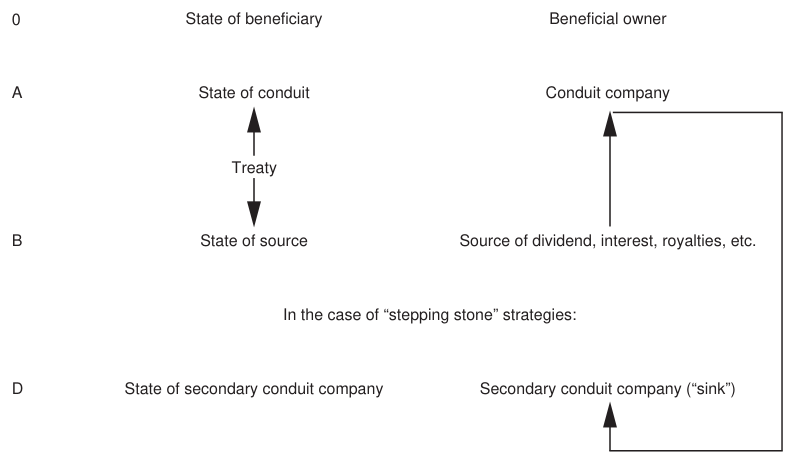
Annex II
Examples of bilateral clauses
A. The “exclusion” approach
1. Type related exclusion (Germany-Luxembourg Agreement)
Article 1
1. The Agreement shall not apply to holding companies within the meaning of the special Luxembourg laws (currently the Acts of 31st July 1929 and 27th December 1937). Neither shall it apply to income derived from such holding companies by a person domiciled in the Federal Republic of Germany or to shares in such companies belonging to such person.
2. The Agreement shall not apply to non-recurrent taxes on fortune or on capital gains.
3. If any doubts arise with respect to the future taxes to which the Agreement shall apply, the competent authorities of the Contracting States shall come to an understanding with a view to interpreting or amending the Agreement as may be considered necessary.
2. Tax status related exclusion (German-Canadian Agreement)
Article 29 Miscellaneous rules
1. With respect to income taxable in a Contracting State, the provisions of this Agreement shall not be construed to restrict in any manner any exclusion, exemption, deduction credit, or other allowance accorded:
By the laws of a Contracting State in the determination of the tax imposed by that State, or;
By any other agreement entered into by a Contracting State.
2. It is understood that nothing in the Agreement shall be construed as preventing:
Canada from imposing its tax on amounts included in the income of a resident of Canada according to Section 91 of the Canadian Income Tax Act;
The Federal Republic of Germany from imposing its taxes on amounts included in the income of a resident of the Federal Republic of Germany according to Part IV of the German “Aussensteuergesetz”.
Where such imposition of tax gives rise to a double taxation, the competent authorities shall consult for the elimination of such double taxation according to paragraph 3 of Article 25.
3. Articles 6 to 23 of this Agreement shall not apply to non-resident-owned investment corporations as defined under Section 133 of the Canadian Income Tax Act, or under any similar provision enacted by Canada after the signature of this Agreement, or to any income derived from such companies by any shareholders thereof.
B. The “subject to tax” approach
B1. (Germany-United Kingdom treaty)
Article V1
1. Dividends paid by a company resident in one of the territories to a resident of the other territory may also be taxed in the former territory. Tax shall not, however, be charged in that former territory at a rate in excess of 15 per cent on the gross amount of such dividends provided that those dividends either are subject to tax in the other territory or, being dividends paid by a company which is resident in the United Kingdom, are exempt from Federal Republic tax under the provisions of subparagraph a) of paragraph 2 of Article XVIII.
2. Notwithstanding the provisions of paragraph 1 of this Article Federal Republic tax on dividends paid to a company resident in the United Kingdom by a company resident in the Federal Republic at least 25 per cent of the voting shares of which are owned directly or indirectly by the former company may be charged at a rate exceeding 15 per cent but not exceeding 25 per cent if the rate of Federal Republic corporation tax on distributed profits is lower than that on undistributed profits, and the difference between those two rates is 28 per cent or more: where the difference between the two rates is 20 per cent or more but less than 28 per cent Federal Republic tax on such dividends may be charged at a rate exceeding 15 per cent but not exceeding 20 per cent.
3. Where a company which is a resident of one of the territories derives profits or income from sources within the other territory, there shall not be imposed in that other territory any form of taxation on dividends paid by the company to persons not resident in that other territory, or any tax in the nature of an undistributed profits tax on undistributed profits of the company, whether or not those profits represent, in whole or in part, profits or income so derived.
B2. (Germany-Switzerland treaty)
Article 23
2. Even though a company meets the conditions provided in paragraph 1, a company resident in Switzerland in which persons who are not residents of Switzerland have, directly or indirectly, a substantial interest in the form of a participation, may only claim the benefit of the reduction of taxes imposed by the Federal Republic of Germany on German source interest [Article 11, paragraph 1], royalties [Article 12, paragraph 1], and on capital gains [Article 13, paragraph 3], if these interests, royalties, or capital gains are subject, in the canton in which this company has its seat, to the cantonal tax on income under the same or similar provisions as are envisaged in regarding the federal defence tax.
3. A family foundation resident in Switzerland may not claim the benefit of the reductions of tax imposed by the Federal Republic of Germany on, German source dividends [Article 10, paragraph 2, through 4], interest [Article 11, paragraph 1], and royalties [Article 12, paragraph 1], and capital gains [Article 13, paragraph 3], if the founder, or the majority of the beneficiaries are non-residents of Switzerland and more than one-third of the relevant income is not, or will not benefit persons which are residents of Switzerland.
4. If the competent authority of the Contracting State, from which the items of income originate, has reasonable grounds to cast doubt on the declarations made by the recipient of the items of income in his effort to obtain a tax reduction, which are confirmed by the competent authorities of the other State, then the competent authority of the first-mentioned State shall communicate these grounds to the competent authority of the other State; this authority shall then undertake a new investigation and inform the competent authority of the first-mentioned State of the conclusions reached. In case of disagreement between the competent authorities of the two States, Article 25 shall apply.
C. The “channel” approach
German-Swiss tax treaty
Article 23
1. A company which is a resident of a Contracting State, and in which persons who are not residents of that State have, directly or indirectly, a substantial interest in the form of a participation, or otherwise, may only claim the tax reductions provided for in Articles 10 through 12 with respect to dividends, interest, and royalties, derived from sources in the other State, as provided for in Articles 10 through 12, where:
The interest-bearing debts to persons who are not residents of the first-mentioned State are not higher than six times its equity capital and reserves; this restriction does not apply to banks and similar institutions;
The interest paid on loans agreed upon with non-resident lenders is not paid at a higher rate than the normal interest rate; the normal interest rate means:
With respect to the Federal Republic of Germany: the rate of the current yield of interest-bearing securities from inland issuers plus two percentage points,
With respect to Switzerland: the average interest rate on debt obligations issued by the Swiss Confederation plus two percentage points;
Not more than 50 per cent of the relevant income derived from sources in the other Contracting State is used to satisfy claims (interest, royalties, development, advertising, initial and travel expenses, depreciation on any kind of business asset including on immaterial goods, processes, etc.) by non-residents of the first-mentioned State;
Expenses connected with the relevant income derived from sources in the other Contracting State are met exclusively from that income;
The corporation distributes at least 25 per cent of the relevant income derived from sources in the other Contracting State.
Additional measures already taken, or to be taken by one of the Contracting States, against abuse of the use of tax relief relating to withholding tax levied at source in the other Contracting State, are not prejudiced hereby.
The Taxation of Income Derived from Entertainment, Artistic and Sporting Activities
(adopted by the OECD Council on 27 March 1987)
Table of contents
Introduction R(7)-3
I. The problem stated R(7)-3
A. The business R(7)-4
B. Scope of the report R(7)-5
C. Main principles R(7)-5
II. The need for information R(7)-6
A. Country experiences R(7)-6
B. Sources of information R(7)-7
III. Assessment and collection of tax under domestic legislation R(7)-8
A. Problems in taxing non-resident artistes and athletes R(7)-8
1. Dependent services R(7)-8
2. Independent services R(7)-9
3. Other R(7)-10
B. Problems in taxing resident artistes and athletes R(7)-10
C. Measures taken or under consideration R(7)-11
1. Measures mainly directed at improving compliance by
residents R(7)-11
2. Measures concerning non-residents R(7)-12
3. Counteracting the abusive use of “artiste” companies R(7)-14
4. Some policy issues R(7)-15
IV. The interpretation and application of bilateral double taxation
conventions R(7)-16
A. Introduction R(7)-16
B. “Personal Scope” of Article 17 R(7)-17
1. Definitions of “artistes” and “athletes” R(7)-17
2. Support staff, impresarios R(7)-18
3. Interpretation of the expression “personal activities” R(7)-18
C. Income covered by Article 17 R(7)-19
1. Income other than remuneration accruing to artistes or
athletes R(7)-19
2. Income paid to a person other than the artiste or athlete. R(7)-20
D. Other relevant issues R(7)-22
1. Computation of income R(7)-22
2. Allocation issues R(7)-22
3. Cultural events such as those supported from public funds R(7)-22
4. Subsidiary right to tax for the country of residence R(7)-23
5. Triangular cases R(7)-24
V. Conclusions R(7)-24
A. Suggested improvements in the domestic sphere R(7)-24
B. Suggested improvements in the international sphere R(7)-25
1. Increased exchange of information R(7)-25
2. Assistance in collection R(7)-26
Notes and References R(7)-26
ANNEX. Article 17 R(7)-28
Introduction
1. This is the second study that the Committee on Fiscal Affairs has undertaken on the problems that arise in the taxation of itinerant activities.[138] It examines the tax treatment of resident and non-resident artistes and athletes.
2. The report is based upon 19 country submissions[139] and, unless otherwise indicated, the descriptions provided refer to 1986. The replies were analysed by the Working Party on Tax Evasion and Avoidance and the tax treaty aspects of the report were prepared by the Working Party on Double Taxation of the Committee on Fiscal Affairs.
3. The purpose of the report is to describe the main problems which arise in taxing income from entertainment, artistic and sporting activities at the national and international level and to suggest ways in which these problems can be overcome.
4. The structure of the report is as follows: Part I outlines the problem; Part II examines the information needs of tax authorities; Part III looks at the assessment and collection of tax and Part IV at the influence of double taxation conventions. Some concluding comments and suggestions for improvement are provided in Part V.
5. Since the main focus of the report is on the tax treatment of “artistes and athletes”, it may be as well to define these terms. For the purpose of the report, these terms are taken to cover any person engaged, either individually or as a member of a group, in public entertainment or sporting activities (see Part IV B i) for an elaboration of this definition). The terms “artistes and athletes” are also used in the title of Article 17 of the 1977 Model Convention on Income and Capital (hereafter referred to as the 1977 Model Convention). A number of countries, however, prefer the term “entertainer” to “artiste” and “sportsmen” to “athlete” and the text and commentary of Article 17 used the terms artiste and entertainer almost interchangeably. To simplify matters, however, this report uses the terminology “artiste and athlete”, though it has been agreed that in any general revision of the 1977 Model, the term “sportsmen” will replace “athletes”. Sometimes the term “performer” is used as a shorthand term for persons carrying out public entertainment, artistic or sporting activities.
I. The problem stated
6. The world of entertainment is characterised by: short-term activities (frequently one-off performances); an increasingly blurred distinction between dependent and independent services and business activities; sophisticated tax avoidance schemes. There are no reliable quantitative estimates available of tax non-compliance in this area, whether in terms of the amount of income involved or revenue forgone. Nevertheless, where countries have undertaken systematic audits (e.g. in Canada and the Netherlands) of these activities, they have shown clear evidence of non-compliance in this area. Studies undertaken a few years age in Canada, for example, indicated a practice of not reporting income, whether consciously or unconsciously, amongst performers at the low end of the income scale whose activities are particularly transient in nature. The United Kingdom has a similar experience. Performers in the lower ranks rarely disclose casual earnings from jobs outside their profession. With the co-operation of management, club entertainers frequently understate their earnings.
7. Sophisticated tax avoidance schemes, many involving the use of tax havens, are frequently employed by top-ranking artistes and athletes. Whilst some countries do not consider such activities of major importance, given the limited number of persons involved in international activities of this sort and the relatively small amounts of revenue involved, there is general agreement that where a category of – usually well-known – taxpayers can avoid paying taxes this is harmful to the general tax climate, which therefore justifies coordinated action between countries.[140]
A. The business
8. The problems of effectively taxing artistes and athletes are rooted in the diverse forms their activities take. Success can be sudden but ephemeral. Relatively unsophisticated people – in the business sense – can be precipitated into great riches, income sources can be many and varied. Travel, entertainment and various forms of ostentation are inherent in the business and there is a tendency to be represented by adventurous but not very good accountants. These activities have evolved rapidly in recent years, taking new presentational and organisational forms. The established performer operating with an easily defined role is still common but the industry is increasingly characterised by loosely and multi-aspect groups. The best examples of this are seen in the pop-music industry which operates through complicated chains of limited companies, partnerships, joint ventures and sole trading enterprises.
9. Apart from the performers themselves, the industry covers a large entourage, including managers, various administration and publicity staff and road crews. Some members of a group receive music and/or writing royalties and fees; they all receive different types of record and broadcasting royalties. Frequently sources of income in different parts of the world are taken through different companies. Such forms of organisation have developed in response to the needs of a business which crosses international and occupational boundaries. It is likely that the inventiveness and complexity of the industry will continue to expand, and perhaps extend into other aspects of the entertainment business.
B. Scope of the report
10. The diversity of situations described above makes it difficult to cover in a single report all the relevant taxation aspects. The emphasis in the present report is on issues which are specific to the industry. General domestic problems relating to any dependent or independent services which were already dealt with in an earlier report (see note 1) are therefore not dealt with here. A case in point is sportsmen employed permanently in a country (such as professional soccer players) who are normally considered as employees of their clubs.[141]
11. The distinction between professionals, semi-professionals or amateurs is often a fine one in practice, and is not elaborated upon in this report. There are obviously cases – potentially numerous – where, for instance, amateurs obtain compensation for their expenses (or more), and where professionals exercise some undeclared activities when they are not officially working. Problems related to these casual earnings are not limited to the entertainment field and are subject to the usual checks required on “black” activities.
12. Performers may receive a wide variety of types of income, whether directly or indirectly, and not all of which are related to actual performances. Artistes, for example, will frequently receive copyright royalties or other income related to the sales of records; they may benefit from free advertising, or even receive fees for advertising their own name. Sportsmen may receive remuneration from manufacturers of sports equipment on condition that they use the manufacturer’s brand or publicise the products of the same brand. Payments for advertising goods not related to the entertainer’s activities are not infrequent. For the most famous, the variety of contracts and types of income call for worldwide financial and tax planning with the assistance of specialised advisors. From the tax authorities’ point of view, this diversity of income sources raises a number of assessment problems.
13. In a number of cases, artistes and athletes may make more money from these related activities than from their activities as performers. However, this report concentrates, in the first instance, on income related to actual performances, even though this distinction may be artificial in some cases.
C. Main principles
14. The main principle which underlines this report is that income from entertainment and sporting activities should be taxed in the same way as income from any other activities. Exceptions to this principle should be kept to a minimum. Problems can arise because some governments may accept that a particular event is a “cultural exchange”, and, therefore, no tax should be imposed on profits arising from it. Nevertheless, in practice, such events are generally staged for the purpose of profit and granting special treatment to some events of this kind makes it more difficult to resist similar claims from other domestic circles on the grounds of fair competition. Country experiences suggest that some tax authorities are better able to resist the “cultural exchange” pressure groups than others, or are better placed to check that the income generated is taxable in the residence country. Similar problems arise in the context of “charitable events” (where it is assumed that there is no “income” produced by the event), or tax-free performances by State-supported troupes. In all such cases, the Committee considers that tax privileges should be limited to genuine, justified cases, for instance, to events organised as part of an official “cultural exchange programme”.
15. The second principle upon which this report is drafted is that artistes and athletes are, as are other taxpayers, fully liable to tax in their country of residence and, ideally, should be taxed accordingly. Whilst certain countries provide for exemption of foreign income, the amount of income earned abroad should be known when, under the general income tax, this affects the progressive rate that is applied to other income sources.
16. However, as is usually the case with itinerant activities, the country of residence has difficulty in identifying the activities of its residents abroad. It will therefore have to rely mostly on information provided by the country where the activities are exercised. For this reason, and also in order to avoid practical difficulties, it is felt that the principle on which Article 17 of the 1977 Model Convention is based should be followed. The main purpose of this report is therefore to help member countries to establish a system by which the income of artistes and athletes could effectively be taxed in the country of performance.
17. In taxing artistes and athletes, tax authorities encounter problems first in obtaining information about the performances taking place and secondly in the assessment and collection of tax which arise from the nature of the trade or the use of legal avoidance schemes.
II. The need for information
18. It is in the nature of the trade that entertainment, artistic and sporting activities should be advertised, so as to attract the public. However, such publicity very much depends on the importance of the event and experience shows that, in many cases, a large part of these activities do not come to the attention of the tax authorities. Furthermore, even when an activity is noticed, problems often arise in identifying the performers themselves.
A. Country experiences
19. The experience of countries participating in the study shows that, generally speaking, relying on the taxpayers themselves to report accurately the amount of income earned at home and abroad is even less realistic in the entertainment area than in other areas, considering how easy it is for a number of performers to conceal such income. Also it is commonly believed in the entertainment world of some countries that all sums earned abroad are free of domestic tax, and returns and accounts frequently reflect this belief. In the absence of other checks, the tax authorities will therefore not be able to impose tax on such activities.
20. Where artistes and athletes perform dependent services in most countries, they will come under PAYE or a wage-tax system and their employers (if situated in the country) will report that part of their income. Where, however, the employer is a controlled limited company, the importance of the case may often not be realised by the tax authorities. The PAYE file may contain only the entertainer’s real name, not his stage name, and the name of the company may not suggest an association with the entertainment business. This problem is accentuated where, as increasingly occurs, a multiplicity of controlled limited liability companies are created to receive various streams of income. Additional problems can occur if the employer is situated abroad (e.g. non-compliance with PAYE regulations). In the absence of any PAYE system, information obtained through the usual reporting system for wage earners may not be useful, as a lot of time may elapse since the income was earned, and the entertainer’s position (or residence) may have changed.
21. Most difficulties arise with self-employed artistes and athletes, and it is mainly for them that an elective information-gathering system is desirable. Yet, it is usually difficult to identify and locate such people, even in cases where written contracts exist, because of a number of factors: the use of pseudonyms or stage names on agency contracts; the use of false social security numbers where these are noted on entertainment contracts, the fact that payments for services are made in cash, after deductions for agents’ fees; the difficulty inherent in tracing and locating people two or three years following the rendering of the service.
B. Sources of information
22. The difficulties set out above require early receipt of information concerning the performance itself, preferably before it takes place. Countries have reported a number of possible non tax-related sources, general sources information, such as newspaper and other advertising, specialised magazines and periodicals. Prize monies earned by major athletes sometimes also appear in the specialised press (Ireland). Most reputable concert agents, radio and television companies give advance notice of visits to the United Kingdom; so do major impresarios in the Netherlands. In some countries (such as France), authors’ or artistes’ associations are useful sources of information on forthcoming or past performances. Advance information concerning incoming foreign entertainers may also be obtained through immigration or other Government departments (Sweden, United Kingdom), although work permits do not necessarily specify where the entertainer is to appear, nor when or how often (Sweden). As regards athletes taking part in international tournaments, another important source of information may be the national sports federations, which in the context of sanctioning the arrangements of sports events in their country, may be able to identify foreign athletes participating at such events. Finally, in some countries information will be given in advance for tax reasons (e.g. to obtain a reduction of withholding tax in Canada, or a “tax card” in Denmark).
23. In most countries, however, information is usually available only after the event through contacts with local tax offices (Belgium, where a local tax is levied), reports by entertainment agencies, theatres, broadcasting authorities etc. As noted earlier, the information will frequently be available too late for an effective taxation of the performer. Also, in many cases, the promoter is a non-resident, so that the possibility of obtaining information even after the event is rather slight (cf. Part IV).
III. Assessment and collection of tax under domestic legislation
24. Although countries’ experience in assessing and collecting tax on artistes and athletes vary, a number of difficulties in this area have been reported. The following paragraphs briefly describe problems arising in assessing or collecting tax on non-resident and resident performers, as well as some existing counteracting measures.
A. Problems in taxing non-resident artistes and athletes
1. Dependent services
25. In some countries, tax does not have to be paid on income earned by non-residents in respect of dependent services in the country if the employer is a foreign company which does not maintain a permanent establishment in that country. This opens up wide avenues for tax avoidance, the most famous one being known as “slave agreements” with foreign employers. Other countries whose tax systems are not restricted in this way and which can tax domestic source income providing it relates to duties undertaken in that country also find that “slave agreements” are used to negate or reduce the tax charge. Payment is made to the artistes or athletes from abroad to convert the income to an overseas source. This may remove the income from the scope of charge completely (this is, for example, the case in Australia).
26. In a typical case of a “slave agreement”, the performer receives a salary from a foreign employer for services undertaken in the country of performance. There is no legal relationship between the domestic promoter of an event and the entertainer. The foreign company enters into a contract with the promoter. This provides for a lump-sum payment which represents the fee for the entertainer’s appearance as well as a fee for the company for planning and organisation. This payment is usually made abroad often before the performance is given. As contracts are signed and other business is done abroad, it is not possible to contend that the company is carrying on a trade or business in the country of performance. Quite often the salary due to the performer from the company paid outside the country of performance. Many of these foreign employers are companies controlled by the performers themselves and are based in tax havens (rent-a-star companies). There are also organisations[142] which specialise in entering into employment agreements with artistes and athletes.
27. Another problem experienced by tax authorities which retain domestic taxing rights despite the interposition of a “slave company” is determining what proportion of the entertainer’s salary relates to his or her performance in the country. The obvious method – time apportionment of the remuneration provided in the service agreement – is clearly open to abuse having regard to the “sham” nature of the agreement.[143]
28. When dependent services are performed directly for the domestic promoter, tax assessment raises in principle less difficulties. Artistes and athletes will frequently be subject to the PAYE or wage tax (or précompte) on income paid to them, and the income tax legislation may well provide for a legal liability for the person paying the remuneration (Austria, Belgium, Germany, Netherlands, for instance).[144] However, although the control problems involved are similar in nature to those arising for other dependent activities, they are increased by the itinerant character of the activities performed and the difficulty in obtaining adequate information (see Part II above) so that the usual assessment and collection instruments (e.g. withholding) cannot in practice be used effectively.
2. Independent services
29. Problems arising in taxing independent services provided by artistes and athletes are substantially similar to the problems usually met in this general area. However, they are aggravated by the mobility of the taxpayers involved, including the case with which they may change status at will, as between dependent or independent services. Frequent changes of employers or contractors, who themselves often have a rather elusive character and are subject to more lenient reporting requirements, and the fact that they can frequently leave a country without notice, open up wide possibilities of evasion and make assessment and collection of tax problematic in the absence of any withholding tax (see paragraphs 45 to 47 below).
30. A particular problem which arises in assessing income from the self-employed where no withholding tax exists is the basis and timing of assessments. The assessment of tax on the professional income of the self-employed is established during the year after the receipt of the income and in the majority of cases, the tax would not be collectable until after the person concerned had left the country.
31. Even where a withholding tax exists on payments made to non-residents in respect of services performed in the country, some avoidance problems may arise. For example, if there is no requirement that a promoter withholds tax when the payment is to a domestic company (e.g. in Canada), non-resident performers will form such a company, which they will use for contracting to appear in the country, with a domestic address (generally that of a lawyer) to receive the income. The money is then deposited in a bank account in the country and immediately thereafter withdrawn by the non-resident performer.
3. Other
32. Business income from entertainment, artistic and sporting activities of a non-resident will usually be taxed only if a permanent establishment is maintained in the country. In some countries certain income received by artistes and athletes is considered under domestic law to be business income. Opportunities for tax avoidance or non-taxation are rather wide in this cases.[145]
33. In some cases, the entertainer’s performance is “sold” to local organisers as part of a complete show. As the contract for the “package” does not refer to any particular performer and includes various types of services, the “package” may hardly be considered as performance of artistic activities. It would then avoid taxation in the country as there is no permanent establishment there.
34. Another case of possible abuse by non-residents is that relating to liability in respect of payments made for recordings. The United Kingdom noted, for example, that these are assessed to tax on the basis of “royalties” paid on sales in a year in which the performer is present in the country provided the recording was made in that country under a contract with a resident company. Liability is very easily avoided especially where the recording is for a large multinational corporation by, for example, making the contract with a non-resident subsidiary.
B. Problems in taxing resident artistes and athletes
35. Although the taxation of resident performers raises mainly problems of enforcing existing, more general, domestic legislation, this is also an area of widespread non-compliance. Resident performers exercise, in effect, itinerant activities within the country. Problems in taxing them are, in many respects, not dissimilar to the ones arising for taxing non-residents.
36. As mentioned earlier in the report, a major administrative problem is obtaining information about the activities – combating understatement or non-disclosure of earnings and income splitting amongst controlled limited companies and ensuring that data are available to the tax authorities at the right place at the right time – artistes and athletes are notoriously dilatory about their financial affairs and there is always the danger of the tax authorities being left with an empty basket.
37. Tax authorities experience special difficulties where the legislation does not provide for withholding tax in respect of services performed by self-employed persons who are residents. Even where performers are provided by agencies, contracts are sometimes considered as “contracts for services” rather than “employment contracts” (Canada). In some countries, problems arise due to the fact that a large number of organisers are non-commercial and not taxable; they have therefore no tax interest in keeping accounts or giving information to tax authorities.
38. Tax administrations are particularly vulnerable in respect of overseas engagements and they have to rely heavily on the individual declaring the income. The entertainer’s remuneration is often paid in respect of activities which are partly exercised abroad without specification of the share of remuneration which is attributable to domestic activities. Practical difficulties therefore arise as to the appropriate tax base. Furthermore, extravagant deductions for “business” expenses are frequently claimed.
39. Special mention should be made of arrangements by which resident – usually well known – performers endeavour to take themselves out of the self-employed status into a dependent one. This is in general for the purpose of accumulating income abroad, by setting up a sham company in a tax haven, or by using specialised “employer” agencies abroad and the problems discussed in paragraphs 30 and 31 above then arise.
40. However, this may also have purely domestic reasons. Canada and the United States, for example, experienced difficulties with individuals who are involved in entertainment activities and who have entered into corporate arrangements whereby they incorporate a company (usually the performer holds the shares himself) which then contracts with the performer, as its employee, for his services. The tax advantages of such corporate arrangements lie in the fact that the corporate rate of tax is usually less than that of a high-income individual. Also, the corporation may “employ” the performer’s spouse, thus achieving a splitting of income. Certain expenses such as agent’s fees may be written-off by the corporation against the amounts received. These expenses would not be allowable to an individual as a deduction from employment income.
C. Measures taken or under consideration
41. The present section sets out various measures which have been tried, or are being considered, to improve compliance in the area of entertainment, artistic and sporting activities.[146] The fact that similar problems arise in different countries in taxing effectively artistes and athletes, wherever the activities are exercised, points to the necessity of having proper domestic procedures both for domestic tax purposes and for assisting other countries. This section therefore also considers some wider policy issues involved when trying to devise efficient instruments for taxing resident and non-resident artistes and athletes on the one hand, and other performers of dependent or independent services, on the other.
1. Measures mainly directed at improving compliance by residents
42. Certain countries (e.g. France, United Kingdom) have general powers to call for returns of payments (fees, commissions, etc.) made by residents to people not in their employment (whether resident or non-resident). Given the known low level of voluntary compliance by those in the entertainment, artistic and sporting worlds, such information is considered by these countries to be essential to combat tax avoidance and evasion. Administratively, such legislation will be more effective where machinery exists to ensure that the information reaches the tax file of the person concerned at the earliest opportunity. In the United Kingdom’s experience, these arrangements need to be backed up by monitoring new developments and the emergence of new talent with a view to taxing them before they spend their money. Moreover, a centralised approach is considered essential to ensure that they are dealt with satisfactorily, i.e. by bringing together all the relevant personal and associated company files. An uncoordinated action, where various offices are unaware of the whole picture, invariably proves to be less successful.
43. Another measure which has been adopted by both France and the United Kingdom is the ability to “look through” controlled overseas companies set up by residents to receive income relating to their activities, and over which they retain control. In neither case are the provisions restricted to the entertainment and sporting fields. The French scheme, which now also applies to non-residents, is outlined in paragraphs 55 and 56 below. The United Kingdom legislation has not proved of significant practical value in this particular field although its existence does serve as a deterrent to blatant abuse.
2. Measures concerning non-residents
a) Income tax provisions
44. In the absence of special legal instruments concerning artistes and athletes (or self-employed generally), some countries (e.g. the United Kingdom until recently) have adopted a centralised approach to deal with the liability to tax of foreign visitors. Such an approach requires direct links between the tax office and the industry and that the tax office is kept informed of visits by major non-resident performers.
45. Most countries feel however that tax authorities need special techniques for assessing and collecting tax on artistes and athletes. In principle, an effective instrument available under domestic legislation to deal with situations where income is paid to itinerant people is withholding taxes. While they can usually be levied on income from dependent services, withholding taxes are also levied on income from independent services paid in some countries to non-residents (e.g. Austria, Belgium, Canada, Germany, Japan, United Kingdom). Similar techniques are used under the special “artiste taxes” referred to in paragraphs 48 to 53 below.
46. In some countries, specific rules apply to artistes and athletes. In countries where non-residents are liable to income tax only if the income is derived through a permanent establishment or a fixed base, some improvement can be made by deeming the income paid to non-resident artistes or athletes as being earnings derived from employment (Netherlands) or by providing that the taxation right can be exercised even if the performer does not maintain a permanent establishment in the country (Austria and Germany). In Portugal and Spain, non-resident artistes are subject to a 5 and 18 per cent withholding respectively. In Switzerland, income tax is levied at source on income paid to non-resident performers, according to a graduated four-band tax schedule, after deduction of expenses.
47. Considering the aim of taxing effectively income from entertainment, artistic and sporting activities in the country of performance, the Committee considers that, in the context of the general income tax, domestic legislation should ideally provide for tax to be withheld at source on payments to non-resident artistes and athletes.[147] In order to be most effective, this should apply also where the artiste or athlete has no fixed base or is an employee of a foreign company having no permanent establishment the country. Also for the sake of effectiveness, the rate of such withholding should probably be set at a rather high level. Finally, where withholding tax is levied, the payer of the income could be held responsible for the payment of the tax (as is presently the case in Austria, Belgium, Germany, Netherlands and the United Kingdom with effect from 6th April 1987).
b) Special taxes on artistes and athletes
48. Special artiste taxes are levied instead of general income taxes Norway and Sweden on non-resident artistes and athletes performing services in these countries. The basic object of these taxes is to ensure payment of tax where the remuneration of the artiste and athlete is paid, i.e. at source, under a technically convenient form.[148] As they are constructed, these taxes are often considered as a tax on the organiser, which gives rise to claims for exemptions, taking the system further away from its starting, basic principles.
49. In both Norway and Sweden these taxes are final taxes and are fixed at a certain percentage of the estimated gross income derived by the performer (30 and 15 per cent in Sweden and Norway, depending upon whether the performer just takes part in a performance, or arranges it himself). These taxes, which are therefore a simplified form of, and a substitute for, ordinary income tax, are always taken as income tax for double taxation convention purposes.
50. The organiser of the event is responsible for the payment of the tax, whether or not he is the artiste or athlete. In Norway, he is also liable to file a detailed statement on the arrangement with the collecting authority, and to present contracts on request. In Sweden, a prior authorisation for the performance is necessary in most cases, but after an amendment in 1977 failure to request authorisation does not entail any fine.
51. Experience shows that in certain respects, such special taxes also are open to abuse. Detecting the activities is a major issue; especially so as work permits, which should in principle be issued prior to the performance, are not required for citizens of Nordic countries. Assessment problems arise, such as the use of foreign controlled companies and of double contracts. Finally, collection problems may also arise where, as in Norway, collection takes place only after the performance, no prepayment or security for payment being required. The combination of a low rate of tax on artistes and athletes and of the requirement that, after six months in the country, the performer is subject to ordinary income tax, opens up possibilities of evasion and creates administrative difficulties.[149]
52. A major problem, as seen in Norway and Sweden, arises from the fact that the tax is perceived as a tax on the organiser, not on the artiste or athlete. The impression prevails that the income of non-resident performers is not taxed. It is argued that the tax is an unjustified additional levy on domestic cultural activities and is inequitable because substantial exemptions are provided for in practice (in Sweden by way of tax relief for performances which form part of cultural exchanges).
53. It is noted that these provisions are under review and that suggestions have been made to improve information gathering through stronger reporting obligations (Norway), as well as assessment and collection of the tax. In Sweden, special attention is being paid to the problems connected with imposing tax on a gross remuneration without taking into account the variety of expenses attributable to different kinds of performances. Experience in these countries seems to indicate that implementing such a tax requires special care if it is to be effective. It also raises policy questions of a wider nature to which paragraphs 60 to 63 below are devoted.
3. Counteracting the abusive use of “artiste” companies
54. Counteracting the use of “slave” contracts with “artiste companies” is rather difficult where there is no domestic provision to “pierce” the corporate veil (e.g. as is the case in the Netherlands). Special measures to deal with situations like these have been taken in countries like Austria, France, Germany and the United Kingdom and some United States provisions are also of relevance. The Austrian income tax legislation provides (since 1972) that independent personal services income of non-resident artistes and athletes in respect of performances exercised in Austria is subject to withholding tax even if diverted to a third person (e.g. an artiste company). The recent United Kingdom provisions are similar in effect.
55. Since 1972, the French legislation contains special provisions, which are not restricted to the entertainment area, and under which income received by a person outside France as remuneration for services rendered in France by another person shall be liable to tax there under certain conditions. These provisions were originally limited in scope to income received by companies registered outside France for services performed in France or abroad by individuals resident of France if the latter had “direct or indirect control” of the companies, or when such companies have no industrial or commercial activity other than the provision of services or, in any event, where the companies were registered in a country which had no general income tax treaty with France. The wording of these 1972 provisions left to the tax administration the burden of showing that the person was a resident in France, and investigations encountered a number of practical difficulties. The main virtue of the provision was reported to be its dissuasive aspect.
56. The French provisions were revised in 1980 to cover performers of services who are non-residents as well as residents of France, and companies as well as individuals. They apply in all cases where the person receiving the payment is situated in a low-tax country. In other cases they apply unless the performer shows that he has no control over the person, or that the latter exercises mainly an industrial or commercial activity. Finally the person receiving the remuneration is jointly responsible for the payment of the tax and the tax authorities may now collect the amounts necessary for the payment of the tax from third parties (e.g. organisers).
57. On 20th December 1985 a provision of the German Income Tax Law went into effect which classifies as taxable domestic income from trade or business, income derived from artistic, athletic or similar performances exercised in Germany or from their exploitation, including income derived from other services connected with these services. This applies regardless of to whom the income accrues. It is not necessary for there to be a permanent establishment or permanent representative in Germany. In addition, income tax shall be withheld from such income regardless of to whom the income accrues.
58. In the United States, the Internal Revenue Service has ruled (Revenue ruling 74.330) that where, among other things, the artiste or athlete retains control over the detained organisation of his work, an employer-employee relationship does not exist. This ruling helped defeat the improper use of a tax convention by claiming exemption under the 183-day rule. Also in the United States, foreign personal holding company provisions extend to income from the performance of certain personal service contracts. Thus a United States artiste or athlete who is a 25 per cent or more shareholder. in a foreign personal holding company cannot avoid United States tax by performing services for that entity.
59. Although experience as to the efficiency of some of these measures is still limited the Committee considers that they constitute a useful means of counteracting the use of shadow-companies within the framework of income tax legislation.[150]
4. Some policy issues
60. When discussing possible suggestions for improving domestic legislation generally rather far-reaching policy questions arise. Even though agreeing that taxation should in principle take place at the place of performance and that distortions in tax treatments should be avoided, countries vary in the ways their systems are devised, which has a bearing on answers to the following two questions:
How far should resident and non-resident artistes and athletes be treated alike or differently?
How far should artistes and athletes be treated differently from other performers of dependent, or independent services?
61. On the first point, differences in treatment which exist in some countries distort competition and produce claims for a harmonised system whereby resident and non-resident artistes and athletes would be treated alike and pay the same tax. This would also eliminate all incentive to engage in tax avoidance by altering the residence status and would avoid some administrative difficulties (e.g. where a resident performer is a member of a non-resident band, which may be unknown to the organiser of an event). More generally, it could be argued that given the nature of the trade, and the fact that some tax problems (e.g. for detecting the activities) arise in both situations, a similar system should apply to residents and non-residents.
62. Setting up special systems for taxing artistes and athletes, however, necessarily divorces them from other categories of taxpayers, whether resident or non-resident. In some countries, it seems that this could create difficulties, even though special systems could be devised to deal with certain other categories (e.g. sub-contractors). There is a feeling, in these countries, that counteracting tax avoidance and evasion in this area should preferably use ways and means which would not divorce the artiste or athlete from the main categories of taxpayers to which they belong, i.e. providers of dependent or independent services.
63. It may be noted that, in order to avoid any differences in treatment, a withholding tax can be made to cover all the self-employed, not only self-employed artistes or athletes, or independent contractors. It could apply both to residents and non-residents. Also, as seen under French legislation, some counteracting measures in the case of dependent services (foreign “artiste company”), can be made to apply to all types of services concerned. Such more general instruments would be of use in dealing with income from other types of itinerant activities.
IV. The interpretation and application of bilateral double taxation Conventions
A. Introduction
64. There are many provisions in the 1977 Model Convention which can affect the taxation of artistes and athletes. Such persons are often in the position of receiving income of various kinds and from several sources as the circumstances in which they carry on their activities can vary widely.
65. However, the taxation of their incomes is governed essentially by the provisions of Article 17 of the Model Convention which stipulates:
1. Notwithstanding the provisions of Articles 14 and 15, income derived by a resident of a Contracting State as an entertainer, such as a theatre, motion picture, radio or television artiste, or a musician, or as an athlete, from his personal activities as such exercised in the other Contracting State may be taxed in that other state.
2. Where income in respect of personal activities exercised by an entertainer or an athlete in his capacity as such accrues not to the entertainer or athlete himself but to another person, that income may, notwithstanding the provisions of Articles 7, 14 and 15, be taxed in the Contracting State in which the activities of the entertainer or athlete are exercised.
66. The reasons for these provisions in the Model are set forth in the five paragraphs of the Commentary, on which an observation was made by Canada and the United States.
B. “Personal Scope” of Article 17
1. Definitions of “artistes” and “athletes”
67. The first issue considered was whether the terms “artistes” (as it appears in the title of Article 17), “entertainers” and “athletes” were sufficiently broad to cover all the persons it is wished to tax under Article 17.
68. As far as “artistes” are concerned, it was noted that paragraph 1 of the Article included examples of persons who would be regarded as such. However, these examples should not be considered as exhaustive. It was agreed that it was not possible to give any precise definition of “artiste”, and that a wide variety of situations could arise. On the one hand, the term clearly includes the stage performer, film actor, actor (including for instance a former athlete) in a television commercial. Article 17 may also apply to artistes and athletes participating in activities which are of a political, social, religious or charitable nature, if an entertainment character is present. On the other hand, conference lecturers and persons interviewed on television are clearly not “artistes” in the meaning of Article 17. There is however a variety of intermediate situations where say, appearance on television or in public could generally be seen as “acting” for entertainment purposes, thereby falling under Article 17. In this grey area, it is necessary to review the overall balance of the activities of the person concerned.
69. A discussion was held on whether and how Article 17 applied to the intermediate case of the “actor/producer” (or the television presentator/ producer, or the dancer/choreographer). The conclusion was that in such cases, it is necessary to look at what the individual predominantly does in the country where the performance takes place. If his activities in that country are predominantly of a performing nature, Article 17 will apply to all the resulting income he derives in that country. If, on the other hand, the performing element is a negligible part of what he does in that country, the whole of the income will fall outside Article 17. In other cases, an apportionment might be necessary.
70. As far as athletes are concerned, it was agreed that the intention was to cover sportsmen in the broad sense of the word. The term is not restricted to what are traditionally thought of as athletic events (e.g. running, jumping, javelin throwing). It also covers, for example, footballers, golfers, jockeys, cricketers and tennis players, as well as racing drivers.
71. Article 17 also applies to other participants in public entertainment such as billiard players, and participants in chess or bridge tournaments.
2. Support staff, impresarios
72. Consideration was given to whether, under the present wording of Article 17, there was some scope for covering “support” staff of artistes and athletes. There was agreement that a narrow interpretation should prevail and that both the intention and the language of Article 17 do not presently allow the taxation under Article 17 of producers, film directors, choreographers, technical staff, etc. Other Articles of the 1977 Model Convention would apply to such support staff (generally Articles 14 or 15 and in certain cases Article 7).
73. While income received by impresarios, etc. for arranging the appearance of an artiste or athlete is outside the scope of Article 17, any income they receive on behalf of the artiste or athlete does of course come within the Article.
74. It was therefore agreed that income of intermediaries could be covered only by supplementing the text of the Article, for example along the following lines:
The rule laid down in paragraph 1 shall apply to income from the personal activities exercised, in an independent capacity or as an employee, by any person participating in the organisation or carrying out of such performances by artistes or athletes.
3. Interpretation of the expression “personal activities”
75. The expression “personal activities” in paragraph 1 of the Article seems to indicate that the paragraph applies to income accruing to the individual “performer”. However it is usual for orchestras, choral societies and sports teams to be incorporated. The question therefore arises as to whether only the income received by the members of the incorporated orchestra, etc. come within paragraph 1, or whether income that accrues to the company as “company earnings” is also covered by, that paragraph.
76. The conclusion reached on this question was that paragraph 1 applied to income derived directly or indirectly by an individual artiste or athlete. In some cases the income will not be paid directly in the State where the performance takes place to the individual or his impresario or agent. For example, a member of an orchestra may be paid a salary rather than receive payment for each separate performance. In this case the Contracting State where a performance takes place is entitled, under paragraph 1, to tax an appropriate proportion of the musician’s salary. Similarly, where an artiste or athlete is employed by e.g. a one person company, the State of source may tax an appropriate proportion of any remuneration paid to the individual. In addition, where its domestic laws “look through” such entities and treat the income as accruing directly to the individual, paragraph 1 enables the State where the performance takes place to tax income derived from appearances in its territory and accruing in the entity for the individual’s benefit, even if the income is not actually paid as remuneration to the individual (see paragraphs 85 to 93 below for the interpretation of the provisions of paragraph 2).
C. Income covered by Article 17
1. Income other than remuneration accruing to artistes or athletes
77. In view of the difficulties inherent in taxing artistes and athletes who receive a large variety of types of income from different sources, from the viewpoint of double taxation, the first question which arises concerns the scope of Article 17, i.e. what types of income are, or may be, subject to its provisions.
78. One possible interpretation, the narrowest, is that only income deriving directly from an exhibition – normally in public or on television, in respect of live performance or of the first transmission of a recording – of the artistes or athletes talents falls under Article 17, and all other types of income should be taxed in accordance with other relevant rules of the 1977 Model Convention. The argument advanced in support of this interpretation is that, subject to the provisions of Article 17, artistes or athletes should not in principle be taxed differently from those in other professions, whether self-employed or in dependent employment.
79. Thus, income derived from contracts for the reproduction of an artiste’s work (for example, on record, cassette or videocassette), being in the nature of a royalty, should be governed by Article 12 (cf. paragraph 13 of the Commentary on Article 12). Income from other independent personal services would come under Article 14. This would apply in particular to income from sponsorship and to remuneration received from commercial enterprises for using, and therefore promoting, sports equipment and clothing. As to business income not expressly mentioned in Article 17, it would come under Article 7.
80. The contrary opinion is that the links which exist between the different activities of performers, the complexity of the contracts (often so-called package deals) governing the exercise of these activities and the forms of payment received (frequently qualified as “royalties” for tax avoidance purposes) make it impossible for tax authorities to identify each of them separately, and since the payments are connected, they should all be brought within the scope of Article 17.
81. The Committee recognised that the complexity of such situations does indeed give rise to serious difficulties even though some of the problems were not specific to this area. It felt that resorting systematically to the solution proposed in paragraph 80 above would however render meaningless many of the provisions – in particular Articles 12 and 14 – dealing with other indirect income habitually received by artistes and athletes over and above monies paid as direct remuneration. Moreover, there will frequently be substantial administrative difficulties in taxing such indirect income in the country where the performance takes place, as contracts concluded with a firm in one country (for example, for advertising) will very often cover the exercise of activities throughout the world. The country where the performance takes place will frequently not be informed of the existence of such income and any apportionment of it (e.g. on the basis of the relation to a specific performance) would be problematic, with a risk of double taxation.
82. The Committee considered that it would not be appropriate to bring genuine royalties into the scope of Article 17. It was noted that the definition of “royalty” under Article 12 was rather restrictive and a number of countries would not consider advertising and sponsorship fees as royalty income. Countries would of course be able to check that what was described as a royalty by the taxpayer really was a royalty in the meaning of Article 12: if it were not, then Article 17 might apply.
83. It was therefore agreed that, with regard to the application of Article 17, account should be taken of the extent to which the income was connected with the actual activity of the artiste and athlete in the country concerned. In general, Articles other than Article 17 would apply whenever there were no direct link between the income and a public exhibition by the performer in the country concerned. On the contrary, advertising or sponsoring income paid especially in connection with a performance (whether before or after the event) or a series of performances, would fall under Article 17.
84. Finally, it was agreed that compensation paid to an artiste and athlete when a performance had to be cancelled by the organiser came under Article 21 dealing with “other income”. Such compensation is therefore taxable only in the artiste’s or athlete’s country of residence.
2. Income paid to a person other than the artiste or athlete
85. As noted in paragraph 76, paragraph 1 of the Article applies to income derived directly or indirectly by an individual artiste or athlete from his/her personal activities. In some cases, the State where the performance takes place will be in a position to tax at source at least part of such income. However, it will not always be so, e.g. when income has been paid by the organiser to a management company for the appearance of a group of sportsmen, or when a team, troupe. orchestra, etc. is itself constituted as a legal entity.
86. In the case of incorporated teams, orchestras etc., income for performances will normally be paid to the entity. Individual members of the team, orchestra, etc. will be liable to tax under paragraph 1, in the country in which a performance is given, on any remuneration or other income directly or indirectly accruing for their benefit as a counterpart of the performance. The question arises as to whether and how the profit made by the legal entity itself from the performance is taxable.
87. Because of the reference to “personal activities” in paragraph 1 of Article 17, the consensus was that this paragraph was not applicable to such profit of the legal entity, which raised the question whether paragraph 2 of the Article was applicable.
88. Paragraph 2 of Article 17 provides that when income in respect of personal activities exercised by an artiste or athlete “in his capacity as such” accrues to another person, that income may be taxed in the country in which the activities of the artiste or athlete are exercised. The original purpose of the provision was “to counteract certain tax avoidance “schemes” by an artiste or athlete under contract with a company which is in effect under his control. The artiste might claim exemption from tax at source under the 183-day rule, the company paying him not being taxable in the absence of a permanent establishment (see paragraph 4 of the Commentary on Article 17 of the 1977 Model Convention).
89. The Committee found that there was nothing in the text of paragraph 2 to preclude its application to incorporated teams, troupes, etc., even though the original intention was different. It was therefore agreed that the provisions in Article 17 enabled tax to be levied on:
The amounts paid to artistes or athletes through a separate entity, but accruing to them;
The amounts allocated to an entity, but not paid to the artiste or athlete, which has the effect of indirectly taxing the profit element kept by the entity.
90. A few countries, however, considered that paragraph 2 should apply only in cases of abuse, especially bearing in mind the text of paragraph 4 of the commentary to Article 17.
91. The Committee noted that the legislation of some countries makes it possible to “look through” arrangements involving entities and to deem the income to be derived by the artiste or athlete: where this is so, paragraph 1 enables them to tax income resulting from such activities in their territory. Other countries cannot do this. Where a performance takes place in such a country, paragraph 2 permits such counties to impose tax on the profits directed from the income of the artiste or athlete to the entity. It may be, however, that the domestic laws of some countries do not enable them to apply such a provision. Such countries are free to agree to alternative solutions or to leave paragraph 2 out of their bilateral conventions (cf. paragraph 5 of the commentary).
92. Having earlier considered the application of paragraph 2 to payments made to an entity in respect of artistes’ and athletes’ performances where they do not control the entity or benefit from that income (see Paragraphs 89 and 91 above), the Committee agreed that there are even stronger reasons for allowing the country of source to tax the whole of the income paid to a performers own entity. The Committee also noted that similar considerations are set out in paragraph 83 above as regards the nature of the income covered by the Article also apply here.
93. In the German view the taxation of income derived by a company resident in a third country for activity exercised in Germany by artistes employed by it should take account of the legal relationship between the German organiser and that company. If there is no Double Taxation Agreement with the third country, the Federal Republic of Germany under its domestic legislation (see paragraph 57) can fully tax such income. Withholding tax is levied on gross receipts at the rate of 15 per cent. The same applies to third countries with whom there is an Agreement containing a provision corresponding to paragraph 2 of Article 17 of the OECD Model Convention.
D. Other relevant issues
1. Computation of income
94. The Committee noted that Article 17 says nothing about how the income concerned is to be computed. It is for a Contracting State’s domestic law to determine the extent of any deductions for expenses. Domestic Laws differ in this area, and some provide for taxation at source at on appropriate rate based on the gross amount paid to artistes and athletes. Such rules may also apply to income paid to groups or incorporated teams, troupes, etc.
2. Allocation issues
95. The Committee considered whether allocation issues arising for the application of Article 17 called for special solutions. As noted earlier, only that part of the amounts paid to an incorporated troupe, orchestra, etc., which accrues to artistes and athletes from the “personal” exercise of their talents is taxable under the terms of paragraph 1. It will therefore often be difficult to determine the assessment basis for a specific performance – particularly when the members of the troupe are paid salaries by the company, receiving remuneration covering the “world-wide” activities of the troupe. Only estimates will be possible, and the tax authorities of the country of source and of the country of residence may not agree on the estimate.
96. Similar difficulties will arise for the application of paragraph 2 of the Article where it is difficult to isolate the proportion of “artistic” income e.g. in a lump sum payment made to a non-resident company that is attributable to service, which are recognised as not falling under Article 17.
97. The Committee recognised the difficulties involved in separating out, where necessary, “artiste income” and “income from other services”, or in apportioning an artiste or an athlete’s salary, or sponsoring income, in order to assess the sums taxable in the country of source. As noted earlier (cf. paragraph 94), the Article says nothing as to how the income concerned is to be computed and domestic laws apply. The Committee agreed that the problems involved did not differ from other “classical” allocation problems and did not call for special comments.
3. Cultural events such as those supported from public funds
98. The Committee noted an increasing trend in the organisation of cultural events, with related claims for tax exemption, which have sometimes led to abuse. The decision as to whether special concessions should be granted to artistes or organisers of such events should best be left to bilateral agreement between Contracting States. However it seems desirable that a standard provision be suggested for insertion in bilateral conventions. Such exemptions should be based on clearly definable and objective criteria to ensure that they be given only where intended. Discretionary expressions such as “cultural exchange” may easily result in obscurity as to what exactly should be covered by the exemption. For instance, exemption could he limited to events specifically funded by government or where specific conditions are fulfilled (e.g. activities of non-profit organisations). Such a clause might read as follows:
The provisions of paragraphs 1 and 2 shall not apply to income derived from activities performed in a Contracting State by artistes or athletes if the visit to that State is substantially supported by public funds of the other Contracting State or a political subdivision or a local authority thereof.
4. Subsidiary right to tax for the country of residence
99. The provisions of Article 17 could lead to double non-taxation where, on the one hand, the country of the artiste’s or athlete’s performance cannot exercise the taxing powers afforded it under the convention (for example, because under domestic law the income is not taxable or is specifically exempted) and, on the other hand, the country of residence applies the exemption method to relieve double taxation. This is seen as a major tax compliance issue in the countries of residence. The problem is of direct concern only to those countries of residence which apply the exemption method for relieving double taxation (either under internal law or under a convention). The problem arises not only where the income is not taxed at source; even when income is taxed in the country in which it is earned, the rate is often considerably lower than that of a progressive scale of taxation which would be applied by the country of residence. Some countries are very dissatisfied with this situation and resort to the use of the credit method in such cases.
100. The Commentary on Article 17 refers to this problem when dealing with the special case of artiste companies (in paragraph 5 of the text) and suggests as a solution, that either the credit method be used, or a subsidiary right to tax for the country of residence should be recognised. That country would be allowed to tax the income in question when this has not been done in the country where the performance takes place. The first of these solutions is also referred to in a more general context in paragraphs 32 and 47 of the Commentary on Article 23 A. In cases where a country is unable to use the credit method, it should of course adopt the second solution.
101. The Committee’s conclusion on this point is that there is nothing to prevent two Contracting States from adopting one or other of these two possible solutions in a bilateral convention. They should endeavour to do so when there is a high risk of double non-taxation, tax avoidance or evasion.
5. Triangular cases
102. A number of difficulties experienced by countries involve three-country situations. One case is where the artiste resides in State A, performs in State S and is employed under an exclusive “slave” contract by a “shadow company” situated in a non-treaty country B (e.g. a tax haven) and which supplies the entertainer’s services to a producer in State S against payment of a fee. The question then arises as to whether State S may tax remuneration in respect of the entertainer’s performance. An affirmative answer should be given to this question since Article 17 of the convention between A and S, which applies to the artiste resident in A, confers on State S the power to tax, and furthermore this power is not circumscribed by any convention between A and B.
103. In another three-country situation, the artiste is resident in a third State B, while the “shadow company” is established in State A. Even if there is a convention between A and S, the “shadow company” in State A could not argue that the remuneration paid by the producer of the performance in State S constitutes business income received without the intervention of a permanent establishment, since paragraph 7 of Article 7 stipulates that the Article does not apply to “items of income which are dealt with separately in other Articles” of the convention between A and S.
104. Consequently, it appears to matter little where the performer resides since this will either be in a State that has signed a convention with State S (where the activity is performed), under the terms of which State S has the right to tax, or else in a State which has not a convention with State S, whose right to tax therefore cannot be limited.
V. Conclusions
A. Suggested improvements in the domestic sphere
105. This survey of the difficulties encountered by tax administrations in taxing effectively artistes and athletes, as well as discussions on country experience with counteracting legislation, led the Committee to suggest some tentative recommendations. Having agreed on the principle that activities should be taxable in the country of performance, it was found that there were many instances where, for practical or legal reasons, such taxation was presently not possible or was ineffective. Improvements should therefore be looked for in the first instance in the domestic sphere. Admittedly, in providing for domestic changes, countries may have different approaches as to the proper way of dealing with resident and non-resident artistes and athletes, or with performers and other taxpayers and these are referred to in the next section. However, the following suggestions for improvements can be offered:
Exemptions from tax for artistic or athletic events vary in degree among countries and depend on sovereign rights. Where they exist, however, they may lead to considerable inequalities, thereby discouraging tax compliance. Also froma technical point of view special concessions to some parts of the industry may be detrimental to the good functioning of the tax system;
Information: an effective and comprehensive information-gathering system is required. Setting-up specific units for this purpose would facilitate centralising the information available and communicating with foreign partners (see section B below);
Assessment and collection: in addition to stricter accounting and reporting obligations on organisers, withholding tax systems at fairly high levels could be set up to cover payments to self-employed artistes and athletes and persons (including, companies) providing the services of artistes and athletes. Although special taxes constitute a useful system for taxing such people, they appear to have drawbacks especially in an international context. From the investigation point of view, a centralised approach to deal with larger domestic cases or with the liability of foreign artistes and athletes is desirable.
B. Suggested improvements in the international sphere
1. Increased exchange of information
106. It emerges from country experiences that, with the exception of a few countries, little information is obtained through the exchange of information article of double taxation conventions. The Committee recommends that member countries make a more intensive use of such exchanges, either upon request, or preferably spontaneously, when tax authorities of a Contracting state come to learn that some of their residents are about to visit the other State, or when a resident of that State has performed services in the first-mentioned State. It is suggested that competent authorities could usefully issue special instructions or guidelines for dealing with exchanges of information in this area. In the absence of effective exchanges, income of artistes and athletes is likely to go very lightly taxed, or even not taxed at all when exemption is provided for in the State of performance.
107. Admittedly it may be difficult for a State to inform the other of impending visits there. However, some countries with a sophisticated (possibly centralised) information system on artistic and sporting activities may be in a position to send such advance information. As to information which the State of residence of the performers would need for its domestic taxation, there are quite a few details the transmission of which could be agreed upon and organised: information necessary to verify the facts about the performance, the amounts paid (both remuneration and tax levied at source), the nature of the tax at source, the residence claimed by the entertainer etc. The Committee noted that in countries where special taxes existed (Norway and Sweden), these taxes were covered under bilateral conventions but exchanges of information provisions did not operate in practice, because such taxes were handled by authorities or agencies outside the ordinary tax administration, who were not familiar with exchange of information procedures under double taxation agreements. Although quick, automatic or spontaneous exchanges would be desirable, the relevant procedures are therefore difficult to establish in this case.
2. Assistance in collection
108. As seen when reviewing domestic aspects of taxing entertainment activities, substantial tax collection problems arise by reason of the mobility of artistes and athletes, especially for countries where artistes and athletes are taxed by assessment. Also, it is in the nature of the industry that large tax bills relating to a period of popularity and affluence sometimes arrive at a time when popularity has waned and the money gone. Some countries appear to be reasonably successful in ensuring compliance which combines a monitoring system on the movements of artistes and athletes with tax arrears together with a centralised approach to deal with such people visiting the country. In most cases, however, international co-operation is required also in this area. Countries which have, or could have, domestic powers to enforce payment of taxes levied abroad should therefore be encouraged to conclude conventions providing for assistance in the recovery of tax claims, whether bilaterally (cf. OECD Model) or multilaterally.
109. Finally, it should be noted that in cases where different national interpretations of the relevant provisions in double taxation agreements lead to double taxation, countries should be prepared to use the mutual agreement procedure to resolve such differences.
Annex
Article 17
Artistes and athletes
1. Notwithstanding the provisions of Articles 14 and 15, income derived by a resident of a Contracting State as an entertainer, such as a theatre, motion picture, radio or television artiste, or a musician, or as an athlete, from his personal activities as such exercised in the other Contracting State, may be taxed in that other State.
2. Where income in respect of personal activities exercised by an entertainer or an athlete in his capacity as such accrues not to the entertainer athlete himself but to another person, that income may, notwithstanding the provisions of Articles 7, 14 and 15, be taxed in the Contracting State in which the activities the entertainer or athlete are exercised.
Commentary on Article 17 concerning the taxation of artistes and athletes
1. Paragraph 1 provides that entertainers and athletes who are residents of a Contracting State may be taxed in the other Contracting State in which their personal activities as such are performed, whether these are of an independent or of a dependent nature. This provision is an exception to the rules in Article 14 and to that in paragraph 2 of Article 15, respectively.
2. This provision makes it possible to avoid the practical difficulties which often arise in taxing entertainers and athletes performing abroad. Moreover, too strict provisions might in certain cases impede cultural exchanges. In order to overcome this disadvantage, the States concerned may, by common agreement, limit the application of paragraph 1 to independent activities by adding its provisions to those of Article 14. In such a case, entertainers and athletes performing for a salary or wages would automatically come within Article 15 and thus be entitled to the exemptions provided for in paragraph 2 of that Article.
3. The provisions of the Article do not apply when the entertainer or athlete is employed by a government and derives the income from that government. Such income is to be treated under the provisions of Article 19. Certain conventions contain provisions excluding entertainers and athletes employed in organisations which are subsidised out of pubic funds from the application of Article 1. The provisions of the Article shall not prevent Contracting States from agreeing bilaterally on particular provisions concerning such entertainers and athletes.
4. The purpose or paragraph 2 is to counteract certain tax avoidance devices in cases where remuneration for the performance of an entertainer or athlete is not paid to the entertainer or athlete himself but to another person, e.g. a so-called artiste-company, in such a way that the income is taxed in the State where the activity is performed neither as personal service income to the entertainer or athlete nor as profits of the enterprise in the absence of a permanent establishment. Paragraph 2 permits the State in which the performance is given to impose a tax on the profits diverted from the income of the entertainer or athlete to the enterprise where for instance the entertainer or athlete has control over or rights to the income thus diverted or has obtained or will obtain some benefit directly or indirectly from that income. It may be, however, that the domestic laws of some States do not enable them to apply such a provision. Such States are free to agree to alternative solutions or to leave paragraph 2 out of their bilateral convention.
5. Where in the cases dealt with in paragraph 2 the exemption method for relieving double taxation is used by the State of residence of the person receiving the income, that State would be precluded from taxing such income even if the State where the activities were performed could not make use of its right to tax. It is therefore understood that the credit method should be used in such cases. The same result could be achieved by stipulating a subsidiary right to tax for the State of residence of the person receiving the income, if the State where the activities are performed cannot make use of the right conferred on it by paragraph 2. Contracting States are free to choose any of these methods in order to ensure that the income does not escape taxation.
Observation on the Commentary
6. Canada and the United States are of the opinion that paragraph 2 of the Article applies only to cases mentioned in paragraph 4 above and these countries will propose an amendment to that effect when negotiating conventions with other member countries.
Reservations on the Article
7. Greece and Portugal reserve the right to apply the provisions of Article 17, not 19, to income of government entertainers and athletes.
8. Japan reserves the right to apply the provisions of this Article to income derived in connection with trade or business by entertainers or athletes who are employed by the government.
9. The United States reserves the right to limit paragraph 1 to situations where the entertainer or athlete is present in the other State for a specified period or earns a specified amount.
Tax Treaty Override
(adopted by the OECD Council on 2 October 1989)
Table of contents
I. The problem R(8)-2
II. The legal analysis of treaty override R(8)-3
i) Preliminary remarks R(8)-3
ii) The obligation to perform treaties under international law . R(8)-4
iii) The rank of treaty obligations under domestic law R(8)-5
iv) Interpretation and application of treaties R(8)-6
III. The remedies under international law in case of non-
compliance by a party with its treaty obligations R(8)-7
IV. Cases of national treaty override R(8)-8
V. The position of the Committee on Fiscal Affairs R(8)-9
VI. Suggestions for action R(8)-11
Notes and References R(8)-11
ANNEX A. Recommendation of the Council concerning tax treaty
override R(8)-13
I. The problem
1. Double taxation agreements (tax treaties)[151] are an essential element in facilitating economic relations between States and encouraging flows of capital and labour. They form a firm and reliable basis for tax relations between States. They limit and regulate the taxing jurisdiction of the States entering into them so as to ensure the orderly application of the domestic tax laws of what are often quite different systems. Their importance is underlined by the large numbers that are currently in force and the fact that international organisations and the business community repeatedly recommend the enlargement and improvement of the treaty network.
2. The certainty that tax treaties bring to international tax matters has, in the past few years, been called into question, and to some extent undermined, by the tendency in certain States for domestic legislation to be passed or proposed which may override provisions of tax treaties. In this note, which looks at the consequences of such action by national legislatures, the term “treaty override” refers to a situation where the domestic legislation of a State overrules provisions of either a single treaty or all treaties hitherto having had effect in that State. Legislation may take the form of a provision that treaty provisions are to be disregarded in certain circumstances (e.g. in cases of treaty shopping or other forms of abuse). Legislation can also have the effect of overriding treaties, even where no reference is made in the legislation to treaty provisions as such, because the domestic interpretation of the effect of that legislation in relation to treaty provisions has the same effect in practice. Some hypothetical examples of treaty override are given in Section IV of this note.
3. This note proceeds to analyse treaty override from three different points of view. First, it examines the relevant rules of international and domestic law and the relationship between them. Secondly, it considers the possible legal remedies when override occurs. Thirdly, it analyses different practical cases, including the motivation for treaty override in any given situation. The note then presents the position of the Committee on Fiscal Affairs on the question and makes suggestions for action at the international and domestic levels including ways in which particular situations which States have tried to resolve by treaty override can be dealt with.
4. At the outset, however, the kind of treaty override primarily addressed in this note should be distinguished from other situations, which either involve or are similar to treaty override and may have the same effects. Three of these situations are described below and comments are made on them either below or later in this note.
A State may legislate to reverse the effect of a court decision which deviates from the common interpretation, explicitly accepted or tacitly implied by the treaty partners, of a provision based on the text of the treaty. In this case, it is not considered that any injury is done to the basis of international tax relations if the competent legislative and administrative organs of the States concerned are in agreement that the court decision is contrary to their intentions. Indeed it is the Court’s decision in the first place which may be seen as overriding the treaty;
A State may change the definition of a term used in its domestic legislation which is also used in treaty provisions but which is not specifically defined for the purposes of the treaty. In this case there is no override where the treaty contains a provision essentially similar to that embodied in Article 3, paragraph 2, of the 1977 OECD Model Double Taxation Convention which provides that, as regards the application of a treaty by a Contracting State, any term not defined in the treaty shall, unless the context otherwise requires, have the meaning which it has under the law of that State concerning the taxes to which the treaty applies. It cannot have been contemplated that, having once entered into a treaty, a State would be unable to change definitions of terms used in its domestic law provided such changes were compatible with the context of the treaty;
Finally, newly adopted domestic legislation may be incompatible with a treaty provision, without the competent organs intending, or even being aware of, such an effect.
5. In summary, the type of treaty override primarily addressed in this note is the enactment of domestic legislation intended by the legislature to have effects in clear contradiction to international treaty obligations.
II. The legal analysis of treaty override
i) Preliminary remarks
6. The legal effect of a treaty override has to be examined both in the light of international and of domestic law.
7. Under a treaty the Contracting States mutually undertake the obligation to respect and apply the treaty provisions. This is the principle of “pacta sunt servanda”. Treaty override implies that a State by legislative action gives preference to domestic law over international law, and thus refuses to fulfil certain obligations arising out of the contractual nexus on grounds that the treaty obligations conflict with domestic law. When a treaty override occurs there is, therefore, a breach of the treaty. It should be noted that a breach of the treaty occurs when the overriding legislation is passed by the legislature and not only when it is applied to actual cases. Any breach of a treaty has an effect on the international relationships of the State concerned with other States, and the rights and obligations arising out of such action have to be determined under the rules of international law.
ii) The obligation to perform treaties under international law
8. Tax treaties are international agreements concluded between States in written form and governed by international law. The Vienna Convention on the Law of Treaties, which came into force on 27th January 1980, contains the rules applicable to treaties concluded after it came into force between States that are parties to the Convention. As at 31st December 1988, 56 States were parties to it, including the following OECD member countries: Australia, Austria, Canada, Denmark, Finland, Germany, Greece, Italy, Japan, the Netherlands, New Zealand, Spain, Sweden and the United Kingdom. Luxembourg and the United States have signed, but not ratified, the Vienna Convention. As concerns States which are not parties to the Vienna Convention, or as concerns treaties concluded before its entry into force, the principles applicable are those of customary international law. However, since most of the principles embodied in the Vienna Convention have been derived from customary international law, it is the principles set out in that Convention to which this note will refer.
9. The obligation “pacta sunt servanda” is one of the fundamental, universally recognised principles of the law of treaties, which has been codified in the preamble and in Article 26 of the Vienna Convention, which reads as follows: “Every treaty in force is binding upon the parties to it and must be performed by them in good faith”.
10. “Binding on the parties” means that the treaty is binding on the subject of international law as such, i.e. the State as a whole. It does not matter which organ represented the State when entering into treaty commitments, nor whether the procedure by which the State became bound involved parliamentary approval or not. The State is bound even if its consent in that respect was expressed by an organ beyond its competence or under violation of constitutional procedures, unless this violation was evident to the other parties (cf. Article 46 of the Vienna Convention). It “must be performed in good faith” means that international law requires States to implement the provisions of a treaty. It depends on each individual State the particularities of its constitutional and legal system, and the nature of the treaty itself how such implementation takes place. International law, however, is not concerned with the ways and means by which performance is obtained, but exclusively with the result.
11. Article 27, stressing that internal law cannot serve as justification for non-compliance with treaty obligations, reiterates a principle which might be seen as already implicit under Article 26. This can apply to the case where national legislative or administrative organs adopt measures contrary to existing treaty obligations. According to Article 27, such internal difficulties or even impossibilities may not be presented as a legally valid excuse in relations between States, i.e. under international law.
12. In summary, it can be said that under international law treaties have to be observed by the parties as long as they are valid, and unless they have been formally denounced. Domestic legislation (whether subsequent to signature or otherwise) or other reasons in no way affect the continuing existence of that international obligation. All other parties to a treaty are entitled to insist on compliance by a party not performing its obligations.
iii) The rank of treaty obligations under domestic law
13. Under the provisions of Article 1, the Vienna Convention has effect only between States. The source for rights and obligations for individuals and organs within a State is its domestic law. While Article 27 of the Vienna Convention does not admit provisions of domestic law as an excuse for not complying between States, it implicitly admits that conflicting domestic law may exist. This is in accordance with the two main doctrines explaining the relationship between international and domestic law: while the “dualist” doctrine believes that international and domestic law are two completely independent systems, each governing different relations and having different sources, the “moderate monist” doctrine sees international and domestic law as part of one overall system, but admits nevertheless the valid existence of domestic law in conflict with international law.
14. It depends on each State’s legal system how, and at what level, international law (treaties, customary law and general principles) is given effect domestically. The level attributed to treaty obligations, as incorporated in domestic law, determines whether derogations therefrom are unconstitutional or not. In the end, the choice is between giving priority either to a State’s international obligations, or to the sovereignty of decision of a country’s elected representatives. “Treaty override” under domestic law can be automatically avoided if, under a State’s Constitution, a higher value is attributed to a treaty obligation than to domestic law or if a State regards treaty law as “lex specialis” to which priority is to be given in domestic law. If treaty obligations are considered as having – at most – the same rank as that of domestic law, they may, within some national legal systems be subject to the rule “lex posterior derogat legi priori” (i.e. later law overrides prior law). However, the situation is less simple to determine in practice since this principle applies only when inconsistencies arise between the new law and the prior law and it is well known that courts are reluctant to construe treaties as inconsistent with domestic law (and vice versa).
15. In this respect, OECD member countries find themselves in different positions. For example, Article 55 of the French Constitution of 1958 provides that treaties regularly ratified or accepted shall possess, from the moment of publication, superiority over ordinary laws.[152] A similar principle is embodied in Article 94 of the Dutch Constitution. Here, the treaty obligations prevail, also under domestic law, over any conflicting provisions of prior and posterior laws. On the other hand, the United States has chosen, in accordance with Article VI, paragraph 2, of its Constitution, to give treaty obligations equal rank with domestic law and thus to make such obligations subject to the “lex posterior” rule in the case of irreconcilable conflicts. In the Federal Republic of Germany Article 59, paragraph 2, of the Fundamental Law provides for the transformation of the treaty into domestic law and treaties so transformed normally have precedence over national law. In the United Kingdom domestic legislation implementing treaty obligations is subject to amendment or repeal by later legislation. Under the Constitution of Finland, treaties which may conflict with prior domestic law require approval by Act of Parliament and after such approval will have the same rank as that Act.
16. Mention should also be made in this context of the fact that many OECD member countries are also member States of the European Community. For them, European Community law adopted on the basis of the EEC Treaty, the ECSC Treaty, the EURATOM Treaty and the other Community treaties occupies a special place in the legal hierarchy. Directly applicable EC provisions are, in effect, law which operates directly in the domestic legal system and overrides conflicting domestic law. It should however be noted that the European Communities themselves, in their regulatory activities, are bound by the rules of international law.
17. If a constitutional system does not exclude the adoption of legislation contrary to the State’s international obligations, this does not mean that those international obligations are considered as having no importance. If they have such power, the legislative organs must consider carefully whether or not to exercise it. In some States, the outcome of such reflexion may almost always be in favour of respecting those international obligations. In others, legislators may, in occasional cases, consider certain national interests as of such overwhelming importance that the State has no other choice but to override its treaty obligations.
18. In summary, the rank of treaty obligations depends on each State’s legal system. The latter may allow for derogation, under domestic law, from those obligations. Such derogation is internally perfectly valid, and binding on a State’s organs and citizens. It does not, however, alter the obligations of the State towards other States under international law.
iv) Interpretation and application of treaties
19. The rules of interpretation embodied in Article 31 of the Vienna Convention[153] are stated in quite general terms and can be applied only on a case-by-case basis. However, some general remarks are called for:
First, Article 31 requires States to interpret treaties in the light of their object and purpose. Tax treaties aim primarily at the avoidance of double taxation and the prevention of fiscal evasion but also have the objective of allocating tax revenues equitably between the two Contracting States. Thus, any interpretation achieving these objectives would be preferable to one leading to double taxation or to an inappropriate double exemption. However, since double taxation is a result of taxation in two States, the interpretation of the treaty on the basis of its object and purpose requires a high degree of co-ordination between the Contracting States;
Secondly, the general rule of interpretation should be based on the terms of the treaty in their context. This corresponds to the approach taken in Article 3, paragraph 2, of the OECD Model Convention where the context of the treaty takes precedence over an interpretation derived from national laws. Interpretation should thus aim at a co-ordinated application in both States in order to avoid double taxation or no taxation;
Thirdly, in describing the context, the Vienna Convention refers to agreements, whether prior or subsequent to the treaty, as well as to practices; in the case of tax treaties, these will normally require continuous co-ordination between the tax administrations concerned.
20. All this leads to the conclusion that the interpretative process should, in the case of tax treaties, rely on the co-ordination of approaches by the tax authorities in order to achieve the main objectives, namely the avoidance of double taxation and the prevention of fiscal evasion. For this reason, a mutual agreement procedure between the tax authorities has been incorporated in tax treaties not only to solve specific cases but also to deal with any other difficulties or doubts arising as to the interpretation or application of the treaties.[154] This does not mean that treaties can be interpreted only by formal mutual agreement procedure or by negotiation, since the decisions of courts clearly have an important part to play. Coordination should nevertheless be regarded as the guiding element in the interpretative process.
III. The remedies under international law in case of non-compliance by a party with its treaty obligations
21. If non-compliance consists in one party enacting legislation violating treaty obligations, international law gives the other party the right to require repeal, or at least, non-application of such legislation. The first step which can and should be taken by an injured party is the filing of an official protest in writing, immediately after the government learns of the possibility of treaty override, to the government of the defaulting party stating the details of the treaty override (i.e., the breach of the treaty) and insisting that it complies with its treaty obligations.
22. If this fails, a remedy for non-compliance – termination of the treaty or suspension of its operation by the other party (parties) as a consequence of the breach – is codified in Article 60 of the Vienna Convention. This Article embodies customary international law and practice. It is to be noted that the Article contains separate provisions relating to a bilateral treaty (paragraph 1) and a multilateral treaty (paragraph 2).
23. It is also important to note that the breach of a treaty by one of the parties must be a “material” one as defined in paragraph 3 of Article 60, i.e. consisting in the violation of a provision essential to the accomplishment of the object or purpose of the treaty. If one party is in breach of the treaty the other party may respond but only in a way which is proportionate to the breach. The Vienna Convention in fact provides for suspension in whole or in part of the treaty, thus offering various possibilities of dealing with a breach. Whether a “treaty override” by domestic legislation constitutes such a “material breach” depends on the circumstances of each case.
24. It should also be noted that the words “to invoke the breach as a ground for terminating” has been used and not the words “may terminate”. Under the Convention, the injured party must follow the procedures set out in Articles 65 to 68 in order to terminate the treaty.
25. As concerns the overriding party, the so-called “clausula rebus sic stantibus” (concept that a fundamental change of circumstances may be invoked as a reason for terminating the treaty) may be mentioned, as it might be relied on in order to justify overriding provisions. This is dealt with in Article 62 of the Vienna Convention. However, it does not justify treaty override as such, in particular not a partial one, but only provides a basis for an extraordinary termination of the treaty as a whole. Treaty override provisions typically do not aim at a complete termination of the tax treaty. On the contrary, they aim at suspending unilaterally the operation of certain treaty provisions in one State while in the other State the treaty would remain applicable in its entirety. Moreover, the “change of circumstances” must be determined from an objective point of view, i.e. a fundamental change of the situation prevailing at the time of conclusion of the treaty, and can not consist in a mere change of national policy. A treaty override, consequently, cannot normally be justified on the basis of the “clausula rebus sic stantibus”.
26. It should be added that the provisions of Article 61, paragraph 2, on supervening impossibility of performance read as follows: “Impossibility of performance may not be invoked by a party as a ground for terminating, withdrawing from, or suspending the operation of a treaty if the impossibility is the result of a breach by that party either of an obligation under the treaty or of any other international obligation owed to any other party to the treaty.”
IV. Cases of national treaty override
27. It may be useful to give some hypothetical examples to illustrate national overriding legislation. These examples are not intended to reflect specific overriding legislation in member countries but they may bear some resemblance to actual cases.
Case 1
28. State A introduces a new withholding tax on specific items of income such as interest or royalties. State A’s tax treaties provide that interest and royalties shall be exempt from tax in the State of source. For internal reasons State A legislates that the new tax will be levied, and that no refund will be provided, notwithstanding its tax treaty obligations to ensure an exemption.
29. This is an outright material breach – not simply because the unilateral action imposes a new tax, but because the effect of the new tax is material – of State A’s contractual obligations which would deeply erode the confidence of the international community in State A’s trustworthiness in fulfilling its obligations and even in concluding treaties.
30. The breach being a material one, the treaty partners of State A would be justified in terminating their tax treaty relationship with State A. However, termination could do even more harm economically and endanger the possibility of finding an acceptable solution in the future. Any wilful treaty override could thus have very serious implications.
Case 2
31. State B taxes gains from the alienation of immovable property. Taxpayers have found a way to avoid paying the tax by interposing, in State B, a company between themselves and the property and by selling the shares in the company rather than the immovable property itself. State B cannot tax the gain from the sale of the shares as its tax treaties follow Article 13 of the OECD Model Convention. State B legislates that the sale of shares in any real estate company is deemed to be a sale of immovable property for the purpose of the application of its tax treaties.
32. The effect of such legislation is in contravention of State B’s tax treaty obligations, even though the overriding measure is clearly designed to put an end to the improper use of its tax treaties. There may be cases where State B could successfully argue that there is such an improper use and deny the treaty benefits but this must be done under existing rules. This type of case might be the object of a mutual agreement procedure but it might also cause State B to give notice of termination[155] of its treaties (at least those with States whose tax laws are such that a double exemption would be achieved).
33. Override of the kind described in paragraph 31 above could justify termination by State B’s tax treaty partners under Article 60 of the Vienna Convention. However, as in Case 1, this route may do more harm than good. Partial suspension under that Article (restricted to the provision State B is not respecting) by State B’s partners might be an adequate response but it would only leave things as they are. As an alternative, partners of State B could show willingness to solve the problem by an adequate and quick revision of the treaties.
V. The position of the Committee on Fiscal Affairs
34. The Committee has considered the arguments that might be put forward to defend the use of overriding legislation and recognised that in a number of cases the legitimacy of the objective pursued – in particular where they aim at counteracting abuse of conventions – is well founded but the Committee remains strongly opposed to overriding legislation. Member countries have so far refrained from taking retaliatory measures (which all agree would not be conducive to better understanding in the international tax field) against overriding legislation but the Committee noted that there is growing dissatisfaction with the continued use of such legislation which could erode confidence in the international tax treaty network as a whole.
35. The Committee cannot agree that breaches of international obligations freely entered into are the proper ways to modify tax treaty obligations and feels that it is becoming urgent to concentrate on other ways to address the problems that overriding legislation aims at solving.
36. When substantial changes are introduced in domestic legislation (for example introduction of new withholding taxes or taxes on capital gains or on wealth) it is to be expected that the new domestic policy will be incorporated in the tax treaty policy of the State concerned. If there is a conflict with that State’s tax treaty obligations the only internationally acceptable way to remove the conflicting provisions is by negotiating appropriate amendments to its tax treaties, not by way of unilateral overriding legislation.
37. It might be argued that this is a long process and that some treaty partners may refuse to enter into negotiations. The Committee recognises that treaty negotiations, and renegotiations, are indeed time consuming but this is a factor which is common to all bilateral negotiations where a proper balance of advantage to both sides has to be found. Any unilateral abrogation of specific obligations destroys such balance and must be condemned. The Committee does not subscribe to the argument that member countries are unwilling to renegotiate tax treaties. A number of factors such as manpower shortages, budget limitations, or even a lack of counter-balancing proposals, might give the appearance of some unwillingness to renegotiate but all member countries are committed to avoiding double taxation and do so as evidenced by the large number of tax treaties already in force. Such unwillingness could however develop if a State repeatedly does not respect its international obligations as it would be meaningless to agree on changes which may not be respected.
38. Where, in the situation described in paragraph 4 a) above, a court interpretation reverses the intended effect of a specific treaty provision, or where there is abuse of tax treaties, the Committee is of the view that swift action should be taken to redress the situation. This could be achieved through domestic legislation but the State concerned should first ensure that there is a broad consensus that the intended legislation does not injure international tax relations. In the event that there is no such consensus, the Committee considers that only renegotiation of the relevant tax treaties is acceptable. The time consideration referred to above is also relevant in this case but treaty partners are likely to reach agreement more rapidly in this type of situation since the object is essentially to clarify what was already intended.
39. The Committee considers that its Working Party No. 1 on Double Taxation might be used as a forum for early consultations on any effects a member country feels are improper, for the elaboration of adequate interpretation of the treaties and for securing that there is a broad consensus that intended legislation does not injure international tax relations.
VI. Suggestions for action
The Committee on Fiscal Affairs strongly urges member countries to avoid any legislation which would constitute a treaty override as defined in section I above.
The motive for enacting legislation that overrides treaties can be less strong if all countries agree that they will promptly undertake bilateral or multilateral consultations to address problems connected with treaty provisions, whether arising in their own country or raised by countries with which they have tax treaties. Working Party No. I of the Committee on Fiscal Affairs is an appropriate forum for facilitating such consultation.
The Committee intends to follow developments closely in domestic legislation of member countries and publicly and forcefully to condemn any action which would constitute a breach of international obligations, including bringing such situations to the attention of the OECD Council.
Annex A
Recommendation of the Council concerning Tax treaty override
(adopted by the OECD Council on 2 October 1989)
THE COUNCIL,
Having regard to Article 5 b) of the Convention of the Organisation for Economic Co-operation and Development of 14th December 1960;
Having regard to the Recommendation of the Council of 11th April 1977 concerning the avoidance of double taxation;
Having regard to the Recommendation of the Council of 3rd June 1982 concerning the avoidance of double taxation with respect to taxes on estates and inheritances and on gifts;
Having regard to the report of the Committee on Fiscal Affairs of 29th June, 1989 on Tax Treaty Override;
Considering that double taxation conventions contribute to the removal of obstacles to the free movement of goods, services, capital and manpower between member countries of the OECD and that the network of conventions brings certainty into international tax matters;
Considering that such certainty has been called into question, and to some extent undermined, by the enactment of legislation which is intended to nullify unilaterally the application of international treaty obligations;
Considering that bilateral or multilateral consultations are the first course of action in dealing with problems arising from conflicts between domestic legislation and treaty provisions;
I. RECOMMENDS member countries:
1. To undertake promptly bilateral or multilateral consultations to address problems connected with tax treaty provisions, whether arising in their own country or raised by countries with which they have tax treaties;
2. To avoid enacting legislation which is intended to have effects in clear contradiction to international treaty obligations.
II. INSTRUCTS the Committee on Fiscal Affairs to follow developments in this area and to bring to the attention of the Council any action which would constitute a material breach of member countries’ international treaty obligations.
The 183 Day Rule: Some Problems of Application and Interpretation
(adopted by the OECD Council on 24 October 1991)
Table of contents
I. Introduction R(9)-2
II. The 183 day rule in the Model Convention R(9)-2
A. The rule R(9)-2
B. Persons to whom the 183 day rule applies R(9)-3
C. Calculation of the 183 day period R(9)-3
i) Methods used R(9)-4
ii) Days included or excluded from the calculation R(9)-4
iii) Comments and suggestions on the calculation of the
period R(9)-6
D. Work concentrated in only one State R(9)-8
E. The proper fiscal year R(9)-8
F. The residence of the employer R(9)-8
G. “Is not borne by a permanent establishment” R(9)-9
H. Double taxation and double exemption R(9)-9
I. Conclusion R(9)-9
III. Proposed changes to the Commentary on Article 15 R(9)-10
ANNEX I. Replies to the questionnaire on the 183 day rule R(9)-12
I. Introduction
1. The international exchange of goods and services has increased substantially over the last decade. The OECD Model Convention provides relatively simple rules which were primarily designed to encourage such exchanges. The Model Convention has, however, become the object of difficulties in its application both for the taxpayers and the tax authorities. The Commentary to Article 15 of the Model Convention does not give much guidance for the resolution of those difficulties and there is therefore a need to clarify the interpretation of Article 15 in several respects but particularly as regards the way in which the 183 day period is calculated. This note reviews this question and offers suggestions as to how it should be dealt with.
II. The 183 day rule in the Model Convention
A. The rule
2. The general rule of taxation of income from employment is embodied in the 1977 Model Convention in paragraph 1 of Article 15. According to this rule, income from employment is taxable in the State in which the employment is exercised. However, paragraph 2 of that Article contains an exception (the so-called 183 day rule) to this general rule.
3. Three conditions must be met before the exception can apply:
the taxpayer must not be present in the State of activity for a period or periods exceeding in the aggregate 183 days in the fiscal year concerned;
the remuneration must be paid by, or on behalf of, an employer who is not a resident of the State of activity, and
the remuneration must not be borne by a permanent establishment or a fixed base which the employer has in the State of activity.
4. The State of residence, the State of activity and the taxpayer may have divergent views on whether the State of activity has the right to tax or not. In the event of a disagreement between the tax authorities of the State of activity and the taxpayer, the latter has recourse to the mutual agreement procedure by making a request to the tax authorities of his State of residence. A mutual agreement procedure should lead to the avoidance of double taxation but in the absence of a general agreement as to the interpretation of the rules, it may end up in excessive taxation or in no taxation.
5. The use of different methods, or of the same method applied differently, is unimportant except when the State of residence and the State of activity have opposite views on whether or not the employee qualifies for the exemption in the State of activity. The difficulties thus arise only at the margin and the Committee is conscious of the fact that the divergencies in the application of the rule are used by some simply as a planning device to obtain a double exemption. A simple solution to that problem which would solve both double taxation and double exemption problems would be to specify in the Commentary that, in the case of conflict, the State of residence would accept the calculation made by the State of activity. However, the Committee considers that such a solution may open the door to abuse and may also need to be adapted in the context of relations with non-member countries. It has consequently rejected it.
6. However, it is important, for practical reasons, to maintain this rule since, even though domestic legislation allows a number of member countries to tax any activities, however short, exercised on their territory, in practice it may not be possible to tax people working for a short duration, either because of lack of information or because the costs of collection would be exorbitant compared to the return. It is also important for the taxpayer who finds it easier to deal with only one tax system, i.e. that of his State of residence with which he is familiar. The State of residence should, nonetheless, be in a position to exercise its taxing right when the State of activity abandons its own right.
B. Persons to whom the 183 day rule applies
7. According to the Commentary on paragraph 2, this rule “is mainly intended to facilitate the international movement of qualified personnel, as in the case of firms which sell capital goods and are responsible for installing and assembling them abroad”. The wording of paragraphs 1 and 2 of Article 15 of the Model Convention does not entirely correspond to this statement as it does not refer to “qualified personnel”.
8. There is general agreement that the wording of the Commentary, which could be interpreted as a limitation, needs to be amended to remove any ambiguity as regards the meaning of “qualified personnel”. It is suggested that, in line with the practice of most member countries, this could be achieved by deleting the reference to “qualified personnel” and by clearly stating that the provision applies to all individuals rendering dependent personal services (sales representatives, construction workers, engineers, etc.) unless their remuneration falls under another Article of the Convention.
C. Calculation of the 183 day period
9. The Commentary to Article 15 does not specify the way the 183 day period should be calculated. Since the rule has been in existence for several years, member countries have individually (or as a group, which is the case with the Nordic countries) defined their own way to make the calculation. Two main methods have been designed: one which uses the actual stay in the other State (i.e. the number of days in the fiscal year that the taxpayer is physically present in the other State) and the other which uses the actual duration of the activity (i.e. the number of days that the individual has performed the activity without regard to short breaks in the taxpayer’s stay which are spent at home or in a third country).
10. Member countries were asked to reply to a questionnaire on the way they calculate the period and replies have been received from all member countries. Annex I summarises the replies and an analysis of them is provided below.
i) Methods used
11. The majority of member countries (17 out of 24) use the “days of physical presence” method although, in the case of Switzerland, a mixed method is used, i.e. physical presence related to the activity. France, Germany, Greece, Italy, Luxembourg, the Netherlands and Spain use the “duration of the activity” method; Belgium also uses this method, but only in the case of conventions where Article 15 was explicitly drafted accordingly.
ii) Days included or excluded from the calculation
12. The following analysis of the replies covers both methods:
Part of day:
All member countries except Austria and Ireland include part of day in the calculation. Some countries do it on an hourly basis so that a part of a day is included but does not equate to a full day but this usually applies only to certain frontier workers. In addition, the United States exclude the time spent in the United States, if less then 24 hours, while in transit between two points outside the United States.
Day of arrival:
Austria and Italy are the only countries which exclude the day of arrival from the calculation (in the case of Italy, only if it is not related to the beginning of the activity).
Day of departure:
Austria, Ireland and Italy are the only countries which exclude the day of departure from the calculation (in the case of Italy, only if it is not related to the activity).
Saturdays and Sundays:
All member countries include Saturdays and Sundays spent inside the State of activity.
National holidays:
All member countries include national holidays spent inside the State of activity.
Holidays spent inside the State of activity:
In all the countries using the “days of physical presence” method, holidays spent inside the State of activity are, with three exceptions, always included in the calculation whether the holidays are taken before, during or after the exercising of the activities. The exceptions are Australia, Austria and Switzerland which exclude the holidays if they are taken either before or after exercising the activities.
As for countries using the “duration of the activity” method, the replies vary. France includes the holidays in all cases, provided they are related to the activities; the Netherlands always exclude them whenever the holidays are taken inside of the Netherlands; Luxembourg includes them if they are taken during the time the activities are exercised and has not yet decided on whether to include or exclude days of holidays taken in the country before and after exercising the activity; Italy and Greece exclude them if they are taken before or after exercising the activities and include them if taken during the activities; Germany includes holidays taken during or after exercising the activities but excludes them if taken before exercising the activities; finally, Spain includes them if they are taken before or while exercising the activities but excludes them if they are taken after the completion of the activities.
Holidays spent outside the State of activity:
All member countries except Belgium, France, Germany, Greece, Luxembourg and Spain exclude such days. Italy includes them but there is room for flexibility.
Short breaks (2 or 3 days):
All seven countries using the “duration of the activity” method include such short breaks in the calculation when they are taken outside the State of activity; in the other group of countries only Belgium and Switzerland follow that approach. All the other countries exclude such days. As for short breaks inside the State of activity they are included in the calculation by all member countries.
Days of sickness:
All of the replying countries with the exception of Italy and the United States include days of sickness in the calculation. Whilst the United States answer indicates that they exclude such days, their practical position is in line with that of most other countries. In an earlier submission on this question they explained that an individual is not treated as being present on any day when, because of a medical condition that arose whilst such individual was in the United States, the individual is physically unable to leave. They added that the rule is interpreted narrowly, so that it applies only to people who would have left the United States but for their medical emergency.
Denmark, Finland, Iceland, Norway and Sweden would exclude days of sickness if they are spent outside of their respective countries. Luxembourg would also exclude such days if the sickness exceeds fourteen days. France includes them but only if they are consecutive to the activity.
Finally, the Netherlands include them but only to the extent they are considered as a normal interruption of work, i.e. if the sickness lasts no longer than one or two weeks; if it does, then those days will be excluded.
Death or sickness in the family:
All member countries except Italy include such days in the calculation (Luxembourg has not yet decided on its position). The observations made by Denmark, Finland, Iceland, Norway and Sweden and by the Netherlands under i) above are also applicable in this case.
Interruption because of strikes or lock-out or delays in supply:
All member countries except Italy (for strikes or lock-out) include such days in the calculation (Luxembourg has not yet decided on its position). Italy includes days of interruption because of delays in supplies but they could exclude them in certain cases. In line with their observation on other questions Denmark, Finland, Iceland, Norway and Sweden exclude these days if they are spent outside of their respective countries. Ireland excludes them in some cases.
iii) Comments and suggestions on the calculation of the period
13. The answers show that there is a high degree of uniformity in several respects in the calculation of the 183 day period but that there are also important divergences, in particular with respect to holidays.
14. The “days of physical presence” method is an objective test the application of which is straightforward in most countries: the individual is either physically present in a country or he is not. It is considered that days of absence could easily be documented by the taxpayers when required. It is admitted that exception could be made in special circumstances (e.g. people in transit or people prevented from leaving because of illness as is the practice in the United States) but it is generally agreed that these should be limited. A few countries, however, go beyond this practice and exclude: Austria, part of a day, day of arrival, day of departure and holidays before and after the activities; Ireland, part of a day and day of departure; Australia and Switzerland, holidays before and after the activities.
15. The “duration of the activity” method is a more difficult concept than the one underlying the physical presence method because it is not easy to decide when an assignment begins or ends and which days should be disregarded when calculating the 183 day period. Replies to the questionnaire confirm these difficulties. There is, however, unanimous agreement on the following points: part of a day (included), Saturdays and Sundays (included), national holidays (included), short breaks outside and inside the State of activity (included) and interruptions because of delays in supplies (included).
16. The Committee considers that only the “days of physical presence” method clearly falls within the wording of Article 15 and that the use of any other method, or the use of that method with exceptions, increase the difficulties of applying the provision. Most argued that the only way to apply the method was by way of a strict interpretation, i.e. that no exception whatsoever should be made when a person is present in the State of activity. However, a few felt that such a rigid application could have undesirable results, e.g. a person otherwise exempt in the State of activity became taxable because he felt sick while in transit in that State at some other time or because he happened to have spent some holidays in that State a long time before starting his activities. It is with these considerations in mind that the Committee has reviewed the way the 183 day period should be calculated.
17. The majority of delegates felt that few exceptions should be made in the application of the method. A few felt, however, that a certain degree of reasonableness should be allowed. To ensure uniformity in the application of the 183 day rule and to avoid the problems referred to above, the Committee agreed that member countries should use only the “days of physical presence” method and that it should be calculated in the following way:
INCLUDED:
part of a day
day of arrival
day of departure
Saturdays and Sundays spent inside the State of activity
national holidays spent inside the State of activity
holidays spent inside the State of activity
before exercising the activities
while exercising the activities
after completion of the activities
short breaks spent inside the State of activity
days of sickness, unless they prevent the individual from leaving and he would have otherwise qualified for the exemption
days spent inside the State of activity due to
death or sickness in the family
interruption because of strikes or lock-out
interruption because of delays in supplies
EXCLUDED:
transit between two different points outside the State of activity if the individual is present in the State of activity for less than 24 hours
holidays spent outside the State of activity
short breaks (for whatever reason) spent outside the State of activity.
18. The adoption of this method to calculate the 183 day period requires that a number of member countries change their practice, but these countries have all indicated a willingness to do so.
D. Work concentrated in only one State
19. The exemption in the State of activity concerns, according to the Commentary, employment of a short duration abroad. This statement does not reflect the wording of the Article nor the reality because each fiscal year is treated separately. The scope of application is therefore much wider than employment of short duration. The 183 day rule may in fact be applicable to a one year stay, e.g. if the employee stays in the State of activity from 2 July of one year through 1 July of the next year and the fiscal year of that State is the calendar year. All member counties have confirmed that this is the case when the wording of the Model is used. The provision would even apply where an employment of more than one year does not result in a presence of more than 183 days in any year. This situation will occur especially in industries where working periods are concentrated, as is the case in the offshore oil and gas industry. It is therefore recommended that all references to “short duration” be deleted from the Commentary.
E. The proper fiscal year
20. It has been argued that the fiscal year concerned shall be understood as the fiscal year of the taxpayer. This can easily be determined if the taxpayer remains resident in the same State throughout the calendar or fiscal year but, if he changes his residence and becomes resident in the State of activity or in a third State, it may create difficulties. In practice, the fiscal year is generally understood to be the fiscal year of the State of activity. If the fiscal year of a State corresponds to the calendar year, the fiscal year concerned therefore cannot end earlier than 31 December even if the taxpayer changes his residence.
21. Paragraph 2 of Article 3 of the 1977 Model Convention reads as follows: “As regards the application of the Convention by a Contracting State any term not defined therein shall, unless the context otherwise requires, have the meaning which it has under the law of that State concerning the taxes to which the Convention applies.” Thus if two Contracting States have different fiscal years, the State in which the employment is exercised can interpret the term “fiscal year” as meaning its fiscal year (Norway/United Kingdom November l, 1972, Department Finance Letter Skatte Nytt No. 12, 1972/A72-310). The State of residence could, on the same ground, argue that the proper fiscal year is its own but the context – whether an exemption should be given in the State of activity – clearly requires that it is the fiscal year of the State of activity that is concerned. The Committee recommends that this opinion be expressed in the Commentary.
F. The residence of the employer
22. The second condition for application of the 183 day rule requires that the employer not be a resident of the State in which the temporary employment is exercised. Some treaties, however, provide that the remuneration for the activity carried on during the employee’s temporary presence must be “paid by an employer resident in the first-mentioned State”, e.g. an employer resident in the same Contracting State as the employee. Such a provision broadens the scope of the right to tax of the State of activity. It also increases the possibility of avoiding a double exemption as stated by Norway in footnote 9 to Annex I. The Committee agreed that these views, which could be expressed in the Commentary as an alternative wording of this provision for exemption countries, should be considered in the context of the revision of the Model Convention.
G. “Is not borne by a permanent establishment”
23. The third condition for the application of the 183 day rule is that the remuneration not be borne by a permanent establishment or a fixed base which the employer has in the State in which the employment is exercised.
24. The interpretation of the term “is not borne by” raises several questions which the Committee agreed should be the subject of a thorough review at a later time.
H. Double taxation and double exemption
25. Double taxation or double exemption may result from the inconsistent application of the 183 day rule. Double taxation could arise in a case where the State of residence of the taxpayer does not recognise the right of the State of activity to tax but the State of activity does tax. This can happen if the two countries use different methods for calculating the 183 day period or use the same method but with a different interpretation. It can also happen if they disagree on whether or not the remuneration is borne by a permanent establishment. In such a case, the State of residence may refuse to give a foreign tax credit on the grounds that taxation in the State of activity is not in conformity with the treaty and double taxation would remain unless other provisions in the domestic legislation (e.g. relief in case of hardship) are used. If the State of residence is an exemption country which exempts the foreign remuneration only if the taxpayer has been away for more than 183 days, a disagreement between the countries will also result in double taxation.
26. Double exemption can arise where the State of residence exempts the income and considers that the income should either be exempt or taxed in the State of activity and the latter considers that, in both cases, it should exempt the income. One possible way to deal with these problems would be to introduce a “subject to tax” rule in paragraph 2 of Article 15 whereby the State of activity would exempt the income only if the State of residence of the taxpayer taxes it. The Committee has not reached a conclusion on this question and intends to review the matter at a later date.
I. Conclusion
27. This note deals with some of the difficulties arising with the application of the 183 day rule and identifies a number of areas where further discussion is called for. The discussion resulted in an agreement to adopt a uniform way of calculating the period and, in order to reflect such agreement, the Committee recommends that the following changes be made to the Commentary to the Model Convention.
III. Proposed changes to the Commentary on Article 15[156]
1. Paragraph 3 is deleted and replaced by the following:
3. Paragraph 2 contains, however, a general exception to the rule in paragraph 1. This provision covers all individuals rendering dependent personal services (sales representatives, construction workers, engineers, etc.), to the extent that their remuneration does not fall under the provisions of other Articles, such as those applying to government services or artistes and sportsmen.
4. The three conditions prescribed in this paragraph must be satisfied for the remuneration to qualify for the exemption. The first condition is that the exemption is limited to the 183 day period. It is further stipulated that this time period may not be exceeded “in the fiscal year concerned”. The formulation used may create difficulties in case the fiscal years of the Contracting States do not coincide. In order to avoid these difficulties such Contracting States may prefer to use another phrasing, for instance “fiscal year of that other State” or “calendar year”. However, if paragraph 2 of Article 3 comes into play in the determination of the proper fiscal year, the context would clearly require that the fiscal year of the State of activity is the one that should prevail.
5. Although various formulas have been used by member countries to calculate the period there is only one way which is consistent with the wording of this paragraph: the “days of physical presence” method. The application of this method is straightforward as the individual is either present in a country or he is not. The presence could also relatively easily be documented by the taxpayer when evidence is required by the tax authorities. Under this method the following days are included in the calculation: part of a day, day of arrival, day of departure and all other days spent inside the State of activity such as Saturdays and Sundays, national holidays, holidays (see paragraph 6) before, during and after the activity, short breaks (training, strikes, lock-out, delays in supplies), days of sickness (unless they prevent the individual from leaving and he would have otherwise qualified for the exemption) and death or sickness in the family. The following days are not taken into account: transit between two different points outside the State of activity, holidays spent outside the State of activity and short breaks (for whatever reason) spent outside the State of activity.
6. While holidays spent inside the State of activity are normally included in the calculation, some flexibility is acceptable if the taxpayer can demonstrate to the satisfaction of the tax authorities of both Contracting States that the holidays are clearly related or not related to the activity.
7. The second condition is that the employer paying the remuneration must not be a resident of the State in which the employment is exercised. Thirdly, should the employer have in the State in which the employment is exercised a permanent establishment (or a fixed base if he performs professional services or other activities of an independent character), the exemption is given only on condition that the remuneration is not borne by a permanent establishment or a fixed base which he has in that State. It should be noted that, where remuneration is dealt with under a different Article of the Convention, such as Article 17, the provisions of that Article, and not of this Article, apply.
2. Paragraphs 4 to 7 are renumbered paragraphs 8 to 11 respectively.
Annex I – replies to the questionnaire on the 183 day rule
Countries using the “day of physical presence” method
AUS | AUT | BEL | CAN | DEN | FIN | ||
|---|---|---|---|---|---|---|---|
1. | Are the following days included or excluded from the calculation? | ||||||
1.1 | Part of a day | INC | EXC | INC | INC | INC | INC |
1.2 | Day of arrival | INC | EXC | INC | INC | INC | INC |
1.3 | Day of departure | INC | EXC | INC | INC | INC | INC |
1.4 | Saturdays and Sundays (spent inside the State of activity) | INC | INC | INC | INC | INC | INC |
1.5 | National holidays (spent inside the State of activity) | INC | INC | INC | INC | INC | INC |
1.6 | Holidays spent inside the State of activity | ||||||
1.6.1 | before exercising the activities | EXC | EXC | INC | INC | INC | INC |
1.6.2 | while exercising the activities | INC | INC | INC | INC | INC | INC |
1.6.3 | after the completion of the activities | EXC | EXC | INC | INC | INC | INC |
1.7 | Holidays spent outside the State of activity | EXC | EXC | INC (22) | EXC | EXC | EXC |
1.8 | Short breaks (2 or 3 days) | ||||||
1.8.1 | outside the State of activity e.g. for consultation, compensatory leave, etc.) | EXC | EXC | INC (22) | EXC | EXC | EXC |
1.8.2 | inside the State of activity | INC | INC | INC | INC | INC | INC |
1.9 | Days of sickness | INC | INC | INC | INC | INC (4) | INC (4) |
1.10 | Death or sickness in the family | INC | INC | INC | INC | INC (4) | INC (4) |
1.11 | Interruption because of | ||||||
1.11.1 | strikes or lock-out | INC | INC | INC | INC | INC (4) | INC |
1.11.2 | delays in supplies | INC | INC | INC | INC | INC (4) | INC |
2. | The exemption is given twice if the employee is present in the country for less than 183 days in two consecutive fiscal years | YES | YES | YES (23) | YES (3) | YES (5) | YES |
3. 3.1. | The 183 day rule is applied in the case of an employment solely exercised in the State of activity when the work is concentrated to limited periods and does not exceed 183 days during the year | YES | YES | YES | YES | YES | YES |
3.2 | This rule applies even if such an arrangement goes on year after year | YES | YES (1) | YES | YES | YES | YES |
4. | The wording of sub-paragraph 2 b) of Article 15 is used in your tax treaties. If not, please indicate how you depart and the reasons therefor. | YES | YES | YES (24) | YES | YES | YES |
INC = Included EXC = Excluded
Countries using the “day of physical presence” method (cont.)
ICE | IRE | JAP | NZE | NOR | POR (10) | ||
|---|---|---|---|---|---|---|---|
1. | Are the following days included or excluded from the calculation? | ||||||
1.1 | Part of a day | INC | EXC | INC | INC | INC | INC |
1.2 | Day of arrival | INC | INC | INC | INC | INC | INC |
1.3 | Day of departure | INC | EXC | INC | INC | INC | INC |
1.4 | Saturdays and Sundays (spent inside the State of activity) | INC | INC | INC | INC | INC | INC |
1.5 | National holidays (spent inside the State of activity) | INC | INC | INC | INC | INC | INC |
1.6 | Holidays spent inside the State of activity | ||||||
1.6.1 | before exercising the activities | INC | INC | INC | INC | INC | INC |
1.6.2 | while exercising the activities | INC | INC | INC | INC | INC | INC |
1.6.3 | after the completion of the activities | INC | INC | INC | INC | INC | INC |
1.7 | Holidays spent outside the State of activity | EXC | EXC | EXC | EXC | EXC | EXC |
1.8 | Short breaks (2 or 3 days) | ||||||
1.8.1 | outside the State of activity e.g. for consultation, compensatory leave, etc.) | EXC | EXC | EXC | EXC | EXC | EXC |
1.8.2 | inside the State of activity | INC | INC | INC | INC | INC | INC |
1.9 | Days of sickness | INC (4) | INC (2) | INC | INC | INC (4) | INC |
1.10 | Death or sickness in the family | INC (4) | INC (2) | INC | INC | INC (4) | INC |
1.11 | Interruption because of | ||||||
1.11.1 | strikes or lock-out | INC (4) | INC (2) | INC | INC | INC (4) | INC |
1.11.2 | delays in supplies | INC (4) | INC (2) | INC | INC | INC (4) | INC |
2. | The exemption is given twice if the employee is present in the country for less than 183 days in two consecutive fiscal years | YES (5) | YES | YES | YES | YES (5) | YES |
3. 3.1. | The 183 day rule is applied in the case of an employment solely exercised in the State of activity when the work is concentrated to limited periods and does not exceed 183 days during the year | YES | YES | YES | YES | YES | YES |
3.2 | This rule applies even if such an arrangement goes on year after year | YES | YES | YES | YES | YES | YES |
4. | The wording of sub-paragraph 2 b) of Article 15 is used in your tax treaties. If not, please indicate how you depart and the reasons therefor. | NO | YES | YES | YES | NO (9) | YES |
INC = Included EXC = Excluded
Countries using the “day of physical presence” method (cont.)
SWE | SWI (11) | TUR | UK | US | ||
|---|---|---|---|---|---|---|
1. | Are the following days included or excluded from the calculation? | |||||
1.1 | Part of a day | INC | INC | INC | INC | INC (12) |
1.2 | Day of arrival | INC | INC | INC | INC | INC |
1.3 | Day of departure | INC | INC | INC | INC | INC |
1.4 | Saturdays and Sundays (spent inside the State of activity) | INC | INC | INC | INC | INC |
1.5 | National holidays (spent inside the State of activity) | INC | INC | INC | INC | INC |
1.6 | Holidays spent inside the State of activity | |||||
1.6.1 | before exercising the activities | INC | EXC | INC | INC | INC |
1.6.2 | while exercising the activities | INC | INC | INC | INC | INC |
1.6.3 | after the completion of the activities | INC | EXC | INC | INC | INC |
1.7 | Holidays spent outside the State of activity | EXC | EXC | EXC | EXC | EXC |
1.8 | Short breaks (2 or 3 days) | |||||
1.8.1 | outside the State of activity e.g. for consultation, compensatory leave, etc.) | EXC | INC | EXC | EXC | EXC |
1.8.2 | inside the State of activity | INC | INC | INC | INC | INC |
1.9 | Days of sickness | INC (4) | INC | INC | INC | EXC |
1.10 | Death or sickness in the family | INC (4) | INC | INC | INC | INC |
1.11 | Interruption because of | |||||
1.11.1 | strikes or lock-out | INC | INC | INC | INC | INC |
1.11.2 | delays in supplies | INC | INC | INC | INC | INC |
2. | The exemption is given twice if the employee is present in the country for less than 183 days in two consecutive fiscal years | YES (5) | YES | YES | YES | YES |
3. 3.1. | The 183 day rule is applied in the case of an employment solely exercised in the State of activity when the work is concentrated to limited periods and does not exceed 183 days during the year | YES | YES | YES | YES | YES |
3.2 | This rule applies even if such an arrangement goes on year after year | YES | YES | YES | YES | YES |
4. | The wording of sub-paragraph 2 b) of Article 15 is used in your tax treaties. If not, please indicate how you depart and the reasons therefor. | YES | YES | YES | YES | YES |
INC = Included EXC = Excluded
Countries using the “duration of activity” method
FRA | GER | GRE | ITA (15) | LUX | NETH | SPA | ||
|---|---|---|---|---|---|---|---|---|
1. | Are the following days included or excluded from the calculation? | |||||||
1.1 | Part of a day | INC | INC | INC | INC | INC | INC | INC |
1.2 | Day of arrival | INC | INC | INC | EXC (16) | INC | INC | INC |
1.3 | Day of departure | INC | INC | INC | EXC (16) | INC | INC | INC |
1.4 | Saturdays and Sundays (spent inside the State of activity) | INC | INC | INC | INC | INC | INC | INC |
1.5 | National holidays (spent inside the State of activity) | INC | INC | INC | INC | INC | INC | INC |
1.6 | Holidays spent inside the State of activity | |||||||
1.6.1 | before exercising the activities | INC (18) | EXC | EXC | EXC | (6) | EXC | INC |
1.6.2 | while exercising the activities | INC (18) | INC | INC | INC | INC | EXC | INC |
1.6.3 | after the completion of the activities | INC (18) | INC | EXC | EXC | (6) | EXC | EXC |
1.7 | Holidays spent outside the State of activity | INC | INC | INC | INC (17) | INC | EXC | INC |
1.8 | Short breaks (2 or 3 days) | |||||||
1.8.1 | outside the State of activity e.g. for consultation, compensatory leave, etc.) | INC | INC | INC | INC | INC | INC | INC |
1.8.2 | inside the State of activity | INC | INC | INC | INC | INC | INC | INC |
1.9 | Days of sickness | INC (19) | INC | INC | EXC | INC (7) | INC (13) | INC |
1.10 | Death or sickness in the family | INC | INC | INC | EXC | (6) | INC (13) | INC |
1.11 | Interruption because of | |||||||
1.11.1 | strikes or lock-out | INC | INC | INC | EXC | (6) | INC | INC |
1.11.2 | delays in supplies | INC | INC | INC | INC (17) | (6) | INC | INC |
2. | The exemption is given twice if the employee is present in the country for less than 183 days in two consecutive fiscal years | YES (20) | YES | YES | YES | YES | YES (14) | YES (5) |
3. 3.1. | The 183 day rule is applied in the case of an employment solely exercised in the State of activity when the work is concentrated to limited periods and does not exceed 183 days during the year | NO (20) | YES | YES | YES | YES | YES | YES |
3.2 | This rule applies even if such an arrangement goes on year after year | YES | YES | YES | YES | YES | NO | |
4. | The wording of sub-paragraph 2 b) of Article 15 is used in your tax treaties. If not, please indicate how you depart and the reasons therefor. | YES | YES | YES (21) | YES | YES (8) | YES | YES |
INC = Included EXC = Excluded
Notes to Annex I
1. But only if there is no interrelationship between the recurrent stays in the State of activity; otherwise, there is only one continuing period in which the days spent in the State of activity are counted, the days spent outside that State are ignored.
2. These days are excluded if it is clear before arrival in the State that there was no expectation that these circumstances would occur.
3. Treaties under negotiations and new model treaty do not, since they refer to a “period or periods not exceeding in the aggregate 183 days in any twelve month period commencing or ending in the calendar year concerned”.
4. If the employee spends the day in the State of activity the answer is yes and if it is outside the answer is no.
5. The answer is yes provided that the convention says that the relevant period to calculate the 183 days is the fiscal year. (If the relevant period to calculate the 183 days is any period of 12 months the answer might be no in some cases.)
6. Luxembourg has not yet determined its position.
7. If the sick leave does not exceed 14 days.
8. There is an exception in the treaty with Belgium which specifically includes “normal breaks in work” in the 183 days period.
9. Subparagraph 2 b) of Article 15 in the Norwegian Model Convention has this wording:
the remuneration is paid by, or on behalf of, an employer who is a resident of the State of which the recipient is a resident, and whose activity does not consist of the hiring out of labour; and
According to subparagraph 2 b) of the OECD Model, it is sufficient for the remuneration not to be taxed in the State of activity when the employer is not a resident of that State. However, where the employee is not a resident of the same State as the employer, he will not be taxable there and there will be no obligation on the employer for the withholding of taxes. The State of residence of the employee may not even know where the employee has been working nor his salary, nor know the identity of the employer. It is doubtful whether the Article on exchange of information will work properly in these cases even if there exists a convention between all three States. Therefore, to avoid non-taxation, Norway finds that the best solution in these cases is to give the right to tax to the State of activity because that State is most likely to have the necessary information for a correct assessment of the salary. The reason for adding the second departing condition saying that the activity of the employer must not consist of the hiring-out of labour, is that in Norway a hired-out employee for tax purposes is deemed to be employed by the user of the labour. A clarification of this question is also recommended in the report concerning “Taxation issues relating to international hiring-out of labour.”
10. Whilst there is an exception in the treaty with Belgium which uses the duration of the activity method, the period specifically includes normal breaks of work and the calendar year is used rather than the fiscal year. The calendar year is also used in the treaties with Finland and Norway.
11. Switzerland uses the method of “physical presence” related to the activities.
12. Although the U.S. generally considers a part of a day to be a “day” for purposes of satisfying the 183-day rule, an exception is made for certain commuters and for persons present in the United States less than 24 hours while in transit between two points outside the United States.
13. Provided that the duration of the sickness can be considered as a normal interruption of work which means that it lasts no longer than one or two weeks.
14. With the exception of a few treaties in which the 183 day rule is linked to a period of twelve months instead of the fiscal or calendar year.
15. This, or the other method, has no legal or administrative basis but is generally used as a guideline for tax offices. The replies may vary according to the circumstances.
16. If the day of arrival or the day of departure has no relation to the beginning or end of the activity.
17. These are generally included but there is room for flexibility.
18. Only if related to the activities.
19. Consecutive to the activities.
20. Except if otherwise provided in a tax treaty.
21. Except for three old treaties (United States, 1950; United Kingdom, 1953; and India, 1965) which provide that the employer must be a resident of the State of which the employee is a resident.
22. Included unless the worker can prove otherwise.
23. In recent treaties Belgium has insisted on a provision providing that the exemption will not be granted of the stay is of 183 days or more in any twelve month period.
24. A few treaties provide that the employer must be a resident of the same State as the employee or that the employer must either be a resident of the same State as the employee or be a permanent establishment situated in that State.
Annex II
Recommendation of the OECD Council
Concerning the Application and Interpretation of the 183 Day Rule set by the OECD Model Double Taxation Convention on Income and Capital
(adopted by the OECD Council on 24 October 1991)
THE COUNCIL,
Having regard to Article 5 b) of the Convention on the Organisation for Economic Co-operation and Development of 14th December 1960;
Having regard to the Recommendations of the Council of 11th April 1977 concerning the Avoidance of Double Taxation and of 21st September 1977 concerning Tax Avoidance and Evasion [C(77)40(Final), C(77)149(Final];
Having regard to the Report of the Committee on Fiscal Affairs of 24 January 1991 on The 183 Day Rule: Some Problems of Application and Interpretation (DAFFE/CFA(91)6/REVI);
Considering that the 1977 OECD Model Double Taxation Convention on Income and Capital (hereinafter referred to as the “Model Convention”) has helped member countries to harmonise bilateral conventions on the basis of uniform principles, definitions, rules and methods, to agree on a common interpretation and to extend the existing network of such conventions;
I. RECOMMENDS that Governments of member countries, when applying existing bilateral Double Taxation Conventions on Income and Capital, follow the recommendations of the above-mentioned Report concerning the interpretation of the 183 day rule set out in paragraph 2 of Article 15 of the Model Convention and, in particular, to adopt the “days of physical presence” uniform method set out in the Report.
II. INSTRUCTS the Committee on Fiscal Affairs to modify the Commentary on paragraph 2 of Article 15 of the Model Convention as recommended in paragraph 27 of the Report, when the Model Convention is next revised.
The Tax Treatment of Software
(adopted by the OECD Council on 23 July 1992)
Table of contents
I. Introduction R(10)-2
II. Characteristics of software R(10)-2
III. Development of software R(10)-3
IV. Transfer of software R(10)-4
V. Multinational enterprises and software use R(10)-5
VI. Practice of member countries R(10)-6
Legal classification R(10)-6
Tax classification – source country R(10)-7
Tax classification – country of residence R(10)-8
Double taxation conventions R(10)-8
VII. The application of the Model Convention R(10)-9
VIII. Problems relating to software payments R(10)-10
Problems described R(10)-10
Analysis R(10)-10
Mixed contracts R(10)-13
IX. Conclusions R(10)-14
APPENDIX 1. Questionnaire on tax treatment of software R(10)-16
APPENDIX 2. Replies to questionnaire on tax treatment of software R(10)-19
APPENDIX 3. Proposed amendments to the Commentary
on the Model Tax Convention R(10)-29
I. Introduction
1. In recent years computerisation has become increasingly common in business and industry and one of the main issues arising from this technological explosion relates to the development and transfer of “software” across national borders. This is a major concern of the OECD, principally because trade in software is a substantial part of the total work on “trade in services”. A report entitled “Software: An Emerging Industry” was published by the OECD in 1985. The report was prepared for the Committee for Information, Computer and Communications Policy by an ad hoc group of experts from member countries. The report discussed developments and trends in the field of software. A discussion of the cross-border taxation problems arising from this modern day phenomenon is of considerable importance. The tax issues are relatively unsettled, and for this reason the Committee felt it would be useful to analyse these questions with a view to reaching agreement on the appropriate tax treatment and in particular whether these questions can be resolved under existing provisions in double taxation conventions.
2. The major issues which this report considers are
the commercial law and practice of member countries in relation to software rights;
the nature of payments for software;
the taxation treatment of software payments by member countries under their domestic law and double taxation treaties;
the application of the Model Convention and the need for any clarification or amendment of its provisions.
II. Characteristics of software
3. Software can best be described as a programme or series of programmes containing instructions for a computer. In a technical sense, there are two kinds of software. System software is aimed at the operational process of the computer itself (i.e. operational software), while application software consists of programmes for using a computer to accomplish specific tasks. These purposes may be specified by a single client/user, a group of client/users, or may result from a marketing effort by the software developer.
4. In general, software is the result of ideas and concepts arising out of research and development efforts. The result is generally a programme which can be described, can be written on paper, or can be carried on a magnetic medium (tape or disc) or an optical medium (a laser disc). The transfer of software may happen through the transfer of the carrier itself or by cable or satellite.
5. Application software may consist of standard software with a wide range of applications or may be special software (tailor-made for single users or to be applied by the developer itself).
6. Both system software and application software can be an integral part of a tangible asset, i.e. the hardware. Examples are system software as a part of production equipment and application software for the specific use of equipment such as a word processor.
7. On the other hand, software can have an independent form – often referred to as “canned software” – which can be used by a variety of hardware (with some minor modifications for the different types of computers) and may be applied as information systems for management, consulting and administration.
III. Development of software
8. Software is generated by research and development with the result that R&D costs are a major part of the cost of software. The production of software can be generally described along the following lines. The first stage (R&D) constitutes planning, designing, coding and testing the concept for its adaptability into a programme. When the technical feasibility of the programme is established, a master programme is designed. In order to make the product available for release to a specific customer/user, to a specific group of users or to the market generally, the master will be customised to the extent necessary and depending on whether the programme is standard or specific, then made ready for copying and transfer.
9. Software may be developed for internal use, for use by related (foreign) companies or for sale to third parties as part of equipment, as a master copy or as copied and canned software.
10. The results of research and development projects can vary widely from development of software products with a sizeable profit potential to development of software products which either produce losses or are abandoned without any commercial exploitation. Generally one profitable product will have to compensate for the economic failures on many unproductive research efforts. Thus the royalty rates on software (as a percentage of product sales) are often higher than other, more traditional royalty arrangements (e.g. patents). For example a royalty rate of 25% of sales is not unusual and may even be on the low side. It is also of relevance that technical obsolescence is very rapid.
IV. Transfer of software
11. Transfer of software can take a variety of commercial forms. Software can be transferred as a separate identifiable product (“unbundled”) or transferred as a component in a hardware/software package (“bundled”). It clearly contains elements of intellectual property, and the question thus arises as to whether in conveying software, the transferor is also conveying a licence both to use and to reproduce for sale the ideas contained in the software. Arm’s length commercial contracts normally cover this point by spelling out the rights conveyed and the limitations on such rights. Such limitations can have implications for income tax as well as for customs duty and sales tax.
12. Commercial contracts often involve the use of intermediaries as distributors of a finished product, or as assemblers of the elements of a finished product, with software acquired separately from the hardware. Such intermediaries can be economically independent or related.
13. Transaction involving software often grant buyers the right to subsequent improvements in the software or the right to request installation, maintenance and performance review services. Payments for these services may be separately identified, included in a gross price or form part of instalment payments. Additionally, the consideration in contracts covering software can take the form of a front-end lump sum payment, a front-end lump sum plus subsequent periodic payments based on sales (or some other measure of use) or exclusively periodic payments with no front-end payments. The fundamental economic characteristics of the arrangements may represent a transaction in goods, in services, in intellectual property, or in a combination of all three.
14. Another aspect of the subject concerns so-called service centres which are operated by independent firms, on a contract basis, to provide full-line hardware and software services to their clientele, or run payrolls, maintain inventory records, prepare financial statements, prepare plans, draft engineering drawings, monitor operations etc. These centres can also perform independent telecommunications services. Service centres can be solely operational (i.e., perform services using software produced by a related or independent “software house”) or they can have a considerable in-house capability for programming (i.e. developing their own software). They can be large or small. Large MNEs typically have their own computers and accordingly their own service centres serving a number of their constituent members. An enormous range of experiences and situations must be expected. Software driven communications and computer services are linked through service centres. They can for part of an MNE’s centrally-shared services.
V. Multinational enterprises and software use
15. MNE groups use software to control specified activities such as inventory, purchases, sales, manufacture orders, billing and payroll; to prepare financial accounts; to control day-to-day plant operations; to monitor repair and replacement of physical assets; to handle engineering and design functions; to prepare financial and market estimates etc. Many MNEs have their own computer operations including software development capability. Alternatively they can purchase software for use by their in-house computers. To produce software an MNE can buy a basic “package” and modify it with internal staff programmers to meet local conditions in each country in which the package will be used. More often, because an MNE’s requirements are unique, it must develop internally the basic software package and provide adaptations of local conditions in various countries in which it operates and intends to use the software.
16. For MNEs providing a greater degree of local autonomy, local members satisfy their software needs out of local resources (internal and external) but are mindful of the need to ensure that results are compatible with the software of the other group members. Where autonomy within the MNE is less extensive, it is more common to develop and provide software from the central unit (i.e. the parent or service centre) of the group to the operating units in the field. The operating units may require a substantial amount of local programming to adapt software obtained from central units or from third parties.
17. Consequently, within an MNE group as a whole – and within the individual component entities – the following pattern of activities may be involved in the acquisition and exploitation of software:
Purchase or licence of software from a third party:
resident;
non-resident.
Creation ab initio or modification of acquired software by:
internal staff;
external service bureau or software house;
individuals retained on contracts for short periods or per project.
Transfer of software within the group and across borders:
as internal services involving
no charge,
a cost charge,
a specific transaction with a mark-up;
as capital assets with specific territorial rights and subsequent service rights;
by identifiable licence.
Maintenance and follow-up services to keep software current, which are provided:
cost free;
at cost;
at market price.
Operational services which are provided:
cost free;
at cost;
at market price.
18. Since software used for internal purposes frequently requires substantial time and expense to adapt to local needs, and common basic programmes have substantial “group” value (as contrasted to “individual entity” value), access to group software resources is often at low (or no) cost rather than at a “fair” cost charge that can be difficult to calculate. Additional direct costs are of course borne by the user.
19. Where MNEs utilise software as an internal control of production feature and not as a product, the transfer of software to affiliates is perceived by the business community as a service rather than as a transfer of a right to use a piece of intangible property.
VI. Practice of member countries
20. In order to establish the taxation practices of member countries in dealing with software payments the Committee used a questionnaire which is reproduced as Annex 1. It sought information on the legal classification of software under their domestic laws, their tax practices as the country of residence of the recipient of software payments, the status of software payments in relation to their double taxation treaties and their views on whether the Model Convention required clarification or amendment. The responses to the questionnaire are summarised in Annex 2.
Legal classification
21. All OECD member countries give legal protection under domestic legislation to the intellectual property in software. In all countries except Switzerland, the protection is given under copyright law. In some countries protection is regarded as implicit in copyright law but there is a notable trend for countries to make the protection statutorily explicit. There is significant variation in the extent of protection. Protection may be limited to authors producing significant or unique work. It may be extended to adaptations of existing work and sometime to adaptations by persons other than the original author.
22. For income tax purposes, member countries see no legal distinction between system software and application software nor whether software is “bundled” or “unbundled”. Such distinctions may be of significance in certain countries for the purposes of turnover tax, VAT or custom duties.
Tax classification – source country
23. The purpose of this part of the questionnaire was to determine
in which circumstances payments relating to software are classified under domestic law as a capital gains matter;
when they are not classified as such, in which circumstances under domestic law they are treated as payments for goods or services, or royalties.
The analysis of the replies shows the following trends.
Capital payments
24. Most of the countries which replied on this point consider that it is a capital gains matter where there is an outright transfer of software implying the transfer of all rights which are attached to it. Some consider that it is also a capital gains matter where:
hardware is acquired with built-in software;
the payment is in the form of a lump sum and in consideration of the right to use software for a significant period (three years is most often referred to).
Royalties or payments for goods or services
25. All countries except Switzerland, Norway and the Netherlands have powers to impose tax at source on royalty payments. Six countries also tax payments for goods and services at source. Certain countries draw no distinction between whether a software payment is for goods or services or represents a royalty payment; some because they do not tax payments in either category, the others because they exercise rights to withholding tax in respect of both. If a distinction has to be made for example because a country has taxing rights in respect of royalties only, then the total consideration is broken down on a reasonable basis having regard to the terms of the contract which defines what is provided in return for the payments in question.
Tax classification – country of residence
26. When a resident receives a payment as consideration for transfer or all or part of the rights attached to software, the tax treatment of the receipt reflects the underlying nature of the transaction in most countries. The receipt is treated as business revenue if the rights transferred are comparable to inventory. Receipts are generally treated as a capital gains matter where the rights transferred are in the nature of fixed assets. Some countries also regard as a capital gains matter lump sum receipts or receipts in return for the grant of an exclusive right of use or of a right of use for a specific number of years (for example three years).
27. For many countries the question of whether income relates to goods and services or represents a royalty is of no relevance to its tax treatment. For countries where a distinction is necessary the income is broken down on a reasonable basis having regard to the particular terms of the contract.
28. When the payments have been taxed in the source country, the country of residence applies its domestic laws which may or may not prevent double taxation. No country has special provisions for software.
Double taxation conventions
29. There are differences between member countries regarding the classification of “capital” payments relating to software. Some are of the opinion that these payments come under Article 12, for example when they relate to the use of software; others think that Articles 7, 13 or 14 might apply depending on the facts of the particular case. In most countries, software payments that are not regarded as a capital gains matter may fall to be dealt with under Article 12 or Articles 7 or 14, depending on the facts.
30. Where payments comprise elements for both goods and services and for royalties, a majority are in favour of applying Article 12 of the Model Convention solely to the royalties element. Greece and Australia consider that Article 12 normally applies to the whole of the payment.
31. In their bilateral negotiations, few countries aim to adopt Article 12 of the Model Convention in its entirety. Variations mainly consist in introducing additional items in the definition of royalties or in providing for the application of withholding tax. Only France has specifically referred to software in recent conventions.
32. In cases where a party to a convention has exercised rights of taxation in respect of software payments, classifying them in a different way from the domestic law of the recipient’s country, the latter country will generally grant double taxation relief or seek a mutual agreement with the source country in accordance with Article 25.
33. Three countries are of the opinion that the text of Article 12 of the Model Convention ought to be amended. Italy and Luxembourg propose that the term software should be specifically mentioned in the text. France suggests that software should be dealt with in the same way as cinematograph films, namely by referring to the “product” (the software) and not the rights attached to the “product”, whether these rights are copyrights or rights of another kind. Other countries think either that no amendments should be made to the Model Convention or that it would be sufficient to include clarification in the Commentary on Article 12 (and if necessary on Articles 7, 13 and 14) regarding the tax treatment of software.
VII. The application of the Model Convention
34. The Articles of the OECD Model Double Taxation Convention which may be relevant to the tax treatment of software are:
Article 7 (Business Profits);
Article 12 (Royalties);
Article 13 (Capital Gains);
Article 14 (Independent Personal Services).
35. The tax treatment applying to payments between residents of two countries poses no problems when those countries have concluded a double taxation convention which conforms in all respects to Article 12 of the Model Convention, which does not allow for withholding tax on royalties in the source State. Suppose that payments are made by an enterprise of State S (the State of source) in favour of an enterprise of State R (the State of residence). State S will only be able to exercise taxing rights in respect of the payments if the enterprise of State R has a permanent establishment in State S and if the software which gives rise to the payments is/was effectively connected with such a permanent establishment. Otherwise taxation is solely a matter for State R.
36. The definition of “royalties” in paragraph 2 of Article 12 includes among others payments of any kind made for:
the use of or the right to use any copyright of literary, artistic or scientific work;
the use or the right to use industrial, commercial or scientific equipment;
information concerning industrial, commercial or scientific experience.
37. The Commentary on Article 12 specifies in particular that
as regards copyright, the definition applies whether or not that right has been or is required to be registered in a public register;
as regards equipment, a distinction must be made between royalties paid for the use of equipment (which fall under Article 12) and payments constituting consideration for the sale of equipment (which depending on the case fall under Articles 7, 13, 14 or 21).
However, in the report entitled “The Taxation of Income Derived from the Leasing of Industrial, Commercial or Scientific Equipment” (published in 1985 under the title “Trends in International Taxation”) the Committee recommended not including under the definition of “royalties” income derived from the leasing on industrial, commercial or scientific equipment where a convention provides for the taxation of royalties in the source State.
VIII. Problems relating to software payments
Problems described
38. Many bilateral treaties between member countries maintain a limited rate of tax at source on royalties generally or on particular types of royalties. Twelve countries have indeed entered a reservation against the zero rate provided in Article 12. As bilateral treaties which provide for tax at source on royalties usually adopt the full definition of royalties in paragraph 2 of Article 12, a number of countries exercise taxing rights at source on many types of software payments on the grounds that they represent royalties.
39. Source taxation of software payments raises questions of principles and of practical application. As regards the latter, it is necessary to determine
which of the various types of payments relating to software represent royalties;
how payments effected under mixed contracts are to be dealt with.
Analysis
40. The Committee examined whether it was in principle appropriate to regard software payments as within Article 12. It took into account the following:
Article 12 recommends a zero rate of tax on royalties with the intention of protecting royalties from taxation in the State of source except to the limited extent provided by paragraph 3 of Article 12.
Taxation of royalties at source may lead to taxation on a gross basis which disregards the expenses incurred by the payee in earning the royalties. In some cases this may result in unrelieved double taxation when the State of residence is unable to credit fully the tax withheld at source because it taxes the royalties on a net basis.
Taxation on a gross basis occurs only in the absence of a permanent establishment; if a royalty is effectively connected with a permanent establishment, the effect of Article 7 together with paragraph 3 of Article 12 is to ensure taxation on a net basis. Paradoxically the less the connection of the payee with the State of source, the greater his tax burden there.
The Committee noted that nevertheless within OECD there was near unanimity in affording protection to software rights under copyright law. It concluded from this that software payments made for the right to exploit intellectual property in software could not be separated from copyright royalties generally. It was not able to recommend that software payments should be regarded as entirely outside the scope of Article 12. There are, however, difficulties in applying the copyright provisions of Article 12 to software royalties since paragraph 2 of the Article requires that software should be classified as a literary, artistic or scientific work. None of these categories seems entirely apt, but treatment as a scientific work might be the most realistic approach. Countries for which it is not possible to attach software to any of those categories might be justified in adopting in their bilateral treaties an amended version of paragraph 2 of Article 12 which either omits all references to the nature of copyrights or refers specifically to software.
41. The Committee also examined the question of the boundary between software payments in the nature of royalties and software payments of other kinds – a problem which gives rise to considerable difficulties.
First hypothesis: partial transfer of rights
42. The first hypothesis is that of payments made in circumstances where less than the full rights to software are transferred. Some countries argued that payments made in consideration of a partial transfer of intangible rights attached to software were within the broad scope of the definition in Article 12 even when the leasing of equipment is excluded. They considered that it was not appropriate to distinguish according to whether:
a single payment or payments spread over a period of time are involved;
the rights of use are transferred for a limited period or otherwise;
the transferor of the rights is the author of the software or another person downstream in the commercial exploitation of the software.
They accordingly expressed the view that in all of the above circumstances the payments are taxable in the State of source (State S) if the convention between State S and the State of residence (State R) of the recipient provides for the taxation of royalties at source. The royalties received in State R are also taxable there in accordance with its laws. State R must eliminate double taxation in accordance with the convention for example by giving a tax credit.
43. The contrary view of other countries was that the intention of Article 12 was to eliminate source taxation and that the definition of royalties had to be interpreted more narrowly so as to limit its scope. They considered that an important distinction had to be drawn between:
the acquisition of software for the personal or business use of the purchaser;
the acquisition of software for commercial development or exploitation.
In the first situation, they considered that the purchaser had done no more than purchase a product and that the payment fell to be dealt with in accordance with Article 7 or Article 13 as appropriate. They did not consider it to be relevant that the product was protected by copyright and that there were restrictions on the use to which the purchaser could put it. In the second situation, they agreed that the payments were made for rights to exploit intellectual property and accordingly were likely to be royalties. Examples of such exploitation included the reproduction or adaptation of software for onward distribution. In such situations, payments to the owner of the copyright were likely to be royalties especially if they were related to the number of products distributed.
44. The solution to these crucial differences of view must lie in the definition of royalties in paragraph 2 of Article 12: “The term “royalties” as used in this Article means payments of any kind received as a consideration for the use of, or the right to use, any copyright […] any patent […]”. On the broad interpretation, the mere purchase of a product protected by copyright or a patent is likely to result in the payment of a royalty as consideration for use of the product. The narrower interpretation is that “use” as referred to in the Model Convention is limited to use by an acquirer who seeks to exploit commercially the intellectual property of another. A substantial majority of the Committee took the firm view that the narrower interpretation was correct. They felt that paragraph 1 of the Commentary on Article 12 which describes royalties in principle as “income to the recipient from a letting” made the position clear. As the outright acquisition of a product (e.g. a computer programme) for simple use by the purchaser could not represent any form of letting it clearly could not give rise to a royalty within the meaning of Article 12.
Second hypothesis: transfer of all rights
45. In the second hypothesis, the payments are effected as consideration for the final transfer of all the rights attached to the software. In this case there was general agreement that the payments were in consideration for the acquisition of the software without involving questions on rights to use it. The provisions of Article 12 were not applicable.
46. A further question is whether it is appropriate to classify certain other transactions as a transfer of software such as:
those whose purpose is to transfer the exclusive right to use software during a specific period or in a limited geographical area;
those involving additional consideration related to the usage of the software;
those which comprise substantial lump-sum payments.
47. Countries have differing practices in their treatment of such transactions and it is impossible to draw a clear borderline between payments which are properly to be treated as a capital gains matter and those that are royalties within Article 12 in every situation. Nevertheless there are clear principles to be followed in determining the nature of the transaction. Firstly, regard must be had to the precise terms of the contract under which the software rights were transferred. Secondly, where a transfer of ownership of rights has occurred, payments cannot be for the use of the rights. Finally, the form that the consideration takes, whether payment by instalments or, in the view of most countries, payment related to a contingency, is irrelevant in determining the character of a transaction.
Mixed contracts
48. The Committee finally considered payments under mixed contracts. Examples of such contracts include:
sales of hardware with built-in software;
concessions of the right to use software combined with the provision of services.
49. The problem of mixed contracts also arises in other fields, for example in respect of patent royalties and know-how. The Commentary on Article 12 discusses the problem at paragraph 12. It recommends breaking down the total amount of the consideration which is payable under the contract on the basis of the information contained in the contract or by means of a reasonable apportionment and then applying to each apportioned part the appropriate tax treatment. When, however, some of the parts are of an ancillary character compared to the principal part, the treatment applicable to the latter part may be extended to the entire consideration. Mixed contracts relating to software do not therefore pose any problem of principle since the approach in the Commentary for other types of mixed contracts is appropriate.
Specific example
50. An enterprise purchases a computerised machine tool. If a single payment were made, some countries would regard it as paid solely for the acquisition of an asset. If, however, further payments were required to be made, related for example to the number of times the machine was used or the number of products manufactured on it, then they would recognise the additional payments as royalties within Article 12. Other countries would regard the payment as partially for the acquisition of the asset and partially for the right to use the operating software. They would accordingly apportion the payment and treat the latter part as representing a royalty. Unless the latter part were minor or ancillary, they would apply source taxation.
IX. Conclusions
51. The subject of software payments is of undoubted importance in view of the rapidity of technological developments in recent years. The subject does not, however, raise new issues of principle. Rather it highlights in a new form long-standing difficulties especially regarding source taxation and the scope of Article 12 of the Model Convention. The Committee considered nevertheless that it was a useful subject of study and that it would be helpful to set out how the Model Convention is to be interpreted specifically in relation to software payments.
52. The conclusions of the Committee are that:
Payments made in connection with software represent royalties within the meaning of Article 12 only in circumstances where there is a limited grant of rights (not amounting to a change in ownership) for the commercial development or exploitation of the software. Payments for software, whether “bundled” or not, which is acquired for the personal or business use of the purchaser do not represent royalties.
Payments made for the alienation of all rights attached to software do not represent royalties. The characterisation of payments made for more limited alienation of rights (as described in paragraph 46) may depend on the precise terms of the relevant contract but in circumstances where there is alienation of ownership, the consideration paid does not represent a royalty in the view of most countries.
Where countries adopt in their bilateral conventions the zero rate of withholding tax recommended in Article 12, problems in connection with software payments cannot arise since the taxation of such payments is solely a matter for the State of residence of the recipient except to the extent that the payments are effectively connected with a permanent establishment in the State of source.
Where a double taxation convention provides for source taxation in respect of some but not all royalties, it is expected that software payments that properly have the characteristics of royalties will normally be classified as paid in respect of copyright.
It is the responsibility of the State of residence to relieve any resulting double taxation where the terms of a bilateral convention with a State of source permits the latter to exercise rights of taxation in respect of software payments. Any difficulties in the application of the convention should be resolved under the mutual agreement procedure of Article 25.
The terms on which technology is transferred across national borders within multinational enterprises should conform with the arm’s length principle underlying Article 9.
No changes to the text of the Model Convention are required but it is recommended that clarification of the treatment of software should be included in the Commentary on Article 12 (with cross-references to Articles 7 and 14) in accordance with Annex 3 to this Report.
Appendix 1
Questionnaire on Tax treatment of software
1. Legal Classification
1.1 Is protection provided under your domestic legislation for the intellectual property in software?
1.2 If it is protected, is it under the copyright legislation, patent legislation or other form of legislation?
1.3 If it is protected, does it apply only to the author or does it also cover those who may adapt or transform the software?
1.4 Are the following distinctions of significance in your internal law?
1.4.1 System or operational software and application software,
1.4.2 Software as an integral part of hardware or canned software,
1.4.3 Bundled or unbundled software product, and
1.4.4 Other distinctions?
1.5 Please add any remark which may facilitate understanding the legal classification of rights related to software.
2. Tax Classification as the country of source
Assume that payments for the use of software are made by a resident of your State to a resident of another State with which you do not have a tax treaty.
2.1 Under your tax legislation would you classify any payment from the use of software as a capital payment?
2.1.1 Only if it was for the outright acquisition of all rights relating to the software.
2.1.2 In other circumstances and, if so, what?
2.1.3 No.
2.2 Under your tax legislation, under what circumstances would you classify a payment, other than a capital payment, as either:
2.2.1 A payment for goods and services?
2.2.2 A royalty payment?
2.3 Where payments are for a right to use and for services under a contract requiring advice and information to be provided without any separately stated consideration, would you, in any circumstances, break down the total consideration into the separate elements of payment for services and royalty payment respectively?
2.3.1 If no, is this because there is no power in your legislation to enable this to be done?
2.3.2 If yes, on what basis is the split calculated?
2.4 Does your country provide for taxation at source on the following payments:
2.4.1 A capital payment?
2.4.2 A payment for goods and services?
2.4.3 A royalty payment?
2.5 In each case referred to in 2.4 is this because they are:
2.5.1 Classified as royalties?
2.5.2 For some other reasons?
2.6 If they are classified as royalties subject to tax at source, does the definition of royalties in your tax legislation coincide with the definition in Article 12 of the Model Convention and, if not, how does it differ?
3. Tax classification as the country of residence
Assume that payments for the use of software are made by a resident of another country with which you do not have a tax treaty to a resident of your country.
3.1 Under your tax legislation would you classify any receipt for the use of software as a capital payment
3.1.1 Only if it was for the outright disposal of all rights relating to the software.
3.1.2 In other circumstances and, if so, what?
3.1.3 No.
3.2. Under your tax legislation, under what circumstances would you classify a receipt, other than a capital receipt, either as:
3.2.1 A receipt for goods and services?
3.2.2 A receipt for royalty?
3.3 Where payments are for a right to use and for services under a contract requiring advice and information to be provided without any separately stated consideration, would you, in any circumstances, break down the total consideration into the separate elements of receipt for services and receipt for royalty respectively?
3.3.1 If no, is this because there is no power in your legislation to enable this to be done?
3.3.2 If yes, on what basis is the split calculated?
3.4 Are there any provisions in your tax legislation that would prevent you from giving a credit for the tax due to the country of source (or from exempting the receipt) that do not apply to income received from residents of other countries generally?
4. Are the distinctions referred to in 1.4 above relevant for any of the answers in paragraphs 2 and 3 above and, if so, how and in what ways?
5. Double taxation conventions
5.1 Do you consider that the payments and receipts referred to in 2.1 and 3.1 come under Article 12 of the Model Convention? If not, under which Article would you consider them to fall?
5.2 Do you consider that the payments and receipts referred to in 2.2.1, 2.2.2 and 3.2.1, 3.2.2 come under Article 12 of the Model Convention? If not, under which Article would you consider them to fall?
5.3 In the cases described in 2.3 and 3.3 would you apply Article 12 to none, part only or all of the payment/receipt?
5.4 Do you generally adopt Article 12 of the Model Convention in your tax treaties with other member countries? If not, please describe the main deviations?
5.5 When a right to tax royalties at source is provided, do you take the definition of “royalties” found in Article 12 as is or do you modify it (and if the latter, please specify)?
5.6 If you consider that Articles other than Article 12 apply to software payments, do you make any special provision in your treaties for software?
5.7 Where you have a treaty with the country of source which has exerted taxing rights having classified the income differently from your internal law, would you give double taxation relief and if so how and upon what measure of income?
5.8 Do you consider that the Model Convention and its Commentary need to be revised to deal in a clearer way with software payments and, if so, what suggestions would you make?
5.9 Any other comments?
Appendix 2
Replies to questionnaire on Tax treatment of software
1. Legal classification
1.1 Does domestic legislation protect? | 1.2 Is this Copyright or other? | 1.3 Does protection apply only to author, are adoptions covered? | 1.4 Are certain distinctions significant? (See full Questionnaire) | 1.5 Other Remarks | |
|---|---|---|---|---|---|
Netherlands | Yes | Copyright by case law | Includes licencees who adopt or transform | No | Legislation pending to include software |
Australia | Yes | Copyright | Adaptations by owners and others | No | Inquiry into aspects of copyright protection |
Greece | Indirectly | Copyright by case law possible | Others may be protected depending on contract | No | – |
Ireland | Yes | Copyright | Only author | No | Not specifically included in copyright yet |
Sweden | Yes | Copyright | Some adaptations | No | Software considered as literary work |
Switzerland | Only partial | No copyright but some other protections | Where protected can include adaptations | 1 & 2 Yes 3 & 4 No | – |
United States | Yes | Copyright and some others | Owner of copyright, adaptation not usually covered | No | Definition of computer program included in copyright act |
Germany | Yes | Copyright and possible patent | Author, some rare additions | Protection may apply only to sophisticated programs | See 1.4 high standards needed to gain protection |
Austria | Yes | Copyright | Includes adaptations | No | Single program may not qualify as literary work. No specific mention in legislation |
1. Legal classification (cont.)
1.1 Does domestic legislation protect? | 1.2 Is this Copyright or other? | 1.3 Does protection apply only to author, are adoptions covered? | 1.4 Are certain distinctions significant? (See full Questionnaire) | 1.5 Other Remarks | |
|---|---|---|---|---|---|
Spain | Yes | Copyright | Includes subsequent versions | 3 may be of significance | Computer software specifically included |
Japan | Yes | Copyright | Some adaptations | No | Software included specifically in copyright law |
United Kingdom | Yes | Copyright | Some adaptations | No | Specifically included as copyright |
Norway | Yes | Copyright | Some adaptations and transformations | No | Regarded as literary work not specifically included in legislation |
France | Yes | Copyright | Yes, adaptations and transformations | Bundling effects accountancy treatment | – |
Luxembourg | Yes | Copyright | Extends to adaptations | – | – |
Italy | Yes | Copyright | – | Copyright if software independent. If integral then follow treatment of hardware | – |
Portugal | Yes | Copyright | – | – | No specific legislation |
Denmark | Yes | Copyright plus others | Extends to adaptations | – | Computer programs usually copyright. User manuals literary works |
Canada | Yes | Copyright | Extends to adaptations | No | – |
New Zealand | Probably | Copyright | Some adaptations | Not for tax, but may affect patent law | Copyright protection is unsettled but believed to exist |
Belgium | Not directly | Copyright by case law | – | Yes, if integral part of hardware then treat as hardware. Others may be intangible property | Probable that protection will be introduced |
2. Classification as country of source – I
2.1 Under what circumstances are payments for software capital? | 2.2 Are non capital payments classified as goods and services or royalties? | 2.3 If payment covers services and right to use is a breakdown necessary? | 2.4.1 Is tax deducted at source from payments for capital? | |
|---|---|---|---|---|
Netherlands | Capital for acquisitions with useful life of at least 1 year | No distinction | No, no tax at source on royalties | No |
Australia | Generally revenue, capital if sold with hardware | For all practical purposes as royalty | No, both treated as No royalty | No |
Greece | No specific provision | As royalty | No | No |
Ireland | On facts, outright acquisition: capital | Goods and services if stock, most others royalties | Yes, on a fair and reasonable basis | No |
Sweden | Capital if custom made and life more than 3 years | Goods and services if stock, royalty if licence fees periodical | Yes, split according to value | No |
Switzerland | No taxation of royalties at source, no distinction | No distinction for tax purposes | No, no tax distinction | No |
United States | Acquisitions: capital, payments for use: revenue, look to substance | Question of fact | Yes, depends on facts | Generally no. Some exceptions |
Germany | Acquisition or unlimited use: capital | Goods and services if dominant part. Royalties if payment for limited right to use | Yes, if material, on a just and reasonable basis | No, with exceptions |
Austria | Capital if valuable asset | Standard software goods or services, if technical experience, then royalty | Yes, if material, on just and reasonable basis | Yes, if for use of technology |
Spain | Capital if acquisition or lump sum for several years usage | Royalty if ownership of property remains, so tax significance | Yes, reasonable basis according to contract | Yes |
Japan | – | Case by case basis | Yes | Yes if for use |
United Kingdom | Acquisitions capital. Lump sum can be capital | Royalty unless bought as stock or for distribution | Yes if material, based on contract | Yes if for use |
Norway | Capital if considerable and durable over 3 years life | No distinction necessary | No | If recipient in business in Norway |
France | Outright acquisitions | No distinction necessary | No, as tax treatment similar | Yes |
Luxembourg | Outright acquisitions | Patent if right to use | Yes, on reasonable basis | No |
Italy | Not capital | No distinction necessary | No, as similar tax treatment | Yes |
2. Classification as country of source – I (cont.)
2.1 Under what circumstances are payments for software capital? | 2.2 Are non capital payments classified as goods and services or royalties? | 2.3 If payment covers services and right to use is a breakdown necessary? | 2.4.1 Is tax deducted at source from payments for capital? | |
|---|---|---|---|---|
Portugal | – | Generally taxed as copyright payments | – | – |
Belgium | Capital if outright acquisition | Royalties if paid for use without outright acquisition | Yes | No |
Denmark | Capital if sizeable and 3 years life | Royalty unless stock | Yes on estimated value | No |
Canada | If outright disposal but this is unusual | Royalty unless for distribution | No, usually treat as royalty | No |
New Zealand | Outright acquisitions capital | Generally royalty but services if payment unconnected with royalty or know how | Yes, but unusual, normally royalty | No |
2. Classification as country of source – II
2.4.2 Is tax deducted at source from payments for goods and services? | 2.4.3 Is tax deducted at source from payments for royalties? | 2.5 In 2.4 is this because they are royalties? | 2.6 If royalties, if your definition of royalties similar to Article 12? | |
|---|---|---|---|---|
Netherlands | No | No | No tax on royalties | N/A See 2.5 |
Australia | No, unless source income | Yes | Yes as royalties | Wider definition of royalty in Australian law |
Greece | No | Yes | Yes as royalties | As model with additions |
Ireland | No | No | No tax at source on copyright royalties | N/A See 2.5 |
Sweden | No | Yes | Yes on business profits | No definition of royalty, treated as business profits |
Switzerland | No | No | No tax at source | N/A |
United States | No. Unless recipient trading in US | Yes | Depends on source of income | No internal definition of royalty |
Germany | No | Yes | Yes, with some exceptions | Yes |
Austria | Yes | Yes | Yes | Definition is not as wide as Article 12 |
Spain | Yes | Yes | No, could be taxed at source anyway | Similar but no tax distinction between royalty and goods or services |
Japan | Yes | Yes | – | Broader definition than Article 12 |
United Kingdom | No | Yes | Yes | Taxation at source only on some types of royalties |
Norway | As 2.4.1 | As 2.4.1 | No withholding tax | No definition of royalty |
France | Yes | Yes | No, can be taxed at source in both cases | – |
Luxembourg | No | Yes | Yes | Yes |
Italy | Yes, unless employee services | Yes | No can be taxed at source anyway | As Article 12 |
Portugal | – | – | – | Tax deduction when beneficiary or payor resident of Portugal |
Belgium | Yes | Yes | Could be taxed in any event | No, could be different sources. Capital gains from sale of rights etc. usually business profits |
2. Classification as country of source – II (cont.)
2.4.2 Is tax deducted at source from payments for goods and services? | 2.4.3 Is tax deducted at source from payments for royalties? | 2.5 In 2.4 is this because they are royalties? | 2.6 If royalties, if your definition of royalties similar to Article 12? | |
|---|---|---|---|---|
Denmark | No | Yes | Yes | Definition does not cover many payments for use |
Canada | Yes | Yes | Yes but also tax on services | Similar but exceptions for reproductions |
New Zealand | No | Yes | Yes | Broader than model Article 12 |
3. Tax Classification as country of residence
3.1 Under what circumstances are receipts classified as capital? | 3.2 Are non capital receipts classified as goods and services or as royalties? | 3.3 If receipts cover services and right to use is a breakdown necessary? | 3.4 Any special treaty provisions restricting credit for software but not other income? | 4 Are the distinctions (e.g. bundled etc.) referred to in 1.4 relevant for question 2 and 3? | |
|---|---|---|---|---|---|
Netherlands | Capital if ownership sold and durable | Goods and services if trade, royalty if for design | Yes, prorata split | No | No |
Australia | Capital if not business income | Royalty, can be goods if sold with hardware | definition of No both within royalty | No | Relevant to 2.2 and 3.2 |
Greece | No specific provision | As royalty but no specific provision | No | – | No |
Ireland | Outright disposals except where stock | Goods and services if trade, otherwise royalty | If different elements specified split on fair and reasonable basis | No | No |
Sweden | Capital for outright disposal unless stock | No distinction for tax purposes | No, no distinction in tax treatment | No | No |
Switzerland | No distinction relevant | No distinction relevant | No, no distinction in tax treatment | No | – |
United States | Capital if for exclusive use and durable unless stock | only auxillary, Royalty if services reflect substance | Yes based on relative value | No | No |
Germany | Capital if for unlimited use or if payment is a lump sum | contract Depends on | Yes if amounts material, on a just and reasonable basis | No | No |
Austria | If fixed asset then disposal follows | Standard software sales receipts, right to use royalty | Yes if material reasonable basis split on just and | Relief can be granted if necessary | Possibly |
Spain | Capital unless trading in software | distinction No significance of | No, as no tax distinction | No | Yes, customs duty on a bundled package precludes income tax |
Japan | Business income if incorporated. If individual can vary | No difference in treatment | No, as no tax distinction | – | No |
United Kingdom | Outright disposal: capital and in certain other cases | Can be distinguished but no internal tax differences | No, as no tax distinction | No | Yes bundled software usually follows treatment of hardware |
3. Tax Classification as country of residence (cont.)
3.1 Under what circumstances are receipts classified as capital? | 3.2 Are non capital receipts classified as goods and services or as royalties? | 3.3 If receipts cover services and right to use is a breakdown necessary? | 3.4 Any special treaty provisions restricting credit for software but not other income? | 4 Are the distinctions (e.g. bundled etc.) referred to in 1.4 relevant for question 2 and 3? | |
|---|---|---|---|---|---|
Norway | Capital if for use of software | No difference both business income | No | No | No |
France | Capital if disposal of all rights | No difference in treatment except for sale of goods | No | No | Bundled software effects accountancy treatment |
Luxembourg | Capital for outright disposal | No difference in treatment except for sale of goods | No | No | No |
Italy | Not capital | No difference in treatment | No, treatment same as sales price | No | Yes whether software is part of hardware |
Portugal | – | No difference in treatment | No | No | – |
Denmark | Capital unless trading | No difference in treatment | No | No | No |
Canada | If outright disposal of fixed asset | No difference in treatment | No | No | No |
New Zealand | Outright disposals capital unless by way of trade | Normally royalties unless payments for services not connected | Yes but not usual | No | Generally no, bundled software follows treatment of hardware |
Belgium | Capital for outright disposal | No difference unless received by individual and not a business activity | Only if individual | No | Yes distinguish between sale of equipment and other payment |
4. Double Taxation Conventions – I
5.1 Are payments in 2.1 and 3.1 within Article 12. If not which article? | 5.2 Are payments in 2.2.1 and 3.2.1 within Article 12. If not which article? | 5.3 If payment in 2.3 or 3.3. do you apply Article 12 to none, all or part? | 5.4 Do you adopt Article 12 in your treaties? | |
|---|---|---|---|---|
Netherlands | No, 7 and 14 and possibly 13 | Yes but also 7 and 14 | In part | Aim for Article 12 but half treaties include withholding |
Australia | Yes, but may be 12, 13 or 7 | Yes but also 7 and 14 | Normally all | No, wider definition of royalty and tax at source |
Greece | Yes | Yes | All | Approximately but allow for tax at source in most treaties |
Ireland | Yes but if capital then 1 3 , 7 o r 1 4 | Yes but also 7 and 14 | In part | Yes only 4 exceptions |
Sweden | Yes but also 7, 13 and 14 | As for 5.1 | To royalty part | Yes |
Switzerland | Not if acquisition then 7 or 14 | Yes | Part only | Yes, but only incorporated in half of treaties |
United States | Could also be 7 or 13 | No | Part only | Yes generally, some treaties allow for reduced withholding tax |
Germany | Only if for use otherwise, 13, 7 or 14 | Yes for use but also 13, 7 and 14 | To royalties part | Yes generally, but half treaties have reduced withholding tax |
Austria | Only if for use otherwise 7 | Yes | To royalty part | With a 10% tax at source |
Spain | Yes but also 13, 7 or 14 | Yes | To royalty element | No, reserve right to deduct tax at source |
Japan | If for use, also 7, 13 and 14 | Also 7, 13 and 14 | To royalty part | No levy tax at source |
United Kingdom | If for use, also 7, 13 and 14 | Yes | To royalty part | Yes but half treaties include tax at source |
Norway | 7, 13 or 14 as case may be | Also 7, 13, 14 | To royalty part | Yes |
France | Also 7, 13 or 14 | Yes | To royalty part | Treaties often include withholding tax, sometimes only certain royalties |
Luxembourg | 7, 13 or 14 | Goods and services 7 and 14 | To royalty part | Some treaties allow withholding tax |
Italy | Also 7, 13 or 14 | Yes | Yes except for employee services | Yes |
Portugal | – | – | – | – |
Denmark | Also 7, 13 or 14 | Also 7, 13, 14 | To royalty part | As far as possible |
4. Double Taxation Conventions – I (cont.)
5.1 Are payments in 2.1 and 3.1 within Article 12. If not which article? | 5.2 Are payments in 2.2.1 and 3.2.1 within Article 12. If not which article? | 5.3 If payment in 2.3 or 3.3. do you apply Article 12 to none, all or part? | 5.4 Do you adopt Article 12 in your treaties? | |
|---|---|---|---|---|
Canada | Yes but others possible | 7 | To royalty part | Yes but with some withholding rights |
New Zealand | Also 7, 13 or 14 | Yes | To royalty part | No, wider definition, tax at source |
Belgium | Yes but also 7, 13 or 14 | 7or14 | To royalty part | Yes with some exceptions |
5. Double Taxation Conventions – II
5.5 If royalties are taxed at source are they defined as in 12? | 5.6 Is software mentioned in other articles? | 5.7 Where a treaty country taxes the income differently, do you give relief and how? | 5.8 Amend the Model or its commentary? | 5.9 Other comments? | |
|---|---|---|---|---|---|
Netherlands | Yes with some modification | No | Yes if in accordance with treaty | No | No |
Australia | No | No | Yes if foreign source | N/A | No |
Greece | Yes with addition | No | Yes | As for UK | Include discussion in commentary |
Ireland | Separate definition | No | Yes | No, not 12, no problem if no withholding tax | No |
Sweden | Modified as in “Trends in International Taxation” | No | Yes by mutual agreement | No | Include in commentary that 7, 12, 13 or 14 could apply |
Switzerland | Yes but with addition | No | No, but mutual agreement tried | Amend Commentary | No |
United States | Modified | None yet, some under discussion | – | No, resolve bilaterally | No |
Germany | Yes, one exception | No | Yes | Add to Commentary on Article 12 | No |
Austria | Yes, normally | No | Yes | No | No |
Spain | Yes with addition | No | – | Yes expand Commentary | No |
Japan | Yes with addition | No | Yes | – | No |
United Kingdom | Yes with addition | No | In accordance with treaty | No deal with bilaterally and expand Commentary | No |
Norway | Yes with modification | No | Mutual agreement | Expand Commentary to point out that 7, 12, 13 or 14 could apply | No |
France | Yes similar | Yes, in recent treaties | By mutual agreement | Mention in Article 12 and expand Commentary on mixed contracts and when to apportion | – |
Luxembourg | Yes with additions | No | By mutual agreement | Mention in 12 and expand Commentary on mixed contracts | No |
5. Double Taxation Conventions – II (cont.)
5.5 If royalties are taxed at source are they defined as in 12? | 5.6 Is software mentioned in other articles? | 5.7 Where a treaty country taxes the income differently, do you give relief and how? | 5.8 Amend the Model or its commentary? | 5.9 Other comments? | |
|---|---|---|---|---|---|
Italy | Yes | No | Yes | Mention software in 12 | No |
Portugal | – | – | – | – | No |
Denmark | Narrower definition | No | Yes | Expand Commentary to say 7, 12, 13 or 14 could apply | No |
Canada | Yes | No | Yes, under domestic rules | No | No |
New Zealand | Yes, often wider | No | Yes | Expand Commentary to provide greater clarity | No |
Belgium | Yes, minor amendments | No | Mutual agreement | Define types of payment in Commentary | No |
Appendix 3
Proposed amendments to the Commentary on the Model Tax Convention
1. Add the following at the end of the penultimate sentence of paragraph 34 of the Commentary on Article 7:
(cf. paragraph 13 of the Commentary on Article 12 which discusses the principles governing whether in the particular case of computer software payments should be classified as commercial income within Articles 7 or 14 or as a capital gains matter within Article 13 on the one hand or as royalties within Article 12 on the other.)
2. Add the following paragraphs 13 to 18 immediately after paragraph 12 of the Commentary on Article 12:
13. Whether payments received as consideration for computer software may be classified as royalties poses difficult problems but is a matter of considerable importance in view of the rapid development of computer technology in recent years and the extent of transfers of such technology across national borders. Software may be described as a programme, or series of programmes, containing instructions for a computer required either for the operational processes of the computer itself (operational software) or for the accomplishment of other tasks (application software). It can be transferred through a variety of media for example in writing, on a magnetic tape or disc, or on a laser disc. It may be standardised with a wide range of applications or be tailor-made for single users. It can be transferred as an integral part of computer hardware or in an independent form available for use on a variety of hardware. The rights in computer software are a form of intellectual property. Research into the practices of OECD member countries has established that all but one protect software rights either explicitly or implicitly under copyright law. Transfers of rights occur in many different ways ranging from the alienation of the entire rights to the sale of a product which is subject to restrictions on the use to which it is put. The consideration paid can also take numerous forms. These factors may make it difficult to determine where the boundary lies between software payments that are properly to be regarded as royalties and other types of payment.
14. Three situations are considered. The first is of payments made where less than the full rights in software are transferred. In a partial transfer of rights the consideration is likely to represent a royalty only in very limited circumstances. One such case is where the transferor is the author of the software (or has acquired from the author his rights of distribution and reproduction) and he has placed part of his rights at the disposal of a third party to enable the latter to develop or exploit the software itself commercially, for example by development and distribution of it. It should be noted that even where a software payment is properly to be regarded as a royalty there are difficulties in applying the copyright provisions of Article 12 to software royalties since paragraph 2 of the Article requires that software should be classified as a literary, artistic or scientific work. None of these categories seems entirely apt but treatment as a scientific work might be the most realistic approach. Countries for which it is not possible to attach software to any of those categories might be justified in adopting in their bilateral treaties an amended version of paragraph 2 of Article 12 which either omits all references to the nature of copyrights or refers specifically to software.
15. In other cases, the acquisition of the software will generally be for the personal or business use of the purchaser. The payment will then fall to be dealt with as commercial income in accordance with Articles 7 or 14. It is of no relevance that the software is protected by copyright or that there may be restrictions on the use to which the purchaser can put it.
16. The second situation is where the payments are made as consideration for the alienation of rights attached to the software. It is clear that where consideration is paid for the transfer of the full ownership the payment cannot represent a royalty and the provisions of Article 12 are not applicable. Difficulties can arise where there are extensive but partial alienation of rights involving:
exclusive right of use during a specific period or in a limited geographical area;
payment of additional consideration related to usage;
consideration in the form of a substantial lump sum payment.
17. Each case will depend on its particular facts but in general such payments are likely to be commercial income within Article 7 or 14 or a capital gains matter within Article 13 rather than royalties within Article 12. That follows from the fact that where the ownership of rights has been alienated in full or in part, the consideration cannot be for the use of the rights. The essential character of the transaction as an alienation cannot be altered by the form of the consideration, the payment of the consideration in instalments or, in the view of most countries, by the fact that the payments are related to a contingency.
18. The third situation is where software payments are made under mixed contracts. Examples of such contracts include sales of computer hardware with built-in software and concessions of the right to use software combined with the provision of services. The methods set out in paragraph 12 above for dealing with similar problems in relation to patent royalties and know-how are equally applicable to computer software. Where necessary the total amount of the consideration payable under a contract should be broken down on the basis of the information contained in the contract or by means of a reasonable apportionment with the appropriate tax treatment being applied to each apportioned part.
[The following paragraphs of the Commentary on Article 12 are renumbered accordingly.]
3. Add the following at the end of paragraph 3 of the Commentary on Article 14:
e.g. in determining whether computer software payments should be classified as commercial income within Articles 7 or 14 or as royalties within Article 12.
Triangular Cases
(adopted by the OECD Council on 23 July 1992)
Table of contents
I. Introduction R(11)-2
II. Outline of the problem R(11)-2
A. Practical importance of the typical triangular case R(11)-2
B. Tax problems arising in the typical triangular case R(11)-3
i) State R taxes the profits of the permanent establishment R(11)-3
ii) State R exempts the profits of the permanent
establishment R(11)-4
III. Discussion of possible solutions R(11)-5
A. Discussion based on the Model Convention and
Commentary R(11)-6
B. Practice in member countries R(11)-6
i) General R(11)-6
ii) Position concerning the application of the treaty between
State P and State S R(11)-8
C. Assessment of possible solutions R(11)-8
i) Elimination of double taxation R(11)-8
ii) Tax avoidance R(11)-11
IV. Conclusion R(11)-12
V. Recommendation R(11)-12
Proposed changes to the Commentary R(11)-13
I. Introduction
1. Double tax treaties are concluded on a bilateral basis. Specific problems may therefore arise in situations where more than two States are involved. Sometimes the solution is to apply the provisions of the treaties that are relevant. For instance, Article 4 of the Model Convention contains rules for the settlement of conflicts concerning residence when a person is a resident of several States and receives income from third States.
2. But the Model Convention does not provide any general and consistent solution to the problems raised by typical triangular cases, i.e. those in which:
income from dividends, interest or royalties is derived from a source in State S;
such income is received by a permanent establishment in State P;
the permanent establishment depends on an enterprise resident in State R.
3. The purpose of this note is to analyse the difficulties to which triangular cases give rise in the three States concerned, to show countries’ current practices and to discuss ways of dealing with the problem.
II. Outline of the problem
A. Practical importance of the typical triangular case
4. The fact that many States have already encountered problems with this typical triangular case shows that the matter is of some practical importance. With growing international economic co-operation and, in particular, economic integration within the European Communities, it is to be expected that triangular cases will occur more frequently in the future. The banking and insurance sectors, for example, are directly concerned. Banks often have foreign branches that may receive interest from third countries on loans granted to residents of those countries. Also, branches of insurance companies located in countries other than that where their head office is established are sometimes required, under the law of the country where they are located, to have risk-cover capital. The income from this capital, which often consists of shares or bonds, may come from third States, in which case it is clearly attributable to the branch.
5. Also, industrial or commercial enterprises with permanent establishments in a number of countries may, for example, attach to one of them an industrial plant hired to a resident of a third State; if the attachment of the corresponding asset to the permanent establishment is normal, then the rent from the plant hire is clearly also attributable to it.
B. Tax problems arising in the typical triangular case
6. Problems will differ depending on whether State R taxes (subject to the deduction of a tax credit) or exempts from tax the profits of the permanent establishment located in State P, profits which include passive income from State S.
i) State R taxes the profits of the permanent establishment
7. If there is no tax treaty between the three States concerned, the enterprise has an unlimited tax liability in State R. The profits of the permanent establishment, including income from State S, are taxed in State P. State S can also levy withholding tax on income paid to the permanent establishment.
8. As to the question of whether, and how, double taxation is avoided on the permanent establishment’s profits in general or on income from a third State, only the domestic law of each country is relevant.
9. The situation is different if double taxation treaties have been concluded between the States concerned. The purpose of these treaties is to avoid the double taxation of income by two States. They apply only to the residents of one Contracting State who receive income from the other State or who possess assets located in the other State. In addition, they lay down general rules concerning income from third countries.
10. The typical triangular case, however, involves three States. If each of them has concluded a treaty with the other two States in accordance with the Model Convention, the tax situation according to the Articles of the Model Convention and the Commentaries is as follows:
Situation for State S
11. For State S, dividends, interest or royalties are paid to a resident of State R; State S can therefore impose withholding tax as provided for in the R-S treaty. The fact that the payments are attributable to a permanent establishment in State P does not mean that the treaty between State R and State S is not applicable to State S. On the other hand, the treaty between State P and State S is not applicable, given that the permanent establishment is not a resident of State P.
12. The problems that arise in this context relate to procedure and endorsement: is it the enterprise or the permanent establishment that must claim withholding tax relief and by whom should such a claim be endorsed?
Situation for State R
13. For State R, both treaties (R-S and R-P) are in principle applicable: the treaty between State R and State S because the income comes from State S and goes to a resident of State R, and the treaty between State R and State P because the profits are those of a permanent establishment situated in State P. Let us suppose that State R taxes the profits of the permanent establishment, which include the income from State S, and grants a tax credit. Such a tax credit usually takes into consideration the taxes paid in State P. But under the R-S treaty, State R is also required to avoid double taxation. As a rule, when no triangular cases are involved, it does so by allowing the tax due in State S to be set against its own taxes on income from State S.
14. In a triangular case, State R must already grant a credit for the taxes paid in State P; the question then arises as to whether the taxes paid in State S and not credited in State P should also be taken into consideration. The problems of procedure and endorsement mentioned for State S also arise for State R.
Situation for State P
15. Under the treaty between State R and State P, State P can tax the profits that are attributable to a permanent establishment via which an enterprise of State R carries on an activity in State P. The dividends and interest from State S form part of these profits and are therefore taxable in State P. The question arises, however, as to whether State P should take into account a limited right of taxation of State S. Given that the treaty between State P and State S is not applicable, it does not seem that State P has any obligations arising from it, such as granting a tax credit in respect of the tax due in State S. Should State P, under the R-P treaty, grant such a credit on the basis, for example, of the provisions on non-discrimination contained therein?
ii) State R exempts the profits of the permanent establishment
16. This situation does not often arise when State R and State P are not bound by a tax treaty. It is more frequent when State R and State P have concluded a treaty. The Model Convention (Articles and Commentaries) provides no satisfactory solution to the problems of double taxation and tax avoidance that arise in this situation.
Problem of double taxation
17. State R does not tax passive income from State S either as such or as an item included in the profits of the permanent establishment located in State P. It therefore cannot grant a tax credit in respect of:
tax levied in State S, if State P grants no credit in respect of that tax;
or any possible difference between the amount of that tax and the amount of the credit granted in State P.
18. In other words, when the income is imposed both in State S and in State P (which is quite normal if neither State S nor State P is a tax haven), double taxation can be eliminated only by State P.
19. When State R and State P have signed a treaty according to the Model Convention, a literal interpretation[157] of paragraph 4 of Article 24 would mean that State P would have to grant a tax credit in the same way as it would to residents receiving dividends, interest or royalties from State S. This would, in certain cases, only partly solve the problem of double taxation, since the credit granted in State P (by virtue of the treaty between State P and State S) might be smaller than the tax charged in State S (by virtue of the domestic law of State S or of the treaty between State R and State S). But in such a situation the commentaries on paragraph 4 of Article 24 do not provide for the granting of a tax credit, and no other provision of the Model Convention can settle the double taxation problem.
Problem of tax avoidance
20. Most delegations consider that Articles 10, 11 and 12 of the treaty between State S and State R (supposing that the treaty follows the Model Convention) justify exemption or relief from tax on income in State S, even when that income is not liable to tax in State R (by virtue of that State’s domestic law or of the treaty between State R and State P), and whatever the location of the permanent establishment receiving that income.
21. Clearly this interpretation gives banks and other enterprises in State R an incentive to place assets generating passive income in one of their permanent establishments in a State or Territory offering favourable tax treatment. So, far from closing a loophole, the Model Convention makes one available.
22. The problem is briefly referred to in paragraph 6 of the Commentary on Article 21, and it is suggested:
either that an addition be made to paragraph 2 of Article 21, waiving the application of its provisions when income-generating assets are attached to a permanent establishment essentially in order to take advantage of paragraph 2 of Article 21 in the treaty between State R and State P;
or that State R should not apply paragraph 2 of Article 21 of the R-P treaty when State R considers that the attachment of the assets concerned to the permanent establishment situated in State P is fictitious.
23. In certain cases, however, the first method suggested is extremely difficult, not to say impossible, to apply – for instance, to banks carrying out large numbers of transactions in many countries. The second method disregards States whose domestic legislation exempts from tax the profits made by permanent establishments located outside their territory. So, in fact, satisfactory solutions to the tax avoidance problem considered here still have to be found.
III. Discussion of possible solutions
24. First, it is necessary to examine the solutions provided for by the Model Convention and the Commentary. Next, the way countries have responded needs to be studied in order to see what solutions have been found. And, lastly, the advantages and drawbacks of the various possibilities have to be discussed.
A. Discussion based on the Model Convention and Commentary
25. The Commentary on the Model Convention mentions the problems raised by triangular cases in relation to Article 21, “Other income” (paragraphs 5 and 6 of the Commentary), Article 23, “Methods for elimination of double taxation” (paragraph 10 of the Commentary) and Article 24, “Non-discrimination” (paragraphs 52 to 55 of the Commentary). These comments did not appear in the Commentary on the 1963 Draft Convention.
26. When the 1963 Draft Convention was being revised, the problems raised by triangular cases were examined, particularly in respect of the following questions:
What is the scope of the Article on non-discrimination?
Is the permanent establishment in State P entitled to a tax credit, or even an exemption, in respect of income from State S?
How large should this tax credit be?
What are the formal requirements for the granting of relief?
How can abuses be prevented?
27. At the time, member countries came to the conclusion that the problems involved in the typical triangular case were too complex to be dealt with in the actual wording of the Model Convention or Commentary. They therefore recommended that countries should prescribe ways of dealing with them in their bilateral treaties or settle them by mutual agreement.
B. Practice in member countries
28. Since the Model Convention provides no solution to triangular cases, it is useful to see how member countries deal with them in practice. The replies to a questionnaire sent out to member countries are summarised below.
i) General
29. A large number of countries have already had to contend with triangular cases. Some of them (usually those which eliminate double taxation of the permanent establishment by the credit method) seem not to have met too much difficulty dealing with them. Others, however, have and these countries consider that a standard procedure should be included in the Model Convention or Commentaries. With respect to the problem of avoiding double taxation, States may find themselves in one of the following positions:
State P
30. Most of the countries which, as State P, apply the credit method under their domestic law for their own enterprises, also usually grant tax credits to permanent establishments of non-resident enterprises. Ireland and the United Kingdom grant it only in limited cases (branches of foreign banks for example). The obligation under paragraph 4 of Article 24 is not recognised by all the countries that grant a tax credit under their domestic law.
31. Some countries pointed out that a literal interpretation of paragraph 4 of Article 24 obliges a State to grant a tax credit even if its domestic law does not provide for such a grant to non-residents, since the treaty prevails over domestic legislation. Other States do not agree that such an obligation exists.
32. The first group of countries base their interpretation notably on rulings handed down by their own courts that paragraph 4 of Article 24 is sufficiently clear to be followed to the letter. Such literal interpretation certainly conflicts with paragraph 55 of the Commentary on paragraph 4 of Article 24. But as the Commentary has no legal or statutory force, they cannot be opposed to the rulings handed down by the courts, which consider that they enlarge on the wording of Article 24 rather than being simply interpretative commentaries.
33. Some countries consider on the basis of a decision of the Court of Justice of the European Communities that the principle of freedom of establishment enshrined in Article 52 of the Treaty of Rome requires that a branch be taxed in the same way as a subsidiary. This jurisprudence thus means, they argue, that a branch established in an EEC State and dependent on an enterprise with its headquarters in an EEC State, is entitled to the same tax credits as a subsidiary in the same circumstances.
34. Countries that do not come into one of the above-mentioned categories do not, as a rule, see any possibility of granting a tax credit to a permanent establishment because they consider that the treaty between State P and State S is not applicable. A situation thus arises in which double taxation is not eliminated by State P.
State R
35. States which, as State R, apply the credit method are usually willing to grant a tax credit in respect of tax levied in State P (based on the treaty between State R and State P) but also in respect of tax due in State S (based on the treaty between State R and State S) which has not been credited by State P. For these countries, therefore, the triangular case does not give rise to any particular problems concerning possible double taxation.
36. Countries which, as State R, apply the exemption method in respect of profits by a permanent establishment and grant credits for the taxes due on dividends, interest and royalties received directly from State S do not see any possibility of granting a tax credit based on a treaty between State R and State S because the income from State S is not taxed in State R. For the same reason, State R cannot take into consideration tax due that has not been credited by State P. In these cases, double taxation subsists unless it is eliminated by State P.
State S
37. As regards the situation of State S, virtually every country considers that the treaty between State R and State S is applicable and that tax relief must be granted on the basis thereof. If the claim has to be endorsed, residence as a rule has to be certified by the State R of which the enterprise is a resident.
38. However, certain States say these solutions are not appropriate when State R exempts from tax the profits of the permanent establishment, pointing out, in particular:
That systematic application of the treaty between State R and State S is bound to incite enterprises in State R – especially banks – to attach income-generating assets to permanent establishments located in the countries which tax such income lightly or not at all. In some cases, such income would thus be exempted from tax in State S, State P and State R.
That the endorsement procedure is intended, notably, to inform the tax authorities of State R about the nature, amount and source of income received by the taxpayer who requests a certificate of residence. But such information is of no interest to State R when it exempts from tax the profits of a permanent establishment situated in State P, whereas it would be of interest to State P (unless it is a tax haven), so that State P should at least be concerned in the endorsement procedure.
ii) Position concerning the application of the treaty between State P and State S
39. Some countries consider that the treaty between State P and State S should be applied in triangular cases, either by an amendment to the Model Convention, or by the mutual agreement procedure. The majority of States are strongly opposed to such a solution, above all because such States fear it might encourage “treaty shopping”, i.e. induce enterprises resident in States which exempt from tax the profits of permanent establishments located outside their territory to attach their income-generating assets to permanent establishments situated in those States that offer the most favourable tax treatment.
C. Assessment of possible solutions
i) Elimination of double taxation
The substantive problem
40. As we have seen, State R cannot eliminate double taxation when it exempts from tax the profits of a permanent establishment situated in State P. When it does tax those profits, the tax credit it can grant will usually be limited to the amount of the tax payable. If that amount does not exceed the amount of the tax levied in State P, State R cannot give a tax credit in respect of tax (or tax liability) in State S. Therefore, since State R often has little or no possibility of eliminating double taxation, a solution has to be sought in State P.
41. If State P grants tax credits under its domestic law to its own enterprises, it should also, according to some, grant them to permanent establishments of a resident of State R (see paragraph 51 of the Commentary on Article 24 of the Model Convention). When State P does not grant a tax credit under its domestic law, the question arises of whether it should do so under the treaty between State P and State S or the treaty between State R and State P.
Treaty between State P and State S
42. The Model Convention in principle concerns only residents in one or both States. As the permanent establishment situated in State P is resident in State R, the treaty between State P and State S, in the situation under consideration, could be applied only if it provided expressly for the treatment of triangular cases.
43. This solution would mean that permanent establishments situated in State P would be treated like residents of State P with respect to the taxation of passive income they received from State S. They could thus put in their own claim for tax relief in State S; State P would have to endorse their claims and grant the same tax credit as to its own enterprises.
44. This method, which would introduce a new element into the treaties, has some advantages but also some drawbacks:
The problem of tax credit would be solved. Permanent establishments would be treated on an equal footing with enterprises of State P; State P would be able to certify residence and control the taxation of income from State S.
State S would have to grant the advantages provided for under the treaty concluded with State P to permanent establishments of third States with which it might have no treaty. But the treaty between State P and State S would thus work on the principle of reciprocity that prevails in tax treaties, and the quality of permanent establishment recognised in respect of the taxation of industrial and commercial profits would also have to be recognised in respect of the taxation of passive income.
Enterprises of a State R would, in the absence of a treaty between State R and State S, be able, after setting up permanent establishments in State P, to take advantage of the treaty between State P and State S; or they might well be tempted to maintain permanent establishments in State P in order to take advantage of a withholding tax rate under the treaty between State P and State S lower than the rate under the treaty between State R and State S.
The danger of “treaty shopping” arises when State R eliminates double taxation of the permanent establishment’s profits by the exemption method.
45. States which chose to apply the treaty between State P and State S in their bilateral relations could, for instance, add a provision to this effect to paragraph 4 of Article 24. This was done in a new treaty between France and Italy that was signed recently. The provision reads as follows:
When a permanent establishment situated in one State receives dividends, interest or royalties from the other State corresponding to assets or rights effectively attached to its activities, that income shall be taxable in the State of source, in accordance with the provisions of Articles 10, 11 and 12 respectively. The State where the permanent establishment is situated shall eliminate double taxation by the method as provided for in Article… (the granting of a tax credit). This provision shall apply whatever the location of the headquarters of the enterprise on which the permanent establishment depends.
46. A large majority of the member countries are opposed to such a solution because it departs too much from the principles underlying the Model Convention and current practices.
Treaty between State R and State P
47. If the treaty between State R and State P is applied, the double taxation problem can only be resolved if State P is obliged to grant to permanent establishments of State R the same treatment that it grants to its own enterprises.
48. For it to be clearly spelt out that permanent establishments in State P enjoy the same advantages as State P’s own enterprises, it would have to be agreed that express reference to this treatment be made in the treaty between State R and State P. Possibly, for instance, it could be stipulated in the Article on non-discrimination that permanent establishments of enterprises of State R would be entitled, in the same way as residents of State P, to a tax credit in respect of income from third countries. The amount of the credit, however, would depend on the credit to which enterprises of State P would be entitled, i.e. it could not exceed the amount of the withholding tax under the treaty between State P and State S.
49. The following methods could be adopted when the rates of withholding tax under the treaty between State R and State S differ from those under the treaty between State P and State S:
R-S rate lower than P-S rate:
State P would have to grant a tax credit at the lower R-S rate in order to avoid granting credit in excess of the tax effectively levied in State S;
R-S rate higher than P-S rate:
State P would not grant a credit in respect of the whole amount of withholding tax levied in State S. Thus partial double taxation would subsist, except in those cases where it was eliminated by State R.
50. The method of granting in State P a tax credit for the tax (or some of the tax) levied in State S would involve, in particular, amending paragraph 55 of the Commentary on paragraph 4 of Article 24 of the Model Convention. However, to meet the needs of those countries which consider that the wording of this paragraph does not justify that method, paragraph 4 of Article 24 would also have to be amended by the addition of an express mention of the method(s) recommended in order to eliminate double taxation in triangular cases.
Procedure
51. As indicated above, the elimination of double taxation in application of the treaty between State P and State S would involve certification by the tax authorities of State P. Where the treaty between State R and State P was applied, certification would have to be endorsed by the tax authorities of State R. But for the reasons set out in paragraph 38 of this report, it is not satisfactory for State P to be left out of this procedure:
first, because State R may issue a certificate that does not directly concern itself but may, on the contrary, provide a loophole for tax avoidance unless State R can be quite sure that the income concerned is taxed in the normal way in State P;
second, because it is in State P’s interest to be given an opportunity to endorse a certificate that informs it of the existence of income in respect of which an enterprise is requesting that the treaty between State R and State S be applied.
52. When the elimination of double taxation results from a combination of the provisions in the R-P and R-S treaties, a recommendation could be added to the Commentary on the Model Convention to the effect that State P, too, should take part in the endorsement procedure and that the information contained in the certificate should be ample enough to meet the requirements of State R and State P.
ii) Tax avoidance
53. The most difficult problem appears to arise in the situation where income arising in State S and paid to a permanent establishment in a tax haven would be taxed very little or not at all.
54. Countries which decided to include in their treaties arrangements to eliminate double taxation by applying the treaty between State P and State S would, of course, have to be careful not to do so if State P did not tax in the normal way income received from outside sources by permanent establishments located in State P.
55. Countries which follow the traditional approach and which apply the treaty between State R and State S may be confronted to the problem created by a permanent establishment situated in a tax haven. A recommendation could be added in the Commentary on the Model Convention, for instance that these countries:
Include in the treaty between State R and State S a provision stipulating that the advantages of the treaty shall be extended to permanent establishments in third countries only on condition that the said permanent establishments pay tax in the normal way on the income concerned. However, such a provision would provide a remedy only in the most flagrant cases of abuse, i.e. those situations where income from State S is not taxed at all or benefits from a specially favourable rate.
Include in the treaty between State R and State S a provision whereby State S shall grant relief only on condition that it has also concluded with State P an agreement on the elimination of double taxation (or an agreement on administrative assistance). Relief could, if necessary, be restricted to the amount provided for in that agreement.
Agree on a general provision enabling State S not to grant tax relief and State R not to certify residence in cases where improper use was being made of the treaty.
56. When an enterprise of State R sets up or transfers funds or activities to a permanent establishment in State P in order to take advantage of more favourable tax treatment there, State R may argue, on the basis of Article 7 of the Model Convention, that the income therefrom is not in fact attributable to that permanent establishment. State R may then tax the income from State S and refuse to endorse the permanent establishment’s claims for tax relief.
57. Although this kind of action may not always be successful when the enterprise takes certain precautions in order to hide the fact that it is seeking to avoid tax, it could nevertheless be mentioned in the Commentary on the Model Convention.
IV. Conclusion
58. Most member countries would be interested in finding a solution to the problems that can arise in the typical triangular case. First, it is necessary to eliminate a certain amount of discrimination that exists in respect of permanent establishments, resulting from the fact that in some cases a credit is not granted in respect of tax due in State S. Second, typical triangular cases ought to be treated as consistently and uniformly as is compatible with the tax systems in force in the countries concerned. Experience shows that recourse to the mutual agreement procedure is not often practicable when three countries are involved.
59. This report suggests some methods which might make it possible to eliminate double taxation in most cases and to limit the risks of tax avoidance. These methods should be presented in the Commentary on the Model Convention.
V. Recommendation
60. Since the majority of member countries prefer, on the basis of the basic principle that the treaty applies only to residents of one or the other of the Contracting States, the solution referred to in paragraphs 47 to 50 and reject that referred to in paragraphs 42 to 46, the Committee recommends that the Commentary on the Model Convention be revised as follows:
Proposed changes to the Commentary[158]
1. Paragraph 19 of the Commentary on Article 10 is replaced by the following:
19. The paragraph does not settle procedural questions. Each State should be able to use the procedure provided in its own laws. It can either forthwith limit its tax to the rates given in the Article or tax in full and make a refund. Specific questions arise with triangular cases (see paragraph 55 of the Commentary on Article 24).
2. Paragraph 9 of the Commentary on Article 11 is replaced by the following:
9. The paragraph lays down nothing about the mode of taxation in the State of source. It therefore leaves that State free to apply its own laws and, in particular, to levy the tax either by deduction at source or by individual assessment. Procedural questions are not dealt with in this Article. Each State should be able to apply the procedure provided in its own law. Specific questions arise with triangular cases (see paragraph 55 of the Commentary on Article 24).
3. Paragraph 5 of the Commentary on Article 12 is replaced by the following:
5. The Article deals only with royalties arising in a Contracting State and paid to a resident of the other Contracting State. It does not, therefore, apply to royalties arising in a third State as well as to royalties arising in a Contracting State which are attributable to a permanent establishment which an enterprise of that State has in the other Contracting State (for these cases, cf. paragraphs 4 to 6 of the Commentary on Article 21). Procedural questions are not dealt with in this Article. Each State should be able to apply the procedure provided in its own law. Specific questions arise with triangular cases (see paragraph 55 of the Commentary on Article 24).
4. The fourth and following sentences of paragraph 10 of the Commentary on Article 23 are deleted.
5. Paragraphs 52 to 55 of the Commentary on Article 24 are replaced by the following paragraphs 52 to 56:
52. If in a Contracting State (A) in which is situated a permanent establishment of an enterprise of the other Contracting State (B) credit for tax levied in a third State (C) can be allowed only by virtue of a convention, then the more general question arises, as to the extension to permanent establishments of the benefit of conventions concluded with third States. This question is examined below, the particular case of dividends, interest and royalties being dealt with in paragraph 53 below.
F. Extension to permanent establishments of the benefit of double taxation conventions concluded with third States
53. When the permanent establishment in a Contracting State of a resident enterprise of another Contracting State receives dividends, interest or royalties from a third State, then the question arises as to whether and to what extent the Contracting State in which the permanent establishment is situated should credit the tax that cannot be recovered from the third State.
54. There is agreement that double taxation arises in these situations and that some method of relief should be found. The majority of member countries are able to grant credit in these cases on the basis of their domestic law or under paragraph 4 of Article 24. States that under their present legislation cannot give credit in such a way or that wish to clarify the situation may wish to supplement the provision in their convention with the Contracting State in which the enterprise is resident by wording that allows the State in which the permanent establishment is situated to credit the tax liability in the State in which the income originates to an amount that does not exceed the amount that resident enterprises in the Contracting State in which the permanent establishment is situated can claim on the basis of the Contracting State’s convention with the third State. If the tax that cannot be recovered under the convention between the third State and the State of residence of the enterprise which has a permanent establishment in the other Contracting State is lower than that under the convention between the third State and the Contracting State in which the permanent establishment is situated, then only the lower tax collected in the third State shall be credited. The following addition to Article 24, paragraph 4 after the first sentence, is therefore proposed:
When a permanent establishment in a Contracting State of an enterprise of the other Contracting State receives dividends, interest or royalties from a third State and the right or the asset in respect of which the dividends, interest or royalties are paid is effectively connected with that permanent establishment, the first-mentioned State shall grant a tax credit in respect of the tax paid in the third State on the dividends, interest or royalties, as the case may be, but the amount of such credit shall not exceed the amount calculated by applying the appropriate rate provided for under the convention with respect to taxes on income and on capital between the Contracting State of which the enterprise is a resident and the third State.
55. Where a permanent establishment situated in a Contracting State of an enterprise resident of another Contracting State (the State of residence) receives dividends, interest or royalties from a third State (the State of source) and, according to the procedure agreed to between the State of residence and the State of source, a certificate of domicile is requested by the State of source for the application of the withholding tax at the rate provided for in the convention between the State of source and the State of residence, this certificate must be issued by the latter State. While this procedure may be useful where the State of residence employs the credit method, it seems to serve no purposes where that State uses the exemption method as the income from the third State is not liable to tax in the State of residence of the enterprise. On the other hand, the State in which the permanent establishment is located could benefit from being involved in the certification procedure as this procedure would provide useful information for audit purposes. Another question that arises with triangular cases is that of abuses. If the Contracting State of which the enterprise is a resident exempts from tax the profits of the permanent establishment located in the other Contracting State, there is a danger that the enterprise will transfer assets such as shares, bonds or patents to permanent establishments in States that offer very favourable tax treatment, and in certain circumstances the resulting income may not be taxed in any of the three States. To prevent such practices, which may be regarded as abusive, a provision can be included in the convention between the State of which the enterprise is a resident and the third State (the State of source) stating that an enterprise can claim the benefits of the convention only if the income obtained by the permanent establishment situated in the other State is taxed normally in the State of the permanent establishment.
56. In addition to the typical triangular case considered here, other triangular cases arise, particularly that in which the State of the enterprise is also the State from which the income ascribable to the permanent establishment in the other State originates (see also paragraph 5 of the Commentary on Article 21). States can settle these matters in bilateral negotiations.
6. Paragraph 56 and following of the Commentary on Article 24 are renumbered accordingly.
The Tax Treatment of Employees’
Contributions to Foreign Pension Schemes
(adopted by the OECD Council on 23 July 1992)
Table of contents
I. Introduction R(12)-2
II. Background R(12)-2
III. Existing treaties R(12)-3
IV. Aim of a provision for inclusion in the Commentary R(12)-4
V. Form of a provision for inclusion in the Commentary R(12)-4
VI. Conditions of a provision for inclusion in the Commentary R(12)-5
Characteristics of the employee R(12)-5
Residence test R(12)-5
Nationality/citizenship test R(12)-6
Time limit R(12)-7
Characteristics of the contributions R(12)-8
Scheme recognised in the home country R(12)-8
Corresponding schemes R(12)-8
Existing membership R(12)-9
Characteristics of relief R(12)-9
VII. Other considerations R(12)-10
VIII. Suggested provision R(12)-10
IX. Conclusion R(12)-11
ANNEX A. Provisions in bilateral tax conventions R(12)-12
ANNEX B. Summary of the six provisions allowing relief for pension R(12)-14
ANNEX C. Suggested additions to the Commentary on Article 18
concerning the tax treatment of contributions to foreign pension
schemes R(12)-15
I. Introduction
1. At its meeting on 24-25 January 1989, the Committee on Fiscal Affairs agreed to a request from Working Party No. 6 that Working Party No. 1 should draft a provision, for inclusion in the Model Convention, dealing with the tax treatment of pension contributions made by persons who render dependent personal services to multinational enterprises whilst they are seconded abroad.
2. This reports considers the form that such a provision might take, and puts forward a suggested provision for inclusion in the Commentary on Article 18.
II. Background
3. It is common for staff of multinational enterprises (and particularly for the more senior staff) to be expected from time to time to work outside their home country. Whilst abroad they may continue to be employed by the company to which they rendered dependent personal services in their home country, or they may be employed by an associated company in the host country.
4. Employees who were members of a pension scheme in their home country will often wish to go on contributing to the scheme during their absence abroad. This is both because switching schemes can lead to a loss of rights and benefits, and because many practical difficulties (including exposure to exchange losses) can arise from having pension arrangements in many countries.
5. Before taking up an overseas assignment, employees commonly qualify for tax relief on pension contributions paid in the home country. When assigned abroad, employees in some cases continue to qualify for relief; for instance, where a person remains resident and fully taxable in the home country, he will generally continue to qualify for relief there. But frequently contributions paid in the home country by someone assigned abroad do not qualify for relief under the domestic laws of either the home country or the host country. Where this is the case it can become costly, if not impossible, to maintain membership of a pension scheme in the home country during a foreign assignment.
6. The Model Convention offers no assistance. It defines how pensions should be taxed, but it says nothing about how pension contributions should be treated. In the circumstances, the Committee on Fiscal Affairs decided that a provision dealing with pension contributions of employees assigned abroad should be drafted.
7. However, some delegates considered that there were other, more convenient ways of dealing with the problem than by means of a new treaty provision. Norway and Japan felt, respectively, that adaptation of the pension scheme to secure deductibility in the host State, or a compensatory amendment to the overall terms of employment, provided a simpler and more expeditious solution to the problem. In addition, domestic legislation in some countries might limit the application of a wide provision; for example in Belgium, where only contributions to schemes run by companies established therein are deductible, or in Ireland, where deductions are only available for contributions made by Irish residents.
8. Taking these difficulties into account, the Committee concluded that agreement could not be reached on a draft provision and commentary to be added to the Model. The approach favoured by most delegates was to draft explanatory paragraphs and a suggested provision to be included in the Commentary to an existing Article of the Model Convention. Member countries could then include the provision in bilateral treaties if they wished, and were able, to do so. Whilst there were a number of existing commentaries to which the paragraphs on pension contributions could be added, for example those on Articles 7, 15 or 18, the Commentary on Article 18 was considered most appropriate as it also dealt with matters concerning pensions arising out of past employments.
9. When drafting the suggested provision, the Committee decided that contributions to social security schemes should be disregarded. The Committee felt that the right or obligation to join a social security scheme was primarily a matter of social legislation rather than tax law. This note does not therefore deal with contributions to such schemes, but it should be noted that many member countries have entered into bilateral social security totalisation agreements.
10. The Committee also concluded that the tax deductibility from profits of pension contributions made by employers in respect of employees working abroad created no real practical difficulties. It also noted that problems could arise with the treatment by the host State of income accruals in home State pension schemes. However, the Committee decided that, at least for the time being, efforts should be concentrated on drafting a provision in respect of employee contributions only.
11. The majority of delegates were in favour of extending the suggested provision to cover the tax deductibility of pension contributions made by individuals rendering independent personal services abroad. However, this was felt to be beyond the initial objective, although it was agreed that the Commentary should recognise the possibility of extending the suggested provision to cover such contributions in bilateral negotiations.
III. Existing treaties
12. Although the Model Convention does not contain a provision dealing with pension contributions, seven member countries (Canada, Denmark, France, the Netherlands, Switzerland, the United Kingdom and the United States) have negotiated bilateral treaties containing such provisions. All (six) of these provisions provide for the host country in certain circumstances to give tax relief for contributions an employee makes to a pension scheme in his home country. Some of them go further and also deal with contributions paid by individuals performing independent personal services, and with the taxation of employers’ contributions as benefits in kind to employees.
13. These provisions are reproduced in Annex A; and a summary of them (employing the headings used in Section VI of this report) is included in Annex B.
IV. Aim of a provision for inclusion in the Commentary
14. The aim of a suggested provision would be to ensure that, so far as possible, an employee was neither discouraged nor encouraged from taking up an overseas assignment within the meaning of Article 15 of the Model by the tax treatment of contributions made to a home country pension scheme by an employee working abroad. It follows, therefore, that the provision should seek, first, to determine the general equivalence of pension plans in the two countries, and then to establish limits to the deductibility of employee contributions that may be based on the limits in the laws of both countries.
V. Form of a provision for inclusion in the Commentary
15. In principle, a provision could take one of two basic forms. It could look for relief for contributions to a home country pension scheme to be given by either:
the home country; or
the host country.
16. At an economic level, the argument for looking to the host country is that this is where the economic activities giving rise to the contributions are carried out. Against that, the argument is that the home country should give relief as this is where the scheme is situated and where the source of the future pension will be.
17. At a practical level, where (as is generally the case) countries give relief by way of a deduction in computing taxable income, looking to the home country might not be effective, since the employee may not have any taxable income in the home country against which relief could be given. This might be because the length of the assignment was such that the employee ceased to be resident in the home country, or because although remaining resident in the home country the employee was not taxable there because it was an exemption country.
18. The practical considerations are more complicated where an employee remains resident in the home country and it is a credit country. If relief were given in the home country rather than the host country there might be an excess of foreign tax that could not be relieved in the home country. This would be because the tax base was wider in the host country than in the home country, meaning that (depending on the tax rates in the two countries) more tax may be payable in the host country than in the home country.
19. However, if relief were only given in the host country, the benefit of the relief would be dissipated by the home country taxing the remuneration in full (i.e. including that part relieved in the host country). However, this would not generally be a problem in practice, as credit countries sometimes exempt under their domestic law the foreign earnings of residents, and where this is not the case, relief for pension contributions would normally be due in the home country under its domestic laws.
20. Practical considerations therefore suggest that it would be sensible for the provision to concentrate on looking to the host country to give relief. This is the position adopted in the six provisions negotiated to date.
VI. Conditions of a provision for inclusion in the Commentary
21. If it is agreed that the suggested provision should concentrate on providing relief in the host country for employee contributions to a home country pension scheme, it would then be for consideration what precise conditions would need to be included in the provision for relief to be due.
22. Possible qualifying conditions can be divided into three categories. These concern the characteristics of:
the employee;
the contributions; and
the relief.
Characteristics of the employee
Residence test
23. There are two aspects to this:
the first concerns the employee’s residence status before working in the host country; and
the second concerns his residence status while working there.
24. First, consideration needs to be given to the employee’s residence status before working in the host country. In order to limit the provision to secondees, it would be necessary to ensure that the employee was not resident in the host country prior to working there. This would cover employees transferred from a third country.
25. Since it is not unusual for an employee to be seconded to a number of different countries in succession, member countries may feel that it would be appropriate for the suggested provision to be limited simply to employees who were not resident in the host country before taking up employment there within the meaning of Article 15 of the Model Convention. Of the six present provisions, five cover employees coming from a third country as well as employees coming from the treaty partner (the remaining one has no restriction about prior residence).
26. Second is the question of the employee’s residence status while working in the host country. The consideration here would be whether all employees working abroad in the host country should be covered by the provision or just those who become resident there. Of the six present provisions, only two apply to employees whose temporary presence does not amount to residence.
27. In many cases employees working abroad who remain resident in their home country will continue to qualify for relief in the home country. But this will not be so in all cases. For instance, where the home country is an exemption country, a resident may not qualify for relief there if he is taxable in the host country on earnings from working in that country. There would therefore seem to be a case for the provision to apply to non-residents working in the host country as well as to residents. However, domestic legislation in some member countries would not allow a deduction for payments to a pension scheme by non-residents so these countries would, presumably, seek to restrict the suggested provision to individuals who became resident in the host country.
28. In addition, where relief was due in the home country, there could be foreign tax credit problems if the home country was a credit country and the host country did not give relief (see paragraph 18 above).
29. Some member countries tax non-residents at a special low rate and may not, therefore, wish to give relief to non-residents. The suggested provision, as drafted, applies to non-residents but the addition to the Commentary can make it clear that countries with a special regime for non-residents, or which are limited by domestic legislation, might, in bilateral negotiations, wish to restrict such a provision to residents.
Nationality/citizenship test
30. A further consideration would be whether the provision should be restricted to employees who are not nationals of the host country. Three of the six present provisions are restricted in this way.
31. If an individual is a national of the country in which he is working, it may be questionable whether that country is a host country rather than his home country. Including host country nationals in the provision might allow employees who were not genuine secondees, to circumvent the host country’s domestic rules on relief for pension contributions.
32. Suppose for instance that the rules regarding maximum pension contributions and benefits were tighter for schemes in the host country than in the home country. To circumvent the host country rules, a company situated therein might set up a company in the home country. The host country company might then transfer its employees to the home country company, which would then second them back to the host country company. In this way the employees would be able to join a pension scheme in the home country and benefit from its more relaxed rules compared with those of host country schemes, but nevertheless qualify for relief in the host country.
33. Assuming the suggested provision was restricted to employees who were not resident in the host country before exercising the employment there (as is proposed in the suggested provision attached to this note), it could be argued that the possibility of artificial arrangements of the kind described above would be limited. But the possibility would remain of individuals dropping out of residence in the host country for only a short period, in order to come within the provision.
34. The requirement considered in paragraphs 43 to 46 below – that for contributions to a home country scheme to qualify for relief in the host country, the scheme would have to generally correspond to schemes recognised for tax purposes in the host country – would reduce the scope for abuse. But the thought behind the requirement is that a scheme should be broadly similar, rather than identical, to host country schemes.
35. Any limit on the length of time an employee could qualify for relief in the host country would also reduce the scope for abuse. This possibility is considered in paragraphs 38 and 39 below.
36. The argument against including a nationality test is that it could work against the free movement of genuine secondees. For instance, the best qualified individual from within the head office of a multinational group to be seconded to another country is frequently one who originally came from that country, since he will have the necessary background and linguistic qualifications. It would arguably be wrong to rule out relief for such a person on the grounds that his home was really in the country to which he was seconded, particularly if he had left that country some years before.
37. The Committee, with one exception, did not support the inclusion of a nationality test. The suggested provision, as drafted, does not include a nationality test but it is recognised that countries may wish in bilateral negotiations to supplement the provision with one.
Time limit
38. There is a case for arguing that the provision should cease to apply if the employee continues to work in the host country for more than a specified length of time. This would be on the basis that a point comes when an employee may have worked so long in the host country that in effect it becomes his home country. Indeed, Ireland already restricts relief for contributions to foreign employer/employee schemes to cases where the seconded employee is present in Ireland on a temporary basis.
39. Only two of the present provisions contain such a limitation (the time limit in them being 60 months). If a nationality test was included (as discussed in paragraphs 30 to 37 above) member countries may feel that a time limit was unnecessary. It may, however, be felt appropriate to include a time limit if it was decided that host country nationals should be able to qualify for relief under the provision. The inclusion of a time limit has been left as an option.
Characteristics of the contributions
Scheme recognised in the home country
40. The aim of the provision is, so far as possible, to ensure that contributions are neither more nor less favourably treated for tax purposes than they would be if the employee was resident in his home country.
41. One way of doing this might be to limit the provision to contributions made to schemes that the home country recognises for tax purposes as pension schemes.
42. Five of the present provisions are restricted to contributions to schemes recognised for tax purposes in the home country. In the suggested provision, a pension scheme is “recognised for tax purposes” in the home State if the contributions to the scheme would qualify for tax relief in that State. The diversity of treatment accorded to pensions schemes by individual member countries is such that any further refinement may be best left to bilateral negotiations, where specific references to domestic legislation, or references to “occupational” or “employer/employee” schemes could be used.
Corresponding schemes
43. Five of the present provisions contain a further restriction limiting relief to contributions made to home country schemes which correspond to schemes recognised for tax purposes in the host country. This is on the premise that only contributions to recognised schemes qualify for tax relief.
44. A limitation of this kind would not of course necessarily secure equivalent tax treatment of contributions paid when an employee was working abroad and contributions paid when he was working in the home country. If the host country’s rules for recognising pension schemes were narrower than those of the home country, the employee could find that his contributions to his home country pension scheme were less favourably treated when he was working in the host country than when working in the home country. Much would depend on how restrictively the requirement for a scheme to correspond was interpreted.
45. However, member countries felt that it would be going too far to have to give relief for contributions to schemes which did not – at least broadly – correspond with domestically recognised schemes. To do so would mean that the amount of relief due in the host country would become dependent on the legislature in the home country. In addition, it could be hard to defend treating employees working side by side differently depending on whether their pension scheme was at home or abroad (and if abroad, whether it was in one country rather than another). The following example illustrates this difficulty. The home country allows relief for pension contributions subject to a limit of 18% of income. The host country allows relief subject to a limit of 20% of income. The suggested provision would require the host country to allow relief up to its domestic limit of 20%. Countries wishing to adopt the limit in the home country would need to amend the wording of the provision appropriately.
46. The present provisions, which are limited to corresponding schemes, provide that it is for the competent authority of the host country to determine whether the scheme in the home country corresponds to recognised schemes in the host country. This seems a sensible arrangement if a corresponding scheme limitation is thought desirable. The Committee noted that there could be wide divergences between the tax treatment of pension schemes in individual countries but felt that, nevertheless, it should be possible to identify schemes which broadly, or generally, corresponded with host country schemes.
Existing membership
47. It could be argued that the provision should apply to contributions to new pension schemes which an employee joins while abroad as well as to contributions to schemes of which he was a member before taking up his foreign assignment. This would be in line with seeking to ensure that the employee was not prejudiced by working abroad rather than by continuing to work at home (where – subject to the domestic law of the home country – he would be able to join new schemes and qualify for relief on contributions to them).
48. However, member countries felt that covering new as well as existing schemes would be going too far. The principal difficulty with the present position concerns contributions to existing schemes, and it was felt that any suggested provision should be limited to such schemes. Of the six present provisions, five are limited to contributions to schemes to which the employee was contributing before he was assigned abroad.
49. In some member countries, when a company is taken over by another company, it is common for the existing pension scheme to be ended and a new one opened. In such cases, member countries may wish, in bilateral negotiations, to supplement the suggested provision to cover such substitute schemes.
Characteristics of relief
50. The question here is, assuming that the employee and the contributions fall within the provision, what relief should the host country give? This would include matters such as:
whether contributions should qualify for relief in full, or only in part; and
whether relief should be given as a deduction in computing taxable income (and if so, which income – e.g. just employment income or all income) or as a tax credit.
51. The considerations here are similar to those discussed in paragraphs 43 to 46 about whether a home country scheme would need to correspond to a host country scheme in order for contributions to be allowable. For similar reasons, member countries felt that relief should be given in a corresponding way to the manner in which relief would be given if the contributions were to a scheme in the host country. All six of the present provisions are drawn in this way.
VII. Other considerations
52. There are two further issues which require consideration.
53. First, being assigned to work abroad may not just mean that an employee ceases to qualify for tax relief on contributions to a pension scheme in the home country, it may also mean that contributions to the pension scheme by the employer are regarded as the employee’s income for tax purposes. Three of the six present provisions therefore specify that, where the various conditions of the provisions are met, employers’ contributions shall not be regarded as being taxable benefits for the employees.
54. In some countries, however, employees are taxed on employers’ contributions to domestic schemes. The suggested provision does not, therefore, cover the treatment of employers’ contributions to foreign schemes in the context of the employees’ tax liability, although negotiators may wish to extend the provision in individual treaties to provide the same treatment as is given to contributions to domestic schemes.
55. Second, some home countries do not permit employees to remain in home country pension schemes while they are working abroad. In such circumstances a provision of the kind considered in this note would have no value. The question of what relief to give in respect of contributions would not arise, since there would be no contributions.
56. It would therefore be for consideration whether a provision should also specify circumstances in which an employee working abroad should be able to remain a member of a home country pension scheme. However, none of the existing provisions cover this point and member countries felt that this was an area best left to domestic law.
VIII. Suggested provision
57. Drawing on these considerations, a suggested provision and paragraphs for addition to the Commentary on Article 18 have been drafted (cf. Annex C).
58. In the suggested provision, relief is restricted to contributions to home country pension schemes which:
the employee was contributing to before beginning to exercise, in the host country, an employment within the meaning of Article 15 of the Model Convention;
are recognised for tax purposes in the home country; and
generally correspond to schemes recognised for tax purposes in the host country.
59. The provision is restricted to employees who were not resident in the host country before beginning to exercise the employment there, but it leaves open the question of whether it should be restricted to employees who are not nationals of the host country.
60. Relief for employee contributions which fell within the provision would be given by the host country as if the contributions were paid to a scheme recognised by the host country.
61. The draft provision does not:
confine itself to residents working in the host country;
place a time limit on how long an employee could qualify for relief (but it might be felt that it would be appropriate to do so if it was decided not to include a nationality test); or
require home countries to allow employees working abroad to be able to remain members of home country schemes.
IX. Conclusion
62. This report considers the format of a provision and related commentaries that would be included in the Commentary on Article 18 of the Model Convention, and that would deal with the tax treatment of employees’ contributions to foreign pension schemes. As a result of the discussion on the suggested provision, the Committee recommends that the attached paragraphs (Annex C) be inserted in the Model Convention, in the existing Commentary on Article 18.
Annex A
Provisions in bilateral Tax Conventions
1. Denmark-Switzerland (1973)
Article 28 (Miscellaneous Rules)
“3. Payments by Swiss nationals resident in Denmark to the Swiss State old age, dependents’ and disablement insurance scheme may be deducted in Denmark from taxable income.
4. Payments which an individual resident in one of the Contracting States, who is not a national of that State, makes to a personnel fund recognised as such for tax purposes in the other Contracting State, to which he already belonged before he came resident in the first-mentioned Contracting State, may be deducted from taxable income in the first-mentioned Contracting State in the same way as payments to a personnel fund recognised as such for tax purposes in that State: payments by the employer shall not be deemed in this case to be taxable income of the employee.”
2. Denmark-United Kingdom (1980)
Article 28 (Miscellaneous Rules)
“3. Payments made by an individual who is resident in a Contracting State, but is not a national of that State, to a pension scheme established in and recognised for tax purposes in the other Contracting State may be relieved from tax in the first-mentioned State provided that:
The individual was contributing to the pension scheme before he became a resident of the first-mentioned State; and
The pension scheme is accepted by the competent authority of that State as corresponding to a pension scheme recognises as such for tax purposes by that State.
In such a case relief from tax shall be given in the same way as if the pension scheme was recognised as such by State and payments to the pension scheme by the enterprise paying his remuneration shall not be deemed to be taxable income of the individual.”
3. France-United States (1984)
Article 19 (Private pensions and annuities)
“5. a) Contributions paid by, or on behalf of an individual resident of a Contracting State, who is not a citizen of that State, to pension, profit-sharing, and other retirement plans that are recognised for tax purposes in the other Contracting State will be treated in the same way for tax purposes in the first-mentioned State as contributions paid to pension, profit-sharing and other retirement plans that are recognised for tax purposes in the first-mentioned State, provided that the competent authority of the first-mentioned State agrees that the plans correspond to pension, profit-sharing or other retirement plans recognised for tax purposes by that State.”
4. France-Canada (1987)[159]
Article 29 (Miscellaneous Rules)
“5. Contributions in a year in respect of services rendered in that year paid by, or on behalf of, an individual who is a resident of one of the Contracting States or who is temporarily present in that State, to a pension plan that is recognised for tax purposes in the other Contracting State shall, during a period not exceeding in the aggregate 60 months, be treated in the same way for tax purposes in the first-mentioned State as a contribution paid to a pension plan (that is, in the case of Canada, not an employee benefit plan) that is recognised for tax purposes in that first-mentioned State, provided that:
Such individual was contributing to the pension plan before he became a resident of or temporarily present in the first-mentioned State; and
The competent authority of the first-mentioned State agrees that the pension plan corresponds to a pension plan recognised for tax purposes by that State.
For the purposes of this paragraph, “pension plan” includes a pension plan created under a public social security system.”
5. France-United Kingdom (1987)
Article 25
“8. Payments made by an individual who is a resident of a Contracting State to a pension schemes established in the other Contracting State provided that:
the individual was contributing to the pension scheme before he became a resident of the first-mentioned State; and
the pension scheme is accepted by the competent authority of that State as corresponding to a pension scheme recognised as such for tax purposes by that State.
In such case relief from tax shall be given in the same way as if the pension scheme was recognised as such by that State and payments to the pension scheme by the enterprise paying his remuneration shall not be deemed to be taxable income of the individual.”
Annex B
Summary of the six provisions allowing relief for pension
Characteristics of employee | Characteristics of contribution | Characteristics of relief | |||||||
|---|---|---|---|---|---|---|---|---|---|
Nationality citizenship test | Residence test | Time limit | Scheme recognised in home country | Scheme corresponds to recognised scheme in home country | Existing membership only | Relief as if host country | Employers’ contributions not treated as taxable income of the employee | ||
A Prior to working in host country | B While working in host country | ||||||||
Canada Netherlands | X | X1 | X | X | X | X | X | 2 | |
Denmark Switzerland | X | X | X | X | X | X | X | ||
Denmark United Kingdom | X | X | X | X | X | X | X | X | |
France Canada | X | X1 | X | X | X | X | X | 2 | |
France United States | X | X | X | X | X | ||||
France United Kingdom | X | X | X | X | X | X | |||
1. Also applies to non-residents who are temporarily present.
2. Where Canada is the host country the employer’s contribution is exempt from tax in the hands of the employee.
Annex C
Suggested additions to the Commentary on Article 18 concerning the Tax treatment of contributions to foreign pension schemes
Add the following after paragraph 3 of the existing Commentary on Article 18 of the Model Convention:
The tax treatment of contributions to foreign pension schemes
A. General comments
4. It is characteristic of multinational enterprises that their staff are expected to be willing to work outside their home country from time to time. The terms of service under which staff are sent to work in other countries are of keen interest and importance to both the employer and the employee. One consideration is the pension arrangements that are made for the employee in question.
5. Employees sent abroad to work will often wish to continue contributing to a pension scheme in their home country during their absence abroad. This is both because switching schemes can lead to a loss of rights and benefits, and because many practical difficulties can arise from having pension arrangements in a number of countries.
6. The tax treatment accorded to pension contributions of employees who are assigned to work outside their home country varies both from country to country and depending on the circumstances of the individual case. Before taking up an overseas assignment, employees commonly qualify for tax relief on pension contributions paid in the home country. When assigned abroad, employees in some cases continue to qualify for relief. Where an individual, for example, remains resident and fully taxable in the home country, pension contributions made to a pension scheme established in the home country will generally continue to qualify for relief there. But frequently, contributions paid in the home country by an individual assigned to work abroad do not qualify for relief under the domestic laws of either the home country or the host country. Where this is the case it can become expensive, if not prohibitive, to maintain membership of a pension scheme in the home country during a foreign assignment. Paragraph 11 below suggests a provision which member countries can, if they wish, include in bilateral treaties to provide reliefs for the pension contributions of employees assigned to work outside their home country.
7. However, some member countries may not consider that the solution to the problem lies in a treaty provision, preferring, for example, the pension scheme to be amended to secure deductibility of contributions in the host State. Other countries may be opposed to including the provision in treaties where domestic legislation allows deductions only for contributions paid to residents. In such cases it may be inappropriate to include the suggested provision in a bilateral treaty.
8. The suggested provision does not address itself to contributions made to social security schemes (general State pension schemes dependent upon contribution records, whether or not contributors are employees) as the right or obligation to join a social security scheme is primarily a matter of social legislation rather than tax law. Many member countries have entered into bilateral social security totalisation agreements which may help to avoid the problem with respect to contributions to social security schemes. The provision also does not contain provisions relating either to the deductibility by the employer of employer pension contributions in respect of employees working abroad or to the treatment of income accrued within the plan. All of these issues can be dealt with in bilateral negotiations.
9. The provision is confined to the tax treatment of contributions to pension schemes by or on behalf of individuals who exercise employments within the meaning of Article 15 away from their home State. It does not deal with contributions by individuals who render independent personal services within the meaning of Article 14. However, member countries may wish, in bilateral negotiations, to agree on a provision covering individuals rendering services within both Article 14 and Article 15.
B. Aim of the provision
10. The aim of the provision is to ensure that, as far as possible, an employee is not discouraged from taking up an overseas assignment by the tax treatment of contributions made to a home country pension scheme by an employee working abroad. The provision seeks, first, to determine the general equivalence of pension plans in the two countries and then to establish limits to the deductibility of employee contributions based on the limits in the laws of both countries.
C. Suggested provision
11. The following is the suggested text of the provision that could be included in bilateral conventions to deal with the problem identified above:
Contributions borne by an individual who renders dependent personal services in a Contracting State to a pension scheme established in and recognised for tax purposes in the other Contracting State shall be deducted, in the first-mentioned State, in determining the individual’s taxable income, and treated in that State, in the same way and subject to the same conditions and limitations as contributions made to a pension scheme that is recognised for tax purposes in that first-mentioned State, provided that:
the individual was not a resident of that State, and was contributing to the pension scheme, immediately before he began to exercise employment in that State; and
the pension scheme is accepted by the competent authority of that State as generally corresponding to a pension scheme recognised as such for tax purposes by that State.
For the purposes of sub-paragraph a):
the term “a pension scheme” means an arrangement in which the individual participates in order to secure retirement benefits payable in respect of the dependent personal services referred to in sub-paragraph a); and
a pension scheme is recognised for tax purposes in a State if the contributions to the scheme would qualify for tax relief in that State.
12. Sub-paragraph a) of the suggested provision lays down the characteristics of both the employee and the contributions to which the provision applies. It also provides the principle that contributions borne by an individual rendering dependent personal services within the meaning of Article 15 in one Contracting State (the host State) to a defined pension scheme in the other Contracting State (the home State) are to be relieved from tax in the host State, subject to the same conditions and limitations as relief for contributions to domestic pension schemes of the host State.
13. Relief for contributions to the home country pension scheme under the conditions outlined can be given by either the home country, being the country where the pension scheme is situated or by the host country, where the economic activities giving rise to the contributions are carried out.
14. A solution in which relief would be given by the home country might not be effective, since the employee might have no or little taxable income in that country. Practical considerations therefore suggest that it would be preferable for relief to be given by the host country and this is the solution adopted in the suggested provision.
15. In looking at the characteristics of the employee, sub-paragraph a) makes it clear that, in order to get the relief from taxation in the host State, the employee must not have been resident in the host State immediately prior to working there.
16. Sub-paragraph a) does not, however, limit the application of the provision to secondees who become resident in the host State. In many cases employees working abroad who remain resident in their home State will continue to qualify for relief there, but this will not be so in all cases. The suggested provision therefore applies to non-residents working in the host State as well as to secondees to the host State who attain residence status there. In some member countries the domestic legislation may restrict deductibility to contributions borne by residents, and these member countries may wish to restrict the suggested provision to cater for this. Also, States with a special regime for non-residents (e.g. taxation at a special low rate) may, in bilateral negotiations, wish to agree on a provision restricted to residents.
17. In the case where individuals temporarily cease to be resident in the host country in order to join a pension scheme in a country with more relaxed rules, individual States may want a provision which would prevent the possibility of abuse. One form such a provision could take would be a nationality test which could exclude from the suggested provision individuals who are nationals of the host State.
18. As it is not unusual for employees to be seconded to a number of different countries in succession, the suggested provision is not limited to employees who are residents of the home State immediately prior to exercising employment in the host State. The provision covers an employee coming to the host State from a third country as it is only limited to employees who were not resident in the host country before taking up employment there. However, Article 1 restricts the scope of the Convention to residents of one or both Contracting States. An employee who is neither a resident of the host State nor of the home State where the pension scheme is established is therefore outside the scope of the Convention between the two States.
19. The suggested provision places no limits on the length of time for which an employee can work in a host State. It could be argued that, if an employee works in the host State for long enough, it in effect becomes his home country and the provision should no longer apply. Indeed, some host countries already restrict relief for contributions to foreign employee/employer pension schemes to cases where the seconded employees are present on a temporary basis.
20. In addition, the inclusion of a time limit may be helpful in preventing the possibility of abuse outlined in paragraph 17 above. In bilateral negotiations, individual countries may find it appropriate to include a limit on the length of time for which an employee may exercise an employment in the host State after which reliefs granted by the suggested provision would no longer apply.
21. In looking at the characteristics of the contributions, sub-paragraph a) provides a number of tests. It makes it clear that the provision applies only to contributions borne by an individual to a pension scheme established in and recognised for tax purposes in the home State. The phrase “recognised for tax purposes” is further defined in subdivision b)(ii) of the suggested provision.
22. The second test applied to the characteristics of the contributions is that the contributions should be made to a home State scheme recognised by the competent authority of the host State as generally corresponding to a scheme recognised as such for tax purposes by the host State. This operates on the premise that only contributions to recognised schemes qualify for relief in member countries. This limitation does not, of course, necessarily secure equivalent tax treatment of contributions paid where an employee was working abroad and of contributions while working in the home country. If the host State’s rules for recognising pension schemes were narrower than those of the home State, the employee could find that contributions to his home country pension scheme were less favourably treated when he was working in the host country than when working in the home country.
23. However, it would not be in accordance with the stated aim of securing, as far as possible, equivalent tax treatment of employee contributions to give relief for contributions which do not – at least broadly – correspond to domestically recognised schemes. To do so would mean that the amount of relief in the host State would become dependent on legislation in the home State. In addition, it could be hard to defend treating employees working side by side differently depending on whether their pension scheme was at home or abroad (and if abroad, whether it was one country rather than another). By limiting the suggested provision to schemes which generally correspond to those in the host country such difficulties are avoided.
24. The suggested provision makes it clear that it is for the competent authority of the host State to determine whether the scheme in the home State generally corresponds to recognised schemes in the host State. Individual States may wish, in bilateral negotiations, to establish what interpretation the competent authority places on the term “generally corresponding”; for example how widely it is interpreted and what tests are imposed.
25. The contributions covered by the provision are limited to payments to schemes to which the employee was contributing before he began to exercise his employment in the host State. This means that contributions to new pension schemes which an employee joins while in the host State are excluded from the suggested provision.
26. It is, however, recognised that special rules may be needed to cover cases where new pension schemes are substituted for previous ones. For instance, in some member countries the common practice may be that, if a company employer is taken over by another company, the existing company pension scheme for its employees may be ended and a new scheme opened by the new employer. In bilateral negotiations, therefore, individual States may wish to supplement the provision to cover such substitution schemes.
27. Sub-paragraph a) also sets out the relief to be given by the host State if the characteristics of the employee and the contributions fall within the terms of the provision. In brief, the relief is to be given in a way which corresponds to the manner in which relief would be given if the contributions were to a scheme established in the host State.
28. This measure of relief does not, of course, necessarily secure equivalent tax treatment given to contributions paid when an employee is working abroad and contributions paid when he is working in the home country. Similar considerations apply here to those discussed in paragraphs 22 and 23 above. The measure does, however, ensure equivalent treatment of the contributions of colleagues. The following example is considered. The home country allows relief for pension contributions subject to a limit of 18% of income. The host country allows relief subject to a limit of 20%. The suggested provision in paragraph 11 would require the host country to allow relief up to its domestic limit of 20%. Countries wishing to adopt the limit in the home country would need to amend the wording of the provision appropriately.
29. The amount and method of giving the relief would depend upon the domestic tax treatment of pension contributions by the host State. This would settle such questions as whether contributions qualify for relief in full, or only in part, and whether relief should be given as a deduction in computing taxable income (and if so, which income, e.g. only employment income or all income) or as a tax credit.
30. Being assigned to work abroad may not only mean that an employee’s contributions to a pension scheme in his home country cease to qualify for tax relief. It may also mean that contributions to the pension scheme by the employer are regarded as the employee’s income for tax purposes. In some member countries employees are taxed on employer’s contributions to domestic schemes whilst working in the home country whereas in others these contributions remain exempt. The provision, therefore, is silent on the treatment of such contributions, although member countries may wish to extend the suggested provision in bilateral treaties, to ensure that employers contributions in the context of the employees’ tax liability are accorded the same treatment that such contributions to domestic schemes would receive.
31. Subdivision b)(i) defines a pension scheme for the purposes of sub-paragraph a). It makes it clear that, for these purposes, a pension scheme is an arrangement in which the individual who makes the payments participates in order to secure retirement benefits. These benefits must be payable in respect of the exercise of the employment in the host State.
32. Subdivision b)(i) refers to the participation of the individual in the pension scheme in order to secure retirement benefits. This definition is intended to ensure that the proportion of contributions made to secure benefits other than periodic pension payments on retirement, e.g. a lump sum on retirement, will also qualify for relief under the provision.
33. The initial definition of a pension scheme is “an arrangement”. This is a widely drawn term, the use of which is intended to encompass the various forms which pension schemes may take in individual member countries.
34. Although subdivision b)(i) sets out that participation in this scheme has to be by the individual who exercises the employment referred to in sub-paragraph a), there is no reference to the identity of the recipient of the retirement benefits secured by participation in the scheme. This is to ensure that any proportion of contributions intended to generate a widow or dependent’s pension may be eligible for relief under the suggested provision.
35. The definition of a pension scheme makes no distinction between pensions paid from State-run occupational pension schemes and similar privately-run schemes. Both are covered by the scope of the provision. Any pensions, such as pensions from general State pension schemes dependent on contribution records whether or not contributors are employees, are excluded from the provision as the individual will not contribute to such schemes in order to receive benefits payable in respect of dependent personal services rendered.
36. Subdivision b)(ii) further defines the phrase “recognised for tax purposes”. As the aim of the provision is, so far as possible, to ensure that contributions are neither more nor less favourably treated for tax purposes than they would be if the employee was resident in his home State, it is right to limit the provision to contributions which would have qualified for relief if the employee had remained in the home State. The provision seeks to achieve this aim by limiting its scope to contributions made to a scheme only if contributions to this scheme would qualify for tax relief in that State.
37. This method of attempting to achieve parity of treatment assumes that in all member countries only contributions to recognised pension schemes qualify for relief. The tax treatment of contributions to pension schemes under member countries’ tax systems may differ from this assumption. It is recognised that, in bilateral negotiations, individual countries may wish to further define the qualifying pension schemes in terms that match the respective domestic laws of the treaty partners.
Attribution of Income to Permanent Establishments
(adopted by the OECD Council on 26 November 1993)
Table of contents
I. Introduction R(13)-2
II. Issues raised by the tax treatment of permanent establishments R(13)-4
A. The recognition of profits or losses R(13)-4
B. Contractual freedom or limited recognition of arrangements
concluded between permanent establishments and the rest
of the enterprise of which they form part R(13)-8
C. Principle of a distinct and separate enterprise: arm’s length
price or allocation of expenses R(13)-10
C.1. Goods, technology and trademarks, services, financial
transactions R(13)-10
C.2. Attribution of a capital endowment, capital raised from
external sources (borrowing) or own funds in the form
of interest-bearing loans R(13)-15
D. Taxation of actual profits; consolidation R(13)-17
E. Special cases R(13)-18
F. Attribution of profits and principle of non-discrimination . . R(13)-18
G. Methods for the elimination of double taxation R(13)-18
III. Conclusions and suggestions R(13)-20
ANNEX I. XL IFA Congress, New York 1986 R(13)-22
ANNEX II. Questionnaire on the Issues Raised by the Tax Treatment
of Permanent Establishments R(13)-24
A. The recognition of profits or losses R(13)-24
B. Contractual freedom or limited recognition of arrangements
concluded between permanent establishments and the rest
of the enterprise of which they form part R(13)-25
C. Principle of a distinct and separate enterprise (Article 7,
OECD Model Tax Convention) R(13)-25
D. Taxation of actual profits; consolidation R(13)-26
E. Special cases (excluding those mentioned in Article 5,
paragraph 4 of the OECD Model Tax Convention) R(13)-27
F. Attribution of profits and principle of non-discrimination . . R(13)-27
G. Methods for the elimination of double taxation R(13)-27
ANNEX III. Proposed Modifications to the Commentary on Article 7
of the Model Tax Convention R(13)-28
I. Introduction
1. Article 7 of the OECD Model Tax Convention provides that the business profits of an enterprise of one State may be taxed in another State, but only to the extent that such profits are attributable to a permanent establishment situated therein. The determination of the income attributable to a permanent establishment can give rise, however, to an element of uncertainty. This is why the Committee on Fiscal Affairs decided to examine the rules concerning the determination of the income of permanent establishments in order to clarify their application. The work of the Committee has benefited from the work done by the International Fiscal Association (IFA) at its 1986 Congress in New York, the first topic of which was “The transfer of assets into and out of a taxing jurisdiction”. Discussions on this topic focused on the tax consequences of transfers of goods within a single legal entity, i.e. between a firm’s head office and its permanent establishments located outside its country of residence, or between different permanent establishments of the same enterprise; the IFA general report and recommendation show that this particular aspect of the determination of the income of a permanent establishment is especially troublesome.
2. Discussions within the Committee and in IFA identified the following concerns:
The transfer of goods and services between tax jurisdictions may give rise to taxation which is not necessarily based on actual profits.
Uncertainty about the taxation of permanent establishments is heightened by the fact that the Commentary on Article 7 of the OECD Model Tax Convention suggests a duality of approach whereby tax authorities may in some instances treat a permanent establishment very much as if it were an independent entity legally separate from the enterprise of which it is part and in other instances treat it simply as a sub-division of one and the same enterprise. In the first instance, internal transfers will be evaluated according to the arm’s length principle by attributing to the transferring part of the entity the profit which it might have been expected to make had it been dealing with a wholly independent enterprise. In the second instance it may be considered appropriate to evaluate the transfer by reference only to its historic cost. In principle it may be argued that this duality is justifiable both because of the legal limits of any agreement between a permanent establishment and the rest of the enterprise of which it forms part and by reference to the nature of the particular transaction under consideration. Nevertheless, the fact remains that this duality of approach leads to uncertainty which may in itself lead to results incompatible with the underlying principles of double taxation agreements (the avoidance of economic double taxation and a fair allocation of taxation rights between countries) where the outward transfer country taxes a given transfer of goods or services on the basis of a price which includes a profit while the inward transferring country takes into account only the residual accounting value or historic cost price (similar problems may arise where the situation is reversed).
The problem is more acute where the country of residence of the enterprise gives relief for the tax levied by the host country of the permanent establishment by exempting those profits from tax. In this situation, the computation of the exempted profits and the computation of the profits as taxed by the host country may be inconsistent, which may lead to either economic double taxation or to under taxation. Where the country of residence of the enterprise gives relief by the credit method, a significant problem will only arise if it takes the view that the host country is levying tax on the enterprise in a manner which is inconsistent with the terms of the relevant bilateral treaty. In such a case, the country of residence may be reluctant to give full credit for the tax levied by the host country and economic double taxation may arise. There is however usually no danger of economic non-taxation since, if the host country levies tax on a more limited basis than the country of residence would consider appropriate, this only results in the reduction of the amount of tax credit which the country of residence has to grant against its own taxes.
This uncertainty is accentuated where a permanent establishment (for example, a construction site) has quite a short life so that it cannot therefore be argued that over a period of years the potential distortions favourable or unfavourable to the taxpayer might be offset.
The existence of two different methods for eliminating double taxation, the right of each country to define profits earned abroad according to its domestic law, as well as the different approaches to the determination of the timing of the realisation of a gain or loss and to foreign currency translation can potentially result in overtaxation and undertaxation.
Lastly, the differences that exist in most countries between the taxation of resident companies and of permanent establishments of foreign enterprises raise the issue of whether the non-discrimination principle is being observed and whether these differences of treatment are in fact due to the special nature of the permanent establishment.
This Report discusses these problems and puts forward proposed modifications to the Commentary on Article 7 of the OECD Model Tax Convention on Income and on Capital. These modifications will be incorporated into the next update of the Model which will be issued early in 1994. The structure of the Report is as follows: Section II discusses the issues that were identified in replies to a questionnaire sent out to member countries and analyses these replies, Section III sets out the conclusions of this analysis and annexes provide separately the questionnaire, the Resolution adopted by IFA at its 1986 Congress and the proposed changes to the Commentary on Article 7.
II. Issues raised by the Tax treatment of permanent establishments
3. The Committee on Fiscal Affairs has addressed the question of the international apportionment of income between head offices and their permanent establishments several times between 1984 and 1986.
4. Following preparatory work carried out for the 1986 IFA Congress and the recommendations adopted at that Congress (see Annex I), the Committee instructed an ad hoc group to draw up a questionnaire on the subject. The questionnaire was sent out in February 1989 to all delegates. Seventeen countries replied to the questionnaire and their replies are analysed below.
Analysis of the replies received and comments on them
5. Of the seventeen replying countries, eleven (Australia, Canada, Finland, Greece, Italy, New Zealand, Portugal, Spain, Sweden, the United Kingdom and the United States) use the credit method of eliminating international economic double taxation and six (Austria, Belgium, France, Germany, Netherlands and Switzerland) use the exemption method.
A. The recognition of profits or losses
6. Part A of the questionnaire attempted to ascertain whether the head office of a multinational enterprise and its permanent establishments are, in a given commercial year, taxed on actual income accruing to the enterprise as a whole or whether notional profits are taxed. To simplify the analysis, only internal transfers of goods were considered since these might be sold to third parties only in subsequent commercial years.
From the replies received, three situations generally arise:
When the outward transfer country (a/1)[160] is that of the head office, both the tax authorities of credit and exemption countries are usually in a satisfactory position. The former take no account of the internal transfer and wait until a profit actually accrues through the permanent establishment. This does not mean, however, that these tax authorities do not take into consideration the book value of the goods as disclosed in the accounts of the permanent establishment, since the profit declared by the permanent establishment will affect the tax credits they will eventually grant.
The exemption countries can defer taxing an internal transfer until a profit actually accrues, unless this is excluded by domestic legislation which does not allow for a provision corresponding to the gain to be made. It appears that Austria and France are not able to allow their resident enterprises to make such provision.
As to determining the taxable profit of a permanent establishment belonging to a non-resident enterprise (a/2; b/4), credit countries and exemption countries have identical views. In both cases, the accounting and tax treatment is the same as that of legally independent entities. Neither outward nor inward transfer countries make any distinction between an internal transfer and a sale to a third party (or delivery from a third party).
In case (a/2) – outward transfer country – the question is whether there is not a certain discrimination against non-resident enterprises. Admittedly this may not be so when the internal transaction concerned is actually completed in the course of the same year or, the subsequent commercial year. This would generally be the case when the transferred goods form part of the current assets of the enterprise. But doubts remain when the transfer concerns fixed assets, especially when a permanent establishment is wound up, since profits may be taxed some years before the appreciation that existed at the time of the transfer can be actually realised.
When the inward transfer country is that where the enterprise’s head office is located or when the internal transfer is between permanent establishments forming part of that enterprise (b/3; c/5), problems can arise in credit countries. The countries in which the permanent establishments operate will levy tax on the profits accruing from an internal transfer as soon as it is made, even when these profits are not actually realised until a subsequent commercial year (a/2). Consequently, there will inevitably be a time lag between the moment when tax is paid abroad and the moment it can be taken into account in the country where the enterprise’s head office is located. This means that if the country of residence does not allow tax credits to be carried forward (or offset tax in some other manner), the profit in question may be overtaxed. From this it can be deduced that the country of residence, too, cannot ignore outward prices as taken into consideration by the permanent establishment country.
By contrast, an exemption country has no particular problem, since it can either accept the notional sum taxed by the permanent establishment country or, in accordance with the principle of economic reality, wait until a profit is actually made. In either case, the profit attributable to the permanent establishment will be exempt.
7. The question then is: what are the practical consequences of the problem that arises when an outward transfer country taxes a profit realised on an internal transfer of goods simply because the goods are leaving its fiscal jurisdiction?
In the opinion of the Committee, the notion of realisation depends mainly on each country’s domestic law. It follows that outward transfer countries taxing permanent establishments of foreign countries cannot be expected to defer levying tax on transfers of goods until a profit has actually been made, since in their capacity as hosts to foreign enterprises’ permanent establishments they obviously cannot follow what happens to a good once it has been transferred and is no longer in their jurisdiction. Head office countries, however, can trace a transaction from beginning to end by referring to the enterprise’s general accounts. Therefore, it is logical in such a case that most countries using an exemption method allow deferral of the taxation of the profit on the internal transfer until it is actually realised; as for credit countries, they cannot do otherwise.
Inasmuch as goods transferred by the permanent establishment form part of the enterprise’s current assets and are generally used for the manufacture of other products to be sold or sold as they are, the length of time between taxation on the transfer and actual realisation of the profit on it will be quite short. Thus no serious inconvenience will be experienced by the taxpaying enterprise, since it usually keeps its accounts fairly flexibly and if necessary, will be able to move the dates of the two events closer together so that the transfer of goods and the realisation of the profit accruing are disclosed in the same commercial year.
8. A more serious problem relates to the time lag between the transfer of goods and realisation of profit when a permanent establishment transfers fixed assets or – in the event that it is wound up – its entire operating equipment stock, to some other part of the enterprise of which it forms part. In such cases – which are fairly unusual – several years may pass between the transfer and the realisation of the profit accruing from it. Nonetheless, for the reasons referred to above, it would be unrealistic to expect that the outward country would unilaterally defer levying tax until realisation occurred. For that reason, the Committee believes it is up to the head office country to seek a bilateral solution with the outward country where there is serious risk of double taxation.
Another significant problem concerning the transfer of assets arises in relation to international banking. A number of banks have made loans to customers from countries (including the countries themselves) which are experiencing economic difficulties such as to cast doubt on the value of the debt concerned. Such loans may have been made by the head office of the bank concerned or by one of its branches. Such debts may be transferred, for supervisory and financing purposes, from branch to head office or from branch to branch within a single bank. Uncertainty arises as to the taxation significance of such transfers. The first question is whether the transfer should be recognised at all for taxation purposes. In the view of the Committee such a transfer should not be recognised where it cannot reasonably be considered that it takes place for valid commercial reasons or that it would have taken place between independent enterprises, for instance where it is undertaken solely for tax purposes with the aim of maximising the tax relief available to the bank. In such cases, a transfer would not have taken place between wholly independent enterprises and therefore would not have affected the amount of profits which a separate enterprise might have been expected to make in dealing independently with the enterprise that has the permanent establishment (paragraph 2 of Article 7).
However, there may be instances in which recognition has to be extended to such a transfer. The arguments for doing so are that there does exist a commercial market for the transfer of such loans from one bank to another and the circumstances of an internal transfer may be similar to those which might have been expected to have taken place between independent banks, for example where a bank closed down a particular foreign branch and had therefore to transfer the debts concerned either back to its head office or to another branch. Another example might be the opening of a new branch in a given country and the subsequent transfer to it, solely for commercial reasons, of all loans which had been in former years granted by the head office or other branches to residents of the country where the bank has recently opened that branch.
In the opinion of the Committee, any such transfer should be treated (to the extent that it is recognised for tax purposes at all) as taking place at the open market value of the debt at the date of the transfer. The question however arises as to whether relief should be allowed for the difference between the face value of the debt and its open market value in computing the profits of the transferring part of the bank. In the opinion of the Committee, some relief has to be taken into account in computing the profits of the permanent establishment since, between separate entities, the value of the debt at the date of transfer would have been taken into account in deciding on the price to be charged and principles of sound accounting require that the book value of the asset should be varied to take into account market values. However, the domestic laws of countries differ as to the point at which relief should be given in respect of the loss suffered in relation to a loan the market value of which has fallen below the face value. Some countries pay regard, for tax purposes, to the market value on a year by year basis, others pay more regard to the loss suffered on final disposal of the loan. It should be borne in mind that, at the time when the bank transfers a loan from one branch to another, no actual loss is occasioned to the bank as a whole and the actual loss to the bank will only be capable of precise measurement at the point when the loan is disposed of or repaid. Nevertheless, it will not always be reasonable to keep the liability of the transferring branch undetermined up to the point when the transferred loan is finally disposed of by the bank. In cases where the transferee disposes of the loan after a very short time, the country of the transferor should be entitled to limit the overall relief granted to the bank to the difference between the historic value (generally the face value) of the loan and the amount actually realised on disposal. In such cases, the total loss to the bank as a whole would be relieved in the country in which the transferring branch was situated and there would be no grounds for giving further relief in the country to which the loan was transferred where that country is a country of exemption.
In order that adequate relief for such a loss be granted, the two jurisdictions concerned should reach an agreement for a mutually consistent basis for granting relief. In such cases, account should be taken of whether the transfer value, at the date of the internal transfer, was the result of mistaken judgement as to debtor’s solvency or whether the value at that date did reflect an appropriate judgement of the debtor’s position at that time. In the former case, it might be appropriate for the country of the transferring branch to limit relief to the actual loss suffered by the bank as a whole and for the receiving country not to tax the subsequent apparent gain. Where, however, the loan was transferred for commercial reasons from one part of the bank to another and did, after a certain time, improve in value, then the transferring branch should normally be given relief on the basis of the actual value at the time of the transfer. The position is somewhat different where the receiving entity is the head office of a bank in a credit country because normally the credit country will tax the bank on its worldwide profits and will therefore give relief by reference to the total loss suffered in respect of the loan between the time the loan was made and the time it was finally disposed of. In such a case, the transferring branch should receive relief for the period during which the loan was in the hands of that branch by reference to the principles above. The country of the head office will then give relief from double taxation by granting a credit for the tax borne by the branch in the host country.
B. Contractual freedom or limited recognition of arrangements concluded between permanent establishments and the rest of the enterprise of which they form part
9. Part B of the questionnaire dealt with this complex question. At the outset, it may be useful to note that while it is true that the term “contract” can rarely apply to arrangements within a single legal entity, nevertheless, tax authorities frequently require (or allow) accounting records to be presented as if an arm’s length transaction had taken place.
The principle of arm’s length accounting (or computation) seems to be universally accepted when the goods or services transferred are essentially the same as those supplied to third parties by the enterprise as part of its principal activity. In all other cases, a general principle of limited recognition applies to arrangements concluded by permanent establishments with other parts of the enterprise of which they form part. This leads to widely differing approaches, depending on the concept that prevails in each particular case (economic reality, equivalent treatment or purely fiscal technique):
setting of an arm’s length price, notably when the functions performed are comparable in nature and in importance to those being traded between companies forming part of the same group;
exact attribution of the costs relating to the permanent establishment’s functions;
and apportionment of total profit based on the importance of the parties’ respective functions.
It seems that limited recognition of arrangements concluded by permanent establishments within the enterprise is often prompted by fear that the application of the arm’s length principle and arm’s length prices will result in the creation of artificial profits. Australia’s reply to the questionnaire, for instance, puts this very clearly:
The recognition of internal contracts can, however, result in the creation of artificial profits or losses and income or deductions, even to the extent that the taxable income of the enterprise as a whole would differ from that that would be calculated if the enterprise was conducting its business from one point. It is considered that this would be contrary to the principles behind the establishment of taxation treaties.
However, as has been mentioned earlier, the strict application of the arm’s length principle to transactions between the permanent establishment and its head office could lead to the creation of deductions which have not been incurred or income which has not been earned by the enterprise, and in this regard we would not necessarily treat the resident and the permanent establishment in the same manner.
In the opinion of the Committee, such fears are unjustified if one is aware of the role that application of the arm’s length price principle within a single legal entity is intended to play. In fact, the purpose of applying that principle should be to determine the tax share of each country in respect of the enterprise’s actual profits. The fear expressed by Australia is, however, certainly not unfounded if one considers the cases where an enterprise allows itself to be taxed sometimes according to the direct or separate enterprise method and sometimes according to an indirect or apportionment method.
10. The present situation is unsatisfactory both for the corporate taxpayers and the tax authorities involved. Admittedly, enterprises ought to frame their internal agreements more in the light of the functions really performed by the different parties and disclose them in a consistent manner in the head office and permanent establishment accounts, rather than resort to legal artifices that tend to suppose a contractual relationship which in no way reflects economic reality. For instance, an internal agreement could allot to a permanent sales establishment the role of principal (accepting all the risks and entitled to all the profits from the activity) when in fact the permanent establishment concerned was nothing more than an intermediary or agent (incurring limited risks and receiving a limited share of the resulting income). The opposite situation, too, is conceivable.
It will still, however, be illusory to believe that real functions are being taken into consideration unless this is reflected symmetrically in the accounts of the different parts of the enterprise. It is thus essential that the outgoing valuation in the accounts of the exporting permanent establishment and the incoming valuation in the books of the importing permanent establishment should always correspond exactly – at least in terms of the national currency or the functional currency in which the enterprise records its transactions.
11. The present situation could be improved if all member countries could agree as to when the direct method and when the indirect method should be applied. Once the appropriate method is agreed upon, it should be used by all the countries where the enterprise performs its activities. Such a symmetrical arrangement would be easier to achieve if all countries could base their computations on the national or functional currency used by the enterprise.
Lastly, the Committee confirmed that even if the head office and permanent establishments kept regular and symmetrical accounts, corporate taxpayers would still have to show that those accounts were a true reflection of economic reality.
C. Principle of a distinct and separate enterprise: arm’s length price or allocation of expenses
12. The purpose of Part C of the questionnaire was to check whether the duality of approach revealed by the Commentary on Article 7 of the Model Tax Convention is in fact reflected in tax authorities’ practice.
In general this seems to be so, but there are nevertheless some important exceptions which need to be examined.
C.1. Goods, technology and trademarks, services, financial transactions
13. It would seem that the arm’s length price principle is accepted for final transfers of goods when those goods still have a firm market value subsequent to the commercial year during which they are transferred, depreciation allowances being subsequently allowed on the basis of this transfer value. This applies not only to tangible assets in general (raw materials, semi-finished or finished products and industrial equipment) but also to certain intangible assets (know-how, patents and trademarks) – although, of course, final transfer of a patent or of know-how is quite exceptional.
In all other cases, notably as regards central administrative services, the right to use intangible assets, temporary assignment of industrial equipment, transfers of equity holdings and national currency or foreign currency assets (receivables and liquidities), the general rule is allocation of actual (historic) cost. For instance, temporary assignment of equipment will carry a transfer price that generally corresponds to the accounting depreciation of the goods concerned. Most countries therefore exclude royalties or lease payments and even exchange losses or gains on transfers of foreign currency assets.
What, then, are the exceptions to this general trend?
As regards final transfer of patents, know-how or trademarks,
Australia allows only the allocation of actual costs;
Finland, France, Greece, Italy, Netherlands and Switzerland allow central administrative services to be invoiced at arm’s length prices. However, when the services rendered benefit, to varying degrees, the whole of the enterprise (i.e. the head office and all its permanent establishments) and the direct method is administratively impracticable, France and Finland apportion the actual cost of the services without including a profit margin;
France, Greece, Italy and Switzerland allow rights of use of intangible assets to produce a return at arm’s length prices. As regards research and development, Belgium allows arm’s length remuneration only for services actually rendered, but not for simple accession to rights to use intangible assets;
France, Germany, Italy and Switzerland recognise that industrial equipment may be temporarily assigned at arm’s length value;
Belgium, Finland, France, Italy, Netherlands, Portugal and Switzerland recognise that equity holdings and assets expressed in national currency or foreign currency may be transferred at their real value.
However, regardless of the nature of the good transferred or the service rendered, all the outward transfer countries require permanent establishments of foreign enterprises to apply the arm’s length price principle (see A/a/2). This is, however, subject to the limitation of this principle in regard to the provision of services which – from the standpoint of the permanent establishment’s outward transfer country – are ancillary. The Committee took the view that, in such a case, it is more appropriate to require an allocation of actual costs in accordance with the views expressed in paras. 18-19 of the existing Commentary on Article 7.
14. Given the diversity of replies received, it is not possible to point to a universally accepted method of computing profits and charges applicable both to inward and outward transfer of goods. This is unfortunate, even if satisfactory methods can be arranged to eliminate any resulting double taxation or non-taxation. In the view of the Committee it would be desirable to supplement the existing Commentary on Article 7 by material which makes it easier for member countries to reach agreement on the appropriate methods to use in particular circumstances.
To some extent the problem derives from the need to reconcile paragraphs 2 and 3 of Article 7 of the Model Tax Convention. It has sometimes been suggested that this reconciliation can create practical difficulties as paragraph 2 requires that prices between the permanent establishment and the head office be normally charged on an arm’s length basis, giving to the transferring entity the type of profit which it might have been expected to make were it dealing with an independent enterprise whilst the wording of paragraph 3 suggested that the deduction for expenses incurred for the purposes of permanent establishments should be the actual cost of those expenses, normally without adding any profit element.
In the view of the Committee, whilst the application of paragraph 3 may raise some practical difficulties, especially in relation to the separate enterprise and arm’s length principles underlying paragraph 2, there is no difference of principle between the two paragraphs. Paragraph 3 indicates that in determining the profits of a permanent establishment, certain expenses must be allowed as deductions whilst paragraph 2 provides that the profits determined in accordance with the rule contained in paragraph 3 relating to the deduction of expenses must be those that a separate and distinct enterprise engaged in the same or similar activities under the same or similar conditions would have made. Thus, whilst paragraph 3 provides a rule applicable for the determination of the profits of the permanent establishment, paragraph 2 requires that the profits so determined correspond to the profits that a separate and independent enterprise would have made.
In applying these principles to the practical determination of the profits of a permanent establishment, the question may arise as to whether a particular cost incurred by an enterprise can truly be considered as an expense incurred for the purposes of the permanent establishment, keeping in mind the separate entity principle of paragraph 2. In general, independent enterprises will seek to realise a profit and when transferring property or providing services to each other will charge such prices as the open market will bear. Nevertheless, there are circumstances where a particular property or service would not have been obtainable from an independent enterprise or when independent enterprises may agree to share between them the costs of some activity which is pursued in common for their mutual benefit. In these circumstances, it may be appropriate to treat any relevant costs incurred by the enterprise as an expense incurred for the permanent establishment. The difficulty arises in making a distinction between these circumstances and the cases where a cost incurred by an enterprise should not be considered as an expense of the permanent establishment and the relevant property or service should be considered, on the basis of the separate entity principle, to have been transferred between the head office and the permanent establishment at a price including an element of profit. The question must be whether such an internal transfer, whether of a temporary or final nature, is similar to one for which the enterprise, in the normal course of its business, would have charged to a third party at an arm’s length price, i.e. by normally including in the sale price an appropriate profit. It is convenient to consider this question separately in respect of each of the headings of paragraph 13 above:
a) Goods
Where goods are supplied for resale whether in a finished state or as raw materials or semi-finished goods then it will normally be appropriate for the provisions of paragraph 2 of Article 7 to apply and for the supplying part of the enterprise to be allocated a profit, measured by reference to arm’s length principles. As indicated in paragraph 13 above, there may be exceptions even here. One example might be where goods are not supplied for resale but for temporary use in the trade so that it may be appropriate for the parts of the enterprise which share the use of the material to bear only their share of the cost of such material, i.e. in the case of a plant, the depreciation costs suffered while the plant is in use in particular parts of the trade.
It should of course be remembered that the mere purchase of goods does not constitute a permanent establishment so that no question of attribution of profit arises in such circumstances.
b) Technology and trademarks
As between associated members of a group, there are normally two methods of dealing with intangible costs and rights. The members of the group may agree on some cost sharing mechanism whereby the historic costs of creating the intangible rights are shared between the members of the group. Alternatively, the costs may be borne by one member of the group in which case it is appropriate that other members of the group be expected to pay to the owning member an appropriate royalty etc. having regard to the value of the rights being used. Between non-associated enterprises, a royalty payment is the norm although cost sharing arrangements are used in certain areas.
Similar conditions should, in principle, apply in allocating the profits of a single entity. However, it may be extremely difficult to allocate “ownership” of the intangible right solely to one part of the enterprise and to argue that this part of the enterprise should receive royalties from the other parts as if it were an independent enterprise. Since there is only one legal entity it is not possible to allocate legal ownership to any particular part of the enterprise and in practical terms it will often be difficult to allocate the costs of creation exclusively to one part of the enterprise. It may therefore be preferable for the costs of creation of intangible rights to be regarded as attributable to all parts of the enterprise which will make use of them and as incurred on behalf of the various parts of the enterprise to which they are relevant accordingly. In such circumstances it would be appropriate to allocate the historic costs of the creation of such intangible rights between the various parts of the enterprise without any mark-up for profit or royalty. It may be objected that intangible rights may have been created and paid for before parts of the enterprise, e.g. an overseas branch, came into existence but equally it may be that costs of the creation of intangible rights are attributed to a permanent establishment which goes out of existence before the fruition of the rights which it has helped to create. In general therefore it seems that the best solution will usually be an allocation of actual historic costs as they incur. In doing so, tax authorities must be aware of the fact that the possible adverse consequences deriving from any research and development activity (e.g. the responsibility related to the products and damages to the environment) shall also be allocated to the various parts of the enterprise. An alternative which was discussed by the Committee is to consider only the divisions that actually created the intangibles as the respective owners and, therefore, also as the exclusive bearers of the said risks. These divisions would consequently be entitled to a risk compensation. But, it is of a greater importance that whatever solution is reached is agreed between the competent authorities of the country of residence and the host country.
c) Services
The area of services is one in which it is often difficult to determine whether in a particular case a service should be charged between the various parts of a single enterprise at its actual historic cost or at that cost plus a mark-up to represent a profit to the part of the enterprise providing the service. At one extreme, it may be that it is the trade of the enterprise as a whole to provide services to third parties and that, while in the form a service is provided to another part of the enterprise, in practice it is being provided to an outside customer. In such a case it may be wrong to consider that the service has been provided to another part of the entity.
In more normal circumstances, part of the trade may consist of the provision of such services and there may be a standard charge for their provision. An example might be the financial services provided by banks which may be provided to other parts of the enterprise on exactly the same basis as they are provided to an outside customer. In such a case it will usually be appropriate to charge a service at the same price as is charged to the outside customer.
However, more commonly the provision of services is merely part of the general management activity of the company taken as a whole as where, for example, the enterprise conducts a common system of training and employees of each part of the enterprise benefit from it. In such a case, it would usually be appropriate to treat the cost of providing the service as being part of the general administrative expenses of the enterprise as a whole which should be allocated on a historic cost basis to the various parts of the enterprise to the extent that the costs are incurred for the purposes of that part of the enterprise, without any mark-up to represent profit to another part of the enterprise. This border line may be difficult to determine precisely. In the view of the Committee, it is more important that the taxation authority of the country of the provider of the services and that of the recipient reach an agreement to deal with such services on a mutually consistent basis than it is to decide on which side of the line between the arm’s length basis and the historic cost basis the service should properly fall.
d) Financial assets
As to exchange gains or losses on the occasion of an internal transfer of financial assets, the Committee considered that this raises specific questions mainly concerning banks and financial institutions which should not be considered in great detail in this report because the problems are both complex and of a very specialised nature. Some problems relating to the transfer of financial assets are considered in the report on multinational banking enterprises included in a previous publication entitled “Transfer Pricing and Multinational Enterprises – Three Taxation Studies”, and nothing in this report is intended to deviate from the views expressed on these various questions in that report. One special problem which is not discussed therein relates to the transfer of debts from one part of the bank to another and is discussed in paragraph 8 above of the present report.
The other main problems dealt with in that previous report were the recognition or non-recognition of charges made in connection with the transfer of funds between various parts of a banking enterprise and the attribution of capital to the permanent establishment of a bank in situations where either actual assets were transferred to such a branch and in situations where they were not. Difficulties in practice continue to arise from the differing views of members on these questions and this report would merely emphasise the desirability of agreement on mutually consistent methods of dealing with these problems.
15. In summary, the Committee judged that the main necessity was for a fiscally neutral approach which avoided both economic double and non-taxation by reason of differences between the approach to these questions adopted by the member countries. The Committee considered whether fiscal neutrality could be achieved by advocating universal application of an arm’s length price including normally but not invariably a profit element but for the reasons given above, did not consider that such a universal application, displacing the allocation of costs basis indicated by paragraph 3 of Article 7, was always appropriate. In general terms, the arm’s length principle by which a charge for goods, services etc. is based on the price which would have been charged to a third party is generally applicable but there are a large number of cases where the application of such a test leads to the conclusion that as between unrelated parties acting at arm’s length, the agreement which would have been reached between them would have been to allocate a particular expense on the basis of historic cost without regard to which of the two unrelated parties actually incurred the cost initially.
C.2. Attribution of a capital endowment, capital raised from external sources (borrowing) or own funds in the form of interest-bearing loans
16. Part C.2 of the questionnaire discusses the question of remuneration for internal borrowing. The rule indicated in the Commentary on the Model Tax Convention is followed by most countries, so that remuneration of internal borrowing is usually not allowed. As a result, interest payments on loans purely for the benefit of a permanent establishment can be deducted for tax purposes only from the income declared by that permanent establishment. In all other cases interest payments are broken down between the head office and all its permanent establishments (the United States employs only this indirect method).
Countries seldom have any precise rules on the capital endowment of permanent establishments, so capital varies from one instance to the next and may be quite modest or even non-existent (except for Australia). However, in other countries (e.g. Netherlands and Switzerland), capital will, in fact, not depart from what is usual for comparable enterprises operating in the same line of business. Finland, Italy and Switzerland normally allow internal loans to yield a return. France, on the other hand, does so only if the internal financing concerned stems from a commercial relationship. Special problems in this area related to banks are discussed in paragraphs 8 and 14 above.
17. As regards countries which levy a tax on net wealth, it seems that deduction of liabilities is always allowed, insofar as those liabilities result from a transfer for which the tax authorities require, or tolerate, an arm’s length price; this means that a corresponding value must appear among the permanent establishment’s assets. These liabilities are consequently treated in the same way as accounts payable to suppliers.
18. In the context of this survey, the main point is not so much whether debtor/creditor relationships are admissible within the same legal entity as whether arm’s length interest rates can be charged. This question arises essentially for two reasons:
from the legal standpoint, the transfer of capital against payment of interest and an undertaking to repay in full at the due date is a formal act incompatible with the true legal nature of a permanent establishment;
from the economic standpoint, internal debts and receivables may prove to be non-existent, since if an enterprise is solely or predominantly equity-funded it ought not be allowed to deduct interest charges that it has manifestly not had to pay. While, admittedly, symmetrical charges and returns will not distort the enterprise’s overall profits, partial results may well be arbitrarily changed.
In business, an enterprise’s head office and its permanent establishments may have recourse to borrowing. If debts were used solely to finance the borrower’s activity, the problem would be reduced to one of thin capitalisation. In fact, loans contracted by an enterprise’s head office usually serve its own needs only to a certain extent, the rest of the money borrowed providing basic capital for its permanent establishments.
19. The approach suggested in the Commentary on Article 7, namely the direct and indirect apportionment of actual debt charges, is open to criticism because it can often cause difficulties.
It is well known that the indirect apportionment of total interest payment charges, or of the part of interest that remains after certain direct allocations, comes up against practical difficulties, since accurate computation is possible only if the average annual status of assets and liabilities in every part of the enterprise can be ascertained. Furthermore, a computation of this nature presupposes that the whole enterprise is engaged in the same activity. What material value could a proportional allocation of interest charge payments have if no distinction were made among the different activities of a highly decentralised firm? Distortions of the taxable results will most likely follow. It is also well known that the direct apportionment of total interest expense may not accurately reflect the cost of financing the permanent establishment because the taxpayer may be able to control where loans are booked and adjustments may need to be made to reflect economic reality.
20. After long discussions, the majority of the member countries considered that it would be preferable to look for a practicable solution that would take into account a capital structure appropriate to both the organisation and the functions performed. For that reason, the ban on deductions for internal debts and receivables should continue to apply generally, subject to the special problems of banks discussed in paragraph 14 d) above. If a permanent establishment were undercapitalised, it would be up to the head office country to avoid any risk of double taxation by allowing a deduction for the part of the interest payments that the permanent establishment had not been able to deduct from its taxable income. If a permanent establishment were overcapitalised, it should be entitled to deduct a fair amount for deemed interest and such remuneration of the financing function would be for the head office a compensation for not investing the amount in long-term loans. The answer to the question as to whether a permanent establishment is under- or over-capitalised will, in principle, depend on the rules and practice of the host country, unless there is a divergent mutual agreement under Article 25 of the Model Tax Convention.
D. Taxation of actual profits; consolidation
21. The principal purpose of Part D of the questionnaire was to see whether there was any possibility, when taxing a permanent establishment, of taking due account of the worldwide profits of the enterprise of which that permanent establishment was a part. This problem obviously arises when one or the other permanent establishment realises a loss or, a fortiori, when the whole company realises an overall loss.
Replies make it very clear that countries hosting permanent establishments of overseas enterprises tax only profits arising by or through those permanent establishments. Consequently, it is for the country of residence of an enterprise, and for that country alone, to take into consideration the enterprise’s worldwide profits or losses. On this point there is hardly any difference of opinion between credit countries and exemption countries, although:
Belgium, when it is the country of residence, takes into consideration the losses suffered by certain permanent establishments overseas only if those losses exceed gains by other overseas permanent establishments belonging to the resident enterprise concerned;
France applies the territoriality principle to both losses and gains overseas; however, companies resident in France may opt to be taxed under the worldwide profit or consolidated profit system.
22. The above considerations once more raise the difficulties that can occur when permanent establishments are taxed on internal transfers before the profits on those transfers have actually been realised. In some cases, serious risks of overtaxation can be avoided by adopting bilateral arrangements (see paragraphs 7 and 8 above). Nonetheless, the Committee firmly upholds the principle whereby the permanent establishment country has an absolute right to levy tax on profits realised on its territory or, more broadly speaking, on profits attributable to that permanent establishment. There is thus no question of a permanent establishment being allowed a deduction, even provisionally, in respect of any loss suffered by the rest of the enterprise of which it forms part, or of that permanent establishment’s being exempted from tax if the company to whom it belongs makes an overall loss. Consequently, if an exemption country takes no account of losses suffered by overseas permanent establishments of a resident enterprise, it is not in any way violating the territoriality principle. However, since most exemption countries do take into account losses suffered by overseas permanent establishments, there is a potential risk of double deduction of such losses, unless the country of residence has the legal possibility to make the necessary retroactive adjustments (e.g. Netherlands during 8 years and Switzerland during 7 years).
E. Special cases
23. Part E of the questionnaire dealt with special cases and while it is impossible to summarise the solutions suggested under this heading, it is worth noting that all the replying countries recognised that special cases ought to be treated in the light of the arm’s length price criterion.
F. Attribution of profits and principle of non-discrimination
24. Part F of the questionnaire dealt with this question. It is hard to tell whether the permanent establishments of overseas companies are treated, overall, as favourably as resident companies, for where one difference of treatment may be seen as discriminatory, others may, in taxpayers’ eyes, be seen as favouring permanent establishments. Furthermore, some differences derive from the real nature of permanent establishments. The principal question is whether this real nature is taken into consideration in a neutral and consistent manner, or whether the patchwork of concepts that exists at present does not require a review of the Commentary on Article 24 (Non-discrimination) as regards permanent establishments.
25. The Committee intends to examine this issue in the context of future work, in particular with respect to provisions that prevent permanent establishments from claiming deductions or exemptions in respect of returns on shareholdings and tax-free allocations to different funds.
G. Methods for the elimination of double taxation
26. Part G of the questionnaire examined the ways in which credit and exemption countries eliminate double taxation. Descriptions by the credit countries of the methods they use to eliminate double taxation may be summarised as follows:
Australia: Worldwide basis, but divided into three income classes. Excess foreign tax credits are transferable within wholly-owned company groups for set-off against Australian tax payable on other similar class of foreign income derived by another group company in the same year;
Canada: Country by country; any unused foreign tax can be carried back three years and forward seven years;
Finland: Country by country with no carry forward or carry-back of excess credits;
France: In case of an optional derogation from the territoriality principle (cf. paragraph 21), overall credit with carry forward for five subsequent years;
Greece: Country by country with no carry forward or carry-back of excess credits;
Italy: Per country limitation with no carry forward or carry-back of excess credits;
New Zealand: Country by country with no carry forward or carry-back of excess credits;
Portugal: Country by country with no carry forward or carry-back of excess credits;
Spain: The foreign tax credit basis is referred to the income derived from each single operation and coming from the same country with no carry forward or carry-back of excess credits;
Sweden: Overall credit with carry forward for three subsequent years;
United Kingdom: Item by item with no carry forward or carry-back of excess credits;
United States: Worldwide basis, but separately for different types of income (baskets); excess foreign tax credits can be carried back two years and forward five years.
From these answers, it is impossible to tell with any certainty whether a credit system can always prevent double taxation. Even supposing that the tax base on which a credit is granted is materially the same in both the countries concerned, there will still be a difference due to exchange losses or gains. Obviously, if all taxes paid in the permanent establishments countries were to be credited in the head office country and the system entitled the taxpayer to a long enough carry back or forward, complete elimination of double taxation could be guaranteed. But a country-by-country credit system, especially one that comprised no carry back or carry forward entitlement, cannot offer such a guarantee.
27. As regards the exemption countries, it may be said that the tax base in the permanent establishment country and the exemption base computed by the head office country are sure to correspond as long as exchange rate fluctuations are taken into account in calculating the sum eligible for exemption. The two bases also correspond if all exchange rate gains and losses which appear in the overall result of the enterprise expressed in the national or functional currency are systematically taxed or borne by the country of residence (in the case of the Netherlands, for example). Furthermore, experience has shown that a per country exemption produces accurate results whereas an overall exemption sometimes leads to distortions. When the territoriality principle is strictly applied, the enterprise concerned – even in the long term – will not always escape being overtaxed. Some countries, e.g. Belgium, mitigate the consequences of the territoriality principle by the way losses abroad are taken into account (cf. paragraph 21 above).
28. Taxes finally levied by the source countries are not usually offset by credits on the tax due by permanent establishments. Even when there is no doubt at all that the income concerned is attributable to those permanent establishments, this practice apparently remains unchanged. There are, however, some notable exceptions: Belgium, Germany and the United States as a general rule, the United Kingdom for the permanent establishments of banks only and France, depending on the provisions of its treaty with the source country.
29. However, as this question has already been dealt with in the context of the report of the Committee on “Triangular Cases” (published in 1992 under the title “Model Tax Convention: Four Related Studies”), there is no need for the Committee to make additional recommendations in that respect.
III. Conclusions and suggestions
30. It is the Committee’s opinion that the criteria governing the taxation of permanent establishments could be made clearer and more consistent if the Commentary on Article 7 of the Model Tax Convention were modified in the light of the considerations put forward in this report concerning:
the recognition of taxable profit and losses giving rise to deductions for tax purposes (paragraphs 7 and 8 above);
the account to be taken of real functions and symmetrical accounting in respect of them, as well as the application of one and the same method by all the countries concerned (paragraphs 9 to 11 above);
the interaction of the separate and independent enterprise principles put forward in paragraph 2 of Article 7 of the Model Tax Convention with the cost allocation method found in paragraph 3 of the same Article (paragraphs 14 and 15 above).
The Committee therefore recommends that the Commentary on Article 7 be amended along the lines of the detailed proposals contained in Annex III.
31. With respect to the above point 30(c), the Committee is of the opinion that the following question is relevant in order to reconcile the arm’s length and the cost allocation principles:
Is the internal transfer of goods or services (whether temporary or final) one of the same type which the enterprise might in the ordinary course of its activity be likely to have offered to or be requested to supply by an independent third party?
The answer to this question will be in the affirmative if the expense was initially incurred in performing a function the direct purpose of which is to make sales of a specific good or service and to realise a profit through a permanent establishment. The answer will be negative if, on the basis of the facts and circumstances of a specific case, it appears that the expense was initially incurred in performing a function the essential purpose of which is to rationalise the overall costs of the enterprise or to increase in a general way its sales.
Consequently, in applying this test, member countries should take into account the distinctions suggested in paragraphs 13 to 20 above and should bear in mind that in the absence of a clear dividing line, it is more important that an agreement be reached in particular cases on a method of dealing with problems on a mutually consistent basis than it is to reach unilaterally decisions of principle which are to be universally adhered to despite differences of opinion with other jurisdictions. The mutual agreement procedure provided by Article 25 of the Model Tax Convention should be used where possible to arrive at satisfactory solutions in cases where countries hold differing views whether based on domestic law or on unilateral interpretations of relevant double taxation agreements.
32. As regards international consolidation of profits and losses (paragraphs 21 and 22), special cases (paragraph 23), neutral tax treatment of branches and permanent establishments (paragraphs 24 and 25) and the degree of success achieved by methods for the elimination of double taxation (paragraphs 26-29), the Committee, for the reasons already stated, makes no suggestions.
Annex I
XL IFA Congress, New York 1986
Subject I: Transfer of assets into and out of a taxing jurisdiction
RESOLUTION (original version: French)
The XL Congress of IFA meeting in New York, as a result of its discussions, arrived at the following Findings:
1. The physical and non-physical transfer of assets, current or fixed, between tax jurisdictions, whether or not they are the result of a legal transfer of property, may give rise, sometimes even in a third country, to taxation in the absence of real profits. This is mainly the case where, as a result of the transfer, accrued appreciation is recognised although no realisation has occurred. Such taxation jeopardises tax neutrality, having an undesirable impact on business decisions, and hampers free physical and legal circulation of goods even among countries in the process of integration. The reason for this lies in the concern of the countries that taxable substance which they consider as attributable to them would be removed from their control and would ultimately escape taxation.
2. These problems are aggravated when the outgoing and incoming valuations, which are, respectively, the measure of the accrued appreciation for the departure country and which supply, for the country of entry, the basis for the ultimate taxation of capital gain and for amortisation, are not the same. During the debates, it appeared that, whereas the departure country generally applies, for its valuation, the arm’s-length criterion, the country of entry uses other methods, such as historical cost reduced by amortisation. This prevents an equitable sharing of taxable substance between the two countries and may lead to double taxation.
3. The examples which have been dealt with in the discussions have shown that these distortions may be particularly disturbing in the case of short-term establishments, such as construction plants and maritime oil rigs.
4. It appeared, first from the report, then in the discussions, that these problems are of little interest to those countries which both in their internal law and in their treaties, apply worldwide taxation with a credit relief system (“credit countries”). For those countries, as a rule, there is taxation only when the transfer occurs between legal entities. Then these countries tax the entire capital gain, even that part of it which is attributable to the period during which the asset remained in the departure country. Thus, when the transfer occurs between two credit countries, the first one makes no claim to levy tax on the gain, whereas, if the transfer occurs from a country with a territorial or exemption system (“exemption country”) to a credit country, the available credit cannot always prevent the double taxation which may result from aggregating partial taxation in the departure country and total taxation in the country of entry.
In this respect, it was also noted that, by virtue of the consistent application of their own tax rules throughout, the credit countries benefit from the tax sacrifice which may have been made by the departure country for the development of its economy, unless special rules provide otherwise.
5. The discussions highlighted the particular situation where the business of a permanent establishment of a foreign company is contributed in return for shares in a subsidiary in the country of the permanent establishment. Irrespective of whether the taxation method in either country is the credit or the exemption system, the taxation of the accrued appreciation should be deferred in such a way that the right to taxation is safeguarded, until the appreciation is effectively realised.
On the basis of these findings the XL Congress of IFA in the present stage of the study of these problems,
Recommends that:
I. To the extent that the right of the departure country to tax appreciation which has accrued under its jurisdiction in recognised:
taxation should be deferred until realisation; this can be achieved for example by providing for a reserve equal to the accrued appreciation, such reserve to be dissolved upon disposal of the goods, or, as to amortizable goods, as amortisation progresses;
the outgoing and incoming valuations should, to the extent possible, be fixed by applying the same criterion, which should be the arm’s-length principle.
II. These objectives may sometimes be achieved internally, by administrative and judicial interpretation on the basis of general principles of tax law, and, internationally, by mutual agreement procedures. Time lags between taxation in the two countries may, as recalled by the resolutions of the 1981 XXXVth Congress in Berlin, require waiver of the statute of limitations. In cases that cannot be so ruled upon, legislation should be amended to satisfy the above objectives, either by harmonised unilateral measures, particularly among countries in the process of integration, by means of directives or model provisions, or by supplementing, preferably on the basis of additional provisions in the model conventions, the double taxation avoidance treaties.
III. In all these respects, it is desirable that this research subject be further pursued in future IFA works. Particularly mergers and other similar cross border reorganisations would be a worthwhile subject for IFA.
Annex II
Questionnaire on the issues raised by the Tax treatment of permanent establishments
A. The recognition of profits or losses
General remarks
It is assumed that the goods and services will be sold or made available to third parties in subsequent commercial years;
It is also assumed that the transactions are made in the normal course of business of the enterprise and at arm’s length (Section C. deals with the actual practices);
Please answer each question on the assumption that you represent country Y.
What are the accounting and tax law implications for your country when it is:
a) The outward transfer country
1. In the case of the transfer of economic goods and services from the head office in country Y (a country Y enterprise) to the permanent establishment maintained by the same enterprise in country X.

2. In the case of the transfer of economic goods and services from the permanent establishment maintained by enterprise X (a country X enterprise) in country Y to the head office located in country X.

b) The inward transfer country
3. In the case of the transfer of economic goods and services from the permanent establishment maintained by enterprise Y (a country Y enterprise) in country X to the head office located in country Y.

4. In the case of the transfer of economic goods and services from the head office in country X (a country X enterprise) to the permanent establishment maintained by the same enterprise in country Y.

c) The country of residence of the head office (enterprise of country Y) which is not directly involved in the business transactions
5. In the case of the transfer of economic goods and services between the permanent establishments maintained by enterprise Y (a country Y enterprise) in countries W and Z.

B. Contractual freedom or limited recognition of arrangements concluded between permanent establishments and the rest of the enterprise of which they form part
What importance do you attach to internal arrangements between the head office and the permanent establishment? In your view, can contractual freedom be applied to business transactions between the parent company and its permanent establishments, or between permanent establishments within a single company? Or does your country apply a general principle of limited recognition (i.e., taking account of the economic reality of the transaction) with regard to arrangements concluded between permanent establishments and the rest of the enterprise of which they form part?
C. Principle of a distinct and separate enterprise (Article 7, OECD Model Tax Convention); arm’s length principle for intra-company transfers of economic goods and services or allocation of expenses to permanent establishments and head office or also splitting of turnover (or profit) derived from outside transactions (in the case of split business i.e., where both the head office and the permanent establishment take part in a specific economic activity)
1. Assuming that the imported economic goods or services received should clearly be attributed from an economic and functional standpoint to either the permanent establishment or the parent company, what are the criteria you use to appraise the final transfer or temporary assignment of the following economic goods and services?
Goods
Transfers of raw materials and semi-finished products;
Transfers of finished products;
The transfer of assignment of industrial equipment (this also raises the question of accounting depreciation);
The transfer of assignment of other economic goods.
Transfer of Technology and Trademarks
The transfer or assignment of patents;
Assignment of know-how;
Common research centre services.
Certain intra-group Services
Central administrative services.
Loans and other financial transactions
Transfers of equity holdings;
Transfers of national currency or foreign currency assets.
2. The attribution of a capital endowment, capital raised from external sources (borrowing) or also own funds in the form of interest-bearing loans raises various questions:
Domestic law requirements (deemed capital);
The treatment of interest directly or indirectly paid to independent lenders;
The treatment of liabilities emerging from transactions between permanent establishments and head office (deduction in computing the taxable net wealth);
Other specific questions.
Describe the practice in your country – or if experience is insufficient – the approach you would advocate in the matter.
D. Taxation of actual profits; consolidation
1. As the country of residence of a company (head office), are you required by law or in practice to take account of the company’s worldwide profits or losses?
2. As the country of residence of the permanent establishment, are you required by law or in practice to take account of the company’s worldwide profits of losses?
E. Special cases (excluding those mentioned in Article 5, paragraph 4 of the OECD Model Tax Convention)
Attribution of profits in the following circumstances:
Permanent establishments primarily performing a support function relative to the head office (repair and maintenance workshops, permanent assembly plants, coordination services in the case of a “turn-key” contract where the head contractor is a non-resident, permanent establishments performing administrative functions for the account of the head office);
Construction sites (during the construction years and/or at the liquidation);
Permanent establishment having the sole function of manufacturing the products which are sold by the head office and the other permanent establishments of the company; permanent establishment having the sole function of selling the products manufactured by the other permanent establishments and the head office of the company;
Persons having authority to conclude contracts in the name of the enterprise (Article 5, paragraph 5, OECD Model Tax Convention), e.g., the agent of an insurance company;
Other special cases.
F. Attribution of profits and principle of non-discrimination
Does your country treat the permanent establishments of foreign companies invariably as favourably as resident companies (e.g., with respect to the carrying forward of losses, with respect to tax rates, foreign tax credit)?
G. Methods for the elimination of double taxation
Please describe briefly the method (credit, exemption) you use to avoid double taxation and provide one or two numerical examples.
On what basis is the credit or exemption granted?
The treatment of third country withholding tax on income which is effectively connected with a permanent establishment.
Annex III
Proposed modifications to the Commentary on Article 7 of the Model Tax Convention[161]
It is proposed to:
1. Delete the last two sentences of paragraph 2 and replace them by the following :
However, since such problems may result in unrelieved double taxation or non-taxation of certain profits, it is more important for tax authorities to agree on mutually acceptable methods for dealing with these problems, using, where appropriate, the mutual agreement procedure provided for in Article 25, than to adopt unilateral interpretations of basic principles to be adhered to despite differences of opinion with other States. In this respect, the methods for solving some of the problems most often encountered are discussed below.
2. Replace paragraph 11 by the following new paragraph 11:
11. This paragraph contains the central directive on which the allocation of profits to a permanent establishment is intended to be based. The paragraph incorporates the view, which is generally contained in bilateral conventions, that the profits to be attributed to a permanent establishment are those which that permanent establishment would have made if, instead of dealing with its head office, it had been dealing with an entirely separate enterprise under conditions and at prices prevailing in the ordinary market. This corresponds to the ‘arm’s length principle’ discussed in the Commentary on Article 9. Normally, the profits so determined would be the same profits that one would expect to be determined by the ordinary processes of good business accountancy. The arm’s length principle also extends to the allocation of profits which the permanent establishment may derive from transactions with other permanent establishments of the enterprise; but Contracting States which consider that the existing paragraph does not in fact cover these more general transactions may in their bilateral negotiations, agree upon more detailed provisions or amend paragraph 2 to read as follows:
Subject to the provisions of paragraph 3, where an enterprise of a Contracting State carries on business in the other Contracting State through a permanent establishment situated therein, there shall in each Contracting State be attributed to that permanent establishment the profits which it might be expected to make if it were a distinct and independent enterprise engaged in the same or similar activities under the same or similar conditions.
3. Replace paragraph 12 by the following new paragraphs 12, 12.1 and 12.2:
12. In the great majority of cases, trading accounts of the permanent establishment – which are commonly available if only because a well-run business organisation is normally concerned to know what is the profitability of its various branches – will be used by the taxation authorities concerned to ascertain the profit properly attributable to that establishment. Exceptionally there may be no separate accounts (cf. paragraphs 24 to 28 below). But where there are such accounts they will naturally form the starting point for any processes of adjustment in case adjustment is required to produce the amount of properly attributable profits. It should perhaps be emphasised that the directive contained in paragraph 2 is no justification for tax administrations to construct hypothetical profit figures in vacuo; it is always necessary to start with the real facts of the situation as they appear from the business records of the permanent establishment and to adjust as may be shown to be necessary the profit figures which those facts produce.
12.1 This raises the question as to what extent such accounts should be relied upon when they are based on agreements between the head office and its permanent establishments (or between the permanent establishments themselves). Clearly, such internal agreements cannot qualify as legally binding contracts. However, to the extent that the trading accounts of the head office and the permanent establishments are both prepared symmetrically on the basis of such agreements and that those agreements reflect the functions performed by the different parts of the enterprise, these trading accounts could be accepted by tax authorities. In that respect, accounts could not be regarded as prepared symmetrically unless the values of transactions or the methods of attributing profits or expenses in the books of the permanent establishment corresponded exactly to the values or methods of attribution in the books of the head office in terms of the national currency or functional currency in which the enterprise recorded its transactions. However, where trading accounts are based on internal agreements that reflect purely artificial arrangements instead of the real economic functions of the different parts of the enterprise, these agreements should simply be ignored and the accounts corrected accordingly. This would be the case if, for example, a permanent establishment involved in sales were, under such an internal agreement, given the role of principal (accepting all the risks and entitled to all the profits from the sales) when in fact the permanent establishment concerned was nothing more than an intermediary or agent (incurring limited risks and entitled to receive only a limited share of the resulting income) or, conversely, were given the role of intermediary or agent when in reality it was a principal.
12.2 In this respect, it should also be noted that the principle set out in paragraph 2 is subject to the provisions contained in paragraph 3, especially as regards the treatment of payments which, under the name of interest, royalties, etc. are made by a permanent establishment to its head office in return for money loaned, or patent rights conceded by the latter to the permanent establishment (cf. paragraphs 17.1 below and following).
4. Replace paragraph 13 by the following new paragraph 13:
13. Even where a permanent establishment is able to produce detailed accounts which purport to show the profits arising from its activities, it may still be necessary for the taxation authorities of the country concerned to rectify those accounts in accordance with the arm’s length principle (cf. paragraph 2 above). Adjustment of this kind may be necessary, for example, because goods have been invoiced from the head office to the permanent establishment at prices which are not consistent with this principle, and profits have thus been diverted from the permanent establishment to the head office, or vice versa.
5. Replace paragraph 15 by the following new paragraphs 15 to 15.4:
15. Many States consider that there is a realisation of a taxable profit when an asset, whether or not trading stock, forming part of the business property of a permanent establishment situated within their territory is transferred to a permanent establishment or the head office of the same enterprise situated in another State. Article 7 allows such States to tax profits deemed to arise in connection with such a transfer. Such profits may be determined as indicated below. In cases where such transfer takes place, whether or not it is a permanent one, the question arises as to when taxable profits are realised. In practice, where such property has a substantial market value and is likely to appear on the balance sheet of the importing permanent establishment or other part of the enterprise after the taxation year during that in which the transfer occurred, the realisation of the taxable profits will not, so far as the enterprise as a whole is concerned, necessarily take place in the taxation year of the transfer under consideration. However, the mere fact that the property leaves the purview of a tax jurisdiction may trigger the taxation of the accrued gains attributable to that property as the concept of realisation depends on each country’s domestic law.
15.1 Where the countries in which the permanent establishments operate levy tax on the profits accruing from an internal transfer as soon as it is made, even when these profits are not actually realised until a subsequent commercial year, there will be inevitably a time lag between the moment when tax is paid abroad and the moment it can be taken into account in the country where the enterprise’s head office is located. A serious problem is inherent in the time lag, especially when a permanent establishment transfers fixed assets or – in the event that it is wound up – its entire operating equipment stock, to some other part of the enterprise of which it forms part. In such cases, it is up to the head office country to seek, on a case by case basis, a bilateral solution with the outward country where there is serious risk of overtaxation.
15.2 Another significant problem concerning the transfer of assets, such as bad loans, arises in relation to international banking. Debts may be transferred, for supervisory and financing purposes, from branch to head office or from branch to branch within a single bank. Such transfers should not be recognised where it cannot be reasonably considered that they take place for valid commercial reasons or that they would have taken place between independent enterprises, for instance where they are undertaken solely for tax purposes with the aim of maximising the tax relief available to the bank. In such cases, the transfers would not have been expected to take place between wholly independent enterprises and therefore would not have affected the amount of profits which such an independent enterprise might have been expected to make in independent dealing with the enterprise of which it is a permanent establishment.
15.3 However, there may exist a commercial market for the transfer of such loans from one bank to another and the circumstances of an internal transfer may be similar to those which might have been expected to have taken place between independent banks. An instance of such a transfer might be a case where a bank closed down a particular foreign branch and had therefore to transfer the debts concerned either back to its head office or to another branch. Another example might be the opening of a new branch in a given country and the subsequent transfer to it, solely for commercial reasons, of all loans previously granted to residents of that country by the head office or other branches. Any such transfer should be treated (to the extent that it is recognised for tax purposes at all) as taking place at the open market value of the debt at the date of the transfer. Some relief has to be taken into account in computing the profits of the permanent establishment since, between separate entities, the value of the debt at the date of transfer would have been taken into account in deciding on the price to be charged and principles of sound accounting require that the book value of the asset should be varied to take into account market values (this question is further discussed in the Report of the Committee entitled “Attribution of Income to Permanent Establishment”, which will be published in 1994).
15.4 Where loans which have gone bad are transferred, in order that full, but not excessive, relief for such a loss be granted, it is important that the two jurisdictions concerned reach an agreement for a mutually consistent basis for granting relief. In such cases, account should be taken of whether the transfer value, at the date of the internal transfer, was the result of mistaken judgement as to debtor’s solvency or whether the value at that date did reflect an appropriate judgement of the debtor’s position at that time. In the former case, it might be appropriate for the country of the transferring branch to limit relief to the actual loss suffered by the bank as a whole and for the receiving country not to tax the subsequent apparent gain. Where, however, the loan was transferred for commercial reasons from one part of the bank to another and did, after a certain time, improve in value, then the transferring branch should normally be given relief on the basis of the actual value at the time of the transfer. The position is somewhat different where the receiving entity is the head office of a bank in a credit country because normally the credit country will tax the bank on its worldwide profits and will therefore give relief by reference to the total loss suffered in respect of the loan between the time the loan was made and the time it was finally disposed of. In such a case, the transferring branch should receive relief for the period during which the loan was in the hands of that branch by reference to the principles above. The country of the head office will then give relief from double taxation by granting a credit for the tax borne by the branch in the host country.
6. Replace paragraph 17 by the following paragraphs 17 to 17.7:
17. It has sometimes been suggested that the need to reconcile paragraphs 2 and 3 created practical difficulties as paragraph 2 required that prices between the permanent establishment and the head office be normally charged on an arm’s length basis, giving to the transferring entity the type of profit which it might have been expected to make were it dealing with an independent enterprise, whilst the wording of paragraph 3 suggested that the deduction for expenses incurred for the purposes of permanent establishments should be the actual cost of those expenses, normally without adding any profit element. In fact, whilst the application of paragraph 3 may raise some practical difficulties, especially in relation to the separate enterprise and arm’s length principles underlying paragraph 2, there is no difference of principle between the two paragraphs. Paragraph 3 indicates that in determining the profits of a permanent establishment, certain expenses must be allowed as deductions, whilst paragraph 2 provides that the profits determined in accordance with the rule contained in paragraph 3 relating to the deduction of expenses must be those that a separate and distinct enterprise engaged in the same or similar activities under the same or similar conditions would have made. Thus, whilst paragraph 3 provides a rule applicable for the determination of the profits of the permanent establishment, paragraph 2 requires that the profits so determined correspond to the profits that a separate and independent enterprise would have made.
17.1 In applying these principles to the practical determination of the profits of a permanent establishment, the question may arise as to whether a particular cost incurred by an enterprise can truly be considered as an expense incurred for the purposes of the permanent establishment, keeping in mind the separate and independent enterprise principles of paragraph 2. Whilst in general independent enterprises in their dealings with each other will seek to realise a profit and, when transferring property or providing services to each other, will charge such prices as the open market would bear, nevertheless, there are also circumstances where it cannot be considered that a particular property or service would have been obtainable from an independent enterprise or when independent enterprises may agree to share between them the costs of some activity which is pursued in common for their mutual benefit. In these particular circumstances, it may be appropriate to treat any relevant costs incurred by the enterprise as an expense incurred for the permanent establishment. The difficulty arises in making a distinction between these circumstances and the cases where a cost incurred by an enterprise should not be considered as an expense of the permanent establishment and the relevant property or service should be considered, on the basis of the separate and independent enterprises principle, to have been transferred between the head office and the permanent establishment at a price including an element of profit. The question must be whether the internal transfer of property and services, be it temporary or final, is of the same kind as those which the enterprise, in the normal course of its business, would have charged to a third party at an arm’s length price, i.e. by normally including in the sale price an appropriate profit.
17.2 On the one hand, the answer to that question will be in the affirmative if the expense is initially incurred in performing a function the direct purpose of which is to make sales of a specific good or service and to realise a profit through a permanent establishment. On the other hand, the answer will be in the negative if, on the basis of the facts and circumstances of the specific case, it appears that the expense is initially incurred in performing a function the essential purpose of which is to rationalise the overall costs of the enterprise or to increase in a general way its sales.[162]
17.3 Where goods are supplied for resale whether in a finished state or as raw materials or semi-finished goods, it will normally be appropriate for the provisions of paragraph (2) to apply and for the supplying part of the enterprise to be allocated a profit, measured by reference to arm’s length principles. But there may be exceptions even here. One example might be where goods are not supplied for resale but for temporary use in the trade so that it may be appropriate for the parts of the enterprise which share the use of the material to bear only their share of the cost of such material, e.g. in the case of machinery, the depreciation costs that relate to its use by each of these parts. It should of course be remembered that the mere purchase of goods does not constitute a permanent establishment (sub-paragraph 4 d) of Article 5) so that no question of attribution of profit arises in such circumstances.
17.4 In the case of intangible rights, the rules governing the relations between enterprises of the same group (e.g. payment of royalties or cost sharing arrangements) cannot be applied in respect of the relations between parts of the same enterprise. Indeed, it may be extremely difficult to allocate ‘ownership’ of the intangible right solely to one part of the enterprise and to argue that this part of the enterprise should receive royalties from the other parts as if it were an independent enterprise. Since there is only one legal entity it is not possible to allocate legal ownership to any particular part of the enterprise and in practical terms it will often be difficult to allocate the costs of creation exclusively to one part of the enterprise. It may therefore be preferable for the costs of creation of intangible rights to be regarded as attributable to all parts of the enterprise which will make use of them and as incurred on behalf of the various parts of the enterprise to which they are relevant accordingly. In such circumstances it would be appropriate to allocate the actual costs of the creation of such intangible rights between the various parts of the enterprise without any mark-up for profit or royalty. In so doing, tax authorities must be aware of the fact that the possible adverse consequences of any research and development activity (e.g. the responsibility related to the products and damages to the environment) shall also be allocated to the various parts of the enterprise, therefore giving rise, where appropriate, to a compensatory charge.
17.5 The area of services is the one in which difficulties may arise in determining whether in a particular case a service should be charged between the various parts of a single enterprise at its actual cost or at that cost plus a mark-up to represent a profit to the part of the enterprise providing the service. The trade of the enterprise, or part of it, may consist of the provision of such services and there may be a standard charge for their provision. In such a case it will usually be appropriate to charge a service at the same rate as is charged to the outside customer.
17.6 Where the main activity of a permanent establishment is to provide specific services to the enterprise to which it belongs and where these services provide a real advantage to the enterprise and their costs represent a significant part of the expenses of the enterprise, the host country may require that a profit margin be included in the amount of the costs. As far as possible, the host country should then try to avoid schematic solutions and rely on the value of these services in the given circumstances of each case.
17.7 However, more commonly the provision of services is merely part of the general management activity of the company taken as a whole as where, for example, the enterprise conducts a common system of training and employees of each part of the enterprise benefit from it. In such a case it would usually be appropriate to treat the cost of providing the service as being part of the general administrative expenses of the enterprise as a whole which should be allocated on an actual cost basis to the various parts of the enterprise to the extent that the costs are incurred for the purposes of that part of the enterprise, without any mark-up to represent profit to another part of the enterprise.
7. Replace paragraph 18 by the following new paragraphs 18 to 18.3:
18. Special considerations apply to payments which, under the name of interest, are made to a head office by its permanent establishment with respect to loans made by the former to the latter. In that case, the main issue is not so much whether a debtor/creditor relationship should be recognised within the same legal entity as whether an arm’s length interest rate should be charged. This is because:
from the legal standpoint, the transfer of capital against payment of interest and an undertaking to repay in full at the due date is a formal act incompatible with the true legal nature of a permanent establishment;
from the economic standpoint, internal debts and receivables may prove to be non-existent, since if an enterprise is solely or predominantly equity-funded it ought not to be allowed to deduct interest charges that it has manifestly not had to pay. While, admittedly, symmetrical charges and returns will not distort the enterprise’s overall profits, partial results may well be arbitrarily changed.
18.1 If debts incurred by the head office of an enterprise were used solely to finance its activity or clearly and exclusively the activity of a particular permanent establishment, the problem would be reduced to one of thin capitalisation of the actual user of such loans. In fact, loans contracted by an enterprise’s head office usually serve its own needs only to a certain extent, the rest of the money borrowed providing basic capital for its permanent establishments.
18.2 The approach previously suggested in this Commentary, namely the direct and indirect apportionment of actual debt charges, did not prove to be a practical solution, notably since it was unlikely to be applied in a uniform manner. Also, it is well known that the indirect apportionment of total interest payment charges, or of the part of interest that remains after certain direct allocations, comes up against practical difficulties. It is also well known that direct apportionment of total interest expense may not accurately reflect the cost of financing the permanent establishment because the taxpayer may be able to control where loans are booked and adjustments may need to be made to reflect economic reality.
18.3 Consequently, the majority of member countries considered that it would be preferable to look for a practicable solution that would take into account a capital structure appropriate to both the organisation and the functions performed. For that reason, the ban on deductions for internal debts and receivables should continue to apply generally, subject to the special problems of banks mentioned below (this question is further discussed in the Report of the Committee entitled ‘Attribution of Income to Permanent Establishments’, which will be published in 1994; cf. also the report on Thin Capitalisation published in 1987 in the series ‘Issues in International Taxation’ [no 2]).
8. Replace paragraphs 19 and 20 by the following new paragraphs 19 and 20:
19. It is, however, recognised that special considerations apply to payments of interest made by different parts of a financial enterprise (e.g. a bank) to each other on advances etc. (as distinct from capital allotted to them), in view of the fact that making and receiving advances is closely related to the ordinary business of such enterprises. This problem, as well as other problems relating to the transfer of financial assets, are considered in the report on multinational banking enterprises included in the OECD 1984 publication entitled ‘Transfer Pricing and Multinational Enterprises – Three Taxation Studies’. This Commentary does not depart from the positions expressed in the report on this topic. One issue not discussed in the report relates to the transfer of debts by bankers from one part of the bank to another; this is discussed in paragraph 15.2 to 15.4 above.
20. The above-mentioned report also addresses the issue of the attribution of capital to the permanent establishment of a bank in situations where either actual assets were transferred to such a branch and in situations where they were not. Difficulties in practice continue to arise from the differing views of member countries on these questions and the present Commentary can only emphasise the desirability of agreement on mutually consistent methods of dealing with these problems.
9. At the beginning of paragraph 21, replace the words “The third case” by “Another case”.
Tax Sparing: A Reconsideration
(adopted by the OECD Council on 23 October 1997)
Table of contents
I. Introduction R(14)-4
a) The changing global economic framework R(14)-4
b) Tax sparing – a time for reconsideration? R(14)-6
c) The growing importance of the Model Tax Convention
outside the OECD area R(14)-7
II. The historical development of tax sparing provisions R(14)-8
III. Traditional country positions on the issue of tax sparing R(14)-10
IV. Tax sparing: an emerging consensus on the need for
a re-evaluation R(14)-11
a) The new global economic framework R(14)-11
b) Tax sparing as an instrument of foreign aid R(14)-12
c) Tax sparing may encourage an excessive repatriation of
profits R(14)-12
d) The basic assumption underlying tax sparing is invalid R(14)-13
e) Effectiveness of tax incentives R(14)-15
f) Abuse of tax sparing provisions R(14)-17
g) Administrative difficulties R(14)-18
V. Recent trends in tax sparing provisions R(14)-19
a) Categories of taxpayers R(14)-19
b) Categories of income R(14)-19
c) Limitation of the “deemed paid tax” R(14)-20
d) Duration of tax sparing R(14)-20
e) Types of countries R(14)-20
f) General anti-abuse provisions R(14)-21
VI. Best practices in designing tax sparing provisions R(14)-21
a) Definition of tax incentives R(14)-21
b) Definition of activities R(14)-22
c) Tax rates R(14)-22
d) Income exempt under domestic law or treaty R(14)-22
e) Anti-abuse clause R(14)-23
f) Time limitation R(14)-23
g) Controlled foreign company legislation R(14)-24
VII. Recommendations R(14)-24
Notes R(14)-26
Bibliography R(14)-26
ANNEX I. Member country tax sparing provisions referred to in the
report R(14)-27
ANNEX II. Tax sparing provisions between OECD member countries R(14)-40
ANNEX III. Tax sparing provisions in treaties between OECD
member and certain non-member countries R(14)-43
ANNEX IV. Tax avoidance scheme I R(14)-45
ANNEX V. Tax avoidance scheme II R(14)-50
ANNEX VI. Anti-abuse provisions R(14)-51
ANNEX VII. the Commentary on Article 23 B of
the OECD Model Tax Convention R(14)-52
ANNEX VIII. Recommendation of the Council on the granting and
Foreword
The changes in the international setting have lead both OECD member and non-member countries to reconsider their attitude towards including tax sparing provisions in their tax treaties. This re-consideration has in particular been provoked by the realisation that tax sparing provisions in treaties offer wide opportunities for tax planning and tax avoidance.
This report explains why member countries have become more reluctant to grant tax sparing in treaties. It also provides a set of suggestions (“best practices”) on the design of tax sparing provisions to minimise abuse.
In approving the Report by the Committee on Fiscal Affairs on “Tax Sparing: A Reconsideration, on the 23rd October 1997, the OECD Council adopted a Recommendation to the Governments of member countries and instructed the Committee to pursue its work on issues pertinent to tax sparing and to develop a dialogue with non-member countries that request tax sparing, with the aim of developing a more coherent position on the granting and design of tax sparing provisions (see Annex VIII).
I. Introduction
a) The changing global economic framework
1. The removal of capital controls and the continuing liberalisation of the financial markets have increased the flows of cross-border investment and accelerated the pace of integration of national economies. Improved global communication technologies have enabled large corporations and financial institutions to develop global strategies. Whilst these developments have lead to a rapid expansion of cross border activities, which in turn has increased the wealth of nations, they have also increased the geographical mobility of national tax bases and the scope for tax avoidance and evasion.
2. Globalisation has also contributed to the integration of non-OECD economies into the world economy. Many Asian and Latin American countries are today major players in the world economy and account for an important part of global trade and investment. They are amongst the largest trading partners and recipients of inward investment from OECD member countries. This rapid economic growth in the Asian and Latin American regions has created a more balanced distribution of trade and investment flows between OECD member and non-member countries.
3. The move from planned to market economies by the former Soviet bloc countries has brought new actors into the international economic arena and already some of these economies, particularly Russia, are playing an increasingly important role in international trade.
4. These developments have blurred a number of traditional distinctions which underlie existing international tax arrangements. Outside of the OECD area there are an increasing number of countries which have a high per capita income and a developed and diversified industrial base. Many of these countries are rapidly developing their service and high technology sectors. A number of them (e.g. Argentina, Chile, Singapore, Chinese Taipei) have a higher per capita income than some of the less developed member countries.
5. Similarly, the assumption that all OECD member countries are major exporters of capital and all non-member countries are major importers of capital is increasingly being questioned. Australia, the Czech Republic, Canada, Hungary, Mexico and Poland, for example, are major importers of capital, whilst non-member countries such as Chile, Chinese Taipei, Singapore are now major sources of foreign direct investment.
6. Many OECD member countries share the tax policy concerns of non-member countries which rely on the extraction and processing of natural resources. Australia, Canada, Norway, the UK and the US are all major natural resource producers.
7. Today’s world is far too complex and diversified to allow traditional and potentially misleading distinctions to influence approaches to negotiating tax treaties. A reassessment is required recognising that whilst there are many countries outside of the OECD area which remain developing countries (most African countries for example), a growing number of non-member countries are now rapidly catching up with member countries in terms of their level of economic development.
8. This increasing commonality of interest between OECD member and certain non-member countries needs, however, to be put in perspective. Whilst investment flows between OECD member and non-member countries are now becoming more balanced, most developing countries continue to rely heavily on capital imports for their development and this is unlikely to change in the immediate future.
9. Many countries provide incentives to encourage domestic and foreign investment. These can take the form of cash grants, in-kind advantages (e.g. free land), favourable access to government contracts and tax incentives. This note is concerned with the issues that arise when subsidies are delivered by means of the tax system.
10. Whilst recognising the right of source countries to structure their tax systems in accordance with their own objectives, the purpose of this report is to promote a collective reconsideration of tax sparing provisions and to assist in the development of a more coherent approach by both OECD member and non-member countries to tax sparing.
11. At the outset, it may be useful to provide a brief description of what is “tax sparing”. To encourage foreign investment, many countries grant different kinds of tax concessions to foreign investors. When such a country concludes a convention with a country that applies the exemption method (see Article 23 A of the Model Tax Convention), no restriction of the relief given to the taxpayer arises, because the other country must give exemption regardless of the amount of tax, if any, imposed in the country of source. The exemption method usually applies to direct investments (e.g. investments made through subsidiaries or permanent establishments). But where the other country applies the credit method (see Article 23 B of the Model Tax Convention), the concession may be nullified to the extent that such other country will allow a deduction only of the tax actually paid in the country of source. This may be seen as frustrating the other country’s tax incentive legislation.
Box I. Example
Company A that is a resident of country X establishes subsidiary S in country Y. S derives 100 in net income during its first year of operation. The income tax rate in country Y is 30 per cent. Because of applicable tax incentive legislation in country Y, S pays no income tax during the first five years of operation. Accordingly, the taxes spared in year 1 by S in country Y amount to 30.
In year 2, S pays 50 of its net income in dividends to A in country X. The corporate income tax rate in country X is 40 per cent. There is no tax at source on outward dividends in country Y. Country X taxes foreign dividends at the full corporate income tax rate, but allows a credit for foreign taxes paid, including corporate income tax paid by foreign subsidiaries on income out of which the dividends are paid (the “underlying tax” on the income distributed). Since no tax has been levied in country Y on the distributed income, A will pay 20 in corporate income tax on the dividends in country X (40 per cent out of 50).
12. To avoid that result, some countries have agreed to include “tax sparing” provisions in treaties with developing countries. In the case of a credit country, tax sparing provisions basically enable the investor to obtain a foreign tax credit for the taxes that have been “spared” (i.e. not actually paid) under the incentive regime of the source country. Similarly, to the extent an exemption country applies the credit method, e.g. in respect of portfolio dividends or interest (see Article 23 A of the Model Tax Convention), a tax sparing provision will enable a crediting of the tax that has been spared in the source country.
Box II. Example
Following the example above, the tax sparing provision in the tax treaty between country X and country Y would require country X to grant A a credit for the taxes that would have been paid by S on the distributed income in the absence of the incentive legislation in country Y. The tax due on the dividends in country X amounts to 20 (40 per cent out of 50). However, A is now granted a credit of 15 (30 per cent out of 50), constituting the tax that would have been paid in country Y had S not benefited from the incentive legislation. Because of the tax sparing provision in the treaty, A will pay only 5 in income tax in country X on the dividends.
b) Tax sparing – a time for reconsideration?
13. The new global environment has encouraged, and in some cases even compelled, countries to re-examine established tax structures and the policies upon which taxation arrangements are based. Tax sparing arrangements have not escaped this scrutiny. Tax sparing provisions have more than four decades of history in bilateral tax treaties, including treaties between OECD member countries, but the world of today is quite different from that when the positions of member and non-member countries towards tax sparing were developed.
14. The large majority of the OECD member countries are of the view that the provision of tax sparing in treaties is not an effective way to promote foreign investment and to promote national economic goals. These views have been reinforced by the overall disappointing experience of most member countries and many economies in transition with the use of tax incentives: a trend well documented in a recent OECD publication entitled “Taxation of Foreign Direct Investment” (1995). Furthermore, recent experience shows that tax sparing provisions offer ample opportunities for tax planning and tax avoidance which undermines the tax bases of both the residence and source country.
15. There are also many misconceptions of the views of foreign investors to tax sparing. Investment decisions taken by international investors resident in credit countries are rarely dependent on or even influenced by the existence or absence of tax sparing provisions in treaties. This is supported by the experience of the international business community which encourages countries to conclude treaties regardless of whether tax sparing can be obtained.
16. At the same time, some non-member countries are becoming concerned about the concessions that they have to make to obtain tax sparing when negotiating tax treaties. These concessions may take the form of lower withholding tax rates or stricter permanent establishment rules. These countries are questioning whether the price of obtaining tax sparing is too high given the limited benefits of such provisions.
17. This report presents a brief overview of the historical background of tax sparing provisions (Section II) and of the traditional country views on tax sparing (Section III). A review is provided of the reasons behind the changing member country attitudes to tax sparing (Section IV). It further provides an analysis of recent trends and current member country practices (Section V), and some best practices in regard to the design of tax sparing provisions (Section VI). Finally, some recommendations are made in Section VII. Annex I reproduces in alphabetical order the member country tax sparing provisions referred to in this report and Annex II and Annex III provide charts of existing tax sparing provisions in treaties between OECD member countries and between OECD member countries and selected non-member countries. Annex IV and Annex IV contain examples of tax avoidance schemes detected in member countries. Annex VI reproduces examples of member country model tax sparing anti-abuse provisions and Annex VII reproduces the section on tax sparing in the OECD Model Tax Convention. The recommendation of the OECD Council on the granting and design of tax sparing in tax conventions is reproduced in Annex VIII.
18. For the purposes of this report, the term “resident country” refers to the country that grants tax sparing in a tax treaty. The terms “host country” and “source country” refer to the country to which tax sparing is granted.
c) The growing importance of the Model Tax Convention outside the OECD area
19. The changing global economic framework and increasing economic strength of many non-member countries in both Asia and Latin America have led to a reconsideration of non-member countries attitudes to tax treaties.
20. Many advanced non-member countries are today in the process of expanding and up-dating their tax treaty network. Some, particularly in the Latin American Region (following the lead of Mexico and taking into account the development of regional trading blocs), are re-assessing their policy of not negotiating tax treaties. Since several of these countries are both capital exporters and capital importers, they have begun to look to their policy interests as both source and residence countries rather than as one or the other. This has led to an emerging recognition among many advanced non-members that tax treaties which follow the OECD Model Convention provide a favourable tax climate to promote cross-border flows of investment and trade, although they will not always wish to follow all of the provisions of the Model.
21. Most of the 1500 or so bilateral tax treaties currently in force world-wide are based on the Model Tax Convention. The Model is widely used not only in treaty negotiations between member and non-member countries, but also in negotiations between non-member countries. The importance of the OECD Model is further evidenced by the fact that about 90 per cent of the text of the UN Model Tax Convention is based upon the OECD Model. The growing interest among non-members to become more closely associated with the work of the Committee on Fiscal Affairs in this area also supports this view.
II. The historical development of tax sparing provisions
22. One early reference to tax sparing can be found in the 1953 report of the British Royal Commission (referred to by Prof. Surrey at the US Senate hearings on 9 August 1957). The Commission examined the question of aiding British investment abroad through tax policy and recommended adoption of the concept of tax sparing. The Parliament debated the issue in 1953 and a second time in 1956. The Commission proposal was finally rejected by the Chancellor of the Exchequer in 1957. However, the debate on the issue continued in the following years and, in 1961, legislation was enacted enabling the UK to give relief to developing countries for taxes spared under foreign incentive programmes tailored to promote industrial, commercial, scientific, educational or other development.
23. Tax sparing appeared in a treaty context for the first time in 1957 in a treaty negotiated between the United States and Pakistan. The tax sparing provision of the US-Pakistan treaty is reproduced in Box III below.
Box III. Pakistan-US (1957) – Article XV
For the purposes of this credit there shall be deemed to have been paid by a United States domestic corporation the amount by which such Pakistan taxes (other than the business profits tax) have been reduced under the provisions of section 15B of the Income Tax Act, 1922 (XI of 1922) as in effect on the date of the signature of the present Convention: Provided, that any extension made by law of the period within which an industrial undertaking may be set up or commenced in order to obtain the reduction provided in section 15B shall be deemed to be in effect on the date of the signature of the present Convention. [...]
24. As regards the scope of benefits covered, the Pakistan-US treaty (1957) provided for temporary tax sparing on business (permanent establishment) income, derived by specified enterprises established during 1958 which were partially or fully exempt from tax by a certain Pakistani statute. As regards limitations, tax sparing was applied only to tax reductions or exemptions granted under the specified law that was in force at the date of the signature of the treaty. The tax sparing credit was available only for investment that earned no greater than a 5 per cent return.
25. The US Senate, however, firmly rejected the tax sparing provision in the proposed US-Pakistan treaty and refused to ratify the treaty in its original form because of the inclusion of the tax sparing provision. The United States has ever since steadfastly opposed the inclusion of tax sparing provisions in their treaties.
26. Notwithstanding the consistent US opposition to tax sparing, the inclusion of tax sparing provisions in treaties by other countries increased world-wide throughout the 1960s and 1970s. Furthermore, the tax sparing provision of the non-ratified US-Pakistan treaty (as well as other tax sparing provisions in US treaties that were negotiated in the late 1950s but that never entered into force) came to influence the design of tax sparing provisions in other treaties, notably with respect to the scope of benefits covered and to limitations.
27. In some cases, the provisions were broader than the original proposals in the US treaties. For example, formulations that would allow continuation of tax sparing after amendment to the incentive provisions were added in a number of treaties (a) clarifying the continued application in the case of minor modification of the specified measures [e.g. Pakistan-UK 1961], (b) allowing the possibility to agree bilaterally to extend tax sparing to subsequent substantially similar measures [e.g. Pakistan-UK (1961)] or (c) allowing broad possibilities for expansion [e.g. Italy-Zambia (1972)].
28. The benefits of tax sparing were also expanded to include reduction of tax in a source country by agreed treaty rates applicable to the payments of dividends, interests and royalties [e.g. France-Israel (1963), Japan-Korea (1970)].
29. Another development was that the amount of withholding tax “deemed paid” on the payment of dividend, interest and royalties was fixed in a number of tax treaties [e.g. Germany-Indonesia (1977), Brazil-Japan Protocol (1976].
30. Time limitations were also introduced, generally in one of the following two types: a) limiting the application of tax sparing benefits to a specified number of years in respect of a particular source [e.g. UK-Indonesia (1974)] or b) limiting the effect of the tax sparing provisions (“sunset” clause) by providing for the expiration of the provision [e.g. Sweden-Philippines (1966)] or by applying mandatory review [e.g. the Australia-Singapore treaty signed in 1969 would have expired in 1974 had there been no agreement by the governments in the form of an Exchange of Notes]. The issue of introducing “sunset” clauses was raised relatively early, but their use did not seem to spread until the mid-1980s.
31. A discussion of the tax sparing issue was inserted in the Commentary on Article 23 of the 1963 Draft Double Taxation Convention. This discussion was expanded in the 1977 Model Tax Convention. The Commentary refers to various formulations by a brief description of their nature. (paragraphs 72-78 of the Commentary on Article 23 of the Model are reproduced in Annex VII).
III. Traditional country positions on the issue of tax sparing
32. Many OECD member countries that have been critical to or opposed the inclusion of tax sparing provisions in treaties apply the credit method to avoid double taxation. These countries generally take the view that the overall tax system of a particular country should be neutral so that the tax consequences of investment decisions ought to be the same regardless of whether the investment is made at home or abroad. Tax considerations should not influence investors’ decisions to invest domestically or abroad.
33. To satisfy this objective, many such countries apply the foreign tax credit method in taxing foreign source income. Tax sparing provisions are incompatible with the policy behind the credit method in that they preserve the effectiveness of foreign tax incentives, making it more favourable, with respect to taxation, to invest abroad than at home.
34. With the exception of the United States, developed countries have nevertheless granted tax sparing to developing countries in treaties. The reasons are several.
35. Most member countries have traditionally viewed tax sparing as part of the foreign aid policy and granted it with a view to promoting industrial, commercial, scientific, or other development in developing countries. Some member countries have granted tax sparing as a matter of tax policy. This policy has partly been prompted by a fear that a consistent application of the credit method would put their resident investors at a competitive disadvantage compared to local or other foreign investors able to fully benefit from tax incentives in the host country.
36. Tax sparing is also frequently used as a bargaining chip in treaty negotiations. Some member countries are prepared to offer tax sparing in exchange for other benefits; for example, lower withholding taxes on dividends, interest, and royalties. Furthermore, some developing countries simply refuse to conclude treaties unless tax sparing is granted. Many OECD member countries have therefore accepted the necessity of granting tax sparing in order to have treaties with certain developing countries (however, see Section II, paragraph 5 for the position of the United States).
37. Tax sparing is also an issue for countries that are usually categorised as “exemption countries” to the extent that these countries still apply the foreign tax credit method to certain categories of foreign income, typically passive, portfolio income, and/or operate a general exemption system which provides for the possibility to switch-over to the credit method in particular situations (anti-avoidance rules may provide that foreign direct investment dividends or business income are exempt only if the income has been subject to a certain minimum taxation in the foreign country).
38. The exemption-oriented countries usually attach more importance to creating a tax environment where their MNEs can operate on equal terms with local investors in foreign markets than creating a tax neutral environment in relation to other resident investors. This is particularly so for smaller countries that have small domestic markets, but relatively large numbers of companies operating globally. In these countries, foreign investment tends to supplement rather than constitute a substitute for domestic investment, as the domestic markets provide few investment opportunities for their resident MNEs.
39. These countries have often been more willing to grant tax sparing to developing countries. In part, they have been influenced by the considerations mentioned in paragraphs 4 and 5 of this section. In part, it has simply been considered consistent with their overall tax policy objectives to grant tax sparing.
IV. Tax sparing: an emerging consensus on the need for a re-evaluation
40. A re-evaluation of the benefits of tax sparing is underway in many countries, both within and outside of the OECD area. This re-evaluation has been prompted by the trends referred to in Section I of this paper, by a greater awareness of the potential for abuse of tax sparing provisions and a greater awareness on the ineffectiveness of tax incentives to promote economic development.
a) The new global economic framework
The increasing economic strength of non-member countries
41. Over the years, the primary policy rationale for granting tax sparing has been the necessity to promote economic development in developing countries. Some countries which were developing countries in the 1960s and 1970s, are now economically much more sophisticated. Certain non-members have today reached an economic level which is equivalent or even superior to that of some member countries. These developments have made many OECD member countries more reluctant to grant tax sparing provisions in new or renegotiated treaties.
The repercussions on the resident countries of granting tax sparing
42. The tax sparing device was developed at a time when the size of global trade and investment was relatively modest, national markets were heavily regulated and where there were extensive controls on inward and outward investment. As globalisation has radically increased the amount of cross-border trade and investment and lowered or eliminated traditional barriers on such activities, the potentially adverse effects on the resident country economy of granting tax sparing have become more evident in recent years. Because of the difficulty of limiting tax sparing to typically domestic activities, parts of the industry of the resident country may inadvertently end up competing with enterprises falling under incentive legislation in the host country (indirectly) benefiting from tax sparing (as regards economic distortions and abuse, see below).
b) Tax sparing as an instrument of foreign aid
43. As can be seen from the criteria used by countries to grant tax sparing, foreign aid considerations are taken into account.
44. Direct foreign aid is a relatively transparent means of providing assistance to developing countries. The recipient(s), the amount, and the anticipated use of the foreign aid can generally be established in relatively precise terms. Many of the control mechanisms associated with foreign aid are missing from tax sparing. The resident country is not usually involved in the identification, assessment, design, implementation, monitoring and evaluation of tax spared projects. Tax sparing viewed as aid is also subject to the traditional criticism attached to any form of tied aid; the assistance is linked to companies resident in the country providing the tax sparing. Generally speaking there are no limits on the amount of tax sparing provided. The only limit is the amount of income generated by investors in the host country. Often, it is impossible for the home country to assess accurately the tax revenue cost of its tax sparing arrangements. Furthermore, tax treaty negotiators mostly grant tax sparing without considering the nature and extent of other direct aid flowing to that developing country. The value of the tax sparing to the investors fluctuates with the rates of tax in the host and home country. Some commentators have agreed, however, that tax sparing has the advantage of being an automatic transfer of resources and one which promotes directly private sector development (for a more general discussion on the advantages and disadvantages of assistance provided directly or by means of the tax system, see Section IB of the 1984 OECD report, “Tax Expenditures. A Review of the issues and Current Practices”).
c) Tax sparing may encourage an excessive repatriation of profits
45. The purpose of tax incentives for which tax sparing is typically required is to attract foreign direct investment. Tax sparing provisions may have a counterproductive effect in this regard in that they provide an encouragement for foreign investors to repatriate an excessive percentage of their profits rather than to re-invest these profits in the source country to consolidate or to expand the original investment, and thereby further promoting that country’s economic development. Indeed, in the case of foreign investment through a local subsidiary, which is by far the most common form of foreign direct investment, tax credit countries typically defer tax on subsidiary profits until those profits are distributed. When those distributed profits bring with them a tax sparing credit, the effects of tax sparing are perverse since it encourages the return of profits to the residence country rather than the re-investment of these profits in the country of operation. Consequently, source countries, particularly those wishing to encourage re-investment, need to give careful consideration to achieving a proper balance between the need to attract new investment and the need to encourage re-investment of profits made by existing foreign investors. Tax sparing risks upsetting this balance.
Box IV
In renegotiating expired tax sparing provisions, OECD member countries are often presented with figures of the actual flows of dividends and other income out of the host country to illustrate the amounts that would be immediately taxed in the residence country in the absence of the tax sparing provision. However, these figures are often necessarily inflated, because they are premised on the existence of a clear incentive (the provision of tax sparing relief) to repatriate profits early. Regardless of the existence of any tax sparing provision, it is recognised that companies operating in countries with high rates of inflation tend to have their profits from those operations repatriated as quickly as possible.
d) The basic assumption underlying tax sparing is invalid
46. The preceding comments also point to a deficiency in the basic assumption underlying tax sparing, i.e. that without tax sparing, the tax foregone through the granting of a tax incentive will accrue to the treasury of the country of residence of the investor. This assumption requires that the income that has benefited from the tax incentive be taxed also in the country of residence of the investor. However, companies tend to maximise the tax benefits derived from incentives even in the absence of tax sparing. Taxation in the country of residence may either never occur or may occur only after a number of years.
47. First, as already noted, in the case of foreign investment through a local subsidiary, which is by far the most common form of foreign direct investment, tax credit countries will not tax the subsidiary’s profits until those profits are distributed as dividends.[163] Yet a large part of profits of companies are never distributed as dividends, but re-invested in the country of origin or abroad.
48. Also, since dividends may be paid only many years after the underlying profits are earned, if one wanted to determine to what extent the tax imposed in the country of residence offsets the tax foregone in the source country through the tax incentive, one would need to discount the amount of residence tax to reflect its present value at the time the income is earned.
49. Finally, one should also take account of the particular features of foreign tax credit systems. When tax sparing is not granted and the foreign profits which have not borne local tax because of a tax incentive provision are repatriated (or included in the tax base currently in the case of branch operations), it is not the case, as if often assumed, that the residence country will automatically increase its share of tax revenues from the local investment. Almost all credit-based residence countries allow a broad “averaging” of income and income tax rates for active business income. Thus the repatriation or accrual of low-taxed or untaxed foreign income will often simply allow the investor to utilise credits for “excess” taxes already paid with respect to other higher-taxed investments. As a result of the general lowering of tax rates in OECD member countries in recent years, the large majority of corporate investors appear to be in “excess” credit positions and can thus effectively utilise tax-free foreign income. As a result, in most cases, the investor and not the residence country in effect benefits from the local tax incentive.
50. The foregoing point may be illustrated by the experience of the United Kingdom. The UK allows credit for foreign tax paid on an item of income only against the UK tax otherwise payable on the same item of income. Foreign tax that cannot be credited in this way cannot be relieved in another year. Many UK groups seek to circumvent these restrictions by using so-called “mixer companies”. The mixer company will be the immediate subsidiary of a UK company and it will in turn hold investments in a number of other companies. Some of these will be in high tax jurisdictions and others in low tax jurisdictions. The mixer company may, for example, receive from one subsidiary gross dividends of 100 in respect of which no foreign tax is paid and gross dividends of 100 from another subsidiary in respect of which foreign tax (underlying or indirect tax as well as withholding tax) of 66 is paid. Out of those two separate streams of income the mixer company will pay a single gross dividend of 134 to the UK. If the mixer company is resident in another EC member State, no withholding tax will be deducted from the dividend paid to the UK company. The latter will be regarded for UK tax purposes as having received a gross dividend of 200 in respect of which credit relief of 66 is available. This is exactly the amount required to cancel UK tax liability on the dividend at 33 per cent. In the Finance Act 1997, the UK Parliament enacted legislation to counter avoidance schemes that took the abusive use of mixer companies beyond acceptable limits, for example by buying-in highly-taxed foreign income from a previously unconnected group.
Box V
The US business community, established in foreign countries that have been unwilling to conclude tax treaties with the US without tax sparing, has in recent years encouraged those countries to enter into treaty negotiations with the US, notwithstanding the consistent US opposition to granting tax sparing. Many US companies have acknowledged that they do not need tax sparing to invest in a developing country. These companies recognise that it is rather the absence of a tax treaty, not the absence of tax sparing, that deters further investment.
e) Effectiveness of tax incentives
51. As discussed below, another reason for the growing opposition to the use of tax sparing is the overall disappointing experience of OECD member countries and other countries with the use of tax incentives. Tax incentives are viewed by a growing number of countries as distortive and as an inappropriate tool for economic development (see the 1995 OECD report, “Taxation and Foreign Direct Investment. The Experience of the Economics in Transition”). During the past decade, the policy of most OECD member countries has therefore been to move away from the use of tax incentives and instead broaden the income tax base and reduce the tax rates. While developing countries are of course free to set their own policies regarding tax incentive devices, member countries are also free to question the effect that such devices can have on their own tax base through tax sparing.
52. Whilst all OECD member countries continue to use some form of tax incentives, these incentives are increasingly focused on specific areas, particularly where there are significant externalities. Thus many countries provide specific tax incentives for Research and Development and for environmental purposes. Nevertheless the general trend has been to move away from general tax incentives to promote economic development. The following paragraphs summarise the experience of OECD countries and of the former Socialist countries with the use of tax incentives. These experiences may also apply to other countries. A full description of these experiences can be found in the 1995 OECD report referred to in the previous paragraph.
Costs and gains
53. The direct cost of a tax incentive is the resulting foregone tax revenues. The expectation is that a small contribution of public funds will induce a substantial increase in private sector funds for investment. However, most empirical evidence suggests that the foregone tax revenue exceeds the increase in the desired investment (e.g. the Canadian experience suggests that a dollar of revenue foregone yields only 80 cents of new investment that would not have been undertaken in the absence of the incentive). The reason is that it is very difficult to target exclusively incremental investment. Therefore, a substantial amount of the incentives generates investment that would have occurred in any event.
Targeting
54. It is difficult to ensure that the companies which are intended to use the incentives are able to do so with any degree of confidence. But it is even more difficult, as most developing countries have found, to ensure that taxpayers who are intended to be excluded are effectively precluded from taking advantage of the incentives. Taxpayers naturally arrange their affairs to qualify for the incentives. For example, where tax concessions are available only to foreign investors, domestic investors may, to become eligible for the tax concessions, establish a foreign subsidiary and then route purely domestic investments through that foreign company. The negative impact of tax planning alone may neutralise the public benefits otherwise flowing from the incentives. Anti-avoidance rules are therefore often required. These rules are inevitably complicated and frequently work against the certainty that is required if there is to be any positive effect from the measure.
55. Furthermore, because foreign investors have difficulty in knowing how long tax incentives will be maintained, the incentives tend to attract companies engaged in sectors such as the retail trade and the service sector. These categories of activities are, however, highly mobile (“footloose” companies). Therefore, when the incentives expire, the activities often move to other jurisdictions offering the same type of incentives. The mobility of the activity that makes the company responsive to the incentive also acts to limit the benefit to the host country. This uncertainty sometimes also induces companies established in the host country to extract profits from the country rather than re-invest them there.
Complexity
56. Another problem with incentives is the complexity they introduce into the tax system. Incentives require definitions of the eligible activities. This in itself complicates the tax legislation. This is particularly so where the incentives attempt to attract special classes of activities, such as high technology or R&D activities. The legislation must be sufficiently precise to allow taxpayers to predict accurately whether or not they qualify for the provision. If it is not, taxpayers cannot plan their affairs on the assumption that they will receive the incentive. In this case its receipt is simply a windfall to them, with no positive impact on their behaviour.
Tax competition
57. The use of tax incentives has also the potential of triggering competition, particularly among countries in the same region or among countries having similar industry structures. For example, a country may be tempted to use tax incentives to attract so called footloose manufacturing companies or to offer substantial tax cuts to global companies willing to establish a regional base (including Headquarters companies) in its country for manufacturing and supply. The response of the country that views itself as being in competition with the country offering incentives is to introduce some form of off-setting incentive. In the end, the tax incentives offered by the countries do nothing to alter the relative incentive to invest between the two countries. The only result of the competition is that both countries receive lower tax revenues.
Non-tax factors versus tax factors
58. When planning and making investment decisions, enterprises base their decisions on a wide range of different factors, such as political stability, size and location of markets, profitability, security of tenure, availability and cost of skilled labour and of raw materials, exchange control regulations, availability of roads, railways, harbours and other transport facilities, a trained and efficient civil service and the tax consequences of the investment. Thus, taxation is only one of many factors affecting the investment behaviour of enterprises. To the extent that companies do take tax factors into account, they generally attach greater importance to the overall structure and administration of the tax system than to the existence of tax incentives.
Lobbying
59. Another general problem with incentives is that their adoption into a tax system leads to pressure from other deserving sectors for special treatment. Whenever incentives are provided to one type of activity there will be other activities which are closely related to the preferred activity that do not qualify for the incentive. They will be able to argue that they are disadvantaged in competing with the companies receiving the incentives. A similar argument is often raised where incentives target only foreign investors. The question is then asked why the government should disadvantage domestic companies relative to foreign-owned companies? This kind of lobbying is very difficult to withstand once some targeted incentives have been given. The general experience is that incentives over time spread to other activities and that it is politically difficult to remove them, notwithstanding the reason for their introduction may be gone long ago. While any one targeted incentive may not involve a significant revenue cost, the total for all the resulting incentives can sharply erode government revenues from the business sector.
f) Abuse of tax sparing provisions
60. A growing criticism raised against tax sparing is based on the realisation that tax sparing provisions in treaties in themselves offer wide opportunities for tax planning and tax avoidance. Not only may residents inappropriately exploit tax sparing provisions, but the residence country may also be used as a conduit by third country residents (treaty shopping). The cost of such tax avoidance schemes to the residence country may be huge – particularly where the country is being used as a conduit. The source country may also find that its revenue base is eroded in unintended ways.
61. The most common tax avoidance schemes involving tax sparing provisions may be divided into four different groups:
Transfer pricing abuse
62. Tax sparing provisions provide an inherent incentive to affiliated companies in the residence country (or third countries) to inflate the profits in the host country through transfer pricing abuse. This leads to a loss of tax in the residence country and requires valuable resources to be devoted to identifying and investigating such cases. Although the OECD Transfer Pricing Guidelines (OECD 1995) are intended to limit the scope for such abuse, the effectiveness of counteracting measures very much depend on the efficiency of the administration. Furthermore, although transfer pricing and expense allocation rules are tailored to deal with such avoidance schemes, they are unlikely to act as an effective counter in all cases.
Conduit situations
63. In a typical conduit situation, a third country investor attempts to exploit the existence of tax sparing in the treaty between the resident country and the source country. The third country investor, wishing to invest in the source country, establishes a company (or several companies) in the resident country with a view to channelling the investment to the source country through the resident company. The conduit company thereby becomes eligible for the tax sparing benefits granted in the treaty (for an example of conduit scheme, see Annex IV).
Routing
64. Routing is particularly common in situations where the resident country has agreed under a tax treaty to spare withholding tax on interest or royalties. For example, a resident bank making a loan to a foreign investor may be tempted to route the transaction through a financial institution in a developing country to benefit from tax sparing granted in respect of withholding tax on interest in the treaty between the resident country and the developing country (for an example of a routing scheme, see Annex V).
Potential government abuse of tax sparing
65. Tax sparing provisions also create an incentive for host countries to maintain artificially high rates of tax. In some cases “special” tax rates appear to have been designed primarily to secure greater tax sparing credit benefits for foreign investors of credit countries.
g) Administrative difficulties
66. Many OECD member countries have encountered administrative difficulties in applying tax sparing provisions. For example, where the tax sparing provision refers to particular sections of the law of the host country under which that country’s tax is waived or reduced for the purpose of promoting economic development, it is often difficult, if not impossible, to establish whether the taxpayer has really benefited from the incentives identified in those sections. Often, the taxpayer is unable to verify it, and the competent authority of the host country is unwilling or unable to provide assistance.
V. Recent trends in tax sparing provisions
67. Over the past 15 years, the number and variety of tax sparing provisions have increased considerably. In an attempt to deal with some of the problems described above, the provisions have generally become more targeted.
68. Some of the new features found in tax sparing provisions in recent years relate to the categories of taxpayers, countries or income eligible, the limits on the deemed paid tax, the period of availability, and the need to combat abuse.
a) Categories of taxpayers
69. Where the scope of taxpayers is not limited and the tax sparing includes interest and dividends, purely private loans and investment would also be covered, e.g. income received by individuals [e.g. Canada-Thailand (1984)]. A number of recent treaties therefore limit the application of tax sparing to companies and/or to investments made by taxpayers with substantial holdings [e.g., Canada-Argentina (1993)].
b) Categories of income
70. The categories of income covered by tax sparing provisions vary between different treaties. References are often made to the relevant provisions of the law of the source country. Typically, the scope of the tax sparing provision is limited to income derived from tax incentives designed to promote economic development in the host country. Many countries now add additional conditions, for example, to prevent investment income (i.e. interest and capital gain) from being included in the business income [e.g. Denmark-Poland Protocol (1994)].
71. Income from corporate activities do not generally require a tax sparing provision to avoid taxation in the residence country insofar as the corporate earnings are re-invested in the host country. When tax sparing is given also on corporate income, dividends paid by foreign subsidiaries out of eligible income are exempt from residence taxation to preserve the effect of the host country exemption from or reduction of tax.
72. Tax sparing on interest income has posed a number of problems, perhaps because funds are highly mobile and the amount of “deemed withholding tax paid” is calculated on the gross amount of interest, not all of which is necessarily attributable to the host country. A number of different approaches have been adopted to reduce or eliminate such problems. Apart from not extending tax sparing to interest income [e.g. the provisions in Japan-Bulgaria (1991) and Japan-Vietnam (1995) provide for tax sparing on dividends and royalties, but not on interest income], many countries limit tax sparing to interest income that seem unlikely to attract abuse [e.g. scope of lenders and borrowers limited to non-financial enterprises, i.e. manufacturers, e.g. Argentina-Canada (1993)].
c) Limitation of the “deemed paid tax”
73. The overall benefit of tax sparing obtainable by taxpayers resident in countries applying the credit method in their tax treaties is determined by the combination of the scope of the provision and the amount of “spared” tax. Whilst the former is generally specified in the treaty, the latter could be increased by unilateral changes of the general tax rate in the host country. A number of safeguards have been inserted in recent treaties to restrict the ability of the host country from unilaterally changing the rate of deemed paid tax.
74. Such safeguards may, for example, limit the benefits under the tax sparing provision to the tax incentives available on the date of signature of the treaty. This might, however, be difficult to administer in practice.
75. Another way is to fix in the treaty the percentage amount of deemed paid tax. For example, the treaty may specify the applicable percentage rates [e.g. Canada-China (1986)]. The rate may be fixed at (a) the ceiling rate provided for in the treaty [e.g. Germany-Indonesia (1977) and this is also the effect of the tax sparing provisions in UK treaties], (b) above the treaty rates [e.g. Brazil-Japan Protocol (1976] or (c) below the treaty rates [e.g. Japan-Bangladesh (1991)].
76. Other safeguard provisions of this kind ensure that the amount of “deemed paid tax” fixed in the treaty does not exceed the amount of tax under the general tax regime by incorporating rules that limit the amount of deemed paid tax to the level of taxation under the general taxation law of the source country [e.g. France-Turkey (1987) and Bangladesh-Netherlands (1993)].
d) Duration of tax sparing
77. Many treaties limit the availability of the tax sparing relief for each source [in UK treaties]. As mentioned previously, a time limitation may also be applied to the tax sparing provision itself. It has become more common in recent years to insert “sunset” clauses in the tax sparing provisions [e.g. Bulgaria-Japan (1991), Australia-China (1988), Denmark-Poland (1994), and Mongolia-UK (1996)].
e) Types of countries
78. Many OECD countries that agreed to insert tax sparing provisions in treaties concluded in the 1960’s and 1970’s with non-member countries, which have now reached a certain level of economic development, wish to remove or renegotiate the tax sparing provisions considering that the economic justification for such provisions has ceased. In certain cases, these countries have repealed the tax sparing provisions by agreeing to treaty changes. In other cases a “sunset” clause has been added. Some countries have begun to use objective criteria to define countries eligible for tax sparing. Only countries the economic level of which is below a certain benchmark is considered for tax sparing. For example, Japan uses the graduation standard of the World Bank as a reference to define eligible countries.
f) General anti-abuse provisions
79. Some recent treaties also contain a specific anti-abuse provision to reduce the potential of abuse [e.g. New Zealand-Singapore (1993)]. Section IV and Annex VI provide more details.
VI. Best practices in designing tax sparing provisions
80. The following paragraphs describe a number of additional features that have been used in the design of tax sparing provisions and which may help the countries that decide to use tax sparing to achieve a better targeting of the provision and reducing the potential for abuse in both the residence and source country.
a) Definition of tax incentives
81. Many countries have determined that the tax incentives covered by the tax sparing provision should be defined precisely – typically through a specification of eligible incentives – to ensure that tax sparing is granted only for agreed concessions. These countries have concluded that general references to “special incentive laws designed to promote economic development” provide the host country with too much discretionary authority to determine the kind and size of the tax sparing aid to be provided by the residence country. This is commonly done through a direct reference to domestic legislation. The reference is typically “static” (i.e. a reference is made to domestic legislation as drafted on the date of signature) to avoid the host country from subsequently extending the scope of the tax sparing provision. To avoid the risk, however, that such limitation would prevent minor amendments being made to the tax incentive provisions, some treaties permit minor modifications of the incentive legislation to be made provided that its general character is not affected. Many of those treaties also include a clause that accepts new incentives of a substantially similar character [e.g. Article 25(4) of Spain-India Convention (1993)]. The competent authorities of the Contracting States must sometimes agree that the new incentives are substantially of the same character [e.g. Article 23(5) of the Australia-Vietnam Convention (1992)].
82. Yet another possibility would be to ensure that tax sparing not be given to general and widely applicable incentive features such as broadly based tax holidays.
83. As noted in Section V(b) above, tax sparing provisions often do not apply to passive income such as interest and royalties and relatively few provisions give a “matching credit” (i.e. providing that a foreign tax credit will be granted at a fixed rate specified in the treaty regardless of the actual rate of withholding tax levied in the source country). This seems to reflect concerns about tax incentives directed at passive investment as well as concerns about the potential for abuse (see Section IV(f) above) involved with these forms of tax sparing.
b) Definition of activities
84. Where particular tax incentive legislation is defined in broad terms or where the incentive legislation might conceivably apply to inappropriate activities, it has sometimes been found necessary to limit the applicability of the tax sparing provision to certain specified activities, e.g. enumerated active business activities, excluding financial intermediation activities such as banking and insurance, or activities that assist in the development of the host country’s capital base, such as public infrastructure, plant, equipment, skills, and knowledge [e.g. Article 24(2) of the Norway-Mexico Convention (1995)]. Furthermore, to avoid that export-oriented businesses in developing countries compete on “no tax” terms with businesses in other countries which have to pay tax at full rates, tax sparing relief has been given only to typically domestic-oriented activities [e.g. Article 23(3)(b) of the United Kingdom-Papua New Guinea Convention (1991) and Article 22(2) of the Sweden-Malta Convention (1995)].
c) Tax rates
85. Where tax sparing credits are based on the host country’s domestic tax rate, it has in some cases been agreed to limit the maximum domestic rate that could apply for tax sparing credits in order to prevent increases of tax with limited application aimed at increasing the value of the tax spared credits [e.g. Article 23(4) of the Australia-Vietnam Convention (1992)].
86. Similarly, in some cases where the Contracting countries have agreed on a maximum tax rate or a deemed paid tax rate that the host country may impose on particular types of income, it has been found inappropriate to allow these rates, for the purposes of calculating tax sparing credits, to be higher than those set under domestic law. In some cases, it has been clarified in the treaty that the domestic rate applies where this rate is lower than the specified treaty rate [e.g. Article 23(1) of the German-Turkey Convention (1985)].
87. Tax sparing credits may also be based on maximum treaty rates. For example, where the Convention limits the withholding tax on dividends to 5 per cent, and the host country gives up its withholding tax on dividends entirely under incentive legislation recognised under the Convention, the rate of tax for which the residence country will give tax sparing credit is then limited to 5 per cent.
d) Income exempt under domestic law or treaty
88. Some OECD member countries apply the credit method to only particular types of income. For example, while the credit method may be used on income derived by resident companies through foreign permanent establishments; dividends paid by foreign subsidiaries may be exempt under domestic law or under the treaty. Tax sparing should never be considered in regard to the latter type of income. The most a country can do is to exempt foreign income from taxation. No additional tax sparing credit should be granted in such a case.
e) Anti-abuse clause
89. Recent experience has shown that tax sparing provisions are very vulnerable to abuse (see Annex IV and Annex V). A number of treaties now include a tax sparing anti-abuse clause [e.g. Article 23(1) of the Spain-Argentina Convention (1992), Article 23(7) of the Australia-Vietnam Convention (1992), see also Annex VI]. Alternatively, where the resident country has an existing anti-abuse rule within its domestic tax law, the Contracting countries may expressly agree to make the tax sparing provision in the treaty subject to that domestic anti-abuse rule.
f) Time limitation
Investor level
90. Tax incentives are generally intended to encourage the start-up of new operations. It has therefore been found appropriate in some treaties to place a time limit on the availability of the tax sparing relief for each taxpayer, thereby preventing tax sparing from becoming a permanent concession [e.g. Article 21(3) of UK-Indonesia Convention (1993)]. Furthermore, to prevent taxpayers from abusing this rule by simply transferring the activity to a different legal entity before each time limit expires, it may be appropriate to provide that the duration should be measured having regard also to associated entities undertaking the same or similar activities. As previously noted, many tax sparing provisions today also contain traditional sunset clauses applicable to all taxpayers [see e.g. Article 25(5) of Mongolia-UK Convention (1996), see also Section V(d) above].
Country’s economic development level
91. Tax sparing is primarily an instrument to encourage economic development in developing countries. Where the developing country has reached a certain degree of development, countries have sometimes agreed to have the tax sparing provision removed from the treaty at a certain date [see Article 22(5) of Japan-Vietnam Convention (1991)]. Many countries have found it more effective, however, to grant tax sparing only for limited periods (“sunset” clause), for example, for 5 or 10 years [e.g. Article 25(5) of the Spain-India Convention (1993), see also Section V(d) above] which may facilitate the removal of the clause once its original purpose has been fulfilled.
92. However, provision of tax sparing for defined periods may raise additional practical problems. When tax sparing commences there is the possibility that contracts could be rewritten to bring the income within the tax sparing period. Furthermore, when tax sparing is expiring, contracts (particularly loan agreements) could be drafted so that income is derived before the date of expiry by, for example, by use of prepayments or cancellation fees. An interpretative provision could be included in tax treaties to ensure that the tax sparing period relates only to income accrued during the period, or the domestic law of the residence country could possibly contain rules for allocation of income to the tax sparing period.
g) Controlled foreign company legislation
93. Controlled foreign company (CFC) legislation has been enacted by fifteen OECD countries in response to regulatory reform and the growing use of tax havens and preferential tax regimes to defer or avoid taxation.[164] While foreign investment that is targeted by CFC legislation generally is excluded from the scope of applicable tax sparing provisions, CFC and tax sparing rules may in certain instances apply concurrently. The rules of the CFC legislation may then conflict with those of the tax sparing provisions. To remove any doubt, an interpretative provision could be included in the treaty providing that CFC legislation will prevail in these situations.
VII. Recommendations
94. This report has identified a number of concerns that put into question the usefulness of the granting of tax sparing relief by OECD member countries. These concerns relate in particular to:
the potential for abuse offered by tax sparing;
the effectiveness of tax sparing as an instrument of foreign aid; and
general concerns with the way in which tax sparing may encourage countries to use tax incentives.
95. The Report has shown that tax sparing is very vulnerable to taxpayer abuse, which can be very costly in terms of lost revenue to both the residence and source country. Experience has shown that this kind of abuse is difficult to detect. In addition, even where it is detected, it is difficult for residence countries to react quickly against such abuse. The process of persuading treaty partners of the necessity to remove or modify existing tax sparing provisions to prevent such abuses may be slow and cumbersome.
96. The emerging change in attitude among countries towards tax sparing has to be seen also in the context of the increasing problem with harmful tax competition. The continued, and in recent years accelerating, integration of national economies has made many segments of the national tax bases increasingly geographically mobile. These developments have induced some countries to adopt tax regimes that have as their primary purpose the erosion of the tax bases of other countries. These types of tax incentives are specifically tailored to target highly mobile financial and other services that are particularly sensitive to tax differentials. The potentially harmful effects of such regimes may be aggravated by the existence of ill-designed tax sparing provisions in treaties. This is particularly so where a country adopts a tax regime subsequent to the conclusion of treaties and tailors this regime so as to ensure that it is covered by the scope of the existing tax sparing provision.
97. This report has also shown that tax sparing is not necessarily an adequate tool to promote economic development. Countries that have traditionally sought to obtain tax sparing benefits in treaties may have good reasons to reconsider their position on the issue. The report not only challenges the assumption generally underlying tax sparing, but it also suggests that tax sparing, by promoting the repatriation of profits, provides an inherent incentive to the foreign investor to engage in short-term investment projects and a disincentive to operate in the source country on a long-term basis.
98. The argument that tax sparing is needed to prevent that the granting of a tax incentive by a host country merely results in a transfer of tax revenues to the country of residence of the investor ignores the fact that this revenue transfer will occur only to the extent that profits are repatriated. No nullification will occur if there is no repatriation. But, even if profits are repatriated, the features of foreign tax credit systems, which all allow some form of pooling of foreign income, may be structured in such a way that tax may not necessarily be levied in the country of residence notwithstanding that no or low tax is imposed in the country of source.
99. The analysis of this report does not suggest that OECD and other countries which have traditionally granted tax sparing should necessarily cease to do so. In bilateral negotiations between member and non-member countries, some countries will, for what they see as legitimate reasons, continue to press for such provisions. But the strength of their case will need to be assessed in the course of their negotiation or renegotiation of bilateral treaties. In addition, it may now be an appropriate time to consider how OECD member countries working together with non-member countries can develop a more coherent position towards the granting of tax sparing. This may enable member countries to reassess the need to give tax sparing, particularly to countries that have reached a certain level of economic development. In judging whether there is a case for continuing to provide tax sparing, countries will need to balance the considerations discussed in the preceding sections, particularly the scope for abuse and the role which tax sparing has played in encouraging tax competition. This would also assist countries that chose to grant tax sparing to achieve a better targeting of the provisions and to reduce the potential for abuse. Non-member countries that have traditionally requested tax sparing should reconsider whether this is an appropriate instrument to promote economic development and whether tax sparing serves their long-term economic interests.
100. The Committee on Fiscal Affairs recommends that if a member country chooses to give tax sparing credits, tax sparing should be considered only in regard to countries the economic level of which is considerably below that of OECD member countries. member countries should employ objective economic criteria to define countries eligible for tax sparing. Where countries agree to insert a tax sparing provision, they are encouraged to follow the guidance set out in Section VI of this report. The use of these “best practices” will minimise the potential for abuse of such provisions by ensuring that they apply exclusively to genuine investments aimed at developing the domestic infrastructure of the source country (see Section VI(b) above). A narrow provision applying to real investment would also discourage harmful tax competition for geographically mobile activities.
Bibliography
OECD (1995), Taxation and Foreign Direct Investment, The Experience of the Economies in Transition, OECD, Centre for Co-operation with the Economies in Transition.
OECD (1984), Tax Expenditures. A Review of the Issues and Current Practices.
OECD (1996), Tax Treaties, Linkages Between OECD member Countries and Dynamic Non-member Economies (prepared by Richard Vann).
OECD (1995), OECD Model Tax Taxation Convention on Income and Capital.
Annex I
Member country Tax sparing provisions referred to in the report
Below is reproduced in alphabetical order the member country tax sparing provisions referred to in the report.
Australia – China (1988) Article 23
4. For the purpose of paragraphs 2 and 3, Chinese tax paid shall include an amount equivalent to the amount of any Chinese tax forgone.
5. In paragraph 4, the term “Chinese tax foregone” means, subject to paragraph 6, an amount which, under the law of China relating to Chinese tax and in accordance with this Agreement, would have been payable as Chinese tax on income but for an exemption from, or reduction of, Chinese tax on that income in accordance with:
Articles 5 and 6 of the Income Tax Law of the People’s Republic of China concerning Joint Ventures with Chinese and Foreign Investment and Article 3 of the Detailed Rules and Regulations for the Implementation of the Income Tax Law of the People’s Republic of China concerning Joint Ventures with Chinese and Foreign Investment;
Articles 4 and 5 of the Income Tax Law of the People’s Republic of China concerning Foreign Enterprises;
Articles I, II, III, IV and X of Part I, Articles I, II, III and IV of Part II and Articles I, II and III of Part III of the interim provisions of the State Council of the People’s Republic of China on reduction in or exemption from enterprise income tax and the consolidated industrial and commercial tax for special economic zones and fourteen coastal cities;
Articles 12 and 19 of the State Council Regulations for the Encouragement of Investment in the Development of Hainan Island;
Articles 8, 9 and 10 of the State Council Regulations concerning the Encouragement of Foreign Investment; and
Articles 1, 2 and 3 of the interim provisions of the Ministry of Finance of the People’s Republic of China regarding (reduction in or exemption from) enterprise income tax and industrial and commercial consolidated tax for encouraging foreign investment in the coastal open economic areas; insofar as they were in force on, and have not been modified since, the date of signature of this Agreement, or have been modified only in minor respects so as not to affect their general character and any other provision which may subsequently be made granting an exemption from or reduction of tax which the Treasurer of Australia and the Commissioner of the State Taxation Administration of China agree from time to time in letters exchanged for this purpose to be of a substantially similar character, if that provision has not been modified thereafter or has been modified only in minor respects so as not to affect its general character.
6. In the application of paragraph 5 in relation to dividend, interest and royalty income to which Articles 10, 11 and 12 respectively apply, the amount of Chinese tax shall be deemed to be the amount equal to:
in the case of dividends, 15 per cent of the gross amount of those dividends;
in the case of interest, 10 per cent of the gross amount of that interest; and
in the case of royalties, 15 per cent of the gross amount of those royalties, but only where the rate of tax levied under the law of China, other than a provision specified in paragraph 5, is not less than 15 per cent.
7. Paragraphs 4, 5 and 6 shall apply only in relation to income derived in any of the first ten years of income in relation to which this Agreement has effect by virtue of sub-paragraph (a)(ii) of Article 27 and in any later year of income that may be agreed by the Treasurer of Australia and the Commissioner of the State Taxation Administration of China in letters exchanged for this purpose.
Australia – Vietnam (1996) Exchange of Notes
The Exchange of Notes refers to Article 23 of the Convention (1992).
4. Paragraphs 5 and 6, the total amount which, under the law of Vietnam relating to Vietnamese tax and in accordance with this Agreement, would have been payable as Vietnamese tax on income but for an exemption from, or reduction of, Vietnamese tax on that income (which total amount shall be deemed to be no greater than 20 per cent of the Vietnamese taxable income that relates to the income the subject of the exemption or reduction), less the actual amount of Vietnamese tax payable on that income.
5. Paragraph 4 shall apply only in respect of exemptions or reductions resulting from the operation of:
Articles 26, 27, 28 or 32 of the Law on Foreign Investment in Vietnam 1987; or
Articles 66, 67, 68, 69 or 72 of Decree N° 18-CP on implementing regulations of the Law on Foreign Investment in Vietnam dated 16 April 1993; or
Circular N° 48-TC-TCT on Profits Tax Rates and Exemption from and Reduction of Profits Tax dated 30 June 1993; or
Part A of Part II of Circular N° 51-TC-TCT on Taxation of Foreign Investment in Vietnam dated 3 July 1993; or
Decree N° 87-CP on Build-Operate-Transfer (BOT) Contracts dated 23 November 1993 and the regulations issued with that Decree,
to the extent those provisions were in force on, and have not been modified since, the date of this Note, or have been modified only in minor respects so as not to affect their general character; or
any other provision which may subsequently be made granting an exemption from, or reduction of, Vietnamese tax which the Treasurer of Australia and the Minister of Finance of Vietnam determine from time to time in letters exchanged for this purpose to be provisions to which this paragraph applies. Subject to its terms, such a determination of applicable provisions shall be valid for as long as those provisions are not modified after the date of that determination or have been modified only in minor respects so as not to affect their general character.
6. Paragraph 4 shall apply only to the extent that the exemption or reduction is granted in respect of Vietnamese tax on income from the following activities:
construction of infrastructure facilities including communications, power production and supply, construction of infrastructure facilities for the export processing and industry intensive zones and information and telecommunication facilities in mountainous areas in which natural and socio economically difficult conditions exist; or
plantation of new forests for commercial exploitation; or
extremely important activities listed in the investment portfolio announced by the Vietnamese State Committee for Co-operation and Investment for each period; or
exploitation of natural resources except oil, gas or rare and precious natural resources; or
heavy industry projects including metallurgy, mechanical engineering production, base chemical production, cement production, electrical and electronic materials manufacturing, fertiliser manufacturing and anti epidemic medicines for use in animal production or forestry; or
plantation of long term industrial crops; or
activities in mountainous areas in which naturally and socio economically difficult conditions exist including hotel undertaking projects; or
any project satisfying at least 2 of the following criteria:
employing at least 500 Vietnamese; or
applying advanced technology which satisfies the requirements listed in Article 4 of the Ordinance on the Transfer of Foreign Technology dated 5 December 1988, subject to the approval of the Ministry of Science and Technology and Environment; or
exporting at least 8 per cent of the products manufactured by the project itself; or
the prescribed capital or contributed capital for the implementation of the business co-operation contract is at least US $ 10 million dollars; or
projects carrying out infrastructure activities within a definite time period in which the foreign partner transfers the infrastructure to the Vietnamese Government without any compensation.
7. Notwithstanding the operation of paragraph 4, Vietnamese tax forgone shall not be deemed to have been paid in respect of income derived from:
banking, insurance, consulting, accounting, auditing and commercial services of any kind; or
the operation of ships or aircraft, other than ships or aircraft operated principally from places in Vietnam and used solely in carrying on a business in Vietnam; or
any scheme entered into by an Australian resident with the purpose of using Vietnam as a conduit for income or as a location of property in order to evade or avoid Australian tax through the exploitation of the Australian foreign tax credit provisions or to confer a benefit on a person who is neither a resident of Australia, nor of Vietnam.
8. Paragraphs 4, 5, 6 and 7 shall not apply in relation to income derived in any year of income after the year of income that ends on:
30 June 2003; or
any later date that may be agreed by the Treasurer of Australia and the Minister of Finance of Vietnam in letters exchanged for this purpose.
“whichever is the later in time occurring”.
Canada – Argentina (1993) Article 23
2. For the purpose of sub-paragraph (a) of paragraph 1, tax payable in Argentina by a company engaged primarily in the manufacturing or natural resources sector which is a resident of Canada in respect of:
interest, other than interest which is exempted in Argentina in accordance with paragraph 3 of Article 11, or
industrial royalties referred to in paragraph 3 of Article 12 paid by a company engaged primarily in the same sector which is a resident of Argentina shall be deemed to have been paid at the rate of 12.5 per cent in the case of interest and at the rate of 15 per cent in the case of royalties. The provisions of this paragraph shall apply for the first five years for which the Convention is effective, but the competent authorities of the Contracting States may consult with each other to determine whether this period shall be extended.
Canada – China (1986) Article 21
2. For the purposes of paragraph 1(a), tax payable in the People’s Republic of China by a company which is a resident of Canada shall be deemed to include any amount which would have been payable as Chinese tax for any year but for an exemption from, or reduction of, tax granted for that year or any part thereof under any of the following provisions of Chinese law:
Articles 5 and 6 of the Income Tax Law of the People’s Republic of China concerning Joint Venture with Chinese and Foreign Investment and Article 3 of the Detailed Rules and Regulations for the Implementation of the Income Tax Law of the People’s Republic of China concerning Joint Ventures with Chinese and Foreign Investment;
Articles 4 and 5 of the Income Tax Law of the People’s Republic of China concerning Foreign Enterprises;
Articles I, II, III, IV and X of Part 1, Articles I, II, III and IV of Part II and Articles I, II and III of Part III of the interim provisions of the State Council of the People’s Republic of China concerning reduction or exemption from enterprise income tax in special economic zones and coastal cities; so far as they were in force on, and have not been modified since, the date of signature of this Agreement, or have been modified only in minor respects so as not to affect their general character; or
any other provision which may subsequently be made granting an exemption or reduction of tax which is agreed by the competent authorities of the Contracting States to be of a substantially similar character, if it has not been modified thereafter or has been modified only in minor respects so as not to affect its general character;
Canada – Thailand (1984) Article 22
2. For the purposes of paragraph 1(a), the term “tax payable in Thailand” shall be deemed to include any amount which would have been payable as Thai tax for any year but for an exemption or reduction of tax granted with a view to promoting industrial, commercial, scientific, educational or other development in Thailand, for that year or any part thereof under:
the provisions of the Special Incentive Laws designed to promote economic development in Thailand so far as they were in force on, and have not been modified since, the date of signature of this Convention, or have been modified only in minor respects so as not to affect their general character; or
any other provision which may subsequently be made granting an exemption or reduction of tax which is agreed by the competent authorities of the Contracting States to be of a substantially similar character, if it has not been modified thereafter or has been modified only in minor respects so as not affect its general character. Provided that relief from Canadian tax shall not be given by virtue of this paragraph in respect of income from any source if the income arises in a period starting more than ten years after the exemption from or reduction of Thai tax was first granted in respects of that source. Provided further that any deduction from Canadian tax granted in accordance with the provision of this paragraph in respect of dividends or interest paid to an individual shall not exceed 15 per cent of the gross amount thereof; and in respect of dividends paid to a company, other than a company referred to in paragraph 3 of Article 10, or in respect of interest paid to a company shall not exceed 20 per cent of the gross amount thereof.
Denmark – Poland (1994) Protocol
Article III
After Article 23, paragraph 2, subparagraph (c), the following subparagraphs shall be inserted:
“d) where in accordance with the laws of a Contracting State a reduction of tax on the profits of an enterprise is granted for the purpose of encouraging economic development in that State, the references in paragraph 1 and paragraph 2, subparagraphs (a) and (b) of this Article, to ‘taxes paid’ or ‘income tax paid’ shall be deemed to include any amount which would have been payable as tax in accordance with this Agreement for any year but for a reduction of tax granted for that year, provided that such an enterprise (being a permanent establishment) is engaged in the manufacture or sale of goods or merchandise or services (other than services in the financial sector) and that no more than 25 per cent of the enterprise’s income arises from interest and gains from the alienation of shares and bonds;
where dividends are paid by a company which is a resident of Poland to a person (being a company) which is a resident of Denmark, and which owns directly or indirectly not less than 25 per cent of the share capital of the first-mentioned company then such dividends shall be exempt from Danish tax, provided that the company paying the dividends is engaged in the manufacture or sale of goods or merchandise or services (other than services in the financial sector) and that no more than 25 per cent of the company’s income arises from interest and alienation of shares and bonds;
the provisions in subparagraphs (d) and (e) shall apply for the first five years for which the Protocol amending the original Agreement between Poland and Denmark is effective. The competent authorities shall consult each other in order to determine whether this period shall be extended. Any such extension shall take effect from such date and subject to such modifications and conditions, including conditions as to termination, as may be specified and agreed between the Contracting States in notes to be exchanged through diplomatic channels or in any other manner in accordance with their constitutional procedures.”
Germany – Indonesia (1977) Article 22(1)
If in the cases (aa), (bb) and (cc) of subparagraph (b) above, Indonesian tax on dividends on interest, or on royalties is wholly relieved or reduced below the rates of tax provided for in Article 9 paragraph 2, Article 10 paragraph 2, or Article 11 paragraph 2, by special incentive measures under Indonesian Law designed to promote economic development in Indonesia, there shall be allowed as a credit against German income tax and corporation tax, including the surcharge thereon, on such dividends, interest or royalties, an amount corresponding to the rate of tax provided for in the foregoing mentioned provisions of this Agreement. The credit allowed under the foregoing sentence, shall, however, not exceed the amount of Indonesian tax which would have been payable but for such reduction.
Germany – Turkey (1985) Article 23(1)
Where dividends, interest and royalties mentioned in subparagraph (b) are taxed under special measures introduced in Turkish law for the purpose of promoting the economic development of the Republic of Turkey, at rates of tax which are reduced below 10 per cent, there shall under the conditions provided in subparagraph (b) be allowed as a deduction from the tax paid in the Federal Republic of Germany on such income an amount equal to at least 10 per cent of the gross amount of such income. However, the deduction shall not exceed the tax paid in the Republic of Turkey in the absence of such measures.
Japan – Bangladesh (1991) Article 23
3. For the purposes of the credit referred to in subparagraph (a) of paragraph 1 above, where an amount of tax paid in Bangladesh on dividends or royalties to which the provisions of paragraph 2 of Article 10 or paragraph 2 of Article 12, as the case may be, apply, is less than 10 per cent of the gross amount thereof, Bangladesh tax shall be deemed to have been paid at the rate of 10 per cent of the gross amount of such dividends or royalties.
4. For the purposes of the credit referred to in subparagraph (a) of paragraph 1 above, where an amount of tax paid in Bangladesh on interest to which the provisions of paragraph 2 of Article 11 apply is less than 5 per cent of the gross amount thereof, Bangladesh tax shall be deemed to have been paid at the rate of 5 per cent of the gross amount of such interest, if such interest is subject to:
the provisions of paragraphs (a), (b), (c), (d), (e), (f) and (g) of Notification number S.R.O. 417A-L/76 dated 29 November 1976; or
any provision referred to in (a) above as modified after the date of signature of this Convention or any other special incentive measure designed to promote economic development in Bangladesh which may be introduced in future in the Bangladesh tax laws in modification of, or in addition to, the existing measures referred to in (a) above, provided that an agreement is made between the two Governments in respect of the scope of the benefit accorded to the taxpayer by the said provision so modified or the said measure. The provisions of this paragraph shall not apply to interest to which the provisions of paragraph 3 of Article 11 apply.
5. For the purposes of the credit referred to in paragraph 1 above, the term “Bangladesh tax payable” shall be deemed to include the amount of the Bangladesh tax which would have been paid under the laws of Bangladesh if the Bangladesh tax had not been reduced or exempted in accordance with:
the provisions of Notification number S.R.O. 289-L/89 dated 17 August 1989 (relating to exemption from tax for industry set-up in any Export Processing Zone); or
any provision referred to in (a) above as modified after the date of signature of this Convention or any other special incentive measure designed to promote economic development in Bangladesh which may be introduced in future in the Bangladesh tax laws in modification of, or in addition to, the existing measures referred to in (a) above, provided that an agreement is made between the two Governments in respect of the scope of the benefit accorded to the taxpayer by the said provision so modified or the said measure.
Japan – Brazil (1976) Protocol
Sub-paragraphs (a), (b) and (e) of paragraph (2) of article 22 shall be deleted and replaced by the following:
Where a resident of Japan derives income from Brazil which may be taxed in Brazil in accordance with the provisions of this Convention, the amount of the Brazilian tax payable in respect of that income shall be allowed as a credit against the Japanese tax imposed on that resident. The amount of credit, however, shall not exceed that part of the Japanese tax which is appropriate to that income.
Where the income derived from Brazil is a dividend paid by a company which is a resident of Brazil to a company which is a resident of Japan and which owns at least 10 per cent either of the voting shares of the company paying such dividend, or of the total shares issued by that company, the credit referred to in (i) above shall take into account the Brazilian tax payable by the company paying the dividend in respect of its income.
For the purposes of the credit referred to in sub-paragraph (a) (i) above, Brazilian tax shall always be considered as having been paid:
At the rate of 25 per cent in the case of dividends to which the provisions of paragraphs (2) and (5) of article 9 apply, and of royalties to which the provisions of sub-paragraphs (b) and (c) of paragraph (2) of article 11 apply;
At the rate of 20 per cent in the case of interest to which the provisions of paragraph (2) of article 10 apply.
For the purposes of the credit referred to in sub-paragraph (a) above, Brazilian tax shall be deemed to include the amount of Brazilian tax which would have been paid if the Brazilian tax had not been exempted or reduced in accordance with the special incentive measures designed to promote economic development in Brazil, which are effective on March 23, 1976, or which may be introduced thereafter in the Brazilian tax laws in modification of, or in addition to, the existing measures, provided that the scope of the benefit accorded to the taxpayer by those measures shall be agreed to by the Governments of both Contracting States.
In the application of the provisions of sub-paragraph (b)(ii) above, there shall not, in any event, be deemed to have been paid an amount of tax higher than that which, but for the exemption or reduction of tax due to the special incentive measures, would result from the application of the Brazilian tax laws effective on 23 March 1976.”
Japan – Bulgaria (1991) Article 23
3. For the purposes of the credit referred to in subparagraph (a) of paragraph 2 above, where an amount of tax paid in Bulgaria on dividends or royalties to which the provisions of paragraph 2 of Article 10 or paragraph 2 of Article 12, as the case may be, apply is less than 10 per cent of the gross amount thereof. Bulgarian tax shall be deemed to have been paid at the rate of 10 per cent of the gross amount of such dividends or royalties.
4. For the purposes of the credit referred to in paragraph 2 above, the term “Bulgarian tax payable” shall be deemed to include the amount of the Bulgarian tax which would have been paid under the laws of Bulgaria if the Bulgarian tax had not been reduced or exempted in accordance with the special incentive measures designed to promote economic development in Bulgaria, provided that an agreement is made between the two Governments in respect of the scope of the benefit accorded to the taxpayer by the said measures.
5. The provisions of paragraphs 3 and 4 shall not apply in respect of income derived by a resident of Japan in any taxable year beginning on or after the first day of January of 2002.
Japan – Vietnam (1995) Article 22
3. For the purposes of the credit referred to in paragraph 2, taking into account the stage of economic development of Vietnam, there shall be deemed to have been paid by the taxpayer the amount which would have been paid as Vietnamese tax under the laws of Vietnam and in accordance with this Agreement if the Vietnamese tax had not been reduced or relieved in accordance with the special incentive measures designed to promote economic development in Vietnam, effective on the date of signature of this Agreement or which may be introduced in the future in the Vietnamese tax laws in modification of or in addition to the existing measures, provided that an agreement is made between the two Governments in respect of the scope of the benefit accorded to the taxpayer by the said measures.
4. For the purposes of the credit referred to in sub-paragraph (a) of paragraph 2, the Vietnamese tax shall always be considered as having been paid at the rate of 10 per cent of the gross amount in the case of dividends to which the provisions of paragraph 2 of Article 10 apply and of royalties or proceeds to which the provisions of paragraph 2 or 5 of Article 12 apply.
5. The provisions of paragraphs 3 and 4 of this Article shall not apply in respect of income derived by a resident of Japan in any taxable year beginning after 31 December of the fifteenth calendar year next following the calendar year in which this Agreement enters into force.
The Netherlands – Bangladesh (1993) Article 23
4. Where, by reason of special relief given under the provisions of Bangladesh law for the purpose of encouraging investment in Bangladesh the Bangladesh tax actually levied on interest and royalties arising in Bangladesh is lower than the tax Bangladesh may levy according to paragraph 2 of Article 11 and paragraph 2 of Article 12, then the amount of the tax paid in Bangladesh on such interest and royalties shall be deemed to have been paid at the rates of tax mentioned in the said provisions. However, if the general tax rates under Bangladesh law applicable to the afore-mentioned interest and royalties are reduced below those mentioned in the foregoing sentence these lower rates shall apply for the purposes of that sentence.
The provisions of the two foregoing sentences shall only apply for a period of 10 years after the date on which the Convention became effective. This period may be extended by mutual agreement between the competent authorities.
New Zealand – Singapore (1993) Protocol
Article I
Notwithstanding paragraph 3 of Article 19 of the Agreement, a New Zealand resident deriving income from Singapore, being income referred to in that paragraph, shall not be deemed to have paid Singapore tax in respect of such income where the competent authority of New Zealand considers, after consultation with the competent authority of Singapore, that it is inappropriate to do so having regard to:
whether any arrangements have been entered into by any person for the purpose of taking advantage of paragraph 3 of Article 19 for the benefit of that person or any other person;
whether any benefit accrues or may accrue to a person who is neither a New Zealand resident nor a Singapore resident;
the prevention of fraud or the avoidance of the taxes to which the Agreement applies;
any other matter which the competent authorities consider relevant in the particular circumstances of the case including any submissions from the New Zealand resident concerned.
Article II
Article I of this Second Protocol shall apply to income derived on or after 1 July 1993.
Spain – India (1993) Article 25
4. For the purposes of deduction referred to in paragraph 3, the term “income-tax paid in India” shall be deemed to include any amount which would have been payable as Indian tax under the laws of India and in accordance with this Convention for any year but for an exemption from, or reduction of, tax granted for that year under:
Sections 10(4), 10(15)(iv), 10A, 10B, 32A, 32AB, 80HH, 80HHC and 80I of the Income-tax Act, 1961 (43 of 1961) so far as they were in force on, and have not been modified since, the date of the signature of this Convention, or have been modified only in minor respects so as not to affect their general character; or
any other provision which may be enacted hereafter granting a deduction in computing the taxable income or an exemption or reduction from tax which the competent authorities of the Contracting States agree to be of a substantially similar character if it has not been modified only in minor respects so as not to affect its general character.
5. The provision of paragraph 4 shall apply for the first 10 years for which this Convention is effective but the competent authorities of the Contracting States may consult each other to determine whether this period shall be extended.
Sweden – Malta (1995) Article 22(2)
For the purposes of sub-paragraph (a) of this paragraph the term “Malta tax paid” shall be deemed to include the Malta tax which would have been paid but for any time-limited exemption or reduction of tax granted under incentive provisions contained in the Malta law designed to promote economic development to the extent that such exemption or reduction is granted for profits from industrial or manufacturing activities or from agriculture, fishing or tourism (including restaurants and hotels) provided that the activities have been carried out within Malta. For the purposes of sub-paragraph (c) of this paragraph a tax of 15 per cent calculated on a Swedish tax base shall be considered to have been paid for such activities under those conditions mentioned in the previous sentence. The competent authorities may agree to extend the application of this provision also to other activities.
The provisions of sub-paragraph (d) of this paragraph shall apply for the first ten years during which this Convention is effective. This period may be extended by a mutual agreement between the competent authorities.
United Kingdom – Indonesia (1993) Article 21
3. For the purposes of paragraph (1) of this Article, the term “Indonesian tax payable” shall be deemed to include any amount which would have been payable as Indonesian tax for any year but for an exemption or reduction of tax granted for the year or any part thereof under Article 15(5) and Article 16(1) and (2) of Law No 1 of 1967 of Indonesia to the extent that these provisions continue in force by virtue of Article 33(2)(a) of Act No 7 of 1983 of Indonesia. Provided that relief from United Kingdom tax shall not be given by virtue of this paragraph in respect of income from any source if the income arises in a period starting more than 10 years after the exemption from, or reduction of, Indonesian tax was first granted in respect of that source.
United Kingdom – Mongolia (1996) Article 24
4. For the purposes of paragraph 1 of this Article, the term “Mongolian tax payable” shall be deemed to include any amount which would have been payable as Mongolian tax for any year but for a reduction of tax granted for that year or any part thereof as a result of the application of the following provisions of Mongolian law:
sub-paragraph (i) of paragraph 1 of Article 20 of the Foreign Investment Law of Mongolia so far as it was in force on, and has not been modified since, the date of signature of this Convention, or has been modified only in minor respects so as not to affect its general character; or
any other provision which may subsequently be made granting a reduction of tax which is agreed by the competent authorities of the Contracting States to be of a substantially similar character, if it has not been modified thereafter or has been modified only in minor respects so as not to affect its general character.
5. Relief from United Kingdom tax by virtue of paragraph 4 of this Article shall not be given where the profits, income or chargeable gains in respect of which tax would have been payable but for the exemption or reduction of tax granted under the provisions referred to in that paragraph arise or accrue more than ten years after the date on which this Convention enters into force.
6. The period referred to in paragraph 5 of this Article may be extended by agreement between the Contracting States.
United Kingdom – Papua New Guinea (1991) Article 23
3. For the purposes of paragraph 1 of this Article, the term “Papua New Guinea tax payable” shall be deemed to include any amount which would have been payable as Papua New Guinea tax for any year but for an exemption or reduction of tax granted for that year on any part thereof under any of the following provisions of Papua New Guinea law:
Sections 45L, 73(9), 97 or 97A of the Papua New Guinea Income Tax Act 1959 as amended, so far as they were in force on, and have not been modified since, the date of signature of this Convention, or have been modified only in minor respects so as not to affect their general character; or
Sections 72A(3), 73(3) or 73(7) of the Papua New Guinea Income Tax Act 1959 as amended, so far as they were in force on, and have not been modified since, the date of signature of this Convention, or have been modified only in minor respects so as not to affect their general character: and provided always that the competent authority of Papua New Guinea has certified that any such exemption or relief from Papua New Guinea tax given under these Sections has been granted in order to promote industrial, commercial, scientific, educational or other development in Papua New Guinea and the competent authority of the United Kingdom has accepted that such exemption or relief has been granted for such purpose; or
any other provision which may subsequently be made granting an exemption or reduction of tax which is agreed by the competent authorities of the Contracting States to be of a substantially similar character, if it has not been modified thereafter or has been modified only in minor respects so as not to affect its general character. Provided that relief from United Kingdom tax shall not be given by virtue of this paragraph in respect of income from any source if the income arises in a period starting more than 10 years after the exemption from, or reduction of, Papua New Guinea tax was first granted in respect of that source.
Annex II
Tax sparing provisions between OECD member countries
Aus | Aut | Bel | Can | Cze | Den | Fin | Fra | Ger | Gre | Hun | Ice | Ire | Ita | Jap | Kor | |
|---|---|---|---|---|---|---|---|---|---|---|---|---|---|---|---|---|
Australia | ||||||||||||||||
Austria | X | |||||||||||||||
Belgium | X | |||||||||||||||
Canada | X | X | ||||||||||||||
Czech R | R | |||||||||||||||
Denmark | R | |||||||||||||||
Finland | X | R | X | |||||||||||||
France | X | |||||||||||||||
Germany | X | R | ||||||||||||||
Greece | X | X | R | |||||||||||||
Hungary | ||||||||||||||||
Iceland | ||||||||||||||||
Ireland | X | X | X | R | ||||||||||||
Italy | R | R | R | |||||||||||||
Japan | X | X | ||||||||||||||
Korea | X | X | R | X | X | R | R | R | R | X | ||||||
Luxemburg | X | X | ||||||||||||||
Mexico | X | X | 1 | X | 3 | |||||||||||
Netherlands | X | X | ||||||||||||||
New Zealand | X | |||||||||||||||
Norway | X | |||||||||||||||
Poland | R | |||||||||||||||
Portugal | X | X | X | X | X | 2 | ||||||||||
Spain | X | X | X | X | X | |||||||||||
Sweden | X | X | ||||||||||||||
Switzerland | X | |||||||||||||||
Turkey | X | X | X | X | X | X | R | X | R | |||||||
U.K. | X | |||||||||||||||
U.S.A. |
Some of the OECD member countries listed in the table have not concluded tax treaties with each other.
Unless otherwise noted in the table, the following countries are always the recipients of tax sparing:
Greece | Ireland | Italy | Korea |
Mexico | Portugal | Spain | Turkey |
Keys in table
1. = Italy grants tax sparing to Mexico
2. = Italy grants tax sparing to Portugal
3. = Korea grants tax sparing to Mexico
4. = Spain grants tax sparing to Mexico
R = Tax sparing granted on a reciprocal basis
Source: The International Bureau of Fiscal Documentation
Lux | Mex | Ned | NZ | Nor | Pol | Por | Spa | Swe | Swi | Tur | UK | US | |
|---|---|---|---|---|---|---|---|---|---|---|---|---|---|
Australia | |||||||||||||
Austria | X | X | |||||||||||
Belgium | X | X | X | ||||||||||
Canada | X | ||||||||||||
Czech R | R | ||||||||||||
Denmark | X | X | |||||||||||
Finland | X | X | |||||||||||
France | X | X | X | ||||||||||
Germany | X | X | X | X | |||||||||
Greece | X | X | X | ||||||||||
Hungary | |||||||||||||
Iceland | |||||||||||||
Ireland | X | ||||||||||||
Italy | 1 | 2 | X | R | |||||||||
Japan | X | X | X | ||||||||||
Korea | X | 3 | X | X | X | R | X | ||||||
Luxemburg | X | ||||||||||||
Mexico | X | X | 4 | X | X | X | |||||||
Netherlands | X | ||||||||||||
New Zealand | |||||||||||||
Norway | X | X | X | X | |||||||||
Poland | |||||||||||||
Portugal | X | X | X | ||||||||||
Spain | X | 4 | X | X | X | X | |||||||
Sweden | X | X | X | ||||||||||
Switzerland | X | X | X | ||||||||||
Turkey | X | X | X | ||||||||||
U.K. | X | X | X | X | |||||||||
U.S.A. |
Annex III
Tax sparing provisions in treaties between OECD member and certain non-member countries
Country | Argentina | Brazil | China | India | Indonesia |
|---|---|---|---|---|---|
Australia | X | X | |||
Austria | X | X | X | ||
Belgium | X | X | X | X | |
Canada | X | X | X | X | X |
Czech Rep. | X | X (R) | X (R) | ||
Denmark | X | X | X | X | |
Finland | X | X | X | X | |
France | X | X | X | X | X |
Germany | X | X | X | X | X |
Greece | |||||
Hungary | X | X | |||
Iceland | |||||
Ireland | |||||
Italy | X | X | X | X | |
Japan | X | X | X | X | |
Korea | X (R) | X (R) | X (R) | X (R) | |
Luxembourg | X | X | |||
Mexico | |||||
Netherlands | X | X | X | X | |
New Zealand | X | X | |||
Norway | X | X | X | ||
Poland | X | X (R) | |||
Portugal | |||||
Spain | X | X (R) | X | X | |
Sweden | X | X | X | ||
Switzerland | X | X | |||
Turkey | |||||
U.K. | X | X | X | X | |
U.S.A. |
Source: The International Bureau of Fiscal Documentation.
Note: Some of the OECD member and non-member countries listed in the table have not concluded tax treaties with each other.
Country | Malaysia | Philippines | Singapore | Thailand | Venezuela |
|---|---|---|---|---|---|
Australia | X | X | |||
Austria | X | X | X | ||
Belgium | X | X | X | ||
Canada | X | X | X | X | |
Czech Rep. | X (R) | X (R) | |||
Denmark | X | X (R) | X | ||
Finland | X | X | |||
France | X | X | X | X | |
Germany | X | X | X | X | |
Greece | |||||
Hungary | X | X | |||
Iceland | |||||
Ireland | |||||
Italy | X | X | X | X | |
Japan | X | X | X | ||
Korea | X (R) | X | X (R) | ||
Luxembourg | X | ||||
Mexico | X * | ||||
Netherlands | X | X | X | X | |
New Zealand | X | X | X | ||
Norway | X | X | X | ||
Poland | |||||
Portugal | |||||
Spain | X | ||||
Sweden | X | X | X | X | |
Switzerland | X | ||||
Turkey | |||||
U.K. | X | X | X | X | |
U.S.A |
(R) = Tax sparing granted on a reciprocal basis
* = Tax sparing granted only to the OECD country
Annex IV
Tax avoidance scheme I
The conduit-scheme example described below has been reproduced from the New Zealand note SG/EMEF/CFA(96)18 to the EMEF meeting in Paris on 26-27 September 1996.
The following scheme is designed effectively to offset tax sparing credits against tax liabilities that do not relate to the foreign investment which gave rise to the tax sparing credit. The scheme has particular application in situations where the taxpayer has excess tax sparing credits. The scheme came to New Zealand’s attention three years ago and precipitated renegotiation of the tax sparing provision in six of New Zealand’s treaties to include an anti-avoidance rule to stop the scheme. Two of the schemes discovered involved loans of hundreds of millions of US dollars. More recently, during an audit of an international financial institution, we discovered correspondence confirming that the scheme is being used in Asia.
Tax sparing provisions in tax treaties are intended to prevent the home country clawing back a tax incentive by the host country. Where there is no tax liability in the home country in respect of the income that is spared by the host country, the tax sparing credits should not, in principle, be available to offset the tax liability on other unrelated income. New Zealand’s tax law does not allow foreign tax credits (including tax sparing credits) to offset liabilities on other non-related income. However, as the examples below will show, this effect may be achieved by allocating the income and expenditure through different legal entities. As a result, this scheme exposes countries that give tax sparing to being used as conduits for loans destined for developing countries. The scheme can erode their existing tax bases by an amount equal to the value of the tax spared by the host country.
The scheme is illustrated using three scenarios. They assume a company resident in a developing country (Country X) requires a loan of $200 million to fund a development project that is approved under that country’s various economic expansion incentives. An international financier (“Foreign Financier”) agrees to lend the money at a rate of 7.5 per cent per annum.
Scenario one – direct loan from Foreign Financier to Country X Company
This scenario illustrates the substance of the transactions that are outlined in the examples that follow: $200 million is loaned by Foreign Financier to “Country X Company”, a company resident in Country X which offers a number of tax concessions, including a tax exemption for interest paid to non-residents.
Under this scenario $15 million interest is paid by Country X Company to Foreign Financier. No tax is imposed in Country X since the interest is exempt under one of Country X’s economic expansion incentives. Foreign Financier may or may not be taxed on the $15 million interest income, depending on the tax system in the country in which it is resident.

Scenario two – loan from Foreign Financier to Country X Company, but loan is channelled through a New Zealand company
This is similar to scenario one, except the loan is channelled through New Zealand. The New Zealand part of the transaction is essentially a back-to-back loan arrangement. “New Zealand Company” earns $15 million interest income but is entitled to a tax deduction of the $15 million interest expense that relates to the income. We assume that New Zealand has granted tax sparing to Country X on this interest income at a rate of 10 per cent, being the maximum tax on gross interest typically set under our tax treaties.
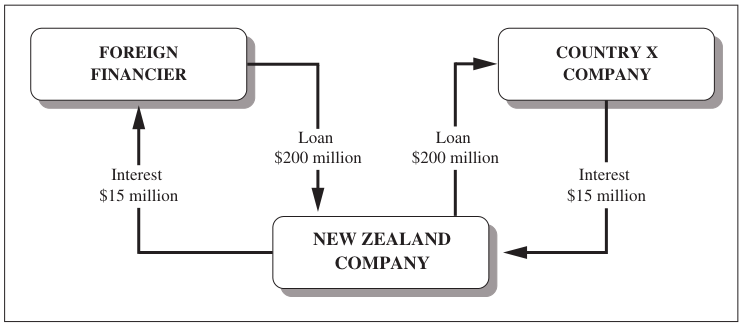
The tax consequences are as follows:
Country X: No Country X tax is imposed because the tax is spared under one of Country X’s economic expansion incentives.
New Zealand: New Zealand Company pays no New Zealand tax since its net profit is nil (interest income equals its interest expenses). Tax credits for tax spared under the New Zealand/Country X tax treaty are not used, therefore, as there is no New Zealand tax liability.
The interest income paid from New Zealand to Foreign Financier may be subject to either interest withholding tax of 10 per cent to 15 per cent, or a 2 per cent levy.[165]
Foreign Country: Foreign Financier may or may not be subject to tax, depending on the tax system in the country in which it is resident.
In summary, nothing is gained by using New Zealand as a conduit for a simple back-to-back financing arrangement.
Scenario three – similar to scenario two, except two New Zealand companies are used – one to soak up the tax sparing credits and the other to accumulate tax losses
A tax-effective structure ensures that the tax spared credits are soaked up by the recipient company. This is done by splitting the interest expenditure (and loans) between two companies to create a profit in the credit soak-up company. The interest expenses (not required by the tax credit soak-up company) are passed (typically sold) to a profitable New Zealand company that can offset them against other income or accumulate them as tax losses for future use.
As illustrated below, the $200 million loan from Foreign Financier is split between the two New Zealand companies in the following proportions:
“New Zealand Company No. 1” (NZ Co 1) – $60.6 million; and
“New Zealand Company No. 2” (NZ Co 2) – $139.4 million.
NZ Co 1 passes the funds that it borrowed ($60.6 million) on to NZ Co 2 by way of an equity capital injection (for example, a purchase of shares in NZ Co 2). NZ Co 2 then lends the full $200 million to Country X Company. We assume again that New Zealand has granted tax sparing to Country X on this interest income at a rate of 10 per cent.
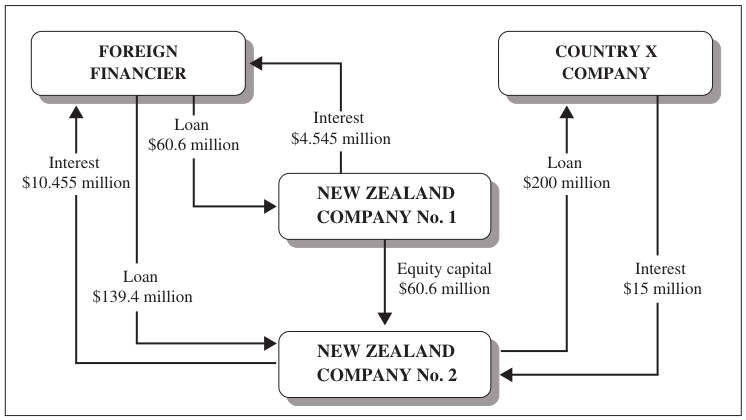
Country X Company pays $15 million interest to NZ Co 2. NZ Co 2 is taxed in New Zealand as follows:
Interest income | 15 000 000 |
Interest expenses | 10 454 545 |
Net profit | 4 545 455 |
Tax on net profit (33 per cent) | 1 500 000 |
Tax sparing credits (10 per cent x $15 million) | (1 500 000) |
Tax to pay | Nil |
NZ Co 1 has incurred an interest expense of $4,545,455. This translates to a net loss of the same amount on this transaction because it receives no current taxable income from its equity investment in NZ Co 2. This loss can be offset against other income of NZ Co 1 or offset against the income of another company in the same group of companies.
The tax consequences are as follows:
Country X: No Country X tax is imposed since the tax is spared under one of Country X’s economic expansion incentives.
New Zealand: NZ Co 2 pays no New Zealand tax because its $1 500 000 tax liability is eliminated by a tax sparing credit.
NZ Co 1 is left with a tax loss of $4 545 455 which may be offset against other New Zealand income. The tax benefit of this loss – which is borne by the New Zealand tax base – is $1 500 000 ($4 545 455 x 33 per cent). This is equivalent to the amount of the tax sparing credit.
The interest income paid from New Zealand to Foreign Financier may be subject to either interest withholding tax of 10 per cent to 15 per cent, or a 2 per cent levy
Foreign Country: Foreign Financier may or may not be subject to tax, depending on the tax system in the country in which it is resident.
By channelling debt investments through a country that grants tax sparing credits, and ensuring that an appropriately tax-planned structure is used to soak up the spared foreign tax credits, a tax benefit equal to the value of the tax spared credits can be obtained. This is contrary to the purpose of tax sparing, which is intended to prevent the home country clawing back the tax incentive of the developing country. It is not there to give a cash subsidy equal to the value of the tax spared by the developing country.
The example has been presented in a simplified form so that the concept can be understood. In the actual schemes that we have encountered, the tax benefit was shared between the foreign financier, a New Zealand company and the company in the developing country (which was to receive a discounted rate of interest). The schemes did not proceed because New Zealand and the treaty partners concerned quickly inserted an anti-avoidance rule in the treaties which permit the New Zealand competent authority to deny tax sparing credit claims if the provision is being abused. This anti-avoidance rule is discussed in more detail later in this paper. We also considered amending New Zealand’s domestic law to counter the scheme, but we could not find a suitable remedy. The tax treaty solution appears to have deterred international financiers from using the treaties concerned, although some financiers have advised that they will instead run the scheme through other countries with tax sparing provisions.
We also became aware of schemes that were to use a structure similar to the one outlined above, except the debt funding was to flow from the developing country to New Zealand and then back to the developing country. The sole purpose of this circular flow of funds would be to exploit the tax sparing provision in the tax treaty. We suspect that the lender and borrower in the developing country were either the same entity or associated entities.
Annex V
Tax avoidance scheme II
The routing-scheme example described below has been reproduced from the Australian note SG/EMEF/CFA(96)17 to the EMEF meeting in Paris on 26-27 September 1996.
The largest scheme so far encountered in Australia involves a circular flow of funds. A series of loans were to be purportedly made by an Australian financial institution to a major foreign bank via an intermediary finance company resident in a developing country with which Australia had agreed under a tax treaty to tax spare interest withholding tax forgone by that country under a particular development incentive tax concession. The foreign bank then effectively was to pay the loan moneys back to the Australian financial institution. Interest on such loans were normally subject to 10 per cent interest withholding tax by the developing country. However, the Finance Minister of that country agreed to reduce the interest withholding tax rate on these loans to 1.5 per cent under the relevant development incentive.
Judged against a test of commercial reality, the proposed scheme was artificial and contrived, with the transactions being intended to take place in the space of 30 minutes. Although ostensibly the proposed transactions involved funds of several billion Australian dollars, the transactions were to use only approximately $A 200m, which was to be made available to the intermediary finance company and most of that amount would have been returned immediately to the Australian financial institution in the form of prepaid interest. The scheme would have enabled that financial institution to incur a notional loss which was approximately sufficient in amount to offset the interest income it had earned. The “tax spared” foreign tax credit in respect of the interest withholding tax was to be offset against the tax payable on other foreign income of the financial institution. Over the duration of the scheme the cost to Australian revenue would have been in the order of $A 100m. It was only by means of strong representations to its treaty partner that Australia was able to prevent the scheme from being implemented.
Annex VI
Anti-abuse provisions
Country model tax sparing anti-abuse provisions
New Zealand: Notwithstanding paragraph (…) of Article… [tax sparing provision in the Elimination of Double Taxation Article] of the Agreement, a New Zealand resident deriving income from [other country], being income referred to in that paragraph, shall not be deemed to have paid [other country] tax in respect of such income where the competent authority of New Zealand considers, after consultation with the competent authority of [other country], that it is inappropriate to do so having regard to:
whether any arrangements have been entered into by any person for the purpose of taking advantage of paragraph (…) of Article… for the benefit of that person or any other person;
whether any benefit accrues or may accrue to a person who is neither a New Zealand resident nor a resident of [other country];
the prevention of fraud, evasion, or avoidance of the taxes to which the Agreement applies;
any other matter which the competent authorities consider relevant in the particular circumstances of the case including any submissions from the New Zealand resident concerned.
Australia: (Host country) tax forgone shall not be deemed to have been paid in respect of income derived from any scheme entered into by an Australian resident with the purpose of using [host country] as a conduit for income or as a location of property in order to evade or avoid Australian tax through the exploitation of the Australian foreign tax credit provisions, or to confer a benefit on a person who is neither a resident of Australia, nor of (the host country).
Annex VII
The Commentary on Article 23 B of the OECD Model Tax Convention
C. The relation in special cases between the taxation in the State of source and the ordinary credit method
72. In certain cases a State, especially a developing country, may for particular reasons give concessions to taxpayers, e.g. tax incentive reliefs to encourage industrial output. In a similar way, a State may exempt from tax certain kinds of income, e.g. pensions to war wounded soldiers.
73. When such a State concludes a convention with a State which applies the exemption method, no restriction of the relief given to the taxpayers arises, because that other State must give exemption regardless of the amount of tax, if any, imposed in the State of source (see Section III, paragraph 3). But when the other State applies the credit method, the concession may be nullified to the extent that such other State will allow a deduction only of the tax paid in the State of source. By reason of the concessions, that other State secures what may be called an uncovenanted gain for its own Exchequer.
74. Should the two States agree that the benefit of the concessions given to the taxpayers in the State of source are not to be nullified, a derogation from paragraph 2 of Article 23 A, or from Article 23 B will be necessary.
75. Various formulae can be used to this effect, as for example:
the State of residence will allow as a deduction the amount of tax which the State of source could have imposed in accordance with its general legislation or such amount as limited by the Convention (e.g. limitations of rates provided for dividends and interest in Articles 10 and 11) even if the State of source, as a developing country, has waived all or part of that tax under special provisions for the promotion of its economic development;
as a counterpart for the tax sacrifice which the developing country makes by reducing in a general way its tax at the source, the State of residence agrees to allow a deduction against its own tax of an amount (in part fictitious) fixed at a higher rate;
the State of residence exempts the income which has benefited from tax incentives in the developing country.
Contracting States are free to devise other formulae in the course of bilateral negotiations.
76. If a Contracting State agrees to stimulate especially investments in the other State being a developing country, the above provisions will generally be accompanied by guarantees for the investors, that is to say, the Convention will limit the rate of tax which can be imposed in the State of source on dividends, interest and royalties.
77. Moreover, time restrictions or time limits can be provided for the application of the advantages referred to in formula a), and possibly c), above: the extended credit (or the exemption) may be granted only in respect of incentives applied temporarily in developing countries, or only for investments made or contracts concluded in the future (for instance, from the date of entry into force of the Convention) or for a determined period of time.
78. Thus, there exists a considerable number of solutions to this problem. In fact, the concrete effects of the provisions concerned can also vary as a result of other factors such as the amount to be included in the taxable income in the State of residence (formulae a) and b) above); it may be the net income derived (after deduction of the tax effectively paid in the State of source), or the net income grossed-up by an amount equal to the tax effectively paid in the State of source, or to the tax which could have been levied in accordance with the Convention (rates provided for in Articles 10 and 11) or to the tax which the State of residence agrees to allow as a deduction.
Annex VIII
Recommendation of the Council on the granting and design of Tax sparing in Tax Conventions
THE COUNCIL,
Having regard to Article 5 b) of the Convention on the Organisation for Economic Co-operation and Development of 14 December 1960;
Having regard to the Recommendation of the Council of 23 October 1997 concerning the Model Tax Convention on Income and on Capital C(97)195;
Having regard to the Report on tax sparing: “Tax Sparing: A Reconsideration” [DAFFE/CFA(97)3/REV2], hereafter referred to as the Report;
Considering that the granting of tax sparing in tax conventions may offer wide opportunities for tax planning and tax avoidance;
Considering that the granting of tax sparing in tax conventions may have the effect of provoking harmful tax competition between countries;
Having regard to the need to develop a more coherent approach among member countries and non-member countries towards the granting and design of tax sparing in tax conventions;
I. RECOMMENDS to the Governments of member countries that, in negotiating and concluding tax treaties, they follow the recommendations set out in the Report on the use and design of tax sparing provisions, as it may be amended from time to time; and
II. INVITES the Governments of member countries to inform, as appropriate, the Committee on Fiscal Affairs of any modification in their policy on the use and design of tax sparing provisions;
III. INSTRUCTS the Committee on Fiscal Affairs:
1. to pursue its work on issues pertinent to tax sparing; and
2. to develop a dialogue with non-member countries that request tax sparing, with the aim of developing a more coherent position on the granting and design of tax sparing.
The Application of the OECD Model Tax Convention to Partnerships
(adopted by the OECD Committee on Fiscal Affairs on 20 January 1999)
Table of contents
I. Introduction R(15)-3
I.1 Background R(15)-3
I.2 Organisation of the report R(15)-3
II. Application of tax conventions by the state of source R(15)-4
II.1 Preliminary remarks on the tax treatment of foreign
entities R(15)-4
II.2 Differences that affect the tax treatment of partnerships. . R(15)-5
II.3 When is a partnership entitled to the benefits of a tax
convention? R(15)-7
II.4 The partners’ entitlement to treaty benefits when the
partnership is not a resident R(15)-12
II.5 Entitlement to treaty benefits when one State treats the
partnership as a taxable entity R(15)-16
II.6 Application of the Convention where the benefits are
dependent upon certain characteristics or attributes of the
taxpayer R(15)-22
III. Application of tax conventions by the state of residence R(15)-26
III.1 Conflicts of qualification R(15)-26
III.2 Problems arising from conflicts of income allocation R(15)-34
Notes and References R(15)-38
ANNEX I. Proposed changes to the OECD Model Tax Convention R(15)-39
ANNEX II. Reservations by France, Germany, the Netherlands,
Portugal and Switzerland R(15)-50
Foreword
This publication, the sixth in the series “Issues in International Taxation”, includes the report entitled “The Application of the OECD Model Tax Convention to Partnerships” which the Committee on Fiscal Affairs adopted, and decided to make available to the public, on 20 January 1999.
The report deals with the application of the provisions of the OECD Model Tax Convention, and indirectly of bilateral tax conventions based on that Model, to partnerships. It puts forward a number of changes to the Model Tax Convention which will be included in the next update to the Model.
At the time of adopting the report, the delegations for France, Germany, the Netherlands, Portugal and Switzerland have expressed reservations on various aspects of it. These reservations are reproduced in Annex II.
I. Introduction
I.1 Background
1. In 1993, the Committee formed a Working Group to study the application of the Model Tax Convention to partnerships, trusts, and other non-corporate entities. This first report by the Working Group, which the Committee adopted on 20 January 1999, focuses exclusively on partnerships. The Committee recognises, however, that many of the principles discussed in its report may also apply with respect to other non-corporate entities and therefore intends to now examine the application of the Model Tax Convention to these other entities in light of this report.
2. In this respect, it should also be noted that the references to “partnerships” in this report cover entities that qualify as such under civil or commercial law as opposed to tax law. Thus the term “partnership”, as used in this report, does not imply anything about the tax treatment of the relevant entity and should not be confused with a reference to entities, whether partnerships or not, which are treated as transparent for tax purposes.
3. At the beginning of the work on this topic, it was decided that this work should generally focus on practical cases and an approach based on the discussion of factual examples was therefore adopted. It was quickly found that many of the problems that were brought to the attention of the Committee arose from so-called “conflicts of qualification” – cases where the treaty partners interpret or apply the treaty in different ways. The Committee agreed that while this broader issue extended beyond the treatment of partnerships under tax conventions, it should nevertheless be dealt with in the context of this work on partnerships.
I.2 Organisation of the report
4. As previously indicated, this report focuses on specific factual examples. For each example, the facts and, where applicable, relevant aspects of domestic tax laws are described. The Committee’s analysis of how the OECD Model Tax Convention applies in the example is then presented and, where appropriate, changes to the Model Tax Convention are put forward.
5. Section II discusses various aspects of the application of tax conventions by the State of source where partnerships are involved. It includes a discussion of the entitlement to treaty benefits of partners and partnerships in various circumstances.
6. Section III addresses issues arising from the application of tax conventions by the State of residence. Section III discusses problems related to conflicts of qualification while Section III discusses problems related to conflicts of income allocation.
7. Annex I includes changes to the Model Tax Convention which are either specifically included in the report or reflect its contents. Annex II includes general observations by France, Germany, the Netherlands, Portugal and Switzerland. Annex III includes a list of entities found in the countries that have co-operated to the preparation of this report.
8. The following abbreviations are used in this report:
P = The partnership
A and B = Partners in P
State P = The State in which P is located
State R = The State of residence of one or all the partners
State S = The State of source, i.e. the State in which income arises, where three States are involved
9. Similarly, the following symbols are used in the various diagrams used in this report:
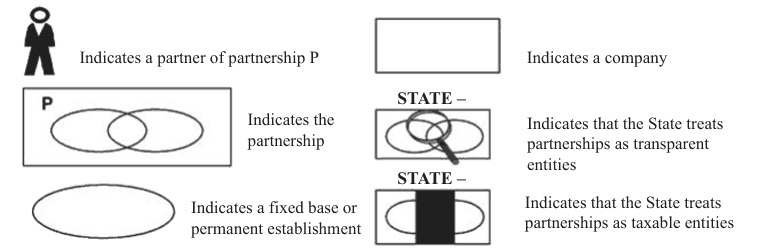
II. Application of Tax Conventions by the State of source
II.1 Preliminary remarks on the tax treatment of foreign entities
10. In addressing the issue of how tax conventions apply to partnerships, a useful starting point is to examine how foreign entities are treated for purposes of the taxation, by the State of source, of income derived from its territory.
11. In most member countries, as a matter of principle, tax laws apply on the basis of the legal relationship deriving from other branches of the law. Thus the tax laws of these countries, when referring to partnerships, will, absent special tax definitions, refer to those entities that constitute partnerships according to domestic civil or commercial law.
12. Difficulties often arise, however, where income is derived by an entity organised under the laws of another jurisdiction. In that case, the entity will have to be classified for purposes of the application of the tax laws of the country where the income is derived, regardless of whether or not that classification is compatible with the civil or commercial law system of the jurisdiction from which the entity derives its legal status.
13. For example, if the tax system of a country recognises only individuals, companies and partnerships (but not trusts) as taxpayers and provides for a different tax treatment for these three types of taxpayers, that country will have to “force” foreign entities in one or the other of these categories (with more or less difficulty depending on the similarity of the civil and commercial law of the countries concerned) for purposes of applying its tax system to domestic income derived by these foreign entities.
14. In doing so, the practice of most countries is to adopt the same approach as the one they apply in a purely domestic context. They will therefore apply their domestic tax classification to foreign entities on the basis of the foreign law’s legal characteristics of the entity. In the previous example, the country, for the purposes of taxing the domestic income of a trust established under the law of a foreign jurisdiction, will typically examine the legal characteristics of the trust as they derive from the trust law of the foreign jurisdiction in order to determine whom it should tax and whether that person should be taxed as an individual, company or partnership, which are the only categories recognised under its tax law.
15. In a system of international taxation where income taxes are levied on the basis of both residence and source, this means that, in addition to the well-known problem of the same item of income being taxed in the State of residence and the State of source, there will be risks of double-taxation or non-taxation associated with:
the different classification of a given entity in the State of residence and the State of source,
the different tax treatment, in these States, of a given entity despite common classification.
These risks, which are further analysed in the next two subsections, are compounded when the participants in the entity (e.g. the partners of a partnership) reside in a different State from that in which the entity has been established. Section II discusses how these differences are particularly important for partnerships.
II.2 Differences that affect the tax treatment of partnerships
a) Different classification
16. While most, if not all, member countries recognise the concepts of company and of partnership for tax purposes, their definitions of these two concepts may vary.
17. In most cases, the similarities between the legal systems of the member countries will be sufficient to ensure that what is a company or a partnership in the country where it has been established is recognised as such, for tax purposes, in other countries. Entities, however, that are not widespread in the civil or commercial laws of the member countries will create difficulties if they cannot easily be classified in one of these categories but need to be so classified for tax purposes. In that case, it is possible that one country will treat the entity as a partnership while the other will treat it as a company, with completely different tax results.
b) Different treatment
18. Problems will also arise, however, where two countries classify a given entity in the same way but treat that entity in different ways.
19. These problems are particularly important for partnerships and most of the examples in this report are based on these problems. A well-known difficulty is that while some countries treat partnerships as transparent entities, imposing no tax on the partnership itself but taxing each partners on its share of the partnership’s income, others treat the partnership as a taxable entity, usually taxing the partnership on its income as if it were a company.
20. There are, however, many other possible differences which may result in double taxation or non-taxation, some of which are discussed in this report. For instance, while some countries accept that a partner may also be a creditor of the partnership and may therefore derive interest income from the partnership, others consider that no interest may be paid to a partner, any payment of what purports to be interest being treated as a distribution of the income of the partnership.
21. Other differences relate to how countries apply the transparency approach. The mere fact that the income of the partnership is taxed at the partners’ level does not, in itself, address all issues related to the computation of the tax to be paid on that income. Tax rules often differ depending on the nature of the taxpayer or on the relationship between the taxpayer and another party to a transaction. Countries may have different views as to what extent the partnership should be ignored in applying rules based on the nature of the taxpayer or on its relationship with another person (the question of the extent to which a transparent partnership should be ignored for the purposes of the application of the provisions of tax conventions is discussed in Section II below).
22. To assist countries in identifying cases where these differences may create problems, the Committee has decided to develop a list that describes the tax treatment of entities established under the laws of each country and commonly used for commercial and investment purposes. That list is included in Annex III.
c) The effect on tax conventions
23. The differences described above create a number of difficulties with respect to the application of the provisions of tax conventions.
24. The Commentary on Article 1 of the Model Tax Convention already refers to the problem described in paragraph 19 above in the following words:
The domestic laws of the various OECD member countries differ in the treatment of partnerships. The main issue of such differences is founded on the fact that some countries treat partnerships as taxable units (sometimes even as companies) whereas other countries disregard the partnership and tax only the individual partners on their share of the partnership income.
25. The difficulties that this and other differences create in the context of the application of the provisions of tax conventions are discussed throughout this report. This section focuses on the problems that the differences described above create for the application of the Convention by the State of source, including the determination of who is entitled to the benefits of a tax convention in relation to income derived by a partnership (Section II) and the application of the provisions of the Convention that are dependent upon certain characteristics or attributes of the taxpayer (Section II). Section III deals with the problems related to the application of the Convention by the State of residence, focusing on conflicts of qualification (Section III) and conflicts of income allocation (Section III).
26. The Committee believes that many of these difficulties may be solved through a better co-ordination in the application and interpretation of some of the provisions of tax conventions. This report puts forwards a number of suggestions in that respect.
II.3 When is a partnership entitled to the benefits of a tax convention?
27. Where income is derived from a particular State, the determination of the tax consequences in that State will first require the application of the domestic tax laws of that State. It is the provisions of these laws that will determine who may be subjected to tax on that income in that State. The provisions of tax conventions, however, may then intervene to restrict or eliminate the taxing rights originating from domestic law where a person, usually but not necessarily the taxpayer identified under domestic law, is eligible for the benefits of the tax convention in relation to that income.
28. The clear rule of Article 1 of the Model Tax Convention is that only persons who are residents of the Contracting States are entitled to the benefits of the tax Convention entered into by these States. Where income is earned by a partnership, the issue of whether the partnership itself is entitled to the benefits of the Convention will depend on whether the partnership qualifies as a person who is a resident of a Contracting State under the definitions of Article 3 and of paragraph 1 of Article 4.
a) Is a partnership a “person”?
29. For a partnership, entitlement to treaty benefits will therefore first depend on whether it qualifies as a “person”. Subparagraph 1 a) of Article 3 of the Model defines a “person” for purposes of the Convention as “an individual, a company and any other body of persons”. Paragraph 2 of the Commentary on Article 3 provides:
The definition of the term ‘person’ given in subparagraph a) is not exhaustive and should be read as indicating that the term ‘person’ is used in a very wide sense (cf. especially Articles 1 and 4). The definition explicitly mentions individuals, companies and other bodies of persons. From the meaning assigned to the term ‘company’ by the definition contained in subparagraphb) it follows that, in addition, the term ‘person’ includes any entity which, although itself not a body of persons, is treated as a body corporate for tax purposes. Thus, e.g. a foundation (fondation, Stiftung) may fall within the meaning of the term ‘person. Special considerations for the application of the Convention to partnerships are found in paragraphs 2 to 6 of the Commentary on Article 1.
30. The Commentary on Article 1, however, does not discuss the issue of whether a partnership is a “person” within the meaning of Article 3. While the practices of member countries are not entirely uniform in this respect, the Committee has determined that partnerships should be considered to be “persons” within the meaning of the definition found in Article 3. In most countries, partnerships (as well as the individual partners) will be considered to be “persons” within the meaning of Article 3 either because the partnerships fall within the definition of company or because they are bodies of persons. The Committee has therefore decided to delete the last sentence of paragraph 2 of the Commentary on Article 3 and to replace it with the following sentence:
Partnerships will also be considered to be ‘persons’ either because they fall within the definition of ‘company’ or, where this is not the case, because they constitute other bodies of persons.
31. The Committee has noted, however, that the definition of the term “national” in subdivision 1 f) (ii) of Article 3 may give rise to an implication that partnerships are not “persons” for purposes of the Convention. That definition provides that the term “national” includes “any legal person, partnership or association deriving its status as such from the laws in force in a Contracting State”. As a matter of grammar and logic, a specific term that is included within a broader general term is not ordinarily given separate mention in a list that contains the general term.[166]
32. In order to avoid any confusion that may result from that definition, the Committee has agreed to add the following paragraph to the Commentary on Article 3:
The separate mention of partnerships in sub-paragraph 1 f) is not inconsistent with the status of a partnership as a person under sub-paragraph 1 a). Under the domestic laws of some countries, it is possible for an entity to be a ‘person’ but not a ‘legal person’ for tax purposes. The explicit statement is necessary to avoid confusion.
b) Is a partnership a “resident of a Contracting State”?
33. Paragraph 3 of the Commentary on Article 1 deals specifically with the problem of whether a partnership qualifies as a “resident” for treaty purposes. The Commentary states:
First, the question arises whether a partnership as such may invoke the provisions of the Convention. Where a partnership is treated as a company or taxed in the same way, it may reasonably be argued that the partnership is a resident of the Contracting State taxing the partnership on the grounds mentioned in paragraph 1 of Article 4 and therefore, falling under the scope of the Convention, is entitled to the benefits of the Convention. In the other instances mentioned in paragraph 2 above, the application of the Convention to the partnership as such might be refused, at least if no special rule is provided for in the Convention covering partnerships.
34. The Committee discussed this paragraph and concluded that its analysis is correct. If the State in which a partnership has been organised treats that partnership as fiscally transparent, then the partnership is not “liable to tax” in that State within the meaning of Article 4, and so cannot be a resident for purposes of the Convention. Although inconvenient at times (e.g. paragraph 89 below), there appears to be little scope for a contrary argument under the current wording of Article 4.
35. To clarify this point, the Committee has agreed to delete the last sentence of paragraph 3 of the Commentary on Article 1 and to replace it with the following sentences:
Where, however, a partnership is treated as fiscally transparent in a State, the partnership is not ‘liable to tax’ in that State within the meaning of paragraph 1 of Article 4, and so cannot be a resident thereof for purposes of the Convention. In such a case, the application of the Convention to the partnership as such would be refused, unless a special rule covering partnerships were provided for in the Convention. Where the application of the Convention is so refused, the partners are entitled, with respect to their share of the income of the partnership, to the benefits provided by the Conventions entered into by the States of which they are residents to the extent that the partnership’s income is allocated to them for the purposes of taxation in their State of residence (see paragraph 8.2 of the Commentary on Article 4).
36. The Committee recognised that the determination of whether a partnership is “liable to tax” in a given State may present practical difficulties having regard to the different systems that countries use to impose tax on partnerships’ income. It believes that the list referred to in paragraph 22 above, which is included in Annex III, would assist countries in dealing with these difficulties.
37. The Committee discussed in detail how the concept of “liable to tax” should be understood in the context of different systems for taxing partnerships’ income. The Committee first discussed cases where domestic tax laws create intermediary situations where a partnership is partly treated as a taxable unit and partly disregarded for tax purposes. While this may create practical difficulties with respect to a very limited number of partnerships, it is a more important problem in the case of other entities such as trusts. For this reason, the Committee decided to deal with this issue in the context of follow-up work to this report.
38. The Committee then examined two common approaches to taxation of partnerships. In many countries, the tax laws provide that income derived by a partnership from a particular source must be computed at the partnership level as if the partnership were a distinct taxpayer. Each partner is then allocated his share of that income which retains its character and is added to his income for purposes of determining his taxable income. His taxable income, including his share of the partnership’s income is then reduced by the personal allowances and deductions to which he is entitled and tax is then determined, assessed and paid at the partner’s level. In such cases, it is clear that the partnership is not itself liable to tax.
39. In other countries, the income and the tax payable is computed in a similar way, but the tax payable by the partners is then aggregated at the level of the partnership which is then assessed for the total amount of the tax. In these cases, the assessment of the tax in the hands of the partnership is a collection technique that does not change the fact that the tax payable on the income of the partnership is determined at each partner’s level taking into account the other income of that partner, the personal allowances to which he is entitled and the tax rate applicable to him (which may vary depending on his total income or his nature). In such cases, the partnership is also not liable to tax.
40. The Committee agreed that for purposes of determining whether a partnership is liable to tax, the real question is whether the amount of tax payable on the partnership income is determined in relation to the personal characteristics of the partners (whether the partners are taxable or not, what other income they have, what are the personal allowances to which they are entitled and what is the tax rate applicable to them). If the answer to that question is yes, then the partnership should not itself be considered to be liable to tax. The fact that the income is computed at the level of the partnership before being allocated to the partners, that the tax is technically paid by the partnership or that it is assessed on the partnership as described in the preceding paragraph will not change that result.
41. The fact that a partnership may be said to be liable to tax in a State will not, however, be sufficient for it to be considered a resident of that State for purposes of tax conventions. Paragraph 1 of Article 4 also requires that the liability to tax in that State be caused by one of the criteria listed therein (e.g. residence, domicile etc.). Thus, for a partnership to be a resident of a Contracting State, it has to be liable to tax in that State by reason of one of these criteria.
42. The provisions of tax conventions will apply differently depending on whether or not a partnership qualifies as a resident. Where a partnership does not so qualify because it is the partners who are liable to tax on the partnership’s income, the income derived by the partnership should be considered to keep the nature and source that it had in the hands of the partnership for purposes of the provisions of a tax convention. This corresponds to the situation that is generally provided for under the domestic laws of the countries that do not treat partnerships as taxable entities. Thus, where a partnership is treated as transparent for purposes of tax conventions because it is the partners rather than the partnerships who are liable to tax on the partnership’s income, that income will, when applying the relevant Convention, keep the nature and source that it had in the hands of the partnership for purposes of taxation in the hands of the partners.[167]
43. While the Convention generally does not apply to partnerships that are treated as fiscally transparent since they do not meet the criteria of paragraph 1 of Article 4, some countries have included partnerships within the coverage of their Conventions in certain circumstances. In specially negotiated provisions, the partnership is treated as a resident to the extent that its income is subject to tax in the hands of the partners. This can come about because the partners are resident in the State in which the partnership is organised or because, in the case of non-resident partners, the partnership maintains a permanent establishment in the State of organisation and the income is attributable to the permanent establishment. If all of the income of the partnership is attributed to either resident partners or to a permanent establishment when non-resident partners are present, the partnership would be treated in the same way as a resident company which was subject to worldwide tax liability. The following text from the Protocol to the Convention between Germany and Italy illustrates the use of such specially negotiated provisions:
A partnership is deemed to be a resident of a Contracting State in the sense of paragraph 1 of Article 4 if it has been established in accordance with the law of that State or if the main object of its activities is in that State. However, the limitations to the right to tax of the other Contracting State as provided in Articles 6 to 23 apply only insofar as the income derived from that State or the capital situated therein is subject to tax in the first-mentioned State.
44. One justification for such special provisions treating the partnership itself as resident is that they are viewed by some countries as avoiding the administrative problems involved in requiring that all partners establish that they are entitled to treaty benefits. In addition, in some cases, the provisions originated where one of the Contracting States treated partnerships as taxable entities and the other State, though applying a fiscal transparency approach, insisted on reciprocal treatment. Finally, since the income will necessarily be subject to tax in the State of organisation, providing treaty benefits will not result in double non-taxation or in the reduction of source State taxation where there is no tax in the State where the partnership has been formed.
45. On the other hand, there are some substantial problems and issues which such an approach raises. In the first place, it may be difficult to determine when the source State income is in fact attributable to a permanent establishment in the State of organisation. If the income was attributable to a third State’s permanent establishment, for example, in a tax haven, the source State relief would not necessarily be matched with taxation in the State of organisation. Secondly, where the source State relief takes the form of a reduction in withholding tax, it is not clear how the reduction should be calculated where only a “part” of the partnership is treated as a treaty resident. The reduction might inure indirectly to the benefit of a partner not otherwise entitled to benefits. In addition, the existence of the partnership allows income which is attributed to a permanent establishment in the State of organisation to qualify for treaty benefits for a third State partner where the existence of a direct permanent establishment would not give rise to similar benefits.[168]
46. Given these difficulties, the Committee did not feel that the approach was promising enough to attempt to develop an alternative provision.
II.4 The partners’ entitlement to treaty benefits when the partnership is not a resident
47. Where the partnership as such does not qualify as a resident under the principles developed in the preceding section, the Committee agrees that the partners should be entitled to the benefits provided by the Conventions entered into by the countries of which they are residents to the extent that they are liable to tax on their share of the partnership income in those countries. The following introductory examples illustrate the results which the Committee believes are appropriate in some commonly recurring situations. It is important to note that the solutions developed in this report do not exclude the possibility that member countries may in their bilateral relations develop different solutions to the problems of double taxation which may arise in connection with partnerships.
Example 1 : P is a partnership established in State P. A and B are P’s partners who reside in State P. Both States P and S treat P as a transparent entity. P derives interest income from State S that is not attributable to a permanent establishment in State S.
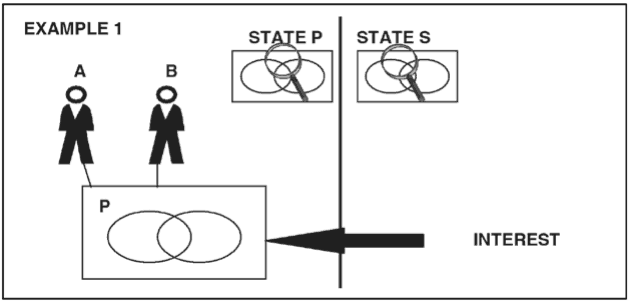
48. In this example, State S would likely determine that, under its domestic law, the relevant taxpayers are A and B. After applying its domestic law, it would then consider the application of the S-P tax Convention and, in particular, Article 11. Under paragraph 1 of Article 11, the Article applies to interest that is “paid to a resident of another state”. In these circumstances, the income is appropriately viewed as paid to A and B since it is to them and not to the partnership that the income is allocated for purposes of determining their tax liability in State P. They thus have derived the income in the sense which is relevant for the application of the treaty. In effect, the source State should view the income as having “flowed through” the transparent partnership to the partners who are liable to tax on that income in the state of their residence.
Example 2: P is an entity established in State P. A and B are P’s partners who reside in State R. States R, P and S all treat P as a transparent entity. P derives interest income from State S that is not attributable to a permanent establishment in State S.
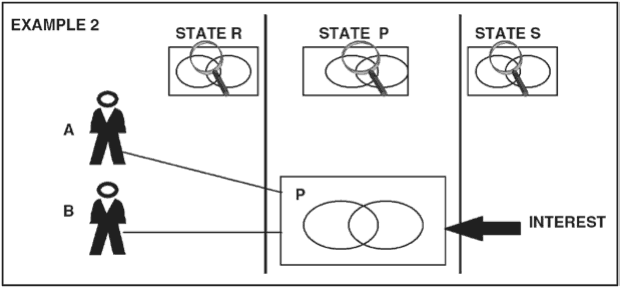
49. This example extends the basic principle illustrated in example 1 to a more complex situation involving three countries and two Conventions. As regards State S, again it will begin the analysis by determining that under its domestic law, the relevant taxpayers are A and B. In applying the S-R treaty, it would likewise determine that A and B have been allocated the income by State R and thus are liable to tax on that income for purposes of determining their entitlement to benefits under the Convention. By contrast, P may not claim benefits under the S-P Convention since it is not a resident of State P (it is not liable to tax in that State).
50. Such cases, in which the partners are not residents in the State where the partnership has been organised, raise additional difficulties for tax authorities wishing to verify a taxpayer’s entitlement to treaty benefits. Clearly, states should not be expected to grant the benefits of tax conventions in cases where they cannot verify whether a person is truly entitled to these benefits. Thus, the application of the provisions of the S-R Convention will be conditional on State S being able to obtain all the necessary information.
Example 3: P is an entity established in State P. A and B are P’s partners who reside in State R. States P and S both treat P as a transparent entity but State R treats it as taxable entity. P derives business profits from State S that is not attributable to a permanent establishment in State S.
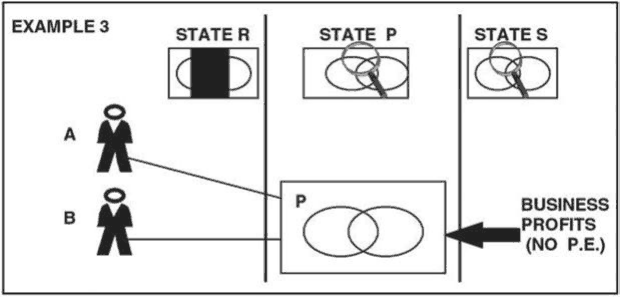
51. Here, unlike the first two examples, there is a difference in the allocation of the income involved among the countries. State S under its domestic law treats A and B as the relevant taxpayers. However, when it comes to apply the S-R treaty, it is crucial that State R, while it generally treats A and B as residents, does not allocate to them the income arising in State S since, under the domestic law of State R, that income is allocated to P, an entity which is not resident, i.e. not liable to tax in State R. Thus in these circumstances, State S would not be required to extend the benefits of the Convention to the income which State R allocates to P for purposes of determining the liability to State R’s tax on that income, a conclusion which may be reached by a number of different routes as explained below. Correspondingly, for purposes of applying the S-R Convention, the treatment of P in State P is not relevant, though of course it would be important in the application of the S-P Convention as will be discussed in subsequent examples.
52. The Committee views the outcome in the above examples as resulting from an application of the Convention that takes account of the basic purposes of the Convention: to eliminate double taxation and to prevent double non-taxation. As discussed in the introductory section of this report, it recognises that the existing Convention and its Commentary do not deal explicitly with many of the issues which arise in the treatment of partnerships under the Convention. Under a literal application of the provisions of the Convention, a partnership that is not itself liable to tax would not be entitled to the benefits of the Convention and to the extent that the income derived by or paid to the partnership would not be considered to be derived by or paid to the partners themselves, the partners would also be precluded from claiming the benefits of the Convention with respect to the partnership’s income. To avoid the result that the provisions of tax conventions do not apply to the income of a transparent partnership, it is therefore necessary to determine whether and how it would be possible to obtain the desired results under the structure of the existing Convention.
53. One broadly based approach would be to recognise as implicit in the structure of the Convention the principle that the source State, in applying the Convention where partnerships are involved, should take into account, as part of the factual context in which the Convention is to be applied, the way in which an item of income arising in its jurisdiction is treated in the jurisdiction of the taxpayer claiming the benefits of the treaty as a resident. If that State “flows through” the income to the partner, then the partner should be considered liable to tax and entitled to the benefits of the Convention of the State of which he is a resident. It may be observed, in that respect, that a partner is still to be considered liable to tax on the income which “flows through” to him where, in the State of residence, tax is not imposed on that income by virtue of, e.g. a participation exemption in the case of dividends or the application of the exemption method for the relief of double taxation in the case of income attributable to a permanent establishment. On the other hand, if the income, though allocated to the taxpayer under the laws of the source State, is not similarly allocated for purposes of determining the liability to tax on that item of income in the State of residence of the taxpayer claiming the benefits of the Convention, then the source State should not grant benefits under the Convention. In these latter circumstances, the underlying factual premise on which the allocation of taxing rights is based, that is, that the source State is only obliged to reduce its domestic law tax claim where the income in question is potentially liable to tax in the hands of a resident of the treaty partner, is simply not present. This interpretation, which looks at how the partnership’s income is taxed by the State of residence, avoids denying the benefits of tax conventions to a partnership’s income on the basis that neither the partnership, because it is not a resident, nor the partners, because the income is not directly paid to them or derived by them, can claim the benefits of the Convention with respect to that income.
54. Another approach would involve consideration of the terms of the distributive rules in the relevant Articles of the Convention. Under that analysis, in the case of dividends, interest and royalties, the inquiry would be whether or not the recipient of the item of income was the beneficial owner of the income under the laws of the State of residence of the taxpayer claiming treaty benefits and thus the taxpayer in relation to the income. In the case of a partnership treated as transparent under the laws of the source State but as a taxable entity under the laws of the residence State, the entity itself and not the partners would be treated as the beneficial owner. Because of the treatment of the income in the State of residence, the partners would not be the beneficial owners of the income for purposes of the treaty. Thus the partners would not be entitled to treaty benefits in those circumstances and whether the entity was so entitled would depend on whether it independently qualified as a resident. Similarly, where business profits are involved, the determination of whether the profits were attributable to an enterprise “of” the residence State of the taxpayer claiming the benefits would be determined by the source State on the basis of the treatment of the situation in the residence State. Again, if the partnership was treated as an entity by that latter State, it, and not the partners, would be the relevant party which would be required to establish a claim from treaty benefits.
55. Finally, some countries would feel constrained to follow the allocation of the income under their principles of domestic law, even when that results in the income being subject to taxation in the State of source and taxation in the hands of the partners under the law of their state of residence. Even those countries, however, recognise the desirability of some mechanism to relieve the resulting double taxation and either provide for the situation in special provisions in their Conventions or at least show a willingness to relieve the double taxation through the mechanism of the mutual agreement procedure, particularly where a distribution of partnership income is made in the year in which the income is realised.
56. In the light of the preceding analysis, the Committee has therefore agreed to add the following paragraph to the Commentary to Article 4:
8.2 Where a State disregards a partnership for tax purposes and treats it as fiscally transparent, taxing the partners on their share of the partnership income, the partnership itself is not liable to tax and may not, therefore, be considered to be a resident of that State. In such a case, since the income of the partnership ‘flows through’ to the partners under the domestic law of that State, the partners are the persons who are liable to tax on that income and are thus the appropriate persons to claim the benefits of the Conventions concluded by the States of which they are residents. This latter result will obtain even if, under the domestic law of the State of source, the income is attributed to a partnership which is treated as a separate taxable entity. For States which could not agree with this interpretation of the Article, it would be possible to provide for this result in a special provision which would avoid the resulting potential double taxation where the income of the partnership is differently allocated by the two States.
57. The following examples examine some of the implications of this general approach, as outlined in paragraphs 52 and 53, and the results that it would generate in a variety of situations.
II.5 Entitlement to treaty benefits when one State treats the partnership as a taxable entity
58. The first set of situations involve cases where one of the States treats the partnership as a taxable entity and another State views it as fiscally transparent. This question is considered first in a bilateral setting then where triangular relations are present.
a) Bilateral cases
Example 4: P is a partnership established in State P. A and B are P’s partners who reside in State P. State P treats P as a transparent entity while State S treats it as a taxable entity. P derives royalty income from State S that is not attributable to a permanent establishment in State S.
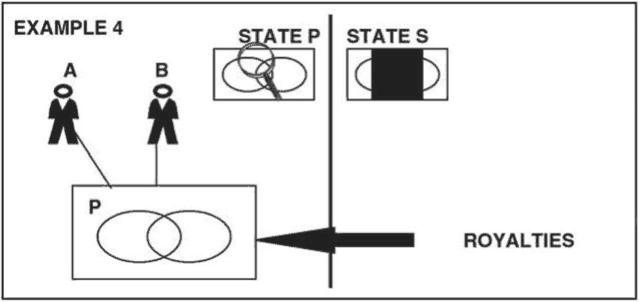
59. This example involves the fundamental difference in the tax treatment of partnerships that has already been referred to in paragraph 19 onwards above. The question is how the State S should apply the provisions of the Convention in such a case.
60. Under State S domestic law, the taxpayer will be partnership P. State S could then argue that since partnership P is not entitled to the benefits of the treaty, it can tax the income derived by P regardless of the provisions of the S-P Convention. This, however, would mean that the income on which A and B are liable to tax in State P would be subjected to tax in State S regardless of the Convention, a result that seems in direct conflict with the object and purpose of the Convention.
61. The Committee compared that approach, under which State S applies the provisions of the Convention by reference to the treatment of the partnership under its domestic law, with another approach, under which State S considers the entitlement to treaty benefits of A and B, both residents of State P, under the principles put forward above. Under the latter approach, State S would determine that the provisions of the Convention should be applied to prevent it from taxing the royalties since, under these principles, the income must be considered to be paid to A and B, two residents of State P, who should also be considered to be the beneficial owners of such income as these are the persons liable to tax on such income in State P. The Committee concluded that this approach was the correct one as it is more likely to ensure that the benefits of the Convention accrue to the persons who are liable to tax on the income.
62. The Committee did not consider this approach to be inconsistent with the provisions of paragraph 2 of Article 3, under which terms not defined in the Convention have, unless the context provides otherwise, the meaning which they have under the domestic law of the Contracting State that applies the Convention. In the example, the tax treatment of the partnership in State P is part of the facts on the basis of which the terms of the Convention are to be applied. Thus, by referring to that tax treatment, State S does not adopt a particular interpretation of the terms of the Convention put forward by State P; it merely takes into account of facts required for the application of these terms. The Committee concluded that, in any event, if an interpretation based on domestic law would lead to cases where the income taxed in the hands of residents of one State would not get the benefits of the Convention, a result that would be contrary to the object and purpose of the Convention, the context of the Convention would require a different interpretation.
Example 5: The facts are the same as in example 4 but the tax treatment of the partnership in State P and S is reversed. P is a partnership established in State P. A and B are P’s partners who reside in State P. State P treats P as a taxable entity while State S treats it as a transparent entity. P derives royalty income from State S that is not attributable to a permanent establishment in State S.
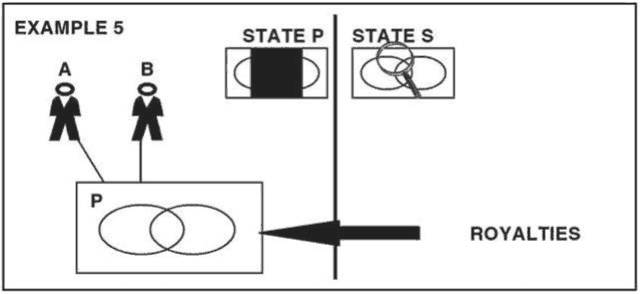
63. In this situation, in following its domestic law rules for allocating the income of the partnership, State S would treat A and B as the relevant taxpayers. However, in applying the treaty, the principles developed in Section II.4 would require that it takes into consideration that State P had allocated the income of the partnership to P. Thus, for purposes of the Convention, P would be the taxpayer entitled to claim the benefits of the Convention since it is liable to tax in State P on the income of the partnership. While, in the particular circumstances of this example, it does not make a difference whether State S considers the treaty entitlements of the partners or of the partnership, this would matter, as shown in subsequent examples, if the partners, or one of them, were not residents of State P.
Example 6: P is a partnership established in State P. A and B are P’s partners who reside in State R. State P treats P as a transparent entity while State R treats it as a taxable entity. P derives royalty income from State P that is not attributable to a permanent establishment in that state
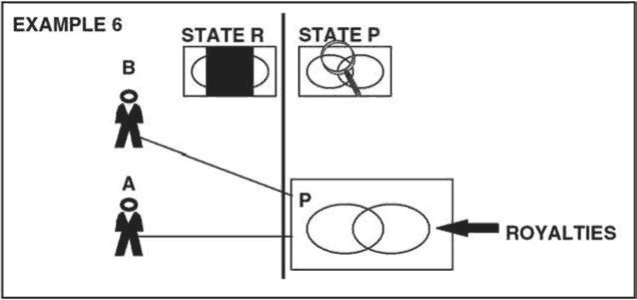
64. While the Committee agrees that in this situation State P should not be required to give the benefits of the Convention with respect to the royalty income, several different approaches are used to support this result. Using one approach, partners A and B, though residents as such of State R are not liable to tax on the partnership income under the allocation rules applied by State R, consequently they are not entitled to benefits under the Convention in respect of that income. P is not a resident of State R for purposes of the Convention since, from the perspective of State R, it is not a domestic taxpayer in any sense. Thus again, State P’s right to tax the partnership income would not be restricted under the Convention.
65. Alternatively, as discussed in paragraph 54 above, the partners would not be entitled to benefits under the Convention because they would not be considered as beneficial owners of the income for purposes of the Convention. Adopting a more literal approach, State P might simply focus on the fact that, under its allocation rules, the income has been paid to P and P would not qualify as a resident either of State R or State P. Here the treatment of A and B would not be relevant.
66. Finally, some countries would deny treaty benefits to A and B based on concepts of bad faith or abuse of treaty rights. The distributive rules of the Convention are based on the underlying assumption that A and B would be attributed the income on which treaty relief would be granted and where that is not the case, these general concepts would allow State P to resist any claims by A or B for benefits.
67. Example 18 below deals with the tax treatment of the subsequent distribution by P of the partnership profits to A and B.
b) Triangular cases
68. Triangular cases pose difficult problems with respect to the determination of the entitlement to treaty benefits. The Committee believes, however, that these problems may be solved through the application of the same principles put forward in paragraphs 52 and 53 above. The following examples discuss how these principles should be applied in different situations involving three states.
Example 7: P is a partnership established in State P. A and B are P’s partners who reside in State R. P owns shares in X, a company that is a resident of State S. X pays a dividend to P. States R and S treat P as a taxable entity while State P treats it as fiscally transparent.
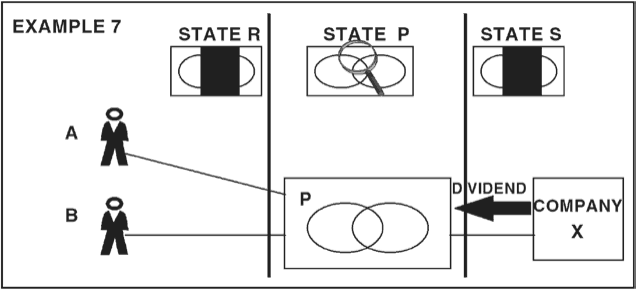
69. In this situation, the partnership is not liable to tax in State P and is therefore not a resident of that state for purposes of the P-S Convention. Similarly, though P is treated as the taxpayer for purposes of the domestic law of State S and the income is allocated to P under the domestic laws of R, P is not liable to tax in State R because it is not treated as a resident. Finally, though A and B are potentially liable to tax as residents in State R, under R’s allocation rules, the income is not allocated to them but to P. Thus P is not a resident of State R and A and B are not entitled to benefit from the R-S Convention with respect to the partnership’s income. State S would thus be entitled to tax the income without restriction.
70. It should be noted that, in this example (as in the following examples), the tax treatment of partnerships in State S does not have any impact on the entitlement to treaty benefits. Thus, the S-R and S-P Conventions would still not be applicable with respect to the dividends if State S treated partnerships as transparent rather than taxable entities.
Example 8: The facts are the same as in example 7 except that the tax treatment of the partnership in State P is reversed. P is a partnership established in State P. A and B are P’s partners who reside in State R. P owns shares in X, a company that is a resident of State S. X pays a dividend to P. All States treat P as a taxable entity.
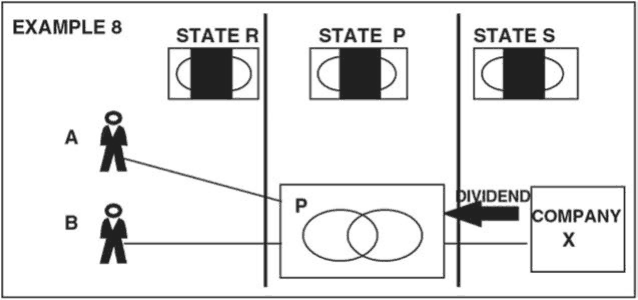
71. In this example, partnership P is a resident of State P as it is liable to tax therein. Partners A and B should not be considered to be entitled to the benefits of the S-R Convention with respect to the partnership income as they are not liable to tax on that income. Conversely, P should be considered by State S to be entitled to the benefits of the S-P Convention in relation with the dividends it derives from that State as it is liable to tax on those dividends and should therefore be considered to be the recipient and beneficial owner of that income. Thus the S-P Convention will restrict State S right to tax the dividends, even if State S taxes the dividends in the hands of partners A and B under its domestic rules applicable to the taxation of partnerships. It should be noted, however, that since P is a partnership, it will not get the benefits of the reduced rate of tax provided for in subparagraph 2a) of Article 10 of the Model Tax Convention (the subparagraph expressly excludes partnerships from its application) unless the two Contracting States agree to modify subparagraph 2a) to give the benefits of the reduced rate to a partnership treated as a body corporate (cf. paragraph 11 of the Commentary on Article 10).
72. As already mentioned, the tax treatment of partnerships in State S does not have any impact on the entitlement to treaty benefits in this case. Thus, the S-P Convention would still be the only relevant one if State S treated partnerships as transparent rather than taxable entities.
Example 9: The facts are the same as in example 8 except that the tax treatment of the partnership in State R is reversed. P is a partnership established in State P. A and B are P’s partners who reside in State R. P owns shares in X, a company that is a resident of State S. X pays a dividend to P. State P and State S treat P as a taxable entity while State R treats it as fiscally transparent.
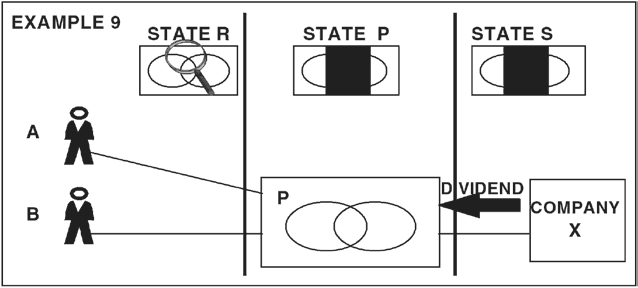
73. This example presents a case where there will be a double entitlement to treaty benefits with respect to the same income. As in the previous example, partnership P is a resident of State P as it is liable to tax therein. P should again be considered by State S to be entitled to the benefits of the S-P Convention in relation with the dividends it derives from that State as it is liable to tax on those dividends and should therefore be considered to be the recipient and beneficial owner of that income. In contrast to the previous example, however, partners A and B should also be considered to be entitled to the benefits of the S-R Convention with respect to the partnership income as they are also liable to tax on that income. Thus both the S-P and S-R Conventions will restrict State S right to tax the dividends, regardless of whether State S taxes these dividends in the hands of the partnership or of partners A and B (under its domestic rules applicable to the taxation of partnerships, it will likely tax them in the hands of the partnership). Again, the tax treatment of partnerships in State S will not have any impact on this result so that both conventions would still be applicable if State S treated partnerships as transparent rather than taxable entities.
74. The Committee agreed that this double entitlement to treaty benefits will be satisfied by State S imposing the lowest amount of tax allowed under the two treaties. Thus, if the S-R Convention restricts to 15% of the gross amount of the dividends the tax that can be levied by State S while the S-P treaty restricts the tax to 10% of that amount, the obligations imposed on State S under both conventions will be satisfied if the tax imposed by State S does not exceed 10% of the dividends.
75. While the Committee agreed on that approach, it recognized the administrative difficulties that its implementation would generate in the case of a partnership that would have a large number of partners who would be residents of different States.
Example 10: The facts are the same as in example 9 except that there is no tax convention between States S and P.
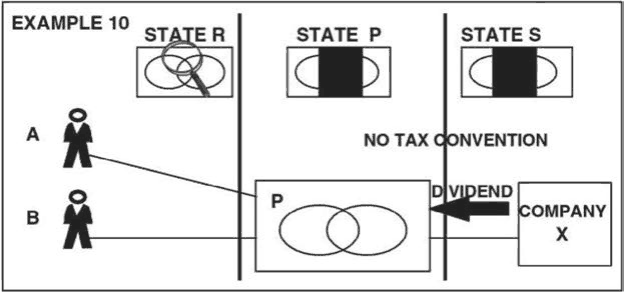
76. The Committee also discussed how the principles and conclusions formulated in its analysis of the previous examples would apply if the partnership were a resident of a state with which the State of source did not have a tax convention, including the case where the partnership was a resident of a tax haven. It concluded that same conclusions should apply as concerns the application of the Convention between the State of source and the State of residence of the partners.
77. Thus, in this example, partners A and B should be considered to be entitled to the benefits of the S-R Convention in respect of the dividends as they are both taxable in State R on these dividends.
78. As already noted, States should not, however, be expected to grant the benefits of a tax convention in cases where they cannot verify whether a person is truly entitled to these benefits. Thus if State P is a tax haven from which State S cannot obtain tax information, the application of the provisions of the S-R Convention will be conditional on State S being able to obtain all the necessary information from the partners or from State R. In such cases, State S might well decide to use the refund mechanism for the purposes of applying the limitation of tax provided for in Article 10 even though it normally applies this limitation at the time of the payment.
II.6 Application of the Convention where the benefits are dependent upon certain characteristics or attributes of the taxpayer
79. As indicated in paragraph 21 above, differences in how States apply the transparency approach may create difficulties for the application of tax conventions. Where a State considers that a partnership does not qualify as a resident because it is not liable to tax and the partners are liable to tax in their State of residence on their share of the partnership’s income, it is expected that that State will apply the provisions of the Convention as if the partners had earned the income directly so that the classification of the income for purposes of the allocative rules of Articles 6 to 21 will not be modified by the fact that the income flows-through the partnership.
80. Difficulties may arise, however, in the application of provisions which refer to the activities of the taxpayer, the nature of the taxpayer, the relationship between the taxpayer and another party to a transaction. States may have different views as to what extent the partnership should be ignored in applying such rules. The following subsections describe how the Committee believes that some of the provisions of the Convention should be applied in that respect.
a) Construction activities
Example 11: Company A carries on a business of engineering and company B carries on a business of electrical installation. Both companies are residents of State P. They have established a partnership P in State P for the purpose of a contract to design and install the electrical equipment in a nuclear reactor being built in State S. As part of the obligations of P under the contract, employees of Company A will be present on the construction site from 1 January to June 10 and employees of Company B will be there from 10 June to 1 February. When performing their duties, these employees will act as employees of the respective companies, each company acting as agent for the partnership.
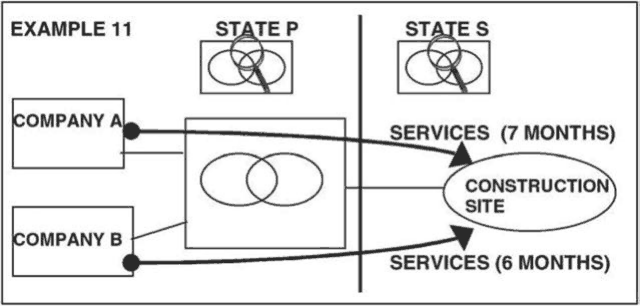
81. In this example, the Committee concluded that the period of time spent by the two partners should be aggregated at the partnership level with the result that the 12 month limit of paragraph 3 of Article 5 is exceeded. The enterprise carried on by the partnership will therefore be considered to have a permanent establishment in State S so that each partner will be considered to have a permanent establishment in State S for purposes of the taxation of their share of the business profits derived by the partnership from State S. This conclusion would not hold good if the relationship between A and B constituted merely a joint venture or consortium rather than a partnership.
b) Income attributable to the fixed base of a partnership
Example 12: Partnership P, which has been established in State P, has a fixed base in State R. Partner A is a resident of State P and partner B is a resident of State R. They have agreed to divide the profits of the partnership equally. P earns 1,500,000 during the taxable period. 1,000,000 of that amount is attributable to the services performed by B from the State R fixed base. The remaining 500,000 is attributable to services performed by A in State P. Both States treat partnerships as transparent entities.
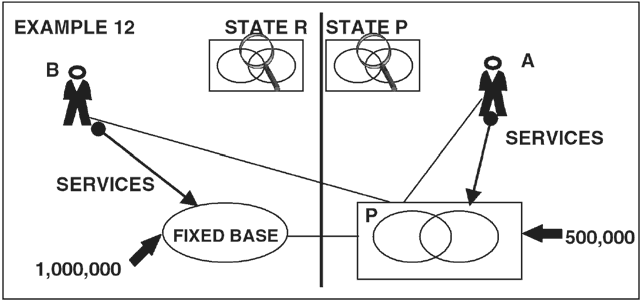
82. This example raises the question of the extent to which a transparent partnership should be ignored for purposes of the application of Articles 7 and 14. The Committee agreed that under Article 14, P’s fixed base in State R should be considered to be a fixed base of both A and B and that the same is true for a permanent establishment under Article 7.
83. The Committee then considered to what extent the activities of the partnership could be similarly allocated to each of the partners for the purposes of applying paragraph 1 of Article 14, which require that the fixed base be regularly available to a person “for the purpose of performing his activities”.
84. Two views were expressed. Under the first view, the reference to “his activities” in paragraph 1 of Article 14 refer to the personal activities of each partner and the partnership’s activities cannot be flowed-through to the partners. According to that view, Article 14 would not allow State R to tax partner A on his share of the income attributable to the fixed base (500,000) since the fixed base was not regularly available to A for the purposes of his own personal activities.
85. The majority, however, agreed with the different view that the activities of the partnership should be allocated to the partners to the same extent that the fixed base of the partnership is attributed to each of them. Applying this approach to the above example, State R would be allowed, as a source State, to tax partners A and partner B on their respective share of the income attributable to the fixed base located therein. State R will also be allowed, as the residence State, to tax partner B’s share of any other partnership income. Similarly, State P will be allowed, as a source State, to tax all the partnership’s income attributable to the fixed base of the partnership that is located in that State.
86. The Committee realised, however, that cases in the real world are rarely as simple as this example. The partnership agreement may specifically allocate the income from various States to particular partners. Entities that may be considered as partnerships for some purposes may not be partnerships for tax purposes; many international partnerships grant considerable autonomy, both managerial and financial, to their in-country subsidiary organisations. Both taxpayers and tax authorities strive to avoid administratively unmanageable results.
87. The Committee decided that these issues would more appropriately be dealt with in the context of its work on issues related to Article 14. It noted, however, that there should not be differences in result whether Article 7 or 14 applied and that a different conclusion would give rise to difficulties.
c) Determination of “employer” for purposes of Article 15
88. During its discussion of whether partnerships qualify as residents for purposes of tax conventions, the Committee also examined a related issue arising from the reference to the concept of resident in subparagraph 2b) of Article 15. Paragraph 2 of Article 15 exempts employment income earned by a resident of a Contracting State in the other State from tax by that other State if a number of conditions apply. One such condition is that the employer must not be a resident of the state in which the employment income is earned. The application of this rule may be problematic when the employer is a partnership.
89. As discussed above, a partnership that is treated as a transparent entity by a Contracting State does not qualify as a resident of that State under Article 4. While it is clear that a partnership that is treated as a transparent entity could qualify as an “employer” (especially under the domestic law definitions of the term in some countries, e.g. where an employer is defined as a person liable for a wage tax), the application of the condition imposed by subparagraph 2b) of Article 15 at the level of the partnership regardless of the situation of the partners would render the condition totally meaningless because the partnership cannot possibly qualify as a resident by virtue of its transparent status.
90. The Committee examined this result in the context of Article 15 and in light of the object and purpose of subparagraphs 2b) and c) of that Article. In its view, the conditions imposed by these subparagraphs aim at avoiding the source taxation of short-term employments to the extent that the employment income is not allowed as a deductible expense in the State of source because the employer is not taxable in that State since he is not resident nor has a permanent establishment therein. These subparagraphs can also be justified by the fact that imposing source deduction requirements with respect to short-term employments in a given State may be considered to be constitute an excessive administrative burden where the employer neither resides nor has a permanent establishment in that State.[169]
91. On that basis, the Committee concluded that in order to achieve a meaningful interpretation that would accord with the context and the object of paragraph 2 of Article 15, subparagraph 2b) should, in the case of partnerships treated as transparent entities, be considered to refer to the partners of such a partnership. Thus, the Committee favours an interpretation where the concepts of “employer” and “resident”, as found in subparagraph 2b), are applied at the level of the partners rather than at the level of the partnership. This approach is fully consistent with that put forward in paragraphs 81 and 85 above, under which certain provisions of tax conventions must be applied at the partners’ level rather than at that of the partnership in order to avoid absurd or unreasonable results.
92. The Committee realised that this interpretation would create difficulties where the partners resided in different States. Such difficulties, however, could be addressed through the mutual agreement procedure by reference, for example, to the State in which the partners who own the majority of the interests in the partnership reside (i.e. the State in which the greatest part of the deduction will be claimed).
III. Application of Tax Conventions by the State of residence
93. Where partnerships are involved, the application of tax conventions by the State of residence also raise difficulties, primarily with respect to the application of Article 23 on Elimination of Double Taxation. This Chapter examines some of these difficulties. Section III focuses on the particular problem of conflicts of qualification while Section III focuses on other problems that conflicts of income allocation may create for the State of residence.
III.1 Conflicts of qualification
a) Description of the problem
94. The Committee has found that a number of difficulties relating to the application of tax conventions to partnerships fall in the broader category of so-called “conflicts of qualification”, where the residence and source States apply different articles of the Convention on the basis of differences in their domestic law. Example 13 below illustrates such a conflict.
95. Subsection b) presents the conclusions reached by the Committee. Subsection c) discusses various cases of conflicts of qualification involving partnerships on the basis of these conclusions, presenting the answer to example 13 in paragraph 119.
Example 13: Partner A makes a loan to partnership P, which has been established in State P where it carries on a business through a permanent establishment. P pays interest to A. State P recognizes loans between partners and partnerships; under its domestic legislation State P allows P a tax deduction for the interest. State R does not recognize loans between partners and partnerships under its domestic law. Both States treat partnerships as transparent entities and apply Article 7 to the income of P, but State P applies Article 11 to the interest payment and State R does not.
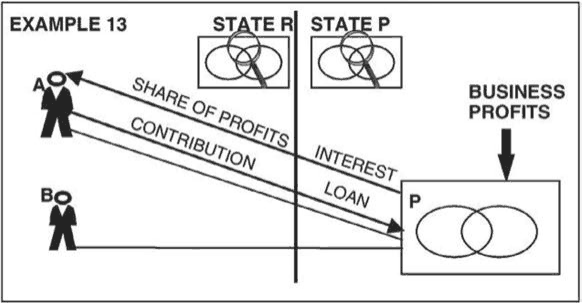
96. In this example, while partner A is clearly entitled to the benefits of the R-P Convention, there is disagreement between States P and R as to which provisions of the Convention are applicable. State P, being the State of source of the income, applies its domestic laws for the purposes of taxing the income of and from the partnership. It accordingly determines that partner A receives interest from the partnership and that Article 11 of the Convention applies to restrict to 10% the tax that it can impose on the interest. Under the domestic law of State R, there has been no loan and consequently A has no interest income. State R, however, will consider that the payment from P to A is a distribution of A’s share of the business profits of the partnership which has been taxed upon realisation under Article 7.
97. The position of State P is in accordance with the provisions of the Convention. Pursuant to paragraph 2 of Article 3, State P has interpreted the word “debt-claims of every kind”, which are found in paragraph 3 of Article 11, in accordance with its domestic law and has therefore concluded that a loan by a partner qualifies as a debt-claim on which interest may be paid. It has applied Article 11 of the Convention accordingly.
98. The consequences of the position taken by State P must, however, be examined in relation to the taxation of partner A in State R. One must distinguish, in that respect, the case where State R eliminates double taxation through the exemption method from that where it applies the credit method.
(i) State R uses the exemption method
99. Under the domestic law of State R, there is no debt-claim between partner A and the partnership and A therefore does not derive interest from State P. If State R follows that position when considering its obligation to eliminate double taxation under Article 23 A, that could lead it to consider that the payment made to partner A is a distribution of the partnership’s business profits which is attributable to a permanent establishment situated in State P which constitutes income that must be exempted under paragraph 1 of Article 23 A. To the extent that State P would have interpreted the Convention as obliging it to limit its tax to 10% of the gross amount of the payment, the result would be partial non-taxation (it would be total non-taxation if Article 11 of the R-P Convention did not provide for any source taxation of interest).
100. It must be noted that, regardless of the Convention, State R may still be obliged to exempt the income under its domestic tax rules related to the elimination of double taxation as these rules may require an other approach to be followed. This, however, would be a problem that could only be solved through an amendment to State R’s domestic tax laws.
(ii) State R uses the credit method
101. Under the domestic law of State R, there is no debt-claim between partner A and the partnership and A therefore does not derive interest from State P. Even if State R follows that position when considering its obligation to eliminate double taxation under Article 23 B, it should still tax any share of the partnership’s income attributed to A so that non-taxation will be avoided.
b) Analysis of the application of tax conventions in cases of conflicts of qualification
102. The Committee agreed that, in addressing conflicts of qualification problems faced by the State of residence, a useful starting point is the recognition of the principle that the domestic law of the State applying its tax governs all matters regarding how and in the hands of whom an item of income is taxed. The effect of tax conventions can only be to limit or eliminate the taxing rights of the Contracting States. In the case of the source State, the right to tax items of income is limited by provisions based on Articles 6 through 21 of the Model Tax Convention. In the case of the residence State, while provisions based on Articles such as 8 and 19 might be relevant, the primary restriction would arise from the provisions of the Article on Elimination of Double Taxation (Article 23 in the Model Tax Convention), by which the residence State agrees to either exempt income that the source State may tax under the Convention or to give a credit for the tax levied by the source State on that item of income.
103. When taxing an item of income, the source State therefore applies its domestic law, subject to the restrictions and limitations imposed on it by the provisions of its tax conventions. The way that the State of residence qualifies an item of income for treaty purposes has no relevance on how and in the hands of whom the State of source taxes that item of income. The reverse, however, is not true. The way the State of residence eliminates double taxation will depend, to some extent, on how the Convention has been applied by the State of source.
104. The wording of Article 23 of the OECD Model Tax Convention is crucial in that respect. That article requires that relief be granted, either through the exemption or credit system, where an item of income may be taxed “in accordance with the provisions of the Convention”. Thus, the State of residence has a treaty obligation to apply the exemption or credit method vis-à-vis any item of income where the tax convention authorizes taxation of that item of income by the State of source.
105. The meaning of the phrase “in accordance with the provisions of this Convention, may be taxed” needs to be clarified in that respect. Where, due to differences in the domestic law between the State of source and the State of residence, the former applies, with respect to a particular item of income, provisions of the Convention that are different from those that the State of residence would have applied to the same item of income, the income is still being taxed in accordance with the provisions of the Convention, in this case as interpreted by the State of source. In such a case, therefore, Article 23 requires that relief from double taxation be granted by the State of residence notwithstanding the conflict of qualification resulting from these differences in domestic law.
106. It may be useful to consider the following example to examine the results of that approach.
Example 14: Partner A, a resident of State R, sells his interest in P to D, a resident of State P, for an amount that exceeds A’s adjusted basis in the interest. Under State R’s domestic law, State R treats P as a company and would regard the gain as a capital gain of aresident of State R. Under State P’s domestic law, State P treats P as fiscally transparent and would regard the gain as attributable to a State P permanent establishment.
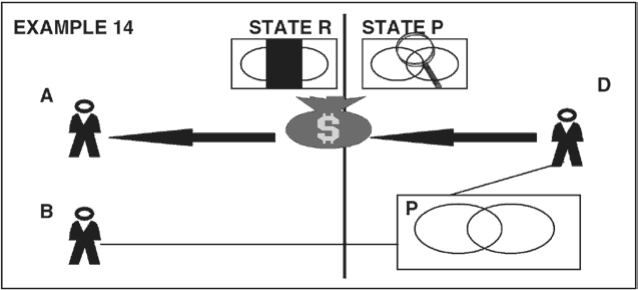
107. In this example, State P therefore considers that the alienation of the interest in the partnership is, for the purposes of its Convention with State R, an alienation by the partner of the underlying assets of the business carried on by the partnership, which may be taxed by State P according to paragraph 1 or 2 of Article 13. State R, as it treats the partnership as a corporate entity, considers that the alienation of the interest in the partnership is akin to the alienation of a share in a company, which could not be taxed by State P by reason of paragraph 4 of Article 13. In such a case, the conflict of qualification results exclusively from the different treatment of partnerships in the domestic laws of the two States and State P must be considered by State R to have taxed the gain from the alienation “in accordance with the provisions of the Convention” for purposes of the application of Article 23. State R must therefore grant an exemption or give a credit pursuant to Article 23 of the Model Tax Convention irrespective of the fact that, under its own domestic law, it treats the alienation gain as income from the disposition of shares in a corporate entity and that, if State’s P qualification of the income were consistent with that of State R, State R would not have to give relief under Article 23. No double taxation will therefore arise in such a case.
108. This does not mean that the wording of Article 23 requires the State of residence to eliminate double taxation in all cases where the State of source has imposed its tax by applying to an item of income a provision of the Convention that is different from that which the State of residence considers to be applicable. For instance, in the example above, if, for purposes of applying paragraph 2 of Article 13, State P considers that the partnership carried on business through a fixed place of business but State R argues that paragraph 4 applies because the partnership did not have a fixed place of business in State P, there is a legitimate dispute as to whether State P has taxed the income in accordance with the provisions of the Convention. The same may be said if State P, when applying paragraph 2 of Article 13, has interpreted the phrase “forming part of the business property” so as to include certain assets which would not fall within the meaning of that phrase according to the interpretation given to it by State R. Such conflicts resulting from different interpretation of facts or different interpretation of the provisions of the Convention must be distinguished from the conflicts of qualification described in the above paragraph where the divergence is based not on different interpretations of the provisions of the Convention, but on different provisions of domestic law. In the former case, the State of residence can argue that the State of source has not imposed its tax in accordance with the provisions of the Convention if it has applied its tax based on what the State of residence considers to be a wrong interpretation of the facts or a wrong interpretation of the Convention. States should use the provisions of Article 25 (Mutual Agreement Procedure), and in particular paragraph 3 thereof, in order to resolve this type of conflict when the difference in approaches would otherwise result in unrelieved double taxation.
109. In other situations, however, the phrase “in accordance with the provisions of this Convention, may be taxed” needs to be interpreted in relation to possible cases of double non-taxation involving residence States that follow the exemption method. Where the State of source considers that the provisions of the Convention preclude it from taxing an item of income which it would otherwise have taxed, the State of residence should, for purposes of applying paragraph 1 of Article 23 A, consider that the item of income may not be taxed by the State of source in accordance with the provisions of the Convention, even though the State of residence would have applied the Convention differently so as to tax that income if it had been the State of source. Thus the State of residence is not required by paragraph 1 to exempt the item of income, a result which is consistent with the basic function of Article 23 which is to eliminate double taxation.
110. This situation may be illustrated by reference to the facts of the above example. A business is carried on through a fixed place of business in State P by a partnership established in that State and a partner, resident in State R, alienates his interest in that partnership. Changing the facts of the example, however, it is now assumed that State P treats the partnership as a taxable entity whereas State R treats it as fiscally transparent; it is further assumed that State R is an exemption State. State P, as it treats the partnership as a corporate entity, considers that the alienation of the interest in the partnership is akin to the alienation of a share in a company, which it cannot tax by reason of paragraph 4 of Article 13. State R, on the other hand, considers that the alienation of the interest in the partnership should have been taxable by State P as an alienation by the partner of the underlying assets of the business carried on by the partnership to which paragraph 1 or 2 of Article 13 would have been applicable. In determining whether it has the obligation to exempt the income under paragraph 1 of Article 23 A, State R should nonetheless consider that, given the way that the provisions of the Convention apply in relation to the domestic law of State P, that State may not tax the income in accordance with the provisions of the Convention; State R is thus under no obligation to exempt the income.
111. Such cases should not be confused with cases where the provisions of a Convention grant to the source State the right to tax an item of income but that item of income is not taxed under the domestic law of the State of source. In such cases, the State of residence must still exempt that item of income under the provisions of paragraph 1 of Article 23 A (cf. paragraph 34 of the Commentary on Article 23).
112. Other cases that need to be distinguished are those where the double non-taxation results from disagreements between the State of residence and the State of source on the interpretation of the provisions of the Convention. In such cases, the State of residence does not agree that, in relation to the domestic law of the State of source, that State is precluded from taxing the item of income. The State of residence is therefore arguing that, to the extent that its interpretation of the Convention is correct, it has to grant exemption. Conversely, the source State is arguing that, if its interpretation of the Convention is the correct one, it cannot tax the income and the residence State should therefore not grant exemption. A similar problem could arise in the case of different interpretations of facts.
113. The Committee decided that the best way of addressing such cases of double non-taxation would be through a provision, to be added to Article 23 A, that would provide that the residence State does not have to grant exemption in these cases. Such a provision would deal with cases of double non-taxation resulting from different interpretations of the provisions of the Convention or of the facts. The Committee therefore decided that the following paragraph 4 be added to Article 23 A of the Model Tax Convention:
4. The provisions of paragraph 1 shall not apply to income derived or capital owned by a resident of a Contracting State where the other Contracting State applies the provisions of this Convention to exempt such income or capital from tax or applies the provisions of paragraph 2 of Article 10 or 11 to such income.
114. This proposed provision would only apply to the extent that the State of source has applied the provisions of the Convention to exempt an item of income or capital or has applied the provisions of paragraph 2 of Article 10 or 11 to an item of income. The paragraph would therefore not apply where the State of source considers that it may tax an item of income or capital in accordance with the provisions of the Convention but where no tax is actually payable on such income or capital under the provisions of the domestic laws of the State of source. Similarly, where the source and residence States disagree not only with respect to the qualification of the income but also with respect to the amount of such income, paragraph 4 applies only to that part of the income that the State of source exempts from tax through the application of the Convention or to which that State applies paragraph 2 of Article 10 or 11.
115. The preceding comments concern the position of the residence State where the wording of the provisions on elimination of double taxation in the relevant bilateral Convention is similar to that of Article 23 of the Model Tax Convention. Where, however, the wording is different from that used in the Model Tax Convention, the result might also be different.
116. One variation that is often found in bilateral Convention is to begin the Article on elimination of double taxation by the words “[d]ouble taxation shall be avoided as follows: […]”. Where such wording is used, the conclusions presented in the preceding paragraphs would be reinforced since these words make it clear that the Article is intended to apply only where there is double taxation and the obligation imposed on the Contracting States to avoid double taxation will best be satisfied by adopting the approach described in this section.
117. In some Conventions, the Article on elimination of double taxation includes an explicit reference to internal law, e.g. requiring a credit for foreign taxes to be granted subject to the provisions of the domestic law regarding the crediting against domestic tax of tax payable in the other State but without affecting the general principle provided in the article. While the effect of these provisions has to be determined on the basis of their precise wording, such wording, which provides that the reference to domestic law should not affect the principle of the treaty article, will generally allow the application of the conclusions of the preceding paragraphs. In some Conventions, however, the reference to domestic law is not so limited, provided that any inconsistency between the domestic law and the treaty rules existed at the time of signature of the Convention. To avoid confusion, Contracting States may wish to make clear the extent to which domestic law will control in situations existing at the time of entry into force of the Convention where the application of the domestic provision could be said to be inconsistent with the “general principle” of achieving double tax relief.
c) Cases of conflicts of qualification involving partnerships
118. The following examines how the general principles developed in the preceding subsection apply in some cases of conflicts of qualification involving partnerships.
119. Starting with example 13 (the facts of that example appear in subsection a)), it should be concluded that in that example, the partial non-taxation referred to in paragraph 99 above will be avoided since State R will not be required to exempt what State P considers as interest since it may be said that State P may, under its domestic law, tax that part of the income of the partnership under paragraph 2 of Article 11. State R will therefore apply the credit method in that case, either under paragraph 2 of Article 23 A (exemption method) or under paragraph 1 of Article 23 B (credit method).
Example 15: The facts are the same as in example 13 except that the treatment of the loan in States P and R is reversed. Partner A makes a loan to partnership P, which has been established in State P where it carries on a business through a permanent establishment. P pays interest to A. State R recognizes loans between partners and partnerships but State P does not. Both States treat partnerships as transparent entities and apply Article 7 to the income of P, but State R considers that Article 11 should apply to the payment made to partner A.
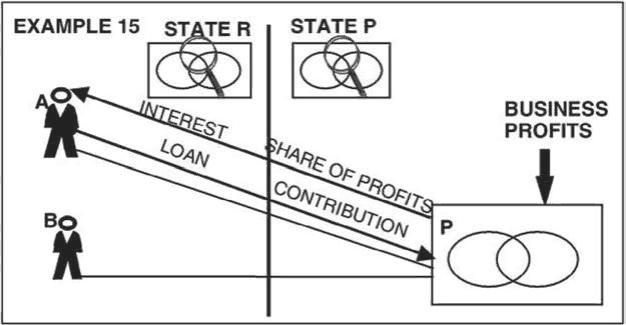
120. This example is a mirror image of the conflict of qualification presented in example 13. State P, as the State of source of the income, determines that the payment is a distribution of partner A’s share of the partnership business profits and that Article 7 of the Convention applies to allow it to tax that share without restriction. State R, however, considers that the payment from P to A is a payment of interest subject to the rules of Article 11.
121. Again, the position of State P is in accordance with the provisions of the Convention. Pursuant to paragraph 2 of Article 3, State P has interpreted the words “debt-claims of every kind”, which are found in paragraph 3 of Article 11, in accordance with its domestic law and has concluded that the financial contribution made by partner A did not qualify as a debt-claim for purposes of determining whether the payment was interest.
122. As Articles 23 A and 23 B both provide for the credit method to be applied in relation to interest, it may be argued that the consequences of that position for State R will be the same whether that State eliminates double taxation predominantly through the exemption method or through the credit method. Under the domestic law of State R, there is a debt-claim and partner A derives interest from State P. If State R follows that position when considering its obligation to eliminate double taxation under Articles 23 A or 23 B, that could lead it to consider that the payment made to partner A is interest that it may tax, subject to giving a credit for any State P tax levied in accordance with paragraph 2 of Article 11. If the Convention does not allow for source taxation of interest, the result of that approach will be double taxation. If the Convention follows Article 11 of the Model Tax Convention, the application of paragraph 2 of Articles 23 A or of paragraph 1 of Article 23 B under that approach will likely result in some double taxation to the extent that State R may only give credit for the part of the State P tax that it considers to have been imposed in accordance with Article 11, i.e. 10% of the payment of the interest.
123. On the basis of the principles developed in subsection b), however, that result will be avoided since State R will be obliged either to exempt what it considers to be interest (if it applies the exemption method) or to give a credit for the full amount of tax levied by State P on that item of income (if it applies the credit method). This is because the tax which State P has levied under Article 7 has been levied in accordance with the provisions of Article 7 of the Convention, taking into account the qualification of the income in light of State P’s domestic tax law.
III.2 Problems arising from conflicts of income allocation
124. As discussed in section II, conflicts of income allocation may result from the fact that two Contracting States classify the same entity differently so that one treats it as a partnership and the other does not or from the fact that one State taxes partnerships as taxable entities while the other treats them as transparent entities for tax purposes. Such conflicts, where the income is taxed by the two States in the hands of different taxpayers, create particular problems for the State of residence. These problems are discussed under the following examples.
Example 16: P is a partnership established in State P. Partner B is a resident of State R while partner A is a resident of State P. State P treats the partnership as a taxable entity while State R treats it as a transparent entity. P derives royalty income from State R that is not attributable to a permanent establishment in State R. P has an office in State P and may therefore be considered to have a permanent establishment in State P.
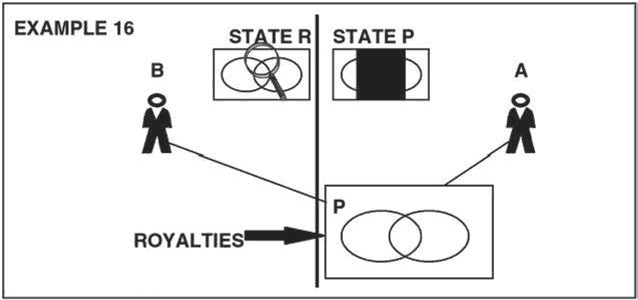
125. In that example, P qualifies as a resident of State P as it is a person “liable to tax” therein according to the laws of State P. Under Article 12 of the P-R treaty, it is clear that State R cannot tax the partnership on the royalty. State R, however, would like to tax partner B, a resident, on his share of the income of the partnership.
126. Some delegates took the position that the R-P Convention prevents State R from taxing in that situation. On the basis of paragraph 1 of Article 12, which provides that royalties arising in State R and paid to a resident of State P are taxable only in State P if the resident is the beneficial owner thereof, they argued that because the partnership qualifies as a resident of State P and is the beneficial owner of the royalties, the conditions of the paragraph are met and the royalties may only be taxed in State P. The delegates who adopted that interpretation therefore concluded that unless the case fell under the application of CFC rules or the Convention included a special provision allowing State R to tax its residents in such circumstances (e.g. a specific provision applicable to partnerships or a so-called “saving clause” such as is found in Conventions concluded by the United States), the Convention would prevent State R from taxing partner B on his share of the royalties.
127. The majority, however, disagreed with that position. When taxing partner B, State R is taxing its own resident on income arising in its territory. Article 12 of the Convention does not affect taxation that is based on residence but only taxation that is based on source. When applying the Convention, State R may indeed consider, based on the principles developed in previous examples, that partner B may be considered to have received payment of his share of the royalties for the purposes of taxation in that State so that the limitation of Article 12 does not apply since that Article is only applicable where royalties arising in one State have been paid to a resident of the other State.
128. The Committee therefore decided that the Commentary on Article 1 be amended by adding the following paragraph thereto:
Where a partnership is treated as a resident of a Contracting State, the provisions of the Convention that restrict the other Contracting State’s right to tax the partnership on its income do not apply to restrict that other State’s right to tax the partners who are its own residents on their share of the income of the partnership. Some states may wish to include in their conventions a provision that expressly confirms a Contracting State’s right to tax resident partners on their share of the income of a partnership that is treated as a resident of the other State.
129. Since State R’s right to tax partner B on his share of the income of the partnership derives from the partner’s residence in that State, it follows that State R must also give the benefits of Article 23 to partner B. The fact that the partnership has a permanent establishment in State P is not relevant in that respect since, as discussed in subsection b), the tax levied by State P will still have been levied in accordance with the provisions of the Convention since State P is allowed to tax partnership P as its resident. The application of Article 23 by State R may, however, raise some difficulties because State P will levy its tax on the partnership rather than on the partners and because that tax may be levied both when the income is realized and when it is distributed (i.e. through a withholding tax on the distribution which State P may treat as a dividend). These difficulties are examined below in relation to example 18.
Example 17: P is a partnership established in State P. A and B are P’s partners who reside in State R. State P treats P as a taxable entity while State R treats it as a transparent entity. P derives royalty income from State P that is not attributable to a permanent establishment in that state.
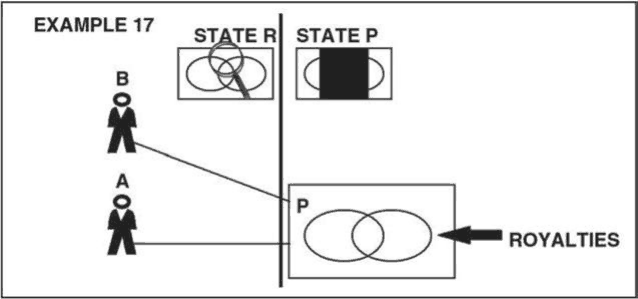
130. This example addresses a factual situation similar to that described in the preceding example but from the perspective of the State of residence of the partnership, i.e. State P. In this example, State P would, under its domestic law, impose tax on the royalties in the hands of the partnership. From its perspective, P is a resident taxpayer and as such liable to tax on its income arising in State P. Thus, Article 12 of the Convention would not apply since the royalties arise in State P and are paid to a resident of State P. However, because State R allocates the income to partners A and B, they are also liable to tax on the royalties in State R as residents. There would thus be double taxation on the same item of income because of the differing allocation rules in this situation.
131. The majority was of the view that, despite the general principles discussed in Section II which would require the source State to take into consideration the treatment of the income in the State of the residence of the partners, in this situation State P would not be limited in its taxing rights by the P-R Convention. In its view, the situation involves a purely domestic matter from the perspective of State P; it is simply taxing the domestic source income of a resident taxpayer and nothing in the Convention can limit that right. The fact that double taxation results because of the differing income allocations of States R and P is not a reason to limit its right to tax its residents.
132. Some delegates, however, would continue to follow the principle that State P, in applying the Convention, should take into account the fact that, under the allocation of income rules in State R, the income would be liable to tax in the hands of A and B. Their position would be that State P is obliged to relieve the potential resulting double taxation by applying Article 12 to exempt the income in the hands of the partners, thus leaving the exclusive taxing right with State R.
133. Where P continues to tax the income in the hands of P, the possible application of Article 23 is discussed in Section III.
Example 18: In Year 1, P, which is established and has a permanent establishment in State P, earns profits of 1 million. In Year 2, P distributes to A, a resident of State R, his share in the profits earned in Year 1 (300,000). Under State P’s domestic law, P is a company, and the profits would be taxed in Year 1 at 40% (400,000). In year 2, a further withholding tax (30,000) on the distribution to A would be imposed (by treating it as a dividend). Under State R’s domestic law, P is fiscally transparent, and State R would tax A in Year 1 on A’s share in P’s profits (500,000). State R would treat the distribution in year 2 as having no tax effect.
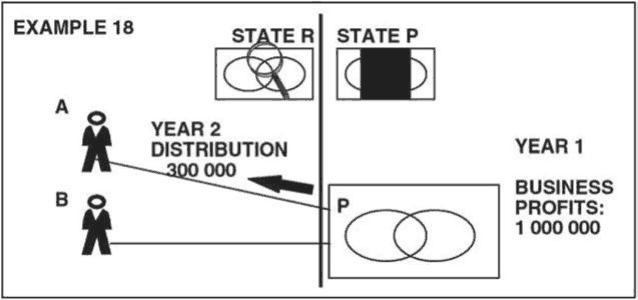
134. In this example, the conflict in income allocation that results from the different treatment of partnerships in States P and R raises the following various difficulties with respect to the elimination of double taxation by State R:
the fact that State P taxes two different events (the earning of the profits and their distribution) while State R only taxes one event (the earning of the profits);
the timing mismatch that results from the fact that State P taxes the distribution in year 2 but State R imposes its tax in year 1;
the fact that the State P tax which is levied when the profits are earned is paid by the partnership while the State R tax is levied on the partners.
135. The first difficulty relates to whether State R should provide credit for the tax levied by State P upon the distribution. This is an issue that concerns equally States applying the exemption method and States applying the credit method. If State R applies the exemption method, it must refrain from taxing the partnership’s business profits derived from State P in year 1 (it is, of course, entitled to take the excluded income into account in determining the rate of tax on A’s remaining income pursuant to paragraph 3 of Article 23 A); if it is a credit State, it must give credit for State P’s tax levied on these profits in year 1. In both cases, however, the Convention theoretically requires that it should provide a credit for State P’s tax levied on the distribution against its tax on such a distribution (paragraph 2 of Article 23 A and paragraph 1 of Article 23 B).
136. Since, however, State R does not tax the distribution, there is no tax levied by State R against which to credit State P’s tax levied upon the distribution. While the Convention would allow State R to tax the profit distribution made in year 2, such taxation would be inconsistent with State R’s treatment of partnership and is therefore not allowed by its domestic law. Under that law, the income may be taxed (subject to any relief from double taxation) only in the year it was earned, i.e. year 1. The manner in which taxation rights allowed by a treaty are exercised is, of course, a matter of domestic law.
137. A clear distinction must be made between the generation of profits and the distribution of those profits. State R, if it is an exemption State, has to exempt from tax the generation of profits in year 1 and therefore is not permitted under the Convention to tax the profits when earned on the basis that Article 10 would allow them to be taxed when distributed. Similarly, however, State R (if it is a credit State) should not be expected to credit the tax levied by State P upon distribution against its own tax levied upon generation.
138. Once it is agreed that State R does not levy tax on the distribution, the second difficulty, i.e. the timing mismatch, is no longer relevant. While timing mismatches frequently create problems for foreign tax credit purposes, which leads States to adopt rules allowing for the carry-back or carry-forward of foreign tax credits, the issue does not arise in this example since there is no double taxation of the distribution.
139. The third difficulty concerns only States that apply the credit method and relates to the fact that both States impose tax upon the same income, but on different taxpayers. The issue is therefore whether State R, which taxes partner A on his share in the partnership profits, is obliged, under the Convention, to give credit for the source tax that is levied in State P on partnership P, which State P treats as a separate taxable entity. The answer to that question must be affirmative. To the extent that State R flows-through the income of the partnership to the partners for the purpose of taxing them, it should be consistent and flow-through the tax paid by the partnership for the purposes of eliminating double taxation arising from its taxation of the partners. In other words, if the corporate status given to the partnership by State P is ignored for purposes of taxing the share in the profits, it should likewise be ignored for purposes of giving access to the foreign tax credit.
Annex I
Proposed changes to the OECD Model Tax Convention
The following are the changes to the Model Tax Convention resulting from the report (changes to the existing text of the Commentary are indicated by bold italics and strikethrough):
Articles of the Model
1. Add the following paragraph 4 to Article 23 A of the Model Tax Convention:
4. The provisions of paragraph 1 shall not apply to income derived or capital owned by a resident of a Contracting State where the other Contracting State applies the provisions of this Convention to exempt such income or capital from tax or applies the provisions of paragraph 2 of Article 10 or 11 to such income.
Commentary
2. Delete paragraphs 2 to 6 of the Commentary on Article 1 and replace them by the following:
2. Domestic laws differ in the treatment of partnerships. These differences create various difficulties when applying tax Conventions in relation to partnerships. These difficulties are analysed in the report by the Committee on Fiscal Affairs entitled The application of the OECD Model Tax Convention to Partnerships, the conclusions of which have been incorporated below and in the Commentary on various other provisions of the Model Tax Convention.
3. [FROM PARA. 2] As discussed in that report, a main source of difficulties is the fact that some countries treat partnerships as taxable units (sometimes even as companies) whereas other countries adopt what may be referred to as the fiscally transparent approach, under which the partnership is ignored for tax purposes and the individual partners are taxed on their respective share of the partnership’s income.
4. A first difficulty is the extent to which a partnership is entitled as such to the benefits of the provisions of the Convention. Under Article 1, only persons who are residents of the Contracting States are entitled to the benefits of the tax Convention entered into by these States. While paragraph 2 of the Commentary on Article 3 explains why a partnership constitutes a person, a partnership does not necessarily qualify as a resident of a Contracting State under Article 4.
5. [FROM PARA. 3] Where a partnership is treated as a company or taxed in the same way, it
may reasonably be argued that the partnershipis a resident of the Contracting Statetaxingthat taxes the partnership on the grounds mentioned in paragraph 1 of Article 4 and, therefore,falling under the scope of the Convention,it is entitled to the benefits of the Convention.In the other instances mentioned in paragraph 2 above, the application of the Convention to the partnership as such might be refused, at least if no special rule covering partnerships is provided for in the Convention. Where, however, a partnership is treated as fiscally transparent in a State, the partnership is not “liable to tax” in that State within the meaning of paragraph 1 of Article 4, and so cannot be a resident thereof for purposes of the Convention. In such a case, the application of the Convention to the partnership as such would be refused, unless a special rule covering partnerships were provided for in the Convention. Where the application of the Convention is so refused, the partners should be entitled, with respect to their share of the income of the partnership, to the benefits provided by the Conventions entered into by the States of which they are residents to the extent that the partnership’s income is allocated to them for the purposes of taxation in their State of residence (cf. paragraph 8.2 of the Commentary on Article 4).6. The relationship between the partnership’s entitlement to the benefits of a tax Convention and that of the partners raises other questions.
6.1 One issue is the effect that the application of the provisions of the Convention to a partnership can have on the taxation of the partners. Where a partnership is treated as a resident of a Contracting State, the provisions of the Convention that restrict the other Contracting State’s right to tax the partnership on its income do not apply to restrict that other State’s right to tax the partners who are its own residents on their share of the income of the partnership. Some states may wish to include in their conventions a provision that expressly confirms a Contracting State’s right to tax resident partners on their share of the income of a partnership that is treated as a resident of the other State.
6.2 Another issue is that of the effect of the provisions of the Convention on a Contracting State’s right to tax income arising on its territory where the entitlement to the benefits of one, or more than one, Conventions is different for the partners and the partnership. Where, for instance, the State of source treats a domestic partnership as fiscally transparent and therefore taxes the partners on their share of the income of the partnership, a partner that is resident of a State that taxes partnerships as companies would not be able to claim the benefits of the Convention between the two States with respect to the share of the partnership’s income that the State of source taxes in his hands since that income, though allocated to the person claiming the benefits of the Convention under the laws of the State of source, is not similarly allocated for purposes of determining the liability to tax on that item of income in the State of residence of that person.
6.3 The results described in the preceding paragraph should obtain even if, as a matter of the domestic law of the State of source, the partnership would not be regarded as transparent for tax purposes but as a separate taxable entity to which the income would be attributed, provided that the partnership is not actually considered as a resident of the State of source. This conclusion is founded upon the principle that the State of source should take into account, as part of the factual context in which the Convention is to be applied, the way in which an item of income, arising in its jurisdiction, is treated in the jurisdiction of the person claiming the benefits of the Convention as a resident. For States which could not agree with this interpretation of the Article, it would be possible to provide for this result in a special provision which would avoid the resulting potential double taxation where the income of the partnership is differently allocated by the two States.
6.4 Where, as described in paragraphs 6.2, income has “flowed through” a transparent partnership to the partners who are liable to tax on that income in the State of their residence then the income is appropriately viewed as “paid” to the partners since it is to them and not to the partnership that the income is allocated for purposes of determining their tax liability in their State of residence. Hence the partners, in these circumstances, satisfy the condition, imposed in several Articles, that the income concerned is “paid to a resident of the other Contracting State”. Similarly the requirement, imposed by some other Articles, that income or gains are ‘derived by a resident of the other Contracting State is met in the circumstances described above. This interpretation avoids denying the benefits of tax Conventions to a partnership’s income on the basis that neither the partnership, because it is not a resident, nor the partners, because the income is not directly paid to them or derived by them, can claim the benefits of the Convention with respect to that income. Following from the principle discussed in paragraph 6.3, the conditions that the income be paid to, or derived by, a resident should be considered to be satisfied even where, as a matter of the domestic law of the State of s ource, the partnership would not be regarded as transparent for tax purposes, provided that the partnership is not actually considered as a resident of the State of source.
6.5 Partnership cases involving three States pose difficult problems with respect to the determination of entitlement to benefits under Conventions. However, many problems may be solved through the application of the principles described in paragraphs 6.2 to 6.4. Where a partner is a resident of one State, the partnership is established in another State and the partner shares in partnership income arising in a third State then the partner may claim the benefits of the Convention between his State of residence and the State of source of the income to the extent that the partnership’s income is allocated to him for the purposes of taxation in his State of residence. If, in addition, the partnership is taxed as a resident of the State in which it is established then the partnership may itself claim the benefits of the Convention between the State in which it is established and the State of source. In such a case of “double benefits”, the State of source may not impose taxation which is inconsistent with the terms of either applicable Convention therefore, where different rates are provided for in the two Conventions, the lower will be applied. However, Contracting States may wish to consider special provisions to deal with the administration of benefits under Conventions in situations such as these, so that the partnership may claim benefits but partners could not present concurrent claims. Such provisions could ensure appropriate and simplified administration of the giving of benefits. No benefits will be available under the Convention between the State in which the partnership is established and the State of source if the partnership is regarded as transparent for tax purposes by the State in which it is established. Similarly no benefits will be available under the Convention between the State of residence of the partner and the State of source if the income of the partnership is not allocated to the partner under the taxation law of the State of residence. If the partnership is regarded as transparent for tax purposes by the State in which it is established and the income of the partnership is not allocated to the partner under the taxation law of the State of residence of the partner, the State of source may tax partnership income allocable to the partner without restriction.
6.6 Differences in how countries apply the fiscally transparent approach may create other difficulties for the application of tax Conventions. Where a State considers that a partnership does not qualify as a resident of a Contracting State because it is not liable to tax and the partners are liable to tax in their State of residence on their share of the partnership’s income, it is expected that that State will apply the provisions of the Convention as if the partners had earned the income directly so that the classification of the income for purposes of the allocative rules of Articles 6 to 21 will not be modified by the fact that the income flows-through the partnership. Difficulties may arise, however, in the application of provisions which refer to the activities of the taxpayer, the nature of the taxpayer, the relationship between the taxpayer and another party to a transaction. Some of these difficulties are discussed in paragraphs 19.1 of the Commentary on Article 5 and paragraphs 6.1 and 6.2 of the Commentary on Article 15.
6.7 Finally a number of other difficulties arise where different rules of the Convention are applied by the Contracting States to income derived by a partnership or its partners, depending on the domestic laws of these States or their interpretation of the provisions of the Convention or of the relevant facts. These difficulties relate to the broader issue of conflicts of qualification, which is dealt with in paragraphs 32.1 ff. and 56.1 ff. of the Commentary on Article 23.
3. Delete the last sentence of paragraph 2 of the Commentary on Article 3 and replace it by the following:
Partnerships will also be considered to be “persons” either because they fall within the definition of “company” or, where this is not the case, because they constitute other bodies of persons.
4. Add the following paragraph 10.1 to the Commentary on Article 3:
10.1 The separate mention of partnerships in sub-paragraph 1 f) is not inconsistent with the status of a partnership as a person under sub-paragraph 1 a). Under the domestic laws of some countries, it is possible for an entity to be a “person” but not a “legal person” for tax purposes. The explicit statement is necessary to avoid confusion.
5. Add the following paragraph 8.2 to the Commentary on Article 4:
8.2 Where a State disregards a partnership for tax purposes and treats it as fiscally transparent, taxing the partners on their share of the partnership income, the partnership itself is not liable to tax and may not, therefore, be considered to be a resident of that State. In such a case, since the income of the partnership “flows through” to the partners under the domestic law of that State, the partners are the persons who are liable to tax on that income and are thus the appropriate persons to claim the benefits of the Conventions concluded by the States of which they are residents. This latter result will obtain even if, under the domestic law of the State of source, the income is attributed to a partnership which is treated as a separate taxable entity. For States which could not agree with this interpretation of the Article, it would be possible to provide for this result in a special provision which would avoid the resulting potential double taxation where the income of the partnership is differently allocated by the two States.
6. Add the following paragraph 19.1 to the Commentary on Article 5:
19.1 In the case of fiscally transparent partnerships, the twelve month test is applied at the level of the partnership as concerns its own activities. If the period of time spent on the site by the partners and the employees of the partnership exceeds twelve month, the enterprise carried on by the partnership will therefore be considered to have a permanent establishment. Each partner will thus be considered to have a permanent establishment for purposes of the taxation of his share of the business profits derived by the partnership regardless of the time spent by himself on the site.
7. Renumber paragraph 7 of the Commentary on Article 15 as paragraph 6 and add the following paragraphs 6.1 and 6.2:
6.1 The application of the second condition in the case of fiscally transparent partnerships present difficulties since such partnerships cannot qualify as a resident of a Contracting State under Article 4 (cf. paragraph 8.2 of the Commentary on Article 4). While it is clear that such a partnership could qualify as an “employer” (especially under the domestic law definitions of the term in some countries, e.g. where an employer is defined as a person liable for a wage tax), the application of the condition at the level of the partnership regardless of the situation of the partners would therefore render the condition totally meaningless.
6.2 The object and purpose of subparagraphs 2b) and c) of paragraph 2 are to avoid the source taxation of short-term employments to the extent that the employment income is not allowed as a deductible expense in the State of source because the employer is not taxable in that State as he neither is a resident nor has a permanent establishment therein. These subparagraphs can also be justified by the fact that imposing source deduction requirements with respect to short-term employments in a given State may be considered to be constitute an excessive administrative burden where the employer neither resides nor has a permanent establishment in that State. In order to achieve a meaningful interpretation of subparagraph 2b) that would accord with its context and its object, it should therefore be considered that, in the case of fiscally transparent partnerships, that subparagraph applies at the level of the partners. Thus, the concepts of “employer” and “resident”, as found in subparagraph 2b), are applied at the level of the partners rather than at the level of a fiscally transparent partnership. This approach is consistent with that under which other provisions of tax Conventions must be applied at the partners’ rather than at the partnership’s level. While this interpretation could create difficulties where the partners reside in different States, such difficulties could be addressed through the mutual agreement procedure by determining, for example, the State in which the partners who own the majority of the interests in the partnership reside (i.e. the State in which the greatest part of the deduction will be claimed).
8. Add the following heading and paragraphs immediately after paragraph 32 of the Commentary on Article 23:
E. Conflicts of qualification:[170]
32.1 Both Articles 23 A and 23 B require that relief be granted, through the exemption or credit method, as the case may be, where an item of income or capital may be taxed by the State of source in accordance with the provisions of the Convention. Thus, the State of residence has the obligation to apply the exemption or credit method in relation to an item of income or capital where the Convention authorizes taxation of that item by the State of source.
32.2 The interpretation of the phrase “in accordance with the provisions of this Convention, may be taxed”, which is used in both Articles, is particularly important when dealing with cases where the State of residence and the State of source classify the same item of income or capital differently for purposes of the provisions of the Convention.
32.3 Different situations need to be considered in that respect. Where, due to differences in the domestic law between the State of source and the State of residence, the former applies, with respect to a particular item of income or capital, provisions of the Convention that are different from those that the State of residence would have applied to the same item of income or capital, the income is still being taxed in accordance with the provisions of the Convention, as interpreted and applied by the State of source. In such a case, therefore, the two Articles require that relief from double taxation be granted by the State of residence notwithstanding the conflict of qualification resulting from these differences in domestic law.
32.4 This point may be illustrated by the following example. A business is carried on through a permanent establishment in State E by a partnership established in that State. A partner, resident in State R, alienates his interest in that partnership. State E treats the partnership as fiscally transparent whereas State R treats it as taxable entity. State E therefore considers that the alienation of the interest in the partnership is, for the purposes of its Convention with State R, an alienation by the partner of the underlying assets of the business carried on by the partnership, which may be taxed by that State in accordance with paragraph 1 or 2 of Article 13. State R, as it treats the partnership as a taxable entity, considers that the alienation of the interest in the partnership is akin to the alienation of a share in a company, which could not be taxed by State E by reason of paragraph 4 of Article 13. In such a case, the conflict of qualification results exclusively from the different treatment of partnerships in the domestic laws of the two States and State E must be considered by State R to have taxed the gain from the alienation “in accordance with the provisions of the Convention” for purposes of the application of Article 23 A or Article 23 B. State R must therefore grant an exemption pursuant to Article 23 A or give a credit pursuant to Article 23 B irrespective of the fact that, under its own domestic law, it treats the alienation gain as income from the disposition of shares in a corporate entity and that, if State E’s qualification of the income were consistent with that of State R, State R would not have to give relief under Article 23 A or Article 23 B. No double taxation will therefore arise in such a case.
32.5 Article 23 A and Article 23 B, however, do not require that the State of residence eliminate double taxation in all cases where the State of source has imposed its tax by applying to an item of income a provision of the Convention that is different from that which the State of residence considers to be applicable. For instance, in the example above, if, for purposes of applying paragraph 2 of Article 13, State E considers that the partnership carried on business through a fixed place of business but State R considers that paragraph 4 applies because the partnership did not have a fixed place of business in State E, there is actually a dispute as to whether State E has taxed the income in accordance with the provisions of the Convention. The same may be said if State E, when applying paragraph 2 of Article 13, interprets the phrase “forming part of the business property” so as to include certain assets which would not fall within the meaning of that phrase according to the interpretation given to it by State R. Such conflicts resulting from different interpretation of facts or different interpretation of the provisions of the Convention must be distinguished from the conflicts of qualification described in the above paragraph where the divergence is based not on different interpretations of the provisions of the Convention but on different provisions of domestic law. In the former case, State R can argue that State E has not imposed its tax in accordance with the provisions of the Convention if it has applied its tax based on what State R considers to be a wrong interpretation of the facts or a wrong interpretation of the Convention. States should use the provisions of Article 25 (Mutual Agreement Procedure), and in particular paragraph 3 thereof, in order to resolve this type of conflict in cases that would otherwise result in unrelieved double taxation.
32.6 The phrase “in accordance with the provisions of this Convention, may be taxed” must also be interpreted in relation to possible cases of double non-taxation that can arise under Article 23 A. Where the State of source considers that the provisions of the Convention preclude it from taxing an item of income or capital which it would otherwise have taxed, the State of residence should, for purposes of applying paragraph 1 of Article 23 A, consider that the item of income may not be taxed by the State of source in accordance with the provisions of the Convention, even though the State of residence would have applied the Convention differently so as to tax that income if it had been in the position of the State of source. Thus the State of residence is not required by paragraph 1 to exempt the item of income, a result which is consistent with the basic function of Article 23 which is to eliminate double taxation.
32.7 This situation may be illustrated by reference to a variation of the example described above. A business is carried on through a fixed place of business in State E by a partnership established in that State and a partner, resident in State R, alienates his interest in that partnership. Changing the facts of the example, however, it is now assumed that State E treats the partnership as a taxable entity whereas State R treats it as fiscally transparent; it is further assumed that State R is a State that applies the exemption method. State E, as it treats the partnership as a corporate entity, considers that the alienation of the interest in the partnership is akin to the alienation of a share in a company, which it cannot tax by reason of paragraph 4 of Article 13. State R, on the other hand, considers that the alienation of the interest in the partnership should have been taxable by State E as an alienation by the partner of the underlying assets of the business carried on by the partnership to which paragraphs 1 or 2 of Article 13 would have been applicable. In determining whether it has the obligation to exempt the income under paragraph 1 of Article 23 A, State R should nonetheless consider that, given the way that the provisions of the Convention apply in conjunction with the domestic law of State E, that State may not tax the income in accordance with the provisions of the Convention. State R is thus under no obligation to exempt the income.
9. Replace paragraphs 34 to 36 of the Commentary on Article 23 by the following:
34. The State of residence must accordingly exempt income and capital which may be taxed by the other State in accordance with the Convention whether or not the right to tax is in effect exercised by that other State. This method is regarded as the most practical one since it relieves the State of residence from undertaking investigations of the actual taxation position in the other State.
34.1 The obligation imposed on the State of residence to exempt a particular item of income or capital depends on whether this item may be taxed by the State of source in accordance with the Convention. Paragraphs 32.1 to 32.7 above discuss how this condition should be interpreted. Where the condition is met, however, the obligation may be considered as absolute, subject to the exceptions of paragraphs 2 and 4 of Article 23 A. Paragraph 2 addresses the case, already mentioned in paragraph 31 above, of items of income which may only be subjected to a limited tax in the State of source. For such items of income, the paragraph provides for the credit method (cf. paragraph 47 below). Paragraph 4 addresses the case of certain conflicts of qualification which would result in double non-taxation as a consequence of the application of the Convention if the State of residence were obliged to give exemption (cf. paragraphs 56.1 to 56.3 below).
35. Occasionally, negotiating States may find it reasonable in certain circumstances, in order to avoid double non-taxation, to make an exception to the absolute obligation on the State of residence to give exemption in cases where neither paragraph 3 nor 4 would apply. Such may be the case where no tax on specific items of income or capital is provided under the domestic laws of the State of source, or tax is not effectively collected owing to special circumstances such as the set-off of losses, a mistake, or the statutory time limit having expired. To avoid such double non-taxation of specific items of income, Contracting States may agree to amend the relevant Article itself (cf. paragraph 9 of the Commentary on Article 15 and paragraph 12 of the Commentary on Article 17; for the converse case where relief in the State of source is subject to actual taxation in the State of residence, cf. paragraph 20 of the Commentary on Article 10, paragraph 10 of the Commentary on Article 11, paragraph 6 of the Commentary on Article 12, paragraph 21 of the Commentary on Article 13 and paragraph 3 of the Commentary on Article 21). One might also make an exception to the general rule, in order to achieve a certain reciprocity, where one of the States adopts the exemption method and the other the credit method. Finally, another exception to the general rule may be made where a State wishes to apply to specific items of income the credit method rather than exemption (cf. paragraph 31 above).
36. As already mentioned in paragraph 31 above, the exemption method does not apply to such items of income which according to the Convention may be taxed in the State of residence but may also be subjected to a limited tax in the other Contracting State. For such items of income, paragraph 2 of Article 23 A provides for the credit method (cf.paragraph 47 below).
10. Add the following heading and paragraphs immediately after paragraph 56 of the Commentary on Article 23:
Paragraph 4
56.1 The purpose of this paragraph is to avoid double non taxation as a result of disagreements between the State of residence and the State of source on the facts of a case or on the interpretation of the provisions of the Convention. The paragraph applies where, on the one hand, the State of source interprets the facts of a case or the provisions of the Convention in such a way that an item of income or capital falls under a provision of the Convention that eliminates its right to tax that item or limits the tax that it can impose while, on the other hand, the State of residence adopts a different interpretation of the facts or of the provisions of the Convention and thus considers that the item may be taxed in the State of source in accordance with the Convention, which, absent this paragraph, would lead to an obligation for the State of residence to give exemption under the provisions of paragraph 1.
56.2 The paragraph only applies to the extent that the State of source has applied the provisions of the Convention to exempt an item of income or capital or has applied the provisions of paragraph 2 of Article 10 or 11 to an item of income. The paragraph would therefore not apply where the State of source considers that it may tax an item of income or capital in accordance with the provisions of the Convention but where no tax is actually payable on such income or capital under the provisions of the domestic laws of the State of source. In such a case, the State of residence must exempt that item of income under the provisions of paragraph 1 because the exemption in the State of source does not result from the application of the provisions of the Convention but, rather, from the domestic law of the State of source (cf. paragraph 34 above). Similarly, where the source and residence States disagree not only with respect to the qualification of the income but also with respect to the amount of such income, paragraph 4 applies only to that part of the income that the State of source exempts from tax through the application of the Convention or to which that State applies paragraph 2 of Article 10 or 11.
56.3 Cases where the paragraph apply must be distinguished from cases where the qualification of an item of income under the domestic law of the State of source interacts with the provisions of the Convention to preclude that State from taxing an item of income or capital in circumstances where the qualification of that item under the domestic law of the State of residence would not have had the same result. In such a case, which is discussed in paragraphs 32.6 and 32.7 above, paragraph 1 does not impose an obligation on the State of residence to give exemption because the item of income may not be taxed in the State of source in accordance with the Convention. Since paragraph 1 does not apply, the provisions of paragraph 4 are not required in such a case to ensure the taxation right of the State of residence.
11. Replace paragraph 59 of the Commentary on Article 23 by the following:
59. The obligation imposed by Article 23 B on a State R to give credit for the tax levied in the other State E (or S) on an item of income or capital depends on whether this item may be taxed by the State E (or S) in accordance with the Convention. Paragraphs 32.1 to 32.7 above discuss how this condition should be interpreted.
It is to be noted that Article 23 B applies in a State R only to items of income or capital which, in accordance with the Convention, “may be taxed” in the other State E (or S).Items of income or capital which according to Article 8, to paragraph 3 of Article 13, to sub-paragraph a) of paragraphs 1 and 2 of Article 19 and to paragraph 3 of Article 22, “shall be taxable only” in the other State, are from the outset exempt from tax in State R (cf. paragraph 6 above), and the Commentary on Article 23 A applies to such exempted income and capital. As regards progression, reference is made to paragraph 2 of the Article (and paragraph 79 below).
12. Add the following paragraphs 69.1 to 69.3 to the Commentary on Article 23:
69.1 Problems may arise where Contracting States treat entities such as partnerships in a different way. Assume, for example, that the State of source treats a partnership as a company and the State of residence of a partner treats it as fiscally transparent. The State of source may, subject to the applicable provisions of the Convention, tax the partnership on its income when that income is realized and, subject to the limitations of paragraph 2 of Article 10, may also tax the distribution of profits by the partnership to its non-resident partners. The State of residence, however, will only tax the partner on his share of the partnership’s income when that income is realized by the partnership.
69.2 The first issue that arises in this case is whether the State of residence, which taxes the partner on his share in the partnership’s income, is obliged, under the Convention, to give credit for the tax that is levied in the State of source on the partnership, which that latter State treats as a separate taxable entity. The answer to that question must be affirmative. To the extent that the State of residence flows-through the income of the partnership to the partner for the purpose of taxing him, it must adopt a coherent approach and flow-through to the partner the tax paid by the partnership for the purposes of eliminating double taxation arising from its taxation of the partner. In other words, if the corporate status given to the partnership by the State of source is ignored by the State of residence for purposes of taxing the partner on his share of the income, it should likewise be ignored for purposes of the foreign tax credit.
69.3 A second issue that arises in this case is the extent to which the State of residence must provide credit for the tax levied by the State of source on the distribution, which is not taxed in the State of residence. The answer to that question lies in that last fact. Since the distribution is not taxed in the State of residence, there is simply no tax in the State of residence against which to credit the tax levied by the State of source upon the distribution. A clear distinction must be made between the generation of profits and the distribution of those profits and the State of residence should not be expected to credit the tax levied by the State of source upon the distribution against its own tax levied upon generation (cf. the first sentence of paragraph 64 above).
Annex II
Reservations by France, Germany, the Netherlands, Portugal and Switzerland
France
1. France considers that the criteria mentioned in paragraphs 40 to 42 in order to decide whether a partnership is “liable to tax” or not are not sufficient to take into account situations where a partnership is partly treated as a taxable unit and partly disregarded for tax purposes.
2. For the purposes of French tax law, a partnership would always be regarded as liable to tax, even if in fact taxation is applied not against the partnership as such but on the partners on behalf of the partnership according to the share corresponding to their participation in the partnership.
3. Consequently, France does not share the conclusions of Section II.b).
4. France also disagrees with the conclusions mentioned in paragraph 35 under which, if the application of the Convention to the partnership is refused, the partners would always be entitled to the benefits provided by the Convention entered into by the countries of which they are residents. The opinion of France is that such a solution depends to some extent upon the provisions included in the Convention concluded with the State where the partnership is situated.
5. The implications of the above comments with regard to the introductory examples examined in Section II and Section II are as follows:
A. France considers that it is not appropriate to refer to a single criterion to determine whether a partnership is “liable to tax”.
6. The systems which different States use to impose tax on partnerships and their constituent partners are highly complex.
7. It is not sufficient to note that the amount of tax due payable on the partnership income is determined in relation to the personal characteristics of the partners to conclude that the partnership should not itself be considered to be “liable to tax”.
8. The use of such reasoning to determine whether the provisions of Conventions are applicable is likely to lead to a situation in which some States are placed in the category of those which apply a fiscally transparent approach to partnerships despite the fact their own domestic legislation considers such entities to be liable to tax.
9. If this line of reasoning were to be pursued further, then despite the fact that under French tax law a partnership is always considered to be liable to tax France would have to be classified among those States which do not recognise their own partnerships are being “resident” within the meaning of the report.
10. To the extent that it does not recognise itself as a State which treats partnerships as being fiscally transparent, France cannot endorse the conclusions of the Committee with regard to the examples presented in Section II.
11. In example 2, for instance, France’s opinion, in the event that it were State P in which the partnership was established, is that:
firstly, the partnership, given that it is liable to tax, is entitled to claim the benefits of the Convention;
secondly, the applicable Convention is that between S and P and not the one between S and R.
B. France does not share the view that in cases where the application of the Convention is denied to a partnership the members of that partnership may claim the benefits of the Conventions entered into by the States of which they are residents by virtue of the fact that they are liable to tax in those States on their share of the partnership income.
12. Even when the partnership is established in a State which applies a fiscally transparent approach, the fact that the partnership is a legal person precludes the view that income simply “flows through” this entity to the partners.
13. Since a partnership constitutes a separate legal entity, it cannot be ignored for tax purposes.
14. Although treating partnerships as being liable to tax, France therefore cannot agree with the conclusions reached by the Committee with regard to the examples reviewed in Section II.
15. In example 4, for instance, were France to be placed in the position of State S, it would refuse to apply the provisions of the Convention with State P because the fact that the partnership was not liable to tax in the State in which it was established would preclude it from claiming the benefits of the Convention.
16. We therefore cannot approve the proposed amendment of the Commentary on Article 1 in the Model Tax Convention with regard to the new paragraphs 6.5, 6.6 and 8.2 (Annex III of the report).
Administrative difficulties
17. Furthermore, France considers that the administrative difficulties with regard to implementation noted in example 9 (partnerships with many partners residing in different States), the problems regarding the flow in information mentioned in example 10 (partnership established in a State which does not have a tax convention with the source State, which nonetheless has signed a Convention with the State of which the partners are residents), and the risks of double-exemptions in triangular cases in which the State of residence of the partners and the State in which the partnership has its head office apply the principle of transparency are of a such a nature as to invalidate the solution whereby the partnership is disregarded in order to allow the partners to benefit from application of the Convention.
Germany
Observations by Germany on paragraph 45
18. Germany does not share the views expressed in paragraph 45. Under the special provisions mentioned in paragraph 43 one may have to determine when the income is attributable to a permanent establishment in the State of the partnership or in a third State, but this is not more difficult with respect to a partnership than in other instances where it has to be determined whether income is effectively connected with a permanent establishment. How the reduction of a withholding tax should be calculated where only a “part” of the partnership is treated as a treaty resident may not always be clear. But as a rule this question would not arise, since the whole amount of the income of the partnership would normally be subject to tax in the State of the partnership. On the other hand, the question would always arise if the special provisions would not be inserted. In that case withholding tax reduction would have to be granted on the basis of the status of each partner for his share of the income. It is an extremely difficult task, particularly if there is a great number of partners being residents of different States, to attribute the income subject to withholding tax to the partners, because the withholding agent does not know the often very complicated and sometimes even abusive arrangements between the partners on the division of profits (and losses). This is the main reason why Germany proposes special provisions on partnerships. As for the last argument put forward in paragraph 45, it is true that the special provision would allow a third State partner to qualify for treaty benefits where the existence of a direct permanent establishment would not, but a strict rule to treat partnership income attributable to a third State partner always in the same way as income attributable to a direct permanent establishment does not exist. There are some particularities of partnerships which justify a different treatment.
Observations by Germany on paragraph 91 and 92
19. Germany would prefer an approach under which the partnership as such would be considered as the employer (as under the national law of most OECD member States including Germany even if these States do not tax the partnership as such). Since this employer has to reside somewhere, his residence would have to be determined hypothetically assuming the partnership were liable to tax by reason of one of the criteria mentioned in Article 4. In a case where a partnership established in one Contracting State sends an employee to carry on activities in the other contracting State where it has no permanent establishment, but where one of the partners is resident the difficulties described in paragraph 92 would not arise.
The Netherlands
20. The conclusions on the treatment of partnerships in the various situations described in the Report are presented as a matter of interpretation of the relevant articles of the Model Convention. We doubt whether these specific conclusions can be said to fully and directly flow from the original intentions underlying the respective articles. We also feel that the conclusions and the reasonings leading to them are not altogether consistent one with the other. In general it seems to us that the wish to provide a certain solution is allowed precedence over the question whether there actually is a legal base for such solution. Furthermore, we are uncertain whether it would be possible under Netherlands domestic law to fully implement the conclusions. Some conclusions might require adaptation of domestic rules (e.g. the participation exemption) that are not governed by a tax treaty. We finally note that the Report does not provide a comprehensive solution for all situations of juridical or economic double taxation or double non-taxation that might arise in the context of partnerships.
21. According to paragraph 47 of the Report “member countries may in their bilateral relations develop different solutions to the problems of double taxation which may arise in connection with partnerships”. This means that in the absence of such deviating bilateral solutions the conclusions in the Report would automatically prevail. Since bilateral solutions to the issue are still scarce – we are at this moment in the process of discussing such solutions with some of our major treaty partners and plan to have similar discussions with other treaty partners in the future – the conclusions in the Report would thus for the time being constitute the main rule. Given the difficulties we have with these conclusions, we would find that an unsatisfactory situation. We therefore prefer it to be up to our own initiative to decide, depending on the circumstances of the case at hand, whether, and to which extent, the conclusions of the Report are applicable.
22. For similar reasons we prefer also in respect of conflicts of qualification in general to maintain the right to decide ourselves whether the conclusions in the Report may be followed or instead any other solution that appears to be more suitable.
Observations to the proposed paragraphs 2-6 of the Commentary on Article 1
23. In the case of the Netherlands, the conclusions on the application of the Model Convention to partnerships in paragraphs 2-6 and in the Commentaries on other relevant articles are applicable only, and to the extent in which, it is explicitly stated so in a specific double taxation convention, as the result of mutual agreement between competent authorities according to Article 25 or as unilateral policy.
Observation to the proposed paragraphs 32.1-32.7 of the Commentary on Article 23 in respect of conflicts of qualification
24. In the case of the Netherlands, the paragraphs 32.1 to 32.7 regarding conflicts of qualification are applicable only if, and to the extent in which, it is explicitly stated so in a specific double taxation convention, as the result of mutual agreement between competent authorities according to Article 25 or as unilateral policy.
Portugal
25. Portugal, where all partnerships are taxed as such, makes observations on the report since the solutions put forward in that document should be incorporated in special provisions only applicable when included in tax conventions. This is the case, for example, of the treatment of the situation of partners of partnerships – a concept which is considerably fluid given the differences between States – that are fiscally transparent, including the situation where a third State is inserted between the State of source and the State of residence of the partners. The administrative difficulties resulting from some of the solutions put forward should also be noted, as indicated in the report itself in certain cases.
26. Also, the proposed drafting of paragraph 4 of Article 23 A could or does raise difficulties with respect to the drafting of paragraph 2 of Article 23 A.
Switzerland
27. The rules laid down in proposed paragraph 32 of the Commentary on Article 23 are helpful to avoid double taxation. On the other side they imply the danger that the State of residence becomes dependent on the State of source. If the State of source changes its internal law to enlarge its taxing right the State of residence has to accept it. This could lead to undesirable results. To avoid such results it seems necessary to limit the scope of the rules in paragraphs 32.1-7 to the internal law of both States as it existed in the moment when the Convention was concluded. Problems arising due to changes in the internal law of a State after the conclusion of the Convention should be solved by a revision of the Convention. We would therefore like to insert the following observation to paragraph 32 of the proposed Commentary on Article 23:
Switzerland reserves its right not to apply the rules laid down in paragraph 32 in cases where a conflict of qualification results from a modification to the internal law of the State of source subsequent to the conclusion of a Convention.
Annex III
List of entities in selected countries
This annex presents, following a standard format, the main tax treaty characteristics of the various legal forms that a business or investment can take under the domestic laws of the countries that have co-operated to the preparation of this report. It does not cover, however, the case of the individual who has sole ownership or control of a business (i.e. sole proprietorship) or investment. It also does not cover contractual arrangements (i.e. pension funds or investment funds in most countries) which do not create specific new legal forms by themselves but merely use existing legal vehicles (i.e. trusts or companies).
Australia
1. Name of entity and common abbreviation | Partnership | Corporate Limited Partnership[171] | Proprietary Company |
|---|---|---|---|
2. English translation | |||
3. Does the entity file a tax return? | Yes | Yes | Yes |
4. Is tax on the income of the entity assessed on the entity itself? | No | Yes | Yes |
5. Is the tax which is imposed on the income of the entity as it arises a liability of the entity or a liability of the members? | The partners | The entity | The entity |
6. If the tax is paid by the members, how is the income classified for tax purposes? | Retains its fiscal nature | N/A | N/A |
7. Is the rate and type of tax applicable to the entity’s income determined on the basis of the members? | Rate determined in relation to each partner | Corporate tax rate is applied | No |
8. Is tax imposed on the recipient when the income of the entity is distributed to its members etc.? | N/A[172] | Yes[173] | Yes |
9. If the answer to 8 is yes, how is that income classified for tax purposes? | Dividend | Dividend | |
10. Does your country consider the entity as a “company” for purposes of tax treaties? | No | Yes | Yes |
11. Do you consider the entity a “resident” for purposes of tax treaties? | No | Yes | Yes |
Australia (cont.)
1. Name of entity and common abbreviation | Public Listed Company | Trusts | Corporate Unit Trusts and Public Trading Trusts[174] |
|---|---|---|---|
2. English translation | |||
3. Does the entity file a tax return? | Yes | Yes | Yes |
4. Is tax on the income of the entity assessed on the entity itself? | Yes | Not generally[175] | Yes |
5. Is the tax which is imposed on the income of the entity as it arises a liability of the entity or a liability of the members? | The entity | The members[176] | The entity |
6. If the tax is paid by the members, how is the income classified for tax purposes? | N/A | Retains its fiscal nature | N/A |
7. Is the rate and type of tax applicable to the entity’s income determined on the basis of the members? | No | Rate determined in relation to each beneficiary. | Corporate tax rate is applied |
8. Is tax imposed on the recipient when the income of the entity is distributed to its members etc.? | Yes | N/A | Yes |
9. If the answer to 8 is yes, how is that income classified for tax purposes? | Dividend | Dividend | |
10. Does your country consider the entity as a “company” for purposes of tax treaties? | Yes | No | Yes |
11. Do you consider the entity a “resident” for purposes of tax treaties? | Yes | Yes, if trustee is liable to tax | Yes |
Austria
1. Name of entity and common abbreviation | Aktiengesellschaft (AG) | Gesellschaft mit beschränkter Haftung (GmbH) | Offene Handelsgesellschaft (OHG) |
|---|---|---|---|
2. English translation | Company | Limited liability company | General partnership |
3. Does the entity file a tax return? | Yes | Yes | No |
4. Is tax on the income of the entity assessed on the entity itself? | Yes | Yes | No |
5. Is the tax which is imposed on the income of the entity as it arises a liability of the entity or a liability of the members? | The company | The company | The partners |
6. If the tax is paid by the members, how is the income classified for tax purposes? | – | – | Fiscal nature is unchanged[177] |
7. Is the rate and type of tax applicable to the entity’s income determined on the basis of the members? | No | No | – |
8. Is tax imposed on the recipient when the income of the entity is distributed to its members etc.? | Yes | Yes | No |
9. If the answer to 8 is yes, how is that income classified for tax purposes? | As a dividend | As a dividend | |
10. Does your country consider the entity as a “company” for purposes of tax treaties? | Yes | Yes | No |
11. Do you consider the entity a “resident” for purposes of tax treaties? | Yes | Yes | No |
1. Name of entity and common abbreviation | Offene Erwerbsgesellschaft (OEG) | Kommandit gesellschaft (KG) | Kommandit Erwerbsgesellschaft (KEG) |
2. English translation | General partnership type 2[178] | Limited partnership | Limited partnership type 2[179] |
3. Does the entity file a tax return? | No | No | No |
4. Is tax on the income of the entity assessed on the entity itself? | No | No | No |
5. Is the tax which is imposed on the income of the entity as it arises a liability of the entity or a liability of the members? | The partners | The partners | The partners |
6. If the tax is paid by the members, how is the income classified for tax purposes? | Fiscal nature is unchanged[180] | Fiscal nature is unchanged[181] | Fiscal nature is unchanged[182] |
7. Is the rate and type of tax applicable to the entity’s income determined on the basis of the members? | – | – | – |
8. Is tax imposed on the recipient when the income of the entity is distributed to its members etc.? | No | No | No |
9. If the answer to 8 is yes, how is that income classified for tax purposes? | – | – | – |
10. Does your country consider the entity as a “company” for purposes of tax treaties? | No | No | No |
11. Do you consider the entity a “resident” for purposes of tax treaties? | No | No | No |
Austria (cont.)
1. Name of entity and common abbreviation | Gesellschaft nach bürgerlichem Recht (GesnbR) | Stille Gesellschaft[183] |
|---|---|---|
2. English translation | Civil law partnership | Sleeping partnership |
3. Does the entity file a tax return? | No | No |
4. Is tax on the income of the entity assessed on the entity itself? | No | No |
5. Is the tax which is imposed on the income of the entity as it arises a liability of the entity or a liability of the members? | The partners | The partners |
6. If the tax is paid by the members, how is the income classified for tax purposes? | Fiscal nature is unchanged[184] | Fiscal nature is unchanged[185] |
7. Is the rate and type of tax applicable to the entity’s income determined on the basis of the members? | – | – |
8. Is tax imposed on the recipient when the income of the entity is distributed to its members etc.? | No | No |
9. If the answer to 8 is yes, how is that income classified for tax purposes? | – | – |
10. Does your country consider the entity as a “company” for purposes of tax treaties? | No | No |
11. Do you consider the entity a “resident” for purposes of tax treaties? | No | No |
Belgium
1. Name of entity and common abbreviation | Société anonyme/ Naamloze Vennootschap | Société en commandite par actions/ Commanditaire venootschap op aandelen | Société privée à responsabilité limitée/ Besloten venootschap met beperkte aansprakelijkheid |
|---|---|---|---|
2. English translation | Limited company | Company limited by shares | Limited liability partnership |
3. Does the entity file a tax return? | Yes | Yes | Yes |
4. Is tax on the income of the entity assessed on the entity itself? | Yes | Yes | Yes |
5. Is the tax which is imposed on the income of the entity as it arises a liability of the entity or a liability of the members? | The company | The company | The company |
6. If the tax is paid by the members, how is the income classified for tax purposes? | – | – | – |
7. Is the rate and type of tax applicable to the entity’s income determined on the basis of the members? | No | No | No |
8. Is tax imposed on the recipient when the income of the entity is distributed to its members etc.? | Yes | Yes | Yes |
9. If the answer to 8 is yes, how is that income classified for tax purposes? | Dividend | Dividend | Dividend |
10. Does your country consider the entity as a “company” for purposes of tax treaties? | Yes | Yes | Yes |
11. Do you consider the entity a “resident” for purposes of tax treaties? | Yes | Yes | Yes |
1. Name of entity and common abbreviation | Société coopérative à responsabilité limitée/Coöperative venootschap met beperkte aansprakelijkheid | Société coopérative à responsabilité illimitée/ Coöperatieve venootschap met onbeperkte aansprakelijk-heid | |
2. English translation | Co-operative society with limited liability | Co-operative society with unlimited liability | |
3. Does the entity file a tax return? | Yes | Yes | |
4. Is tax on the income of the entity assessed on the entity itself? | Yes | Yes | |
5. Is the tax which is imposed on the income of the entity as it arises a liability of the entity or a liability of the members? | The company | The company | |
6. If the tax is paid by the members, how is the income classified for tax purposes? | – | – | |
7. Is the rate and type of tax applicable to the entity’s income determined on the basis of the members? | No | No | |
8. Is tax imposed on the recipient when the income of the entity is distributed to its members etc.? | Yes | Yes | |
Belgium (cont.)
9. If the answer to 8 is yes, how is that income classified for tax purposes? | Dividend | Dividend |
10. Does your country consider the entity as a “company” for purposes of tax treaties? | Yes | Yes |
11. Do you consider the entity a “resident” for purposes of tax treaties? | Yes | Yes |
1. Name of entity and common abbreviation | Société en commandite simple/Gewone commanditaire venootschap | Société en nom collectif/ Vennotschap onder firma |
2. English translation | Limited partnership | General partnership |
3. Does the entity file a tax return? | Yes | Yes |
4. Is tax on the income of the entity assessed on the entity itself? | Yes | Yes |
5. Is the tax which is imposed on the income of the entity as it arises a liability of the entity or a liability of the members? | The company | The company |
6. If the tax is paid by the members, how is the income classified for tax purposes? | – | – |
7. Is the rate and type of tax applicable to the entity’s income determined on the basis of the members? | No | No |
8. Is tax imposed on the recipient when the income of the entity is distributed to its members etc.? | Yes | Yes |
9. If the answer to 8 is yes, how is that income classified for tax purposes? | Dividend | Dividend |
10. Does your country consider the entity as a “company” for purposes of tax treaties? | Yes | Yes |
11. Do you consider the entity a “resident” for purposes of tax treaties? | Yes | Yes |
Canada
1. Name of entity and common abbreviation | Corporation | Limited Liability Company (LLC) | Partnership (General and Limited) | Trust |
|---|---|---|---|---|
2. English translation | ||||
3. Does the entity file a tax return? | Yes | Yes (considered to be a corporation) | No (an information return may be required) | Yes |
4. Is tax on the income of the entity assessed on the entity itself? | Yes | Yes | No | Yes, to the extent that income of the trust is not paid to beneficiaries[186] |
5. Is the tax which is imposed on the income of the entity as it arises a liability of the entity or a liability of the members? | The entity | The entity | The members | The entity |
6. If the tax is paid by the members, how is the income classified for tax purposes? | – | – | Fiscal nature unchanged | Income from property, with some exceptions in the case of Canadian resident beneficiaries[187] |
7. Is the rate and type of tax applicable to the entity’s income determined on the basis of the members? | No | No | Yes | No, to the extent taxed at the level of the trust |
8. Is tax imposed on the recipient when the income of the entity is distributed to its members etc.? | Yes, except certain dividends[188] | Yes, except certain dividends[189] | No | See 6 above |
9. If the answer to 8 is yes, how is that income classified for tax purposes? | Dividend | Dividend | – | Trust income or retains its nature (see 6 above) |
10. Does your country consider the entity as a “company” for purposes of tax treaties? | Yes | Yes | No | No |
11. Do you consider the entity a “resident” for purposes of tax treaties? | Yes | Yes | No | Yes |
Czech Republic
1. Name of entity and common abbreviation | Akciová spoleènost, a.s. | Spoleènost s ruèením omezeným, s.r.o. | Komanditní spoleènost, k.s.[190] | Veøejná obchodní spoleènost, v.o.s. |
|---|---|---|---|---|
2. English translation | Joint-stock company | Limited liability company | Limited partnership | General partnership[191] |
3. Does the entity file a tax return? | Yes | Yes | Yes | No |
4. Is tax on the income of the entity assessed on the entity itself? | Yes | Yes | Yes | – |
5. Is the tax which is imposed on the income of the entity as it arises a liability of the entity or a liability of the members? | The company | The company | Both | The partners |
6. If the tax is paid by the members, how is the income classified for tax purposes? | – | – | Business income | Business income |
7. Is the rate and type of tax applicable to the entity’s income determined on the basis of the members? | No | No | Yes | Yes |
8. Is tax imposed on the recipient when the income of the entity is distributed to its members etc.? | Yes (25% withholding) | Yes (25% withholding) | Yes | – |
9. If the answer to 8 is yes, how is that income classified for tax purposes? | Dividends | Shares | Shares | – |
10. Does your country consider the entity as a “company” for purposes of tax treaties? | Yes | Yes | Yes | Yes |
11. Do you consider the entity a “resident” for purposes of tax treaties? | Yes | Yes | Yes | ?o |
Denmark
1. Name of entity and common abbreviation | Skattesinteres-sentskab[192] | Interessentskab I/S Partrederi[193] | Kommandit-Selskab K/S |
|---|---|---|---|
2. English translation | General partnership | General partnership, owned shipping firm | Limited partnership |
3. Does the entity file a tax return? | No | No | No |
4. Is tax on the income of the entity assessed on the entity itself? | No | No | No |
5. Is the tax which is imposed on the income of the entity as it arises a liability of the entity or a liability of the members? | The partners | The partners | The partners |
6. If the tax is paid by the members, how is the income classified for tax purposes? | Business income | Capital income[194] | Business income |
7. Is the rate and type of tax applicable to the entity’s income determined on the basis of the members? | – | – | – |
8. Is tax imposed on the recipient when the income of the entity is distributed to its members etc.? | No | No | No |
9. If the answer to 8 is yes, how is that income classified for tax purposes? | – | – | – |
10. Does your country consider the entity as a “company” for purposes of tax treaties? | No | No | No |
11. Do you consider the entity a “resident” for purposes of tax treaties? | No | No | No |
1. Name of entity and common abbreviation | Udloddende investerings – forening[195] | Andelsforening[196] | Institutioner[197] |
2. English translation | Distributing investment fund | Co-operative association | Association |
3. Does the entity file a tax return? | No | Yes[198] | Yes[199] |
4. Is tax on the income of the entity assessed on the entity itself? | No | Yes[200] | Yes |
5. Is the tax which is imposed on the income of the entity as it arises a liability of the entity or a liability of the members? | The members | The association | The association |
6. If the tax is paid by the members, how is the income classified for tax purposes? | Fiscal nature is unchanged | Business income | Business income |
7. Is the rate and type of tax applicable to the entity’s income determined on the basis of the members? | No[201] | No | |
8. Is tax imposed on the recipient when the income of the entity is distributed to its members etc.? | Yes | Yes | Yes |
9. If the answer to 8 is yes, how is that incomeclassified for tax purposes? | Fiscal nature is unchanged | Dividends | Dividends or ordinary income[202] |
10. Does your country consider the entity as a “company” for purposes of tax treaties? | Yes | Yes | Yes |
11. Do you consider the entity a “resident” for purposes of tax treaties? | Yes | Yes | Yes |
Denmark (cont.)
Finland
1. Name of entity and common abbreviation | Avoin yhtiö / Öppet bolag | Kommandiitiyhtiö (Ky)/ Kommanditbolag (Kb) | Osakeyhtiö (Oy)/ Aktiebolag (Ab) |
|---|---|---|---|
2. English translation | General partnership | Limited partnership | Limited company |
3. Does the entity file a tax return? | Yes | Yes | Yes |
4. Is tax on the income of the entity assessed on the entity itself?[203] | No | No | Yes |
5. Is the tax which is imposed on the income of the entity as it arises a liability of the entity or a liability of the members?[204] | Each partner | Each partner | The company |
6. If the tax is paid by the members, how is the income classified for tax purposes?[205] | Investment income | Investment income | – |
7. Is the rate and type of tax applicable to the entity’s income determined on the basis of the members? | Yes | Yes | – |
8. Is tax imposed on the recipient when the income of the entity is distributed to its members etc.? | No | No | Yes |
9. If the answer to 8 is yes, how is that income classified for tax purposes? | – | – | Dividends |
10. Does your country consider the entity as a “company” for purposes of tax treaties? | No | No | Yes |
11. Do you consider the entity a “resident” for purposes of tax treaties? | No | No | Yes |
France
1. Name of entity and common abbreviation | Société anonyme (S.A.) | Société à responsabilité limitée (S.A.R.L.)[206] | Société en nom collectif (S.N.C.)[212] |
|---|---|---|---|
2. English translation | Company limited by shares | Limited liability company | General partnership |
3. Does the entity file a tax return? | Yes | Yes | Yes |
4. Is tax on the income of the entity assessed on the entity itself? | Yes | Yes | No |
5. Is the tax which is imposed on the income of the entity as it arises a liability of the entity or a liability of the members? | Of the entity | Of the entity | Of the partners |
6. If the tax is paid by the members, how is the income classified for tax purposes? | – | – | The answer depends on the characteristics of the partners or on the nature of the partnership’s activity[207] |
7. Is the rate and type of tax applicable to the entity’s income determined on the basis of the members? | – | – | Yes |
8. Is tax imposed on the recipient when the income of the entity is distributed to its members etc.? | Yes | Yes | No |
9. If the answer to 8 is yes, how is that income classified for tax purposes? | Dividends | Dividends | – |
10. Does your country consider the entity as a “company” for purposes of tax treaties? | Yes | Yes | Yes |
11. Do you consider the entity a “resident” for purposes of tax treaties? | Yes | Yes | Yes |
1. Name of entity and common abbreviation | Société en commandite par actions (S.C.A.) | Groupement d’intérêt économique (G.I.E.)[212] | |
2. English translation | Limited partnership | Limited partnership with share capital | Economic interest grouping |
3. Does the entity file a tax return? | Yes | Yes | Yes |
4. Is tax on the income of the entity assessed on the entity itself? | Yes/No[208] | Yes | No |
5. Is the tax which is imposed on the income of the entity as it arises a liability of the entity or a liability of the members? | Of the entity and of the partners[209] | Of the entity | Of the partners |
6. If the tax is paid by the members, how is the income classified for tax purposes? | The answer depends on the characteristics of the partners or on the nature of the partnership’s activity[210] | – | The answer depends on the characteristics of the partners or on the nature of the partnership’s activity[210] |
7. Is the rate and type of tax applicable to the entity’s income determined on the basis of the members? | Yes/No[211] | No | Yes |
8. Is tax imposed on the recipient when the income of the entity is distributed to its members etc.? | Yes/No[208] | Yes | No |
France (cont.)
9. If the answer to 8 is yes, how is that income classified for tax purposes? | Dividends in the hands of the limited partners | Dividends | – |
10. Does your country consider the entity as a “company” for purposes of tax treaties? | Yes | Yes | Yes |
11. Do you consider the entity a “resident” for purposes of tax treaties? | Yes | Yes | Yes |
1. Name of entity and common abbreviation | Société civile[212] | ||
2. English translation | Civil partnership | Undeclared partnership | |
3. Does the entity file a tax return? | Yes | Yes | |
4. Is tax on the income of the entity assessed on the entity itself? | No | No | |
5. Is the tax which is imposed on the income of the entity as it arises a liability of the entity or a liability of the members? | Of the partners | Of the partners | |
6. If the tax is paid by the members, how is the income classified for tax purposes? | The answer depends on the characteristics of the partners or on the nature of the partnership’s activity[210] | The answer depends on the characteristics of the partners or on the nature of the partnership’s activity[210] | |
7. Is the rate and type of tax applicable to the entity’s income determined on the basis of the members? | Yes | Yes | |
8. Is tax imposed on the recipient when the income of the entity is distributed to its members etc.? | No | No | |
9. If the answer to 8 is yes, how is that income classified for tax purposes? | – | – | |
10. Does your country consider the entity as a “company” for purposes of tax treaties? | Yes | Yes | |
11. Do you consider the entity a “resident” for purposes of tax treaties? | Yes | Yes | |
France (cont.)
Germany
1. Name of entity and common abbreviation | Aktiengesell-schaft (AG) | Gesellschaft mit beschrankter Haftung (GmbH) | Kommanditgesellschaft auf Aktien (KGaA) | |
|---|---|---|---|---|
2. English translation | Limited liability company | Limited liability company | Partnership limited by shares | |
3. Does the entity file a tax return? | Yes | Yes | Yes | |
4. Is tax on the income of the entity assessed on the entity itself? | Yes | Yes | Yes | |
5. Is the tax which is imposed on the income of the entity as it arises a liability of the entity or a liability of the members? | The company | The company | The partners / company[214] | |
6. If the tax is paid by the members, how is the income classified for tax purposes? | – | – | Business income | |
7. Is the rate and type of tax applicable to the entity’s income determined on the basis of the members? | ||||
8. Is tax imposed on the recipient when the income of the entity is distributed to its members etc.? | Yes | Yes | Yes[215] | |
9. If the answer to 8 is yes, how is that income classified for tax purposes? | Dividends | Dividends | Dividends | |
10. Does your country consider the entity as a “company” for purposes of tax treaties? | Yes | Yes | Yes | |
11. Do you consider the entity a “resident” for purposes of tax treaties? | Yes | Yes | Yes[216] | |
1. Name of entity and common abbreviation | Gesellschaft bürgerlichen Rechts (GbR) | Offene Handels-gesellschaft (OHG) | Kommandit Gesellschaft (KG) | Stille Gesell-schaft |
2. English translation | Civil law partnership | General partnership | Limited partnership | Silent partnership |
3. Does the entity file a tax return? | No | No | No | No |
4. Is tax on the income of the entity assessed on the entity itself? | No | No | No | No |
5. Is the tax which is imposed on the income of the entity as it arises a liability of the e or a liability of the members? ntity | The partners | The partners | The partners | The partners |
6. If the tax is paid by the members, how is the income classified for tax purposes? | Dependent upon nature of activity[217] | Business income | Business income | Investment income[218] |
7. Is the rate and type of tax applicable to the entity’s income determined on the basis of the members? | ||||
8. Is tax imposed on the recipient when the income of the entity is distributed to its members etc.? | No | No | No | No |
9. If the answer to 8 is yes, how is that income classified for tax purposes? | – | – | – | – |
Germany (cont.)
10. Does your country consider the entity as a “company” for purposes of tax treaties? | No | No | No | No |
11. Do you consider the entity a “resident” for purposes of tax treaties? | No[219] | No[220] | No[221] | No |
Hungary
1. Name of entity and common abbreviation | Korlátolt felelösségü társaság (Kft) | Részvény-társaság (Rt.) | Egyesülés |
|---|---|---|---|
2. English translation | Limited liability company | Company limited by shares | Professional association |
3. Does the entity file a tax return? | Yes | Yes | Yes |
4. Is tax on the income of the entity assessed on the entity itself? | Yes | Yes | Yes |
5. Is the tax which is imposed on the income of the entity as it arises a liability of the entity or a liability of the members? | The company | The company | The company |
6. If the tax is paid by the members, how is the income classified for tax purposes? | – | – | – |
7. Is the rate and type of tax applicable to the entity’s income determined on the basis of the members? | – | – | – |
8. Is tax imposed on the recipient when the income of the entity is distributed to its members etc.? | Yes | Yes | Yes |
9. If the answer to 8 is yes, how is that income classified for tax purposes? | Dividend | Dividend | Dividend |
10. Does your country consider the entity as a “company” for purposes of tax treaties? | Yes | Yes | Yes |
11. Do you consider the entity a “resident” for purposes of tax treaties? | Yes | Yes | Yes |
1. Name of entity and common abbreviation | Közkereseti társaság (Kkt) | Betéti társaság (Bt.) | Közös vállalat | Szövetkezet |
|---|---|---|---|---|
2. English translation | Unlimited partnership | Limited partnership | Joint enterprises | Co-operative |
3. Does the entity file a tax return? | Yes | Yes | Yes | Yes |
4. Is tax on theincome of the entity assessed on the entity itself? | Yes | Yes | Yes | Yes |
5. Is the tax which is imposed on the income of the entity as it arises a liability of the entity or a liability of the members? | The company | The company | The company | The company |
6. If the tax is paid by the members, how is the income classified for tax purposes? | – | – | – | – |
7. Is the rate and type of tax applicable to the entity’s income determined on the basis of the members? | – | – | – | – |
8. Is tax imposed on the recipient when the income of the entity is distributed to its members etc.? | Yes | – | – | – |
9. If the answer to 8 is yes, how is that income classified for tax purposes? | Dividend | Dividend | Dividend | Dividend |
10. Does your country consider the entity as a “company” for purposes of tax treaties? | Yes | Yes | Yes | Yes |
11. Do you consider the entity a “resident” for purposes of tax treaties? | Yes | Yes | Yes | Yes |
Iceland
1. Name of entity and common abbreviation | Hlutafélag | Sameignarfélag skráð sem sjálfstaeður skattaðili | Sameignarfélag |
|---|---|---|---|
2. English translation | Public limited liability company | Partnership registered as a taxable entity | Partnership |
3. Does the entity file a tax return? | Yes | Yes | No |
4. Is tax on the income of the entity assessed on the entity itself? | Yes | Yes | No |
5. Is the tax which is imposed on the income of the entity as it arises a liability of the entity or a liability of the members? | The company | The company | The partners |
6. If the tax is paid by the members, how is the income classified for tax purposes? | – | – | Business income |
7. Is the rate and type of tax applicable to the entity’s income determined on the basis of the members? | No | No | Yes |
8. Is tax imposed on the recipient when the income of the entity is distributed to its members etc.? | Yes | No | No |
9. If the answer to 8 is yes, how is that income classified for tax purposes? | Dividends | – | – |
10. Does your country consider the entity as a “company” for purposes of tax treaties? | Yes | Yes | No |
11. Do you consider the entity a “resident” for purposes of tax treaties? | Yes | Yes | No |
Japan
1. Name of entity and common abbreviation | Kabushiki-kaisha[222] | Yugen-kaisha[223] | Gomei-kaisha[224] | Goshi-kaisha[225] |
|---|---|---|---|---|
2. English translation | Joint Stock Company | Limited Liability Company | – | – |
3. Does the entity file a tax return? | Yes | Yes | Yes | Yes |
4. Is tax on the income of the entity assessed on the entity itself? | Yes | Yes | Yes | Yes |
5. Is the tax which is imposed on the income of the entity as it arises a liability of the entity or a liability of the members? | The entity | The entity | The entity | The entity |
6. If the tax is paid by the members, how is the income classified for tax purposes? | – | – | – | – |
7. Is the rate and type of tax applicable to the entity’s income determined on the basis of the members? | No | No | No | No |
8. Is tax imposed on the recipient when the income of the entity is distributed to its members etc.? | Yes | Yes | Yes | Yes |
9. If the answer to 8 is yes, how is that income classified for tax purposes? | Dividends | Dividends | Dividends | Dividends |
10. Does your country consider the entity as a “company” for purposes of tax treaties? | Yes | Yes | Yes | Yes |
11. Do you consider the entity a “resident” for purposes of tax treaties? | Yes | Yes | Yes | Yes |
1. Name of entity and common abbreviation | Kumiai[226] | Tokumei Kumiai[227] | Kyodo- Kumiai[228] | Jinkaku-naki-shadan[229] |
|---|---|---|---|---|
2. English translation | – | Cooperative Association | – | |
3. Does the entity file a tax return? | No | No | Yes | Yes |
4. Is tax on the income of the entity assessed on the entity itself? | No | No | Yes | Yes |
5. Is the tax which is imposed on the income of the entity as it arises a liability of the entity or a liability of the members? | The members | The members | The entity | The entity |
6. If the tax is paid by the members, how is the income classified for tax purposes? | Fiscal nature is unchanged | Fiscal nature is unchanged[230] | – | – |
7. Is the rate and type of tax applicable to the entity’s income determined on the basis of the members? | – | – | – | – |
8. Is tax imposed on the recipient when the income of the entity is distributed to its members etc.? | No | Yes Withholding at the rate of 20%[231] | Yes | Yes |
9. If the answer to 8 is yes, how is that income classified for tax purposes? | Fiscal nature is unchanged[232] | Dividends | Dividends | |
10. Does your country consider the entity as a “company” for purposes of tax treaties? | No | No | Yes | Yes |
11. Do you consider the entity a “resident” for purposes of tax treaties? | No | No | Yes | Yes |
Japan (cont.)
Luxembourg
1. Name of entity and common abbreviation | Société anonyme (S.A.) | Société à responsabilité limitée (SARL) | Société en commandite simple (SECS) | Société en commandite par actions (SECA) |
|---|---|---|---|---|
2. English translation | Company limited by shares | Limited liability company | Limited partnership | Limited partnership with share capital |
3. Does the entity file a tax return? | Yes | Yes | Yes | Yes |
4. Is tax on the income of the entity assessed on the entity itself? | Yes | Yes | No | Yes |
5. Is the tax which is imposed on the income of the entity as it arises a liability of the entity or a liability of the members? | The company | The company | The partners | The partners / the company[233] |
6. If the tax is paid by the members, how is the income classified for tax purposes? | – | – | Business profits | Business profits |
7. Is the rate and type of tax applicable to the entity’s income determined on the basis of the members? | ||||
8. Is tax imposed on the recipient when the income of the entity is distributed to its members etc.? | Yes | Yes | Yes | Yes[234] |
9. If the answer to 8 is yes, how is that income classified for tax purposes? | As a dividend | As a dividend | As a dividend | |
10. Does your country consider the entity as a “company” for purposes of tax treaties? | Yes | Yes | No | Yes |
11. Do you consider the entity a “resident” for purposes of tax treaties? | Yes | Yes | No | Yes |
1. Name of entity and common abbreviation | Société en nom collectif (SENC) | Société coopérative | Société civile | Association en participation |
|---|---|---|---|---|
2. English translation | General partnership | Co-operative | Civil partnership | Undeclared partnership |
3. Does the entity file a tax return? | Yes | Yes | Yes | No |
4. Is tax on the income of the entity assessed on the entity itself? | No | Yes | No | No |
5. Is the tax which is imposed on the income of the entity as it arises a liability of the entity or a liability of the members? | The partners | The entity | The partners | The partners |
6. If the tax is paid by the members, how is the income classified for tax purposes? | Business profits | Depends on the nature of the activity[235] | Investment income[236] | |
7. Is the rate and type of tax applicable to the entity’s income determined on the basis of the members? | ||||
8. Is tax imposed on the recipient when the income of the entity is distributed to its members etc.? | No | No | Yes | No |
9. If the answer to 8 is yes, how is that income classified for tax purposes? | As a dividend |
Luxembourg (cont.)
10. Does your country consider the entity as a “company” for purposes of tax treaties? | No | Yes | No | No |
11. Do you consider the entity a “resident” for purposes of tax treaties? | No | Yes | No | No |
Mexico
1. Name of entity and common abbreviation | Asosiación en Participación[237] (A en P) |
|---|---|
2. English translation | |
3. Does the entity file a tax return? | Yes |
4. Is tax on the income of the entity assessed on the entity itself? | Yes |
5. Is the tax which is imposed on the income of the entity as it arises a liability of the entity or a liability of the members? | The entity[238] |
6. If the tax is paid by the members, how is the income classified for tax purposes? | – |
7. Is the rate and type of tax applicable to the entity’s income determined on the basis of the members? | No |
8. Is tax imposed on the recipient when the income of the entity is distributed to its members etc.? | Yes |
9. If the answer to 8 is yes, how is that income classified for tax purposes? | Dividend |
10. Does your country consider the entity as a “company” for purposes of tax treaties? | Yes[239] |
11. Do you consider the entity a “resident” for purposes of tax treaties? | Yes |
Netherlands
1. Name of entity and common abbreviation | Vennootschap onder firma (V.O.F.) | Commanditaire vennootschap (C.V.) | Open Commanditaire vennootschap (open C.V.) |
|---|---|---|---|
2. English translation | General partnership | Limited partnership | “Open” limited partnership – free transferability of shares |
3. Does the entity file a tax return? | No | No | Yes – only for income attributed to the limited members (partners) |
4. Is tax on the income of the entity assessed on the entity itself? | No | No | As for 3. |
5. Is the tax which is imposed on the income of the entity as it arises a liability of the entity or a liability of the members? | The members | The members | The entity |
6. If the tax is paid by the members, how is the income classified for tax purposes? | Fiscal nature unchanged | Fiscal nature unchanged | Fiscal nature unchanged |
7. Is the rate and type of tax applicable to the entity’s income determined on the basis of the members? | Rate determined in relation to each member | Rate determined in relation to each member | Rate determined in relation to each general member (partner) |
8. Is tax imposed on the recipient when the income of the entity is distributed to its members etc.? | No | No | Only if the recipient is a limited member (partner) |
9. If the answer to 8 is yes, how is that income classified for tax purposes? | – | – | Dividend |
10. Does your country consider the entity as a “company” for purposes of tax treaties? | No | No | Yes |
11. Do you consider the entity a “resident” for purposes of tax treaties? | No | No | Yes |
1. Name of entity and common abbreviation | Naamloze vennootschap (N.V.) | Besloten vennootschap (B.V.) | Maatschap |
|---|---|---|---|
2. English translation | Joint stock company | Limited company | Partnership |
3. Does the entity file a tax return? | Yes | Yes | No |
4. Is tax on the income of the entity assessed on the entity itself? | Yes | Yes | No |
5. Is the tax which is imposed on the income of the entity as it arises a liability of the entity or a liability of the members? | The entity | The entity | The members |
6. If the tax is paid by the members, how is the income classified for tax purposes? | – | – | Fiscal nature unchanged |
7. Is the rate and type of tax applicable to the entity’s income determined on the basis of the members? | No, same for all income | No, same for all income | Yes, rate determined in relation to each member |
8. Is tax imposed on the recipient when the income of the entity is distributed to its members etc.? | Yes | Yes | No |
9. If the answer to 8 is yes, how is that income classified for tax purposes? | Dividend | Dividend | – |
Netherlands (cont.)
10. Does your country consider the entity as a “company” for purposes of tax treaties? | Yes | Yes | No |
11. Do you consider the entity a “resident” for purposes of tax treaties? | Yes | Yes | No |
New Zealand
1. Name of entity and common abbreviation | Partnerships (ordinary) | Special Partnerships[240] | Qualifying Companies[241] |
|---|---|---|---|
2. English translation | – | – | – |
3. Does the entity file a tax return? | Yes | Yes | Yes |
4. Is tax on the income of the entity assessed on the entity itself? | No | No | Yes |
5. Is the tax which is imposed on the income of the entity as it arises a liability of the entity or a liability of the members? | Partners | Partners | Company pays the tax in the first instance, but shareholders liable if Company defaults |
6. If the tax is paid by the members, how is the income classified for tax purposes? | Retains its original character | Retains its original character | – |
7. Is the rate and type of tax applicable to the entity’s income determined on the basis of the members? | Yes | Yes | No |
8. Is tax imposed on the recipient when the income of the entity is distributed to its members etc.? | No | No | No |
9. If the answer to 8 is yes, how is that income classified for tax purposes? | – | – | – |
10. Does your country consider the entity as a “company” for purposes of tax treaties? | No | No | Yes |
11. Do you consider the entity a “resident” for purposes of tax treaties? | No | No | Yes |
Norway
1. Name of entity and common abbreviation | Ansvarlig selskap | Kommandit selskap | Indre selskap | Aksjeselskap |
|---|---|---|---|---|
2. English translation | General partnership[242] | Limited partnership[243] | Silent partnership[244] | Limited liability company |
3. Does the entity file a tax return? | No | No | No | Yes |
4. Is tax on the income of the entity assessed on the entity itself? | No | No | No | Yes |
5. Is the tax which is imposed on the income of the entity as it arises a liability of the entity or a liability of the members? | The partners | The partners | The partners | The company |
6. If the tax is paid by the members, how is the income classified for tax purposes? | Business income[245] | Business income | Business income | – |
7. Is the rate and type of tax applicable to the entity’s income determined on the basis of the members? | ||||
8. Is tax imposed on the recipient when the income of the entity is distributed to its members etc.? | No | No | No | Yes |
9. If the answer to 8 is yes, how is that income classified for tax purposes? | – | – | – | Dividends |
10. Does your country consider the entity as a “company” for purposes of tax treaties? | No | No | No | Yes |
11. Do you consider the entity a “resident” for purposes of tax treaties? | No | No | No | Yes |
Poland
1. Name of entity and common abbreviation | Spólka komadytowa | Spólka jawna | Spólka prawa cywolnego (s.c) |
|---|---|---|---|
2. English translation | Limited partnership | Registered partnership | Civil law partnership |
3. Does the entity file a tax return? | No | No | No |
4. Is tax on the income of the entity assessed on the entity itself? | No | No | No |
5. Is the tax which is imposed on the income of the entity as it arises a liability of the entity or a liability of the members? | The partners | The partners | The partners |
6. If the tax is paid by the members, how is the income classified for tax purposes? | Fiscal nature is unchanged | Fiscal nature is unchanged | Fiscal nature is unchanged |
7. Is the rate and type of tax applicable to the entity’s income determined on the basis of the members? | – | – | – |
8. Is tax imposed on the recipient when the income of the entity is distributed to its members etc.? | No | No | No |
9. If the answer to 8 is yes, how is that income classified for tax purposes? | – | – | – |
10. Does your country consider the entity as a “company” for purposes of tax treaties? | No | No | No |
11. Do you consider the entity a “resident” for purposes of tax treaties? | No | No | No |
Slovak Republic
1. Name of entity and common abbreviation | Spoloènost’s ruèenim obmedzením (s.r.o.) | Verejná obchodná spoloènost’ (v.o.s) | Komanditná spoloènost’[246] (k.s.) |
|---|---|---|---|
2. English translation | Limited liability company | General partnership | Limited partnership |
3. Does the entity file a tax return? | Yes | No | Yes |
4. Is tax on the income of the entity assessed on the entity itself? | Yes | No | Yes |
5. Is the tax which is imposed on the income of the entity as it arises a liability of the entity or a liability of the members? | The company | The partners | Both the partners and the entity |
6. If the tax is paid by the members, how is the income classified for tax purposes? | – | Business income | Business income |
7. Is the rate and type of tax applicable to the entity’s income determined on the basis of the members? | No | Yes | Yes |
8. Is tax imposed on the recipient when the income of the entity is distributed to its members etc.? | Yes | No | Yes |
9. If the answer to 8 is yes, how is that income classified for tax purposes? | Dividends | Dividends | |
10. Does your country consider the entity as a “company” for purposes of tax treaties? | Yes | No | No |
11. Do you consider the entity a “resident” for purposes of tax treaties? | Yes | No | No |
Spain
1. Name of entity and common abbreviation | Sociedad Colectiva | Sociedad Comanditaria | Sociedad Anónima |
|---|---|---|---|
2. English translation | General partnership | Limited partnership | Company limited by shares |
3. Does the entity file a tax return? | Yes | Yes | Yes |
4. Is tax on the income of the entity assessed on the entity itself? | Yes | Yes | Yes |
5. Is the tax which is imposed on the income of the entity as it arises a liability of the entity or a liability of the members? | The company | The company | The company |
6. If the tax is paid by the members, how is the income classified for tax purposes? | – | – | |
7. Is the rate and type of tax applicable to the entity’s income determined on the basis of the members? | No | No | No |
8. Is tax imposed on the recipient when the income of the entity is distributed to its members etc.? | Yes | Yes | Yes |
9. If the answer to 8 is yes, how is that income classified for tax purposes? | Dividend | Dividend | Dividend |
10. Does your country consider the entity as a “company” for purposes of tax treaties? | Yes | Yes | Yes |
11. Do you consider the entity a “resident” for purposes of tax treaties? | Yes | Yes | Yes |
1. Name of entity and common abbreviation | Sociedad limitada | Sociedad civil | |
2. English translation | Limited company | Civil law partnership | |
3. Does the entity file a tax return? | Yes | No | |
4. Is tax on the income of the entity assessed on the entity itself? | Yes | No | |
5. Is the tax which is imposed on the income of the entity as it arises a liability of the entity or a liability of the members? | The company | The partners | |
6. If the tax is paid by the members, how is the income classified for tax purposes? | Fiscal nature unchanged | ||
7. Is the rate and type of tax applicable to the entity’s income determined on the basis of the members? | No | – | |
8. Is tax imposed on the recipient when the income of the entity is distributed to its members etc.? | Yes | No | |
9. If the answer to 8 is yes, how is that income classified for tax purposes? | Dividend | ||
10. Does your country consider the entity as a “company” for purposes of tax treaties? | Yes | No | |
11. Do you consider the entity a “resident” for purposes of tax treaties? | Yes | No | |
Sweden
1. Name of entity and common abbreviation | Handelsbolag (HB) | Kommanditbolag (KB) | Aktiebolag (AB) |
|---|---|---|---|
2. English translation | General partnership | Limited partnership | Limited company |
3. Does the entity file a tax return? | Yes | Yes | |
4. Is tax on the income of the entity assessed on the entity itself?[247] | No | No | Yes |
5. Is the tax which is imposed on the income of the entity as it arises a liability of the entity or a liability of the members? | Each partner | Each partner | The company |
6. If the tax is paid by the members, how is the income classified for tax purposes?[248] | Business profits | Business profits | – |
7. Is the rate and type of tax applicable to the entity’s income determined on the basis of the members? | Yes | Yes | – |
8. Is tax imposed on the recipient when the income of the entity is distributed to its members etc.? | No | No | Yes |
9. If the answer to 8 is yes, how is that income classified for tax purposes? | – | – | Dividends |
10. Does your country consider the entity as a “company” for purposes of tax treaties? | No | No | Yes |
11. Do you consider the entity a “resident” for purposes of tax treaties? | No | No | Yes |
Switzerland
1. Name of entity and common abbreviation | Gesellschaft mit beschrankter Haftung (GmbH) | Kollektiv-gesellschaft (Co, Cie) | Kommandit-gesellschaft (Co, Cie) | Einfache- gesellschaft |
|---|---|---|---|---|
2. English translation | Limited liability company | General partnership | Limited partnership | Civil law partnership |
3. Does the entity file a tax return? | Yes | No | No | No |
4. Is tax on the income of the entity assessed on the entity itself? | Yes | No | No | No |
5. Is the tax which is imposed on the income of the entity as it arises a liability of the entity or a liability of the members? | ||||
6. If the tax is paid by the members, how is the income classified for tax purposes? | – | |||
7. Is the rate and type of tax applicable to the entity’s income determined on the basis of the members? | – | |||
8. Is tax imposed on the recipient when the income of the entity is distributed to its members etc.? | Yes | No | No | No |
9. If the answer to 8 is yes, how is that income classified for tax purposes? | Dividend | – | – | – |
10. Does your country consider the entity as a “company” for purposes of tax treaties? | Yes | No | No | No |
11. Do you consider the entity a “resident” for purposes of tax treaties? | Yes | No[249] | No | No[249] |
Turkey
1. Name of entity and common abbreviation | Anonim Sirket (AS) | Limited Sirket (Ltd/S) | Kollektif Sirket |
|---|---|---|---|
2. English translation | Joint Stock Company | Limited Liability Company | General partnership |
3. Does the entity file a tax return? | Yes | Yes | No |
4. Is tax on the income of the entity assessed on the entity itself? | Yes | Yes | No |
5. Is the tax which is imposed on the income of the entity as it arises a liability of the entity or a liability of the members? | The entity | The entity | The entity |
6. If the tax is paid by the members, how is the income classified for tax purposes? | – | – | Business income |
7. Is the rate and type of tax applicable to the entity’s income determined on the basis of the members? | No | No | No |
8. Is tax imposed on the recipient when the income of the entity is distributed to its members etc.? | Yes | Yes | No |
9. If the answer to 8 is yes, how is that income classified for tax purposes? | Dividend | Dividend | |
10. Does your country consider the entity as a “company” for purposes of tax treaties? | Yes | Yes | No |
11. Do you consider the entity a “resident” for purposes of tax treaties? | Yes | Yes | No |
1. Name of entity and common abbreviation | Adi Sirket | Eshamli Komandit Sirket | |
2. English translation | Partnership | Limited Partnership | |
3. Does the entity file a tax return? | No | Yes | |
4. Is tax on the income of the entity assessed on the entity itself? | No | Yes | |
5. Is the tax which is imposed on the income of the entity as it arises a liability of the entity or a liability of the members? | The partner | The entity | |
6. If the tax is paid by the members, how is the income classified for tax purposes? | Business income | Business income or dividends[250] | |
7. Is the rate and type of tax applicable to the entity’s income determined on the basis of the members? | No | No | |
8. Is tax imposed on the recipient when the income of the entity is distributed to its members etc.? | No | Yes | |
9. If the answer to 8 is yes, how is that income classified for tax purposes? | – | Dividend | |
10. Does your country consider the entity as a “company” for purposes of tax treaties? | No | Yes | |
11. Do you consider the entity a “resident” for purposes of tax treaties? | No | Yes | |
United Kingdom
1. Name of entity and common abbreviation | Limited Liability Company (Ltd/Plc) | Unlimited Company | Unincorporated Association |
|---|---|---|---|
2. English translation | |||
3. Does the entity file a tax return? | Yes | Yes | Yes |
4. Is tax on the income of the entity assessed on the entity itself? | Yes | Yes | Yes |
5. Is the tax which is imposed on the income of the entity as it arises a liability of the entity or a liability of the members? | The entity | The entity | The entity |
6. If the tax is paid by the members, how is the income classified for tax purposes? | |||
7. Is the rate and type of tax applicable to the entity’s income determined on the basis of the members? | No – Same for all income of entity | No – Same for all income of entity | No – Same for all income of entity |
8. Is tax imposed on the recipient when the income of the entity is distributed to its members etc.? | Yes | Yes | Yes |
9. If the answer to 8 is yes, how is that income classified for tax purposes? | Dividend | Dividend | Dividend |
10. Does your country consider the entity as a “company” for purposes of tax treaties? | Yes | Yes | Yes |
11. Do you consider the entity a “resident” for purposes of tax treaties? | Yes | Yes | Yes |
1. Name of entity and common abbreviation | Industrial & Provident Societies (IPS) | Ordinary Partnerships | Limited Partnerships |
2. English translation | |||
3. Does the entity file a tax return? | Yes | No | No |
4. Is tax on the income of the entity assessed on the entity itself? | Yes | No | No |
5. Is the tax which is imposed on the income of the entity as it arises a liability of the entity or a liability of the members? | The entity | The partner | The partner |
6. If the tax is paid by the members, how is the income classified for tax purposes? | Fiscal nature unchanged | Fiscal nature unchanged | |
7. Is the rate and type of tax applicable to the entity’s income determined on the basis of the members? | No – Same for all income of entity | Rate determined in relation to each partner | Rate determined in relation to each partner |
8. Is tax imposed on the recipient when the income of the entity is distributed to its members etc.? | Yes | No | No |
9. If the answer to 8 is yes, how is that income classified for tax purposes? | Dividend | – | – |
10. Does your country consider the entity as a “company” for purposes of tax treaties? | Yes | No | No |
11. Do you consider the entity a “resident” for purposes of tax treaties? | Yes | No | No |
United States
1. Name of entity and common abbreviation | Corporation[251] (including federal or state law corporations, publicly traded partnerships, insurance companies, and banks) | Partnership[252] |
|---|---|---|
2. English translation | ||
3. Does the entity file a tax return? | Yes | Yes |
4. Is tax on the income of the entity assessed on the entity itself? | Yes | No |
5. Is the tax which is imposed on the income of the entity as it arises a liability of the entity or a liability of the members? | The entity | The partners |
6. If the tax is paid by the members, how is the income classified for tax purposes? | – | Retains its fiscal nature |
7. Is the rate and type of tax applicable to the entity’s income determined on the basis of the members? | No | Yes |
8. Is tax imposed on the recipient when the income of the entity is distributed to its members etc.? | Yes | No |
9. If the answer to 8 is yes, how is that income classified for tax purposes? | Dividend | – |
10. Does your country consider the entity as a “company” for purposes of tax treaties? | Yes | No |
11. Do you consider the entity a “resident” for purposes of tax treaties? | Yes | Income, profit or gain is treated as derived by a resident only to the extent the partners are residents |
1. Name of entity and common abbreviation | S Corporation | Real Estate Investment Trust (REIT), and Regulated Investment Company (RIC) |
2. English translation | ||
3. Does the entity file a tax return? | Yes | Yes |
4. Is tax on the income of the entity assessed on the entity itself? | No | Yes[253] |
5. Is the tax which is imposed on the income of the entity as it arises a liability of the entity or a liability of the members? | The members | The entity |
6. If the tax is paid by the members, how is the income classified for tax purposes? | Retains its fiscal nature | – |
7. Is the rate and type of tax applicable to the entity’s income determined on the basis of the members? | Yes | No |
8. Is tax imposed on the recipient when the income of the entity is distributed to its members etc.? | No | Yes |
9. If the answer to 8 is yes, how is that income classified for tax purposes? | – | Dividend or capital gain |
10. Does your country consider the entity as a “company” for purposes of tax treaties? | Yes | Yes |
United States (cont.)
11. Does your country consider the entity as a “resident” for purposes of tax treaties? | Income, profit or gain is treated as derived by a resident only to the extent the members are residents[254] | Yes |
Issues Related to Article 14 of the OECD Model Tax Convention
(adopted by the OECD Committee on Fiscal Affairs on 27 January 2000)
Table of contents
Introduction R(16)-3
I. The elimination of Article 14 R(16)-3
II. Which activities fall within Article 14? R(16)-4
III. Which entities fall within Article 14? R(16)-5
IV. What are the practical differences concerning taxation under
Articles 7 and 14? R(16)-6
a) Are there differences between the concepts of “permanent
establishment” and “fixed base”? R(16)-7
b) Does Article 14 restrict source taxation to income from
services performed personally by the taxpayer? R(16)-9
c) Are the specific rules of paragraphs 2-7 of Article 7 rules
applicable to Article 14? R(16)-13
d) Are there differences in the source taxation rights granted
under Articles 7 and 14? R(16)-14
e) Does the distinction between Articles 7 and 14 have any
impact on domestic law distinctions? R(16)-14
V. Does the elimination of Article 14 require changes to Article 7?. R(16)-15
Notes R(16)-15
ANNEX. Changes to the Model Tax Convention resulting from the
decision to eliminate Article 14 R(16)-16
Changes to the Articles R(16)-16
Changes to the Commentary R(16)-19
Foreword
This publication, the seventh in the series “Issues in International Taxation”, includes the report entitled “Issues Related to Article 14 of the Model Tax Convention”, which the Committee on Fiscal Affairs adopted, and decided to make available to the public, on 27 January 2000.
Article 14 of the OECD Model Tax Convention deals with the taxation of professional services and other activities of an independent character. The report deals with a number of problems relating to the interpretation and application of Article 14. It recommends the elimination of Article 14 from the Model Tax Convention and identifies a number of changes to the Model that will be required as a consequence. Those changes will be included in the next update to the Model.
Introduction
1. In 1996, the Committee set up a working group to examine a number of problems of interpretation and application of Article 14 of the OECD Model Tax Convention. This publication contains the report of that working group, which was approved by the Committee on 27 January 2000. [255] The main recommendation of this report is that Article 14 be eliminated from the Model Tax Convention. Section I of this report presents the recommendation to eliminate Article 14. Sections II to V contain the analysis of the relationship between Articles 7 and 14 on which that recommendation is based. The Annex includes a description of the changes to the Model Tax Convention that will result from the elimination of Article 14.
I. The elimination of Article 14
2. Having examined the various problems of application and interpretation raised by Article 14, the Committee found that all these issues raised the more fundamental question of whether it was appropriate to maintain that Article in the Model Tax Convention.
3. In order to reach a conclusion on that question, the Committee examined the relationship between Articles 7 and 14. The following questions, which are discussed in sections II to IV below, were found to be especially relevant:
Which activities fall within Article 14 as opposed to Article 7? Is the distinction between these activities satisfactory and easy to apply?
Which entities fall within Article 14 as opposed to Article 7?
What are the practical differences concerning taxation under Article 7 and 14? In particular, are there differences between the concepts of permanent establishment and fixed base?
If Article 14 were eliminated, would there need to be changes to Article 7?
4. As the paragraphs below will indicate, the Committee concluded that, with respect to these various aspects of Articles 7 and 14, there was either no practical difference between the two Articles or, where such differences existed, there did not appear to be any valid policy justification for them. Having concluded that any practical differences between Articles 7 and 14 did not appear to be justified, the Committee considered two approaches: trying to eliminate these differences by making Article 14 a mirror image of Article 7 or merely deleting Article 14. The Committee concluded that the elimination of Article 14 from the Model Tax Convention would be the more logical approach.
5. Deleting Article 14 from the Model requires a number of changes to the provisions of the Model and to the Commentary thereon, as would have required any attempt to solve the issues whilst retaining Article 14 in the Model Tax Convention. These changes are presented in the Annex.
II. Which activities fall within Article 14?
6. If there are no differences in result whether Article 7 or 14 applies, there is no need to distinguish the activities that fall within the first Article from those that fall within the second. Where, however, there are such differences (e.g. if the rule of paragraph 3 of Article 5 could apply or if a 183 day rule were included in Article 14 but not in Article 7 – cf. below), such a need arises.
7. It is, however, far from clear which activities fall within Article 14. To a large extent, the uncertainty results from the fact that, whilst the 1963 Draft Double Taxation Convention referred to “professional services or other independent activities of a similar character”, the current Model refers to “professional services or other activities of an independent character”, a broader formulation.
8. For instance, it has been suggested that the activities of sub-contractors in the construction industry, which would otherwise come under Article 7, may be caught by this broader formulation. That has led to a suggestion that the new formulation should be replaced by “other similar activities” or “similar services” to avoid that result, therefore partly reversing the change made in the 1977 Model.
9. A number of member countries indicated that, in practice, they only applied Article 14 to professional services, thereby ignoring de facto the reference to “other activities of an independent character”. The Committee could not readily define that phrase, noting that, if read literally, it could potentially apply to any activity falling under Article 7. Whilst paragraph 1 of the Commentary on Article 14 states that the Article excludes “industrial and commercial activities”, it has been suggested that the strict wording of the paragraph and the priority given to Article 14 over Article 7 by paragraph 7 of the latter Article support a different conclusion. It was also noted that the reference to “services or other activities” in paragraph 1 suggests that there is also a discrepancy between the text of the Article, which covers services and other activities, and its title, which only refers to personal services.
10. The Committee considered whether the wording of paragraph 1 of the Article should be amended so as to read as it did in the 1963 Draft Double Taxation Convention. This, however, would have required the clarification of what activities are of a “similar character” to professional services. Whilst the Committee felt that it would be difficult to determine what are activities of a “similar character”, it expressed the view that these would not include the activities of building subcontractors.
11. The fact that the 1977 change does not appear to have led to practical difficulties in determining which activities fall under Article 14 must be attributed to the fact that the rules of Articles 7 and 14 are similar and that Article 14 has generally been considered to be applicable only to individuals, so as to minimise the importance of the distinction between activities that fall within Article 7 and those that fall under Article 14. It must be recognised, however, that the 1977 change could eventually create practical difficulties, especially in cases where the provisions of paragraphs 3 to 6 of Article 5 would be relevant. Also, as stated below, it is questionable whether it is appropriate to restrict the application of Article 14 to individuals. All these difficulties justify the decision to eliminate Article 14.
12. The Committee also examined the relationship between Articles 14 and 15. On the basis of the second sentence of paragraph 1 of the Commentary on Article 14 and of the title of Article 14, which refers to “independent” services as opposed to the phrase “dependent services” found in the title of Article 15, it is clear that the activities covered by Article 14 exclude those carried on in an employment relationship. It is, however, sometimes difficult to distinguish between particular activities carried out in an employment relationship and those carried out in an independent capacity (e.g. university professors and teachers being asked to perform research or give a few lectures in another country). The elimination of Article 14 will not solve that issue as the distinction is also relevant for the purposes of Articles 7 and 15. Whilst paragraph 2 of Article 3 would require that such cases be solved on the basis of the domestic law of the state that applies the Convention, it is recognised that this could result in conflicts of qualification, which would then need to be resolved using, where appropriate, the mutual agreement procedure (see also Section III of the report on the Application of Tax Conventions to Partnerships).
III. Which entities fall within Article 14?
13. The personal scope of application of Article 14 is also unclear. The main issue is whether the Article applies to individuals only or whether it is also applicable to legal persons. Another issue is to what extent it applies to partnerships.
14. It has sometimes been argued that the use of the pronoun “his”, in paragraph 1 of Article 14, indicates that the Article was intended to apply to individuals only. The Committee, however, found the argument to be far from convincing as paragraph 1 of Article 4, which clearly applies to both individuals and legal persons, also uses the pronoun “his” when referring to the various criteria for full liability to tax.
15. Whilst the Commentary on Article 14 does not directly deal with this issue, the Commentary on the United Nations Model notes that the Experts Group generally agreed that a payment for services made to an individual would fall under Article 14 whilst “payments made to an enterprise in respect of the furnishing by that enterprise of the activities of employees or other personnel are subject to Article 5” [i.e. would fall under Article 7 because of the definition of permanent establishment under Article 5]. That statement, however, can be explained by the fact that the United Nations Model includes a 183 day rule applicable to services in both Articles but that only the provision in Article 5 is drafted in a way that makes it readily applicable to a legal person. Also, the Commentary of the United Nations Model expressly allows parties that believe that the relationship between Articles 5 and 14 needs to be clarified to do so in the course of negotiations, thereby recognising the potential uncertainty.
16. In an observation included in the Commentary on Article 14 (cf. paragraph 4.1 of that Commentary), Mexico has officially stated its position that Article 14 also applies to legal persons. This view is shared by other countries, such as Turkey, which have interpreted Article 14 as applying to legal persons.
17. The Committee noted that it was now more frequent for professionals to incorporate than it was when Article 14 was drafted. Since it could not see any justification for imposing different rules to services depending on whether they were provided by an individual (Article 14) or a legal person (Article 7),[256] or to have different Articles if the rules were the same, it considered this as another reason to eliminate Article 14.
18. The application of Article 14 to partnerships presents other problems. Countries that treat partnerships as fiscally transparent would generally recognise that Article 14 applies to the individuals who are partners in that partnership.[257] This, however, raises the question as to whether the partners must then personally perform services in the source country to be taxable therein on their share of the partnership’s income attributable to a fixed base of the partnership located in that country. This issue is discussed below.
19. In the case of countries that treat partnerships as non-fiscally transparent, the result would likely be different since, in that case, the problem of the application of Article 14 to legal persons, which is discussed above, would arise.
20. Mixed partnerships, where some partners are individuals and others are legal persons, would create a particular problem if Article 14 were found to apply only to individuals. In that case, either the partners who are legal persons would be covered by Article 7 whilst the partners who are individuals would be covered by Article 14 or, alternatively, Article 14 would not apply to any partner of a partnership where at least one partner were a legal person. Neither approach would be satisfactory.
IV. What are the practical differences concerning taxation under Articles 7 and 14?
21. At the outset, the Committee agreed that if there were significant practical differences between the rules of Article 7 and Article 14, there would not appear to be a valid justification for the resulting different treatment of large professional partnerships and incorporated professionals. Such a different treatment would not appear to be adapted to modern ways of providing cross-border professional services, where a number of professionals, in particular engineers, provide their services through companies.
22. For the purpose of determining whether there were significant practical differences between the rules of Articles 7 and 14, the Committee analysed the following various questions:
Are there differences between the concepts of “permanent establishment” and “fixed base”?
Does Article 14 restrict source taxation to income from services performed personally by the taxpayer?
Are the specific rules of paragraphs 2-7 of Article 7 applicable to Article 14?
Are there differences in the source taxation rights granted under Articles 7 and 14?
Does the distinction between Articles 7 and 14 have any impact on domestic law distinctions?
a) Are there differences between the concepts of “permanent establishment” and “fixed base”?
23. Whilst Article 7 refers to the concept of “permanent establishment”, which is defined in Article 5, Article 14 refers to the undefined concept of “fixed base”. The Committee examined whether there were any practical differences between the two concepts and, if yes, whether this was intended. It concluded that, except where the provisions of paragraphs 3 to 6 of Article 5 applied, there were no practical differences between the two concepts.
24. The Committee noted that it had sometimes been suggested in the literature that a permanent establishment might require a greater degree of permanence than a fixed base. Also, it noted that the definition of “permanent establishment” requires that a business be actually carried on in a fixed place of business whilst there is no such requirement with respect to a fixed base, which needs only be regularly available.
25. To the extent that the concept of permanent establishment is narrower than that of fixed base, it might be argued that eliminating Article 14 would increase the threshold for taxation, which could in turn raise concerns, for instance, with respect to Articles 10, 11 and 12. One example that was discussed in that respect is that of an office opened to provide services, but which, because of subsequent events, is never used for that purpose. Whilst the office would not fall within the definition of permanent establishment as long as no business was carried on therein, it could arguably constitute a fixed base.
26. The Committee, however, felt that such lower threshold, assuming that it existed, would not be a significant practical issue. In the above example, there would be no income from services to tax and the provisions of paragraphs 4 of Article 10 and 11 and paragraph 3 of Article 12 would not be applicable as these paragraphs require that independent personal services be performed from the fixed base.
27. The Committee also noted that it would be difficult to see any difference between the phrases “fixed place of business” and “fixed base”. As a matter of fact, it could be argued that a “base” from which activities are performed is somewhat narrower than a “place of business” and that the “regularly available” requirement found in Article 14 but not in Article 7 might in fact restrict the scope of Article 14 so as to impose, in some cases, a higher taxation threshold than in Article 7. For instance, one could argue that there are cases where income is attributable to a fixed place that is sometimes, but not regularly, available for performing the services and that this income therefore escapes source taxation under Article 14.
28. Notwithstanding any such theoretical differences, the Committee could not, in practice, find examples of fixed bases that would not be permanent establishments or vice-versa. The examples of “fixed bases” found in paragraph 4 of the Commentary on Article 14, i.e. a physician’s consulting room or the office of a lawyer or architect, would, for instance, equally constitute permanent establishments.
29. In reaching that conclusion, however, the Committee distinguished the case of the rules of paragraphs 3 to 6 of Article 5. Whilst the Commentary on Article 14 “imports” the principles of Article 7, it does not refer at all to Article 5. This would support the conclusion, based on a strict reading of Articles 5 and 14, that the rules of these paragraphs have no application to fixed bases. Whilst it could be argued that the reference, in the Commentary on Article 14, to the rules of Article 7 concerning “allocation of profits between head office and permanent establishment” might constitute an indirect reference to Article 5, this would seem to be a tenuous link.
30. In trying to decide whether the principles of Article 5 should apply to fixed bases, the most relevant rules to examine are those of paragraphs 3, 5 and 6 of that Article.
1) Paragraph 3: construction site
31. The question of whether the rule of paragraph 3 of Article 5, which provides that a construction site or construction or installation project constitutes a permanent establishment only if it lasts more than twelve months, should apply to a fixed base, has practical significance especially with respect to services rendered by engineers and architects.
32. On the one hand, most member countries indicated that, in practice, they would consider that engineers or architects who maintain an office on a particular construction site that lasts more than twelve months would be considered to have a fixed base. On the other hand, they did not rule out that a fixed base could exist even if the construction site lasted for a shorter period.
33. This approach appears consistent with the conclusion that the construction site rule of paragraph 3 of Article 5 is not applicable to fixed bases since that rule is drafted as an exclusion from the permanent establishment concept rather than as a rule that creates a deemed permanent establishment. It raises, however, the issue of whether it is appropriate to have different treatment of various activities conducted on the same construction site. Eliminating Article 14 will mean that activities of supervising engineers on a construction site will become subject to the general taxation threshold applicable to other non-residents performing activities on a construction site, a result that the Committee considers appropriate.
2) Paragraphs 5 and 6: dependent and independent agent rules
34. A similar issue is whether the so-called dependent and independent agents rules of paragraphs 5 and 6 of Article 5 should be applicable to fixed bases.
35. In some cases, the independent agent rule of paragraph 6 has been applied to determine that a fixed base did not exist. U.S. Revenue ruling 75-131, which has been followed by a number of similar rulings,[258] referred to the pre-1977 Commentary on Article 14, which stated that Article 14 was based on the same principles of Article 7, to conclude that the “independent agent” rule of Article 5 applied so that a U.S. corporation that acted as an agent for a French concert player did not constitute a fixed base of the artiste. Also, in a 1992 decision, the Dutch Hoge Raad held that a photo model resident in the Netherlands did not have a fixed base through her commission agent in France and in Germany.
36. There does not appear to have been cases, however, where paragraph 5 would have been applied to deem a fixed base to exist. Because the application of paragraph 5, unlike that of paragraph 6, would result in additional source taxation, it would be a more serious test.
37. Again, the Committee found no justification for not applying the rules of paragraphs 5 and 6 to the activities covered by Article 14, and therefore finds it appropriate to make these rules applicable to such income through the elimination of Article 14.
b) Does Article 14 restrict source taxation to income from services performed personally by the taxpayer?
38. An issue that has attracted some attention is whether the application of source taxation under Article 14 is restricted to the person who provides the services or whether it applies also to anyone who derives income from these services. The following example illustrates the problem. A, B and C, three lawyers who are residents of State A, form a partnership. The partnership opens an office in State B, where only D, a new partner resident of State B, will provide services. It is agreed that the partnership’s income will be divided equally among the four partners so that each partner will derive a share of the income from services rendered in State A as well as in State B. The issue, in that case, is whether Article 14 allows State B to tax that part of the income related to the services rendered therein that accrues to the partners resident in State A, even though these partners have not, themselves, rendered any services in State B.
39. The first approach is to consider that Article 14, like Article 7, applies to any person who derives income from the services performed through a fixed base so that partners A, B and C are taxable in State B. Under that approach, it is argued that since paragraph 1 of Article 14 refers to “income derived by a resident… in respect of… services” rather than to “income derived by a resident… in respect of… his services”, the paragraph may be applied to someone who is not performing the services referred to in the paragraph but who derives income from these services. That approach reduces the differences between Article 14 and Article 7 but would indirectly seem to support the view that Article 14 also applies to companies.
40. The second approach is to consider that Article 14 only allows State B to tax income attributable to a fixed base that is used by a non-resident to provide his personal services so that A, B and C are not taxable in State B as long as they do not personally provide any services therein. Under that approach, the words “for the purpose of performing his activities” are interpreted so that the office in State B is not considered to be a fixed base regularly available to A, B, C for the purposes of performing their activities, since they do not perform any activities in that office.
41. The second approach narrows considerably the scope of source taxation under Article 14. It would seem to create tax avoidance opportunities since it would allow all the profits related to professional services rendered through a fixed base, as long as they are allocated to non-resident partners, to escape source taxation. Similarly, that approach would prevent the State where the fixed base is located from taxing any of the partnership’s profits attributable to that fixed base if the partnership’s activities in that State were exclusively carried out by employees.
42. The second approach, clearly, would produce a result that would be at odds with that under Article 7, particularly when taking into account the implications of paragraph 5 of Article 5 (the “agency permanent establishment” rule) in the legal context of a partnership.
43. It has been argued, however, that the second approach solves the important administrative difficulties that would result from the first approach, which would require each of the partners of a partnership that has offices in many countries to comply with the tax requirements of all these countries (e.g. possibly having to file a great number of tax returns). This might explain why that approach has sometimes been applied.[259] For example, in a 1993 Revenue ruling, the Internal Revenue Service of the U.S. adopted the second approach and decided that the German resident partners in a German partnership that had an office in the U.S. would not be liable to U.S. tax on their distributive share attributable to the U.S. office as they did not perform any services in the United States. That approach, however, has now been expressly rejected by the United States in its most recent tax treaties. It should also be noted that specific legislation has been adopted in the United States to provide for regulations that would alleviate some of the administrative difficulties described above.[260]
44. The Committee concluded that the first approach was the correct one. It considered that the second approach, apart from producing an inappropriate result, was based on a deficient interpretation of Article 14. According to the Committee, when applying Article 14 to the income allocated to each partner, the activities of the partnership must be attributed to the partners to the same extent as is the fixed base of the partnership, so that it may be said that each partner “has a fixed base… for the purpose of performing his activities”. This is consistent with the views expressed in the report on the Application of Model Tax Convention to Partnerships. Clearly, eliminating Article 14 will make sure that the second approach is no longer argued.
45. The Committee noted, however, that the administrative difficulties described in paragraph 48 above in relation to Article 14 would also exist under Article 7. For that reason, the Committee favours a more general solution to these difficulties.[261] It considers, for instance, that the legislative approach adopted in the United States is a useful way of addressing this issue. The Committee also discussed to what extent these administrative difficulties constitute a practical, as opposed to a theoretical, problem.
46. It was suggested in that respect that taxpayers can avoid the administrative difficulties noted above by providing in their partnership’s agreement that the income arising in a particular country will only, or primarily, be allocated to the partners who are residents in that country (“special allocation” rules).
47. It seems, however, that countries adopt different positions as regards the extent to which such special allocation rules can be recognised for tax purposes. Some countries feel bound to follow the provisions of the partnership’s agreement as regards both the amount and the nature or source of the part of the partnership’s income that is allocated to a partner. Other countries consider that a partner’s share of the partnership’s income includes the same pro rata share of all items of income earned by the partnership regardless of any contractual arrangement purporting to allocate these items of income on the basis of their nature or source. There are also intermediary positions as some countries may agree to recognise such special allocation rules for tax purposes as long as they have economic substance or subject to general or specific anti-avoidance rules allowing them to disregard any income allocation that is primarily tax-motivated. A country may also condition its acceptance of special allocation rules to a requirement that these rules not allow for top-up payments to a partner in the event that the type or source of income allocated to him produces a lower share of income.
48. This is another example of the many differences that exist in the tax treatment of partnerships under the domestic laws of member countries. As the provisions of the Model Tax Convention do not restrict the application of domestic law with respect to this particular issue, it is recognised that conflicts may arise in that respect. The following example illustrates such a conflict.
Example: Partnership P has been established in State A. Partner X is a resident of State A, a credit country that recognises special allocations for tax purposes. Partner Y is a resident of State B, an exemption country that does not recognise special allocations. Partnership P maintains office 1 in State A which generates income of 1 000 in year 01; it also maintains office 2 in state B which generates income of 500 in the same year. The partnership’s agreement provides that, subject to an“equalisation”adjustment, partner X is entitled to the income realised by the partnership in State A and partner Y to the income realised in State B. The “equalisation” adjustment is the amount required to be added or subtracted to such income in order to ensure that X and Y’s shares of the overall profit of the partnership equal 60% and 40% respectively.
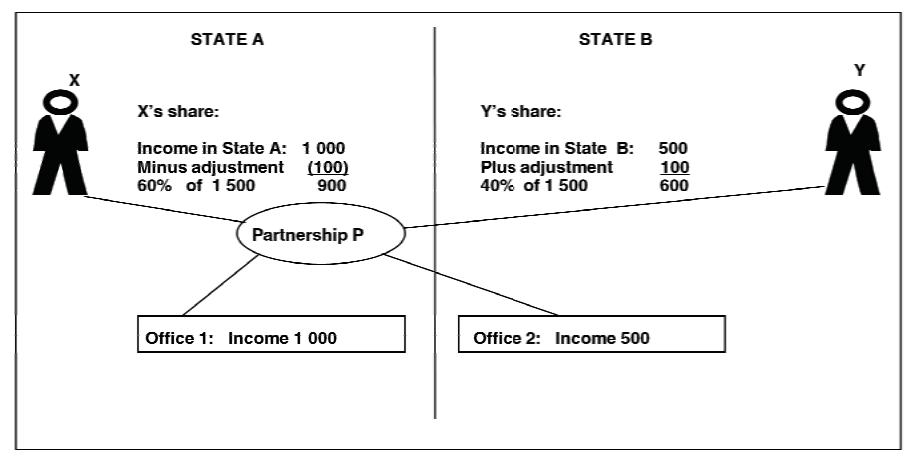
49. In that example, State B will consider, on the basis of its domestic law, that Partner X derives 300 (60% of 500) from a fixed base situated on its territory and that Partner Y, who is taxed as a resident, derives 200 (40% of 500) from its territory and is entitled to an exemption for the 400 (40% of 1 000) that he derives from State A.
50. State A, which recognizes special allocations, will consider that Partner X derives all of his income (900) from State A. It will also consider that only the adjustment amount (i.e. 100) constitutes income of Partner Y derived from a fixed base situated on its territory.
51. As a result, Partner X will be taxed on 900 in State A and State A will consider that that income arises from its territory. He will also be taxed on 300 in State B, which that country will consider as arising on its territory. The result will be double taxation on 300 of income because of the different allocation rules and the resulting conflict concerning the source of the income of Partner X. By contrast, Partner Y will only be taxed on 200 in State B and 100 in State A, the amount that State A considers as attributable to a fixed base located on its territory; there will therefore be double non taxation of 300 in his case.
52. The Committee concluded that this is an example of a conflict of source. It noted that some conventions solve this type of conflict by providing that income which may be taxed in a State in accordance with the Convention shall be deemed to arise from sources situated in that State for purposes of the application of the provisions of the Convention dealing with the elimination of double taxation. It also noted that the conclusions put forward in Part III of the report on the Application of the Model Tax Convention to Partnerships may also be relevant to the extent that a conflict of source could also constitute a conflict of qualification.
53. The Committee also discussed the treatment of “salary” or similar payments which may be paid to a partner to supplement income attributed to him under special allocation rules (e.g. in the case of a partner who is asked to work in a new office established in an emerging market economy). Under the domestic law of some countries, such payments would be considered as employment income of the partner rather than as a share of the partnership income, thereby reducing the amount of income attributable to non-resident partners. The fact that other countries would take the opposite view could result in conflicts of qualification. Again, the principles put forward in Part III of the report on the Application of the Model Tax Convention to Partnerships would help avoiding situations where such conflicts would result in double taxation or double non-taxation.
54. Another possibility is that of an office of a partnership located in a particular country which would be offered “guaranteed” fees by other offices of the same partnership in order to artificially increase the income attributable to that office for purposes of the application of special allocation rules. The Committee concluded that such arrangements might be problematic in light of paragraph 2 of Article 7, which, under the Commentary thereon, is implicitly applicable in determining the income attributable to a fixed base.
c) Are the specific rules of paragraphs 2-7 of Article 7 rules applicable to Article 14?
55. Whilst paragraph 3 of the Commentary on Article 14 indicates that the provisions of Article 7 and the Commentary thereon could be used as guidance for interpreting and applying Article 14, it has been suggested that there is no clear authority in the text of Article 14 for such conclusion. Also, whilst the Commentary on Article 14 expressly confirms the application to Article 14 of the provisions of paragraphs 2 and 3 of Article 7, it does not mention paragraphs 4 to 7 of that Article.
56. The Committee found that member countries have generally considered that paragraphs 2-6 of Article 7 are applicable, so far as they may be relevant in a particular case, to the income currently treated under Article 14. It concluded that the elimination of Article 14 made it unnecessary to clarify that position. It was unclear, however, to what extent the priority rule of paragraph 7 of Article 7 can apply to Article 14.
d) Are there differences in the source taxation rights granted under Articles 7 and 14?
57. Whilst Article 7 provides for the source taxation of “profits” attributable to a permanent establishment, Article 14 allows the source State to tax the “income” attributable to a fixed base.
58. On the one hand, it is clear that the concept of profits corresponds to the “net” income, i.e. after the deduction of relevant expenses, a result that is confirmed by paragraph 3 of Article 7. On the other hand, the concept of income, which is used in Article 14, can be interpreted more broadly so as to allow taxation on either a gross or net basis. This interpretation is confirmed by the fact that the phrase “income derived”, which is found in Article 14, is also found in other Articles, such as Articles 6 (Income from Immovable Property) and 17 (Artistes and Sportsmen), where it has been interpreted to allow taxation of gross payments.[262] Arguably, a further confirmation of that interpretation is the fact that paragraph 3 of Article 24 (Non-discrimination), which has a direct effect on the deduction of expenses related to a permanent establishment, is not applicable to fixed bases.
59. Paragraph 3 of the Commentary on Article 14, however, clearly states that the expenses incurred for the purposes of a fixed base should be allowed as a deduction in determining the income attributable to a fixed base in the same way as is provided by paragraph 3 of Article 7. Most member countries confirmed that, in practice, their country would allow the deduction of expenses in taxing the income attributable to a fixed base and agreed that there would be no policy justification for allowing tax to be levied differently under Articles 7 and 14. They did, however, recognise the difficulty created by the use, in Article 14, of the phrase “income derived”. Again, any uncertainty in that respect will be removed through the elimination of Article 14.
e) Does the distinction between Articles 7 and 14 have any impact on domestic law distinctions?
60. The Committee discussed the extent to which any differences between Articles 7 and 14 might have an impact where, under domestic laws, there exist separate rules for the taxation of professional services and other business profits (e.g. where cash accounting applies to professional services but not to other activities).
61. It was noted that whilst member countries may have such separate rules in their domestic laws, the application of these rules would not be influenced by the distinction between Article 7 and 14 as the distinctions made by tax treaties would generally not matter for the application of distinctions made under domestic laws, except maybe for the application of foreign tax credit provisions.
62. On that basis, the Committee concluded that the elimination of Article 14 will not prevent countries from continuing to apply any distinction between professional services and other business profits that might exist under their domestic tax laws.
V. Does the elimination of Article 14 require changes to Article 7?
63. By eliminating Article 14, the income previously covered by that Article will fall under Article 7. The Committee found it important to confirm that result to prevent arguments that either Article 21 or Article 15, for example, could apply to that income. The Committee agreed that, apart from changes resulting directly from the elimination of the Article, changes to the Commentary on Articles 5 and 7 and to some of the Articles in the Model themselves would be useful, in particular to make sure that the concept of enterprise applied to the provision of professional services.
Annex
Changes to the Model Tax Convention resulting from the decision to eliminate Article 14
The following are the changes to the Model Tax Convention resulting from the decision to eliminate Article 14. Changes to the existing text of the Model Tax Convention and the Commentary are indicated by strikethrough for deletions and bold italics for additions.
Changes to the Articles
Article 3
1. In paragraph 1 of Article 3, renumber existing subparagraphs c) to f) as subparagraphs d) to g) and add the following new subparagraphs c) and h):
the term “enterprise” applies to the carrying on of any business;
the term “business” includes the performance of professional services and of other activities of an independent character.”
Article 6
2. Replace paragraph 4 of Article 6 by the following:
4. The provisions of paragraphs 1 and 3 shall also apply to the income from immovable property of an enterprise
and to income from immovable property used for the performance of independent personal services.
Article 10
3. Replace paragraph 4 of Article 10 by the following:
4. The provisions of paragraphs 1 and 2 shall not apply if the beneficial owner of the dividends, being a resident of a Contracting State, carries on business in the other Contracting State of which the company paying the dividends is a resident, through a permanent establishment situated therein
, or performs in that other State independent personal services from a fixed base situated therein,and the holding in respect of which the dividends are paid is effectively connected with such permanent establishmentor fixed base. In such case the provisions of Article 7or Article 14, as the case may be,shall apply.
4. Replace paragraph 5 of Article 10 by the following:
5. Where a company which is a resident of a Contracting State derives profits or income from the other Contracting State, that other State may not impose any tax on the dividends paid by the company, except insofar as such dividends are paid to a resident of that other State or insofar as the holding in respect of which the dividends are paid is effectively connected with a permanent establishment
or a fixed basesituated in that other State, nor subject the company’s undistributed profits to a tax on the company’s undistributed profits, even if the dividends paid or the undistributed profits consist wholly or partly of profits or income arising in such other State.
Article 11
5. Replace paragraph 4 of Article 11 by the following:
4. The provisions of paragraphs 1 and 2 shall not apply if the beneficial owner of the interest, being a resident of a Contracting State, carries on business in the other Contracting State in which the interest arises, through a permanent establishment situated therein
, or performs in that other State independent personal services from a fixed base situated therein,and the debt-claim in respect of which the interest is paid is effectively connected with such permanent establishmentor fixed base. In such case the provisions of Article 7or Article 14, as the case may be,shall apply.
6. Replace paragraph 5 of Article 11 by the following:
5. Interest shall be deemed to arise in a Contracting State when the payer is a resident of that State. Where, however, the person paying the interest, whether he is a resident of a Contracting State or not, has in a Contracting State a permanent establishment
or a fixed basein connection with which the indebtedness on which the interest is paid was incurred, and such interest is borne by such permanent establishmentor fixed base, then such interest shall be deemed to arise in the State in which the permanent establishmentor fixed baseis situated.
Article 12
7. Replace paragraph 3 of Article 12 by the following:
3. The provisions of paragraph 1 shall not apply if the beneficial owner of the royalties, being a resident of a Contracting State, carries on business in the other Contracting State in which the royalties arise, through a permanent establishment situated therein
, or performs in that other State independent personal services from a fixed base situated therein, and the right or property in respect of which the royalties are paid is effectively connected with such permanent establishment orfixed base. In such case the provisions of Article 7or Article 14, as the case may be,shall apply.
Article 13
8. Replace paragraph 2 of Article 13 by the following:
2. Gains from the alienation of movable property forming part of the business property of a permanent establishment which an enterprise of a Contracting State has in the other Contracting State
or of movable property pertaining to a fixed base available to a resident of a Contracting State in the other Contracting State for the purpose of performing independent personal services, including such gains from the alienation of such a permanent establishment (alone or with the whole enterprise)or of such fixed base, may be taxed in that other State.
Article 14
9. Delete Article 14. The remaining Articles of the Model will not be renumbered. Article 14 and its title will therefore be shown in brackets with the phrase “Deleted”.
Article 15
10. Replace the title of Article 15 by the following:
INCOME FROM EMPLOYMENT
DEPENDENT PERSONAL SERVICES
11. Replace subparagraph 2(c) of Article 15 by the following:
“the remuneration is not borne by a permanent establishment
or a fixed basewhich the employer has in the other State.”
Article 17
12. Replace paragraph 1 of Article 17 by the following:
1. Notwithstanding the provisions of Articles
147 and 15, income derived by a resident of a Contracting State as an entertainer, such as a theatre, motion picture, radio or television artiste, or a musician, or as a sportsman, from his personal activities as such exercised in the other Contracting State, may be taxed in that other State.
13. Replace paragraph 2 of Article 17 by the following:
2. Where income in respect of personal activities exercised by an entertainer or a sportsman in his capacity as such accrues not to the entertainer or sportsman himself but to another person, that income may, notwithstanding the provisions of Articles 7
, 14and 15, be taxed in the Contracting State in which the activities of the entertainer or sportsman are exercised.
Article 21
14. Replace paragraph 2 of Article 21 by the following:
2. The provisions of paragraph 1 shall not apply to income, other than income from immovable property as defined in paragraph 2 of Article 6, if the recipient of such income, being a resident of a Contracting State, carries on business in the other Contracting State through a permanent establishment situated therein
, or performs in that other State independent personal services from a fixed base situated therein,and the right or property in respect of which the income is paid is effectively connected with such permanent establishmentor fixed base. In such case the provisions of Article 7or Article 14, as the case may be,shall apply.
Article 22
15. Replace paragraph 2 of Article 22 by the following:
2. Capital represented by movable property forming part of the business property of a permanent establishment which an enterprise of a Contracting State has in the other Contracting State
or by movable property pertaining to a fixed base available to a resident of a Contracting State in the other Contracting State for the purpose of performing independent personal services, may be taxed in that other State.
Changes to the Commentary
Commentary on Article 1
16. Replace paragraph 4 of the Commentary on Article 1 by the following:
4. Moreover, different rules of the Convention may be applied in the Contracting States to income derived by a partner from the partnership, depending on the approach of such States. In States where partnerships are treated as companies, distributions of profits to the partners may be considered to be dividends (paragraph 3 of Article 10), whilst for other States all profits of a partnership, whether distributed or not, are considered as business profits of the partners (Article 7). In many States, business profits of partnerships include, for tax purposes, all or some special remuneration paid by a partnership to its partners (such as rents, interest, royalties, remuneration for services), whilst in other States such payments are not dealt with as business profits (Article 7) but under other headings (in the above-mentioned examples: Articles 6, 11, 12
, 14and 15, respectively).
Commentary on Article 3
17. Replace paragraph 4 of the Commentary on Article 3 by the following:
4. The question whether an activity is performed within an enterprise or is deemed to constitute in itself an enterprise has always been interpreted according to the provisions of the domestic laws of the Contracting States. No exhaustive definition of the term ‘enterprise’ has therefore been attempted in this Article. However, it is provided that the term ‘enterprise’ applies to the carrying on of any business. Since the term ‘business’ is expressly defined to include the performance of professional services and of other activities of an independent character, this clarifies that the performance of professional services or other activities of an independent character must be considered to constitute an enterprise, regardless of the meaning of that term under domestic law. States which consider that such clarification is unnecessary are free to omit the definition of the term ‘enterprise’ from their bilateral conventions.
18. Add the following heading and paragraph 10.1 to the Commentary on Article 3:
THE TERM ‘BUSINESS’
10.1 The Convention does not contain an exhaustive definition of the term ‘business’, which, under paragraph 2, should generally have the meaning which it has under the domestic law of the State that applies the Convention. Sub-paragraph h), however, provides expressly that the term includes the performance of professional services and of other activities of an independent character. This provision was added in 2000 at the same time as Article 14, which dealt with Independent Personal Services, was deleted from the Convention. This addition, which ensures that the term ‘business’ includes the performance of the activities which were previously covered by Article 14, was intended to prevent that the term ‘business’ be interpreted in a restricted way so as to exclude the performance of professional services, or other activities of an independent character, in States where the domestic law does not consider that the performance of such services or activities can constitute a business. Contracting States for which this is not the case are free to agree bilaterally to omit the definition.
Commentary on Article 5
19. Add the following paragraph 1.1 to the Commentary on Article 5:
1.1 Before 2000, income from professional services and other activities of an independent character was dealt under a separate Article, i.e. Article 14. The provisions of that Article were similar to those applicable to business profits but it used the concept of fixed base rather than that of permanent establishment since it had originally been thought that the latter concept should be reserved to commercial and industrial activities. The elimination of Article 14 in 2000 reflected the fact that there were no intended differences between the concepts of permanent establishment, as used in Article 7, and fixed base, as used in Article 14, or between how profits were computed and tax was calculated according to which of Article 7 or 14 applied. The elimination of Article 14 therefore meant that the definition of permanent establishment became applicable to what previously constituted a fixed base.
Commentary on Article 6
20. Replace paragraphs 3 and 4 of the Commentary on Article 6 by the following:
3. Paragraph 3 indicates that the general rule applies irrespective of the form of exploitation of the immovable property. Paragraph 4 makes it clear that the provisions of paragraphs 1 and 3 apply also to income from immovable property of industrial, commercial and other enterprises
and to income from immovable property used for the performance of independent personal services.4. It should be noted in this connection that the right to tax of the State of source has priority over the right to tax of the other State and applies also where, in the case of an enterprise
or of non-industrial and non-commercial activities,income is only indirectly derived from immovable property. This does not prevent income from immovable property, when derived through a permanent establishment, from being treated as income of an enterprise, but secures that income from immovable property will be taxed in the State in which the property is situated also in the case where such property is not part of a permanent establishment situated in that State. It should further be noted that the provisions of the Article do not prejudge the application of domestic law as regards the manner.
Commentary on Article 7
21. Add the following new paragraph 2.1 to the Commentary on Article 7:
2.1 Before 2000, income from professional services and other activities of an independent character was dealt under a separate Article, i.e. Article 14. The provisions of that Article were similar to those applicable to business profits but it used the concept of fixed base rather than that of permanent establishment since it had originally been thought that the latter concept should be reserved to commercial and industrial activities. However, it was not always clear which activities fell within Article 14 as opposed to Article 7. The elimination of Article 14 in 2000 reflected the fact that there were no intended differences between the concepts of permanent establishment, as used in Article 7, and fixed base, as used in Article 14, or between how profits were computed and tax was calculated according to which of Article 7 or 14 applied. The effect of the deletion of Article 14 is that income derived from professional services or other activities of an independent character is now dealt with under Article 7 as business profits. This was confirmed by the addition of a definition of the term ‘business’ which expressly provides that this term includes professional services or other activities of an independent character.
22. Replace paragraph 35 of the Commentary on Article 7 by the following:
35. It has seemed desirable, however, to lay down a rule of interpretation in order to clarify the field of application of this Article in relation to the other Articles dealing with a specific category of income. In conformity with the practice generally adhered to in existing bilateral conventions, paragraph 7 gives first preference to the special Articles on dividends, interest etc. It follows from the rule that this Article will be applicable to
industrial and commercialbusiness income which does not belong to categories of income covered by the special Articles, and, in addition, to dividends, interest etc. which under paragraph 4 of Articles 10 and 11, paragraph 3 of Article 12 and paragraph 2 of Article 21, fall within this Article (cf. paragraphs 12 to 18 of the Commentary on Article 12 which discusses the principles governing whether, in the particular case of computer software, payments should be classified ascommercialincome within Articles 7or 14or as a capital gains matter within Article 13 on the one hand or as royalties within Article 12 on the other). It is understood that the items of income covered by the special Articles may, subject to the provisions of the Convention, be taxed either separately, or asindustrial and commercialbusiness profits, in conformity with the tax laws of the Contracting States.
Commentary on Article 10
23. Replace paragraphs 2, 32 and 34 of the Commentary on Article 10 by the following:
2. The profits of a business carried on by a partnership are the partners’ profits derived from their own exertions; for them they are
industrial or commercialbusiness profits. So the partner is ordinarily taxed personally on his share of the partnership capital and partnership profits.
32. The rules set out above also apply where the beneficiary of the dividends has in the other Contracting State, for the purpose of performing any of the kinds of independent personal services mentioned in Article 14, a fixed base with which the holding in respect of which the dividends are paid is effectively connected.34. Paragraph 5 rules out the extra-territorial taxation of dividends, i.e. the practice by which States tax dividends distributed by a non-resident company solely because the corporate profits from which the distributions are made originated in their territory (for example, realised through a permanent establishment situated therein). There is, of course, no question of extra-territorial taxation when the country of source of the corporate profits taxes the dividends because they are paid to a shareholder who is a resident of that State or to a permanent establishment
or fixed basesituated in that State.
Commentary on Article 11
24. Replace paragraphs 25 and 30 of the Commentary on Article 11 by the following:
25.
The rules set out above also apply where the beneficiary of theinteresthas in the other Contracting State, for the purpose of performing any of the kinds of independent personal services mentioned in Article 14, a fixed base with which the debt-claim in respect of which the interest is paid is effectively connected.30. Moreover, in the case – not settled in paragraph 5 – where whichever of the two Contracting States is that of the payer’s residence and the third State in which is situated the permanent establishment for the account of which the loan is effected and by which the interest is borne, together claim the right to tax the interest at the source, there would be nothing to prevent those two States together with, where appropriate, the State of the beneficiary’s residence from concerting measures to avoid the double taxation that would result from such claims. The proper remedy, it must be said again, would be the establishment between these different States of bilateral conventions, or a multilateral convention, containing a provision similar to that in paragraph 5. Another solution would be for two Contracting States to word the second sentence of paragraph 5 in the following way:
Where, however, the person paying the interest, whether he is a resident of a Contracting State or not, has in a State other than that of which he is a resident a permanent establishment
or a fixed basein connection with which the indebtedness on which the interest is paid was incurred, and such interest is borne by such permanent establishmentor fixed base, then such interest shall be deemed to arise in the State in which the permanent establishmentor fixed baseis situated.
Commentary on Article 12
25. Replace paragraphs 1, 10, 11, 14, 16 and 21 of the Commentary on Article 12 by the following:
1. In principle, royalties in respect of licences to use patents and similar property and similar payments are income to the recipient from a letting. The letting may be granted in connection with an
industrial or commercialenterprise (e.g. the use of literary copyright granted by a publisher)or an independent profession (e.gor the use of a patent granted by the inventor) or quite independently of any activity of the grantor (e.g. the use of a patent granted by the inventor’s heirs).10. Rents in respect of cinematograph films are also treated as royalties, whether such films are exhibited in cinemas or on the television. It may, however, be agreed through bilateral negotiations that rents in respect of cinematograph films shall be treated as
industrial and commercialbusiness profits and, in consequence, subjected to the provisions of Articles 7 and 9.11. In classifying as royalties payments received as consideration for information concerning industrial, commercial or scientific experience, paragraph 2 alludes to the concept of ‘know-how’. Various specialist bodies and authors have formulated definitions of know-how which do not differ intrinsically. One such definition, given by the ‘Association des Bureaux pour la Protection de la Propriété Industrielle’ (ANBPPI), states that ‘know-how is all the undivulged technical information, whether capable of being patented or not, that is necessary for the industrial reproduction of a product or process, directly and under the same conditions; inasmuch as it is derived from experience, know-how represents what a manufacturer cannot know from mere examination of the product and mere knowledge of the progress of technique.’ In the know-how contract, one of the parties agrees to impart to the other, so that he can use them for his own account, his special knowledge and experience which remain unrevealed to the public. It is recognised that the grantor is not required to play any part himself in the application of the formulas granted to the licensee and that he does not guarantee the result thereof. This type of contract thus differs from contracts for the provision of services, in which one of the parties undertakes to use the customary skills of his calling to execute work himself for the other party. Thus, payments obtained as consideration for after-sales service, for services rendered by a seller to the purchaser under a guarantee, for pure technical assistance, or for an opinion given by an engineer, an advocate or an accountant, do not constitute royalties within the meaning of paragraph 2. Such payments generally fall under Article 7
or Article 14. In business practice, contracts are encountered which cover both know-how and the provision of technical assistance. One example, amongst others, of contracts of this kind is that of franchising, where the franchisor imparts his knowledge and experience to the franchisee and, in addition, provides him with varied technical assistance, which, in certain cases, is backed up with financial assistance and the supply of goods. The appropriate course to take with a mixed contract is, in principle, to break down, on the basis of the information contained in the contract or by means of a reasonable apportionment, the whole amount of the stipulated consideration according to the various parts of what is being provided under the contract, and then to apply to each part of it so determined the taxation treatment proper thereto. If, however, one part of what is being provided constitutes by far the principal purpose of the contract and the other parts stipulated therein are only of an ancillary and largely unimportant character, then it seems possible to apply to the whole amount of the consideration the treatment applicable to the principal part.14. In other cases, the acquisition of the software will generally be for the personal or business use of the purchaser. The payment will then fall to be dealt with as business profits
commercial incomein accordance with Articles7or 14. It is of no relevance that the software is protected by copyright or that there may be restrictions on the use to which the purchaser can put it.16. Each case will depend on its particular facts but in general such payments are likely to be business profits
commercial incomewithin Article 7or 14or a capital gains matter within Article 13 rather than royalties within Article 12. That follows from the fact that where the ownership of rights has been alienated in full or in part, the consideration cannot be for the use of the rights. The essential character of the transaction as an alienation cannot be altered by the form of the consideration, the payment of the consideration in instalments or, in the view of most countries, by the fact that the payments are related to a contingency.
21. The rules set out above also apply where the beneficiary of theroyaltieshas in the other Contracting State, for the purpose of performing any of the kinds of independent personal services mentioned in Article 14, a fixed base with which the right or property in respect of which the royalties are paid is effectively connected.
Commentary on Article 13
26. Replace paragraphs 9, 22, 24, 25 and 27 of the Commentary on Article 13 by the following:
9. Where capital appreciation and revaluation of business assets are taxed, the same principle should, as a rule, apply as in the case of the alienation of such assets. It has not been found necessary to mention such cases expressly in the Article or to lay down special rules. The provisions of the Article as well as those of Articles 6, 7 and 21, seem to be sufficient. As a rule, the right to tax is conferred by the above-mentioned provisions on the State of which the alienator is a resident, except that in the cases of immovable property or of movable property forming part of the business property of a permanent establishment
or pertaining to a fixed base, the prior right to tax belongs to the State where such property is situated. Special attention must be drawn, however, to the cases dealt with in paragraphs 13 to 17 below.22. Paragraph 1 states that gains from the alienation of immovable property may be taxed in the State in which it is situated. This rule corresponds to the provisions of Article 6 and of paragraph 1 of Article 22. It applies also to immovable property forming part of the assets of an enterprise.
or used for performing independent personal services.For the definition of immovable property paragraph 1 refers to Article 6. Paragraph 1 of Article 13 deals only with gains which a resident of a Contracting State derives from the alienation of immovable property situated in the other Contracting State. It does not, therefore, apply to gains derived from the alienation of immovable property situated in the Contracting State of which the alienator is a resident in the meaning of Article 4 or situated in a third State; the provisions of paragraph 1 of Article 21 shall apply to such gains.24. Paragraph 2 deals with movable property forming part of the business property of a permanent establishment of an enterprise
or pertaining to a fixed base used for performing independent personal services. The term ‘movable property’ means all property other than immovable property which is dealt with in paragraph 1. It includes also incorporeal property, such as goodwill, licences, etc. Gains from the alienation of such assets may be taxed in the State in which the permanent establishmentor fixed baseis situated, which corresponds to the rules for business profitsand for income from independent personal services(Articles7and 14).25. The paragraph makes clear that its rules apply when movable property of a permanent establishment
or fixed baseis alienated as well as when the permanent establishment as such (alone or with the whole enterprise)or the fixed base as suchis alienated. If the whole enterprise is alienated, then the rule applies to such gains which are deemed to result from the alienation of movable property forming part of the business property of the permanent establishment. The rules of Article 7 should then apply mutatis mutandis without express reference thereto. For the transfer of an asset from a permanent establishment in one State to a permanent establishment (or the head office) in another State, cf. paragraph 10 above.27. Certain States consider that all capital gains arising from sources in their territory should be subject to their taxes according to their domestic laws, if the alienator has a permanent establishment within their territory. Paragraph 2 is not based on such a conception which is sometimes referred to as ‘the force of attraction of the permanent establishment’. The paragraph merely provides that gains from the alienation of movable property forming part of the business property of a permanent establishment
or of movable property pertaining to a fixed base used for performing independent personal servicesmay be taxed in the State where the permanent establishmentor the fixed baseis situated. The gains from the alienation of all other movable property are taxable only in the State of residence of the alienator as provided in paragraph 4. The foregoing explanations accord with those in the Commentary on Article 7.
Commentary on Article 14
27. Replace the whole of the Commentary on Article 14 by the following:
“[COMMENTARY ON ARTICLE 14 CONCERNING THE TAXATION OF INDEPENDENT PERSONAL SERVICES]
[Article 14 was deleted from the Model Tax Convention on 27 January 2000. That decision reflected the fact that there were no intended differences between the concepts of permanent establishment, as used in Article 7, and fixed base, as used in Article 14, or between how profits were computed and tax was calculated according to which of Article 7 or 14 applied. In addition, it was not always clear which activities fell within Article 14 as opposed to Article 7. The effect of the deletion of Article 14 is that income derived from professional services or other activities of an independent character is now dealt with under Article 7 as business profits.]”
1. The Article is concerned with what are commonly known as professional services and with other activities of an independent character. This excludes industrial and commercial activities and also professional services performed in employment, e.g. a physician serving as a medical officer in a factory. It should, however, be observed that the Article does not concern independent activities of artistes and sportsmen, these being covered by Article 17.
2. The meaning of the term “professional services” is illustrated by some examples of typical liberal professions. The enumeration has an explanatory character only and is not exhaustive. Difficulties of interpretation which might arise in special cases may be solved by mutual agreement between the competent authorities of the Contracting States concerned.
3. The provisions of the Article are similar to those for business profits and rest in fact on the same principles as those of Article 7. The provisions of Article 7 and the Commentary thereon could therefore be used as guidance for interpreting and applying Article 14. Thus the principles laid down in Article 7 for instance as regards allocation of profits between head office and permanent establishment could be applied also in apportioning income between the State of residence of a person performing independent personal services and the State where such services are performed from a fixed base. Equally, expenses incurred for the purposes of a fixed base, including executive and general expenses, should be allowed as deductions in determining the income attributable to a fixed base in the same way as such expenses incurred for the purposes of a permanent establishment (cf.paragraph 3 of Article 7). Also in other respects Article 7 and the Commentary thereon could be of assistance for the interpretation of Article 14,e.g. in determining whether computer software payments should be classified as commercial income within Articles 7 or 14 or as royalties within Article 12.
4. Even if Articles 7 and 14 are based on the same principles, it was thought that the concept of permanent establishment should be reserved for commercial and industrial activities. The term “fixed base” has therefore been used. It has not been thought appropriate to try to define it, but it would cover, for instance, a physician’s consulting room or the office of an architect or a lawyer. A person performing independent personal services would probably not as a rule have premises of this kind in any other State than of his residence. But if there is in another State a centre of activity of a fixed or a permanent character, then that State should be entitled to tax the person’s activities.
Observation on the Commentary
4.1 Mexico considers that this Article is applicable to companies that perform professional services.
Reservations on the Article
5. Turkey reserves the right to tax persons performing professional services or other activities of an independent character if they are present in this country for a period or periods exceeding in the aggregate 183 days in the calendar year, even if they do not have a fixed base available to them for the purpose of performing such services or activities.
6. Portugal and Spain reserve their position on paragraph 1.
7. Denmark, Mexico and Norway reserve the right to tax individuals performing professional services or other activities of an independent character if they are present on their respective territory for a period or periods exceeding in the aggregate 183 days in any twelve month period.
8. Denmark, Ireland, Norway and the United Kingdom reserve the right to insert in a special article provisions regarding income derived from independent personal services relating to offshore hydrocarbon exploration and exploitation and related activities.
9. Greece, the Czech Republic and New Zealand reserve the right to tax individuals performing professional services or other activities of an independent character if they are present on their respective territory for a period or periods exceeding in the aggregate 183 days in any twelve month period, even if they do not have a fixed base available to them for the purpose of performing such services or activities.
10. Greece reserves the right to insert special provisions regarding income derived from independent personal services relating to offshore activities.
Commentary on Article 15
28. Replace the heading of the Commentary on Article 15 and add a footnote to it as follows:
COMMENTARY ON ARTICLE 15 CONCERNING THE TAXATION OF INCOME FROM EMPLOYMENT[263]
DEPENDENT PERSONAL SERVICES
29. Replace paragraphs 3, 7.1, 17 and 21 of the Commentary on Article 15 by the following:
3. Paragraph 2 contains, however, a general exception to the rule in paragraph 1. This exception covers all individuals rendering
dependent personalservices in the course of an employment (sales representatives, construction workers, engineers, etc.), to the extent that their remuneration does not fall under the provisions of other Articles, such as those applying to government services or artistes and sportsmen.7.1 Under the third condition, if the employer has in the State in which the employment is exercised a permanent establishment,
(or a fixed base if he performs professional services or other activities of an independent character),the exemption is given only on condition that the remuneration is not borne by a permanent establishmentor a fixed basewhich he has in that State.17. Ireland, Norway and the United Kingdom reserve the right to insert in a special Article provisions regarding income derived from employment
dependent personalrelating to offshore hydrocarbon exploration and exploitation and related activities.21. Greece reserves the right to insert special provisions regarding income from employment
dependent personalrelating to offshore activities.
Commentary on Article 17
30. Replace paragraphs 1, 2, 9, 11 and 15.1 of the Commentary on Article 17 by the following:
1. Paragraph 1 provides that artistes and sportsmen who are residents of a Contracting State may be taxed in the other Contracting State in which their personal activities as such are performed, whether these are of a business or employment nature
an independent or of a dependent nature. This provision is an exception to the rules in Article147 and to that in paragraph 2 of Article 15, respectively.2. This provision makes it possible to avoid the practical difficulties which often arise in taxing artistes and sportsmen performing abroad. Moreover, too strict provisions might in certain cases impede cultural exchanges. In order to overcome this disadvantage, the States concerned may, by common agreement, limit the application of paragraph 1 to
independentbusiness activities. To achieve this it would be sufficient to amend the text of the Article so that an exception is made only to the provisions of Article 714. In such a case, artistes and sportsmen performingfor a salary or wagesin the course of an employment would automatically come within Article 15 and thus be entitled to the exemptions provided for in paragraph 2 of that Article.9. Besides fees for their actual appearances, artistes and sportsmen often receive income in the form of royalties or of sponsorship or advertising fees. In general, other Articles would apply whenever there was no direct link between the income and a public exhibition by the performer in the country concerned. Royalties for intellectual property rights will normally be covered by Article 12 rather than Article 17 (cf. paragraph 18 of the Commentary on Article 12), but in general advertising and sponsorship fees will fall outside the scope of Article 12. Article 17 will apply to advertising or sponsorship income, etc. which is related directly or indirectly to performances or appearances in a given State. Similar income which could not be attributed to such performances or appearances would fall under the standard rules of Article
147 or Article 15, as appropriate. Payments received in the event of the cancellation of a performance are also outside the scope of Article 17, and fall under Articles 7, 14or 15, as the case may be.11. Paragraph 1 of the Article deals with income derived by individual artistes and sportsmen from their personal activities. Paragraph 2 deals with situations where income from their activities accrues to other persons. If the income of an entertainer or sportsman accrues to another person, and the State of source does not have the statutory right to look through the person receiving the income to tax it as income of the performer, paragraph 2 provides that the portion of the income which cannot be taxed in the hands of the performer may be taxed in the hands of the person receiving the remuneration. If the person receiving the income carries on business activities
is an enterprise, tax may be applied by the source country even if the income is not attributable to a permanent establishment thereIf the person receiving the income is an individual, the income may be taxed even in the absence of a fixed base. But it will not always be so. There are three main situations of this kind.:
The first is the management company which receives income for the appearance of e.g. a group of sportsmen (which is not itself constituted as a legal entity).
The second is the team, troupe, orchestra, etc. which is constituted as a legal entity. Income for performances may be paid to the entity. Individual members of the team, orchestra, etc. will be liable to tax under paragraph 1, in the State in which a performance is given, on any remuneration (or income accruing for their benefit) as a counterpart to the performance; however, if the members are paid a fixed periodic remuneration and it would be difficult to allocate a portion of that income to particular performances, member countries may decide, unilaterally or bilaterally, not to tax it. The profit element accruing from a performance to the legal entity would be liable to tax under paragraph 2.
The third situation involves certain tax avoidance devices in cases where remuneration for the performance of an artiste or sportsman is not paid to the artiste or sportsman himself but to another person, e.g. a so-called artiste company, in such a way that the income is taxed in the State where the activity is performed neither as personal service income to the artiste or sportsman nor as profits of the enterprise, in the absence of a permanent establishment. Some countries “look through” such arrangements under their domestic law and deem the income to be derived by the artiste or sportsman; where this is so, paragraph 1 enables them to tax income resulting from activities in their territory. Other countries cannot do this. Where a performance takes place in such a country, paragraph 2 permits it to impose a tax on the profits diverted from the income of the artiste or sportsman to the enterprise. It may be, however, that the domestic laws of some States do not enable them to apply such a provision. Such States are free to agree to other solutions or to leave paragraph 2 out of their bilateral conventions.
15.1 France considers that the statement in the first sentence of paragraph 13, which is at variance with the wording prior to the 1995 revision, is incorrect, because it does not conform with reality to characterise a priori as
industrial or commercialbusiness the public activities at issue – and in particular cultural activities – that do not ordinarily have a profit motive. In addition, this statement is not consistent with the second sentence of the same paragraph or with paragraph 14, which explicitly provides the right to apply a special exemption regime to the public activities in question: if applied generally toindustrial or commercialbusiness activities, such a regime would be unjustified, because it would then be contrary to fiscal neutrality and tax equality.
Commentary on Article 18
31. Replace paragraphs 9, 11, 12 and 35 of the Commentary on Article 18 by the following:
9. The provision is confined to the tax treatment of contributions to pension schemes by or on behalf of individuals who exercise employments within the meaning of Article 15 away from their home State. It does not deal with contributions by individuals who perform business activities covered by Article 7
who render independent personal services within the meaning of Article 14. However, member countries may wish, in bilateral negotiations, to agree on a provision covering individuals rendering services within both Article147 and Article 15.11. The following is the suggested text of the provision that could be included in bilateral conventions to deal with the problem identified above:
Contributions borne by an individual who renders
dependent personalservices in the course of an employment in a Contracting State to a pension scheme established in and recognised for tax purposes in the other Contracting State shall be deducted, in the first-mentioned State, in determining the individual’s taxable income, and treated in that State, in the same way and subject to the same conditions and limitations as contributions made to a pension scheme that is recognised for tax purposes in that first-mentioned State, provided that:
pension scheme, immediately before he began to exercise employment in that State; and
the pension scheme is accepted by the competent authority of that State as generally corresponding to a pension scheme recognised as such for tax purposes by that State.
For the purposes of sub-paragraph a):
the term ‘a pension scheme’ means an arrangement in which the individual participates in order to secure retirement benefits payable in respect of the employment
dependent personal servicesreferred to in sub-paragraph a); anda pension scheme is recognised for tax purposes in a State if the contributions to the scheme would qualify for tax relief in that State.”
12. Sub-paragraph a) of the suggested provision lays down the characteristics of both the employee and the contributions to which the provision applies. It also provides the principle that contributions borne by an individual rendering
dependent personalservices in the course of an employment within the meaning of Article 15 in one Contracting State (the host State) to a defined pension scheme in the other Contracting State (the home State) are to be relieved from tax in the host State, subject to the same conditions and limitations as relief for contributions to domestic pension schemes of the host State.35. The definition of a pension scheme makes no distinction between pensions paid from State-run occupational pension schemes and similar privately-run schemes. Both are covered by the scope of the provision. Any pensions, such as pensions from general State pension schemes dependent on contribution records whether or not contributors are employees, are excluded from the provision as the individual will not contribute to such schemes in order to receive benefits payable in respect of
dependent personalhis employment.
Commentary on Article 19
32. Replace paragraph 13 of the Commentary on Article 19 by the following:
13. France considers that the scope of the application of Article 19 should cover:
remuneration paid by public legal entities of the State or a political subdivision or local authority thereof, because the identity of the payer is less significant than the public nature of the income;
public remuneration of artistes and sportsmen in conformity with the wording of the Model prior to 1995 (without applying the criterion of
industrial or commercialbusiness activity, seldom relevant in these cases), as long as Article 17 does not contain a provision along the lines suggested in paragraph 14 of the Commentary on Article 17.
Commentary on Article 21
33. Replace paragraphs 4 and 5 of the Commentary on Article 21 by the following:
4. This paragraph provides for an exception from the provisions of paragraph 1 where the income is associated with the activity of a permanent establishment
or fixed basewhich a resident of a Contracting State has in the other Contracting State. The paragraph includes income from third States. In such a case, a right to tax is given to the Contracting State in which the permanent establishmentor the fixed baseis situated. Paragraph 2 does not apply to immovable property for which, according to paragraph 4 of Article 6, the State of situs has a primary right to tax (cf. paragraphs 3 and 4 of the Commentary on Article 6). Therefore, immovable property situated in a Contracting State and forming part of the business property of a permanent establishment of an enterprise of that State situated in the other Contracting State shall be taxable only in the first-mentioned State in which the property is situated and of which the recipient of the income is a resident. This is in consistency with the rules laid down in Articles 13 and 22 in respect of immovable property since paragraph 2 of those Articles applies only to movable property of a permanent establishment.5. The paragraph also covers the case where the beneficiary and the payer of the income are both residents of the same Contracting State, and the income is attributed to a permanent establishment
or a fixed base, which the beneficiary of the income has in the other Contracting State. In such a case a right to tax is given to the Contracting State in which the permanent establishmentor the fixed baseis situated. Where double taxation occurs, the State of residence should give relief under the provisions of Article 23 A or 23 B. However, a problem may arise as regards the taxation of dividends and interest in the State of residence as the State of source: the combination of Articles 7 and 23 A prevents that State from levying tax on that income, whereas if it were paid to a resident of the other State, the first State, being the State of source of the dividends or interest, could tax such dividends or interest at the rates provided for in paragraph 2 of Articles 10 and 11. Contracting States which find this position unacceptable may include in their conventions a provision according to which the State of residence would be entitled, as State of source of the dividends or interest, to levy a tax on such income at the rates provided for in paragraph 2 of Articles 10 and 11. The State where the permanent establishment is situated would give a credit for such tax on the lines of the provisions of paragraph 2 of Article 23 A or of paragraph 1 of Article 23 B; of course, this credit should not be given in cases where the State in which the permanent establishment is situated does not tax the dividends or interest attributed to the permanent establishment, in accordance with its domestic laws.
Commentary on Article 22
34. Replace paragraph 3 of the Commentary on Article 22 by the following:
3. The Article, therefore, enumerates first property which may be taxed in the State in which they are situated. To this category belong immovable property referred to in Article 6 which a resident of a Contracting State owns and which is situated in the other Contracting State (paragraph 1), and movable property forming part of the business property of a permanent establishment which an enterprise of a Contracting State has in the other Contracting State
, or pertaining to a fixed base which a resident of a Contracting State has in the other Contracting State for the performance of independent personal services(paragraph 2).
Commentary on Articles 23 A and 23 B
35. Replace paragraphs 3, 5, 9 and 10 of the Commentary on Article 23 A and 23 B by the following:
3. International juridical double taxation may arise in three cases:
where each Contracting State subjects the same person to tax on his worldwide income or capital (concurrent full liability to tax, cf. paragraph 4 below);
where a person is a resident of a Contracting State (R)[264] and derives income from, or owns capital in, the other Contracting State (S or E) and both States impose tax on that income or capital (cf. paragraph 5 below);
where each Contracting State subjects the same person, not being a resident of either Contracting State to tax on income derived from, or capital owned in, a Contracting State; this may result, for instance, in the case where a non-resident person has a permanent establishment
or fixed basein one Contracting State (E) through which he derives income from, or owns capital in, the other Contracting State (S) (concurrent limited tax liability, cf. paragraph 11 below).5. The conflict in case b) may be solved by allocation of the right to tax between the Contracting States. Such allocation may be made by renunciation of the right to tax either by the State of source or situs (S) or of the situation of the permanent establishment
or the fixed base(E), or by the State of residence (R), or by a sharing of the right to tax between the two States. The provisions of the Chapters III and IV of the Convention, combined with the provisions of Article 23 A or 23 B, govern such allocation.9. Where a resident of the Contracting State R derives income from the same State R through a permanent establishment
or a fixed basewhich he has in the other Contracting State E, State E may tax such income (except income from immovable property situated in State R) if it is attributable to the said permanent establishmentor fixed base(paragraph 2 of Article 21). In this instance too, State R must give relief under Article 23 A or Article 23 B for income attributable to the permanent establishmentor fixed basesituated in State E, notwithstanding the fact that the income in question originally arises in State R (cf. paragraph 5 of the Commentary on Article 21). However, where the Contracting States agree to give to State R which applies the exemption method a limited right to tax as the State of source of dividends or interest within the limits fixed in paragraph 2 of the Articles 10 or 11 (cf. paragraph 5 of the Commentary on Article 21), then the two States should also agree upon a credit to be given by State E for the tax levied by State R, along the lines of paragraph 2 of Article 23 A or of paragraph 1 of Article 23 B.10. Where a resident of State R derives income from a third State through a permanent establishment
or a fixed basewhich he has in State E, such State E may tax such income (except income from immovable property situated in the third State) if it is attributable to such permanent establishmentor fixed base(paragraph 2 of Article 21). State R must give relief under Article 23 A or Article 23 B in respect of income attributable to the permanent establishmentor fixed basein State E. There is no provision in the Convention for relief to be given by Contracting State E for taxes levied in the third State where the income arises; however, under paragraph 4 of Article 24 any relief provided for in the domestic laws of State E (double taxation conventions excluded) for residents of State E is also to be granted to a permanent establishment in State E of an enterprise of State R (cf. paragraphs 49 to 54 of the Commentary on Article 24).
Commentary on Article 24
36. Replace paragraphs 7, 21 and 26 of the Commentary on Article 24 by the following:
7. To take the first of these two cases, if a State accords immunity from taxation to its own public bodies and services, this is justified because such bodies and services are integral parts of the State and at no time can their circumstances be comparable to those of the public bodies and services of the other State. Nevertheless, this reservation is not intended to apply to State corporations carrying on gainful undertakings. To the extent that these can be regarded as being on the same footing as private
industrial and commercialbusiness undertakings, the provisions of paragraph 1 will apply to them.21. By the terms of the first sentence of paragraph 3, the taxation of a permanent establishment shall not be less favourably levied in the State concerned than the taxation levied on enterprises of that State carrying on the same activities. The purpose of this provision is to end all discrimination in the treatment of permanent establishments as compared with resident enterprises belonging to the same sector of activities, as regards taxes based on
industrial and commercialbusiness activities, and especially taxes on business profits.26. As such measures are in furtherance of objectives directly related to the economic activity proper of the State concerned, it is right that the benefit of them should be extended to permanent establishments of enterprises of another State which has a double taxation convention with the first embodying the provisions of Article 24, once they have been accorded the right to engage in
industrial or commercialbusiness activity in that State, either under its legislation or under an international agreement (treaties of commerce, establishment conventions, etc.) concluded between the two States.
Restricting the Entitlement to Treaty Benefits
(adopted by the OECD Committee on Fiscal Affairs on 7 November 2002)
Table of contents
1. Introduction R(17)-2
2. Nature of the work done by the Committee R(17)-2
3. Use of the concepts of place of effective management
and permanent establishment R(17)-3
a) Changes adopted by the Committee R(17)-3
b) Background R(17)-4
4. New provisions aimed at restricting the benefits
of tax conventions R(17)-6
a) Changes adopted by the Committee R(17)-6
b) Background R(17)-16
5. Restriction of the benefits of tax conventions after
the introduction of a new regime R(17)-16
a) Changes adopted by the Committee R(17)-17
6. Clarification of the concept of “beneficial ownership” R(17)-18
a) Changes adopted by the Committee R(17)-18
b) Background R(17)-21
Notes R(17)-23
1. Introduction
1. In April 1998, the Council of the OECD adopted the Report entitled Harmful Tax Competition: an Emerging Global Issue (the “1998 Report on harmful tax competition”). One of the issues for follow-up work identified in the Report was a possible restriction of the entitlement to treaty benefits.
2. This note is the result of the work done by the Committee on Fiscal Affairs on this issue.
2. Nature of the work done by the Committee
3. Recommendation 9 of the 1998 Report on harmful tax competition read as follows:
that countries consider including in their tax conventions provisions aimed at restricting the entitlement to treaty benefits for entities and income covered by measures constituting harmful tax practices and consider how the existing provisions of their tax conventions can be applied for the same purpose; that the Model Tax Convention be modified to include such provisions or clarifications as are needed in that respect.
4. Paragraphs 119 and 120 of the Report clarified what types of provisions were envisaged:
119. Various approaches have been used by countries to reduce that risk. In some cases, countries have been able to determine that the place of effective management of a subsidiary lies in the State of the parent company so as to make it a resident of that country either for domestic law or treaty purposes. In other cases, it has been possible to argue, on the basis of the facts and circumstances of the cases, that a subsidiary was managed by the parent company in such a way that the subsidiary had a permanent establishment in the country of residence of the parent company so as to be able to attribute profits of the subsidiary to that latter country. Another example involves denying companies with no real economic function treaty benefits because these companies are not considered as beneficial owner of certain income formally attributed to them. The Committee intends to continue to examine these and other approaches to the application of the existing provisions of the Model Tax Convention, with a view to recommending appropriate clarification to the Model Tax Convention.
120. There are, however, a number of additional provisions, such as limitation of benefits rules, which have been included in some tax treaties to specifically restrict access to their benefits. The Committee has also been reviewing these provisions with a view to propose changes to the Model Tax Convention aimed at denying the tax treaty benefits to entities and income covered by practices constituting harmful tax competition. The Committee intends to continue its work in this area with a view to modify the Model Tax Convention or the Commentary so as to include such provisions that countries will be able to incorporate in their tax treaties.
5. Based on the preceding, the work that the Committee was asked to carry out in relation to a possible restriction of the entitlement to treaty benefits dealt with the following:
using the concepts of place of effective management and permanent establishment to reduce benefits obtained under a tax convention;
the possible inclusion in the Model of various types of provisions aimed at ensuring that income sheltered from taxation through regimes constituting harmful tax competition do not inappropriately get the benefits of tax conventions;
possible ways of ensuring that, where a country that is a party to a tax convention introduces measures resulting in harmful tax competition after the conclusion of the tax convention, benefits of the convention are not inappropriately granted with respect to income covered by such measures;
the clarification of the concept of “beneficial ownership”.
6. During its work, the Committee also discussed the extent to which one possible approach to dealing with the issues described above might be through a narrowing of the concept of residence in Article 4 of the Model Tax Convention. It concluded that it would not be appropriate to make changes to Article 4 or the Commentary on that Article because:
to do so could damage the position of persons who are legitimately entitled to treaty benefits; and
other more effective approaches could be pursued to prevent treaty benefits claims by entities associated with regimes constituting harmful tax competition.
3. Use of the concepts of place of effective management and permanent establishment
a) Changes adopted by the Committee
7. The Committee decided that the following changes should be made to the Commentary on Article 1 of the Model Tax Convention:
Add the following new paragraphs 10.1 and 10.2 to the Commentary on Article 1:
10.1 Also, in some cases, claims to treaty benefits by subsidiary companies, in particular companies established in tax havens or benefiting from harmful preferential regimes, may be refused where careful consideration of the facts and circumstances of a case shows that the place of effective management of a subsidiary does not lie in its alleged state of residence but, rather, lies in the state of residence of the parent company so as to make it a resident of that latter state for domestic law and treaty purposes (this will be relevant where the domestic law of a state uses the place of management of a legal person, or a similar criterion, to determine its residence).
10.2 Careful consideration of the facts and circumstances of a case may also show that a subsidiary was managed in the state of residence of its parent in such a way that the subsidiary had a permanent establishment (e.g. by having a place of management) in that state to which all or a substantial part of its profits were properly attributable.
b) Background
8. In some cases, countries have been able to determine, on the basis of the facts and circumstances of the cases, that the place of effective management of a subsidiary lies in the State of the parent company so as to make it a resident of that country either for domestic law or treaty purposes. In other cases, it has been possible to argue, on the basis of the facts and circumstances of the cases, that a subsidiary was managed by the parent company in such a way that the subsidiary had a permanent establishment in the country of residence of the parent company so as to be able to attribute profits of the subsidiary to that latter country.
9. Both of these approaches result in a reduction of the benefits that a taxpayer might otherwise claim under a tax convention. The Committee has considered these approaches and it emerged that some member countries have used them in practice to resist inappropriate treaty claims, as shown by the examples below which are based on the experience of one country.
The place of effective management of a company and thus its residence is located with its parent company
10. Company A is constituted under the law of Country A, a low tax jurisdiction, and is a resident of that country under its domestic tax law. All of the shares in A are owned by trust B which is constituted under the law of Country B, another low tax jurisdiction, and which is a resident of that country. Company A owns all of the shares of company C, which is a resident of Country C. The sole director of company C is Mr D, who is a resident of Country C as well. Mr D is directly and fully entitled to the property of trust B. The income of company A consists of dividends from company C, interest on loans to company C and interest on bonds issued by a Country C bank. Investigations by the Country C tax administration showed that company A had no office or personnel of its own. All contacts with the bank concerning the bonds were conducted by Mr D. Later, a sale of all the shares and loans held by company A was negotiated and conducted by Mr D.
11. According to the Country C Supreme Court, in general it is to be assumed that the effective management of a company is exercised by its board of directors and that the place of residence of the company is congruent with the place where its board of directors exercises its duties. However, if judging from the circumstances it is to be assumed that the effective management of the company is exercised by some other person and not by the board of directors, then there may be ground to regard the place from which effective management is exercised by that other person as the place of residence of the company. In the case described above the Supreme Court concluded that company A was effectively managed in Country C by Mr D and thus the company was to be regarded as a resident of Country C, for the purposes of both Country C domestic tax law and the tax arrangement between Country C and Country A.
A place of management and thus a permanent establishment of a subsidiary is located with its parent company
12. Company X is constituted under the law of Country A and is a resident of that country according to its domestic tax law. Company X acts as a captive insurance company for a multinational group of enterprises. The top holding company of the group, company Y, is a resident of Country C. The main activities of the group are conducted from the offices of company Y. Investigations by the Country C tax administration showed the following facts. Company X employs one part-time director, who has little if any knowledge of the insurance business and two “local” staff members. It occupies space in an office building, the main user of which is another member of the group. The insurance contracts between company X and the members of the group follow standardised conditions set by company Y. These contracts are reinsured with independent insurance companies, through the intermediary of an insurance broker. The reinsurance contract is negotiated and concluded by personnel from company Y, following strategies set by company Y.
13. The Country C Court decided that, judging from the factual circumstances of the case, the place of effective management of company X was not located in Country C and company X was therefore not a resident of Country C. However, according to the Court, it was to be assumed that to a certain extent the daily management of company X was exercised at the office of company Y. The Court was of the opinion that this extent was such that it exceeded the normal amount of influence that a parent company has on its subsidiary on account of its position as shareholder. The Court therefore concluded that to the extent of that daily management a permanent establishment of company X was located with company Y in Country C.
4. New provisions aimed at restricting the benefits of Tax Conventions
a) Changes adopted by the Committee
14. The Committee discussed a proposal for amending the part of the Commentary on Article 1 that deals with the Improper Use of Tax Conventions. This led to the adoption of the following changes to that part of the Commentary:
Add the following paragraph 9.6 and replace paragraphs 10 to 21 of the Commentary on Article 1 by the following (changes to the existing text of the Commentary appear in bold italics for additions and
strikethroughfor deletions):9.6 The potential application of general anti-abuse provisions does not mean that there is no need for the inclusion, in tax conventions, of specific provisions aimed at preventing particular forms of tax avoidance. Where specific avoidance techniques have been identified or where the use of such techniques is especially problematic, it will often be useful to add to the Convention provisions that focus directly on the relevant avoidance strategy. Also, this will be necessary where a State which adopts the view described in paragraph 9.2 above believes that its domestic law lacks the anti-avoidance rules or principles necessary to properly address such strategy.
10. For instance, some forms of tax avoidance have already been expressly dealt with in the Convention, e.g. by the introduction of the concept of “beneficial owner” (in Articles 10, 11, and 12) and of special provisions such as paragraph 2 of Article 17 dealing with
forso-called artiste-companies(paragraph 2 of Article 17). Such problems are also mentioned in the Commentaries on Article 10 (paragraphs 17 and 22), Article 11 (paragraph 12) and Article 12 (paragraph 7).It may be appropriate for Contracting States to agree in bilateral negotiations that any relief from tax should not apply in certain cases, or to agree that the application of the provisions of domestic laws against tax avoidance should not be affected by the Convention.11. A further example is provided by two particularly prevalent forms of improper use of the Convention which
Improper uses of the Conventionare discussed in two reports from the Committee on Fiscal Affairs entitled “Double Taxation Conventions and the Use of Base Companies” and “Double Taxation Conventions and the Use of Conduit Companies”.[265] As indicated in these reports, the concern expressed in paragraph 9 above has proved to be valid as there has been a growing tendency toward the use of conduit companies to obtain treaty benefits not intended by the Contracting States in their bilateral negotiations. This has led an increasing number of member countries to implement treaty provisions (both general and specific) to counter abuse and to preserve anti-avoidance legislation in their domestic laws.12. The treaty provisions that have been designed to cover these and other forms of abuse take different forms. The following are examples derived from provisions that have been incorporated in bilateral conventions concluded by member countries.
Several solutions have been considered but, for the reasons set out in the above-mentioned reports, no definitive texts have been drafted, no strict recommendations as to the circumstances in which they should be applied made, and no exhaustive list of such possible counter-measures given. The texts quoted below are merely intended as suggested benchmarks.These provide models that treaty negotiators might consider when searching for a solution to specific cases. In referring to them there should be taken into account:
the fact that these provisions are not mutually exclusive and that various provisions may be needed in order to address different concerns;
the degree to which tax advantages may actually be obtained by a particular avoidance strategy
conduit companies;the legal context in both Contracting States and, in particular, the extent to which domestic law already provides an appropriate response to this avoidance strategy; and
the extent to which bona fide economic activities might be unintentionally disqualified by such provisions.
Conduit company cases
13. Many countries have attempted to deal with the issue of conduit companies and various approaches have been designed for that purpose. One solution
A solution to the problem of conduit companieswould be to disallow treaty benefits to a company not owned, directly or indirectly, by residents of the State of which the company is a resident. For example, such a “look-through” provision might have the following wording:A company that is a resident of a Contracting State shall not be entitled to relief from taxation under this Convention with respect to any item of income, gains or profits if it is owned or controlled directly or through one or more companies, wherever resident, by persons who are not residents of a Contracting State.
Contracting States wishing to adopt such a provision may also want, in their bilateral negotiations, to determine the criteria according to which a company would be considered as owned or controlled by non-residents.
14. The “look-through approach” underlying the above provision seems an adequate basis for treaties with countries that have no or very low taxation and where little substantive business activities would normally be carried on. Even in these cases it might be necessary to alter the provision or to substitute for it another one to safeguard bona fide business activities.
15.
Conduit situations can be created by the use of tax-exempt (or nearly tax-exempt) companies that may be distinguished by special legal characteristics. The improper use of tax treaties may then be avoided by denying the tax treaty benefits to these companies (the exclusion approach). The main cases are specific types of companies enjoying tax privileges in their State of residence giving them in fact a status similar to that of a non-resident. As such privileges are granted mostly to specific types of companies as defined in the commercial law or in the tax law of a country, the most radical solution would be to exclude such companies from the scope of the treaty. Another solution would be to insert a safeguarding clause such as the following:
No provision of the Convention conferring an exemption from, or reduction of, tax shall apply to income received or paid by a company as defined under Section… of the… Act, or under any similar provision enacted by… after the signature of the Convention.
The scope of this provision could be limited by referring only to specific types of income, such as dividends, interest, capital gains, or directors’ fees. Under such provisions companies of the type concerned would remain entitled to the protection offered under Article 24 (non-discrimination) and to the benefits of Article 25 (mutual agreement procedure) and they would be subject to the provisions of Article 26 (exchange of information).16.
Exclusion provisions are clear and their application is simple, even though they may require administrative assistance in some instances. They are an important instrument by which a State that has created special privileges in its tax law may prevent those privileges from being used in connection with the improper use of tax treaties concluded by that State.15.
17.General subject-to-tax provisions provide that treaty benefits in the State of source are granted only if the income in question is subject to tax in the State of residence. This corresponds basically to the aim of tax treaties, namely to avoid double taxation. For a number of reasons, however, the Model Convention does not recommend such a general provision. Whilst this seems adequate with respect to a normal international relationship, a subject-to-tax approach might well be adopted in a typical conduit situation. A safeguarding provision of this kind could have the following wording:Where income arising in a Contracting State is received by a company resident of the other Contracting State and one or more persons not resident in that other Contracting State
have directly or indirectly or through one or more companies, wherever resident, a substantial interest in such company, in the form of a participation or otherwise, or
exercise directly or indirectly, alone or together, the management or control of such company,
any provision of this Convention conferring an exemption from, or a reduction of, tax shall apply only to income that is subject to tax in the last-mentioned State under the ordinary rules of its tax law.
The concept of “substantial interest” may be further specified when drafting a bilateral convention. Contracting States may express it, for instance, as a percentage of the capital or of the voting rights of the company.
16.
18.The subject-to-tax approach seems to have certain merits. It may be used in the case of States with a well-developed economic structure and a complex tax law. It will, however, be necessary to supplement this provision by inserting bona fide provisions in the treaty to provide for the necessary flexibility (cf. paragraph 19 below); moreover, such an approach does not offer adequate protection against advanced tax avoidance schemes such as “stepping-stone strategies”.17.
19.The approaches referred to above are in many ways unsatisfactory. They refer to the changing and complex tax laws of the Contracting States and not to the arrangements giving rise to the improper use of conventions. It has been suggested that the conduit problem be dealt with in a more straightforward way by inserting a provision that would single out cases of improper use with reference to the conduit arrangements themselves (the channel approach). Such a provision might have the following wording:Where income arising in a Contracting State is received by a company that is a resident of the other Contracting State and one or more persons who are not residents of that other Contracting State
have directly or indirectly or through one or more companies, wherever resident, a substantial interest in such company, in the form of a participation or otherwise, or
exercise directly or indirectly, alone or together, the management or control of such company
any provision of this Convention conferring an exemption from, or a reduction of, tax shall not apply if more than 50 per cent of such income is used to satisfy claims by such persons (including interest, royalties, development, advertising, initial and travel expenses, and depreciation of any kind of business assets including those on immaterial goods and processes).
18.
20.A provision of this kind appears to be the only effective way of combatting “stepping-stone” devices. It is found in bilateral treaties entered into by Switzerland and the United States and its principle also seems to underly the Swiss provisions against the improper use of tax treaties by certain types of Swiss companies. States that consider including a clause of this kind in their convention should bear in mind that it may cover normal business transactions and would therefore have to be supplemented by a bona fide clause.19.
21.The solutions described above are of a general nature and they need to be accompanied by specific provisions to ensure that treaty benefits will be granted in bona fide cases. Such provisions could have the following wording:
General bona fide provision
“The foregoing provisions shall not apply where the company establishes that the principal purpose of the company, the conduct of its business and the acquisition or maintenance by it of the shareholding or other property from which the income in question is derived, are motivated by sound business reasons and do not have as primary purpose the obtaining of any benefits under this Convention.”
Activity provision
“The foregoing provisions shall not apply where the company is engaged in substantive business operations in the Contracting State of which it is a resident and the relief from taxation claimed from the other Contracting State is with respect to income that is connected with such operations.”
Amount of tax provision
“The foregoing provisions shall not apply where the reduction of tax claimed is not greater than the tax actually imposed by the Contracting State of which the company is a resident.”
Stock exchange provision
“The foregoing provisions shall not apply to a company that is a resident of a Contracting State if the principal class of its shares is registered on an approved stock exchange in a Contracting State or if such company is wholly owned-directly or through one or more companies each of which is a resident of the first-mentioned State-by a company which is a resident of the first-mentioned State and the principal class of whose shares is so registered.”
Alternative relief provision
“In cases where an anti-abuse clause refers to non-residents of a Contracting State, it could be provided that the term ‘shall not be deemed to include residents of third States that have income tax conventions in force with the Contracting State from which relief from taxation is claimed and such conventions provide relief from taxation not less than the relief from taxation claimed under this Convention.”
These provisions illustrate possible approaches. The specific wording of the provisions to be included in a particular treaty depends on the general approach taken in that treaty and should be determined on a bilateral basis. Also, where the competent authorities of the Contracting States have the power to apply discretionary provisions, it may be considered appropriate to include an additional rule that would give the competent authority of the source country the discretion to allow the benefits of the Convention to a resident of the other State even if the resident fails to pass any of the tests described above.
20. Whilst the preceding paragraphs identify different approaches to deal with conduit situations, each of them deals with a particular aspect of the problem commonly referred to as “treaty shopping”. States wishing to address the issue in a comprehensive way may want to consider the following example of detailed limitation-of-benefits provisions aimed at preventing persons who are not resident of either Contracting States from accessing the benefits of a Convention through the use of an entity that would otherwise qualify as a resident of one of these States, keeping in mind that adaptations may be necessary and that many States prefer other approaches to deal with treaty shopping:
1. Except as otherwise provided in this Article, a resident of a Contracting State who derives income from the other Contracting State shall be entitled to all the benefits of this Convention otherwise accorded to residents of a Contracting State only if such resident is a ‘qualified person’ as defined in paragraph 2 and meets the other conditions of this Convention for the obtaining of such benefits.
2. A resident of a Contracting State is a qualified person for a fiscal year only if such resident is either:
an individual;
a qualified governmental entity;
a company, if
the principal class of its shares is listed on a recognised stock exchange specified in subparagraph a) or b) of paragraph 6 and is regularly traded on one or more recognized stock exchanges, or
at least 50 percent of the aggregate vote and value of the shares in the company is owned directly or indirectly by five or fewer companies entitled to benefits under subdivision i) of this subparagraph, provided that, in the case of indirect ownership, each intermediate owner is a resident of either Contracting State;
a charity or other tax-exempt entity, provided that, in the case of a pension trust or any other organization that is established exclusively to provide pension or other similar benefits, more than 50 percent of the person’s beneficiaries, members or participants are individuals resident in either Contracting State; or
a person other than an individual, if:
on at least half the days of the fiscal year persons that are qualified persons by reason of subparagraph a), b) or d) or subdivision c) i) of this paragraph own, directly or indirectly, at least 50 percent of the aggregate vote and value of the shares or other beneficial interests in the person, and
less than 50 percent of the person’s gross income for the taxable year is paid or accrued, directly or indirectly, to persons who are not residents of either Contracting State in the form of payments that are deductible for purposes of the taxes covered by this Convention in the person’s State of residence (but not including arm’s length payments in the ordinary course of business for services or tangible property and payments in respect of financial obligations to a bank, provided that where such a bank is not a resident of a Contracting State such payment is attributable to a permanent establishment of that bank located in one of the Contracting States).
3. a) A resident of a Contracting State will be entitled to benefits of the Convention with respect to an item of income, derived from the other State, regardless of whether the resident is a qualified person, if the resident is actively carrying on business in the first-mentioned State (other than the business of making or managing investments for the resident’s own account, unless these activities are banking, insurance or securities activities carried on by a bank, insurance company or registered securities dealer), the income derived from the other Contracting State is derived in connection with, or is incidental to, that business and that resident satisfies the other conditions of this Convention for the obtaining of such benefits.
If the resident or any of its associated enterprises carries on a business activity in the other Contracting State which gives rise to an item of income, subparagraph a) shall apply to such item only if the business activity in the first-mentioned State is substantial in relation to business carried on in the other State. Whether a business activity is substantial for purposes of this paragraph will be determined based on all the facts and circumstances.
In determining whether a person is actively carrying on business in a Contracting State under subparagraph a), activities conducted by a partnership in which that person is a partner and activities conducted by persons connected to such person shall be deemed to be conducted by such person. A person shall be connected to another if one possesses at least 50 percent of the beneficial interest in the other (or, in the case of a company, at least 50 percent of the aggregate vote and value of the company’s shares) or another person possesses, directly or indirectly, at least 50 percent of the beneficial interest (or, in the case of a company, at least 50 percent of the aggregate vote and value of the company’s shares) in each person. In any case, a person shall be considered to be connected to another if, based on all the facts and circumstances, one has control of the other or both are under the control of the same person or persons.
4. Notwithstanding the preceding provisions of this Article, if a company that is a resident of a Contracting State, or a company that controls such a company, has outstanding a class of shares
which is subject to terms or other arrangements which entitle its holders to a portion of the income of the company derived from the other Contracting State that is larger than the portion such holders would receive absent such terms or arrangements (‘the disproportionate part of the income’); and
50 percent or more of the voting power and value of which is owned by persons who are not qualified persons
the benefits of this Convention shall not apply to the disproportionate part of the income.
5. A resident of a Contracting State that is neither a qualified person pursuant to the provisions of paragraph 2 or entitled to benefits under paragraph 3 or 4 shall, nevertheless, be granted benefits of the Convention if the competent authority of that other Contracting State determines that the establishment, acquisition or maintenance of such person and the conduct of its operations did not have as one of its principal purposes the obtaining of benefits under the Convention.
6. For the purposes of this Article the term ‘recognized stock exchange’ means:
in State A ;
in State B; and
any other stock exchange which the competent authorities agree to recognize for the purposes of this Article.
Provisions which are aimed at entities benefiting from preferential tax regimes
21. [OLD 15] Specific types of companies enjoying tax privileges in their State of residence facilitate conduit arrangements and raise the issue of harmful tax practices.
Conduit situations can be created by the use ofWhere tax-exempt (or nearly tax-exempt) companiesthatmay be distinguished by special legal characteristics, the.Theimproper use of tax treaties maythenbe avoided by denying the tax treaty benefits to these companies (the exclusion approach).The main cases are specific types of companies enjoying tax privileges in their State of residence giving them in fact a status similar to that of a non-resident.As such privileges are granted mostly to specific types of companies as defined in the commercial law or in the tax law of a country, the most radical solution would be to exclude such companies from the scope of the treaty. Another solution would be to insert a safeguarding clausesuch as the followingwhich would apply to the income received or paid by such companies and which could be drafted along the following lines:No provision of the Convention conferring an exemption from, or reduction of, tax shall apply to income received or paid by a company as defined under Section… of the… Act, or under any similar provision enacted by… after the signature of the Convention.
The scope of this provision could be limited by referring only to specific types of income, such as dividends, interest, capital gains, or directors’ fees. Under such provisions companies of the type concerned would remain entitled to the protection offered under Article 24 (non-discrimination) and to the benefits of Article 25 (mutual agreement procedure) and they would be subject to the provisions of Article 26 (exchange of information).
21.1 [OLD 16]Exclusion provisions are clear and their application is simple, even though they may require administrative assistance in some instances. They are an important instrument by which a State that has created special privileges in its tax law may prevent those privileges from being used in connection with the improper use of tax treaties concluded by that State.
21.2 Where it is not possible or appropriate to identify the companies enjoying tax privileges by reference to their special legal characteristics, a more general formulation will be necessary. The following provision aims at denying the benefits of the Convention to entities which would otherwise qualify as residents of a Contracting State but which enjoy, in that State, a preferential tax regime restricted to foreign-held entities (i.e. not available to entities that belong to residents of that State):
Any company, trust or partnership that is a resident of a Contracting State and is beneficially owned or controlled directly or indirectly by one or more persons who are not residents of that State shall not be entitled to the benefits of this Convention if the amount of the tax imposed on the income or capital of the company, trust or partnership by that State (after taking into account any reduction or offset of the amount of tax in any manner, including a refund, reimbursement, contribution, credit or allowance to the company, trust or partnership, or to any other person) is substantially lower than the amount that would be imposed by that State if all of the shares of the capital stock of the company or all of the interests in the trust or partnership, as the case may be, were beneficially owned by one or more residents of that State.
Provisions which are aimed at particular types of income
21.3 The following provision aims at denying the benefits of the Convention with respect to income that is subject to low or no tax under a preferential tax regime:
1. The benefits of this Convention shall not apply to income which may, in accordance with the other provisions of the Convention, be taxed in a Contracting State and which is derived from activities the performance of which do not require substantial presence in that State, including :
such activities involving banking, shipping, financing,
orinsurance or electronic commerce activities; oractivities involving headquarter or coordination centre or similar arrangements providing company or group administration, financing or other support; or
activities which give rise to passive income, such as dividends, interest and royalties
where, under the laws or administrative practices of that State, such income is preferentially taxed and, in relation thereto, information is accorded confidential treatment that prevents the effective exchange of information.
2. For the purposes of paragraph 1, income is preferentially taxed in a Contracting State if, other than by reason of the preceding Articles of this Agreement, an item of income:
is exempt from tax; or
is taxable in the hands of a taxpayer but that is subject to a rate of tax that is lower than the rate applicable to an equivalent item that is taxable in the hands of similar taxpayers who are residents of that State; or
benefits from a credit, rebate or other concession or benefit that is provided directly or indirectly in relation to that item of income, other than a credit for foreign tax paid.
Anti-abuse rules dealing with source taxation of specific types of income
21.4 The following provision has the effect of denying the benefits of specific Articles of the convention that restrict source taxation where transactions have been entered into for the main purpose of obtaining these benefits. The Articles concerned are 10, 11, 12 and 21; the provision should be slightly modified as indicated below to deal with the specific type of income covered by each of these Articles:
The provisions of this Article shall not apply if it was the main purpose or one of the main purposes of any person concerned with the creation or assignment of the [Article 10: ‘shares or other rights’; Article 11: ‘debt-claim’; Articles 12 and 21: ‘rights’] in respect of which the [Article 10: ‘dividend’; Article 11: ‘interest’; Articles 12 ‘royalties’ and Article 21: ‘income’] is paid to take advantage of this Article by means of that creation or assignment.
Provisions which are aimed at preferential regimes introduced after the signature of the convention
21.5 States may wish to prevent abuses of their conventions involving provisions introduced by a Contracting State after the signature of the Convention. The following provision aims to protect a Contracting State from having to give treaty benefits with respect to income benefiting from a special regime for certain offshore income introduced after the signature of the treaty:
The benefits of Articles 6 to 22 of this Convention shall not accrue to persons entitled to any special tax benefit under:
a law of either one of the States which has been identified in an exchange of notes between the States; or
any substantially similar law subsequently enacted.
b) Background
15. The Committee has examined what new types of provisions for the Model Tax Convention could be appropriate to ensure that income sheltered from taxation through harmful tax regimes would not inappropriately get the benefits of tax conventions.
16. As part of that work, several possible provisions were put forward. Several delegates advocated the inclusion of a comprehensive limitation of benefits provision. Other delegates opposed the inclusion of such a provision favouring an Article by Article approach to those provisions most likely to be abused. It was decided that these two approaches need not be alternatives and that both could be included, complementing each other in a Convention. It was also agreed that the relevant part of the Commentary on Article 1 should be redrafted to include some of the provisions put forward during the work on this issue.
5. Restriction of the benefits of Tax Conventions after the introduction of a New regime
17. Another issue examined by the Committee was how to ensure that, where a country that is a party to a tax convention introduces measures resulting in harmful tax competition after the conclusion of the tax convention, benefits of the convention are not inappropriately granted with respect to income covered by such measures. Consideration of the provisions put forward by delegates in relation to the previous issue revealed that most would be effective in dealing both with regimes existing at the time of entry into effect of a convention and new regimes introduced later. However such provisions might not be included in a convention where no harmful preferential regime existed at the time of conclusion of the convention.
a) Changes adopted by the Committee
18. The Committee discussed the possibility of including in the Convention a so-called “switch-over clause” in order to deal with harmful preferential regimes introduced after the signature of a convention.
19. During that discussion, the Committee debated the merits of such a clause and examined a proposal for including such a provision in Article 23 A. After discussion, it was agreed that the proposed provision should not be included in Article 23 A but that the Commentary could include the suggestion to adopt such a clause and could provide an example.
20. The Committee therefore adopted the following change to be made to the Commentary on Articles 23 A and 23 B:
Add the following paragraph 31.1 to the Commentaries on Articles 23 A and 23 B:
31.1 One example where paragraph 2 could be so amended is where a State that generally adopts the exemption method considers that that method should not apply to items of income that benefit from a preferential tax treatment in the other State by reason of a tax measure that has been introduced in that State after the date of signature of the Convention. In order to include these items of income, paragraph 2 could be amended as follows:
2. Where a resident of a Contracting State derives an item of income which
in accordance with the provisions of Articles 10 and 11, may be taxed in the other Contracting State, or
in accordance with the provisions of this Convention, may be taxed in the other Contracting State but which benefits from a preferential tax treatment in that other State by reason of a tax measure
that has been introduced in the other Contracting State after the date of signature of the Convention, and
in respect of which that State has notified the competent authorities of the other Contracting State, before the item of income is so derived and after consultation with that other State, that this paragraph shall apply,
the first-mentioned State shall allow as a deduction from the tax on the income of that resident an amount equal to the tax paid in that other State. Such deduction shall not, however, exceed that part of the tax, as computed before the deduction is given, which is attributable to such item of income derived from that other State.
6. Clarification of the concept of “beneficial ownership”
a) Changes adopted by the Committee
21. The Committee adopted the following changes aimed at clarifying the meaning of “beneficial ownership” in the Commentary on Articles 10, 11 and 12:
Replace paragraph 12 of the Commentary on Article 10 with the following new paragraphs (changes to the existing text of the Commentary appear in bold italics for additions and
strikethroughfor deletions):12. The requirement of beneficial ownership was introduced in paragraph 2 of Article 10 to clarify the meaning of the words ‘paid… to a resident’ as they are used in paragraph 1 of the Article. It makes plain that the State of source is not obliged to give up taxing rights over dividend income merely because that income was immediately received by a resident of a State with which the State of source had concluded a convention. The term ‘beneficial owner’ is not used in a narrow technical sense, rather, it should be understood in its context and in light of the object and purposes of the Convention, including avoiding double taxation and the prevention of fiscal evasion and avoidance.
12.1 Where an item of income is received by a resident of a Contracting State acting in the capacity of agent or nominee it would be inconsistent with the object and purpose of the Convention for the State of source to grant relief or exemption merely on account of the status of the immediate recipient of the income as a resident of the other Contracting State. The immediate recipient of the income in this situation qualifies as a resident but no potential double taxation arises as a consequence of that status since the recipient is not treated as the owner of the income for tax purposes in the State of residence. It would be equally inconsistent with the object and purpose of the Convention for the State of source to grant relief or exemption where a resident of a Contracting State, otherwise than through an agency or nominee relationship, simply acts as a conduit for another person who in fact receives the benefit of the income concerned. For these reasons, the report from the Committee on Fiscal Affairs entitled ‘Double Taxation Conventions and the Use of Conduit Companies’[266] concludes that a conduit company cannot normally be regarded as the beneficial owner if, though the formal owner, it has, as a practical matter, very narrow powers which render it, in relation to the income concerned, a mere fiduciary or administrator acting on account of the interested parties.
12.2
Under paragraph 2,Subject to other conditions imposed by the Article, the limitation of tax in the State of source remainsis notavailable when an intermediary, such as an agent or nominee located in a Contracting State or in a third State, is interposed between the beneficiary and the payer but the beneficial owner is a resident of the other Contracting State. (The text of the Model was amended in 1995 to clarify this point, which has been the consistent position of all member countries). States which wish to make this more explicit are free to do so during bilateral negotiations.Replace paragraph 8 of the Commentary on Article 11 with the following new paragraphs:
8. The requirement of beneficial ownership was introduced in paragraph 2 of Article 11 to clarify the meaning of the words ‘paid to a resident’ as they are used in paragraph 1 of the Article. It makes plain that the State of source is not obliged to give up taxing rights over interest income merely because that income was immediately received by a resident of a State with which the State of source had concluded a convention. The term ‘beneficial owner’ is not used in a narrow technical sense, rather, it should be understood in its context and in light of the object and purposes of the Convention, including avoiding double taxation and the prevention of fiscal evasion and avoidance.
8.1 Relief or exemption in respect of an item of income is granted by the State of source to a resident of the other Contracting State to avoid in whole or in part the double taxation that would otherwise arise from the concurrent taxation of that income by the State of residence. Where an item of income is received by a resident of a Contracting State acting in the capacity of agent or nominee it would be inconsistent with the object and purpose of the Convention for the State of source to grant relief or exemption merely on account of the status of the immediate recipient of the income as a resident of the other Contracting State. The immediate recipient of the income in this situation qualifies as a resident but no potential double taxation arises as a consequence of that status since the recipient is not treated as the owner of the income for tax purposes in the State of residence. It would be equally inconsistent with the object and purpose of the Convention for the State of source to grant relief or exemption where a resident of a Contracting State, otherwise than through an agency or nominee relationship, simply acts as a conduit for another person who in fact receives the benefit of the income concerned. For these reasons, the report from the Committee on Fiscal Affairs entitled ‘Double Taxation Conventions and the Use of Conduit Companies’[267] concludes that a conduit company cannot normally be regarded as the beneficial owner if, though the formal owner, it has, as a practical matter, very narrow powers which render it, in relation to the income concerned, a mere fiduciary or administrator acting on account of the interested parties.
8.2
Under paragraph 2,Subject to other conditions imposed by the Article, the limitation of tax in the State of source remainsis notavailable when an intermediary, such as an agent or nominee located in a Contracting State or in a third State, is interposed between the beneficiary and the payer but the beneficial owner is a resident of the other Contracting State. (The text of the Model was amended in 1995 to clarify this point, which has been the consistent position of all member countries). States which wish to make this more explicit are free to do so during bilateral negotiations.Replace paragraph 4 of the Commentary on Article 12 with the following new paragraphs:
4. The requirement of beneficial ownership was introduced in paragraph 1 of Article 12 to clarify how the Article applies in relation to payments made to intermediaries. It makes plain that the State of source is not obliged to give up taxing rights over royalty income merely because that income was immediately received by a resident of a State with which the State of source had concluded a convention. The term ‘beneficial owner’ is not used in a narrow technical sense, rather, it should be understood in its context and in light of the object and purposes of the Convention, including avoiding double taxation and the prevention of fiscal evasion and avoidance.
4.1 Relief or exemption in respect of an item of income is granted by the State of source to a resident of the other Contracting State to avoid in whole or in part the double taxation that would otherwise arise from the concurrent taxation of that income by the State of residence. Where an item of income is received by a resident of a Contracting State acting in the capacity of agent or nominee it would be inconsistent with the object and purpose of the Convention for the State of source to grant relief or exemption merely on account of the status of the immediate recipient of the income as a resident of the other Contracting State. The immediate recipient of the income in this situation qualifies as a resident but no potential double taxation arises as a consequence of that status since the recipient is not treated as the owner of the income for tax purposes in the State of residence. It would be equally inconsistent with the object and purpose of the Convention for the State of source to grant relief or exemption where a resident of a Contracting State, otherwise than through an agency or nominee relationship, simply acts as a conduit for another person who in fact receives the benefit of the income concerned. For these reasons, the report from the Committee on Fiscal Affairs entitled ‘Double Taxation Conventions and the Use of Conduit Companies’[268] concludes that a conduit company cannot normally be regarded as the beneficial owner if, though the formal owner, it has, as a practical matter, very narrow powers which render it, in relation to the income concerned, a mere fiduciary or administrator acting on account of the interested parties.
4.2
Under paragraph 1Subject to other conditions imposed by the Article, the limitation ofexemption fromtax in the State of source remainsis notavailable when an intermediary, such as an agent or nominee, is interposed between the beneficiary and the payer,unlessin those cases where the beneficial owner is a resident of the other Contracting State. (The text of the Model was amended in 1995 to clarify this point, which has been the consistent position of all member countries). States which wish to make this more explicit are free to do so during bilateral negotiations.
b) Background
22. The Committee discussed various options concerning the clarification of the concept of “beneficial ownership”. Some delegates noted that the beneficial ownership test very much depended on the facts and circumstances of the individual case and that it was therefore difficult to develop a generally applicable definition of the concept. Most delegates still took the view that it would be useful to further clarify the concept. It was noted that any addition to the Commentary had to be drafted in a neutral way so as to avoid inadvertent limitation of the concept.
Meaning of beneficial owner
23. The Model Convention does not provide a definition of “beneficial owner”. The Commentary indicates that an intermediary, such as an agent or nominee, is not the beneficial owner, but otherwise does not elaborate on the meaning of the term. In the absence of more extensive clarification the concept of beneficial ownership presents several difficulties of interpretation and application. While it is obvious that the use of the concept excludes bare legal ownership as the criterion for determining availability of treaty benefits it is less apparent what is intended to be the salient connection with a stream of income in a case where different interests in the income are held by diverse hands who might each be considered, as a matter of general law, to possess some attributes of ownership.
Report on the use of conduit companies
24. Paragraph 14 b) of the 1987 report from the Committee on Fiscal Affairs entitled “Double Taxation Conventions and the Use of Conduit Companies”[269] discussed the application of the requirement of beneficial ownership in abuse cases:
The OECD has incorporated in its revised 1977 Model provisions precluding in certain cases persons not entitled to a treaty from obtaining its benefits through a ‘conduit company’.
[…]
Articles 10 to 12 of the OECD Model deny the limitation of tax in the State of source on dividends, interest and royalties if the conduit company is not its ‘beneficial owner’. Thus the limitation is not available when, economically, it would benefit a person not entitled to it who interposed the conduit company as an intermediary between himself and the payer of the income (paragraphs 12, 8 and 4 of the Commentary to Articles 10, 11 and 12 respectively). The Commentaries mention the case of a nominee or agent. The provisions would, however, apply also to other cases where a person enters into contracts or takes over obligations under which he has a similar function to those of a nominee or an agent. Thus a conduit company can normally not be regarded as the beneficial owner if, though the formal owner of certain assets, it has very narrow powers which render it a mere fiduciary or an administrator acting on account of the interested parties (most likely the shareholders of the conduit company). In practice, however, it will usually be difficult for the country of source to show that the conduit company is not the beneficial owner. The fact that its main function is to hold assets or rights is not itself sufficient to categorise it as a mere intermediary, although this may indicate that further examination is necessary. This examination will in any case be highly burdensome for the country of source and not even the country of residence of the conduit company may have the necessary information regarding the shareholders of the conduit company, the company’s relationships to the shareholders or other interested parties or the decision-making process of the conduit company. So even an exchange of information between the country of source and the country of the conduit company may not solve the problem. It is apparently in view of these difficulties that the Commentaries on the 1977 OECD Model mentioned the possibility of defining more specifically during bilateral negotiations the treatment that should be applicable to such companies (cf. paragraph 22 of the Commentary on Article 10).
Treaty Characterisation Issues Arising from E-Commerce
(adopted by the OECD Committee on Fiscal Affairs on 7 November 2002)
Table of contents
1. Introduction R(18)-2
2. Overview of the report R(18)-2
3. Business profits and royalties R(18)-3
a) Business profits and payments for the use of, or the right to
use, a copyright R(18)-3
b) Business profits and payments for know-how R(18)-6
c) Business profits and payments for the use of, or the right to
use, industrial, commercial or scientific equipment R(18)-11
4. Provision of services R(18)-12
5. Technical fees R(18)-14
6. Mixed payments R(18)-16
Notes R(18)-17
ANNEX 1. Changes to the Commentary on Article 12 of the
OECD Model Tax Convention R(18)-18
ANNEX 2. Analysis of various categories of typical e-commerce
transactions R(18)-22
1. Introduction
1. In January 1999, as a follow-up to the November 1998 Ottawa conference entitled A Borderless World – Realising the Potential of Electronic Commerce, the Committee on Fiscal Affairs set up a Technical Advisory Group (TAG) on Treaty Characterisation Issues arising from E-Commerce with the general mandate “to examine the characterisation of various types of electronic commerce payments under tax conventions with a view to providing the necessary clarifications in the Commentary.” That Group was composed of business representatives and tax officials from OECD and non-OECD countries.
2. The final report of the TAG was released on 1 February 2001.[270] The report described the various treaty characterisation issues that were identified by the Group and presented the views of the Group concerning these issues; it also included an analysis of various categories of typical e-commerce transactions. The report included the recommendation that the OECD Working Party No. 1 on Tax Conventions and Related Questions “… issue a document clarifying, along the lines of section 3 of this report, how the various tax treaty characterisation issues arising from e-commerce should be solved…” and invited the Working Party “… to take account of the suggestions for changes to the Commentary of the OECD Model Tax Convention which are included in this report.”
3. The Committee on Fiscal Affairs, through its Working Party No. 1, subsequently examined the TAG report in detail. It found the conclusions and suggestions of the TAG highly persuasive. It therefore decided to follow the TAG recommendation and adopted[271] the present report, which largely reproduces the TAG report and generally adopts the TAG’s suggestions for changes to the Commentary on Article 12.
4. The Committee expresses its thanks to the members of the TAG for their valuable work and their contribution to clarifying how existing tax treaties apply in the context of e-commerce.
2. Overview of the report
5. This report is divided as follows:
Sections 1 to 4 include a description of the various treaty characterisation issues that may arise in electronic commerce together with the conclusions of the Committee on how to address these issues;
Annex 1 reproduces all the changes to the Commentaries on the Model Tax Convention that are put forward in this report;
Annex 2 includes an illustrative list of typical e-commerce transactions with the conclusions of the Committee as to how payments arising from these transactions should be characterised for tax treaty purposes (this list is similar to the one included in Annex 2 of the TAG report);
6. Throughout this report, it is generally assumed that the payments that are referred to are received in the course of carrying on a business, whether or not the payers are themselves carrying on business. It follows that all these payments are capable of falling within Article 7 of the OECD Model Tax Convention, which deals with business profits. Some payments, however, may be taken out of Article 7 by the rule of paragraph 7 of Article 7, which gives priority to any other Article that expressly deals with the specific type of income concerned. One such Article is Article 12, dealing with royalties. For these reasons, the payments referred to in this report should not be considered to fall within Article 21, which deals with other income.
3. Business profits and royalties
7. The definition of royalties currently found in paragraph 2 of Article 12 of the OECD Model Tax Convention reads as follows:
The term ‘royalties’ as used in this Article means payments of any kind received as a consideration for the use of, or the right to use, any copyright of literary, artistic or scientific work including cinematograph films, any patent, trade mark, design or model, plan, secret formula or process, or for information concerning industrial, commercial or scientific experience.
8. In the OECD 1977 Double Taxation Convention, that definition also included “payments […] for the use, or the right to use, industrial, commercial or scientific equipment” and some bilateral conventions still include this previous definition of royalties.
9. This section analyses classification issues arising from the possible application of various elements of these two definitions to payments made in e-commerce transactions. It also examines classification issues arising from alternative treaty provisions which deal with the provision of services or technical fees.
a) Business profits and payments for the use of, or the right to use, a copyright
Analysis and conclusions
10. One of the most important characterisation issues arising from e-commerce is the distinction between business profits and the part of the treaty definition of “royalties” that deals with payments for the use of, or the right to use, a copyright. The conclusions below on how that issue should be addressed are fully consistent with the position already expressed in paragraphs 14 to 14.2 of the Commentary on Article 12 as regards software payments.
11. Since the definition of royalties applies to “payments for” any of the various items listed in that definition, the main question to be addressed in any given transaction is the identification of that for which the payment is made. Under the relevant legislation of some countries, transactions which permit the customer to electronically download computer programs or other digital content may give rise to use of copyright by the customer, e.g. because a right to make one or more copies of the digital content is granted under the contract. Where the essential consideration is for something other than the use of, or right to use, rights in the copyright (such as to acquire other types of contractual rights, data or services), and the use of copyright is limited to such rights as are required to enable downloading, storage and operation on the customer’s computer, network or other storage, performance or display device, such use of copyright should not affect the analysis of the character of the payment for treaty purposes. This would be the case, for instance, where a payment is made by a person for the downloading and the operation of a copy of a computer program. Whilst electronic downloading of the program may or may not constitute the use of a copyright by the user (as opposed to by the provider) depending on the relevant copyright law and contractual arrangements, that possible use of a copyright is not that for which the payment is essentially made.
12. In the case of transactions that permit the customer to electronically download digital products (such as software, images, sounds or text), the payment is made to acquire data transmitted in the form of a digital signal for the own use or enjoyment of the acquiror.[272] This constitutes that for which the payment is essentially made. To the extent that the act of copying the digital signal onto the customer’s hard disk or other non-temporary media (including transfers to other storage, performance or display devices) constitutes the use of a copyright by the customer under the relevant law and contractual arrangements, this is merely an incidental part of the process of capturing and storing the digital signal. This incidental part is not important for classification purposes because it does not correspond to the essential consideration for the payment (i.e. to acquire data transmitted in the form of a digital signal), which is the determining factor for the purposes of the treaty definition of royalties.
Changes to the Commentary
13. Based on that analysis, the Committee concluded that the following changes should be made to the Commentary on Article 12 of the OECD Model Tax Convention:
Add the following paragraphs 17.1 to 17.4 immediately after paragraph 17 of the Commentary on Article 12:
17.1 The principles expressed above as regards software payments are also applicable as regards transactions concerning other types of digital products such as images, sounds or text. The development of electronic commerce has multiplied the number of such transactions. In deciding whether or not payments arising in these transactions constitute royalties, the main question to be addressed is the identification of that for which the payment is essentially made.
17.2 Under the relevant legislation of some countries, transactions which permit the customer to electronically download digital products may give rise to use of copyright by the customer, e.g. because a right to make one or more copies of the digital content is granted under the contract. Where the consideration is essentially for something other than for the use of, or right to use, rights in the copyright (such as to acquire other types of contractual rights, data or services), and the use of copyright is limited to such rights as are required to enable downloading, storage and operation on the customer’s computer, network or other storage, performance or display device, such use of copyright should not affect the analysis of the character of the payment for purposes of applying the definition of ‘royalties’.
17.3 This is the case for transactions that permit the customer (which may be an enterprise) to electronically download digital products (such as software, images, sounds or text) for that customer’s own use or enjoyment. In these transactions, the payment is essentially for the acquisition of data transmitted in the form of a digital signal and therefore does not constitute royalties but falls within Article 7 or Article 13, as the case may be. To the extent that the act of copying the digital signal onto the customer’s hard disk or other non-temporary media involves the use of a copyright by the customer under the relevant law and contractual arrangements, such copying is merely the means by which the digital signal is captured and stored. This use of copyright is not important for classification purposes because it does not correspond to what the payment is essentially in consideration for (i.e. to acquire data transmitted in the form of a digital signal), which is the determining factor for the purposes of the definition of royalties. There also would be no basis to classify such transactions as ‘royalties’ if, under the relevant law and contractual arrangements, the creation of a copy is regarded as a use of copyright by the provider rather than by the customer.
17.4 By contrast, transactions where the essential consideration for the payment is the granting of the right to use a copyright in a digital product that is electronically downloaded for that purpose will give rise to royalties. This would be the case, for example, of a book publisher who would pay to acquire the right to reproduce a copyrighted picture that it would electronically download for the purposes of including it on the cover of a book that it is producing. In this transaction, the essential consideration for the payment is the acquisition of rights to use the copyright in the digital product, i.e. the right to reproduce and distribute the picture, and not merely for the acquisition of the digital content.
b) Business profits and payments for know-how
Analysis and conclusions
14. Whilst e-commerce transactions resulting in know-how payments are relatively rare, in some transactions it is necessary to distinguish whether the payment is in consideration for the provision of services or the provision of know-how (i.e. information concerning industrial, commercial or scientific experience).
15. Paragraph 11 of the Commentary on Article 12 refers to the following key elements to identify transactions for the provision of know-how:
according to the ANBPPI [Association des Bureaux pour la Protection de la Propriété Industrielle], know-how is “undivulged technical information that is necessary for the industrial reproduction of a product or process, directly and under the same conditions; inasmuch as it is derived from experience, know-how represents what a manufacturer cannot know from mere examination of the product and mere knowledge of the progress of technique”;
“In the know-how contract, one of the parties agrees to impart to the other, so that he can use them for his own account, his special knowledge and experience which remain unrevealed to the public”;
in the know-how contract “the grantor is not required to play any part himself in the application of the formula … and … does not guarantee the results thereof”;
the provision of know-how must be distinguished from the “provision of services, in which one of the parties undertakes to use the customary skills of his calling to execute work himself for the other party”.
16. The paragraph also includes the following examples of payments which should not be considered to be received as consideration for the provision of know-how but rather, for the provision of services:
payments obtained as consideration for after-sales service;
payments for services rendered by a seller to the purchaser under a guarantee;
payments for pure technical assistance; and
payments for an opinion given by an engineer, an advocate or an accountant.
17. Applying these criteria and examples to e-commerce transactions, the Committee concluded that, for instance, online advice, communications with technicians and using the trouble-shooting database, would clearly involve actual services being performed on demand rather than the provision of know-how.
18. The distinction between payments for services rendered and payments for the supply of know-how may sometimes raise practical difficulties. Countries have used various criteria to solve these difficulties and the following are examples of criteria developed for that purpose:
Typically, under a contract for the supply of know-how:
a “product” (i.e. knowledge, information, technique, formula, skills, process, plan, etc.) which has already been created or developed or is already in existence is transferred;
the product which is the subject of the contract is transferred for use by the buyer (i.e. it is supplied); and
except in the case of a disposition where the seller divests himself completely of any further interest in the product, the property in the product remains with the seller. All that is obtained by the buyer is the right to use the product. Subject to the terms of the contract, the seller retains the right to use the product himself and to transfer it to others.
By contrast, in a contract involving the performance of services, typically:
the contractor undertakes to perform services which will result in the creation, development or the bringing into existence of a product (which may or may not be know-how);
in the course of developing a product, the contractor would apply existing knowledge, skill and expertise – there is not a transfer (i.e. supply) of know-how from the contractor to the buyer as such but a use by the contractor of his knowledge for his own purposes; and
the product created as a result of the services belongs to the buyer for him to use without having to obtain any further rights in respect of the product. However, in the course of rendering services the contractor would, in most cases, also produce as a by-product a work (e.g. plan, design, specification, report, etc., which could contain knowledge, etc. not otherwise known to the buyer and which may or may not be protected by patents, etc.) in which copyright would subsist. Unless specifically agreed otherwise, the contractor is the owner of such copyright and the buyer or any other person is, by law, precluded from using the property in which the copyright subsists for any purpose other than the purpose for which it was originally designed without first obtaining the approval of the contractor. This would not alter the nature of the contract which would remain one for the performance of services.
Another factor is the incidence of cost, i.e. both the level and the nature of the expenditure incurred by the seller:
in most cases involving the supply of know-how which is already in existence there would appear to be very little more which needs to be done by the supplier other than to copy existing material. On the other hand, a contract for the performance of services would, in the majority of cases, involve a very much greater level of expenditure.
a contract for the performance of services would, depending on the nature of the services to be rendered, involve the contractor in such items of expenditure as salaries and wages to employees engaged in researching, designing, testing, drawing and other associated activities, payments to sub-contractors for the performance of similar services, etc
These factors all point to the one main distinctive feature of know-how – that it is an asset and, as such, it is something which is already in existence and is not something brought into being in pursuance of the particular contract.
19. As regards the particular case of a contract involving the provision, by the supplier, of information concerning computer programming, the Committee concluded that, as a general rule, the payment will only be considered to be made in consideration for the provision of such information so as to constitute know-how where it is made to acquire information constituting ideas and principles underlying the program, such as logic, algorithms or programming languages or techniques, where this information is provided under the condition that the customer not disclose it without authorisation and where it is subject to any available trade secret protection.
Changes to the Commentary
20. The Committee considered that it would be useful to provide greater guidance in the Commentary, on the basis of the above criteria and factors, on the distinction to be made between payments for the provision of know-how and payments for the provisions of services. It therefore concluded that the following changes should be made to the Commentary on Article 12 of the OECD Model Tax Convention:
Replace paragraph 11 of the Commentary on Article 12 by the following paragraphs 11 to 11.5 (additions to the existing text of paragraph 11 appear in bold italics):
11. In classifying as royalties payments received as consideration for information concerning industrial, commercial or scientific experience, paragraph 2 alludes to the concept of “know-how”. Various specialist bodies and authors have formulated definitions of know-how which do not differ intrinsically. One such definition, given by the ‘Association des Bureaux pour la Protection de la Propriété Industrielle’ (ANBPPI), states that “know-how is all the undivulged technical information, whether capable of being patented or not, that is necessary for the industrial reproduction of a product or process, directly and under the same conditions; inasmuch as it is derived from experience, know-how represents what a manufacturer cannot know from mere examination of the product and mere knowledge of the progress of technique”.
11.1 In the know-how contract, one of the parties agrees to impart to the other, so that he can use them for his own account, his special knowledge and experience which remain unrevealed to the public. It is recognised that the grantor is not required to play any part himself in the application of the formulas granted to the licensee and that he does not guarantee the result thereof.
11.2 This type of contract thus differs from contracts for the provision of services, in which one of the parties undertakes to use the customary skills of his calling to execute work himself for the other party. Payments made under the latter contracts generally fall under Article 7.
11.3 The need to distinguish these two types of payments, i.e. payments for the supply of know-how and payments for the provision of services, sometimes gives rise to practical difficulties. The following criteria are relevant for the purpose of making that distinction:
Contracts for the supply of know-how concern information of the kind described in paragraph 11 that already exists or concern the supply of that type of information after its development or creation and include specific provisions concerning the confidentiality of that information.
In the case of contracts for the provision of services, the supplier undertakes to perform services which may require the use, by that supplier, of special knowledge, skill and expertise but not the transfer of such special knowledge, skill or expertise to the other party.
In most cases involving the supply of know-how, there would generally be very little more which needs to be done by the supplier under the contract other than to supply existing information or reproduce existing material. On the other hand, a contract for the performance of services would, in the majority of cases, involve a very much greater level of expenditure by the supplier in order to perform his contractual obligations. For instance, the supplier, depending on the nature of the services to be rendered, may have to incur salaries and wages for employees engaged in researching, designing, testing, drawing and other associated activities or payments to sub-contractors for the performance of similar services.
11.4 Examples of payments which should therefore not be considered to be received as consideration for the provision of know-how but, rather, for the provision of services, include:
payments obtained as consideration for after-sales service,
payments for services rendered by a seller to the purchaser under a guarantee,
payments for pure technical assistance,
payments for an opinion given by an engineer, an advocate or an accountant, and
payments for advice provided electronically, for electronic communications with technicians or for accessing, through computer networks, a trouble-shooting database such as a database that provides users of software with non-confidential information in response to frequently asked questions or common problems that arise frequently.
11.5 In the particular case of a contract involving the provision, by the supplier, of information concerning computer programming, as a general rule the payment will only be considered to be made in consideration for the provision of such information so as to constitute know-how where it is made to acquire information constituting ideas and principles underlying the program, such as logic, algorithms or programming languages or techniques, where this information is provided under the condition that the customer not disclose it without authorisation and where it is subject to any available trade secret protection.
11.6 In business practice, contracts are encountered which cover both know-how and the provision of technical assistance. One example, amongst others, of contracts of this kind is that of franchising, where the franchisor imparts his knowledge and experience to the franchisee and, in addition, provides him with varied technical assistance, which, in certain cases, is backed up with financial assistance and the supply of goods. The appropriate course to take with a mixed contract is, in principle, to break down, on the basis of the information contained in the contract or by means of a reasonable apportionment, the whole amount of the stipulated consideration according to the various parts of what is being provided under the contract, and then to apply to each part of it so determined the taxation treatment proper thereto. If, however, one part of what is being provided constitutes by far the principal purpose of the contract and the other parts stipulated therein are only of an ancillary and largely unimportant character, then it seems possible to apply to the whole amount of the consideration the treatment applicable to the principal part. [paragraph 45 below includes suggested changes to this last sentence]
c) Business profits and payments for the use of, or the right to use, industrial, commercial or scientific equipment
Analysis and conclusions
21. As already mentioned, a number of bilateral conventions include a definition of royalties that covers “payments for the use of, or the right to use, industrial, commercial or scientific equipment” even though these words are no longer found in the definition of the current OECD Model Tax Convention.[273]
i) Digital products
22. A first question is whether the words “payments for the use of, or the right to use, industrial, commercial or scientific equipment” can apply to payments for time-limited use of a digital product (e.g. category 5 dealing with limited duration software and other digital information licenses).
23. The Committee concluded that payments for such use of digital products cannot be considered as payments “for the use of, or the right to use, industrial, commercial or scientific equipment”.[274] Member countries reached that conclusion primarily because digital products are not considered to be “equipment” since the word “equipment” only applies to a tangible product (and the fact that the digital product is provided on a tangible medium would not change the fact that the object of the transaction is the acquisition of rights to use the digital content rather than rights to use the tangible medium). Additional reasons, which may, depending on the circumstances, apply to some or all payments for time-limited use of a digital product, are:
because digital products cannot be considered as “equipment” since the word “equipment”, in the context of the definition of royalties, applies to property that is intended to be an accessory in an industrial, commercial or scientific process and could not therefore apply to property, such as a music or video CD, that is used in and for itself;
because such products cannot be viewed as “industrial, commercial or scientific”, at least when provided to the private consumer. Based on the nature of these products or the purpose of their acquisition by the users, products such as games, music or videos cannot be considered as “industrial, commercial or scientific” (as these examples show, the two preceding reasons would be primarily relevant where the payment is made by a private consumer); or
because the payments involved in that type of transaction generally cannot be considered to be “for the use, or the right to use” the product since these words do not apply to a payment made to definitively acquire a property designed to have a short useful life, which is the case for most of these products, e.g. where someone acquires a video game CD that is programmed to become unusable after a certain period of time.
ii) Computer equipment
24. In a few transactions the question arises as to whether tangible computer equipment (hardware) is being used by a customer so as to allow the relevant payment to be characterised as “payments for the use of, or the right to use, industrial, commercial or scientific equipment” (see categories 7, 8, 9, 11 and 13 in Annex 2).
25. Such characterization is clearly appropriate where, for instance, the payment is for the rental of a computer and not for services. Factors that may indicate the rental of equipment as opposed to a service contract include:
the customer is in physical possession of the property,
the customer controls the property,
the provider does not use the property concurrently to provide significant services to entities unrelated to the service recipient.
26. This is a non-exclusive list of factors. All relevant facts bearing on the substance of the transaction should be taken into account when determining whether the agreement is a service contract or a lease.
27. In the case of application service provider transactions, the Committee concluded that these transactions should generally give rise to services income as opposed to rental payments. In a typical transaction, the service provider uses the software to provide services to customers, maintains the software as needed, owns the equipment on which the software is loaded, provides access to many customers to the same equipment, and has the right to update and replace the software at will. The customer may not have possession or control over the software or the equipment, will access the software concurrently with other customers, and may pay a fee based on the volume of transactions processed by the software.
28. Likewise, data warehousing transactions should be treated as services transactions. The vendor uses computer equipment to provide data warehousing services to customers, owns and maintains the equipment on which the data is stored, provides access to many customers to the same equipment, and has the right to remove and replace equipment at will. The customer will not have possession or control over the equipment and will utilise the equipment concurrently with other customers.
4. Provision of services
Analysis and conclusions
29. Whilst the OECD Model Tax Convention does not deal separately with payments for the provision of services, the distinction between these payments and payments made as consideration for the acquisition of property is relevant for certain bilateral conventions as well as for some domestic tax law purposes. The Committee therefore considered it useful to discuss the distinction between the provision of services and transactions resulting in the acquisition of property, noting that the preceding subsection already dealt with the particular question of the distinction between a rental of property and the provision of services.
30. The basic distinction between, on the one hand, a transaction resulting in the acquisition of property and, on the other hand, a transaction in services is whether the consideration for the payment is the acquisition of property from the provider. In this regard, a transaction resulting in the acquisition of property should be understood to include a transaction where a digital product (such as a copy of electronic data, a software program, digitised music or video images, and other forms of digital information and content), whether provided on a tangible medium or in the form of a digital signal, is acquired by a customer.
31. Generally speaking, if the customer owns the relevant property after the transaction, but the property was not acquired from the provider, then the transaction should be treated as a services transaction. For example, if one party engages another party to create an item of property that the first party will own from the moment of its creation, then no property will have been acquired by the first party from the other and the transaction should be characterised as the provision of services.
32. If, however, one party acquires property from another party, the transaction should nonetheless be characterised as a services transaction to the extent that the predominant nature of the transaction is the provision of services and the acquisition of property is merely ancillary. This would be the case, for example, where the relevant property itself has little intrinsic value and the provider creates value through the exercise of its particular talents and skills to create a unique result for the acquiror. Online consulting or other professional services is an example of an electronic commerce transaction that typically results in services income. In these transactions, the customer usually does not acquire any form of property from the other party. If the customer does acquire property, such as a report, it most likely will have been created specifically for him and arguably was owned by the customer from the moment of its creation. If, however, the customer acquires a valuable report or other property that was not created specifically for that customer, then the transaction could give rise to income from the sale of property. For example, the sale of the same investment report or other high-value proprietary information to many customers should be treated as a sale of property rather than a service. Even if the customer obtained the report electronically by downloading it from a database of reports maintained on the vendor’s server, the essential consideration would still be to acquire data transmitted in the form of a digital signal for the own use or enjoyment of the acquiror rather than to obtain a service.
5. Technical fees
Analysis and conclusions
33. The Committee examined how various e-commerce payments would be treated under alternative treaty provisions that allow source taxation of “technical fees”.
34. Whilst these provisions may be drafted differently, they often include the following definition:
The term ‘technical fees’ as used in this Article means payments of any kind to any person, other than to an employee of the person making the payments, in consideration for any service of a technical, managerial or consultancy nature.
35. Alternative formulations of provisions dealing with technical fees typically limit the application of these provisions to some categories of services that could fall within the scope of the definition above.[275] For these reasons, it was decided to restrict the analysis to that definition so as to try to clarify the limits of application of these provisions. In doing so, the three different types of services referred to in the definition were examined separately, i.e. technical services, managerial services and consultancy services.
i) Technical services
36. Services are of technical nature when special skills or knowledge related to a technical field are required for the provision of such services. Whilst techniques related to applied science or craftsmanship would generally correspond to such special skills or knowledge, the provision of knowledge acquired in fields such as arts or human sciences would generally not (the services of restoring an old art work is an example of an exception to this general rule). As an illustration, whilst the provisions of engineering services would be of a technical nature, the services of a psychologist would not.
37. The fact that technology is used in providing a service is not indicative of whether the service is of a technical nature. Similarly, the delivery of a service via technological means does not make the service technical. This is especially important in the e-commerce environment as the technology underlying the internet is often used to provide services that are not, themselves, technical (e.g. offering on-line gambling services through the internet).
38. In that respect, it is crucial to determine at what point the special skill or knowledge is used. Special skill or knowledge may be used in developing or creating inputs to a service business. The fee for the provision of a service will not be a technical fee, however, unless that special skill or knowledge is required when the service is provided to the customer. For example, special skill or knowledge will be required to develop software and data used in a computer game that would subsequently be used in carrying on the business of allowing consumers to play this game on the internet for a fee. Similarly, special skill or knowledge is used to create a troubleshooting database that customers will pay to access over the Internet. In these examples, however, the relevant special skill or knowledge is not used when providing the service for which the fee is paid, i.e. allowing the consumer to play the computer game or consult the troubleshooting database.
39. Many categories of e-commerce transactions similarly involve the provision of the use of, or access to, data and software (see, for example, categories 7, 8, 9, 11, 13, 15, 16, 20 and 21 in Annex 2). The service of making such data and software, or functionality of that data or software, available for a fee is not, however, a service of a technical nature. The fact that the development of the necessary data and software might itself require substantial technical skills is irrelevant as the service provided to the client is not the development of that data and software (which may well be done by someone other than the supplier) but rather the service of making the data and software available to that client. For example, the mere provision of access to a troubleshooting database would not require more than having available such a database and the necessary software to access it. A payment relating to the provision of such access would not, therefore, relate to a service of a technical nature.
ii) Managerial services
40. Services of a managerial nature are services rendered in performing management functions. The Committee did not attempt to give a definition of management for that purpose but noted that this term should receive its normal business meaning. Thus, it would involve functions related to how a business is run as opposed to functions involved in carrying on that business. As an illustration, whilst the functions of hiring commercial agents would relate to management, the functions performed by these agents (i.e. selling) would not.
41. The comments in paragraphs 37 to 39 above are also relevant for the purposes of distinguishing managerial services from the service of making data and software (even if related to management), or functionality of that data or software, available for a fee. The fact that this data and software could be used by the customer in performing management functions or that the development of the necessary data and software, and the management of the business of providing it to customers, might itself require substantial management expertise is irrelevant as the service provided to the client is neither managing the client’s business, managing the supplier’s business nor developing that data and software (which may well be done by someone other than the supplier) but rather making the software and data available to that client. The mere provision of access to such data and software does not require more than having available such a database and the necessary software. A payment relating to the provision of such access would not, therefore, relate to a service of a managerial nature.
iii) Consultancy services
42. “Consultancy services” refer to services constituting in the provision of advice by someone, such as a professional, who has special qualifications allowing him to do so. It was recognised that this type of services overlapped the categories of technical and managerial services to the extent that the latter types of services could well be provided by a consultant.
6. Mixed payments
Analysis and conclusions
43. There are a number of e-commerce transactions where the consideration of the payment could be considered to cover various elements (e.g. the software maintenance transactions described in category 12). These should be dealt with on the basis of the principles for dealing with mixed contracts which are set out in paragraph 11 of the Commentary on Article 12.
44. It was noted, however, that the last sentence of the paragraph provides that “it seems possible to apply to the whole amount of the consideration the treatment applicable to the principal part” where “the other parts […] are only of an ancillary and largely unimportant character”. The Committee considered that it would be more practical, as well as more consistent with the conclusions put forward in the recently approved changes to the Commentary on Article 12, to provide that, in such circumstances, the treatment applicable to the principal part should generally be applied to the whole consideration.
Changes to the Commentary
45. The Committee therefore concluded that the following changes should be made to the Commentary on Article 12 of the OECD Model Tax Convention:
Replace the last sentence of paragraph 11 of the Commentary on Article 12 by the following (changes to the existing text appear in
strikethroughand bold italics):If, however, one part of what is being provided constitutes by far the principal purpose of the contract and the other parts stipulated therein are only of an ancillary and largely unimportant character, then the treatment applicable to the principal part should generally be applied to the whole amount of the consideration.
then it seems possible to apply to the whole amount of the consideration the treatment applicable to the principal part.
Annex 1
Changes to the Commentary on Article 12 of the OECD Model Tax Convention
[Changes to the existing text of the Commentary appear in bold italics for additions and strikethrough for deletions]
1. Replace paragraph 11 of the Commentary on Article 12 by the following paragraphs 11 to 11.5:
11. In classifying as royalties payments received as consideration for information concerning industrial, commercial or scientific experience, paragraph 2 alludes to the concept of ‘know-how’. Various specialist bodies and authors have formulated definitions of know-how which do not differ intrinsically. One such definition, given by the ‘Association des Bureaux pour la Protection de la Propriété Industrielle’ (ANBPPI), states that ’know-how is all the undivulged technical information, whether capable of being patented or not, that is necessary for the industrial reproduction of a product or process, directly and under the same conditions; inasmuch as it is derived from experience, know-how represents what a manufacturer cannot know from mere examination of the product and mere knowledge of the progress of technique.
11.1 In the know-how contract, one of the parties agrees to impart to the other, so that he can use them for his own account, his special knowledge and experience which remain unrevealed to the public. It is recognised that the grantor is not required to play any part himself in the application of the formulas granted to the licensee and that he does not guarantee the result thereof.
11.2 This type of contract thus differs from contracts for the provision of services, in which one of the parties undertakes to use the customary skills of his calling to execute work himself for the other party. Payments made under the latter contracts generally fall under Article 7.
11.3 The need to distinguish these two types of payments, i.e. payments for the supply of know-how and payments for the provision of services, sometimes gives rise to practical difficulties. The following criteria are relevant for the purpose of making that distinction:
Contracts for the supply of know-how concern information of the kind described in paragraph 11 that already exists or concern the supply of that type of information after its development or creation and include specific provisions concerning the confidentiality of that information.
In the case of contracts for the provision of services, the supplier undertakes to perform services which may require the use, by that supplier, of special knowledge, skill and expertise but not the transfer of such special knowledge, skill or expertise to the other party.
In most cases involving the supply of know-how, there would generally be very little more which needs to be done by the supplier under the contract other than to supply existing information or reproduce existing material. On the other hand, a contract for the performance of services would, in the majority of cases, involve a very much greater level of expenditure by the supplier in order to perform his contractual obligations. For instance, the supplier, depending on the nature of the services to be rendered, may have to incur salaries and wages for employees engaged in researching, designing, testing, drawing and other associated activities or payments to sub-contractors for the performance of similar services.
11.4 Examples of payments which should therefore not be considered to be received as consideration for the provision of know-how but, rather, for the provision of services, include:
payments obtained as consideration for after-sales service,
payments for services rendered by a seller to the purchaser under a guarantee,
payments for pure technical assistance,
payments for an opinion given by an engineer, an advocate or an accountant, and
payments for advice provided electronically, for electronic communications with technicians or for accessing, through computer networks, a trouble-shooting database such as a database that provides users of software with non-confidential information in response to frequently asked questions or common problems that arise frequently.
11.5 In the particular case of a contract involving the provision, by the supplier, of information concerning computer programming, as a general rule the payment will only be considered to be made in consideration for the provision of such information so as to constitute know-how where it is made to acquire information constituting ideas and principles underlying the program, such as logic, algorithms or programming languages or techniques, where this information is provided under the condition that the customer not disclose it without authorisation and where it is subject to any available trade secret protection.
11.6 In business practice, contracts are encountered which cover both know-how and the provision of technical assistance. One example, amongst others, of contracts of this kind is that of franchising, where the franchisor imparts his knowledge and experience to the franchisee and, in addition, provides him with varied technical assistance, which, in certain cases, is backed up with financial assistance and the supply of goods. The appropriate course to take with a mixed contract is, in principle, to break down, on the basis of the information contained in the contract or by means of a reasonable apportionment, the whole amount of the stipulated consideration according to the various parts of what is being provided under the contract, and then to apply to each part of it so determined the taxation treatment proper thereto. If, however, one part of what is being provided constitutes by far the principal purpose of the contract and the other parts stipulated therein are only of an ancillary and largely unimportant character, then the treatment applicable to the principal part should generally be applied to the whole amount of the consideration.
then it seems possible to apply to the whole amount of the consideration the treatment applicable to the principal part.”
2. Add the following paragraphs 17.1 to 17.4 immediately after paragraph 17 of the Commentary on Article 12:
17.1 The principles expressed above as regards software payments are also applicable as regards transactions concerning other types of digital products such as images, sounds or text. The development of electronic commerce has multiplied the number of such transactions. In deciding whether or not payments arising in these transactions constitute royalties, the main question to be addressed is the identification of that for which the payment is essentially made.
17.2 Under the relevant legislation of some countries, transactions which permit the customer to electronically download digital products may give rise to use of copyright by the customer, e.g. because a right to make one or more copies of the digital content is granted under the contract. Where the consideration is essentially for something other than for the use of, or right to use, rights in the copyright (such as to acquire other types of contractual rights, data or services), and the use of copyright is limited to such rights as are required to enable downloading, storage and operation on the customer’s computer, network or other storage, performance or display device, such use of copyright should not affect the analysis of the character of the payment for purposes of applying the definition of ‘royalties’.
17.3 This is the case for transactions that permit the customer (which may be an enterprise) to electronically download digital products (such as software, images, sounds or text) for that customer’s own use or enjoyment. In these transactions, the payment is essentially for the acquisition of data transmitted in the form of a digital signal and therefore does not constitute royalties but falls within Article 7 or Article 13, as the case may be. To the extent that the act of copying the digital signal onto the customer’s hard disk or other non-temporary media involves the use of a copyright by the customer under the relevant law and contractual arrangements, such copying is merely the means by which the digital signal is captured and stored. This use of copyright is not important for classification purposes because it does not correspond to what the payment is essentially in consideration for (i.e. to acquire data transmitted in the form of a digital signal), which is the determining factor for the purposes of the definition of royalties. There also would be no basis to classify such transactions as ‘royalties’ if, under the relevant law and contractual arrangements, the creation of a copy is regarded as a use of copyright by the provider rather than by the customer.
17.4 By contrast, transactions where the essential consideration for the payment is the granting of the right to use a copyright in a digital product that is electronically downloaded for that purpose will give rise to royalties. This would be the case, for example, of a book publisher who would pay to acquire the right to reproduce a copyrighted picture that it would electronically download for the purposes of including it on the cover of a book that it is producing. In this transaction, the essential consideration for the payment is the acquisition of rights to use the copyright in the digital product, i.e. the right to reproduce and distribute the picture, and not merely for the acquisition of the digital content.
Annex 2
Analysis of various categories of typical e-commerce transactions
1. This annex illustrates how the conclusions presented in Sections 1 to 4 apply in the case of some typical electronic commerce transactions.
Category 1: Electronic order processing of tangible products
Definition
The customer selects an item from an online catalogue of tangible goods and orders the item electronically directly from a commercial provider. There is no separate charge to the customer for using the online catalogue. The product is physically delivered to the customer by a common carrier.
Analysis and conclusions
2. Since it does not raise any difficulty as regards treaty characterisation, this category of transaction provides a useful starting point to understand other examples. In this type of transaction, the payment made by the customer constitutes consideration that clearly falls within Article 7 (Business Profits) rather than Article 12 (Royalties), because it does not involve a use of copyright.
Category 2: Electronic ordering and downloading of digital products
Definition
The customer selects an item from an online catalogue of software or other digital products and orders the product electronically directly from a commercial provider. There is no separate charge to the customer for using the online catalogue. The digital product is downloaded onto the customer’s hard disk or other non-temporary media.
Analysis and conclusions
3. This category of transaction raises the fundamental characterisation issue discussed in paragraphs 10 to 12 of section 1 above, i.e. the distinction between business profits and the part of the treaty definition of “royalties” dealing with payments for the use of, or the right to use, a copyright. In the case of transactions that permit the customer to electronically download digitised products (such as software, images, sounds or text) for the customer’s own use or enjoyment, the payment is made to acquire data transmitted in the form of a digital signal. Since this constitutes the essential consideration for the payment, that payment cannot be considered as royalties as a payment made for the use or the right to use a copyright. To the extent that the act of copying the digital signal onto the customer’s hard disk or other non-temporary media (including transfers to other storage, performance or display devices) constitutes the use of a copyright under the relevant law and contractual arrangements, this is merely an incidental part of the process of capturing and storing the digital signal. This incidental part is not important for classification purposes because it does not correspond to the essential consideration for the payment (i.e. to acquire data transmitted in the form of a digital signal), which is the determining factor for the purposes of the treaty definition of royalties.
Category 3: Electronic ordering and downloading of digital products for purposes of commercial exploitation of the copyright
Definition
The customer selects an item from an online catalogue of software or other digital products and orders the product electronically directly from a commercial provider. There is no separate charge to the customer for using the online catalogue. The digital product is downloaded into the customer’s hard disk or other non-temporary media. The customer acquires the right to commercially exploit the copyright in the digital product (e.g. a book publisher acquires a copyrighted picture to be included on the cover of a book that it is producing).
Analysis and conclusions
4. This category of transaction illustrates a case where the payment qualifies as a royalty. Indeed, in that case, the payment is made as consideration for the right to use the copyright in the digital product. In the example given, that use takes the form of the reproduction and sale, for commercial purpose, of the copyrighted picture.
Category 4: Updates and add-ons
Definition
The provider of software or other digital product agrees to provide the customer with updates and add-ons to the digital product. There is no agreement to produce updates or add-ons specifically for a given customer. The customer does not acquire the right to commercially exploit the copyright in the digital product or in the update or add-on.
Analysis and conclusions
5. This category of transaction should be treated
like the transactions described in category 1 above if the updates and adds-on are delivered on a tangible medium;
like the transactions described in category 2 above if the updates and adds-on are delivered electronically.
6. Since both categories 1 and 2 would give rise to payments falling under Article 7, payments made by the customer in this category of transaction should therefore be treated similarly.
Category 5: Limited duration software and other digital information licenses
Definition
The customer receives the right to use software or other digital products for a period of time that is less than the useful life of the product. The product is either downloaded electronically or delivered on a tangible medium such as a CD. All copies of the digital product are deleted or become unusable upon termination of the license.
Analysis and conclusions
7. Under the OECD Model, that transaction should be treated exactly as transactions falling under categories 1 or 2 so that the payment to the commercial provider of the limited duration digital product would fall under Article 7 (Business Profits).
8. Also, if a particular convention includes a definition of royalties that covers “payments for the use of, or the right to use, industrial, commercial or scientific equipment”, such payments cannot be considered as payments “for the use of, or the right to use, industrial, commercial or scientific equipment” for the reasons set out in paragraphs 22 and 23 of section 1 above.
Category 6: Single-use software or other digital product
Definition
The customer receives the right to use software or other digital products one time. The product may be either downloaded or used remotely (e.g. use of software stored on a remote server). The customer does not receive the right to make copies of the digital product other than as required to use the digital product for its intended use.
Analysis and conclusions
9. Whilst some member countries view this type of transaction as contracts for services and others view them as being similar to the transactions referred to in categories 2 and 5, under both views the payments made in these transactions fall under Article 7 as business profits.
Category 7: Application hosting – separate license
Definition
A customer has a perpetual license to use a software product. The customer enters into a contract with a provider whereby the provider loads the software copy on servers owned and operated by the provider. The provider supplies technical support to protect against failures of the system. The customer can access, execute and operate the software application remotely. The application is executed either at a customer’s computer after it is downloaded into RAM or remotely on the provider’s server. This type of arrangement could apply, for example, for financial management, inventory control, human resource management or other enterprise resource management software applications.
Analysis and conclusions
10. Under the OECD Model, this type of transaction gives rise to business profits falling under Article 7.
11. Where, however, a particular convention includes a definition of royalties that covers “payments for the use of, or the right to use, industrial, commercial or scientific equipment”, the issue arises whether these words can be applied to all or part of the payments arising from these transactions.
12. As discussed in paragraphs 24 to 28 of section 1 above, these transactions should generally give rise to services income as opposed to rental payments. In a typical transaction, the vendor uses computer equipment to provide data warehousing services to customers, owns and maintains the equipment on which the data is stored, provides access to many customers to the same equipment, and has the right to remove and replace equipment at will. The customer will not have possession or control over the equipment and will utilise the equipment concurrently with other customers.
13. Another issue is whether payments arising in this type of transaction could be treated as payments for services of a “technical nature” under alternative treaty provisions that allow source taxation of “technical fees”. To the extent that main service being provided is merely that of storing the data and software of customers, this service is akin to mere warehousing and the performance of that function does not require the direct exercise of any special technical skill or knowledge.
Category 8: Application hosting – bundled contract
Definition
For a single, bundled fee, the customer enters into a contract whereby the provider, who is also the copyright owner, allows access to one or more software applications, hosts the software applications on a server owned and operated by the provider, and provides technical support for the hardware and software. The customer can access, execute and operate the software application remotely. The application is executed either at a customer’s computer after it is downloaded into RAM or remotely on the provider’s server. The contract is renewable annually for an additional fee.
Analysis and conclusions
14. Under the OECD Model, there would be no need to separate the payment described in this example as all of it would constitute business profits falling under Article 7.
15. Pursuant to the existing paragraph 11 of the Commentary on Article 12, however, the need to separate the payment into various components could arise when applying bilateral conventions that include the alternative provisions referred to in the previous category (see paragraphs 43 to 45 of Section 4 above). This would be the case to the extent that part of the payment relates to the provision of technical support for the software that would constitute services of a technical nature. In that case, that part would be treated differently from the parts relating to allowing access to one or more software applications and hosting such software applications as such functions do not require the application of special skills or knowledge (they essentially require owning the relevant equipment and software rights that are made available).
Category 9: Application service provider (“ASP”)
Definition
The provider obtains a license to use a software application in the provider’s business of being an application service provider. The provider makes available to the customer access to a software application hosted on computer servers owned and operated by the provider. The software automates a particular back-office business function for the customer. For example, the software might automate sourcing, ordering, payment, and delivery of goods or services used in the customer’s business, such as office supplies or travel arrangements. The provider does not provide the goods or services. It merely provides the customer with the means to automate and manage its interaction with third-party providers of these goods and services. The customer has no right to copy the software or to use the software other than on the provider’s server, and does not have possession or control of a software copy.
Analysis and conclusions
16. As regards the payment made by the customer, the issues are similar to those discussed under the preceding category.
Category 10: ASP license fees
Definition
In the example above, the ASP pays the provider of the software application a fee which is a percentage of the revenue collected from customers. The contract is for a one year term.
Analysis and conclusions
17. This type of transaction, being essentially for the provision of a software product to be used in the business of the transferee, falls within Article 7. It is acknowledged that the fact that the ASP’s customer will have access to the software copy hosted on servers owned and operated by the provider may technically involve the ASP displaying to the customers some copyrighted information (e.g. forms for data input). If, however, providing such access constituted the use of a copyright right by the ASP (for example a display or other right), such use of copyright would be such a minimal part of the consideration for the payment made by the ASP to the software provider that it should not be relevant for the treaty characterisation of that payment.
Category 11: Web site hosting
Definition
The provider offers space on its server to host web sites. The provider obtains no rights in the copyrights created by the developer of the web site content. The owner of the copyrighted material on the site may remotely manipulate the site, including modifying the content on the site. The provider is compensated by a fee based on the passage of time.
Analysis and conclusions
18. Under the OECD Model, this type of transaction gives rise to business profits falling under Article 7. Where a particular convention includes a definition of royalties that covers “payments for the use of, or the right to use, industrial, commercial or scientific equipment” or alternative treaty provisions that allow source taxation of “technical fees”, this type of transaction would not give rise to these two types of income under the circumstances and for the reasons presented under category 7, which deals with application hosting.
Category 12: Software maintenance
Definition
Software maintenance contracts typically bundle software updates together with technical support. A single annual fee is charged for both updates and technical support. In most cases, the principal object of the contract is the software updates.
Analysis and conclusion
19. The remarks expressed in paragraphs 43 to 45 of section 4 above as regards mixed contracts, which refer to the principles set out in paragraph 11 of the Commentary on Article 12, apply to such transactions. Where, under those principles, part of the payment is regarded to be for the provision of technical support, the issues described in category 14 below as regards alternative treaty provisions that allow source taxation of “technical fees” will arise.
Category 13: Data warehousing
Definition
The customer stores its computer data on computer servers owned and operated by the provider. The customer can access, upload, retrieve and manipulate data remotely. No software is licensed to the customer under this transaction. An example would be a retailer who stores its inventory records on the provider’s hardware and persons on the customer’s order desk remotely access this information to allow them to determine whether orders could be filled from current stock.
Analysis and conclusions
20. Under the OECD Model, this type of transaction gives rise to business profits falling under Article 7. Where a particular convention includes a definition of royalties that covers “payments for the use of, or the right to use, industrial, commercial or scientific equipment” or alternative treaty provisions that allow source taxation of “technical fees”, this type of transaction would not give rise to these two types of income under the circumstances and for the reasons presented under category 7, which deals with application hosting.
Category 14: Customer support over a computer network
Definition
The provider provides the customer with online technical support, including installation advice and trouble-shooting information. This support can take the form of online technical documentation, a trouble-shooting database, and communications (e.g. by e-mail) with human technicians.
Analysis and conclusions
21. Based on this description and under the wording of the OECD Model Convention, the payment arising in this type of transaction would fall within Article 7.
22. Based on paragraphs 14 to 19 of section 1 above and, in particular, the factors listed in paragraphs 15 and 16, the payment for online advice, communications with technicians and using the trouble-shooting database should not be considered as a payment for “information concerning industrial, commercial or scientific experience” (know-how) so as to constitute royalties since that payment is clearly foractual services being performed on demand rather than for the provision of know-how.
23. Whilst the provision of technical documentation could, depending on the circumstances, constitute the provision of know-how, this would require that the information be “undivulged technical information” as described in paragraph 11 of the Commentary on Article 12. Also, as mentioned in the same paragraph, know-how “is necessary for the industrial reproduction of a product or process”. To the extent that know-how must be technical information relating to industrial reproduction of a product or process, information that merely relates to the operation or use of products as opposed to their development or production would not fall under the definition of know-how.
24. The remarks in paragraphs 43 to 45 of Section 4 above, which deal with mixed contracts, would be relevant if the contract were considered to cover the provision of both services and know-how.
25. A last issue is how the payment arising in this type of transaction would be treated under alternative treaty provisions that allow source taxation of “technical fees”.
26. Whilst the provision of online advice through communications with technicians may require the application of special skill and knowledge and might therefore constitute services of a technical nature, the mere provision of access to a troubleshooting database would not require more than having available such a database and the necessary software to access it. The part of the payment relating to the provision of such access would not, therefore, relate to a service of a technical nature.
Category 15: Data retrieval
Definition
The provider makes a repository of information available for customers to search and retrieve. The principal value to customers is the ability to search and extract a specific item of data from amongst a vast collection of widely available data.
Analysis and conclusions
27. The payment arising from this type of transaction would fall under Article 7. Some member countries reach that conclusion because, given that the principal value of such a database would be the ability to search and extract the documents, these countries view the contract as a contract for services. Others consider that, in this transaction, the customer pays in order to ultimately obtain the data that he will search for. They therefore view the transaction as being similar to those described in category 2 and will accordingly treat the payment as business profits.
28. Another issue is whether such payment could be considered as a payment for services “of a technical nature” under the alternative provisions on technical fees previously referred to. Providing a client with the use of search and retrieval software and with access to a database does not involve the exercise of special skill or knowledge when the software and database is delivered to the client. The fact that the development of the necessary software and database would itself require substantial technical skills was found to be irrelevant as the service provided to the client was not the development of the software and database (which may well be done by someone other than the supplier) but rather making the completed software and database available to that client.
Category 16: Delivery of exclusive or other high-value data
Definition
As in the previous example, the provider makes a repository of information available to customers. In this case, however, the data is of greater value to the customer than the means of finding and retrieving it. The provider adds significant value in terms of content (e.g. by adding analysis of raw data) but the resulting product is not prepared for a specific customer and no obligation to keep its contents confidential is imposed on customers. Examples of such products might include special industry or investment reports. Such reports are either sent electronically to subscribers or are made available for purchase and download from an online catalogue or index.
Analysis and conclusions
29. These transactions involve the same characterisation issues as those described in the previous category. Thus, the payment arising from this type of transaction falls under Article 7 and is not a technical fee for the same reason.
Category 17: Advertising
Definition
Advertisers pay to have their advertisements disseminated to users of a given web site. So-called “banner ads” are small graphic images embedded in a web page, which when clicked by the user will load the web page specified by the advertiser. Advertising rates are most commonly specified in terms of a cost per thousand “impressions” (number of times the ad is displayed to a user), though rates might also be based on the number of “click-throughs” (number of times the ad is clicked by a user).
Analysis and conclusions
30. The payments arising from these transactions would constitute business profits falling under Article 7 rather than royalties, even under alternative definitions of royalties that cover payments “for the use, or the right to use, industrial, commercial or scientific equipment”.
Category 18: Electronic access to professional advice (e.g. consultancy)
Definition
A consultant, lawyer, doctor or other professional service provider advises customers through email, video conferencing, or other remote means of communication.
Analysis and conclusions
31. Again, the payments arising from these transactions would constitute business profits falling under Article 7 rather than royalties. As already stated, the provision of on-demand advice is a service and not the supply of know-how.
32. As some of these transactions may involve the provision of technical, managerial or consultancy services, the issue also arises whether these could be considered as services “of a technical nature” under the alternative provisions on technical fees that have been previously referred to. To the extent that the services were rendered by someone acting as a consultant, they would constitute services of a consultancy nature so as to fall within the definition quoted in paragraph 34 of Section 3.
Category 19: Technical information
Definition
The customer is provided with undivulged technical information concerning a product or process (e.g. narrative description and diagrams of a secret manufacturing process).
Analysis and conclusions
33. Payments arising from this category of transactions constitute royalties as they are made for the supply of know-how, i.e. “for information concerning industrial, commercial or scientific experience.”
Category 20: Information delivery
Definition
The provider electronically delivers data to subscribers periodically in accordance with their personal preferences. The principal value to customers is the convenience of receiving widely available information in a custom-packaged format tailored to their specific needs.
Analysis and conclusions
34. This type of transaction raises basically the same issues as the transaction described under category 15 above. The payments arising from these transactions therefore constitute business profits falling under Article 7 and are not technical fees for the same reason.
Category 21: Access to an interactive web site
Definition
The provider makes available to subscribers a web site featuring digital content, including information, music, video, games, and activities (whether or not developed or owned by the provider). Subscribers pay a fixed periodic fee for access to the site. This example differs from the previous one in that the principal value of the site to subscribers is interacting with the site while online as opposed to getting a product or obtaining services from the site.
Analysis and conclusions
35. The subscription fee paid in this type of transactions would constitute a payment for services. As that payment is mainly for the interaction with the site for purposes of the personal enjoyment of the user and not for the provision of any service of a technical, managerial or consultancy nature, it would not, under the previously quoted definition of “technical fees”, fall under the alternative provisions covering these types of payments. It should be noted, however, that any payment to the owner of the copyright in the digital content made by the provider for the right to display that content to its subscribers would constitute royalties.
Category 22: Online shopping portals
Definition
A web site operator hosts electronic catalogues of multiple merchants on its computer servers. Users of the web site can select products from these catalogues and place orders online. The web site operator has no contractual relationship with shoppers. It merely transmits orders to the merchants, who are responsible for accepting and fulfilling orders. The merchants pay the web site operator a commission equal to a percentage of the orders placed through the site.
Analysis and conclusions
36. These payments are revenues from advertising or similar services that constitute business profits falling under Article 7.
Category 23: Online auctions
Definition
The provider displays many items for purchase by auction. The user purchases the items directly from the owner of the items, rather than from the enterprise operating the site. The vendor compensates the provider with a percentage of the sales price or a flat fee.
Analysis and conclusions
37. These payments are revenues similar to those of an auction house and constitute business profits falling under Article 7.
Category 24: Sales referral programs
Definition
An online provider pays a sales commission to the operator of a web site that refers sales leads to the provider. The web site operator will list one or more of the provider’s products on the operator’s web site. If a user clicks on one of these products, the user will retrieve a web page from the provider’s site from which the product can be purchased. When the link on the operator’s web page is used, the provider can identify the source of the sales lead and will pay the operator a percentage commission if the user buys the product.
Analysis and conclusions
38. These payments constitute business profits falling under Article 7.
Category 25: Content acquisition transactions
Definition
A web site operator pays various content providers for news stories, information, and other online content in order to attract users to the site. Alternatively, the web site operator might hire a content provider to create new content specifically for the web site.
Analysis and conclusions
39. The two alternatives described above need to be distinguished. Where the site operator pays a content provider for the right to display copyrighted material, the payment would fall under the definition of royalties to the extent that the public display of the content constitutes a right covered by the copyright of the owner of the content. Where, however, the operator pays for the creation of new content and, as a result of the relevant contractual arrangements, becomes the owner of the copyright in the content so created, the payment cannot be for royalties and falls under Article 7.
Category 26: Streamed (real time) web based broadcasting
Definition
The user accesses a content database of copyrighted audio and/or visual material. The broadcaster receives subscription or advertising revenues.
Analysis and conclusions
40. The subscription or advertising fees that would be received in these transactions would constitute business profits falling under Article 7.
Category 27: Carriage fees
Definition
A content provider pays a particular web site or network operator in order to have its content displayed by the web site or network operator.
Analysis and conclusions
41. In that type of transactions, the web site or network operator is providing a commercial service for a fee and its income should be characterised as business profits under Article 7. In these transactions, unlike in those described in category 25, it is the owner of the copyrighted material who makes the payment, which makes it clear that Article 12 is not applicable.
Category 28: Subscription to a web site allowing the downloading of digital products
Definition
The provider makes available to subscribers a web site featuring copyrighted digital content (e.g. music). Subscribers pay a fixed periodic fee for access to the site. Unlike category 21, the principal value of the site to subscribers is the possibility to download these digital products.
Analysis and conclusions
42. The subscription fee paid in this type of transaction would fall under Article 7. As explained in paragraph 3 above, transactions that permit the customer to electronically download digitised products (i.e. music in this case) for the customer’s own use or enjoyment do not give rise to royalties. This category of transaction is closer to category 2 than to category 21 since the essential consideration for the payment is not the temporary interaction with the site but, rather, the acquisition of the music data transmitted in the form of a digital signal.
Annex 3
Observations by Greece and Spain
Greece
1. We do not adhere to the interpretation in the fifth dash of paragraph 11.4 [which the report proposes to add to the Commentary on Article 12 – see Annex 1] and we take the view that all relevant payments are falling within the scope of Article 12.
2. We do not adhere to the interpretation in paragraphs 17.2 and 17.3 [which the report proposes to add to the Commentary on Article 12 – see Annex 1] because the payments related to the downloading of computer software ought to be considered as royalties even if those products are acquired for the personal or business use of the purchaser.
Spain
3. The note includes new paragraphs after paragraph 17 of the Commentary on Article 12, in relation with electronic downloading of digital products and other similar categories appeared with the electronic commerce. In order to keep a coherent stance, Spain understands that the observation made to paragraphs 14 and 15 of the Commentary on Article 12 is also applicable to new paragraphs 17.1 to 17.4.
4. Nevertheless, Spain would like to take advantage of this opportunity to reconsider its position on the issue of the software and the royalties, on two different grounds:
In our view, anyone who is using software for a business purpose should be deemed to be paying a royalty. Thus, it does not matter if that use implies to reproduce and sell, on his turn, the rights to new acquirers or if the software is used in the acquirer’s business process as a tool for developing its activity. When there is not business but personal use we agree with the most extended view of not considering these payments as royalties.
There is a difference to be made between standardised software and the software which is adapted to any extent to the acquirer’s individual characteristics. In the first case, when someone acquires standardised software for his personal or business use, even though he is acquiring the right to use that software, in fact, he is acquiring an object, something sold on a homogenous and massive basis to any purchaser, and that should be treated as a merchandise under Article 7. This does not happen in the second case, thus, it should be treated, in our opinion, under Article 12.
5. According with these considerations and with the need of coherence in relation with the new incorporations to the Model, Spain would like its current Observation on the Commentary on Article 12 to be substituted by the following:
Spain does not adhere to the interpretation in paragraphs 14, 15 and 17.1 to 17.4. Spain holds the view that payments relating to software fall within the scope of the Article where less than the full rights to software are transferred either if the payments are in consideration for the right to use a copyright on software for commercial exploitation or if they relate to software acquired for the business use of the purchaser, when, in this last case, the software is not absolutely standardised but somehow adapted to the purchaser.
Issues Arising under Article 5 (Permanent Establishment) of the Model Tax Convention
(adopted by the OECD Committee on Fiscal Affairs on 7 November 2002)
Table of contents
1. Introduction R(19)-3
2. “Fixed place of business” (paragraphs 1 and 2) R(19)-4
a) Issue 2.1: “Fixed place of business”: the geographical link
requirement R(19)-4
b) Issue 2.2: “Fixed place of business”: time requirement R(19)-6
c) Issue 2.3: Relationship between the enterprise and the fixed
place of business R(19)-9
d) Issue 2.4: Place of management R(19)-12
e) Issue 2.5: Active v. passive activity R(19)-13
f) Issue 2.6: Cables and pipelines Issue R(19)-15
g) Issue 2.7: Permanent establishment in relation to an
enterprise R(19)-17
3. Building sites and construction or installation projects
(paragraph 3) R(19)-18
a) Issue 3.1: Supervisory activities and the aggregation of
construction contracts R(19)-18
b) Issue 3.2: Computation of the construction period R(19)-19
c) Issue 3.3: Scope of the reference to “installation project” R(19)-20
d) Issue 3.4: Multiple installation projects R(19)-20
e) Issue 3.5: Renovations R(19)-21
f) Issue 3.6: Coherent geographic whole R(19)-22
g) Issue 3.7: Place of management of several construction sites R(19)-22
4. Preparatory and auxiliary activities (paragraph 4) R(19)-24
a) Issue 4.1: Use of “or” in paragraph 25 R(19)-24
b) Issue 4.2: Clarification of the “deeming” language R(19)-25
c) Issue 4.3: Storage facilities R(19)-26
5. Agency permanent establishments (paragraphs 5 and 6) R(19)-27
a) Issue 5.1: Level of presence of the agent in the source
country R(19)-27
b) Issue 5.2: Agent with implied contractual authority R(19)-29
c) Issue 5.3: Habitually exercising an authority to conclude
contracts R(19)-30
d) Issue 5.4: Commercial representations R(19)-31
e) Issue 5.5: Meaning of independence R(19)-32
f) Issue 5.6: Agent with only one principal R(19)-35
g) Issue 5.7: Agents acting in the ordinary course of their
business R(19)-36
ANNEX 1. Changes to the Commentary R(19)-39
1. Introduction
1. This note represents the conclusions of the Committee on Fiscal Affairs[276] with respect to a number of technical issues arising from the current definition of permanent establishment, as found in Article 5 of the Model Tax Convention.
2. The approach generally followed by the Committee has been to focus on practical cases. The particular cases that were examined by the Committee included cases that dealt with the definition of permanent establishment under Article 5 of the OECD Model Tax Convention as well as cases dealing with the attribution of income to permanent establishments under Article 7. Since the issue of attribution of profits to permanent establishments is currently under discussion, the Committee decided to limit its discussion to issues related to the definition of permanent establishment in Article 5 of the Model Tax Convention.
3. During the course of its discussions, the Committee recognised that a number of cases raised the question of whether the concept of permanent establishment was still adapted to modern ways of doing business. Of particular concern in that respect are the area of services and the actual and potential business use of new communication technologies (e.g. electronic commerce).
4. The Committee believes, however, that this important question, which addresses the fundamental principles underlying Articles 5 and 7 more than the application and interpretation of these Articles, should be studied separately. For this reason, this report is restricted to problems related to the application and interpretation of the current provisions of the Model Tax Convention that define the concept of permanent establishment. The broader question of whether these provisions should be substantially changed has already been the subject of discussions within the Committee as well as in the Technical Advisory Group on Monitoring the Application of Existing Treaty Norms for the Taxation of Business Profits, a consultative group that has been set up to examine the application of existing treaty rules in the context of electronic commerce. That question will be the subject of future work by the Committee.
5. This note is divided as follows:
Part 2 deals with problems in applying the “fixed place of business” standard under paragraphs 1 and 2 of Article 5;
Part 3 deals with problems in the treatment of building sites and construction or installation projects under paragraph 3 of the Article;
Part 4 deals with problems in identifying preparatory and auxiliary activities under paragraph 4 of the Article;
Part 5 deals with problems related to agency permanent establishments under paragraphs 5 and 6 of the Article;
Annex 1 includes all the changes to the Commentary of the Model Tax Convention that result from this report.
6. Each issue identified in Parts 2 to 5 is presented with a description of the issue, a summary of the discussions and the conclusions of the Committee.
2. “Fixed place of business” (paragraphs 1 and 2)
a) Issue 2.1: “Fixed place of business”: the geographical link requirement
Issue
7. The need for a geographical link and a certain duration have always been important features of the permanent establishment concept, but the application of these requirements has historically been flexible and sometimes inconsistent. As far as the geographical link requirement is concerned, the issue is that of the proper interpretation of the concept of “fixed place”.
Discussion
8. The discussions on the meaning of the phrase “fixed place of business” revealed that this phrase should not be interpreted as a reference to a narrow geographical point and that virtually all countries adopt a broader interpretation. As noted in paragraph 20 of the Commentary on Article 5 in relation to construction sites, there can still be a permanent establishment if the nature of a business is such that activities in relation to a single project may have to be relocated continuously. It was agreed that the concept of “fixed place” ought to be applied on the basis of the nature of the relevant business. That would mean, for example, that a particular street or market could constitute a “fixed place of business” for someone who regularly set up a stand on that street or in that market, even though the stand was not permanently fixed to the ground and the exact location of the stand might vary from time to time.
9. The Committee found that the concept of a place that constitutes a coherent whole commercially and geographically in relation to a particular business (this wording is derived from that used in paragraph 18 of the Commentary on Article 5) would be relevant in applying the concept of “fixed place of business”. For example, a market would constitute such a coherent whole commercially and geographically in relation to market activities so that business activities regularly carried on in different parts of the market could constitute a permanent establishment. The same could not be said in the case of activities carried on in different markets as these would not constitute one such coherent whole. Any geographical area that commercially or economically constitutes a unit could thus constitute a fixed place of business for an enterprise even though the business activities of that enterprise would move within that area.
10. The Committee also noted, in that respect, that returning regularly to a number of different places, each of which would constitute such a unit, could result in a number of different permanent establishments. Thus, for example, if a book-seller regularly came back to two different markets on two different days of the week, he could be found to have two permanent establishments.
Conclusions
11. The Committee agreed that the concept of “fixed place” ought to be applied on the basis of the nature of the relevant business so that the term “place” should be interpreted to refer to any location that constitutes a coherent whole commercially and geographically in relation to a particular business. For example, whilst a farm or a market would constitute such a “coherent economic whole” so that business activities regularly carried on in different parts of the farm or the market could constitute a permanent establishment, the same could not be said in the case of activities carried on in different farms or markets. Any geographical area that commercially or economically constitutes a unit could thus constitute a fixed place of business for an enterprise even though the business activities of that enterprise would move within that area. It was agreed that the Commentary should be amended to clarify that point through a series of examples.
12. It has therefore been decided to add the following new paragraphs 5.1 to 5.4 to the Commentary on Article 5:
5.1 Where the nature of the business activities carried on by an enterprise is such that these activities are often moved between neighbouring locations, there may be difficulties in determining whether there is a single ‘place of business’ (if two places of business are occupied and the other requirements of Article 5 are met, the enterprise will, of course, have two permanent establishments). As recognised in paragraphs 18 and 20 below a single place of business will generally be considered to exist where, in light of the nature of the business, a particular location within which the activities are moved may be identified as constituting a coherent whole commercially and geographically with respect to that business.
5.2 This principle may be illustrated by examples. A mine clearly constitutes a single place of business even though business activities may move from one location to another in what may be a very large mine as it constitutes a single geographical and commercial unit as concerns the mining business. Similarly, an “office hotel” in which a consulting firm regularly rents different offices may be considered to be a single place of business of that firm since, in that case, the building constitutes a whole geographically and the hotel is a single place of business for the consulting firm. For the same reason, a pedestrian street, outdoor market or fair in different parts of which a trader regularly sets up his stand represents a single place of business for that trader.
5.3 By contrast, where there is no commercial coherence, the fact that activities may be carried on within a limited geographic area should not result in that area being considered as a single place of business. For example, where a painter works successively under a series of unrelated contracts for a number of unrelated clients in a large office building so that it cannot be said that there is one single project for repainting the building, the building should not be regarded as a single place of business for the purpose of that work. However, in the different example of a painter who, under a single contract, undertakes work throughout a building for a single client, this constitutes a single project for that painter and the building as a whole can then be regarded as a single place of business for the purpose of that work as it would then constitute a coherent whole commercially and geographically.
5.4 Conversely, an area where activities are carried on as part of a single project which constitutes a coherent commercial whole may lack the necessary geographic coherence to be considered as a single place of business. For example, where a consultant works at different branches in separate locations pursuant to a single project for training the employees of a bank, each branch should be considered separately. However if the consultant moves from one office to another within the same branch location, he should be considered to remain in the same place of business. The single branch location possesses geographical coherence which is absent where the consultant moves between branches in different locations.
b) Issue 2.2: “Fixed place of business”: time requirement
Issue
13. The Committee discussed the time requirement incorporated in the concept of “fixed place”. It was generally agreed that the current situation, where different interpretations were sometimes adopted, was unsatisfactory and that the OECD should attempt to provide greater guidance in that respect.
Discussion
14. The attention of the Committee first focused on paragraph 6 of the Commentary on Article 5. It was noted that the first sentence of the paragraph states that for a place of business to constitute a permanent establishment, it must have a “certain degree of permanency, i.e. if it is not of a purely temporary nature.” The Committee contrasted that statement with that in the second sentence of the paragraph, which reads as follows:
If the place of business was not set up merely for a temporary purpose, it can constitute a permanent establishment even though it existed, in practice, for a very short period of time because of the special nature of the activity of the enterprise or because, as a consequence of special circumstances (e.g. death of the taxpayer, investment failure), it was prematurely liquidated.
15. It was argued that the second sentence contradicted the first sentence to a certain extent and, also, seemed to include a contradiction in itself. Indeed, it may appear surprising to suggest that a place of business which exists only for a very short period of time because of the special nature of the activity of the enterprise (2nd sentence) is not of a purely temporary nature (1st sentence). The same could be said about the conclusion that a place of business which existed for a very short period of time because of the special nature of the activity of the enterprise could be said not to have been set up merely for a temporary purpose.
16. It was therefore decided that paragraph 6, and in particular the first sentence thereof, should be clarified. In doing so, however, the second part of the second sentence, which deals with cases of unforeseen termination, was maintained as it was found to be clear and helpful.
17. The Committee then examined two different cases of temporary business activities: that of recurrent activities, where the business exists for short periods of time but on a recurrent basis over a number of years (e.g. a stand in a fair that is occupied for a few weeks each year over a long period of time) and that of temporary projects that are not repeated (e.g. a one-shot project, such as the broadcasting of a major sport event, that lasts a few weeks).
18. The Committee agreed that, in the case of recurrent activities, a permanent establishment could exist even if each period of time spent in the country was of a short duration. It was also agreed that the recurrent character of such activities could be determined on the basis of elements establishing the intention of the taxpayer or of evidence that the activities have actually been carried on at one place on a recurrent basis over a long period of time.
19. The Committee had more difficulty with respect to the second type of case. Whilst it was generally agreed that, as implied in paragraph 6 of the Commentary, a crucial factor was the nature of the business under consideration (so that it should be recognised that some businesses need a substantial place of business in order to earn their income whilst others can earn income quickly and without substantial equipment), this was found not to be a factor that would facilitate the practical application of the “fixed” concept. That led the Committee to discuss the suggestion that an administrative threshold of, for example, 6 months, could be adopted by countries to minimize administrative difficulties and provide greater certainty to taxpayers.
20. Various proposals were examined in that respect, including a suggestion that a 6 month rule could be applied as a one-sided deeming provision that would deem a place to be a permanent establishment if it existed for more than 6 months but that would not imply that the place would not be a permanent establishment if it lasted less than that period of time.
21. Another proposal was to adopt an administrative interpretation under which it would merely be considered that a permanent establishment did not exist in the case of activities lasting less than 3 months, without prejudging the issue with respect to longer activities (unless these were recurrent activities, in which case they could constitute a permanent establishment notwithstanding the three month threshold).
22. During the discussions, it was noted that any rule based on an arbitrary period of time would face the traditional difficulties common to safe harbours.
23. After substantial discussion, it was agreed that the Commentary should take account of the practices that have been followed by member countries. Whilst these practices have not been consistent in so far as time requirements are concerned, experience has shown that permanent establishments normally have not been considered to exist in situations where a business had been carried on in a country through a place of business that was maintained for less than six months. One exception has been where the activities were of a recurrent nature; in such cases, each period of time during which the place is used needs to be considered in combination with the number of times during which that place is used (which may extend over a number of years). Another exception has been made where activities constituted a business that was carried on exclusively in that country; in this situation, the business may have short duration because of its nature but since it is wholly carried on in that country, its connection with that country is stronger. Conversely, practice shows that there were many cases where a permanent establishment had been considered to exist where the place of business was maintained for a longer period. The Committee decided that, for ease of administration, countries should be invited to consider these practices when addressing disagreements as to whether a particular place of business that exists only for a short period of time constitutes a permanent establishment.
Conclusions
24. The Committee has decided that paragraph 6 of the Commentary on Article 5 should be replaced by the following paragraphs:
6. Since the place of business must be fixed, it also follows that a permanent establishment can be deemed to exist only if the place of business has a certain degree of permanency, i.e. if it is not of a purely temporary nature. A place of business may, however, constitute a permanent establishment even though it exists, in practice, only for a very short period of time because the nature of the business is such that it will only be carried on for that short period of time. It is sometimes difficult to determine whether this is the case. Whilst the practices followed by member countries have not been consistent in so far as time requirements are concerned, experience has shown that permanent establishments normally have not been considered to exist in situations where a business had been carried on in a country through a place of business that was maintained for less than six months (conversely, practice shows that there were many cases where a permanent establishment has been considered to exist where the place of business was maintained for a period longer than six months). One exception has been where the activities were of a recurrent nature; in such cases, each period of time during which the place is used needs to be considered in combination with the number of times during which that place is used (which may extend over a number of years). Another exception has been made where activities constituted a business that was carried on exclusively in that country; in this situation, the business may have short duration because of its nature but since it is wholly carried on in that country, its connection with that country is stronger. For ease of administration, countries may want to consider these practices when they address disagreements as to whether a particular place of business that exists only for a short period of time constitutes a permanent establishment.
6.1 As mentioned in paragraphs 11 and 19, temporary interruptions of activities do not cause a permanent establishment to cease to exist. Similarly, as discussed in paragraph 6, where a particular place of business is used for only very short periods of time but such usage takes place regularly over long periods of time, the place of business should not be considered to be of a purely temporary nature.
6.2 Also, there may be cases where a particular place of business would be used for very short periods of time by a number of similar businesses carried on by the same or related persons in an attempt to avoid that the place be considered to have been used for more than purely temporary purposes by each particular business. The remarks of paragraph 18 on arrangements intended to abuse the 12 month period provided for in paragraph 3 would equally apply to such cases.
6.3 Where a place of business which was, at the outset, designed to be used for such a short period of time that it would not have constituted a permanent establishment but is in fact maintained for such a period that it can no longer be considered as a temporary one, it becomes a fixed place of business and thus - retrospectively - a permanent establishment. A place of business can also constitute a permanent establishment from its inception even though it existed, in practice, for a very short period of time, if as a consequence of special circumstances (e.g. death of the taxpayer, investment failure), it was prematurely liquidated.
c) Issue 2.3: Relationship between the enterprise and the fixed place of business
Issue
25. Paragraph 1 requires that a fixed place of business must be a place through which the business of the enterprise is wholly or partly carried on in order to constitute a permanent establishment. It has been suggested that this requires that the enterprise have a certain legal right to use the place as a basis for carrying on its business activities.
Discussion
26. The Committee noted that paragraph 4 of the Commentary already makes it clear that the mere fact that an enterprise “has a certain amount of space at its disposal” which is used for business activities is sufficient to constitute a place of business so that no formal legal right is required. Thus, for instance, a permanent establishment could exist where an enterprise illegally occupied a certain location where it carried on its business.
27. Whilst the Committee agreed that no formal legal right to use a particular place was required for that place to constitute a permanent establishment, it recognised that the mere presence of an enterprise at a particular location would not necessarily mean that that location was at the disposal of that enterprise. That led the Committee to discuss the circumstances in which the presence of representatives of one enterprise on the premises of another enterprise could constitute a permanent establishment. One example is that of a salesman who regularly visits a major customer to take orders and meets the purchasing director in his office to do so. In that case, the customer’s premises are not at the disposal of the enterprise for which the salesman is working and therefore do not constitute a fixed place of business through which the business of that enterprise is carried on (depending on the circumstances, however, paragraph 5 could apply to deem a permanent establishment to exist).
28. A second example is that of an employee of a company who, for a long period of time, is allowed to use an office in the headquarters of another company (e.g. a newly acquired subsidiary) in order to ensure that the latter company complies with its obligations under contracts concluded with the former company. In that case, the employee is carrying on activities related to the business of the former company and because the office at the headquarters of the other company is at his disposal, it will constitute a permanent establishment of his employer provided that the other conditions of Article 5 are met.
29. A third example is that of a road transportation enterprise which uses a delivery dock at a customer’s warehouse every day for a number of years for the purpose of delivering goods purchased by that customer. In that case, the presence of the road transportation enterprise at the delivery dock is so limited that that place cannot be considered as being at that enterprise’s disposal so as to constitute a permanent establishment of that enterprise.
30. A fourth example is that of a painter who, for two years, spends three days a week in the large office building of its main client. In that case, the presence of the painter in that office where he is performing the most important functions of his business (i.e. painting) would constitute a permanent establishment of that painter.
31. The Committee also discussed the meaning of the words “a place … through which” [“une installation … par l’intermédiaire de laquelle”] in paragraph 1 of Article 5. It first noted that the 1963 Draft Convention used the words “a place … in which” [“une installation … où”] and concluded that the drafting change had been made in an attempt to accommodate situations where business is not literally carried on “in” a place. For instance, it may look awkward to use the preposition “in” with respect to a construction site (e.g. a road) or automated equipment. For that reason, the Committee considers that the word “through” must be given a wide meaning so as to apply to any situation where business activities are carried on at a particular location that is at the disposal of the enterprise for that purpose. Thus, for instance, an enterprise engaged in paving a road will be considered to be carrying on its business “through” the location where this activity takes place.
Conclusions
32. The Committee has decided that the following paragraphs should be added to the Commentary:
4.1 As noted above, the mere fact that an enterprise has a certain amount of space at its disposal which is used for business activities is sufficient to constitute a place of business. No formal legal right to use that place is therefore required. Thus, for instance, a permanent establishment could exist where an enterprise illegally occupied a certain location where it carried on its business.
4.2 Whilst no formal legal right to use a particular place is required for that place to constitute a permanent establishment, the mere presence of an enterprise at a particular location does not necessarily mean that that location is at the disposal of that enterprise. These principles are illustrated by the following examples where representatives of one enterprise are present on the premises of another enterprise. A first example is that of a salesman who regularly visits a major customer to take orders and meets the purchasing director in his office to do so. In that case, the customer’s premises are not at the disposal of the enterprise for which the salesman is working and therefore do not constitute a fixed place of business through which the business of that enterprise is carried on (depending on the circumstances, however, paragraph 5 could apply to deem a permanent establishment to exist).
4.3 A second example is that of an employee of a company who, for a long period of time, is allowed to use an office in the headquarters of another company (e.g. a newly acquired subsidiary) in order to ensure that the latter company complies with its obligations under contracts concluded with the former company. In that case, the employee is carrying on activities related to the business of the former company and the office that is at his disposal at the headquarters of the other company will constitute a permanent establishment of his employer, provided that the office is at his disposal for a sufficiently long period of time so as to constitute a “fixed place of business” (see paragraphs 6 to 6.3) and that the activities that are performed there go beyond the activities referred to in paragraph 4 of the Article.
4.4 A third example is that of a road transportation enterprise which would use a delivery dock at a customer’s warehouse every day for a number of years for the purpose of delivering goods purchased by that customer. In that case, the presence of the road transportation enterprise at the delivery dock would be so limited that that enterprise could not consider that place as being at its disposal so as to constitute a permanent establishment of that enterprise.
4.5 A fourth example is that of a painter who, for two years, spends three days a week in the large office building of its main client. In that case, the presence of the painter in that office building where he is performing the most important functions of his business (i.e. painting) constitute a permanent establishment of that painter.
4.6 The words “through which” must be given a wide meaning so as to apply to any situation where business activities are carried on at a particular location that is at the disposal of the enterprise for that purpose. Thus, for instance, an enterprise engaged in paving a road will be considered to be carrying on its business “through” the location where this activity takes place.
d) Issue 2.4: Place of management
Issue
33. Sub-paragraph 2 a) of Article 5 provides that “a place of management” is an example of the term “permanent establishment”. The meaning of this phrase can pose difficulties. In some cases, member countries have agreed that an enterprise has a permanent establishment in the State where it carries on activities because the management of the enterprise is found to be situated there. These cases have mainly arisen where enterprises resident in one State have established business activities, but no fixed offices, in another State and carried on such activities continuously for several years, maintaining only a limited presence in the first State. However, the scope of application of this principle has so far been restricted, and has not been extended to cases where substantial activities are carried on in the State of residence or in a third country, or where actual management functions are attached to the part of the enterprise in the State of residence.
Discussion
34. The Committee discussed whether a roving business can be deemed to have a “place of management” in the country in which it operates, even if it has no office or other fixed place at which the management activity is carried out. It concluded that the examples listed in paragraph 2 are intended to be illustrations of the principle stated in paragraph 1, and that a “place of management” must meet the “fixed place of business” standard in order to qualify as a permanent establishment under that paragraph. In the circumstances described, therefore, the business in fact has no “place of management” within the meaning of Article 5, even if all the management activities take place within the country of its operations. Some delegates, however, questioned whether this was an appropriate result.
35. The Committee further observed that the issue may arise only in a limited number of cases. Businesses that do not have offices are likely to be small, including many operated as sole proprietorships. The residence rules of the country of activity will tend to classify many, if not most, such businesses (or their employees) as residents, and the rules of Article 4 will in most cases operate so as to allow the country of activity to tax the income arising from that activity as income of a resident. Exceptions to this general scenario will probably be infrequent.
36. The Committee also agreed that the reference to “place of management” in Article 5 must be distinguished from the reference to the “place of effective management” because an enterprise can have only one place of effective management even though it can have many places of management.
37. An additional point was raised about the “place of management” example. An example was discussed involving a foreign parent corporation seconding an employee to its subsidiary for three months in order to manage it. On a literal reading of paragraph 2, it could be argued that the foreign parent has a permanent establishment in this situation because it is managing the subsidiary through its employee. The Committee agreed that although Article 5 and its Commentaries do not state explicitly that the “management” referred to is the management of the enterprise itself, not of some other entity, this concept is so widely understood that no clarification is necessary (in the context of that example, the Committee did not extensively discuss whether there were some other legal basis on which such a manager might give rise to a permanent establishment).
38. The Committee also discussed the case of a craftsman who owns a house in one state, of which he is a resident, and who works at various sites in a neighbouring state, where he also has a house. The Committee agreed that in that case, the craftsman’s house in the other state could be considered to be a place of management, and thus a permanent establishment, to the extent that the craftsman uses that house to manage his business, i.e. if it is where he receives calls, stores his tools, prepares his accounting records, etc.
Conclusions
39. The Committee decided that no change to the Commentary was required to deal with this issue.
e) Issue 2.5: Active v. passive activity
Issue
40. It is very easy for a taxpayer to ensure that a permanent establishment exists if that is the result desired. Some enterprises have set up permanent establishments in countries that do not tax foreign source interest income in order to lend money to other companies within a multinational group. The country where the debtors are located attributes the income to a permanent establishment in the other country and does not impose tax, but the passive foreign source interest income is also not taxed by the country where the permanent establishment is located. The question is whether it might be possible to clarify that the “business” carried on by the enterprise through the purported permanent establishment must be an active business that involves more than simply earning passive income.
Discussion
41. The Committee discussed whether it would be possible or advisable to change the Article or the Commentary in a way that would satisfactorily address this point. The difficulty presented is that of identifying the cases which are truly abusive; a rule that broadly required an active business would affect many holding companies set up for legitimate non-tax purposes.
42. It was noted that this may be a domestic law problem for some countries. Several delegates stated that in their countries, an actual business is required before a permanent establishment can be found to exist, and the mere passive receipt of income would not qualify. Some delegates were of the opinion that the problem does not arise where a real business (such as the management of loans) gives rise only to passive income; the problem is where there is in fact no “business” carried on at all by the enterprise, suggesting that a solution to this problem may already exist in the “carrying on business” language of Articles 5 and 7.
43. The Committee agreed that the mere transfer of a loan to a particular location would not be enough to trigger the application of paragraph 4 of Article 11 since a business had to be carried on at that location for a permanent establishment to exist. It concluded that the issue should be addressed through a clarification of the “effectively connected” requirement in paragraph 4 of Article 11.
44. The Committee thus agreed that an amendment to the Commentary on Article 11 was advisable to deal with the issue. It also agreed that whilst the issue was more likely to arise in the context of Article 11 than in the context of Articles 10 and 12, similar changes should be made to the Commentary on the latter Articles for the sake of consistency.
Conclusions
45. It has been decided to add the following paragraphs to the Commentary:
Commentary on Article 10
32.1 It has been suggested that the paragraph could give rise to abuses through the transfer of shares to permanent establishments set up solely for that purpose in countries that offer preferential treatment to dividend income. Apart from the fact that such abusive transactions might trigger the application of domestic anti-abuse rules, it must be recognised that a particular location can only constitute a permanent establishment if a business is carried on therein and, also, that the requirement that a shareholding be ‘effectively connected’ to such a location requires that the shareholding be genuinely connected to that business.
Commentary on Article 11
25.1 It has been suggested that the paragraph could give rise to abuses through the transfer of loans to permanent establishments set up solely for that purpose in countries that offer preferential treatment to interest income. Apart from the fact that such abusive transactions might trigger the application of domestic anti-abuse rules, it must be recognised that a particular location can only constitute a permanent establishment if a business is carried on therein and, also, that the requirement that a debt-claim be ‘effectively connected’ to such a location requires that the debt-claim be genuinely connected to that business.
Commentary on Article 12
21. It has been suggested that the paragraph could give rise to abuses through the transfer of rights or property to permanent establishments set up solely for that purpose in countries that offer preferential treatment to royalty income. Apart from the fact that such abusive transactions might trigger the application of domestic anti-abuse rules, it must be recognised that a particular location can only constitute a permanent establishment if a business is carried on therein and, also, that the requirement that a right or property be “effectively connected” to such a location requires that the right or property be genuinely connected to that business.
f) Issue 2.6: Cables and pipelines Issue
46. Is a submarine cable that passes through the territorial waters of a country a permanent establishment in that country? Under what circumstances do other cables or pipelines constitute permanent establishments?
Discussion
47. The Committee first observed that such a cable or pipeline would constitute immovable property under the domestic laws of some countries. Where this is the case income derived from the use of the cable or pipeline will be taxable under Article 6 and the issue of whether it is a permanent establishment may have little practical significance.
48. The Committee then discussed whether a cable or pipeline would constitute a permanent establishment where the application of Article 6 is not relevant, either because the cable or pipeline does not constitute immovable property in the country where it is located or because no income falling under Article 6 is derived therefrom. It concluded that whilst it appears to be a fixed place of business, the real issue was whether paragraph 4 of Article 5 applied as it could be argued that the cable or pipeline was used solely for purposes of delivery and that the mere use of facilities for purposes of delivery does not constitute a permanent establishment under sub-paragraph 4 a) of Article 5.
49. The Committee agreed that the application of the Model in each case would need to take account of the distinction between enterprises that are in the business of transporting data, power, oil, gas etc. through cables or pipelines and enterprises for which such transport is merely incidental to their business, as in the case of an enterprise that is in the business of refining oil and that owns and operates a pipeline that crosses the territory of a country solely to transport its own oil to its refinery located in another country.
50. In the first case, subparagraph 4 a) would not be applicable to the extent that the enterprise transports, through the territory of another country, data, power, oil or gas that belongs to other enterprises as the application of that paragraph is restricted to the delivery of goods or merchandise that belongs to the enterprise itself. Also, since such an enterprise would be in the business of transporting property for other enterprises through cables or pipelines, it could not reasonably argue that the operation of a cable or pipeline that crosses the territory of a country, qualifies as an activity of a preparatory or auxiliary character carried on for itself so as to be covered by subparagraph 4 e).
51. In the second case, the Committee agreed that subparagraph 4 a) would be applicable as the cable or pipeline that crosses the territory of a country would be owned and operated therein solely for purposes of delivery of goods belonging to the enterprise.
Conclusions
52. The Committee has decided that the following paragraph 26.1 should be added after paragraph 26 of the Commentary on Article 5:
26.1 Another example is that of facilities such as cables or pipelines that cross the territory of a country. Apart from the fact that income derived by the owner or operator of such facilities from their use by other enterprises is covered by Article 6 where they constitute immovable property under paragraph 2 of Article 6, the question may arise as to whether paragraph 4 applies to them. Where these facilities are used to transport property belonging to other enterprises, subparagraph a), which is restricted to delivery of goods or merchandise belonging to the enterprise that uses the facility, will not be applicable as concerns the owner or operator of these facilities. Subparagraph e) also will not be applicable as concerns that enterprise since the cable or pipeline is not used solely for the enterprise and its use is not of preparatory or auxiliary character given the nature of the business of that enterprise. The situation is different, however, where an enterprise owns and operates a cable or pipeline that crosses the territory of a country solely for purposes of transporting its own property and such transport is merely incidental to the business of that enterprise, as in the case of an enterprise that is in the business of refining oil and that owns and operates a pipeline that crosses the territory of a country solely to transport its own oil to its refinery located in another country. In such case, subparagraph a) would be applicable.
g) Issue 2.7: Permanent establishment in relation to an enterprise
Issue
53. In paragraphs 1 to 4 of Article 5, the expression “permanent establishment” is not defined in relation to the enterprise. Thus, for example, the argument could be made that any construction project lasting more than 12 months represents a permanent establishment for any enterprise involved in the project so that a sub-contractor engaged on the project for a few days or weeks would be deemed to have a permanent establishment. In this case, it could be further argued that, technically, the source country would have the right to tax the sub-contractor’s income since there is no requirement in Article 7 that the permanent establishment be that of the enterprise itself – a result contrary to the last sentence of paragraph 19 of the Commentary on Article 5 which states that the activities of the sub-contractor must last more than 12 months for him to be taxed.
54. It has therefore been suggested that the expression “of an enterprise” should be added after the expression “permanent establishment” whenever it occurs in paragraphs 1, 2 and 4 and that the wording of paragraph 3 should be amended along the following lines: “A construction site constitutes a permanent establishment of an enterprise only if its activities at that site continue beyond a period of twelve months”.
Discussion
55. The Committee examined these suggestions and concluded that whilst a literal interpretation of the Article could produce the result noted above, such a result would clearly be unreasonable and absurd. The Committee noted that the relevant provisions of the Model Tax Convention where the term “permanent establishment” is used always refer to a permanent establishment in relation to the business of an enterprise, thereby making clear the relationship between the enterprise and the permanent establishment. In light of the context of the Convention and the purpose of Article 7, and having regard to the statement already included in paragraph 19 of the Commentary on Article 5, the Committee therefore concluded that a clarification of the Article was not necessary.
Conclusion
56. For these reasons, the Committee concluded that no change to the Commentary was required to deal with this issue.
3. Building sites and construction or installation projects (paragraph 3)
a) Issue 3.1: Supervisory activities and the aggregation of construction contracts
Issue
57. An installation project began in January of 1998 and ended in April of 1999. Contractor C was given a contract to perform part of the installation, beginning in January of 1998 but lasting for less than twelve months. Beginning in March of 1998, C assigned more personnel to the same site, based on a separate contract for supervisory services made by the same client for the same overall project, but not in connection with C’s installation activities. Rather, C supervised the work of other contractors on other parts of the project, and for this purpose remained on site until the end of the project.
58. C established a single construction site organisation and was provided with fully furnished offices. An employee remained at the offices during the entire period of C’s involvement with the project. The question is whether the two contracts may be considered to be a single unit, and whether profits from the supervisory activities may be attributed to the permanent establishment.
Discussion
59. This example presents two separate questions: (1) Do these facts present a “coherent whole commercially and geographically”, allowing the contracts to be aggregated in computing the 12-month period? (2) When and under what circumstances are supervisory activities included within the scope of paragraph 3?
60. With respect to the first question, the Committee reached agreement that a coherent whole probably exists in this situation, although most delegates agreed that in an actual case they would seek a more complete explanation of the facts. In light of this agreement, the Committee concluded that an amendment of the Commentaries on this point is not needed.
61. The second question gave rise to a wider variety of views.
62. After discussion, the Committee agreed that because the text of paragraph 3 did not refer to activities but to the construction site itself, it was difficult to conclude that activities such as supervision which take place on the site and are related to it would not be covered by that paragraph. Whilst that approach was contrary to that put forward in paragraph 17 of the Commentary, the Committee considered that it was more in conformity with the text of the Article and that it reduced the chances that similar activities be treated differently and therefore simplified compliance. It also agreed that States wishing to address this point expressly in their bilateral conventions may do so.
Conclusions
63. With respect to the first issue, the Committee concluded that an amendment of the Commentaries on this point was not needed.
64. With respect to the second issue, the Committee agreed that paragraph 3 applied where planning and supervisory activities took place on the construction site. It therefore agreed that the Commentary should be changed accordingly and to allow States wishing to clarify this point in their bilateral conventions to do so. It has therefore decided to replace the three last sentences of paragraph 17 of the Commentary on Article 5 by the following:
… On-site planning and supervision of the erection of a building are covered by paragraph 3. States wishing to modify the text of the paragraph to provide expressly for that result are free to do so in their bilateral conventions.
b) Issue 3.2: Computation of the construction period
Issue
65. A construction project in State A undertaken by a foreign contractor lasted from the beginning of 2000 until the end of 2003. From 1 January 2003 until 1 September 2003 there was a complete cessation of work because of planning problems and shortages of raw materials.
66. There is no question that a permanent establishment existed in 2000-2002. The issue is whether a 9-month interruption is too long to be considered “temporary” under paragraph 19 of the Commentary on Article 5 (which provides that the “clock” for determining the 12-month period keeps running through “temporary” interruptions).
Discussion
67. Some taxpayers have requested that more certainty be offered in determining how to deal with interruptions in the construction period. It has been proposed that the Commentary should state that a six-month interruption will stop the clock (creating a rebuttable presumption if resumption of work is clearly foreseen at a definite date past six months) rather than use the vague concept of “temporary”.
68. The Committee agreed that the rule of thumb contained in paragraph 19 is perhaps not always adapted to particular circumstances, but it is clear and easy to apply. A six-month rule might require a determination of when a work slowdown became a work stoppage. Whilst the Committee considered an addition to paragraph 19 of the Commentary to deal with cases where, for example, a strike could push a construction project which would normally have lasted less than 12 months beyond the 12 month threshold, it thought that such a result, which could appear somewhat arbitrary, would still be better than trying to design a safe harbour and trying to examine the nature of each interruption.
Conclusions
69. The Committee, after having discussed a possible amendment as described above, decided against it because of the risk that it would generate abuses and because the determination of whether a new construction project has truly begun should not be made solely on the basis of the period of time since work has stopped on a construction site.
c) Issue 3.3: Scope of the reference to “installation project”
Issue
70. It has sometimes been suggested that the reference in paragraph 3 to an “installation project” refers exclusively to a project for the fixed installation of heavy equipment in the context of a construction project.
Discussion
71. The Committee discussed this narrow point and concluded that the reference to an “installation project” in paragraph 3 of Article 5 refers to any installation project, regardless of whether the installation occurs in the course of, after, or independently from, the construction of a building or other structure. It was brought to the attention of the Committee that a different interpretation had apparently been adopted in some countries; for that reason, the Committee decided that the Commentary on paragraph 3 should be clarified in that respect.
Conclusions
72. The Committee has decided that the first two sentences of paragraph 17 of the Commentary on Article 5 should be replaced by the following (proposed additions are in bold italics):
17. The term “building site or construction or installation project” includes not only the construction of buildings but also the construction of roads, bridges or canals, the laying of pipe-lines and excavating and dredging. Additionally, the term “installation project” is not restricted to an installation related to a construction project; it also includes the installation of new equipment, such as a complex machine, in an existing building or outdoors…
d) Issue 3.4: Multiple installation projects
Issue
73. For purposes of computing the period of time referred to in paragraph 3 of Article 5 in relation to installation projects, the issue has arisen as to whether various contracts for the acquisition of similar equipment requiring installation could be aggregated.
Discussion
74. The Committee agreed that this issue was already dealt with in paragraph 18 of the Commentary on Article 5, which makes it clear that the twelve month test is to be applied to each individual installation project, unless such projects formed a whole commercially and geographically. Thus, successive installation projects resulting from completely unrelated purchases of similar equipment, where these different purchases result from the progressive expansion of a plant’s capacity, should be treated separately for purposes of computing the 12 month period. The result would clearly be different, however, if the different sales were all part of an attempt to divide one project in smaller contracts.
Conclusions
75. Although there was unanimous agreement on the conclusion reached, the Committee considered that paragraph 18 of the Commentary on Article 5 was clear enough in that respect so that no clarification was required.
e) Issue 3.5: Renovations
Issue
76. The issue has arisen whether the reference in paragraph 3 to a “building site or construction… project” covers renovation activities.
Discussion
77. The members of the Committee agreed that the renovation of a building or other structure was covered by the phrase a “building site or construction… project” and that that interpretation reflected the practice previously followed.
78. It was noted that renovations involve substantial structural work which, as opposed to mere maintenance or redecoration, requires construction workers as well as the establishment of a site that corresponds to a construction site.
Conclusions
79. The Committee has decided to amend the first sentence of paragraph 17 of the Commentary as follows:
The term “building site or construction or installation project” includes not only the construction of buildings but also the construction of roads, bridges or canals, the renovation (involving more than mere maintenance or redecoration) of buildings, roads, bridges or canals, the laying of pipe-lines and excavating and dredging.
f) Issue 3.6: Coherent geographic whole
Issue
80. A non-resident company builds one half of an offshore platform on one site in State A and the other half on another site in that State and then tows the two halves to a third site in the same State for final assembly. Can these steps be regarded as part of a “coherent whole commercially and geographically” within the meaning of paragraph 18 of the Commentary on Article 5?
Discussion
81. This example suggests that there is a difference between a site and a project. This example should properly be regarded as a construction or installation project. Paragraph 20 of the Commentary already states that a construction or installation project that by its very nature moves from place to place can be a permanent establishment without being a geographic whole. Some delegates asked whether this is an issue limited to the oil industry. It was agreed that this was not necessarily the case.
Conclusions
82. The Committee has decided to replace paragraph 20 of the Commentary on Article 5 by the following (proposed additions are in bold italics):
20. The very nature of a construction or installation project may be such that the contractor’s activity has to be relocated continuously or at least from time to time, as the project progresses. This would be the case for instance where roads or canals were being constructed, waterways dredged, or pipe-lines laid. Similarly, where parts of a substantial structure such as an offshore platform are assembled at various locations within a country and moved to another location within the country for final assembly, this is part of a single project. In such cases, the fact that the work force is not present for twelve months in one particular location is immaterial. The activities performed at each particular spot are part of a single project, and that project must be regarded as a permanent establishment if, as a whole, it lasts more than twelve months.
g) Issue 3.7: Place of management of several construction sites
Issue
83. Employees of a company resident in State A come to State B and rent an office there. The company is engaged in the business of renovating old buildings and uses the office for storage, advertising activities, answering telephone calls, and maintaining books of account. The principal place of management of the company remained in State A.
Discussion
84. The Committee discussed this rather specialized example and concluded that the office should be a permanent establishment even if no renovation project lasts more than twelve months. In that case, whilst no particular construction site may itself constitute a permanent establishment, the office itself would. If the company’s business had been appliance repair, it seems clear that a permanent establishment would exist and there is no reason to reach a different conclusion in the case of a business of managing building repairs. Article 5 requires that each workplace be examined separately, despite a general similarity between it and other workplaces of the same taxpayer and it was agreed that the part of the Commentary dealing with paragraph 3 should be clarified in that respect.
85. It was also agreed, however, that the fact that the office would constitute a permanent establishment would not change the situation as regards the various sites where the renovation activities are conducted, which would not themselves constitute permanent establishments to the extent that they last less than 12 months. For that reason, the only profits properly attributable to the permanent establishment constituted by the office would be those attributable to the functions performed and risks assumed through that office. This could include profits attributable to functions performed and risks assumed in relation to the various construction sites but only to the extent that these functions and risks are properly attributable to the office.
Conclusions
86. The Committee has decided that paragraph 16 of the Commentary on Article 5 should be replaced by the following (proposed additions are in bold italics):
16. This paragraph provides expressly that a building site or construction or installation project constitutes a permanent establishment only if it lasts more than twelve months. Any of those items which does not meet this condition does not of itself constitute a permanent establishment, even if there is within it an installation, for instance an office or a workshop within the meaning of paragraph 2, associated with the construction activity. Where, however, such an office or workshop is used for a number of construction projects and the activities performed therein go beyond those mentioned in paragraph 4, it will be considered a permanent establishment if the conditions of the Article are otherwise met even if none of the projects involve a building site or construction or installation project that lasts more than 12 months. In that case, the situation of the workshop or office will therefore be different from that of these sites or projects, none of which will constitute a permanent establishment, and it will be important to ensure that only the profits properly attributable to the functions performed and risks assumed through that office or workshop are attributed to the permanent establishment. This could include profits attributable to functions performed and risks assumed in relation to the various construction sites but only to the extent that these functions and risks are properly attributable to the office.
4. Preparatory and auxiliary activities (paragraph 4)
a) Issue 4.1: Use of “or” in paragraph 25
Issue
87. The first sentence of paragraph 25 of the Commentary to Article 5 reads as follows:
25. A permanent establishment could also be constituted if an enterprise maintains a fixed place of business in order to supply spare parts to customers for the machinery supplied to such customers, or to maintain or repair such machinery, as this goes beyond the pure delivery mentioned in sub-paragraph a) of paragraph 4.
88. The words “or to maintain or repair” were substituted for the words “and to maintain and repair” in 1992 to conform the English version to the French version of the paragraph. It seems, however, that, as far as the first “and” is concerned, the change should have been made the other way around, i.e. the French version should have been modified to reflect the English version. Indeed, it does not seem right to suggest that a place used solely for storage and delivery of spare parts constitutes a permanent establishment.
Discussion
89. There was general agreement within the Committee that the first “or” in the English version should not have been added in 1992. It was decided that paragraph 25 should be amended: (i) to make clear that a permanent establishment would exist only where activity in addition to mere delivery took place and (ii) to replace the reference to “supply”, which might carry the connotation that parts were being sold from the fixed place of business, by “delivery”, matching the text of the Article.
Conclusions
90. The Committee has decided that the first sentence of paragraph 25 of the Commentary on Article 5 should be modified in the following way:
25. A permanent establishment could also be constituted if an enterprise maintains a fixed place of business
in order to supplyfor the delivery of spare parts to customers for machinery supplied to those customers, or to maintain or repairwhere, in addition, it maintains or repairs such machinery, as this goes beyond the pure delivery mentioned in sub-paragraph a) of paragraph 4.
b) Issue 4.2: Clarification of the “deeming” language
Issue
91. A producer of orange juice in State A sets up a number of “independent agents” in State B. One agent receives delivery and stores the juice, one distributes it to outlets, and one delivers it to customers and takes retail orders. Together, these separate elements constitute an extensive business presence in State B, but the taxpayer argues that no permanent establishment exists because each place of business must be examined separately under paragraph 4.
Discussion
92. A majority of the Committee believes that the Commentary on Article 5 to some extent supports the taxpayer’s position although on the facts given in the example there seems to be at least one permanent establishment (where retail orders are taken). Sub-paragraph f) applies to a collection of activities only if they are carried out at one fixed place of business. If the places of business are “separated from each other locally and organisationally”, the activities cannot be aggregated to determine the overall character of the taxpayer’s activities. A minority of the Committee, however, believes that the activities listed in paragraph 4 may give rise to a permanent establishment if they are not of a preparatory or auxiliary character.
Conclusions
93. The Committee proposes to break paragraph 27, which is already rather long, into two separate paragraphs. New paragraph 27 would consist of the first five sentences and the last sentence of the paragraph as currently drafted. New paragraph 27.1 would read as follows:
27.1. Sub-paragraph f) is of no importance in a case where an enterprise maintains several fixed places of business within the meaning of sub-paragraphs a) to e) provided that they are separated from each other locally and organisationally, as in such a case each place of business has to be viewed separately and in isolation for deciding whether a permanent establishment exists. Places of business are not ‘separated organisationally’ where they each perform in a Contracting State complementary functions such as receiving and storing goods in one place, distributing those goods through another etc. An enterprise cannot fragment a cohesive operating business into several small operations in order to argue that each is merely engaged in a preparatory or auxiliary activity.
c) Issue 4.3: Storage facilities
Issue
94. A non-resident parent company owns a resident subsidiary that hitherto has been engaged in selling both automobiles and spare parts. The spare parts storage facility is now to be hived off and treated as a separate branch of the parent company. The activities of the storage facility will be limited to the storage, relocation, and distribution of the spare parts, which will be ordered “directly” from the parent by the customers. Specifically, this means that (a) the settlement of the transactions, with regard to both contracting and accounting, is to be effected exclusively by the parent in its name and for its account; (b) ancillary activities such as settling warranty claims, installing, performing customer service, and advertising are not performed by the storage facility; and (c) the necessary staff is provided under a lease contract, and the facility’s own staff is engaged merely in instructing and supervising.
Discussion
95. As in the previous example, the Commentary supports the view that the host country has lost its right to tax the income from the spare parts transactions. Its activities are limited to those listed in sub-paragraphs a) through d) of paragraph 4. These activities, unlike the “other” activities described in sub-paragraph e), are always exempt and are not subject to examination for whether or not they are truly preparatory or auxiliary. These conclusive presumptions were initially adopted to provide certainty to taxpayers that their income from these activities would be taxable, if at all, only in the country of residence.
96. Objection to the result achieved by the company in this example comes from the fact that tax planning has resulted in a reduction of the tax base through the reorganisation. To the extent that the reorganization is not exclusively tax-motivated, this would not be inherently offensive since the company might well have commenced the operation of its subsidiary with the same structure i.e. placing within the subsidiary only the automobile sales business and not the spare parts business. If that had been the case it is unlikely that the structure would have been regarded as offensive. As a practical matter it might be thought rather difficult for the company to sever the connection between the parts and automobile aspects of the business and an administration would undoubtedly wish to test such an arrangement to ensure that the subsidiary was not in fact acting as a permanent establishment for the parent in relation to the parts business and to ensure that there was some commercial purposes to the reorganization transactions. Many enterprises would wish to avoid the practical difficulties and the risk of potential tax administration interest involved in this separation so it may be that the situation described would not very often be seen in real cases.
Conclusions
97. The Committee did not adopt any change to the Model in relation to that issue.
5. Agency permanent establishments (paragraphs 5 and 6)
a) Issue 5.1: Level of presence of the agent in the source country
Issue
98. No explicit requirement is expressed in paragraph 5 that the agent should be a resident of or have a fixed place of business in the Contracting State. Prima facie therefore an itinerant dependent agent such as a travelling salesman, not resident but visiting the Contracting State, might constitute a permanent establishment provided that he habitually concludes contracts in that State on behalf of his employer. Arguably, this creates the possibility of a permanent establishment in cases where the link with the Contracting State through the enterprise’s participation in its economic life is more tenuous than that envisaged under the rules in paragraphs 1 - 4 of the Article.
Discussion
99. Technically, paragraph 5 seems to apply where a foreign enterprise operates in the source country through a non-resident dependent agent that has no fixed place of business in that country.
100. This view results from the wording of paragraph 5. Paragraph 5 constitutes an exception to paragraphs 1 and 2 because it does not explicitly require that the agent possesses a fixed place of business in the source country. It could be argued, however, that this interpretation introduces a paradox. The paragraph provides for a deemed permanent establishment only where contracts are concluded on behalf of the enterprise by an agent; it does not apply where contracts are concluded directly by the principal himself and not through an agent (see below). Thus, a permanent establishment exists where the enterprise acts indirectly in the State through an agent but not where it acts directly in that State.
101. The Committee, however, generally agreed that paragraph 5 is intended to extend the scope of Article 5 so as to give the source country the right to tax foreign enterprises whenever they participate in the economic life of the source country so as to come within the jurisdiction of that State’s taxing rights (see paragraph 3 of the Commentary on Article 7). Thus, the foreign enterprise has the necessary degree of commercial presence in the source country if it either has a “fixed place of business” (paragraph 1) or otherwise carries on business activities in the source country on a regular basis (paragraph 5). The absence of a “fixed place of business” requirement explicitly justifies the treatment as a permanent establishment of a dependent agent with capacity to bind the enterprise, provided he works and contracts in a State with a sufficient degree of permanence that the “habitually” requirement is satisfied, and the apparent paradox identified above is properly resolved by treating the enterprise as possessing a permanent establishment where it contracts directly. It follows from this interpretation that a non-resident agent – whether the agent activities are carried out by a foreign dependent agent or by employees of the enterprise – must satisfy only the requirements in paragraph 5 to constitute a permanent establishment of the foreign enterprise.
102. If the opposite conclusion were reached, it would be possible for a foreign enterprise to carry out extensive business activities in the source country through employees or non-resident dependent agents without becoming exposed to source country taxation. Whilst some countries felt that an employee of the enterprise could not in any event be considered an agent of the enterprise because the employee should simply be regarded as an emanation of the enterprise rather than an agent dealing with the enterprise, the general view was that an employee was properly to be regarded as an agent for the enterprise and that this was explicitly the position adopted in the existing Commentary, viz paragraph 32.
103. The Committee concluded that the rationale behind the agency provisions is to prevent foreign enterprises from escaping source taxation by operating through agents rather than directly through a fixed place of business. Paragraph 5 requires that the agent habitually exercises his contractual authority. It implicitly follows that the agent activities must be relatively frequent in nature and also of a certain overall scale to satisfy the requirement. Whilst from a theoretical perspective there might be a paradox in the application of paragraph 5 from a practical point of view it may be considered to work reasonably well in identifying cases where substantial business is carried on and that is the proper criterion for giving source state taxing rights. The test of habitual exercise may mean that, in practice, the agent’s links with the Contracting State will usually be sufficient for him to have a taxable presence in that State on his own account even though that is not an actual requirement of paragraph 5.
104. The Committee recognised that as a practical matter, agents that regularly visit a country but have neither residency status nor a fixed place of business there are hardly ever taxed as permanent establishments of their principals. For example, an individual who comes into a country one day each month to conclude sales contracts on behalf of a foreign principal is unlikely to be found and taxed by that country’s revenue authorities. Furthermore, such situations are probably uncommon in modern commercial practice, although they may have been more usual in the past; and they may give rise to cases of double non-taxation if the visiting agent claims exemption in his own country because he literally satisfies the requirements of paragraph 5.
105. The conclusion that there is no requirement that the agent himself should have a fixed place of business or be a resident of a Contracting State places considerable weight upon the requirement that the agent’s authority must be exercised “habitually” and it is therefore important there should be a common understanding of that requirement. This point is addressed below.
Conclusions
106. On the basis of the foregoing conclusions, the Committee has decided that paragraph 32 of the Commentary on Article 5 should be amended as follows (proposed additions are in bold italics):
32. Persons whose activities may create a permanent establishment for the enterprise are so-called dependent agents i.e. persons, whether or not employees of the enterprise, who are not independent agents falling under paragraph 6. Such persons may be either individuals or companies and need not be residents of, nor have a place of business in, the State in which they act for the enterprise. It would not have been in the interest of international economic relations to provide that the maintenance of any dependent person would lead to a permanent establishment for the enterprise. Such treatment is to be limited to persons who in view of the scope of their authority or the nature of their activity involve the enterprise to a particular extent in business activities in the State concerned. Therefore, paragraph 5 proceeds on the basis that only persons having the authority to conclude contracts can lead to a permanent establishment for the enterprise maintaining them. In such a case the person has sufficient authority to bind the enterprise’s participation in the business activity in the State concerned. The use of the term “permanent establishment” in this context presupposes, of course, that that person makes use of this authority repeatedly and not merely in isolated cases. Also, the phrase “authority to conclude contracts in the name of the enterprise” does not confine the application of the paragraph to an agent who enters into contracts literally in the name of the enterprise; the paragraph applies equally to an agent who concludes contracts which are binding on the enterprise even if those contracts are not actually in the name of the enterprise.
b) Issue 5.2: Agent with implied contractual authority
Issue
107. It has been proposed that the term “conclude” in paragraph 5 of Article 5 be replaced with “substantially negotiate or conclude”. This would remove any doubt as to the existence of a permanent establishment where contracts that have been negotiated by an agent in one State are formally concluded in another State by signature there.
Discussion
108. Paragraph 33 of the Commentary on Article 5 already provides that “A person who is authorized to negotiate all elements and details of a contract in a way binding on the enterprise can be said to exercise this authority ‘in that State’, even if the contract is signed by another person in the State in which the enterprises is situated.”. The concern expressed by those favouring the change described above is that some might interpret paragraph 5 of Article 5 as requiring a formalistic approach to the issue of contractual authority. Some delegates had even more serious concerns, namely, that the agency requirement can be circumvented by authorising the agent to negotiate all elements but one of a contract, a problem that, arguably, paragraph 33 of the Commentary only partly addresses.
109. There was general agreement that abusive arrangements under this paragraph need to be attacked, but also that it is difficult to formulate specific rules by which to do so; clear standards are easy to administer, but also lend themselves to tax planning. The Committee also had difficulty in identifying exactly which cases are in fact abusive. It was argued, for example, that if the agent is paid a market-rate fee for concluding a sales contract, there is nothing left to tax in the hands of the principal even if a permanent establishment is found to exist. It could be argued, however, that in that case the existence of a permanent establishment would lead to taxation of trading profit which might well exceed the arm’s length reward to the sales agent particularly if that agent were merely an employee of the enterprise.
110. It was suggested that the Commentary could elaborate further on “rubber stamp” and other similar practices. One suggestion was to clarify that the agent possesses contractual authority if the agent activities factually bind the enterprise. For example, in regard to most “rubber stamp” practices, the agent activities would presumably under most countries’ commercial laws factually bind the principal to the concluded contracts. Similarly, the agent would be considered to possess actual authority to conclude contracts where the transactions were completed without the direct intervention of the foreign enterprise. An addition to the Commentary could be made to clarify this point.
Conclusions
111. The Committee has decided that paragraph 32 of the Commentary on Article 5 should be divided with the creation of a new paragraph 32.1, starting with the existing sentence which begins with “Also the phrase ‘authority to conclude contracts…’ and that the following additional sentences should be added to the existing text at the end of new paragraph 32.1:”
… Lack of active involvement by an enterprise in transactions may be indicative of a grant of authority to an agent. For example, an agent may be considered to possess actual authority to conclude contracts where he solicits and receives (but does not formally finalise) orders which are sent directly to a warehouse from which goods are delivered and where the foreign enterprise routinely approves the transactions.
c) Issue 5.3: Habitually exercising an authority to conclude contracts
Issue
112. As indicated above, the requirement that the authority to conclude contracts be habitually exercised is a fundamental feature of paragraph 5. Some potential for abuse might exist if a foreign enterprise attempted to circumvent the requirement that an agent “habitually exercises” an authority to conclude contracts by splitting up the coverage of the source country market among a large number of agents or by systematically sending in different people to the source country to carry out the agent activities. It could then be argued that whilst each of these agents would have the authority to conclude contracts for the enterprise, none could be considered to habitually exercise this authority.
Discussion
113. The Committee agreed that it would be useful for the Commentary to provide some guidance as to what types of activity would be covered by the concept of habitually exercising an authority to conclude contracts. It concluded, however, that the type of abuse described above is probably best dealt with by the application of normal domestic anti-avoidance mechanisms.
Conclusions
114. The Committee has decided that the following clarification of when an agent “habitually” concludes contracts should be made in the Commentary on Article 5 through the addition of the following new paragraph 33.1:
33.1 The requirement that an agent must “habitually” conclude contracts reflects the underlying principle in Article 5 that the presence which an enterprise maintains in a Contracting State should be more than merely transitory if the enterprise is to be regarded as maintaining a permanent establishment, and thus a taxable presence, in that State. The extent and frequency of activity necessary to conclude that the agent is “habitually exercising” contracting authority will depend on the nature of the contracts and the business of the principal. It is not possible to lay down a precise frequency test. Nonetheless, the same sorts of factors considered in paragraph 6 would be relevant in making that determination.
d) Issue 5.4: Commercial representations
Issue
115. The issue of so-called “commercial representations” was raised by the tax authorities of many transition economies as being a source of difficulties. The typical problem involves a foreign enterprise setting up a commercial representation in a country and claiming that it does not constitute a permanent establishment because its activities fall under paragraph 4 of Article 5, even though some sales (officially concluded abroad) may result from these activities.
Discussion
116. Discussions led to the conclusion that “representation”, standing alone, has no particular meaning in the treaty area, and may simply obscure the discussion of the real issues. The existence of a permanent establishment is to be determined under the traditional rules of Article 5 applied to the particular facts at issue.
117. The Committee noted that the issue was most likely to arise in cases where a country gives a formal legal recognition to the concept of commercial representation or representative office and tries to prevent such entities from carrying substantial commercial activities. This will often be the case where the country does not want to allow foreign enterprises to carry branch operations on its territory but is ready to allow them to set up offices for preparatory or auxiliary activities. It may well be that such a legal situation creates an implicit presumption that the only activities carried on by the commercial representation or representative office are those that fall under paragraph 4 of Article 5.
118. In this situation, which is not common in member countries, tax authorities should make it clear that the legal restrictions on the activities of the commercial representation or representative office will not be relevant in determining whether, in fact, the real activities of these entities go beyond those referred to in paragraph 4 of Article 5.
119. Also, paragraph 5 of Article 5 is clearly relevant where contracts are substantially negotiated by employees working in commercial representations and representative offices, particularly in light of the following sentence of paragraph 33 of the Commentary on Article 5: “A person who is authorized to negotiate all elements and details of a contract in a way binding on the enterprise can be said to exercise this authority ‘in that State’, even if the contract is signed by another person in the State in which the enterprises is situated.” It is suggested above in this note that further clarification be provided in the Commentary with respect to that issue; such clarification could be useful in dealing with the problem of commercial representations or representative offices.
Conclusions
120. The Committee concluded that whilst the issue of commercial representations or representative offices was primarily an administrative difficulty related to the commercial law of some countries, clarification of the circumstances in which an agent can be considered to have an authority to conclude contracts (see conclusions under section 5-2) would likely be useful for countries having to deal with that issue.
e) Issue 5.5: Meaning of independence
Issue
121. Paragraph 6 refers to “any other agent of an independent status”. The practical application of that phrase has given rise to difficulties as the exact meaning of “independence” is unclear.
Discussion
122. Paragraph 37 of the Commentary clarifies that the agent has an independent status if he is legally and economically independent of the foreign enterprise. The Committee agreed that this means in general terms that the agent vis-à-vis the foreign enterprise must operate from a position of strength, knowledge or skill.
123. Paragraph 38 explains that the requirements of legal and economic independence are met where the agent has overall control over and bears the risk of his business. Thus an independent agent will typically be responsible to his principal for the results of his work but not subject to significant control with respect to the manner in which that work is carried out. He will not be subject to detailed instructions from the principal as to the conduct of the work. Limitations on the scale of business which may be conducted by the agent clearly affect the scope of the agent’s authority. However such limitations are not relevant to dependency which is determined by consideration of the extent to which the agent exercises freedom in the conduct of business on behalf of the principal within the scope of the authority conferred by the agreement. It may be a feature of the operation of an agreement that an agent will provide substantial information to a principal in connection with the business conducted under the agreement. This is not in itself a sufficient criterion for determination that the agent is dependent unless the information is provided in the course of seeking approval from the principal for the manner in which the business is to be conducted. The provision of information which is simply intended to ensure the smooth running of the agreement and continued good relations with the principal is not a sign of dependence. The fact that the principal is relying on the special skill and knowledge of the agent is an indication of independence. Where an agent acts for a number of principals in the ordinary course of his business and none of these is predominant in terms of the business carried on by the agent legal dependence may exist if the principals act in concert to control the acts of the agent in the course of his business on their behalf.
124. The Committee also discussed whether the existing discussion in paragraph 38 of the position of parents and subsidiaries should be extended.
Conclusions
125. The Committee has decided that the following changes should be made to paragraph 38 of the Commentary on Article 5. The sentence “A subsidiary is not to be considered dependent upon its parent company solely because of the parent company’s ownership of the share capital” would be deleted and the existing sentence beginning “Another important criterion…” would become the final sentence of paragraph 38. The part of existing paragraph 38 that begins with the following sentence (“Persons cannot be said to act…”) would then become new paragraph 38.7 and the following new paragraphs (which include the new paragraph 38.6 proposed in relation to issue 5-6 below) would be added before that paragraph:
38.1 In relation to the test of legal dependence, it should be noted that the control which a parent company exercises over its subsidiary in its capacity as shareholder is not relevant in a consideration of the dependence or otherwise of the subsidiary in its capacity as an agent for the parent. This is consistent with the rule in paragraph 7 of Article 5. But, as paragraph 41 of the Commentary indicates, the subsidiary may be considered a dependent agent of its parent by application of the same tests which are applied to unrelated companies.
38.2 The following considerations should be borne in mind when determining whether an agent may be considered to be independent.
38.3 An independent agent will typically be responsible to his principal for the results of his work but not subject to significant control with respect to the manner in which that work is carried out. He will not be subject to detailed instructions from the principal as to the conduct of the work. The fact that the principal is relying on the special skill and knowledge of the agent is an indication of independence.
38.4 Limitations on the scale of business which may be conducted by the agent clearly affect the scope of the agent’s authority. However such limitations are not relevant to dependency which is determined by consideration of the extent to which the agent exercises freedom in the conduct of business on behalf of the principal within the scope of the authority conferred by the agreement.
38.5 It may be a feature of the operation of an agreement that an agent will provide substantial information to a principal in connection with the business conducted under the agreement. This is not in itself a sufficient criterion for determination that the agent is dependent unless the information is provided in the course of seeking approval from the principal for the manner in which the business is to be conducted. The provision of information which is simply intended to ensure the smooth running of the agreement and continued good relations with the principal is not a sign of dependence.
38.6 Another factor to be considered in determining independent status is the number of principals represented by the agent. Independent status is less likely if the activities of the agent are performed wholly or almost wholly on behalf of only one enterprise over the lifetime of the business or a long period of time. However, this fact is not by itself determinative. All the facts and circumstances must be taken into account to determine whether the agent’s activities constitute an autonomous business conducted by him in which he bears risk and receives reward through the use of his entrepreneurial skills and knowledge. Where an agent acts for a number of principals in the ordinary course of his business and none of these is predominant in terms of the business carried on by the agent legal dependence may exist if the principals act in concert to control the acts of the agent in the course of his business on their behalf.
38.7 [FROM OLD 38] Persons cannot be said to act in the ordinary course of their own business if, in place of the enterprise, such persons perform activities which, economically, belong to the sphere of the enterprise rather than to that of their own business operations. Where, for example, a commission agent not only sells the goods or merchandise of the enterprise in his own name but also habitually acts, in relation to that enterprise, as a permanent agent having an authority to conclude contracts, he would be deemed in respect of this particular activity to be a permanent establishment, since he is thus acting outside the ordinary course of his own trade or business (namely that of a commission agent), unless his activities are limited to those mentioned at the end of paragraph 5.
f) Issue 5.6: Agent with only one principal
Issue
126. In deciding whether an agent is dependent or independent, it is important to take into consideration various facts and criteria. It has been suggested to mention explicitly in the Commentaries that an exclusive agency, taken alone, is not a decisive factor by inserting the following sentence after the fourth sentence of paragraph 38 of the Commentary on Article 5:
An agent that sells goods on behalf of the enterprise under an exclusive agency contract is not to be considered dependent on that enterprise solely because of the exclusive contract.
Discussion
127. The Committee noted that some countries interpret paragraph 6 as if it read like the equivalent provision of UN Model, which provides that “when the activities of such an agent are devoted wholly or almost wholly on behalf of that enterprise, he will not be considered an agent of an independent status within the meaning of this paragraph.”
128. The fact that there is an exclusive agency (e.g. under which the agent is appointed the exclusive distributor of a product for a specified area), is not relevant to a consideration of the dependent or independent nature of the agent. By contrast, the fact that an agent acts exclusively for one principal is relevant in a determination of dependence or independence. The Committee therefore generally agreed that this kind of exclusivity – whether it takes the form of an exclusivity agreement or whether the facts reveal that the agent represents only one principal – is a factor to be considered, but never alone a decisive factor. A distinction might be drawn between the position of an agent whose principal has imposed a contractual condition of exclusivity and that of an agent with a single principal who has imposed no such condition. In the former case the contractual condition creates an element of dependence by the agent upon the enterprise since the agent has no opportunity to diversify his activities. Moreover the imposition of this important restriction on the activity of the agent might be simply one aspect of a more general restriction imposed on the activities of the agent which would be inconsistent with independence. Such a situation may exist de facto in the case of a parent and subsidiary agency relationship and may cause particular difficulty in the application of paragraph 6 where the parent’s effective control over the affairs of the subsidiary makes it unnecessary for the reality of the subsidiary’s dependent position to be recorded in writing. By contrast, where a single principal has imposed no condition of exclusivity no equivalent restriction is placed upon the scope of business of the agent who retains the opportunity to contract with other principals if this appears to be in the interests of his business.
129. The essential enquiry which must be undertaken in applying the rule in paragraph 6 relates to the requirement, already reflected in paragraph 38 of the Commentary, that the agent’s activities constitute an autonomous business conducted by an agent who bears risk and receives reward through the use of his entrepreneurial skills and knowledge. The existence of such an autonomous business is not necessarily inconsistent with a contractual condition imposing exclusivity upon the agent. From a practical perspective, too much emphasis on the exclusivity factor could lead to unreasonable results as an enterprise operating through an independent agent could end up having a permanent establishment without being able to influence its position if the agent, for valid commercial reasons, decided to abandon all other principals.
Conclusions
130. The Committee has decided that the following new paragraph 38.6 should be added to the Commentary on Article 5 to deal with this issue:
38.6 Another factor to be considered in determining independent status is the number of principals represented by the agent. Independent status is less likely if the activities of the agent are performed wholly or almost wholly on behalf of only one enterprise over the lifetime of the business or a long period of time. However, this fact is not by itself determinative. All the facts and circumstances must be taken into account to determine whether the agent’s activities constitute an autonomous business conducted by him in which he bears risk and receives reward through the use of his entrepreneurial skills and knowledge. Where an agent acts for a number of principals in the ordinary course of his business and none of these is predominant in terms of the business carried on by the agent legal dependence may exist if the principals act in concert to control the acts of the agent in the course of his business on their behalf.
g) Issue 5.7: Agents acting in the ordinary course of their business
Issue
131. It has been suggested that the practical application of the requirement that independent agents act in the ordinary course of their business is difficult. An important problem, it has been argued, is that it is difficult to envisage a situation where an ordinary business transaction entered into by an entity would not be carried out in the ordinary course of its business.
Discussion
132. Some delegates had difficulty justifying why two agents, performing the same activities for a particular foreign enterprise, should be treated differently, simply because the activities carried out were outside the line of the regular business of one agent but within the line of the regular business activities of the other. Other delegates felt that the distinction was justified and necessary, because an agent could not be considered to operate from a position of strength, knowledge and skill vis-à-vis the foreign enterprise where he was acting outside the scope of his regular business.
133. Paragraph 38 of the Commentary includes the following sentence: “Persons cannot be said to act in the ordinary course of their own business if, in place of the enterprise, such persons perform activities which, economically, belong to the sphere of the enterprise rather than to that of their own business operations.” On the assumption that paragraph 6 applies whether or not an agent binds its principal, that sentence provides limited guidance.
134. The Committee agreed that, in deciding whether or not particular activities fell within or outside the ordinary course of business, one must examine the business activities customarily carried out within the agent’s trade or speciality rather than the other business activities carried out by that agent. Some delegates argued that the latter interpretation could have led to unreasonable results. For example, a business engaged solely in the production of goods would necessarily act outside its ordinary course of business when it entered into an agency agreement for the first time whereas later engagements of the same kind could be within the ordinary course of business. The Committee also agreed that whilst the comparison normally should be made with the activities customary to the agent’s trade, other complementary tests may in certain circumstances be used concurrently or alternatively. For example, where the agent and principal are affiliated, the relevant comparison may rather be the business activities carried out within that corporate group. Furthermore, the total activities of the particular agent may be the most appropriate comparison in cases where all of the agent’s activities deviate from those customarily carried out in his trade.
Conclusions
135. The Committee has decided that the following new paragraph 38.8 should be added to the Commentary on Article 5 to deal with this issue:
38.8 In deciding whether or not particular activities fall within or outside the ordinary course of business of an agent, one would examine the business activities customarily carried out within the agent’s trade as a broker, commission agent or other independent agent rather than the other business activities carried out by that agent. Whilst the comparison normally should be made with the activities customary to the agent’s trade, other complementary tests may in certain circumstances be used concurrently or alternatively, for example where the agent’s activities do not relate to a common trade.
Annex 1
Changes to the Commentary
The following are the changes to the Commentary of the Model Tax Convention that are put forward in the report (changes to the existing text are indicated by strikethrough in the case of deletions and bold italics in the case of additions):
1. Add the following paragraphs 4.1. to 4.6 to the Commentary on Article 5:
4.1 As noted above, the mere fact that an enterprise has a certain amount of space at its disposal which is used for business activities is sufficient to constitute a place of business. No formal legal right to use that place is therefore required. Thus, for instance, a permanent establishment could exist where an enterprise illegally occupied a certain location where it carried on its business.
4.2 Whilst no formal legal right to use a particular place is required for that place to constitute a permanent establishment, the mere presence of an enterprise at a particular location does not necessarily mean that that location is at the disposal of that enterprise. These principles are illustrated by the following examples where representatives of one enterprise are present on the premises of another enterprise. A first example is that of a salesman who regularly visits a major customer to take orders and meets the purchasing director in his office to do so. In that case, the customer’s premises are not at the disposal of the enterprise for which the salesman is working and therefore do not constitute a fixed place of business through which the business of that enterprise is carried on (depending on the circumstances, however, paragraph 5 could apply to deem a permanent establishment to exist).
4.3 A second example is that of an employee of a company who, for a long period of time, is allowed to use an office in the headquarters of another company (e.g. a newly acquired subsidiary) in order to ensure that the latter company complies with its obligations under contracts concluded with the former company. In that case, the employee is carrying on activities related to the business of the former company and the office that is at his disposal at the headquarters of the other company will constitute a permanent establishment of his employer, provided that the office is at his disposal for a sufficiently long period of time so as to constitute a ‘fixed place of business’ (see paragraphs 6 to 6.3) and that the activities that are performed there go beyond the activities referred to in paragraph 4 of the Article.
4.4 A third example is that of a road transportation enterprise which would use a delivery dock at a customer’s warehouse every day for a number of years for the purpose of delivering goods purchased by that customer. In that case, the presence of the road transportation enterprise at the delivery dock would be so limited that that enterprise could not consider that place as being at its disposal so as to constitute a permanent establishment of that enterprise.
4.5 A fourth example is that of a painter who, for two years, spends three days a week in the large office building of its main client. In that case, the presence of the painter in that office building where he is performing the most important functions of his business (i.e. painting) constitute a permanent establishment of that painter.
4.6 The words ‘through which’ must be given a wide meaning so as to apply to any situation where business activities are carried on at a particular location that is at the disposal of the enterprise for that purpose. Thus, for instance, an enterprise engaged in paving a road will be considered to be carrying on its business ‘through’ the location where this activity takes place.
2. Add the following new paragraphs 5.1 to 5.4 to the Commentary on Article 5:
5.1 Where the nature of the business activities carried on by an enterprise is such that these activities are often moved between neighbouring locations, there may be difficulties in determining whether there is a single ‘place of business’ (if two places of business are occupied and the other requirements of Article 5 are met, the enterprise will, of course, have two permanent establishments). As recognised in paragraphs 18 and 20 below a single place of business will generally be considered to exist where, in light of the nature of the business, a particular location within which the activities are moved may be identified as constituting a coherent whole commercially and geographically with respect to that business.
5.2 This principle may be illustrated by examples. A mine clearly constitutes a single place of business even though business activities may move from one location to another in what may be a very large mine as it constitutes a single geographical and commercial unit as concerns the mining business. Similarly, an ‘office hotel’ in which a consulting firm regularly rents different offices may be considered to be a single place of business of that firm since, in that case, the building constitutes a whole geographically and the hotel is a single place of business for the consulting firm. For the same reason, a pedestrian street, outdoor market or fair in different parts of which a trader regularly sets up his stand represents a single place of business for that trader.
5.3 By contrast, where there is no commercial coherence, the fact that activities may be carried on within a limited geographic area should not result in that area being considered as a single place of business. For example, where a painter works successively under a series of unrelated contracts for a number of unrelated clients in a large office building so that it cannot be said that there is one single project for repainting the building, the building should not be regarded as a single place of business for the purpose of that work. However, in the different example of a painter who, under a single contract, undertakes work throughout a building for a single client, this constitutes a single project for that painter and the building as a whole can then be regarded as a single place of business for the purpose of that work as it would then constitute a coherent whole commercially and geographically.
5.4 Conversely, an area where activities are carried on as part of a single project which constitutes a coherent commercial whole may lack the necessary geographic coherence to be considered as a single place of business. For example, where a consultant works at different branches in separate locations pursuant to a single project for training the employees of a bank, each branch should be considered separately. However if the consultant moves from one office to another within the same branch location, he should be considered to remain in the same place of business. The single branch location possesses geographical coherence which is absent where the consultant moves between branches in different locations.
3. Replace paragraph 6 of the Commentary on Article 5 by the following paragraphs:
6. Since the place of business must be fixed, it also follows that a permanent establishment can be deemed to exist only if the place of business has a certain degree of permanency, i.e. if it is not of a purely temporary nature. A place of business may, however, constitute a permanent establishment even though it exists, in practice, only for a very short period of time because the nature of the business is such that it will only be carried on for that short period of time. It is sometimes difficult to determine whether this is the case. Whilst the practices followed by member countries have not been consistent in so far as time requirements are concerned, experience has shown that permanent establishments normally have not been considered to exist in situations where a business had been carried on in a country through a place of business that was maintained for less than six months (conversely, practice shows that there were many cases where a permanent establishment has been considered to exist where the place of business was maintained for a period longer than six months). One exception has been where the activities were of a recurrent nature; in such cases, each period of time during which the place is used needs to be considered in combination with the number of times during which that place is used (which may extend over a number of years). Another exception has been made where activities constituted a business that was carried on exclusively in that country; in this situation, the business may have short duration because of its nature but since it is wholly carried on in that country, its connection with that country is stronger. For ease of administration, countries may want to consider these practices when they address disagreements as to whether a particular place of business that exists only for a short period of time constitutes a permanent establishment.
6.1 As mentioned in paragraphs 11 and 19, temporary interruptions of activities do not cause a permanent establishment to cease to exist. Similarly, as discussed in paragraph 6, where a particular place of business is used for only very short periods of time but such usage takes place regularly over long periods of time, the place of business should not be considered to be of a purely temporary nature.
6.2 Also, there may be cases where a particular place of business would be used for very short periods of time by a number of similar businesses carried on by the same or related persons in an attempt to avoid that the place be considered to have been used for more than purely temporary purposes by each particular business. The remarks of paragraph 18 on arrangements intended to abuse the 12 month period provided for in paragraph 3 would equally apply to such cases.
6.3 Where a place of business which was, at the outset, designed to be used for such a short period of time that it would not have constituted a permanent establishment but is in fact maintained for such a period that it can no longer be considered as a temporary one, it becomes a fixed place of business and thus – retrospectively – a permanent establishment. A place of business can also constitute a permanent establishment from its inception even though it existed, in practice, for a very short period of time, if as a consequence of special circumstances (e.g. death of the taxpayer, investment failure), it was prematurely liquidated.
4. Replace paragraph 16 of the Commentary on Article 5 by the following:
16. This paragraph provides expressly that a building site or construction or installation project constitutes a permanent establishment only if it lasts more than twelve months. Any of those items which does not meet this condition does not of itself constitute a permanent establishment, even if there is within it an installation, for instance an office or a workshop within the meaning of paragraph 2, associated with the construction activity. Where, however, such an office or workshop is used for a number of construction projects and the activities performed therein go beyond those mentioned in paragraph 4, it will be considered a permanent establishment if the conditions of the Article are otherwise met even if none of the projects involve a building site or construction or installation project that lasts more than 12 months. In that case, the situation of the workshop or office will therefore be different from that of these sites or projects, none of which will constitute a permanent establishment, and it will be important to ensure that only the profits properly attributable to the functions performed and risks assumed through that office or workshop are attributed to the permanent establishment. This could include profits attributable to functions performed and risks assumed in relation to the various construction sites but only to the extent that these functions and risks are properly attributable to the office.
5. Replace paragraph 17 of the Commentary on Article 5 by the following:
17. The term “building site or construction or installation project” includes not only the construction of buildings but also the construction of roads, bridges or canals, the renovation (involving more than mere maintenance or redecoration) of buildings, roads, bridges or canals, the laying of pipe-lines and excavating and dredging. Additionally, the term ‘installation project’ is not restricted to an installation related to a construction project; it also includes the installation of new equipment, such as a complex machine, in an existing building or outdoors. On-site planning and supervision of the erection of a building are covered by paragraph 3. States wishing to modify the text of the paragraph to provide expressly for that result are free to do so in their bilateral conventions.
Planning and supervision of the erection of a building are covered by this term, if carried on by the building contractor, However, planning and supervision is not included if carried out by another enterprise whose activities in connection with the construction concerned are restricted to planning and supervising the work. If that other enterprise has an office which it uses only for planning or supervision activities relating to a site or project which does not constitute a permanent establishment, such office does not constitute a fixed place of business within the meaning of paragraph 1, because its existence has not a certain degree of permanence.
6. Replace paragraph 20 of the Commentary on Article 5 by the following:
20. The very nature of a construction or installation project may be such that the contractor’s activity has to be relocated continuously or at least from time to time, as the project progresses. This would be the case for instance where roads or canals were being constructed, waterways dredged, or pipe-lines laid. Similarly, where parts of a substantial structure such as an offshore platform are assembled at various locations within a country and moved to another location within the country for final assembly, this is part of a single project. In such cases, the fact that the work force is not present for twelve months in one particular location is immaterial. The activities performed at each particular spot are part of a single project, and that project must be regarded as a permanent establishment if, as a whole, it lasts more than twelve months.
7. Replace paragraph 25 of the Commentary on Article 5 by the following:
25. A permanent establishment could also be constituted if an enterprise maintains a fixed place of business
in order to supplyfor the delivery of spare parts to customers for machinery supplied to those customers, or to maintain or repairwhere, in addition, it maintains or repairs such machinery, as this goes beyond the pure delivery mentioned in sub-paragraph a) of paragraph 4. Since these after-sale organisations perform an essential and significant part of the services of an enterprise vis-à-vis its customers, their activities are not merely auxiliary ones. Sub-paragraph e) applies only if the activity of the fixed place of business is limited to a preparatory or auxiliary one. This would not be the case where, for example, the fixed place of business does not only give information but also furnishes plans etc. specially developed for the purposes of the individual customer. Nor would it be the case if a research establishment were to concern itself with manufacture.
8. Add the following paragraph 26.1 after paragraph 26 of the Commentary on Article 5:
26.1 Another example is that of facilities such as cables or pipelines that cross the territory of a country. Apart from the fact that income derived by the owner or operator of such facilities from their use by other enterprises is covered by Article 6 where they constitute immovable property under paragraph 2 of Article 6, the question may arise as to whether paragraph 4 applies to them. Where these facilities are used to transport property belonging to other enterprises, subparagraph a), which is restricted to delivery of goods or merchandise belonging to the enterprise that uses the facility, will not be applicable as concerns the owner or operator of these facilities. Subparagraph e) also will not be applicable as concerns that enterprise since the cable or pipeline is not used solely for the enterprise and its use is not of preparatory or auxiliary character given the nature of the business of that enterprise. The situation is different, however, where an enterprise owns and operates a cable or pipeline that crosses the territory of a country solely for purposes of transporting its own property and such transport is merely incidental to the business of that enterprise, as in the case of an enterprise that is in the business of refining oil and that owns and operates a pipeline that crosses the territory of a country solely to transport its own oil to its refinery located in another country. In such case, subparagraph a) would be applicable.
9. Replace paragraph 27 of the Commentary on Article 5 by the following:
27. As already mentioned in paragraph 21 above, paragraph 4 is designed to provide for exceptions to the general definition of paragraph 1 in respect of fixed places of business which are engaged in activities having a preparatory or auxiliary character. Therefore, according to sub-paragraph f) of paragraph 4, the fact that one fixed place of business combines any of the activities mentioned in the sub-paragraphs a) to e) of paragraph 4 does not mean of itself that a permanent establishment exists. As long as the combined activity of such a fixed place of business is merely preparatory or auxiliary a permanent establishment should be deemed not to exist. Such combinations should not be viewed on rigid lines, but should be considered in the light of the particular circumstances. The criterion “preparatory or auxiliary character” is to be interpreted in the same way as is set out for the same criterion of sub-paragraph e) (see paragraphs 24 and 25 above). States which want to allow any combination of the items mentioned in sub-paragraphs a) to e), disregarding whether or not the criterion of the preparatory or auxiliary character of such a combination is met, are free to do so by deleting the words “provided” to “character” in sub-paragraph f).
27.1 Sub-paragraph f) is of no importance in a case where an enterprise maintains several fixed places of business within the meaning of sub-paragraphs a) to e) provided that they are separated from each other locally and organisationally, as in such a case each place of business has to be viewed separately and in isolation for deciding whether a permanent establishment exists. Places of business are not ‘separated organisationally’ where they each perform in a Contracting State complementary functions such as receiving and storing goods in one place, distributing those goods through another etc. An enterprise cannot fragment a cohesive operating business into several small operations in order to argue that each is merely engaged in a preparatory or auxiliary activity.
10. Replace paragraph 32 of the Commentary on Article 5 by the following:
32. Persons whose activities may create a permanent establishment for the enterprise are so-called dependent agents i.e. persons, whether or not employees of the enterprise, who are not independent agents falling under paragraph 6. Such persons may be either individuals or companies and need not be residents of, nor have a place of business in, the State in which they act for the enterprise. It would not have been in the interest of international economic relations to provide that the maintenance of any dependent person would lead to a permanent establishment for the enterprise. Such treatment is to be limited to persons who in view of the scope of their authority or the nature of their activity involve the enterprise to a particular extent in business activities in the State concerned. Therefore, paragraph 5 proceeds on the basis that only persons having the authority to conclude contracts can lead to a permanent establishment for the enterprise maintaining them. In such a case the person has sufficient authority to bind the enterprise’s participation in the business activity in the State concerned. The use of the term ‘permanent establishment’ in this context presupposes, of course, that that person makes use of this authority repeatedly and not merely in isolated cases.
32.1 Also, the phrase “authority to conclude contracts in the name of the enterprise” does not confine the application of the paragraph to an agent who enters into contracts literally in the name of the enterprise; the paragraph applies equally to an agent who concludes contracts which are binding on the enterprise even if those contracts are not actually in the name of the enterprise. Lack of active involvement by an enterprise in transactions may be indicative of a grant of authority to an agent. For example, an agent may be considered to possess actual authority to conclude contracts where he solicits and receives (but does not formally finalise) orders which are sent directly to a warehouse from which goods are delivered and where the foreign enterprise routinely approves the transactions.
11. Add the following paragraph 33.1 to the Commentary on Article 5:
33.1 The requirement that an agent must ‘habitually’ conclude contracts reflects the underlying principle in Article 5 that the presence which an enterprise maintains in a Contracting State should be more than merely transitory if the enterprise is to be regarded as maintaining a permanent establishment, and thus a taxable presence, in that State. The extent and frequency of activity necessary to conclude that the agent is ‘habitually exercising’ contracting authority will depend on the nature of the contracts and the business of the principal. It is not possible to lay down a precise frequency test. Nonetheless, the same sorts of factors considered in paragraph 6 would be relevant in making that determination.
12. Replace paragraph 38 of the Commentary on Article 5 by the following:
38. Whether a person is independent of the enterprise represented depends on the extent of the obligations which this person has vis-à-vis the enterprise. Where the person’s commercial activities for the enterprise are subject to detailed instructions or to comprehensive control by it, such person cannot be regarded as independent of the enterprise. Another important criterion will be whether the entrepreneurial risk has to be borne by the person or by the enterprise the person represents.
A subsidiary is not to be considered dependent on its parent company solely because of the parent’s ownership of the share capital.38.1 In relation to the test of legal dependence, it should be noted that the control which a parent company exercises over its subsidiary in its capacity as shareholder is not relevant in a consideration of the dependence or otherwise of the subsidiary in its capacity as an agent for the parent. This is consistent with the rule in paragraph 7 of Article 5. But, as paragraph 41 of the Commentary indicates, the subsidiary may be considered a dependent agent of its parent by application of the same tests which are applied to unrelated companies.
38.2 The following considerations should be borne in mind when determining whether an agent may be considered to be independent.
38.3 An independent agent will typically be responsible to his principal for the results of his work but not subject to significant control with respect to the manner in which that work is carried out. He will not be subject to detailed instructions from the principal as to the conduct of the work. The fact that the principal is relying on the special skill and knowledge of the agent is an indication of independence.
38.4 Limitations on the scale of business which may be conducted by the agent clearly affect the scope of the agent’s authority. However such limitations are not relevant to dependency which is determined by consideration of the extent to which the agent exercises freedom in the conduct of business on behalf of the principal within the scope of the authority conferred by the agreement.
38.5 It may be a feature of the operation of an agreement that an agent will provide substantial information to a principal in connection with the business conducted under the agreement. This is not in itself a sufficient criterion for determination that the agent is dependent unless the information is provided in the course of seeking approval from the principal for the manner in which the business is to be conducted. The provision of information which is simply intended to ensure the smooth running of the agreement and continued good relations with the principal is not a sign of dependence.
38.6 Another factor to be considered in determining independent status is the number of principals represented by the agent. Independent status is less likely if the activities of the agent are performed wholly or almost wholly on behalf of only one enterprise over the lifetime of the business or a long period of time. However, this fact is not by itself determinative. All the facts and circumstances must be taken into account to determine whether the agent’s activities constitute an autonomous business conducted by him in which he bears risk and receives reward through the use of his entrepreneurial skills and knowledge. Where an agent acts for a number of principals in the ordinary course of his business and none of these is predominant in terms of the business carried on by the agent legal dependence may exist if the principals act in concert to control the acts of the agent in the course of his business on their behalf.
38.7 [FROM OLD 38] Persons cannot be said to act in the ordinary course of their own business if, in place of the enterprise, such persons perform activities which, economically, belong to the sphere of the enterprise rather than to that of their own business operations. Where, for example, a commission agent not only sells the goods or merchandise of the enterprise in his own name but also habitually acts, in relation to that enterprise, as a permanent agent having an authority to conclude contracts, he would be deemed in respect of this particular activity to be a permanent establishment, since he is thus acting outside the ordinary course of his own trade or business (namely that of a commission agent), unless his activities are limited to those mentioned at the end of paragraph 5.
38.8 In deciding whether or not particular activities fall within or outside the ordinary course of business of an agent, one would examine the business activities customarily carried out within the agent’s trade as a broker, commission agent or other independent agent rather than the other business activities carried out by that agent. Whilst the comparison normally should be made with the activities customary to the agent’s trade, other complementary tests may in certain circumstances be used concurrently or alternatively, for example where the agent’s activities do not relate to a common trade.
Commentary on Article 10
13. Add the following paragraph 32.1 to the Commentary on Article 10:
32.1 It has been suggested that the paragraph could give rise to abuses through the transfer of shares to permanent establishments set up solely for that purpose in countries that offer preferential treatment to dividend income. Apart from the fact that such abusive transactions might trigger the application of domestic anti-abuse rules, it must be recognised that a particular location can only constitute a permanent establishment if a business is carried on therein and, also, that the requirement that a shareholding be ‘effectively connected’ to such a location requires that the shareholding be genuinely connected to that business.
Commentary on Article 11
14. Add the following paragraph 25.1 to the Commentary on Article 11:
25.1 It has been suggested that the paragraph could give rise to abuses through the transfer of loans to permanent establishments set up solely for that purpose in countries that offer preferential treatment to interest income. Apart from the fact that such abusive transactions might trigger the application of domestic anti-abuse rules, it must be recognised that a particular location can only constitute a permanent establishment if a business is carried on therein and, also, that the requirement that a debt-claim be ‘effectively connected’ to such a location requires that the debt-claim be genuinely connected to that business.
Commentary on Article 12
15. Add the following new paragraph 21 to the Commentary on Article 12:
21. It has been suggested that the paragraph could give rise to abuses through the transfer of rights or property to permanent establishments set up solely for that purpose in countries that offer preferential treatment to royalty income. Apart from the fact that such abusive transactions might trigger the application of domestic anti-abuse rules, it must be recognised that a particular location can only constitute a permanent establishment if a business is carried on therein and, also, that the requirement that a right or property be ‘effectively connected’ to such a location requires that the right or property be genuinely connected to that business.
Annex 2
Observations by the Czech Republic
1. The Czech Republic agrees that the concept of “fixed place” ought to be applied on the basis of the nature of the relevant business.
2. In accordance with this statement, the Czech Republic believes that in the case of particular activities such as furnishing of various services which do not need an extensive equipment or space available, it is necessary to take into account their duration within the territory of a State concerned. A period of six months seems to be an appropriate period of time.
3. The Czech Republic is of the opinion that in the cases of services and activities performed on the territory of the Czech Republic on the basis of individual contracts (even repeatedly) with a customer (e.g. an extraordinary audit of economic results of business, an overhaul or a maintenance of an equipment, an introduction of a new software system), it means in the cases when the existence of a permanent establishment established on one’s own initiative of a foreign resident with the aim to offer and to render the services (activities) to unlimited and unspecified circle of customers is not done (e.g. an audit or tax office), the computation of the above-mentioned period of six months is not affected by the fact that these services or activities are performed in connection with the unrelated contracts within the territory of the Czech Republic.
4. Thus the Czech Republic does not agree with the interpretation in proposed paragraphs 5.3 (first part of the paragraph) and 5.4 (first part of the paragraph) of the Commentary on Article 5.
5. The Czech Republic does not agree with the statement that a large office building does not constitute a permanent establishment in the case where a painter works successively under a series of unrelated contracts for a number of unrelated clients in it. It seems to be absurd and economically unfounded. It opens room for abuse and the Czech Republic feels some ambiguity and contradiction because, for example, a particular street could, according to the report, constitute a permanent establishment for someone who regularly (or successively) set up a stand on that street, even though the stand was not permanently fixed and the exact location of the stand might vary. It must be clear that the contracts, clients, etc. are, in this case, each day, each period of time, also unrelated.
6. At the same time, the Czech Republic does not agree with the statement that each branch should be considered separately for the purposes of a permanent establishment in the case where a consultant works at different branches in separate locations pursuant to a single project for training the employees of a bank. The Czech Republic believes that in such cases the fact that the work is not done in one particular location is immaterial. The activities performed at each particular branch are part of a single project, and such project must be regarded as a permanent establishment if it lasts more than a substantial period of time.
7. The Czech Republic believes that the example mentioned in paragraphs 17 and 18 (that a stand in a fair that is occupied for a few weeks each year over a long period of time could give rise to a permanent establishment in a State where the fair is regularly organised) is difficult to accept for various reasons. The purpose of a fair is primarily to exhibit and to attract and contact customers. Selling is rather secondary and incidental.
8. If it is not this case (not secondary or incidental), then it would be possible to adhere to philosophy that each participation each year gives rise to a permanent establishment separately as the purpose of the business was in such a way achieved.
9. The most inappropriate solution, in the view of the Czech Republic, is that of having a permanent establishment after many years.
10. As regards the proposed changes to paragraph 17 of the Commentary on Article 5, the Czech Republic adopts a narrower interpretation of the term “installation project” and therefore, it restricts it to an installation and assembly related to a construction project.
11. Furthermore, the Czech Republic adheres to an interpretation that supervisory activities will be automatically covered by paragraph 3 of Article 5 only if they are carried on by the building contractor. Otherwise, they will be covered by it, but only if they are expressly mentioned in a special provision.
12. In the case of an installation project not in relation with a construction project and in the case that supervisory activity is carried on by an enterprise other than the building contractor and it is not expressly mentioned in paragraph 3 of Article 5, then these activities are automatically subject to the rules concerning the taxation of income derived from the provision of other services.
Cross-border Income Tax Issues Arising from Employee Stock-Option Plans
(approved by the OECD Committee on Fiscal Affairs on 16 June 2004)
Table of contents
Introduction R(20)-3
Background on ESOPs R(20)-3
Stock-option R(20)-3
ESOP R(20)-3
Benefit to the employee R(20)-4
Value of a stock-option R(20)-4
Vesting of an option R(20)-4
Issues related to the employee R(20)-5
Timing mismatch in taxing the employment benefit R(20)-5
Distinguishing employment income from capital gains R(20)-9
Difficulty in determining to which services the option relates . . R(20)-12
Employment services that are provided in more than one State R(20)-16
Multiple residence taxation R(20)-19
Compliance issues R(20)-22
Alienation of stock-options as a result of a merger or
acquisition and replacement of options R(20)-23
Valuation issues R(20)-24
The granting of stock-options to members of a board of
directors R(20)-24
Issues related to the employer R(20)-26
Deductibility of the costs of ESOPs R(20)-26
Remuneration “borne by” a permanent establishment R(20)-27
Notes R(20)-28
ANNEX 1. Graphical illustration R(20)-30
Foreword
In March 2002, the OECD Committee on Fiscal Affairs released a first public discussion draft on cross-border issues related to employee stock-options. The draft described tax treaty issues that may arise in the case of employee stock-options and included proposals on how to deal with these issues.
On the basis of the comments received on that first draft, the Committee produced a revised draft that included proposals for changes to the Commentary on the OECD Model Tax Convention. The revised draft was released for public comments in July 2003.
The Committee thanks the individuals and organisations that have sent comments on that revised discussion draft. Taking these comments into account, the Committee has now finalized its report. The report, which is attached, was approved by the Committee on 16 June 2004.
Introduction
1. This note considers the cross-border tax treaty issues that may arise from the use of stock-options as part of employee remuneration packages and presents changes to the Commentary on the OECD Model Tax Convention on how to deal with some of these issues. While the note focuses primarily on issues related to the taxation of the employee, it should be noted that employee stock-option plans (ESOPs)[277] also raise transfer pricing issues which are not dealt with in this note.
2. This note deals exclusively with ESOPs and not with other forms of equity-based remuneration such as share grant or share purchase plans,[278] phantom stock plans, share appreciation rights or employee options granted by non-corporate employers (e.g. mutual fund trusts granting options to acquire units of the trust). While many of the issues and principles discussed in this note would be relevant as regards the tax treatment of such forms of equity-based remuneration, the characteristics of each of these would need to be taken into account before reaching any conclusion as to how or whether to apply to them the principles developed in this note.
3. For purposes of this note, no distinction should be made between “in the money”[279] and “out of the money” options so that options are covered by this note regardless of whether they provide for a strike price that is less than, equal to, or greater than the value of the underlying share at the time of grant.
4. This note does not deal with social security issues relative to stock-options. Also, valuation issues related to stock-options are only dealt with to a limited extent, i.e. primarily where there are related currency-exchange issues.
Background on ESOPs
5. The following briefly describes some of the various aspects of ESOPs as understood for purposes of this note:
Stock-option
A stock-option is a call option, i.e. a right to acquire a share from a given seller at a given moment (so-called “European” options) or during a given period (so-called “American” options) for a given price (strike price).
ESOP
Under an ESOP, stock-options are granted to employees usually subject to certain restrictions (e.g. “vesting” period). The “seller” of the shares is often, but not necessarily, the employer (e.g. the “seller” could be an associated enterprise). Also, the option may be granted by the employer, an associated enterprise or an intermediary (such as a trust). The share that is acquired pursuant to a stock-option plan is typically issued by the company at that time but it is not uncommon for the share to be a previously issued share that was acquired by the company on the market. Under a typical ESOP, the time of grant corresponds to the moment when the employee is given, generally subject to certain conditions such as a vesting period, options to acquire shares during a certain period of time.
Benefit to the employee[280]
Benefit when the option is granted (or when it subsequently vests): The option is granted to the employee free of charge or below its market value at the time it is granted.
Benefit when the option is exercised: The employee acquires a share at a price below market value and the benefit corresponds to the difference between the price paid and the market value of the share at that time.[281]
Benefit when the shares are sold: To the extent that shares that have been acquired with a stock-option subsequently increase in value, that increase can be realised by simply selling the shares at market value.
Value of a stock-option
Financially, an option can be valued at any time, including the time when it is granted (if the period for exercising the option is too long or the conditions attached to it too complex, however, the evaluation risks make the evaluation far less reliable). Financial economists have designed formulae to determine the value of the option. These formulae may take into account various parameters (which may themselves need to be estimated): such as spot price of the share, strike price, maturity, volatility, interest rate and dividend payments. The value of an option also depends on the restrictions placed on the option (e.g. a vesting period for the exercise or transfer or a right of cancellation).
Vesting of an option
The concept of vesting is commonly used with respect to American options issued to employees. An option will generally be considered to have vested when all conditions for its exercise have been satisfied and the option can thus be exercised.
Among the typical conditions that must be met before an employee can exercise the option that has been granted to him, it is frequently required that the employee continues to work for the employer during a certain period of time. To the extent that such a condition must be met before the option becomes exercisable, that condition has, in many countries, the legal nature of a condition precedent (common law) or suspensive condition (civil law). The option is not considered to have vested before such a condition has been met. In many countries, however, a condition subsequent (common law) or a resolutory condition (civil law) would not prevent the option from vesting. That would be the case, for example, of a condition that is applicable after the option becomes exercisable and under which the option will be lost if employment is terminated before the option is exercised. When all conditions (such as that one) under which the option may be forfeited have disappeared, the option, which has already vested in the previous example, is said to have “irrevocably” vested. There is therefore an important difference between “vesting” and “irrevocable vesting”; when referring to the time when an option becomes exercisable or may be exercised, this note refers to the time of “vesting” and not to that of “irrevocable vesting”.
The concept of vesting creates difficulties as regards European options to the extent that such options do not become exercisable before the expiration date of the option, i.e. the date when the option must be exercised (and will be lost if not exercised at that date).[282] For the purposes of this note, it is important to distinguish between a period of employment that is required to obtain the right to exercise an employee stock-option and a period of time that is merely a delay before such option may be exercised (a blocking period). An option should be considered to have vested as soon as all the conditions necessary for the exercise of the option have been met and the right to exercise the option can no longer be forfeited, even if the option is only exercisable at a later date. Thus, for the purpose of this note, a European option should be considered to have vested from the moment employment is no longer required (provided that the other conditions have been satisfied), even if the option may only be exercised at a later date. Where, however, it is provided that the option will be forfeited if the employment is terminated before the date on which the option may be exercised, the option will not, for purposes of this revised draft, be considered to have vested before that date.
Issues related to the employee
Timing mismatch in taxing the employment benefit
6. The fact that the benefits from an employee stock-option are taxed at different times in different countries is a clear source of difficulties.
7. Typically, a country may tax the benefits resulting from an employee stock-option plan at one or more of the following events:[283]
when the option is granted;
when the option vests or irrevocably vests;
when the option is exercised or otherwise disposed of;
when there are no longer any restrictions on the sale of the shares acquired under the option; or
when the shares acquired under the option are sold.[284]
8. Also, the same country may tax different parts of the benefits at different times. One example would be where one part of the benefit is taxed at the time the option is granted and another part at the time the shares are sold; another example would be where the “in the money” portion of the benefit related to a stock-option is taxed earlier than the residual benefit (i.e. the benefit that represents the increase in the value of the share after the option was granted).
9. Clearly, where different countries tax the benefits of ESOPs at different times, this may result in the usual problem of relieving double taxation when the States of residence and source do not tax at the same time (problems which are partly addressed by carry-forward or carry-back of foreign tax credits).
10. This timing difference may also result in questions as to whether relief should be given at all and if yes, on what income. For instance, if the State of residence does not tax stock-options but considers instead that the whole amount of a gain realised upon the sale of the shares is a capital gain, it may be reluctant to exempt the income taxed in the State of source on a different event (e.g. the exercise of the option) or to grant a credit for that tax. Even if the State of residence agrees to give a credit, it will usually restrict the credit to the amount of domestic tax levied on the same income, which would require it to identify the portion of what it views as a capital gain that corresponds to what has been taxed by the State of source.
11. The following example may be used to illustrate the problems arising from taxation at different times:
Example: Employee E, who is a resident of State A, worked seven months in State B. Part of the remuneration that E derived from his employment in State B was stock-options of company Y, a resident of State B. Under State B law, the employment benefit resulting from stock-options is taxed when the shares are sold and is deemed to correspond to the difference between the sale price of the shares and the strike price (the amount paid by the employee). In State A, the employment benefit resulting from stock-options corresponds to the difference between the value of the shares when the option is exercised and the amount paid by the employee; that benefit is taxed when the option is exercised. E exercises the option in year 1, when he is taxed in State A. He sells the shares in year 3, when State B taxes him on the gain.
12. Article 15 allows the State of source to tax not only income from employment which is paid, credited or otherwise definitively acquired when the employee is present therein but also any income obtained or realised before or after such presence that is derived from the services performed in the State of source. The condition in Article 15 for taxation by the State of source is that the income concerned is derived from the exercise of employment in that State, regardless of when that income may be paid, credited etc. State B can therefore tax the gain in accordance with Article 15. However, State B will levy that tax upon the sale of the shares. Since State A will have already taxed the same benefit two years earlier, how will relief from double taxation be granted? Also, will State A be able to argue that State B has taxed a different event so as to deny relief? Finally, should State A attempt to determine which part of the tax levied by State B corresponds to what it taxes (i.e. the difference between the strike price and the value of the share at the time that the option was exercised)?
13. An additional problem may arise if the domestic law of State A sources the benefit from the exercise of the stock-option to State A and not to State B. In that case, however, if State A recognises State B’s right to tax the benefit under the State A-State B tax convention, State A (the State of residence) must recognise State B’s (the State of source) right to tax the benefit under the sourcing rules of the convention entered into by these two States. The rules of the convention concerning elimination of double taxation (if they are based on the OECD Model) will then effectively require State A to exempt or to give a credit even if its domestic law sources the income differently (as explained in section III of the report on the Application of the OECD Model Tax Convention to Partnerships).
14. As explained in the previous paragraphs, the different country rules for taxing stock-options create risks of double taxation. While it may be argued that the same risk arises with respect to any part of an employee’s remuneration, including his salary, the fact is that it is more likely to be a problem in the case of stock-options. This is because stock-options are often taxed at a time (e.g. when the option is exercised or the shares sold) that is very different from the time when the employment services are rendered.
15. The problem of relieving double taxation when the States of residence and source do not tax stock-options at the same time is partly addressed by the fact that the application of the relief of double taxation provisions of the OECD Model Convention is not restricted in time, i.e. relief must be given even if the State of residence taxes at a different time than the State of source. This, however, may not solve the issue as regards the countries that do not follow Article 23 A or 23 B of the Model Tax Convention, for instance because they link the relief of double taxation that they give under tax conventions to what is provided under their domestic laws. These countries, however, would be expected to seek other ways to relieve the double taxation which might otherwise arise.
16. The other issue discussed in paragraph 10 arises where the State of residence and the State of source not only tax at different times but, in so doing, also characterise the benefit differently (capital gain or employment income). That issue is discussed in the section below.
17. Based on that analysis, the Committee concluded that the following changes should be made to the Commentary on the Model Tax Convention:
Add the following paragraph 2.2 to the Commentary on Article 15:
2.2 The condition provided by the Article for taxation by the State of source is that the salaries, wages or other similar remuneration be derived from the exercise of employment in that State. This applies regardless of when that income may be paid to, credited to or otherwise definitively acquired by the employee.
Add the following heading and paragraphs 12 and 12.1 to the Commentary on Article 15:
The treatment of employee stock-options
12. The different country rules for taxing employee stock-options create particular problems which are discussed below. While many of these problems arise with respect to other forms of employee remuneration, particularly those that are based on the value of shares of the employer or a related company, they are particularly acute in the case of stock-options. This is largely due to the fact that stock-options are often taxed at a time (e.g. when the option is exercised or the shares sold) that is different from the time when the employment services that are remunerated through these options are rendered.
12.1 As noted in paragraph 2.2, the Article allows the State of source to tax the part of the stock-option benefit that constitutes remuneration derived from employment exercised in that State even if the tax is levied at a later time when the employee is no longer employed in that State.
Add the following paragraph 32.8 to the Commentary on Articles 23 A and 23 B:
F. Timing Mismatch
32.8 The provisions of the Convention that allow the State of source to tax particular items of income or capital do not provide any restriction as to when such tax is to be levied (see, for instance, paragraph 2.2 of the Commentary on Article 15). Since both Articles 23 A and 23 B require that relief be granted where an item of income or capital may be taxed by the State of source in accordance with the provisions of the Convention, it follows that such relief must be provided regardless of when the tax is levied by the State of source. The State of residence must therefore provide relief of double taxation through the credit or exemption method with respect to such item of income or capital even though the State of source taxes it in an earlier or later year. Some States, however, do not follow the wording of Article 23 A or 23 B in their bilateral conventions and link the relief of double taxation that they give under tax conventions to what is provided under their domestic laws. These countries, however, would be expected to seek other ways (the mutual agreement procedure, for example) to relieve the double taxation which might otherwise arise in cases where the State of source levies tax in a different taxation year.
Distinguishing employment income from capital gains
18. There is no doubt that a stock-option provided as part of an employment package falls within the words “salaries, wages and other similar remuneration”, even when it is granted by a company which is not the employer of the recipient (e.g. when the ESOP covers employees of subsidiaries).[285] While it is clear that the granting of an employee stock-option constitutes part of the remuneration of the employee for purposes of Article 15, some commentators have considered that the holding and subsequent exercise of the option constitute investment decisions and that the gain represented by the difference between the value of the option at the time it is exercised and the value of the option at the time it was granted constitutes a capital gain falling under Article 13, which does not allow source taxation of the gain, rather than under Article 15, which would. Others have suggested that this analysis should only apply to the part of the gain that accrues after the option has vested since the employee cannot make an investment decision to keep or exercise the option before that time. It has also been suggested, however, that any benefit derived from the option, including any gain realised upon the sale of shares acquired with that option, should be considered as employment income as the employee exercised the option and acquired the share solely because he was remunerated with that option.
19. If countries were to adopt different interpretations on this matter, the resulting conflicts of interpretation would create double taxation or dual exemption situations. Apart from this possible conflict of interpretation, a conflict of qualification[286] could arise between a country taxing a stock-option at the time of granting and one taxing it at the time of exercising. The first State could conclude that, under its domestic law, the amount of the capital gain realised upon the sale of the shares which falls under Article 13 (and is therefore not taxable in the State of source) is the difference between the sale price and the total of the strike price and the value of the option when it was granted. The latter State, however, would consider that the capital gain would only be the part of the gain that exceeds the value of the share at the time of exercising the option. To the extent that the first State would agree that the latter State’s view does not violate the treaty, this would be a conflict of qualification within the meaning of Section III of the report on the Application of the Model Tax Convention to Partnerships and should be dealt with and solved according to the principles described in paragraphs 32.1 to 32.7 of the Commentary on Articles 23 A and 23 B. Thus, since the first State agrees that the latter State’s taxation does not violate the treaty, that taxation must be considered to be “in accordance with the provisions of the Convention” and the first State must provide relief (to the extent that the Article on elimination of double taxation of the relevant Convention is based on the wording of the Model Tax Convention).
20. The issue of whether a benefit is a capital gain or employment income also arises with respect to gains realised upon the alienation of stock-options by an employee. Such alienation could occur if the options are sold or upon their cancellation or acquisition by the employer (e.g. on termination of employment or on replacement of the option).
21. Treaty mismatches resulting in double taxation or non-taxation are especially likely to occur where a country treats the entire benefit from an employee stock-option as a capital gain since a majority of countries would consider all or at least part of that benefit as employment income.
22. The fact that a large number of countries tax as employment income the whole gain realised at the time of exercising the option (i.e. the difference between the market value of the shares at that time and the amount paid by the employee to acquire them), indicates that these countries consider that, for the purposes of Articles 13 and 15, the dividing line is the moment when the option is exercised and the employee becomes a shareholder.
23. The Committee agreed that this view derived from the practice followed by many countries was the most appropriate one. Not only is it practical to adopt the date of exercise as the dividing line between employment income and capital gain but it also appears right to consider that the employee should be treated as an investor only from the time that he acquires the quality of shareholder and invests money in order to do so. The Committee therefore agreed that any benefit accruing in relation to the stock-option up to the time when the option is exercised, sold or otherwise alienated should be treated as income from employment to which Article 15 applies.
24. The Committee also agreed that the benefits resulting from an employee stock-option could not, as a general rule, fall under either Article 21 or Article 18 even if the option was exercised after termination of the employment or retirement. Article 21, by its residual nature, will not apply since either Article 13 or 15 will apply. Article 18 deals only with pensions and other similar remuneration and these words do not cover employee stock-options. Thus, for instance, if an option that became exercisable before an employee retired is exercised after that employee’s retirement, Article 18 will not apply to the benefit derived from the option.
25. The following example illustrates the conclusions reached by the Committee:
Example: Employee E is resident and working in State A on 1 January 1998. He is granted an option to purchase shares for a price of 1, conditional on remaining in that employment at least until 1 January 2001. On 31 December 1999 he moves to work in State B, where he becomes a resident. He exercises the option on 1 January 2001 when the market value of the shares acquired is 7 but does not sell any shares until 31 December 2002, when the market value is 9. Both State A and State B tax at exercise and State B also taxes when the shares acquired are sold.
The gain that arises between the grant of the option and the date of vesting and exercise, i.e. 6, should be regarded as income from employment covered by Article 15. State A may tax the part of the stock-option benefit that was derived from employment carried on there. If each working year is 260 days, then State A may tax of this gain, i.e. 4 (this results from the conclusions presented in the section below which deals with the determination of the employment services to which the option relates). State B should provide relief for this tax, either by an exemption or credit method. But once the stock-option has been exercised, then the employee is in the same position as any other shareholder. The gain that relates to the period between acquisition and sale of the shares acquired under the option will fall under Article 13 and State B, as the State of residence, will therefore have sole taxing rights on this gain.
26. The Committee therefore decided that these conclusions should be incorporated in the Model Tax Convention through the following changes:
Add the following paragraph 32 to the Commentary on Article 13:
32. There is a need to distinguish the capital gain that may be derived from the alienation of shares acquired upon the exercise of a stock-option granted to an employee or member of a board of directors from the benefit derived from the stock-option that is covered by Articles 15 or 16. The principles on which that distinction is based are discussed in paragraphs 12.2 to 12.5 of the Commentary on Article 15 and paragraph 3.1 of the Commentary on Article 16.
Replace paragraph 2.1 of the Commentary on Article 15 by the following (changes to the existing text appear in bold italics):
2.1 Member countries have generally understood the term ‘salaries, wages and other similar remuneration’ to include benefits in kind received in respect of an employment (e.g. stock-options, the use of a residence or automobile, health or life insurance coverage and club memberships).
Add the following paragraphs 12.2 to 12.5 to the Commentary on Article 15:
12.2 While the Article applies to the employment benefit derived from a stock-option granted to an employee regardless of when that benefit is taxed, there is a need to distinguish that employment benefit from the capital gain that may be derived from the alienation of shares acquired upon the exercise of the option. This Article, and not Article 13, will apply to any benefit derived from the option itself until it has been exercised, sold or otherwise alienated (e.g. upon cancellation or acquisition by the employer or issuer). Once the option is exercised or alienated, however, the employment benefit has been realized and any subsequent gain on the acquired shares (i.e. the value of the shares that accrues after exercise) will be derived by the employee in his capacity of investor-shareholder and will be covered by Article 13. Indeed, it is at the time of exercise that the option, which is what the employee obtained from his employment, disappears and the recipient obtains the status of shareholder (and usually invests money in order to do so). Where, however, the option that has been exercised entitles the employee to acquire shares that will not irrevocably vest until the end of a period of required employment, it will be appropriate to apply this Article to the increase in value, if any, until the end of the required period of employment that is subsequent to the exercise of the option.
12.3 The fact that the Article does not apply to a benefit derived after the exercise or alienation of the option does not imply in any way that taxation of the employment income under domestic law must occur at the time of that exercise or alienation. As already noted, the Article does not impose any restriction as to when the relevant income may be taxed by the State of source. Thus, the State of source could tax the relevant income at the time the option is granted, at the time the option is exercised (or alienated), at the time the share is sold or at any other time. The State of source, however, may only tax the benefits attributable to the option itself and not what is attributable to the subsequent holding of shares acquired upon the exercise of that option (except in the circumstances described in the last sentence of the preceding paragraph).
12.4 Since paragraph 1 must be interpreted to apply to any benefit derived from the option until it has been exercised, sold or otherwise alienated, it does not matter how such benefit, or any part thereof, is characterized for domestic tax purposes. As a result, whilst the Article will be interpreted to allow the State of source to tax the benefits accruing up to the time when the option has been exercised, sold or otherwise alienated, it will be left to that State to decide how to tax such benefits, e.g. as either employment income or capital gain. If the State of source decides, for example, to impose a capital gains tax on the option when the employee ceases to be a resident of that country, that tax will be allowed under the Article. The same will be true in the State of residence. For example, while that State will have sole taxation right on the increase of value of the share obtained after exercise since this will be considered to fall under Article 13 of the Convention, it may well decide to tax such increase as employment income rather than as a capital gain under its domestic law.
12.5 The benefits resulting from a stock-option granted to an employee will not, as a general rule, fall under either Article 21, which does not apply to income covered by other Articles, or Article 18, which only applies to pension and other similar remuneration, even if the option is exercised after termination of the employment or retirement.
Difficulty in determining to which services the option relates
27. Subject to the exception in its paragraph 2, Article 15 allows the State of source to tax remuneration that is derived from services exercised therein. In many cases, it can be difficult to determine to which services the granting of a stock-option relates. In some cases, an option may be regarded as rewarding previous performance, in others as an incentive for future performance.
28. The contractual arrangements would certainly be relevant in that respect. For instance, conditions under which an employee would be prevented from exercising an option unless he remained with the company for a certain period of time would suggest that the option rewards future services. Conversely, the fact that an option is granted to all employees who were employed during a certain period, that options are granted on the basis of past performance, that it is not possible for an employee to lose the benefit of options granted or that the number of options granted depends on the financial results of a previous accounting year could support the opposite view.
Example: Employee E, who is a resident of State A, is an employee of a company Y, a resident of State A which has a permanent establishment in State B. From 1990 and until 31 December 1997, E worked in State A. In 1998, he worked in State B for the permanent establishment situated therein, without becoming a resident of State B for purposes of the State A-State B tax convention. On 1 January 1999, he came back to State A. On 31 March 1999, E receives a stock-option under company Y stock-option plan. Under that plan, options are given on 31 March each year to individuals who were employed throughout the previous year. Options are only granted if the company has made profits during the previous financial year. These options are valid for 5 years but may not be exercised within 24 months after they have been granted and are only irrevocably acquired by E if he remains an employee during that period of 24 months. On 20 June 2001, E exercises the option. At that time, State B decides to tax as employment income related to the 1998 taxation year the difference between the amount paid by E and the market value of the shares at that time. State A, however, considers that the stock-option does not relate to E’s period of employment in State B.
29. In that situation, the conflict between States A and B can be seen as either a conflict of facts (the States disagree as to whether the option relates to the period of employment in State B or not) or of interpretation of Article 15 (the States disagree as to the meaning of the words [found in Article 15] “remuneration derived from employment exercised in a State”). In both cases, the principles developed in section III of the report on the Application of the Model Tax Convention to Partnerships to deal with conflicts of qualification would not resolve the issue since there is no agreement that the State of source has levied tax “in accordance with the provisions of the Convention”.
30. The Committee discussed extensively how this issue should be handled and concluded that the best approach that could be achieved would be to provide, in the Commentary on Article 15, a general set of principles that could be applied based on the facts and circumstances of each case, including the relevant contractual arrangements. It therefore decided to add the following paragraphs 12.6 to 12.13 to the Commentary on Article 15:
12.6 Paragraph 1 allows the State of source to tax salaries, wages and other similar remuneration derived from employment exercised in that State. The determination of whether and to what extent an employee stock-option is derived from employment exercised in a particular State must be done in each case on the basis of all the relevant facts and circumstances, including the contractual conditions associated with that option (e.g. the conditions under which the option granted may be exercised or disposed of). The following general principles should be followed for that purpose.
12.7 The first principle is that, as a general rule, an employee stock-option should not be considered to relate to any services rendered after the period of employment that is required as a condition for the employee to acquire the right to exercise that option. Thus, where a stock-option is granted to an employee on the condition that he provides employment services to the same employer (or an associated enterprise) for a period of three years, the employment benefit derived from that option should generally not be attributed to services performed after that three-year period.
12.8 In applying the above principle, however, it is important to distinguish between a period of employment that is required to obtain the right to exercise an employee stock-option and a period of time that is merely a delay before such option may be exercised (a blocking period). Thus, for example, an option that is granted to an employee on the condition that he remains employed by the same employer (or an associated enterprise) during a period of three years can be considered to be derived from the services performed during these three years while an option that is granted, without any condition of subsequent employment, to an employee on a given date but which, under its terms and conditions, can only be exercised after a delay of three years, should not be considered to relate to the employment performed during these years as the benefit of such an option would accrue to its recipient even if he were to leave his employment immediately after receiving it and waited the required three years before exercising it.
12.9 It is also important to distinguish between a situation where a period of employment is required as a condition for the acquisition of the right to exercise an option, i.e. the vesting of the option, and a situation where an option that has already vested may be forfeited if it is not exercised before employment is terminated (or within a short period after). In the latter situation, the benefit of the option should not be considered to relate to services rendered after vesting since the employee has already obtained the benefit and could in fact realise it at any time. A condition under which the vested option may be forfeited if employment is terminated is not a condition for the acquisition of the benefit but, rather, one under which the benefit already acquired may subsequently be lost. The following examples illustrate this distinction:
Example 1: On 1 January of year 1, a stock-option is granted to an employee. The acquisition of the option is conditional on the employee continuing to be employed by the same employer until 1 January of year 3. The option, once this condition is met, will be exercisable from 1 January of year 3 until 1 January of year 10 (a so-called “American” option).[287] It is further provided, however, that any option not previously exercised will be lost upon cessation of employment. In that example, the right to exercise that option has been acquired on 1 January of year 3 (i.e. the date of vesting) since no further period of employment is then required for the employee to obtain the right to exercise the option.
Example 2: On 1 January of year 1, a stock-option is granted to an employee. The option is exercisable on 1 January of year 5 (a so-called “European” option). The option has been granted subject to the condition that it can only be exercised on 1 January of year 5 if employment is not terminated before that date. In that example, the right to exercise that option is not acquired until 1 January of year 5, which is the date of exercise, since employment until that date is required to acquire the right to exercise the option (i.e. for the option to vest).
12.10 There are cases where that first principle might not apply. One such case could be where the stock-option is granted without any condition to an employee at the time he either takes up an employment, is transferred to a new country or is given significant new responsibilities and, in each case, the option clearly relates to the new functions to be performed by the employee during a specific future period. In that case, it may be appropriate to consider that the option relates to these new functions even if the right to exercise the option is acquired before these are performed. There are also cases where an option vested technically but where that option entitles the employee to acquire shares which will not vest until the end of a period of required employment. In such cases, it may be appropriate to consider that the benefit of the option relates to the services rendered in the whole period between the grant of the option and the vesting of the shares.
12.11 The second principle is that an employee stock-option should only be considered to relate to services rendered before the time when it is granted to the extent that such grant is intended to reward the provision of such services by the recipient for a specific period. This would be the case, for example, where the remuneration is demonstrably based on the employee’s past performance during a certain period or is based on the employer’s past financial results and is conditional on the employee having been employed by the employer or an associated enterprise during the specific period to which these financial results relate. Also, in some cases, there may be objective evidence demonstrating that during a specific period of past employment, there was a well-founded expectation among participants to an employee stock-option plan that part of their remuneration for that period would be provided through the plan by having stock-options granted at a later date. This evidence might include, for example, the consistent practice of an employer that has granted similar levels of stock-options over a number of years, as long as there was no indication that this practice might be discontinued. Depending on other factors, such evidence may be highly relevant for purposes of determining if and to what extent the stock-option relates to such a period of past employment.
12.12 Where a period of employment is required to obtain the right to exercise an employee’s stock-option but such requirement is not applied in certain circumstances, e.g. where the employment is terminated by the employer or where the employee reaches retirement age, the stock-option benefit should be considered to relate only to the period of services actually performed when these circumstances have in fact occurred.
12.13 Finally, there may be situations in which some factors may suggest that an employee stock-option is rewarding past services but other factors seem to indicate that it relates to future services. In cases of doubt, it should be recognised that employee stock-options are generally provided as an incentive to future performance or as a way to retain valuable employees. Thus, employee stock-options are primarily related to future services. However, all relevant facts and circumstances will need to be taken into account before such a determination can be made and there may be cases where it can be shown that a stock-option is related to combined specific periods of previous and future services (e.g. options are granted on the basis of the employee having achieved specific performance targets for the previous year, but they become exercisable only if the employee remains employed for another three years).
Employment services that are provided in more than one State
31. Where the employment services to which a stock-option relates have been provided in more than one State, an allocation rule is necessary for purposes of the application of Article 15 and Articles 23 A and 23 B.
32. A logical allocation method would be to consider that the employment benefit attributable to a stock-option has to be attributed to services performed in a particular country in the proportion of the number of days during which employment has been exercised[288] in that country to the total number of days during which the employment from which the stock-option is derived has been exercised.[289]
Example: An employee stock-option relates to a period of 3 years of employment (each year has 220 working days). During year 1, the employee is a resident of State A (the country of which the employer is a resident) but provides services during 110 days in State B (his presence there exceeds 183 days, which gives that country source taxing rights) and during 20 days in State C (because the employee’s presence does not exceed 183 days and the other conditions of paragraph 2 of Article 15 are fulfilled, State C does not have source taxing rights under Article 15 of the A-C treaty). During years 2 and 3, he is a resident of State D where he provides all his services.
33. In that case, 90/660 of the benefit should be allocated to the services rendered in State A, 110/660 to the services rendered in State B, 20/660 to the services rendered in State C and 440/660 to the services rendered in State D. This allocation applies for purposes of determining to what extent the stock-option benefit is derived from services rendered in each State. This is necessary for the purpose of determining the extent to which Article 15 gives taxing rights to the State of source as well as for the purpose of determining on what part of the benefit the State of residence must provide relief of double taxation under Article 23. Any part of the benefit that is allocated to services rendered in a State that is precluded from taxing under paragraph 2 of Article 15 of the Convention (e.g. State C in the above example) will therefore not be considered to be attributable to services rendered in another State (e.g. State A, B or D in the example) even if it cannot be taxed in the State to which it is attributed. However, while the allocation will be used for purposes of determining on which part of the income the State of residence is obliged to give credit, it will not operate to restrict the taxing rights of that State except, of course, if such restriction results from the fact that relief of double taxation is provided through the exemption method. As explained in the section that deals with multiple residence taxation (see below), this allocation will not, therefore, be sufficient to avoid the double taxation that can result from timing mismatches in the taxation of stock-options by different States of residence.
34. The Committee agreed that the above allocation method would be the most appropriate one. It therefore decided to add the following paragraph 12.14 to the Commentary on Article 15:
12.14 Where, based on the preceding principles, a stock-option is considered to be derived from employment exercised in more than one State, it will be necessary to determine which part of the stock-option benefit is derived from employment exercised in each State for purposes of the application of the Article and of Articles 23 A and 23 B. In such a case, the employment benefit attributable to the stock-option should be considered to be derived from a particular country in proportion of the number of days during which employment has been exercised in that country to the total number of days during which the employment services from which the stock-option is derived has been exercised. For that purpose, the only days of employment that should be taken into account are those that are relevant for the stock-option plan, e.g. those during which services are rendered to the same employer or to other employers the employment by whom would be taken into account to satisfy a period of employment required to acquire the right to exercise the option.
35. The following two examples illustrate the effect of this paragraph :
Example 1: Employee E is resident and working in State A on 1 January 1998. He is granted an option to purchase shares for a price of 1, conditional on remaining in that employment until at least 1 January 2001. On 31 December 1999 he moves to work in State B, of which he becomes a resident. He exercises the option on 1 July 2001 when the market value of the shares acquired is 8 and sells all the shares so acquired immediately. The benefit from the stock-option should be regarded as income from employment covered by Article 15. State A may tax the part of the stock-option benefit that was derived from employment carried on there, but only as a proportion of those days that were relevant for the stock-option plan. If each working year is 260 days, then the days relevant to the stock-option plan total 780 (3 x 260). State A may tax 520 (2 x 260) days of this as deriving from employment carried on there, i.e. 66.7% and State B may tax 260 days as deriving from employment exercised in State B. The remaining 130 days of employment between the date of vesting and exercise were not relevant to the stock-option plan and are therefore ignored.
Example 2: Employee E is resident and working in State A on 1st January 1998. He is granted an option to purchase shares for a price of 1, conditional on remaining in that employment until at least 1st January 2001. On 31st December 1999 he moves to work in State B. Due to ill health, he terminates his employment on 30th June 2000 but is allowed to keep the option. He actually exercises it on 1st January 2001 when the market value is 7. If each working year is 260 days, then the days relevant to the stock-option plan total only 650 (2½ x 260) and this is the whole period of employment. State A may tax 520 (2 x 260) days out of this total 650 as deriving from employment carried on in State A, i.e. 80%.
36. The Committee also agreed that Contracting States should be free to agree bilaterally to adopt other approaches for the determination of whether and to what extent a particular employee stock-option is derived from employment services rendered in a particular State, keeping in mind that such departures may create difficulties in situations where other States are involved. It therefore decided to add the following paragraph 12.15 to the Commentary on Article 15:
12.15 It is possible for member countries to depart from the case-by-case application of the above principles (in paragraphs 12.7 to 12.14) by agreeing to a specific approach in a bilateral context. For example, two countries that tax predominantly at exercise of an option may agree, as a general principle, to attribute the income from an option that relates primarily to future services to the services performed by an employee in the two States between date of grant and date of exercise. Thus, in the case of options that do not become exercisable until the employee has performed services for the employer for a specific period of time, two States could agree to an approach that attributes the income from the option to each State based on the number of days worked in each State by the employee for the employer in the period between date of grant and date of exercise. Another example would be for two countries that have similar rules for the tax treatment of employee stock-options to adopt provisions that would give to one of the Contracting States exclusive taxation rights on the employment benefit even if a minor part of the employment services to which the option relates have been rendered in the other State. Of course, member countries should be careful in adopting such approaches because they may result in double taxation or double non-taxation if part of the employment is exercised in a third State that does not apply a similar approach.
Multiple residence taxation
37. While the preceding comments have focussed primarily on residence-source issues, situations where the benefits from employee stock-options are subject to tax in more than one State do not arise only, and maybe not primarily, because of the source and residence taxation of stock-options. Where an employee who is a resident of one State is taxed as a non-resident in another State, Article 23 provides relief from any double taxation. However, an employee might reside in different countries at the time an option is granted, the time it vests, the time it is exercised and the time the shares acquired with the option are sold. All of these countries may claim the right to tax as States of residence and if each of them has a system that taxes the benefit from the stock-option at the time the taxpayer is a resident of that country,[290] there will be multiple residence taxation. While Article 23 deals with residence-source double taxation, it does not provide relief for all cases of residence-residence double taxation. The risks of multiple residence taxation may be compounded in the case of countries that have a “departure tax” on capital gains, i.e. countries that deem capital gains to be realised when a person ceases to be a resident or that maintain, through their tax conventions, a right to tax capital gains of former residents.
38. The example already used in the section entitled “Difficulty in determining to which services the option relates” may serve to illustrate the limits of the relief of double taxation provided by tax conventions in cases of residence-residence double taxation.
Example: An employee stock-option relates to a period of 3 years of employment (each year has 220 working days). During year 1, the employee is a resident of State A (the country of which the employer is a resident) but provides services during 110 days in State B (his presence there exceeds 183 days, which gives that country source taxing rights) and during 20 days in State C (because the employee’s presence does not exceed 183 days and the other conditions of paragraph 2 of Article 15 are fulfilled, State C does not have source taxing rights under Article 15 of the A-C treaty). During years 2 and 3, he is a resident of State D where he provides all his services.
39. As already discussed, it would seem appropriate to consider that, in that case, 90/660 of the benefit should be allocated to the services rendered in State A, 110/660 to the services rendered in State B, 20/660 to the services rendered in State C and 440/660 to the services rendered in State D.
40. In the above example, State A will therefore be entitled, under each of the A-B, A-C and A-D treaties, to tax the whole of the employment benefit from the stock-option provided that it does so while the employee is a resident of State A (which it will do if it taxes at grant). In that case, however, it will be obliged to provide relief of double taxation as regards the taxation, by State B, of 110/660 of the benefit and the taxation, by State D, of 440/660 of the benefit (these parts correspond to the services rendered in these States for which Article 15 of the A-B and A-D treaties gives source taxing rights to these States). As a State of source, State B will only be entitled to tax 110/660 of the benefit under the A-B and B-D treaties. Both the A-C and C-D treaties will prevent State C from taxing any part of the benefit. Finally, under each of the A-D, B-D and C-D treaties, State D will be entitled to tax the whole of the benefit as a State of residence as long as it does so while the taxpayer qualifies as a resident of State D. In that case, State D will be obliged to provide relief of double taxation as regards the taxation, by State A, of 90/660 of the benefit and the taxation, by State B, of 110/660 of the benefit.
41. In this example, if State A taxes the employment benefit at grant while State D taxes it at exercise, State A will thus have taxed the whole benefit in year 1 while State D will have done the same in year 3. Article 15 of the A-D treaty will not restrict either State’s right to tax any part of the benefit since the taxpayer is a resident of each State when that State considers the income to be derived and therefore applies the Article, i.e. at the time of grant (year 1) for State A and at the time of exercise (year 3) for State D.
42. Of course, Article 23 of the A-D convention will then require each State to provide relief of double taxation, through the credit or exemption method, as regards the tax that the other State has levied on the part of the employment benefit that relates to the services performed in that other State and which that other State has the right to tax as a State of source. Thus State A will be required to provide relief for the tax levied by State D on the part of the benefit that relates to the services rendered in State D in year 2 and 3 (440/660 of the benefit). Conversely, State D will be required to provide relief for the tax levied by State A on the part of the benefit that relates to services rendered in State A in year 1 (90/660 of the benefit).
43. The result will be that neither State A nor State D will provide relief for taxes levied in the other Contracting State on the part of the benefit that relates to services provided in State B (110/660 of the benefit) or in State C (20/660 of the benefit). Since both State A and State D will themselves provide relief for tax levied by State B (the State of source), double taxation will arise with respect to the part of the benefit that relates to services rendered in State B only if both States A and D are credit countries and the tax levied by each on such benefit exceeds that levied by State B. The double taxation situation is more serious as regards State C. In that case, both States A and D have full taxation rights (as the State of residence) and, since State C is the State of source (with no source taxation rights), neither State A nor State D is required to provide relief for taxes levied in the other contracting state. Thus, there is full unrelieved double taxation by States A and D on the part of the benefit that relates to services rendered in State C.
Example: 1) State B levies tax of $35 while State A and State D both levy $40 on the part of the benefit that relates to employment services rendered in State B. State A will provide $35 relief under the A-B treaty and State D will provide $35 relief under the B-D treaty. The employee will hence be taxed $45 ($35 + $40 + $40 - $35 - $35), with an unrelieved double tax of $5 (the overlap of the amounts of tax levied by State A and State D in excess of that levied by State B).
Example: 2) State C does not levy any tax on the part of the benefit that relates to employment services rendered in State C while State A and State D each levy $40 on that part of the benefit. State A will not provide any relief under the A-C treaty and State D will also not provide any relief under the D-C treaty. The employee will hence be taxed $80 ($40 + $40), with an unrelieved double tax of $40.
44. It could be argued that State D is required to provide relief for the tax levied by State A on the part of the benefit that relates to services rendered in States B and C because that tax has been levied by State A in accordance with the A-D Convention since nothing in that Convention prevents State A from taxing the employee on the basis of his residence when the option is granted. That interpretation, however, produces an absurd result as it would similarly require State A to provide relief for the tax that State D has levied on the same part of the benefit. Clearly, an interpretation that requires each of the two Contracting States to provide relief for the other State’s tax on the same income must be rejected.
45. The example above shows that there are cases where Article 23 would not relieve residence-residence double taxation of the employment benefit arising from an employee stock-option. The mutual agreement procedure could, however, be used to deal with such cases. One possible basis to solve such cases would be for the competent authorities of the two States to agree that each State should provide relief as regards the residence-based tax that was levied by the other State on the part of the benefit that relates to services rendered during the period while the employee was a resident of that other State. Thus, in the above example, it would be logical for State D’s competent authority to agree to provide relief (either through a credit or exemption method) for the State A’s tax that has been levied on the part of the benefit that relates to services rendered in States B and C since, at the time when these services were rendered, the taxpayer was a resident of State A and not of State D for purposes of the A-D Convention.
46. The Committee agreed that the Commentary should be modified to recommend that approach to deal with cases of unrelieved residence-residence double taxation. It therefore decided to add the following paragraphs 4.1 to 4.3 the Commentary on Articles 23 A and 23 B:
4.1 Article 4, however, only deals with cases of concurrent full liability to tax. The conflict in case a) may therefore not be solved if the same item of income is subject to the full liability to tax of two countries but at different times. The following example illustrates that problem. Assume that a resident of State R1 derives a taxable benefit from an employee stock-option that is granted to that person. State R1 taxes that benefit when the option is granted. The person subsequently becomes a resident of State R2, which taxes the benefit at the time of its subsequent exercise. In that case, the person is taxed by each State at a time when he is a resident of that State and Article 4 does not deal with the issue as there is no concurrent residence in the two States.
4.2 The conflict in that situation will be reduced to that of case b) and solved accordingly to the extent that the employment services to which the option relates have been rendered in one of the Contracting States so as to be taxable by that State under Article 15 because it is the State where the relevant employment is exercised. Indeed, in such a case, the State in which the services have been rendered will be the State of source for purposes of elimination of double taxation by the other State. It does not matter that the first State does not levy tax at the same time (see paragraph 32.8). It also does not matter that the other State considers that it levies tax as a State of residence as opposed to a State of source (see the last sentence of paragraph 8).
4.3 Where, however, the relevant employment services have not been rendered in either State, the conflict will not be one of source-residence double taxation. The mutual agreement procedure could be used to deal with such a case. One possible basis to solve the case would be for the competent authorities of the two States to agree that each State should provide relief as regards the residence-based tax that was levied by the other State on the part of the benefit that relates to services rendered during the period while the employee was a resident of that other State. Thus, in the above example, if the relevant services were rendered in a third State before the person became a resident of State R2, it would be logical for the competent authority of State R2 to agree to provide relief (either through the credit or exemption method) for the State R1 tax that has been levied on the part of the employment benefit that relates to services rendered in the third State since, at the time when these services were rendered, the taxpayer was a resident of State R1 and not of State R2 for purposes of the convention between these two States.
Compliance issues
47. In practice, a significant part of the cross-border difficulties relating to ESOPs relates to compliance and administrative issues. Even if the various issues described above could be solved by clarifying what each country may tax and how relief of double taxation should be granted, this would still leave a significant administrative burden for tax administrations and a compliance burden on employees who reside or work successively in different countries. Taxing such employees requires tax administrations to properly determine to which services particular options relate and to take account of transactions in shares or options in foreign companies. As a number of countries and companies have experienced, options in shares of foreign parent companies granted to employees of local subsidiaries may give rise to significant administrative difficulties, particularly since the local employer, which is usually the information and collection point for salary taxation, may not be directly involved in the operation of the ESOP.
48. One particular problem to which enterprises are sometimes confronted is the requirement to withhold tax at source in two or more jurisdictions on the same or similar employment benefit resulting from a stock-option. For example, if an employee has worked in two different countries during the period of services to which a stock-option relates, it may be that each of these countries will require the employer to withhold tax on the whole amount of the difference between the value of the underlying share and the exercise price when the option is exercised by the employee.
49. The compliance difficulties related to employee stock-options may be partly reduced by tax administrations making sure that their domestic rules applicable to the treatment of stock-options are clear and well understood by employers. In many countries, the treatment of employee stock-options depends on the interpretation of general rules or principles. Tax administrations should make sure that their interpretation of such rules or principles is easily accessible to taxpayers.
50. The problem described above in relation to withholding requirements can be alleviated if countries allow enterprises to adjust the amount of tax to be withheld to take account of any relief that will likely be available to the employee on account of double taxation as well as any relief provided for under a tax treaty. Since a majority of countries tax the employment benefit derived from an employee stock-option at exercise (or later), it would be possible to determine, at that point in time, whether or not some of the employment services to which the option relates have been rendered in one or more other countries so as to give rise to relief. Since the amount of tax to be paid in any such other country will probably not be determined at that time, it will not be possible to determine exactly how much relief for double taxation should be given by the State of residence that eliminates double taxation through the credit method. A reasonable approximation of the relief could, however, be used for purposes of the withholding tax requirements applicable at that time since, in this case, the employer of a State that taxes at exercise will know what is the period of time to which the employment benefit derived from the option relates and will also know, from the records kept for domestic wages tax purposes, the periods spent working overseas.
Alienation of stock-options as a result of a merger or acquisition and replacement of options
51. Following a merger or acquisition, it is possible that options to acquire shares of a merged or acquired company are replaced by options to acquire shares in a successor or acquiror company. This may result in an alienation of the stock-options for the employee in either his State of residence, a State which has the right to tax these stock-options because they were granted in relation to an employment exercised therein or both States. An inconsistent treatment could result in a timing mismatch for purposes of the elimination of double taxation. Also, if a State does not consider that stock-options granted to a resident employee would be alienated in the case of a purely domestic merger or acquisition, it would seem logical to expect that a resident’s employee’s options to acquire shares in a foreign company would be similarly treated by that State in a purely foreign merger or acquisition.
Example: Employee E, a resident of State A, has stock-options of company Y, a resident of State B. Company Y merges with company Z, also a resident of State B, to form new company YZ. In the process, all the stock-options of company Y are exchanged for stock-options of company YZ. While a domestic merger does not result in an alienation of the stock-options of resident employees in both States A and B, State A considers that the YZ merger results in an alienation of the stock-options that have been replaced.
52. A similar issue may arise when an option is replaced by another option or when substantial changes are made to the conditions attached to the option and the employee to which the original option was granted has moved to another country before such replacement or changes. Apart from the issue of the period of services covered by the replacement option (which is dealt with above), the replacement or changes may trigger an alienation of the option in one country but not in the other, with a possible risk of double taxation.
53. As long as States agree that the new or modified option replaces the previous one for purposes of determining to which period of employment services it relates, they should also agree that the two options should be treated as one for purposes of relief of double taxation. Thus, each State should consider that the tax paid to the other State on the employment benefit derived from either the original or the new or modified option is tax paid on the same option even if these States levy the tax at different times.
Valuation issues
54. An issue can arise from cases where there appears to be no gain (or a lesser gain) in the value of a share under the currency of one of the countries, while there appears to be a gain (or a greater gain) under the currency of the other country. That should not be a problem for the computation of the employment benefit derived from an employee stock-option as that benefit is typically computed based on a single transaction and the benefit can then be translated into another currency using a single exchange rate. The problem may arise, however, for the computation of the capital gain derived from the alienation of the shares or for the computation of any gain that would require the valuation of the option at two different times between which there may have been currency fluctuations. That problem, however, is a typical problem related to the computation of capital gains and is not specific to employee stock-options (see paragraphs 16 and 17 of the Commentary on Article 13).
The granting of stock-options to members of a board of directors
55. Article 16 of the Model Tax Convention provides that “[d]irectors’ fees and other similar payments derived by a resident of a Contracting State in his capacity as a member of the board of directors of a company which is a resident of the other Contracting State may be taxed in that other State.” Since the rules of Article 15 are drafted “subject to” those of Article 16, it is the latter Article that will apply to payments which are made to a director in his capacity as such notwithstanding the fact that, under the domestic law of certain States, a director of a company could conceivably be considered to be an employee of that company.
56. Thus, to the extent that stock-options are granted to a director in his capacity as such (as opposed to those which may be granted to the director by reason of employment functions exercised in another capacity), Article 16 clearly gives taxation rights to the State of residence of the company. Since the State of residence of the director will also have taxing rights (subject to providing relief of double taxation), many of the issues previously discussed in this note will also arise with respect to such options:
to the extent that the State of residence of the director and the State of residence of the company may tax the benefit of the option at different times, the issues discussed under the section “timing mismatch in taxing the employment benefit” will potentially arise and should be dealt with as recommended in that section;
the principles put forward in this note for distinguishing employment income from capital gains will equally be relevant for distinguishing director’s fees and similar payments from capital gains;
because the taxing rights allocated to the state of residence of the company under Article 16 do not depend on services being rendered in that State and extend to the whole of the benefit derived from a stock-option that can be considered to constitute directors’ fees or similar payments, there will be no need to identify services to which the option may relate or to allocate the benefit between various countries in which services have been performed;
the previously-discussed issues related to multiple residence taxation, compliance, valuation and alienation as a result of a merger, acquisition or replacement will also potentially arise in the case of stock-options granted to directors and should be dealt with as recommended in the relevant sections of this note.
57. For these reasons, the Committee decided to make the following changes to the Commentary on Article 16:
Replace paragraph 1.1 of the Commentary on Article 16 by the following (additions to the existing text appear in bold italics):
1.1 Member countries have generally understood the term ‘fees and other similar payments’ to include benefits in kind received by a person in that person’s capacity as a member of the board of directors of a company (e.g. stock-options, the use of a residence or automobile, health or life insurance coverage and club memberships).
Add the following paragraph 3.1 to the Commentary on Article 16:
3.1 Many of the issues discussed under paragraphs 12 to 12.15 of the Commentary on Article 15 in relation to stock-options granted to employees will also arise in the case of stock-options granted to members of the board of directors of companies. To the extent that stock-options are granted to a resident of a Contracting State in that person’s capacity as a member of the board of directors of a company which is a resident of the other State, that other State will have the right to tax the part of the stock-option benefit that constitutes director’s fees or a similar payment (see paragraph 1.1 above) even if the tax is levied at a later time when the person is no longer a member of that board. While the Article applies to the benefit derived from a stock-option granted to a member of the board of directors regardless of when that benefit is taxed, there is a need to distinguish that benefit from the capital gain that may be derived from the alienation of shares acquired upon the exercise of the option. This Article, and not Article 13, will apply to any benefit derived from the option itself until it has been exercised, sold or otherwise alienated (e.g. upon cancellation or acquisition by the company or issuer). Once the option is exercised or alienated, however, the benefit taxable under this Article has been realized and any subsequent gain on the acquired shares (i.e. the value of the shares that accrues after exercise) will be derived by the member of the board of directors in his capacity of investor-shareholder and will be covered by Article 13. Indeed, it is at the time of exercise that the option, which is what the director obtained in his capacity as such, disappears and the recipient obtains the status of shareholder (and usually invests money in order to do so).
Issues related to the employer
58. This section briefly analyses some issues that may arise from ESOPs in relation to the application of tax treaties to the tax situation of the employer. While tax treaty issues that arise in relation to employees will naturally result in compliance issues for employers, those are merely consequential to the issues described in the preceding section and are therefore not dealt with in this section.
Deductibility of the costs of ESOPs
59. The deduction of costs related to running an ESOP (e.g. legal, financial and accounting costs related to the plan) does not raise particular difficulties, at least when these costs are incurred by the employer.[291] However, different views exist with respect to the question of whether and to what extent the benefit to the employee results in deductible expenses for the employer.
60. The question of allowing a deduction where shares are issued pursuant to a stock-option is, however, purely a matter of domestic tax policy. While it is true that the fact that countries’ rules vary in that respect may create difficulties and possible compliance problems, this is just another example of mismatches resulting from differences between countries’ rules for computing profits, a matter that is generally not dealt with in tax treaties.
Remuneration “borne by” a permanent establishment
61. The issue of the deduction of costs is, however, relevant for purposes of the application of paragraph 2 c) of Article 15 of the OECD Model Tax Convention, i.e. to determine whether benefits are borne by a permanent establishment of the employer. Paragraph 7 of the Commentary on Article 15 indicates that the phrase “remuneration is not borne by a permanent establishment” must be interpreted to refer to remuneration that is not deductible in computing the profits of the permanent establishment. That paragraph should not be read as suggesting that remuneration paid in the form of stock-options cannot be viewed as borne by a permanent establishment merely because the State in which a permanent establishment is located does not allow a deduction where shares are issued pursuant to employee stock-options. In such a case, the absence of a deduction results from the nature of the payment and not from the fact that the payment is not incurred in relation to the permanent establishment. The fact that such a State will normally allow a deduction for the costs associated with the management of the stock-option plan where these costs are shown to relate to employment services provided to a permanent establishment situated in that State indicates that the conditions of paragraph 2 c) will be met in relation to that remuneration. In order to clarify that point, the Committee recommends that paragraph 7 of the Commentary on Article 15 be amended as follows (changes appear in bold italics for additions and strikethrough for deletions):
7. Under the third condition, if the employer has a permanent establishment in the State in which the employment is exercised
a permanent establishment, the exemption is givenonlyon condition that the remuneration is not borne by thatapermanent establishmentwhich he has in that State. The phrase “borne by” must be interpreted in the light of the underlying purpose of subparagraph c) of the Article, which is to ensure that the exception provided for in paragraph 2 does not apply to remuneration thatis deductiblecould give rise to a deduction, having regard to the principles of Article 7 and the nature of the remuneration, in computing the profits of a permanent establishment situated in the State in which the employment is exercised. In this regard, it must be noted that the fact that the employer has, or has not, actuallydeducted theclaimed a deduction for the remuneration in computing the profits attributable to the permanent establishment is not necessarily conclusive since the proper test is whether any deduction otherwise available for that remuneration would be allocated to the permanent establishmentthe remuneration would be allowed as a deduction for tax purposes;.Thatthattest would be met, for instance, even if no amount were actually deducted as a result of the permanent establishment being exempt from tax in the source country or of the employer simply deciding not to claim a deduction to which he was entitled. The test would also be met where the remuneration is not deductible merely because of its nature (e.g. where the State takes the view that the issuing of shares pursuant to an employee stock-option does not give rise to a deduction) rather than because it should not be allocated to the permanent establishment.
Annex 1
Graphical illustration
Year: | 01 | 02 | 03 | 04 |
|---|---|---|---|---|
Time: Event: | grant of option | end of vesting period | exercise of option (acquisition of share) | sale of share |
Price: | price for option | strike price of share | ||
market price of share acquired | market price of share sold | |||
Value: | value of option at grant | value of option at end of vesting period | value of option at exercise value of share acquired | value of share sold |
Annex 2
Changes to the OECD Model Tax Convention
The following are the changes to the Commentary to the Model Tax Convention resulting from this note (changes to the existing text of the Commentary appear in bold italics for additions and strikethrough for deletions):
Commentary on Article 13
1. Add the following paragraph 32 to the Commentary on Article 13:
32. There is a need to distinguish the capital gain that may be derived from the alienation of shares acquired upon the exercise of a stock-option granted to an employee or member of a board of directors from the benefit derived from the stock-option that is covered by Articles 15 or 16. The principles on which that distinction is based are discussed in paragraphs 12.2 to 12.5 of the Commentary on Article 15 and paragraph 3.1 of the Commentary on Article 16.
Commentary on Article 15
2. Replace paragraph 2.1 of the Commentary on Article 15 by the following:
2.1 Member countries have generally understood the term “salaries, wages and other similar remuneration” to include benefits in kind received in respect of an employment (e.g. stock-options, the use of a residence or automobile, health or life insurance coverage and club memberships).
3. Add the following paragraph 2.2 to the Commentary on Article 15:
2.2 The condition provided by the Article for taxation by the State of source is that the salaries, wages or other similar remuneration be derived from the exercise of employment in that State. This applies regardless of when that income may be paid to, credited to or otherwise definitively acquired by the employee.
4. Replace paragraph 7 of the Commentary on Article 15 by the following:
7. Under the third condition, if the employer has a permanent establishment in the State in which the employment is exercised
a permanent establishment, the exemption is givenonlyon condition that the remuneration is not borne by thatapermanent establishmentwhich he has in that State.The phrase “borne by” must be interpreted in the light of the underlying purpose of subparagraph c) of the Article, which is to ensure that the exception provided for in paragraph 2 does not apply to remuneration thatis deductiblecould give rise to a deduction, having regard to the principles of Article 7 and the nature of the remuneration, in computing the profits of a permanent establishment situated in the State in which the employment is exercised. In this regard, it must be noted that the fact that the employer has, or has not, actuallydeducted theclaimed a deduction for the remuneration in computing the profits attributable to the permanent establishment is not necessarily conclusive since the proper test is whether any deduction otherwise available for that remuneration would be allocated to the permanent establishmentthe remuneration would be allowed as a deduction for tax purposes;.Thatthattest would be met, for instance, even if no amount were actually deducted as a result of the permanent establishment being exempt from tax in the source country or of the employer simply deciding not to claim a deduction to which he was entitled. The test would also be met where the remuneration is not deductible merely because of its nature (e.g. where the State takes the view that the issuing of shares pursuant to an employee stock-option does not give rise to a deduction) rather than because it should not be allocated to the permanent establishment.
5. Add the following heading and paragraphs 12 to 12.15 to the Commentary on Article 15:
The treatment of employee stock-options
12. The different country rules for taxing employee stock-options create particular problems which are discussed below. While many of these problems arise with respect to other forms of employee remuneration, particularly those that are based on the value of shares of the employer or a related company, they are particularly acute in the case of stock-options. This is largely due to the fact that stock-options are often taxed at a time (e.g. when the option is exercised or the shares sold) that is different from the time when the employment services that are remunerated through these options are rendered.
12.1 As noted in paragraph 2.2, the Article allows the State of source to tax the part of the stock-option benefit that constitutes remuneration derived from employment exercised in that State even if the tax is levied at a later time when the employee is no longer employed in that State.
12.2 While the Article applies to the employment benefit derived from a stock-option granted to an employee regardless of when that benefit is taxed, there is a need to distinguish that employment benefit from the capital gain that may be derived from the alienation of shares acquired upon the exercise of the option. This Article, and not Article 13, will apply to any benefit derived from the option itself until it has been exercised, sold or otherwise alienated (e.g. upon cancellation or acquisition by the employer or issuer). Once the option is exercised or alienated, however, the employment benefit has been realized and any subsequent gain on the acquired shares (i.e. the value of the shares that accrues after exercise) will be derived by the employee in his capacity of investor-shareholder and will be covered by Article 13. Indeed, it is at the time of exercise that the option, which is what the employee obtained from his employment, disappears and the recipient obtains the status of shareholder (and usually invests money in order to do so). Where, however, the option that has been exercised entitles the employee to acquire shares that will not irrevocably vest until the end of a period of required employment, it will be appropriate to apply this Article to the increase in value, if any, until the end of the required period of employment that is subsequent to the exercise of the option.
12.3 The fact that the Article does not apply to a benefit derived after the exercise or alienation of the option does not imply in any way that taxation of the employment income under domestic law must occur at the time of that exercise or alienation. As already noted, the Article does not impose any restriction as to when the relevant income may be taxed by the State of source. Thus, the State of source could tax the relevant income at the time the option is granted, at the time the option is exercised (or alienated), at the time the share is sold or at any other time. The State of source, however, may only tax the benefits attributable to the option itself and not what is attributable to the subsequent holding of shares acquired upon the exercise of that option (except in the circumstances described in the last sentence of the preceding paragraph).
12.4 Since paragraph 1 must be interpreted to apply to any benefit derived from the option until it has been exercised, sold or otherwise alienated, it does not matter how such benefit, or any part thereof, is characterized for domestic tax purposes. As a result, whilst the Article will be interpreted to allow the State of source to tax the benefits accruing up to the time when the option has been exercised, sold or otherwise alienated, it will be left to that State to decide how to tax such benefits, e.g. as either employment income or capital gain. If the State of source decides, for example, to impose a capital gains tax on the option when the employee ceases to be a resident of that country, that tax will be allowed under the Article. The same will be true in the State of residence. For example, while that State will have sole taxation right on the increase of value of the share obtained after exercise since this will be considered to fall under Article 13 of the Convention, it may well decide to tax such increase as employment income rather than as a capital gain under its domestic law.
12.5 The benefits resulting from a stock-option granted to an employee will not, as a general rule, fall under either Article 21, which does not apply to income covered by other Articles, or Article 18, which only applies to pension and other similar remuneration, even if the option is exercised after termination of the employment or retirement.
12.6 Paragraph 1 allows the State of source to tax salaries, wages and other similar remuneration derived from employment exercised in that State. The determination of whether and to what extent an employee stock-option is derived from employment exercised in a particular State must be done in each case on the basis of all the relevant facts and circumstances, including the contractual conditions associated with that option (e.g. the conditions under which the option granted may be exercised or disposed of). The following general principles should be followed for that purpose.
12.7 The first principle is that, as a general rule, an employee stock-option should not be considered to relate to any services rendered after the period of employment that is required as a condition for the employee to acquire the right to exercise that option. Thus, where a stock-option is granted to an employee on the condition that he provides employment services to the same employer (or an associated enterprise) for a period of three years, the employment benefit derived from that option should generally not be attributed to services performed after that three-year period.
12.8 In applying the above principle, however, it is important to distinguish between a period of employment that is required to obtain the right to exercise an employee stock-option and a period of time that is merely a delay before such option may be exercised (a blocking period). Thus, for example, an option that is granted to an employee on the condition that he remains employed by the same employer (or an associated enterprise) during a period of three years can be considered to be derived from the services performed during these three years while an option that is granted, without any condition of subsequent employment,to an employee on a given date but which, under its terms and conditions, can only be exercised after a delay of three years, should not be considered to relate to the employment performed during these years as the benefit of such an option would accrue to its recipient even if he were to leave his employment immediately after receiving it and waited the required three years before exercising it.
12.9 It is also important to distinguish between a situation where a period of employment is required as a condition for the acquisition of the right to exercise an option, i.e. the vesting of the option, and a situation where an option that has already vested may be forfeited if it is not exercised before employment is terminated (or within a short period after). In the latter situation, the benefit of the option should not be considered to relate to services rendered after vesting since the employee has already obtained the benefit and could in fact realise it at any time. A condition under which the vested option may be forfeited if employment is terminated is not a condition for the acquisition of the benefit but, rather, one under which the benefit already acquired may subsequently be lost. The following examples illustrate this distinction:
Example 1: On 1 January of year 1, a stock-option is granted to an employee. The acquisition of the option is conditional on the employee continuing to be employed by the same employer until 1 January of year 3. The option, once this condition is met, will be exercisable from 1 January of year 3 until 1 January of year 10 (a so-called “American” option[292]). It is further provided, however, that any option not previously exercised will be lost upon cessation of employment. In that example, the right to exercise that option has been acquired on 1 January of year 3 (i.e. the date of vesting) since no further period of employment is then required for the employee to obtain the right to exercise the option.
Example 2: On 1 January of year 1, a stock-option is granted to an employee. The option is exercisable on 1 January of year 5 (a so-called “European” option). The option has been granted subject to the condition that it can only be exercised on 1 January of year 5 if employment is not terminated before that date. In that example, the right to exercise that option is not acquired until 1 January of year 5, which is the date of exercise, since employment until that date is required to acquire the right to exercise the option (i.e. for the option to vest).
12.10 There are cases where that first principle might not apply. One such case could be where the stock-option is granted without any condition to an employee at the time he either takes up an employment, is transferred to a new country or is given significant new responsibilities and, in each case, the option clearly relates to the new functions to be performed by the employee during a specific future period. In that case, it may be appropriate to consider that the option relates to these new functions even if the right to exercise the option is acquired before these are performed. There are also cases where an option vested technically but where that option entitles the employee to acquire shares which will not vest until the end of a period of required employment. In such cases, it may be appropriate to consider that the benefit of the option relates to the services rendered in the whole period between the grant of the option and the vesting of the shares.
12.11 The second principle is that an employee stock-option should only be considered to relate to services rendered before the time when it is granted to the extent that such grant is intended to reward the provision of such services by the recipient for a specific period. This would be the case, for example, where the remuneration is demonstrably based on the employee’s past performance during a certain period or is based on the employer’s past financial results and is conditional on the employee having been employed by the employer or an associated enterprise during a certain period to which these financial results relate. Also, in some cases, there may be objective evidence demonstrating that during a period of past employment, there was a well-founded expectation among participants to an employee stock-option plan that part of their remuneration for that period would be provided through the plan by having stock-options granted at a later date. This evidence might include, for example, the consistent practice of an employer that has granted similar levels of stock-options over a number of years, as long as there was no indication that this practice might be discontinued. Depending on other factors, such evidence may be highly relevant for purposes of determining if and to what extent the stock-option relates to such a period of past employment.
12.12 Where a period of employment is required to obtain the right to exercise an employee’s stock-option but such requirement is not applied in certain circumstances, e.g. where the employment is terminated by the employer or where the employee reaches retirement age, the stock-option benefit should be considered to relate only to the period of services actually performed when these circumstances have in fact occurred.
12.13 Finally, there may be situations in which some factors may suggest that an employee stock-option is rewarding past services but other factors seem to indicate that it relates to future services. In cases of doubt, it should be recognised that employee stock-options are generally provided as an incentive to future performance or as a way to retain valuable employees. Thus, employee stock-options are primarily related to future services. However, all relevant facts and circumstances will need to be taken into account before such a determination can be made and there may be cases where it can be shown that a stock-option is related to combined specific periods of previous and future services (e.g. options are granted on the basis of the employee having achieved specific performance targets for the previous year, but they become exercisable only if the employee remains employed for another three years).
12.14 Where, based on the preceding principles, a stock-option is considered to be derived from employment exercised in more than one State, it will be necessary to determine which part of the stock-option benefit is derived from employment exercised in each State for purposes of the application of the Article and of Articles 23 A and 23 B. In such a case, the employment benefit attributable to the stock-option should be considered to be derived from a particular country in proportion of the number of days during which employment has been exercised in that country to the total number of days during which the employment services from which the stock-option is derived has been exercised. For that purpose, the only days of employment that should be taken into account are those that are relevant for the stock-option plan, e.g. those during which services are rendered to the same employer or to other employers the employment by whom would be taken into account to satisfy a period of employment required to acquire the right to exercise the option.
12.15 It is possible for member countries to depart from the case-by-case application of the above principles (in paragraphs 12.7 to 12.14) by agreeing to a specific approach in a bilateral context. For example, two countries that tax predominantly at exercise of an option may agree, as a general principle, to attribute the income from an option that relates primarily to future services to the services performed by an employee in the two States between date of grant and date of exercise. Thus, in the case of options that do not become exercisable until the employee has performed services for the employer for a specific period of time, two States could agree to an approach that attributes the income from the option to each State based on the number of days worked in each State by the employee for the employer in the period between date of grant and date of exercise. Another example would be for two countries that have similar rules for the tax treatment of employee stock-options to adopt provisions that would give to one of the Contracting States exclusive taxation rights on the employment benefit even if a minor part of the employment services to which the option relates have been rendered in the other State. Of course, member countries should be careful in adopting such approaches because they may result in double taxation or double non-taxation if part of the employment is exercised in a third State that does not apply a similar approach.
Commentary on Article 16
6. Replace paragraph 1.1 of the Commentary on Article 16 by the following:
1.1 Member countries have generally understood the term ‘fees and other similar payments’ to include benefits in kind received by a person in that person’s capacity as a member of the board of directors of a company (e.g. stock-options, the use of a residence or automobile, health or life insurance coverage and club memberships).
7. Add the following paragraph 3.1 to the Commentary on Article 16:
3.1 Many of the issues discussed under paragraphs 12 to 12.15 of the Commentary on Article 15 in relation to stock-options granted to employees will also arise in the case of stock-options granted to members of the board of directors of companies. To the extent that stock-options are granted to a resident of a Contracting State in that person’s capacity as a member of the board of directors of a company which is a resident of the other State, that other State will have the right to tax the part of the stock-option benefit that constitutes director’s fees or a similar payment (see paragraph 1.1 above) even if the tax is levied at a later time when the person is no longer a member of that board. While the Article applies to the benefit derived from a stock-option granted to a member of the board of directors regardless of when that benefit is taxed, there is a need to distinguish that benefit from the capital gain that may be derived from the alienation of shares acquired upon the exercise of the option. This Article, and not Article 13, will apply to any benefit derived from the option itself until it has been exercised, sold or otherwise alienated (e.g. upon cancellation or acquisition by the company or issuer). Once the option is exercised or alienated, however, the benefit taxable under this Article has been realized and any subsequent gain on the acquired shares (i.e. the value of the shares that accrues after exercise) will be derived by the member of the board of directors in his capacity of investor-shareholder and will be covered by Article 13. Indeed, it is at the time of exercise that the option, which is what the director obtained in his capacity as such, disappears and the recipient obtains the status of shareholder (and usually invests money in order to do so).
Commentary on Articles 23 A and 23 B
8. Add the following paragraphs 4.1 to 4.3 to the Commentary on Articles 23 A and 23 B:
4.1 Article 4, however, only deals with cases of concurrent full liability to tax. The conflict in case a) may therefore not be solved if the same item of income is subject to the full liability to tax of two countries but at different times. The following example illustrates that problem. Assume that a resident of State R1 derives a taxable benefit from an employee stock-option that is granted to that person. State R1 taxes that benefit when the option is granted. The person subsequently becomes a resident of State R2, which taxes the benefit at the time of its subsequent exercise. In that case, the person is taxed by each State at a time when he is a resident of that State and Article 4 does not deal with the issue as there is no concurrent residence in the two States.
4.2 The conflict in that situation will be reduced to that of case b) and solved accordingly to the extent that the employment services to which the option relates have been rendered in one of the Contracting States so as to be taxable by that State under Article 15 because it is the State where the relevant employment is exercised. Indeed, in such a case, the State in which the services have been rendered will be the State of source for purposes of elimination of double taxation by the other State. It does not matter that the first State does not levy tax at the same time (see paragraph 32.8). It also does not matter that the other State considers that it levies tax as a State of residence as opposed to a State of source (see the last sentence of paragraph 8).
4.3 Where, however, the relevant employment services have not been rendered in either State, the conflict will not be one of source-residence double taxation. The mutual agreement procedure could be used to deal with such a case. One possible basis to solve the case would be for the competent authorities of the two States to agree that each State should provide relief as regards the residence-based tax that was levied by the other State on the part of the benefit that relates to services rendered during the period while the employee was a resident of that other State. Thus, in the above example, if the relevant services were rendered in a third State before the person became a resident of State R2, it would be logical for the competent authority of State R2 to agree to provide relief (either through the credit or exemption method) for the State R1 tax that has been levied on the part of the employment benefit that relates to services rendered in the third State since, at the time when these services were rendered, the taxpayer was a resident of State R1 and not of State R2 for purposes of the convention between these two States.
9. Add the following paragraph 32.8 and the preceding heading to the Commentary on Articles 23 A and 23 B:
F. Timing Mismatch
32.8 The provisions of the Convention that allow the State of source to tax particular items of income or capital do not provide any restriction as to when such tax is to be levied (see, for instance, paragraph 2.2 of the Commentary on Article 15). Since both Articles 23 A and 23 B require that relief be granted where an item of income or capital may be taxed by the State of source in accordance with the provisions of the Convention, it follows that such relief must be provided regardless of when the tax is levied by the State of source. The State of residence must therefore provide relief of double taxation through the credit or exemption method with respect to such item of income or capital even though the State of source taxes it in an earlier or later year. Some States, however, do not follow the wording of Article 23 A or 23 B in their bilateral conventions and link the relief of double taxation that they give under tax conventions to what is provided under their domestic laws. These countries, however, would be expected to seek other ways (the mutual agreement procedure, for example) to relieve the double taxation which might otherwise arise in cases where the State of source levies tax in a different taxation year.
Improving the Resolution of Tax Treaty Disputes
(adopted by the OECD Committee on Fiscal Affairs on 30 January 2007)
Table of contents
Introduction R(21)-2
A. Arbitration of unresolved issues in a mutual agreement case R(21)-3
Proposed paragraph R(21)-4
Proposed Commentary on the new paragraph R(21)-5
ANNEX. Sample mutual agreement on arbitration R(21)-14
B. Other proposed changes to the Commentary on Article 25 of the
OECD Model Tax Convention R(21)-31
1. Time limitations R(21)-32
2. Probability of taxation not in accordance with the
Convention R(21)-35
3. Denial of access to the MAP R(21)-37
4. Suspension of collection of tax R(21)-39
5. Suspension or remission of interest and penalties R(21)-41
6. MAP and corresponding adjustments R(21)-42
7. Relationship between domestic law and the MAP R(21)-43
8. Scope of paragraph 3 of Article 25 R(21)-46
C. Follow-up to other proposals of the 2004 Progress Report R(21)-49
1. Manual on Effective Mutual Agreement Procedure R(21)-49
2. MAP reporting framework R(21)-49
3. Partial double taxation relief R(21)-50
4. Consistency, competitiveness and non-discrimination R(21)-50
5. Secondary adjustments R(21)-51
6. Triangular cases R(21)-51
ANNEX 1. Follow-up work on the proposals included in the
2004 Progress Report R(21)-52
Introduction
1. On 27 July 2004, the OECD Committee on Fiscal Affairs released a progress report on its work on improving the resolution of cross-border tax disputes. The report, entitled “Improving the Process for Resolving International Tax Disputes”,[293] included 31 proposals aimed at improving the way that tax treaty disputes are resolved through the mutual agreement procedure.
2. A number of these proposals were directed at tax administrations. Some of these were aimed at ensuring greater transparency through the dissemination of individual countries’ information concerning the organisation of competent authority functions and the procedures to be followed in mutual agreement cases. As a result of work done on these proposals, such information is now provided through the OECD website, which includes a periodically updated list of “country profiles on mutual agreement procedure” for both OECD and non-OECD countries.[294]
3. Other proposals required additional work. The note entitled “Proposals for Improving Mechanisms for the Resolution of Tax Treaty Disputes”, which was released as a public discussion draft (the “Public Discussion Draft”) on 1 February 2006, provided the results of that follow-up work. It included various draft changes to the OECD Model Tax Convention, dealing primarily with the addition of an arbitration process to solve disagreements arising in the course of a mutual agreement procedure, as well as a proposal for developing an online Manual on Effective Mutual Agreement Procedure.
4. A number of written comments were received on the Public Discussion Draft. Also, a public consultation meeting, attended by over 150 participants, was held in Tokyo on 13 March 2006. As a result of these comments and meeting, a number of modifications have been made to the proposed changes to the OECD Model Tax Convention that were included in the Public Discussion Draft. These changes are reflected in this note, which was approved by the Committee on Fiscal Affairs on 30 January 2007.
5. Section A of this note includes the revised version of the proposal to add to the OECD Model Tax Convention an arbitration process to deal with unresolved issues that prevent competent authorities from reaching a mutual agreement. In a number of written comments and during the March 2006 public consultation meeting, the interaction between the proposed arbitration process and domestic legal remedies was a prominent theme. Business participants expressed concern as regards the proposal that domestic legal remedies would have to be waived in order for unresolved issues to be brought to arbitration. In response to these comments, the Committee has changed its proposal and has decided that the person who makes the arbitration request (or any person affected by the case) will not be required to waive rights to domestic remedies as a condition for requesting arbitration. The changes made to the previous version of section A are primarily intended to implement that option.
6. Section B includes a slightly revised version of the changes to the Commentary on Article 25 that address proposals included in the 2004 Progress Report that dealt with various issues that may arise in the course of a mutual agreement procedure.
7. The changes to the Model Tax Convention included in sections A and B will now be included in the next update to the Model, which will be published in 2008.
8. Section C deals with the follow-up to the other proposals of the 2004 Progress Report. It refers to the online Manual on Effective Mutual Agreement Procedure (“MEMAP”) that has been developed in response to a number of proposals of the 2004 Progress Report. This manual explains the various stages of the mutual agreement procedure, discusses various issues related to that procedure and, where appropriate, describes best practices. It is available at www.oecd.org/ctp/memap and will be updated periodically to reflect new developments. Section C also includes a reporting framework for MAP cases that the Committee intends to use to collect and make public statistical information on MAP cases.
9. Annex 1 lists all the proposals included in the 2004 Progress Report and, where follow-up work was required, refers to the part of this report that describes how the proposal was subsequently dealt with. Annex 2 includes the reporting framework referred to in section C.
A. Arbitration of unresolved issues in a mutual agreement case
10. The existing mutual agreement procedure (“MAP”) provides a generally effective and efficient method of resolving international tax disputes. However, there will inevitably be cases in which the MAP is not able to reach a satisfactory result. These cases will typically arise when the countries involved cannot agree in a particular situation that the taxation by both States is in accordance with the treaty. Since the MAP as currently structured does not require the countries to come to a common understanding of the treaty, but only that they endeavour to agree, the result can be unrelieved double taxation or “taxation not in accordance with the Convention” where the countries cannot agree.
11. The inability of the current MAP to provide for all steps possible to facilitate a final resolution of issues arising under treaties was pointed out by both private sector representatives and tax officials as one of the principal obstacles to ensuring an effective MAP. It causes taxpayers to hesitate in making the resource commitment to enter into the MAP and likewise provides no incentive to competent authorities to take all steps necessary to ensure a speedy resolution of the issues involved.
12. The MAP can thus be improved by supplementing it with additional dispute resolution techniques which can help to resolve issues which have prevented the countries from reaching agreement in a MAP. In this way, international tax disputes will to the greatest extent possible be resolved in a final, principled, fair and objective manner for both the countries and the taxpayers concerned. Reducing the number of unresolved cross-border tax disputes in this way is clearly an important goal. Recourse to these techniques, however, must be an integral part of the mutual agreement procedure and should not constitute an alternative route to solving tax treaty disputes between States, which would risk undermining the effectiveness of the mutual agreement procedure. The techniques are aimed at ensuring that the competent authorities are able to offer to the taxpayer an agreed solution to the case which he has presented. On the other hand, where the competent authorities are able to resolve their differences as to the application of the treaty without recourse to supplementary techniques, there is no further need for applying such techniques in that case.
13. These additional techniques can make the MAP itself more effective even in cases where resort to the techniques is not necessary. The very existence of these techniques can encourage greater use of the MAP since both governments and taxpayers will know at the outset that the time and effort put into the MAP will be likely to produce a satisfactory result. Further, governments will have an incentive to ensure that the MAP is conducted efficiently in order to avoid the necessity of subsequent supplemental procedures. In addition, the introduction of supplementary dispute resolution techniques will reduce the likelihood of costly, time-consuming and possibly conflicting domestic judicial proceedings.
14. For these reasons, the 2004 Progress Report indicated that a proposal related to the mandatory resolution of unresolved MAP issues should be developed. As a result of work on that proposal, the Committee has concluded that the additional paragraph below (together with its Commentary and annex thereto) should be added to Article 25 of the OECD Model Tax Convention to provide for the arbitration of unresolved issues that prevent competent authorities from reaching an agreement on a MAP case within 2 years.
Proposed paragraph
15. The following is a revised version of the proposed new paragraph that was included in the Public Discussion Draft of 1 February 2006. The changes to the paragraph mainly reflect the decision not to require a waiver of domestic remedies as a condition for initiating the arbitration process.
Add the following new paragraph 5 to Article 25:
5. Where,
under paragraph 1, a person has presented a case to the competent authority of a Contracting State on the basis that the actions of one or both of the Contracting States have resulted for that person in taxation not in accordance with the provisions of this Convention, and
the competent authorities are unable to reach an agreement to resolve that case pursuant to paragraph 2 within two years from the presentation of the case to the competent authority of the other Contracting State,
any unresolved issues arising from the case shall be submitted to arbitration if the person so requests. These unresolved issues shall not, however, be submitted to arbitration if a decision on these issues has already been rendered by a court or administrative tribunal of either State. Unless a person directly affected by the case does not accept the mutual agreement that implements the arbitration decision, that decision shall be binding on both Contracting States and shall be implemented notwithstanding any time limits in the domestic laws of these States. The competent authorities of the Contracting States shall by mutual agreement settle the mode of application of this paragraph.1
[Text of the footnote, which would appear on the same page:]
1 In some States, national law, policy or administrative considerations may not allow or justify the type of dispute resolution envisaged under this paragraph. In addition, some States may only wish to include this paragraph in treaties with certain States. For these reasons, the paragraph should only be included in the Convention where each State concludes that it would be appropriate to do so based on the factors described in paragraph 47 of the Commentary on the paragraph. As mentioned in paragraph 54 of that Commentary, however, other States may be able to agree to remove from the paragraph the condition that issues may not be submitted to arbitration if a decision on these issues has already been rendered by one of their courts or administrative tribunals.
Proposed Commentary on the new paragraph
16. The following is a revised version of the Commentary on the new paragraph (other consequential changes to the Commentary will be made when the following paragraphs are included in the Model Tax Convention).
Replace paragraphs 45 to 48 of the Commentary on Article 25 and the heading preceding them by the following new heading and paragraphs 45 to 69 (and renumber existing paragraphs 49 to 54 as paragraphs 70 to 75.
IV Final observations
45. On the whole, the mutual agreement procedure has proved satisfactory. Treaty practice shows that Article 25 has generally represented the maximum that Contracting States were prepared to accept. It must, however, be admitted that this provision is not yet entirely satisfactory from the taxpayer’s viewpoint. This is because the competent authorities are required only to seek a solution and are not obliged to find one (cf. paragraph 26 above). The conclusion of a mutual agreement depends to a large extent on the powers of compromise which the domestic law allows the competent authorities. Thus, if a convention is interpreted or applied differently in two Contracting States, and if the competent authorities are unable to agree on a joint solution within the framework of a mutual agreement procedure, double taxation is still possible although contrary to the sense and purpose of a convention aimed at avoiding double taxation.
46. It is difficult to avoid this situation without going outside the framework of the mutual agreement procedure. The first approach to a solution might consist of seeking an advisory opinion: the two Contracting States would agree to ask the opinion of an impartial third party, although the final decision would still rest with the States.
47. The provisions embodied in this Convention, as well as the Commentary related thereto, are the result of close international joint work within the Committee on Fiscal Affairs. A possibility near at hand would be to call upon the Committee on Fiscal Affairs to give an opinion on the correct understanding of the provisions where special difficulties of interpretation arise as to particular points. Such a practice, which would be in line with the mandate and aims of the Committee on Fiscal Affairs, might well make a valuable contribution to arriving at a desirable uniformity in the application of the provisions.
48. Another solution is that of arbitration. This is the solution adopted by the member States of the European Communi-ties through their multilateral Arbitration Convention, which was signed on 23 July 1990 and which provides that certain cases of double taxation that have not been solved through the mutual agreement procedure must be submitted to an arbitration procedure. Also, some recent bilateral conventions provide that the Contracting States may agree to submit unresolved disagreements to arbitration.Paragraph 5
45. This paragraph provides that, in the cases where the competent authorities are unable to reach an agreement under paragraph 2 within two years, the unresolved issues will, at the request of the person who presented the case, be solved through an arbitration process. This process is not dependent on a prior authorization by the competent authorities: once the requisite procedural requirements have been met, the unresolved issues that prevent the conclusion of a mutual agreement must be submitted to arbitration.
46. The arbitration process provided for by the paragraph is not an alternative or additional recourse: where the competent authorities have reached an agreement that does not leave any unresolved issues as regards the application of the Convention, there are no unresolved issues that can be brought to arbitration even if the person who made the mutual agreement request does not consider that the agreement reached by the competent authorities provides a correct solution to the case. The paragraph is, therefore, an extension of the mutual agreement procedure that serves to enhance the effectiveness of that procedure by ensuring that where the competent authorities cannot reach an agreement on one or more issues that prevent the resolution of a case, a resolution of the case will still be possible by submitting those issues to arbitration. Thus, under the paragraph, the resolution of the case continues to be reached through the mutual agreement procedure, whilst the resolution of a particular issue which is preventing agreement in the case is handled through an arbitration process. This distinguishes the process established in paragraph 5 from other forms of commercial or government-private party arbitration where the jurisdiction of the arbitral panel extends to resolving the whole case.
47. It is recognised, however, that in some States, national law, policy or administrative considerations may not allow or justify the type of arbitration process provided for in the paragraph. For example, there may be constitutional barriers preventing arbitrators from deciding tax issues. In addition, some countries may only be in a position to include this paragraph in treaties with particular States. For these reasons, the paragraph should only be included in the Convention where each State concludes that the process is capable of effective implementation.
48. In addition, some States may wish to include paragraph 5 but limit its application to a more restricted range of cases. For example, access to arbitration could be restricted to cases involving issues which are primarily factual in nature. It could also be possible to provide that arbitration would always be available for issues arising in certain classes of cases, for example, highly factual cases such as those related to transfer pricing or the question of the existence of a permanent establishment, whilst extending arbitration to other issues on a case-by-case basis.
49. States which are members of the European Union must co-ordinate the scope of paragraph 5 with their obligations under the European Arbitration Convention.
50. The taxpayer should be able to request arbitration of unresolved issues in all cases dealt with under the mutual agreement procedure that have been presented under paragraph 1 on the basis that the actions of one or both of the Contracting States have resulted for a person in taxation not in accordance with the provisions of this Convention. Where the mutual agreement procedure is not available, for example because of the existence of serious violations involving significant penalties (see paragraph 18.5), it is clear that paragraph 5 is not applicable.
51. Where two Contracting States that have not included the paragraph in their Convention wish to implement an arbitration process for general application or to deal with a specific case, it is still possible for them to do so by mutual agreement. In that case, the competent authorities can conclude a mutual agreement along the lines of the sample wording presented in the annex, to which they would add the following first paragraph:
1. Where,
under paragraph 1 of Article 25 of the Convention, a person has presented a case to the competent authority of a Contracting State on the basis that the actions of one or both of the Contracting States have resulted for that person in taxation not in accordance with the provisions of this Convention, and
the competent authorities are unable to reach an agreement to resolve that case pursuant to paragraph 2 of the Article within two years from the presentation of the case to the competent authority of the other Contracting State,
any unresolved issues arising from the case shall be submitted to arbitration in accordance with the following paragraphs if the person so requests. These unresolved issues shall not, however, be submitted to arbitration if a decision on these issues has already been rendered by a court or administrative tribunal of either State. Unless a person directly affected by the case does not accept the mutual agreement that implements the arbitration decision, the competent authorities hereby agree to consider themselves bound by the arbitration decision and to resolve the case pursuant to paragraph 2 of Article 25 on the basis of that decision.
This agreement would go on to address the various structural and procedural issues discussed in the annex. Whilst the competent authorities would thus be bound by such process, such agreement would be given as part of the mutual agreement procedure and would therefore only be effective as long as the competent authorities continue to agree to follow that process to solve cases that they have been unable to resolve through the traditional mutual agreement procedure.
52. Paragraph 5 provides that a person who has presented a case to the competent authority of a Contracting State pursuant to paragraph 1 on the basis that the actions of one or both of the Contracting States have resulted for that person in taxation not in accordance with the provisions of this Convention may request that any unresolved issues arising from the case be submitted to arbitration. This request may be made at any time after a period of two years that begins when the case is presented to the competent authority of the other Contracting State. Recourse to arbitration is therefore not automatic; the person who presented the case may prefer to wait beyond the end of the two-year period (for example, to allow the competent authorities more time to resolve the case under paragraph 2) or simply not to pursue the case. States are free to provide that, in certain circumstances, a longer period of time will be required before the request can be made.
53. Under paragraph 2 of Article 25, the competent authorities must endeavour to resolve a case presented under paragraph 1 with a view to the avoidance of taxation not in accordance with the Convention. For the purposes of paragraph 5, a case should therefore not be considered to have been resolved as long as there is at least one issue on which the competent authorities disagree and which, according to one of the competent authorities, indicates that there has been taxation not in accordance with the Convention. One of the competent authorities could not, therefore, unilaterally decide that such a case is closed and that the person involved cannot request the arbitration of unresolved issues; similarly, the two competent authorities could not consider that the case has been resolved and deny the request for arbitration if there are still unresolved issues that prevent them from agreeing that there has not been taxation not in accordance with the Convention. Where, however, the two competent authorities agree that taxation by both States has been in accordance with the Convention, there are no unresolved issues and the case may be considered to have been resolved, even in the case where there might be double taxation that is not addressed by the provisions of the Convention.
54. The arbitration process is only available in cases where the person considers that taxation not in accordance with the provisions of the Convention has actually resulted from the actions of one or both of the Contracting States; it is not available, however, in cases where it is argued that such taxation will eventually result from such actions even if the latter cases may be presented to the competent authorities under paragraph 1 of the Article (see paragraph 52 above). For that purpose, taxation should be considered to have resulted from the actions of one or both of the Contracting States as soon as, for example, tax has been paid, assessed or otherwise determined or even in cases where the taxpayer is officially notified by the tax authorities that they intend to tax him on a certain element of income.
55. As drafted, paragraph 5 only provides for arbitration of unresolved issues arising from a request made under paragraph 1 of the Article. States wishing to extend the scope of the paragraph to also cover mutual agreement cases arising under paragraph 3 of the Article are free to do so. In some cases, a mutual agreement case may arise from other specific treaty provisions, such as subparagraph 2 d) of Article 4. Under that subparagraph, the competent authorities are, in certain cases, required to settle by mutual agreement the question of the status of an individual who is a resident of both Contracting States. As indicated in paragraph 20 of the Commentary on Article 4, such cases must be resolved according to the procedure established in Article 25. If the competent authorities fail to reach an agreement on such a case and this results in taxation not in accordance with the Convention (according to which the individual should be a resident of only one State for purposes of the Convention), the taxpayer’s case comes under paragraph 1 of Article 25 and, therefore, paragraph 5 is applicable.
56. In some States, it may be possible for the competent authorities to deviate from a court decision on a particular issue arising from the case presented to the competent authorities. Those States should therefore be able to omit the second sentence of the paragraph.
57. The presentation of the case to the competent authority of the other State, which is the beginning of the two-year period referred to in the paragraph, may be made by the person who presented the case to the competent authority of the first State under paragraph 1 of Article 25 (e.g. by presenting the case to the competent authority of the other State at the same time or at a later time) or by the competent authority of the first State, who would contact the competent authority of the other State pursuant to paragraph 2 if it is not itself able to arrive at a satisfactory solution of the case. For the purpose of determining the start of the two-year period, a case will only be considered to have been presented to the competent authority of the other State if sufficient information has been presented to that competent authority to allow it to decide whether the objection underlying the case appears to be justified. The mutual agreement providing for the mode of application of paragraph 5 (see the annex) should specify which type of information will normally be sufficient for that purpose.
58. The paragraph also deals with the relationship between the arbitration process and rights to domestic remedies. For the arbitration process to be effective and to avoid the risk of conflicting decisions, a person should not be allowed to pursue the arbitration process if the issues submitted to arbitration have already been resolved through the domestic litigation process of either State (which means that any court or administrative tribunal of one of the Contracting States has already rendered a decision that deals with these issues and that applies to that person). This is consistent with the approach adopted by most countries as regards the mutual agreement procedure and according to which:
A person cannot pursue simultaneously the mutual agreement procedure and domestic legal remedies. Where domestic legal remedies are still available, the competent authorities will generally either require that the taxpayer agree to the suspension of these remedies or, if the taxpayer does not agree, will delay the mutual agreement procedure until these remedies are exhausted.
Where the mutual agreement procedure is first pursued and a mutual agreement has been reached, the taxpayer and other persons directly affected by the case are offered the possibility to reject the agreement and pursue the domestic remedies that had been suspended; conversely, if these persons prefer to have the agreement apply, they will have to renounce the exercise of domestic legal remedies as regards the issues covered by the agreement.
Where the domestic legal remedies are first pursued and are exhausted in a State, a person may only pursue the mutual agreement procedure in order to obtain relief of double taxation in the other State. Indeed, once a legal decision has been rendered in a particular case, most countries consider that it is impossible to override that decision through the mutual agreement procedure and would therefore restrict the subsequent application of the mutual agreement procedure to trying to obtain relief in the other State.
The same general principles should be applicable in the case of a mutual agreement procedure that would involve one or more issues submitted to arbitration. It would not be helpful to submit an issue to arbitration if it is known in advance that one of the countries is limited in the response that it could make to the arbitral decision. This, however, would not be the case if the country could, in a mutual agreement procedure, deviate from a court decision (see paragraph 56) and in that case paragraph 5 could be adjusted accordingly.
59. A second issue involves the relationship between existing domestic legal remedies and arbitration where the taxpayer has not undertaken (or has not exhausted) these legal remedies. In that case, the approach that would be the most consistent with the basic structure of the mutual agreement procedure would be to apply the same general principles when arbitration is involved. Thus, the legal remedies would be suspended pending the outcome of the mutual agreement procedure involving the arbitration of the issues that the competent authorities are unable to resolve and a tentative mutual agreement would be reached on the basis of that decision. As in other mutual agreement procedure cases, that agreement would then be presented to the taxpayer who would have to choose to accept the agreement, which would require abandoning any remaining domestic legal remedies, or reject the agreement to pursue these remedies.
60. This approach is in line with the nature of the arbitration process set out in paragraph 5. The purpose of that process is to allow the competent authorities to reach a conclusion on the unresolved issues that prevent an agreement from being reached. When that agreement is achieved through the aid of arbitration, the essential character of the mutual agreement remains the same.
61. In some cases, this approach will mean that the parties will have to expend time and resources in an arbitration process that will lead to a mutual agreement that will not be accepted by the taxpayer. As a practical matter, however, experience shows that there are very few cases where the taxpayer rejects a mutual agreement to resort to domestic legal remedies. Also, in these rare cases, one would expect the domestic courts or administrative tribunals to take note of the fact that the taxpayer had been offered an administrative solution to his case that would have bound both States.
62. In some States, unresolved issues between competent authorities may only be submitted to arbitration if domestic legal remedies are no longer available. In order to implement an arbitration approach, these States could consider the alternative approach of requiring a person to waive the right to pursue domestic legal remedies before arbitration can take place. This could be done by replacing the second sentence of the paragraph by “these unresolved issues shall not, however, be submitted to arbitration if any person directly affected by the case is still entitled, under the domestic law of either State, to have courts or administrative tribunals of that State decide these issues or if a decision on these issues has already been rendered by such a court or administrative tribunal.” To avoid a situation where a taxpayer would be required to waive domestic legal remedies without any assurance as to the outcome of the case, it would then be important to also modify the paragraph to include a mechanism that would guarantee, for example, that double taxation would in fact be relieved. Also, since the taxpayer would then renounce the right to be heard by domestic courts, the paragraph should also be modified to ensure that sufficient legal safeguards are granted to the taxpayer as regards his participation in the arbitration process to meet the requirements that may exist under domestic law for such a renunciation to be acceptable under the applicable legal system (e.g. in some countries, such renunciation might not be effective if the person were not guaranteed the right to be heard orally during the arbitration).
63. Paragraph 5 provides that, unless a person directly affected by the case does not accept the mutual agreement that implements the arbitration decision, that decision shall be binding on both States. Thus, the taxation of any person directly affected by the case will have to conform with the decision reached on the issues submitted to arbitration and the decisions reached in the arbitral process will be reflected in the mutual agreement that will be presented to these persons.
64. As noted in subparagraph 58 b) above, where a mutual agreement is reached before domestic legal remedies have been exhausted, it is normal for the competent authorities to require, as a condition for the application of the agreement, that the persons affected renounce the exercise of domestic legal remedies that may still exist as regards the issues covered by the agreement. Without such renunciation, a subsequent court decision could indeed prevent the competent authorities from applying the agreement. Thus, for the purpose of paragraph 5, if a person to whom the mutual agreement that implements the arbitration decision has been presented does not agree to renounce the exercise of domestic legal remedies, that person must be considered not to have accepted that agreement.
65. The arbitration decision is only binding with respect to the specific issues submitted to arbitration. Whilst nothing would prevent the competent authorities from solving other similar cases (including cases involving the same persons but different taxable periods) on the basis of the decision, there is no obligation to do so and each State therefore has the right to adopt a different approach to deal with these other cases.
66. Some States may wish to allow the competent authorities to depart from the arbitration decision, provided that they can agree on a different solution (this, for example, is allowed under Article 12 of the EU Arbitration Convention). States wishing to do so are free to amend the third sentence of the paragraph as follows:
[…] Unless a person directly affected by the case does not accept the mutual agreement that implements the arbitration decision or the competent authorities and the persons directly affected by the case agree on a different solution within six months after the decision has been communicated to them, the arbitration decision shall be binding on both States and shall be implemented notwithstanding any time limits in the domestic laws of these States.
67. The last sentence of the paragraph leaves the mode of application of the arbitration process to be settled by mutual agreement. Some aspects could also be covered in the Article itself, a protocol or through an exchange of diplomatic notes. Whatever form the agreement takes, it should set out the structural and procedural rules to be followed in applying the paragraph, taking into account the paragraph’s requirement that the arbitration decision be binding on both States. Ideally, that agreement should be drafted at the same time as the Convention so as to be signed, and to apply, immediately after the paragraph becomes effective. Also, since the agreement will provide the details of the process to be followed to bring unresolved issues to arbitration, it would be important that this agreement be made public. A sample form of such agreement is provided in the annex together with comments on the procedural rules that it puts forward.
Use of other supplementary dispute resolution mechanisms
68. Regardless of whether or not paragraph 5 is included in a Convention or an arbitration process is otherwise implemented using the procedure described in paragraph 51 above, it is clear that supplementary dispute resolution mechanisms other than arbitration can be implemented on an ad hoc basis as part of the mutual agreement procedure. Where there is disagreement about the relative merits of the positions of the two competent authorities, the case may be helped if the issues are clarified by a mediator. In such situations the mediator listens to the positions of each party and then communicates a view of the strengths and weaknesses of each side. This helps each party to better understand its own position and that of the other party. Some tax administrations are now successfully using mediation to resolve internal disputes and the extension of such techniques to mutual agreement procedures could be useful.
69. If the issue is a purely factual one, the case could be referred to an expert whose mandate would simply be to make the required factual determinations. This is often done in judicial procedures where factual matters are referred to an independent party who makes factual findings which are then submitted to the court. Unlike the dispute resolution mechanism which is established in paragraph 5, these procedures are not binding on the parties but nonetheless can be helpful in allowing them to reach a decision before an issue would have to be submitted to arbitration under that paragraph.
Add the following Annex to the Commentary:
Annex
Sample mutual agreement on arbitration
1. The following is a sample form of agreement that the competent authorities may use as a basis for a mutual agreement to implement the arbitration process provided for in paragraph 5 of the Article (see paragraph 67 above). Paragraphs 2 to 43 below discuss the various provisions of the agreement and, in some cases, put forward alternatives. Competent authorities are of course free to modify, add or delete any provisions of this sample agreement when concluding their bilateral agreement.
Mutual agreement on the implementation of paragraph 5 of Article 25
The competent authorities of [State A] and [State B] have entered into the following mutual agreement to establish the mode of application of the arbitration process provided for in paragraph 5 of Article 25 of the [title of the Convention], which entered into force on [date of entry into force]. The competent authorities may modify or supplement this agreement by an exchange of letters between them.
1. Request for submission of case to arbitration.
A request that unresolved issues arising from a mutual agreement case be submitted to arbitration pursuant to paragraph 5 of Article 25 of the Convention (the “request for arbitration”) shall be made in writing and sent to one of the competent authorities. The request shall contain sufficient information to identify the case. The request shall also be by a written statement by each of the persons accompaniedwho either made the request or is directly affected by the case that no decision on the same issues has already been rendered by a court or administrative tribunal of the States. Within 10 days of the receipt of the request, the competent authority who received it shall send a copy of the request and the accompanying statements to the other competent authority.
2. Time for submission of the case to arbitration.
A request for arbitration may only be made after two years from the date on which a case presented to the competent authority of one Contracting State under paragraph 1 of Article 25 has also been presented to the competent authority of the other State. For this purpose, a case shall be considered to have been presented to the competent authority of the other State only if the following information has been presented: [the necessary information and documents will be specified in the agreement].
3. Terms of Reference.
Within three months after the request for arbitration has been received by both competent authorities, the competent authorities shall agree on the questions to be resolved by the arbitration panel and communicate them in writing to the person who made the request for arbitration. This will constitute the “Terms of Reference” for the case. Notwithstanding the following paragraphs of this agreement, the competent authorities may also, in the Terms of Reference, provide procedural rules that are additional to, or different from, those included in these paragraphs and deal with such other matters as are deemed appropriate.
4. Failure to communicate the Terms of Reference.
If the Terms of Reference have not been communicated to the person who made the request for arbitration within the period referred to in paragraph 3 above, that person and each competent authority may, within one month after the end of that period, communicate in writing to each other a list of issues to be resolved by the arbitration. All the lists so communicated during that period shall constitute the tentative Terms of Reference. Within one month after all the arbitrators have been appointed as provided in paragraph 5 below, the arbitrators shall communicate to the competent authorities and the person who made the request for arbitration a revised version of the tentative Terms of Reference based on the lists so communicated. Within one month after the revised version has been received by both of them, the competent authorities will have the possibility to agree on different Terms of Reference and to communicate them in writing to the arbitrators and the person who made the request for arbitration. If they do so within that period, these different Terms of Reference shall constitute the Terms of Reference for the case. If no different Terms of Reference have been agreed to between the competent authorities and communicated in writing within that period, the revised version of the tentative Terms of Reference prepared by the arbitrators shall constitute the Terms of Reference for the case.
5. Selection of arbitrators.
Within three months after the Terms of Reference have been received by the person who made the request for arbitration or, where paragraph 4 applies, within four months after the request for arbitration has been received by both competent authorities, the competent authorities shall each appoint one arbitrator. Within two months of the latter appointment, the arbitrators so appointed will appoint a third arbitrator who will function as Chair. If any appointment is not made within the required time period, the arbitrator(s) not yet appointed shall be appointed by the Director of the OECD Centre for Tax Policy and Administration within 10 days of receiving a request to that effect from the person who made the request for arbitration. The same procedure shall apply with the necessary adaptations if for any reason it is necessary to replace an arbitrator after the arbitral process has begun. Unless the Terms of Reference provide otherwise, the remuneration of all arbitrators …. [the mode of remuneration should be described here; one possibility would be to refer to the method used in the Code of Conduct on the EC Arbitration Convention]
6. Streamlined arbitration process.
If the competent authorities so indicate in the Terms of Reference (provided that these have not been agreed to after the selection of arbitrators pursuant to paragraph 4 above), the following rules shall apply to a particular case notwithstanding paragraphs 5, 11, 15, 16 and 17 of this agreement:
Within one month after the Terms of Reference have been received by the person who made the request for arbitration, the two competent authorities shall, by common consent, appoint one arbitrator. If, at the end of that period, the arbitrator has not yet been appointed, the arbitrator will be appointed by the Director of the OECD Centre for Tax Policy and Administration within 10 days of receiving a request to that effect from the person who made the request referred to in paragraph 1. The remuneration of the arbitrator shall be determined as follows … [the mode of remuneration should be described here; one possibility would be to refer to the method used in the Code of Conduct on the EC Arbitration Convention]
Within two months from the appointment of the arbitrator, each competent authority will present in writing to the arbitrator its own reply to the questions contained in the Terms of Reference.
Within one month from having received the last of the replies from the competent authorities, the arbitrator will decide each question included in the Terms of Reference in accordance with one of the two replies received from the competent authorities as regards that question and will notify the competent authorities of the choice, together with short reasons explaining that choice. Such decision will be implemented as provided in paragraph 19.
7. Eligibility and appointment of arbitrators.
Any person, including a government official of a Contracting State, may be appointed as an arbitrator, unless that person has been involved in prior stages of the case that results in the arbitration process. An arbitrator will be considered to have been appointed when a letter confirming that appointment has been signed both by the person or persons who have the power to appoint that arbitrator and by the arbitrator himself.
8. Communication of information and confidentiality.
For the sole purposes of the application of the provisions of Articles 25 and 26, and of the domestic laws of the Contracting States, concerning the communication and the confidentiality of the information related to the case that results in the arbitration process, each arbitrator shall be designated as authorised representative of the competent authority that has appointed that arbitrator or, if that arbitrator has not been appointed exclusively by one competent authority, of the competent authority of the Contracting State to which the case giving rise to the arbitration was initially presented. For the purposes of this agreement, where a case giving rise to arbitration was initially presented simultaneously to both competent authorities, “the competent authority of the Contracting State to which the case giving rise to the arbitration was initially presented” means the competent authority referred to in paragraph 1 of Article 25.
9. Failure to provide information in a timely manner.
Notwithstanding paragraphs 5 and 6, where both competent authorities agree that the failure to resolve an issue within the two-year period provided in paragraph 5 of Article 25 is mainly attributable to the failure of a person directly affected by the case to provide relevant information in a timely manner, the competent authorities may postpone the nomination of the arbitrator for a period of time corresponding to the delay in providing that information.
10. Procedural and evidentiary rules.
Subject to this agreement and the Terms of Reference, the arbitrators shall adopt those procedural and evidentiary rules that they deem necessary to answer the questions set out in the Terms of Reference. They will have access to all information necessary to decide the issues submitted to arbitration, including confidential information. Unless the competent authorities agree otherwise, any information that was not available to both competent authorities before the request for arbitration was received by both of them shall not be taken into account for purposes of the decision.
11. Participation of the person who requested the arbitration.
The person who made the request for arbitration may, either directly or through his representatives, present his position to the arbitrators in writing to the same extent that he can do so during the mutual agreement procedure. In addition, with the permission of the arbitrators, the person may present his position orally during the arbitration proceedings.
12. Logistical arrangements.
Unless agreed otherwise by the competent authorities, the competent authority to which the case giving rise to the arbitration was initially presented will be responsible for the logistical arrangements for the meetings of the arbitral panel and will provide the administrative personnel necessary for the conduct of the arbitration process. The administrative personnel so provided will report only to the Chair of the arbitration panel concerning any matter related to that process.
13. Costs.
Unless agreed otherwise by the competent authorities:
each competent authority and the person who requested the arbitration will bear the costs related to his own participation in the arbitration proceedings (including travel costs and costs related to the preparation and presentation of his views);
each competent authority will bear the remuneration of the arbitrator appointed exclusively by that competent authority, or appointed by the Director of the OECD Centre for Tax Policy and Administration because of the failure of that competent authority to appoint that arbitrator, together with that arbitrator’s travel, telecommunication and secretariat costs;
the remuneration of the other arbitrators and their travel, telecommunication and secretariat costs will be borne equally by the two Contracting States;
costs related to the meetings of the arbitral panel and to the administrative personnel necessary for the conduct of the arbitration process will be borne by the competent authority to which the case giving rise to the arbitration was initially presented, or if presented in both States, will be shared equally; and
all other costs (including costs of translation and of recording the proceedings) related to expenses that both competent authorities have agreed to incur, will be borne equally by the two Contracting States.
14. Applicable Legal Principles.
The arbitrators shall decide the issues submitted to arbitration in accordance with the applicable provisions of the treaty and, subject to these provisions, of those of the domestic laws of the Contracting States. Issues of treaty interpretation will be decided by the arbitrators in light of the principles of interpretation incorporated in Articles 31 to 34 of the Vienna Convention on the Law of Treaties, having regard to the Commentaries of the OECD Model Tax Convention as periodically amended, as explained in paragraphs 28 to 36.1 of the Introduction to the OECD Model Tax Convention. Issues related to the application of the arm’s length principle should similarly be decided having regard to the OECD Transfer Pricing Guidelines for Multinational Enterprises and Tax Administrations. The arbitrators will also consider any other sources which the competent authorities may expressly identify in the Terms of Reference.
15. Arbitration decision.
Where more than one arbitrator has been appointed, the arbitration decision will be determined by a simple majority of the arbitrators. Unless otherwise provided in the Terms of Reference, the decision of the arbitral panel will be presented in writing and shall indicate the sources of law relied upon and the reasoning which led to its result. With the permission of the person who made the request for arbitration and both competent authorities, the decision of the arbitral panel will be made public in redacted form without mentioning the names of the parties involved or any details that might disclose their identity and with the understanding that the decision has no formal precedential value.
16. Time allowed for communicating the arbitration decision.
The arbitration decision must be communicated to the competent authorities and the person who made the request for arbitration within six months from the date on which the Chair notifies in writing the competent authorities and the person who made the request for arbitration that he has received all the information necessary to begin consideration of the case. Notwithstanding the first part of this paragraph, if at any time within two months from the date on which the last arbitrator was appointed, the Chair, with the consent of one of the competent authorities, notifies in writing the other competent authority and the person who made the request for arbitration that he has not received all the information necessary to begin consideration of the case, then
if the Chair receives the necessary information within two months after the date on which that notice was sent, the arbitration decision must be communicated to the competent authorities and the person who made the request for arbitration within six months from the date on which the information was received by the Chair, and
if the Chair has not received the necessary information within two months after the date on which that notice was sent, the arbitration decision must, unless the competent authorities agree otherwise, be reached without taking into account that information even if the Chair receives it later and the decision must be communicated to the competent authorities and the person who made the request for arbitration within eight months from the date on which the notice was sent.
17. Failure to communicate the decision within the required period.
In the event that the decision has not been communicated to the competent authorities within the period provided for in paragraphs 6 c) or 16, the competent authorities may agree to extend that period for a period not exceeding six months or, if they fail to do so within one month from the end of the period provided for in paragraphs 6 c) or 16, they shall appoint a new arbitrator or arbitrators in accordance with paragraph 5 or 6 a), as the case may be.
18. Final decision.
The arbitration decision shall be final, unless that decision is found to be unenforceable by the courts of one of the Contracting States because of a violation of paragraph 5 of Article 25 or of any procedural rule included in the Terms of Reference or in this agreement that may reasonably have affected the decision. If a decision is found to be unenforceable for one of these reasons, the request for arbitration shall be considered not to have been made and the arbitration process shall be considered not to have taken place (except for the purposes of paragraphs 8 “Communication of information and confidentiality” and 13 “Costs”).
19. Implementing the arbitration decision.
The competent authorities will implement the arbitration decision within six months from the communication of the decision to them by reaching a mutual agreement on the case that led to the arbitration.
20. Where no arbitration decision will be provided.
Notwithstanding paragraphs 6, 15, 16 and 17, where, at any time after a request for arbitration has been made and before the arbitrators have delivered a decision to the competent authorities and the person who made the request for arbitration, the competent authorities notify in writing the arbitrators and that person that they have solved all the unresolved issues described in the Terms of Reference, the case shall be considered as solved under the mutual agreement procedure and no arbitration decision shall be provided.
This agreement applies to any request for arbitration made pursuant to paragraph 5 of Article 25 of the Convention after that provision has become effective.
[Date of signature of the agreement]
[Signature of the competent authority of each Contracting State]
General approach of the sample agreement
2. A number of approaches can be taken to structuring the arbitral process which is used to supplement the mutual agreement procedure. Under one approach, which might be referred to as the “independent opinion” approach, the arbitrators would be presented with the facts and arguments by the parties based on the applicable law, and would then reach their own independent decision which would be based on a written, reasoned analysis of the facts involved and applicable legal sources.
3. Alternatively, under the so-called “last best offer” or “final offer” approach, each competent authority would be required to give to the arbitral panel a proposed resolution of the issue involved and the arbitral panel would choose between the two proposals which were presented to it. There are obviously a number of variations between these two positions. For example, the arbitrators could reach an independent decision but would not be required to submit a written decision but simply their conclusions. To some extent, the appropriate method depends on the type of issue to be decided.
4. The above sample agreement takes as its starting point the “independent opinion” approach which is thus the generally applicable process but, in recognition of the fact that many cases, especially those which involve primarily factual questions, may be best handled differently, it also provides for an alternative “streamlined” process, based on the “last best offer” or “final offer” approach. Competent authorities can therefore agree to use that streamlined process on a case-by-case basis. Competent authorities may of course adopt this combined approach, adopt the streamlined process as the generally applicable process with the independent opinion as an option in some circumstances or limit themselves to only one of the two approaches.
The request for arbitration
5. Paragraph 1 of the sample agreement provides the manner in which a request for arbitration should be made. Such request should be presented in writing to one of the competent authorities involved in the case. That competent authority should then inform the other competent authority within 10 days of the receipt of the request.
6. In order to determine that the conditions of paragraph 5 of Article 25 have been met (see paragraph 56 of the Commentary on this Article) the request should be accompanied by statements indicating that no decision on these issues has already been rendered by domestic courts or administrative tribunals in either Contracting State.
7. Since the arbitration process is an extension of the mutual agreement procedure that is intended to deal with cases that cannot be solved under that procedure, it would seem inappropriate to ask the person who makes the request to pay in order to make such request or to reimburse the expenses incurred by the competent authorities in the course of the arbitration proceedings. Unlike taxpayers’ requests for rulings or other types of advance agreements, where a charge is sometimes made, providing a solution to disputes between the Contracting States is the responsibility of these States for which they in general should bear the costs.
8. A request for arbitration may not be made before two years from the date when a mutual agreement case presented to the competent authority of a Contracting State has also been presented to the competent authority of the other Contracting State. Paragraph 2 of the sample agreement provides that for this purpose, a case shall only be considered to have been presented to the competent authority of that other State if the information specified in that paragraph has been so provided. The paragraph should therefore include a list of the information required; in general, that information will correspond to the information and documents that were required to initiate the mutual agreement procedure.
Terms of Reference
9. Paragraph 3 of the sample agreement refers to the “Terms of Reference”, which is the document that sets forth the questions to be resolved by the arbitrators. It establishes the jurisdictional basis for the issues which are to be decided by the arbitral panel. It is to be established by the competent authorities who may wish in that connection to consult with the person who made the request for arbitration. If the competent authorities cannot agree on the Terms of Reference within the period provided for in paragraph 3, some mechanism is necessary to ensure that the procedure goes forward. Paragraph 4 provides for that eventuality.
10. Whilst the Terms of Reference will generally be limited to a particular issue or set of issues, it would be possible for the competent authorities, given the nature of the case and the interrelated nature of the issues, to draft the Terms of Reference so that the whole case (and not only certain specific issues) be submitted to arbitration.
11. The procedural rules provided for in the sample agreement shall apply unless the competent authorities provide otherwise in the Terms of Reference. It is therefore possible for the competent authorities, through the Terms of Reference, to depart from any of these rules or to provide for additional rules in a particular case.
Streamlined process
12. The normal process provided for by the sample agreement allows the consideration of questions of either law or fact, as well as of mixed questions of law and fact. Generally, it is important that the arbitrators support their decision with the reasoning leading to it. Showing the method through which the decision was reached may be important in assuring acceptance of the decision.
13. In some cases, however, the unresolved issues will be primarily factual and the decision may be simply a statement of the final disposition, for example a determination of the amount of adjustments to the income and deductions of the respective related parties. Such circumstances will often arise in transfer pricing cases, where the unresolved issue may be simply the determination of an arm’s length transfer price or range of prices (although there are other transfer pricing cases that involve complex factual issues); there are also cases in which an analogous principle may apply, for example, the determination of the existence of a permanent establishment. In some cases, the decision may be a statement of the factual premises on which the appropriate legal principles should then be applied by the competent authorities. Paragraph 5 of the sample agreement provides a streamlined process which the competent authorities may wish to apply in these types of cases. That process, which will then override other procedural rules of the sample agreement, takes the form of the so-called “last best offer” or “final offer” arbitration, under which each competent authority is required to give to an arbitrator appointed by common consent that competent authority’s own reply to the questions included in the Terms of Reference and the arbitrator simply chooses one of the submitted replies. The competent authorities may, as for most procedural rules, amend or supplement the streamlined process through the Terms of Reference applicable to a particular case.
Selection of arbitrators
14. Paragraph 5 of the sample agreement describes how arbitrators will be selected unless the Terms of Reference drafted for a particular case provide otherwise (for instance, by opting for the streamlined process described in the preceding paragraph or by providing for more than one arbitrator to be appointed by each competent authority). Normally, the two competent authorities will each appoint one arbitrator. These appointments must be made within three months after the Terms of Reference have been received by the person who made the request for arbitration (a different deadline is provided for cases where the competent authorities do not agree on the Terms of Reference within the required period). The arbitrators thus appointed will select a Chair who must be appointed within two months of the time at which the last of the initial appointments was made. If the competent authorities do not appoint an arbitrator during the required period, or if the arbitrators so appointed do not appoint the third arbitrator within the required period, the paragraph provides that the appointment will be made by the Director of the OECD Centre for Tax Policy and Administration. The competent authorities may, of course, provide for other ways to address these rare situations but it seems important to provide for an independent appointing authority to solve any deadlock in the selection of the arbitrators.
15. There is no need for the agreement to stipulate any particular qualifications for an arbitrator as it will be in the interests of the competent authorities to have qualified and suitable persons act as arbitrators and in the interests of the arbitrators to have a qualified Chair. However, it might be possible to develop a list of qualified persons to facilitate the appointment process and this function could be developed by the Committee on Fiscal Affairs. It is important that the Chair of the panel have experience with the types of procedural, evidentiary and logistical issues which are likely to arise in the course of the arbitral proceedings as well as having familiarity with tax issues. There may be advantages in having representatives of each Contracting State appointed as arbitrators as they would be familiar with this type of issue. Thus it should be possible to appoint to the panel governmental officials who have not been directly involved in the case. Once an arbitrator has been appointed, it should be clear that his role is to decide the case on a neutral and objective basis; he is no longer functioning as an advocate for the country that appointed him.
16. Paragraph 9 of the sample agreement provides that the appointment of the arbitrators may be postponed where both competent authorities agree that the failure to reach a mutual agreement within the two-year period is mainly attributable to the lack of cooperation by a person directly affected by the case. In that case, the approach taken by the sample agreement is to allow the competent authorities to postpone the appointment of the arbitrators by a period of time corresponding to the undue delay in providing them with the relevant information. If that information has not yet been provided when the request for arbitration is submitted, the period of time corresponding to the delay in providing the information continues to run until such information is finally provided. Where, however, the competent authorities are not provided with the information necessary to solve a particular case, there is nothing that prevents them from resolving the case on the basis of the limited information that is at their disposal, thereby preventing any access to arbitration. Also, it would be possible to provide in the agreement that if within an additional period (e.g. one year), the taxpayer still had not provided the necessary information for the competent authorities to properly evaluate the issue, the issue would no longer be required to be submitted to arbitration.
Communication of information and confidentiality
17. It is important that arbitrators be allowed full access to the information needed to resolve the issues submitted to arbitration but, at the same time, be subjected to the same strict confidentiality requirements as regards that information as apply to the competent authorities themselves. The proposed approach to ensure that result, which is incorporated in paragraph 8 of the sample agreement, is to make the arbitrators authorised representatives of the competent authorities. This, however, will only be for the purposes of the application of the relevant provisions of the Convention (i.e. Articles 25 and 26) and of the provisions of the domestic laws of the Contracting States, which would normally include the sanctions applicable in case of a breach of confidentiality. The designation of the arbitrator as authorised representative of a competent authority would typically be confirmed in the letter of appointment but may need to be done differently if domestic law requires otherwise or if the arbitrator is not appointed by a competent authority.
Procedural and evidentiary rules
18. The simplest way to establish the evidentiary and other procedural rules that will govern the arbitration process and that have not already been provided in the agreement or the Terms of Reference is to leave it to the arbitrators to develop these rules on an ad hoc basis. In doing so, the arbitrators are free to refer to existing arbitration procedures, such as the International Chamber of Commerce Rules which deal with many of these questions. It should be made clear in the procedural rules that as general matter, the factual material on which the arbitral panel will base its decision will be that developed in the mutual agreement procedure. Only in special situations would the panel be allowed to investigate factual issues which had not been developed in the earlier stages of the case.
19. Paragraph 10 of the sample agreement follows that approach. Thus, decisions as regards the dates and format of arbitration meetings will be made by the arbitrators unless the agreement or Terms of Reference provide otherwise. Also, whilst the arbitrators will have access to all information necessary to decide the issues submitted to arbitration, including confidential information, any information that was not available to both competent authorities shall not be taken into account by the arbitrators unless the competent authorities agree otherwise.
Taxpayer participation in the supplementary dispute resolution process
20. Paragraph 11 of the sample agreement provides that the person requesting arbitration, either directly or through his representatives, is entitled to present a written submission to the arbitrators and, if the arbitrators agree, to make an oral presentation during a meeting of the arbitrators.
Practical arrangements
21. A number of practical arrangements will need to be made in connection with the actual functioning of the arbitral process. They include the location of the meetings, the language of the proceedings and possible translation facilities, the keeping of a record, dealing with practical details such as filing etc.
22. As regards the location and the logistical arrangements for the arbitral meetings, the easiest solution is to leave the matter to be dealt with by the competent authority to which the case giving rise to the arbitration was initially presented. That competent authority should also provide the administrative personnel necessary for the conduct of the arbitration process. This is the approach put forward in paragraph 12 of the sample agreement. It is expected that, for these purposes, the competent authority will use meeting facilities and personnel that it already has at its disposal. The two competent authorities are, however, entitled to agree otherwise (e.g. to take advantage of another meeting in a different location that would be attended by both competent authorities and the arbitrators).
23. It is provided that the administrative personnel provided for the conduct of the arbitration process will report only to the Chair of the arbitration panel concerning any matter related to that procedure.
24. The language of the proceedings and whether, and which, translation facilities should be provided is a matter that should normally be dealt with in the Terms of Reference. It may be, however, that a need for translation or recording will only arise after the beginning of the proceedings. In that case, the competent authorities are entitled to reach agreement for that purpose. In the absence of such agreement, the arbitrators could, at the request of one competent authority and pursuant to paragraph 10 of the sample agreement, decide to provide such translation or recording; in that case, however, the costs thereof would have to be borne by the requesting party (see under “Costs” below).
25. Other practical details (e.g. notice and filing of documents) should be similarly dealt with. Thus, any such matter should be decided by agreement between the competent authorities (ideally, included in the Terms of Reference) and, failing such agreement, by decision of the arbitrators.
Costs
26. Different costs may arise in relation to the arbitration process and it should be clear who should bear these costs. Paragraph 13 of the sample agreement, which deals with this issue, is based on the principle that where a competent authority or a person involved in the case can control the amount of a particular cost, this cost should be borne by that party and that other costs should be borne equally by the two competent authorities.
27. Thus, it seems logical to provide that each competent authority, as well as the person who requested the arbitration, should pay for its own participation in the arbitration proceedings. This would include costs of being represented at the meetings and of preparing and presenting a position and arguments, whether in writing or orally.
28. The fees to be paid to the arbitrators are likely to be one of the major costs of the arbitration process. Each competent authority will bear the remuneration of the arbitrator appointed exclusively by that competent authority (or appointed by the Director of the OECD Centre for Tax Policy and Administration because of the failure of that competent authority to appoint that arbitrator), together with that arbitrator’s travel, telecommunication and secretariat costs.
29. The fees and the travel, telecommunication and secretariat costs of the other arbitrators will, however, be shared equally by the competent authorities. The competent authorities will normally agree to incur these costs at the time that the arbitrators are appointed and this would typically be confirmed in the letter of appointment. The fees should be large enough to ensure that appropriately qualified experts could be recruited. One possibility would be to use a fee structure similar to that established under the EU Arbitration Convention Code of Conduct.
30. The costs related to the meetings of the arbitral panel, including those of the administrative personnel necessary for the conduct of the arbitration process, should be borne by the competent authority to which the case giving rise to the arbitration was initially presented, as long as that competent authority is required to arrange such meetings and provide the administrative personnel (see paragraph 12 of the sample agreement). In most cases, that competent authority will use meeting facilities and personnel that it already has at its disposal and it would seem inappropriate to try to allocate part of the costs thereof to the other competent authority. Clearly, the reference to “costs related to the meetings” does not include the travel and accommodation costs incurred by the participants; these are dealt with above.
31. The other costs (not including any costs resulting from the taxpayers’ participation in the process) should be borne equally by the two competent authorities as long as they have agreed to incur the relevant expenses. This would include costs related to translation and recording that both competent authorities have agreed to provide. In the absence of such agreement, the party that has requested that particular costs be incurred should pay for these.
32. As indicated in paragraph 13 of the sample agreement, the competent authorities may, however, agree to a different allocation of costs. Such agreement can be included in the Terms of Reference or be made afterwards (e.g. when unforeseen expenses arise).
Applicable legal principles
33. An examination of the issues on which competent authorities have had difficulties reaching an agreement shows that these are typically matters of treaty interpretation or of applying the arm’s length principle underlying Article 9 and paragraph 2 of Article 7. As provided in paragraph 14 of the sample agreement, matters of treaty interpretation should be decided by the arbitrators in light of the principles of interpretation incorporated in Articles 31 to 34 of the Vienna Convention on the Law of Treaties, having regard to these Commentaries as periodically amended, as explained in paragraphs 28 to 36.1 of the Introduction. Issues related to the application of the arm’s length principle should similarly be decided in the light of the OECD Transfer Pricing Guidelines for Multinational Enterprises and Tax Administrations. Since Article 32 of the Vienna Convention on the Law of Treaties permits a wide access to supplementary means of interpretation, arbitrators will, in practice, have considerable latitude in determining relevant sources for the interpretation of treaty provisions.
34. In many cases, the application of the provisions of a tax convention depends on issues of domestic law (for example, the definition of immovable property in paragraph 2 of Article 6 depends primarily on the domestic law meaning of that term). As a general rule, it would seem inappropriate to ask arbitrators to make an independent determination of purely domestic legal issues and the description of the issues to be resolved, which will be included in the Terms of Reference, should take this into account. There may be cases, however, where there would be legitimate differences of views on a matter of domestic law and in such cases, the competent authorities may wish to leave that matter to be decided by an arbitrator who is an expert in the relevant area.
35. Also, there may be cases where the competent authorities agree that the interpretation or application of a provision of a tax treaty depends on a particular document (e. g. a memorandum of understanding or mutual agreement concluded after the entry into force of a treaty) but may disagree about the interpretation of that document. In such a case, the competent authorities may wish to make express reference to that document in the Terms of Reference.
Arbitration decision
36. Paragraph 15 of the sample agreement provides that where more than one arbitrator has been appointed, the arbitration decision will be determined by a simple majority of the arbitrators. Unless otherwise provided in the Terms of Reference, the decision is presented in writing and indicates the sources of law relied upon and the reasoning which led to its result. It is important that the arbitrators support their decision with the reasoning leading to it. Showing the method through which the decision was reached is important in assuring acceptance of the decision by all relevant participants.
37. Pursuant to paragraph 16, the arbitration decision must be communicated to the competent authorities and the person who made the request for arbitration within six months from the date on which the Chair notifies in writing the competent authorities and the person who made the request for arbitration that he has received all of the information necessary to begin consideration of the case. However, at any time within two months from the date on which the last arbitrator was appointed, the Chair, with the consent of one of the competent authorities, may notify in writing the other competent authority and the person who made the request for arbitration that he has not received all the information necessary to begin consideration of the case. In that case, a further two months will be given for the necessary information to be sent to the Chair. If the information is not received by the Chair within that period, it is provided that the decision will be rendered within the next six months without taking that information into account (unless both competent authorities agree otherwise). If, on the other hand, the information is received by the Chair within the two month period, that information will be taken into account and the decision will be communicated within six months from the reception of that information.
38. In order to deal with the unusual circumstances in which the arbitrators may be unable or unwilling to present an arbitration decision, paragraph 17 provides that if the decision is not communicated within the relevant period, the competent authorities may agree to extend the period for presenting the arbitration decision or, if they fail to reach such agreement within one month, appoint new arbitrators to deal with the case. In the case of the appointment of new arbitrators, the arbitration process would go back to the point where the original arbitrators were appointed and will continue with the new arbitrators.
Publication of the decision
39. Decisions on individual cases reached under the mutual agreement procedure are generally not made public. In the case of reasoned arbitral decisions, however, publishing the decisions would lend additional transparency to the process. Also, whilst the decision would not be in any sense a formal precedent, having the material in the public domain could influence the course of other cases so as to avoid subsequent disputes and lead to a more uniform approach to the same issue.
40. Paragraph 15 of the sample agreement therefore provides for the possibility to publish the decision. Such publication, however, should only be made if both competent authorities and the person who made the arbitration request so agree. Also, in order to maintain the confidentiality of information communicated to the competent authorities, the publication should be made in a form that would not disclose the names of the parties nor any element that would help to identify them.
Implementing the decision
41. Once the arbitration process has provided a binding solution to the issues that the competent authorities have been unable to resolve, the competent authorities will proceed to conclude a mutual agreement that reflects that decision and that will be presented to the persons directly affected by the case. In order to avoid further delays, it is suggested that the mutual agreement that incorporates the solution arrived at should be completed and presented to the taxpayer within six months from the date of the communication of the decision. This is provided in paragraph 19 of the sample agreement.
42. Paragraph 2 of Article 25 provides that the competent authorities have the obligation to implement the agreement reached notwithstanding any time limit in their domestic law. Paragraph 5 of the Article also provides that the arbitration decision is binding on both Contracting States. Failure to assess taxpayers in accordance with the agreement or to implement the arbitration decision through the conclusion of a mutual agreement would therefore result in taxation not in accordance with the Convention and, as such, would allow the person whose taxation is affected to seek relief through domestic legal remedies or by making a new request pursuant to paragraph 1 of the Article.
43. Paragraph 20 of the sample agreement deals with the case where the competent authorities are able to solve the unresolved issues that led to arbitration before the decision is rendered. Since the arbitration process is an exceptional mechanism to deal with issues that cannot be solved under the usual mutual agreement procedure, it is appropriate to put an end to that exceptional mechanism if the competent authorities are able to resolve these issues by themselves. The competent authorities may agree on a resolution of these issues as long as the arbitration decision has not been rendered.
B. Other proposed changes to the Commentary on Article 25 of the OECD Model Tax Convention
17. The 2004 Progress Report recognised the possibility that changes to the Commentary on Article 25 of the OECD Model Tax Convention may have a role in enhancing the effectiveness of the mutual agreement procedure. This is reflected in many of the Progress Report’s proposals (which are listed in Annex 1). This section addresses the relevant proposals and includes the changes to the Commentary on Article 25 that the Committee has adopted to deal with each of them. In the changes below, the amendments to the existing Commentary are identified by bold italics for additions and strikethrough for deletions.
1. Time limitations
Proposal: Work would be undertaken to analyse time limitation requirements and discuss possible solutions in this regard, taking into account the differences in domestic rules. This work could result in the development of guidance on appropriate practices in the MEMAP with a view towards improving transparency on this issue and giving taxpayers an opportunity to protect their position. It could possibly also result in changes to the Commentary on Article 25.
18. According to paragraph 1 of Article 25 of the Model Tax Convention, the taxpayer must submit the request for a MAP within three years of the first notification of the action resulting in taxation not in accordance with the provisions of the Convention. The 2004 Progress Report indicated that there would be benefits in further elaboration as to when this time period begins to run, and therefore finishes.
19. The areas of uncertainty that have been identified are:
What point represents the “notification” in a self-assessment environment?
Upon what event should the time period normally be considered to start?
When should notification be considered to be given in a case where the source country levies a withholding tax contrary to the provisions of the Convention but the double taxation only arises when the residence country later reassesses the taxpayer to deny a foreign tax credit, say four years after the withholding tax was originally levied?
Whether the MAP period should run during the domestic proceeding undertaken before the MAP request is filed (treating MAP time periods for initiation as running during domestic proceedings may result in a taxpayer’s inadvertently losing his access to MAP)?
How to deal with cases where the taxpayer is within time to take the necessary action but where the length of time during which records must be kept under domestic law has expired?
Changes to the Commentary
20. The following are the changes to the Commentary that have been drafted to deal with these issues:
Replace paragraph 18 of the Commentary on Article 25 by the following:
18. The provision fixing the starting point of the three-year time limit as the date of the “first notification of the action resulting in taxation not in accordance with the provisions of the Convention” should be interpreted in the way most favourable to the taxpayer. Thus, even if such taxation should be directly charged in pursuance of an administrative decision or action of general application, the time limit begins to run only from the date of the notification of the individual action giving rise to such taxation, that is to say, under the most favourable interpretation, from the act of taxation itself, as evidenced by a notice of assessment or an official demand or other instrument for the collection or levy of tax. [the rest of the existing paragraph becomes part of the new paragraph 18.3] Since a taxpayer has the right to present a case as soon as the taxpayer considers that taxation will result in taxation not in accordance with the provisions of the Convention, whilst the three-year limit only begins when that result has materialised, there will be cases where the taxpayer will have the right to initiate the mutual agreement procedure before the three-year time limit begins (see the examples of such a situation given in paragraph 12 above).
18.1 In most cases it will be clear what constitutes the relevant notice of assessment, official demand or other instrument for the collection or levy of tax, and there will usually be domestic law rules governing when that notice is regarded as “given”. Such domestic law will usually look to the time when the notice is sent (time of sending), a specific number of days after it is sent, the time when it would be expected to arrive at the address it is sent to (both of which are times of presumptive physical receipt), or the time when it is in fact physically received (time of actual physical receipt). Where there are no such rules, either the time of actual physical receipt or, where this is not sufficiently evidenced, the time when the notice would normally be expected to have arrived at the relevant address should usually be treated as the time of notification, bearing in mind that this provision should be interpreted in the way most favourable to the taxpayer.
18.2 In self assessment cases, there will usually be some notification effecting that assessment (such as a notice of a liability or of denial or adjustment of a claim for refund), and generally the time of notification, rather than the time when the taxpayer lodges the self-assessed return, would be a starting point for the three year period to run. There may, however, be cases where there is no notice of a liability or the like. In such cases, the relevant time of “notification” would be the time when the taxpayer would, in the normal course of events, be regarded as having been made aware of the taxation that is in fact not in accordance with the Convention. This could, for example, be when information recording the transfer of funds is first made available to a taxpayer, such as in a bank balance or statement. The time begins to run whether or not the taxpayer actually regards the taxation, at that stage, as contrary to the Convention, provided that a reasonably prudent person in the taxpayer’s position would have been able to conclude at that stage that the taxation was not in accordance with the Convention. In such cases, notification of the fact of taxation to the taxpayer is enough. Where, however, it is only the combination of the self assessment with some other circumstance that would cause a reasonably prudent person in the taxpayer’s position to conclude that the taxation was contrary to the Convention (such as a judicial decision determining the imposition of tax in a case similar to the taxpayer’s to be contrary to the provisions of the Convention), the time begins to run only when the latter circumstance materialises.
18.3 If the tax is levied by deduction at the source, the time limit begins to run from the moment when the income is paid; however, if the taxpayer proves that only at a later date did he know that the deduction had been made, the time limit will begin from that date.
Furthermore, wWhere it is the combination of decisions or actions taken in both Contracting Statesresultingthat results in taxation not in accordance with the Convention,itthe time limit begins to run only from the first notification of the most recent decision or action. This means that where, for example, a Contracting State levies a tax that is not in accordance with the Convention but the other State provides relief for such tax pursuant to Article 23 A or Article 23 B so that there is no double taxation, a taxpayer will in practice often not initiate the mutual agreement procedure in relation to the action of the first State. If, however, the other State subsequently notifies the taxpayer that the relief is denied so that double taxation now arises, a new time limit begins from that notification, since the combined actions of both States then result in the taxpayer’s being subjected to double taxation contrary to the provisions of the Convention. In some cases, especially of this type, the records held by taxing authorities may have been routinely destroyed before the period of the time limit ends, in accordance with the normal practice of one or both of the States. The Convention obligations do not prevent such destruction, or require a competent authority to accept the taxpayer’s arguments without proof, but in such cases the taxpayer should be given the opportunity to supply the evidential deficiency, as the mutual agreement procedure continues, to the extent domestic law allows. In some cases, the other Contracting State may be able to provide sufficient evidence, in accordance with Article 26 of the Model Tax Convention. It is, of course, preferable that such records be retained by tax authorities for the full period during which a taxpayer is able to seek to initiate the mutual agreement procedure in relation to a particular matter.18.4 The three-year period continues to run during any domestic law (including administrative) proceedings (e.g. a domestic appeal process). This could create difficulties by in effect requiring a taxpayer to choose between domestic law and mutual agreement procedure remedies. Some taxpayers may rely solely on the mutual agreement procedure, but many taxpayers will attempt to address these difficulties by initiating a mutual agreement procedure whilst simultaneously initiating domestic law action, even though the domestic law process is initially not actively pursued. This could result in mutual agreement procedure resources being inefficiently applied. Where domestic law allows, some States may wish to specifically deal with this issue by allowing for the three-year (or longer) period to be suspended during the course of domestic law proceedings. Two approaches, each of which is consistent with Article 25 are, on one hand, requiring the taxpayer to initiate the mutual agreement procedure, with no suspension during domestic proceedings, but with the competent authorities not entering into talks in earnest until the domestic law action is finally determined, or else, on the other hand, having the competent authorities enter into talks, but without finally settling an agreement unless and until the taxpayer agrees to withdraw domestic law actions. This second possibility is discussed at paragraph 31 of this Commentary. In either of these cases, the taxpayer should be made aware that the relevant approach is being taken. Whether or not a taxpayer considers that there is a need to lodge a “protective” appeal under domestic law (because, for example, of domestic limitation requirements for instituting domestic law actions) the preferred approach for all parties is often that the mutual agreement procedure should be the initial focus for resolving the taxpayer’s issues, and for doing so on a bilateral basis.
2. Probability of taxation not in accordance with the Convention
Proposal: Changes in the Commentary would be developed dealing with the “probability” of taxation not in accordance with the Convention and giving guidance as to how to apply this requirement, including what can be done to ensure that the taxpayer is aware that the time period has begun to run.
21. As noted by paragraph 12 of the OECD Model Tax Convention Commentary on Article 25, to set the taxpayer initiated MAP action in progress the taxpayer need only establish a risk which is not merely possible but probable that the actions of one or both of the Contracting States would result in taxation not in accordance with the Convention. It was decided to elaborate further on what constitutes a “practical probability”, perhaps including noting that in borderline cases, it is appropriate to give the benefit of the doubt to the taxpayer.
22. There are sometimes related issues about the point in time when the taxpayer is able to know that the opportunity to initiate MAP has first arisen, and whether there are guidelines or other possibilities that can help deal with situations where the taxpayer may not know about the probability of double taxation until a considerable part of the period for initiating MAP has elapsed (see the example at paragraph 20 of the Progress Report of a withholding tax payment on which a foreign tax credit is later denied).
23. In particular it was agreed to make it clearer that the “practical probability” approach does not mean that the taxpayer need prove this to a 51% probability, for example. It has also been agreed to provide some clarification about at what point of time the issue of the probability of taxation arises in a self-assessment case, whilst recognising that this may vary according to the characteristics of particular self-assessment systems.
Changes to the Commentary
24. The following are the changes to the Commentary that have been drafted to deal with these issues:
Replace paragraph 12 of the Commentary on Article 25 by the following:
12. It should be noted that the mutual agreement procedure, unlike the disputed claims procedure under domestic law, can be set in motion by a taxpayer without waiting until the taxation considered by him to be “not in accordance with the Convention” has been charged against or notified to him. To be able to set the procedure in motion, he must, and it is sufficient if he does, establish that the “actions of one or both of the Contracting States” will result in such taxation, and that this taxation appears as a risk which is not merely possible but probable. Such actions mean all acts or decisions, whether of a legislative or a regulatory nature, and whether of general or individual application, having as their direct and necessary consequence the charging of tax against the complainant contrary to the provisions of the Convention. Thus, for example, if a change to a Contracting State’s tax law would result in a person deriving a particular type of income being subjected to taxation not in accordance with the Convention, that person could set the mutual agreement procedure in motion as soon as the law has been amended and that person has derived the relevant income or it becomes probable that the person will derive that income. Other examples include filing a return in a self assessment system or the active examination of a specific taxpayer reporting position in the course of an audit, to the extent that either event creates the probability of taxation not in accordance with the Convention (e.g. where the self assessment reporting position the taxpayer is required to take under a Contracting State’s domestic law would, if proposed by that State as an assessment in a non-self assessment regime, give rise to the probability of taxation not in accordance with the Convention, or where circumstances such as a Contracting State’s published positions or its audit practice create a significant likelihood that the active examination of a specific reporting position such as the taxpayer’s will lead to proposed assessments that would give rise to the probability of taxation not in accordance with the Convention). Another example might be a case where a Contracting State’s transfer pricing law requires a taxpayer to report taxable income in an amount greater than would result from the actual prices used by the taxpayer in its transactions with a related party, in order to comply with the arm’s length principle, and where there is substantial doubt whether the taxpayer’s related party will be able to obtain a corresponding adjustment in the other Contracting State in the absence of a mutual agreement procedure. As indicated by the opening words of paragraph 1, whether or not the actions of one or both of the Contracting States will result in taxation not in accordance with the Convention must be determined from the perspective of the taxpayer. Whilst the taxpayer’s belief that there will be such taxation must be reasonable and must be based on facts that can be established, the tax authorities should not refuse to consider a request under paragraph 1 merely because they consider that it has not been proven (for example to domestic law standards of proof on the “balance of probabilities”) that such taxation will occur.
12.1 Since the first steps in a mutual agreement procedure may be set in motion at a very early stage based upon the mere probability of taxation not in accordance with the Convention, the initiation of the procedure in this manner would not be considered the presentation of the case to the competent authority for the purposes of determining the start of the two-year period referred to in paragraph 5 of the Article. Paragraph 8 of the annex to the Commentary on Article 25 describes the circumstances in which that two-year period commences.
3. Denial of access to the MAP
Proposal: The circumstances in which a taxpayer should be denied access to the MAP would be analysed together with a discussion of possible appropriate practices in this regard, taking into account the differing domestic law circumstances in different countries. This analysis would be reflected in the MEMAP, and, if it were thought necessary, in the Commentary to Article 25.
25. In some cases, notwithstanding paragraph 1 of Article 25, countries refuse to enter into the mutual agreement procedure where they consider that the relevant taxpayer has engaged in fraud or certain kinds of tax avoidance in relation to the case for which MAP is sought. A complication is that different States take different views of when the test is met.
Changes to the Commentary
26. The following are the changes to the Commentary that have been drafted to deal with these issues:
Add the following paragraphs immediately after paragraph 18.4 of the Commentary on Article 25, as amended in accordance with Proposal 2 above:
18.5 Some States may deny the taxpayer the ability to initiate the mutual agreement procedure under paragraph 1 of Article 25 in cases where the transactions to which the request relates are regarded as abusive. This issue is closely related to the issue of “improper use of the Convention” discussed in paragraph 9.1 and following of the Commentary on Article 1. In the absence of a special provision, there is no general rule denying perceived abusive situations going to the mutual agreement procedure, however. The simple fact that a charge of tax is made under an avoidance provision of domestic law should not be a reason to deny access to mutual agreement. However, where serious violations of domestic laws resulting in significant penalties are involved, some States may wish to deny access to MAP. The circumstances in which a State would deny access to MAP should be made clear in the Convention.
18.6 Some States regard certain issues as not susceptible to resolution by the mutual agreement procedure generally, or at least by taxpayer initiated mutual agreement procedure, because of constitutional or other domestic law provisions or decisions. An example would be a case where granting the taxpayer relief would be contrary to a final court decision that the tax authority is required to adhere to under that State’s constitution. The recognised general principle for tax and other treaties is that domestic law, even domestic constitutional law, does not justify a failure to meet treaty obligations, however. Article 27 of the Vienna Convention on the Law of Treaties reflects this general principle of treaty law. It follows that any justification for what would otherwise be a breach of the Convention needs to be found in the terms of the Convention itself, as interpreted in accordance with accepted tax treaty interpretation principles. Such a justification would be rare, because it would not merely govern how a matter will be dealt with by the two States once the matter is within the mutual agreement procedure, but would instead prevent the matter from even reaching the stage when it is considered by both States. Since such a determination might in practice be reached by one of the States without consultation with the other, and since there might be a bilateral solution that therefore remains unconsidered, the view that a matter is not susceptible of taxpayer initiated mutual agreement procedure should not be lightly made, and needs to be supported by the terms of the Convention as negotiated. A competent authority relying upon a domestic law impediment as the reason for not allowing the mutual agreement procedure to be initiated by a taxpayer should inform the other competent authority of this and duly explain the legal basis of its position. More usually, genuine domestic law impediments will not prevent a matter from entering into the mutual agreement procedure, but if they will clearly and unequivocally prevent a competent authority from resolving the issue in a way that avoids taxation of the taxpayer which is not in accordance with the Convention, and there is no realistic chance of the other State resolving the issue for the taxpayer, then that situation should be made public to taxpayers, so that taxpayers do not have false expectations as to the likely outcomes of the procedure.
18.7 In other cases, initiation of the mutual agreement procedure may have been allowed but domestic law issues that have arisen since the negotiation of the treaty may prevent a competent authority from resolving, even in part, the issue raised by the taxpayer. Where such developments have a legally constraining effect on the competent authority, so that bilateral discussions can clearly not resolve the matter, most States would accept that this change of circumstances is of such significance as to allow that competent authority to withdraw from the procedure. In some cases, the difficulty may be only temporary however; such as whilst rectifying legislation is enacted, and in that case, the procedure should be suspended rather than terminated. The two competent authorities will need to discuss the difficulty and its possible effect on the mutual agreement procedure. There will also be situations where a decision wholly or partially in the taxpayer’s favour is binding and must be followed by one of the competent authorities but where there is still scope for mutual agreement discussions, such as for example in one competent authority’s demonstrating to the other that the latter should provide relief.
18.8 There is less justification for relying on domestic law for not implementing an agreement reached as part of the mutual agreement procedure. The obligation of implementing such agreements is unequivocally stated in the last sentence of paragraph 2, and impediments to implementation that were already existing should generally be built into the terms of the agreement itself. As tax conventions are negotiated against a background of a changing body of domestic law that is sometimes difficult to predict, and as both parties are aware of this in negotiating the original Convention and in reaching mutual agreements, subsequent unexpected changes that alter the fundamental basis of a mutual agreement would generally be considered as requiring revision of the agreement to the extent necessary. Obviously where there is a domestic law development of this type, something that should only rarely occur, good faith obligations require that it be notified as soon as possible, and there should be a good faith effort to seek a revised or new mutual agreement, to the extent the domestic law development allows. In these cases, the taxpayer’s request should be regarded as still operative, rather than a new application’s being required from that person.
4. Suspension of collection of tax
Proposal: An analysis of country practices concerning the suspension of collection of tax during the MAP process would be made and an attempt to reach a consensus position that alternative methods of ensuring collection and otherwise protecting government interests could be developed. The outcome of this work could be included in the MEMAP and, to the extent deemed appropriate, in the Commentary.
27. In some States, a MAP will not be commenced unless and until payment of the tax obligation has been made. In other cases, MAP can start but tax collection is not suspended. Such a collection of tax during MAP cases will in most instances impose temporary double taxation on the taxpayer whilst the MAP is in progress because the same profits have been subject to tax in both jurisdictions. As a practical matter, it also creates an issue of liquidity for the taxpayer.
28. It is recognised that country practices may differ here but the question could be raised as to whether the obligations in respect of good faith implementation of the MAP obligation have been met if the taxpayer is forced to pay the unrelieved tax as a condition for entering into the MAP. To the extent that ultimate collectibility was an issue for the government, it would be possible, consistent with principles of proportionality, to provide for some sort of bond or other security procedure in lieu of payment during the MAP.
Changes to the Commentary
29. The following are the changes to the Commentary that have been drafted to deal with these issues:
Add the following paragraphs to the Commentary on Article 25:
31.4 Some States take the view that a mutual agreement procedure may not be initiated by a taxpayer unless and until payment of all or a specified portion of the tax amount in dispute has been made. They consider that the requirement for payment of outstanding taxes, subject to repayment in whole or in part depending on the outcome of the procedure, is an essentially procedural matter not governed by Article 25, and is therefore consistent with it. A contrary view, held by many States, is that Article 25 indicates all that a taxpayer must do before the procedure is initiated, and that it imposes no such requirement. Those States find support for their view in the fact that the procedure may be implemented even before the taxpayer has been charged to tax or notified of a liability (as noted at paragraph 12 above) and in the acceptance that there is clearly no such requirement for a procedure initiated by a competent authority under paragraph 3.
31.5 Article 25 gives no absolutely clear answer as to whether a taxpayer initiated mutual agreement procedure may be denied on the basis that there has not been the necessary payment of all or part of the tax in dispute. However, whatever view is taken on this point, in the implementation of the Article it should be recognised that the mutual agreement procedure supports the substantive provisions of the Convention and that the text of Article 25 should therefore be understood in its context and in light of the object and purposes of the Convention, including avoiding double taxation and the prevention of fiscal evasion and avoidance. States therefore should as far as possible take into account the cash flow and possible double taxation issues in requiring advance payment of an amount that the taxpayer contends was at least in part levied contrary to the terms of the relevant Convention. As a minimum, payment of outstanding tax should not be a requirement to initiate the mutual agreement procedure if it is not a requirement before initiating domestic law review. It also appears, as a minimum, that if the mutual agreement procedure is initiated prior to the taxpayer’s being charged to tax (such as by an assessment), a payment should only be required once that charge to tax has occurred.
31.6 There are several reasons why suspension of the collection of tax pending resolution of a mutual agreement procedure can be a desirable policy, although many States may require legislative changes for the purpose of its implementation. Any requirement to pay a tax assessment specifically as a condition of obtaining access to the mutual agreement procedure in order to get relief from that very tax would generally be inconsistent with the policy of making the mutual agreement procedure broadly available to resolve such disputes. Even if a mutual agreement procedure ultimately eliminates any double taxation or other taxation not in accordance with the Convention, the requirement to pay tax prior to the conclusion of the mutual agreement procedure may permanently cost the taxpayer the time value of the money represented by the amount inappropriately imposed for the period prior to the mutual agreement procedure resolution, at least in the fairly common case where the respective interest policies of the relevant Contracting States do not fully compensate the taxpayer for that cost. Thus, this means that in such cases the mutual agreement procedure would not achieve the goal of fully eliminating, as an economic matter, the burden of the double taxation or other taxation not in accordance with the Convention. Moreover, even if that economic burden is ultimately removed, a requirement on the taxpayer to pay taxes on the same income to two Contracting States can impose cash flow burdens that are inconsistent with the Convention’s goals of eliminating barriers to cross border trade and investment. Finally, another unfortunate complication may be delays in the resolution of cases if a country is less willing to enter into good faith mutual agreement procedure discussions when a probable result could be the refunding of taxes already collected. Where States take the view that payment of outstanding tax is a precondition to the taxpayer initiated mutual agreement procedure, this should be notified to the treaty partner during negotiations on the terms of a Convention. Where both States party to a Convention take this view, there is a common understanding, but also the particular risk of the taxpayer’s being required to pay an amount twice. Where domestic law allows it, one possibility which States might consider to deal with this would be for the higher of the two amounts to be held in trust, escrow or similar, pending the outcome of the mutual agreement procedure. Alternatively, a bank guarantee provided by the taxpayer’s bank could be sufficient to meet the requirements of the competent authorities. As another approach, one State or the other (decided by time of assessment, for example, or by residence State status under the treaty) could agree to seek a payment of no more than the difference between the amount paid to the other State, and that which it claims, if any. Which of these possibilities is open will ultimately depend on the domestic law (including administrative requirements) of a particular State, but they are the sorts of options that should as far as possible be considered in seeking to have the mutual agreement procedure operate as effectively as possible. Where States require some payment of outstanding tax as a precondition to the taxpayer initiated mutual agreement procedure, or to the active consideration of an issue within that procedure, they should have a system in place for refunding an amount of interest on any underlying amount to be returned to the taxpayer as the result of a mutual agreement reached by the competent authorities. Any such interest payment should sufficiently reflect the value of the underlying amount and the period of time during which that amount has been unavailable to the taxpayer.
5. Suspension or remission of interest and penalties
Proposal: An analysis of country practices concerning the suspension or remission of interest and penalties during the MAP process would be made and an attempt to reach a consensus position as to whether and when the suspension of interest obligations and penalty payments is appropriate could be developed. The outcome of this work could be included in the MEMAP and, to the extent deemed appropriate, in the Commentary.
30. This issue relates in some ways to the suspension of tax collection issue, but has some distinct features. Where MAP is initiated before the notice making a tax bill due and payable has issued, there is a good case for arguing that the accumulation of interest charges should be suspended for at least such of the time taken to settle the issue as is not due to the taxpayer’s failure to provide information in a reasonable time. In other cases, there seems less justification for suspension of interest charges, particularly if the taxpayer has had ample opportunity to seek MAP on the point before this time.
31. Another related issue is whether interest should be suspended or remitted if there is offsetting interest paid on any overpayment in the other country. Similarly, there is the question of what consideration should be given to the tax treatment of the interest (taxed or deducted) in the other country.
Changes to the Commentary
32. The following are the changes to the Commentary that have been drafted to deal with these issues:
Add the following paragraph to the Commentary on Article 25:
31.7 States take differing views as to whether administrative interest and penalty charges are treated as taxes covered by Article 2 of the Convention. Some States treat them as taking the character of the underlying amount in dispute, but other States do not. It follows that there will be different views as to whether such interest and penalties are subject to a taxpayer initiated mutual agreement procedure. Where they are covered by the Convention as taxes to which it applies, the object of the Convention in avoiding double taxation, and the requirement for States to implement conventions in good faith, suggest that as far as possible interest and penalty payments should not be imposed in a way that effectively discourages taxpayers from initiating a mutual agreement procedure, because of the cost and the cash flow impact that this would involve. Even when administrative interest and penalties are not regarded as taxes covered by the Convention under Article 2, they should not be applied in a way that severely discourages or nullifies taxpayer reliance upon the benefits of the Convention, including the right to initiate the mutual agreement procedure as provided by Article 25. For example, a State’s requirements as to payment of outstanding penalties and interest should not be more onerous to taxpayers in the context of the mutual agreement procedure than they would be in the context of taxpayer initiated domestic law review.
6. MAP and corresponding adjustments
Proposal: The Commentary to Article 25 would be clarified to indicate the circumstances in which the MAP can be applicable in situations involving corresponding adjustments.
33. Paragraph 10 of the Commentary to Article 25 specifically addresses the relationship between Articles 9 and 25 (including where there is no equivalent to paragraph 2 of Article 9):
… most member countries consider that economic double taxation resulting from adjustments made to profits by reason of transfer pricing is not in accordance with – at least – the spirit of the Convention and falls within the scope of the mutual agreement procedure set up under Article 25. States which do not share this view do, however, in practice, find the means of remedying economic double taxation in most cases involving bona fide companies by making use of provisions in their domestic laws.
34. Despite the discussion at paragraphs 8-10 of the Commentary on Article 25, there have been problems with whether the MAP can still be applied where States do not include Article 9(2) in their bilateral treaties. It was agreed to clarify the relationship between the “corresponding adjustments” of Article 9(2) and the MAP to make clearer that the MAP is not dependent on the existence of Article 9(2) in the particular bilateral treaty.
Changes to the Commentary
35. The following are the changes to the Commentary that have been drafted to deal with these issues:
Replace paragraph 10 of the Commentary on Article 25 by the following:
10. This in fact is implicit in the wording of paragraph 2 of Article 9 when the bilateral convention in question contains a clause of this type. When the bilateral convention does not contain rules similar to those of paragraph 2 of Article 9 (as is usually the case for conventions signed before 1977) the mere fact that Contracting States inserted in the convention the text of Article 9, as limited to the text of paragraph 1 – which usually only confirms broadly similar rules existing in domestic laws – indicates that the intention was to have economic double taxation covered by the Convention. As a result, most member countries consider that economic double taxation resulting from adjustments made to profits by reason of transfer pricing is not in accordance with – at least – the spirit of the convention and falls within the scope of the mutual agreement procedure set up under Article 25. [the rest of the existing paragraph becomes the last sentence of paragraph 10.1]
10.1 Whilst the mutual agreement procedure has a clear role in dealing with issues arising as to the sorts of adjustments referred to in paragraph 2 of Article 9, it follows that even in the absence of such a provision, States should be seeking to avoid double taxation, including by giving corresponding adjustments in cases of the type contemplated in paragraph 2. While there may be some difference of view, States would therefore generally regard a taxpayer initiated mutual agreement procedure based upon economic double taxation contrary to the terms of Article 9 as encompassing issues of whether a corresponding adjustment should have been provided, even in the absence of a provision similar to paragraph 2 of Article 9. States which do not share this view do, however, in practice, find the means of remedying economic double taxation in most cases involving bona fide companies by making use of provisions in their domestic laws.
7. Relationship between domestic law and the MAP
Proposal: Country issues concerning the relationship between domestic law and the MAP process would be analysed and addressed with a view to allowing the MAP to operate to the fullest extent possible, taking into account the possible constitutional and other legal limitations in the domestic legal systems. The outcomes of this work could be reflected in the MEMAP and/ or in changes to the Articles of the Model Tax Convention or to the Commentary.
36. Possible domestic law limitations on taxpayers initiating the mutual agreement procedure have already been noted, as has the general principle that States should not lightly take the view that such limitations prevent the initiation of the mutual agreement procedure (see Proposal 4 above). Other domestic law constraints may not prevent initiation of the procedure but may prevent an agreement’s being reached by the competent authorities. Whilst there is no presumption that domestic law constraints operate to prevent an agreement’s being reached and States have a good faith obligation to consider seriously whether an agreement can be reached notwithstanding the apparent existence of a domestic law constraint, it is acknowledged that the following are typical situations where this issue could arise:
A State takes the view that no agreement can be reached under MAP while the same issue is actively being pursued under its domestic law dispute resolution mechanism, e.g. through litigation concerning the taxpayer involved in the MAP or some other taxpayer. Whilst this view in itself is compatible with the provisions of the Convention, its implementation can create difficulties as discussed in paragraph 31 of the Commentary on Article 25.
A State takes the position that domestic law rules are not specifically overridden by the provisions of the treaty and, as a result, its competent authority considers that it does not have the legal authority to reach a satisfactory solution that would differ from domestic law. A specific case is that of time limits: a number of countries do not include the second sentence of paragraph 2 of Article 25 in their treaties and condition the implementation of mutual agreements on their domestic time limitations, which prevents them from agreeing to otherwise appropriate solutions that would force them to ignore these limitations.
A court decision in a particular case has been rendered in one State (concerning the taxpayer involved in MAP or some other taxpayer) and the competent authority of that state considers that there is no legal authority to agree to a different solution of that case in the context of MAP.
There is a judicial or statutory interpretation of a treaty rule in one State which is not shared by the other State and the competent authority of the first State considers that there is no legal authority to agree to a different interpretation under the MAP procedure.
37. These issues can also arise at the time of implementing a solution that has been arrived at under the MAP although one would expect that the competent authorities would not agree to a solution which they would know in advance could not be implemented under their domestic law.
Changes to the Commentary
38. The following are the changes to the Commentary that have been drafted to deal with these issues:
Replace paragraph 31 of the Commentary on Article 25 by the following:
31.
Finally, tThe case may arise where a mutual agreement is concluded in relation to a taxpayer who has brought a suit for the same purpose in the competent court of either Contracting State and such suit is still pending. In such a case, there would be no grounds for rejecting a request by a taxpayer that he be allowed to defer acceptance of the solution agreed upon as a result of the mutual agreement procedure until the court had delivered its judgment in that suitstill pending. [the rest of the existing paragraph becomes the last part of paragraph 31.2, with some modifications] Also, a view that competent authorities might reasonably take is that where the taxpayer’s suit is ongoing as to the particular issue upon which mutual agreement is sought by that same taxpayer, discussions of any depth at the competent authority level should await a court decision. If the taxpayer’s request for a mutual agreement procedure applied to different tax years than the court action, but to essentially the same factual and legal issues, so that the court outcome would in practice be expected to affect the treatment of the taxpayer in years not specifically the subject of litigation, the position might be the same, in practice, as for the cases just mentioned. In either case, awaiting a court decision or otherwise holding a mutual agreement procedure in abeyance whilst formalised domestic recourse proceedings are underway will not infringe upon, or cause time to expire from, the two-year period referred to in paragraph 5 of the Article. Of course, if competent authorities consider, in either case, that the matter might be resolved notwithstanding the domestic law proceedings (because, for example, the competent authority where the court action is taken will not be bound or constrained by the court decision) then the mutual agreement procedure may proceed as normal.31.1 The situation is also different if there is a suit ongoing on an issue, but the suit has been taken by another taxpayer than the one who is seeking to initiate the mutual agreement procedure. In principle, if the case of the taxpayer seeking the mutual agreement procedure supports action by one or both competent authorities to prevent taxation not in accordance with the Convention, that should not be unduly delayed pending a general clarification of the law at the instance of another taxpayer - although the taxpayer seeking mutual agreement might agree to this if the clarification is likely to favour that taxpayer’s case. In other cases, delaying competent authority discussions as part of a mutual agreement procedure may be justified in all the circumstances, but the competent authorities should as far as possible seek to prevent disadvantage to the taxpayer seeking mutual agreement in such a case. This could be done, where domestic law allows, by deferring payment of the amount outstanding during the course of the delay, or at least during that part of the delay which is beyond the taxpayer’s control.
31.2 Depending upon domestic procedures, the choice of redress is normally that of the taxpayer and in most cases it is the domestic recourse provisions such as appeals or court proceedings that are held in abeyance in favour of the less formal and bilateral nature of mutual agreement procedure.
31.3 As noted above, there may be a pending suit by the taxpayer on an issue, or else the taxpayer may have preserved the right to take such domestic law action, yet the competent authorities might still consider that an agreement can be reached. In such cases, it is, however,
On the other hand, it isnecessary to take into account the concern ofthea particular competent authority to avoid any divergences or contradictions between the decision of the court and the mutual agreement that is being sought, with the difficulties or risks of abuse that these could entail. In short, therefore,it seems normal thatthe implementation of such a mutual agreement should normally be made subject:
to the acceptance of such mutual agreement by the taxpayer, and
to the taxpayer’s withdrawal of
histhe suit at law concerningthethose points settled in the mutual agreement.
8. Scope of paragraph 3 of Article 25
Proposal: The appropriate scope for paragraph 3 of Article 25 should be examined, in particular in connection with double taxation of branches of the same taxpayer, with a view to suggesting in the Commentary possible solutions to the problems
39. This item was Proposal 6 for “Future Study” in the 2004 Progress Report. Paragraph 3 of Article 25 states (emphasis added) that: “[t]he competent authorities of the Contracting States shall endeavour to resolve by mutual agreement any difficulties or doubts arising as to the interpretation or application of the Convention. They may also consult together for the elimination of double taxation in cases not provided for in the Convention.” The general view seems to be that the design of paragraph 3, first sentence, is directed towards a general “housekeeping” of the Convention, rather than to deal with a particular case, but as such cases may point to more systemic issues, the paragraph does not, of course, prevent MAP from being initiated on an issue arising in a particular case, or prevent a competent authority from seeking a result that is in fact beneficial to a particular taxpayer. Paragraph 3 emphasizes the facilitative aspect of MAP, which contributes to ensuring the continuing relevance of tax treaties designed to last for a considerable period of time.
40. The second sentence of paragraph 3 is more directly aimed at particular cases but is also clearly the language of facilitation or authorisation rather than of treaty obligation. The provision makes clear that a treaty in OECD Model form does not prevent such consultations on matters not covered by the Convention from occurring, indeed it is clearly intended to “invite” them (see paragraph 3 of the Commentary on Article 25). The provision gives great flexibility as to how the consultations occur.
41. The second sentence also does not by its terms afford taxpayers the same right of initiation as under paragraph 1 for matters relating to the Convention, yet it also does not prevent competent authorities from together allowing such rights. In practical terms, a competent authority may choose to seek MAP under paragraph 3 after an issue has been drawn to its attention by a taxpayer, although such a request is not, of course, necessary for that competent authority to institute MAP.
42. Whilst there has been little experience with cases arising under paragraph 3 of Article 25, the issues may well become more important in the future because of the work being done on the attribution of profits to a permanent establishment. Under the methodology adopted in the work, there is for the first time a framework that could permit the resolution of extremely complex questions concerning the allocation of profit between branches of the same taxpayer in different States, such as the attribution of capital to bank branches.
43. Since such branches are not residents of the countries involved in the potential dispute over profit attribution, the MAP foreseen in paragraphs 1 and 2 of Article 25 is not available and the only potential MAP relief from double taxation arises, instead, under paragraph 3. Indeed, paragraph 37 of the Commentary on Article 25 notes that the second sentence of paragraph 3 of Article 25 might be used to help disputes in the PE context described above, and encourages its use to avoid double taxation. However, paragraph 37 goes on to point out some problems for some Contracting States in applying this paragraph – States where domestic law prevents the treaty from being “complemented on points which are not explicitly or at least implicitly dealt with”. Also a number of States do not include the second sentence of paragraph 3 in their bilateral treaties for this or other reasons.
44. The 2004 Progress Report noted these issues and considered that it would thus be appropriate to re-examine paragraph 3 of the Article to make sure that it is more widely available for use in appropriate cases.
Changes to the Commentary
45. The following are the changes to the Commentary that have been drafted to deal with these issues:
Replace paragraph 37 of the Commentary on Article 25 by the following:
37. The second sentence of paragraph 3 enables the competent authorities to deal also with such cases of double taxation as do not come within the scope of the provisions of the Convention. Of special interest in this connection is the case of a resident of a third State having permanent establishments in both Contracting States. It is
of coursenot merely desirable, but in most cases also will particularly reflect the role of Article 25 and the mutual agreement procedure in providing that the competent authorities may consult together as a way of ensuring the Convention as a whole operates effectively, that the mutual agreement procedure should result in the effective elimination of the double taxation which can occur in such a situation. The opportunity for such matters to be dealt with under the mutual agreement procedure becomes increasingly important as Contracting States seek more coherent frameworks for issues of profit allocation involving branches, and this is an issue that could usefully be discussed at the time of negotiating conventions or protocols to them. There will beAn exception must, however, be made for the case ofContracting States whose domestic law prevents the Convention from being complemented on points which are not explicitly or at least implicitly dealt with;in the Convention, however, andin such a casein these situations the Convention could be complementedonlyby a protocolsubject, like the Convention itself, to ratification or approvaldealing with this issue. In most cases, however, the terms of the Convention itself, as interpreted in accordance with accepted tax treaty interpretation principles, will sufficiently support issues involving two branches of a third state entity being subject to the paragraph 3 procedures.
C. Follow-up to other proposals of the 2004 progress report
46. This section describes the follow-up work done on other proposals included in the 2004 Progress Report. As explained below, the main results from that work have been the development of a Manual on Effective Mutual Agreement Procedure (MEMAP) (see subsection 1 below) and the development of a reporting framework for mutual agreement cases (see subsection 2 below).
1. Manual on Effective Mutual Agreement Procedure
Proposal: A Manual on Effective Mutual Agreement Procedure practices (“MEMAP”) would be developed for both tax administrations and taxpayers. The positions taken in the Manual would not be binding on member countries but would reflect the analysis done in connection with the particular issue. The MEMAP would discuss appropriate practices and possible alternative approaches to issues considered by the Committee.
47. In accordance with this proposal, a Manual on Effective Mutual Agreement Procedure (“MEMAP”) has been developed. This manual is available online in electronic form at www.oecd.org/ctp/memap. The MEMAP explains the various stages of the mutual agreement procedure, discusses various issues related to that procedure and, where appropriate, describes best practices.
2. MAP reporting framework
Proposal: The possibility of developing some kind of analysis of the ongoing status of MAP cases in member countries would be explored, including the type of information that would be disclosed.
48. Two key objectives of the work of the Committee were to improve the timeliness of processing and completing MAP cases and to enhance the overall transparency of the MAP procedure. It was therefore agreed that member countries would prepare and submit to the OECD annual reports containing some basic information about their MAP caseload. It was felt that such annual reports would provide valuable information to both tax administrations and taxpayers. These reports will be prepared as follows:
Countries will be asked to report on the status of their MAP caseload for each 12-month reporting period on the basis of the table that appears in annex 2. This table requires reporting of MAP cases for a given reporting period as follows: opening and closing inventory of MAP cases; the number of cases initiated during the year; the number of cases completed during the year; the number of cases withdrawn or closed during the year without full resolution of double taxation; and, optionally, the average cycle time for cases completed, closed or withdrawn during the year; with all of these columns broken down by the year the MAP case was initiated.
The reports will be made available through the OECD website and will be updated annually, along with periodic updates to the country profiles that are already available through that site.
49. With this MAP reporting structure, taxpayers will have a better understanding of a country’s MAP program and may be in a better position to make a decision on their course of action. Tax administrations should also find this information useful in evaluating the performance of their MAP program.
50. The definitions accompanying the reporting template are intended to ensure reasonably consistent reporting among countries, while incorporating some flexibility to recognise countries’ different data collection practices. For example, some countries collect data on a calendar year basis, whereas others collect data on the basis of a different 12-month period. The template is designed to accommodate such differences, while retaining the goal of obtaining reasonably contemporaneous statistics from reporting countries.
51. Further statistics, similar to statistics that some countries currently report (e.g. breakdown by issue, industry or treaty partner, or by reference to whether cases are domestically or foreign-initiated), could be included in the future if a consensus could be reached that such additional data would not be overly burdensome to compile and would not risk identifying individual taxpayer cases. In the meantime, countries that wish to report these additional statistics are encouraged to do so via a web-link in their country profiles.
3. Partial double taxation relief
Proposal: The desirability of providing a more articulated mechanism for “partial” double tax relief would be considered further and, if appropriate, changes to the Commentary to reflect these conclusions would be developed. Where partial relief is given, particular attention should be paid to the relationship to Supplementary Dispute Resolution techniques.
52. The Committee has concluded that there was the possibility that work in this area at this stage and in the context of the other MAP work could be seen as endorsing approaches that only provide partial relief of double taxation. For that reason, it was agreed not to pursue that proposal for the time being.
4. Consistency, competitiveness and non-discrimination
Proposal: Country experiences in the areas of consistency, competitiveness and non-discrimination could be further analysed to see if it would be desirable to develop more guidance in the MEMAP and/or the Commentary to Article 25.
53. Whilst the Committee this as an area for possible future work, it did not believe it was in a position to provide particular guidance at this stage and considered that this subject matter would be better addressed as part of other work by Working Party No. 6 on the Taxation of Multinational Enterprises.
5. Secondary adjustments
Proposal: The relationship between secondary adjustments and the MAP process could be reviewed with a view toward greater emphasis on the desirability, but not the requirement, that such issues be considered in the MAP process.
54. This issue concerns adjustments on “secondary transactions”, by which some States proposing a transfer pricing adjustment provide under their domestic law for a constructive transaction whereby the excess profits resulting from a primary adjustment are treated as having been transferred in a particular form (such as constructive dividends, equity contributions or loans) and are taxed accordingly.
55. The Committee agreed that the issue of secondary adjustments was an important one on which work should be carried out. It therefore agreed that this issue should be further examined by Working Party No. 1 on Tax Conventions and Related Questions and Working Party No. 6 on the Taxation of Multinational Enterprises.
6. Triangular cases
Proposal: The possibility of a more explicit and structured approach to the issues raised in connection with “triangular” cases could be undertaken, looking to suggestions for changes in the Commentary if agreement can be obtained on an appropriate approach and the possibility of developing a multilateral solution.
56. The Committee concluded that this was a matter of substance related to the broader issue of the application of bilateral treaties in situations involving more than two States. Bearing in mind the work that Working Party No. 1 on Tax Conventions and Related Questions has done on the issue in the past (it produced a report on “Triangular Cases” in 1992) it was agreed that any issue related to triangular cases should be brought to the attention of that Working Party, which could consult with Working Party No. 6 on the Taxation of Multinational Enterprises where appropriate.
Annex 1
Follow-up work on the proposals included in the 2004 progress report
[The proposals included in the 2004 Progress Report were divided in three groups: current proposals, proposals for future work and proposals for future study. This Annex lists all the proposals of the Progress Report and, where follow-up work was required by the Committee, refers to the part of this report that describes how the proposal has been dealt with]
2004 Progress report current proposals
1. Countries would review the guidance currently published on domestic rules and procedures for MAP to ensure that it meets the criteria for transparency set out in this note. Such guidance would include the country position on both operational and technical issues. Countries that have not yet published any such guidance are strongly recommended to do so as soon as practicable.
No follow-up work was required from the Committee.
2. The work on publication of Country Profiles is to be continued, country coverage to be expanded and the profiles are to be kept up to date and expanded to reflect future developments in the ongoing work. In particular, NOEs would be encouraged to participate in the process.
Follow-up work: the country profiles have been periodically updated and a number of non-OECD countries have added their profile. The updated country profiles can be consulted on the OECD web site at:
http://www.oecd.org/document/31/0,2340,en_2649_33753_29601439_1_1_1_1,00.html
3. Countries would review the legal authority of the CA and clarify in their Country Profiles the extent of the CA authority and any specific limitations on the issues that can be subject to the MAP.
No follow-up work was required from the Committee.
4. Countries should review the current MAP processing time frame, resources and structure of their CA function in light of the above analysis and take such steps as are necessary to respond to the issues raised. In particular, they are encouraged to develop and publicise a target or indicative time frame for the processing of MAP cases.
No follow-up work was required from the Committee.
5. Countries should review the structure of their current practices concerning the steps in the MAP process in the light of the above analysis and take such steps as are necessary to respond to the issues raised. In particular, keeping the taxpayer informed of the progress of the MAP case (subject to the confidentiality requirements of Article 26) should be given a high priority.
No follow-up work was required from the Committee.
6. Countries should review the structure of their MAP decision-making process in light of the above analysis and take such steps as are necessary to respond to the issues raised. In particular, emphasis should be placed on the fact that cases should be decided on the basis of the merits of each case and in a principled, objective and fair manner.
No follow-up work was required from the Committee.
7. Countries should review their procedures for the implementation of MAP agreements in the light of the above analysis and take such steps as are necessary to respond to the issues raised. In particular, they are encouraged to develop a time frame ensuring the full implementation of the agreement, including the refund of tax paid.
No follow-up work was required from the Committee.
8. Countries should review their approach to the effect of a MAP agreement on subsequent years in light of the above analysis and take such steps as are necessary to respond to the issues raised.
No follow-up work was required from the Committee.
9. While it is clear that MAP agreements do not as such have formal precedential value, countries should review their practices concerning the treatment of other MAP agreements in the context of a particular case with a view to ensuring, to the greatest extent possible, that cases are decided on a principled basis and in a consistent manner.
No follow-up work was required from the Committee.
2004 Progress report proposals for future work
1. A Manual on Effective Mutual Agreement Procedure practices (“MEMAP”) would be developed for both tax administrations and taxpayers. The positions taken in the Manual would not be binding on member countries but would reflect the analysis done in connection with the particular issue. The MEMAP would discuss appropriate practices and possible alternative approaches to issues considered by the Committee.
The individual issues which would be covered in such a Manual are discussed in detail in the relevant parts of this Report.
Follow-up work: see section C (1) of this Report.
2. Work would be undertaken to analyse time limitation requirements and discuss possible solutions in this regard, taking into account the differences in domestic rules. This work could result in the development of guidance on appropriate practices in the MEMAP with a view towards improving transparency on this issue and giving taxpayers an opportunity to protect their position. It could possibly also result in changes to the Commentary on Article 25.
Follow-up work: see section B (1) of this Report as well as work done on the MEMAP in section C (1) of this Report.
3. Changes in the Commentary would be developed dealing with the “probability” of taxation not in accordance with the Convention and giving guidance as to how to apply this requirement, including what can be done to ensure that the taxpayer is aware that the time period has begun to run.
Follow-up work: see section B (2) of this Report.
4. The MEMAP would also include a discussion of the issue of “probability” of taxation not in accordance with the Convention.
Follow-up work: see the work done on the MEMAP in section C (1) of this Report.
5. The circumstances in which a taxpayer should be denied access to the MAP would be analysed together with a discussion of possible appropriate practices in this regard, taking into account the differing domestic law circumstances in different countries. This analysis would be reflected in the MEMAP, and, if it were thought necessary, in the Commentary to Article 25.
Follow-up work: see section B (3) of this Report as well as work done on the MEMAP in section C (1) of this Report.
6. The circumstances where domestic law procedural requirements or administrative practices effectively block taxpayer access to MAP would be analysed together with a discussion of appropriate practices in this regard, taking into account the differing domestic law circumstances in different countries. This analysis would be reflected in the MEMAP.
Follow-up work: see the work done on the MEMAP in section C (1) of this Report.
7. An analysis of country practices concerning the suspension of collection of tax during the MAP process would be made and an attempt to reach a consensus position that alternative methods of ensuring collection and otherwise protecting government interests could be developed. The outcome of this work could be included in the MEMAP and, to the extent deemed appropriate, in the Commentary.
Follow-up work: see section B (4) of this Report as well as the work done on the MEMAP in section C (1) of this Report.
8. An analysis of country practices concerning the suspension or remission of interest and penalties during the MAP process would be made and an attempt to reach a consensus position as to whether and when the suspension of interest obligations and penalty payments is appropriate could be developed. The outcome of this work could be included in the MEMAP and, to the extent deemed appropriate, in the Commentary.
Follow-up work: see section B (5) of this Report as well as the work done on the MEMAP in section C (1) of this Report.
9. An analysis of legal authority necessary to conclude and implement MAP agreements would be made and that analysis would be reflected in the MEMAP with the recommendation that all countries grant the CAs the necessary authority for the MAP process to operate effectively.
Follow-up work: see the work done on the MEMAP in section C (1) of this Report.
10. The Commentary to Article 25 would be clarified to indicate the circumstances in which the MAP can be applicable in situations involving corresponding adjustments.
Follow-up work: see section B (6) of this Report as well as the work done on the MEMAP in section C (1) of this Report.
11. Subsequent revisions to the Commentary to substantive treaty articles may point out that in some circumstances application of the appropriate interpretation may be able to avoid the necessity of recourse to MAP, whilst leaving open the possibility of still using MAP where this is not possible.
No immediate follow-up work was required from the Committee.
12. Country issues concerning the relationship between domestic law and the MAP process would be analysed and addressed with a view to allowing the MAP to operate to the fullest extent possible, taking into account the possible constitutional and other legal limitations in the domestic legal systems. The outcomes of this work could be reflected in the MEMAP and/or in changes to the Articles of the Model Tax Convention or to the Commentary.
Follow-up work: see section B (7) of this Report as well as the work done on the MEMAP in section C (1) of this Report.
13. The MEMAP would contain a discussion of appropriate practices in structuring the CA function, stressing the issues of resource allocation and development of timeframes.
Follow-up work: see work done on the MEMAP in section C (1) of this Report.
14. The MEMAP would contain a discussion of the role of the taxpayer in the MAP process with particular attention to the necessity of developing an open and transparent process.
Follow-up work: see work done on the MEMAP in section C (1) of this Report.
15. The MEMAP would contain a discussion of appropriate practices in dealing with the MAP decision-making process, including the tension between the need to have an administrative solution to the case as quickly as possible and the desire to have consistent and principled decisions.
Follow-up work: see work done on the MEMAP in section C (1) of this Report.
16. The Committee will develop a proposal examining the feasibility of implementing the mandatory submission (not mandatory resolution) of unresolved MAP cases to a form of supplementary dispute resolution mechanism in the light of the general international law obligation to apply and interpret the treaty in good faith. This could possibly involve amending paragraphs 26 and 46-48 of the Commentary to Article 25 to make explicit that the international law obligation of endeavouring in good faith to come to an agreement when applying the MAP process requires that, where agreement has not been possible under the normal MAP discussions, the unresolved issue(s) will be submitted to the appropriate form of supplemental dispute resolution procedure. Other implementation techniques might also be feasible, including changes or additions to the articles of the Model Tax Convention.
To help implement the proposal for mandatory submission of unresolved issues to SDR, the Committee would outline the procedures which could be used for such submission including:
An evaluation of the various forms of SDR and the situations for which they would be suitable
The time frame or “triggering” device which would result in the required submission of the unresolved issue to SDR
The role of the taxpayer in the SDR process, including the agreement to the submission and the circumstances in which the taxpayer could be denied access to SDR
The direct participation of the taxpayer in the SDR process
The relation between the SDR process and the taxpayer’s domestic law remedies
The relation between the SDR decision and the MAP process generally
The form and publication of the SDR decision
The operational and procedural details for carrying out the SDR process
The procedures could be implemented by changes in the Commentary to Article 25 and/or the development of appropriate practices in the MEMAP.
Follow-up work: see section A of this Report.
17. The Committee will develop a proposal examining the feasibility of implementing the mandatory resolution of unresolved MAP for use only by countries that wished to provide for binding resolution of all cases. This would likely involve the development of the text of a new Model Convention Article and attendant Commentary or might take some other form.
The work foreseen in the “resolution” proposal would involve guidance on the following issues:
The relation between the SDR decision and ongoing MAP process including the question of whether or not the SDR should be binding on governments and the taxpayer
Issues involved in implementing the SDR decision
The necessary modifications of the issues dealt with in the “submission” proposal to take into account that the resolution of the issue would in some fashion be binding
Follow-up work: see section A of this Report.
2004 Progress report proposals for future study
1. The possibility of developing some kind of analysis of the ongoing status of MAP cases in member countries would be explored, including the type of information that would be disclosed.
Follow-up work: see section C (2) of this Report.
2. The desirability of providing a more articulated mechanism for “partial” double tax relief would be considered further and, if appropriate, changes to the Commentary to reflect these conclusions would be developed. Where partial relief is given, particular attention should be paid to the relationship to Supplementary Dispute Resolution techniques.
Follow-up work: see section C (3) of this Report.
3. Country experiences in the areas of consistency, competitiveness and non-discrimination could be further analysed to see if it would be desirable to develop more guidance in the MEMAP and/or the Commentary to Article 25.
Follow-up work: see section C (4) of this Report.
4. The relationship between secondary adjustments and the MAP process could be reviewed with a view toward greater emphasis on the desirability, but not the requirement, that such issues be considered in the MAP process.
Follow-up work: see section C (5) of this Report.
5. The possibility of a more explicit and structured approach to the issues raised in connection with “triangular” cases could be undertaken, looking to suggestions for changes in the Commentary if agreement can be obtained on an appropriate approach and the possibility of developing a multilateral solution.
Follow-up work: see section C (6) of this Report.
6. The appropriate scope for paragraph 3 of Article 25 should be examined, in particular in connection with double taxation of branches of the same taxpayer, with a view to suggesting in the Commentary possible solutions to the problem.
Follow-up work: see section B (8) of this Report.
Annex 2
MAP program statistics for [2006] year[295]
Country: _________________
If the reporting period does not correspond to the calendar year, please indicate the date when the reporting period ends: ______________
Year MAP Case was Initiated | Opening Inventory on First Day of Year | Initiated During Year | Completed During Year | Ending Inventory on Last Day of Year | Closed or Withdrawn with Double Taxation During Year | Average Cycle Time for Cases Completed, Closed or Withdrawn During Year (in months)1 |
|---|---|---|---|---|---|---|
2000 or prior | – | |||||
2001 | – | |||||
2002 | – | |||||
2003 | – | |||||
2004 | – | |||||
2005 | – | |||||
2006 | – | |||||
Total |
1. While countries are strongly encouraged to report average cycle times for their MAP cases, it is recognised that some countries may not consider reporting this information feasible or justified and may accordingly not include this information in their report.
Definition of terms used in reporting:[296]
Reporting Period: A reporting period is any 12-month period for which a competent authority prepares statistics relating to its Mutual Agreement Procedure (MAP) program. The reporting period for a specific calendar year is either that calendar year itself or any 12-month period ending during that calendar year, whichever best corresponds to the competent authority’s recordkeeping practice. Thus, for example, the 2006 reporting period would be calendar year 2006 for a competent authority that maintains records on a calendar year basis, or would be the period from 1 October 2005 to 30 September 2006 for a competent authority that maintains records on the basis of a year ending on 30 September. To achieve maximum consistency in the data, countries are strongly encouraged to report on a calendar year basis, but use of a non-calendar year reporting period is acceptable if a country finds calendar year reporting too burdensome.
MAP Case: A case arising from a request made by a person pursuant to the MAP provisions of a tax convention. Cases within a competent authority’s inventory would generally include both: (i) cases arising from a request submitted directly to that competent authority by the taxpayer; and (ii) cases arising from a request submitted by the taxpayer to the competent authority of the treaty partner and subsequently presented by the latter competent authority to the former competent authority. These cases are typically requests to resolve situations where taxpayers are subject to taxation not in accordance with the provisions of a relevant tax convention, predominantly situations of double taxation. It could be a case arising from a request submitted under a provision based upon Article 25(1) of the OECD Model Tax Convention, or alternatively under Article 25(3), provided that in the latter case the request is taxpayer-specific and not one for a generic interpretation of the treaty. It could also include a case in which a request is made for a determination of a taxpayer’s residence in dual resident situations of the type mentioned in Article 4(2)(d) of the OECD Model Tax Convention. A MAP case for this purpose is not considered to include a request for an Advance Pricing Arrangement (APA). Whilst a case may refer to a number of issues and taxation years, it should still be considered as only one case for statistical purposes as long as the issues are similar for all the years and are expected to be dealt with at the same time with a view to resolving all issues and years collectively. For that purpose, if, within three months from the reception of the first request, a competent authority receives a subsequent request by the same person with respect to a similar issue but for a different taxation year or with respect to the same taxation year for a different issue, that same request should be considered to be part of the first request.
Year Initiated: The year (i.e. the 12-month reporting period) in which a case is initiated, as defined below. Each reporting period is associated with the calendar year in which or with which the reporting period ends. Thus, for example, a case initiated on 1 November 2006 would be considered a case initiated in the 2006 year for a competent authority keeping statistics on a calendar year basis, but would be considered a case initiated in the 2007 year for a competent authority keeping statistics on the basis of a reporting period ending on 30 September 2006. The template suggests that the report for a given reporting period should include itemized information on the disposition of cases initiated during the 5 preceding reporting periods and aggregated information for any cases initiated during any older periods. Competent authorities who are not reasonably able to provide such itemized information for some or all of the cases initiated before their first period of reporting may provide the information on an aggregated basis.
Opening Inventory: The number of pending MAP cases in a competent authority’s inventory that are not completed, closed, or withdrawn (as defined below) as of the beginning of a reporting period. The opening inventory will equal the ending inventory of the previous year. These pending cases include cases where a resolution has been reached but the taxpayer has yet to officially agree to the resolution. The opening inventory by definition will not include any cases initiated during the reporting period.
Initiated Case: An “initiated” case is one that has been accepted by a competent authority. In most cases, competent authorities will accept a person’s request for competent authority assistance via MAP on the date the request is considered complete, and this is commonly evidenced by a notification from the competent authority to the person that the request has been accepted. A “complete request” is one where there is sufficient information included to allow the competent authority to decide whether the objection underlying the case appears to be justified. For this purpose, a merely “protective” competent authority filing (i.e. one which is made before the expiration of a time limit on making a competent authority request, but which does not contain enough information to allow the competent authority to decide whether the objection underlying the case appears to be justified) should not be considered an “initiated” case. A case which is presented to a competent authority by the competent authority of another State (pursuant to a request submitted to the latter competent authority) would typically be considered “initiated” for purposes of the former competent authority’s statistics when the former competent authority receives that presentation, unless the former competent authority promptly thereafter notifies the latter competent authority that the request is incomplete or is otherwise not accepted for MAP discussions. By definition this column will include only cases initiated during the current reporting period.
Completed Case: A case that has been resolved, whether by mutual agreement (including pursuant to arbitration) or by unilateral action on the part of the competent authority, where taxation not in accordance with a convention (including double taxation) has been alleviated in whole or in part. Generally, a case is completed on the date the taxpayer has officially accepted the resolution. At this point, the only remaining action by the tax administration should be the processing of the result of the resolution, which should be accomplished fairly promptly (e.g. within 30 days).
Ending Inventory: The number of pending MAP cases in a competent authority’s inventory that are not completed, closed or withdrawn (as defined below) as of the end of a reporting period. The ending inventory will equal the opening inventory for the next year.
Closed or Withdrawn Case with Double Taxation: This column should include information on any case that has been closed by a tax administration (where there is no further recourse within the MAP provision of the relevant convention) or withdrawn by a taxpayer under circumstances where the taxation not in accordance with the convention (including double taxation) has not been alleviated. The case is considered closed by the tax administrations on the date they have provided written notification to the taxpayer that they cannot and will not be able to reach a resolution and there is no further recourse (such as arbitration) available within MAP. Countries have the option to determine how they wish to report on such cases (e.g. the number of such cases or issues closed or withdrawn with double taxation, the monetary amounts of unrelieved double taxation in such cases, the percentage amounts of unrelieved double taxation in such cases, etc.), but they should report on a consistent basis from year to year and should explain the basis on which they are reporting.
Average Cycle Time: The average time to complete a MAP case. This average shall be calculated by first aggregating the number of months it took to complete or close each case (including any withdrawn case) that was completed, closed or withdrawn during the reporting period, from the date of initiation until the date of completion, closure or withdrawal. The second step is to divide this aggregated number of months by the total number of such completed, closed, and withdrawn cases. The result is the average cycle time of a MAP case in months, or in other words, the average number of months to complete a MAP case.
Application and Interpretation of Article 24 (Non-Discrimination)
(adopted by the OECD Committee on Fiscal Affairs on 20 June 2008)
Table of contents
Introduction R(22)-2
A. General issues R(22)-2
A-1 General comments on the principles underlying Article 24 R(22)-2
A-2 Provisions applicable to groups of companies R(22)-6
A-3 Discrimination against one taxpayer or a class of
taxpayers? R(22)-10
B. Issues related to paragraph 1 R(22)-11
B-1 Application of paragraph 1 to companies R(22)-11
B-2 Interpretation of the term “in the same circumstances” R(22)-14
B-3 National treatment versus most-favoured-nation R(22)-15
C. Issues related to paragraph 3 R(22)-15
C-1 Structure and rate of tax for purposes of paragraph 3 R(22)-15
C-2 Comparable circumstances for the purposes of paragraph 3 R(22)-19
C-3 Application of paragraph 3 to specific domestic provisions R(22)-21
C-4 Paragraph 3 and transfer pricing rules R(22)-25
C-5 Tax rates applicable to the profits attributable to a
permanent establishment R(22)-25
D. Issues related to paragraph 4 R(22)-27
D-1 Deductions covered by paragraph 4 R(22)-27
E. Issues related to paragraph 5 R(22)-29
E-1 Thin capitalisation rules R(22)-29
E-2 Interpretation of the term “other similar enterprises” R(22)-31
F. Issues related to paragraph 6 R(22)-32
F-1 Application of Article 24 to all taxes notwithstanding
Article 2 R(22)-32
ANNEX. Issues that require a more fundamental analysis of the
Introduction
1. The prevention of discriminatory taxation is an important role of tax conventions. Tax conventions, however, recognise that residents and non-residents are in a different situation and must often be treated differently for tax purposes. For this reason, the principle of non-discrimination has been carefully incorporated in tax conventions through a set a provisions that are found in Article 24 of the OECD Model Tax Convention.
2. The differences and complexity of modern legal arrangements and tax systems sometimes mean, however, that it is unclear whether a distinction made by a country for tax purposes constitutes a form of discrimination that violates the provisions of Article 24 or a legitimate distinction that is not contrary to these provisions.
3. This has led the OECD Committee on Fiscal Affairs to examine the interpretation and application of Article 24 with a view to providing greater guidance in this area. A first version of this Report was released as a discussion draft in May 2007. This Report reflects the final conclusions reached by the Committee after examination of these comments.
4. This Report deals exclusively with issues related to the interpretation and application of the current provisions of Article 24. For each issue examined by the Committee, the Report includes a brief description of the issue, the conclusion reached by the Committee and, where relevant, the changes to the Commentary adopted by the Committee.
5. In the course of its work, the Committee recognized that some issues, including primarily those listed in the Annex, require a more fundamental analysis of the issue of non-discrimination and taxation which could lead to changes to Article 24. It was agreed that such work would benefit from the input of experts with a different background and should constitute a subsequent project.
A. General issues
A-1 General comments on the principles underlying Article 24
Description of the issue
6. It has been suggested that preliminary remarks should be included in the Commentary on Article 24 to reflect some basic principles that should guide the interpretation of the various paragraphs of the Article. Such remarks could cover the following areas:
Comparability: although the wording of the various provisions of Article 24 differs, a common theme is that discrimination can only arise when all factors are equal and the different treatment is solely based on the difference that is prohibited by the relevant provision. A different treatment does not automatically result in a violation of these provisions.
No better treatment required: to what extent can the provisions of Article 24 be used to justify a treatment that is better than that of a national or resident?
Relationship with other Articles of the Convention: clearly, what is expressly mandated or authorized by other provisions of the Convention cannot constitute a violation of the provisions of Article 24.
Covert or indirect discrimination: the question has been asked whether and to what extent the non-discrimination provisions of Article 24 can be interpreted to cover not only “overt” discrimination (i.e. a case where the relevant tax measure clearly distinguishes the two categories of taxpayers compared in the relevant provision, such as a tax measure that would treat nationals and non-nationals differently), but also “covert” discrimination (i.e. a case where the relevant tax measure does not directly distinguish between the two categories of taxpayers compared in the relevant provision but may have that indirect effect, such as a measure that, in practice, applies almost exclusively to non-nationals)? In other words, do the provisions of Article 24 cover “indirect” discrimination, e.g. cases where it may be considered impossible for a foreign taxpayer to meet the conditions for a specific tax treatment although the wording of the provision itself does not exclude foreign taxpayers? The issue would be relevant, for example, where a thin capitalisation rule does not expressly deny the deduction of interest paid to non-residents (so as to potentially contravene paragraph 4 of Article 24) but does so with respect to interest paid to taxpayers who are not subject to the most comprehensive tax liability, which is typically the case of non-residents as opposed to residents.
The provisions of Article 24 do not address all forms of possible discrimination: the provisions of Article 24 cover certain specific situations. Apart from these specific cases, different or less favourable treatment is possible. The broader rules against discrimination that are found in other types of conventions have therefore little relevance for purposes of the application and interpretation of Article 24.
Most-favoured-nation principle and reciprocity: the provisions of Article 24 do not seek to ensure so-called “most-favoured-nation” treatment. It has been suggested that this could be recognized in the Commentary, possibly by referring to a principle of reciprocity that would, for example, prevent the extension of favourable treatment deriving from a regional agreement to which one of the Contracting States, but not the other, is a member.
Conclusions reached by the Committee
7. The Committee agreed that it would be useful to clarify, in an introduction to the Commentary on Article 24, that under the various provisions of the Article, discrimination can only arise when all factors are equal and the different treatment is solely based on the difference that is prohibited by the relevant provision. It also agreed that this introduction should provide that Article 24 does not seek to ensure most-favoured-nation treatment and is not intended to provide foreign nationals or non-residents with a tax treatment that is better than that of nationals or resident enterprises. Finally, it could also be usefully clarified that what is expressly mandated or authorised by other provisions of the Convention cannot constitute a violation of the provisions of Article 24.
8. The Committee also agreed that Article 24 does not cover covert or indirect discrimination. The non-discrimination provisions of Article 24 are precisely drafted and do not introduce an all-encompassing non-discrimination rule (see, for instance, the wording of paragraph 1, which recognizes that residents and non-residents are not in comparable circumstances).
9. It was agreed that this should be explicitly stated in the Commentary without suggesting that States are allowed to deliberately circumvent the provisions of Article 24 by disguising what is really discrimination.
10. Based on these conclusions, the Committee agreed on the following changes to the Commentary on Article 24.
Changes to the Commentary
11. Renumber the existing paragraph 1 as paragraph 1.4 and add the following paragraphs 1 to 1.3 immediately before it (additions to the existing text of the Commentary are in bold italics):
General remarks
1. This Article deals with the elimination of tax discrimination in certain precise circumstances. All tax systems incorporate legitimate distinctions based, for example, on differences in liability to tax or ability to pay. The non-discrimination provisions of the Article seek to balance the need to prevent unjustified discrimination with the need to take account of these legitimate distinctions. For that reason, the Article should not be unduly extended to cover so-called “indirect” discrimination. For example, whilst paragraph 1, which deals with discrimination on the basis of nationality, would prevent a different treatment that is really a disguised form of discrimination based on nationality such as a different treatment of individuals based on whether or not they hold, or are entitled to, a passport issued by the State, it could not be argued that non-residents of a given State include primarily persons who are not nationals of that State to conclude that a different treatment based on residence is indirectly a discrimination based on nationality for purposes of that paragraph.
1.1 Likewise, the provisions of the Article cannot be interpreted as to require most-favoured-nation treatment. Where a State has concluded a bilateral or multilateral agreement which affords tax benefits to nationals or residents of the other Contracting State(s) party to that agreement, nationals or residents of a third State that is not a Contracting State of the treaty may not claim these benefits by reason of a similar non- discrimination provision in the double taxation convention between the third State and the first-mentioned State. As tax conventions are based on the principle of reciprocity, a tax treatment that is granted by one Contracting State under a bilateral or multilateral agreement to a resident or national of another Contracting State party to that agreement by reason of the specific economic relationship between those Contracting States may not be extended to a resident or national of a third State under the non-discrimination provision of the tax convention between the first State and the third State.
1.2 The various provisions of Article 24 prevent differences in tax treatment that are solely based on certain specific grounds (e.g. nationality, in the case of paragraph 1). Thus, for these paragraphs to apply, other relevant aspects must be the same. The various provisions of Article 24 use different wording to achieve that result (e.g. “in the same circumstances” in paragraphs 1 and 2; “carrying on the same activities” in paragraph 3; “similar enterprises” in paragraph 5). Also, whilst the Article seeks to eliminate distinctions that are solely based on certain grounds, it is not intended to provide foreign nationals, non-residents, enterprises of other States or domestic enterprises owned or controlled by non-residents with a tax treatment that is better than that of nationals, residents or domestic enterprises owned or controlled by residents (see, for example, paragraph 20 below).
1.3 Finally, as illustrated by paragraph 58 below, the provisions of the Article must be read in the context of the other Articles of the Convention so that measures that are mandated or expressly authorized by the provisions of these Articles cannot be considered to violate the provisions of the Article even if they only apply, for example, as regards payments to non-residents. Conversely, however, the fact that a particular measure does not constitute a violation of the provisions of the Article does not mean that it is authorized by the Convention since that measure could violate other Articles of the Convention.
Paragraph 1
1.4 This paragraph establishes the principle that for purposes of taxation discrimination on the grounds of nationality is forbidden, and that, subject to reciprocity, the nationals of a Contracting State may not be less favourably treated in the other Contracting State than nationals of the latter State in the same circumstances.
A-2 Provisions applicable to groups of companies
Description of the issue
12. It has been argued that the current wording of paragraphs 1, 3 and 5 of Article 24 could have the effect of requiring a State to extend the provisions of its domestic law that apply to a group of companies (e.g. group relief of losses, consolidation, tax-free transfers between companies of the same group) to cover companies of the group which are not residents of that State.
13. In the context of paragraph 1, comments received from the Business and Industry Advisory Committee to the OECD (BIAC) drew attention to a case where head office expenses, e.g. those of a general and administrative nature incurred for the benefit of a multinational group, are charged on a pro-rata basis among the global affiliates in the group. Country X does not accept such charges as deductible by the local X group affiliate where the expense is incurred abroad and is charged by a non-local entity to the local group member. BIAC suggests that this is a clear case of discrimination, where the pro-rated expenses would be deductible if the expenses were incurred locally and charged through a local entity. The application of paragraph 1 to companies, especially in the case of double residence, is obviously relevant in this case. This has led to the question whether, based on the earlier conclusions on the scope of paragraph 1, this paragraph has limited application to regimes applicable to groups of related companies.
14. As regards paragraph 3, the question has been raised in publications whether paragraph 3 may generally require extending the benefits of regimes applicable to groups of related companies to the foreign activities of the enterprise that owns the permanent establishment. Tax experts have suggested restricting consolidation to the territory of each State involved. BIAC has pointed out that the use of group (consolidated) taxation concepts have substantially expanded around the world and that in the light of the current work within the OECD on attribution of profits to a permanent establishment, which, under the “authorised OECD approach” seeks to treat a permanent establishment as a separate enterprise, it would follow that a host country’s permanent establishment should be permitted to join with other affiliated host country entities in whatever group relief is available in the host country.
15. In the context of paragraph 5, it has been argued that the current wording of that paragraph requires a State to extend its domestic law provisions for groups of companies to a group of companies that includes companies not deriving their status as such from the laws in force in that State. This issue covers national provisions for groups of companies which allow consolidation or the transfer of losses, the treatment of inter-company dividends, and tax-free transfers. If the general answer should be “yes”, a closer look at the extent of such a requirement would be necessary. For example, group consolidation might not be required at all under Article 24, might be required cross-border, or might be restricted to the territory of each State involved (e.g., if the parent company is in State A and two daughters in State B, consolidation between the two daughters, but not between these companies and the parent company, could be possible).
16. These questions are linked to the meaning of the term “similar enterprises” in paragraph 5. Contrary to paragraph 1, paragraph 5 does not explicitly require that the enterprises must be in the same circumstances. However, the term “similar enterprises” might imply that they should be comparable and that this is not always the case. The term “similar enterprises” might suggest that paragraph 5 is dealing with companies as separate entities only and that as far as transactions between the subsidiary and the parent are concerned, the subsidiary of a domestic parent might not be a similar enterprise. Also, the question has been raised whether or not an enterprise is “similar” if the foreign parent company is not necessarily subject to national taxes on a worldwide basis.
Conclusions reached by the Committee
17. The Committee agreed to clarify the effect of the limited scope of paragraph 1 to regimes applicable to groups of related companies by including an example into the Commentary. This would sufficiently deal with this issue taking into account the further changes to the Commentary in respect of paragraph 1. Paragraph 1 may still be applicable to resident companies subject to unlimited taxation who are simply not incorporated in that State.
18. The Committee agreed to explain in the Commentary that paragraph 3 does not require any extension of domestic regimes for group companies which are restricted to resident companies. The reason for that conclusion is that paragraph 3 only relates to the taxation on the permanent establishment itself, which excludes its application to rules that relate to groups of related companies. As a result, paragraph 3 would neither oblige States to extend domestic group taxation regimes to permanent establishments of foreign companies or domestic companies with a foreign head, nor would it oblige States to take into account losses of a foreign permanent establishment of a domestic company. Paragraph 3 should not give an inappropriate advantage to foreign entities (i.e. it would be inappropriate to allow consolidation of the profits of a permanent establishment, which are taxable in the State where the permanent establishment is located, with the profits of its head office or of a sister non-resident company, which are not taxable in that State).
19. As regards paragraph 5, the Committee agreed that the new proposed Commentary should clarify that the paragraph is similarly limited to the taxation of the enterprise itself and generally excludes issues related to the taxation of the group to which the enterprise belongs. Therefore, no consolidation of two subsidiaries of a foreign parent would be required under paragraph 5.
20. Based on these conclusions, the Committee decided to make the following changes to the Commentary.
Changes to the Commentary
As regards paragraph 1
21. Add the following new paragraphs 11.8 and 11.9 to the Commentary on Article 24 (the preceding proposed paragraphs 11.1 to 11. 7 relate to Issue B-1 below):
[11.3 The following additional examples illustrate these principles:]
[…]
11.8 Example 5: Under the domestic income tax law of State A, companies incorporated in that State or which have their place of effective management in that State are residents of the State and companies that do not meet one of these two conditions are non-residents. Under the domestic income tax law of State B, companies incorporated in that State are residents of that State. The State A-State B tax convention is identical to this Model Tax Convention except that paragraph 3 of Article 4 provides that if a legal person is a resident of both States under paragraph 1 of that Article, that legal person shall be deemed to be a resident only of the State in which it has been incorporated. The domestic tax law of State A further provides that companies that have been incorporated and that have their place of effective management in that State are entitled to consolidate their income for tax purposes if they are part of a group of companies that have common shareholders. Company X, which was incorporated in State B, belongs to the same group as two companies incorporated in State A and all these companies are effectively managed in State A. Since it was not incorporated in State A, company X is not allowed to consolidate its income with that of the two other companies.
11.9 In that case, even if company X is a resident of State A under the domestic law of that State, it is not a resident of State A for purposes of the Convention by virtue of paragraph 3 of Article 4. It will therefore not be in the same circumstances as the other companies of the group as regards residence and paragraph 1 will not allow it to obtain the benefits of consolidation even if the different treatment results from the fact that company X has not been incorporated in State A. The residence of company X is clearly relevant with respect to the benefits of consolidation since certain provisions of the Convention, such as Articles 7 and 10, would prevent State A from taxing certain types of income derived by company X.
As regards paragraph 3
22. Add the following new paragraph 24.1 to the Commentary on Article 24 (changes to the existing text of the Commentary appear in bold italics):
[24. With regard to the basis of assessment of tax, the principle of equal treatment normally has the following implications:
[…]
Permanent establishments should also have the option that is available in most countries to resident enterprises of carrying forward or backward a loss brought out at the close of an accounting period within a certain period of time (e.g. 5 years). It is hardly necessary to specify that in the case of permanent establishments it is the loss on their own business activities, as shown in the separate accounts for these activities, which will qualify for such carry-forward.
Permanent establishments should further have the same rules applied to resident enterprises, with regard to the taxation of capital gains realised on the alienation of assets, whether during or on the cessation of business.]
24.1 As clearly stated in subparagraph c) above, the equal treatment principle of paragraph 3 only applies to the taxation of the permanent establishment’s own activities. That principle, therefore, is restricted to a comparison between the rules governing the taxation of the permanent establishment’s own activities and those applicable to similar business activities carried on by an independent resident enterprise. It does not extend to rules that take account of the relationship between an enterprise and other enterprises (e.g. rules that allow consolidation, transfer of losses or tax-free transfers of property between companies under common ownership) since the latter rules do not focus on the taxation of an enterprise’s own business activities similar to those of the permanent establishment but, instead, on the taxation of a resident enterprise as part of a group of associated enterprises. Such rules will often operate to ensure or facilitate tax compliance and administration within a domestic group. It therefore follows that the equal treatment principle has no application. For the same reasons, rules related to the distribution of the profits of a resident enterprise cannot be extended to a permanent establishment under paragraph 3 as they do not relate to the business activities of the permanent establishment (see paragraph 40 below).
As regards paragraph 5
23. Add the following new paragraphs 57.1 and 57.2 to the Commentary on Article 24:
57.1 Since the paragraph relates only to the taxation of resident enterprises and not to that of the persons owning or controlling their capital, it follows that it cannot be interpreted to extend the benefits of rules that take account of the relationship between a resident enterprise and other resident enterprises (e.g. rules that allow consolidation, transfer of losses or tax-free transfer of property between companies under common ownership). For example, if the domestic tax law of one State allows a resident company to consolidate its income with that of a resident parent company, paragraph 5 cannot have the effect to force the State to allow such consolidation between a resident company and a non-resident parent company. This would require comparing the combined treatment of a resident enterprise and the non-resident that owns its capital with that of a resident enterprise of the same State and the resident that owns its capital, something that clearly goes beyond the taxation of the resident enterprise alone.
57.2 Also, because paragraph 5 is aimed at ensuring that all resident companies are treated equally regardless of who owns or control their capital and does not seek to ensure that distributions to residents and non-residents are treated in the same way (see paragraph 57 above), it follows that withholding tax obligations that are imposed on a resident company with respect to dividends paid to non-resident shareholders but not with respect to dividends paid to resident shareholders cannot be considered to violate paragraph 5. In that case, the different treatment is not dependent on the fact that the capital of the company is owned or controlled by non-residents but, rather, on the fact that dividends paid to non-residents are taxed differently. A similar example would be that of a State that levies a tax on resident companies that make distributions to their shareholders regardless of whether or not they are residents or non-residents, but which, in order to avoid a multiple application of that tax, would not apply it to distributions made to related resident companies that are themselves subject to the tax upon their own distributions. The fact that the latter exemption would not apply to distributions to non-resident companies should not be considered to violate paragraph 5. In that case, it is not because the capital of the resident company is owned or controlled by non-residents that it is treated differently; it is because it makes distributions to companies that, under the provisions of the treaty, cannot be subjected to the same tax when they re-distribute the dividends received from that resident company. In this example, all resident companies are treated the same way regardless of who owns or controls their capital and the different treatment is restricted to cases where distributions are made in circumstances where the distribution tax could be avoided.
A-3 Discrimination against one taxpayer or a class of taxpayers?
Description of the issue
24. The test for discrimination can theoretically be applied at the level of the individual taxpayer who is adversely affected or at the level of his class of taxpayers as a whole. In other words, is it possible to consider that a tax measure does not violate a non-discrimination provision if one particular taxpayer is treated less favourably but other taxpayers in the same group enjoy advantages from that measure?
Conclusions reached by the Committee
25. The Committee agreed that the correct interpretation of the provisions of Article 24 is that the comparison should be at the level of the individual taxpayer and not at the level of the class of taxpayers to whom the taxpayer belongs. It did not consider, however, that changes to the Commentary were needed to clarify that this was the correct interpretation of the provisions of the Article.
B. Issues related to paragraph 1
B-1 Application of paragraph 1 to companies
Description of the issue
26. Paragraph 1 of Article 24 prevents discrimination based on nationality but only with respect to companies “in the same circumstances, in particular with respect to residence”. Under the domestic law of many countries, incorporation or registration constitutes the criterion, or one of the criteria, to determine the residence of companies for the purposes of Article 4. Under the definition of the term “national” in subparagraph f) of paragraph 1 of Article 3, however, registration or incorporation will also be the criterion to determine the “nationality” of a company (since a company will usually “derive[e] its status as such from the laws in force” in the State in which it has been incorporated or registered). It is therefore unclear how the residence of a company can be distinguished from its nationality for the purposes of paragraph 1 of Article 24.
27. This concern has led some States to question whether paragraph 1 should apply to companies. Paragraph 11 of the Commentary on Article 24 explains that “it seems justifiable not to deal with legal persons, partnerships and associations in a special provision, but to assimilate them with individuals under paragraph 1” (this result is achieved through the definition of “national”). Some States, however, consider that the other provisions of Article 24 may be sufficient to deal with the discriminatory treatment of companies and that it may be better not to apply paragraph 1 to companies given the risk that paragraph 1 be interpreted so as to prevent different treatment of resident and non-resident companies, a result which would be clearly unintended given that such a distinction is a crucial feature of most tax systems (see, for example, the reservation by France in paragraph 66 of the Commentary on Article 24).
Conclusions of the Committee
28. The Committee agreed that the Commentary should be amended to clarify that resident and non-resident companies are not in the same circumstances for purposes of paragraph 1, except where residence is totally irrelevant for purposes of the provision or administrative measure under consideration. The Committee agreed that the different treatment of resident and non-resident companies is allowed by paragraph 1 even where residence and nationality are linked through the criterion of incorporation or registration. Paragraph 1 only prohibits a different tax treatment that is based exclusively on the fact that the entity derives its status from the domestic law of another State and requires that all other relevant factors, including the residence of the entity, be the same. The different treatment of residents and non-residents is a crucial feature of tax systems (e.g. source based and worldwide taxation are not comparable and withholding taxes that often apply only to payments to non-residents are implicitly allowed under provisions such as Articles 10 and 11); paragraph 1 was never intended to prevent such different treatment. The Committee agreed that a few examples should be included in the Commentary to illustrate these conclusions.
Changes to the Commentary
29. Replace the existing paragraph 11 of the Commentary on Article 24 by the following (changes to the existing text appear in bold italics for additions and strikethrough for deletions):
11. In view of the legal relationship created between the company and the State under whose law it is constituted, which from certain points of view is closely akin to the relationship of nationality in the case of individuals, it seems justifiable not to deal with legal persons, partnerships and associations in a special provision, but to assimilate them with individuals under paragraph 1. This result is achieved through the definition of the term “national” in subparagraph
f)g) of paragraph 1 of Article 3.11.1 By virtue of that definition, in the case of a legal person such as a company, “national of a Contracting State” means a legal person “deriving its status as such from the laws in force in that Contracting State”. A company will usually derive its status as such from the laws in force in the State in which it has been incorporated or registered. Under the domestic law of many countries, however, incorporation or registration constitutes the criterion, or one of the criteria, to determine the residence of companies for the purposes of Article 4. Since paragraph 1 of Article 24 prevents different treatment based on nationality but only with respect to persons or entities “in the same circumstances, in particular with respect to residence”, it is therefore important to distinguish, for purposes of that paragraph, a different treatment that is solely based on nationality from a different treatment that relates to other circumstances and, in particular, residence. As explained in paragraphs 3 and 4 above, paragraph 1 only prohibits discrimination based on a different nationality and requires that all other relevant factors, including the residence of the entity, be the same. The different treatment of residents and non-residents is a crucial feature of domestic tax systems and of tax treaties; when Article 24 is read in the context of the other Articles of the Convention, most of which provide for a different treatment of residents and non-residents, it is clear that two companies that are not residents of the same State for purposes of the Convention (under the rules of Article 4) are usually not in the same circumstances for purposes of paragraph 1.
11.2 Whilst residents and non-residents are usually not in the same circumstances for the purposes of paragraph 1, it is clear, however, that this is not the case where residence has no relevance whatsoever with respect to the different treatment under consideration.
11.3 The following examples illustrate these principles.
11.4 Example 1: Under the domestic income tax law of State A, companies incorporated in that State or having their place of effective management in that State are residents thereof. The State A-State B tax convention is identical to this Model Tax Convention. The domestic tax law of State A provides that dividends paid to a company incorporated in that country by another company incorporated in that country are exempt from tax. Since a company incorporated in State B that would have its place of effective management in State A would be a resident of State A for purposes of the State A - State B Convention, the fact that dividends paid to such a company by a company incorporated in State A would not be eligible for this exemption, even though the recipient company is in the same circumstances as a company incorporated in State A with respect to its residence, would constitute a breach of paragraph 1 absent other relevant different circumstances.
11.5 Example 2: Under the domestic income tax law of State A, companies incorporated in that State are residents thereof and companies incorporated abroad are non-residents. The State A-State B tax convention is identical to this Model Tax Convention except that paragraph 3 of Article 4 provides that if a legal person is a resident of both States under paragraph 1 of that Article, that legal person shall be deemed to be a resident of the State in which it has been incorporated. The domestic tax law of State A provides that dividends paid to a company incorporated in that country by another company incorporated in that country are exempt from tax. Paragraph 1 does not extend that treatment to dividends paid to a company incorporated in State B. Even if a company incorporated in State A and a company incorporated in State B that receive such dividends are treated differently, these companies are not in the same circumstances with regards to their residence and residence is a relevant factor in this case (as can be concluded, for example, from paragraph 5 of Article 10, which would prevent the subsequent taxation of dividends paid by a non-resident company but not those paid by a resident company).
11.6 Example 3: Under the domestic income tax law of State A, companies that are incorporated in that State are residents thereof. Under the domestic tax law of State B, companies that have their place of effective management in that State are residents thereof. The State A-State B tax convention is identical to this Model Tax Convention. The domestic tax law of State A provides that a non-resident company that is a resident of a State with which State A does not have a tax treaty that allows for the exchange of tax information is subject to an annual tax equal to 3% of the value of its immovable property instead of a tax on the net income derived from that property. A company incorporated in State B but which is a resident of a State with which State A does not have a tax treaty that allows for the exchange of tax information cannot claim that paragraph 1 prevents the application of the 3% tax levied by State A because it is treated differently from a company incorporated in State A. In that case, such a company would not be in the same circumstances, with respect to its residence, as a company incorporated in State A and the residence of the company would be relevant (e.g. for purposes of accessing the information necessary to verify the net income from immovable property derived by a non-resident taxpayer).
11.7 Example 4: Under the domestic income tax law of State A, companies incorporated in that State are residents of State A and companies incorporated abroad are non-residents. The State A-State B tax convention is identical to this Model Tax Convention except that paragraph 3 of Article 4 provides that if a legal person is a resident of both States under paragraph 1 of that Article, that legal person shall be deemed to be a resident of the State in which it has been incorporated. Under State A’s payroll tax law, all companies that employ resident employees are subject to a payroll tax that does not make any distinction based on the residence of the employer but that provides that only companies incorporated in State A shall benefit from a lower rate of payroll tax. In that case, the fact that a company incorporated in State B will not have the same residence as a company incorporated in State A for the purposes of the A-B convention has no relevance at all with respect to the different tax different under the payroll tax and that different treatment would therefore be in violation of paragraph 1 absent other relevant different circumstances.
B-2 Interpretation of the term “in the same circumstances”
Description of the issue
30. There is some uncertainty as to what are the relevant factors in determining whether taxpayers are in the same circumstances for the purposes of paragraph 1. Paragraphs 3 to 8 of the Commentary on Article 24 provide that the phrase refers to taxpayers who are placed, from the point of view of the application of the ordinary taxation laws and regulations, in “substantially similar circumstances” both in law and in fact. The term “substantially” is somewhat unclear, although paragraph 1 provides expressly that a resident and a non-resident are not in the same circumstances.
Conclusions reached by the Committee
31. The Committee noted that changes made under other issues would provide some clarification on the meaning of the phrase “in the same circumstances”. It agreed, however, to clarify that taxpayers with limited tax liability are usually not in the same circumstances as taxpayers with unlimited tax liability.
32. Based on this conclusion, the Committee decided to make the following change to the Commentary.
Change to the Commentary
33. Add the following new paragraph 4.1 to the Commentary on Article 24:
4.1 The expression “in the same circumstances” can in some cases refer to a person’s tax situation. This would be the case, for example, where a country would subject its nationals, or some of them, to a more comprehensive tax liability than non-nationals (this, for example, is a feature of the United States tax system). As long as such treatment is not itself a violation of paragraph 1, it could not be argued that persons who are not nationals of that State are in the same circumstances as its nationals for the purposes of the application of the other provisions of the domestic tax law of that State with respect to which the comprehensive or limited liability to tax of a taxpayer would be relevant (e.g. the granting of personal allowances).
B-3 National treatment versus most-favoured-nation
Description of the issue
34. The question has arisen whether paragraph 1 could allow a national of one Contracting State to obtain benefits granted by the other Contracting State to nationals of third States, for example in the context of regional agreements.
Conclusions reached by the Committee
35. The Committee agreed that the wording of paragraph 1 was clearly restricted to national treatment so that it was impossible to argue that the tax treatment, in one Contracting State, of a national of the other Contracting State should not be other or more burdensome than the taxation of nationals of third States in the same circumstances to which benefits may have been granted by reason of their nationality, e.g. through regional agreements. Thus, a resident and national of State A could not argue that paragraph 1 of Article 24 of the State A-State B treaty requires State B to treat him, for tax purposes, in the same way as another resident of State A who is a national of State C.
C. Issues related to paragraph 3
C-1 Structure and rate of tax for purposes of paragraph 3
Description of the issue
36. Paragraph 36 of the Commentary on Article 24 states that in countries “where enterprises, mainly companies, are charged a tax on their profits which is specific to them, the provisions of paragraph 3 raise, with regard to the rate applicable in the case of permanent establishments, especially difficult and delicate problems.” Also, in paragraphs 40 to 43, the Commentary describes the impact of paragraph 3 on a split-rate system and on an imputation system (“avoir fiscal” or “tax credit”) and leaves the solution to these problems to bilateral negotiations.
37. The Commentary’s description and discussion of the different problems related to the structure and rate of tax should, as a minimum, be updated (e.g. BIAC pointed out that the use of split-rate and imputation systems is in decline). More importantly, however, the issue arises as to whether the reference in paragraph 3 to “taxation on the permanent establishment” extends to the treatment of the enterprise to which the permanent establishment belongs as regards the repatriation or deemed distribution of the profits of the permanent establishment.
Conclusions reached by the Committee
38. The Committee agreed to clarify the scope of paragraph 3 of Article 24. The thrust of that clarification is that issues related to various systems for the integration of the corporate and shareholder’s taxes are outside the scope of paragraph 3 because paragraph 3 is restricted to the taxation of the profits from the activities of the permanent establishment itself and not to the taxation of the enterprise as a whole. This reflects the Committee’s conclusion that even though paragraph 3 does not use the words “in the same circumstances”, the phrase “taxation on a permanent establishment” and the reference to “enterprises, carrying on the same activities” effectively restrict the scope of the paragraph. Since a permanent establishment, by its very nature, does not distribute dividends, the tax treatment of distributions is therefore outside the scope of paragraph 3, i.e. paragraph 3 deals with the realisation of profits and not with the decisions of the company and its shareholders after the realisation of profits concerning, for example, the distribution of these profits. That approach finds support in the second sentence of paragraph 3 which confirms that tax aspects related to the taxpayer that owns the permanent establishment, such as personal allowances and deductions, are outside the scope of the paragraph.
39. This led the Committee to discuss the issue of branch taxation. Branch taxation raises a paragraph 3 issue to the extent that it results in a higher rate of tax being applied to the profits of the permanent establishment than to those of a local enterprise. The Committee concluded that a branch tax that is simply imposed as a supplementary rate applicable to the profits of a permanent establishment would indeed constitute a violation of paragraph 3. The Committee, however, distinguished such a tax from a tax that would be imposed on amounts deducted as interest in computing the profits of a permanent establishment (e.g. “branch level interest tax”). In that case, the tax would not be levied on the permanent establishment itself but, instead, on the enterprise to which the interest is considered to be paid and would therefore be outside the scope of paragraph 3.
40. The Committee also agreed to clarify that, for purposes of paragraph 3, the permanent establishment of a foreign enterprise should be compared with a local enterprise that has a similar legal structure as that of the foreign enterprise (e.g. a permanent establishment of a sole proprietorship should not be compared to a domestic company).
41. Based on these conclusions, the Committee decided to make the following changes to the Commentary.
Changes to the Commentary
42. Add the following new paragraph 22.1 to the Commentary on Article 24:
22.1 It is also clear that, for purposes of paragraph 3, the tax treatment in one Contracting State of the permanent establishment of an enterprise of the other Contracting State should be compared to that of an enterprise of the first-mentioned State that has a legal structure that is similar to that of the enterprise to which the permanent establishment belongs. Thus, for example, paragraph 3 does not require a State to apply to the profits of the permanent establishment of an enterprise carried on by a non-resident individual the same rate of tax as is applicable to an enterprise of that State that is carried on by a resident company.
43. Replace the existing paragraph 36 of the Commentary on Article 24 by the following (changes to the existing text appear in bold italics for additions and strikethrough for deletions):
36. In countries where enterprises, mainly companies, are charged a tax on their profits which is specific to them, the provisions of paragraph 3 raise, with regard to the rate applicable in the case of permanent establishments,
especially difficult and delicate problems, which here too arise from the fact thatsome specific issues related to the fact that the permanent establishment is only a part of a legal entity which is not under the jurisdiction of the State where the permanent establishment is situated.
44. Replace the existing paragraphs 40-43 of the Commentary on Article 24 by the following (changes to the existing text appear in bold italics for additions and strikethrough for deletions):
40. As regards the split-rate system of company tax, it should first be pointed out as being a fact central to the issue here that most OECD member countries which have adopted this system do not consider themselves bound by the provisions of paragraph 3 to extend it to permanent establishments of non-resident companies. This attitude is based, in particular, on the view that the split-rate is only one element amongst others (in particular a withholding tax on distributed income) in a system of taxing company profits and dividends which must be considered as a whole and is therefore, both for legal and technical reasons, of domestic application only. The State where the permanent establishment is situated could claim the right not to tax such profits at the reduced rate as, generally, it does not tax the dividends distributed by the company to which the permanent establishment belongs. Moreover, a State which has adopted a split-rate system usually has other economic policy objectives, such as the promotion of the capital market, by encouraging resident companies to distribute dividends. The extension of the reduced rate to the profits of the permanent establishment would not serve such a purpose at all, as the company distributing the dividends is not a resident of the State concerned.
41. This view is, however, disputed. The States in favour of extending the split-rate system to permanent establishments urge that as the essential feature of this system is a special technique of taxing profits which enterprises in a corporate form derive from their activities, and is designed to afford immediate relief from the double taxation levied on the profits distributed, it should be applied to permanent establishments in bilateral conventions against double taxation. It is generally recognised that, by the effects of their provisions, such conventions necessarily result in some integration of the taxation systems of the Contracting States. On this account, it is perfectly conceivable that profits made in a State (A) by a permanent establishment of a company resident in another State (B) should be taxed in State A according to the split-rate system. As a practical rule, the tax could in such case be calculated at the reduced rate (applicable to distributed profits) on that proportion of an establishment’s profits which corresponds to the ratio between the profit distributed by the company to which it belongs and the latter’s total profit; the remaining profit could be taxed at the higher rate. Of course, the two Contracting States would have to consult together and exchange all information necessary for giving practical effect to this solution. Similar considerations apply to systems where distributions of profits made can be deducted from the taxable income of a company.
42. As regards the imputation system (“avoir fiscal” or “tax credit”), it seems doubtful, at least on a literal interpretation of the provisions of paragraph 3, whether it should be extended to non-resident companies in respect of dividends paid out of profits made by their permanent establishments. In fact, it has identical effects to those of the split-rate system but these effects are not immediate as they occur only at the time of the shareholder’s personal taxation. From a purely economic and financial standpoint, however, it is conceivable that such profits should be treated as though they were profits of a distinct company in State A where the permanent establishment of a company which is a resident of State B is situated, and, to the extent that they are distributed, carry the avoir fiscal or tax credit. But to take the matter further, to avoid all discrimination it is necessary that this advantage should already have been accorded to shareholders who are residents of State B of companies which are residents of State A. From the practical standpoint, the two States concerned should, of course, agree upon the conditions and procedures for allowing the avoir fiscal or tax credit to shareholders who are themselves residents of either State, of the companies concerned that are residents of State B.
43. Contracting States which are faced with the problems described above may settle them in bilateral negotiations in the light of their peculiar circumstances.40. Since a permanent establishment, by its very nature, does not distribute dividends, the tax treatment of distributions made by the enterprise to which the permanent establishment belongs is therefore outside the scope of paragraph 3. Paragraph 3 is restricted to the taxation of the profits from the activities of the permanent establishment itself and does not extend to the taxation of the enterprise as a whole. This is confirmed by the second sentence of the paragraph, which confirms that tax aspects related to the taxpayer that owns the permanent establishment, such as personal allowances and deductions, are outside the scope of the paragraph. Thus, issues related to various systems for the integration of the corporate and shareholder’s taxes (e.g. advance corporate tax, précompte mobilier, computation of franked income and related dividend tax credits) are outside the scope of the paragraph.
41. In some States, the profits of a permanent establishment of an enterprise of another Contracting State are taxed at a higher rate than the profits of enterprises of that State. This additional tax, sometimes referred to as a “branch tax”, may be explained by the fact that if a subsidiary of the foreign enterprise earned the same profits as the permanent establishment and subsequently distributed these profits as a dividend, an additional tax would be levied on these dividends in accordance with paragraph 2 of Article 10. Where such tax is simply expressed as an additional tax payable on the profits of the permanent establishment, it must be considered as a tax levied on the profits of the activities of the permanent establishment itself and not as a tax on the enterprise in its capacity as owner of the permanent establishment. Such a tax would therefore be contrary to paragraph 3.
42. That situation must, however, be distinguished from that of a tax that would be imposed on amounts deducted, for instance as interest, in computing the profits of a permanent establishments (e.g. “branch level interest tax”); in that case, the tax would not be levied on the permanent establishment itself but, rather, on the enterprise to which the interest is considered to be paid and would therefore be outside the scope of paragraph 3 (depending on the circumstances, however, other provisions, such as those of Articles 7 and 11, may be relevant in determining whether such a tax is allowed by the Convention; see the last sentence of paragraph 1.3).
C-2 Comparable circumstances for the purposes of paragraph 3
Description of the issue
45. Contrary to paragraph 1, paragraph 3 does not provide that the enterprise that is the object of the comparison has to be in the same circumstances as the permanent establishment. All that is required is that the enterprise be “carrying on the same activities”. This might imply that a permanent establishment and an enterprise are always in the same circumstances for purposes of paragraph 3.
46. A practical example of this difficulty would be a foreign charitable organisation carrying on business activities in a State through a permanent establishment situated therein. If that organisation did not get the benefits of the tax exemption given to charitable organisations of the State of the permanent establishment, could it obtain that treatment under paragraph 3?
Conclusions reached by the Committee
47. The Committee agreed to clarify that regulated and unregulated activities are not the same so that the taxation of a permanent establishment whose activities include the borrowing and lending of money but which is not registered as a bank is not entitled to the same tax treatment as domestic banks since it does not carry on the same activities.
48. As regards the issue of the application of paragraph 3 to charitable organisations, the Committee concluded that, as regards charitable organisations that would qualify as enterprises of a Contracting State having a permanent establishment in the other State, the effect of paragraph 3 would depend on the particular treatment and regulation of charitable activities for tax and non-tax purposes. For instance, the Committee noted that its above conclusion on regulated and unregulated activities would be relevant to the extent that charitable activities are regulated in a country. Similarly, if a country restricted the preferential treatment of charitable activities to activities taking place in the country, the fact that such treatment would not apply to organisations that carry on charitable activities outside the country would not violate paragraph 3. The Committee also noted that paragraphs 5 to 8 of the Commentary on Article 24 already deal with this issue in the context of paragraph 1 and agreed that similar paragraphs might be included in the Commentary on paragraph 3.
49. Based on these conclusions, the Committee decided to make the following changes to the Commentary.
Changes to the Commentary
50. Add the following new paragraph 22.2 to the Commentary on Article 24 and (changes to the existing text of the Commentary appear in bold italics for additions and strikethrough for deletions):
22.2 Similarly, regulated and unregulated activities would generally not constitute the “same activities” for the purposes of paragraph 3. Thus, for instance, paragraph 3 would not require that the taxation on a permanent establishment whose activities include the borrowing and lending of money but which is not registered as a bank be not less favourably levied than that of domestic banks since the permanent establishment does not carry on the same activities. Another example would be that of activities carried on by a State or its public bodies, which, since they are controlled by the State, could not be considered, for the purposes of paragraph 3, to be similar to activities that an enterprise of the other State performs through a permanent establishment.
51. Replace paragraph 28 of the Commentary on Article 24 by the following:
28. Also, it goes without saying that non-resident enterprises are not entitled to tax advantages attaching to activities the exercise of which is strictly reserved, on grounds of national interest, defence, protection of the national economy, etc., to domestic enterprises, since non-resident enterprises are not allowed to engage in such activities.
28.1 Finally, the provisions of paragraph 3 should not be construed as obliging a State which accords special taxation privileges to non-profit institutions whose activities are performed for purposes of public benefit that are specific to that State, to extend the same privileges to permanent establishments of similar institutions of the other State whose activities are not exclusively for the first-mentioned State’s public benefit.
C-3 Application of paragraph 3 to specific domestic provisions
Description of the issue
52. Paragraphs 24 to 28 of the Commentary on Article 24 discuss to what extent certain domestic provisions have to be extended to permanent establishments under paragraph 3. These paragraphs provide, for example, that deductions, depreciation and reserves allowable to local enterprises should be extended to permanent establishments insofar as the profits from the activities to which such deductions, depreciation and reserves relate are taxable in that State; options of carrying forward or backward a loss should be made available as regards the loss on the own business activities of the permanent establishment; the same rules should apply with respect to the taxation of capital gains realised on the alienation of assets, and tax incentive measures should be extended insofar as the permanent establishment fulfils the same conditions and requirements and is allowed to exercise the activities to which these incentives are applicable.
53. A first question is whether the application of paragraph 3 to other provisions of domestic law should also be discussed. BIAC referred to new technical developments in the tax legislation and tax practices throughout the OECD countries that have the effect of denying certain (usually extraterritorial) deductions to a host jurisdiction permanent establishment. It suggested that legitimate offshore deductions relative to the host country income earning activities should be unquestionably allowable where they relate to a local permanent establishment.
54. Another question is whether paragraphs 29 to 35 of the Commentary on Article 24, which discuss the application of paragraph 3 to special rules for the taxation of dividends distributed between companies but which indicate that no consensus could be reached on this issue, could be revisited in order to now present an agreed view.
55. Similarly, paragraphs 49 to 54 of the Commentary on Article 24 discuss the extension to permanent establishments of domestic rules granting relief of double taxation in the case of dividends, interest and royalties received from another State. These paragraphs should be reviewed to ensure consistency with the conclusions on the treatment of dividends distributed between companies and to take account of recent changes in the domestic law of some OECD countries.
Conclusions reached by the Committee
56. The Committee first concluded that there was no need to expand the list of domestic provisions that are currently analysed in paragraphs 24 to 28 of the Commentary but that it should be clarified that these paragraphs do not provide an exhaustive discussion of the consequences of paragraph 3. It also concluded that the issue raised by BIAC was more related to paragraph 3 of Article 7 than to paragraph 3 of Article 24.
57. As regards the revision of paragraphs 29 to 35 and 49 to 54, the Committee reached the following conclusions.
58. Paragraphs 29 to 35 of the existing Commentary conclude that there are different opinions on the issue of whether paragraph 3 requires that a “participation exemption” or “indirect tax credit” regime available to dividends received by a domestic company should be available with respect to the dividends received by the permanent establishment of a foreign company. Paragraph 33 concludes that:
In view of these divergent attitudes, as well as of the existence of the situations just described, it would be advisable for States, when concluding bilateral conventions, to make clear the interpretation they give to the first sentence of paragraph 3. They can, if they so desire, explain their position, or change it as compared with their previous practice, in a protocol or any other document annexed to the convention.
59. Paragraphs 34 and 35 go on to put forward solutions that would address the main problem that would arise from extending the benefits of the “participation exemption” or “indirect tax credit” to permanent establishments, i.e. the loss of the withholding tax on dividends (see below), but these solutions would require changes to the wording of other Articles, in particular Article 10.
60. The Committee noted that the main argument put forward in paragraph 31 against extending the benefits of the “participation exemption” or “indirect tax credit” to permanent establishments is the fact that in the case of dividends received by a resident company, a withholding tax may be levied upon a subsequent re-distribution of the dividends by that company, whereas, in the case of dividends received by a permanent establishment, paragraph 5 of Article 10 would prevent the State where the permanent establishment is located from levying such a withholding tax upon a subsequent re-distribution.
61. This appears to be a legitimate practical concern but it is not clear to what extent that is different from the problem arising from branch taxation.
62. The Committee also noted that paragraphs 29 to 35 do not expressly distinguish between dividends received by a permanent establishment from companies that are resident of the same State and from companies that are resident of third States.
63. As regards paragraphs 49 to 54, which deal with extension to permanent establishments of domestic rules granting relief of juridical double taxation in the case of dividends, interest and royalties received from another State, the Committee agreed that paragraph 3 of Article 24 requires States to extend relief of double taxation to permanent establishments but also that that this does not mean that the permanent establishment is entitled to treaty benefits as if it were a resident.
64. Also, the Committee agreed that since the OECD Model Tax Convention does not allow source taxation of royalties, it would be more appropriate for paragraphs 50 to 52 not to refer to source taxation of royalties but simply to note that the same conclusions apply to other income that may be taxed at source under some treaties.
Changes to the Commentary
65. Replace paragraph 25 of the Commentary on Article 24 by the following (changes to the existing Commentary appear in bold italics for additions and strikethrough for deletions):
25. Although the general rules mentioned above rarely give rise to any difficulties with regard to the principle of non-discrimination, they do not constitute an exhaustive list of the possible consequences of that principle with respect to the determination of the tax base. The application of that principle may be less clear in the case of
the same does not always hold good for thetax incentive measures which most countries, faced with such problems as decentralisation of industry, development of economically backward regions, or the promotion of new activities necessary for the expansion of the economy, have introduced in order to facilitate the solution of these problems by means of tax exemptions, reductions or other tax advantages given to enterprises for investment which is in line with official objectives.
66. Replace paragraphs 49 to 52 of the Commentary on Article 24 by the following (changes to the existing Commentary appear in bold italics for additions and strikethrough for deletions):
E. Credit for foreign tax
49. In a related context, when foreign income is included in the profits attributable to a permanent establishment
receives foreign income which is included in its taxable profits, it is right by virtue of the same principle to grant to the permanent establishment credit for foreign tax borne by such income when such credit is granted to resident enterprises under domestic laws.50. If in a Contracting State (A) in which is situated a permanent establishment of an enterprise of the other Contracting State (B), credit for tax levied in a third State (C) can be allowed only by virtue of a convention, then the more general question arises as to the extension to permanent establishments of the benefit of credit provisions included in tax conventions concluded with third States. Whilst the permanent establishment is not itself a person and is therefore not entitled to the benefits of these tax conventions, this issue is relevant to the taxation on the permanent establishment. This question is examined below in
,the particular case of dividends or,interestand royalties being dealt with in paragraph 51.F. Extension to permanent establishments of the benefit of the credit provisions of double taxation conventions concluded with third States
51. When the permanent establishment in a Contracting State of a resident enterprise of another Contracting State receives dividends or
,interestor royaltiesfrom a third State, then the question arises as to whether and to what extent the Contracting State in which the permanent establishment is situated should credit the tax that cannot be recovered from the third State.52. There is agreement that double taxation arises in these situations and that some method of relief should be found. The majority of member countries are able to grant credit in these cases on the basis of their domestic law or under paragraph 3. States that cannot give credit in such a way or that wish to clarify the situation may wish to supplement the provision in their convention with the Contracting State in which the enterprise is resident by wording that allows the State in which the permanent establishment is situated to credit the tax liability in the State in which the income originates to an amount that does not exceed the amount that resident enterprises in the Contracting State in which the permanent establishment is situated can claim on the basis of the Contracting State’s convention with the third State. If the tax that cannot be recovered under the convention between the third State and the State of residence of the enterprise which has a permanent establishment in the other Contracting State is lower than that under the convention between the third State and the Contracting State in which the permanent establishment is situated, then only the lower tax collected in the third State shall be credited. This result would be achieved by adding the following words after the first sentence of paragraph 3:
When a permanent establishment in a Contracting State of an enterprise of the other Contracting State receives dividends or
,interestor royaltiesfrom a third State and the holding or debt-claimright or the assetin respect of which the dividends or,interestor royaltiesare paid is effectively connected with that permanent establishment, the first-mentioned State shall grant a tax credit in respect of the tax paid in the third State on the dividends or,interestor royalties, as the case may be, by applying the rate of tax provided in the convention with respect to taxes on income and capital between the State of which the enterprise is a resident and the third State. However, the amount of the credit shall not exceed the amount that an enterprise that is a resident of the first-mentioned State can claim under that State’s convention on income and capital with the third State.If the convention also provides for other categories of income that may be taxed in the State in which they arise and for which credit should be given (e.g. royalties, in some conventions), the above provision should be amended to also cover these.
C-4 Paragraph 3 and transfer pricing rules
Description of the issue
67. Transfer pricing rules may affect the relationship between a permanent establishment and the rest of the enterprise of which it is part. It could be argued that this results in taxation that is less favourable than that on a domestic enterprise. This raises the question of the relationship between Articles 24, 7 and 9 of the OECD Model.
Conclusions reached by the Committee
68. The Committee agreed that since the application of the arm’s length standard to the determination of the profits attributable to a permanent establishment is mandated by paragraph 2 of Article 7, this cannot be considered a violation of paragraph 3 of Article 24, especially since the same arm’s length standard would also apply to transactions between a domestic enterprise and a foreign related enterprise. It decided that this should be clarified in the Commentary.
Changes to the Commentary
69. Add the following new paragraph 24.2 to the Commentary on Article 24:
24.2 Also, it is clear that the application of transfer pricing rules based on the arm’s length standard in the case of transfers from a permanent establishment to its head office (or vice versa) cannot be considered to be a violation of paragraph 3 even if such rules do not apply to transfers within an enterprise of the Contracting State where the permanent establishment is located. Indeed, the application of the arm’s length standard to the determination of the profits attributable to a permanent establishment is mandated by paragraph 2 of Article 7 and that paragraph forms part of the context in which paragraph 3 of Article 24 must be read; also, since Article 9 would authorize the application of the arm’s length standard to a transfer between a domestic enterprise and a foreign related enterprise, one cannot consider that its application in the case of a permanent establishment results in less favourable taxation than that levied on an enterprise of the Contracting State where the permanent establishment is located.
C-5 Tax rates applicable to the profits attributable to a permanent establishment
Description of issue
70. To what extent can the State where a permanent establishment is located take into account the profits of the whole enterprise to which the permanent establishment belongs in applying a progressive scale of tax rates? Also, should the tax-free threshold be granted in the State where the permanent establishment is located and in the State of the foreign enterprise? Similarly, in order to be able to compare the tax rate on the permanent establishment’s profits with the tax rate of a domestic enterprise, to what extent can the worldwide income of the enterprise (possibly minus the amount of the tax free threshold) be the basis for the application of the progressive tax rate?
71. Another question is which elements are covered by the second sentence of paragraph 3; specifically, whether this sentence allows for the application of tax-free thresholds to residents only.
Conclusions reached by the Committee
72. The Committee noted that these issues were already addressed in paragraphs 37 to 39 of the Commentary on Article 24, which recognise that paragraph 3 allows the State where the permanent establishment is located to take account of the overall profits of the enterprise in determining the rate at which the profits of the permanent establishment should be taxed. Whilst a majority of delegates considered that the conclusions put forward in these paragraphs were correct and that no changes were needed, others suggested that they appeared to conflict with the Committee’s conclusion that paragraph 3 refers to taxation on the activities of the permanent establishment, not to taxation of the foreign enterprise as a whole (see Issue C-1 “Structure and rate of tax for purposes of paragraph 3”).
73. The Committee discussed extensively whether such conflict existed. Many delegates considered that paragraphs 37-39 were a logical extension of the principle of exemption with progression recognized in Article 23 on elimination of double taxation: in determining the tax rate applicable to the profits of a permanent establishment, it was logical to take account of the overall ability to pay of a taxpayer, which could only be determined by taking account of the overall income of that taxpayer. That did not mean, however, that taxation was then applied to profits not attributable to the permanent establishment.
74. The existing practices of countries in that area were discussed. Two specific examples were discussed. First, it was noted that if a taxpayer had two or more permanent establishments in a country, most countries would aggregate the profits of these permanent establishments for purposes of taxation, thereby taking account of at least some other profits of the foreign enterprise in determining the rate applicable for the taxation on a single permanent establishment. Second, it was also noted that many countries would similarly aggregate the permanent establishment profits with those that are taxable without limitation under other Articles (e.g. Article 17) for purpose of determining the applicable rate. Reference was also made to a United Kingdom decision that confirms the principles put forward in paragraphs 37-39 and to the fact that some countries expressly confirm that result in their treaties.
75. It was noted, however, that whilst paragraph 3 did not prohibit States from taking account of the foreign profits of an enterprise in determining the applicable tax rate which is then applied only on the profits of the permanent establishment, it was clear that this could only be done if the domestic tax law provided for that result.
76. As regards tax-free thresholds, the Committee agreed that whether or not a domestic tax-free threshold is covered by the first or the second sentence of paragraph 3 depends on how that threshold is designed under domestic law. Assume, for example, that a personal tax credit of 2 000 is granted to individuals who have dependent children. In that case, the second sentence of paragraph 3 would prevent a non-resident individual with dependent children who has a permanent establishment to which profits of 2 000 are attributable from claiming that he should not pay any tax in the State in which the permanent establishment is located. A second example would be where the domestic law provides that the tax rate on the first 10 000 of income of a resident individual taxpayer is 0%, that the tax rate on the subsequent 15 000 of income is 20% and that the rate applicable to the remaining income is 35% but that the rate applicable to non-resident individuals in 25%. In that case, whilst a non-resident individual who has a permanent establishment to which profits of 5 000 are attributable but who has 30 000 of other foreign income could not claim that he should not pay any tax in that State, paragraph 3 would require the application of the domestic tax rates to that individual. The applicable rate would then be determined by taking into account the worldwide income. In the above example, that would mean that since the taxpayer would pay tax of 6 500 if he were a resident, the maximum rate applicable under paragraph 3 is 18.57% (i.e. 6 500/35 000). This conclusion is based on the fact that in the second example, the tax-free threshold is related to the amount of income and not to the civil status or family responsibilities of the taxpayer (second sentence of paragraph 3).[297]
D. Issues related to paragraph 4
(see also issue E-1 “Thin Capitalisation rules”)
D-1 Deductions covered by paragraph 4
Description of the issue
77. With certain exceptions, interest, royalties and other disbursements paid by an enterprise of a Contracting State to a resident of the other Contracting State and debts to a resident of the other Contracting State shall, for the purpose of determining the taxable profits of such enterprise, be deductible under the same conditions as if they had been paid to a resident of the first mentioned State.
78. BIAC suggested that a domestic provision under which interest expenses are disallowed as deductions when the underlying borrowing is from a foreign (unrelated) party, as contrasted to the situation in which the borrowing is from a local (unrelated) party, is in violation of Article 24. Another case was raised in the context of deferral of taxes. Domestic rules may generally allow deductions when expenses are accrued but allow non-residents such deductions only when the respective payment was paid.
79. Also, the question arises whether paragraph 4 allows a State to take account of the different compliance and administration issues arising in the case of payments to non-residents. This is relevant for countries that have domestic law provisions imposing more or different requirements as regards the deduction of payments made to non-residents. These provisions may have been introduced to avoid tax evasion, especially where there is only limited exchange of information possible and no agreement for assistance in collection.
Conclusions reached by the Committee
80. As regards the deferral of deductions, the Committee agreed that different rules as to when expenses may be deducted may be in violation of paragraph 4 (subject to the other requirements of that paragraph).
81. As regards the question of whether paragraph 4 allows a State to take account of the different compliance and administration issues arising in the case of payments to non-residents, the Committee noted that paragraph 59 of the Commentary on paragraph 5 already includes a statement that additional information requirements would not constitute a violation of that paragraph and agreed that a similar clarification should be made with respect to paragraph 4. Based on this conclusion, the Committee decided to make the following change to the Commentary.
Change to the Commentary
82. Add the following new paragraphs 56.1 to the Commentary on Article 24:
56.1 Also, paragraph 4 does not prohibit additional information requirements with respect to payments made to non-residents since these requirements are intended to ensure similar levels of compliance and verification in the case of payments to residents and non-residents.
E. Issues related to paragraph 5
E-1 Thin capitalisation rules
Description of the issue
83. The Committee examined whether and to what extent the current wording of paragraphs 4 and 5 can be interpreted to allow the application of thin capitalisation rules and whether any clarification is necessary in this regard.
84. BIAC has suggested that paragraph 4 allows, in calculating the taxable income of a company resident of a Contracting State, a deduction for interest paid on money owed to another person (assuming, presumably, that it passes the arm’s length test) who is resident of the other State. According to BIAC, although the wording does not specify whether or not the creditor is or is not a related party, it most certainly does not exclude a related party. BIAC thinks that an unequal treatment may arise from the application of certain (artificially tilted) thin capitalisation rules, including the so-called earnings stripping provisions.
Conclusions of the Committee
85. The Committee noted that paragraph 56 of the current Commentary already deals with the application of paragraph 4 with respect to thin capitalisation rules:
56. Paragraph 4 does not prohibit the country of the borrower from treating interest as a dividend under its domestic rules on thin capitalisation insofar as these are compatible with paragraph 1 of Article 9 or paragraph 6 of Article 11. However, if such treatment results from rules which are not compatible with the said Articles and which only apply to non-resident creditors (to the exclusion of resident creditors), then such treatment is prohibited by paragraph 4.
86. The Committee agreed that paragraph 56 was correct but noted that it only deals with thin capitalisation rules that have the effect of recharacterising interest as a dividend. Since some thin capitalisation rules have the effect of disallowing or deferring the deduction of interest rather than recharacterising it as a dividend, it was agreed to modify the paragraph to clarify that it applies more generally.
87. As regards paragraph 5 of Article 24, however, the Committee concluded that paragraph 58 of the Commentary should be amended since paragraph 5 would generally not be relevant for most thin capitalisation rules because the direct focus of thin capitalisation rules is not the relationship between an enterprise and the persons who owns its capital (i.e. company-shareholder relationship) but, instead, the payment of interest from a resident enterprise to a non-resident related creditor (debtor-creditor relationship), which would seem to be outside the scope of paragraph 5 since that paragraph addresses discrimination based on foreign ownership of the capital of the enterprise. This was illustrated by the fact that the thin capitalisation rules of most countries would apply to a local company with a local parent that makes interest payments to foreign related companies. Under that view, thin capitalisation rules would generally be outside the scope of paragraph 5 as they would not constitute discrimination based on foreign ownership of the capital of a domestic enterprise but, instead, on the fact that the domestic enterprise has foreign related creditors.
88. The Committee also agreed that the Commentary should clarify that even in cases where thin capitalisation rules apply only to enterprises of a Contracting State the capital of which is wholly or partly owned or controlled, directly or indirectly, by non-residents, these rules do not violate paragraph 5 to the extent that they result in adjustments to profits that are made in accordance with paragraph 1 of Article 9 or paragraph 6 of Article 11.
89. Based on this conclusion, the Committee decided to make the following changes to the Commentary.
Changes to the Commentary
90. Replace paragraph 56 of the Commentary on Article 24 by the following (changes to the existing text of the Commentary appear in bold italics for additions and strikethrough for deletions):
56. Paragraph 4 does not prohibit the country of the borrower
from treating interest as a dividend underfrom applying its domestic rules on thin capitalisation insofar as these are compatible with paragraph 1 of Article 9 or paragraph 6 of Article 11. However, if such treatment results from rules which are not compatible with the said Articles and which only apply to non-resident creditors (to the exclusion of resident creditors), then such treatment is prohibited by paragraph 4.
91. Replace paragraph 58 of the Commentary on Article 24 by the following (changes to the existing text of the Commentary appear in bold italics for additions and strikethrough for deletions):
58. Since the paragraph prevents the discrimination of a resident enterprise that is solely based on who owns or controls the capital of that enterprise, it would not prima facie be relevant with respect to rules that provide for a different treatment of an enterprise based on whether it pays interest to resident or non-resident creditors. The paragraph is not concerned with rules based on a debtor-creditor relationship as long as the different treatment resulting from the rules is not based on whether or not non-residents own or control, wholly or partly, directly or indirectly, the capital of the enterprise. For example, if under a State’s domestic thin capitalisation rules, a resident enterprise is not allowed to deduct interest paid to a non-resident associated enterprise, that rule would not be in violation of paragraph 5 even where it would be applied to payments of interest made to a creditor that would own or control the capital of the enterprise, provided that the treatment would be the same if the interest had been paid to a non-resident associated enterprise that did not itself own or control any of the capital of the payer. Clearly, however, such a domestic law rule could be in violation of paragraph 4 to the extent that different conditions would apply for the deduction of interest paid to residents and non-residents and it will therefore be important to determine, for purposes of that paragraph, whether the application of the rule is compatible with the provisions of paragraph 1 of Article 9 or paragraph 6 of Article 11 (see paragraph 56 above).
Paragraph 5, though relevant in principle to thin capitalisation, is worded in such general terms that it must take second place to more specific provisions in the Convention. Thus paragraph 4 (referring to paragraph 1 of Article 9 and paragraph 6 of Article 11) takes precedence over this paragraph in relation to the deduction of interest.This would also be important for purposes of paragraph 5 in the case of thin capitalisation rules that would apply only to enterprises of a Contracting State the capital of which is wholly or partly owned or controlled, directly or indirectly, by non-residents. Indeed, since the provisions of paragraph 1 of Article 9 or paragraph 6 of Article 11 form part of the context in which paragraph 5 must be read (as required by Article 31 of the Vienna Convention on the Law of Treaties), adjustments which are compatible with these provisions could not be considered to violate the provisions of paragraph 5.
E-2 Interpretation of the term “other similar enterprises”
Description of the issue
92. Paragraph 5 forbids a Contracting State to give less favourable treatment to an enterprise the capital of which is owned or controlled, wholly or partly, directly or indirectly, by one or more residents of the other Contracting State. Neither the Article nor the Commentary, however, states with which resident enterprise it should be compared. Two different interpretations appear possible: to compare it with a domestic enterprise owned by residents or to compare it with a domestic enterprise owned by third-country residents, which would be tantamount to making paragraph 5 a most favoured nation clause. A third view may be that both options are within the scope of paragraph 5.
Conclusions reached by the Committee
93. The Committee reached the conclusion that the right comparator for the purposes of paragraph 5 was a domestic enterprise owned by residents but agreed that there was no need to clarify this issue in the Commentary as long as there was no practical reason to do so.
F. Issues related to paragraph 6
F-1 Application of Article 24 to all taxes notwithstanding Article 2
Description of the issue
94. The question has been raised whether changes to the Commentary should be made to emphasise the fact that Article 24 apply to all taxes and not only income taxes. BIAC suggested discussing the application of Article 24 to such other taxes and levies on the grounds that it would focus attention for all interested parties on the broad scope of coverage of Article 24.
Conclusions reached by the Committee
95. The Committee agreed that, in light of paragraph 6 of Article 24, there was no doubt as to the broad scope of the Article and noted that that broad scope will be emphasised by the addition of the examples in proposed paragraphs 11.6 and 11.7 of the Commentary.
Annex
Issues that require a more fundamental analysis of the issue of non-discrimination and taxation
1. Should there be changes to the Article to deal with other forms of tax discrimination?
Description of the issue
1. Should amendments be made to Article 24 to deal with other forms of tax discrimination? Some of the suggestions that have been made are:
A provision along the lines of paragraph 8 of Article 26 of the Belgium-Netherlands treaty, which deals with the right to claim the benefit of the personal allowances which is granted in one contracting State):
8. The right to family allowances deriving from the social security legislation of a Contracting State shall be considered equal, for taxation purposes in the other Contracting State, to the right to family allowances deriving from the social security legislation of this State.
Addition of a paragraph dealing with cross-border reorganizations (along the line of the following paragraph XIII(8) of the Canada-U.S. treaty:
8. Where a resident of a Contracting State alienates property in the course of a corporate or other organization, reorganization, amalgamation, division or similar transaction and profit, gain or income with respect to such alienation is not recognized for the purpose of taxation in that State, if requested to do so by the person who acquires the property, the competent authority of the other Contracting State may agree, in order to avoid double taxation and subject to terms and conditions satisfactory to such competent authority, to defer the recognition of the profit, gain or income with respect to such property for the purpose of taxation in that other State until such time and in such manner as may be stipulated in the agreement.
2. Application of provisions of non-tax agreements to taxation and relationship between Article 24 and such other agreements
Description of the issue
2. A number of non-tax agreements, such as the WTO Agreements (and in particular the GATS) and bilateral investment agreements, include general rules intended to prevent some forms of trade or investment discrimination. Since tax measures may be used as a form of disguised discrimination against foreign production or investment, these provisions sometimes apply to some or all forms of taxation. This creates a potential overlap with tax treaty provisions and, since these provisions are often very broadly worded, uncertainty as regards their application to some tax measures. Paragraphs 44.1 to 44.7 of the Commentary on Article 25 already deal with some problems created by the provisions of the GATS.
3. BIAC has suggested that the general non-discrimination provisions of these other agreements should be a source of inspiration for extending the scope of Article 24. According to BIAC, the Committee should
[…] look at other, non-tax, treaties which contain nondiscrimination articles or clauses, e.g., bilateral investment treaties, trade agreements, other bilateral or multilateral agreements, where the concept is applied much more broadly. Article 24 should be contrasted with the “national treatment” and “most favored nation” clauses of these other treaties. The intention should be to provide additional guidelines for determining when a case is to be regarded as discriminatory (either by amending the Treaty language or the Commentary), so that taxpayers can rely on the protection of the nondiscrimination article. We think this would be most instructive, leading, perhaps, to a more reasonable interpretation of nondiscrimination in a tax context.
3. Possible impact of European Community Law on Article 24
Description of the issue
4. European Community law may interact with tax treaties in different ways, which can have an impact on treaties between EC member States and also with non-EC member States.
5. First, courts, primarily in EU States, might be tempted to extend to the interpretation of Article 24 some of the principles elaborated by the ECJ in deciding tax cases related to the four freedoms.
6. Second, it has been argued that Article 24 can result in an indirect application of provisions of the EC-Treaty to residents of non-EC Member State, insofar as the case is covered by the provisions of that Article. The following is an example of this type of argument. Some European States have rules which allow non-resident taxpayers who are nationals of a European State to opt for the tax treatment of residents if their income derived from their territory represents 90% or more of their worldwide income. For instance, a national of Austria who is a resident of the U.S. can opt for such a treatment if he earns at least 90% of his income in Austria. A national of the U.S. being resident in the U.S. and earning at least 90% of his income in Austria does not benefit from such an option. Thus, it could be argued that EU-States that have introduced specific rules for nationals of EEC/EC Member States might be forced to extend these rules to nationals of States with which they have a tax treaty provision corresponding to paragraph 1 of Article 24.
7. Third, it might be useful to consider some of the concepts and arguments developed under European Law, e.g. the concept of justification, when discussing the desirability of alternative or additional non-discrimination rules for tax treaties.
8. Fourth, there might be more technical issues where the impact of European Law on the interpretation of Article 24 is unclear and should be examined. For example, it was suggested that the conclusions reached under section C-5 “Tax rates applicable to the profits attributable to a permanent establishment” and already reflected in paragraphs 37-39 of the Commentary on Article 24 might create a problem for EU member States as European law might restrict their ability to apply these conclusions.
4. Application of paragraph 1 to persons who are not residents of either States
Description of the issue
9. The second sentence of paragraph 1 states that the provision shall also apply to persons who are not residents of one or both of the Contracting States. The principle is also illustrated in paragraph 2 of the Commentary on Article 24. This approach might lead to unwelcome results, e.g., when States make a concession to a third treaty partner based on nationality.
5. Inclusion of paragraph 2 of Article 24 in treaties
Description of the issue
10. Because some countries do not include paragraph 2 in their tax treaties, the question arises whether paragraph 2 should be kept in the Model Tax Convention.
6. Application of paragraph 1 to transparent entities
Description of the issue
11. The application of paragraph 1 in the case of transparent partnerships is problematic. A transparent partnership itself is not taxed and cannot, therefore, claim to be subjected to “any taxation or any requirement connected therewith, which is other or more burdensome” than taxation or requirements to which nationals are subjected. The partner cannot claim that different treatment is based on the fact that the partnership derives its status from the domestic law of another State because due to the definition in subparagraph g) (ii) of paragraph 1 of Article 3 the partnership is regarded as being a national itself (a national cannot base its complaint on the nationality of another non-national).
7. Meaning of “other or more burdensome taxation or any requirement connected therewith”
Description of the issue
12. To what extent do the words “other or more burdensome taxation or any requirement connected therewith” allow some differences of treatment? It may be useful to examine that wording if it is agreed that some differences of treatment can be justified by taking into account the overall treatment of the national of the other State. Some of the questions that relate to that issue are: the impact of paragraph 1 of Article 24 on procedural requirements; the relationship between paragraph 1 and the other provisions of the treaty allowing a State to tax; whether cash-flow disadvantages and the decrease of liquidity constitutes other or less favourable treatment; the impact of paragraph 1 on denials of subventions.
8. Group regime issues related to paragraph 5 of Article 24
Description of the issue
13. Some commentators have argued that it might be appropriate to allow consolidation of profits of a foreign owned or controlled subsidiary, which is taxable in the State where it is located, with the profits of other resident companies of a group. Considering that the State would be able to take into account both the losses and the profits of such subsidiary (since it would tax two resident subsidiaries of the same foreign parent), it may be argued that such subsidiaries should benefit from domestic group regimes.
9. Treaty exemption that depends on VAT liability
Description of the issue
14. The issue was raised whether or not discrimination might arise from a system under which technical fees derived by a non-resident that does not have a permanent establishment in a country may only be found to be exempt under a treaty concluded by that country if the taxpayer agrees that the fees are subject to VAT. Such a rule would deny treaty benefits in case the taxpayer does not pay VAT.
10. Dispute resolution of issues related to Article 24
Description of the issue
15. Since taxpayers can generally claim the benefits of tax treaties in domestic courts, they may convince a court that a tax measure is in violation of the non-discrimination Article even if both States, which are the parties that concluded the tax treaty, disagree. Since most of the provisions of Article 24 are relatively general in their application and since there is some uncertainty as to their exact scope (in particular as regards paragraph 3 and 5), there is a real risk that Courts may strike down a legitimate tax measure as a violation of the non-discrimination Article. This may make some States reluctant to include some or all of the provisions of Article 24 in their bilateral treaties and may make it very difficult to extend the scope of the Article.
Tax Treaty Issues Related to REITs
(adopted by the OECD Committee on Fiscal Affairs on 20 June 2008)
Table of contents
Introduction R(23)-2
Application of tax treaties to REIT investments R(23)-3
Classification of the income of a REIT R(23)-3
Treaty entitlement of the REIT R(23)-3
Treaty entitlement of the REIT investor R(23)-4
Who is the relevant taxpayer for purposes of tax treaties? R(23)-4
How should REIT distributions to foreign investors be treated
under tax treaties? R(23)-5
Issues arising from this approach R(23)-10
Definition of REIT R(23)-10
Distinction between large and small investor R(23)-11
Taxation of distributions to large investors R(23)-11
Distribution of capital gains R(23)-11
Treatment of capital gains on interests in a REIT R(23)-12
Relief of double taxation in the State of residence R(23)-13
Application of the participation exemption / EU parent-
subsidiary directive R(23)-14
Distributions to tax-exempts (pension funds) R(23)-14
Potential for base erosion and access to interest treatment . R(23)-14
Investment by a foreign REIT R(23)-15
ANNEX. Technical analysis of various approaches put forward
for extending domestic REIT regimes to foreign REITS R(23)-18
Subsequent withholding tax R(23)-18
Deeming the foreign REIT to be a domestic REIT for tax treaty
purposes R(23)-18
Deeming the foreign REIT to have a permanent establishment . R(23)-18
Application of these approaches to foreign REITs investing
directly in domestic immovable property R(23)-19
Application of these approaches to foreign REITs investing in
domestic REITs R(23)-20
Introduction
1. Real Estate Investment Trusts (“REITs”) first appeared in the United States in the 1960s and are now found throughout the world. The use of that investment vehicle has significantly expanded worldwide and more and more countries are introducing rules to facilitate the use of REITs. It has been estimated that, as of June 2006, REITs listed on stock-exchanges had a market capitalisation of US$ 608 billion and property assets worth in excess of US$ 890 billion.[298] The importance and the globalisation of investments in and through REITs have led the OECD to examine the cross-border tax issues that such investments raise for tax treaties.
2. The first draft of this report was prepared by an informal technical group of tax officials and experts from the REIT sector which was mandated by the OECD Committee on Fiscal Affairs to prepare an analysis of the issues related to the application of tax treaties to REITs and to present suggestions for additions to the Commentary of the OECD Model Tax Convention, including possible alternative provisions dealing with REITs that States wishing to do so could include in their bilateral treaties. The report of that technical group was presented to Working Party No. 1 on Tax Conventions and Related Questions, which is the sub-group of the OECD Committee on Fiscal Affairs that is responsible for updating the OECD Model Tax Convention. After discussion of the Report, which led to a few minor changes, the Report was released as a public discussion draft. In February 2008, Working Party No. 1 approved the Report after a discussion of the comments received. The Report was then presented to the Committee on Fiscal Affairs, which approved it on 20 June 2008.
3. For the purposes of this report, a REIT is a widely held company, trust or contractual or fiduciary arrangement that derives its income primarily from long-term investment in immovable property (real estate), distributes most of that income annually and does not pay income tax on income related to immovable property that is so distributed. The fact that the REIT vehicle does not pay tax on that income is the result of tax rules that provide for a single-level of taxation in the hands of the investors in the REIT (with corresponding withholding tax obligations imposed on the REIT with respect to its distributions to foreign investors).
4. Despite these common features, there may be significant differences between countries as regards how REITs are structured and how the tax exemption of the income is provided. In some countries, REITs were developed using the tax rules generally applicable to trusts and companies; in others, a specific REIT tax regime has been adopted.
Application of Tax treaties to REIT investments
5. The following sections of the Report discuss the application of the provisions of the OECD Model Tax Convention to income from investments in and through REITs. In some cases, the Report puts forward changes to the Commentary of the OECD Model Tax Convention to allow countries wishing to do so to address in a bilateral treaty some of the issues examined in the Report. It is acknowledged, however, that some of the issues and suggestions discussed in this report may raise particular issues for countries that are members of the European Union. Whilst the Report describes some of these issues, it would have been beyond the mandate of the Group that prepared the first draft of the Report to try to deal with those. It was noted, however, that these issues were the subject of on-going work by the European Commission and Member States of the Community.
Classification of the income of a REIT
6. Rental income constitutes by far the largest part of the income of REITs. It is therefore assumed that most of the cross-border income derived by REITs would be covered by the provisions of bilateral tax treaties that are similar to Article 6 (Income from Immovable Property) of the OECD Model Tax Convention. Since REITs may also derive income from businesses carried on through immovable property without directly deriving income from such property, income of a REIT may also fall under Article 7 (Business Profits). REITs also derive capital gains from immovable property or securities that would be covered by Article 13 (Capital Gains) of the OECD Model, dividends covered by Article 10 (Dividends), interest from debt instruments (mostly mortgages) covered by Article 11 (Interest) and a small proportion of other types of income.
7. Since provisions of tax treaties that are based on Articles 6, 7 and 13 of the OECD Model grant to the State where immovable property is located an unlimited right to tax the income and capital gains derived from that immovable property or its alienation, as well as the business profits and gains attributable to a business carried on in that immovable property if it constitutes a permanent establishment, the typical income of a REIT that invests abroad would, under these provisions, be taxable in the situs country, with the country of residence exempting such income or providing a credit for the foreign tax levied on such income. This summary analysis, however, raises a number of issues.
Treaty entitlement of the REIT
8. A first difficulty relates to the determination of the REIT’s own treaty entitlement. This is relevant not only as regards the application of the treaty provisions to the income of the REIT but also as regards the application of tax treaties to the distributions of a REIT since, for example, Article 10 (Dividends) of the OECD Model applies to dividends “paid by a company which is a resident of a Contracting State”.
9. Since the income of a REIT is typically distributed, the REIT is not, in a purely domestic context, taxed on that distributed income. As already mentioned, the tax mechanisms that ensure that result vary from country to country and can include, for example, rules that allow the deduction of REIT dividends or distributions, the tax exemption of a REIT that meets certain conditions, the tax exemption of the income of a REIT that meets certain conditions, the tax exemption of all the REIT’s income, the tax exemption of only the part of the REIT’s income that is distributed within a specified period of time or rules that allocate the income to the investors rather than to the REIT itself. It seems, however, that in most cases, the REIT would meet the condition of being liable to tax for purposes of the treaty definition of “resident of a Contracting State”, subject to the particular problems arising from the application of tax treaties to trusts. There are a few countries, however, where this may not be the case and this is a question that would need to be clarified on a country-by-country basis during treaty negotiations.
Treaty entitlement of the REIT investor
10. In most cases, the investors in a REIT will be clearly entitled to the benefits of tax treaties concluded by their country of residence. It should be noted, however, that a part of investments in REITs come from pension funds and that some countries consider that pension funds are not entitled to treaty benefits absent specific treaty provisions.[299]
Who is the relevant taxpayer for purposes of tax treaties?
11. The determination of who is the relevant taxpayer for purposes of the application of tax treaties to the income derived by the REIT raises treaty interpretation issues.
12. It seems clear that absent specific provisions, the determination of whether the tax treaty provisions should be applied at the level of the REIT or at that of its investors will not be uniform between countries.
13. First, differences in REIT structures produce different results. For instance, a REIT may be structured as a contractual or fiduciary arrangement so that the income derived by the REIT is legally that of the investors for purposes of tax treaties and the REIT itself is merely the manager of the funds invested.
14. Second, domestic tax rules may allocate the REIT income to a taxpayer who is different from the one who is the legal owner of the income. Under such rules, whilst the REIT might be the legal owner of the income, it may be considered not to be the economic owner of the income for purposes of taxation. Also, the REIT might be considered to be simply a pass-through entity for purposes of taxation. Conversely, it may be considered that whilst the income of a REIT is simply passed-through to the investors in the form of a distribution, that distribution does not retain the tax character of the underlying income so that the REIT remains the relevant taxpayer for purposes of the application of tax treaties.
15. The principles developed in the OECD Partnership Report are relevant to deal with cases where REITs are treated as pass-through entities. However, in many cases, the REIT will not constitute a transparent entity as described in the Partnership Report and will be the relevant taxpayer for purposes of the application of the provisions of tax treaties to the income that it derives from other countries.
16. Since, however, the REIT will not pay residence State tax on that income to the extent that it is distributed, this will create difficulties with respect to the application of domestic and treaty provisions for the relief of double taxation. The Committee considered that, as a general rule, it would be appropriate, as a policy matter, for a State to allow relief of double taxation for any source tax that has been levied on the REIT even if the residence State imposes tax on the investors rather than on the REIT itself. Where the domestic law of a country does not provide for the flow-through of relief, the Committee considers that that country should try to find a way to provide such relief.
17. The Committee also concluded that the question of the application of tax treaties to REIT income was intertwined with that of the treaty treatment of REIT distributions to foreign investors so that these two questions had to be examined together.
How should REIT distributions to foreign investors be treated under tax treaties?
18. The application of tax treaties to REIT distributions to foreign investors involves significant tax policy and treaty interpretation issues.
19. As a matter of treaty interpretation, it seems clear that where the REIT is a company that qualifies as a treaty resident to whom the underlying income is allocated for treaty purposes, its distributions to foreign investors constitute dividends covered by Article 10 of the OECD Model. This, however, will often not be the case as the REIT may be structured as a trust or as a contractual or fiduciary arrangement or may be treated as a pass-through vehicle under domestic tax law.
20. The Committee therefore went beyond a strict legal analysis based on existing provisions of tax treaties to try to articulate a tax treaty policy that would be generally applicable to REITs.
21. The starting point of that policy analysis was that the State in which the immovable property is located should have the primary, unlimited, right to tax that income. This has been a fundamental and consistent feature of provisions based on the OECD Model Tax Convention for a long time and whilst alternative views were briefly discussed, it was quickly concluded that this approach should not be challenged.
22. The real policy question, however, is whether a distribution from a REIT should be considered to be income from immovable property or income from investing in a security.
23. On the one hand, one could look at the underlying income of the REIT and consider that the distribution of that income is nothing more than the allocation of a share of that income. Under that view, it would be appropriate to treat that income as income from immovable property in the hands of each investor and require each of them to be taxed as if he/she had directly earned that income. That, however, would mean that the income would be typically subject to a high rate of tax and that the investors could be subject to filing requirements in the country where the immovable property is located.
24. On the other hand, one could consider that the investor is merely looking for an income distributing security that is, or is similar to, any publicly-traded share and should obtain the same treaty treatment as is normally given to the return on shares, which is covered by Article 10 (Dividends). A small investor in a REIT has no control over the immovable property acquired by the REIT and no connection to the particular property held by the REIT. Such a small investor cannot be viewed as having made an investment in the underlying immovable property held by the REIT any more than a shareholder of a multinational company can be viewed as having made an investment in the particular assets held by the company. Rather, the small investor invested in the REIT as an entity. The small investor is looking to the distributions from the REIT and the appreciation in its REIT interest for its investment returns just as a shareholder in a multinational company is looking to corporate dividends and share appreciation for its investment return.
25. It was noted, however, that there is a fundamental difference between a REIT distribution and other dividends since other dividends represent the after-tax distribution of income that has already been taxed in the country of residence of the company and/or in the country where the profits of that company arose. REIT distributions, on the other hand, represent income that has not been subjected to residence-based taxation at the entity level. To the extent that the treaty treatment of dividends takes account of the corporate level taxation, which seems clear in the case of the lower rate applicable to substantial inter-corporate shareholdings, it could therefore be argued that a different treatment is warranted for REIT distributions. There are, however, other circumstances in which a reduced rate of withholding tax is applied notwithstanding that there is no underlying corporate tax. This would be the case with respect to interest on bonds, which is another type of security where there is no underlying corporate level tax (since interest is deductible) and in respect of which tax treaties generally provide for an even lower rate of tax than that applicable to dividends. REIT distributions are, of course, more of the nature of a return on equity than on debt. Even in the case of dividends, however, the treaty rules applicable to the income from portfolio investment usually provide for lower source taxation than on income from direct investment in immovable property, probably because the most practical, and usual, way of collecting tax from portfolio investment is through a withholding tax on the gross return that does not take account of the investment expenses of the investor (e.g. leverage costs).
26. The Committee noted that immovable property is increasingly viewed by capital markets as a separate asset class with mixed attributes of both equity and debt investment. Industry participants in the Group that prepared the first draft of this report have stressed that the yields on such an investment reflect a combination of attributes of both stocks and bonds.[300] Moreover, the very high distribution rates for REITs’ income mean that the source tax levied in accordance with Article 10 will be substantial even though the rate of such a tax is at the rate provided for portfolio dividends. This is in contrast to other corporate vehicles, where the taxes generated by taxing dividends paid to foreign shareholders is much less substantial because of the low level of dividend distribution. By way of illustration, for the period from 1972 to 2006, distributed income represented an average of 57.1% of the total return for U.S. REITs in the FTSE NAREIT Equity REIT Index, whilst distributed income represented an average of just 28.2% of the total return for the securities in the Standard and Poor’s 500 Index and just 26.4% of the total return for the securities in the Dow Jones Wilshire 5000.
27. For these reasons, it was concluded that an appropriate treaty policy would be to treat a REIT distribution to a small investor in the same way as a portfolio equity investment. It also concluded, however, that limiting the rate of source taxation to that applicable to portfolio dividends would not be appropriate in the case of an investor holding a large investment in a REIT. For such a large investor, the investment in the REIT may be a substitute for a direct investment in the underlying property of the REIT. In this situation, limiting the source State tax on distributions from the REIT to the reduced rate applicable to portfolio dividends or the even lower rate applicable to direct dividends would seem inappropriate; such distributions should be subjected to the full tax rate provided by domestic law.
28. That policy could be implemented by providing that a distribution from a domestic REIT to a non-resident investor who owns an interest of less than 10% in the REIT would be subject to tax in the source-country at a rate not exceeding the portfolio dividend rate (i.e. 15%) provided in sub-paragraph 10(2)(b) of the OECD Model Tax Convention. Conversely, a distribution from a REIT to an investor who owns an interest of 10% or more in the REIT would not be eligible to any rate limitation under Article 10. That approach should apply regardless of the legal form of the REIT so that distributions from a REIT that are not covered by Article 10 would be treated in the same way.
29. The implementation of such a policy would require alternative treaty provisions that could be adopted by States wishing to do so. The Committee concluded that such alternative treaty provisions should be included in the Commentary on Article 10 of the OECD Model Tax Convention and it therefore decided to include the following new paragraphs in the Commentary (cross-references to that new section of the Commentary will also be added in the Commentary on Articles 6, 13 and 23).
Add the following heading and new paragraphs 67.1 to 67.7 to the Commentary on Article 10
IV. Distributions by Real Estate Investment Trusts
67.1 In many States, a large part of portfolio investment in immovable property is done through Real Estate Investment Trusts (REITs). A REIT may be loosely described as a widely held company, trust or contractual or fiduciary arrangement that derives its income primarily from long-term investment in immovable property, distributes most of that income annually and does not pay income tax on the income related to immovable property that is so distributed. The fact that the REIT vehicle does not pay tax on that income is the result of tax rules that provide for a single-level of taxation in the hands of the investors in the REIT.
67.2 The importance and the globalisation of investments in and through REITs have led the Committee on Fiscal Affairs to examine the tax treaty issues that arise from such investments. The results of that work appear in a report entitled “Tax Treaty Issues Related to REITS”.[301]
67.3 One issue discussed in the report is the tax treaty treatment of cross-border distributions by a REIT. In the case of a small investor in a REIT, the investor has no control over the immovable property acquired by the REIT and no connection to that property. Notwithstanding the fact that the REIT itself will not pay tax on its distributed income, it may therefore be appropriate to consider that such an investor has not invested in immovable property but, rather, has simply invested in a company and should be treated as receiving a portfolio dividend. Such a treatment would also reflect the blended attributes of a REIT investment, which combines the attributes of both shares and bonds. In contrast, a larger investor in a REIT would have a more particular interest in the immovable property acquired by the REIT; for that investor, the investment in the REIT may be seen as a substitute for an investment in the underlying property of the REIT. In this situation, it would not seem appropriate to restrict the source taxation of the distribution from the REIT since the REIT itself will not pay tax on its income.
67.4 States that wish to achieve that result may agree bilaterally to replace paragraph 2 of the Article by the following:
2. However, such dividends may also be taxed in the Contracting State of which the company paying the dividends is a resident and according to the laws of that State, but if the beneficial owner of the dividends is a resident of the other Contracting State (other than a beneficial owner of dividends paid by a company which is a REIT in which such person holds, directly or indirectly, capital that represents at least 10 per cent of the value of all the capital in that company), the tax so charged shall not exceed:
5 per cent of the gross amount of the dividends if the beneficial owner is a company (other than a partnership) which holds directly at least 25 per cent of the capital of the company paying the dividends (other than a paying company that is a REIT);
15 per cent of the gross amount of the dividends in all other cases.
According to this provision, a large investor in a REIT is an investor holding, directly or indirectly, capital that represents at least 10% of the value of all the REIT’s capital. States may, however, agree bilaterally to use a different threshold. Also, the provision applies to all distributions by a REIT; in the case of distributions of capital gains, however, the domestic law of some countries provides for a different threshold to differentiate between a large investor and a small investor entitled to taxation at the rate applicable to portfolio dividends and these countries may wish to amend the provision to preserve that distinction in their treaties. Finally, because it would be inappropriate to restrict the source taxation of a REIT distribution to a large investor, the drafting of subparagraph a) excludes dividends paid by a REIT from its application; thus, the subparagraph can never apply to such dividends, even if a company that did not hold capital representing 10% or more of the value of the capital of a REIT held at least 25% of its capital as computed in accordance with paragraph 15 above. The State of source will therefore be able to tax such distributions to large investors regardless of the restrictions in subparagraphs a) and b).
67.5 Where, however, the REITs established in one of the Contracting States do not qualify as companies that are residents of that Contracting State, the provision will need to be amended to ensure that it applies to distributions by such REITs.
67.6 For example, if the REIT is a company that does not qualify as a resident of the State, paragraphs 1 and 2 of the Article will need to be amended as follows to achieve that result:
1. Dividends paid by a company which is a resident, or a REIT organised under the laws, of a Contracting State to a resident of the other Contracting State may be taxed in that other State.
2. However, such dividends may also be taxed in, and according to the laws of, the Contracting State of which the company paying the dividends is a resident or, in the case of a REIT, under the laws of which it has been organised, but if the beneficial owner of the dividends is a resident of the other Contracting State (other than a beneficial owner of dividends paid by a company which is a REIT in which such person holds, directly or indirectly, capital that represents at least 10 per cent of the value of all the capital in that company), the tax so charged shall not exceed:
5 per cent of the gross amount of the dividends if the beneficial owner is a company (other than a partnership) which holds directly at least 25 per cent of the capital of the company paying the dividends (other than a paying company that is a REIT);
15 per cent of the gross amount of the dividends in all other cases.
67.7 Similarly, in order to achieve that result where the REIT is structured as a trust or as a contractual or fiduciary arrangement and does not qualify as a company, States may agree bilaterally to add to the alternative version of paragraph 2 set forth in paragraph 67.4 above an additional provision drafted along the following lines:
For the purposes of this Convention, where a REIT organised under the laws of a Contracting State makes a distribution of income to a resident of the other Contracting State who is the beneficial owner of that distribution, the distribution of that income shall be treated as a dividend paid by a company resident of the first-mentioned State.
Under this additional provision, the relevant distribution would be treated as a dividend and not, therefore, as another type of income (e.g. income from immovable property or capital gain) for the purposes of applying Article 10 and the other Articles of the Convention. Clearly, however, that would not change the characterisation of that distribution for purposes of domestic law so that domestic law treatment would not be affected except for the purposes of applying the limitations imposed by the relevant provisions of the Convention.
Issues arising from this approach
30. The Committee also examined various technical issues related to this approach as well as its possible extension to situations where a foreign REIT invests in a domestic REIT or invests directly in domestic immovable property. The following reflects the conclusion of the Committee on these various issues.
Definition of REIT
31. A first design issue is how to define a REIT for purposes of the above rules. The Committee concluded that given the differences in domestic law concerning the structure and features of REITs, this should be dealt with bilaterally. For the purpose of the above provisions, countries would therefore be expected to include in their bilateral conventions specific definitions of REITs that would allow the application of these provisions to their own REITs. Such definitions may, for example, make reference to the relevant domestic provisions that define REITs for domestic tax purposes.
Distinction between large and small investor
32. A first issue related to a possible distinction between large and small investors is to what extent it would be possible to provide for different treatment of distributions, or different treatment of a REIT entity, based on the size of the shareholding. It was suggested that this involved some domestic and EU law principles. For example, it was noted that disclosure rules imposed by market regulators would typically require the disclosure of any investor owning more than a certain percentage (e.g. 5%) of a listed entity.
33. Clearly, a large investor should not be allowed to get the benefit of the lower rate applicable to portfolio interests in a REIT by simply dividing its investment in the REIT among a number of associated entities. This is why the provision put forward does not grant the lower rate to an investor who holds “directly or indirectly” capital that represents at least 10% of the value of the overall capital of a REIT. Also, the lower rate should not be granted in cases of abuse of the provision, for example, where a company with a holding of 10% or more has, shortly before the payment of a distribution, transferred its interests in a REIT to a number of small investors for the purpose of securing the benefits of the lower rate, with a commitment to re-acquire these interests after the distribution. States that do not believe that they can prevent such arrangements through their domestic anti-abuse rules may find it appropriate to supplement the proposed provision by a paragraph subjecting the application of the lower rate to the condition that the interests in a REIT were not acquired primarily for the purpose of taking advantage of that lower rate.
34. A second issue is the determination of the level of capital ownership that would trigger the application of the “large investor” treatment. The approach put forward in this report suggests a threshold of 10% of the value of the capital of the REIT. Countries may, however, agree bilaterally to use a different threshold.
Taxation of distributions to large investors
35. It was accepted that, ideally, the tax levied on distributions to large investors should be commensurate with the tax levied on a return from a direct investment in immovable property. Whilst the above provisions do not limit the tax that may be charged in the State in which the immovable property is situated, some States may provide an option to file on a net basis.
Distribution of capital gains
36. The Committee generally agreed that it would be appropriate to provide the same treatment for distributions from capital gains and distributions from rental income derived by the REIT. For that reason, the above proposal treats distributions of both types of income in the same way. The same conclusion has generally been reached with respect to all other types of income that could be derived by a REIT. It was noted, however, that in the case of distributions of capital gains, some countries use a different threshold to differentiate between a large investor that is subject to source country tax without limitation under the Convention and a small investor entitled to taxation at the rate applicable to portfolio dividend; these countries may wish to preserve that distinction in their bilateral treaties.
Treatment of capital gains on interests in a REIT
37. The Committee examined the possible application of paragraph 4 of Article 13 to gains realized on the alienation of an interest in a REIT. Given that the purpose of a REIT is primarily to hold immovable property, the conditions for the application of that paragraph would be met when shares in a REIT are alienated (in the case of REITs that are set up in a non-corporate form, the same result would follow from either paragraph 1 of Article 13, which could apply to some REITs set up as contractual arrangements, or the modified version of paragraph 4 that appears in paragraph 28.5 of the Commentary on Article 13).
38. Whilst it was agreed that applying paragraph 4 to allow the source taxation of gains resulting from the alienation of a large investor’s interests in a REIT would be appropriate, different views were expressed as to whether that would also be an appropriate result for gains realized by small investors in a REIT.
39. For some countries, paragraph 4 was intended to apply to any gain on the alienation of shares in a company that derives its value primarily from immovable property and there would be no reason to distinguish between a REIT and a publicly held company with respect to the application of that paragraph, especially since a REIT is not taxed on its income. These countries considered that as long as a treaty does not provide an exception for the alienation of shares of companies listed on a stock exchange (as suggested in paragraph 28.7 of the Commentary on Article 13), there should not be a special exception for interests in a REIT.
40. Other countries, however, disagreed. For them, a small investor’s interest in a REIT should be treated as a security rather than as an indirect holding in immovable property. They considered that this treatment of the small investor’s interest in a REIT as a security was consistent with this report’s conclusion regarding the appropriate treatment of such interest for purposes of the taxation of distributions. These countries also indicated that, in practice, it would be very difficult to administer the application of source taxation of gains on small interests in a widely held REIT. Some of them added that since REITs, unlike other entities deriving their value primarily from immovable property, are required to distribute most of their profits, it is unlikely that there would be significant residual profits to which the capital gain tax would apply (as compared to other companies).
41. It was also noted that allowing source taxation of such gains could result in a double exemption if the State of source did not exercise this taxing right and the State of residence of the investor was an exemption country (that problem, which is inherent to paragraph 4 of Article 13, is described in paragraph 28.9 of the Commentary on that Article).
42. The Committee concluded that the Commentary on Article 13, which already discusses possible exceptions to paragraph 4, should be supplemented to address a possible additional exception for gains on small interests in a REIT. It therefore decided to include the following new paragraphs in that Commentary.
Renumber paragraph 28.9 of the Commentary on Article 13 as paragraph 28.12 and add the following new paragraphs 28.9 to 28.11
28.9 Finally, a further possible exception relates to shares and similar interests in a Real Estate Investment Trust (see paragraphs 67.1 to 67.7 of the Commentary on Article 10 for background information on REITs). Whilst it would not seem appropriate to make an exception to paragraph 4 in the case of the alienation of a large investor’s interests in a REIT, which could be considered to be the alienation of a substitute for a direct investment in immovable property, an exception to paragraph 4 for the alienation of a small investor’s interest in a REIT may be considered to be appropriate.
28.10 As discussed in paragraph 67.3 of the Commentary on Article 10, it may be appropriate to consider a small investor’s interest in a REIT as a security rather than as an indirect holding in immovable property. In this regard, in practice it would be very difficult to administer the application of source taxation of gains on small interests in a widely held REIT. Moreover, since REITs, unlike other entities deriving their value primarily from immovable property, are required to distribute most of their profits, it is unlikely that there would be significant residual profits to which the capital gain tax would apply (as compared to other companies). States that share this view may agree bilaterally to add, before the phrase “may be taxed in that other State”, words such as “except shares held by a person who holds, directly or indirectly, interests representing less than 10 per cent of all the interests in a company if that company is a REIT”. (If paragraph 4 is amended along the lines of paragraph 28.5 above to cover interests similar to shares, these words should be amended accordingly.)
28.11 Some States, however, consider that paragraph 4 was intended to apply to any gain on the alienation of shares in a company that derives its value primarily from immovable property and that there would be no reason to distinguish between a REIT and a publicly held company with respect to the application of that paragraph, especially since a REIT is not taxed on its income. These States consider that as long as there is no exception for the alienation of shares in companies quoted on a stock exchange (see paragraph 28.7 above), there should not be a special exception for interests in a REIT.
Relief of double taxation in the State of residence
43. The approach put forward in this note could require appropriate adjustments to the Article on relief of double taxation. It would be necessary, for instance, to avoid the application of the exemption method in the case of distributions to small investors in a REIT. Since these distributions would be subject to limited source taxation, it would be appropriate to apply the credit method to them. Conversely, distributions to large investors in a REIT, which would be subjected to source taxation without any treaty limit, should be covered by the exemption method if this is the method generally applied by a State (see also paragraph 41 above as regards the risks of double exemption of capital gains).
Application of the participation exemption / EU parent-subsidiary directive
44. Another issue is to what extent domestic rules on participation exemption and, more generally, the EU parent-subsidiary directive, would allow a State to tax a distribution to a large investor at a rate commensurate with the rate applicable to income from immovable property rather than at the rate applicable to a dividend to a large corporate shareholder. To some extent, the answer to that question could depend on the legal structure of the REIT and on whether or not the REIT and the investor could be considered to be tax-exempt.
Distributions to tax-exempts (pension funds)
45. Paragraph 69 of the Commentary on Article 18 (Pensions) includes an alternative provision that States may use to extend the domestic exemption of income derived by domestic pension funds to income derived by pension funds established in another State. That provision allows States to achieve greater neutrality with respect to the location of capital.
46. The Committee concluded that, as a matter of policy, distributions from a portfolio investment in a REIT should be treated like other investment income of a pension fund and noted that, as drafted, the alternative provision would appropriately cover that type of income. States contemplating the inclusion of such a provision should, however, consider the policy issue of whether the provision should apply to distributions to a pension fund that holds more than a portfolio investment in a domestic REIT (i.e. 10% or more).
Potential for base erosion and access to interest treatment
47. The OECD Model Convention provides that source taxation on interest payments may not exceed 10% but tax treaties often provide that interest payments will not be taxable in the source country. Many countries have enacted thin capitalisation rules to prevent the erosion of their tax base through interest payments that would be deductible from the tax base without being subject to source taxation.
48. The Committee examined whether the tax treatment of REITs could give rise to a similar base erosion concern. One example that was discussed was that of a REIT that would offer foreign investors the possibility to invest in a combined equity and debt instrument, with the debt component representing almost all the value of the investment. In such a case, a very large part of the REIT profits could effectively be distributed to the investors as interest payments subject to no source taxation.
49. It could be argued that the interest payments would be subject to residence taxation in the hands of the investors, although this may not provide a satisfactory response to the source country concern, particularly in the case of tax-exempt or low-tax foreign investors. Also, various design features of a REIT regime may prevent or reduce this risk of base erosion. For example, the REIT regulatory framework or market preferences may make it difficult to highly leverage the REIT and the REIT may be prevented from issuing participating debt instruments.
50. Whilst it was noted that at least one country had introduced a thin-capitalization rule in its REIT regime to address the base-erosion concern, the Committee concluded that this issue was not specific to REITs and that no REIT-specific recommendation should be made to deal with it.
Investment by a foreign REIT
51. The Committee finally examined whether and how the above approach for the tax treaty treatment of distributions to foreign investors in a domestic REIT should be extended to a foreign REIT deriving income from domestic immovable property and to a foreign REIT investing in a domestic REIT.
52. The industry participants in the Group that prepared the first draft of this report stressed that in order to achieve a more efficient market for portfolio investment in immovable property, REITs established in one country need to be able to invest in foreign countries’ immovable property and in REITs established in other countries. Therefore, the tax obstacles that hinder such cross-border investments should be addressed. They also indicated that the adoption of solutions that would avoid the need for the arrangements that are currently used to avoid multiple taxation of such cross-border REIT investments would be beneficial for both REITs and tax administrations.
53. It was suggested that EU law may require a country to extend its domestic REIT regime to REITs established in other EU States. This is obviously an important question for EU Member States and it is hoped that it will be addressed as part of the on-going work on taxation and REITs that a Working Group of the European Commission and Member States of the Community is carrying on.
54. This led the Committee to examine whether treaty provisions based on paragraph 3 of Article 24 of the OECD Model Tax Convention could be interpreted to require a country to extend its domestic REIT regime to a foreign REIT holding domestic immovable property through a permanent establishment. The Committee concluded that such an interpretation should be rejected and noted that extending the benefit of an exemption granted to a domestic REIT (the distributions from which would be taxed) to such a permanent establishment would result in an undue advantage for the foreign REIT since the distributions of that REIT could not similarly be taxed, in particular because of paragraph 5 of Article 10, by the State where the permanent establishment is located. As explained in paragraph 20 of the Commentary on Article 24:
… the wording of the first sentence of paragraph 3 must be interpreted in the sense that it does not constitute discrimination to tax non-resident persons differently, for practical reasons, from resident persons, as long as this does not result in more burdensome taxation for the former than for the latter. In the negative form in which the provision concerned has been framed, it is the result alone which counts, it being permissible to adapt the mode of taxation to the particular circumstances in which the taxation is levied.
55. As a matter of tax policy, and putting aside practical considerations regarding tax administration and tax collection, the majority of the members of the Group that produced the first draft of this report considered that if an equivalent tax regime could be applied to a foreign REIT, there would be no reason for a country to treat foreign REITs differently from domestic REITs with respect to investment in domestic property. This, however, would require that country to be able to levy and collect an equivalent amount of tax on distributions of domestic income by a foreign REIT as it would levy and collect on distributions of such income by a domestic REIT that would have a similar investor base and similar levels of distributions made at similar intervals, considering that the policy rationale underlying the tax exemption for domestic REITs is that tax will be collected on the income of the REIT at the investor’s level rather than at the entity’s level.
56. A State wishing to extend the tax benefits of its domestic REIT regime to foreign REITs would, however, face various legal, administrative and compliance issues. These would primarily include:
the difficulty of identifying which part of the distribution by a foreign REIT would correspond to domestic income;
the general tax treaty prohibition, found in provisions similar to paragraph 5 of Article 10 of the OECD Model, against taxing distributions by a company resident in another State;
the practical difficulty of identifying a foreign REIT’s large investors and investors who are not entitled to treaty benefits; particularly where the foreign REIT’s investors include other REITs;
difficulties related to the extension of double tax relief on a distribution received by an investor in one REIT to take account of the tax levied on a previous distribution received by that REIT.
57. The extension of a domestic REIT regime to foreign REITs would therefore require a trade-off between the basic policy objective of ensuring an equivalent tax treatment and the need to take account of the above issues. The Committee examined various approaches that could be considered for that purpose, including:
levying source tax at the time that the foreign REIT that has invested domestically makes a distribution,
deeming the foreign REIT to be a domestic REIT for treaty purposes, and
deeming the foreign REIT to have a permanent establishment.
These possible approaches and some issues that they raise are discussed in more detail in the Annex.
Annex
Technical analysis of various approaches put forward for extending domestic REIT regimes to foreign REITs
1. As indicated in paragraph 57 of the note, the Committee examined various approaches that could be considered for the purposes of extending a domestic REIT regime to foreign REITS. The following describes some of these approaches and presents some of the issues that were identified with respect to them.
Subsequent withholding tax
2. One approach would be for a State to exempt from domestic tax the income from domestic immovable property derived by a foreign REIT recognized as similar to a domestic REIT, or a distribution from a domestic REIT to such a foreign REIT, but to impose a withholding tax on the subsequent distributions by the foreign REIT to its own interest-holders.
3. Under that approach, the tax on such subsequent distributions by the foreign REIT would include both the tax of the State in which the foreign REIT has been established and that of the State in which the foreign REIT invested (either directly in domestic immovable property or in a domestic REIT).
4. Whilst that approach would primarily be implemented through domestic law changes, it may also require a change to tax treaties in order to avoid the prohibition, found in paragraph 5 of Article 10, against taxing distributions by foreign companies (see below).
Deeming the foreign REIT to be a domestic REIT for tax treaty purposes
5. Another approach would be to design treaty rules that would have the effect of deeming immovable property income derived from a State by a foreign REIT recognized as similar to a domestic REIT, as well as a distribution from a domestic REIT to such a foreign REIT, to be the income of a distinct company resident of that State that qualifies as a REIT in that State. That income, or a percentage thereof, would also be deemed to be distributed at regular intervals (such as annually) so as to trigger the application of source taxation rights under Article 10.
Deeming the foreign REIT to have a permanent establishment
6. A third approach would be to design treaty rules that would deem a foreign REIT that holds immovable property in a State, or that holds an interest in a domestic REIT in such State, to have a permanent establishment in that State to which the income from such immovable property or distributions from such domestic REIT would be attributable. These rules would also deem a distribution of the income of that permanent establishment to its head office and would allow the source State to tax this deemed distribution.
Application of these approaches to foreign REITs investing directly in domestic immovable property
7. As regards the income from a direct investment by a foreign REIT in immovable property of a given State, the three approaches described above would ensure that, as would be the case for income derived by a domestic REIT, the distributed domestic income of the foreign REIT is not taxed by that State at the time of its realisation by the foreign REIT.
8. A first issue that would arise under all these approaches is the determination of the rate of tax at which an actual distribution by the foreign REIT (under the first approach) or a deemed distribution (under the second and third approaches) would be taxable by the source State. The foreign REIT might have large and small investors; also, these investors might be residents of the State where the REIT is established, of the State where the immovable property is located or of third States. In order to apply to the investors in the foreign REIT an approach equivalent to the one put forward in this note as regards investors in a domestic REIT, one possibility would be to adjust the tax rate by looking through the investor REIT to determine the indirect ownership percentages of investors in that REIT. Thus, if all the investors in the foreign REIT were small investors that are residents of the State where the REIT is established, the withholding tax on the distribution to the investor REIT would be imposed at the lower portfolio dividend rate applicable to small investors. If the foreign REIT had other investors not entitled to that lower rate, the withholding tax on the distribution to the investor REIT would be imposed at a blended rate based on the proportionate interests held indirectly by the various categories of investors. For this purpose, it was suggested that the determination of whether the foreign REIT has large investors could be based on filings under rules requiring public disclosure of ownership by large investors. Such a look-through approach, however, would raise considerable administrative and compliance difficulties. The Committee noted that some of these difficulties are currently being examined by the Informal Consultative Group on Collective Investment Vehicles with a view to addressing these issues in a broader context.
9. The fact that the distributions by the foreign REIT will not come exclusively from the income derived from immovable property in the source State creates an additional issue with respect to the first approach. Since, under that approach, tax would be imposed on the actual distribution by the foreign REIT, it would be necessary to identify which part of that distribution can reasonably be attributed to the income derived from the source State. Also, since losses realised outside the source State could reduce or eliminate actual distributions by the foreign REIT in a case where substantial income is derived from the source State, States would have to decide either to accept that result or to introduce rules deeming a distribution of the source-State income to have been made in such a case.
10. The second and third approaches would avoid these issues by taxing deemed distributions of the income arising from the source State instead of actual distributions by the foreign REIT. By doing so, however, these approaches could be seen as maintaining a significant difference between the tax treatment of domestic REITs and foreign REITs. Also, these approaches could create difficulties as regards the elimination of double taxation in the State of residence of the investor, which would tax the actual distributions. Additional rules might therefore be needed to ensure that relief of double taxation is granted under these approaches.
11. Under paragraph 5 of Article 10 of the OECD Model Tax Convention, a State is prevented from taxing distributions by a company resident in the other Contracting State. Since the first approach would have the practical effect of taxing the distributions by a foreign REIT, an exception to that treaty rule would seem to be required. A similar exception may also be required for the third approach because that approach might be considered to result in the taxation of the undistributed profits of the foreign REIT to the extent that it deems a distribution of income by the deemed permanent establishment to the head office of the foreign REIT. Since the second approach would deem a distribution to be made by a resident company, however, it would not require such an exception.
12. A related issue that could arise under the first approach, but which would probably be avoided under the second and third approaches, would be the practical implementation of the taxation of the distributions by the foreign REIT. If the State of residence of the foreign REIT were required to administer the tax levied by the State of source, it may be put in the difficult position of having to apply a withholding tax agreed to between the State of source and a third State where some of the foreign REIT’s investors might be residing.
13. In order for any of these three approaches to be effective, the treaty rules that would be designed to implement them would need to be associated with corresponding domestic law provisions. Whilst treaty rules would seem sufficient to ensure that taxation is not levied by the source State upon the realisation of income from domestic investment by a foreign REIT, in most countries changes to domestic rules would be required in order to impose tax on the actual or deemed distributions by the foreign REIT.
Application of these approaches to foreign REITs investing in domestic REITs
14. The application of the approach put forward in this note for the tax treaty treatment of foreign investors in a domestic REIT to a foreign REIT that invests in a domestic REIT raises similar issues as those examined above as regards direct investment by a foreign REIT in domestic immovable property.
15. One difference, however, concerns the determination of the rate applicable to the actual distribution by the foreign REIT (under the first approach) or the deemed distribution (under the second and third approaches). Since the foreign REIT may itself qualify as a small investor in the domestic REIT, the determination of the treaty rate that should apply to such distributions requires a different analysis:
If the foreign REIT qualifies as a small investor in the domestic REIT, one could consider that the foreign REIT should be entitled to the reduced rate of dividend withholding tax applicable to small investors. Some countries, however, might be reluctant to follow that approach where the foreign REIT is not considered to be a resident entitled to treaty benefits, where there are third-country investors in the foreign REIT or where it would be possible for foreign investors to divide a large investment in a domestic REIT through a number of foreign REITs each qualifying as a small investor in the domestic REIT (if it is not possible to prevent this through the approaches discussed in paragraph 33 of the note).
If the foreign REIT is a large investor in the domestic REIT, the reduced rate of dividend withholding tax applicable to small investors nevertheless could be applied if the State considers that administrative and compliance difficulties do not justify trying to collect the extra tax that would be payable by large investors or third-country small investors in the foreign REIT and furthermore considers that REITs typically are not a vehicle that would lend itself to investors seeking inappropriately to obtain treaty benefits.
A country, however, may be reluctant to apply the reduced rate applicable to small investors if the foreign REIT itself had large investors. The look-through approach discussed in paragraph 8 above could be used to overcome that difficulty by looking through the investor base of the foreign REIT in order to determine the proportion of large investors (and, possibly, of third country investors).
The Granting of Treaty Benefits with respect to the Income of Collective Investment Vehicles
(adopted by the OECD Committee on Fiscal Affairs on 23 April 2010)
Table of contents
I. Introduction R(24)-3
II. Background R(24)-5
2.1 Benefits of investing through CIVs R(24)-5
2.2 Structure of the CIV industry R(24)-6
III. Application of current treaty rules to CIVS R(24)-8
3.1 Can a CIV claim the benefits of tax treaties on
its own behalf? R(24)-8
a) Is a CIV a “person”? R(24)-8
b) Is a CIV a “resident of a Contracting State”? R(24)-9
c) Is a CIV the “beneficial owner” of the income it receives? . R(24)-10
3.2 If a CIV cannot claim benefits, is there any relief for
the investors? R(24)-12
3.3 Relief from double taxation for income received by CIVs R(24)-13
IV. Policy issues raised by current treatment of CIVS R(24)-15
4.1 Potential for differential treatment of economically
similar CIVs R(24)-16
4.2 Potential for treaty shopping through CIVs R(24)-16
4.3 Potential deferral of income R(24)-18
4.4 Loss of preferential benefits R(24)-19
V. Proposed changes to the Commentary to address CIVS R(24)-19
Executive summary
This Report is a modified version of the Report “Granting of Treaty Benefits with Respect to the Income of Collective Investment Vehicles” of the Informal Consultative Group on the Taxation of Collective Investment Vehicles and Procedures for Tax Relief for Cross-Border Investors (ICG) which was released on 12 January 2009. In that original Report, the ICG addressed the legal and policy issues specific to collective investment vehicles (“CIVs”) and formulated a comprehensive set of recommendations addressing the issues presented by CIVs in the cross-border context.
The ICG invited the OECD Committee on Fiscal Affairs (CFA) to refer these recommendations to its Working Party 1 (WP1) on Tax Conventions and Related Questions (the CFA subsidiary body responsible for changes to the OECD Model Tax Convention) for further consideration. This Report is the result of the subsequent work on these recommendations. The main conclusions and recommendations of the Report are similar to those in the ICG Report, with some modifications that reflect the varied experiences of the delegates. Like the ICG Report, this Report therefore analyses the technical questions of whether a CIV should be considered a “person”, a “resident of a Contracting State” and the “beneficial owner” of the income it receives under treaties that, like the OECD Model Tax Convention, do not include a specific provision dealing with CIVs (i.e. the vast majority of existing treaties). Further, the Report includes proposed changes to the Commentary on the Model Tax Convention to reflect the conclusions of the Working Party with respect to these issues. Although the Report includes an analysis of the application of the “beneficial owner” requirement to the specific case of CIVs, the conclusions with respect to CIVs should not be seen as pre-judging WP1’s continuing work on the “beneficial owner” requirement more generally.
Although these proposed changes to the Commentary will clarify the treatment of CIVs, it is clear that at least some forms of CIVs in some countries will not meet the requirements to claim treaty benefits on their own behalf. Accordingly, the Report also considers the appropriate treatment of such CIVs under both existing treaties and future treaties.
With respect to existing treaties, the Report concludes that, if a CIV is not entitled to claim benefits in its own right, its investors should in principle be able to claim treaty benefits. The Report reflects different views regarding whether such a right should be limited to investors who are residents of the Contracting State in which the CIV is organised, or whether that right should be extended to treaty-eligible residents of third States. In any event, administrative difficulties in many cases effectively prevent individual claims by investors. Accordingly, the Report concludes that countries should adopt procedures to allow a CIV to make the claim on behalf of investors.
With respect to future treaties, the Report endorses the ICG recommendation that the Commentary on Article 1 of the Model Tax Convention should be expanded to include a number of optional provisions for countries to consider in their future treaty negotiations. Inclusion of one or more of these provisions in bilateral treaties would provide certainty to CIVs, investors and intermediaries. The favoured approach for such a provision would treat a CIV as a resident of a Contracting State and the beneficial owner of its income, rather than adopting a full look-through approach. Because different views were expressed on the issue of whether treaty-eligible residents of third countries should be taken into account in determining the extent to which the income of a CIV should be entitled to treaty benefits, the proposed Commentary includes alternative provisions that adopt different approaches with respect to the treatment of treaty-eligible residents of third countries. The proposed Commentary also includes an alternative provision that would adopt a full look-through approach. The look-through approach would be appropriate in cases where the investors, such as pension funds, would have been eligible for a lower, or zero, rate of withholding had they invested directly in the underlying securities.
The Report also addresses several ancillary issues, including the procedures that could be adopted to determine the proportion of treaty-eligible investors under either existing treaties or a future treaty provision. In addition, the Report discusses a possible provision that would allow an investor in a CIV to claim foreign tax credits for withholding taxes suffered at the level of the CIV, although it does not include any changes to the Commentary on the Model Tax Convention relating to this issue.
I. Introduction
1. Portfolio investors in securities frequently make and hold those investments by pooling their funds with other investors in a collective investment vehicle (“CIV”), rather than investing directly. This occurs because of the economic efficiency and other advantages CIVs provide. There are several different forms CIVs take, depending on the country in which they are established (e.g. companies, trusts, contractual arrangements). The growth in investments held through CIVs has been very substantial in recent years and is expected to continue. Most countries have dealt with the domestic tax issues arising from groups of small investors who pool their funds in CIVs. In many cases, this is reflected in legislation that sets out specific tax treatment that may have significant conditions. The primary result is that most countries now have a tax system that provides for neutrality between direct investments and investments through a CIV, at least when the investors, the CIV, and the investment are all located in the same country.
2. One of the primary purposes of tax treaties is to reduce tax barriers to cross-border trade and investment. Treaties do this by allocating taxing jurisdiction over a person’s income between that person’s country of residence and the country of source of the income, in order to avoid double taxation. For example, treaties typically limit a source State’s taxing rights over dividends, interest and capital gains derived by a resident of another State from holding investment securities in the source State. At the same time, countries generally do not want those tax treaties to create instances of unanticipated double non-taxation. In particular, countries may want to ensure, either through explicit provisions in their double tax treaties, or by applying anti-abuse principles in their domestic laws, that only residents of the treaty partner are entitled to treaty benefits. With these objectives in mind, an increasing number of countries have begun specifically addressing at least some issues presented by CIVs in their bilateral tax treaties. These provisions, however, are by nature bilateral and may therefore not address the frequent situation where the investors, the investment and the CIV are located in three or more different countries.
3. In 2006, the Committee on Fiscal Affairs (the “Committee”) established the Informal Consultative Group on the Taxation of Collective Investment Vehicles and Procedures for Tax Relief for Cross-Border Investors (the “ICG”). In January 2009, the Committee approved the release for public comment of the ICG’s report with respect to the legal and policy issues relating specifically to CIVs (i.e. the extent to which either the CIVs or their investors are entitled to treaty benefits) as well as a second report by the ICG on “best practices” regarding procedures for making and granting claims for treaty benefits for intermediated structures more generally. This Report, which adopts the ICG’s report with some modifications, focuses exclusively on the legal and policy issues relating to CIVs.
4. For purposes of this Report, the term “CIV” is limited to funds that are widely-held, hold a diversified portfolio of securities and are subject to investor-protection regulation in the country in which they are established. The term would include “master” and “feeder” funds that are part of “funds of funds” structures where the master fund holds a diversified portfolio of investments on behalf of the feeder funds that are themselves widely held. “Intermediated structures” relates to the holding of securities, including interests in CIVs, through layers of financial intermediaries. However, issues of treaty entitlement with respect to investments through private equity funds, hedge funds or trusts or other entities that do not fall within the definition of CIV set out in this paragraph were not considered during the
5. Section II of this Report provides background regarding the benefits of CIVs and the structure of the industry. Section III discusses the application of current treaty rules to CIVs under treaties that, like the Model Tax Convention, do not include a specific provision dealing with CIVs. Section IV describes certain considerations that countries that are negotiating new treaties may want to take into account when determining whether the results that otherwise would apply to CIVs established in their jurisdictions under the analysis of Section III are appropriate or whether they should be modified by adopting new provisions addressing CIVs. Section V consists of additions to the Commentary on Article 1 incorporating such possible new provisions.
II. Background
2.1 Benefits of investing through CIVs
6. Nearly US$20 trillion currently is invested through CIVs worldwide.[302] This number can only be expected to grow because of the numerous advantages provided to small investors who invest through CIVs.
7. A small investor who tried to by-pass CIVs and other intermediaries and invest directly would incur substantial costs. Finance theory instructs the investor to diversify his risks between equity and debt securities, real estate, and other assets. Now investors are urged to diversify across international markets as well, in order to hedge currency and market risk. In addition, they are supposed to change their allocations of assets over time to ensure their risk profile matches their age and timeline to retirement, etc. A small investor who tried to satisfy all of those demands through directing his own portfolio would spend substantial time and incur significant transaction costs that might be out of all proportion to the actual amount invested.
8. CIVs allow small investors to gain the benefits of economies of scale even if they have relatively little invested. They provide access to a number of markets that might be closed to the small investor. These benefits are provided in a form that is highly liquid, as securities issued by a CIV may be redeemed on a frequent (daily, weekly or monthly) basis at net asset value (“NAV”) or can be transferred with minimal restrictions. CIVs also allow for highly efficient reinvestment of income. Distributions on portfolio securities held by the CIV can be reinvested by the CIV. It would be difficult for individual investors to reinvest small distributions on an efficient basis.
9. In addition, investors in CIVs benefit from the market experience and insights of professional money managers. The cost of these money managers is spread over all of the CIV’s investors. Moreover, a small investor who buys interests in a CIV can instantly achieve the benefits of diversification that otherwise would require much greater investment. For example, an employee who puts $100 each month into a CIV that is invested in a broad market index (either directly, or through his employer’s retirement plan or a personal savings plan) has diversified his risk of loss as much as if he had bought a share of stock in each company in the index, but at a substantially lower cost than if he had bought the individual stocks.
10. Governments have long recognised the importance of CIVs as a complement to other savings vehicles in terms of facilitating retirement security. In many countries, participants in defined contribution retirement plans invest primarily in CIVs. Because CIVs allow small investments, they are ideally suited for such periodic savings plans. They are highly liquid, allowing withdrawals as needed by retirees. With ageing populations in many countries, CIVs will become increasingly important.
2.2 Structure of the CIV industry
11. CIVs typically are organised by financial services firms (including securities, banking and insurance groups). The organising firm often is referred to as the CIV’s “manager”. It is not uncommon for the CIV manager to have hundreds or thousands of employees managing a number of CIVs and providing investment advice for other types of investors. The manager provides services such as portfolio management (advisory) and transfer agency (shareholder recordkeeping). In some cases, the manager may select other firms to sub-advise part, or all, of the portfolio.[303] The manager also may decide to hire unaffiliated parties to perform other services, such as legal and audit services, tax consulting, custodial services and others.
12. With respect to the portfolio, the adviser decides which securities the CIV will hold, and when they will be bought or sold. The adviser thus will research securities and anticipate market movements. Even in the case of “index funds” (i.e. funds the aim of which is to match the movements of an index of a specific financial market), the adviser must decide whether the CIV will hold all of the securities in the index, or whether some smaller sample of the relevant securities will provide essentially the same return as the index, but at a lower cost. The adviser must also ensure that the CIV’s portfolio is consistent with applicable regulations. Typically, there will be regulatory requirements relating to concentration of investments, restricting a CIV’s ability to acquire a controlling interest in a company, prohibiting or restricting certain types of investments, and limiting the use of leverage by the CIV.
13. Investments by the CIV could be domestic or international. International diversification of investment portfolios is becoming more significant. For example, over 25% of all equity assets held by US CIVs are issued by non-US companies.[304] About 30% of the assets of U.K. CIVs are invested outside the United Kingdom.[305] More than one-third of the assets of Japanese CIVs are foreign securities.[306] Assets of Luxembourg, Swiss and Irish funds are predominantly invested outside of their home market.[307] As more investments are made cross-border, the issue of CIVs’ qualification for treaty benefits is becoming increasingly important.
14. Interests in the CIV are distributed through affiliated and/or unaffiliated firms. Typically, the CIV will have a distributor related to the manager. This distributor will enter into distribution arrangements with other firms that will distribute CIV shares or units. There are two distinct types of markets for CIVs – “domestic” and “global”. In this context, the term refers to the location of the investors, not the investments.
15. In the case of the domestic CIV market, the CIV and essentially all of its investors are located in the same country. This situation may arise because of securities law restrictions on the public offering of non-domestic CIVs. In other cases, tax considerations applicable to non-domestic CIVs or to non-resident investors in a domestic CIV may make them uneconomic (e.g. US passive foreign investment company rules or local tax advantages). There also may be no identifiable reason, other than investors’ preferences for the form of investment vehicle with which they are most familiar.
16. The global CIV market is one in which the CIV and a significant portion of its investors are located in different countries. The global CIV can be much more efficient – it can benefit from the economies of scale described above to a greater extent than smaller CIVs. Taken to its extreme, a manager would create a single CIV for each asset class or portfolio type. This may not be possible, for the reasons described in paragraph 15. However, regulators see the benefits of a smaller number of larger CIVs, and regulatory changes, such as the UCITS Directive within the European Union,[308] are designed to encourage global business.
17. Distribution of interests in the CIV is also highly regulated. Many jurisdictions require the delivery of a disclosure statement (i.e. prospectus), which may be reviewed by the regulator. Sales of interests in the CIV are effected through regulated entities that are subject to “know your customer” rules. However, there are a number of different distribution channels. Direct share purchases are effected between the ultimate investor and the CIV or its transfer agent/paying agent. However, in almost all markets, direct purchases (and holdings) are a small proportion of the investments in the CIV. Much more common are indirect share purchases through one or more intermediaries (e.g. securities firms, banks, insurance companies and independent financial advisers).
18. Interests in CIVs acquired through intermediaries often are registered at the CIV level through nominee/street name accounts. One reason for this is competitive – intermediaries view customers’ identities as highly valuable proprietary information. Another reason is efficiency – intermediaries aggregate their customers’ purchases and sales each day and effect only a net purchase or a net sale each day in the nominee account. Whilst investments in a CIV are typically long-term, a CIV’s shareholder base may change every day, as new shares are issued and existing shares are redeemed (or as shares trade on an exchange). When interests in the CIV are held through such nominee accounts, the CIV’s manager may not be aware of changes in its underlying investors.
19. CIVs thus act as both issuers of securities and investors in securities. As a result, there may be layers of intermediaries both above the CIV (i.e. between the issuer of the security in which the CIV is invested and the CIV), and below the CIV (i.e. between the CIV and the beneficial owner of the interests in the CIV). In many cases, those intermediaries will not be located in the country in which the issuer is located and may not be located in the country in which the investor is located. Accordingly, CIVs present issues as regards what they can and should accept from other intermediaries in order to comply with their own withholding tax obligations, and what they can and should provide to withholding agents in order to claim the benefits of tax treaties. These issues have an important practical impact as they result in significant amounts of withholding taxes paid in excess of the amounts payable pursuant to tax treaties and in significant, sometimes deterrent, compliance costs involved in obtaining the applicable treaty relief.
20. Difficulties in claiming treaty benefits at the time payment is made, and delays in payment of refunds, reduce the return to any investor unless, in the case of a refund, it is accompanied by interest to compensate for the delay. However, there are added dimensions to such difficulties and delays when the investor is a CIV. Investors in CIVs may change daily, making it extremely difficult, if not impossible, to track particular income streams to particular investors. For example, an investor could hold shares in a CIV on 15 June, when the CIV receives a dividend. If the investor redeems or sells those shares on 1 July, the investor generally will recognise a gain or loss. To the extent that the CIV is required to allocate income to particular investors, the remaining or future investors in the CIV generally would be credited with the dividend, even if they did not own shares in the CIV at the time the dividend was received. The difficulty in tracing of course also is compounded by the fact that interests in CIVs frequently are held through layers of intermediaries. In those cases, the CIV’s records will show the names of the intermediaries through which the investors hold their interests in the CIV, rather than the names of the investors themselves.
21. CIVs typically calculate NAV every day because it is the basis for subscriptions and redemptions. In calculating the NAV, the CIV must take into account amounts expected to be received, including any withholding tax benefits provided by treaty. If the withholding tax benefits ultimately obtained by the CIV do not correspond to its original assumptions about the amount and timing of such withholding tax benefits, there will be a discrepancy between the real asset value and the NAV used by investors who have purchased, sold or redeemed their interests in the CIV in the interim. Accordingly, CIVs require certainty regarding their qualification for treaty benefits. Unfortunately, for the reasons described in the following section, certainty is in short supply.
III. Application of current treaty rules to CIVs
3.1 Can a CIV claim the benefits of tax treaties on its own behalf?
22. The OECD Model Tax Convention on Income and on Capital (the “Model Convention”), which is the basis on which about 3,000 bilateral tax treaties worldwide have been negotiated, contains general provisions addressing each Contracting State’s taxing rights over income derived by a person resident in the other Contracting State, but it does not have any specific provisions relating to CIVs. In the absence of specific rules applicable to CIVs, a CIV will be entitled to the benefits of a convention in its own right only if it is a person that is a resident of a Contracting State. It may also have to be the beneficial owner of the relevant income. In practice, issues have arisen with respect to each of these requirements, which are addressed in turn below.
a) Is a CIV a “person”?
23. The determination of whether a CIV is a person begins with the legal structure of the CIV. CIVs take different legal forms in OECD member countries. In Canada and the United States, both companies and trusts are commonly used. In Australia, New Zealand and Japan, the trust is the predominant form; this also used to be the case in the United Kingdom, but that country has recently introduced corporate vehicles. In many European countries, both joint ownership vehicles (such as fonds communs de placement) and companies (such as sociétés d’investissement à capital variable) are commonly used. In all of these countries, of course, there are also forms of custodianship arrangements that are purely contractual in nature.
24. Paragraph 2 of the Commentary on Article 3 states that the definition of the term “person” that is found in the Model Convention is not exhaustive and should be given a very wide sense. That paragraph also provides the example of a foundation (fondation, Stiftung) as an arrangement that may fall within the meaning of the term “person” because it is treated as a body corporate for tax purposes.
25. Applying this guidance to the case of CIVs, a CIV structured as a company clearly would constitute a person. However, in the absence of specific provisions, a CIV that is treated merely as a form of joint ownership, and not as a person, under the tax law of the State in which it is established clearly would not constitute a person for purposes of tax treaties.
26. The issue may be less clear in the case of a CIV that is structured as a trust. Under the domestic tax law of most common law countries, the trust, or the trustees acting collectively in their capacity as such, constitutes a taxpayer. Accordingly, failing to treat such a trust as a person would also prevent it from being treated as a resident despite the fact that, as a policy matter, it seems logical to treat it as a resident when the country in which it is established treats it as a taxpayer and a resident. The fact that the tax law of the country where the trust is established would treat it as a taxpayer would be indicative that the trust is a person for treaty purposes. In practice, it seems that few countries have denied benefits to CIVs in the form of trusts solely on the grounds that the trust is not a person. This may be because those countries in which trusts are common make it a point to resolve this question by modifying the definition of “person” to specifically include trusts. Because some countries, particularly civil law countries, may not recognise the concept of a trust in their domestic law, negotiators may want to continue the practice of including such modified definitions in future treaties.
b) Is a CIV a “resident of a Contracting State”?
27. The determination of whether a CIV that qualifies as a person is a resident of a Contracting State depends on the tax treatment of the CIV in the Contracting State in which it is established. The tax treatment of CIVs varies considerably from country to country, even though a consistent goal is to ensure that there is only one level of tax, at either the CIV or the investor level. Thus, the intent is to ensure neutrality between direct investments and investments through a CIV, at least when the investors, the CIV and the investment are all located in the same country.
28. In some States, a CIV established therein is treated as fiscally transparent (“flow-through”); that is, the holders of interests in the CIV are liable to tax on the income received by the CIV, rather than the CIV itself being liable to tax on such income. Other States regard the CIV to a greater or lesser degree as an entity interposed between investor and investments (“opaque”). In some States, a CIV is in principle subject to tax but is exempt if it fulfils certain criteria with regard to its activities, which may involve looking at its distribution practice, its sources of income, and sometimes its sectors of operation. More frequently, CIVs are subject to tax but the base for taxation is reduced, in a variety of different ways, by reference to distributions paid to investors. Deductions for distributions will usually mean that no tax is in fact paid. Other States tax CIVs but at a special low or zero tax rate. Finally, some States tax CIVs fully but with integration at the investor level to avoid double taxation of the income of the CIV. The integration may take the form of exemption in the hands of the investor or imputation of the tax imposed at the level of the CIV.
29. Under the principles of paragraph 8.5 of the Commentary on Article 4, a CIV may be “liable to tax”, and therefore a resident of a Contracting State, even if that State does not in fact impose any tax on the CIV. However, the mechanism by which neutrality is accomplished will affect the treaty analysis. A CIV that is transparent for tax purposes in the State in which it is established will not be treated as a resident because it is not liable to tax in that State, nor will a CIV that is totally and unconditionally exempt from income taxation (e.g. without regard to the type of income it receives or its distribution policy). However, a CIV that is treated as opaque in the Contracting State in which it is established will be treated as a resident of that Contracting State even if the specific items of income it receives are exempt from taxation, or if it receives a deduction for dividends paid to investors, or it is subject to a lower rate of tax on its income. This analysis would apply to any entity that has satisfied the “person” requirement. Accordingly, for purposes of the residence test, the legal form of the CIV is relevant only to the extent that it affects the taxation of the CIV in the Contracting State in which it is established. So, for example, with respect to those countries that, for tax purposes, treat all CIVs in the same manner, regardless of legal form, all CIVs established in that country should be treated as residents, or none of them should, for treaty purposes.
30. The preceding analysis is consistent with the interpretation of the term “liable to tax” that is found in paragraph 8.5 of the existing Commentary on Article 4 of the Model Convention. However, paragraph 8.6 of that Commentary notes that some countries would take the view that an entity that is exempt from tax would not be “liable to tax” within the meaning of Article 4. Accordingly, it would be prudent to address the issue of CIVs directly in bilateral negotiations if one of the countries adheres to the position described in paragraph 8.6.
c) Is a CIV the “beneficial owner” of the income it receives?
31. In a few cases, CIVs have been denied treaty benefits because the relevant source country has taken the position that a CIV can never be the beneficial owner of the income that it receives. Because the term “beneficial owner” is not defined in the Model, it ordinarily would be given the meaning that it has under the law of the State applying the Convention, unless the context otherwise requires. Accordingly, a Contracting State might consider itself entitled to decide effectively the question with respect to CIVs investing in that State, even if the country of residence would take the opposite view. Because such a position would affect an entire, significant class of investors, it is particularly important to develop a broad consensus on this issue.
32. Those taking the position that a CIV can never be the beneficial owner of the income it receives generally take the view that, because of the relationship under local law of the investor and the CIV or its managers, ownership of an interest in a CIV is the equivalent of ownership of the underlying assets. However, the position of an investor in a CIV is significantly different from the position of an investor who owns the underlying assets directly. The function of a CIV is to allow a small investor to achieve investment goals that it cannot achieve on its own. An investor betters his position by joining with other investors, and in doing so, has invested in something substantially greater than his allocable share of the underlying assets. The investor has no right to the underlying assets. While the investor in the CIV has the right to receive an amount equal to the value of his allocable share of the underlying assets, this right is not the equivalent of receiving the assets as either a commercial or tax matter. Any shareholder in a publicly-traded company can receive the then-value of his allocable share of the corporation by selling his shares on the market. Selling on the market is also the way that an investor in an exchange-traded CIV realizes the value of his investment.
33. An investor who owned the underlying assets directly generally could direct the sale or purchase of particular securities. This is not possible with respect to the vehicles that fall within the definition of “CIV” in paragraph 4, which are widely-held, hold a diversified portfolio of securities and are subject to investor-protection regulation in the country in which they are established. In the case of such CIVs, it is the manager of the CIV that has discretionary powers to manage the assets on behalf of the holders of interests in the CIV. In general, managers exercise this authority within the parameters that they have set for themselves in the offering documents they use to gain subscribers to the CIV. Although they may have practical or legal obligations to distribute the CIV’s income in order to qualify for preferential treatment, this obligation does not constrain their ability to vary investments.
34. In most countries, the investor’s tax situation is substantially different than it would be if it owned the assets directly. For example, in most countries, an investor who redeems its shares in a CIV is taxed on a capital gain, not on its share of the income earned by the CIV. Accordingly, for the reasons described in paragraph 20, income from a particular asset generally cannot be traced to a particular investor, even in those countries that purport to treat the CIV as a transparent entity.
35. For these reasons, a widely-held CIV, as defined in paragraph 4, should be treated as the beneficial owner of the income it receives, so long as the managers of the CIV have discretionary powers to manage the assets on behalf of the holders of interests in the CIV and, of course, so long as it also meets the requirements that it be a “person” and a “resident” of the State in which it is established. This conclusion, however, relates only to those economic characteristics that are specific to a CIV. It does not suggest that a CIV is in a different or better position than other investors with respect to aspects of the beneficial ownership requirement that are unrelated to the CIV’s status as such. For example, where an individual receiving an item of income in certain circumstances would not be considered as the beneficial owner of that income, a CIV receiving that income in the same circumstances could not be deemed to be the beneficial owner of the income.
3.2 If a CIV cannot claim benefits, is there any relief for the investors?
36. While application of the principles set out above will clarify that many CIVs are entitled to treaty benefits, other CIVs clearly will not so qualify. It therefore is necessary to consider the position of an investor in a CIV that is not able to claim benefits on its own behalf. If there were no way for an investor that is a resident of a State with which the source State has a tax treaty to claim treaty benefits, then the treaty would have failed in its purpose of eliminating double taxation. Investors who invest through a CIV would be put in a worse position than if they had invested directly. The risk of double taxation would also argue for allowing treaty benefits whether the investors were resident in the same State in which the CIV is established, or in a third State where they would be entitled to benefits under that State’s tax treaty with the source State. An argument could be made, however, that allowing claims in respect of treaty-eligible investors located in third countries is inconsistent with the bilateral nature of the treaty process. In particular, there may not be a significant risk of double taxation if neither the CIV nor residents of third States currently are taxable on the income received by the CIV. This matter is further discussed in paragraphs 55 and 58 to 59.
37. In any event, administrative difficulties effectively prevent individual claims by CIVs’ investors. Given the number of investments by a typical CIV, and the thousands of individual investors in the CIV, each individual claim for exemption (or refund of withheld taxes) would be for relatively small amounts. It is likely that very few, if any, individual investors would bother with such claims, particularly as avoiding such administrative burdens is one of the benefits of investing collectively. Moreover, for the reasons described in paragraph 20, investors may not be able to prove that they have paid the withholding taxes. These administrative difficulties likely would result in benefits going unclaimed in many cases. If such claims were made, however, tax administrations would be overwhelmed by the sheer number of such small individual claims.
38. Accordingly, developing a system that would allow CIVs to make claims in respect of investors appears to be in the interests of both business and governments. Such a system could allow claims by CIVs with respect to existing treaties, in line with countries’ views regarding the extent to which claims should be allowed with respect to treaty-eligible investors located in third countries. Some countries currently could allow such claims, including claims in respect of treaty-eligible residents of third countries, under their domestic law. For other countries, a mutual agreement would be useful or necessary.
39. Any approach that allows claims by a CIV on behalf of its investors would rely on the development of practical and reliable procedures for determining ownership of interests in CIVs and of securities held through other intermediated structures. Whilst it would be possible to require regular determinations, the costs of such determinations would be significantly higher, and compliance likely much lower, if the testing dates were determined after the fact. By contrast, if the date or dates were known in advance, the testing requirement could be built into automatic data collection systems. Under that system, information identifying the beneficial owner would be held by the intermediary with the direct relationship with the investor, rather than passed up the chain of intermediaries. However, information identifying the beneficial owners should be available to the source State upon demand.
40. However, there also may be situations where even such automatic data collection might not be necessary. This might be true, for example, where the CIV industry is largely domestic in nature. For example, governments may be willing to rely on the fact that the fund manager or sponsor restricted sales of interests in the CIV to specific countries for purposes of concluding that the investors are resident in such countries, although they may want to confirm that such sales restrictions are co-extensive with relevant tax criteria. Alternatively, a CIV could establish separate classes of interests for those investors entitled to treaty benefits and for those investors who are not. The CIV could then require distributors to restrict sales accordingly.
3.3 Relief from double taxation for income received by CIVs
41. Discussion of the problems faced by CIVs has tended to focus on the problem of qualifying for the reduced withholding rates provided by Articles 10 (Dividends) and, to a lesser extent, 11 (Interest), and therefore on claims for benefits that are directed to the source country. In fact, an equal or even greater tax loss may result from the fact that, in most cases, neither the CIV nor the investor can claim foreign tax credits for the withholding taxes imposed by the source country after application of the treaty (i.e. 15% for portfolio dividends according to the Model Convention).
42. Because most of the income received by CIVs consists of portfolio dividends and interest, the income will be subject to withholding taxes in the country of source under treaties that follow the Model Convention. Accordingly, Article 23 (Relief from Double Taxation) of the Model Convention provides for the use of the credit method for such income, even for countries that use the exemption method as the primary means of relieving double taxation. However, a theoretical right to a foreign tax credit is irrelevant to an entity that has no residence State tax liability, which is the case with respect to most CIVs. Accordingly, if the CIV is treated as a resident, then the foreign tax credit is likely to go unused, unless there is a special treaty or domestic law provision that would allow the credit to flow through to the CIV’s investors. Some countries do allow investors in a domestic CIV to claim the foreign tax credit, at least in some circumstances.
43. Alternatively, if the CIV is treated as transparent in the Contracting State in which it is established, then an investor in the CIV should be entitled to claim a foreign tax credit with respect to its proportionate share of the foreign withholding taxes paid on the income of the CIV. That should be relatively straightforward (e.g. under the domestic law of the CIV’s State if not under Article 23 itself) if the investor is a resident of the same Contracting State in which the CIV is established. However, it could become more difficult, and may require specific legislation, if that Contracting State does not view the CIV as transparent but achieves integration in some other way, such as exempting income or providing a deduction for dividends paid. Some countries have taken a different approach, “refunding” the foreign withholding tax to the CIV (i.e. making a cash payment to the CIV); under that approach, relief is achieved from the double taxation that would otherwise arise if the investors are subject to tax in the Contracting State in which the CIV is established, whether because they are residents of that State or, if they are non-residents, because that State levies a withholding tax at the time the earnings of the CIV are distributed.
44. Of course, the situation may become even more difficult if the investor is located in a different State, and that third State does not view the CIV as transparent. In that case, that third State is unlikely to provide a foreign tax credit for withholding taxes imposed on income received by the CIV. Moreover, this problematic situation involves three different countries. In theory, the Contracting State in which the investor is resident should not apply its treaty (if any) with the Contracting State in which the income arises, because the first-mentioned Contracting State sees the CIV in a third State as the beneficial owner of the income. The treaty between the State in which the CIV is established and the State in which the investor is a resident could solve the problem by requiring the State in which the investor is a resident to provide a foreign tax credit for any taxes withheld on payments to the CIV.
45. Such a provision could read as follows:
[ ]. Where a resident of a Contracting State owns an interest or interests in a collective investment vehicle established in the other Contracting State, and that collective investment vehicle derives items of income that are subject to tax in a third State, the first-mentioned Contracting State shall allow as a deduction from the tax on the income of the resident of that Contracting State an amount equal to the tax paid in the third State. Such deduction shall not, however, exceed that part of the tax, as computed before the deduction is given, which is attributable to the income derived by that resident from its ownership interest in the collective investment vehicle, as determined under the laws of the first-mentioned Contracting State.
46. Some countries may be reluctant to include such a provision in a bilateral treaty because it would constitute a two-party, and therefore incomplete, solution to a multilateral problem. As a result, a Contracting State potentially would be providing relief for taxes paid to a third State without regard to whether that third State would provide reciprocal benefits. Moreover, it potentially could require the Contracting State in which the investor is a resident to provide a greater foreign tax credit than would have been granted if the investor had invested directly. (This situation could arise if the State in which the investor is resident had negotiated with the source State a lower withholding rate on the type of income than did the State in which the CIV is established.) Finally, it was noted that the proposed provision raises fundamental questions regarding when economic double taxation arises.
47. To date, investors have not expressed an interest in making such claims with respect to CIVs located in third countries and have not demanded the information that would be necessary to make such claims. However, it may be that other changes proposed in this Report could, if widely implemented, increase investors’ interest in making such claims.
IV. Policy issues raised by current treatment of CIVs
48. As noted above, the discussion and conclusions in Section III assume that the relevant tax treaties do not include any provisions specifically addressing the treatment of CIVs. Because the principles set out above are necessarily general, their application to a particular type of CIV might not be clear to the CIV, investors and intermediaries. Section III therefore does not address the issue of whether the treaty entitlement of any particular type of CIV is appropriate or not. However, as noted above, clarity is critical for a CIV because it affects the calculation of its NAV, the basis for all purchases, sales and redemptions. For these reasons, some countries have begun to include in their tax treaties provisions that specifically address the treatment of CIVs. In some cases, the provisions merely confirm the treatment that otherwise would apply while in other cases that treatment is modified to achieve specific policy goals.
49. This section addresses the policy considerations that countries entering into new treaties or modifying existing treaties may want to consider in determining how to treat the specific CIVs that are common in the two Contracting States. In some cases, the Contracting States might provide a single treatment that would apply to all of the forms of CIV in common use in the two countries. However, given the continuing proliferation of new forms of CIVs, it seems just as likely that the policy considerations discussed in this section will suggest that CIVs in the two Contracting States, or even within the same Contracting State, should be treated differently. At the same time, negotiators will want to keep in mind that some countries may have difficulties with a treaty providing more than one treatment for a single type of legal entity.
4.1 Potential for differential treatment of economically similar CIVs
50. The discussion in Section III demonstrates that there could be significant differences in the treatment of CIVs that take different legal forms and are subject to different tax regimes. This is true even though the goal of all of the systems is, to the extent possible, to ensure neutrality between direct investment and investment through CIVs. Such differential treatment could be seen as violating the general policy goal of treating economically similar structures similarly. Moreover, it could in many cases result in CIVs in one Contracting State qualifying for treaty benefits while those in the other Contracting State fail to so qualify, thus possibly violating the implicit assumption of reciprocity in bilateral tax treaties. Such unbalanced situations frequently have proven to be, not surprisingly, unstable. It is politically difficult for a country to provide benefits to CIVs established in another country when that other country does not provide benefits to CIVs located in the first country. That may increase the pressure on governments to deny claims for treaty benefits made by CIVs, undermining one of the primary goals of the tax treaty – to eliminate barriers to cross-border investment.
51. On the other hand, the differences in legal form and tax treatment in the two Contracting States may mean that it is appropriate to treat CIVs in the two States differently. In comparing the taxation of CIVs in the two States, taxation in the source State and at the investor level (taking into account the treatment of both resident and non-resident investors) should be considered, not just the taxation of the CIV itself. The goal is to achieve neutrality between a direct investment and an investment through a CIV in the international context, just as the goal of most domestic provisions addressing the treatment of CIVs is to achieve such neutrality in the wholly domestic context. Developing practical solutions that ensure that the CIVs that are common in each jurisdiction have access to treaty benefits, even if on different terms, is likely to be more beneficial for both countries in the long run.
4.2 Potential for treaty shopping through CIVs
52. Some countries are also concerned about the prospect that a CIV could be treated as meeting the technical requirements for treaty benefits, and thus claim benefits in its own right, or at least without regard to the nature of the CIV’s investors. They argue that a CIV, which generally is not subject to substantial taxation in the country in which it is organised, could easily serve as a vehicle for treaty shopping. Accordingly, it may be appropriate to restrict benefits that might otherwise be available to such a CIV, either through generally applicable anti-abuse or anti-treaty shopping rules or through a specific provision dealing with CIVs.
53. Again, in deciding on the appropriate approach, negotiators will want to consider the economic characteristics of the various types of CIVs that are prevalent in each of the Contracting States. For example, a CIV that is not subject to any taxation in the State in which it is established may present more of a danger of treaty shopping than a scenario in which the CIV itself is subject to an entity-level tax or where distributions to non-resident investors are subject to withholding tax.
54. A number of countries have dealt with the possibility of treaty shopping by adopting general provisions such as those mentioned in paragraphs 13 to 21.4 of the Commentary on Article 1 of the Model Convention. Some of these provisions are quite flexible and, in some treaties, such provisions apply to all claims for treaty benefits by any person. In others, there are no general anti-treaty shopping rules, but there may be specific ones that apply to CIVs. Still others may include a general anti-treaty shopping provision but apply stricter standards to CIVs. Negotiators developing a specific provision addressing the treatment of CIVs will also want to consider the effect of, and co-ordinate the provision with, any general anti-treaty shopping provision included in the treaty.
55. In the case of CIVs, an anti-treaty shopping provision generally would seek to determine whether a CIV is being used for treaty shopping by determining whether the owners, or a specific proportion of the owners, of interests in the CIV are residents of the Contracting State in which the CIV is organised or, in some cases, whether the owners of interests in the CIV would have been entitled to equivalent benefits had they invested directly. The latter approach would help to ensure that investors who would have been entitled to benefits with respect to income derived from the source State had they received the income directly are not put in a worse position by investing through a CIV located in a third country. The approach thus serves the goals of neutrality as between direct investments and investments through a CIV. It also decreases the risk of double taxation as between the source State and the State of residence of the investor, to the extent that there is a tax treaty between them. It is beneficial for investors, particularly those from small countries, who will consequently enjoy a greater choice of investment vehicles. It also increases economies of scale, which are a primary economic benefit of investing through CIVs. Finally, adopting this approach substantially simplifies compliance procedures. Compliance procedures could be greatly simplified, because in many cases, nearly all of a CIV’s investors will be “equivalent beneficiaries”, given the extent of bilateral treaty coverage and the fact that rates in those treaties are nearly always 10-15% on portfolio dividends. On the other hand, some countries have expressed concern that taking into account residents of countries other than the source country and the country in which the CIV is established changes the bilateral nature of tax treaties.
56. Such a provision could be structured in various ways. The simplest would provide a binary application; an entity should either receive 1) full treaty benefits if the requirements for benefits are satisfied, or 2) no treaty benefits if the requirements are not satisfied. This is the standard approach under many anti-treaty shopping provisions. However, that approach would create a pure “cliff”, which effectively would deny benefits to investors who otherwise would be entitled to treaty benefits. For that reason, those countries that have developed provisions to specifically address the treatment of CIVs generally have allowed a CIV to make claims in proportion to its “good” ownership, whether defined to include only residents of the same State or other treaty-entitled investors as well. Procedures could be further simplified, without significantly increasing the risk of treaty shopping, by providing that, once the CIV has passed some threshold of “good” ownership, the CIV would be entitled to benefits with respect to 100% of the income it receives. This dual approach would avoid the “cliff” effect described above. On the other hand, the “cliff” effect applies equally above the threshold, in that some investors who might not have been entitled to benefits nevertheless would benefit. This might argue for the adoption of a high threshold. A higher threshold might also be justified if a broader class of investors, such as all treaty-entitled investors, were treated as “good” owners. Because of these variables, the choice of threshold is best left to bilateral negotiations.
57. An alternative approach, which has been adopted in a number of treaties that include general anti-treaty shopping provisions, would be to provide that a CIV that is publicly traded in the Contracting State in which it is established will be entitled to treaty benefits without regard to the residence of its investors. This provision has been justified on the basis that a publicly-traded CIV cannot be used effectively for treaty shopping because the shareholders or unitholders of such a CIV cannot individually exercise control over it.
4.3 Potential deferral of income
58. Some source States may be concerned about the potential deferral of taxation that could arise with respect to a CIV that is subject to no or low taxation and that accumulates its income rather than distributing it on a current basis. Their view is that benefits to the CIV should be limited to the proportion of the CIV’s investors who are currently taxable on their share of the income of the CIV, similar to the approach taken with respect to partnerships. Because such an approach would be difficult to apply to widely-held CIVs in practice, for the reasons described in paragraph 20 above, countries that are concerned about the possibility of deferral may wish to negotiate provisions that extend benefits only to those CIVs that are required to distribute earnings currently.
59. Other States have less concern about the potential for deferral. They take the view that, even if the investor is not taxed currently on the income received by the CIV, it will be taxed eventually, either on the distribution, or on any capital gains if it sells its interest in the CIV before the CIV distributes the income. Those countries may wish to negotiate provisions that grant benefits to CIVs even if they are not obliged to distribute their income on a current basis. Moreover, in many countries, the tax rate with respect to investment income is not significantly higher than the 10-15% withholding rate on dividends, so there would be little if any residence-country tax deferral to be achieved by earning such income through an investment fund rather than directly. Others view the risk of deferral in these circumstances as an issue primarily of concern to the State of which the investors are resident. In fact, many countries have taken steps to ensure the current taxation of investment income earned by their residents through investment funds, regardless of whether the funds accumulate that income, further reducing the potential for such deferral. When considering the treatment of CIVs that are not required to distribute income currently, countries may want to consider whether these or other factors address the concerns described in the preceding paragraph so that the type of limits described therein might not in fact be necessary.
4.4 Loss of preferential benefits
60. In most cases, it will be simpler to treat the CIV as a resident and the beneficial owner of the income it receives. Under this approach, the CIV would be entitled to the rates on income generally applicable to portfolio investors. This approach would provide for only one reduced withholding rate on dividends. However, there may be cases where countries would want to adopt a look-through approach with respect to the entire CIV or a class of interests in the CIV. This might be the case, for example, where pension funds are substantial investors in the CIV, since they might be entitled by treaty to a full exemption from source country tax on certain types of investment income.
61. In considering whether to adopt such a look-through approach, however, negotiators should pay particular attention to the types of vehicles to which the rules will apply. It is intended that the provisions included in the proposed Commentary that follows would apply only to CIVs as defined in paragraph 4, and therefore be limited to funds (including “funds of funds”) that are widely-held, hold a diversified portfolio of securities and are subject to investor-protection regulation in the country in which they are established. It is appropriate to provide simplified methods for determining the ownership of these types of vehicles because of the difficulty in tracing investment income received by the CIV to specific investors. Where ownership in the vehicle is sufficiently stable to allow the custodian, manager or other fiduciary to credit specific income received by the vehicle to specific investors, it should also be possible to determine the extent to which those individual investors or classes of investors are entitled to treaty benefits. Where such tracing of specific income items to specific investors is clearly possible, it would be inappropriate to apply one of the less-targeted approaches provided in the proposed Commentary.
V. Proposed changes to the Commentary to address CIVs
62. The following proposed addition to the Commentary on Article 1 addresses the issues discussed in this Report. It begins with the conclusions from Section III regarding the application of current treaty rules to the specific case of CIVs. That is followed by a discussion of a number of optional provisions that could be adopted in new treaties to address the concerns discussed in Section IV. Because of the various factors and policy considerations discussed in Section IV, it is not possible to propose a single approach for the treatment of CIVs that could apply in all cases.
Add the following paragraphs 6.8 to 6.34 to the Commentary on Article 1 of the Model Tax Convention:
Cross-border issues relating to collective investment vehicles
6.8 Most countries have dealt with the domestic tax issues arising from groups of small investors who pool their funds in collective investment vehicles (CIVs). In general, the goal of such systems is to provide for neutrality between direct investments and investments through a CIV. Whilst those systems generally succeed when the investors, the CIV and the investment are all located in the same country, complications frequently arise when one or more of those parties or the investments are located in different countries. These complications are discussed in the report by the Committee on Fiscal Affairs entitled The Granting of Treaty Benefits with Respect to the Income of Collective Investment Vehicles,[309] the main conclusions of which have been incorporated below. For purposes of the Report and for this discussion, the term “CIV” is limited to funds that are widely-held, hold a diversified portfolio of securities and are subject to investor-protection regulation in the country in which they are established.
Application of the Convention to CIVs
6.9 The primary question that arises in the cross-border context is whether a CIV should qualify for the benefits of the Convention in its own right. In order to do so under treaties that, like the Convention, do not include a specific provision dealing with CIVs, a CIV would have to qualify as a “person” that is a “resident” of a Contracting State and, as regards the application of Articles 10 and 11, that is the “beneficial owner” of the income that it receives.
6.10 The determination of whether a CIV should be treated as a “person” begins with the legal form of the CIV, which differs substantially from country to country and between the various types of vehicles. In many countries, most CIVs take the form of a company. In others, the CIV typically would be a trust. In still others, many CIVs are simple contractual arrangements or a form of joint ownership. In most cases, the CIV would be treated as a taxpayer or a “person” for purposes of the tax law of the State in which it is established; for example, in some countries where the CIV is commonly established in the form of a trust, either the trust itself, or the trustees acting collectively in their capacity as such, is treated as a taxpayer or a person for domestic tax law purposes. In view of the wide meaning to be given to the term “person”, the fact that the tax law of the country where such a CIV is established would treat it as a taxpayer would be indicative that the CIV is a “person” for treaty purposes. Contracting States wishing to expressly clarify that, in these circumstances, such CIVs are persons for the purposes of their conventions may agree bilaterally to modify the definition of “person” to include them.
6.11 Whether a CIV is a “resident of a Contracting State” depends not on its legal form (as long as it qualifies as a person) but on its tax treatment in the State in which it is established. Although a consistent goal of domestic CIV regimes is to ensure that there is only one level of tax, at either the CIV or the investor level, there are a number of different ways in which States achieve that goal. In some States, the holders of interests in the CIV are liable to tax on the income received by the CIV, rather than the CIV itself being liable to tax on such income. Such a fiscally transparent CIV would not be treated as a resident of the Contracting State in which it is established because it is not liable to tax therein.
6.12 By contrast, in other States, a CIV is in principle liable to tax but its income may be fully exempt, for instance, if the CIV fulfils certain criteria with regard to its purpose, activities or operation, which may include requirements as to minimum distributions, its sources of income and sometimes its sectors of operation. More frequently, CIVs are subject to tax but the base for taxation is reduced, in a variety of different ways, by reference to distributions paid to investors. Deductions for distributions will usually mean that no tax is in fact paid. Other States tax CIVs but at a special low tax rate. Finally, some States tax CIVs fully but with integration at the investor level to avoid double taxation of the income of the CIV. For those countries that adopt the view, reflected in paragraph 8.5 of the Commentary on Article 4, that a person may be liable to tax even if the State in which it is established does not impose tax, the CIV would be treated as a resident of the State in which it is established in all of these cases because the CIV is subject to comprehensive taxation in that State. Even in the case where the income of the CIV is taxed at a zero rate, or is exempt from tax, the requirements to be treated as a resident may be met if the requirements to qualify for such lower rate or exemption are sufficiently stringent.
6.13 Those countries that adopt the alternative view, reflected in paragraph 8.6 of the Commentary on Article 4, that an entity that is exempt from tax therefore is not liable to tax may not view some or all of the CIVs described in the preceding paragraph as residents of the States in which they are established. States taking the latter view, and those States negotiating with such States, are encouraged to address the issue in their bilateral negotiations.
6.14 Some countries have questioned whether a CIV, even if it is a “person” and a “resident”, can qualify as the beneficial owner of the income it receives. Because a “CIV” as defined in paragraph 6.8 above must be widely-held, hold a diversified portfolio of securities and be subject to investor-protection regulation in the country in which it is established, such a CIV, or its managers, often perform significant functions with respect to the investment and management of the assets of the CIV. Moreover, the position of an investor in a CIV differs substantially, as a legal and economic matter, from the position of an investor who owns the underlying assets, so that it would not be appropriate to treat the investor in such a CIV as the beneficial owner of the income received by the CIV. Accordingly, a vehicle that meets the definition of a widely-held CIV will also be treated as the beneficial owner of the dividends and interest that it receives, so long as the managers of the CIV have discretionary powers to manage the assets generating such income (unless an individual who is a resident of that State who would have received the income in the same circumstances would not have been considered to be the beneficial owner thereof).
6.15 Because these principles are necessarily general, their application to a particular type of CIV might not be clear to the CIV, investors and intermediaries. Any uncertainty regarding treaty eligibility is especially problematic for a CIV, which must take into account amounts expected to be received, including any withholding tax benefits provided by treaty, when it calculates its net asset value (“NAV”). The NAV, which typically is calculated daily, is the basis for the prices used for subscriptions and redemptions. If the withholding tax benefits ultimately obtained by the CIV do not correspond to its original assumptions about the amount and timing of such withholding tax benefits, there will be a discrepancy between the real asset value and the NAV used by investors who have purchased, sold or redeemed their interests in the CIV in the interim.
6.16 In order to provide more certainty under existing treaties, tax authorities may want to reach a mutual agreement clarifying the treatment of some types of CIVs in their respective States. With respect to some types of CIVs, such a mutual agreement might simply confirm that the CIV satisfies the technical requirements discussed above and therefore is entitled to benefits in its own right. In other cases, the mutual agreement could provide a CIV an administratively feasible way to make claims with respect to treaty-eligible investors. See paragraphs 36 to 40 of the report on The Granting of Treaty Benefits to Income Earned by Collective Investment Vehicles for a discussion of this issue. Of course, a mutual agreement could not cut back on benefits that otherwise would be available to the CIV under the terms of a treaty.
Policy issues raised by the current treatment of collective investment vehicles
6.17 The same considerations would suggest that treaty negotiators address expressly the treatment of CIVs. Thus, even if it appears that CIVs in each of the Contracting States would be entitled to benefits, it may be appropriate to confirm that position publicly (for example, through an exchange of notes) in order to provide certainty. It may also be appropriate to expressly provide for the treaty entitlement of CIVs by including, for example, a provision along the following lines:
Notwithstanding the other provisions of this Convention, a collective investment vehicle which is established in a Contracting State and which receives income arising in the other Contracting State shall be treated for purposes of applying the Convention to such income as an individual that is a resident of the Contracting State in which it is established and as the beneficial owner of the income it receives (provided that, if an individual who is a resident of the first-mentioned State had received the income in the same circumstances, such individual would have been considered to be the beneficial owner thereof). For purposes of this paragraph, the term “collective investment vehicle” means, in the case of [the first Contracting State], a [ ] and, in the case of [the other Contracting State], a [ ], as well as any other investment fund, arrangement or entity established in either Contracting State which the competent authorities of the Contracting States agree to regard as a collective investment vehicle for purposes of this paragraph.
6.18 However, in negotiating new treaties or amendments to existing treaties, the Contracting States would not be restricted to clarifying the results of the application of other treaty provisions to CIVs, but could vary those results to the extent necessary to achieve policy objectives. For example, in the context of a particular bilateral treaty, the technical analysis may result in CIVs located in one of the Contracting States qualifying for benefits, whilst CIVs in the other Contracting State may not. This may make the treaty appear unbalanced, although whether it is so in fact will depend on the specific circumstances. If it is, then the Contracting States should attempt to reach an equitable solution. If the practical result in each of the Contracting States is that most CIVs do not in fact pay tax, then the Contracting States should attempt to overcome differences in legal form that might otherwise cause those in one State to qualify for benefits and those in the other to be denied benefits. On the other hand, the differences in legal form and tax treatment in the two Contracting States may mean that it is appropriate to treat CIVs in the two States differently. In comparing the taxation of CIVs in the two States, taxation in the source State and at the investor level should be considered, not just the taxation of the CIV itself. The goal is to achieve neutrality between a direct investment and an investment through a CIV in the international context, just as the goal of most domestic provisions addressing the treatment of CIVs is to achieve such neutrality in the wholly domestic context.
6.19 A Contracting State may also want to consider whether existing treaty provisions are sufficient to prevent CIVs from being used in a potentially abusive manner. It is possible that a CIV could satisfy all of the requirements to claim treaty benefits in its own right, even though its income is not subject to much, if any, tax in practice. In that case, the CIV could present the opportunity for residents of third countries to receive treaty benefits that would not have been available had they invested directly. Accordingly, it may be appropriate to restrict benefits that might otherwise be available to such a CIV, either through generally applicable anti-abuse or anti-treaty shopping rules (as discussed under “Improper use of the Convention” below) or through a specific provision dealing with CIVs.
6.20 In deciding whether such a provision is necessary, Contracting States will want to consider the economic characteristics, including the potential for treaty shopping, presented by the various types of CIVs that are prevalent in each of the Contracting States. For example, a CIV that is not subject to any taxation in the State in which it is established may present more of a danger of treaty shopping than one in which the CIV itself is subject to an entity-level tax or where distributions to non-resident investors are subject to withholding tax.
Possible provisions modifying the treatment of CIVs
6.21 Where the Contracting States have agreed that a specific provision dealing with CIVs is necessary to address the concerns described in paragraphs 6.18 through 6.20, they could include in the bilateral treaty the following provision:
Notwithstanding the other provisions of this Convention, a collective investment vehicle which is established in a Contracting State and which receives income arising in the other Contracting State shall be treated for purposes of applying the Convention to such income as an individual who is a resident of the Contracting State in which it is established and as the beneficial owner of the income it receives (provided that, if an individual who is a resident of the first-mentioned State had received the income in the same circumstances, such individual would have been considered to be the beneficial owner thereof), but only to the extent that the beneficial interests in the collective investment vehicle are owned by equivalent beneficiaries.
For purposes of this paragraph:
the term “collective investment vehicle” means, in the case of [the first Contracting State], a [ ] and, in the case of [the other Contracting State], a [ ], as well as any other investment fund, arrangement or entity established in either Contracting State which the competent authorities of the Contracting States agree to regard as a collective investment vehicle for purposes of this paragraph; and
the term “equivalent beneficiary” means a resident of the Contracting State in which the CIV is established, and a resident of any other State with which the Contracting State in which the income arises has an income tax convention that provides for effective and comprehensive information exchange who would, if he received the particular item of income for which benefits are being claimed under this Convention, be entitled under that convention, or under the domestic law of the Contracting State in which the income arises, to a rate of tax with respect to that item of income that is at least as low as the rate claimed under this Convention by the CIV with respect to that item of income.
6.22 It is intended that the Contracting States would provide in clause (b)(i) specific cross-references to relevant tax or securities law provisions relating to CIVs. In deciding which treatment should apply with respect to particular CIVs, Contracting States should take into account the policy considerations discussed above. Negotiators may agree that economic differences in the treatment of CIVs in the two Contracting States, or even within the same Contracting State, justify differential treatment in the tax treaty. In that case, some combination of the provisions in this section might be included in the treaty.
6.23 The effect of allowing benefits to the CIV to the extent that it is owned by “equivalent beneficiaries” as defined in clause (b)(ii) is to ensure that investors who would have been entitled to benefits with respect to income derived from the source State had they received the income directly are not put in a worse position by investing through a CIV located in a third country. The approach thus serves the goals of neutrality as between direct investments and investments through a CIV. It also decreases the risk of double taxation as between the source State and the State of residence of the investor, to the extent that there is a tax treaty between them. It is beneficial for investors, particularly those from small countries, who will consequently enjoy a greater choice of investment vehicles. It also increases economies of scale, which are a primary economic benefit of investing through CIVs. Finally, adopting this approach substantially simplifies compliance procedures. In many cases, nearly all of a CIV’s investors will be “equivalent beneficiaries”, given the extent of bilateral treaty coverage and the fact that rates in those treaties are nearly always 10-15% on portfolio dividends.
6.24 At the same time, the provision prevents a CIV from being used by investors to achieve a better tax treaty position than they would have achieved by investing directly. This is achieved through the rate comparison in the definition of “equivalent beneficiary”. Accordingly, the appropriate comparison is between the rate claimed by the CIV and the rate that the investor could have claimed had it received the income directly. For example, assume that a CIV established in Country B receives dividends from a company resident in Country A. Sixty-five per cent of the investors in the CIV are individual residents of Country B; ten per cent are pension funds established in Country C and 25 percent are individual residents of Country C. Under the A-B tax treaty, portfolio dividends are subject to a maximum tax rate at source of 10%. Under the A-C tax treaty, pension funds are exempt from taxation in the source country and other portfolio dividends are subject to tax at a maximum tax rate of 15%. Both the A-B and A-C treaties include effective and comprehensive information exchange provisions. On these facts, 75% of the investors in the CIV – the individual residents of Country B and the pension funds established in Country C – are equivalent beneficiaries.
6.25 A source State may also be concerned about the potential deferral of taxation that could arise with respect to a CIV that is subject to no or low taxation and that may accumulate its income rather than distributing it on a current basis. Such States may be tempted to limit benefits to the CIV to the proportion of the CIV’s investors who are currently taxable on their share of the income of the CIV. However, such an approach has proven difficult to apply to widely-held CIVs in practice. Those countries that are concerned about the possibility of such deferral may wish to negotiate provisions that extend benefits only to those CIVs that are required to distribute earnings currently. Other States may be less concerned about the potential for deferral, however. They may take the view that, even if the investor is not taxed currently on the income received by the CIV, it will be taxed eventually, either on the distribution, or on any capital gains if it sells its interest in the CIV before the CIV distributes the income. Those countries may wish to negotiate provisions that grant benefits to CIVs even if they are not obliged to distribute their income on a current basis. Moreover, in many countries, the tax rate with respect to investment income is not significantly higher than the treaty withholding rate on dividends, so there would be little if any residence-country tax deferral to be achieved by earning such income through an investment fund rather than directly. In addition, many countries have taken steps to ensure the current taxation of investment income earned by their residents through investment funds, regardless of whether the funds accumulate that income, further reducing the potential for such deferral. When considering the treatment of CIVs that are not required to distribute income currently, countries may want to consider whether these or other factors address the concerns described above so that the type of limits described herein might not in fact be necessary.
6.26 Some States believe that taking all treaty-eligible investors, including those in third States, into account would change the bilateral nature of tax treaties. These States may prefer to allow treaty benefits to a CIV only to the extent that the investors in the CIV are residents of the Contracting State in which the CIV is established. In that case, the provision would be drafted as follows:
Notwithstanding the other provisions of this Convention, a collective investment vehicle which is established in a Contracting State and which receives income arising in the other Contracting State shall be treated for purposes of applying the Convention to such income as an individual who is a resident of the Contracting State in which it is established and as the beneficial owner of the income it receives (provided that, if an individual who is a resident of the first-mentioned State had received the income in the same circumstances, such individual would have been considered to be the beneficial owner thereof), but only to the extent that the beneficial interests in the collective investment vehicle are owned by residents of the Contracting State in which the collective investment vehicle is established.
For purposes of this paragraph, the term “collective investment vehicle” means, in the case of [the first Contracting State], a [ ] and, in the case of [the other Contracting State], a [ ], as well as any other investment fund, arrangement or entity established in either Contracting State which the competent authorities of the Contracting States agree to regard as a collective investment vehicle for purposes of this paragraph.
6.27 Although the purely proportionate approach set out in paragraphs 6.21 and 6.26 protects against treaty shopping, it may also impose substantial administrative burdens as a CIV attempts to determine the treaty entitlement of every single investor. A Contracting State may decide that the fact that a substantial proportion of the CIV’s investors are treaty-eligible is adequate protection against treaty shopping, and thus that it is appropriate to provide an ownership threshold above which benefits would be provided with respect to all income received by the CIV. Including such a threshold would also mitigate some of the procedural burdens that otherwise might arise. If desired, therefore, the following sentence could be added at the end of subparagraph a):
However, if at least [ ] per cent of the beneficial interests in the collective investment vehicle are owned by [equivalent beneficiaries] [residents of the Contracting State in which the collective investment vehicle is established], the collective investment vehicle shall be treated as an individual who is a resident of the Contracting State in which it is established and as the beneficial owner of all of the income it receives (provided that, if an individual who is a resident of the first-mentioned State had received the income in the same circumstances, such individual would have been considered to be the beneficial owner thereof).
6.28 In some cases, the Contracting States might wish to take a different approach from that put forward in paragraphs 6.17, 6.21 and 6.26 with respect to certain types of CIVs and to treat the CIV as making claims on behalf of the investors rather than in its own name. This might be true, for example, if a large percentage of the owners of interests in the CIV as a whole, or of a class of interests in the CIV, are pension funds that are exempt from tax in the source country under terms of the relevant treaty similar to those described in paragraph 69 of the Commentary on Article 18 (Pensions). To ensure that the investors would not lose the benefit of the preferential rates to which they would have been entitled had they invested directly, the Contracting States might agree to a provision along the following lines with respect to such CIVs (although likely adopting one of the approaches of paragraph 6.17, 6.21 or 6.26 with respect to other types of CIVs):
A collective investment vehicle described in subparagraph c) which is established in a Contracting State and which receives income arising in the other Contracting State shall not be treated as a resident of the Contracting State in which it is established, but may claim, on behalf of the owners of the beneficial interests in the collective investment vehicle, the tax reductions, exemptions or other benefits that would have been available under this Convention to such owners had they received such income directly.
A collective investment vehicle may not make a claim under subparagraph a) for benefits on behalf of any owner of the beneficial interests in such collective investment vehicle if the owner has itself made an individual claim for benefits with respect to income received by the collective investment vehicle.
This paragraph shall apply with respect to, in the case of [the first Contracting State], a [ ] and, in the case of [the other Contracting State], a [ ], as well as any other investment fund, arrangement or entity established in either Contracting State to which the competent authorities of the Contracting States agree to apply this paragraph.
This provision would, however, limit the CIV to making claims on behalf of residents of the same Contracting State in which the CIV is established. If, for the reasons described in paragraph 6.23, the Contracting States deemed it desirable to allow the CIV to make claims on behalf of treaty-eligible residents of third States, that could be accomplished by replacing the words “this Convention” with “any Convention to which the other Contracting State is a party” in subparagraph a). If, as anticipated, the Contracting States would agree that the treatment provided in this paragraph would apply only to specific types of CIVs, it would be necessary to ensure that the types of CIVs listed in subparagraph c) did not include any of the types of CIVs listed in a more general provision such as that in paragraph 6.17, 6.21 or 6.26 so that the treatment of a specific type of CIV would be fixed, rather than elective. Countries wishing to allow individual CIVs to elect their treatment, either with respect to the CIV as a whole or with respect to one or more classes of interests in the CIV, are free to modify the paragraph to do so.
6.29 Under either the approach in paragraphs 6.21 and 6.26 or in paragraph 6.28, it will be necessary for the CIV to make a determination regarding the proportion of holders of interests who would have been entitled to benefits had they invested directly. Because ownership of interests in CIVs changes regularly, and such interests frequently are held through intermediaries, the CIV and its managers often do not themselves know the names and treaty status of the beneficial owners of interests. It would be impractical for the CIV to collect such information from the relevant intermediaries on a daily basis. Accordingly, Contracting States should be willing to accept practical and reliable approaches that do not require such daily tracing.
6.30 For example, in many countries the CIV industry is largely domestic, with an overwhelming percentage of investors resident in the country in which the CIV is established. In some cases, tax rules discourage foreign investment by imposing a withholding tax on distributions, or securities laws may severely restrict offerings to non-residents. Governments should consider whether these or other circumstances provide adequate protection against investment by non-treaty-eligible residents of third countries. It may be appropriate, for example, to assume that a CIV is owned by residents of the State in which it is established if the CIV has limited distribution of its shares or units to the State in which the CIV is established or to other States that provide for similar benefits in their treaties with the source State.
6.31 In other cases, interests in the CIV are offered to investors in many countries. Although the identity of individual investors will change daily, the proportion of investors in the CIV that are treaty-entitled is likely to change relatively slowly. Accordingly, it would be a reasonable approach to require the CIV to collect from other intermediaries, on specified dates, information enabling the CIV to determine the proportion of investors that are treaty-entitled. This information could be required at the end of a calendar or fiscal year or, if market conditions suggest that turnover in ownership is high, it could be required more frequently, although no more often than the end of each calendar quarter. The CIV could then make a claim on the basis of an average of those amounts over an agreed-upon time period. In adopting such procedures, care would have to be taken in choosing the measurement dates to ensure that the CIV would have enough time to update the information that it provides to other payors so that the correct amount is withheld at the beginning of each relevant period.
6.32 An alternative approach would provide that a CIV that is publicly traded in the Contracting State in which it is established will be entitled to treaty benefits without regard to the residence of its investors. This provision has been justified on the basis that a publicly-traded CIV cannot be used effectively for treaty shopping because the shareholders or unitholders of such a CIV cannot individually exercise control over it. Such a provision could read:
Notwithstanding the other provisions of this Convention, a collective investment vehicle which is established in a Contracting State and which receives income arising in the other Contracting State shall be treated for purposes of applying the Convention to such income as an individual who is a resident of the Contracting State in which it is established and as the beneficial owner of the income it receives (provided that, if an individual who is a resident of the first-mentioned State had received the income in the same circumstances, such individual would have been considered to be the beneficial owner thereof), if the principal class of shares or units in the collective investment vehicle is listed and regularly traded on a regulated stock exchange in that State.
For purposes of this paragraph, the term “collective investment vehicle” means, in the case of [the first Contracting State], a [ ] and, in the case of [the other Contracting State], a [ ], as well as any other investment fund, arrangement or entity established in either Contracting State which the competent authorities of the Contracting States agree to regard as a collective investment vehicle for purposes of this paragraph.
6.33 Each of the provisions in paragraphs 6.17, 6.21, 6.26 and 6.32 treats the CIV as the resident and the beneficial owner of the income it receives for the purposes of the application of the Convention to such income, which has the simplicity of providing for one reduced rate of withholding with respect to each type of income. These provisions should not be construed, however, as restricting in any way the right of the State of source from taxing its own residents who are investors in the CIV. Clearly, these provisions are intended to deal with the source taxation of the CIV’s income and not the residence taxation of its investors (this conclusion is analogous to the one put forward in paragraph 6.1 above as regards partnerships). States that wish to confirm this point in the text of the provisions are free to amend the provisions accordingly, which could be done by adding the following sentence: “This provision shall not be construed as restricting in any way a Contracting State’s right to tax the residents of that State”.
6.34 Also, each of these provisions is intended only to provide that the specific characteristics of the CIV will not cause it to be treated as other than the beneficial owner of the income it receives. Therefore, a CIV will be treated as the beneficial owner of all of the income it receives. The provision is not intended, however, to put a CIV in a different or better position than other investors with respect to aspects of the beneficial ownership requirement that are unrelated to the CIV’s status as such. Accordingly, where an individual receiving an item of income in certain circumstances would not be considered as the beneficial owner of that income, a CIV receiving that income in the same circumstances could not be deemed to be the beneficial owner of the income. This result is confirmed by the parenthetical limiting the application of the provision to situations in which an individual in the same circumstances would have been treated as the beneficial owner of the income.
Tax Treaty Issues Related to Emissions Permits/Credits
(adopted by the OECD Committee on Fiscal Affairs on 26 June 2014)
Glossary of some technical terms used in this report
Annex I countries: Industrialised countries identified in Annex I to the UNFCCC that have ratified the Kyoto Protocol to that Convention [see paragraph 2 and footnote 5]
Non-Annex I countries: [see paragraph 6 and footnote 6]
AAU: Assigned Amount Units [see paragraph 4]
EU AUs: European Union Allowance Units [see paragraph 11]
CDM: Clean Development Mechanism [see paragraph 6]
CERs: Certified Emission Reduction credits [see paragraph 6]
JI: Joint Implementation [see paragraph 7]
ERUs: Emission Reduction Units [see paragraph 7]
UNFCCC: United Nations Framework Convention on Climate Change, which entered into force in 1994 [see paragraph 2]
Table of contents
1. Background to emissions permits, CERs and ERUs R(25)-2
2. Tax treaty issues related to emissions permits/credits R(25)-4
A. The issuance of emissions permits R(25)-4
B. The issuance of CERs and ERUs R(25)-5
C. The trading of emissions permits/credits R(25)-9
1. Article 7 (Business Profits) R(25)-9
2. Article 13 (Capital Gains) R(25)-10
3. Article 6 (Income from immovable property) R(25)-10
4. Article 8 (Shipping, Inland Waterways Transport and
Air Transport) and paragraph 3 of Article 13 R(25)-13
5. Article 12 (Royalties) R(25)-13
6. Article 21 (Other Income) R(25)-14
7. Possible disagreements as to the proper treaty treatment R(25)-14
3. Proposed changes to the Commentary R(25)-15
Notes R(25)-17
1. Background to emissions permits, CERs and ERUs
1. The effort to limit emissions related to global warming has led to an increased use and interest in emissions trading programmes as a mechanism to achieve reductions in emissions of carbon dioxide and other greenhouse gases in an economically efficient manner. Through such programmes, a government authority or international body sets a cap or limit on the total amount of emissions of a specific pollutant. This total amount of emissions is then allocated among producers of the pollutant in the form of fungible permits, each of which represents the right to emit a specific quantity of the pollutant.[310] Emissions permits are transferrable (i.e. tradable), so producers who emit less of the pollutant than the amount allowed by the permits they hold may sell the extra permits to other producers or to intermediaries. Total emissions – and thus the total amount of permits – cannot exceed the cap, which is typically lowered over time to achieve a national or regional emissions reduction target. At the end of each compliance period, producers must surrender permits to cover their emissions during the period or face penalties.
2. Emissions trading programmes have now been adopted by various countries as part of the global strategy for addressing greenhouse gas emissions. Under the United Nations Framework Convention on Climate Change[311] (UNFCCC), which entered into force in 1994, a number of governments agreed to formulate and implement national (and, where appropriate, regional) programmes containing measures to mitigate climate change which is attributable to these emissions. The UNFCCC did not, however, set mandatory limits on emissions (or provide for enforcement mechanisms). The Kyoto Protocol[312] to that Convention, which entered into force in 2005, set binding targets for 37 industrialized countries and the European Union for the limitation or reduction of greenhouse gas emissions (referred to hereinafter as Kyoto targets).[313] These countries are often referred to as Annex I countries.[314]
3. Under the UNFCCC, countries are expected to meet their emissions reductions targets primarily through domestic means. The Kyoto Protocol offers Annex I countries three additional flexible market-based mechanisms to meet their emissions targets.
4. The first of these market-based mechanisms is international emissions trading, which is provided for in Article 17 of the Kyoto Protocol. The agreed emissions targets of Annex I countries are expressed as assigned amounts, which are in turn divided into assigned amount units (AAUs), with each AAU representing an allowance to emit one metric tonne of CO2. International emissions trading permits a country that has reduced its emissions to a level below its Kyoto target to sell its excess AAUs to other countries with emissions that exceed their Kyoto targets.
5. Emissions trading programmes such as the European Union Emissions Trading System (EU ETS) complement the country-to-country trading provided for in the Kyoto Protocol by permitting private party trading of emissions permits. Under such programmes – which are generally co-ordinated with the national emissions targets provided within the framework of the Kyoto Protocol – a national or international authority allocates emissions permits to individual companies based on established criteria, with a view to meeting national and/or regional Kyoto targets at the lowest overall economic cost.
6. The second market-based mechanism provided in the Kyoto Protocol is the Clean Development Mechanism (CDM) defined in Article 12 of the Protocol. The CDM is a project-based mechanism under which authorised emission-reduction or emissions removal projects in non-Annex I countries[315] generate certified emission reduction credits (CERs). CERs may be traded and used by Annex I countries to meet a part of their Kyoto targets. Potential CDM projects are subject to a detailed validation and registration procedure. CERs are issued to project participants by the CDM Executive Board once a designated operational entity has verified and certified that the CDM project has resulted in real, additional, measurable and verifiable reductions in greenhouse gas emissions.
7. The third of the market-based mechanisms provided in the Kyoto Protocol is Joint Implementation (JI), which is defined in Article 6 of the Protocol. Like the CDM, JI is a project-based mechanism, under which emission reduction units (ERUs) may be generated by eligible parties from approved emission-reduction or emissions removal projects in another country. Unlike the CDM, however, both countries involved have emission-reduction or limitation commitments under the Kyoto Protocol (i.e. both countries involved are Annex I countries). A JI project must lead to real, measurable and verifiable emissions reductions in addition to those that would have occurred in the host country without the project. Where such emissions reductions occur, and following verification by an Article 6 accredited independent entity, the host country issues ERUs to the JI project participants by converting[316] AAUs. Like CERs, ERUs may be traded and used by Annex I countries to meet their Kyoto targets.
8. The international framework set up by the Kyoto Protocol provides only basic requirements for CDM and JI projects. As a result, these projects may be structured in many different ways, with a corresponding diversity in the project participants and the functions performed, risks assumed and other contributions made by these participants. Issues such as the structure of a CDM or JI project and the entitlement to and legal ownership of CERs and ERUs generated by these projects will therefore be determined on the basis of the host country’s domestic legal framework for CDM and JI projects and the terms of the contractual arrangements between the project participants.[317]
9. National and regional emissions trading programmes are typically designed to take into account the CDM and JI. For example, companies may generally use CERs generated by CDM projects and ERUs generated by JI projects to satisfy their obligations under the EU ETS, subject to certain limitations. The New Zealand Emissions Trading Scheme (NZ ETS) also permits the use of CERs and ERUs.
10. Emissions trading programmes present a number of domestic and international tax issues. This report focuses on the potential tax treaty issues that could arise in connection with a national or regional authority’s issuance of emissions permits, the purchase or sale of such permits across borders, and the issuance and trading of CERs and ERUs. In the following paragraphs, emissions permits, CERs and ERUs are sometimes dealt with separately; in other cases, they are referred to collectively as emissions permits/credits; also, the issuance of emissions permits/credits refers to the issuance of these permits/credits to the person or persons who are first legally entitled to obtain them from the issuing authority.
2. Tax treaty issues related to emissions permits/credits
A. The issuance of emissions permits
11. Under a national or international emissions trading programme, emissions permits are generally issued for free or sold at auction. For example, under the EU ETS, most EU Allowance Units (EU AUs) were allocated for free in the first (2005 to 2007) and second (2008 to 2012) compliance periods; only very limited quantities of EU AUs were auctioned. From the start of the third compliance period in 2013, however, about half of EU AUs are expected to be auctioned.
12. If a permit is issued for consideration equal to its fair market value – as would typically be the case when a permit is sold at auction – no income would arise at the time of the acquisition of the permit. The treaty issues related to any profit (or loss) that would subsequently accrue with respect to the permit are discussed below under the section on The trading of emissions permits/credits.
13. The treaty issues would be similar in the case of a permit issued free of charge or for less than fair market value as long as States would only recognise income at the time of the alienation of that permit, which seems to be the most practical option.
14. A State, however, could conceivably seek to recognise income related to such a permit at the time the permit is issued for free or for less than fair market value. It appears, however, that in those States in which emissions permits are currently issued for free or for less than fair market value, such an approach has not been adopted or would only be applied in limited circumstances. Also, since the vast majority of emissions permits are issued to resident enterprises with respect to their local activities, tax treaty issues that would arise in the case of a State that would apply that approach to the issuance of emissions permits should be rather exceptional.
15. These tax treaty issues would be similar to those that would arise if a State would seek to recognise income at the time of the issuance of CERs and ERUs. These issues would relate to the possible application of Articles 6, 7, 8 and 21 to income recognised at that time. Since the issuance of CERs and ERUs is more likely to trigger cross-border issues, these tax treaty issues are examined in the following section.
B. The issuance of CERs and ERUs
16. National and international emissions trading programmes typically issue emissions permits based on the historic emissions of a company, site or installation during a specific reference period. In contrast, CERs and ERUs are issued with reference to the verified reductions in greenhouse gas emissions that result from projects initiated specifically to achieve such reductions.
17. Under domestic tax law, the treatment of CERs and ERUs issued with respect to CDM and JI projects could differ in the same way as the treatment of emissions permits issued free of charge. A State could conceivably seek to recognise income at the time the CERs or ERUs are issued to project participants in CDM or JI projects (in doing so, however, it would probably take account of the costs, which may be significant, incurred in the application and certification process). That State could alternatively consider that the value of the CERs and ERUs should be applied in reduction of the deductible or depreciable costs of the project that generated them, or it could simply decide that any profit or gain should only be recognised at the time of the transfer or alienation of the CERs or ERUs (which would seem the most practical option).
18. Where the CERs or ERUs related to a CDM or JI project carried on in a given State are issued to a resident of that State, differences in how the issuance of CERs and ERUs is treated under domestic law would not appear to create treaty difficulties. Where, however, the CERs or ERUs are issued to a non-resident project participant, treaty issues could arise.
19. Whether the project participants to whom CERs and ERUs are issued with respect to a CDM or JI project carried on in a given State have a permanent establishment to which these CERS or ERUs are attributable is a matter that does not relate specifically to the treatment of CERs or ERUs and is therefore not addressed in this report. It should be noted, however, that many countries in which CDM and JI projects may be carried out are not OECD member countries[318] and tax treaties concluded by these countries may include a permanent establishment definition that differs from Article 5 of the OECD Model. Common variations based on the provisions of the UN Model include:
a lower time threshold for construction sites (see subparagraph 3(a) of Article 5 of the UN Model);
provisions deeming a permanent establishment to exist when services are provided for the same or connected projects during a certain period (see subparagraph 3(b) of Article 5 of the UN Model);
the delivery of goods or merchandise belonging to the enterprise is not included in the preparatory and auxiliary exceptions of paragraph 4 of Article 5 (see subparagraphs 4(a) and (b) of Article 5 of the UN Model);
a permanent establishment is deemed to exist where a dependent agent habitually maintains a stock of goods or merchandise from which it regularly delivers goods and merchandise on behalf of an enterprise of the other Contracting State (see subparagraph 5(b) of Article 5 of the UN Model); and
an insurance enterprise of a Contracting State is deemed to have a permanent establishment in the other Contracting State where it collects premiums in that other State or insures risks situated therein through a dependent agent (see paragraph 6 of Article 5 of the UN Model).
20. These differences would appear to have limited practical significance in the context of the CDM or JI mechanisms. Whilst CDM or JI projects will often involve construction or installation activities (e.g. the construction of wind turbines and other installations used to exploit sources of renewable energy), CERs and ERUs are not issued in respect of the construction or installation activities themselves (i.e. to the persons who carry out the construction or installation activities) but, rather, in respect of the measured and verified emissions reductions that are achieved once a completed installation or facility is operational (e.g. to participants in the project for the carrying on of activities that directly result in the reduction or removal of CO2 emissions). In theory, CERs or ERUs might be issued in respect of the mere performance of services performed in the host State;[319] it is not clear, however, when, if ever, CERs or ERUs could be issued in respect of the delivery of goods or merchandise, the collection of insurance premiums or the insurance of risks.
21. Where a foreign enterprise is legally entitled to the issuance of CERs or ERUs with respect to activities carried on by that enterprise through a permanent establishment (as defined in the relevant treaty) in the State where the CDM or JI project takes place, it will be necessary to determine to which part of the enterprise the CERs and ERUs will be considered to have been issued. Whilst this will require an analysis of all relevant facts, it would seem that in most cases the CERs and ERUs will be attributed to that permanent establishment because the CERs and ERUs will be directly related to the emission reductions in the host State resulting from the activities carried out through the permanent establishment (any differences of views as to which part of the enterprise should be considered to have been issued the CERs and ERUs will be addressed under the rules of the applicable treaty). The treatment of CERs and ERUs issued to the permanent establishment will be governed by the domestic law of the host State.
22. In such a situation, there could be a timing mismatch in the recognition of income with respect to CERs and ERUS issued to the permanent establishment of a foreign enterprise. Consider, for example, a case in which the permanent establishment State would recognise income at the time of issuance whilst the home office State (i.e. the State of residence of the foreign enterprise) would recognise income upon the alienation (or vice versa). Timing mismatches, however, are fairly common in the case of the taxation of permanent establishments and should not result in double taxation as long as the relevant treaty does not limit the obligation of the home office State to relieve double taxation. Also, for practical reasons, it seems likely that most States will decide not to recognise income at the time of the issuance but will prefer to wait until alienation.
23. An additional question may arise with respect to CERs and ERUs issued to the permanent establishment of a foreign enterprise where the permanent establishment State and the home office State characterise differently the income realised upon issuance or, in the case of a timing mismatch, where the character of the income realised upon issuance (in one of the two States) is different from the character of the gain realised upon alienation (in the other State). Differences in the characterisation of income are discussed below (see below the section on Possible disagreements as to the proper treaty treatment).
24. As noted above, current international rules provide only basic requirements for CDM and JI projects. In particular, these rules do not require that particular legal structures be used to carry out CDM and JI projects. CERs and ERUs are issued to project participants, legal entities[320] which have been properly authorised by their State of residence (which must be a party to the Kyoto Protocol), with respect to the verified emissions reductions from CDM and JI projects which have been properly authorised by the project host State. How CERs or ERUs generated by a particular project are assigned to the different project participants is determined by the domestic law of the host State and the contractual arrangements between the project participants. For example, depending on the facts and circumstances and host State domestic law, these contractual arrangements could give rise to a distinct enterprise in the form of a partnership carried on by the project participants.[321] In this scenario, if the partnership were treated as a fiscally transparent entity under the host State’s tax law and the CERs or ERUs generated by the project were attributed to a permanent establishment of that partnership, each project participant that is a partner of that partnership would be considered to have a permanent establishment for purposes of the taxation of its share of the business profits derived by the partnership.
25. In contrast, where the contractual arrangements between the project participants do not give rise to a distinct enterprise – for example, where each project participant carries on separate activities in relation to the project without any joint business activities or sharing of profits – one would need to examine the situation of each project participant in order to determine whether it derives business profits from the project and, if that is the case, whether it has a permanent establishment in the host State to which CERs or ERUs generated by the project should be attributed. For certain project participants, the income that a State may consider to arise when CERs or ERUs are issued may not constitute business profits for purposes of Article 7. This could be the case, for example, of a project participant such as a non-profit organisation or an entity that is not considered to be carrying on business for purposes of Article 7. In such cases, Article 21 would apply to any income that a State could consider to arise in the hands of that project participant upon the issuance of CERs or ERUs, subject to the possible application of Article 6 (Income from Immovable Property) or Article 8 (Shipping, Inland Waterways Transport and Air Transport), which is discussed below.
26. Since the provisions of Articles 6 and 8 have priority over those of Articles 7 and 21,[322] these provisions would apply to any income recognised in the hands of a non-resident project participant at the time of the issuance of CERS and ERUs to the extent that such income could be considered to be income from immovable property (including income from agriculture or forestry) (Article 6) or profits from the operation of ships or aircraft in international traffic or profits from the operation of boats engaged in inland waterways transport (Article 8). The possible application of these two Articles is further discussed in the next section dealing with the more likely scenario of income that is recognised at the time of the alienation of emissions permits/credits.
27. As noted above, the assignment of the CERs and ERUs generated by CDM and JI projects will be determined by the contractual arrangements between the project participants (subject to the constraints, if any, imposed by the domestic law of the host State). As a consequence, Article 9 (Associated Enterprises) may apply with respect to any profits which accrue from the assignment of CERs and ERUs pursuant to such arrangements where project participants are associated enterprises within the meaning of Article 9 and these contractual arrangements differ from those which would be made between independent enterprises. Such transfer pricing issues are not unique to CDM and JI projects – they would arise in the context of any contractual arrangement pursuant to which associated enterprises jointly contribute to, and allocate the value derived from, economic activity – and they are accordingly not addressed in this report.[323]
C. The trading of emissions permits/credits
28. The typical tax treaty issue that would be associated with the trading of emissions permits/credits is the treatment of the income from the alienation of such permits/credits by a resident of a Contracting State.[324] As explained below, any income or gain from the alienation of property, which would include emissions permits/credits, is covered by either Article 7 (Business Profits), Article 8 (Shipping, Inland Waterways Transport and Air Transport) or Article 13 (Capital Gains) of the OECD Model. In addition, in the case of agriculture and forestry enterprises, such income may fall within the scope of Article 6 (Income from Immovable Property). Whilst one could theoretically query whether income could be derived from leasing or licensing emissions permits/credits,[325] which would raise issues under Article 6 and Article 12 (Royalties), emissions permits/credits are designed as commodities to be consumed through their use as opposed to property or rights that could be leased or licensed.
1. Article 7 (Business Profits)
29. Emissions permits/credits are not expressly dealt with by the OECD Model. The treatment of the income derived from the alienation of these permits as either business profits or capital gains under the OECD Model will depend, to some extent, on what a Contracting State’s domestic law considers to be business activities.
30. In this regard, it should be emphasised that the domestic tax laws of most countries make no express provision with respect to emissions permits. For example, as recognised in an October 2010 study conducted for the European Commission[326] (the Copenhagen Economics report), [t]he general and important point is that often no clear and explicit tax rules have been adopted while case law also remains limited within the EU. The Directive establishing the EU ETS[327] and the related Commission Regulation do not provide any guidance on the direct tax treatment of emissions permits. Certain countries, such as New Zealand,[328] have provided specific guidance on the tax treatment of emissions permits.
31. Many countries would likely consider income derived from the alienation of emissions permits to be business profits in most circumstances. Business profits is a term which is not defined in the OECD Model but which is generally considered to include all types of income derived from the conduct of a business that are not specifically dealt with in other provisions of the Model (see paragraph 71 of the Commentary on Article 7).
32. Under Article 7 of the OECD Model, business profits of an enterprise of a Contracting State are taxable only in that State, unless such business profits are attributable to a permanent establishment of the enterprise in the other Contracting State. Accordingly, to the extent income from emissions permits is considered to be business profits covered by Article 7, it would be taxable solely on a residence basis, unless such income was attributable to a permanent establishment in the other Contracting State.
2. Article 13 (Capital Gains)
33. Depending on the circumstances, a country’s domestic law may consider that the alienation of emissions permits/credits gives rise to a capital gain rather than business profits. This could be the case, for example, where a jurisdiction considers that the alienator is not an enterprise, where the alienation does not occur in the course of carrying on a business or where the jurisdiction classifies emissions permits as capital assets, rather than as ordinary business assets. In these situations, the result would normally be identical to the result under Article 7:[329] the capital gain would be taxable on a residence basis, except to the extent that the emissions permit forms part of the business property of a permanent establishment that an enterprise of a Contracting State has in the other Contracting State. Under paragraph 2 of Article 13, gains from the alienation of movable property forming part of the business property of a permanent establishment which an enterprise of a Contracting State has in the other Contracting State may be taxed in that other State.
34. As explained in paragraph 4 of the Commentary on Article 13, there is no need to determine whether the taxing rights, in such cases, arise from Article 7 or Article 13, as any difference of views on this issue will not have practical consequences.[330]
3. Article 6 (Income from immovable property)
35. Under paragraph 1 of Article 13 gains derived by a resident of a Contracting State from the alienation of immovable property referred to in Article 6 and situated in the other Contracting State may be taxed in that State. If certain emissions permits/credits were to fall within the OECD Model’s definition of immovable property,[331] either on the basis of a State’s domestic law definition of immovable property or on the basis of the interpretation of the phrase property accessory to immovable property, the State in which these emissions permits would be considered situated would therefore be granted the right to tax gains derived by non-residents from the alienation of these permits, even if these permits did not form part of the business property of a permanent establishment situated in that State. This could arguably be the case, for example, if in a particular jurisdiction emissions permits/credits were legally bound to a specific location, such as a factory or a mine or other natural resource deposit.
36. In such a case, the State of residence would, under Article 23 A or 23 B, be required to provide relief of double taxation with respect to such tax even though, under its own domestic law, the permit would not have constituted immovable property. A potential problem could arise, however, if the State of source took the position that the treaty definition of immovable property applied to emissions permits (and allowed it to tax) but the State of residence disagreed. For instance, two States might disagree on the interpretation of the phrase property accessory to immovable property. Such a dispute on the interpretation of paragraph 2 of Article 6 would result in one of the two States not taxing in accordance with the provisions of the Convention.[332] Such a dispute could be resolved under the mutual agreement procedure provided for in paragraph 1 of Article 25, using, if necessary, the arbitration provision of paragraph 5 of that Article.
37. It would appear, however, that a legal connection between a permit/ credit and a specific location could make it substantially more difficult to trade the permit in a multi-jurisdiction regime (such as the EU ETS). The application of such a domestic law rule in a multi-jurisdiction context would require some form of tracing in order to source income from the sale of the permit/credit and would introduce a distinction between permits/credits located in the relevant jurisdiction and all other permits/credits. Assume, for example, that a CDM or JI project is undertaken in a State and that CERs or ERUs are issued for that project. In most cases, Article 7 and Article 13 will allow that State to tax the first alienation of the CERs and ERUs, either because the enterprise that undertook the project and obtained the CERs or ERUs is a resident of that country or because the project constitutes a permanent establishment to which the CERs or ERUs are attributable. As soon, however, as the CERs and ERUs are sold to a resident of another country with no link to the State in which the project is carried on, it would be difficult for that State to exercise any taxing right on any profit from a subsequent alienation, which it would be entitled to do if the CERs or ERUs qualified as immovable property under that State’s domestic law. This would be especially true in the case of multiple trades involving traders in different countries.
38. If the State nevertheless insisted in exercising taxing rights upon those subsequent alienations, it would be required to trace the relevant CERs and ERUs through all their subsequent alienations. Whilst such tracing is certainly possible, it would increase the transactions costs associated with trading. In addition, where permits/credits may be used (i.e. surrendered) in more than one jurisdiction, linking specific permits/credits to immovable property in a particular jurisdiction would mean that permits/credits would no longer be fungible. Permits/credits located in the relevant jurisdiction – and thus, upon alienation, subject to that jurisdiction’s domestic tax regime for immovable property under Article 6 – would generally not be substantially equivalent to other permits/credits, given the likelihood of materially different tax consequences upon their alienation. Such different tax treatment would be expected to affect the value of the permits/credits linked to specific immovable property and would likely negatively affect the efficiency and liquidity of the market. More fundamentally, the obstacles to trading that would be introduced by treating permits/credits as immovable property rather than a fungible commodity-like instrument would be inconsistent with the economic theory underlying emissions trading, which states that where trade in an externality is possible and there are no transactions costs, bargaining will lead to an economically efficient outcome (in this case, achievement of emissions reductions at the least overall cost to society).
39. The examination of the tax treatment of emissions permits in various jurisdictions has not identified any jurisdictions which would consider an emissions permit immovable property. For that reason, this analysis of the treaty consequences of emissions permits falling within the treaty definition of immovable property might be more theoretical than practical but is included for the sake of completeness.
40. The analysis of the potential application of Article 6 to profits or gains from the alienation of emissions permits/credits is not limited, however, to the question of whether these permits/credits can constitute immovable property as defined in paragraph 2 of the Article. Another issue is the scope of the reference to income from agriculture and forestry in paragraph 1 of Article 6, which reads as follows:
Income derived by a resident of a Contracting State from immovable property (including income from agriculture or forestry) situated in the other Contracting State may be taxed in that other State.
41. The phrase including income from agriculture or forestry can be read as broadening the scope of paragraph 1 of Article 6, so that it covers not only income derived from immovable property as defined in paragraph 2 but also any income from activities that constitute agriculture or forestry.
42. This means, for example, that whilst harvested crops or harvested timber (as opposed to standing crops or timber) would not constitute immovable property under the domestic law of most (if not all) countries, income derived from their sale would be covered by Article 6 in the case of the enterprise engaged in agriculture or forestry that would have harvested them, even though it would not be possible to apply paragraph 1 of Article 13 to timber (or fruits or vegetables) sold by intermediaries.
43. In the case of enterprises engaged in agriculture and forestry, therefore, one could consider that Article 6 applies to income derived from the trading of emissions permits/credits linked to their agricultural or forestry activities, whether those permits/credits have been acquired by such enterprises directly from an issuing authority or through market trading. This view would be based not on the treaty characterisation of the permits/credits as immovable property but rather on the treaty characterisation of the activities of the enterprise and on the link between the permits and those activities (as is the case for enterprises engaged in international shipping and air transport – see paragraphs 45-48 below). Under this view, the income that an enterprise engaged in agriculture or forestry might derive from the trading of emissions permits/credits might be covered by paragraph 1 of Article 6 if an adequate link were found to exist between those permits/credits and the agriculture or forestry activities of the enterprise. Article 6 would not, however, apply to profits or gains from the subsequent resale of these permits/credits by other enterprises as the necessary link would no longer exist.
44. This issue would be of particular relevance with respect to income from the alienation of CERs and ERUs by the participants in afforestation and reforestation projects.[333] Participants in such projects could reasonably be considered to be engaged in forestry, with the consequence that the income from their sale of the CERs or ERUs generated by such projects would be considered to fall within the scope of Article 6 (i.e. could be considered income from agriculture or forestry).
4. Article 8 (Shipping, Inland Waterways Transport and Air Transport) and paragraph 3 of Article 13
45. Paragraph 1 of Article 8 provides that profits from the operation of ships and aircraft in international traffic shall be taxable only in the Contracting State in which the place of effective management of the enterprise is situated. Under paragraph 2 of the Article a similar rule is provided for profits from the operation of boats engaged in inland waterways transport.[334] Paragraph 3 of Article 13[335] extends that rule to gains derived from the alienation of such ships, aircraft and boats and movable property pertaining to the[ir] operation.
46. These rules constitute an exception to Article 7. A non-resident enterprise engaged in these transportation activities will therefore be taxable on the profits and gains derived therefrom only in the State of its place of effective management,[336] regardless of whether or not such profits and gains might otherwise be attributable to a permanent establishment situated in another State.
47. It is certainly possible that enterprises engaged in these transportation activities will trade emissions permits/credits required for the operation of their ships, aircraft or boats.[337] If it were determined that emissions permits/ credits required for or related to such operations qualified as movable property pertaining to the operation of ships, aircraft and boats for the purposes of paragraph 3 of Article 13, then gains from the alienation of such permits/credits would be taxable only in the Contracting State where the place of effective management of the enterprise was located. A similar result (i.e. exclusive taxation in the State where the place of effective management of the enterprise was located) would be obtained to the extent that the trading of emissions permits/credits by an enterprise was directly connected or ancillary to its operation of ships or aircraft in international traffic or boats in inland waterways transport.[338]
48. A potential difficulty could arise, however, if one State considered that income or gains from trading emissions permits were covered by Article 8 or paragraph 3 of Article 13 whilst the other State considered that they were not. Such rare cases involving a disagreement on the facts or the interpretation of the treaty could be resolved under the mutual agreement procedure, using arbitration if necessary.
5. Article 12 (Royalties)
49. Some treaties include a definition of royalties that covers payments … received … for the use of, or the right to use … industrial, commercial or scientific equipment. It has apparently been argued that because the operation of certain industrial and commercial equipment could result in greenhouse gas emissions requiring a permit, the seller of such an emissions permit would receive a payment for the right to use the relevant industrial and commercial equipment and the payment might therefore be classified as royalties.
50. Such an interpretation of the phrase payments … received … for the use of, or the right to use … industrial, commercial or scientific equipment seems highly inconsistent with any conventional interpretation of treaties that include the leasing of industrial, commercial or scientific equipment in the definition of royalties. The payment from a purchaser of an emissions permit to the seller is not a payment for the use of, or the right to use, any equipment. The property at issue in a sale of an emissions permit is the permit itself.
51. Paragraph 8.2 of the Commentary on Article 12 of the OECD Model makes clear that Article 12 does not cover transactions in which the full ownership of property is transferred:
Where a payment is in consideration for the transfer of the full ownership of an element of property referred to in the definition, the payment is not in consideration for the use of, or the right to use that property and cannot therefore represent a royalty.
52. As discussed above, no transactions or activities have been identified in which an emissions permit would give rise to income that would be characterised as Article 12 royalties.
6. Article 21 (Other Income)
53. Income or gains derived from the trading (i.e. the alienation) of any property would be covered either by Articles 7, 8 or 13 (or Article 6 in the case of an enterprise engaged in agriculture or forestry). In view of the residual character of paragraph 5 of Article 13, which covers gains from the alienation of any property, other than that referred to in paragraphs 1, 2, 3 and 4, Article 21 should never apply to profits from trading permits/credits or from trading any property even though it could apply to income recognised at the time of the issuance of emissions permits/credits (as explained in paragraph 25 above). Whilst Article 21 might potentially apply with respect to income (other than trading income) arising in connection with certain derivative transactions used, for example, to hedge risks associated with the obligation to surrender emissions permits/credits at the end of a compliance period, such transactions are not restricted to emissions permits/credits and do not strictly constitute the trading of these permits/credits.
7. Possible disagreements as to the proper treaty treatment
54. As explained above, to the extent that the rules in Articles 7 and 13 produce identical results (exclusive taxation in the State of residence unless the emissions permit is effectively connected with a permanent establishment in the other State), no difficulties will arise if one of the Contracting States applies one of these Articles but the other State applies another one.
55. Potential difficulties could arise in rare cases, however, if one State considered that income or gains from trading emissions permits were covered by paragraph 1 of Article 13 (because the emissions permits constituted immovable property) and the other State disagreed, or if one State considered that such income or gains were covered by Article 8 or paragraph 3 of Article 13 whilst the other State considered that they constituted profits or gains attributable to a permanent establishment situated therein.
56. As already explained, States might have such disagreements because of differences of views as to the relevant facts or the interpretation of the relevant treaty provisions. Such rare cases would then need to be resolved under the mutual agreement procedure, using arbitration if necessary.
57. These disagreements, however, must be distinguished from what the Commentary on Articles 23 A and 23 B refers to as conflicts of qualification. Inconsistencies in the domestic law meaning of immovable property in two Contracting States could indeed lead to a conflict of qualification. Paragraphs 32.1 through 32.7 of the Commentary on Articles 23 A and 23 B contain guidance on how relief from double taxation is to be provided under the OECD Model in cases of conflicts of qualification. In synthesis, the analysis under these paragraphs starts with the character of an item of income under the domestic law of the source State. Where the OECD Model permits the source State to tax income so characterised (i.e. source State taxation is in accordance with the provisions of this Convention), the residence State is obliged under Article 23 to relieve any double taxation of such income even if the residence State characterises the income differently under its domestic law and would thus apply a different article of the Model to the income.
58. As already mentioned, however, it would seem highly unlikely that emissions permits/credits would constitute immovable property for treaty purposes, which is the only potential conflict of qualification that has so far been suggested in relation to emissions permits/credits.
3. Proposed changes to the Commentary
59. It is proposed to clarify the tax treaty treatment of income from the issuance and trading of emissions permits/credits by adding the following paragraphs to the Commentary on the OECD Model Tax Convention:
Add the following paragraph 75.1 to the Commentary on Article 7:
75.1 Emissions trading programmes have been implemented in a number of countries as part of an international strategy for addressing global warming. Under such programmes, emissions permits may be required in order to perform certain economic activities that generate greenhouse gases and credits issued with respect to emission-reduction or emissions removal projects in other countries may be recognised. Given the multinational character of certain emissions trading programmes (such as the European Union Emissions Trading System), these programmes present specific issues under the Model Tax Convention, most notably the treatment of income from the issuance and trading of emissions permits and credits. These issues are examined in the Committee’s report Tax treaty issues related to emissions permits/credits. As explained in that report, income derived from the issuance or trading of emissions permits and credits is generally covered by Article 7 and Article 13. Under certain circumstances, however, such income may be covered by Articles 6, 8 or 21 (see paragraph 2.1 of the Commentary on Article 6 and paragraph 14.1 of the Commentary on Article 8).
Add the following paragraph 2.1 to the Commentary on Article 6:
2.1 The phrase “including income from agriculture or forestry” in paragraph 1 extends the scope of Article 6 to include not only income derived from immovable property as defined in paragraph 2 but also income from activities that constitute agriculture or forestry. Income from agriculture and forestry includes not only the income that an enterprise engaged in agriculture or forestry derives from selling its agricultural and forestry production but also income that is an integral part of the carrying on of agriculture or forestry activities – for instance, income derived from the acquisition or trading of emissions permits (the nature of these permits is explained in paragraph 75.1 of the Commentary on Article 7) where such acquisition or trading is an integral part of the carrying on of agriculture or forestry activities, e.g. where the permits are acquired for the purpose of carrying on these activities or where permits acquired for that purpose are subsequently traded when it is realised that they will not be needed.
Add the following paragraph 14.1 to the Commentary on Article 8:
14.1 Enterprises engaged in the operation of ships or aircraft in international traffic may be required to acquire and use emissions permits and credits for that purpose (the nature of these permits and credits is explained in paragraph 75.1 of the Commentary on Article 7). Paragraph 1 applies to income derived by such enterprises with respect to such permits and credits where such income is an integral part of carrying on the business of operating ships or aircraft in international traffic, e.g. where permits are acquired for the purpose of operating ships or aircraft or where permits acquired for that purpose are subsequently traded when it is realised that they will not be needed.
Replace paragraph 16.1 of the Commentary on Article 8 by the following:
16.1 Paragraphs 4 to 14.1
14above provide guidance with respect to the profits that may be considered to be derived from the operation of ships or aircraft in international traffic. The principles and examples included in these paragraphs are applicable, with the necessary adaptations, for purposes of determining which profits may be considered to be derived from the operation of boats engaged in inland waterways transport.Replace paragraph 24 of the Commentary on Article 13 by the following:
24. Paragraph 2 deals with movable property forming part of the business property of a permanent establishment of an enterprise. The term movable property means all property other than immovable property which is dealt with in paragraph 1. It includes also incorporeal property, such as goodwill, licences, emissions permits etc. Gains from the alienation of such assets may be taxed in the State in which the permanent establishment is situated, which corresponds to the rules for business profits (Article 7).
Issues Related to Article 17 of the OECD Model Tax Convention
(adopted by the OECD Committee on Fiscal Affairs on 26 June 2014)
Table of contents
Introduction R(26)-2
Part 1 Comments not specifically related to the proposals R(26)-2
1. Suggestion that Article 17 should be deleted R(26)-2
2. Suggestion that Article 17 should be substantially amended . R(26)-3
3. Suggestion that Article 17 should not apply to entertainers
who are employed R(26)-5
4. Comments according to which many entertainers earn
small amounts of income R(26)-5
5. Suggestion that treaties do not eliminate double taxation if
States do not agree on the interpretation of Article 17 R(26)-5
6. Special issues for theatre producers R(26)-6
7. Other comments not specifically related to the proposals
included in the discussion draft R(26)-6
Part 2 Proposals released in the April 2010 discussion draft R(26)-6
1. What is an entertainer or sportsperson? R(26)-6
2. Application of Article 17 to race prizes R(26)-8
3. What are the personal activities of an entertainer
or sportsperson as such? R(26)-9
Activities of models and public speakers R(26)-9
Preparation and training activities R(26)-11
Activities of producers and promoters and need
to avoid double taxation when paragraph 2 is applied R(26)-12
Alternative provision for the members of a sports team R(26)-14
4. Source and allocation rules for activities performed
in various countries R(26)-15
5. Special categories of payments R(26)-18
Merchandising payments and prizes and awards R(26)-18
Broadcasting payments R(26)-20
Payments for image rights R(26)-21
Annex – Consolidated version of the Commentary on Article 17 R(26)-23
Notes R(26)-33
Introduction
1. Under Article 17 of the OECD Model Tax Convention, the State in which the activities of a non-resident entertainer or sportsperson are performed is allowed to tax the income derived from these activities. This regime differs from that applicable to the income derived from other types of activities making it necessary to determine questions such as what is an entertainer or sportsperson, what are the personal activities of an entertainer or sportsperson acting as such and what are the source and allocation rules for activities performed in various countries.
2. On 23 April 2010, the OECD Committee on Fiscal Affairs released a discussion draft[339] dealing with these and other questions related to the application of Article 17 that was prepared by a subgroup of Working Party 1 on Tax Conventions and Related Questions. That public discussion draft included proposals for additions and changes to the Commentary on the OECD Model Tax Convention resulting from the work of that subgroup.
3. Comments on the discussion draft were received from 11 organisations and individuals. The Committee, through its Working Party 1, reviewed the proposals included in the discussion draft in light of these comments. This report is the result of that subsequent work.
4. A significant part of the comments received did not relate directly to the proposals included in the discussion draft; these comments are dealt with in Part 1 of the report. Part 2 of the report includes the specific proposals for changes to the Commentary that were included in the discussion draft, as amended in light of the comments received, together with a summary of the relevant comments and the response of the Committee. Annex 1 includes a consolidated version of Article 17 and its Commentary that includes all the changes proposed in this report.
Part 1 – comments not specifically related to the proposals
1. Suggestion that Article 17 should be deleted
5. The Committee first discussed the suggestion, included in some of the comments received, that Article 17 should be deleted and that no specific rule should therefore apply to income derived from the activities of entertainers and sportspersons. The Delegate for the Netherlands explained the reasons why his country had decided to exempt foreign sportspersons from source taxation. The vast majority of delegates, however, supported the view that Article 17 should be kept. During the discussion, it was noted that residence taxation should not be assumed given the difficulties of obtaining the relevant information, that Article 17 allows taxation of a number of high-income earners who can easily move their residence to low-tax jurisdictions and that source taxation of the income covered by the Article can be administered relatively easily.
2. Suggestion that Article 17 should be substantially amended
6. The Committee also discussed a number of comments that included proposals for substantial changes to Article 17. The interventions focussed on the suggestion to include a de minimis rule under which low-income earners would be exempt from the application of Article 17. It was noted that such a rule is included in many treaties concluded by the United States.[340]
7. The Committee discussed the various features that such a de minimis rule should have and reached the following conclusions:
Whilst various options are possible with respect to the determination of the threshold amount under which Article 17 would not apply, the rule should ideally avoid the reference to the currency of one of the two States and should provide an amount that remains relatively constant in value regardless of currency fluctuations. It was therefore decided to refer to the IMF Special Drawing Rights (SDRs), which are based on a basket of currencies revised periodically (see http://www.imf.org/ external/np/exr/facts/sdr.htm) and are easily converted in most convertible currencies.
For ease of administration, the approach chosen should provide a constant amount for each taxation year and that amount should be known at the beginning of the year. For this reason, it was decided that the rule would indicate that the agreed amount should be converted in the currency of each Contracting State at the beginning of each of that State’s taxation years. It was also agreed that the threshold amount would have to be updated periodically.
The rule would not prevent Contracting States from collecting tax at the time the relevant income was earned and refunding it after the end of the year once it is established that the threshold amount has not been exceeded.
The de minimis exception should only apply with respect to paragraph 1. Applying the rule with respect to entities covered by paragraph 2 would likely result in a fragmentation of contracts among many related entities in order to multiply the benefit of that exception.
The rule should only restrict the additional taxing right granted by Article 17 and should not affect the source taxing rights otherwise available under Articles 7 and 15. It should therefore not prevent taxation to the extent that the entertainer has a permanent establishment in the State of source or is present in the other State for more than 183 days (or is employed by an employer who is a resident of that State or has a permanent establishment in that State).
8. After discussion, the Committee agreed that the Commentary on Article 17 should include the following alternative provision (and explanations thereon) that countries wishing to do so could include in their bilateral treaties:
Add the following paragraphs 10.1 to 10.4 to the Commentary on Article 17:
10.1 Some States may also consider that it would be inappropriate to apply Article 17 to a non-resident entertainer sportsperson who would not otherwise be taxable in a Contracting State (e.g. under the provisions of Article 7 or 15) and who, during a given taxation year, derives only low amounts of income from activities performed in that State. States wishing to exclude such situations from the application of Article 17 may do so by using an alternative version of paragraph 1 drafted along the following lines:
Notwithstanding the provisions of Articles 7 and 15, income derived by a resident of a Contracting State as an entertainer, such as a theatre, motion picture, radio, or television artiste, or a musician, or as a sportsperson, from his personal activities as such exercised in the other Contracting State, may be taxed in that other State, except where the gross amount of such income derived by that resident from these activities exercised during a taxation year of the other Contracting State does not exceed an amount equivalent to [15 000 IMF Special Drawing Rights] expressed in the currency of that other State at the beginning of that taxation year or any other amount agreed to by the competent authorities before, and with respect to, that taxation year.
10.2 The amount referred to in the above provision is purely illustrative. The reference to “IMF Special Drawing Rights” avoids the reference to the currency of one of the two Contracting States and is intended to provide an amount that remains relatively constant in value regardless of currency fluctuations in each State (the IMF Special Drawing Rights (SDRs) are based on a basket of currencies revised periodically and are easily expressed in most convertible currencies). Also, for ease of administration, the proposed provision provides that the limit applicable in a State for a given taxation year is the amount converted in the currency of that State at the beginning of that year. The proposed provision also allows competent authorities to modify the amount when they consider it appropriate; instead of adopting a static amount, however, some States may prefer to adopt an objective mechanism that would allow periodic changes (this could be done, for example, by replacing the amount by a formula such as “50 per cent of the average GDP per capita for OECD countries, as determined by the OECD”).
10.3 The proposed provision would not prevent Contracting States from collecting tax at the time the relevant income is earned and refunding it after the end of the year once it is established that the minimum amount has not been exceeded.
10.4 The proposed provision only applies with respect to paragraph 1 (applying the rule with respect to other persons covered by paragraph 2 could encourage a fragmentation of contracts among many related entities in order to multiply the benefit of the exception). Also, the provision only restricts the additional taxing right recognised by Article 17 and does not affect the source taxing rights otherwise available under Articles 7 and 15. It would therefore not prevent taxation to the extent that the entertainer has a permanent establishment in the State of source or is present in that State for more than 183 days (or is employed by an employer who is a resident of that State or has permanent establishment in that State).
3. Suggestion that Article 17 should not apply to entertainers who are employed
9. The Committee examined the suggestion, included in one of the comments, that artistes who are employed should be excluded from the application of Article 17. It was objected that excluding all employees would allow an artiste to set up a star-company that would act as his/her employer in order to avoid the application of Article 17. This led to a discussion of how a provision could be designed to exempt employees of bands and orchestras that were independent from these bands and orchestras, whether by excluding situations where the performer participated in the profits of the band/orchestra or, based on the mechanism put forward in the US Model[341] in order to ensure that the application of that paragraph is restricted to star-companies, by excluding situations where the event organiser could designate the individual performers. After further discussion, however, the Committee concluded that it would be inappropriate to extend the scope of the optional provision proposed in paragraph 14.1 for employees of foreign sports teams and it was concluded that the inclusion of a de minimis rule as previously discussed would significantly reduce the scope of the problem of the taxation of employees.
4. Comments according to which many entertainers earn small amounts of income and not recognising expenses results in excessive taxation
10. The Committee concluded that paragraph 10 of the Commentary on Article 17 already addressed the concern, expressed in some comments, that many entertainers earn small amounts of income and that not recognising expenses may result in excessive taxation. It was also noted that the proposal concerning a de minimis rule would indirectly deal with such cases. It was also suggested that taxation on a gross basis but at a low rate will often be more beneficial than allowing the deduction of expenses but taxing the net income at a high rate.
5. Suggestion that treaties do not eliminate double taxation if States do not agree on the interpretation of Article 17
11. Some comments stressed the need for a common interpretation of Article 17, noting that differences of views between States may result in unrelieved double taxation. The Committee noted that differences of interpretation were one of the reasons why it had undertaken work aimed at clarifying how Article 17 should be interpreted and applied.
6. Special issues for theatre producers (non-profit companies should not be taxed and the part of the income of artistes that does not relate to performance should not be covered by Article 17)
12. The Committee discussed one set of comments that suggested that non-profit companies should not be taxed and the part of the income of artistes that does not relate to performance should not be covered by Article 17. These comments seemed to be based on a misunderstanding of the nature of a withholding tax obligation imposed on a theatre company; they also appeared to be based on a misunderstanding of Article 17(2) to the extent that they suggested that a foreign commercial theatre producer would not be taxed on its profits, a view that is contrary to the interpretation put forward in subparagraph 11 b) of the Commentary.
7. Other comments not specifically related to the proposals included in the discussion draft
13. Various other comments suggested that administrative procedures applicable to the taxation of entertainers and sportspersons were too cumbersome, that interest should be paid on refunds of overpaid taxes, that tax should be paid on an estimated net basis, that countries should not collect tax under domestic law if the treaty results in no tax being payable, that issues related to withholding taxes and relief of double taxation should be addressed, that paragraphs 5 and 6 of the Commentary should be clarified and that the underlying purpose of Article 17 should be better articulated.
14. The Committee concluded that these comments either dealt with the way in which individual countries were exercising the taxing rights allocated by Article 17, which was a matter of domestic law, or reflected theoretical concerns that need not be addressed.
Part 2 – proposals released in April 2010 and comments directly related to these proposals
1. What is an entertainer or sportsperson?
15. The discussion draft included a proposal for a new paragraph 9.1 aimed at clarifying whether certain persons constitute entertainers or sportspersons so as to fall within the scope of Article 17.
16. A few comments were received on the proposed new paragraph. One commentator objected to the inclusion of one-time payments (e.g. where an amateur receives a prize for participation in a single sporting event). The Committee disagreed with the view expressed in these comments since the general principle of Article 17 was that taxing rights were based on the nature of the activity and introducing a distinction between professionals and amateurs would add complexity; it also disagreed with the suggestion that any domestic law distinction between the capital or revenue nature of the payment would be relevant for the purposes of Article 17.
17. The same commentator suggested that the example of a reporter did not belong in the paragraph. The Committee considered, however, that this example was a useful clarification of who is not covered by Article 17, particularly as regards the example of the former or injured sportsperson commenting on a sports event. The need for such a clarification is shown by another comment according to which where a sportsperson acts as a commentator on a sporting event, the income derived therefrom should be covered by Article 17 and that only a professional commentator should be outside the scope of Article 17. The Committee did not support that interpretation since Article 17 refers to the income that an entertainer or sportsperson derives from activities as such.
18. Finally, one commentator suggested that the distinction between activities that are covered by Article 17 and those that are not should be clarified by stating the “necessary objective and subjective elements for discerning between different situations, together with a non-exhaustive list of cases that illustrate the application of the article”. The Committee was not convinced, however, that the definitions of “artiste” and “athletic activities” proposed by that commentator would be a useful addition to the Commentary since they would likely raise additional interpretation issues.
19. The Committee also discussed the application of Article 17 to sports commentators. In doing so, it examined various examples, including the example of retired sportspersons acting as commentators and that of commentators who may be said to act as entertainers. Whilst the suggestion was made that Article 17 should apply to certain sports commentators whose comments have a high entertainment value, it was concluded that whether or not the reporting is done in an entertaining manner is a subjective test that would be extremely difficult to administer. It was also concluded that the fact that a reporter or commentator is a famous sportsperson does not change the nature of that person’s reporting or commenting activities. It was also stressed that the proposed clarification only dealt with a person who comments during a sports event or reports on that event; it did not preclude the application of Article 17 where, for example, a retired sportsperson participates in a weekly television show during which sports events are discussed.
20. During the discussion, the Committee noted that the Commentary included some confusing references to payments that are “directly or indirectly related” to the activities of an entertainer or sportsperson. It therefore decided to use a more consistent terminology throughout the Commentary on Article 17. For that reason, it was agreed that the reference, in paragraph 9.1, to “advertising or interviews… that are directly or indirectly related to such an appearance” should be replaced by “advertising or interviews… that are closely connected with such an appearance”. Similar changes were agreed to in other paragraphs of the Commentary (see the revised version of the Commentary included in the Annex).
21. The following is the revised version of paragraph 9.1 that was adopted by the Committee.
Add the following paragraph 9.1 to the Commentary on Article 17:
9.1 Apart from the above examples, there are a number of cases where it may be difficult to determine whether a particular item of income is derived by a person as an entertainer or sportsperson from that person’s personal activities as such. The following principles may be useful to deal with such cases:
The reference to an “entertainer or sportsperson” includes anyone who acts as such, even for a single event. Thus, Article 17 can apply to an amateur who wins a monetary sports prize or a person who is not an actor but who gets a fee for a once-in-a-lifetime appearance in a television commercial or movie.
As noted in the previous paragraphs, the activities of an entertainer or sportsperson do not include only the appearance in an entertainment or sports event in a given State but also, for example, advertising or interviews in that State that are closely connected with such an appearance.
Merely reporting or commenting on an entertainment or sports event in which the reporter does not himself participate is not an activity of an entertainer or sportsperson acting as such. Thus, for instance, the fee that a former or injured sportsperson would earn for offering comments during the broadcast of a sports event in which that person does not participate would not be covered by Article 17.
2. Application of Article 17 to race prizes
22. The discussion draft included a new paragraph 11.2 dealing with the application of tax treaties to prize money obtained by the owner of a horse or a race car from the results of the horse or car during a race.
23. One commentator asked whether the proposed change meant that “all money paid in respect of animals is outside of Article 17”. That commentator suggested that entertainers might be tempted to use animals in their stage acts to escape taxation on part of the fee and therefore recommended “[t]hat the exclusion of prize money for performances by animals and cars is deleted and it be noted that such income should be considered as caught by Article 17”. The Committee, however, did not agree with that suggestion and considered that Article 17 required a distinction to be made between the income derived from the personal activities of entertainers and sportspersons and income derived from the ownership of horses and cars used in performing these activities.
24. As explained elsewhere in this note, the Committee made a number of changes to the Commentary in order to replace the term “sportsmen” and some confusing references to payments that are “directly or indirectly related” to the activities of an entertainer or sportsperson. These changes were made to paragraph 11.2. In addition, other changes were made to reflect more accurately the arrangements under which payments are made in the case of car racing. The following is the revised version of paragraph 11.2 that was adopted by the Committee:
Renumber existing paragraph 11.2 of the Commentary on Article 17 as paragraph 11.3 and add the following new paragraph 11.2:
11.2 Paragraph 2 does not apply, however, to prize money that the owner of a horse or the team to which a race car belongs derives from the results of the horse or car during a race or during races taking place during a certain period. In such a case, the prize money is not paid in consideration for the personal activities of the jockey or race car driver but in consideration for the activities related to the ownership and training of the horse or the design, construction, ownership and maintenance of the car. Such prize money is not derived from the personal activities of the jockey or race car driver and is not covered by Article 17. Clearly, however, if the owner or team receives a payment in consideration for the personal activities of the jockey or race car driver, that income may be taxed in the hands of the jockey or race car driver under paragraph 1 (see paragraph 7 above).
3. What are the personal activities of an entertainer or sportsperson as such?
25. The discussion draft included proposed changes to the Commentary on Article 17 aimed at clarifying in which circumstances income derived by an entertainer or sportsperson (or a person referred to in paragraph 2) can be said to be related to the personal activities of the entertainer or sportsperson “as such”. These changes related to the following activities.
Activities of models and public speakers
26. Proposed changes were first included in paragraph 3 of the Commentary in order to deal with practical issues related to whether, and to what extent, Article 17 applies to the activities of models as well as public speakers. Additional changes made to the paragraph (and to other parts of the Commentary) were intended to clarify that Article 17 applies to entertainers and not only to “artistes”.
27. One commentator expressed the view that the examples added to paragraph 3 “do not seem to be on either end of the scale, but rather in the grey area. The examples added do not provide clarity but rather greater confusion”. The Committee, however, concluded that it was useful to indicate how these additional examples should be dealt with since these were practical situations that had raised difficulties in the past.
28. One commentator suggested clarifying that “the personal activities of an entertainer may involve mere self-restraint (artist that act as ‘man statue’)”. Whilst the Committee agreed that such activities would be covered by Article 17, it did not consider it necessary to clarify that point in the Commentary.
29. Another commentator expressed the view that “[b]y including the film actor in the scope of Article 17 it seems that the performance required for the purposes of that article does not involve acting before an audience. Therefore ‘performance’ is not necessarily ‘public performance’”. Whilst the commentator suggested that this should be clarified, the Committee noted that the words “performance” and “public performances” do not appear in Article 17 and that paragraph 3 of the Commentary already includes the example of film actors.
30. One commentator disagreed with the proposed clarification concerning models and speakers, suggesting that “there is a level playing field and ex-politicians should be regarded as performers as much as any other public speaker, who is not currently and directly involved in politics” and that “[m]odels… are more analogous to actors”. That commentator went on to recommend that “the references to ex-politicians and models being exempt from Article 17, be deleted and it be made clear such activities fall within Article 17.” The Committee, however, disagreed with that view.
31. Some comments focused on the replacement of the word “artistes” by “entertainers”. Whilst two commentators noted that the change was technically correct, at least in the English version, it was suggested in some comments that the word “artistes” might be easier to translate in other languages. One commentator also suggested that a list describing the different types of artistes should have been included. The Committee concluded that since the reference to “artiste” in Article 17(1) is merely illustrative of the broader term “entertainer”, it was preferable to focus on the concept of “entertainer” in the Commentary. It also noted that there was a difference between the French and English meaning of the word “artistes” and that it would be wrong to translate “entertainers” in a way that would suggest that a public performance is required for Article 17 to apply.
32. One commentator suggested that the word “sportsman” should be replaced by the gender-neutral “sportspersons”. The Committee agreed to make that change throughout Article 17 and its Commentary (see the Annex). The Committee also concluded that no additional changes should be made to the revised version of paragraph 3 that was included in the discussion draft:
Replace paragraph 3 of the Commentary on Article 17 by the following (changes to the existing text of the Commentary appear in bold italics and
strikethrough):3. Paragraph 1 refers to entertainers
artistesand sportspersons. It is not possible to give a precise definition of “entertainerartiste”, but paragraph 1 includes examples of persons who would be regarded as such. These examples should not be considered as exhaustive. On the one hand, the term “entertainerartiste” clearly includes the stage performer, film actor, or actor (including for instance a formersportsmansportsperson) in a television commercial. The Article may also apply to income received from activities which involve a political, social, religious or charitable nature, if an entertainment character is present. On the other hand, it does not extend to a visiting conference speaker (e.g. a former politician who receives a fee for a speaking engagement), to a model performing as such (e.g. a model presenting clothes during a fashion show or photo session) rather than as an entertainer or to administrative or support staff (e.g. cameramen for a film, producers, film directors, choreographers, technical staff, road crew for a pop group, etc.). In between there is a grey area where it is necessary to review the overall balance of the activities of the person concerned.
Preparation and training activities
33. The discussion draft also included a proposed addition aimed at clarifying that Article 17 applies to the part of the remuneration of an entertainer or sportsperson that relates to preparation and training, and not only to the part of such remuneration that relates to actual performances.
34. One commentator indicated that the practice of the UK tax authorities was “to tax a proportion of income earned under contracts for services – even if that income is earned by a personal service company – on the basis of competition days in the UK.” The commentator argued, however, that it would be inappropriate to tax endorsement income of a sportsperson on that basis since a sportsperson has to train the rest of the year. Using the example of a marathoner, the commentator argued that “if the athlete was in the UK for a week for the London Marathon and did not return in a given tax year, but could demonstrate that he/she trained on every day of the year (as many marathon runners do) then 1/52 of global income for services should fall within the UK tax net.” The Committee, however, disagreed with that suggestion, which does not take into account the consideration for the payments received: where a marathoner derives all of her income from her participation and performance during races held in one country, it is difficult to consider that any part of that remuneration is paid for training in another country. It also disagreed with the argument that the proposal “seems to grant preferential status to employed, rather than self-employed sportspeople”: under the proposed interpretation, self-employed individuals who are paid to train or rehearse are treated like employed individuals who are paid to train or rehearse. The Committee simply noted that it seemed more unusual for self-employed entertainers and sportspersons to be paid for training or preparation.
35. Two commentators, however, objected to that last observation and referred to the following situations where they argued that self-employed individuals were paid for preparation or training:
“[S]elf-employed sportspeople have contracts which include the fact that products must be used in training as well as competition”.
“Actors may need to undertake preparation for specific roles (e.g. a role requiring him/her to ride a horse); in that case they will need to train for the role, but the days spent in training will form part of the work in relation to the film fee.”
Some self-employed persons performing in plays, operas and concerts may be contractually required to participate in rehearsals.
36. Whilst it was unclear, in the first two examples, whether or not the person was paid for the training or preparation period, the Committee agreed that the last example involved payments for preparation made to a self-employed person.
37. Based on these comments, the Committee concluded that the reference to rehearsals and the example of a self-employed person being paid for rehearsing should be added to proposed paragraph 9.1. The following revised version of the relevant part of the paragraph was therefore adopted by the Committee:
Add the following subparagraphs to proposed paragraph 9.1 (see above) of the Commentary on Article 17:
[9.1 Apart from the above examples, there are a number of cases where it may be difficult to determine whether a particular item of income is derived by a person as an entertainer or sportsperson from that person’s personal activities as such. The following principles may be useful to deal with such cases:]
[…]
Preparation, such as rehearsal and training, is part of the normal activities of entertainers and sportspersons. If an entertainer or sportsperson is remunerated for time spent on preparation, rehearsal, training or similar preparation in a State (which would be fairly common for employed entertainers and sportspersons but could also happen for a self-employed individual, such as an opera singer whose contract would require participation in a certain number of rehearsals), the relevant remuneration, as well as remuneration for time spent travelling in that State for the purposes of performances, rehearsal and training (or similar preparation), would be covered by the Article. This would apply regardless of whether or not such rehearsal, training or similar preparation is related to specific public performances taking place in that State (e.g. remuneration that would be paid with respect to the participation in a pre-season training camp would be covered).
Activities of producers and promoters and need to avoid double taxation when paragraph 2 is applied
38. Another change included in the discussion draft dealt with the activities of promoters and with the potential double taxation of income where paragraph 2 applies. Some comments were received concerning paragraph 11.5, which deals with the second issue.
39. One commentator suggested that paragraph 11.5 should be renumbered and placed under the section headed “Additional considerations relating to paragraphs 1 and 2”. The Committee considered that such a change was not necessary. Another commentator suggested that “by explicitly deferring to national tax regimes to determine whether any deductions from such income is available, and to what extent, the OECD seems implicitly to accept that gross taxation of such income may be the preferred choice of a Contracting State”. That commentator went on to suggest that “the introductory statement about calculation of income and deduction of expenses should be eliminated from paragraph 11.5”. The Committee, however, concluded that the introductory statement in paragraph 11.5 provided a useful clarification that was technically correct.
40. The Committee therefore concluded that, apart from the replacement of the word “sportsmen”, no changes should be made to the following proposals included in the discussion draft:
Replace subparagraph 11 b) of the Commentary on Article 17 by the following:
b) The second is the team, troupe, orchestra, etc. which is constituted as a legal entity. Income for performances may be paid to the entity. Individual members of the team, orchestra, etc. will be liable to tax under paragraph 1, in the State in which they perform their activities as entertainers or sportspersons
a performance is given, on any remuneration (or income accruing for their benefit)as a counterpart toderived from the performance of these activities (see, however, paragraph 14.1 below).; however, if the members are paid a fixed periodic remuneration and it would be difficult to allocate a portion of that income to particular performances, Member countries may decide, unilaterally or bilaterally, not to tax it.The profit element accruing from a performance to the legal entity would be liable to tax under paragraph 2.Add the following paragraphs 11.4 and 11.5 to the Commentary on Article 17:
11.4 Paragraph 2 covers income that may be considered to be derived in respect of the personal activities of an entertainer or a sportsperson. Whilst that covers income that is received by an enterprise that is paid for performing such activities (such as a sports team or orchestra), it clearly does not cover the income of all enterprises that are involved in the production of entertainment or sports events. For example, the income derived by the independent promoter of a concert from the sale of tickets and allocation of advertising space is not covered by paragraph 2.
11.5 Whilst the Article does not provide how the income covered by paragraphs 1 and 2 is to be computed and leaves it to the domestic law of a Contracting State to determine the extent of any deductions (see paragraph 10 above), the income derived in respect of the personal activities of a sportsperson or entertainer should not be taxed twice through the application of these two paragraphs. This will be an important consideration where, for example, paragraph 2 allows a Contracting State to tax the star-company of an entertainer on a payment received by that company with respect to activities performed by the entertainer in that State and paragraph 1 also allows that State to tax the part of the remuneration paid by that company to the entertainer that can reasonably be attributed to these activities. In that case, the Contracting State may, depending on its domestic law, either tax only the company or the entertainer on the whole income attributable to these activities or tax each of them on part of the income, e.g. by taxing the income received by the company but allowing a deduction for the relevant part of the remuneration paid to the entertainer and taxing that part in the hands of the entertainer.
Alternative provision for the members of a sports team
41. The discussion draft included a proposed paragraph indicating that given the administrative difficulties involved in taxing a share of the overall employment remuneration of individual members of a foreign team, troupe or orchestra, some States may consider it appropriate not to tax such remuneration. The paragraph also included an alternative provision providing for an exemption limited to members of a sports team.
42. Comments received on this proposal stressed the administrative difficulties involved in taxing a share of the overall employment remuneration of individual members of a foreign team, troupe or orchestra. One commentator expressed the view that “it remains a question how this will work in practice: a company will have to send extensive explanation on the calculation methods and details of the remuneration attributed to the activities, if already that is possible and feasible for a live performance company.” Another commentator indicated that the solution proposed by paragraph 14.1 was not ideal and that “[t]he better solution is still submitted to be the abolition of Article 17 and the redistribution of its effects between the relevant effective Articles.”
43. As explained under Part 1 above, however, the Committee rejected suggestions related to the elimination of Article 17 or the complete exemption of employees from the application of that Article. The following version of paragraph 14.1, which is identical to the proposal included in the discussion draft (except from the replacement of the word “sportsman”), was therefore adopted by the Committee:
Add the following paragraph 14.1 to the Commentary on Article 17:
14.1 Also, given the administrative difficulties involved in allocating to specific activities taking place in a State the overall employment remuneration of individual members of a foreign team, troupe or orchestra, and in taxing the relevant part of that remuneration, some States may consider it appropriate not to tax such remuneration. Whilst a State could unilaterally decide to exempt such remuneration, such a unilateral solution would not be reciprocal and would give rise to the problem described in paragraph 12 above where the exemption method is used by the State of residence of the person deriving such income. These States may therefore consider it appropriate to exclude such remuneration from the scope of the Article. Whilst paragraph 2 above indicates that one solution would be to amend the text of the Article so that it does not apply with respect to income from employment, some States may prefer a narrower exception dealing with cases that they frequently encounter in practice. The following is an example of a provision applicable to members of a sports team that could be used for that purpose:
The provisions of Article 17 shall not apply to income derived by a resident of a Contracting State in respect of personal activities of an individual exercised in the other Contracting State as a sportsperson member of a team of the first-mentioned State that takes part in a match organised in the other State by a league to which that team belongs.
4. Source and allocation rules for activities performed in various countries
44. The discussion draft included a proposal intended to clarify how the income should be sourced and allocated when entertainment activities are performed in various countries.
45. One commentator indicated that “we do not believe the proposed amendments make clear the fact that preparation and training time in a particular state should be factored in to the apportionment calculation”. A similar comment was made by another commentator according to whom “no account is taken of preparation/rehearsal time in relation to a performer. If a payment is received for a concert tour performed over 30 nights, but which requires 20 days worth of preparation in a specific country prior to the tour, this preparation time should be taken into account.” The Committee, however, considered that example 2 in paragraph 9.3 addressed the issue of remuneration that clearly relates to preparation. Since the payment made under example 1 does not cover preparation but only actual performances, it would not be appropriate, in that example, to refer to days spent preparing or rehearsing. Whilst it is clear that a self-employed entertainer requires preparation (like many self-employed persons), the real question is whether income received by that entertainer is paid specifically for that preparation.
46. Another commentator argued that “[w]hereas artistes are already at a disadvantage with regard to their tax position compared to other workers, the proposed text for addition in the commentary creates another important difficulty. In order to be able to allocate the salary on the basis of the working days spent in each country of performance, one can only do so after a year. This is administratively burdensome and complicated to do, in particular for the company that employs several artists and undertakes several tours a year.” According to another commentator “[t]he examples add little by way of explanation, but rather further highlight the complexities in the article” and “[t]he principles contained in the commentary concerning apportionment are sound but impractical”. The Committee considered that these comments were more related to the general question of whether Article 17 should be included in a treaty than to the specific issue of sourcing and allocation of income covered by the Article.
47. A commentator suggested that “to be consistent with the spirit of Article 17, it would be appropriate to tax in the State in which the activity is performed only those amounts that the sportsman or entertainer receives additionally or specifically for the performance of his activity in the other State. Conversely, in cases where the entertainer or sportsman does not receive an additional amount for the activity performed in the other State, we consider that his ordinary remuneration should only be taxed in his State of residence”. The Committee did not consider that such an interpretation would conform to the wording of Article 17; as indicated in proposed paragraph 14.1, States that wish to exempt the remuneration of employees of sports team or orchestras from the application of Article 17 are free to do so by amending the wording of the Article.
48. Finally, one commentator asked for additional clarification concerning two specific types of payments: third-party sick pay for work-related injury (i.e. an entertainer or athlete is injured during a performance and receives a “sick pay” either from the employer, a private insurance company or a governmental insurance plan) and stand-by fees (i.e. “an entertainer receives employment remuneration for being available and ready to perform activities as an entertainer being part of a troupe in a performance State”). The Committee considered that it would be impossible to provide a general answer regarding the first category of payment, which could cover very different payments (e.g. employment income, insurance proceeds or social security payments); it decided, however, to examine the treaty treatment of these payments as part of another project dealing with payments that are received following the termination of employment. As regards the second type of payment, it considered that it was similar to the salary paid to a member of a sports team who is paid whether or not he plays in a match: the application of Article 17 does not depend on whether or not he actually participates in the match but on whether he is present in a State for the purposes of his activities as a sportsperson, which includes being available for the match.
49. The Committee did not consider that these comments required additional changes to the proposal. As already indicated, however, the Committee made a number of changes to the Commentary in order to replace the term “sportsman” by “sportsperson” and to replace some confusing references to payments that are “directly or indirectly related” to the activities of an entertainer or sportsperson. Apart from these changes, the following version of paragraphs 9.2 and 9.3, which was adopted by the Committee, is identical to the proposal included in the discussion draft:
Add the following paragraphs 9.2 and 9.3 to the Commentary on Article 17:
9.2 Entertainers and sportspersons often perform their activities in different States making it necessary to determine which part of their income is derived from activities exercised in each State. Whilst such determination must be based on the facts and circumstances of each case, the following general principles will be relevant for that purpose:
An element of income that is closely connected with specific activities exercised by the entertainer or sportsperson in a State (e.g. a prize paid to the winner of a sports competition taking place in that State; a daily allowance paid with respect to participation in a tournament or training stage taking place in that State; a payment made to a musician for a concert given in a State) will be considered to be derived from the activities exercised in that State.
As indicated in paragraph 1 of the Commentary on Article 15, employment is exercised where the employee is physically present when performing the activities for which the employment remuneration is paid. Where the remuneration received by an entertainer or sportsperson employed by a team, troupe or orchestra covers various activities to be performed during a period of time (e.g. an annual salary covering various activities such as training or rehearsing; travelling with the team, troupe or orchestra; participating in a match or public performance, etc.), it will therefore be appropriate, absent any indication that the remuneration or part thereof should be allocated differently, to allocate that salary or remuneration on the basis of the working days spent in each State in which the entertainer or sportsperson has been required, under his or her employment contract, to perform these activities.
9.3 The following examples illustrate these principles:
Example 1: a self-employed singer is paid a fixed amount for a number of concerts to be performed in different states plus 5 per cent of the ticket sales for each concert. In that case, it would be appropriate to allocate the fixed amount on the basis of the number of concerts performed in each state but to allocate the payments based on ticket sales on the basis of where the concerts that generated each such payment took place.
Example 2: a cyclist is employed by a team. Under his employment contract, he is required to travel with the team, appear in some public press conferences organised by the team and participate in training activities and races that take place in different countries. He is paid a fixed annual salary plus bonuses based on his results in particular races. In that case, it would be reasonable to allocate the salary on the basis of the number of working days during which he is present in each State where his employment-related activities (e.g. travel, training, races, public appearances) are performed and to allocate the bonuses to where the relevant races took place.
5. Special categories of payments
Merchandising payments and prizes and awards paid by a national federation, association or league
50. The discussion draft included proposals for a new paragraph 8.1 and for changes to paragraph 9 intended to clarify whether or not Article 17 applied to various payments, including prizes and awards paid by a national federation, association or league for a particular event, sponsorship payments and merchandising payments.
51. One commentator noted that whilst the second sentence of paragraph 9 provides that other Articles generally apply where “there is no direct link” between the income and the performance, the paragraph subsequently indicates that “advertising or sponsorship income directly or indirectly linked to the performance must be included in the scope of Article 17”. That commentator argued that “[t]he indirect links of income to performance raise great difficulties”. As already explained, the Committee recognised that the Commentary included some confusing references to payments that are “directly or indirectly related” to the activities of an entertainer or sportsperson and decided to use a more consistent terminology in paragraph 9 and throughout the Commentary on Article 17. In addition, paragraph 9 was amended to provide greater clarification with respect to the link with an event that is required for a payment to be covered by Article 17.
52. Another commentator suggested that there was a difference between advertising income, sponsorship income and endorsement income. He added that, “This is a complex area which Article 17 effectively offers little guidance on. We believe that more detailed analysis is required in relation to the definitions the income which should be taxed under Article 17. Further discussion with stakeholders would be required, but we feel it is vitally important to establish these principles, and whether the various types of income should in fact be subject to tax under Article 17.” The Committee considered, however, that given differences between the types of payments and the terms of relevant contracts, it would be very difficult to go beyond the general principles included in paragraph 9.
53. As regards endorsement payments (e.g. made to a tennis player for wearing clothing with the logo or the trademark of a given sponsor), one commentator expressed the view that Article 17 should not apply “where such amounts are received pursuant to a global agreement with a commercial trademark that has a scope ranging from the airing of advertisements through to the exclusive use of its sports material, and the setting of that remuneration does not bear any relation to the place where the activity is going to be performed”. As already indicated, the Committee has modified paragraph 9 in order to clarify the type of connection that would be required between the payment and a specific event for Article 17 to apply.
54. One commentator indicated that, whilst paragraph 9 indicates that royalties for intellectual property rights will normally be covered by Article 12, rather than Article 17, “[i]t is not clear under which circumstances Article 12 will give way to Article 17 and no explanation is provided by the Commentary.” That commentator suggested that “[t]he sentence ‘Royalties for intellectual property rights will normally be covered by Article 12 rather than Article 17’, should be amended deleting ‘will normally be’ and substituted with ‘are’. The whole of the final sentence in Paragraph 9 should be deleted. This sentence does not provide clarification or explanation, but confuses the situation with regard to the separation of the two income streams of copyright income and performance income.” Given the explanations already provided in the Commentary on Article 12 (see, for example, paragraph 18 of that Commentary), the Committee did not consider it necessary to provide additional explanations on the distinction between Articles 12 and 17 in the Commentary on Article 17. It did agree, however, that if music CDs of a performer are sold at a concert venue, Article 12, and not Article 17, would apply to the copyright royalties (if any) derived by the entertainer from these sales. For that reason, it decided to amend the last sentence of proposed paragraph 9 to clarify that point.
55. The following is the revised version of the relevant proposals that the Committee adopted after discussing these comments:
Add the following paragraph 8.1 to the Commentary on Article 17:
8.1 The paragraph applies regardless of who pays the income. For example, it covers prizes and awards paid by a national federation, association or league which a team or an individual may receive in relation to a particular sports event.
Replace paragraph 9 of the Commentary on Article 17 by the following (changes to the existing text of the Commentary appear in bold italics and
strikethrough):9. Besides fees for their actual performances
appearances, entertainersartistesandsportsmensportspersons often receive income in the form of royalties or of sponsorship or advertising fees. In general, other Articles would apply whenever therewasis nodirect linkclose connection between the income and the performance of activitiesa public exhibition by the performerin the country concerned. Such a close connection will generally be found to exist where it cannot reasonably be considered that the income would have been derived in the absence of the performance of these activities. This connection may be related to the timing of the income-generating event (e.g. a payment received by a professional golfer for an interview given during a tournament in which she participates) or to the nature of the consideration for the payment of the income (e.g. a payment made to a star tennis player for the use of his picture on posters advertising a tournament in which he will participate). Royalties for intellectual property rights will normally be covered by Article 12 rather than Article 17 (see paragraph 18 of the Commentary on Article 12), but in general advertising and sponsorship fees will fall outside the scope of Article 12. Article 17 will apply to advertising or sponsorship income, etc. whichis related directly or indirectly tohas a close connection with a performances or appearancesin a given State (e.g. payments made to a tennis player for wearing a sponsor’s logo, trade mark or trade name on his tennis shirt during a match). Such a close connection may be evident from contractual arrangements which relate to participation in named events or a number of unspecified events; in the latter case, a Contracting State in which one or more of these events take place may tax a proportion of the relevant advertising or sponsorship income (as it would do, for example, in the case of remuneration covering a number of unspecified performances; see paragraphs 9.2 and 9.3). Similar income which could not be attributed to such performancesor appearanceswould fall under the standard rules of Articles7 or Article 15, as appropriate. Payments received in the event of the cancellation of a performance are also outside the scope of Article 17, and fall under Articles7 or 15, as the case may be. Various payments may be made as regards merchandising; whilst the payment to an entertainer or sportsperson of a share of the merchandising income closely connected with a public performance but not constituting royalties would normally fall under Article 17, merchandising payments derived from sales in a country that are not closely connected with performances in that country and that do not constitute royalties would normally be covered by Article 7 (or Article 15, in the case of an employee receiving such income).
Broadcasting payments
56. The discussion draft also included a proposed new paragraph 9.4 intended to deal with payments for broadcasting rights.
57. Only one commentator commented on that proposed paragraph, suggesting that “[p]aragraph 9.4 confuses the income sources and requires greater clarification. Where a broadcast of a performance takes place, the payment for the performance may be subject to Article 17, however, payments may cover the performance and the right to record the performance for later and/or multiple broadcasts. Payment for this right is a copyright payment covered by Article 12”. The Committee considered that since paragraph 9.4 only deals with payments “for the simultaneous broadcasting of a performance”, the paragraph does not confuse these payments with payments for the “right to record the performance for later and/or multiple broadcasts”. Where the same payment covers both the right for the simultaneous broadcast and the right to record for later broadcasts, the principles of paragraph 18 of the Commentary on Article 12 should be followed instead of considering that the entire payment is covered by Article 12.
58. The same commentator suggested that where a performance is recorded and the artiste does not own the copyright in the recording but is entitled to payments based on the recording, that payment would be outside Article 17; the commentator also suggested that Article 17 would not apply “where the artistes own their own copyrights and the payment will be made to their own loan-out companies”. The Committee considered, however, that these situations would also be dealt with in accordance with the principles expressed in paragraph 18 of the Commentary on Article 12.
59. The Committee did not consider that these comments required any changes to the proposal and adopted the following paragraph 9.4, which is identical to the proposal included in the discussion draft subject to the replacement of the word “sportsman” and to a minor clarification concerning broadcasting rights distributed to teams that are members of a league:
Add the following new paragraph 9.4 to the Commentary on Article 17:
9.4 Payments for the simultaneous broadcasting of a performance by an entertainer or sportsperson made directly to the performer or for his or her benefit (e.g. a payment made to the star-company of the performer) fall within the scope of Article 17 (see paragraph 18 of the Commentary on Article 12, which also deals with payments for the subsequent sales or public playing of recordings of the performance). Where, however, the payment is made to a third party (e.g. the owner of the broadcasting rights) and that payment does not benefit the performer, the payment is not related to the personal activities of the performer and therefore does not constitute income derived by a person as an entertainer or sportsperson from that person’s personal activities as such. For example, where the organiser of a football tournament holds all intellectual property rights in the event and, as such, receives payments for broadcasting rights related to the event, Article 17 does not apply to these payments; similarly, Article 17 will not apply to any share of these payments that will be distributed to the participating teams and will not be re-distributed to the players and that is not otherwise paid for the benefit of the players. Whether such payments will constitute royalties covered by Article 12 will depend, among other things, on the legal nature of such broadcasting rights, in particular under the relevant copyright law.
Payments for image rights
60. The discussion draft finally included a proposal to add to the Commentary on Article 17 a new paragraph 9.5 dealing with payments for the use of, or to right to use, image rights of entertainers and sportspersons.
61. The only comments received on that paragraph alleged that the UK tax authorities did not accept that the athlete’s “image” had a value and asked that this point be clarified. These comments also suggested that the paragraph was slightly ambiguous and asked for “examples of the kind of payments for the use of a sportsperson’s image which the OECD feels do and do not fall within the ambit of Article 17”. The Committee considered, however, that it would be difficult to go beyond the general principles expressed in paragraph 9.5 and that each case had to be dealt with on the basis of its own facts and circumstances, especially as regards valuation issues.
62. The Committee did not consider that these comments required any changes to the proposal. As already indicated, however, it made a number of changes to the Commentary in order to replace the word “sportsman” and some confusing references to payments that are “directly or indirectly related” to the activities of an entertainer or sportsperson. These changes were made to paragraph 9.5 and the following is the revised version of that paragraph that was adopted by the Committee:
Add the following new paragraph 9.5 to the Commentary on Article 17:
9.5 It is frequent for entertainers and sportspersons to derive, directly or indirectly (e.g. through a payment made to the star-company of the entertainer or sportsperson), a substantial part of their income in the form of payments for the use of, or the right to use, their “image rights”, e.g. the use of their name, signature or personal image. Where such uses of the entertainer’s or sportsperson’s image rights are not closely connected with the entertainer’s or sportsperson’s performance in a given State, the relevant payments would generally not be covered by Article 17 (see paragraph 9 above). There are cases, however, where payments made to an entertainer or sportsperson who is a resident of a Contracting State, or to another person, for the use of, or right to use, that entertainer’s or sportsperson’s image rights constitute in substance remuneration for activities of the entertainer or sportsperson that are covered by Article 17 and that take place in the other Contracting State. In such cases, the provisions of paragraph 1 or 2, depending on the circumstances, will be applicable.
Annex
Consolidated version of the changes to Article 17 and its Commentary included in this report
[Changes made to existing text of the Model Tax Convention appear in bold italics for additions and strikethrough for deletions; changes made to the Commentary changes that were included in the April 2010 discussion draft are underlined]
Article 17
ARTISTES AND SPORTSMENENTERTAINERS AND SPORTSPERSONS
1. Notwithstanding the provisions of Articles 7 and 15, income derived by a resident of a Contracting State as an entertainer, such as a theatre, motion picture, radio or television artiste, or a musician, or as a sportsmansportsperson, from that resident’s his personal activities as such exercised in the other Contracting State, may be taxed in that other State.
2. Where income in respect of personal activities exercised by an entertainer or a sportsmansportsperson acting as such in his capacity as such accrues not to the entertainer or sportsmansportsperson himself but to another person, that income may, notwithstanding the provisions of Articles 7 and 15, be taxed in the Contracting State in which the activities of the entertainer or sportsman sportsperson are exercised.
Commentary on Article 17
CONCERNING THE TAXATION OF ARTISTES AND SPORTSMENENTERTAINERS AND SPORTSPERSONS
Paragraph 1
1. Paragraph 1 provides that entertainersartistes and sportsmen sportspersons who are residents of a Contracting State may be taxed in the other Contracting State in which their personal activities as such are performed, whether these are of a business or employment nature. This provision is an exception to the rules in Article 7 (over which it prevails by virtue of paragraph 4 of that Article) and to that in paragraph 2 of Article 15, respectively.
2. This provision makes it possible to avoid the practical difficulties which often arise in taxing entertainersartistes and sportsmensportspersons performing abroad. Moreover, too strict provisions might in certain cases impede cultural exchanges. In order to overcome this disadvantage, the States concerned may, by common agreement, limit the application of paragraph 1 to business activities. To achieve this it would be sufficient to amend the text of the Article so that an exception is made only to the provisions of Article 7. replace the words “notwithstanding the provisions of Article 15” by “subject to the provisions of Article 15” in paragraphs 1 and 2. In such a case, entertainersartistes and sportsmensportspersons performing in the course of an employment would automatically come within Article 15 and thus be entitled to the exemptions provided for in paragraph 2 of that Article.
3. Paragraph 1 refers to entertainersartistes and sportsmensportspersons. It is not possible to give a precise definition of “entertainerartiste”, but paragraph 1 includes examples of persons who would be regarded as such. These examples should not be considered as exhaustive. On the one hand, the term “entertainerartiste” clearly includes the stage performer, film actor, or actor (including for instance a former sportsmansportsperson) in a television commercial. The Article may also apply to income received from activities which involve a political, social, religious or charitable nature, if an entertainment character is present. On the other hand, it does not extend to a visiting conference speaker (e.g. a former politician who receives a fee for a speaking engagement), to a model performing as such (e.g. a model presenting clothes during a fashion show or photo session) rather than as an entertainer or to administrative or support staff (e.g. cameramen for a film, producers, film directors, choreographers, technical staff, road crew for a pop group, etc.). In between there is a grey area where it is necessary to review the overall balance of the activities of the person concerned.
4. An individual may both direct a show and act in it, or may direct and produce a television programme or film and take a role in it. In such cases it is necessary to look at what the individual actually does in the State where the performance takes place. If his activities in that State are predominantly of a performing nature, the Article will apply to all the resulting income he derives in that State. If, however, the performing element is a negligible part of what he does in that State, the whole of the income will fall outside the Article. In other cases an apportionment should be necessary.
5. Whilst no precise definition is given of the term “sportsmensportspersons” it is not restricted to participants in traditional athletic events (e.g. runners, jumpers, swimmers). It also covers, for example, golfers, jockeys, footballers, cricketers and tennis players, as well as racing drivers.
6. The Article also applies to income from other activities which are usually regarded as of an entertainment character, such as those deriving from billiards and snooker, chess and bridge tournaments.
7. Income received by impresarios, etc. for arranging the appearance of an entertainerartiste or sportsmansportsperson is outside the scope of the Article, but any income they receive on behalf of the entertainerartiste or sportsmansportsperson is of course covered by it.
8. Paragraph 1 applies to income derived directly and indirectly from a performance by an individual entertainerartiste or sportsmansportsperson. In some cases the income will not be paid directly to the individual, or his impresario or agent, directly with respect to a specific performance. For instance, a member of an orchestra may be paid a salary rather than receive payment for each separate performance: a Contracting State where a performance takes place is entitled, under paragraph 1, to tax the proportion of the musician’s salary which corresponds to such a performance. Similarly, where an entertainerartiste or sportsmansportsperson is employed by e.g. a one person company, the State where the performance takes place may tax an appropriate proportion of any remuneration paid to the individual. In addition, where its a State’s domestic laws “look through” such entities and treat the income as accruing directly to the individual, paragraph 1 enables that State to tax income derived from performancesappearances in its territory and accruing in the entity for the individual’s benefit, even if the income is not actually paid as remuneration to the individual.
8.1 The paragraph applies regardless of who pays the income. For example, it covers prizes and awards paid by a national federation, association or league which a team or an individual may receive in relation to a particular sports event.
9. Besides fees for their actual performancesappearances, entertainersartistes and sportsmensportspersons often receive income in the form of royalties or of sponsorship or advertising fees. In general, other Articles would apply whenever there wasis no direct link close connection between the income and the performance of activities a public exhibition by the performer in the country concerned. Such a close connection will generally be found to exist where it cannot reasonably be considered that the income would have been derived in the absence of the performance of these activities. This connection may be related to the timing of the income-generating event (e.g. a payment received by a professional golfer for an interview given during a tournament in which she participates) or to the nature of the consideration for the payment of the income (e.g. a payment made to a star tennis player for the use of his picture on posters advertising a tournament in which he will participate). Royalties for intellectual property rights will normally be covered by Article 12 rather than Article 17 (see paragraph 18 of the Commentary on Article 12), but in general advertising and sponsorship fees will fall outside the scope of Article 12. Article 17 will apply to advertising or sponsorship income, etc. which is related directly or indirectly to has a close connection with a performances or appearances in a given State (e.g. payments made to a tennis player for wearing a sponsor’s logo, trade mark or trade name on his tennis shirt during a match). Such a close connection may be evident from contractual arrangements which relate to participation in named events or a number of unspecified events; in the latter case, a Contracting State in which one or more of these events take place may tax a proportion of the relevant advertising or sponsorship income (as it would do, for example, in the case of remuneration covering a number of unspecified performances; see paragraphs 9.2 and 9.3). Similar income which could not be attributed to such performances or appearances would fall under the standard rules of Article 7 or Article 15, as appropriate. Payments received in the event of the cancellation of a performance are also outside the scope of Article 17, and fall under Articles 7 or 15, as the case may be. Various payments may be made as regards merchandising; whilst the payment to an entertainer or sportsperson of a share of the merchandising income related toclosely connected with a public performance but not constituting royalties would normally fall under Article 17, merchandising payments derived from sales in a country that are not related toclosely connected with performances in that country and that do not constitute royalties would normally be covered by Article 7. (or Article 15, in the case of an employee receiving such income).
9.1 Apart from the above examples, there are a number of cases where it may be difficult to determine whether a particular item of income is derived by a person as an entertainer or sportsperson from histhat person’s personal activities as such. The following principles may be useful to deal with such cases:
The reference to an “entertainer or sportsperson” includes anyone who acts as such, even for a single event. Thus, Article 17 can apply to an amateur who wins a monetary sports prize or a person who is not an actor but who gets a fee for a once-in-a-lifetime appearance in a television commercial or movie.
As noted in the previous paragraphs, the activities of an entertainer or sportsperson do not include only the appearance in an entertainment or sports event in a given State but also, for example, advertising or interviews in that State that are directly or indirectly related toclosely connected with such an appearance.
Merely reporting or commenting on an entertainment or sports event in which the reporter does not himself participate is not an activity of an entertainer or sportsperson acting as such. Thus, for instance, the fee that a former or injured sportsperson would earn for offering comments during the broadcast of a sports event in which hethat person does not participate would not be covered by Article 17.
Preparation, such as rehearsal and training are parts, is part of the normal activities of entertainers and sportspersons. If an entertainer or sportsman. If the entertainer or sportsperson is remunerated for time spent on preparation and, rehearsal, training or similar preparation in a State (which would be unusual for self-employed individuals but would be fairly common for employed entertainers and sportspersons but could also happen for a self-employed individual, such as an opera singer whose contract would require participation in a certain number of rehearsals), the relevant remuneration, as well as remuneration for time spent travelling in that State for the purposes of performances, rehearsal and training (or similar preparation or training), would be covered by the Article. This would apply regardless of whether or not such rehearsal, training or similar preparation or training is related to specific public performances taking place in that State (e.g. remuneration that would be paid with respect to the participation in a pre-season training camp would be covered).
9.2 Entertainers and sportspersons often perform their activities in different States making it necessary to determine which part of their income is derived from activities exercised in each State. Whilst such determination must be based on the facts and circumstances of each case, the following general principles will be relevant for that purpose:
An element of income that is directly linked toclosely connected with specific activities exercised by the entertainer or sportsperson in a State (e.g. a prize paid to the winner of a sports competition taking place in that State; a daily allowance paid with respect to participation in a tournament or training stage taking place in that State; a payment made to a musician for a concert given in a State) will be considered to be derived from the activities exercised in that State.
As indicated in paragraph 1 of the Commentary on Article 15, employment is exercised where the employee is physically present when performing the activities for which the employment remuneration is paid. Where the remuneration received by an entertainer or sportsperson employed by a team, troupe or orchestra covers various activities to be performed during a period of time (e.g. an annual salary covering various activities such as training or rehearsing; travelling with the team, troupe or orchestra; participating in a match or public performance, etc.), it will therefore be appropriate, absent any indication that the remuneration or part thereof should be allocated differently, to allocate that salary or remuneration on the basis of the working days spent in each State in which the entertainer or sportsperson has been required, under his or her employment contract, to perform these activities.
9.3 The following examples illustrate these principles:
Example 1: a self-employed singer is paid a fixed amount for a number of concerts to be performed in different states plus 5% per cent of the ticket sales for each concert. In that case, it would be appropriate to allocate the fixed amount on the basis of the number of concerts performed in each state but to allocate the payments based on ticket sales on the basis of where the concerts that generated each such payment took place.
Example 2: a cyclist is employed by a team. Under his employment contract, he is required to travel with the team, appear in some public press conferences organised by the team and participate in training activities and races that take place in different countries. He is paid a fixed annual salary plus bonuses based on his results in particular races. In that case, it would be reasonable to allocate the salary on the basis of the number of working days during which he is present in each State where his employment-related activities (e.g. travel, training, races, public appearances) are performed and to allocate the bonuses to where the relevant races took place.
9.4 Payments for the simultaneous broadcasting of a performance by an entertainer or sportsperson made directly to the performer or for his or her benefit (e.g. a payment made to the star-company of the performer) fall within the scope of Article 17 (see paragraph 18 of the Commentary on Article 12, which also deals with payments for the subsequent sales or public playing of recordings of the performance). Where, however, the payment is made to a third party (e.g. the owner of the broadcasting rights) and that payment does not benefit the performer, the payment is not related to the personal activities of the performer and therefore does not constitute income derived by a person as an entertainer or sportsperson from histhat person’s personal activities as such. For example, where the organiser of a football tournament holds all intellectual property rights in the event and, as such, receives payments for broadcasting rights related to the event, Article 17 does not apply to these payments; similarly, Article 17 will not apply to any share of these payments that will be distributed to the participating teams and will not be re-distributed to the players and that is not otherwise paid for the benefit of the players. Whether such payments will constitute royalties covered by Article 12 will depend, among other things, on the legal nature of such broadcasting rights, in particular under the relevant copyright law.
9.5 It is frequent for entertainers and sportspersons to derive, directly or indirectly, (e.g. through a payment made to the star-company of the entertainer or sportsperson), a substantial part of their income in the form of payments for the use of, or the right to use, their “image rights”, e.g. the use of their name, signature or personal image. Where such uses of the entertainer’s or sportsperson’s image rights are not closely connected towith the entertainer’s or sportsman’s sportsperson’s performance in a given State, the relevant payments would generally not be covered by Article 17 (see paragraph 9 above). There are cases, however, where payments made to an entertainer or sportsperson who is a resident of a Contracting State, or to another person, for the use of, or right to use, that entertainer’s or sportsperson’s image rights constitute in substance remuneration for activities of the entertainer or sportsperson that are covered by Article 17 and that take place in the other Contracting State. In such cases, the provisions of paragraph 1 or 2, depending on the circumstances, will be applicable.
10. The Article says nothing about how the income in question is to be computed. It is for a Contracting State’s domestic law to determine the extent of any deductions for expenses. Domestic laws differ in this area, and some provide for taxation at source, at a low rate based on the gross amount paid to entertainersartistes and sportsmensportspersons. Such rules may also apply to income paid to groups or incorporated teams, troupes, etc. Some States, however, may consider that the taxation of the gross amount may be inappropriate in some circumstances even if the applicable rate is low. These States may want to give the option to the taxpayer to be taxed on a net basis. This could be done through the inclusion of a paragraph drafted along the following lines:
Where a resident of a Contracting State derives income referred to in paragraph 1 or 2 and such income is taxable in the other Contracting State on a gross basis, that person may, within [period to be determined by the Contracting States] request the other State in writing that the income be taxable on a net basis in that other State. Such request shall be allowed by that other State. In determining the taxable income of such resident in the other State, there shall be allowed as deductions those expenses deductible under the domestic laws of the other State which are incurred for the purposes of the activities exercised in the other State and which are available to a resident of the other State exercising the same or similar activities under the same or similar conditions.
10.1 Some States may also consider that it would be inappropriate to apply Article 17 to a non-resident entertainer or sportsperson who would not otherwise be taxable in a Contracting State (e.g. under the provisions of Article 7 or 15) and who, during a given taxation year, derives only low amounts of income from activities performed in that State. States wishing to exclude such situations from the application of Article 17 may do so by using an alternative version of paragraph 1 drafted along the following lines:
Notwithstanding the provisions of Articles 7 and 15, income derived by a resident of a Contracting State as an entertainer, such as a theatre, motion picture, radio, or television artiste, or a musician, or as a sportsperson, from his personal activities as such exercised in the other Contracting State, may be taxed in that other State, except where the gross amount of such income derived by that resident from these activities exercised during a taxation year of the other Contracting State does not exceed an amount equivalent to [15 000 IMF Special Drawing Rights] expressed in the currency of that other State at the beginning of that taxation year or any other amount agreed to by the competent authorities before, and with respect to, that taxation year.
10.2 The amount referred to in the above provision is purely illustrative. The reference to “IMF Special Drawing Rights” avoids the reference to the currency of one of the two Contracting States and is intended to provide an amount that remains relatively constant in value regardless of currency fluctuations in each State (the IMF Special Drawing Rights (SDRs) are based on a basket of currencies revised periodically and are easily expressed in most convertible currencies). Also, for ease of administration, the proposed provision provides that the limit applicable in a State for a given taxation year is the amount converted in the currency of that State at the beginning of that year. The proposed provision also allows competent authorities to modify the amount when they consider it appropriate; instead of adopting a static amount, however, some States may prefer to adopt an objective mechanism that would allow periodic changes (this could be done, for example, by replacing the amount by a formula such as “50 per cent of the average GDP per capita for OECD countries, as determined by the OECD”).
10.3 The proposed provision would not prevent Contracting States from collecting tax at the time the relevant income is earned and refunding it after the end of the year once it is established that the minimum amount has not been exceeded.
10.4 The proposed provision only applies with respect to paragraph 1 (applying the rule with respect to other persons covered by paragraph 2 could encourage a fragmentation of contracts among many related entities in order to multiply the benefit of the exception). Also, the provision only restricts the additional taxing right recognised by Article 17 and does not affect the source taxing rights otherwise available under Articles 7 and 15. It would therefore not prevent taxation to the extent that the entertainer has a permanent establishment in the State of source or is present in that State for more than 183 days (or is employed by an employer who is a resident of that State or has permanent establishment in that State).
Paragraph 2
11. Paragraph 1 of the Article deals with income derived by individual entertainers artistes and sportsmensportspersons from their personal activities. Paragraph 2 deals with situations where income from their activities accrues to other persons. If the income of an entertainer or sportsmansportsperson accrues to another person, and the State of source does not have the statutory right to look through the person receiving the income to tax it as income of the performer, paragraph 2 provides that the portion of the income which cannot be taxed in the hands of the performer may be taxed in the hands of the person receiving the remuneration. If the person receiving the income carries on business activities, tax may be applied by the source country even if the income is not attributable to a permanent establishment there. But it will not always be so. There are three main situations of this kind:
The first is the management company which receives income for the appearance of e.g. a group of
sportsmensportspersons (which is not itself constituted as a legal entity).The second is the team, troupe, orchestra, etc. which is constituted as a legal entity. Income for performances may be paid to the entity. Individual members of the team, orchestra, etc. will be liable to tax under paragraph 1, in the State in which they perform their activities as entertainers or sportspersons
a performance is given, on any remuneration (or income accruing for their benefit)as a counterpart toderived from the performance of these activities (see, however, paragraph 14.1 below).; however, if the members are paid a fixed periodic remuneration and it would be difficult to allocate a portion of that income to particular performances, Member countries may decide, unilaterally or bilaterally, not to tax it.The profit element accruing from a performance to the legal entity would be liable to tax under paragraph 2.The third situation involves certain tax avoidance devices in cases where remuneration for the performance of an entertainer
artisteorsportsmansportsperson is not paid to the entertainerartisteorsportsmansportsperson himself but to another person, e.g. a so-called entertainerartistecompany, in such a way that the income is taxed in the State where the activity is performed neither as personal service income to the entertainerartisteorsportsmansportsperson nor as profits of the enterprise, in the absence of a permanent establishment. Some countries “look through” such arrangements under their domestic law and deem the income to be derived by the entertainerartisteorsportsmansportsperson; where this is so, paragraph 1 enables them to tax income resulting from activities in their territory. Other countries cannot do this. Where a performance takes place in such a country, paragraph 2 permits it to impose a tax on the profits diverted from the income of the entertainerartisteorsportsmansportsperson to the enterprise. It may be, however, that the domestic laws of some States do not enable them to apply such a provision. Such States are free to agree to other solutions or to leave paragraph 2 out of their bilateral conventions.
11.1 The application of paragraph 2 is not restricted to situations where both the entertainer or sportsmansportsperson and the other person to whom the income accrues, e.g. a star-company, are residents of the same Contracting State. The paragraph allows the State in which the activities of an entertainer or sportsmansportsperson are exercised to tax the income derived from these activities and accruing to another person regardless of other provisions of the Convention that may otherwise be applicable. Thus, notwithstanding the provisions of Article 7, the paragraph allows that State to tax the income derived by a star-company resident of the other Contracting State even where the entertainer or sportsmansportsperson is not a resident of that other State. Conversely, where the income of an entertainer resident in one of the Contracting States accrues to a person, e.g. a star-company, who is a resident of a third State with which the State of source does not have a tax convention, nothing will prevent the Contracting State from taxing that person in accordance with its domestic laws.
11.2 Paragraph 2 does not apply, however, to prize money derived bythat the owner of a horse or the team to which a race car belongs derives from the results of the horse or car during a race or during races taking place during a certain period. In such a case, the prize money is not sufficiently related topaid in consideration for the personal activities of the jockey or race car driver to be considered to bebut in consideration for the activities related to the ownership and training of the horse or the design, construction, ownership and maintenance of the car. Such prize money is not derived from thesethe personal activities of the jockey or race car driver and is not covered by Article 17. Clearly, however, if the owner or team receives a payment on behalfin consideration for the personal activities of the jockey or race car driver, that income may be taxed in the hands of the jockey or race car driver under paragraph 1 (see paragraph 7 above).
11.32 As a general rule it should be noted, however, that, regardless of Article 17, the Convention would not prevent the application of general anti-avoidance rules of the domestic law of the State of source which would allow that State to tax either the entertainer/sportsmansportsperson or the star-company in abusive cases, as is recognised in paragraphs 22-22.1 24 of the Commentary on Article 1.
11.4 Paragraph 2 covers income that may be considered to be derived in respect of the personal activities of an entertainer or sportsperson. Whilst that covers income that is received by an enterprise that is paid for performing such activities (such as a sports team or orchestra), it clearly does not cover the income of all enterprises that are involved in the production of entertainment or sports events. For example, the income derived by the independent promoter of a concert from the sale of tickets and allocation of advertising space is not covered by paragraph 2.
11.5 Whilst the Article does not provide how the income covered by paragraphs 1 and 2 is to be computed and leaves it to the domestic law of a Contracting State to determine the extent of any deductiondeductions (see paragraph 10 above), the income derived in respect of the personal activities of a sportsperson or entertainer should not be taxed twice through the application of these two paragraphs. This will be an important consideration where, for example, paragraph 2 allows a Contracting State to tax the star-company of an entertainer on a payment received by that company with respect to activities performed by the entertainer in that State and paragraph 1 also allows that State to tax the part of the remuneration paid by that company to the entertainer that can reasonably be attributed to these activities. In that case, the Contracting State may, depending on its domestic law, either tax only the company or the entertainer on the whole income attributable to these activities or tax each of them on part of the income, e.g. by taxing the income received by the company but allowing a deduction for the relevant part of the remuneration paid to the entertainer and taxing that part in the hands of the entertainer.
Additional considerations relating to paragraphs 1 and 2
12. Where, in the cases dealt with in paragraphs 1 and 2, the exemption method for relieving double taxation is used by the State of residence of the person receiving the income, that State would be precluded from taxing such income even if the State where the activities were performed could not make use of its right to tax. It is therefore understood that the credit method should be used in such cases. The same result could be achieved by stipulating a subsidiary right to tax for the State of residence of the person receiving the income, if the State where the activities are performed cannot make use of the right conferred on it by paragraphs 1 and 2. Contracting States are free to choose any of these methods in order to ensure that the income does not escape taxation.
13. Article 17 will ordinarily apply when the entertainerartiste or sportsman sportsperson is employed by a Government and derives income from that Government; see paragraph 6 of the Commentary on Article 19. Certain conventions contain provisions excluding entertainersartistes and sportsmensportspersons employed in organisations which are subsidised out of public funds from the application of Article 17.
14. Some countries may consider it appropriate to exclude from the scope of the Article events supported from public funds. Such countries are free to include a provision to achieve this but the exemptions should be based on clearly definable and objective criteria to ensure that they are given only where intended. Such a provision might read as follows:
The provisions of paragraphs 1 and 2 shall not apply to income derived from activities performed in a Contracting State by entertainers
artistesorsportsmensportspersons if the visit to that State is wholly or mainly supported by public funds of one or both of the Contracting States or political subdivisions or local authorities thereof. In such a case, the income is taxable only in the Contracting State in which the entertainerartisteor thesportsmansportsperson is a resident.
14.1 Also, given the administrative difficulties involved in allocating to specific activities taking place in a State the overall employment remuneration of individual members of a foreign team, troupe or orchestra, and in taxing the relevant part of that remuneration, some States may consider it appropriate not to tax such remuneration. Whilst a State could unilaterally decide to exempt such remuneration, such a unilateral solution would not be reciprocal and would give rise to the problem described in paragraph 12 above where the exemption method is used by the State of residence of the person deriving such income. These States may therefore consider it appropriate to exclude such remuneration from the scope of the Article. Whilst paragraph 2 above indicates that one solution would be to amend the text of the Article so that it does not apply with respect to income from employment, some States may prefer a narrower exception dealing with cases that they frequently encounter in practice. The following is an example of a provision applicable to members of a sports team that could be used for that purpose:
The provisions of Article 17 shall not apply to income derived by a resident of a Contracting State in respect of personal activities of an individual exercised in the other Contracting State as a sportsperson member of a team of the first-mentioned State that takes part in a match organised in the other State by a league to which that team belongs.
Appendix
Recommendation of the OECD Council concerning the Model Tax Convention on Income and on Capital
Recommendation of the OECD Council concerning the Model Tax Convention on Income and on Capital
(Adopted by the Council on 23 October 1997)
THE COUNCIL,
Having regard to Article 5(b) of the Convention on the Organisation for Economic Co-operation and Development of the 14 December 1960;
Having regard to the Recommendation of the Council dated 31 March 1994 concerning the Model Tax Convention on Income and Capital [C(94)11/ FINAL] and the Recommendation of the Council dated 21 September 1995 amending the Appendix to that previous Recommendation [C(95)132/FINAL];
Having regard to the Report of the Committee on Fiscal Affairs of 24 June 1997 entitled “The 1997 Update to the Model Tax Convention” [DAFFE/CFA/ WP1(97)10/REV2] (hereinafter referred to as “the 1997 Report”);
Considering the need to remove the obstacles that international juridical double taxation presents to the free movement of goods, services, capital, and persons between countries by the conclusion of conventions for that purpose;
Considering also the need to harmonise existing bilateral conventions on the basis of uniform principles, definitions, rules, and methods and to extend the existing network of such conventions to all member countries and where appropriate to non-member countries;
Considering further the need to encourage the common application and interpretation of the provisions of tax conventions that are based on those of the Model Tax Convention on Income and on Capital (hereinafter referred to as the “Model Tax Convention”);
Considering that efforts made in this direction by member countries have already produced substantial results and that the proposed revisions to the Model Tax Convention will make it possible to confirm and extend existing international co-operation on tax matters;
Taking note of the Model Tax Convention and the Commentaries thereon (as last modified by the 1997 Report), which may be amended from time to time hereafter;
I. RECOMMENDS the Governments of member countries:
1. to pursue their efforts to conclude bilateral tax conventions on income and on capital with those member countries, and where appropriate with non-member countries, with which they have not yet entered into such conventions, and to revise those of the existing conventions that may no longer reflect present-day needs;
2. when concluding new bilateral conventions or revising existing bilateral conventions, to conform to the Model Tax Convention, as interpreted by the Commentaries thereon;
3. that their tax administrations follow the Commentaries on the Articles of the Model Tax Convention, as modified from time to time, when applying and interpreting the provisions of their bilateral tax conventions that are based on these Articles.
II. INVITES the Governments of member countries to continue to notify the Committee on Fiscal Affairs of their reservations on the Articles and observations on the Commentaries.
III. INSTRUCTS the Committee on Fiscal Affairs to continue its ongoing review of situations where the provisions set out in the Model Tax Convention or the Commentaries thereon may require modification in the light of experience gained by member countries, and to make appropriate proposals for periodic updates.
IV. DECIDES to repeal the Recommendations of the Council C(94)11/FINAL (31 March 1994) and C(95)132/FINAL (21 September 1995).
Model Tax Convention on Income and on Capital 2025 (Full Version)
Volumes I and II
This publication is the 11th edition of the full version of the Model Tax Convention on Income and on Capital, a key reference used by OECD Members and non-Members as a basis for negotiating, applying and interpreting bilateral tax treaties. It plays a central role in removing tax-related barriers to cross border trade and investment, helping to prevent tax evasion and avoidance, and addressing issues of international double taxation. This edition contains the full text of the Model Tax Convention as it read on 18 November 2025, including the Articles, Commentaries, non-Member economies’ positions, the Recommendation of the OECD Council, as well as the historical notes and background reports. The Model Tax Convention is updated regularly to reflect developments in international taxation.
PRINT ISBN 978-92-64-43115-7
PDF ISBN 978-92-64-81197-3
Footnotes
[1]See the Appendix in Volume II.
[2]Draft Double Taxation Convention on Income and Capital, OECD, Paris, 1963.
[3]Model Double Taxation Convention on Income and on Capital, OECD, Paris, 1977.
[4]A number of these reports were published and appear in Volume II.
[5]OECD (2015), Neutralising the Effects of Hybrid Mismatch Arrangements, Action 2 - 2015 Final Report, OECD Publishing, Paris. http://dx.doi.org/10.1787/9789264241138-en; OECD (2015), Preventing the Granting of Treaty Benefits in Inappropriate Circumstances, Action 6 - 2015 Final Report, OECD Publishing, Paris. http://dx.doi.org/10.1787/9789264241695-en; OECD (2015), Preventing the Artificial Avoidance of Permanent Establishment Status, Action 7 - 2015 Final Report, OECD Publishing, Paris. http://dx.doi.org/10.1787/9789264241220-en; OECD (2015), Making Dispute Resolution Mechanisms More Effective, Action 14 - 2015 Final Report, OECD Publishing, Paris. http://dx.doi.org/10.1787/9789264241633-en.
[6]United Nations Model Tax Convention, United Nations Publications, New York, 2025.
[7]OECD/Council of Europe (2011), The Multilateral Convention on Mutual Administrative Assistance in Tax Matters: Amended by the 2010 Protocol, OECD Publishing, Paris, https://dx.doi.org/10.1787/9789264115606-en.
[8]See Art. 31(2) of the Vienna Convention on the Law of Treaties.
[9]The Faroe Islands is also a signatory of the 1989 and 1996 Conventions.
[10]The Preamble of the Convention shall be drafted in accordance with the constitutional procedure of both Contracting States.
[11]In some States, national law, policy or administrative considerations may not allow or justify the type of dispute resolution envisaged under this paragraph. In addition, some States may only wish to include this paragraph in treaties with certain States. For these reasons, the paragraph should only be included in the Convention where each State concludes that it would be appropriate to do so based on the factors described in paragraph 65 of the Commentary on the paragraph. As mentioned in paragraph 74 of that Commentary, however, other States may be able to agree to remove from the paragraph the condition that issues may not be submitted to arbitration if a decision on these issues has already been rendered by one of their courts or administrative tribunals.”
[12]In some countries, national law, policy or administrative considerations may not allow or justify the type of assistance envisaged under this Article or may require that this type of assistance be restricted, e.g. to countries that have similar tax systems or tax administrations or as to the taxes covered. For that reason, the Article should only be included in the Convention where each State concludes that, based on the factors described in paragraph 1 of the Commentary on the Article, they can agree to provide assistance in the collection of taxes levied by the other State.
[13]The drafting of this Article will depend on how the Contracting States decide to implement their common intention, reflected in the preamble of the Convention and incorporated in the minimum standard agreed to as part of the OECD/G20 Base Erosion and Profit Shifting Project, to eliminate double taxation without creating opportunities for non-taxation or reduced taxation through tax evasion or avoidance, including through treaty-shopping arrangements. This may be done either through the adoption of paragraph 9 only, through the adoption of the detailed version of paragraphs 1 to 7 that is described in the Commentary on Article 29 together with the implementation of an anti-conduit mechanism as described in paragraph 187 of that Commentary, or through the adoption of paragraph 9 together with any variation of paragraphs 1 to 7 described in the Commentary on Article 29.
[14]The words between brackets are of relevance when, by special provision, a part of the territory of a Contracting State is excluded from the application of the Convention.
[15]The terminal clause concerning the signing shall be drafted in accordance with the constitutional procedure of both Contracting States.
[16]Reproduced in Volume II at page R(15)-1.
[17]See paragraphs 37-40 of the report, “The Application of the OECD Model Tax Convention to Partnerships”, reproduced in Volume II page R(15)-1.
[18]Reproduced in Volume II at page R(24)-1.
[19]Under Article 60 of the Vienna Convention on the Law of Treaties “[a] material breach of a bilateral treaty by one of the parties entitles the other to invoke the breach as a ground for terminating the treaty or suspending its operation in whole or in part”.
[20]Reproduced in Volume II at page R(15)-1.”
[21]These two reports are reproduced in Volume II at pages R(5)-1 and R(6)-1.
[22]This definition is drawn from: International Working Group of Sovereign Wealth Funds, Sovereign Wealth Funds – Generally Accepted Principles and Practices – “Santiago Principles”, October 2008, Annex 1.
[23]This definition is drawn from: International Working Group of Sovereign Wealth Funds, Sovereign Wealth Funds – Generally Accepted Principles and Practices – “Santiago Principles”, October 2008, Annex 1.”
[24]See paragraph 337 of the Report on Action 1 of the BEPS Project (“… it is important to underline that registration for VAT purposes is independent from the determination of whether there is a permanent establishment (PE) for income tax purposes.”), OECD (2015), Addressing the Tax Challenges of the Digital Economy, Action 1 - 2015 Final Report, OECD/G20 Base Erosion and Profit Shifting Project, OECD Publishing, Paris. http://dx.doi.org/10.1787/9789264241046-en. Cf. footnote 24 of the International VAT/GST Guidelines (“For the purpose of these Guidelines, it is assumed that an establishment comprises a fixed place of business with a sufficient level of infrastructure in terms of people, systems and assets to be able to receive and/or make supplies. Registration for VAT purposes by itself does not constitute an establishment for the purposes of these Guidelines. Countries are encouraged to publicise what constitutes an “establishment” under their domestic VAT legislation.”), OECD (2017), International VAT/GST Guidelines, OECD Publishing, Paris. http://dx.doi.org/10.1787/9789264271401-en.
[25]Reproduced in Volume II at page R(3)-1.
[26]Türkiye dissociates itself from the reference made to the United Nations Convention on the Law of the Sea, to which it is not a party. The participation of Türkiye in the discussions regarding the OECD Model Tax Convention on Income and on Capital cannot be construed as a change in the well-known legal position of Türkiye with regard to the said instrument.
[27]“The Taxation of Multinational Banking Enterprises”, in Transfer Pricing and Multinational Enterprises: Three Taxation Issues, OECD, Paris, 1984.
[28]Attribution of Income to Permanent Establishments, Issues in International Taxation No. 5, OECD, Paris, 1994; reproduced in Volume II at page R(13)-1.
[29]The original version of that report was approved by the Council of the OECD on 27 June 1995 and was updated a number of times since then. Published by the OECD as OECD Transfer Pricing Guidelines for Multinational Enterprises and Tax Administrations.
[30]Available at https://www.oecd.org/en/publications/2008/07/report-on-the-attribution-of-profits-to-permanent-establishments_4b2cfc48.html.
[31]That revised Commentary was included in the 2008 update of the OECD Model and is applicable to the interpretation and application of treaties signed before or after 2008 that include the version of Article 7 as it read before the 2010 update of the OECD Model (see the Annex to the Commentary on Article 7 for the text of Article 7 and its Commentary as they read after the 2008 update and until the 2010 update of the OECD Model).
[32]Attribution of Profits to Permanent Establishments, OECD, Paris, 2010.
[33]Reproduced in Volume II at page R(25)-1.
[34]“The Taxation of Multinational Banking Enterprises”, in Transfer Pricing and Multinational Enterprises Three Taxation Issues, OECD, Paris, 1984.
[35]Reproduced in Volume II at page R(13)-1.
[36]The original version of that report was approved by the Council of the OECD on 27 June 1995. Published in a loose-leaf format as Transfer Pricing Guidelines for Multinational Enterprises and Tax Administrations, OECD, Paris, 1995.
[37]Internal transfers of financial assets, which are primarily relevant for banks and other financial institutions, raise specific issues which have been dealt with in Parts II and III of the Report Attribution of Profits to Permanent Establishments.
[38]Chile was added to this reservation when it joined the OECD in 2010.
[39]Chile was added to this reservation when it joined the OECD in 2010.
[40]The Taxation of Multinational Banking Enterprises”, in Transfer Pricing and Multinational Enterprises Three Taxation Issues, OECD, Paris, 1984.
[41]Reproduced in Volume II at page R(13)-1.
[42]Attribution of Income to Permanent Establishments, reproduced in Volume II at page R(13)-1.
[43]The original version of that report was approved by the Council of the OECD on 27 June 1995. Published in a loose-leaf format as Transfer Pricing Guidelines for Multinational Enterprises and Tax Administrations, OECD, Paris, 1995.
[44]Internal transfers of financial assets, which are primarily relevant for banks and other financial institutions, raise specific issues which have been dealt with in Parts II and III of the Report Attribution of Profits to Permanent Establishments.
[45]The original version of that report was approved by the Council of the OECD on 27 June 1995. Published in a loose-leaf format as Transfer Pricing Guidelines for Multinational Enterprises and Tax Administrations, OECD, Paris, 1995.
[46]See Recommendation of the Council on the Determination of Transfer Pricing between Associated Enterprises [C(95)126/FINAL, as amended]. The Recommendation is reproduced in the Appendix to the Transfer Pricing Guidelines for Multinational Enterprises and Tax Administrations.
[47]OECD (2015), Limiting Base Erosion Involving Interest Deductions and Other Financial Payments, Action 4 - 2015 Final Report, OECD/G20 Base Erosion and Profit Shifting Project, OECD Publishing, Paris. http://dx.doi.org/10.1787/9789264241176-en.
[48]Adopted by the Council of the OECD on 16 May 1979. Published as “Transfer Pricing and Multinational Enterprises”, OECD, Paris, 1979.
[49]Adopted by the Council of the OECD on 26 November 1986 and reproduced in Volume II at page R(4)-1.”
[50]Sociétés anonymes.
[51]Sociétés en commandite par actions.
[52]Sociétés à responsabilité limitée.
[53]Sociétés de capitaux.
[54]For example, where the trustees of a discretionary trust do not distribute dividends earned during a given period, these trustees, acting in their capacity as such (or the trust, if recognised as a separate taxpayer), could constitute the beneficial owners of such income for the purposes of Article 10 even if they are not the beneficial owners under the relevant trust law.
[55]Reproduced in Volume II at page R(6)-1.
[56]See, for example, Financial Action Task Force, International Standards on Combating Money Laundering and the Financing of Terrorism & Proliferation – The FATF Recommendations (OECD-FATF, Paris, 2012), which sets forth in detail the international anti-money laundering standard and which includes the following definition of beneficial owner (at page 110): “the natural person(s) who ultimately owns or controls a customer and/or the person on whose behalf a transaction is being conducted. It also incorporates those persons who exercise ultimate effective control over a legal person or arrangement.” Similarly, the 2001 report of the OECD Steering Group on Corporate Governance, Behind the Corporate Veil: Using Corporate Entities for Illicit Purposes (OECD, Paris, 2001), defines beneficial ownership as follows (at page 14): In this Report, “beneficial ownership” refers to ultimate beneficial ownership or interest by a natural person. In some situations, uncovering the beneficial owner may involve piercing through various intermediary entities and/or individuals until the true owner who is a natural person is found. With respect to corporations, ownership is held by shareholders or members. In partnerships, interests are held by general and limited partners. In trusts and foundations, beneficial ownership refers to beneficiaries, which may also include the settlor or founder.
[57]See the Financial Action Task Force’s definition quoted in the previous note.
[58]OECD (2015), Preventing the Granting of Treaty Benefits in Inappropriate Circumstances, Action 6 - 2015 Final Report, OECD Publishing, Paris. http://dx.doi.org/10.1787/9789264241695-en.
[59]OECD (2015), Preventing the Granting of Treaty Benefits in Inappropriate Circumstances, Action 6 - 2015 Final Report, OECD Publishing, Paris. http://dx.doi.org/10.1787/9789264241695-en.
[60]Attribution of Profits to Permanent Establishments, OECD, Paris, 2010.
[61]Reproduced in Volume II at R(23)-1.
[62]Reproduced in Volume II at page R(6)-1.
[63]The Italian system in force as from 1st January, 1974, may be considered as close to the classical system although it will be noted that economic double taxation is mitigated to a certain extent by the fact that the shareholder is not subject to local tax on the income he receives.
[64]The effects of the Icelandic corporation tax system are similar to those of a split-rate system, insofar as dividends paid out during the fiscal year are deductible from net income in that year, to a maximum of 10 per cent of the nominal value of capital stock.
[65]In Ireland and in the United Kingdom, however, the right to the tax credit is given to shareholders who are not residents of those States but are nationals of the States.
[66]Since the introduction in Ireland of the imputation system of company taxation, that country has concluded only one double taxation convention, namely, that with the United Kingdom. The convention provides for giving the tax credit to United Kingdom portfolio investors but this is not regarded by Ireland as constituting a guideline for future conventions.
[67]OECD (2015), Preventing the Granting of Treaty Benefits in Inappropriate Circumstances, Action 6 - 2015 Final Report, OECD Publishing, Paris. http://dx.doi.org/10.1787/9789264241695-en.
[68]For example, where the trustees of a discretionary trust do not distribute interest earned during a given period, these trustees, acting in their capacity as such (or the trust, if recognised as a separate taxpayer) could constitute the beneficial owners of such income for the purposes of Article 11 even if they are not the beneficial owners under the relevant trust law.
[69]Reproduced in Volume II at page R(6)-1.
[70]See, for example, Financial Action Task Force, International Standards on Combating Money Laundering and the Financing of Terrorism & Proliferation – The FATF Recommendations (OECD-FATF, Paris, 2012), which sets forth in detail the international anti-money laundering standard and which includes the following definition of beneficial owner (at page 110): “the natural person(s) who ultimately owns or controls a customer and/or the person on whose behalf a transaction is being conducted. It also incorporates those persons who exercise ultimate effective control over a legal person or arrangement.” Similarly, the 2001 report of the OECD Steering Group on Corporate Governance, Behind the Corporate Veil: Using Corporate Entities for Illicit Purposes (OECD, Paris, 2001), defines beneficial ownership as follows (at page 14): In this Report, “beneficial ownership” refers to ultimate beneficial ownership or interest by a natural person. In some situations, uncovering the beneficial owner may involve piercing through various intermediary entities and/or individuals until the true owner who is a natural person is found. With respect to corporations, ownership is held by shareholders or members. In partnerships, interests are held by general and limited partners. In trusts and foundations, beneficial ownership refers to beneficiaries, which may also include the settlor or founder.
[71]See the Financial Action Task Force’s definition quoted in the previous note.
[72]Attribution of Profits to Permanent Establishments, OECD, Paris, 2010.
[73]Reproduced in Volume II at page R(6)-1.
[74]For example, where the trustees of a discretionary trust do not distribute royalties earned during a given period, these trustees, acting in their capacity as such (or the trust, if recognised as a separate taxpayer) could constitute the beneficial owners of such income for the purposes of Article 12 even if they are not the beneficial owners under the relevant trust law.
[75]Reproduced in Volume II at page R(6)-1.
[76]See, for example, Financial Action Task Force, International Standards on Combating Money Laundering and the Financing of Terrorism & Proliferation – The FATF Recommendations (OECD-FATF, Paris, 2012), which sets forth in detail the international anti-money laundering standard and which includes the following definition of beneficial owner (at page 110): “the natural person(s) who ultimately owns or controls a customer and/or the person on whose behalf a transaction is being conducted. It also incorporates those persons who exercise ultimate effective control over a legal person or arrangement.” Similarly, the 2001 report of the OECD Steering Group on Corporate Governance, Behind the Corporate Veil: Using Corporate Entities for Illicit Purposes (OECD, Paris, 2001), defines beneficial ownership as follows (at page 14): In this Report, “beneficial ownership” refers to ultimate beneficial ownership or interest by a natural person. In some situations, uncovering the beneficial owner may involve piercing through various intermediary entities and/or individuals until the true owner who is a natural person is found. With respect to corporations, ownership is held by shareholders or members. In partnerships, interests are held by general and limited partners. In trusts and foundations, beneficial ownership refers to beneficiaries, which may also include the settlor or founder.
[77]See the Financial Action Task Force’s definition quoted in the previous note.
[78]OECD (2015), Countering Harmful Tax Practices More Effectively, Taking into Account Transparency and Substance, Action 5 - 2015 Final Report, OECD Publishing, Paris. http://dx.doi.org/10.1787/9789264241190-en; OECD (2015), Preventing the Granting of Treaty Benefits in Inappropriate Circumstances, Action 6 - 2015 Final Report, OECD Publishing, Paris. http://dx.doi.org/10.1787/9789264241695-en; and OECD (2015), Aligning Transfer Pricing Outcomes with Value Creation, Actions 8-10 - 2015 Final Reports, OECD Publishing, Paris. http://dx.doi.org/10.1787/9789264241244-en.
[79]Attribution of Profits to Permanent Establishments, OECD, Paris, 2010.
[80]Reproduced in Volume II at page R(6)-1.”
[81]Attribution of Profits to Permanent Establishments, OECD, Paris, 2010.
[82]Attention is drawn to the fact that for capital gains tax purposes (as well as for the purposes of other taxes such as taxes on the transfer of property) it is the practice in some countries to assimilate the alienation of all shares in a company, the exclusive or main aim of which is to hold immovable property, to the alienation of such immovable property. This point of view is not shared by all States; some of them could object to the disregard of a distinct legal subject and therefore not apply paragraph 2 of Article 6. The State of which the shareholder is a resident may contend that the shares come within the scope of paragraph 3 of the Article which would mean that a capital gain realised from the sale of these shares would be taxable only in the State of the residence of the alienator. The different qualification of the same fact could result in a double taxation.
[83]As regards the special provisions relating to capital gains from the alienation of shares in a company, see footnote relating to paragraph 21 above.”
[84]As regards the special provisions relating to capital gains from the alienation of shares in a company, see footnote relating to paragraph 21 above.”
[85]Before 2000, the title of Article 15 referred to “Dependent Personal Services” by contrast to the title of Article 14 which referred to “Independent Personal Services”. As a result of the elimination of the latter Article (see the history of Article 14), the title of Article 15 was changed to refer to “Employment”, a term that is more commonly used to describe the activities to which the Article applies. This change was not intended to affect the scope of the Article in any way.
[86]Under an “American” stock-option, the right to acquire a share may be exercised during a certain period (typically a number of years) whilst under a European stock-option, that right may only be exercised at a given moment (i.e. on a particular date).
[87]Attribution of Profits to Permanent Establishments, OECD, Paris, 2010.
[88]Attribution of Profits to Permanent Establishments, OECD, Paris, 2010.
[89]Throughout the Commentary on Articles 23 A and 23 B, the letter “R” stands for the State of residence within the meaning of the Convention, “S” for the State of source or situs, and “E” for the State where a permanent establishment is situated.
[90]See the first sentence of paragraph 1 of Article 7, paragraph 1 of Article 8, paragraph 1 of Article 12, paragraphs 3 and 5 of Article 13, the first sentence of paragraph 1 as well as paragraphs 2 and 3 of Article 15, Article 18, paragraphs 1 and of Article 19, paragraph 1 of Article 21 and paragraphs 3 and 4 of Article 22.
[91]See subparagraph a) of paragraphs 1 and 2 of Article 19.
[92]Numbers in brackets refer to paragraphs in this Commentary.
[93]Reproduced in Volume II at page R(14)-1.
[94]Throughout the Commentary on Articles 23 A and 23 B, the letter “R” stands for the State of residence within the meaning of the Convention, “S” for the State of source or situs, and “E” for the State where a permanent establishment or fixed base is situated.
[95]See first sentence of paragraph 1 of Article 7, paragraphs 1 and 2 of Article 8, paragraph 1 of Article 12, paragraphs 3 and 5 of Article 13, first sentence of paragraph 1 and paragraph 2 of Article 15, Article 18, paragraphs 1 and 2 of Article 19, paragraph 1 of Article 21 and paragraphs 3 and 4 of Article 22.
[96]See paragraphs 1 and 2 of Article 8, paragraph 3 of Article 13, subparagraph a) of paragraphs 1 and 2 of Article 19 and paragraph 3 of Article 22.
[97]See OECD (2025), Consolidated Report on Amount B: Inclusive Framework on BEPS, OECD/G20 Base Erosion and Profit Shifting Project, OECD Publishing, Paris, https://dx.doi.org/10.1787/182b47ad-en for the text of the Annex, which had not yet been incorporated in a published version of the Transfer Pricing Guidelines as of the date of publication of the 2025 Model Convention.
[98]See OECD (2025), Consolidated Report on Amount B: Inclusive Framework on BEPS, OECD/G20 Base Erosion and Profit Shifting Project, OECD Publishing, Paris, https://dx.doi.org/10.1787/182b47ad-en for the text of the Annex, which had not yet been incorporated in a published version of the Transfer Pricing Guidelines as of the date of publication of the 2025 Model Convention.
[99]See OECD (2025), Consolidated Report on Amount B: Inclusive Framework on BEPS, OECD/G20 Base Erosion and Profit Shifting Project, OECD Publishing, Paris, https://dx.doi.org/10.1787/182b47ad-en for the text of the Annex, which had not yet been incorporated in a published version of the Transfer Pricing Guidelines as of the date of publication of the 2025 Model Convention.
[100]The European Union (EU) is a WTO Member. Member States of the EU are also themselves WTO Members. Under Article 3(1)(e) of the Treaty on the Functioning of the European Union, the EU common commercial policy is an exclusive competence of the European Union. The EU, represented by the European Commission, is therefore the only proper respondent or claimant with respect to any WTO dispute settlement procedure. The EU does not, however, enter into bilateral tax treaties, which remain the competence of individual EU Member States. In this context, in accordance with principles of customary international law, the term “Member” as used in the GATS is interpreted to permit Article XXII to have its intended effect with respect to bilateral tax treaties to which EU Member States are parties.
[101]The obligation of applying and interpreting treaties in good faith is expressly recognised in Articles 26 and 31 of the Vienna Convention on the Law of Treaties; thus, the exception in paragraph 3 of Article XXII of the GATS applies only to good faith disputes.
[102]By their terms, paragraphs 1, 2 and 5 of Article 24 apply to any taxation “or any requirement connected therewith”.
[103]Article XXVIII(a) of the GATS provides that, for the purpose of the GATS “‘measure’ means any measure by a Member, whether in the form of a law, regulation, rule, procedure, decision, administrative action, or any other form …”.
[104]The obligation of applying and interpreting treaties in good faith is expressly recognized in Articles 26 and 31 of the Vienna Convention on the Law of Treaties; thus, the exception in paragraph 3 of Article XXII of the GATS applies only to good faith disputes.
[105]See paragraph 58 of its Commentary.
[106]OECD, Paris, 2000 (at paragraph 21 b).
[107]OECD, Paris, 2000.
[108]Available on www.oecd.org/taxation.
[109]OECD, Paris, 2000. Available on www.oecd.org/taxation.”
[110]OECD Recommendations are available on www.oecd.org/taxation.
[111]These two recommendations are reproduced and discussed in Tax Information Exchange between OECD Member Countries: A Survey of Current Practices, OECD, Paris, 1994.”
[112]Id.
[113]See http://conventions.coe.int.
[114]OECD, Paris, 2000. Available on www.oecd.org/taxation.
[115]OECD, Paris, 2000.”
[116]Throughout this Commentary on Article 27, the State making a request for assistance is referred to as the “requesting State” whilst the State from which assistance is requested is referred to as the “requested State”.
[117]This subparagraph should be drafted (or omitted) based on how collective investment vehicles are treated in the Convention and are used and treated in each Contracting State: see the Commentary on the subparagraph and paragraphs 22 to 48 of the Commentary on Article 1.
[118]See also paragraphs 67.1 to 67.7 of the Commentary on Article 10 and the report “Tax Treaty Issues Related to REITs” which deal with the treaty entitlement of Real Estate Investment Trusts (REITs). With respect to the application of the definition of “resident of a Contracting State” to REITs, see paragraphs 8 and 9 of the report “Tax Treaty Issues Related to REITs”.
[119]The words “residents of the Contracting State in which the collective investment vehicle is established” would not be needed if the definition of “equivalent beneficiary” used for the purpose of that provision was identical to the detailed version of the definition of the term “equivalent beneficiary” in paragraph 7; see paragraph 145 below.
[120]Council Directive 2011/96/EU of 30 November 2011 on the common system of taxation applicable in the case of parent companies and subsidiaries of different Member States, as amended; Council Directive 2003/49/EC of 3 June 2003 on a common system of taxation applicable to interest and royalty payments made between associated companies of different Member States.
[121]A definition of the term “collective investment vehicle” should be added if a provision on collective investment vehicles is included in paragraph 2 (see subparagraph g) of paragraph 2).
[122]Indonesia and the People’s Republic of China wish to clarify expressly that in the course of negotiations with other countries, they will not be bound by their stated positions included in this section.
[123]Transfer Pricing and Multinational Enterprises: report of the OECD Committee on Fiscal Affairs, 1979, hereinafter referred to as the 1979 Report or the Report.
[124]The term “economic” double taxation is thus contrasted with “juridical” double taxation which is the taxation by two States of the same income or profits in the hands of the same juridical person.
[125]This was recognised in the Commentary on the 1963 OECD Model Double Taxation Convention (paragraph 4 of the Commentary on Article 25, last sentence). The point was not repeated in the Commentary on the 1977 Model Convention but it remains valid.
[126]See paragraphs 5 and 6 of the Commentary on Article 9 of the 1977 OECD Model Convention where an example is given and it is noted that the making of secondary adjustments would depend on the facts of the individual case.
[127]In this context, however, it is also relevant to say as in footnote to paragraph 7 of the 1979 Report, that whereas the principle of arm’s-length pricing is valid also for the taxation of permanent establishments, the considerations in this report need to be applied with care to the taxation of permanent establishments because of the special factors involved (for example, because of the limitations normally recognised on the acceptability for tax purposes of loan or royalty contracts between permanent establishments and the remainder of the enterprise of which they form part – see Commentary on Article 7 of the 1977 OECD Model Double Taxation Convention, and the report on the taxation of multinational banking enterprises contained in this publication).
[128]These three provisions are sometimes described as the “specific case provision”, the “interpretative provision” and the “legislative provision” respectively (see: “The legal nature of the mutual agreement procedure under the OECD Model Convention”, British Tax Review, 1979, page 333, et seq and 1980 page 13 et seq).
[129]For example, Resolution of the International Fiscal Association, September 1981.
[130]It has been pointed out that tax authorities, by entering into treaties for the relief of double taxation, have already to some extent surrendered their taxing rights over taxpayers affected by the treaties. But the OECD Model Double Taxation Convention does not provide for decisions on matters of the tax liability of particular taxpayers arising out of the treaty to be imposed upon the tax administrations of the partner countries by a supra-national body.
[131]Paragraph 21 of the Commentary on Article 25 reads as follows:
If, however, it appears to that competent authority that the taxation complained of is due wholly or in part to a measure taken in the other State, it will be incumbent on it, indeed it will be its duty – as clearly appears by the terms of paragraph 2 – to set in motion the mutual agreement procedure proper.
[132]Suggestions to this effect have in fact been incorporated in the guidelines of Germany and the United States.
[133]The relevant passage reads as follows:
3. It should be noted, however, that an adjustment is not automatically to be made in State B simply because the profits in State A have been increased; the adjustment is due only if State B considers that the figure of adjusted profits correctly reflects what the profits would have been if the transactions had been at arm’s length. In other words the paragraph does not seek to avoid a double charge to tax which arises where the profits of one associated enterprise are increased to a level which exceeds what they would have been if they had been correctly computed on an arm’s-length basis. State B is therefore committed to make an adjustment of the profits of the affiliated company only if it considers that the adjustment made in State A is justified both in principle and as regards the amount.
[134]Paragraph 21 of the Commentary on Article 25 of the 1977 Model Convention.
[135]Shipping, inland waterways, air freight, rail or road transportation, etc.
[136]For the purpose of this report, container leasing enterprises do not include shipping companies exploiting containers as an activity of an auxiliary character, in the meaning of Article 5 (paragraph 4) of the 1977 Model Convention (cf. paragraph 10 of the Commentary on Article 8).
[137]Thus in the United Kingdom until recently certain companies seeking new finance found it advantageous to borrow from banks in such a way that the interest was treated, under United Kingdom law, as a distribution of profit for tax purposes. This was achieved by giving the lending bank a connected right to a small participation in the company’s profits. The companies were induced to make this kind of arrangement because they were unlikely to derive any benefit from a deduction for interest for some years to come and were open to an offer of a substantially reduced rate of interest in return for providing the banks with an advantage. The companies were unlikely to make any taxable profits for some years to come because, quite apart from any possible deductions for interest paid, they were carrying forward heavy losses or massive reliefs for capital investment or large reliefs for inflationary increases in the prices of new stock. The banks could benefit from the receipt of distributions rather than interest because they could use the advance corporation tax (ACT) paid in respect of the “distributions” as a credit against the ACT which they would have to pay on making distributions to their own shareholders, and could effectively pass the distributions directly on to their own shareholders without first including them in the total of their taxable profits. The banks thus paid no tax on the remuneration which they received for making the loans and in consequence were able to make the relevant loans at a lower rate of interest than they would otherwise have felt the need to charge. For the companies the immediate benefit of a lower gross rate of interest outweighed the more or less indefinitely deferred benefit of a possible tax deduction for a larger gross amount even if this might have produced a lower net expenditure.
[138]The first was entitled, “Trends in International Taxation: Leasing of Equipment and Hiring-out of Labour”, OECD, 1985.
[139]Australia, Austria, Belgium, Canada, Denmark, Finland, France, Germany, Ireland, Japan, Luxembourg, Netherlands, Norway, Portugal, Spain, Sweden, Switzerland, United Kingdom and the United States.
[140]Only Switzerland reported no particular problem in this area.
[141]Unreporting of income may of course happen there too (e.g. partial payments “off the books”) but again, the same problem arises for other professions.
[142]Reported to be mostly situated in Switzerland and Liechtenstein.
[143]This also creates problems under double taxation conventions which are dealt with in Part IV.
[144]For practical reasons, the wage tax is sometimes taken as a final tax (e.g. in Germany and the Netherlands).
[145]Another interesting case of avoidance is the following: A restaurant makes a contract with a foreign company, according to which the musicians, show-stars, etc., employed by the company, perform in the restaurant. The restaurant only supplies the space and does not itself pay any performance or other fees. The foreign company receives the proceeds from the admission fees. There is a great temptation for the company to leave the proceeds undeclared in its home country.
[146]Measures which exist in certain countries for counteracting general tax avoidance are not referred to in this Section, although they may well be of use in certain instances.
[147]Problems may arise where tax is withheld only on payments to non-residents (see Canadian experience, paragraph 31 above).
[148]A similar tax was imposed until 1982 in Denmark. When the period of performance exceeded 14 days, or in case of total engagement of at least one week payments to non-resident artistes were characterised as income subject to limited taxation in Denmark, and were subject to a 20 per cent gross tax it source. A recent change in jurisprudence now prevents tax authorities from levying the tax: the income is now taxable only if the artiste stays in Denmark for more than 6 months.
[149]Following an increase in the rates of the special tax on entertainers in Norway from 1 January 1983 (from 10 to 20 per cent to 15 to 30 per cent on gross payments), experience suggests that an appropriate balance in tax levels has now been found, thereby reducing the speculation seen earlier in the advantages of paying special tax instead of the ordinary income tax.
[150]It is also worth mentioning that measures of this kind may apply, as in the case of France, to the performance of services of any kind, not only to that of artistes and athletes.
[151]This note is directed primarily at treaty override in the context of income and corporation taxes but the considerations identified in the note and the recommendations to the Council based on them have general application to the taxes and duties covered by the OECD Model Convention on Estates and Inheritances and on Gifts.
[152]Subject to application by the other Party, as concerns each treaty.
[153]Article 31 of the Vienna Convention reads as follows:
1. A treaty shall be interpreted in good faith in accordance with the ordinary meaning to be given to the terms of the treaty in their context and in the light of its object and purpose.
2. The context for the purpose of the interpretation of a treaty shall comprise, in addition to the text, including its preamble and annexes:
a) any agreement relating to the treaty which was made between all the parties in connection with the conclusion of the treaty;
b) any instrument which was made by one or more parties in connection with the conclusion of the treaty and accepted by the other parties as an instrument related to the treaty.
3. There shall be taken into account, together with the context:
a) any subsequent agreement between the parties regarding the interpretation of the treaty or the application of its provisions;
b) any subsequent practice in the application of the treaty which establishes the agreement of the parties regarding its interpretation;
c) any relevant rules of international law applicable in the relations between the parties.
4. A special meaning shall be given to a term if it is established that the parties so intended.
[154]See Article 25(3) of the OECD Model Convention.
[155]As provided under Article 30 of the OECD Model Convention.
[156]Parts in italics indicate proposed changes and additions to paragraph 3 of the Commentary on Article 15 of the OECD 1977 Model Double Taxation Convention on Income and on Capital, which would be divided in new paragraphs 3 to 7.
[157]Some member countries (e.g. Ireland, Switzerland and the United Kingdom) do not agree with such an interpretation.
[158]Parts in italics indicate proposed additions.
[159]The same provision is found in paragraph 4 of Article 24 of the Canada-Netherlands tax convention (1986).
[160]These numbers refer to the cases analysed in the questionnaire: see Annex II.
[161]Changes to the existing Commentary appear in bold italics.
[162]Internal transfers of financial assets, which are primarily relevant for banks and other financial institutions, raise specific issues which have already been dealt with in a separate study entitled The Taxation of Multinational Banking Enterprises (published in 1984 under the title Transfer Pricing and Multinational Enterprises – Three Taxation Issues) and which are the subject of paragraphs 19 and 20 below.
[163]The current report is focused primarily on foreign investment activities carried on through a subsidiary. Since foreign branches of companies are generally taxed on a current basis in the residence country, some of the arguments raised in this and other sub-sections would not be directly relevant to branch-situations. This fact does not necessarily affect the conclusions of this report. First, the bulk of foreign operations of multinationals are carried out through subsidiaries. Second, the decision to establish foreign activities through a branch is often taken in cases where the resident company anticipates that the foreign operations initially will generate substantial losses. The use of a branch enables the resident company to offset those losses against other income derived by the company. When the branch operations later begin to generate income, the residence company often reorganises the branch into a subsidiary to benefit from deferral.
[164]For a general overview of the CFC regimes in the OECD member countries, see the OECD report, Controlled Foreign Company Legislation, Studies in Taxation of Foreign Source Income (1996).
[165]The rate may be set by a tax treaty or domestic law and some instruments are exempt from income tax but subject to a levy.
[166]Since partnerships qualify as “persons”, they should be entitled, under paragraph 1 of Article 25, to have recourse to the mutual agreement procedure. Where, however, a partnership does not qualify as a “resident of a Contracting State” (see below), paragraph 1 of Article 25 does not indicate to which competent authority it should present its case. The Committee believes that this procedural hurdle should not prevent the partnership from presenting its case to the competent authority of the State of residence of its partners since the same result could be obtained, albeit in a more cumbersome way, if each of the partners presented the case himself.
[167]See the diverging opinion by France in Annex II.
[168]See the diverging opinion by Germany in Annex II.
[169]See the diverging opinion by Germany in Annex II.
[170]See the diverging opinion by Switzerland in Annex II.
[171]Must consist of a general partner, who has unlimited liability for the debts and obligations of the partnership, and one or more limited partners whose liability to the partnership is limited to the amount of money or property which each has contributed.
[172]Partnership income is assessed to partners in year of derivation, not year of receipt.
[173]Franking credits are available for tax paid directly by the company and for franking credits attached to dividends received. Resident shareholders deriving dividends (including franked dividends) are taxable, but imputation credits apply. A tax liability arises in the hands of the shareholder to the extent that the overall tax burden is higher then the credits attached to any franked dividends received. Franking credits are currently non-refundable and cannot be carried forward or back. For non-residents, dividends are exempt from Australian tax to the extent that they are franked (similar arguments for all entities treated as companies apply.)
[174]Must be an eligible unit trust, whose units are traded on the stock exchange. Eligible unit trusts are a type of fixed trusts made up of unit holders having fixed interests in the income and capital of the trust. Common features of these unit trusts are:An independent agent is employed to act as trustee.
Units are transferable. The ability to transfer units is often subject to the approval of specified people.
Additional units may be issued.
Unit holders may attend meetings and vote.
[175]Beneficiaries are taxed on income to which they are presently entitled. Trustee will be taxed on any income to which beneficiaries are not entitled or where the beneficiaries are under legal disability or not resident. Non-resident beneficiaries are entitled to a credit for tax paid by trustee.
[176]The trustee would also be liable to tax, subject to set off by the beneficiary i.e. reimbursed out of the beneficiary’s share of trust property, if the beneficiary is under legal disability.
[177]If, however, part of the activities of the partnership is in the nature of “business income” then the entire partnership income will be reclassified as “business income”
[178]This form of partnership corresponds to the OHG and was designed for businesses which cannot be carried on in the legal form of an OHG (small-sized businesses, farmers and liberal professions).
[179]This form of partnership corresponds to the KG and was designed for businesses which cannot be carried on in the legal form of a KG (small-sized businesses, farmers and liberal professions).
[180]See footnote 2.
[181]See footnote 2.
[182]See footnote 2.
[183]The sleeping partnership is not considered as being a “partnership” under commercial law, because the “sleeping partner” is not made known to third parties. The tax regime for partnerships applies only to those sleeping partnership contracts where the sleeping partner participates not only in the profits but also in the capital gains of the enterprise.
[184]See footnote 2.
[185]See footnote 2.
[186]A trust which is resident in Canada is entitled to a deduction from its income for a taxation year to the extent it is paid or payable to a beneficiary in the year. In this way the trust is not taxed on such income.
[187]For Canadian resident beneficiaries certain income (e.g. dividends, capital gains) retains its source and character for the purpose of calculating taxable income and tax payable of the beneficiary.
[188]Dividends received by a Canadian corporation from another are tax free (by way of deduction from income), except certain dividends received by Canadian private corporations.
[189]See previous footnote.
[190]A limited partnership is considered, in accordance with the Czech Commercial Law, as a legal entity in the Czech Republic. The tax base is calculated under the same rules as for a joint stock company and a limited liability company. However, from the tax point of view, the limited partnership is a person the tax base of which is divided among its general partners and limited partners. The income which corresponds to the income of the general partners is taxed as business income in the hands of these partners. The general partner has to include this income in his income tax return. The income which corresponds to the income of the limited partners is taxed as a business income of a company (taxation of a legal person – the share of the general partners is deducted form the tax base of the company); distributions made to the limited partners from the after-tax profits of the company are taxed in their hands (at 25%).
[191]A general partnership is also considered, in accordance with the Czech Commercial Law, as a legal entity in the Czech Republic. From the tax point of view, however, the income of the general partnership is divided among the partners according to their respective share (transparency). The income of the partnership is therefore taxable in the hands of the partners. Income such as dividends and interest (when withholding tax is applicable) constitutes an exception to this rule. In that respect, a general partnership is a taxpayer in the Czech Republic only to a very limited extent.
[192]A general partnership is also called a limited liability company. The characteristic of such a company is that there are more than 10 partners and that the partners do not take an active part in the company’s activity.
[193]Unlike the partners in a general partnership, the part owners of an owned shipping firm are liable pro rata in accordance with the Maritime Code.
[194]There is only limited access to loss carry forward
[195]Funds which annually distribute almost all profits
[196]The association must buy, produce or sell commercial goods for the use of members’ commercial undertakings and distribute profits in proportion to the turnover of individual members. There must be at least 10 members and sales to non-members must not exceed 25% of total sales.
[197]The association is liable to pay tax only on income from commercial activity. Profits earned by internal sale, i.e. by delivery to the members are not earned by commercial activity.
[198]Only income from commercial activity must be returned.
[199]See footnote 6.
[200]Income is assumed to be 4% of the association’s capital and this is taxed at 14.3%.
[201]But taxation of the association is affected by the value of transactions with non-members, if such transactions consistently exceed 25% of sales the association will be taxed as a normal company.
[202]Dividends where members participate in the co-operative share capital, otherwise ordinary income.
[203]The total taxable income is computed at the level of the partnership. The tax, however, is assessed on each partner separately (i.e. tax demand notes are issued on each partner) on the basis of his share of the partnership income. The partner is responsible for his own tax.
[204]See previous footnote.
[205]The income of individuals is categorised either as investment income or as earned income. Investment income is defined as the proceeds from capital, gains from the disposal of assets (capital gains) and other income yielded by assets. The following items of income are examples of investment income: interest and rental income, dividends from companies listed on the stock exchange, income from forestry (with exceptions) and income from patents or copyrights (on certain conditions). Earned income is defined as any income other than investment income. Investment income includes, in addition to the items listed above, the investment income share of certain types of “mixed” income, such as dividends from companies not listed on a stock exchange, profits from business, income from agriculture and income from partnerships. Corporate income and the investment income of individuals are taxed at the same flat rate (28 per cent).
[206]With the exception of limited liability companies set up by members of the same family, which can opt for the tax regime applicable to partnerships. If so, the regime is equivalent to that applicable to a general partnership.
[207]The methods used to calculate taxable profits differ according to the quality of the members of the partnership:
a) the share in profits corresponding to the rights of partners which are legal entities liable to corporation tax or individual farmers who come under a real business profits system (BIC) or a farm profits system (BA) is calculated in accordance with the relevant rules regarding corporation tax, business profits or farm profits (Article 238 bis K I of the general tax code);
b) the shares in profits accruing to other companies are calculated and taxed on the basis of the nature of the activity and the amount of earnings of the company or partnership (Article 238 bis K II of the general tax code).
[208]Unlike a general partnership, in which all the members have unlimited liability, a limited partnership is a company in which at least one of the partners is held indefinitely liable for the company’s debts. The share of profits accruing to that partner or those partners is taxable according to the rules of French tax law applying to partnerships (the same system as for a general partnership). By contrast, the share of profits accruing to the sleeping partners is taxed in France according to the rules applying to joint-stock companies (corporation tax in the name of the company and taxation as dividends of the income distributed by the company to its general partners).
[209]Of the company where the share of profits accruing to sleeping partners is concerned; of the partners where the share of profits accruing to general partners is concerned.
[210]See footnote 2.
[211]Yes, where the profits corresponding to general partners’ earnings entitlements are concerned; no, where the share in profits accruing to sleeping partners is concerned.
[212]With the exception of civil partnerships, general partnerships, undeclared partnerships, economic interest groupings, and limited partnerships with respect to the share of profits accruing to general partners, which, if they have elected to be liable to corporation tax, are subjected to the same tax regime as that applying to limited companies.
[213]In proportion to the share of profits accruing to their members who are indefinitely liable and whose names and addresses have been given to the authorities.
[214]The share of the general partner is deducted from the tax base of the company. The general partner must include this share in his income tax return.
[215]No, in the case of the general partner.
[216]Unclear as far as the general partner is concerned.
[217]Income from agriculture or forestry, from independent services, business income or investment income.
[218]The active partner earns business income.
[219]Under specific provisions of conventions the entity may be deemed to be a resident for the purposes of the convention.
[220]See footnote 6.
[221]See footnote 6.
[222]An ordinary corporation, organized under the Commercial Code. All shareholders have limited liability.
[223]Commonly used by small businesses and organized under the Limited Liability Company Law. All members have limited liability.
[224]Members have unlimited liability for the debts of the entity. It is a legal entity organized under the Commercial Code and subject to corporate taxation.
[225]There must be at least one member with unlimited liability and one member with limited liability. A limited liability member may not participate in the management. It is a legal entity organized under the Commercial Code and subject to corporate taxation.
[226]A joint contract, under the Civil Code, and not a separate legal entity itself.
[227]Formed under the Commercial Code and completely different from “Kumiai”. It might be compared to the German “stille gesellshaft”, one distinctive feature of this type of contract is that only the entrepreneur is recognized as an entity that undertakes its business.
[228]Incorporated by special legislation. These entities are listed in Schedule III of the Corporation Tax Law and subject to corporate taxation at a lower rate.
[229]Might be translated as “non-juridical organisation”: an unincorporated organisation which has designated managers or representatives. Subject to corporate taxation only when it undertakes profit-making activities prescribed under the law.
[230]The entrepreneur reports all profits under the Tokumei-kumiai. When the entrepreneur distributes profits to the investors, the distribution is subject to withholding tax unless the number of investors is less than ten. If the investors are non-resident, the income is classified as income arising from property located in Japan.
[231]See previous footnote.
[232]See previous footnote.
[233]The share of the general partner is deducted from the tax base of the partnership. The general partner must report that share in his income tax return.
[234]No, in the case of the general partner.
[235]Income from farming or forestry, rents, income from independent services, business profits or investment income.
[236]Income of the active partner is considered to be business profits.
[237]According to Mexican Civil Law, the A en P is a non-corporate entity, since its legal nature is that of a contract.
[238]The tax shall be paid by one of the members on behalf of the entity with respect to its total income which is considered as business income. If such member does not pay the tax, the other members are jointly liable for the tax.
[239]Although the A en P is not considered a company under Mexican Civil Law, it is taxed as a corporation for tax purposes, as of 1999.
[240]Some of the partners of Special Partnerships have limited liability status.
[241]Qualifying Companies may not earn more than NZ$10,000 otherwise status reverts to that of an ordinary company
[242]A General partnership is an enterprise where the partners have an unlimited personal responsibility for the aggregate liabilities of the enterprise, jointly, or partly if the parts put together constitute the whole of the liabilities of the enterprise and the enterprise acts as such towards third parties. For taxation purposes there are no differences.
[243]A limited partnership is an enterprise where at least one of the partners has an unlimited responsibility for the liabilities of the enterprise and there is at least one partner who has a limited responsibility for a stated amount of the liabilities of the enterprise unless that partner is a silent partner.
[244]Silent partnership is an enterprise which does not act as such towards third parties. The partners may have either limited or unlimited responsibility.
[245]The income of the partnership will be regarded as business income. In relation to partners resident abroad, the result will depend upon whether the partners have a permanent establishment or not. If they have a p.e., the income will be regarded as business income. If the partners receive only passive income (no p.e.), the nature of the income (e.g. dividends, interest or royalty) is considered and the relevant article of the convention is applied.
[246]The tax base of the limited partnership is divided among its general partners and limited partners. The income of general partners is taxed as business income in the hands of these partners. The general partner must include this income in his income tax return. The income of limited partners is taxed as business income of a company. The income shared by the general partners is deducted from the tax base of the company.
[247]The total taxable income is computed at the level of the partnership. However the tax is assessed on each partner separately on the basis of his share of the partnership income and the partner is responsible for his own tax.
[248]Where part of the activity of the partnership is in the nature of business then the entire partnership income will be classified as “business profits”.
[249]Under specific provisions of Swiss Double Taxation Conventions the entity may be deemed to be a resident of Switzerland for the purpose of the Convention.
[250]Income derived by partners with unlimited liability is deemed to be business income and income derived by partners with limited liability is deemed to be dividends.
[251]General partnerships, limited partnerships, limited liability companies (LLC), limited liability partnerships (LLP), trusts engaged in business activities, and other entities not explicitly included in the list of corporations may elect to be taxed as either a corporation or a partnership.
[252]See footnote 1.
[253]However, a deduction is allowed for dividends paid.
[254]All members of an S Corporation must be either U.S. citizens or resident alien individuals (as determined under internal law).
[255]At the time of adopting the report, Italy and Portugal indicated that they reserved the right to continue to include Article 14 concerning the taxation of independent personal services in their Conventions.
[256]One example of a possible exploitation of the perceived differences between Articles 7 and 14 would be that of an individual who is in business on his own account as an architect or surveyor and who decides to undertake a contract in another country through a one-man company in order to fall under Article 7 and take advantage of the exclusion provided for under paragraph 3 of Article 5 (see paragraphs 31 to 33).
[257]Sweden, however, adopts a different approach since it treats most foreign partnerships as legal persons for Swedish tax purposes, with the result that fiscally transparent foreign partnerships and their partners are not entitled to the benefits of tax treaties with respect to the partnership’s income.
[258]See for instance Revenue rulings 78-12-038, 78-12-045, 78-38-063 and-82-49-047.
[259]It has also been suggested that the second approach provides a better result with respect to the application of personal allowances and progressive rates. This, however, is a consideration that generally supports residence as opposed to source taxation. It should also be noted that, as regards taxation by the country of residence of the partner, a system of foreign tax credit or exemption with progression will reduce the difficulties that the first approach may create in that respect.
[260]See section 1141(a) of the United States Taxpayer Relief Act of 1997.
[261]As noted above (see note 3), Sweden treats most foreign partnerships as taxpayers for Swedish tax purposes, thereby avoiding these administrative difficulties in the case of foreign partnerships. The Committee, however, concluded that the general adoption of that approach would create more difficulties than it would solve with respect to the application of tax conventions to partnerships’ income.
[262]See, for instance, the last sentence of paragraph 4 of the Commentary on Article 6 as well as paragraph 10 of the Commentary on Article 17.
[263]Before 2000, the title of Article 15 referred to ‘Dependent Personal Services’ by contrast to the title of Article 14, which referred to ‘Independent Personal Services’. As a result of the elimination of the latter Article, the title of Article 15 was changed to refer to ‘Employment’, a term that is more commonly used to describe the activities to which the Article applies. This change was not intended to affect the scope of the Article in any way.
[264]Throughout the Commentary on Articles 23 A and 23 B, the letter “R” stands for the State of residence within the meaning of the Convention, “S” for the State of source or situs, and “E” for the State where a permanent establishment is situated.
[265]These two reports are reproduced in Volume II at pages R(5)-1 and R(6)-1.
[266]Reproduced in Volume II at page R(6)-1.
[267]Reproduced in Volume II at page R(6)-1.
[268]Reproduced in Volume II at page R(6)-1.
[269]Reproduced in Volume II at page R(6)-1.
[270]The TAG report is available in the publication entitled Taxation and Electronic Commerce – Implementing the Ottawa Taxation Framework Conditions, OECD, Paris 2001, page 85.
[271]See, however, the observations by Greece and Spain included in Annex 3.
[272]The same result would apply regardless of whether the payment was made as regards the downloading of one specific product or in the form of a subscription fee for the right to access a web site where that digital product may be downloaded.
[273]Paragraph 9 of the Commentary on Article 12 indicates that these words were deleted from the definition of royalties in order “to exclude income from … leasing [of such equipment] from the definition of royalties and, consequently, to remove it from the application of Article 12 in order to make sure that it would fall under the rules for the taxation of business profits…”
[274]New Zealand reserves its position on whether payments for the use of digital products can be treated as payments “for the use of, or the right to use, industrial, commercial or scientific equipment.” New Zealand is currently considering issues relating to the tax treatment of computer software generally.
[275]See, for example, the provision of the India-United States tax convention dealing with “included services”.
[276]See, however, the observations by the Czech Republic in Annex 2.
[277]In the United States, the acronym “ESOP” refers to employee stock-ownership plans. For the purposes of this document, however, the acronym refers exclusively to employee stock-option plans.
[278]For the purpose of this note, plans that are called “share purchase plans” but which grant employees options or other rights to purchase employer’s shares (such as so-called “section 423 plans” in the United States) are considered ESOPs as opposed to plans that simply permit the direct receipt or purchase of employer’s shares by the employee.
[279]For purposes of this note, an “in the money option” refers to an option to acquire a share at a price that is below the market value of that share at the time the option is granted. Conversely, an “out of money option” refers to an option to acquire a share at a price that is equal to or above the market value of that share.
[280]The annex presents a graphic illustration of the various events in relation to an employee stock-option and the benefit accruing at those events.
[281]Another benefit that derives from the exercise of the option is the dividends that the employee can subsequently receive as a shareholder.
[282]A similar issue will arise with respect to an American option if there is a time gap between the moment when all the conditions attached to the option have been met (so that the right to exercise it at a later date can no longer be forfeited) and the beginning of the period during which it can be exercised.
[283]This list is not exhaustive since, in some countries, taxation may also occur at other events (e.g. when an employee ceases to be a resident).
[284]It should be noted that in a number of countries, the tax treatment of the benefits from a stock-option or the gain resulting from the sale of the shares may differ depending on how long the shares have been owned after their acquisition by the employee.
[285]It is recognised, however, that, in some countries, the imposition of withholding tax obligations on the direct employer may create administrative difficulties when the option is granted by a third party and is not considered to be provided by the employer.
[286]The difference between these types of conflict is explained in paragraph 32.5 of the Commentary on Articles 23 A and 23 B of the OECD Model Tax Convention.
[287]Under an “American” stock-option, the right to acquire a share may be exercised during a certain period (typically a number of years) while under a “European” stock-option, that right may only be exercised at a given moment (i.e. on a particular date).
[288]For the purposes of that formula, the only days of employment that should be taken into account are those that are relevant for the stock-option plan, e.g. those during which services are rendered to the same employer or to other employers the employment by whom would be taken into account to satisfy a period of employment required to irrevocably acquire the option.
[289]Where stock-options vest incrementally, e.g. 25% per year over 4 years under the condition that the employee worked with the company throughout the relevant period, the determination of the relevant period of services needs to be done separately for each vesting period.
[290]As a general rule, a State will only tax an element of income on the basis of residence if the taxpayer is a resident of that State at the time when the income is considered to be derived by the taxpayer under the domestic tax law of that State.
[291]The transfer pricing issues that may arise when the costs are incurred by a company that is not the employer (e.g. ESOP at the level of the parent company) are not discussed in this note.
[292]Under an “American” stock-option, the right to acquire a share may be exercised during a certain period (typically a number of years) while under a “European” stock-option, that right may only be exercised at a given moment (i.e. on a particular date).
[293]Available at http://www.oecd.org/dataoecd/44/6/33629447.pdf.
[294]These can be consulted at: http://www.oecd.org/document/31/0,2340,en_2649_33747_29601439_
1_1_1_1,00.html.
[295]Countries may wish to provide a footnoted explanation of any aberrational figures reported in this table, particularly if that would help to maintain taxpayers’ confidence in the MAP process. Also, countries may aggregate information for two or more years if the number of cases for a given year is so small as to risk providing a clue as to the identity of the taxpayers involved.
[296]Adhering to these definitions will improve the accuracy and consistency of the data reported. In the exceptional case where a tax administration does not accept a definition or is unable to report based upon the definition, that administration is requested to provide a footnote explaining the difference between its reporting standard and the definition.
[297]As indicated in paragraph 8 of the Annex, the question of whether EU law might require a different result should be further examined.
[298]Ernst & Young, Global REIT Report 2006, Australia, October 2006, available at http://www.ey.com/Global/download.nsf/International/Real_Estate_-_Global_REIT_Survey_2006/$file/EY_REHC_ GlobalREITSurvey2006.pdf. Since this report was issued, Germany, Italy and the United Kingdom have enacted REIT laws.
[299]This issue is discussed in paragraphs 8.1 to 8.3 of the Commentary on Article 4 of the OECD Model Tax Convention.
[300]See Ibbotson Associates, “Commercial Real Estate: The Role of Global Listed Real Estate Equities in a Strategic Asset Allocation” (November 2006), found at http://corporate.morningstar.com/ib/documents/MethodologyDocuments/IBBAssociates/ GlobalRealEstateWhitePaper.pdf.
[301]OECD, Paris, 2008. Reproduced in volume II at R(23)-1.
[302]These figures do not take account of amounts held through private equity funds or hedge funds. ICI 2009 Fact Book, www.icifactbook.org/pdf/09_fb_table58.pdf.
[303]Hereafter, the term “adviser” will be used to describe the person with portfolio-manager responsibilities, whether that person is the manager or a sub-adviser.
[304]www.icifactbook.org/pdf/08_fb_table04.pdf.
[305]“Asset Management in the UK 2007”, published by the Investment Management Association, UK (www.investmentuk.org).
[306]Data regarding the holdings of Japanese CIVs is published by The Investment Trusts Association at www.toushin.or.jp/result/index.html.
[307]For example, as of June 2008 approximately 70% of the assets under management of Swiss-domiciled CIVs were invested outside Switzerland (see Swiss National Bank, SNB, Monthly Statistical Bulletin, October 2008 (www.snb.ch/en/iabout/stat/statpub/statmon/stats/statmon)).
[308]The Council Directive of 20 December 1985 on the coordination of laws, regulations and administrative provisions relating to undertakings for collective investment in transferable securities (UCITS) (No. 85/611/EEC), as amended.
[309]Reproduced in Volume II of the loose-leaf version of the OECD Model Tax Convention at page R(24)-1.
[310]For example, in the European Union Emissions Trading System (EU ETS), each EU Allowance Unit represents one metric tonne of CO2.
[311]Available at: http://unfccc.int/essential_background/convention/background/items/2853.php.
[312]Available at: http://unfccc.int/resource/docs/convkp/kpeng.pdf.
[313]See http://unfccc.int/essential_background/kyoto_protocol/items/6034.php. For the status of ratification of the Kyoto Protocol, see http://unfccc.int/kyoto_protocol/status_of_ratification/items/2613.php.
[314]Annex I countries are countries identified in Annex I to the UNFCCC which have ratified the Kyoto Protocol. These countries are: Australia, Austria, Belarus, Belgium, Bulgaria, Canada, Croatia, the Czech Republic, Denmark, Estonia, Finland, France, Germany, Greece, Hungary, Iceland, Ireland, Italy, Japan, Latvia, Liechtenstein, Lithuania, Luxembourg, Malta, Monaco, the Netherlands, New Zealand, Norway, Poland, Portugal, Romania, the Russian Federation, Slovakia, Slovenia, Spain, Sweden, Switzerland, Turkey, Ukraine and the United Kingdom. Belarus, Malta and Turkey are Annex I countries but do not have emissions targets under the Kyoto Protocol. See http://unfccc.int/kyoto_protocol/items/3145.php.
The 23 developed countries included in Annex II to the UNFCCC are countries which have undertaken to provide financial resources to developing countries to support action on climate change and to meet the costs of the adaptation to its adverse effects. The Annex II countries are: Australia, Austria, Belgium, Canada, Denmark, Finland, France, Germany, Greece, Iceland, Ireland, Italy, Japan, Luxembourg, the Netherlands, New Zealand, Norway, Portugal, Spain, Sweden, Switzerland, the United Kingdom and the United States. The European Union is also included in Annex II.
[315]The non-Annex I country must have ratified the Kyoto Protocol and have established a designated national authority (DNA), a body responsible for the authorisation and approval of CDM projects.
[316]Converting AAUs means that the host country that issues ERUs must reduce its own AAUs by a corresponding amount. For example, assume that Country A (a JI project host country) has been assigned 100 AAUs. If Country A issues 10 ERUs to JI project participants, it must then reduce its number of AAUs to 90. Conversion ensures that the JI mechanism does not increase the overall amount of credits in the system.
[317]See, for example, Paul Curnow and Glenn Hodes (editors), Implementing CDM Projects: Guidebook to Host Country Legal Issues (August 2009) (available at: http://www.bakermckenzie.com/files/Uploads/Documents/Supporting%20Your%20Business/Featured%20Services/bk_ implementingcdmprojects_sep09.pdf).
[318]Although non-Annex I countries (i.e. countries in which CDM projects may be carried out) include four OECD member countries (Chile, Israel, Korea and Mexico), they are for the most part non-OECD economies (NOEs). Annex I countries (i.e. countries in which JI projects may be carried out) also include a number of NOEs: Belarus, Bulgaria, Croatia, Latvia, Liechtenstein, Lithuania, Monaco, Romania, the Russian Federation and Ukraine.
[319]A project participant’s contribution to a CDM or JI project could constitute the mere provision of services (e.g. architectural, engineering or design services related to a project, facility or installation). In that case, the Article 5 analysis as applied with respect to that project participant would consider solely the activities in the host State.
[320]The definitions provided in relevant guidance suggest that a project participant must be a legal entity. See, for example, the Glossary of CDM Terms (available at http://cdm.unfccc.int/Reference/Guidclarif/glos_CDM.pdf) and the Glossary of Joint Implementation Terms (available at http://ji.unfccc.int/Ref/Documents/Glossary_JI_terms.pdf).
[321]Where a CDM or JI project constitutes a distinct enterprise, the CERs or ERUs generated by the project represent business profits of that enterprise.
[322]See paragraph 4 of Article 7 and the reference to income not dealt with in the foregoing Articles of this Convention in paragraph 1 of Article 21.
[323]Article 9 issues that may arise upon the trading of emissions permits/credits are also not addressed in this report.
[324]Participants in the markets for emissions permits/credits include traders, dealers and other market makers. Whilst traders and dealers are not specifically addressed, the discussion in this report of the tax treaty treatment of income from the trading of emissions permits/credits applies to all taxpayers.
[325]As noted above, no transactions or activities in which an emissions permit/credit would be licensed, leased or give rise to income that would be characterised as Article 12 royalties have yet been identified.
[326]Available at: http://ec.europa.eu/taxation_customs/resources/documents/common/publications/studies/ets-report.pdf.
[327]Directive 2003/87/EC of the European Parliament and of the Council of 13 October 2003. The Directive and its amending documents are available on the website of the European Commission at: http://ec.europa.eu/dgs/clima/acquis/index_en.htm.
[328]See, for example, the description of the Climate Change Response (Emissions Trading) Amendment Act 2008 on the New Zealand Inland Revenue website (available at: http://www.ird.govt.nz/technical-tax/legislation/2008/2008-85/leg-2008-85-climate-change.html). See also Public Ruling BR Pub 08/03 (available at: http://www.ird.govt.nz/technical-tax/public-rulings/2008/public-ruling-2008-0803.html).
[329]Unless, as discussed below, the emissions permits were characterised as immovable property or as movable property pertaining to the operation of ships or aircraft or boats engaged in inland waterways transport, or income from the alienation of emissions permits was considered income from agriculture or forestry.
[330]Paragraph 4 of the Commentary on Article 13 makes the following general remarks on the relationship between Article 7 and Article 13:
It is normal to give the right to tax capital gains on a property of a given kind to the State which under the Convention is entitled to tax both the property and the income derived therefrom. The right to tax a gain from the alienation of a business asset must be given to the same State without regard to the question whether such gain is a capital gain or a business profit. Accordingly, no distinction between capital gains and commercial profits is made nor is it necessary to have special provisions as to whether the Article on capital gains or Article 7 on the taxation of business profits should apply. It is however left to the domestic law of the taxing State to decide whether a tax on capital gains or on ordinary income must be levied. The Convention does not prejudge this question.
[331]Paragraph 2 of Article 6 of the OECD Model provides:
The term immovable property shall have the meaning which it has under the law of the Contracting State in which the property in question is situated. The term shall in any case include property accessory to immovable property, livestock and equipment used in agriculture and forestry, rights to which the provisions of general law respecting landed property apply, usufruct of immovable property and rights to variable or fixed payments as consideration for the working of, or the right to work, mineral deposits, sources and other natural resources; ships, boats and aircraft shall not be regarded as immovable property.
[332]Either the interpretation of the State of source would be right and the other State would have to provide relief from double taxation or that other State’s interpretation would be right and the State of source would not have the right to tax.
[333]Both the CDM and JI mechanism provide for LULUCF (land use, land-use change and forestry) projects. Note, however, that the EU ETS does not allow the use of certain LULUCF credits. See Questions and Answers on the revised EU Emissions Trading System (available at: http://ec.europa.eu/clima/policies/ets/faq_en.htm).
[334]Profits from the operation of boats engaged in inland waterways transport shall be taxable only in the Contracting State in which the place of effective management of the enterprise is situated.
[335]Gains from the alienation of ships or aircraft operated in international traffic, boats engaged in inland waterways transport or movable property pertaining to the operation of such ships, aircraft or boats, shall be taxable only in the Contracting State in which the place of effective management of the enterprise is situated.
[336]As mentioned in paragraph 2 of the Commentary on Article 8, some States prefer to refer to the State of residence of the enterprise.
[337]The aviation sector will be covered by the EU ETS as of 2012. Information on the inclusion of the aviation sector in the EU ETS is available on the website of the European Commission at: http://ec.europa.eu/clima/policies/transport/aviation/index_en.htm.
[338]See paragraphs 4 to 14 of the Commentary on Article 8.
[339]See www.oecd.org/document/32/0,3343,en_2649_33747_45056800_1_1_1_1,00.html.
[340]The provision included in the 2006 US Model Treaty reads as follows:
1. Income derived by a resident of a Contracting State as an entertainer, such as a theater, motion picture, radio, or television artiste, or a musician, or as a sportsman, from his personal activities as such exercised in the other Contracting State, which income would be exempt from tax in that other Contracting State under the provisions of Articles 7 (Business Profits) and 14 (Income from Employment) may be taxed in that other State, except where the amount of the gross receipts derived by such entertainer or sportsman, including expenses reimbursed to him or borne on his behalf, from such activities does not exceed twenty thousand United States dollars ($20,000) or its equivalent in ---------- for the taxable year of the payment.
[341]The relevant paragraph of Article 16 of the US Model reads as follows:
2. Where income in respect of activities exercised by an entertainer or a sportsman in his capacity as such accrues not to the entertainer or sportsman himself but to another person, that income, notwithstanding the provisions of Article 7 (Business Profits) or 14 (Income from Employment), may be taxed in the Contracting State in which the activities of the entertainer or sportsman are exercised unless the contract pursuant to which the personal activities are performed allows that other person to designate the individual who is to perform the personal activities.